Keep all your property information in a safe place
Register with your local authority for council tax and with your gas, electricity and water suppliers — their details are on the Quick Reference Guide (QRG)
Make sure you know where your shut off valves are (QRG)
Check your lease restrictions e.g. aerials and planting
Report defects — check common issues at the end of this document and also refer to Fairhive’s separate Information Sheet which explains what is and what isn’t a defect.
Useful information
Welcome to your new home from Fairhive. We have prepared this guide to help you settle in.
Welcome Pack
You will have received a Welcome Pack when you moved into your new home. This has lots of information and leaflets about how to look after some of the equipment in your home. Please keep these in a safe place as they could provide useful information for the future.
Quick Reference Guide
On the back of your sign up form (given to you when you received your keys) is a Quick Reference Guide (QRG).
The QRG contains important information about your energy providers and the locations of meters and shut off valves.
You can also find helpful video guides by scanning the QR code below:
Insurance
You are responsible for insuring the contents of your home, including any personal possessions. Don’t forget to include items such as carpets, curtains and the cost of decorating.
Looking after your keys and fobs
We don’t hold keys to your home so if you get locked out you will need to call a locksmith, at your own expense, to gain access.
If you have a fob access system to a block of flats and lose your fob, you will need to call us to arrange for a replacement to be issued at your expense.
Refuse and recycling
Your collection days are listed on the QRG and on your local authority’s website.
Please see the separate information sheet for more information on recycling.
When you move in
Defects
You can find out the exact dates of your defect period in the QRG.
The defects period covers items that the builder may need to come back and rectify during the first 12 months from build completion (build completion may not coincide with your sales completion). This doesn’t cover owner or accidental damage, or any installation not supplied by the builder or us, such as white goods, like cookers, as they have their own manufacturer’s warranty. You should register these items and your boiler, with the manufacturer’s warranty, details of which are in your Welcome Pack.
Urgent defects should be reported to us on 0800 542 8904. We’ll let you know when the defect will be repaired. Nonurgent defect repairs can be reported to contact@fairhive. co.uk. These may be dealt with at the end of the defects period.
At the end of the defects period we’ll arrange to visit you at your home just to make sure you’re happy with everything.
This shouldn’t take longer than 30 minutes and we will invite the builders and an agent, employed by us, who needs to sign off any defects.
Gas, water and electricity
Make sure your bills don’t get delayed by registering with your water, gas and electricity suppliers as soon as possible.
You will need to pay for these services as they are not included in your rent or service charge.
By contacting your suppliers as soon as you move in, and letting them know your meter readings, you will start to spread the cost of your utilities.
You’ll find your readings and supplier details on the sign-up form and QRG.
Your QRG will tell you where your shut off and stopcock valves are.
It is important to get a trained installer to install your appliances to comply with your home insurance.
Connecting your appliances
If you do not have a fitted cooker or hob, check whether you have a gas or electric connection.
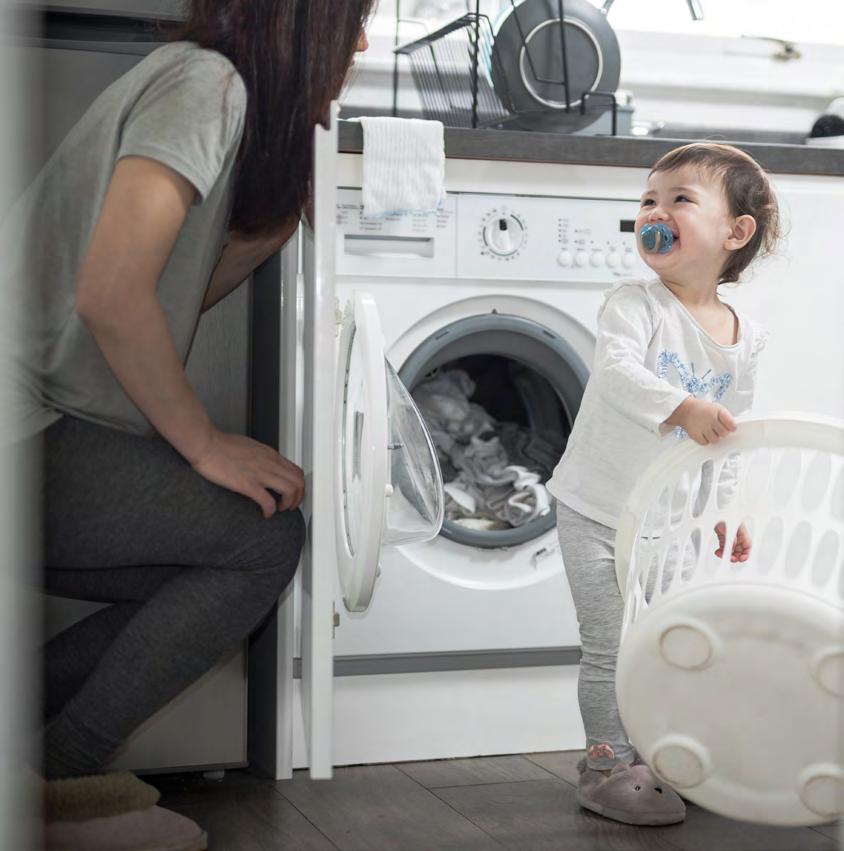
There may also be space for a washing machine along with all the necessary pipework.
You can normally find Gas Safe, approved and qualified electricians and plumbers online or recommended through family and friends.
TV and telephone
If you live in a house, the TV cable to connect your aerial will be in the loft and you will need to arrange for an aerial to be installed. If you live in a block of flats you should be able to plug your TV into the socket in the wall.
Installing a landline telephone will need to be arranged directly with your chosen supplier.
Your QRG will tell you where your TV and telephone points are. Please note any restrictions in your tenancy agreement.
Your heating system
Check the Welcome Pack for your heating user guides for the following:
• heating type
• room thermostat/programmer manual.
Heating can be controlled by the room programmer and the individual thermostatic controls on radiators/electric heaters, unless there is a thermostat in the room.
In cold weather leave the heating and/or hot water on a low temperature all the time, this will protect the system from frost damage.
Electrical safety
The electrical supply in your home enters via a consumer unit (example image below). This unit has the main on/off switches, main circuit breakers and a number of Miniature Circuit Breakers (MCBs) which protect individual circuits. Written alongside each MCB is a description of the circuit it protects – power, lighting, heating etc.
Consumer Unit
If a circuit fails, (the MCB will be in an opposite position) unplug the appliance(s) that may have caused a problem (it could be a light bulb if the lighting circuit fails). Check the consumer unit to see which switch has failed.
Switching back on the relevant MCB should restore the circuit but if it trips again or refuses to stay in position you may have a faulty appliance or bulb that you may need to replace.
Should this happen try unplugging appliances one by one until the power will switch back on and stay on. Circuit failures from defective appliances or bulbs can be a common issue.
Alarms and detectors
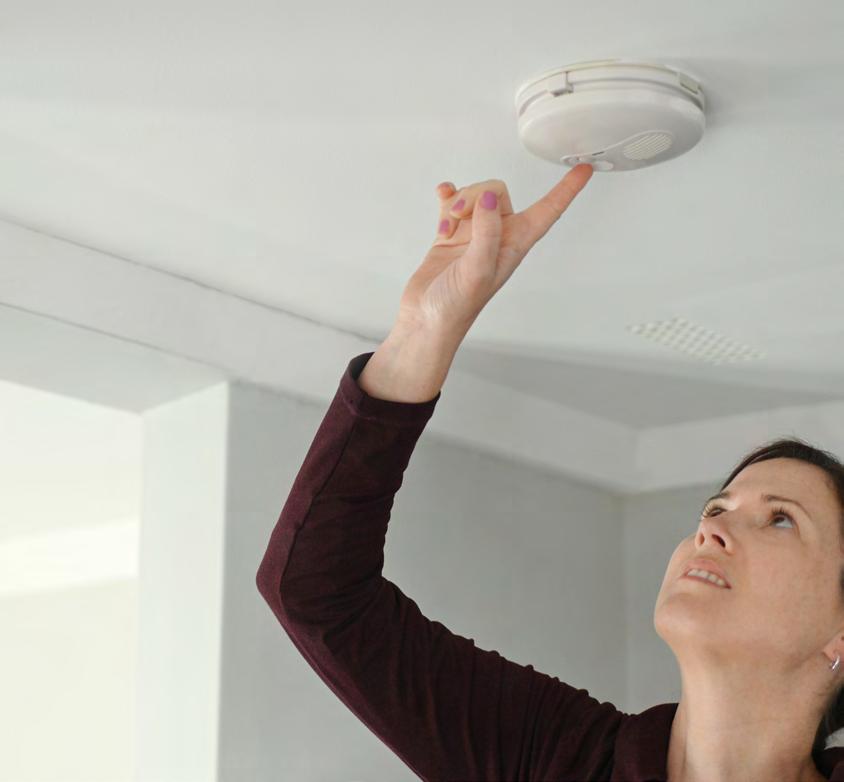
Your home comes equipped with a smoke detector and if you have a gas boiler, a carbon monoxide detector.
Smoke detectors are linked to your main electricity supply, with battery back up, carbon monoxide detectors are battery operated.
Open plan kitchen, dining room and living room areas in flats, will come equipped with a heat detector in the kitchen.
This is designed to set off in the event of a sudden burst of heat, not just smoke.
You should test your alarms and detectors weekly and don’t forget to clean them with a vacuum cleaner. Information on how to do this can be found in the instruction booklets in your Welcome Pack.
A beeping alarm may mean the battery needs replacing!
Redecorating and alterations
During the defects period you should leave the property as it was handed over to you, meaning no alterations or decorating are permitted. The builder may have used a light, non-vinyl paint that will help the structure to dry out.
Please feel free to touch up any paintwork after the defects period, the colour is referenced on your QRG.
In addition, do not replace fixtures and fittings, such as light fittings and shower heads. We can’t fix them if we didn’t fit them.
Permissions
If you want to make any changes to your home after the defect period, scan the QR code below to check if you need permission.
Caution: when hanging items directly above or below light switches, radiators or electrical sockets, be aware you could hit an electric cable.
Always use a cable/pipe detector to reduce the possibility of this happening.
Fixtures and fittings
Floors and carpets
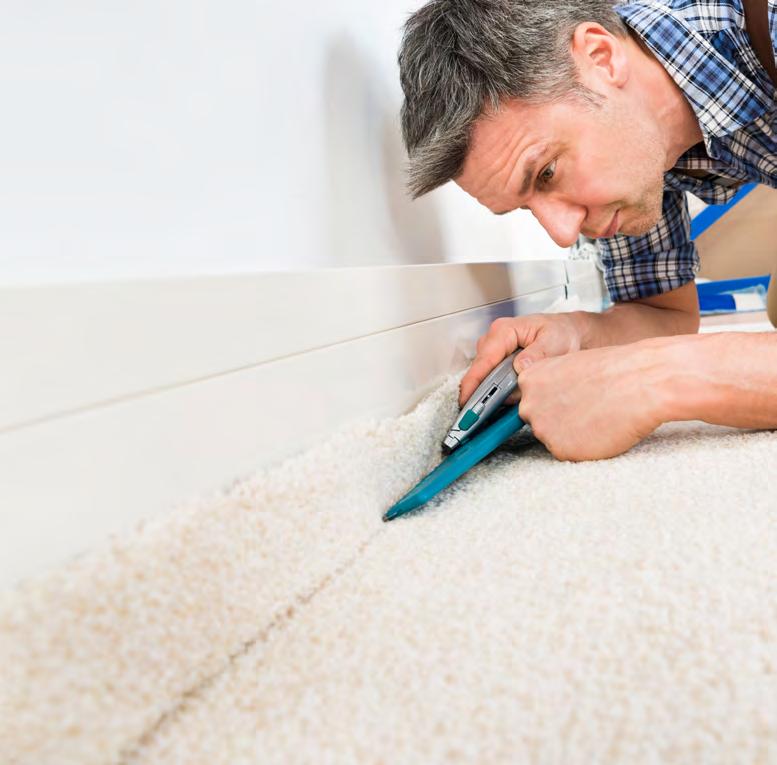
If you choose to have fitted carpet it should be laid using smooth edge grippers stuck down. This will prevent nails puncturing pipes.
Getting your floor covering fitted by a specialist fitter is the best option. However you can decide to fit your own.
The NHBC (National House Building Council) specify a gap of between 5mm and 25mm between the flooring and the bottom of internal doors. You will need to have your doors cut to size if required.
Looking after your home
Condensation and settling cracks
Wood and plaster will shrink as your home dries and settles. It is usual for small cracks to appear during this process. These can be improved by redecorating after the defect period. Any large cracks (wider than 5mm or the width of a £1 coin) will be made good by the builder at the end of the defects period.
Condensation can sometimes form if your home heats up too quickly. You may find condensation in corners of rooms, on or near windows, behind furniture or on north facing walls. If you notice condensation, mop up as much as possible, heat the room slowly, open a window and shut the door to the room.
It’s very important to read the separate Information Sheet on Damp and Condensation in your Handover Pack.
Not producing water vapour is cheaper than turning up the heat to get rid of it!
Tips to reduce cracking and condensation:
• Maintain an even temperature (18° to 21°c) allowing your home to warm up gradually.
• Allow air flow by leaving windows and internal doors open a few centimetres where possible (including store cupboards). Keep window trickle vents open.
• Close kitchen and bathroom doors when cooking or washing to prevent the spread of steam (water vapour). Where you have them turn on extractor fans and open a window.
Keep your heating on low during cold weather.
Vent your tumble dryer outside (unless it is a condenser type) and open a window.
Leave a gap between large items of furniture and external walls, to avoid trapped air.
Outside taps (if fitted)
You should turn your outside tap off during winter to prevent frost damage or possible burst pipes. Simply turn the tap off at the nearest isolation point and drain remaining water from the tap.
Oiling hinges
We recommend oiling window and door hinges regularly to keep them in good working condition.
Garden planting and turf care
Turf and planting, if provided, will be laid as close to your moving in date as possible and it is your responsibility to look after it.
For most new homes planning permission requires the planting to be kept the same for the first 5 years.
Watering:
In warm weather, start watering as soon as the turf is laid. Water twice a day, early morning and late afternoon for a couple of weeks. Don’t forget to water everywhere as water won’t spread.
When the temperature drops below 10ºc watering is not as important.
It’s best not to walk or play on newly laid turf for a few weeks, or longer if it’s laid on a slope.
You can start mowing your lawn after a few weeks of laying. Repeat mowing regularly from spring to autumn.
Your garden will have a particular soil type, so please take time to read the separate Information Sheet.
Looking after your home
Some common issues
My heating doesn’t work: Firstly it’s important to find out what type of heating you have. You may have electric, ASHP (Air Source Heat Pump) or gas central heating.
Take a look at your QRG or Information Sheet about your system. Often with Gas CH the boiler manual will tell you how to reset your boiler. If this doesn’t work the boiler may need the water pressure topped up and you should contact Fairhive Homes if your home is still within the defects period.
My drain is blocked: Wet wipes (any type), nappies and sanitary items should not be flushed down toilets. Oil and fat from cooking should not be poured down any sinks. Both of these activities can cause blockages. If a blockage has occurred as a result of these activities then we will recharge the cost of unblocking.
I have a leak under my kitchen sink: Take care not to overfill the cupboard underneath your kitchen sink; plastic pipes, if knocked, can leak.
My bath is lukewarm: Hot water temperature is regulated in baths to a maximum of 48°c to prevent scalding. This is a building regulation requirement and is not considered a defect.
My electrics keep tripping: see how to test for faulty appliances or light bulbs on page 6.
My smoke alarm keeps beeping: Change the battery and it should stop. Refer to the manufacturer’s guide which shows you how to do this. If the smoke detector continues beeping after the battery has been changed, please contact us if your home is still within the defects period.
I want to make changes to my home: If you want to make any changes to your home please speak to a member of the Leasehold Team who can advise on the process.