






Virginia Art Education Association
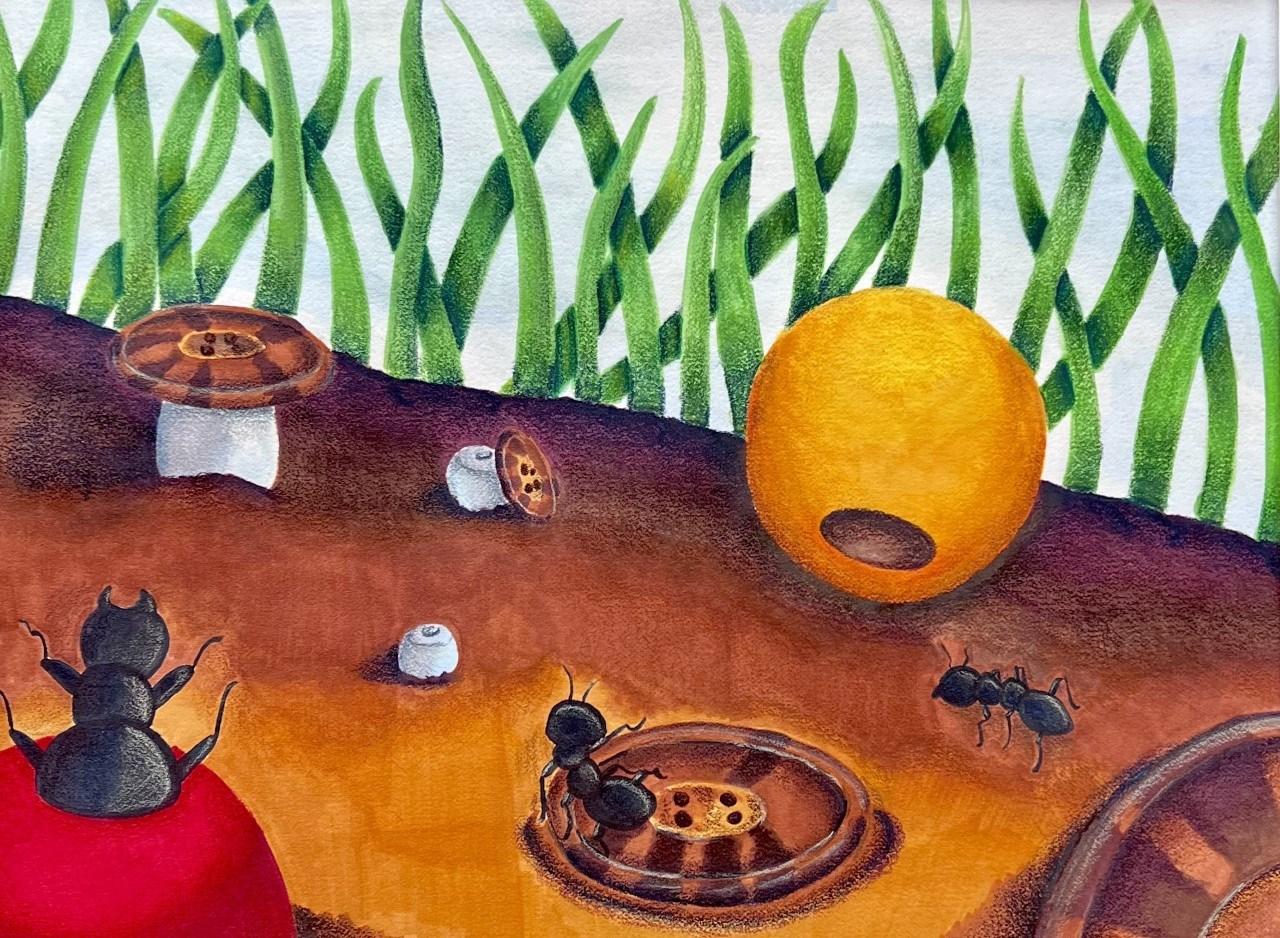
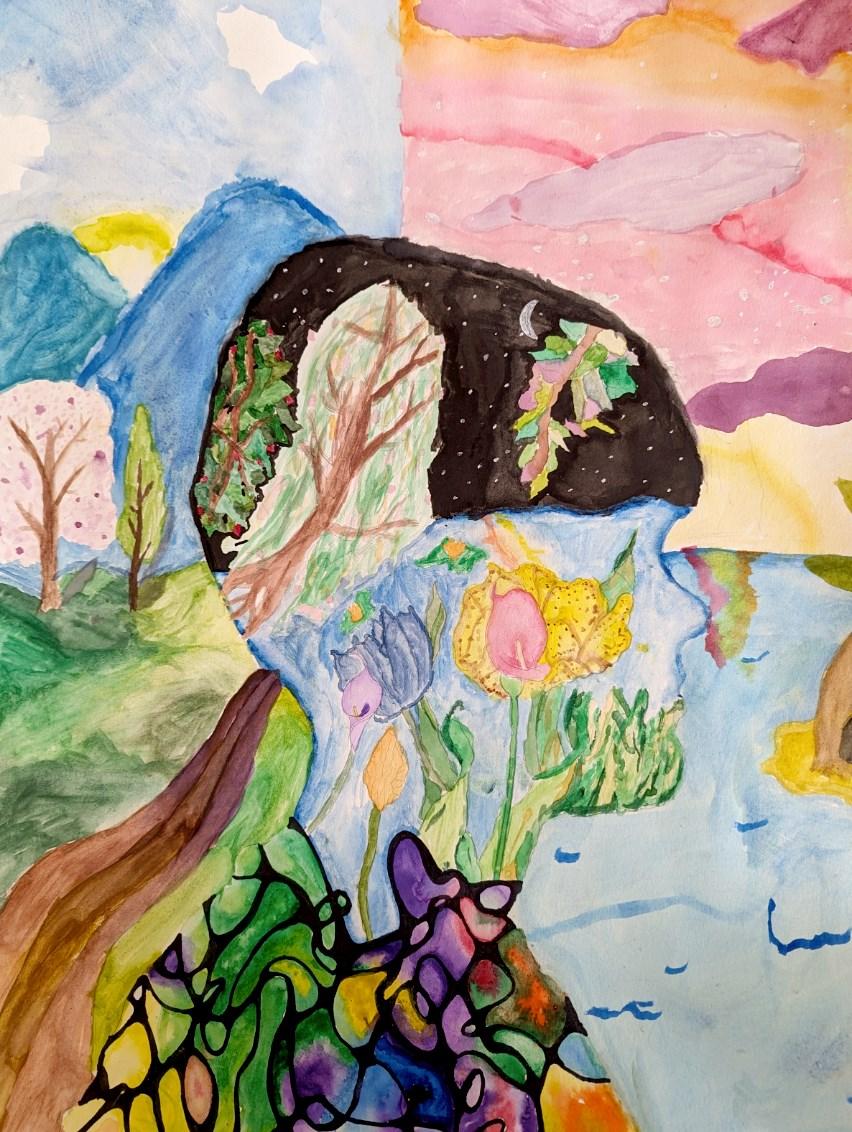
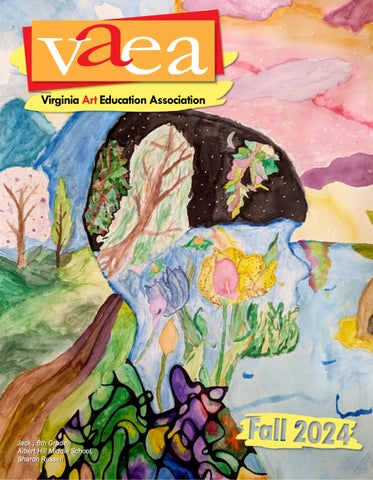
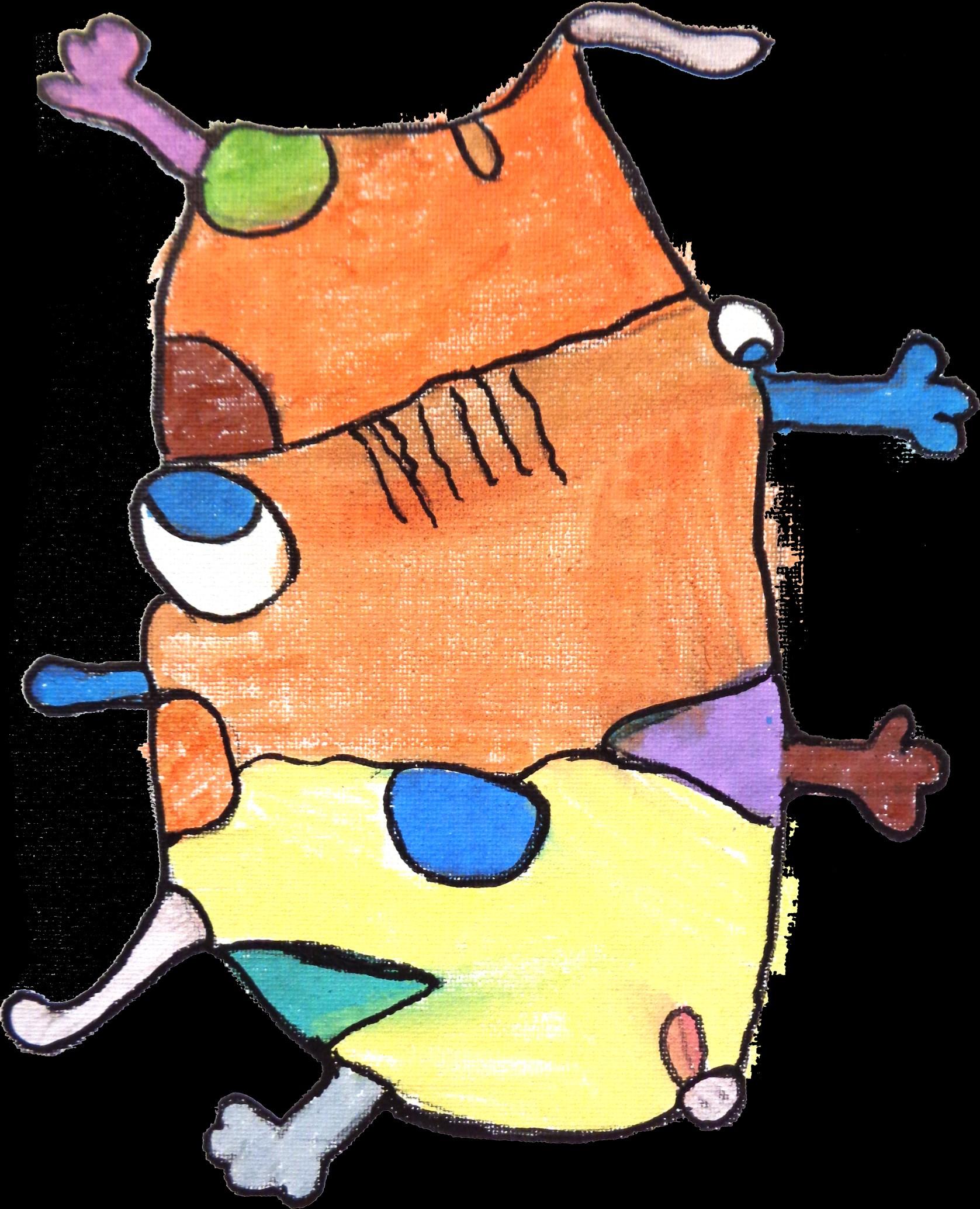
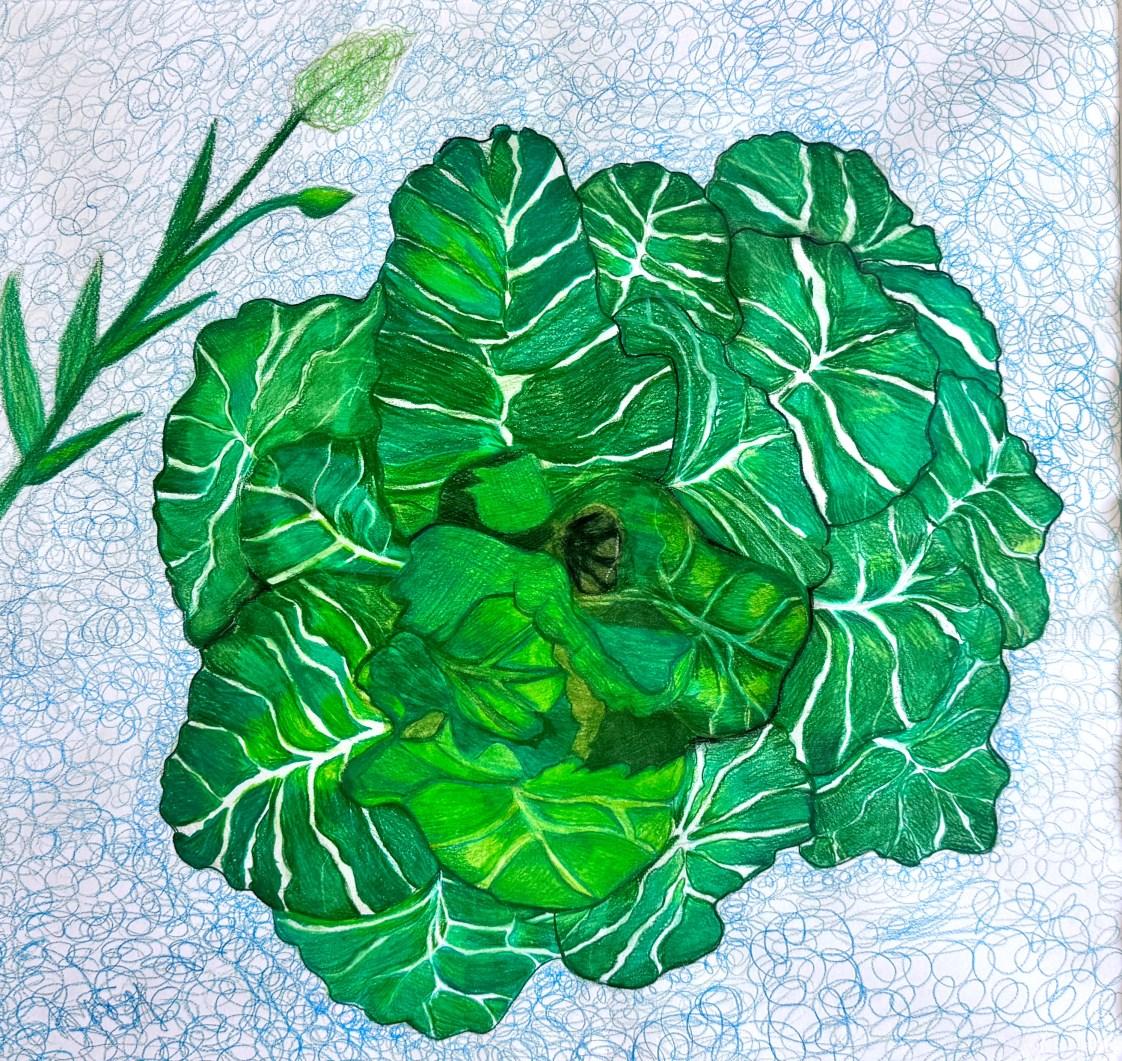
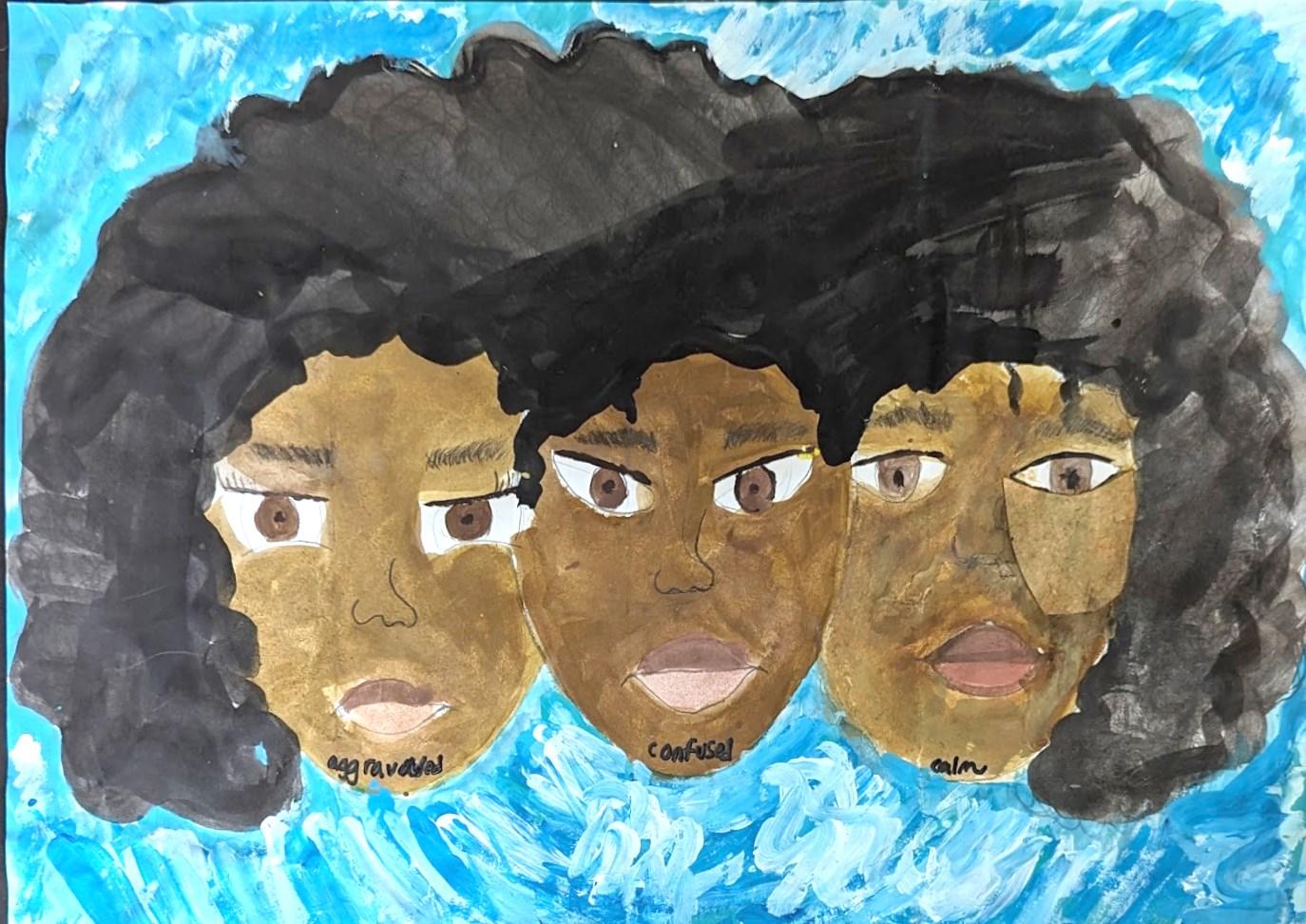
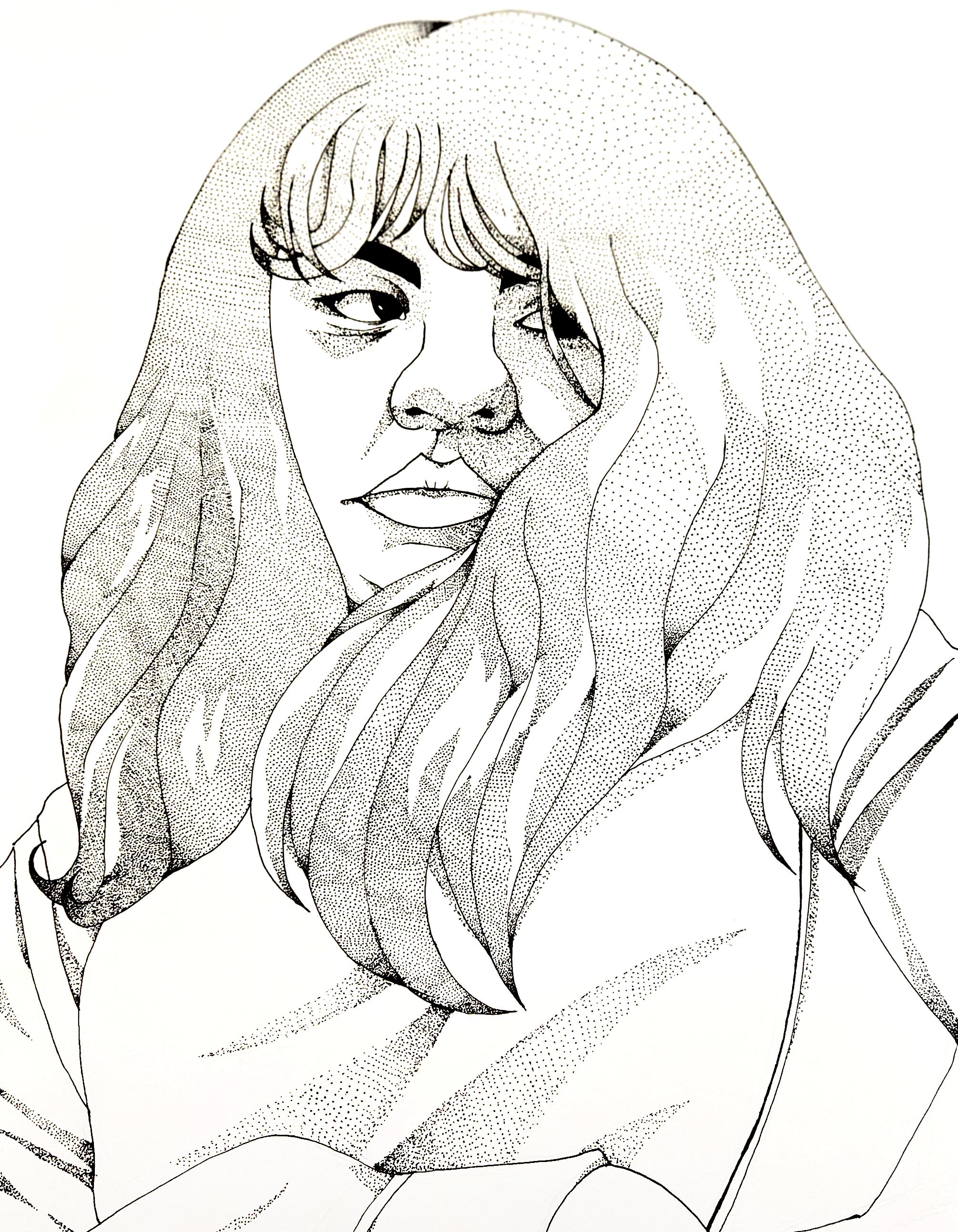
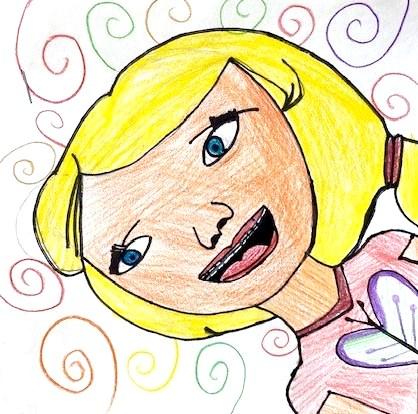
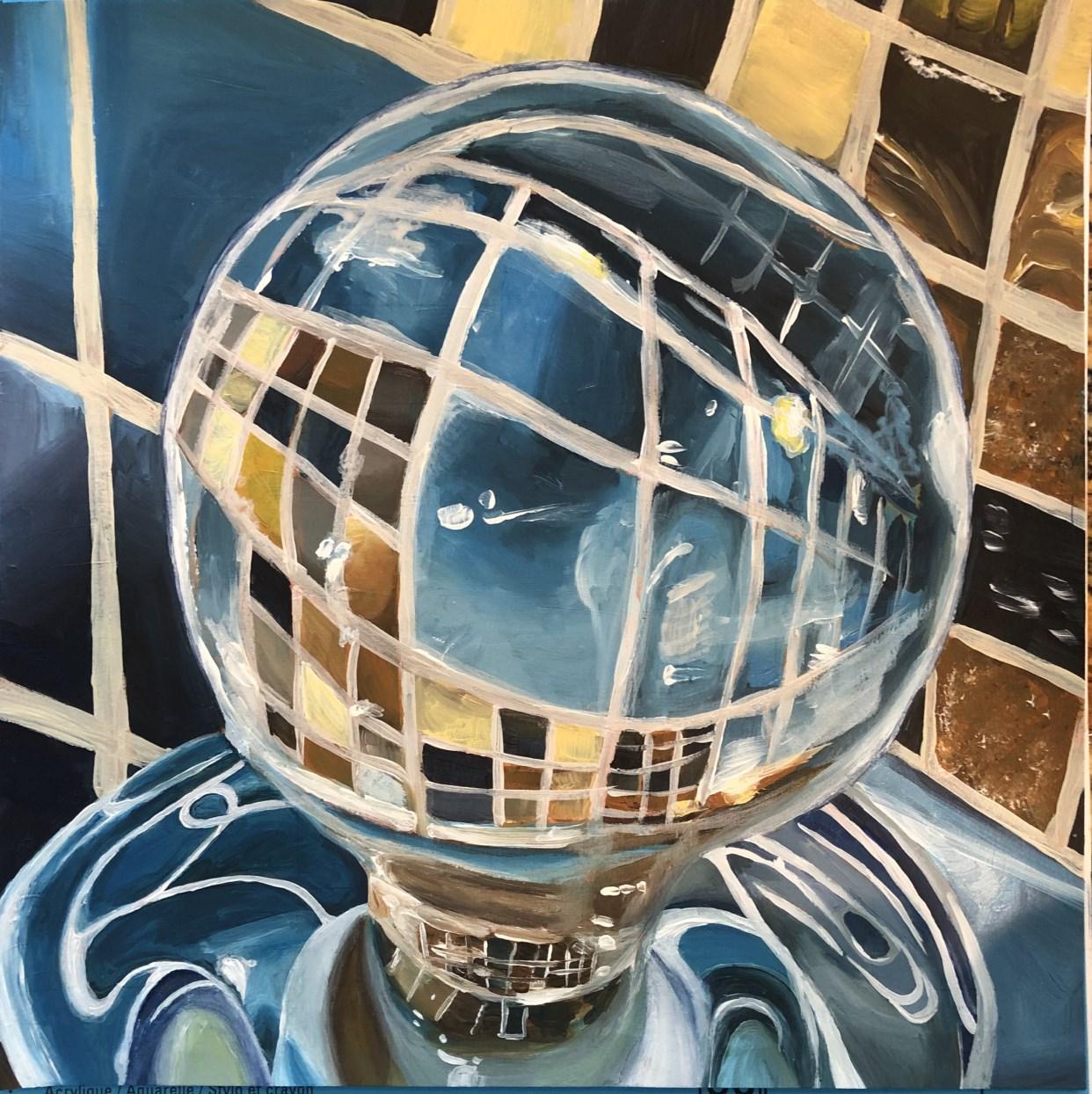
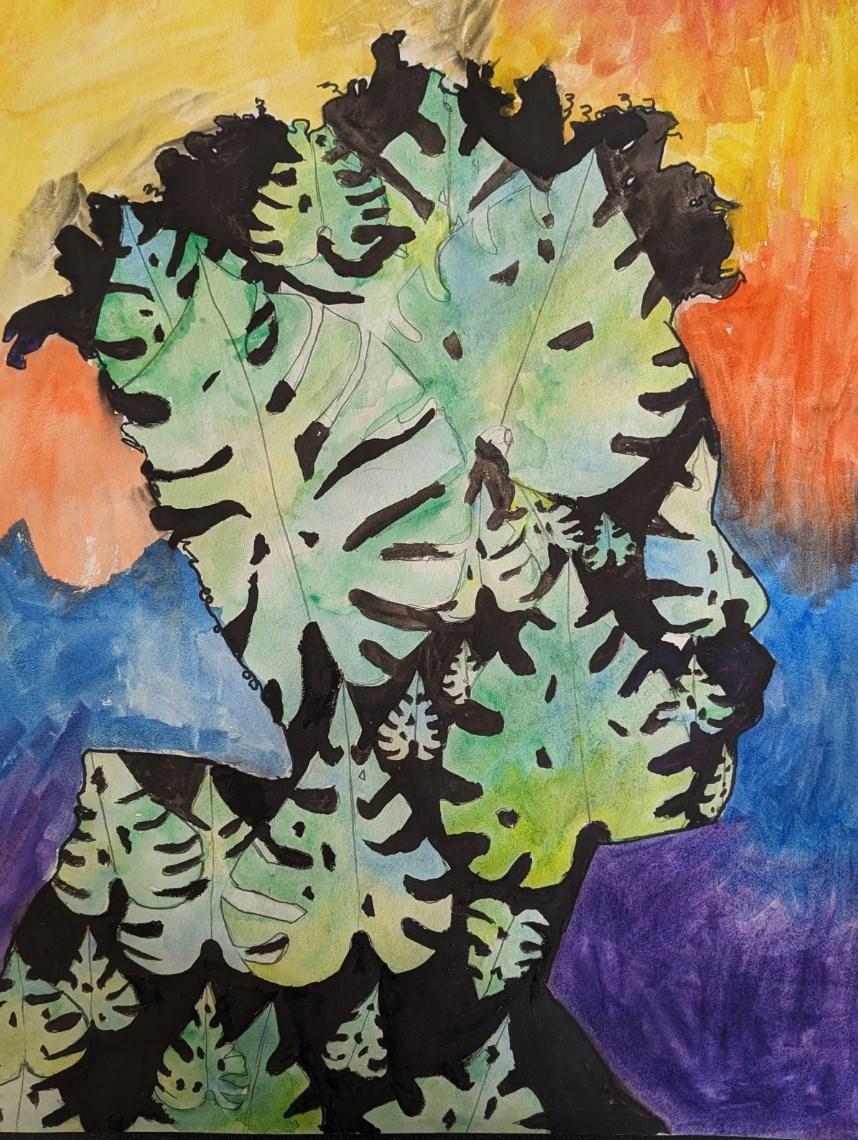
Jack , 6th Grade, Albert Hill Middle School, Sharon Russell
Our mission is to promote, support and advance visual arts education through leadership, professional development and service.
VAEAnews is a publication of the Virginia Art Education Association, and is distributed to members three times a year: January, June and September.
Articles are submitted by the Executive Board and Extended Board members. Contact your Regional President, Division Representative, or appropriate Affiliate Liaison to offer news or photographs for inclusion in their reports.
See page 26.
Members send submissions directly to Sean Collins, News Magazine Editor via the form located at vaea.org/news
Vendors wishing to advertise should contact Peggy Wood, Executive Secretary, at wood.vaea@ gmail.com
December 15
March 15
July 15


Cheryl Miehl
“The artist's world is limitless. It can be found anywhere, far from where he lives or a few feet away. It is always on his doorstep.” -
Paul Strand
Our annual conference is fast approaching. Knowing the plethora of experiences, techniques, and opportunities our vibrant art education community will share, this quote struck a special chord with me. The artist’s world is limitless is a powerful statement, and speaks volumes about what we do. How do you share this idea with your students? What do you do to encourage them that the limits are only within their willingness to explore, experiment, and express themselves?
I am adapting my classroom procedures this year to include mindfulness moments and brain breaks for my students. Each class will begin with a minute of silence where students are encouraged to breathe, to take note of the process of breathing, the feel of their torso and chest expanding as they inhale deeply through their nose, and the sound of the air releasing from their body as they exhale through their mouth, and their torso contracts again. I have spent the summer finding various techniques for breath work that will be shared to keep the exercises from becoming redundant and provide students an opportunity to adapt to those that work best for them. What does this have to do with the quote I started with? Our students live in a fast-paced world where information is constantly bombarding them, and everything is expected instantaneously. Many of them have no idea how to slow down, to be in the moment and to notice and explore the idea of a simple breath, and if we can’t focus on such a simple process, how are we to expect them to acquire the artist’s ability to experience and interpret the world around them?
This year at the conference I will be on a quest. It is not a quest for the latest and greatest experiences, technique development, or processes that I can bring back to my classroom for my students. Instead, what I will
seek out are ways of crafting experiences where my students slow down, take notice of, and interpret the world personally. I want to create a toolbox of techniques for reintroducing students to the concept that art is about observation, taking notice of the way a scene feels, how it looks, and what it makes the artist feel. I challenge each of you to think about what the conference provides for you, and how that information informs how you adapt your classroom practices for the students in your charge. Think about mindfulness and how it affects your classroom environment, how the students feel in your room, and what possibilities it creates for your students and their artistic voice. ■
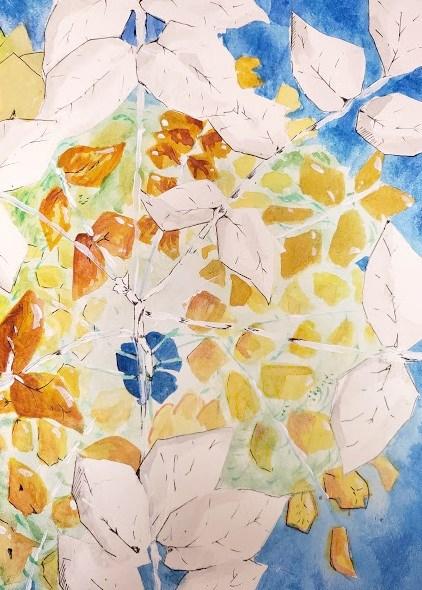
“An Arts Education helps build academic skills and increase academic performance, while also providing alternative opportunities to reward skills of children who learn differently”-Gavin Newsom
It’s the best time of year, it’s conference time! It is a time for us all to get together and celebrate art education in Virginia while growing and learning from each other.
This year’s fall conference will be held at the Sheraton Reston on November 7th-9th. The Northern region has been working hard to create a wonderful conference for all our members. We hope you will join us during this fall's professional development.
Our keynote this year will be amazing, Flossie Chua. Flossie Chua is a Principal Investigator at Project Zero, and her work focuses on understanding how people think about and experience complex ideas and challenges in different contexts, and how we can nurture good thinking and practices that develop not just better thinkers but also learners engaged by a range of topics, relating them to both individual and social needs and aspirations. Flossie has worked with Art21 Educators to support K-12 teachers to bring contemporary art, artists, and themes into classroom teaching and learning. This will broaden their curricular focus to include inquiry into contemporary issues and questions that demand cross-curricular knowledge and ways of thinking through contem-
porary art. She is also currently working with BroadBand Collaborative and OAcademy to design reflective artistry practices that support and empower musicians to play leading roles as artists in orchestras and changemakers in communities. We are excited to have her join us here in Virginia and share her passion and knowledge with our educators. Make sure to stop in during her keynote session as well as her several hands-on workshops. You will not want to miss her presentations.
Looking forward to seeing everyone at conference and being with our Art tribe again. Thank you to all who have volunteered to help out during the conference as well as present. A BIG thank you to Julie Cacciola for leading the Northern region as site chair. The conference could not have happened without all of you. We are blessed to have your leadership and devotion to arts education in Virginia. ■

The lighthouse on the coast overlooks the stormy seas. Inside the lighthouse, a keeper is busy trimming the lamp wick. Other days he replenishes lamp fuel, winds the clockworks and performs maintenance tasks such as cleaning the lamp lenses and windows. The keeper sees when fog is coming. He sounds the fog horn to warn passing ships of the rocky coast. Solitary and important, keepers have helped generations of sailors and passengers succeed in their journey.
You are a keeper – the person that can guide and help art programs for your student’s educational journey. As a keeper, here are some things to try to keep your art program vibrant and enduring:
• Educate your administrators about the arts. Send them arts centric articles from Edutopia.org, ASCD.org and other publications.
• The Virginia Coalition for Fine Arts Education (VCFAE.org) has a document called Chronic Absenteeism & The Arts Report that shows that more arts lead to less absenteeism. This is a must show for administrators.
• Pay attention to any alerts about legislative action and please take action if called upon to do so (use your personal, not work email).
• Stock up on art for Youth Art Month (March) – see if you can get your students to make a presentation to the

school board about art.
• What are you going to do on Arts Across VA Day 25? It’s Friday, March 7th, 2025. Post something about your art program to social media using the hashtag #ArtsAcrossVA2025.
• Be an advocate. Be the horn. Be a keeper. ■

Fall is a busy time for educators. We have moved past the hectic and exciting time of the beginning of the school year and settled into routine in our classrooms. But new tasks are coming to us every day… especially as the art educators in our buildings. Things such as starting to display artwork throughout your schools, events for the community, and the everexciting process of deciding which projects to make next with kids! All of these topics involve our creativity… we just can’t help it as artistic thinkers! For example, we have a “Trunk or Treat” in my school that is always a big success! Each year I say it will not be “too much” (ha ha). And each year a new idea sends me off to the chop saw to create some immaculate design that will engage and wow the crowd of little super heroes! It is this creative energy that keeps our careers fun and worth it.
I would like to take a moment and reflect on that creative energy. We all have it… whether it is in building something for our schools or even just in how you design your lessons for your students. I can repeat the same project from the year before, but still push my creativity to reflect, evaluate and make it even better this year. How do you utilize your creativity as an art teacher? What ways would you like to see yourself use it in the future?
One thing I would like to attempt this year is truly setting time aside to make personal artwork. Over the summer I set aside just 15 minutes each week for our VAEA Summer Sketch Sessions (#vaartedSummerSketch). Some days I would shut the camera off and continue making. I must it admit it felt good to flex that muscle. Now that the hustle and bustle of starting the year has settled, I would like to set that time aside again. It is one of those things that always falls to the bottom of the to do list and that just isn’t fair to myself (or my students). It is important they see us as role models and how being an artist in our community works. The amount of learning I do when it is just me and a still life is astounding; and thus, it
makes me a better teacher. I encourage us all to continue to find those moments for ourselves to create, experiment, or even just do a quick sketch!
Another hope for the future is to reimagine our social media pages. When you go to your own socials and just want some time to relax, do you find yourself scrolling through short videos? I do. Funny cat videos, teacher comedians, etc. What if we had some short clips as well? Here’s how you can get involved: send either pictures or short clips of your classroom set ups, projects, or other art teacher related topics to jessicabeach4@gmail.com with the subject line “VAEA Social Media Reel Content” or look for our upcoming inspiration board on social media and comment with your pictures! Hopefully, we can then take these pics and make short reels that reflect art teachers across the state of Virginia! Look for the hashtag #vaartedReels! Thank you for contributing!
Lastly, if you haven’t already, please take a moment to follow us on Facebook (VAEA and VAEA Member Forum), YouTube, Instagram, and X(@VAartED)! ■
Meghan Hamm
As we look forward to this year’s VAEA conference, we will be celebrating our award winners. Next year, this could be you… Here’s what you need to know to prepare.
Any VAEA member may nominate. You can even self-nominate. Art Administrators / Supervisors may be nominated by Administrators, Supervisors, or Principals that do not hold a VAEA membership.
Any VAEA member who meets the award criteria established by NAEA may be nominated. VAEA Membership is not required for the Distinguished Service (Outside the Profession) and “Friends of the Visual Arts” Awards.
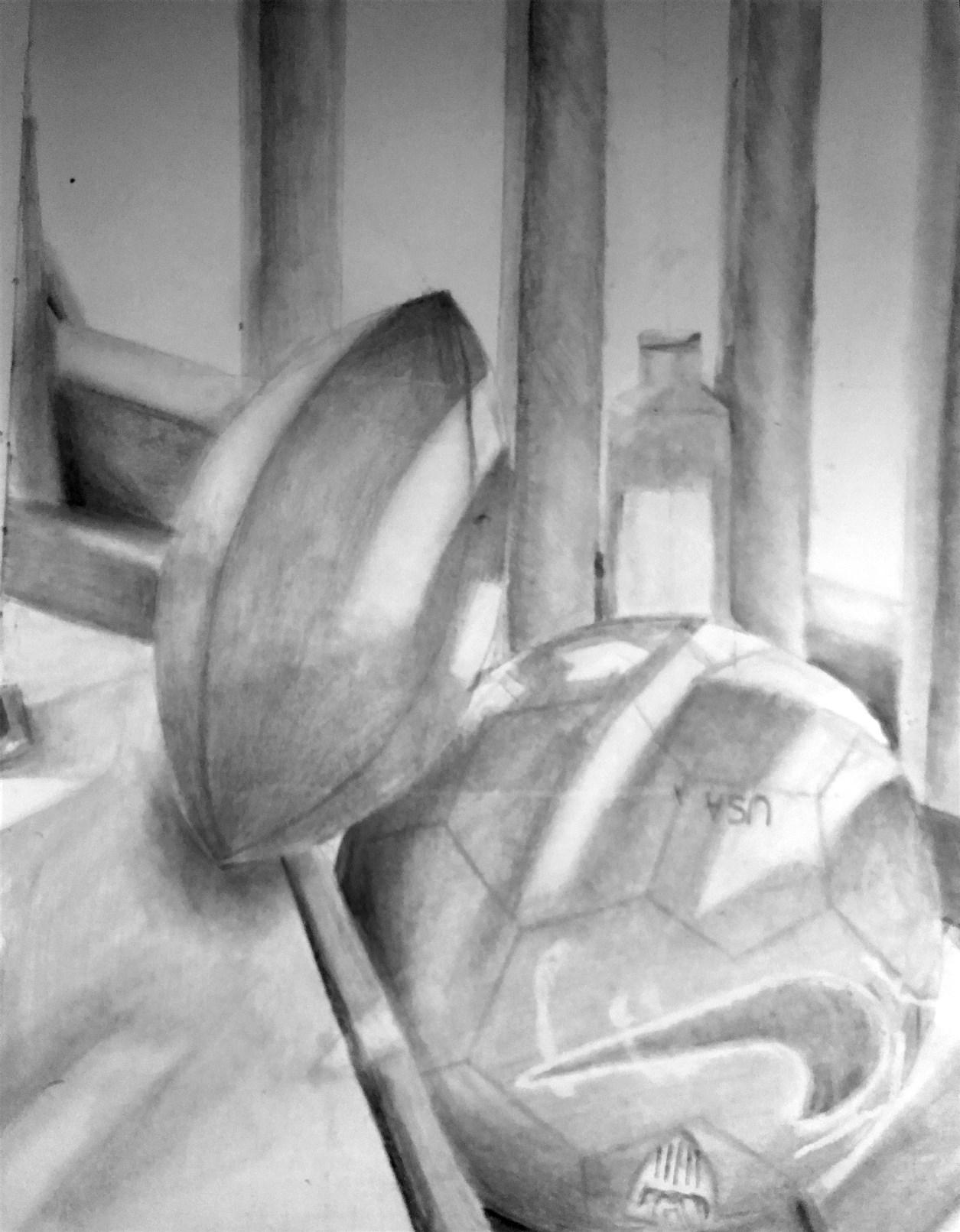
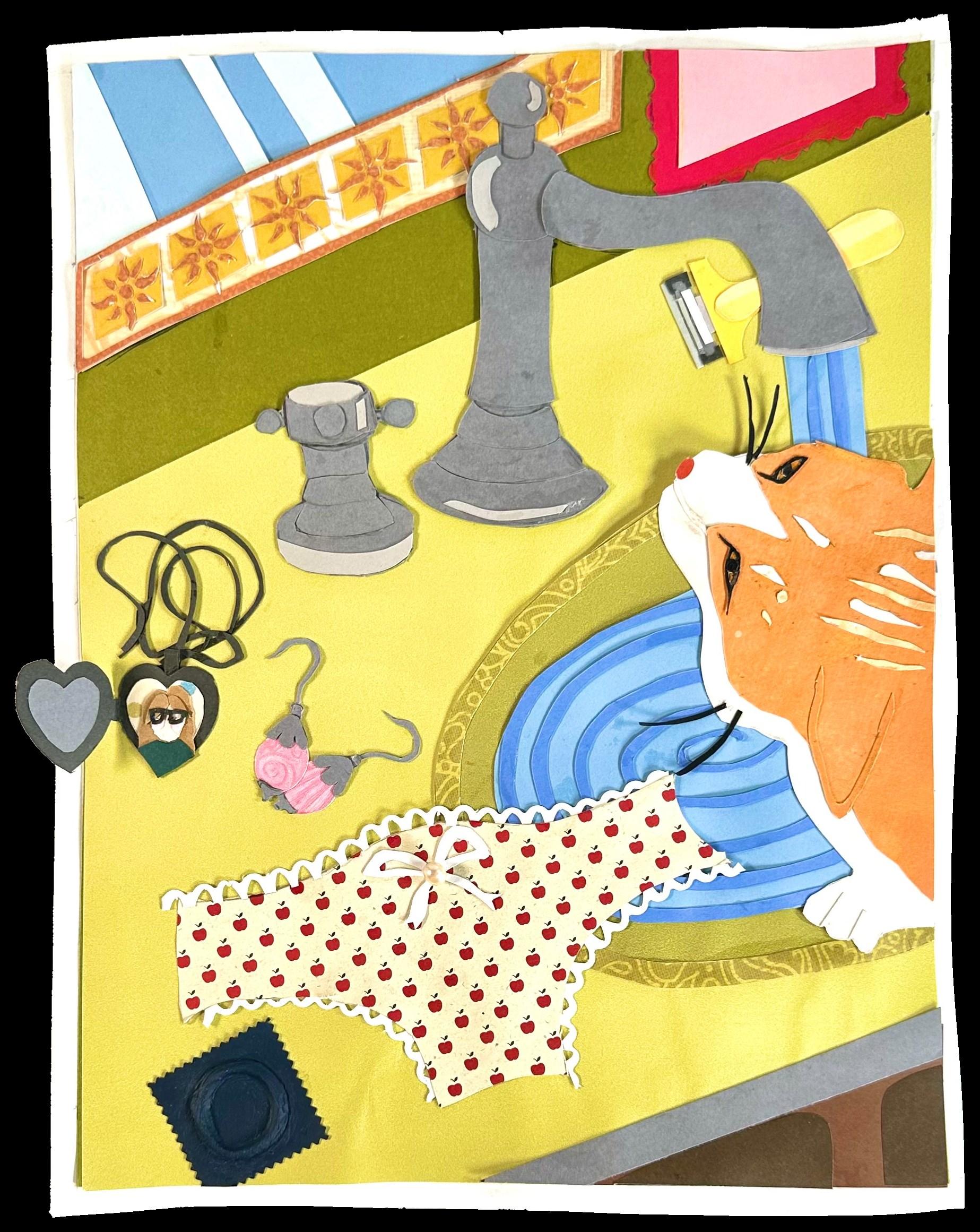
Macie, 11th Grade, Brentsville District High School, Cheryl Miehl
• VAEA Nomination form
• Letter of Nomination from the nominator
• NAEA Standardized Vita/ Resume Form, using no smaller than 10pt type
• Two letters of Recommendation
• Digital Image of Nominee
All nomination packets are adjudicated using the NAEA rubric. Using the rubric to create your vita is a great way to make sure you are including everything you do. For more information and helpful hints, please visit Awards - VAEA.
DEADLINES:
Packets due to Regional Presidents by August 15. Packets due to Awards chair by August 30.
HELPFUL LINKS: Nomination form and vita

NAEA Awards Program Nomination Form Standardized Vita (vaea.org)
■

VAEA Rubrics
Erika Ogier
Hello Elementary Superstars! Who’s ready for anewyear?
As the new school year approaches, we have the unique opportunity toinspire young minds through creativity and artisticexpression. A well-thought-outplanisessential to ensure a smooth and successful year. Here are three key aspects to consider while preparing for the upcoming school year: organizing your calendar, refining your procedures, and settingaspecificgoal.
GetYourCalendarRight!

A well-organized calendar is the backbone of a productive school year. Start by mapping out the entire year, considering the beginning, middle, and end. This bird’s-eye view helps in planning majorprojectsand events. For example, if you’re excited about a mural project, decide on the best time to introduce it. Perhaps it’s a perfect mid-year activity when students are more comfortablewith their artistic skillsorat the end as aculminationofasuccessfulyearorlegacyproject.
Anotherimportantaspectisscheduling eventsrelatedtoYouth ArtMonth. Decideearlyonwhatyouwanttoshowcaseandget theseeventsontheschool calendar as soonaspossible. Communicating these dates to administrators, parents, and studentsensureseveryoneisonthesamepage.Bylayingoutyour calendarin advance,you create astructuredyetflexibleframeworkthatallowsforcreativespontaneity.
ThinkAboutYourProcedures
Efficient classroom procedures are crucial for maximizing teaching timeandminimizing chaos. Takethistimetoevaluate what worked well last year and what didn’t. Streamlining your procedures can make a significant difference. Consider using picture labels for supplies and storage areas, which helps younger students understand and follow the organization systemindependently.
Don’t be afraid to try something new. Maybe introduce a different way to distribute materials or implement a new cleanup routine. Tailoryourprocedures tofityourteaching styleandthe specific needs of your space. Consistency is key, so once you establish these procedures, stick to them. Clear and effective procedures create a predictable environment where students feelsafeandfocusedontheirart.

Setting a single, focusedgoal forthe school year can provide direction and motivation. Think about what you want to achieve or improve. Maybe you’ve been wanting to revamp your fiber art unit. Dedicate time to researching new techniques and gathering materials to make thislessonmoreengagingandimpactful.
Alternatively, you might consider starting an after-school art club. This can offer students additional opportunities for creativeexpressionandprovideyouwithextratimetoexploredifferent art forms. If organizing a schoolwide art show excites you, startplanning early. Such an event not only highlights students’ talentsbutalsofostersasenseofcommunityandprideintheir work. Consider attending my VAEA Conference session “Who's Afraid of the School Wide Art Show?” to find out how to plan andimplementaschool-wideartshowwithoutpulling yourhair out!
Lastly, it’s important to consider personal goals as well. Teaching can be demanding, so perhaps your goal is to carve out more personal time for yourself. Whether it’s setting aside time for your own artistic practice or simply ensuring you have time to relax, taking care of yourself is essential for sustaining your passionforteaching.
In conclusion, by organizing your calendar, refining your procedures, and setting a specific goal, you can set the stage for a successful and fulfilling school year. These steps not only enhance the learning experience for your students but also help youmanageyourworkloadeffectivelyandmaintainyourenthusiasmforteachingart.
If you’re looking formore ways to improve yourpractice, consider registering for VAEA Conference this November 7th-9th in Reston VA! There will be many great presentations on Elementary topics from inspiring art teacher from across the state! Hopetoseeyouthere! ■
Welcome Middle Level Art educators to the 2024 Back to School news edition! Each school year is an exciting opportunity to embrace a new beginning and implement meaningful learning experiences, bringing art teacher dreams to reality.
An aspect of teaching at the middle level that I particularly enjoy is making visual art experiences a part of school wide community engagement. This can be as basic as having student art displayed. A display of student work can be stepped up a notch with student learning made visible through artist statements, a unit/ lesson description and standards of learning covered accompanying the work on display. At parent engagement evenings, students can lead a printmaking station or lead community art projects that encourage whole school participation. As you map out the school year, consider how you will engage your school community in visual arts experiences. Take some time to poke around the Harvard’s Project Zero website and see what resources may be useful in your teaching practice. A valuable resource for me has been Harvard's Project Zero:
Studio Thinking Project. The 8 Studio Habits of Mind (SHoM) are a guiding anchor in my classroom that I reference in whole group, individual instructions, critiques and during lesson closure and reflection. The SHoM also correlate with the Virginia Department of Education’s Fine Arts SOLs and the “5 Cs” recognized as skills and attributes our students need to be successful: Critical Thinking, Creative Thinking, Collaboration, Communication and Citizenship.
VAEA’s keynote speaker, Flossie Chua, comes to us directly from Harvard’s Project Zero, and will be an inspiration to behold. At VAEA, please join me at the Middle Division meeting and reach out if you have any questions. I wish you all an amazing and enjoyable start to the school year and look forward to seeing you in November. ■
As the air begins to crisp for fall, you've likely settled into the rhythm of early morning alarms, anticipating another year of your classroom bustling with beautiful works of art. Each new school year not only entails the physical labor of moving boxes and furniture but also renews your dedication to refining classroom management techniques and exciting new lesson ideas. Have you found your stride with these new methods, or have you already shifted to plan B?

grating it thoughtfully into their lesson plans. However, the new mandate presents a significant shift in how these educators must approach classroom management and instructional delivery.
As the 2024-25 school year unfolds, secondary art educators face a mix of familiar challenges and unexpected mandates. One such challenge stems from Governor Youngkin's recent executive order mandating cell phonefree education environments in schools. This directive aims to minimize distractions and bolster focus in classrooms, especially impacting disciplines like art, where creativity and concentration are paramount. For art educators, the classroom environment is not merely a space for instruction but a sanctuary for creative expression. The presence of smartphones, often valuable for capturing inspiration or referencing artistic techniques, can also disrupt the immersive and contemplative atmosphere crucial to artistic development. Teachers have historically balanced the benefits and distractions of technology, inte-
Implementing a cell phone-free policy requires careful planning and collaboration among school administrators, teachers, and parents. It will certainly be interesting to see how each will come together to implement and enforce this policy. Have you reviewed the VDOE page or were you able to attend any of the “Commonwealth Conversations Events'' scheduled throughout the state before school started? (QR code take you to the VDOE website)
I'm eager to hear about the conversations taking place in your schools and excited to discuss them further in Reston this November. Don't forget to register for the 2024 Virginia Art Education Association Professional Development Conference in Reston, Virginia, from November 7 to 9. The collaboration with
fellow secondary art educators is incredibly valuable, and I look forward to sharing our common struggles and supporting each other. If you'd like to start the conversation, please reach out to me at tishalou@hotmail.com. ■

The Power of Creative Communities
I hope you all had an opportunity to find moments of beauty and light throughout your summers. As we enter into a new academic year, with excitement and renewed creative energy, I wanted to offer some thoughts about my experience with the transformative power of creative communities. I had the honor and opportunity to gather and share space with several impactful artistic communities over the summer, including the NAEA at their Leadership Conference in Detroit, and Alternate Roots, at their annual Roots Week convening in the mountains of North Carolina. I know you’re all familiar with the NAEA, but are you familiar with Alternate Roots? It’s a joyous and dedicated collective of creatives from the US South, with the goal of uplifting and supporting artists and their creative practices at the intersections of justice and equity.
reconnecting with my inner child, finding joy and wonder in the experimentation of concepts and materials, expressing myself freely, making art without agenda or concern. It’s such a different feeling and environment that is often generated in a classroom, where due dates and deadlines arrive abruptly and often in conflict with the creative flow. In these environments, crafted by creative communities, I feel more confident and empowered and seen. The energy and camaraderie feed my creative soul, and reignite my passion to share what I know about the world of Art and Design with learners every fall.
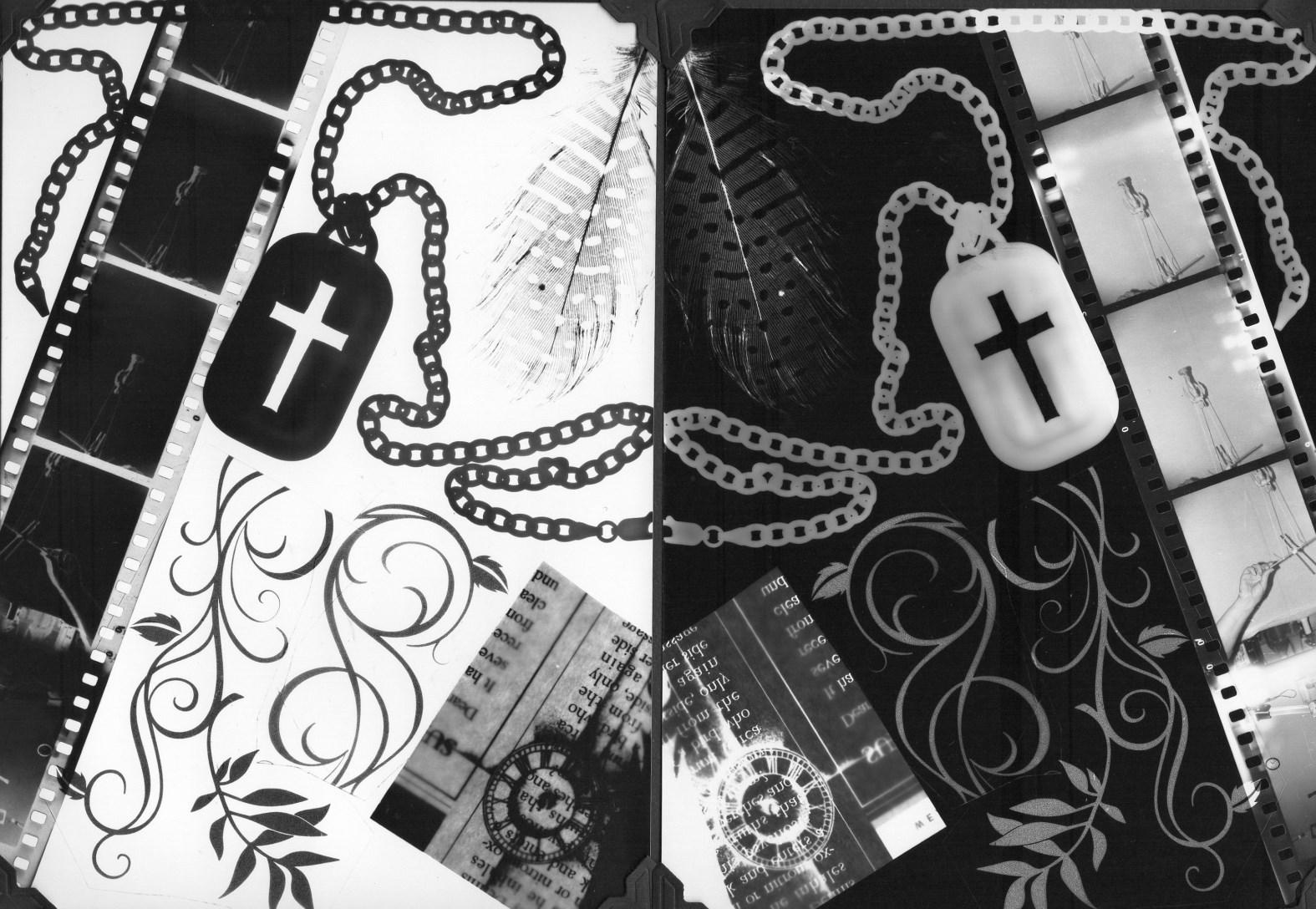
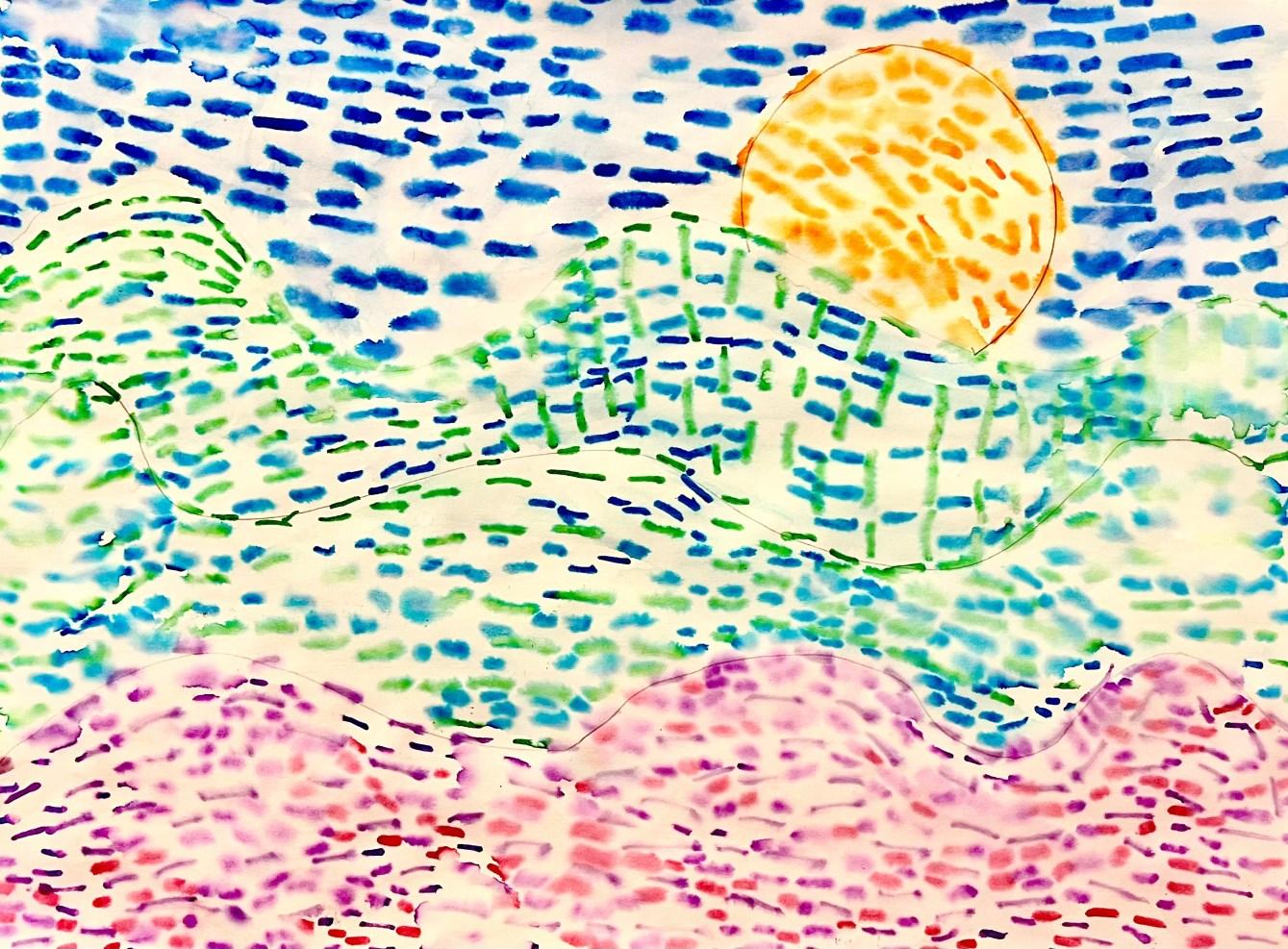
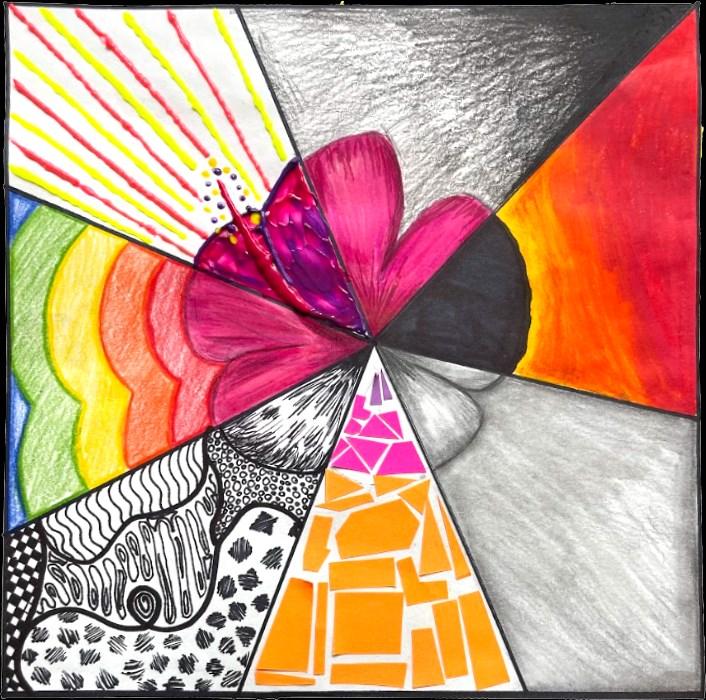
Cole, 12th Grade, Fauquier High School, Sarah Ewing
Roots is a community of artists and culture bearers that welcomes creatives from all art forms and fields, including Teaching Artists and Art Educators, with warmth and support. Members living within the Roots region (the US South: from Maryland through Texas) are eligible to apply for Artistic Assistance support in the form of Professional Development and Project Development grants. Engagement is encouraged, shared power is enacted, and community is embraced. When I’m with these artistic communities I find myself
I think every creative person should have access to a supportive and generative community, especially those early in their artistic journey. I would love to explore how we can build more supportive and sustainable creative communities not only within our field, but also (and especially) for the young minds eager to make an impact through the arts. What are your thoughts? What feeds your creative soul? What type of support do you think would be most impactful for your students?
I would love to hear from you, or meet you at the upcoming VAEA Conference in Reston this November. Please feel free to reach out with any comments, suggestions, or ideas you’d like to discuss or share: agomez@su.edu. Have a wonderful fall semester! ■
Fall months are a time of excitement and resetting for anyone working in education. Museums take the opportunity to revitalize spaces or change over major exhibitions. Museum educators shift from summer programming to school-focused schedules. From this division, I encourage you all to carve away some time to play with art looking and art making at a local museum. Consider this a direct invitation to plan that field trip or just take an afternoon to be around art at a local museum or gallery. Across the field, museum educators are exploring more experiential ways to connect with works of art. Here are three activities to try out while enjoying a museum visit.
As if you were creating a grocery list, jot down what you’re shopping for at the museum before you go inside. Focusing in and setting a purpose allows you to spend more time experiencing – with room for surprises and detours along the way.
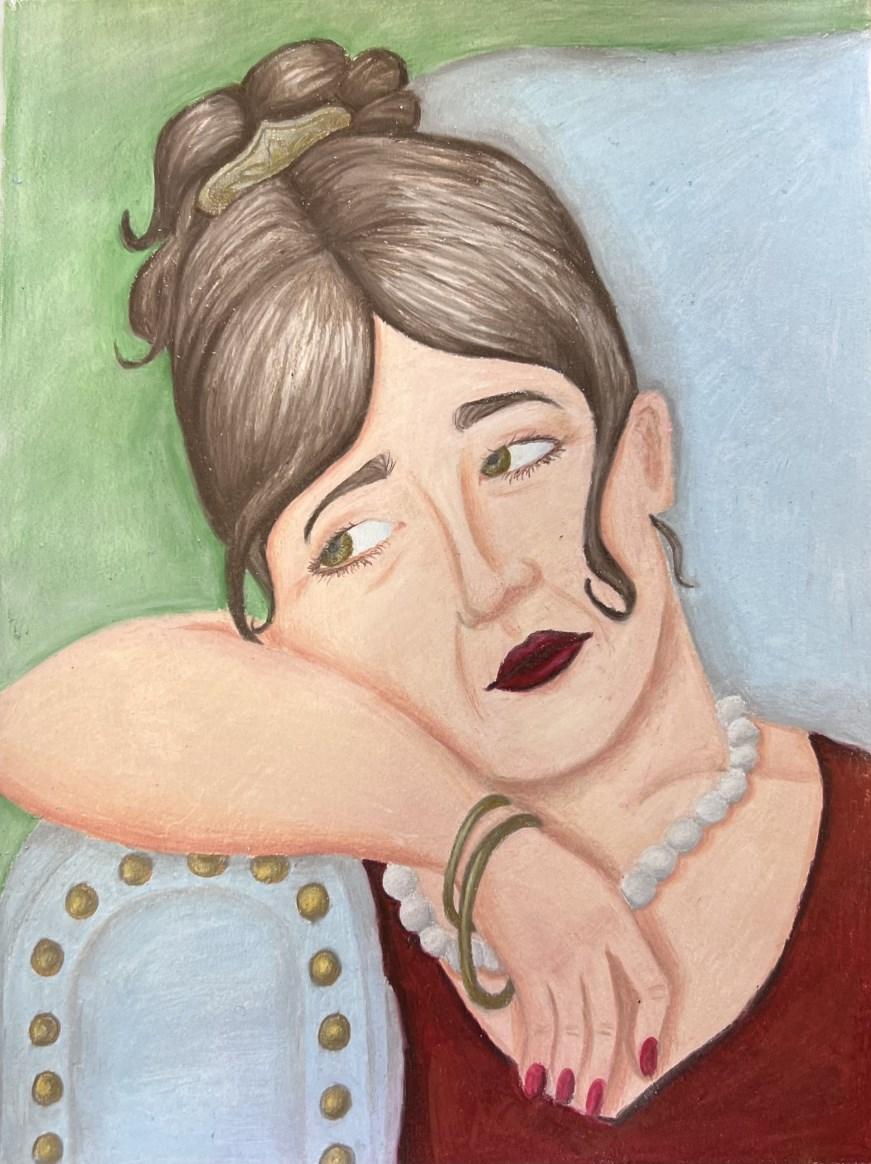
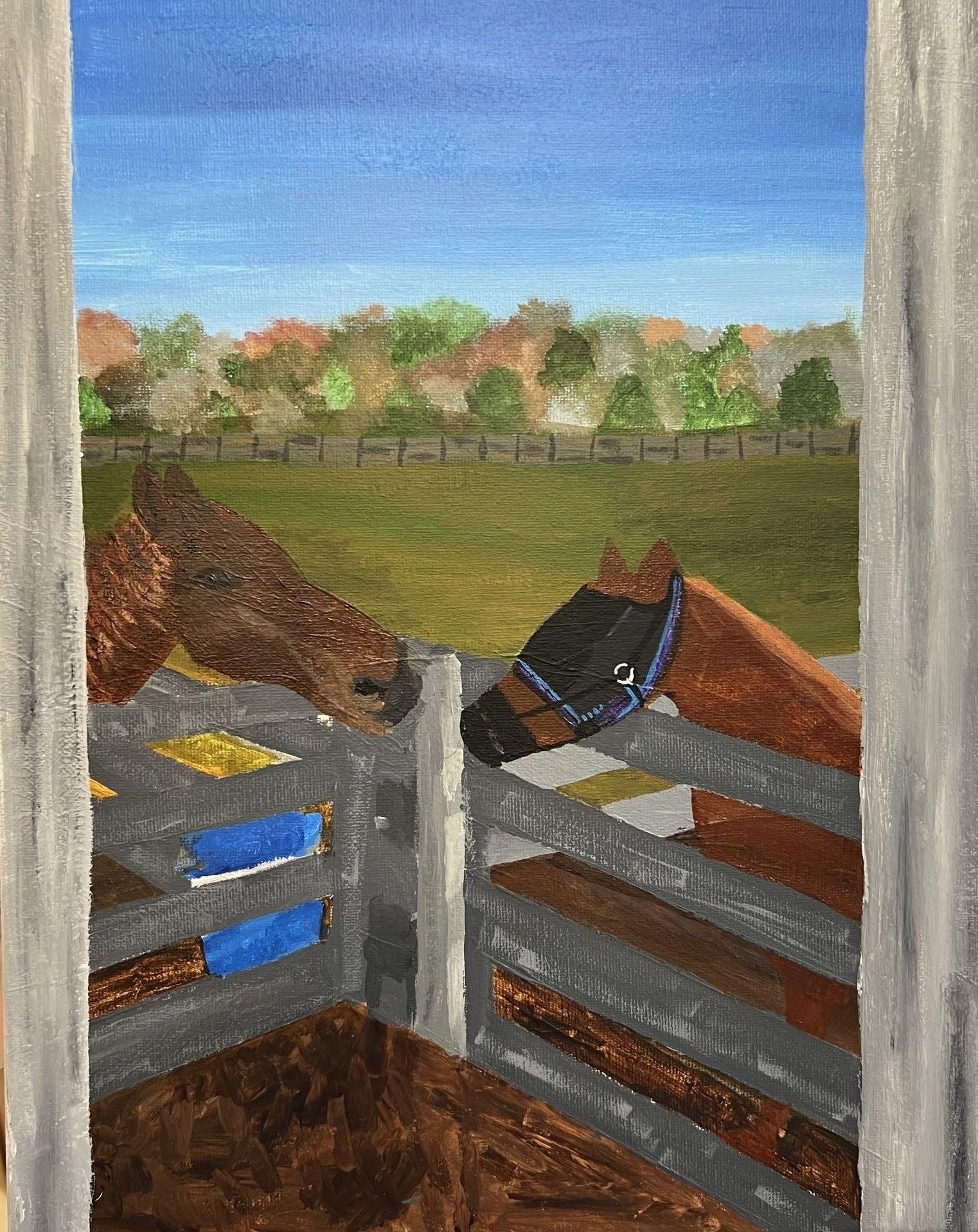
Angela,
Take a look at your list and group it into categories, like elements of art or big idea themes. How many works of art can you find that deal with transformation? Which portraits feature smiling subjects? Once you craft your list, meander through a space and see what links up. Continue your note taking and see what’s well stocked at the museum versus what might be missing.
Sit in front of a two-dimensional work of art with some paper and a drawing tool. Draw an outline of the work on your paper, paying attention to whether it’s landscape or portrait (or square). Mark an x on your paper for where your eye went first and plant your pencil there. Create a continuous line drawing that shows how your eye travels around the work of art. Did your eye start in the center and spiral out? Is it bouncing from corner to corner? Take a look at your eye’s map. How did the artist of the work of art take you around the composition? What might you try in your next work of art to guide someone?

While in a large space, stretch your body so that you are aware of how you’re moving that day. I also take this as a reminder of how any purses or bags might shift when you move. Now, find a work of art and mirror it with your body. Start small–contort your face to match a portrait. Get bigger–shift your full body to mirror a sculpture or piece of furniture. After this, find a person or abstract work and embody the mood. How does an energetic scene play out in your mimicry? Be aware of your surroundings and enjoy the close looking it takes to get this sort of thing just right.
Let’s play at the conference! I look forward to seeing many of you and enjoying some rich discussion and warm camaraderie. Hopefully we will have a chance to play with some of these and other techniques when celebrating the multifaceted opportunities with art and education. ■
Let’s face it: there are times when being a leader and working behind the scenes as an educational coordinator, supervisor, or instructional specialist may not always carry the kudos, recognition or offer the same instant feedback as teachers often receive in the classroom. The work is not always glamorous. It takes grit, communication, collaboration, pivots, dealing with daily crises, emails or phone calls, mountains of meetings, and so many details. We have heard the quote, “The Devil is in the Details.” It truly is. The only way to survive is if it’s your passion.
You must care about art education, have a natural tendency to work with people, and genuinely care about the teachers you serve, be open with communication and work together as a team with your department. As we have learned through teaching, you can have the best learning plan, but until it’s employed and coupled with classroom management and organization, it’s just words on the paper. Passion happens with the hook, sparking that creative curiosity and engaging our students. Getting them excited takes many skills. The same is true for leading our art programs. Being a leader requires one to excite and encourage our teachers and remind them of their why. When they are bogged down with the daily routines and structures that are required in education, we must continue to inspire them to remain focused and remember, it’s about our students and offering the best art education experience and oppor-

tunity.
So, “hats off” to the art education leaders who remain steadfast, committed, and continue seeking growth and improvement for our programs. We are truly the cooks in the kitchen that keep our programs alive and well in our divisions. So here is your big “thank you” for all the work you do behind the scenes. You are appreciated. ■

I am excited to embark on a new journey for the Virginia Art Education Association as Archivist! high school, I was always voted to be the class historian who made a scrapbook of our activities. I bring those out at reunionsformyclassmatestoreliveoldmemories. Archivist is an extension of that desire to preserve old memories. My goal is to digitize the paper memories so they can be preserved for future generations that follow us. Here’s to the future by rememberingandhonoringthepast!
Fun Archives Fact: Did you know in the early 1970's that the VAEA held a Spring Conference andaFall Conference?In1971,theSpring conferencewas held in Natural Bridge, Virginia, for 2 days in May. The Fall conferencethatyearwasheldatVCU." ■
It’s been a very busy policy spring and summer. Much of the advocacy/policy influencing work with the Virginia Board of Education (VBOE), Virginia Department of Education (VDOE), and legislature is done with the VirginiaCoalition for Fine Arts Education (VCFAE) of which we, the VAEA, are apartsinceourvoicehasagreaterimpactwithall of the artseducation associations andourstakeholders speaking together than separately.
and maintained by a partnership of the VDOE, communitycolleges,andindustrypartners.
In our last column we mentioned the full legislative session which ended after the publication of our last newsletter. Passed by both houses and signed by the governor, these bills - which might have an impact on arts education - include HB1477 which allows the development of competency models for alternatives to 140 hour “seat time” course requirements. During the legislative session, the VCFAE wrote a response raising concerns about students, particularly those in courses requiring group or ensemble participation, meeting the competency piece outside of the classroom but not contributing to the work of the whole group-performances and/or exhibitions. The VDOE is currently working on requirementsforimplementation. SB199/HB1345 states that certain electives can be satisfied by the attainment of workforce credentials. These credential wills be drawn from a list developed
The VCFAE learned that the VBOE/VDOE was holding a public hearing in June on the Standards of Accreditation and, having madethesuggestionsomeyearspreviouslyandbeenreceived positively (although lost in the transition between governors), we decided to once again request a fine arts diploma seal. Using personalized versions of the VCFAE talking points, members representing the VCFAE arts education associations spoke before VBOE/VDOE officials and submitted comments. Noted on the materials prior to the July VBOE meeting was a comment that the request was out of the scope of the regulatory action they are currently working on.But- we’ll still be working on it and are hopeful that the seal will ultimately be included in the list of seals available for high schoolstudentstoworktowards.
Roger Tomhave and I will be doing a session called “Advocacy How-To at the fall VAEA conference. We’ll be sharing tips for organizing a coalitionlocally and doing activitieswhichwill help prepareyouforyouradvocacyadventures.Joinus! ■
VAEA Regions by the Numbers
Membership Chair – Patsy Parker
VAIS is the VA Association of Independent Schools, representing large schools with ongoing VAIS accreditation. Private, Independent and Religious Affiliated schools are similar and generally smaller. “Conference Presenters” is the number of members who have presented within the last 5 years but not the number of sessions.
BLUE RIDGE REGION = 124 members.
(New in 2023 – 29, new in 2024 – 3.)
Faculty, Virginia Tech – 1 student, Randolph College/Maier Museum – 1 faculty. Conference presenters – 2.
TIDEWATER REGION = 106 members.
(New in 2023 – 12, new in 2024 – 7.)
Active Professional - 92, Associate - 1, Retired – 10, Administration/ Supervision – 2, Elementary – 35, Middle Level – 20, Secondary –38, Museum Education – 2. VAIS – 5, Private School – 1. James Madison University – 5 faculty & 18 students. Conference Presenters – 18.
CENTRAL REGION = 185 members.
(New in 2023 – 39, new in 2024 – 10.)
Active Professional – 130, Associate – 2, Complementary – 1, First Year Professional – 5, Retired – 19 Administration/Supervision – 9, Elementary – 41, Middle Level – 21, Secondary – 51
Higher Education – 16, Museum Education – 5. VA DOE – 1, VA DOJ – 1, Governor’s Schools- 2. VAIS – 1, Independent Schools – 3, Private Schools – 2, Religious Affiliation – 2. VA Museum of Fine Arts –5, University of Virginia/Fralin Museum – 1. Longwood University – 2 Faculty & 5 students, University of Richmond – 1 faculty & 1 student, Virginia Commonwealth University – 6 faculty & 16 students. Conference presenters – 54.
NORTHERN VIRGINIA REGION = 204 members.
(New in 2023 – 39, new in 2024 – 21.)
Active Professional – 172, Associate - 4, NAEA Staff – 1, First Year Professional – 7, Retired – 6. Administration/Supervision – 9. Elementary – 74, Middle Level – 20, Secondary – 66. VAIS –19, Private Schools – 2, Religious Affiliation - 8. Smithsonian Institution – 2, US Fish and Wildlife – 1. George Mason University – 3 faculty & 10 students. Conference Presenters – 40.
SOUTHWEST REGION = 63 members.
(New in 2023 – 13, new in 2024 – 5.)
Active Professional – 57, First Year Professional– 3, Retired – 1, Administration/Supervision – 2, Elementary – 14, Middle Level – 10, Secondary – 20, Charter School – 1. VAIS – 1. Radford University – 1
Active Professional – 88, Associate – 1, First Year Professional – 4, Retired – 10. Administration/Supervision – 10, Elementary – 39, Middle Level – 8, Secondary – 34, Governor’s School – 1. Chrysler Museum - 1 – 1. Higher Education - 4, VAIS – 5, Independent Schools – 2, Religious Affiliation – 2. Christopher Newport University – 1, Old Dominion University – 1 faculty & 1 student, University of William & Mary – 1 student. Conference Presenters– 26.
And now you know! ■
Kelly Nelson
In the prior article Demystifying Research, I asked you to consider formalizing your research and sharing it with others while addressing various art education research themes. In this article I address art historical and art making research, for often this only occurs during the summer months and you can prepare for next summer’s work.
Arthistorical andartmaking researchpractices,thelatterbeing my expertise, informs our art teaching as research-informed teaching. Per What Does Research-informed Teaching Look Like?“…research-informedteachinglookslike
• research-led – where students are taught research findingsintheirfieldofstudy;
• research-oriented – where students learn research processesandmethodologies;
• research-tutored – where students learn through critique anddiscussionbetweenthemselvesandstaff;and
• research-based learning – where students learn as researchers” (Maddalaine and Marshall3)
I am sure you can select one or more types of researched informed teaching in which art historical and/or art making researchisfoundational.
Visual art research, mostly printmaking and drawing, is myfocus and my research is as informed by my teaching as myteaching is informed by my research. I considered my students’ needs and will shiftfromteaching traditional plate lithography to wood lithography to lower expenses, health risksandenvironmental hazards. To accomplish this change, I embraced research-based learning, for I mostly worked on my own,
but also research-oriented for I researched wood lithography online for advice and guidance.
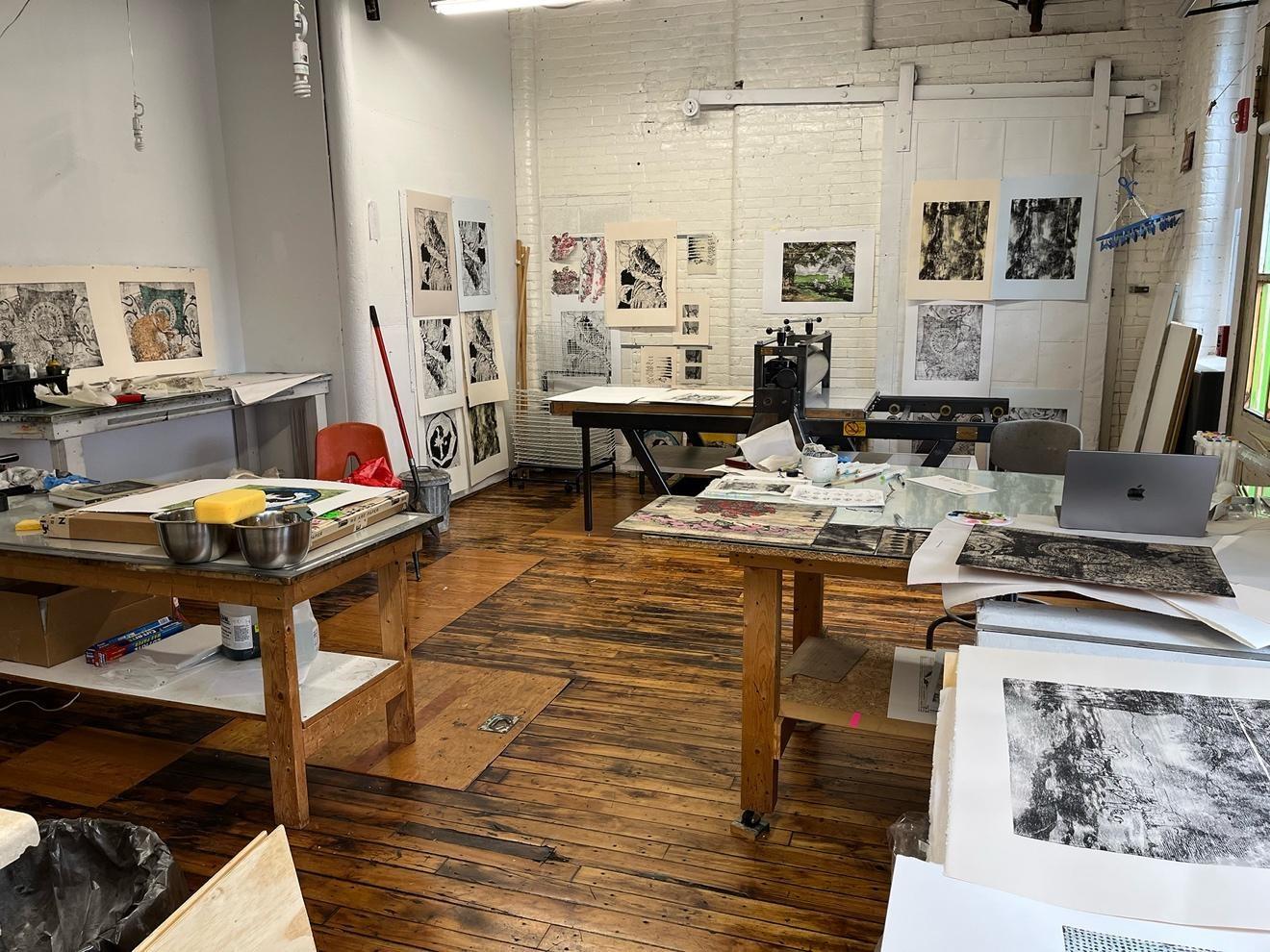
I committed to a residency at Zea Mays Printmaking, giving me dedicatedtimeto research andpracticewood lithography. During the first week I created multiple practice plates andhadsomereasonablecontrol overcraft. Next,I openedmy studio to add research-tutored to my experience, welcoming discussionand critiquefromotherprintmakers(manywhohad no familiarity with wood lithography) who peppered me with excellent questions and insights. The sense of community and self-reflection was integral to moving into my second week of research.
I spent the second week of my residency still experimenting, but also making visual images that could stand on their own. I was really making work that I don’t have time to make and it was freeing. Some of my research will be shown in exhibitions for theylook acceptable, modeling for my students through my summer research process how many artists work: researchbased and research-tutored, culminating in research-led and
Continued on page 25
As summer activities continue but school starts, hopefully you are finding your groove in the new school year. Over the summer we had some fun happenings around our region!
The annual Raku workshop was a success again this year. This workshop takes place on a Friday in June for the wet work, then the following Thursday you return to find your work magically fired and ready for glaze. The next day it becomes a team effort to Raku fire everything. If you didn’t participate this year, it is recommended for all skill levels and takes place every summer in Lyndhurst.
ty of days in a variety of locations in our very large region. We are always open to suggestions for topics, locations or dates!
In June, The Fralin art museum in Charlottesville offered a free workshop for teachers. The museum is located on the UVA campus and works closely with schools in the area. If you missed the workshop this past June, look them up for future opportunities. We will try to include some of their upcoming events that might interest art teachers in our regional emails as well.
If you missed the email, you might not have heard about an exciting new Blue Ridge VAEA art teacher show in Harrisonburg! Thanks to our awesome regional vice president, Emily Quesenberry, we have been accepted by the Arts Council of the Valley to exhibit our personal work next spring. Reach out to a regional board member if you want to participate, because sign up deadlines are coming up soon. Even if you are not including art in the show, we hope you will come out and see the work displayed April 2025.
Please join us at our workshop this fall before the conference. We usually take this opportunity to make some regional pins to hand out at the conference.
Remember at all of the workshops our region offers, you earn recertification points. We put our state funds to work making sure we are planning a variety of workshop topics on a varie-
We’ll see everyone soon at the conference in Reston! Make sure to attend the Blue Ridge regional meeting while you are there for door prizes and the latest and greatest regional happenings.
Thank for you all that you do! ■

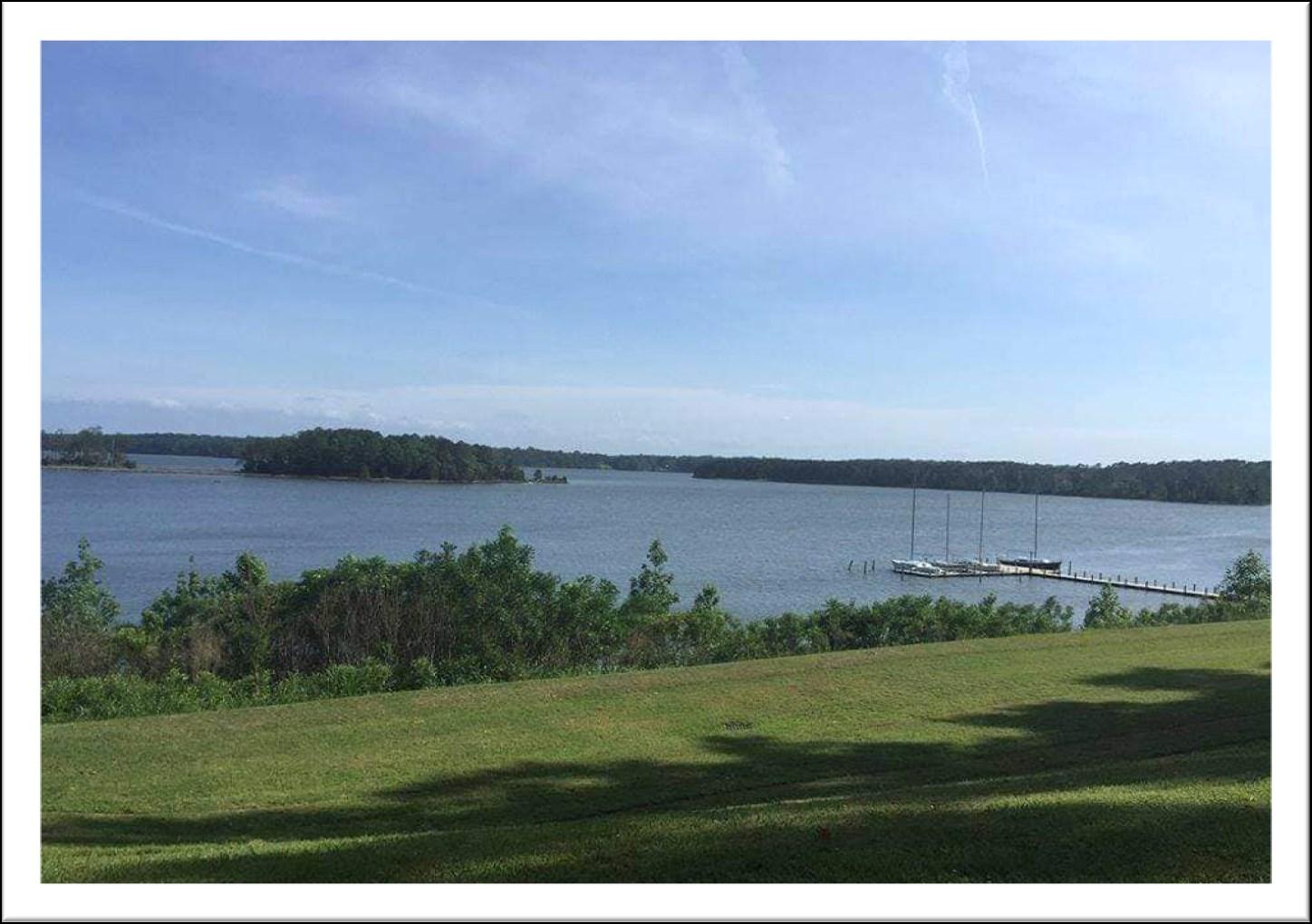

We trust your summer has been filled with refreshing relaxation and inspiring artmaking! Wishing all the best to those getting ready to start the school year!
Keep an eye out for upcoming social gatherings or workshops with the Central Region – you'll hear about them through our social media or newsletter. We have several events in the early planning stages now and will be announcing them soon!
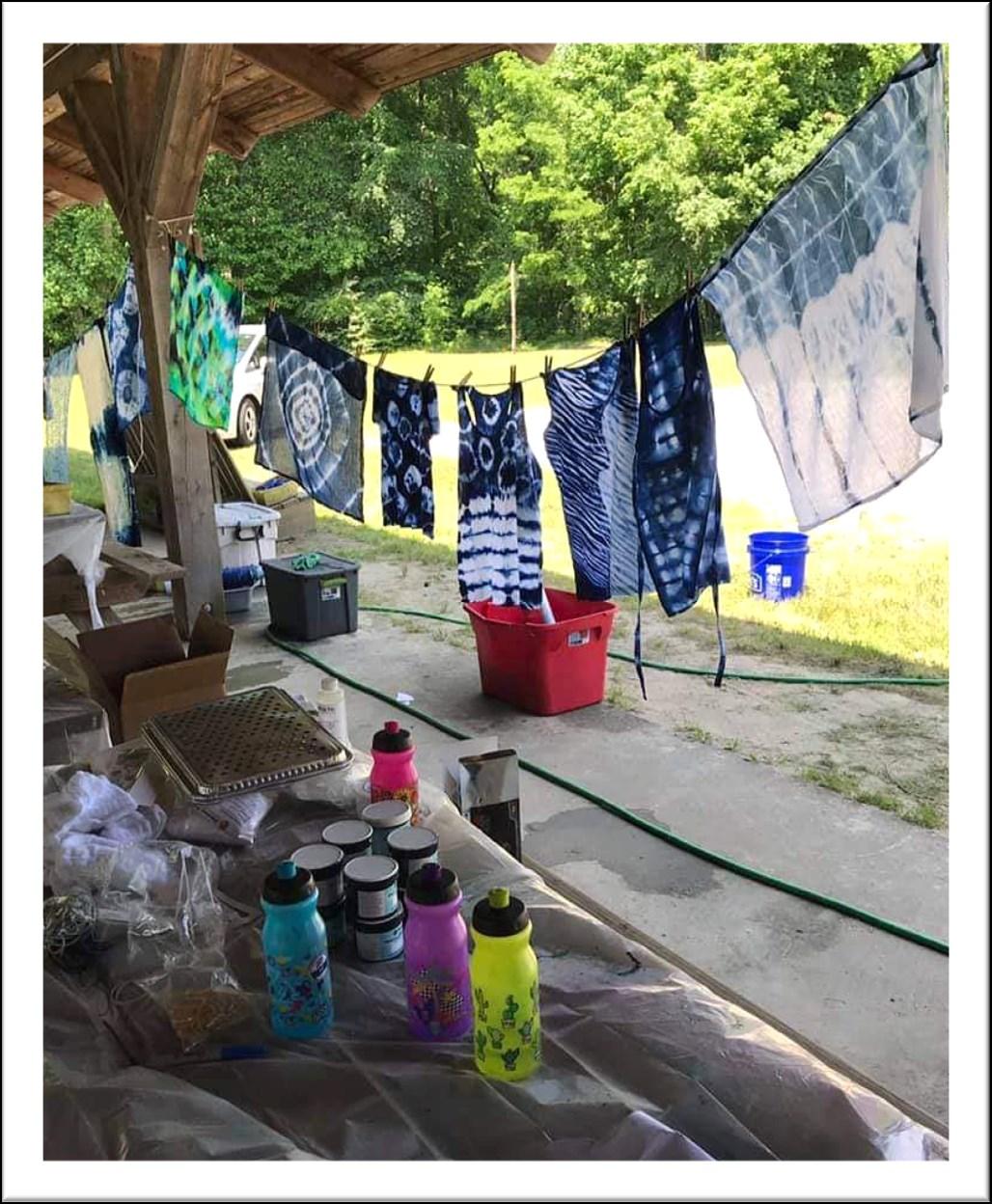
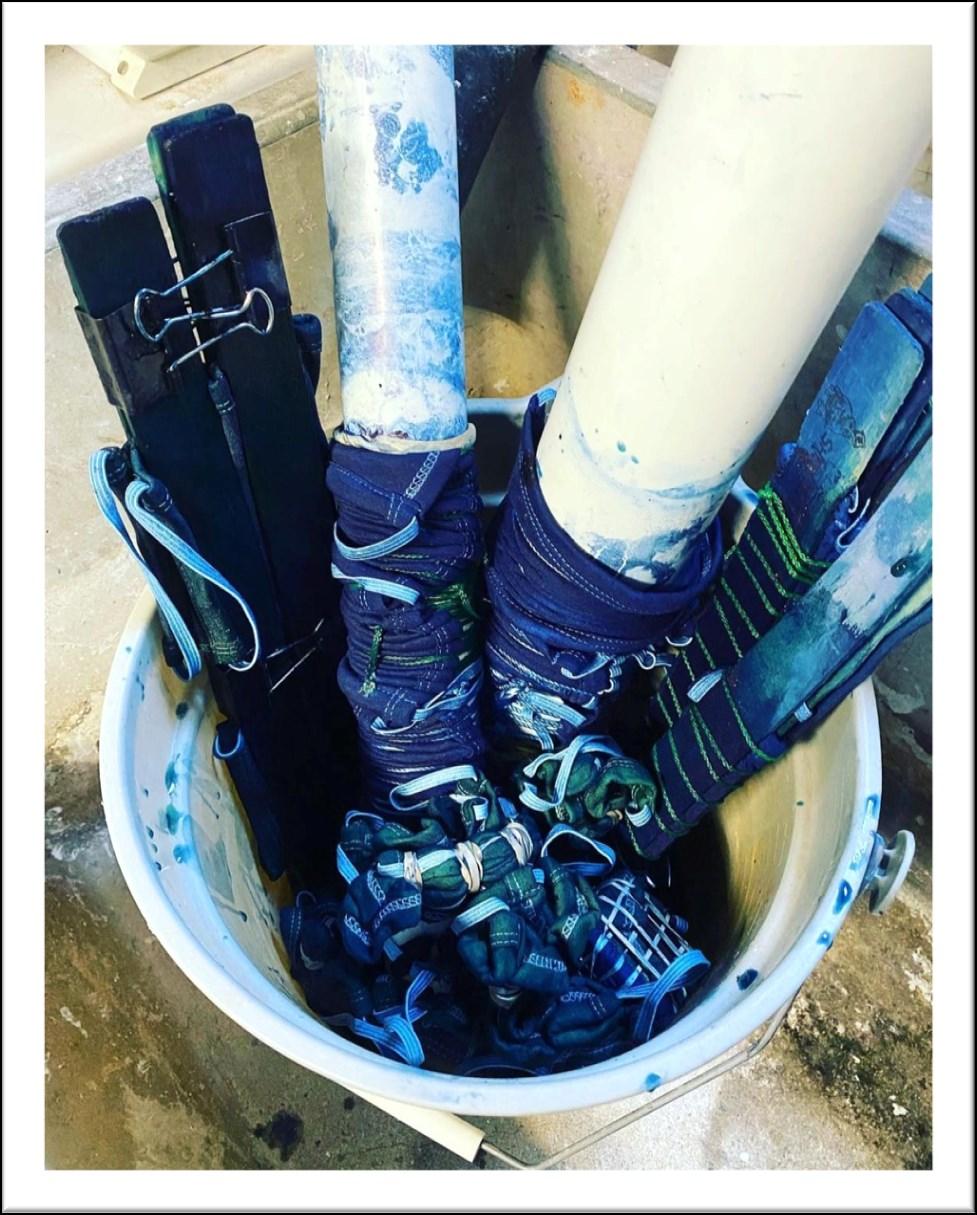
This past April, we were thrilled to bring back a beloved tradition with our Artist Retreat at the beautiful Camp Piankatank, located right on the water in Hartfield, Virginia. The three-day retreat focused on relaxation and exploration with various art workshops featuring needle felting, shibori dying, cyanotypes, and photograph embroidery. The weekend is always a great way to unwind in nature and fellowship with your fellow art educators.
We hope to see you this upcoming November for the VAEA Conference in Reston, Virginia! ■
Greetings from the Northern Region

I’m going to begin with a question, and then explain the reasoning. How was everyone’s start to the year? Have things progressed according to plan? (Silly question, I know. As art educators, things rarely go as planned.) Are you feeling that relief as you once again jumped that hurdle that is “The beginning of the year”? I often say that we educators pay for our summers with the grueling work we need to do at the year’s onset: getting to know our students, establishing routines, and once again showing them who's boss. It’s utterly exhausting, isn’t it? But please take a moment to answer the question in your mind.
The reason for this question is that as I am writing this, it’s still my summer vacation. July is turning into August and I am once again getting that familiar “back to school” pang. You would think after 26 years of teaching, it would lessen. Sadly, no. But along with anxiety comes new possibilities: a renaissance if you will. Perhaps a way to change and improve on methods and projects that I taught in previous years.
Fast forward to the present. We are a month or two in: How are things going? Really take a moment to ponder. This is a great time to reflect and truly look at the good, the bad, and the ugly - indeed we all know there is ugly. But that’s precisely why reflection is so important. It’s not too late to change some things and soften some of the bumps in the road. I find that a great way to do that is to get together with colleagues. Whether they are in your school, your district, or someone from our organization that you haven’t spoken to in a while, find someone, take some time and lean on one another for support. I cannot imagine doing this job alone. But often it feels very lonely. I encourage each of you to make connections when and wherever you can.
If you are indeed feeling lonely, or a little out of touch, please consider joining fellow art educators at
Continued on page 24

Matt Bolen GuestAuthor
SouthwestVAEA welcomes you backfrom awell-deserved summer break. We hope that you find yourself refreshed and ready to return to a class full of color, inspiration, and the occasional (or not so occasional) mess. This is one of our favorite times of year in the Southwest Region as we wind down a summer full of adventure, making memories, and finding inspiration in our abundant rivers, lakes, mountains, and small towns and we begin to look forward to the comingsemester.
There’s always an enthusiasm that accompanies the start of anew school year. The excitementof trying anew room set up. The spark of new ideas. The buzz of improving on old ones. It’s an opportunity for a clean slate, a blank canvas, and a chance to start anew. There is so much to look forward toeachnew schoolyearandArtEducatorsgetthe bestjob in thebuilding.
Last year a fellow educator came to observe my classroom. What I remember most about the discussion that followed was her full smile as she said, “It’s just so nice to hear them laughing.” It occurred to me that not all teachers get to interact with students in the way we do. We get to have fun! Our students get to have fun! It’s easy to overlook when we’re steeped in it all school year, or when things feel chaotic, but it was nice to be reminded that we have a pretty amazing calling and we are truly lucky to get todothisworkevery day.
May this year be one of joy, of inspiration, and of rediscovering a love for the profession (and may your messes be few.)
Connectwithus:
-Instagram:@swvaea
- Email us: SWVAEA@gmail.com ■
Davidson
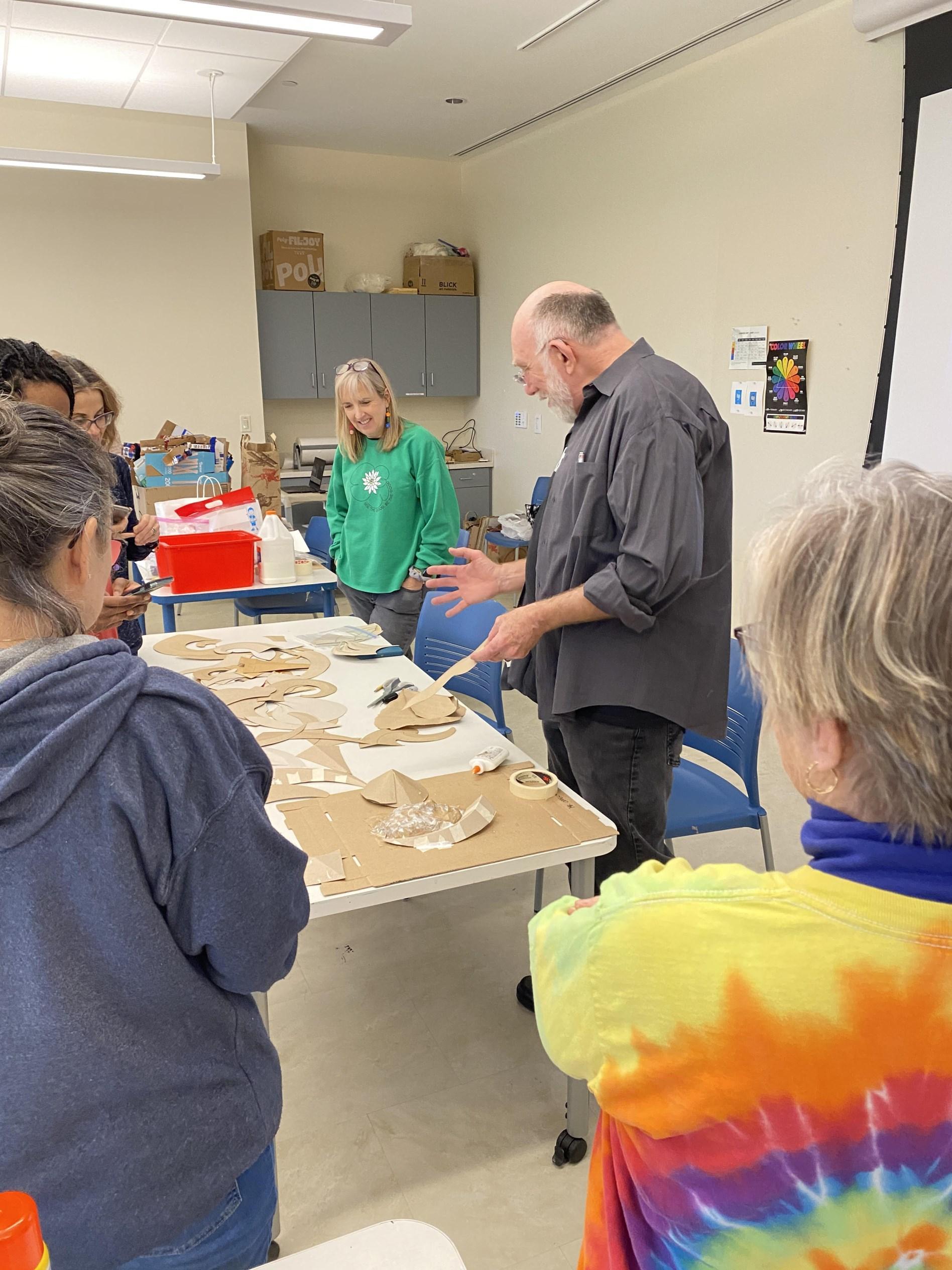
As the summer sun sets on vacation days, a new dawn of artistic exploration rises. TheTidewaterVirginia Art Education Associa-
Kelly Wasson

As you plan for the upcoming school year, utilize Youth Art Month (YAM) to enhance your art curriculum and create a memorable celebration. Prepare for an exciting YAM celebration by understanding its importance in art education and community building. YAM is all about acknowledging art education as a vital component of overall education that shapes global citizens, emphasizing the essential role of art in enhancing quality of life, fostering diverse and critical thinking through art education, introducing and expanding art programs in schools, fostering participation in the arts from students, community groups, and individuals, and offering creative art learning opportunities for all. Here's a simple timeline to help you organize YAM events for the 2024/25 year:
• March: It's Youth Art Month!!! Celbrate students' work and explore ideas for highlighting YAM in the community on the VAEA YAM webpage. Capture these special moments through photography.
Finally, a big thank you to everyone who submitted their Youth Art Month portfolios and reports. You really make Virginia look good! I can't wait to see everyone in Reston! Be sure to visit the YAM table, grab some info, and tell me how I can assist in making your Youth Art Month celebration even better. ■
• Start of School: Discuss the 2025 YAM Theme "Healing Through Color" with colleagues and set district goals.
• October: Distribute the YAM Flag Contest Form to students to design the Virginia YAM Flag for display at the NAEA Convention.
• November: Attend the VAEA Conference, November 7-9 in Reston, VA and gather more ideas at the YAM table.
• December: Submit YAM Flag Entries by December 16th.
• January: Reach out to local leaders and legislators to sign the YAM Proclamation/ Endorsement. Plan art shows and media coverage.
• February: Promote YAM events through posters, VIP invitations, and press releases.
our State Conference! VAEA hosts incredible conferences each fall. This year, we, The Northern Region, are the ones hosting!! The VAEA Fall Conference will be held in Reston at the Reston Sheraton on November 79. If you have never attended a conference before, please join us. Flossie Chua from Harvard's Project Zero will be our keynote speaker, and there will be exciting workshops and events. The conference always comes at a time when we could use rejuvenating.
I realize that this reads like a shameless plug for the conference, but I do encourage you to take a moment to reflect on your specific start to the year. If you are struggling, please reach out. If you have some victories, please share. We all need one another in this exciting and crazy career. VAEA has been so good for my mental health. The relationships formed have truly helped me improve as an art teacher. My very best wishes as you move forward through the year. Perhaps I’ll see you in November! ■
Before we retired, summer was a time to travel, relax, regenerate, explore and reflect.
Now, as retirees, we look at summer as just more heat in the days, but also a time for us to remember that we are artists. It is a time to reconnect with those who are still employed teaching and might have more time to share.
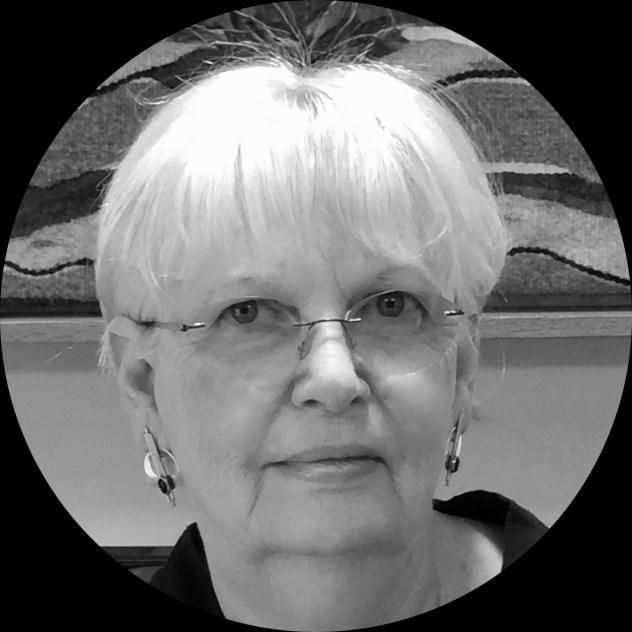
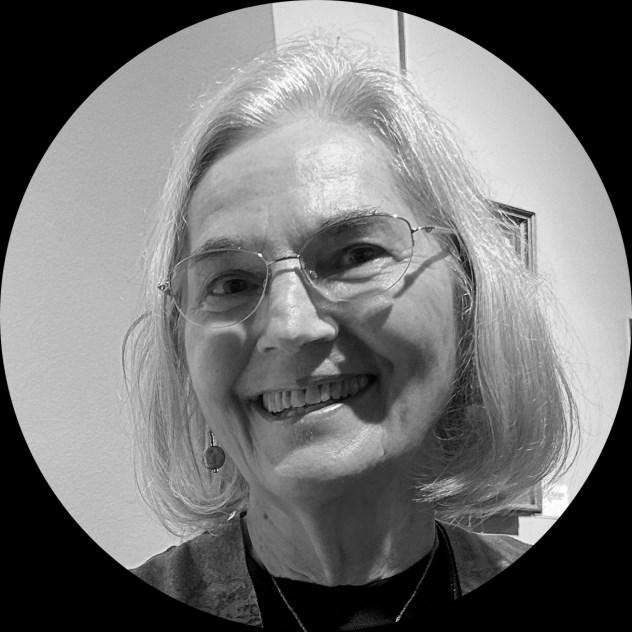
We are looking forward to seeing everyone at the fall conference. Keep in mind that retirees are a fabulous resource for artists visiting your classroom, and for show and tell. We love sharing our skills and experiences. Look for our retiree badge when you attend the conference in November and please come to our retiree meeting.
lage or printing supplies you prefer. After the workshop, enjoy the VIBE District Mural Festival, visit the local Farmer's Market, andtakeadvantageofeasyaccesstotheNeptuneFestival.
As we embark on this new chapter, let's remember the profound impact of art education. Through your guidance, studentswill:
-Sharpencriticalthinkingskills
-Findtheiruniquevoice
-Seetheworldthroughamorecolorfullens
Your passion ignites the spark of creativity in countless students, and your involvement enriches our entire TVAEA community.We'rehonoredtosupportandcollaboratewithyou. Here's to a year of inspiration, growth, endless artistic possibilities,andactivememberparticipation!
StayConnectedandInvolved: -Website:tvaea.square.sites -Facebook:facebook.com/TVaea2016/ -Instagram:@tidewatervaarted - Emailusyoursuggestions: vaeatidewater@gmail.com■
As a final note, even though we are retired we still enjoy looking at the new pens and pencils in the school supply section at the beginning of the school year. ■
research-tutored in the classroom if not some researchorientedandresearch-basedlearning.
What about art historical research? Of course, art historical research can replace art making. I know some art teachers do researchasarthistoriansandtheirabilitytobringthatresearch intothe artclassroom, aswell asmodel how theyintegratethis researchintotheirownartisticlives,isinvaluable.
Once again, I invite you to formalize your art historical and/or visual making research and share it with others, to collaborativelyshapethefutureofarteducation.
CheckoutZeaMaysPrintmaking: https://www.zeamaysprintmaking.com/.
Ansell, Maddalaine and Marshall, Stepanie, “What Does Research-informed Teaching Look Like”, Higher Education Academy,UniversityAlliance, 2016.■
Executive Board
President
Cheryl Miehl cherylmiehl@gmail.com

Past President
Holly Bess Kincaid HollyBess@gmail.com

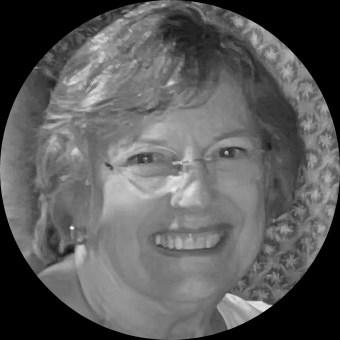
Vice President
Leigh Drake ldrake421@gmail.com
Regional Presidents
Secretary
Angie Salerno angiesalerno85@gmail.com
Treasurer
Scott Russell srussell.arted@gmail.com
Executive
Secretary
Peggy Wood wood.vaea@gmail.com
Exofficio Members

VA Dept.of Education
Kelly Bisogno kelly.bisogno@doe.virginia.gov
VACommissionfortheArts
Lorraine Bruner lorraine.bruner@vca.virginia.gov
Blue Ridge
Melissa Combs melissa.pyles@gmail.com
Central
Alex LaBarr amlabarr95@gmail.com
Northern
Julie Cacciola Jjcatch703@gmail.com
Southwest
Lauren Balint lauren.balint@gmail.com
Tidewater
Rebecca Davidson rannedavidson@gmail.com
Division Representatives

Elementary
Erika Ogier eeogier@gmail.com
Middle School
Kirstie Hein khein@rvaschools.net
Secondary
Tisha Burke tishalou@hotmail.com
Higher Education
Abi Gomez abi@prettygirlpainting.com
Supervision
Amber Hester Amber.Hester@VBSchools.com
Museum Education
Emily Cayton caytone@gmail.com
Preservice Vacant
Committee Chairs & Affiliates

Advocacy
Mike Gettings vaeaadvocacy@gmail.com
Archivist & Social Media
Jessica Beach jessicabeach4@gmail.com
Awards
Meghan Hamm meghan.hamm@djj.virginia.gov
Membership
Patsy Parker p2artkrt@gmail.com
Policy
Barbara Laws Bblaws@verizon.net
Research & Curriculum
Kelly Nelson nelsonkm@longwood.edu
Retired Educators
Ginna Cullen (Co-Chair) ginnacullen@gmail.com
Retired Educators
Carla Jaranson (Co-Chair) carlajean8@gmail.com
D.E.I.A. Vacant

Editor
Sean Collins newsmagazine.vaea@gmail.cOm
Youth Art Month
Kelly Wasson kindlykelly@gmail.com