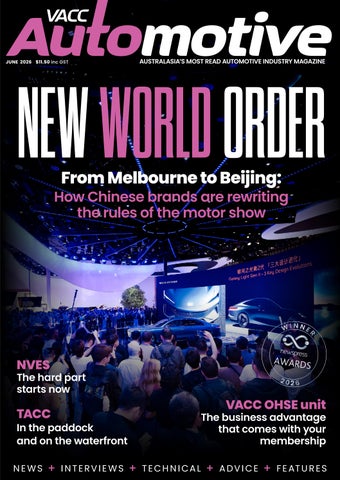
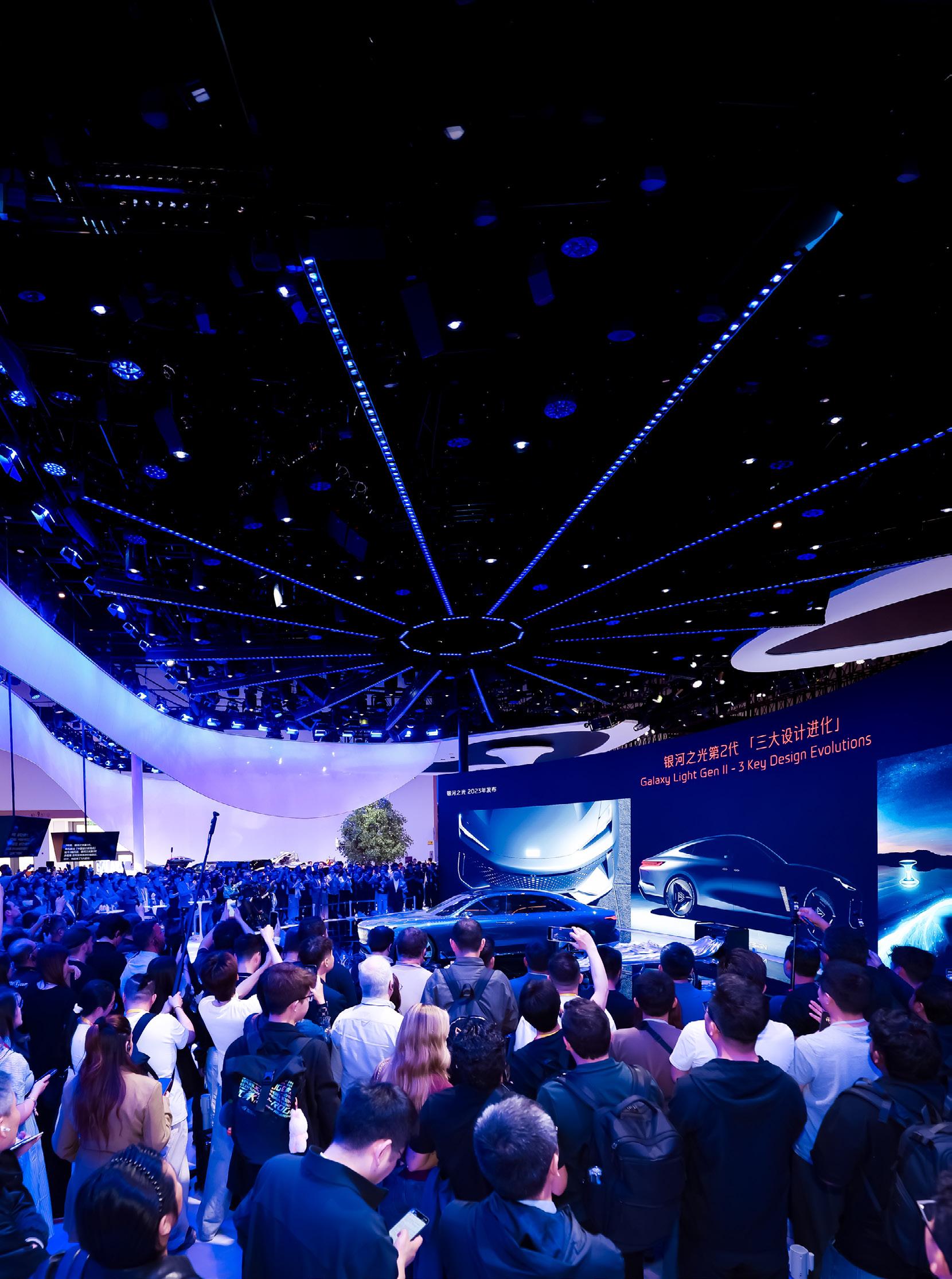
NEW WORLD ORDER
From Melbourne to Beijing:
How Chinese brands are rewriting the rules of the motor show
NVES
The hard part starts now TACC In the paddock and on the waterfront

VACC OHSE unit The business advantage that comes with your membership
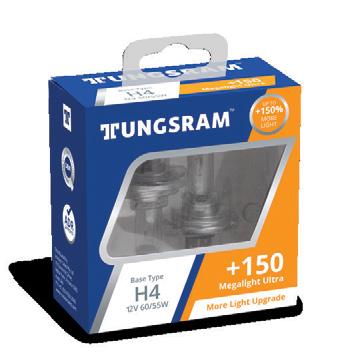
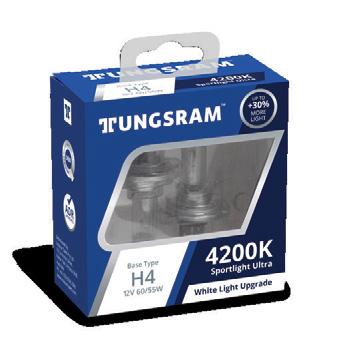
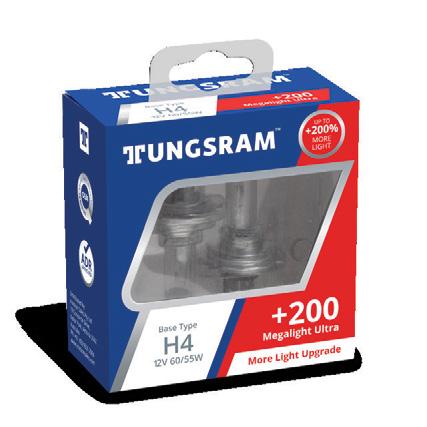
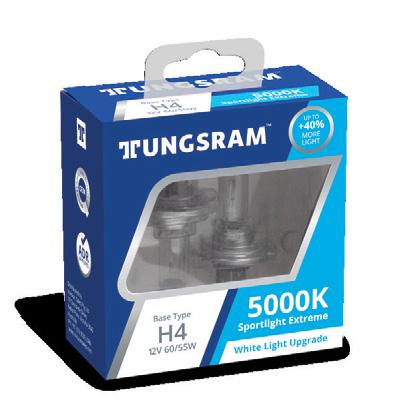
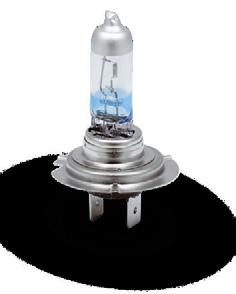
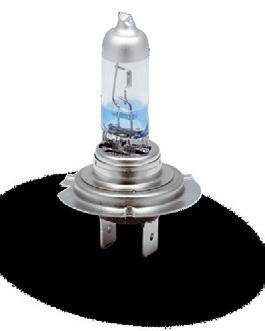
Stand-out retail packaging
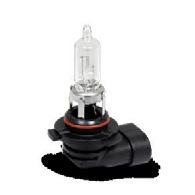
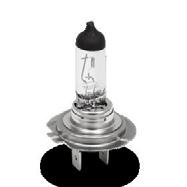
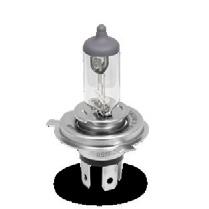
Tungsram’s premium automotive globe range is backed by a comprehensive retail packaging and in-store merchandising program, designed to drive sales. With performance levels from +90% through to the classleading +200% Megalight Ultra and the stylish white light Sportlight options, there’s a headlight for every driver. Backed up with a complete standard replacement range, Tungsram has it covered. For further information on the Tungsram range contact: Invision Sales: Ph: (03) 9336 2066 www.invisionsales.com

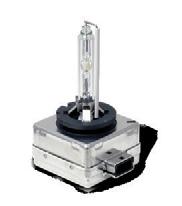
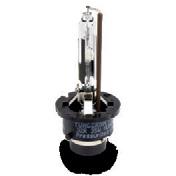





The trusted trade brand
The Tungsram globe range is available in convenient trade boxes and cabinets. The globe cabinets are a stylish design that looks great wherever they are mounted.
The part numbers are clearly identified with their voltage, wattage and base type, making it easy to find the right globe.
42
VACC OHSE Unit The business advantage that comes with your membership
16 VIC Budget Update
VACC has delivered a comprehensive
The first New Vehicle Efficiency Standard (NVES) results are in, and the industry passed with room to spare.
This edition of VACC Automotive magazine comes with a special sense of pride, following the publication being named Best Custom Publication at the annual Newspress Australia Awards.
The award is a recognition of the people and stories that make this magazine what it is — our members. Every edition is created for members and about members, showcasing the businesses, people and issues shaping Victoria and Tasmania’s automotive industry.
Thank you to everyone who contributes, shares their story and supports the magazine. This recognition belongs to the entire VACC community.
As always, we welcome your feedback, story ideas and suggestions. Share your thoughts with us at editor@vacc.com.au as we continue delivering important information about our industry and keeping you connected to the automotive sector.
Celebrating the best little garage in town.
Anderson Honouring Australia’s first female garage owner.
37 Motaero
How a Tasmanian workshop is engineering its own future. 42 VACC OHSE Unit
Meet the unit that’s delivering real value and expertise to every VACC member.
47
Melbourne Motor Show
Chinese brands steal the show in 2026.
52
Peter Savige
What Peter Savige’s 26 years tells us about the people who help build an industry.
56
2026 Beijing Auto Show
The global epicentre of automotive innovation.
MANAGING EDITOR
Karla Leach | 03 9829 1247 vaccautomotive@vacc.com.au
SUB-EDITOR Andrew Molloy
DESIGNERS
Perrett | Gavin van Langenberg creativeservices@vacc.com.au
CONTRIBUTORS
John Caine, Andrew Molloy, Mike Sinclair, John Khoury, Bruce McIntosh, Daniel Hodges, Nigel Muller
CORPORATE PARTNERSHIPS
John Eaton | 0407 344 433 jeaton@vacc.com.au
PRESIDENT Craig Beruldsen
CHIEF EXECUTIVE OFFICER
Peter A. Jones
Official publication of the Victorian and Tasmanian Automotive Chambers of Commerce 650 Victoria Street, North Melbourne VIC 3051 03 9829 1111 ABN 63 009 478 209
Your voice,
Supporting you through change
Peter A. Jones Chief Executive Officer, VACC
The automotive industry has never stood still, and neither have the conditions in which you operate. From shifting economic pressures and evolving consumer expectations to changing regulations and rapid technological advancement, the environment for automotive businesses continues to move at pace. At times, those changes can create uncertainty, pressure and disruption.
That is exactly when your Chamber matters most.
Our role is simple but critical: to support, guide and advocate for you—ensuring your voice is heard, your challenges are understood, and your business is positioned to navigate change with confidence. Advocacy is at the core of this work.
When conditions shift, we step forward, engaging with government, contributing to public debate, and representing your interests in the media. This ensures that decisions affecting your business are informed by real-world experience, and that the broader community understands the realities of our industry.
Just as importantly, it ensures you are not navigating these challenges alone.
In periods of uncertainty, clear and practical information becomes essential. Whether it’s explaining regulatory changes, addressing emerging issues, or cutting through misinformation, VACC plays a key role in providing clarity. For both industry and consumers. This helps stabilise the operating environment for your business, giving customers confidence and allowing you to focus on what matters most: delivering quality service and running a successful operation. Our presence in the media is a critical part of this equation.
By acting as a trusted and authoritative voice, we can represent the industry in real time, providing balanced, informed perspectives that reflect the experiences of our members. This not only helps shape public understanding but also reinforces the professionalism and integrity of the automotive sector.
every day
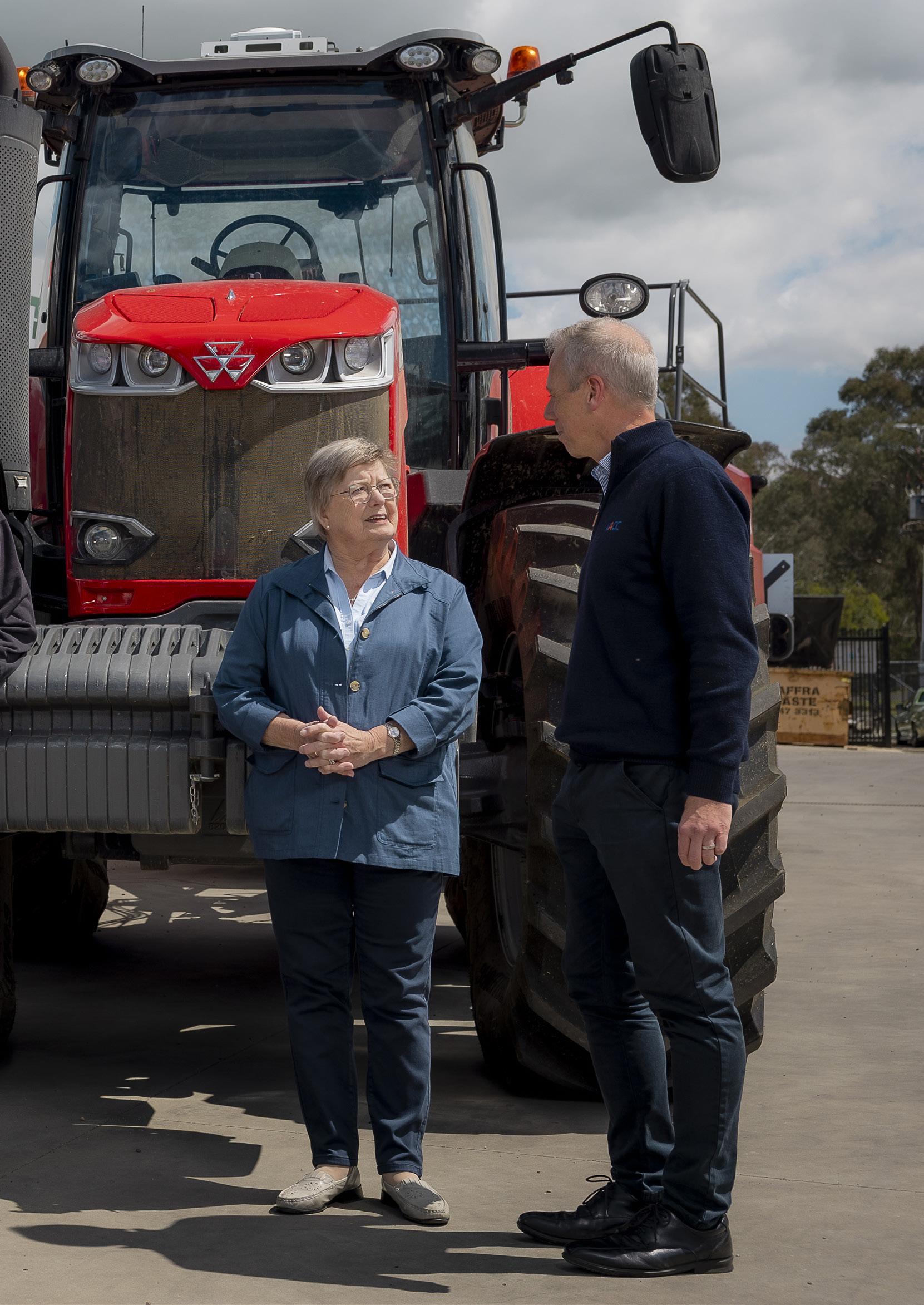
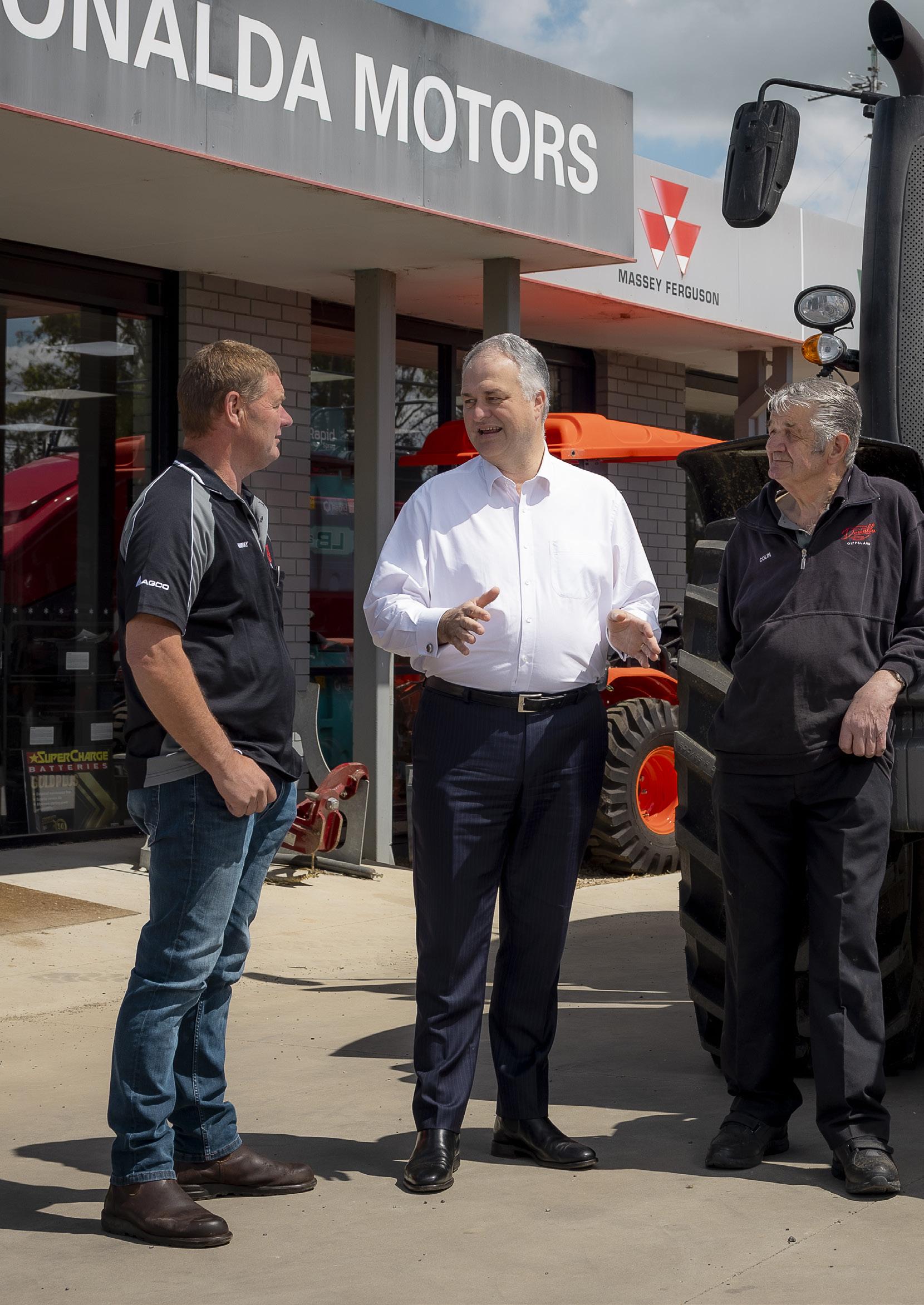
At the same time, our direct engagement with government ensures that your concerns are taken to the highest levels. We work closely with Ministers, departments and key stakeholders to advocate for practical, considered outcomes, whether that’s responding to immediate pressures or shaping longer-term policy settings. This is about more than raising issues; it is about driving solutions that support sustainable, viable businesses across our industry.
Critically, our advocacy is grounded in your experience.
Through our ongoing engagement with members as well as industry divisions and committees, we ensure that what we are saying, in the media or in government, is informed by the realities you face every day. That connection is what gives our voice strength and credibility. It also allows us to respond quickly as conditions change.
In a fast-moving environment, timing matters. Issues can emerge and escalate quickly, and the
ability to respond with clarity and authority is essential. VACC is structured to do exactly that. Ensuring your voice is present in the conversations that shape our industry.
But advocacy is only part of the picture.
We are also here to support and guide you. By providing practical advice, technical resources and industry insights that help you make informed decisions for your business. From navigating regulatory requirements to understanding emerging trends, our focus is on equipping you with the tools and confidence to move forward.
Because ultimately, your success is what drives our industry.
No matter the challenge, you can be confident that the VACC is working behind the scenes and in the spotlight to represent your interests. We are here to stand beside you, to speak up for you, and to help you navigate whatever comes next.
That is what it means to be your voice, every day.
"Our role is simple but critical: to support, guide and advocate for you..."


Premium beam blades engineered for superior windshield contact and high
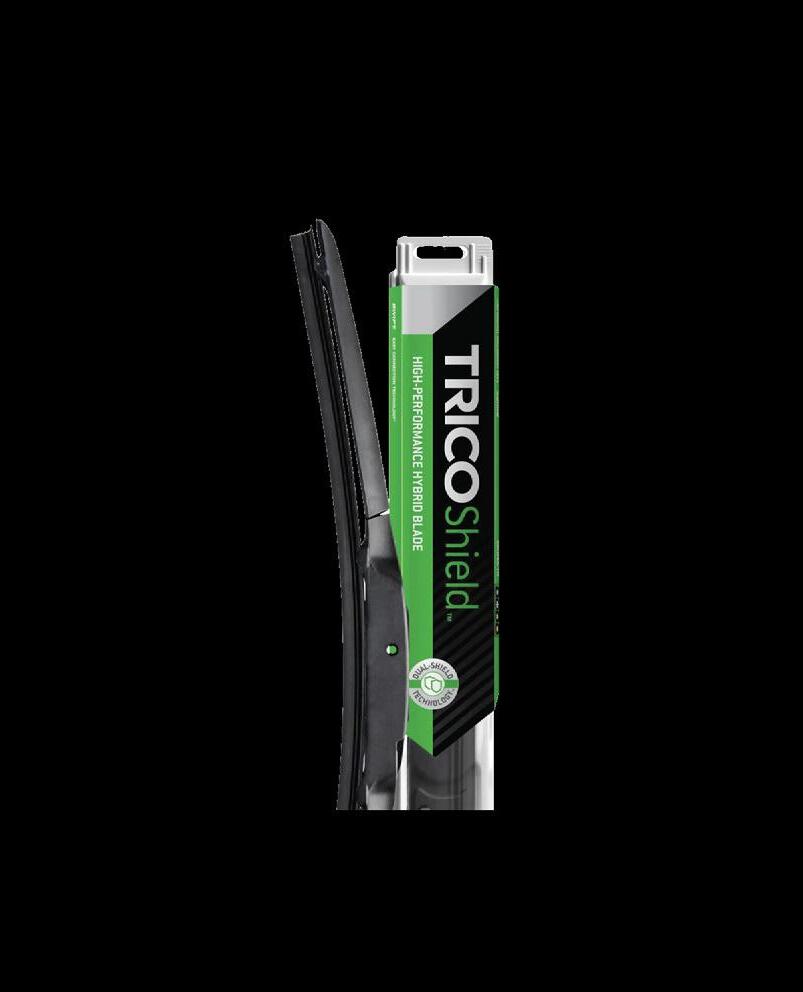
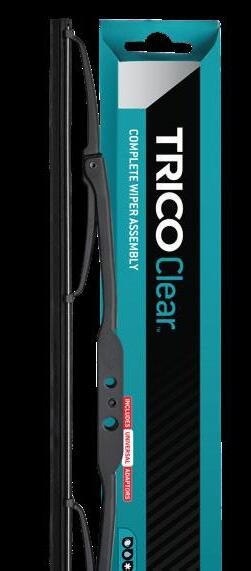
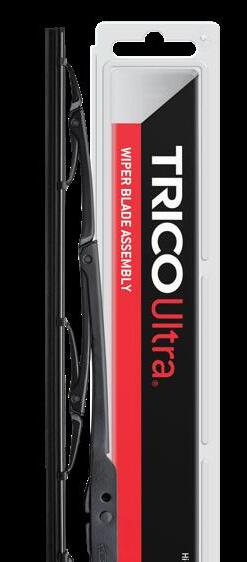
Weather-resistant hybrid wipers for Japanese and Korean vehicles.
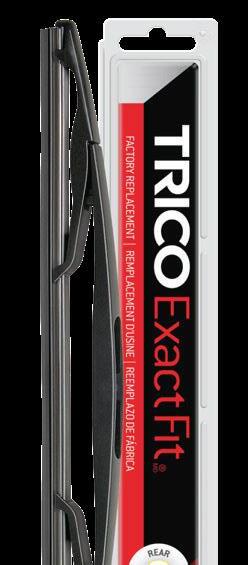
Tailored wipers that ensure a perfect match for your vehicle, maximising ease of installation.
Premium conventional blade that offers flawless performance and exceeds OE
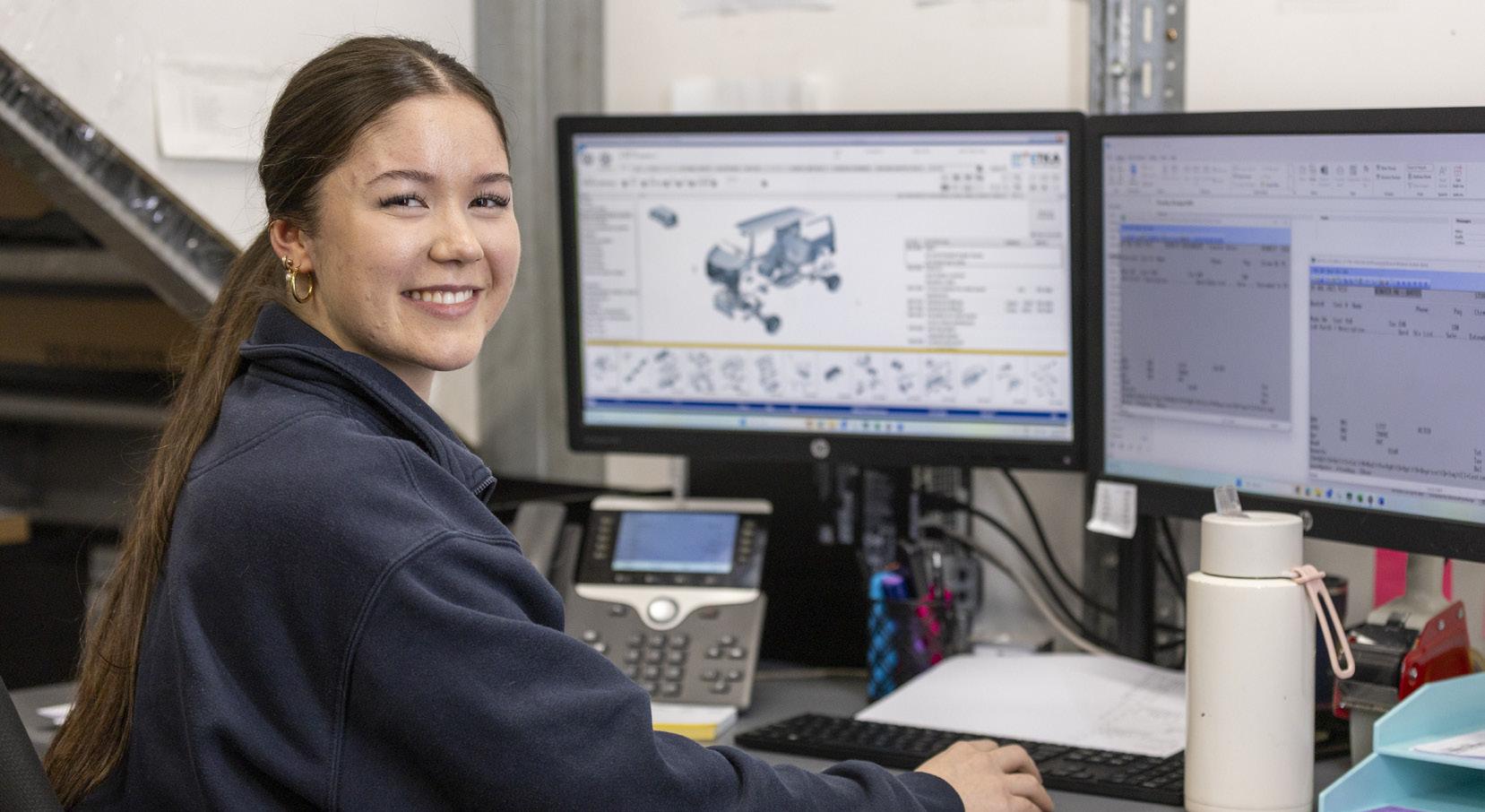
A new era for automotive trades is under way
The automotive industry is in the midst of its most significant transformation in over a century. Electric vehicles are no longer a niche curiosity — they're on our streets, in our driveways, and increasingly, in the workshops of Australia's most forward-thinking technicians. For young people considering a trade career, the timing could hardly be better.
From 2027, VACC Auto Apprenticeships will welcome its first purpose-built Electric Vehicle apprenticeships, marking a landmark moment not just for the state's automotive sector, but for the entire Australian workforce. These new pathways are designed specifically to equip the next generation of technicians with the skills to diagnose, service and repair the high-voltage systems that power modern EVs. This does not mean that the traditional automotive pathways have gone, but signals the transition of the industry to low and zeroemission vehicles. Done correctly, it will enhance mobility across industry sectors without reducing employability.
It's a shift that reflects a broader reality: the role of the automotive technician is evolving rapidly. Where once the job centred on combustion engines and mechanical systems, today's apprentice might find themselves working with sophisticated battery management systems, regenerative braking technology, and advanced driver-assistance software. It's a career that increasingly sits at the intersection of mechanical trade and electrical engineering,
and that's genuinely exciting.
But while the EV spotlight is bright and well deserved, it's worth stepping back to appreciate just how compelling the broader automotive trades landscape is right now. Beyond EVs, the industry is undergoing a technological renaissance. Connected vehicles, hybrid drivetrains, over-the-air software updates, and sophisticated diagnostic platforms have transformed what it means to be a motor mechanic or auto-electrician. For young people who enjoy problemsolving, technology, and working with their hands, it's an industry that offers intellectual stimulation alongside practical, tangible work, and strong employment prospects to boot.
Automotive trades remain among the most resilient in the economy. Cars need servicing regardless of economic cycles, and with Australia's vehicle parc among the largest per capita in the world, skilled technicians are in perennial demand. An automotive qualification today is a career for life, one that can lead to roles in independent workshops, dealerships, fleet management, motorsport, or even vehicle electrification and emerging mobility solutions.
At the forefront of this next chapter is the Victorian Automotive Chamber of Commerce. As Australia's largest employer of automotive apprentices,
VACC is approaching record numbers — a testament to the industry's growing confidence and the organisation's deep commitment to workforce development. With decades of experience placing, training and mentoring apprentices, VACC is uniquely positioned to guide the next generation through what promises to be one of the most dynamic periods in the industry's history. The organisation isn't simply preparing apprentices for the industry as it stands today — it's preparing them for where it's heading.
That's a distinction worth taking seriously. The apprentices coming through our programs right now will be the technicians diagnosing EV battery faults in 2030, training the next cohort in 2035, and possibly running their own businesses well beyond that.
The message for any young person weighing up their options is simple: the automotive industry isn't fading — it's accelerating. The tools are changing, the technology is advancing, and the careers on offer are more varied and more rewarding than ever before.
Whether your interest lies in traditional combustion, hybrid systems, or the cutting edge of full electrification, there has never been a more exciting time to pick up a spanner — or, increasingly, a diagnostic tablet — and get started.
Nigel Muller Membership and Training Contact autoapprenticeships@vacc.com.au
for more information.






Payday Super is almost here
What you need to know
Practical challenges for automotive businesses
For many automotive businesses, particularly small and familyrun operations, Payday Super presents real operational and financial challenges.
VACC, alongside the Motor Trades Association of Australia (MTAA), has continued advocating for a delayed commencement date for small businesses, highlighting concerns about: Business readiness
Rising operating costs
Cash flow pressures, including those linked to the ongoing fuel crisis.
Adding to the challenge is the closure of the Small Business Superannuation Clearing House on 30 June 2026, removing a critical compliance tool relied on by many employers.
Changes to pay cycles — proceed with caution
Some employers may consider moving from weekly to fortnightly payrolls to reduce administrative burden. Employers should be aware that any such change must be lawful and consistent with employment legislation.
For employees covered by modern
Daniel Hodges
Workplace Relations
awards — including the Vehicle Repair, Services and Retail Award 2020 — employers must ensure any change is permitted under the award and genuinely consult with affected employees.
What should members do now?
VACC recommends members begin preparing immediately by:
Reviewing payroll systems and software capability
Checking employee superannuation details for accuracy
Assessing cash flow impacts of more frequent SG payments
Reviewing payroll cycles and administrative processes
Seeking industrial relations advice before changing pay periods
While VACC continues advocating for practical support and transition relief, members should plan on the basis that Payday Super will proceed from 1 July 2026.
Need help?
Members seeking assistance with payroll compliance, award obligations or business readiness are encouraged to contact the VACC
Industrial Relations team on 03 9829 1123 or via ir@vacc.com.au.
Contact ir@vacc.com.au for more information.









False claims can cost more than you think
In Australia's automotive industry, a single misleading statement can unravel years of hard-won customer trust — and land your business in serious legal trouble.
Under the Australian Consumer Law (ACL), businesses are prohibited from engaging in conduct that is false, misleading, or likely to mislead. What catches many operators off guard is that intention is irrelevant. An honest mistake carries the same legal weight as a deliberate misrepresentation.
For automotive businesses — where transactions are high-value, emotionally charged, and highly technical — the risk of inadvertent non-compliance is very real.
Where things go wrong
Most breaches don't stem from dishonesty. They arise from the everyday rush of running a business: advertising copy written in haste, a salesperson who overpromises on a trade-in value, or a website listing that hasn't been updated since last quarter.
The most common pitfalls include guessing at facts rather than verifying them, omitting key details that would change a customer's decision, and using vague or aspirational language that creates the wrong overall impression. Industry jargon is a particular hazard — terminology that's second nature to a mechanic or fleet manager may be genuinely confusing to a retail customer.
Advertising vehicles that are no longer available, or implying an affiliation with a manufacturer or brand that doesn't exist, are further pitfalls that regularly generate complaints.
Promises deserve special scrutiny. Delivery estimates, repair timeframes, fuel efficiency figures, and performance specifications all need to be grounded in solid, defensible evidence. If you make a claim you can't substantiate, you're exposed, regardless of how confident you felt when you made it.
The
claims that carry the highest risk
Certain representations attract particularly scrutiny. Price advertising must be accurate and complete. Drive-away pricing, on-road costs, fees, and charges must all be clearly disclosed upfront, with any conditions or exclusions prominently stated. Burying the fine print doesn't provide the protection many businesses assume it does.
Performance claims — fuel consumption figures, towing capacity, safety ratings, suitability for off-road use — must be supported by evidence and must not be overstated. In an era when consumers can verify claims with a quick search, overreaching in this area is both legally risky and commercially counterproductive. Warranty and consumer guarantee representations remain a persistent problem area. Businesses must not misrepresent a customer's legal rights, suggest those rights are more limited than they actually are, or imply that a paid extended warranty replaces the consumer guarantees that apply automatically under Australian law.
What good compliance actually looks like
Protecting your business doesn't require an elaborate compliance programme, but it does require genuine discipline. Ensure that all information you publish or communicate is current, accurate, and complete. Use plain language, avoid promotional puffery, and consider the overall impression your advertising creates, not just what the fine print says. If the headline message is misleading, a disclaimer in six-point type won't save you. Specific, verifiable claims are far less likely to be misunderstood than broad, sweeping statements. When circumstances change, a vehicle is delayed, a repair takes longer than expected, or a special offer is no longer available, tell your customers promptly. Correcting a misunderstanding early is considerably less costly than defending a dispute later.
The bottom line
Regulators, consumers, and competitors are paying close attention to how automotive businesses represent themselves. The consequences of getting it wrong extend well beyond a fine: enforcement action, reputational damage, and loss of customer confidence can follow a business for years.
Accuracy, clarity, and honesty aren't just legal obligations. In a competitive market, they're a genuine commercial advantage.
John Caine Business and Consumer Affairs Email jcaine@vacc.com.au for consumer affairs guidance.


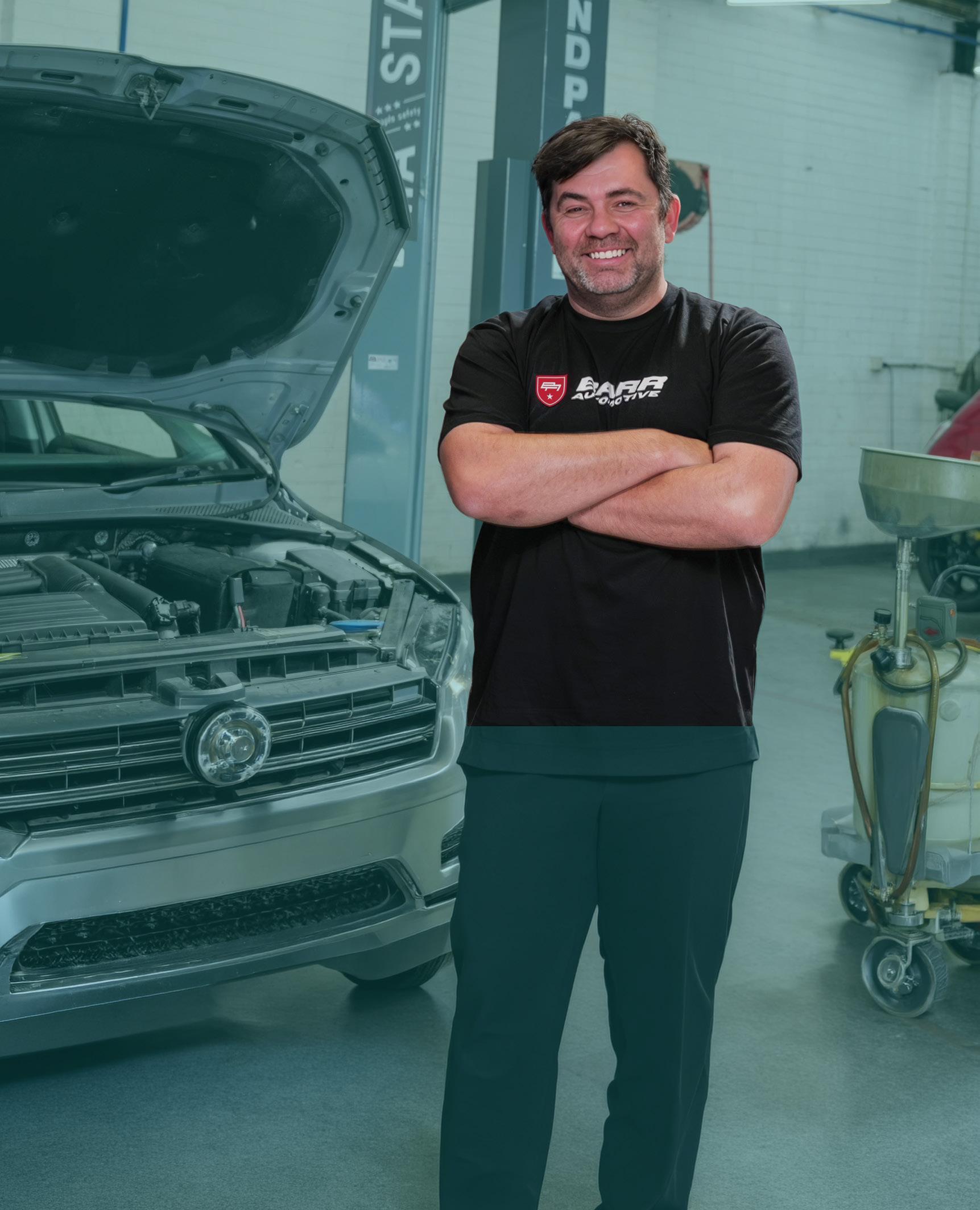
Game changer for us in running our workshop.”
Igor S., Barr Automotive
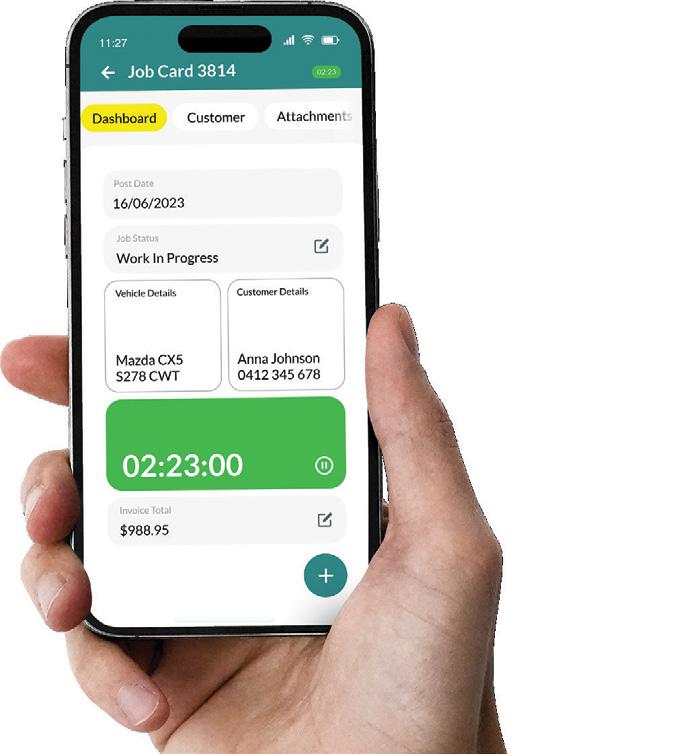
With 3 months free, Workshop Pay, Workshop Data and now Two-Way SMS, Workshop Software has tools to transform how your business operates.

Enhance your workflow with direct integrations.
3 Months Free. Start your trial
Conditions apply
Driving outcomes
Why policy advocacy is delivering real value for automotive businesses
In an industry facing rapid technological change, rising costs, and increasing regulatory pressure, one function continues to quietly shape the future of automotive businesses across Australia: policy advocacy.
Led nationally through collaboration with the Motor Trades Association of Australia (MTAA) and driven locally by the Victorian Automotive Chamber of Commerce (VACC), the policy function is not simply about representation; it is about delivering outcomes that directly impact business viability, productivity, and long-term sustainability.
From industry voice to industry influence
Policy work is often unseen, but its impact is tangible.
Recent advocacy in the accident towing sector is a clear example. Through sustained engagement with government, detailed economic analysis, and realworld evidence from operators, VACC has successfully elevated the issue of under-indexed regulated towing fees, leading to government recognition of cost pressures and progress towards more appropriate pricing frameworks.
Similarly, during the fuel price crisis, VACC has advocated for immediate relief measures, including a proposed temporary fuel levy to help towing operators absorb unprecedented cost increases. These are not abstract policy wins, they go directly to the bottom line of businesses under increasing financial strain. While state-based advocacy delivers targeted outcomes, national collaboration through MTAA ensures automotive businesses are represented in broader reform efforts. A key example is the MTAA submission to Jobs and Skills Australia for the 2026 Occupation Shortage List.
The findings are clear and confronting. Workforce shortages are not easing; they are intensifying. For repair
businesses, this is more than a labour issue, it is a constraint on productivity, profitability, and customer service.
National survey data, including feedback from VACC members, show that vacancy fill rates remain well below sustainable benchmarks, applicant numbers have significantly declined, over 90 per cent of businesses report difficulty recruiting, and many roles take months to fill, or remain unfilled entirely.
Importantly, the submission challenges current government classifications, arguing that roles such as parts interpreters, tyre fitters, and tow truck drivers, often not recognised as being in shortage, are in fact critically undersupplied. This evidence reinforces that the issue is structural, not cyclical. Key recommendations include enhancing training pathways to ensure technicians are job-ready, expanding access to skilled migration, more accurately recognising essential roles, and supporting businesses adjusting to growing vehicle complexity, particularly with the rise of electric vehicles (EVs) and advanced driverassistance systems (ADAS). Getting this right will deliver meaningful outcomes: shorter repair times, improved efficiency, reduced staff burnout, and better customer experiences.
Policy advocacy is also focused on ensuring regulatory settings support, not constrain, business growth. Through MTAA, VACC has contributed to the national response to the Competition and Consumer Amendment (Unfair Trading Practices) Bill 2026, aimed at strengthening protections for small businesses and ensuring fairer commercial practices across the automotive supply chain. Rising insurance costs have also
John Khoury Industry Policy
emerged as a critical threat to business viability. MTAA has lodged a submission to the parliamentary inquiry into small business insurance, highlighting increasing premiums, reduced availability of suitable policies, and coverage increasingly unfit for purpose. For many automotive businesses, insurance is no longer a routine cost; it is becoming a barrier to growth.
At the centre of all effective advocacy is one essential ingredient: member input. Every submission, every policy position, and every engagement with government is strengthened by real-world insights from businesses on the ground. These experiences provide the evidence base that turns industry concerns into compelling policy arguments. Without this input, advocacy lacks the weight to influence decision-makers. With it, the industry speaks with authority. Looking ahead
The automotive industry is entering a period of profound transformation. The transition to electric vehicles, increasing vehicle complexity, workforce challenges, and economic pressures will continue to reshape the sector. In this environment, strong, proactive policy advocacy is not optional; it is essential. Through its work with MTAA and direct engagement with government, VACC is ensuring that the voice of industry is not only heard but also acted upon.
For members, the message is clear: your input matters, your voice is powerful, and when combined through coordinated advocacy, it delivers outcomes that protect and strengthen your business. Because in today’s environment, policy is not just about regulation, it is about securing the future of the automotive industry.
Reach out to policy@vacc.com.au for more detail.





Tasmania's ageing fleet is a road safety crisis hiding in plain sight
Tasmania has long been known for its roads less travelled — but new data suggests those roads are being navigated in vehicles that have no business being the dominant mode of transport in any Australian jurisdiction.
The TACC's April 2026 ministerial briefing paints a sobering picture of a state with the oldest registered vehicle fleet in the country, a worsening road toll, and a newcar market heading in the wrong direction. The question it poses, directly and with some urgency, is whether the Tasmanian government is prepared to act on what the numbers are telling it.
The headline concern is fleet age. Tasmania's passenger vehicles are nearly two years older on average than the national benchmark, and the gap is even wider for light commercial vehicles. With more registered vehicles per capita than any other state, Tasmanians are not only driving older cars — they're driving more of them, relative to population, than anywhere else in the country. That combination has consequences that go well beyond resale values and repair bills. Vehicles that predate modern safety design typically lack autonomous emergency braking, lane departure warning systems, and the structural crash engineering that defines contemporary standards. They are measurably more dangerous
in comparable crash events, and Tasmania's road toll is beginning to reflect that reality in stark terms. The state recorded its highest fatality figure in five years in 2025, sitting well above the decade-long average.
Fleet renewal is the obvious lever, but the market data suggests it isn't being pulled. Tasmania recorded the steepest decline in new vehicle sales of any state or territory in 2025, while the national market grew. With used transactions vastly outnumbering new vehicle purchases, the secondhand market is where most Tasmanians acquire their vehicles, and it's also where the oldest and least safe vehicles change hands with minimal scrutiny.
That scrutiny gap is precisely what needs to change. Tasmania remains one of the few Australian jurisdictions without a mandatory roadworthy inspection at change of ownership, a policy position that looks increasingly difficult to defend against the backdrop of an ageing fleet and a rising road toll. The TACC is advocating for a targeted scheme requiring inspection for any vehicle 20 years or older at the point of sale and registration transfer. Based on current transfer volumes, the additional inspectorate burden
Bruce McIntosh TACC Manager
would be manageable. The safety dividend could be significant.
The EV transition adds another layer of complexity. Nationally, cost-of-living pressures are causing most consumers to hold onto vehicles for longer — a trend that will only compound Tasmania's fleet age problem given the state's lower household incomes and limited fast-charging infrastructure outside the major centres.
Broader incentives, stamp duty concessions for replacing older vehicles, infrastructure investment, and inspectorate capacity-building — all feature in the TACC's recommendations. But the most immediate and actionable step lies squarely with the government: a serious, overdue review of Tasmania's roadworthy inspection framework. The data makes the case clearly enough. An island state with high vehicle dependency, an ageing fleet, and a worsening road toll cannot keep deferring the question of what's on its roads, and whether the rules governing how those vehicles change hands are fit for purpose.
I'd love to hear your thoughts.
You can contact Bruce at enquiries@tacc.com.au


VACC called on the Victorian Government to back industry ahead of 2026-27 Budget
The Victorian Automotive Chamber of Commerce delivered a comprehensive pre-budget submission to the Victorian Treasury, putting the government on notice that the automotive industry needed targeted support to navigate one of the most challenging periods in its history. Representing more than 4,500 members across 15 retail automotive sectors employing over 50,000 Victorians, VACC outlined 14 recommendations spanning regulation, industry investment and taxation reform. The message to government was clear: without meaningful intervention, the structural pressures bearing down on the industry risked undermining small business viability, workforce participation and Victoria's own clean economy ambitions.
A sector under pressure
The backdrop to the submission was an industry facing cost-of-living impacts, regulatory complexity, persistent skills shortages, and the rapid — and expensive — transition to electric and zero-emissions vehicles. These pressures fell disproportionately on small and medium enterprises, which formed the backbone of the sector and had little capacity to absorb ongoing cost increases or to fund the significant capital investment the EV transition demanded. Without targeted government intervention, these challenges risked constraining productivity, weakening regional employment and undermining Victoria's ability to meet its clean economy objectives. The submission reflected the
real-world challenges members faced every day. The submission argued that the government needed to understand what it took to keep essential automotive services operating and accessible to every Victorian community.
Regulation that works
On the regulatory front, VACC pushed for adequate and sustained funding for the Victorian Small Business Commissioner, where underresourcing had left businesses waiting up to 17 weeks for mediation — a delay with serious financial consequences for operators already working on tight margins and diverting valuable time and resources from their core business. The submission also made a strong case for an immediate, independently modelled adjustment
"...without meaningful intervention, the structural pressure bearing down on the industry risk undermining small business viability, workforce participation, and Victoria's own clean economy ambitions."
to regulated accident towing fees in metropolitan Melbourne. The base tow fee had increased by just $89.60 over 16 years, even as fuel, labour, insurance and industrial land costs surged well beyond CPI. VACC argued this was no longer sustainable and that the current fee framework was failing both operators and the public they served. Investing in the future
Workforce development sat at the heart of VACC's investment agenda. The submission called for targeted funding to strengthen apprenticeship commencements and completions, support mature-aged career transition pathways and address the erosion of specialist training in thin markets — disciplines such as motorcycle maintenance, engine reconditioning
and automotive electrical that were quietly disappearing from the training landscape due to funding models that didn't support lowvolume delivery. VACC also urged the government to establish a dedicated EV Transition Support Fund, recognising that dealerships, repairers, collision repairers and towing operators all faced significant capital outlay to service, repair and safely recover electric vehicles. The submission paired this with a call for a subsidised vehicle maintenance scheme to keep the most vulnerable Victorians safe on the road.
A fairer tax environment
The taxation chapter targeted several long-standing anomalies that disadvantaged Victorian automotive businesses. These included land
tax burdens that some members reported had increased by more than 200 per cent since 2018, an outdated duty ruling on dealerfitted accessories that drove consumers toward independent suppliers, the double-taxation effect of Victoria's Super Luxury Duty which had been pushing luxury vehicle sales interstate, and stamp duty settings that continued to act as a handbrake on electric vehicle uptake at a time when the government was trying to accelerate the transition to zero-emissions transport. The full submission and all 14 recommendations are available to download via the QR code on this page.

NVES Year one was the warm-up. The hard part starts now.
The first New Vehicle Efficiency Standard (NVES) results are in, and the industry passed with room to spare. But beneath the headline figures, the data reveals a regulatory mechanism already reshaping which brands win, which dealers carry the pressure, and ultimately, who pays the bill.
“The New Vehicle Efficiency Standard is already influencing the shape of the Australian car parc — and importantly, it’s not happening in isolation. The effects are flowing right through the supply chain, from manufacturers to dealers, and ultimately to consumers,” said Peter Jones, CEO of VACC.
What is NVES — and why does it matter
NVES isn’t something that happens to OEMs in isolation. Its impacts flow downstream — into stock allocation decisions, model availability, dealer margin pressure, and the prices end users see in the showroom.
“For our members, this isn’t just a policy discussion — it’s something they’re seeing play out in real

time through vehicle availability, pricing pressures, and changing customer demand,” Jones said.
In simple terms, NVES sets carbon dioxide targets for every new passenger car and light commercial vehicle entering the Australian market. Brands that beat their targets earn Interim Emissions Value units — a form of credit. Brands that miss their targets accumulate liabilities, and those liabilities come at a cost that must be absorbed somewhere along the chain.
The scheme commenced on January 1, 2025, with penalties accruing from July 1 of the same year. The NVES Regulator published its first performance results in February 2026. While the headline numbers appear positive, the detail tells a more nuanced story.
Easy targets to start
In the first year of the NVES’s operation, 40 of 59 regulated entities beat their emission targets. The industry collectively generated more than 17 million credit units against just 1.2 million in liabilities
— a 14:1 surplus-to-liability ratio.
On the surface, the system appears to be working. But year one was never intended to be a true compliance test — and the results need to be viewed in that context.
The first-year targets were deliberately calibrated as an on-ramp rather than a challenge. EV penetration reached 8.3% of new-vehicle sales in 2025 — only 1.1 percentage points higher than in 2023 — despite more than 100 EV models now available to Australian buyers.
“Year one was always designed as a transition period, so it’s no surprise the industry performed strongly. The real test will come this year as targets tighten and the gap between policy ambition and market reality becomes clearer,” Jones said.
The Australian Electric Vehicle Association described the first year as a rehearsal. The FCAI’s Tony Weber acknowledged the industry met its targets but noted that sustaining compliance as targets tighten will require significantly stronger EV
uptake than current trends suggest. Both observations hold merit. What the data reveals — buried in detailed reporting rather than headline infographics — is a set of competitive dynamics that will define the Australian market through to the end of the decade.
The looming credit war: who holds the cards
Toyota generated a surplus of 2.89 million credit units from 115,504 vehicles in the half-year — overwhelmingly driven by conventional hybrids rather than battery electric vehicles.
For years, Toyota faced criticism for its measured approach to full electrification. NVES has, for now, validated that strategy. No other legacy manufacturer in Australia comes close.
Kia, the next best-positioned traditional brand, sits at 729,698 surplus units — less than a quarter of Toyota’s position.
Then there are the Chinese brands.
Collectively, Chinese-headquartered entities generated 8.67 million surplus units — more than half of all units across the scheme. When combined with Tesla, that share rises to over 60%.
BYD alone banked 6.28 million units across its registered entities. On a pervehicle basis, the difference is stark — BYD generated approximately 159 units per vehicle, compared to Toyota’s 25.
Relatively niche brands such as Zeekr have generated significant credits and, for now, are under no headquarters pressure to bank or even sell the credits. This gives them significant flexibility in product

strategy – especially compared to legacy brands that are set to struggle under the next round of targets.
“What we’re seeing now is a fundamental shift in competitive dynamics. A brand’s position under NVES is becoming just as important as its product lineup or market share — and that has real implications for dealer networks,” Jones said.
The liability side is where the pressure becomes more visible.
Mazda bears the heaviest load among volume brands, while Nissan and Subaru remain structurally dependent on internal combustion engine line-ups. Hyundai sits closer to the threshold, but its position depends heavily on product mix — and that, in turn, is dictated by allocation decisions made months in advance.
NVES credit banking is now a meaningful component of franchise value. Brands with strong reserves have strategic flexibility. Those in deficit face a tightening timeline — and that pressure flows directly into what vehicles are supplied, how they are priced, and the margins dealers are expected to work within. The penalty trajectory is not theoretical
Modelling from Pitcher Partners highlights the scale of what lies ahead. Under optimistic assumptions — a 10% annual reduction in fleet emissions — industry penalties are projected to reach $754 million in 2026, rising to $1.586 billion by 2029.
“This is one of the most significant structural shifts the industry has faced in decades — and how we navigate it now will shape the future of automotive in Australia,” Jones said.
More conservative assumptions, reflecting historical rates of improvement closer to 2.5%, project annual penalties could reach $4.479 billion by 2029, with cumulative penalties exceeding $12.8 billion.
The first half of 2025 generated $109 million in penalties — a relatively modest starting point on what is a steep upward trajectory.
“The scale of the potential penalties highlights just how significant this reform is. It reinforces the need to ensure the transition is workable for businesses across the entire automotive ecosystem — not just at the OEM level,” Jones said.
The accelerant nobody predicted NVES has always positioned EV adoption as the missing variable —
essential to the scheme’s success, yet slow to respond to policy signals. What wasn’t anticipated was the catalyst.
Geopolitical tensions in early 2026 disrupted global fuel supply chains, driving petrol prices sharply higher across Australia. The consumer response was immediate.
EV loan applications doubled in March. Business finance enquiries rose significantly. Showrooms — particularly those representing Chinese brands — reported a surge in demand. By April, battery electric vehicles accounted for nearly 17% of new-car sales. Plug-in hybrids were approaching 10%.
“We’ve seen how quickly consumer behaviour can shift when external pressures like fuel prices come into play. The challenge is ensuring the market
Key NVES dates 2025 to 2029
can respond in a way that is sustainable — both for consumers and for the businesses supporting them,” Jones said.
The timing of this shift is critical. The brands best positioned to capture this surge in demand are those already holding significant NVES credit reserves — further reinforcing their competitive advantage.
Meanwhile, brands carrying liabilities cannot rapidly reshape their product mix. Allocation decisions are locked in well in advance, limiting their ability to respond in the short term.
The fuel shock has transformed NVES from a compliance framework into a live market force.
The 2026 step is not incremental
The 2026 NVES performance period

2025
1 Jul 2025 2025 performance period begins NVES data fields mandatory on the RAV 31 Dec 2025 2025 performance period ends
2026
1 Jan 2026
2026 performance period begins Feb 2026
Issued:
2025 Interim Emissions
Value (IEV) 2025 units
2025 IEVs and unit holdings published
31 Dec 2026
2026 performance period ends
2027
1 Jan 2027
2027 performance period begins Feb 2027
Issued: 2026 IEV 2026 units
2026 IEVs and unit holdings published
31 Dec 2027
2027 performance period ends.
Last day to extinguish units against 2025 FEV
2028
1 Jan 2028
2028 performance period begins Feb 2028
Issued:
2025 FEV
2027 IEV 2027 units
2027 IEVs and unit holdings published
31 Dec 2028
2028 performance period ends.
Last day to extinguish units against 2026 FEV
2029
1 Jan 2029
2029 performance period begins Feb 2029
Issued:
2026 FEV
2028 IEV 2028 units
2028 IEVs and unit holdings published
31 Dec 2029
2029 performance period ends.
Last day to extinguish units against 2027 FEV
Diagram as at June 2025
5,000,000,000
4,500,000,000
4,000,000,000
3,500,000,000
3,000,000,000
2,500,000,000
2,000,000,000
1,500,000,000
1,000,000,000
500,000,000 0
marks a significant step change.
Passenger vehicle emission targets have tightened by 17%, with further reductions locked in through to 2029.
Pitcher Partners equates the 2026 target to approximately 6.0 litres per 100 kilometres — falling to 2.1 litres by 2029. Vehicles without plug-in capability will struggle to meet these thresholds.
“The pace of change over the next few years will be critical. If the settings move faster than the market can realistically adapt, that pressure will inevitably flow through to businesses and consumers,” Jones said.
A statutory review of NVES is scheduled for later in 2026, and its outcome will be pivotal.

“There’s a clear role for government to strike the right balance — supporting emissions reduction while ensuring the policy settings reflect realworld market conditions and consumer behaviour,” he said. What this means if you work in this industry
NVES is not just an OEM compliance exercise. It is already influencing new car allocation decisions, pricing structures, and the mix of vehicles reaching customers — whether you operate a dealership, service centre or fleet business.
“For automotive businesses, understanding NVES is no longer optional. It will influence everything
from the vehicles on the showroom floor to the long-term viability of certain brands in the Australian market,” Jones said.
Three key questions are emerging.
First, what is your OEM’s current NVES position — and what is the plan for the remainder of 2026 and beyond?
Second, how will that position influence vehicle allocation and product mix?
And third, if EV demand remains below the levels assumed by policy settings, who ultimately bears the cost—the OEM, the dealer, or the customer?
Year one of NVES was designed to allow the industry to find its footing. The results look encouraging because they were intended to. The real ramp begins now.
“We’ve seen how quickly consumer behaviour can shift when external pressures like fuel prices come into play."





The best little
GARAGE IN TOWN
Celebrating 90 years of membership
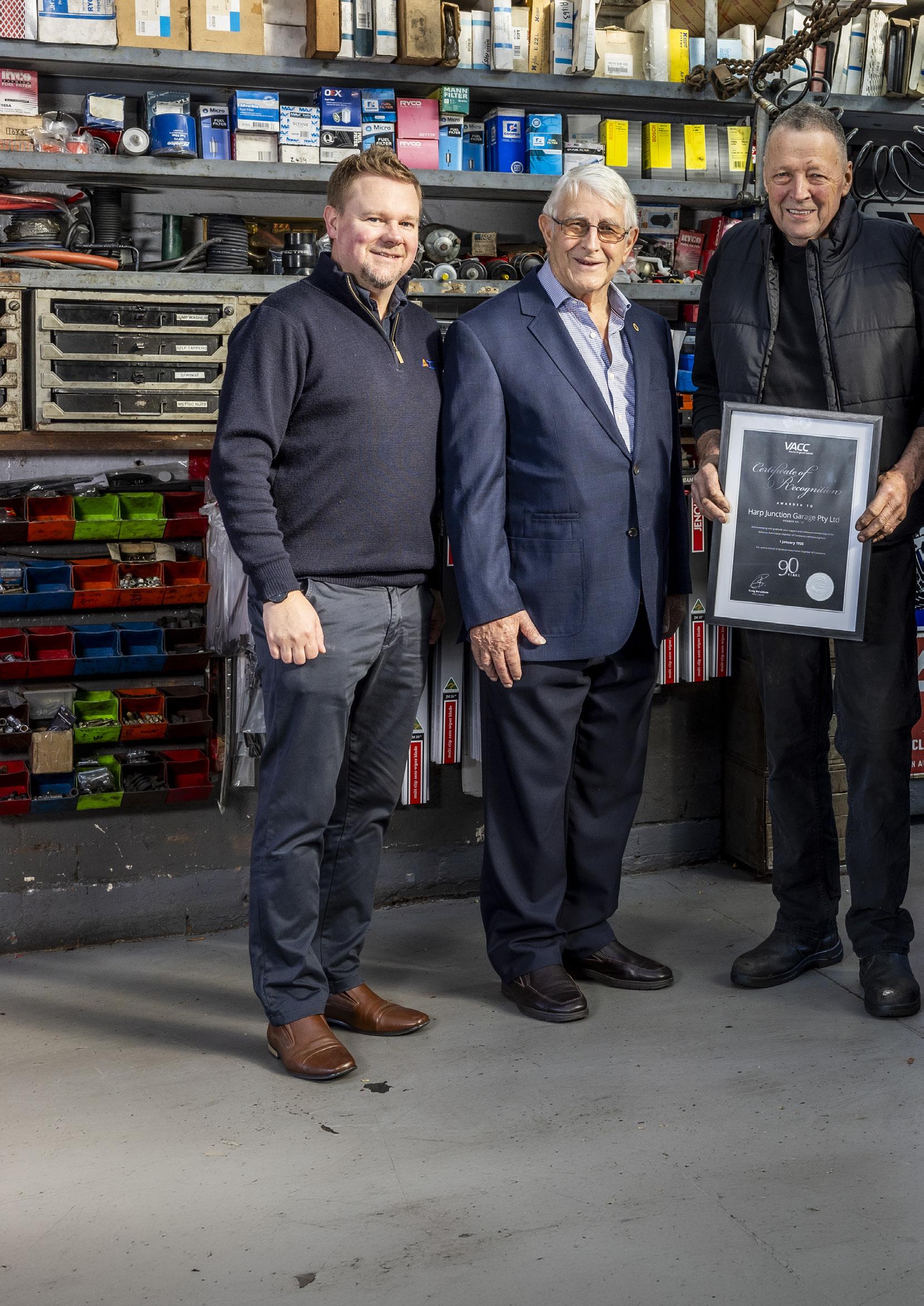
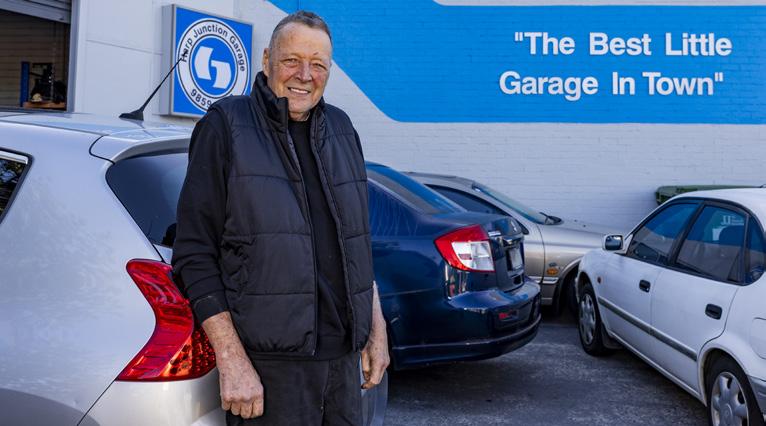
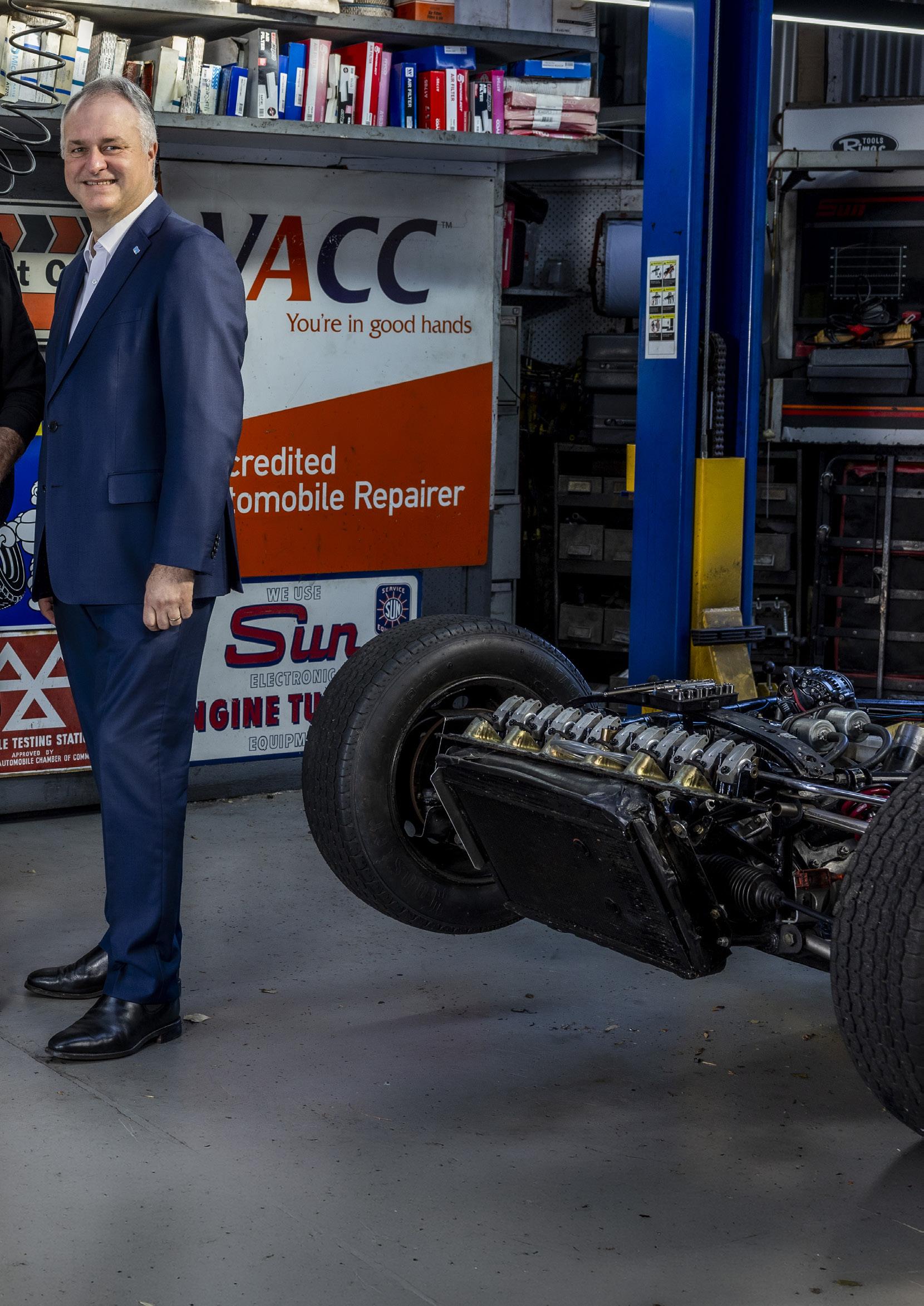
In an industry defined by constant change—new technologies, evolving customer expectations, and shifting business models—longevity is something to be celebrated. For Harp Junction Garage, that longevity is remarkable: 90 years as a member of the Victorian Automotive Chamber of Commerce (VACC), and nearly a century embedded in the fabric of Melbourne’s automotive community.
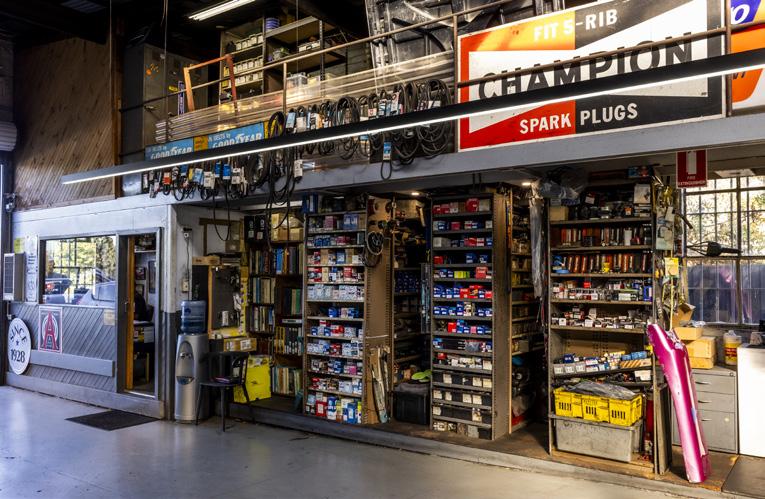
Harp Junction Garage is more than just a workshop, it’s a living piece of automotive history. Its story stretches back to 1928, before evolving through generations of ownership and partnership. By 1960, it was firmly established as a standalone operation, built on values that continue to define it today: craftsmanship and a deep commitment
to doing things the right way.
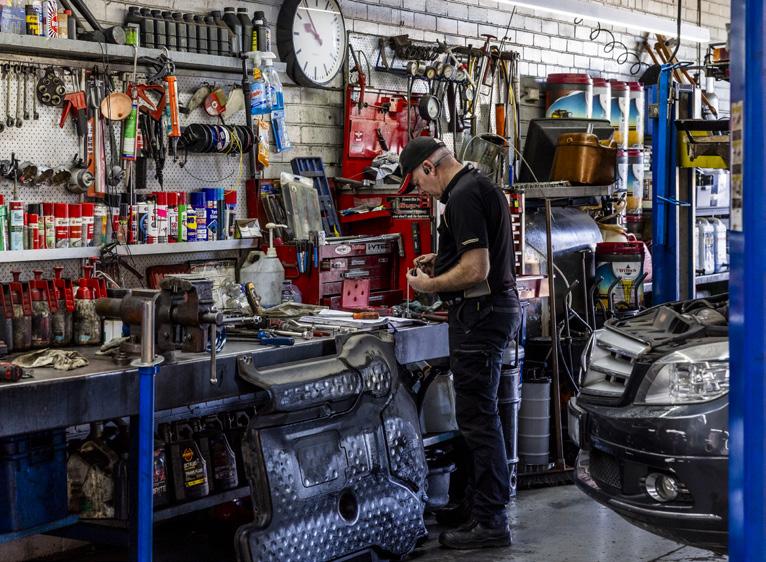
Step inside the workshop and it’s immediately clear this is a place shaped by experience rather than trends. There are no showroom frills—just a practical, well-used space where the focus is firmly on the work, the vehicles, and the people who trust them to get the job done right.
At the centre of it all is owner Allen Borella , whose steady, hands-on approach has guided the business for decades. Alongside him is longterm assistant Trudi Watson, who has been part of the business for more than 30 years. Together with current staff Nikhil Patel and Scott Brindle, they have created a workshop environment built on consistency and genuine relationships with customers, many of whom have been
comingthrough the doors for years.
Allen’s contribution to the industry extends well beyond the workshop floor. Over many years, he has actively given back through his involvement with VACC, including long-standing service on the Automotive Repair Division (ARD) committee. His time on the committee reflects a deep commitment not just to his own business, but to strengthening the broader automotive repair sector and supporting fellow operators across the industry.
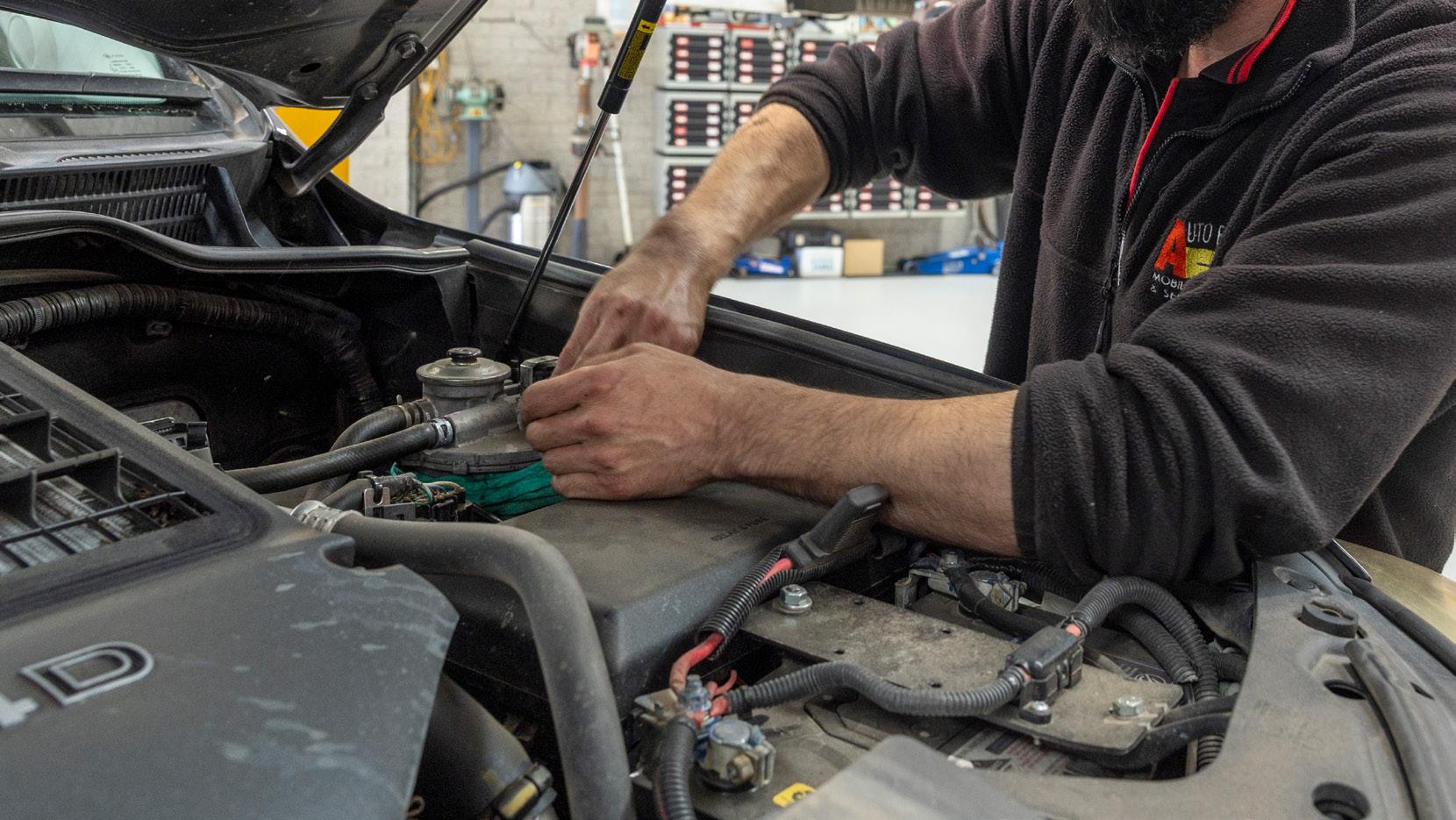
That same sense of responsibility and consistency is evident in the way the business operates day to day. The team takes a straightforward, practical approach—servicing and repairing whatever comes through the workshop, from older vehicles to today’s increasingly complex European models. Over time,
the mix has evolved—from earlier specialisation in brands like Jaguar to now working across Volkswagen, Audi and Mercedes-Benz—mirroring broader changes across the vehicle fleet. Like many independent workshops, Harp Junction has adapted to significant industry change. Modern vehicles require advanced diagnostics, ongoing software updates and increasingly sophisticated tooling, adding layers of complexity to everyday servicing. At the same time, longer manufacturer warranties and shifting consumer behaviours have changed how and when customers engage with independent repairers. Despite these challenges, the business has remained grounded in one core principle: trust. Harp Junction Garage has built its reputation on being
VACC Area Manager Brendan Blakeman, VACC Past President Tony Blake and VACC CEO Peter Jones with Allen Borella celebrating 90 years of VACC membership for Harp Junction Garage.
reliable, transparent and consistent, qualities that continue to resonate with customers navigating an increasingly complex automotive landscape.
Beyond the day-to-day work, the garage has also played an important role in developing the next generation of automotive professionals.
Over the years, Allen and his team have trained around 25 apprentices, many of whom have gone on to build impressive careers within the automotive and engineering sectors. Some have progressed into senior roles with global manufacturers, contributing to major vehicle programs and technical innovation. These outcomes highlight the critical role independent workshops play—not just in servicing vehicles, but in shaping careers and strengthening the broader industry.
The garage’s long-standing connection to VACC has supported that journey.
For 90 years, the Chamber has provided advocacy, resources and industry representation, helping businesses like Harp Junction navigate change while remaining focused on their craft and their customers.
Today, Harp Junction Garage stands as a testament to the enduring strength of independent automotive businesses. It continues to demonstrate the qualities that matter most: skill,and a commitment to doing the job properly.
After 90 years of VACC membership, Allen , and the team at Harp Junction Garage are not just part of the industry’s history, they are a business that continues to give back, support the sector, and play an active role in its future.
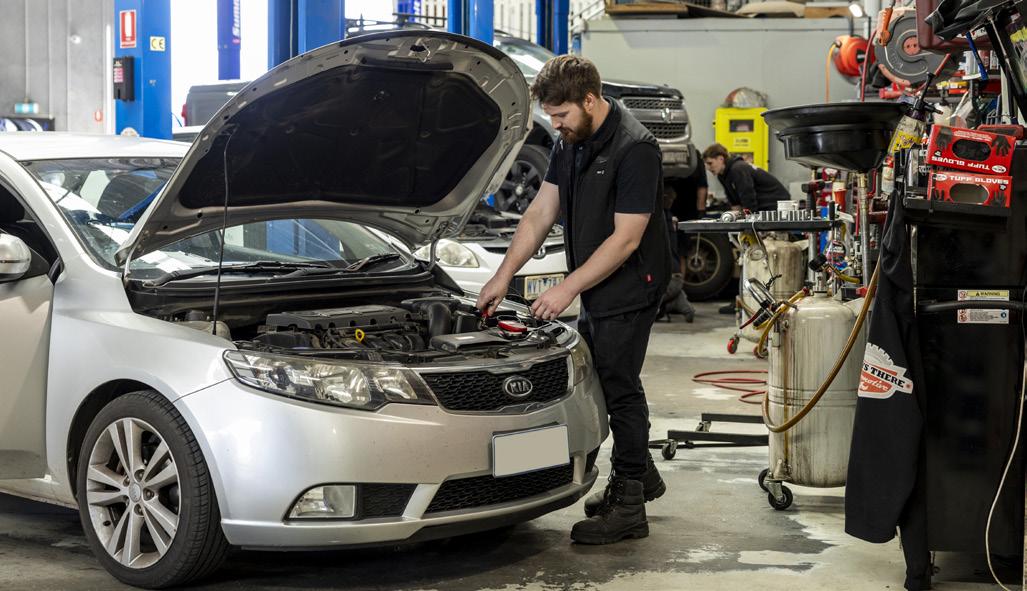
OurAuto Insurance. What is Motor Trade Pack Insurance?

As a business owner, insurance for your assets and operational liabilities is a key consideration to be protected from the unexpected.
For the automotive industry, the standard insurance cover available is generally a Motor Trade Pack policy. This broad insurance solution is designed to help cover businesses for the unique risk exposures faced by the industry.
This type of product provides a packaged policy solution which allows a business to obtain cover based on its individual business needs and specific operational risk requirements.
Whilst Motor Trade Pack policies can vary between different insurers, we’ve created a summary of the typical sections incorporated in a Motor Trade Pack policy for the automotive industry.
Material loss or damage
Designed to help cover physical loss or damage to your business assets (e.g. building, contents and stock), at your premises from certain sudden, unexpected or unforeseen occurrences (Perils e.g. Fire, Storm Damage).
Noting, Flood Cover is typically excluded from standard products.
Business Interruption
Helps cover loss of income to your business as a result of material damage to your property and can assist with additional increased costs of working.
Glass
Helps cover the costs of replacing internal or external glass that is accidentally damaged or broken (e.g. windows including advertising signs).
Burglary
Helps cover loss of your contents and stock due to theft from forcible and violent entry to your premises.
Money
Designed to help cover your business’s money whilst on your premises and in transit.
Public and product liability
If you accidentally injure a third party, such as a client, or damage their property (including vehicles), you may be liable to compensate them for their loss or injury, and any subsequent legal costs incurred.
Customer motor vehicle
Helps cover customer motor vehicles on your property that are damaged or stolen.
Accidental damage cover is also available if an incident occurs when moving a vehicle on your
business premises or even test driving on public roads.
Computer electronic equipment
Helps cover breakdown of electronic equipment at your premises (e.g. photocopiers, computers, POS).
General property (special risks)
Designed to help cover loss or damage to portable property (e.g. laptops).
Tax audit
Helps cover Accountant’s Fees in connection with an audit of your business conducted by the Australian Taxation Office.
Machinery breakdown
Machinery such as hoists are critical to your business. Machinery breakdown insurance can help cover any sudden or unforeseen breakdowns of your equipment that is housed on your business premises.
Professional risks
Designed to help cover costs and expenses arising from incorrect advice (such as incorrect issuing of a road-worthiness certificate).
The VACC have partnered with Marsh to design better packaged policies; fairer pricing and cover that is inclusive of all businesses regardless of size and risk profile.
Marsh has a dedicated Auto broker team, with the expertise to understand your business requirements.
For more information scan the QR code below to learn more.

2026 Automotive Industry Awards
(AIA) finalists have been announced by the Victorian and Tasmanian Automotive Chambers of Commerce.
The awards give hardworking automotive businesses an opportunity to showcase achievements, gain recognition for successes and promote themselves to consumers. All VACC and TACC members were eligible to apply (accredited and non-accredited).
All applicants are thanked for their participation, but only some can be finalists.
Award winners will be revealed at the 2026 Automotive Industry Awards Dinner at Palladium Crown in Melbourne on Saturday 27 June. The next generation, VACC and TACC Automotive Apprenticeships’ award winners and graduating apprentices, will also be celebrated on the night. Hosted by the charismatic Shane Jacobson, the evening promises gourmet dining, captivating entertainment, live music, and dancing — a true celebration of automotive excellence. Don’t miss this chance to celebrate success, inspire your team and connect with industry peers. Mark your calendar for an unforgettable night of recognition and celebration.
For tickets and more information, visit: automotiveindustryawards.com.au
Special thanks to gold sponsor DENSO for its support, as well as AIA category sponsors Officeworks, Exedy, Podium, Sixfam, Shell Card, Commonwealth Bank, Bunnings Trade and table sponsor FedEx. Apprentice award sponsors include CareSuper, SP Tools, Tecalemit, BG Products, Bendix, Apprenticeship Support Australia, Trico, Apprenticeships Victoria and Marsh.
Questions?

President’s Award
Employer of the Year
Always There Automotive
Auto Tech Malvern
Cooper Automotive
Jackson Motor Company
Kate Presnell Bodyworks
Original Engines Co
PJ's Discount Tyre Service
President’s Award
Employee of the Year
Chloe-Emma Hart
Southern Automotive
Darren Gawne
The Mower Shop Seymour
Devon Maxwell
Latrobe & Ulverstone Tyres and More
Hayley Barber
Ballarat Performance Auto Wreckers
Jaak Dixon
Mont Eltham Auto Electrics
Jacqui O’Sullivan Traralgon Automotive Group
Jeremy Coakley Agpower
Lisa Rakintzis
Total Collision Repair
VICTORIA
Best Large Business
Metropolitan
Patterson Cheney
Waverley BMW
Western General Bodyworks
Best Medium Business
Metropolitan Agpower
BM Tech
Garage Apex
Melville Body Works
Original Engines Co
Western Ford
Best Small Business
Metropolitan
Absolute Engine Care
Allpoint Automotive
Alltune Automotive
Auto Tech Canterbury
Auto Tech Malvern
Auto Tech Malvern East
B.M Techniker
Berwick Tyrepower
BM Autowerks
Bosch Car Service Ringwood
Carnegie Automotive
Colombo Motors
Footscray Engine Reconditioning
Lonsdale St Auto Electrics
Moving Motors
Naarm Autohaus
Northern Fleet Care
Peninsula BM
Poly 4X4
Smarter Choice Auto
Street Elite Bodyworks
Super Tek Collision Repairs
The Inspection Bay

Torque Tyres and Automotive
Total Collision Repairs
Transport Certification Services
Yarra Valley Ag
Best Large Business Regional
Arkon Auto Electrical & Instruments
Complete Body Craft
Traralgon Automotive Group
Twin City Truck Centre
Best Small Business Regional
Always There Automotive
Auto Care Ocean Grove
Ballarat Performance
Auto Wreckers
Drive Safe Service Centre Pty Ltd
Geelong Performance Centre
Mansfield Power Ag
Miller Motosports
PJ's Discount Tyre Service
Salters Panel Works Echuca
SL-Tech Diagnostics
The Mower Shop Seymour
Trav's Garage
Ultra Tune Lara
Uptown Bodyworks
TASMANIA
Best Large Business
Tasmania
Cooper Automotive
Jackson Motor Company
Powell Motor Group
Subaru Hobart
Best Small Business
Tasmania
AutoTechnik
Bridgestone Service Centre Huonville
Fatbuilds 4x4
Kate Presnell Bodyworks
Southern Automotive
Tasman Auto Electrics
TJP Auto

New chapter: Meet the woman making history at VACC's Used Car Traders Division
There's a moment in most industries when you notice the generational tide beginning to turn, when the next wave of leaders steps forward, not just to fill seats, but to actively reshape what those seats look like. For the VACC, that moment has arrived in the form of Courtney Youngman.
Courtney has just taken the Chair of the VACC's Used Car Traders Division (UCTD), becoming the first woman to hold the role in the organisation's history. It's a milestone worth pausing on, not simply because of the symbolism, though that matters, but because of what it says about where the industry is heading and the kind of people now stepping up to help lead it there.
She takes over from Peter Saivage, who held the chair role for more than 25 years. That's a remarkable tenure by any measure, and the division owes him considerable credit for the stability and continuity he delivered over that time. Stepping into those shoes is no small thing, but if anyone is ready for it, the evidence suggests it's Courtney. Her path into automotive is one of those stories that could only happen to someone who was simply meant for it. It started with her father, John Youngman, who introduced her to the industry and instilled in her something that has stayed with her ever since, a belief in backing yourself and never underestimating what you're worth. That foundation proved to be everything. Work
experience at Seymour Toyota during high school was supposed to be a brief detour. Two decades later, Courtney runs three businesses as Founder and Managing Director: LMCT Accounts, a specialist automotive bookkeeping firm that now serves more than 100 clients regularly; Ladies of LMCT, a full-service consulting company that handles everything an LMCT holder could need — the name came naturally, because clients kept saying "just call the ladies, they know it all"; and LMCT Auto Solutions, a prestige car dealership trading across a broad price range. She started bookkeeping for dealers in her spare time, but that almost undersells it. What she was really doing was learning the industry from the inside out, dealership by dealership, understanding not just the numbers but the pressures, the quirks, the compliance headaches, and the ambitions that sit behind every motor car trader's ledger. That knowledge is not the kind you acquire in a classroom. You earn it. Courtney is also quick to acknowledge the people who helped shape her along the way. Cameron Doidge, owner of Auto Sales Australia, gave her nearly a decade of formative experience and taught her much of what she knows about the industry. Paul O'Halloran, who now chairs the AADA's equivalent of the UCTD committee, recognised her potential early and put her forward for a position on the division — a pivotal moment in her industry leadership journey. And her former business partner Richard Zalewski, with whom she founded LMCT Accounts, has been a steadfast source of support throughout. Which is perhaps why, when you look at the breadth of her current commitments, including an Accounting degree she's completing in her final year, none of it feels like résumé-padding. It reads as the natural expression of someone who genuinely wants to
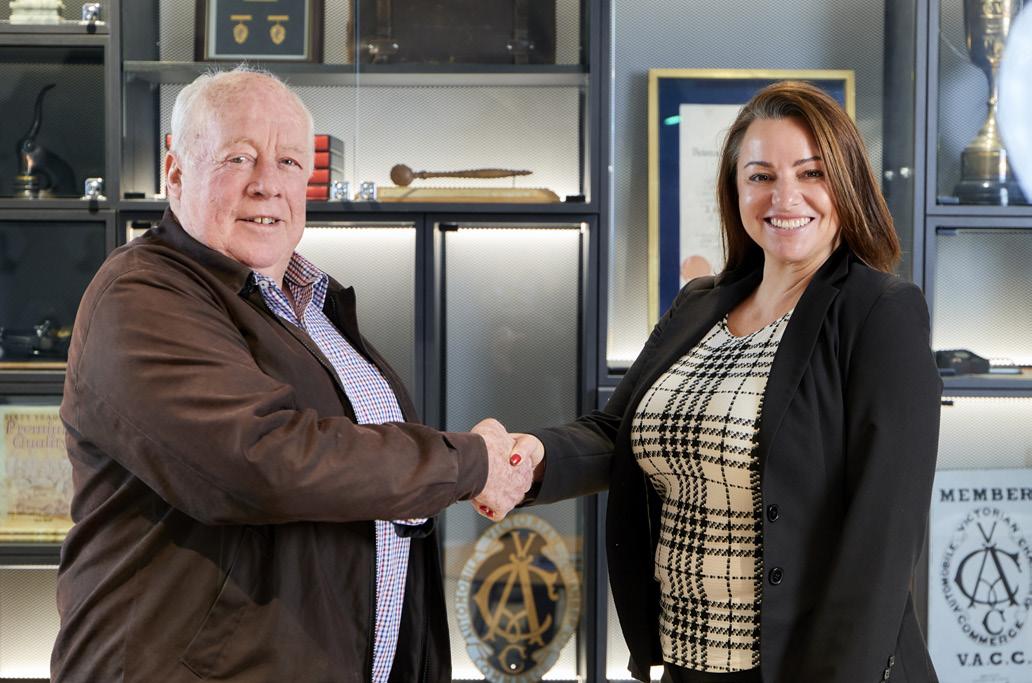
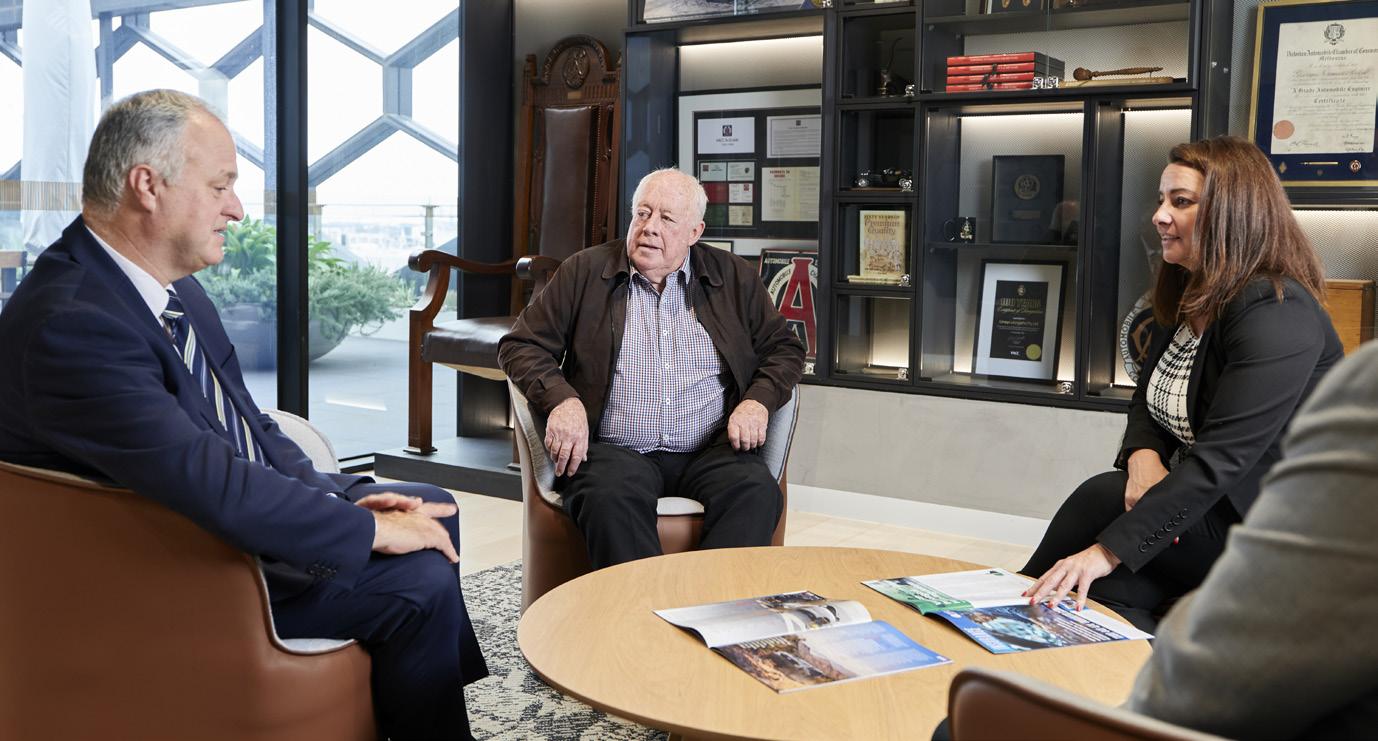
Right: Peter Savige congratulates Courtney Youngman on her new role as Chair of the Used Car Traders Division.
Below: Courtney meets with VACC CEO Peter Jones and Peter Savig.e
understand every dimension of the industry she operates in.
Courtney's appointment to the UCTD chair also reflects a broader and deliberate shift within VACC's committee structure. Across the organisation, a newer generation of members is taking on leadership responsibilities, people who are active business owners and practitioners, not just figureheads. This matters because VACC's committees are not ceremonial bodies. They are the engine rooms through which members distil their concerns into policy positions, advocacy campaigns, and industry standards. The quality of that work depends entirely on the quality of the people willing to put in the time.
It's a point worth making plainly: being a VACC member is valuable, but being an active VACC member, someone who contributes to a division, attends
briefings, and raises hard questions, is where real influence lives. The VACC drives its advocacy work, engages with government, and shapes its positioning on everything from consumer law reform to the EV transition through the expertise of the people sitting around those committee tables.
Courtney is the kind of person who sharpens those conversations.
And the timing is particularly apt. The used car sector is navigating genuine complexity right now.
The electrification of the new-car market is beginning to flow through to used-car stock in ways that dealers are still learning to manage, including new vehicle categories, different service needs, changed consumer expectations, and a compliance environment that hasn't always kept pace. Having a chair who understands both the financial

mechanics and the operational realities of the trade is not a luxury. It's exactly what the division needs.
Courtney's three businesses give her a perspective that few people in the industry can match. She sees the compliance and licensing demands that LMCT holders face daily, the bookkeeping and financial pressures that quietly make or break a dealership, and the retail end of the market where those pressures ultimately play out on the forecourt. That 360-degree view is precisely what a committee chair needs to do the job well.
The VACC's Used Car Traders Division has a new chair. She knows the industry, she knows its numbers, and she's already spent years shaping it. Her father taught her to back herself. The industry is about to see why that lesson stuck.
Honouring a Pioneer

Alice Anderson’s Legacy Lives On
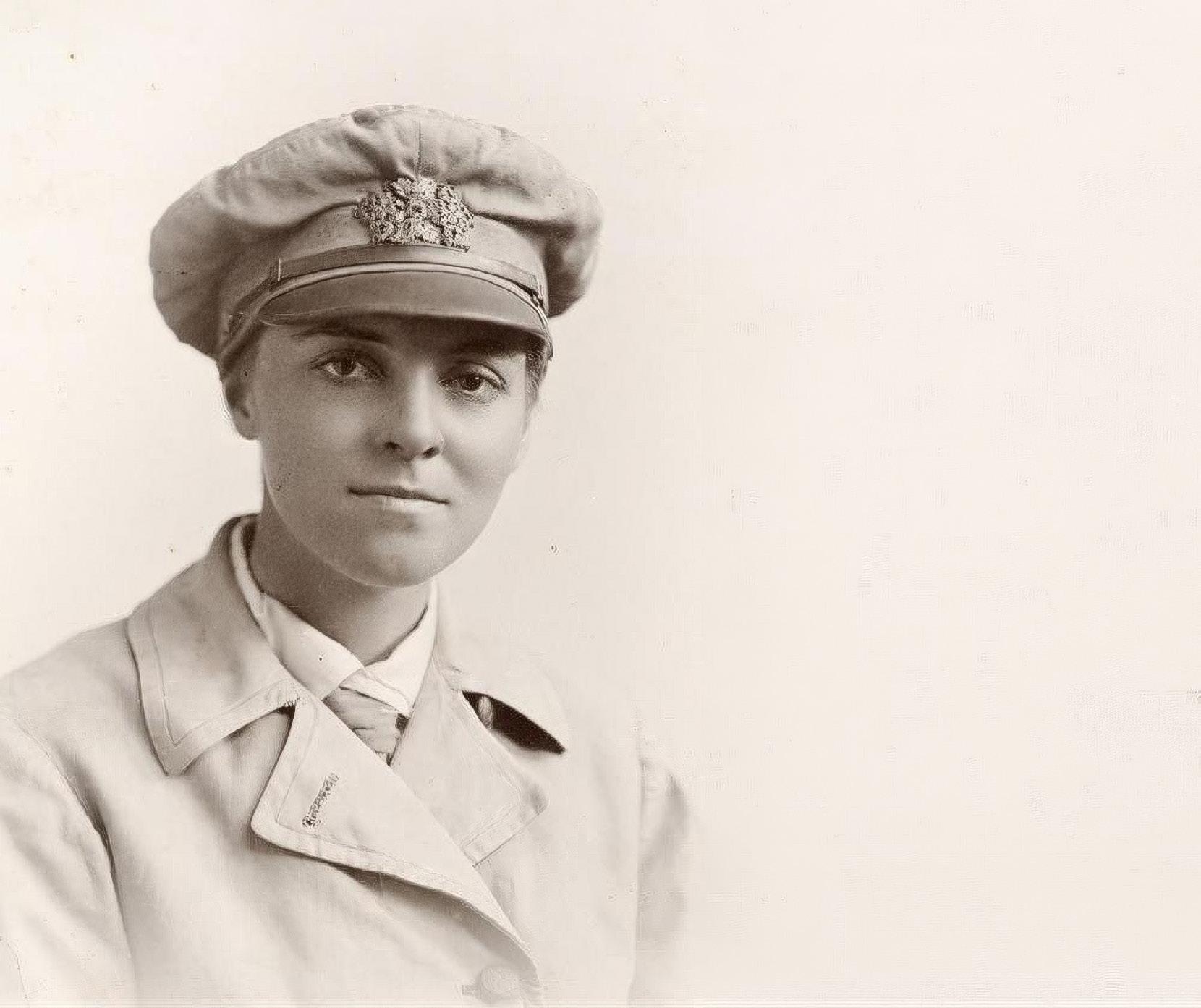
In the early decades of the 20th century, when the automotive industry was still finding its feet and societal expectations for women were firmly defined, one Victorian woman quietly rewrote the rules. Alice Anderson was not just ahead of her time, she helped shape a future that the industry is still working toward today. Born in 1897, Anderson is widely recognised as Australia’s first female motor garage owner. In 1919, she
established an all-women garage in Kew, Melbourne, employing and training women as mechanics, chauffeurs and drivers, an extraordinary achievement in an era when such opportunities were almost unheard of. Her business was more than a commercial venture; it was a statement of capability, ambition and belief in women’s potential within a male-dominated field.
More than a century later, Anderson’s
legacy continues to resonate. It is a story of innovation, resilience and inclusion, values that remain central to the modern automotive industry. It is also a story that, until recently, has not been widely visible in Australia’s public landscape.
In recent years, there has been a growing global effort to recognise the contributions of pioneering women whose achievements were overlooked in their time. Initiatives such as

The New York Times’ “Overlooked” obituary series have sought to correct historical gaps, shining a light on remarkable individuals whose stories were never fully told. Alice Anderson is one such figure. Despite her groundbreaking role in establishing Australia’s first allwomen motor garage, her legacy has largely remained in the shadows. Projects like the Alice Anderson Public Art Project are helping to change that, ensuring her story is not only remembered, but celebrated.
A dedicated group of volunteers has spent more than five years working to bring Anderson’s story back into the spotlight through the Alice Anderson Public Art Project. The initiative aims to install a lifesized bronze statue in Kew, near the site of her original garage, creating a permanent tribute to her life and achievements. Beyond recognising Anderson herself, the project seeks to highlight the broader contribution of women to Australia’s automotive history; past, present and future. The project has steadily built momentum, drawing support from the community, local government and industry. A significant milestone has been the
Victorian Automotive Chamber of Commerce (VACC) committing a significant donation to the initiative, reinforcing both the importance of the project and its alignment with the industry’s future direction.
For VACC, the decision to support the project reflects more than a respect for history. It underscores a commitment to fostering a more inclusive and sustainable automotive workforce. As the industry continues to evolve the need to attract and retain diverse talent has never been greater.
Alice Anderson’s story provides a powerful and authentic foundation for that conversation.
Her garage not only challenged the norms of the time, but actively created pathways for women to build careers in automotive trades. Today, while progress has been made, increasing female participation in the industry remains an ongoing priority. Initiatives like the Alice Anderson Public Art Project help bridge the past and the future, demonstrating that women have always had a place in automotive, and that their role will only grow in the years ahead.
Importantly, the project is also a celebration of community effort. Driven by a passionate team of volunteers, it
stands as a testament to what can be achieved through persistence, advocacy and a shared belief in recognising overlooked histories. Support from the City of Boroondara has further strengthened the project, ensuring that Anderson’s story will be honoured in the very community where it began.
For VACC members, this local connection is particularly meaningful. Supporting the project is not only about commemorating a pioneering figure, it is about acknowledging the people and stories that have shaped the industry at a grassroots level.
As the automotive sector continues to navigate change, stories like Alice Anderson’s serve as a reminder of the industry’s capacity for innovation and adaptation. They also reinforce the importance of ensuring that progress is inclusive and reflective of the diverse communities the industry serves.
When the statue is unveiled in Kew, it will stand as more than a tribute to one woman. It will represent a legacy of courage, a recognition of contribution, and an invitation to future generations to see themselves in the automotive industry.
In that sense, Alice Anderson’s story is not just history—it is a guide for what comes next.
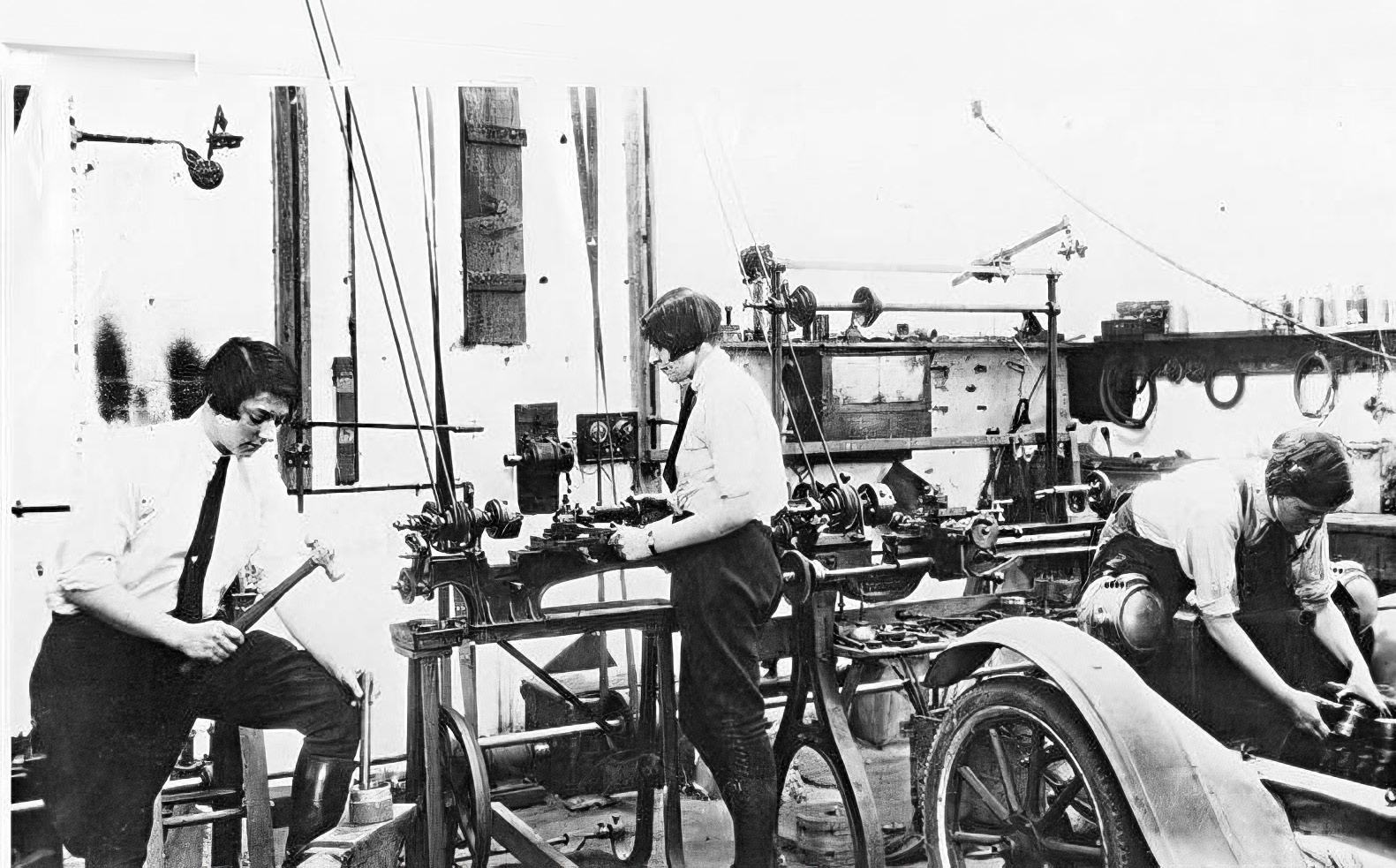
Anderson's "garage girls" at work in the Kew workshop in 1925.
TACC in the paddock and on the waterfront Strong strongerturnout,connections
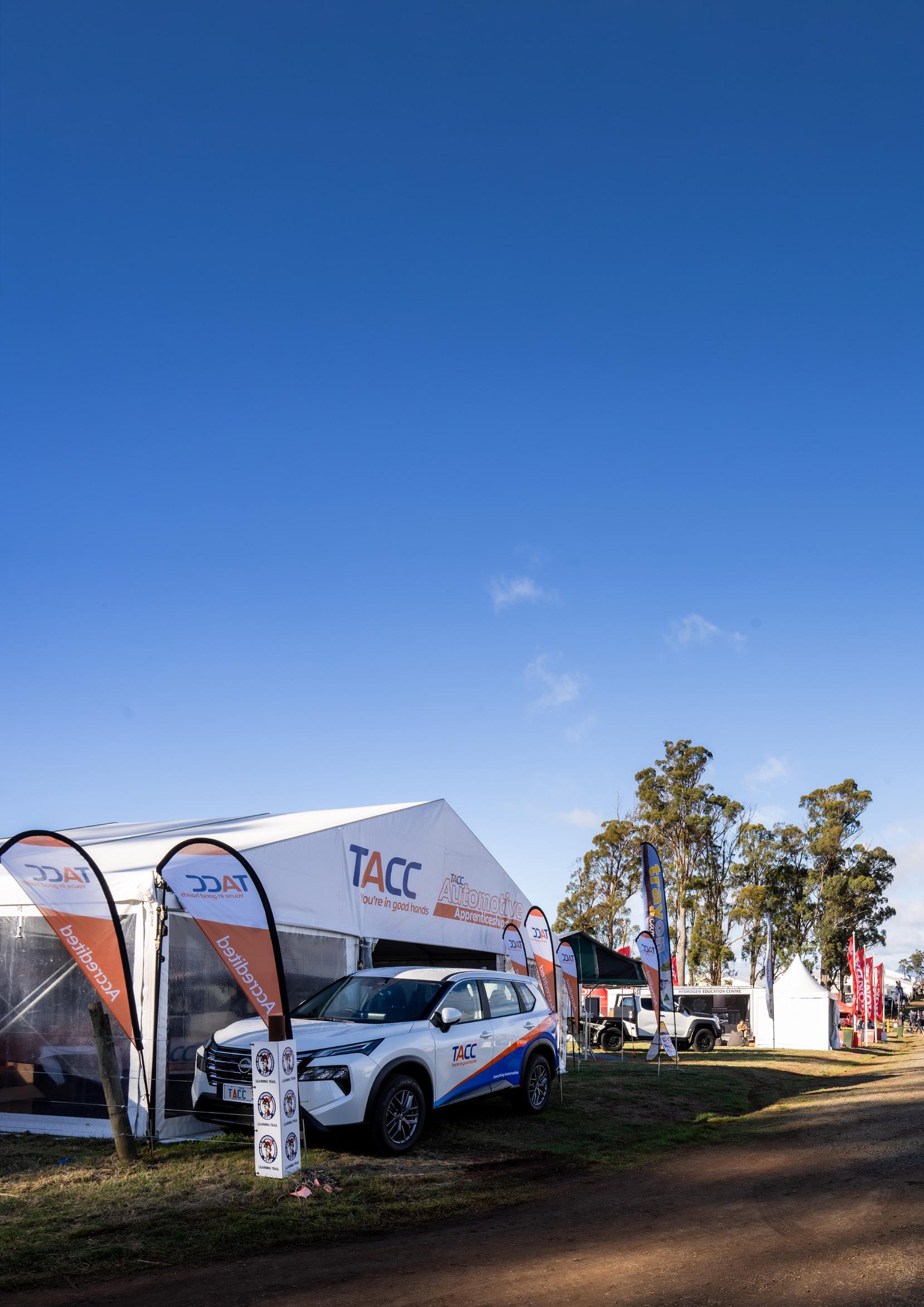
May was another strong reminder that the automotive industry is built on relationships, resilience and community — with VACC and TACC teams out engaging directly with members, industry partners and regional businesses across Tasmania.
From the crowds and conversations at Agfest to a packed Industry Engagement Night at Launceston’s Boathouse Centre, the month showcased the importance of staying connected with members where they live and work.
Held at Quercus Park near Carrick, Agfest once again proved why it remains one of Australia’s premier agricultural field days. The three-day event attracted more than 50,000 visitors, and featured hundreds of exhibitors from across agriculture, transport, machinery, technology and
regional business sectors.
For TACC, Agfest was more than just an event presence, it was an opportunity to hear directly from regional and rural operators about the challenges and opportunities facing their businesses.
Across the site, conversations consistently returned to rising operating costs, workforce shortages, evolving vehicle technology and the increasing importance of keeping regional businesses connected to training and industry support.
The event also reinforced the critical role automotive businesses play in supporting Tasmania. From agricultural machinery and diesel servicing to tyre fitting, towing, transport and general repair work, automotive operators remain essential to keeping Tasmania moving.
Agfest’s unique mix of farmers, families, business owners and suppliers creates an environment where genuine conversations happen naturally, something increasingly valuable in a fastmoving industry landscape.
Beyond the paddock, member engagement kicked-off on May 6 at the Boathouse Centre in Launceston, where another successful Industry Engagement Night brought together members, industry representatives and commercial partners from across Tasmania. The event attracted a strong turnout and provided members with an opportunity to network, share experiences and enjoy some welldeserved time out from their business. These engagement nights continue to grow in popularity because they offer something increasingly important in business, the chance to
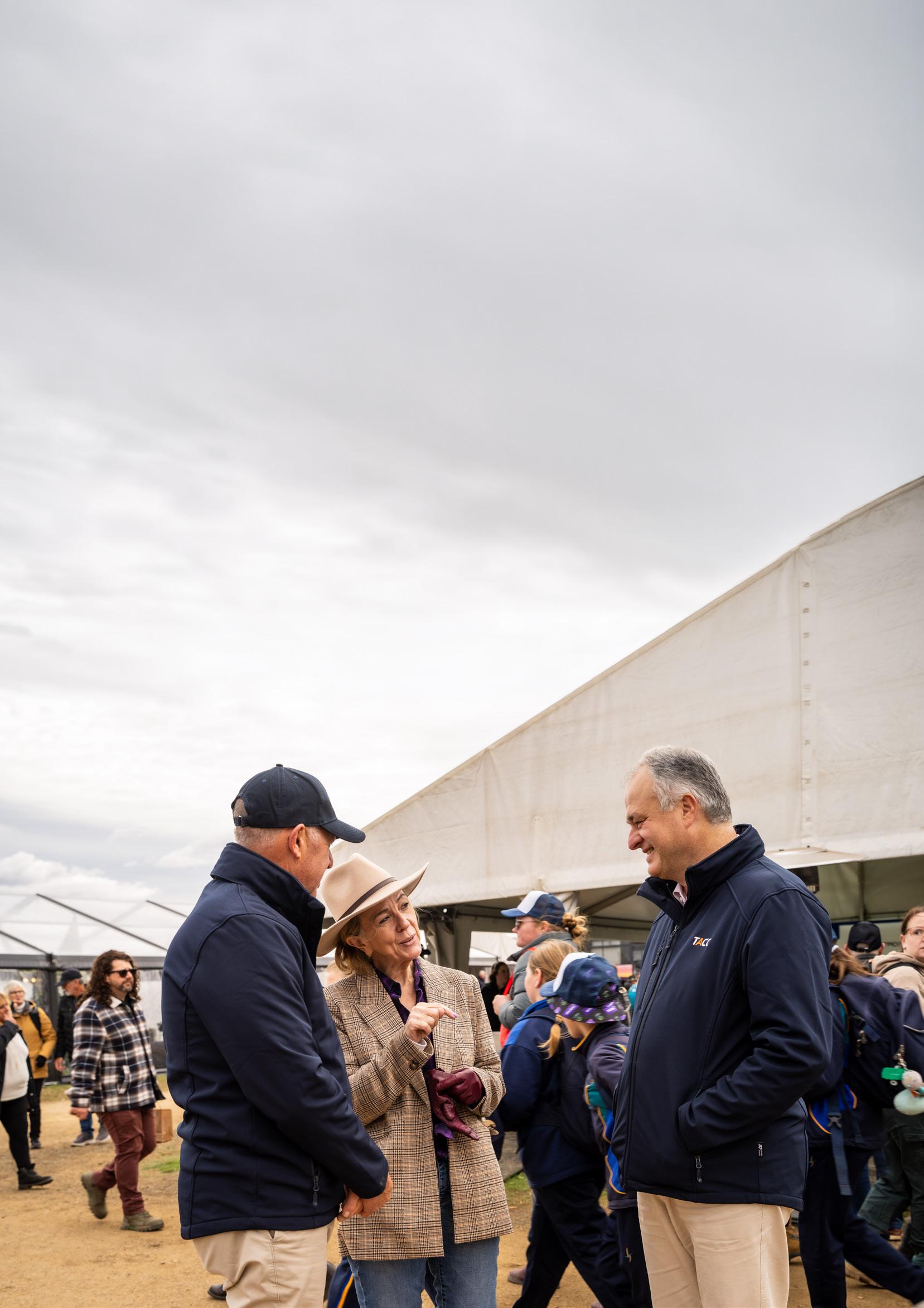
Manager
Bruce McIntosh with Labor Senator Tammy Tyrell
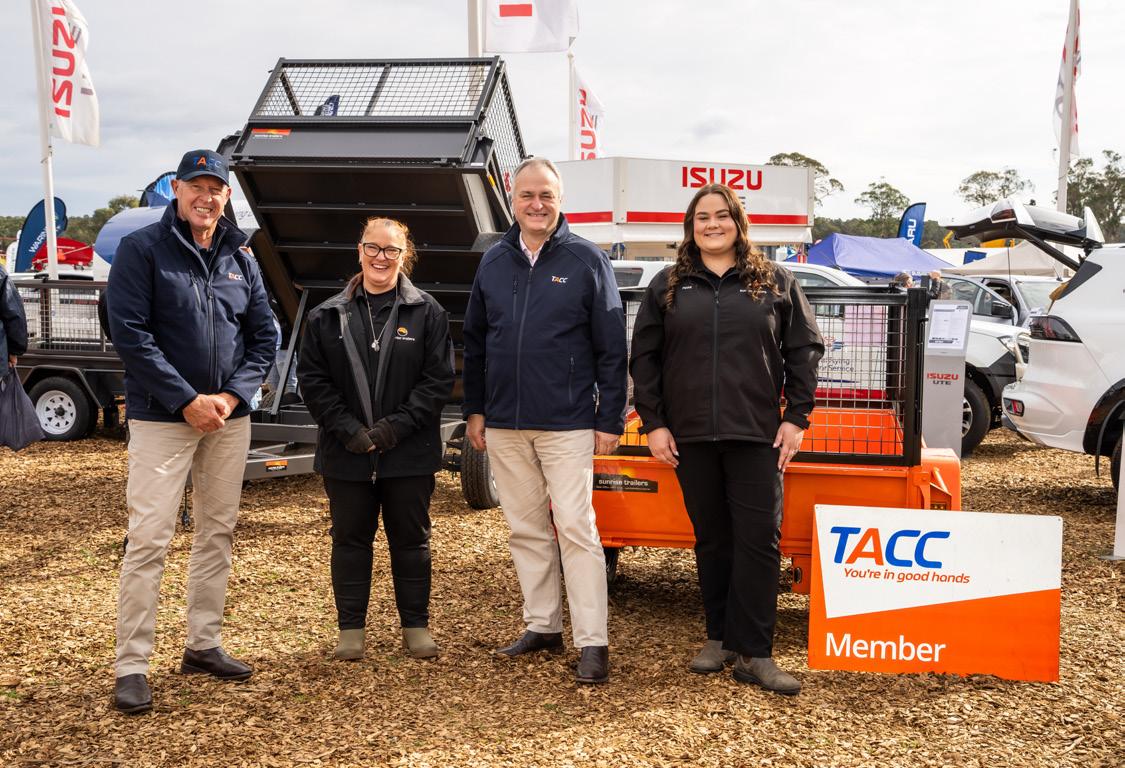
VACC CEO Peter Jones and TACC State
at Agfest.
Michelle and Maddy Costello from Sunrise Trailers are proud TACC members. This was their 12th year exhibiting at Agfest.
connect face-to-face with peers who understand the realities of the industry.
For many attendees, the evening was as much about reconnecting with colleagues and strengthening local networks.
The night also highlighted the important role VACC and TACC play in creating opportunities for members to engage directly with industry leaders, suppliers and one another in an informal and collaborative environment.
Events like Agfest and the Industry Engagement Nights are a reminder that advocacy is strongest when it is informed by real conversations with members.
Whether in the paddock, in a workshop or at an industry function, these discussions help
"Events like Agfest and the Industry Engagement Nights are a reminder that advocacy is strongest when it is informed by real conversations with members."
ensure the voice of Tasmania’s automotive industry continues to be heard clearly by government, regulators and the broader community.
As the industry continues to navigate change, economic pressures and workforce challenges, maintaining strong industry connections remains more important than ever. And if May proved anything, it’s that the automotive community continues to show up, support one another and back the future of the industry.
DISCOVER MORE
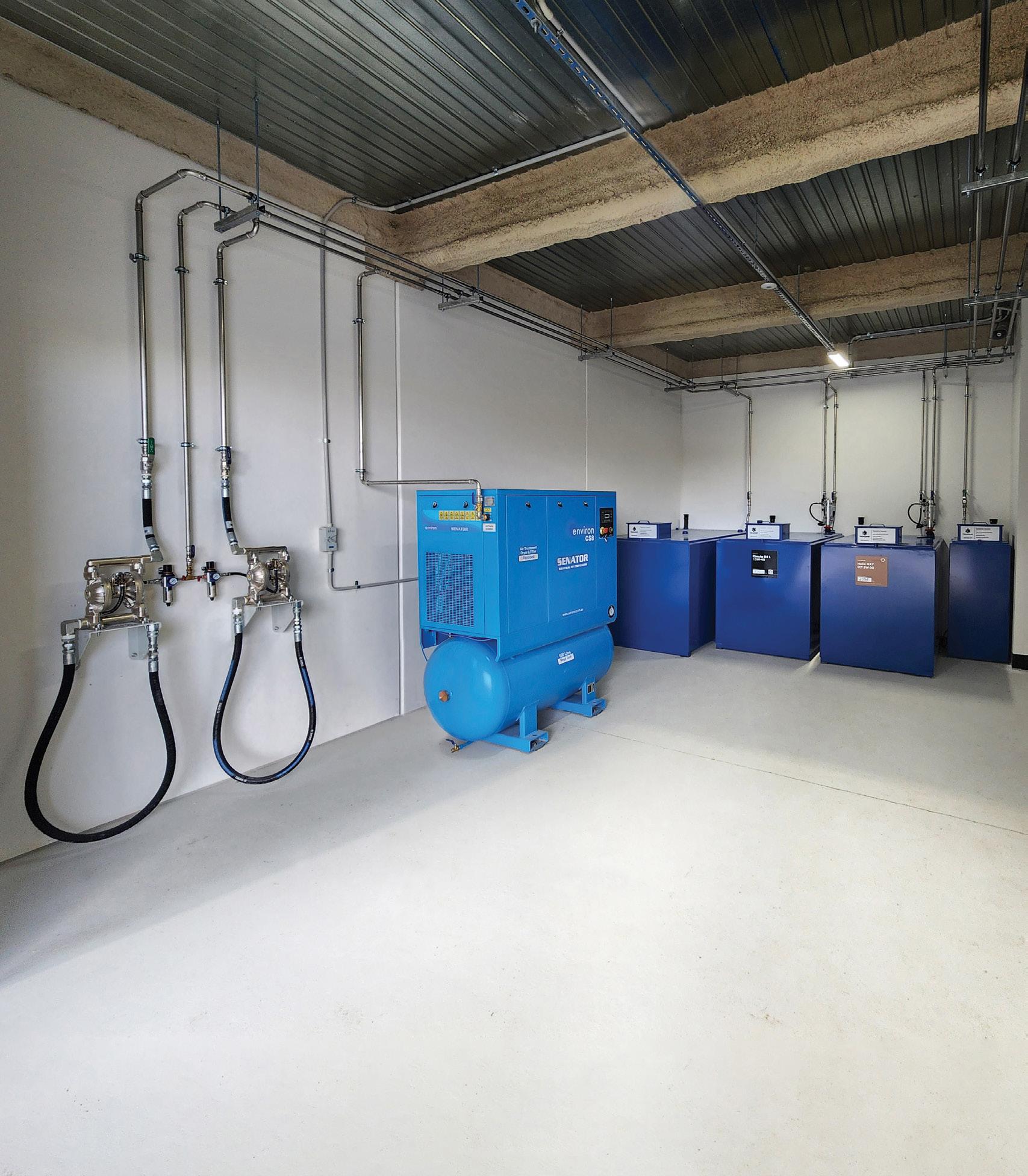
Explore our range of products or contact us to discuss how we can assist with your workshop. Free call 1800 685 577.
FLUID PUMPS
RAASM pumps have been an industry favourite for over 20 years. Ensuring performance and reliable flow throughout a workshop.
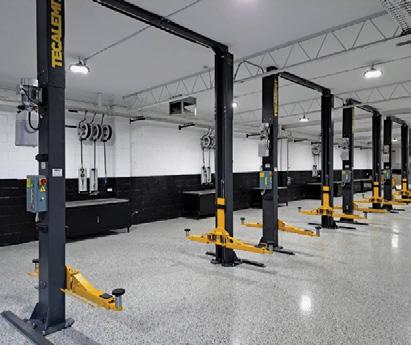
VEHICLE HOISTS
Space, operator experience and vehicles being lifted all contribute to selecting the right mix of 2 post and 4 post hoists for your workshop.
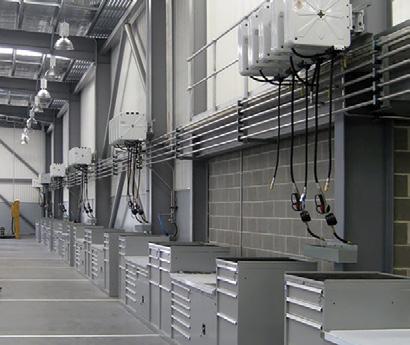
PIPE WORK & HOSE REELS
Stainless steel pipework for air, water and oil all help ensure product integrity and distribution throughout the largest of workshops.
How a Tasmanian
workshop engineeringisits own future
In an industry often defined by incremental change, some businesses stand out for their ability to pivot, evolve and reimagine what they can be. In Launceston, Tasmania, TACC member Josh Statton is doing exactly that—transforming a traditional mechanical service operation into a globally focused manufacturing and e-commerce brand.
What began as a mobile tractor mechanic business servicing agricultural customers across North East Tasmania has grown into something far more ambitious.
Like many in the automotive sector, Josh started small, working as a sole trader with a handful of staff, building a reputation through reliability, technical
skill and strong local relationships. But behind the day-to-day servicing work, another idea was quietly taking shape.
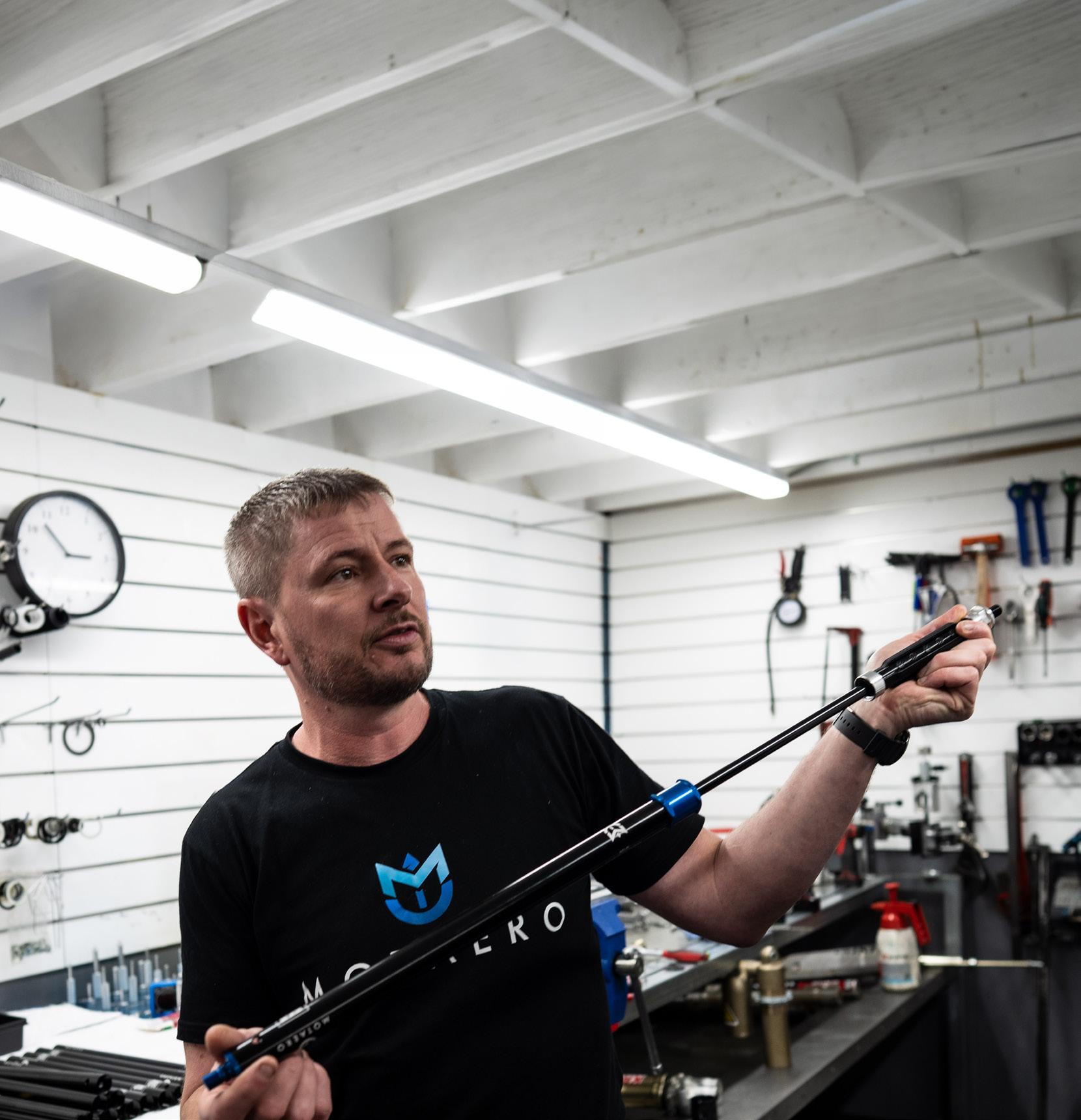
Driven by a passion for off-road riding and a frustration with the limitations of factory suspension systems, Josh began designing and testing his own motocross suspension components. It was, at first, a side project—an extension of his technical curiosity and hands-on expertise.
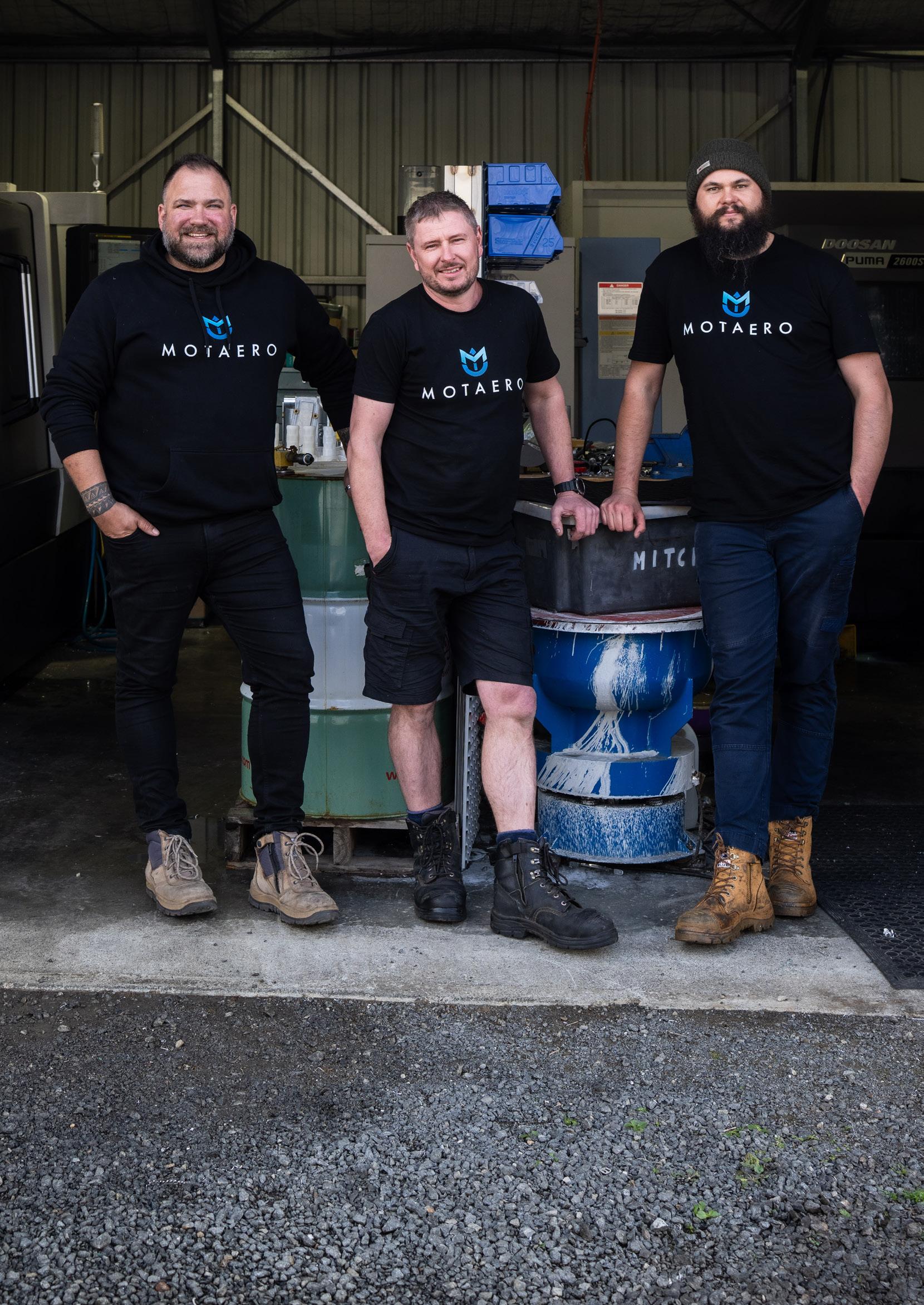
That “side hustle” is now the future of the business. Founded as a dedicated brand in 2023, Motaero represents the next chapter—focused on designing, manufacturing and exporting highperformance motorcycle suspension components, all engineered and produced in Tasmania.
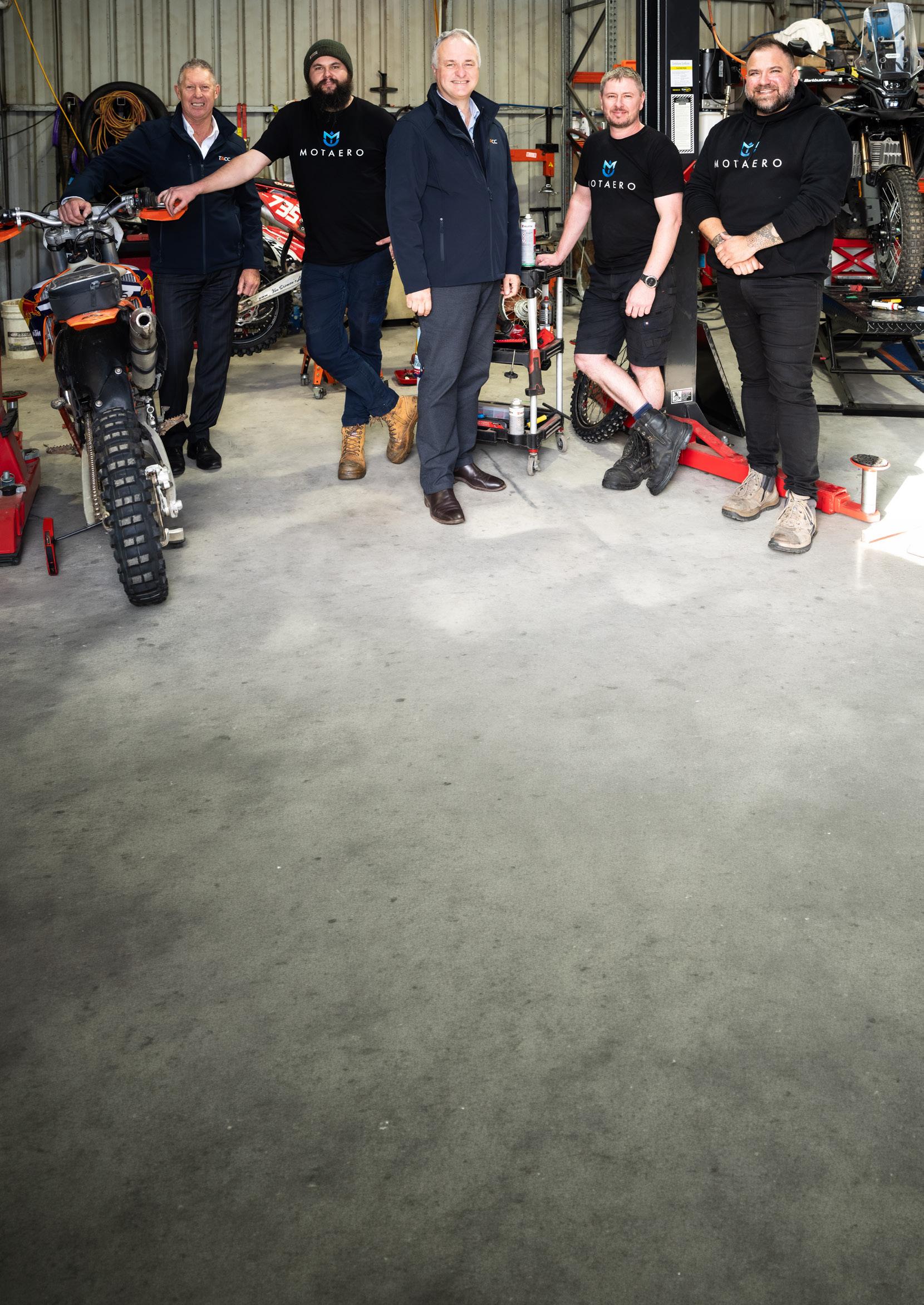
At its core is a simple idea: suspension should enhance the riding experience, not compromise it. As the Motaero team identified through years of real-world riding and workshop experience, many modern bikes are powerful and advanced—but often feel harsh, unpredictable and fatiguing under real conditions.
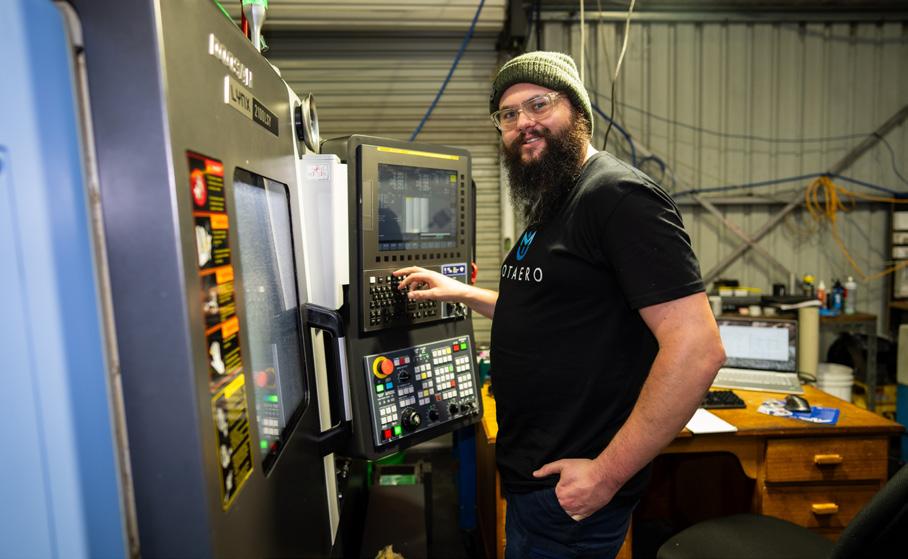
The solution? Engineer something better. Working from their Launceston base, the team designs and manufactures cone valve suspension systems—technology that improves oil flow and damping control, resulting in greater traction, reduced harshness and a more stable ride. Crucially, everything is done in-house. From CNC machining to rapid prototyping and real-world testing, the business has invested heavily in advanced manufacturing capability. This allows for tighter quality control, faster development cycles and the ability to continuously refine products based on rider feedback.
It’s a model that reflects a broader shift across the automotive industry— where traditional service businesses are increasingly leveraging their technical expertise to move into manufacturing, product development and direct-to-consumer sales.
For Josh, that shift has been deliberate. As demand for Motaero products grew, the business began to scale—investing in additional CNC equipment, expanding testing and fitment capabilities, and strengthening its branding, packaging and
"Driven by a passion for off-road riding and a frustration with the limitations of factory suspension systems, Josh began designing and testing his own motocross suspension components."
marketing to support a global audience. At the same time, the structure of the business evolved. Traditional tractor servicing work has been transitioned to a contractor model, allowing the core team to focus on innovation and product development. The appointment of an operations manager has further supported this transition, bringing greater capacity and structure to a growing enterprise.
The launch of a new e-commerce platform motaero.com marks another significant milestone. With a clear focus on the Motaero product range, the platform enables direct
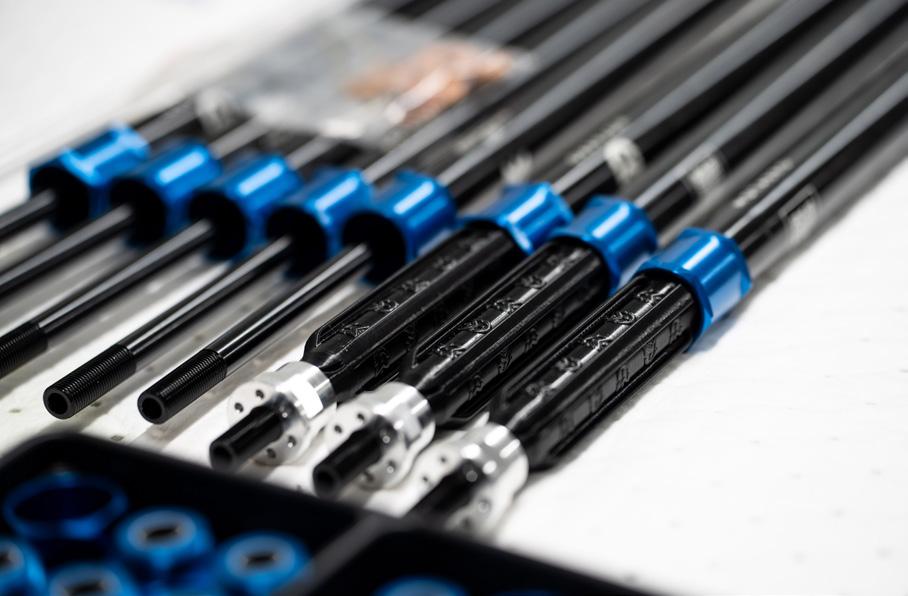
engagement with customers both in Australia and internationally, positioning the business not just as a service provider, but as a specialist manufacturer with global reach.
It’s a bold move, but one grounded in strong fundamentals. Motaero products are designed for real riders— tailored to individual weight, riding style and terrain, rather than generic factory settings. The result is improved control, reduced fatigue and greater confidence on the bike—benefits that resonate across motocross, enduro and adventure riding communities.
This story is a powerful reminder of
what’s possible. It highlights the value of backing your expertise, identifying niche opportunities, and being willing to invest in new capabilities—even when it means reshaping your core business.
From a 160-square-metre shed to an internationally recognised suspension brand, Josh Statton’s journey reflects the entrepreneurial spirit that underpins so much of Australia’s automotive industry.
And as Motaero continues to grow, one thing is clear: the future of automotive businesses isn’t just about keeping vehicles moving—it’s about building something entirely new.
Prepare for Payday Super.
If you’re an employer, take action now so you’re prepared for Payday Super. Starting 1 July 2026, employers must pay super contributions each payday. You can start preparing for the changes now.
Some of your steps to complete before 1 July 2026
• Understand what these changes mean for your business
• Review your super and payroll processes
• Check employees’ super fund details are up-to-date
• Communicate changes to your employees
• Check your software supports the changes
• If you’re still using the Small Business Superannuation Clearing House (SBSCH), transition to an alternative clearing house
• Stay informed
VACC'S OHSE UNIT Inside
Another genuine boost to your business IQ, that VACC membership delivers
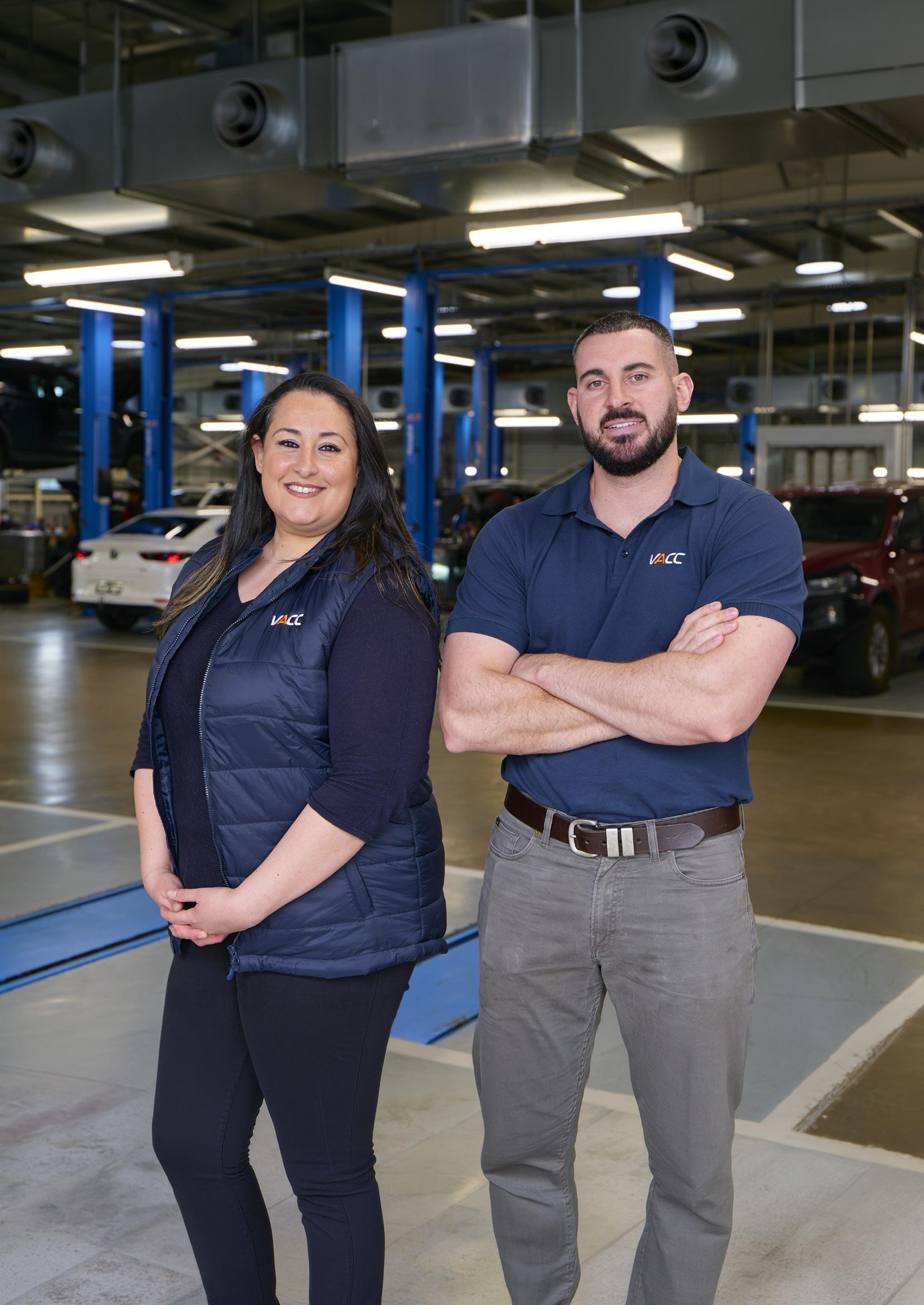
Mike Sinclair
The chaos at the busy dealership service desk was obvious. Technicians, taking the quickest route back to the workshop, were parking right where customers dropped off keys and advisers came and went with work orders. Foot traffic crossed vehicle traffic without separation. The member knew the layout was inefficient. He didn’t realise it was also an accident waiting to happen.
VACC’s Senior OHSE Advisor, Sally Selim, was on site for a free WorkSafe OHS Essentials audit. The fix she walked the business through wasn’t expensive or complicated — a painted pedestrian zone, signage, and a parking ban directly in front of the service desk.
“I explained that the dealership had to manage this from a safety perspective. It’s not just about efficiency and how it looks,” Sally says. “It is a traffic management issue where pedestrians and vehicles interacted, and the consequence could be a serious injury or worse.”
Three months later, on the second of three audit visits the free program builds in, the workshop manager stopped Sally on the way through. The whole area had been transformed. No close calls. Nobody parking where they shouldn’t. A workplace that worked better and was demonstrably safer.
“It was such a dopamine hit,” she says. “I felt like I had made a real difference in that workplace.”
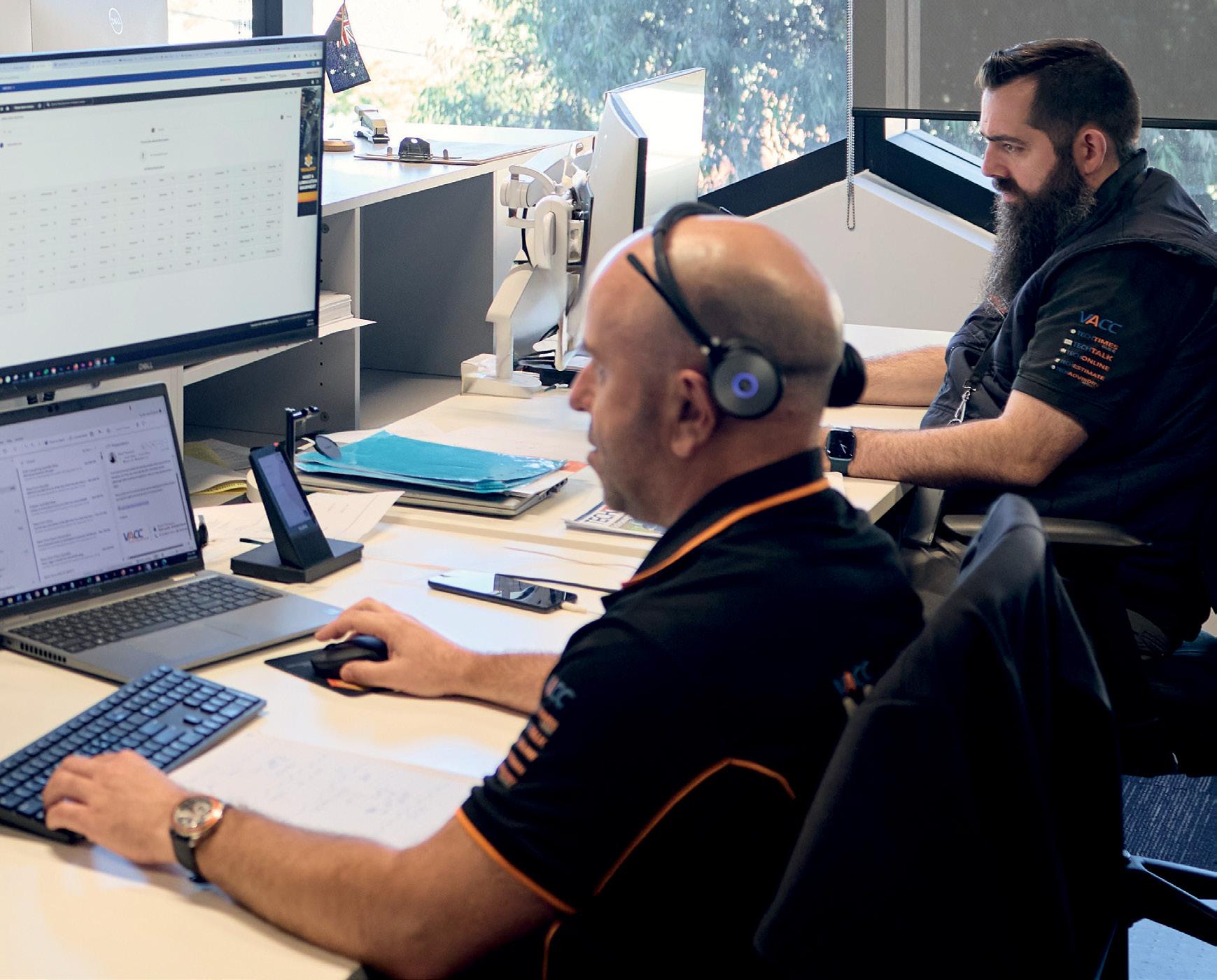
OHSE is key expertise built into every VACC membership — another arm of the workplace function for members, alongside IR, advocacy and training.
More than IR
Daniel Hodges, VACC’s Executive Manager of Workplace Relations and Industry Policy, is candid about how the OHSE unit has been positioned to date.
“I think to a degree it’s been one of the best kept secrets,” he says of the Chamber’s highly experienced Occupational Health Safety and Environmental unit.
That’s changing. The previous approach was deliberate — the unit ran for an extended period with capacity restraints, and Hodges chose to keep demand in check until the unit could deliver in volume. With Sally Selim in the department lead role, OHSE Advisor Zane Ahern now on board and further growth in the pipeline, the function is one of the deeper capabilities a VACC membership delivers — and one members are increasingly being encouraged to use.
One unit, three benefits
The OHSE unit sits within VACC’s Workplace Relations group, reporting to Daniel Hodges alongside the IR advisors. The structure is deliberate.
“We are seeing more and more industrial issues addressed as OHS,” Daniel says. He cites the new psychological health regulations that came into force in Victoria in late 2025 as an example of an issue that crosses lines between IR and OHS.
“The benefit of having one coordinated unit is that nothing falls through the cracks.”
Workers’ compensation, traditionally, has been the area that slips between IR and safety functions in larger organisations. At VACC, it doesn’t. Sally and Zane both assist members through the workers compensation process— from the moment a claim lands on a member’s desk through to long-tail claims approaching the 130-week mark. In fact, Sally estimates that more than half of her inbound member calls are workers’ compensation related queries. Theunit services VACC’s full membership, including Tasmania, and provides service to long-standing members and recent joiners identically – providing real-time, real-world advice and assistance.
On the road, on the phone
The unit’s week-to-week rhythm is focused towards site visits. Sally estimates she spends roughly half her week on the road across Victoria; Zane closer to 70%. Tasmanian members are generally serviced by phone, since the WorkSafe-funded program that anchors much of the unit’s on-site work is Victoria-specific. That program is the WorkSafe OHS Essentials Program. Funded by WorkSafe Victoria as a proactive education initiative, it is a free and confidential safety consultancy service available to businesses with fewer than 60 employees and an
active workers’ compensation policy.
Sally and Zane are both qualified to deliver it to VACC members.
The audit itself is comprehensive — up to five hours on site for the initial visit, followed by a check-in at three to six months and a closure visit at nine to 12 months. The same audit, delivered by a private consultant, can cost more than $5000. For members who fall outside the eligibility criteria — those above the 60-employee threshold or based in Tasmania — VACC delivers the same audit at a heavily subsidised fee.
“From my perspective, it’s the best proactive initiative that WorkSafe offers small and medium sized employers as far as bang for buck,” Daniel Hodges says.
“Often the value member businesses get from that alone will basically pay for their [VACC] membership for a couple of years.”
Sally hears the same reaction over and over when she delivers an audit.
“I get that all the time,” she says. “‘We didn’t know you guys could offer this for us.’”
The telephone is the other workhorse. Members call with workers’ compensation queries, regulatory questions, postincident triage, or — increasingly — to verify advice and templates they have sourced elsewhere.
AI is one of the emerging risks the unit is having to talk members through.
“I had a member who developed a safe operating procedures for his workshop equipment using AI, and they were all wrong,” Sally says.
“When I identified it to the member, I could see the light bulbs going off. He’d been proactive and done the right thing but gone about it in the wrong way.”
The post-incident calls are where speed matters most. Notifiable incidents must be reported to WorkSafe immediately, and the scene must be preserved.
In Victoria, first responders attending the scene of an incident at a workplace will notify WorkSafe, which means
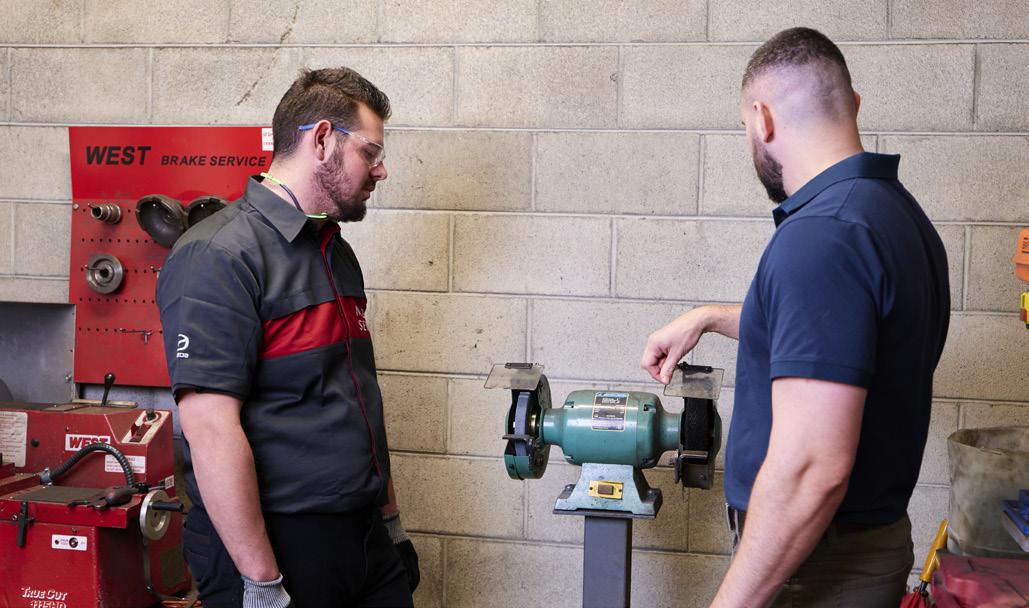
Inspectors often arrive while emergency services are still on site.
Sally’s first task on those calls is triage, Has the scene been preserved? Has WorkSafe been notified? Does the member need specialist legal advice?
And how quickly can VACC get an advisor on the phone or on site?
“Pick up the phone before there’s an incident,” Sally says.
“Be proactive, make sure your workplace is safe. If there is an incident, pick up the phone quickly because we can help advise you on the process after a serious incident.”
A seat at the table
While Sally and Zane handle the practical end, Daniel represents VACC membership in the rooms where the rules are written.
VACC is a member of the Victorian Congress of Employer Associations, which gives it a seat in WorkSafe Victoria’s stakeholder reference groups and at the table for the current 10-year review of Victoria’s OH&S regulations.
The Chamber is also a member of the Australian Chamber of Commerce and Industry, where Daniel Hodges chairs the Work Health Safety and Workers’ Compensation Committee.
"The unit services VACC’s full membership and treats long-standing members and recent joiners identically – providing realtime, real-world advice and assistance."
That dual presence — statebased for Victoria’s standalone regulatory framework, federal for the harmonised laws that apply in Tasmania and most other jurisdictions — matters. As Daniel puts it, the risk in policy work is that well-meaning frameworks don’t translate to a small-business workshop floor.
“We feed up to policymakers the need to give practical consideration to small business in the way they frame things.”
A live example. Later this year, new national workplace exposure limits will apply to roughly 700 chemicals. Nine of those had reduced limits set so low that VACC’s OHSE unit flagged a fundamental problem — Australian testing capability could not reliably measure compliance.
“We reached out to hygienists who were able to provide us with information saying the testing we have in Australia cannot reliably test at those really low limits,” Sally explains.
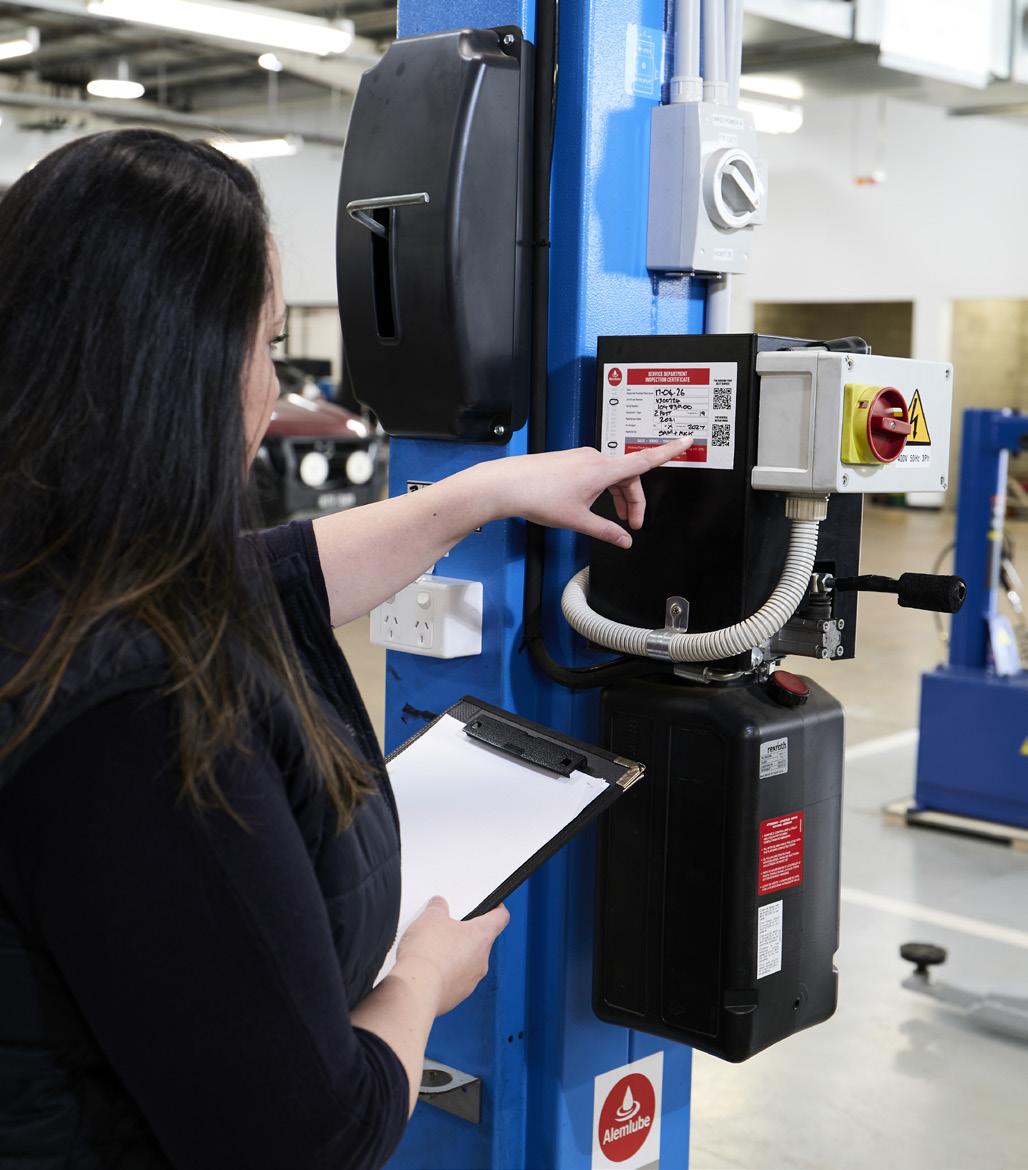
“We were able to provide the regulator and the independent reviewer with that information, ultimately resulting in a more informed decisionmaking process and outcome.
The new shape of risk
The data is clear about where the risk profile is moving. WorkSafe Victoria figures Sally cited from a recent industry briefing show psychological injury claims jumped from 9% of all claims in 2024 to 17% in 2025 — almost double in a year.
The trend is showing in automotive too.
Whether that reflects the new psychological health regulations driving better identification, broader societal change or a real underlying increase in workplace harm, the practical implication is the same: psychological hazards and risk are a workplace issue that every employer must actively understand, manage, consult with workers about and respond appropriately, when issues arise.
The regulations themselves are not quite the step-change some members fear.
As Sally points out, the duty has always existed — the definition of health has included psychological health since the introduction of the OHS Act 2004. The new Psychological Hazard regulations simply make those obligations explicit and prescribe how it must be managed.
For the unit, the work has been heavy on translation — rendering the policy into language and templates a small-business operator can more readily understand and use.
“We do a little bit of the heavy lifting and provide [members] with resources, to help them get started because they often don’t have the time or the expertise to do so,” Sally says.
Daniel Hodges is careful not to let the new regulation dominate the picture. Member readiness is mixed, he says, and small-business operators have to prioritise.
“The emphasis can be overly skewed towards the latest area the regulator is campaigning — and they lose sight of the bread-and-butter stuff. Materials storage, traffic management, manual handling, hoist servicing, storage and handling of chemicals, all the key things that if you get wrong can lead to serious health and safety consequences.”
Wired for change
Electrification is the other front. April VFACTS data showed that almost half of new vehicles sold in Australia are electrified — roughly one in six is fully battery-electric, and many have high-voltage components. The OHS implications run beyond the workshop bay to towing operations, body repairers and dismantlers.
VACC has produced two member guides on EV safety, with the second now in its third or fourth iteration. Accredited training is available through VACC’s training arm.
The policy position is deliberate, Daniel Hodges says. “Our view is that the best way we can help members is not by advocating for onerous licensing requirements, because that doesn’t really make sense in a fast-evolving technology space. It’s about making sure they’ve got the practical training, competency and awareness to perform the work safely.”
There is a more encouraging trend running underneath the new risks. Employers are more aware around health and safety hazards and risks in the workplace and understand they need to manage that risk. As technology continues to advance ‘smarter risk controls’ are becoming available which is helping shift the dial on workplace safety outcomes.
The vision and the ask Daniel Hodges is unambiguous about where VACC’s wider Workplace Relations team is heading. He believes the model — OHSE, IR and workers’ compensation under one roof — should be more widely adopted across the employer-association space.
He says VACC’s capabilities will grow. The product set will broaden beyond the existing audit focus to a fuller suite of services that put members in a position to be proactive.
For Hodges, the message to a member reading this feature is the message that runs through every part of VACC’s workplace relations function — and it does not change between IR, OHSE and workers’ compensation: “You have a group of very talented, very passionate people here at the VACC ready to help. “It’s part of the membership. Pick up the phone if there’s any issue. You’ve got people there who’ve got your back and are there to give you the information you need in plain English.” It’s expertise that comes built into the membership. There is no audit too small to book. No question is too basic to call about. As Sally puts it, even if all you need is a sounding board, that call is worth making.
Get to know your advisors
Sally Selim Senior OHSE Advisor
Sally Selim’s interest in workplace safety started before she’d ever heard the term. Growing up, her mother sustained a workplace injury that kept her off work for a significant stretch, and Sally saw the ripple effect at home long before she connected it to a career.
“I experienced firsthand the effects of an unsafe work practice and how it has a ripple effect beyond the workplace,” she says. “That’s what made me interested in pursuing a career in this field.”
Her entry into automotive was accidental. Newly graduated in 2005, she’d never heard of an employer association — someone explained it to her as “a union for employers” and the analogy stuck. She left VACC for stints in the fire industry, energy, construction and the retail safety industry before returning to VACC in 2020. The pull was clear.
“I genuinely love working at VACC, and proof of this is that I came back for a second round.”
The reward, she says, is in the daily interactions with members and follow-up visits. Members who have implemented VACC’s recommendations, who feel comfortable calling her just to check they’re on the right track.
The advice she repeats most often, almost as a mantra: consultation, consultation, consultation. Consultation with workers is not just a duty for employers; it is one of the most effective ways to build engagement, improve workplace culture and leads to better safety outcomes.
Zane Ahern OHSE Advisor
Zane Ahern studied psychology at university. He didn’t end up in clinical practice, but the same instinct that drew him to that field — helping people through difficult moments — has run through his working life into occupational health and safety.
“I have not regretted it for a single day.”
The calls that stay with him are those in which end customers are aggressive or abusive to a VACC member’s staff. The frustration of hearing what’s happened sits alongside the satisfaction of helping the member through next steps and making sure the employee is supported.
His move to VACC was deliberate. After a 12-month contract in healthcare, the choice was between an aviation company and the Chamber felt more familiar; VACC’s reputation closed the deal.
In Zane’s experience, the thing members most often fall short on is consultation and recordkeeping. Workplace safety
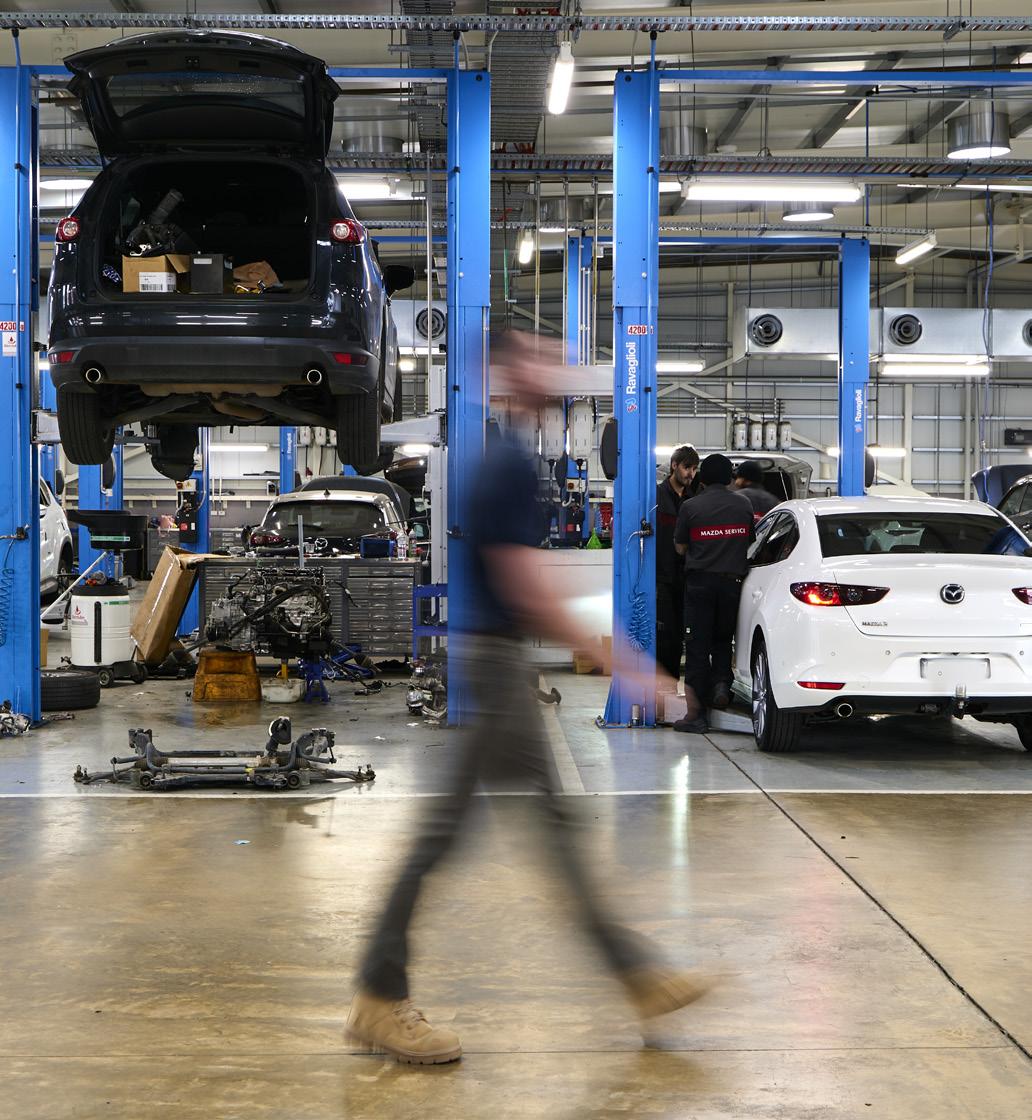
‘Toolbox talks’ happen organically, but go undocumented — and without records, Zane says, authorities can treat it as though it never happened.
Outside work, Zane runs, lifts and spends time with friends and family.
BENDIX HAS THE RIGHT BRAKE PAD & DISC BRAKE ROTOR.
To achieve the best possible braking performance and stopping distance, it’s important to match the driving style and vehicle with the right brake pad and disc brake rotor formulation. You can find and fit the right Bendix brake pad and disc brake rotor for virtually every application with absolute confidence. Check online for your vehicle.
BENDIX BRAKE PAD & DISC BRAKE ROTOR SELECTION GUIDE














COROLLA, RAV4, i30, CERATO, MAZDA3, CX-3, MG ZS, X-TRAIL,
RANGER, TRITON, NAVARA, GWM UTE, T60, AMAROK, RAM 1500
THE FUTURE ARRIVED IN MELBOURNE
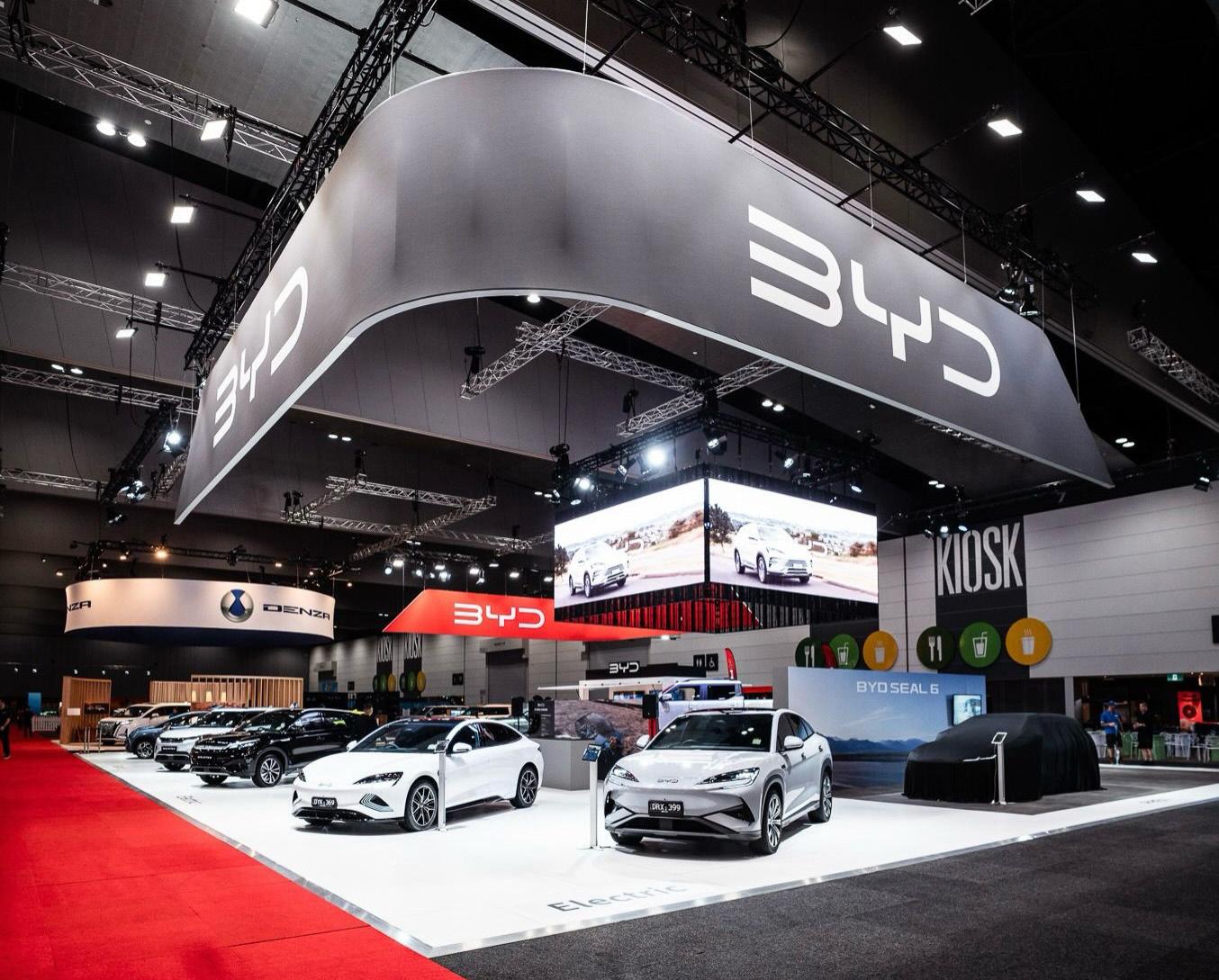
Chinese brands steal the show at the 2026 Motor Show
If anyone needed convincing that the Australian car market is undergoing a seismic shift, three days at the Melbourne Convention and Exhibition Centre in April should have settled the argument. The 2026 Melbourne Motor Show, only its second running since the event's long-overdue revival — was bigger, bolder, and more revealing than its predecessor. The show expanded to occupy all 20 convention centre bays, a significant step up from 2025, and the crowd responded accordingly. But it wasn't just the floorspace that felt different this year. It was who was filling it. Walk the floor, and the message was unmistakable. Chinese brands BYD, Denza, GWM, MG, and Geely among them, commanded the largest stands, while newcomers like GAC, JAC, and Farizon had significant presences of their own. Meanwhile, major manufacturers including Toyota, Ford, Mazda,
Hyundai, and Mitsubishi Motors were absent from the show, along with premium European brands such as BMW, Audi, and Porsche. It amounted to a genuine changing of the guard, and for anyone watching Australian automotive retail trends, it was hardly a surprise.
BYD continues its march
No brand made more noise at the show than BYD. The Chinese giant, which has rapidly been climbing the Australian sales charts, used Melbourne to launch the Seal 6 sedan and Seal 6 Touring wagon, a pair of plug-in hybrid family cars starting from under $35,000 before on-road
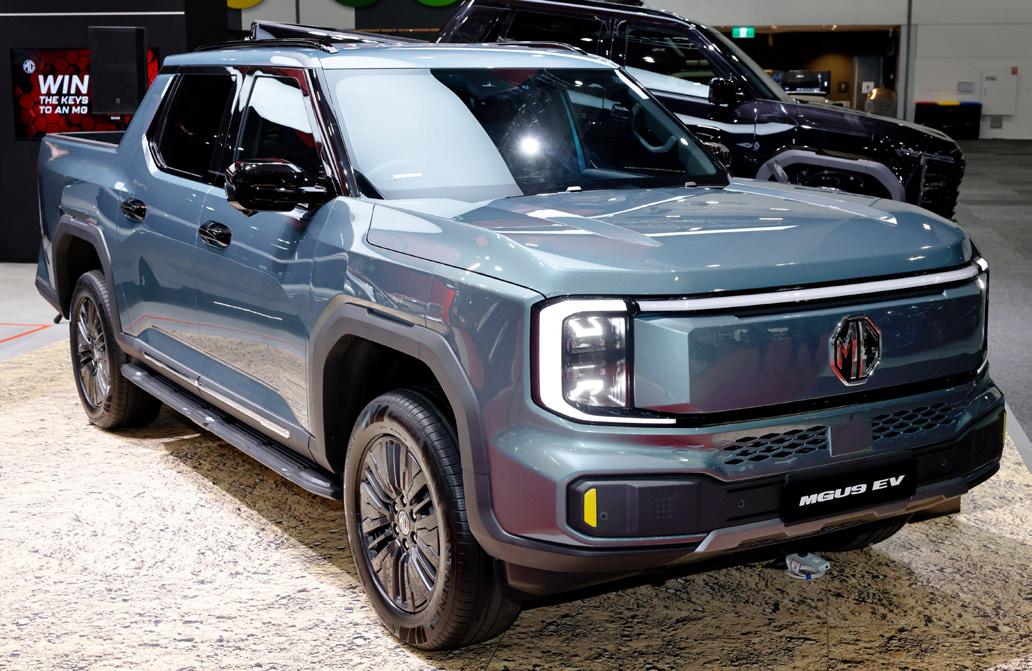
costs. That pricing pitches them squarely against the Toyota Camry and represents exactly the kind of value-first offensive that is winning BYD conquest sales right across the country. BYD has now leapfrogged GWM to become Australia's favourite Chinese automaker, and is ranking sixth in the market so far in 2026 after finishing 2025 in eighth position. At this pace, its stated ambition of a top-three market position by year's end looks less like a stretch target and more like a roadmap.
The show also served as the Australian public debut of BYD's premium sub-brand Denza and its extraordinary Z9 GT. This striking shooting brake features an 850kW tri-motor electric powertrain and is earmarked for Australian
showrooms, with first deliveries planned for September 2026. Denza is clearly positioning itself as a serious contender in the luxury space, and the Z9 GT has the hardware to back it up.
The Chinese newcomers make their mark
BYD and its stable-mates were far from the only story. Geely turned heads by bringing three new models to the show floor, including the EX2 electric hatchback, China's best-selling car with close to 466,000 sales in 2025, as well as the Emgrand plug-in hybrid sedan and M9 plug-in hybrid large SUV, both making their Australian debuts. The EX2 in particular is the kind of affordable, practical electric car that could genuinely
shift the needle on EV uptake.
GWM used the show to debut the Ora 5 SUV, an entry-level battery-electric vehicle priced from $33,990 plus onroad costs, offering 430 kilometres of WLTP driving range and a recharge time of just 20 minutes from 30 to 80 per cent. And Zeekr arrived with full pricing for its updated X compact SUV, slashing the entry price to $48,900 drive-away, $8,000 less than its launch price, while adding faster charging, improved safety technology, and more standard features.
More than a show floor
For those inclined to dismiss the Melbourne Motor Show as a consumer spectacle rather than a serious industry event, the 2026 edition should give pause. Chinese
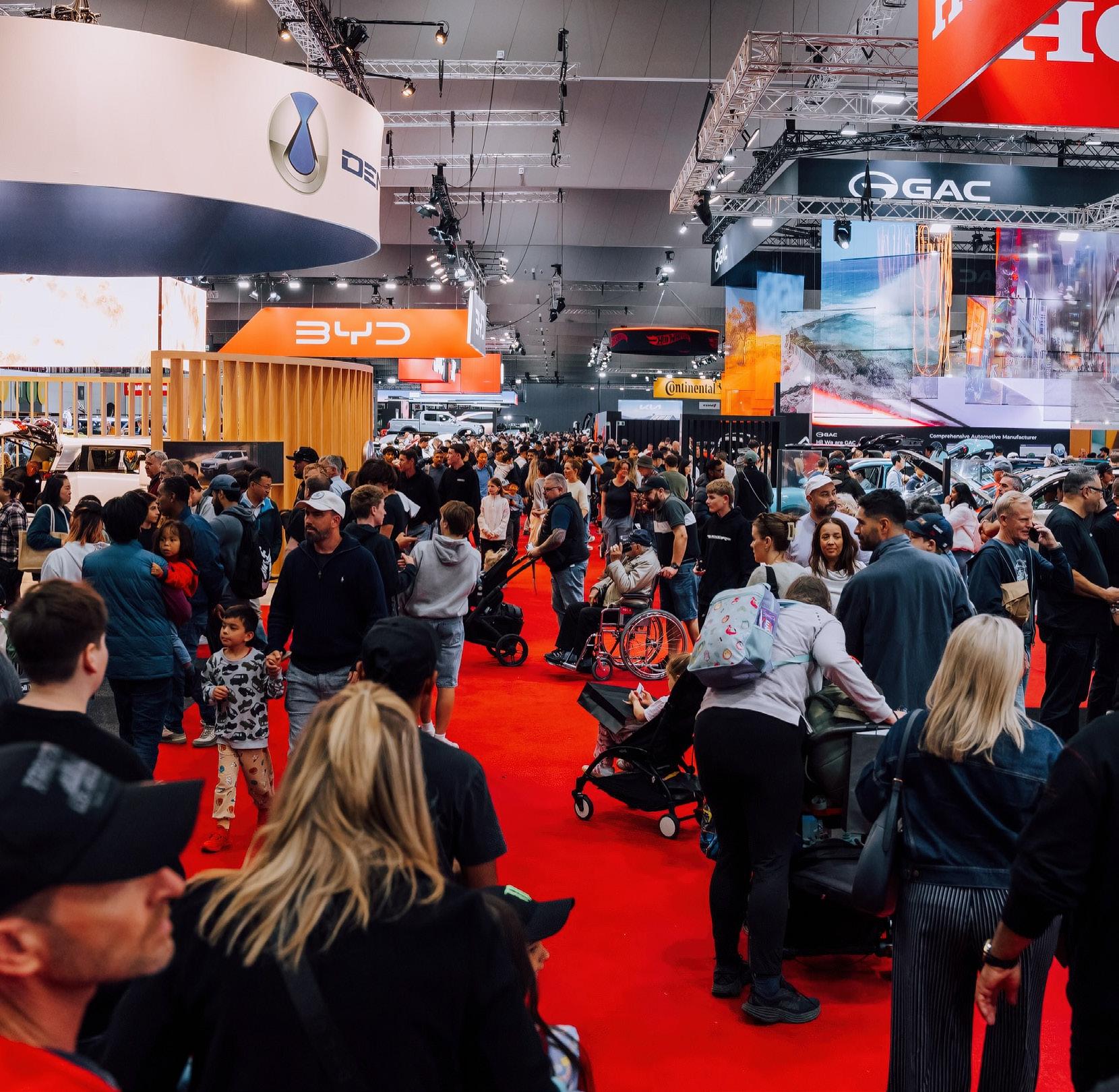
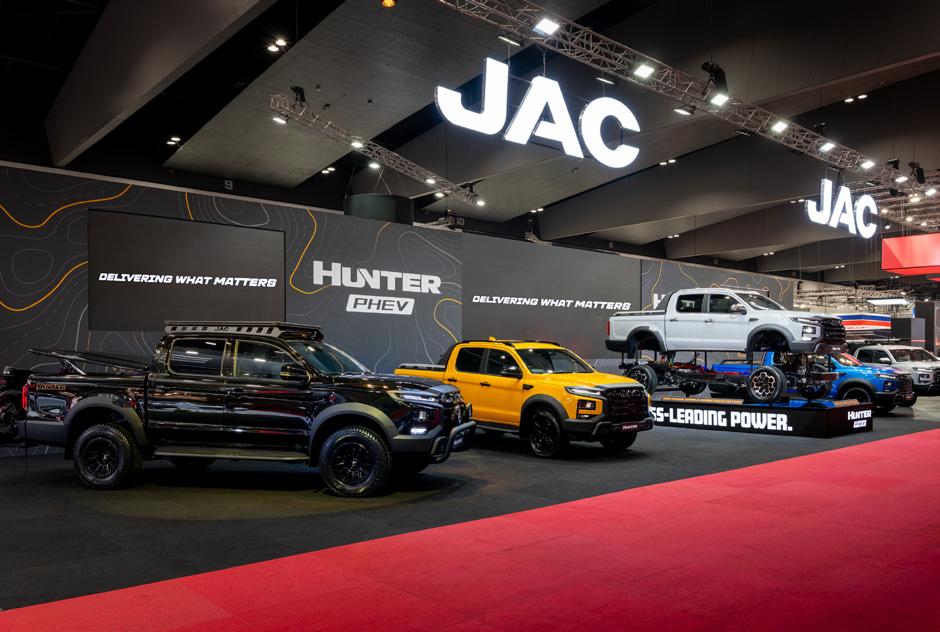
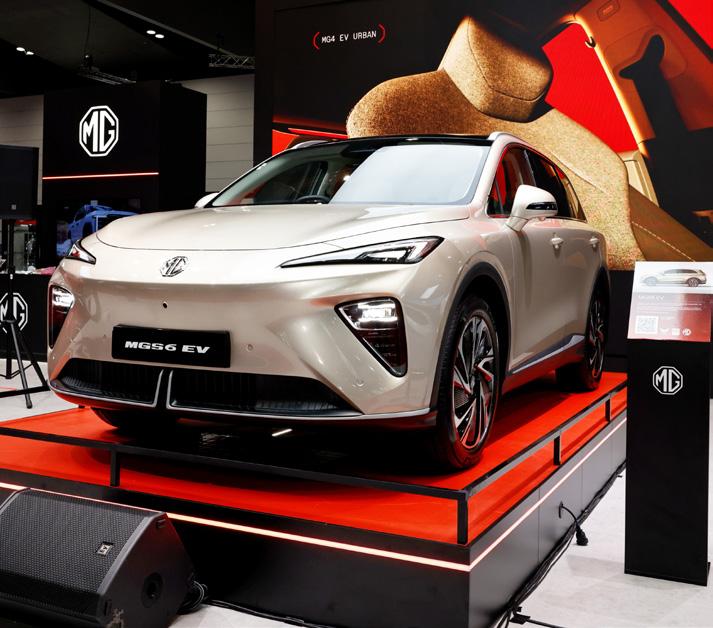
"The Australian car parc is changing, and it's changing faster than many anticipated."
brands accounted for nearly half of the automakers exhibiting, most of which displayed new-energy models ranging from compact cars and midsize SUVs to large pickups, offering a wide mix of hybrid, plug-in hybrid, and battery-electric options. Customers were engaged, curious, and in many cases ready to buy. The brands that opted to sit this
one out handed those customers directly to their competitors.
The future is already here
For industry professionals, the clearest takeaway from Melbourne 2026 isn't a single car or a single brand, it's the collective weight of what was on the floor. The technology is no longer emerging. The pricing is no longer prohibitive.
The product breadth is no longer limited. The Australian car parc is changing, and it's changing faster than many anticipated. The cars that will dominate our streets in five years were parked under those convention centre lights in April. Anyone who wasn't there to see them should ask themselves why not.









• Inhouse Turbo Balancing
• Turbocharger Overhauls & Parts
• New & Exchange Components
• Comprehensive Spare Parts Sales












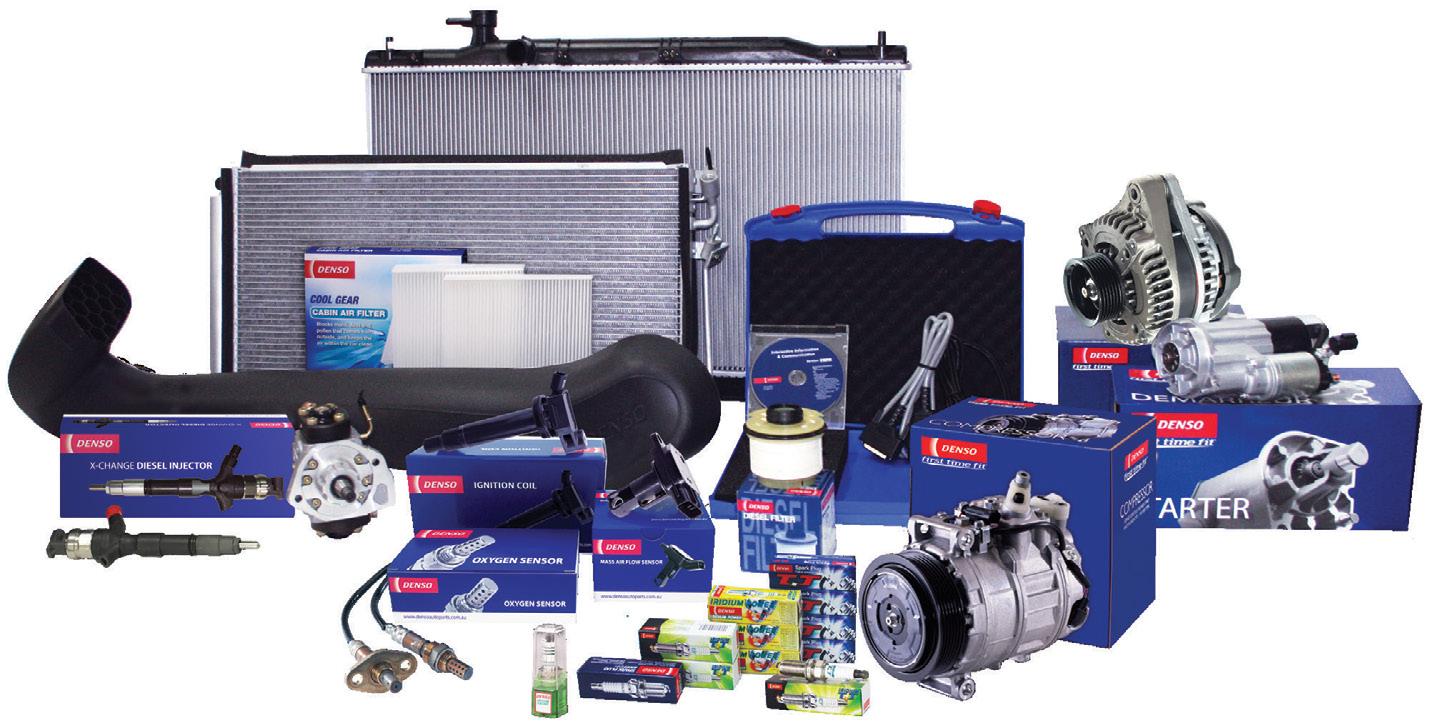
DENSO Diesel Injectors
Diesel engines continue to play a vital role across passenger, commercial, and heavyduty applications, and at the centre of their performance sits one of the most critical and complex components—the diesel injector. For DENSO, diesel injectors are not simply parts; they are precisionengineered systems developed to meet the highest original equipment standards, ensuring optimal engine performance, efficiency, and durability throughout the engine’s life.
As a global leader in diesel technology, DENSO has been at the forefront of injector innovation for decades. From early mechanical systems through to today’s advanced Common Rail diesel technology, DENSO injectors have evolved in step with increasingly demanding engine and emissions requirements. Modern engines require injectors capable of operating at extremely high pressures, delivering multiple injection events per combustion cycle with microscopic accuracy. Achieving this level of performance demands advanced materials, exacting manufacturing processes, and rigorous validation—areas where DENSO’s Original Equipment (OE) heritage provides a decisive advantage. Every DENSO diesel injector is engineered as part of a complete system, not as a standalone component. Spray pattern, fuel atomisation, injection timing, and flow characteristics are all carefully calibrated to match specific
PRECISION ENGINEERED FOR PERFORMANCE, RELIABILITY, AND TRUST
reducing emissions and improving fuel economy. Highquality injectors help engines operate more cleanly and efficiently, supporting environmental objectives while maintaining the durability and performance diesel engines are known for. DENSO’s focus on efficiency and longterm reliability reflects a broader commitment to responsible manufacturing and sustainable mobility.
engine designs. This systembased approach ensures correct combustion, improved fuel efficiency, quieter operation, and reduced emissions. It also helps protect critical downstream components such as diesel particulate filters and EGR systems, contributing to overall engine longevity and lower total cost of ownership.
In the aftermarket, the importance of OEquality injectors has never been greater. Increasing engine complexity means that injector performance has a direct impact on drivability, emissions compliance, and workshop efficiency. Poorquality or incorrectly specified injectors can result in repeat failures, costly comebacks, and extended downtime. DENSO diesel injectors are designed to restore engine performance to their intended operating condition, providing confidence for technicians and peace of mind for vehicle owners. DENSO’s commitment extends beyond product supply to supporting the service and repair industry with technical expertise and capability. Injector coding, calibration data, and system compatibility are critical considerations in modern diesel repairs. By providing technical support, training, and accurate product information, DENSO helps workshops stay ahead of evolving technology and confidently service today’s sophisticated diesel systems. Sustainability is another key driver behind DENSO’s injector development. Efficient fuel delivery and precise combustion play an essential role in
As the automotive landscape continues to transition, diesel remains a critical solution—particularly in 4WD, commercial, offhighway, and specialist applications. DENSO continues to invest in diesel technology, ensuring injectors evolve to meet future emissions standards and performance expectations. This ongoing development reinforces DENSO’s role as a trusted partner to vehicle manufacturers, distributors, service dealers, and workshops across Australia
In the harsh Australian conditions where precision matters and reliability cannot be compromised, DENSO diesel injectors represent the benchmark for quality, performance, and trust. Backed by OE engineering, systemlevel design, and comprehensive aftermarket support, DENSO injectors continue to power confidence—at every injection, in every engine, every day.
DENSO
Service Dealer Network
Introduced over 30 years ago, the DENSO Service Dealer Network has grown into a specialist network of more than 70 workshops across the Australia and Oceania region. These certified repairers provide the only authorised test solutions for DENSO diesel systems and are factory trained and fully equipped with the latest diagnostic and repair technologies. By using only genuine parts and approved procedures, the network ensures vehicle integrity, longterm reliability, and compliance with stringent global emissions standards Find your nearest DENSO authorised dealer at www.denso.com.au
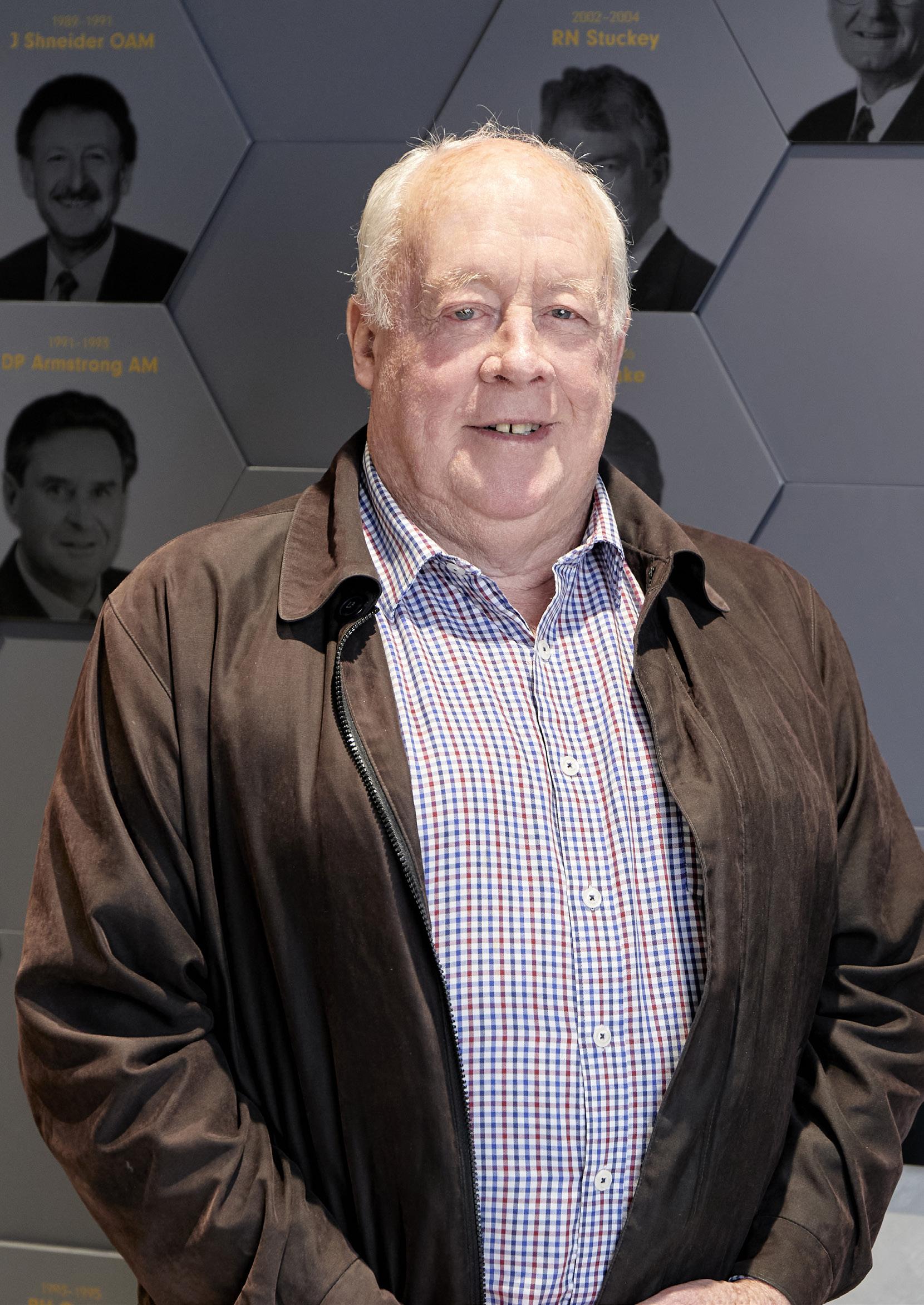
WHAT PETER SAVIGE'S 26 YEARS TELLS US ABOUT THE PEOPLE WHO REALLY BUILD AN INDUSTRY.
THE LONG GAME
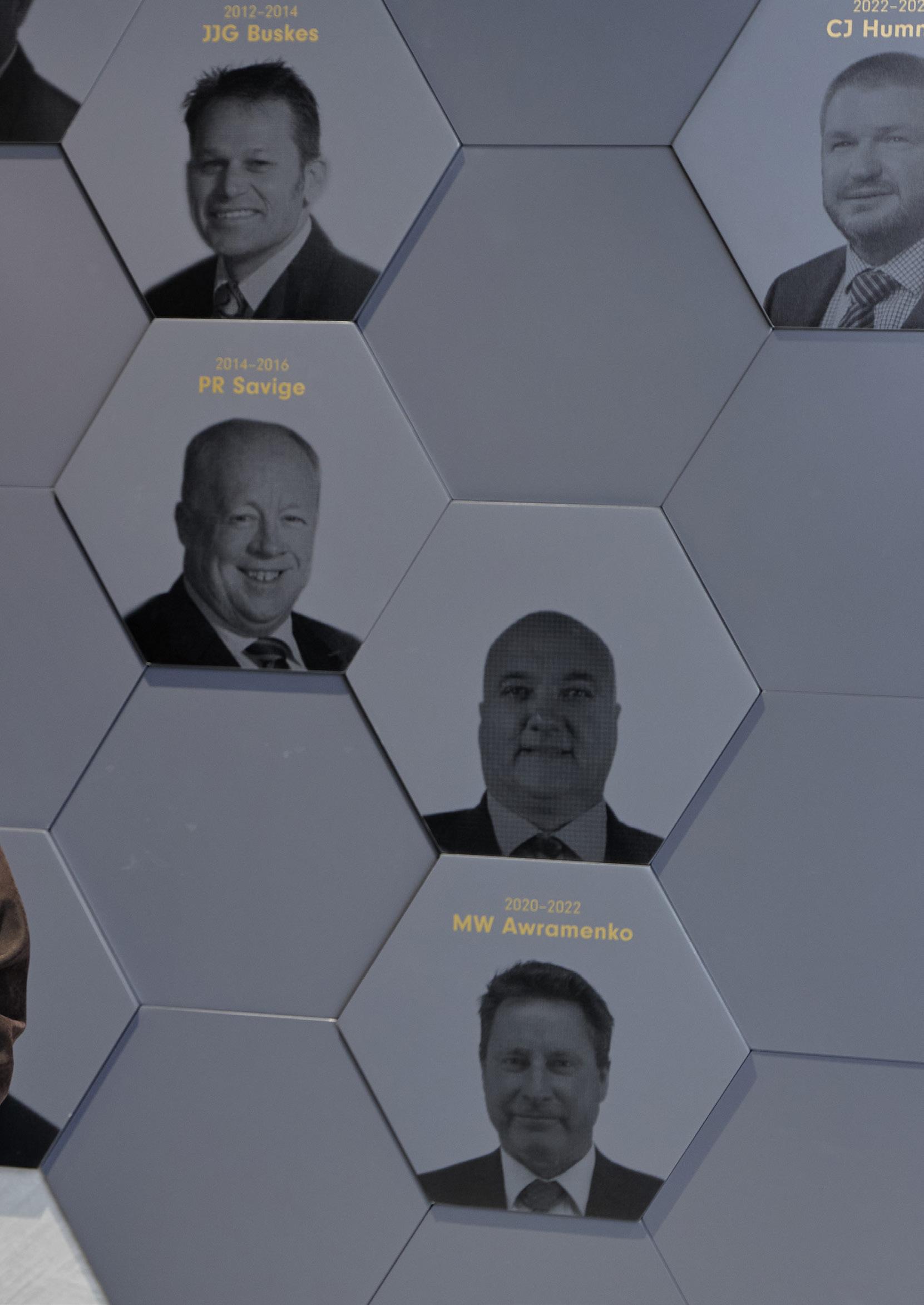
Some people enter a room and immediately look for the exit. Peter Savige walked into the Victorian Automotive Chamber of Commerce nearly four decades ago and, in a very real sense, never left.
Not because he had nowhere else to be. Not because the role made him important, or the title gave him something to hold onto. But because, somewhere along the way, the work became personal — and personal work has a way of keeping you.
Savige joined the VACC as a member in 1985, the kind of quiet, unremarkable entry that gives no hint of what follows. He was elected to the Used Car Traders Division Executive Committee in 1997, became its Chairman two years later, and has held that role ever since. Twenty-six years.
More than a quarter of a century presiding over a corner of an industry that doesn’t always get the recognition it deserves — used car trading. With all its complexity, its consumer pressures, its regulatory burden, and its occasionally unfair reputation. He chose it anyway. And then he stayed.
The thing about long tenure, when it’s earned rather than merely accumulated, is that it changes the nature of what a person can do. Anyone can show up and advocate loudly for a year or two. Far fewer can build the kind of credibility that makes a government agency actually pick up the phone, or convinces a room full of sceptical industry peers that the harder path is worth taking.
Savige understood early that credibility in this industry isn’t conferred — it’s constructed. And one of the most deliberate choices he made was to invest in the relationships that most people treat as incidental. Regulators, government departments, statutory
bodies — these are the institutions that shape the environment dealers operate in, and Savige made it his business to know the people inside them. Not transactionally, not only when something was needed, but as genuine professional relationships built over time. When he eventually came to the table with a proposal or a problem, he wasn’t a stranger walking in cold. He was someone they knew, someone whose word carried weight. The results, more often than not, reflected that.
Savige built that kind of credibility — slowly, incrementally, and largely without fanfare. The reforms that bear his fingerprints are not the kind that generate headlines. They’re the kind that, once in place, feel so obviously sensible that people struggle to remember why they didn’t exist before.
Quarterly flexible vehicle registration for dealers. Online vehicle transfer tools. A revamped digital marketplace for traders at exactly the moment consumers began shopping for cars on screens rather than forecourts.
A consumer hotline for unlicensed vehicle trader complaints. A formal registration enquiry portal. Stamp duty exemptions. The list is long, and each item on it represents not a moment of inspiration but months — sometimes years — of patient, unglamorous advocacy.
That’s the work most people don’t see. The meetings that go nowhere until they don’t.
The relationships maintained over years that eventually open a door. The willingness to be told no and come back with a better argument.
People who have sat alongside Savige on committees often describe the same quality: a kind of unhurried persistence. He doesn’t overwhelm a room. He doesn’t need to be the loudest voice. But when he speaks, it tends to land — because he’s already done the thinking,
“Savige built that kind of credibility — slowly, incrementally, and largely without fanfare.”
“He drove cars across outback Australia, raised money in the name of kids he would never meet, and kept going back because the cause mattered more than the inconvenience.”
already considered the objections, and already decided that the thing he’s advocating for is worth the effort.
That quality showed up not just in his UCTD chairmanship but across the broader VACC architecture. He served on the Board of Management for 22 years and on the VACC Executive Board for a further decade — a combined span of institutional involvement that few in the organisation’s history can match. He chaired the Finance and Audit Committee and the Investment Committee, where he helped guide a capital fund of more than $200 million — the pooled resources of over 5,000 automotive businesses whose livelihoods depended, in part, on the soundness of those decisions. He became VACC President in 2016. He represented the organisation on the national Motor Trades Association of Australia board, eventually serving as Deputy Chair.
There was also the Motor Car Traders Guarantee Fund Claims Committee — a statutory tribunal that carried genuine weight in the industry, adjudicating claims from consumers who had been wronged by licensed traders. It was not a ceremonial role. The decisions made around that table had real consequences for real people, and Savige sat on it for 13 years, from 2003 to 2017. It is, perhaps, the clearest expression of the trust that government and the industry placed in his judgement — and of his willingness to do the serious, unglamorous work that sometimes keeps a profession accountable to the public it serves.
And when a seat opened on the board of what is now CareSuper — the automotive industry’s superannuation fund — Savige took that on too, serving through multiple mergers and structural changes, and was recently re-elected for a third three-year term.
The breadth of it is striking. But what’s more striking, to those who’ve worked with him, is that none of it ever seemed to be about accumulating positions. It seemed to be about making sure the right things got done.
Away from the boardrooms and committees, there’s another side to Savige that perhaps tells the fuller story.
For more than twenty years, he has supported the Variety Foundation — the charity dedicated to improving the lives of children facing disadvantage, illness, or disability. Not with a cheque and a handshake, but with his actual time and presence, participating in eight Variety Bash events and personally raising more than $100,000 in donations. He drove cars across outback Australia, raised money in the name of kids he would never meet, and kept going back because the cause
mattered more than the inconvenience.
It’s a small detail in the sweep of a long career. But it’s also, somehow, the most revealing one. It speaks to a person who doesn’t distinguish sharply between professional obligation and personal responsibility — someone for whom “doing good work” and “being a decent person” are not separate categories.
The industry he leaves at the helm of the UCTD is different in almost every material way from the one he stepped up to lead in 1999. The digital revolution has transformed how cars are bought, sold, and financed. Consumer protection laws have tightened. The regulatory landscape has grown more complex, and public expectations of traders have shifted accordingly.
Savige didn’t just watch those changes happen. He helped shape the environment in which they landed — working to ensure that dealers had the tools, the representation, and the platforms to adapt and survive. Many of the traders he mentored through the UCTD Executive Committee now run their own businesses, carrying forward habits of professionalism and industry engagement that were modelled for them, quietly and consistently, over years.
It’s something Savige has never been shy about encouraging. His message to members — particularly those newer to the industry — has always been consistent: join a committee, put your hand up, get involved. Not simply because the chamber needs willing participants, though it does, but because the rewards of active membership flow back directly to those who give it. Understanding how the industry works at a structural level, building relationships with peers across the trade, having a genuine voice in the decisions that affect your business — these things don’t come from sitting on the sidelines. Savige has lived that truth for four decades, and he’s made a point of passing it on.
That’s legacy in its truest form. Not a plaque, not a title, not an entry in an annual report. It’s the way people do their work long after the person who influenced them has stepped back.
In November 2021, the VACC awarded Peter Savige Life Membership — the 23rd person in 108 years of history to receive that honour. It was, by any measure, overdue. He will be missed at the Chair. More than that, he will be difficult to replace — not because noone capable will come along, but because this particular combination of patience, principle, and persistence takes decades to build.
The industry, it turns out, runs on people like Peter Savige. It just doesn’t always know it until they’re gone.
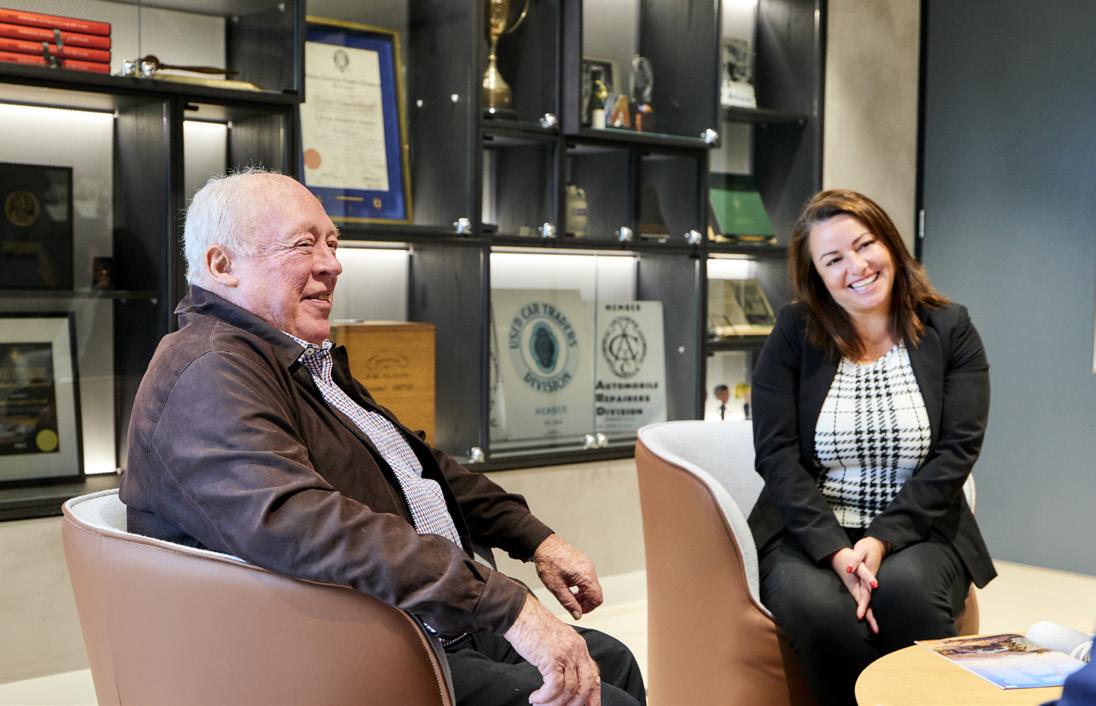
Beijing Breakthrough
The 2026 Beijing Auto Show has once again cemented its position as the global epicentre of automotive innovation. With more than 1,400 vehicles on display and over 180 global debuts, the event offered a clear window into where the industry is heading—and what that means for Australia’s automotive repair and service sector. For VACC members, the signals coming out of Beijing are not distant trends; they are near-term realities that will shape the vehicles entering workshops over the next decade. Technology—not vehicles— took centre stage.
A defining theme from Beijing was the shift from hardware to software. Technology companies such as Huawei and battery giant CATL shared the spotlight with traditional manufacturers, showcasing advances in artificial intelligence, autonomous driving and ultrafast charging. Vehicles are rapidly becoming “computers on wheels”, with AI-enabled assistants, predictive diagnostics and deeply integrated infotainment systems now standard across many models. For workshops, this evolution is already changing the nature of repairs—requiring stronger
diagnostic capability, familiarity with software updates, and confidence working across increasingly complex electronic systems. Electrification is now the baseline.
Electric vehicles were once the headline act—now they are expected. The focus has shifted to performance, range and affordability, with Chinese manufacturers unveiling everything from entry-level EVs to ultra-highperformance models. Advances in battery technology, including faster charging and extended range, continue to push the category forward. At the same time, hybrid and plug-in hybrid vehicles remain highly relevant, particularly in markets where charging infrastructure is still developing. For Australian workshops, this reinforces the need to service a mixed vehicle parc, with technicians able to move seamlessly between internal combustion, hybrid and electric systems. China is setting the pace.
One of the most significant takeaways from Beijing is China’s emergence as the global innovation engine. Chinese brands are no longer following—they are leading in battery
development, software integration and speed-to-market. With exports accelerating, Australian consumers will see a growing influx of new brands and models, many without established service networks. This presents a clear opportunity for independent workshops to position themselves as trusted service providers, particularly for customers seeking reliable, local support
The rise of intelligent and autonomous driving.
Beyond electrification, intelligent vehicle systems were front and centre. Advanced driver assistance systems (ADAS), voice control and increasingly sophisticated sensor technologies are becoming standard features across new vehicles. As these technologies become more common in Australia, they will reshape workshop operations. ADAS calibration, sensor diagnostics and software-driven servicing will become routine, requiring both investment in equipment and ongoing training to ensure technicians remain up to date. Bigger vehicles, greater complexity.
The show also highlighted a continued shift toward larger SUVs and utility-

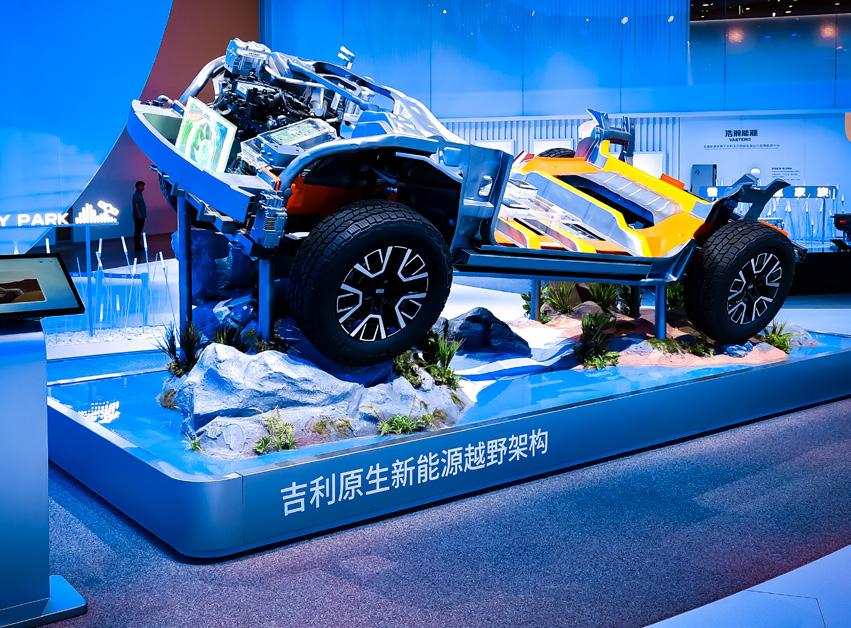
focused vehicles, even within electric line-ups. This aligns with Australian consumer preferences, particularly in regional and rural areas where vehicle capability and range remain critical. However, these vehicles bring added complexity—from weight and suspension systems to integrated electronics—further reinforcing the need for adaptable skills and workshop readiness. The overarching message from Beijing is clear: the pace of change is accelerating. For VACC members, this presents both challenge and opportunity. Businesses that invest in training, embrace new technologies and position themselves as trusted experts in an increasingly complex vehicle landscape will be best placed to succeed in the years ahead.

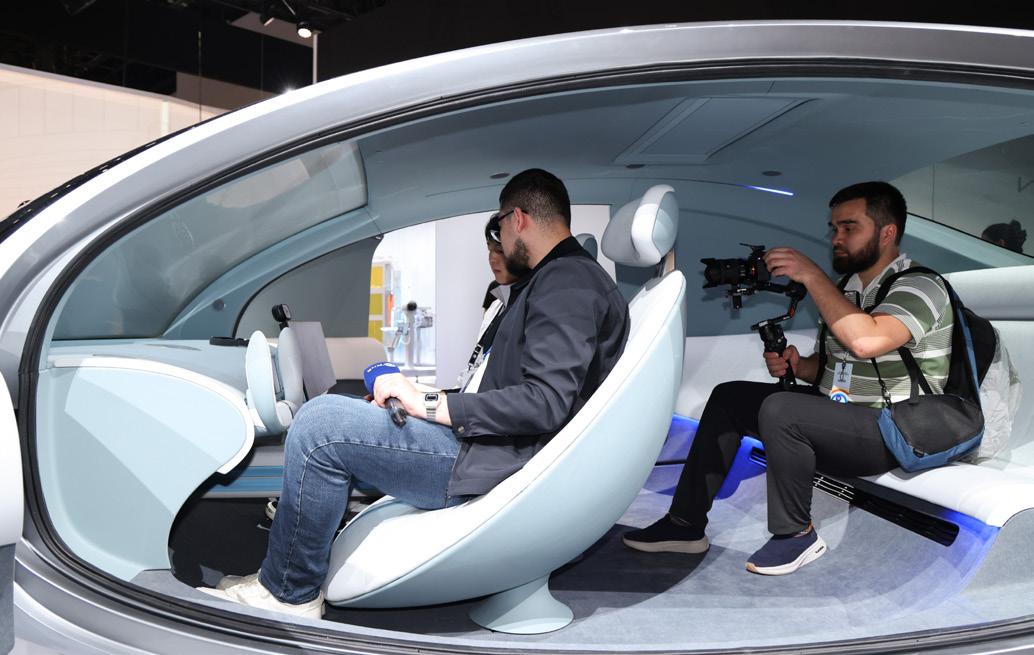
What the world’s biggest auto show means for your workshop

"One of the most significant takeaways from Beijing is China’s emergence as the global innovation engine."
See What’s Next:
For automotive businesses navigating rapid change, staying ahead of global trends has never been more important. From electrification and connected vehicles to evolving supply chains and workshop technologies, the pace of transformation across the automotive sector is accelerating—and much of it is being driven offshore.
That’s where the Auto Study Tour to Shanghai 2026 offers real value. Designed specifically for automotive professionals across Australasia, this five-day, four-night experience provides a unique opportunity to step directly into the heart of the global aftermarket industry. At its centre is Automechanika Shanghai 2026—widely recognised as one of the most significant gatherings of automotive technology, suppliers and innovation anywhere in the world. Held from 1–5 December 2026, the event brings together the full spectrum of the automotive ecosystem—parts and components, diagnostics, servicing and repair, workshop equipment, electrification, and emerging mobility solutions. For VACC members, it’s an opportunity not just to observe change, but to understand it—and apply it.
A tour built for industry professionals
What sets this study tour apart is its clear focus on delivering practical,
business-relevant outcomes. This is not a sightseeing trip with a trade show added on—it’s a structured professional development experience designed to provide tangible insights. Participants will gain:
• A clearer understanding of emerging technologies shaping workshop operations
and connection. Delegates will join a broader Australasian cohort of industry professionals, creating valuable networking opportunities across dealerships, workshops, suppliers and industry bodies. The experience also includes premium accommodation, guided access to the show, networking
“For VACC members, it’s an opportunity not just to observe change, but to understand it—and apply it.“
Direct exposure to global suppliers and evolving sourcing opportunities Insights into productivity improvements and new service offerings
• A forward-looking view of where the industry is heading over the next three to five years
For many businesses, particularly SMEs, accessing this level of global insight can be difficult. The study tour bridges that gap—bringing members face-to-face with the innovations and partnerships that will influence the Australian market in the years ahead.
More than a trade show
Beyond the exhibition floor, the tour is designed to maximise both learning
events and on-ground support— ensuring participants can focus on what matters most: gaining insight and building relationships. Importantly, the tour also offers context. Seeing the scale, speed and investment in global markets—particularly across Asia—provides a powerful lens for understanding how quickly the automotive landscape is evolving, and what that means locally.
Why it matters for VACC members
For VACC members, the implications are clear. The vehicles entering Australia, the parts supply chains supporting them,
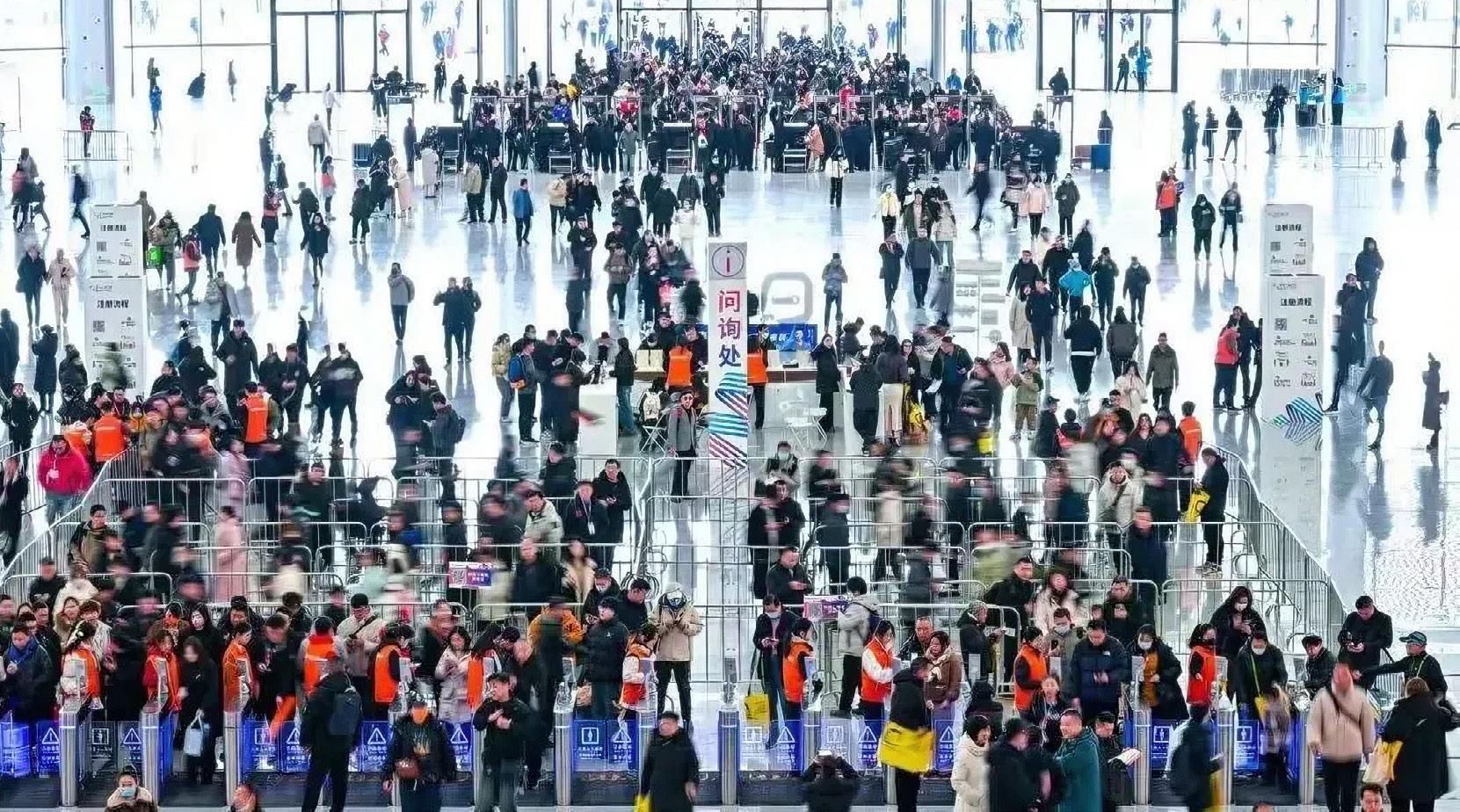
Inside the Auto Study Tour to Shanghai 2026
and the technologies required to service them are increasingly shaped by global developments.
Experiences like the Auto Study Tour equip businesses with the knowledge and confidence to adapt—whether that’s investing in new equipment, building supplier relationships, or preparing technicians for the vehicles of tomorrow.
It’s about staying informed, staying competitive, and ultimately delivering better outcomes for customers.
Register your interest
Places for the Auto Study Tour to Shanghai 2026 are limited. VACC members interested in gaining a first-hand view of the future of automotive are encouraged to explore the opportunity and register their interest via Auto Study Tours. Visit: https://autostudytours.com. au/ to learn more, download the full program, and secure your place.
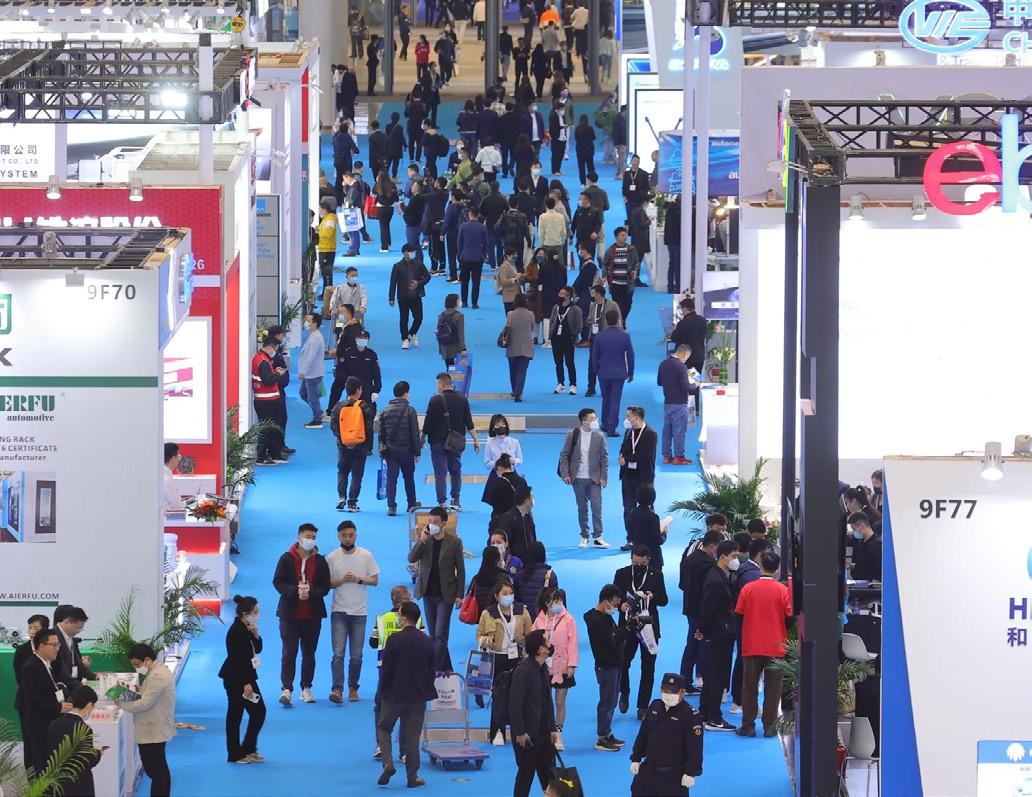
Enjoy easy, secure and reliable card payments with Commonwealth Bank’s Smart range of solutions.
Preferential Merchant Service Fee of 0.24%1 available to members of VACC. Wherever and whenever you trade, Commonwealth Bank brings together more of the solutions you need, giving you more control, time and security. With 24/7 Australian call centre support, local business specialists nationwide and a range of flexible business solutions, Commonwealth Bank is available to help you focus on what really matters, your business.
Compare your merchant service today.
With Commonwealth Bank, VACC members can receive special discounts on our Smart terminal range of EFTPOS solutions.
We can also offer a customised comparison2 of your current merchant service to Commonwealth Bank’s merchant solutions, to help you discover which product is right for you. We have flexible terminal and pricing options to suit your needs today and that can change with you in the future.
To find out how much you could save with Commonwealth Bank, contact VACC on 1300 013 341 or email membership@vacc.com.au and they’ll put you in touch with a Commonwealth Bank Relationship Manager.

Things you should know: As this information has been prepared without considering your objectives, financial situation or needs, you should, before acting on the information, consider its appropriateness to your circumstances.
10.24% is the merchant service fee rate which does not include the Mastercard and Visa Interchange rates. Interchange fees are set by card schemes such as Mastercard and Visa for processing transactions between Commonwealth Bank and the cardholder’s bank and is subject to change, therefore, savings may vary.
2Commonwealth Bank merchant cost comparison is available to compare all fee types & competitors. Different assumptions and estimates could result in materially different results.
On this basis, no representation or warranty, expressed or implied, is made as to the accuracy of the information or projections contained in this example. Fees, charges, terms and conditions apply. Please view our Merchant Agreement, Financial Services Guide and Operator and User Guides at commbank.com.au/merchantsupport VACC may receive a referral fee from Commonwealth Bank for each successful referral (excludes existing customers) on eligible Business Banking products and services. Commonwealth Bank of Australia ABN 48 123 123 124 AFSL and Australian credit licence 234945.
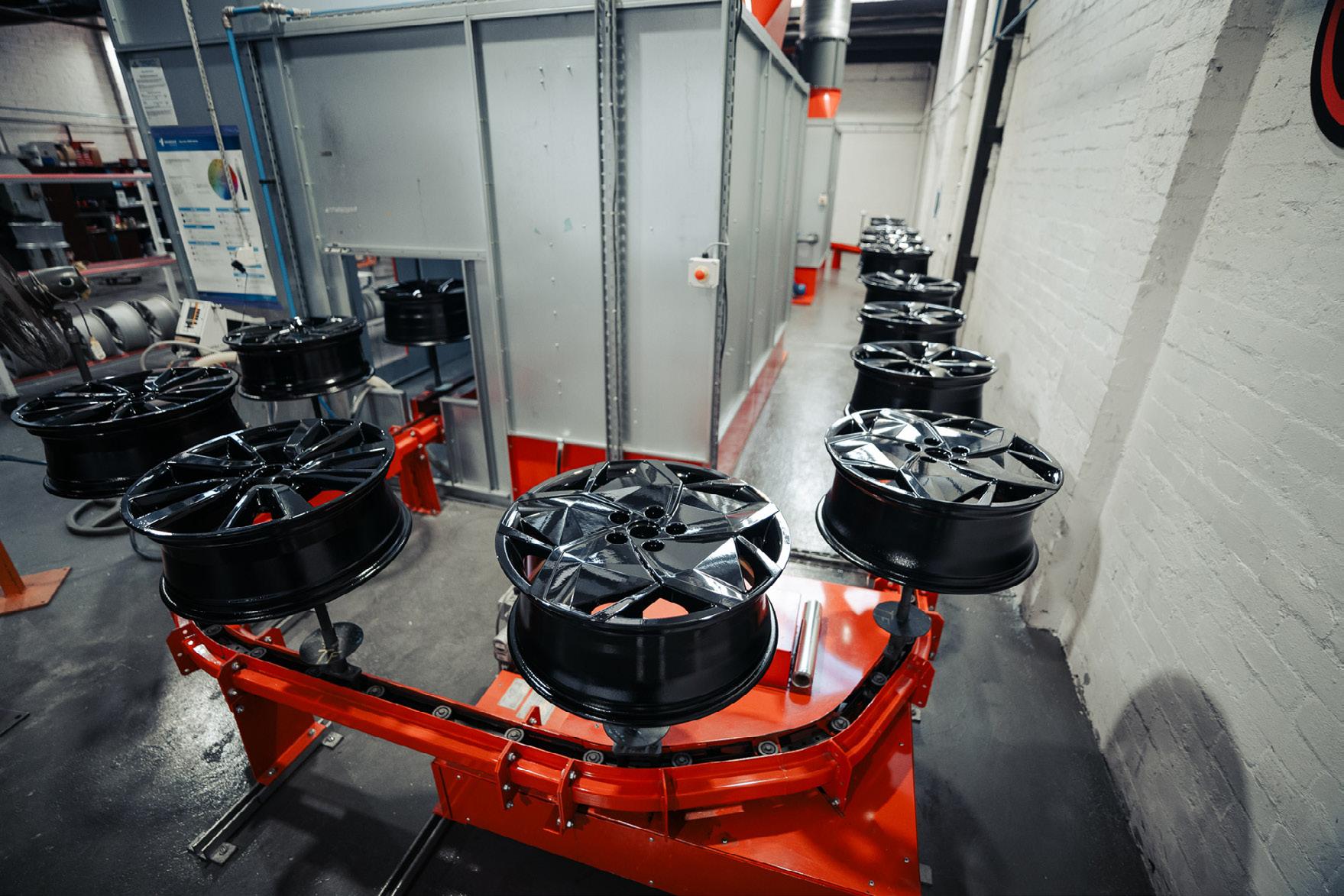
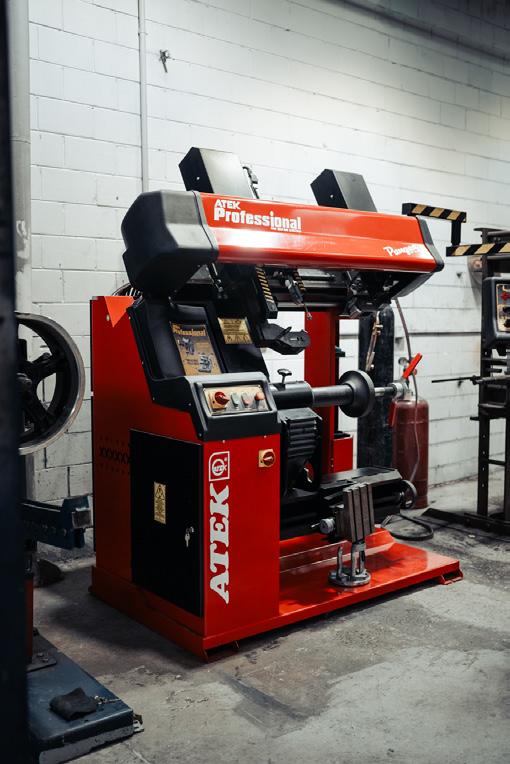
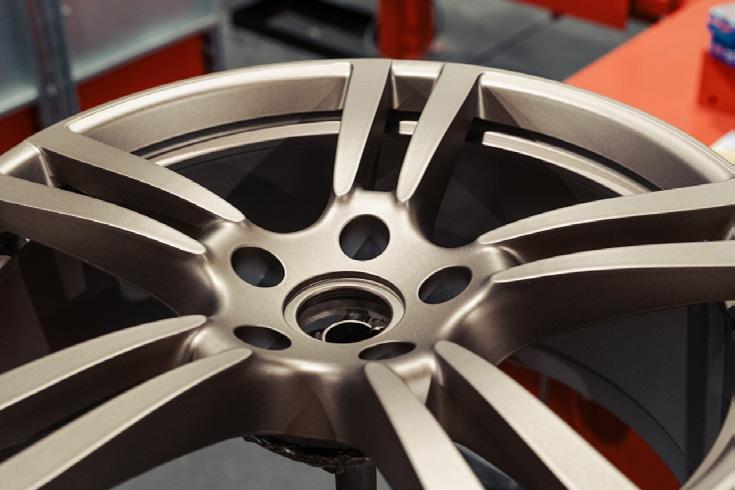

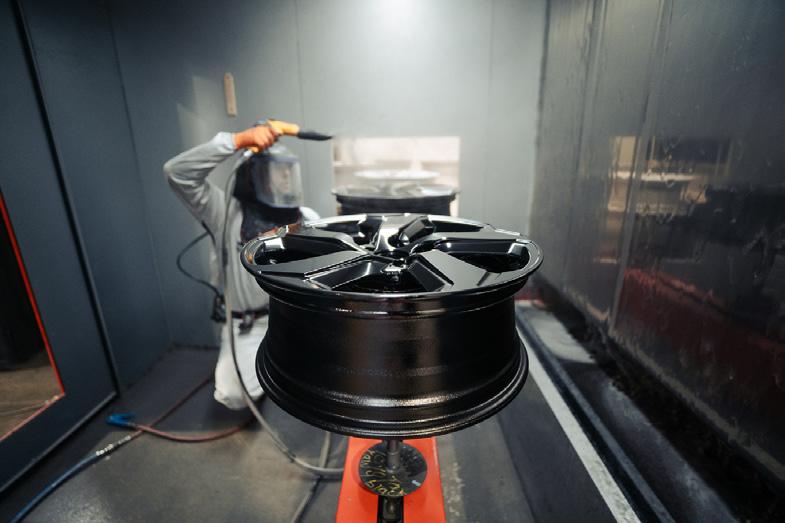
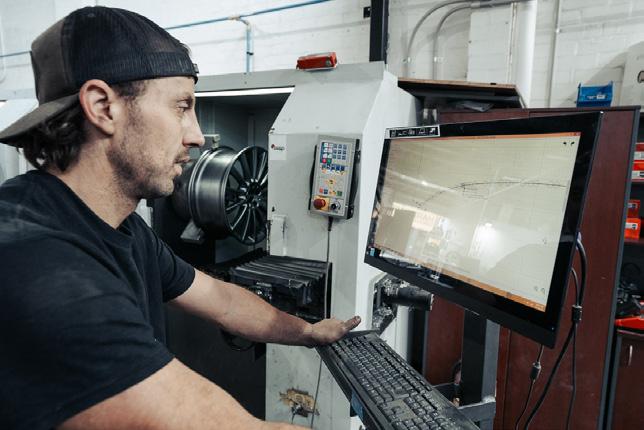
Neway Wheel Repairs is a family owned-and-operated company spanning three generations of knowledge and class-leading experience, servicing the automotive industry with trusted craftsmanship since 1950. We use state of the art equipment to remanufacture your wheels back to OM standard.
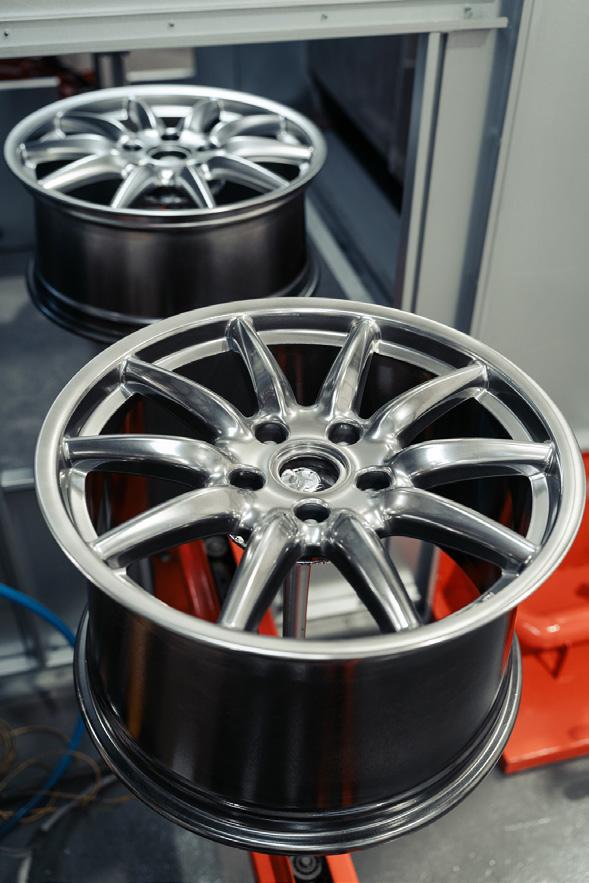
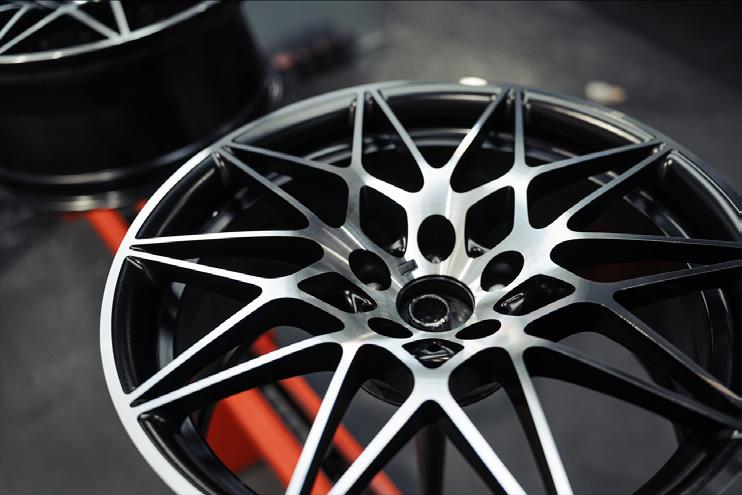
VACC Automotive magazine wins national recognition at Newspress Australia Awards
VACC Automotive magazine has been recognised on the national stage, taking out Custom Publication of the Year at the Newspress Australia Awards, a significant achievement that underscores the strength of the publication and the people behind it. Judged by a panel of experienced journalists, editors and publishing professionals from across the country, the award celebrates excellence in custom publishing, recognising titles that deliver high-quality, engaging and relevant content to a clearly defined audience. In awarding VACC Automotive, the judges noted it as “a benchmark example of custom publishing, combining strong publishing basics with uncluttered layouts, great bespoke photography and a clear understanding of its readers.”
For VACC Automotive, that audience
trusted voice for the automotive sector in Victoria and Tasmania.
Published in-house by VACC, the magazine has evolved into a polished, contemporary publication that balances industry advocacy with practical insights, member stories and broader automotive trends. Each edition is carefully curated to ensure it speaks directly to the needs and interests of members. Importantly, the magazine does more than report on the industry, it represents it. Through coverage of policy issues, skills and training, emerging technologies and real-world business challenges, VACC Automotive provides a platform for the issues that matter most to members. At a time when the automotive sector is navigating significant change the importance of a strong, credible publication has never been greater. The award also recognises the collaborative effort behind every
each edition reflect the diversity and innovation of the industry. From spotlighting long-standing family businesses to showcasing the next generation of apprentices, the magazine continues to highlight the people at the heart of automotive.
Visual storytelling has also played a key role in the magazine’s success. Strong photography and thoughtful design elevate each edition, ensuring it not only informs but engages, bringing member stories and industry developments to life on the page.
Winning at the Newspress Australia Awards places VACC Automotive alongside some of the country’s best custom publications, a noteworthy achievement for a memberfocused magazine produced within an industry association.
For VACC, it reinforces a simple but important point: telling the story of the automotive industry matters. This magazine will remain a critical channel for sharing knowledge, celebrating success and advocating for members. This award is a milestone moment, but also a platform to build on.
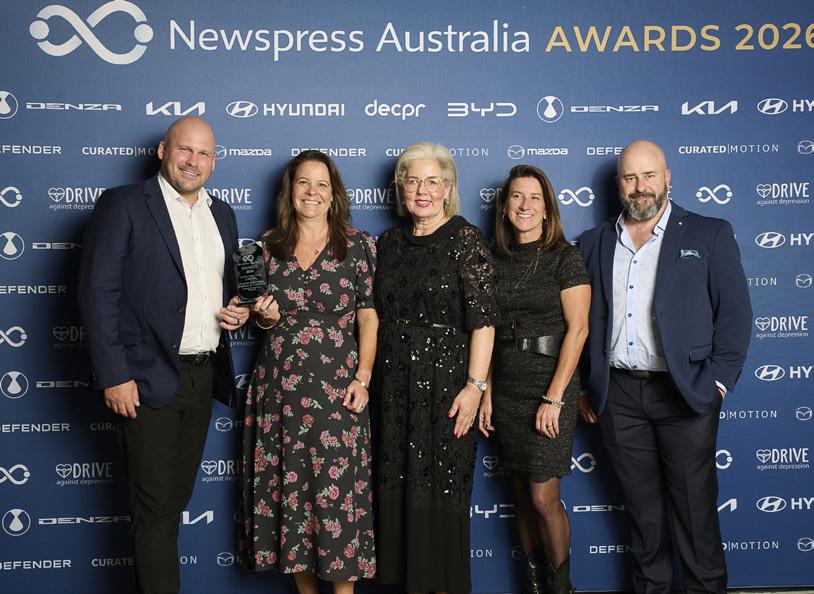
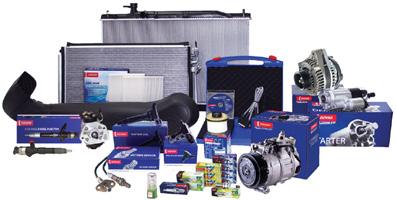

specialists and, importantly, members
Because at its core, the magazine exists for one purpose: to inform, support and represent you, the automotive businesses that keep Australia moving.
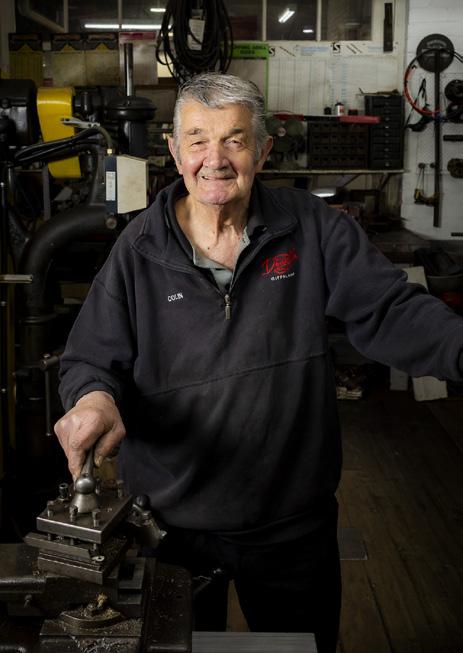
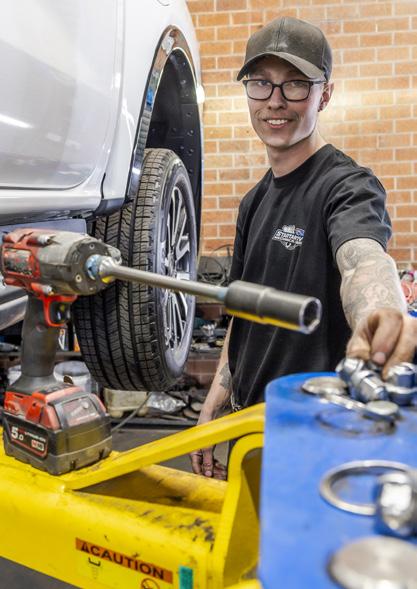

June 1926, Alexander Mair & Co are selling a floor crane for £30 - which equates to around $3,000 today. With a clifting capacity of 10cwts or around 508kg, showing that vehicles in 1926 were definitely lighter than what we see today.
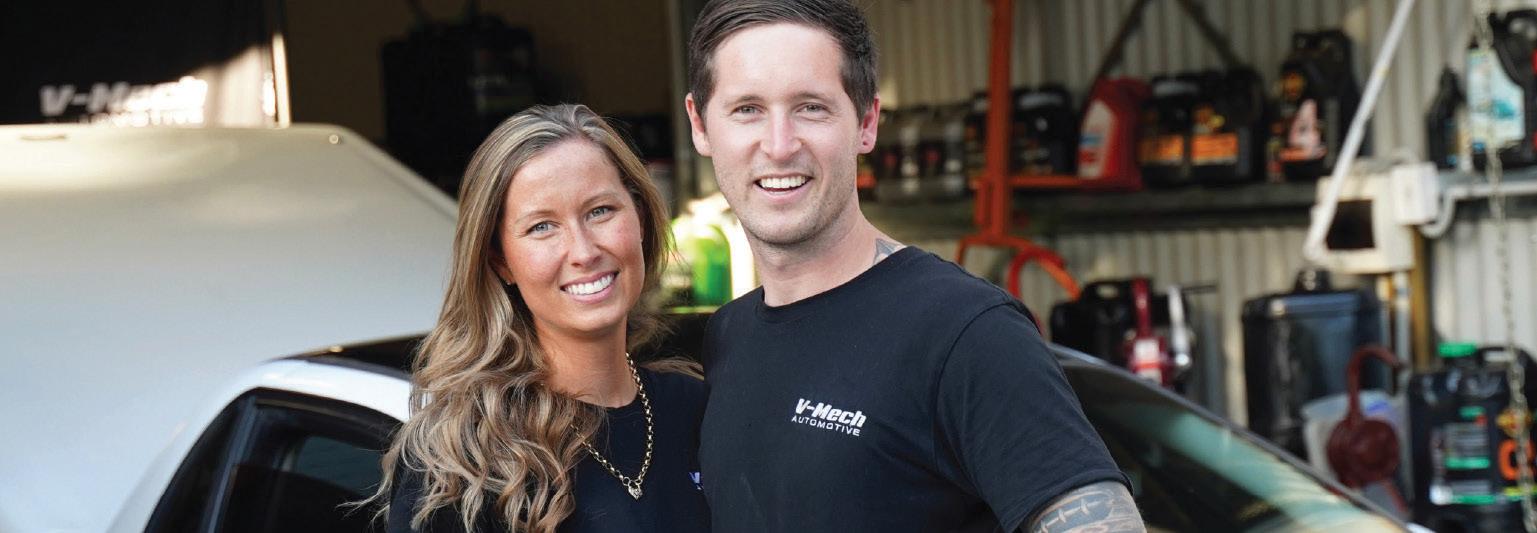


Access to multiple online technical information systems, including the all-new Rego Look-up feature
Access to VACC’s Melbourne-based TechAdvisory Service
Access to VACC’s TechTalk magazine