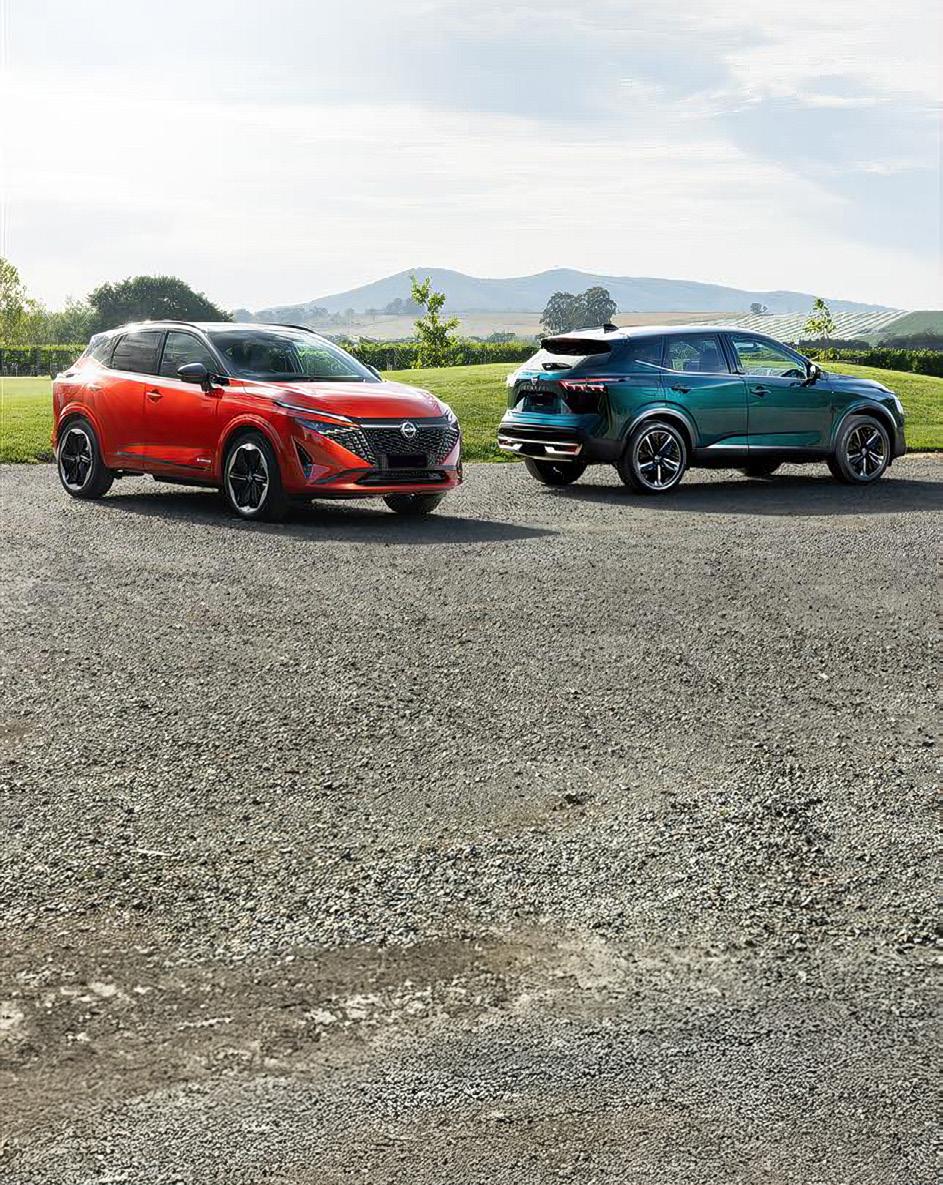
Now open Not all hybrids are created equal Inside the tech powering Australia’s most popular cars
What’s next for Australian automotive?
8 trends every workshop needs to watch
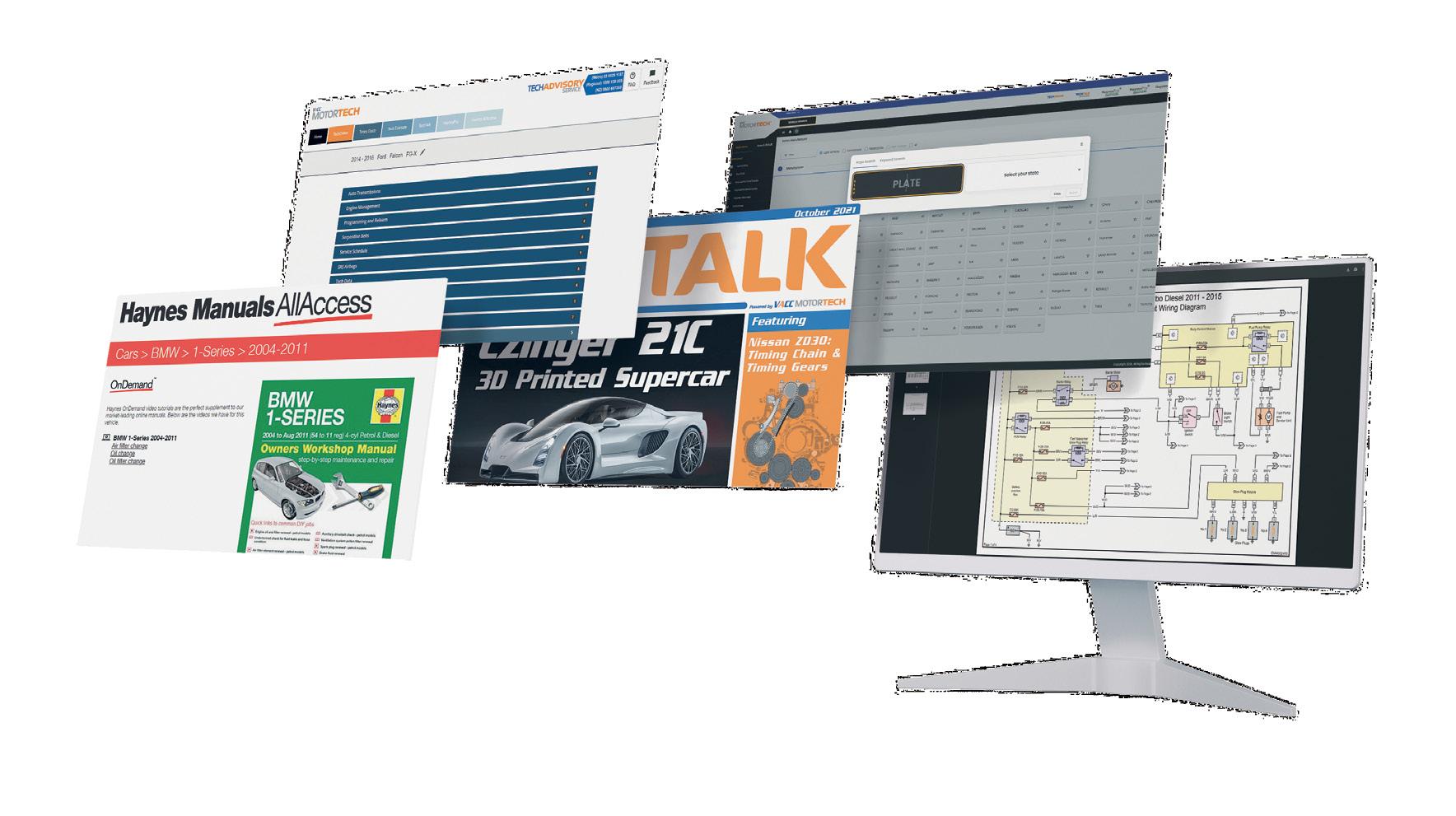
Access to multiple online technical information systems, including the all-new Rego Look-up feature
Access to VACC’s Melbourne-based TechAdvisory Service
Access to VACC’s TechTalk magazine
Always
There Automotive from a promising local workshop into a regional success story.
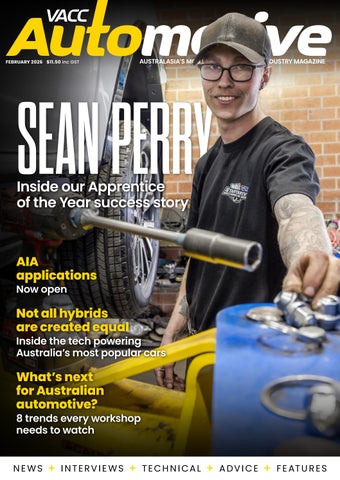
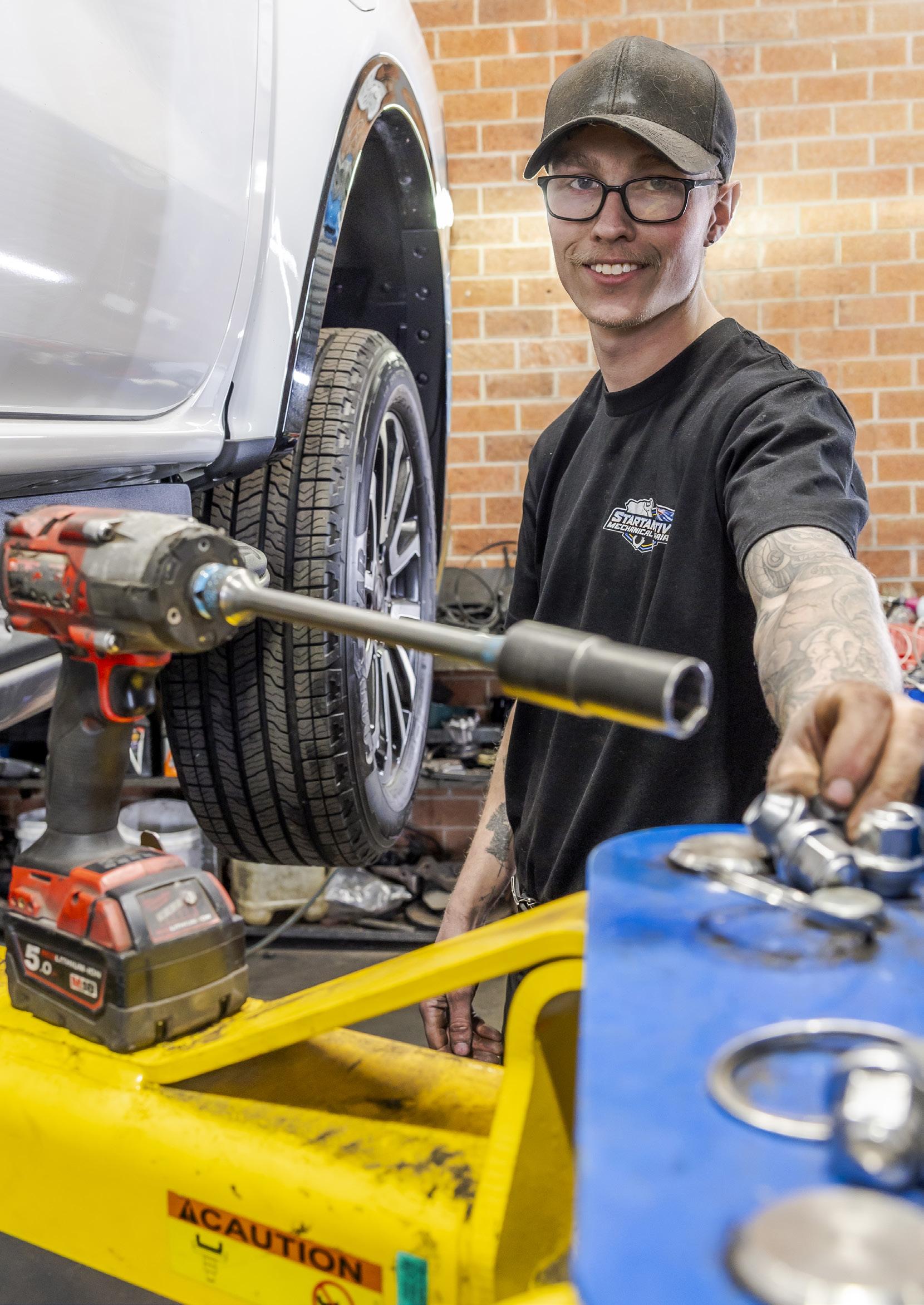
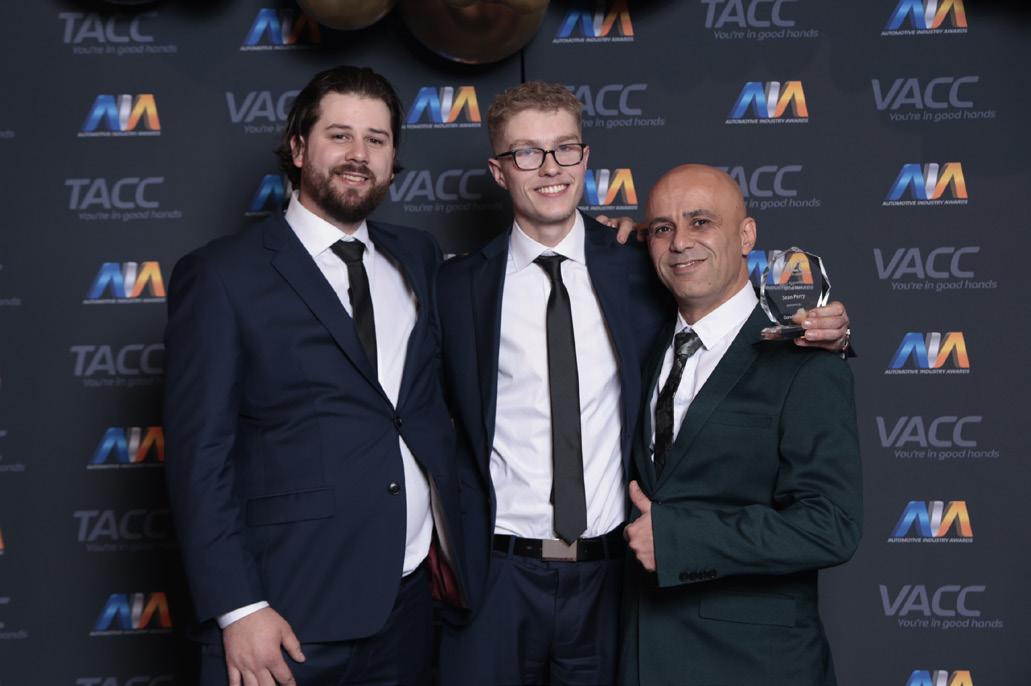
This edition marks our first issue for 2026 and looks ahead to a year of significant change for the automotive industry. Our cover story features Sean Perry, VACC Apprentice of the Year for 2025, who shares why apprenticeships are vital to the future of our industry. His journey highlights the importance of investing in skills, training and the next generation of automotive professionals as technology and workforce needs continue to evolve.
This issue also celebrates a major milestone, 40 years of VACC’s Tech Talk. For four decades, Tech Talk has been the industry’s most trusted technical resource, delivering practical, workshop-ready advice and solutions to real-world problems. Its longevity reflects VACC’s ongoing commitment to supporting technicians with reliable technical information. As always, we’d love to hear from you. Share your feedback, story ideas or suggestions by emailing editor@vacc.com.au. Your input helps us shape a magazine that continues to showcase the best of our members and the broader automotive community.
Our new North Melbourne facility supporting the future
One of Australia’s longest-running family dealerships
Australia’s auto market is shifting, we look at the trends for 2026.
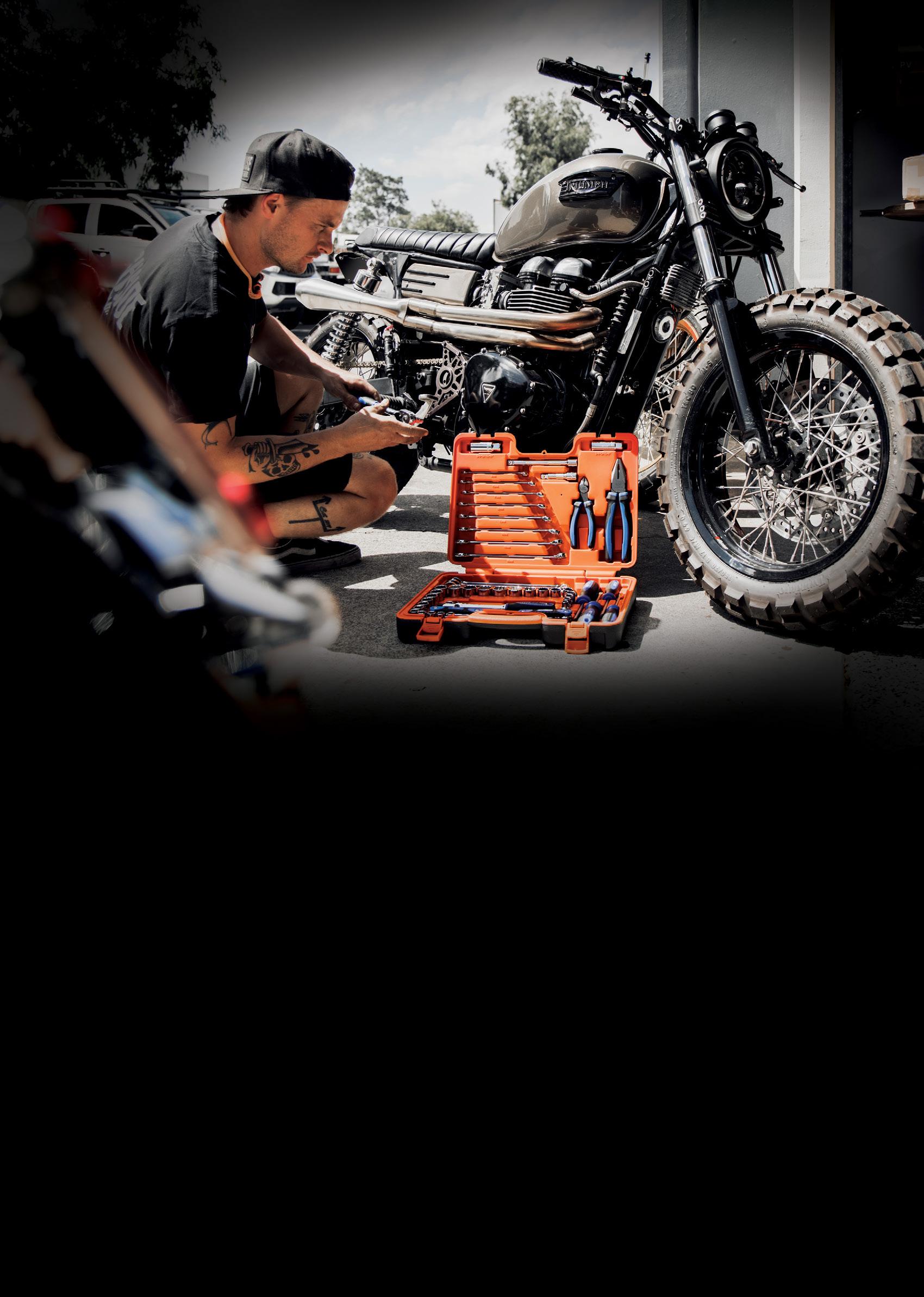
The Thomas family’s 57 year journey in motorcycles
Setting the benchmark for specialist Mercedes-Benz repair
Over
of
MANAGING EDITOR
Karla Leach | 03 9829 1247 vaccautomotive@vacc.com.au
SUB-EDITOR
Andrew Molloy
DESIGNERS Faith Perrett | Gavin van Langenberg creativeservices@vacc.com.au
57, 672 READERSHIP
CONTRIBUTORS
John Caine, Andrew Molloy, Rod Lofts, John Khoury, Bruce McIntosh, Daniel Hodges, Nigel Muller
CORPORATE PARTNERSHIPS
John Eaton | 0407 344 433 jeaton@ourauto.com.au
PRESIDENT Craig Beruldsen
Sean Perry Why apprentices are the future of the automotive industry
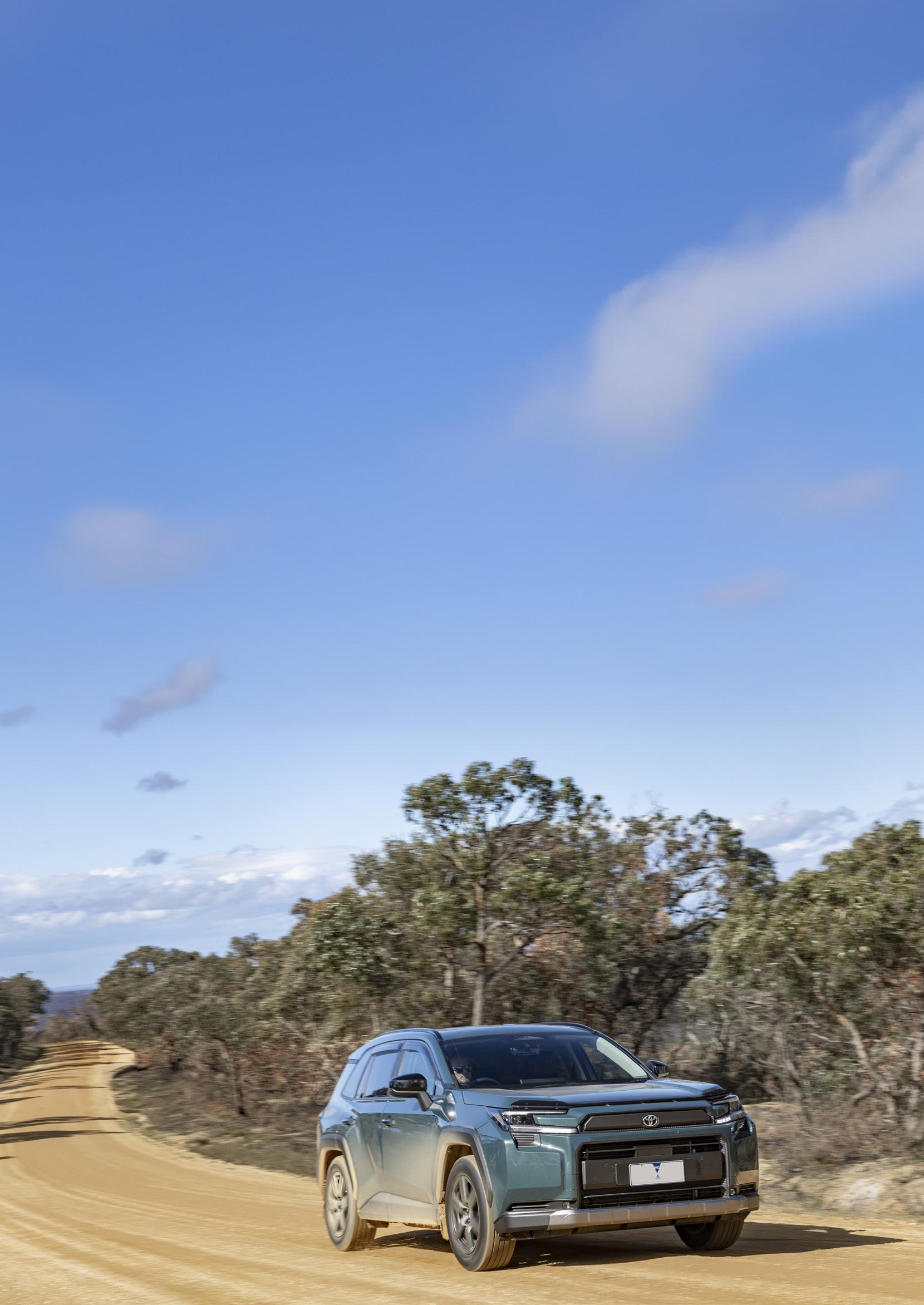
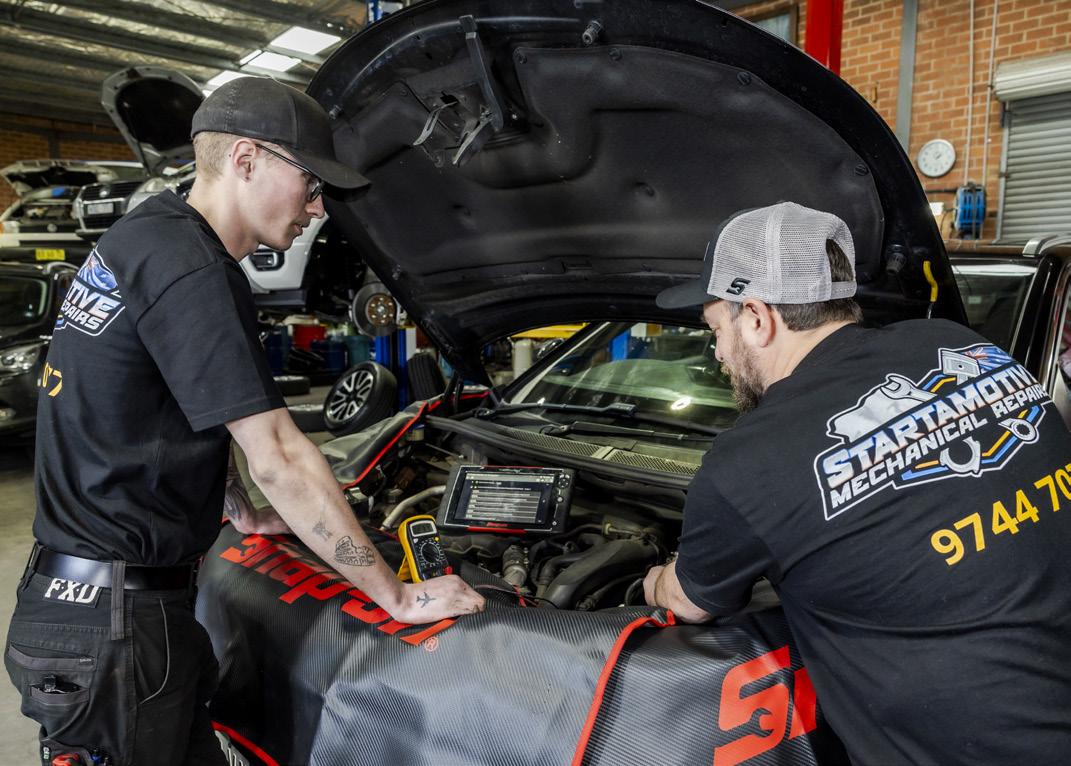
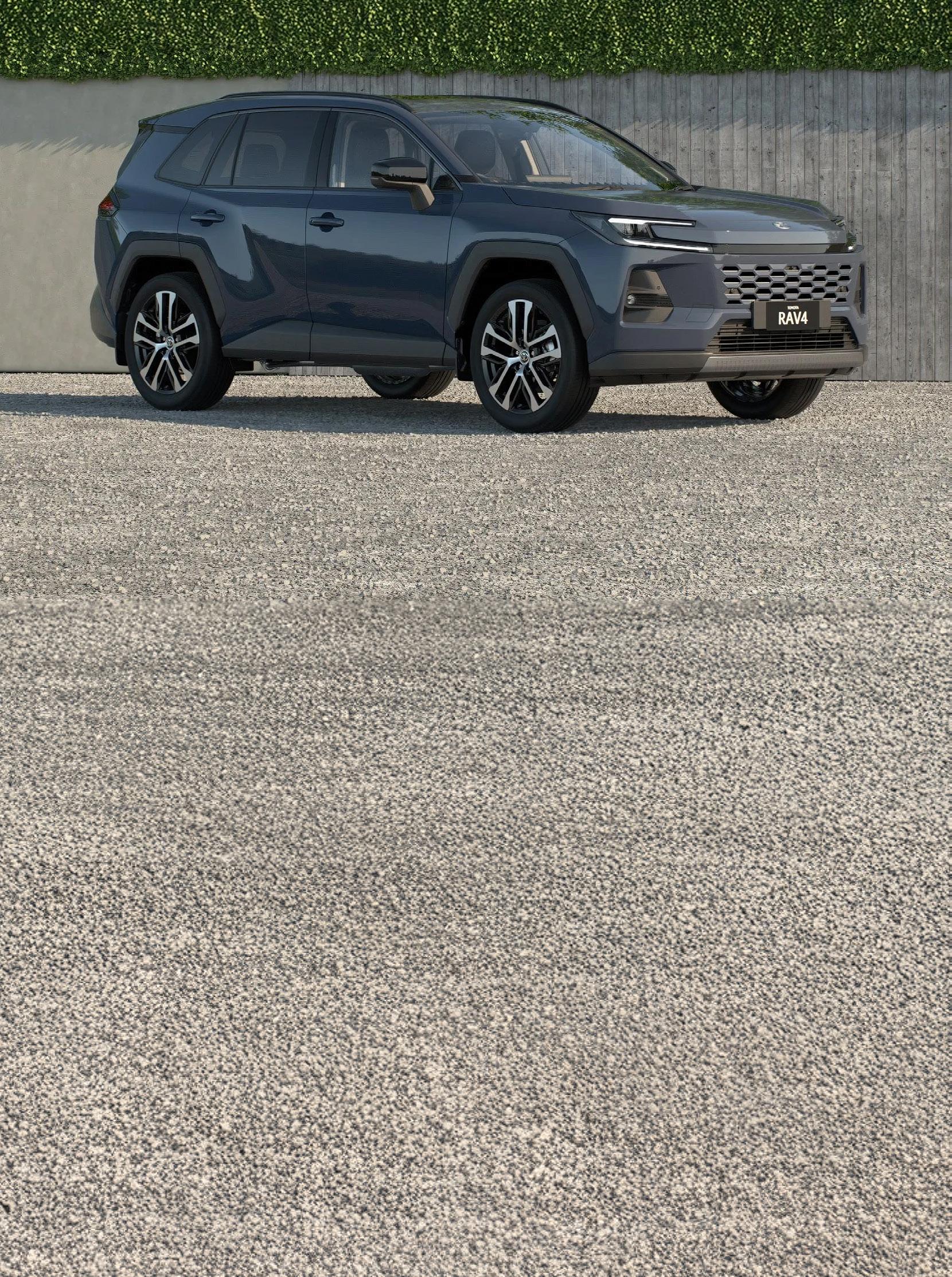
Hybrids Ain’t Hybrids
Understanding the technologies increasingly powering Australia’s best-selling cars
CHIEF EXECUTIVE OFFICER
Peter A. Jones
Official publication of the Victorian and Tasmanian Automotive Chambers of Commerce
650 Victoria Street, North Melbourne VIC 3051 03 9829 1111 ABN 63 009 478 209
Connect with VACC
Your priorities are
Peter A. Jones Chief Executive Officer, VACC
As we begin another year in the automotive sector, we do so with a major milestone on the horizon: the Victorian State Election on 28 November 2026. Elections always bring a degree of uncertainty, but they also create a rare opportunity. An opportunity for our industry to shape the policy environment that governs how we operate, employ, invest, and serve our customers
For more than 100 years, the Victorian Automotive Chamber of Commerce has been a strong, stable voice for automotive businesses. As we move toward this election cycle, our focus is singular: ensuring that your voice—your challenges, opportunities, and realities, is heard clearly and consistently by government and by those who seek to form it.
The automotive sector is undergoing profound transformation. Technology is evolving at a pace previously unimaginable, consumer expectations are shifting, and the regulatory landscape is becoming more complex across areas such as emissions, training, safety, data access, licensing, and environmental responsibility.
At the same time, members continue to face realworld pressures: chronic skills shortages; rising compliance and operating costs; delays in parts supply; tightening margins; emerging ADAS and EV calibration requirements; and increasing customer demand for faster, more specialised services.
This election will determine the policy settings that directly affect every workshop, dealership, body repairer, recycler, and specialist across the state. That is why the VACC has already begun the groundwork to position automotive businesses at the centre of the conversation.
Throughout 2026, we will be consulting with members—through visits, forums, surveys, regional engagement nights, the Industry Policy Council and direct business conversations—to shape the VACC State Election Blueprint. This document will outline the key reforms and commitments needed from political leaders to support a strong, future-ready automotive workforce and sector.
Some of the key issues we know already sit high on your agenda include:
• Skills shortages and apprenticeship pathways – Ensuring Victoria has a sustainable pipeline of qualified technicians for repair, collision repair, heavy vehicle, agriculture and marine.
• Training system reform – Fit-for-purpose EV and emerging technologies training, improvements in funding models, and stronger recognition of industry-led programs such as VACC Automotive Apprenticeships.
• Regulatory clarity and consistency – From licensing and accreditation to environmental compliance, we need rules that are practical, enforceable, and designed in consultation with industry.
• Business productivity and red tape reduction – Cutting unnecessary administrative burdens that stop members doing what they do best: servicing their customers.
• Infrastructure and transition support –Ensuring workshops have affordable and accessible pathways to invest in new tools, equipment, and charging capabilities.
• Fair and safe competition – Stronger enforcement against rogue operators, better access to vehicle service and repair information, and a level playing field for regional and metropolitan businesses alike.
These are not theoretical issues. They are the day-to-day realities affecting your businesses, your staff, and your customers. And they form the backbone of our advocacy.
The VACC will spend the year ahead meeting with Ministers, Shadow Ministers, candidates, departmental executives, and regulators. We will take your stories directly to Parliament. Our commitment is to ensure every political leader understands what is at stake for our industry and what is needed to keep Victoria moving.
We will also continue to work nationally through the Motor Trades Association of Australia (MTAA) to ensure that Victoria’s priorities are aligned with broader reforms across the country. A coordinated national approach to skills, safety, emissions, training, and data access benefits everyone.
The strength of the VACC’s advocacy has always come from one simple truth: we speak on behalf of a large, diverse and highly respected membership base.
Policymakers listen because they know we represent real businesses employing tens of thousands of Victorians—businesses that keep the state’s economy and transport system functioning every single day.
As we approach November 2026, your input will be more important than ever. I strongly encourage every member to stay engaged, attend local events, share your views, and reach out to our team. The more united our message, the stronger our influence.
While elections inevitably bring change, they also bring possibility. This year, the VACC will work tirelessly to ensure that possibility becomes meaningful progress for automotive businesses across Victoria. Our advocacy priorities will be clear, consistent, and grounded in what matters to you. Because at the end of the day, our mission remains the same as it has since 1918: to strengthen members and champion the automotive industry.
“The more united our message, the stronger our influence.”
our platform
“Elections bring uncertainty, but they also create a rare opportunity for our industry to shape the policy environment that governs how we operate, employ, invest, and serve our customers.”
Victorian Psychological Health Regulations
What automotive businesses need to know
From 1 December 2025, the Victorian Government’s Occupational Health and Safety (Psychological Health) Regulations 2025 came into effect, applying to all Victorian employers, regardless of business size. The new regulations support existing obligations under the Victorian Occupational Health and Safety Act 2004 (the OHS Act). For automotive businesses, these changes serve as an important reminder that employer and employee duties under the OHS Act apply to both physical and psychological health and safety in the workplace. The new regulations require employers to identify and control risks associated with psychosocial hazards, such as bullying, sexual harassment, discrimination, aggression and violence, and to do so in consultation with their employees. Employers must also review and, where necessary, revise the measures they have in place to control these risks, again in consultation with their workforce.
Importantly for VACC members, the final form of the regulations reflects successful industry advocacy. There is no requirement for businesses to introduce a standalone written prevention plan, nor to report complaints data to WorkSafe Victoria every six months, as originally proposed. These outcomes significantly reduce the compliance burden, particularly for small and medium automotive businesses, while still maintaining a strong focus on worker wellbeing. For most automotive businesses, compliance will not require reinventing the wheel. Instead, it’s
about engaging with employees to ensure that policies, procedures and behaviours remain fit-for-purpose, are understood, and actively applied. Consultation therefore remains central. This doesn’t mean employees must agree with every decision, but that employers provide information, hold discussions, and create genuine opportunities for employees to ask questions. Toolbox meetings, team briefings and one-on-one conversations all play an important role in providing a platform for effective consultation with workers. Managers and supervisors are employees with a particularly critical role under the new framework. As workplace leaders, they are often the first point of contact for issues and are seen as cultural role models. Ensuring managers are appropriately trained, and consistently demonstrate respectful, compliant behaviour, is essential to managing psychosocial hazards and risks effectively.
To support members, VACC has updated its Employee Handbook to reflect the commencement of the Psychological Health Regulations. The handbook includes policies and implementation procedures covering common psychosocial hazards and aligns with both Victorian and Tasmanian requirements. When implemented in a business, it provides clarity for both employers and employees on rights, responsibilities and expectations.
Daniel Hodges
Workplace Relations
For larger employers or those seeking more detailed frameworks, VACC has also updated its stand-alone bullying (including workplace aggression and violence), sexual harassment and discrimination policies and procedures. These include clear issue-resolution processes designed to encourage early reporting and timely, appropriate responses.
The commencement of the Psychological Health Regulations reinforces an approach many automotive businesses already value: clear communication, respectful behaviour, and a safe, supportive workplace. At a time when skills shortages, workload pressures and business uncertainty continue to challenge the industry, taking proactive steps to manage psychological health risks can help reduce disputes, improve staff retention and strengthen workplace culture.
Members seeking advice on policies, procedures, consultation processes or staff training are encouraged to contact VACC Workplace Relations for tailored, industry-specific support. Seeking support and guidance early can make a significant difference in ensuring you are meeting your duties and protecting the health and safety of your workforce.
For more information or assistance, contact the VACC OHSE Unit on 9829 1265 or ohs@vacc.com.au.
Contact ir@vacc.com.au for more information.
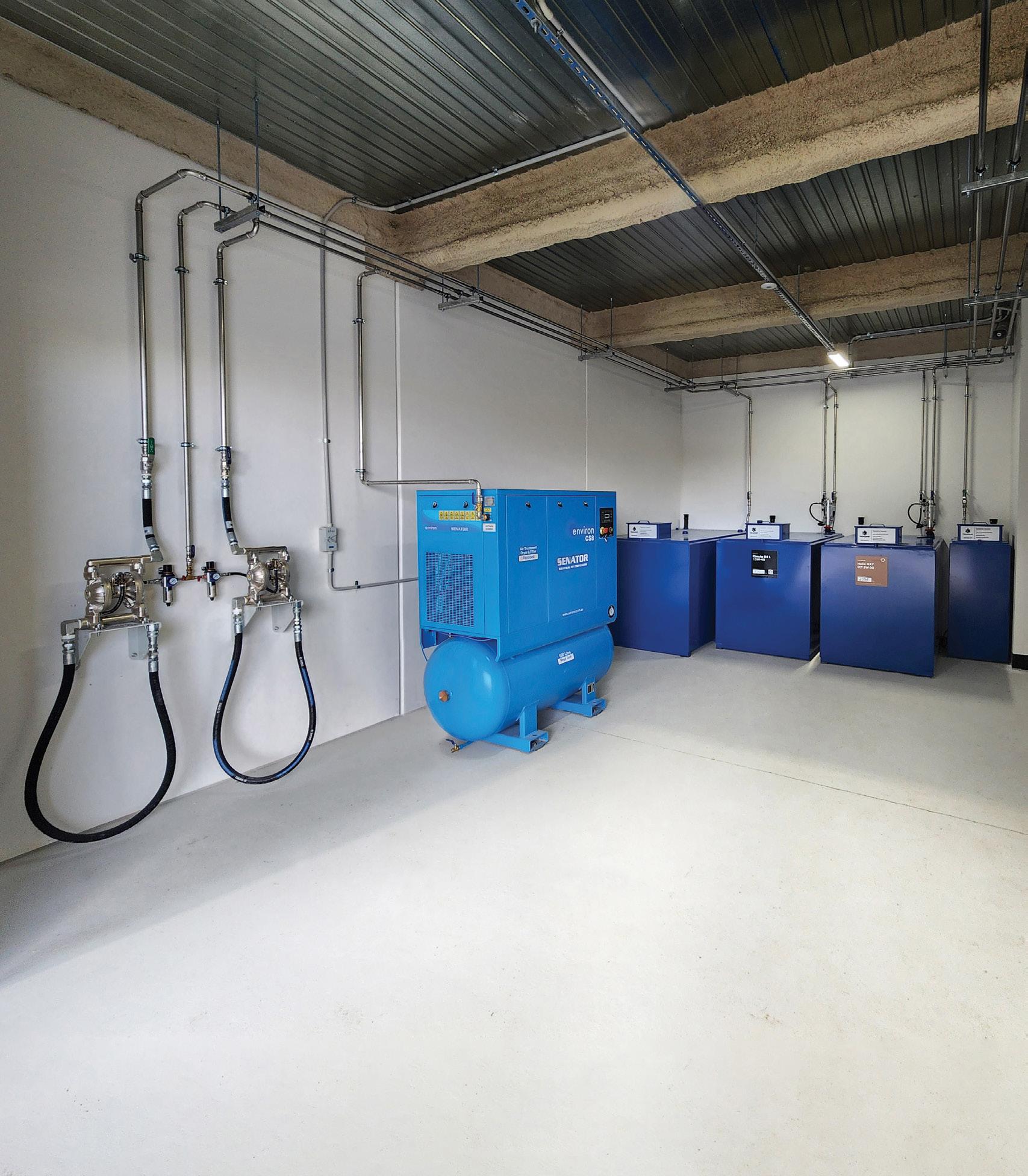
DISCOVER MORE
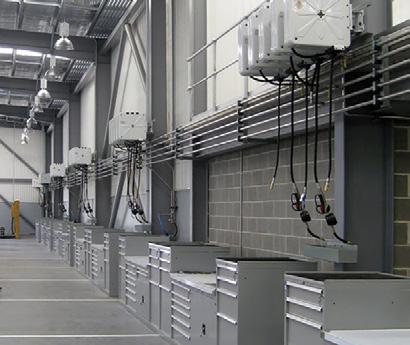
Explore our range of products or contact us to discuss how we can assist with your workshop. Free call 1800 685 577.
FLUID PUMPS
RAASM pumps have been an industry favourite for over 20 years. Ensuring performance and reliable flow throughout a workshop.
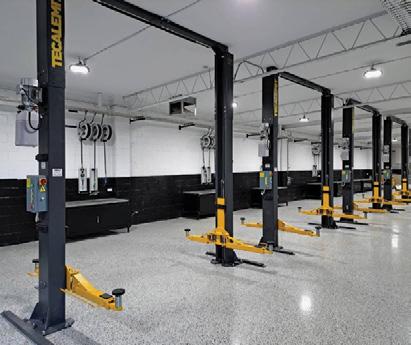
VEHICLE HOISTS
Space, operator experience and vehicles being lifted all contribute to selecting the right mix of 2 post and 4 post hoists for your workshop.
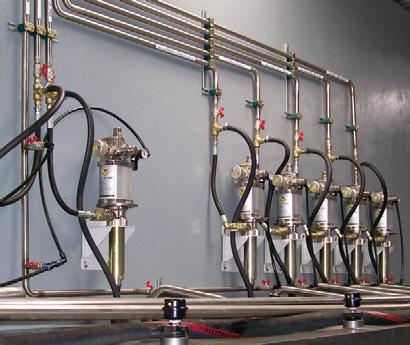
PIPE WORK & HOSE REELS
Stainless steel pipework for air, water and oil all help ensure product integrity and distribution throughout the largest of workshops.
2026: The year automotive training takes centre stage
As the industry transforms, new facilities, expanded programmes and growing apprentice numbers signal a pivotal moment for workforce development.
If there's one theme that will define 2026 for the automotive industry, it's this: training is no longer just important—it's absolutely critical. As Australian roads continue their rapid transformation towards hybrids and electric vehicles, the gap between the skills we have and the skills we need has never been more apparent. The good news? This year promises to deliver the infrastructure, programmes and opportunities to bridge that gap.
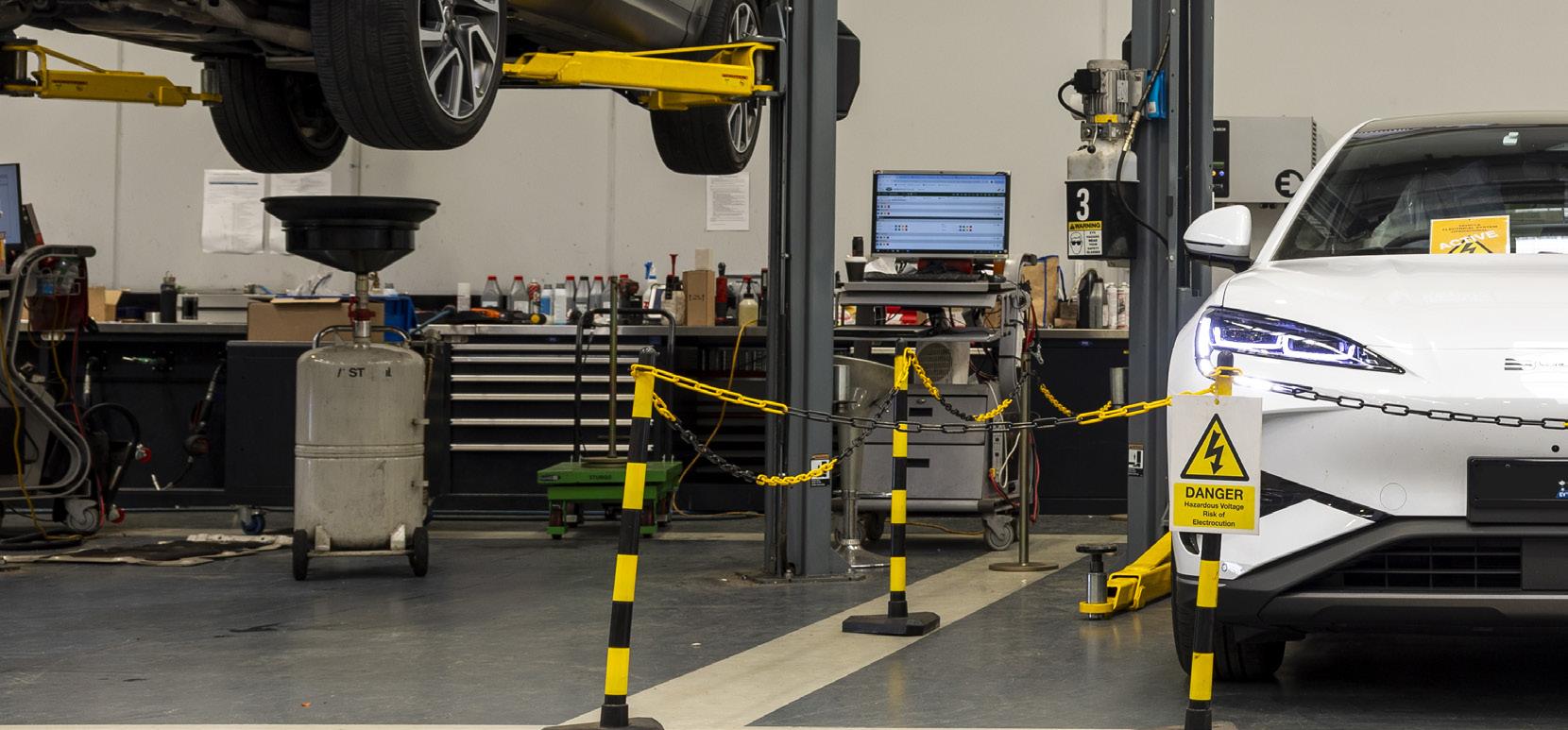
For members, 2026 marks a significant milestone with the chamber's new dedicated training facility coming into its own. This purpose-built space represents more than just bricks and mortar; it's a tangible commitment to ensuring our industry can meet tomorrow's challenges. The facility provides a crucial opportunity for members to upskill their teams, offering hands-on training environments that reflect the evolving technology landscape of modern workshops. Whether you're looking to refresh your technicians' knowledge or dive deep into new EV and hybrid systems, having this dedicated resource at our disposal changes the game. Electric vehicle training will take on particular urgency this year as the industry prepares for the VicRoads Licensed Vehicle Testing rules to take full effect. The regulatory landscape
is tightening, and workshops that haven't yet invested in EV capability need to get their teams up to speed.
The VACC training facility will ramp up its EV-focused courses throughout the year, ensuring members can meet compliance requirements whilst building genuine expertise in this rapidly expanding field.
Down in Tasmania, the industry will celebrate another major infrastructure win with the official opening of the TasTafe brand-new automotive training centre early in the year. This purpose-built facility represents a significant investment in the island state's automotive future, providing a modern home for new apprentices whilst offering comprehensive training opportunities for the future workforce. The centre isn't resting on its laurels either—2026 will see the rollout of new, purpose-driven training courses designed to address specific industry gaps and emerging technology requirements.
Perhaps most encouraging of all, VACC and TACC will be strategically increasing their apprentice numbers. This expansion of the apprenticeship programme directly addresses one of the industry's most persistent challenges: building a sustainable labour pipeline. With experienced technicians ageing and the technical
demands of modern vehicles escalating, we must bring more young people into the trade and give them world-class training.
This is where individual workshops come in. As VACC grows its apprentice numbers, the chamber is actively encouraging members to take on apprentices themselves. Yes, there's an upfront investment of time and resources, but the dividends can be enormous. An apprentice who learns your workshop's culture and standards from day one becomes an invaluable team member, someone who understands not just the technical side but how your business operates. In an industry where skilled labour is increasingly difficult to find, growing your own talent isn't just smart; it's essential. The pieces are falling into place: dedicated facilities, expanded training programmes, more apprentices entering the pipeline, and a regulatory environment that demands higher standards. 2026 could well be remembered as the year the Australian automotive industry truly committed to building the workforce it needs.
The question for every workshop owner is simple: Will you be part of this transformation?
Nigel Muller Membership and Training Contact autoapprenticeships@vacc.com.au
for more information.
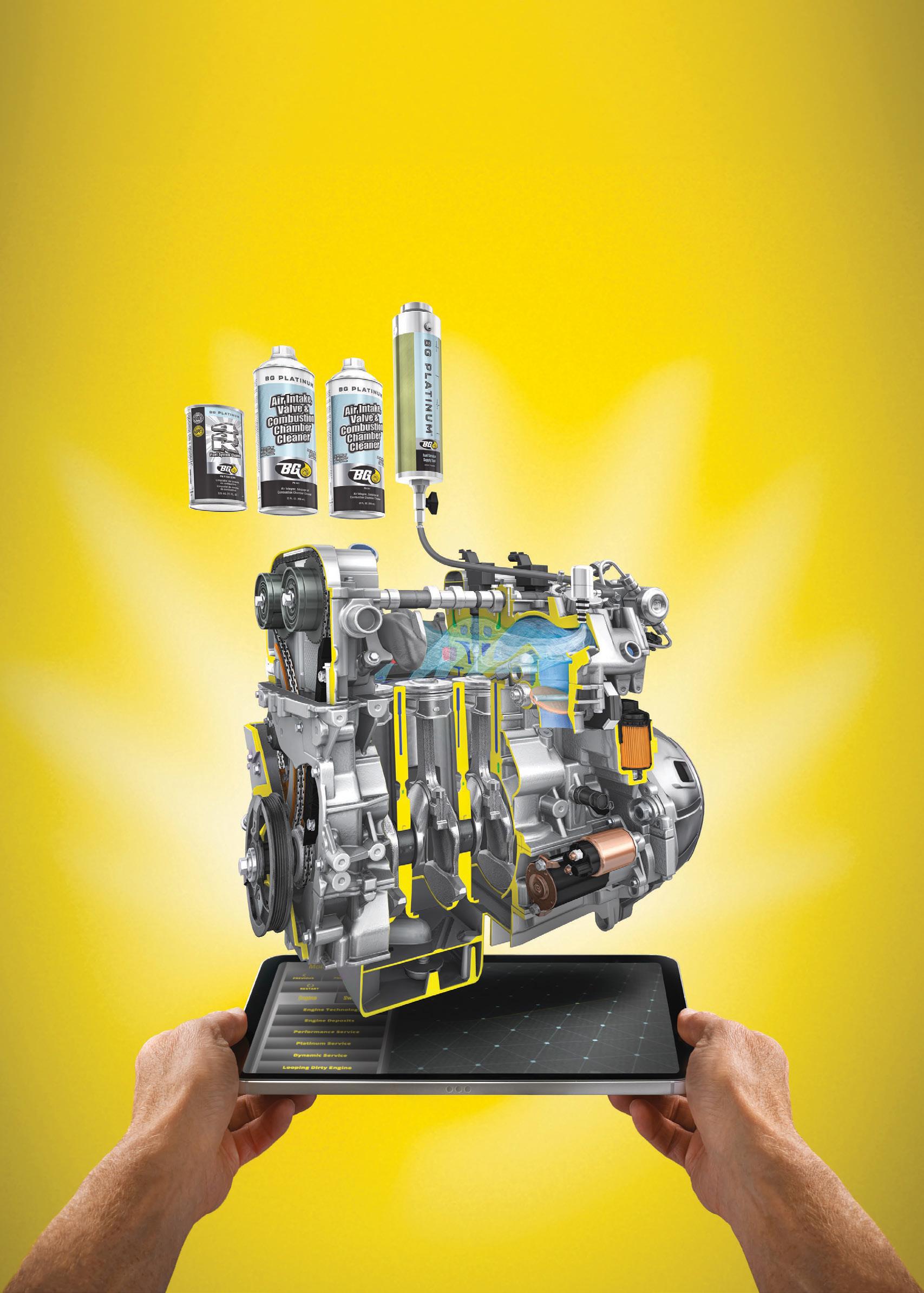
GRAB THE FUTURE WITH AUGMENTED REALITY
Blueprint for change Chamber's 2026 Policy Blueprint sets advocacy agenda ahead of November
state election
As Victoria heads towards a state election in November, the automotive industry has delivered a unified message to politicians across the spectrum. After months of consultation with members across the state, the Victorian Automotive Chamber of Commerce has released its 2026 Policy Blueprint, a document that will shape the organisation’s advocacy efforts throughout what promises to be a decisive year for the industry.
The Blueprint represents more than just a wish list of policy reforms. It’s the product of countless conversations, consultations and feedback sessions with VACC members operating across Victoria’s diverse automotive landscape. From metropolitan dealerships to regional repair workshops, from towing operators to motorcycle retailers, the document captures the real concerns of businesses employing over 50,000 Victorians.
For VACC, the Blueprint serves a clear strategic purpose. It will form the foundation of the Chamber’s policy advocacy throughout 2026, ensuring the organisation speaks with one voice as it engages with political parties ahead of the November election. Rather than backing any particular political side, VACC is committed to ensuring that whoever forms government understands the challenges facing automotive businesses and has workable solutions to support the industry’s future.
The consultation process revealed consistent themes emerging from members across different sectors. Regulatory burden topped many lists, with businesses frustrated by compliance costs that seem disconnected from practical reality. Members pointed to accident
towing fees that haven’t kept pace with operating costs, a Vehicle Identity Validation scheme that’s shrunk from 50 approved centres to just 10, and a written-off vehicle determination process that lacks transparency and accountability.
Taxation emerged as another critical concern during member consultations. With Victoria maintaining the lowest payroll tax threshold in the country and land tax bills reportedly increasing by up to 224% since 2018 for some operators, businesses made clear that the current settings are threatening their viability. Members operating in the luxury vehicle segment highlighted that the Super Luxury Vehicle Duty puts them at a competitive disadvantage compared to interstate dealers, whilst those fitting accessories and aftermarket parts expressed frustration with duty arrangements that push customers towards independent suppliers. The consultations also revealed forward-thinking concerns about the industry’s future. With the Victorian Government targeting 50% zeroemissions vehicle sales by 2030, members emphasised the urgent need for training and apprenticeship support. Ensuring this transition happens smoothly requires policies that build on existing automotive expertise rather than creating unnecessary barriers. VACC has been particularly vocal in rejecting proposals that would require licensed electrical workers to de-energise electric vehicles before automotive technicians could service them,
John Khoury Industry Policy
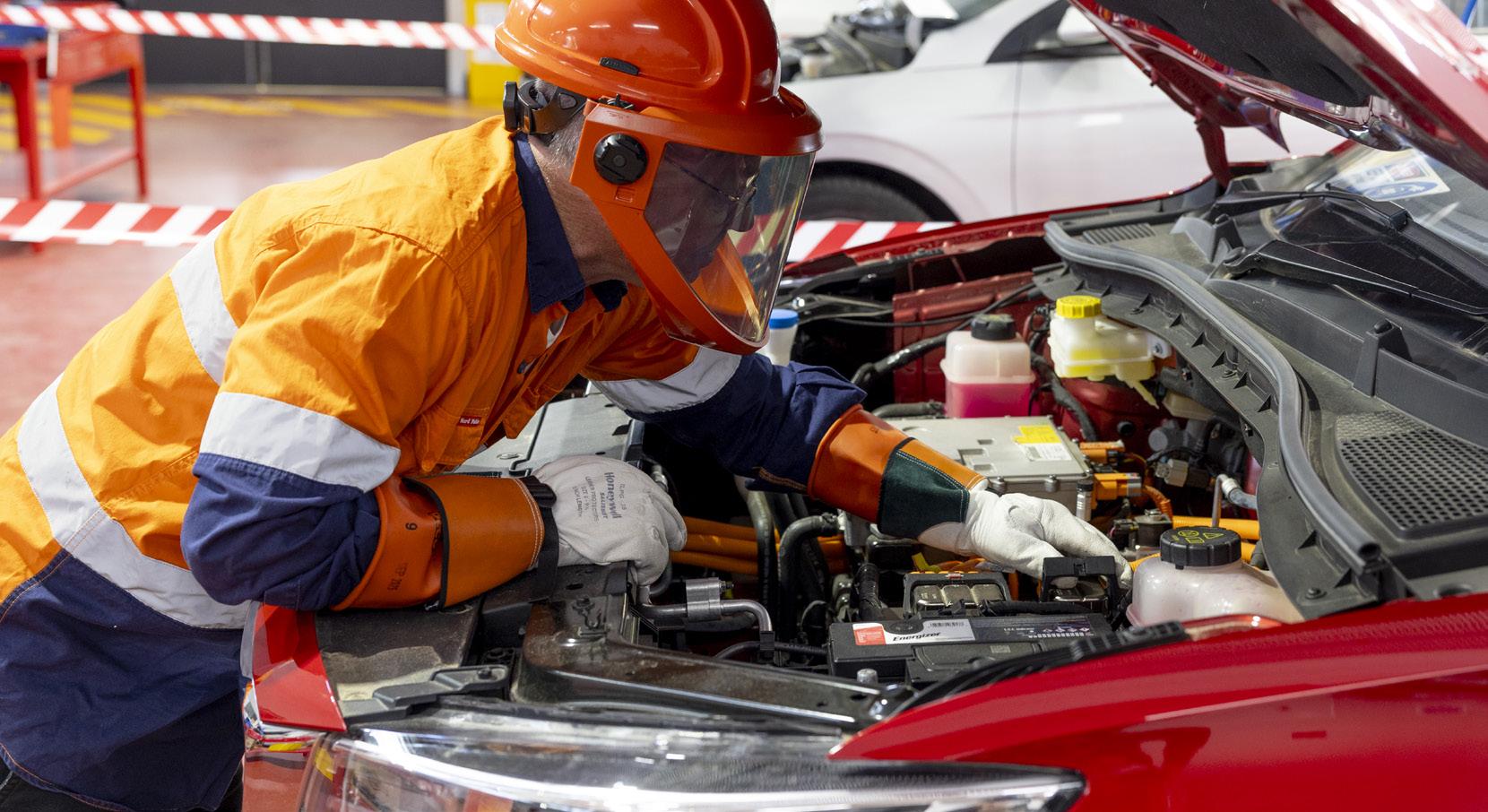
arguing such measures misunderstand modern EV design, would undermine nationally endorsed automotive training frameworks, create delays and increased costs, and prove unworkable in regional areas whilst delivering no demonstrable safety benefit.
The VACC has already had meetings with the department regarding this. Environmental and safety issues featured prominently too. Members raised concerns about the 25% of tyres unaccounted for each year, potentially dumped illegally, and the growing number of motorists delaying essential vehicle maintenance due to cost-of-living pressures. These aren’t just industry problems, members noted, they’re community safety issues that require government attention. What makes the Blueprint particularly powerful is this grassroots foundation. These aren’t positions dreamed up in a boardroom but priorities identified by the people running businesses, employing staff and serving customers every day across Victoria. As VACC takes these concerns to political parties throughout the year, the organisation does so knowing it’s representing the genuine voice of an industry that keeps Victorian motorists moving.
The election in November will determine Victoria’s direction for the next four years. Through the Policy Blueprint, VACC has ensured the automotive industry will have a seat at the table when those decisions are made.
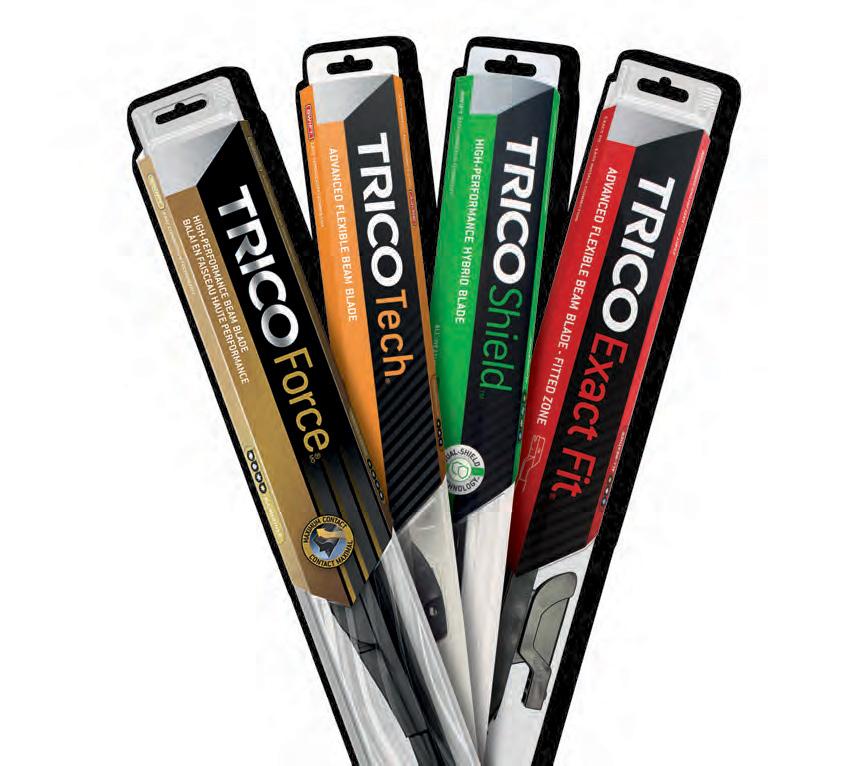
Premium beam blades for 96% of fitments, designed for Australia
No matter the weather, ensure your wipers are inspected before you hit the roads!
Trico wipers fit more vehicles than anyone else!
Looking ahead Tasmania's automotive industry in 2026
As we turn the page on another year, Tasmania's automotive industry stands ready to tackle the new year, marked by significant investment, evolving consumer expectations, and a renewed commitment to the community that makes this sector thrive.
The most tangible sign of progress, scheduled for early 2026, is the official opening of our new TasTafe Automotive Training Centre. This isn't just another building, it's a purposebuilt facility designed specifically to nurture the next generation of automotive professionals. For an industry that has always relied on hands-on expertise and practical knowledge, having a dedicated and uplifting space where apprentices and teachers can learn and deliver their craft properly is transformative.
The centre represents a genuine investment in Tasmania's automotive future, acknowledging that skilled technicians don't appear by chance, they're developed through quality training and mentorship.
This facility arrives at a crucial moment. The automotive landscape is shifting faster than perhaps any time in living memory and having a place where new entrants and teachers can build on foundational skills whilst engaging in emerging technologies puts Tasmania in a strong position. It's about creating a pipeline of talent that understands both fundamental mechanical principles and the electronic systems increasingly defining modern vehicles.
Speaking of change, the electric vehicle transition continues to reshape how Tasmanians think about transport.
Whilst the headlines might suggest everyone's rushing to switch overnight, the reality on the ground is more nuanced. Consumers are navigating this transition at their own pace, weighing up factors like upfront costs, charging infrastructure, resale values and whether an EV suits their particular circumstances, especially in a state where travel distances and terrain can vary dramatically.
The TACC understands this. Rather than pushing a particular narrative, the TACC's role is to support members as they help consumers make informed decisions. That means ensuring workshops have access to the training and information needed to service these vehicles, connecting members with the right resources, and advocating for practical solutions to infrastructure challenges. The transition is underway, but it needs to be done in a way that works for Tasmania's unique context.
At the heart of everything, though, is the TACC's core purpose: connecting and supporting members. In 2026, member engagement isn't just a priority; it's the priority. The industry's strength has always come from the relationships among workshop owners, dealerships, and service providers who share knowledge, refer customers, and support one another through
Bruce McIntosh TACC Manager
challenges. Strengthening those connections, making sure members feel supported and heard, and providing tangible value through advocacy and resources—that's what drives the organisation forward. There's a genuine opportunity ahead for those ready to embrace it. The training centre, evolving technology, and changing consumer expectations all create space for businesses willing to adapt and invest in their capabilities. But opportunity and challenge are often two sides of the same coin, and navigating change is rarely straightforward. That's precisely why the TACC exists. Throughout 2026, members are encouraged not just to engage with the Chamber, but to lean on it. Whether it's seeking guidance on training options, understanding regulatory changes, accessing industry intelligence, or simply connecting with peers facing similar challenges, the support is there.
The year ahead won't be without its complexities, but Tasmania's automotive industry has weathered change before. With the right infrastructure, strong member connections, and a willingness to support each other through transitions, there's every reason to approach 2026 with confidence.
You can contact Bruce at tacc@tacc.com.au
Understanding unconscionable conduct
What automotive businesses need to know
In the automotive industry, where relationships and trust form the backbone of successful businesses, understanding your legal obligations around fair conduct has never been more critical. At the heart of consumer law sits a concept that every workshop owner, dealership operator and service provider should be familiar with: Unconscionable conduct.
Put simply, unconscionable conduct is behaviour so harsh that it goes against good conscience.
Under Australian Consumer Law, businesses, including those in the automotive sector, must not act unconscionably towards consumers or other businesses. It's a serious matter that courts have developed and refined on a case-by-case basis over time, always considering whether conduct contradicts the community's morals and principles.
Here's the critical point: for courts to rule that behaviour is unconscionable, it needs to be more than just unfair. There must be something extra that makes it especially harsh. This often involves knowingly targeting consumers who are experiencing vulnerability. Who are vulnerable consumers?
Vulnerable consumers might include people going through difficult life circumstances, perhaps dealing with the death of a loved one, domestic violence, homelessness, or recovering from a natural disaster.
They could be individuals who are unwell or living with disabilities, young people who lack the experience to make fully informed decisions, or those with difficulties reading, writing, or understanding basic financial concepts.
Language barriers pose another vulnerability, particularly for customers who don't speak English as their first language. Similarly, people in remote areas or those who lack confidence with technology, like the internet or smartphones, may find themselves at a disadvantage.
However, it's worth noting that unconscionable conduct isn't limited to situations involving these specific vulnerabilities. Courts will examine the full context of each situation. What do courtsconsider?
When determining whether behaviour crosses the line into unconscionable conduct, courts may weigh up numerous factors. These include the bargaining strength between parties—particularly relevant when dealing with customers who may not understand the technical complexities of automotive repairs or purchases. Courts look at whether the stronger party imposed conditions that
weren't reasonably necessary to protect their legitimate interests, and whether the weaker party could genuinely understand any documents involved. The use of undue influence, pressure, or unfair tactics by the stronger party raises red flags, as does failing to inform customers about key risks that they clearly weren't aware of. Other considerations include how pricing and terms compare to what customers could obtain elsewhere, whether there was genuine willingness to negotiate, the ability to change contract terms without agreement, and whether both parties acted in good faith. Industry codes and their requirements also factor into these assessments.
The courts will ultimately examine all circumstances surrounding an issue, not just this list of considerations.
For your business
Understanding unconscionable conduct isn't just about avoiding legal trouble; it's about maintaining the ethical standards that underpin customer trust and longterm business success in the automotive industry. When in doubt, consider whether your actions align with fairness, transparency, and your customers' genuine best interests.
John Caine Business and Consumer Affairs Email jcaine@vacc.com.au for consumer affairs
guidance.
"We've grown because we're doing things right," Sean notes. "We're not cutting corners or chasing quick wins. We're building something sustainable."
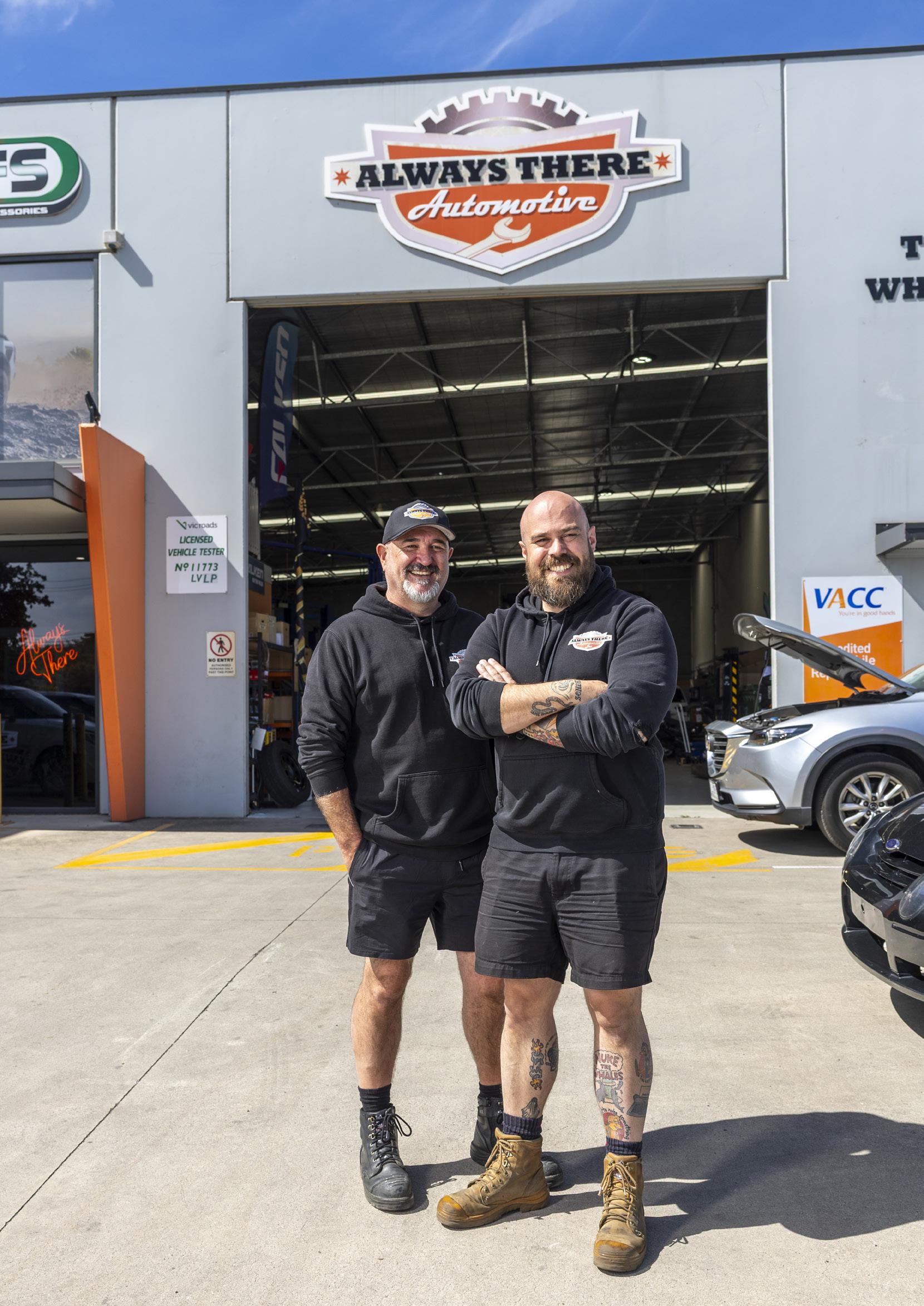
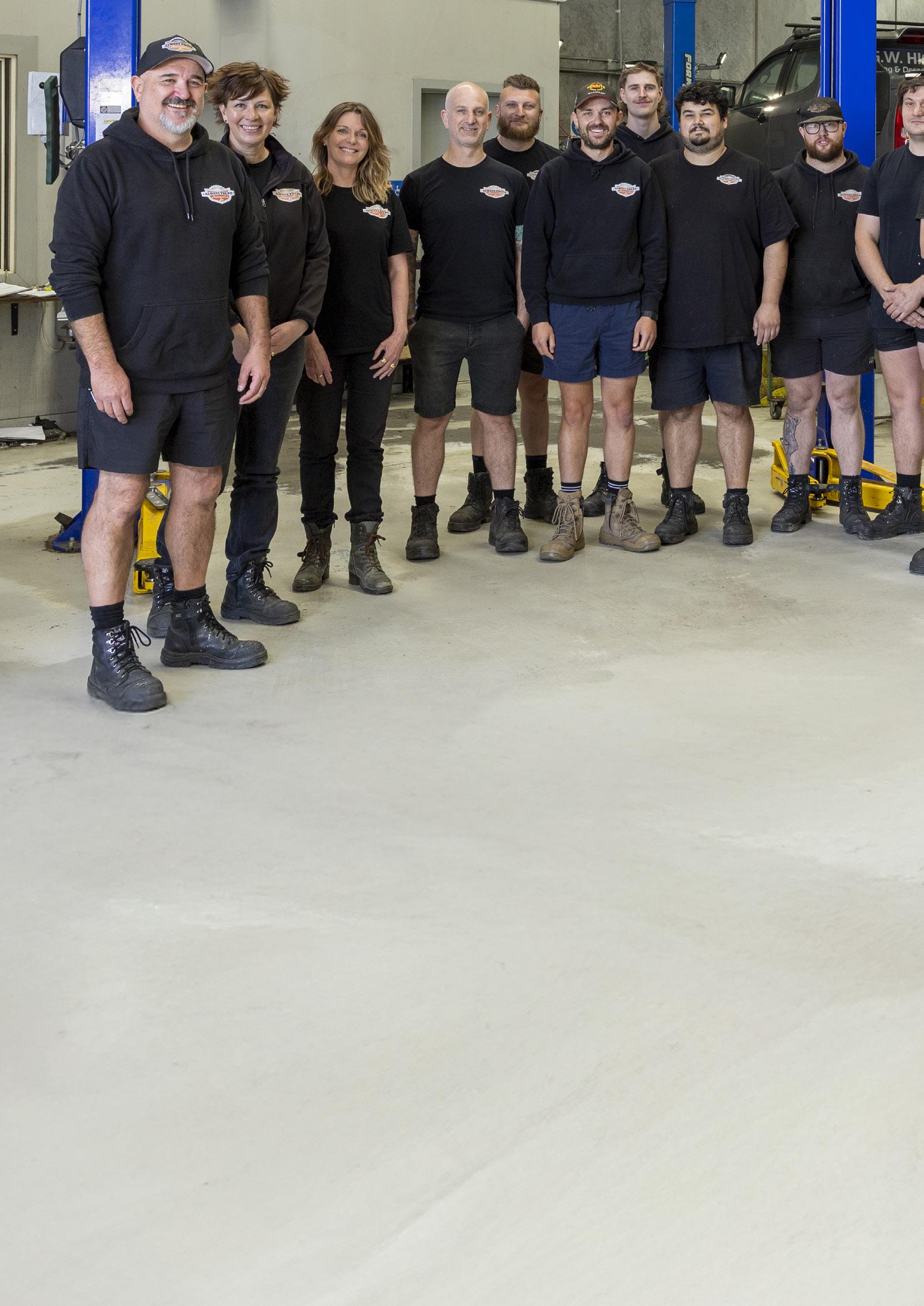
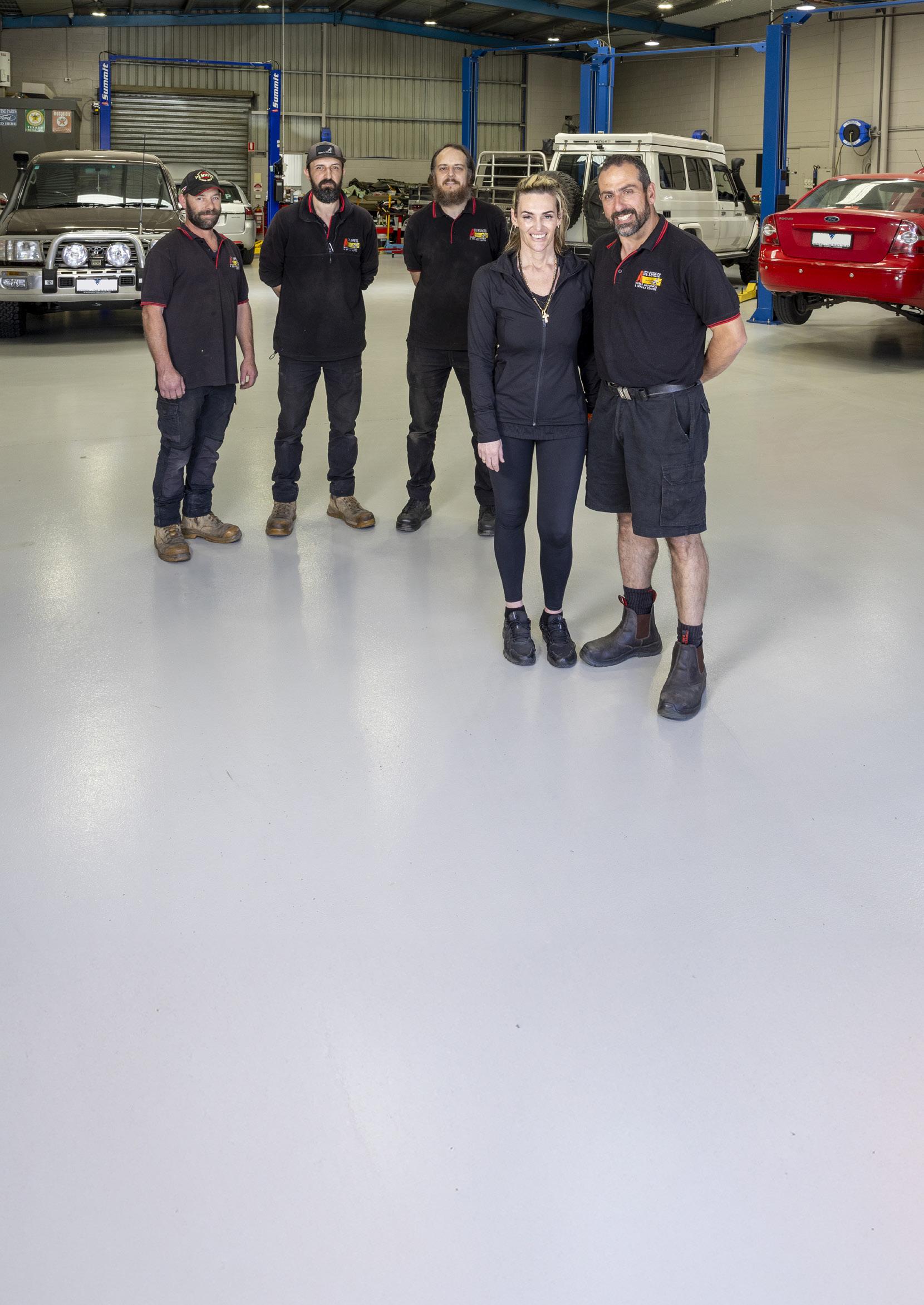
Craig and Sean in front of the Grovedale Always There Automotive workshop
From mobile van to industry recognition
The Always There Automotive story
Every morning when Sean Radford drives into his Grovedale workshop, he passes a small service station. To anyone else, it's just another stop for fuel and a coffee. But for Sean, it's a daily reminder of where it all began – and just how far a bit of courage and good timing can take you.
It was 2014, fresh out of the Australian Army and newly settled in Geelong, when Sean was building his mobile mechanic business one driveway at a time. On what seemed like an ordinary day, he pulled into that service station and noticed something unusual: the workshop sat empty. No cars on hoists, no tools scattered about, just potential waiting to be seized.
"I just asked the question," Sean recalls with characteristic humility. That simple inquiry led to his first proper workshop location, transforming him from a solo mobile operator into a business owner with a physical presence in the community.
Fast forward to June 2025, and Always There Automotive stood on stage at the Palladium at Crown Melbourne, accepting the VACC Best Small Automotive Business – Regional award. With six locations across Victoria and Queensland, a seventh specialist 4x4 store in the works, and a team of 50 skilled professionals, Sean's journey embodies what can happen when technical excellence meets genuine people skills.
Ask Sean about the secret to his success, and he won't talk about the latest diagnostic equipment or the strategic locations of his workshops. Instead, he'll tell you about people –specifically, about a networking group in Geelong where he met Craig, the
business partner who would help transform Always There Automotive from a promising local workshop into a regional success story.
"From day one, we just hit it off," Sean says of that first meeting. It's a partnership that, on paper, might seem unlikely. Craig came from a long career in IT, not automotive. He can't strip an engine or diagnose a misfire. But what he brings to the table is something equally valuable: leadership, business acumen, and the same peoplefirst philosophy that drives Sean. Together, they've built something that goes beyond traditional automotive service. While Sean brings his mechanical expertise and industry knowledge, Craig contributes his organisational skills approach to business management. It's a partnership built on complementary strengths and shared values, particularly when it comes to team culture and customer service.
"Craig and I are both people persons," Sean explains. "We understand that this business isn't just about fixing cars – it's about building relationships, developing our team, and being there for our customers when they need us."
That philosophy extends throughout the entire organisation. Walk into any Always There Automotive location, and you'll notice something different. The apprentices aren't stuck doing oil changes and watching from the sidelines. They're in the tools from day one, experiencing every facet of the industry under the guidance of experienced technicians.
This approach isn't just good training – it's strategic retention. In an industry notorious for high staff turnover, Always
There Automotive has cracked the code. Their secret? Investment in people.
"We don't just hire apprentices and hope they work out," Sean says.
"We take pride in turning them into mechanics. Real, skilled professionals who know their craft inside and out."
But it's not just the apprentices who benefit from this growth-focused culture. Senior technicians regularly head out for skills and knowledge expansion courses, staying ahead of the curve in an industry that's evolving
faster than ever. With electric vehicles entering the mainstream, advanced driver assistance systems becoming standard, and diagnostic technology advancing rapidly, continuous learning isn't optional – it's essential.
This commitment to professional development creates a virtuous cycle. Skilled, confident technicians deliver better service. Better service builds customer loyalty. And that loyalty fuels business growth, allowing for more investment in the team. It's a philosophy that's helped Always There Automotive expand from that single service station workshop to six locations, with a seventh on the way.
The locations themselves tell a story of strategic thinking and community focus. Grovedale, Lara, Anglesea, Ocean Grove, Torquay, and up in Queensland's Ashmore – each workshop serves its local community while contributing to a larger network of expertise and capability. The newest location in Torquay, which opened in July 2025, strengthens their service offering along Victoria's Surf Coast.
The upcoming specialist 4x4 store will mark another evolution, tapping into the growing demand for offroad expertise and accessories.
But expansion for expansion's sake has never been the goal. "We've grown because we're doing things right," Sean notes. "We're not cutting corners or chasing quick wins. We're building something sustainable."
That's why Always There Automotive offers free quotes, loan cars for a small fee, and waiting rooms that don't feel like punishment. They've even furnished them with Retyred chairs – recycled
tire furniture that's both comfortable and environmentally conscious.
Their service range reflects a deep understanding of customer needs: from routine logbook servicing to complex diagnostics, from brake repairs to air conditioning, from supplying and fitting tyres to specialised Uber vehicle inspections. They work on everything from family sedans to European imports, from diesel engines to 4WDs, and even on trailers and caravans.
Sean and Craig's success isn't accidental. They've got their fingers
"We understand that this business isn't just about fixing cars – it's about building relationships, developing our team, and being there for our customers when they need us."
and charitable organisations, they've woven themselves into the fabric of regional life. "We believe in giving back and making a positive difference where it counts," the team emphasises. It's not marketing speak – it's a genuine philosophy that recognises business success is intertwined with community wellbeing.
As they prepare to open their seventh location – the specialist 4x4 store – and continue refining their operations across existing sites, the future looks bright. But success hasn't changed the core philosophy: invest in people, deliver honest service, stay connected to the community, and never stop learning.
on the pulse of industry trends, understanding that being a mechanic today requires more than just technical skill – it requires adaptability and vision.
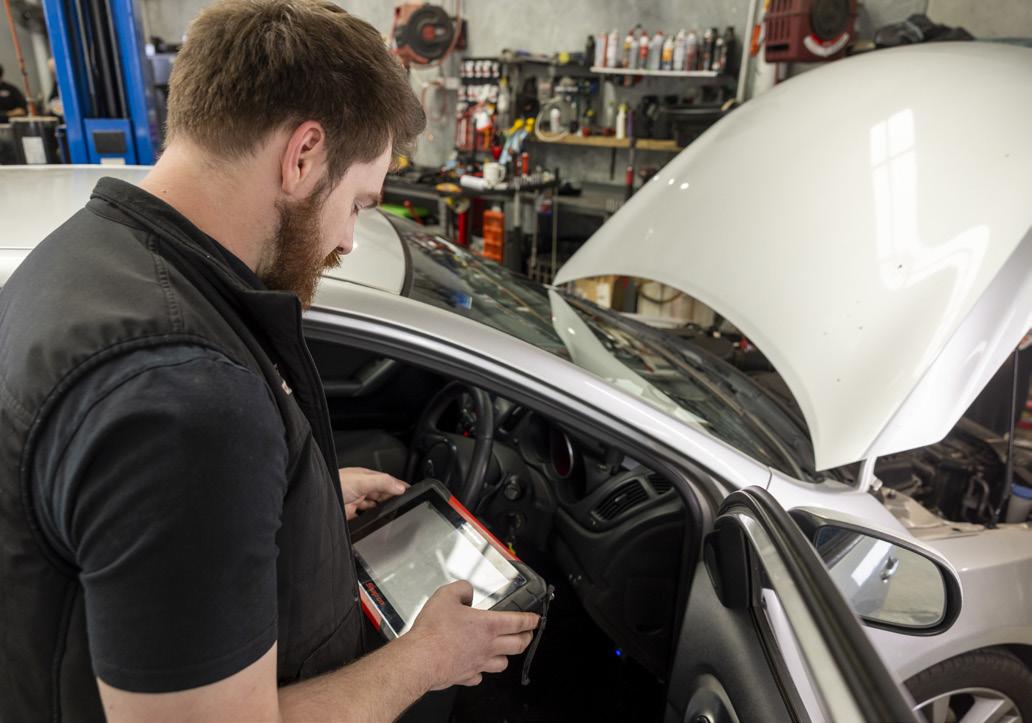
Their investment in "some of the newest technology in the industry, including speciality tooling and state-of-the-art scan tools" isn't about having flashy equipment. It's about ensuring jobs are done right the first time, diagnosing complex issues accurately, and keeping pace with automotive innovation.
This forward-thinking approach extends to their business model. With nearly 60 years of combined industry experience across their team, they blend old-school mechanical knowledge with new-world technology and customer service excellence. They understand that today's car owners have different expectations than those of previous generations – they want transparency, communication, and partnership in vehicle maintenance decisions.
For all their business success, what really defines Always There Automotive is its commitment to the communities it serves. Through sponsorships of local sports teams
The VACC award win in June 2025 validated what their customers already knew: Always There Automotive delivers exceptional service with integrity. Judged on criteria including customer service excellence, business management, environmental impact, and workplace practices, the award represented independent recognition of everything Sean and Craig have built.
But ask Sean about it, and the humility shines through. He'll redirect the conversation to his team, to the customers who've trusted them, to the communities that have supported their growth.
From that chance encounter at a service station to industry recognition, Sean Radcliff's journey reminds us that business success is built on more than technical skill alone. It's built on relationships, humility, vision, and the understanding that when you invest in people –whether they're team members or customers – everyone wins.
And every morning, when Sean drives past that first workshop location, he's reminded not just of how far he's come, but of the simple truth that started it all: sometimes, you just have to ask the question.
key trends reshaping Australian automotive in 2026
What auto industry insiders need to know heading into 2026
The Australian automotive industry is experiencing its most significant transformation in decades. For VACC members navigating these changes, understanding what’s actually happening—not what rhetoric suggests—is critical for business planning through 2026.
We’ve identified eight trends from 2025 that will have a genuine impact on how you’ll operate this next year.
Mike Sinclair
1
Chinese brands aren’t coming - They’re here
The second half of 2025 marked the moment: BYD, GWM, MG and Chery all sat in the top 10 bestselling brands simultaneously, according to Federal Chamber of Automotive Industries (FCAI) data. Indeed, Chinese manufacturers now command roughly 20% market share, with key Sino brands posting YOY growth that established marques can only dream of. These are no longer cheap-andcheerful offerings. Most achieve 5-star ANCAP ratings. Equipment and comfort levels are high – and they are only improving…
The significance for independent workshops isn’t the sales figures—it’s what happens when these vehicles need their first major service, their first significant repair, their first warranty claim outside the dealer network.
Supply chains for parts for Chinese brands remain patchy. Access to technical information varies widely by manufacturer. Diagnostic tool compatibility is inconsistent. Some brands maintain reasonable independent workshop support; others effectively require dealer involvement for anything beyond basic maintenance.
What it means for you in 2026: If you service anything beyond established brands, you’ll see Chinese vehicles soon. Start researching parts availability and technical information access for the volume brands (BYD, MG, GWM, Chery) now. Establish relationships with aftermarket suppliers who’ve developed Chinese brand capability. For dealer groups, understand that these brands operate under different margin structures and may set different expectations for workshop productivity and customer retention.
2Hybrids surge while EVs stutter
The electric vehicle narrative took an unexpected turn in 2025. Battery-electric vehicles were down in H1 and only began to reverse that trend later in the year. Meanwhile, hybrids and plug-in hybrids combined took 19.6% of the market in the first half of 2025, with PHEV sales more than doubling to 25,613 units, according to FCAI and Electric Vehicle Council data.
Australians are voting for the middle path. They want lower fuel consumption without range anxiety, charging infrastructure dependence, or the price premium of pure electric. For workshops, this matters enormously. Pure EVs require minimal scheduled maintenance— no oil changes, infrequent brake service due to regenerative braking, simplified drivetrain servicing. The business model for EV servicing looks fundamentally different from traditional automotive service. Plug-in and conventional hybrids, conversely, need everything a conventional vehicle requires, plus expertise in electric drivetrains. Engine services, transmission work, and cooling system maintenance—all still necessary. Add high-voltage battery management, electric motor diagnostics, and the integration systems that coordinate petrol and electric power delivery.
The PHEV ute market deserves particular attention. The BYD Shark 6 consistently sells 1200 units monthly according to VFACTS data. Ford’s Ranger PHEV is in showrooms, GWM offers the Cannon Alpha PHEV, and there are a slew more plug-in utes coming… This segment combines commercial vehicle duty cycles with the complexity of plug-in hybrids—a service proposition that’s neither simple nor low-margin. What it means for you in 2026: The business case for hybrid training and equipment is substantially stronger than pure EV capability in the near term. Workshops should prioritise hybrid diagnostics, high-voltage safety certification, and PHEV-specific service procedures. Dealer service departments need to resource for hybrid complexity rather than assuming simplified EV service requirements. Parts specialists should research the availability of hybrid components.
3 The warranty arms race creates opportunity
Multiple manufacturers now offer 10-year warranties. Nissan leads at 10 years/300,000km. MG offers 10 years/250,000km. Mitsubishi provides a 10-year/200,000km warranty. Hyundai, Kia and various Chinese brands offer 7-year coverage. The catch: extended warranties increasingly require dealer servicing.
"Australians are voting for the middle path. They want lower fuel consumption without range anxiety, charging infrastructure dependence, or the price premium of pure electric."
"The broader reality: automotive technology is increasingly software-driven. Purely mechanical competency no longer suffices. Modern technicians need IT skills, diagnostic capabilities, and a willingness to engage with complex electronic systems."
But the Australian Consumer Law is explicit—consumers can have their vehicles serviced anywhere using quality parts and qualified technicians without voiding manufacturer warranties. Yet research from the Australian Automotive Aftermarket Association shows up to 40% of consumers incorrectly believe dealer servicing is mandatory for warranty validity. Manufacturers can require servicing to follow their specifications and use quality parts. They cannot require exclusive dealer servicing. The distinction is critical, and the consumer confusion creates a substantial opportunity for independent workshops that clearly communicate these rights while demonstrating specification compliance.
The counter-trend: several brands (Jaecoo with 8 years/unlimited kilometres, LDV’s 7-year coverage) don’t mandate franchise dealer servicing. Not all manufacturers see dealertied warranties as advantageous. What it means for you in 2026: Independent workshops should develop explicit consumer education materials around warranty rights. What’s required versus what dealers claim is required. Maintain comprehensive, detailed service
records to demonstrate compliance. Consider warranty-specific service packages that explicitly address manufacturer requirements while offering more affordable pricing. For dealer groups, recognise that warrantytied servicing creates initial retention but may drive customer dissatisfaction if perceived as unnecessarily restrictive—particularly as vehicles age beyond initial ownership periods.
4
ADAS and safety tech become service requirements
Australian Design Rule 98/00 mandated Autonomous Emergency Braking on new vehicles from March 2025. ANCAP introduces enhanced ADAS testing from 2026, adding evaluation of driver assistance systems alongside traditional crashworthiness ratings. Modern vehicles feature comprehensive camera systems, radar sensors, and increasingly sophisticated driver assistance. This technology requires calibration after windscreen replacement, suspension work, wheel alignment, or any repair affecting sensor positioning. It’s not optional—misaligned ADAS creates genuine safety risks.
Camera calibration equipment isn’t cheap. Manufacturers’ diagnostic systems often require proprietary access. The return on investment depends entirely on volume. A workshop performing two ADAS calibrations per month struggles to justify the equipment costs. One performing ten weekly calibrations could find it highly profitable.
The broader reality: automotive technology is increasingly softwaredriven. Purely mechanical competency no longer suffices. Modern technicians need IT skills, diagnostic capabilities, and a willingness to engage with complex electronic systems.
What it means for you in 2026: For high-volume workshops and dealer service departments, ADAS calibration capability is non-negotiable—customers expect it, insurance work requires it, and profit margins should justify investment. Smaller workshops face a strategic decision: invest in calibration equipment and training to offer premium services, or establish referral relationships with specialists who’ve made that investment. Parts specialists should understand that ADAS-equipped vehicles create new component categories (cameras, radar sensors, control modules) with premium pricing and specific replacement requirements that differ from traditional parts distribution.
Workshops should prioritise hybrid diagnostics, high-voltage safety certification, and PHEVspecific service procedures.
5SUVs and utes dominate as passenger cars collapse
According to FCAI data, passenger car sales plummeted 28% in the first half of 2025, now representing just 12.4% of total market volume. As this is written, the entire top 10 bestselling vehicles list comprises utes and SUVs. The Toyota Corolla, once a perennial chart-topper, now sits at 15th place. The Mazda3 languishes at 31st.
This isn’t a temporary aberration. It’s a fundamental market restructuring. Light commercial vehicles now account for 25.3% of the total market, according to FCAI chief executive Tony Weber, with the top four utes alone accounting for around 15% of all sales. For workshops, the implications are tangible. Service bays designed for Corollas and Camrys now regularly handle two-tonne dualcab utes and large SUVs. Hoist capacity matters. Workshop layout matters. The technical requirements differ—four-wheel drive systems, differential service, underbody protection, towing equipment, and off-road suspension components now dominate the service mix. Oh, and did we mention, USsourced full-size pick-ups. More than 10,000 were sold new in 2025, and the car parc is growing.
Staff training requirements shift accordingly. A technician’s competency with sedan front-wheel drive powertrains doesn’t automatically transfer to body-on-frame ute construction, selectable 4WD systems, or the air suspension increasingly common in premium SUVs.
The good news is that utes and SUVs command higher service prices, reflecting their greater complexity, larger fluid capacities, and larger components. The challenge is ensuring your capabilities align with what’s actually rolling into the workshop.
What it means for you in 2026: Workshops need to audit hoist capacity, service bay clearances, and fluid handling equipment against the reality of servicing larger vehicles with significant ground clearance. Invest in 4WD-specific diagnostic capabilities and differential service equipment. Dealer service departments should recognise that SUV/ute dominance changes parts inventory requirements—larger oil filters, heavy-duty brake components, off-road suspension parts become standard stock rather than specialty items. Parts specialists face opportunity in 4WD aftermarket—diff locks, suspension upgrades, towing equipment—as utes increasingly serve dual commercial/recreational roles.
6NVES implementation reshapes market economics
The New Vehicle Efficiency Standard commenced in January 2025, imposing fleet-wide CO2 emissions targets on manufacturers with penalties for companies that cannot meet the bar. Research commissioned by the Australian Automotive Dealer Association estimates NVES compliance will cost dealerships between $1.1 billion and $2.1 billion through 2029.
According to the Centre for International Economics analysis for AADA, manufacturers face three compliance options: adjust vehicle mix to reduce fleet emissions, purchase credits from competitors who outperform targets, or pay penalties that ultimately flow to consumers through higher prices.
FCAI chief executive Tony Weber has noted the regulation is “ambitious and challenging to achieve,” particularly as consumer demand hasn’t aligned with manufacturer EV supply strategies. The government’s decision to measure compliance at the point of sale rather than at the import
level provides some dealer relief on inventory management, but doesn’t change the fundamental economics. For workshops, NVES creates several dynamics worth monitoring. Dealers facing margin pressure may become less competitive on servicing to offset NVES-related costs. If ICE vehicle prices rise relative to EVs and hybrids, consumers may hold onto existing vehicles longer, boosting service demand. The regulation allows any vehicle type—manufacturers simply need efficient models to offset less efficient ones, meaning traditional combustion vehicles aren’t disappearing, just potentially becoming more expensive.
What it means for you in 2026: Independent workshops may find themselves better positioned competitively as dealer service departments face margin compression from multiple directions. Consumers holding vehicles longer due to newcar price increases creates sustained service demand—position for this by targeting service packages for 7-10-year-old vehicles. Dealer groups should model NVES’ impact on overall profitability and resist the temptation to offset costs by increasing service department prices, which can damage
"...the entire top 10 bestselling vehicles list comprises utes and SUVs. The Toyota Corolla, once a perennial chart-topper, now sits at 15th place".
customer retention. Parts specialists can expect steady demand for ICE components as the fleet doesn’t transition to electric as quickly as regulatory settings might suggest.
7
Used car market back to pre-COVID normality
According to the Australian Automotive Dealer Association’s Automotive Insights Report, used car values declined from pandemic-era highs throughout 2025, with average days-to-sell increasing and retained values dropping across nearly every vehicle segment and age category.
Cox Automotive Australia notes that this trend is expected to continue as the growing oversupply of new vehicles spills over into the used-car market.
This normalisation creates opportunities. More affordable used vehicles mean more consumers enter the market through secondhand purchases. These vehicles need pre-purchase inspections, immediate service upon acquisition, and ongoing maintenance.
The used-car market skews toward three- to ten-year-old vehicles— precisely the age range transitioning from simple scheduled maintenance to substantial service requirements. Timing belts, major services, brake overhauls, and suspension work typically fall into this bracket. What it means for you in 2026: Workshops with strong reputations for used car inspections position strategically—today’s inspection client becomes tomorrow’s service customer. Consider developing relationships with used car dealers for pre-sale inspections and reconditioning work. Dealer groups should recognise that certified preowned programs become more valuable as used market volume increases and quality differentiation matters more to consumers. Parts specialists will see steady demand for components typically replaced in 5-10-year-old vehicles as consumers repair rather than replace during affordability-constrained periods. The slower inventory turnover suggests that used-car dealers will be more cost-conscious about reconditioning expenses and that competitive pricing on common replacement parts will become critical.
New vehicle market oversupply benefits buyers
Unlike the supply-constrained years of 2020-2023, manufacturers now hold excess inventory according to Cox Automotive Australia and other industry analysts. This oversupply stems from the entry of new brands and from resolved supply chain issues that have met softened consumer demand, creating a buyer’s market. The shift is evident in manufacturer behaviour. Discounting has increased across multiple brands. Finance interest rates have softened. Driveaway deals have become more common. According to various industry sources, buyers can negotiate in ways that weren’t possible during supply-constrained years.
This oversupply creates a paradox for workshops. More affordable new vehicles suggest reduced service demand, as customers buy new rather than maintain older vehicles. However, the data suggests otherwise—when combined with cost-of-living pressures that constrain buying despite lower prices, many consumers still hold onto their existing cars longer.
The other factor: increased new vehicle competition means manufacturers and dealers focus intensely on vehicle sales margins, potentially viewing service departments more as profit centres to offset reduced vehicle margins. This can lead to dealer service pricing that’s less competitive with independent workshops.
What it means for you in 2026
The buyer’s market for new vehicles doesn’t necessarily translate to reduced workshop demand—cost-of-living pressures mean many consumers can’t take advantage of better pricing, regardless. Position for steady service volume as the existing fleet ages. Independent workshops should clearly emphasise their value proposition, as dealers may increase service pricing to offset pressure on vehicle sales margins. Dealer groups need to resist short-term thinking around service department pricing—competitive service retention matters more in the long term than maximising pertransaction revenue. Parts specialists should monitor new-vehicle sales trends by brand to predict future service parts demand 12-24 months out, as today’s new-vehicle sales create tomorrow’s parts requirements.
The 2026 Reality
These trends share a common thread: the industry is changing, but not uniformly toward pure electric vehicles and manufacturer control. The reality is messier...
For VACC members, the strategic imperative is straightforward.
Invest where volume exists (hybrids, ADAS, Chinese brands, utes/SUVs) rather than where industry rhetoric suggests it should exist.
Educate consumers about their rights amid warranty confusion.
Embrace technological complexity as a source of competitive differentiation rather than a barrier.
Recognise that regulatory and economic pressures on manufacturers and dealers can create competitive opportunities for independent operators.
Position for extended vehicle ownership cycles as affordability constraints limit new vehicle purchases despite improved availability.
The workshops, dealer groups and parts specialists that recognise these trends as opportunities— not threats to traditional models—will position themselves effectively for 2026 and beyond.
The industry is changing. Your business should change with it.
Vale Richard Rayner
A pillar of Victoria’s automotive community
21 October 1967 – 29 November 2025
depended on nurturing young talent, and he was incredibly generous with his time, knowledge, and expertise. Countless apprentices benefited from his mentorship, guidance, and genuine investment in their success.
The Victorian automotive industry is mourning the devastating loss of one of its most dedicated professionals, Richard Rayner, who passed away unexpectedly on 29 November, just weeks after celebrating his 58th birthday.
Richard’s 37-year career in the automotive sector was marked by unwavering commitment, exceptional leadership, and a genuine passion for developing the next generation of automotive professionals.
Beginning his journey as Workshop Manager at Lou Motors in 1988, Richard quickly established himself as a skilled and respected technician. His career trajectory reflected his growing expertise and leadership
In 2000, Richard joined Brighton Auto as Fixed Operations Manager, a position he held with distinction for 25 years until his passing. During this time, he became renowned for his comprehensive approach to dealership operations, excelling in management, recruitment, customer satisfaction, and automotive parts and repair. His ability to balance technical excellence with outstanding customer service made him an invaluable asset to both his employer and the wider automotive community. Richard’s leadership extended beyond his dealership role—he also served as President of the Holden Service and Parts Managers Association, where his expertise and
Richard’s presence at industry events, in workshops, and throughout the broader automotive community was marked by his vibrant personality and willingness to share his considerable expertise. His unexpected passing has sent shockwaves through an industry that has lost not just a skilled professional but a true gentleman.
We extend our deepest condolences to his wife, Di, and their daughters, Ashleigh, Charlotte, and Paige, during this
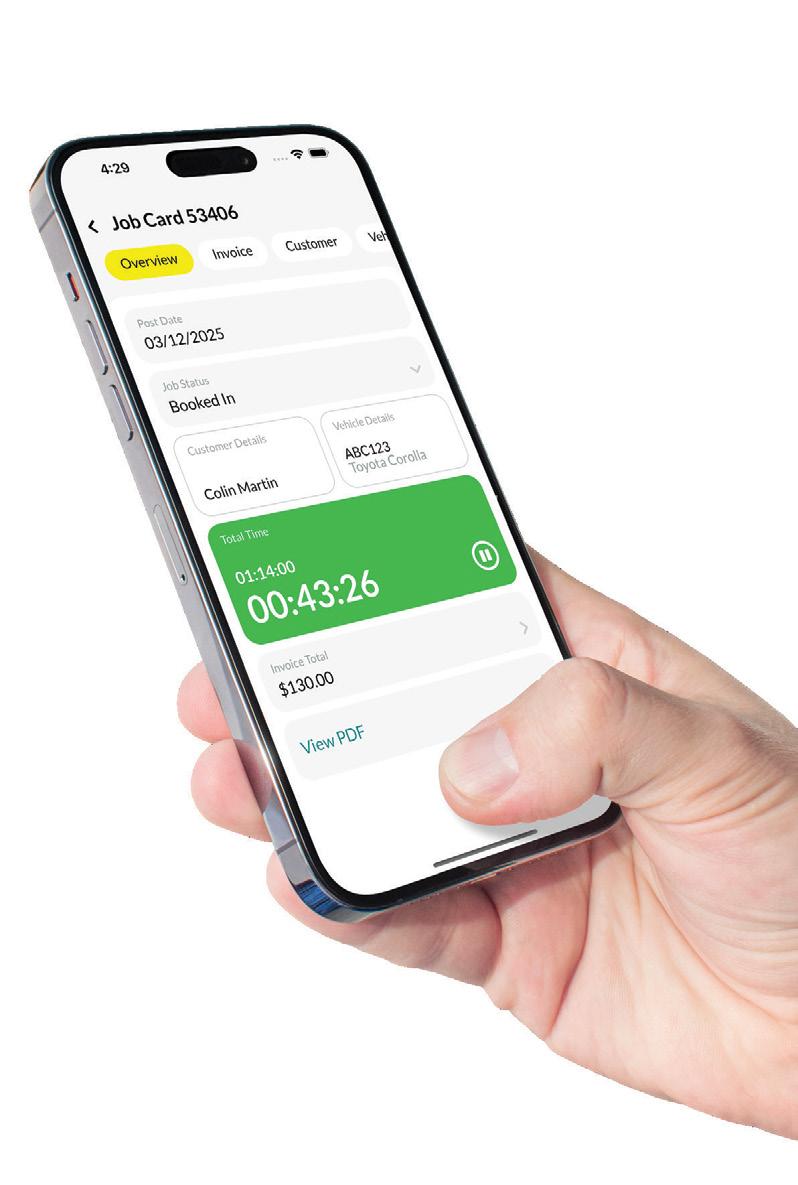
Mechanical workshop software made easy
Keeping you, your team and your customers together on the same page with centralised bookings, invoicing, time keeping, job history and customer messaging - all in one place.
Smarter tools, better results
Vehicle Inspections
Instant Technical Data
Import/Export Data
Business Intelligence & Reporting
Customer Portal
Stock Management
Book from your Website
Automatic SMS & Email Reminders
Powerful Integrations & Searching Quick
Full workflow on Mobile
Registration Lookup
Streamlined Payments
3
Conditions apply
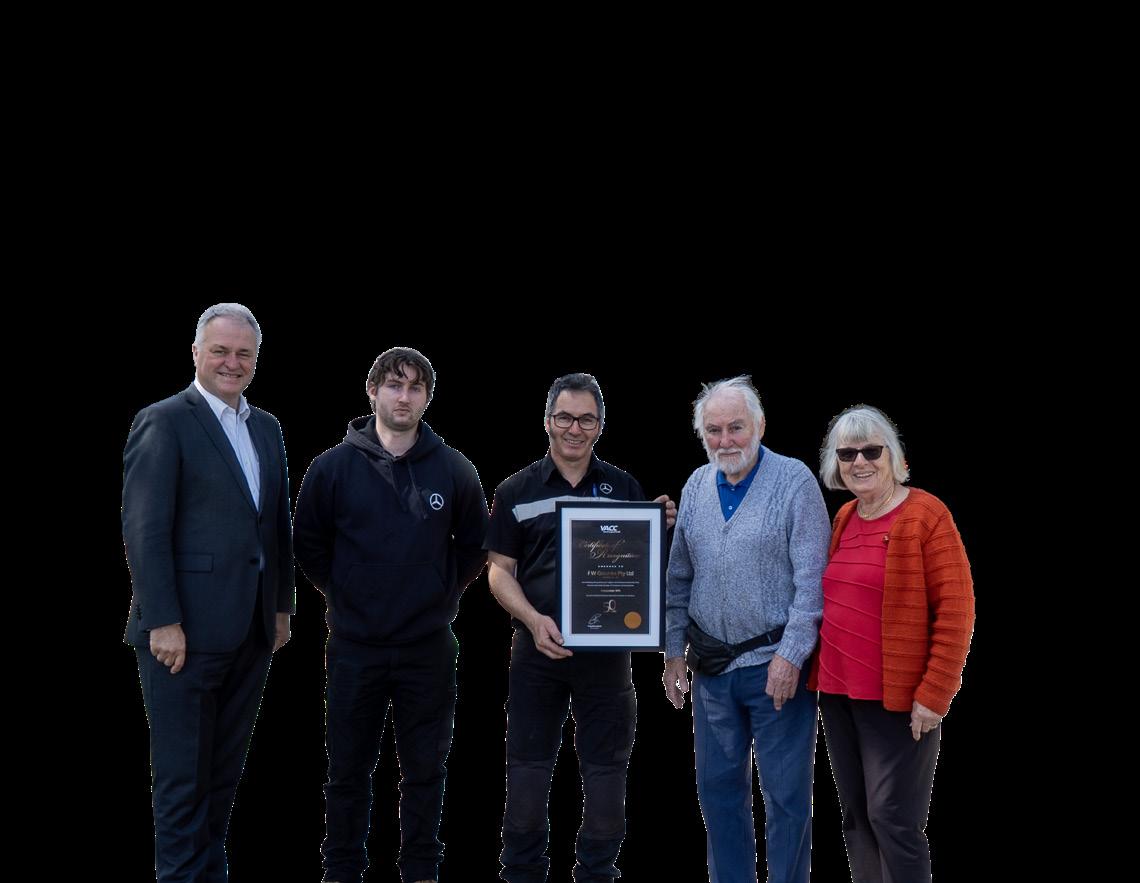
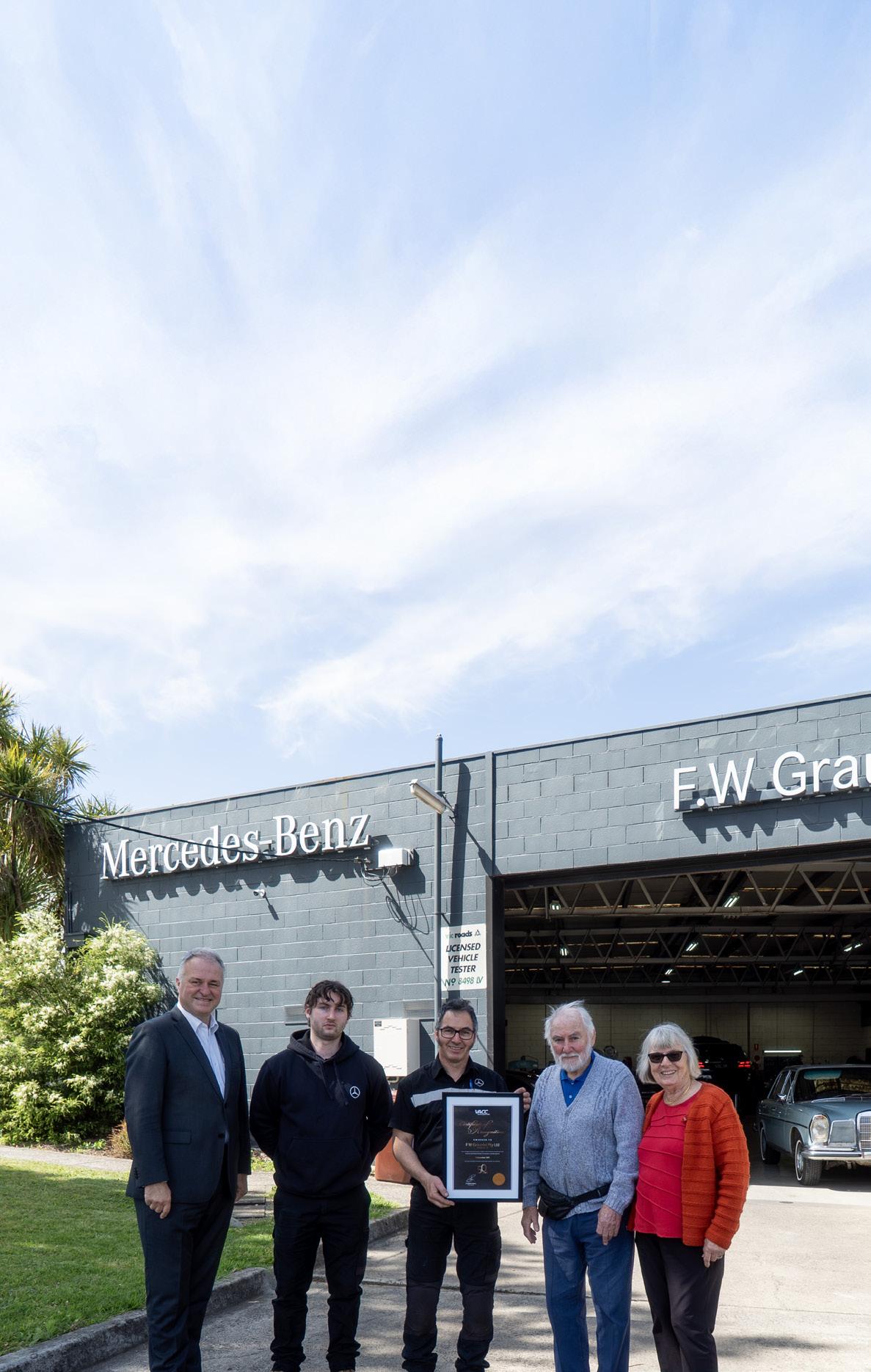
F.W. Graunke
Three generations, one silver star and 50 years of trust
For half a century, F.W. Graunke has been quietly setting the benchmark for specialist Mercedes-Benz repair in Victoria. Tucked away in Ferntree Gully, the workshop is more than a business — it is a family legacy built on craftsmanship and an enduring respect for the Silver Star.
Founded by Fritz Graunke, the business traces its roots back to Germany. Fritz completed his apprenticeship there before migrating to Australia in the early 1960s, beginning his local career at Lane’s Motors in Melbourne. In 1961, he married his wife Susi, who would play an active role in the business, and together they built a life, a family, and eventually a reputation for meticulous Mercedes-Benz care.
F.W. Graunke has operated from Ferntree Gully since 1974 and remains unique: it is the only authorised Mercedes-Benz repair workshop in Victoria outside the dealer network. That status reflects decades of specialist expertise and a commitment to doing things properly.
Today, the business is led by Rolf Graunke, who took over in 2003 when Fritz retired. Rolf has worked at the workshop for 39 years, starting as an apprentice under his father and growing into a leader who steers the business with quiet, calm confidence. On any given day, he can be found patiently moving across the workshop floor, checking in on vehicles, speaking with technicians, and ensuring every job meets the standard his father instilled decades earlier. That calm, organised manner is reflected throughout the workshop. It is also reflected in how Rolf manages his team and his customers. Staff speak of a steady hand at the helm; customers speak of genuine care. In some cases, that care extends beyond the workshop — helping look after vehicles belonging to longterm customers who are laid up in hospital, ensuring their pride and joy is safe until they can return.
The workshop processes around ten vehicles per day, though many are far from straightforward. F.W. Graunke is known for its work on older Mercedes-Benz models, cars that require patience, deep mechanical understanding, and respect for
engineering history. Some jobs can take up to several hours simply to keep a classic vehicle safely on the road. One car captures that philosophy perfectly: a 1973 Mercedes-Benz 450SE, slowly being restored as a long-term project car for the team. It is not rushed. It is not commercial. It is about craft and keeping history alive.
That passion for the past sits comfortably alongside an eye on the future. Rolf acknowledges that modern vehicles are, in some ways, easier to maintain — and in others, far more complex. “In a way, it’s easier,” he says, “but it’s a bit more complex.” Diagnostics, remote access, and software-driven systems now sit alongside traditional mechanical skills. Rolf himself drives a MercedesBenz EQE — the perfect daily driver for his seven-minute commute, and the workshop has invested in EV capability, including on-site charging. At the same time, F.W. Graunke’s customer base is evolving. While electric vehicles are part of the future, many customers remain deeply passionate about traditional MercedesBenz models, particularly performance and collector vehicles. Australia’s strong appetite for AMG models is reflected in the cars that pass through the Graunke workshop, and Rolf sees a future where the business continues to serve both worlds: cutting-edge
Family remains at the heart of the business. Susi worked alongside Fritz in the early years, and today, Rolfe’s son Mitch represents the third generation of the Graunke family to work in the workshop. The sense of continuity is unmistakable, not just in the name on the building, but in the values that underpin it. F.W. Graunke is also committed to developing the next generation of technicians, currently employing a VACC apprentice. The business has long relied on the Victorian Automotive Chamber of Commerce for a variety of guidance — from building its original website to providing trusted advice on payroll and workplace matters, reinforcing a relationship that now spans 50 years of membership. Looking ahead, Rolf believes the biggest challenge will be reduced maintenance demands as vehicles continue to evolve. But he is confident the workshop will adapt, just as it always has. Collector vehicles, specialist knowledge, and customers who value expertise over convenience will ensure businesses like F.W. Graunke remain relevant.
Fifty years of VACC membership is more than a milestone — it reflects trust, and a family business that has quietly supported Victoria’s automotive landscape. At F.W. Graunke, the Silver Star still shines. Polished by experience, patience, and generations of care.
Connecting the automotive community
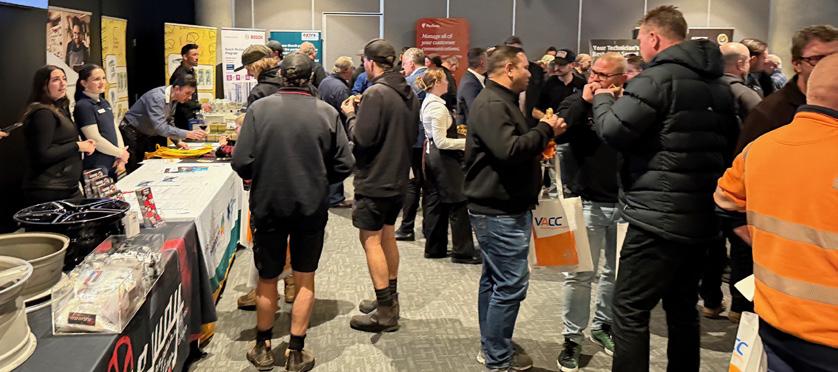
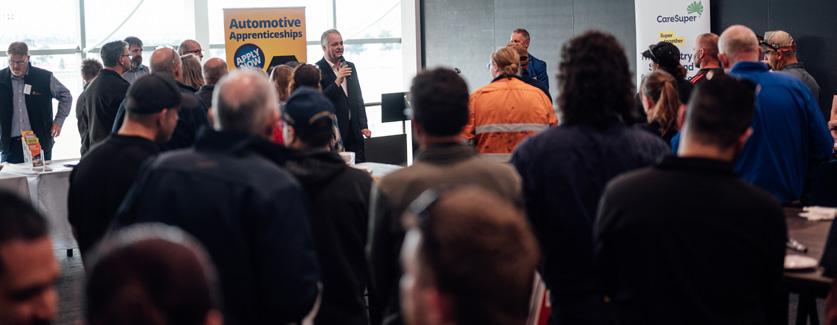
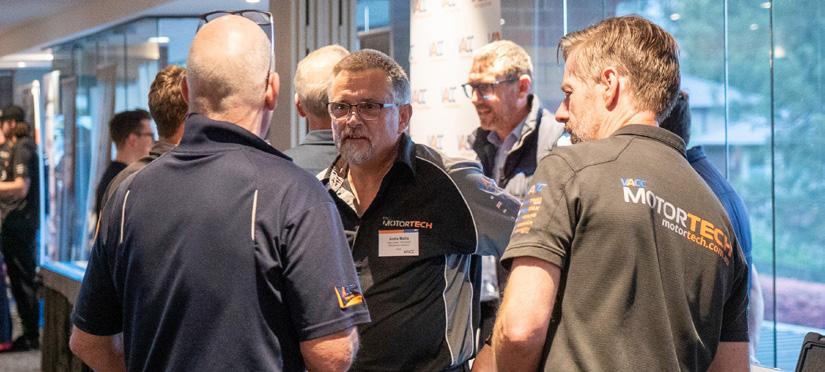
VACC INDUSTRY ENGAGEMENT NIGHTS 2026
VACC’s Industry Engagement Nights have become an important part of how we connect with members across Victoria and Tasmania, and in 2026 the program returns with a full calendar of events designed to bring the automotive community together. These evenings are about strengthening relationships: between members, with VACC staff, and with trusted member partners who support automotive businesses every day.
Whether you operate a metropolitan workshop or a regional family business, Industry Engagement Nights provide a welcoming forum to connect with likeminded professionals who understand the challenges and opportunities of working in the automotive industry. At each event, members have the opportunity to engage face to face with VACC staff from across the organisation—membership, training, apprenticeships, MotorTech and technical support. It’s a chance to ask questions, raise issues, and share feedback directly, in an informal and accessible setting. These conversations are invaluable in helping VACC remain closely connected to the realities of running an automotive business and ensuring our advocacy and services continue to reflect members’ needs.
Equally important is the opportunity to connect with fellow local automotive businesses. These nights bring together
workshop owners, technicians, apprentices and industry professionals from the same region, creating space to build local networks, share experiences and exchange ideas. For many attendees, these nights are as much about catching up with familiar faces as they are about meeting new contacts who may become future collaborators, suppliers or mentors.
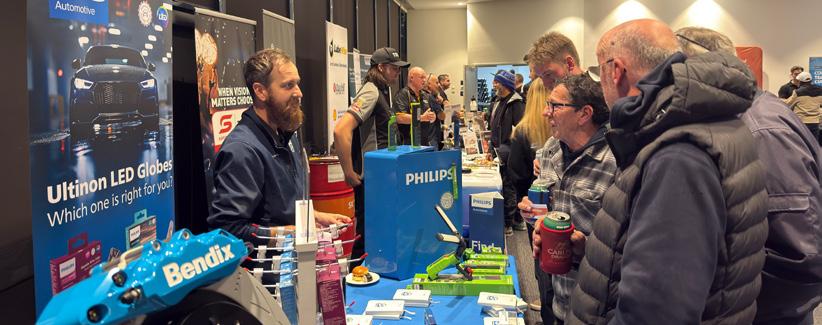
A key feature of the evenings is direct access to VACC member partners. These partners provide exclusive benefits and offers to VACC members, and the events offer a rare opportunity to speak with them in person, to ask questions, explore services, and better understand how these partnerships can add value to your business.
Of course, Industry Engagement Nights are also designed to be enjoyable. They are social occasions. Its an opportunity to step away from the work, unwind with peers, and enjoy food and refreshments in a relaxed atmosphere. The combination of professional connection and social interaction makes these nights a highlight of the VACC calendar for many members.
In 2026, the Industry Engagement Nights will be held across a wide range of metropolitan, regional and Tasmanian locations, ensuring members have the opportunity to attend close to home. The schedule is as follows:
Tuesday 24 February 2026 –Wodonga, Victoria
Wednesday 18 March 2026 –Epping, Victoria
Wednesday 6 May 2026 –Launceston, Tasmania
Tuesday 2 June 2026 –Richmond, Victoria
Wednesday 22 July 2026 –Bendigo, Victoria
Wednesday 12 August 2026 –Traralgon, Victoria
Tuesday 15 September 2026 –Ballarat, Victoria
Wednesday 7 October 2026 –Boronia, Victoria
Wednesday 28 October 2026 –Hobart, Tasmania
VACC encourages all members to take advantage of these events in 2026. Whether you’re looking to strengthen local connections, learn more about the support available to your business, or simply enjoy an evening with others who share your passion for the automotive industry, Industry Engagement Nights offer something for everyone.
Further details, including venues and registration information, will be shared closer to each event. We look forward to seeing you in 2026 and continuing the conversations that keep our industry connected, informed and strong.
VACC invests in the future of automotive training
“This investment is about backing the future of our industry. It gives us the flexibility to deliver highquality, industryrelevant training, and support apprentices and technicians at all stages of their careers..."
VACC secures new North Melbourne facility to support the future of Victoria’s automotive workforce
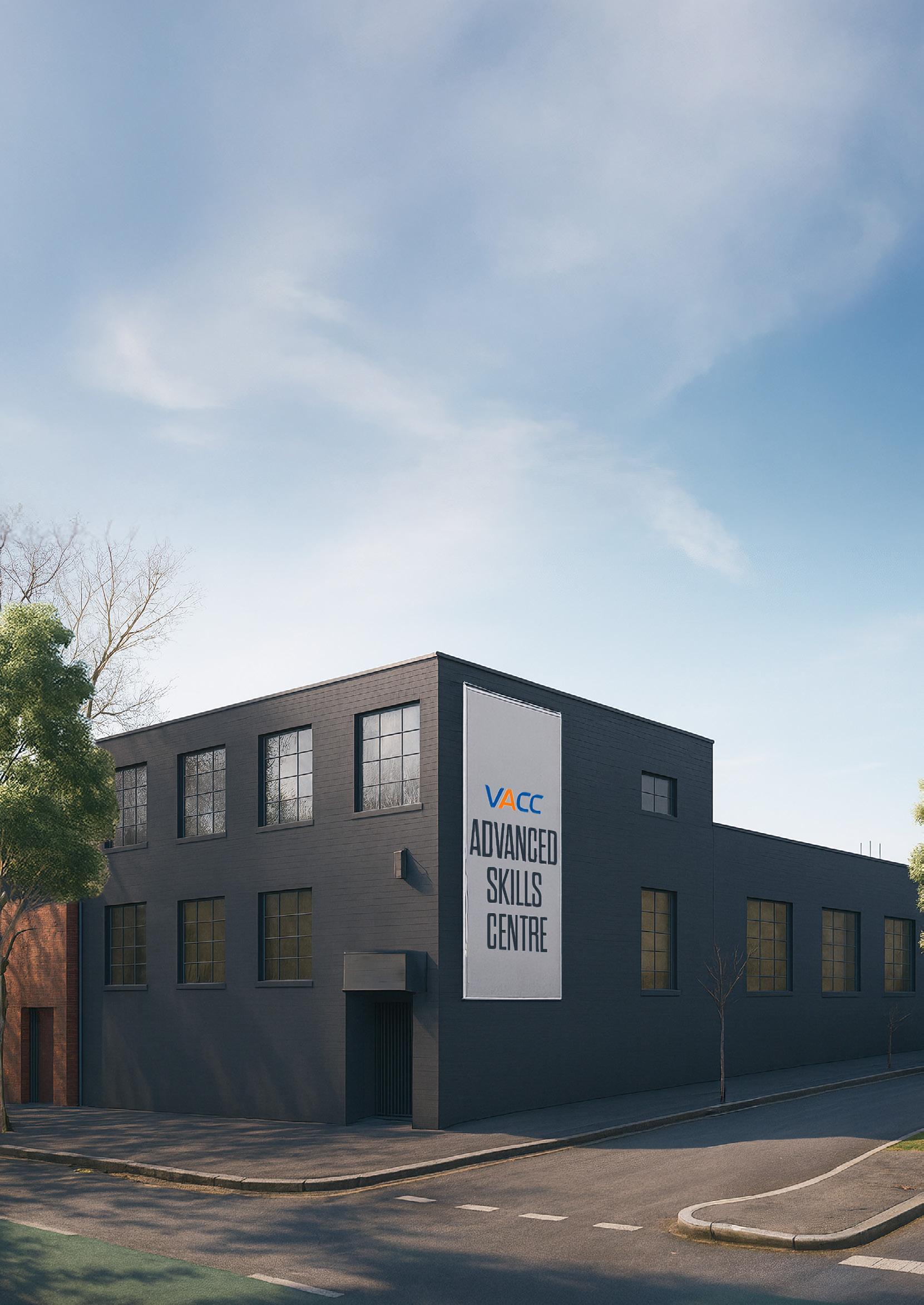
The Victorian Automotive Chamber of Commerce (VACC) has acquired a new facility in North Melbourne, marking a significant investment in training and skills development for Victoria’s automotive industry
Located at 166–168 Abbotsford Street, North Melbourne, the site will be transformed into a dedicated automotive training and education hub, supporting apprentices, technicians and automotive businesses as the industry continues to evolve at pace.
The acquisition represents more than just a property investment. It reflects a long-term commitment by VACC to strengthening workforce capability, expanding access to high-quality training, and ensuring Victorian automotive businesses are equipped with the skills needed to adapt to new technologies, regulations and customer expectations.
The property is currently configured as a warehouse, office and showroom, with a total building area of approximately 555 square metres. Its flexible layout provides an ideal foundation for contemporary training delivery, enabling the creation of purposebuilt workshop spaces alongside classrooms, meeting rooms and collaborative learning areas.
Importantly for members, the facility’s proximity to VACC House in Victoria Street strengthens the organisation’s presence in Melbourne’s inner north, creating a central and accessible training destination close to the CBD. This co-location will support stronger integration between training, member services and industry engagement.
Before training commences, the site will undergo targeted refurbishment works to ensure it is fully configured for automotivespecific training. This will include the installation of modern workshop infrastructure, fit-for-purpose equipment, and environments designed to meet best-practice safety and compliance standards.
Subject to final works and approvals, training delivery is expected to
commence in early to mid-2026.
Critically, owning a dedicated training facility will allow VACC to expand its capacity to deliver more specialised and niche training programs that were previously difficult to execute due to the cost and complexity of hiring external facilities.
The new facility will also provide an opportunity to showcase best-practice in a live training environment. By fitting out the site with contemporary equipment and safety systems, VACC aims to model the standards expected in modern automotive workplaces, supporting both learning outcomes and broader industry uplift.
VACC CEO Peter Jones said the new facility reflects the organisation’s long-term commitment to skills development and workforce sustainability.
“This is a significant and exciting step for the VACC and our members,” Mr Jones said.
“Victoria’s automotive industry is undergoing rapid change, from advanced diagnostics and vehicle electronics to electrification and new safety technologies.
Securing a centrally located training facility close to VACC House allows us to expand our training capability and invest directly in the skills our industry needs.”
“This investment is about backing the future of our industry. It gives us the flexibility to deliver high-quality, industry-relevant training, support apprentices and technicians at all stages of their careers, and ensure Victorian automotive businesses have access to a skilled, job-ready workforce.”
Once operational, the North Melbourne facility will complement VACC’s existing training and member services, reinforcing the Chamber’s role as a trusted partner to industry and a leading advocate for practical, future-focused automotive training in Victoria.
Further details on refurbishment works, course offerings and commencement dates will be shared with members as planning progresses.
OurAuto Insurance. What is Motor Trade Pack Insurance?
As a business owner, insurance for your assets and operational liabilities is a key consideration to be protected from the unexpected.
For the automotive industry, the standard insurance cover available is generally a Motor Trade Pack policy. This broad insurance solution is designed to help cover businesses for the unique risk exposures faced by the industry.
This type of product provides a packaged policy solution which allows a business to obtain cover based on its individual business needs and specific operational risk requirements.
Whilst Motor Trade Pack policies can vary between different insurers, we’ve created a summary of the typical sections incorporated in a Motor Trade Pack policy for the automotive industry.
Material loss or damage
Designed to help cover physical loss or damage to your business assets (e.g. building, contents and stock), at your premises from certain sudden, unexpected or unforeseen occurrences (Perils e.g. Fire, Storm Damage).
Noting, Flood Cover is typically excluded from standard products.
Business Interruption
Helps cover loss of income to your business as a result of material damage to your property and can assist with additional increased costs of working.
Glass
Helps cover the costs of replacing internal or external glass that is accidentally damaged or broken (e.g. windows including advertising signs).
Burglary
Helps cover loss of your contents and stock due to theft from forcible and violent entry to your premises.
Money
Designed to help cover your business’s money whilst on your premises and in transit.
Public and product liability
If you accidentally injure a third party, such as a client, or damage their property (including vehicles), you may be liable to compensate them for their loss or injury, and any subsequent legal costs incurred.
Customer motor vehicle
Helps cover customer motor vehicles on your property that are damaged or stolen.
Accidental damage cover is also available if an incident occurs when moving a vehicle on your
business premises or even test driving on public roads.
Computer electronic equipment
Helps cover breakdown of electronic equipment at your premises (e.g. photocopiers, computers, POS).
General property (special risks)
Designed to help cover loss or damage to portable property (e.g. laptops).
Tax audit
Helps cover Accountant’s Fees in connection with an audit of your business conducted by the Australian Taxation Office.
Machinery breakdown
Machinery such as hoists are critical to your business. Machinery breakdown insurance can help cover any sudden or unforeseen breakdowns of your equipment that is housed on your business premises.
Professional risks
Designed to help cover costs and expenses arising from incorrect advice (such as incorrect issuing of a road-worthiness certificate).
The VACC have partnered with Marsh to design better packaged policies; fairer pricing and cover that is inclusive of all businesses regardless of size and risk profile.
Marsh has a dedicated Auto broker team, with the expertise to understand your business requirements.
For more information scan the QR code below to learn more.
Three generations of grit
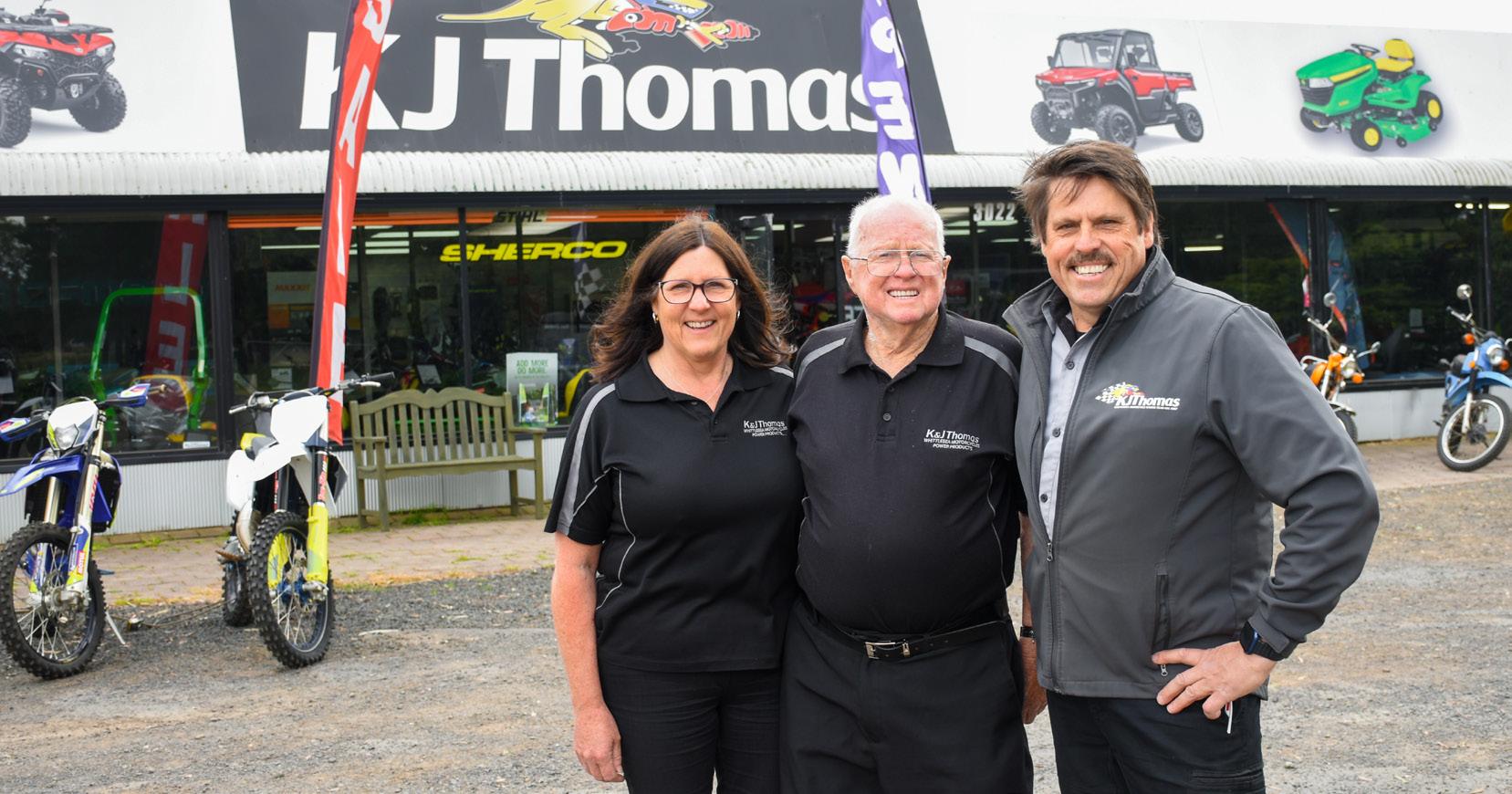
The Thomas family's 57 year journey in motorcycles
In the northern reaches of Melbourne, where the urban sprawl gives way to open country, a family business has been keeping riders on two wheels for nearly six decades.
When Kevin Thomas agreed to become a Yamaha dealer in August 1967, he probably didn't imagine he was laying the foundation for what would become a multi-generational enterprise. But 57 years on, K & J Thomas Whittlesea Motorcycles stands as proof that family values and smart business decisions aren't mutually exclusive.
Kevin's journey from motor mechanic at Burnside Dairies to motorcycle dealer began modestly enough. Working on bikes from his home workshop as a side hustle, his reputation for quality work caught Yamaha's attention. Taking the plunge into dealership ownership in 1967 was just the beginning. Within a year, he'd added Kawasaki to the stable, followed by Honda in 1980 and Suzuki shortly after. It was an aggressive expansion strategy that paid dividends.
"Dad had the foresight to diversify," explains Trevor Thomas, who now runs the business alongside his sister Dianne. "In the mid-'70s, he introduced small engines and powered equipment for several brands. While other dealerships were purely focused on motorcycles, we became a one-stop
shop for anything with an engine."
That business acumen extended to the property itself. Born in the house that still stands on the site, Kevin and his wife Jenny later built a second home right next to what would become the showroom and offices. Running a dealership requires constant attention, and having the owners living on-site meant issues could be addressed immediately and customers knew the family was genuinely invested.
But Kevin and Jenny understood something crucial – to sell motorcycles credibly, you need to live and breathe the culture. The family's deep involvement in motocross and racing wasn't just passion; it was market research and brand building. Trevor's decade-long stint with the Honda Motocross team, and Dianne's five years racing in the late '70s and early '80s, gave the dealership credibility in the competitive racing scene and access to serious riders who became loyal customers.
Trevor's formal entry into the business in 1984 as a VACC apprentice motor mechanic demonstrated the family's commitment to professional standards.
That relationship with the Victorian Automobile Chamber of Commerce has now spanned 50 years, with Trevor currently serving on the VACC Motorcycle Industry Division executive committee – a position that provides valuable industry insight and networking opportunities.
The generational transition has been textbook. Rather than a sudden handover, Kevin and Jenny gradually stepped back, allowing
Trevor and Dianne to take the reins while remaining available for guidance. It's succession planning done right, preserving institutional knowledge while bringing fresh perspectives.
Today's operation maintains that original diversified model, but the family has added something many modern businesses overlook: community investment with tangible returns.
Since Kevin co-founded the Whittlesea Motorcycle Club with two local police officers in 1976, the family has provided track facilities on their property. The MAVERIC mini bike programme now runs every weekend, introducing approximately 60 riders per month to the sport. It's brilliant long-term thinking – today's mini bike rider is tomorrow's new bike purchaser, and their parents are servicing customers right now.
"We've got three generations of families coming through," Trevor notes. "Grandparents who learned here, brought their kids here, and now bring their grandchildren. That's customer retention you can't buy with advertising."
In an industry facing pressure from online retailers, grey imports, and corporate consolidation, K & J Thomas Whittlesea Motorcycles demonstrates that the traditional family dealership model can not only survive but thrive. The formula? Strategic diversification, genuine community engagement, professional credentials, and succession planning that preserves what works while allowing evolution.
Fifty-seven years in, the Thomas family proves that keeping it in the family doesn't mean keeping it small – it means keeping it smart.
Beyond the Manual
Over five decades of hard-won expertise in Australian automotive
There's a particular type of phone call that Graeme Cuthbert has come to recognise over his six decades in the automotive industry. It usually starts with a mechanic or repairer describing a problem they've never encountered before—a restoration gone sideways, a rare European import with mysterious damage, or perhaps a legal dispute requiring someone who can speak authoritatively about what a 1970s Ferrari should actually be worth, and, whether an Australian Muscle Car is an original or a replica. "The industry has changed enormously," Graeme reflects, speaking from his Melbourne office where Cuthbert Automotive Consulting has become the quiet backbone supporting specialists across Australia. "But what hasn't changed is that when you're dealing with prestige vehicles, classic cars, or complex damage assessments, you need someone who's actually done the work, not just read about it."
That depth of hands-on experience is increasingly rare, and it's made Graeme something of an industry institution—the person others turn to when conventional expertise runs dry.
For Graeme, automotive work isn't just a career choice—it's a family legacy.
As a third-generation automotive professional, he qualified as a motor mechanic in 1966, stepping into an industry his family had helped shape. By 1971, at just 26 years old, he'd established Graeme Cuthbert Automotive, building
it into one of Victoria's most respected prestige vehicle repair operations. The business became the factoryrecommended repairer for Ferrari, Audi, Volkswagen, Volvo, Renault, and others—a testament to the exacting standards Graeme maintained. At its peak, the operation employed 27 people and turned over 40 vehicles weekly, handling everything from panel beating and spray painting to full restorations. Now, that legacy continues through his daughter, who works alongside him in the consulting business. "Having her involved means we're looking at potentially four generations in this industry," Graeme says. "That continuity of knowledge matters more than people realise."
After selling the repair business in 2003, Graeme shifted focus entirely to consulting work, and discovered his expertise was more valuable than ever. Insurance companies, legal firms, finance institutions, and VicRoads regularly call on him for valuations, forensic examinations, and expert witness testimony. But it's the informal network that truly defines his role today. Fellow repairers ring seeking advice on paint contamination issues. Dealers contact him about authentication concerns. Solicitors need someone who can explain to a court exactly what constitutes proper Ferrari restoration work.
"You can't learn this stuff from a manual," Graeme explains. "When I'm examining a vehicle that's had poor quality repairs, I'm drawing on 50-plus years of actually doing that work. I know what the correct process looks like because I've done it."
That practical knowledge base, built across
decades working with everything from roadworthiness testing to partnership dispute valuations, simply can't be replicated through courses or certifications alone. It requires putting in the hard yards, vehicle after vehicle, problem after problem.
Beyond consulting work, Graeme has carved out another niche that perfectly suits his extensive industry connections: sourcing rare and hard-to-find vehicles. With a Licensed Motor Car Trader credential held since 1974 and involvement in several thousand vehicle sales over the years, he's become the person collectors call when they're chasing something specific. "Someone might ring looking for a particular model Porsche in a specific colour combination, or a classic Land Rover with certain specifications," he says. "Through the network I've built, I usually know who to call or where to look."
It's this reputation for connection and problem-solving that keeps the phone ringing. Word of mouth and networking aren't just important to Graeme's business—they're fundamental to who he is as an industry professional.
As the automotive industry becomes increasingly digital and automated, Graeme represents something increasingly precious: institutional knowledge. He's a 50 year VACC member, an associate member of the Institute of Automotive and Mechanical Engineers since 1969, a member of the Society of Automotive Engineers - Australasia since 1972, and has appeared as an expert witness in criminal, coronial, and civil courts. But perhaps most importantly, he's someone the industry knows it can rely on when the textbook answer isn't enough—when you need someone who's actually been there, done that, and can prove it.
Fifty years of family, community and commitment
How Melton Toyota became one of Australia's longest-running family dealerships
There's something quietly remarkable about a business that stays in one family for half a century. In an industry where dealerships change hands like used cars on a forecourt, Melton Toyota stands as a testament to what happens when vision, values, and a genuine commitment to community align across three generations.
It all started with a humble service station on High Street in 1973. Keith and Joan Harrison had a simple philosophy: honesty above all. That foundation, built on integrity and community spirit, would prove stronger than any showroom floor or sales target. From that little service station, they built more than a business; they built a legacy.
Today, their eldest son, Grant Harrison, leads one of Toyota's longest-running family-owned dealerships in Australia, operating from a state-of-the-art facility on the very same street where his grandparents farmed the land and his parents first opened their doors. It's a point of immense pride for the Harrison family, and for good reason.
But Grant is quick to remind you that leadership isn't simply handed down like a set of keys. "It's not a right of inheritance," he insists. "It's about humility, challenge, and flexibility. It's about listening and supporting your staff, customers, and family alike."
That perspective didn't appear overnight. Grant spent twelve years training in every facet of the business before taking the reins in 2002 when Keith and Joan
retired. He learned the trade from the ground up, understanding that to lead effectively, you need to know what happens in every corner of the operation. It's that hands-on experience, combined with a sharp eye for the industry's evolution, that sets Grant apart.
Being family-owned gives Melton Toyota something corporate dealerships struggle to replicate: the freedom to make decisions based on experience and instinct rather than quarterly reports and distant board meetings. When Grant sees an opportunity to invest—whether in facilities, technology, or people—he can act on it. And he does, consistently. Perhaps nowhere is this more evident than in how the dealership values its team. Walk into Melton Toyota, and you'll notice something unusual: familiar faces, long-term staff who've become part of the furniture. The dealership's "Milestone Club" celebrates long-serving employees, recognising that in an era of constant change, these team members are the constants. They're the living chronicles of the company's evolution, providing stability, wisdom, and a level of customer service that only comes from genuinely caring about what you do.
"We train, retrain, and update our knowledge time and time again," the team's ethos explains. It's not just about knowing the latest model's features; it's about understanding what customers genuinely want and need. That investment in people has proven to be one of the key drivers of Melton Toyota's
success—in 2013, they were named Melbourne's number one metropolitan Toyota dealership for guest service. But the Harrison family's commitment extends well beyond the showroom walls. Melton Toyota is deeply woven into the fabric of the local community. They're frequent entrants in the Variety Bash, that great Australian charity adventure, and they sponsor numerous local sporting clubs. It's more than corporate social responsibility; it's a genuine investment in the community that has supported them for five decades.
You can trace this community focus right back to that service station in 1973, to Keith and Joan's belief that a business should be about more than just transactions. Grant carries that torch today, understanding that longterm success comes from building relationships, not just moving metal.
As Melton Toyota celebrates fifty years of VACC membership, it's clear that the "Melton Toyota Way"—that quest to turn good into great—isn't just clever marketing. It's embedded in the Harrison family DNA, passed from Keith and Joan to Grant, and instilled in every team member who walks through the doors of that High Street dealership.
In a rapidly changing industry, there's something reassuring about a family business that remembers where it came from whilst keeping a sharp eye on where it's heading. Here's to the next fifty years.
Payday Super changes ahead
2026
Celebrate the best in automotive
The VACC Automotive Industry Awards (AIA) celebrate the innovation, excellence and achievements that drive Victoria and Tasmania’s automotive sectors forward. From small workshops to major dealerships, these awards honour the individuals and businesses shaping the future of our industry.
Entering the AIA is a powerful opportunity to showcase your team’s success, gain well-earned recognition and elevate your business profile. Open to both accredited and non-accredited VACC and TACC members, the awards highlight leadership, craftsmanship and community impact across the sector.
This year’s winners will be announced on Saturday 27 June 2026 at the elegant Palladium at Crown Melbourne. Hosted by the charismatic Shane Jacobson, the evening promises gourmet dining, captivating entertainment, live music, and dancing — a true celebration of automotive excellence.
Don’t miss this chance to celebrate success, inspire your team and connect with industry peers. Mark your calendar for an unforgettable night of recognition and celebration.
Award Categories
• Best Small Automotive Business – Regional Victoria
• Best Large Automotive Business – Regional Victoria
• Best Small Automotive Business – Metropolitan Victoria
• Best Medium Automotive Business – Metropolitan Victoria
• Best Large Automotive Business – Metropolitan Victoria
• Best Small Automotive Business – Tasmania
• Best Large Automotive Business – Tasmania
President’s Awards
• Employee of the Year
• Employer of the Year
Venue
Palladium, Crown Melbourne
Date
Saturday 27 June 2026
Time 6:30pm – 12am
Dress
Cocktail - Black tie optional
Price
$250 per ticket
$2,500 per table of 10
Entries
open Monday 2 February 2026
Early bird offer! Submit your AIA application in February 2026 and get exclusive access to premium seats at the 2026 AIA Automotive Industry Awards Dinner.
The Automotive Industry Awards Bigger and better in 2026
The Automotive Industry Awards (AIA) is calling for entries from automotive businesses across Victoria and Tasmania, with applications now open for the 2026 programme. Following the success of previous years, the awards continue to recognise excellence across seven business categories and two prestigious President's Awards. Whether you run a small family workshop or manage a large metropolitan dealership, there's a category designed to showcase your achievements. The awards framework ensures businesses of all sizes receive the recognition they deserve within the automotive sector.
For smaller operations, the Best Small Automotive Business categories acknowledge businesses with 1-19 employees in both regional and metropolitan areas for Victoria and Tasmania. These awards celebrate the backbone of the automotive industry, the independent workshops and specialists who build their reputations one customer at a time.
The Best Medium Automotive Business (VIC) category specifically recognises metropolitan enterprises employing 20-99 staff. This category addresses the unique challenges faced by growing businesses that have expanded beyond small operations but maintain the agility and personal touch that defines quality automotive service.
Larger organisations aren't overlooked either. The Best Large Automotive Business accolades are reserved for enterprises with over 100 employees
in metropolitan Melbourne, or those with 20-plus staff in regional locations and Tasmania. These awards acknowledge the operational excellence required to maintain high standards whilst managing substantial teams and customer bases.
Beyond business categories, the President's Awards honour individual achievement through Employee and Employer of the Year distinctions. These awards recognise the people who truly make a difference – whether through exceptional customer service, innovative workplace practices, or outstanding contributions to industry advancement.
Applications close on 14 March, giving VACC and TACC members ample time to prepare their submissions. However, businesses are encouraged to enter early, with a special incentive available for February entries. This early-bird offer rewards those who don't procrastinate, because running an automotive business is demanding enough without last-minute paperwork.
The independent judging process evaluates multiple aspects of business performance. Customer service excellence remains paramount, alongside workplace policies that support staff wellbeing and development. Training initiatives demonstrate your commitment to professional standards, whilst innovative marketing approaches show how you're positioning your business for future success.
Entering the awards offers tangible benefits beyond the trophy. The process itself provides an opportunity to benchmark your operations against industry standards, identify areas for improvement, and document your achievements. For many businesses, preparing an awards submission becomes a valuable strategic exercise that highlights what they're doing well and where they can do better. Winners will be announced at a gala ceremony on Saturday 27 June 2026 at Melbourne's Palladium Crown. It's an evening that brings together the best of Victoria and Tasmania's automotive industry – a chance to celebrate achievements, network with peers, and be inspired by excellence within the sector.
The automotive industry continues to evolve, facing challenges from technological change, regulatory requirements, and shifting customer expectations. The AIA programme recognises those businesses and individuals who aren't just surviving these changes but thriving through innovation, dedication, and unwavering commitment to quality service.
The night will also celebrate this year's graduating VACC Apprentices, this is a chance to recognise the critical role these apprentices play in our industry as the backbone of the future.
Don't let this opportunity pass by. Applications are open now, and your business deserves recognition for the hard work you've put in throughout the year.
GOLD SPONSOR SILVER SPONSOR BRONZE SPONSOR
From first swing of a spanner to Apprentice of the Year
Sean Perry on why apprentices are the future of the automotive industry
When Sean Perry picked up a spanner for the first time, helping friends tinker with their cars, he had no idea it would set him on a path to being named VACC Apprentice of the Year. What began as curiosity quickly turned into passion — and today, Sean’s story is a powerful reminder of why apprentices remain the lifeblood of Australia’s automotive industry.
“I fell in love after the first swing of a spanner,” Sean says. “That moment made it pretty clear this was what I wanted to do.”
Like many young people entering the trade, Sean was drawn to the handson nature of automotive work and the opportunity to learn by doing.
An apprenticeship, he says, was the obvious choice — a chance to build real skills, work alongside experienced technicians, and grow within a trade that is constantly evolving.
Learning that lasts a lifetime
Reflecting on his apprenticeship, Sean is quick to point out that it’s not just technical skills he’s gained — it’s experiences that simply can’t be replicated in a classroom.
“Problem solving, communicating with workmates and customers, and thinking outside the box are huge,” he explains.
“You learn how to approach realworld problems, not textbook ones.”
There are moments that stand out vividly. Building his first engine — a red PX1 3.2-litre Ranger —
“I never thought I’d get the chance to work with the Penrite team at Sandown — but that’s what this trade can open up for you.”
remains a career highlight, but just as important have been the friendships formed along the way.
“I’ve made friends for life and gained a lot of knowledge,” he says.
“Those relationships are something I’ll carry with me forever.”
Recognition that matters
Being named VACC Apprentice of the Year was a milestone Sean describes as deeply personal. Finding out on graduation night, seated alongside his supporters Kris and Brad at the Industry Awards, is a moment he won’t forget.
“It meant everything to me,” he says. “It showed me that if I keep my head down and work hard, I can achieve anything. It meant a lot to my family too.”
Recognition like this doesn’t happen in isolation, and Sean is quick to acknowledge the people who helped him succeed.
My workshop mentor Brad Keen and VACC Field Manager Kris have both had my back through the good times and the rough ones,” he says. “That support makes all the difference.”
Growing through challenges
Every apprenticeship comes with challenges, and Sean is candid about the tougher moments — particularly learning how to deal with setbacks.
“It’s easy to get bogged down by mistakes,” he admits. “But I’ve learned to take the time to understand what went wrong, fix it, and improve. That mindset is critical in this industry.”
It’s a lesson many employers
recognise: apprentices who are supported to learn from mistakes often become more capable, resilient technicians in the long run.
A trade that never stands still
What Sean loves most about the automotive industry is its constant evolution.
“It’s forever expanding, always growing,” he says. “Being able to work on cars with carburettors all the way through to EVs is amazing. Learning every day is the coolest thing ever.”
Looking ahead, Sean is particularly excited by the rise of hybrid and electric vehicles, as well as the increasing complexity of modern automotive systems.
“Canbus, networking, electrical faults — we’re seeing so much more of that now,” he says. “I’m really keen to keep developing in those areas.”
A message to employers — and future apprentices
For workshop owners considering whether to take on an apprentice, Sean’s journey is a clear example of what’s possible when young talent is given the opportunity, guidance and time to grow. Apprentices bring energy, adaptability and a willingness to learn — qualities that are increasingly vital as vehicles become more complex.
And for those unsure about whether an apprenticeship is the right path, Sean’s advice is simple.
“If you’re on the fence, remember it’s a forever-changing industry with so many opportunities,” he says. “I never thought I’d get the chance to work with the Penrite team at Sandown — but that’s what this trade can open up for you.”
Looking to the future
In the short term, Sean has a clear goal: to master a new category of work each year. Long term, his ambitions stretch even further.
“I’d love to own my own business one day,” he says.
When asked to sum up his apprenticeship experience in a single sentence, Sean doesn’t hesitate: “Make the most of each moment — the good and the bad.”
For VACC members, Sean Perry’s story is a reminder that investing in an apprentice isn’t just about filling today’s skills gap — it’s about shaping the future of the automotive industry, one spanner swing at a time.
Celebrating 40 Years of VACC TechTalk Four decades of technical leadership
For forty years, TechTalk has been a constant companion to Australia’s automotive repairers — a technical roadmap for an industry that has changed more in the past four decades than in the preceding century. First published as a standalone magazine in 1986, TechTalk has grown into one of VACC’s most trusted technical resources, with around 3000 articles published across its lifetime. What began as a response to member demand through VACC’s phonebased Technical Advisory Service quickly evolved into a comprehensive guide for technicians navigating new technologies, changing regulations, and an increasingly diverse national vehicle fleet. While TechTalk has always focused on vehicles that have moved beyond dealership servicing and into independent workshops, the magazine’s true value lies in its ability to anticipate what technicians need next.
The 1980s: A new era of regulations and electronics
When the first standalone issue was released in 1986, the Australian automotive landscape was on the cusp of major change. Unleaded petrol had been introduced just a year earlier, phasing out leaded fuel due to its severe health impacts and its incompatibility with catalytic converters. These regulatory shifts, combined with the growing influence of electronics, changed vehicle service and repair almost overnight.
Articles from the late 1980s became foundational reading for technicians
learning new systems: catalytic converters, early electronic ignition modules, and the emergence of electronic fuel injection. Popular models of the era — including Toyota’s rising import dominance, the Ford Falcon, and the Australian-built Holden Commodore — reflected a transition toward more efficient, lower-emission vehicles.
TechTalk guided workshops through this shift with practical advice on basic service data, valve timing, carburettor tuning, emission-control schematics, and the compliance standards that shaped the decade.
1990s to 2000s: Complexity arrives under the bonnet
As electronics became more sophisticated, TechTalk continued to translate complexity into clarity.
The magazine chronicled the arrival of engine control units, onboard diagnostics, immobiliser systems, multiplex wiring, hybrid technology, and the early foundations of today’s advanced driver-assistance systems.
For many members, TechTalk became the bridge between traditional mechanical skills and the new demands of digital diagnostics. Every issue reinforced a simple truth: a technician’s greatest asset is the ability to keep learning. 2010s to today: An industry in transformation
Over the past decade, vehicle technology has accelerated at an
unprecedented rate — high-voltage systems, connected vehicles, ADAS calibration, low-emission design, and increasingly complex electronics. As manufacturers innovate, TechTalk has matched pace, ensuring members can work safely, accurately, and confidently on modern vehicles. Despite enormous technological change, one thing has remained constant: TechTalk is shaped by the questions, challenges, and experiences of VACC members. What appears on its pages reflects what is happening in real workshops, on real jobs, every day.
A legacy of technical support — and a future just beginning
After 40 years in print, TechTalk stands as one of Australia’s longest-running technical automotive publications. Its legacy is not just in the articles written, but in the technicians it has guided, the workshops it has supported, and the industry it continues to strengthen.
As the automotive sector accelerates into electrification, automation, and rapid digitalisation, TechTalk will remain exactly what it has always been — a trusted, technician-led guide for the real world of automotive repair.
Find out more
TechTalk is included in every MotorTech subscription — delivering monthly technical insights, repair guidance, and access to VACC’s highly skilled Tech Advisory team.
To explore subscription options, visit motortech.com.au
HYBRIDS AIN’T HYBRIDS
Understanding the technologies increasingly powering Australia’s best-selling cars
Mike Sinclair
Ask most people—in fact, ask plenty of automotive insiders—what makes one hybrid different from another, and you’ll get a vague mumble about batteries and electric motors.
The term “hybrid” has become automotive shorthand for “it’s got some electric bits”. About as useful as calling every tool in your box a “spanner”!
This matters because hybrids are driving the Australian new car market. In 2025, hybrid sales have surged to over 250,000 units - a nearly 30% increase from 2024, and more than 150% higher than in 2023. A hybrid SUV is the most popular passenger vehicle in the country. OEMs’ new model pipelines are crammed with hybrids…
The message: Australians want hybrids. They’re just not entirely sure what they’re buying.
We’re using GWM’s technology portfolio as our guide. Where most
brands specialise in one or two hybrid approaches, GWM offers the full range—from conventional selfcharging systems to off-road plugins and high-performance systems delivering supercar-level outputs.
The technologies mirror what you’ll find across Australia’s most popular brands, ranging from Toyota to BMW to Land Rover, and spanning the affordable to the luxury segment.
Understanding GWM’s portfolio means gaining a deeper understanding of the hybrid landscape as a whole.
Toyota’s gift that keeps on giving
Before we deep dive, credit where it’s due. Since Toyota launched the Prius in Japan in 1997, the company has built a reputation on technology most manufacturers dismissed as impractical.
Toyota’s breakthrough came with the Hybrid Synergy Drive, a series-parallel configuration using
planetary gears that allowed seamless switching between electric-only, petrol-only, or combined power.
The system intelligently deployed whichever combination delivered optimal efficiency. Revolutionary then. Standard practice now.
The Prius went global in 2000, and by the end of 2024, Toyota had sold over 30 million hybrids globally. More importantly, the technology legitimised electrification across an industry that had spent decades perfecting internal combustion.
Today, hybrids are mainstream. Honda was another pioneer, and most brands offer hybrid options across multiple segments, from city runabouts to sevenseat SUVs to performance-oriented machines that embarrass sports cars.
The technology has evolved from a fuel-saving curiosity into something delivering genuine performance benefits. Hell, there’s even a hybrid Porsche 911…
The mild hybrid exception
One more quick detour before we get into the main topic. You’ll occasionally hear about mild hybrids, and they deserve clarification: they’re not really hybrids in the sense we’re discussing here.
A mild hybrid uses a small electric motor—typically integrated into the starter-generator—to assist the internal combustion engine. It can’t propel the vehicle independently. At best, it smooths out acceleration, enables start-stop functionality, and provides modest fuel economy improvements through regenerative braking. Think of it as an efficiency enhancement system rather than an actual dual-powertrain setup. When Australian buyers talk about wanting a hybrid, they mean something with genuine electric driving capability. So, we’ll leave mild hybrids aside.
Self-Charging HEVs:
Where it all starts
Conventional hybrids are the entry point for most hybrid buyers. Toyota and others refer to these as “selfcharging.” However, that’s essentially marketing speak since you’re still burning petrol to charge the battery. Nevertheless, the architecture is straightforward: a petrol engine, electric motor (or two), and a battery pack that charges itself through regenerative braking and the engine. You never plug it in. The system handles everything. In urban driving, the electric motor handles low-speed acceleration using energy recovered from braking. On the highway, the petrol engine does the heavy lifting. Need acceleration? Both work together. It’s seamless and largely invisible. Toyota dominates this space in Australia. Caught an Uber lately that wasn’t a Toyota hybrid? The brand’s RAV4 Hybrid consistently tops sales charts, reflecting its bulletproof reliability and real fuel savings—expect to halve consumption compared to equivalent petrol models in urban driving. Who should buy one? Anyone doing primarily urban driving who wants better economy without charging cables. Company car drivers doing metro runs, families shuttling kids, or anyone watching the fuel gauge plummet in stop-start traffic. How hybrids actually operate: The modes behind the systems
Before diving into more advanced hybrid systems, understanding how hybrid powertrains operate clarifies
what makes each variant distinct. Most modern plug-in hybrids, regardless of manufacturer, can operate in similar fundamental modes.
Pure electric mode operates solely on battery power, making it ideal for urban driving within the electric range. Series mode utilises the petrol engine as a generator to charge the battery, while electric motors drive the wheels— proving efficient at lower speeds.
Parallel mode has both engine and motors driving the wheels simultaneously, delivering maximum performance. Engine-only mode operates solely on petrol when the battery is depleted or at sustained highway speeds, where it’s most efficient. GWM’s Hi-4 system (more below) offers nine drive modes that combine these fundamental operating principles with different power distribution strategies.
GWM has a range of hybrid systems, both conventional and plug-in. Combining a turbo-charged petrol engine, all-wheel drive via a rear-mounted e-axle and extended plug-in range, the Hi-4 system pictured below is cutting-edge.
The system switches between modes automatically based on throttle input, battery charge, speed, and terrain. It’s doing this hundreds of times per second, choosing whether to use the front motor only, the rear motor only, both motors, the engine only, or any combination thereof. Here’s the critical bit: these operating modes are largely standard across all modern plug-in hybrids. Volkswagen Group and MG’s systems do the same thing, as does BMW’s, Mercedes’, and everyone else’s. What differs between systems—and what actually matters to buyers—is the hardware architecture (whether the system has mechanical four-wheeldrive connections, the size of the battery pack, and the power produced by the motors), as well as the functional targets. Think of it like comparing V6 engines. They all operate on the same fourstroke combustion cycle, but a 3.5-litre twin-turbo V6 in a performance car delivers different results than a naturallyaspirated 3.6-litre V6 in a family SUV. The architecture and intended purpose matter more than the basic cycle. This is why focusing solely on “modes” misses the point. Modes are just the software intelligently managing the hardware you’ve chosen.
GWM Hi-4: The Plug-In paradigm
Now we get into GWM’s technology. While GWM also offers conventional hybrids like Toyota, here we are focusing on its plug-in systems, starting with Hi-4—Hybrid Intelligent 4-wheel drive. Although not all Hi-4 badged vehicles are PHEVs, most are and so this is considered the company’s mainstream plug-in hybrid offering. In PHEV form, Hi-4 uses dual motors in a series-parallel configuration. One motor integrates with the front-drive module, another independently powers the rear axle. This enables electric all-wheel drive without mechanical linkages between axles, operating in pure electric, pure petrol, or combined mode across nine different drive settings. Several brands offer similar systems under various labels.
GWM claims 41.5% thermal efficiency from the dedicated hybrid engine, matching Toyota’s latest units and representing a massive improvement over the roughly 30% efficiency of ‘normal’ engines.
The Hi-4 systems typically provide around 100km electric-only range—more than enough for most daily driving. The GWM Haval H6 PHEV, equipped
with the latest generation of Hi-4, delivers 268kW and 760Nm, reaching 100km/h in 4.8sec. That’s properly quick, making the point that modern hybrids aren’t about sacrifice. The intelligent Torque Vector Control system continuously adjusts power distribution between axles, optimising traction.
Who benefits? Anyone with a daily commute of under 100km who wants to run on electricity most of the time while maintaining the flexibility of petrol. Home charging makes daily driving essentially electric, with the engine serving as a backup rather than the primary power source.
GWM Hi-4T: Mechanical fundamentals for off-road
GWM’s Hi-4T takes a different approach. The ‘T’ is reputedly an abbreviation for Tank (GWM’s off-road sub-brand, although the technology also appears in Cannon utes), indicating a system designed for conditions where ‘real’ four-wheel drive is required.
Where Hi-4 uses independent motors on each axle, Hi-4T employs parallel petrol-electric architecture with mechanical four-wheel drive underneath. You get an engine, an electric motor, a traditional driveshaft connecting front and rear axles, low-range gearing, and up to three lockable differentials. This is proper off-road hardware.
The hybrid elements work in parallel with this mechanical foundation. The electric motor, mounted in line with the gearbox, assists the engine, allowing the vehicle to run in pure electric mode for up to 120km.
Then, when things get gnarly, you’ve got a mechanical connection between wheels. If a single wheel finds traction, the system transmits 100% of available torque through the differential locks. The Tank 500 Hi4-T exemplifies this approach: a 2.0-litre turbocharged petrol engine paired with a 120kW electric motor, delivering a total of 300kW and 750Nm through a nine-speed automatic transmission and a proper transfer case. The compromise? The driveshaft limits battery size and placement compared to Hi-4Z’s decoupled architecture (see below). The battery capacity sits around 37kWh, rather than the larger packs possible without a driveshaft. Who needs Hi-4T? Anyone serious about off-road driving, or arguably, towing. If your adventures involve beach recovery, creek crossings, or proper 4WD tracks, mechanical linkages and locking diffs still matter. The hybrid system provides efficiency for daily driving and electric assist for low-speed crawling, while the mechanical drivetrain ensures you’re not relying solely on electronics when conditions deteriorate.
GWM Hi-4Z: Performance without compromise Hi-4Z represents GWM’s newest hybrid architecture, launched in late 2024, and aimed at buyers seeking supercar-style performance alongside genuine electric range. The system employs a longitudinal dualmotor architecture, featuring a dedicated three-speed transmission at the front
“The message: Australians want hybrids. They’re just not entirely sure what they’re buying.”
“Hybrids ain’t hybrids. They’re tools, and like any tool, you need to pick the right one for the job.”
and a two-speed reducer at the rear, with independent motors at each axle. Notably, the absence of a mechanical connection between the front and rear means that no driveshaft occupies chassis space. In GWM’s application, this allows for a massive (for a plug-in) near 60kWh battery pack, mounted in a BEVstyle configuration low in the vehicle.
The numbers are impressive. Combined output reaches 645kW and 1195Nm in the Tank 500 Hi4-Z (yet to be confirmed for Australia), propelling two-and-a-bit tonnes to 100km/h in 4.6sec—quicker than a Porsche Cayenne GTS, while also able to tow 3000kg. Electric range is claimed at 200km (approx.), with 800V architecture supporting 163kW DC fast charging—30-80% in 15 minutes.
The trade-off: without a mechanical connection between axles, Hi-4Z can’t match Hi-4T’s extreme offroad capability. If three wheels slip simultaneously, you’re relying on electronic traction control rather than locked differentials. GWM therefore positions the Hi-4Z for “pan off-road” use—encompassing general off-roading and excellent urban performance, rather than hardcore rock crawling. Who’s the target? Buyers wanting explosive performance and maximum electric range without extreme off-road demands. Suppose your off-roading is limited to gravel or snowy roads, modest tracks, and occasional beach trips. In that case, Hi-4Z delivers better efficiency and performance than Hi-4T. It’s the Swiss Army knife—genuinely capable at everything without being the absolute best at any single task.
The efficiency equation
Make no mistake, hybrids deliver tangible CO2 reductions and fuel savings in real-world driving, especially in markets like Australia where EV adoption remains gradual. Indeed, Australia’s situation makes hybrids particularly relevant. Despite government NVES targets and growing EV sales, we’re behind the curve compared to Europe or China. Hybrids bridge that gap, delivering immediate emissions reductions without requiring the same level of infrastructure transformation.
Closing the loop
So here’s the reality: when someone
The other self-charging hybrid E-POWER
Nissan went a different way with its self-charging hybrid. Called e-Power, the Nissan system is a series hybrid in which the petrol engine never drives the wheels—it exists solely as a generator, producing electricity to charge the battery while an electric motor handles all propulsion duties. Think of it as an electric car with a small battery and an onboard generator. The appeal of e-Power is understandable -- the smoothness and instant torque of an EV without range anxiety or charging requirements. The system ensures the engine runs at its most efficient speed regardless of vehicle speed, and there’s no complex transmission blending power sources. Nissan claims this delivers an EV-like driving experience while maintaining the convenience of petrol refuelling.
The trade-off? While the upcoming e-Power II will address concerns, the existing system’s highway efficiency typically lags behind that of seriesparallel systems, such as those used by Toyota or GWM’s Hi-4. When cruising at constant highway speeds, a traditional hybrid can use the petrol engine to drive the wheels directly, which in the real world is more efficient than converting mechanical energy to electrical and back again.
mentions buying a hybrid, ask which one they’re considering. Because a self-charging RAV4 Hybrid has about as much in common with a Hi-4Z-equipped GWM as a Corolla has with an INEOS Grenadier. They’re both cars, but nobody pretends they serve the same purpose. Self-charging hybrids are ideal for urban drivers who want fuel savings without the hassle of charging. Hi-4 plug-ins appeal to buyers with home charging who want daily electric driving and occasional petrol flexibility. Hi-4T serves the off-road crowd who need mechanical certainty for extreme conditions. Hi-4Z targets performance enthusiasts who wish for supercar acceleration with the ability to run on electricity and occasionally venture off sealed roads. The Australian market’s continued
growth in hybrid sales reflects this diversity. We’re not just buying hybrids— we’re buying different solutions to different problems, all wearing the same simplistic label. Some deliver economy, some deliver performance, some deliver capability. The best delivers all three. GWM’s technology portfolio demonstrates how far hybrid systems have evolved beyond the pioneering Prius. From simple fuel savers to 645kW performance machines, the spectrum is vast. Understanding where each system sits on that spectrum—and more importantly, which one suits your actual needs—matters more than simply knowing it’s “a hybrid.” Hybrids ain’t hybrids. They’re tools, and like any tool, you need to pick the right one for the job. At least now you know what you’re choosing between.
More than just a workshop
How family values built Auto Express Service Centre
In the heart of Geelong, there’s a workshop where you could quite literally eat off the floor. That’s not hyperbole – it’s a matter of pride for Chris, co-owner of Auto Express Service Centre, who treats his workspace with the same care most people reserve for their living rooms.
But this story doesn’t start with spanners and engine oil. It begins in a local fish and chip shop, where a young Chris watched his parents pour their hearts into serving their community. Those long hours became the blueprint for his own success.
“Everything I learned about work ethic, I learned from my parents,” Chris reflects.
“But more importantly, I learned how to treat people. In that shop, every customer mattered. That stayed with me.”
Twenty five years ago, Chris and his wife Christina took that philosophy and built Auto Express Service Centre. Today, they run it alongside their team of dedicated local mechanics and their son, a third-year apprentice with his sights set on continuing the family legacy.
The workshop itself tells a story. Each evening, Chris walks through with cleaning supplies in hand – a ritual that would make hospital infection control teams nod in approval.
This isn’t just about aesthetics; it’s about respect for the craft, the customer’s vehicle, and the team.
“We treat every car like it belongs to family,” Christina explains. “Because in a way, it does.” While Chris focuses on the workshop floor, Christina fronts the business, handling the countless behind-the-scenes tasks that keep everything running smoothly – the backbone of the family operation that customers may not see but certainly feel.
That trust has been earned through two decades of honest service and that customer-first approach Chris learned all those years ago. At Auto Express, you’re welcomed like a neighbour and served with genuine care.
The real magic is watching the next generation embrace these values. Their son chose a mechanical
apprenticeship despite having the freedom to pursue any trade.
“He could have chosen anything,” Chris says, pride evident in his voice. “But this is what he wanted. That tells me we must be doing something right.”
The team embodies this same passion. Walk in on any given day, and you’ll find mechanics who genuinely love what they do – solving puzzles, helping people, and taking pride in work done properly.
It’s this combination of family values, uncompromising standards, and genuine care that has kept Auto Express thriving for over two decades. From family sedans to complex European models, they approach every job with meticulous attention to detail.
As their son continues his apprenticeship, learning not just technical skills but the deeper philosophy of treating customers right, the future of Auto Express looks as bright and spotless as its workshop floor. Some legacies are built on brick and mortar. Others are built on fish and chips, elbow grease, and the simple belief that people deserve to be treated right.
Cooling Innovation Shell’s single-fluid technology set to reshape EV workshop economics
Australian automotive workshops may soon face a radically simplified landscape for electric vehicle servicing, following Shell’s breakthrough proof-of-concept in thermal management technology.
For workshop owners wrestling with the complexities of servicing battery electric vehicles, Shell Lubricants has delivered potentially game-changing news. The energy giant has successfully demonstrated that a single specialised thermal fluid can manage cooling across an entire EV powertrain – from battery cells to motors and power electronics – whilst rejecting heat through a conventional radiator. Currently, most EVs employ separate cooling circuits using water-ethylene glycol (WEG) mixtures for different components, requiring multiple reservoirs, pumps, heat exchangers, and dedicated pipework. Shell’s proofof-concept collapses this complexity into one single-circuit architecture. Understanding the thermal challenge
The fundamental thermal challenge in BEVs differs markedly from internal combustion engines. Rather than a single, concentrated source of high-grade heat, BEVs generate multiple distributed sources of lower-grade heat. During the
Worldwide Harmonised Light Vehicle Test Procedure (WLTP), Shell’s research on a B-segment vehicle showed peak heat loads of approximately 3 kW, with mean loads of just 0.7kW – dramatically lower than the 100 kW an ICE cooling system must dissipate under full load.
The motor typically produces the highest heat generation, peaking around 2kW during high-speed driving, with the battery contributing an additional 1kW concurrently. This modest, fluctuating thermal load – combined with significant thermal inertia within the system –suggests current multi-circuit WEG systems may be substantially overengineered for BEV requirements.
Laboratory validation
Working with HORIBA MIRA, Shell constructed a sophisticated Vehicle Thermal Energy Optimisation Suite (VTEOS) that replicated an entire BEV thermal system in controlled laboratory conditions. The rig incorporated actual battery packs, motors, and inverters connected to a fully functional cooling circuit with pumps and a radiator.
The proof-of-concept testing subjected Shell EV-Plus Thermal Fluid with PurePlus Technology to extreme conditions spanning arctic cold to Saharan heat. Critically, the fluid successfully managed
thermal loads even during rapid charging scenarios, generating up to 10kW – whilst effectively dissipating accumulated heat through standard off-the-shelf radiators.
Thermal properties and performance
The thermal fluid’s properties reveal why single-circuit operation proves viable. Whilst the fluid exhibits approximately three-fold lower heat transfer coefficient than WEG (due to its reduced thermal conductivity of 0.15 W/m.K versus 0.41 W/m.K for WEG), this is offset by the modest thermal loads and significant system thermal inertia. Importantly, dynamic viscosity matches WEG at 4.0 mPas, meaning standard low-power pumps can circulate the fluid without modification. The fluid’s excellent dielectric properties enable direct immersion of battery cells – allowing intimate contact between fluid and heat source across almost the entire cell surface area.
Workshop implications
For Australian workshops, the singlecircuit architecture presents several practical advantages. Current BEV designs often employ separate circuits for battery thermal management and powertrain cooling, sometimes with additional circuits for cabin climate control integration.
Figure 1. Efficiency and energy losses as a function of torque and speed for a representative e-motor.
Figure 1. Ef fic ienc y (lef t) and energy losses (r ight) as a
ion of torque and speed for a representat ive e - motor. T
A validated single-fluid system simplifies fault diagnosis considerably. Technicians would monitor one circuit with unified operating parameters rather than tracking multiple discrete systems.
Fluid inventory is reduced to a single SKU, and service procedures become more standardised across the vehicle.
The proof-of-concept’s use of conventional radiators, pumps, and pipework means workshops won’t require specialised cooling system tooling. The fluid’s compatibility with standard filtration systems and its viscosity comparable to that of familiar WEG coolants minimises the learning curve for technicians.
Technical pathway forward
Shell’s whitepaper identifies clear development opportunities beyond the current proof-of-concept. Power electronics could transition to full-
The left graph illustrates how motor efficiency, with darker reds showing higher efficiency, varies with the motor’s torque in Nm and speed in revolutions per minute (rpm). The right graph shows how the complementary heat losses, with purple representing low values and red representing high values, vary with torque and speed.
immersion cooling – similar to battery-cell immersion or data centre server cooling. Electric motors could be redesigned with dedicated fluid passageways through the stator and rotor windings, bringing the fluid closer to heat sources whilst increasing surface area for heat transfer.
Robert Mainwaring, Shell’s lead engineer, notes: “Our Shell EV-Plus Thermal Fluid’s ability to entirely replace traditional glycol-based coolants and work with existing hardware is a game-changer.”
Looking ahead
Dr David Bridge, Chief Engineer for Thermal at HORIBA MIRA, describes the development as “a significant step
forward,” noting that effective heat management is “fundamental to unlocking the full potential of BEV technology.” However, Shell hasn’t announced OEM partnerships or commercialisation timelines. The technology remains in proof-of-concept phase, though the company emphasises manufacturers could implement the architecture using standard components.
For Australian workshops, the transition timeline remains uncertain, but the technical validation is complete. This simplified architecture could fundamentally reshape EV servicing economics and technical requirements within the coming years.
Neway Wheel Repairs is a family owned-and-operated company spanning three generations of knowledge and class-leading experience, servicing the automotive industry with trusted craftsmanship since 1950. We use state of the art equipment to remanufacture your wheels back to OM standard.
Keeping it in the family
North Geelong Transmissions
When mechanics across Geelong have a transmission problem they can’t crack, there’s one name that keeps coming up: Ivan Lukesic. For over four decades, the founder of North Geelong Transmission Services has built a reputation as the go-to specialist for some of the region’s trickiest automotive challenges.
“Ivan’s the guy you call when you’re stuck,” explains one local workshop owner. “If we can’t figure it out, we know he will.” It’s the kind of trust that can’t be bought – only earned through years of quality work and honest service.
Ivan’s journey into the transmission world began with his apprenticeship under Les Facer, another respected VACC member in Geelong. That foundation, laid back in the late 1970s, would become the springboard for establishing his own business in 1980. What started as a one-man operation has since evolved into a thriving family enterprise.
These days, Ivan isn’t working alone. His two sons, Shane and Justin, have followed their father into the workshop – though if you ask them, it was never really a choice. “We were coming here after school since we were kids,” Shane recalls. “Dad would have us sweeping floors, watching him work. We were always going to end up here.”
That early exposure paid off. Both sons completed their apprenticeships under Ivan’s watchful eye, learning not just the technical skills but the philosophy that’s driven the business for decades: never stop learning, never cut corners, and treat every customer’s car like it’s your own.
It’s a philosophy Ivan lives by. Despite his decades of experience, he’s still a regular at the Automatic Transmission Rebuilders Association’s annual training seminars, constantly updating his knowledge as automotive technology evolves.
“The industry never stands still,” Ivan says. “If you’re not learning, you’re falling behind.”
That commitment to staying current shows in the workshop itself. While many transmission shops are stuck in the past, North Geelong Transmission Services is equipped with the latest SnapOn and Autoboss diagnostic tools. Combined with a stock of over 100 new and remanufactured transmissions, it means customers aren’t left waiting weeks for parts to arrive or old-school guesswork to solve modern problems.
The family dynamic extends beyond just Ivan and his sons. Together, they’ve accumulated over 55 years of combined experience, creating a knowledge base that’s become invaluable to Geelong’s automotive community. The workshop has become something of a teaching ground too, with each of the four qualified technicians having started as apprentices, following the same path Ivan walked all those years ago.
As for the future? Ivan’s already thinking about his retirement – specifically, all that fishing he’s planning to do. But he’s not worried about the business. Shane and Justin have proven themselves more than capable, and they’re ready to carry the family legacy forward.
“Dad built something special here,” Justin says. “We’re just going to keep doing what he taught us: honest work, quality service, and always putting the customer first.”
For North Geelong Transmission Services, that’s not just good business – it’s a family tradition.
Safer roads for motorcyclists
Why infrastructure investment matters for the automotive industry
Motorcyclists remain among the most vulnerable road users in Australia, and new infrastructure investment across Victoria is a welcome and necessary step toward reducing road trauma. Recent announcements from the Federal and Victorian Governments confirm that targeted, practical safety upgrades are being rolled out under the Motorcycle Safety Infrastructure Program—delivering benefits not only for riders, but also for the broader automotive industry and VACC members.
Under the first stage of the program, $10.6 million will be invested to deliver eight motorcycle safety projects across regional and metropolitan Victoria, including Gippsland, Hume, Loddon Mallee and Greater Melbourne. The works will focus on proven safety measures such as motorcyclistfriendly roadside barriers, improved signage, and upgrades to dangerous intersections—areas where riders are particularly exposed to serious injury. This investment is being jointly funded through $5 million from the Federal Government’s Road Safety Program and $5.6 million from the Victorian Government via the Motorcycle Safety Levy. Importantly, the levy is paid by motorcyclists themselves, making this a clear example of rider contributions being reinvested directly into safety outcomes on the road. The need for action is stark. While motorcycles account for just three per
cent of registered vehicles in Victoria, riders represent more than one in five road deaths. In 2025 alone, 54 motorcyclists lost their lives on Victorian roads. Infrastructure improvements that reduce crash severity—or prevent crashes altogether—can make a life-saving difference.
For VACC members, particularly workshops servicing motorcycles and mixed fleets, these investments have real and practical implications. Safer roads mean fewer severe crashes, reduced trauma for customers, and less exposure to the complex and costly repairs associated with highimpact motorcycle accidents. While repair work is an important part of the industry, no workshop wants to see customers injured or killed due to preventable road hazards. There is also a broader business benefit. Improved rider confidence encourages continued motorcycle use, supporting demand for servicing, maintenance, parts and accessories. When riders feel safer on regional and metropolitan roads, they ride more often—and that supports the long-term sustainability of motorcycle-related businesses.
For workshops operating in regional Victoria, many of the identified upgrade locations—such as Licola Road, Mansfield-Whitfield Road and Whittlesea-Yea Road—are popular motorcycle routes. These are roads well known to riders and automotive businesses alike, and improvements in
these areas will be immediately felt by local communities and service providers. From a policy perspective, the program demonstrates the value of targeted safety investment informed by realworld crash data. Rather than onesize-fits-all solutions, this approach recognises that motorcycles interact with road infrastructure differently from other vehicles. Barriers, road surfaces and signage designed with riders in mind can significantly reduce injury severity when incidents occur. This is a principle long supported by the VACC: that effective road safety policy must consider how different road users operate, and that industry voices should be part of shaping those outcomes. The Motorcycle Safety Infrastructure Program is a positive example of governments working collaboratively and using levy funding as intended, delivering tangible improvements on the ground.
For VACC members, this investment reinforces the importance of ongoing advocacy for safer roads, fair levies and evidence-based policy. It also highlights how government action, when well designed, can support both community safety and industry confidence. Ultimately, safer roads are good for everyone. For riders, they mean a better chance of getting home safely. For automotive businesses, they support customer trust, sustainable demand and a transport system that works for all road users.
Are you getting the most out of your Membership?
VACC members have access to a Commonwealth Bank Relationship Manager who can arrange for you to receive information on:
• Everyday banking solutions including business accounts and eftpos terminals.
• For your eftpos – a Commonwealth Bank Relationship Manager can provide information on the Least Cost Routing options.^
• Funding options including Business Credit Cards, Car and Equipment Finance and Business Loans.
These solutions may help you manage cash flow and expand your business.
To find out how Commonwealth Bank can help your business move forward, contact VACC on 03 9829 1152 or email marketing@vacc.com.au and they’ll put you in touch with a Commonwealth Bank Relationship Manager.
Things you should know: As this information has been prepared without considering your objectives, financial situation or needs, you should, before acting on this information, consider its appropriateness to your circumstances. Eligibility criteria and other conditions applies. Applications are subject to credit approval. Full terms and conditions will be included in our loan offer. Fees and charges may be payable.
^ Least Cost Routing is also known as Merchant Choice Routing. A reference in the Merchant Agreement dated 1 April 2023 to Merchant Choice Routing is also a reference to Least Cost Routing. The target market for this product will be found within the product’s Target Market Determination, available at commbank.com.au/tmd.
VACC may receive a fee from the Commonwealth Bank of Australia for each successful referral. Commonwealth Bank of Australia ABN 48 123 123 124 AFSL and Australian credit licence 234945.
Isuzu UTE Australia marks 400,000th local delivery
Isuzu UTE Australia (IUA) reached a major milestone in December, recording its 400,000th vehicle delivery in Australia – a clear marker of the brand’s sustained popularity in one of the world’s most competitive automotive markets.
Since launching locally in 2008, more than 280,000 D-MAX utes and close to 120,000 MU-X seven-seat SUVs have been delivered to Australian customers, including over 50,000 vehicles in the past 14 months alone. Across 17 years, Isuzu UTE has built a strong reputation for durability, capability and value, shaped by ongoing feedback from Australian drivers.
“This incredible milestone is testament to the depth of trust Australian consumers place in our brand,” said IUA Managing Director Junta Matsui. “It reflects our commitment to helping Australians make the most of this country, whether at work or at play.”
Strong 2025 sales momentum has been driven by the facelifted MU-X and the introduction of new 2.2-litre, eight-speed models, with Australia remaining Isuzu’s largest global export market for D-MAX and MU-X. With 400,000 deliveries now complete, IUA has its sights firmly set on the next goal: half a million Australian vehicles.
We service and repair for the general public, workshops and dealerships.
Triumph expands 400 cc range
Triumph Motorcycles has unveiled two exciting additions to its 400 cc Modern Classics lineup for 2026, marking a significant expansion of its learner-legal range in Australia.
The all-new Tracker 400 and Thruxton 400 join the existing Speed 400 and Scrambler 400 models, offering riders fresh style and distinct road personalities built around Triumph’s refined 398 cc TR-Series single-cylinder engine.
The Tracker 400 brings a flat-track-inspired attitude to the road, with a commanding, upright riding position, wide handlebars and bespoke chassis setup designed for sharper handling. Its rugged looks feature a fly screen, number boards and dual-purpose tyres, while modern rider aids such as ride-by-wire throttle, switchable traction control and ABS ensure confidence for riders of all levels.
In contrast, the Thruxton 400 revives Triumph’s iconic café racer ethos in a more accessible package, with clip-on bars, rear-set footpegs and a forward-leaning stance that delivers a sportier ride. Classic design cues including a sculpted tank with Triumph badging, retro fairing and premium finishes underscore its heritage-inspired appeal.
Both models feature an updated engine tune with a claimed five per cent increase in peak power, and arrive with a two-year unlimitedkilometre warranty. The Thruxton 400 will hit Australian showrooms from February 2026 priced from $10,390 rideaway, followed by the Tracker 400 from March 2026 from $9,990.
www.agdiesel.com.au
“AG DIESEL have specialised in Diesel Fuel Systems and turbochargers for nearly 40 years”
• Inhouse Turbo Balancing
• Turbocharger Overhauls & Parts
• New & Exchange Components
AG Diesel has the latest diagnostic equipment, state of art testing and repairing facility with the highest level of qualified technicians to meet your requirements. • Cars, 4WD, Trucks & Marine • Agricultural Equipment • Earthmoving Equipment • EFI Testing • Dyno Testing
• Comprehensive Spare Parts Sales
Massey Ferguson’s MF 9S range lands in Australia
Massey Ferguson has officially brought its flagship MF 9S Series high-horsepower tractors to Australia and New Zealand, delivering farmers and contractors a new benchmark in power, comfort and connected performance.
Two years after its global debut, the MF 9S line-up comprises six models — from the 9S.285 through to the 9S.425 — offering between 285 and 425 hp, all fitted as standard with the proven Dyna-VT continuously variable transmission and the brand’s new logo.
Each MF 9S tractor features a larger 660-litre fuel tank for extended workdays, while advanced operator comforts, productivity aids and smart farming tech continue Massey Ferguson’s evolution in the high-horsepower segment.
“The MF 9S is the new flagship for Massey Ferguson’s straightforward, dependable and connected ‘New Tractor Era’,” said Haydn Reeves, Director Massey Ferguson Australia & New Zealand, underscoring the range’s role in delivering reliable power with modern features tailored to local needs.
Riviera launches
5600
Sport Yacht Platinum Edition
Riviera has unveiled its striking 5600 Sport Yacht Platinum Edition at a private Gold Coast launch ahead of its public debut in 2026, setting a new benchmark for luxury motor yachts under 60 feet.
Hull No. 1 made a dramatic arrival amid spotlights and a fireworks display before docking at the Riviera Yacht Club, showcasing the newest addition to Riviera’s elite Sport Yacht Platinum Collection alongside the 4600, 6000 and 6800 models.
Designed around a philosophy of timeless style, effortless performance and luxurious single-level living, the 5600 Sport Yacht delivers exceptional space, comfort and liveability.
Interior highlights include a spacious saloon with dual lounge areas, three staterooms led by a full-beam master suite with dedicated laundry, and a well-appointed galley.
The yacht is built for blue-water cruising with twin Volvo Penta D11 IPS 950 engines, a hydraulic swim platform that doubles as a private beach, and onboard systems engineered for fuel-efficient performance.
With its combination of space, capability and refined lifestyle features, the 5600 Sport Yacht Platinum Edition reinforces Riviera’s leadership in Australia’s luxury marine marketplace as it heads toward its international showcase in 2026.
In February 1926, the new members
included
at the VACC
two Vulcanisers, in Ballarat and Bendigo. Vulcanisers repair, retread or bond tyres and other rubber products using heat, pressure or chemical vulcanisation processes.