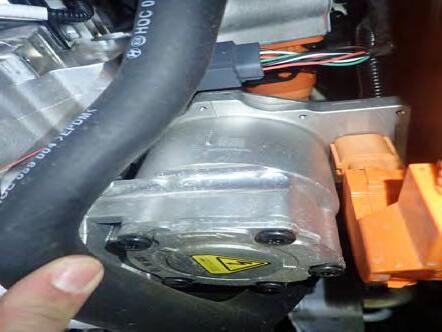
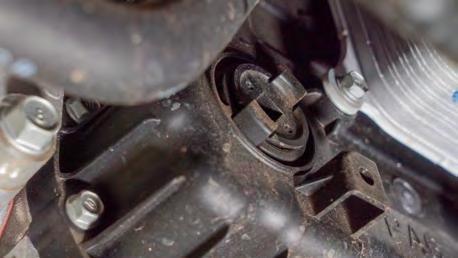
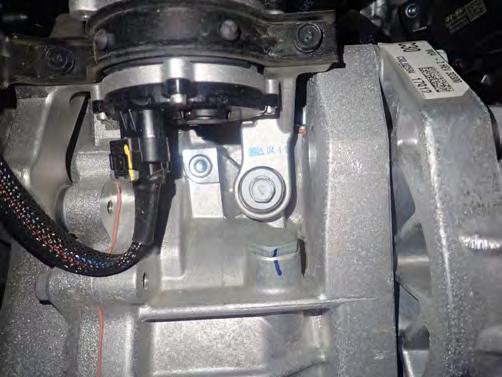
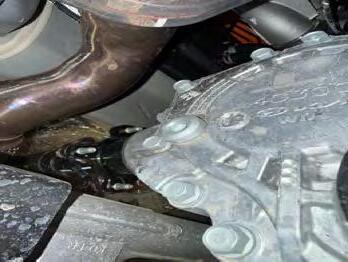
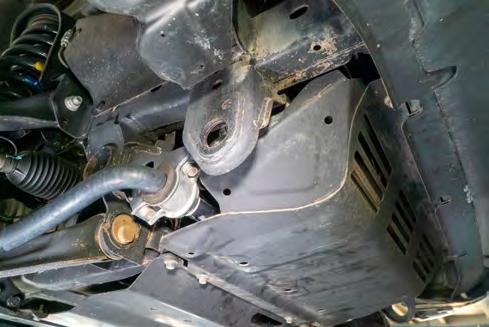
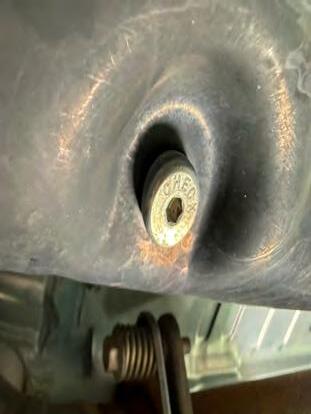
Engine and inverter cooling system drain plugs
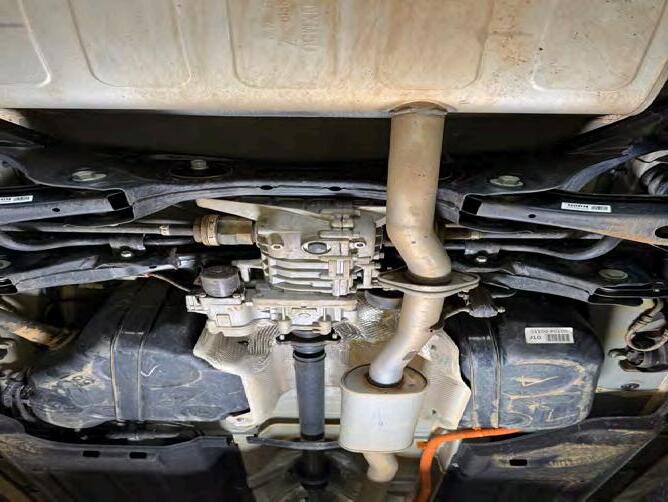
is mounted to the nal drive to provide force to a piston that locks the clutch. See Diagram 2 On the Hoist
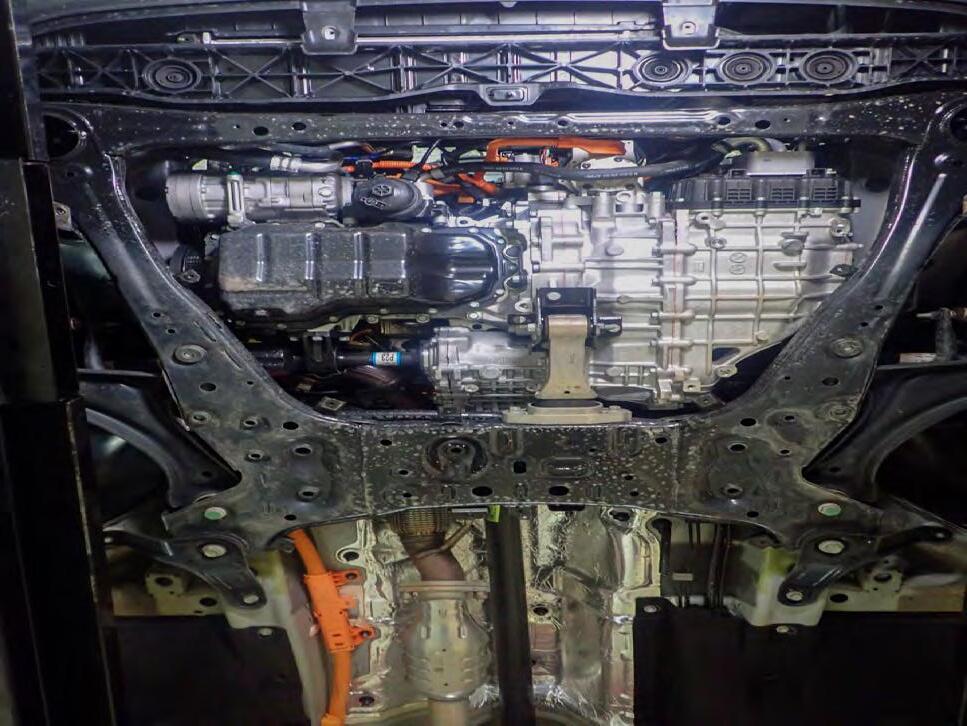
Once all covers under the engine and transmission have been removed, all service access points are very easy to see and access. If only doing an oil and lter change, there is a smaller access plate to remove.
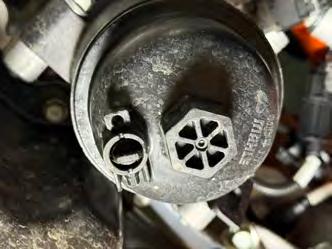
The oil lter is a cartridge type that incorporates a drain plug to reduce mess. To release the drain plug, rst remove the safety pin from between the plastic guards, then rotate the drain plug 90 degrees; oil should then drain from the lter. The new lter kit should give you a new O-ring for the housing and a lter cartridge with a drain plug. Ensure that the drain plug is in the closed/ locked position before reassembling. Ret the lter, tighten the cover to 34.3 Nm, and install the new locking pin provided. See Diagram 1
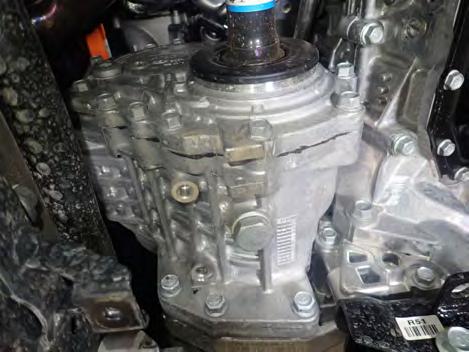
The 6-speed automatic service points are in a similar position to those of other Hyundai and Kia
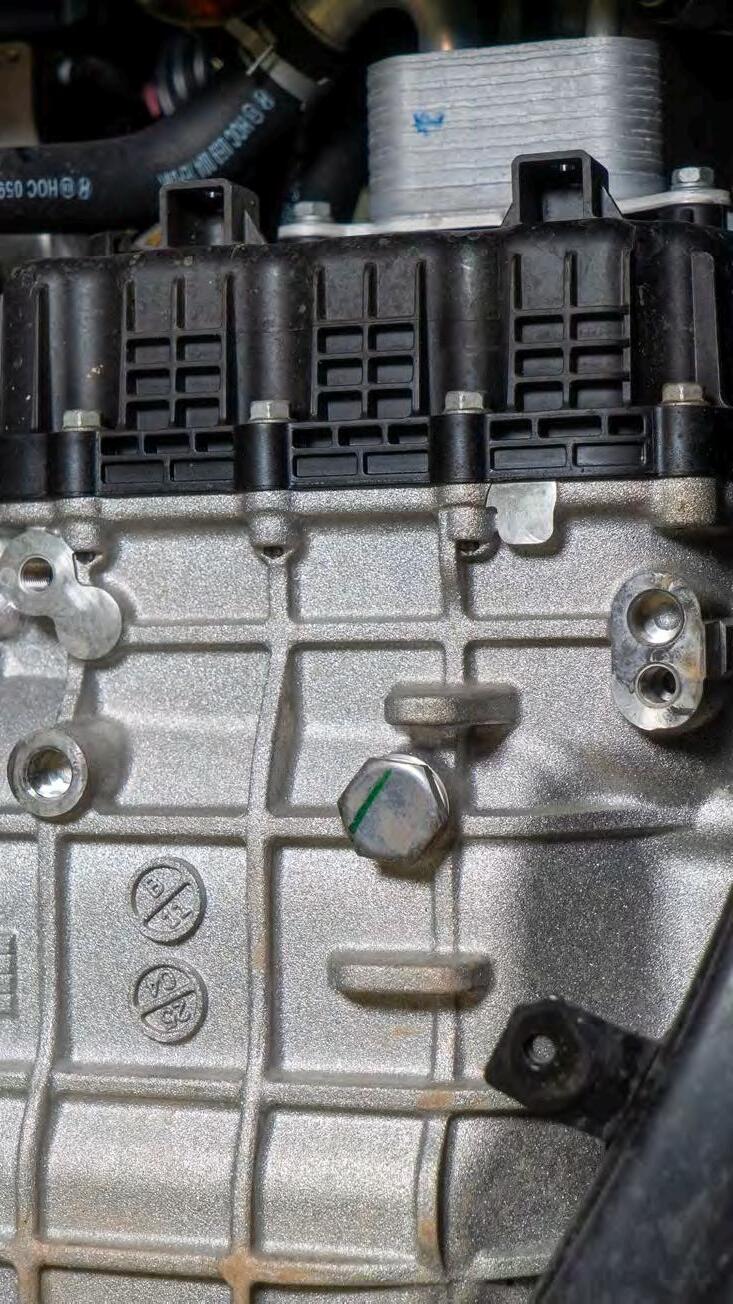
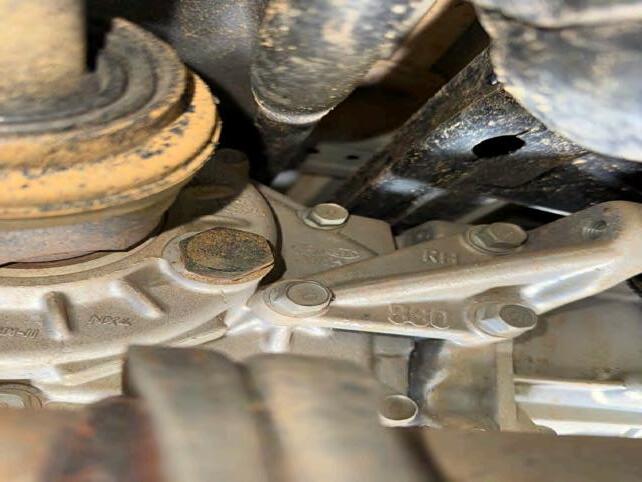
models with the same transmission. All drain and rell plugs for the transmission, transfer case and nal drive assembly are very easy to access. See Diagram 1
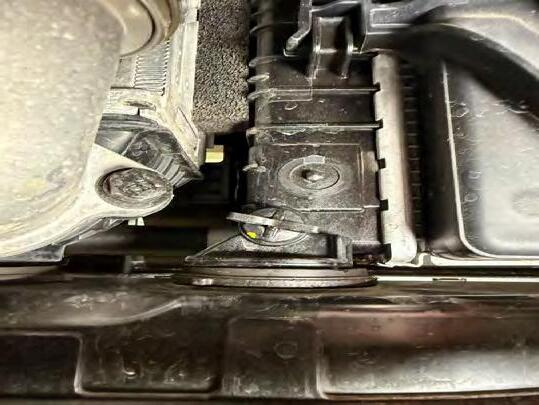
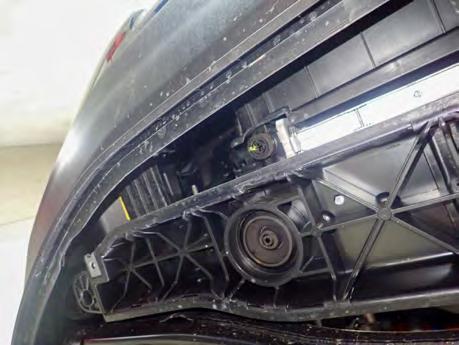
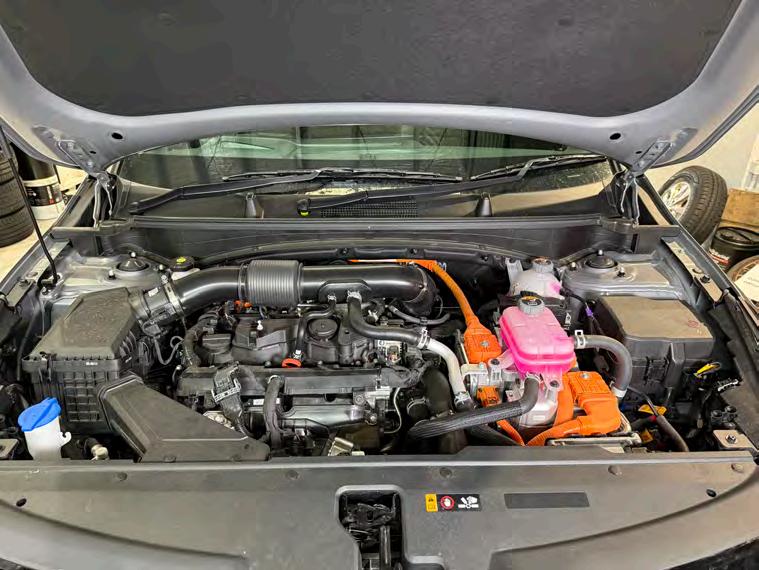
As with many other hybrid systems, there are two cooling systems. The engine has its own cooling system and radiator, and the HV inverter has its own radiator as well. The drain points for both are easy to access once you know where to look. See Diagrams 3 & 7
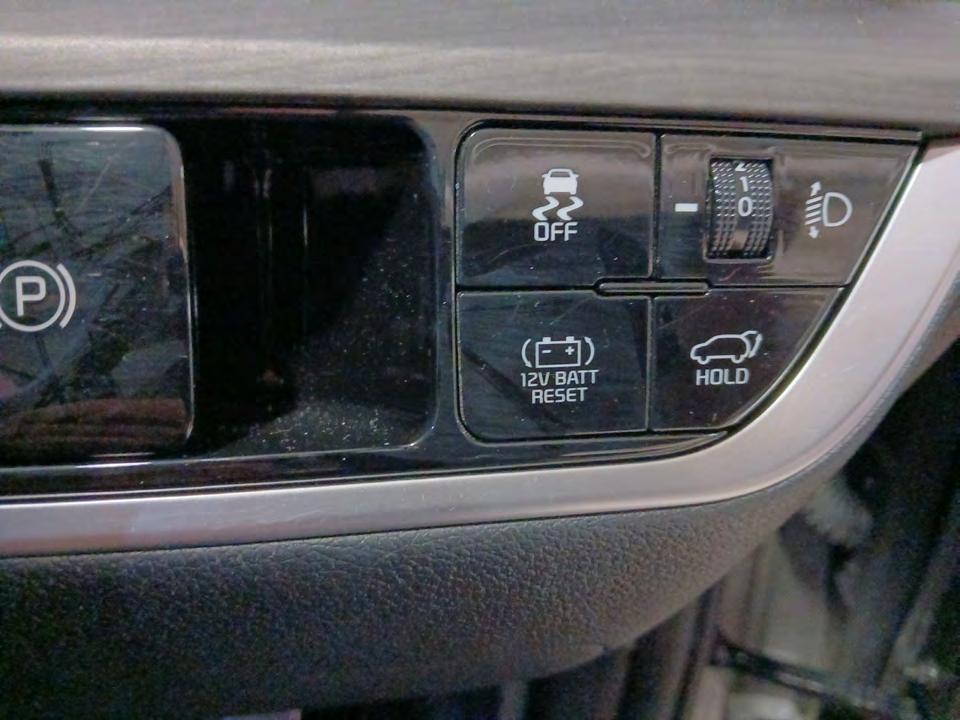
Why is there a 12 Volt Battery Reset Button
The Sportage is more complicated than other similar hybrid systems, as it has two lithium 12-volt batteries in two inconvenient places for two different purposes. The main power source for the vehicle’s 12-volt systems is a 12-volt lithium battery integrated with the main traction battery under the rear seat. The Sportage and other Kias with hybrid systems have an inbuilt protection system to prevent this battery’s state of charge from dropping below a set point.
This 12V BATT RESET button could solve a no-start situation. The car will disconnect the 12 volt lithium battery from the vehicle to prevent it from going flt. It is located to the right of the steering
If the lights have been left on, a dash cam is installed, or another aftermarket accessory is plugged into one of the many power outlets, the system will disconnect this 12-volt battery from the vehicle. If you have a no-start situation with one of these, press the “12V Battery Reset” button on the right-hand dashboard, then start the vehicle within 15 seconds and take it for a 30-minute drive to recharge the battery. See Diagram 4
Repeated use of the reset button without driving the vehicle will deplete the battery to the point where it will not power up the vehicle. In this case, use the jumpstarting points under the bonnet. See the online version of the owner’s manual for more information. See Diagram 7
The second battery is the 12-volt parking lithium battery module under the driver’s seat. This battery is designed to provide stable power during parking for functions such as Over-the-Air (OTA) updates, HVAC after-blow, and built-in cameras.
12 Volt System Disconnection
Many service tasks require disabling the 12-volt system, such as brake bleeding, but as stated earlier, you can’t just remove the negative battery terminal. Conveniently, Kia has provided easy-to-access connectors for unplugging. At the right-hand rear of the engine bay, near the suspension tower and air cleaner assembly, there is a connector to unplug to disconnect the 12-volt system. Next, remove the service
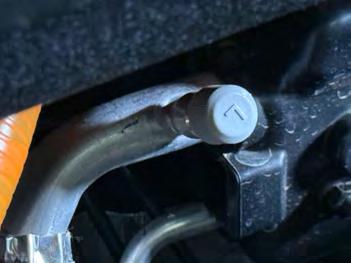
The engine radiator has an easy to reach tap on the bottom left, accessed from the engine side.
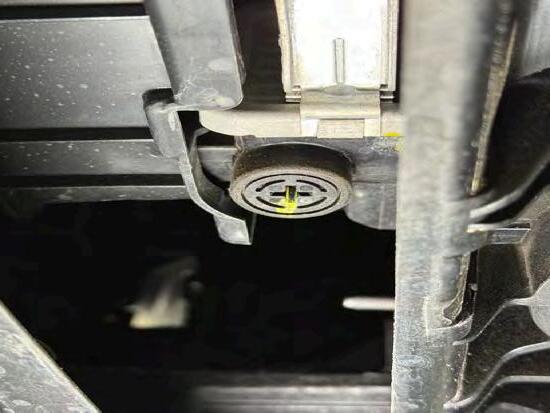
The radiator for the inverter is in front of the engine radiator and has a drain plug on the right side accessed at the rear of the front bumper.
Fluid specications
Engine Oil Specication
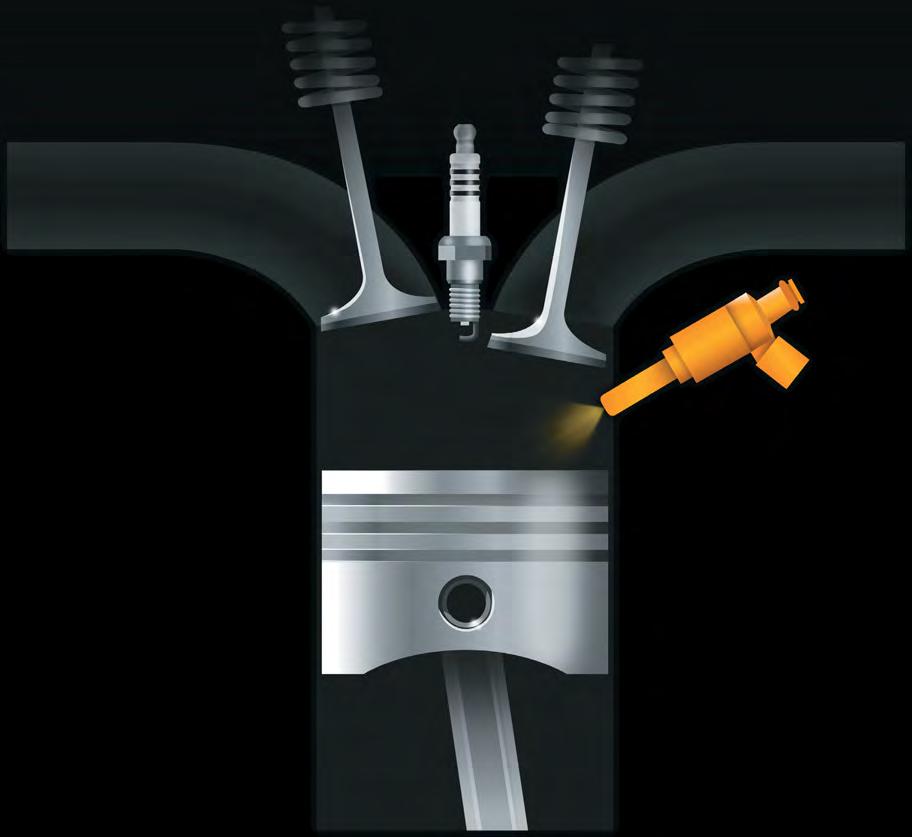
G4FP 1.6L Direct injection petrol
0W-20 SN Plus/SP or ILSAC GF-6
Engine Oil Capacity 4.8L with lter
Coolant Specication Anti-freeze and water 45-50%
Engine Coolant Capacity 8.1 L
Hybrid Inverter Coolant Capacity N/S
ATF Transmission Oil Specication ATF SP4M-1
ATF Transmission Oil Capacity 6.0L
Transfercase Oil Specication API GL-5 SAE 75W/85
Transfercase Oil Capacity 0.62-0.68L
Rear Differential Oil Specication API GL-5 SAE 75W/85
Rear Differential Oil Capacity 0.53 - 0.63L
Refrigerant Specication R134a *
Refrigerant Capacity 525 - 575 g*
A/C Oil Type POE
A/C Oil Capacity 140-160 g
Brake Fluid Specication DOT 4
*Sticker on bonnet indicates 600±25 g
Engine Sump Plug 34-44 Nm
ATF Trans Drain Plug 39-58 NM
ATF Trans Rell Plug 34 -44 Nm
Transfercase Drain Plug 39-58 NM
Transfercase Rell Plug 39-58 Nm
Rear Differential Drain Plug 49-68 Nm
Rear Differential Rell Plug 39-58 Nm
Wheel Alignment
Lower Control Arm Bolts / Nuts
Lower Control Arm Bolts / Nuts
Brake Specication
Front Brake Rotor Min. Thickness
DIAGRAM 6
Serpentine belt layout
Hybrid Starter Generator (HSG) with dual tensioner
Coolant pump
Idler
Crankshaft decoupler
Crankshaft pulley is spring loaded while the HSG pulley is solid.
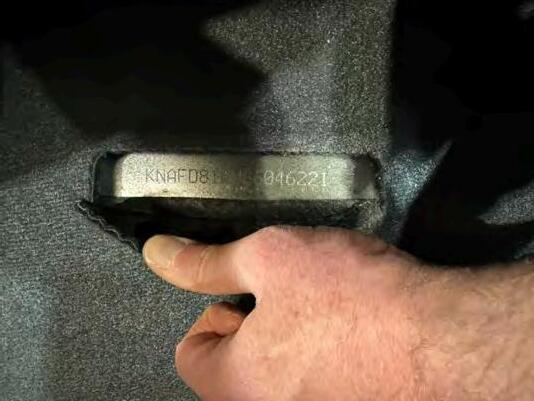
VIN is located under a carpet ap on the oor in front of the drivers seat. Engine number on the front side of the engine on the bell housing. Borescope is required to see it.
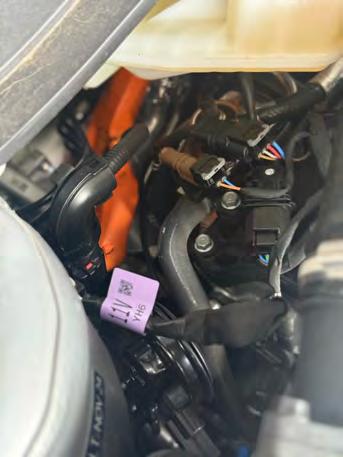
To disable the 12 volt system of the vehicle unplug this connector.
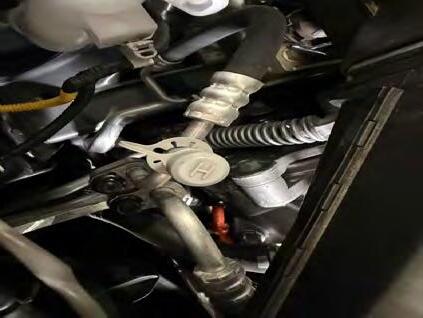
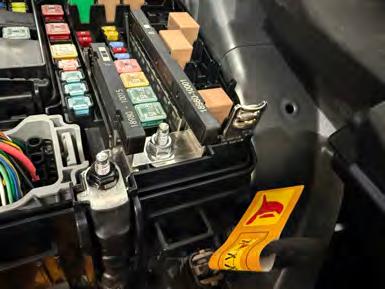
Jump start connector for the positive terminal. Connect the negative cable to the lift point at the front of the engine
interlock connector on the LH side of the engine bay, near the fuse box, and wait for 3 minutes. This will disable the high-voltage system. See Diagram 7 Fuel Pump and Filter
The fuel pump and Fuel lter are inside the fuel tank. There is an access panel under the back seat. But unfortunately, there are a lot of high-voltage batteries in the way.
Traction Battery Vent
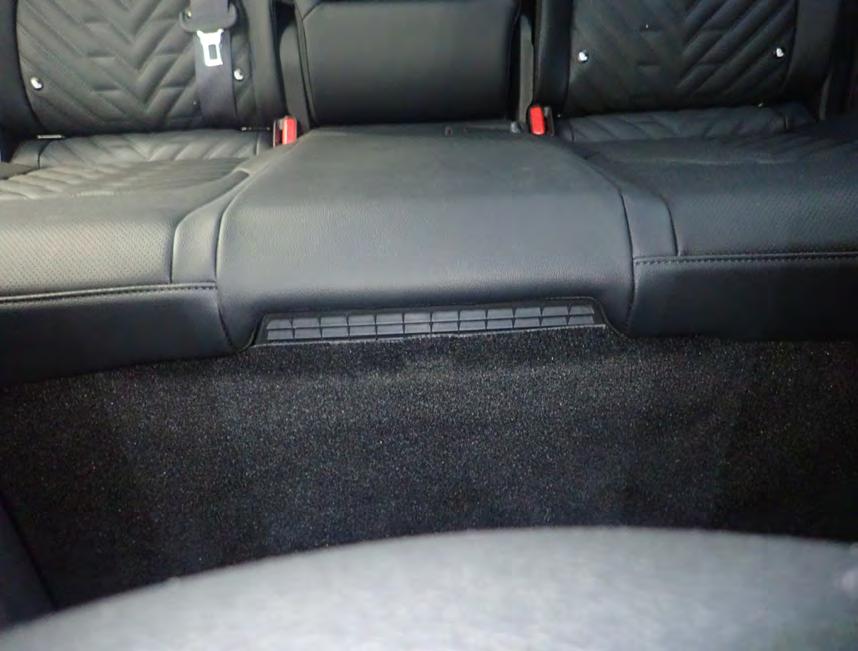
There is a vent under the rear centre seat, which is the air intake to cool the
high-voltage battery. Air cooling is common in hybrid vehicles as it draws clean cool air from the cabin through the battery and transfers the heat outside. If this vent is blocked, the battery will overheat and have its service life reduced. You might have to educate your customers about this vent’s purpose and location, so they don’t block it with a dog blanket or aftermarket seat covers. See the following article for more details.
We would like to thank Chris and the team at Smarter Choice Auto in North Melbourne for their assistance with this article.
High-voltage disconnect point.
This vent under the centre position of the rear seat must not be covered as this is the intake for the air cooling system of the traction battery.
HV Battery Cooling System Service
TechTalk April 2021, page 5024
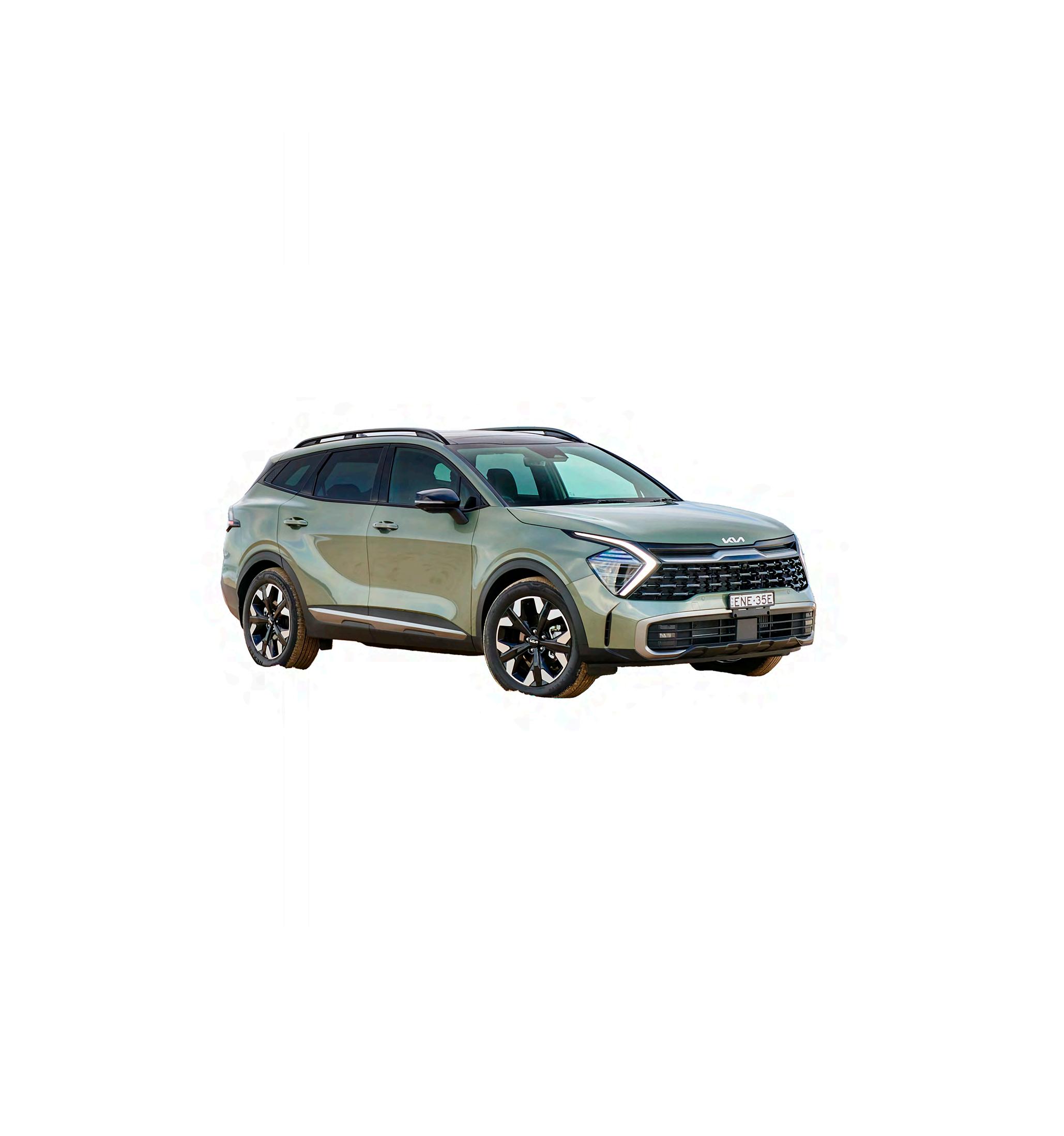
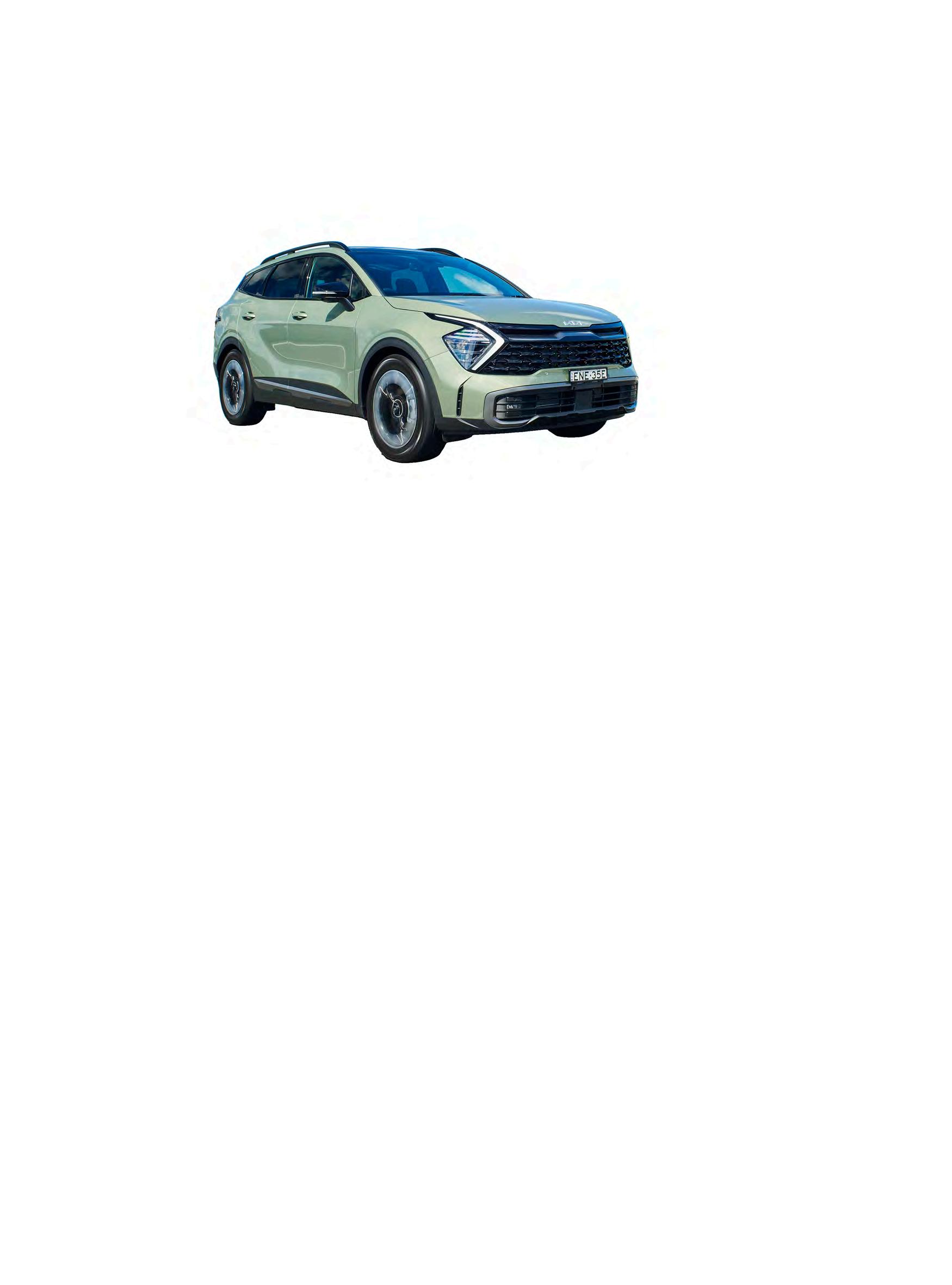
The NQ 5th-gen Kia Sportage is a capable family car with ample space and features, and is easy and fun to drive. From a service and repair point of view all components are easy to get to and it seems like a well designed and manufactured car. For more information on Kia and other vehicles, log onto VACC MotorTech or call VACC’s TechAdvisory Service.
techtalk@vacc.com.au 03 9829 1292
Engine coolant
Inverter coolant
released the world’s rst production engine with Continuously Variable Valve Timing (CVVT) and Continuously Variable Valve Duration (CVVD) in their new Smartstream G1.6 T-GDi engine. CVVD is an innovation that increases power and efciency while reducing emissions. This is an overview of the components and operation if you need to work on one of these engines. Engine valve timing and camshaft proles in older engines were static and a compromise to give a smooth idle and reasonable power output.
more aggressive cam timing and lobe proles for high output at higher rpms, but poor idle and drivability at low speeds. This compromise has led engineers to develop systems to alter camshaft timing and, in some cases, adjust camshaft lift across the engine’s rev range to achieve the best of both worlds. Variable Valve Timing (VVT) is now very common on modern engines, and there are many different methods and marketing names, but altering the duration the valve is open has been a challenge. See Diagram 1
Valve Duration
Most internal combustion engines use the four-stroke cycle, and of these strokes, only one produces power while the others require power to continue the cycle, which is why the timing of the valve’s opening and closing to maximise the combustion and minimise the energy loss becomes crucial. The downside of Variable Valve Timing (VVT) is that if you open a valve earlier, it will close earlier; if you open it later, it will close later, but the time it is open remains the same. See Diagram 1
Timing: Changing the opening and closing times of the valve by moving the camshaft forward and back (advancing or retarding).
Lift: Changing how far the valve opens. This is commonly done by swapping to a different cam lobe with a higher prole
Duration: Changing the time that the valve stays open. This has been done by using an eccentric mechanism
DIAGRAM 1 The different ways to inuence engine valve opening
2
The inner shaft of the camshaft rotates at a constant speed and is driven by the timing chain via the CVVT phaser.
Housing and linkages
Hyundai Motor Group has overcome this limitation with the creation of its Continuously Variable Valve Duration (CVVD) system, which is made up of three main components.
1. Camshaft, which contains the inner and outer shafts and the linkages
2. CVVD mechanism to change the position of the linkages in the camshaft
3. CVVD Actuator to rotate the CVVD mechanism in the correct direction.
DIAGRAM 3 CVVD eccentric linkage operation
Gear for worm drive
Linkage housing that can move side to side
Cam lobe
The outer shaft with the lobes can be moved forward and backward by the housing with the eccentric linkage.
Camshaft
A multi-sectioned camshaft is used, with the inner section of the shaft travelling at a constant speed relative to the engine’s crankshaft, timed via the timing chain. The outer section with the camshaft lobes has a clever linkage that can be
When the outer housing of the CVVD mechanism is moved, depending on the direction, it moves the pivot point of the linkage away from the camshaft centre. This will increase or decrease the camshaft lobe duration accordingly. The lobe will whip around fast, then slow down.
When the housing is positioned so that the linkage pivot point is aligned with the centre of the camshaft, the inner and outer shafts move together at the same relative speed, and the lobe duration follows the prole they were made with.
adjusted externally to change the relative speed of the lobes during one rotation of the inner shaft. This linkage is where the magic happens. Hyundai’s CVVD uses an eccentric (off-centre) linkage that changes the pivot point in the cam rotation to increase or decrease the duration of valve opening. See Diagram 2 & 3
If the centre of the eccentric linkage is adjusted to the middle of its travel, it will be in the centre of the camshaft, and the speed of the inner shaft and the lobes will be the same speed. If the centre of the eccentric linkage is moved away from the camshaft centre, it produces unequal leverage as it rotates, resulting in a varying output speed. Depending on which direction the centre point of the eccentric linkage is moved, it will increase or decrease the duration of valve opening. See Diagram 3 CVVD mechanism
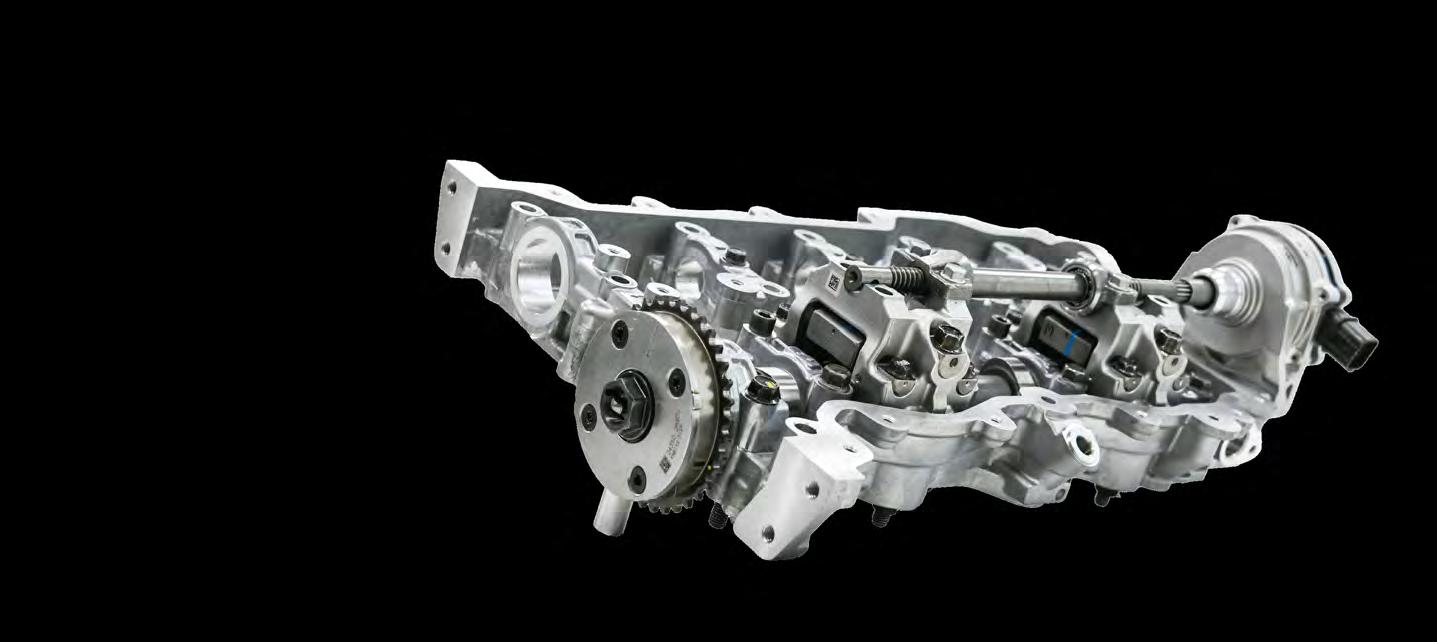
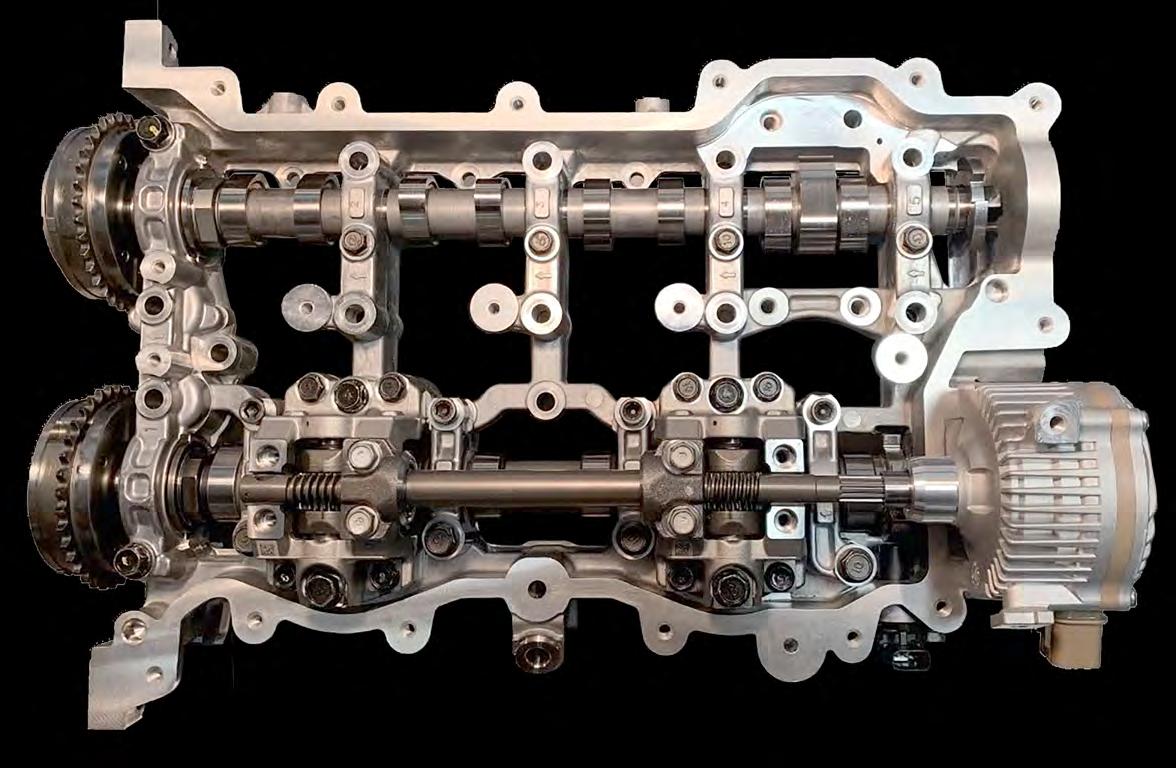
Mounted atop the intake camshaft assembly is the CVVD mechanism, which consists of two similar
units connected by a common worm-drive shaft. Each of these two units contains an eccentric linkage housing, and as the worm
drive rotates, the housing slides in or out, shifting the eccentric linkage’s centre point relative to the camshaft centre. See Diagram 4
Who did it first - Rover K-Series Variable Valve Contro
The Hyundai Motor Group are not the rst to release CVVD, as from 1995 onwards, some high-performance variants of the Rover K-series engine used the Variable Valve Control (VVC) system to alter valve duration. This system allows the camshafts to continue to rotate at a xed rate through their direct connection to the crankshaft; the cam lobes move faster or slower by sliding along slots and running in concentric circles. The VVC system allows the engine to produce high torque at low revs while providing increased power above 4000 rpm. The disadvantage is that it is mechanically complex and expensive.
Vehicles with VVC engines:
• MG F / MG TF
• MG ZR
• Rover 200 / 25
• Lotus Elise
• Caterham 7
• Caterham 21
• GTM Libra
CVVD Actuator
CVVD Mechanism
Driveshaft
Worm Drive
Exhaust Camshaft
Intake Camshaft
CVVD Actuator
Mounted externally, at the rear of the cylinder head, the CVVD Actuator is a stepper motor controlled by the Engine Control Unit (ECU). Based on inputs from various sensors, the ECU will calculate the optimal camshaft duration for that specic engine load and speed. The CVVD Actuator will rotate in the appropriate direction to adjust the pivot point. See Diagram 4 Service warnings
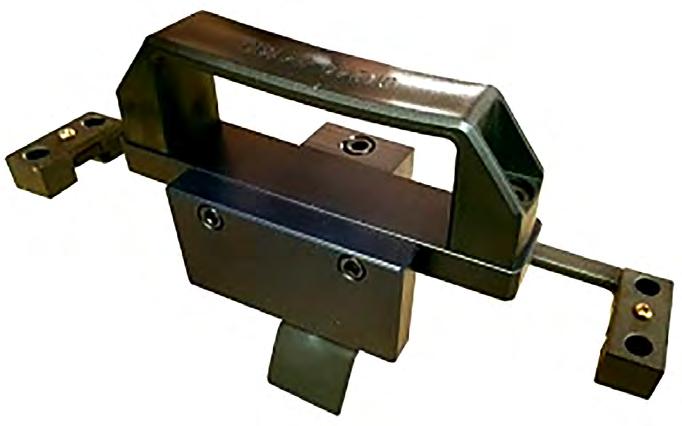
This system seems well designed and constructed, but if work needs to be done on the cylinder head, the CVVD components must be removed, which will require a special tool.
SST 0K240P4100 CVVD Fixing Jig must be attached to the CVVD mechanism to keep it aligned and must be used for removal and installation according to the OE repair information. See Diagram 5 WARNING: Once the CVVD mechanism is removed, its shaft should not be rotated. There doesn’t seem to be any instructions for resetting it if it has been rotated.
Conclusion
In some of Hyundai and Kia’s marketing materials, they point out that “ICE technologies are already at or near the apex point,” meaning there are very few easy gains left to increase power while
reducing emissions. So the addition of extra systems, like CVVD, is now required to meet expectations. It will be interesting to see if other engine manufacturers will adopt similar systems moving forward.
For an excellent explanation of how all of this works, see the video produced by Engineering Explained The World’s First CVVD Engine - Genius!
For more information on VVT operation and diagnostics see the following articles.
P0011 / P0014 VVT Diagnostics
Hints and Tips -
Part 1: TechTalk Nov 2023, page 5480
Part 2: TechTalk Feb 2024, page 5512
For more information on a wide range of vehicles from the Hyundai Motor Group, log onto VACC MotorTech or call VACC TechAdvisory Service.
Feedback
techtalk@vacc.com.au
Scan to watch video of CVVD operation
DIAGRAM 6
This tool bolts to the top of the CVVD mechanism and appears to lock the drive shafts for the worm drives in place. At the time of printing, the only place to access this tool was via the OE.
Ensuring that your vehicle is locked and secure is what we as drivers have come to expect from modern vehicles. Unfortunately, in some Toyota vehicles and possibly others, the combination of a keyless fob, a wireless charging pad, and operator error can cause the central locking to stop working. We will use the new 250 Series Toyota Prado as an example, with advice on how to x it and prevent it from recurring.
Central locking was widely adopted in the 1990s and 2000s, with the introduction of cheap, reliable electric actuators to lock and unlock all doors, the boot, and the fuel ap. Like all seemingly new technologies, the rst car with central locking was in 1914 Scripps-Booth luxury roadster with the Packard Clipper reintroducing it in 1956. The rst car with remote central locking was the 1982 Renault Fuego, which allowed keyless
Magnetic field lines
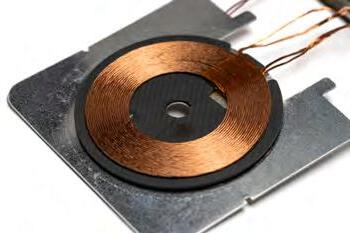
When an alternating current passes through a coil of wire with a metal core, it produces a uctuating magnetic eld. If another coil is near it, as the magnetic eld expands and contracts, it will induce a current in the second coil.
entry. It is now an assumption that you can lock and unlock your vehicle with the press of a button, and now, not even that, as long as you are within range. Another piece of technology you can assume that everyone will have is a mobile phone and a means to charge it. To alleviate the chore of nding the end of a cable and plugging in a phone, many modern vehicles offer wireless charging pads for convenience.
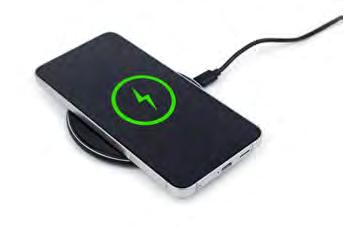
Device manufacturers use the Qi standard for wireless charging. A primary coil mounted in the base of the charger and is connected to an external power source. When placed on the charger the device’s secondary coil will have an AC current induced by the magnetic eld. This is then converted to DC to charge the battery.
DIAGRAM 1
Iron core
Coil
Qi Logo which could appear on devices and chargers.
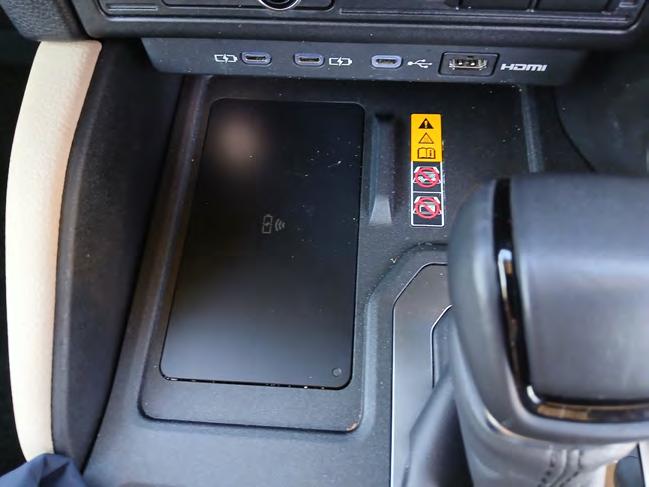
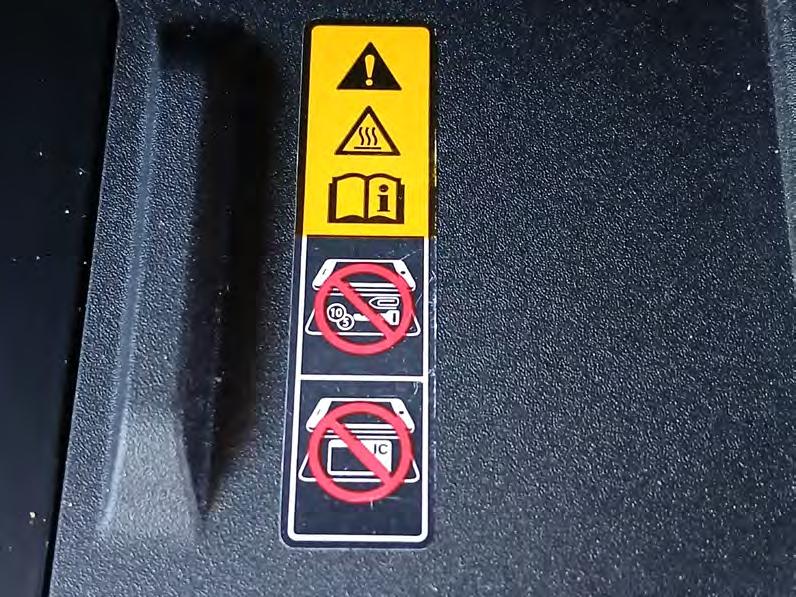
We have heard reports of drivers placing their key fob on or next to the wireless charger. It seems that the magnetic eld from the charger can interfere with the key fobs’ communication with the vehicle, impacting the central locking. Toyota warns against this practice in the owner’s manual and the warning sticker in that location.
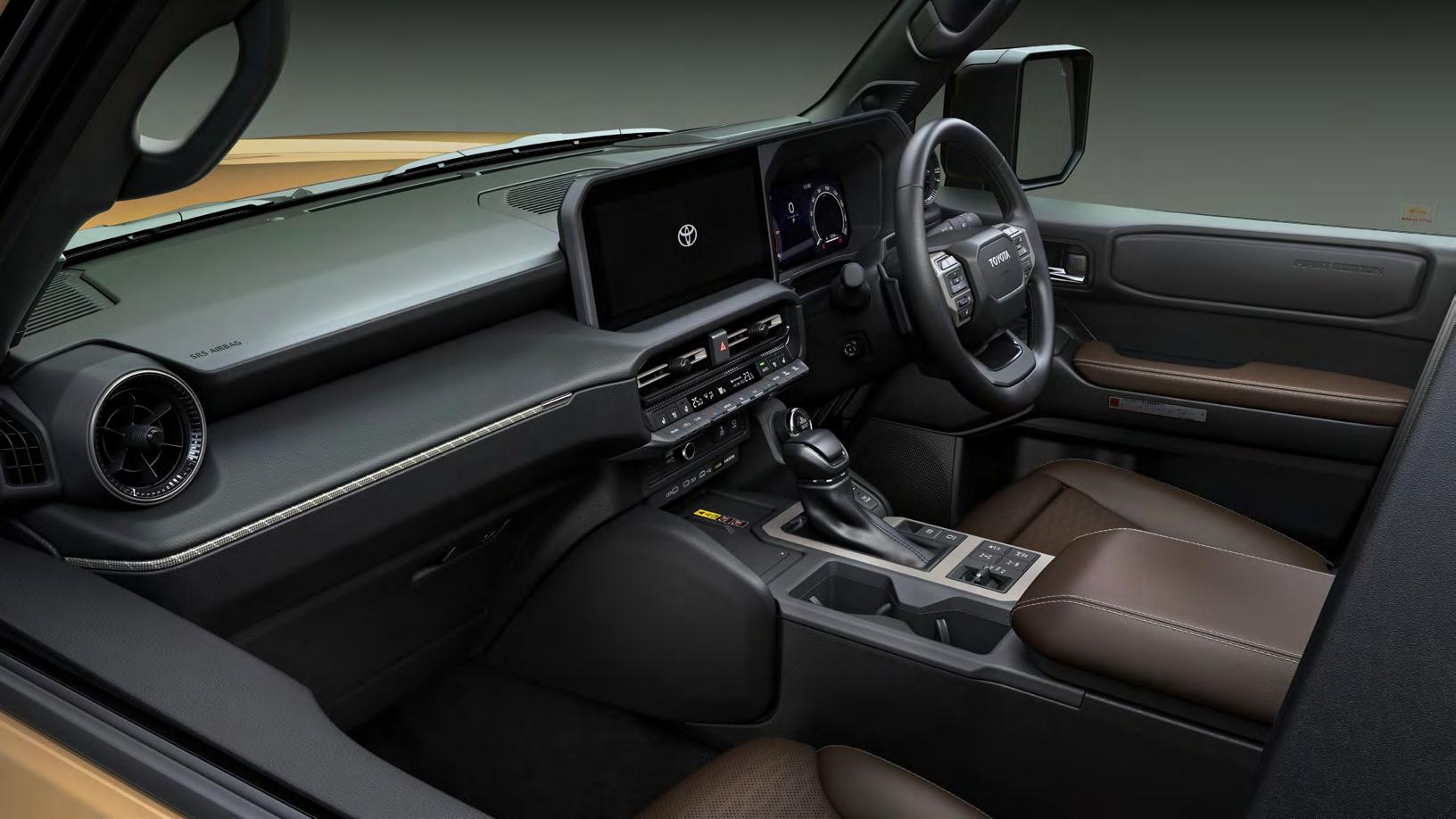
Wireless charger location
Most modern phones can now be charged wirelessly, also called cordless charging or inductive charging. See Diagram 1 Inductive charging
This charging method uses the principle of electromagnetic induction. An alternating current from an external source passes through a coil of wire, called the primary coil, creating a uctuating magnetic eld. The magnetic eld from this primary coil passes through the device to be charged, which has another coil, the secondary coil, creating an alternating current in the device. This alternating current
is then converted (rectied) into direct current to charge the battery. See Diagrams 1 & 2
The Qi standard
In 2010, the rst wireless charging standard was introduced, allowing manufacturers to produce phones and devices compatible with wireless chargers from many other companies. This standard is called Qi, which is a simplied Chinese term meaning “vital energy” and pronounced “CHEE”. There have been many updates to this standard to accommodate new features, such as MagSafe magnetic mounting, and to increase power transfer rates. See Diagrams 1
The trouble.
The Prado example
We have received reports of the Toyota Land Cruiser Prado 250 having issues with the central locking not working, while the vehicle will start and run normally. This problem seems well-known within dealership networks. The cause
Many vehicle owners are looking for a convenient place to put the key fob once they get in the vehicle, and the at area in front of the gear selector is the obvious choice. Unfortunately, this is where the Qi wireless charger is mounted.
See Diagram 2
The 250 Series Prado owner’s manual states not to put the fob there, and Toyota has also placed a warning sticker as an extra precaution. See Diagram 2 If the fob is placed on or near the Qi wireless charger for an extended period, there may be interference between the charger’s magnetic eld and the fob’s radio transmitter, which can confuse the fob or put it to sleep. The fi
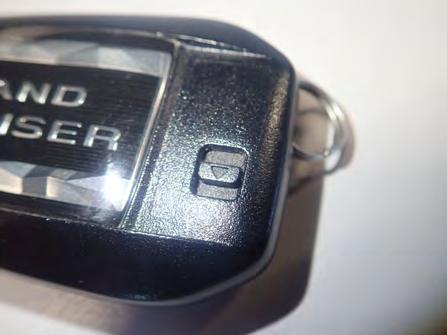
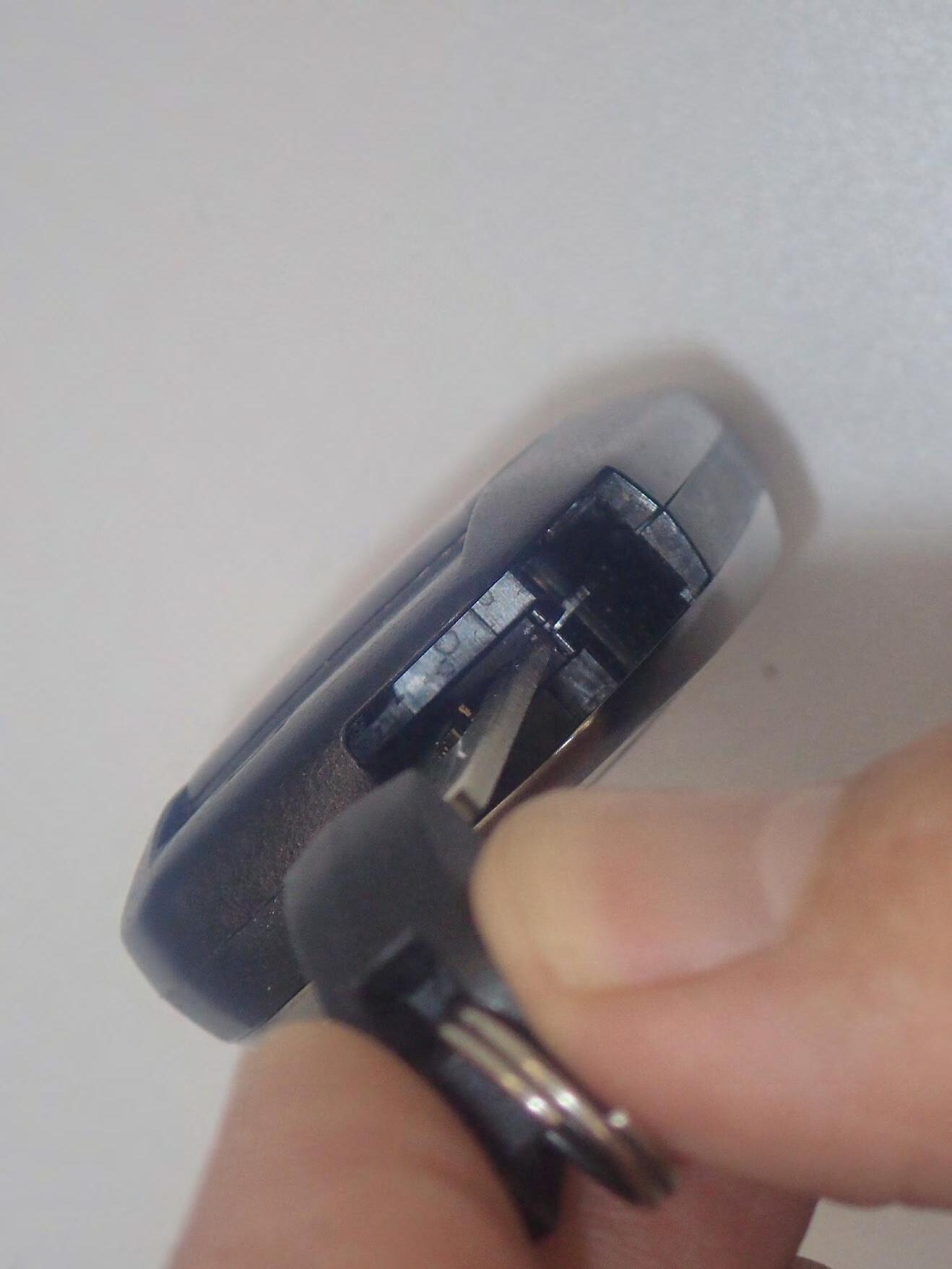
In the case of the Toyota, it is luckily a quick and simple x to restore the central locking operation. All you need to do is remove the battery from the fob, wait a few minutes, then reinstall the battery. It should wake up, communicate with the vehicle, and lock and unlock the car. If the vehicle is a few years old, this is a good time to replace the battery. See Diagram 3
Once you have restored operation, the only way to prevent this situation from recurring is to educate the drivers that the Qi wireless charger can interfere with the key fob and could also damage credit cards and swipe entry cards if left in this spot. A safer place for all of these is in your pocket, handbag, or, if you are looking for a spot in the car, the cup holders seem to be a safe place with no side effects. This unintentional user error involves placing two pieces of incompatible technology within range of an invisible magnetic eld is not limited to Toyota, as vehicles from other manufacturers have reported similar problems. Hopefully, awareness of this issue
This procedure is for the 250 Series Prado and 300 Series Landcruiser
STEP 1.
STEP 3.
Pull the small lever on the back of the fob in the direction of the arrow. Then pull the mechanical key from the fob.
STEP 2.
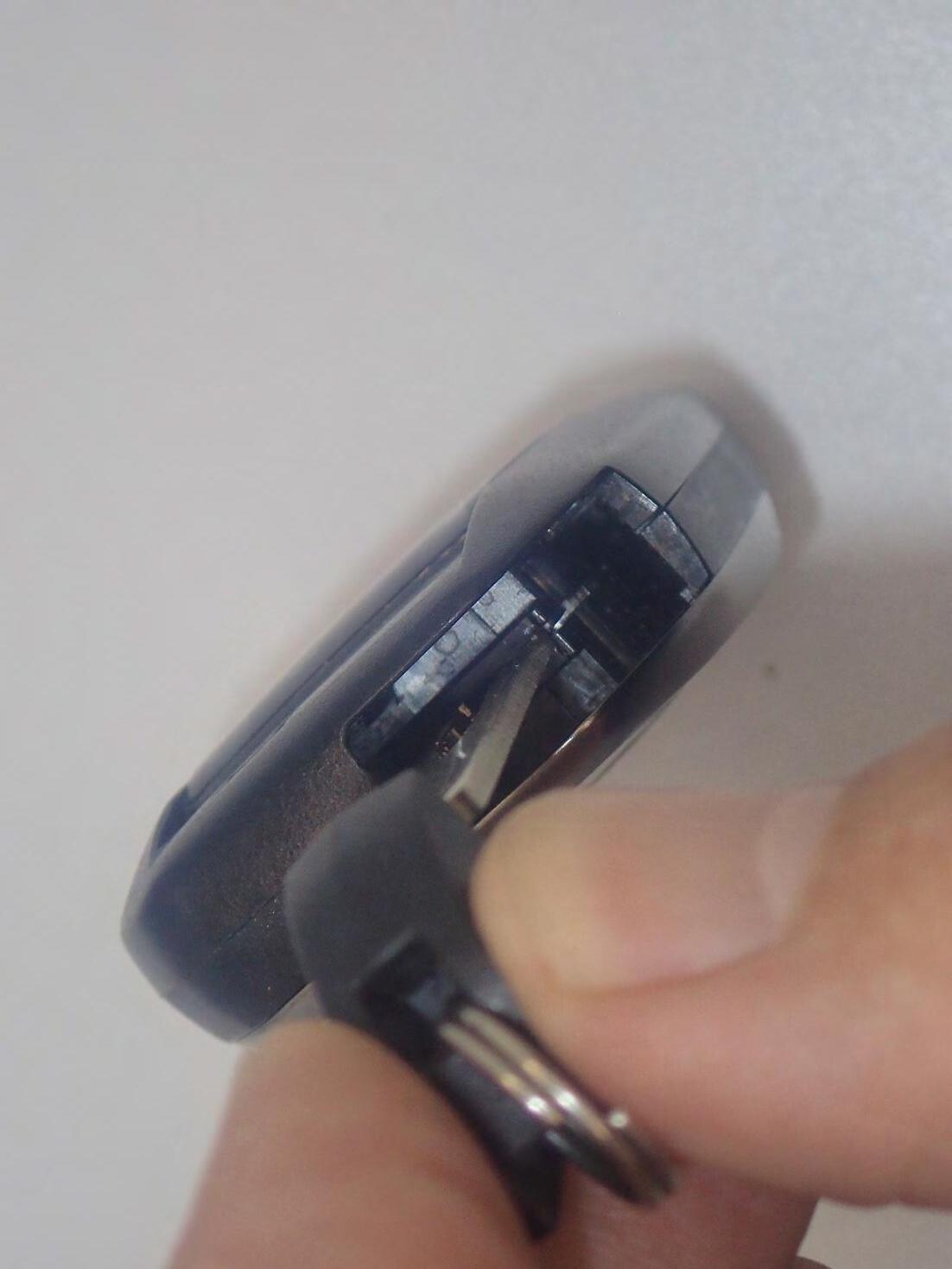
Place a small screwdriver, or the end of the mechanical key, into the slot of the fob from where the key has been removed
Twist the small screwdriver, or mechanical key, to separate the two halves of the fob. NOTE: In some instances, the electronic module may stick to the inside of the cover, and you will not see the battery. Gently pry the module from the cover to access the battery.
STEP 4.
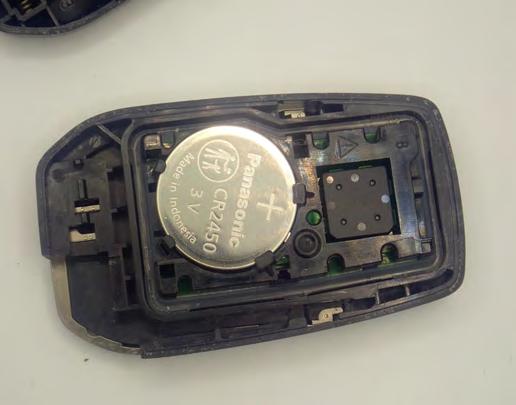
Gently pry the battery out of the module. Insert the battery with the “+” symbol facing up. NOTE: The fob uses a Lithium CR2450 button battery.
WARNING: If replacing the battery, dispose of it in accordance with your local laws, as these batteries can be fatal if swallowed.
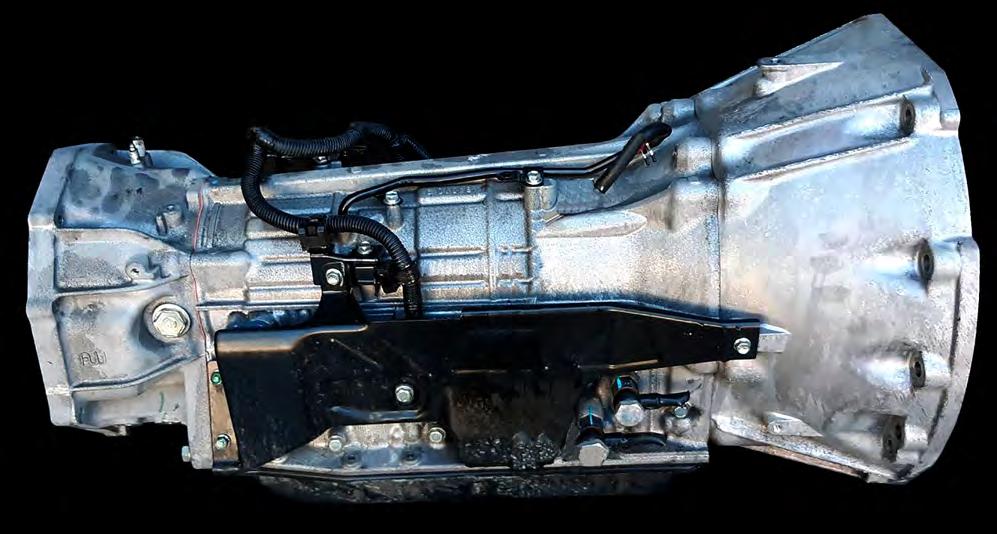
wheel-drive version of the R5AWF and is based on the Aisin A750 E/F platform used in Toyota and Isuzu vehicles. Unfortunately, to reduce weight and speed up the manufacturing, they have been designed without a dipstick.
Service intervals
The ATF is replaced at 195,000 km under normal conditions, or every 90,000 km under severe service conditions. It is recommended that the severe replacement schedule be followed. Both the 2WD and 4WD variants of these transmissions in the Triton share the same drain and rell procedures.
NOTE: From 2018 onwards, the MR Triton uses a 6-speed automatic transmission, which will be a future article.
the transmission temperature must be within the correct range. There are two ways to check this, depending on whether you have a compatibility diagnostic tool.
4N15 - 40°C and 45°C
ATF temperature check with diagnostic tool
1. Connect a compatible diagnostic tool to the vehicle.
2. Apply the parking brake.
3. Start the engine.
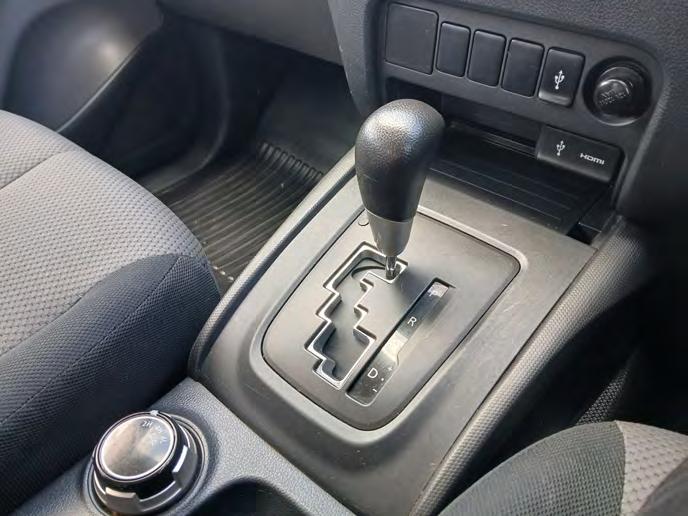
4. Press the brake pedal, then move the gear selector from Park through all gear positions, holding in each for at least two seconds, then return to Park. Diagram 3.
5. Repeat the above step twice more.
3. Start the engine.
4. Press the brake pedal, then move the gear selector from Park through all gear positions, holding in each for at least two seconds, then return to Park. Diagram 3.
5. Repeat the above step twice more.
6. Move the gear selector into Neutral.
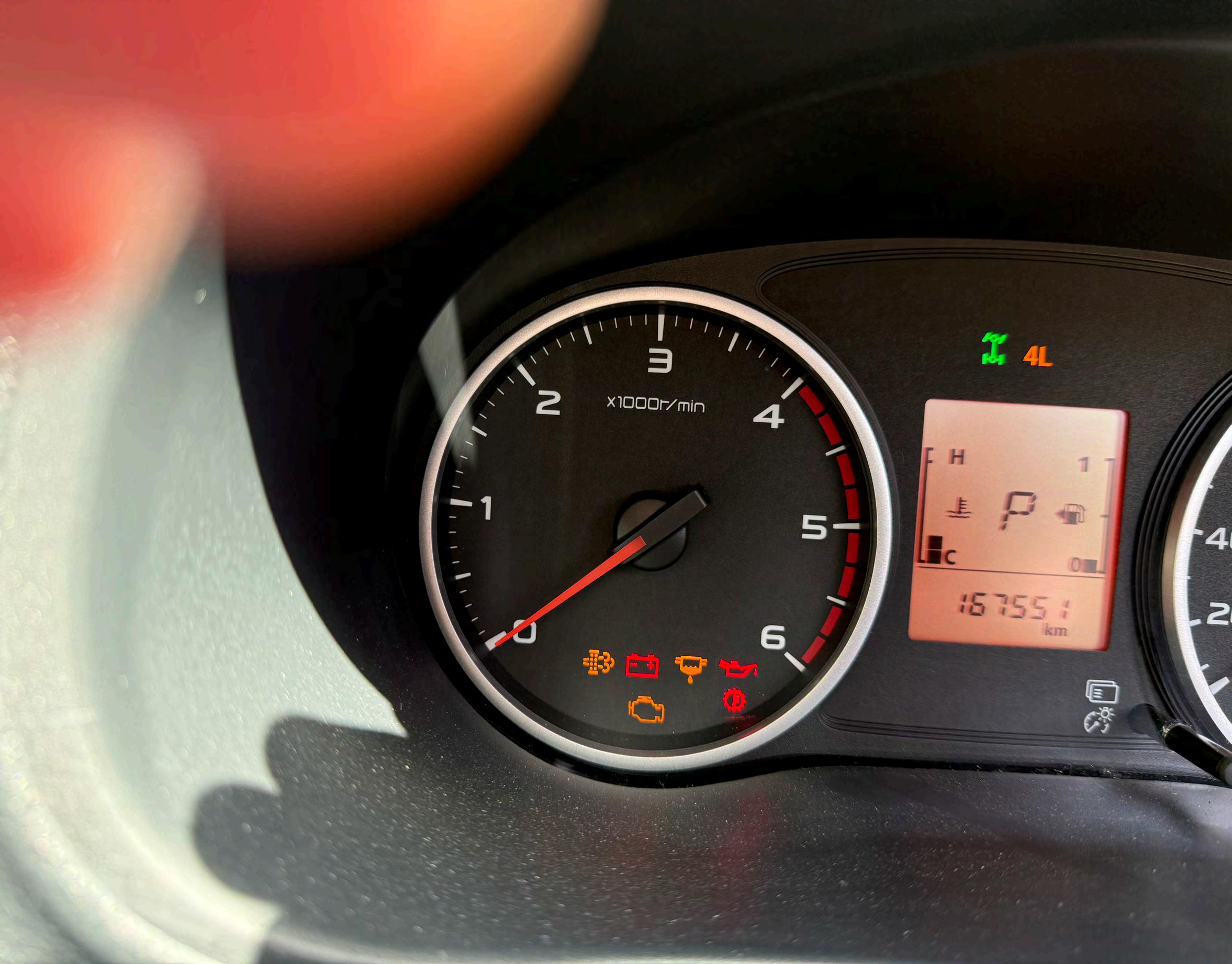
7. Then move the selector from Neutral to Drive and back to Neutral within 1.5 seconds. Continue this movement until the A/T uid temperature warning light on the instrument cluster comes on. Once the light is on, return the selector to Park. The vehicle is now in the correct mode to read the ATF temperature. Diagram 2.
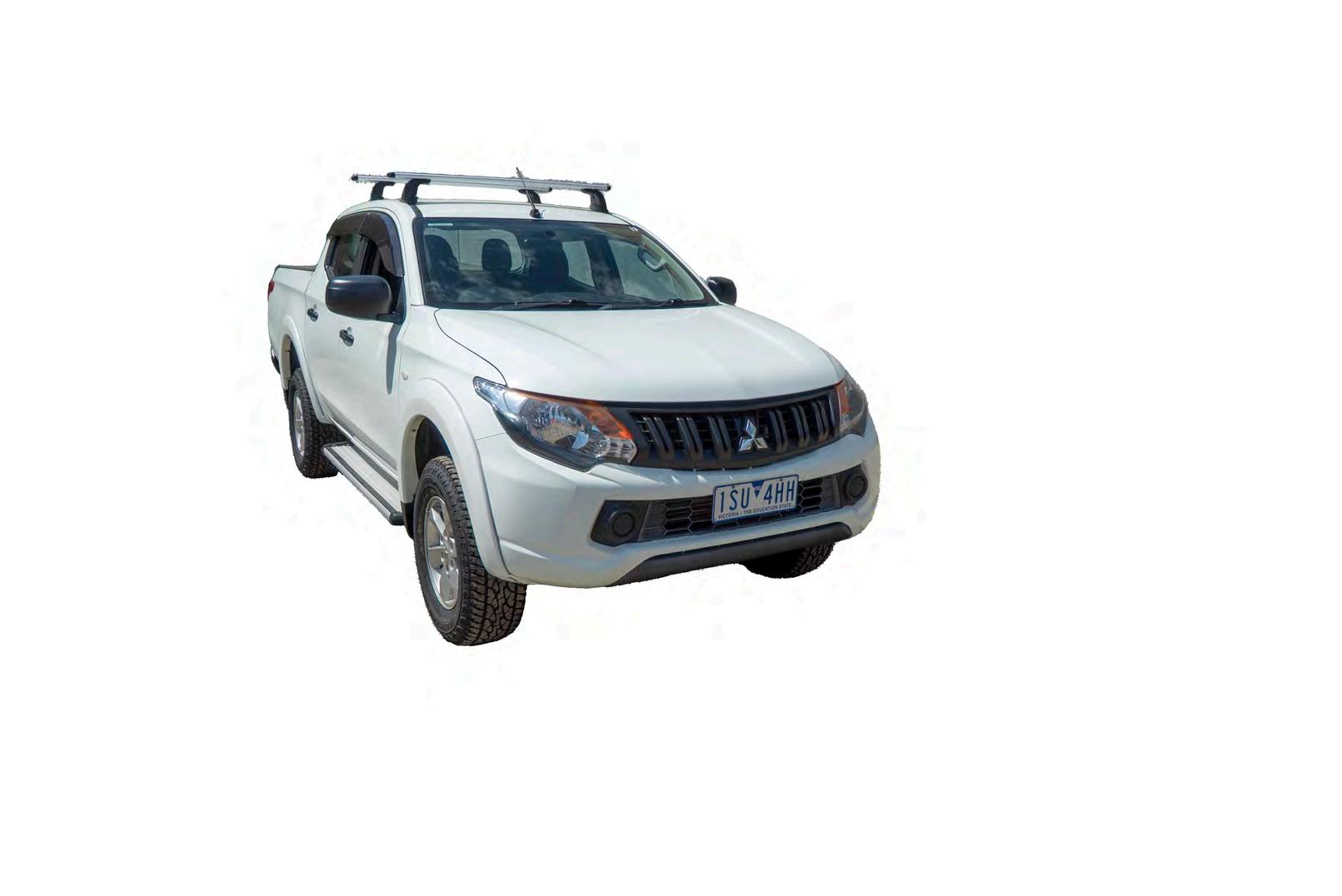
2015-2018 Mitsubishi Triton MQ
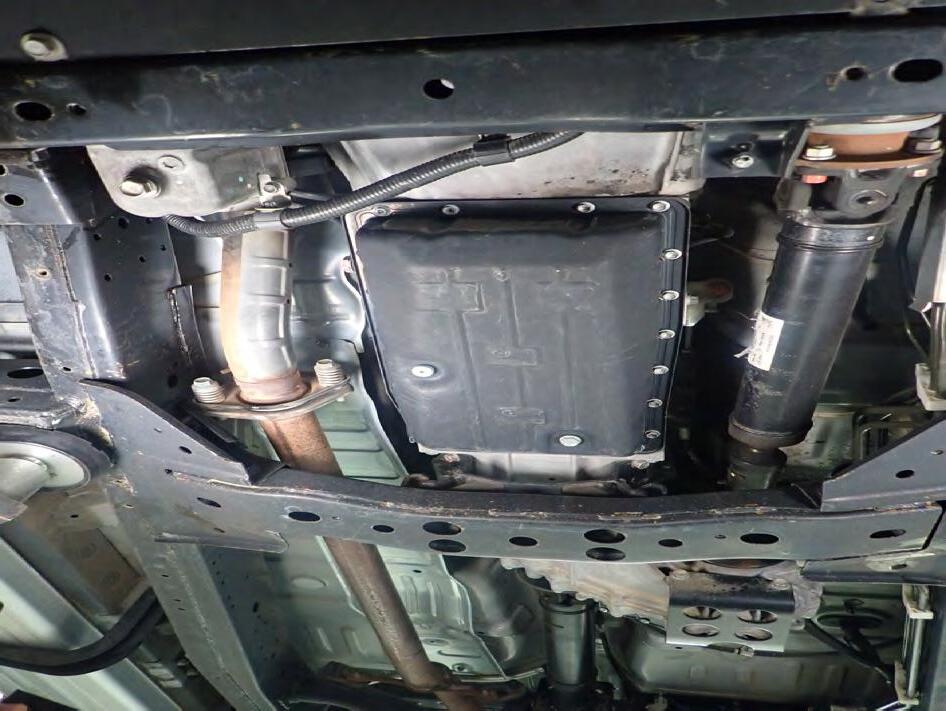
DIAGRAM 1 Transmission drain, level and rell plug locations
Pan Drain Plug
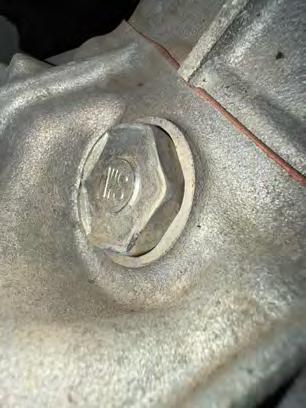
Rell Plug
ATF Level Check Plug
A/T uid temperature warning light
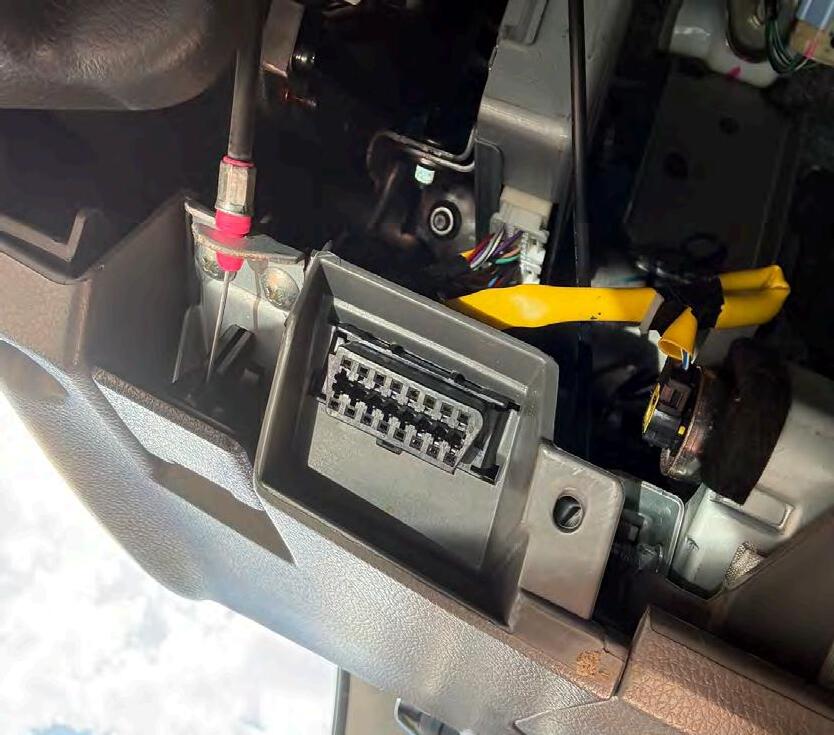
Diagnostic port location
Transmission Selector Fluid ush location
Return line from ATF Cooler
Terminal 1 – connect to earth
DIAGRAM 3
DIAGRAM 4
Front engine cover
8. If the A/T uid temperature warning light turns off after a few seconds, this indicates that the ATF temperature is too low. Allow the engine to run to warm up the uid.
9. If the A/T uid temperature warning light is on, the ATF temperature is within the correct range of 40°C to 45°C for the level to be checked.
10. If the A/T uid temperature warning light is ashing, this indicates that the ATF temperature is too hot. Turn the engine off and allow the transmission to cool, then restart from step one.
Fluid check or top up
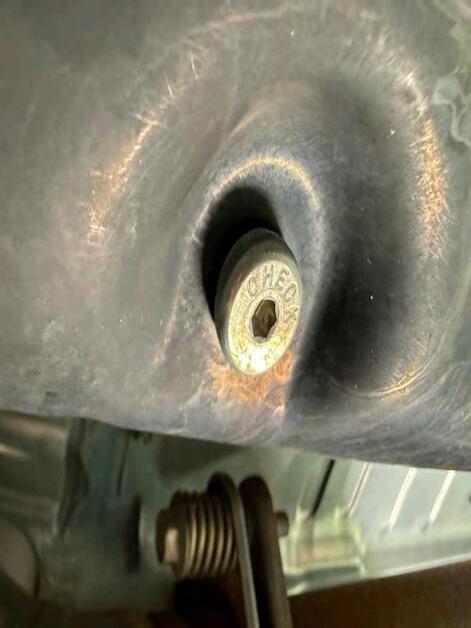
1. Remove the rell plug on the right-hand rear of the transmission. Diagram 1.
2. Remove the overow plug from the transmission pan. Diagram 1 & 5.
3. Allow any uid to drain from the overow hole until it settles into a steady drip. If the temperature is within range, this is the correct ATF level. Diagram 5.
4. If no uid ows or drips from the overow hole, add ATF slowly through the rell hole until it ows out of the overow and settles into a steady drip.
5. Once the level is correct, ret the overow plug with a new washer and tighten the plug to 20 Nm. Diagram 1.
6. Ret the rell plug with a new washer and tighten to 39 Nm. Diagram 1.
ATF Drain
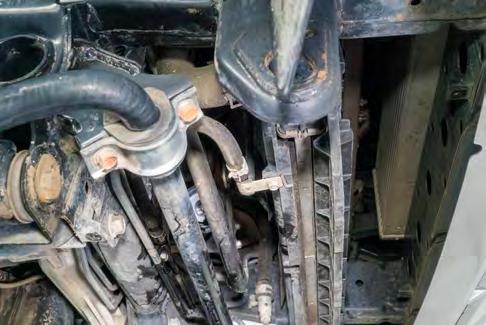
If you have access to an ATF uidchanging machine or system, attach it to the oil return tube at the right-hand bottom corner of the radiator. Diagram 4. If not, use the following steps
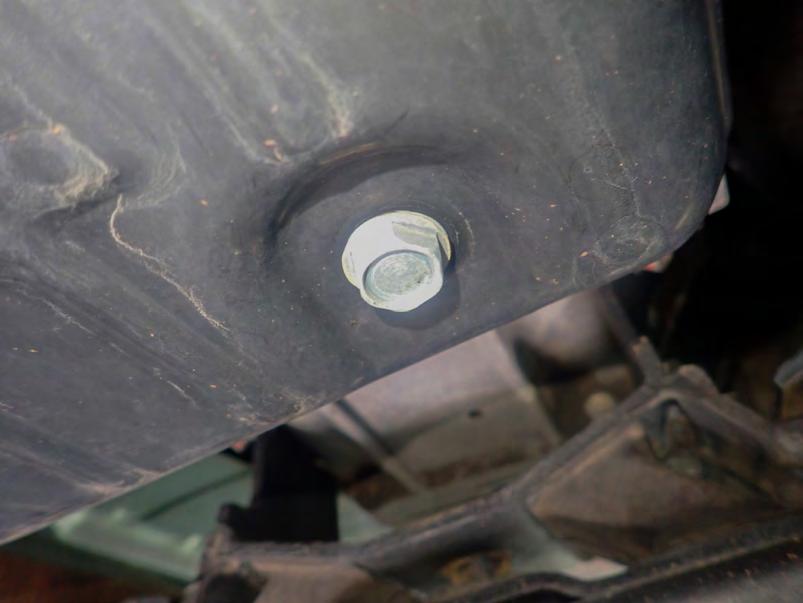
1. To drain the transmission, remove the rell plug on the right-hand rear side of the transmission, then remove the drain plug from the rear of the transmission pan. Approximately 3.0L of ATF could drain out. Diagram 1.
2. Once drained, ret the drain plug with a new washer and tighten to 20 Nm. Diagram 1.
ATF Refil
1. Remove the overow plug from the transmission pan. Diagram 1 & 5.
2. Slowly add specied transmission uid into the rell hole until uid starts to ow from the overow plug. Allow the uid ow to reduce to a steady drip. Diagram 5.
3. Temporarily ret the overow and rell plug and proceed to the level check procedure.
NOTE: If, during the level check procedure, the ATF appears excessively contaminated, drain and rell the transmission as required until the uid appears acceptable. Access to a transmission ush and relling system would be an advantage. Pan and filter replacemen
Removing and replacing the pan is not an OE service requirement, but is recommended.
1. Clean around the pan. Diagram 1.
2. Remove the drain plug and allow the ATF to drain.
3. Then remove the 20 pan bolts and remove the pan. The pan might be stuck, so care must be taken to remove it without damage to the pan or the transmission sealing surface.
4. Remove and discard the pan gasket.
5. Inspect the pan and the magnets. Steel particles could indicate wear on the bearing, gear, or clutch plate. Brass particles, which are non-magnetic, could indicate bush wear. If you believe that the particles are excessive, more diagnosis is required.
6. Remove the four bolts that attach the lter to the valve body and discard.
7. Install a new lter and O-ring lubricated with clean ATF and tighten the bolts to 10 Nm.
8. Ret all magnets into the pan and reinstall the pan to the transmission with a new gasket. Tighten all 20 bolts evenly to 7 Nm.
NOTE: Don’t over-tighten, as you could damage the cork gasket.
9. Then carry out the rell and level check procedures.
If you require information on the 4WD system of this vehicle, see the following article
MQ Triton 4WD System: Easy and Super Select II
TechTalk June 2024, page 5580
For more information on Mitsubishi Tritons, log onto VACC MotorTech or call VACC’s TechAdvisory Service. Correct
We would like to thank Christian, George and the team at Northern Motor Group for their assistance with this article. northernmotorgroup.com.au