
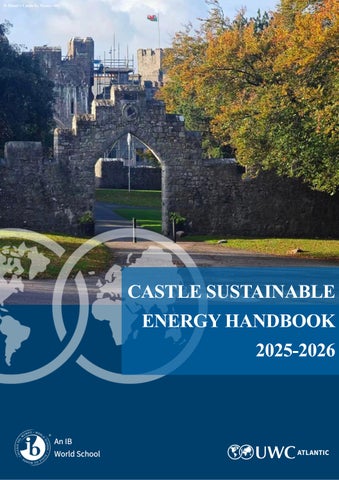
CASTLE SUSTAINABLE ENERGY HANDBOOK

Page 1


Afterword

Preface

In2026,thepriorityforcastleownersandheritagestewards hasshiftedfrommerepreservationtoactiveresilience. Whilemedievalengineersbuiltthesestructuresas functional,heatedresidences(utilizinggreatamountsof energy,internaltapestries,andadvancedheat-storage systems)modernenergystandardsandtheUK’s2050netzerotargetsrequireanewlayerofsophistication

ThisHandbookservesasaroadmapfortransitioningstone iconsfromcarbon-intensiverelicsintosustainable, thermallyefficientestates Whilethestrategieswithinthese pagesareapplicabletohistoricbuildingsatlarge,thisguide isspecificallycuratedforthehighesttierofprotectionin Wales.ItrecognizesthatinaGradeIenvironment,the solutionmustbeasprestigiousasthearchitecture: impactful,reversible,andfullycompliantwithCadw(the WelshGovernment'shistoricenvironmentservice).Inside, wemovebeyondgenericretrofittingtofocusonhighimpactinterventionsthatrespecttheoriginalthermallogic ofthecastle Whetheryouareacastleowner,aheritage surveyor,orasustainabilityenthusiast,thisguideprovides theclarityneededtobalance21st-centuryenergyefficiency withGradeIintegrity Itistimetoprovethatthemost historicbuildingsinWalescanalsobethemostforwardthinking.

StDonat'sCastlebyUWCAX

Introduction

This handbook aims to bridge that gap by providing a clear, practical overview of technologies and strategies that can improve the energy efficiency of Grade I listed buildings while respecting conservation principles.The focus is on solutions that are low-impact, reversible, and compatible with policies.

PolicyvsSustainability

PlanningPolicyWales&TechnicalAdviceNote24:HistoricEnvironment

Policy:

Thesesetouthowplanningauthoritiesshouldprotectandconservehistoricassetsandrequirethatanychangetolisted buildingsmustconsiderheritageimpactfirst

Why:

Theyexisttoensurethehistoricenvironmentcontributestowell-beingandculturalidentitybyconservingsignificant buildings

EffectonSustainability:

Decisionsmustprioritiseheritageconservationbeforesustainabilityupgrades.

Energyretrofitorsustainablematerialscanberefusediftheyriskharmtohistoricform,fabric,orarchitecturaldetail. Thisoftenlimitsthingslikeexternalinsulation,newwindows,andsolarpanelsonvisibleelevations

Listed Building Consent Requirements

Policy:

Works to a listed building (even small changes) must usually get consent and be justified with a heritage impact statement

Why:

To make sure special architectural/historic features are not lost or damaged.

Effect on Sustainability:

The need for consent makes retrofit/efficiency upgrades slower and more complex and sometimes unapproved if they affect character

For example, replacing traditional windows with modern ones (even if energy-saving) is typically not accepted.

The mentioned policies below are stated by Cadw.This section explains what, why and how it affects sustainability.

Heritage ImpactAssessment Requirement

Policy:

Major changes must include a Heritage ImpactAssessment (HIA) demonstrating effects on significance and why works are justified.

Why:

To understand and protect the values of a listed building before allowing changes

Effect on Sustainability:

HIAcan block or modify sustainability plans (like insulation or mechanical systems) if they risk harming historic value.

It adds extra cost, time, and constraints, which many owners find challenging

Conservation Principles for the Sustainable Management of the Historic Environment

Policy:

Conservation must sustain the values of the asset and manage change carefully

Why:

To protect not just physical fabric but cultural, aesthetic, and historical value

Effect on Sustainability:

Sustainability works are only allowed if they don’t harm special qualities even if the work reduces carbon or energy use

This restricts visible changes like solar panels, heat pumps, external shading, and wall insulation.

Specific Technical Guidance on Energy Efficiency

Heritage ImpactAssessment Requirement

Policy:

Policy:

Major changes must include a Heritage ImpactAssessment (HIA) demonstrating effects on significance and why works are justified.

Guidance recommends appropriate measures but warns that poorly chosen ones can damage heritage significance.

Why:

Why:

To understand and protect the values of a listed building before allowing changes

Traditional buildings have complex behavior; wrong measures can trap moisture or damage traditional materials

Effect on Sustainability:

Effect on Sustainability:

HIAcan block or modify sustainability plans (like insulation or mechanical systems) if they risk harming historic value.

Emphasis is on careful planning and a whole-building approach rather than meeting modern efficiency targets.

It adds extra cost, time, and constraints, which many owners find challenging

Some modern sustainability solutions might be discouraged if they risk harm

Energyloss

Castlesandlargehistoricbuildingsprimarilyloseenergythroughheatlossandelectricalenergy consumption

Heatloss

Welshcastlessufferfromsignificantheatloss, primarilyduetoacombinationoffactors includingtheirarchitecturalstructure,building materials,andthelocalclimate

Firstly,mostWelshcastlesareconstructedwith thickstonewalls,almostentirelydevoidof insulation Whilestonehasahighheatcapacity, allowingforslowabsorptionandreleaseofheat, itspoorinsulationpropertiesmeanthatduring winter,whentherearesignificanttemperature differencesbetweenindoorsandoutdoors,heatis continuouslylostthroughthewallsvia conduction.

Furthermore,thecastleinteriorsoftenfeaturehigh ceilingsandlargehalls,causinghotairtoriseand accumulateneartheroof,exacerbatingheatloss throughtheroof Thisproblemisparticularly pronouncedintraditionaltimberroofslacking insulationandwithgapsintheroofstructure.

Meanwhilethecold,damp,andwindyclimateof Walesfurtheraggravatesheatloss Strongwinds enhanceairconvection,allowingcoldairto continuouslyenterthebuildingthroughgapsin doorsandwindows,wallcracks,andchimneys, resultinginpersistentheatloss Castlewindows areoftensingle-paneglazingorevenglazed,with largeopeningsthatfacilitateheatloss,especially atnight,throughbothradiationandconduction

Furthermore,themoisturepresentinthestone wallsyear-roundabsorbsasignificantamountof latentheatduringevaporation,causingsomeof theheatenergytobeusedformoisture evaporationratherthanraisingtheindoor temperature Insummary,theheatlossinWelsh Castlesisbothlong-termandunavoidable,amajor reasonforitsextremelylowenergyefficiencyby modernstandards.

ElectronicLoss

Asfortheelectronicloss,somecastlesstilluse inefficientlightingsystems,suchashalogenlamps ortraditionalincandescentbulbs Theselamps convertmostoftheelectricalenergyintoheat ratherthanlight,leadingtoasignificantincrease inenergyconsumptionperunitoflighting.

Meanwhile,castlesoftenoperateelectrical equipmentforlighting,security,andventilation forextendedperiodswithoutintelligentcontrol systemsorzonedpowermanagement Thisresults inelectricalequipmentrunningeveninunused spaces,causingunnecessaryenergyconsumption.

Furthermore,restrictionsonhistoricalbuilding preservationpreventmanycastlesfromfully replacingelectricalequipmentwithmoreefficient andsustainablesystemsorredesigningwiring layouts,furtheramplifyingtheenergywaste problem

KildrummyCastlebyRachelM August20,2017

RainCloudsOverEdinburghCastle byAmandaFinan April7th,2012

ACausal Loop Diagram of the energy system at St Donat’s Castle,Wales

A causal loop diagram maps out reinforcing factors and negating factors of things It shows If an element, a circle in this diagram, increases the element to which it is pointing at, there will be an arrow to the element it is increasing with a plus sign If it is negating something, the sign will be negative These create loops which are any closed circuits in the diagram, so the ‘combined heat and power, rooms heating, electricity and energy in the castle’ circuit is an example of a loop

There are reinforcing loops, which exacerbate and continue a phenomena that is there These could be positive or negative. It is a loop where there are only minuses or only pluses.Abalancing loop has at least one of both, so there is something increasing an element and decreasing the same element There are no balancing loops in the causal loop diagram above To give an example of this, imagine a situation where you have chickens that reproduce to create more chickens and then you have chickens that cross a road and get hit by a car Next, is a causal loop diagram of this

Defective roof

PotentialSolutions

Thefollowingsectionpresentspractical interventionsspecificallycuratedforGradeI environments.Thesesolutionsmovebeyond standardretrofitting;theyrepresentasynergyof heritagecraftsmanshipand2026energy technology.Byprioritizinghigh-performance strategies,theseideasprovideaviablepathwayto moderncomfortwithoutcompromisingthe historywithin.

High-performance,thermallylinedcurtainsandblinds

Whatisit?

Thetechnologywechoseishigh-performance, thermallylinedcurtainsandblinds Thesearespecial windowcoveringsmadewiththickfabricandan insulatinginnerliningthathelpreduceheatloss, blocksunlight,andkeeproomsatamorestable temperature

Howdoesitwork?

Thermallylinedcurtainsworkbycreatinganextra barrierinfrontofthewindow

Inwinter,thethermalliningtrapswarmairinside andstopscolddraftsfromentering.

Insummer,thereflectivelayerblockssunlightand preventstheroomfromoverheating

Theycanalsoreduceglareandimprovecomfort withoutusinganyelectricity

Howcanitbeusedinacastle?

Castlesoftenhaveold,single-glazedwindowsandcannot bechangedbecauseofhistoricalprotectionrules

Thermallylinedcurtainscansimplybehunginfrontof thesewindowswithoutanystructuralchanges.Theyhelp improveinsulationinlargerooms,reducedraftsfrom unevenstonewalls,andprotectinteriorspacesfrom strongsunlight.Thismakesthempracticalforbedrooms, halls,exhibitionrooms,andevendoorwaysinsidea castle.

Whyisitanefficientandsustainableoptionforacastle?

Thisoptionisefficientbecauseitlowersheatlossand reducestheneedforheatinginwinterandcoolingin summer Itissustainablebecauseitusesnoelectricity, hasalonglifespan,anddoesnotdamagethehistoric building Itimprovescomfortwhilekeepingtheoriginal architectureuntouched,whichisimportantforheritage conservation.

Cons:

Theyblocknaturallightwhenclosed Theymaynotmatchthecastle’shistoricalstyleor interiordesign.

Theirinsulationeffectislimitedcomparedtopermanent upgradeslikedoubleglazing Theyneedproperfitting;ifgapsremain,heatcanstill escape(Brinsmead,2022)

Averagecostforacertainquantity

Asmall(168cmx137cm)pairofthermalcurtainsfrom Dunelmcanbepickedupforaslittleas£12.50,although biggerready-madecurtains,madefrommoreeyecatchingfabricdesigns,aremorelikelytocostyou upwardsof£40,anditiswellworthgoingforfloorlengthcurtainsifyouwanttoensuremaximumheat retentionisachieved

PhotofromCurtainClean

DraughtProofing

Whatisit?

Thesesystemsinvolvefinenylonbrushpilesorflexible rubber/siliconebladesthatareintegratedintotheexisting structureofwindowsanddoors Unlikeconspicuous surface-appliedtapes,theseareofteninstalledwithin existinggapsorroutedgroovesinthetimber,making themvirtuallyinvisibleonceinplace.

HowDoesItWork?

Draughtproofingreducesuncontrolledairflow throughthebuilding'sfabric(windows,doors,floors, chimneys)

SealingGaps:Materialssuchasbrushpilesealsor discreetcompressionsealsarefittedintogapsaround movingpartslikewindowsashesanddoorframes.

BlockingAirflow:Thesesealstrapalayerofairor physicallyblockthepassageofcoldair,which preventsuncomfortaablecoldcurrentsandreduces therateatwhichwarminternalairislost.Retaining

Heat:Bykeepingwarmairinside,theheatingsystem workslesshard,leadingtoamorestableand comfortableinternaltemperature.

HowCanItBeUsedinaCastle?

Inacastleorotherlargehistoricbuilding,draught proofingcanbeappliedtospecificelementswithout compromisinghistoricalintegrity:

Windows:Brushpilesealsordiscreetperimeter sealingcanbeinstalledinhistoricwindows(likesash windows)toreduceairleakagesignificantlywithout changingtheirappearance Secondaryglazing,which involvesaddinganew,internalwindowlayer,is anotherhighlyeffective,reversibleoption.

Doors:Brushstripscanbefittedtothebottomof doors,andcompressionsealsaroundtheframes Letterboxbrushesandkeyholecoversarealsosimple additions.

Chimneys:Unusedchimneyscanbeblockedusinga "chimneysheep"(madeofwool)orachimney balloon,whichareremovableandallowforsome essentialventilationtopreventdamp.

Floors/Walls:Flexiblefillerscanbeusedtosealgaps betweenfloorboardsandskirtingboardsorminor wallcracks.Heavyrugsalsohelpimmensely.

WhyisitanEfficientandSustainable OptionforaCastle?

Cost-Effective:Itisoneofthecheapestand leastintrusiveenergyefficiencymeasures available,withcostsquicklyrecoveredthrough reducedenergybills

Sustainable:Byusinglessenergyforheating, thebuilding'scarbonfootprintislowered. PreservesHistoricFabric:Itallowsthe retentionoforiginalwindowsanddoors,which arekeytothebuilding'scharacter,avoidingthe needforenvironmentallyimpactfuland historicallyinappropriatereplacementslike moderndoubleglazing

Reversible/LowImpact:Thebestmethods (seals,chimneysheep,secondaryglazing)are oftenreversibleorinvolveminimal intervention,aligningwithconservation principlesfrombodieslikeCADWand HistoricEngland.

AverageCost:ForaCertainQuantityCosts varybymethod(DIYvs professional): DIY:Self-adhesivefoamstripsareinexpensive, startingaround£8.99fortworolls.

Professional:Professionallyinstalleddraught proofingforanentirehouse'swindowsand doorsmightcostaround£250,thoughalarge castlewillbemuchmore.

SpecificProducts:Asinglechimneyexcluder ("chimneysheep")costsaround£24-£32 Door bottombrushstripscostaround£30fora1.8m length.ConsRequiresConsent:Worksonlisted buildings,evenminoroneslikefittingstrips, mayrequirelistedbuildingconsentfromCadw toensurenodamagetohistoricfabric.Thiscan indeedtaketime.

SecondaryGlazing

WhatisSecondaryGlazing?

Secondaryglazingisadiscreetinternalwindow panel(usuallyglassoracrylic)installedafew centimetersbehindyourexistingwindow It createsasecondbarrieragainstheatloss,noise, anddrafts.

Wherecanitbeused?

Oldbuildingswherewindowscan’tbe replaced(listedbuildings)

Placeswherefulldoubleglazingistoo expensive

Howdoesitwork?

Twopanesofglazing (youroriginalwindow+thenewinternalpanel)

1 Aninsulatingairgapbetweenthem

2 Thisgapreduces:

Heatloss→warmaircan’tescape easily

Noise→soundwavesaredisrupted Drafts→betterairtightness Condensation→innerpanestays warmer

Theairgapactslikeathermalandacoustic bufferzone.

Cons:

Secondaryglazingfilmdoesn’tlookfantasticat itsbest,butcanlookreallyshoddyifimproperly installed Also,overtime,evenwiththebest installationintheworld,thefilmwillbeginto sagandneedreplacing.

HowcanitbeusedintheCastle?

Secondaryglazingworksinlistedorhistoric buildingsbyaddingadiscreetinternalwindowpanel behindtheoriginalwindow,creatingasealedairgap thatimprovesinsulationwithoutalteringthe building’sexternalappearance.Thisairgapactsasa thermalbuffer,reducingheatlossandpreventing draftswhilekeepingthehistoricwindowentirely intact Becausethesecondarypaneisinstalledona separateframe,italsodisruptsandabsorbssound waves,makingithighlyeffectivefornoisereduction, especiallyimportantinolderbuildingswiththinor single-paneglazing Overall,secondaryglazing enhancescomfortandenergyefficiencywhilefully preservingthecharacterandfabricoftheoriginal structure

Whyisitanefficientandsustainableoptionfora castle?

Improvesthermalinsulationbyaddinganinternal paneandalargeairgap,reducingheatlossthrough oldsingle-panewindows.

Lowersenergyusebecausetheimprovedinsulation meanslessheatingisrequiredtokeeplargecastle spaceswarm

Reducescarbonemissionsbycuttingtheamountof fuelorelectricityneededforheating Preventsdraftsandcondensation,makingtheinterior morecomfortablewithoutalteringhistoricmaterials Providesstrongnoisereduction,usefulforcastles opentotouristsorlocatednearbusyareas Fullyreversibleanddoesnotdamageoriginal windows,aligningwithconservationrulesforlisted buildings.

Maintainsexternalappearance,preservingthecastle’s historiccharacterwhileimprovingperformance

AverageCost Dimensions [Height-1000mm,width-550mm]-~£357

Insulatingaccessiblecoldloftswith breathableinsulation

Whatisbreathableinsulation?

Breathableinsulation(alsocalledvapour-openor moisture-permeableinsulation)isinsulationthat allowswatervapourtomovethroughitratherthan trappingmoistureinsideabuilding’swalls,floors, orroofstructure.Itkeepsthebuildingwarmlike normalinsulation,butatthesametimeletsthe building“breathe”

Traditionalinsulation(likePIRboardsorplasticbasedfoams)isoftenvapour-closed,theyblock moisturemovement Inmodernairtightbuildings, that’sfineifyoualsoincludecontrolledventilation.

photofromPinterest

Butinolderorhistoricbuildings,stone,timber,lime-renderedwalls,moistureismeanttomovenaturallythroughthe buildingfabric Blockingthatmovementcancausedamp,mould,structuraldecay,anddamagetoheritagematerials

Breathableinsulationsupportsthisnaturalmoisturetransportinsteadoffightingit

Howdoesitwork?

Theinsulationhastinyporesthatallowwatervapourtodiffusethroughitslowly. Whenindoormoisture(fromcooking,showering,peoplebreathing)entersthewalls,itpassesthroughthe insulationratherthangettingstuck

Themoisturecontinuestotraveloutwardandevaporatessafelythroughtheexternalwallsurface(likestoneor limerender).

Meanwhile,theinsulationstillperformsitsmainjob:trappingheat,reducingheatloss,andimprovingenergy efficiency

Thisbalanceavoidscondensationinsidethestructureandhelpspreserveoldmaterials.

Commonbreathableinsulationmaterials:Woodfibreboards,Sheep’swool,Hempinsulation,Cellulose(recycled newspaper),Corkinsulation,Calciumsilicateboards

Allofthesearenaturallyvapour-permeableandcompatiblewithtraditionalbuildingfabrics

Averagecost

Pricerangefrom£120-£170perdimensions(1mx20m)

Whyisitespeciallyusefulforhistoricorlistedbuildings?

Historicwallsaremassivebutpermeable;theymanagemoistureby absorbingandreleasingit

Breathableinsulationworkswiththissysteminsteadofblockingit Itreducesenergylosswithout: trappingdamp

damagingancientstone/timber violatingconservationprinciples

Consofbreathableinsulation

Moreexpensivethanstandardfoamorsyntheticinsulation.

Thickerlayersareneeded,soitcanreducetheroomspaceslightly Slowerinstallationbecauseitcan’tjustbegluedlikemodernboards

Notashigh-performingassomemodernairtightsystemsinextremeclimates.

HowcanitbeusedinCastlesorhistoricbuildings?

InternalWallInsulation

Breathableinsulation(likewoodfibreorcork)canbefixedtotheinsideofstonewalls Itkeepsrooms warmerwithouttrappingmoistureorchangingthecastle’soutsideappearance

RoofandAtticInsulation

Sheep’swoolorhempinsulationcanbeaddedbetweenoldtimberrafters Itreducesheatlosswhileletting theroofstructurereleasemoisturesafely

FloorInsulation

Woodfibreorsimilarmaterialscanbeaddedundertimberfloorsorabovecellars.Thiswarmsupcold floorswithoutsealinginmoisturethatcoulddamageoldtimberorstone WindowRevealsandArches

Breathableboardscanbecuttofitdeepstonewindowsurroundsandarches Thispreventscoldspotsand reducescondensationintrickyareas.

WorkswithLime-BasedMaterials

Breathableinsulationpairswellwithlimeplasterandlimewash,creatingasystemthatstaysvapour-open andprotectsthehistoricfabric.

Animportantnote:

Buildingsarebuilttoensurebreathability Thisappliestomorehistoricbuildingsaswell Sometimes,gaps inthewallsarefilledwithcementornonbreathablematerials.Thistrapsmoisturefromevaporatingand causesthewallstohavedamppatches,withpeelingandbubbling.Agoodunderstandingofthestructureof thewallsofyourbuildingisimportant,aswellasnotjustrelyingonthemarketingordirectionsof insulationcompanies Someofthesecompaniesarenotawareoftheseconsequences Contactingyour heritagesurveyororsomeonewhohasgoodknowledgeofyourbuildingisimportant.

ImagefromKnauf

Usinglow-flow temperatureradiators

Howcanitbeusedinthecastle?

Low-flowtemperatureradiatorscanbeusedina castlebecausetheyrequireonlysmallpipeworkand lowerwatertemperatures,allowingfortheir installationwithminimaldisruptiontothickstone wallsandprotectedhistoricalfeatures.Theirdesign providesgentle,consistentheatthatsuitsthelarge, coldroomstypicalofcastleinteriors Theycanalso besizedandpositionedtocreatezonedheating,so differentareas suchaslivingspaces,halls,or officescanbeheatedindependently Traditional-style radiatormodelsareavailable,helpingthesystem blendnaturallyintothecastle’shistoricappearance withoutcompromisingefficiency

Whatisalow-flowtemperatureradiator?

Low-flowtemperatureradiators,alsoknownaslowtemperatureheating(LTH)radiators,areheatingsystems designedtooperateeffectivelyusingwateratmuchlower temperaturesthanconventionalradiators Traditional radiatorsoftenrequirewaterheatedto60–80°C,while low-temperatureradiatorstypicallyoperateat30–45°C. Thismakesthemidealforintegrationwithmodern renewableandhigh-efficiencyheatingtechnologies,such asgroundsourceheatpumps(GSHPs),air-sourceheat pumps,andcombinedheatandpower(CHP)systems.

Howisitasustainableandefficientoptionforahistoric building?

Low-flowtemperatureradiatorsareasustainableand efficientchoicebecausetheyoperateusingmuchlower watertemperatures,whichsignificantlyreducesenergy consumption Theyworkespeciallywellwithrenewable heatingsystemslikegroundsourceheatpumps,allowing theheatpumptorunatitshighestefficiencyandlowering carbonemissions.Thesteady,low-temperatureheatingalso preventsenergywastefromoverheatinglargespaces, makingitfarmorecost-effectiveforabuildingwiththe sizeandheatlosscharacteristicsofacastle.Overtime,this leadstosubstantialreductionsinbothheatingbillsand environmentalimpact

PhototakenbyHema

HowDoLow-TemperatureRadiatorsWork?

Low-temperatureradiatorsworkbymaximisingheat transferevenwhensuppliedwithcoolerwater They dothisthrough:

1 LargerSurfaceArea

Theradiatorsaredesignedwithbiggerpanels,fins,or multipleconvectors,increasingthetotalareaover whichheatisreleased Alargersurfacecompensates forthelowerwatertemperature.

2.EnhancedConvection

Manymodelsincludebuilt-inchannelsorfinsthat accelerateairflow Someadvanceddesignsusesmall, energy-efficientfanstoboostconvectionand distributewarmairmoreevenly.

3 EfficientHeatDistribution

Becausetheyoperateatlowertemperatures,these radiatorsprovideamorestable,consistent,andoften morecomfortableroomtemperature.Theyreduce temperatureswingsandallowcontinuous,gentle heating

4.CompatibilityWithLow-CarbonHeating Low-flowradiatorsworkparticularlywellwhen pairedwithsystemsthatproducelowerwater temperatures,suchasGSHPs Heatpumpsaremost efficientatlowflowtemperatures,meaningthese radiatorsincreaseoverallsystemefficiencyand reduceenergyconsumption

AverageCost

From £300- £500perradiator

Cons:

Low-flowtemperatureradiatorsdohavesome drawbacks Theyrequirelargerradiatorunitsto deliverenoughheat,whichcanbechallengingin certainrooms.Theirgentleheatingalsomakesthem lesseffectiveinpoorlyinsulatedareas,whichis commonincastles Thesystemismoreexpensiveto install,especiallywhencombinedwithheatpumps, anditwarmsupspacesmoreslowlythantraditional high-temperatureradiators Installationcanalsobe morecomplexbecauseeachroomneedscarefully sizedradiatorstoensureadequateheating Installationmayalsoneedtocomplywithheritage rules

Insulatinghotwaterpipes

Whatisit?

Therecanbealotofheatlossfromhotwater pipes.Insulatinghotwaterpipesreducestheneed topaymoretoheatthewaterinthem Insulationis appliedasshowninthediagrambelow

Therearevariousmaterialsthatcanbeusedfor insulation,eachwiththeirownprosandcons For example,thereisfiberglassandfoampipe insulation.

Whatisthecost?

Thecostvariesdependingonqualityandwhere yougettheinsulationfrom.Ametreofinsulation canbeaslittleaslessthanapoundtoover£200.

Howisitsustainable?

Thispieceoftechnologyisasustainablemeasure forcastlesaswhatitisdoingisreducingtheneed formoreenergyconsumptiontoheatwater Its efficiencydependsonfactorslikethetypeand thicknessoftheinsulationmaterial.

(From:Metals,publishedbyMDPIonthewebsiteResearchGate)

Howdoesitwork?:

Toapplythispieceoftechnologytocastles,you wouldneedprofessionalstocomeinandwork oninsulatingthepipes Thiswouldrequire breakingpartsofthewalls,soinWales,todo somethinglikethisinagrade1listedbuilding wouldrequireCADWapproval Also,itis importanttonotethatsometimesthewallsor floorsaremadeofasbestoswhichisadangerous materialthatcancausediseaseswhentornapart.

Cons:

Cost,disruptiontoinfrastructureandhealthrisks duringinstallationarethemainnegativesofpipe insulation

Source:TheUSDepartmentofEnergy

Joshuamiranda/Pixabay

Repairingroofs:

Whatisit?

Averyimportantwayofstoppingenergylossin castlesandhistoricbuildingsisbyensuringthatthe roofsareingoodcondition Overtime,particularlyin olderstructuresfeaturingslateorstonetile,these materialscandeteriorateanddegradedueto corrosion.Forgovernment-protectedstructuressuch ascastlesandparticularlyGradeIlistedbuildings, themaintenanceofthesetilesiscostly Regulations requirethatroofcoveringsaretobeproducedfrom thesamematerialsusedcenturiesago,evenwhen thosematerialsmaynotofferthehighestdurability Thiscanmeanthattheslatesortilesareproneto wearingdown.

Howisitsustainable?

Wateringressintoabuildingespeciallyiftheroof hasholesinit,canbeagreatsourceofenergyloss.If heatisescapingthroughadefectiveroof,then implementinganyothermethodofpreventative energylossismuchlessefficient

Whatisthecost?

Thishighlightstheimportanceofongoing maintenanceandinvestingintotheroofsofhistorical buildingsiftheyaredefective.Thecostswilldepend onthematerialusedtorepairtheroofandits availability Repairingtheroofsoncastlescanbe expensive.Thephotosonthispagehighlightsome recentworkcarriedoutonthecastle,thissectionof buildingrepairworkcosttensofthousandsof pounds Thecostswerehighbecausetheslatesfor thisspecificsectionofroofwereonlyavailablefrom onequarryinWalesandareaparticularcolourand sizethatmatchtheoriginals

Cons:

Worktohistoricpropertiescanbequiteexpensive. Asitrequireshighlyskilledtradespeoplewho specializeinhistoricroofingoncastlesandthisskill isnotalwayseasilyaccessible.

AirCirculationSystemsforHighCeilingedRooms(DestratificationFans)

WhattheTechnologyDoes

High-ceilingedspacessuchasgreathallsandchambers sufferfromthermalstratification:warmairrisesandcollects neartheceiling,whileoccupiedareasremaincold.

Destratificationfansgentlycirculateairatlowspeed, pushingtrappedwarmairbackdowntofloorlevel This evensouttemperatureswithoutincreasingheatoutput

WhyItIsWell-SuitedtoCastles

Castlestypicallyhave:

Verytallspaces(8–15m+)

Largevolumesthatareexpensivetoheat

Strictlimitsoninsulation,glazing,orfabricalteration duetolisting

Destratificationworkswiththeseconstraints Itimproves performancewithoutalteringwalls,windows,roofs,orhistoric materials,makingitoneoftheleastintrusiveenergy-efficiency measuresavailableforGradeIlistedbuildings

Becausethefansconsumeverylittleelectricity(oftenafew hundredwatts),theenergysavedfromreducedboilerruntimefar outweighsthepowerusedtorunthem especiallywhenpaired withrenewableorgreenelectricity Thermostatscanalsooftenbe setlowerwhilemaintainingcomfort

Nordicco
(Clements,2023)

InstallationandHeritageSensitivity

Destratificationsystemscanbeinstalledinwaysthatrespecthistoricsignificance: Ceiling-mountedHVLSfanspositionedhighinroofspacesandcolour-matchedtoblendin Wall-orcolumn-mountedunitswhereceilingsareornateorinaccessible Reversible fixings, using existing structural points or mortar joints rather than damaging stone or historic timber

CostsandReturnonInvestment

Typicalcosts(verysite-dependent):

Fanunits:£300–£2,000each,dependingonsizeandoutput

Installation(access,labour,scaffolding):£1,000–£3,000+

Largehallsoftenrequiremultipleunits.

Payback periods typically fall between 5–10 years, depending on how often the space is heated. Equipment lifespanusuallyexceedsthis,meaning long-termsavingsthereafter Risingenergypricesshortenpaybackfurther

RisksandLimitations(andHowThey’reManaged)

Visualimpact:mitigatedthroughdiscreetplacementandsympatheticfinishes Accesschallenges:managedviaplannedscaffoldingduringclosedperiods Noise:modernsystemsaretypicallynear-silentwhencorrectlyspecified Maintenance:low,butannualinspectionandcleaningarerecommended

Windowfilms

Transparentlow-emissivity(Low-E)filmisathin,nearlyinvisiblemetalliccoatingappliedtowindowsto reduceheattransfer Itreflectsinfraredandultraviolet(UV)lightwhileallowingvisiblelightthrough, improvingenergyefficiency.It'sparticularlyvaluableforhistoricbuildingsasittrapsheat(reducingheat loss)withoutsignificantlyalteringorremovingtheoriginalglass.

Benefits:

EnergySavings:Reducesheating/coolingcostsbyup to30%byreflectingheatbackindoorsinwinterand blockingsolarheatinsummer Byimproving insulation,heatingcanbeturneddownsavingenergy UVProtection:Blocksupto99%ofUVrays, preventingfadingoffurniture,carpets,andartwork

ComfortandInsulation:Maintainsconsistentindoor temperatures,reducesdrafts,andcanbeappliedto single-panewindowsforbetterperformancethan standardglass

EaseofUpgrade:Lessdisruptiveandcheaperthanfull windowreplacement.Youcanevenapplythefilm yourselfbyfollowingsimpleonlineguides no professionalinstallationneeded

Disadvantages:

LightReduction:Maycauseslighttintingorreduced visiblelight(eg,greenishhue),potentiallyaffecting houseplantsorviews

CompatibilityIssues:Notidealforallglasstypes

Source:Evowrap,WindowFilmandVinylSpecialists,2026

Costs:

Itisrelativelyinexpensivewithasheetof1m x1.5mcostingabout£30.Ifyouchooseto installthefilmyourselftheinstallationkit cancostupto£10

Aesthetics:Olderfilmsmayshimmerorreflectoddly undercertainlights

Source:InsulatingWindowFilmbyTechnicalWindowFilms,2025

ApplicationonListedBuildings: Forcompliancewithpolicies,Low-Efilm cangenerallybeappliedtonon-historicglass withoutneedingpermission,asit'sinternal andreversible,preservingthebuilding's externalappearance.However,iftheglassis historic(eg,originalcrownorcylinder glass),youmustapplyforListedBuilding ConsentfromCadwtoensurenoharmto architecturalorhistoricinterest Filmsshould beremovable,non-reflective,andinvisibleto avoidrejection Alwaysconsultlocal authoritiesearlytoverifyglass.

GroupExperimentalStudy

Asagroup,wewantedtomovebeyondtheoryandpolicyguidanceandseeforourselveshoweffective transparentlow-emissivityfilmcouldbeinreducingheatloss.Becausethecastlecontainshistoricglazing, itwouldnothavebeenappropriatetoexperimentthere Instead,wecarriedoutacarefullycontrolledtest inaroomwithmodernglass,allowingustogatherresultswithoutriskinghistoricfabric

HowtheExperimentWasCarriedOut

Wesetupasimpleexperimentusingtwodigitalthermometers:onepositionedoutsidethewindowandone insidetheroom Thewindowremainedclosedthroughout,andtheroomwaskeptunoccupiedtoavoid additionalheatsourcesordraughtsthatcouldaffectthereadings.Thisremovedexternalvariablesthat couldinfluencetheresults

Temperaturemeasurementsweretakeneveryfiveminutesoveraperiodofmorethan24hoursusing LoggerProsoftware Thislongmonitoringperiodallowedustocapturetemperaturedataacrossbothday andnight.

Wefirstdidtheexperimentwiththewindowinitsuntreatedstate Theseweretheresultswegot:

DataBefore

DataAfter

Oncethisbaselinehadbeenestablished,weappliedthetransparentlow-emissivityfilmtothewindowsin theroomandrepeatedtheexactsameexperiment.

WhattheDataShowed

Thedifferencebetweenthetwosetsofresultswasclear.Theroomwasabletoretainbetween1-3degrees temperaturewhenfilmwasappliedcomparedtowhenitwasn’t Thesefindingscloselyreflectmanufacturerdataandindependentstudies,butseeingthiseffectinour experimentpresentedacompellingcaseontheeffectivenessoffilm.

ApplyingtheFilm:APracticalPerspective

Fromapracticalstandpoint,thefilmwasrelativelystraightforwardtoapply,althoughcarefulpreparation wasessential.

Onceinstalled,thefilmwasbarelynoticeable.Theclarityoftheglasswasmaintained,andtherewasno obviousvisualchange animportantconsiderationforanyoneworkingwithhistoricorsensitive buildings

Whilethisexperimentwascarriedoutonmodernglazing,itprovidesstrong,practicalevidencethat transparentlow-emissivityfilmcanmakeameaningfuldifferencewhereitsuseispermitted.Forcastles andhistoricbuildingswithnon-historicreplacementglass,thefilmoffersadiscreetwaytoimprove comfortandreduceheatlosswithoutalteringthecharacterofthebuilding

Afterword

It is important to remember that the solutions which are best for a historic building or castle depend on many different factors, like how an individual structure is unique and the budget With raised awareness on how to mitigate energy loss in historic buildings and castles, we can make these structures more energy efficient, reduce global emissions and energy costs. For information regarding the potential of your structure, pleasecontactyourlocalheritagesurveyor

Turn static files into dynamic content formats.
Create a flipbook
CASTLE SUSTAINABLE ENERGY HANDBOOK by UWC Atlantic College - Issuu