
Wednesday, April 15, 2026

Wednesday, April 15, 2026
LOGAN WEST Contributor
The Tennessee General Assembly is considering banning online sports betting on public college campuses across the state.
In 2019, the Tennessee Sports Gam ing Act legalized wagering on athletic events in the state. Now, that access could be limited depending on where a bet is placed.
In early 2026, Sen. Jeff Yarbro and Rep. John Ray Clemmons introduced companion bills that would effective ly prohibit digital sports wagering on higher education campuses. The pro posal would also apply to athletic ven ues and certain satellite facilities.
While this bill failed in the House Departments & Agencies Subcommit tee of the State & Local Government Committee on March 3, it has since been referred to the Senate State and Local Government Committee.
If the legislation advances out of the Senate committee and is approved on the Senate floor, it will then be sent to the House for consideration and a vote. This indicates that the bill still has a viable path forward and could ultimately be passed.
Why lawmakers are concerned
The widespread participation in sports betting among college-aged individuals has raised concerns among researchers and public health experts.
According to a study conducted by the Journal of Gambling Studies, evidence shows gambling can be extremely addictive and cause negative consequences, including feelings of anxiety, guilt and pressure.
state income.
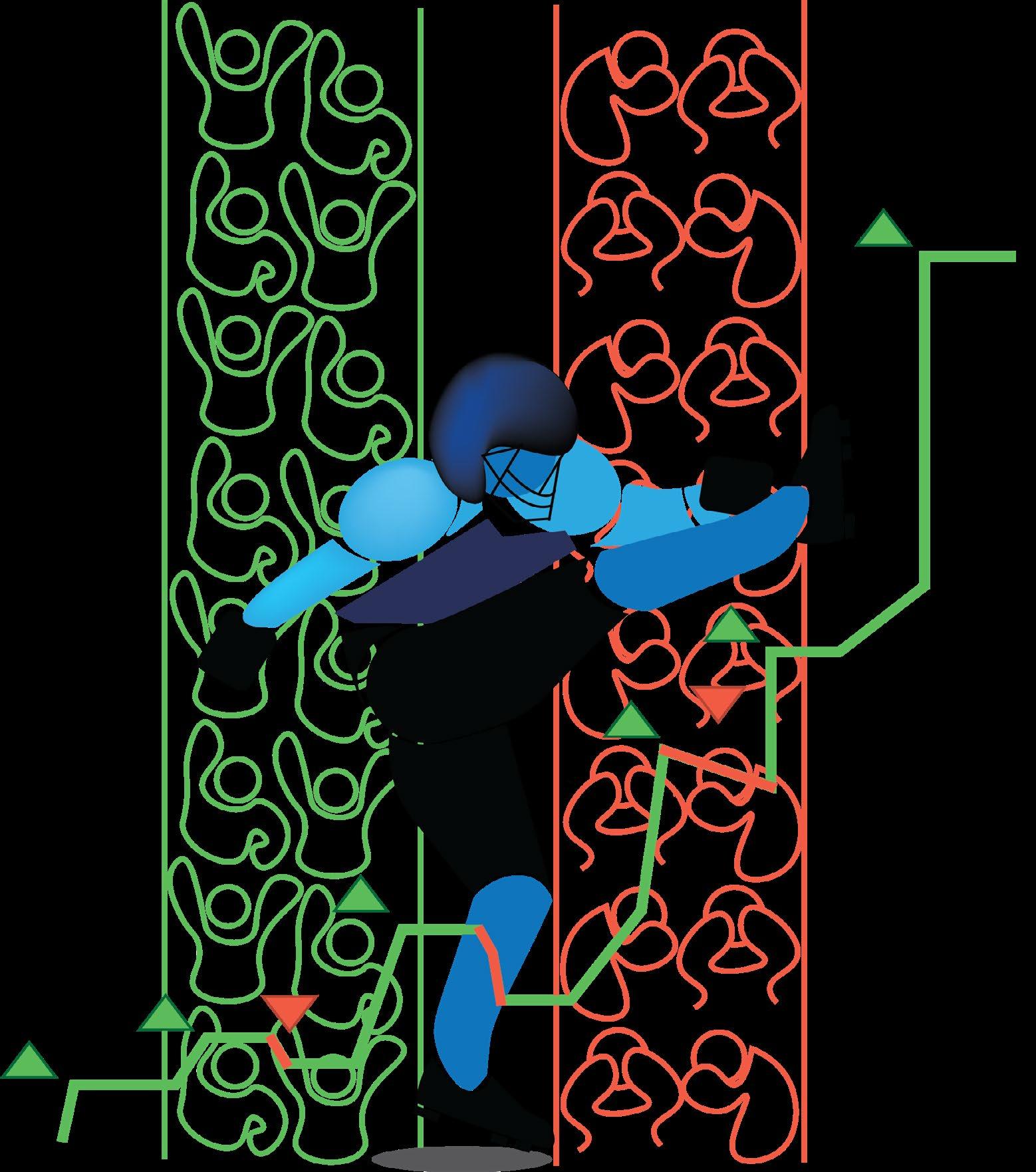
“What we’re looking at is the total normalization of a known addictive product,” Harry Levant, current director of gambling policy at Northeastern University School of Law’s Public Health Advocacy Institute, said in a Harvard Law article. “Does it get any more normalized than when a 9-year-old child visits Fenway Park and sees MGM and DraftKings on the Green Monster?”
The bigger sports betting controversy
Lawmakers have not publicly stated whether mental health concerns directly prompted the bill proposal, or whether it is related to recent NCAA betting scandals reported by national sports outlets.
The Associated Press has reported investigations into cases where athletes were allegedly paid to underperform and influence
game outcomes.
This controversy highlights the challenges of universities policing sports betting, particularly when student-athletes and fans have access to digital platforms that make wagering easier.
By the numbers
A 2023 National Collegiate Athletic Association study found that 67% of individuals living on a college campus while pursuing a degree reported betting on sports.
Tennesseans placed more than $5.87 billion in sports bets in 2025, generating about $107.6 million in tax revenue for the state.
Tennessee previo usly taxed sportsbooks 20% of gross gaming revenue, though the state switched to a 1.85% tax on total wagers in 2023. This system is utilized for public funding and is a relatively consistent form of
A complicated gambling landscape
The proposal would affect fans attending collegiate sporting events who wish to place bets while on campus property in addition to students.
Under Tennessee Code, operating a casino or gambling activity for profit is a criminal offense. As a result, the state’s only forms of legal wagering are the Tennessee Lottery, which funds higher education scholarships, and online sports betting.
While lawmakers are considering restrictions for online sports betting on college campuses, the state continues to generate revenue from other forms of legalized gambling.
Enforcement challenges
Some students argue that enforcement of this bill could prove
In 2019, Tennessee Gov. Bill Lee signed legislation that restricted public universities from allowing access to foreign-owned social platforms. As a result, institutions have banned popular apps, like TikTok, on Wi-Fi networks. However, students have continued to access the platform using cellular data and virtual private networks.
“The ban hasn’t really affected me at all,” Brooklyn McCorkle, a freshman studying agricultural leadership, education and communications, said. “I think people will find a way around anything that they don’t agree with.”
The proposal raises questions about how restrictions on sports wagering would be enforced if the legislation passes.
While the bill does not outline penalties for individuals placing bets, it requires betting operators to block access in restricted locations.
The legislation states that all online gambling licensees “shall prohibit such access at the sports venue for the entire calendar day on which such sport or sporting event is conducted.”
If approved, the geographical restrictions would apply to colleges, universities and digital sports betting platforms.
OLIVIA LEE Staff Writer
Faculty members are committed to a future of asking questions of senior administrators, according to a free speech teachin on Monday.
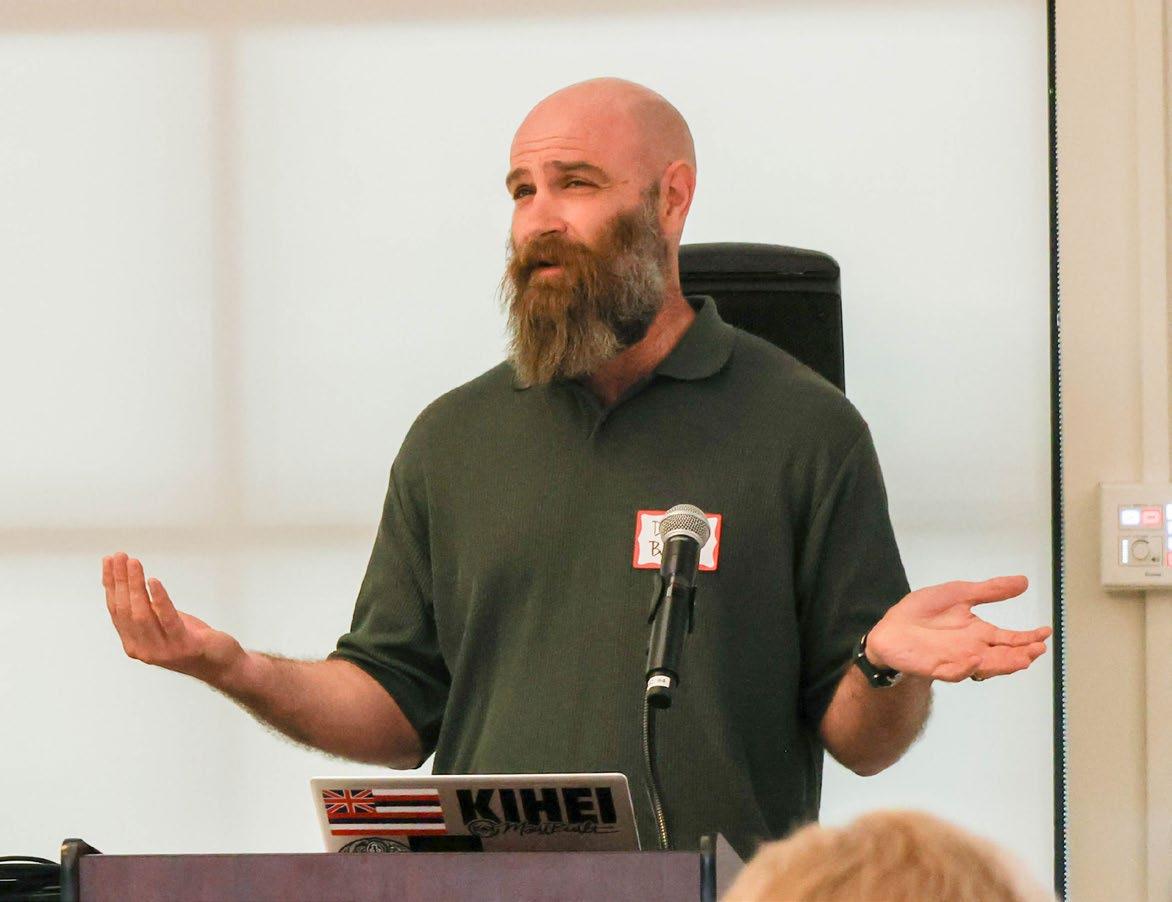
UT’s chapter of the American Association of University Professors hosted the teach-in.
Todd Freeberg, president of the association, began the event by explaining its purpose and relevance.
“AAUP formed in 1915 to support faculty mainly on two lines, on one hand, increasing shared governance, and on the other hand, strengthening academic freedom,” Freeberg said.
In the event’s opening remarks, Freeberg earned nods from faculty members after expressing concerns over where academic freedom at UT is headed.
“Like most, if not all, assistant professors, I am worried about my job prior to getting tenure,” Freeberg said. “I have to say I am now more worried about my job and all of our jobs.”
The event comes after a year of national turmoil over academic freedom following a surge of professor terminations related to the death of political figure Charlie Kirk. Since then, academic freedom has been at the center of faculty concerns as free speech and tenure face threats from university administration and the state government.
“My initial reaction on seeing the news of (Kirk’s) murder was, ‘This is going to be a turning point in higher education,’” Robert Kelchen, head of the department of educational leadership and policy studies, said. “Indeed, it has been.”
SEE “FREE SPEECH,” PAGE 2

TESSA
NACKE Staff Writer
UT Club Wrestling pinned itself into history last month.
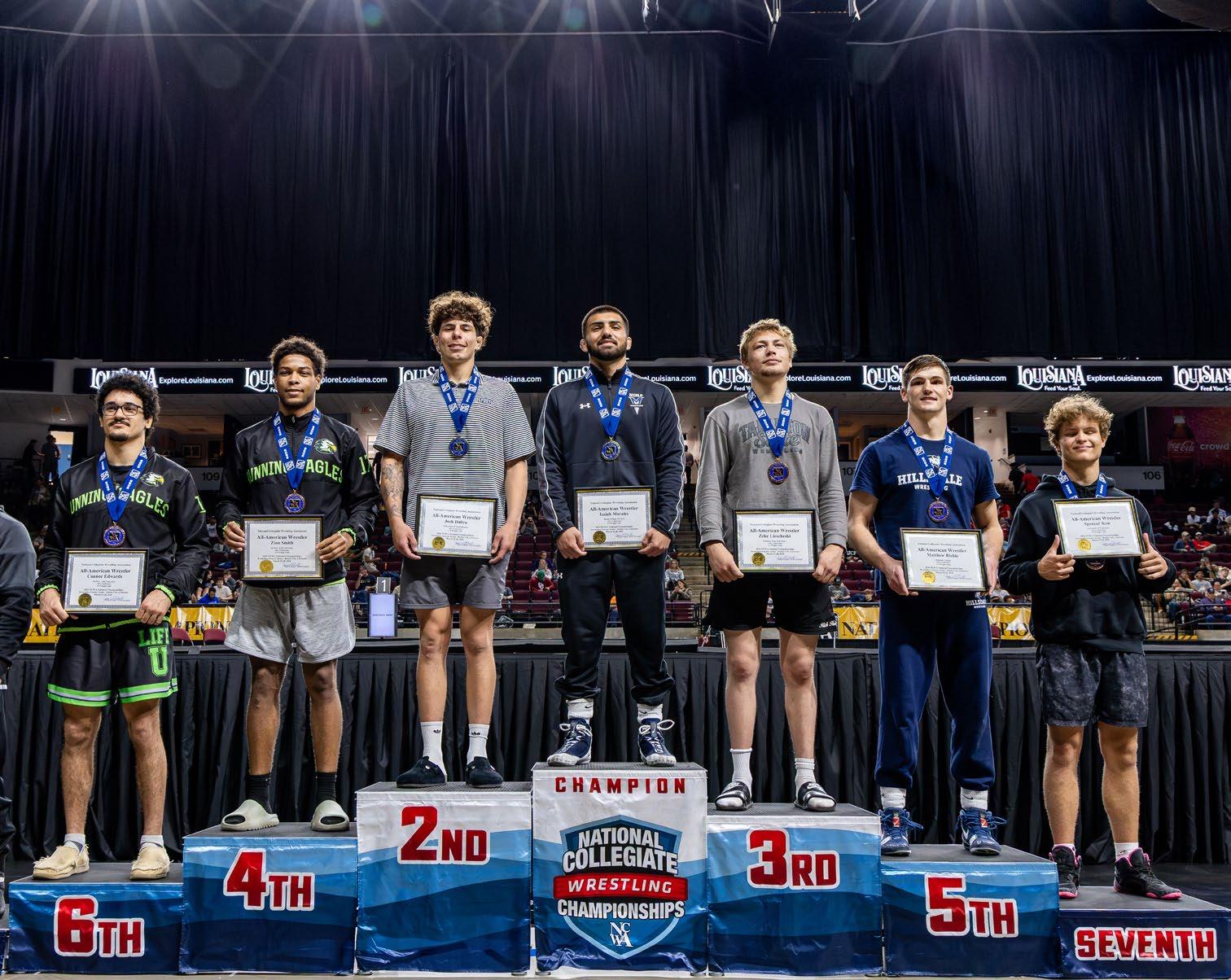
Tennessee’s men’s team finished with two All-American wrestlers and placed 24 out of the 96 teams at the National Collegiate Wrestling Association (NCWA) National Championship in Bossier City, Louisiana.
All-American is a title given to wrestlers who place in the top eight in the national tournament. Competing in their respective weight divisions, sophomore Spencer Kon and graduate student Owen Zuckerman both placed seventh, at 174 pounds and 197 pounds, respectively. Kon and Zuckerman’s All-American finishes are Tennessee’s third and fourth NCWA All-Americans of all time — following David Ellis (174) and Matt Thompson (133), who placed in 2004.
“Reflecting on the national tournament has made me realize how much our team has grown this year. The community we’ve formed on campus translates to greater achievement on the mat,” Robert Huber, the club’s president, said. “Having our first All-Americans in over 20 years is the result of multiple years of hard work from the entire team. It was so rewarding to experience the team’s success first hand while coaching at nationals.”
SEE “WRESTLING,” PAGE 2
Tennessee’s new live mascot, Smokey XII
Two-year-old bluetick coonhound Neyland was scouted to be the next live mascot for the Tennessee Volunteers, and his temperament and training were put to the test at the Orange and White game on April 11. It’s the first time in Volunteer history that the live mascot is a rescue dog.
Faculty senate proposes pay raises, addresses state legislation
On Monday, April 6, Faculty Senate President Charles Noble introduced a resolution to add an extra 1% to Tennessee’s mandated annual pay increase for faculty to match the inflation rate. A majority of senators voted to pass the resolution. The senate also discussed three bills in the Tennessee General Assembly, amid tenure and free speech concerns. Chancellor Donde Plowman emphasized accountability as the pending legislation’s key element.
U-Tea-K: 3 boba shops close to campus
Need a new study or hangout spot? These three boba shops in Knoxville are perfect locations for students to socialize, study or grab a quick drink. Hello Tea House, Hey Bear Cafe and Vols Boba Tea all offer refreshing, unique boba drinks that honor Asian and Asian-American cultures.
Sisterhood Showcase: Review, results
On March 26, panhellenic sororities competed in a dance competition to raise money for the Circle of Sisterhood. Over $100,000 was raised for the philanthropy, which aims to break down educational barriers worldwide.


MARGARET WHITE Staff Writer
Wildly successful within their first week of launch, these UT student entrepreneurs have created a unique approach to nightlife with their new app “Venuu,” designed to help people make informed decisions on where to go for their next night out.
For users, Venuu displays headcounts, cover charges and notifications from bars using constantly updated information provided by the bouncers themselves.
“The most important window in nightlife, the 30-second decision about where the student decides where they’re going to go, is unaddressed by any current existing product — until now,” Noah Cooper, a UT junior and Venuu founder, said.
Venuu’s business model was designed not only to benefit consumers, but also to benefit bars.
“We also are completely free for the bars, we’re completely free for the students. We’re built in Knoxville — we’re never going to charge a single Knoxville bar a cent,” Cooper said.
Through Venuu, bars will have access to their customers in multiple new ways.
With a feature called “The Drop,” Venuu allows bars to send out notifications to all local users with information like current specials and events. “This is a tool for them to help reach their audience in, you know, in a more efficient way than they ever have,” Cooper said.
In addition, Venuu is set to start a new loyalty program for app users.
Using Near Field Communica-
tion technology, Venuu plans to install tags within the bars for consumers to tap their phone against. This will log that the customer visited the bar and allow them to earn rewards based on each bar’s unique loyalty program, which they are able to set through the app.
“The bar can set what they want the reward to be — a free beer, a free shot — and then students can get rewarded for going to their favorite places with this,” Cooper said.
The app intends to have a working relationship with the bars without a contract.
“It’s an agreement,” Cooper said. “And we’re about elevating their bar and their culture. That’s why they get to set their reward, they get to control what people see on the map, they get to provide the consumer with all the information they need to make a decision.”
While the app’s creation began as a passion project, Cooper said that he and his partner, UT senior Michael Faragalli, saw Venuu’s potential to “elevate nightlife across Knoxville and the entire SEC.”
Faragalli and Cooper’s design process began when they were both working on separate projects through UT’s Anderson Center for Entrepreneurship and Innovation and were put in contact by a fellow student who thought they would work well together.
Faragalli has been vital to the app’s existence and success, having helped ideate, brainstorm and market Venuu.
“I like to think outside the box, (Cooper)’s the same way, and I feel like all these people could use the product because no one’s had the guts to actually go outside the
box and deliver something like this,” Faragalli said.
By utilizing the Anderson Center’s business startup coaches, Cooper was able to build Venuu as the app’s sole technical founder in five weeks.
“I’ve always been passionate about building things. I have a philosophy major, but I love software engineering and being able to create apps now is so cool, because people like me who aren’t super technical are now able to create everything,” Cooper said. “Nothing’s off the table.”
The function of Venuu and the specific information it provides consumers is presently uncontested by any other nightlife app.
“There have been a lot of apps that have come and gone in the bar scene, and, you know, a lot of them have failed for one reason — that’s because they’ve crowd sourced information. That’s why we’re working with the bars,” Cooper said.
LineLeap, a mobile nightlife ticketing corporation, has made for a potential Venuu “rivalry,” according to Cooper.
While LineLeap also sells tickets and charges bar covers through their plat form, they operate and monetize differently than Venuu.
Prices listed on LineLeap are set to remain stat ic throughout the night, contrasting Venuu’s dynamic cover charge plan, where charges may start off at a certain price but change as night progresses. Additionally,
Wrestling | cont. from page 1
As club wrestling continues to grow and find success, training for this national tournament was no easy task. The team practices three days a week on fundamentals and positions as well as cardio to get them in the best possible shape for match day.
“The conference tournament was two weeks before the national tournament, and that didn’t go as well as the nationals did,” Kon said. “I got fourth place at conference, but then after conference, we got back and trained a little bit harder and worked on things I needed to, and then we ended up doing really good at nationals.”
The community and family aspect of this team is one of the reasons that they succeed. After Kon pinned his opponent, the crowd as well as his teammates exploded.
“The camaraderie is really what pulls it together. We have fun here at the practices, the tournaments are a whole environment, and the team is what makes it all worth it. It was a good time,” Zuckerman said. Zuckerman, also named an All-American, didn’t fold under pressure of being in a large stadium atmosphere.
“It was a little intimidating at first. There were a lot of teams there, and a huge arena environment. But I didn’t let that get to me. I just went in with one goal — to wrestle well — and came out with the results I wanted,” Zuckerman said.
Beyond the season’s success, UT Club
Wrestling also hosted their first home dual meet since 2019, adding to the growth this program has experienced. UT wrestled against teams from Alabama and TSU.
“They’re all exceptionally motivated young men and women. They’re all contributing, they’re all helping each other, and everyone has different attributes,” wrestling coach and associate professor Joe Smith said. “One of our student leaders leads by example. We have other folks who are more vocal, and I think it’s really important, because they’re engaging people who might be interested.”
The strong leadership and individual success that this season has experienced is just the beginning. As they prepare and strengthen for next season, UT Club Wrestling is excited for new opportunities.
“I’ve been telling the wrestlers, they’re the show. I’m just along for the ride. But I think if anyone has a wrestling background and is interested, we have people from all levels, and there’s a lot of opportunity there,” Smith said. “I hope we can build on that (success), but also build on numbers. Even though it’s an individual sport, you don’t have that without success in the room and a bunch of people for them to work with. So even though those are individual accolades, they’re very reflective of the group of people that have been working on the mat.”
LineLeap takes 14% of transaction charges on their sales, while Venuu currently takes 8%.
Venuu was released for download in Knoxville on Wednesday, April 8. After two days of launch, the app had over 2,500 downloads with a 71% conversion rate, meaning 71% of users who opened the app store and viewed Venuu then proceeded to download.
“We threw an event at Sunspot last week, and we had 2,000 downloads in a day with a 73% conversion rate. So every 100 people that check the app store, 73 downloaded it. The average app store conversion rate is 3% to 5%,” Cooper said.
After seeing the success of the app in Knoxville within a week of its release, the Venuu team has plans of expand -
“We are going to package this information right now, this data that we’re getting from Knoxville, and prove that the model works here in this SEC town, and then we’re going to bring this to every single college town in the country because we think every college student should be using a tool like this to help them navigate throughout their nightlife experience,” Cooper said. “The value that we’ve created here can be replicated all over, and we’re going to prove that through the SEC.” Venuu will be available for download in Oxford, Mississippi, in less than two weeks, primarily targeted toward Ole Miss students.
“This isn’t a simple product,” Cooper said. “This is a 10-feature interface that is active now in a city with thousands of users. And I was able to do that. And that has never been able to be done before in history. And I think that is a sign that the world is changing.”

Chancellor Donde Plowman terminated assistant anthropology professor Tamar Shirinian in February after Shirinian commented online about Kirk’s assassination, saying “the world is better off without him in it.”
Shirinian has since filed a complaint against Chancellor Plowman and President Randy Boyd in both their personal and official capacities.
Kelchen held a discussion about the necessity of shared governance in university policy.
“I would say that shared governance is at its most challenging point in the modern university,” Kelchen said.
David Butler, co-chair of the faculty senate’s Faculty Affairs Committee, and Derek Alderman, former faculty senate president, also spoke to faculty members about the future of free speech and academic freedom at UT.
“I’ve seen a lot of moments these past couple years where I, in fact, believe shared governance has been a bit hollow,” Alderman said.
Alderman said he hopes to see a shift in the university’s priorities in addressing faculty rights.
“There’s more attention paid to how UT is perceived by legislative leaders and external power brokers than how the university is experienced by faculty, students and future scholars who may
be seeing this institution as their intellectual home,” Alderman said. “I think that has to be corrected.” Tennessee lawmakers recently passed legislation codifying the process Plowman took in terminating Shirinian, streamlining university termination policy and removing opportunities for faculty voices.
“These are stressful times for UTK and higher education in general,” Freeberg said. “Our upper administration is increasingly bypassing faculty input.” Alderman proposed several potential solutions for faculty members to rally for, including increased opportunities for faculty members to express concerns and ask questions to Provost John Zomchick.
“The future will require active work, continued deliberation and a willingness to ask difficult questions of ourselves, but especially of the senior administration,” Alderman said.
All speakers agreed that protecting academic freedom and shared governance starts with faculty organizing and collaborating.
“There’s a lot going on right now. Much of it is not positive,” Kelchen said. “But the fact that we’re all in this room having this conversation right now is very valuable and important.”

For the STEM majors and the contemplative, read “When We Cease To Understand The World”
ABIGAIL
RIVERA Contributor
Forewarning: this book will make you rethink everything. And I mean everything.
The very foundations of chemistry and physics are broken up like concrete during a 9.0-magnitude earthquake in this book. And this foundation matters because it is the literal basis of everything we know and experience (stop lying to yourself, those Chem 1 quantum numbers do matter).
In this book, Benjamín Labatut goes to the very depths of the Earth, exploring the greatest discoveries of modern science and the men behind them. He builds up a swirling Milky Way in your head, throwing little x’s and equal signs to circle in the mix, combining the complexities of mathematics and physics with the great expanse that is the human mind.
Labatut exposes the stark juxtaposition of some of the greatest discoveries, like Fritz Haber’s pulling of nitrogen from the air to create ammonia, yielding the first mass production of fertilizers that helped feed millions. Soon after, it was used for poison gas by the Germans in World War I, killing thousands and leaving millions with horrific memories of clawing at the flesh of their own faces and necks for relief from the burning.
“When We Cease to Understand the World“ explores the human mind and offers an important thesis: Many of the greatest discoveries were made by those who suffered great mental afflictions.
This book also explores Alexander Grothendieck, Werner Heisenberg and Erwin Schrödinger, all men who exemplified rather peculiar human behavior. Grothendieck, known for becoming a recluse at a hidden address and eating only dandelion soup for his last 20 years, wrote letters to declare publication of his work as an “abomination,” while Heisenberg and Schrödinger had inappropriate obsessions with very young girls.
While they may have created theories or equations way beyond our comprehension, these men still suffered depressive episodes and deep senses of loneliness that are all too familiar to the rest of us.
This book draws a fine line between greatness and illness and offers a lesson about what the future holds if we continue to build at an unsustainable pace.
This book is classified as a non-fiction novel, but it is important to note that some events and explorations of the mind are fictional and fabricated. However, it offers an important insight into what it might have been like to be one of these men. Labatut shows us what it’s like to be on the cusp of greatness, the edge of humanity and the brink of sanity all at the same time.
The STEM kids will find this book interesting because of its unique, very philosophical explanation of well-known topics in chemistry and physics, but the introspective, contemplative young adults will see the true message behind it: Some of the greatest discoveries have led to the greatest acts of human evil. From quantum theory to the atomic bomb, anyone can see that the more knowledge we gain, the more humanity we lose. “When We Cease to Understand the World” teaches you the dangers of constant pur-
AUBREY HOLLAND Contributor
Capstone research at UT is uncovering history to change a long-misunderstood Appalachian identity.
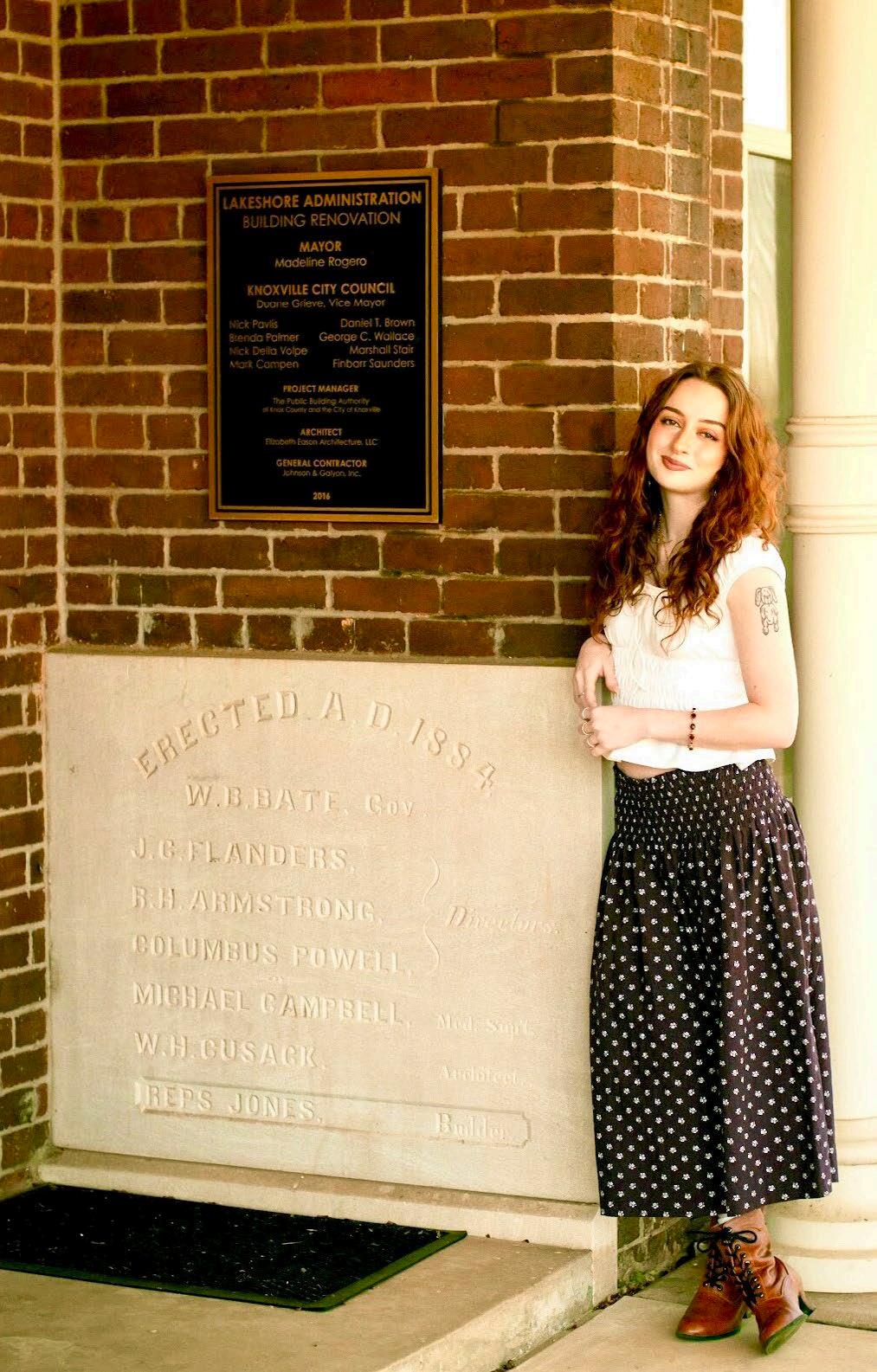
For her senior capstone, interdisciplinary Appalachian studies major Olivia Roberts has been researching the East Tennessee State Asylum. It’s a memorialization project for the patients buried at the asylum, which is now known as Lakeshore Mental Health Institute or Lakeshore Park.
Established in 1883, four miles from Knoxville, the East Tennessee State Asylum consisted of nine various buildings, with the main building capable of housing 250-300 patients. The land the asylum was built on originally belonged to the Cherokee Tribe before being “bought” by Capt. William Lyon. The asylum has undergone multiple name changes, including Lyons View Asylum, Lakeshore Mental Health Hospital and East Tennessee Psychiatric Hospital.
Originally from Knoxville, Roberts’ many regional connections and an upbringing hearing beautiful family stories about Appalachia drove her to this niche interest.
“UT does not have an Appalachian studies department or program or major, and I knew that that’s something that I really, really wanted to focus on,” Roberts said. “So College Scholars (was) able to allow me to explore that further.”
Roberts recalls the mental health hospital being torn down to make Lakeshore Park. Sitting in her room one day, she thought about the asylum and the fact that many people have had to pass away there. She’d never seen the cemetery before and realized they had to be buried somewhere. Her interest sparked, Roberts resolved to turn the subject into her capstone research.
Roberts visited the asylum cemetery, tucked away behind the veteran cemetery. When she saw the contrast between the lovely plot the veterans had compared to the asylum cemetery, it overwhelmed her. She said the veterans absolutely deserve the land and their clean, white graves with wreaths they receive every year for Christmas, but the asylum cemetery barely had any headstones left and is immensely overgrown.
Her visit motivated her to highlight this contrast and serve as a source for the community in her research.
Roberts’ research focuses on the asylum itself, its history and the history of its cemetery. However, the largest part of her research has been going through all of the asylum’s death re-
ually researched every one of their lives and stories.
“The cemetery is across the street tucked away behind the veteran cemetery, and I felt like it was important to kind of start talking about that, because I feel like a lot of Knox civilians, and especially with a lot of people moving in now, don’t know the story of the asylum and all the things that went on there,” Roberts explained. “And that, in and of itself, is another important facet to study of the Appalachian identity because we so often ignore things like mental health, especially in this region. So I just wanted to highlight that and focus on it, but more than anything, tell the stories of the patients.”
There are many common stories and various overlaps between patients’ lives, though Roberts believes each is interesting and different. She finds that they give a unique perspective on how Appalachian identity can be changed by institutionalization. However, she also understands that we will never truly know how many people are buried at the asylum cemetery and that many patients’ stories will never be told.
“Unfortunately, records were not kept very well, and you can see the discrepancies in between who they felt like kind of deserved more record keeping and who kind of had less,” Roberts said. Due to racial and gender inequalities seen in some of the patient records, Roberts has found varying amounts of information. When the asylum still functioned, Black patients were separated into different buildings and sections of the cemetery. Roberts encountered similar challenges in record-keeping, bringing to light further insight into how Appalachian identity affected patient care.
“I think in the world of Appalachian studies, we focus a lot on the idea of the Appalachian people. But it’s really important for me to kind of show that that’s not a singular identity at all. That in this huge region, not a small region, everybody has a different background and a different story, and I think it’s really important that we highlight those,” Roberts said. “But I specifically have always been really interested in the mind of untold stories or the forgotten stories.”
Another focus of Roberts’s research is the fact that you can be Appalachian even if you come from an urban city, like her. Though Roberts grew up in Knoxville, she spent a lot of her childhood with her grandparents in Jefferson County on their small farm. They often told her stories about Appalachia, spending quality time in the fields and shucking corn
Bobby grew up in a tiny shack in western North Carolina with 12 other siblings. She captivated Roberts with her detailed, emotional stories. Roberts swears she had a photographic memory.
“I wanted to be able to find a way to highlight those stories that people don’t really talk about,” Roberts said. “Whether it’s your own personal one or something that’s not really known about.”
Roberts has created the Eastern Tennessee State Asylum Cemetery Database for her capstone project.
Working as a patient memorial, it’s accessible to the public and is a place for all of the patient’s records that she has uncovered and organized.
“I really wanted to create kind of a focal point to go to and, like, a database. So that’s what I did,” Roberts said.
The website goes through the history of the asylum and the cemetery. It contains each of the patient’s names, and if you click on their name, it will take you to the patient’s own page. The page has a research biography of their lives, as well as their death certificates. Sometimes other items are included, like photos of newspaper articles that Roberts found them in.
Roberts’ goal is to have a physical plaque memorial at the asylum where visitors can be directed to her website and research.
“There’s just so much to learn from everybody else and how they live, and I’m just not OK with us being categorized that way,” Roberts said.
Though UT does not currently have an Appalachian studies program, there are many resources on campus for those who are interested in Appalachia and related studies. Courses include Music of Appalachia, Religions of Appalachia, History of Appalachia and Appalachian Literature. There is an Appalachian Heritage Club on campus, as well as the Appalachian Justice Research Center, which is a part of the Haslam College of Business. Associate professors William “Bill” Hardwig in UT’s English department, Joseph Witt in the religion department, and Jessie Wilkerson in the history department, as well as assistant geography professor Gabe Schwartzmann are additional resources on Appalachian studies, according to Roberts.
“So hopefully we can keep the knowledge alive of who is there, and it can be spread in a more accessible way. Because, I mean, it’s hard for a lot of people to be able to go to archives, and go to libraries, and sit down and spend hours researching like I have,” Roberts said. After graduation, Roberts plans to stay in Knoxville and continue conducting her research on Appalachian history and identity. It is important to her to spread awareness about the negative effects of Appalachian stereotypes and knowledge about Appalachia’s history and culture. She feels that many people in the United States still hold a specific idea about Appalachian people that is not the only story they have to tell, but the one that has stuck.


EDITORIAL
EDITOR-IN-CHIEF: Caden Dyer
PRINT MANAGING EDITOR: Emily Hurst
DIGITAL MANAGING EDITOR: Ansley Graves
COPY CHIEF: Lauren Holladay
NEWS EDITOR: Patrick Busch
ARTS & CULTURE EDITOR: Harper Brabson
SPORTS EDITOR: Trevor McGee
ASSISTANT SPORTS EDITOR: Alex Sarkis
OPINIONS EDITOR: Natalie Dripchak
PHOTO EDITOR: Jackson Clavier
DESIGN EDITOR: Lindsay Favre
ENGAGEMENT EDITOR: Sarah Portanka
AUDIENCE DEVELOPMENT EDITOR: Sophie Mehta
COVER DESIGN: Lindsay Favre
PAGE DESIGNERS: Emma Fingeret, Ashley Cammarota, Renee Allen, Maya Williams, SaraJane Weber, Ava Balducci, Ava Edwards, Soma Fulwiler, Kate Wims, Lili Ellis
GRAPHICS BY: Lindsay Favre, Emma Fingeret, Maya Williams, Soma Fulwiler, Lili Ellis
ADVERTISING/PRODUCTION
ADVERTISING MANAGER: Abigail Cheslock
ADVERTISING REPRESENTATIVE: Joe Slott
CONTACTS
TO REPORT A NEWS ITEM OR SUBMIT A PRESS RELEASE, please email editorinchief@utdailybeacon.com or call (865) 974-2348
TO PLACE AN AD, please email admanager@utk.edu.
LETTERS POLICY: Letters to the Editor must be exclusive to The Daily Beacon and cannot have been submitted to or published by other media. Letters should not exceed 400 words and can be edited or shortened for space. Letters can also be edited for grammar and typographical errors, and Letters that contain excessive grammatical errors can be rejected for this reason. Anonymous Letters will not be published. Authors should include their full name, mailing address, city of residence, phone number and e-mail address for verification purposes. Letters submitted without this information will not be published. The preferred method to submit a Letter to the Editor is to email the Editor-in-Chief.
CORRECTIONS POLICY: It is the Daily Beacon’s policy to quickly correct any factual errors and clarify any potentially misleading information. Errors brought to our attention by readers or staff members will be corrected and printed on page two of our publication. To report an error please send as much information as possible about where and when the error occurred to managingeditor@ utdailybeacon.com, or call our newsroom at (865) 974-5206.
The Daily Beacon is published by students at The University of Tennessee on Wednesday during the fall and spring semesters. The offices are located at 1345 Circle Park Drive, 11 Communications Building, Knoxville, TN 37996-0314. The newspaper is free on campus and is available via mail subscription for $200/year or $100/semester. It is also available online at: www.utdailybeacon.com
CHARLOTTE ROSELIN Contributor
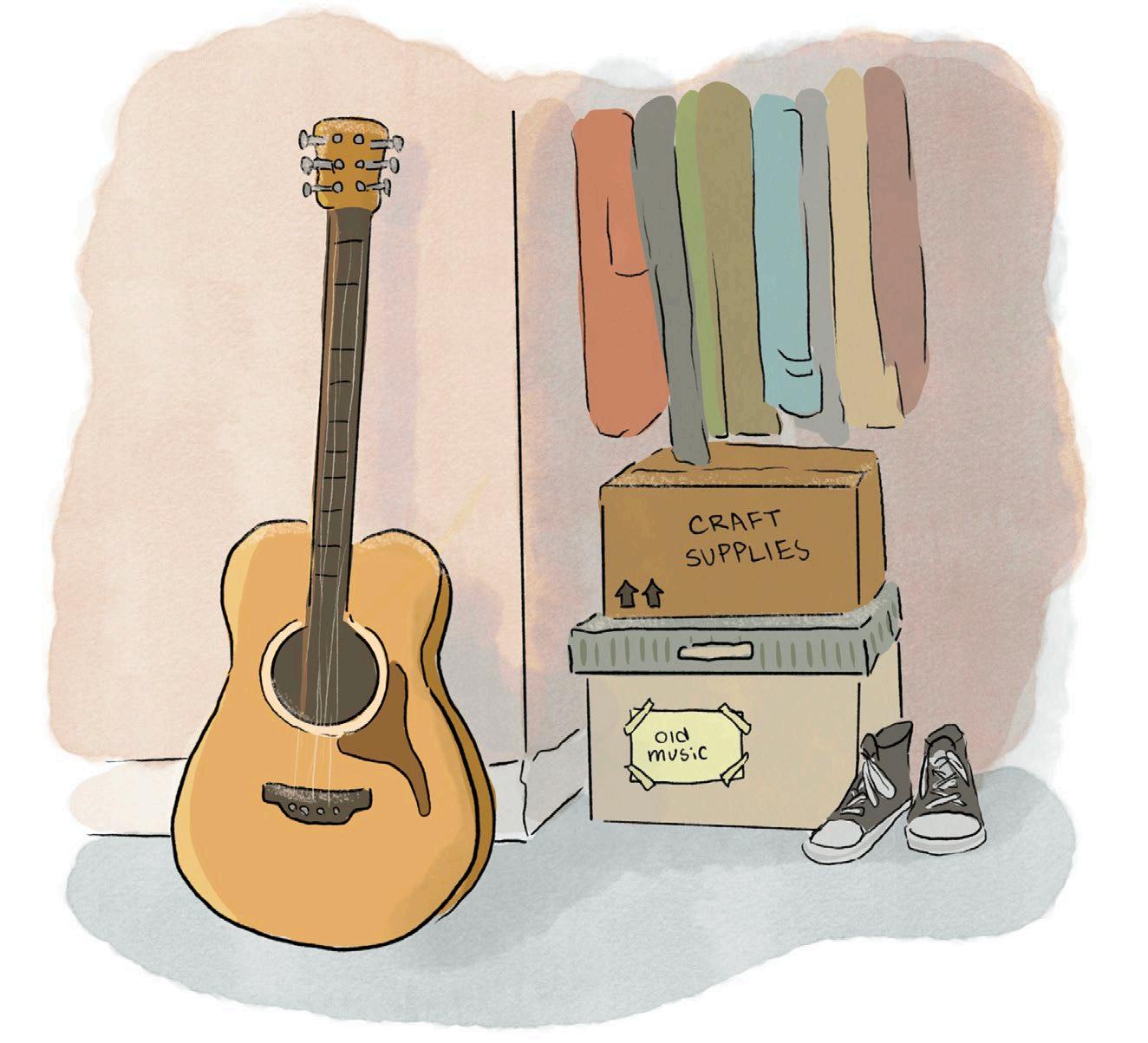
My guitar has been collecting dust in my room for months. I probably haven’t even touched the strings in about a year.
I hate that.
The thing is, I used to write songs in my bedroom for hours. It brought me immense joy, pouring out each lyric as if I were becoming a pop star. Now, the sound of silence rings even deeper.
My childhood fashion sketchbook sits inside a bin, somewhere packed away in my utility closet. In it remain drawings of clothing for imaginary models and luxurious runways. I used to sit and sketch for hours on end, unbound to the possibilities that ran through my colored pencils. Creating designs was fun, and not because I was talented (becoming the next Vivienne Westwood was a tad out of reach), but because it was enthralling.
Whatever it was that filled my creativity, such as stringing together friendship bracelets or painting an entire deck of cards, I hadn’t felt constricted by my experimental curiosity. I found value in picking up new hobbies and projects, no matter how elaborate they were. On a random day, I’d find the urge to learn something new and run with it.
Now, I can’t say the same.
As I write in my sophomore year college apartment, I can count how many different hobbies I have on one hand, and one of them is adding new features to my LinkedIn profile. Somewhere along the way between younger Charlotte and older Charlotte, I’ve lost what it means to find momentum in passion. I reflect on early memories when these issues weren’t so prevalent.
Take kindergarten, for example, and the encouragement of creative freedom. When you’re 5 years old, you’re challenged by a blank piece of paper — excited by it, even. Nobody is guiding your marker, and there are no rules to follow. It’s a page of opportunity, and you’re surrounded by mentors who motivate your artistic liberty. Granted, many followed the kindergarten trend of drawing houses with curtain-draped windows and puppy dogs, but it didn’t matter. It was the abundance of markers laced with this inventive freedom that struck dopamine, the most prominent purpose.
One of the best parts of these collective brain-breaks was the lack of perfectionism and pressure. No child’s drawing was to be hung in the Louvre, but we didn’t care. When you’re that age, you’re not creating art to be the best at it — you’re creating art because you want to. All of those origami swans and silly iMovies originated because of joy and fulfillment. Even though we acknowledged our artistic shortcomings, we still enjoyed doing it.
Something we need to get back to.
The problem today is that fewer people indulge in hobbies unless it validates their talent.
In the daunting hours of college courses, internships and exams, what hour am I to paint a picture or write a story?
The issue is that many feel trapped in a cycle of constant work and drained energy. Few wish to engage in brainy activities after they’ve completed what feels like a mountain of responsibilities. Instead, their “filler” hours are spent mindlessly scrolling through TikTok and Instagram, which are just engaging enough to capture attention.
In those unplanned moments of social media hypnotization, you probably could have painted that picture and written that story. But many don’t. Their safety net revolves around what they consider themselves capable of. Today, there’s too much demand to already be good. Talented. Skillful. It’s the combination of small pressure-packed moments, ranging from work expectations, strict habits and perception value. There’s no room to be anything less than perfect.
No wonder adults equate simple acts with extreme expectations. With authoritative standards breathing down their necks, they’ve forgotten what it means to invite mistakes.
Stigma around prior creative experience is far too limiting yet widely accepted. Potential talent is left unfulfilled when we indulge solely in instant gratification. If you’re someone who’s played the guitar for 10 years, it’s easier to pick back up than, say, learning the saxophone. Similarly, an avid sewer might not pursue new ventures like pottery.
Activities you excel at are easier and more manageable, leaving you with an abundance of time for repetitive tasks. This leaves many following the self-serving norm. In other words, individuals are unwilling to take new risks due to stability in other high-level performances, often wondering, “Why try if I’m not skillful?”
Graphic by Ava Edwards
Mental constraints are the enemy of a well-lit lifestyle. And it’s not just hobby execution that is a victim of this — it’s also opportunity. Self-doubt is what promises a name left unrecognized. For instance, what if Vincent van Gogh succumbed to the hate surrounding his paintings? How about if Michael Jordan had never continued playing basketball after getting cut from his high school team? These trailblazers would probably be forgotten.
The key to an elevated mindset is fostering passion. If you unlock new doors, you will discover new paths. Who knows — you could become the next bestselling author, Oscar-winning actor or a renowned Paris fashion designer. The fear shouldn’t be whether you remain worthy of chasing passion — it should be the fear that you never do. I encourage you not to limit yourself to comfort, for you never know what may alter the course of your life.
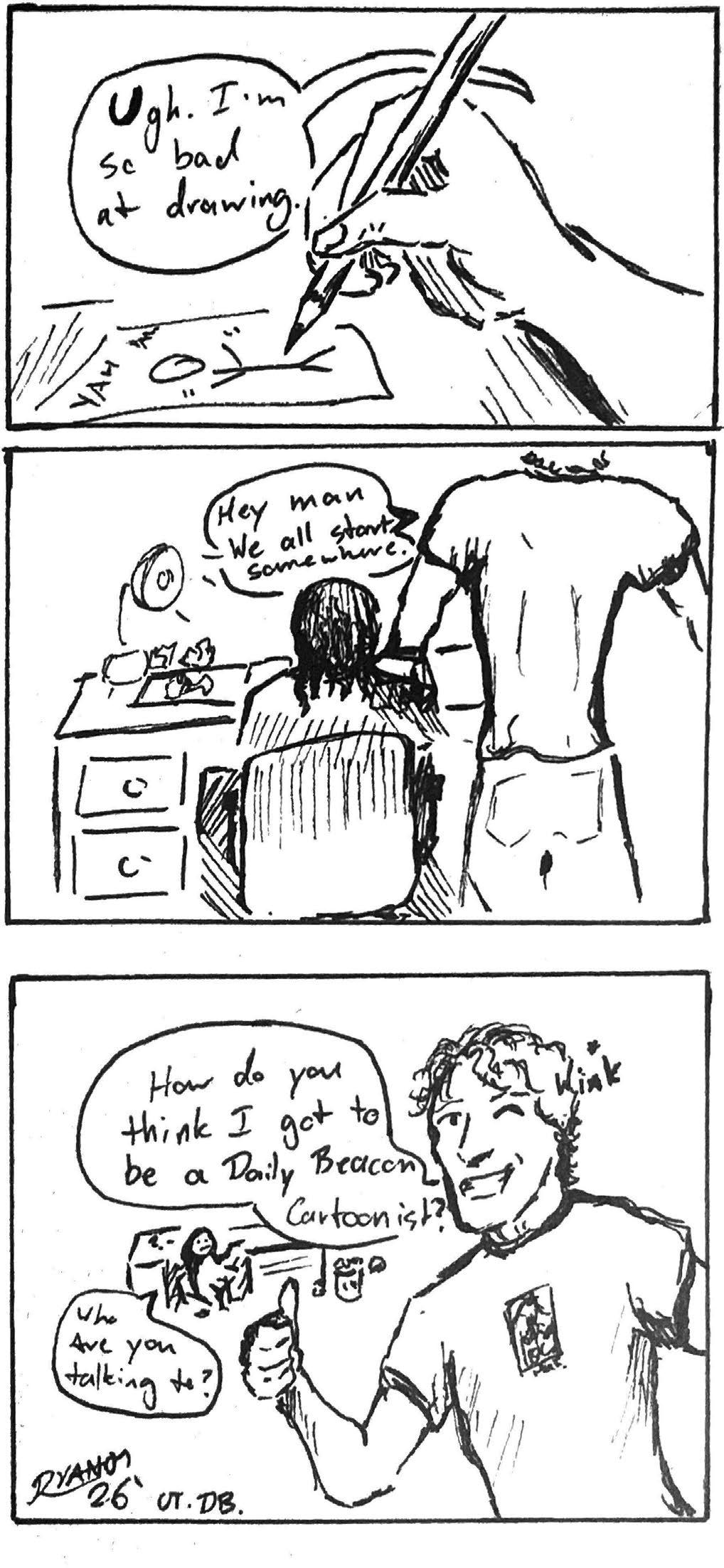
After sitting with these stunting tendencies, I decided to put my own advice to the test. It began with a blank piece of paper. There are many things I could have drawn, like a large house with curtain-draped windows or a puppy dog. But despite the urge to create a perfect picture, I did the opposite. I let myself be bad. Squiggles and splattered colors surrounded big, bubbly words labeling “You’re Cool.” By the end of the drawing, I realized it’s not good by any means. In fact, I misspelled the word you’re, but I think there’s value in that. I was too entranced by the enjoyment that I hadn’t even noticed an error. I challenge you to do the same. Live in the world of creation rather than the pressure of validation. We need more magicians, quilters, bird callers, cartoonists and unicyclists. And there’s no pressure to start well. In fact, do it bad. DAILY
My guitar hangs untouched because of doubt. In recent years, life has felt too serious. Too constricting. I’ve been met with thoughts like, “it’s too late to learn,” and “I’m not good enough” — mentalities I’m not alone in.
According to BBN Times, “Adults are too well versed in what they cannot achieve and what cannot be done.” Instead, they are immersed in the whirlwind of “rules, regulations and compliance.”
Unfortunately, many adults remain discouraged regarding what they can and cannot do. Instead of facing new creative ventures head-on, they revel in hesitation. A loud clock ticks away the minutes of self-discovery and spontaneity as we focus too much on a safe routine.
The sad thing is that most undermine their talent. In fact, only 39% of people identify as creative, while a study by AdAgefound that 75% believe they aren’t living up to their creative potential. In other words, there’s too big a gap between diffidence and desire.
But in reality, anyone can be creative. You must remember that being creative means to create. It doesn’t matter whether you’re good. We need to allow for grace and mess-ups. If not, what’s the point of reaching for anything with value? Aren’t mistakes the groundwork for reward?
MARISSA HUNT Columnist
Welcome to Between You and Me, an opt-out from the algorithm’s personality of the week. No gatekeeping, just honest opinions. You’re on the invite list, so let’s spill! Between me and you, we should throw out the phrase “being petty.” It’s done more to silence people than describe them. Maybe it’s time we reclaim it or replace it altogether. Some phrases come prepackaged as insults: “you’re being overdramatic,” “you’re too much,” “you’re being petty.” We’ve heard them so often that the negative connotation hits before the words even land. But if you really think about it, these phrases weren’t created to help us understand ourselves. They were crafted to quiet us. To make us shrink and downplay our emotions. To keep us from naming our feelings or pushing back when something doesn’t sit right. They’re less descriptions and more silencers, designed to make us doubt the very emotions trying to protect us.
Let’s start here: What does “petty” even mean? According to Onward Psychological Services,
“petty” is defined as “behavior or actions that focus on trivial matters, usually to the detriment of harmony and goodwill. It involves giving undue importance to minor details or offenses, often accompanied by an exaggerated response.”
“Undue importance to minor details.” Wow. Honestly, this is a perfect example of how language gets weaponized. It’s a tidy little phrase that basically says, “your feelings don’t matter.” It frames any emotional reaction as an overreaction, any boundary as an inconvenience and any self-advocacy as unnecessary drama. In other words, it’s evidence of how easily our emotions get dismissed before we even have the chance to understand them.
In an experiment conducted by Tami Kim, Ting Zhang and Michael I. Norton, they found that petty acts feel satisfying because they allow people to assert control, signal boundaries and restore a sense of justice in certain low-stakes situations. Seems like a fair deal to me.
We all know this scenario: a friend only hits you up when they need something. They’re not valuing you — they’re using you. Choosing not to answer isn’t losing anything — it’s clarity.
croselin@vols.utk.edu.
Columns and letters of The Daily Beacon are the views of the individual and do not necessarily reflect the views of the Beacon or the Beacon’s editorial staff.
You’re simply letting go of someone who never gave you the energy you deserved in the first place. That’s not petty. That’s protecting your peace. Try another one. Imagine you’re the most decorated freestyle skier in Olympic history and you’ve just won another silver medal. A male journalist asks you the most petty question, “Do you see this as two silvers gained or two golds lost?”
This is a real situation that happened to Eileen Gu, the aforementioned No. 1 freestyle skier in Olympic history. Her response was automatic and incredibly done: “I’m the most decorated female freeskier in history. I think that’s an answer in and of itself.”
Afterward, she added, “The two medals lost situation, to be quite frank with you, I think is kind of a ridiculous perspective to take. I’m showcasing my best skiing, I’m doing things that quite literally have never been done before and so I think that is more than good enough, but thank you.”
Many saw her response as petty, which is predictable, honestly. Research shows that women who assert themselves are judged more harshly than men, so “petty” becomes an easy label to shut
Gu down without engaging with what she actually said. So, has the “petty” label overstayed its welcome? I think it has. Setting boundaries is essential, and sometimes a little pettiness isn’t about spite and serves more for self-protection. Maybe the definition of petty is the problem. If “petty” means surviving a world that keeps testing our patience, then a small, strategic pinch of pettiness is really just boundary maintenance. Now that’s something I’ll always endorse.
Because the truth is, we secretly love being petty. Maybe the word isn’t the insult people think it is. Maybe it’s a reminder that we’re allowed to defend ourselves, even in small, slightly dramatic ways. Reclaiming pettiness might be the most honest form of boundary-setting we have.
Your thoughts are my favorite read. Email me at mhunt44@ vols.utk!
Margie E. Burke

Tennessee baseball gets back on track
Check out our coverage of the Vols’ sweep of No. 9 Mississippi State over the weekend, plus stay tuned for more content as Tennessee hosts Ole Miss at Lindsey Nelson Stadium.

Crunch time on the court
Tennessee tennis is set to take part in the SEC Championships this week.
Beat writers Nathan Miles, Connor Whitney and Tommy Brancato will have you covered as the Vols and Lady Vols look to etch their names into league history.

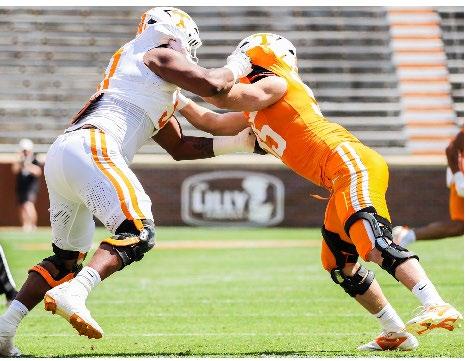
Orange & White Indepth
Want more Tennessee football? Check out our live updates from the Orange & White game for a play-by-play breakdown of the action.
NATHAN MILES Contributor
The second time was the charm for Tennessee women’s tennis in a 4-3 win against LSU.
The No. 19 Lady Vols (13-8, 8-7 SEC) won a gritty showdown Saturday against the No. 12 Tigers (15-8, 8-7 SEC), taking the doubles point and wins on Courts 1, 2 and 5. The Tigers had previously swept the Lady Vols early in the season at the ITA Indoor Championships.
“LSU is one of the best teams in the country, and so are we,” head coach Alison Ojeda said.
“I think the difference between us winning this match and not winning it was us going after our shots at the right time, but with low stress. High intensity, but in a calm way.”
The Lady Vols quickly grabbed the momentum to open doubles play and didn’t let it go. First to finish were Catherine Aulia and Leyla Britez Risso, taking three straight games to defeat Kenna Erickson and Ella McDonald on Court 2, 6-3.
Then, Katrina Scott and Maeve Thornton delivered the first point of the day for Tennessee on Court 3. Falling behind 3-2 to Addison Lanton and Alexia Marginean, the Lady Vols pair found their groove and didn’t lose a game from there, taking the set 6-3.
“I think one thing is just us trusting each other,” Scott said. “We’ve come to a place where we really know each other, and we’re able to find so much joy on the court while playing that it just feels easy, to be honest.”
Francesca Mattioli and Vanesa Suarez were also up 5-1 on Court 1 when their teammates clinched the doubles point.
LSU tied it up as Lanton took down Suarez 6-1, 6-2 on Court 3. But the Lady Vols took the lead back on Court 5, as Mattioli sprinted to victory over Kinaa Graham, 6-4, 6-1. Graham’s powerful forehand was a challenge for Mattioli, but the sophomore stayed composed to take her opponent down in straight sets.
“I knew that I had to be patient,” Mattioli said. “I knew I was going to get it, I was just fighting and trusting myself.”

The Tigers would once again tie the dual on Court 4. Catherine Aulia struggled in the first set against Carolina Kuhl, losing 6-0. She looked better in the second set, but couldn’t finish, falling 7-5. LSU took the lead for the first time on Court 6, as Erickson defeated Audrey Aulia. The Tennessee freshman fought hard to force a tiebreaker in the first set, but struggled in the race to seven, losing the set 7(7)-6(1). Audrey Aulia couldn’t force a third, falling 6-3 in the second set. Britez Risso made it 3-3 with a Court 2 win over McDonald. After
splitting the first two sets, win ning 6-3 and losing 6-2, Britez Risso put her foot on the gas to win the final set 6-2 and claim her 16th win this spring, tying her spring win total from last season.
“It feels incredible,” Bri tez Risso said. “I can say that I’m proud of myself, because these two days have been emotional for me. But I really just wanted to get the win for my team and make them happy.”
With the dual tied 3-3, it came down to a marquee
CONNER WHITNEY Contributor
Not every story gets a fairytale ending.
Tennessee men’s tennis was swept 4-0 by No. 12 South Carolina on Senior Day at Barksdale Tennis Stadium. The Vols (1017, 1-13 SEC) now look ahead to the SEC Tournament, where they will be the lowest seed, while the Gamecocks (15-7, 8-6) will finish in the mid-pack of the conference standings.
“Just been kind of the same thing on repeat,” associate head coach Matt Lucas said.
The program, with athletic director Danny White on hand, honored seniors Alejandro Moreno, Ethan Muza and Boruch Skierkier, bringing their family and friends on court prior to the start of the match.
Moreno, paired with Piotr Siekanowicz, kicked off the session by securing an early break on Court 1 versus the tandem of Lucas da Silva and Paul Gazeu, the 11th-ranked pair in the country. As they set the tone on one, Muza paired with freshman Woodson McMillin, and the two competed with energy on Court 3 against Charlie Swaine and Gabe Avram.
The Vols, needing a break to stay in the match on Court 3, gave themselves three break points at 3-5 to get back on serve. But the Gamecocks came up with big serves on each of those points to snuff the rally and take the court 6-3.
While the Vols stretched their advantage to 5-4 on Court 1, the Court 2 pairing of Jose Garcia and Shion Itsusaki was dead even against Max Stenzer and Sean Daryabeigi. However, the Gamecocks broke at 4-5 to secure the court, 6-4, giving the visitors the
doubles point.
The singles session saw South Carolina sweep the opening set on each court. Particularly painful opening stanza results were at Courts 4 and 5, as both Muza and Itsusaki dropped opening set tiebreakers.
“We lose three tiebreakers, first set at five, second set at three, first set and four, you know?” Lucas said. “You get those first sets, and the match is completely different.”
Moreno struggled in his match, taking a 6-0 loss in the first set. He appeared to be dealing with a foot injury, as the trainer visited him to wrap his ankle at 0-4, 0-15. Despite the nagging ankle, he found his form and pushed back against Daryabeigi in the second set, pushing it to a tiebreaker.
However, he was unable to stay alive, and a shank forehand ended the match as he fell 6(3)7 to drop the match in straight sets.
Amid his rally, the Vols forced decisive sets on four courts. Skierkier competed for the first time up on Court 2, versus Gazeu. His looping lefty forehand gave fits to the righty and his one-handed backhand, and the Argentine was able to trap his opponent in his backhand corner, well behind the baseline for much of the second set.
On four, Muza dropped an early break in his second set versus Stenzer, but he stayed quite close. At 3-5, he faced four match points against his serve, but the Pittsburgh-native clawed his way back to force a deuce point. At the deciding point, he unleashed a forehand which drew an error wide and let out a primal yell. He then shouted, “I’m not leaving,” as he marched to his bench for the changeover.
“He’s a fighter,” Lucas said. “He gives every-
matchup on Court 1. Scott and LSU’s Cadence Brace, two players and friends with history against each other in the pro circuit, squared off in a collegiate setting for the first time.
Scott started off hot, taking a 5-1 lead in the first set. But despite the score, every point was close, and Brace crawled back with five straight games to make it 6-5. Scott stayed in it, though, forcing a tiebreaker and finally winning an exhausting set, 7(8)6(6). The second set was much swifter. Scott didn’t look back and clinched the dual with a 6-1 win.
“I was just trying to keep my head down, trying not to look at the other scores,” Scott said. “I felt like the match was in my hands, so I was either going to win it in my hands or lose it in my hands.”
The Lady Vols got the startto-finish effort needed to claim the rematch against LSU and head into tournament play with positive momentum, as they took both matches on their final homestand. With the win, Tennessee will jump LSU for eighth in the SEC standings, meaning the Lady Vols will have a bye in the conference tournament next week.
“We’ve been talking about things clicking on the same day, and I think it did today,” Britez Risso said. “Like (Ojeda) said when we were in the circle, it’s a team win today.”
The Lady Vols finish the regular season with a win and move to 8-7 in conference play. They head to Norman, Oklahoma, for the SEC Tournament and

thing he’s got all the time out there.”
Again, he would fight off a match point at 4-5, and he gave himself a break opportunity on a deciding point. But Stenzer hammered a serve up the tee, and the reply from Muza drifted just long of the baseline to break his resistance and secure the match 7-6(5), 6-4, putting South Carolina ahead 3-0.
“We’re just not quite getting across the line,” Lucas said. “I feel for them, they’re putting it out there, just not going our way.” The decisive point came on Court 6 for the Gamecocks. Siekanowicz was able to push the match into a third set, but he
could not maintain the excellent level he showed in the doubles session alongside Moreno. He struck a backhand into the net to end the match 6-3, 4-6, 6-2 for Avram. “We’re just, I don’t want to say snakebit because you got to make your own destiny, but all season long, we’ve had matches like this where we’re on the wrong end of it,” Lucas said.



TREVOR MCGEE Sports Editor
For the second year in a row, eyes were stuck on the passers for Tennessee football’s annual Orange & White game.
While the drama did not include a quarterback being absent on the day of the game this time, it did include a true three-man battle on display — where each continued to prove their value as spring practice wraps up.
George MacIntyre, the only returning signal-caller, handled what could be considered first-team reps with the starters. Faizon Brandon, the Vols’ five-star true freshman talent, and Colorado transfer Ryan Staub handled the remainder of the drives.


The three quarterbacks guided Tennessee to 385 yards of offense with four drives that ended in scores.
“I do love the growth from that group,” head coach Josh Heupel said. “I love the way that they competed with themselves, with each other. I love the way that they’ve grown every single day.”
Tennessee handled different periods on Saturday, opening with a 7-on-7 drill before eventually getting into a live-action scrimmage that featured 15 total drives. Here’s how the trio of passers performed, with unofficial stats tracked by The Daily Beacon.
MacIntyre
The leading candidate for the job — solely based on experience in the system — finished the live-action period 15-for22 for 122 yards and no scores. He manned the offense for four drives and manufactured one scoring drive in a two-minute drill that ended in a 37-yard Josh Turbyville kick to send the scrimmage to halftime.
MacIntyre lived off passes near the line of scrimmage. His longest completion of the day was a sideline toe-tap by transfer tight end Trent Thomas. It was one of three passes that went for more than 10 yards on the day. He was marked for one sack and rushed the ball twice for 14 yards.
“I feel a good bit more comfortable,” MacIntyre said. “I think a lot of that growth happened between practice one and practice 15, not necessarily between now and last year. Just a lot more comfortable and a lot
more clear visions, operationally, getting in the playbook, and once you have 15 days stacked on top of each other, everything felt really clear.”
Brandon
The talented freshman struggled, oftentimes holding onto the ball too long. Brandon went 6-for-16 for 36 yards and did not lead a scoring drive. He carried the ball four times for 25 yards, but was sacked twice for a loss of 16 yards.
Brandon led six drives and guided two scoring drives to finish it out. Javin Gordon burst through a defender to score a 61yard touchdown. Then, he moved the offense into field goal range for Cooper Ranvier to drill a 47-yarder to finish in a 10-10 tie. His most significant play was a 17-yard scramble on the 11th drive of the game, but three straight negative plays beforehand prevented it from being a first down, and the drive stalled.
Brandon struggled, however, fitting the ball in downfield. He took multiple deep shots, and none came within reaching distance of the receivers.
“I would say it was tight coverage and I think I could have gave my guys more of a shot, but I think it was a mix of those two — me giving my guys more of a shot and the tight coverage that was there,” Brandon said.
Staub
Tennessee’s lone quarterback with experience starting a collegiate game proved to be the most impressive statistically. Staub went 7-for-13 for 130 yards and a touchdown — launching a 72yard score to a wide-open Carson Whitehead down the sideline on the first drive of the game.
“Got the right reads,” Staub said. “We were three-by-one, the safety to the boundary, played to the field, and we got the vertical up the sideline and so it’s a good way to get on the board early. That was fun.”
Staub also had an issue with holding onto the ball too long, taking three sacks for the day. He also missed another touchdown pass to Whitehead on a deep ball.
The experienced signal-caller did show the most promise on intermediate throws. He fired in completions of 13, 14 and 20 yards to go, along with his 72yard score.
If the spring game is any signifier, it is that Heupel and company will need fall training camp before a starter is named.
With the outdoor season officially underway, the Vols set the tone for this spring season at the 2026 Tennessee Invite with over 35 top-five finishes this weekend, hosted by Tennessee at Tom Black Track at LaPorte Stadium.
Despite the hardware, head coach Duane Ross is focused on a different kind of progress.
“We haven’t won a national title yet, so clearly there’s some things we need to do a little better,” Ross said. “When we put this team on paper, it’s one of the best teams in the country — but that’s on paper. You know, as good as they are, we need work on believing that we are that good. And we are.”
Across the two-day home meet, Tennessee track and field put together multiple standout performances.
Field events
In the discus, Cedricka Williams delivered a career-defining performance. Her first-place 60.56-meter throw broke the school record and moved her into the No. 2 spot nationally in the NCAA outdoor rankings.
“It’s a trust the process thing,” Williams said. “I’m setting a trend unintentionally because I did this at my previous schools.”
The men’s pole vault team, which is currently the No. 1 team in the nation, was led by Cade Gray, whose outdoor personal best clearance of 5.66 meters placed him first in the meet and No. 3 nationally. Blake Sifferlin placed third with a jump of 5.51 meters, tying him for the No. 12 spot nationally with Ismaila Sawaneh and Clarke Byram, both of whom also jumped 5.51 meters and placed fourth and fifth, respectively.
The women’s pole vault team also secured a notable placing, with Hannah Grace taking first place with a personal best of 4.52 meters, which takes her to No. 3 in the NCAA for outdoor rankings. Right behind her came Skye Tolbert, jumping 4.42 meters for another personal best and placing her No. 7 in the NCAA. Kendall Ford wrapped it up with a fourth-place 4.12-meter clearance.

Grant Campbell and Gray took home event titles in the high jump and long jump events, respectively. Campbell moved into the No. 9 spot for high jump at 2.17 meters, while Gray moved to No. 8 for long jump with 7.82 meters. Both the men’s hammer throw and men’s shot put produced three Vols in the top five. Igor Olaru took first for hammer throw with a 69.66-meter throw, and JL Van Rensburg placed first in the shot put at 19.57 meters. Aron Alvarez Aranda, a discus-throwing machine, took first place with 60.51 meters. Freshman triple jumper Endia Smith added a first-place finish with a 12.57-meter jump, while fellow freshman Brett Jones put forth a first-place personal best of 50.75 meters in the women’s javelin.
Track events
Tennessee exemplified its speed across the track events.
The men’s 400-meter hurdles dominated the podium. Nikola Kostic placed second at 50.25 seconds, milliseconds away from his personal best. West Point graduate student Calvin Wetzel placed third at 51.69 seconds, and Harry Barton finished the dominance in fifth place with 52.05 seconds on the board.
Traunard Folson, Davonte Howell, T’Mars McCallum and Serges Taha guided the men’s 4×100-meter team to victory with a time of 38.97 seconds, currently the seventh-fastest time in the outdoor season. The men’s 110-meter hurdles also had three top-five finishes, with Kalib Branch taking first at 13.62 seconds, his
second all-time best time. Taha and Yourie Lawrence-Clarke followed with second and fourth-place finishes. On the women’s side, the 4×400 meter team also secured a first-place finish, crossing the line in 3:36.77 seconds. Lauren Jarrett placed second with a personal best of 23.39 seconds in the 2 00-meter, with Jaci Sievers placing third in the 1500-meter with a time of 4:28.95 seconds.
“Win or loss at the NCAA Championships or the SEC Championships, I want to see this team getting there and performing at their best and performing to the team I know they can be,” Ross said.
The Vols will continue their season April 16-18 at the Bryan Clay Invitational in Azusa, California.