Who runs the Barstool, SixPackVols social media accounts? page 8
To infinity and beyond: Students bring space industry together, page 5 The Milk Revolution is here, page 12 Heated Rivalry: Catalyst for culture change?page 10 Inside South Knoxville’s The Pink Cactus, page 8
DAILY BEACON STAFF AND POLICY INFORMATION
EDITORIAL
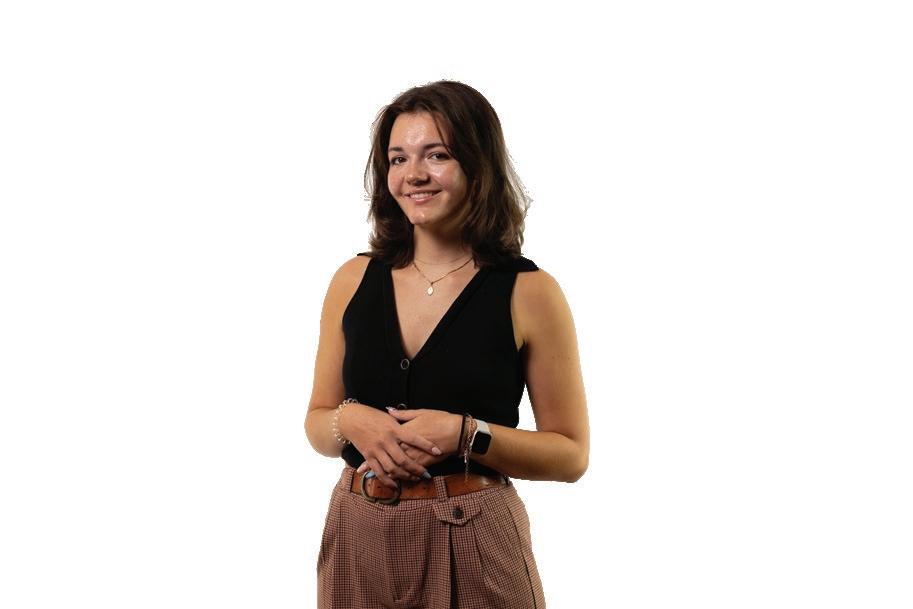
EDITOR-IN-CHIEF: Caden Dyer
PRINT MANAGING EDITOR: Emily Hurst
DIGITAL MANAGING EDITOR: Ansley Graves
COPY CHIEF: Lauren Holladay
NEWS EDITOR: Patrick Busch
ARTS & CULTURE EDITOR: Harper Brabson
SPORTS EDITOR: Trevor McGee
ASSISTANT SPORTS EDITOR: Alex Sarkis
OPINIONS EDITOR: Natalie Dripchak
PHOTO EDITOR: Jackson Clavier
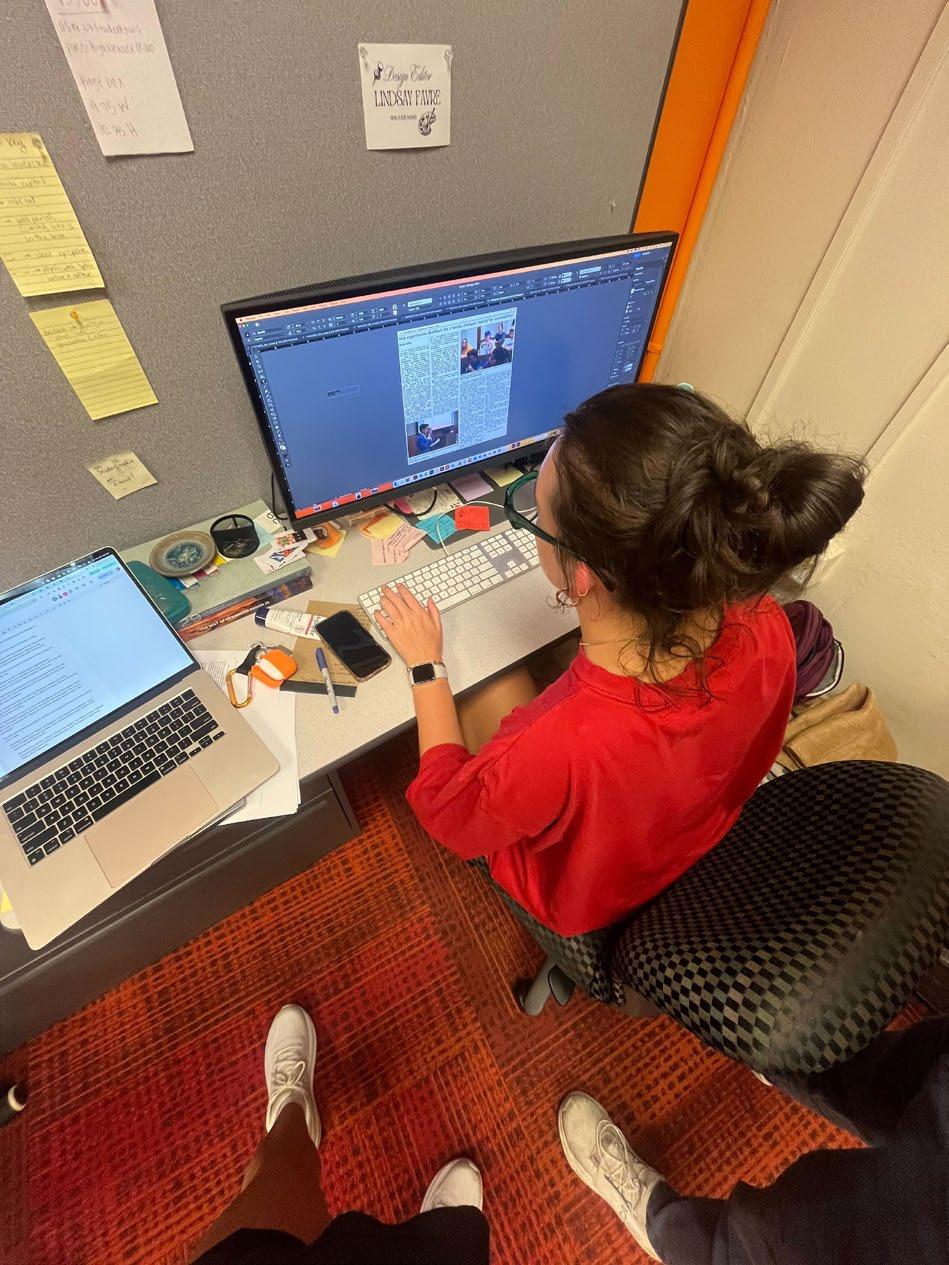
DESIGN EDITOR: Lindsay Favre
ENGAGEMENT EDITOR: Sarah Portanka
AUDIENCE DEVELOPMENT EDITOR: Sophie Mehta
COVER DESIGN: Lindsay Favre
PAGE DESIGNERS: Emma Fingeret, Ashley
Cammarota, Renee Allen, Maya Williams, SaraJane Weber, Ava Balducci, Ava Edwards, Soma Fulwiler, Kate Wims, Lili Ellis
GRAPHICS BY: Lindsay Favre, Ava Edwards, Ava Balducci
ADVERTISING/PRODUCTION
ADVERTISING MANAGER: Abigail Cheslock
ADVERTISING REPRESENTATIVE: Joe Slott
CONTACTS
TO REPORT A NEWS ITEM OR SUBMIT A PRESS RELEASE, please email editorinchief@utdailybeacon.com or call (865) 974-2348
TO PLACE AN AD, please email admanager@utk.edu.
LETTERS POLICY: Letters to the Editor must be exclusive to The Daily Beacon and cannot have been submitted to or published by other media. Letters should not exceed 400 words and can be edited or shortened for space. Letters can also be edited for grammar and typographical errors, and Letters that contain excessive grammatical errors can be rejected for this reason. Anonymous Letters will not be published. Authors should include their full name, mailing address, city of residence, phone number and e-mail address for verification purposes. Letters submitted without this information will not be published. The preferred method to submit a Letter to the Editor is to email the Editor-in-Chief.
CORRECTIONS POLICY: It is the Daily Beacon’s policy to quickly correct any factual errors and clarify any potentially misleading information. Errors brought to our attention by readers or staff members will be corrected and printed on page two of our publication. To report an error please send as much information as possible about where and when the error occurred to managingeditor@utdailybeacon. com, or call our newsroom at (865) 974-5206. The Daily Beacon is published by students at The University of Tennessee on Wednesday during the fall and spring semesters. The offices are located at 1345 Circle Park Drive, 11 Communications Building, Knoxville, TN 37996-0314. The newspaper is free on campus and is available via mail subscription for $200/year or $100/semester. It is also available online at: www.utdailybeacon.com
Letter from the Editor: Waving goodbye to tabloid
CADEN DYER Editor-in-Chief
Hey Vols, I’m back! But this time, I’m not here to give you the ramblings of my often long-winded mind. Instead, I’m thrilled to tell you this is the last tabloid Daily Beacon you’ll be reading while I’m editor-in-chief.
What on earth is tabloid, you might be asking.
A tabloid newspaper is smaller in size (usually 11 by 15 inches), and it is usually no more than five columns across. It’s exactly what you’re holding in your hands right now.
In contrast, broadsheet is the traditional style of newspaper (think the gigantic print your grandparents get delivered every day to their doorstep).
Since beginning its publication in 1965, The Daily Beacon printed a broadsheet paper. On Jan. 8, 2015, the Beacon switched to tabloid under the direction of Editor-inChief Claire Dodson.
In a letter from the editor, Dodson affirmed that although the look changed, the Beacon’s commitment to journalistic values didn’t.
“Our new horizontal format is easier to carry and read in class. It’s also thicker —
packed with more of the great content we bring you every day,” Dodson wrote.
That all may be true. The layout and feel of The Daily Beacon changed for better or worse. But with all due respect to Dodson, I stand by a concept she may not have counted on, and that’s the credibility aspect of a newspaper which has now been around for 60 years.
Broadsheet just screams “newspaper!”
Tabloid screams “magazine.”
And I’d like to point out that in today’s modern language, the word “tabloid” is often used as an adjective to refer to a type of journalism — the kind that prioritizes outrageous words and sometimes publishes fake news. The use of the word “tabloid” as a noun (which is its first definition in Merriam Webster), is in reference to the size of the physical print.
Broadsheet newspapers allow for greater visual representation of stories and innovative design elements. We’re excited to expand our print stories with photographs and infographics that blend together in an immersive reader experience.
I would argue that the Beacon has never been in a better position to print in broadsheet style. Over the past year, we have consistently printed papers chockfull of hard news, a commodity that past Beacon years might have found hard to come by.
The timing is impeccable — my team
has exploded in a fiery storm of journalistic passion that won us third place nationally and first place in regional competitions. The publication you’re reading right this second is one of the best student newspapers in the country, and I think our print format should reflect that.
We’ve done 10 years’ time in tabloid prison. It’s time to break free.
To anyone who’s worked with me in the Beacon office for the past three years, it’s no secret that I harbor unpleasant feelings toward the tabloid style. It’s been a personal goal of mine to revive the nostalgic feel of a traditional broadsheet newspaper during my tenure at the Beacon. Whether that style sticks around after I’m gone, who’s to say?
But what I do know is that my team is fired up to print on big ole 10 by 20 inch pages and wave around a gigantic newspaper that informs, inspires and connects.
So when you return from spring break crispy red and well-rested, look for a new style of Beacon in the racks around campus — we can’t wait to give it to you.
Letter from the Design Editor: A work in progress
LINDSAY FAVRE Design Editor
I’m no stranger to shaking things up.
Taking the path uncharted, trying something new — truth be told, staying the same scares me. I’m afraid that if I don’t keep moving, I will never truly make my mark.
When the idea of switching to a broadsheet first floated by my desk, I never truly understood how hard that would be or what that process would even look like. I had a smile on my face and a can-do attitude. Sure, this would be easy-breezy, beautiful, Covergirl.
We set our switch for the start of this spring, but as winter break rolled around, Caden and I realized the Beacon’s resources for how much “new” we could handle were
spread too thin. I agreed to chip away at the broadsheet as she handled the new website. So, with a new deadline geared toward spring break, we started our broadsheet
The hardest part for me was feeling truly in the dark throughout the whole process.
I like feeling like an expert. I like feeling smart. But I fear nobody knows what dumb is until they’re fumbling around in Adobe InDesign trying to figure out what the point of the “Fol inside Blank” is — and truth be told, I still couldn’t tell you.
Despite every website contradicting the last so-called broadsheet “expert” and way too many tutorials whose processes have aged in the decade or so since publication, I persisted and created “Prototype 1.” This version served as a means of escapism for me during the cold, harsh Michigan winter, as I played around and tinkered with it until I could return to school.
She became a solid, never-quite-perfect
prototype that underwent various facelifts and touch-ups. I finally felt like I had found my footing, like a caveman who had discovered fire. I had finally done it.
Until I learned it was all the wrong size.
And it turned out OK. I fixed it. Sometimes you have to take a deep breath and keep on going.
Since that very incident, there have been too many fixes made as elements are still being tested and played with, and we publish in T-minus two weeks. This paper is going to be a big project — we knew that.
Sometimes you have to let go of what’s comfortable in exchange for what you want long term. Our long-term goals for this paper are better aligned with the direction the broadsheet can take us.
I am so proud of and thankful for my design team — the work they do is incredible week after week, but they are growing beyond what tabloid can offer. It’s time we move outside of that tiny square
box and really see where we, as a team, can expand our creativity.
Needless to say, this remains a major work in progress. Throughout this semester, you will see the paper change dramatically as we continue to get a handle on this shift in media. All I ask is that you give the design team some grace. We try our hardest week after week, so if something slips through the cracks — most likely and unfortunately the crossword — understand that we are students, too.
And if I get a graphic to span the entire page — snaking around text columns — before we leave for summer break, it will have all been worth it.
Art deserves a place in this world, and I believe it’s my job to make room for it.
Faculty senate discusses new administrative position, state legislation
OLIVIA LEE Staff Writer
The UT faculty senate met Monday, March 2, for the first time since November.
Provost John Zomchick addressed the faculty senate in the Provost’s Report. He brought up the newly established associate vice provost for faculty standards and conduct role, which will be filled by former Office of General Council member Lela Young.
According to a press release, Young will supervise faculty issues involving investigations of conduct and grievances, specifically providing support in legal and business matters. Zomchick elaborated on the purpose of the new role during the senate session.
“We see her role as advocacy and support of faculty, something that’s been long needed in the office,” Zomchick said. “She will be able to advise us, and be able to advise the faculty senate Affairs Committee, on matters related to the handbook.”
Zomchick commented on Tennessee HB 2194, which is currently under committee review and would streamline termination procedures, after being asked about it by a faculty senator.
“Both the administration and government relations are aware of concerns that the faculty had about this bill and
are doing their best to protect tenure in what is a very difficult environment,” Zomchick said. “That’s where we stand at the moment.”
Faculty Senate President Charles Noble also commented on the bill, first by acknowledging the dropping of HB 2581, which would have effectively ended tenure.
“Thankfully, that was taken off notice,” Noble said. “So that’s good. That’s a win.”
The new bill, Zomchick said, has more support because Deputy Speaker and Rep. Jason Zachary (R-Knoxville) introduced it.
“I’ll go on record and say it’s a poorly written bill,” Noble said. “I think it’s convoluted.”
Zomchick updated senators on the university’s approach to artificial intelligence, saying that the university has spoken with consultants about how to best handle advancing technologies with one, unified strategy.
“We are called upon to show returning investment to the families who send their children here,” Zomchick said. “That will also be a part of the unparalleled student experience to make sure that we have an institutional approach to the changes that are rippling through the information economy.”
Chancellor Donde Plowman summarized key points she made at the UT board of trustees meeting in Memphis
last week in the Chancellor’s Report. Plowman informed faculty senators of the administration’s goals to increase graduation rates by focusing specifically on six-year graduation rates.
“That six-year is a lagging indicator,” Plowman said. “That number doesn’t move very quickly.”
University administration plans to increase these rates by doubling the size of the honors program and providing specialized support to students benefiting from the Pell Grant through a new initiative called Rocky Top Scholars.
There is currently a 15-point disparity between the six-year graduation rate of
Pell Grant students and non-Pell Grant students.
“We are putting things in place to really help that,” Plowman said.
Plowman also touched on the university’s research goals, which are to expand research facilities and take on more research faculty to be more competitive amongst schools in the Association of American Universities.
“We have a potential to really grow this faculty by fall by a lot of highly productive, high-performing people,” Plowman said.
The faculty senate will meet again Monday, April 6.
Board of trustees discusses new programs, budgets, goals
OLIVIA LEE Staff Writer
The UT board of trustees met in Memphis last week, with three committees meeting on Thursday and the whole board meeting on Friday.
President, chancellor updates
UT President Randy Boyd conducted a review of the UT System Strategic Plan on Friday.
“This team works so well together,” Boyd said. “People may forget about some of the details we share, but I think they walk away with the feeling that this is one UT team that works together and thrives together.”
In addition to the system-wide plan, campus chancellors, including UTK Chancellor Donde Plowman, gave individual reports on campus-level improvements.
Plowman emphasized UTK’s current ranking in the U.S. News college list.
“We are ranked 102 right now. 102. That is not good,” Plowman said. “The major factor is our six-year graduation rate.”
Since 2019, the six-year graduation rate has increased from 72.2% to 74.5%. Plowman’s goal is to hit 80% by 2030. The six-year graduation rate is the percentage of first-time, full-time undergraduate students who complete their bachelors within six years at the same institution.
“There’s one metric that’s guiding everything that we’re going to do, and it’s the 6-year graduation rate,” Plowman said. “Everything that we are going to do to move the 6-year rate also moves the 4and 5-year graduation rate.”
Plowman’s approach to raising the sixyear graduation rate includes doubling the honors program enrollment from 2,000 to 4,000 students and supporting Pell Grant students through a program called Rocky Top Scholars, which would create specialized academic support for students funded by the grant.
“We know the biggest reason students don’t persist is not academic,” Plowman said. “It is, ‘I didn’t find a community. I didn’t find friends. I didn’t know what the hidden curriculum is.’”
The six-year graduation rate for Pell Grant students has risen from 62.1% to 62.8% since 2019, and Plowman hopes to reach 72% by 2030, and there is a gap of over 15 points in the six-year graduation rate of Pell Grant and non-Pell Grant recipients.
“We can fix that, and we know how to do it,” Plowman said. “That Rocky Top Scholars program is going to help with it.” Plowman also aims to raise UT’s social
mobility ranking. UT is currently ranked 294 on the list, and Plowman’s goal is to be in the top 50 by 2030.
UTK also has plans to put more stress on improving as a research institution.
“We set a goal of $550 million in research expenditures by 2030,” Plowman said. “In order to achieve that goal, two things have to happen, the only two things in our way. We don’t have enough faculty, and we don’t have enough research facilities.”
UTK has plans to add 495,000 square feet of research facilities between 2027 and 2030, including a national security prototype center, new computing and engineering buildings and a cancer center.
“You might look at this and say, ‘Those are audacious goals,’” Plowman said. “But are they unrealistic? No.”
Bioinformatics program
The board passed a proposal adding a Bachelor of Science in bioinformatics to UTK’s academics, which would focus on agricultural data and the management of resources.
“This program is designed to be a high-impact investment in Tennessee’s economic future, and it will be accomplished with little to no new institutional costs,” UTK Provost John Zomchick said. “Employers need graduates who can interpret complex biological and environmental data sets.”
The program will be integrated into UT’s Herbert College of Agriculture in fall 2026.
“This is not a theoretical program,” Zomchick said. “It is applied, employerrelevant and built to produce workforceready graduates.”
The new program is projected to bring in $24,912 in tuition revenue in the 20262027 school year and increase to $391,118 in the 2030-2031 school year.
“This program is strategically aligned with our state’s priorities, workforcedriven and is a fiscally-responsible academic program that builds on the University of Tennessee Knoxville’s strength in agriculture and data analytics,” Zomchick said.
Budget, finances
The board approved the governor’s budget for the 2026-2027 fiscal year, which set aside over $235 million for UTK housing redevelopment, which would equate to the addition of around 1,500 new student beds.
“The inclusion of these projects in the annual state budget amendment, which would go into effect July 1 of this year, enables UT, but doesn’t obligate us, to start the design work on these projects over the next two-year period,” Austin Oakes, Associate Vice President of the Department of Capital Projects, said.
The board reported a 6.6% increase in gross tuition and fees revenue — or an increase of over $70,000 — as a product of system enrollment increasing by about 4% in the last year.
“The main driver here of the revenue increase is the 4.4% enrollment, and not increased fees on students,” UT Treasurer Luke Lybrand said.
The board approved the acquisition of the Cherokee Mills Complex property, which will provide more space for educational and operational needs.
Student experience survey
The committee also reviewed the results of the fall 2025 Student Experience Survey, which received 20,717 responses systemwide.
The statement with the strongest percent of agreement since read, “My campus offers the resources and/or support needed for my success as a student,” with 76% of respondents agreeing. The statement with the lowest percent of agreement read, “I believe my campus listens and responds to student needs,” with 54% of respondents agreeing.
Both the system and UTK saw increased agreement in each statement since 2021.
“Every need is met with support and efficiency,” one UTK student responded. “I would recommend UTK to anyone seeking a positive and successful collegiate experience. I’m honored and extremely proud to be a Vol!”
The UT board of trustees will reconvene for its annual meeting June 29-30 at UT Southern. The executive committee will meet May 15.
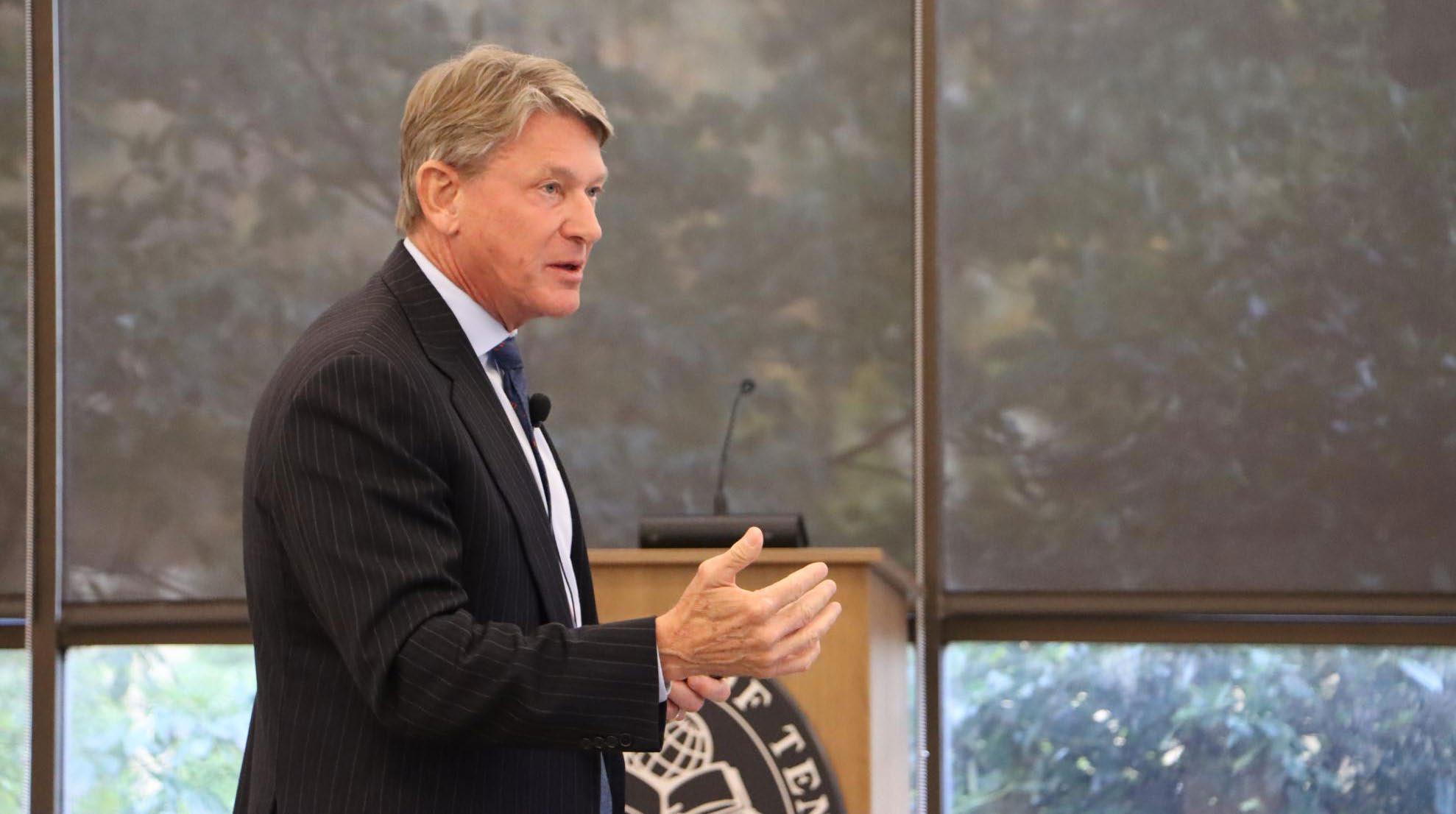
UT System President Randy Boyd at the fall 2025 board of trustees meeting on Friday, Oct. 24, 2025. Jed Baso / The Daily Beacon
‘Game on’: Hundreds convene in Knoxville as space race escalates
PATRICK BUSCH News Editor
UT students are closing the gaps in a widespread space industry.
Two hundred and fifty students from more than 25 schools across the nation gathered right in Knoxville, Tennessee during the weekend of Feb. 28 to discuss bringing the frontier of space closer to the grasp of aerospace undergraduates.
The conference, put on entirely by students a part of the Student Space Technology Association, sought to connect the wide-ranging and disconnected space industry, provide students with vital networking opportunities and empower them to pursue their careers.
The headline sponsor of the event, Type One Ventures, is a venture capital firm focused on “investing in an interplanetary future.” Ryan Kriser, a partner at the firm, explained why this moment for space is unique.
“There’s two structural shifts that make this moment different. First is cost curves, and second is revenue durability. Reusability didn’t just reduce launch costs, it fundamentally altered capital markets and capital formation,” Kriser said. “For instance, over the past decade, launch costs have decreased 90 to 100 times, and that has allowed entire businesses that were once thought impossible to become viable.”
Maj. Gen. John Olson of the United States Space Force and former chief of space operations mobilization assistant, echoed the sentiment that this moment isn’t only unique in its advantageousness, but in the United States’ critical need to respond.
“You are so fortunate, you live in an absolutely extraordinary time,” Olson said. “I’ll make a pretty bold statement here. I believe the nation that leads in space, hypersonics, advanced energy, material science and engineering, and probably synthetic biology, AI and quantum — the nations that lead in those in the next three and a half years, will lead the world for the next 200.”
China, Russia, Iran and North Korea are America’s leading competitors in a weapons and technology race. Olson specifically discussed Russia and China’s partnership as they compete to beat American advances in the second space race.
“This is game on. They’re laying out that international lunar research station in 2030. We’re supposed to land on the moon by 2028,” Olson said. “So this is game on. This is during your time. Whether you’re a sophomore, junior, freshman or senior here, this is so tangible. When we look at that, it’s that team sport.”
Zach Marano, president of SSTA and
senior aerospace engineering major, identified bringing together diverse students as a key goal of the conference.
“There’s a lot of different kinds of students here … we’re all very fragmented,” Marano said. “So if you do a certain kind of rocketry you go to A competition, if you do a different kind of rockets, you go to a B competition, if you do hypersonics, you go to C competition, so it’s like very subjected to what your school has to offer. … We want to bring them back in the room together and say, ‘How can we collaborate?’”
The conference also sought to bring critical networking opportunities to students at UT and across the country pursuing careers in space. Caroline Czarnecki, a first-year graduate student in systems engineering and the association’s conference chair, has long had the goal of advocating for undergraduates.
“It’s been my goal since 2023 when I joined SSTA to expand professional opportunities for all the students in SSTA,” Czarnecki said. “I needed to step out of the box of just having an event specifically catered for events specifically from the University of Tennessee and I needed to think about how we could get our name out there and a little bit more publicity around the really advanced technical things we’re doing.”
Czarnecki and her conference team of seven worked for 10 months to promote the event, plan logistics and fundraise the capital needed to make this conference affordable for students. Many of SSTA’s leaders repeatedly talked about the inaccessibility of traditional space
and executive director of the UT Space Institute, said the activity of students at the conference impressed him.
“I just want to commend all of you. It’s a Saturday, it’s a pretty day outside. There’s all kinds of things you could be doing. There’s 200 students in this room that decided that they want to invest in their professional development and do something that will not only help them,” Schmisseur said. “I just want to thank you all because we ‘worry about kids today,’ but there’s a pretty good outlook from what I see in this room.”
He elaborated on the conference’s specific impact on UT.
“I cannot understate how impressive this group has been and how they’ve organized themselves and the impact they’re having,” Schmisseur said. “Their efforts actually make all of UT’s profile (better), the degrees of all our engineering students just got a little more valuable as a result of these students’ efforts.”
conferences for students.
“I will say this conference was around $45,000 to put on, and, thankfully, we were able to fundraise for the entire thing. … So a lot of conferences, they pay for the conference by the registration, which is why it’s typically $500 to $1,500, and that is just completely unrealistic for a student. It was crucial we made this conference affordable,” Czarnecki said.
She’s particularly proud that over 20 students from UT alone told her the conference brought them tangibly closer to internship and employment opportunities, which are presently difficult to find in the aerospace industry.
“I think it’s really special that this event was put on solely by students because sometimes professional events like conferences don’t feel like they create a lot of value. … But the fact that this event was made by students, for students, made the entire experience more valuable to every person that attended,” Czarnecki said.
Schools from across the nation were in attendance, including the Nittany Rocket Labs team from Pennsylvania State University. They drove nine hours to attend, even navigating a car breakdown half-way through the journey.
“I think that this conference has been an amazing opportunity, not only for us to be able to meet other student-led engineering teams, but find out what they’re doing,” Roshni O’Connell, finance lead for Nittany Rocket Labs, said. “I found out we all kind of have the same budget, to see how we’re all taking that money and turning it into completely different things.”
John Schmisseur, associate dean
The criticality of this moment isn’t purely temporal — it’s regional as well. Resources and finances are rolling into the south as U.S. Space Command recently saw a relocation
“With U.S. Spacecom moving from Colorado to Huntsville (Alabama), there’s going to be dollars flowing to the south, so we need this kind of workforce development, and if it takes the students standing up and saying ‘f--- it, we’ll do it ourselves,’ then we’ll do it ourselves,” Marano said.
Olson spoke to the national and global elements in motion.
“The president and key leaders in Congress are looking to raise (the defense budget) to 1.5 trillion next year,” Olson said. “That’s an 80% increase in the base-load budget, which is phenomenal, but you put that against the context of the generational challenge — we have economic and national security, we have global competitors in China, Russia, Iran and North Korea, and you saw the events of today and this morning and that’s, I think, going to be another enduring challenge.”
Members of SSTA are already looking forward to setting up an even more impactful conference next year. Czarnecki reflected on what it felt like to see it all in action.
“It felt outstanding to see all of our work pay off. To see everyone so happy to be there, it really did feel amazing,” Czarnecki said. “It’s a special thing to put on an event that you have thought so much about. I mean, I wake up everyday and go to bed every night thinking about how I can make that conference the best for all the students that are coming. It was extremely rewarding to see it all work out.”
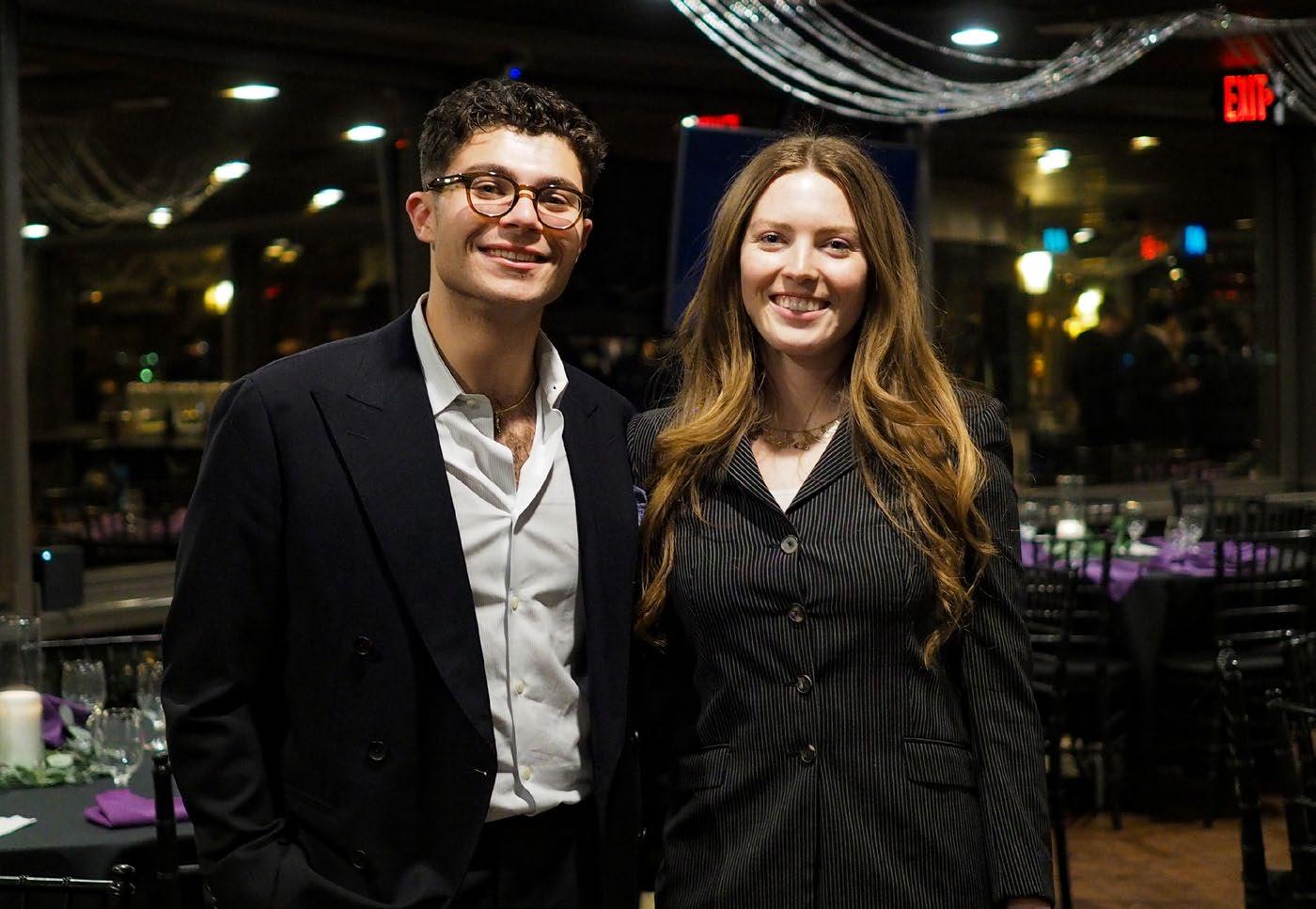
Zach Marano, president of SSTA, and Caroline Czarnecki, vice president of business development and conference chair. Courtesy of SSTA photographer Cole Kieling
Tennessee legislature reviews bill to streamline university termination procedures
OLIVIA LEE Staff Writer
A bill under review in the Tennessee General Assembly would eradicate steps currently required by UT policy in the termination of a faculty member.
“All terminations and suspensions based on an allegation of misconduct by the tenured or non-tenured faculty must be made by the institution’s chief executive officer or chief academic officer without any recommendation or vote by another faculty member at the institution,” the bill reads.
HB 2194, proposed Feb. 2 by Rep. Jason Zachary (R-Knoxville) and Sen. Adam Lowe (R-Calhoun), is scheduled to be reviewed by the House Education Committee March 3 and the Senate Education Committee March 4.
“Academic tenure serves as an important safeguard for academic freedom, the advancement of knowledge, and the protection of intellectual independence in public institutions of higher education,” the bill reads. “The safeguarding of tenure must be balanced with the responsibility of institutional leadership to ensure accountability, integrity, and appropriate professional conduct within the faculty.”
The bill equates termination policies for tenure and non-tenure faculty.
“We’re simply saying that we’re removing the very difficult process it is, that only higher (education) has, to hold an employee accountable related to discipline,” Zachary said Feb. 18 in a Higher Education Subcommittee meeting.
As the policy currently stands, the chief academic officer may invoke an expedited termination procedure for certain cases of misconduct after consulting other administrative officers, including the chancellor and faculty senate leaders. The new bill would consolidate power to the university’s chief executive officer or chief academic officer.
“There are some things in there that are certainly concerning, particularly in streamlining — in, we think, a bad way — the termination process for tenured faculty in particular,” Charles Noble, president of the UT faculty senate, said in the senate’s March meeting. “We are monitoring that closely.”
Paul Gellert, professor of sociology and treasurer of UTK’s American Association of University Professors chapter, worries about the effect the new policy would have on faculty rights.
“There are two main issues for AAUP,” Gellert said. “One is that it’s an attack on the free speech of faculty at the university, and the other is that it’s going to expand the chilling effect of everything that they’ve been doing already.”
There are some things in there that are certainly concerning, particularly in streamlining — in, we think, a bad way — the termination process for tenured faculty in particular. We are monitoring that closely.”
CHARLES NOBLE UT Faculty Senate President
The bill comes months after the termination of anthropology professor Tamar Shirinian, who faces termination proceedings after commenting online about
Charlie Kirk’s assassination in September, saying “the world is better off without him in it.” Shirinian has since filed a complaint against Chancellor Donde Plowman, President Randy Boyd and Faculty Senate President Charles Noble in both their personal and official capacities.
Shirinian was terminated directly by Chancellor Plowman in September, leading faculty members to question the legality of her termination.
“It aligns so thoroughly with what was actually done in the case that it made me wonder where the bill came from, and kind of what the motivations were behind it,” a faculty senator said. “Hearing the motivations of the representative that introduced it, it just seems that they’re targeting a way to remove discipline, you know, prevent faculty from speaking.”
The language of the bill alludes to the university’s dedication to academic freedom.
“Each public institution of higher education shall adopt policies to preserve the essential principles of institutional
neutrality, free expression, and civil discourse, and to preserve a campus climate that allows for the free expression of all viewpoints with respect,” the bill reads.
Todd Freeberg, professor of psychology and AAUP president, believes the bill contradicts itself in its commitment to due process.
“The bill pays lip service to academic freedom and due process, but different parts of the law, different parts of the text, give the chief academic officer or equivalent basically unilateral power,” Freeberg said.
“Faculty input and recommendations are specifically prohibited in the language towards the end of the bill.”
The bill follows more recent legislation proposed by Sen. Joey Hensley (R-Hohenwald) and Rep. Justin Lafferty (R-Knoxville) to end UT’s ability to grant tenure after summer 2026. The lawmakers dropped the bill after pushback from the UT community, including the UT faculty senate.
The House Education Committee is scheduled to review the new bill March 3.
Graphic by Lindsay Favre
Noah Halford’s ‘Dark MoDe Reveal’ video wins Emmy
SHELBY WILSON Contributor
Tennessee Football can now add an Emmy to its resume.
accepted by fans and other peers and stuff like that.”
On Valentine’s Day, producer Noah Halford’s viral “Dark Mode Reveal” video won the award.
Halford is a Tennessee native who has grown up a University of Tennessee fan. Previously working for NASCAR, he now works for Tennessee football as the assistant director of football creative video.
“When I was a senior in high school and then into freshman year of college, I was kind of discovering content creation and video, photo editing, graphic design, stuff like that,” Halford said.
Halford went on to gain experience in the field, taking an internship at his local church and another opportunity to create content for Middle Tennessee State University’s football team.
“It was a really good experience and that kind of got me into the sports world of content creation, because back in 2016, 2017, sports creation for social media wasn’t as big then as it is now,” Halford said. “It was becoming a thing, and I fell in love with it around then as well.”
As part of the content creation team for Tennessee football, Halford specializes in videography, creating videos and posts for the athletes and the Vol football social platforms.
“I really like the grind of it. I really enjoy learning new things,” Halford said. “I love when a video pops off or we work hard on a video, and it does well, and it’s widely
Halford’s “Dark Mode Reveal,” released in fall 2024 prior to the annual “dark mode” football game, popped off, gaining not only millions of views and likes but also an Emmy.
The “Dark Mode Reveal” video showcased a unique concept based on the popular Marvel character Venom, with football player Jakobe Thomas taking on the role.
“The Venom idea actually spurred from an idea we had the year before, but I didn’t really know how to do it at that point,”
Halford said. “So I got some 3D expertise under my belt, and then, the next year, we were like, ‘You know, we should try this Venom thing.’”
From start to finish, the production took roughly five days. Halford created the storyboard, followed by a day of filming and three days of editing and finalizing.
Adding on to the quick turnaround, Halford visited his wife’s family during the editing process.
“I did a lot of this in a hotel in the a.m. hours, and then we got back from visiting her family Sunday night, and I came to the office at like 11 p.m. at night and finished it at like 3 a.m.,” Halford said.
“It was posted at 8 a.m. the next day, on Monday.”
Halford called it a “spur of the moment decision” and had no idea how viral the video would end up. As of now, the video has gained over 30 million views and has been shared by multiple platforms, including ESPN, Barstool Sports and Bleacher Report.
“I thought it was cool, but I did not
expect anything that had happened when it came out,” Halford said. “(I’m) obviously grateful, it was awesome, but I was shocked a little bit.”
The “Dark Mode Reveal” video beat out five other nominees to bring home the Emmy in the “Sports Promotion” category at the Midsouth Emmys in Nashville.
“I’ve never really won an award before, so I obviously felt like I had actually accomplished something in my industry for the first time, and that was a great feeling, but it also motivated me more to run it back next year and try to get another one and keep pushing for really awesome content,” Halford said.
Halford especially showed appreciation
for everyone on the content team for Tennessee football and everyone who helped with the creation of “Dark Mode Reveal.”
“We try to push each other to the boundaries of creativity,” Halford said. “We’ll have some late nights all together in the office, and I actually enjoy those times because we’re a close group.”
As Halford soon enters his fifth year with Tennessee football, more content will be on the horizon for UT fans to enjoy.
“I get to work for the greatest university in the world and the greatest team in the world,” Halford said. “Getting to work here and getting to do what I do, it’s the best of both worlds.”
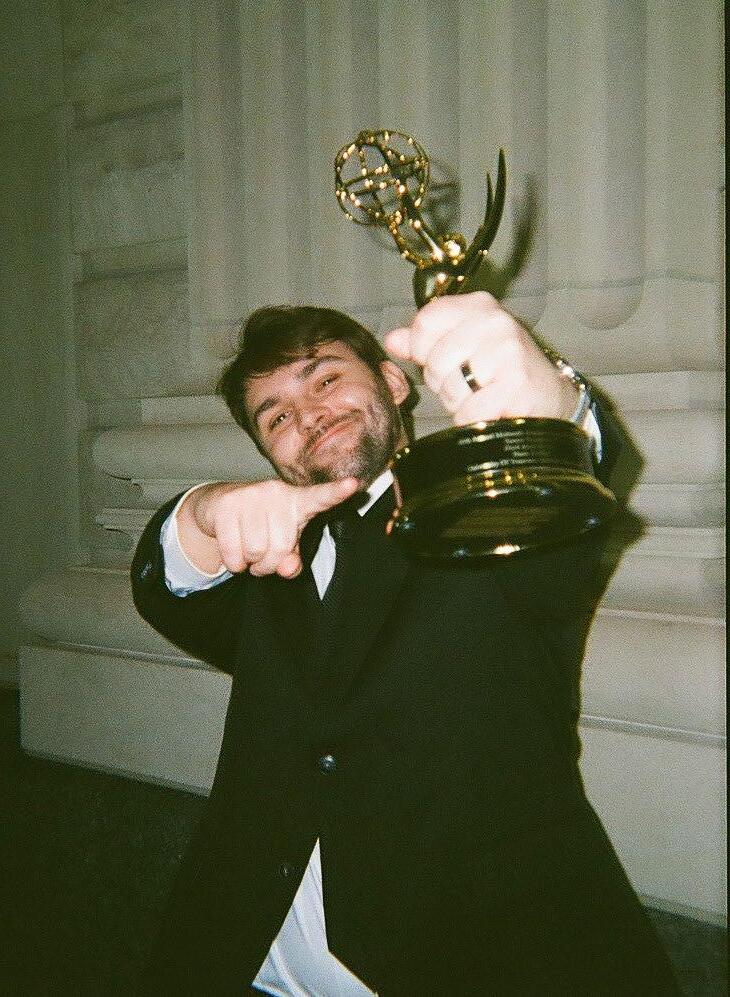
Noah Halford won an Emmy for the viral dark mode video he made for UT football. Courtesy of Noah Halford.
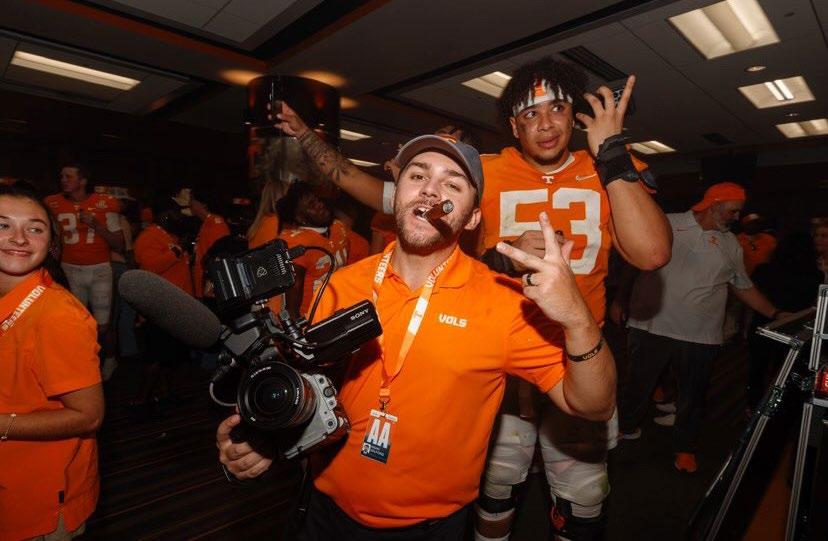
Noah Halford in the Tennessee locker room after a football game. Courtesy of Noah Halford.
Meet the students behind SixPackVols, Barstool Tennessee social media
EMMA KATE MURPHY Contributor
If you are a student at the University of Tennessee with an Instagram account, odds are you’re one of the 175K people following @barstooltenn or one of the 39.5K people following @sixpackvols.
As you’re getting sports news or campus updates from these accounts, have you ever paused to wonder who’s behind it all? Who are the ones doing the research and creating graphics so you get to see visually appealing, easily digestible, relevant content on your feeds every day?
The answer is fellow UT students. But how did they come to be the ones in charge of these massive accounts, each an offshoot of an even larger brand?
Collin Tornstrom, a senior marketing major with a collateral in entrepreneurship, runs the SixPackVols account. It’s essentially a oneman show, with Tornstrom taking charge of finding story leads, booking partnerships, and creating and posting graphics for the Instagram page. He’s run the account for three years as its social media manager.
Tornstrom got his start posting to social media in high school, where he gained a large following.
“Coming into college freshman year, I had 2.7 million followers on TikTok and just under 160,000 on Instagram, so I felt pretty set coming into college,” Tornstrom said.
In 2023, Andrew Grayson, the founder of Six Pack Coverage, reached out to Tornstrom. At the time, another student ran the SixPackVols account. Grayson wanted another influencer on deck, and the two struck a deal where
Tornstrom would take over the account on the promise of doubling its following.
“I picked it up at about 14,000 followers. … A couple months later we were at about 30,000 followers, and then it took off from there,” Tornstrom said.
In addition to gaining new followers, Tornstrom took on other responsibilities to grow the account.
“(Grayson) hooked me up with SixPackVols, and I do everything from creating the posts, to reaching out, doing research, finding information and then on the back end of it I’m reaching out to bars, restaurants, events, looking for people that want to advertise using our following,” Tornstrom said.
Tornstrom recognized that there are multiple college pages with various niches like sports news or memes. He wanted to grow SixPackVols into something that more closely resembles a business.
“We’re able to post stories and give entertainment where it’s also subtly advertising,” Tornstrom said. “It’s a winwin-win; it’s fun for me to do, companies can advertise through it, and I feel like the student body gets its information and news from us. It’s kind of a one-stop hub for all things UT.”
Continue reading at utdailybeacon.com
‘No pricks allowed’: The Pink Cactus brings fresh perspective to karaoke industry
TESSA NACKE Staff Writer
Harold Goldston and Kevin LaRoche didn’t choose the karaoke industry — it chose them.
UT alumni Goldston and LaRoche own Knox Box Karaoke in downtown Knoxville, and they’ve expanded their singing success to a new project: The Pink Cactus.
The Pink Cactus took over a building on Sevier Avenue that was previously a Cambodian restaurant called The Landing House. Teaming up with Jenny Salata, owner of French Fried Vintage, The Pink Cactus in South Knoxville brings a new type of karaoke experience to customers.
“This is a bit of a common misconception,” Goldston said. “Everybody calls us a karaoke bar. We are, but there is no karaoke downstairs. We might eventually do that, but we haven’t yet. So downstairs is like a lounge hangout. We have the main bar area. We have a dance floor, and then the private karaoke rooms upstairs.”
Beyond off-key singing and voice cracks, one of the owners’ guiding philosophies is “gather with friends and celebrate the good life.” This philosophy rings true with the community events that The Pink Cactus hosts, like Latin dance nights, comedy shows, drag shows, live band nights and family days.
alternative slogan, “no pricks allowed,” and funky decorations contribute to the fun vibe, with lights and furniture to match.
“Knox Box is in the basement (of 522 S. Gay St.) — it’s kind of a dive bar. We’ve embraced that term, whatever. But this place is aesthetically beautiful. We spent a lot of time, effort and money decorating this place and painting this place and making sure it looked really nice. And we have the best front yard of any business in South Knoxville,” Goldston said.
Scan here to finish reading the story
“We are very focused on being a positive space. We’re bringing people together, especially with the karaoke rooms. It’s just such a good place to go out in a group. This is kind of a nightlife place, but we want it to be family-friendly on the weekends as well,” Goldston said.
The Pink Cactus lives up to its name inside the walls of a bright pink house. It’s
A menu at The Pink Cactus karaoke bar in South Knoxville. Friday, Feb. 27, 2026. Ericksen Gomez-Villeda / The Daily Beacon
Collin Tornstrom, social media manager of SixPackVols, views the page’s Instagram analytics. Wednesday, Feb. 25, 2026.
The Weekly Crossword by Margie E. Burke
Not a soul 11 Awaken
Solution to Crossword:
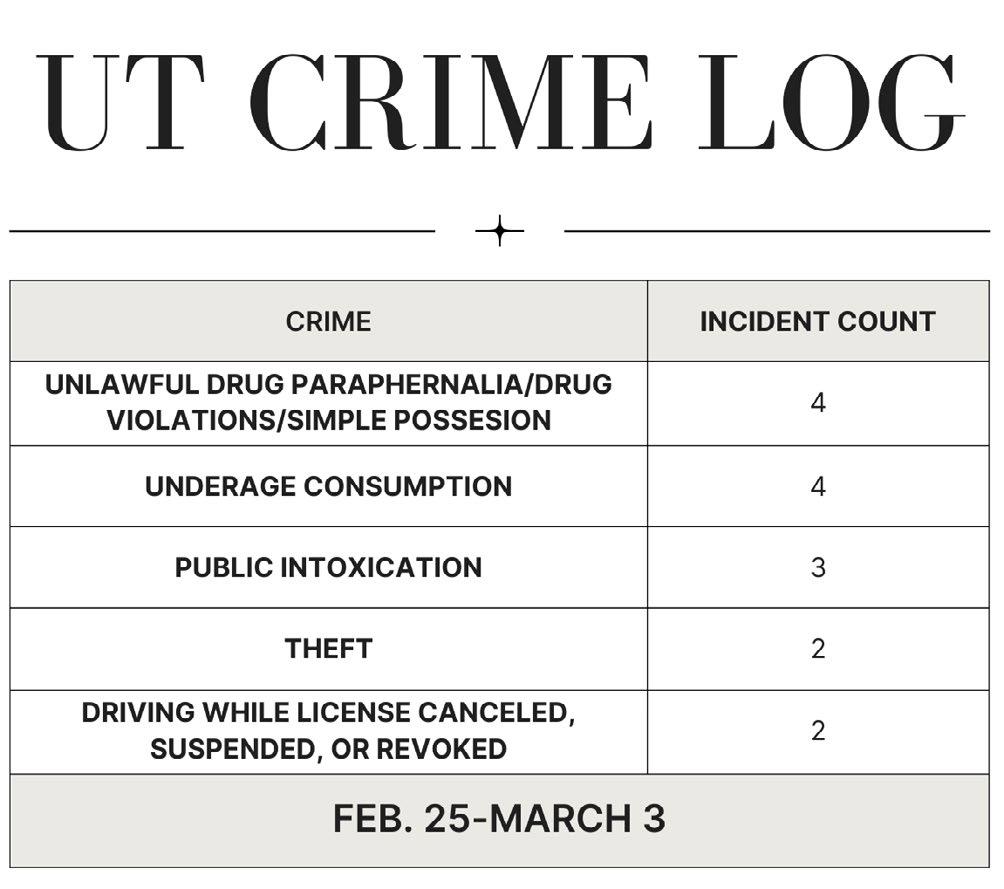
Osborn / Cartoonist This chart is compiled weekly by Makayla Gardner, courts and crime beat reporter, in accordance with the 60-Day Crime Log available at https:// clery.utk.edu/ crime-log/.
‘It’s OK to be comfortable with your sexuality in athletics’: How ‘Heated Rivalry’ influences hockey culture
ZOE MANDEL Contributor
For over 150 years, men’s ice hockey has been a sport with longstanding traditions of masculinity.
A 2019 study by Monash University found that 68% of the hockey players who participated had heard teammates or coaches use homophobic slurs in the two weeks of the study, and 60% had used one themselves. But new cultural spotlights on shows like “Heated Rivalry” could serve to challenge these stereotypes.
Originally published as a book in 2019, “Heated Rivalry” was adapted to television in November of 2025. Directed by Jacob Tierney, it arrived on streaming services HBO Max and Crave Canada and instantly became a hit, drawing in 10.6 million views in the U.S. alone.
The show follows the romance of rival hockey players Shane Hollander and Ilya Rozanov over 10 years. Starting out as teenagers, what began as a fling turned into a whirlwind of complicated feelings, where the two had to learn that they could love each other while also dedicating themselves to the sport that brought them together.
“I feel like in the NHL, in hockey in general, there’s an issue, there’s a push on
‘norm,’ I guess people would say,” Patrick Kelly, a stats keeper for the UT men’s club hockey team, said. “You’re an athlete, you’re rough, you’re tough.”
The United Way of the National Capital Area defines gender norms as “societal expectations and rules regarding how men and women should behave, express themselves and interact with others according to their gender.”
“I think with it divided with masculinity and femininity, it shouldn’t be like, ‘this is man, this is woman.’ I don’t think it should be separated with gender roles, it should just be characteristics of people and not just gender,” Sarah Deaton, a hockey player on the women’s club team for UT, said.
Vol League player Domenico Lamberti described a masculine person as someone “who leads the household.” Lamberti, Kelly, Deaton and Anderson described masculine people as strong, tough, or not showing much emotion. Feminine people are often described as the opposite: as more emotional, soft or fragile.
In sports, femininity can often be seen as a weakness.
In April of 2024, after the Tampa Bay Lightning lost in the first round of the Stanley Cup playoffs to the Florida Panthers, Lightning head coach Jon Cooper thought his goalies weren’t tough enough to be there.
You’re not really showing your emotions unless it’s anger,” Kelly said.
Kelly also explained how there’s not much wiggle room for any other kinds of emotional expression, especially on the ice.
At least, that has been the case for much of ice hockey’s history through the present day. Recently, there’s been much more talk about the emotions players have behind the scenes or off the ice, a discussion brought to light from the public’s newfound love for “Heated Rivalry.”
“It’s good to see that you can have a balance between being soft, loving, and having a relationship and also being competitive and driven within your sport and your work,” Deaton said.
The show covers a side of hockey players most people wouldn’t know unless they actively followed the sport or individual players. In mainstream media, this is the first time many people have seen hockey players portrayed outside of just an athletic dome.
LGBTQ+ fans with open arms.
“Heated Rivalry’s” impact can be seen in the increased attention and new fans being brought to the sport. SeatGeek reported that ticket sales rose more than 20% since the show first aired, and brothers Chris and Dan Powers, hosts of Hockey podcast “Empty Netters” who reviewed the show, said that they’ve been flooded with direct messages of people sending them photos of themselves at their first NHL games.
“I hope it shows all generations that it’s OK to be comfortable with your sexuality in athletics,” Kelly said.
Most players wait until after they retire to come out, mostly in the big men’s sports such as football, baseball and basketball. The NHL remains one of the only big American sport leagues to see few out queer players, active or retired.
As part of his post-game comment, he said, “we might as well put skirts on them then if that’s how it’s going to be.”
Cooper apologized two days after the game, saying that “It’s paining me more than the actual series loss itself.”
His comment, though spur of the moment, reflects a longstanding sentiment. Opinion writer Ian Kennedy for The Hockey News commented on the event as well, writing “it’s a sexist remark rooted in misogyny that equates femininity to
Deaton explains how hockey culture shows sexism in its different rules for women’s teams versus men’s teams.
“Within women’s and men’s hockey, it’s very different, the rules are different. It’s deeply rooted in sexism, like we’re not supposed to fight,” Deaton said. “They get two minutes, we could get five minutes, we could get expulsion from the next game.”
She did note that technically, the men are not supposed to fight either, but the consequences for them if they do are less severe.
“Hockey is like a rough contact sport, so you’re kind of beating people up out there.
“I think it takes a very mature person to get over the sexual aspect of the show. It’s a plotline and a very important one as well, but to be able to move past that and start understanding the story it’s trying to play. It’s a show that is not fighting those but showing you what it looks like on the inside, sort of, ‘cause realistically there’s probably gay athletes in the NHL. We don’t know,” Kelly said.
It’s not the first queer relationship to be shown on camera, but it’s one of the first in mainstream media that discusses the context of queer relationships in sports specifically.
“I just think that the show, that it’s not perfect, it’s not fully realistic, but it’s so nice to see how people are reacting to it and see high-profile players feel comfortable enough to express their support for the show and people who might take something from the show,” Anderson said.
“Heated Rivalry” has become synonymous with hockey, according to Kelly, who said that the players on the UT club team are asked their opinions on the show once people know they play hockey.
“There’s a lot of allyship as well, and straight players realizing that these people exist in real life, they’re not just a character, and a recognition that these people are all around us,” Deaton said. “They’re not going anywhere.”
This increase in attention toward hockey is making the community change, according to Gary Bettman, the NHL commissioner. He described the show as “fun” to reporters at The Athletic.In addition, he says that the NHL plans to welcome the new influx of
“I hope the show shows people you can continue to play your sport and also be open and be proud of it, and I’ve seen a couple tabloids about a player coming out,” Kelly said.
The player in question, Jesse Kortuem, took to Instagram for the first time in years to share his story of being gay in hockey. He credited watching “Heated Rivalry” as part of why he felt brave enough to speak up. The post has since been moved to Facebook, but he shared about growing up playing in Minnesota, how he walked away from hockey for fear of not being able to be himself, and returned to the sport years later.
Since then, he’s posted to share how much everyone’s reactions have meant to him, has been on the Drew Barrymore show and has gotten a video response from Hudson Williams, who plays Hollander in the show.
Not only does Kelly hope that “Heated Rivalry” will encourage people to come out, but also that it will help show people without much previous exposure to queer people that it’s not something to be ashamed of or to make fun of.
“Seeing a representation like this on their screen will help some of them realize this is a reality, there’s no need to make fun of it, there’s no need to hide it,” Kelly said.
While “Heated Rivalry” has stirred up new conversations about the intersection between queerness and sports, Anderson believes it isn’t capable of completely bridging the gap between the two.
“I just think the hockey culture itself is too broken for just a TV show to do anything, but in a perfect world, it would inspire someone to be themselves and come out publicly, and that would trickle down to the smaller leagues,” Anderson said.
‘Heated Rivalry’s’ popularity stems from misogyny
KATHERINE HILL Contributor
“Heated Rivalry” wouldn’t be as popular if it were two women — but why?
Oftentimes, people plead for LGBTQ+ representation in the media, yet they have a narrow view of what they truly want to see. The gap between popularity in series with gay
gay women is apparent. For instance, throughout the various social media platforms, many women start accounts and channels on “BookTok” or “BookTube.”
Some make recommendations for LGBTQ+ books, but most of these books only truly represent one group of people — gay men.
Beyond just literature,
were many hints throughout the season that pointed toward his sexuality. Wheeler was in a relationship with a female main character, Eleven, for the majority of the series — however, this did not stop the persistence of Byler fans.
In the end, Byler did not happen, and many fans felt disappointed. But why did fans feel like they were left without
Robin Buckley, another highly involved character in the show, came out as lesbian in the third season and eventually became romantically involved with another woman, Vickie. People begged for “representation,” but they already had representation right in front of them — so why were Robin and Vickie
To get to the point, the recent internet phenomenon “Heated Rivalry” has broken records for the amount of views for a scripted series on HBO Max. Based on a book by Rachel Reid, it follows Ilya Rozanov and Shane Hollander, two male hockey players who connect through a sexual relationship and later become romantically involved.
Now, I am not trying to downplay the emotional vulnerability that the series displays between the characters, especially within a sport that can have a more homophobic demographic.
However, many fans are doing more than just appreciating the adaptation. The audience has grown to be mostly straight women, and it’s clear some of them are fetishizing gay men. For instance, comments throughout the internet from women have referred to them as their “boyfriends,” and discussed how they “love when two men kiss.”
But does their interest in MLM (men loving men) relationships stem from a deeper societal root than just physical attraction and their sexual identity?
Yes, and it’s misogyny.
Attitudes toward the sexualization of men and women are treated differently.
Initially, I thought this was unfair — however, the “why” and “how” of such sexualization are objectively different as well. Women tend to be perceived as physically than men due to such as clothing or gender stereotypes, like men paying for a
On the other hand, women gravitate more toward an emotional sexualization. To provide an example, many straight
women fell in love with “Heated Rivalry,” but instead of commenting solely on the physicality of the show, said they felt drawn to the lack of power imbalance due to both characters being male.
But why is a relationship involving two men the only relationship without a power imbalance?
The reason a power imbalance is still prevalent in relationships involving two women is because of the way women are displayed in different forms of media.
Typically, women are “victimized,” and when other women see this, they can subconsciously ensure they have control over the other woman. Women shown as dependent, weaker beings has been a trend throughout history due to the majority of nations following a patriarchal system, which only reinforces traditional gender roles. Obviously, because of this, disparity is present in heterosexual relationships too.
So, women long for the display of an emotional relationship where individuals are treated as equals. Unfortunately, the media typically only displays this with MLM relationships. Men sexualize women, especially in depictions of lesbian relationships, but it is evident that women do the same to men. However, rather than the physical attraction that causes men to do so, women desire the equal power balance displayed in the relationship.
As students in college, you have the power to change the helpless, victimized character that prior generations have pushed onto women. Instead, you have the ability to redefine the stereotypes, push boundaries and create a new narrative.
One day, maybe the difference in success between MLM and heterosexual or WLW (women loving women) relationships will not be so great. Women will feel represented as who they are, rather than having to turn toward purely MLM relationships to find a sense of desire for that emotional connection.
After that, maybe we can get a “Heated Rivalry,” but with two women instead — and hopefully, it will break records too.
Katherine Hill is a freshman at UT this year studying public affairs. She can be reached at
Graphic by Lindsay Favre
CLAIRE THATCHER Staff Writer
A new machine was recently installed in the Rocky Top dining hall.
It’s a Califia Farms milk dispenser with three new options — oat milk, soy milk and chocolate pea milk.
This is in addition to the five milks already available in the dining hall — skim milk, reduced fat milk, TruMoo chocolate milk and two types of almond milk.
As I surveyed my options, it dawned on me — I have decision fatigue.
Almond is slightly nuttier, oat is slightly thicker, soy tastes like regular milk, and I have no interest in finding out what pea milk tastes like. But blindfold me and ask me the difference between all of them? No chance.
I reached for the soy, pushed the lever, and ... nothing. I guess they were all out. You know what? Who needs milk anyway?
I walked back to my table and my roommate asked me what milk I got. I told her none — they were out of soy milk.
“Why didn’t you just get regular milk?”
The shock. The horror.
“Ew,” I heard myself say. “I don’t drink cow’s milk.”
A wave of guilt washed over me. People have been drinking cow’s milk since the dawn of time. I don’t think it’s gross.
But my knee-jerk reaction to the mere suggestion of adding some to my coffee indicates that I may have some complicated and unexplored feelings about cow’s milk.
Once ruling American kitchens, cow’s milk is just ... out.
It feels like the only people drinking milk are farmers and babies. It used to be “drink your milk to get big and strong.”
But in 2026, I think most people would rather light themselves on fire before they drink full-fat cow’s milk. And with all the options available, you’ll never have to.
In the 90s, cow’s milk was what the substitutes are today. Inpartnership with popular celebrities, the California Milk Processor Board released the iconic “Got Milk?” campaign.
Beyonce, Jennifer Aniston, Naomi Campbell, Gisele Bündchen. Clad in designer outfits, celebrities proudly modeled milk mustaches, convincing consumers that no matter how glamorous you were, the sexiest thing you could do was meet your daily calcium intake.
Shaquille O’Neal, Serena Williams, Tom Brady, David Beckham. Cow’s milk wasn’t just stylish. It was functional. It fueled high-power athletes to perform at the highest level. If you didn’t want weak bones, you drank milk. If you didn’t drink
The Milk Revolution
milk, you were practically asking to catch a bad case of osteoporosis.
The average adult isrecommended to have 1,000 mg of calcium daily. Cow’s milk, calcium’s resident poster child,contains approximately 300 mg of calcium per 8 ounces.
Per 8 ounces, original Silk Almondmilkcontains 470 mg of calcium, Silk Soymilkcontains 470 mg of calcium, and Califia Farms Oatmilkcontains 270 mg of calcium.
So, in terms of nutritional value, the substitutes don’t seem to be that far behind. In fact, when comparing caloric value, almond milk seems like the better option. Whole milk typically contains almost double the calories of competing beverages.
So not only has cow’s milk been outdone, but it’s also a fading trend.
Gluten-free, paleo, keto, vegan. The most popular contemporary diet trends revolve around plantbased substitutes. Cut out dairy, meat, sugar — replace it all with a powder you can buy by the pound at Costco.
Mounjaro. I don’t need to spell it out for you. The direction of the wellness industry today is clear. If engine oil were lowcalorie, plantbased and tasted like Diet Coke,
people would drink it.
Milk started it, and countless corporations followed suit. An entire industry thrives on the idea that the original version isn’t good enough. Bread, ice cream, coffee, pasta — the macros aren’t what they could be. The calories could be lower. The protein could be higher.
Once you realize how much better something could be — how much better you could be — the switch makes itself.
Sure, the cultural perception of milk has changed. I don’t remember the last time I heard someone order whole milk at Starbucks. But it’s not just that.
There is something gross about the idea of drinking milk from a cow. When I drink it straight, it feels wrong. No matter how cold it is, it tastes lukewarm. It just feels wrong — unnatural. Which, for obvious reasons, is ironic.
changing preferences with state-of-theart Califia Farms machines in dining halls across campus. Let them fry in Reese, but God forbid I have to start my morning without chocolate pea milk.
I don’t hate the substitutes — as we’ve established, they provide numerous health benefits. But I miss the simplicity of cow’s milk. There was only one option, and you felt good about choosing it.
When I open my phone for a dopamine hit and an escape from life, I’m assaulted by the unsolicited opinions of every fitness influencer, nutrition coach and “doctor” on the internet. They spout narratives that contradict years of successful evolution — avocados will kill you, store-bought bread will kill you, peanut butter will kill you, seed oils will kill you.
Maybe it’s the fact that it comes from an animal. Maybe I need to spend some time on a farm. Maybe I feel bad for
All I know is, almond milk seems cleaner, healthier and
Occasionally, you drink a glass with a warm chocolate chip cookie — for nostalgia’s sake. But other than that, more for
Milk being phased out isn’t necessarily a bad thing.
Hey, I’m sure the cows don’t mind. But amidst discourse that we are becoming less and less human, it’s worth noting that our collective milk aversion is rooted in a desire to be skinny and
UT is indulging our
No matter how ill-informed, every terrible take is delivered with absolute certainty and morbid finality, which makes navigating health and wellness feel like disassembling a bomb. One wrong choice and you’ve screwed yourself for life. Or at least for spring break, which is only two short weeks away.
Maybe I’m just having trouble letting go. When times change, they demand that you change with them.
I have been bombarded with decisions I didn’t want to make, filled with facts I didn’t want to know and exposed to nutrition labels I didn’t want to read. Even if it’s for the best — even if you are optimizing your health and wellness — you mourn the simple life.
A life that wasn’t about optimization or improvement, but rather about ease. There was no guilt around ignorance. Milk was one less decision you had to weigh. One less right choice you had to make.
Is this what being an adult is? Black coffee? The constant weight of choice? Maybe.
Maybe in 30 years, they will have an almond milk substitute. Then in 60 years, an almond milk substitute substitute. And then in 90 years — you get the picture. While I would love to combat overconsumption and diet culture, as a consumer, I just don’t feel like that’s my responsibility. The milk revolution has come, and there isn’t anything anyone can do about it.
Claire Thatcher is a freshman at UT this year studying journalism and media. She can be reached at qtq974@vols.utk.edu.
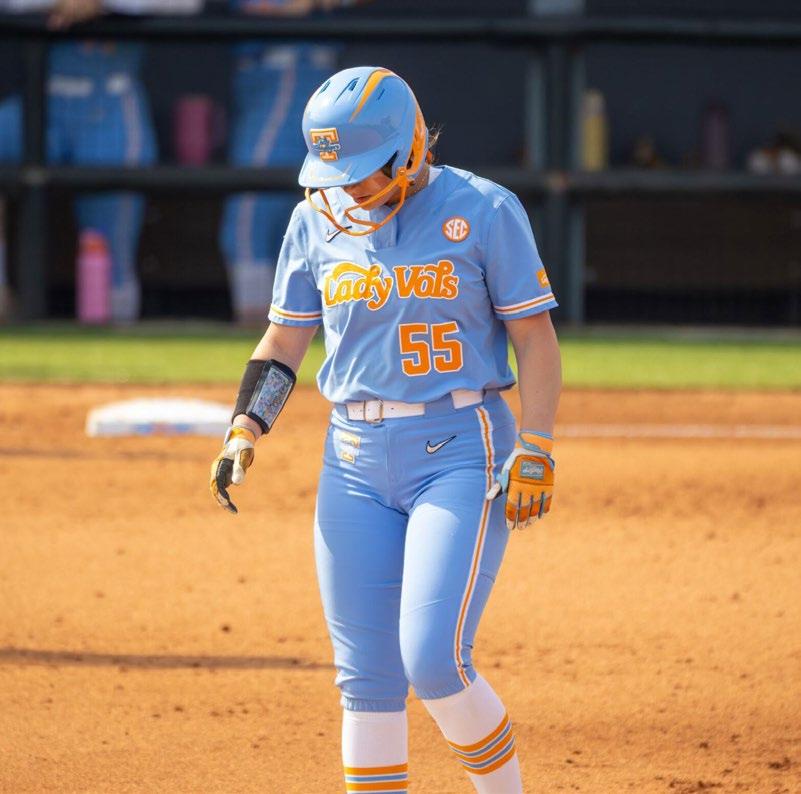
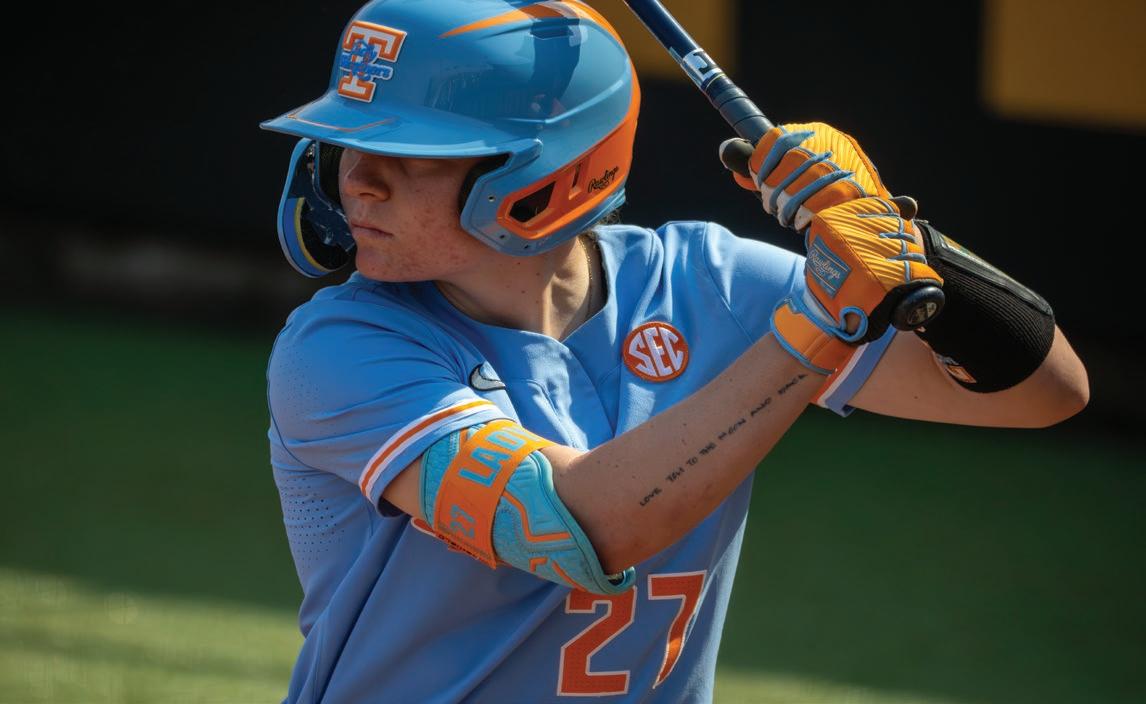
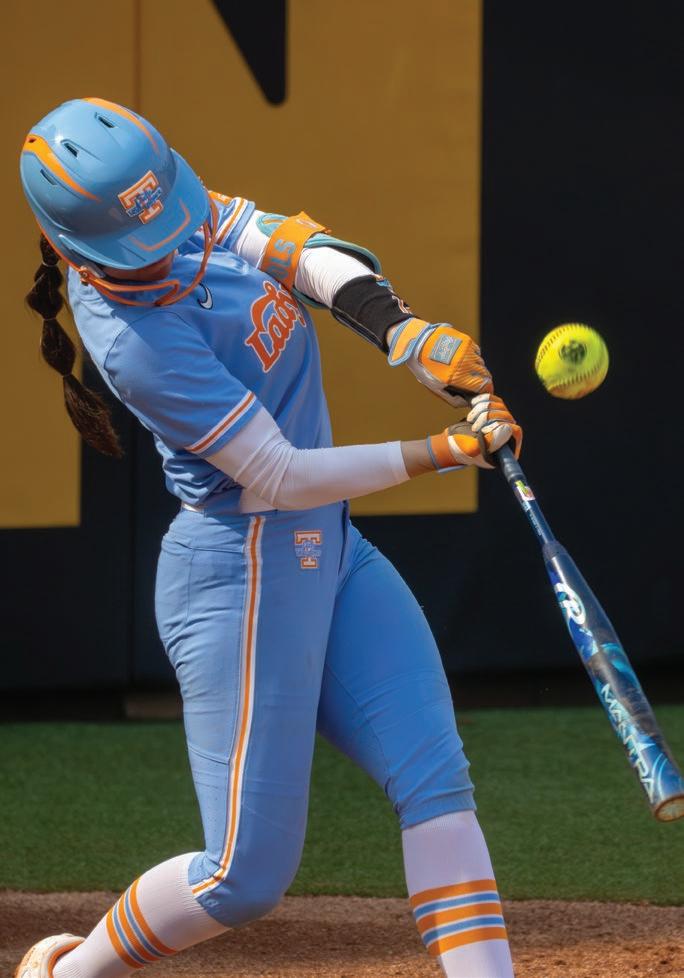
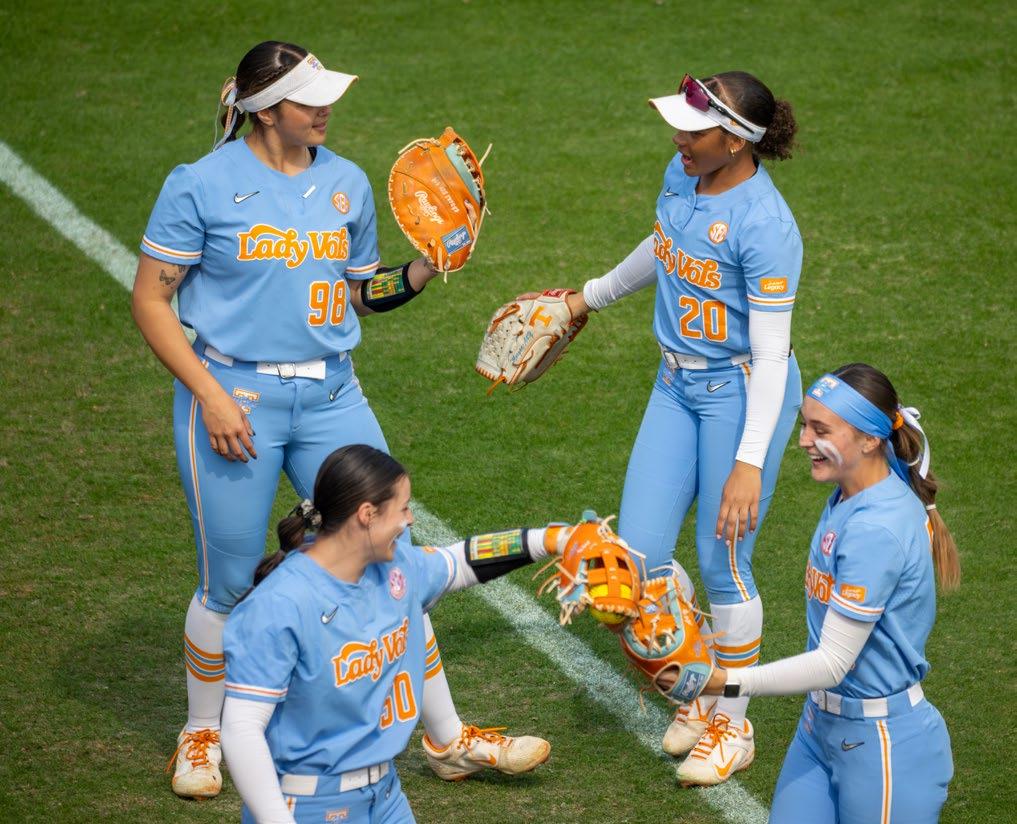
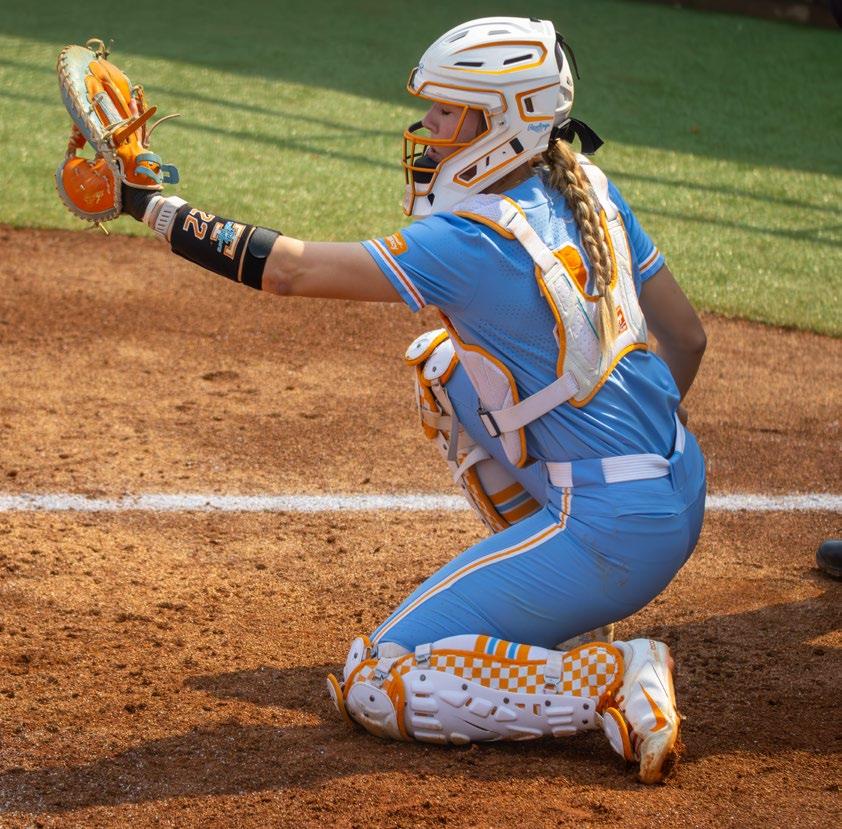
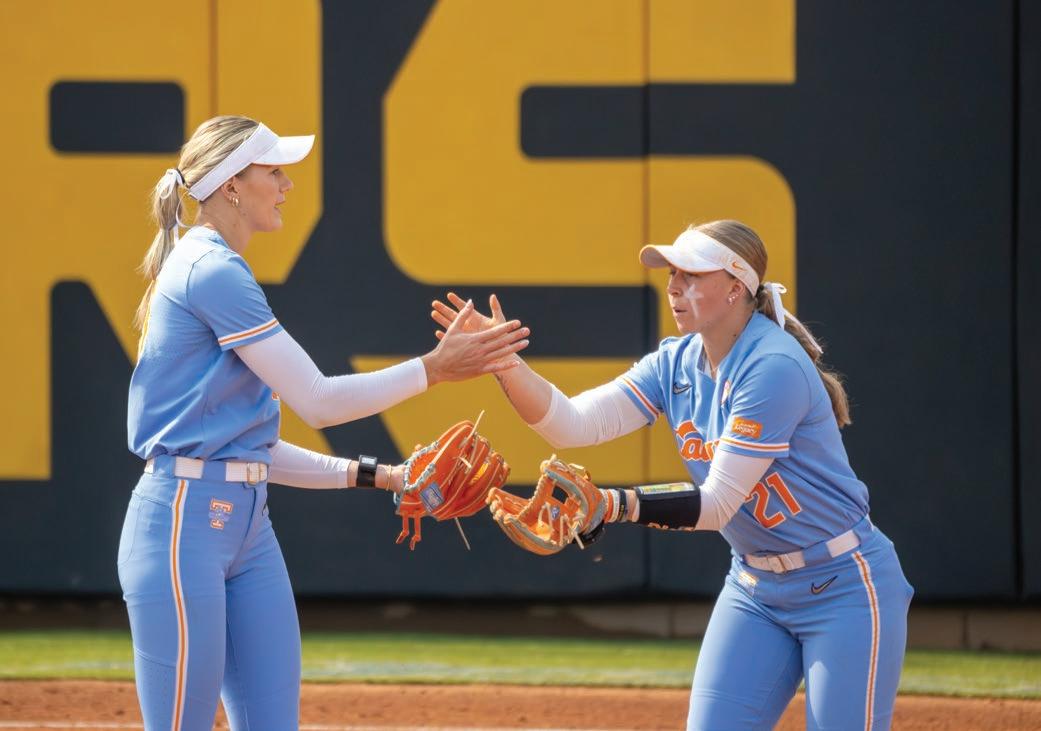
UT Softball VS. Appalachian State
Photos by Ericksen Gomez-Villeda, Jaden Vitt, Jayden Randolph
‘We’re learning more’:
Tennessee baseball hoping to build on rebound weekend
SARKIS Asst. Sports Editor
Tennessee baseball bounced back.
After losing its first nonconference series to Kent State, the Vols responded in their first big test of the season. Tennessee put together a 2-1 weekend at the Amegy College Baseball Series in Arlington, Texas, against some of the nation’s top teams, cleaning up some fundamental kinks that have plagued them in the early portions of the young season.
The Vols saw key improvement from their bullpen and got the big hits that they needed too, a pair of critical aspects of their game that fell below the standard of head coach Josh Elander’s program during a tough weekend against the Golden Flashes.
This weekend though, the positives outweigh the negatives.
“We’re learning more,” Elander said. “I think. We got to play some close ball games. That’s what we want, good competition. These guys get to play in a major league stadium. Sometimes you throw them out there, you can see them a little bit of deer in the headlights. So, let’s get that out of the way. Get the guys out there and have them play ball. So, we definitely got better.”
In the opening game of the three-game set at Globe Life Field, Tennessee continued its bad habits. The Vols committed three errors — all of which led to runs — in a 12-5 defeat to top-ranked UCLA. Tennessee bats struggled once again to come through with men of the basepaths, going 3-for-17 win runners aboard.
The Vols showed some prowess at the plate with a four run sixth inning, but on a night where all but one of Tennessee’s five pitchers allowed an earned run, that wouldn’t be enough to make it a game. Chris Newstrom notched three hits, adding his first bomb of the season in the process, but that would be one of the Vols’ only bright spots.
Starting arm Tegan Kuhns started strong against the Bruins, but ultimately allowed three home runs despite posting a careerhigh 10 strikeouts.
“We feel great about those guys, regardless of who the matchup is,” Elander said. “You want toughness, stuff, but those guys have some grit, and they’re going to attack the strike zone with good stuff. Again, I know (Kunns) got tagged a few times, but I thought he threw the ball as well as he has, threw some good sliders.”
The middle game at the home of the Texas Rangers displayed better. The top of Tennessee’s order and the back end of its
bullpen delivered in a 5-3 defeat of a redhot Arizona State team.
Jay Abernathy continued to excel in the leadoff spot, drawing a pair of walks to set the table for some important guys behind him. It wouldn’t be hard for one of them in Blaine Brown to make an improvement following his hitless second weekend in a Vols’ uniform. He picked up a pair of knocks while driving in a run, reaching base in three at-bats.
Fellow power bat Henry Ford brought home a run on a multi-hit afternoon, cleaning up his defense at third base after a tough outing against UCLA.
“I feel comfortable there,” Ford said. “I feel like the more reps, obviously the better I get. I just made a couple throws that, if they’re a foot longer, it’s an out. Feel really good over there. It’s baseball. Stuff happens.
“I’m a bigger guy, so staying low and different arm motion than the outfield, so getting that consistent. It’s really a short amount of steps when you’re over there, it’s not like shortstop which I’ve actually played a lot more of.”
After tossing just an inning in Tennessee’s
midweek bout with Bellarmine, freshman left-hander Cam Appenzeller handled some of the first leverage situations of his college career. Elander’s plan to use the Chatham, Illinois, native in a different role than he did against Kent State paid off in a big way.
Appenzeller came on to earn his first save in his fourth appearance of the campaign, hurling two stanzas of scoreless ball. He punched out a trio of Sun Devils to help his guys lock down a two-run cushion.
The Vols’ fine work on the hill continued into their final matchup of the set.
Evan Blanco took the ball, helping Tennessee down Virginia Tech 3-1. The veteran southpaw delivered, holding the Hokies to just a run over his 5.1 innings. He allowed only two hits but didn’t qualify for the win, so the Vols would once again have to lean on their bullpen to get some big outs.
Mark Hindy emerged as Elander’s first option, stranding two men on base after inheriting them from his starter. He got the two outs he needed consecutively to escape the slight jam.
“Out of the bullpen, the approach is always get the job done,” Hindy said. “I’m
here to do a very specific thing, and that’s to clean up things that could be going a little awry. Getting in there, getting those outs and getting us back to the plate and ready to hit was my only thought.”
That would be all for the Duke import, and his bats held up the end of the bargain, taking the lead in the bottom of the frame. Hindy would earn the win, but not without one of last season’s breakout freshmen securing things in the clutch.
Right-hander Brayden Krenzel shined, striking out four hitters over the final three innings for a nine-out save. Only two of the last 10 Virginia Tech batters would find their way on base, both coming in the seventh inning. Krenzel promptly shut things down, retiring the next seven men in order to cap an important weekend.
“It was electric,” Elander said. “I mean, the fastball is up to 97 (mpu), pitching in the bottom quadrants of the zone, running some up late change was good, sliders as good as I’ve seen him throw.
“And there was really no decision to be made as well as he was throwing the ball, he was going back out there in the ninth no matter what, and got it done.”
ALEX
Jay Abernathy (8) celebrates with his team after hitting a home run in a game against Kent State at Lindsey Nelson Stadium. Friday, Feb. 20, 2026. Luke Goins / The Daily Beacon
Tennessee sof T ball remains undefea T ed, goes 5-0 in Tennessee i nvi T a T ional
TYLER EDMANDS Staff Writer
Tennessee softball is rolling.
The Lady Vols wrapped up their first weekend at Sherri Parker Lee Stadium with a 5-0 record, defeating Penn State and Appalachian State twice and North Carolina Central once. Tennessee (19-0) remains one of the three last undefeated teams in college softball with its 19-0 start.
“I love the fact that we had really competitive softball this weekend,” head coach Karen Weekly said. “We faced good pitching. We faced teams that came at us, that punched us. So, my takeaway is I like the way we responded. We got punched in the face. We got down in games and we didn’t let it bother us.”
Game one: Tennessee run-rules Appalachian State 9-1
Tennessee’s early-game struggles were evident in its first two games of the weekend. Sophomore pitcher Erin Nuwer allowed her first run of the season by way of a solo home run in the top of the first inning.
Tennessee’s bats would be silent until the fifth inning. With two outs, Tennessee scored its first two runs of the tournament on walks with the bases loaded. Freshman Elsa Morrison hit her second double of the contest off the outfield fence, clearing the bases for a 5-1 lead. A fielding error would bring in the last run of the inning, the Lady Vols’ sixth of the frame.
“We had won by a lot of runs in so many games that we hadn’t been in pressure situations,” Weekly said. “So, I am really happy we were in those situations this weekend and we played really close games.”
The sixth inning would be the final of the contest. Tennessee loaded the bases again, and freshman Taelyn Holley brought in two with a double, but Morrison capped off the game with a one-run double. The score read 9-1, and Tennessee won via run-rule after Morrison’s 3-for-4 performance in the batter’s box and four RBIs.
Game two: Tennessee defeats Penn State 4-1
Friday night closed with a 4-1 win for the Lady Vols over Penn State. Sage Mardjetko got the nod in the circle for game two, logging 10 strikeouts in seven innings of work. The junior pitcher gave up a home run to the Nittany Lions in the fourth inning but didn’t allow another hit. Much like its first game against the
Mountaineers, Tennessee took five innings to show up on the scoreboard. Despite a bases-loaded opportunity in the fourth, Tennessee came up empty until redshirt junior Ella Dodge’s fifth home run of the season. The shot into left field was a grand slam, giving Tennessee a three-run lead.
“Probably a not-so-positive takeaway is I felt like this was the first weekend that we got in our own way too much,” Weekly said. “We made winning very hard because we had too many people not do what they were asked to do and not attack the pitches that were in their game plan.”
the first run after being hit by a pitch with bases loaded. A strikeout would end the inning on the next at-bat, stranding three runners early in the game. Junior Gabby Leach brought in two more runners in the next inning with a double to give Tennessee an early 3-0 lead.
Pickens got seven innings of work, striking out nine while giving up three hits and two walks. Penn State scored on a ground ball, but that would be its only score of the contest.
Game four: Tennessee run-rules North Carolina Central 8-0 in five innings Nuwer and Mardjetko combined to toss a no-hitter, Tennessee’s third of the year. The duo combined for nine strikeouts and two walks on 68 total pitches.
The Lady Vols scored three runs in the first inning and five in the second. Seven different players tallied a hit, and two had two hits. Tennessee walked three times, only striking out twice in the contest. Dodge and Morrison both batted in two runners, helping give Tennessee the early lead, which would turn into a run-rule.
Game five: Tennessee rallies from early deficit to beat Appalachian State 6-2 As wild as it may sound, Tennessee’s two-run deficit was the largest of the season. It was the Lady Vols’ fourth time trailing this season, but it wouldn’t last long. Pickens gave up a two-run shot off the scoreboard in the first frame but quickly settled down and found her composure. Tennessee trailed until the third inning. Holley gave the Lady Vols a 3-2 lead after a triple, driving junior Alannah Leach home. Tennessee’s bats would be quiet again until the sixth inning, when it scored three more runs. Dodge sent her team-leading sixth home run into center field, driving in juniors Sophia Knight and Bella Faw for a 6-1 lead.
The Lady Vols stifled the Nittany Lions the rest of the contest, ending game two of the Tennessee Invitational with a 4-1 win.
Game three: Tennessee beats Penn State 3-1 on Saturday afternoon
Karlyn Pickens got her first home start of the 2026 season on Saturday afternoon. The senior pitcher got the better of Penn State in game two, winning 3-1. After going scoreless in the first five innings of its first two games of the weekend, Tennessee got on the scoreboard in the first two innings. Sophomore Emma Clarke brought in
Following her home run allowed in the first inning, Pickens had a career high afternoon. The senior tallied 15 strikeouts, conceding two hits and four walks to end the weekend.
“Karlyn (Pickens) is the most coachable athlete I have ever had the pleasure of coaching,” Weekly said. “And that’s 30plus years of coaching.”
Up next:
With their last nonconference weekend in the books, the Lady Vols will host LSU for its first SEC series on March 6 to 8. The Tigers were ranked as high as No. 13 in the preseason, but after losing four games, they are tied for No. 17.
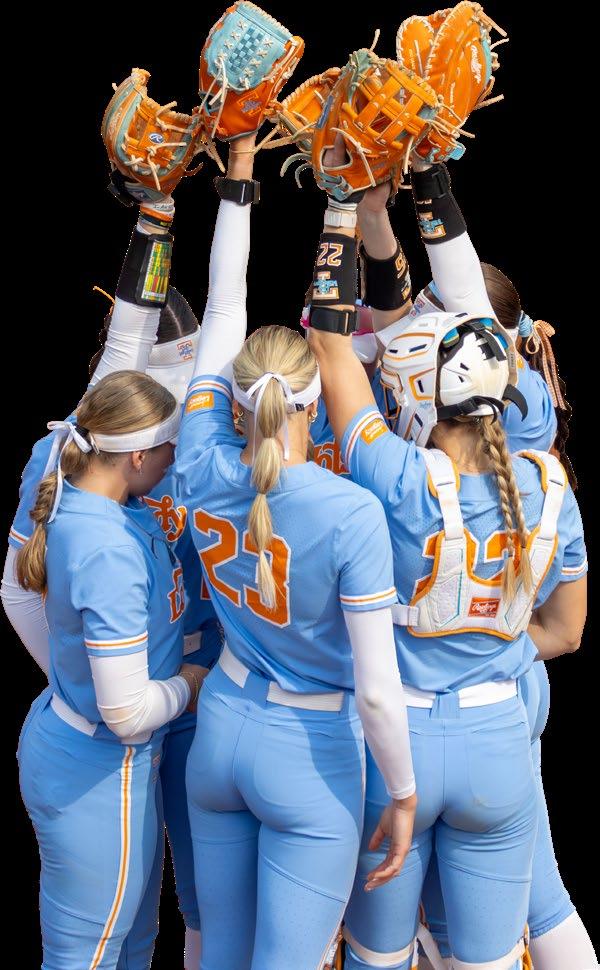
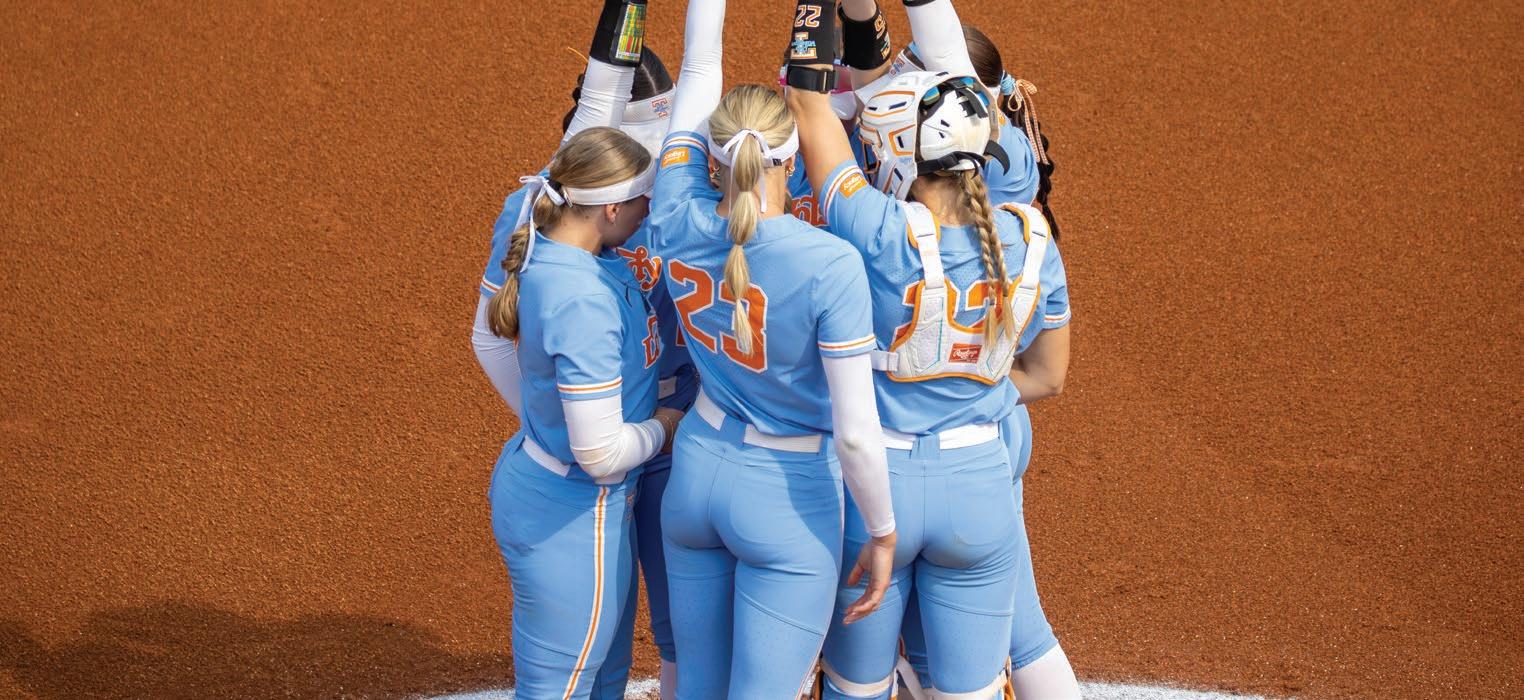
The Lady Vols softball team huddles up during the game against Appalachian State in Sherri Parker Lee Stadium. Friday, Feb. 27, 2026. Jayden Randolph / The Daily Beacon
Tennessee men’s tennis outclassed by Oklahoma in fourth consecutive loss to open up conference
CONNOR WHITNEY Contributor
After a dramatic match on Friday that resulted in a loss, Sunday brought the same result with a fraction of the theatre.
Tennessee men’s tennis was outclassed against visiting Oklahoma, 4-1, at Barksdale Tennis Stadium on Sunday. Little went right for the Vols (6-8, 0-4), while the Sooners (10-3, 2-2) seemed to have all the answers.
The Vols found themselves in a familiar situation after the doubles session. Piotr Siekanowicz and Shion Itsusaki again found themselves in a double-break disadvantage. This time, they were finished off quickly by Alejandro Melero and Hank Trondson, losing 6-1.
“Just mental errors, unforced errors,” associate head coach Matt Lucas said. “Nothing special that they did, just kind of ineptitude on our part, to be honest.”
On Court 3, redshirt Woodson McMillin made his debut alongside Jan Kobierski, and the rookie looked quite in place. He and the veteran worked well together and tried to energize themselves and the crowd, making good reads and displaying good chemistry.
“Good to see (McMillin) get out there,” Lucas said. “He had dealt with a wrist injury, so he hadn’t really been around for a couple months, so it was good to see him get out there, and it looked like he kind of picked up where he left off in the fall because he was playing some good doubles in the fall.”
They kept close to their opponents, Orel Kimhi and Johan Rodriguez, until the match was suspended.
The Sooners closed out the doubles point on Court 1 after Luis Alvarez and Bruno Nhavene clinched against Dragos Cazacu and Boruch Skierkier, 6-3. The Vols held their own for much of the match, but Oklahoma’s tandem played too well and delivered the goods for the visitors.
Having dropped their sixth straight doubles session, the Vols again needed a rally in singles, but this time there was little magic.
Oklahoma took the opening set on the top four courts, while the Vols scored firstset wins on the outer courts. Perhaps the most noticeable difference was how much better the Sooners looked on the top courts, while the Vols struggled to keep up.
The first point of the session was claimed by Oscar Lacides, who was in complete command against Jose Garcia on Court 2. The Parisian looked a step ahead the whole
way and cruised to a 6-2, 6-2 win. Shortly thereafter, Oklahoma found itself on the brink.
Alejandro Moreno could not piece together anything against Luis Alvarez. Tennessee’s No. 1 looked thoroughly frustrated at his own play, frequently making errors and unable to sustain the flashes of good play he brought. He was dispatched in straight sets, 6-1, 6-3.
At Court 5, Skierkier put together a dominant performance against Asahi Harazaki, bruising and bullying his opponent around with his forehand. He picked up the Vols’ lone point with a comprehensive 6-1, 6-1 win.
“(Skierkier) is starting to find it, a little bit,” Lucas said. “He’s really bought into what this program is about.”
Just moments later, Oklahoma would clinch on Court 4, as Kobierski’s crafty style was neutralized by Rodriguez, who clinched the deal with a 6-3, 6-2 victory.
The loss was the first of two matches the Vols were set to play on Sunday, with a tilt against Belmont set to come in the late afternoon.
“We’ll switch up doubles pairings again, we’re still grasping, trying to figure out who fits together, who meshes, chemistry, game styles, all those things,” Lucas said. “Singles, we’ll put out six guys that really want to play for the University of Tennessee, that really, really understand what it means to be a Volunteer. We’ll go out, we’ll battle, then we’ll see what happens.”
Dragos Cazacu returns the ball back to Auburn at Barksdale Stadium. Friday, Feb. 27, 2026. Elan Gurevich / The Daily Beacon