




Tensions in Reese Hall reach boiling point, Page 3 grade inflation could render dean’s list ‘worthless,’ Pages 4,5 UT students behind the scenes at 2026 Super Bowl, Page 8
What does the new tenure bill mean for UT? Page 10




EDITOR-IN-CHIEF: Caden Dyer
PRINT MANAGING EDITOR: Emily Hurst
DIGITAL MANAGING EDITOR: Ansley Graves
COPY CHIEF: Lauren Holladay
NEWS EDITOR: Patrick Busch
ARTS & CULTURE EDITOR: Harper Brabson
SPORTS EDITOR: Trevor McGee
ASSISTANT SPORTS EDITOR: Alex Sarkis
OPINIONS EDITOR: Natalie Dripchak
PHOTO EDITOR: Jackson Clavier
DESIGN EDITOR: Lindsay Favre
ENGAGEMENT EDITOR: Sarah Portanka
AUDIENCE DEVELOPMENT EDITOR: Sophie Mehta
COVER DESIGN: Lindsay Favre
PAGE DESIGNERS: Emma Fingeret, Ashley Cammarota, Renee Allen, Maya Williams, SaraJane Weber, Ava Balducci, Ava Edwards, Soma Fulwiler, Kate Wims, Lili Ellis
GRAPHICS BY: Lindsay Favre, Emma Fingeret
ADVERTISING MANAGER: Abigail Cheslock
ADVERTISING REPRESENTATIVE: Joe Slott
TO REPORT A NEWS ITEM OR SUBMIT A PRESS RELEASE, please email editorinchief@utdailybeacon.com or call (865) 974-2348
TO PLACE AN AD, please email admanager@utk.edu.
LETTERS POLICY: Letters to the Editor must be exclusive to The Daily Beacon and cannot have been submitted to or published by other media. Letters should not exceed 400 words and can be edited or shortened for space. Letters can also be edited for grammar and typographical errors, and Letters that contain excessive grammatical errors can be rejected for this reason. Anonymous Letters will not be published. Authors should include their full name, mailing address, city of residence, phone number and e-mail address for verification purposes. Letters submitted without this information will not be published. The preferred method to submit a Letter to the Editor is to email the Editor-in-Chief.
CORRECTIONS POLICY: It is the Daily Beacon’s policy to quickly correct any factual errors and clarify any potentially misleading information. Errors brought to our attention by readers or staff members will be corrected and printed on page two of our publication. To report an error please send as much information as possible about where and when the error occurred to managingeditor@utdailybeacon. com, or call our newsroom at (865) 974-5206. The Daily Beacon is published by students at The University of Tennessee on Wednesday during the fall and spring semesters. The offices are located at 1345 Circle Park Drive, 11 Communications Building, Knoxville, TN 37996-0314. The newspaper is free on campus and is available via mail subscription for $200/year or $100/semester. It is also available online at: www.utdailybeacon.com
CADEN DYER Editor-in-Chief

Gen Z is no stranger to a catastrophic headline.
Inundated with negative news in what feels like a never ending cycle, the phrase “I can’t live through any more major life events” has now become an Internet trend. Our cognitive burden of today’s media feed only gets heavier when scrolling just a few seconds uncovers a contradictory post, forcing us to remember that every piece of information we read on Instagram must be fact-checked lest we become the uniformed slobs our parents fear us to be.
How are we, one of the most burnt out, most mentally unstable generations, supposed to cope with this reality of disastrous headlines and ruinous realities?
Sometimes I feel like the emotions from “Inside Out” when they’re stuck in Riley’s brain, watching her islands disappear one by one. The America I once watched on a tiny television from my parent’s living room is crumbling before my eyes, and I feel powerless to change the headlines. Every day it seems another department disappears, a new tariff emerges or another government shutdown looms on the horizon.
Even locally, the news isn’t great. A car crash on the interstate. Your favorite restaurant shutting down. And a rising political temperature — all combining to create an overwhelming morning newsletter.
Sometimes I catch myself avoiding the current events cycle because I just don’t want to feel sad. Sometimes it’s deeper than that — I don’t want to feel hopeless. I can’t stand to feel uncomfortable when faced with others’ needs, as the very human parts of my brain constantly place me in their shoes.
Growing up, my mom always told me to look for others’ needs when I’m feeling mine the strongest. Instead of falling into the slippery pit of a pity party, she would say, can you help someone else up? Like all kids, I scoffed her advice off for many years.
To my great surprise, though, I
remembered her advice when my life metaphorically fell apart sophomore year. After weeks of going to sleep hoping I wouldn’t wake up, I decided I’d finally had enough — the desperation to focus on anything other than myself intensified to the breaking point, and it forced me to look for someone worse off than me.
Ironically, that someone was my mom and my family back home.
A deep sickness for which doctors did not have answers left my family at a crossroads — my mom (the backbone of our household, the strongest woman I know and the reason I believe in feminism) couldn’t function the way she always had. So focused on myself, I’d neglected to notice my family as they struggled to adapt to life with a mom at 50%.
Even though I couldn’t see past my heartache and the pile of edits on my managing editor desk, I scraped together the time to make a freezer meal and do some quick shopping for my siblings. I didn’t know much, but I had a deep need to show them I cared.
An empty house greeted me after the two-hour drive, but I wanted to work in silence. I remember sitting at the dining room table, tears streaming down my face, as I ached for all the hurt and worry that my family had been going through. Somewhere between the note I scribbled down and the off-key tunes I banged out on my beloved piano before heading back to Knoxville, my own sadness began to trickle away.
When I got back in my car to leave, the loneliness hanging over my head like a cloud had dissipated. There would be many more nights of heartache ahead, but I had learned an important lesson – sometimes you must look beyond yourself in times of turmoil.
Sometimes that is all you can do — look for someone hurting more than you and then look for a solution.
That need to find the solution has followed me into my career as a journalist.
The devil on the journalist’s shoulder can sometimes whisper that he wants a crisis to happen or a riot to start up — just to have something big to write about. But these are real people with real feelings and real blood flowing through their veins. A true journalist cannot wish harm on others simply for his benefit.
What can a good journalist do instead?
Find the light. Always find the light. Keep looking and looking for the light until they find it, and then tell others about it.
See, there’s this cool thing called solutions journalism, and it’s built on the belief that someone out there has found a solution to a problem. As a journalist, it’s my job to hunt for that solution and amplify it. And then the job of the reader begins — you choose your own adventure.
A few weeks ago, I read a post that said, “Throughout the darkest times in history, people were still falling in love and hanging out with their friends.” Normally that is the sort of cringy advice I would immediately scroll past, but it stuck with me for the sheer reason that it’s simple and true. Stop and think about it for a moment: Great love stories are written in times of peace and war alike. Friendship is not reliant on a certain federal status.
And oh how encouraging to realize that there’s probably been a darker time where people did more than survive — they thrived.
Instead of watching islands of society disappear, what if we made changes in our everyday lives? What if we rejected the idea that a story repost is the Gen Z modern equivalent of political action? What if we set off chain reactions of good deeds, good journalism and good ideas?
You can’t think about yourself when you’re thinking about other people. And you can’t focus nearly as hard on the bad news when you’re busy creating good news.
Go create some good news so we can write about it!

TESSA NACKE Staff Writer
This week in Reese Hall, residents reported soaring temperatures in their dorm rooms.
Beginning Tuesday, Feb. 10, residents began reaching out to the hall director and residence assistants about the rising temperatures.
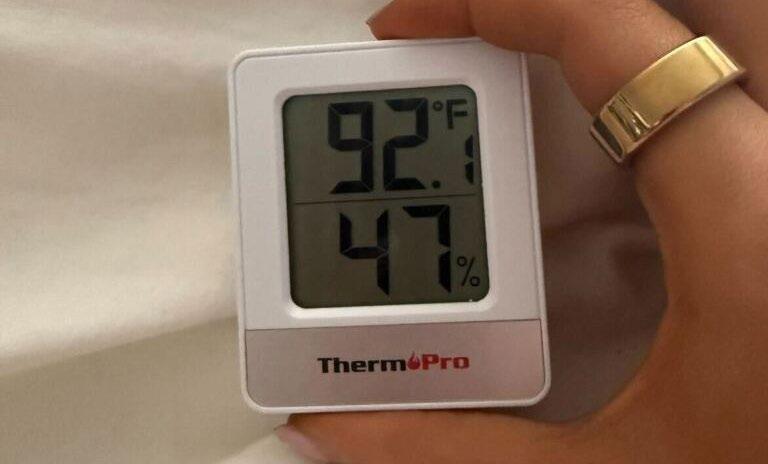
“It was actually crazy. At the beginning of the year, my room was also really hot for a bit. So my mom sent me a thermometer that I just have on my mirror. And so when I saw it getting hotter and hotter, I was like, OK, this is really weird. And I took a picture when I got to (92 degrees). And then, once it did, me and my roommate were pretty much out of the room for a lot of it. We just couldn’t be there cause it was so hot,” freshman resident Gracie said.
These high temperatures have caused rashes and sleeplessness for many residents in Reese Hall. Originally turned on to combat the cold weather during earlier months, the heat reached a boiling point as recent outside temperatures hit 70 degrees.
“Someone asked if we could turn the heat off because it was 70 degrees outside, and they responded that we weren’t allowed to, because of state policy, but (we) never really got a full answer. They never provided us with that policy that we asked for in writing,” freshman resident Sophia said.
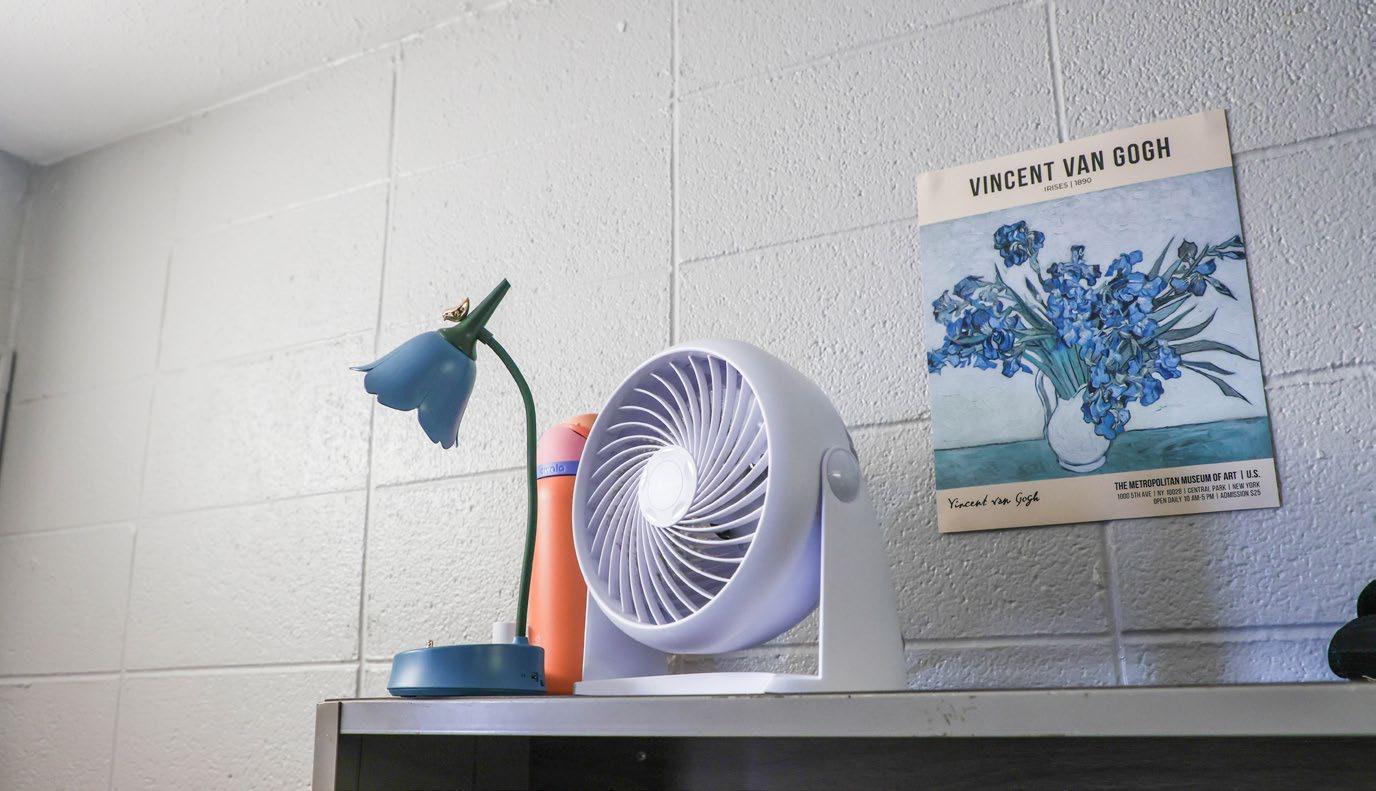
A screen recording of the main GroupMe hub shows that residents asked for the housing policy and it was not provided. A resident told the Beacon that the housing policy was provided later. Instead, resident assistants advised the girls to wear cold washcloths on their necks and utilize oscillating fans to deal with the heat, according to residents.
“Everyone just kind of started to explode because they were hot, which makes you angrier already, and they were fed up because no one’s giving us an answer, and we shouldn’t have to do cold cloths on our necks and sleep on top of our comforters and ice packs when we’re paying just as much as any other dorm to live here,” Sophia said.
Residents shared this sentiment, with many sharing that the heat had made them sick.
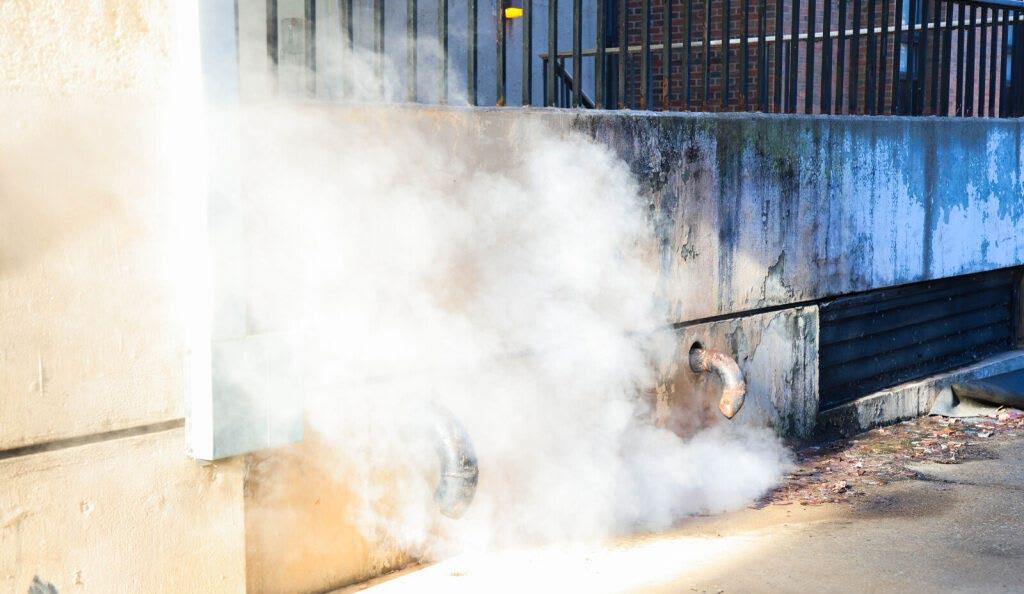
Built in 1967, Reese Hall’s older heating system controls the entire building, which houses over 600 students. It operates on a steam heating and cooling system, and adjustments take time to take full effect in Reese Hall, according to Lisa Leko, UT’s communications manager for media and
internal relations.
“The steam system is transitioned on and off each fall and winter. Fluctuating temperatures outside require manual adjustments,” Leko said.
The UT System housing policy states that “During normal occupied hours, the target indoor air temperature shall be 68 degrees Fahrenheit for heating and 76 degrees Fahrenheit for cooling. Facilities Services shall ensure that building spaces are as close to these set points as possible. … Changeover is based on weather predictions. The wide swings in temperature during the fall of the year have made this policy necessary.”
A resident told the Beacon that the building temperature policy was followed.
Consistent messaging in the GroupMe led to hall director Jenasia Olinger sending a message on Feb. 10 at 4:30 p.m. that the steam had been turned off, hopefully resolving the issue of the standing heat.
“An email was sent at 1:20 p.m. to the appropriate team. We want to be clear that our role is not to provide ‘PR responses,’ evade questions or avoid accountability within our scope. We live and work here too, and we care deeply about keeping this environment safe and comfortable for everyone,” Olinger said.
Upset at the ambiguity, students took to YikYak, an anonymous posting app popular among college students. “If we burn, you burn with us” one post said, referencing “The Hunger Games” in light of the situation. Shirts and buttons with phrases like “Reese Hall Strong” and “#ReeseWar2026” circulated, drawing more attention to the issue.
The online outrage led to Reese Hall leadership removing all students from the hall’s primary GroupMe, leading to more confusion and miscommunication.
“That night, when they removed everyone, our whole hall GroupMe went down so our laundry, our communal spaces, our events, they took everything off of that system, so now we don’t have any way to communicate with anyone else in the dorm,” Sophia said.
In the week since, temperatures in Reese Hall have since cooled down as the steam has been turned off.
As residents continue to navigate the situation, it’s changed how they interact with dorm leadership.
“I think they’ve lost a lot of our trust and how they handled it, how they responded and how they moved forward, just wiping it instead of addressing the situation. The way they handled it was not fair to us, and not fair to us as people. We’re kids, yes, but we’re also people. We’re students. We pay to live here,” Sophia said.
OLIVIA LEE Staff Writer
UT released the fall 2025 dean’s list Jan. 12, 2026, and 17,685 students made the cut — over 55% of the undergraduate population.
To make the dean’s list, students must take at least 12 credit hours and earn a GPA of at least 3.5, with 3.5 to 3.69 being cum laude, 3.7 to 3.89 being magna cum laude and 3.9 to 4.0 being summa cum laude.
“As the state’s premier public university, UT is attracting more students than ever, revolutionizing the idea of student success and adapting to meet the state’s workforce development needs,” the university said in a statement congratulating students who made the list.
The number of students on the dean’s list each fall has increased as UT’s total undergraduate enrollment has increased. The percentage of students that made the fall dean’s list, adjusting for increases in the undergraduate population, has also increased by about 69%. The most drastic change occurred between 2019 and 2020, with nearly 35% making the list in 2019 and about 43% earning a spot in 2020.
See chart A
“It makes the dean’s list worthless if everyone’s on it,” Seth Gershenson, professor of public policy at American University, said. “The more people that are on it, the less meaningful it becomes.”
Gershenson discussed the factors that could have caused the spikes that occurred in 2020 and 2022.
“The spike you see in fall 2020, I feel fairly confident saying that is COVIDrelated,” Gershenson said.
Gershenson said the difference between grading during the COVID-19 era arose not only as a product of classes being online, but also because of a leniency in grading as professors were more generous when awarding grades.
OpenAI released ChatGPT in November of 2022, but Gershenson isn’t confident the spike in the percent of students on the dean’s list can be directly traced back to the use of artificial intelligence.
“It could also just be the continued

evolution of whatever started during COVID,” Gershenson said.
The average high school GPA for firstyear students at UT has risen since 2016.
See chart B
Since fall 2016, the average high school GPA for freshmen has increased by 9.5%, from a 3.89 average to a 4.26 average. Unlike the percentage of students on the dean’s list, the average GPA for freshmen fell between 2019 and 2020 by 0.03 points, but it saw an increase of 0.12 points between 2020 and 2021.
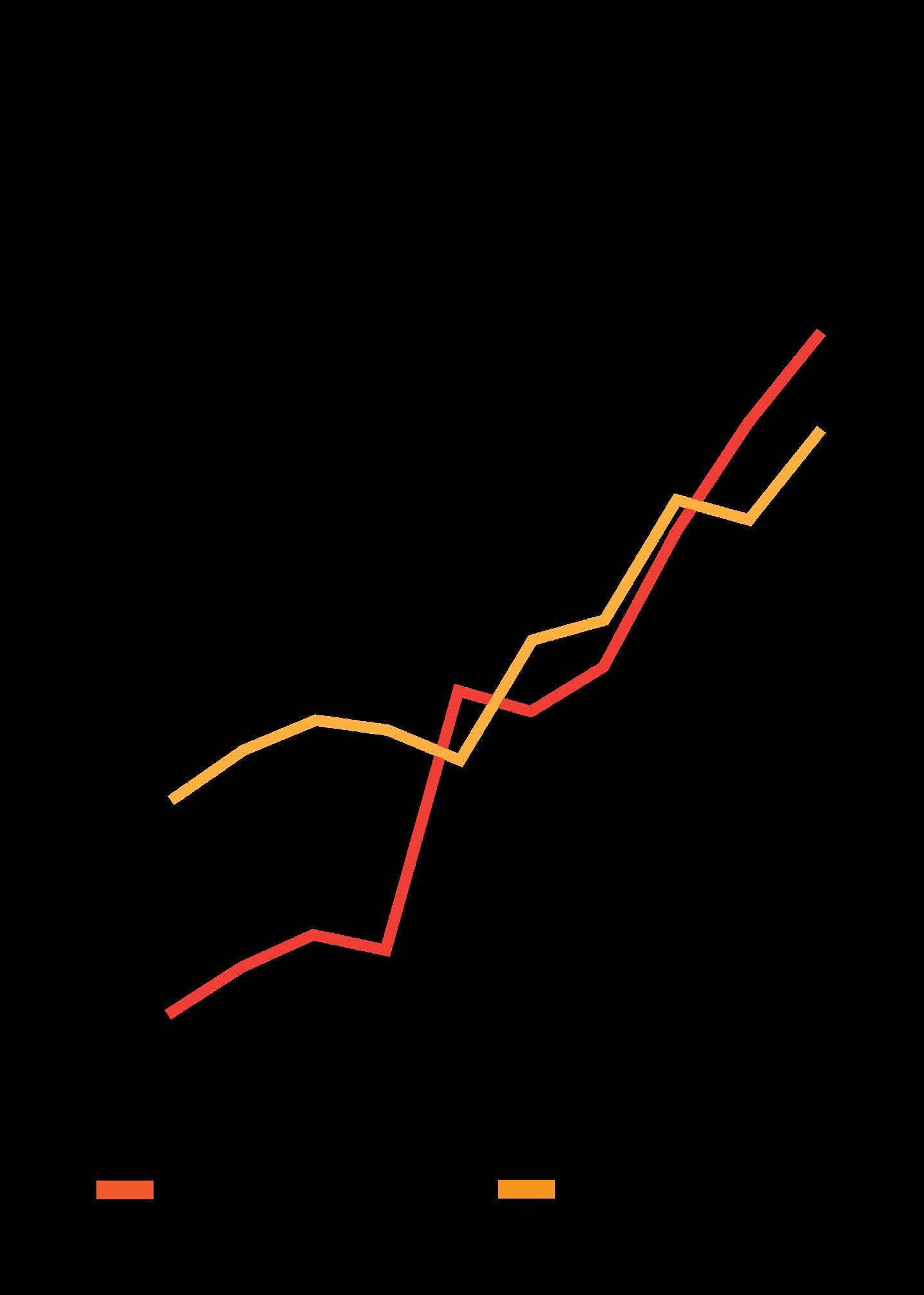
The increase in the percentage of students on the dean’s list comes in significantly higher than the percent increase in the average high school GPA for accepted first-year students.
The average ACT score for incoming freshmen has risen since 2016 as well.
See chart C
“I think that it’s likely the case that there is grade inflation going on, that UTK, along with many other well-resourced colleges with high-achieving students, probably is experiencing grade inflation,” Jason Lee, policy researcher at RAND, said. “I think it can be difficult to disentangle how much or what the composition of that increase in college grades is increased achievement and how much of it is relaxed grading policies.”
Grade inflation is the awarding of
increased grades over time despite no change in the quality of work submitted by students.
“It’s problematic because we as a society use grades to identify the high achievers, and the talented people and the hard workers,” Gershenson said. “If everyone has dean’s list, honors, on their resume, or everyone has an A in the class, or everyone has a 4.0 GPA, we don’t know who to hire.”
The issue of grade inflation has become widely discussed at universities across the country. Harvard College’s Office of Undergraduate Education, in particular, recently released a report bringing the attention of faculty and students to the problem.
“Tennessee’s not unique in dealing with this,” Gershenson said. “This is a real debate and point of concern in K-12, and in college and in grad school.”
The conversation has begun to influence
discussions over policy, with a Harvard faculty committee suggesting a 20% cap on the number of A’s awarded. Gershenson discussed the policy’s potential to turn students away from certain schools within Harvard, or even the college itself.
“Before we implement a policy, we like to think about, ‘What are the incentives that this policy is giving people, and are those incentives good or not?’” Gershenson said.
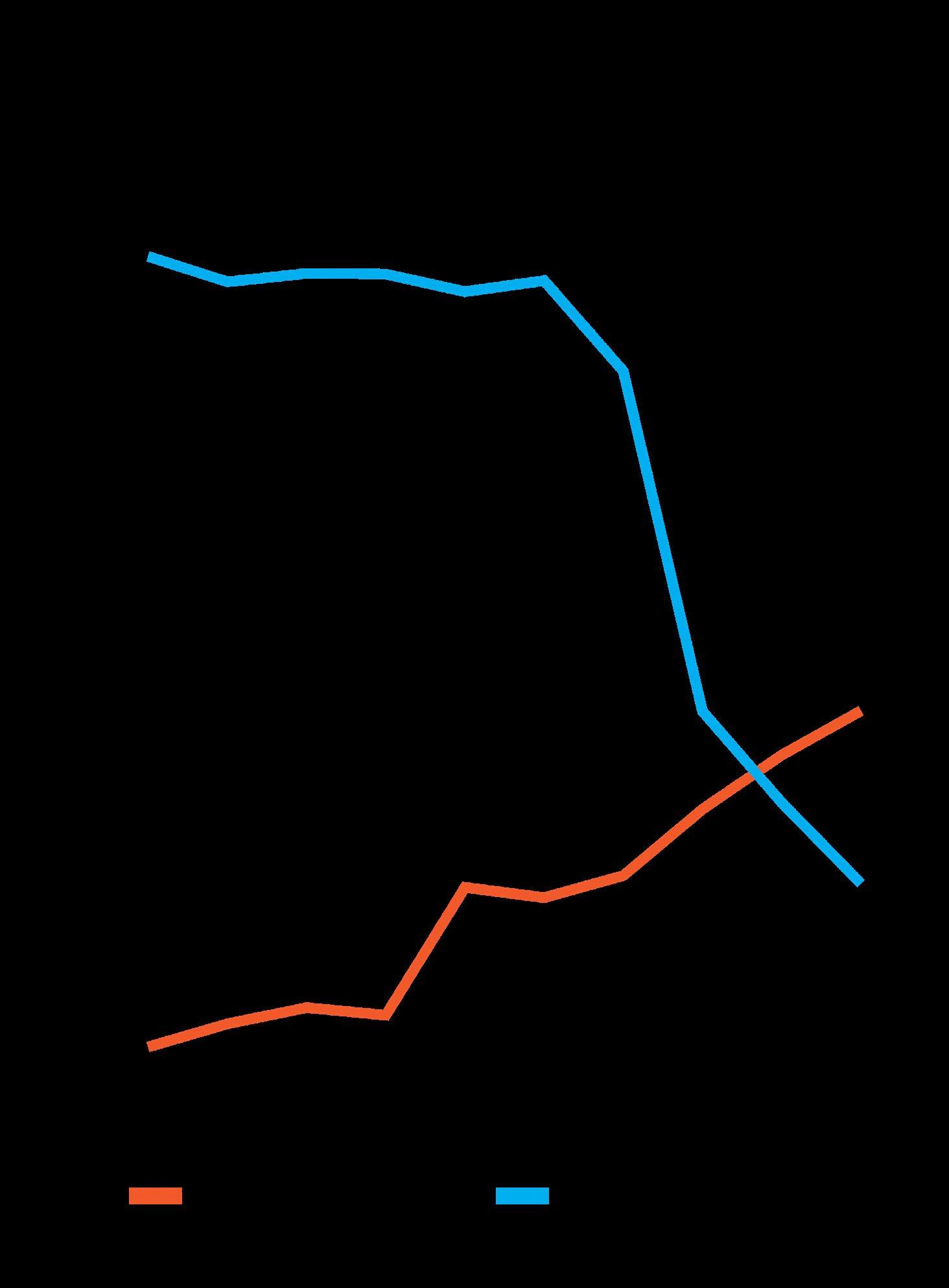
While UT has seen an increase in the percentage of students on the dean’s list more significant than an increase in the high school academic performance of enrolling students, the percent change of the percent of students on the dean’s list aligns closely with the percent change in UT’s acceptance rate.
Both saw a spike between 2022 and 2023, when UT’s acceptance rate dropped from 78% to 55%.
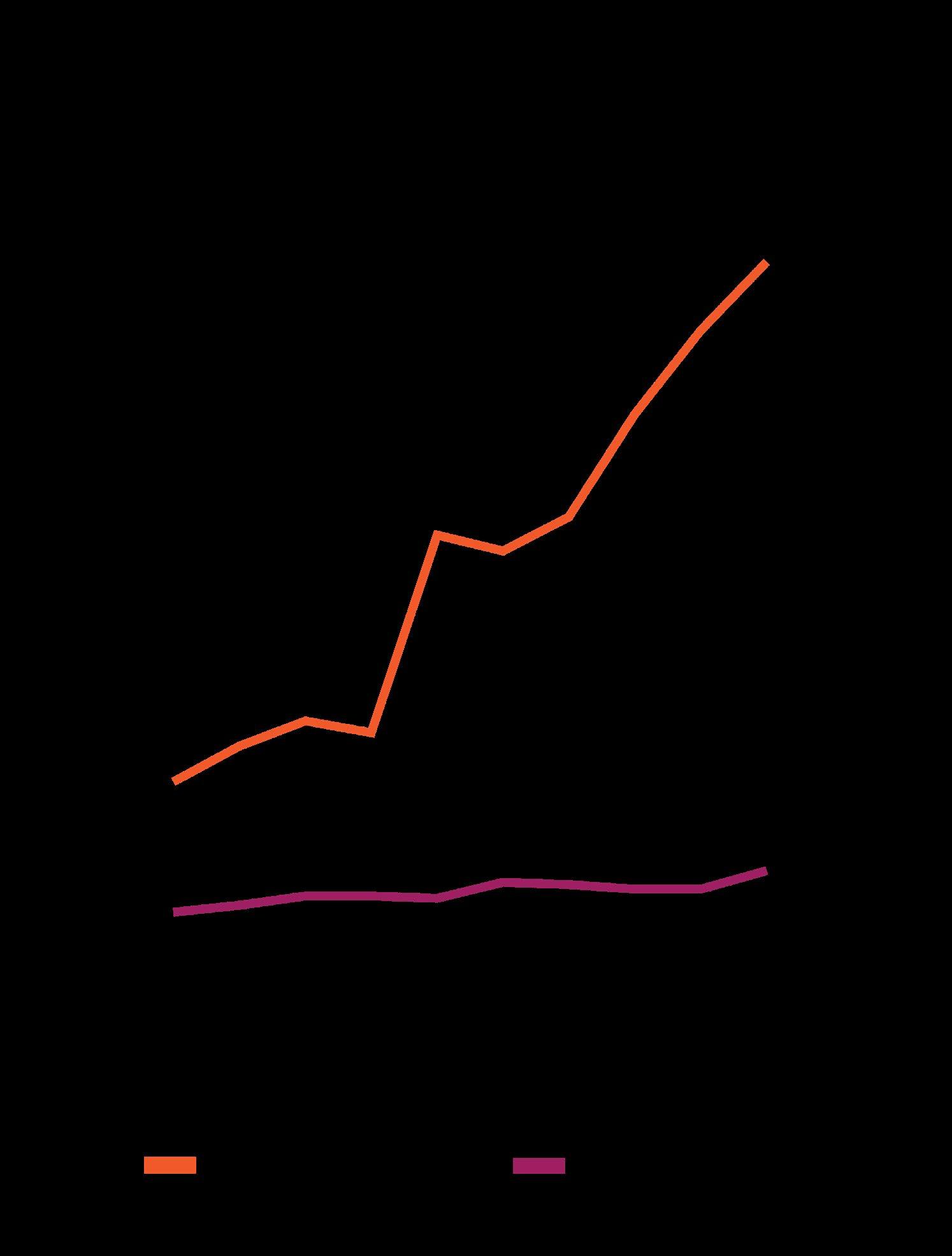
See chart D
After speaking at UT’s State of the University Address panel Feb. 10, UT Chancellor Donde Plowman talked about the increasing selectivity of UT’s admissions, specifically bringing up the effect of UT’s in-state guaranteed admission policy on the number of applications the university receives.
“While that’s generated more applications, and those are good students, there’s also a lot of room in there for a lot of different kinds of students,” Plowman said. “I feel good about where we’re headed in that direction.”
The university did not have an immediate response to a request for further comment.
TESSA NACKE Staff Writer
LG Electronics USA has launched a new pilot project in Fred D. Brown Residence Hall, aimed at upgrading and streamlining the chore of laundry.
“Laundry Lounge powered by LG” features 16 advanced LG commercial washers and 24 high-performance LG commercial dryers.
In addition to the state-of-the-art laundry equipment, the space is equipped with a 65-inch LG OLED TV, LG monitors for gaming or studying, and an LG air purifier for ensuring a clean and refreshing environment.
This project “reflects a shared commitment to innovation and to creating spaces that meaningfully support students in their everyday lives,” Vice Chancellor of Student Life Frank Cuevas said in a news release.
Fred D. Brown residents have already had a change in their attitudes on the chore of laundry.
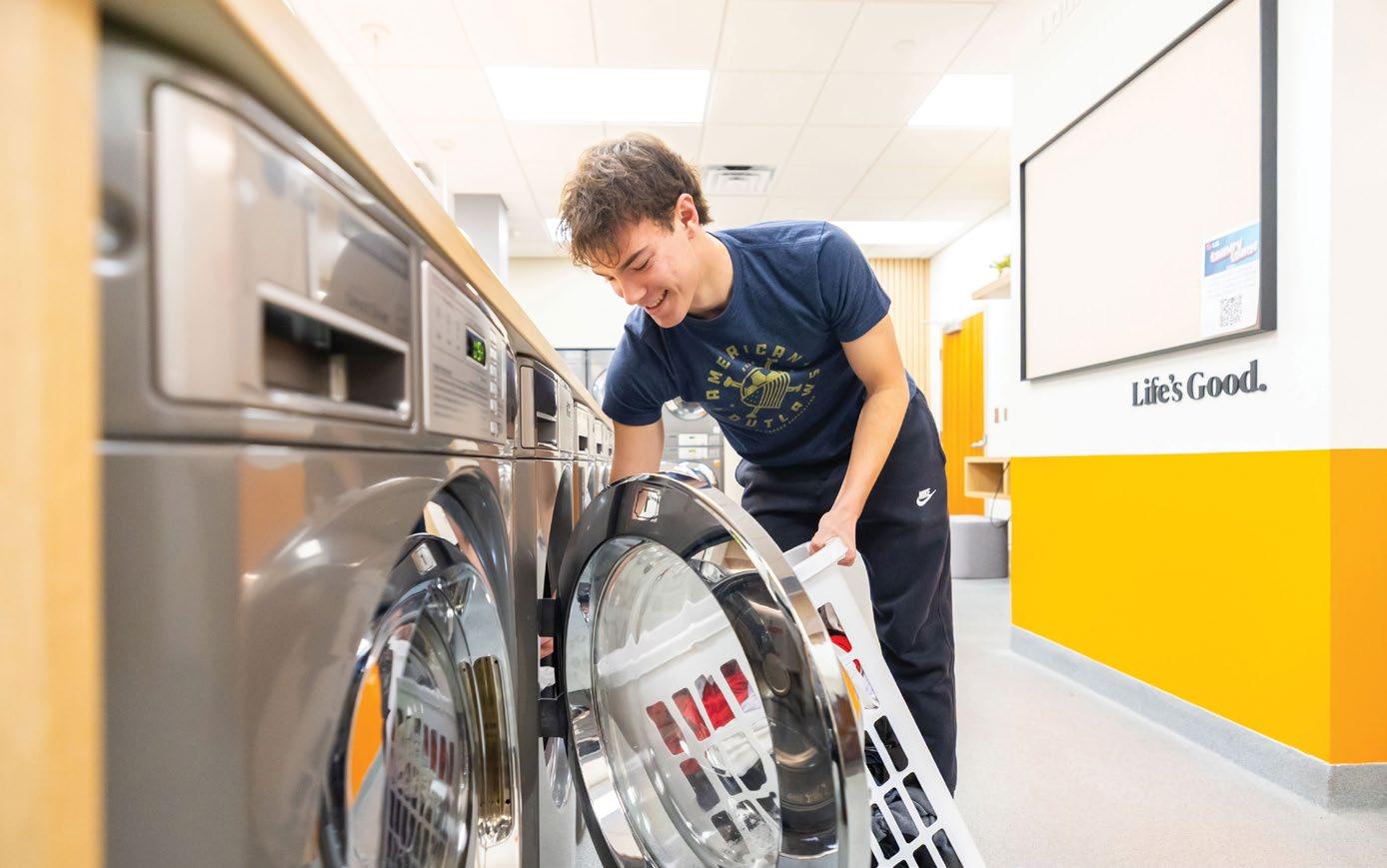
“I just noticed (that) even on the social side of things, when people are in there now, they’re talking and interacting,” resident Jenna Allen said. “It’s not like everyone just has their head down. It’s definitely made people meet new, different people. I used it more as a common space.”
Beyond the increased social aspect of this project, LG Electronics has used their advanced technology to expedite the process for students.

“(Laundry room busyness) is never gonna get totally resolved, because there’s so many people and only a certain amount of dryers, but it’s been so much easier,” Allen said. “I was able to use five washers and dryers for my laundry, and get it done fast. I was not able to do that before because most of them were out of order.”
LG’s commercial washers and dryers are also equipped with intuitive, easy-to-use interfaces tailored for all levels of experiences, paired with intelligent features such as advanced sensor technology designed to address common challenges like using excessive detergent.
“At LG, we’re redefining the college laundry experience to make it more convenient, enjoyable and community oriented,” LG Electronics USA’s Appliance Division President Kevin Jeong said.
As the lounge continues to improve life for the 680 residents of Fred D. Brown Hall, LG Electronics USA wants to place an emphasis on improving the student experience.
LG’s Laundry Crew smartphone application enables students to remotely monitor their laundry cycles from their dorm room or class and receive notifications via their smartphone when their clothes are ready.
“The Laundry Lounge powered by LG demonstrates our commitment to enhancing student life through convenience and connection by giving students a unique laundry experience that transforms a lengthy and tedious chore into an enjoyable and time-saving experience that complements dorm life,” Jeong said.

SAMANTHA WHITLEY Staff Writer
“Music absolutely can change lives, and certain pieces have changed the way that I have even viewed myself,” Cannon Murphree, a freshman studying nuclear engineering, said.
Music is one of the few things that activates the entire brain. Whether you are listening to hard-core rock or cozy melodies, music releases endorphins that positively affect your mood.
Maria Farmer, a junior majoring in cinema studies, explained how music stimulates her past memories, an experience called musicevoked autobiographical memory.
“Just think about the time when you experienced one of the best nights of your life, then think about the music that was playing that night,” Farmer said. “If you listen to that same music again, it’s like you’re revisiting that moment in your life. … You can place a cloak or armor on yourself and take on the world, all with the power of a song.”
Music serves as a different therapeutic outlet for individuals. When Murphree endures a difficult time, he takes a moment to listen to Samuel Barber’s “Adagio for Strings.”
“That piece has a way to my ears that I can attribute anything to, whether it’s anxiety flowing away or a toxic person in my life. Music like that can be like therapy to me because it allows me a strong way to visualize,” Murphree said.
Farmer stated that she is not “a big crier,” but acknowledged we all need a good cry to release tension and endorphins.
“I can definitely tell a shift in my emotions if I play a specific song and start to cry, but sometimes I need a boost in bravery or motivation, and I will listen to a rap song to psyche myself up and become energized,” Farmer said.
The impact of music comes not just from listening but also from playing. Mackenzie Jeffries, a freshman music education major, is in the UT Pride of the Southland Marching Band.
“When I learned about being a band director and started doing marching band, that’s what made me want to pursue music as a career,” Jeffries said. “I think what
keeps me going even on my tough days is I know the reward I’ll get later when I help my future students love music the same way my teachers helped me love music.
Being able to pass on my passion really inspires me.”
Jeffries plays the flute and piccolo. When she uses these instruments, she feels happy and grounded, even if playing sometimes frustrates her.
“When I’m playing my flute in the practice room or when I’m marching the Power T down the field in Neyland, everything else fades,” Jeffries said. “For that little bit of time, I have no issues, no stress, no problems. I’m just me, my instrument and my music.”
Murphree holds a deep and emotional connection to music — he appreciates music that is meaningful and allows him to drift into a world away from his own. He connects with the dissonance and consonance of music more than the lyrics.
He relishes the artist Jacob Collier, whose music includes “interesting textural and complex elements.”
Farmer recently began listening to King Princess, a younger artist who advocates for mental health issues. Before college, Farmer listened to rock and rap but shifted to classical music around freshman year.
“I started listening to classical music every morning while getting ready and while driving on my way to campus. … Classical music calms me before I’m met with the rush of UT campus,” Farmer said.
Farmer’s shift to classical music also follows the “Mozart effect” — if one listens to classical music for about 10 minutes before an exam, they may get three more points as classical music “boosts spatialtemporal reasoning.”
Harriet Nekesa, a sophomore majoring in recreational therapy, often listens to music while completing homework. Artists who help her focus include Harmonize, Sam Smith and NF.
Music fosters a sense of community and belonging. As Farmer says, it creates shared emotional experiences and acts as a “universal language and strengthens the community.”
Nekesa added that music helps people express their identity. Music is deeply intertwined with people’s values and reflects their origins.
“Listening to music can bring people together because music is a natural thing that, no matter who or what you are, you
have a part of,” Murphree said. “Everyone has a voice that counts as an instrument, and everyone can feel tension and release.”

Students unwind from a day of classes by listening to music. Monday, Feb. 16, 2026

MARGARET WHITE Staff Writer
“Take the random opportunity.”
That’s the advice of Amanda Moon, a senior human resource management major who spent Sunday, Feb. 8, at Levi’s Stadium in Santa Clara, California, working behind the scenes at one of the largest sporting (and pop culture) events in the world: the Super Bowl.
The massive crowds, the bright team colors, the halftime show — these are what most associate with the Super Bowl. For 10 University of Tennessee students, however, the Super Bowl became a meaningful and impactful experience beyond just the game of football.
Every year, the Big Orange Combine program gives a handful of students under UT’s Haslam College of Business the chance to travel and work behind the scenes at the Super Bowl. This opportunity allows students to network like never before, working among hundreds of industry professionals.
Debra Mackey has been the faculty advisor for the program for over 10 years, overseeing every step of the process from initial student interviews to game day. Mackey said that the Big Orange Combine “teaches you to take a risk, be out of your comfort zone and network. You never know when you’re going to meet someone.”
According to Mackey, the program didn’t always take 10 Haslam students.
“It started out sports management, any student communications, a few business students and athletes,” Mackey said, “and it’s evolved into a bigger program as far as networking, meeting with companies, meeting with former students, working Super Bowl experience, working game day.”
This year, the program took mainly human resource majors, hoping to give them key experience in their field. Graduate human resources and management student Mary McJunkins said the trip prepared her for a career in HR.
“You know, depending on what you do in HR, you also have to make sure people always have what they need and can work to the best of their abilities,” McJunkins said. “And I feel like, you know, being able to help support other workers for the
Super Bowl and making sure they have what they need and making sure they feel very supported kind of helped me get that experience in that way.”
During the Super Bowl, UT students work under Populous, an architecture company that assists with stadium preparations,
scenes workers.
Graduate management and human resources student Ethan Warrior described the vastness of the Super Bowl stadium.
“The NFL sets up a huge parameter around the stadium. … It’s got concert venues, restaurants, bars, team events and parties,”

Big Orange Combine for two consecutive years, the game itself isn’t the only surreal element.
“I mean, you turn around and there’s Charlie Puth and then there’s Dak Prescott and Jordan Mailata, and you’re like, ‘oh my God,’” Moon said. “It’s definitely a oncein-a-lifetime opportunity. I’m very lucky that I got the opportunity to go twice, but it’s something I can’t even describe.”
Although Super Bowl Sunday may be the most excitement-packed part of the trip for these students, the itinerary of the trip entails much more than just the event.
During their multi-day stay in San Francisco, the students went to training, went sightseeing and networked with UT alumni.
Thanks to Mackey, some of the more memorable events this year included meeting Patriots quarterback and UT alumnus Joshua Dobbs, and touring Google headquarters.
The students each described meeting Dobbs as a meaningful moment from the trip.
“... He was just such a nice guy to interact with,” Warrior said. “He’s just a great example of a Tennessee alumni who really just stays in tune with the university, and I kinda wanna be like that once I’m out.”
As for the Google experience, the students were able to take a look at a Fortune 500 company’s headquarters, as well as network with a UT alumnus.
“This year we toured Google because (UT alumnus) Kyle West is at Google, so that was exciting too,” Mackey said. “It’s a continual process of updating and networking so you can provide the students with some great opportunities.”
“It was all about networking,” Moon said.
“There are other university kids who are at this event, so it’s a great networking opportunity to meet with kids, you know, from all over the country, and just see another part of the world,” Warrior said.
Warrior, who gained perspective on large technology companies like Google on the trip, expressed his appreciation for Mackey.
“I’m just grateful overall for Dr. Mackey and her connections,” said Warrior.
After her second Super Bowl with the Big Orange Combine, Moon describes her relationship with Mackey as that of a “mentor and a friend.”
According to Mackey, the Big Orange Combine is about more than networking.
“It’s also being asked to do things that you probably haven’t done, not being afraid to work hard, learning, again, how business comes together, and how you need to know about other aspects of the business, no matter where you’re working,” Mackey said.
Burke
Bartlett, for one
Gun an engine
Unemployed
Goes (for)
Commencement 20 President Macron 22 Ray of "GoodFellas" 23 Rent payer
24 Caterer's heater
26 Talk back to 28 ___-stop shop
29 Feel sorry about 32 Implied
35 Ethan Hunt portrayer
38 Hale or Thicke
39 Hot under the collar
40 Place for polish 65 "Giant" author 11 Opinion piece
41 Japan castle city Ferber 12 Very much
Persistent pain
2004 Olympics
43 Set to rest 66 Eases up on the 13 Sofer of the site
44 NY time zone gas soaps
Leader of the
45 Pen's point 67 Disavow 19 Network, e.g. pack
46 Crime-stopper 21 Shipshape 50 Seek out for spray DOWN 25 Part of a drum kit help
48 Second of two 1 Orange variety 27 Disco light
51 Sister of Calliope 2 Some Japanese 30 Former Voice of
Feudal lord
Jude Law's
55 Aviator Earhart films America org. "Cold Mountain"
57 Doing a theater 3 Looks like 31 Slippery role job 4 Hired guns 32 Break, as a
Intense suffer-
59 Know-how 5 Puts forth, as a horse ing
61 Verne's captain case
Woe is me
Complexion
62 Genesis skipper 6 Only 34 Ben Cartwright, concern
63 John who sang 7 Track shapes for one
Kind of ring or "Daniel" 8 Cow's chew 36 Cereal grain swing
64 "A Visit from the 9 Lavish living 37 Ignorant
Garbage boat Goon Squad" 10 Spike for climb- 39 Impersonates
Building wing author ing 42 Loosen a knot
Solution to Crossword:

MOLLIE POKELWALDT Contributor
Without tenure, UT professor Morgan Marietta says universities could become “monochrome, boring and humorless.”
The Tennessee legislature proposed a bill on Feb. 9 that would end faculty tenure for public universities. The bill has been passed in the Tennessee senate and has two Republican sponsors. It would not just affect UT, but all other public universities in the state.
When someone mentions tenure, there can be confusion surrounding what exactly it is. The history of Tennessee tenure is complicated in itself.
In 2011, the “Race to the Top” law changed tenure requirements, requiring teachers and professors to attain “above expectations” or “significantly above expectations” on evaluations.
After 2011, under current laws, teachers with tenure can lose their status due to poor evaluation scores.
However, 2026 has brought potential changes. Senate Bill 1838 proposes taking tenure away permanently.
Tenure’s official definition is the probationary period of teachers, or in this case, professors, that protects them from being fired in a five to seven year period. When there is no tenure involved in the hiring process, professors are able to be fired for almost any reason.
This issue can be controversial, as many believe tenure protects professors who teach sensitive subjects in their classrooms or encourage debates on arguable topics.
Oklahoma is also facing this controversy. In early February, its legislature put into place an executive order designed to take away tenure from public universities. Two universities, the University of Oklahoma and Oklahoma State University, can still offer tenure as the only exceptions to this order, but they must instate five-year reviews.
The stated reason for this? To protect the university’s reputation.
The potential end of tenure is a major concern for many professors at UT, including Dr. Robert Kelchen.
“It would likely change who wants to go into faculty,” Kelchen said. “If the University of Tennessee is trying to compete against, say, Georgia or Vanderbilt, and they have tenure, it is more difficult for us to get top notch faculty,”
Marietta agrees with that sentiment.
“Without (tenure), dissenters would be punished or replaced,” Marietta said. “Whatever ideas have captured a majority position on campus would be un-
challenged and locked in place.”
The bill is clear, stating it “must not allow the institutions governed by the board to confer any new tenure status on faculty members on or after July 1, 2026.”
As clear as it, the faculty senate of Tennessee also recognizes the concerns this may raise for faculty members.
“I want to add,” Charles Noble, president of the faculty senate, said, “that all interactions we have had with our campus administrative leaders have shown nothing but unequivocal support for the value of tenure for a thriving university such as ours.”
Kelchen agrees that tenure can be considered protection for professors, and without it, many potential hires could be put off by the fact the university does not offer tenure.
“If you can get a position with tenure,” Kelchen said, “you’ll take it as protection, even if you’re good and can probably get a job elsewhere.”
He believes that many “best-of-thebest” faculty would most likely turn down the option to work at UT if they could not be protected.
Tenure also helps protect professors from consequences if they make temporary mistakes.
“(Tenure) gives people the oppor-
tunity to try and innovate new things and fail because they’re not concerned about an immediate performance review,” Kelchen said.
There is an articulated reason behind why the senate is proposing this bill. With tenure, some argue that it becomes difficult to remove professors that may have been underperforming or become problematic.
“Some people think tenure is a bad idea because it allows professors to be lazy and act badly,” Marietta said. “It doesn’t protect faculty from violating the purpose of the profession by doing things like celebrating violence on campus.”
Many other bills in the United States are similar to the one Tennessee introduced just last week.
For example, in 2023, the North Dakota legislature introduced a bill giving presidents of universities more power to fire tenured faculty.
Although it did not pass, it took two years for a decision on the bill to be made.
However, no state has seen a bill be this clear or strict about taking away tenure from every public university.
As referenced in the Oklahoma bill, there could be an exception for large
research schools, such as UT.
“Because there is pressure on tenure in other states,” Kelchen said, “there would probably be a pretty good chance that there would be a carve-out for UT Knoxville.”
Marietta believes that in the absence of tenure, there would be no risks or innovation, and professors would be scared to have tough conversations with students. Classes could face stagnation.
“Universities would be monochrome, boring and humorless,” Marietta said. “Tenure is crucial, and I am sure the legislature will see that.”
Without (tenure), dissenters would be punished or replaced. Whatever ideas have captured a majority position on campus would be unchallenged and locked in place.”
MORGAN MARIETTA UT Professor
CLAIRE THATCHER Staff Writer
If I had a dollar for every time I heard one of my friends was “talking” to a guy, I’d definitely have enough money to finally upgrade my iPhone storage.
As someone who stays on the fringe of Knoxville nightlife and doesn’t care much for social media, I’ve never had the chance to experience a genuine talking stage. A real situationship. But the idea has always fascinated me.
So what is the situationship, exactly? I asked the experts to help me define it.
“I would say a situationship is … a type of relationship without a label. So it’s a romantic partnership — but you aren’t boyfriend or girlfriend,” Norah Wolfe, 18, said. “You’re with them, but something is preventing you from fully committing. I mean … a situationship kinda implies there are issues.”
“I would describe it as a toxic relationship,” Allison Reed, 18, said. “You’re stuck in something where you obviously have emotions towards this person — not just physical, but maybe love, and it’s not healthy. It tears people down. People get so convinced it will work out.”
Many referred to it as a rite of passage or a “cannon event” while dating.
A cannon event is a term used to describe something traumatic, embarrassing or generally negative that ultimately results in character development. The term was first used in the 2023 movie “Spiderman: Across the Spider-Verse” and then popularized on TikTok.
“I feel like it’s more normal to see somebody in a situationship than to see them in an actual, committed relationship with somebody that they value and somebody that values them,” Reed said.
From what I can gather, situationships are somewhat unavoidable in today’s dating world. Everyone has a story. While lowcommitment relationships based around casual sex have been around since the dawn of time, the situationship as it is today is uniquely Gen Z.
“Um, I think it’s definitely, like, a Gen Z thing. I remember my parents talking … like, they would just go on a date with someone, and you’d be considered dating,” Macy Moody, 19, said. “I feel like social media has definitely complicated it.”
It wasn’t an immediate switch. We didn’t wake up in 2020 and decide commitment was, like, so last year. Hookup culture has changed how young people approach courtship. You couldn’t send a nude in 1985.
Snapchat, the massively popular social networking app, serves as a virtual dating
rolodex for young people. While not explicitly a dating app, Snapchat’s default settings make it easy to “talk” to 10 people at once.
“I feel like the prevalence of (situationships) has definitely increased with social media,” Wolfe said. “It’s so much easier to create a relationship with someone, just because we have so much easy access to each other through social media. I feel like it’s almost easier to create, like, a connection.”
It’s no longer such a social taboo to be sleeping with multiple people at once. Having a baby out of wedlock no longer means the ruin of the family name. Casual sex doesn’t make you a slut. You’re just a young adult, experiencing life and having fun in your 20s.
When casual sex is normalized — nay, expected — in a relationship without commitment, it raises a fair question: Are situationships debasing intimacy?
“It honestly kind of made it harder to be able to get into a committed relationship because it’s like, ‘do you want this to go further? Are you going to just act committed, but secretly you have side h—s on your Snapchat?’” Kaitlyn Dobbins, 19, said. “Are you gonna act committed for six months and then drop me for some new b----?”
While the situationship provides relational mobility, it also seems to breed mistrust.
“Just — it seems easier to be deceptive in real relationships after so long of having situationships, where you are 100% not the only person I’m talking to and vice versa,” Dobbins added.
There is nothing wrong with dating around. But that’s dating — in a situationship, you are investing without return. There is still physical intimacy and months of contact, but you aren’t “together” in the traditional sense. You’re running in place.
“I think when people think of situationships, they think, ‘oh, no strings attached. Like, we’re just going to have fun. I can just, like, hook up with this person and it’ll be fine.’ But I think, regardless, there’s always gonna be strings attached,” Moody said. “Like if you’re spending a lot of time with someone, there’s no way you don’t catch feelings for them. There are always strings.”
It seems situationships — even those without sex — require a level of emotional intimacy that would be better reserved for monogamy.
“Since there are no really defined boundaries, telling someone the way you really feel if you do catch feelings, you just don’t really do,” Shayla Smith, 19, said. “Like, if you wanted something more but know they are seeing other people, you just don’t say anything. Because they would probably say no, and then it would be weird, and you wouldn’t see them at all.”
It seems the no-rules nature of the situationship can often lead to someone

pulling the emotional short straw. One person wants more than the other, but having a commitment to no commitment means emotional vulnerability is off the table.
Having an aversion to commitment is normal when you’re young. For a long time, the social norm stated that the purpose of dating was marriage. You didn’t date unless you were ready for a lifelong commitment.
With the freedom social media affords users — the infinite options it provides, it seems senseless to commit when you could just swipe to the next. Connection is at our fingertips, and it’s easier to find than ever.
Infinite people that might like you, might want to hook up with, might want to tell you you’re pretty. Social media gives us the opportunity to satisfy our very human desire for validation. But it’s indulgent. Unhealthy. It fills a void that was never meant to be filled.
Attention takes precedence over commitment. Thus, the situationship is born.
With the help of hookup culture, the situationship has become an inescapable phase in the formation of relationships, or rather, just an established thing people do when they want to date. I feel like it’s not fair to say “formation of relationships” when 98% of the situationships I’ve witnessed end in tears, burned hoodies and 24/7 jazz music because “it’s the only thing that keeps me from crashing out.”
If Gen Z seemed happy with the situationship, I would empower them to
keep going. Frolic in the gray area. But it just doesn’t seem like they are.
I would implore anyone reading who is currently in or considering entering a situationship to ask yourself what you really want out of the relationship.
Would you care if you met someone, talked for months, exchanged intimate pictures and then, out of the blue, they ghosted you? And when they do, you aren’t allowed to get mad because that’s what you signed up for?
If the answer is yes, then go right ahead. If the answer is no, I’d sit this one out. You won’t be alone forever, I promise. There are less toxic ways to get to know someone.
If you are afraid of commitment, maybe just don’t date. And if you want casual sex, maybe try Tinder.
“It was terrible,” Smith said. “When I was in it, I guess I couldn’t tell. But it was terrible. Just terrible.”
Columns and letters of The Daily Beacon are the views of the individual and do not necessarily reflect the views of the Beacon or the Beacon’s
Between me and you, being single is underrated, especially in college. Somewhere between syllabus week and graduation countdowns, we were sold the idea that college is only complete if it comes with a relationship attached — preferably photogenic, long-term and with a marriage proposal impending. But the truth? College is already a lot to juggle. Between classes, assignments, clubs, jobs and the small day-to-day responsibilities, it’s hard to keep up with yourself, let alone another person. Being single in college gives you something no relationship ever could: uninterrupted access to yourself. Your time, your priorities, your growth — completely your own.
In a 2016 presentation to the American Psychological Association, Bella DePaulo, a psychologist at the University of California, Santa Barbara, shared data proving that people who were single present stronger feelings of self-determination and are more likely to display psychological growth and development than their married counterparts.
In all my years and stages of life, I’ve never been in a relationship, and it’s so freeing. I’ve listened to all my friends over the years tell me about the drama, heartache and constant frustrations that come with their relationship, and I don’t feel like I’m missing out. There’s something incredibly liberating about moving on your own time in the life you’re building without having to negotiate your peace.
I also recognize that for some people, their relationship is their peace — and that’s a genuinely beautiful thing. Love can be grounding, supportive and life-changing when it’s healthy.
What’s concerning is the pressure our society places on us — at every age, in every stage — to be in a relationship as proof of worth or success. That expectation is both alarming and constricting. It leaves little room for individuality, timing or choice, and it turns something meant to be organic into something that feels mandatory. We should be allowed to want love, or not want it yet, without feeling like we’re falling behind. We need to bring back the joy of being single. If you’re single and feel the weight of society breathing down your neck, insisting you shouldn’t be single, turn the volume all the way up and blast “Ridin’ Solo” by Jason Derulo and “Good As Hell” by Lizzo. Being

Marissa Hunt finds being single to be underrated — a reminder that choosing yourself, your friendships and your growth is just as meaningful as choosing a relationship. Marissa Hunt / The Daily Beacon
on your own is a celebration.
Being single has taught me that in all aspects of life, I’ll always have myself. To me, self-love is the most important form of love — it’s the foundation everything else is built on. We can’t pour love into others as effectively if we haven’t first learned how to show up for ourselves.
My parents will always be one of my truest forms of love. Alongside myself, they are the constant I know I will always have — a steady, unconditional presence that grounds me no matter where life takes me. I recognize that love is the blessing it is.
I’ve also realized that the love found in friendships — the kind rooted in choice, laughter and shared growth — is incredibly powerful. In many ways, it’s one of the purest forms of love we experience, and it deserves just as much reverence as romantic love.
Often in relationships, people can begin to lose parts of their identity, becoming known primarily as their counterpart’s significant other. While there is something undeniably
sweet about being intertwined with another person, it’s especially important in college when one is building their identity, but truly at any stage of life, to maintain a sense of self.
In relationships, people often give their whole selves to one person — sacrificing their hobbies, sidelining their friendships and neglecting the parts of life that make them an individual. When the relationship ends, they sometimes discover that friends got tired of waiting on them and drifted away long ago, leaving them feeling completely alone.
We deserve to be known not just by who we love, but by who we are — our passions, values, ambitions and the ways we show up in the world. Maintaining our own identity and connections outside a romantic partnership enriches our lives and supports our well-being.
“People say a lot of times, when they’re in relationships, that they’ve lost themselves. And that’s largely because we stop doing things independently,” Dr. Niloo Dardashti,
a workplace psychologist and relationship expert, said.
Whatever your relationship status is, it should never be used as a measure of your worth. Being in a relationship does not make someone better than another, just as being single does not make someone lonely or behind. We all move through life at different paces, with different priorities and desires. Whether you are single, boo’d up, married or somewhere in between, you are still becoming — and that, on its own, is enough.
Your thoughts are my favorite read. Email me at mhunt44@vols.utk.edu.
Columns and letters of The Daily Beacon are the views of the individual and do not necessarily reflect the views of the Beacon or the Beacon’s editorial staff.




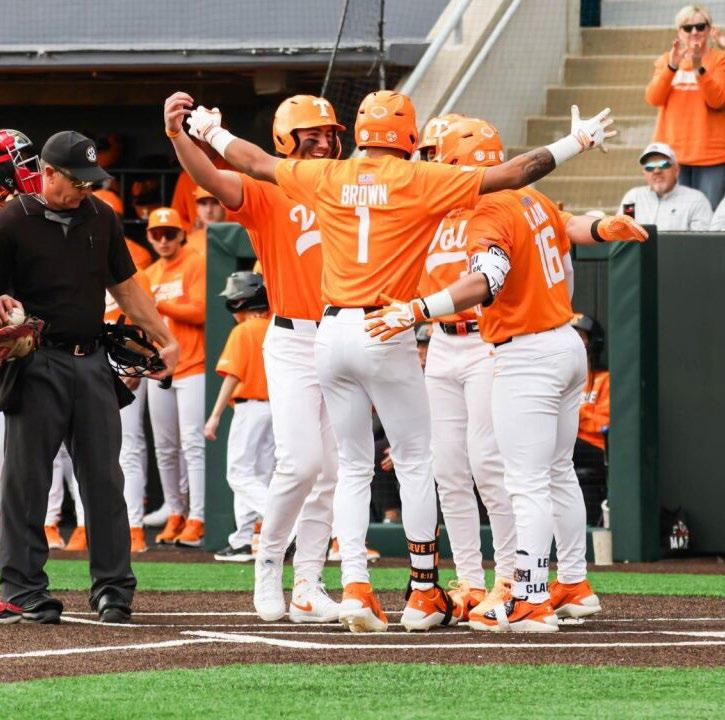


Tennessee baseball vs. Nicholls State Feb. 14, 2026
1. Levi Clark (16) and Reese Chapman (13) celebrate during the game against Nicholls in Lindsey Nelson Stadium.
2. Reese Chapman (13) runs to first base.
3. Levi Clark (16) celebrates with his teammates after hitting a home run.
4. Stone Lawless (27) during the game against Nicholls in Lindsey Nelson Stadium.
5. The Vols celebrate in Lindsey Nelson Stadium.
6. Henry Ford (9) runs to first base.
7. Levi Clark (16) celebrates with his teammates after a home run.
Jayden Randolph / The Daily Beacon
ALEX SARKIS
Asst. Sports Editor
Baseball in the modern day is all about the metrics.
Pitch speed, launch angle and spin rate make up some of the prominent ones, all areas of interest for Tennessee baseball two-way player Blaine Brown. In the Vols’ opening series though, exit velocity reigned supreme for the 6-foot-5 Rice transfer.
During Saturday’s doubleheader against Nicholls, Brown’s barrel did the talking. The 200-pound lefty slugger clubbed three baseballs above 110 mph, rocketing three homers with six hits between the pair of contests.
Colonels’ pitching simply couldn’t contain him.
“Special player,” head coach Josh Elander said. “I think he’s just been getting better each and every day. I was jogging by off the field at the end of the game and the umpire was like, ‘well, at least he finally got out.’ Pretty cool to see him having fun and playing loose. We’re expecting big things from Blaine all year long.”
These big things helped No. 14 Tennessee power its way to an opening weekend sweep of Nicholls that featured a pair of run-rule decisions. Brown bullied the Colonels on the bump, posting a .571 average for the series.
His pure stroke of power is one of the big reasons the Houston native sees himself ascending MLB Draft boards in preparation for the 2027 big-league selections, and on this day, Brown gave pro scouts plenty to be excited about.
“I really wouldn’t say it really felt easy,” Brown said. “Just the countless swings I’ve took in the cage, coming in early, hitting BP with Chuck (Jeroloman) and Elander has been a really big help.”
The sophomore paced Rice in batting average during his freshman campaign a year ago, tallying 10 home runs while also leading the Owls in RBIs. He’s well on his way to eclipsing both of those numbers in his new home.
Brown filled the two-hole of the Vols’ lineup in his first three games, making up a loaded top of the order for opposing pitchers to deal with. Fellow big league hopefuls Henry Ford and Levi Clark sandwich their teammate, a contingent that accounted for
14 of Tennessee’s 17 runs during the twogame set.
“I think the whole lineup is about as dangerous as me, Levi (Clark) and Ford,” Brown said. “I mean, can’t just slack off on the rest of the six in the lineup. Anybody can do any damage at any point in the game.”
Brown’s makeup as one of the most enticing prospects is aided by his two-way designation. While he is yet to appear in a game on the mound with Tennessee in game action, the left-hander can spin his fastball in the upper-90s and appeared in seven games during his time with the Owls.
He started a game against the Vols during the Astros Foundation College Classic last March but struggled mightily with his command in nearly every outing. But for now, Tennessee is just fine when Brown holds the bat in his hands. That version of him is good enough to draw high-level praise from his headman.
“He kind of reminds me of Kameron Misner, a first-rounder from Missouri a few years back,” Elander said. “Long body, leverage, but also athleticism and hand speed. I think that’s maybe just cause of the height, but he’s pretty special. He can use
the whole field, and it’s an elite combination of athleticism. It’s a special talent.”

‘This means a lot to a lot of people’: Tennessee baseball head coach Josh Elander reflects on first win
ALEX SARKIS
Asst. Sports Editor
From a bird’s eye view, everything looked the same.
Josh Elander stood in the third base coaching box, batting helmet atop his head. The 34-year-old assumed his usual stance as he shouted instructions to his baserunners as Tennessee baseball opened the 2026 season inside of a new-look Lindsey Nelson Stadium.
In reality, so much had changed.
The Austin, Texas, native stood in the midst of his first game as Vols’ head coach and first contest without former Tennessee headman Tony Vitello in the dugout. Now, Elander held the keys. The house he and Vitello helped build loomed high into the February sky.
“It’s just such a cool place to walk into,” Elander said. “I have so many memories. It was so nice, Andre Lipcius, Luc Lipcius, just had so many guys from over the years text me this morning. Very grateful for that, but also know that this means a lot to a lot of people around here now. It’s time to get to work.”
The Vols earned about as clean an Opening Day win as they could muster, downing Nicholls 10-0 in run-rule fashion. Elander’s decision to go with Tegan Kuhns
as his first starting pitcher panned out, the right-hander posting 6.2 innings of scoreless baseball.
His bats didn’t waste any time heating up, racking up 11 hits and three longballs to make quick work of the Colonels. Elander’s right arm kept busy.
“At that third base box, I’ve spent a lot of time there over the years,” Elander said. “That’s kind of my comfort zone. I just thought the vibes in the dugout were great from our players and coaches, and just the way we were communicating, really no tension or anything in there. Just kind of talking through some different scenarios.”
During a late-game scenario, he made the move to pinch-hit redshirt sophomore Tyler Myatt in the seventh inning, a department Elander is perfect in for now. Myatt rewarded his skipper by driving a two-strike bomb over the wall in rightcenter field, leading to a near-perfect ending to the first story of Tennessee’s new era.
Elander broke the seal on a historic day for his program, keeping the day-to-day operations business as usual for the locker room of guys he recruited. Senior Reese Chapman found his way on base four times, while highly-touted recruit Henry Ford notched a two-RBI night in his first outing in a Vols’ uniform. The fruits of Elander’s work as recruiting coordinator

continued to show.
Newly added fireworks blasted from the roof of the concourse as the latest Uber Eats advertisements donned the fences of the left field porch. Updated light towers cast their beams onto the turf while the freshly embroidered names of each player graced the back of Tennessee’s jerseys.
In the third base coaching box, the message stayed the same.
“You just want to attack each day,” Elander said. “We talk about that with the guys all the time. Tyler Johnson brought me the ball for the first win, but this is just another win for the Tennessee Volunteers. That’s how I look at it.”
TREVOR MCGEE Sports Editor
If Landon Mack learned anything about Tennessee baseball in its opening-weekend sweep of Nicholls State, it’s that he’s surrounded by a group of guys that just want to have fun on the diamond.
That camaraderie reigned prevalent for a squad that outscored the Colonels 27-3 across 24 innings — courtesy of a pair of run-rules.
"A lot of guys that want to compete, a lot of guys that want to win,” Mack said. “And it's a party out there.”
The Vols’ domination began on the mound. Tennessee’s weekend trio consists of guys who have all taken the ball in prominent starting roles before. Transfers Mack and Evan Blanco were each Friday night pitchers at their previous schools.
When Josh Elander delivered the phone call, Tegan Kuhns was on the receiving end to earn the Opening Day nod.
Tennessee’s rotation combined to give 17.2 innings of one-run baseball. It allowed 11 total hits, while fanning 26 batters to just four walks. Kuhns and Mack both set new personal benchmarks for strikeouts in a game.
And they’re the set of guys who have sharpened the most iron during the offseason.
“It’s just been a competition between me and him,” Kuhns said Friday. “... Since he got here, he’s just been pushing me. He’s awesome.”
“We consistently pushing each other and working hard,” Mack added Saturday. “And I'm glad to have him pushing me and to be able to push him back and push our boundaries.”
Kuhns’ opener set the tone for the weekend. He delivered a career-best outing in innings pitched (6.2), strikeouts (8) and pitches (86).
The Colonels knocked a meager two hits off the breakout sophomore, and he surrendered a single free bag.
Nicholls State managed one runner into scoring position while Kuhns toed the rubber, and he delivered an inning-ending strikeout to prevent any scares. The debut served as a culmination of the offseason he produced — beginning with a dominant 13.1 innings of action in the Cape Cod League that has boosted him into the season. He’s developed a four-pitch mix, featuring a new-look changeup that generates heavy swing-and-miss potential.
It was all the more special to get the win for his first-year head coach in the opener.
“It was absolutely amazing,” Kuhns said. “It was everything I expected to do, and I just want to win for that guy, man. He loves his players.”
As the weather took course on Sunday, the Saturday slate had to be doubled up. Mack took the ball in the first game and followed up Kuhns’ performance with an ace-like nod of his own.
Mack surrendered the first run of the season on a solo blast to the porches in left, but otherwise gave Tennessee six innings of four-hit baseball. He struck out a career-best nine batters and put his command on display with one walk.
His fastball sat high 90s, while his cutter-slider hybrid paired with a falling curveball provided deception. Even though Mack walked just 17 batters in 80.1 innings at Rutgers a season ago, he’s seen the most improvement in his ability to dial in on the zone since arriving at Tennessee.
“Commanding the zone and feeling comfort with off-speed pitches,” Mack said. “Being able to mix it up and keep hitters off balance.”
Blanco, meanwhile, used to be the ace of a Virginia squad that made the 2024 College World Series. The lefty is beginning the year as third in the rotation, but his production in the backend of the doubleheader showed how valuable he can be for the staff.
Blanco gave up five hits over five innings. He did not surrender a run, striking out nine batters and walking two.
“Just poise and competitiveness from both of them,” Elander said of his Saturday duo.
The weekend starters garnered their share of attention, but the bullpen reserves held their own, too.
Brady Frederick is the only one of the five guys who entered in relief to surrender a run. Cam Appenzeller, Nic Abraham, Bo Rhudy and Brayden Krenzel dished out clean slates across their 5.1 innings of work.
Appenzeller is Tennessee’s prized freshman possession. The 6-foot5 lanky lefty, who ranked No. 22 overall in the 2025 class, bypassed Major League offers to step foot on campus. His first appearance provided everything Elander could’ve desired for the touted arm who will spend three years in Knoxville before he’s draft-eligible again.
He tossed four strikeouts in two

innings, keeping the bases clean without a walk or hit allowed. The next step is determining where he’ll be factored in as the season furthers.
“He’s a really good athlete,” Elander said. “It’s just easy. He really attacked the strike zone today, and there’s no doubt more velo coming. I don’t know when, but it’s not a big velo deal. It is important to an extent, but he can really get outs, and he’s shown the ability against our hitters to, when there’s a mess going on, he can say, ‘OK, I’m putting an end to this right now.’ So, really excited about what he’s able to do and when he’s getting back out there right away.”
His role will continue to find its shape. Getting Appenzeller back on the mound right away could entail midweek starts — but that’s far from the end goal.
“I told him when I met with him, it’s like, ‘Hey, we brought you here to pitch on the weekend,’ right?” Elander said. “So again, I think there needs to be some sort of progression to that, and we’ve kind of overly communicated, even with how he’s going to lift throughout the
week,and making sure early in the year to middle of the year, but we’re expecting his role to continue to evolve. Really confident about his ability to get outs really anywhere.”
In the end, though, there may not have been a bigger performance than the one inning that Krenzel gave over the weekend. He entered game two of the doubleheader after Blanco’s exit,and delivered a groundout, strikeout and flyout in six pitches.
It was a leap in the right direction for the sophomore who battled a tough end to his true freshman season.
“I think he needed it, Elander said. “I think we kind of were joking in the dugout, like, ‘There he is. We missed you.’ So, I met with Krenzel probably 10 days ago. I think sometimes guys with the competitive element of our rosters, they try to be something they’re not, instead of just stacking consecutive days and trying to be the best version of themselves. The best version of Brayden Krenzel is really, really good on the mound.”
As the season progresses, more roles will shape. For now, Elander and new pitching coach Josh Reynolds have a good problem on their hands.
CONNOR
WHITNEY Contributor
A little after three in the afternoon on Sunday, Karen Weekly took to X to share a video of her team singing “Rocky Top” on their bus. And why not? They have started the season 10-0, after all.
Tennessee softball is off to a scorching hot start to open its 2026 campaign. The mantra of the season was “dominate,” and to this point, the Lady Vols have more than lived up to the word. The Lady Vols have outscored their opponents 76-4 over those 10 games. More impressively, they have run an early-season gauntlet, defeating No. 5 Oregon, No. 6 Florida State, No. 7 UCLA and No. 8 Nebraska.
“What I’m proud of is, we’re not really talking about opponents and their rankings,” head coach Weekly said. “I’m proud of them for just going out there and playing Tennessee softball, not worrying about who’s on the other side of the field, what the name is on the uniform, or what the media is saying about them.”
In those games alone, they outscored those teams 26-2. In sum, they have clubbed each team that they have played, and they look every bit like a team on a mission.
The most obvious reason for their early success has been the pitching staff. As a group, they have tossed six shutouts, and they have yet to allow more than one run in any game so far. Their team ERA is 0.33. Simply put, they have been brilliant all season long.
“I love playing behind all our pitchers,” infielder Ella Dodge said. “They’re all so competitive, super proud of Sage (Marajetko) and Erin (Nuwer) this weekend, they did great. We hit off them in practice all the time, and I’m glad they’re on our team because those are some hard at-bats in practice.”
It would be easy to credit Karlyn Pickens with the success of the pitching staff, but such a conclusion is mistaken. She has been outstanding this year, having not allowed an earned run through 24.1 innings of work. However, the ladies around her have been simply tremendous, and the one who has arguably been their best this season from the circle has been Nuwer.
The sophomore from East Aurora, New York, has taken the stage by storm, announcing herself as co-ace of the Lady Vols by going 5-0
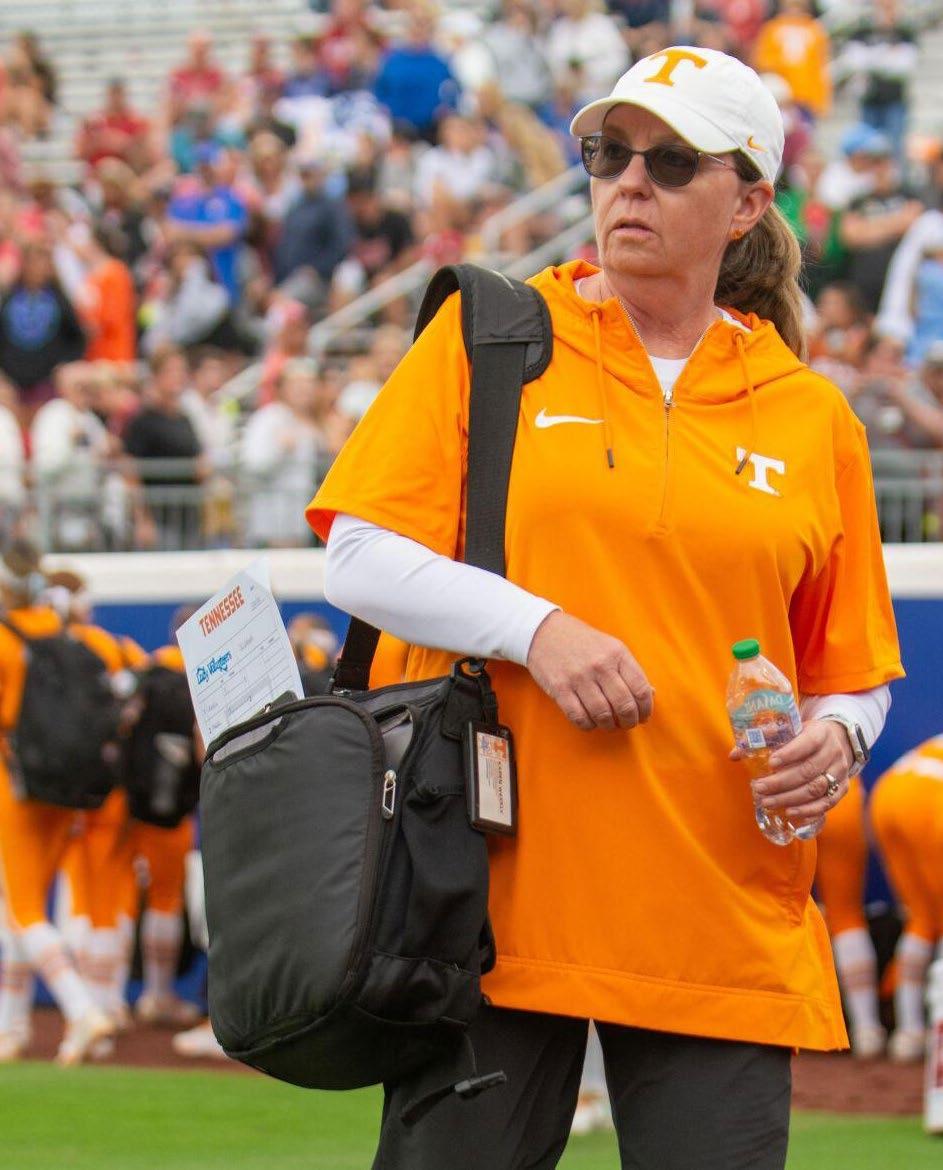
Tennessee softball head coach Karen Weekly prior to an NCAA Women’s College World Series game against Oklahoma at Devon Park. Thursday, May 29, 2025.
David Smith / The Daily Beacon
and not allowing a run in any of the 20 innings she has worked to this point. She no-hit BYU on opening night, demonstrating her potential as an ace. Her one-hit shutout of UCLA, perhaps the most explosive home run-hitting offense in the nation, was a declaration of her arrival.
“We’re just seeing the (Nuwer) we recruited, and the (Nuwer) that we knew was in there,” Weekly said after the UCLA win. “All she needs to do is trust her stuff and go compete, and she’s doing that this year.”
Such dominant displays resulted in her recording three wins, and her work earned her SEC Pitcher of the Week honors.
of Pickens’ shoulders entering the season, and to this point, she has the talent and depth in the pitching staff to do so.
As well as the pitching staff has performed, the team approach and emphasis on “process” has been a recurring theme through the early part of the season.
“Just ‘cause you win one day doesn’t mean you’re gonna win the next,” Dodge said. “Remembering that we have to stick to our process, take it one pitch at a time, and it doesn’t matter who’s across the field, we need to focus on what we need to do.”
Weekly said that her team did a good job of sticking to their process through the weekend, and even when they strayed from it, they got back to it. When asked about how her team is able to flush results, both good or bad, Weekly said that it just comes from delivering the message repeatedly.
Message received.
“What’s in the past is in the past, stay in the present, be where our feet are and compete,” Dodge said.
She also said that being selfless and relying on each other is an important part of their process. Taking such a team-oriented approach appears to be paying dividends offensively — 10 Lady Vols have at least two RBIs this season.
In conjunction with this theme, there seems to be a different name sparking the lineup every night. Some nights it’s Dodge, others it’s true freshman Elsa Morrison. It also helps that Sophia Knight and Gabby Leach always seem to be on base. They each have an on-base percentage north of .500, and they have scored a combined 23 runs.
While Nuwer and Pickens have led the way, the rest of the stable has followed the standard they have set. Mardjetko has been terrific to open the season. Maddi Rutan has thrown the ball very well when called upon. Even Peyton Hardenburger, a true freshman, flashed the potential that made her such a well-regarded recruit with three quality innings versus James Madison.
“To be able to pitch shutouts against quality offenses like we’ve seen, and we’ve started four different pitchers, and none of them have been Pickens,” Weekly said after the UCLA win.
No matter who Weekly has called upon, they have delivered excellence. She said she wanted to take the load off
There are many names to list because so many of them are contributing, and it all seems to stem from their process. Still, they don’t have time to get caught up in the success, lest they get away from the mentality that has driven them to this point.
“It’s all about being focused on the job at hand and the moment, keep it simple, keep it small and when that’s over you move on,” Weekly said.
Though the Lady Vols’ perfect start to the season is encouraging, they have only played 10 games, and there is a long way to go. While everything is going swimmingly on paper, Weekly wants to see more.
“Still a lot of room to grow,” Weekly said. “But you know, overall I’m very pleased with where we are at this stage of the season.”