The College of Sciences has great momentum. know it, and hear about it from others. Physicists define momentum as an object’s mass multiplied by its velocity—both the object’s magnitude and the direction it travels. The momentum of our college is the product of our diverse community and wide range of programs, and the determination to excel and grow.
Our momentum comes from students as young as 12 years old learning how mathematics can help to build better bridges in the pre-college PREP program, and from teenagers across the state presenting research projects to peers and judges in the ExxonMobil Texas Science and Engineering Fair.
It comes from undergraduates in the Introduction to Clinical Medicine course delighted by the simple gift of a stethoscope, and field biologists venturing out into the wilderness during the summer to discover why things they learned in the classroom are true.
Our momentum comes from doctoral neurobiology students writing grants and publishing papers well before they defend their dissertations, and environmental science students undergoing training that prepares them to share research both at conferences and with the public. It comes from researchers who can change the world by developing a vaccine against infectious diseases, or figuring out how they can help others to be secure in cyberspace.
Our momentum, generated by people like you in our College of Sciences community, is driving us toward meeting our goals and achieving greater success.
Sincerely,
From acquiring the world’s most powerful microscope to ensuring the security of cyberspace, researchers and faculty are advancing scientific knowledge on a variety of fronts.
Developing a breakthrough technology or scientific process is a lot different than getting the discovery into the marketplace. That’s why UTSA is adding infrastructure and staff to promote commercialization of university-sponsored research.
Crusade for the Classroom
Math and science majors can earn their degrees and teacher certification at the same time through the GE2MS program, designed to meet the critical shortage of math and science teachers.
Scientists, faculty and students in a variety of fields have garnered awards, grants, scholarships and honors for career contributions, ongoing research and study.
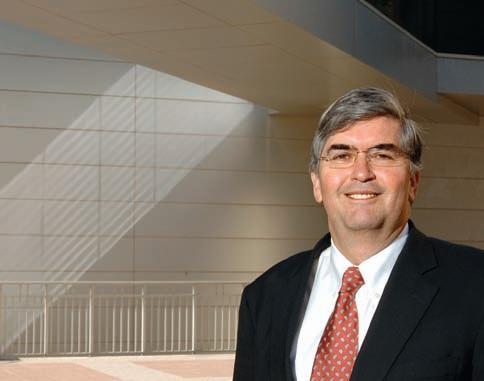
George Perry Ph.D Dean
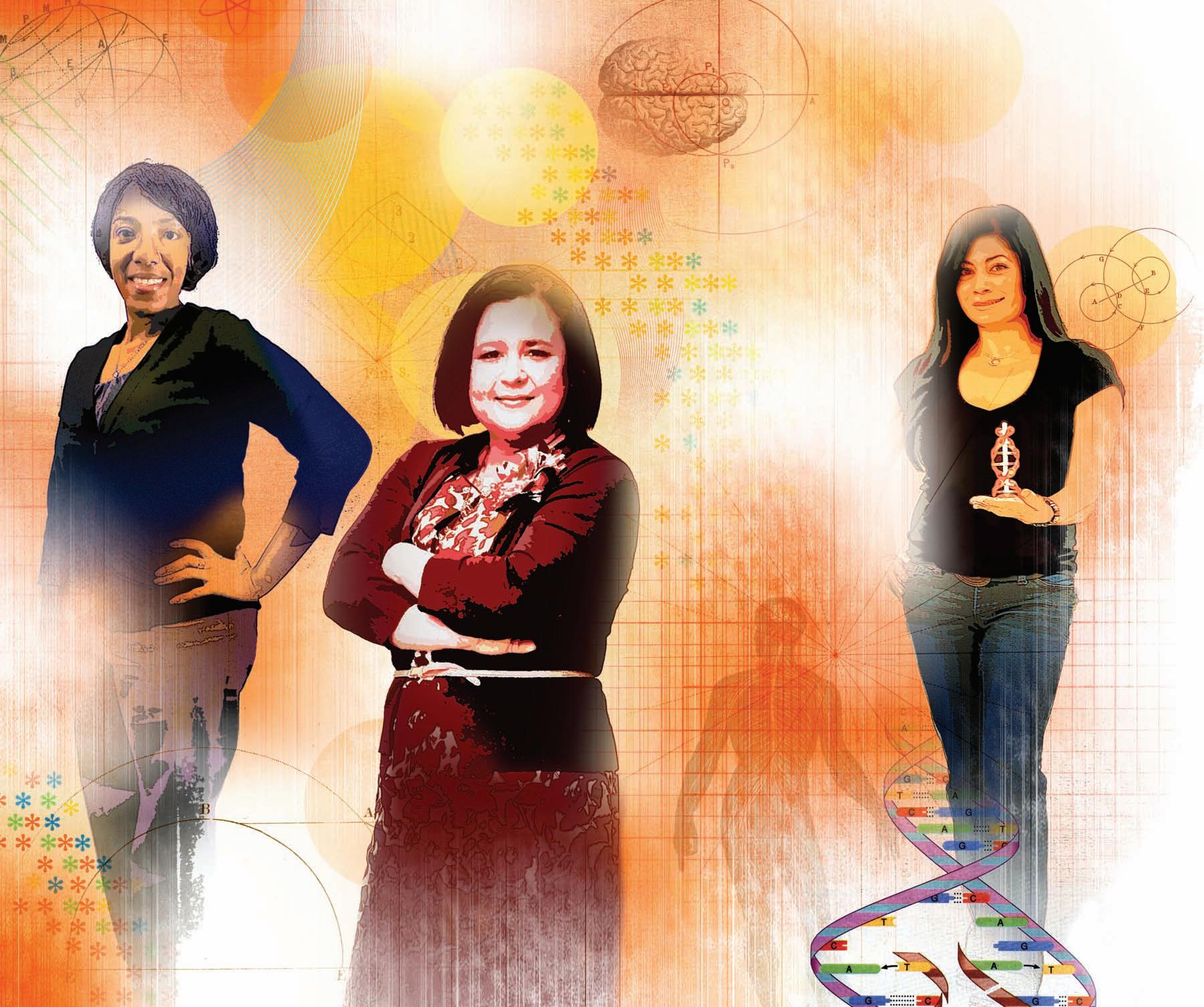
While women still struggle to achieve parity with men in math and the sciences, three UTSA alumnae who earned doctorates are blazing trails for other young women, encouraging them to take the road less traveled.
NEWS BRIEFS
HELENITA
IS HERE
New microscope enables researchers to watch chemical reactions one atom at a time
Professor Miguel Yacaman has watched microscopes evolve all his life.
“I started with a machine in 1968,” recalls Yacaman, a world-renowned nanotechnology researcher and the chair of UTSA’s Department of Physics and Astronomy. “But that microscope was really old and very primitive. In the late 1990s, when microscope lenses were at their peak, you could see down to two angstroms. Beyond that, everything would be blurry. It’s tremendously gratifying to see how much they’ve changed over the years.”
“Changed” is perhaps an understatement.
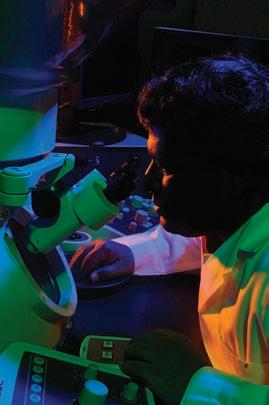
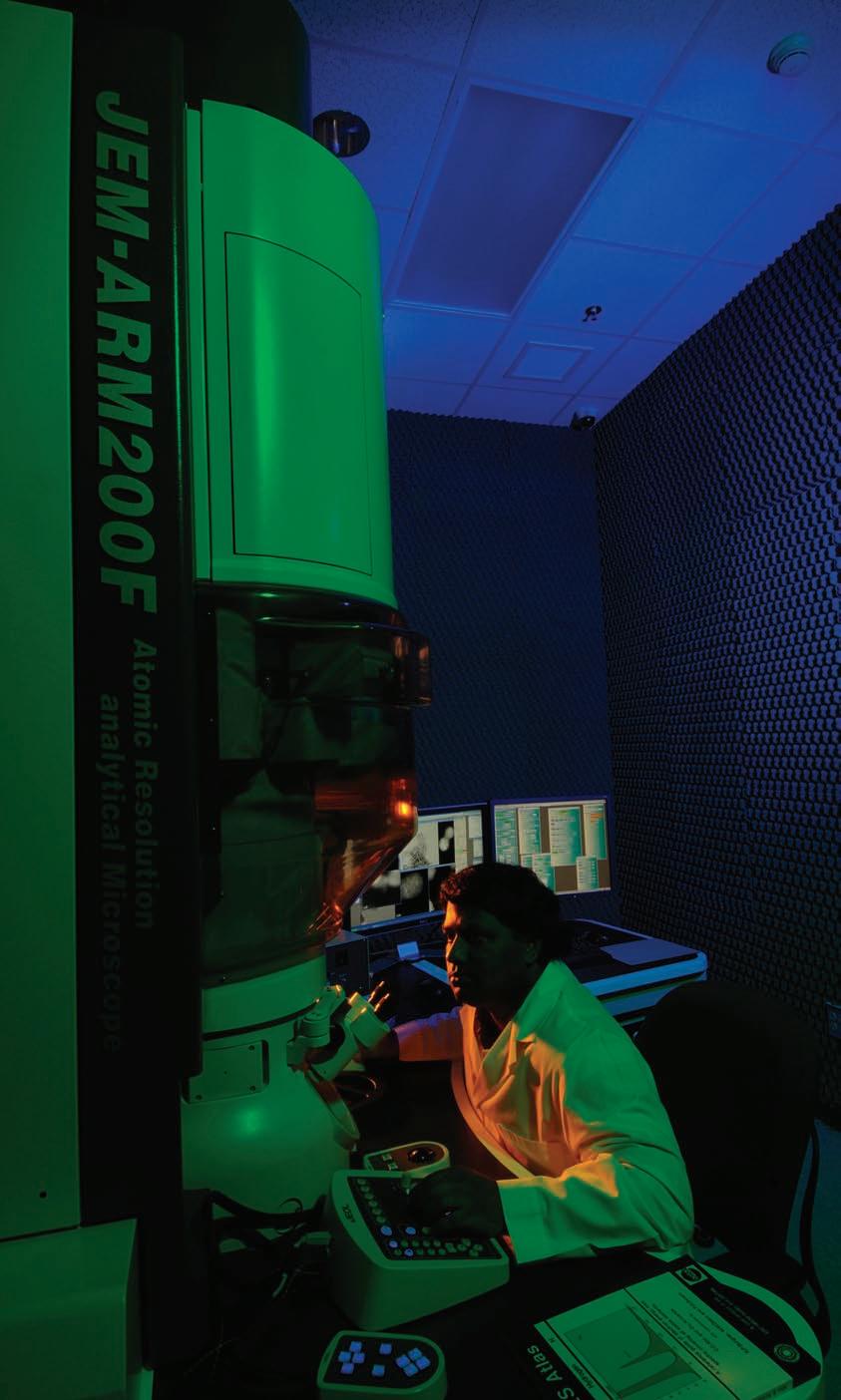
On Jan. 19, Yacaman watched as two 18-wheelers delivered the world’s most powerful microscope to UTSA. Dubbed “Helenita” for Helen Kleberg Groves of the Robert J. Kleberg, Jr. and Helen C. Kleberg Foundation, which gave $1.2 million toward its purchase, UTSA’s new JEM-ARM 200F is causing quite a stir.
The microscope (shown at left), which sits at 9 feet, 2 inches tall and weighs more than 2 tons, was installed in UTSA’s Advanced Microscopy Laboratory.
So, why all the fuss?
The machine allows scientists to see samples with a resolution of 0.8 angstroms, at a magnification 20 million times the size of a sample.
To put it in perspective, a strand of human hair magnified 20 million times would be the size of San Antonio, says Yacaman.
With such incredible detail at their fingertips, nanotechnology researchers are eager
to develop new therapies and treatments to combat a variety of human diseases.
“We now have access to resolutions that will give us a tremendous scientific advantage to solve problems that need to be attacked. We’ll be able to watch particles behave one atom at a time. This is the Holy Grail for us,” says Yacaman.
Yacaman’s own laboratory is targeting nanoparticles for cancer treatment. One method they are investigating is placing nanoparticles inside a tumor and using an infrared laser to pinpoint and burn away damaged cells without harming the surrounding healthy cells.
But more research is needed.
“We need to see the particles atom by atom. We need to know exactly how they behave. Helenita is the only microscope that will allow us to do that,” Yacaman says.
Yacaman has been contacted by a long list of industry researchers waiting to access Helenita’s crystal-clear resolution.
Although UTSA researchers will be the first to use the microscope, Dave Olmos, the facilities manager at UTSA’s Advanced Microscopy Laboratory,
expects the microscope will be operating 24 hours a day, seven days a week.
Eventually, UTSA will offer remote operation through the Internet to scientists around the world, giving them access to a multimillion dollar piece of equipment for the cost of a $30,000 set of controls.
“They’d send us their sample, a UTSA laboratory technician would place it in the scope and the researcher would remotely operate the scope on their computer,” Olmos says.
Because sound vibrations, magnetic field vibrations and temperature fluctuations of more than half a degree can skew the instrument’s results, significant preparations were needed to ensure Helenita has a properly outfitted home.
“We had to bring in an entire engineering company to make alterations to the laboratory,” says Yacaman, smiling like a proud papa. “The room housing the microscope is a jewel of engineering.”
The ARM200 is the fourth UTSA microscope to be funded by the Kleberg Foundation and the seventh addition to the university’s Advanced Microscopy Laboratory.
First revenue-producing license in UTSA history secured
An exclusive license agreement was formed between UTSA, the University of Texas Health Science Center at San Antonio and Merck & Co., Inc. to develop a vaccine against the common sexually transmitted bacterium Chlamydia trachomatis.
Under the terms of the first revenue-producing license for any technology developed at UTSA, Merck will provide research funding to UTSA and the Health Science Center, whose collaborative team of researchers was the first to demonstrate that, in animals infected with chlamydia, a vaccine composed of a select group of recombinant C. trachomatis antigens can successfully clear the infection, and importantly, preserve female reproductive function.
The trio of UT researchers involved in this collaboration includes two from UTSA. They are Bernard Arulanandam, professor of microbiology and immunology, and Ashlesh Murthy, research assistant professor, both in the Department of Biology.
PREP celebrates the big 3-0
The Prefreshman Engineering Program (PREP), founded by math professor Manuel Berriozábal, celebrated its 30th anniversary in 2009. Raul “Rudy” Reyna, executive director of the program, says the purpose of PREP has always been to provide primarily minority and disadvantaged students with intense exposure to math and science through a series of seven-week summer sessions, now in a four-year sequence.
During the past 30 years, PREP has been replicated across the nation. It has evolved into a statewide outreach initiative, called TexPREP, which has received more than $40 million in financial aid and in-kind support from public and private entities. TexPREP operates in 13 cities on 21 college campuses and has served more than 25,000 students, mostly Hispanics.
In December 2009, Berriozábal was honored by the American Society for Cell Biology with the Bruce Alberts Award for Excellence in Science Education. This award “recognizes individuals who have made impactful and sustained contributions to science education,” says George Perry, dean of the college.
Hundreds celebrate research in the College of Sciences
Nearly 300 participants gathered at the Main Campus on Aug. 7 to celebrate scientific research in the South Texas region.
Participants learned about the programs at the university through poster and oral presentations and tours of the laboratories and facilities. More than 100 posters represented research conducted by the college’s six academic departments.
Karl Klose, director of the South Texas Center for Emerging Infectious Diseases, delivered the keynote address about the effects of the Vibrio cholera the bacterium that causes cholera.
More than a dozen different educational institutions from across Texas were represented at the conference along with members of the Alamo Chapter of Sigma Xi, a scientific research society, and the Society for the Advancement of Chicanos and Native Americans in Science.
Six undergraduate students received awards of a year’s membership to Sigma Xi for their poster presentations.
Large grant to study small stuff
The Department of Physics and Astronomy received a five-year, $2.7 million grant from the National Science Foundation to study nanomaterials and their biomedical applications.
More than 80 percent of the funds from the $2.7 million Partnership for Research and Education in Materials grant will stay with UTSA, which will conduct the research in collaboration with the University of Texas Health Science Center at San Antonio and with Northwestern University’s Materials Research Science and Engineering Center, one of the top 14 nanomaterials centers in the U.S.
About $900,000 of the grant’s total budget goes toward hiring six graduate and six undergraduate students each year to assist with the nanomaterials research.
The grant, titled “Oxide and Metal Nanoparticles: The Interface between Life Sciences and Physical Sciences,” will focus on six areas of research, including use of lasers and terahertz radiation to discover medical applications of nanomaterials.
$690K keeps plant biology research growing
Jurgen Engelberth, assistant professor of plant biochemistry, and Valerie Sponsel, associate professor of biology, both from the Department of Biology, were collectively awarded $690,000 in funding from the National Science Foundation (NSF) to further their research in plant biology.
Engelberth has received $540,000 for the next three years to research the effects of plant chemicals called green leafy volatiles. Plants release these volatiles when they are cut or wounded by harmful agents such as herbivores or pathogens. Neighboring plants sense the volatiles from the damaged plant as odor, which allows those neighboring plants to subtly prepare themselves for future damage.
Sponsel will receive $150,000 over the next year to research the genes responsible for the biosynthesis of plant hormones called gibberellins. Sponsel’s research will contribute to a better understanding of how scientists can modify a plant’s genetics to manipulate the plant to produce a larger harvest. The interdisciplinary research project will be conducted with Garry Sunter, associate professor of biology, and Jianhua Ruan, assistant professor of computer science, using biochemical, molecular and computational approaches. This award brings Sponsel’s NSF support into its 20th year.
Stargazing
The Department of Physics and Astronomy hosted monthly free public events titled “Friday Nights, Celestial Lights” in 2009. The events celebrated the International Year of Astronomy, which marked the 400th anniversary of Galileo Galilei using a telescope to observe the night sky.
At the first event in February, more than 100 students, faculty and local stargazers listened as Eric Schlegel, Vaughan Family Endowed Professor in Physics, spoke about the progress scientists have made with optics.
On clear nights, participants used both Newtonian telescopes, which use a concave mirror and a flat mirror, and Cassegrain telescopes, which use concave and convex mirrors, to view celestial objects. In addition to viewing the night sky, each event featured a science fiction film screening.
$2.4 MM stimulates college research
Of the $9.2 million in stimulus funding received by the university during 2009, $2.4 million went to the College of Sciences for 11 projects. The majority of the funding came from the National Institutes of Health and the National Science Foundation, and funded projects ranged from high performance computing to the recruitment of a stem cell biologist.
“UTSA is in a race with six other schools to reach Tier One research status, so the opportunity to compete for stimulus funding couldn’t come at a better time for us,” says Robert Gracy, UTSA vice president for research.
The American Recovery and Reinvestment Act of 2009, better known as the stimulus bill, is an economic recovery package adopted to help states stabilize budgets and stimulate economic growth. The bill allocates approximately $21.5 billion through the National Institutes of Health and other federal agencies for scientific research and development projects.
ONLINE HYGIENE HELPS KEEP YOU SAFE
By Ravi Sandhu
There is no escape from going online—our jobs require it, but even more so, our personal lives have become increasingly dependent on the Internet. Rarely has a technology caught on so quickly and ubiquitously.
But is it safe? Even supposedly well-protected organizations such as the Pentagon, Citibank and Google have been attacked by those with miniscule resources. Who will keep us safe in cyberspace? What can the ordinary citizen do?
The vast majority of attacks in cyberspace are thwarted by basic online hygiene and some good luck. Just like the personal hygiene of washing hands, getting immunizations and regular checkups that we practice in our physical lives, simple techniques go a long way in keeping us safe online.
Such ways include installing an updated anti-virus program, using a personal firewall, using your Web browser’s site adviser to avoid known malicious Web sites, and maintaining personal discipline in not clicking links and opening attachments in strange or useless e-mails.
Admittedly, we also need some luck. Physical hygiene does not guarantee freedom from disease. Some of us will still get infected and become sick. Likewise in cyberspace we can be unlucky, but the probabilities are in our favor. There is also safety in numbers. Ultimately, only a small fraction of people will fall victim to cybercrime.
The safety of an individual citizen can be maintained by basic hygiene, but safety of our society does require deeper care. Much of our infrastructure is dependent on cyberspace. As we seek to improve our air-traffic control, our energy grid, our healthcare system and our emergency response systems, we need cyberspace to gain the necessary productivity and efficiency.
With projects like the $250,000 four-year National Science Foundation grant “Securing Dynamic Online Social Networks” and others, UTSA’s Institute for Cyber Security puts Texas in a prominent position in the effort to research new ways to keep cyberspace safe for everyone in our nation.
Ravi Sandhu is the executive director of UTSA’s Institute for Cyber Security and a world-renowned cyber security expert.
Even supposedly well-protected organizations such as the Pentagon, Citibank and Google have been attacked by those with miniscule resources.
LADIESFIRST
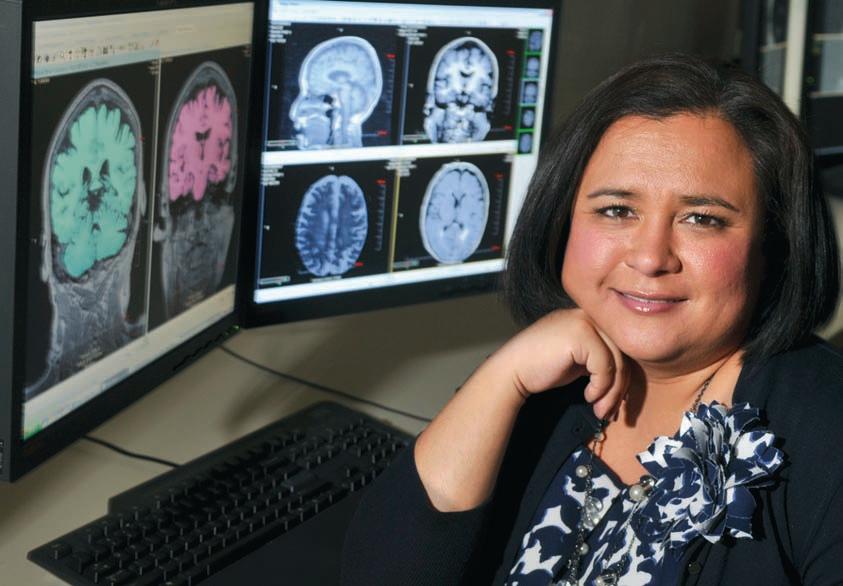
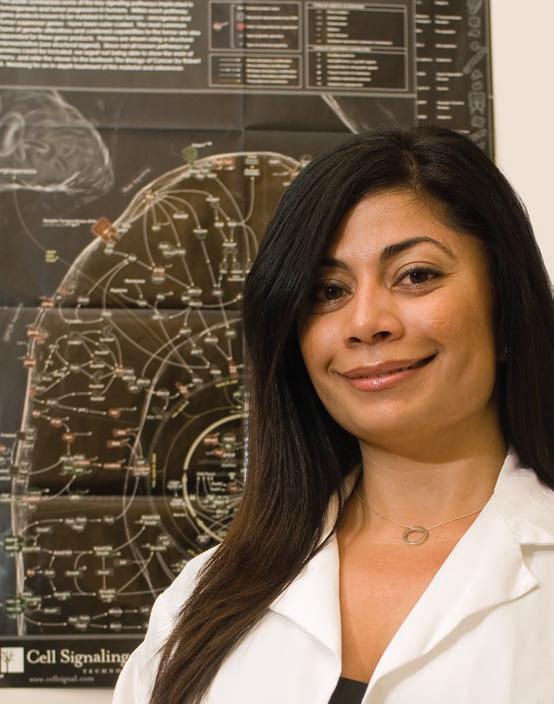
Three alumnae lead the way for minority women in science
BY AMANDA BECK
In 1903, Marie Curie was the first woman to be awarded a Nobel Prize. More than a century later, women still struggle to achieve equality with men in the sciences. But women at UTSA are increasingly becoming involved in science both as students and as members of the faculty. Women represent half the student enrollment in the College of Sciences, and since 2005, there has been a 26 percent increase in the number of women on faculty.
One new recruit, Xomalin Peralta, became the first woman to join the tenure-track faculty in the Department of Physics and Astronomy in January 2009. She believes UTSA’s success depends on its ability to foster women’s interest in math and science. One of her goals in coming to UTSA was to lead by example. “Being female shouldn’t deter you from pursuing physics or anything else,” she says. “You have to strive for excellence.”
For three alumnae, the support of mentors and their own determination has led them to achieve firsts, and by doing so opened the door for future generations of successful women in science.
Annette Garza Meilandt As an 8-year-old, Annette Garza Meilandt attended evening classes at a community college with her father. While he learned, she drew or did her homework. “His dedication to his class work made a huge impression on me. School became my No. 1 priority,” she says. Not only did she plan on going to college, she wanted to get the highest degree possible.
In 2005, she became the first Hispanic woman to receive a Ph.D. in neurobiology from UTSA.
Her first step was completing her undergraduate degree in biology, which she did in 1996 after balancing a full class schedule and a full-time job. During her first semester as a master’s student, Meilandt met Professor Brenda Claiborne, who suggested she apply for the Minority Biomedical Research Program, a student research training program. Within two semesters, Meilandt was working in Claiborne’s laboratory and enrolled in the doctoral program. Now a program manager at a radiology service company in the pharmaceutical industry in California, Meilandt manages a group of Alzheimer’s disease clinical studies.
“I don’t consider myself a pioneer for being the first Hispanic woman to obtain a doctoral degree in the neurobiology program at UTSA. There were many women just a few steps behind,” she says. “Which shows the need for more programs like it to encourage women to join.”
…the support of mentors and their own determination has led these women to achieve firsts, and by doing so opened the door for future generations of successful women in science.
Micaela Vargas Growing up in the small farm community of Caldwell, Idaho, Micaela Vargas says her mom gave her two choices—work with your hands or work with your brain. Vargas chose her brain.
That choice led her to become the first Hispanic woman to receive a Ph.D. in the cellular and molecular biology program at UTSA in December 2009.
“I thank my mom for taking me out into the cornfield,” she says. That cornfield is the last place one would expect to find an emerging young biologist, but it is exactly where Vargas, raised by a family of migrant farm workers, learned about the hard work that would get her through school. Her high school graduating class was fewer than 300 students, and the goal of pursuing a doctoral degree was far from the norm. Just leaving the town to attend college was a big accomplishment.
Just like the pursuit of education, science has been a part of Vargas’ life since early childhood. In fourth grade, she didn’t have expressed plans to become a scientist; she only knew that she liked to learn about how things worked. She researched how volcanoes erupted and built a classic clay model as a science project.
“It’s a love-hate relationship, but an important one,” she says of the student-mentor relationship. “It’s so important for your adviser to encourage you, to get mad at you at times.”
Vargas took a chance in choosing her mentor for graduate studies. Jilani Chaudry, assistant professor of biology and member of the South Texas Center for Emerging Infectious Diseases, was new to UTSA and had not even set up his laboratory when she decided to work with him. Vargas began working in Chaudry’s laboratory, studying two genes in human DNA that are important both to anthrax and cancer research. She studied the genes in both normal tissue and cancerous tissue, and her analysis revealed two new forms of the genes, one of which acts as a receptor for anthrax toxin. Both genes also contain proteins important for a crucial process in tumor development and many other diseases.
Vargas’ goals for the future? First she’ll complete a postdoctoral fellowship. Then she hopes to inspire younger generations of women to enter and excel at the sciences.
“It helps to brainwash the young ’uns,” she jokes. “I want to show them that if I can do it, they can do it.”
By the time she reached high school, her interests were focused on biology as she witnessed her grandmother battle breast cancer. “She didn’t know or understand much about the disease; she only had a second-grade education,” says Vargas. But her grandmother’s perseverance was an example of what could be accomplished with determination. Her grandmother won the battle with cancer, but passed away just months before Vargas’ doctoral graduation. Inspired by the family that raised her to dream big, she was pushed by her academic mentor to act on those dreams.
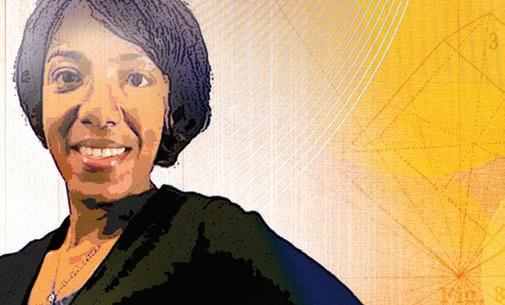
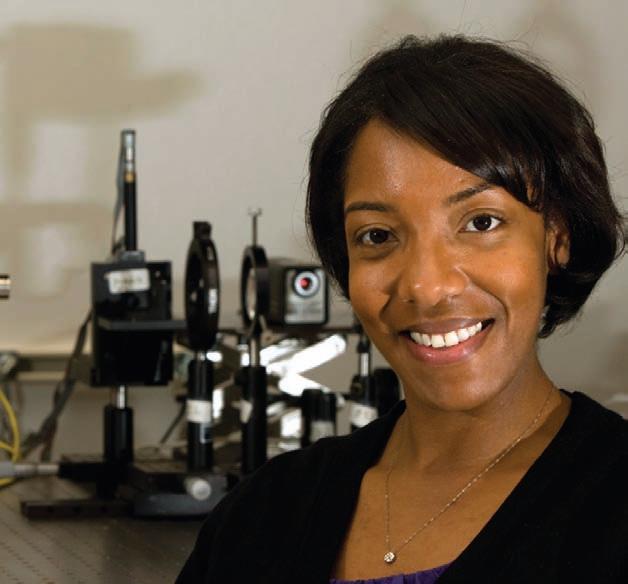
Kelly Nash
Less than a week before Kelly Nash began classes in the newly formed physics doctoral program at UTSA, Hurricane Katrina hit her hometown of New Orleans, and her tiny one-bedroom apartment in San Antonio was flooded with family.
“My biggest challenge during my doctoral studies was that first year,” Nash says. “It was difficult to balance my school work with a house full of family.”
But she did it. Family members eventually moved back to New Orleans, Nash moved forward in her studies, and in December
2009 she became the first black woman to receive a Ph.D. in physics at UTSA. “I have to thank Dr. Sardar for being so understanding that first year,” she says.
Dhiraj Sardar was Nash’s mentor and her incentive for joining the program in the first place. She learned about the new program while teaching a math education course at her alma mater, Dillard University. She applied only to UTSA’s new program and Louisiana State University, and had been accepted at both places. While searching for an apartment in Baton Rouge, Nash received a phone call from the department administrator at UTSA, assuring her that the program was going to be stellar.
Nash was familiar with Sardar’s publications, and after speaking with him, became excited about the possibilities at UTSA. “He’s unique in terms of professors here. Before the graduate program was established, he was doing research and publishing with undergraduates. That’s unheard of in academia,” she says.
Nash started working with Sardar from day one and eventually co-authored 19 publications with him.
In her research, Nash uses optics to characterize and learn about the structures of microscopic material such as polymers, thin films and nanomaterials. Using lasers, she examines the materials to learn how they are constructed, and how each can be used to address realworld physical and biomedical problems. Applications for her research range from healing wounds to devising cancer treatment.
She dedicated her dissertation to her biggest inspiration—her maternal grandfather. A Tuskegee Airman and a microbiologist, he is the one person, she says, who understands what she does. Nash spent childhood summers with him in his laboratory, marveling at all the technical equipment, and learning about constellations in the night sky.
In addition to her grandfather’s influence, Nash says, “I’m a direct product of the early 1990s initiatives to get kids involved in science,” she says, citing the federally funded Saturday Science Academy in which she conducted biological experiments, and the Radio Shack computer program where she was introduced to working with computers as a 5-year-old.
But despite all this exposure to science through family and outreach programs, it was the presence of female role models in high school that led her to pursue a career in science.
“I wouldn’t be a physicist if it weren’t for seeing the nuns teach science,” Nash says. “The leap wasn’t so huge for me to believe I could do it, too.”
Teaching high school opened her eyes to the challenges faced by college professors. The question for her then became how to attract girls to science, particularly the physical sciences.
When Nash started graduate school she thought she would be working exclusively in physics and the other scientists would only work in their respective disciplines. She was wrong. “For a lot of the unanswered questions in science, an interdisciplinary approach is needed. I’ve had to do a little bit of everything. I’ve had to expand my knowledge of chemistry, and even my knowledge of biology.”
Now a newly appointed assistant professor in UTSA’s Department of Physics and Astronomy, Nash has an exciting year ahead of her. “I always wanted to teach and to do research, and I feel like this is a good place and an exciting time to be at UTSA.”
She encourages young women to think of themselves as leaders, pioneers taking a nontraditional road. “You should enjoy the fact that what you’re doing is a challenge,” she says. “You have to love everything—education and learning overall.”
From left:
Annette Garza Meilandt, Micaela Vargas, Kelly Nash
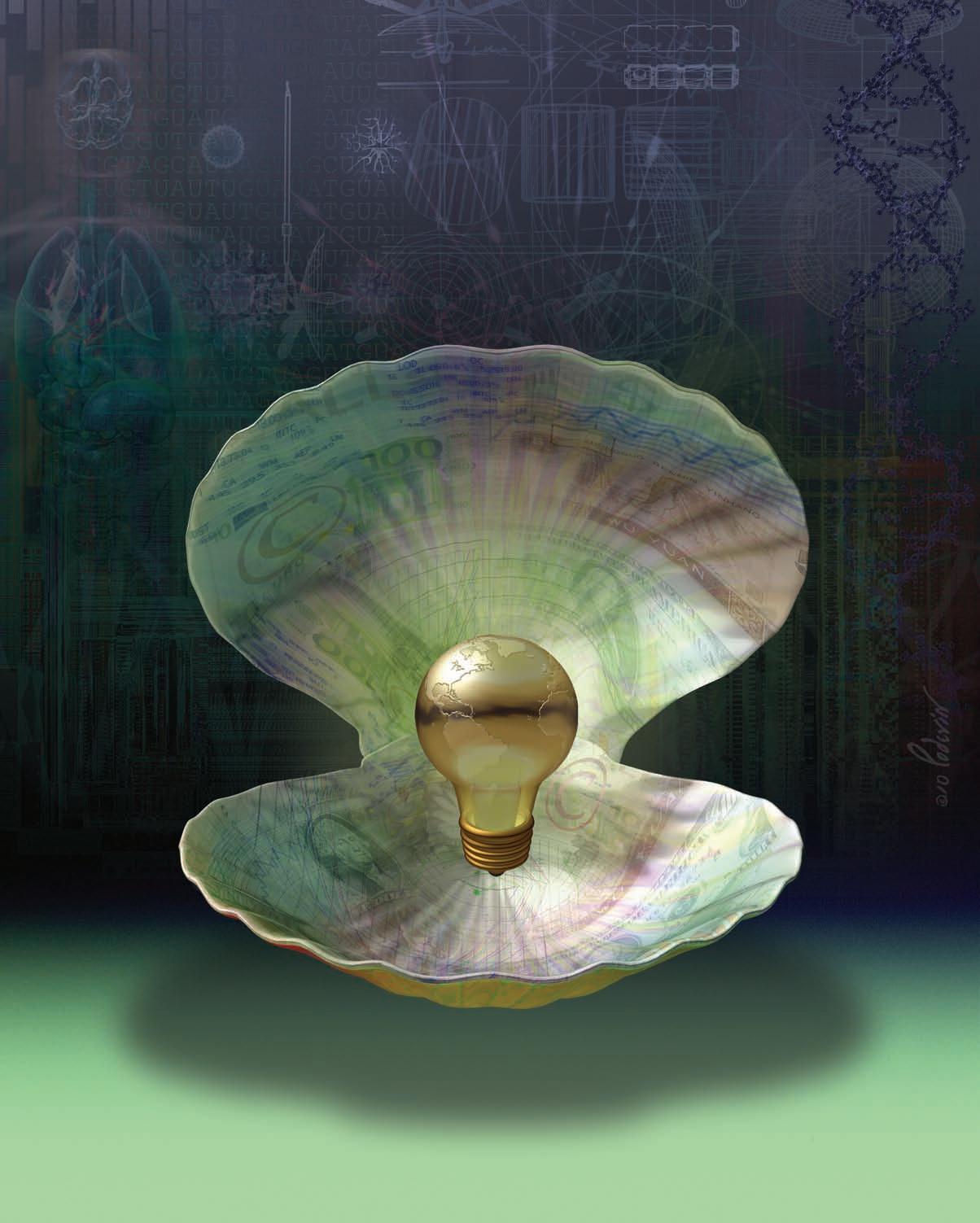
MINDMarketing the
The route from idea to implementation
BY CINDY TUMIEL
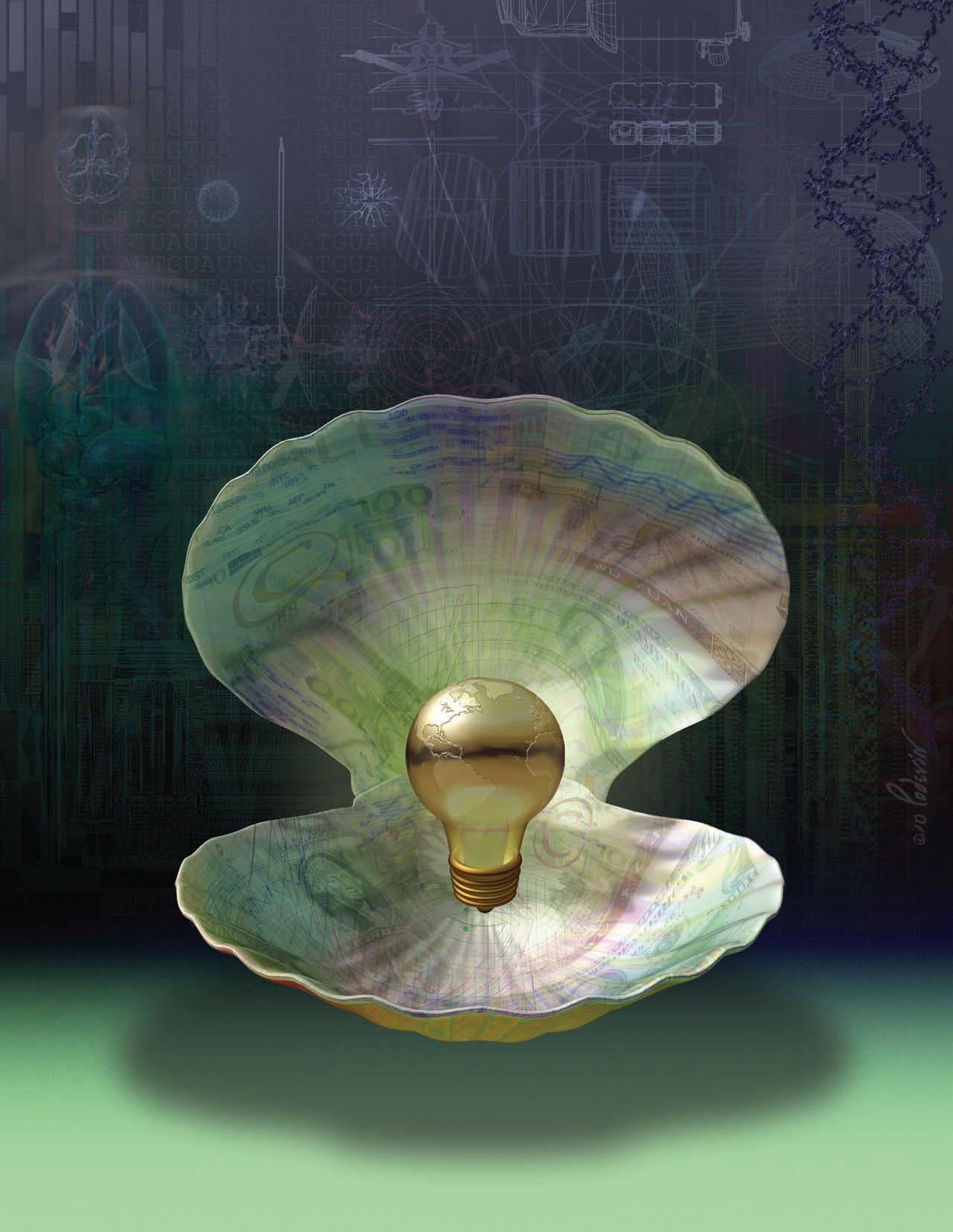
Great universities are birthplaces of great ideas. Faculty members are trained to explore, ponder, research and discover. Students are encouraged to open their minds and exercise their creativity. In classrooms and laboratories, professors and students apply the basic principles of the scientific method to tackle problems, everything from unraveling the mystery of a tiny molecule to boosting the thrust of a rocket engine.
In the process, they come up with all sorts of cutting-edge, potentially marketable ideas. But getting those great ideas into the production pipeline is a very different sort of task. Brilliant men and women who have spent years studying microbiology or nuclear physics are often out of their realm when it comes time to file patent applications, negotiate license agreements or raise venture capital.
Over the years, research universities have recognized the need for taking on a deliberate role in the commercialization process. They know there is both money to be made and prestige to be gained by helping scholars take those early steps to protect their inventions and develop products from their ideas.
Powerhouse universities such as those in the Ivy League generate millions of dollars in revenue each year because of the technology and consumer products that grew from faculty laboratories.
In the past few years, UTSA has accelerated its involvement in this bench-to-market process by adding infrastructure and staff. The university also has taken the added step of reaching out to offcampus businesses that need research partners to help test ideas.
“Our goal is to be part of the entrepreneurial ecosystem of San Antonio,” says Cory Hallam, senior associate vice president for research administration.
Brilliant men and women who have spent years studying microbiology or nuclear physics are often out of their realm when it comes time to file patent applications, negotiate license agreements or raise venture capital.
UTSA always had a technology licensing office, Hallam says, but the pipeline from its labs was pretty small. That is changing as UTSA stokes up its research capabilities by investing in additional faculty, adding lab space and adding advanced degree programs for students. The investment is paying off, and UTSA is now well-poised to both promote commercialization and reap financial benefits from it, ac cording to Hallam.
In 2009 alone, he said, there were 24 invention disclosures by UTSA faculty, the initial step in protecting intellectual property that grows from university-sponsored research. The advances came in a wide range of fields, including vaccine development, biohazard detec tion, data encryption and nanoparticle technology.
Most notably, a 10-year collaboration between bench scientists from UTSA and the University of Texas Health Science Center at San Antonio generated UTSA’s first revenue-generating license agreement. Bernard Arulanandam, a specialist in the immune properties of mucosal tissues, and his research partner, microbiologist Guangming Zhong, from the health science center, successfully negotiated a licensing agreement with pharmaceutical giant Merck for a potential vaccine against the sexually transmitted disease chlamydia. Going to an established company was the right move, Arulanandam says. The agreement gives the two professors an infusion of financial support to continue developing their idea. They also gain the huge benefit of Merck’s expertise and infrastructure for conducting clinical tests and fulfilling federal regulatory requirements.
Any vaccine is years away from being ready for use, Arulanandan says. But if things go as hoped, the licensing agreement could result in answers to questions about a devastating disease as well as substantial royalty revenue for both the scientists and the universities that supported them.
To Arulanandam, the college’s new associate dean of research for scientific innovation, the agreement is a story of a successful collaboration between two scientists from different schools who overcame
of working on a Ph.D. is we are trained to be very focused on a very small problem. We are not trained to be looking outside of the box.”
With his new degree and new business experience, Arulanandam has a new position at the university that puts him in the role of a mentor for fellow faculty members with “cool ideas,” as he puts it.
“I want to offer them guidance, but I also want them to do it themselves,” he says. “I want to tell them, ‘Believe in yourself; take a gamble and we will back you up.’ ”
There were 10 invention disclosures from the College of Sciences in 2009 and the first two months of 2010. They ranged from Arulanandan’s vaccine technology to assays for use in stem cell research to potential new drugs.
It takes a shift in campus culture, both by administrators to support translational research and by faculty members to think outside their laboratories, Arulanandam says.
“If you unleash the faculty and allow them to be creative and do cool things, they will produce new products to the benefit of consumers and to the benefit of the university,” he says.
The university support was a key element for Arturo Ayon, a physics professor who is developing the Baby Guardian, wireless technology that could someday be used to monitor infant breathing and heart rates and protect against Sudden Infant Death Syndrome
(SIDS). He utilized UTSA’s expertise in seeking patent protection, and recently made an investor connection to get seed money for his own company, Limelight Technologies. He and his students now are building and testing prototypes that will be used to market the product to potential investors.
A patent is a two-year process, Ayon says, and a more convoluted one than he was ready to undertake by himself. As his idea advances, he will need university connections to find investor capital for skilled management staff that can handle details such as manufacturing contracts, package design and marketing plans.
“From the standpoint of electronics and design and testing, I am comfortable,” Ayon says. “If you ask me to establish contacts in China and get something manufactured overseas, I have no idea how to do that.”
In exchange for its support, the university owns a share of the new company and holds a licensing agreement that will pay royalties for any consumer products that grow from Ayon’s research.
One young inventor who figured out a lot for himself is UTSA alumnus David Gonzales II, who graduated in 2008. Gonzales majored in biology, but his inventive mind also was drawn to engineering. Working from home in between biology labs, he came up with the Layered MagWheel, a new approach that would use high-efficiency magnetic energy to propel automobiles. In 2008 he won the ConocoPhillips Energy Prize competition, which offered a $100,000 award to an aspiring entrepreneur with ideas about energy-conserving technology. He also won $25,000 from the energy company in earlier rounds of the competition, giving him a chunk of capital to start his own company, Impact Advanced Concepts, LLC, and begin taking his ideas from paper to a prototype.
Even though he developed his idea on his own, independent of university laboratories, Gonzales did find help through UTSA, via periodic “boot camps” that Hallam developed to help budding entrepreneurs.
raditionally, many universities have made it difficult to translate intellectual property from the bench to the market. We want to make the university a stop for companies that are looking for ideas—not a barrier.”
—Cory Hallam senior associate vice president for research administration
“I did find that very helpful. They covered things like grant opportunities, legal issues, venture capital, fund raising,” says Gonzales. Since graduating, he also has capitalized on networking opportunities through UTSA faculty and alumni and found some additional investment capital because of that.
He said he supports the university’s move to add more resources to help students and faculty, but students and faculty are not the only ones who need help developing their ideas. Across South Texas, small and large businesses employ their own creative people who come up with ideas for improving products or launching new ones. They often need outside help from researchers who know how to objectively test and develop new products. The new Center for Innovation and Technological Entrepreneurship hopes to offer that service to the regional business sector.
Hallam says UTSA is poised to assist with incubating ideas, connecting companies with university labs that will test ideas, and training company employees on new technology.
“Traditionally, many universities have made it difficult to translate intellectual property from the bench to the market,” he says. “We want to make the university a stop for companies that are looking for ideas—not a barrier.”
The entrepreneurial center also can lease space on campus to companies that need a lab, Hallam says. It can integrate this with training opportunities for science students and for other students who need to learn how to prepare business plans.
“We need to connect the dots,” Hallam says, “from early phase ideas to products and services and having the necessary people trained in how to build and manage those products.”
He wants companies throughout South Texas and partner universities in the Rio Grande Valley to turn to UTSA for their research, development and training needs.
“We want people to start looking to us for solutions,” Hallam says. “It is part of becoming a truly outstanding research university.”
CRUSADE FOR THE CLASSROOM
Science and math majors learn to teach
SBY KATE HUNGER
cholarship money, meaningful mentorships and teacher certification await UTSA science and math majors interested in exploring a career in the classroom.
The College of Sciences and the College of Education and Human Development have partnered to develop GE2MS—Generating Educational Excellence in Math and Science—a program geared to train top-notch teachers in disciplines experiencing a chronic teacher shortage, from biology to chemistry, physics to math.
To entice students who may never have considered teaching, GE2MS offers three free one-hour introductory courses. Co-director Joseph Lazor says all incoming students are invited to check it out to see if teaching might be for them.
“If I set up a program and filled it with students who come to UTSA with the intent of being a math or science teacher, we’d have a program of three. That’s just not what people think about,” says Lazor, referring to the typical research orientation most science students have.
Formerly UTSA’s UTeach program, GE2MS is geared toward offering science and math majors a route to earning their degree in science or math and teacher certification at the same time. What’s more, the 2009–10 academic year is the first to offer fourth- through eighthgrade certification to GE2MS students in addition to high school certification, which previously was the only option, says co-director Elizabeth Pate, who also chairs the Department of Interdisciplinary Learning and Teaching in COEHD.
How GE2MS works
The program, which began in 2003–04, was made possible by funding from the Pat and Tom Frost Foundation. That funding continues to cover the full cost of three introductory courses and partially pays for further courses for students who remain in the program.
In the introductory courses, students gain experience in a classroom rotating through elementary, middle and high schools. During each classroom experience, students, who are mentored and provided lesson plans by the classroom teachers, teach two classes. It’s that kind of early exposure to a real class setting that makes all the difference, says Shabby Ashtiani, a junior biology major and vice president of the GE2MS student organization.
“That’s when I was sold,” she says of observing and teaching a high school physics class. “I felt comfortable doing it.”
Retired high school science teacher and GE2MS instructor Judy Fowles teaches both introductory and cohort courses. Students in Fowles’ classes learn about issues of diversity and teaching problemsolving—with a focus on math and science teaching situations.
“Nobody knows how hard it is to teach,” says Fowles. “So what we want them to do is just get in and get the feel of it. They are getting the feeling of what it is to be a teacher.”
The hope, Fowles says, is that students will find the formula for success as a teacher if they combine their talent in math or science with strong people skills.
The hope is that students will find the formula for success as a teacher if they combine their talent in math or science with strong people skills.
“You bring that part of your personality where you become so involved in people’s lives and you become so important to them, and you have your math and science also,” she says. “You bring them together.” College of Sciences Dean George Perry says GE2MS offers multiple benefits. “Our interest in research, our interest in training teachers— they’re all interlinked,” Perry says. “The reason we do research in a university setting is to provide educational opportunities. It’s not in a vacuum; it’s not just us increasing the knowledge base by itself.” Improving the quality of teaching in the community means better prepared students will enroll at UTSA, he says. What’s more, students benefit from having a range of career options.
“The better we can prepare students to come to UTSA ready for college-level mathematics courses, the better they succeed,” Perry says. Perry hopes students will consider teaching a valuable experience, even if they don’t envision a long-term career.
“If you already had a job as a teacher, you’re going to be better prepared to be a university professor, you’re also going to be able to go through graduate school more focused,” he says.
Working together
Efforts are under way to streamline certification plans so that GE2MS students can earn their degrees and certification in four years. Reducing required hours to 120 is a chief goal in a two-year plan for the program, says co-director Pate. Other goals include determining the best pedagogy and content for students; fostering a sense of identity among GE2MS students; increasing student field experiences; creating a space on campus just for GE2MS that would serve as a meeting space, community gathering spot and site for mentoring and tutoring; and establishing long-term community projects, which could then flourish and benefit the community.
“It becomes a legacy,” Pate says of such an integrated, communityminded approach.
Key to the program’s design and success is the strong cooperative spirit between both colleges, says COEHD Dean Betty Merchant. “We realize we need to address the shortage of people in science careers and in the teaching of sciences—all around we need to have that gap closed,” Merchant says.
To that end, she says, both COS and COEHD have worked hard to figure out how to shape a certification plan that preserves necessary elements of both the discipline and the pedagogy, trying when appropriate to forge courses in an interdisciplinary vein to serve both interests.
“It’s very bold,” Merchant says of the partnership. “I do believe it will be the only one in the country that is like this, that is a genuine collaboration,” she adds.
“ The innate curiosity and interest in science among young children often withers by the time they reach middle school. Fostering that spark with enrichment opportunities and the skills of great teachers is crucial.”
Teaching the future
In the interest of making sure inquiry and research progress, scientists must think about the future, says Aaron Cassill, professor of biology at UTSA and director of Science Technology Engineering and Math Initiatives, of which GE2MS is a part. He says the innate curiosity and interest in science among young children often withers by the time they reach middle school. Fostering that spark with enrichment opportunities and the skills of great teachers is crucial, he says.
“We have to think of the community of scientists and understand that none of us will be around for more than 30, 40 years of productivity, and somebody has to come along and take what we found and carry it to the next level. And part of the realization is that if we don’t start with these kindergarten kids, then in 20 years there won’t be anyone there to step in and take our place,” says Cassill.
Cheryl Alderman is on the front line of such an effort. She is a UTSA graduate with a degree in mathematics and now is a third-year math teacher at San Antonio’s Clark High School. She says her field experiences in the program boosted her confidence in the classroom from her first day, something she credits for helping her earn the Mayoral and County Judge Outstanding Math Teacher Award. She also prizes the strong relationships she developed with mentor teachers, which she says has proved to be a valuable resource.
“I was able to be with really amazing teachers and learn teaching styles and tools that would enable me to be a really strong teacher in my classroom,” Alderman says. Today, Alderman serves as the math department’s academic coach and, in a turnabout, mentors students in the GE2MS program.
GE2MS offers real potential for significant impact on the community and beyond, Lazor says. “I see this as a real crusade,” he says. “This is more than putting good teachers out there. It’s unlocking the door for a lot of people.”
Jeffery von Ronne wins $425K NSF CAREER award
Jeffery von Ronne, assistant professor of computer science, received a five-year, $425,000 Faculty Early Career Development (CAREER) award from the National Science Foundation (NSF) to research new techniques that will result in the development of faster and safer computer programs. The CAREER award is the most prestigious award presented to junior faculty members who embody the role of teacher and scholar by integrating teaching excellence with outstanding research at their institutions.
NEW APPOINTMENTS
Department of Biology
Astrid Cardona assistant professor specializing in immunology
Department of Chemistry
Banglin Chen, associate professor specializing in nanomaterials
Orkid Coskuner-Weber, assistant professor researching physical chemistry
Douglas Frantz assistant professor specializing in medicinal chemistry
Department of Computer Science
Macneil Shonle, assistant professor researching software engineering
John Quarles, assistant professor specializing in computer engineering
Department of Physics and Astronomy
Xomalin Peralta, assistant professor researching biophysics and terahertz radiation
Xochitl Lopez-Lozano, assistant professor researching materials physics
Marcelo Marucho assistant professor specializing in biophysics
Kelly Nash, assistant professor specializing in lasers and materials science
Administration
Kim Fischer joined the college as the director of development
Bernard Arulanandam was named associate dean of research for scientific innovation
Judy Teale was named associate dean of graduate studies
Von Ronne, who joined UTSA’s faculty in 2005, specializes in programming languages, compilers, security and software engineering.
Previous recipients of NSF CAREER awards include computer science professors Qing Yi (2008), Carola Wenk (2007) and Daniel Jimenez (2006).
Nikos Salingaros ranks 11th in Planetizen’s Top 100 Urban Thinkers
Mathematics professor and urbanist Nikos Salingaros was ranked 11th on an international list of the Top 100 Urban Thinkers, according to urban planning
Web site Planetizen. Salingaros has served on UTSA’s mathematics faculty since 1983.
In addition to publishing more than 110 papers in mathematics, physics, architecture and urban design, Salingaros is the associate editor of three architecture and urban planning journals, and has published five books on urbanism and architecture.
Jurgen and Marie J. Engelberth publish online
Jurgen Engelberth and Marie J. Engelberth published an 11-minute video in the Journal of Visualized Experiments (JoVE).
He serves on the editorial board of Resource for Urban Design Information, as a consultant to the Urban Land Institute in Washington, D.C., and as a grant reviewer for the National Science Foundation and the Israel Science Foundation. Additionally, he contributes to major architectural projects in Qatar, Mexico, Brazil, Italy and Kosovo.
A peer-reviewed scholarly video journal, JoVE aims to facilitate advances in biology research by providing a clear format to communicate new scientific experiments and techniques. The video publication, “Monitoring Plant Hormones During Stress Responses,” demonstrates the steps required to isolate plant
AWARDS/ACCOLADES/GRANTS
hormones and measure their concentrations. Viewers learn to extract hormones from plant materials, methylate and prepare filters, collect the extractions and analyze the samples. As the video proceeds, the narrative points out key considerations for a successful experiment.
Within a few weeks of being published, the Engelberths’ video received nearly 3,000 hits.
Andrew Tsin named in inaugural class of fellows Department of Biology
researcher Andrew Tsin stood among an elite group of eye researchers in May 2009 when he was named a Silver Fellow in the Association for Research in Vision and Ophthalmology’s (ARVO) inaugural class of fellows. ARVO’s new honor recognizes the professional accomplishments and service of its members as well as their contributions to the association’s advancement.
This year, 428 members were inducted into ARVO’s first class of fellows, less than 4 percent of its overall membership of more
than 11,500 internationally.
Tsin oversees the Vision Research Laboratory, which aims to understand the biochemical and cellular/molecular events in the eye related to normal visual functions and to abnormal/disease conditions.
Brian Derrick wins $917K from NIH to study memory Department of Biology
researcher Brian Derrick hopes to find out soon how the brain saves episodic (or autobiographical) memories. A professor in the Neurosciences Institute, Derrick has won $917,000 in funding from the National Institutes of Health to research how neurons store information in the brain and how they decide what to store or discard.
Every 16 hours, the brain’s hippocampus creates 6,0009,000 new neurons in the dentate gyrus, the portion of the brain believed to play a significant role in preserving episodic memory. According to Derrick, the key lies in the difference between learning and memory.
“We believe the continual generation of new neurons in both rats and humans serves as a temporal marker for highly similar memories. Because time also plays a role in memories, the contribution of these new neurons to episodic memory is the focus of this four-year grant,” he says.
George Perry elected to Spanish Royal Academy of Sciences
George Perry, dean of the UTSA College of Sciences, was named a foreign corresponding member of the Spanish Royal Academy of Sciences.
Perry is one of the most prolific Alzheimer’s disease researchers in the United States.
The Spanish Royal Academy of Science (Real Academia de Ciencias) is one of the world’s oldest professional academies. Its exclusive membership includes Nobel Prize winners and other world-renowned scientists and mathematicians.
Perry collaborates on Alzheimer’s disease research with experts in Portugal, Mexico and Chile, and is editor in chief of the Journal of Alzheimer’s Disease the leading journal for Alzheimer’s research and a publication he founded. He was recently named one of the world’s top 10 Alzheimer’s disease researchers, according to a study conducted by Collexis Holdings Inc. and published in the Journal of Alzheimer’s Disease.
The Top 100 list was released in the journal’s March 2009 online edition (Volume 16, Issue 3).
“When I was notified of my election to the academy, was incredibly flattered,” Perry said.
“While I am honored that my research has made a significant impact in understanding Alzheimer’s disease, at UTSA, I hope to make a difference for Hispanic students who want
to study science and pursue professional careers in the STEM fields—science, technology, engineering and mathematics.”
Ashlesh Murthy receives grant from San Antonio Area Foundation
Ashlesh Murthy, a research assistant professor in the South Texas Center for Emerging Infectious Diseases, has received a $32,000 grant from the Semp Russ Foundation of the San Antonio Area Foundation to study the role of CD8-positive T-cells in chlamydia infections. Caused by the bacterium Chlamydia trachomatis chlamydia is the nation’s most common bacterial sexually transmitted disease.
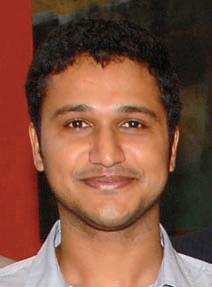
Murthy, a practicing physician from India, earned the first Ph.D. degree in cellular and molecular biology awarded by the university in 2006. He then completed two years of postdoctoral research in UTSA’s infectious disease center. Recently, he joined the Department of Biology as a research assistant professor. The San Antonio Area Foundation
award is Murthy’s first funding as principal investigator.
Magaly Salinas attends Nobel laureates meeting in Germany Magaly Salinas, a doctoral student in organic chemistry, attended the 59th Meeting of Nobel Laureates and Students in Lindau, Germany. At the meeting, from June 28 to July 3, 2009, Salinas discussed scientific research and networked with the world’s finest chemists and chemistry students. Approximately 600 students from 66 countries attended the invitation-only meeting. Salinas was one of only four attendees from Texas and one of 74 students representing the United States at the prestigious event. Salinas is supported by the UTSA Minority Biomedical Research Support-Research Initiative for Scientific Enhancement program, which offers a monthly stipend, research training and other career-development support to minority students pursuing doctorates in the sciences. She researches
alongside George R. Negrete, the chemistry professor who encouraged her to apply to attend the Nobel laureates meeting.
Salinas completed her bachelor’s degree in 2006 and her master’s degree in 2008 at the University of Texas-Pan American.
Ravi Sandhu named editor of top computer security journal
The Institute of Electrical and Electronics Engineers Inc. (IEEE) Computer Society has named professor Ravinderpal “Ravi” Sandhu editor in chief of its scholarly journal, IEEE Transactions on Dependable and Secure Computing Sandhu’s two-year term began Jan. 1, 2010.
An internationally renowned expert in information assurance, security and trust, Sandhu holds the Lutcher Brown Distinguished Chair in Cyber Security. He also is executive director of the university’s Institute for Cyber Security.
“Professor Sandhu has a keen pulse on current trends in information assurance and security, and his ability to focus that knowledge on research with practical applications is one of the things that makes him such a leader in the field,” says Robert Gracy, vice president for research.
Mustafa Iqbal awarded $20,000 promising scientist scholarship
UTSA representatives presented the Provost Promising Scientist/ Engineer Scholarship of $20,000
to local student Mustafa Iqbal at the 2009 ExxonMobil Texas Science and Engineering Fair. A senior at John Jay High School’s Science and Engineering Academy, Iqbal was awarded the scholarship for his project titled, “The Protective Effect of Caffeine Stimulated Ryanodine Stores on Astrocytes.”
The scholarship goes toward Iqbal’s tuition and fees at UTSA, and will be dispersed in equal payments each of his four years at UTSA. He must maintain a grade point average of 3.0 or above and pursue an undergraduate degree in the College of Sciences or College of Engineering.
“By offering a competitive scholarship to a remarkable student, we hope more students will recognize UTSA as a premier research university,” says George Perry, dean of the College of Sciences.
Steven Garza featured in 25 under 25 article
Student leader Steven Garza was featured in the online publication My Latino Voice in its Hot Latino 25 Under 25 article. A senior biology major, he was nominated by his brothers in the Phi Iota Alpha fraternity. Along with being a member of Phi Iota Alpha, Garza works with various organizations including the American Red Cross Campus Club, Hispanic Student Association, Multicultural Greek Council and the UTSA Diversity Month Planning Committee. Recently, he took a lead role in
organizing and serving as student chair of the Latino Heritage Month Planning Committee.
After finishing his undergraduate degree, Garza hopes to enroll in medical school. He says that although the path to a better life is not easy, it is always worth it.
Joseph Westlake and adviser publish findings in Nature magazine
Joseph Westlake, a student in the physics Ph.D. program, and Westlake’s adviser, J. Hunter Waite, an adjoint professor, co-authored a paper in Nature magazine that claims liquid water may exist on Saturn’s sixth-largest moon, Enceladus. The data sets the stage for more discoveries about Saturn’s moons, particularly with regard to their formation and evolution.
The data, collected by NASA’s Cassini mission during five fly-bys of the moon, shed light on the possible composition of Enceladus’ interior. Westlake followed Waite to Southwest Research Institute and UTSA’s joint space physics doctoral program in 2006. Previously at the University of
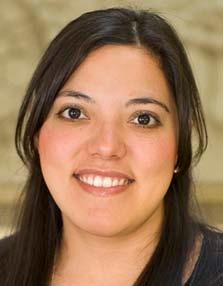
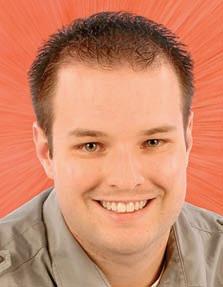
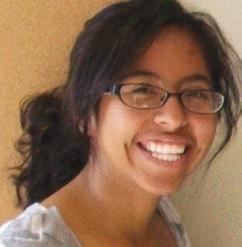
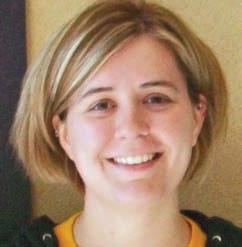
Tsin
Murthy
Westlake
Salinas
Michigan, Westlake wanted to gain more experience performing experimental physics. Although his dissertation focuses on Saturn’s largest moon, Titan, Westlake was eager to work on the Enceladus project.
“There are so many fundamental questions about this little moon that we don’t have answers for,” he says.
Three students honored at annual microbiology meeting
Three students researching topics in microbiology and infectious diseases won competitive awards for their poster and oral presentations at the annual meeting of the Texas Branch of the American Society for Microbiology held Nov. 5-7, 2009, at the University of Texas at Tyler.
Ann Reyes, an undergraduate majoring in biology and math, was awarded the Sam Kaplan Poster Award for the second best poster presented at the conference by an undergraduate. Reyes’ research is supported by UTSA’s Minority Biomedical Research Support’s Research Initiative for Scientific Enhancement program.
Tricia Van Laar, a third-year cellular and molecular biology doctoral student, won the O.B. William award (third place) for her oral presentation in general microbiology.
Steve Rodriguez, a fifth-year cellular and molecular biology doctoral student, won the S. E. Sulkin Award (third prize) in for his oral presentation in medical microbiology.
“The American Society for Microbiology’s competitive awards are excellent indicators of the caliber of work carried out by our graduate and undergraduate
students at UTSA,” says Janakiram Seshu, assistant professor of microbiology and a member of UTSA’s South Texas Center for Emerging Infectious Diseases.
Three students receive stipends to conduct research
Three minority students who received $1,875 stipends to conduct research in science, technology, engineering and
mathematics presented their findings May 21, 2009, in downtown San Antonio to culminate their achievements in UTSA’s Louis Stokes Alliance for Minority Participation (LSAMP) program.
Sample projects presented at the gathering included research on stem cuttings and trees native to South Central Texas, research about speech patterns and a study of radio frequency identification.
The spring 2009 LSAMP cohort at UTSA pursued research on an array of topics, working alongside faculty mentors in the UTSA College of Sciences and College of Engineering: Crystal Alonzo, Professor Oscar Van Auken
(Department of Biology)
Carla Grochel, Associate Professor Valerie Sponsel (Department of Biology)
Emily Pohl Professor Judith Walmsley (Department of Chemistry)
Students receive inaugural South Texas Center for Emerging Infectious Disease scholarships
The South Texas Center for Emerging Infectious Diseases awarded its inaugural $21,500 doctoral scholarships to students Madhulika Jupelli and Gregor Weber to help complete their doctoral thesis research.
Jupelli is researching the development of abnormal lung function in adults who had chlamydial infections at birth.
She is conducting her research under the direction of Professor Bernard Arulanandam.
“I am really happy to receive this scholarship,” says Jupelli. “[It] will allow me to leave my teaching position so I can spend more time in the laboratory and focus on the completion of my degree.”
An alumnus of UTSA’s undergraduate biology program, Weber is in his fourth year of the Ph.D. program. His research focus is the bacterium Vibrio cholerae which causes cholera infections.
“I chose to pursue my Ph.D. at UTSA because of the rapid growth of research on campus, the positive energy displayed by the faculty and the quality of the Ph.D. program in cellular and molecular biology,” says Weber.
The Dean’s Fund for Excellence
Expand the frontiers of science through undergraduate scholarships.
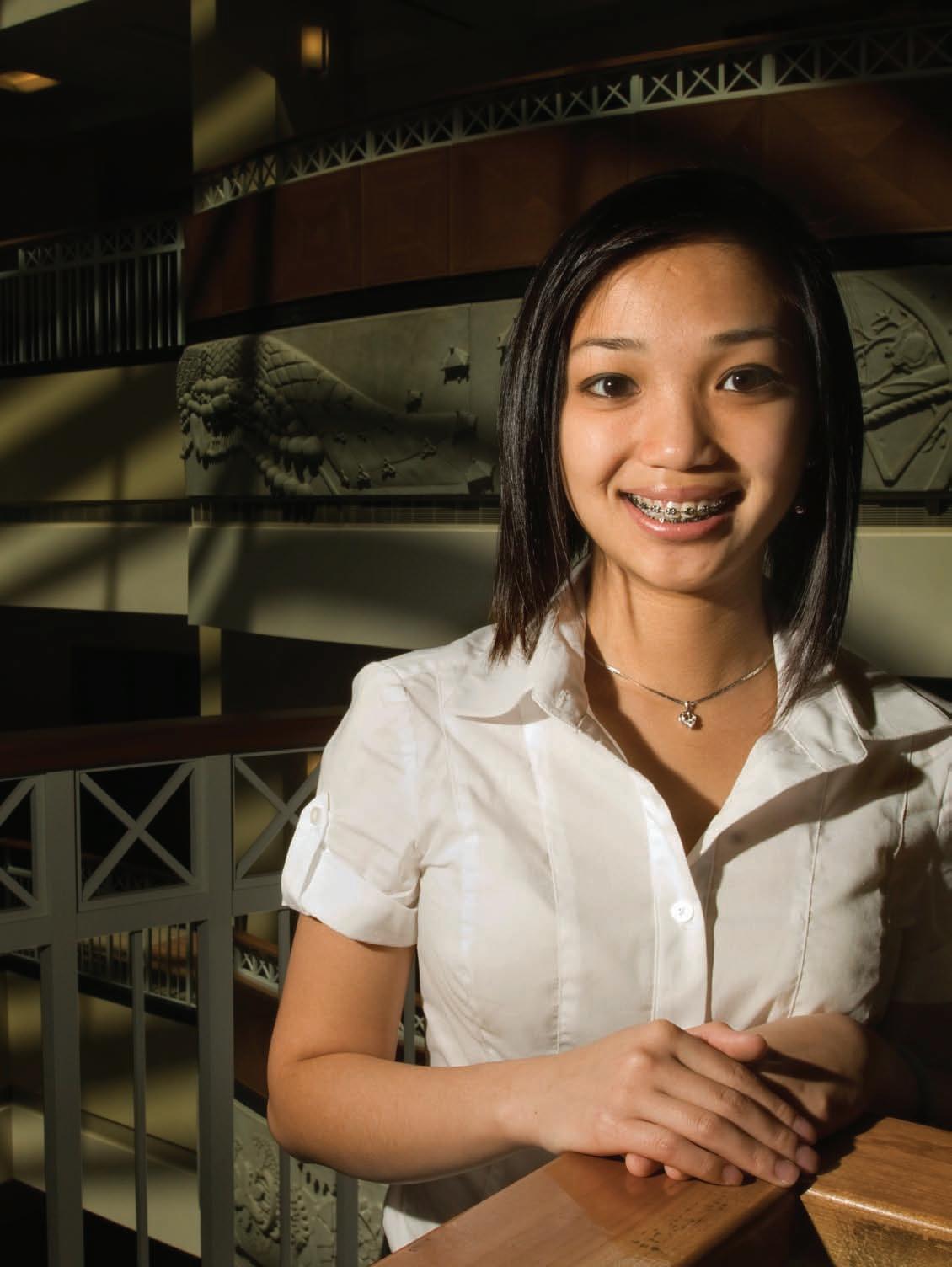
Chau Kha, an undergraduate chemistry major, waited nine years as a child before being reunited with her mother who had left Vietnam to pursue opportunities for a better life in the United States.
Inspired by her mother’s sacrifice and work ethic, Chau is dedicated to providing a better life for others through a career as a pharmacist. She is supported by the Dr. Budalur S. Thyagarajan Endowed Scholarship, which relieves financial stress and allows her to focus on achieving her academic goals.
For more information about supporting students through scholarships, contact Kim Fischer at (210) 458-7672 or kim.fischer@utsa.edu. www.utsa.edu/cos/giving
Van Laar
Rodriguez
Reyes
Jupelli Weber
U.S. Postage PAID
Austin, TX
Permit NO. 677
Dean: George Perry, Ph.D.
Communications Specialist: Amanda Beck
Associate Deans
Associate Dean: Garry Castellanos
Senior Associate Dean: Raymond Baird, Ph.D.
Associate Dean of Graduate Studies: Judy Teale, Ph.D.
Associate Dean of Academic Programs: Craig Jordan, Ph.D.
Associate Dean of Diversity Initiatives: George Negrete, Ph.D.
Associate Dean of Downtown Campus: Neal Guenztel, Ph.D.
Associate Dean of Research: Andrew Tsin, Ph.D.
Associate Dean of Research for Scientific Innovation: Bernard Arulanandam, Ph.D., MBA
Publications Staff
Editors: Joe Michael Feist, Lety Laurel
Art Director: Karen Thurman
Photographers: Patrick Dunn, Mark McClendon
Designers: Larry Lopez, Karen Thurman
Assistant Director of Publications: Frank Segura
University Advancement
Executive Director of Communications and Creative Services: Craig Evans
Associate Vice President for Communications and Marketing: David Gabler
Vice President for University Advancement: Marjie French