







atnoadditionalchargetoitscustomers.Toopt outofthequarterlymailingofTheServiceLine, emailgasandwater@cityofclarksville.com.
(More on back)
Grasas y aceites obstruyen tuberías de los alcantarillado en su área.
atnoadditionalchargetoitscustomers.Toopt outofthequarterlymailingofTheServiceLine, emailgasandwater@cityofclarksville.com.
We are nearing the completion of our current fiscal year June 30, and I am pleased to report Clarksville Gas & Water has completed the first steps in the approval process of our fiscal year 2027 budget. I applaud our managers who worked diligently over the past months to submit a fiscally responsible budget to our CGW Board, which approved it to move forward to the next phase at the Clarksville City Council budget hearings in May and June. We look forward to beginning our new fiscal year with an approved and sound budget.
As you have seen in previous editions, I am always proud to recognize and celebrate the accomplishments of our employees. They are the foundation of our department, and they continue to make strides to bring high-quality utility services to our community.
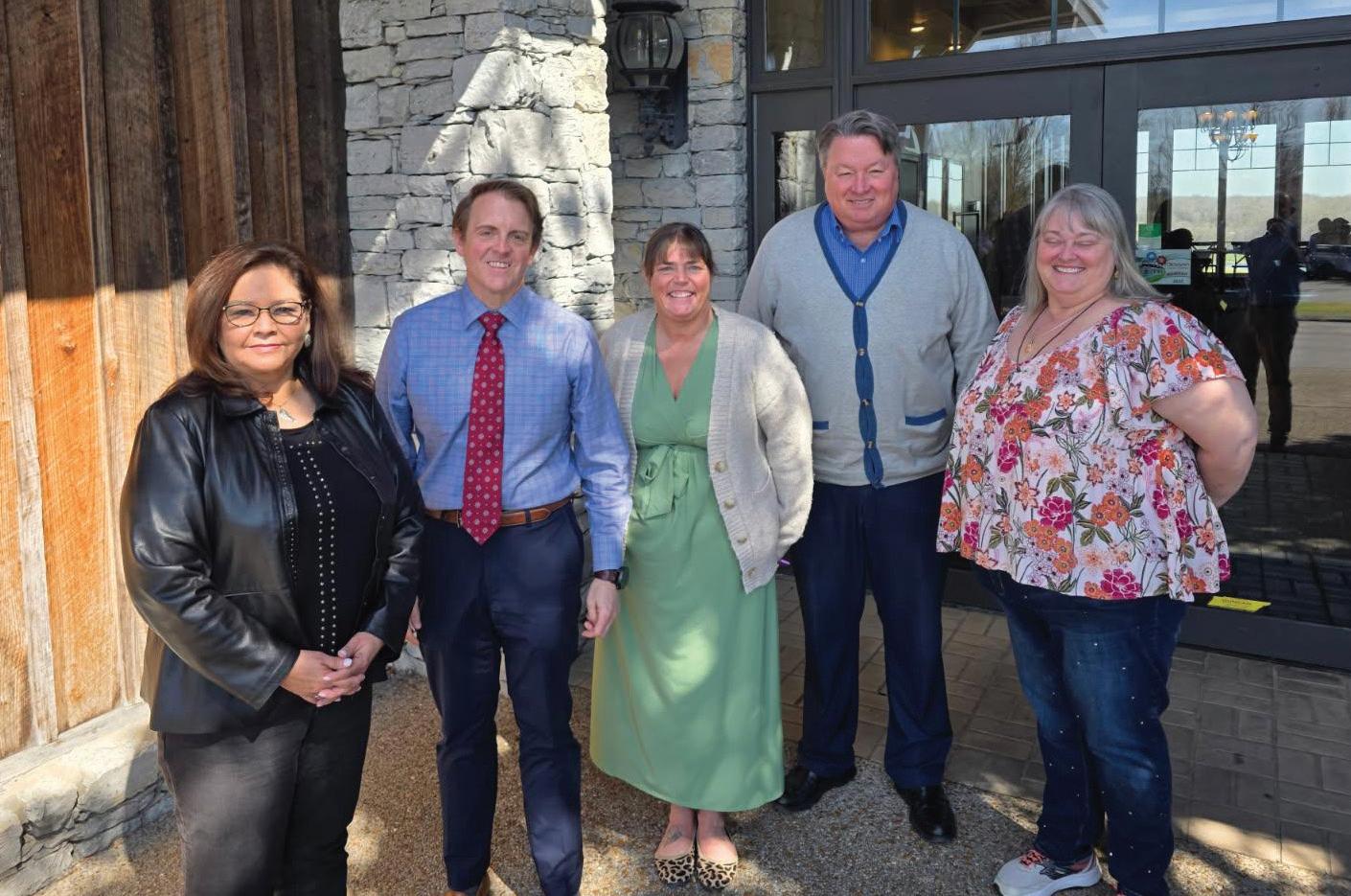
In March, CGW earned first place in the Region 9 Best Tasting Water Contest by the Tennessee Association of Utility Districts at the regional meeting in Dickson. This recognition is one measure of the hard work and effort our water operations division employees put forth around the clock to ensure we have safe and reliable drinking water at our taps. You can see the results of their hard work in our Annual Drinking Water Quality Report beginning on Page 9.
I also commend our employees who take opportunities to support our community partners by sharing their knowledge about water and wastewater treatment processes, promoting the protection of our underground utility lines from damage, and encouraging good environmental stewardship so we can all enjoy safe drinking water and safe, reliable natural gas service. We are fortunate to collaborate with our
community to raise awareness of local utility services and opportunities for rewarding careers in the utility industry.
I am also proud to champion our employees for the outstanding work they do daily to deliver essential utility services. In early April, we rewarded workplace excellence by recognizing standout quarterly performers and top annual honorees. These awards recognize excellence by employees from all areas of our department: administrative, customer service, gas, water and wastewater. Awards include Employee of the Quarter, End of Year awards by department, Overall Employee of the Year, my General Manager’s Award of Excellence and the Wade Rudolph Manager of the Year award.
Our employees consistently take the adage of giving 110% to the next level.
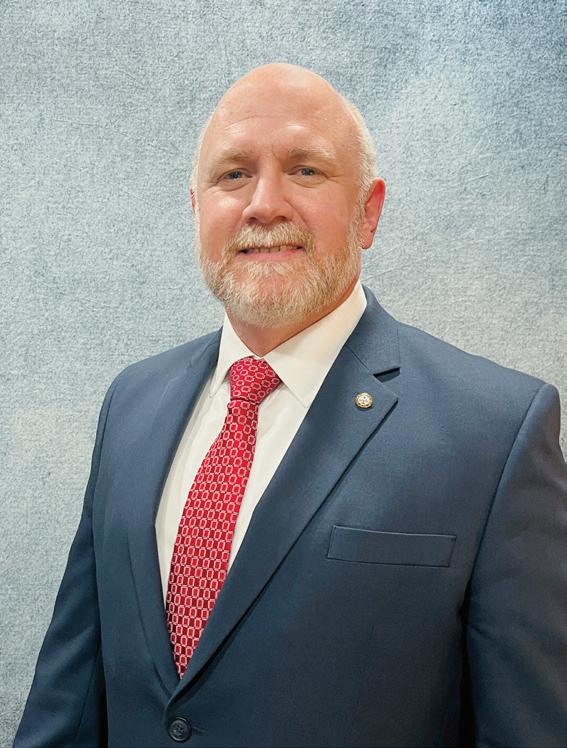
The work they do every day, around the clock, ensuring we are accountable to our customers and good stewards of the utility humbles me. I am deeply grateful to be part of a family of expert employees who are proud to serve their community.
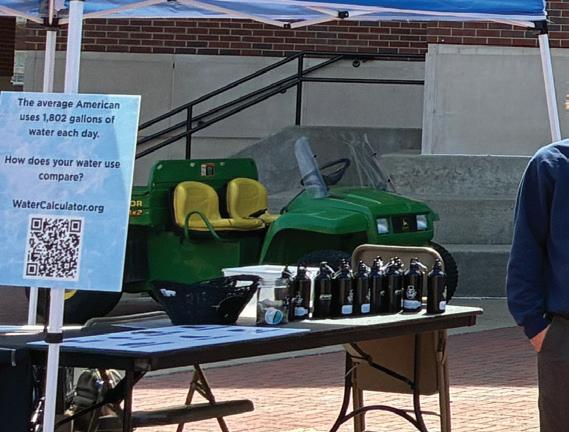

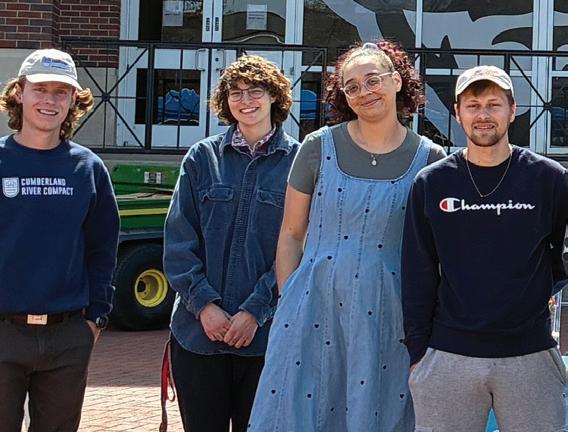
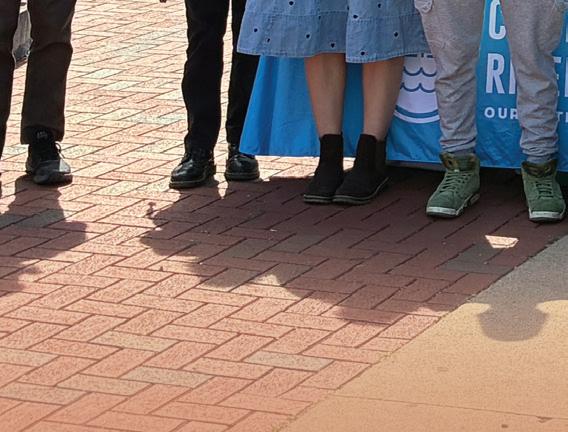
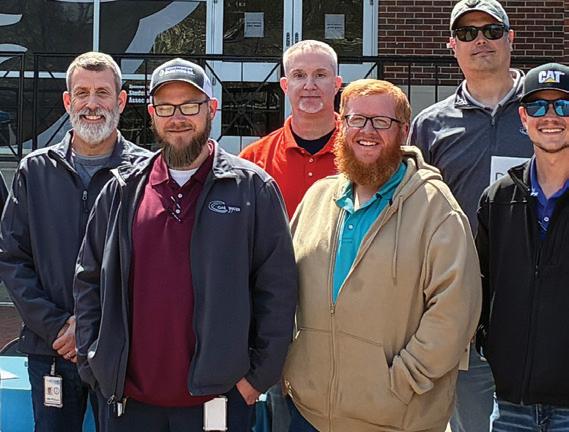
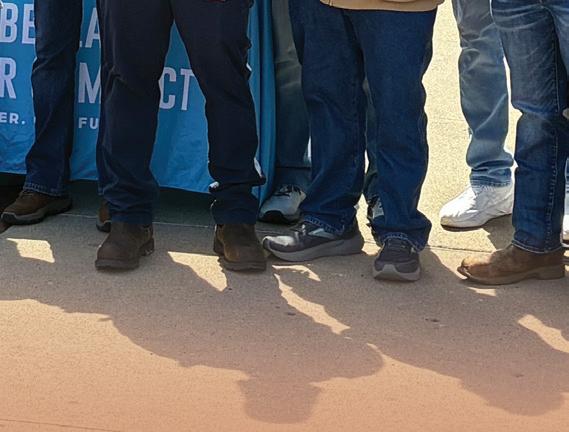
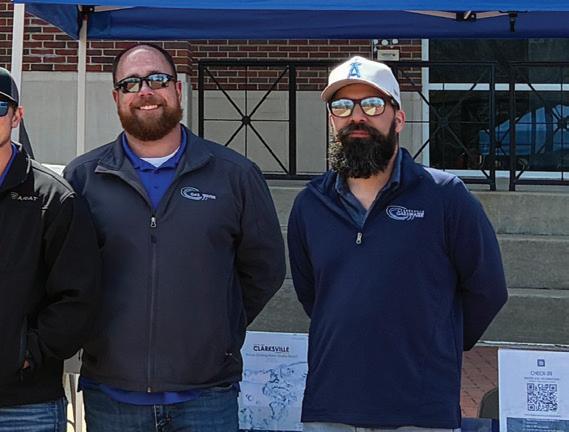
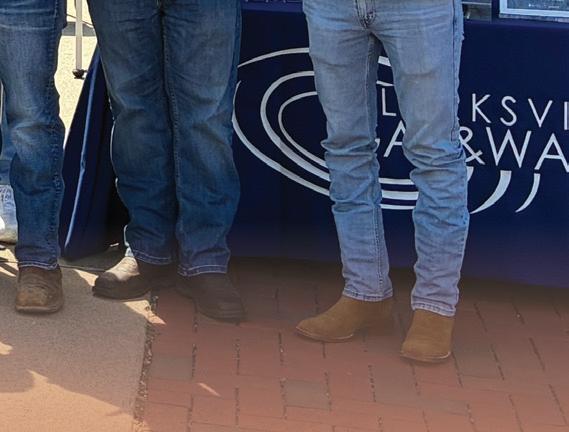
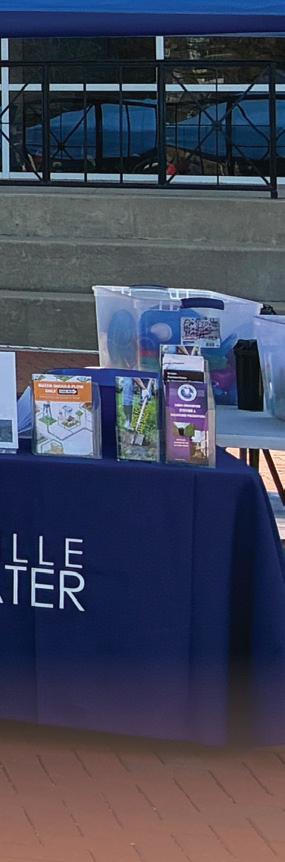

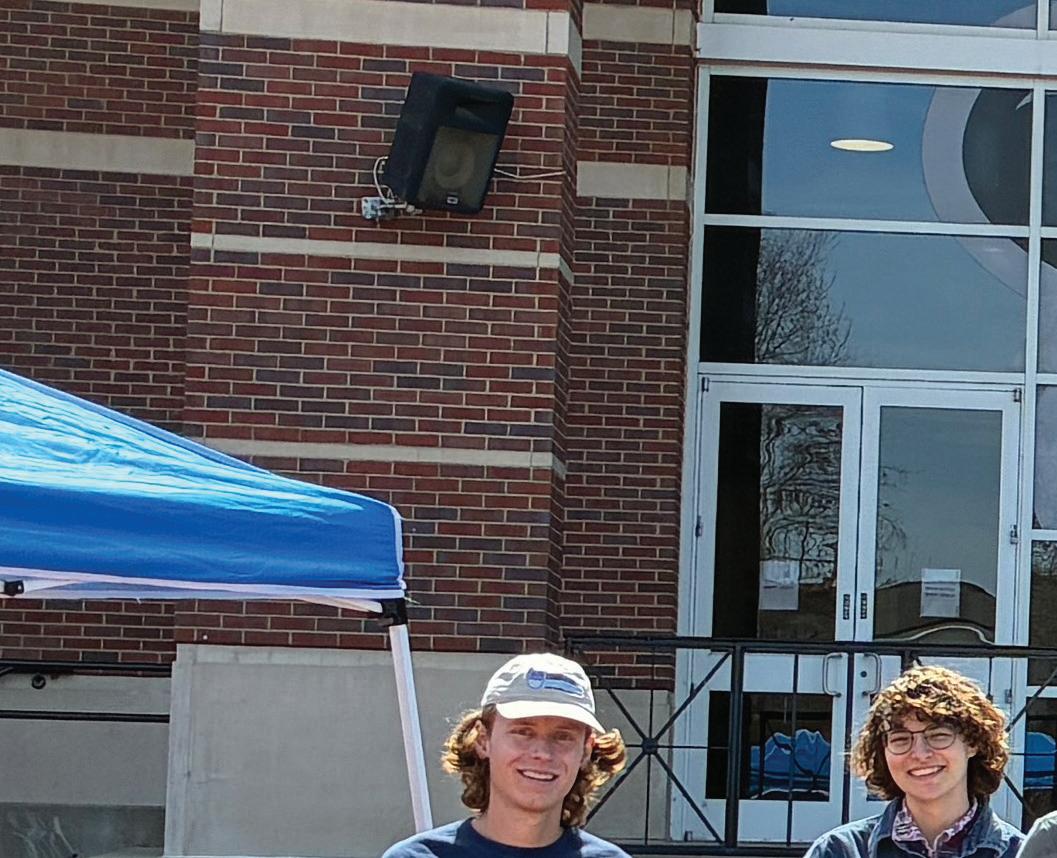
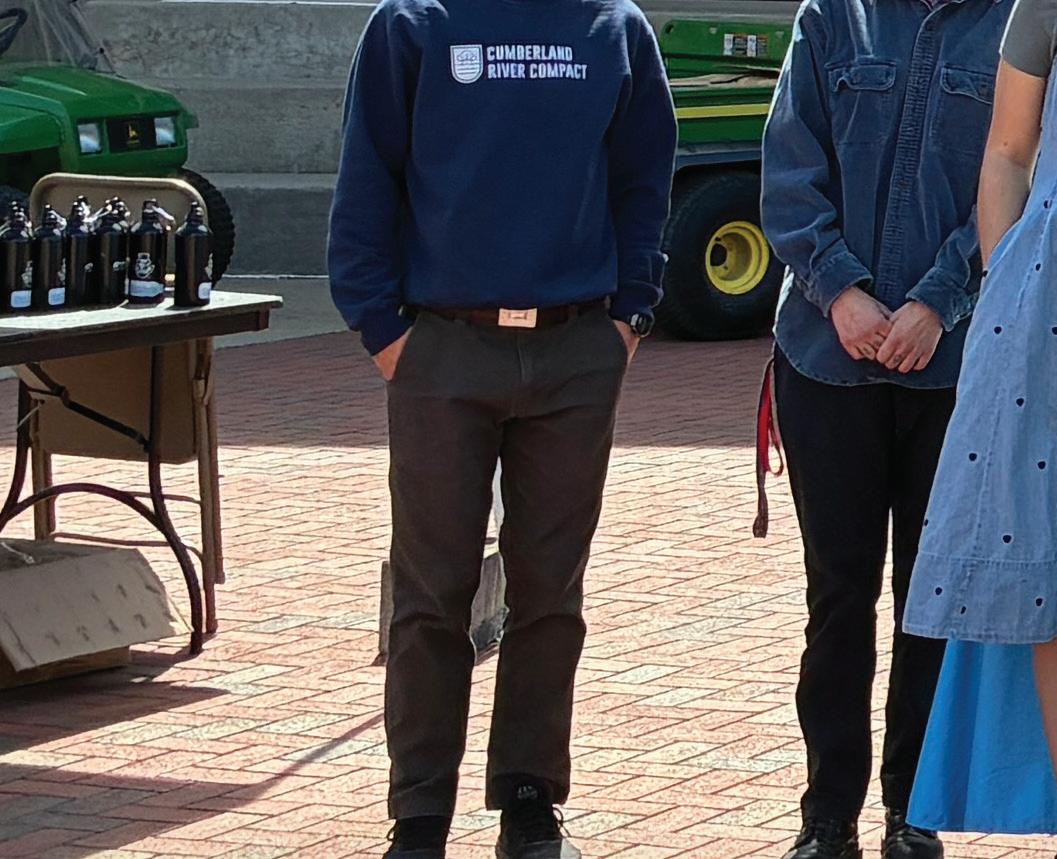
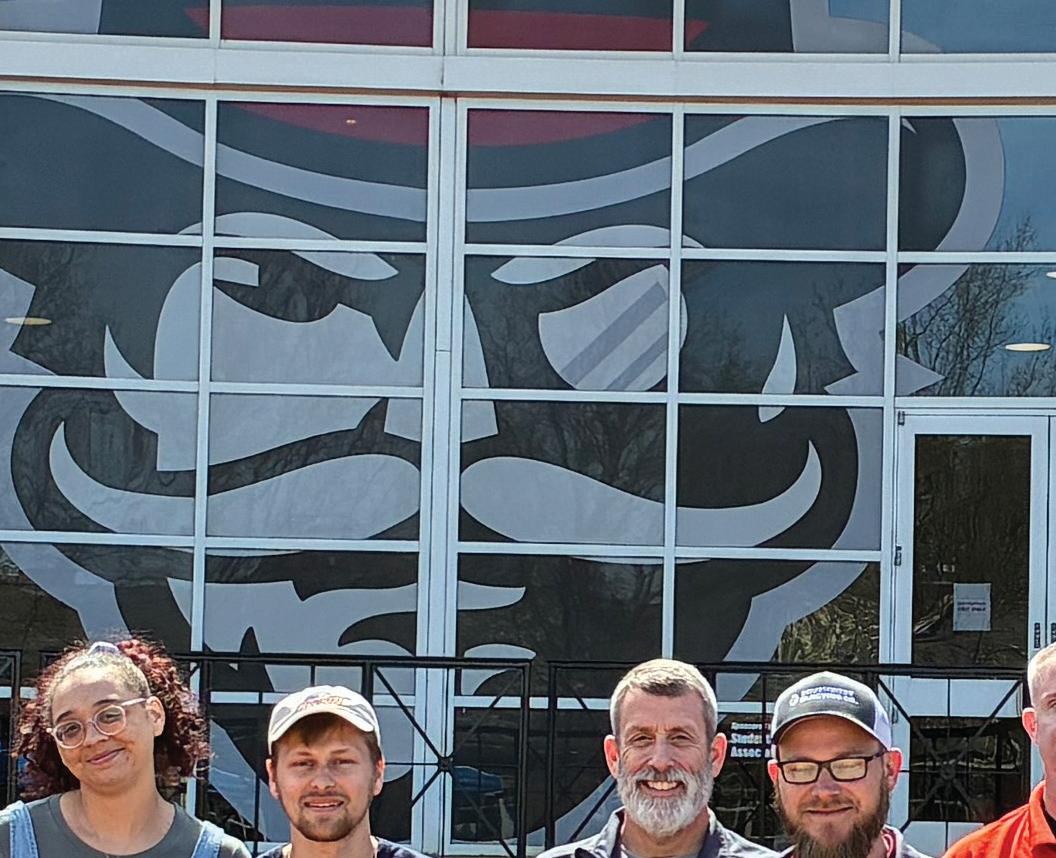
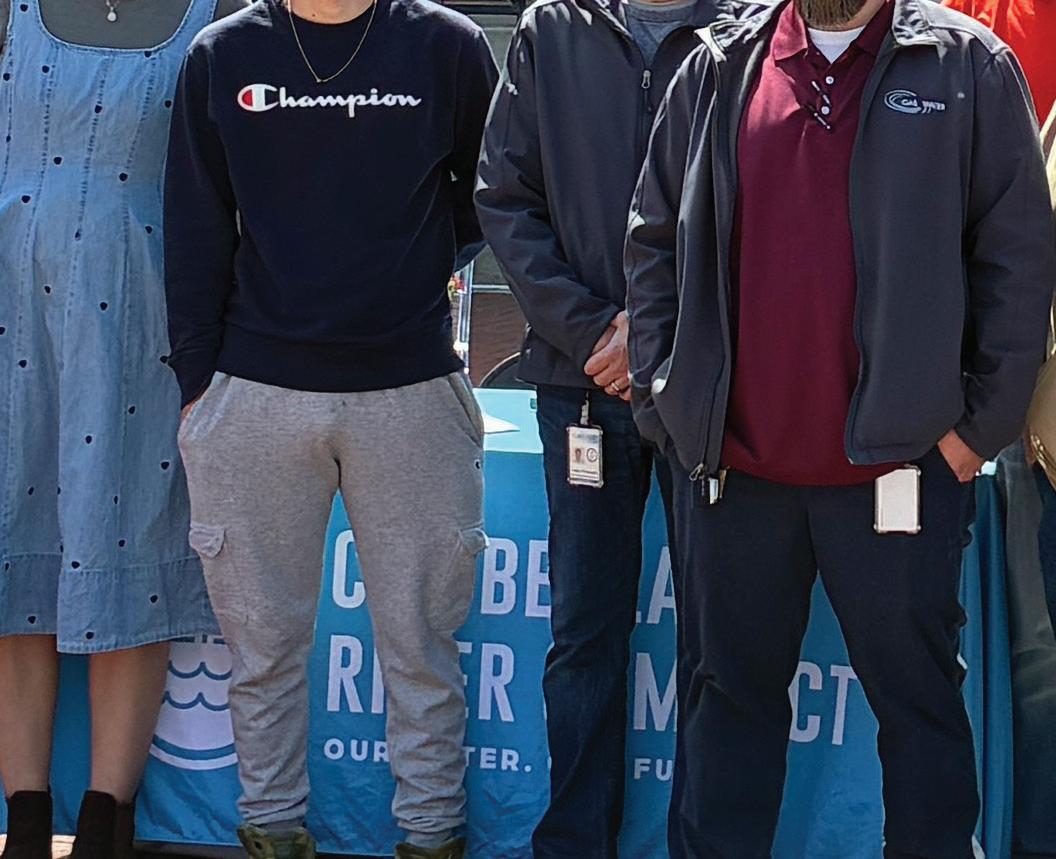
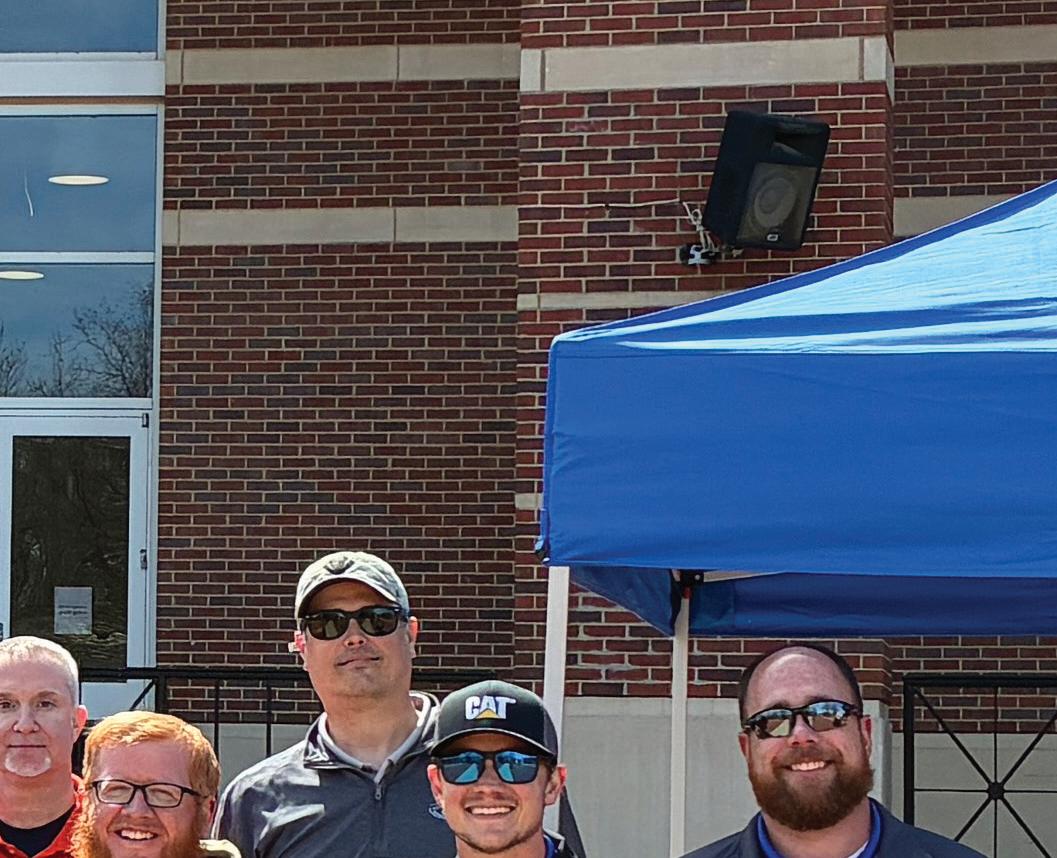
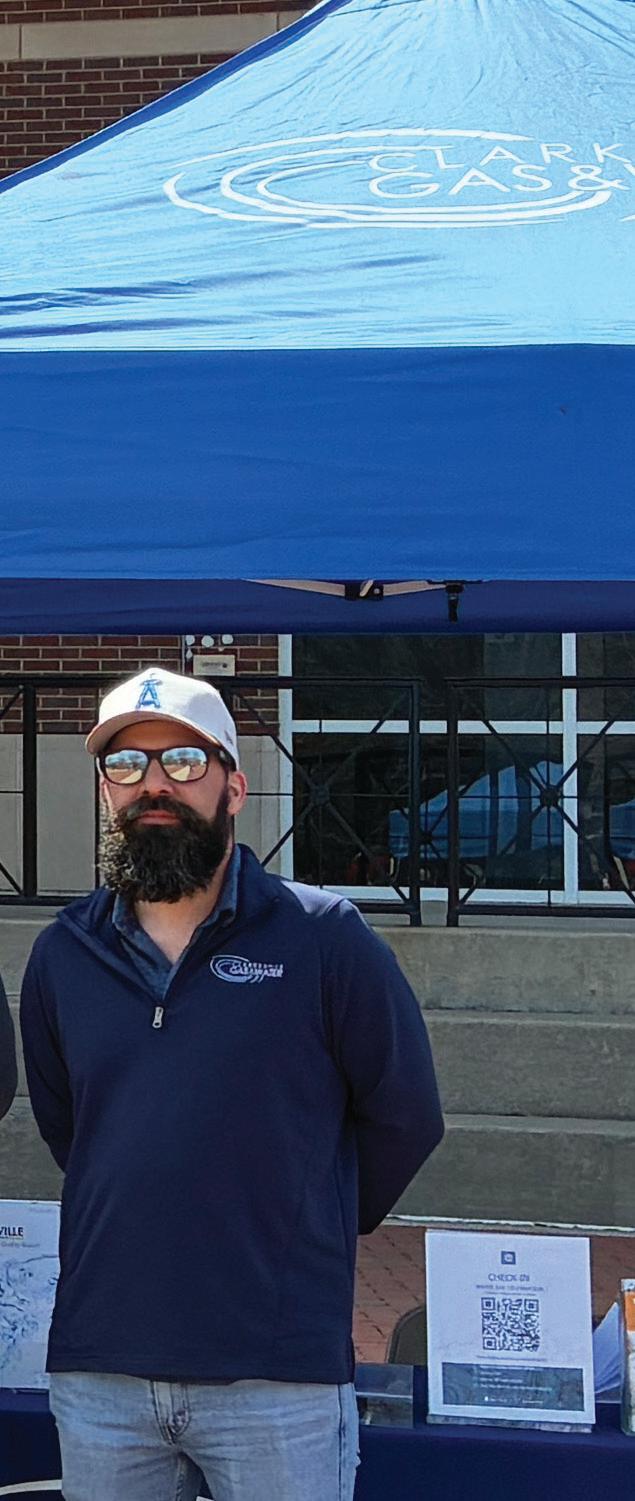
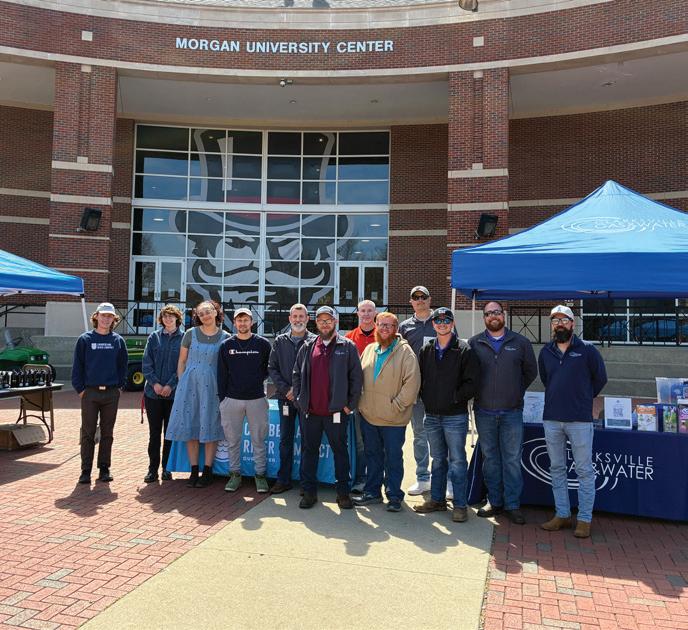
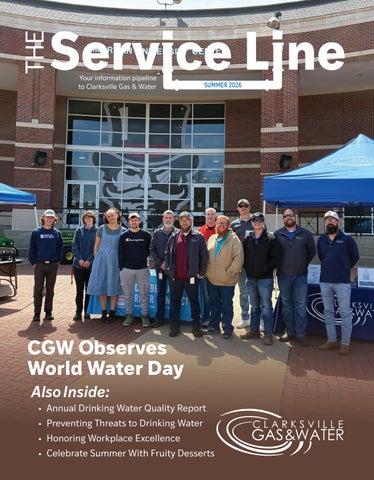
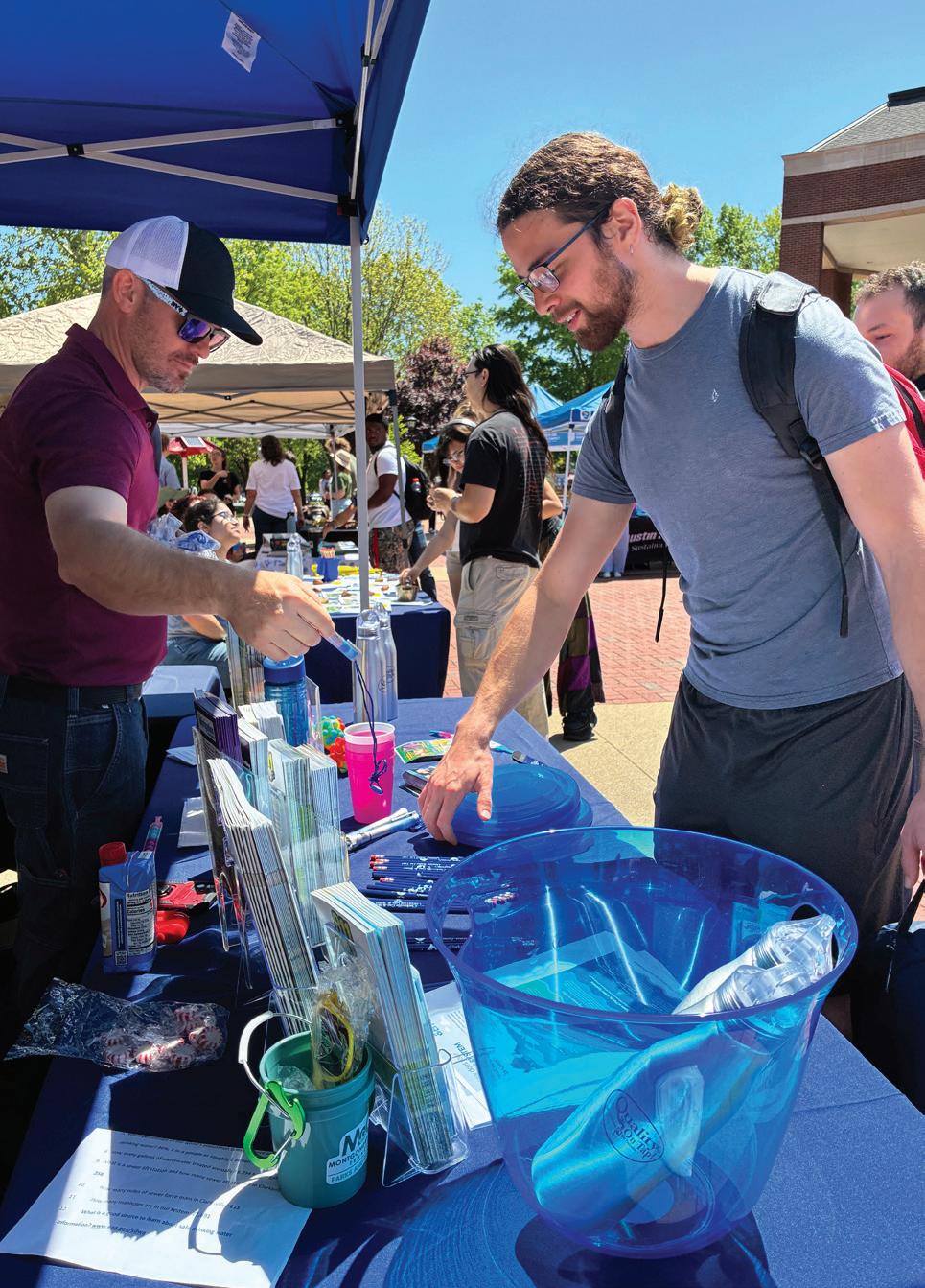
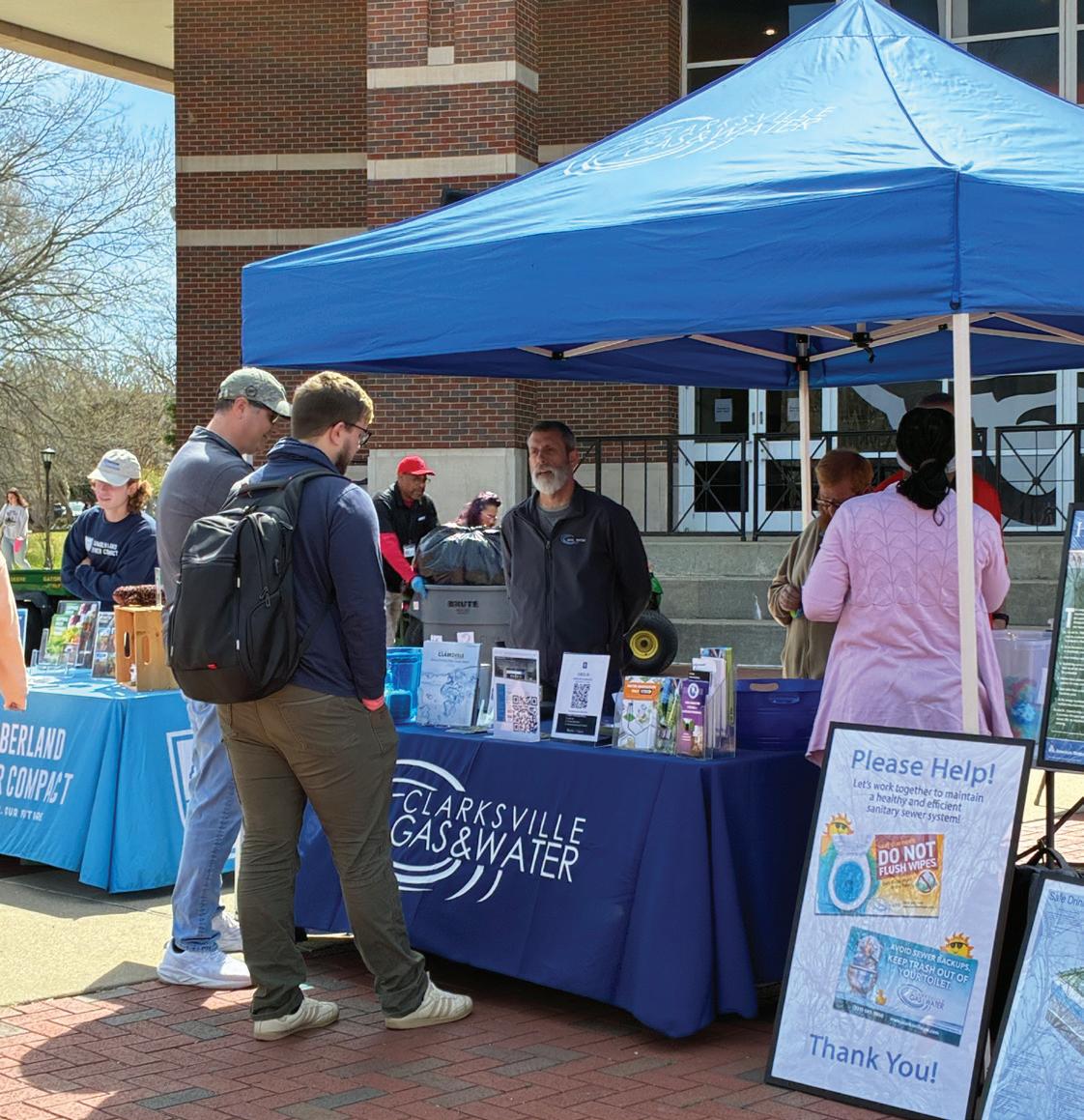
Clarksville Gas & Water observed World Water Day at Austin Peay State University on March 24 by hosting an interactive booth where students learned about water and wastewater treatment processes through a trivia game. CGW employees appreciated the opportunity to have open conversation with students, faculty and staff about water quality and to promote drinking tap water.
Special thanks to Sustainability Coordinator Kayla MillerZapata, as well as Amberthest Wertanen and Trey Troyani with the APSU Office of Community Engagement and Sustainability for coordinating the campus event.
CGW employees returned to campus April 22 to participate in the APSU Earth Day Fair. We appreciate the continued partnership with the university to share important information about Clarksville’s safe drinking water.
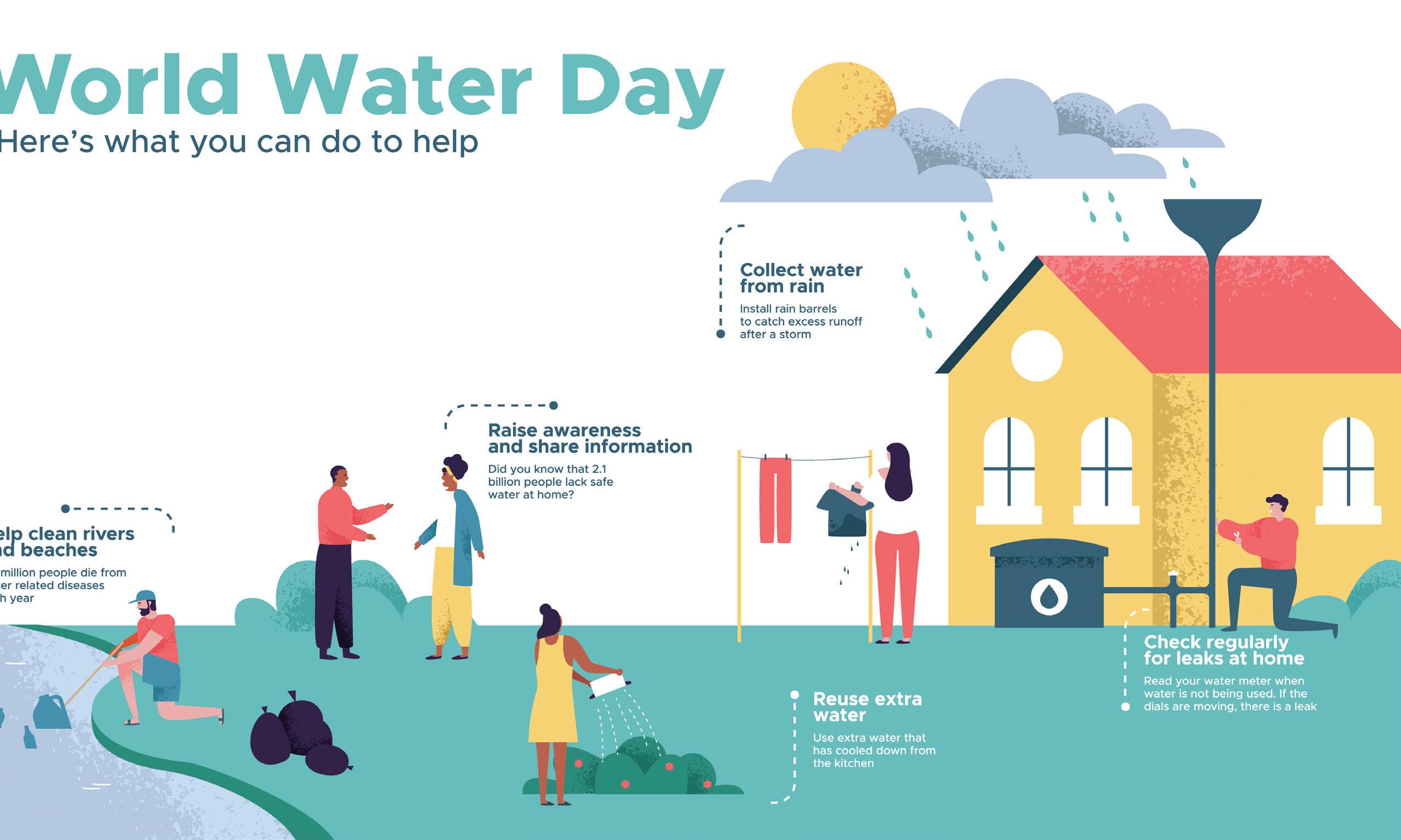
Designated by the United Nations in 1993, World Water Day focuses on the importance of fresh water. More than 2 billion people across the world live without access to safe water. A core focus of World Water Day is spreading awareness and taking action to tackle the global water crisis. World Water Day supports the achievement of Sustainable Development Goal No. 6, “water and sanitation for all” by 2030.
Every year, UN-Water—the UN’s coordination mechanism on water and sanitation—sets the theme for World Water Day. The 2025 theme was glacier preservation. In 2026, the theme was water and gender.
To learn more about World Water Day, visit unwater.org/our-work/world-water-day.




























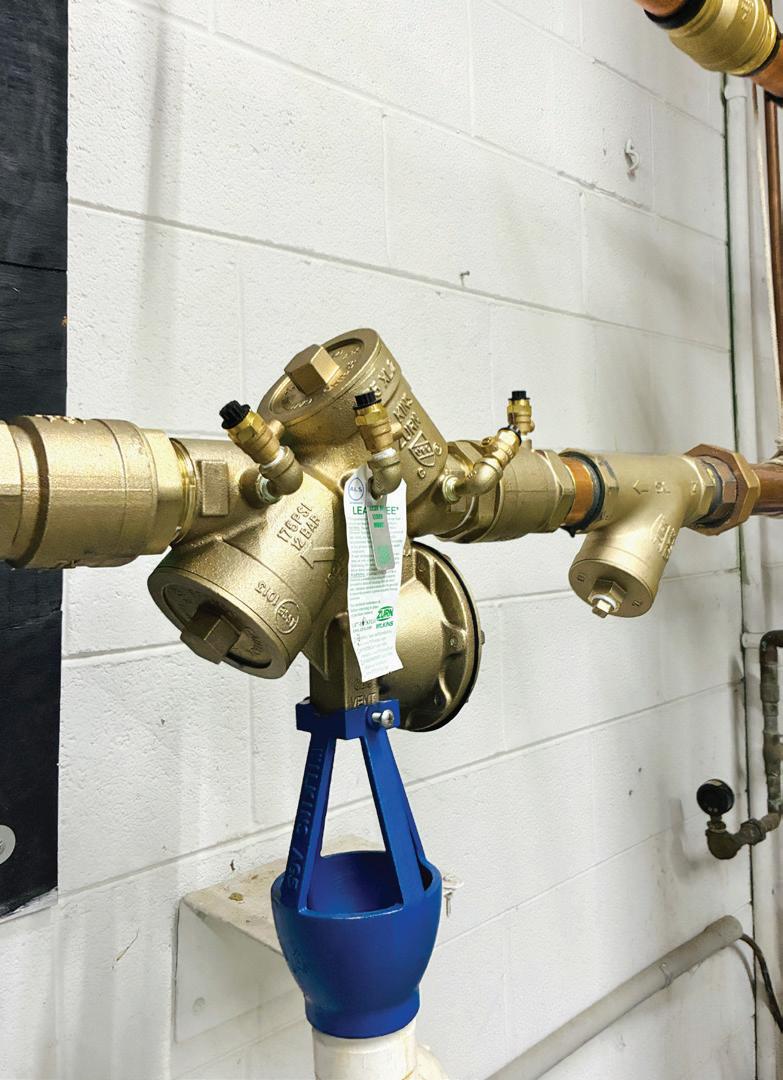
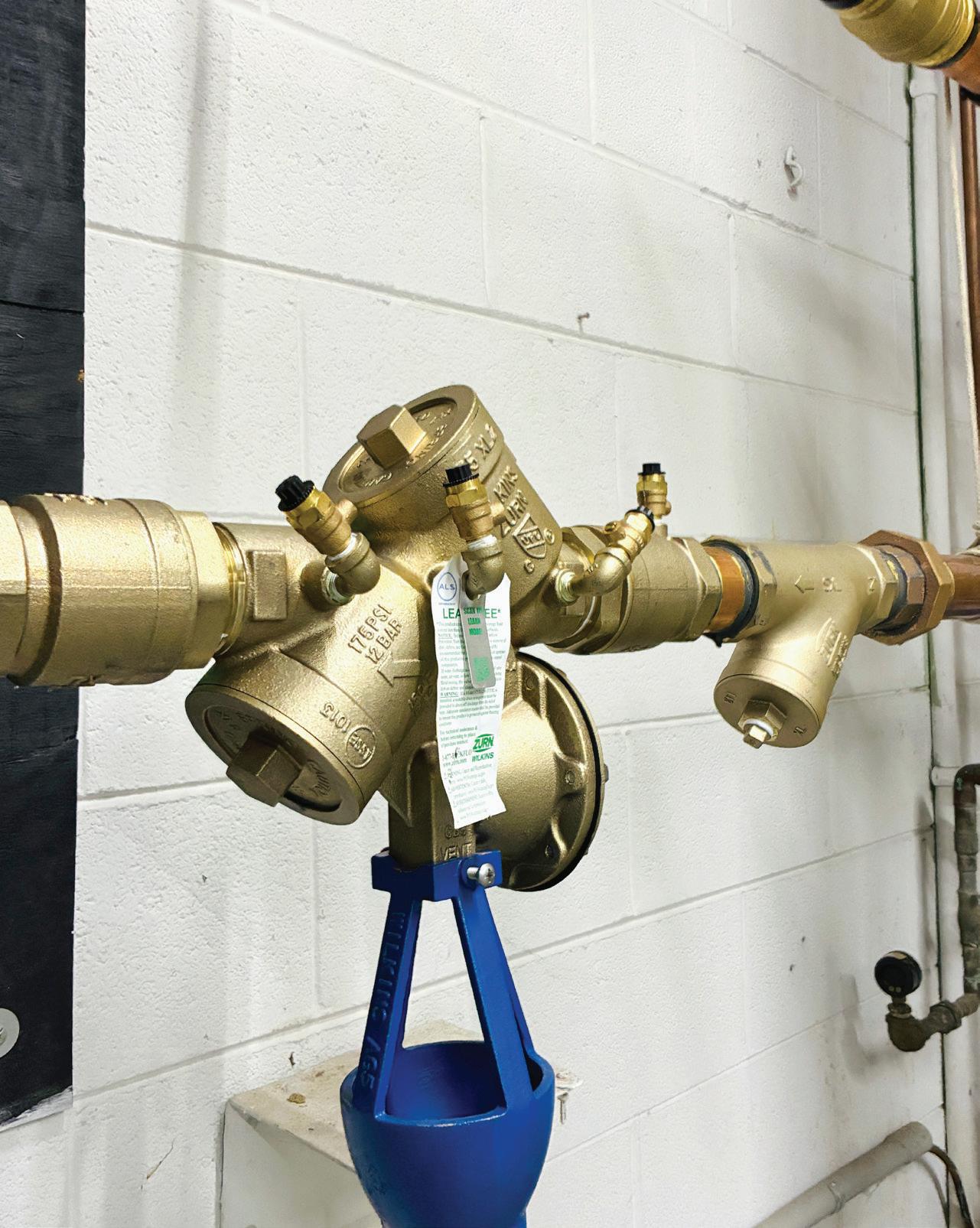
Some of the most harmful threats that cause backflow come from swimming pools, lawn irrigation systems and garden hoses. Through these devices, a vacuum can be created and water can accidentally flow backward or backflow carrying any chemical, cleaner or other contaminant directly back into our drinking water supply. Even a simple garden hose submerged into a pool, a bucket of water or other container filled with liquid can create a vacuum. Follow a few simple preventative steps around your home to avoid backflows.
Backflow Prevention Steps
• Never submerge the end of a garden hose in a bucket, pool, tub, sink, fertilizer or herbicide sprayer, or ponds. Always maintain an air gap between the liquid and the end of the hose.
• Install vacuum bibs on outside faucets that will break a vacuum at the faucet. If a vacuum is created on the public water main line, it will be broken at your outlet and no water will be allowed to flow backwards. These devices are available in most hardware stores.
• Have a certified backflow technician install a backflow prevention device on all lawn irrigation systems. The Tennessee Department of Environment and Conservation requires lawn irrigation systems be fitted with a backflow prevention device. Call 931-553-2489 for more details or visit clarksvillegw.com.

To learn more about backflow prevention, visit clarksvilletn.gov/326/Backflow-CrossConnection-Thermal-Expans.





















As temperatures rise across Tennessee, so does water use. From watering lawns to filling pools, summer can put extra strain on local water systems—and your monthly bill. Hot, humid days and occasional dry spells can quickly increase demand, especially in communities that rely on shared reservoirs or groundwater supplies. Fortunately, a few simple changes can help you use water more efficiently without sacrificing comfort.
Outdoor watering is one of the biggest drivers of summer water use. Lawns typically need only about 1 inch of water per week, including rainfall. In Tennessee’s clay-heavy soil, watering slowly is key—fast watering can lead to runoff instead of absorption.
Water early in the morning or later in the evening to reduce evaporation, and consider using a rain gauge or even a small container to track how much water your lawn is actually receiving. If you see water running off your lawn, you may be watering too quickly or too much.
Even small leaks can waste a surprising amount of water. Check outdoor spigots, hoses, sprinkler heads and irrigation systems regularly. A hose left dripping or a misaligned sprinkler head can waste hundreds of gallons over time.
Inside your home, everyday habits matter. Turn off the tap while brushing your teeth, run dishwashers and washing machines only with full loads, and consider installing water-efficient fixtures. These small changes add up quickly.
If you have a pool, use a cover when it’s not in use to reduce evaporation. When washing your car or outdoor equipment, use a bucket and a hose with a shutoff nozzle instead of letting water run continuously. You can also direct downspouts toward landscaped areas to make better use of summer rain when it does occur.
Water conservation isn’t just about saving money—it helps ensure a reliable supply for your entire community, especially during peak summer demand. By using water wisely, you’re helping protect this essential resource for today and the future. With a few mindful adjustments, you can stay cool, keep your landscape healthy and make every drop count this summer.




Improper disposal of fats, oils and grease, or FOG, is a major cause of damaging and costly sewer overflows in the Clarksville Gas & Water sewer collection system. We address the issue with our proven FOG program.
The program is a preventive strategy to reduce or eliminate FOG in our sanitary sewer system, and protect the public from contamination or pollution from grease-related problems in accordance with city Ordinance 26-2008-09.





• Scrape or use paper towels to wipe food scraps or grease off of pots, pans and plates into the garbage before washing them in a sink or dishwasher.
• Minimize the use of kitchen sink garbage disposals. Ground food particles and grease still clog your pipes and affect the downstream sewer system.

At home, you can help prevent FOG from entering sewers by putting grease discard and food scraps/waste in a can to cool before disposing in the garbage instead of dumping them down the drain. Always follow these important tips, and share them with family and friends:
• Never put cooking oils or grease into kitchen sinks, dishwashers, bathroom sinks, toilets or other household or outdoor drains.
• Pour used cooking oils and grease into small containers to cool and harden. When containers are full, cover them tightly and place it in a bag to prevent leakage. Dispose of it in the garbage.
Help Prevent Sewer Blockages
Please help protect yourself and your neighbors by never using toilets or household drains to dispose of trash or food scraps. Do not flush hand wipes, baby wipes or cleaning wipes. Dispose of them in the trash instead. Most wipes are made of fibers that do not break down or deteriorate quickly like toilet paper in the wastewater treatment process. Instead, they can collect in sewer lines and sewer pump motors and create blockages. Never flush the following items:
• Wipes (including flushable)
• Paper or shop towels
• Diapers, disposable or cloth
• Feminine products
• Cotton swabs
• Fats, oils and grease
• Trash of any kind
• Food or scraps
Thank you for helping maintain a healthy and efficient sanitary sewer system.


Fats,
O ils & G
are clogging the sewer pipes in your area!
































For Monitoring Period Jan. 1-Dec. 31, 2025
Is my drinking water safe?
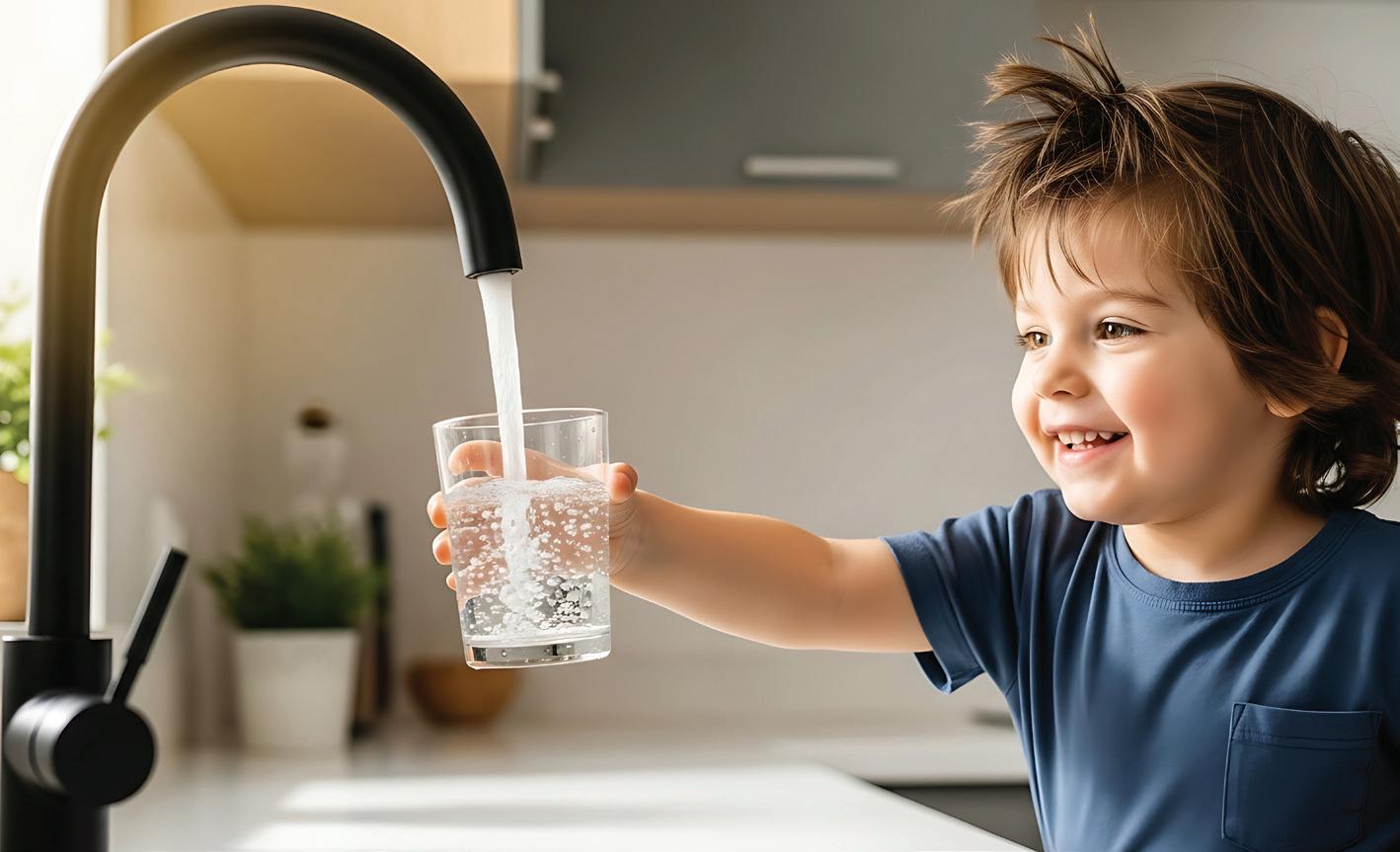
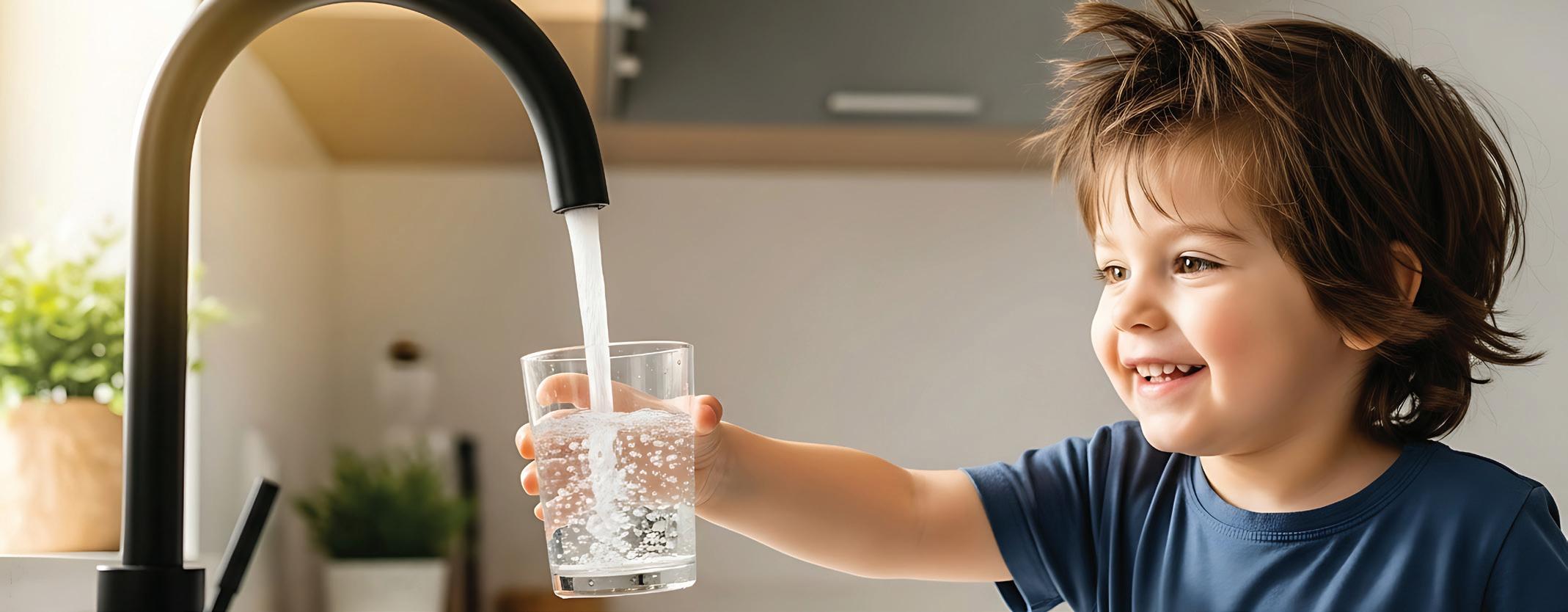
Absolutely! The City of Clarksville Water Treatment Plant is proud to report that your drinking water meets or exceeds all federal and state drinking water standards set by the Environmental Protection Agency (EPA). The water is tested and checked continuously each day to make sure it is safe. Thousands of tests are performed each month on the water leaving the treatment plant, as well as the water traveling through the distribution system to your homes, businesses and industries.
Although monitoring detected the presence of contaminants in small quantities, they tested well below the Maximum Contaminant Levels (MCL) established by the EPA and regulated by Tennessee Department of Environment and Conservation (TDEC).
What is the source of my water?
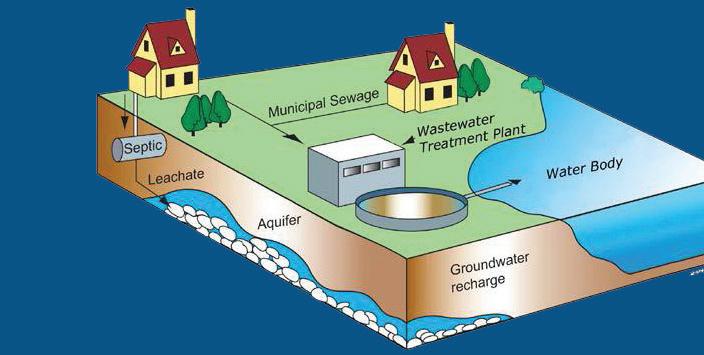
The sources of drinking water (both tap water and bottled water) include rivers, lakes, streams, ponds, reservoirs, springs and wells. As water travels over the surface of the land or through the ground, it dissolves naturally occurring minerals and, in some cases, radioactive material, and can pick up substances
resulting from the presence of animals or human activity. Your water, which is surface water, comes from the Cumberland River. We ask that all customers help us protect your drinking water sources, which are the heart of our community, our way of life and our children’s future.
Contaminants that may be present in source water include:
Microbial Contaminants, such as viruses and bacteria, which may come from sewage treatment plants, septic systems, agricultural livestock operations or wildlife.
Inorganic Contaminants, such as salts and metals, which can be naturally occurring or may result from urban stormwater runoff, industrial or domestic wastewater discharges, oil and gas production, mining or farming.
Pesticides and Herbicides, which may come from a variety of sources such as agriculture, urban stormwater runoff and residential uses.
Organic Chemical Contaminants, including synthetic and volatile organic chemicals, which are by-products of industrial processes and petroleum production and may also come from gas stations, urban stormwater runoff and septic systems.
Radioactive Contaminants, which can be naturally occurring or may be the result of oil and gas production and mining activities.
An explanation of Tennessee’s Source Water Assessment Program, the Source Water Assessment summaries, susceptibility scorings and the overall TDEC report to EPA can be viewed online at the following web address, www.tn.gov/environment/programareas/wr-water-resources/waterquality/source-water-assessment. html or you may contact the Clarksville Water Treatment Plant to obtain copies of specific assessments.
Our goal is to protect our water from contaminants and we are working with the state to determine the vulnerability of our water source to potential contamination. TDEC has prepared a Source Water Assessment Program (SWAP) Report for the untreated water sources serving our water system. The SWAP Report assesses the susceptibility of untreated water sources to potential contamination. To ensure safe drinking water, all public water systems treat and routinely test their water. Water sources have been rated as reasonably susceptible (high), moderately susceptible (moderate) or









slightly susceptible (low) based on geologic factors and human activities in the vicinity of the water source. The Clarksville Water Treatment Plant source is rated as reasonably susceptible to potential contamination.
Why are there contaminants in my water?
Drinking water, including bottled water, may reasonably be expected to contain at least small amounts of some contaminants. In order to ensure that tap water is safe to drink, EPA and TDEC prescribe regulations which limit the amount of certain contaminants in water provided by public water systems. Food and Drug Administration (FDA) regulations establish limits for contaminants in bottled water, which must provide the same protection for public health. The presence of contaminants does not necessarily indicate that water poses a health risk. More information about the contaminants and potential health effects can be obtained by calling the EPA’s Safe Drinking Water Hotline at 800-426-4791.

Lead can cause serious health effects in people of all ages, especially pregnant people, infants (both formula-fed and breastfed) and young children. Lead in drinking water is primarily from materials and parts used in service lines and in home plumbing. The Clarksville Water System is responsible for providing high quality drinking water and removing lead pipes but cannot control the variety of materials used in the plumbing in your home. Because lead levels may vary over time, lead exposure is possible even when your tap
sampling results do not detect lead at one point in time. You can help protect yourself and your family by identifying and removing lead materials within your home plumbing and taking steps to reduce your family’s risk. Using a filter, certified by an American National Standards Institute accredited certifier to reduce lead, is effective in reducing lead exposures. Follow the instructions provided with the filter to ensure the filter is used properly. Use only cold water for drinking, cooking and making baby formula. Boiling water does not remove lead from water. Before using tap water for drinking, cooking or making baby formula, flush your pipes for several minutes. You can do this by running your tap, taking a shower, doing laundry or a load of dishes. If you have a lead service line or galvanized requiring replacement service line, you may need to flush your pipes for a longer period. If you are concerned about lead in your water and wish to have your water tested, contact Clarksville Water Plant, 931-553-2440. Information on lead in drinking water, testing methods, and steps you can take to minimize exposure is available at www.epa.gov/safewater/lead.

or nervous system problems.
If you are concerned about lead in your water, testing methods and steps you can take to minimize exposure are available by calling the Clarksville Water Plant, 931-553-2440, the Safe Drinking Water Hotline, 800-426-4791, or visit www.epa.gov/safewater/lead.
In June 2024 Clarksville Water System (CWS) conducted EPA mandated lead and copper testing. All test results were below the action level for lead and copper. See these test results in the chart on the following page.

my service line lead?
The Clarksville Water System completed the required EPA Lead Service Line Inventory in 2024. Look up your home on our Water Service Material Public Portal online at: www.clarksvilletn.gov// WaterServiceMaterialPortal.
Is our water system meeting other rules that govern our operations?

Exposure to lead in drinking water can cause serious health effects in all age groups. Infants and children can have decreases in IQ and attention span. Lead exposure can lead to new learning and behavior problems or exacerbate existing learning and behavior problems. The children of women who are exposed to lead before or during pregnancy can have increased risk of these adverse health effects. Adults can have increased risks of heart disease, high blood pressure, kidney
TDEC and EPA require us to test and submit our water quality analytical reports on a consistent basis to ensure its safety. We adhere to all applicable rules, regulations and guidelines in the water industry. We want you to know we take great pride in our treatment facility and the quality of water produced from the water treatment facility through the distribution system to your water meter.
Occasionally, your water may exhibit slight discoloration or appear cloudy. These aesthetic issues may be due to system maintenance or upgrades.

















If you have concerns about water quality, please call us at the water treatment facility at 931-553-2440. Our staff at Clarksville Gas & Water works around the clock to provide the highest quality water to every tap.
Do I need to take special precautions?
Cryptosporidium and Giardia
Cryptosporidium and giardia are protozoan parasites found in surface water throughout the U.S. Although cryptosporidium and giardia can be removed by filtration, the most commonly used gravity filtration methods cannot guarantee 100 percent removal.

Immunocompromised people may be more vulnerable to contaminants in drinking water than the general population; persons with cancer, organ transplant recipients, people with HIV/ AIDS, some elderly and infants, or people with other immune system disorders. If you or someone in your home is on dialysis, we recommend you contact us at 931-553-2489 so we can notify you in the event of a water system interruption in your area. These people should seek advice about drinking water from their healthcare providers. EPA/CDC guidelines on appropriate means to lessen the risk of infection by Cryptosporidium and other microbiological contaminants are available from the Safe Drinking Water Hotline at 800-426-4791.

The Clarksville Water Treatment Plant utilizes microfiltration hollow fiber membranes with a nominal pore size of 0.1 micron. Microfiltration is a direct barrier and effectively filters particles in the cryptosporidium and giardia size range of 3 to 15 microns. For more information about cryptosporidium and giardia, visit our website at www.cityofclarksville.com/1052/ Facts-About-Cryptosporidium-andGiardia.
Fire hydrant flushing is a routine maintenance process where hydrants are turned on to allow water to flow for up to several hours. Flushing is necessary to remove sediment and mineral buildup from water mains and to circulate the water to help

prevent stagnant water problems from developing. Throughout the year, you may notice water running along the street where water department personnel are flushing hydrants. Hydrants are often left unattended, but do not be alarmed; personnel will return to turn them off once the flushing process is finished. You may view a list of scheduled hydrant flushing and testing on the Clarksville Gas & Water website, www.clarksvillegw.com. If you notice a leaking hydrant not on the schedule, it may in fact need repair. Report it to our customer service department at 931-645-7400.



Our city council meets on the first Thursday of every month at 6 p.m. in the City Hall council chambers at 108 Public Square. For more information about your drinking water, call Phillip Whittinghill, Water Plant Superintendent at 931-553-2440
Este informe contiene información importante acerca de su agua potable. Haga que alguien lo traduzca para usted, o hable con alguien que lo entienda.













(Data presented in this table is from testing done for UCMR5 between 2024 & 2025)
Contaminant

Lithium <MRL 2024-2025 ppt PFPeA <MRL 2024-2025 ppt 11Cl-PF3OUdS <MRL 2024-2025 ppt PFPeS <MRL 2024-2025 ppt

4:2 FTS <MRL 2024-2025 ppt PFUnA <MRL 2024-2025 ppt
6:2 FTS <MRL 2024-2025 ppt NEtFOSAA <MRL 2024-2025 ppt
8:2 FTS <MRL 2024-2025 ppt NMeFOSSA <MRL 2024-2025 ppt
9Cl-PF3ONS <MRL 2024-2025 ppt PFTA <MRL 2024-2025 ppt
ADONA <MRL 2024-2025 ppt PFTrDA <MRL 2024-2025 ppt
HFPO-DA <MRL 2024-2025 ppt
NFDHA <MRL 2024-2025 ppt
PFBA <MRL 2024-2025 ppt
PFBS <MRL 2024-2025 ppt
PFDA <MRL 2024-2025 ppt
PFDoA <MRL 2024-2025 ppt
PFEESA <MRL 2024-2025 ppt
PFHpA <MRL 2024-2025 ppt
DEFINITIONS
*<MRL=Below Minimum Reporting Level

PFHpS <MRL 2024-2025 ppt
PFHxA <MRL 2024-2025 ppt
PFHxS <MRL 2024-2025 ppt
PFMBA <MRL 2024-2025 ppt
PFMPA <MRL 2024-2025 ppt
PFNA <MRL 2024-2025 ppt
PFOA <MRL 2024-2025 ppt
PFOS <MRL 2024-2025 ppt
Unregulated contaminants are those for which EPA has not established drinking water standards. The purpose of unregulated contaminant monitoring is to assist EPA in determining the occurrence of unregulated contaminants in drinking water and whether future regulation is warranted.
For additional information, call the Safe Drinking Water Hotline at 800-426-4791
Parts per trillion (ppt) or nanograms per liter– explained as a relation to time and money as one part per trillion corresponds to one minute in 2,000 years, or a single penny in $1,000,000,000,000.

(Most of the data presented in this table is from testing done between January and December of 2025, except in the case of substances for which annual testing is not required.)
MCL: Maximum Contaminant Levels, or highest level of a contaminant that is allowed in drinking water. MCLs are set as close to the MCLGs as feasible using the best available treatment technology.
MCLG: Maximum Contaminant Level Goal, or the level of a contaminant in drinking water below which there is no known or expected risk to health. MCLGs allow for a margin of safety.
MRDL: Maximum Residual Disinfection Level means a level of a disinfectant added for water treatment that may not be exceeded at the consumer’s tap without an unacceptable possibility of adverse health effects.
MRDLG: Maximum Residual Disinfection Level Goal, or the level of a drinking water disinfectant below which there is no known or expected risk to health. MRDLGs do not reflect the benefits of the use of disinfectants to control microbial contaminants.
LRAA: Locational Running Annual Average is the locational average of four consecutive quarters. Used in determining compliance for the TTHM and HAA5. Discretionary language regarding the use of averages to report levels of some contaminants.
AL: Action Level, or the concentration of a contaminant which, when exceeded, triggers treatment or other requirements which a water system must follow.
MCL
Likely Source of Contamination
TT Trigger Naturally present in the environment
See footnote *****
A routine sample and repeat sample are total coliform positive, and one is also fecal coliform or E. Coli positive
TT 95%<0.30
AL=1.3
4.0
AL=15
NA
10
Human or animal wastes
Human and animal fecal waste
Soil runoff
Corrosion of household plumbing systems; erosion of natural deposits; leaching from wood preservatives
Erosion of natural deposits, water additive which promotes strong teeth, discharge from fertilizer and aluminum factories
Corrosion of household plumbing systems; erosion of natural deposits
Erosion of natural deposits; used in water treatment
Fertilizer runoff, leaching from septic tanks, sewage, erosion of natural deposits
80 By-product of drinking water chlorination
60 By-product of drinking water chlorination
TT Naturally present in the environment
MRDL=4.0 Chlorination
Non-Detects (ND): Laboratory analysis indicates that the contaminant is not present.
Parts per million (ppm) or Milligrams per liter (mg/l) –explained as a relation to time and money as one part per million corresponds to one minute in two years or a single penny in $10,000.
Parts per billion (ppb) or Micrograms per liter – explained as a relation to time and money as one part per billion corresponds to one minute in 2,000 years, or a single penny in $10,000,000.
Nephelometric Turbidity Unit (NTU): Nephelometric turbidity unit is a measure of the clarity of water. Turbidity in excess of 5 NTU is just noticeable to the average person.
TT: Treatment Technique or a required process intended to reduce the level of a contaminant in drinking water.
BDL: Below Detection Limit.
RTCR: Revised Total Coliform Rule. This rule went into effect on April 1, 2016, and replaces the MCL for total coliform with a Treatment Technique Trigger for a system assessment.
Level 1 Assessment: A Level 1 assessment is a study of the water system to identify potential problems and determine (if possible) why total coliform bacteria have been found in our water system.
Level 2 Assessment: A Level 2 assessment is a very detailed study of the water system to identify potential problems and determine (if possible) why an E. coli MCL violation has occurred and/or why total coliform bacteria have been found in our water system on multiple occasions.
* We met the treatment technique for turbidity with 100% of the monthly samples below the turbidity limit of 0.30 NTU. Turbidity is a measure of the cloudiness of the water. We monitor turbidity because it is a good indicator of the effectiveness of our filtration system.
** Some people who drink water containing trihalomethanes in excess of the MCL over many years may experience problems with their liver, kidneys or central nervous systems, and may have an increased risk of getting cancer.
*** Locational Running Annual Average (LRAA) during 2025 for TTHM and HAA5.
**** We met the treatment technique requirement for Total Organic Carbon in 2025.
***** E. coli: A system is in compliance with the MCL for E. coli for samples unless any of the conditions identified in parts 1 through 4 occur.
1. The system has an E. coli-positive repeat sample following a total coliform positive routine sample.
2. The system has a total coliform positive repeat sample following an E. coli-positive routine sample.
3. The system fails to take all required repeat samples following an E. coli-positive routine sample.
4. The system fails to test for E. coli when any repeat sample tests positive for total coliform.
Flushing unused or expired medicines can be harmful to your drinking water. Properly disposing of unused or expired medication helps protect you and the environment. Keep medications out of Tennessee’s waterways by disposing in one of our permanent pharmaceutical take back bins. There are nearly 340 take back bins located across the state in all 95 counties, to find a convenient location please visit: http://tdeconline.tn.gov/ rxtakeback.
Thermal expansion occurs when water is heated. Heated water expands and if there is nowhere for it to go it can cause a significant rise in pressure in your plumbing system. All backflow prevention devices, pressure reducing valves and many water meters are manufactured with check valves. The valves are a safety feature that protects the city water supply from contamination; however, they create a closed water system for your plumbing system downstream of the meter.
What can be done about thermal expansion?
This potential increase in water pressure may damage water heaters, plumbing systems and fixtures. To address this issue, thermal expansion tanks are often installed. The tanks are designed to absorb the increased pressure and volume of water that occurs when the temperature of the water rises.
Learn some of the signs of thermal expansion from the list below and call a plumbing professional if you notice any of the signs.
Some signs of thermal expansion:
• Relief valve on a water heater drips during the recovery cycle
• Sudden surge of water when a faucet is first turned on, then water pressure drops
• Premature failure of water heaters, plumbing and fixtures.
• Hot water in the cold water lines
More details may be viewed on the Clarksville Gas & Water website, www.clarksvillegw.com.
WATER TREATMENT PLANT
Clarksville, TN 37040





Ph. 931-553-2440 www.clarksvillegw.com
MAYOR
The Honorable Joe Pitts
GENERAL MANAGER
Mark Riggins
WATER OPERATIONS DIVISION MANAGER
Adam Collins
WATER OPERATIONS DIVISION ASSISTANT MANAGER
Angel Goike
WATER TREATMENT PLANT MANAGER
Phillip Whittinghill


IMPORTANT RESOURCES
EPA Safe Drinking Water Hotline 800-426-4791
TENNESSEE SOURCE WATER ASSESSMENT PROGRAM
https://www.tn.gov/environment/programareas/wr-water-resources/water-quality/ source-water-assessment.html
TENNESSEE UNWANTED PHARMACEUTICALS TAKE BACK PROGRAM
https://tdeconline.tn.gov/rxtakeback/

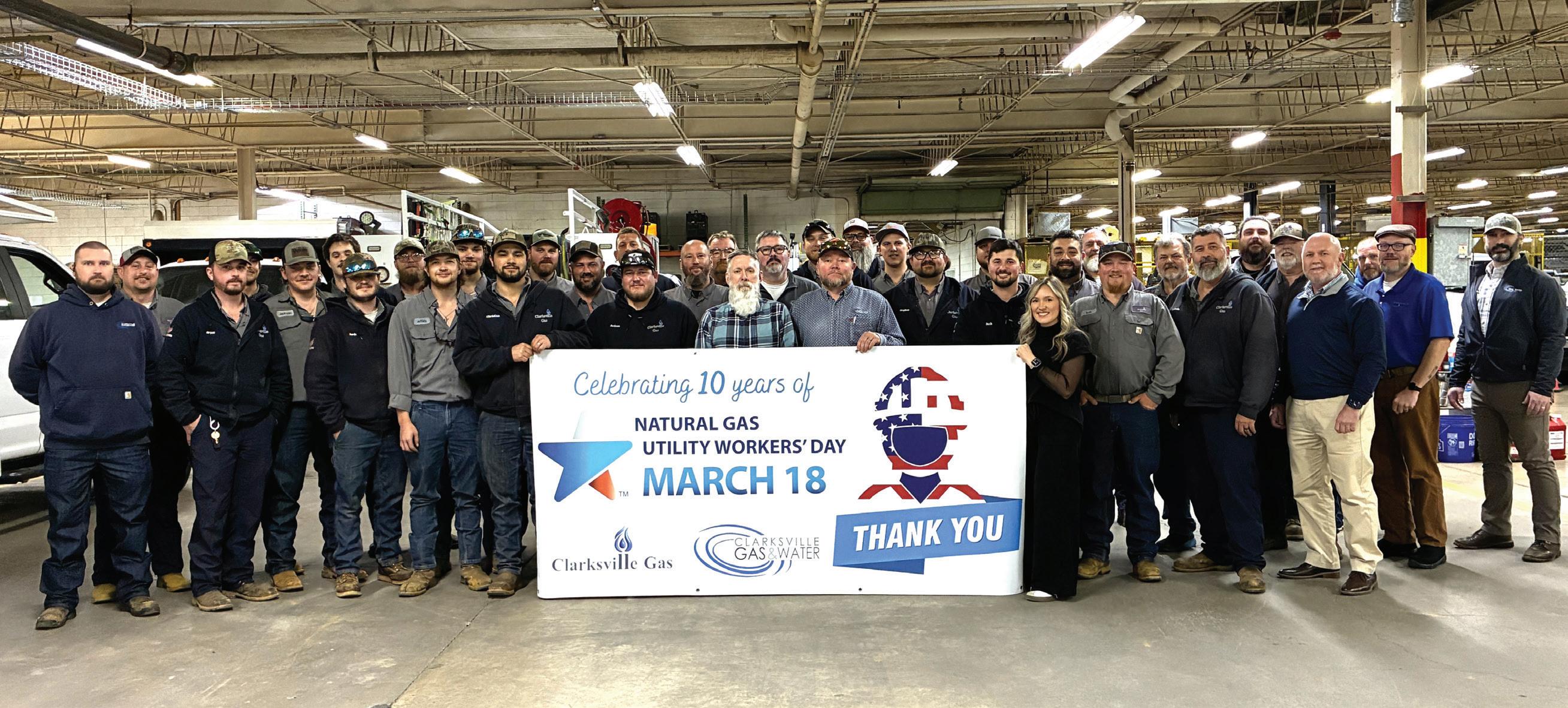
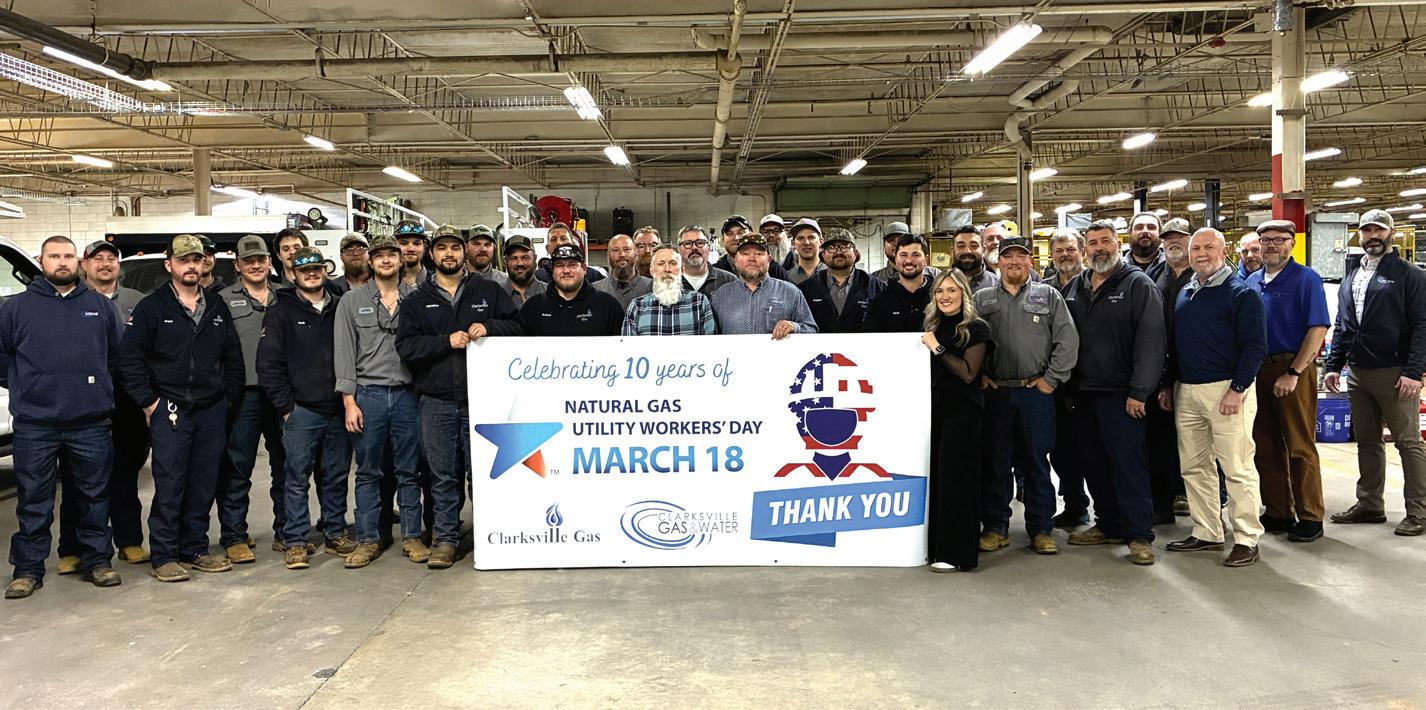
Clarksville Gas & Water observed the 10th anniversary of Natural Gas Utility Workers’ Day on March 18.
In 2015, the American Public Gas Association’s Marketing and Sales Committee began discussing how to recognize natural gas utility workers for their hard work and accomplishments. They chose March 18 as the official Natural Gas Utility Workers’ Day because it is the date of the New London, Texas, school explosion in 1937, which led to the widespread odorization of natural gas and an increased emphasis on safety.
In 2016, the annual nationwide event began to build public awareness and emphasize safety as a vital aspect of
natural gas distribution. Employees of distribution companies work to prioritize safety through training, systems inspections and public outreach.
The CGW Gas Department joined the nation in observing the 10th anniversary of Natural Gas Utility Workers’ Day by celebrating its natural gas utility workers who safely deliver natural gas to more than 30,000 customers and maintain 990 miles of gas distribution line. Customers rely on natural gas services and employees to access reliable, affordable and safe energy.
“I believe that the natural gas infrastructure the city of Clarksville owns and maintains is one of the biggest assets for this wonderful city,” Gas Department
Manager Troy Jones says. “I think I can speak for everyone by saying that we take great pride in delivering that asset to customers with the most professional and safety-conscious people in the industry. Congratulations to everyone in our gas division family on this 10th anniversary of Natural Gas Utility Workers’ Day.”
As the cleanest-burning fossil fuel, natural gas can help CGW and other natural gas providers achieve energy security and build a more competitive economy.
“Delivery of safe and reliable natural gas to your homes and businesses is a top priority for our natural gas employees,” CGW General Manager Mark Riggins says. “I am proud to honor them for their professionalism and steadfast commitment to safety.”
Learn more about the environmental, safety and cost benefits of natural gas or how your natural gas system works by calling the Clarksville Gas Department at 931-645-7422 or by visiting the CGW website, clarksvilletn.gov/251/Gas.
The natural gas meter replacement program that began in March is near completion. Clarksville Gas Department technicians began with commercial-sized meters, then moved to residential gas meters in May and expect to finish in late June.
The goal of the preventative maintenance program is to
randomly select and inspect meters in the gas system and replace them as necessary. The program only replaces randomly selected meters and not all meters in the system.
Contact the CGW Gas Distribution office with questions at 931-645-7422 or learn more at clarksvilletn.gov/259/Natural-GasMeter-Replacement-Program.
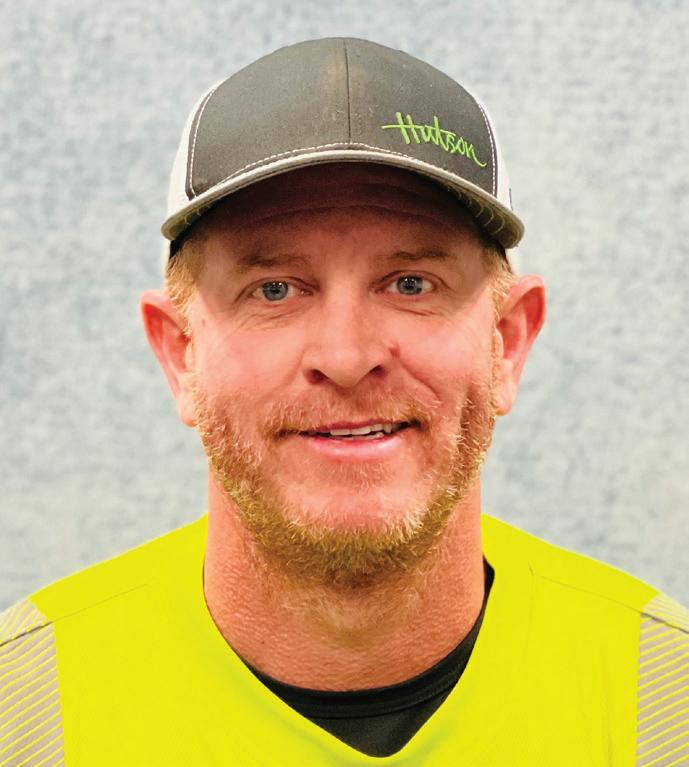


Clarksville Gas & Water is proud to recognize the outstanding employees who received Employee of the Quarter and End of Year awards for their exceptional job performance in 2025.
Employee of the Quarter award nominations are submitted by employees who recognize a co-worker for consistently demonstrating job excellence in serving fellow employees and Gas & Water customers. A committee then reviews the nominations and selects
award winners in five categories: administrative, customer service, gas, water and wastewater.
From this elite group, the committee selects the End of Year award winners for each category. Overall Employee of the Year was awarded to Water Construction Crew Chief Robert Lewis III
Clarksville Gas & Water is also proud to announce the 2025 General Manager’s Award of Excellence was presented to Rachel Lindner, utilities customer
service supervisor, for outstanding career achievement. The 2025 Wade Rudolph Manager of the Year was awarded to Garth Branch, P.E. Utilities Engineering Division manager, for significant accomplishments in the engineering division.
We applaud each award winner for their contributions to their fellow employees, CGW customers and Clarksville.
3 (July-September):

ADMINISTRATIVE:
Cheyenne Dyson, Administrative Support Specialist

GAS: Brandon Thomas, Gas Division Compliance Manager
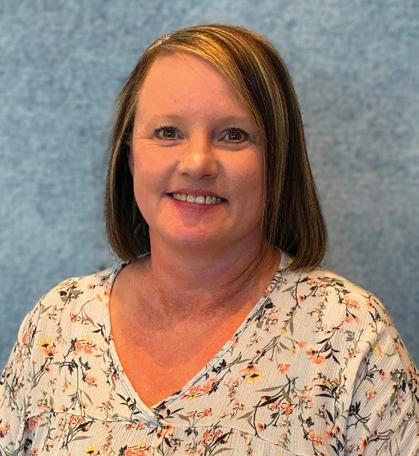
ADMINISTRATIVE:
Krystal Richardson, Public Utilities Billing Manager
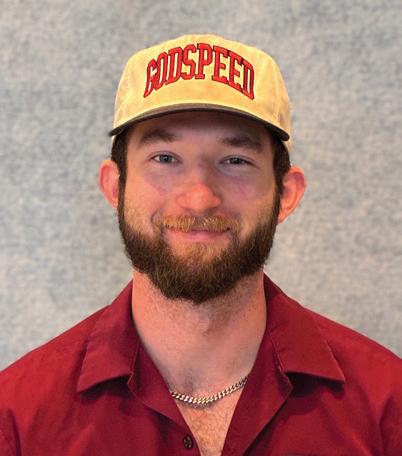
WATER: Jonathan Spencer, Pump/Lift Station Mechanic II

WASTEWATER: Trace McElroy, Wastewater Construction Worker II
4 (October-December):
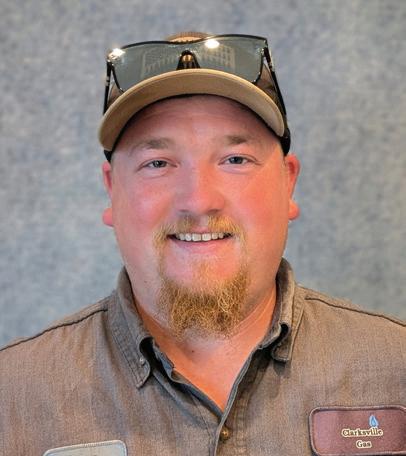
GAS: Ryan King, Leak Survey-Valve Maintenance Supervisor
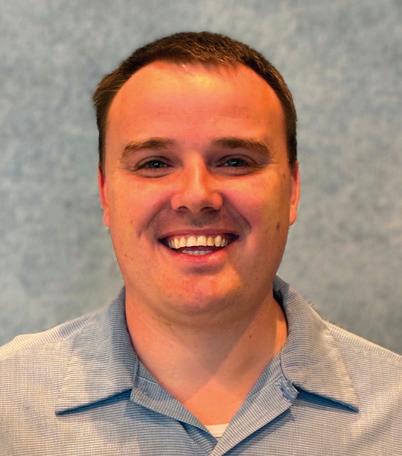
WATER: Josiah Wright, Pump/Lift Station Mechanic II

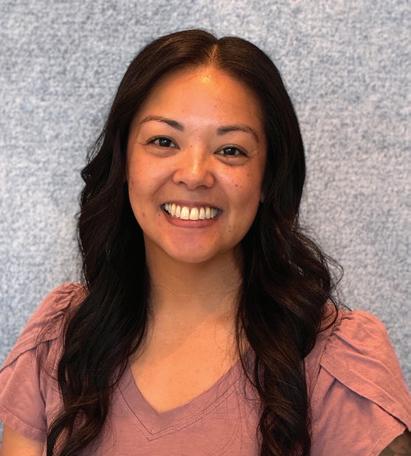
SERVICE: Amanda Vivar, Administrative Support Specialist
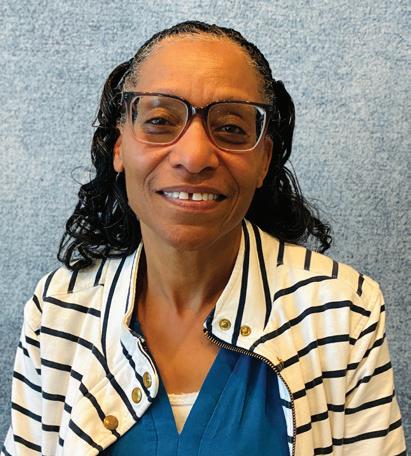
WASTEWATER: Brandon Cheek, Utilities Senior Equipment Operator SERVICE: Andrea Lilly, Utilities Customer Service Representative II
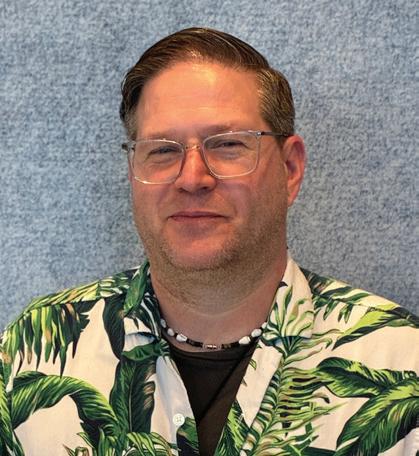
ADMINISTRATIVE: Robert Vaughan, Applications Developer
GAS: Ryan King, Leak Survey-Valve Maintenance Supervisor
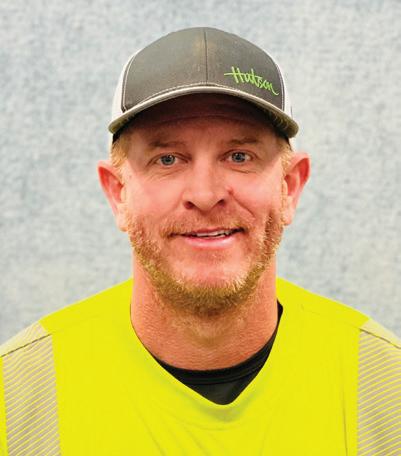
WATER: Robert Lewis III, Water Construction Crew Chief

WASTEWATER: Jeffrey Woodall, Wastewater Treatment Plant Lead Operator

SERVICE: Brittany Smith, Utilities Senior Customer Service Representative

Clarksville Gas & Water is looking for skilled and ambitious candidates to join our team of utility professionals.
We o er a competitive salary; a robust bene ts package, including employer-paid retirement and holidays; on-thejob training; and various paths for career advancement in a satisfying work environment.
Visit our job opportunities website or scan the QR code to learn more or to apply today.
Gas & Water job openings as of May 2026:
Construction Worker
Construction Worker
Construction Worker
www.clarksvilletn.gov/gaswaterjobs





















Budget Billing helps take the guesswork out of your monthly utility costs by spreading seasonal highs and lows into more predictable payments year-round. To sign up, visit the Clarksville Gas & Water website, clarksvillegw.com, then log in to your online account. Click on “Budget Billing Sign-Up Form” in the left column to print a form, or call the customer service center at 931-645-7400.
What are the Budget Billing requirements? You must have 12 months of history at your current location (nontransferable).
When do I make monthly payments? Your monthly bill must be paid on or before the due date printed on your monthly bill.
What if a Budget Billing payment is missed or returned? To ensure an adequate credit balance is maintained throughout the year, the Budget Billing plan is dependent on regular monthly payments being received. If one Budget Billing payment is not paid as required above, or returned, the Budget Billing plan is automatically discontinued. The account balance is then due in full and must be paid before the “Final Payment Date” listed on your bill to avoid account deactivation.
Who should use budget billing? It is most beneficial to customers who heat with gas and want to avoid seasonal fluctuations.
Is Budget Billing mandatory? No. Budget Billing is an individual choice for the customer’s convenience and may be discontinued either by the customer or the department. Customers are


automatically renewed for Budget Billing unless they request to be removed.
Will Budget Billing save me money?
No. You will continue to pay for the exact amount used during the year. However, you will probably pay more than the amount used during some months and pay less than the amount used during other months.
How will my payments be determined? Your Budget Billing will be determined by your previous 12 months total consumption plus 10%.
Will my payments stay the same all year? Your account will be reviewed every three months to verify your predetermined payments. Adjustments based on increased consumption or rate changes may be made, if necessary. Changes to your budget amount will be mailed to you after your account is reviewed. This review will allow your account to be near even at the end of the budget year. It is imperative the exact budget amount is paid monthly.
What if I pay too much or not enough during the year? Your monthly payment will be determined as closely as possible to come out even at the end of your budget year. May is the settlement month.












Adjustments made after months 3, 6 and 9 even out the budget year balance.
Will my meter be read each month?
Yes. Your meter will continue to be read monthly. You will continue to receive a monthly bill as you have in the past. The bill will indicate current consumption and your Budget Billing payment.
When can I sign up for Budget Billing? You can sign up for Budget Billing in April, May or June.
What if I move during the year?
Budget Billing payments are determined for your residence and are not transferable. When service is terminated, the Budget Billing account is closed, and a final bill is rendered.
How will I know the status of my account? Your monthly bill will indicate your status marked as “Budget balance before bill.” A minus sign before the amount indicates a credit on your account.
Can the Budget Billing plan be combined with bank draft? Yes. A payment automatically deducted from your account, combined with the Budget Billing plan, is the most convenient way for customers to pay their account.












Recipes by Gertrude Treadaway
ADOBE AI ILLUSTRATION BY SASHAMAGIC Strawberry Trifle
1 cup whole milk
1 cup sour cream
3.4-ounce package instant vanilla pudding mix



1 teaspoon grated orange zest
2 cups heavy whipping cream, whipped
8 cups cubed angel food cake
4 cups sliced fresh strawberries
Additional sweetened whipped cream for topping
In a large bowl, beat the milk, sour cream, pudding mix and orange zest on low speed until thickened. Fold in whipped cream.
Place half the cake cubes in a 3-quart glass bowl. Arrange a third of the strawberries around the side of bowl and over the cake. Top with half the pudding mixture. Repeat layers once. Top with remaining berries. Refrigerate for 2 hours. Top with additional sweetened whipped cream just before serving.



1/2 cup maraschino cherries
2 31/2-ounce packages instant pistachio pudding mix
24 ounces whipped topping
20-ounce can crushed pineapple, undrained
2 cups chopped walnuts
1 pound mini marshmallows
Chop the cherries into quarters, but reserve a few whole cherries.
Combine pudding mix with whipped topping and pineapple. Add walnuts, chopped cherries and marshmallows. Combine well.
Refrigerate for at least 2 hours. Garnish with whole cherries on top before serving.
Almond Cheesecake
Crust
11/4 cups crushed vanilla wafers (about 40 wafers)
1/4 cup sugar
Filling
4 8-ounce packages cream cheese, softened
11/4 cups sugar
Topping
2 cups sour cream
1/4 cup sugar
Heat oven to 350 F.
3/4 cup finely chopped almonds 1/3 cup salted butter, melted
4 extra-large eggs, room temperature, lightly beaten
2 teaspoons almond extract
1 teaspoon vanilla extract
1 teaspoon vanilla extract 1/8 cup toasted sliced almonds
In a bowl, combine the wafer crumbs, sugar and almonds. Stir in the butter, and mix well. Press into the bottom of a greased 10-inch springform pan. Set aside.
To make the filling, beat cream cheese and sugar in a large bowl until smooth. Add eggs. Beat on low speed just until combined. Stir in extracts. Pour into crust. Place on a baking sheet.
Bake for 50 to 55 minutes or until center is almost set. Remove from the oven. Let stand for 5 minutes, but leave the oven on.
To make the topping, combine the sour cream, sugar and vanilla. Spoon the mixture around the edge of cheesecake. Carefully spread over filling. Bake 5 minutes longer. Cool on a wire rack for 10 minutes. Carefully run a knife around the edge of the pan to loosen. Cool for 1 hour before refrigerating overnight.
Just before serving, sprinkle with almonds. Remove side of pan. Refrigerate leftovers.
2/3 cup sugar
2 tablespoons cornstarch
Dash of salt
3 extra-large egg yolks
2/3 cup whole milk
1/2 cup lemon juice
2 teaspoons grated lemon zest
1 cup heavy whipping cream, plus more for topping
Lemon slices
In a small saucepan, mix sugar, cornstarch and salt. Whisk in egg yolks and milk until smooth. Whisk in lemon juice until blended. Bring to a boil over medium heat, stirring constantly. Cook and stir until thickened slightly, about 2 minutes longer. Stir in lemon zest.
Transfer mixture to a bowl. Cover and refrigerate until cold.
Once cold, beat whipping cream in a small bowl on high speed until soft peaks form. Fold into lemon mixture. Spoon into serving dishes. Top with additional whipped cream and lemon slices.
2 cups crushed pretzels
3/4 cup butter, melted
Filling
2 cups whipped topping
1 cup sugar
Topping
2 3-ounce packages
strawberry gelatin
2 cups boiling water
Heat oven to 350 F.
3 tablespoons sugar
8-ounce package cream cheese, softened
2 16-ounce packages frozen sweetened sliced strawberries, thawed
Additional whipped topping and pretzels
In a bowl, combine the pretzels, butter and sugar. Press into an ungreased 9-by-13-inch baking dish. Bake for 10 minutes. Cool on a wire rack.
To make the filling, beat whipped topping, sugar and cream cheese in a small bowl until smooth. Spread over pretzel crust. Refrigerate until chilled.
To make the topping, dissolve gelatin in boiling water in a large bowl. Stir in sweetened strawberries. Refrigerate until partially set. Carefully spoon over filling. Refrigerate until firm, about 4 to 6 hours. Cut into squares. Serve with additional whipped topping and pretzels.
OFFICE
2215 Madison St.
Clarksville, TN 37043
PHONE
931-645-7400
888-800-4020
OFFICE HOURS
8 a.m. to 4:30 p.m. Monday-Friday
EMERGENCY AFTER-HOURS
931-645-0116
4:30 p.m. to 8 a.m. Monday through Friday, Saturday, Sunday and holidays
REPORT A GAS LEAK Day: 931-645-7422
After Hours:
931-645-0116 or 911
If you smell a strong natural gas odor, call 911!
GAS & WATER BOARD
Tom Drew, Chair
Curtis Johnson, Vice Chair
Valerie Guzman
Mike Hagewood
Stacey Streetman, Councilman
Mayor Joe Pitts, Ex O cio
GENERAL MANAGER
Mark Riggins
ASSISTANT GENERAL MANAGER
Patrick Chesney
ENGINEERING DIVISION MANAGER
Garth Branch, P.E.
CHIEF FINANCIAL OFFICER
Dawn Thomack
CUSTOMER SERVICE MANAGERS
Brandy Jarrell
Eddy Glenn
GAS DIVISION MANAGER
Troy Jones
WATER DIVISION MANAGER
Adam Collins
WASTEWATER DIVISION MANAGER
Brian Shelton