



D&K Floral & Designs
RODEO ROUNDUP
SCHOLARSHIP WINNERS

BY MIKE ROMANO, CEO NTCA–THE RURAL BROADBAND ASSOCIATION

MIKE ROMANO Chief Executive Officer
Before I begin this column, my first in your magazine, I would like to introduce myself. I am Mike Romano, the new CEO of NTCA–The Rural Broadband Association. I look forward to sharing a national perspective on the vital work your broadband provider does, and there is no better place to start than with the connections that work creates. Of course, I’m not only talking about broadband connections, but community connections, as well.
Across the country, community-based broadband providers like yours deliver advanced, high-speed networks that keep rural communities connected. But these providers’ impact extends far beyond the technology they deploy. They are also active partners in the communities they serve.
Rooted in their hometowns, these providers are invested in helping their neighbors thrive. That may mean hosting workshops to help teach community members how to use new devices or stay safe online, supporting local schools with back-to-school supply drives, sponsoring sports teams and community events, creating good-paying jobs or partnering with local economic development organizations to build stronger communities. Their success is measured not only by network speeds and connections, but by the opportunities those connections make possible.
I am excited to highlight these efforts and the remarkable things happening in rural communities in future columns. When you choose a local provider, you get more than quality high-speed internet. You also have a partner committed to your community’s success, today and for years to come.

Fast, reliable and irreplaceable, your internet service connects you to essential digital services and resources. The pace of change has been blazing.
1. The Dawn of the Internet (1970s–1980s):
Early computer networks connected universities, researchers and government agencies, laying the groundwork for the modern internet.
2. Bringing the Web Home (1990s):
Internet access entered the home. Connections were slow by today’s standards, but suddenly information, email and websites were available— even if it took a noisy modem to make it happen.
3. Always-On Connections (Early 2000s):
Faster, more dependable internet changed expectations. Users could stay connected without tying up phone lines.
4. The Streaming Era Begins (Mid-2000s):
Rising speeds made online video, music and larger file downloads practical for more households and businesses.
5. A More Connected Lifestyle (Late 2000s–2010s):
Internet service became essential, supporting smart devices, online gaming, social media and remote work.
6. High-Speed Homes and Businesses (2010s):
Growing demand drove another leap in performance, enabling high-definition streaming, cloud services and multiple connected devices running at once.
7. Keeping Pace With Demand (2020s–Present):
Today’s networks deliver remarkably fast speeds and reliability, powering everything from telehealth and online learning to smart homes and more.
8. The Future Is Unlimited:
Thanks to your broadband service, you’ll have the speed you need.
Summer still has a few weeks left, and I hope you’re soaking up the long days, whether that means back-porch visits, a trip to a lake or a weekend on the road to see family. But right about now, signs of another season are starting to show up, too. Do you have school supply lists on the kitchen table or are sports practice schedules flying by text message? If they’re not already, families will soon shift back into the weekday rhythm of school.

CARLA SHEARER Chief Executive Officer
Many traditions tied to kicking off a school year haven’t changed, whether that’s buying new clothes and school supplies or bus rides and practices for fall sports or bands. Education itself, however, is now very different than even a few years ago. Technology, including the increasing use of artificial intelligence, plays a critical role in both the opportunities and challenges facing our youngest residents.
The news is filled with stories about the types of jobs that will need workers, as well as those that technology may reshape.
SCTelcom remains committed to providing the technology and resources needed to support our children so they can succeed. A fast, reliable internet connection is the gateway to the future and one that puts our community on the same playing field as any big city. No matter the technology, this network will put the latest resources at our children’s fingertips.
We’re in a time when homework may appear in online portals, and notes and reminders come through email or apps. And fast-evolving tools are creating fresh opportunities for creativity and research, as well as the vital need for future generations to learn critical-thinking skills.
The benefits of our fast, reliable network also extend beyond school, and the pages of this magazine often highlight how small businesses use broadband to run credit card machines, manage inventory and keep in touch with customers.
As new technologies become increasingly woven into our lives, whether it’s quickly editing a photo on a smartphone or a business finding new ways to complete day-to-day tasks, a broadband connection is the link that ties it all together. Without it, innovation can’t occur.
That’s why we keep investing in our company and services. We emphasize the ability, even the responsibility, to allow every student to log in without frustration. A business should be able to reliably keep working without the fear of interruption, and families can stay connected without worry.
Most importantly, we are committed to giving today’s students the tools they need to develop the skills necessary for tomorrow, even as our business community grows and innovates.
I hope you enjoy the last days of summer and are excited about the possibilities represented by our children and the future they will create.
Hometown Connections is a quarterly magazine published by SCTelcom, © 2026.
It is distributed at no charge to all SCTelcom customers.
BOARD OF TRUSTEES
Brent Garvie Burlington/Byron Exchanges
Justin Koblitz Hazelton Exchange
Jesse Blasi Iuka Exchange
Joel Forester Kiowa Exchange
Josh Buck Lake City/Sun City Exchanges
Dan Hrencher Sharon Exchange
Mike VanCampen Turon Exchange


215 S. Iliff St. P.O. Box B Medicine Lodge, KS 67104 877-723-6875 sctelcom.net
Produced for SCTelcom by:


Story by MELANIE JONES
Atypical workday for Madie Wells may include helping grain farmers find silo storage for their crops or making sure an ethanol producer meets its grain quota. She works with Scoular, an employee-owned company that helps farmers buy, sell, store and transport grain, feed and food.
Last year, Madie earned a degree in agricultural economics from Kansas State University with the help of a scholarship from SCTelcom.
“College is expensive,” Madie says. “It takes saving every penny you’ve got, but then, having the help from SCTelcom was great just to take a little bit off my plate. Just knowing that there were people out there like SCTelcom, who would give back to their community to help kids further their education, it’s huge.”
Madie studied agricultural economics, a course of study that helped her land the job as an associate originator at Scoular. The company serves more than 50 countries, but Madie works primarily with North American farmers, including many in Kansas.
Her early experiences helped Madie decide what she wanted to do with her life. “I grew up on a dairy, so that played a lot into the ag portion of it,” she says.
Working at the local farmers co-op while in high school helped her understand more about farming. “I kind of learned how that process takes place,” she says. “And when I worked at the co-op, I ran the scale and talked to customers. How the grain world works is really interesting. So, I chose my career path from there.”
When she’s not at work, Madie likes to spend time with her friends and family.


“I do like moving my body, whether it’s playing sports, going on a walk, things like that,” she says. “And if it’s in season, I like to do a little hunting or fishing. That’s always a good time.”
Family and friends aren’t far from where she works in Pratt, so Madie likes to visit her mom, Melinda, and dad, Rory, when she can. She also has fun with her sister, Mindy, a student at Kansas State.
While she knows her family is always available to help if she needs it, Madie says she believes she can call on the people she’s met through work, as well. “Through some of the relationships I’ve made with a lot of these producers I work with, if I was ever in trouble, I could call them and they would be there in a heartbeat,” she says. “Building those relationships, that they trust me to work with them on their livelihood is huge.”
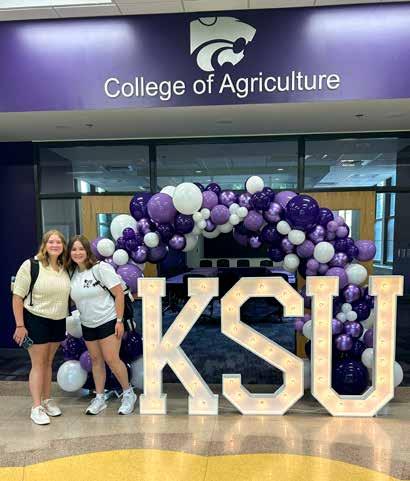

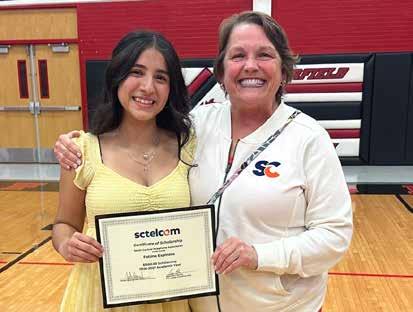
Proud to invest in the future of our communities by supporting higher education, SCTelcom recently awarded $1,500 scholarships to seven students from our service area.
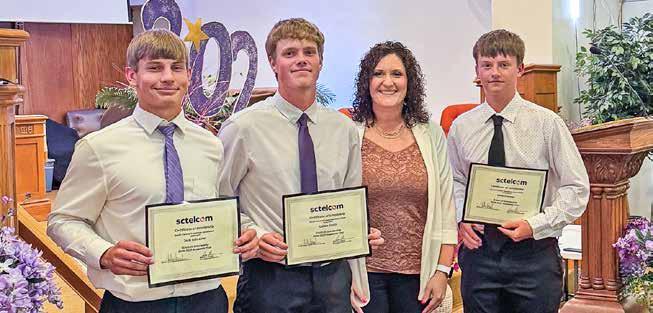


ADELYN PRAY plans to attend Oklahoma State University to major in biology with a premed track.
JACK SCHREINER plans to attend Kansas State University to pursue a degree in animal sciences and industry.
LANE CRENNER plans to attend Fort Hays State University to study kinesiology.


LILIAN DUNHAM plans to attend Kansas State University and major in business.
In May, SCTelcom opened a new office in Pratt at 216 S. Main St.

Dozens of customers dropped by for the ribbon-cutting event held by the Pratt Area Chamber of Commerce. The SCTelcom team is here to serve you at all four of our locations, including our main office in Medicine Lodge and satellite offices in Anthony and Kiowa.
ABIGAIL PAXSON plans to attend Emporia State University and pursue a degree in elementary education.
CALLAN SMITH plans to attend Kansas State University to major in engineering technology management.
FATIMA ESPINOSA plans to attend Fort Hays State University to study diagnostic medical sonography.
This year the United States of America celebrates its 250th BIRTHDAY. In observance of Independence Day, our offices will be closed FRIDAY, JULY 3. SCTelcom wishes everyone a safe and happy holiday.

Story by SARA DIAMOND PATTERSON
orking with her grandfather’s ranch ponies, Emalee Etheridge knew she was ready to try her rodeo skills when she was a middle schooler. But her family didn’t know where to begin.
“We started out going to little play day rodeos, and I only knew about one other girl and that was it, until we got into the Kansas High School Rodeo Association,” says Emalee, the 2025-26 KHSRA queen. “From there, we now know the whole rodeo, everybody there. We’re all friends.”
The nonprofit KHSRA has helped students make friends, develop their skills and compete in rodeos since 1976. The group and its middle school component, the Kansas Junior High School Rodeo Association, host multiple rodeos throughout the year, tracking students’ standings and sending the top competitors to the state and national finals.
“Having kids participate in rodeo teaches many valuable life lessons,” says Trevin Prieb, a former high school rodeo rider and president of the KHSRA and KJHSRA. “It helps them learn responsibility through caring for animals, while also emphasizing the importance of preparation, practice and commitment.
“Along the way, they experience both the highs and lows of winning and losing, which builds resilience and character,” he adds. “Just as important, rodeo creates a strong sense of community, where kids form lifelong friendships that often feel more like family.”
As much a family support system as a pathway to rodeo success, the KHSRA and KJHSRA provide a community for students. Emalee says the groups are a way to connect both in and out of the rodeo ring.
“We have the rodeos, but we have lots of other things, too,” she says. “We have dances and other ways to get together. A lot of us are homeschooled, so that’s our social aspect where everybody gets to socialize and meet new people.”
Each year, KHSRA typically hosts two to three dances highlighted by the Cowboy Prom in the spring. “It offers an inclusive prom experience for everyone, whether students are homeschooled or competing at a rodeo while traditional proms are taking place,” Trevin says.
With 20 rodeos a season for high schoolers and seven for the younger participants, the flexibility of homeschooling just works for competitors like Emalee and her younger sister,
As the 2025-26 queen of the Kansas High School Rodeo Association, Emalee Etheridge leads the Grand Entry at every youth rodeo in the state, carrying the flags and representing the KHSRA.
Rebecca. “When you rodeo this much, you pretty much have to homeschool,” Emalee says. “It’s just about something every weekend.”
On top of her responsibilities as queen, including presenting the flag at all of the year’s rodeos, Emalee also competes in barrel racing and pole bending events. “It has been a bit difficult to juggle everything, but I enjoy staying busy,” the rising senior says.
Since rodeo is not a sanctioned high school sport in Kansas, Emalee and her fellow participants must prepare for competitions on their own without the benefit of daily team training and conditioning.
“These kids are every bit the athletes as those in a conventional sport in high school or junior high,” says longtime KHSRA physician Dr. Chris Miller. “These kids and their horses are athletes, they’re just as athletic as a football or softball player because it takes a lot of athleticism to rope a calf or ride a rough stock animal or just ride their horse.”
The more they compete, the more chances students have to make friends and training buddies, which can make all the difference dealing with the constant care working with livestock brings. Being competitive in high school rodeo is more of a lifestyle than a sport. It’s year-round commitment to animal care, training and conditioning.
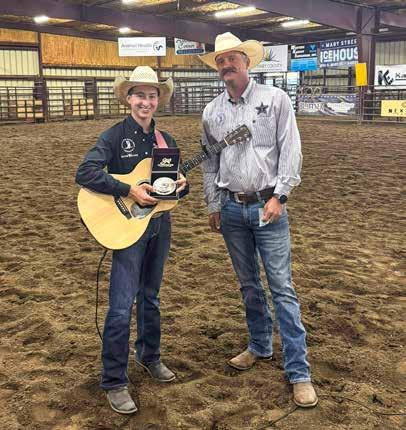
With the opportunity for one of more than 40 scholarships through KHSRA, many competitors continue their rodeo careers in college. Others use their experience to launch careers in related fields. Emalee plans to do both, competing in college while working toward a veterinary career.
Some students’ association with KHSRA continues long after graduation. “Many of these kids stay closely connected to the KHSRA family, keeping up with rodeo events, following the rodeo standings and cheering on friends still competing,” Trevin says. “Some even come back to help at one or two rodeos when they’re close by, continuing to give back to a program that played an important role in their lives.”
The opportunity to attend Cowboy Church is another of these important roles. While they’re busy competing, the athletes can gather each Sunday for fellowship and reflection. “It’s a time to pause, reconnect and remember the purpose and values behind the cowboy lifestyle and Western way of life,” Trevin says.
After all, it’s all about the Western way of life.
“It really is a lifestyle,” says Emalee and Rebecca’s mom, Megan Etheridge. “There’s a lot of people who wouldn’t understand why rodeo people rodeo or why ranchers ranch. It’s really just the cowboy way, taking care of each other, looking out for each other and if you go somewhere, you leave it better than you found it.”
For more information, visit khsra.net or send an email to khsrarodeo@gmail.com.

Story by SARA DIAMOND PATTERSON


r. Chris Miller has been bringing comfort to anxious high school rodeo parents for more than 30 years. As the on-site physician for the Kansas High School Rodeo Association, he volunteers at about 30 high school and junior high rodeos annually.
“One of the most satisfying things about doing what I do for this long is now I’m seeing kids of the kids I took care of years ago,” the Pratt Regional Medical Center orthopedic surgeon and sports medicine specialist says. “They grow up and start having kids, and their kids start competing in rodeo, and now I take care of them. So, it’s a generational thing.”
When he established his orthopedic practice in 1995, Chris specialized in the Western lifestyle. “I knew we wanted to take care of rodeo folks,” he says. “We knew about high school rodeo but didn’t know really how to get in touch with them, since this was in the days before the internet.”
That changed one day early on when a patient came to him to address shoulder pain that bothered him when he was roping calves. It turned out that his family was involved with KHSRA, and they put him in touch with the organization. Chris has been the medical presence at nearly every rodeo since.
“Doc is a fine human who is exceptionally generous with his time. The rodeo world is truly fortunate to have someone like him,” KHSRA President Trevin Prieb says. “All the school kids are his kids, and they love him.”
Chris makes a point to ensure every middle and high school athlete knows he’s available for much more than just treating the occasional rodeo injury. “What I tell folks is it’s a lifelong relationship,” he says. “This relationship transcends your high school career. Think of me as a resource that will follow you through your rodeo career, through your adulthood.”
And they do.
“I treat people who competed 25, 30 years ago,” Chris says. “I get phone calls and texts asking for advice, so we talk through whatever they need. I’m definitely here to be a resource for them.”
And Chris has no plans of stepping away from that role.
There are certain things you do in life for money and certain things you do for love,” he says. “This is one of the things that I definitely do for love.”
July means it’s time for the 78th annual Attica Saddle Club Rodeo sponsored in part by SCTelcom, which provides free Community Wi-Fi throughout the events, July 23-25.
The free Hot Dog Feed kicks off the events at 11:30 a.m. Thursday, July 23, at Attica Park. For more information, follow Attica Saddle Club & Rodeo on Facebook and Instagram.
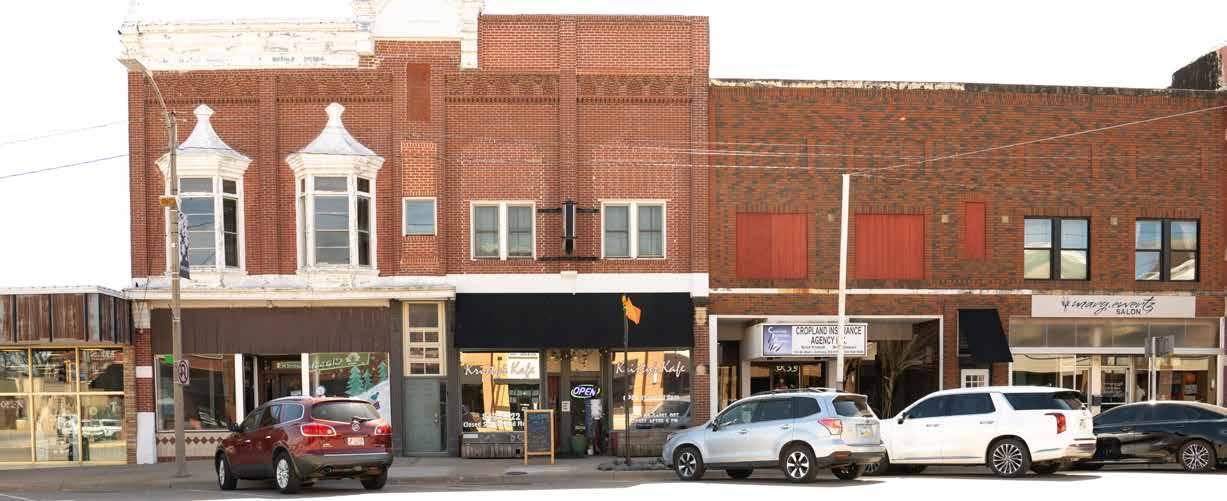
Kristy’s Kafe in Anthony has staying power. The restaurant has been in business since 1987, and Kristy Calvert bought it from her parents 15 years ago.
“We’re kind of a big deal in this small town,” the restaurant’s website, kristyskafe.com, declares.
And the baked potato pizza may be the biggest deal of all. Covered with sour cream, a blend of cheddar and other cheeses, sliced baked potatoes, topped with bacon, onions, green peppers and served with a side of ranch dressing, the dish is one of the restaurant’s top sellers.
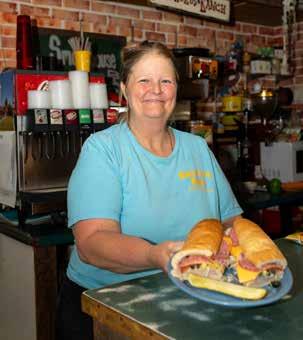
“I think people like it because it’s unique,” Kristy says.
The Dagwood is another customer favorite. The sandwich is piled high with a variety of meats, cheeses and other toppings, just like the ones its comic strip namesake makes.
Other pizzas and sandwiches are on the menu, as well as pasta, Tex-Mex favorites, wings, salads and wraps, with a few desserts thrown in for good measure.
Some people who grew up in a family business choose to follow other dreams, but Kristy’s dream is right here in Anthony. “I like the people, and I like the work,” she says.




Story by DREW WOOLLEY
The world of artificial intelligence is moving so quickly it can be hard to keep up. If used wisely, there are a variety of tools available that can save time and energy on mundane tasks. But, relying too heavily on AI, or being in too much of a hurry to check its results, can lead to embarrassing slipups.
If you aren’t sure where to start, keep these basic guidelines in mind to make the most of AI’s efficiency without getting bogged down in AI slop.
Treat AI like a sidekick, not a superhero—Don’t expect your AI platform of choice to produce impressive results from barebones input. Just like any person you would ask for help with writing an email or looking up information for an upcoming trip, the more detailed your instructions, the better the results. Put time into your prompts—Engineering better prompts is the most important part of getting better answers. Rather than just assigning the AI a task, be sure to include background information, specifics about the results you want and examples to reference. You can even give the AI a role to establish the perspective it should use to approach the task.
Beware of hallucinations—Many of the most popular AI platforms are infamous for making up facts, figures and even people to fit the results the user wants. When an AI tool spits out one of these
tall tales, it’s called a hallucination. It is always important to ask your favorite platform to provide links to the sources where it is drawing information. Be sure to check these sources and verify any numbers, names or other factual information before using them. Don’t overshare—Any data you include in an AI prompt could be stored in that company’s servers, used to train that AI and become part of its knowledge base. Or, your information could be extracted in a data breach. If you wouldn’t share a piece of personal information publicly, you probably shouldn’t share it with AI either.
Watch out for flattery—Since AI is still a new technology, the people behind the tools really want you to have a positive experience with them. As a result, many of these tools are programmed to give you positive feedback, no matter what. In many cases, that reinforcement is harmless and can even take you down some fun rabbit holes. But if your AI pal is a little too enthusiastic about your questionable ideas, run them by a human friend first. Always check your answers—While AI tools can save time, they can also make mistakes or simply miss the mark. Whether you’re fact-checking results or tweaking a draft email to make sure it sounds like you, review everything carefully before deciding whether to use it.
At SCTelcom, I’ve seen firsthand how dramatically home internet use has changed. Not long ago, many customers had a single computer, and we were explaining that it had to be plugged in to get online.
Today, everything from cellphones, laptops, tablets, TVs and gaming consoles to light bulbs and even hot water heaters can be connected. A dropped connection or lagging service no longer affects just one screen. It can disrupt an entire household.
That’s why managed Wi-Fi, powered by the SCT WiFiConnect app, has become such an important part of modern homes. It simplifies home networking and puts control in your hands. Here are a few of the ways SCT WiFiConnect is helping households of all shapes and sizes:
If you know me, you know I’ve earned a reputation for being a bit of a nerd. When my wife and I bought our first home in Medicine Lodge, I may have gone a little overboard making it a “smart” home. Do I need to turn on the porch light from across the country? Absolutely not. Can I do it while on vacation in Florida? Yes, and I have.
But with so many connected devices, keeping track of everything gets difficult. Is our child’s tablet running slow, or is a TV downloading a huge update in the background? With the SCT WiFiConnect app, you get a clear dashboard showing every device on your network, real-time bandwidth usage, signal strength, router-based speed tests and insight into Wi-Fi dead zones.
Technology brings a lot of benefits, but getting everyone to disconnect at dinner or bedtime can be a challenge. The app’s parental controls let you create individual profiles and assign devices to each person. With a tap, you can pause access to tablets and phones, filter inap propriate content before it reaches devices and create automatic bedtime schedules. It turns a nightly negotiation into a simple routine.
Not everything connected to the internet needs the same priority. If you’re working from home or streaming a movie with the family, you do not want a software update
slowing things down. The app lets you prioritize specific devices or applications, making sure your laptop or living room TV gets bandwidth first when the house is busy.

THAD EHRESMAN SCTelcom Broadband Operations Manager
Cyberthreats are no longer limited to governments, banks and hospitals. Any connected home can be a target. Managed Wi-Fi helps protect your network at the router level by monitoring traffic and blocking malware, intrusions and viruses before they reach your devices. The app also sends real-time alerts when threats are blocked, giving you added peace of mind.
When family or friends visit, sharing the Wi-Fi password should be easy. The SCT WiFiConnect app lets you create a guest network in seconds, generate a QR code for quick access or text the password directly. Guests stay connected while remaining securely separate from your primary home network.
At the end of the day, managing your home network should not be another chore. It should just work. By downloading the SCT WiFiConnect app, you gain the tools to customize, secure and manage your family’s digital life.


Story by MELANIE JONES
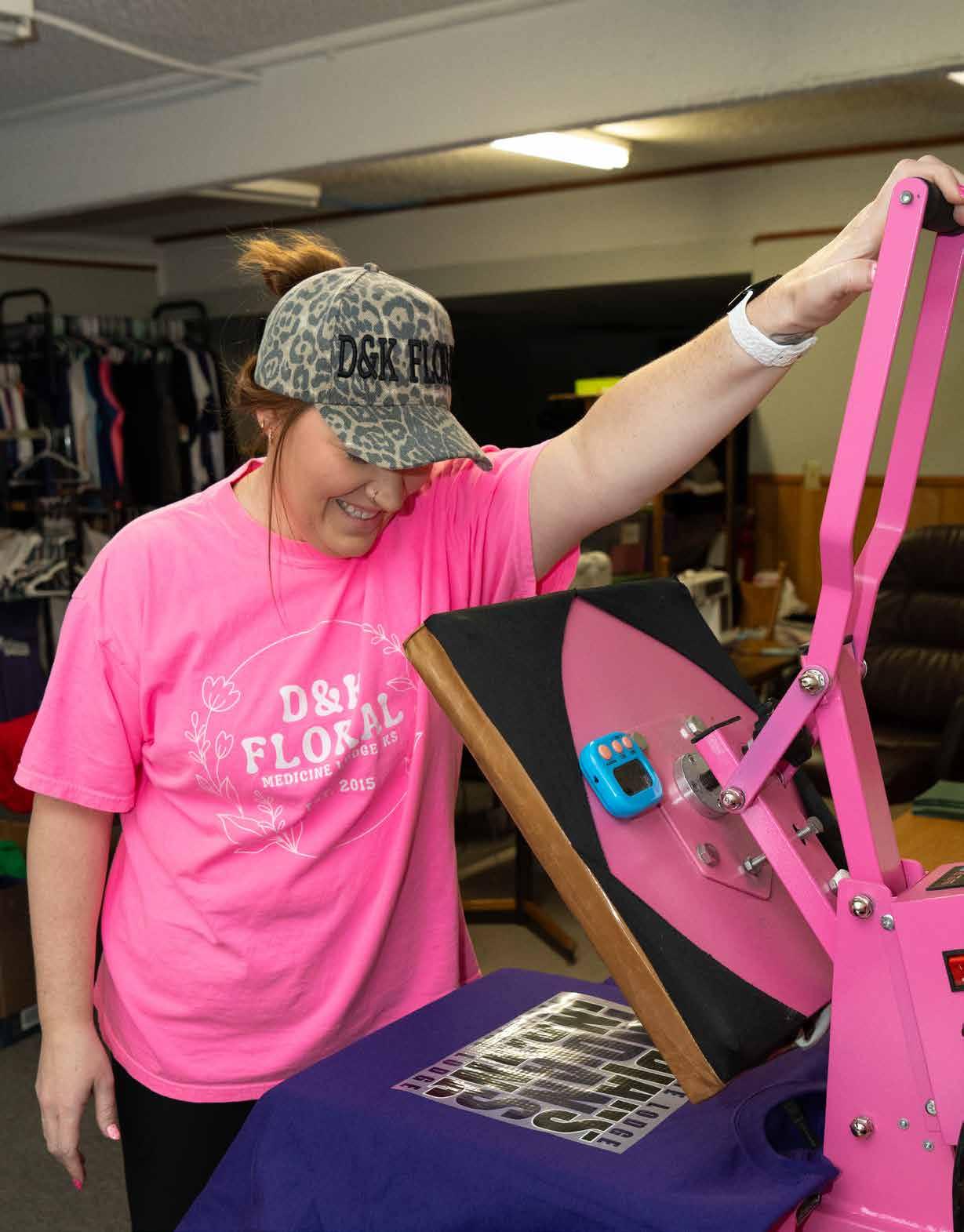
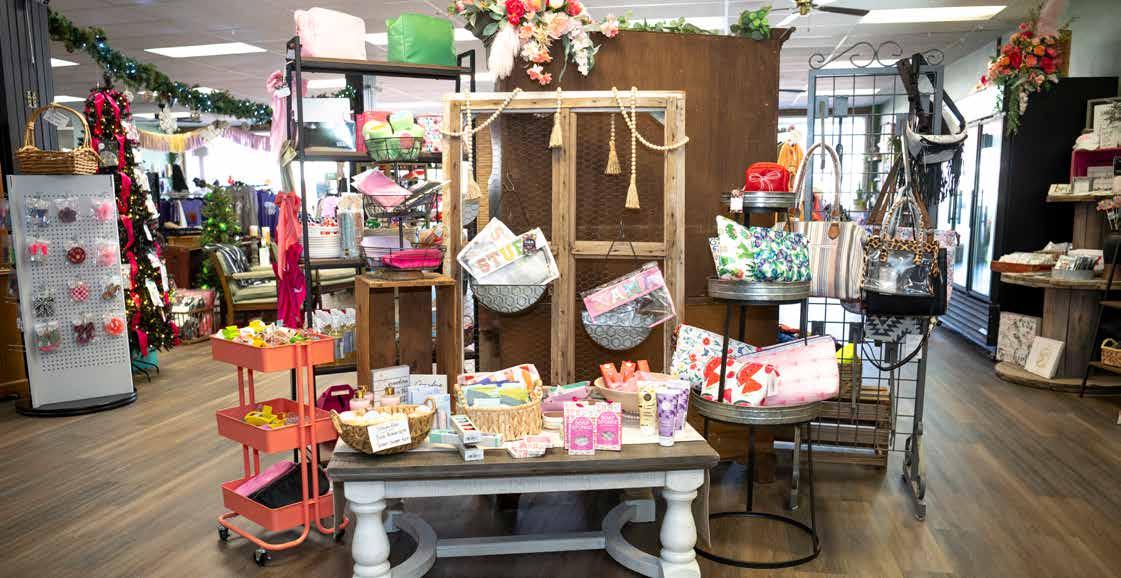
ayla Coley and her mom, Deb Larkin, didn’t start D&K Floral & Designs because they were obsessed with arranging flowers. It was more of an unexpected opportunity. They owned a craft store together when Deb popped into the floral shop down the street one day to buy some blooms. The then-owner asked if she was interested in buying the business, and Deb was intrigued. She took the idea to her husband, Dennis, who has since passed away. He said if Kayla would quit her job and come on board full time, he was in.
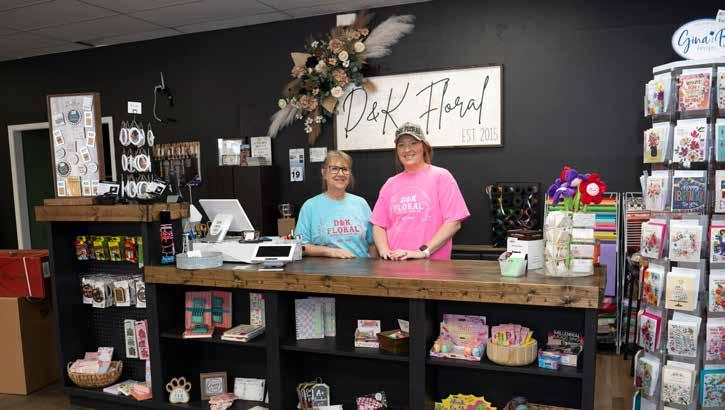
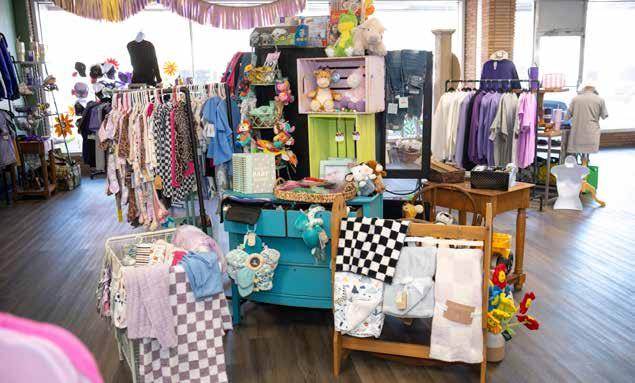
That was 10 years ago. Today, D&K Floral & Designs is a thriving shop doing business both at the Main Street storefront and online. The mother-daughter team provides flowers for every occasion, from births to weddings to funeral sprays—which is amazing considering they knew nothing about the floral business when they started.
“It was more of a learn-as-you-go sort of thing,” Kayla says. The daughter of the former owner stayed on for most
of the first year, teaching Kayla and Deb the ins and outs of the operation. “It helped show us what to do,” Kayla says. “Then we just did our own thing, stylewise.”
Kayla and Deb go to flower shows in Wichita from time to time to keep up with the latest industry trends, but they

don’t always bring home the styles they see there. “You watch them do stuff, and it’s mostly bigwigs that come down,” she says. “That’s not stuff you do in Medicine Lodge, Kansas.”
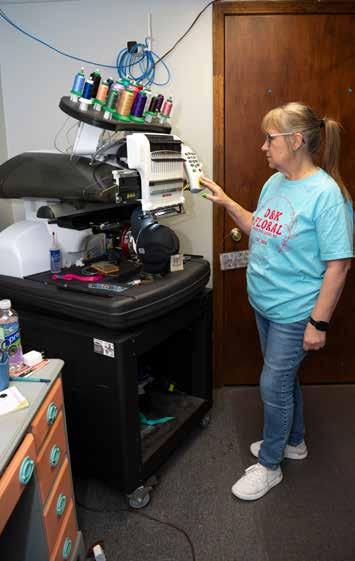
Like learning flower arranging, getting phone and internet service from SCTelcom was an important part of developing a thriving business. “Our pointof-sale system is run strictly through the internet, so we have to have fast service,” Kayla says. “We do have the business Wi-Fi that people can connect to.”

they’re super colorful,” Kayla says. “And stock. Stock is probably one of my alltime favorites because it smells so good.” Big, beautiful peonies are also beloved, as are ranunculus. “Those would probably be my favorites. If I could get those all year, that would be great.”
When it comes to roses, however, Kayla is less enthusiastic. “I just don’t get all the hype about roses,” she says.
them,” Kayla says. “I feel like those are the most popular. People say to do whatever you want, bright colors mixed up.”
women who once nothing about flower Deb and Kayla developed strong opinions about
“I love gerbera daisies. Just because
Deb, on the other hand, has a soft spot for roses. “My husband always sent me a dozen roses,” Deb says, though Kayla talked him into sending a mixed bouquet with just a few roses after being in the flower business for a few years.
“I feel like men typically always go toward roses, especially on Valentine’s Day when they have no idea what to order,” Kayla says.
But when women come to shop, they choose colorful gerbera daisies and mixed bouquets. “There’s a lot of things in
For years, the women have mainly ordered flowers from two wholesalers in Wichita, but last year, they started doing business with a flower farmer in Sawyer, as well. Kayla says they got most of their flowers from that grower in the spring, summer and early fall last year, but because of the Kansas weather, the Sawyer supplier can’t provide flowers all year.
“I did a whole wedding with all their flowers, which was really fun,” Kayla says. “They do a good job, and I can get a good assortment from them. We don’t get to use them year-round like I wish we could because their flowers do last a lot longer.”
Potlucks call for recipes that can handle travel, sit happily on a table and please a wide range of tastes.
These summer-ready dishes rely on ingredients readily available in July and August, use straightforward techniques and are developed for home cooks. All are budget-conscious, and none require special equipment.




3 pounds chicken drumsticks
1 1/2 cups barbecue sauce
1 tablespoon vegetable oil Salt and black pepper to taste

pepper. Toss with oil and arrange on a foil-lined baking sheet. Bake 30 minutes, turn, brush generously with barbecue sauce and bake 15 minutes more until cooked through and sticky. Serve warm or at room temperature.
6 cups fresh peaches, peeled and sliced
1/4 cup granulated sugar
1 tablespoon lemon juice
TOPPING:
1 cup rolled oats
1/2 cup all-purpose flour
1/2 cup brown sugar
1/2 cup butter, melted


1 pound orzo pasta
1 pint cherry tomatoes, halved
2 cups English cucumber, diced
1/3 cup red onion, finely chopped
1/2 cup crumbled feta cheese
1/4 cup fresh parsley, chopped
DRESSING:
1/3 cup olive oil
2 tablespoons fresh lemon juice
1 teaspoon lemon zest
1 teaspoon dried oregano
Salt and black pepper, to taste


Preheat oven to 375 F.
Cook orzo in salted water until tender.
Drain and rinse with cold water. In a large bowl, combine orzo, tomatoes, cucumber, onion, feta and parsley. Whisk dressing ingredients and toss with salad.
Chill at least 30 minutes before serving.

4 pounds pork shoulder or pork butt
1 teaspoon salt
1 teaspoon black pepper
1 teaspoon smoked paprika
1 cup barbecue sauce
1/2 cup chicken broth
12 slider buns
Season pork with salt, pepper and paprika. Place in slow cooker and add broth. Cover and cook on low for 8 hours until very tender. Shred meat with forks, discard excess fat and stir in barbecue sauce. Serve warm on slider buns.
3 pounds small red or Yukon Gold potatoes
4 tablespoons olive oil
2 tablespoons apple cider vinegar
2 tablespoons whole-grain mustard
1 tablespoon Dijon mustard
1/2 teaspoon sugar
1/2 cup celery, finely sliced
1/3 cup red onion, finely diced
1/4 cup fresh dill, chopped
Salt and black pepper, to taste
Toss peaches with sugar and lemon juice and spread in a baking dish. Mix topping ingredients and sprinkle evenly over fruit.
Bake until golden and bubbly, about 40 minutes. Cool slightly before serving.
Boil potatoes in salted water until fork-tender. Drain and cut into bite-size pieces while still warm.
In a large bowl, whisk together olive oil, vinegar, mustards and sugar. Add warm potatoes, celery and red onion, tossing gently so the potatoes absorb the dressing. Season with salt and pepper. Fold in dill just before serving. Serve warm or at room temperature.