Ruralite
NORTHERN




May 2026 • Volume 73, No. 5
CEO Michael Shepard
SENIOR VP OF CONTENT Leon Espinoza
EDITORIAL DIRECTOR Chasity Anderson, CCC
DEPUTY EDITORIAL DIRECTOR
Noble Sprayberry
SENIOR EDITOR Jennifer Paton, CCC
LEAD CONTENT EDITOR Victoria Hampton, CCC
ASSISTANT EDITORS David Herder, CCC; Sable Riley, CCC; Nina Todea, CCC
ASSOCIATE EDITOR
Valeri Saldanha Rosa
PUBLICATIONS PRODUCTION SR. MANAGER
Elizabeth Beatty
SENIOR PUBLICATIONS COORDINATOR
Alyssa McDougle
Ruralite (USPS 397-460) is published monthly for members for $5.73 per year, plus postage, by Pioneer Utility Resources Inc., 5625 NE Elam Young Parkway, Suite 100, Hillsboro, OR 97124—a not-for-profit Oregon cooperative corporation—to serve the communication needs of 46 consumer-owned electric utilities in Oregon, Washington, Alaska, Idaho, Nevada and California. Preferred periodical postage paid at Hillsboro, Oregon, 97123 and additional mailing offices. © 2026 Pioneer Utility Resources. All rights reserved. Reproduction in whole or in part without written permission is prohibited.
Postmaster: Send address changes to Ruralite, 5625 NE Elam Young Parkway, Suite 100, Hillsboro, OR 97124-6454
HOW TO CONTACT RURALITE
Subscription services:
Nonmember subscriptions $15 (U.S.) per year; $25 per year (foreign). Prepayment required. Allow 4-8 weeks for first issue. Be sure to identify which local edition you want to receive.
Address Changes:
Utility members, contact your local utility. Subscribers, call us at 503-357-2105, option 3, or email mailingdept@pioneer.coop.
Back issues:
Back issues and extra copies are $3. Prepayment required. Supply is limited. Be sure to identify edition, month and year. Call first if ordering back issues to check availability.
To contact Ruralite: Ruralite magazine is published by Pioneer Utility Resources, P.O. Box 1306, North Plains, OR 97133-1306; 503-357-2105; email: info@pioneer.coop. For more information, visit pioneer.coop.
DISPLAY ADVERTISING INQUIRIES
American MainStreet Publications
611 S. Congress Ave., Suite 504 Austin, TX 78704
800-626-1181 or 512-441-5200

For supplemental and interactive content, search @Ruralite on your favorite social media sites.
Some roads were built to move people from place to place. Route 66 was built to move the American soul.
One hundred years ago, a telegram sent from Springfield, Missouri, changed the way this nation moved, dreamed and understood itself. What began as a practical push to connect the Midwest to the West Coast evolved into something far more profound: a 2,448-mile ribbon of pavement, nostalgia and identity stretching from the shores of Lake Michigan to a pier at the Pacific Ocean in Santa Monica, California.
memory. It was decommissioned in 1985, yet it refuses to disappear. Writer John Steinbeck called it the Mother Road, and that name still fits—it carries everyone who comes to it, generation after generation. Through song and film, from Bobby Troup’s classic ode to Pixar’s “Cars,” the highway has been reborn for every new audience that discovers it. This centennial is simply the latest chapter.
This month’s feature takes you along for the full ride, from Illinois to California, with the stories, the landmarks and the characters keeping the flame alive. There’s even a road quiz to test your Route 66 knowledge and a playlist built for the open highway.
This year, the world is paying attention. Springfield earned the honor of hosting the national kickoff of America’s Route 66 Centennial Celebration this spring. Communities from Illinois to California have been relighting neon signs, polishing roadside landmarks and readying themselves for visitors arriving from across the country and around the globe. Case in point: A group of Swedish motorcyclists turned up at a barbecue restaurant in Cuba, Missouri, filling the room with the thump of Harley-Davidsons and the happy sound of people experiencing something they’d long dreamed about. Route 66 has that effect on people. It always has.
What is interesting about this highway is how naturally it holds contradictions. It is both a monument to movement and an anchor for
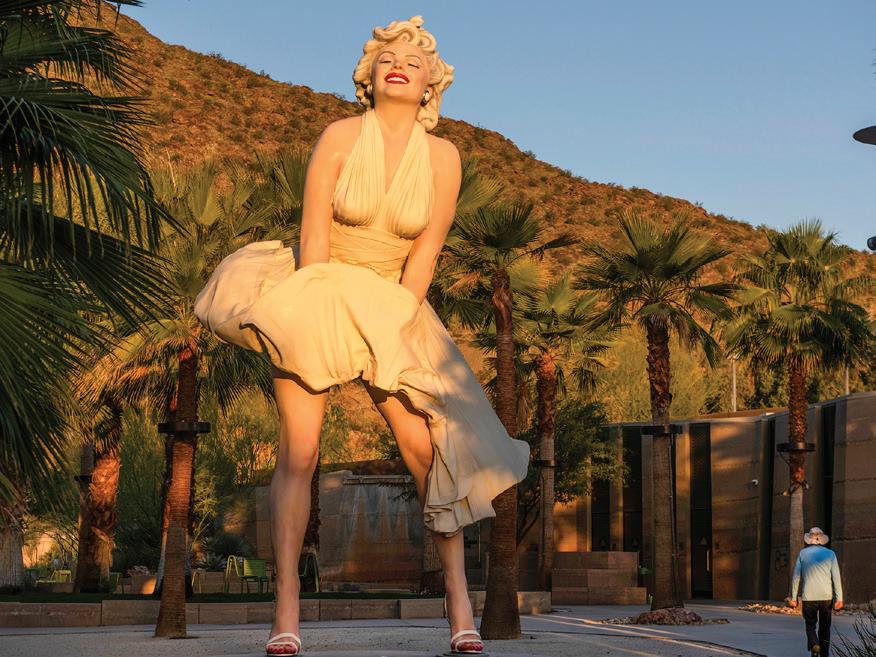
Dave LaBelle’s Great Picture Hunt column has its own centennial connection this month. Photographer Amy Gaskin has spent four years documenting the world surrounding Marilyn Monroe—a project that has taken her as far as Australia and into the pages of National Geographic. Monroe would have turned 100 on June 1. It seems May is a month for marking a century of remarkable years.
And after all that road-tripping and reminiscing? Our kitchen feature delivers a collection of sheet pan dinners built for gathering, because the best journeys always end at the table.
Until next time, Chasity Anderson Editorial Director
Celebrations rev up America’s iconic Route 66 Spotlight, Page 10
Sheet pan dinners are made for sharing In The Kitchen, Page 16
The Great Picture Hunt, Page 22
By Susan Buce
It is said a picture is worth a thousand words, but a great image can also evoke memories, emotions, and a deep sense of connection to family and community history.
In my job as registrar at Columbia Gorge Discovery Center & Museum in The Dalles, I have processed thousands of photos in our extensive photo collection.
Our museum is often the recipient of donations that take place through a process the Swedish call “death cleaning.”
In her book, “The Gentle Art of Swedish Death Cleaning,” author Margareta Magnusson writes about döstädning, the practice of decluttering your life to spare loved ones the burden of sorting through your belongings after you die.
People discover boxes of photographs while cleaning out a house or estate, usually from a parent or grandparent who has passed on. If the relative held a prominent role in the community, they might offer the photos as a donation to the museum.

Over the years, I’ve seen a pattern. The donor tells me they don’t have any family members interested in it. They say, “I don’t know what to do with these. It seems to me that they should go to a museum. If you don’t want them, I’ll just toss them in the garbage.”
Then they add, ruefully, “I guess I should have asked more questions while they were alive.”
So we might say yes to a donation, not knowing what we have until we go through it. Treasure can be easily mingled with trash.
We are aware each photo we process is part of the visual historic legacy of our area. Each photo, negative or slide can take up to half an hour to process. We scan the image, then create a detailed database catalog record for it. Size and condition are noted. Description details provide the fuel for search engines to find it. We then store the images in archival boxes.
Sometimes images we don’t want or need, such as blurry




snapshots of a vacation in Europe, or a horse or cow. It may have been a mighty fine cow, but do we really need to preserve its image for future generations?
when they worked in our area.
One of the most lauded, Benjamin A. Gifford, was a prominent photographer in the Columbia Gorge in the late 1800s and early 1900s. Many of his most well-known scenic photos of Oregon were made while working on commercial contracts.
But a photographer had to support himself in between contracts. Benjamin also left a legacy through studio portraits of families, groups of school children or public events. His studio mark is often found on the front of old photos in our collection, providing evidence of his work.

Researchers often contact us, interested in tracking down information about ancestors, a specific house address or a storefront from long ago. We are history detectives, piecing together a quilt of information from the patchwork of vintage photographs we have. We want to help you imagine what the landscape looked like before small towns sprawled into the adjacent land, or how dam construction changed the banks of the Columbia River. Following the breadcrumb trails of information, we first gather all the details we can from the donor’s memory about the original owner of the photos. We then look for clues left on the back of photos. We get excited when we see handwriting on the back, but the excitement falls flat when the notation is something like, “Me and mom at home.” Fifty to 100 years later, we are asking, “Who is ‘me’? Who is ‘mom’? And where is ‘home’?”
ABOVE LEFT: An unidentified young man holds his hat and overcoat while standing next PHOTO COURTESY OF COLUMBIA GORGE DISCOVERY CENTER, # 2004.9.152
ABOVE RIGHT: A young child— likely Ralph Gifford, son of photographer Benjamin Gifford— clings to a rock in the lower left PHOTO COURTESY OF COLUMBIA GORGE DISCOVERY CENTER, # 2025.29.0079
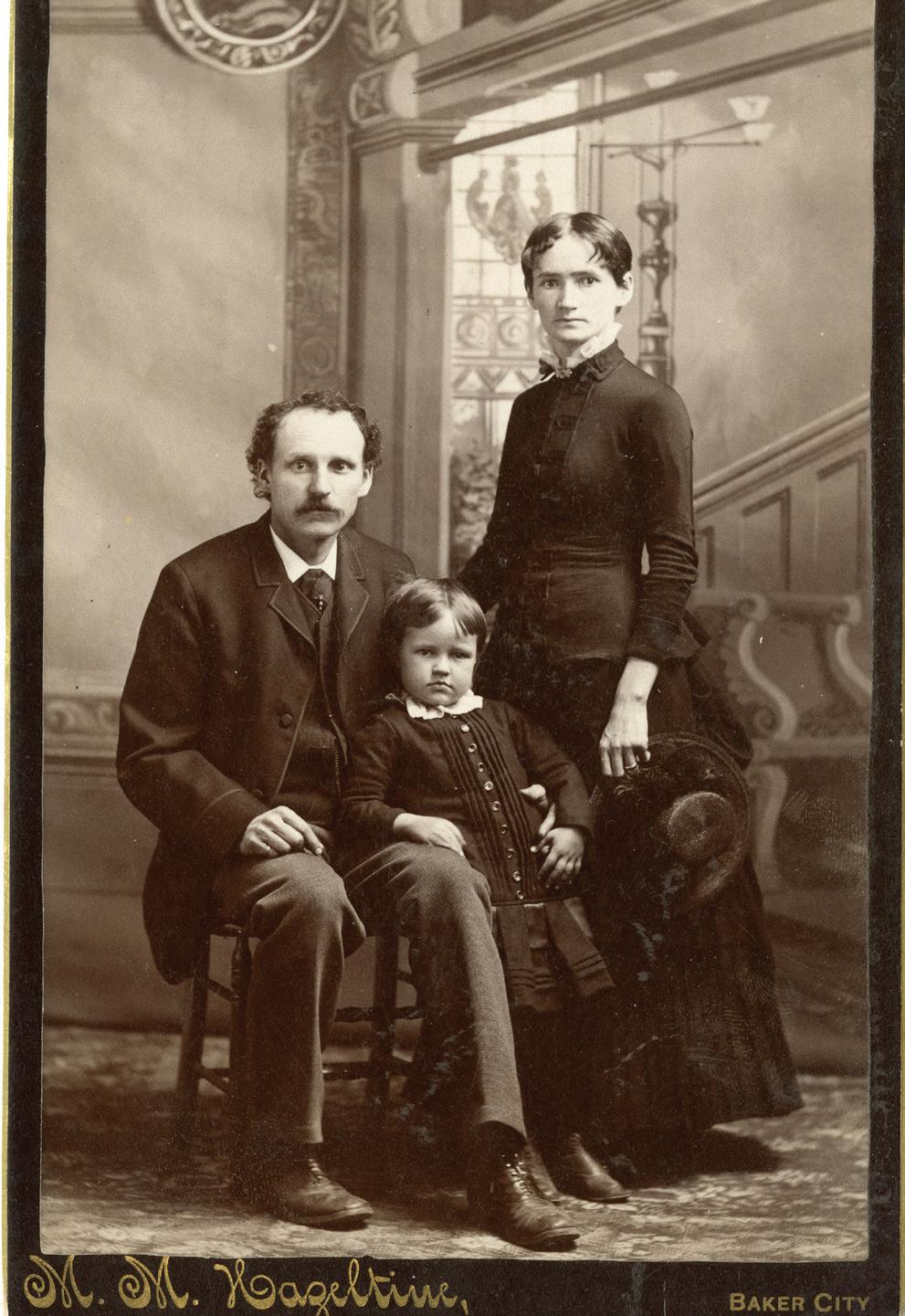
LEFT: Charles L. Palmer (18491938) was first married to Rosella Mock Shumway Palmer, who died in 1886. Their children were Ethel Irene Palmer and Lewis Earl Palmer. Charles was mayor of Baker City on three occasions: 1893-94, 1910-18 and 1924-26. The photographer, Martin Mason Hazeltine, was a primary photographer for Yosemite Valley and eventually settled in Baker City. PHOTO COURTESY OF COLUMBIA GORGE DISCOVERY CENTER, #2025.29.0332

Reading cursive handwriting presents another challenge. Scrawled handwriting without clear definition between letters can leave us perplexed. We sometimes indicate our confusion with a question mark in the description.
We often run into photos with no description whatsoever on the back. We have countless vintage photographs of fat babies and no idea who the chubby little darlings grew up to be.
Visual clues in the photograph, such as style of dress or perhaps a vintage car in the background help us narrow down the era. Knowing the photographer can help, too, because most can be tied to
It is a blessing when we receive photos from noted photographers. The Gifford name guarantees a sharp, clear image. In our community, the name Elite Studio also holds a high place in our esteem, as well as photographers from the 1940s-60s, including George Lindsay, Gladys Seufert and Wilma Roberts.
Sometimes the breaking clue comes from the photographer’s mark on the front.
I recently scanned a vintage studio portrait of a man, woman and small child. The style of dress hinted that it was late 1800s. The name “Charley Palmer” was scrawled on the back, along with “1st wife” and the name “Ethel” written off to the side.
The photographer’s mark was from Baker City. Using that as a clue, I used the internet to search for references to Charley Palmer and Baker City. To my amazement, I learned he had been the mayor of Baker City three times. I also learned his first wife was Rosella, and their daughter was Ethel.
Sadly, Rosella died shortly after the photo was made. The year of Ethel’s birth (1882) and the year of Rosella’s death (1886) helped narrow down the timeframe of the portrait within a couple of years. It felt like a win to uncover these details about the family. The only mystery remaining is why this vintage photograph ended up in the collection of a local person in the first place? What was his connection with Charley Palmer?
A few years ago, I attended my aunt’s funeral. I brought copies of a photo I had of my dad, my aunt and their four siblings. While my cousins knew who was pictured, our children could only identify their grandparent in the photo and no one else. It impressed on me how quickly you lose the sense of connection to extended family.
Keep in mind, one day someone will need to clean up after all of us. If we document our family photos now, our visual legacy will stay connected to the people and events pictured. At worst, our collection could some day end up in the landfill. At best, it will be preserved for future generations. n
Susan Buce is working to upload Columbia Gorge Discovery Center & Museum’s 31,000-plus photo archive collection to its website at gorgediscovery.org. Reach her at collections@gorgediscovery.org.
As wildfire risks grow across the West, electric utilities build grid resilience
By Greg Mason
In his 50 years as a forester, Paul Hessburg has studied wildfires much like he studies forest pathogens and insects.
Wildfires are “agents of pattern formation,” says Paul, a research ecologist who spent more than four decades with the U.S. Forest Service’s Pacific Northwest Research Station.
Similar to how bark beetle infestations indicate a dying forest, Paul says wildfire prevalence provides insight into landscape conditions.
Dry conditions and increased tree density, compounded by warmer temperatures and milder winters, have led to large-scale fires at unprecedented levels in recent years, especially across the Western United States.
According to Paul, the consequences of destructive wildfires include increased scrutiny of electric grid operators and power providers as they take steps to ensure electric infrastructure is better equipped to withstand wildfire. These strategies are aimed at not only avoiding financially devastating legal repercussions if utility equipment sparks fires, but also strengthening grid resiliency to keep the lights on in the face of disaster.
“To me, resilience is learning to live with fire actively on the landscape,” Paul says. “It’s coming back with a vengeance, and there will not be an opportunity to live without fire.”
Observing how North American landscapes were once managed prior to European colonization paints a picture of how wildfire risk conditions
reached this point, Paul says. He notes how Indigenous people used fire deliberately and frequently to better their environments while limiting the fuel that feeds today’s larger, more destructive wildfires.
“The answer is in creating conditions where you can live actively with fire so that fire again is doing good work,” he says. “That means acting strategically around urban areas and exurban areas so that people and structures are not destroyed and infrastructure is not destroyed.”
Wildfires were once so common in North America they were considered “medicine for the landscape,” Paul says.
Some scholars estimate 75 million to 100 million Indigenous people lived on the continent at the time of European colonization, Paul says. Tribes used fire to sustainably manage the landscape in myriad ways, he adds, from using controlled burns to improve the forage for deer and elk to burning beargrass to change its physical and chemical structure to make it more suitable for making baskets.
In the Northwest, Paul says Klamath River tribes used burnings to create smoke as cloud cover, cooling the river for king salmon populations to lengthen harvesting periods.
“Somewhere between 40 million and 85 million acres were intentionally burned annually through culturallyand lightning-ignited fires,” Paul says. “Over 25 or 30 years, that means an area equivalent to the Lower 48 was burning. It created fuel limitation, and hundreds of tribes
could live safely on the landscape.”
Then came European colonization, bringing with it the diseases that killed an estimated 80% to 95% of North America’s Indigenous population, Paul says. By the 1850s, most Indigenous people were either dead or marshaled onto reservations, Paul says, resulting in the loss of widespread cultural ignitions and burnings.
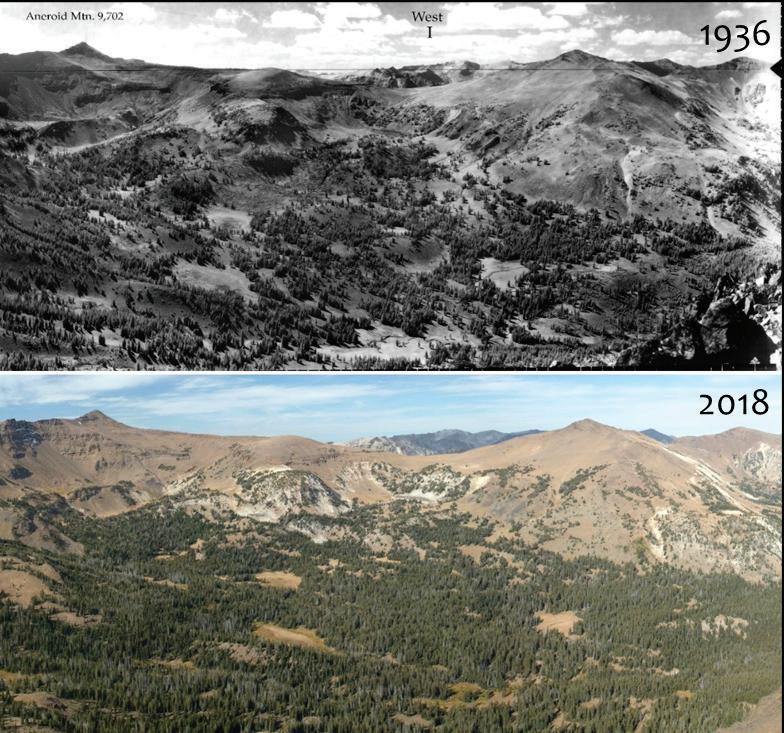
As such, forests grew denser while nonforest elements, such as wetlands and meadows, were also lost. Paul describes such elements as “governors on fire behavior,” saying they can change the rate of spread as well as flame length and intensity.
“Imagine that the vast intentional burning that allows you to live safely is no longer on that landscape,” he says. “Forests. Colonized meadows. Dewatered wetlands. Wet and dry meadows are now forested instead of these nonforest elements that are critical, and so you get a lot more forests on the landscape and a lot more dense forests, which sets the dining room table for large and more severe fire.”
Fast forward to the present. Forest Service firefighters successfully contain 98% of new fires within 24 hours, according to the U.S. Forest Service. The remaining 2% of fires—the ones that burn for days, weeks or months on end—are the ones most often in the spotlight, including those sparked by utility infrastructure in extreme weather.
Increasingly dry conditions throughout the West have forced utilities to adapt not only to keep their communities safe, but also to limit potential damage to power infrastructure.
Adaptive measures, Paul says, should include working with landowners to reduce the canopy bulk density surrounding transmission rights of way, forcing what would normally be crown fires—wildfires that spread through the top canopy layer of the trees—to drop to the forest floor, where they can be suppressed. Paul also says grasses and shrubs, not trees, should grow around utility rights of way.
Energy regulators in Western states, including Washington, Oregon and California, require electric utilities to regularly file wildfire mitigation plans outlining their efforts to prevent utilitycaused wildfires and ensure the proper procedures are in place to keep situations from worsening.
Actions prescribed by these plans include Public Safety Power Shutoffs, vegetation management programs, annual inspections, transmission upgrades and undergrounding power lines. Several utilities in the West also have weather station networks in place to monitor climate conditions.
Technology deployed by energy companies since 2020 includes camera networks powered by artificial intelligence to detect burns as they ignite. Utilities are also exploring drone surveillance
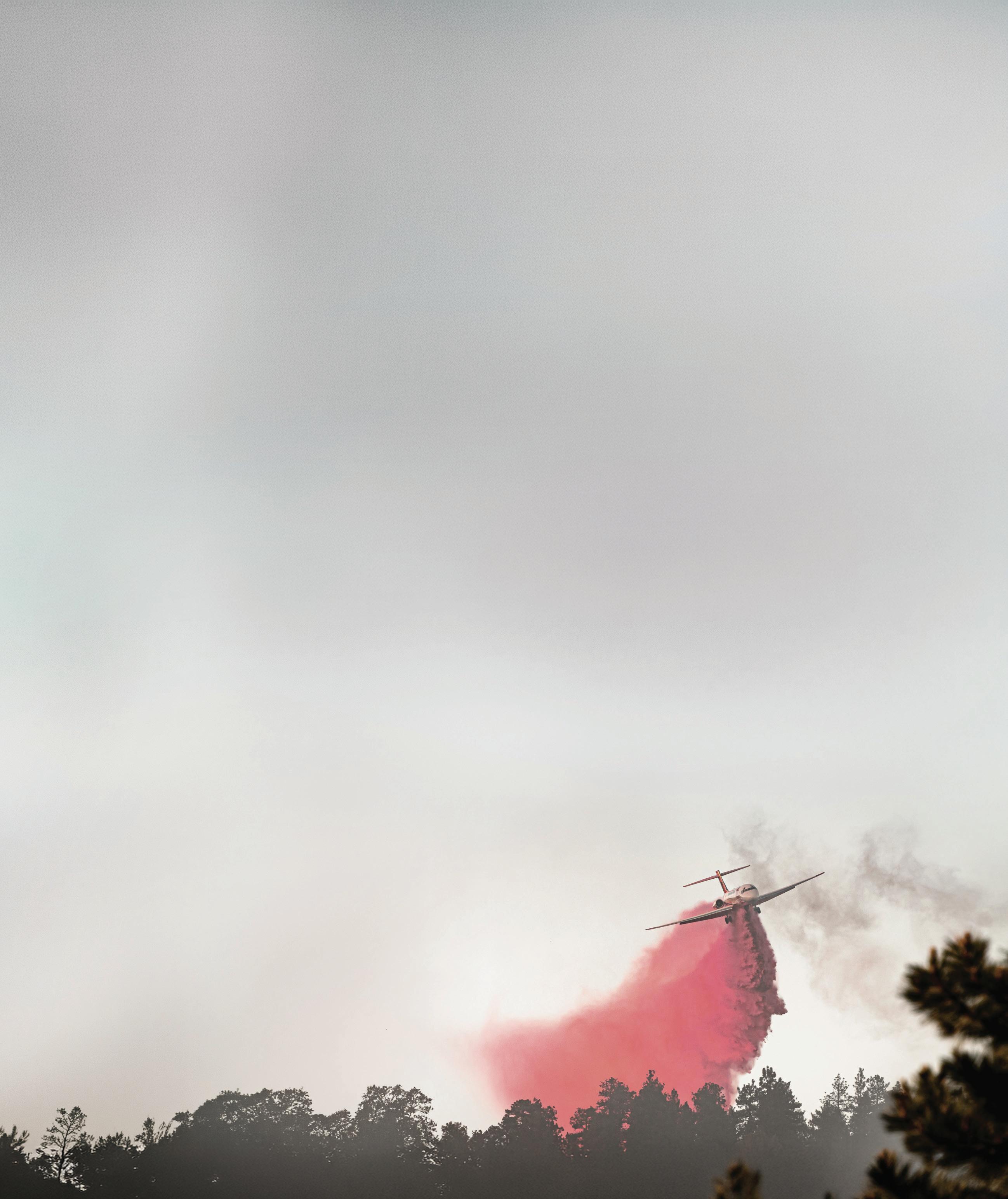
programs, as well as multispectral satellite imaging that detects the health of trees surrounding utility infrastructure, allowing for more proactive trimming practices.
With tree management, transmission lines often cross multiple jurisdictions to send energy from Point A to Point B, including federal lands and forests. Utilities have struggled to obtain the administrative clearance needed to access rights of way to manage vegetation around their facilities.
Western utilities are collaborating with federal legislators to pass the Fix Our Forests Act, a law that aims to accelerate and improve forest management activities on public, federal and tribal lands to reduce wildfire risk.
Jim Anderson, CEO of La Pine, Oregonbased Midstate Electric Cooperative, was among those who testified before Congress on Feb. 24 in support of the bill. In written testimony prepared for the House Committee on Natural Resources, Jim said Midstate’s approximately 14-mile transmission line through the Newberry National Volcanic Monument is so obscured in some sections “that it is impossible to see our infrastructure.”
“It is deeply concerning that we have not made any progress with Forest Service when it comes to managing the vegetation, including a failure to begin the permitting process,” Jim wrote. “This type of
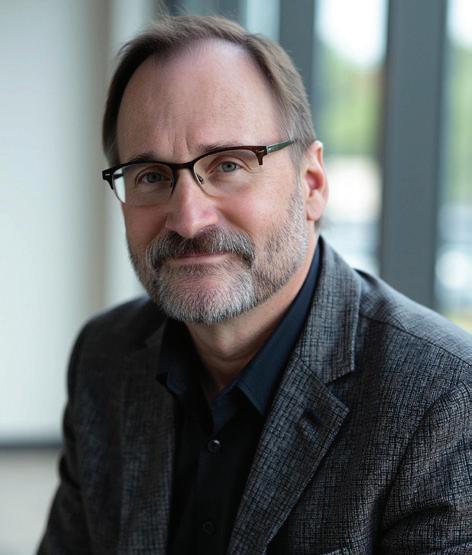
Paul Hessburg uses his decades of experience as a forester to explore rising wildfire risks and encourage residents and utilities to take action to protect communities across the West. PHOTO COURTESY OF PAUL HESSBURG
delay is exactly why we need to enact the Fix Our Forests Act. The provisions in this legislation expanding electric utility authority to remove hazard trees—along with expedited timelines for review and approval of vegetation management plans— provide essential tools to protect our natural resources and keep our communities safe.”
Preventing and limiting the spread of wildfire is everyone’s responsibility, Paul says. Because houses and landscaping can be fuel for wildfires, Paul encourages residents to consult the National Fire Protection Association’s FireWise USA program for safety tips to keep their communities safe. He also recommends counties and cities adopt all standards by the International Code Council’s Wildland-Urban Interface Code, which provides minimum regulations for land use and building construction in wildfire-prone areas.
“In a lot of ways, people are trying to catch up with the new reality, including power providers,” Paul says. “There’s not going to be a new normal. It’s not settling out for generations of people. It’s going to keep changing.” n
Learn more about protecting homes, neighborhoods and towns from wildfire at National Fire Protection Association’s FireWise USA, tinyurl.com/bdz4e8e8, and International Code Council’s Wildland-Urban Interface Code, tinyurl.com/9ndze9c8.

With deeply lobed silver leaves and a 3-foot stature, the artichoke unfolds as much mystery in the garden as it does on the dinner table.
Artichokes can be used to set off any color in a perennial border, as a striking specimen plant or as the flagship of a vegetable garden. But the reason most people grow them is the leathery leaves made to dip into butter or mayonnaise and the succulent heart at the center.
Although artichokes thrive in the cool, moist climate of California’s central coast, Western Oregon is usually mild enough to grow these edible thistles as perennials if cut back and mulched in the winter, says Jim Myers, vegetable breeder and researcher at Oregon State University.
For the best success, he recommends growing the Green Globe, Imperial Star and Emerald varieties.
“For something unusual, try growing Violetto,” Jim says. “It is particularly variable for spines and purple heads, but, in my opinion, has the best flavor of all of the artichokes.”
With a little coaxing, artichokes as annuals also can grow in many places east of the Cascade Range.
Buy plants in May or June from your local nursery
or mail-order catalog.
“Plant artichoke starts in loose, well-amended soil in full sun,” Jim says. “Space them 3 to 5 feet apart, and when planning your garden, think about the shade they will cast. Water and mulch regularly.”
By midsummer, the artichoke plant should send up flower buds, which are the part of the plant we eat. Harvest them before they open.
If left to flower, the plant produces a large purple thistle that can be dried and used in arrangements. If you harvest all the heads, artichokes in milder climates may send up a second crop in the fall.
Artichokes produce well for about three or four years. After that, it’s best to dig and divide them because they produce offshoot plants that may crowd the original plant.
“In the fall, cut back your artichoke plant and mulch it with a covering of leaves or straw,” Jim says. “After mild winters, new plants will sprout in the spring from the old parent plant. Uncover them in April. Cold winters, however, may kill artichokes, whether or not they are mulched.” n
Information courtesy of OSU Extension Service.


Meet the Safe Step Walk-In Tub with MicroSoothe® — a breakthrough air-infusion system that oxygenates, softens, and gently exfoliates your skin for a true spa-at-home experience. Built right here in Tennessee with uncompromising safety, durability, and comfort, Safe Step delivers more standard features than any other walk-in tub — all designed to help you feel better every single day.
✓ Heated seat keeps you warm and comfortable from the moment you sit down to the moment you step out
✓ Precision-engineered hydro-massage jets target sore muscles and stiff joints for soothing, full-body relief
✓ Premium construction backed by a full lifetime warranty on the entire tub
✓ Professional installation and top-tier service included — all for one simple, affordable price


By Jim McCarty
It’s midday at Missouri Hick Bar-B-Que along Route 66 near Cuba, Missouri. The lunch rush is almost over when the staff springs into action, moving tables together, preparing for a big gathering.
Soon, the restaurant walls vibrate with the two-cylinder thump of a dozen or so Harley-Davidson motorcycles. The door opens, and the happy sounds of a group that’s experiencing the time of their lives reverberate—in Swedish.
Scenes like this play out every day along what remains of the most famous highway in the world. It’s called the Mother Road, Main Street of America and the Highway That’s the Best. It once traversed eight states
along 2,448 miles, stretching from the shores of Lake Michigan in Chicago to a pier at the Pacific Ocean in Santa Monica, California.
Its official name is Route 66, and it’s about to get busier than it’s been since it was decommissioned in 1985.
This year, Route 66 fans from around the world will look for new kicks as the celebrated road turns 100. Springfield, Missouri, was in the spotlight in April as the site of the national kickoff of America’s Route 66 Centennial Celebration.
The Queen City of the Ozarks earned that honor through a competitive process, but also due to its status as the birthplace of Route 66. On April 30, 1926, John Woodruff, a Springfield businessman, sent a telegram to Washington, D.C., requesting the new road be named U.S. Route 66. The
idea for the road didn’t originate here, but its iconic name did.
“This recognition is a testament to Missouri’s deep roots in the history of America’s most iconic highway and the vibrant spirits of the communities that keep that legacy alive today,” Missouri Gov. Mike Kehoe says.
The governor’s farm sits along Route 66 in Jerome.
“We have some of the original roadway in Pulaski County that you can still drive on,” he says. “People come from all over the world to drive on that. This roadway is so historic, and it has made millions of memories for not just Americans but for people all over the world.”
Kickoff festivities included five satellite cities: Joliet, Illinois;
I think Route 66 is on a lot of visitors’ bucket lists. And I think whenever there’s a big milestone to be celebrated, people want to be a part of that and come experience Route 66 as it’s turning 100.
St. Louis, Missouri; Amarillo, Texas; Albuquerque, New Mexico; and Santa Monica, California.
In preparation for the yearlong celebration, communities all along the historic route are sprucing up their landmarks, planning events, relighting neon signs and prepping for a major influx of visitors who plan to motor west.
“I struggle to make a specific prediction, and part of that is because it’s really hard to track specific routes,” Oklahoma Route 66 Association President Rhys Martin says. “But I would be surprised if traffic didn’t double just because of the attention and the people planning their trips.”
Nikki Terlesky, Historic Route 66 Association of Arizona director of operations, agrees travelers are coming in a big way.
“I think Route 66 is on a lot of visitors’
bucket lists,” she says. “And I think whenever there’s a big milestone to be celebrated, people want to be a part of that and come experience Route 66 as it’s turning 100. I know a lot of Facebook groups I follow are just buzzing with people voicing their travel plans.”
While Missouri can claim the creation of the name, an Oklahoma man is known as the Father of Route 66. Cyrus Avery, a Tulsa real estate developer and owner of a coal company, saw the need for a roadway from the Midwest to the West Coast, connecting small towns and cities along the way.
Here’s the top attraction for each of the eight states. ILLINOIS—GEMINI GIANT (WILMINGTON)
If you only stop once before leaving Illinois, make it here. The 30-foot-tall Muffler Man is one of Route 66’s most iconic photo ops and a perfect start to the journey.
A road-trip classic since the 1930s, billboards and barn roof signs for this cavern once lined the entire Mother Road, and the attraction still feels like pure Americana.
KANSAS—CARS ON THE ROUTE (GALENA)
Kansas has only 13 miles of Route 66, but this restored Kan-O-Tex gas station—home to the truck that inspired Mater in “Cars”—is its standout.
An absolutely essential stop is the giant, smiling blue whale beside a pond. It is one of Route 66’s most beloved and quirky landmarks.
Ten Cadillacs sit nose-down in the desert. They’re covered in spray paint, and you’re encouraged to add your own. It’s irreplaceable Route 66 kitsch.
See the best neon on the entire route. It is a family-run motel with beautifully preserved rooms, and a true 1940s motor court experience. Even if you don’t stay, stop for photos.
This is the only national park the Mother Road drives straight through where classic roadside nostalgia meets staggering natural beauty.
A surreal desert time capsule features a legendary retro-futurist neon sign. Nothing captures the lonely, romantic end stretch of Route 66 like Roy’s.
Appointed in 1925 to the Joint Board of Interstate Highways, Cyrus managed to steer the route south from Illinois through Missouri, Kansas, Oklahoma, Texas, New Mexico, Arizona and California instead of a more northern route through Nevada.
Along with Missouri’s John Woodruff, Cyrus helped launch the U.S. Highway 66 Association in 1927 to encourage its use.
“One hundred and thirty-seven delegates from 32 cities of the Southwest, meeting here today, organized the National Highway No. 66 Association and elected
John T. Woodruff of Springfield, Mo., its first president,” read a Springfield Daily News story. “From Missouri, Kansas, Oklahoma, Texas and New Mexico, the delegates gathered in Tulsa today determined that Highway 66, which runs from Chicago via St. Louis to Los Angeles, shall in fact become the ‘Main Street of America.’”
At the beginning, the route joined various existing state roads, many of which were still gravel. Besides paving the highway, the association’s
leaders also marketed Route 66 over other transcontinental routes.
One of the first efforts to popularize the road was an epic foot race that followed Route 66 from its start in California to St. Louis, then on to New York City. The distance was 3,400 miles over just three months. It started with 275 runners, but 77 dropped out on the first day. Only 55 finished. The winner was 20-year-old Andy Payne of Claremore, Oklahoma.
Through publicity like this, the nation learned of the new route, and traffic grew exponentially. Truckers favored its flat terrain, with elevations measured in hundreds of feet compared to thousands crossing the Rocky Mountains.
In the 1930s, Route 66 became a pathway for migrants fleeing the Dust Bowl and the Great Depression, heading west in search of opportunity.
When World War II gripped the nation, the route became strategic for moving troops and materials to support the war effort. This led to a major effort to rebuild the roadway for Fort Leonard Wood, an Army base in St. Robert, Missouri.
The highway was no match for the heavy trucks supplying the base. So, in 1941, construction began on a four-lane divided highway between it and Rolla. A deep cut bypassed a steep grade near Devil’s Elbow. Hooker Cut became the deepest highway excavation in the nation to date, and the four-lane, divided highway was the first of its kind. The improved roadway was fully open to traffic by September 1945—ironically, the same month the war ended.
Other improvements included rerouting to avoid a series of dangerous hairpin curves in Arizona, dubbed the Sidewinder. This 8-mile roadway has 191 curves with no guardrails and 12% grades. Today, it is often visited by adventurous travelers.
DEPARTURE: CHICAGO (WINDOWS DOWN)
• Route 66 – Chuck Berry
• Sweet Home Chicago – The Blues Brothers
• Start Me Up – The Rolling Stones
• Good Times Roll – The Cars
• Real Gone – Sheryl Crow
• Life Is a Highway – Rascal Flatts
• Born to Be Wild – Steppenwolf
• Runnin’ Down a Dream – Tom Petty
• Drivin’ My Life Away – Eddie Rabbitt
• On the Road Again – Willie Nelson
HEARTLAND MILES:
MISSOURI → OKLAHOMA → KANSAS
• Missouri River Run – Chloe Hoecker
• If You Wanna Get to Heaven – Ozark Mountain Daredevils
• King of the Road – Roger Miller
• Boys From Oklahoma – Cross Canadian Ragweed
• Oklahoma Smokeshow – Zach Bryan
• Carry On Wayward Son – Kansas
• Dust in the Wind – Kansas
• Ain’t Going Down (‘Til the Sun Comes Up) –Garth Brooks
• Ain’t No Love in Oklahoma – Luke Combs
• Cadillac Ranch – Chris LeDoux
OPEN COUNTRY AND FREEDOM
• Wide Open Spaces – Dixie Chicks
• Follow Your Arrow – Kacey Musgraves
• Wagon Wheel – Old Crow Medicine Show
• Copperhead Road – Steve Earle
• Midnight Rider – The Allman Brothers Band
• Ramblin’ Man – The Allman Brothers Band
• Blue Sky – The Allman Brothers Band
• Born to Run – Bruce Springsteen
DESERT STRETCH:
TEXAS → NEW MEXICO → ARIZONA
• Amarillo by Morning – George Strait
• I’ve Been Everywhere – Johnny Cash
• A Horse With No Name – America
• Ventura Highway – America
• Take Me to the River – Talking Heads
• Running on Empty – Jackson Browne
• Take the Long Way Home – Supertramp
• Drive – The Cars
DUSK, MOTELS AND LONG THOUGHTS
• Fast Car – Tracy Chapman
• Angel From Montgomery – John Prine
• Into the Mystic – Van Morrison
• Gypsy – Fleetwood Mac
• Landslide – Fleetwood Mac
• The Mother Road – Alan Rhody
• Here I Go Again – Whitesnake
• Peaceful Easy Feeling – Eagles
• Take It to the Limit – Eagles
CALIFORNIA ARRIVAL
• Bad Moon Rising – Creedence Clearwater Revival
• California Dreamin’ – The Mamas & the Papas
• Hotel California – Eagles
• Go Your Own Way – Fleetwood Mac
• California Girls – The Beach Boys
• Everyday Is a Winding Road – Sheryl Crow
• Beverly Hills – Weezer
SUNSHINE, CELEBRATION AND LETTING LOOSE
• Party in the USA – Miley Cyrus
• Hot to Go – Chappell Roan
• Paradise City – Guns N’ Roses
• Getaway Car – Taylor Swift
• Good Time - Owl City & Carly Rae Jepsen
• Born in the USA – Bruce Springsteen
THE MEANING OF THE JOURNEY (CLOSING STRETCH)
• This Land Is Your Land – Woody Guthrie
• Take Me Home, Country Roads –John Denver
• Kyrie – Mr. Mister
• The Long and Winding Road – The Beatles
• Travelin’ Thru – Dolly Parton
• Running on Empty – Jackson Browne
• What a Wonderful World – Louis Armstrong
• End of the Line – Traveling Wilburys
By the 1950s, Route 66 was the byway of a nation in love with the automobile. Cabins, motels, roadhouses and all manner of highway kitsch sprang up to lure motorists off the pavement. Among them was the first fast-food restaurant, believed to be Red’s Giant Hamburg in Springfield, Missouri.
Route 66 came to represent everything Americans hold near and dear: freedom,
adventure, nostalgia and small-town values. Those themes were shared in the1960s TV series “Route 66,” which helped fuel today’s nostalgia for the road.
Championed in songs such as Bobby Troup’s “(Get Your Kicks on) Route 66” and the Eagles’ “Take it Easy,” immortalized by John Steinbeck’s “Grapes of Wrath” and introduced to a new
generation through Pixar’s “Cars” movie, the Mother Road continues to fascinate those who prefer life in the slow lane.
The demise of Route 66 came with the rise of the new Interstate Highway System— including interstates 55, 44, 40, 15 and 10. Small towns where Route 66 was the main road were bypassed, and many businesses couldn’t survive as traffic moved away.
Route 66 was decommissioned in 1985. But the road never truly disappeared.
Mother Nature and the wrecking ball have taken their toll, but if you know where to look, you can still find remnants of the old route. New businesses have sprung from the ashes of those longgone oases on the road.
So, as the song says, “get hip to this timely tip, when you make that California trip,” and make this the year to get your kicks—on Route 66. n
Q: WHO ORIGINALLY SANG “ROUTE 66”?
A: Nat King Cole, with the King Cole Trio, first recorded the song in 1946 at Radio Recorders in Los Angeles. Capitol Records released it as a single, which reached No. 11 on Billboard’s pop chart.
Q: WHO IS CONSIDERED THE FATHER OF ROUTE 66?
A: In the early 1900s, Cyrus Avery of Tulsa, Oklahoma, a real estate developer and owner of a coal company, began acquiring oil leases. With the need to reach the barren lands around him and the need for a roadway from the Midwest to the western lands connecting cities along the way, the road became a reality. With John Woodruff of Springfield, Missouri, Cyrus promoted the idea of a highway connecting the Midwest to the West Coast.
Q: WHAT TOWN IS CONSIDERED THE BIRTHPLACE OF ROUTE 66?
A: Springfield, Missouri, is widely recognized as the birthplace of Route 66. A passionate advocate for the “Good Roads” movement, Springfield businessman John Woodruff promoted highway development across Missouri. While the road itself did not begin in Springfield, the idea of the route was born here, making Springfield the home for the Main Street of America. John was elected the first president of the Route 66 Association.
Q: WHAT WRITER MADE ROUTE 66 FAMOUS?
A: John Steinbeck proclaimed Route 66 the Mother Road in his 1939 book, “The Grapes of Wrath.”
Q: WHERE DID THE ORIGINAL ROUTE BEGIN AND END?
A: Route 66 began in downtown Chicago, Illinois, and ended in Santa Monica, California, near the Pacific Ocean. The official start is at Adams Street and Michigan Avenue, with classic spots like Lou Mitchell’s diner nearby.
Q: HOW LONG WAS HISTORIC ROUTE 66?
A: It is generally accepted that, from beginning to end in 1926, Route 66 traversed 2,448 miles. However, as the route evolved over its 60 years of existence with new, improved alignments, the mileage varied over time.
Q: WHAT WAS THE ORIGINAL NAME FOR ROUTE 66?
A: John and Cyrus also played a key role in the naming the road. It had first been named Route 60, as all main east-to-west highways at the time ended in zero. However, the pair felt Route 66 would be easier to promote, especially with the flow of having two of the same number. Thus, on April 30, 1926, a telegram was sent to the Bureau of Public Roads asking for the name to be changed to Route 66.
Q: WHAT DISTINCTION DOES RED’S GIANT HAMBURG, A SPRINGFIELD, MISSOURI, ROUTE 66 RESTAURANT, HOLD?
A: It is considered the first drive-in fast-food restaurant. Red’s opened in 1947 and operated until 1984. In early 2019, Red’s Giant Hamburg made a comeback, 35 years after the original restaurant’s closure. The new restaurant, on Route 413, was a re-creation of the original Route 66 location. It opened in August 2019 and operated for almost six years, closing its doors in May 2025. In 2013, a fundraising campaign was established to re-create the Red’s Giant Hamburg sign. The sign, shaped like a cross, was installed in 2015.
Q: WAS U.S. ROUTE 66 PAVED?
A: When Route 66 officially opened in 1926, only 800 miles were paved, the rest being graded dirt, gravel, bricks or wood planks. It took 11 more years before the road would become the first national highway to be completely paved.
Q: WHAT STATES DOES ROUTE 66 TRAVEL THROUGH?
A: Route 66 traverses eight states: Illinois, Missouri, Kansas, Oklahoma, Texas, New Mexico, Arizona and California.
Q: WHEN WAS ROUTE 66 DECOMMISSIONED?
A: With the advent of the Federal Interstate Highway System, U.S. Route 66 was gradually decommissioned, with the last segment, in Arizona, removed from the federal system June 27, 1985.
Q: WHAT STATE HAS THE MOST MILES OF ROUTE 66?
A: New Mexico has the most miles, and Kansas has the fewest—Illinois, 301; Missouri, 317; Kansas, 13; Oklahoma, 432; Texas, 186; New Mexico, 487; Arizona, 401; and California, 314, for a total of 2,448 miles.
Q: WHAT ANIMATED MOVIE IS BASED ON ROUTE 66?
A: The 2006 animated movie “Cars” tells the story of Route 66 through characters Lightning McQueen and Sally and their escapades at Radiator Springs, a fictionalized representation of all Route 66 towns. Sally liked to say, “Those were the days we traveled to have a great time, not to make great time.” In the movie, Ramone’s House of Body Art looks similar to the U-Drop Inn in Shamrock, Texas. Other real-life locations that inspired parts of the movie include Cadillac Ranch, Wigwam Motels and Wagon Wheel Motel.


16 ounces gnocchi
1 red bell pepper, chopped
1 yellow bell pepper, chopped
1 red onion, chopped
1 pint cherry tomatoes
6 garlic cloves, minced
1/4 cup olive oil
11/2 teaspoons dried oregano
Heat oven to 425 F.
11/2 teaspoons dried basil
1 teaspoon kosher salt
1/2 teaspoon dried thyme
1/4 teaspoon red pepper flakes
Freshly ground black pepper
3 to 4 handfuls baby spinach
Shaved Parmesan cheese, for topping
On a large sheet pan, add gnocchi, red bell pepper, yellow bell pepper, red onion, cherry tomatoes, minced garlic, olive oil, oregano, basil, salt, thyme, red pepper flakes and black pepper. Combine everything, making sure it is well coated in the spices and oil. Bake for 35 minutes, stirring halfway through.
Remove sheet pan from oven. Add spinach, and stir to combine. Return to oven for 5 minutes, just until spinach is wilted.
Serve with shaved Parmesan cheese and a drizzle of olive oil.
Cooking spray
2 medium sweet potatoes, sliced into 1/4-inch wedges
1 tablespoon olive oil, divided 1/2 teaspoon kosher salt, divided
1/4 teaspoon ground black pepper, divided 1/4 cup Dijon mustard
2 tablespoons honey
1/4 teaspoon cayenne pepper
5 cups broccoli florets
4 5-ounce salmon fillets
2 tablespoons everything bagel seasoning
2 teaspoons soy sauce
Heat oven to 425 F. Line a large, rimmed baking sheet with foil, and coat lightly with cooking spray.
Toss sweet potatoes with 2 teaspoons oil, 1/4 teaspoon salt and 1/8 teaspoon pepper in a medium bowl. Place on half of the prepared baking sheet. Bake for 5 minutes.
Meanwhile, combine Dijon, honey and cayenne in a small bowl. Toss broccoli with remaining oil, salt and pepper in a separate bowl.
Remove potatoes from oven. Add salmon to the other half of the baking sheet. Place 2 teaspoons of the mustard mixture on each filet. Brush to coat, then sprinkle with bagel seasoning. Add broccoli to sweet potatoes. Bake until salmon flakes easily with a fork and vegetables are golden, about 12 minutes. Stir soy sauce into remaining mustard mixture, and drizzle over vegetables.
1 large bunch flat-leaf parsley
1 large bunch cilantro
1 tablespoon oregano
2 medium garlic cloves
11/2 teaspoons kosher salt
1/2 teaspoon red pepper flakes
1/2 cup extra-virgin olive oil
2 tablespoons red wine vinegar, plus more as needed
11/2 pounds boneless, skinless chicken thighs
1/2 teaspoon honey
1 medium zucchini, diced
1 cup whole cherry tomatoes
1 small red bell pepper
1/2 medium red onion
2 tablespoons olive oil
Salt
Rice, flatbreads or potatoes
Using a food processor, pulse parsley, cilantro, oregano, garlic, salt and red pepper flakes until finely ground, about 30 seconds. Add olive oil and vinegar, and pulse until just combined. Season to taste with additional salt and vinegar.
In a large bowl, toss chicken thighs with honey and 1/3 cup of chimichurri. Refrigerate for at least 1 hour. Refrigerate remaining chimichurri until ready to use.
When ready to proceed, adjust oven rack about 6 inches below the heating element. Heat broiler to high.
Remove chicken from marinade. On a 13-by-18-inch rimmed baking sheet, arrange thighs out so there is plenty of space between them. Discard marinade. Arrange zucchini, cherry tomatoes, red pepper and onions around chicken. Drizzle vegetables with olive oil, and season with salt.
Broil until chicken is golden brown and vegetables are just beginning to char, about 10 minutes. Flip chicken and vegetables. Broil until vegetables are tender, and chicken is lightly charred. The chicken should read 185 F on an instantread thermometer, about 7 to 10 minutes.
Serve with reserved chimichurri, rice, flatbread or potatoes.
Cooking spray
8 corn tortillas
1 pound uncooked medium shrimp, peeled and deveined
11/4 teaspoons ground cumin
1/2 teaspoon paprika
3/4 teaspoon chili powder
1/2 teaspoon kosher salt
Freshly ground black pepper
1 tablespoon freshly squeezed lime juice
For serving:
1 batch easy taco slaw (see below)
1 medium avocado, sliced
Sour cream
Lime wedges
Heat oven to 400 F. Lightly coat a rimmed baking sheet with cooking spray.
Place a large sheet of aluminum foil on a work surface. Stack the tortillas on top, and wrap in foil. Place the packet of tortillas on one corner of the baking sheet.
Pat shrimp dry, and place on baking sheet. Season with cumin, chili powder, salt and a few grinds of black pepper. Toss to combine, and spread into an even layer.
Roast until shrimp are opaque and pink, stirring halfway through, about 6 to 8 minutes. Drizzle shrimp with lime juice, and toss to combine. Fill tortillas with shrimp, and top with slaw, avocado and sour cream. Serve with lime.
Shredded red cabbage
Salt
3/4 cup mayonnaise
1/4 cup lime juice
1/4 teaspoon garlic powder
Grated or shredded carrot
Thinly sliced scallions
Cilantro, finely chopped Jalapeño pepper, deseeded and cut into slices
Salt the cabbage in a colander. Massage it to help release its liquid, then set aside to drain for 15 minutes.
Place mayonnaise, lime juice and garlic powder in a large bowl. Whisk to combine. Using your hands, squeeze cabbage of its excess liquid one handful at a time. Add cabbage and remaining ingredients to the bowl, and toss to combine.
Nonstick cooking spray
1/2 cup panko breadcrumbs
1/4 cup freshly grated
Parmesan cheese
4 5-ounce bone-in, skin-on chicken thighs
1/4 cup melted butter
2 tablespoons Dijon mustard
11/2 pounds baby potatoes
1 pound green beans, trimmed
1 teaspoon dried thyme
Salt, to taste
Freshly cracked pepper
Heat the oven to 425 F. Line a large sheet pan with aluminum foil, and coat with cooking spray.
Mix breadcrumbs and cheese in a small bowl. Set aside. Place chicken on prepared pan. Combine butter and Dijon in a large bowl. Brush chicken with mixture.
Add potatoes and beans to bowl. Toss in remaining mixture. Evenly spread vegetables on the pan around chicken Season everything with thyme, salt and pepper. Press breadcrumb mixture onto chicken thighs.
Bake until chicken is no longer pink at the bone, the juices run clear, and the potatoes can be pierced easily with a fork, about 25 to 30 minutes. An instant-read thermometer inserted near the chicken bone should read 165 F.
Does anyone have old jewelry you don’t want anymore? I would love pre-1970s jewelry. I wear my older jewelry every day, but it’s wearing down and I would love a new batch. I’d wear them with pride. Thank you.
Sandy Corliss
2948 Happy Valley Road Roseburg, OR 97471 scorliss@mydFN.net
I would love to have material to make quilts and at least 3 yards to make aprons. Also, some yarn for knitting. I volunteer at the school nearby and would like to use it with the children. Thank you.
Hilma Tonuchuk
P.O. Box 20013 Kotlik, AK 99620
I make cross-stitch Christmas ornaments each year for my grandchildren. I prefer smaller patterns, and I’m unable to find “Leisure Arts 101 Christmas Mini Book 1.” Also, I can’t find any 18- or 22-count Aida cloth in any color except white. If anyone has the book or cloth, I’ll gladly pay for it. Thank you.
Elaine Beers
P.O. Box 96 Swisshome, OR 97480
Marty and I would like to thank everyone for the supplies. It’s time to request more denim—used would be great to give it more life. We can turn any scraps into useable things. We also need batting to put inside our quilts. Thank you all.
Shirley and Marty Egbert
190 S. Crystal Drive Rupert, ID 83350
I’m looking for parts to old hurricane lanterns. I rewire them and make them useful again.
R. Anderson
82164 Red Bluff Road
Seaside, OR 97138
My amazing stepfather celebrates his 97th birthday this month. He has always been a traveler, beginning with two cross-country moves as a young child. In adulthood, he has visited nearly all of the United States and 34 different countries. He is a proud U.S. Navy veteran who raised three sons with his first wife. He was a widower for many years before marrying again at age 90. He remains mentally sharp and active with family, friends and church. He is a master woodworker and an avid Scrabble player. He still hosts Bible study groups. He would be thrilled to receive birthday greetings, especially with stories about interesting places. Send cards to Gary Miller, 150 Calle Del Sol St., Richland, WA 99352.
Linda Freepons Prosser, Washington
Our mother is fast approaching her 100th birthday this month. She was born in White Sulphur Springs, Montana, and spent summers at the family’s Watson Ranch near Benton Gulch, which was also a Post Office in the earlier 1920s and ’30s. With seven aunts and uncles, she had a great early life. In the 1940s, she moved with her parents and sister to Portland, Oregon, where she married and had four children in the first five years of marriage. Another came along six years later. She moved to Sisters, Oregon, in 1998, near her daughter. She loves reading large print books— one to two a week. In her younger years, she did a lot of volunteer work around town, wherever she could help. She is a longtime Christian, loves jokes and always has a wonderful positive attitude. She gets mostly junk mail now, and I know she would love some real cards and letters. Thank you. Send cards to Marylinn Watson, 369 E. St. Helen’s Ave., Sisters, OR 97759.
Gaynelle Savage Redmond, Oregon
My mom, Hazel Hays, is turning 84 at the end of this month. She worked her entire life to help my dad and give her children a great home life. My dad and my middle siblings have passed on, but she still has me, my brother and her dog, Dew. Please shower my mom with your kind words. She would be so happy. Hazel Hays, P.O. Box 255, Scio, OR 97374.
Karen Miller Scio, Oregon
Send your request (no attachments) to readerexchange@ruralite.org or mail to Reader Exchange, 5625 NE Elam Young Parkway, Suite 100, Hillsboro, OR 97124. Fill in the subject line with Reader Exchange.
Acceptance, scheduling and editing are at the editor’s discretion. Single requests only, please. No duplicates. If replying to a reader submission, please only send what is requested.
Submissions are handled first-come, first-served as space allows. We cannot honor every request.
Please affirm you have authorization from all appropriate parties before submitting. By submitting, you indemnify Reader Exchange, Pioneer Utility Resources Inc., its officers, directors, employees, utility clients and insurers from all legal liability incurred by the publication of information. We no longer accept pen pal requests. You may submit a pen pal request as a Marketplace ad (pricing applies).
When submitting a milestone request, please send it at least two months before the milestone.
Phone numbers are not published. Email addresses are if they are part of the ad, but you must include a postal address.
Requests must include the name and address of the electric utility that provides your magazine.

No coin embodies the spirit of America more than the Morgan Silver Dollar. From the Comstock Lode discovery that provided millions of ounces of silver to make them, to outlaws robbing stage coaches in the Wild West to pay for their bar tabs and brothel visits, the hefty Morgan Silver Dollar holds a special place in American history.
It’s no wonder collectors and history buffs alike clamor to get their hands on them. That is, if they can get their hands on them.
Collectors love “lasts” as no collection is complete without the last coin struck. Last year coins are often hard to find and always in demand. Little did master engraver George T. Morgan know the legacy he was creating when he designed what has become known as “The King of Silver Dollars” but it came to an end 104 years ago with the last-year 1921 Morgan Silver Dollar, the most beloved coin in American history.
Rarcoa®, America’s Oldest Coin Company, is announcing the public release of 832 of the very last year 1921 Morgan Silver Dollars, struck at the iconic Philadelphia Mint. Each coin today comes in Brilliant Uncirculated condition, pristine as the day they were struck!
Struck in 1921, each coin is one hundred and four years old. Could Charles Lindbergh have carried your coin in his pocket during his flight across the Atlantic? Or maybe your greatgrandfather carried it while storming the beaches of Normandy during World War II before ending up in a small coin shop in Tuscaloosa, Oklahoma. Each coin has its own unique history and you can hold 104 years of American history when you buy yours today!


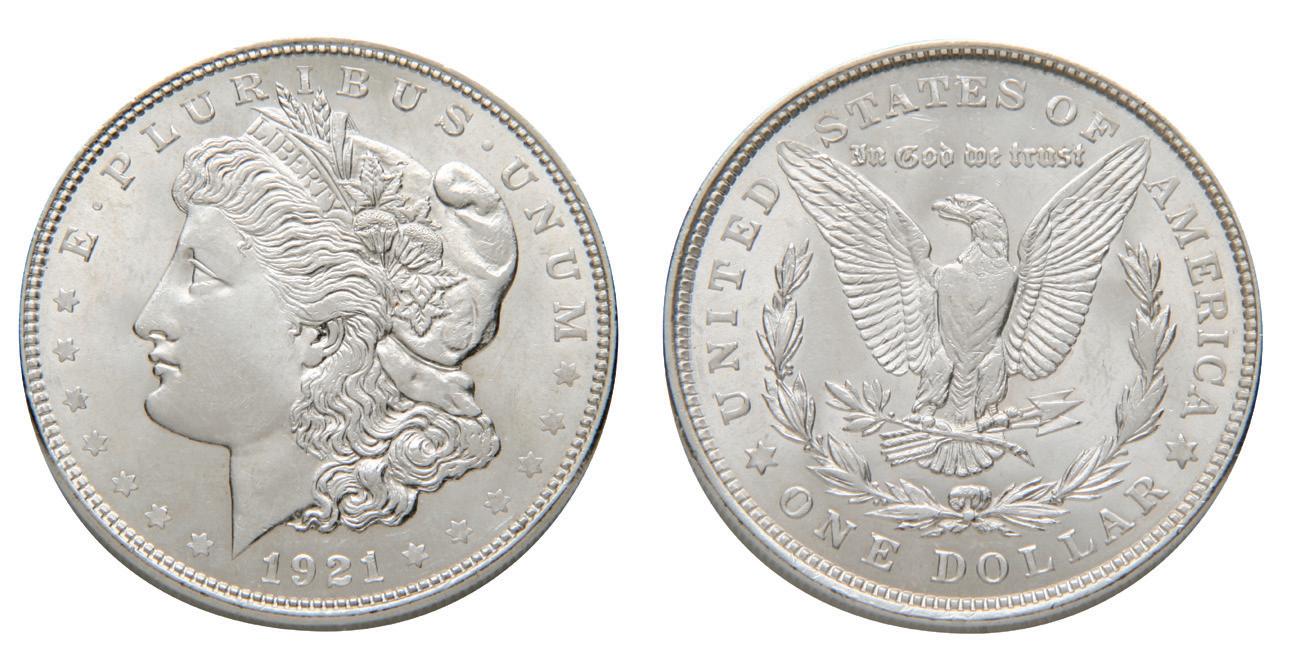




Coin experts estimate that only 15%-20% of Morgans are still surviving today due to multiple mass-meltings over the years. The Pittman Act of 1918 melted over 270,000,000 coins, that’s almost 50% of all coins produced at the time. Untold quantities were melted in the 1980s and 2000s when silver prices rose up to $50 per ounce.
This same 1921 Morgan Silver Dollar sells elsewhere for as much as $239. But thanks to Rarcoa’s buying power and numismatic expertise, you can own one for as little as $89.95, in quantity while supplies last. That’s a difference of up to $149!
Because the precious metals market is always active and dynamic, prices may adjust to reflect the latest market opportunities.
1921 Morgan Silver Dollar Brilliant Uncirculated
1-4 $99.95 each
5-9 $94.95 each, save $5 each, save up to $45

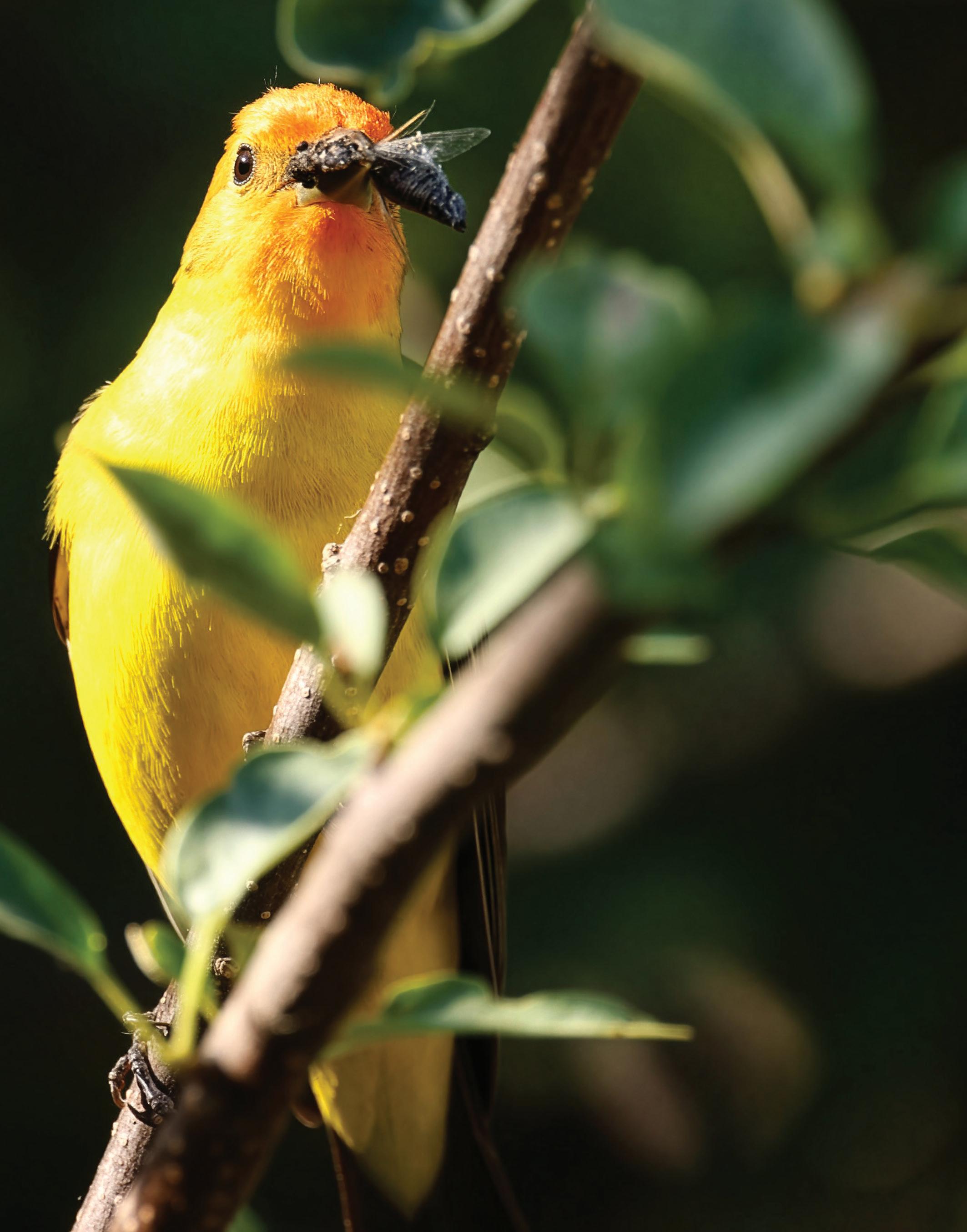
It is time to share your favorite photos for a chance to appear in our 2027 Ruralite calendar. Up to 13 winners are selected, and each receives $100. Photos must be submitted by June 30, 2026. The contest is open to recipients of Ruralite and Currents magazines. Each person may submit up to two photos. Each submission must include:
• Photographer’s name, address and electric utility.
• A short description—otherwise known as a caption—of what is shown.
• Photographer’s email address and phone number.

• JPEG file photos only. Photos must be horizontal (landscape) format and at least 300 dpi at 11 inches wide by 9 inches tall. Vertical photos and any photos created or altered by AI are not accepted. Enter today by visiting tinyurl.com/ruralitecalendar or use the QR code on this page.
Winning Tips
• Use the highest resolution setting on your camera.
• Photograph beautiful places and wildlife.
• Capture scenes full of vivid color.
• Reflect the seasons.
• Make us feel something—awe, joy, etc.











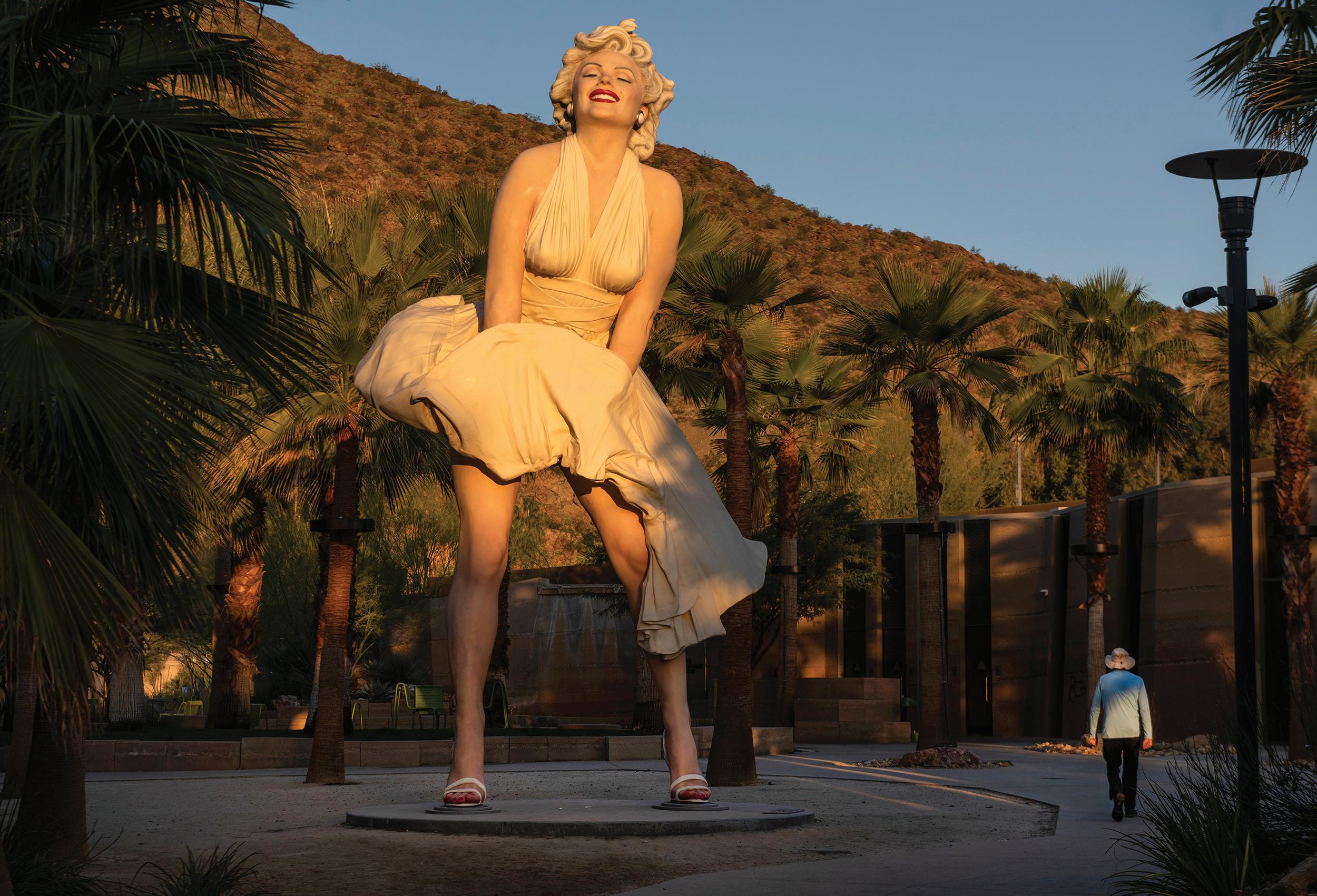
By Dave LaBelle
During the pandemic, I taught an eightweek online photo class. One of my students, Amy Gaskin, struggled to find a project she felt comfortable photographing since so many people were masked and afraid of interacting with others. I suggested Amy consider shooting a “dead person” story, the kind magazines like National Geographic do on famous people who are deceased—such as Van Gogh, Mark Twain, Ernest Hemingway or Abraham Lincoln. I asked her if there was
You can find Amy Gaskin’s story at amygaskin.com/marilyn/nationalgeographic.
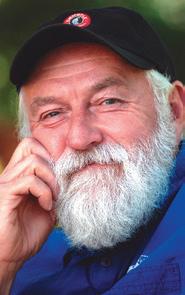
anybody famous buried close by her home. She immediately thought of Marilyn Monroe.
That was more than four years ago. Amy is still tirelessly working on the Marilyn project, which has taken her as far away as Australia. Portions have been published in newspapers and magazines in the United States and abroad, including National Geographic online. She hopes to publish her book, “Marilyn Forever: A Symbol of Hope,” soon. June 1 would have been Marilyn’s 100th birthday.
While recently in Palm Springs,
California, I photographed the controversial 26-foot-tall, 34,300-pound statue of Marilyn Monroe created by the late American artist Seward Johnson.
As always, I considered various angles and times of day. Things look different in different light, and colors change rapidly— often within a few minutes or even seconds—as do shadows in the mornings and evenings.
I settled on a morning shot as the rising sunlight moved across the figure with a man walking past to offer scale, rather than midday with crowds doing selfies. n
What project would interest you enough to study, explore, photograph and/or write about? Who or what are you curious about? I’ve often said, as long as you have any camera you should never get bored. I would need a dozen lifetimes to explore all of the people and places I am curious about. This is your chance, your license, your challenge to start today. Who knows where your curiosity might lead you? Maybe a gallery showing, a newspaper or magazine article? Maybe even a book?
Email your best image—just one—with caption information, including an explanation of how it affects you, to gph@pioneer.coop. We may share submissions on our website and social media channels.







































“I never expected it to be so beautiful that it takes your breath away.”
— Kaya C., on Stauer Opals
In a quaint village, nestled between rolling hills, lived a young woman with a deep appreciation for gemstones. Her grandmother gifted her a delicate cross pendant adorned with opals. The opals shimmered with a mesmerizing play of colors, reflecting hues of blues, greens, and fiery oranges. Her grandmother shared the legend of the opals, believed to bring hope, purity, and luck to those who wore them.
Using this story as inspiration, Stauer brings you the Opal Spirit Cross Pendant. With over 2 total carats of Kyocera lab-created opals set in .925 sterling silver encased in yellow gold, this pendant is a radiant celebration of beauty and craftsmanship. Each opal captivates with a kaleidoscopic dance of fiery oranges blending into oceanic blues, streaked with flashes of vibrant green that seem to come alive with every movement. The shimmering opals are skillfully arranged to create an enchanting, otherworldly glow, embodying the spirit of hope and harmony.
This breathtaking combination of color and craftsmanship is available as a limited availability of only
930 pieces, making it a rare and treasured addition to your jewelry collection. Plus, when you order today, you’ll receive the gold-finished sterling silver chain—a $69 value—absolutely free! Don’t miss your chance to own this exclusive tribute to timeless elegance and meaningful symbolism.
Necklace Specifications:
• 2 1/2 ctw. Kyocera lab opals and DiamondAura® accents
• Yellow gold-finished .925 sterling silver setting
• 18" gold-clad .925 sterling silver chain
Story and photo by Miranda Boutelle
Let’s start by defining what “smart appliances” mean. Smart appliances—such as refrigerators, washers, ovens, thermostats and water heaters—connect to the internet. Typically, through Wi-Fi or Bluetooth, these appliances can be controlled through your smartphone, tablet or voice-assistant device. They are designed to optimize energy use and add convenience. Some smart devices can even learn your habits over time.
Are smart appliances right for your home? The answer depends on your preferences and the types of appliances you already have.
The better question might be: Are smart appliances right for you?
Do you like the newest tech and typically keep your phone within arm’s reach? Do you enjoy the convenience of calling out commands to Alexa? Or do you prefer less technology or something in between? Personally, I’m somewhere in the middle.
Many smart appliances allow you to see how much energy each device consumes. That information can be helpful to better understand your energy habits and identify where energy may be going to waste.
Smart thermostats are a popular choice for managing energy use and reducing energy waste. Heating and cooling systems are typically the home’s biggest sources of energy consumption.
You can save an average of 8% on heating and cooling costs with a smart thermostat, according to Energy Star. Savings depend on your climate, the type of system you have and how you currently use it.
Most energy savings from a smart thermostat come from automating temperature adjustments while you’re sleeping or away from home. If you’re already good at manually adjusting the thermostat, you likely won’t see big savings, but you might prefer the convenience of a programmable device you can control with an app.
Smart thermostats make it much easier to program your heating and cooling schedule. Some have geofencing features that automatically adjust settings based on how far your phone is from home.
Coming in as the second-highest energy user in most homes is the water heater. I like the smart controls on my heat pump water heater. Also called a hybrid water heater, it uses heat pump technology to move heat instead of using energy to create heat. That makes it two to three times more efficient than a conventional electric resistance water heater. You can save even more energy with smart heat pump water heaters.
I can monitor energy use, change settings if we need more hot water and check how much hot water is available before I jump in the shower after my children have used it. The app notifies me when it’s time to clean the air filter on top of the unit. I can access that information without having to go down to the basement. I can even set it to vacation mode after I’ve left the house for a trip.
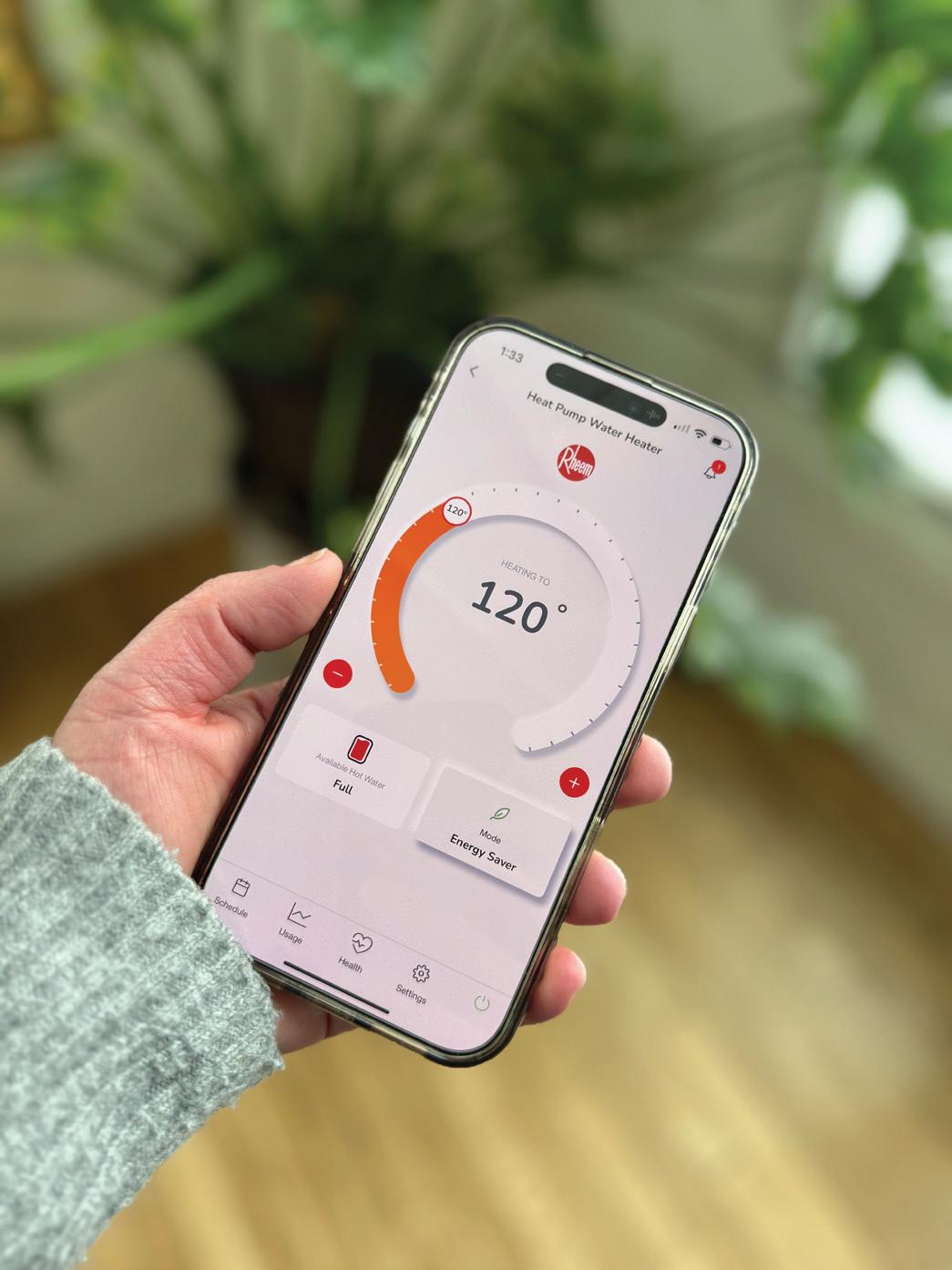
Not all heat pump water heaters have smart technology, so be sure to check before buying.
My refrigerator is a different story. I like the ability to monitor energy use, but it can be annoying to have my phone notify me the door is open when I’m 3,000 miles away at a work conference. There are certain features that can only be controlled through the app, which I find frustrating. The next thing I know, my husband texts me to make more ice while he’s standing right next to it, and I’m on the other side of the country.
Monitoring energy use and making it easier to control household devices are benefits of smart appliances. Before upgrading, do your research to understand how the features work and whether they benefit your lifestyle. Smart technology can help lower your energy use. However, in some cases, you’re better off improving your energy habits with the appliances already in your home. n
Reinforced custom-sized pond liners (39 cents/sqft.). Hay covers, greenhouse covers, any width and length. Truck tarps and more. High puncture and tear strength. Best price guaranteed. Celebrating 45 years in business. btlliners.com. 541-447-0712. 0427
Strong and dependable 20-year-old female ag. graduate (May 2026) of Feather River College seeking ranch hand employment, preferably with cattle. Lilly, 916-717-9981. 0526
Antiques and Collectibles
Buying American Indian collectibles, Navajo jewelry, blankets, rugs. CA/AZ baskets and beadwork. Quality paintings of the early Southwest and Americas. Call 760-409-3117 or send photos to amer.ind.baskets@gmail.com. 0526
WC Collectibles. We buy comic books! Local to Inland Northwest. Willing to travel. WCCollectiblesCheney@gmail.com; 509-496-1835.
Buying antiques and collectibles: advertising signs, porcelain signs, gas pumps, beer signs, antique toys, cast-iron coin banks, neon signs and more. Jason, 503-310-3321, or tjabaughman@yahoo.com. 0926
For sale: two silk area rugs, medallion motif, fringed: 8x5’, $950; 5x3’, $450. Photos available. fisherdj_2000@yahoo.com. 0526
Two large wood tool chests on rollers, includes many old, vintage hand tools, photos available, no shipping, Baker City, OR. seabee69jim@gmail.com. 0526
Model train magazines. More than 900, from ’40s, ’50s and early 2000s. Selling one lot, no single sales. $100 or offer, no shipping, Baker City, OR. seabee69jim@gmail.com. 0526
For Sale: 1982 and 1985 vintage Tri Hawk 304s and a 2002 Grinnell Scorpion. Roseburg, OR. 541-784-8233 or 541-784-8232; dsiasbuckle@gmail.com. 0526
Rare ’65 Buick Gran Sport, all original, frame up restoration. Numbers matching. Power brakes, steering, seat, windows, A/C. Engine 401, HP 325. North ID. 760-638-6574. 0526
Classic 1999 Chevy Suburban LT 2WD, immaculate condition, always garaged, maintenance records, original owner, photos available, $12K. tedsbaseball@gmail.com; 503-354-2051. 0526
Ads 25 words or fewer are $35 a month. An ad of up to 35 words is $50 a month. Contact information is included in the word count. Phone numbers and emails count as one word.
Longer ads may be placed. Contact 503-357-2105 or info@pioneer.coop for pricing.
Ads are for customers of member co-ops, public utility districts and municipals only. Subscribers and nonmembers may inquire about pricing at 503-357-2105 or info@pioneer.coop.
Ads must be direct and in first person, and are subject to approval and editing.
Closing deadlines (in our office): July issue—May 29
If submitting ad by mail, send appropriate payment with your name, address, email, phone number and the name of the electric utility that provides your magazine to: Marketplace, P.O. Box 1306, North Plains, OR 97133. Make check or money order payable to Ruralite.
We accept credit card payments for ads submitted to info@pioneer.coop. Call 503-357-2105 to pay by credit card. Advertisements are accepted in good faith. Pioneer Utility Resources is not liable for interactions between buyers and sellers.
1977 Toyota Landcruiser FJ40; runs well. Original engine/running gear. In Plumas Co., CA. $8K, OBO. js9445@hotmail.com; 530-927-7679 for details. 0626
Boats
Beautiful Don Hill design wood drift boat with high-impact fiberglass bottom and Shorelander trailer. Includes 10-foot oars, lead anchor, plus HW. $4.3K, OBO. Rodger: sandyd@cbbmail.com or 971-227-1753. 0626
Mirrocraft 12’ aluminum fishing, recreation boat. Year 2000. Two seats. Electric motor and 15 horse Honda gas motor. Asking $1,995. 541-444-1394. OR Coast. 0526
Books, Magazines, Videos
Book restoration. Bibles, cookbooks, cherished family heirlooms. Beautiful work. We give renewed life, more durable than original, to last for generations. 775-537-7066; salacanstudio@gmail.com. 0426
I have 12 Etude magazines, 1926-27; some covers are missing. Free. I will mail to you. 541-475-6656. Leave your contact information.
Community Events
La Pine Rhubarb Festival, June 20-21! Free community event featuring more than 140 vendors/food trucks, live music, adult beverages, kids zone and granny rhubarb pies! La Pine Senior Activity Center. More information: 541-536-6237. 0626
“The Warmth Within My Shadow,” by Jason Hogge: May 1-June 27 at Art Center East in La Grande, OR. Also, free art classes for youth. artcentereast.org. 0526
Education
Long Creek Virtual Learning Acellus Academy. Free in OR, online, accredited, K-12 education. Contact Long Creek School for information and to sign up. longcreekschool.com; 541-508-9164. Furniture, Appliances
For sale, matching green couch and chair. Good condition, $135. 541-720-0865. 0526
Miscellaneous
Attention, landowners. Grants available now. Wildland fire fuel reduction service. Steep ground, remote, rocky, small lot, big acreage … no problem. Blue Mountain Defensible Space LLC. Bluemountainbrush@gmail.com; bluemountainbrush.com; 509-399-3473. 1126
Granite cemetery markers at affordable prices. Will ship to most places. More information: Joe, highdesertmemorials@gmail.com or 541-815-8906, highdesertmemorials.com.
Local commercial fisherman sells summer catch of preserved freshness by blast freezing at sea, gourmet canned tuna on internet. Sept.June. 100% guaranteed the best canned tuna you ever tasted. Original, jalapeno and garlic flavors available. To order: twofisherstuna.com or 206-799-1082. 0526
Pets, Supplies
3 Australian/Husky purebred puppies in John Day, OR. Born Jan. 19, ready for new homes. 3 males. Please call if interested, can send pictures. Sherry Dress, 541-620-1372. 0526
Real Estate
Let me help you buy or sell ranch, farm and recreation property in OR. Fourth-generation Oregonian, prior ranch owner. For sale: Deschutes Canyon Mountain views, 118 acres, Riverfront. $11.9M. John Gill, 541-480-9161; johngill@landandwildlife.com. Land And Wildlife brokerage. 0526
John Day River Trading Post on more than 1 fenced acre, previous store, existing USPS lease, home. $375K. Duke Warner Realty, 541-987-2363; ddwr@ortelco.net. 0526
320 acres east of Adel, OR. Borders Hart Mountain views, Steens Mountain and Beaty Butte. Landowner tags, very rural. Reduced price: $145K. For maps: 541-659-1573; thejugglingman3@gmail.com. 0526
Private 10-acre wild tree farm near Sandpoint, ID, with older 3-bd. mobile home, countymaintained road, good building sites. $395K. Steve, 208-290-6505. 0526
Mobiles to mansions. Cabins to castles. Brookings, OR, area Principal Broker Pat Piper, Century 21 Agate Realty. Helpful. Educated. Caring. 28 years area experience. 541-251-2152; patpiperbroker@gmail.com.
For sale/rent: 20-acre developed land, 3,600sqft. shop with “barndominium” potential. Weddings/events, horse property, RV hookups, creek, views. $575K. Seller financing. Goldendale, WA. 509-378-5886. 0526
For sale in Rosarito Beach, Baja, Mexico. 2 lots. 2,153 sqft. each. Valles del Mar. Security, paved streets, lights, utilities ready. $33K, negotiable. 323-386-3613. 0626
Recreational Rentals
Ocean view Maui vacation rental. For the months of May-Oct. $210/now $185. One-time cleaning $150, 2 TVs, king-size bed, queen-size sofa bed. Beach chairs and umbrellas. Great view. 503-812-6689. 0626
Vacation rentals in Sisters, including Black Butte Ranch, or for local help managing your home in Central OR, call 541-778-7939 or visit avacationexperience.com. 0526
Sunshine and sand—Book your summer dreams at WaveCatcher for 2026. Oceanfront cottage with direct beach access, on the spectacular Central Oregon Coast. Sleeps 6. Pet friendly. All house amenities. Winter closure November-March. Reservations, information text 541-740-2846 or email relax@wavecatcherbeachrentals.com. 0526
Enjoy your ideal Maui getaway. This updated 2-bd., 2-ba. condo sleeps 4 and features a charming surf shack design. Just half a block from a beautiful beach, it’s perfect for morning strolls and sunsets. Plus, you’re steps away from shops and restaurants at Azeka Plaza. tinyurl.com/MauiGetaway. 0526
Recreational Vehicles
2004 Fleetwood Flair, 34’, 45.2K miles, like new, 2 slide-outs, Triton V-10, 5500 Onan, 2 AC. Garaged except when traveling since March 2009. $22.95K. 541-508-6866. 0526
1996 Pleasure Way motorhome. 83K miles, fully contained, 8 cylinders, gas, clean. $20K, OBO. For pictures and information, call or text 503-706-5846. Clatskanie, OR. 0526
Selling my 2022 Heartland Sundance UltraLite travel trailer. 24 ft., loaded. Single slider, awning, power leveling jacks and tongue jack. Large TV with Dish receiver. AM/FM/CD player, queen bed, microwave, 3-burner stove/oven, shower, gas/electric refrigerator, TireMinder system, gas furnace, A/C. Complete with anti-sway hitch. $19.5K, OBO. 541-403-2028. Baker City, OR. 0526
2014 Solo Rider Electric golf cart. Swivel and stand-up seat for disabilities. Gently used, well-maintained. New batteries and charger. $7K. 509-948-5759. Prosser, WA area. 0526 Services
Dawn Till Dusk Masonry. Brick, block, stone and pavers. Small jobs and repairs welcome. dawntillduskconstructionmasonry.com; 541-388-7605; 541-410-6945. License No. 245760 bonded and insured. La Pine, OR. 0526
Sheidler Bookkeeping. Wrangling those books so you don’t have to. QuickBooks and Xero certified. Contact Valia at 541-519-9005 or sheidlerbookkeeping@gmail.com for a free consultation. 0726
Blue Mountain Defensible Space LLC Wildfire Fuel Reduction: clearing brush, thinning trees, animal habitat enhancement. Expert service. Grant money available OR, WA, ID. Bluemountainbrush@gmail.com; 509-399-3473; bluemountainbrush.com. 1126
Situations Wanted
Attractive, active 60-year-old Christian gentleman in Umpqua, OR. Business owner. Loves hot rods, smooth jazz, beach. Seeks financially stable, adventurous woman, 40–60. grailgolf@hotmail.com. 0626
Want to Buy
Buying American Indian collectibles, Navajo jewelry, blankets, rugs. CA/AZ baskets and beadwork. Quality paintings of the early Southwest and Americas. Call 760-409-3117 or send photos to amer.ind.baskets@gmail.com. 0526
Gold, silver, coins/currency, buy, sell. Collections wanted. Fair prices paid. 45 years in retail store. Baker City, OR. 800-556-2133; garrymclin@aol.com. 0526
Old carpenter tools, planes (wood/metal), levels, chisels, slicks, adzes, axes, hatchets, handsaws, old rulers, spoke shaves, wrenches, shipwright tools, old tool chests. 503-659-0009; 971-666-0659. 0526

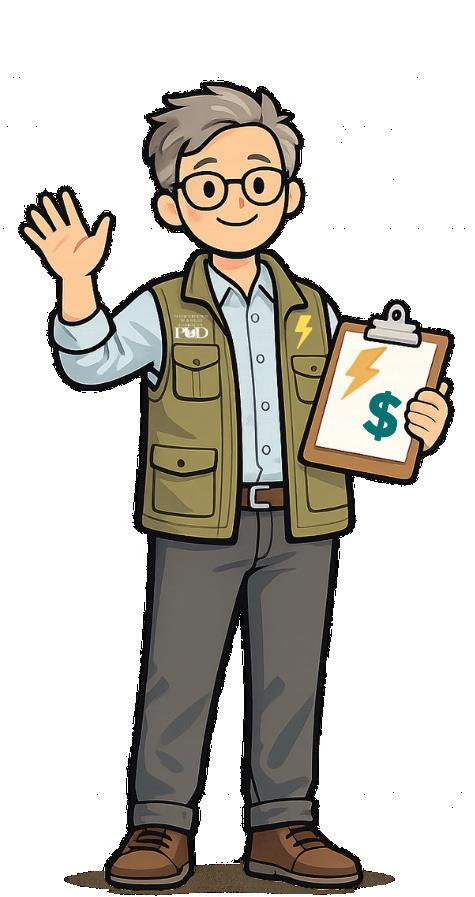
Your utility does a lot you may never think about, and that’s what Watt’s-What is here to explain. Meet Professor Watt, your guide to all things Northern Wasco County PUD. In this occasional series, we’ll pull back the curtain on topics that shape your electric service, from what goes into your rate to how your power gets from a dam on the Columbia River to the outlet in your kitchen.
Ah, good—you found a seat. I’m Professor Watt, and I’m delighted you’re here. Today we’re tackling a question I hear more than any other: What exactly am I paying for every month?
Take out your NWCPUD bill, and look at the charges section. You’ll notice your monthly bill has two main parts. Let’s talk about them one at a time.
Every month, regardless of how much electricity you use, you’ll see a flat $28 facility charge—about $1 a day. I know what you’re thinking: Why am I paying the same amount as my neighbor when they run their air conditioning all day and I don’t?
Fair question. Here’s the answer: The moment you flip a light switch, a remarkable amount of infrastructure has to be ready and waiting for you. That includes poles, wires, transformers, substations, meters and the crews trained to maintain them. That infrastructure exists whether you use 1 kilowatt-hour or 1,000. The facility charge is your share of keeping that system ready, reliable and running. Think of it like the base fee on a cellphone plan. It supports the network, regardless of how many calls you make.
Every residential customer-owner pays the same facility charge because every customer-owner benefits equally from

having a reliable system available at any moment. It’s your equal share in keeping the lights on for all of us. If you have more than one meter—say, one for your home and one for your shop—you’ll see a facility charge for each, because every connection requires that same infrastructure to be ready and waiting.
The other line on your bill is where your individual electricity use comes in. For every kilowatt-hour of electricity you use, you’re charged $0.062920. That’s just under 7 cents per kWh, one of the lowest rates in the region, I’m pleased to report.
A kilowatt-hour is a measure of how much energy you’ve consumed. Run a 100-watt light bulb for 10 hours, and you’ve used 1 kWh. Running your clothes dryer for about an hour is roughly 5 kWh. The energy charge reflects exactly how much electricity flowed through your meter during the billing period—no more, no less.
That’s why your bill changes from month to month. In winter, when heating systems work harder and longer to keep your home comfortable, you’re consuming more kilowatt-hours, and your energy charge reflects that. A higher winter bill isn’t a rate increase. It’s simply your usage going up. The rate stays the same year-round.
Now here’s where the lesson gets really interesting, because a lot goes into that number.
The single biggest factor for NWCPUD is the cost of purchased power. Your utility buys wholesale electricity from Bonneville Power Administration. BPA markets the output of the vast network of hydroelectric dams across the Columbia River system, including the one you can see right here from The Dalles, as well as the transmission lines that carry that power across the Pacific Northwest.
Hydropower is renewable, reliable and relatively affordable, which is a big part of why Pacific Northwest residents have historically enjoyed some of the lowest electric rates in the country.
That said, even hydropower isn’t immune to broader economic pressures. BPA has raised its wholesale power rates in recent years, and those increases directly affect utilities like NWCPUD and ultimately, your bill. Your not-for-profit, community-owned utility works hard every day to absorb what it can and push back against rising costs on your behalf.
Beyond purchased power, your bill reflects the cost of maintaining and upgrading the infrastructure that delivers electricity to you. But it’s not just about keeping up with today’s needs. NWCPUD must plan and build for tomorrow, too. A growing community means growing energy demands. Making sure our system is ready to meet those demands reliably takes investment today, not just when the need arrives.
The Balancing Act
Running a utility means walking a tightrope every single day. Lean too far toward keeping rates low, and you risk sacrificing the safety and reliability of the system. Lean too far toward building infrastructure beyond what’s needed, and customers bear the cost in higher bills. Your NWCPUD team, guided by your elected board of directors, works to find and hold that balance, making sure our customer-owners have power that is affordable, safe and reliable all at once.
So, where do these numbers come from?
Your rate is carefully calculated, not arbitrarily set. It’s based on a cost-of-service analysis, reviewed and approved by the board. This process looks at everything it costs to deliver power, from wholesale electricity purchases to infrastructure, staffing and the financial reserves needed to keep your utility on solid footing for years to come.
Our May 1 rate adjustment reflects increased power supply costs from BPA, inflation affecting materials and operations, and ongoing infrastructure maintenance that keeps power flowing. Your board purposefully timed this adjustment for May rather than winter months to minimize the impact when heating costs are already high.
Even with this adjustment, NWCPUD’s rates remain among the lowest in the Pacific Northwest.
Every dollar on your bill goes toward one thing: delivering safe, reliable and affordable power to you and your neighbors in Wasco County. There are no shareholders and no distant corporate office. It’s just your community-owned utility, keeping the lights on.
And that’s Watt’s-What. n









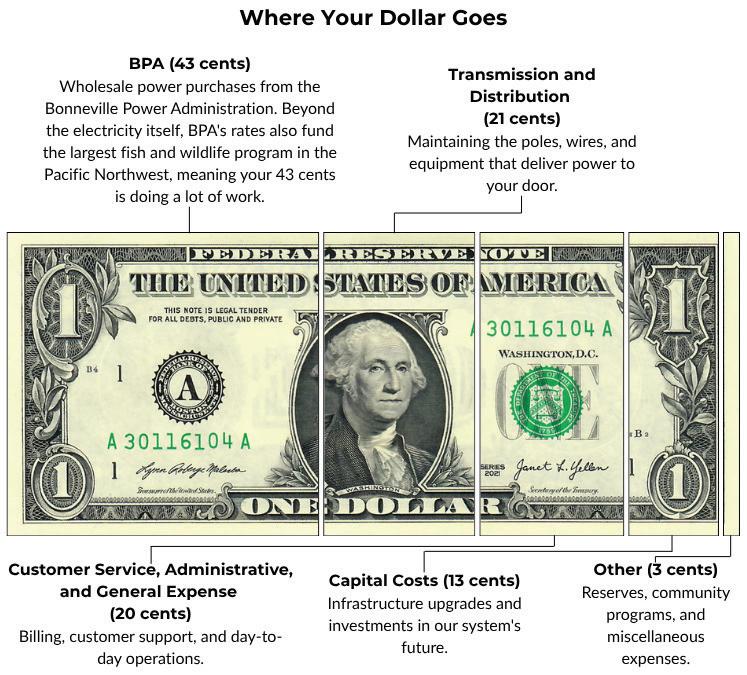
This is the view from Jane Phillips’ cabin deck on Craig Mountain. Only 45 minutes from her main home, the drive takes her family through wheat fields, farms and forest. After running a generator at the cabin for so many years, the Phillips family is now enjoying having power, thanks to Clearwater Power. PHOTO BY
JANE PHILLIPS
To submit your photo, email a JPEG to photos@pioneer.coop.
Include “Before You Go” in the subject line and share a bit about what inspired you to make your photo.
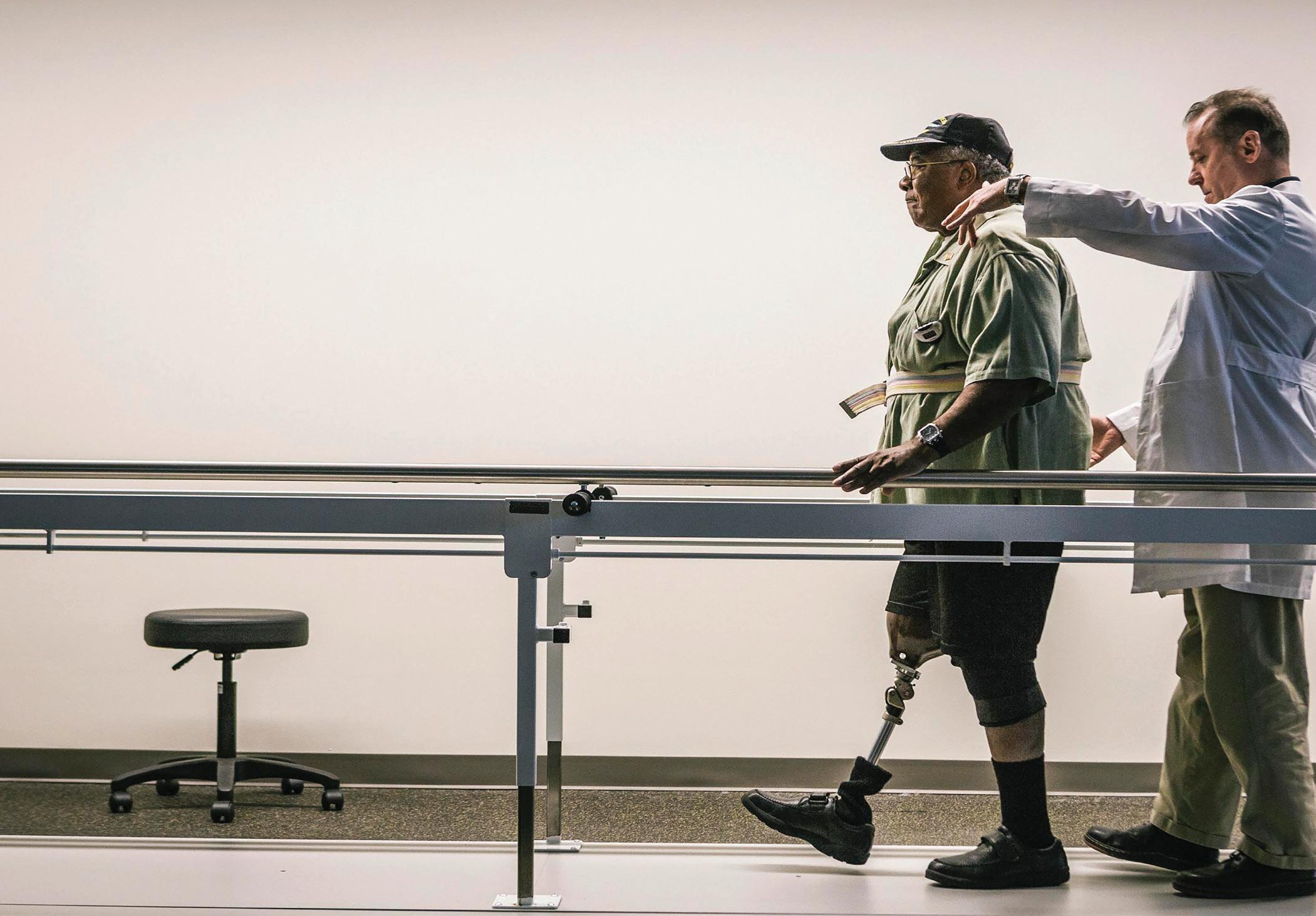






One in four Veterans lives in rural areas. Every day, we strive to extend our reach, to make sure they have access to the compassionate care and attention they need—from advanced telehealth services to community-based outpatient clinics. Because all our Veterans deserve it, no matter where they are. We believe it’s up to us to ensure they lead healthier, happier lives. Visit vacareers.va.gov to lend a hand.











When it’s you against nature, there’s only one tool you need: the tempered steel Stag Hunter from Stauer—now ONLY $59!

hat first crack of thunder sounded like a bomb just fell on Ramshorn Peak. Black clouds rolled in and the wind shook the trees. I had ventured off the trail on my own, gambled with the weather and now I was trapped in the forest. Miles from camp. Surrounded by wilderness and watching eyes.



I knew that if I was going to make it through the night I needed to find shelter and build a fire... fast. As the first raindrops fell, I reached for my Stag Hunter Knife

Stauer Pocket Binoculars -a $99 valuewith your purchase of the Stag Hunter Knife









Forget about smartphones and GPS, because when it comes to taking on Mother Nature, there’s only one tool you really need. Our stunning Stag Hunter is the ultimate sidekick for surviving and thriving in the great outdoors. Priced at $149, the Stag Hunter can be yours today for an unbelievable $59! Call now and we’ll include a bonus leather sheath!

A legend in steel. The talented knifemakers of Trophy Stag Cutlery have done it again by crafting a fixedblade beauty that’s sharp in every sense of the word. The Stag Hunter sports an impressive 5⅓" tempered German stainless steel blade with a genuine deer stag horn and stained Pakkawood™ handle, brass hand guard and polished pommel. You get the best in 21st-century construction with a classic look inspired by legendary American pioneers.









But we don’t stop there. While supplies last, we’ll include a pair of $99 Stauer pocket binoculars and a genuine leather sheath FREE when you purchase the Stag Hunter Knife.
Your satisfaction is 100% guaranteed. Feel the knife in your hands, wear it on your hip, inspect the craftsmanship. If you’re not completely impressed, send it back within 30 days for a complete refund of the item price. But we believe that once you wrap your fingers around the Stag Hunter’s handle, you’ll be ready to carve your own niche into the wild frontier.






BONUS! Call today and you’ll also receive this genuine leather sheath!









knife is beautiful!”

feel of this knife is unbelievable... this an incredibly fine instrument.” — H., Arvada, CO



2345 River Road
The Dalles, OR 97058
541-296-2226 Fax 541-298-3320 nwascopud.org
Board of Directors
Daniel Hammel
Roger Howe
Wayne Jacobson
Greg Johnson
Scott Taylor
General Manager and CEO
Roger Kline
Board Meetings
Meetings are usually at 4 p.m. the first Tuesday of the month at the PUD office, 2345 River Road, The Dalles.
The public is always welcome.
Our Mission
Be the leader in delivering reliable, affordable utility services guided by and accountable to the communities we serve.
Our Core Values
Our core values are the foundation of our organization. They represent our commitments to each other, direct our actions and provide the framework that shapes our culture as we navigate future challenges and seize emerging opportunities.
• Culture and Community
• Customer Service Excellence and Equity
• Innovation and Leadership
• Resilience
• Safety
• Transparent Operations
We’ve made real progress on safety here at Northern Wasco County PUD over the past decade—with how our crews work, how we train and our safety record. But that work doesn’t have a finish line.
Electrical Safety Foundation International has led this national safety campaign for decades, and its focus each May is practical—helping families and businesses look at the electrical hazards around them at home, in the garage and at work.
When we updated our strategic plan last year, we revisited our core values. Safety stayed—not by default, but because it shapes our planning, our procedures and how we look out for each other every day. This month, we get to take that conversation beyond our own crews and into the community.
One of the ways we do that is by kicking off our school electrical safety program this month, bringing presentations directly to elementary classrooms throughout our service territory.
Our safety administrator leads these visits and brings along a lineworker and our electrical safety demonstration table. For children who flip light switches every day without a second thought, seeing how electricity actually works—and what can go wrong—makes an impression a worksheet never could. These students then share what they learned with their parents.
Habits formed early tend to last. A third grader who learns to stay away from downed power lines or to never fly a kite near electrical equipment carries that knowledge for life. If you have a child at one of the elementary schools we’ll visit this month, ask them what they learned. I have a feeling they’ll have plenty to say.
If you don’t have a child in one of those classrooms, May is still a good time to do what ESFI recommends: Look around your home, garage and workplace for electrical hazards.
Roger Kline General Manager and CEO