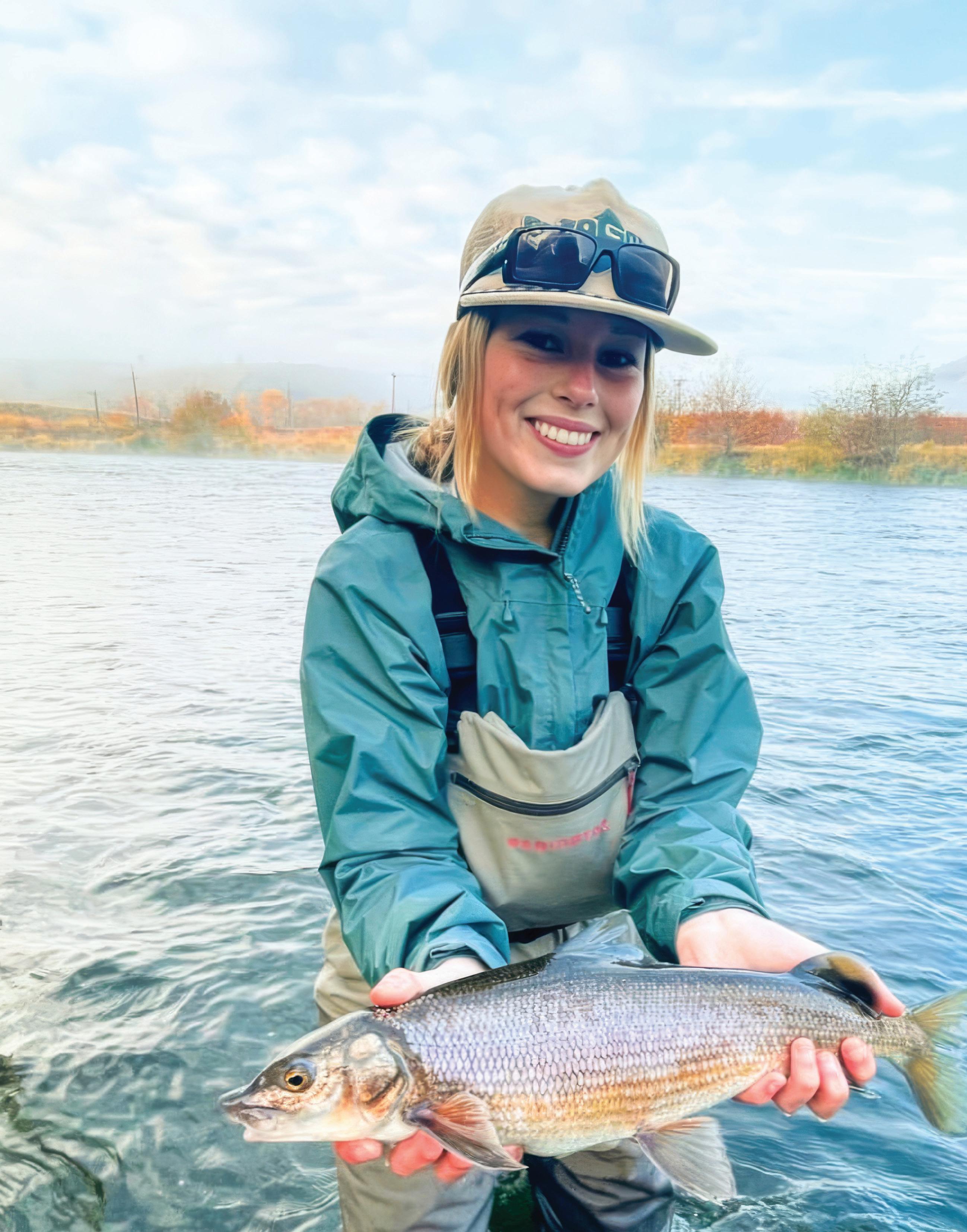
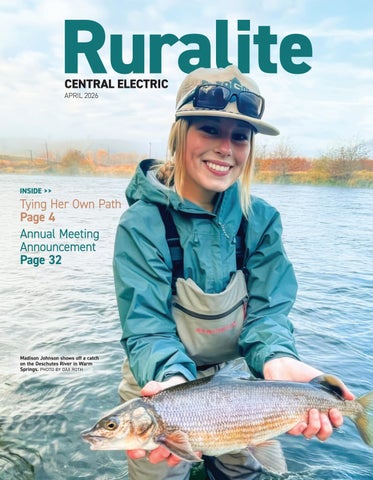
Madison Johnson shows off a catch on the Deschutes River in Warm Springs. PHOTO BY DAX ROTH



April 2026 • Volume 73, No. 4
CEO Michael Shepard
SENIOR VP OF CONTENT Leon Espinoza
EDITORIAL DIRECTOR Chasity Anderson, CCC
DEPUTY EDITORIAL DIRECTOR
Noble Sprayberry
SENIOR EDITOR Jennifer Paton, CCC
LEAD CONTENT EDITOR Victoria Hampton, CCC
ASSISTANT EDITORS David Herder, CCC; Sable Riley, CCC; Nina Todea, CCC
ASSOCIATE EDITOR
Valeri Saldanha Rosa
PUBLICATIONS PRODUCTION SR. MANAGER
Elizabeth Beatty
SENIOR PUBLICATIONS COORDINATOR
Alyssa McDougle
Ruralite (USPS 397-460) is published monthly for members for $5.73 per year, plus postage, by Pioneer Utility Resources Inc., 5625 NE Elam Young Parkway, Suite 100, Hillsboro, OR 97124—a not-for-profit Oregon cooperative corporation—to serve the communication needs of 46 consumer-owned electric utilities in Oregon, Washington, Alaska, Idaho, Nevada and California. Preferred periodical postage paid at Hillsboro, Oregon, 97123 and additional mailing offices. © 2026 Pioneer Utility Resources. All rights reserved. Reproduction in whole or in part without written permission is prohibited.
Postmaster: Send address changes to Ruralite, 5625 NE Elam Young Parkway, Suite 100, Hillsboro, OR 97124-6454
HOW TO CONTACT RURALITE
Subscription services:
Nonmember subscriptions $15 (U.S.) per year; $25 per year (foreign). Prepayment required. Allow 4-8 weeks for first issue. Be sure to identify which local edition you want to receive.
Address Changes:
Utility members, contact your local utility. Subscribers, call us at 503-357-2105, option 3, or email mailingdept@pioneer.coop.
Back issues:
Back issues and extra copies are $3. Prepayment required. Supply is limited. Be sure to identify edition, month and year. Call first if ordering back issues to check availability.
To contact Ruralite: Ruralite magazine is published by Pioneer Utility Resources, P.O. Box 1306, North Plains, OR 97133-1306; 503-357-2105; email: info@pioneer.coop. For more information, visit pioneer.coop.
DISPLAY ADVERTISING INQUIRIES
American MainStreet Publications
611 S. Congress Ave., Suite 504 Austin, TX 78704
800-626-1181 or 512-441-5200

For supplemental and interactive content, search @Ruralite on your favorite social media sites.
Two words from photographer Bee Bryne have stayed with me since I read this month’s Spotlight feature: Don’t wait.

She was talking about pet photography, but the advice reaches further than that. Bee has watched too many people put off booking a session—telling themselves they have time, that it feels silly, that the dog isn’t perfect enough—only to call her in a panic after a difficult diagnosis.
“You’ll never regret it,” she says, “but you’ll regret it if you don’t.”
That quiet urgency is at the heart of The Tilly Project, an international network of photographers dedicated to capturing the bond between people and their animals before it’s too late. What began in 2021 with one woman’s act of kindness for a grieving friend has become something far larger: a community of photographers who show up, often for little or no pay, in some of life’s most tender moments.
The images they make get framed. They get hung on walls. They get cried over, years later, by people who are deeply grateful someone thought to press the shutter. Read more on Page 12.
The phrase “Don’t wait” also surfaces, in a
quieter way, in our Up Close story about Donnie Fowler.
A Brookings, Oregon, resident approaching his 65th birthday, Donnie has spent decades making custom surfboards. He doesn’t do it to make a living but for the joy of it—for friends and family and the simple pleasure of riding something he built himself.
What caught my attention isn’t his technique, though the boards he’s shaped are remarkable. It’s his refusal to hold anything back.
“I don’t want to hoard what I know,” he says. “I want to help people.”
That kind of generosity, freely offering what cost him years to learn, is its own form of not waiting. Read more on Page 10.
Dave LaBelle invites us to slow down and find the visual music hiding in plain sight—in patterns, repetition and the rhythms we walk past every day without noticing. His reader challenge this month is worth accepting.
What are you waiting to do, make or say? April seems like a good time to start.
Reach me at editor@pioneer.coop.
Until next time, Chasity Anderson Editorial Director
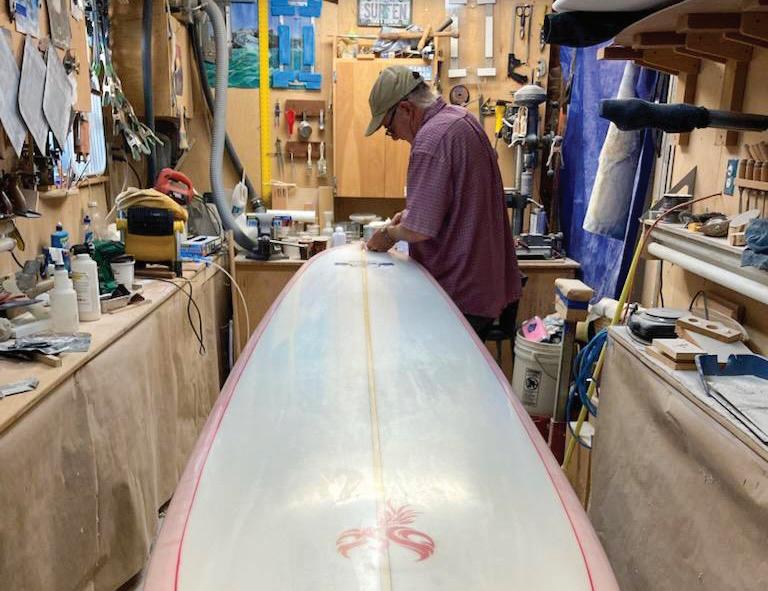
A Brookings, Oregon, man learned to make it himself Up Close, Page 10
The Tilly Project offers comfort to grieving pet owners Spotlight, Page 12
In
for
Kitchen, Page 16
While still
By Brent ten Pas
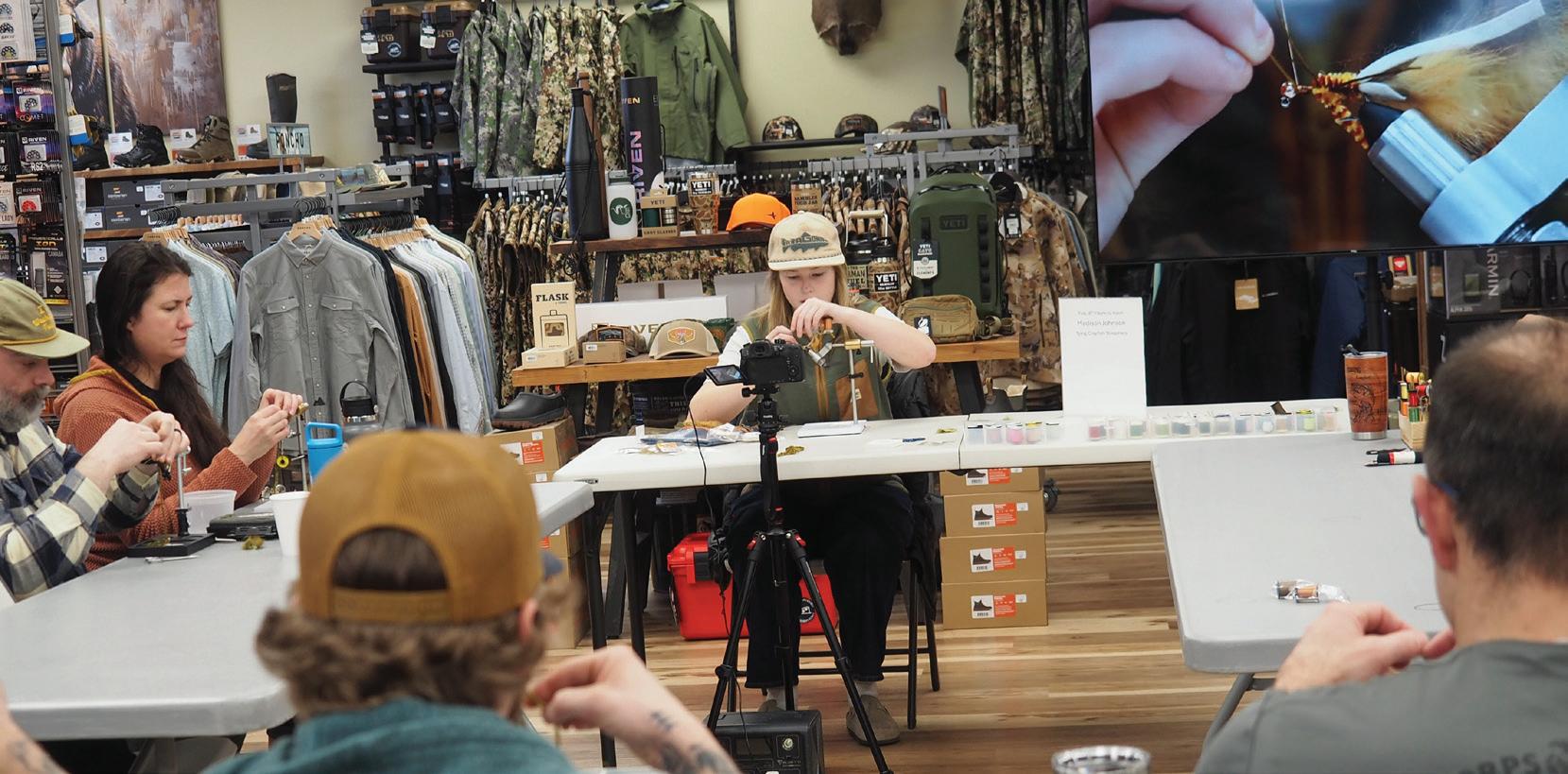
On a cold, wet Sunday morning, 10 adults sit hunched over folding tables inside a Redmond fly shop.
In front of them are vises, hooks and carefully sorted materials, all the tools to tie a crayfish streamer fly.
They are attending a free workshop hosted by Fin & Fire, which meets Sundays from January through March. But what makes this class unusual isn’t the fly. It’s the instructor.
All eyes are fixed on a poised 15-year-old as she demonstrates how to tie the pattern. A video camera projects every step on a big screen for additional reference.
At a tender age, Madison Johnson has already established herself as a seasoned veteran whose tiny creations are in big demand.
“The feedback I have received from the dozens of tyers that have attended Madison’s tying events over the last two winters is that she is highly skilled and professional, patient, precise, and handles
the materials very efficiently,” Fin & Fire’s store manager Paul Snowbeck says. “The skills that she possesses are rare with tyers that have been doing this for many years.”
Madison’s story began not on the river but in front of a screen.
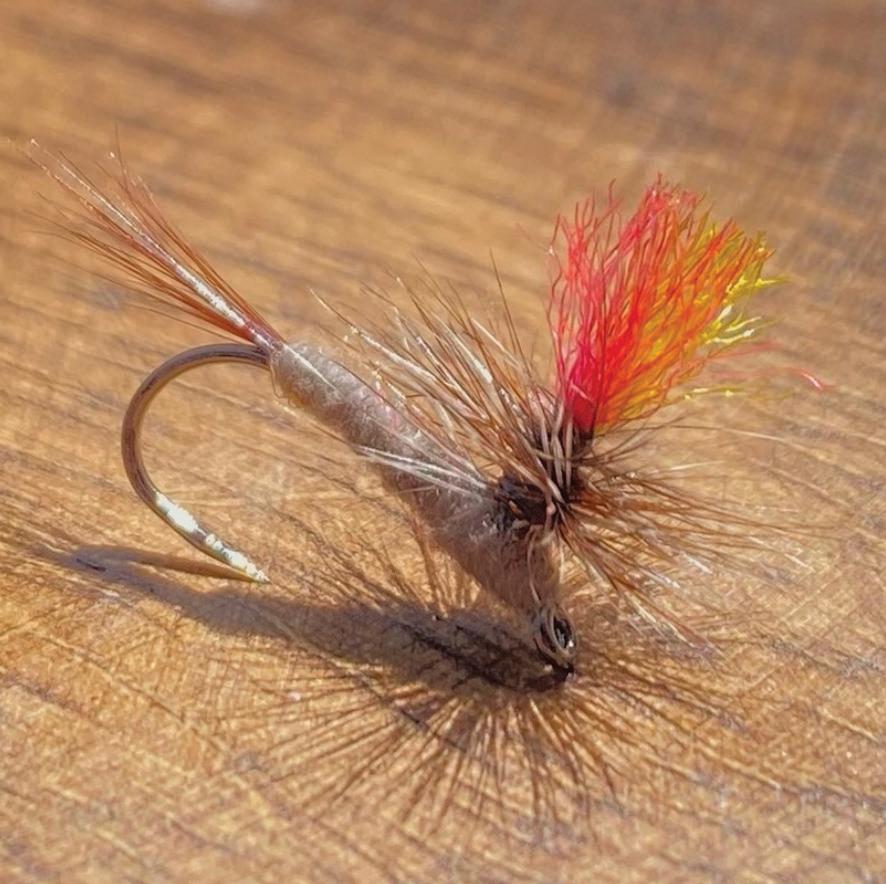
Around age 9, Madison watched a flyfishing documentary. What captivated her wasn’t just the fishing—it was the artistry of the flies themselves.
“I was intrigued by how cool the process was to tie the flies,” she says.
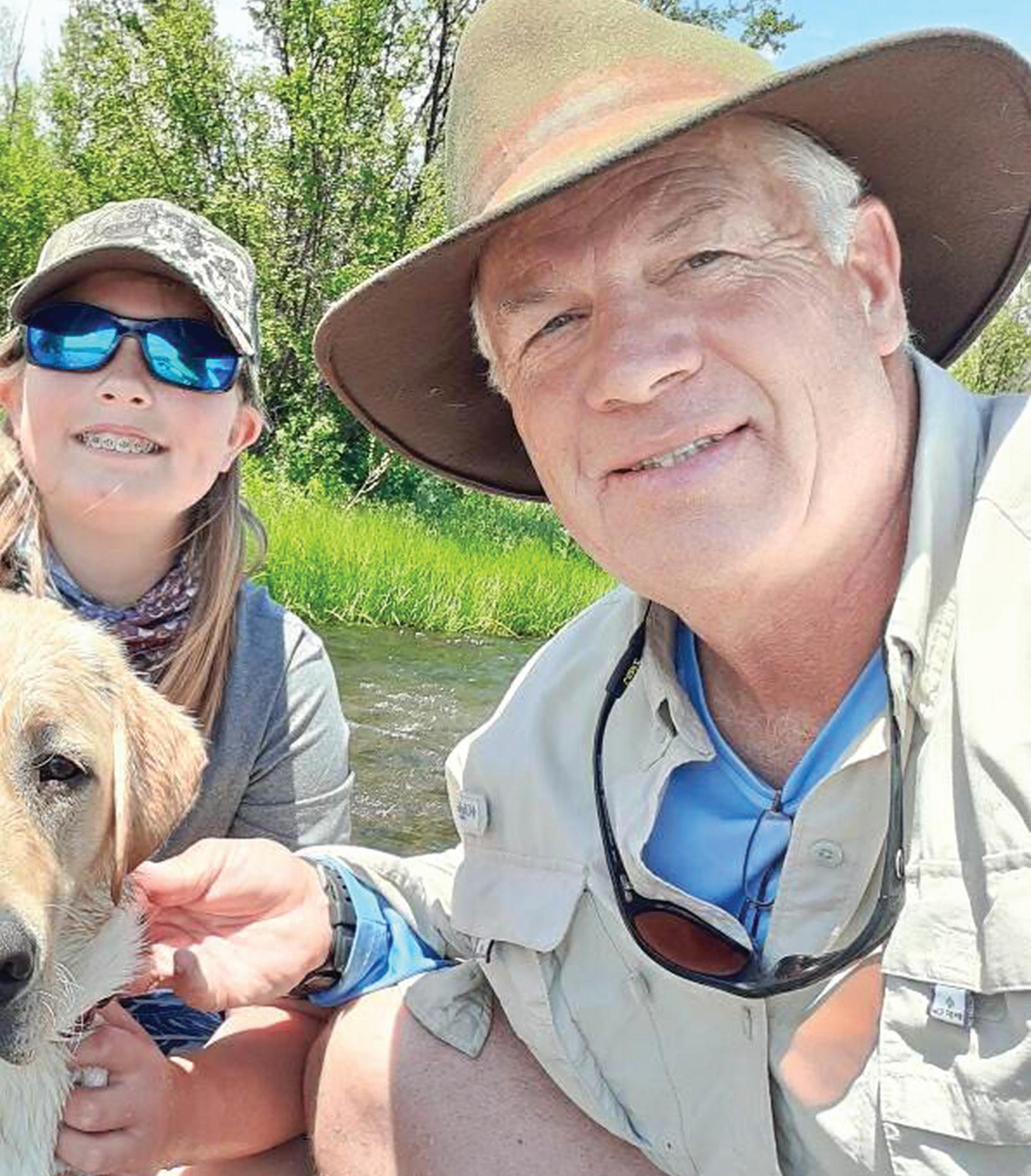
Under the guidance of her grandfather Mark Johnson, Madison tied her first fly— a blue damsel fly pattern, primarily used to catch trout.
“I didn’t want to fish it because I thought it was just so pretty,” Madison says.
Soon, tying turned into fishing. Mark and Madison would practice casting a fly rod in the front yard before venturing out on the Madison River in Montana, renowned among anglers for its trout.
The time spent together created a deep bond. They shared a love for nature and outdoor adventures. Madison also enjoyed
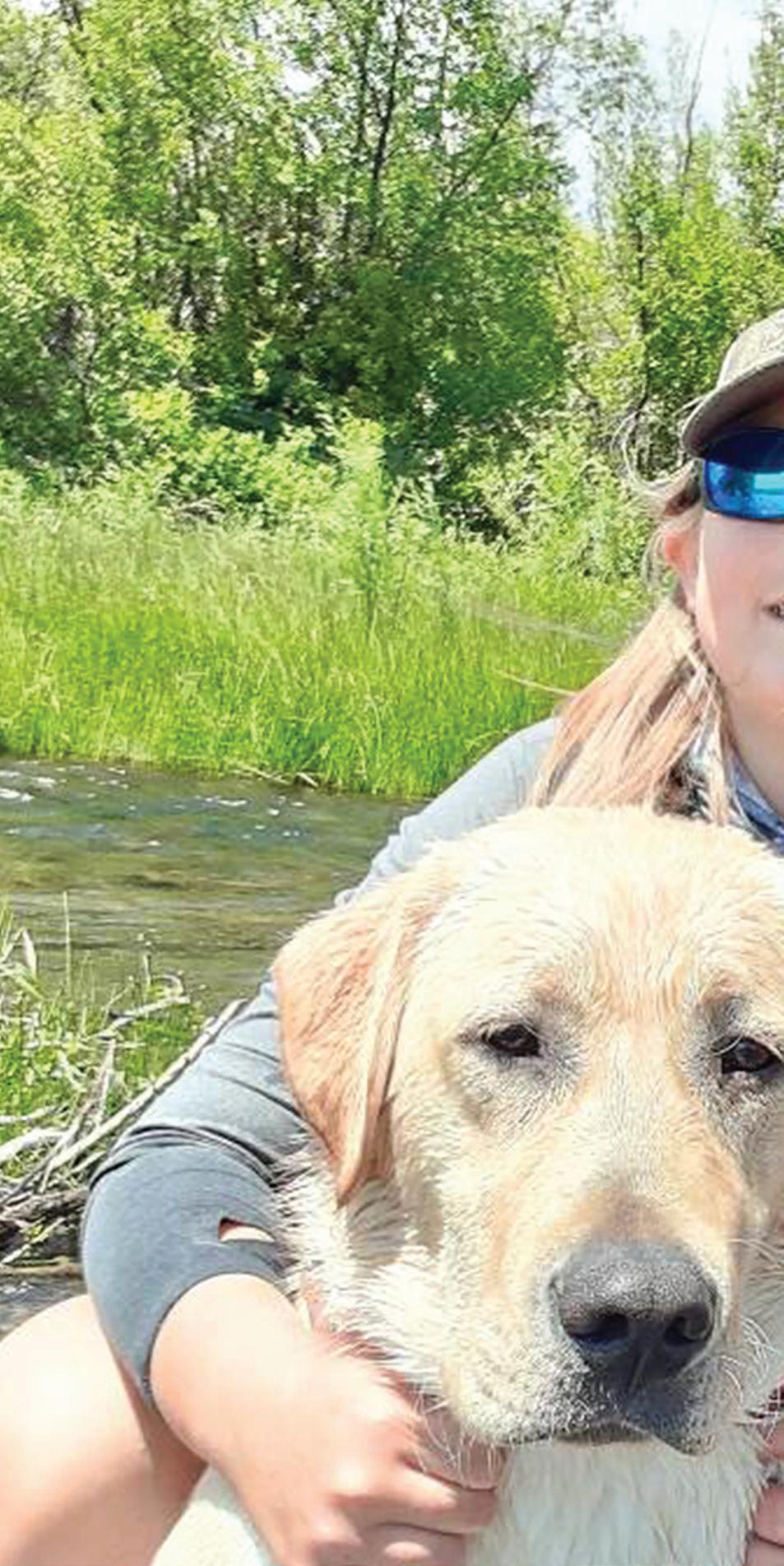
hearing about Mark’s experiences as a National Guard pilot flying F-16 fighter jets.
On one early trip with him, she remembers delivering a perfect cast—only to miss a large rising trout.
Instead of being frustrated, she was excited.
“It was so fun waiting for the moment to happen,” Madison says.
As her fly-tying technique sharpened, so did demand.
After being introduced to a local fly shop, Madison brought in samples of her work. Shop staff were impressed with the 11-year-old’s work—especially with her balanced leech patterns, a weighted fly designed to sit level in the water.
Madison tied in bulk—often 75 flies at a time—supplying patterns for the store to display.
Madison Johnson demonstrates fly-tying during a workshop at Fin & Fire Fly Shop in Redmond. PHOTO BY BRENT TEN PAS
“I’m not really sure how fast they were selling,” Madison says. “But they kept ordering.”
Her efficiency improved, too. What once took 12 minutes per fly dropped to about three.
Madison eventually took her talent to the competitive level. At a Bozeman fly-tying competition, participants had to invent an original pattern using selfselected materials within a limited time. Around 30 tyers competed—nearly all adults, decades older. The judging process focused on creativity, craftsmanship and fishability.
Madison submitted an original sculpin pattern—a streamer designed to imitate the small, bottom-dwelling fish larger trout feast on.
At 13 and the only girl in the competition, Madison earned third place, an achievement that validated her artistry and technical skills. Her entry secured a
spot in the Solitude Fly Co. catalog and was credited and sold commercially.
Encouraged by growing demand, Madison launched her own business: the Madison River Fly Co., a nod to her name and the river where it all began.
Her mother, Kristen, a graphic designer, created the company’s logo.
Orders expanded beyond family and friends as the company’s Instagram presence grew.
Her first big customer came unexpectedly—the substitute teacher for her eighth-grade English class.
“He had these glasses that snap back in half in the middle part,” Madison says. “I told him they looked like fly-fishing glasses. And he was like, ‘Yeah, I do a lot of fly fishing. I’m actually a guide.’”
Madison told him she ties flies and has her own business.
“He was like, ‘Oh, that’s so cool. I’d love to support your business,’” she says.

Not only did the teacher place a large order, but he has also kept ordering and spreading the word to his clients.
The family relocated from Montana to Redmond two years ago. Madison quickly embedded herself in the local fly-fishing community, teaching at Fin & Fire and testing patterns on the Deschutes River while balancing life as a typical teenager.
Now a high school sophomore, Madison juggles school, softball and playing electric guitar while thinking about her future.
Inspired in part by her grandfather’s military service, she’s considering the Air Force or Coast Guard. She’s also drawn to becoming a firefighter—particularly for the U.S. Forest Service.
“I feel like since I love nature so much, there would be fun in protecting it, too,” Madison says. n
For more information, visit madisonriver.fly.co on Instagram.
Lineworkers
Lineworkers have a dizzying array of gear they carry and wear to safely do their climbing hooks and hot sticks, have been around since the early days of electricity, been updated and improved over the years. Others, like wireless headsets and more modern innovations. Here’s a comprehensive (though not exhaustive) look crews use to stay safe.
Lineworkers have a dizzying array of gear they climbing hooks and hot sticks, have been been updated and improved over the years. more modern innovations. Here’s a comprehensive crews use to stay safe.
climbing been updated more modern crews use
have a dizzying climbing hooks and hot been updated and improved more modern innovations. crews use to stay safe.
Electric linework is dangerous, and crews use a full outfit of protective equipment to stay safe
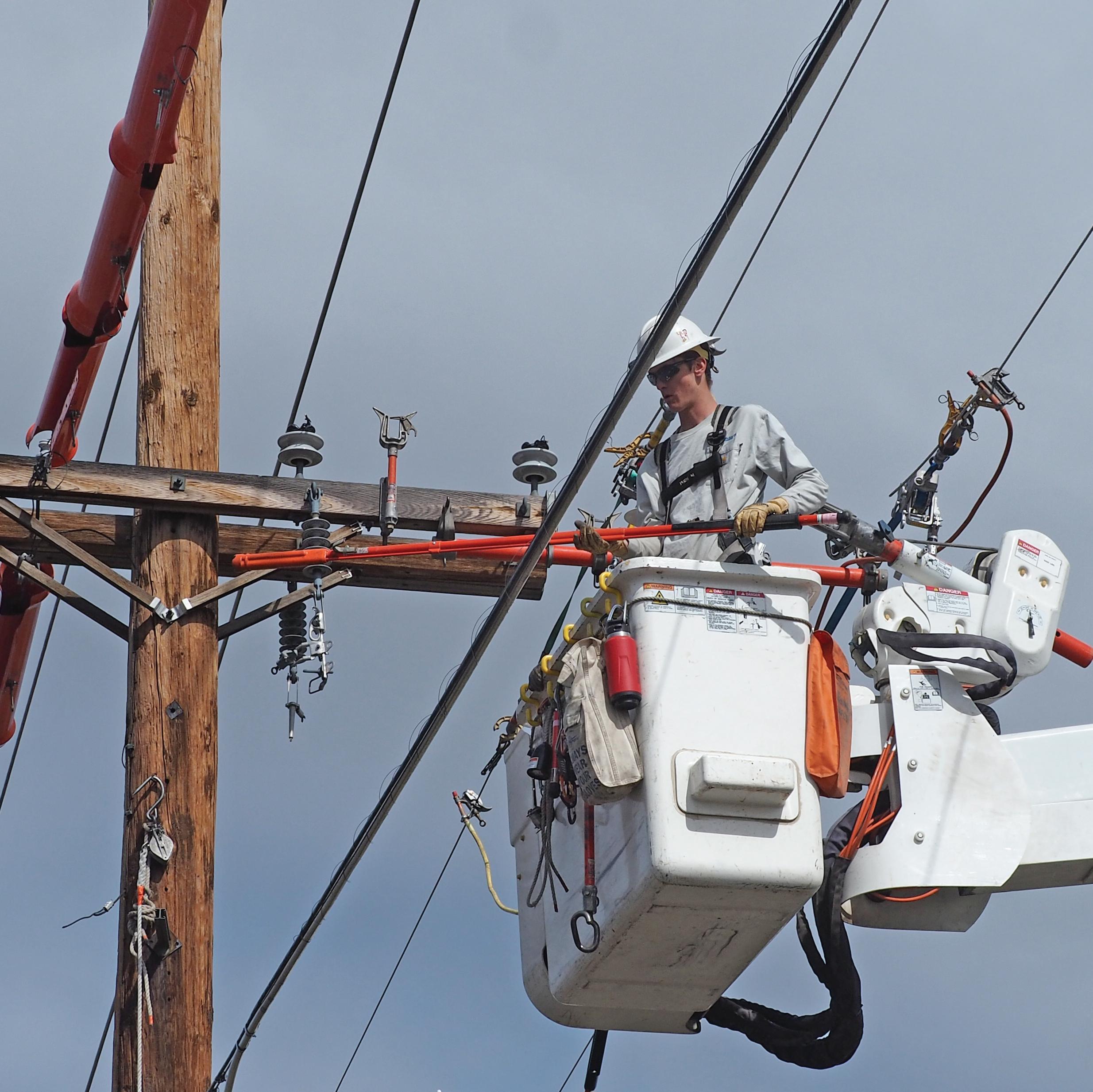
Lineworkers have a dizzying array of gear they carry and wear to safely do their jobs. Some items, like climbing hooks and hot sticks, have been around since the early days of electricity, though they’ve been updated and improved over the years. Others, like wireless headsets and arc-rated clothing, are more modern innovations. Here’s a comprehensive (though not exhaustive) look at the tools line crews use to stay safe.
can protect the gloves from being damaged during use and prolong their life.
By David Herder
Face shield
Keeping the lights on is dangerous work.
Eye protection
resists burning when exposed to an arc flash.
Hard hat
oltageV
Wireless headset
Utility line crews work near—and with— equipment that can carry thousands of volts of electricity, and linework frequently appears on lists of America’s most dangerous jobs.
Arc-rated and fire-retardant
Eye protection
Hard hat
Hard hat oltageV tester
oltageV tester
Wireless headset
Hard hat
oltageV tester
Arc-rated and fire-retardant clothing
Neck gaiters
Hoods or hard
Shirts
Hard hats and steel-toe boots give lineworkers extra protection from falling tools, equipment and debris. Lineworkers can also wear insulating helmets that prevent high-voltage shock.
Neck gaiters
Hoods or hard hat liners
Every time lineworkers use their highvoltage gloves, they field test them to make sure they are properly insulated. This means doing a visual test to look for discoloration, cuts or holes. Lineworkers can also trap air inside the glove—often by rolling up the bottom to push air into the palm and fingers—to feel and listen for any escaping air.
oltageV tester
Pants
Fortunately, today’s lineworkers have many tools to help them stay safe. Typically, lineworkers wear about 50 pounds of gear, with much of it designed to insulate against electrical shock and protect against other hazards.
Rubber sleeves
Fall-protection
Hot High visibility safety
Rubber
Hot stick
There are regional regulation differences on which tools to use and when, so a lineworker’s gear varies from state to state.
Eye protection, like face shields and glasses, can protect lineworkers’ vision from bright flashes if a live wire produces a bright arc.
Shirts
Hot stick
Pants
Rubber sleeves
Hot stick
Hot stick
From hard hats to boots, hot sticks to gloves and even the clothes they wear, lineworkers’ equipment is designed to ensure everyone goes home safe.
Wire tongs
Hand
Fall-protection harness
Line hoses and blankets
High visibility safety vest
Wearing insulated gloves helps prevent electricity from finding a path into a lineworker’s body. Sometimes, crews wear rubber sleeves extending further up the arms for additional protection.
High visibility safety vest
High visibility safety vest
One way to steer clear of the danger coming from electric equipment is to physically be farther away and work on lines with poles called hot sticks. These tools date back to the 1910s when early lineworkers fashioned them out of wood. Today’s hot sticks are primarily made of fiberglass, a nonconductive material. Hot sticks are often designed to be able to work with lines carrying more than 100,000 volts. They are commonly 6 to 10 feet long, but some can extend to more than 40 feet.
High visibility safety vest
Rubber gloves
Despite working hard to prevent them, lineworkers can be exposed to arc flashes—when electric current flows through the air between conductors or flows toward the ground.
Pole tags
There are two types of high-voltage gloves. Type I is made from natural rubber, while Type II is made from synthetic rubber. Type II is more commonly used, as it also offers ozone resistance.
Rubber gloves
Rubber gloves
Rubber gloves
High-voltage gloves are rated in classes of the amount of voltage to which they have been proof-tested. The lowest rating is Class 00—approved to protect workers from 750 volts of direct current. The highest rating is Class 4, which is proofed for 54,000 volts.
Lineworkers use multiple types of hot sticks to accomplish a wide range of jobs. Some have hooks to grab onto lines, while others have claw-like heads that can open and clasp onto lines. Some are always one length, while others telescope to reach farther away.
Hand line and hoist
Standard fabrics can catch on fire during an arc flash. Lineworkers wear clothes made from fabrics that are either naturally flame resistant or have been treated to prevent ignition.
There are two different safety terms for these clothes. Flame resistant means the clothing will not catch on fire when subjected to heat. Arc-rated clothing
Rail boards with bucket
Climbing
Tool holders and
If an insulating glove has any leak, cut or pinhole, it opens a path for electricity to shock a lineworker.
Hand line and hoist
Hand line and hoist
To protect these high-voltage gloves, lineworkers often wear an outer pair of leather gloves. The extra layer of leather
Rail boards with bucket lips
Climbing hooks
Gear bags
Additional cover up
Steel-toe
Personal grounding
Tool holders and buckpacks Gear bags
Climbing hooks
Climbing hooks
Additional cover up and PPE equipment Personal grounding
Steel-toe boots
Steel-toe boots
Lineworkers spend lots of time up in the air working on power poles and lines. Whether this means climbing poles or using a bucket truck, lineworkers use fallprotection harnesses any time they are working more than 4 feet off the ground. n
Steel-toe boots
Hand line and hoist
Climbing hooks
Steel-toe boots
Lineworkers have a dizzying array of gear they carry and wear to safely do their jobs. Some items, like climbing hooks and hot sticks, have been around since the early days of electricity, though they’ve been updated and improved over the years. Others, like wireless headsets and arc-rated clothing, are more modern innovations. Here’s a comprehensive (though not exhaustive) look at the tools line crews use to stay safe.
Lineworkers have a dizzying array of equipment that keeps them safe.
dizzying array of gear they carry and wear to safely do their jobs. Some items, like hot sticks, have been around since the early days of electricity, though they’ve improved over the years. Others, like wireless headsets and arc-rated clothing, are innovations. Here’s a comprehensive (though not exhaustive) look at the tools line
Here’s a comprehensive—though not exhaustive—look at the tools they use:
Face shield
Face shield
Hard hat
Voltage tester
Hot stick
High visibility safety vest
Rubber gloves
Eye protection
Eye protection
Wireless headset
Arc-rated and fire-retardant clothing
Wireless headset Wire tongs
Arc-rated and fire-retardant clothing
Neck gaiters
Neck gaiters
Hoods or hard hat liners
Hoods or hard hat liners
Shirts
Shirts
Pants
Pants
Rubber sleeves
Rubber sleeves
Fall-protection harness
Fall-protection harness
Wire tongs
Line hoses and blankets Pole tags
Hand line and hoist
Climbing hooks
Steel-toe boots
Rail boards with bucket lips
Rail boards with bucket lips
Tool holders and buckpacks
Gear bags
Tool
Gear
Additional cover up and PPE equipment
Additional
Personal
Personal


























Upgrade your bathroom, upgrade your life. With a new walk-in shower, you can make sure your bathroom ages as gracefully as you do. This shower was designed by experts, with you in mind, focusing on safety and convenience when it matters most. Discover how a walk-in shower can help reduce the risk of falling, giving you the freedom to enjoy your bathroom again.

✓ Commercial Grade Non-Slip Floor
✓ Easy-to-reach Shower Wand
✓ Professionally Installed in 1 day
✓ Fold Down Safety Seat
✓ Luxurious 8" Rainfall Shower Head
✓ Ergo L Shaped Grab Bar
✓ Lifetime Warranty
✓ Optional Barrier Free Wheelchair Accessible



By Vicki Hillhouse
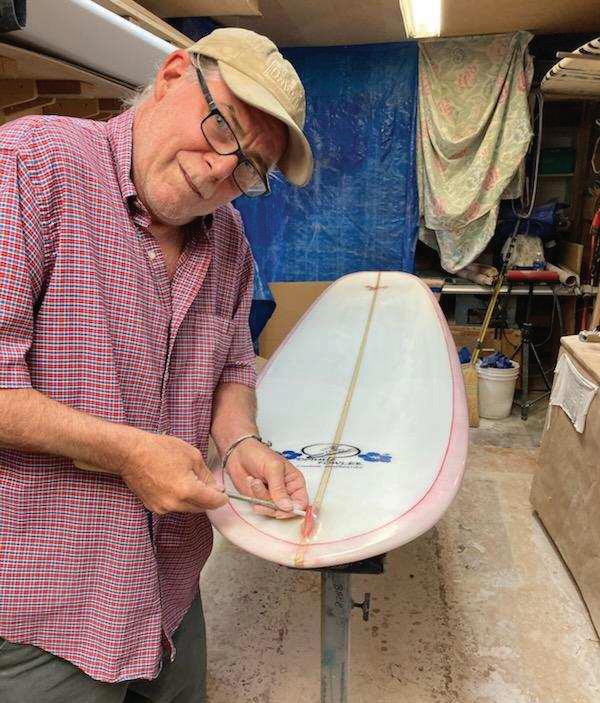
There was no such thing as an internet tutorial when Donnie Fowler set out to build his first surfboard. His reference points came from examining his own board, riding waves and pushing a broomstick. The latter had nothing to do with shaping a surfboard, but it’s how he was introduced to a world of creative possibilities. More on that in a moment.
Donnie didn’t know how to glass a board—the process of fiberglassing and sealing a foam blank. In one of his early but most memorable errors, he used hotcoat resin instead of a lamination coat. Anyone who works with resin can imagine how much sanding it took to correct that mistake after the resin quickly set.
“It took me about a month or so to figure out all that,” Donnie says. “All I had were pictures of the surfboards I had to look at. Really, there was nobody to talk to about how to fix any of this. I had to do a lot of thinking.”
In the more than three decades since, Donnie honed his style as a backyard shaper—often a couple of hours from the ocean. He lost count of the number of surfboards he’s finished long ago. It’s a giant feat in an industry dominated by mass production.
Donnie, who now lives in Brooking, Oregon, makes boards for friends, family and anyone who find out he shapes, driven largely by the joy of creating a customized experience atop the waves of the Pacific.
“I’ve tried doing it for a living, but you don’t make money at it,” he says. “It’s the big facade. Everybody thinks, ‘Oh, you’re a shaper. You make a lot of boards, so you must make money at it.’”
Before his early retirement, Donnie worked at the wood products manufacturer Timber Products in Medford,
Oregon. His career allowed him to finance his hobby and passion, perfecting the longboards he customizes for fast nose-riding.
Donnie turns 65 this month, and he plans to continue making boards. But he also hopes to help others interested in learning the craft.
“I don’t want to hoard what I know,” he says. “I want to help people.”
Sharing ideas, resources and knowledge is a concept Donnie picked up at a young age, along with that aforementioned broomstick.
His father made surfboards in Santa Cruz, California, in the 1960s and early ’70s. His surfboards were unusual and innovative—hollow boards meant to be light but ultimately ill-fated in the market. When Donnie was around 7, he’d go to the warehouse with his dad and make a little money cleaning. In the process of sweeping the floors, he’d hear the work buzz about designs, fins and pop outs from preformed molds.
“All this information was coming in to me,” he says. “I had no clue about things. All I knew was I had plenty of surfboards.”
The surfboard vision didn’t pan out, and the family moved north to Medford. Oregon held promise for the next thing, but beach time was not in Donnie’s immediate sights.
“I remember my dad asked me if I wanted to take a bunch of surfboards,” he says. “It was like a 2 1/2-hour drive to the coast. I told him, ‘No way.’”
Donnie didn’t surf regularly for a long time, until years later when his friends got an itch for the sport and pulled him back into it.
As is common in surfing, the wave riding took a toll on his boards. Stress cracks were increasingly common. He turned to his father for help with repairs until one day he was struck by the wisdom of a friend in the group: It’s a lot easier to make a surfboard than to fix one.
Donnie sought guidance from other shapers, but finding others making the same kinds of boards he wanted to make and willing to share their techniques proved tough. So, he took what he could glean and got started.
“I found I really have to make the board in my head from the very beginning to the very end first,” Donnie says. “There are so many steps. If you skip a step, then you create more problems down the line.”
He took detailed notes every inch of the way so he could refine the process.
“You know, I didn’t have a lot of money at first,” he says. “I ended up making a lot of my own tools. I had to really think about how to go about making calipers. I tried to experiment with little jigs for making the right angles. It took a lot of learning.”
Donnie attributes his innovative spirit to his father and those overheard conversations about bringing an idea to life.
“I got the experimentation part of trying things from my dad,” he says. “That’s just been my whole life thinking outside the box.”
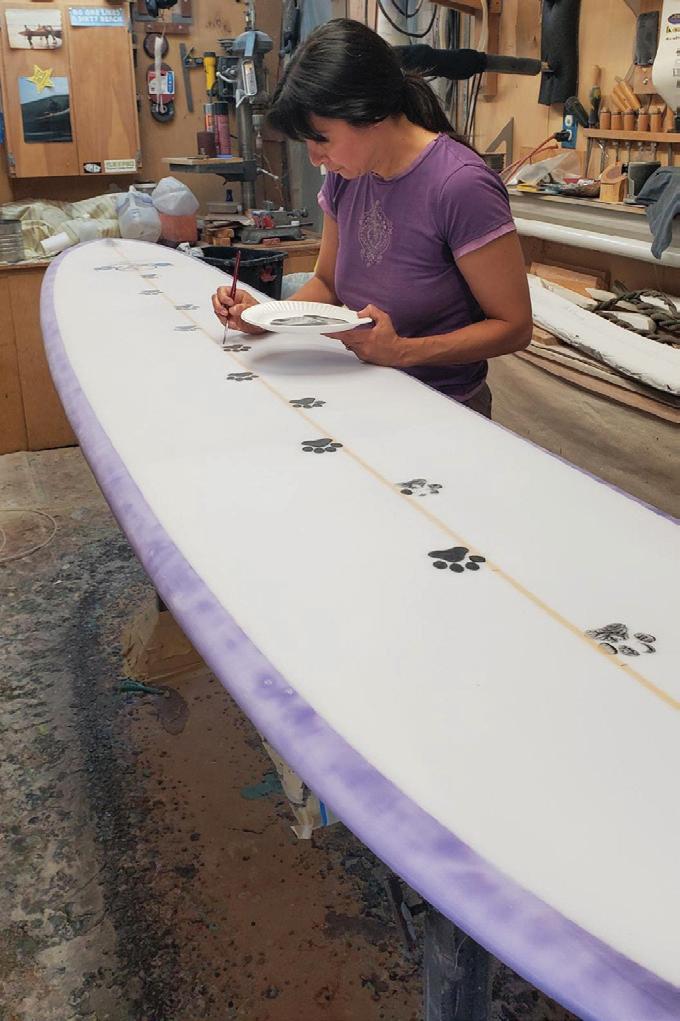
Donnie’s garage became his work lab, where he experimented with additives to strengthen the polyurethane resin and played with ways to create drag or vary the concave surface of the boards.
Scores of his boards are surfed in the region’s waters. Many are owned by his friends.
For a while, it was hard to tell whether Donnie preferred shaping or surfing more. But in his retirement years,
the answer is easy—surfing on one of his own boards.
“I feel like they’re fast,” Donnie says. “They’re not like any other longboard. The nose has a really sharp edge, then with the chined rail, it creates more lift.
“To me, I feel like my surfboards are alive. They have this comfortable feeling to them. They’re nice and smooth. They react well.” n
Email Donnie at waveriderdwf@gmail.com.
By Ginger Meurer
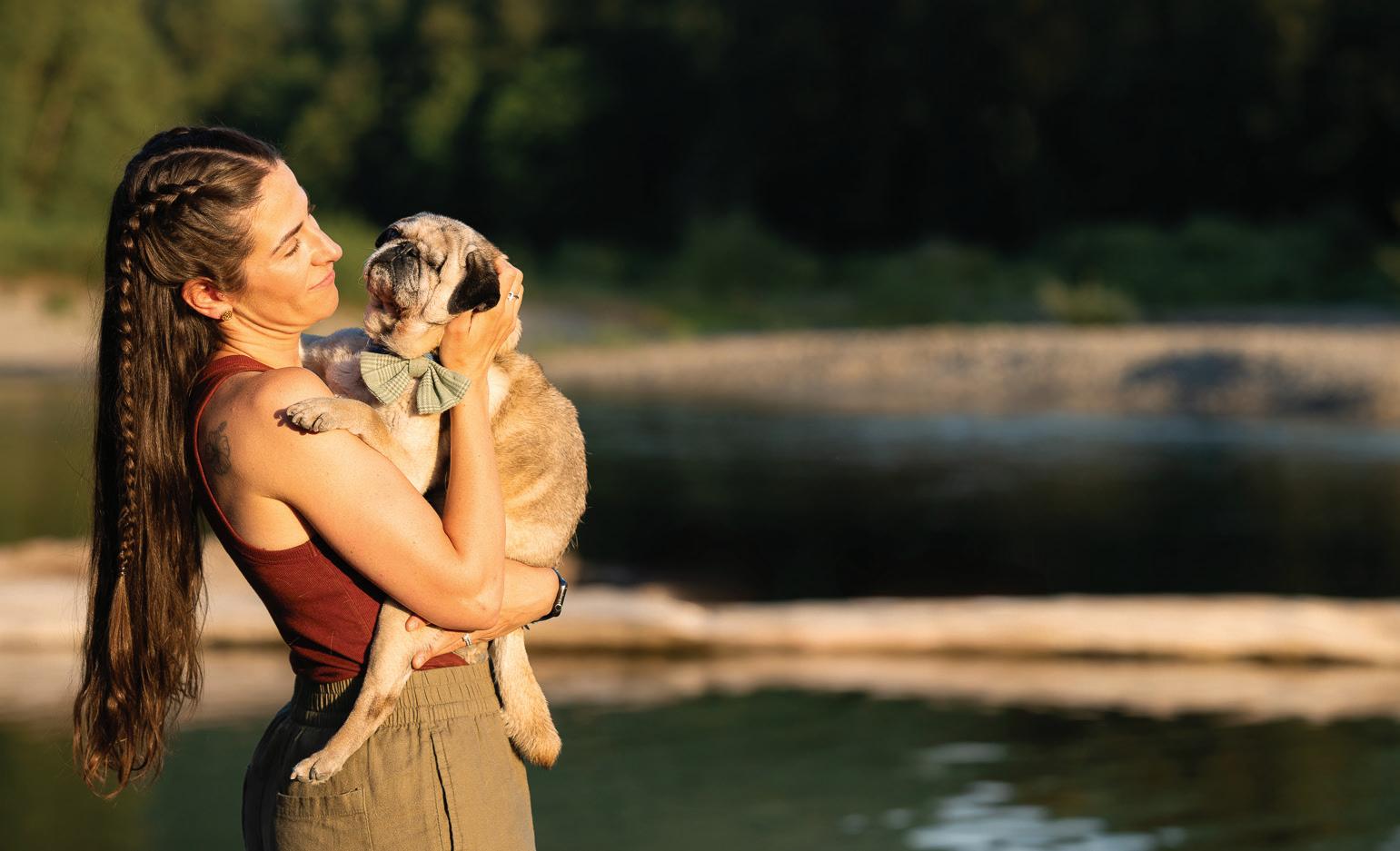
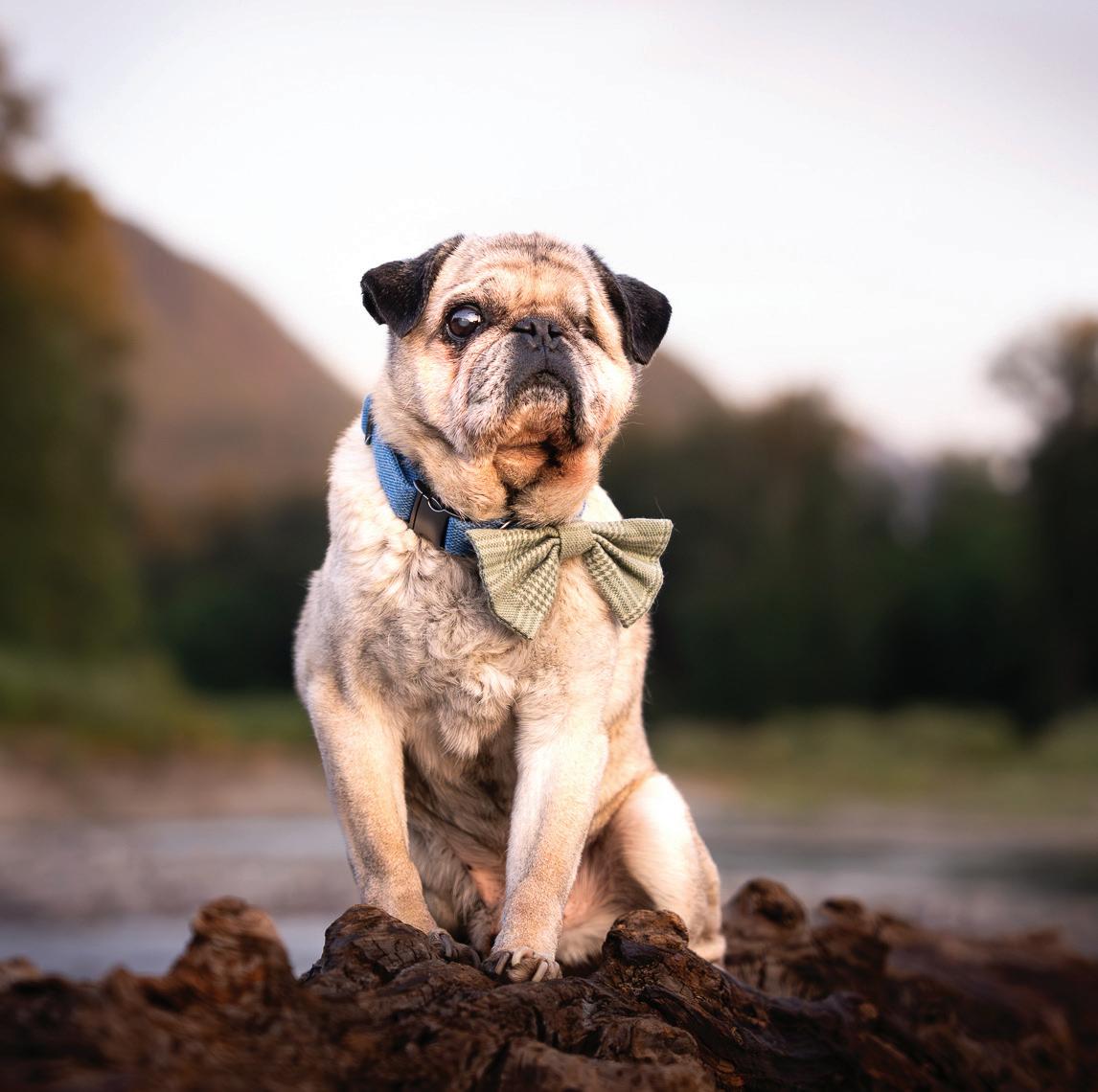
In 2021, when a friend faced the impending death of a pet and asked where to find a nice urn, Lauren Kennedy offered her something different: an end-of-life photo session.
Lauren knows the pain of losing a pet. In 1988, she was heartbroken when her cat, Tilly, died. With her friend’s permission, Lauren shared the photos on social media, and the response was overwhelming. She couldn’t handle the hundreds of requests pouring in from pet owners seeking similar sessions, so she created a Facebook page to mobilize other
photographers willing to help.
That was the start of The Tilly Project, which has grown into an international network of photographers determined to capture the love between pets and their owners before it’s too late.
Photographers can apply to join the project, and those approved are listed in a database at thetillyproject.org, where pet parents can search for someone nearby.
The Pacific Northwest has dozens of participating photographers. Following are just a few:
Dre McAuley, of McAuley Photography (mcauleyphotography.com) in Puyallup,
Washington, draws on personal and clinical experience in her Tilly Project sessions. Her inspiration began with the loss of her dog, Valkyrie. The Newfoundland was Dre’s shadow.
When Valkyrie got sick, friends sent Dre to The Tilly Project website, which she says “ignited hope.” Seven days after Valkyrie died, Dre also lost her mother. She applied to graduate school to earn a license in mental health counseling, becoming the person she wishes she’d had to support her through grief.
Today, Dre brings photography and emotional support skills to her Tilly Project sessions. She also provides grief coping fliers and helps people identify resources to navigate difficult moments.
“Especially if they’re elderly or don’t have a lot of support,” she says. “Being, again, that person I thought I needed.”
Dre has captured the final moments of a few pets. One was a 24-year-old horse. Another was a 19-year-old deaf and blind

dog who couldn’t walk or even stand. Dre and the dog’s owner took her for one last visit to the beach. Then, inside the beach house, surrounded by family and friends, Dre captured the dog’s last moments.
Dre navigated those experiences by using skills she learned as a counselor.

Dre navigated those experiences by using skills she learned as a counselor, telling pet owners to take their space and feel what they need to.
“But I needed to be the person that they needed at the time,” she says.
Chelsea Smith, of Thistle & Rose Portraiture (unscriptedphotographers.com/ thistleandroseportraits) in Eugene, Oregon, found The Tilly Project by accident. She saw a social media post seeking help to fulfill a wish for the owner of a threelegged, cancer-diagnosed dog.
End-of-life photography has always interested Chelsea, so she contacted the dog’s owner and offered her photography services. They set up a session for later that week.
The next day, Chelsea received a cancer diagnosis for her own cat. The one-eyed feline had already survived cancer as a kitten. But this time, there was no reprieve.
“I had to euthanize him that day,” she says.
She wondered how she would get through the scheduled photo session.
“I was like, ‘I’m going to be a mess,’” she says. ‘But I’m sure they’re going to understand. It will be fine. I’m just going to do it anyway, even though it’s going to be really raw for me.’ It was very emotional. We were all a mess.”
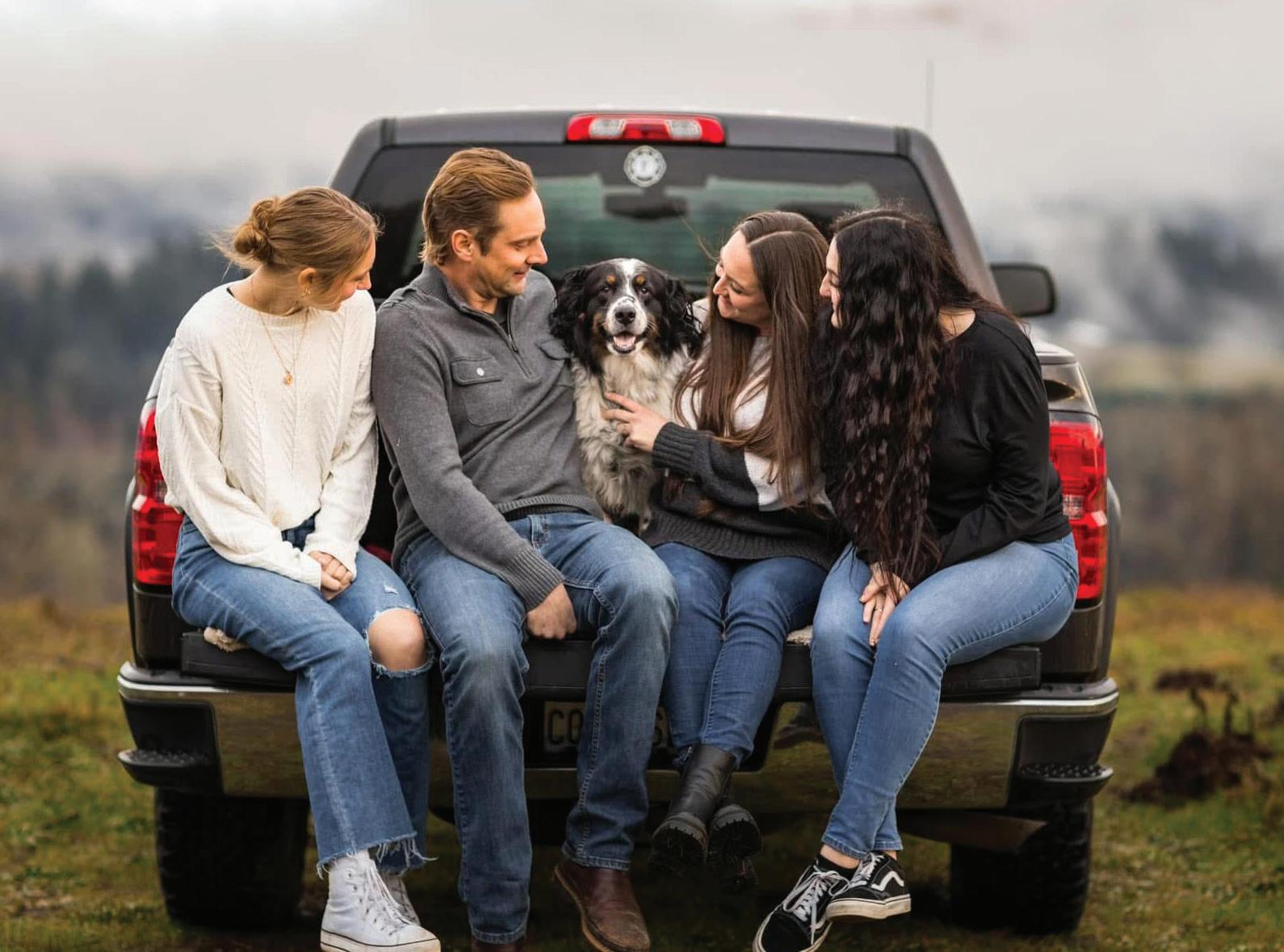
They made it through and even captured photos of the dog with its veterinarian on the trail. Chelsea shared photos in a virtual photography group, and someone recommended The Tilly Project. Within the week, Chelsea looked it up and joined.
When the distance isn’t great, and she has the time, Chelsea doesn’t charge for sessions. She knows veterinary care and unplanned euthanasia can get expensive.
“It just feels nice,” she says. “It’s a way I can give back. It’s a skill that I have, and I have a huge soft spot for animals. I’ve experienced a lot of loss, and there’s pets in my past I wish I had pictures of.”
Ember Trembley, of Amarantine Photography (ember222.wixsite.com/ amarantine) in Woodland, Washington, offers Tilly Project customers a discount on a case-by-case basis, partly dependent on the amount of travel involved.
“People are welcome to travel to me,” she says. “I live out in the woods. Five minutes away, it’s easy to find a beautiful spot.”
But often Ember goes to her clients.
“The most recent session I did, I went to a family’s home, and I didn’t say much of anything,” she says. “I just followed them while they took their dog on a last walk. The vet was coming right after I left. I was a fly on the wall in their home.”
Ember gave a session to her former
driver’s education teacher, Megan AkersWashington. Megan’s dog Charlie, known formally as Charles Tobias, was diagnosed with bone cancer.
“Honestly, I didn’t think the photos were going to mean as much as they did,” Megan says. “Of course, I’m going to choke up while I’m talking about this. We have several of them throughout our house, framed and blown up. He was just something.
“There’s always that one dog that people talk about that they’ve had in their life that was something. And he was definitely that for our family. Taking those photos was such a bittersweet moment because Ember is wonderful. It was peaceful. It was serene. She just let us be around him.
“At the time, I was like, ‘This is cool, thank you.’ And then I got those photos, and I was like,
‘What is this?’
The sun rises and sets at peak travel periods, during the early morning and afternoon rush hours and many drivers find themselves temporarily blinded while driving directly into the glare of the sun. Deadly accidents are regularly caused by such blinding glare with danger arising from reflected light off another vehicle, the pavement, or even from waxed and oily windshields that can make matters worse. Early morning dew can exacerbate this situation. Yet, motorists struggle on despite being blinded by the sun’s glare that can cause countless accidents every year.
Not all sunglasses are created equal. Protecting your eyes is serious business. With all the fancy fashion frames out there it can be easy to overlook what really matters––the lenses. So we did our research and looked to the very best in optic innovation and technology.
Sometimes it does take a rocket scientist. A NASA rocket scientist. Some ordinary sunglasses can obscure your vision by exposing your eyes to harmful UV rays, blue light, and reflective glare. They can also darken useful vision-enhancing light. But now, independent research conducted by scientists from NASA’s Jet Propulsion Laboratory has brought forth ground-breaking technology to help protect human eyesight from the harmful effects of solar radiation light. This superior


lens technology was first discovered when NASA scientists looked to nature for a means to superior eye protection— specifically, by studying the eyes of eagles, known for their extreme visual acuity. This discovery resulted in what is now known as Eagle Eyes
The Only Sunglass Technology Certified by the Space Foundation for UV and BlueLight Eye Protection. the most advanced eye protection technology ever created. The TriLenium ® Lens Technology offers triple-filter polarization to block 99.9% UVA and UVB—plus the added benefit of blue-light eye protection. Eagle Eyes® is the only optic technology that has earned official recognition from the Space Certification Program for this remarkable technology. Now, that’s proven science-based protection.



The finest optics: And buy one, get one FREE! Eagle Eyes® has the highest customer satisfaction of any item in our 20 year history. We are so excited for you to try the Eagle Eyes® breakthrough technology that we will give you a second pair of Eagle Eyes® Navigator™ Sunglasses FREE––a $59.95 value!
That’s two pairs to protect your eyes with the best technology available for less than the price of one pair of traditional sunglasses. You get a pair of Navigators with stainless steel black frames and the other with stainless steel gold, plus one hard zipper case and one micro-fiber drawstring cleaning pouch are included. Keep one pair in your pocket and one in your car.
Your satisfaction is 100% guaranteed. If you are not astounded with the Eagle Eyes® technology, enjoying clearer, sharper and more glare-free vision, simply return one pair within 30 days for a full refund of the purchase price. The other pair is yours to keep. No one else has such confidence in their optic technology. Don’t leave your eyes in the hands of fashion designers, entrust them to the best scientific minds on earth. Wear
with absolute


confidence, knowing your eyes are protected with technology that was born in space for the human race.

NIKON D810
180mm lens ISO 100 f/6.3 at 1/1600

By Dave LaBelle
Saying something more than once for emphasis is a powerful tool to get attention. It’s true with words, and it can be true with photographs.
While a poet might use repeating words or phrases, photographers and artists recognize the power of repeating forms—objects, lines, tones, shapes or actions—to produce patterns and rhythm.
Repeating tones, lines, shapes or actions in a photograph can produce a visual melody, just as repeating notes in a musical composition creates an audio melody.
For example, while one giant wind turbine alone on a hillside might be eye-catching, hundreds of them working side by side is a very different visual experience. It feels almost otherworldly.
Similarly, one elk walking alone through an open field can be beautiful and serene, but a herd of elk racing across that same field— hundreds of heads and legs kicking up dust or grass—creates a powerful pattern.
Repeating forms in a composition creates patterns and can make your photos come alive with visual music. n
Slow down, make time to notice the patterns around you, from designs found in nature to human-made structures. See if you can capture an image that produces a visual harmony.
Email your best image—just one—with caption information, including an explanation of how it affects you, to gph@pioneer.coop. We may share submissions on our website and social media channels.

Internationally renowned author, photographer and lecturer Dave LaBelle has captured special moments for more than half a century. He has shared photo tips and life perspectives with readers since 2009. For more of his writings, visit davidlabelle.com and bridgesandangels.wordpress.com.

Ready for a fresh take on the summer salad? This cookbook offers reader-recommended options for your table. Try the Breakfast Salad, Hot Chicken Salad, Snicker Salad and much more. More than 250 recipes are in an 8½-by-11-inch indexed book for only $8 (plus $3 shipping for any size order).
TO ORDER BY MAIL:
Submit payment with cookbook title, your name, address and number of cookbooks wanted to:
Ruralite Cookbooks
P.O. Box 1306 North Plains, OR 97133
TO PAY BY PHONE:
Call 503-357-2105 for credit card payments with Visa, MasterCard, Discover or American Express.
TO ORDER ONLINE: Visit www.ruralite.com.
Please allow two to three weeks for delivery.

BY
Nothing brings family together like food, but what are our readers’ favorite dishes? Check out nearly 300 recipes for appetizers, drinks, main dishes and desserts from our 2013 contest. The book is $10 (plus $3 shipping for any size order).
TO ORDER BY MAIL:
Submit payment with cookbook title, your name, address and number of cookbooks wanted to:
Ruralite Cookbooks
P.O. Box 1306 North Plains, OR 97133
TO PAY BY PHONE:
Call 503-357-2105 for credit card payments with Visa, MasterCard, Discover or American Express.
TO ORDER ONLINE: Visit www.ruralite.com.
Please allow two to three weeks for delivery.








Agriculture
Reinforced custom-sized pond liners (39 cents/sqft). Hay covers, greenhouse covers, any width and length. Truck tarps and more. High puncture and tear strength. Best price guaranteed. Celebrating 43 years in business. btlliners.com. 541-447-0712. 0426
Strong and dependable 20-year-old female ag. graduate (May 2026) of Feather River College seeking ranch hand employment, preferably with cattle. Lilly, 916-717-9981. 0426
Antiques and Collectibles
Buying antiques and collectibles: advertising signs, porcelain signs, gas pumps, beer signs, antique toys, cast-iron coin banks, neon signs and more. Jason, 503-310-3321 or tjabaughman@yahoo.com. 0926
Buying American Indian collectibles, Navajo jewelry, blankets, rugs. CA/AZ baskets and beadwork. Quality paintings of the early Southwest and Americas. Call 760-409-3117 or send photos to amer.ind.baskets@gmail.com. 0526
Buying older baseball cards, collections, from the 1960s and older. Will pay cash or via Paypal. budandvicky@msn.com; 541-430-6900. 0626
WC Collectibles. We buy comic books. Local to Inland Northwest. Willing to travel. WCCollectiblesCheney@gmail.com; 509-496-1835.
Automotive
1970 GMC fleetside short box, new built 383 stroker. Saginaw 4-speed. $18K. Tri city-WA area. 509-830-2511. 0426
1991 HD-FXRSLR 80 cubic inches. Immaculate. Brandywine, cream. Leather saddlebags. Windshield. 13,650 original miles. $6K. 541-263-1009 (leave message); himtns@gmail.com. 0426
1990 Jeep Cherokee Pioneer 4x4. One owner, well cared for. $7.5K. LaGrande, OR. 541-963-2585. 0426
Books, Magazines, Videos
Book restoration. Bibles, cookbooks, cherished family heirlooms. Beautiful work. We give renewed life, more durable than original, to last for generations. 775-537-7066; salacanstudio@gmail.com. 0426
Community Events
Long Creek, OR, Emergency Services Appreciation Dinner, April 25. Live auction items include fire engine, flat utility trailer, Hamley saddle and firewood. Dinner reservations 541-421-3601. Visit cityoflongcreek.org for more info. 0426
Ads 25 words or fewer are $35 a month. An ad of up to 35 words is $50 a month. Contact information is included in the word count. Phone numbers and emails count as one word.
Longer ads may be placed. Contact 503-357-2105 or info@pioneer.coop for pricing.
Ads are for customers of member co-ops, public utility districts and municipals only. Subscribers and nonmembers may inquire about pricing at 503-357-2105 or info@pioneer.coop.
Ads must be direct and in first person, and are subject to approval and editing.
Closing deadlines (in our office): June issue—April 30
If submitting ad by mail, send appropriate payment with your name, address, email, phone number and the name of the electric utility that provides your magazine to: Marketplace, P.O. Box 1306, North Plains, OR 97133. Make check or money order payable to Ruralite.
We accept credit card payments for ads submitted to info@pioneer.coop. Call 503-357-2105 to pay by credit card. Advertisements are accepted in good faith. Pioneer Utility Resources is not liable for interactions between buyers and sellers.
New exhibits. Annual EOU Student Exhibit and Inaugural Ceramics Open Exhibit. Opening April 3 at Art Center East in La Grande, OR. artcentereast.org. 0426
Education
Long Creek Virtual Learning Acellus Academy. Free in OR, online, accredited, K-12 education. Contact Long Creek School for info and to sign up. longcreekschool.com; 541-508-9164. 1226
Farm Equipment
1940s Caterpillar D-2, hydraulic blade up/ down, full canopy, many photos. My late father’s. Diesel engine stuck so asking only $3.5K, OBO. Near Dayton, WA. 208-284-5073.
Water trailer. Around 400 gallons, Homelite pump, on heavy-duty, ex-military trailer. Photos, no title. Pump not started since before COVID-19. Near Dayton, WA. 208-284-5073.
Free Items
Free materials—church/government unite. National Sunday Law. TBSM, P.O. Box 374, Ellijay, GA 30540. tbsmads@yahoo.com; 1-888-211-1715. 0426AR
Help Wanted
Camp hosts/caretakers wanted for the Tucannon River RV Park, a small (33 sites), modern RV Park in rural SE WA on the lower Tucannon River. Prefer active retired couple able to meet and greet, take reservations, pull hoses, mow, general maintenance. RV required, with full hookup provided, plus stipend. 509-382-2759. 0426
The Wheat Lands Communities’ Fair in Ritzville, WA, is currently seeking a reliable and responsible summer groundskeeper/ camp host. Responsibilities include mowing, watering, general maintenance, overseeing the campground and other duties as needed. Would ideally be onsite by early May through late September. Full hookup provided and end-of-season stipend paid. Interested people can contact Dan at 360-521-2495. 0426
Livestock, Supplies
Live bees by Dick Turanski. New large supplier of 5 frame nucs in nuc box. Available 8:30 a.m.-3 p.m. Saturday, May 9. Nucs with your choice of queens as follows: Italians, Carniolans or Buckfast (Buckfast is NEW, starting with a limit of 2 nucs per customer). Introductory low price of $200 per nuc or more than 10 at $195 per nuc. Order via email, to dick.turanski@glorybee.com. Mail checks to RPT & Associates, P.O. Box 41294, Eugene, OR 97404. Deadline for checks must be postdated April 30, 2026. Pick up location in the gravel yard next to GloryBee’s Distribution Center, 29548 B Airport Road, Eugene (directly off Hwy 99). Stop by the pop-up tent to check in. 0426
Miscellaneous
Attention, landowners. Grants available now. Wildland fire fuel reduction service. Steep ground, remote, rocky, small lot, big acreage … no problem. Blue Mountain Defensible Space LLC. Bluemountainbrush@gmail.com; bluemountainbrush.com; 509-399-3473. 1126
Granite cemetery markers at affordable prices. Will ship to most places. For more info: Joe, highdesertmemorials@gmail.com or 541-815-8906, highdesertmemorials.com. 0426
Local commercial fisherman sells summer catch of preserved freshness by blast freezing at sea, gourmet canned tuna on internet. Sept.June. 100% guaranteed the best canned tuna you ever tasted. Original, jalapeno and garlic flavors available. To order: twofisherstuna.com or 206-799-1082. 0526
Nuisance trapper retiring. Selling cage and solid traps for raccoon, skunk, bobcat, squirrel, bird, fox, otter. Also, single and multi-catch mouse traps. Louise, 541-399-4593. 0426
Pets, Supplies
Havanese puppies in Rainier, OR. Hypoallergenic, great for all ages. Raised by our family as quality pets for you. Visit www.happeninhavanese.com or call Rebecca, 503-728-6241. 0426
Thriving turnkey all-inclusive business in Seneca, OR. Bear Valley Store. $425K. Duke Warner Realty, ddwr@ortelco.net, 541-987-2363. 0426
320 acres east of Adel, OR. Borders Hart Mountain views, Steens Mountain and Beaty Butte. Landowner tags, very rural. Reduced price: $145K. For maps: 541-659-1573; thejugglingman3@gmail.com. 0426
Let me help you buy or sell ranch, farm and recreation property in OR. Fourth-generation Oregonian, prior ranch owner. For sale: Deschutes Canyon Mountain views 118 acres Riverfront. $11.9M. John Gill, 541-480-9161; johngill@landandwildlife.com. Land And Wildlife brokerage. 0426
Mobiles to mansions. Cabins to castles. Brookings, OR, area Principal Broker Pat Piper, Century 21 Agate Realty. Helpful. Educated. Caring. 28 years of area experience. 541-251-2152; patpiperbroker@gmail.com.
20 acres for sale in northeastern NV, 10 miles east of Montello. Includes 26-ft. camp trailer, 20-ft. Conex, tools and equipment. $16K. geopup58@gmail.com. 0526
For sale/rent: 20 acres developed land, 3,600sqft. shop with “barndominium” potential. Weddings/events, horse property, RV hookups, creek, views. $575K. Seller financing. Goldendale, WA. 509-378-5886. 0426
“Tiny home,” 2014 Fleetwood single-wide MH. 784 sqft. 14’x56”. 2 bd., 1 ba. Open concept kitchen/living room, partially furnished. Garage included. $30K. 541-444-1394. 0426
Private 10-acre wild tree farm near Sandpoint, ID, with older 3-bd. mobile home, county maintained road, good building sites. $395K. Steve, 208-290-6505. 0526
For sale by owner in Baker City, OR. 2- to 3-bd. home, move-in ready. Many new upgrades. Well on the property. Fruit trees. Mountain view of Elkhorns. Call 307-321-1232 for appointment.
Recreational Rentals
Enjoy your ideal Maui getaway. This updated 2-bd., 2-ba. condo sleeps 4 and features a charming “surf shack” design. Just half a block from a beautiful beach, it’s perfect for morning strolls and sunsets. Plus, you’re steps away from shops and restaurants at Azeka Plaza. tinyurl.com/MauiGetaway. 0526
Ocean view Maui vacation rental. For the months of May-Oct. $210/now $185. One time cleaning $150, 2 TVs, king-size bed, queen-size sofa bed. Beach chairs and umbrellas. Great view. 503-812-6689. 0626
Sunshine and sand—Book your summer dreams at WaveCatcher for 2026. Oceanfront cottage with direct beach access, on the spectacular Central OR Coast. Sleeps 6. Pet friendly. All house amenities. Winter closure Nov.-March. Reservations, info: relax@wavecatcherbeachrentals.com or text 541-740-2846.
Recreational Vehicles
2004 Fleetwood Flair, 34 ft., like new, 2 slideouts, Triton V-10, 5500 Onan, 2 AC. Garaged except when traveling since 3/09. $22.95K. tlhayward@bendbroadband.com. 0426
RV FOUR-A.C.E. 29.2. Immaculate, very livable. Low milage. $25K. New tires. $15K, safety upgrades. Stabilizer/etc. Towing package. Queen walk-around bed. Shower. Oven/microwave. $45.5K. 360-370-5292. Rvtrader.com. 0426 Services
Dawn Till Dusk Masonry. Brick, block, stone and pavers. Small jobs and repairs welcome. dawntillduskconstructionmasonry.com; 541-388-7605; 541-410-6945. License #245760 bonded and insured. La Pine, OR. 0526
Sheidler Bookkeeping. Wrangling those books so you don’t have to. QuickBooks and Xero certified. Valia, 541-519-9005; sheidlerbookkeeping@gmail.com for free consultation. 0726
Blue Mountain Defensible Space LLC Wildfire Fuel Reduction: clearing brush, thinning trees, animal habitat enhancement. Expert service. Grant money available OR, WA, ID. Bluemountainbrush@gmail.com; 509-399-3473; bluemountainbrush.com. 1126
Forest Management and Logging consulting, also do logging jobs too small for larger operators, 50 years of experience in forestry, log marketing and logging management, references available, free on-site estimates. 541-430-6900; budandvicky@msn.com. 0626
Old West Coffins. Simple, dignified, traditional. Pine coffins, made to measure in the USA. Live the cowboy way … leave the cowboy way. oldwestcoffins.com. 530-640-1940. 0426
Situations Wanted
Attractive, active 60-year-old Christian gentleman in Umpqua, OR. Business owner, loves hot rods, smooth jazz, beach. Seeks financially stable, adventurous woman, 40–60. grailgolf@hotmail.com. 0626
Elderly gentleman 6’3”, 175 lbs., seeks educated male 55 to early 60s for companionship in the Gold Beach/Brookings/ Coos-Curry area. No smoking or drinking. I’m open-minded and liberal. I love classical music, art and sci-fi. David, 29917 Harbor Way #742, Gold Beach, OR 97444-9700. 0426
Want to Buy
Gold, silver, coins/currency, buy, sell. Collections wanted. Fair prices paid. 45 years in retail store. Baker City, OR. 800-556-2133; garrymclin@aol.com. 1026
Buying American Indian collectibles, Navajo jewelry, blankets, rugs. CA/AZ baskets and beadwork. Quality paintings of the early Southwest and Americas. Call 760-409-3117 or send photos to amer.ind.baskets@gmail.com.
Old carpenter tools, planes (wood/metal), levels, chisels, slicks, adzes, axes, hatchets, handsaws, old rulers, spoke shaves, wrenches, shipwright tools, old tool chests. 503-659-0009; 971-666-0659. 0426
Any older Corvette 1953-63 any condition, cash. Call or text 702-296-2289 or a62vette@yahoo.com. Even if you’re thinking about selling or just talk. 0426
By Courtney Cobb and Thomas Elzinga
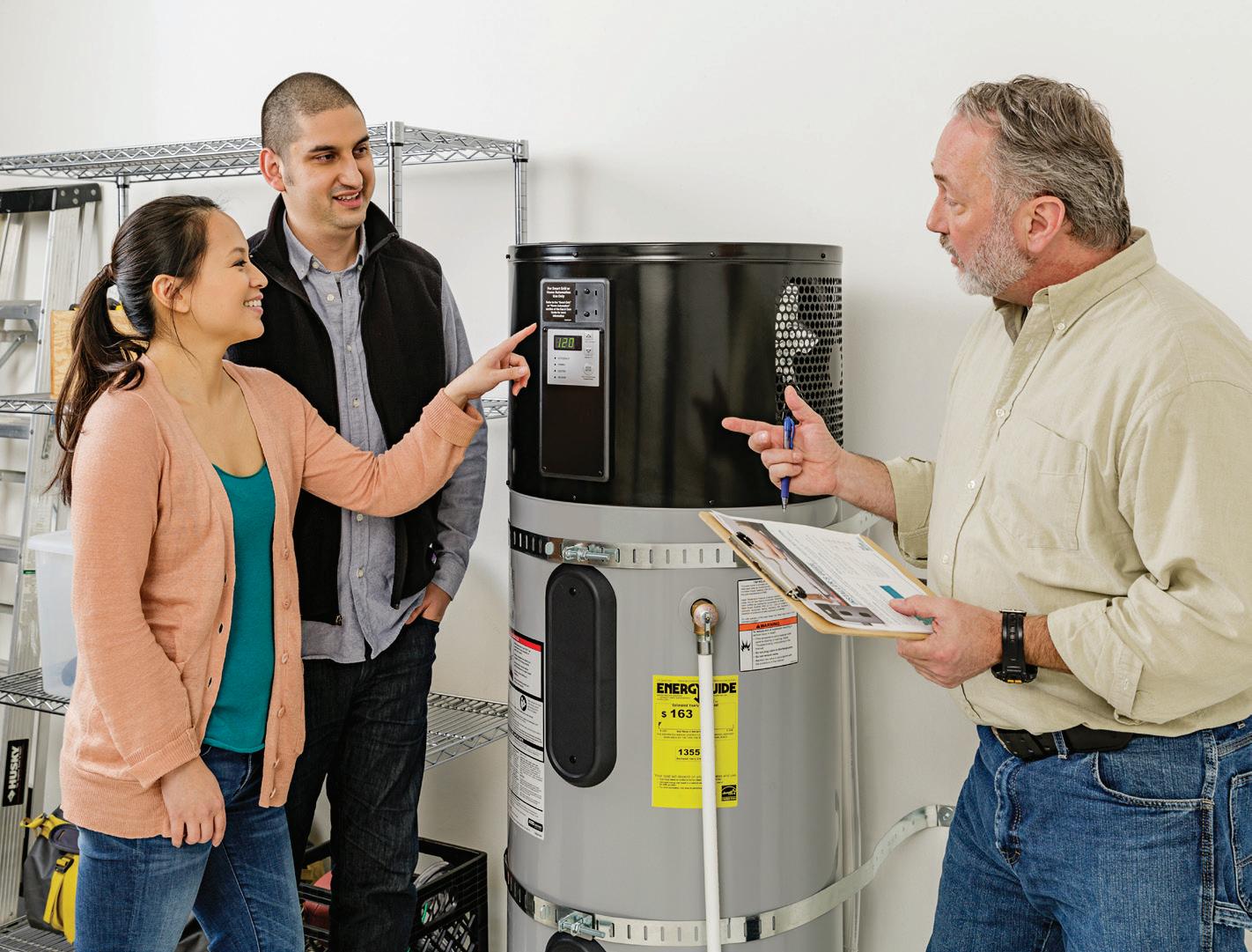
Whether you’re looking to install a new heat pump or water heater, Central Electric Cooperative has rebate programs to help.
The window and weatherization program can improve energy efficiency, control heating and cooling costs, and increase comfort levels for members with older electrically heated homes. Options include increasing insulation, replacing old windows, installing Energy Star-certified exterior doors and air sealing.
CEC offers a rebate of $200 to $2,500 on the cost of a heat pump, depending on the type of system being installed or replaced. New and existing homes can qualify. Installation contractors must meet CEC requirements.
Members can qualify for an additional $350 to $700 duct-sealing rebate if the ductwork hasn’t been sealed previously.
CEC offers a $300 or $1,000 rebate for qualifying water heaters. New or replacement installations apply.
If you buy a new NEEM Energy Star manufactured home, you can qualify for a rebate. Depending on the selected efficiency level, CEC offers a $1,500 or $2,500 rebate.
CEC offers a $40 or $80 rebate for replacing your clothes washer and dryer with an Energy Star model. Restrictions apply, so visit the CEC website for details.
CEC believes every member and home should benefit from greater energy efficiency.
The income-qualified program can provide eligible CEC members with free to low-cost home weatherization, a highefficiency heat pump, a heat pump water heater, and a clothes washer and dryer. The program is for renters or homeowners and covers site-built or manufactured homes.
X More than 700 Central Electric Cooperative members received a rebate.
X More than $1.1 million rebate dollars were distributed.
X More than 25 families received free home energy upgrades through CEC’s income-qualified program.
X An EV charger or outlet was installed in 73 homes. CEC members own more than 1,800 EVs.
X Ninety-five CEC members added solar panels to their homes and enough generation to power 165 homes for an entire year.
CEC offers a $50 rebate for each electric vehicle registered at a CEC-served location, $150 for an EV outlet and $250 per EV charger. Members can apply for more than one.
CEC offers rebates to irrigation accounts that install new pumps, retrofit pumps with variable-frequency drives or upgrade precision sprinkler systems. n
CEC’s energy programs are subject to change without notice. For specific eligibility requirements, refer to cec.coop and select Energy Programs, or call an energy specialist at 541-548-2144, and select option 6.














































Since the 1360s, when the rst mechanical clocks crowned Italian towers and piazzas, timekeeping has been treated as both science and spectacle. Now that legacy lives on in the Grotto Azzurra Chronograph — a timepiece inspired by one of Italy’s most dazzling natural wonders.
Its deep midnight-blue dial re ects the luminous glow of Capri’s legendary Blue Grotto — mysterious, romantic, unforgettable. Set against a gold- nished band, the look is pure Italian drama: striking, sophisticated, unapologetically bold.
But this isn’t just beauty.
ree precision subdials track seconds, minutes and hours with chronograph accuracy. A reliable movement powers the stopwatch function, while a stainless steel caseback and crown ensure durability. Water-resistant to 5 ATM and tting wrists up to 8 inches, it’s built for daily wear — and second glances.
e Grotto Azzurra Chronograph delivers oldworld Italian romance without the old-world price. Only Stauer makes heritage this attainable.
Claim yours today. Because time this captivating shouldn’t wait.
Watch Speci cations:
• Made in Italy
• Precision Chronograph Movement
• Stainless steel caseback, crown, and band










• Stopwatch and chronograph subdials for seconds, minutes, and hours
• Water-resistant to 5 ATM
• Fits wrists up to 8"
Grotto Azzurra Chronograph $399


Central Electric Cooperative DIRECTORS
Chairman Kip Light, Madras
Vice Chairman Kelly McFarlane, Powell Butte
Secretary/Treasurer Kenneth H. Miltenberger, Alfalfa
Mark Christie, Sisters
Beverly Clarno, Redmond
Boyd Keeton, Tumalo
Sam McKenzie, Prineville
Dan Steelhammer, Bend
Tom Strand, Terrebonne
Attorney Thomas M. Grim
Cable Huston LLP, Portland STAFF
President & CEO
Brad Wilson
Vice President of Finance & Accounting
Shane Morgan
Vice President of Operations & Engineering
Kevin Rohde
Vice President of Information Services
Phillip Franklin
Vice President of Member & Public Relations
Brent ten Pas
Vice President of Customer & Energy Services
Ryan Davies
24-HOUR PHONE NUMBERS:
Call 541-548-2144 or toll-free 800-924-8736.
Mission Statement
The aim of Central Electric Co-op is to make electric energy available to its members at the lowest cost consistent with sound economy and good management.
The board meets the third Thursday of each month at the CEC office, 2098 NW Sixth St., Redmond, Oregon.
cec.coop