Louisiana Country, Jeff Davis Electric Cooperative, March 2026
MARCH/APRIL 2026
With its innovative design, modern comforts, and guest-focused philosophy, American Encore is not just a riverboat, it’s the finest expression of American river cruising ever built. Designed to host just 180 guests, American Encore features more square feet per guest than any other small cruise ship with the largest staterooms globally. Small Ship Cruising Done
Aarron
COMMUNICATIONS
Conley Bourgeois,
ACCOUNTING
Beth Fraser
Board of Directors
President Michael Heinen
Vice President Roger Dale DeHart
Secretary/Treasurer Richard Sitman
Mike
Mike
Daniel
WIred for growth
Balancing data center demand and reliability
Data centers may feel like a big-city phenomenon, but more of them are showing up in rural communities like the ones we serve—and for good reason. Rural areas offer what data centers need most: affordable land, room to grow and access to transmission lines that can move large amounts of power.
What makes data centers different from other large businesses is their appetite for electricity. These facilities run 24 hours a day, seven days a week. Servers must stay online constantly, which means power must be reliable every minute of every day.
For Louisiana’s electric cooperatives, the growth of data centers presents both opportunity and complexity.
On the plus side, data centers have the potential to bring steady, long-term load growth that helps support investments in local grids. With proper planning and policy support, those upgrades—including new substations, stronger lines and smarter technology—could benefit all co-op members and help keep electricity rates steady.
However, providing power to data centers presents challenges, too. These large facilities can be constructed and operating in as little as a year, but ensuring the necessary infrastructure, equipment, and electricity requires longer lead times and significant financial investment. Strategic planning and partnerships—as well as long-term power supply strategies—are essential to the process.
While most data centers operating in Louisiana are served by
investor-owned utilities, co-ops nationwide are fielding requests and inquiries from tech companies.
As member-owned utilities, electric cooperatives have a dual responsibility: to listen to the communities they serve and to provide reliable, affordable electric service to all co-op members.
Balancing those responsibilities is not always simple, especially as new types of large-scale energy users— such as data centers—become part of the local landscape.
Louisiana’s energy landscape continues to evolve, bringing both promise and new challenges. The board and employees of the Association of Louisiana Electric Cooperative are committed to continuing to listen, communicate, and work with our member cooperatives, policymakers and community leaders to ensure decisions reflect the best interests of the people and communities we serve.
We encourage cooperative members to stay informed and engaged and to reach out to their local electric cooperative with questions about data centers, electric service or other energyrelated issues. Your voice matters.
Big Data, Bigger Demands
Many companies are choosing rural areas for their data centers because of cheaper land, available power and potential tax breaks. Data centers require huge amounts of electricity to operate, which presents new opportunities and challenges for electric co-ops.
HVAC. Constant cooling is needed to ensure servers function properly.
Server racks. Servers run applications and process data 24/7. One server rack can consume enough electricity to power a small home. A large data center can house thousands of server racks.
Power upgrades. Data centers often require new electrical infrastructure to meet their power needs.
Water source. Many large data centers are deploying evaporative cooling, which is more efficient than compressor-based systems.
Aarron Graham, Interim CEO
Love the Boot Week is Louisiana’s largest litter removal and beautification effort, bringing awareness to our state’s litter problem while empowering organizations and individual citizens to clean up litter and beautify spaces in their communities.
This year, we are cleaning up in honor of America’s 250th birthday! Show your love for your country and your community by participating.
In 2025, 26,935 people volunteered a total of 81,852 hours at over 1,408 events, removing a record 514 tons of litter in all 64 parishes.
Let’s surpass last year’s numbers and grow our impact statewide.
WIN A PORTABLE BLACKSTONE GRILL
Make a $1 donation to the Cooperative Youth Leadership Fund to enter a drawing for a new grill. Tickets are available at your cooperative, and proceeds benefit the Louisiana Youth Leadership Council Representative Scholarship.
The prize drawing is held in July at the Association of Louisiana Electric Cooperatives Annual Meeting in Baton Rouge. The winner is contacted by phone.
Louisiana Country (USPS 473-180) is published bimonthly by the Association of Louisiana Electric Co-ops Inc., 10725 Airline Highway, Baton Rouge, LA 70816, in partnership with Pioneer Utility Resources.
Annual subscriptions: Members $2.79. Nonmembers $5.
Postmaster: Send form 3579 to 10725 Airline Highway, Baton Rouge, LA 70816.
Periodicals postage paid at Baton Rouge, Louisiana 70821, and additional mailing offices.
Reliability Requires Investment
As your local power provider, Jeff Davis Electric Cooperative’s mission has always been simple: Keep the lights on and support the communities we serve. But behind every switch, every warm home and every business that opens its doors is a complex system that requires constant care. Reliable electricity doesn’t happen by accident. It requires ongoing investment in our local grid—through system repairs, maintenance, upgrades and integration of new technologies that help us operate smarter and more efficiently.
Much of the energy system we rely on today was built decades ago. While it continues to serve us well, age alone means components must be repaired or replaced to maintain performance and safety. From poles and wires to transformers and substations, every part of the grid has a lifespan. Routine maintenance helps extend that lifespan, but eventually equipment must be updated to meet modern standards. Proactive investments reduce the likelihood of outages, shorten restoration times when disruptions occur and create a stronger backbone for our growing community.
The demands on the electric grid are also evolving. Homes and businesses use more electricity than ever, and that trend will only continue. Electric vehicles, advanced HVAC systems, smart appliances and new commercial facilities add load to the local distribution system. As these technologies take hold, the grid must be able to support increased demand while maintaining the reliability our members expect.
At the same time, new technologies are reshaping how we operate. Tools such as automated switching devices, smart meters
and advanced monitoring systems allow us to detect problems faster and respond more effectively. These technologies can isolate problems, reroute power to minimize outages and provide realtime data that helps us plan and maintain equipment more efficiently.
Michael Heinen
Implementing innovative technologies into the grid is not just a convenience—it is a necessity for ensuring reliability in an increasingly complex energy landscape. While these improvements require thoughtful planning and financial investment, the return is significant. A stronger grid supports economic growth, improves service quality and enhances safety for our crews and community. Most importantly, it ensures the essential power you rely on is available whenever you need it.
Our commitment to reliability runs deeper than infrastructure alone. It reflects our responsibility to the people and communities we serve. Every upgrade, repair and technology we deploy is an investment in your daily life—from the comfort of your home to the success of local businesses and schools.
We know powering our community means preparing for the future, not just maintaining the present. By investing in our grid today, we are building the foundation for a brighter, more resilient tomorrow.
Tips to Reduce Wildfire Risks
By Abby Berry
Wildfires are no longer limited to the western United States. While they’ve long been associated with places like California, changing weather patterns, rising temperatures and periods of drought are increasing wildfire risk in other parts of the country—including Louisiana.
Extended dry conditions, high winds and extreme heat can quickly dry out grass, fields and wooded areas across our region. When that happens, even a small spark can lead to a fast-moving fire. That’s why awareness and preparedness are important for our communities.
Jeff Davis Electric Cooperative is committed to reducing wildfire risk throughout our service area.
Through regular right-of-way clearing, vegetation management and ongoing system maintenance and improvements, we work proactively to help reduce fire hazards and strengthen the reliability of our electric system.
As a JDEC member, you can take steps to help prevent wildfires:
1. Properly extinguish campfires. Always douse your campfire with water, stir the ashes and ensure everything is cool to the touch before leaving the area.
2. Avoid burning on windy or dry days. Embers can travel quickly and ignite nearby grass or brush.
3. Clear vegetation and debris. Maintain defensible space around your home by removing dry leaves, pine needles, dead branches and other flammable materials.
4. Use equipment safely. Tools such as lawnmowers, chain saws or welding tools can create sparks. Use them during cooler parts of the day, and keep them in good working condition.
5. Follow local burn regulations. Check for burn bans or restrictions in your parish before burning anything or using open flames outdoors.
By staying alert and working together, we can help protect our homes, our communities and the electric system we all rely on.
For more information on wildfire and other disaster preparedness, visit ready.gov.
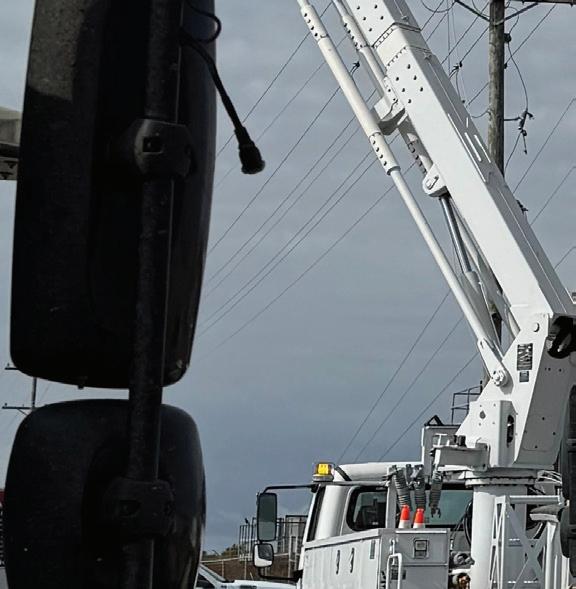
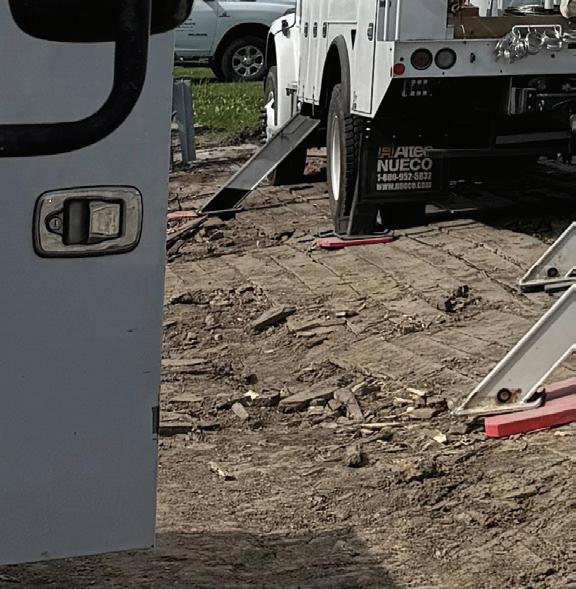
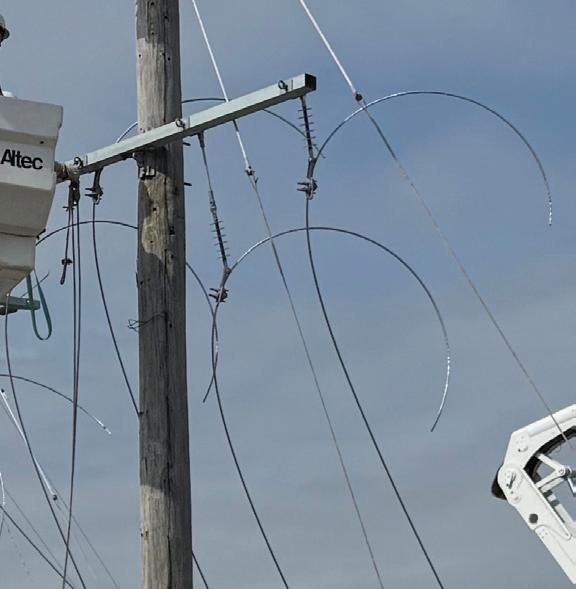
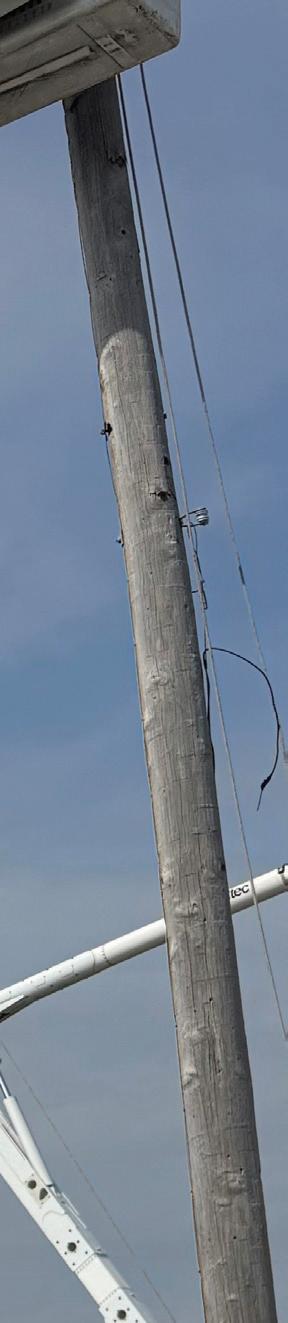
When the lights go out, lineworkers are ready to answer the call, day or night, to safely restore power and keep our communities moving forward. They take pride in powering the places we call home. Today and every day, we thank lineworkers for their service and commitment.
Lineworker Appreciation Day April 13, 2026
ReadyWhen i t Matters Most
Help the Lineworker Spring into Action
Did you know March 20 is the first day of spring? This time of year marks new beginnings and fresh blooms, but it can also bring powerful storms that interrupt electric service.
Help the lineworker find his way through the maze to the bucket truck so he can restore power.
Lighting a
By Cheré Coen
Like many South Louisiana natives, Coby Bailey learned to cook from his parents and grandparents. But it took a fire station to turn it into a passion.
“It really wasn’t until I started as a firefighter that I enjoyed cooking,” Coby says.
That spark turned into a fire that landed Coby on Season four of “The Great American Recipe” show on PBS. After a month of competition, Coby took home the top award Aug. 15, 2025.
“Cajun Country for me is not just food and something to eat but a way of life,” he says. “Everything we do here in South Louisiana is centered around food. I wanted the Cajun culture represented well, and I think I did that.”
Louisiana firefighter Coby Bailey wins ‘The Great American Recipe’ to
inspect their gear and get ready for the day. They’re usually done around 9 a.m. to either train or start cooking for lunch, Coby explains. Sometimes the firefighters make a run to the grocery store to pick up supplies. And yes, they take the fire engine and head off for emergencies when needed.
“We’ve left a lot of groceries in the truck,” Coby says with a laugh.
Back at the station, the fires they attended to were on the stove.
“I was fortunate to have a captain who loved to cook every single day,” Coby says. “He liked to get everyone involved, including other stations or people we liked around the community.”
The firefighters ate well.
“We’d have a great meal,” Coby says. “The other stations would come. We’d tell stories. And we’d always make enough so we’d have supper.”
At the Lafayette Fire Department, the crew arrives early to clean,
When Coby made captain—he’s been at the Lafayette Fire Department for 27 years after serving in the U.S. Navy, including during Desert Storm—he decided to carry on the tradition and teach others at the station to cook. One day, a firefighter approached him about watching his YouTube channel and encouraged Coby to create his own.
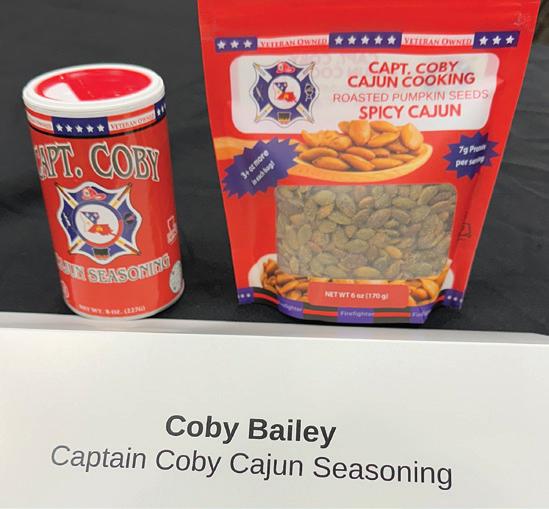
BELOW: Coby prepares pork jambalaya. PHOTO COURTESY OF VPM/ PBS FAR LEFT: Coby Bailey developed a seasoning and roasted pumpkin seeds. PHOTO COURTESY OF CHERÉ COEN
“I said, ‘Dude, I watch you every day. I don’t need to know what you do on your day off,’” Coby says with a laugh.
The firefighter challenged Coby to see who could attract the most followers on YouTube. Coby did, and his cooking videos took off. That’s how PBS producers discovered the Lafayette native to invite him to compete on “The Great American Recipe.”
Coby had two requests: He had to bring his own food, and the chief needed to give him a month off to travel to Nashville, where the show is filmed.
“I really didn’t have to sell him,” Coby says of his chief giving permission. “I said, ‘Let’s do it for Lafayette. Let’s do it for the food.’ And he agreed.”
The trick for this Cajun chef was cooking up his recipes with his needed tools in hand. Coby drove to Nashville with a pickup full of his beloved pots and pans, roux spoons and supplies.
Filming began around 6:30 a.m. in a barn where contestants prepared their recipes while telling storie. Filming ended around 8 p.m. The first exercise was for contestants to cook a dish that made them fall in love with cooking. Cody thought of eggs, so he prepared a unique boudin omelet.
“It was important to me to keep the Cajun food and the Cajun tradition in there,” he says.
Other recipes Coby delivered to judges Tiffany Derry, Tim Hollingsworth and Francis Lam were an alligator sauce piquante and seafood gumbo. During one episode, Coby related a heartfelt anecdote about his buddies in Desert Storm. He took the top prize after creating a Cypress knee shrimp po’boy and cornbreadstuffed chicken with andouille cream sauce.
In announcing Coby as the winner, Tiffany said, “This home cook stayed true to who they are through every last one of their dishes that truly represented the heart of their cooking and their great American recipe.”
In a large bowl, apply generous amounts of mustard and Capt. Coby’s Cajun Seasoning to the alligator legs, and mix well. Melt coconut oil in a large cast-iron pot. Toss the alligator legs in flour, then add to pot. Cook until lightly browned. Add sausage, onions and peppers. Cook until browned and all brown bits are lifted from the pot.
Add in tomato sauce, diced tomatoes, garlic and dry roux. Let cook for 30 minutes. Stir in shrimp, and let cook for 15 minutes until all flavors come together.
To make the grits, add heavy whipping cream, chicken broth, 1 stick of butter and salt to a pot. Bring to a boil. After liquid comes to a rolling boil, pour in grits. Stir constantly until grits become firm and almost cooked, about 5 minutes. Finish by adding a stick of butter to the grits.
Serve alligator sauce piquante over grits, and garnish with green onions.
LEFT: Coby serves the judges his alligator sauce piquante on “The Great American Recipe.” ABOVE: From left, judge Tim Hollingsworth, host Alejandra Ramos, Coby, and judges Francis Lam and Tiffany Derry were part of Season four of the PBS cooking show. PHOTOS COURTESY OF PBS
Monarchs
Protecting the
There are ways you can help
By Pamela A. Keene
A colorful monarch butterfly sips nectar from a Blazing Star Liatris. PHOTO BY MORGAN CHRISTMAN
Over the past several decades, the monarch butterfly population has declined because of habitat loss, increased pesticide use and climate variability.
The decreased availability of milkweed— the sole host plant and food source for monarch caterpillars— is another factor in the dwindling numbers of the colorful migrating butterfly. Deforestation, expanded lawn development and increased pavement contribute to reduced native habitats, putting insects at greater risk.
Monarchs are considered a high-profile species, and their plight is frequently described as a “canary in the coal mine” for environmental health. Studying their migration patterns and pollination activity as indicators of a healthy environment helps scientists better understand broader environmental changes.
“Monarchs are among the most recognizable butterflies in the United States,” says Morgan Christman, pollinator ecologist and assistant professor in the Department of Entomology at Louisiana State University. “Scientists and citizenscientists have been studying monarchs for decades and have seen the overall decrease in their populations, as well as environmental and ecological changes.”
sources, and the use of glyphosate herbicides. In Louisiana, we can plant pollinator gardens and include native milkweed species in place of tropical milkweed. We can promote preserving and constructing natural habitats that include places for shelter, breeding sites and nectar sources.”
Morgan’s lab at LSU researches native and managed pollinators across natural, agricultural and urban landscapes to advance understanding of their ecology, threats and conservation.
“As the first pollinator ecology lab at LSU, we aim to address gaps in pollinator research in Louisiana and to translate that science into educational materials for the public,” she says.
Studying Monarch Migration
Think Diversity for Pollinators
Choose colorful native flowers and foliage and heirloom plants for gardens. Pay attention to providing a range of heights, leaf shapes and plant forms. Combine trees and shrubs with perennials to create an aesthetically pleasing area for pollinators and humans.
Plant flowers of different varieties, colors and bloom schedules that give life throughout the year and attract an array of insects. Plant them in clusters to make it easier for insects to find them.
Colorful perennials, such as black-eyed Susans, coneflowers, asters, coreopsis, blazing star, goldenrod, American yarrow, swamp sunflowers and cardinal flowers, can be complemented by flame azaleas, flowering dogwood and coral honeysuckle.
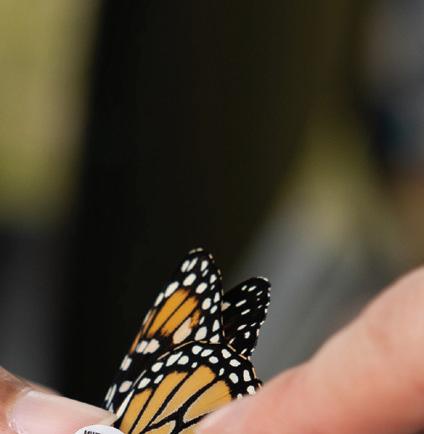
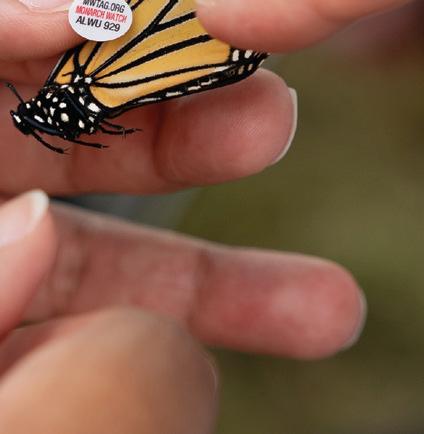
Monarch Watch, an education, conservation and research program based at the University of Kansas, offers ways for the public to become involved in studying and supporting monarchs. One of its most popular endeavors—the Monarch Watch Tagging Program— encourages individuals, schools, nature centers and other organizations to help study migration by tagging monarchs in the fall. That’s when the butterflies make their long commutes from summer breeding areas in southern Canada and the northern United States to overwinter in the warmth of central Mexico.
While monarchs are not listed as threatened in Louisiana, Morgan says they’re worth studying because the species may soon be considered for protection under the U.S. Fish and Wildlife Service’s Endangered Species Act.
“It is important that all of us work together to mitigate threats to the monarch population,” she says.
“For instance, we can address the disappearance of habitats, the decrease in the availability of native milkweed and nectar
“The tagging program helps us understand more about the eastern monarch population’s fall migration,” Monarch Watch Director Kristen Baum says. “Since the start of the tagging program, the data we’ve collected with the help of many community scientists has revealed new information about the timing and pace of the migration, how weather can affect the migration, where migrating monarchs come from and more.”
Now in its 35th year, Monarch Watch sells tagging kits through its website. Each kit contains weatherproof adhesive tags with unique alphanumeric codes, datasheets for recording information about tagged monarchs, tagging instructions and other information. Visit monarchwatch.org for details.
Insects and butterflies seek sources for both pollen and nectar. Make sure to include a good assortment of each. Consider bloom time to ensure a continuous food source.
Pollinators and insects prefer differing flower shapes to accommodate their body types. For instance, butterflies prefer tubular blossoms so they use their proboscis to harvest nectar. Bees are drawn to bowl-shaped flowers, or those where pollen is easy to reach, where they have a place to land.
Remember to include a shallow water source or two, such as a saucer or a bowl that’s filled with small rocks.
Include at least one variety of milkweed. Not only do monarchs thrive on it, but other insects and butterflies are attracted to it as well.
ADOBE STOCK PHOTO BY INSECT PLANET
A monarch larva munches on Asclepias tuberosa flowers. PHOTO BY RAY MORANZ
Monarch Watch is a mark-andrecapture program, meaning its data comes from information participants provide when reporting insects’ recovered tags. Tagged monarchs are reported along the migration route, and some are recovered every year from overwintering sites in Mexico. Each year, Monarch Watch compiles and publishes this information for the public to view.
Monarch Waystations and Nectar Sources
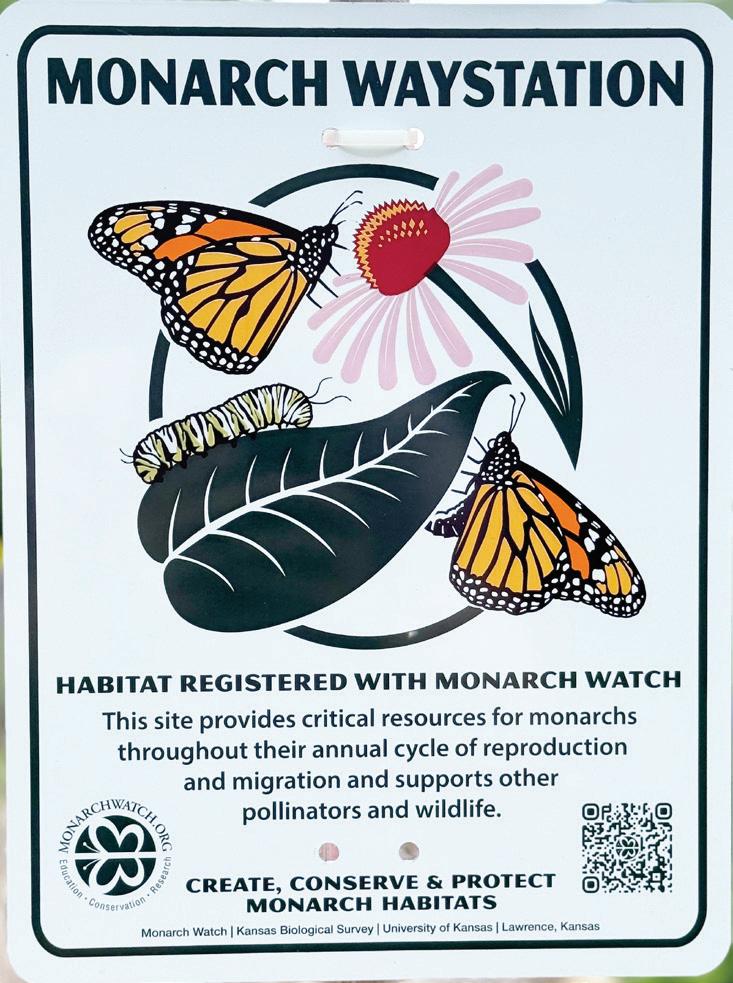
Monarch Watch also developed the Monarch Waystation Program to encourage people to create, conserve and protect monarch habitats. The organization provides educational resources to help people establish and maintain Monarch Waystations, the program’s term for monarch habitats, to support butterflies during spring, summer and fall.
It’s easy to create a Monarch Waystation in home gardens, schools, businesses, nature centers and along roadsides. Sometimes all it takes is creating a small space with several nectar-producing plants and a clump of native milkweed. However, it is important to
have a plan to sustain the space, regardless of size.
Good practices include thinning plants, mulching, watering, avoiding insecticides and removing invasive species. It is also helpful to occasionally add more native milkweed plants.
To date, Monarch Watch has recorded more than 54,000 registered Monarch Waystations worldwide.
“The Monarch Waystation Program is celebrating 21 years this year, and it’s been incredible to see how many people have registered their habitats as Monarch Waystations,” Monarch Watch Communications Coordinator Jess Anderson says. “These habitats provide crucial resources for monarchs, and we need to continue planting milkweed and nectar plants. This not only will benefit monarchs but many other pollinators and wildlife.”
Native Milkweed Is Key
As monarchs’ sole host plant, milkweed is crucial to the future of the species.
“We urge people to only plant native milkweed,” says David Mizejewski,
naturalist with the National Wildlife Federation, a nonprofit conservation education and advocacy organization.
In Louisiana, recommended native species include aquatic milkweed, swamp milkweed and butterfly weed.
“We strongly advise against planting tropical milkweed because it is nonnative and it can carry a parasite called OE (Ophryocystis elektroscirrha) that is harmful to monarchs,” David says. “Although tropical milkweed is sold at some retail nurseries, it’s not native to the United States. Its distinctive reddish orange and yellow blooms may be pretty, but they signal, ‘Don’t plant; nonnative.’
“The reason to plant native is that native wildlife and native plants coevolved together over millennia and, as a general
Tagging monarchs helps track their migration and survival rate. PHOTO BY ANN DEAN INSET: Native Pink Swamp Milkweed provides places for monarchs to lay their eggs. ADOBE STOCK PHOTO BY BRIAN WOOLMAN
Monarchs partially emerge from chrysalises. PHOTO BY JUDY CLAYTON WARD
BELOW: Aquatic milkweed, asclepias perennis, is an exceptional native host plant for monarchs.
rule, rely on each other for survival in a way that nonnative plants often can’t replicate,” he says. “Nonnatives can also become invasive or spread disease to native species.”
OE can be present on all types of milkweed, but it’s most prevalent on the colorful tropical milkweed. Unlike native milkweed, tropical milkweed does not die back seasonally, allowing the parasite to persist year-round.
“The OE parasite’s life cycle on tropical milkweed is not interrupted,” David says. “When the native milkweed dies back, the virus dies with it.”
Debate about milkweed species sometimes stands in the way of taking action.
“Finding native milkweed can be challenging, but it is important to ensure that you’re only planting native,” David says. “Take the extra time to seek out native milkweed at native plant sales at public gardens, arboretums and area native plant societies, such as the
Louisiana Native Plant Society, lnps.org, that maintains a listing of plant sales, workshops and conferences.”
Ray Moranz, pollinator conservation specialist with Xerces Society of Invertebrate Conservation in the central region of the United States, says OE may not be the main issue around preserving monarch butterflies.
“The biggest concerns are the declines in the availability of milkweed and nectar plants,” he says. “Rising temperatures, loss of habitats and the use of pesticides are also some of the other major threats.”
Ray says places for monarchs to feed on nectar, lay their eggs and protect themselves from predators are vanishing as native and natural habitats disappear.
“It’s up to all of us to be aware of the monarch’s dwindling population and to each do our part to help them survive and thrive by creating pollinator gardens with plants that haven’t been sprayed with insecticides, reduce our use of pesticides and help preserve native habitats,” he says.
Helpful Resources
Reputable organizations in Louisiana can provide a wealth of information about native plants and sources, monarch butterflies and pollinators. Here are a few resources:
Louisiana Native Plant Society—Find native plant lists, plant seeds and sources, plus information about area-specific Native Plant Society Chapters; lnps.org
Louisiana State University Agricultural Center—Provides Louisiana-specific recommendations and information about pollinators and monarch butterflies; lsuagcenter.com and lsuagcenter.com/ topics/lawn_garden/native-plants
Louisiana Department of Wildlife and Fisheries—Offers the Louisiana Native Plant Resource Guide; wlf.louisiana.gov
Xerces Society—Is dedicated to protecting monarch butterflies; xerces.org/monarchs
U.S. Fish and Wildlife Service— Home of the Save the Monarch initiative, fws.gov/initiative/pollinators/save-monarch
Monarch Watch—Offers ways to support monarchs; monarchwatch.org.
ABOVE: A monarch rests on a tall thistle.
TOP: Butterfly milkweed, officially known as asclepias tuberosa, acts as a primary host plant for monarch butterfly larvae PHOTOS BY RAY MORANZ
LEFT: Monarch Watch developed the Monarch Waystation Program to encourage people to create, conserve and protect monarch habitats. PHOTO COURTESY OF MONARCH WATCH
PHOTO BY RAY MORANZ
Thank you
When the lights go out, Jeff Davis Electric Cooperative lineworkers are ready to answer the call, day or night, to safely restore power and keep our communities moving forward. They take pride in powering the places we call home. Today and every day, we thank lineworkers for their service and commitment.
Lineworker Appreciation Day
April 13, 2026
Reinventing Bug Repellent
Louisiana startup takes a performance-first approach to mosquito protection and outdoor branding
By Jen Gennaro
There are two types of people in Louisiana: those mosquitoes love and those they leave alone.
Those in the first camp likely wear chemical-laden repellent like a second skin starting in the spring. Worse, there are some who carry around strongsmelling perfumes in their back pockets to help deter mosquitoes.
Those in the second group shrug nonchalantly and say, “Huh. They don’t really bother me,” as their friends scratch their legs until they draw blood.
Elton native Gabe Fontenot is solidly in the first group.
“Mosquitoes love me,” he says. “They’re obsessed with me.”
He learned that the hard way, usually at dusk and often at the sake of his ankles.
The idea for a more refined repellant struck Gabe two years ago while waterfowl hunting, enveloped in a fog of DEET. He thought there had to be something better—something that didn’t come with health warnings strong enough to get it banned abroad or strip the finish off a firearm. Sunscreen has evolved. The skin care industry is booming. So why, Gabe wondered, are we still treating mosquito repellent like an afterthought?
“In the beginning, we really wanted to do an allnatural product,” Gabe says. “A lot of companies use essential oils, but there’s no solid evidence that they actually deter insects. We wanted something that could genuinely protect you from a whole range of bugs.”
In his research of trendy natural products on the market, what he found was twofold: Many formulas didn’t work—and they were scented.
“You end up smelling like citronella or lemongrass or something,” he says. “And when you think about hunters or people who spend a lot of time outdoors, especially big-game hunters, you want to be scentfree. Why smell like anything?”
Rather than guessing how consumers might want to smell, Gabe focused on performance. The goal was a scent-free repellent that worked at an extraordinary level—one that protected not just skin but gear and health as well.
He wasted no time in learning what it would take to bring an Environmental Protection Agencycertified product to market. It quickly became clear
At its headquarters, HUNT reinforces itself as an outdoor lifestyle brand that people using its bug spray can resonate with. PHOTOS COURTESY OF HUNT
the bar was high. Any product making efficacy claims has to be produced in an EPA-certified facility. At the time, none existed in Louisiana.
Gabe hired attorneys with regulatory experience and began cold-calling manufacturers across the United States. There were many rejections, he says. He had no paperwork, no prototype and no background in chemistry.
“Just a bright idea,” he says—and a background in corporate sales and mosquito bites.
“I feel like we built HUNT backwards,” Gabe says. “We built it around a product that didn’t exist yet.”
Eventually, he connected with a manufacturer in Florida who agreed to spearhead the project and a well-known German company to engineer the active ingredient. Unlike essential-oil formulas, the product achieved verified efficacy using a synthetic compound derived from a pepper plant called picaridin. The science worked. Just as importantly, it could meet regulatory standards.
With an active ingredient secured and manufacturing in place, the first product finally took shape: an unscented, DEET-free, lotion-based repellent providing up to 14 hours of protection— the longest claim on the market. After the formula was approved, the company introduced a second product: a scent-free, quick-drying spray.
When the first shipment arrived in August 2025, HUNT moved out of the business incubator at the Henning SEED Center at McNeese State University and into an 8,000-square-foot distribution and packaging facility in Elton, Gabe’s hometown. The company grew to seven employees, and the team hit the road.
Along with a small sales staff, Gabe visited independent retailers across Louisiana to introduce them to HUNT, securing 165 individual store placements statewide. Every account is independently owned.
“We earned those stores,” Gabe says. “We’re driving all over the state, spreading awareness—100% grassroots. No distribution companies, no outside firms. Everything is in-house.”
HUNT took no grants, loans or outside investment.
“It’s all bootstrapped,” Gabe says.
That hands-on approach led to a sweeping presence in Louisiana, and flags planted in Mississippi and Texas. HUNT has set its sights on independent retailers across the Gulf states, and is in talks with one of the largest big-box retailers in the country.
Additionally, Fontenot says, HUNT plans to launch three new products in 2026.
“We’re looking at expanding into another highly regulated outlet in the outdoor consumer product industry,” he says.
“Our goal is not to create bug spray,” says HUNT Marketing Manager Jagger Morvant, who has been with the company since its early days. “It’s to create an outdoor lifestyle brand that people resonate with.”
At first glance, that kind of language can sound like pie-in-the-sky marketing fluff—but in this case, it means focusing on product performance first and letting word of mouth do the rest. People may not expect to get excited about bug spray, but they do when it works.
The response so far has surprised even Gabe.
“It’s almost surreal how much people like the product,” Gabe says. “People love to post pictures of their Yeti cooler or Turtlebox speaker, and we’re seeing that now with bug spray.”
HUNT’s branding taps into the rituals and aesthetics of outdoor life.
PLUGGED IN
Home Lighting 101
By Abby Berry
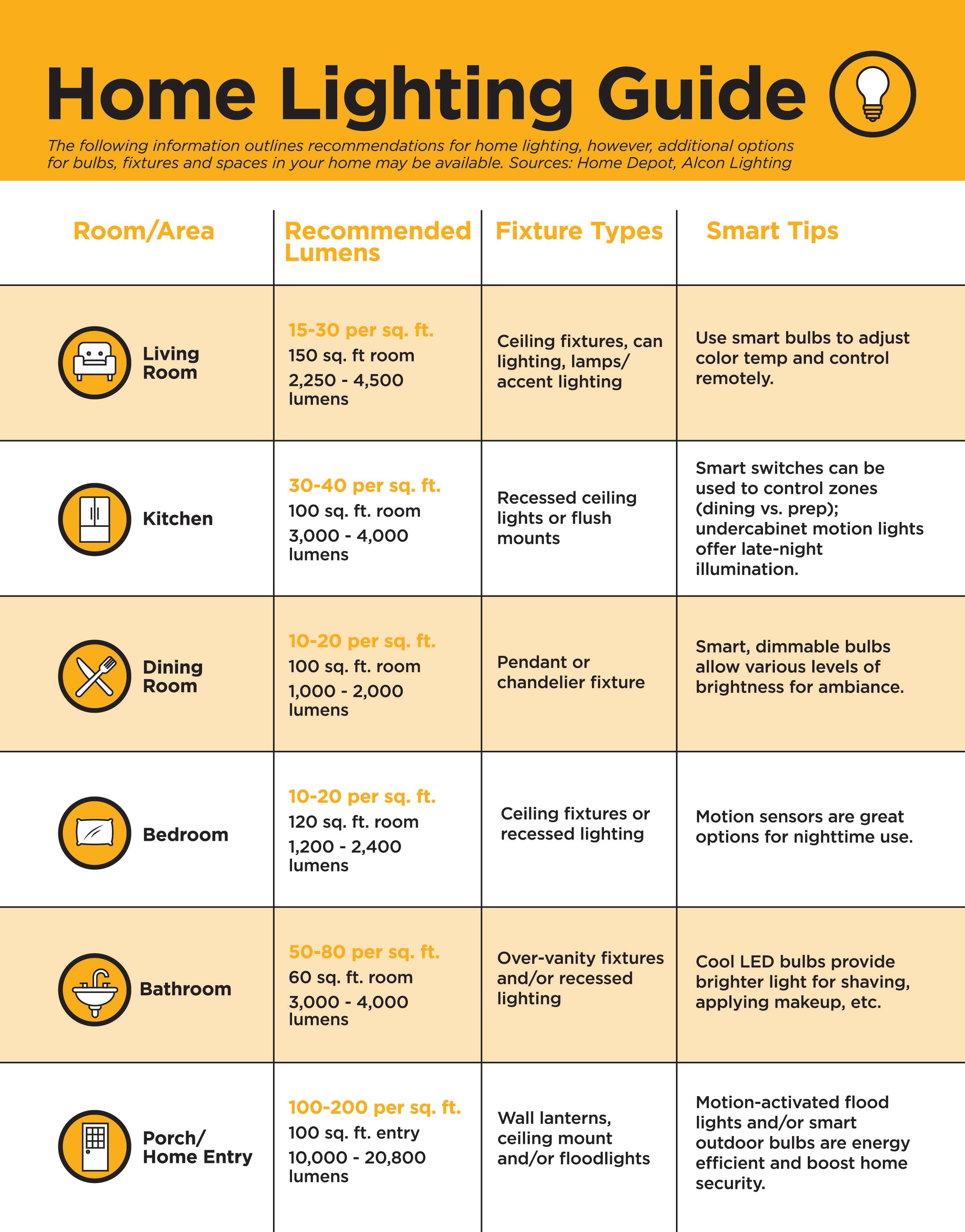
Lighting is something most of us don’t think much about—until it’s wrong. Maybe the living room feels too dim for reading or the kitchen lights cast an odd glow. We often grab whatever bulb or fixture looks good without considering how it will perform. With a little planning, your home can be brighter, cozier and more energy efficient.
Watts vs. Lumens
When shopping for light bulbs, it’s easy to focus on wattage, but that only measures how much energy is used. When it comes to brightness, what matters is the lumen count.
Lumens measure the actual light output. For example, an 800-lumen LED bulb gives off about the same amount of light as an old-fashioned 60-watt incandescent bulb.
You’ve likely replaced all incandescent bulbs with long-lasting, energy-efficient LEDs. If not, it’s time to make a switch.
A rule of thumb: The higher the lumens, the brighter the light while lower watts result in less energy consumed. Check wattage ratings for fixtures and install bulbs that meet the fixture’s wattage safety requirements.
Color Temperature and Consistency
Light bulbs vary in color temperature. This detail is often overlooked—until you replace one bulb and notice the new light
doesn’t match the others.
Consider installing bulbs of the same brand and wattage at the same time. That way, the look stays consistent, and you won’t be stuck hunting for a perfect match later.
Dimmers and Switches
Installing dimmers in place of on/off switches can be a game changer. Dimmers give you more control over brightness, help save energy and create a more comfortable atmosphere. Not all bulbs are dimmable, so double check labels before buying.
While thinking about light switches, consider whether you have enough of them and whether they’re in the right places.
A light you can only turn off from one end of a hallway becomes annoying. For installations or upgrades, it’s best to hire a licensed electrician to ensure everything is wired safely and efficiently.
Form Meets Function
Bulbs are only part of the equation—fixtures matter, too. Each type serves a purpose.
Ambient lighting from sconces or glasscovered ceiling fixtures provides general illumination. Task lighting—provided by pendants, desk lamps or track lighting— focuses light where you need it most.
When choosing a fixture, think beyond looks. Does the light provides the right amount of brightness for the space? A beautiful chandelier might look perfect over
the dining table but leaves the rest of the room too dim. Alternatively, an oversized fixture could flood the room with more light than needed, wasting energy and money.
Energy Efficiency Meets Convenience
Smart lighting adds a layer of control, but the real magic is convenience. With smart bulbs, you can adjust brightness and colors, and set schedules from your phone or an assistant such as Alexa or Google Assistant. Want the lights to dim automatically for movie night or to turn on before you get home? Smart bulbs make it easy.
Smart lighting also personalizes your space. You can go classic with warm, white tones or experiment with colors to set the mood—anything from a soft glow for winding down to vibrant hues for a party.
Smart bulbs rely on power from a wall switch, which needs to stay in the “on” position for remote controls to work. If you prefer using a physical switch, consider pairing smart bulbs with a smart light switch. Many of today’s smart switches also come with motion detectors, adding another level of efficiency and convenience.
Good lighting makes your home look better and feel better. You can create spaces that are welcoming, functional and energy efficient. Whether you stick to traditional bulbs and fixtures or explore the flexibility of smart lighting, thoughtful choices today will brighten your home for years to come.
A Word About Water
Tap Into Water Heating Savings
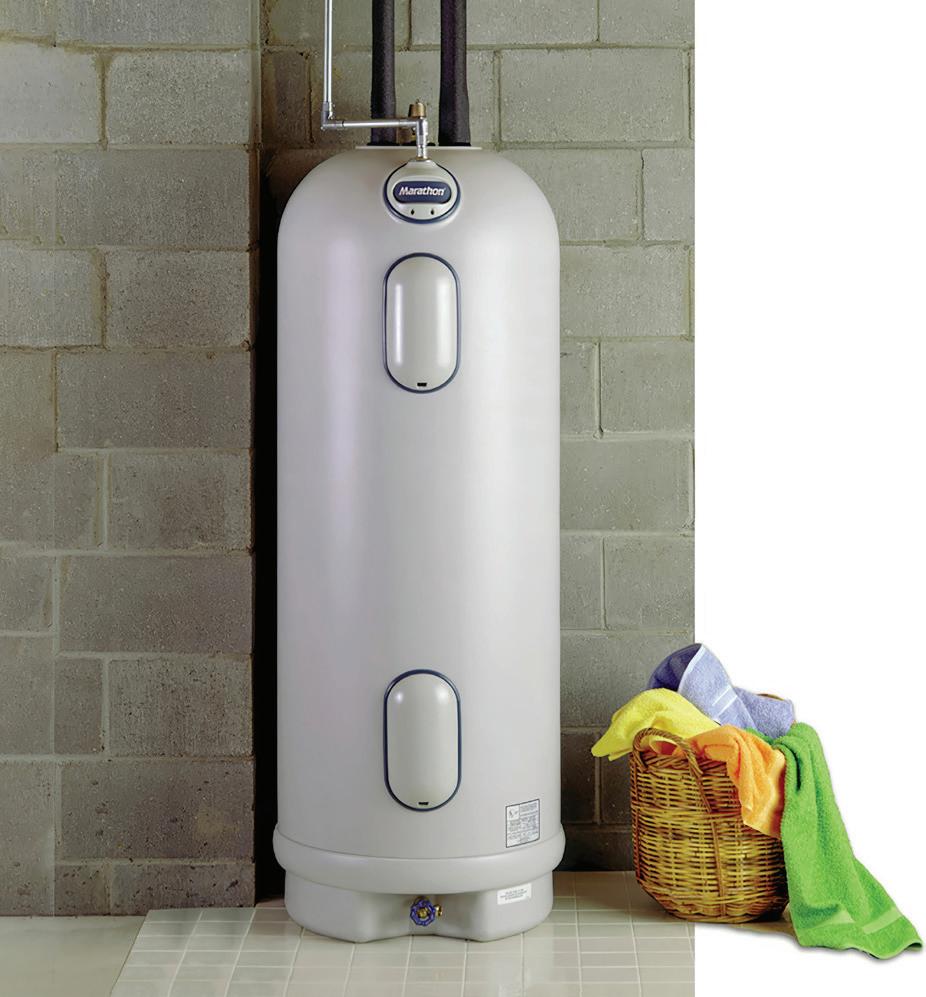
If your home is like most, you and your family use about 64 gallons of water each day. If your water heater is electric, that probably accounts for about 18% of your power bill.
That makes your water heater the second-largest energy expense in your home. Why not use less electricity to heat it?
Today’s high-efficiency water heaters use much less energy than older models, so you don’t need to give up comfort for energy savings. That’s good news for your power bill.
There is a newer option to consider: an electric heat pump water heater. These units give you the hot water you need by pulling heat from the surrounding air to heat the water—like a refrigerator in reverse. Because they do not directly produce heat, electric heat pump water heaters are two to three times more energy efficient than standard units.
According to the U.S. Department of Energy, a family of four can save about $550 a year on water heating costs, which adds up to $5,610 over the lifetime of the unit.
A heat pump water heater may cost a bit more upfront than other models. However, according to the DOE, most people see a payback in less than three years due to the unit’s lower operating costs and energy savings. Look for the Energy Star label when shopping for a water heater.
Tankless electric water heaters are another option, but carefully weigh the benefits and drawbacks. These smaller units quickly heat water to provide it when called upon, but can use eight times more electricity than a standard water heater.
This high demand increases your co-op’s cost of purchased power, which plays an important role in how much you pay for electricity. In some cases, people who use electric tankless water heaters must upgrade their home’s wiring to support the greater demand for electricity.
Other ways to lower your energy costs include setting your water heater’s thermostat to no higher than 120 degrees, fixing leaks, installing low-flow fixtures, and using energy-efficient dishwashers and washing machines.
Helping you save energy and money is another way your co-op is always here for you. n