

























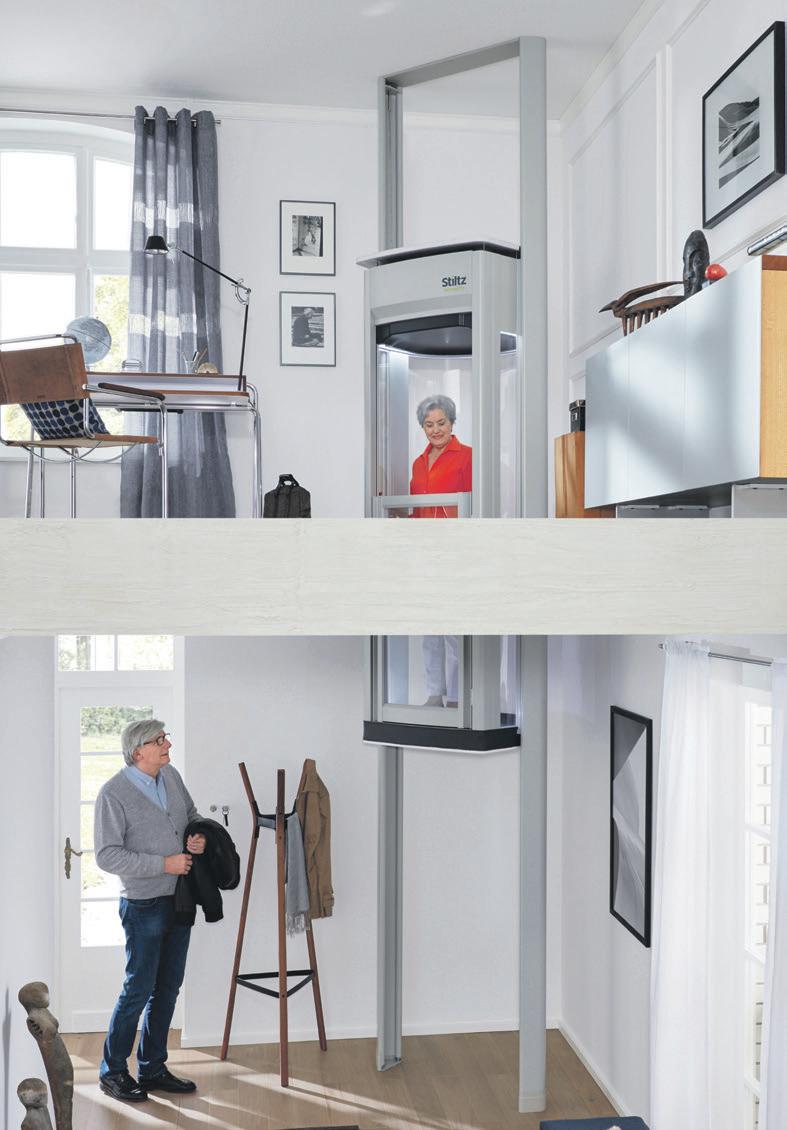
Stay in the home and neighborhood you love with a Stiltz Homelift.
A Stiltz Homelift is a safe, attractive, & affordable alternative to stairlifts. It requires no special machine room, and no supporting walls.
ECONOMICAL & FLEXIBLE
A Stiltz Homelift can t just about anywhere in your house. It has a compact footprint, similar in size to a small armchair.
A Stiltz Homelift plugs into a standard home electrical outlet, using less power than a coffee maker.
Avoid the expense and distress of relocating, or the disruption of adapting

your home for downstairs living. A Stiltz Homelift helps you live safely and independently in the home you love.
IT’S NEVER TOO SOON
Some Stiltz customers need a Homelift immediately. But others want to “future-proof” their homes for when the stairs become a challenge.
HOMELIFT SPECIALISTS
Stiltz is a world leading Homelift manufacturer, so you’ll be in good hands. Your elevator will be installed and maintained by Stiltz trained professionals who truly care about your freedom.
Falls are the leading cause of hospitalization for older adults in the US. More than a quarter of Americans age 65+ fall each year. The average hospital cost for a fall injury is $35,000. Did you know?
“I can’t imagine what we’d do without it. I wish we had installed our Stiltz Homelift several years ago!”
– Mr. James, Roanoke, VA
• Affordable
• Small Footprint
• Full Safety Features
• Clean, Quiet Operation
• Low Power Consumption
• Freestanding Design
• Wheelchair Accessible
• Carry Laundry or Pets
• Fast Installation
• Full Warranty



February 2026 • Volume 15, No. 4
CEO Michael Shepard
VICE PRESIDENT OF CONTENT Leon Espinoza
EDITORIAL DIRECTOR Chasity Anderson, CCC
DEPUTY EDITORIAL DIRECTOR
Noble Sprayberry
SENIOR EDITOR Jennifer Paton, CCC
LEAD CONTENT EDITOR Victoria Hampton, CCC
FLORIDA CURRENTS EDITORS
Valeri Saldanha Rosa; Sable Riley, CCC
ASSISTANT EDITORS Victoria Hampton, CCC; David Herder, CCC; Nina Todea, CCC
PUBLICATIONS PRODUCTION
SENIOR MANAGER
Elizabeth Beatty
SENIOR PUBLICATIONS COORDINATOR
Alyssa McDougle
Members acknowledge that $4.89 a year, plus postage, is the cost to publish 12 issues a year of FLORIDA CURRENTS ISSN 23276304 (USPS 8300). Published by Pioneer Utility Resources Inc., 5625 NE Elam Young Parkway, Suite 100, Hillsboro, OR 97124—a not-for-profit Oregon cooperative corporation—the magazine serves the communication needs of consumerowned electric utilities in Florida. Preferred Periodicals postage paid at Hillsboro, OR 97123 and at additional mailing offices.
Postmaster: Send address changes to 5625 NE Elam Young Parkway, Suite 100, Hillsboro, OR 97124-6422.
HOW TO CONTACT FLORIDA CURRENTS
Subscription services:
Nonmember subscriptions $15 U.S. a year; $25 foreign a year. Prepayment required.
Allow 4-8 weeks for first issue. Identify local edition desired. Have a problem receiving your magazine? Utility members should contact their utility office. Nonmembers call 503-357-2105 or email mailingdept@pioneer.coop.
Back issues:
Back issues and extra copies are $3 each, prepayment required. Supply is limited. Identify edition, month and year. Call first to check availability. Contact Pioneer Utility Resources: P.O. Box 1306, North Plains, OR 97133-1306; 503-357-2105; email: mailingdept@pioneer.coop.
DISPLAY ADVERTISING INQUIRIES
American MainStreet Publications 611 S. Congress Ave., Suite 504 Austin, TX 78704-1714; 800-626-1181 or 512-441-5200; amp.coop.
© 2026 Pioneer Utility Resources. All rights reserved. Reproduction in whole or in part without written permission is prohibited. Direct reprint requests to editor@floridacurrents.com or for more information, visit www.pioneer.coop.



Hosting friends for Super Bowl Sunday? Here are a few tips to help you save on game day:
» Pre-game with efficient cooking. Save energy with slow cookers, air fryers and other small appliances (instead of the oven).
» Expecting a full house? Turn the thermostat down a notch or two (extra bodies = extra warmth).
» Cool drinks the smart way. Use a cooler for frequently grabbed drinks so the fridge isn’t constantly opened.



Great Picture Hunt 18 Get Outside 20 Planner 22 Before You Go 30
Co-op Pages: 4-8, 25-26, 28-29, 32
Painter feeds passion for art while supporting fellow artists
Up Close, Page 10
Family ranch transforms elephant encounters Spotlight, Page 12
Soups In the Kitchen, Page 16













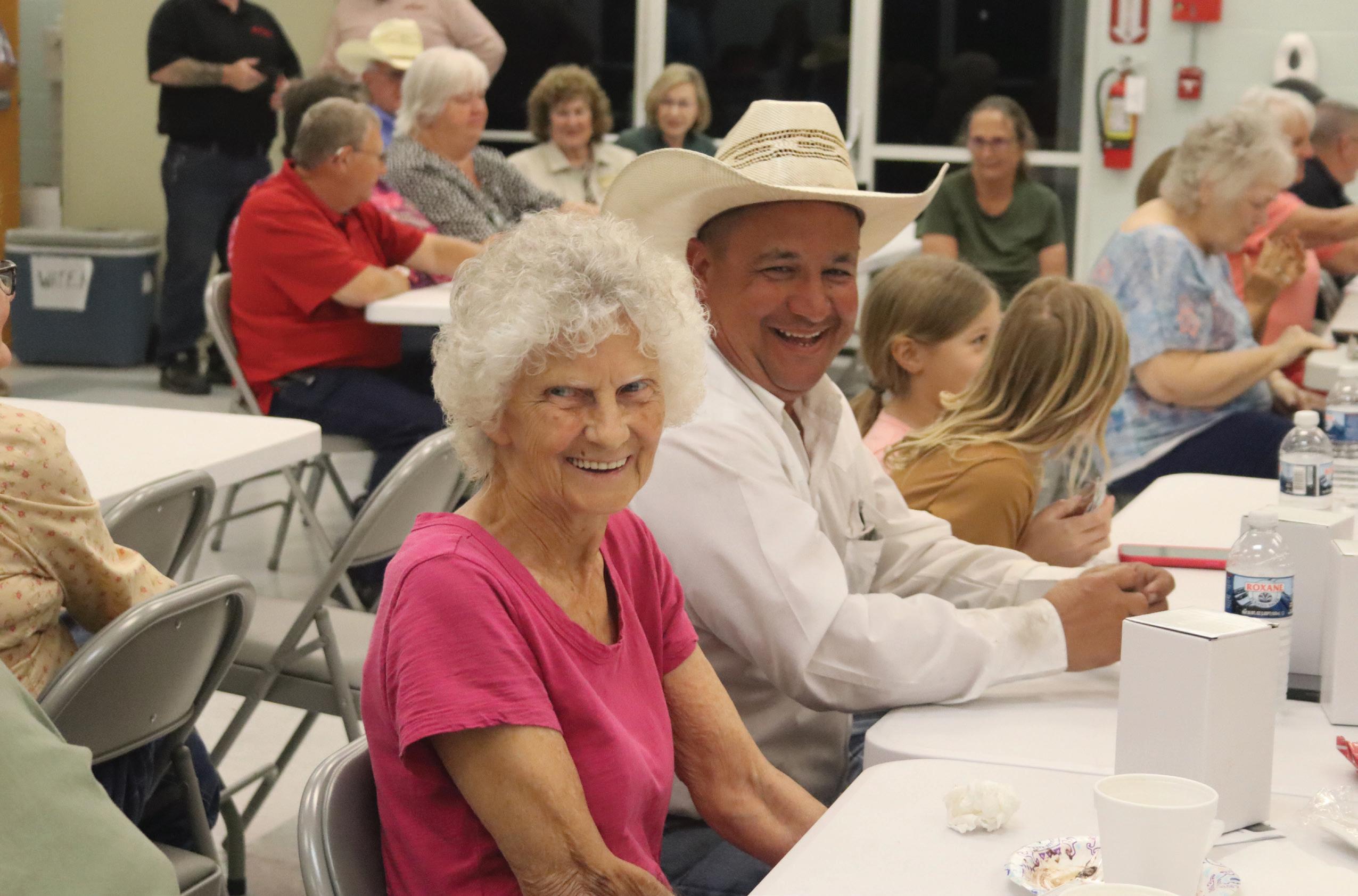
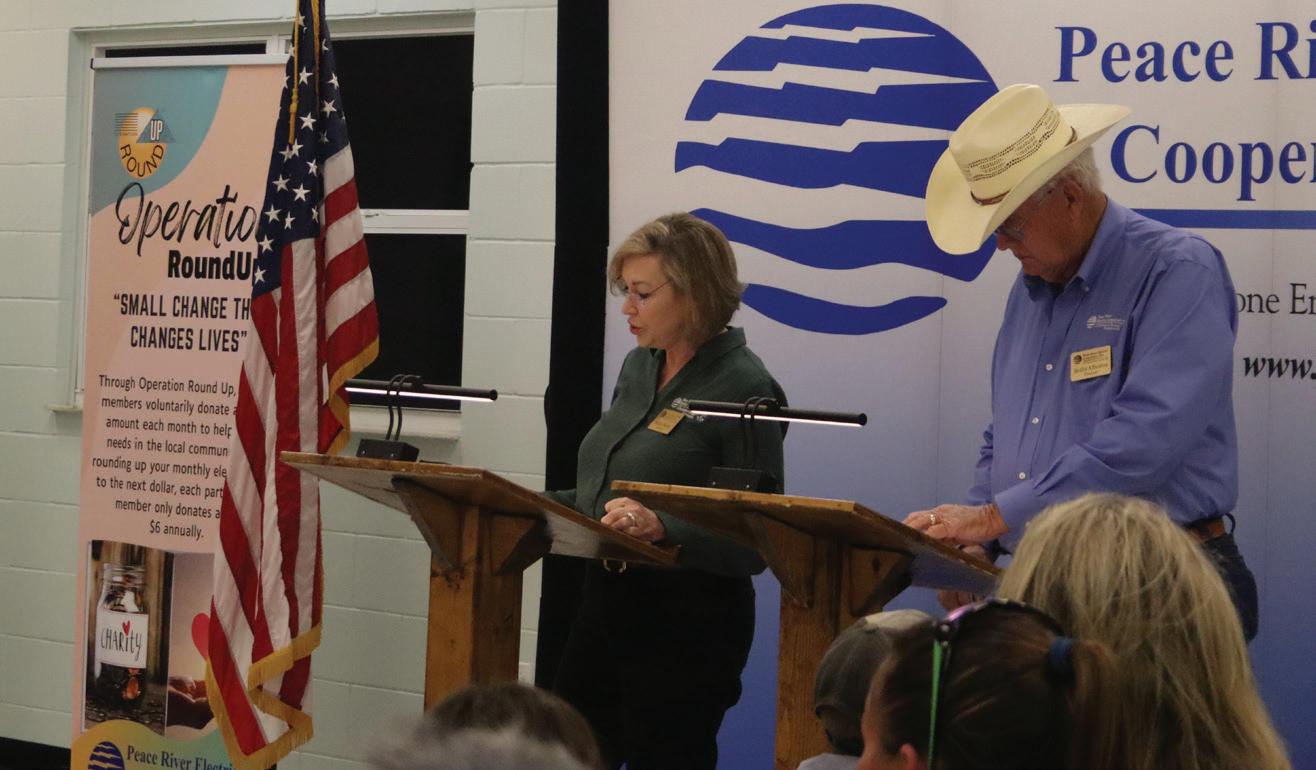
Peace River Electric Cooperative members in Districts 1, 4 and 7 are invited to attend their respective district meeting this month:
District 1
Thursday, Feb. 12
First Baptist Church
Bowling Green
District 4
Tuesday, Feb. 10
Craig’s RV Park Arcadia
District 7
Monday, Feb. 9
Oasis Church Bradenton
Members of these districts will receive a flyer in the mail with additional details.

You must have a photo ID to register.
Districts 1 and 7 members can vote from 8 a.m. to 7 p.m. Every district holds a business meeting at 7 p.m. These membership meetings include door prize drawings and light refreshments.
Registered members each receive a $10 electric bill credit and entries into the grand-prize drawing for the chance to win a $100 Visa gift card. One winner per district will be randomly selected during a drawing.
Your district number is listed on your bill.
For faster registration, bring the flyer you recieve in the mail.
Only authorized individuals designated on the account may register on behalf of a business.
No smoking, alcohol or pets (certified service animals only) are allowed at meetings.
Photos may be taken and used for publications and social media.







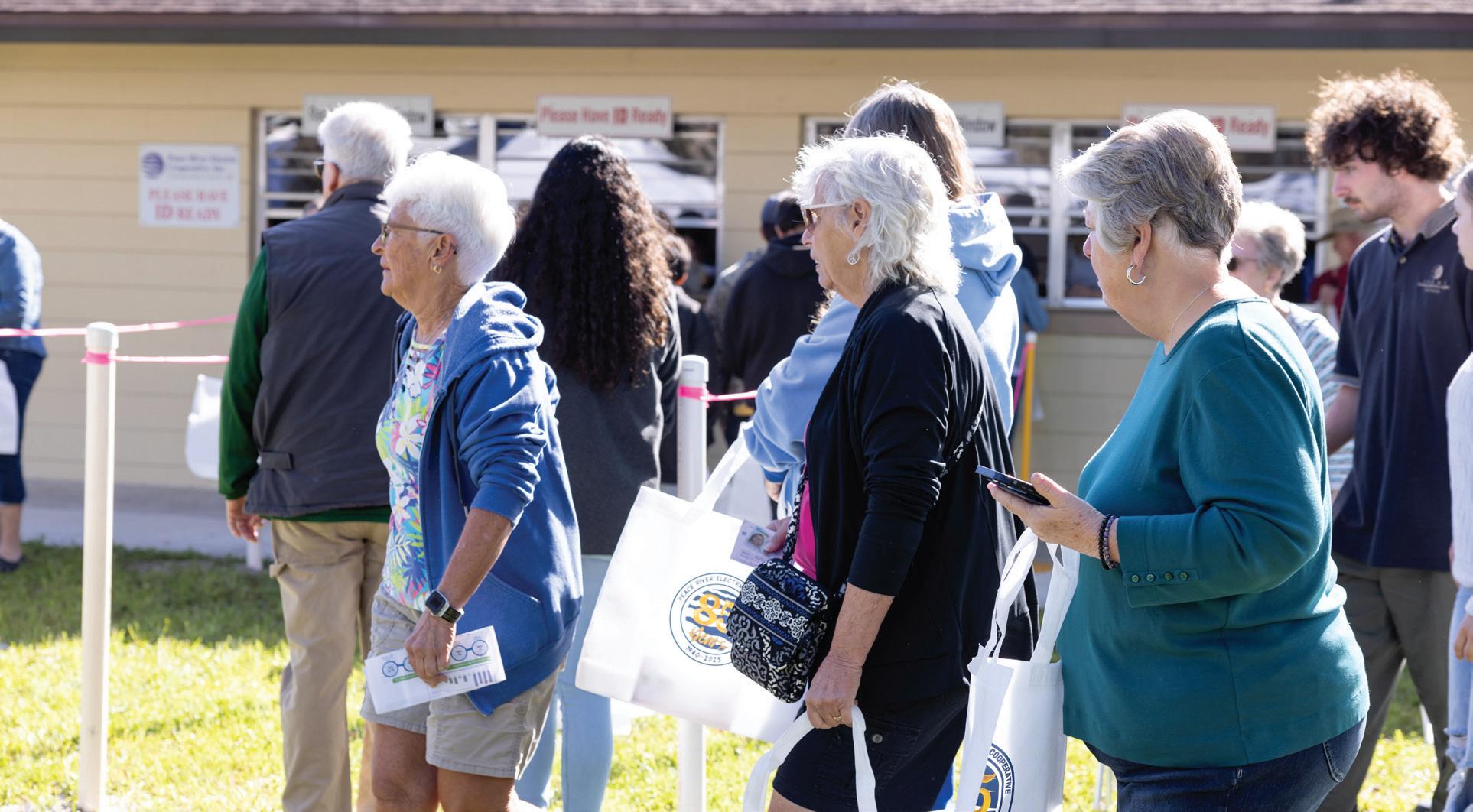
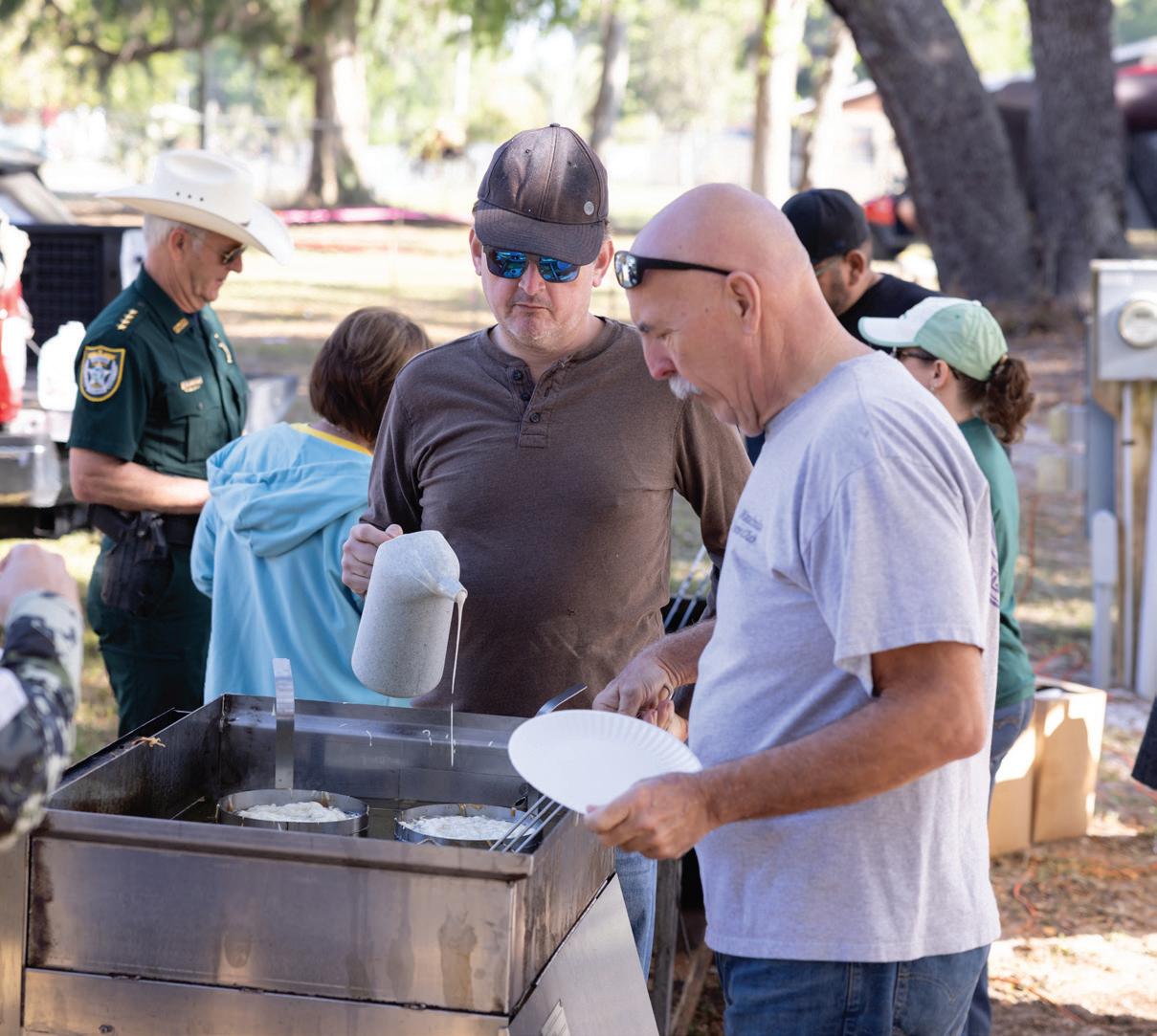
Spring is right around the corner, and that means it’s time for one of Peace River Electric Cooperative’s most anticipated traditions, the Annual Membership Meeting. On Saturday, March 21, PRECO members are invited to gather at PRECO Park in Wauchula for a day filled with connection, celebration and good, old-fashioned fun.



This year’s meeting is especially meaningful as we celebrate 86 years of serving our members and communities. What began as a shared vision to bring electricity to rural Florida has grown into a cooperative powered by the people it serves, and the annual meeting is our way of saying thank you. Members can look forward to a relaxed, family-friendly atmosphere with something for everyone. From classic fair-style favorites like hot dogs, funnel cakes, kettle corn and ice cream to a dedicated kids’ play area, the day is designed for neighbors to come together, enjoy the moment and make memories. The meeting is also a great opportunity to connect with PRECO staff and local community groups, explore informational booths and learn more about the cooperative’s rich history. Of course, no annual meeting would be complete without exciting door prize drawings for registered PRECO members. Live entertainment will once again take center stage. Simple Faith, a men’s quartet from Largo, known for Southern gospel music that inspires and uplifts audiences of all ages, will delight attendees.
To register, just bring your photo ID. For faster check-in, members are encouraged to bring an electric bill with a scannable QR code.
Whether you’ve attended every annual meeting or are thinking about coming for the first time, this is your invitation to celebrate the cooperative spirit that has powered our community for more than eight decades. We hope you’ll join us for a day that’s equal parts tradition, fun and gratitude.


Please note
Some members may remember the antique car show held alongside our annual meeting in previous years. That event will not take place this year.
Thank you for your understanding, and we hope you’llstilljoinusfortheannual meeting and the opportunity to connect with your cooperative.














By Scott Flood
Imagine waking up, saying “Good morning, house,” and standing back as light fixtures flash on, the coffeemaker starts, the outdoor security lighting switches off and the toaster oven starts heating for your frozen pastry. That may sound like something from science fiction, but today’s smart home electronics make it possible.
Smart devices use digital technology and Wi-Fi to take your home to a new level of convenience and comfort. They can also help you make better use of your electricity so you can reduce waste and lower your energy bills.
If you already put the many advantages of smart electronics to work for your home or you’re in the beginning stages of exploring new smart options, you might be surprised by some of the newer devices with potential to change your daily life.
Heating and cooling use more energy than anything else in your home. Replacing your











home’s standard thermostat with a smart model can lower your monthly electric bills while keeping you comfortable.
Smart thermostats learn your daily habits and take over for you. You don’t have to lower your thermostat every evening, because it happens automatically. As smart thermostats learn exactly when you need electricity and when you don’t, they use less energy.
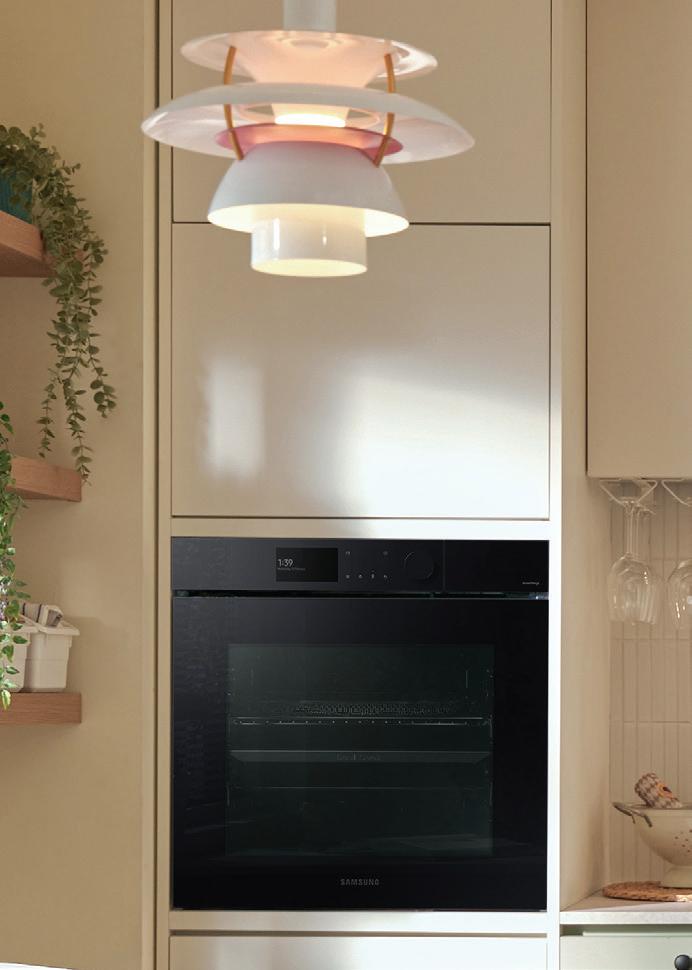
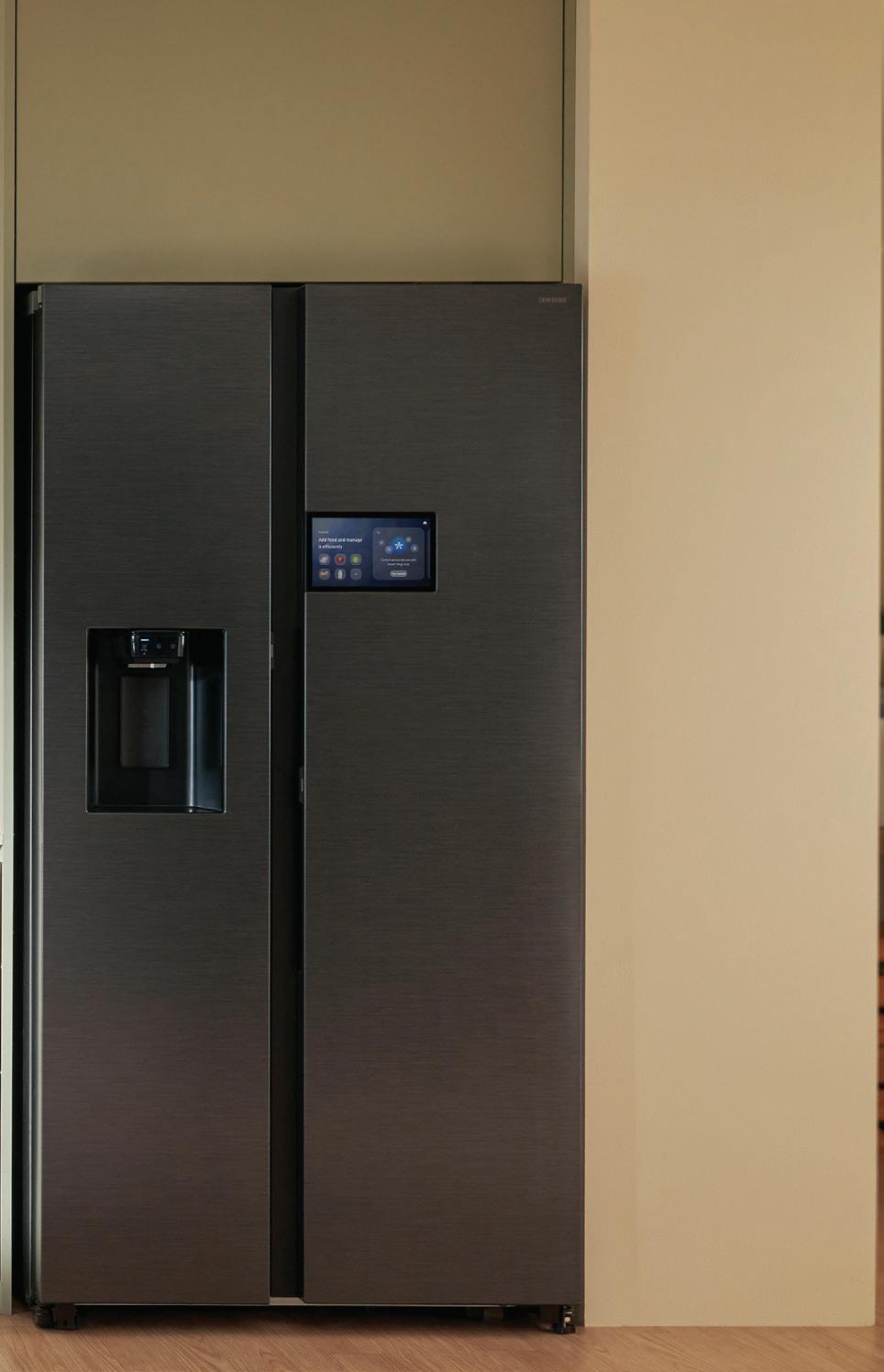
The second-biggest share of your home’s electricity powers appliances—from your refrigerator to your water heater. Smart appliances use Wi-Fi and high-tech sensors to operate more efficiently.
A smart washer can sense the size of your load and adjust the water and cycle times accordingly. Smart refrigerators can warn you when someone leaves the door open. Smart water heaters don’t waste energy by heating water while you’re asleep.
An easy and affordable way to explore smart





technology is with smart plugs for your outlets. You can plug lighting, appliances and other devices directly into them. You can control those devices through an app, so you can tell the coffeemaker when to start brewing, turn off your exterior lighting at dawn or have music streaming as you walk in the door.
Smart power strips look like their ordinary cousins but use smart plugs. They’re particularly helpful at eliminating waste caused by what’s known as phantom load. One example is leaving your phone charger plugged in when it’s not charging.
You may wish your family room didn’t face south, because it’s always warm during the day. Smart shades and blinds can help. You can set them to automatically open or close depending on the time of day, year or your home’s indoor temperature. They can help your air conditioner keep you cooler in summer by blocking the sun and benefit your home heating by staying open to allow the sun to warm your home in winter.

Smart appliances use Wi-Fi and sensors to operate efficiently. PHOTO COURTESY OF SAMSUNG


By Steph Joven
Batteries are part of everyday life—from powering our TV remotes to our electric vehicles. However, when batteries are disposed of the wrong way, they can leak harmful chemicals and catch fire.
Globally, electronic waste—also known as e-waste—is one of the fastest-growing types of trash. In 2022, people worldwide threw away more than 68 million tons of it. In the United States, that adds up to about 46 pounds of e-waste per person each year. Only 22% of that waste is recycled properly.
The good news is that safe disposal and recycling options are available.
Not all batteries are the same, and how you dispose of them depends on their components. Some batteries can be recycled easily, while others can leak toxic chemicals or start fires if tossed in the wrong place. The U.S. Environmental Protection Agency recommends following local rules or using collection programs—such as Call2Recycle, Earth911 or drop-off bins at hardware stores.
When combining the capabilities of individual smart home electronics with voice assistants or whole-home smart energy management systems, they become more powerful.
You can teach voice assistants to carry out multiple tasks that make up your daily routines, such as the “Good morning, house” message. Energy management systems simplify control of all aspects of your home’s energy use, and some offer specific tips to help you save even more.
While smart devices may be able to make your home more energy efficient and your life more comfortable, they’re not perfect. Most require an internet connection, so if your service is down, your smart devices don’t work.
Smart devices typically don’t receive frequent system updates like your smart phone or laptop, so be aware of potential security issues. Before you choose any smart home devices, make sure it’s completely secure and compatible with your other smart devices and smart energy systems. Then prepare to be amazed by what smart home electronics will do for you.

Single-use batteries are designed to be used once, then replaced. These include alkaline and zinc-carbon batteries—the common AA, AAA, C, D and 9-volt sizes. Some areas allow these batteries to go in household trash, but recycling is always better.
Button or coin batteries used in watches, hearing aids and car key fobs are often lithium-based. These should never be thrown away in regular trash or recycling bins, because they can spark fires. Instead, cover the battery terminals with tape or seal them in small bags, and take them to a certified recycling facility or drop-off location.
Rechargeable batteries power many of our everyday devices— cordless tools, phones, laptops and scooters. Types include nickel-cadmium, lithium-ion, nickel-metal hydride, nickel-zinc and small sealed lead-acid batteries.
While these look different, they share one rule: Never throw them in the trash. They must go to a recycling facility. For devices with built-in batteries, recycle the entire device, making sure the battery ends are taped or bagged to prevent sparks.
Automotive and large batteries are more powerful and require special care. Batteries found in vehicles, boats, motorcycles, and ATVs contain hazardous lead and acid. These should always be returned to a retailer, repair shop or hazardous waste program.
Larger lithium-ion batteries—such as those in electric vehicles and home energy storage systems—are even more complex. They should only be handled by dealers, repair shops or the manufacturer.
By properly disposing of batteries, we can recover valuable materials, reduce waste, and keep our community cleaner and safer.
If you have questions about battery disposal, visit call2recycle.org or earth911.com.











For many students, the dream of higher education comes with a big question: How will I pay for it? Peace River Electric Cooperative’s Operation Round Up Scholarship Program is designed to help ease that worry and open doors to opportunity.
Each year, PRECO’s Operation Round Up Board of Directors sets aside funding generated by members who choose to round up their monthly electric bills. Those spare pennies add up to something powerful. This year, $140,000 is available to support students pursuing their educational goals.
The scholarship program is open to PRECO members and their dependents, including graduating high school seniors, students attending technical or trade schools, current college students and even adults returning to school or exploring a new career path. No matter where you are on your educational journey, PRECO encourages you to apply.

Scholarships are awarded in two-year and four-year options. Four-year scholarships provide up to $8,000, helping cover a substantial portion of tuition over time, while twoyear scholarships offer up to $4,000, giving students meaningful financial support as they work toward their goals. Trade and technical scholarships are also available for students pursuing those paths.
Applying is easy. Students can complete the online application by visiting PRECO.coop/community/scholarships. The application deadline is Feb. 28. Transcripts must be recieved by March 6.
At PRECO, Operation Round Up is more than a program. It’s neighbors helping neighbors and investing in the future of our communities. If college or career training is part of your plan, this scholarship could be the boost that helps turn your dreams into reality. Some restrictions apply. See the scholarship application for details.























By Colette Boehm
The Martin County Open Studio and Gallery Tour adds a twist to the typical art show. During the annual two-day event, artists invite patrons into their studios for one-on-one interaction and a glimpse behind the scenes.
Sponsored by Martin Artisans Guild, organizers believe the tour offers a more intimate, interactive experience than
























How one painter feeds a passion for art while supporting fellow artists
traditional art shows or galleries.
“One of the greatest missions and accomplishments of the Martin Artisans Guild is to help artists grow in their profession while sharing art with the community,” guild President Michaelann Bellerjeau says.
The guild aims to create a supportive community where artists can exchange ideas and grow.
The group is also dedicated to providing
























opportunities for artists to exhibit original work and to growing Martin County as an arts community. The tour is an opportunity for artists to expand their reach and for patrons to learn more about artists and their processes.
Welcoming the Community In
“Having a studio practice can be lonely,” Michaelann says. “It’s great to get to share. The tour has grown in popularity over

























the years from being a community event to a widely attended South Florida event with over 350 attendees last year. Many anticipate the weekend, from art lovers to the curious and many young art students.”
Michaelann has been a member of the guild for more than four years and has served on its board of directors for three. This year, she stepped in as its president. She is an artist who paints marine environments en plein air and in the studio, focusing on Florida’s wildlife and habitats.
“I’ve had the pleasure of being in the tour for three years,” she says. “2026 is my fourth. Each one is more and more fun, as I meet and share my art with such a wide array of art lovers from the community.”
For the 2026 tour, Feb. 21-22, approximately 30 painters, potters, jewelers, sculptors and more open their studios to visitors. A preview event on Feb. 6 at the Elliott Museum features samples of participating artists’ work.
“Each year of our free tour is different, with a variety of studios to explore and some gallery spaces,” Michaelann says.


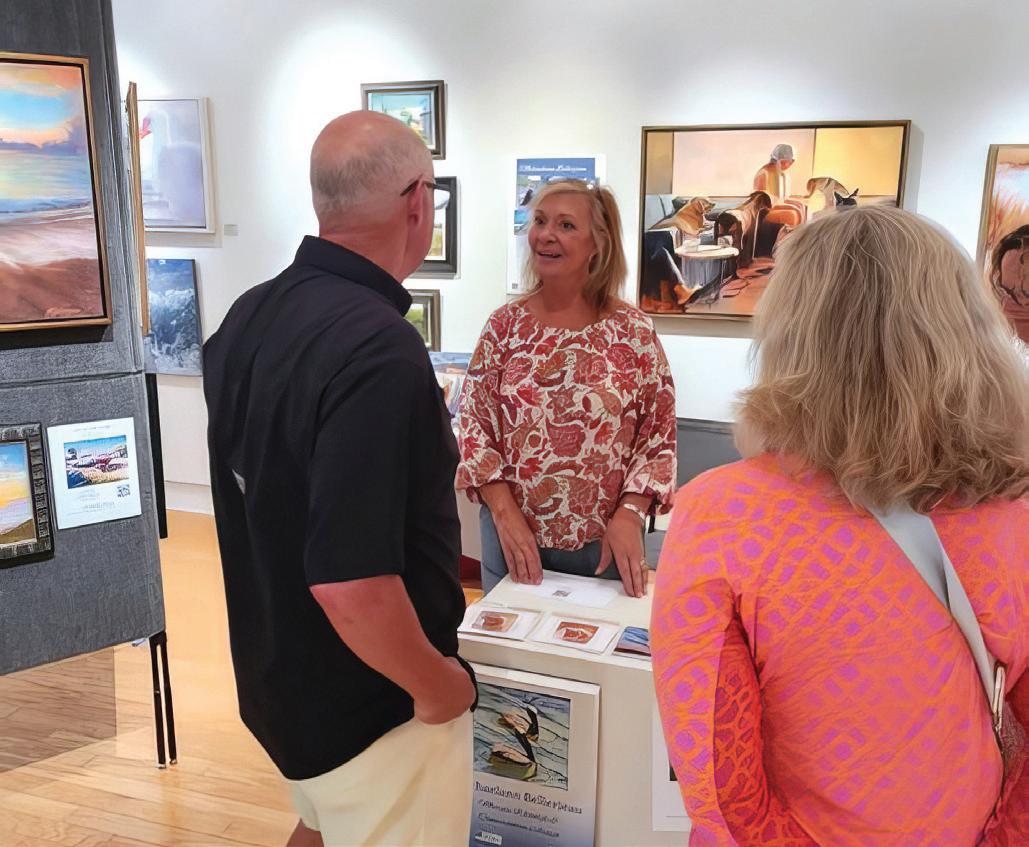
CLOCKWISE FROM TOP LEFT: Visitors are invited into working artists’ studios during the annual Martin County Open Studio and Gallery Tour. The Palm Room Art Gallery & Artisans Boutique features the work of guild members across a variety of media. Michaelann, a self-described conservation artist, features South Florida’s birds and waterways in her work. The guild holds an opening reception prior to the annual tour and hosts six member exhibits throughout the year at its gallery.
“Visitors choose their route and go. There are so many types of art represented: fabric, ceramic, jewelry, painting, sculpting, glass. Visitors experience some of the processes of the work and the stories behind the inspiration. Of course, they also have many opportunities to purchase art directly from the artist in the studio. Collectors, appreciators, artists and artist wannabes enjoy it, and the feedback is overwhelmingly positive each year.
“Personally, I’ve enjoyed sharing my passion for the restoration of South Florida waters and wildlife through my artwork,” she adds. “It gives me a chance to advocate, educate and inspire involvement while also exposing art lovers to my cause.”
That cause is one Michaelann discovered after she and her husband moved to Martin County in 2020, when they sold their home in Atlanta.
“The cultural arts here are so rich,” she says. “It’s just culturally a rich place, not just with the visual arts, but with performing arts and music. I couldn’t find my voice. I didn’t really have any kind of passion behind it, driving it.”
After moving to the area and learning of the environmental issues threatening its waterways, river grasses and estuaries, Michaelann found her purpose.
“I was like, ‘I need to be bringing
awareness to what could be lost,’” she says. “I’m like, ‘How can we possibly lose this?’ It totally invigorated everything.
“I found out that there were some of the biggest restoration projects in history going on in South Florida, more than any other place in the world. So, they are doing something about it. But is it too late? We still need to have awareness for that. That’s how I got interested in that and directed my art in a completely different direction. I’m a conservation artist now.”
In addition to the annual tour, the guild operates The Palm Room Art Gallery & Artisans Boutique, which Michaelann notes has a bit of something for everyone. The gallery produces six exhibits of members’ work each year. In addition, a juried exhibit in June and July is open to nonmembers, offering artists from all over Florida the opportunity to join the Martin County show.
“We’re really thrilled to be able to keep helping artists with their professionality and also pushing the arts in our area to make awareness for the arts,” Michaelann says. “Because, if the arts go away, it’s the same thing as having the river grass go away. You’re going to have just a desert. And people have to have art in their lives. Otherwise, their little spirits will die.”
The Palm Room Art Gallery & Artisans Boutique is at 3746 SE Ocean Blvd., Sewall’s Point. It is open Tuesday through Saturday. Visit martinartisansguild.org for more information about events.

Lou Barreda’s family ranch transforms elephant encounters into a powerful conservation movement
By Pam Windsor

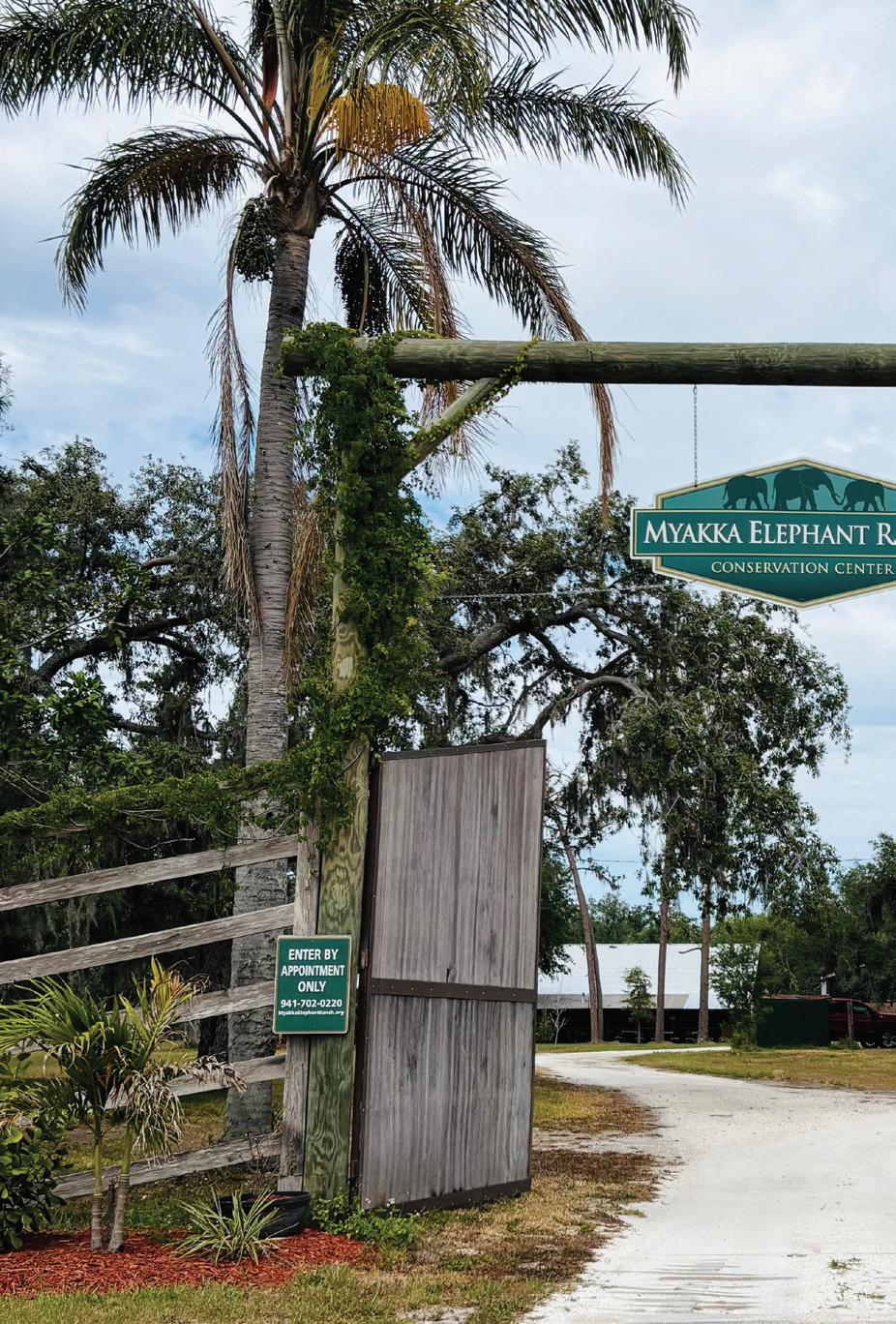
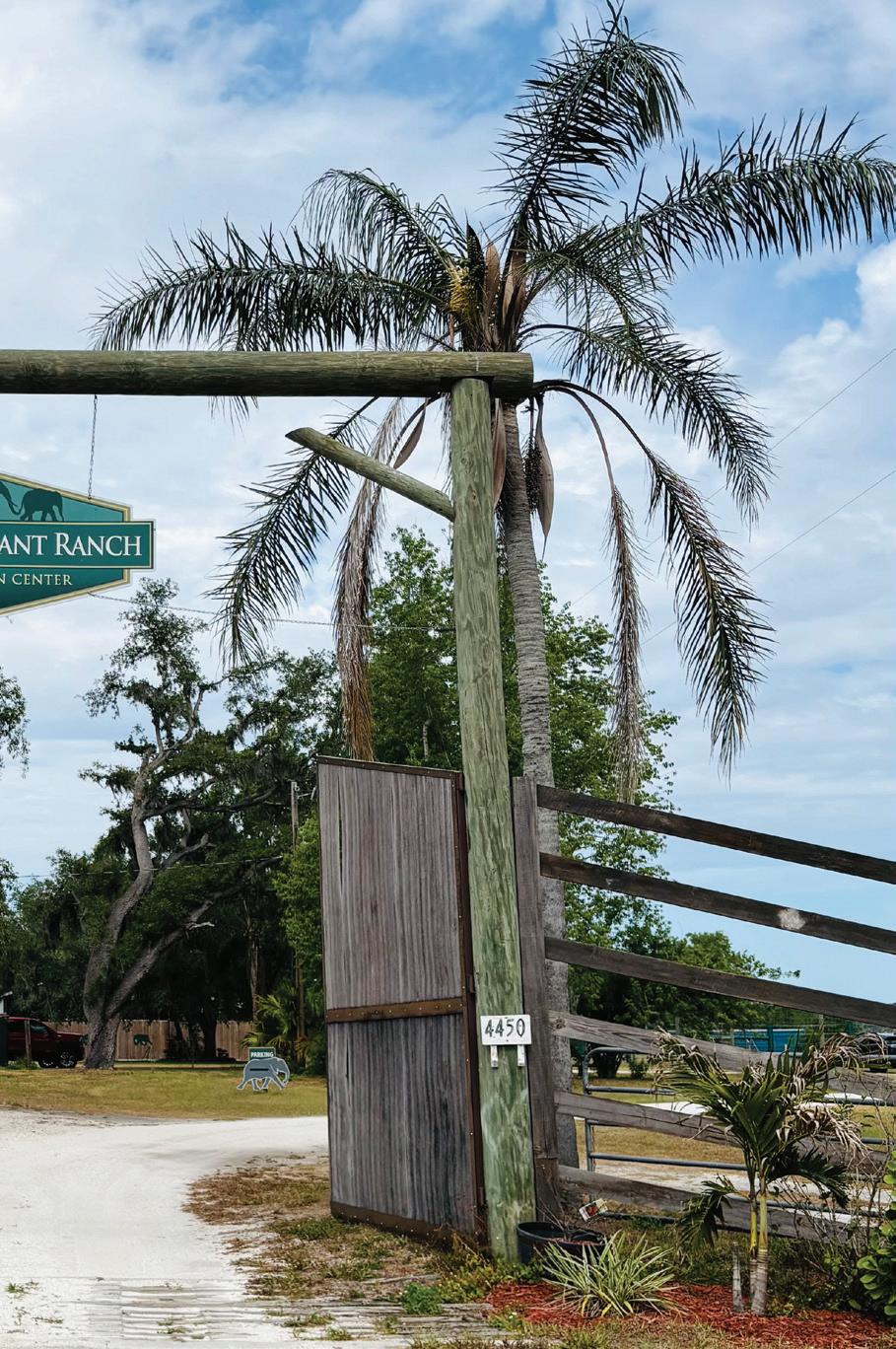
Lou Barreda has been around elephants his entire life. His love for the gentle giants shines through when he talks with guests at his family’s Myakka Elephant Ranch about 35 miles from Sarasota.
His family’s passion for working with animals stretches over three generations.
“My grandfather started out with all types of animals in Peru in South America, and was able to come to the United States while working with them,” Lou says. “So, my dad was kind of born into it. The elephants started when my parents brought the first three over from Kruger National Park in South Africa in 1985.”
At the time, his parents lived in Oklahoma. The first year proved to be too cold for the animals, so they relocated to Florida. By the time Lou was born, elephants were already a part of the family’s everyday life.
“I grew up around elephants, and they became part of my family,” he says with a smile. “I’ve always really enjoyed being around them.”
As an adult, Lou attended International Elephant Foundation symposiums in South Africa and Thailand, where he learned more about the animals in their natural habitats. When he learned about the plight of Asian and African elephant populations due to poaching, a lack of land to roam, access to water and other threats to their existence, he wanted to take action.
Lou, now a member of the International Elephant Foundation Board of Directors, decided to turn Myakka into a nonprofit conservation center. This allowed people to see elephants up close and learn how to help protect them in their natural habitats.
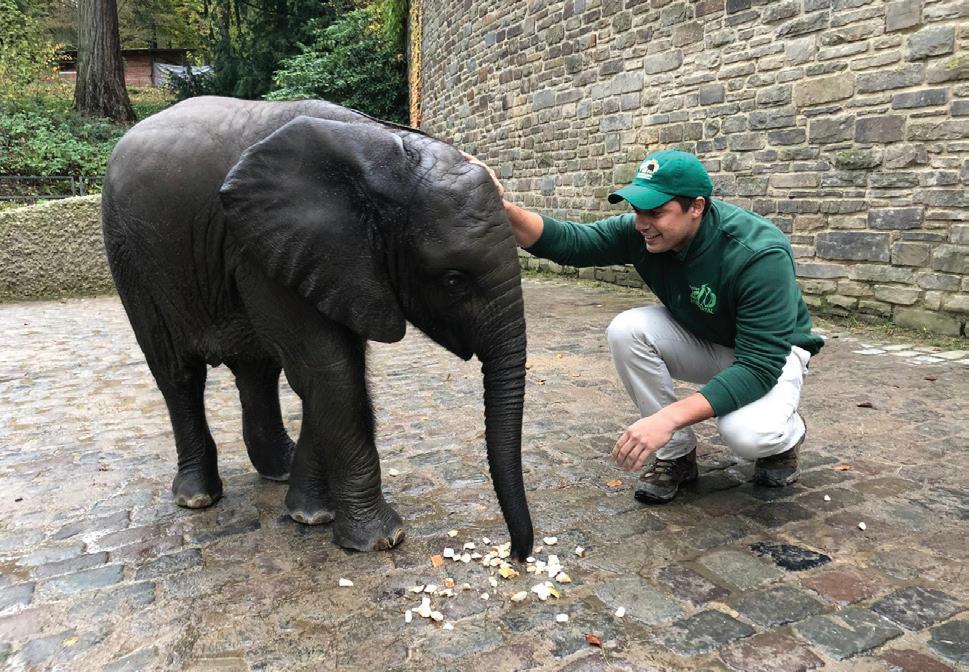
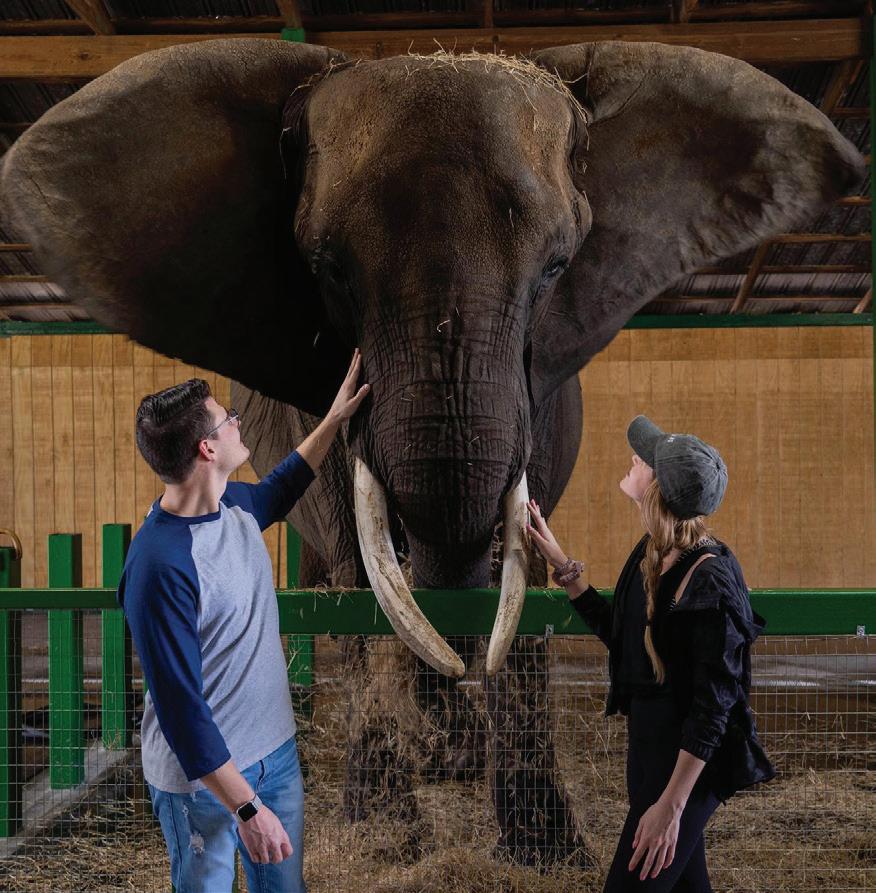
Visitors get to meet Baba, Susie and Patty, hear about the differences between Asian and African elephants, walk up and touch them, and even feed them breakfast or help give them their daily baths.
“Allowing guests to see them up close and help with their care gives them an understanding of some of the challenges elephants face around the world,” Lou says. “Once they learn more about them, they become interested in what they can do to help.”
Lou and his father, George, share interesting facts, such as how elephants eat 300 pounds of food a day, can hear for miles, are known for their incredible memories and more.
“People are fascinated by elephants, and many have figurines around their house, but they don’t know much about them,” Lou says. “For example, every day we hear people say, ‘We didn’t know they have hair.’ You have to get very close to see their hair.”
In one session, George discussed the elephant’s keen sense of smell.
“It’s three or four times greater than a hound dog,” he says. “Elephants can actually smell water miles away. They dig into the ground, find water, dig it out with their tusks, drink and then bathe themselves.”
He touches on the history of each elephant, explaining how all were involved in the entertainment business in some way. Patty appeared in movies, commercials and circuses. Susie did a variety of Hollywoodrelated things, and Baba was once owned by Michael Jackson and spent time at the singer’s Neverland Ranch.
All three are now retired and live on the 30-acre Myakka property with large, weather-protected stalls, room to roam and a massive watering hole.
Just like people, individual elephants have their own likes and dislikes.
“Baba has to touch everything and can’t stand still,” George says. “Susie is calm, very sure of herself, loves interacting and loves to be touched, and Patty couldn’t care less. They all have their own personalities.”
Part of the funds collected from admission fees cover the elephants’ care. While Baba, Susie and Patty are the three currently interacting with guests, Myakka recently welcomed three more elephants. The annual cost of care per elephant averages $60,000.
Fighting for Elephants Worldwide
Myakka donates $50,000 a year to the International Elephant Fund. Based in Texas, the IEF was founded in 1998 by Michael Fouraker, who was the Fort Worth
Zoo’s executive director at the time.
Frustrated by the lack of funding for elephant conservation and research, Michael created the organization to support long-term elephant preservation. The IEF funds 23 projects in 15 countries, and Sarah Conley, IEF director of conservation, says Lou’s work in Florida goes a long way toward supporting those efforts.
“Lou’s been on our board for a number of years, and in my personal opinion, does something incredibly invaluable in inspiring people to care about elephants,” she says.
“Not everyone can afford to go on an African safari or visit Asia and see elephants in their natural habitat. But by going to Myakka—or a zoo, or preserve or some sort of park—you can interact with, or see, and learn about an endangered species.”
Those experiences encourage people to make different choices.
“Let’s say you meet an elephant at Myakka, now you might not buy ivory— made with an elephant’s tusk,” Sarah says. “When you make charitable donations, you might consider supporting an elephant nonprofit. You might choose not to buy products made from palm oil and instead buy products made with sustainable palm oil only, because you know that’s going to protect the elephants’ habitat.”
While the elephant population was once in the millions, today there are fewer than 500,000 African elephants. When it comes to Asian elephants, the number is much smaller—somewhere around 50,000.
Sarah says the IEF’s many projects are aimed at protecting elephants and supporting the people living in communities alongside them. In some areas, rapid development has made it more difficult for elephants to find wide-open spaces to roam, so they often clash with family farmers.
In Africa, one way the IEF has found success in protecting local crops from elephants seeking food is by installing beehive fencing. Elephants tend to avoid bees, and the beehives keep elephants from ravaging crops. In the past, when elephants damaged a family farmer’s source of food, the farmer often wanted to retaliate by killing the elephants.

“Beehive fences are a really cool thing when done correctly,” Sarah says. “You have to have the right species of bees, there has to be water nearby so the bees can drink, and different things. We have a project in Tanzania that operates one of the longest beehive fences in the world, and it protects something like 20,000 individuals.”
Another project helps protect elephants from poachers who target the animals for their ivory tusks.
“It’s the Big Tusker project,” Sarah says. “African elephants, both males and females, get these big ivory tusks, some weighing an estimated 100 pounds per side. They’re basically just incisor teeth, but they’re
stunningly beautiful. Most of the Big Tusker population lives in this area of Kenya called the Tsavo National Park. For the past 15 years or so, our partners have monitored these Big Tuskers with aerial surveillance and ground follow-up. It’s basically a security system for these big elephants.”
These are just two of the many efforts underway to protect elephants around the globe. The work is important because it protects the entire ecosystem.
“It’s what you learned in the third grade,” Sarah says. “The entire ecosystem is connected. When you protect elephants,


you’re protecting all the other species that live in their habitat. So, therefore, you’re protecting probably millions of other species, both plants and animals.”
Back at Myakka, Lou is determined to do his part. In recent years, due to public pressure over the treatment and welfare of elephants in circuses and some zoos, the ability to see those animals up close is less common than it used to be.
There are about 350 elephants in the United States, and there are strict regulations on importing any more.


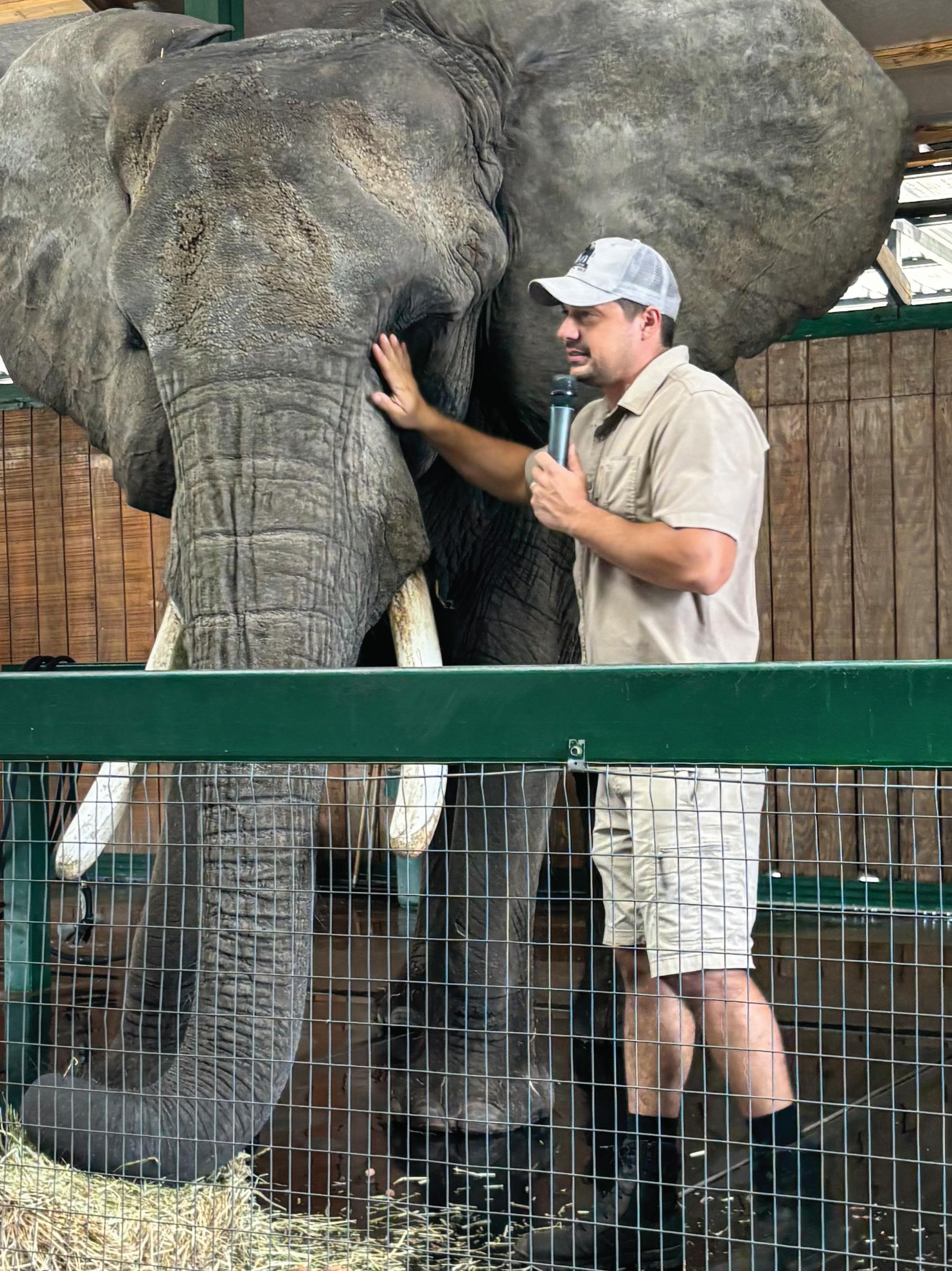
Allowing people to interact with live elephants offers a rare and special opportunity.
“Just to give others the kind of experience I’ve been able to have is such a special thing,” Lou says. “We have people getting emotional every day, talking about how getting to touch an elephant has always been on their bucket list. We also have a lot of people who come back because they want to see the elephants again and build a connection. I feel that connection is what will help with conservation efforts in the future. I think it’s really important to keep it going.”
To learn more about Myakka, visit myakkaelephantranch.org.
To find out more about the work of the International Elephant Foundation, visit elephantconservation.org.


Italian Penicillin Soup
1 onion
2 carrots
2 celery sticks
4 garlic cloves
6 cups chicken stock
1 Parmesan rind
Salt and black pepper, to taste


1 cup acini de pepe pasta
Optional garnishes: chopped parsley, drizzle of olive oil, fresh-ground black pepper, fresh-grated Parmesan, ¼ teaspoon turmeric, ¼-inch minced ginger, tempered egg and/or a squeeze of lemon
Roughly chop the onion, carrots, celery and garlic cloves.
Pour the stock into a large pot. Add the chopped vegetables and Parmesan rind. Season well with salt and black pepper. Cover. Simmer for about 20 minutes over medium-high heat.
Using a fork, check if the vegetables are cooked. They should be soft and tender. Remove the rind, then strain out the vegetables using a slotted spoon.


Add the cooked vegetables to a blender with ½ cup of water. Blend until smooth. Pour the blended vegetables back into the pot with the vegetable broth. Stir, then taste for seasoning.
Bring soup back to a boil. Add pasta. Stir every minute or so to ensure it doesn’t stick to the bottom of the pot. Alternatively, cook pasta separately and add to soup bowl with broth when ready to eat. Top with garnishes of choice before serving.

8 ounces rice noodles
1 tablespoon olive oil
1 zucchini, diced
1 onion, chopped
4 cups low-sodium chicken broth
15-ounce can light coconut milk
2 tablespoons fish sauce
2 tablespoons red curry paste
2 cups shredded cooked chicken
1 tablespoon lime juice
2 tablespoons fresh basil, julienned
2 tablespoons fresh cilantro leaves
Cook rice noodles according to package directions. Set aside.
In a stockpot, heat olive oil over medium-high heat. Add zucchini and onion. Cook until crisp-tender, about 3 minutes.
Add chicken broth, coconut milk, fish sauce and curry paste. Simmer until zucchini is soft, about 8 to 10 minutes. Add chicken, lime juice and cooked rice noodles. Simmer until heated through.
Garnish with basil and cilantro before serving.
Avgolemono
1 tablespoon extra-virgin olive oil
1 cup finely chopped carrots
1 cup finely chopped celery
1 cup finely chopped green onions
3 garlic cloves, finely chopped
8 cups chicken stock
2 bay leaves
1 cup rice
Salt and pepper, to taste
2 cooked boneless chicken breast pieces, shredded
½ cup freshly squeezed lemon juice
2 large eggs
Fresh parsley, for garnish
In a large Dutch oven or heavy pot, heat olive oil on medium-high heat. Add carrots, celery and green onions. Toss together to saute briefly, then stir in the garlic.
Add the chicken stock and bay leaves. Raise the heat to high. Once the liquid has come to a rolling boil, add the rice, salt and pepper. Turn the heat to medium-low. Simmer for 20 minutes or until the rice is tender. Stir in the cooked chicken.
Whisk together the lemon juice and eggs in a medium bowl. While whisking, add 2 ladles full of stock from the cooking pot to help temper the eggs. Once fully combined, add the sauce to the chicken soup. Stir. Remove pot from the heat immediately.
Garnish with fresh parsley before serving.
1 tablespoon olive oil
1 cup chopped fennel
1 leek, cleaned and sliced
3 cups chopped carrots
1 cup chopped butternut squash
3 garlic cloves, minced
1 tablespoon grated ginger
1 tablespoon turmeric powder
Salt and pepper, to taste
3 cups vegetable broth
14.5-ounce can light coconut milk
Heat the olive oil in a large Dutch oven or saucepan. Add the fennel, leek, carrots and squash. Saute for 3 to 5 minutes until the veggies start to soften. Add the garlic, ginger, turmeric, salt and pepper. Saute for a few more minutes.
Add the broth and coconut milk. Bring the mixture to a boil. Cover and simmer for 20 minutes.
Once the soup is cooked, add it to a blender, and blend until creamy. Alternatively, use an immersion blender.
6-ounce package long grain and wild rice blend, quick-cooking version with seasoning packet
½ teaspoon ground black pepper
½ cup all-purpose flour
6 cups chicken broth
2 boneless chicken breast halves, cooked and cubed
¾ cup butter
1 cup diced carrot
1 cup diced celery
1 cup diced onion
3 cups half-and-half
Open rice. Remove seasoning packet, and set aside.
In a small bowl, combine pepper and flour. Set aside.
In a large pot over medium heat, combine broth and chicken. Bring to a boil, then stir in rice. Cover, and remove from heat.
In a medium saucepan over medium heat, melt butter. Add carrots, celery and onion. Saute for 5 minutes. Stir in contents of seasoning packet. Continue cooking vegetables until softened, about 5 minutes. Add seasoned flour gradually while constantly stirring to form a roux. Saute roux for 3 to 4 minutes.
Whisk in half-and-half, a little at a time, until fully incorporated and smooth. Cook until thickened, about 5 minutes. Stir cream mixture into broth and rice. Cook over medium heat until heated through and rice is done, about 15 to 20 minutes.



Above all, photography is about light and shadow—literally and metaphorically.
God provides the light, man adds the content.
The way we see and use light changes the way we feel and see the world.
One of the things I like best about winter is the clear, crisp sky that creates sharp shadows, contrasting landscapes and eyecatching silhouettes. Then there are the breathtaking sunset silhouettes, captured as an orange ball melts into a glimmering ocean.
Too many gray, sunless days wear on me emotionally. And while these shadowless, overcast days are wonderful for portrait photography, I need to see the sun, especially in winter. Because of this recognition, I have chosen not to settle in the Pacific Northwest, a part of the world I truly love.

I waited at least an hour for something or somebody to pass through this road along the seawall in historic Maysville, Kentucky, one of the underground railroad locations. Shadowy shapes of historic riverfront hotels and buildings from the Civil War era are cast on the seawall built to keep the Ohio River from flooding the town. For me, this is not just a silhouette of a man walking. It’s someone walking through history, through a community where brave people risked their lives to help other humans struggle to get to freedom.
PHOTO BY DAVE LABELLE
See if you can make a photograph that captures the extremes of light and dark. Remember to make your exposure for the highlights not the medium tones, which allows the shadows to stay as dark, rich tones. A dark foreground against a light backdrop can create depth, scale and even mystery.
Email your best image—just one—with caption information, including an explanation of how it affects you, to gph@pioneer.coop. We may share submissions on our website and social media channels.
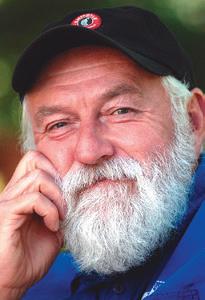
Photographer, author and lecturer Dave LaBelle has captured special moments for more than half a century, sharing photo tips and life perspectives with readers. For more of his writings, visit davidlabelle.com and his blog at bridgesandangels.wordpress.com.

I realize photographing someone in silhouette, especially from a distance, does impersonalize or objectify them. They become a graphic element, a softer shape against a sharper backdrop.
While I am a believer in talking with subjects, often after I photograph them, there are times I don’t feel like talking to anybody. Instead, I appreciate nameless forms becoming part of the compositional furniture, adding scale, contrast and life to a lifeless scene.
Often, it’s that anonymous figure that’s needed to compliment or complete a photograph.
While the art of photography is about using and recording highlights, medium tones and shadows, sometimes it’s fun to purposely expose for the highlight areas and allow the shadows to stay dark, rich tones.

Not native to North America, pigs first came to Florida with early Spanish explorers. Hernando de Soto landed in present day Tampa Bay in 1539. He brought with him about 200 domestic pigs to feed his troops on his expedition, probably the first hogs to set hoof in what became the United States. As Hernando and his men wandered around the future Southeastern United States, many of his hogs escaped and turned wild.
Hogs are very adaptive animals and can live anywhere. Few large predators want to tangle with a big tusked boar. The feral swine flourished in the wilderness of North America and reproduced prolifically.
Pigs breed all year long. A sow can begin breeding when she reaches 6 months old and gives birth annually to two litters of four to 12 piglets. By the time she drops her second litter, her daughters from the first litter begin giving birth. Feral hogs can live about six years.
Now, millions of descendants from Hernando’s pigs spread across the South and occupy all 67 Florida counties. In the Sunshine State, feral hogs thrive in oakcabbage palm hammocks, marshes, swamps, forests, agricultural areas, and even urban or suburban woodlots.
Many hunters enjoy hunting wild hogs. The period between the end of deer season and the beginning of turkey season is one of the best times to bag a wild hog and put fresh pork in the freezer. After deer season ends, few hunters enter the forests.
In addition, natural foods become difficult to find in late winter, so hogs spend more time roaming around looking for something to eat. Pigs devour practically anything they can find or catch. They can cause tremendous damage to crops and wildlife habitat by rooting for food. Therefore, in late winter, hunters would



more likely see typically nocturnal wild pigs wandering during daylight hours searching for morsels.
If you find the food, you find the swine. After deer season ends, food plots meant for whitetails make great spots to look for wild pigs. Just like for deer, stands overlooking food plots provide places to bag hogs. Also look for any natural foods, such as emerging plants, berries and anything else edible. Since wild pigs devastate crops, destroy gardens, ravage fruit and nut orchards, destroy wildlife habitat, displace native animals and breed prolifically, many landowners encourage hunters to shoot all the hogs they can on their properties. Many landowners lease their properties to deer hunters. After deer season ends, those landowners might welcome hunters to kill
hogs on their tracts.
In Florida, people can hunt feral hogs all year on private lands without limit. Making acquaintances with a few landowners could open access to thousands of acres of good hunting properties.
Some state wildlife management areas offer seasons for hogs in the spring and summer. Regulations vary for different areas, so check before hunting. Successful hunters can put meat in their freezers and enjoy great times while doing it.
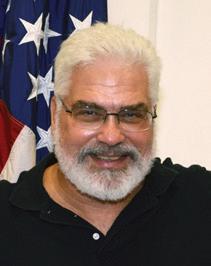
John N. Felsher is a freelance writer, broadcaster, photographer and editor. He’s written more than 3,500 articles on a wide variety of outdoor topics. Contact him at j.felsher@hotmail.com or through Facebook.
If you have a home office, look for opportunities to save energy in your workspace. Use Energy Star-rated equipment, which consumes up to 50% less energy than standard models.
Set printers, scanners and similar equipment to automatically switch to sleep or energy-saver mode when not in use. In addition to saving energy, the equipment will stay cooler, helping extend its life.
Another way to save energy in your home office is to use efficient lamps for task lighting. Replace any older bulbs with energy-saving LEDs.
Source: energy.gov



























All ages can find something new and exciting around every corner of the state. Filled with rich history, abundant natural beauty and diverse events all year, Florida has fun options for everyone.
Feb. 1
Paw-di Gras
Recently crowned Best Pet Event in InWeekly’s Best of the Coast, this award-winning block paw-ty transforms downtown Pensacola into a tailwagging Mardi Gras wonderland for two- and four-legged festivalgoers. The fifth annual event is WolfGang Pensacola’s signature philanthropy event benefiting the Escambia County Department of Animal Welfare. The festival includes a paw-rade, costume contests, vendors, games and a rainbow bridge memorial. wolfgangparkandbrews.com/pawdigras-registration; 318-264-5705
Feb. 1
Chamber of Commerce Exhibit
The Key Largo Chamber of Commerce hosts this exhibit showcasing pieces from fine art members from 9 a.m. to 6 p.m. at the Chamber of Commerce, MM 106. The works of art depict the Keys and are for sale. xagpi.us.com; 305-451-1414


Feb. 14
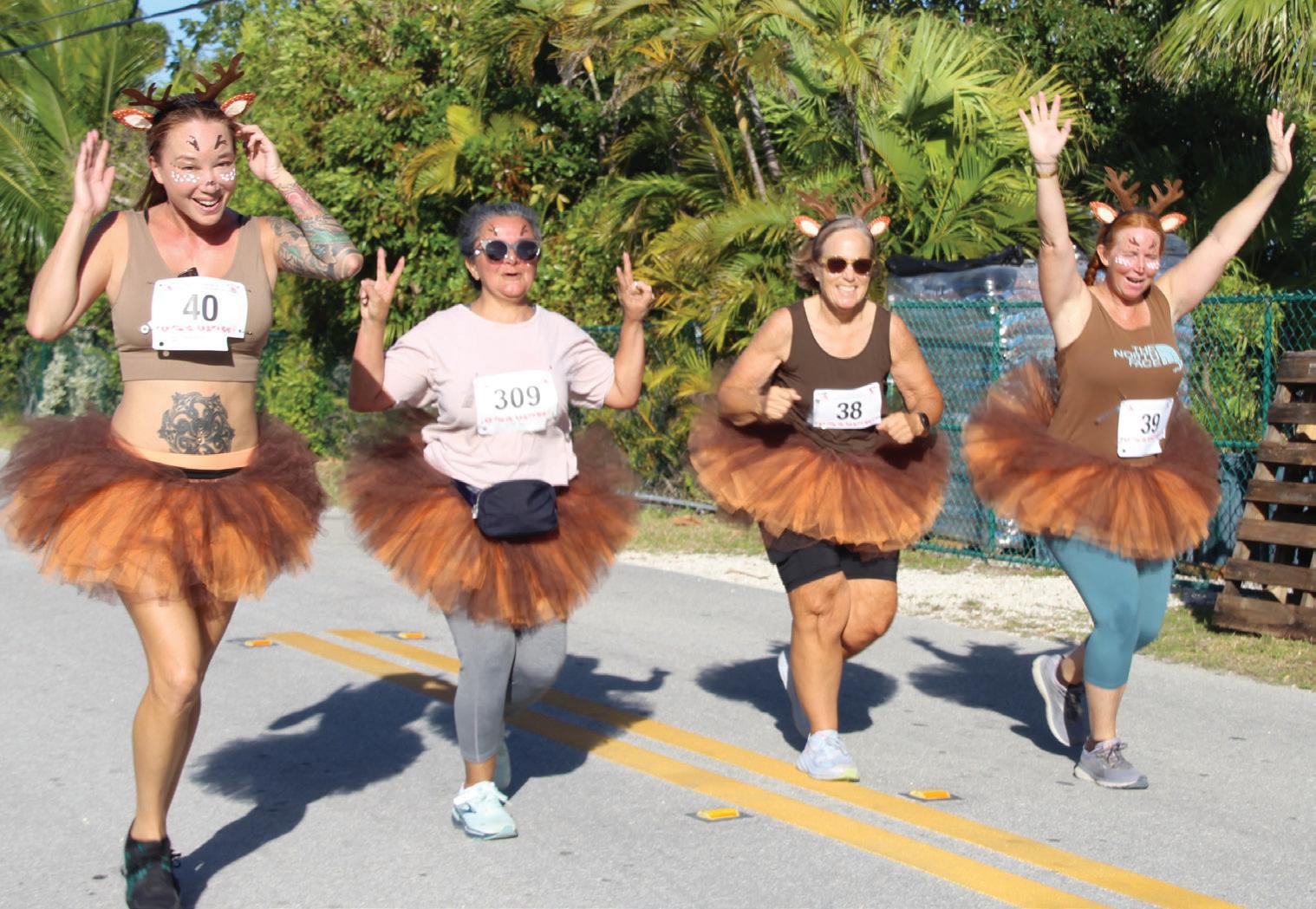
10th Annual Run With Deer 5K
Help the Florida Keys Wildlife Society protect the habitat and wildlife of the Florida Keys during this year’s run/walk. The event begins at 8 a.m. at Big Pine Community Park. Preregister at www.southernmostrunners.com or in person at Florida Keys National Wildlife Refuge Nature Center. Packet pickup for those who preregister is 5-7 p.m. Feb. 13. For those registering the day of the event, packet pickup is 7-7:45 a.m. The first 200 registrants receive complimentary T-shirts. Proceeds benefit the Florida Keys Wildlife Society. www.floridakeyswildlifesociety.org; 305-872-0774

Feb. 2-23, Feb. 3-24
Florida Keys Concert Association 2026 Concert Series
Musicians perform classical concerts 7:30-10 p.m. Mondays at the Marathon High School Performing Arts Center. Wigmore Hall and Bordeaux International Chamber Music Competition prize winner Terra String Quartet performs Feb. 2 in Marathon and Feb. 3 in Tavernier. The following Friday in Marathon, Stella Chen and Gilles Vonsattel take to the stage, with a performance the next night in Tavernier. The 2014 BBC Young Musician of the Year, Martin James Bartlett, performs Feb. 16 in Marathon and Feb. 17 in Tavernier. To finish out February’s lineup, Hermitage Trio take the stage as one of the world’s leading piano trios. The trio performs Feb. 23 in Marathon and Feb. 24 in Tavernier.
floridakeysconcerts.com; 800-324-6982
Feb. 4-25
Photography Exhibit
Original works of fine art photography and digital art are on display starting at 9 a.m. Monday through Saturday at the Monroe County Public Library, MM 81.8. A public reception is 5:30-7:30 p.m. Feb. 6. agpi.us; 305-664-4645



Feb. 14
39th Annual CCC Festival
Celebrate nature and the legacy of the Civilian Conservation Corps from 10 a.m. to 4 p.m. at Highlands Hammock State Park. Highlights include golden era jazz, folk music, blacksmithing, pony rides, antique cars and Clyde Butcher! Located at 5931 Hammock Road in Sebring. www.floridastateparks.org; 850-245-2157
Feb. 18-March 30
60th Members’ Judged Art Show
Art Guild of the Purple Isles members’ pieces are on display at Dolphin Life Hospital, MM 82.7. Mediums include watercolor, oil, acrylic, photography, digital art, pastel/drawing, mixed media/experimental, sculpture and plein air. A reception is 5:30-7:30 p.m. Feb. 19 for artists and the public. agpi.us; 305-453-4321
Feb. 20
Pensacon
This premier pop culture convention celebrates the worlds of science fiction, fantasy, horror, comic books, cosplay, animation, video games, books and more. The three-day event draws tens of thousands and takes place across multiple venues. Attendees can meet celebrities, authors and artists; attend panels and workshops; enjoy live music, cultural performances and film screenings; shop with vendors; participate in cosplay, including a costume contest; and enjoy after-hours events at multiple venues. pensacon.com; 850-454-8741
Feb. 22
Chocolate and Cheese Fest
Food trucks and vendors sell chocolate- and cheese-themed items, as well as other vendor and menu items, at Community Maritime Park. Admission for adults is $5, and children 12 and younger enter for free. Activities include contests, chocolate and cheese sampling, live music and a bounce house. The chocolate pie eating contest is at 2 p.m. The first to eat the pie wins a trophy and $100 in gift certificates to local restaurants. 850-295-0737
Feb. 28
Botanical Art Show
Fine art pieces showcase the beauty of the gardens in various mediums. The show is 9 a.m. to 3 p.m. during the Garden Walk event in conjunction with the Garden Club of the Upper Keys at Francis Tracy Garden Center, MM 94. agpi.us; 786-752-6562
Feb. 28
13th Annual I Pink I Can Run
Join the Krewe du YaYas for this 4-mile run/walk for breast cancer at The Flora-Bama. Participate in person or virtually in your own neighborhood, at a park or on a treadmill. For those who choose the virtual option, sign up now, gather friends, decide on a route and plan how you’ll celebrate after you rock your 4 miles. Virtual participants must complete their event between Feb. 21-28. Virtual Race participants are not eligible for prizes. runsignup.com/race/fl/pensacola/ipinkicanrun; 850-516-9154

Feb. 1
AGPI Member Art Exhibit
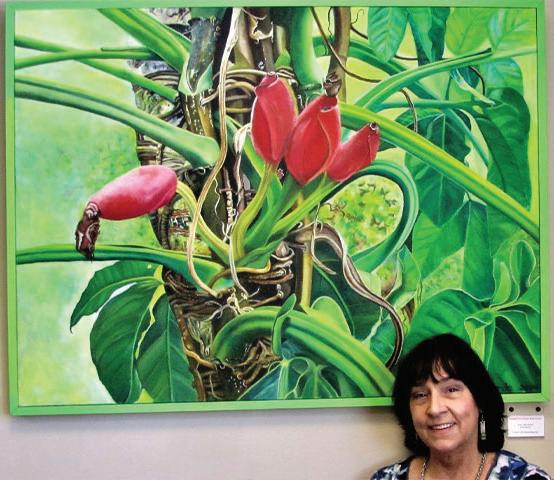
This year-round exhibit is for the enjoyment of the public and hosted by the Art Guild of the Purple Isles. The exhibit is 9 a.m. to 5 p.m. at the Tassell Medical Arts Building, Mariners Hospital, MM 91.5.
agpi.us/shows-exhibits/tassell-building-exhibit
Feb. 28
Garden Walk 2026
The Garden Club of the Upper Keys invites you to stroll through spectacular private gardens from 10 a.m. to 4 p.m. at Francis Tracy Garden Center. Tour tickets are $32 in advance on the club website and $35 day of the event. Besides the Garden Walk, the center is hosting food trucks, vendors, artisans and plant sales.
gardenclubupperkeys.org; 786-752-6562




Want to share a family-friendly event with the readers of Florida Currents? Head online and enter the details at tinyurl.com/FloridaCurrents or use the QR code for easy access. Make sure to submit the item at least 60 days before the event (due to press deadline).
If you own rights to a print-quality photo promoting your event, include it with photo credit information.

Surrounded by vibrant colors, interesting textures and calming scents, sensory gardens engage all five senses.
In the past, sensory gardens were primarily thought of as a horticulture therapy tool. Adults with dementia might have a memory triggered by a scent or the taste of a fresh herb. Children with autism spectrum disorder could engage their senses in a garden that wouldn’t overwhelm. However, we are now learning that sensory gardens have measurable benefits for everyone.
A study was conducted at a university in New Zealand with 164 faculty members and students. Some were assigned to visit a sensory garden for 30 minutes a week for four weeks, and others were assigned to visit an architectural urban plaza for the same amount of time. Study results show significant effects on salivary cortisol levels, perceived well-being and perceived productivity in the group that visited the garden. These results were published in 2021 in Landscape and Urban Planning.
Sensory gardens offer an immersive experience that grounds you and allows you to feel connected to nature. However, you don’t need to redo your garden to reap some of these benefits. You can incorporate elements you might find in a sensory garden into your backyard.
If possible, create a room in your garden using plant materials as walls and the sky as a ceiling. This area can be your sanctuary for stress relief and immersion in nature. You can then add plants and features that speak to your sense of sight, sound, smell, taste and touch.
For sight, incorporate plants with interesting shapes, textures or colors. Plants such as red hot poker, rattlesnake master, variegated tractor seat plant and weeping yaupon provide visual interest.
Another option is to plant a color wheel bed using swaths of flowers that bloom in red, orange, yellow, green, blue and purple. Install a garden art piece that brings you joy.
Plants and garden accoutrements that provide sound can be soothing. Clumping bamboo can create a garden wall, as well as provide sound as the stalks bump into each other and the leaves rustle together in the wind.
Bambusa textilis, Kanapaha, is a clumper that’s winter hardy in Florida. Avoid bamboo varieties that run and be certain you know which bamboo you have before you plant it.
Afraid of bamboo? Hang a windchime. A water fountain, even a tabletop one, is a great idea for your garden because it can attract birds. Then you will have the sound of trickling water, as well as birdsong. Add a garden path made of gravel or shell to hear the crunch underfoot.
To awaken the nose, plant jasmine, gardenia, tea olive, banana shrub, magnolia, lavender or citrus. Plumeria is a wonderful container plant for scent if you are OK with moving it indoors for the winter.




Many herbs can do double duty in a sensory garden. The leaves of rosemary, thyme, mint, and oregano can be crushed in your fingers for the smell or popped into your mouth to taste. Easyto-maintain fruits like strawberries, blueberries, blackberries and loquat round out our list for tasting.
Plants with soft, fuzzy leaves are a tactile delight. Sage, lamb’s ear and dusty miller fit the bill, as well as one of my favorite native plants, necklace pod.
The delicate texture of fern fronds is pleasant to run through your fingers as you walk along. Consider using sunshine mimosa as a groundcover, as the pink fuzzball flowers are interesting to look at and touch. If you bend down and run your hand over the leaves, they will fold up, giving it the alternate common name, sensitive plant. Be sure to get the native Mimosa strigillosa and not the invasive Mimosa pudica, which also has prickles.
You don’t need a large area to turn your backyard into a sensory garden. Just try incorporating one or two elements from each category to heighten your senses and lower your stress and anxiety.
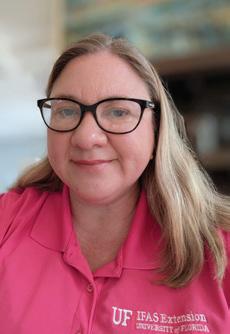
Tonya Ashworth is an environmental horticulture agentand master gardner coordinator for Duval County UF/IFAS Extension. She has more than two decades of horticulture experience, specializing in Florida-Friendly Landscaping, vegetable gardening and volunteer development. Tonya holds a master’s degree in business administration from the University of Memphis and a bachelor’s degree in ornamental horticulture from Mississippi State University.
Every Super Bowl MVP makes big plays—and you can too! Use the clues below to fill in the blanks and learn how you can help save energy at home by making smart, efficient plays. Double-check your work in the answer key.
1. Spend time outdoors or unplugged to reduce your ________________________ time and save energy.
2. Turn off the ________________________ while brushing your teeth.
3. When it’s cold, wear an extra layer of ________________________ instead of turning up the thermostat.
4. Keep doors and ________________________ closed when your home’s heating/cooling system is turned on.
5. Unplug smaller electronics like ________________________ when you’re not using them.
6. Turn off ________________________ when you leave a room.
Refrigerators and Freezers
Late winter to early spring (March/April); New models arrive in spring, and older models are discounted; Holiday sales (Memorial Day, Fourth of July, Labor Day).
Washers/Dryers, Dishwashers, Ovens and Ranges
Large Home Electronics (TVs, home theater)
September and October when new models are released and older models are discounted; Holiday sales (Labor Day, Black Friday, Presidents’ Day, Memorial Day); End-of-year clearance.
Holiday sales (Black Friday and Cyber Monday); Amazon Prime Days; Late fall/early winter; Other promos, like Super Bowl sales for televisions.
Smart Assistants and Other Smart Devices
Holiday sales (Black Friday, Cyber Monday); Other sales events, like Amazon Prime Days.
Air Conditioners, Heaters and Other Seasonal Appliances
O season (purchase AC units in fall or winter, heaters in summer); Retailers o er bigger discounts when demand is low.
• When possible, bundle major appliances for significant savings.
• Be on the lookout. When new models arrive, older models drop in price.
• Retailers typically clear out inventory at the end of the year, which mean big discounts.
• Local retailers typically try to meet end-of-month/end-of-quarter sale quotas, which could mean flexible prices and/or negotiating.

Enrolling in autodraft payments with your utility provider can help prevent certain types of utility bill scams. If a scammer contacts you with fake disconnection threats, you can rest easy knowing your bill is paid automatically through a prearranged, secure channel. Autodraft payments also eliminate the risk of exposing checks and personal banking info through the mail. If your utility offers autodraft payments, consider enrolling to stay on track and avoid certain scams.
Source: AARP
At Peace River Electric Cooperative, confidentiality is important to us. As we strive to improve and expand our services, we recognize our members’ need and desire to preserve their privacy and confidentiality. PRECO recognizes the trust members place in us and is committed to safeguarding member information. The following policy affirms our continued commitment to preserving member confidentiality.
The Information We Collect. We receive and retain information about our members through many sources:
• Information we receive on member applications or other forms.
• Information on usage and data gathered by our metering systems.
• Information through member transactions with us, our affiliates or others.
• Information we receive from consumer-reporting agencies.
The Way We Use Information.We limit the use and collection of nonpublic personal information to that which is necessary to maintain and administer financial services. We do not share this information with outside parties unless:
• The information is provided to help complete a member-initiated transaction (such as credit reporting agencies, document processing companies, etc.).
• The member has requested it.
• The disclosure is required by law (e.g., subpoena, investigation of fraudulent activity, etc.).
• The disclosure is required by banking regulation (e.g., Fair Lending Reporting Act, Home Mortgage Disclosure Act, etc.).
When member information is provided to any of the third parties mentioned above, that third party must agree to adhere to privacy principles that provide for keeping such information confidential.
Limiting Employee Access to Information. PRECO limits employee access to member information to those with a business reason for knowing such information. All of our employees are educated on the importance of confidentiality and member privacy. Any employee who violates the financial privacy of our members is subject to appropriate disciplinary measures and possible termination.
Protection of Information Via Established Security Procedures. To prevent unauthorized access, maintain data accuracy and ensure the correct use of information, we have put in place appropriate physical, electronic and managerial procedures to safeguard and secure the information.
Maintaining Accurate Information. We have established procedures so our members’ financial information is accurate, current and complete in accordance with reasonable commercial standards. PRECO will respond to requests to correct inaccurate information in a timely manner.
Questions? At PRECO, we value our member relationships. We want you to understand how we use the information you provide and our commitment to ensuring your personal privacy. If you have questions regarding our privacy policy, please contact us at 800-282-3824.
Peace River Electric Cooperative is committed to providing meaningful access to its programs and services to persons who, as a result of their national origin, are identified as having Limited English Proficiency (LEP). We offer translation services, at no cost, to individuals belonging to identified LEP groups based on current demographics.
La Cooperativa Eléctrica Peace River se compromete a brindar un acceso significativo a sus programas y servicios a las personas que, como resultado de su origen nacional, se identifican como personas con dominio limitado del inglés (LEP). Ofrecemos servicios de traducción, sin algun costo, a personas que pertenecen a grupos LEP identificados según la demografía actual.
It is the policy of Peace River Electric Cooperative Inc. not to discriminate against any employee or applicant for employment because of race, color, religion, sex, sexual orientation, gender identity, national origin, age, marital status, genetic information, disability or because he or she is a protected veteran. It is also the policy of PRECO to take affirmative action to employ, and to advance in employment, all persons regardless of race, color, religion, sex, sexual orientation, gender identity, national origin, age, marital status, genetic information, disability or protected veteran status, and to base all employment decisions only on valid job requirements. This policy shall apply to all employment actions, including but not limited to recruitment, hiring, upgrading, promotion, transfer, demotion, layoff, recall, termination, rates of pay or other forms of compensation and selection for training, including apprenticeship, at all levels of employment. Employees and applicants of PRECO will not be subject to harassment on the basis of race, color, religion, sex, sexual orientation, gender identity, national origin, age, marital status, genetic information, disability or because he or she is a protected veteran. Additionally, retaliation, including intimidation, threats or coercion, because an employee or applicant has objected to discrimination, engaged or may engage in filing a complaint, assisted in a review, investigation or hearing, or have otherwise sought to obtain their legal rights under any federal, state, or local EEO law is prohibited.
The general manager/CEO of PRECO is committed to the principles of affirmative action and equal employment opportunity. In order to ensure dissemination and implementation of equal employment opportunity and affirmative action throughout all levels of the company, the manager of human resources has been designated as the EEO manager for PRECO. One of the EEO manager’s duties will be to establish and maintain internal audit and reporting systems to allow for effective measurement of PRECO’s programs.
In furtherance of PRECO’s policy regarding affirmative action and equal employment opportunity, PRECO has developed a written affirmative action program which sets forth the policies, practices and procedures that PRECO is committed to in order to ensure its policy of nondiscrimination and affirmative action is accomplished. This affirmative action program is available in the human resources office for inspection by any employee or applicant for employment upon request, during normal business hours. Interested persons should contact the manager of human resources for assistance.
From the setting of the sun to the creatures that make their homes in your backyard, beautiful moments make up Florida’s scenery. The shots you capture have a chance to brighten someone’s day.
During a flat, calm day on the water just off of Marathon, Brenda Altmeier caught a serene moment as the sky reflected in the stillness of the Florida Keys National Marine Sanctuary.
From time to time, we share some readers’ photos in this space. Submit your photo by emailing a JPEG to photos@floridacurrents.com. Include

“Before You Go” in the subject line. Share a bit about what inspired you to make your photo.
Struck in 1921, each coin is one hundred and four years old. Could Charles Lindbergh have carried your coin in his pocket during his flight across the Atlantic? Or maybe your great-grandfather carried a Morgan Silver Dollar while storming the beaches of Normandy during World War II before ending up in a small coin shop in Tuscaloosa, Oklahoma. Each coin has its own unique history and you can hold 104 years of American history when you buy yours today!
Coin experts estimate that only 15%-20% of Morgans are still surviving today due to multiple mass-meltings over the years. The Pittman Act of 1918 melted over 270,000,000 coins, that’s almost 50% of all coins produced at the time.
This same 1921 Morgan Silver Dollar sells elsewhere for as much as $141. But thanks to Rarcoa’s buying power and numismatic expertise, you can own one for as little as $89, in quantity while supplies last. That’s a difference of up to $52!








Sold Nationally for as much as $141
Because the precious metals market is always active and dynamic, prices may adjust to reflect the latest market opportunities.
Act now and you can SAVE BIG when you buy more! But don’t wait, our inventory won’t last long.
1921 Morgan Silver Dollar Brilliant Uncirculated
1-4 coins - $99 each
5-9 coins - $94 each, Save up to $25 + FREE SHIPPING 10+ coins - $89 each, Save $100 or more + FREE SHIPPING
Here at Stauer, we pride ourselves on literally going to the ends of the Earth to nd the rare, the exciting and the exceptional. It’s because of our endless searching that we can present to you our 10-inch Damascus Spiral Knife is extraordinary piece of cutlery stars a 5-inch-long blade of Damascus steel that’s been shaped by our artisans into the shape of a cyclone. What is Damascus steel? Forged into swords and knives more than a thousand years ago by Middle Eastern craftsmen, Damascus steel was valued for its ability to maintain a keen edge while remaining hard and exible.
Easily identi ed by its wavy pattern, Damascus steel is very beautiful, very sharp and incredibly tough. While the original technique of making Damascus steel has been lost to time, experimental archaeologists and metal smiths have endeavored to reverse engineer this legendary material.
Our spiraling, twisted Damascus blade is paired with a bu alo horn handle and tooled decorations from our greatest metal smiths. Alluring, distinctive and unique, the Damascus Spiral Knife is the perfect gift for the avid cutlery collector looking to spruce up their collection. is is a knife that no one else has in their collections, so, if you love the rare, the fascinating, the one of a kind, you have found it.
Knife Speci cations:

Damascus


PRECO.coop
800-282-3824
TO REPORT A POWER OUTAGE
Use the SmartHub app.
Text OUT to 800-282-3824.
Call 800-282-3824.
CORPORATE HEADQUARTERS
210 Metheny Road
Wauchula, FL 33873
MANATEE SERVICE CENTER
14505 Arbor Green Trail
Lakewood Ranch, FL 34202
BOARD OF DIRECTORS
District 1
LEONARD CRAWLEY
District 2
KENNETH ODEN
District 3
BRUCE VICKERS
District 4
HOLLIS ALBRITTON
District 5
MARIE DASHER
District 6
DAN PUCCIO
District 7
CHRIS PORTALE
District 8
ELLEN BACHMAN
District 9
WILLIE DAWES
BOARD MEETINGS
Feb. 24
March 24
April 21
Any PRECO member may attend board meetings. Due to building security requirements and to facilitate attendance, members should contact the cooperative in a timely manner for logistical information regarding meetings. FL-155
ONLINE E-ZINE
Prefer to receive Florida Currents online? Sign up through your online account or call us at 800-282-3824.

As your local power provider, Peace River Electric Cooperative’s mission has always been simple: keep the lights on and support the communities we serve. But behind every switch, every warm home and every business that opens its doors is a complex system that requires constant care. Reliable electricity doesn’t happen by accident. It requires ongoing investment in our local grid—through system repairs, maintenance, upgrades and integration of new technologies that help us operate smarter and more efficiently.
Much of the energy system we rely on today was built decades ago. While it continues to serve us well, age alone means components must be repaired or replaced to maintain performance and safety. From poles and wires to transformers and substations, every part of the grid has a lifespan. Routine maintenance helps extend that lifespan, but eventually equipment must be updated to meet modern standards. Being proactive reduces the likelihood of outages, shortens restoration times when disruptions do occur and creates a stronger backbone for our growing community.
reshaping how we operate. Tools such as automated switching devices, smart meters, drones and advanced monitoring systems allow us to detect problems faster and respond more effectively. These technologies can isolate problems, reroute power to minimize outages and provide real-time data that helps us plan and maintain equipment more efficiently.
Implementing innovative technologies into the grid is not just a convenience—it is a necessity for ensuring reliability in an increasingly complex energy landscape. While these improvements require thoughtful planning and financial investment, the return is significant. A stronger grid supports economic growth, improves service and enhances safety for our crews and community. Most importantly, it ensures the essential power you rely on is available when you need it.
Demands on the electric grid are also evolving. Homes and businesses today use more electricity than ever, and that trend will only continue. Electric vehicles, advanced HVAC systems, smart appliances and new commercial facilities add load to the local distribution system. As these technologies take hold, the grid must support increased demand while maintaining the reliability members expect. Strategic upgrades such as grid hardening, primary voltage conversions and conductor replacements for increased capacity are essential to ensure we can meet these needs today and in the decades ahead.
At the same time, new technologies are
Our commitment to reliability runs deeper than infrastructure. It reflects our responsibility to the people and communities we serve. Every upgrade, every repair and every technology we deploy is an investment in your daily life— from the comfort of your home to the success of local businesses and schools.

We know powering our communities means preparing for the future, not just maintaining the present. By investing in our local grid today, we are building the foundation for a brighter, more resilient tomorrow.
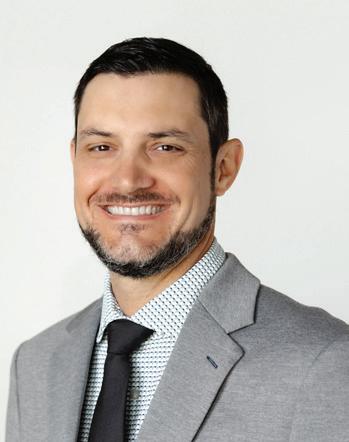
Paul Roberts Interim CEO/General Manager
