

Florida Currents
GULF COAST ELECTRIC COOPERATIVE

JULY 2026

Celebrating Community at the
78th Annual Meeting


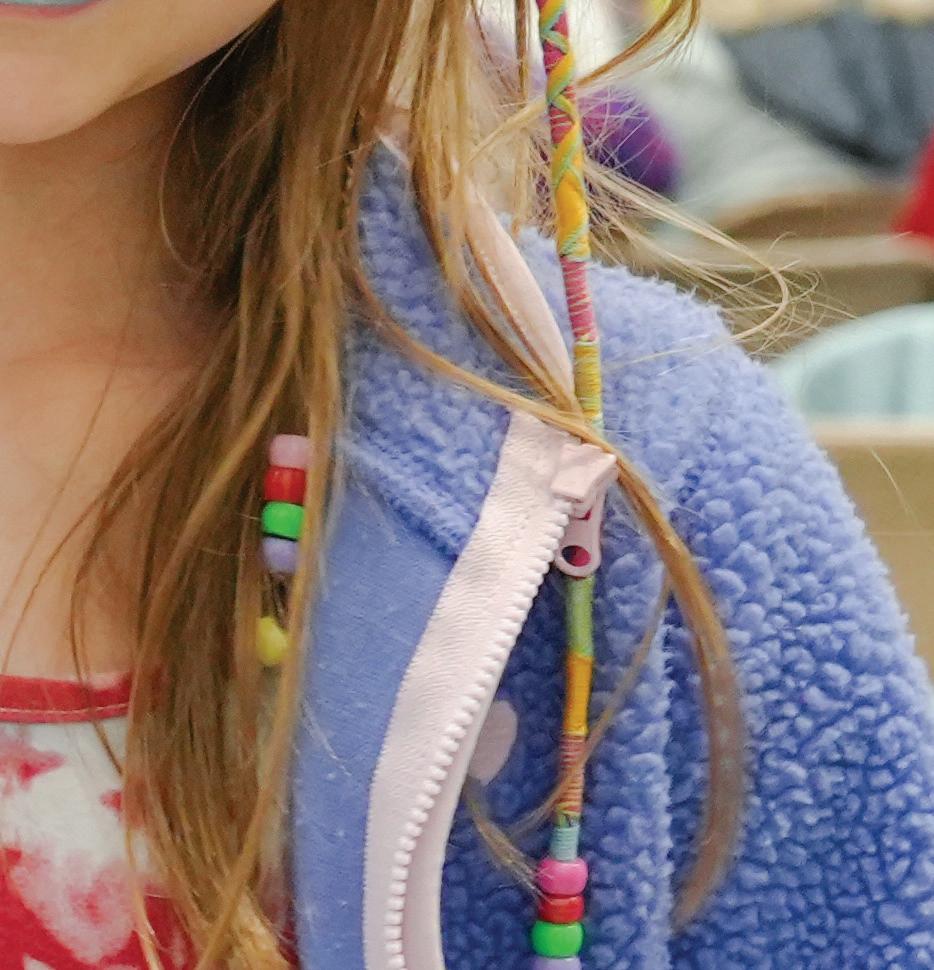
Cooperative‘s annual meeting show off their
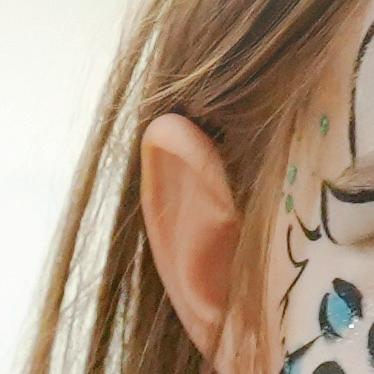
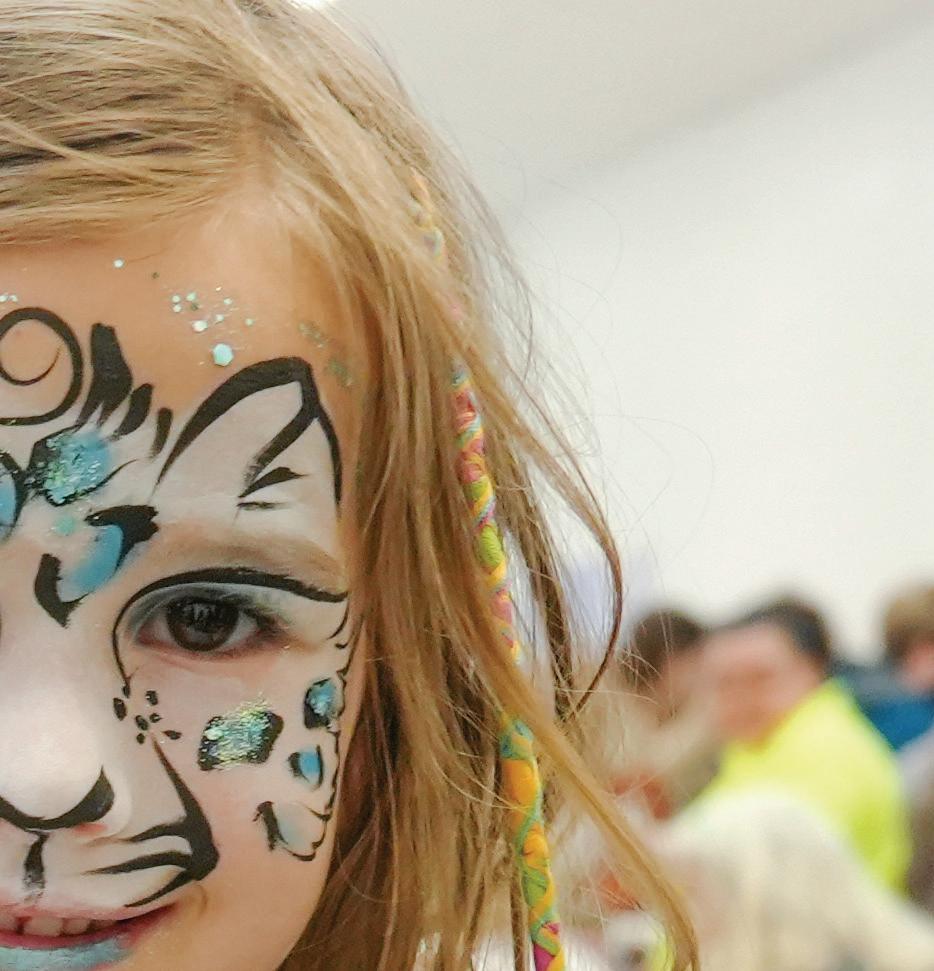
finished face paint, provided by Angela Jackson of Let‘s Face It. See more event highlights on Page 4, and read the CEO‘s remarks on Page 6.




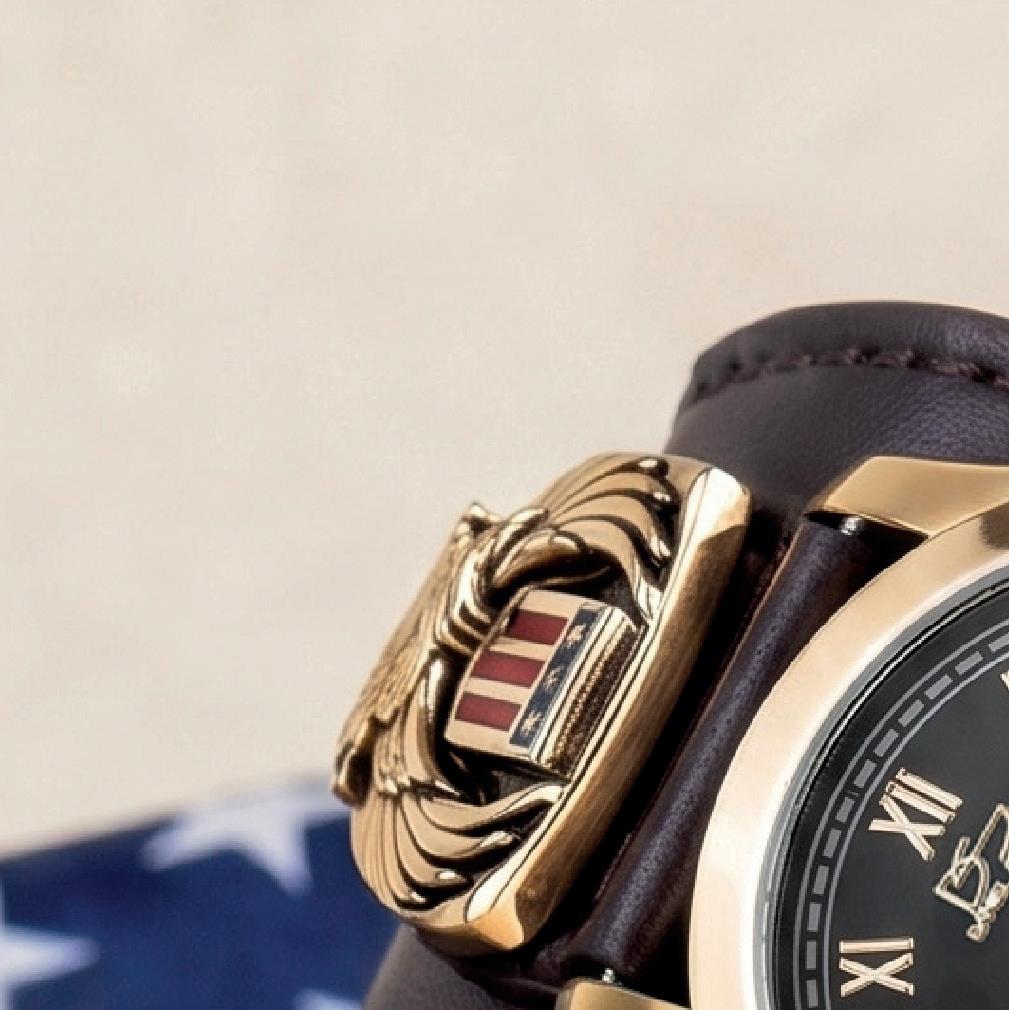





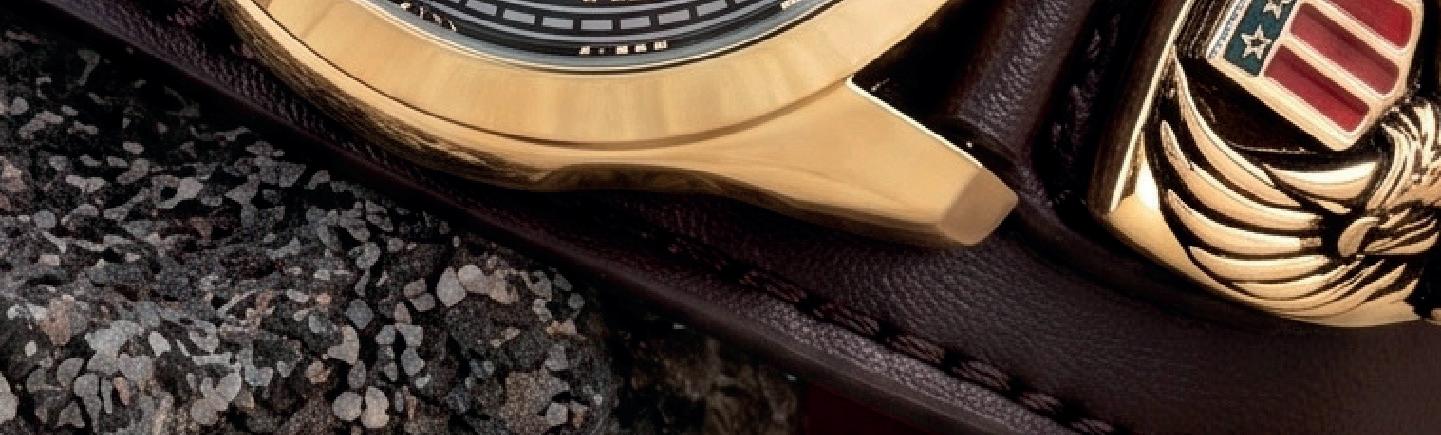



It’s a pride thing - pride in your country, pride in being an American. That’s the spirit behind the Daniel Steiger Patriot Watch, a bold tribute to the strength, freedom, and unwavering values of the good old U.S. of A.
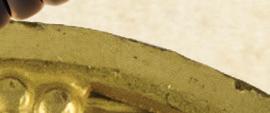
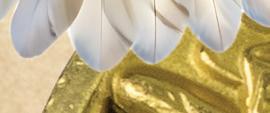
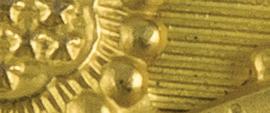
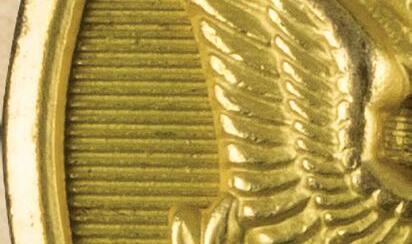
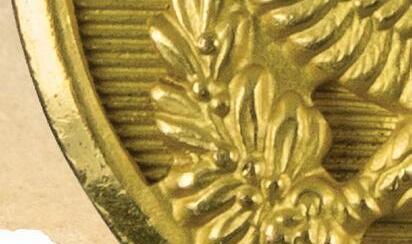
This striking timepiece is expertly crafted from solid stainless steel and enhanced with 18k gold detailing, combining rugged durability with timeless style. A genuine brown leather cu strap secures two prominent medallions featuring the American Eagle, proudly accented with vivid red, white, and blue enamel ag motifs - symbols of courage and country.
The eagle takes center stage once more on the dial, complemented by white hands and a convenient date window, ensuring practical performance meets patriotic pride.


Available now for just $99 plus S&H with promo code FC6USA, the Patriot Watch is a limited-edition design that won’t stick around for long this 4th of July! Call toll-free on 1-800-733-8463 or visit our online store at www.timepiecesusa.com/FC6USA to order yours today.
Stand tall. Wear your pride. The Patriot Watch is built for those who never forget what they stand for.
Watch Speci cations:
• 18k Yellow Gold Finish
• 3 ATMs Water Resistance
• Premium Brown Leather Cu Strap
• 3 Hand, Date Window
• Luxury Stainless Steel Case






Florida Currents
July 2026 • Volume 15, No. 9
CEO Michael Shepard
VICE PRESIDENT OF CONTENT Leon Espinoza
EDITORIAL DIRECTOR Chasity Anderson, CCC
DEPUTY EDITORIAL DIRECTOR
Noble Sprayberry
SENIOR EDITOR Jennifer Paton, CCC
LEAD CONTENT EDITOR Victoria Hampton, CCC
FLORIDA CURRENTS EDITORS Sable Riley, CCC; Valeri Saldanha Rosa
ASSISTANT EDITORS David Herder, CCC; Nina Todea, CCC
PUBLICATIONS PRODUCTION
SENIOR MANAGER
Elizabeth Beatty
SENIOR PUBLICATIONS COORDINATOR
Alyssa McDougle
Members acknowledge that $4.89 a year, plus postage, is the cost to publish 12 issues a year of FLORIDA CURRENTS ISSN 23276304 (USPS 8300). Published by Pioneer Utility Resources Inc., 5625 NE Elam Young Parkway, Ste. 100, Hillsboro, OR 97124—a not-for-profit Oregon cooperative corporation—the magazine serves the communication needs of consumerowned electric utilities in Florida. Preferred Periodicals postage paid at Hillsboro, OR 97123 and at additional mailing offices.
Postmaster: Send address changes to 5625 NE Elam Young Parkway, Ste. 100, Hillsboro, OR 97124-6422.
HOW TO CONTACT FLORIDA CURRENTS
Subscription services:
Nonmember subscriptions $15 U.S. a year; $25 foreign a year. Prepayment required. Allow 4-8 weeks for first issue. Identify local edition desired. Have a problem receiving your magazine? Utility members should contact their utility office. Nonmembers call 503-357-2105 or email mailingdept@pioneer.coop.
Back issues:
Back issues and extra copies are $3 each, prepayment required. Supply is limited. Identify edition, month and year. Call first to check availability. Contact Pioneer Utility Resources: P.O. Box 1306, North Plains, OR 97133-1306; 503-357-2105; email: mailingdept@pioneer.coop.
DISPLAY ADVERTISING INQUIRIES
American MainStreet Publications, 611 S. Congress Ave., Ste. 504 Austin, TX 78704-1714; 800-626-1181 or 512-441-5200; amp.coop.
© 2026 Pioneer Utility Resources. All rights reserved. Reproduction in whole or in part without written permission is prohibited. Direct reprint requests to editor@floridacurrents.com or for more information, visit pioneer.coop.
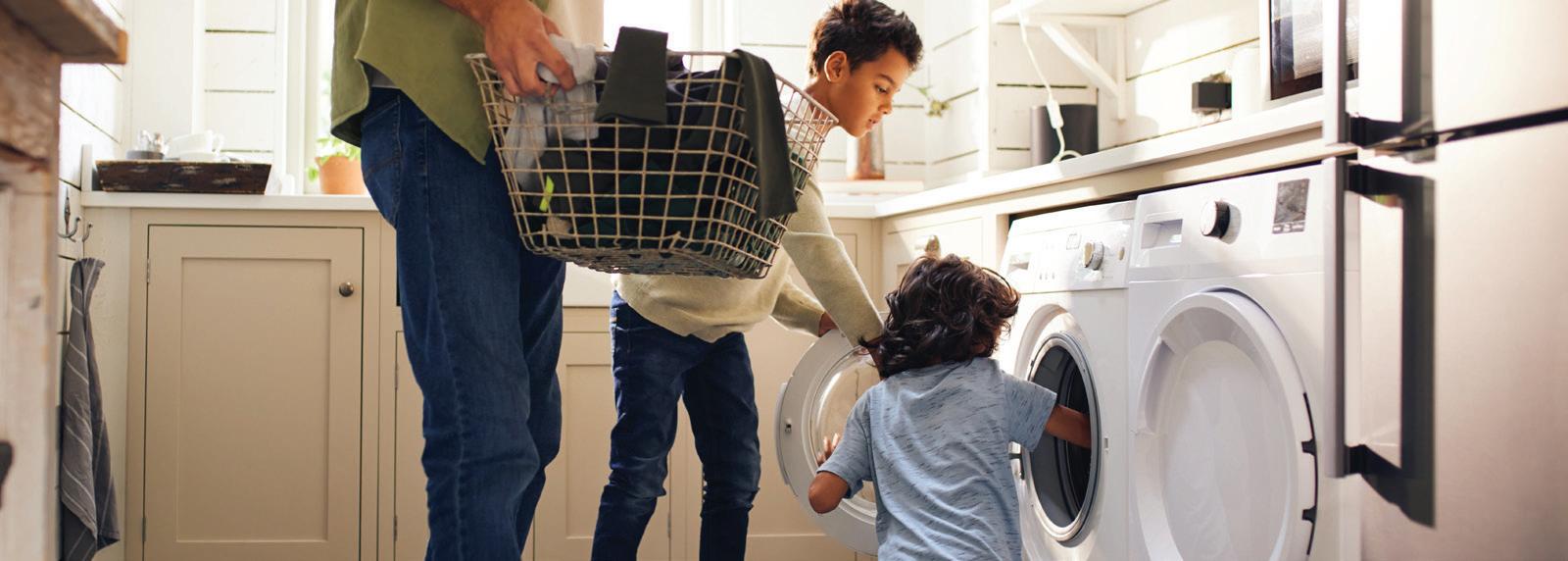
time of day you use electricity
During periods of high demand, consider running major appliances such as dishwashers, clothes dryers and pool pumps during morning or evening hours when possible. Spreading out energy use helps reduce strain on the electric system and supports reliable service for all members.



























Celebrating Community at the 78TH ANNUAL MEETING
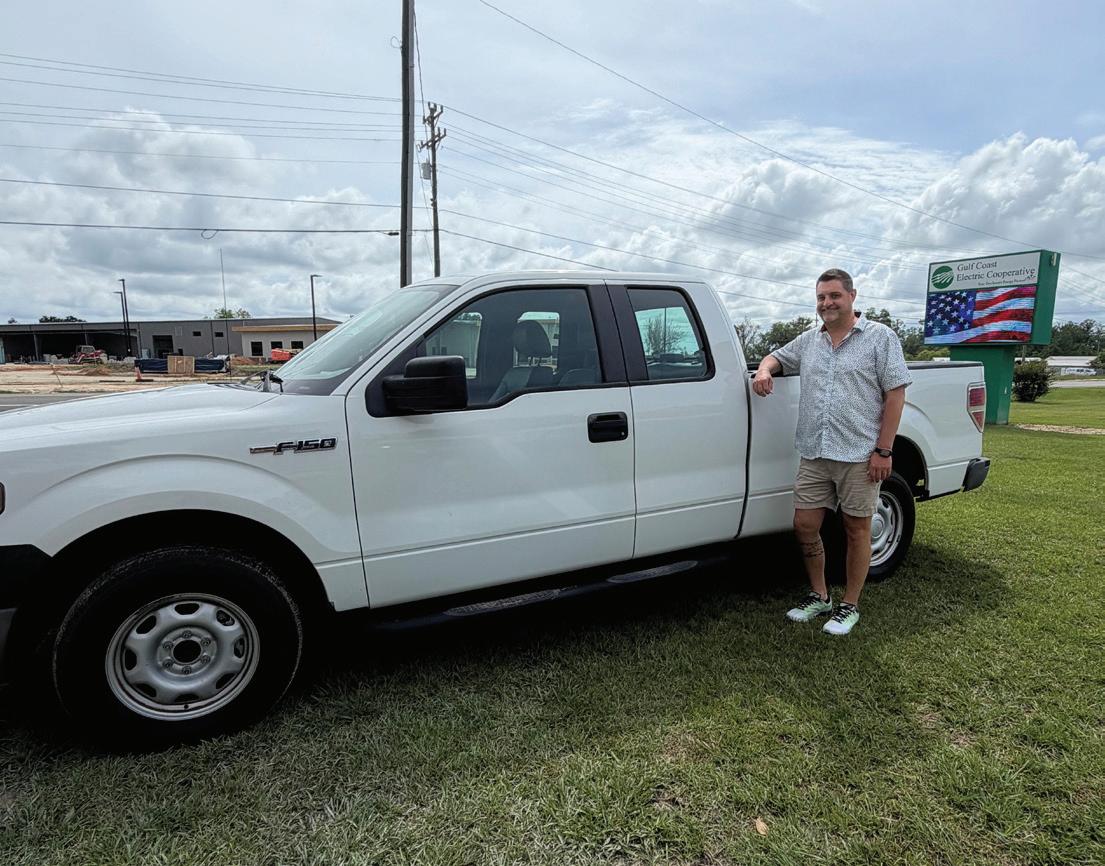
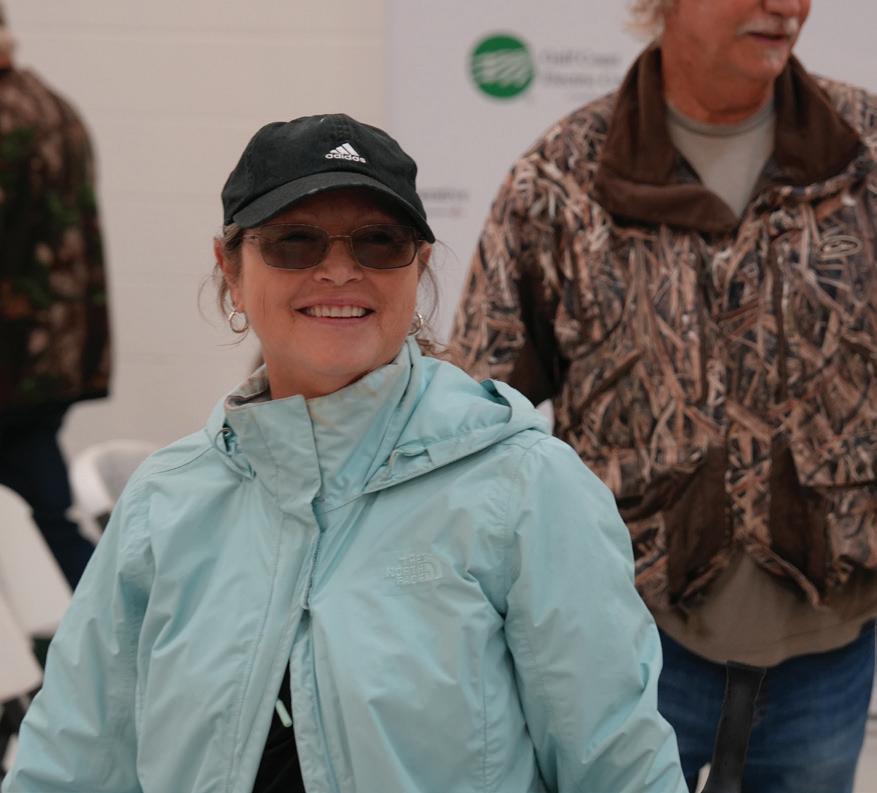
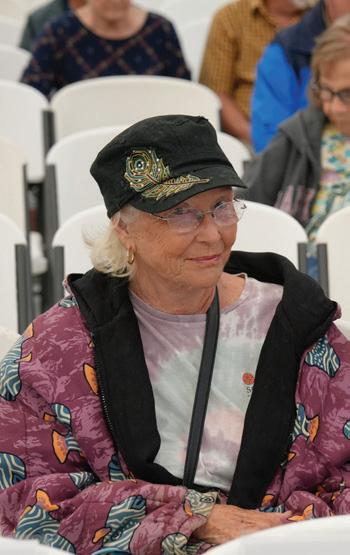
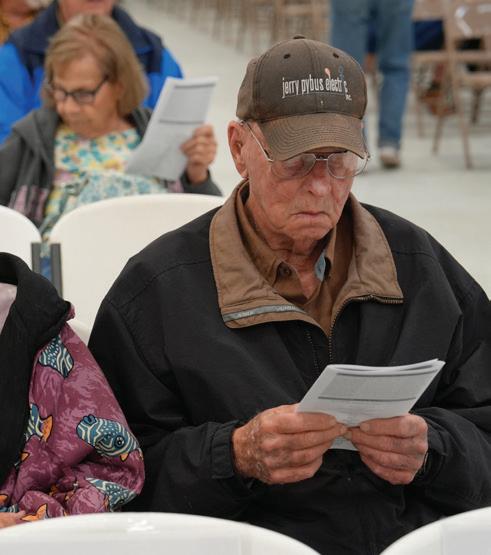
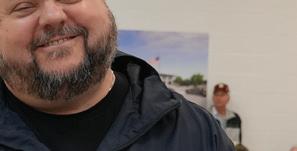
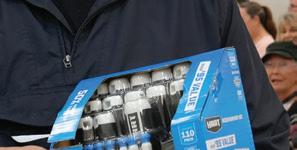
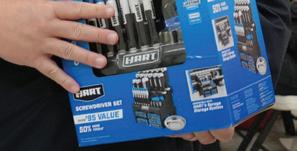
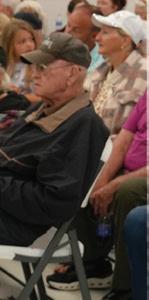
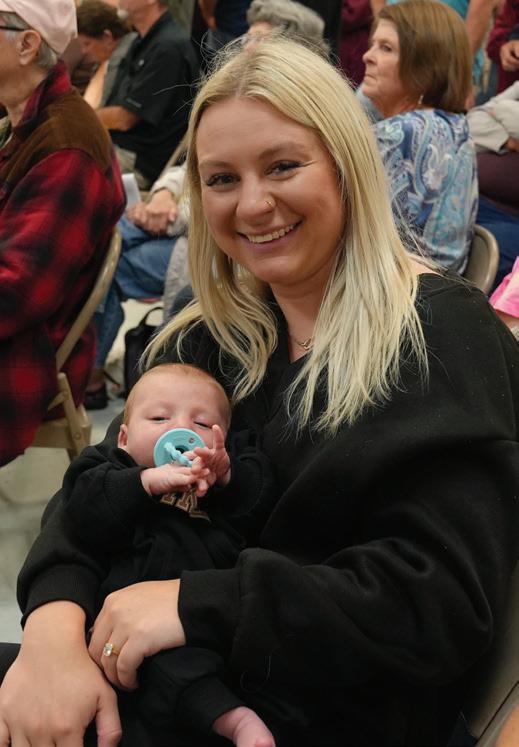
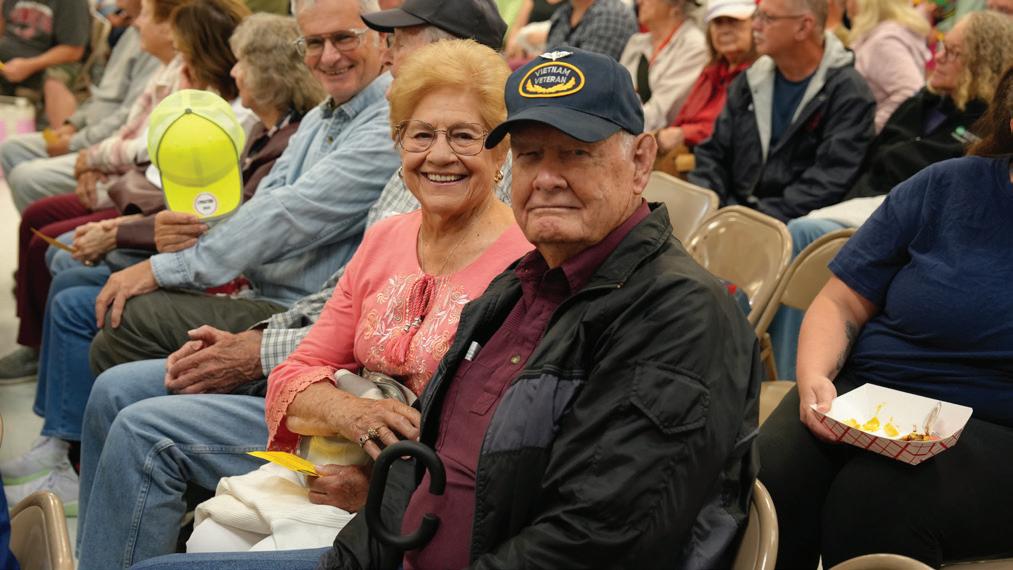
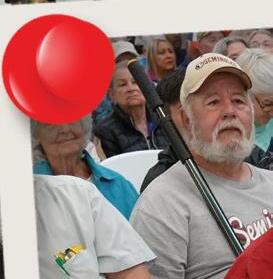
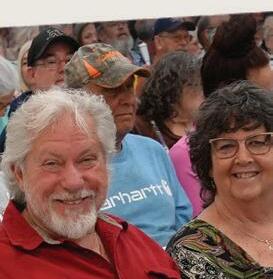
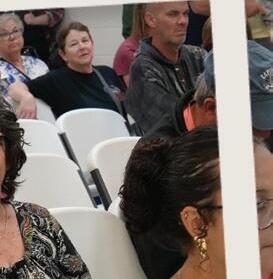
Gulf Coast Electric Cooperative members and their families joined employees and trustees for a day of food, fellowship and cooperative business during GCEC’s 78th Annual Meeting. Rain pushed all activities indoors, but members still enjoyed many annual traditions, including door prizes, food provided by Vittles Catering and face painting for children. During the business portion of the meeting, co-op leaders provided updates on the state of the cooperative, highlighting GCEC’s continued commitment to reliable service, strong member support and serving the communities it powers. Brandon Black, top left, was drawn as the grand-prize winner and took home an F-150 truck.




















































In

case you missed it...




CEO JOHN BARTLEY’S ANNUAL ADDRESS TO GCEC MEMBERS
Good morning and welcome!
I would like to thank you for being here today for Gulf Coast Electric Cooperative’s 78th Annual Members’ Meeting. I’m your cooperative’s CEO and general manager, John Bartley.
For 85 years, all of you, our memberowners, have trusted us to energize your homes and your way of life. Although we call this our annual meeting, it is really a celebration for you, our member-owners, to enjoy good food, good music and, most of all, good fellowship.
Obviously, we are not in our usual meeting location due to the construction of our new headquarters facility. At last year’s meeting, I announced that our staff had been diligently working with engineers and contractors to determine the most cost-effective way to repair or rebuild our headquarters. After much research, it was determined that it was more cost-effective to construct a new building than to repair the existing structures.
Many factors were taken into consideration when making this decision. First, we had to consider the cost to repair roof damage, structural and foundational issues due to Hurricane Michael. We also had to consider the cost of bringing the former headquarters up to code. Our previous headquarters were built in 1956 and was added onto three times.

To support our members, we needed a building that allows us to safely shelter in place during a storm event so we can immediately begin repairing our electric system to reenergize your homes and businesses. In addition to repairs, we also outgrew the former office. There is a need for approximately 10 more offices. With safety being a No. 1 priority here at GCEC, constructing a building that implements the proper safety features helps ensure we are doing everything possible to keep employees and members safe. When all





these factors were taken into consideration, it was determined that constructing a new facility would be the best use of cooperative resources. Having proper office and warehouse facilities ensures we can continue delivering a stellar level of service to our members, including residential, commercial and the Department of Defense. It is expected the new office will be completed in the fall, and we look forward to welcoming all of you next spring as we resume holding our annual meeting at our headquarters.
Attending the co-op’s annual meeting is truly seeing your democracy in action. Thank you for your participation in our election. We had nearly 3,640 members—a little more than 10% of our membership— take the time to mail in their ballots or to cast their votes online, and election results will be announced toward the conclusion of today’s meeting.
As you know, by casting your ballot, you were entered to win a gift card, an electric bill credit and the grand prize—a truck. We are proud to offer these prizes to our membership in appreciation of you taking the time to vote. And remember, every member who voted will receive a $5 bill credit.
Later this morning, we will also announce our scholarship winners. Today, we have 17 high school seniors from across our service territory joining us. These students applied to win a $1,000 award that may be used to continue their education at a college, university or technical school. We are delighted to assist these students and thank them and their families for joining us today.
While we are on the subject of youth, I am pleased to announce we are continuing the more than 50-year tradition of recognizing great students through the Rural Electric Youth Tour program. Earlier this year, local high school guidance counselors and civic organization


representatives nominated high school juniors to compete for a chance to travel to Washington, D.C., this summer.
In February, all students nominated traveled to Tallahassee for our state Youth Tour. Following the Tallahassee trip, we held our Youth Tour competition, and this year’s winners are McKinley Cantwell, of Mosley High School, and Laila Suber, of Wewahitchka High School. We are proud to have them representing us in Washington this year.

I want to thank the management and employees for a job well done during the past year. Day or night, rain or shine, calm or storm, your cooperative employees work 24 hours a day, seven days a week to keep your homes comfortable and energized. We are lucky to have such incredible people working behind the scenes to power our homes, businesses and communities. Through whatever comes our way, your cooperative’s employees and board are here to keep the power on and serve you, our members. And they are ready to answer the call and assist other co-ops, too. This past winter, we sent crews to South Carolina and Mississippi to help power restoration efforts following Winter Storm Fern.
The cooperative has recently purchased a second drone. Just one benefit of having a drone program is being able to inspect lines more efficiently so that we can restore power more quickly. It is much faster to
CEO John Bartley
“For 85 years, all of you, our member-owners, have trusted us to energize your homes and your way of life. Although we call this our annual meeting, it is really a celebration for you, our member-owners... ”
JOHN BARTLEY, GULF COAST ELECTRIC COOPERATIVE CEO
perform inspections by flying over our lines to identify fallen trees and lightning strikes than by using bucket trucks. You may see our drones out and about, and just know they are one more way that we work to bring you quality, reliable service.
In 2011, GCEC’s 50-year contract to own and maintain the electric and water distribution systems at Tyndall Air Force Base commenced. We have completed many water and electric projects, including replacing aging infrastructure.
Today, our primary duty is helping Tyndall Air Force Base fulfill its mission to recover and rebuild from the devastation of Hurricane Michael. Supporting Tyndall is not only our job; it is our great honor. Supporting the base of the future allows GCEC to directly contribute to the security of our great country and support our freedom. We are proud to be a part of Team Tyndall.
Safety training is held at least once a month for all GCEC employees and before every job. We are also committed to safety training for our community. Today, we have safety demonstrations using our live line demonstration trailer. We hope that you will take the time to attend one of the presentations. We are proud of this trailer, built by our employees, and enjoy taking it to local schools, festivals and training sessions to educate our members and keep them safe.
GCEC has 100% participation on behalf of its employees and trustees in America’s Electric Cooperatives PAC, formerly known as the Action Committee for Rural Electrification, or ACRE. The National Rural Electric Cooperative Association’s federal political action committee supports candidates for the U.S. House and Senate— those in office now and running for
office—who will speak for and protect the interests of electric cooperatives and their consumer-owners.
Our employees have a mission: to deliver safe, affordable and reliable power. One way that we ensure reliability is through our right-of-way program. If vegetation comes into contact with power lines, it can interfere with your electric service and cause a potentially dangerous situation. It is vital this vegetation be cleared from the power lines to provide reliable electric service and prevent a hazardous condition.
We realize most property owners regard trees as an asset. However, federal law states it is GCEC’s responsibility to eliminate hazardous conditions. The co-op tries to work with each landowner to preserve landscaping when maintaining rights of way. If we are trimming in your area, we ask that you please mark anything buried underground that can be harmed by our trucks and heavy equipment. Please be aware that we will need access to fenced-in areas. We appreciate your patience and understanding as we work to bring you quality, reliable service.
We know how busy everyone is these days. That’s why we offer a multitude of ways to do business with the co-op. Our lobbies and drive-thrus are open, and you can always reach a friendly cooperative employee over the phone during regular business hours. Don’t forget that our drop boxes, automated phone system and website are available 24 hours a day, seven days a week for payments or for reporting power outages.
If you haven’t downloaded our app, we encourage you to do so. It is available from the App Store for iPhone users and from Google Play for Android users. It
offers a variety of convenient features, including the ability to view and pay your bill and to report an outage.
And don’t forget, if you can’t make it to one of our office locations, you can pay your bill at retailers such as CVS pharmacy, Dollar General and Family Dollar. Visit GCEC.sedccheckout.com to get started.
We are proud to offer rebate programs for electric vehicles, HVAC and water heaters, as well as products including GenerLink, meter poles and surge protectors. For more information, please stop by the marketing table and speak to Shannon Hill. We also have Bobby Hutchinson of Conexon with us today, offering information on fiber internet service coming to our area. Sign up today, and enter to win a 50-inch smart TV.
On behalf of all your co-op employees and board here providing this great celebration for you, please enjoy our annual meeting, our celebration of you, our member-owners. Thank you for giving us the opportunity to serve all of you. Thank you again for your time and attention this morning.







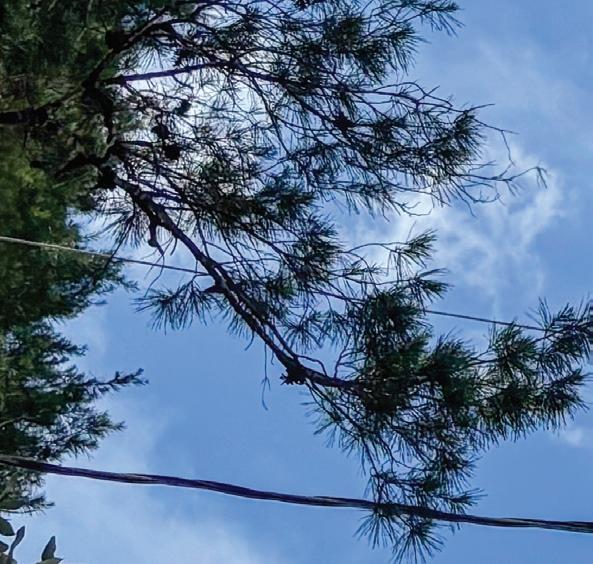

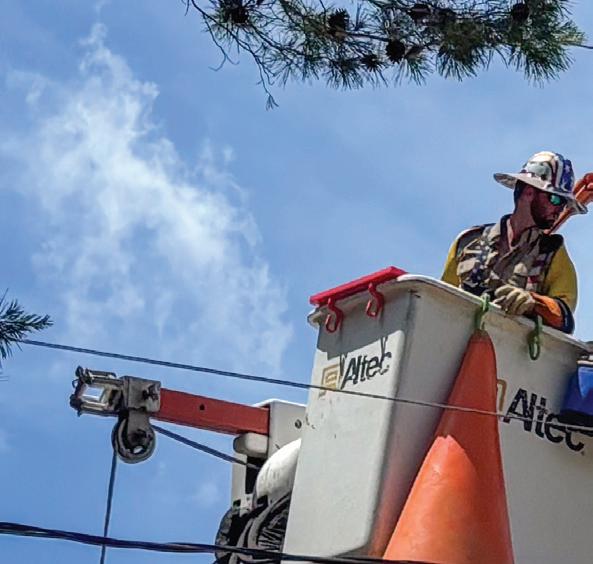

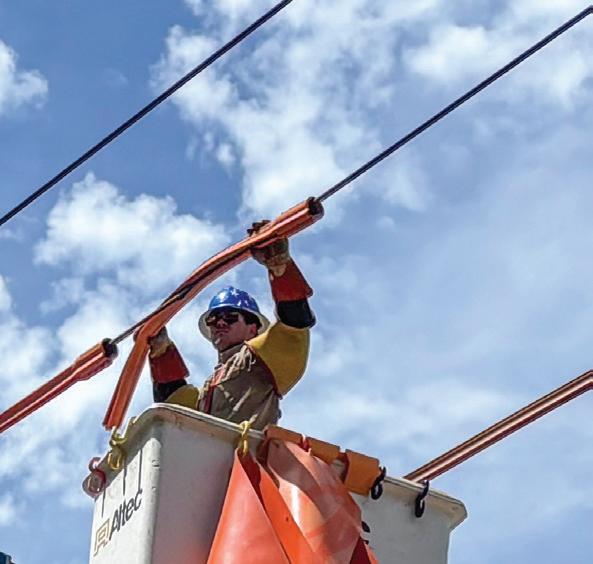
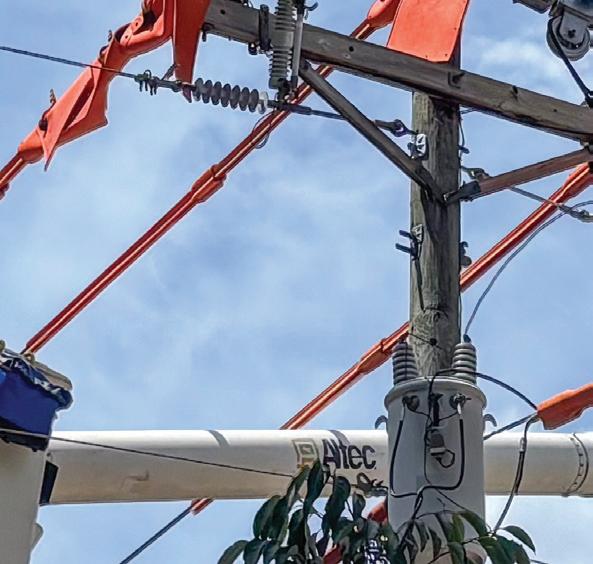
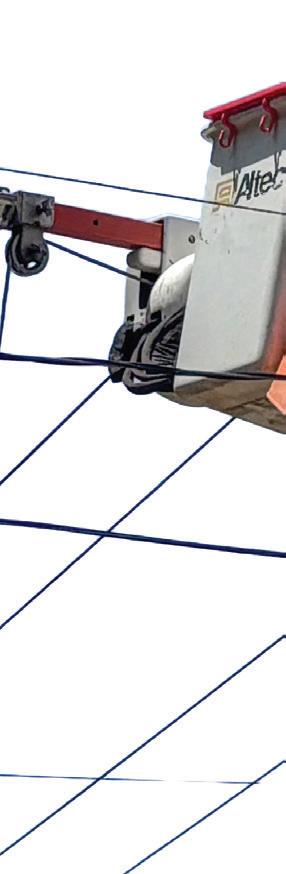
HOT-LINE TAGS

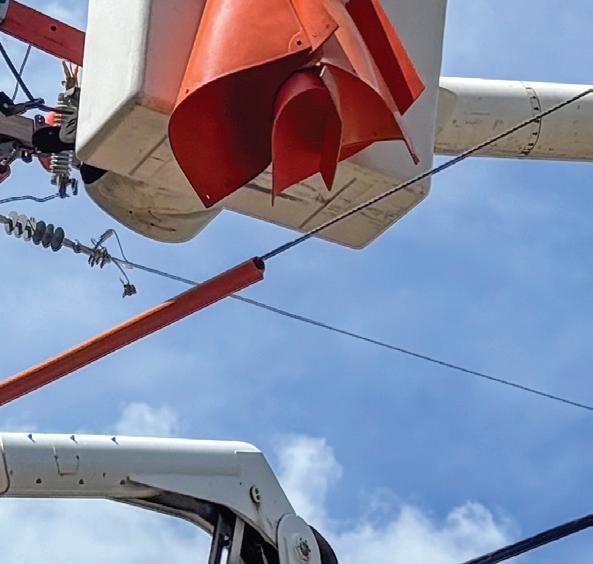
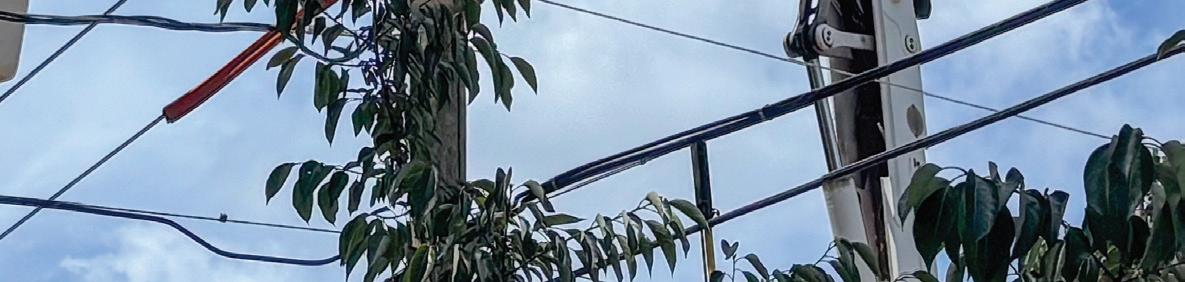
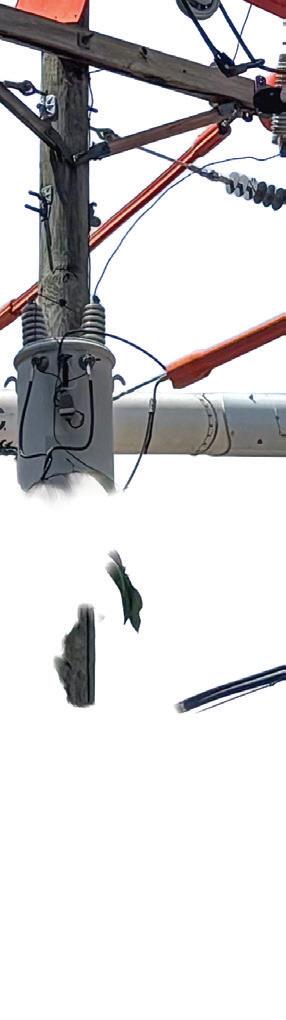
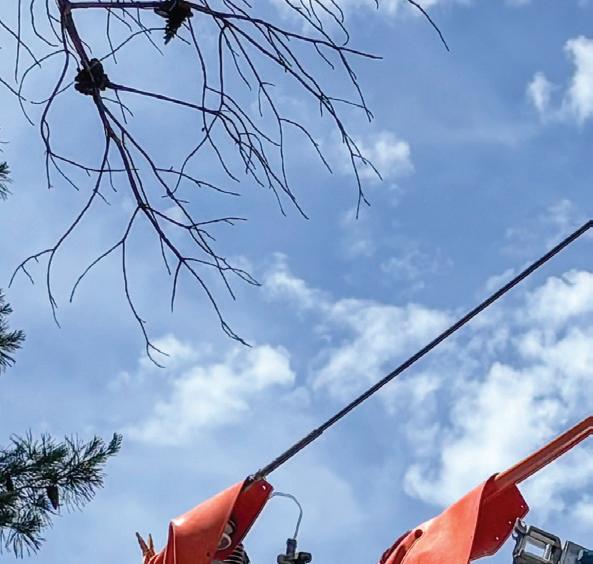
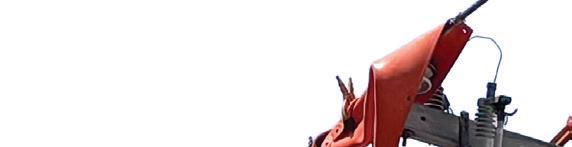
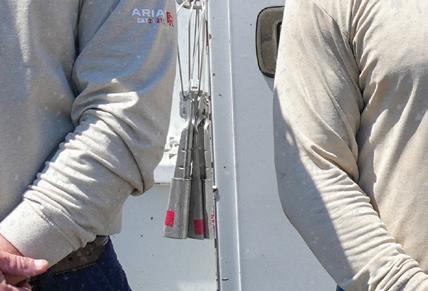
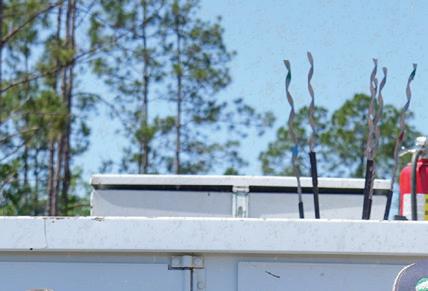
When lineworkers are in the field, safety is never left to chance. One of the most important tools crews rely on is called a hot-line tag. This precautionary device is placed on reclosers and is designed to shut off power if there’s a disturbance on the line.
Normally, if something briefly touches a power line—like a tree limb or an animal—the system attempts to “blink” the lights a few times to allow the fault to clear on its own and keep power flowing. But when a hot-line tag is in place, that blinking process is disabled. Even a small contact causes the line to shut off completely. This extra step ensures that if the disturbance were a person working on the line, electricity would not be reenergized until the system is confirmed safe.
For members, that can sometimes mean unexpected outages in areas where crews are working. We know this can be frustrating, since these events would normally cause only a quick blink. The good news is that once the line is visibly confirmed clear, power can be restored quickly. It may be an occasional inconvenience, but it’s one that keeps lineworkers safe as they build a stronger, more reliable system.
Make sure Gulf Coast Electric Cooperative has your correct contact information so we can keep you informed of outages and scheduled maintenance in your area.
Gulf Coast Electric Cooperative lineworkers use hot-line tags, safety gloves and cover-ups while working with power lines to keep themselves safe from electric shock.













By Drew Woolley




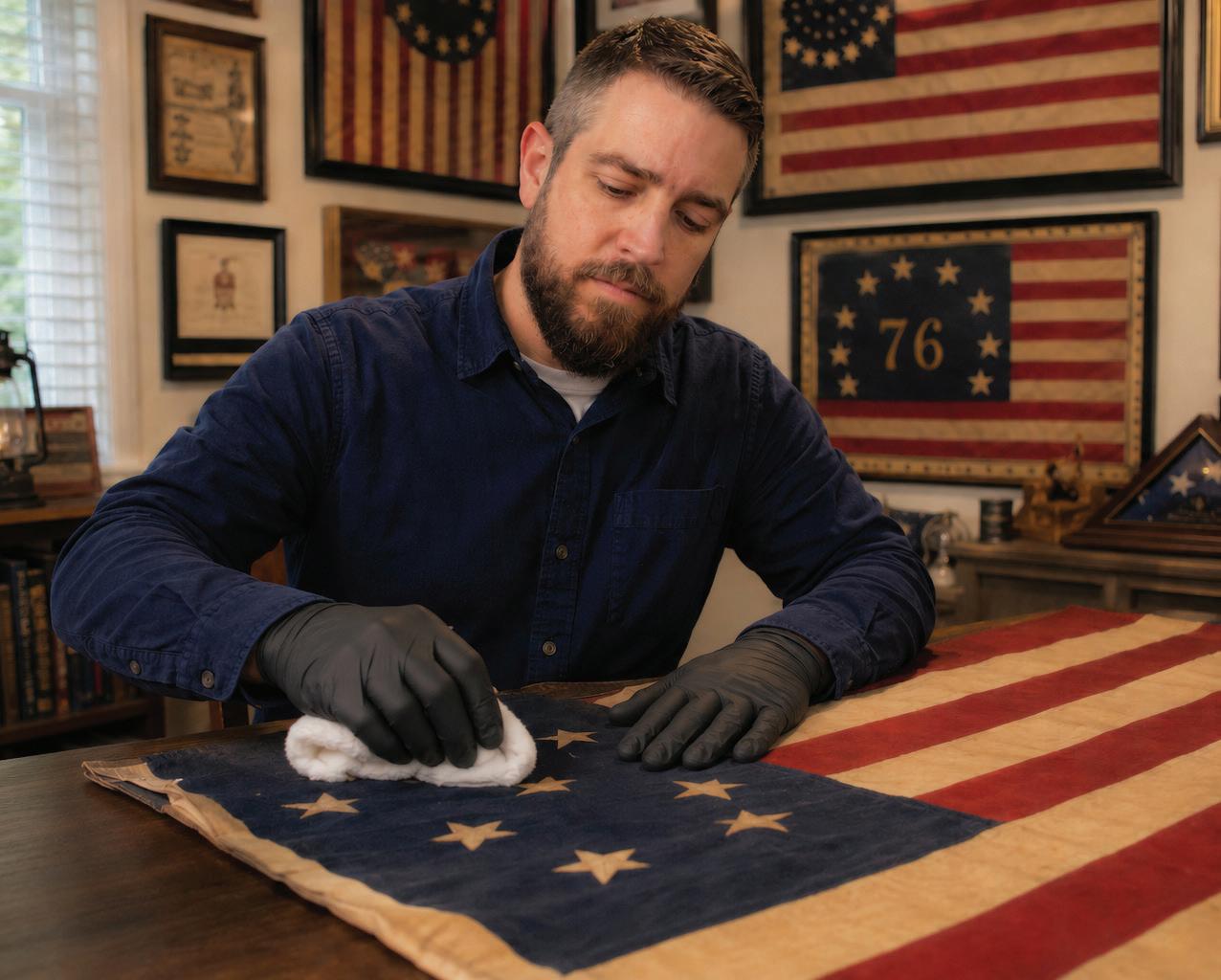
The living expression of America’s most enduring symbols &






Every nation tells stories about itself. In the United States, those narratives are often woven into symbols we encounter every day just as much as they are spoken out loud. It might be a flag folded at a funeral, an eagle stamped onto an official seal or a song sung before a ballgame.
As we celebrate our country’s 250th anniversary, historians, collectors and scholars are all taking a closer look at the symbols we adopted and the meanings they still carry today.
For the Love of Old Glory
The American flag has always had a special family connection for Chris Garza. Half of his family members can trace their lineage to Maryland’s founders, and almost every




one of them has served in the military. But watching his grandfathers as a child had a particular impact on him.
“I kind of idolized them, and they both did their own daily routines of raising and lowering the flag,” Chris says. “They were fun, outgoing guys. But every day, they became very serious when they handled the flag. That really showed me how important it was as a symbol.”





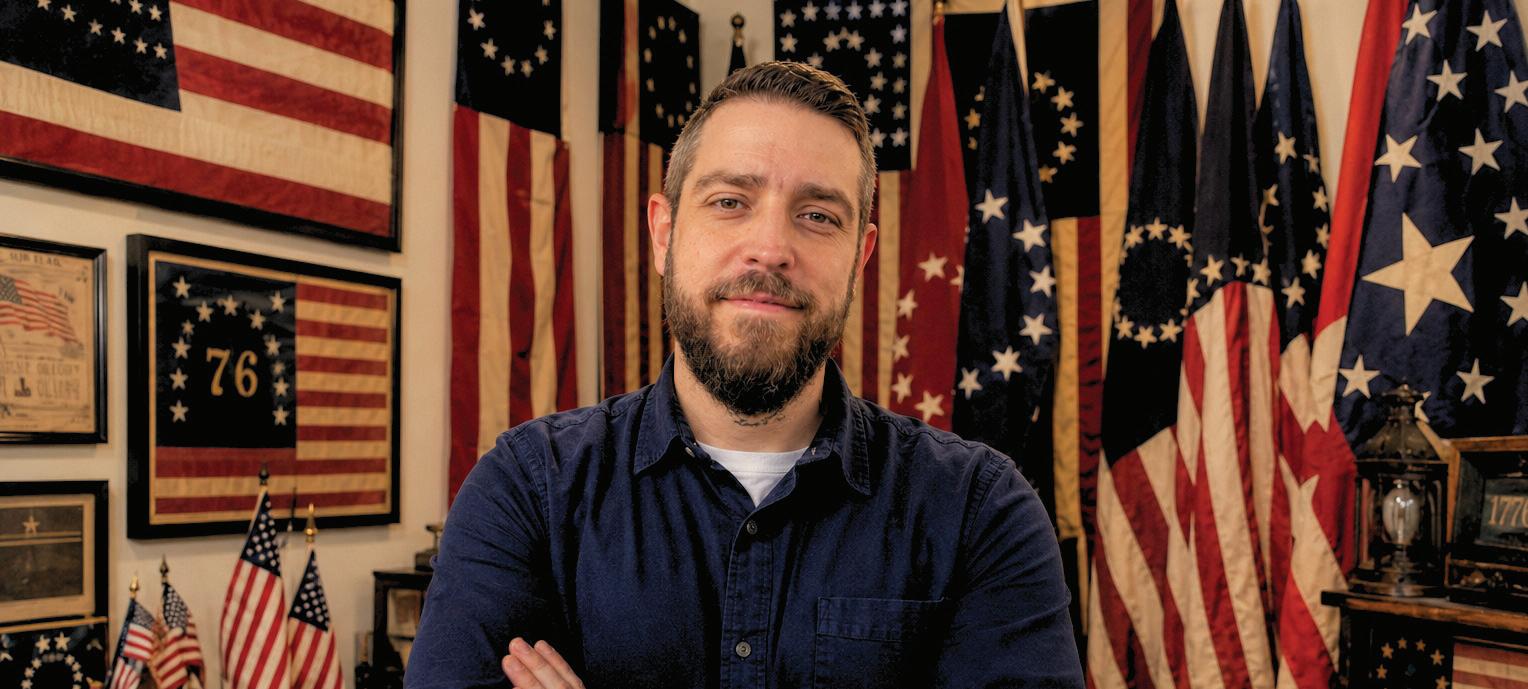
When he was 8, Chris saw an old 13-star flag at a yard sale and had to have it. Looking back now, he suspects he was trying to impress his grandfathers. But it also proved to be the first step in a lifelong obsession. Now the executive director of Troutdale Historical Society in Oregon, Chris has overseen three museums and collected more than 300 American flags in the past 35 years.
The most precious to him is the flag with which one of his grandfathers was meant to be buried. At the last second, his grandmother pulled the flag from the casket and gave it to Chris, who has held it dear ever since. Another favorite is an early flag that represented the southern region of Texas, where much of Chris’ Indigenous family comes from, before the state adopted the design it uses today.

As a historian, Chris also hopes the flag reminds everyone in the United which

While the American flag’s design has evolved over time, Chris is particularly drawn to the idea that it has served as a unifying image throughout history.
“To me, it is the only thing capable of binding us all together,” he says. “It’s the one thing that is bigger than our differences of religion, politics or race.”























States why the country formed and what it took to get there. It will always be a symbol of freedom. But, for him, it is also a call to earn that freedom.
“It’s a symbol of when oppression becomes so strong and rampant that it forces people to step back and reevaluate— to look at life, our government and our communities,” he says. “Sometimes, those things need to change. That’s what the flag means to me, working to change for the better.”
A Living Symbol


upsetting revelation for someone who had dedicated much of his life to collecting depictions of the American icon, going back to 1966 when he was drafted into the Army.
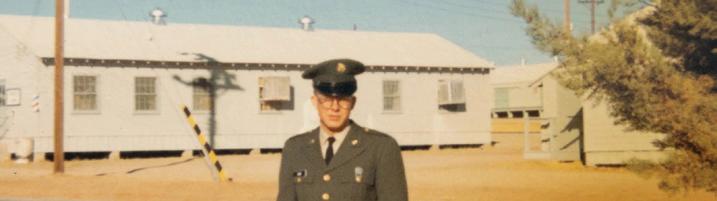
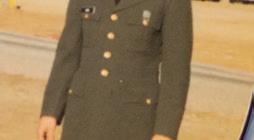
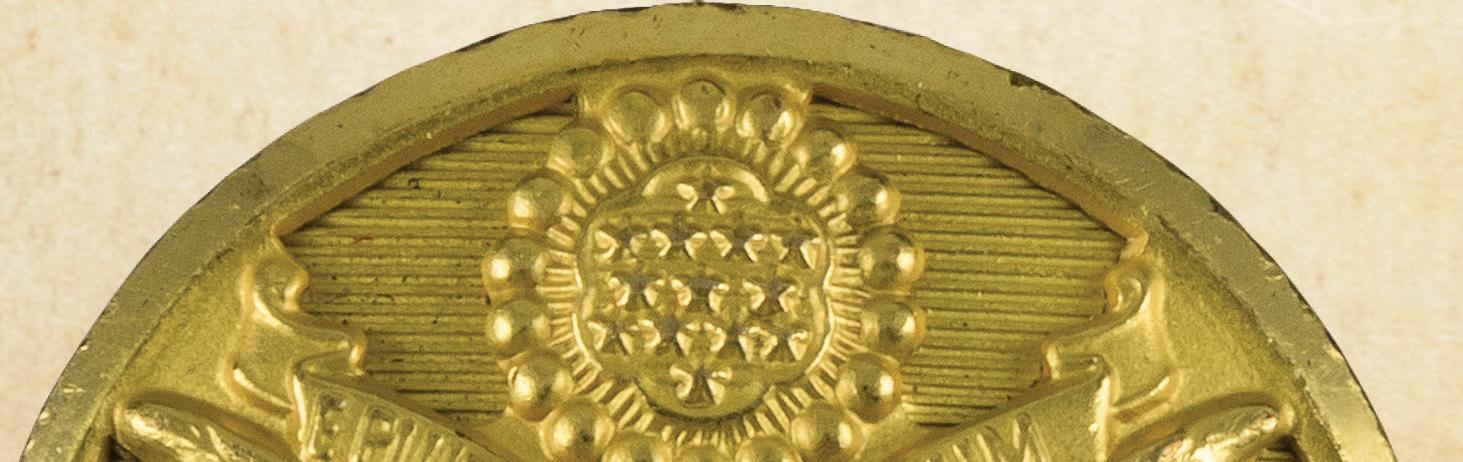
“I was issued a uniform that had buttons with the Great Seal on my dress uniform,” Preston says. “Two years later, when I exited the Army, I cut off those buttons with the eagles on them and wear them to this day on my blue blazers. I’ve been wearing them now for 60 years.”



His acquisitions expanded first with postcards and stamps, then later with the help of eBay and a team of pickers around the country who sent him items of interest. Today, Preston’s collection of more than





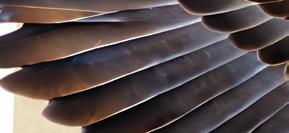
While the nation celebrates its 250th birthday, many Americans may be surprised to learn this is only the second year that one of its most recognizable symbols has been official. In researching his 2019 book, “American Eagle: A Visual History of Our National Emblem,” Preston Cook was shocked to learn the United States had never actually named a national bird.








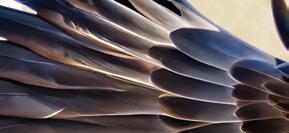




“We had no national bird for 248 years,” he says. “It seemed like I was the only person in the country who knew, because it was such a surprise to everyone I









talked to.”




It was an especially
































PAGE: Chris


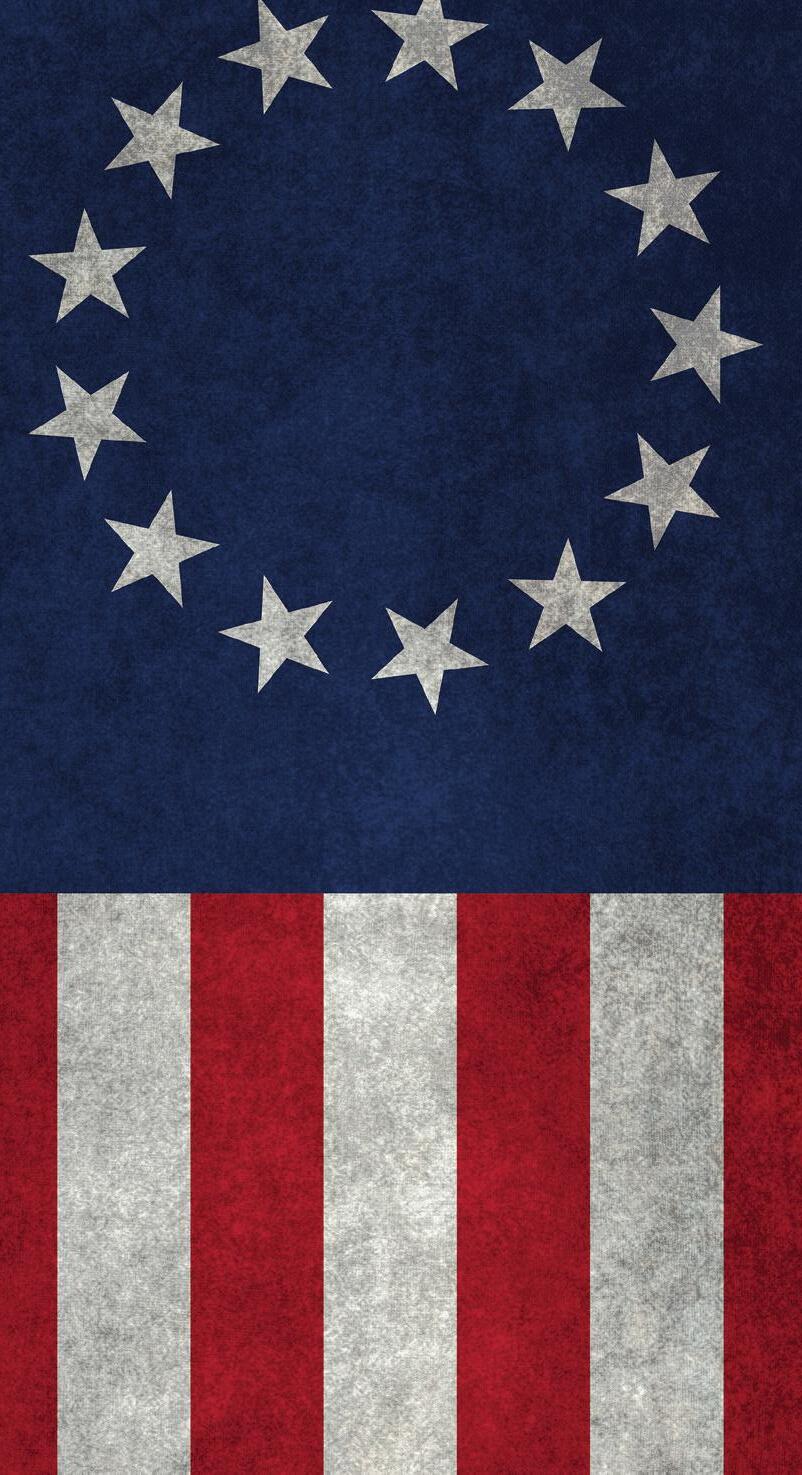



THE BETSY ROSS FLAG




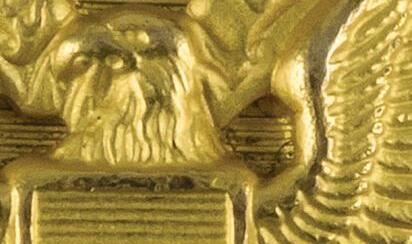
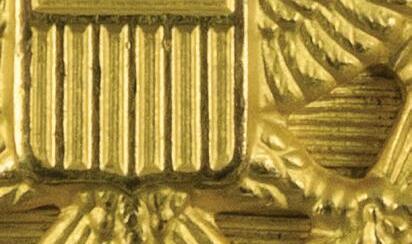
While lore holds that Betsy Ross designed the first American flag, there is no hard evidence pointing to any single designer. But, as the first seamstress to stitch the flag together, Historian Chris Garza says she may have influenced some of its details.



One of Chris’ favorite stories is when George Washington, a Freemason, approached Ross about making the flag, he suggested the stars have six points, as is common in masonic symbolism. Ross quickly noted that if they wanted to mass-produce the flag, fivepointed stars were much more efficient.



To prove it, she pulled out a small square of fabric, made a few quick folds and one simple cut, and handed him a perfect star. Washington was convinced, and the stars on the flag have had five points ever since.

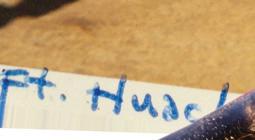
TOP RIGHT: Preston Cook was stationed at Fort Huachuca in Arizona after joining the Army, where he received his first eagle keepsake: the buttons on his uniform.
PHOTOS COURTESY OF PRESTON COOK
RIGHT: Preston still sews his original uniform buttons onto his blazers today.
OPPOSITE
Garza’s flag collection ranges from personal keepsakes to historical designs that fell out of fashion. PHOTO COURTESY OF LEGNA STUDIO




FLY YOUR FLAG
40,000 eagle-themed items is on display at National Eagle Center in Wabasha, Minnesota. It includes historical artifacts, including buttons worn by George Washington and a Civil War knife, as well as pop culture objects, such as sports memorabilia and an Andy Warhol print.
The eagle’s symbolic appeal in so many different settings has always been one of its most interesting features for Preston.
“It’s a symbol people turn to in times of both peace and distress,” he says. “The image of it on the Great Seal has changed from being kind of scrawny and chickenlegged to more of a full-fledged eagle. Around the 1820s, it was first used by political campaigns to show patriotism. So, it has changed over the years, but it’s remained constant throughout our history.”


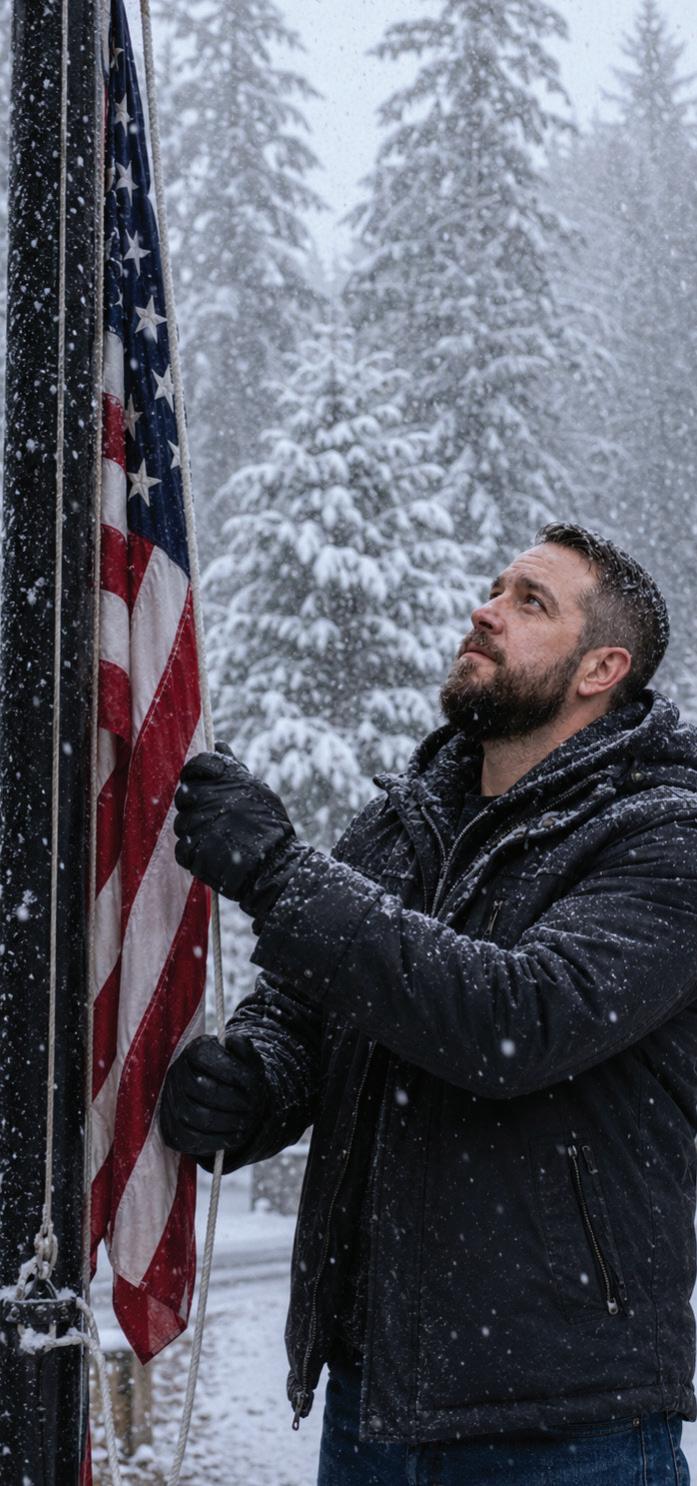
As a flag historian and restorer, Chris Garza, executive director of Troutdale Historical Society in Oregon, regularly encounters misconceptions about flag etiquette. A common one he shared as a child was that the flag must be destroyed if it touches the ground. He can still remember dropping the flag once while lowering it for his grandfather.
For centuries, that presence has led many Americans to identify the bald eagle as the country’s national bird. Once his book was complete, Preston turned his attention to putting a bill in front of Congress that would finally make official what everyone had always assumed.
He sent a draft to U.S. Rep. Brad Finstad, whose district includes Wabasha, as well as Sen. Amy Klobuchar. The two coordinated on the bill, which unanimously passed in both houses of Congress before President Joe Biden signed it into law in 2024.
Preston has no doubt the work was worth it. It permanently enshrines what many Americans have long felt about the bald eagle.
historian teaching at the University of Michigan for the past 20 years, he has often led an introductory class on American music. His favorite way to kick it off is with Jimi Hendrix’s 1969 performance of “The Star-Spangled Banner” at Woodstock.
“It brings you immediately into some of the complexities around the anthem,” Mark says. “Is there a single, appropriate way to play it? Is it a protest or burning the flag through music? Hendrix was also a member of the 101st Airborne, and aspects of the performance are quite patriotic, so is it saying something more textured?”

Those questions led him down a rabbit hole that culminated in his 2022 book, “O Say Can You Hear?: A Cultural Biography of ‘The Star-Spangled Banner.’”
Francis Scott Key’s lyrics, written after the bombardment of Baltimore’s Fort McHenry during the War of 1812, go on for four verses. Only the first is typically sung for the anthem, building to the final line, “O say does that star-spangled banner yet wave/O’er the land of the free and the home of the brave?”
While it is often performed with an exclamation point at the end, Mark considers the question it asks to be crucial. At the time the anthem was penned, the country had faced some of its worst defeats. Key’s vision of a bold and proud nation wasn’t something he was seeing but a hope for the future.
“Today, I think that question asks us if we are brave enough to live up to that vision,” Mark says. “Do we have the courage to be a country that celebrates liberty and justice for all? I think it has the potential to make the anthem something urgent and contemporary. It’s a verb, rather than a noun.”


“I thought it was the end of my life,” Chris says. “But he pulled me aside and explained that as long as it isn’t tattered, it can always be cleaned and reflown. That moment of relief really stuck with me.”




Another common mistake is flying the flag at night. To maintain respect and visibility, the flag should either be illuminated at night or taken down at sunset and raised again in the morning.


“For many years, it was our only living symbol,” Preston says. “If you see one flying or fishing, it’s such an amazing bird. It means so much to so many people. It means freedom and liberty and power and independence and family. People just don’t get tired of seeing it, and I don’t think there’s any other symbol of America that has that kind of enthusiasm.”

The Call to Citizenship
If the eagle is the American symbol that generates the most excitement, Mark Clague believes the national anthem is the most dynamic. As a musician and musical



When President Herbert Hoover officially signed an act of Congress making “The Star-Spangled Banner” the U.S. national anthem in 1931, it—much like the eagle—was a recognition of something that had already been true for many Americans. The song was used as a recruiting tune for the Union Army in the Civil War and was often treated as a de facto national anthem during the








Raising and lowering the flag continues to be a cherished tradition for Chris Garza.
PHOTO COURTESY OF LEGNA STUDIO


In some ways, the song is sort of democracy in action. We made the anthem by using it.

Spanish-American War and World War I.
“I think that makes it powerful,” Mark says. “In some ways, the song is sort of democracy in action. We made the anthem by using it. And for the same reason, changing it would be really hard. You could change the law, but it wouldn’t change how people feel.”
The music itself requires the performer to sing the anthem to life with dramatic highs and lows that take the same commitment the lyrics demand. Mark’s hope is that when people hear it, the





— Mark Clague
anthem won’t just serve as a celebration but also a call to action.
“It feels like the anthem is especially urgent right now,” he says. “U.S. democracy has really been built on people getting involved. Voting, sure, but also being informed, volunteering and lifting a hand to help your neighbor. Being patriotic is something you have to do and earn, rather than just something you have. And I think that call to citizenship is one of the coolest things about the anthem.”




STARSPANGLED SPINOFFS
While the roots of the national anthem’s lyrics are decidedly American, the music originated with Anacreontic Society, a musicians’ club in London.

Since the tune struck a chord in the United States, Mark Clague, a music historian teaching at the University of Michigan, estimates there have been more than 600 sets of lyrics applied to that melody, on subjects as varied as farm work, unionization and women’s suffrage.
“It’s interesting to see how many different words fit the melody,” he says. “It really supports the notion that ‘The Star-Spangled Banner’ is not just one iconic thing but kind



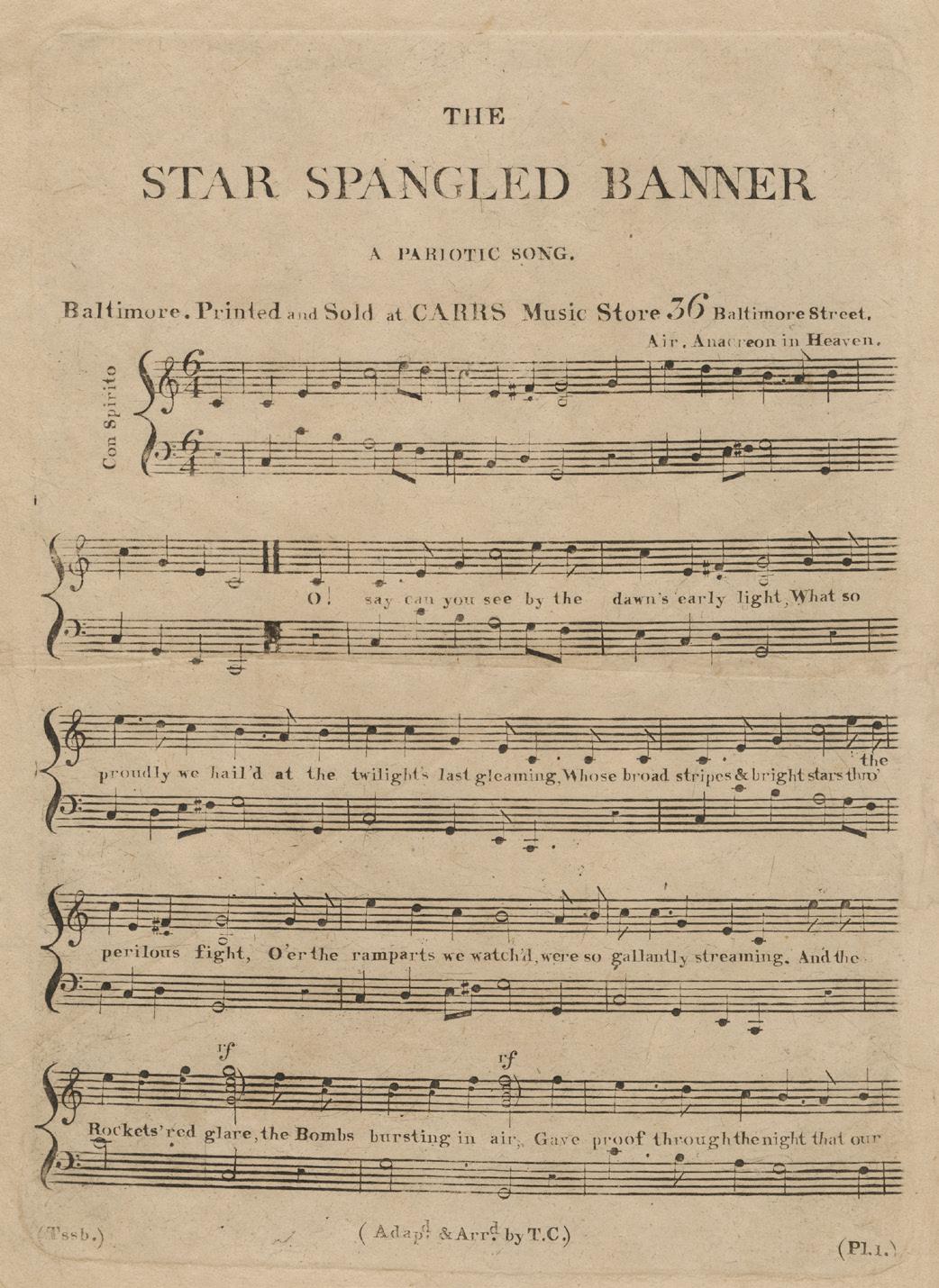







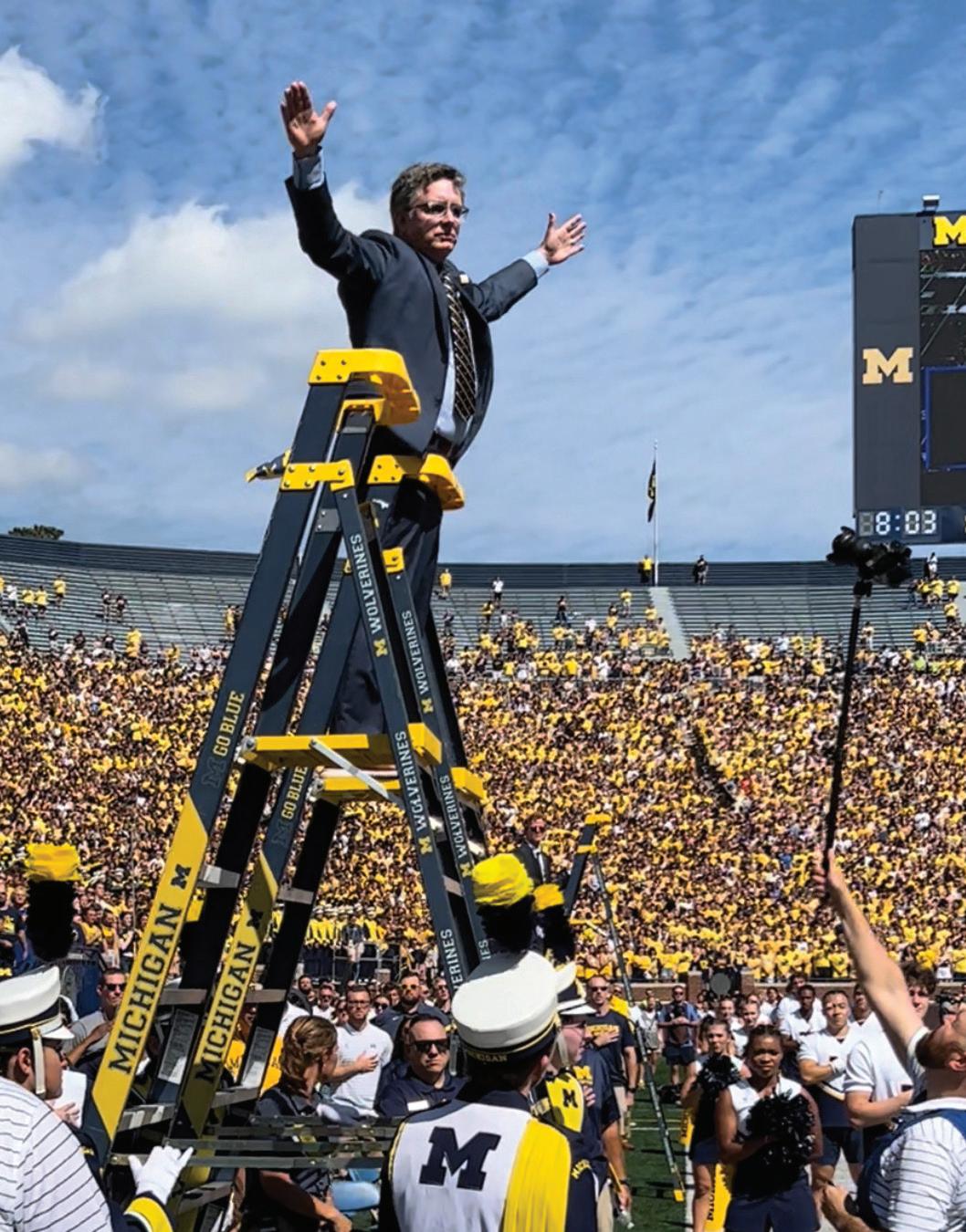
ABOVE: The University of Michigan’s library is home to the first sheet music edition of the song to use the “The Star-Spangled Banner” title. PHOTO COURTESY OF THE WILLIAM L. CLEMENTS LIBRARY LEFT: Mark Clague conducts the anthem at a University of Michigan home football game. PHOTO COURTESY OF MARK CLAGUE





Anniversary


Celebrations

States showcase their unique contributions
By Dianna Troyer
In honor of the United States Semiquincentennial—a fancy name for the nation’s 250th anniversary—each state is contributing to the legacy and future of the country through national and statewide initiatives.
Some states are contributing to a stainless steel time capsule that will be buried July 4 at Independence National
Historical Park in Philadelphia, between the Liberty Bell and Independence Hall.
Others will have booths at the Great American State Fair, scheduled for June 25 to July 10 on the National Mall in Washington, D.C.
Within each state, an America250 Commission has organized events to commemorate the 250th anniversary of the signing of the Declaration of Independence.
According to the America250 Commission’s website, “The journey toward this historic milestone is an opportunity to pause and reflect on our nation’s past, honor the contributions of all Americans, and look ahead toward the future.”
For the time capsule, state commissions feature their residents’ artistry and ideals with the constraint that the objects have to fit into an archival box measuring 6-by-5-by-2 inches.
Here’s a preview of how some states are highlighting their unique contributions to our nation:
ALASKA
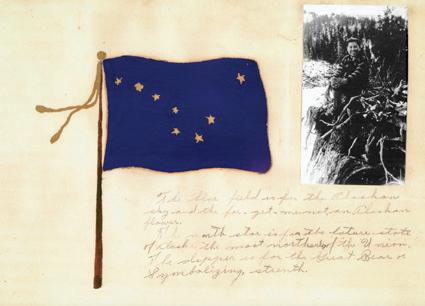
A print of a flag designed by a member of the Indigenous people of the Aleutian Islands represents Alaska. In 1927, Benny Benson, a 14-year-old Unangax orphan, won a contest to design the flag for the then-territory of Alaska.
“The blue field is for the Alaskan sky and the forget-me-not, an Alaskan flower,” he wrote. “The North Star is for the future state of Alaska, the most northerly state in the union. The dipper is for the great bear, symbolizing strength.”
A copy of an 1875 map of New Archangel is also included. After Russia sold the Alaska territory to the United States, the town was renamed Sitka.
ARIZONA
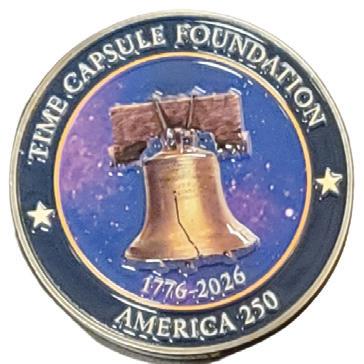
Arizonans provided three coins, two letters and a commemorative copper ingot featuring a stamped Arizona America250 logo for the time capsule.
With laser nano-etching, a stainless steel coin preserves the full text and signatures of the Declaration of Independence and the U.S. Constitution, including all amendments.
“It represents both America’s foundational democratic principles and modern efforts to preserve them for future generations,” according to America250 Arizona Commission. An Arizona quarter, minted in 2008, depicts the Grand Canyon
and a saguaro cactus. A steel America250 commemorative coin features symbolic imagery reflecting freedom, time and civic responsibility.
An archival letter lists the names of the members of the Arizona America250 Commission. Arizona Secretary of State Adrian Fontes also wrote a letter reflecting on Arizona’s civic values, democratic institutions and responsibilities.
CALIFORNIA
On July 4, a family-friendly concert is planned in Los Angeles with major artists and a livestream audience. America250 planners encourage residents to build community by participating in America’s Potluck on July 5, an opportunity for neighbors to join one another to share a communal meal.
FLORIDA
At the Great American State Fair, the Florida250 Commission plans to create an old Spanish Fort with coquina brick walls, authentic sounds and cannon fire.
Within the state, the Florida Freedom Tour is traveling in two 18-wheeler trucks hauling the America250FL exhibits from the Museum of Florida History. One exhibit covers the state’s biggest battle during the Revolutionary War, the Siege of Pensacola, a two-month battle in 1781 when the Spanish prevented the British from gaining control of Western Florida.
IDAHO


Idaho’s state gemstone, the star garnet, “represents Idaho’s natural richness and geological heritage. Its distinctive starlike reflection makes it a fitting and
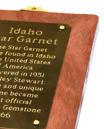


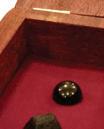
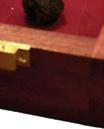



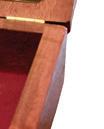
Idaho’s state gem is its contribution to the time capsule.


Benny Benson’s drawing of a flag won a territorial flag contest in 1927. PHOTOS COURTESY OF AMERICA250 STATE COMMISSIONS
Arizona contributed three coins and a copper ingot.
enduring symbol of the state’s rugged landscape and connection to the land,” according to America250 in Idaho planners.
Along with the gemstone, Gov. Brad Little wrote a letter to future generations, reflecting on Idaho’s history and values.
LOUISIANA
The Historic New Orleans Collection, at 520 Royal St., will have interactive 3D reconstructions of the defining moments of the American Revolution. Events include the Boston Tea Party, the signing of the Declaration of Independence, victory at Yorktown and treaty signing in Versailles.

MONTANA
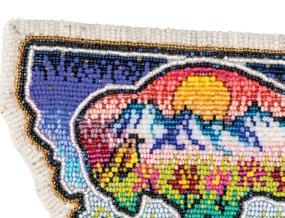
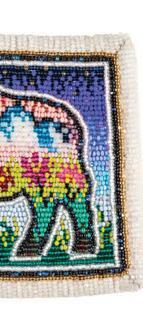
Karis Jackson depicted Montana’s unique traits in beaded artwork shaped like the state.
The Browning artist incorporated the colors of the state flag, the mountains and prairies that define the state’s landscapes, the state flower—the bitterroot—and the state bird—the western meadowlark.
In the center of the design, Karis, an Apsáalooke/Arikara/ Hidatsa artist, beaded a bison. She says it’s “an animal of enduring significance to the Indigenous peoples who have called this land home since time immemorial.”
NEVADA
In Nevada, residents and tribal members are recording oral histories for a podcast and public archive, according to Nevada250 planners.
NEW MEXICO
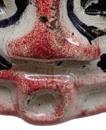
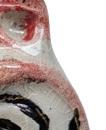
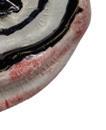
New Mexico’s pavilion at the Great American State Fair, “will present New Mexico as an intersection of cultures, history, landscape and creativity,” says Daniel Zillman, New Mexico Department of Cultural Affairs communications director.





OREGON
Lillian Pitt, a Warm Springs/Wasco/Yakama artist, made a ceramic pin depicting a tribal petroglyph and pictograph, a well-known
image high on a mountain along the Columbia River.
“Under the oral traditions of tribes along the river, She Who Watches represents Tsagaglalal, a wise and powerful chief who was transformed to stone and continues to keep vigil over her people and the river,” according to the America 250 Oregon Commission.
SOUTH CAROLINA

Among The Charleston Museum artifacts are a .75-caliber “Brown Bess” musket used during the revolution.
Several special exhibits celebrate South Carolina’s role in the American Revolution.
A new exhibit, “Ringleaders of Rebellion,” is at The Charleston Museum, the first museum in the Colonies founded Jan. 12, 1773. Among the artifacts are a .75-caliber Brown Bess musket used during the Revolutionary War.
An immersive Revolutionary War exhibition at the state fair will remain up for several years. A display emphasizes that South Carolina was the first colony to protest tea taxation on Dec. 3, 1773, 13 days before the infamous Boston Tea Party.
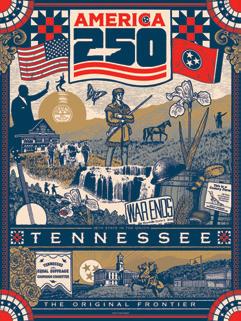
TENNESSEE
Knoxville-based designer Justin Helton created a poster entitled “Original Frontier.”
“From Tennessee’s rich agricultural history to its iconic musical contributions to its role in westward expansion, the Civil Rights Movement and women’s suffrage, the poster represents Tennessee’s part in shaping American culture, economy, and democracy,” according to Tennessee America 250 planners.
ABOVE: The poster “Original Frontier” showcases Tennessee’s music, agriculture and westward expansion.
WASHINGTON
Gov. Bob Ferguson’s proclamation and Lt. Gov. Denny Heck’s letter will be put in the capsule. The governor wrote about the mission of the Washington State Historical Society. Heck wrote about democracy and finding common ground between Washingtonians.
For more information about national, state and local celebrations, visit america250.org.


Artist Karis Jackson created Montana’s contribution to the time capsule.
LEFT: Lillian Pitt made a ceramic representation of a petroglyph along the Columbia River called She Who Watches or Tsagaglalal.
Taste the Pastabilities STAY COOL WITH SUMMER SALADS
Cucumber and Dill Pasta Salad
1 pound small pasta shells
2 cups cucumber, sliced
1/4 cup green onion, chopped
1 cup sour cream
1/2 cup milk
1 tablespoon chopped, fresh dill weed

1 tablespoon white vinegar
1/2 teaspoon granulated garlic
1/2 teaspoon salt

1/2 teaspoon coarse ground black pepper
Squeeze of fresh lemon juice
Cook pasta in boiling, salted water until al dente. Drain, and rinse in cold water. Transfer pasta to a large bowl.
In a separate bowl, mix sour cream, milk, dill, vinegar, garlic, salt and pepper. Set dressing aside.
Mix cucumbers and onions into the pasta. Pour in dressing, and mix thoroughly. Sprinkle with lemon juice. Cover, and refrigerate at least 1 hour. Stir just before serving.


Recipes by Gertrude Treadaway
ADOBE STOCK PHOTO BY MICROTECH
Greek Pasta Salad Salad
8 ounces bow tie pasta
1/2 English cucumber, chopped
1 green bell pepper, chopped
10 ounces cherry tomatoes, halved
Dressing
1 lemon, zested and juiced
1 tablespoon red wine vinegar
2 garlic cloves, minced
1 teaspoon dried oregano
1 to 2 shallots, chopped
1 cup chopped, fresh parsley
2 tablespoons capers, drained and rinsed
1/2 cup pitted Kalamata olives
1/3 cup feta cheese, crumbled
Pinch kosher salt
Pinch black pepper
1/4 cup extra-virgin olive oil
Boil pasta in salted water according to package instructions. Drain, then set aside briefly to cool.
To make dressing, add lemon juice, zest, red wine vinegar, garlic, oregano, salt and pepper to a large bowl. Whisk to combine. While whisking, drizzle in olive oil.
To the bowl with dressing, add pasta, cucumber, bell pepper, tomatoes, shallots, parsley, capers and olives. Toss to coat. Add feta, and toss again gently.
For best flavor, cover and refrigerate for 30 minutes to 24 hours. Give salad a final toss before serving.
Mexican Street Corn Pasta Salad
Salad
1 tablespoon salt
2 cups mini bow tie pasta
3 cups frozen corn, cooked and cooled
3 green onions, finely diced
1/2 bunch cilantro, finely diced
Dressing
1/2 cup mayo
1/2 teaspoon chili powder
1/4 teaspoon paprika
1/8 teaspoon ground cumin
1 teaspoon Sriracha
1 tablespoon finely diced jalapeno
1/3 cup cotija cheese
1 large avocado, diced
1/2 cup canned black beans drained and rinsed
2 large limes, zested and juiced
1/4 teaspoon salt
1/8 teaspoon pepper
Boil 12 cups water in a large pot. Add 1 tablespoon salt. Cook pasta according to package directions. Drain, rinse under cold water for 15 seconds, shake off excess water, and let dry completely.
To make the dressing, whisk together mayo, chili powder, paprika, cumin, Sriracha, ¼ teaspoon lime zest and 3 tablespoons lime juice in a small bowl. Add salt and pepper. Chill until ready to use.
In a large bowl, combine cooled pasta, cooled corn, avocado, onions, cilantro, jalapenos and cheese. Drizzle with dressing, and gently toss. Serve immediately.
Creamy Summer Pasta Salad
Kosher salt
16 ounces rotini
1 large carrot, shredded
1 celery rib, sliced thinly
8 ounces cheddar cheese, cubed
10-ounce bag frozen peas, thawed
1/2 cup cooked bacon, chopped
11/2 cups mayonnaise
1/8 cup sugar
1/4 cup white vinegar
1 teaspoon salt
1 teaspoon black pepper
Boil pasta in salted water to al dente. Drain, then run under cold water until cooled.
In a large bowl, mix mayonnaise, sugar, vinegar, salt and pepper. Add pasta and remaining ingredients. Mix well.
Refrigerate for at least one hour before serving.
Italian Pasta Salad
Salad
Kosher salt
12 ounces pasta 1 pint cherry tomatoes, halved 1 bell pepper, cored and chopped
1 shallot, chopped
6 ounces marinated artichoke hearts
1/4 cup pitted Kalamata olives
Dressing
1/4 cup extra-virgin olive oil
2 tablespoons white wine vinegar
2 garlic cloves, minced
1 teaspoon dried oregano
6 pepperoncini, chopped
6 to 8 ounces salami, cut into bite-size pieces
6 ounces mozzarella cheese balls
1/2 packed cup chopped, fresh parsley
1/2 packed cup chopped, fresh basil leaves
1/2 to 1 teaspoon crushed red pepper flakes
Kosher salt, to taste
Black pepper, to taste
Boil a large pot of water over high heat.
In a small bowl, whisk together all dressing ingredients to combine. Set aside.
Generously salt boiling water, then add pasta. Cook until al dente according to package instructions. Drain, and add to a large mixing bowl.
To the bowl with pasta, add tomatoes, bell pepper, shallot, artichoke hearts, olives, pepperoncini, salami, mozzarella, parsley and basil. Pour dressing over pasta, and toss to coat. Serve immediately, or let sit for 30 minutes to soak up flavor.




Honoring Old Glory
Story and photo by Dave LaBelle
There are photographs when published that initiate diverse emotional reactions.
I recall a photograph made of a young man with Down syndrome during a finger-painting class, his hands and face splattered with paint. One of my favorite images of the year, and it was a picture of unrehearsed joy.


After publication an angry reader called, livid the paper was cruel and insensitive to print such a photograph. I called the reader and patiently listened as she referred to the photograph as “disgusting” and “ugly.” Growing impatient, I explained I saw only joy, beauty and innocence. I suggested she take a look into her own heart.
Controversy often rises because an image strikes a nerve, delighting, angering or repulsing us. Photographs can make us uncomfortable, especially graphic war images. Images of violence and killing hurt me deeply, as they should.
I am reminded, for better or worse, each of us brings our past, our unique experiences to photographs we view.
“We nourish images with the intellectual baggage we carry,” the late French photographer Henri
Cartier-Bresson said.
When we are moved emotionally by an image, it’s critical to know the context in which the image is made and shared, and evaluate why it strikes us.
Few things are more sacred or evoke deeper emotion than our flag, our symbol of American sacrifice, loyalty and freedom.


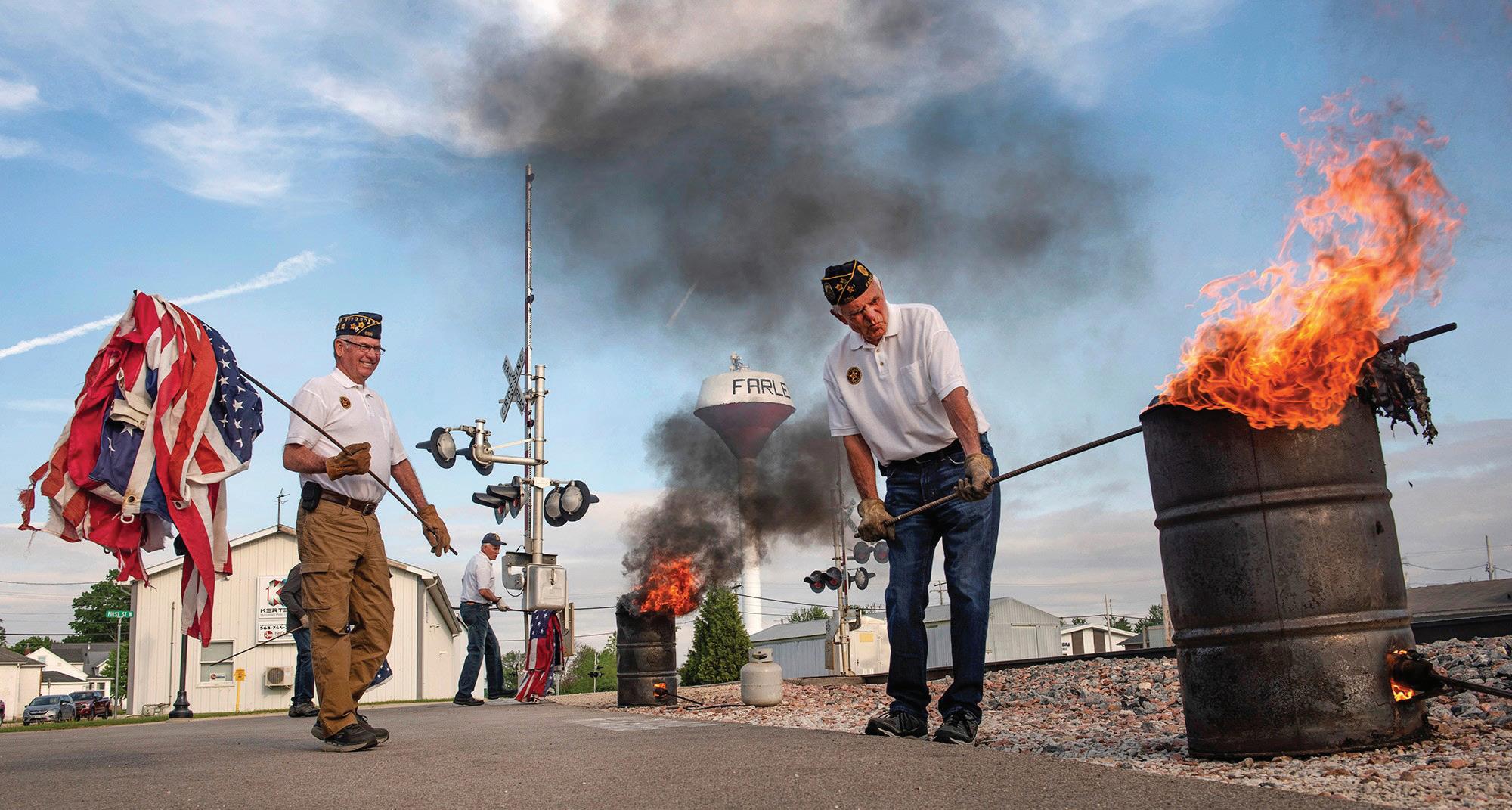
Here, members of American Legion Post 656 in Farley, Iowa, burn discarded weather-torn, unserviceable American flags in a solemn and patriotic ceremony opened with prayer.
Veterans handle and stack the discarded flags with reverent care before torching them in a barrel.
Witnessing the flames curling around the colored cloth, stirred me emotionally in a way that’s difficult to explain. I felt sadness and patriotism, considering those who have given their lives.
By the way, this is a real photograph, not a fantasy image created by artificial intelligence.
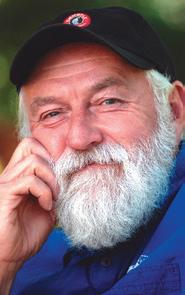
Photographer, author and lecturer Dave LaBelle has captured special moments for more than half a century, sharing tips and life perspectives. For more of his writings, visit davidlabelle.com and his blog, bridgesandangels.wordpress.com.
NIKON D810 32mm lens
ISO 100 f/8 at 1/320
American Legion Post 656 members hold a patriotic ceremony for the disposal of 250 unserviceable flags May 14, 2024, in Farley, Iowa.

Reader Challenge
See if you can use your camera to capture—not artificially create with AI—a photograph of our beloved stars and stripes. Challenge yourself to capture an image that speaks to how you feel about this sacred emblem.
Email your best image—just one—with caption information, including an explanation of how it affects you, to gph@ pioneer.coop. We may share submissions on our website and social media channels.






GET OUTSIDE
Bass of a Different Stripe
Powerful ‘linesides’ can provide exciting angling action
Florida holds some giant bass, but anglers could catch even bigger ones colored white with horizontal black stripes instead of mostly green.
Members of the “true bass” family—as opposed to largemouth bass, which belong to the sunfish family—striped bass can exceed 80 pounds. Also called stripers or linesides, these fish mostly live in saltwater but enter freshwater rivers to spawn.
Actually, two populations of striped bass live in Florida. One population lives in the Atlantic Ocean and enters the St. Johns River near Jacksonville for spawning. Stripers also exist in the St. Marys and Nassau rivers near Jacksonville.
The other population is in the Gulf of Mexico. The Florida state record weighs 42.25 pounds, a Gulf-striper from the Apalachicola River. The largest river in Florida by volume, the Apalachicola flows out of Lake Seminole into Apalachicola Bay in Franklin County.
Lake Seminole touches Florida, Georgia and Alabama. The reservoir holds some big striped bass. In Lake Seminole, look for linesides near sandbars along the old river channels. A channel might drop to 28 to 30 feet deep, but a sandbar could rise to about 14 feet deep. Stripers often lurk near those rises waiting to attack baitfish.
Besides the Apalachicola River, anglers might catch stripers in the Suwannee River. Also in the Panhandle, the lower Ochlockonee and St. Marks rivers hold some big striped bass. The Ochlockonee flows into Ochlockonee Bay on the Gulf near Panacea. The St. Marks River flows into Apalachee Bay a little farther east.
Created by damming the Ochlockonee River, Lake Talquin holds the best landlocked striper population wholly within Florida. The lake spreads across 8,800 acres near Quincy and averages about 15 feet deep, but plunges to more than 40 feet deep. Talquin stripers are generally 10 to 20 pounds, but some exceed 30 pounds.
Farther west, try the Yellow, Blackwater, Choctawhatchee or Escambia river systems. The Yellow and Blackwater rivers empty into Blackwater Bay, an arm of Pensacola Bay. The Escambia system feeds into Escambia Bay, another part of the Pensacola Bay system. The Choctawhatchee River flows into Choctawhatchee Bay near Destin.
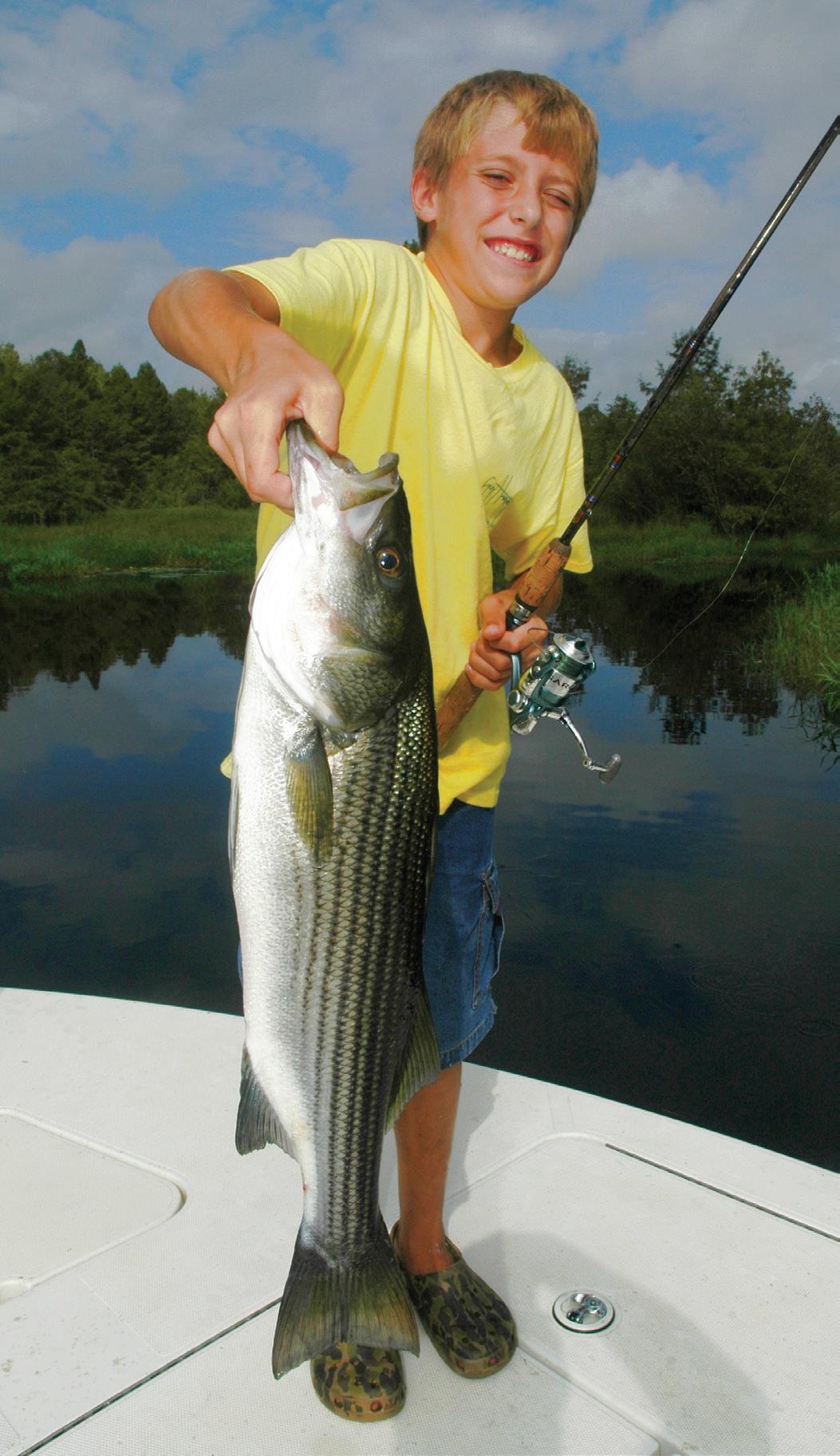
Striped bass primarily eat fish. Live shad make an excellent temptation. Around the coast, anglers entice stripers with live mullets—5 to 6 inches long—or shrimp. Hook a mullet through the upper lip or nose and fish it on a free line so the baitfish can swim naturally.
For people who prefer artificial enticements, linesides might hit anything that mimics a shad or other baitfish, such as crankbaits and chrome spoons. With a spoon, anglers can vertically jig it or cast it. When casting, let it sink to the bottom and hop it off the bottom.
Suspending jerkbaits imitate baitfish. Let the lure slowly sink. Then, twitch it periodically to make it flash like a dying shad. Shad-pattern jerkbaits and other floating lures work when big striped bass drive baitfish to the surface and attack them.
Stripers offer anglers some of the biggest fish found in Florida freshwater systems.
John N. Felsher is a freelance writer, broadcaster, photographer and editor. He’s written more than 3,500 articles on a wide variety of outdoor topics. Contact him at j.felsher@hotmail.com or through Facebook.
A young angler struggles to lift a striped bass he caught while fishing Lake Talquin near Quincy. PHOTO BY JOHN N. FELSHER






















































FLORIDA CURRENTS
PLANNER
All ages can find something new and exciting around every corner of the state. Filled with rich history, abundant natural beauty and diverse events all year, Florida has fun options for everyone.
KEY WEST
July 1-5
Key Lime Festival
Set in the birthplace of Key lime pie, Key West comes alive during this festival with its tropical backdrop, salty breezes and laid-back charisma. Whether you’re a foodie, a fun-lover or just curious, the festival is a flavorful celebration you won’t want to miss. Culinary events range from piehopping tasting tours to intimate dinners. Signature competitions include the World-Famous Key Lime Pie Eating Championship, Key Lime Pie Drop from the lighthouse and the fiery 5-Alarm Pie Challenge. Guests can enroll in mini pie-making workshops, join bike tours through historic Old Town, shop artisan lime-themed vendors, enjoy live entertainment, and partake in themed parties and poolside escapades. keylimefestival.com
PANAMA CITY BEACH
July 2, 9, 16, 23 and 30
Summer Concert Series
Summer nights are made for music, and this concert series has become a summertime tradition. Enjoy a free concert from 7-9 p.m. at Aaron Bessant Park Amphitheater every Thursday. Bring your lawn chairs and blankets, and enjoy the sounds of summer music. Coolers, food and pets are welcome. The musical lineup is Body Double, July 2; The Lee Boys, July 9; Sons of Saints, July 16; Will Thompson Band, July 23; and John “Papa” Gros, July 30. bit.ly/4nEeULF; 850-233-5070

UPPER KEYS
July 6
Taoist Tai Chi Intro Sessions
The Tavernier session is 6:30-7:30 p.m. at Burton Memorial United Methodist Church, 93001 Overseas Highway. The Plantation Key session is 9:30-10:30 a.m. at Plantation Key Community Center, 53 Highpoint Road. Attendees learn about Taoist Tai Chi arts, try some of the 108 movements in this unique set, and experience how regular tai chi practice has a positive impact on the body, mind and spirit. Whether you are looking to reduce stress, maintain health or find deeper meaning, Taoist Tai Chi arts can help. For more than 50 years, volunteer instructors have helped people around the world regain and maintain their health, improve balance, build strength and experience a deep sense of inner calm. Through mindful practice, we learn true strength lies in softness, patience, humility and the ability to truly listen—to ourselves and others.
taoisttaichi.org; 877-398-1108
KEY WEST
July 3
America’s 250th Anniversary of the Declaration of Independence Cookout Celebrate the nation’s anniversary while decked out in red, white and blue at this free, family-friendly cookout on the lawn of the Truman Little White House to celebrate America’s 250th. Enjoy barbecue, a cash bar and patriotic fun.
trumanlittlewhitehouse.org/foundation/events/presidents-day-cookout-2; 305-294-9911
PENSACOLA
July 4
Firecracker 5K
Held in historic downtown, this run benefits Ronald McDonald House Charities of Northwest Florida. The race starts and ends at Seville Quarter and invites runners and walkers to join the fun. Wear your red, white and blue clothes in celebration of the Fourth of July. Following the 5K is the Kids Fun Run. The registration deadline ends at 11:59 p.m. July 2, and late registration pricing of $50 will be in effect starting at midnight July 3. Packet pickup is 4-7 p.m. July 3 at Apple Annie’s within Seville Quarter. Packet pickup is also available on race day from 6-6:45 a.m. within Seville Quarter.
runsignup.com/race/fl/pensacola/rmhcfirecracker5k; 850-477-2273
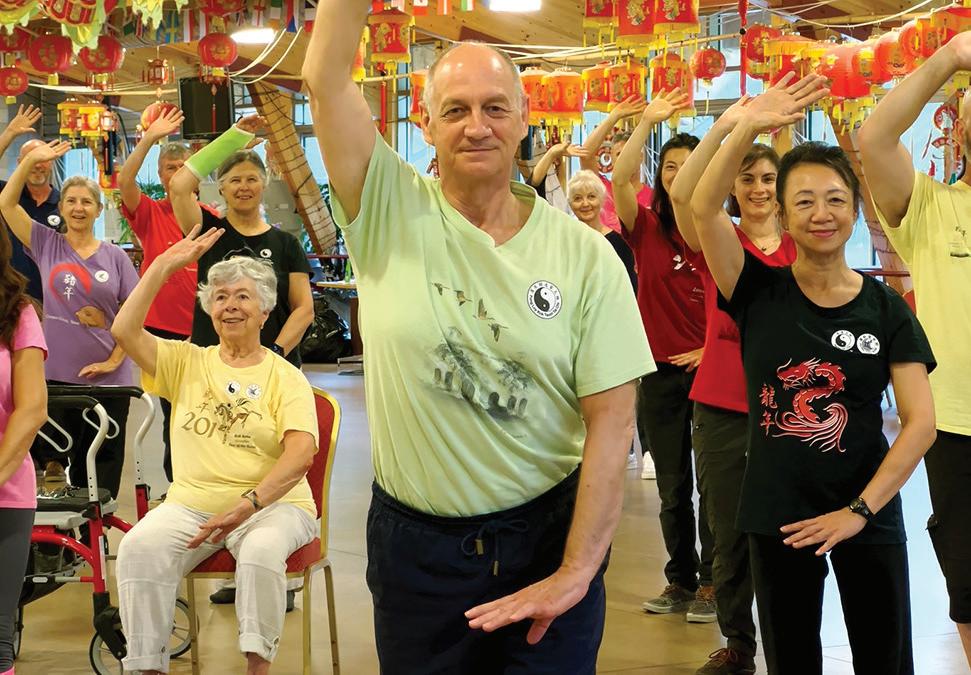


PHOTO BY ABIGAIL TAUNTON
AVON PARK
July 4, 11, 18 and 25
Farmers Market
Discover the charm of small-town Florida from 9 a.m. to 2 p.m. inside the historic Jacaranda Hotel in the heart of downtown. Explore a market
filled with local farmers, artisans, and food vendors offering fresh Florida produce, handmade goods and delicious bites. With live music and a relaxed community atmosphere, it’s an easy and enjoyable way to spend a Saturday morning—rain or shine. facebook.com/farmersmarketavonpark; 863-235-1414
ISLAMORADA
July 5, 12, 19 and 26
Florida Keys Farmers Market
Spend your Sundays from 10 a.m. to 3 p.m. exploring the farmers market, a vibrant weekly gathering held in the parking lot of Islamorada Gardens Plaza. The market includes fresh local produce, handmade goods and unique artisan offerings, while bringing together local farmers, makers and small businesses. Whether you’re looking for farm-fresh ingredients, locally crafted products or simply a relaxing way to enjoy the day, this open-air market offers something for everyone.
floridakeysfarmersmarket.com; 305-432-6900
LOOE KEY
July 10-11
Underwater Music Festival
Whether you’re a seasoned diver, a passionate conservationist or simply someone who loves the ocean, the Underwater Music Festival offers a unique blend of entertainment and education, set against the breathtaking backdrop of the Florida Keys. Prepare to dive into the rhythm of the reef. Looe Key is a spur and groove reef that is part of the Florida Keys National Marine Sanctuary. lowerkeyschamber.com; 305-872-2411
KEY WEST
July 22-26
Hemingway Days
Key West comes alive through this spirited five-day festival celebrating the life, legacy and island era of Ernest “Papa” Hemingway. The event blends literary homage with playful contests, waterfront competition, and lively street festivities that draw fans, writers, anglers, historians and curious travelers. At the heart of the festivities is the iconic Hemingway LookAlike Contest, where bearded entrants attempt to channel “Papa” through appearance, personality and presence. Alongside it, the Running of the Bulls offers a whimsical twist on a Spanish tradition—contestants parade with wooden “bulls” through the streets of Old Town. The Key West Marlin Tournament brings serious anglers to the waters for high-stakes sport fishing, while a diverse literary program includes short-story contests, readings and book events. The festival also features a Caribbean Street Fair infused with local arts, food and music. keywestlookalikes.com; 305-294-5717
PENSACOLA
July 25
Christmas in July Marketplace
The celebration starts at 10 a.m. at the historic Woman’s Club clubhouse. Enjoy a marketplace filled with local artists and crafters showcasing oneof-a-kind creations, perfect for early holiday shopping or treating yourself. Experience the joy of the season in a charming, historic setting. bit.ly/4v2o5s6; 850-694-9860

PENSACOLA BEACH
July 15
Breakfast With the Blues Kicking off the air show week at approximately 7:30 a.m., the Blue Angels arrive and circle overhead to mark the show’s coordinates and center points along Pensacola Beach. This event features the world-famous Blue Angels performing over Pensacola Beach on Santa Rosa Island. Locals and visitors look forward to the annual Pensacola Beach Air Show that highlights hometown heroes the Blue Angels—the U.S. Navy’s flight demonstration squadron stationed at Forrest Sherman Field aboard Naval Air Station Pensacola. The Blues hold several practice sessions along the beach in the days leading up to the big event on show day. visitpensacolabeach.com/whats-happening-blue-angels; 850-932-1500
MARATHON
July 29
Dolphin Sunset Celebration
This is an intimate, after-hours experience starting at 6:45 p.m. at Dolphin Research Center. The sunset program offers a unique opportunity to connect with marine life in a relaxed and scenic setting. Guests can take part in a special dolphin interaction, engage in meaningful conversations with the center’s expert team and enjoy a celebratory toast as the sun sets over the ocean. Blending hands-on moments, education and a beautiful coastal atmosphere, this experience provides a memorable way to learn about and appreciate dolphins and their care. dolphins.org/experiences; 305-289-1121
HOW TO INCLUDE UPCOMING EVENTS
Want to share a family-friendly event with Florida Currents readers? Enter details at tinyurl.com/FloridaCurrents or use the QR code for easy access. Make sure to submit the item at least 60 days before the event (due to press deadline). If you own rights to a printquality photo promoting your event, include it with photo credit information.


GARDENING

New Summer Adventures in Gardening
Vincas
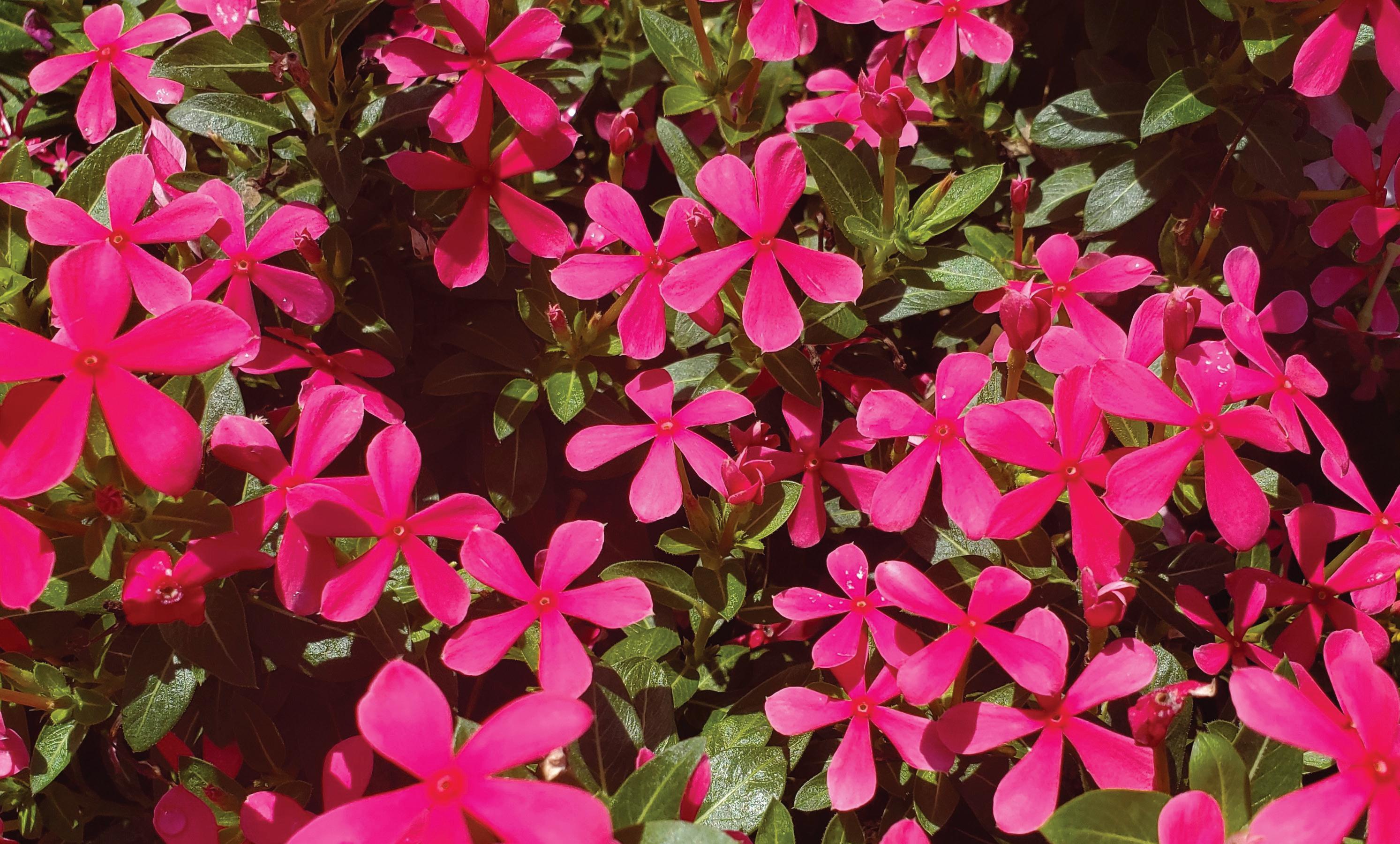
Smaller flowers, plants and foliage can add interest and visual appeal in the gardening world. Take the vinca for example—a hero of the bedding plant universe that takes the oppressive summer heat. They come in many colors and are in constant bloom. Changing things up, you may have noticed a different type of vinca in garden centers the last few years—a vinca with tiny flowers called Soiree Kawaii, developed in Japan. Check out these bedding plants this summer for a bold new look.
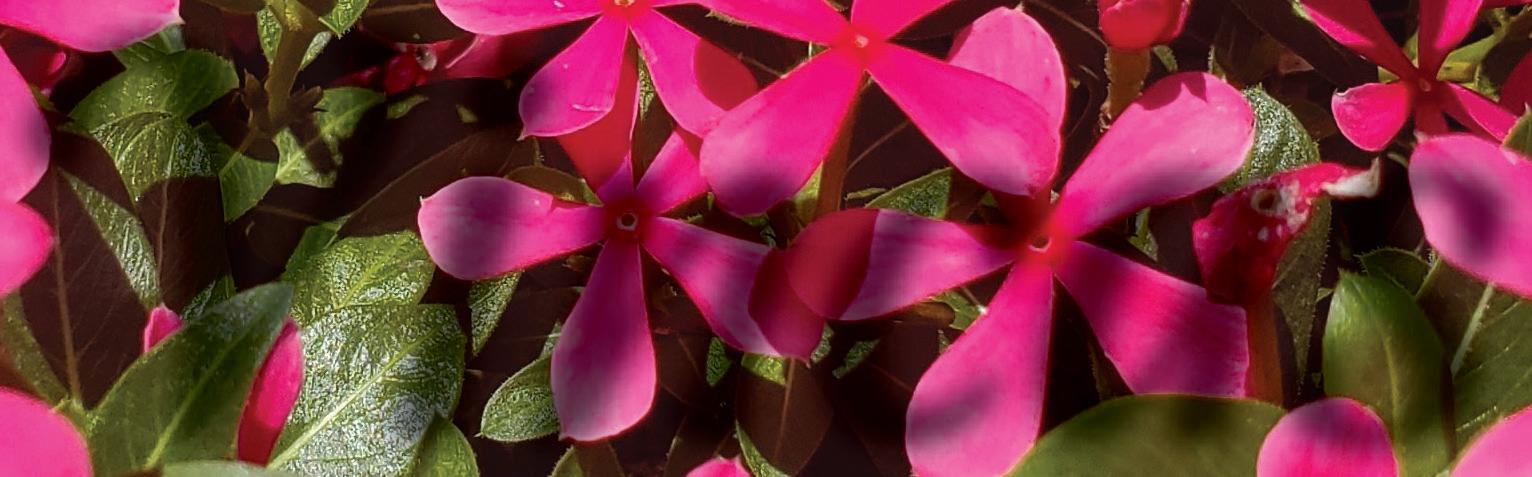
Most gardeners are acquainted with the summer flowering plant called vinca. This new Catharanthus hybrid takes the best features of the familiar vinca and miniaturizes them into 6- to 10-inch mounds with spreads of up to 18 inches wide. The flowers are half the size of a normal vinca, and this gives them a different look and texture.
These smaller flowers give the visual of a colorful asterisk set against the background of glossy green petite foliage—not your grandmother’s vinca.
Low in profile, use the Soiree Kawaii vinca in containers, hanging baskets or as a low border in a bedding area. This Catharanthus hybrid series comes in several cultivars including lavender, blueberry kiss, white peppermint, red shades, coral,
coral reef and light purple. These patented plants are propagated by commercial growers using cuttings only—they are not grown by seeds like traditional vincas. Depending on the size of the pot, it can take the grower at least two months to develop a crop of these plants before they arrive at your local garden center in ready-to-plant condition. Best when planted by themselves, these diminutive plants don’t compete well with an aggressive bedding plant, such as an ornamental sweet potato.
Plant Soiree Kawaii hybrids in areas that receive at least six hours of sun—more is better—in well-drained soil. These neat little gems are considered drought-tolerant once they establish themselves but may need some supplemental water if things get on the dry side.
Although some vincas have problems with fungal wilt diseases, research indicates Soiree Kawaii white peppermint, coral and coral reef have shown resistance to this problematic issue—a good trait to have in our area.
The Soiree Kawaii Catharanthus hybrids provide another opportunity and adventure in summer gardening in Southwest Florida. Its ability to thrive in the subtropical climate makes it a sure bet for continuous color with an impact in your gardening nook where tiny vincas rule.
Ralph Mitchell has served as the county extension director and horticulture agent IV for UF/IFAS Extension Charlotte County since 2000.
In this role, he oversees all county extension programs and staff while leading key horticulture initiatives, including the Master Gardener Volunteer Program, Consumer and Commercial Horticulture, Florida-friendly Landscaping and Pesticide Applicator Recertification Training. He is also a senior instructor for Florida’s Green Industries Best Management Practices program. Ralph lives in Port Charlotte with his wife of 39 years. In his free time, he enjoys gardening, natural history, archaeology and raising small animals.
Vincas add visual appeal to your garden. PHOTO BY RALPH MITCHELL/UF IFAS EXTENSION
Trading Post
For Rent
12 acres coastal Bermuda pasture. Irrigation available. 850-814-7015 or 850-814-6078.
For Sale
Kubota tractor, model L2501DT, with LA525 loader and Land Pride BB1260 box blade. Only 171 hours. Garage kept—like new. $19K. 850-319-6986.
Burial plot in Kent Forest Lawn Cemetary on 23rd Street in Panama City. 850-819-0639.
Book available through Amazon by local author: “A Guide Through the Ages of Childhood” by Audrey S. Brigman. Full of ideas for baby items needed, birthday gifts, senior year, etc.
Where imagination becomes reality. Woodworking, candles and collector wands. alivans.com
Book available through Amazon by local author. “With All My Heart” features 80 remarkable stories of miracles and visions experienced by the author.
Miscellaneous
Tree Be Gone. For all your tree needs, from trimming to complete removal. 850-819-9987.
Rachel’s Facials, Lashes and Brows now offers permanent makeup. Other services include ombre and powder brows, classic and foxy eyeliner, and aquarelle lip blushing. Discounts for military, law enforcement, educators and medical professionals. 2518C Highway 77, Lynn Haven. Rachelsflb.com or call 850-896-4855.
BCS Maintenance. Local handyman service can drywall, paint, pressure wash, etc. 850-624-9659.
Kapua Kleans for your final interior cleanup, deep clean, residences, condos, rental properties. Steph, 850-704-2412.
WJ Land Management. Florida licensed and insured. Forestry mulching, land clearing, culverts, fencing. Fast, free and reliable estimates. William, 850-628-4714; Tabatha, 850-628-4713.
Carter’s Land Clearing and Mulching LLC. 850-527-4715.
The 850 Stump Grinder LLC. Free estimates, multistump discount, residential and commercial. Veteran-owned and -operated. 850-814-0720.
Koastal Home Repair LLC. Fencing, decks, painting, light tractor work, repair work and maintenance. Insured. 850-227-5509.
Handyman services. Painting, flooring, building repair, odds and ends. Free estimates and fully insured. TJ, 207-612-8255 or 207-578-1830.
Merchant Management Group is a local payments technology company based in Panama City, working with quick-service restaurants, full-service restaurants and retail shops and specializing in the latest point-of-sale systems, including Tabit, OrderCounter and Clover. Have worked with hundreds of Gulf Coast businesses since 2004 and have an A+ rating with BBB. Schedule your demo, 850-747-0664.
Custom fences built on your property. Call David for your free estimate. 850-819-9987.
C&2 Electrical Services LLC. Residential and commercial electrician services. 850-899-8218 or 850-899-8217.
SLR Farm & Landscaping. Lawn care, grass cutting, bush hogging, backhoe work. 706-575-4570 or 850-703-5321.
Hamco Business Solutions is conveniently located in downtown Panama City with its warehouse in Lynn Haven. Hundreds of products at discounted prices, including receipt paper, ink cartridges, deli paper, kitchen paper and copy paper. Free, same-day delivery on most products. Shop local and save. Call for free quote, 850-942-5600.
Robert Smith Painting. Interior and exterior, sheetrock repairs, pressure washing. Free estimates. 850-227-4973.
Eco-X LLC. Guided kayak/paddleboard ecotours on clear freshwater springs. Hike Florida trail segment #36. Private, primitive camping. Paddle, hike, camp. Your local guide to adventure. 850-326-9116.
Real Estate
Three-bedroom, two-bath home on 1-acre lot on the Choctawhatchee River at Cedar Log Boat Ramp, 80 Old Creek Road, Ponce de Leon, FL 32455. Wayne, 850-373-7944; Jason, 850-258-1085.
Trading Post is a FREE service to Gulf Coast Electric Cooperative members. GCEC reserves the right to edit or reject ads. PLEASE PRINT LEGIBLY OR TYPE.
Please circle the category that applies: For Rent For Sale Real Estate Free Miscellaneous
Trade Wanted
Items:
Name: Phone:
Address:
** Due to press deadlines, please expect up to 60 days from submission for your advertisement to appear.



BUILDING THE
GROWING SKILLS,Future













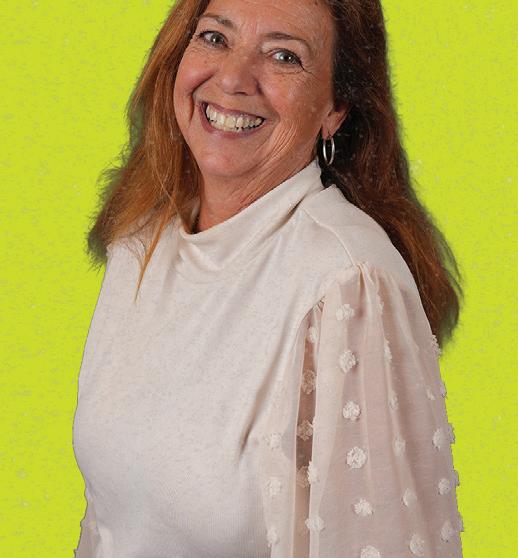
internship provides valuable real-world experience and helps develop the next generation of utility professionals.








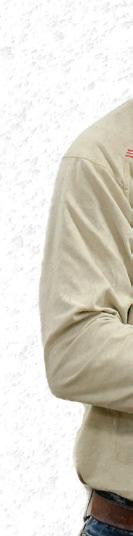




on his recent promotion.

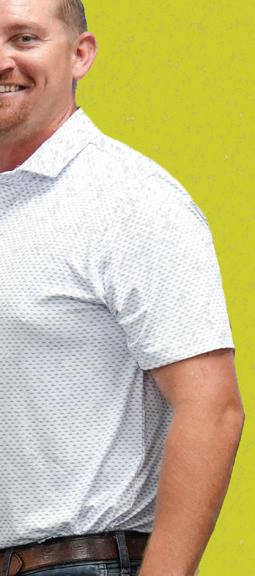




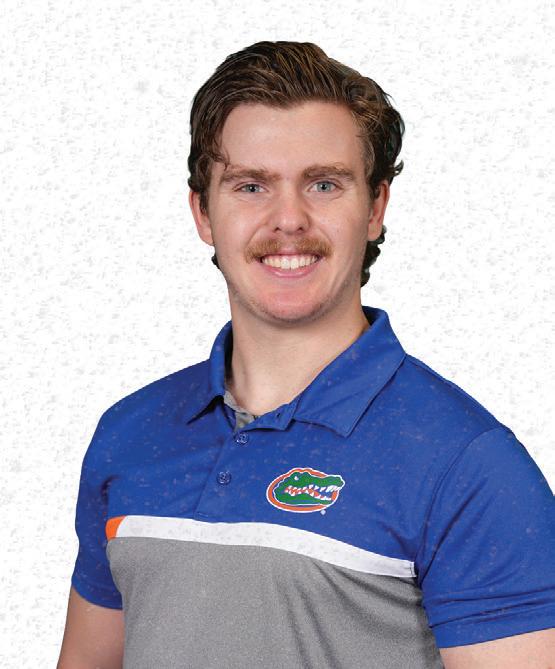

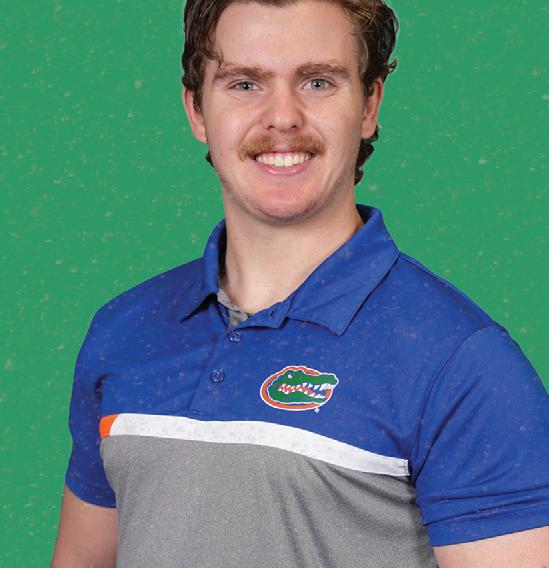










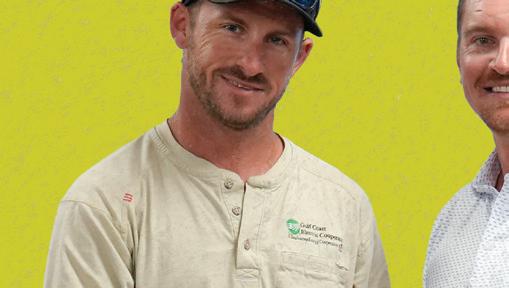
Baylen Price Promoted to Line Technician III
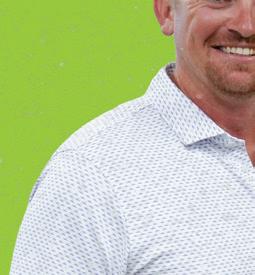
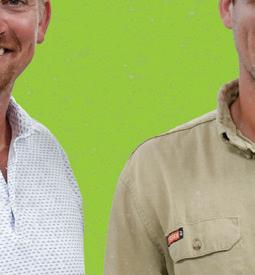
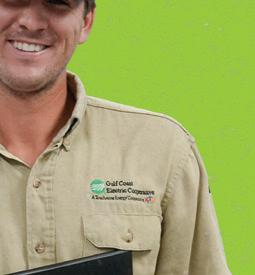
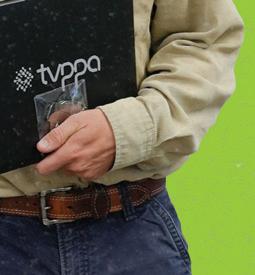
GCEC congratulates Baylen Price, left, on his promotion to Line Technician III. This advancement reflects Baylen’s hard work and technical expertise. In this role, Baylen helps maintain the electric system that powers homes, businesses and communities throughout the cooperative’s service area.
Gulf Coast Electric Cooperative is proud to support opportunities for learning, growth and career advancement. The accomplishments of Jackson, Shannon, Lane and Baylen reflect the cooperative’s commitment to developing a skilled workforce dedicated to serving its members and communities.


left, congratulates Lane Adkins.
Got a Story Idea? We Want to Hear It.
Florida Currents is a magazine about the people, places and moments that make Florida home, and nobody knows those stories better than you. Whether it’s a hidden gem in your community, a local hero worth celebrating or an organization doing great work in your area—we’re listening.
Scan the QR code or visit the link to submit your story idea. Our editors read every submission.
Thanks for reading and for helping us tell Florida’s best stories.
Scan the QR code with your smartphone camera or visit tinyurl.com/SendStoryIdeas.




















SERVING BEYONDMeter
Whether responding to an emergency, supporting local events, sharing safety information or recognizing student achievement, Gulf Coast Electric Cooperative is committed to improving the quality of life in the communities we serve.












leg was lying on the porch, unable to move. Underneath him was a woman who had apparently fallen while trying to help him.





Recent activities across our service area highlight the cooperative spirit that guides our employees, directors and members every day.
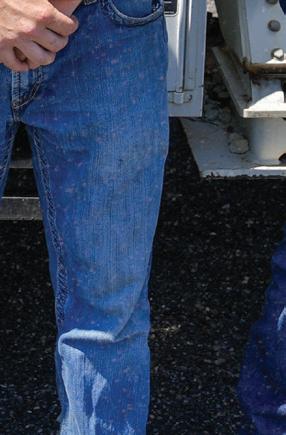
GCEC Lineworkers Rescue Couple from Burning Camper Bravery, teamwork and a spirit of community service were on full display when a group of four GCEC lineworkers took swift action to save a man and woman from a camper fire.
The team from GCEC was en route to install a new service in Gulf County in March when they noticed thick black smoke rising from an RV park.



“It was just coming over the trees as we were coming down the highway, and we knew something wasn’t right,” Lineman Apprentice Tyler Whitten says. “We slowed down, and we noticed
Lineworkers pulled into the park’s driveway to investigate and saw flames shooting out of the camper. A man with an amputated


Several neighbors had already called 911 and were struggling to move the pair out of harm’s way. As the fire intensified, Tyler managed to free the panicked woman but was unable to move the man by himself.
With the woman safely away from the burning camper, Tyler called over fellow Lineman Apprentice Braydon Nunnery, and they carried the man to safety.
Meanwhile, Journeyman Lineman Hunter Jenks, with assistance from Foreman Frankie Bailey, cut power to the area before joining the rescue effort.
The crew then provided bottled water to the victims and shaken neighbors and helped keep bystanders at a safe distance until first responders arrived.
While the man’s dog died in the blaze, the crew’s decisive actions likely saved the couple’s lives, says City of Wewahitchka Assistant Fire Chief Brian Cox. The man was taken to a local hospital and treated for smoke inhalation.
“Getting them away from the fire was probably the best thing they could have done,” Brian says. “By the time we got there, the

and whole camper was on fire.”
Consistent training helps lineworkers keep a “clear head in chaotic situations,” likely leading to the positive outcome, says GCEC Director of Safety and Training Cole Barfield.
“I’m super proud of them,” Cole says. “I’m glad they were available and paying attention and were able to help.”

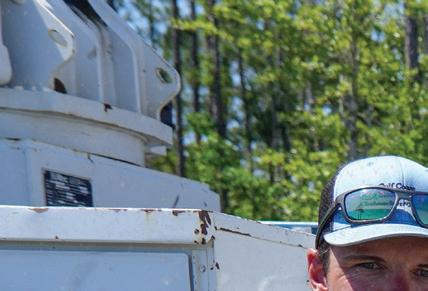
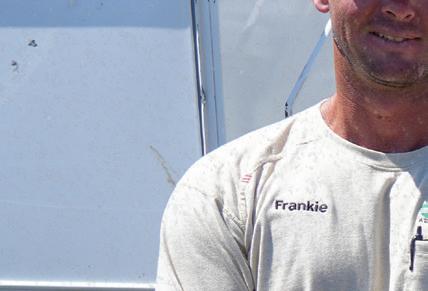
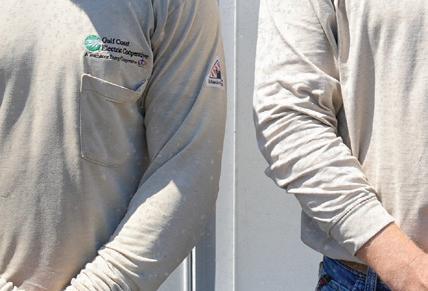
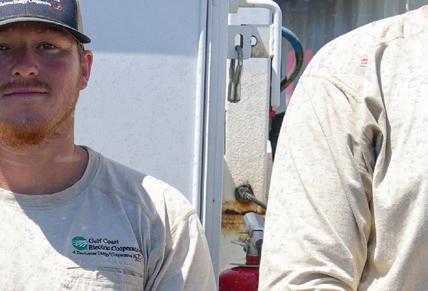
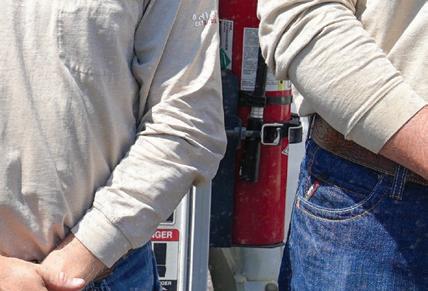
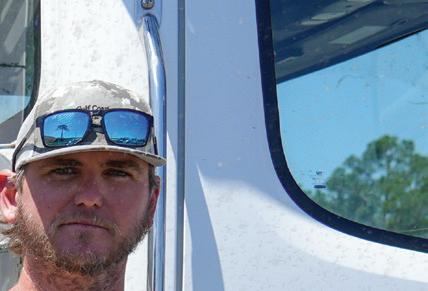
From left are Gulf Coast Electric Cooperative’s Frankie Bailey, Hunter Jenks, Braydon Nunnery and Tyler Whitten. These crew members saved two people from a burning camper near Wewahitchka. PHOTO BY WES MORGAN









Congratulations to our anglers:


We’re proud of our team and were thankful to be part of another great community event.












Thank you to the Gulf

Congratulations to the































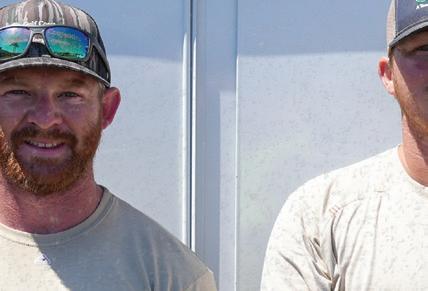
Pictured are, from left, GCEC Trustee Pat Patterson; lineworkers Levi Smith, Frankie Bailey and Kaleb Shiver; and GCEC Trustee Pat Pitts.
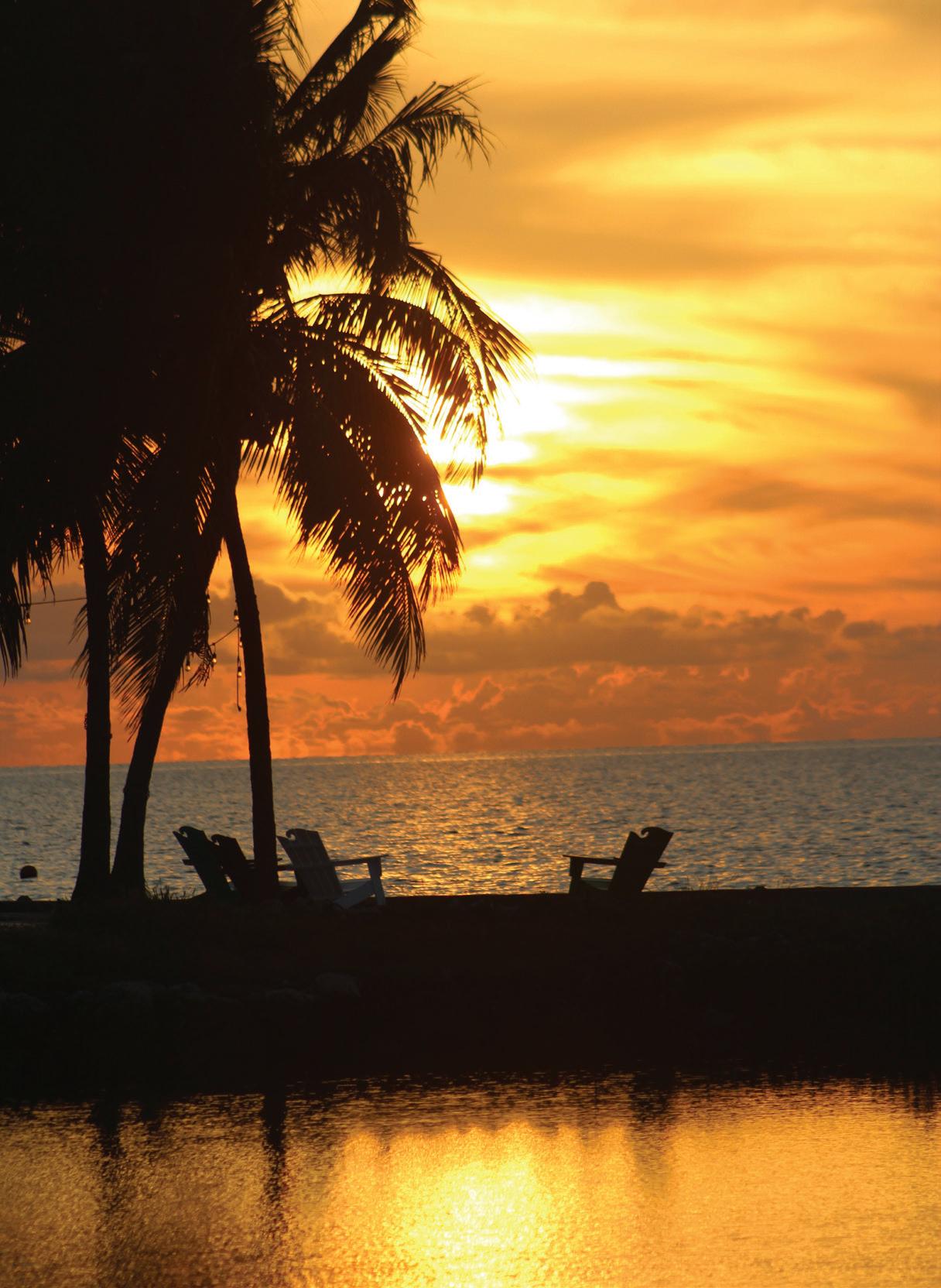
A Beautiful Start to the Day
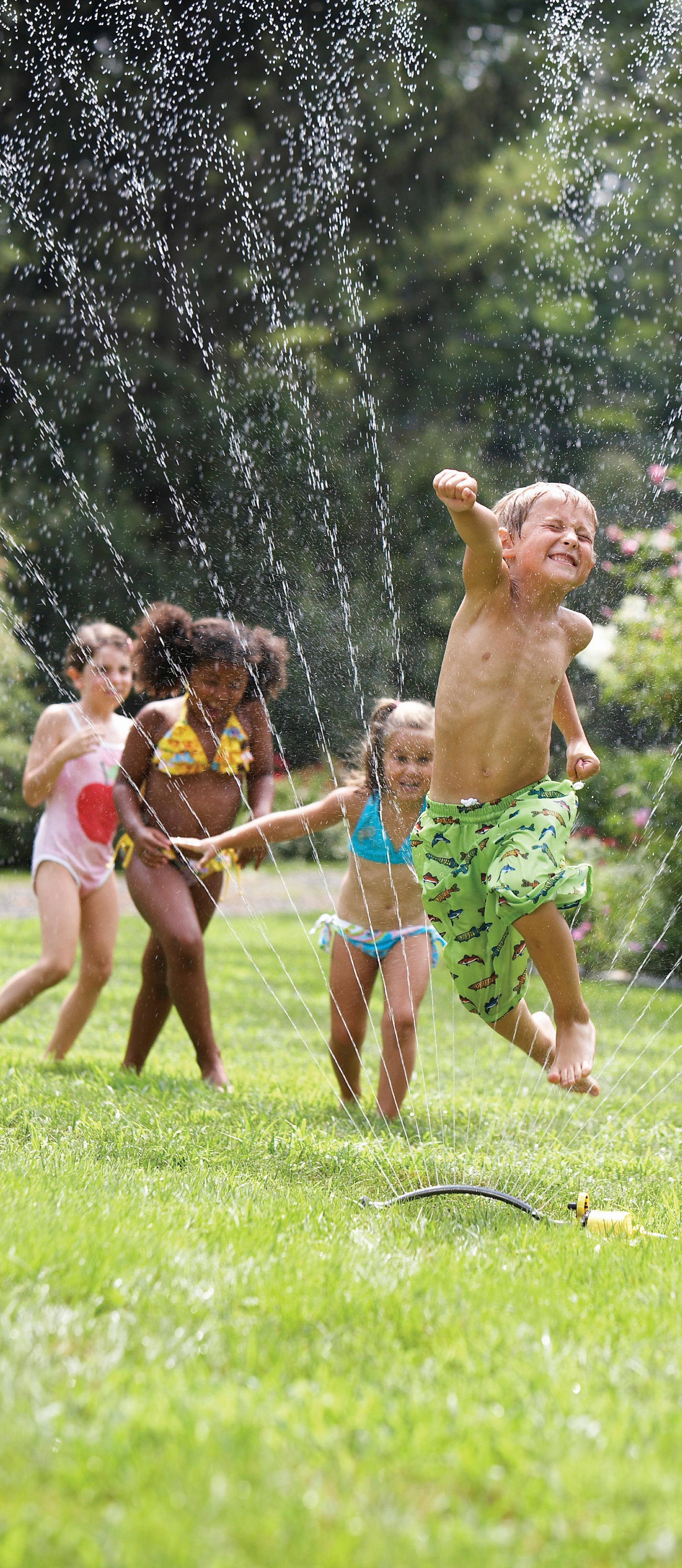
Summer is the season we’ve all been waiting for. It’s 100 days of high dives, ball games and barbecues. It’s 100 ways to dress a burger, catch some shade or get out of town. It’s 100 chances to clear the calendar for what’s most important.
Every two seconds this summer, someone like you will need blood. Donating is quick and easy and,. like all good things this time of year, it’s worth celebrating.
What are your summer plans?
This summer, there are 100 chances to give hope. Choose your day to help save three lives. Donate blood.
Choose your day to give hope. redcrossblood.org





OFFICES
637 Highway 22
P.O. Box 220
Wewahitchka, FL 32465
850-639-2216 or 800-333-9392
9434 Highway 77
Southport, FL 32409
850-265-3631
Outages: 800-568-3667
6243 E. Highway 98
Panama City, FL 32404
850-481-1188
www.gcec.com
CEO/GENERAL MANAGER
John Bartley
TRUSTEES
President Dwight Van Lierop
Vice President Betty Moore
Secretary/Treasurer Jimmy Black
Rupert Brown
Robert Byrd
Carl Goodson
Eddie Jones
Pat Patterson
Patrick Pitts
Trustees normally meet at 12:30 p.m. CDT the third Tuesday of each month.
The mission of GCEC: Fulfilling the changing needs of our membership and communities by providing costeffective, reliable and safe utility services through a dedicated and responsive workforce.
Gulf Coast Electric Cooperative offices are closed on Friday, July 3, in observance of Independence Day. Access your account and report power outages 24 hours a day, seven days a week, by using our app, logging on to gcec.com or calling any of our offices at the numbers listed above. We wish everyone a safe and happy holiday.
GCEC President’s Message
Shift Timing, Shift Savings
As we settle into the heat of July, our homes tend to use more electricity. Air conditioners run longer, refrigerators work harder, and daily routines—from cooking dinner to doing laundry—often overlap during the warmest parts of the day. That’s also when demand for electricity across our community is highest.
At Gulf Coast Electric Cooperative, our top priority is delivering safe, reliable and affordable power whenever you need it. But during peak energy demand hours— typically from midday until early evening—there’s added pressure on the grid as homes and businesses require greater amounts of electricity, all at the same time. On the hottest days, that strain can be significant.
The good news is small changes at home can make a meaningful difference.
Think of our electric grid like a highway system. During rush hour, traffic is heavy, congestion builds and everything slows down. But when drivers adjust their schedules, even slightly, it helps ease the bottleneck. The same principle applies to energy use.
By shifting some of your high-energy activities to off-peak hours—like doing laundry later in the evening, running the dishwasher before you go to bed or cooking meals earlier in the day—you’re helping spread out demand. That reduces pressure on the grid during those critical peak hours. There are a few steps you can take to lower energy use during peak periods.
Smart technology, for example, is a valuable partner in saving energy. A programmable or smart thermostat can automatically adjust your home’s temperature when demand is highest, helping you stay comfortable while using
energy more efficiently. Even a small adjustment of a few degrees during peak hours can make a difference.
In the kitchen, simple swaps can help, too. Using a slow cooker, air fryer or outdoor grill instead of the oven keeps your home more comfortable and reduces the need for additional cooling during warmer parts of the day. And when it comes to laundry, airdrying clothes or spacing out loads can cut down on energy use and indoor heat.
Don’t overlook the power of ceiling fans, either. They can help you feel several degrees cooler, allowing you to raise your thermostat setting without sacrificing comfort. Just be sure to turn these off when not in the room, as they can contribute to higher use.
These actions may seem small on their own, but together, they add up. When many members make mindful choices about when and how they use electricity, it helps reduce peak demand, eases strain on the grid and supports more stable energy costs for local communities.
That’s the cooperative difference. As a member, you’re part of a community working together to power our future. Every effort you make contributes to a stronger, more resilient system.
This summer, I encourage you to take a closer look at daily routines. A few simple shifts can go a long way in keeping your home comfortable, your energy use efficient and our grid running smoothly— even as summer temperatures climb higher.
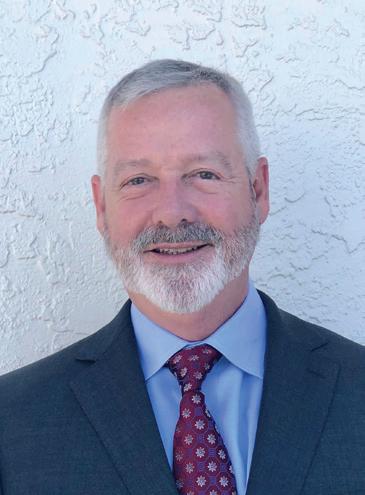
Dwight Van Lierop