Vermont Homes for All Toolkit
A ‘Design & Do’ Toolkit for Small-scale Home Builders, Investors, and Community Leaders


A ‘Design & Do’ Toolkit for Small-scale Home Builders, Investors, and Community Leaders
The Vermont Homes for All project relied on the collaboration of housing leaders and partners across the state. This effort was led by the State of Vermont Agency of Commerce & Community Development, Department of Housing & Community Development in partnership with AARP Vermont. The project benefited from the input and guidance of a wide array of local planning leaders and developers as well as the Steering Committee and Technical Advisory Group, which included representatives from the many State agencies, community organizations, and technical experts that are active in Vermont’s housing, community development and real estate spaces. A special note of thanks also goes to Senator Michael Sirotkin, former Chair of the Senate Committee on Housing and Economic Development, for providing the legislative leadership and support to make this project possible. Finally, the Vermont Homes for All Toolkit reflects the time and valuable input provided by the residents and community members that shared their lived experiences, goals, and ideas for how Missing Middle Homes can support more diverse, affordable, and livable communities throughout Vermont.
• Alex Farrell, Commissioner
• Chris Cochran, Director of Community Planning & Revitalization
• Jacob Hemmerick, Community Planning & Policy Manager
• Richard Amore, Manager of Placemaking & Community Partnerships
• Amy Tomasso, Community Planning & Project Manager
• Kelly Stoddard Poor, AARP Vermont, Associate State Director Steering Committee
• Bill Colvin, Bennington County Regional Commission, Executive Director
• Chad Simmons, Vermont Housing Finance Agency, Housing Policy & Engagement Specialist
• Chris Halnon, New England Federal Credit Union, Business Loan Officer
• Emily Phillips, Vermont Housing & Conservation Board, Associate Housing Director
• Jonah Richard, Village Ventures, Principal
• Kati Gallagher, Vermont Natural Resource Council, Sustainable Communities Program Director
• Katie Buckley, Vermont League of Cities & Towns, Director of Federal Funding Assistance Program
• Kelly Lucci, Vermont Energy Investment Corporation, Director of Strategy & Partnerships
• Kelly Stoddard-Poor, AARP Vermont, Associate State Director
• Leslie Black Plumeau, Vermont Housing Finance Agency, Research & Community Relations Manager
• Seth Leonard, Vermont Housing Finance Agency, Managing Director of Community Development
• Zak Hale, Hale Resources, Partner & Chief Executive Officer
• Senator Michael Sirotkin, Former Chair, Senate Committee on Economic Development, Housing and General Affairs
• Josh Hanford, Former Commissioner, State of Vermont Department of Housing & Community Development
• Dan Groberg, Former Community Planning & Project Manager, State of Vermont Department of Housing & Community Development
• Alyssa Johnson, Vermont Council on Rural Development, Community Projects Manager
• Angela Poirier, People’s Trust Company, Chief Loan Specialist
• Angela Zaikowski, Vermont Landlords, Director, Vermont Apartment Owners Association; lawyer
• Aron Shea, Shea Properties, Principal
• Bob Duncan, Duncan & Wisniewski, Founding Principal
• Brian Loeb, TD Bank, Community Development Manager
• Bruce Douglas, State of Vermont Department of Environmental Conservation Drinking Water & Groundwater Protection Division, Wastewater Program Manager
• Cari Clement, Montpelier Downsizers, Consultant
• Catherine Dimitruk, Vermont Association of Planning & Development Agencies, Chair
• Conicia Jackson, Addison Development Group, CEO
• David Pill, Pill/Maharam Architects, Principal
• David Rugh, Stizel Page & Fletcher, Owner
• Elizabeth Sightler, Champlain Community Services, Executive Director
• Evan Oleson, Northern Forest, NE Kingdom Program Manager
• Jen Mojo, Agency of Natural Resources, Senior Planner
• Jess Hyman, Champlain Valley Office of Economic Opportunity, Associate Director, Statewide Housing Advocacy Programs
• Jessica Savage, Vermont Council on Rural Development, Director of Community Collaboration
• Jim Fecteau, Fecteau Homes
• Justin Bourgeois, Community National Bank, Second Vice President, Commercial Lending
• Kate Stephenson, Build Helm, Founder & Chief Operating Officer
• Katherine “Deac” Decarreau, Winooski Housing Authority, Executive Director
• Kaziah Haviland, Downstreet, Real Estate Development Project Manager
• Keith Levenson, Department of Public Service, Energy Program Specialist
• Landon Wheeler, Division of Fire Safety, Springfield Regional Manager
• Li Ling Young, Vermont Energy Investment Corporation (VEIC), Senior Engineering Consultant
• Max Krieger, State of Vermont Department of Housing & Community Development, General Counsel
• Michael Desrochers, Division of Fire Safety, Division Executive Director
• Nate Wildfire, The MMH Fund, Chief Executive Officer
• Peter Schneider, Vermont Energy Investment Corporation (VEIC), Energy Consultant
• Peter Tucker, VT Realtors Association, Advocacy & Public Policy Director
• Ray Mikus, Green Light Real Estate, Owner
• Rick Ames, Champlain Housing Trust, Professional Coordinator
• Sarah O’Donnell, AIA VT, Director
• Shalini Suryanarayana, Vermont Office of Racial Equity, Racial Equity Education & Outreach Associate
• Stephanie Clarke, White + Burke, Vice President
• Steve Kredell, GBA Architect, Partner
• Susan Britto, Vermont Center for Independent Living (VCIL), Home Access Program Specialist
• Susan Cherry, St. J Restorative Justice, Executive Director
• Thom Lauzon, Salvator and Babic, Vice President
• Tracey Shamberger, Age Well, Director of Business Development & Communications
• Zach Watson, Central Vermont Habitat for Humanity, Executive Director Consultant Team
• Matthew Littell, LEED AP, Utile, Principal-in-Charge
• Zoë Mueller, AICP, Utile, Project Manager & Senior Urban Planner
• Alex Davis, AIA, CPHC®, Utile, Housing Architect, Vermont Local
• Xiaoran Zhang, LEED AP ND, Utile, Urban Designer
• Neil Heller, Principal of Neighborhood Workshop, Faculty at Incremental Development Alliance
• Liz Curry, CommonLand Solutions, Principal, Vermont Local
Vermonters need better housing options and more affordable homes. Meeting that need requires changing the ways homes are built in Vermont, especially the location and types of new homes.
Today, Vermont’s home production is principally producing large and expensive single-households on large and mid-size lots, and large-scale multi-family apartments. Vermonters looking for housing options in-between, like a duplex or four-plex, cooperative housing, senior housing units, age-friendly homes, or townhouse condominiums have very limited options. Regulatory and financial barriers have made developing diverse homes on a small footprint harder and more complicated for people who want to earn a living through small-scale development and contribute to communities they love. This project aims to change that by unraveling the regulatory complexity and reviving common sense solutions that work for Vermont, such as Missing Middle Homes (MMH).
Missing Middle Homes (MMH) are house-scale residential building types featuring multiple units that are compatible in scale and form with detached single-household building types. MMH include home types like duplexes and small-scale multi-household buildings, accessory dwelling units (smaller homes secondary to a primary home, such as a backyard cottage, often abbreviated as ADUs), and neighborhood-scale mixed-use and live-work buildings. This is also sometimes referred to as “Missing Middle Housing” and when used outside the context of this project, often does not include ADUs or neighborhood-scale commercial and mixed-use building types and focuses solely on multi-unit homes. However, for the purposes of this project we are using a more expanded definition to capture the range of “in-between” home types that are a good fit for the Vermont context.
All of these Missing Middle Home types are rooted in Vermont’s pre-1945 development pattern and were common before local zoning bylaws began to separate different kinds of uses and building types. Traditionally, American neighborhoods provided a diverse mix of housing options for homeowners and renters representing different ages, abilities, and walks of life. Over the 20th century, we made many of those options illegal or limited where they could be built which, more than anything else, undermined the walkability, diversity, and vitality of our would-be 15-minute neighborhoods.
MMH are increasingly viewed by Vermont housing leaders as a way to deliver diverse and affordable housing choices in convenient, existing walkable neighborhoods and places. By modernizing regulations and providing the tools Vermonters need to build confidence as smallscale developers, local community members will be able to organically fill in their neighborhoods with housing options that meet people’s real needs. This process is referred to as “gentle infill” or “incremental development”—two very closely related approaches to neighborhood development:
• Incremental Development is small-scale development that is primarily undertaken by developers who live in the community they are operating in and tends to have a gentle pace and approach that works within the pattern of development that already exists around it.
• Gentle Infill is the alteration of existing or addition of new development on underutilized properties that is compatible with the pattern of development that already exists around it. This type of new development is often sited within or behind an existing structure and therefore has a very subtle, and sometimes imperceptible impact on the outward appearance of a property from the street.
The Vermont Homes for All Toolkit and the community engagement process will re-introduce MMH to Vermont by focusing statewide attention on small-scale gentle infill and incremental development as a strategy to address Vermont’s housing and affordability crisis. This approach is emphasized by Enabling Better Places: A Zoning Guide for Vermont Neighborhoods.
This project strives to:
• Build Affordably: Demonstrate how MMHtypes that are characteristically Vermont and well loved by locals can be both of a high quality and affordable by design (including affordability through building approaches, construction materials, energy efficiency, site design, and flood resilience).
• Grow Small Developers: Attract a new generation of grassroots investors/developers (including first-time, women and Black and Indigenous people of color (BIPOC) builders and developers committed to their community. These are people ready to learn what goes into
building walkable neighborhoods and MMH (and how to earn a living doing so)
• Cultivate Local Support: Assist community leaders and policy makers by helping them visualize missing middle infill and ways they can make it easier to build missing middle housing through predictable and streamlined development processes, and permit-ready designs that do not result in displacement, overcrowding, or loss of existing affordability.
• Empower MMH Champions: Generate interest and enthusiasm for MMH, engage, and empower new small-scale home builders and help community leaders visualize how missing middle designs can help build vibrant and inclusive places through neighborhood infill opportunities (from ADUs to mixed-use buildings in Vermont’s civic and commercial centers).
Recent changes to Vermont law and more financial and technical assistance resources within the Department of Housing & Community Development are intended to encourage a more robust home development environment in Vermont. This timeline highlights the steps the State, legislative, and community partners have taken recently to promote Development-Ready Communities by creating the policy foundation, technical assistance resources, and implementation support resources needed to encourage housing production.
The Vermont Housing Finance Agency compiled a Housing-Ready Toolbox to build community capacity and encourage higher acceptance of gentle infill and housing development. The Housing-Ready Toolbox is a great starting point for municipalities seeking to increase their range of housing types, but it also provides some helpful resources for small-scale developers to contextualize community housing needs and help focus on unmet market needs, such as:
• Vermont’s 2020 Housing Needs Assessment
• Vermont Housing Data Community Profiles
Enacted in 2013, this new designation established place-based incentives to support walkable residential development surrounding the two civic or commercial core designations, village centers or downtowns. Because the designation requires staff to review local plans and bylaws, it highlighted a statewide need to ease restrictive barriers to new and renovated homes in compact and walkable places.
In 2016, DHCD launched the Zoning For Great Neighborhoods (Z4GN) Guide to recommend incremental changes to municipal bylaws and offer sample language to make change easier for local boards and commissions, who are often volunteers. The Congress for the New Urbanism contributed expertise through its Project for Code Reform, and Vermont’s Regional Planning Commissions offered local knowledge, analyzing typical Vermont bylaws to recommend best practices, from reducing parking requirements to increasing Accessory Dwelling Unit area maximums.
Bylaw Modernization Grants
DHCD was appropriated special funding to grant to municipalities for land use, development, and zoning bylaw updates in support of a pedestrian-oriented development pattern that increase housing choice, affordability, and opportunity in areas planned in accordance with Vermont’s smart growth principles. To date, the total number of municipalities served is 63, or 27% of municipalities with adopted zoning in Vermont, and total funding is over $850,000.
HOME Act Legislation (Act 47)
On the last day of the 2023 session, the VT legislature passed a bill that will have big impacts on livability in Vermont communities by changing outdated zoning laws to be more housing-friendly. The 2023 Housing Opportunities Made for Everyone Act (also referred to as the HOME Act or S. 100), is focused on creating more housing opportunities and affordable homes for everyone by allowing higher density development in areas with municipal sewer and water service, reducing parking minimums, limiting local appeals, and upping the triggering threshold for Act 250 from 10 to 25 units. The HOME Act supports the efforts of aspiring small-scale developers by promoting the expansion of housing availability through small-scale infill on lots of record serviced by existing infrastructure. Specifically, the HOME Act does this by:
• Allowing more homes on smaller lots. The HOME Act allows five or more units per acre on lots served by water and sewer.
• Allowing 2-unit buildings anywhere that single-detached homes are allowed, and up to 4-unit buildings in areas served by water and sewer.
• Reduces min. parking requirements for some newly constructed homes.
Community Partnership for Neighborhood Development
The Neighborhood Partnership Program leveraged American Rescue Plan Act (ARPA) funds and aimed to demonstrate how targeted and coordinated investments paired with planning support can support the development of homes in inclusive, smart growth neighborhoods. $900,000 in available, one-time funding (out of a requested $2.5 million) was awarded as pre-development grants for projects that provide for a mix of housing types, styles, tenure, and sizes to accommodate diverse households of varying composition, age, and income, including not less than 35 percent of the homes affordable at 80 percent of the area median income, which includes 25 percent of the units with perpetual affordability.
The Vermont Department of Housing and Community Development, the Vermont Housing Finance Agency, the Agency of Natural Resources, the Agency of Transportation, the Vermont Housing and Conservation Board and U.S. Department of Agriculture (USDA) Rural Development convened bimonthly meetings with housing developers to provide them with unified guidance from state funders and regulators. These Housing Funders Roundtable meetings served as a “one stop shop” to streamline the funding and permitting process while also identifying challenges and opportunities for developers, enabling the creation of more effective and efficient production of homes.
Vermont’s five smart growth Designation 2050 Programs provide financial support and permitting advantages to facilitate housing production and compact development in over 250 Vermont communities. In 2023, the Vermont Legislature authorized a comprehensive evaluation and modernization project aimed at assessing the effectiveness of these programs and formulating recommendations for their future enhancement.
DHCD collaborated with the consulting firm Smart Growth America to craft recommendations that will bolster the programs, increase their effectiveness to prepare communities for climate change, and streamline accessibility. The legislature will take up a related state designation program modernization bill during the 2024 legislative session that began in January.
The Vermont Homes for All Toolkit and community engagement process will re-introduce Missing Middle Housing to Vermont by focusing statewide attention on small-scale gentle infill and incremental development as a strategy to address Vermont’s housing and affordability crisis. This ‘Design & Do’ Toolkit will produce four deliverables useful to housing champions across Vermont, including prospective and emerging small-scale developers, planning and regulatory policymakers, municipal and community leaders, and Vermont-based technical advisors for MMH.
This toolkit was developed through a one-year process designed to engage a broad array of stakeholders and community members in crafting a set of tools to encourage thoughtful, context-oriented infill development. The process focused not only on communicating planning and design ideas to a wider audience, but also on forging strong community partnerships that can become the foundation for future implementation efforts.
Steering Committee Meetings
Technical Advisory Group + Legislative Leadership Meetings
Ad-Hoc Targeted Engagement
The Homes for All Toolkit was guided by two advisory bodies that played a critical role in ensuring that the project benefited from local expertise and alignment with the resources and policies most relevant to this effort.
The Steering Committee met in-person at the outset of the project during the May 2023 kickoff, as well as three times virtually. The Steering Committee provided support, advice, and guidance on multiple aspects of the project:
• Key issues, contextual factors, and technical issues;
• Coordination and alignment with existing policies as well as ongoing or future projects and initiatives;
• Outreach, communication and increasing awareness of the project to boost participation and understanding with key stakeholders, agencies, and members of the public; and
• Reviewing and providing feedback on the proposed process, initial findings, interim deliverables and final Toolkit.
The Technical Advisory Group consisted of a range of relevant stakeholders, including small-scale developers, policy makers, realtors, lenders, legal experts, architects, engineers, diversity, equity and inclusion advisors, and more. The Technical Advisory Group provided on-call advising based on their areas of expertise and reviewed and provided feedback on interim deliverables on an as-needed basis.
Engagement of Vermont community members revolved around two extended site-visits, one in May of 2023 and the other in October of 2023.
The two-day May site visit served as a kickoff for the project to increase awareness, seek initial input on the direction of the project, and conduct extensive field research on existing Missing Middle Home typologies present in a variety of Vermont communities. After a press conference in Barre City, the team went on extensive walking tours with local leaders in housing and community development in Barre, Montpelier, Randolph, Bradford, Fairlee, and White River Junction. Many of the typologies developed and presented in the Home Design Guide portion of this toolkit originated from traditional home typologies observed on these walking tours.
In June of 2023, the State put out a call for communities to apply to become Neighborhood Infill Design Case Studies. Through a competitive review process, Arlington, Bellows Falls, Middlesex, Rutland City, and Vergennes were selected as case study communities. Based on initial conversations with local leadership in each community, the State and consultant team studied the environmental, infrastructural, regulatory, and site development constraints to identify an infill focus area that had the necessary pre-conditions to support robust infill development.
In October of 2023, the State and consultant team visited the five case study communities over the course of three days. Each community received a half-day site visit from the design team, including a public presentation and discussion about missing middle and infill housing as well as a walking tour of the infill focus areas identified in advance. Public participation was robust, and in each community one case study parcel was chosen to illustrate how to work through infill considerations in that particular local context. Hypothetical infill designs for these case study parcels were then developed further in partnership with the property owners.
How is this document structured?
This ‘Design & Do’ Toolkit has three sections that will be useful to housing champions across Vermont, including prospective and emerging small-scale developers, planning and regulatory policymakers, municipal and community leaders, and Vermont-based technical advisors for MMH:
1. Builders’ Workbook: This how-to workbook provides a roadmap to small-scale real estate development in Vermont for first-timers. The workbook provides guidance on a variety of considerations including regulations and zoning, financing and feasibility, infrastructure and design, as well as advice on potential partners that can help beginner developers achieve success.
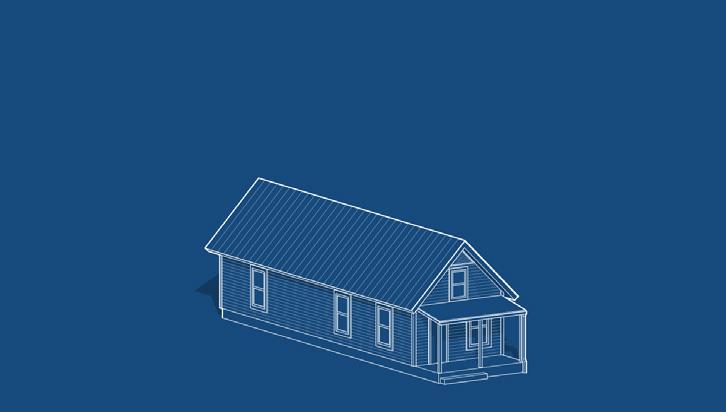
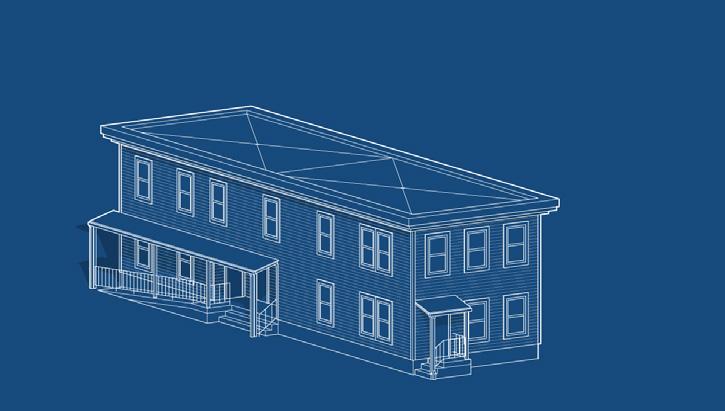
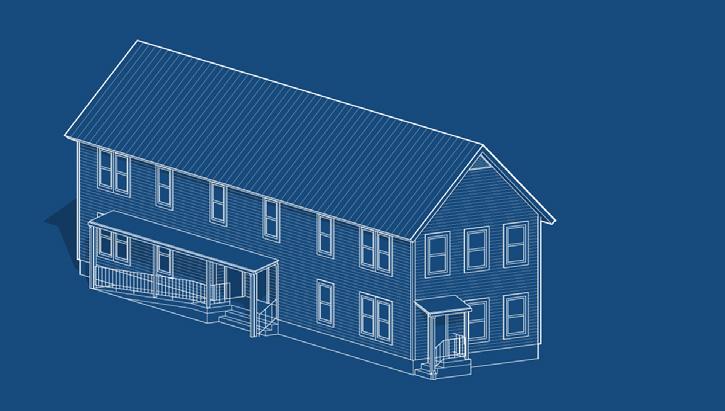
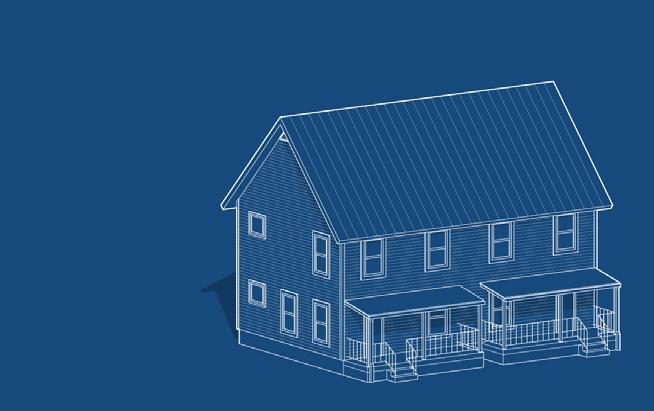
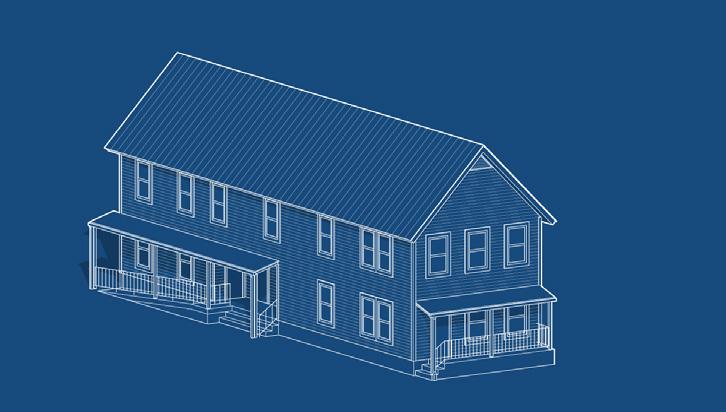
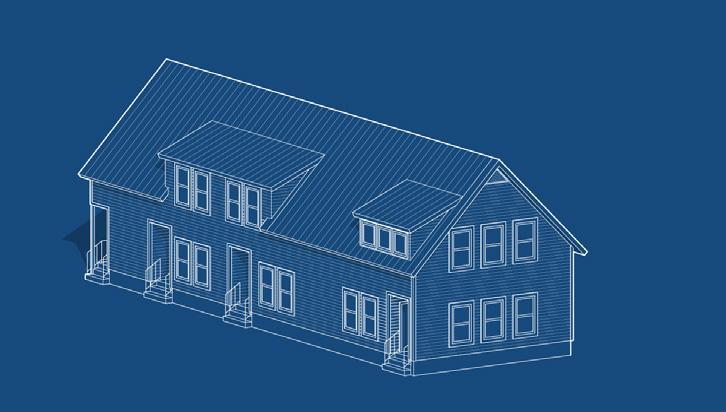
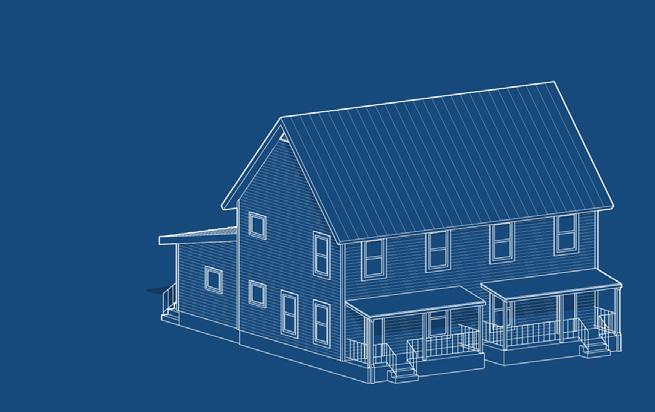
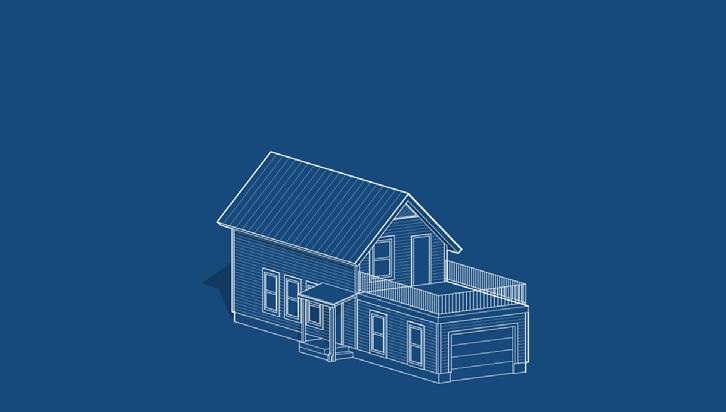
2. Middle Homes Design Guide: This design guide features five Missing Middle Home typologies, each with optional variations, developed in a broadly appealing Vermont architectural vernacular with embedded features to improve affordability, sustainability, and accessibility.
3. Vermont Neighborhood Infill Design Case Studies: This series of five case studies shows how the Missing Middle Home typologies featured in the Home Design Guide can be integrated into a variety of existing Vermont neighborhoods and communities.
For those interested in promoting the toolkit and building local capacity, a complete package of training resources to supplement this toolkit can be found at the project website.
This chapter is your starting point to begin taking an active role in small-scale development in your community, whether you are a housing advocate, local public official, property owner, or aspiring developer.
Join the Homes for All movement. Vermont needs you!
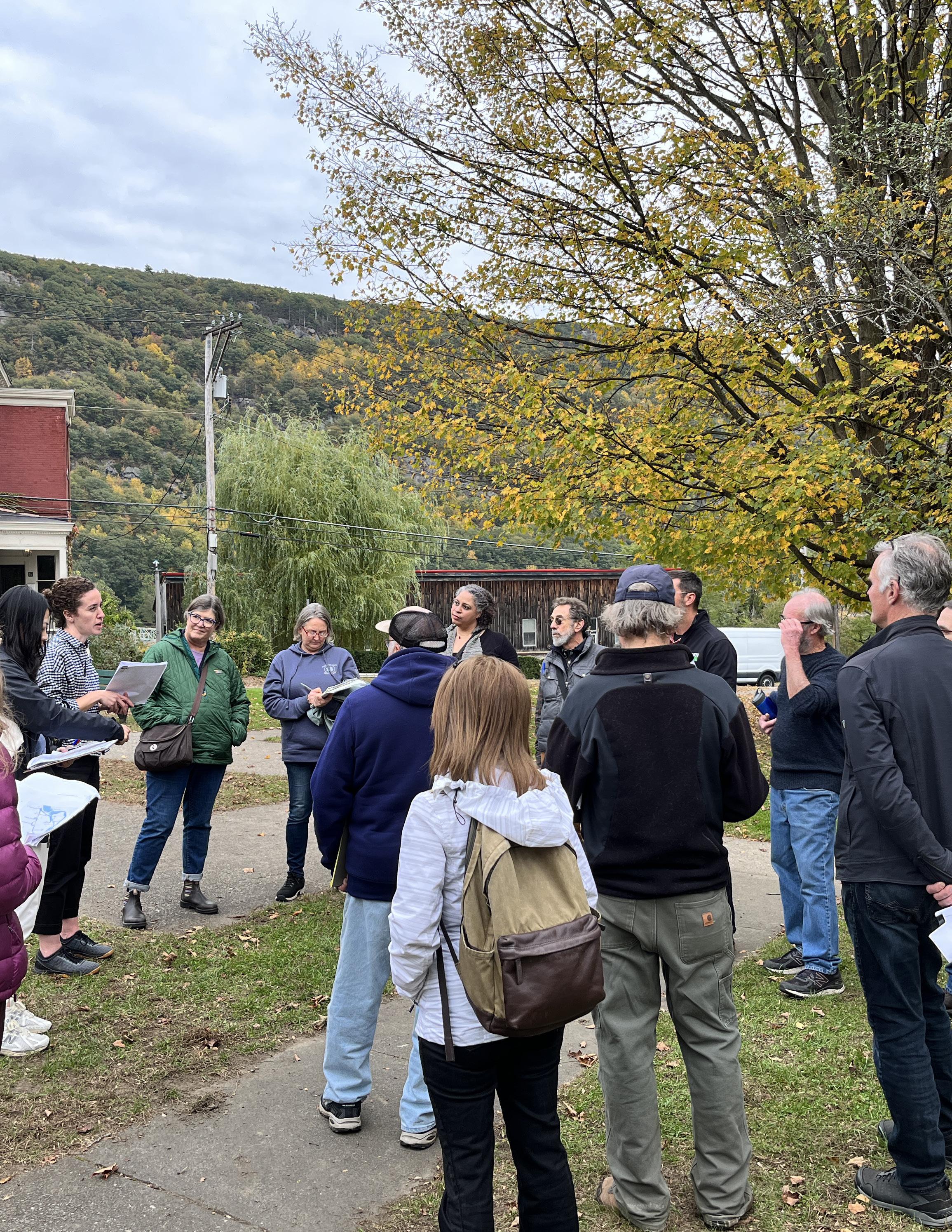
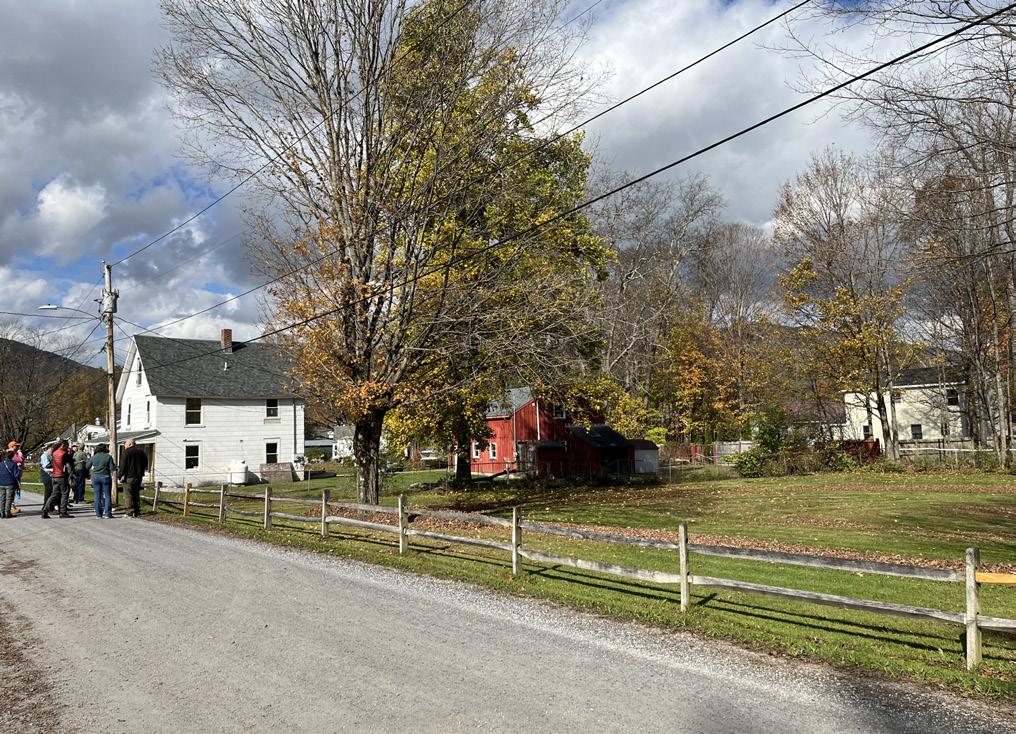
Community members in Bellows Falls participating in a site walk and community conversation about how to bring small-scale infill development to their community as part of the Homes for All Community Infill Case Study site visits in October of 2023.
Photo Credit: Richard Amore.
Chapter at a glance: Vermont needs you!
Who might become a small-scale developer?
What makes a good first-time project?
Why the focus on 1-4 units?
What are the rules?
• Development Regulations
• Finance
• Building Code
What is the process?
What is unique about Vermont’s home development environment?
• Vermont Development Challenges
• Vermont Development Opportunities
• Balancing Vermont Development Challenges and Opportunities
How can you identify a Development-Ready Community?
• Equitable Housing Ecosystem
• Community Zoning Bylaws
• High-Quality Local Administration
• Supportive Boards and Commissions
We are in a pivotal moment as residents of the Green Mountain State. Older Vermonters are downsizing, newer transplants are starting careers, and young families are seeking smaller, more affordable homes in more walkable neighborhoods instead of the traditional suburban single-household building type. At the same time, housing costs continue to rise and climate change has fundamentally changed where and how we build. This is why policy makers, planners, and public officials across Vermont are encouraging you to become your own developer. You can increase the State’s housing supply, enhance your community, and build wealth while doing it.
Both urban and rural locations are experiencing rapid increases in home prices and rents, leading to an unprecedented housing crisis in Vermont. In response, the Vermont Department of Housing and Community Development established incentives and technical assistance resources to support many municipalities with updating their local zoning bylaws and development regulations. The HOME Act, a landmark State bill passed in 2023, requires all municipalities to allow increased density in residential neighborhoods within walking distance to downtowns and village centers without triggering Act 250 (Vermont’s half-century old land use law that places all larger development under a rigorous public review process). On the ground, the HOME Act creates opportunities for infill development (renovation and new development in vacant or underutilized properties) and incremental development (small-scale development from people with close ties to the community).
Now that Vermont legislators have created the opportunity, they need people like you to take up the call. If you’ve ever thought about becoming a small scale developer, this is the perfect time to make the investment. You can join a grassroots movement dedicated to bringing new homes to the state we love.
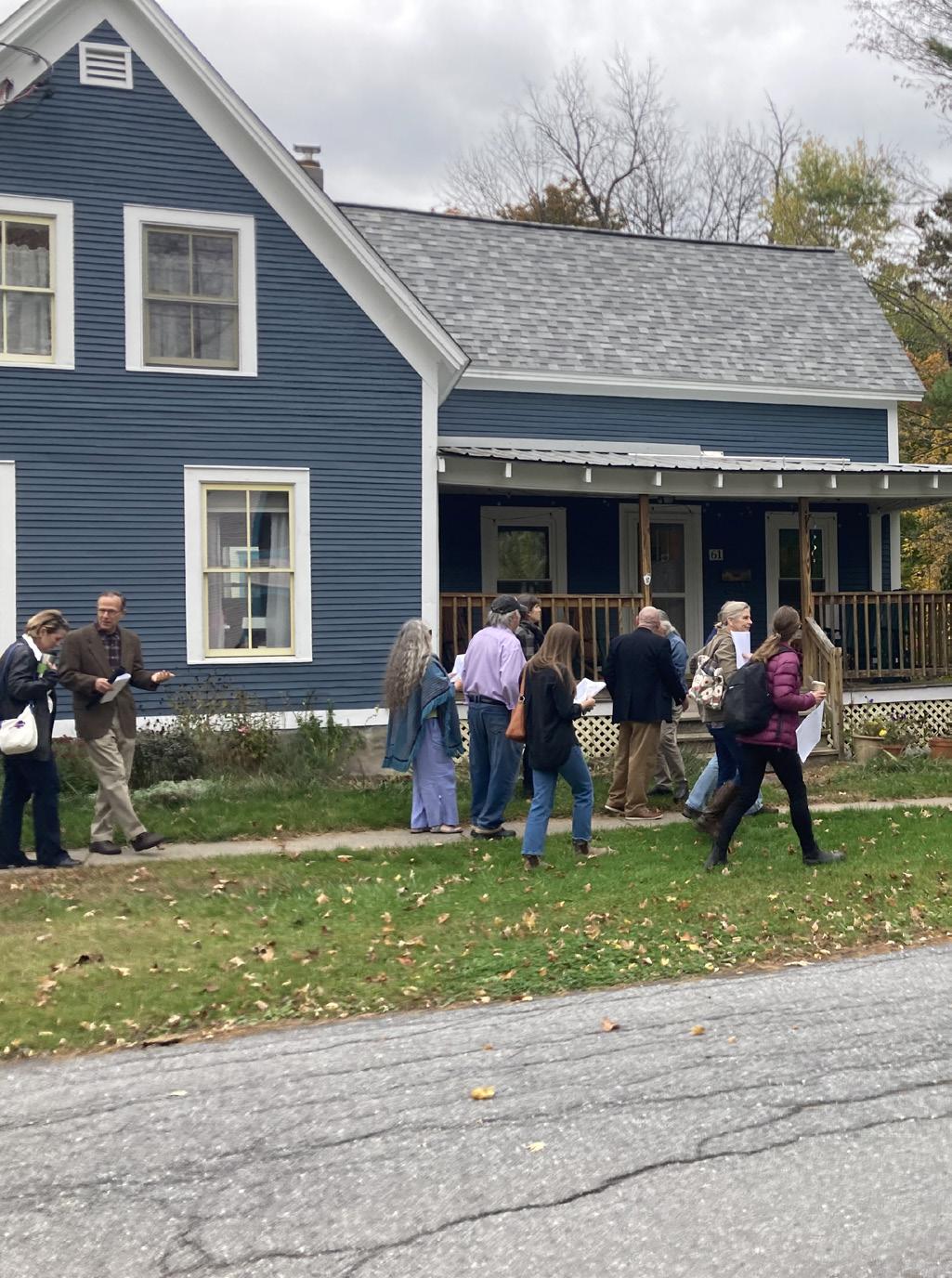
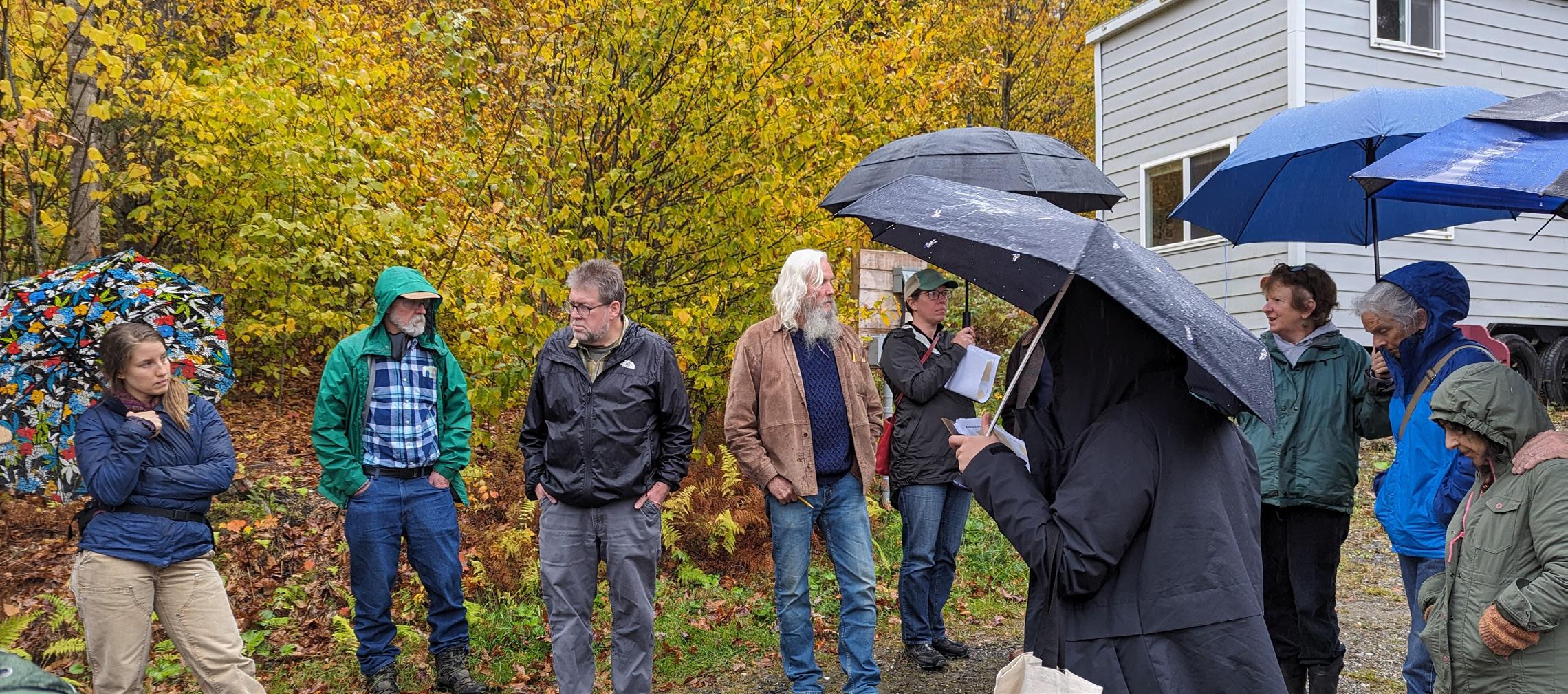
Community members participating in the October 2023 Homes for All community infill design site visits.
Above: Vergennes, Vermont.
Photo Credit: Jacob Hemmerick.
Right: Middlesex, Vermont.
Photo Credit: Amy Tomasso.
A small-scale developer is a local resident or community member who creates new infill development or redevelops existing properties to strengthen the neighborhood’s fabric while taking advantage of existing infrastructure to reduce overall costs. This could be someone who is looking for supplemental income, a new hobby, or a whole new career. In some cases, they are addressing a direct housing need for their own household or a community housing need they have observed. But in every case, small-scale developers are just as concerned about ‘return-on-community’ as they are about return-oninvestment because they care about the community they are part of.
• Existing homeowners. Families or individuals who own vacant land or home and are considering adding some type of housing.
• First-time homebuyers. Single and doublewage earners are finding homeownership more attainable with accessory dwelling units (ADUs), duplexes or triplexes that earn rental income to offset costs of the home.
• Part-timers with relevant skill sets. This type of small-scale developer is typically an individual who finds themselves in a related profession or trade that overlaps with development and is looking to build a portfolio of projects to generate supplementary income. This includes realtors, architects, lawyers, or those in the construction trades. This group usually has a grasp on some portion of the development world and has a strong network to rely on, making this an easier transition.
• Full-time small-scale developers. A budding community of resourceful innovators in Vermont’s real estate world are trailblazing careers in gentle infill and low-impact
development strategies. These smallscale developers are demonstrating that neighborhoods and town centers can accommodate additional homes that are compatible with the Green Mountain State’s characteristic development patterns. Some members of this cohort have already built a portfolio of successful projects, and have scaled up into more complex commercial multi-unit development. Members of this cohort may have projects in different communities, but generally operate in one region where previous projects add value to current and future projects. This approach of operating in a single area is called ‘finding your farm’ by the Incremental Development Alliance, a national non-profit with a mission to train aspiring small-scale developers.
So, if you see yourself in any of the descriptions above, find a place that you love and that needs you, help grow the cohort, and let’s get started.
Small-scale development projects may include commercial space, residential space, or a combination of both; but for the purposes of this Workbook, the focus is on creating or renovating 1 – 4 residential units. The following building types are the most common for aspiring developers to get started.
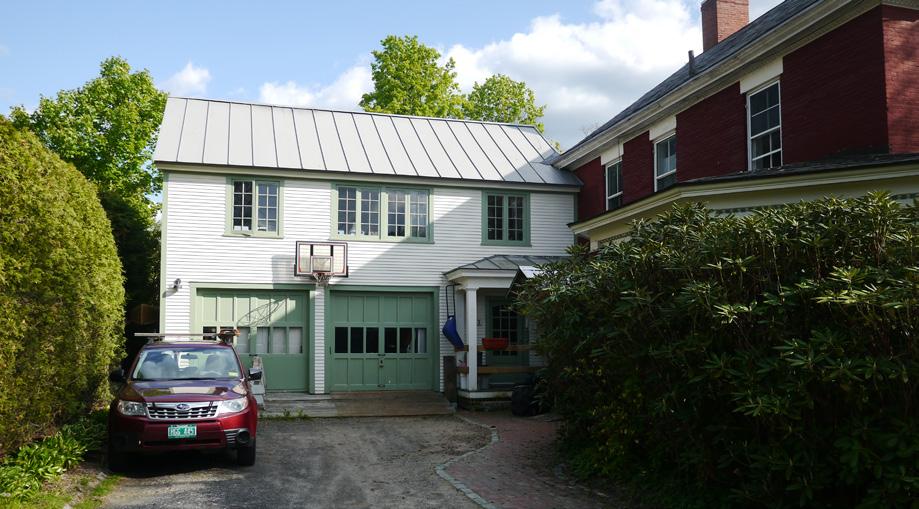
Sometimes known in Vermont as a carriage barn or backyard cottage, ADUs are generally defined as a secondary home that is smaller than the primary home on a single lot. ADUs can be attached to or detached from the primary home.
Example:
Paul and Sampath purchased a small single-household home in an affordable neighborhood ten years ago with a deteriorated garage. A few years after having their first child, Paul’s mother retired and began making longer visits to spend time with her grandchild. The garage –mostly used for storage – offered a perfect space to fix up so that Paul’s mother could comfortably stay for a month at a time. Now that the place was furnished, Paul and Sampath began listing the studio apartment on the traveling nurse housing website to help mitigate Vermont’s nursing shortage. At the macro-level, Paul and Sampath have contributed a housing unit to the Upper Valley market while reducing competition for long-term rentals.
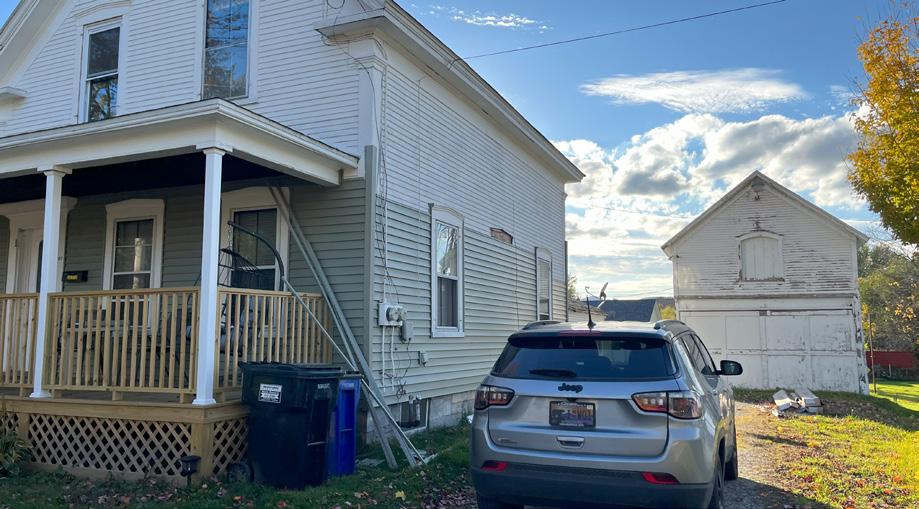
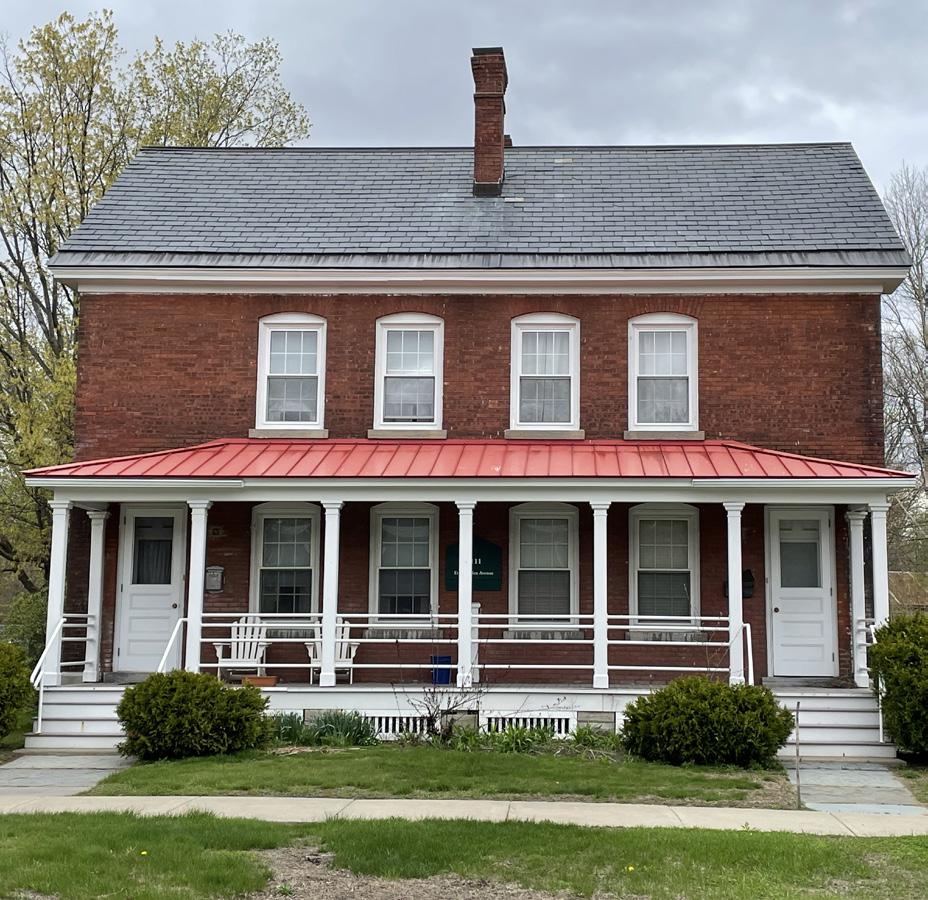
An existing building purchased for the purposes of renovation and to be returned back to the market in better condition either for sale or for rent. This consists of single detached houses, duplexes, triplexes, and fourplexes. These types are most often found in the historic Vermont neighborhoods close to the town center. This category also includes the large singledetached home internally converted into duplexes, triplexes, or fourplexes.
Example:
Aurora fell in love with Vermont after moving from California for college. To realize her dream of owning her own place in her adopted home state, she bought a duplex recently converted into a single 4-bedroom unit. While a single-household home was outside her budget, the 4-bedroom provided the opportunity for rental income to offset the mortgage costs. She lived on the first floor, where the living room and kitchen were also located, and a multigenerational group of native Vermonters and fellow transplants lived in the

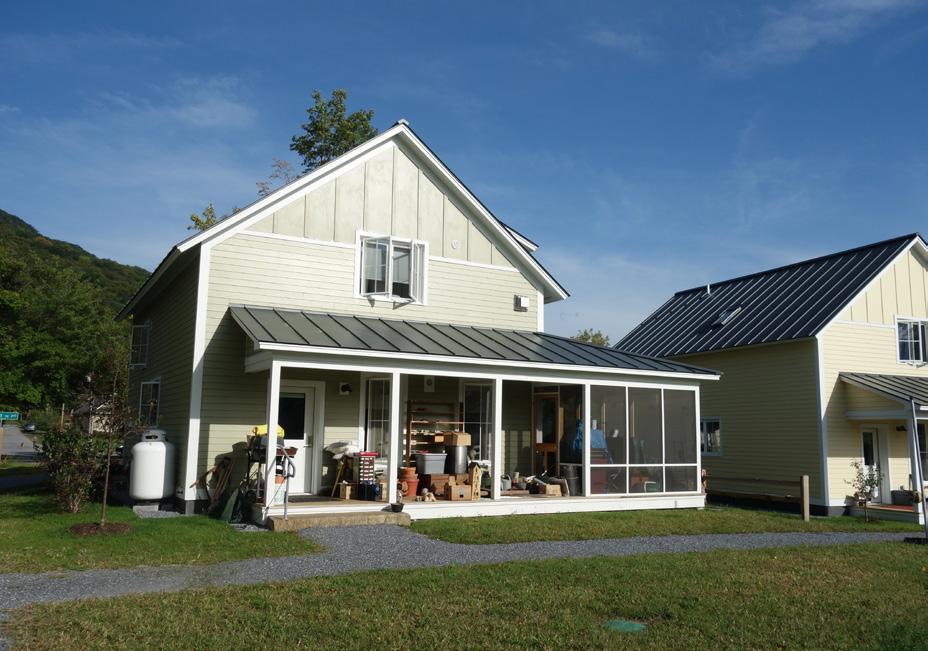
3-bedrooms upstairs. Once she built up some equity, Aurora took advantage of the large lot to build an addition on the home. She moved into the addition and returned the main house into a duplex so that she can offer two 2-bedroom apartments. The project created three homes out of one all on the same parcel, while maintaining the original number of bedrooms and making the living spaces more desirable.
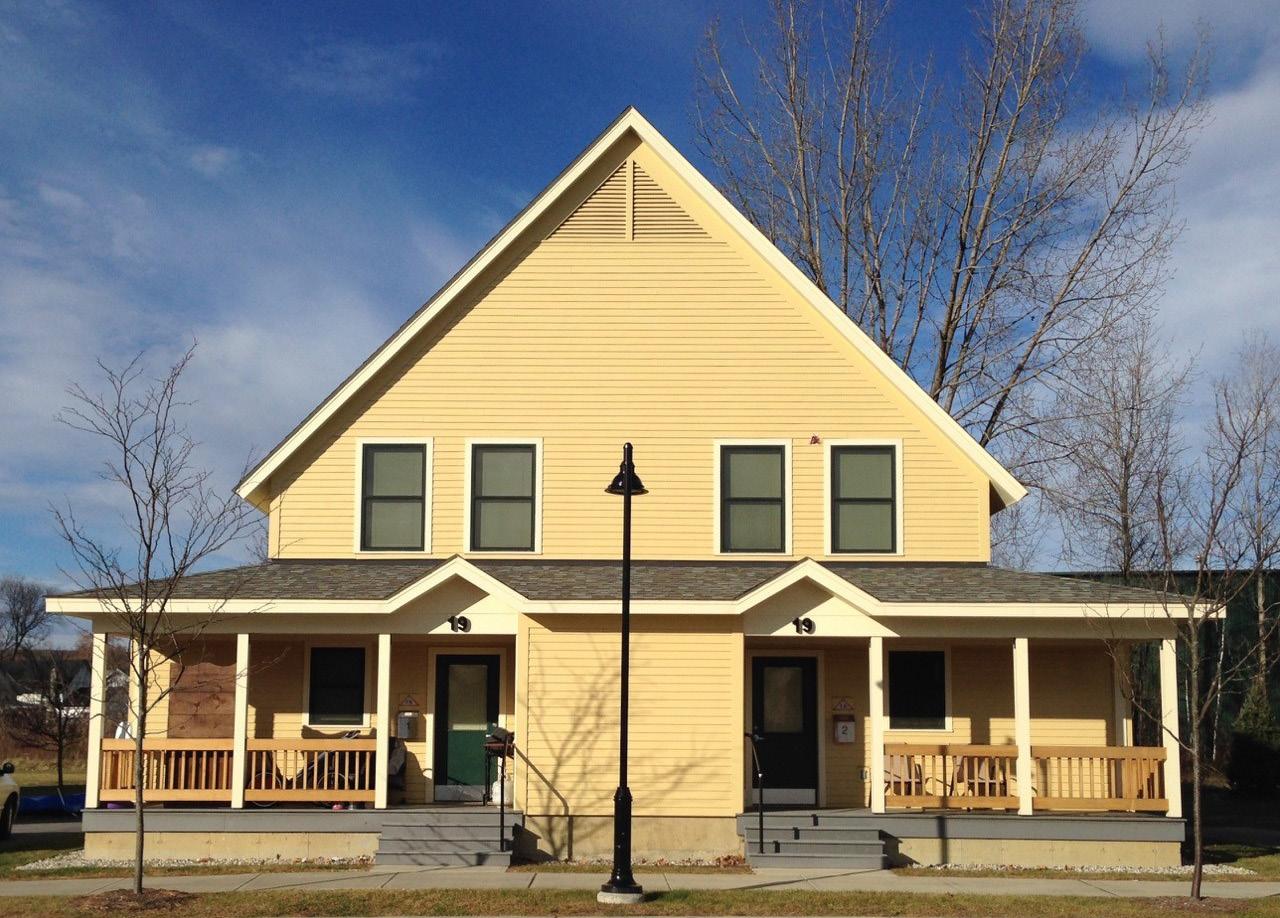
This project entails constructing a whole new building on an empty parcel. Building from scratch is a more complex endeavor for aspiring small-scale developers and the main focus of this Builders’ Workbook.
Example:
The Stellas, a family with a small property management business, formed a Limited Liability Corp (LLC) with a few neighbors to create a new (or “gut-rehab”) four-home condominium building at a property with municipal water and sewer service. To achieve a price point that will work for moderate income buyers, the LLC is using financial incentives from the Vermont Housing Finance Agency offered to developers who are creating homeownership opportunities for buyers with moderate incomes.
This example includes establishing a legal structure for a business, developing financial projections, applying State financial incentives, and identifying buyer income levels. Subsequent chapters of this workbook provide guidance on many of these aspects of the development process:
For more on legal structures see: Chapter 4: Business & Financial Frameworks .
For more on financial projections see: Chapter 5: Feasibility Methodology
For more on selling a completed home see: Chapter 8: Implementation & Management
You might notice that all of the examples on the previous spread were in the one to four unit range. The one to four unit ‘development sweet spot’ was chosen because of the varied loan options available, new zoning opportunities created by recent state legislation, and the lower level of complexity relative to developing five or more homes.
Developing five or more homes at once is certainly an option, but will require greater effort and expertise because it:
• Is a higher-risk development type without foundational skills, experience, and a good team
• Eliminates the opportunity of using owner-occupied construction and mortgage loans
• Requires more upfront investment
• Requires higher code compliance in design and construction
• Will require multi-unit or commercial zoning in most locations because the HOME Act creates the most opportunity for 1 – 4 unit development
For these reasons, this workbook focuses on the 1 – 4 homes range, but with enough detail that an aspiring small-scale developer like you can cultivate the skills, experience, and network to eventually deliver more complex development types.
A little more detail on development regulations, finance, and building codes is provided to the right as it relates to the one to four homes range of small-scale development types.
To spur more housing development in neighborhoods nearby downtowns, the State legislature passed The Housing Opportunities Made for Everyone (HOME Act). The Act makes a few crucial changes to the State’s housing development regulations:
1. In all areas currently zoned for single-household homes:
a) Duplexes (two-unit housing) are now allowed uses.
2. In areas with access to municipal water and sewer services:
a) Triplexes (three-unit housing) and fourplexes (four-unit housing) are now permitted uses.
b) For all allowed residential uses, a minimum housing density of 5 units per acre is now permitted.
c) Single-household dwellings are now permitted on a minimum lot size of 1/5 an acre, opening new land subdivision opportunities.
• In downtowns, neighborhood development areas, designated village centers with zoning and subdivision bylaws, and in designated growth centers, the construction of 4 or less homes in an existing structure shall only count as 1 unit towards the total number of units in Act 250 (Vermont’s statewide development review law overseeing larger-scale development).
• Effective December 2024, the bill standardizes parking thresholds for municipal zoning in residential districts served by water and sewer services, in some cases requiring only one space per unit.
This legislation paves the way for multiple smallscale development projects on larger parcels of land. It also increases the number of units that can be built without an Act 250 permit to support smaller-scale projects. This part of the law has a sunset provision in 2026, but it could be renewed; that all depends on whether Vermonters experience the housing benefits that the Act is designed to provide. Individual municipalities are at various points in their efforts to update their local development regulations to comply with these new laws – even so, the law is in effect and must be administered. Whether you are a smallscale developer or just someone who wants to see more neighborhood infill development, you should get involved with the local regulationmaking process. Your participation helps ensure that the Act does what it is supposed to do at the local level. This might entail refining the policy to fit local needs, getting neighbors on board, or pushing the allowances even further to make the process of building new homes easier. In any case, your participation at the policy level is a crucial part of making small-scale development possible in Vermont.
Outside of fully funding a project with your own or someone else’s money, lending institutions such as local banks or credit unions offer two types of development loans: residential mortgage loans, and commercial loans.
Residential mortgage loan. This loan type can only be used with 1 – 4 home buildings if one of the homes will be occupied by the owner. Another term for this type of loan is ‘owner-occupied.’ These loans often have more favorable terms such as lower down payments and higher debt-to-income ratios (the total amount of debt that borrowers can have as a proportion of their income). Many of us think of a single-unit detached structure as the definition of a “single-family” house; but from a lending standpoint, 1 – 4 home structures are lumped in with single-household homes and are eligible for the same residential mortgage loans. Commercial loan. In the residential context, this
type of loan can be used for any project that will not be owner-occupied. So, while apartment buildings with five or more housing units require commercial loans, this does not preclude the option to also buy or build 1 – 4 home buildings using this type of loan.
There are also many customized and creative financing options that build off of these two fundamental development loan types. Make sure you speak with local lenders and explore the public subsidy, grant, and loan products offered by partners such as the Vermont Housing Finance Agency (VHFA), US Department of Agriculture Rural Development (USDA RD), and the Federal Housing Administration (FHA). More on finance and project feasibility can be found in:
Chapter 4: Business & Financial Frameworks .
Local and State building codes provide another reason to focus on the 1 – 4 home sweet spot. Unlike most states in the country, Vermont does not require that buildings with fewer than five units have a fire sprinkler system installed, with a few conditions that will be discussed further in Chapter 6. Developing or renovating buildings with more than four units requires additional code compliance to meet more stringent physical accessibility and energy efficiency standards, along with other design and construction requirements that increase cost. More on building design best practices can be found in Chapter 6: Design as well as the companion piece to this workbook, The Missing Middle Part 2. Home Design Guide .
The small-scale development process can be broken down into three phases: 1) Startup; 2) Assessing the Options; and 3) Implementation. Across all phases, there are three themes that guide the process: Place & Design, Team, and Business Model. These three themes vary in their demands in each phase, but always remain a touchpoint. You can use the diagram below as a quick reference guide for this Workbook so you can jump to the sections that are most relevant to you at a given time.
Inception of an idea.
This phase is exploratory and involves tasks that can be completed without any formal commitments or spending money. This is where you get your ‘ducks in a row’ to create a base to work from going forward.
• See Chapter 3 for assessing yourself and building a team.
• See Chapter 1 & Chapter 2 for community/site selection.
Feasibility and refinement of an idea.
Most small-scale developers will spend their time in this phase exploring options, which can take a long time, even years. This includes researching development rules, potential sites, sketching loose site plans according to these rules, and running financial feasibility analyses. Don’t worry, this workbook provides guidance for learning these useful skills.
• See Chapter 2 for conceptual site sketching.
• See Chapter 5 for financial feasibility methods.
• See Chapter 6 for the basics of site and building design.
Moving forward with the best project.
After multiple ideas have been explored and tested, one site and project design needs to be chosen to move forward with. At this point a purchase option can be signed, contingent on receipt of financing and local approvals. A site plan and building drawings will need to be submitted to obtain permits. Once a permit is received, the building or parcel of land can be purchased and the focus will shift towards managing the construction process.
• See Chapter 2 on identifying development-ready sites.
• See Chapter 7 on permitting and construction.
The physical, legal, cultural, and environmental parameters of a site and the community where it is located. Chapter 6 is your home base for this topic.
Community & Neighborhood
You will likely start with a conceptual location in a community or neighborhood you are familiar with, or with a site you already own.
Site & Scale
In Phase 2, engaging with site and place will likely look like a loose sketch drawing of development concepts simply to test the feasibility of an idea and explore how that idea interacts with a particular site’s context in terms of function and scale.
By the time you reach Phase 3, you should be working with a real site for which you have real purchase options. By this point you should be working with one or more design professionals.
The people you will need to rely on to support you at some point in the development process.
Chapter 3 is your home base for this topic.
Building your team starts with you—understanding your skillsets and gaps, and the network of people you rely on.
The way you structure your project from a legal, financial, and operational perspective. Chapter 4 is your home base for this topic.
Your business model starts with your relationship to the project and how you imagine managing it over time.
In Phase 2, you’ll want to begin bringing in specialist advisors and identifying equity partners to support you as you begin to get into more technical analysis and prepare to make financial and legal commitments.
In Phase 2, you’ll want to finetune your business model by considering the sub-market you’d like to cater to (which may be driven by local housing demand) and what kind of financing and legal structure would support that.
By the time you reach Phase 3, you should be preparing and executing contracts that define the relationships you have with each team member.
By the time you reach Phase 3, you should be preparing to market your project for sale or putting property management systems in place well in advance of when your construction process concludes.
Don’t forget this process is iterative, not linear!!
This process diagram may appear linear, but the reality is more fluid. A project is constantly being reassessed as new information comes to light.
The level of detail varies by project so we recommend staying in the safe zones of Phases 1 and 2 before incurring any fees and finalizing contracts. The development process is also highly iterative, so expect to revisit previous phases and conversations as you refine your design and budget and build relationships with partners and neighbors.
Especially in Vermont where regulations and community networks are highly varied and local, there is no one-size-fits-all approach to the development process. With this in mind, your strategy as a Vermont small-scale developer should always revolve around the site itself: from its geography to the culture and policies of the place it is in. This chapter will give you a strong understanding of how to identify a DevelopmentReady Community and sites, and Chapter 2: Identifying Development-Ready Sites will help you zero in on a site for your project.
It is important to recognize that the allied professional consultants that support a smallscale developer may not be involved in all phases. The team makeup will change depending on the chosen project and business model. For example, the design of simpler projects such as a renovation may not need architectural services and instead can be discussed with a contractor. See Chapter 3: Building Your Team for more on selfassessment and assembling a team.
Depending on your preferences, development strategy, and financing advantages, you may choose to either personally reside in your project (owner-occupy) or develop it as a business, typically through a Limited Liability Corporation (LLC). See Chapter 4: Business & Financial Frameworks for more on legal structures.
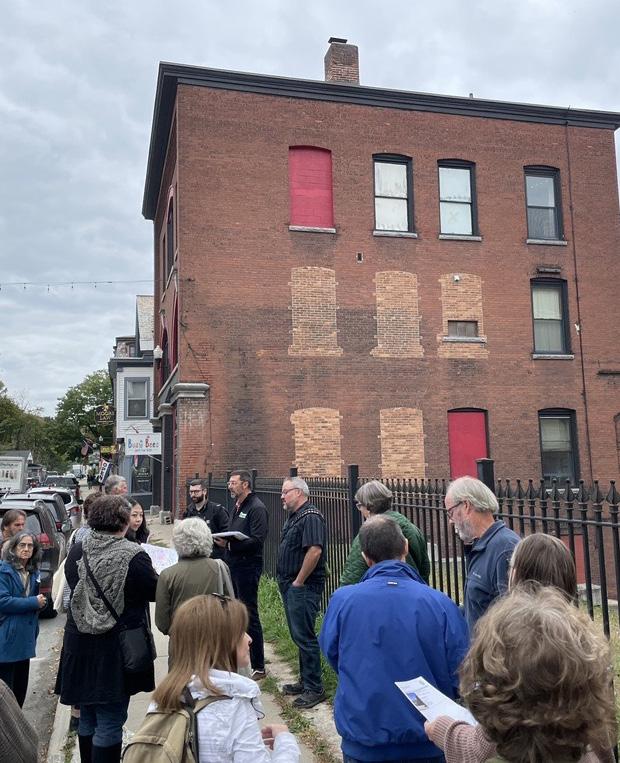
Community members in Bellows Falls participating in a site walk and community conversation about how to bring small-scale infill development to their community as part of the Homes for All Community Infill Case Study site visits in October of 2023.
Photo Credit: Amy Tomasso.
Vermont, with its stunning landscapes, tight-knit communities, and dedication to sustainable living, offers a unique backdrop for development. A shared desire to preserve these qualities means that small-scale developers will find hurdles to developing homes in rural communities with inconsistent infrastructure, varying capacity for local regulatory administration, and uneven levels of community support. Housing development is inherently challenging, but inherently rewarding for that same reason. As a small-scale developer, your ability to understand and successfully navigate these challenges is paramount to your success.
Small-scale and incremental development is somewhat of a marathon that requires creative thinking about available properties, a high level of initiative to understand municipal plans, zoning bylaws, and state regulations, as well as a willingness to engage in constant dialogue with different kinds of people. This section identifies the broad hurdles throughout the development process in Vermont, and follows with the emerging opportunities that provide a counterpoint to these challenges. It also describes characteristics of a “Development-Ready-Community” to help you gauge whether your immediate community meets (or is working towards) these criteria.

One of the primary challenges faced by novice developers in Vermont is the need to build relationships. Outside of just a few Vermont cities with robust markets, it can be hard to find your thought-partners and informal advisors. This is not uncommon for aspiring developers around the country. The field of real estate development is a specialized industry that relies on the economies of scale found in large projects, and smaller-scale developers—often doing this on the side—have less time and capacity to form affinity groups and associations.
Neighborhood and small-scale development requires more support than larger developers who have greater capacity, expertise, and access to capital. If you want to connect with a formal association of like-minded individuals, look into the Vermont Builders & Remodelers Association and you may find members who are also engaged in small infill development projects. Another similar resource is the Vermont Green Building Network You should also monitor the Homes for All project website for developer cohort training and network building opportunities.
When embarking on infill development, you will need to proactively request face-to-face meetings and phone calls with local and state officials who oversee codes and permit requirements to fully understand the standards for design, building codes and fire safety, infrastructure, and permits. Rarely will a Vermont developer find all information in one place, and asking for help from local planning and zoning officials and state Division of Fire Safety code enforcers is a fundamental standard operating procedure in Vermont. This is true even amongst large-scale developers.
Securing adequate financing for small-scale projects can be a major hurdle. Large, national banks are unlikely to invest in unconventional or smaller developments, and access to a suitable loan product can be virtually non-existent.
Securing adequate financing for small-scale projects requires a significant amount of time that should not be underestimated. Vermont’s community banks and credit unions are highly invested in local economies and typically enjoy being involved in development opportunities early on. Consequently, early in the development process, leaning into existing networks and forming new relationships with local lenders adds value to the development process. New developers can benefit from hearing about examples of past projects that lending partners have funded. Learning about loan options and their typical terms early in the process will allow you to build a foundational budget that you can refine as the project moves through each development phase. Sharing the finance strategy and budget with the lender at each project phase opens opportunities for valuable feedback from an important thoughtpartner. Under the right circumstances, community lenders might offer a non-standard loan product that makes a project work where a standard loan product might pose a hurdle. Also, community lenders are likely to be networked with public and nonprofit funding programs that could align well with your proposed project.
Zoning bylaws in Vermont can overly restrict the addition of two to four homes on properties that are appropriately sized and suited for this kind of residential use. Since the Great Recession, the demand for housing has continued to grow into a fever pitch, yet the development bylaws in many villages and towns retain the post-war-era large-lot single-household model. This model limits a community’s options to adapt to changing demographic, economic, and social needs. Working in a community that has not yet modernized its bylaws or made provisions for adding smaller units to single-household homes or duplexes can make the process even more challenging and costly. Familiarizing yourself with these documents and proceedings is one of the first steps you should take.
The HOME Act, as discussed at the outset of this chapter, encourages municipalities to support infill and incremental development in the 1-4 homes range. Additionally, Vermont’s Accessory Dwelling Unit law requires all municipalities to allow homeowners to add one ADU to their house as long as certain conditions are met.
Understanding the state’s new requirements for local zoning ordinances will help establish a baseline for your discussions with local zoning officials. However, municipal plans and zoning bylaws that govern the external changes to existing buildings and any new housing development can be confusing for a newcomer, so start building relationships with municipal zoning officials who are knowledgeable about local conditions.
To keep things simple, we recommend starting with what is called a “by-right approach.” A byright approach means that a certain building type is explicitly allowed as long as the developer or homeowner-renovator follows the letter of the zoning law, and avoids requesting waivers or variances. So, unless a zoning administrator indicates that there are precedents in the neighborhood which are recent, comparable, and generally accepted practice, stick to the by-right approach. Never assume that you can talk zoning boards into accepting waivers or variance requests. Besides, requesting variances adds more time and cost, so choose wisely.
It is also important to keep in mind that zoning and development review board proceedings evaluating permit requests are considered quasijudicial proceedings in Vermont, and do not allow zoning board members to engage in “ex parte” communications. Basically, this means that even if a zoning or development review board member is your next door neighbor or best friend, they are unable to discuss your project outside a public hearing.
Access to water and wastewater infrastructure is a real concern in many Vermont jurisdictions. It is common to find village and town-center parcels that may have access to water but not wastewater; the reverse is less common. For sites without both municipal water and sewer, many of the HOME Act requirements will not apply, so restrictive zoning bylaws provisions addressing the minimum lot size and new structure location, size, design, access, landscaping, and screening will all remain enforceable.
If you are working in a neighborhood without both municipal water and sewer, ask the zoning administrator and local public works employees for their thoughts about the site plan and selection— even though wells fall under State authority, sometimes their knowledge of what’s already underground can illuminate possibilities for your
project concept. For example, it is common to tie into a neighboring well through an easement if the pressure and flow are ample. Using an easement removes the need to purchase extra land through an agreement between the developer and the relevant property owner. Common examples are easements with utility companies to allow utilities to cross a parcel or an access easement allowing a neighbor to access their own parcel by crossing another’s.
Complying with the required land area for on-site septic or mound systems to handle wastewater is less straightforward. In some instances, the property being considered for a development project may be adjacent to a large lot whose owner may be willing to subdivide and sell a small piece of it for your wastewater compliance needs. Municipal employees, and ultimately an engineer, should help you think creatively about resolving these constraints.
Water and wastewater considerations are an essential yet complicated piece of small-scale development in Vermont, so:
• Know the key state agencies and departments involved in water and wastewater:
• Water and wastewater infrastructure fall under the State Agency of Natural Resources (ANR) jurisdiction.
• The Department of Environmental Conservation’s (DEC) regional offices issue the permit to repair, replace, or construct water-related infrastructure.
• Talk with the DEC staff about requirements before engaging an engineer. This will help build some fluency in infrastructure permitting.
• Hire an engineer for the septic design and permit.
Reform Opportunity: adjusting the State’s wastewater system requirements to incorporate 1 – 4 home properties that contribute marginally more waste to a system without requiring a disproportionately greater amount of land for use as a replacement area would unlock substantial small scale home development opportunities throughout the state.
“Not In My Backyard,” or anti-development sentiments among adjacent and nearby property owners crop up in surprising ways. Resistance to change often comes under the guise of traffic and parking fears, concerns about negative environmental impacts, and objections to projects that have a different aesthetic or character than existing buildings. This attitude could be more prevalent in places that have not experienced development in some time. While these may be legitimate concerns in certain contexts, they are often raised by neighbors as a reason to resist change of any kind and not in the spirit of collaborative problem solving.
NIMBYism curtails housing development in the following ways:
a) Regulatory Hurdles: NIMBY opposition can cause local officials to forego zoning bylaws changes that reduce regulatory hurdles and zoning restrictions, making it harder for small-scale developers to obtain necessary permits and approvals for their projects. Developers have the option to invest elsewhere and may choose to go where regulatory burdens are lower.
b) Additional Costs: Lengthy appeals and permit approval processes significantly increase project costs, making it financially burdensome for small-scale developers who lack the cash flow to make it through an appeal process. Project delays not only increase costs but also impact the developer’s ability to meet timelines, particularly if the parcel of land they are considering is under a purchase option agreement. See Chapter 2 for more information on a site purchase option agreement.
6. Public Relations
Regardless of whether you are dealing with NIMBY attitudes, managing public perception and addressing community concerns can be time-consuming for small-scale developers. Here are some simple (but not necessarily fool-proof) strategies for allaying neighbors’ concerns.
1. Approach neighbors early and before embarking on the development process and engage them in open-ended conversations so they can get to know you.
2. Invite neighbors to a meeting. This shows your commitment to transparency and is an opportunity to share information about the community’s (and Vermont’s) need for new housing. Common topics will include:
• Construction timelines, hours, noise, and dust.
• Design and size of building and number of new homes.
• Number of parking spaces.
• Privacy, trees, and landscaping screening.
• Stormwater management and runoff.
• Environmental and neighborhood impacts.
Communicating and being a good neighbor goes a long way in building credibility, even when you can’t provide assurances on every project aspect as a new developer subject to others’ timelines. If neighbors are worried about negative environmental impacts, engineers can often provide data in response to their concerns.
Ideally, connect with the local community action organization, chamber of commerce, regional development corporation, and regional planning commission to ask if any staff members would be willing to speak to neighbors at a meeting about Vermont’s severe housing situation–and how your small-scale development can make a difference. Local employers might be happy to attest to the challenges associated with finding employees due to the lack of housing options. Others who might speak at a meeting include:
• Friends with young adult children who cannot return to Vermont or live in the community due to the lack of housing options.
• Older Vermonters seeking to downsize within the community but unable to move out of large single-household homes due to the lack of smaller-sized homes.
While these efforts take a considerable investment of time upfront, beginning the public relations process early can prevent neighbors from derailing a project to the point of causing financial losses.
Now for the good news: there are so many reasons to get involved in small-scale, incremental development in Vermont. The development opportunities enumerated below can give you a sense of how to thread the needle, “find your farm,” and begin building towards a rewarding and enriching development project in a community you care about.
Starting with a small, manageable project allows for gradual growth and learning from each stage. This offers you the chance to risk an amount of money that won’t be devastating if something goes wrong. It also allows you to build your team. Finding the right contractor for a small project early on is better than having to replace them midway through a multi-year project (or worse, be stuck with them throughout it). For more on how to build a development team, see Chapter 3: Building Your Team
2. Create Your Own Comparables
In a cash market (locations where there is a risk that the development costs will exceed the final product’s appraised value), you should look to develop a strategy of creating your own comparables. Comparables are other recently built projects in close proximity that the bank uses to assess potential value of the project being proposed. If working in a market without relevant comparables that prove the strength of the market for your development concept, make small bets by identifying the next incremental step with limited risk. For example, buying a single-household home in disrepair and converting it to a duplex is a way to build experience and create your own comparable.
By undertaking small projects that cater to local needs and preferences, you can establish a track record of successful projects, which can in turn prove out what you knew to be true. Not only does this incremental development approach build a brand of trust, but these self-built comparables can act as proof for subsequent projects when lenders are questioning underwriting assumptions and appraisers are looking for comparables. See Identifying Market Types: Cash Market vs. Bankable Market in Chapter 5 for more information.
The recent demand for small homes from downsizing older Vermonters, single people and couples, and young families lends itself well to infill and small-scale development. The caveat here is that the regulations must support – and enhance – a small-scale project, particularly by enabling smaller lot sizes that allow for less consumption of land. Look to operate in a Development-Ready Community to save unnecessary and costly delays and frustrations. See the following section on How can you identify a Development-Ready Community?
4. Add more Homes in a Structure or on a Lot Vermonters can embrace the “telescoping house,” a classic New England architectural style in which incremental additions to a street-facing home get narrower or wider with each expansion. This comes from the classic New England tradition of building on to the back or side of a street-facing home incrementally over time. Also sometimes referred to as the “Big House, Little House, Back House, Barn,” this form was documented by Thomas C. Hubka in his 1984 book of the same name. The creation of multiple units within a larger structure, for instance a large single-household home or barn, can also be an efficient way to maximize space and resources. By incorporating multiple units within a single building, developers can optimize the overall return on investment. Depending on the current market conditions, the most feasible way may just be to create 2 – 4 homes within an existing large single-household structure.
Identify Return-on-Community (ROC)
Small-scale developers in Vermont have a real opportunity to evolve outdated metrics for successful projects. The traditional return-oninvestment (ROI) paradigm, while tried and true in its own way, is limited by its short-term focus on investors’ personal financial gain. For developers with real ties to the place, a return-on-community (ROC) approach takes a more comprehensive view in its measurement for success, factoring in the long-term stability and sustainability of the community (and the long term economic benefits that accrue from those positive impacts). While this approach does not always guarantee the same short-term windfall as traditional development strategies, it creates far more value in the long run.
Vermont’s Municipal and Regional Planning and Development Law prohibits any municipal zoning bylaws from excluding an ADU that is located either within a single-household home or as an addition on the lot. The municipality may, however, require that the ADU developer follow the same permit review process, dimensional requirements, or other code parameters that apply to singlehousehold homes, so a homeowner-developer still has to follow the same procedures any developer would follow for establishing design parameters, infrastructure capacity, and permitting. The Vermont Department of Housing & Community Development provides a detailed checklist for ADU development on its website.
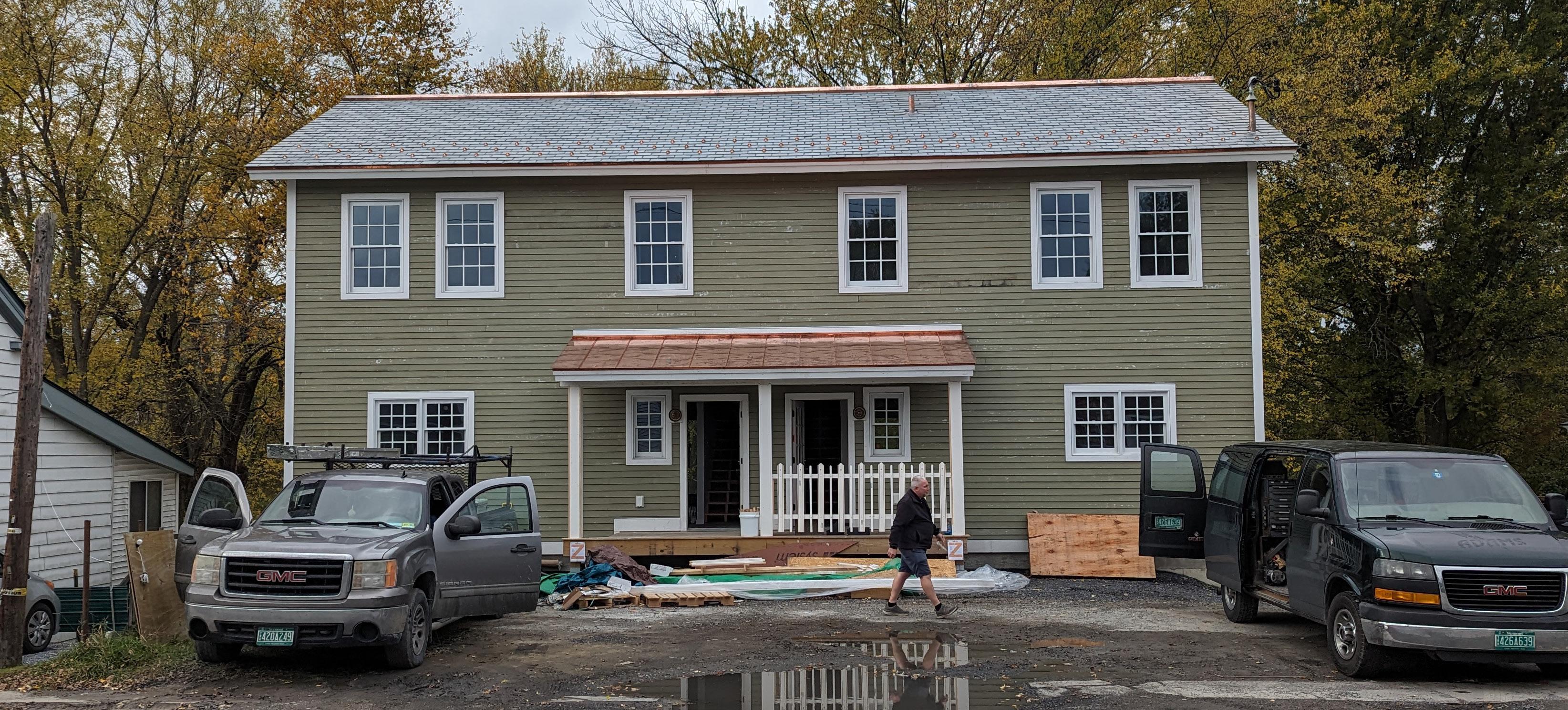
The challenges described above can make the development process feel like navigating a labyrinth of forms, approvals, and opposition. But, in Vermont’s DevelopmentReady Communities, the process is straightforward, efficient, and transparent. Clear instructions guide developers on their journey, minimizing uncertainties and paving the way for progress. Development-Ready Communities recognize that a diversity of housing options is essential. They understand that an aspiring developer may want to consider investing in jurisdictions that have taken on the work of overhauling rules, regulations, and processes for the purpose of inviting and supporting small-scale, scattered-site infill development. A description of this type of community follows.
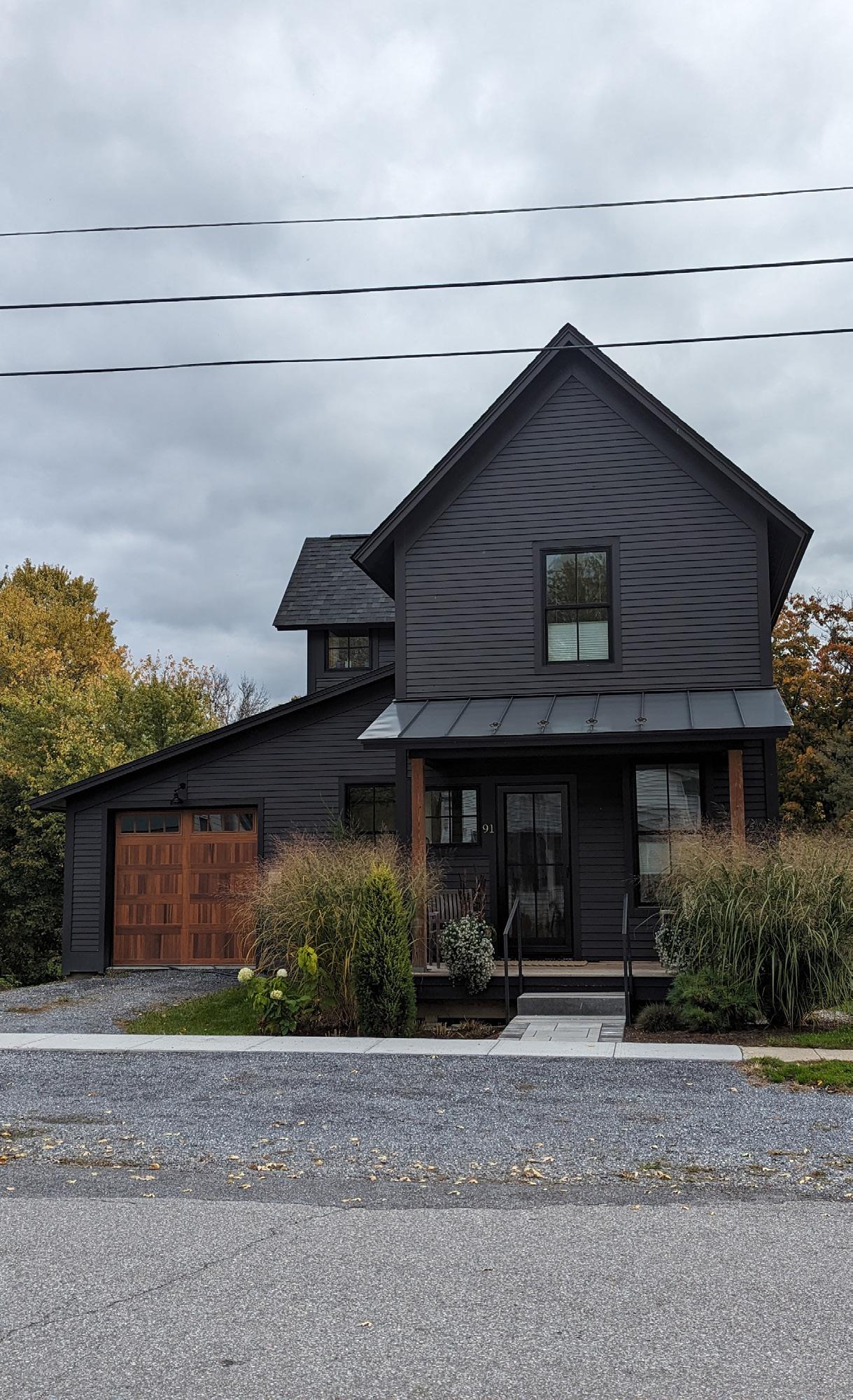
Development-Ready Communities recognize the importance of catering to the diverse needs and capacities of different types of developers. This recognition stems from the understanding that, while large-scale housing development may be better suited for large and experienced organizations, a healthy and equitable housing ecosystem requires a wide range of stakeholders, including homeowner-developers who are often embarking on their first real estate endeavor. By providing pathways for both seasoned professionals and small-scale developers, Development-Ready Communities foster an equitable and balanced housing ecosystem. Experienced developers bring valuable expertise, resources, and a track record of successful projects that enable them to successfully lead highly complex projects. Homeowner- and small-scale developers can enrich existing neighborhoods by slotting small-scale projects into backyard barns and accessory buildings, larger or double lots, and over-garage units that nest neatly behind a main house. This diversity of developers contributes to a vibrant mix of housing options that align with different sites, preferences, and needs. It also promotes healthy competition within the market and ensures that a community’s housing landscape remains dynamic and responsive.
A Development-Ready Community places great emphasis on ensuring that its zoning ordinance reflects the community’s goals and objectives. An up-to-date and well-crafted zoning bylaw acts as a powerful tool for communicating and implementing the community’s vision. The zoning ordinance for a Development-Ready Community should:
• Enable Liveable Communities. The zoning bylaw should facilitate the types of development that encourage the creation of vibrant, walkable, and sustainable neighborhoods by allowing the appropriate mix of land uses and densities.
• Embrace Modern Zoning Approaches. A development-ready community’s zoning bylaw embraces modern approaches to zoning that promote mixed-use developments, transitoriented development, walkable neighborhoods, and infill projects. Obsolete regulations that inhibit denser neighborhood development should be reevaluated and updated.
322.A An accessory dwelling unit (ADU) must:
• Streamline Requirements. A well-structured zoning bylaw avoids unnecessary complexity and bureaucratic hurdles. Streamlined requirements reduce the time, effort, and uncertainty associated with development approvals.
An indicator of development readiness can be found by looking at the ‘allowed uses’ table in the local municipal zoning bylaws and taking note of where and what building types are permitted outright and which types require special approval. A good example of a well crafted zoning bylaw is the snapshot below from Rutland City where a distinct section on the development standards for the different allowable building types is provided. After referencing this building types section, you can apply it geographically by referencing the ‘allowed uses’ table and identifying which zoning categories allow the building type(s) you are interested in.
(1) Be located within or appurtenant to a 1-unit residence;
(2) Be clearly subordinate to the primary residence;
(3) Have provisions for independent living, including sleeping, food preparations, and sanitation;
(4) Not exceed 900 square feet or 30% of the habitable floor area of the primary residence (prior to the creation of the ADU), whichever is greater; and
(5) Meet the minimum parking requirements for residential uses of § 314.
322.B There must not be more than one ADU for each 1-unit residence on lot.
322.C The ADU must remain in common ownership with the primary residence.
322.D An ADU will be considered an accessory use of residential property and will not require site plan approval, but the applicant must certify that the unit meets all applicable city and state health and safety codes.
This snapshot from the Rutland City zoning bylaw has a distinct section on the development standards for the different allowable building types is provided. This is an example of a well-structured zoning bylaw that is easy to understand and apply.
The Vermont Department of Housing and Community Development launched a Zoning By-Laws Modernization grant program to overcome the funding barrier that has prevented many communities from undertaking this work. This program facilitates the process of creating Development-Ready Communities by requiring recipients to not only update the by-laws, but also update and improve the associated review processes. Development-Ready Communities prioritize predictable and efficient development review policies and procedures. Clear and efficient procedures that are written down and easily accessible offer several benefits:
• Predictability. A transparent and streamlined development review process provides predictability for developers, reducing
uncertainties and allowing for better planning. Some municipalities, like Kalamazoo, Michigan have created small-scale developer liaisons to act as guide and translator during the municipal approval process as a way to support these aspiring small business owners.
• Simplified Instructions. Clearly written instructions and guidelines for the development review process make it easier for developers of all experience levels to navigate the process successfully.
• Attracting Investment. An inviting development climate, which is made possible by local boards, zoning staff, and neighbors, and supported by straightforward procedures, encourages investment and economic growth within the community.
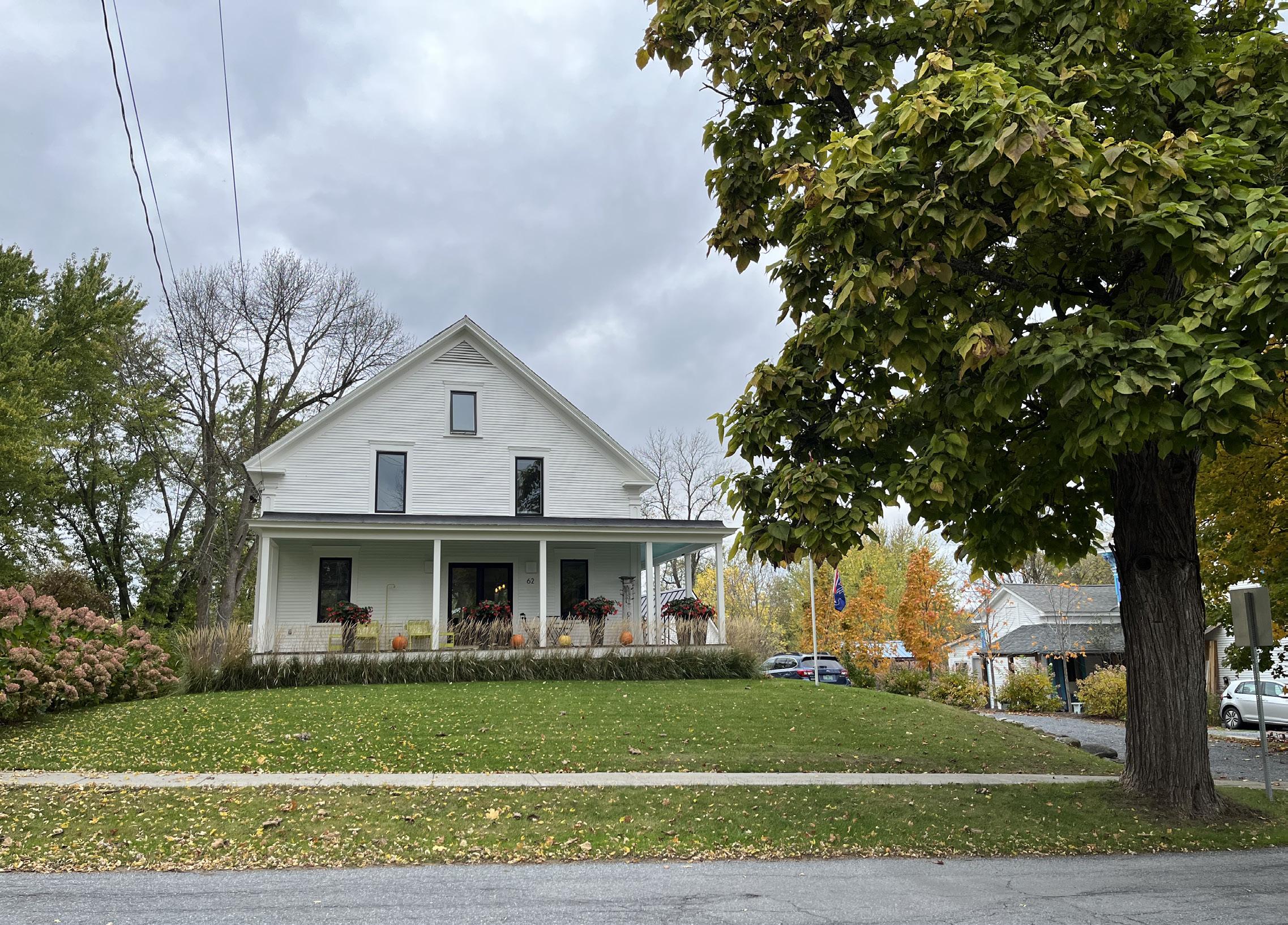
Development-Ready Communities understand the importance of diverse and knowledgeable boards and commissions in shaping development decisions. These bodies play a crucial role in ensuring that development aligns with the community’s vision and goals. An aspiring local developer may consider attending a few development review or planning commission meetings to better understand what happens in these meetings and which topics are regularly raised as concerns. Key considerations for supportive boards and commissions include:
• Diversity. Ensuring diverse representation on boards and commissions means that a wide range of perspectives are considered when making development-related decisions.
• Training and Collaboration. Communities that prioritize training and collaboration among officials and staff create a foundation for informed decision-making. Education and shared knowledge contribute to better land use and redevelopment choices.
• Recruitment and Orientation. Intentional recruitment and thorough orientation for newly appointed or elected officials ensure that they are equipped to make decisions that align with the community’s long-term vision.
The Vermont Planning Information Center offers new planning commission, development review, and zoning board members training resources and technical assistance.
In conclusion, Development-Ready Communities understand that effective development is only possible when community values and goals (as articulated through comprehensive plans and other land use planning efforts) are codified into actionable development regulations and processes that foster an environment of efficient procedures and informed decision-making. By prioritizing upto-date zoning bylaws, streamlined development review processes, and supportive boards and commissions, these communities can create an environment that attracts investment, encourages sustainable growth, and aligns development with the community’s aspirations to be inclusive and welcoming.
Development-Ready Communities are at the forefront of promoting inclusive and sustainable housing options through the implementation of small-scale, incremental housing. These communities show that they value small-scale developers as local businesses by clearing paths for them to build.
Municipal officials, local housing committees, and local employers can further the efforts of State policymakers and local small-scale developers by systematically implementing the steps that lead to adopting a Development-Ready Community mindset.
In the next chapter we will explore how to find a development-ready site.
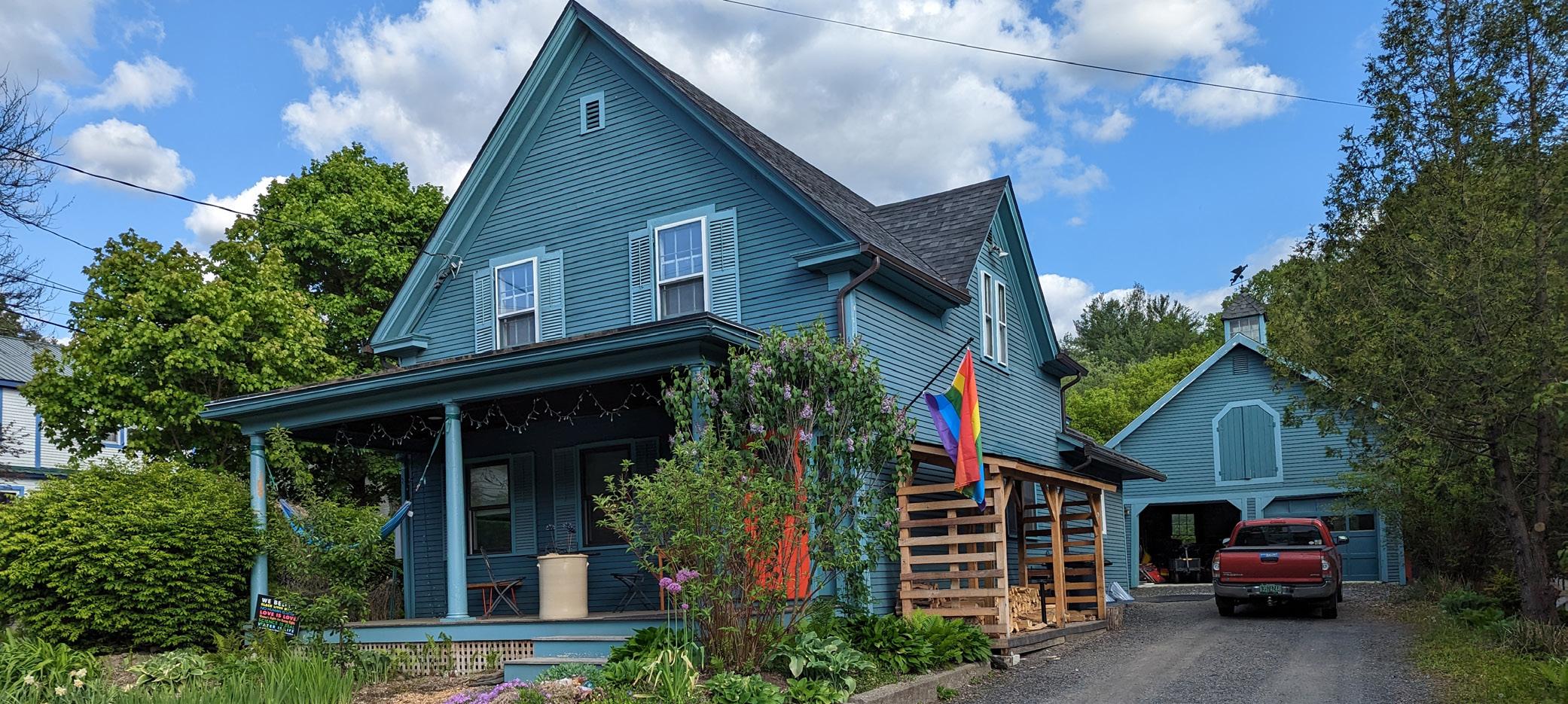
Once you have identified a Development-Ready Community that invites and supports small-scale, scattered-site infill development, it is time to find your site. This chapter will introduce you to the scattered-site approach and walk you through how to identify development-ready site candidates in your chosen community. It will also give you a foundational understanding of how to evaluate the development capacity of candidate parcels and how to gain site control through a site option to purchase agreement.
Adopting a Scattered-Site Approach
Development-Ready Site Selection
• Identifying Potential Infill Sites
• Municipal Resources for Informed Decisions
• Building on Familiar Ground: Unveiling Hidden Potential in Your Own Backyard
• Additional Avenues for Site Sourcing
Site Option to Purchase Agreement
Due Diligence: Evaluating Site
Development Capacity
• Environmental Constraints
• Infrastructure Constraints
• Design Constraints
• Regulatory Constraints
• Legal Constraints
Site Subdivision & Aggregation
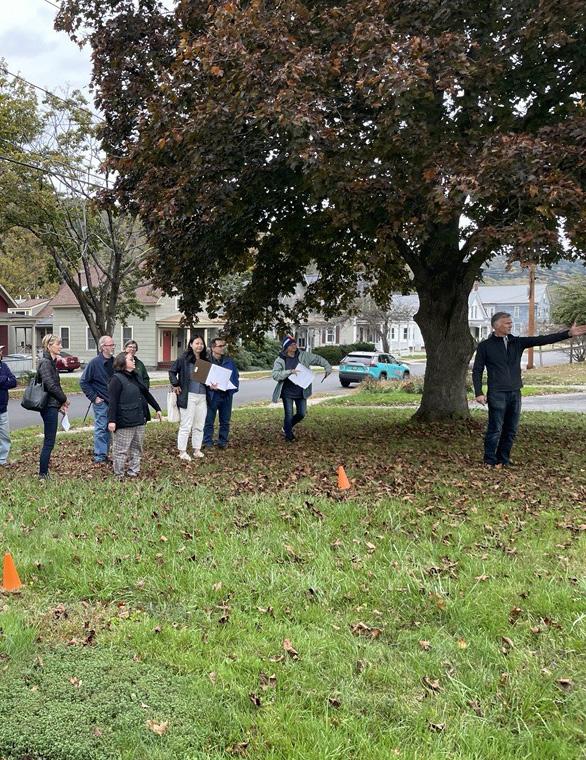
Community members in Bellows Falls discussing the infill development potential of a site with an unusally large front yard. The group discussed how an Accessory Dwelling Unit (ADU) for aging-in-place could best fit on the site in relationship to the existing detached single-dwelling home at the rear. Cones mark the potential building footprint based on existing setbacks of neighboring properties and the nearby tree. This site walk took place as part of the Homes for All Community Infill Case Study visits in October of 2023.
To create more diverse housing options with a wider range of types and cost, Development-Ready Communities are embracing a scattered-site approach for infill housing. They are updating their programs, regulations, public-private partnerships, and processes to allow for additional homes per lot. South Bend, Indiana, for example, boasts that the homes built by their local small-scale developers equate to the largest amount of private real estate investment in the city.
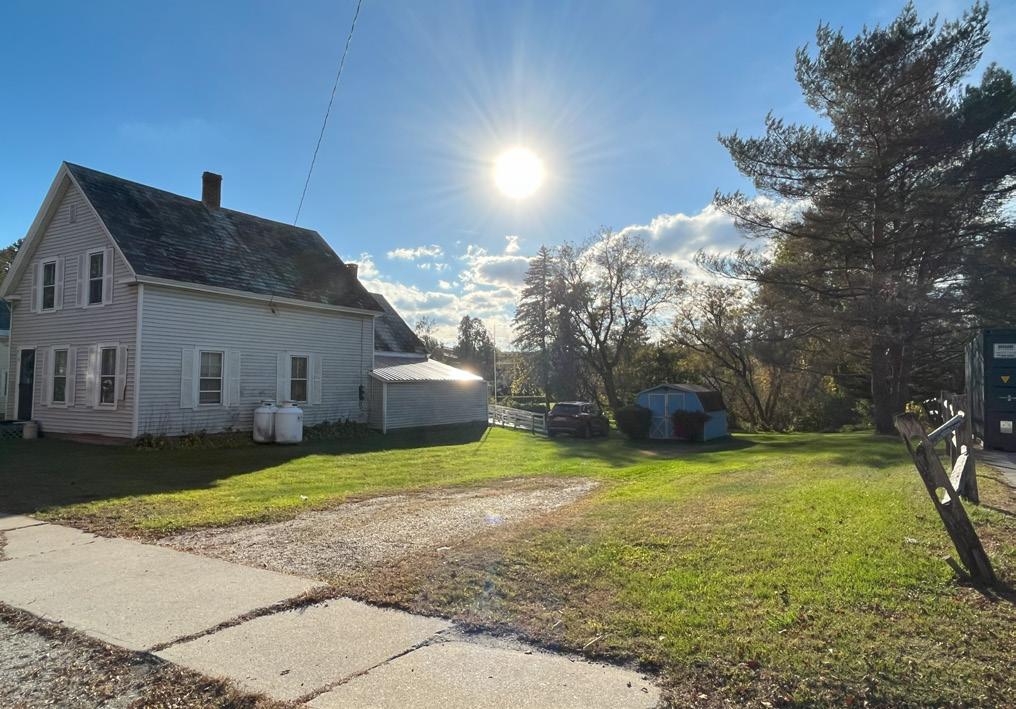
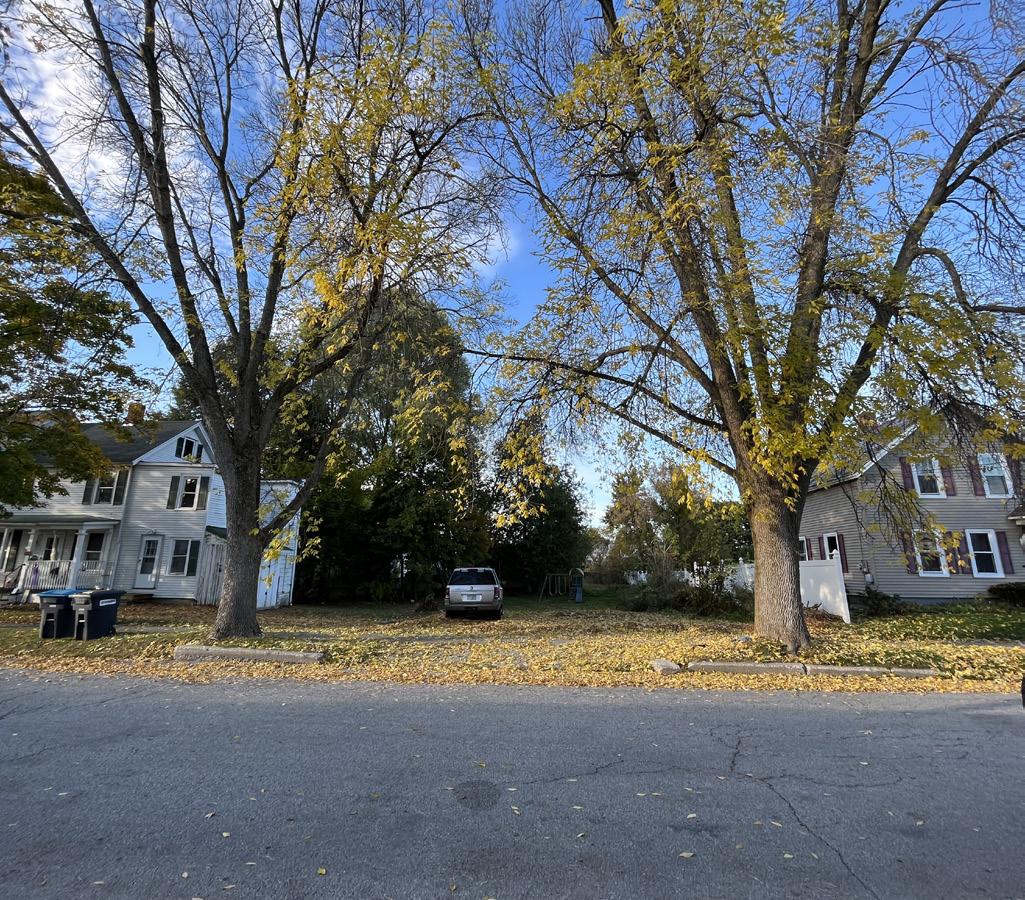
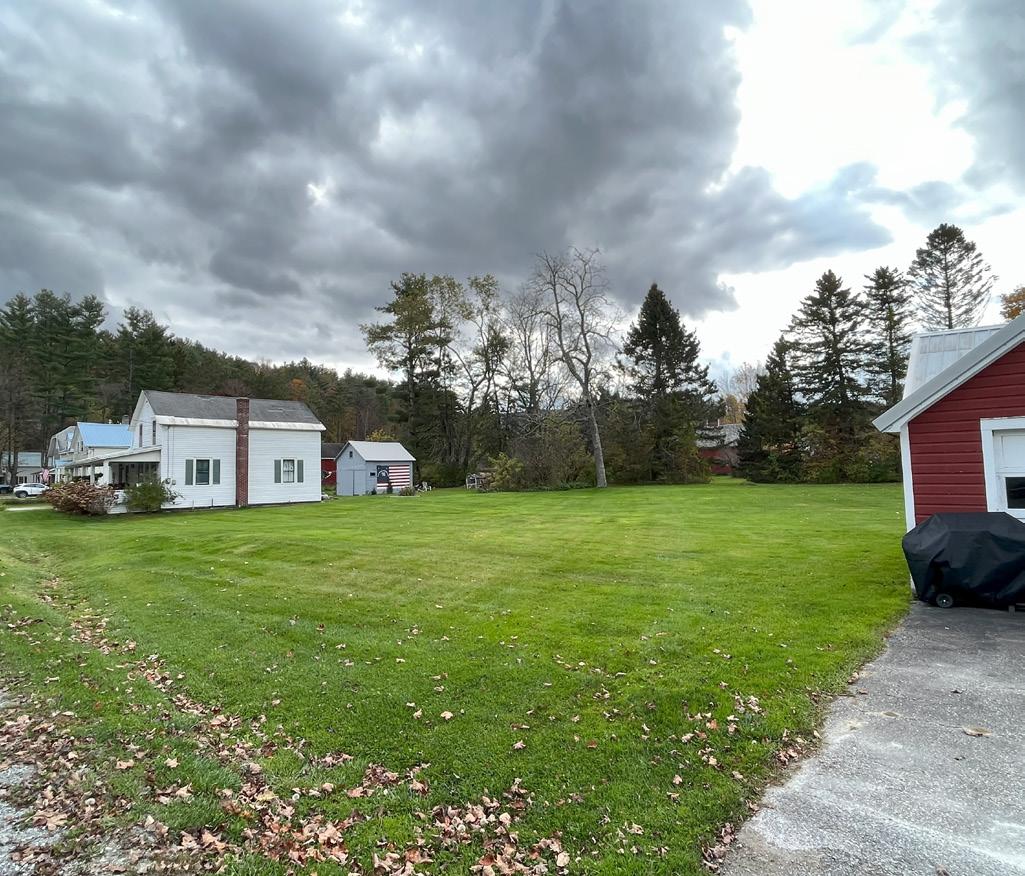
This scattered-site approach involves identifying vacant or underutilized properties with the capacity for 1 – 4 additional homes that can be developed incrementally over time. This could be brand new development or conversions of accessory buildings such as garages. Small-scale development on scattered sites delivers robust and durable benefits for Development-Ready Communities:
1. Organic Growth. Instead of imposing uniform large-scale projects across multiple sites, scattered-site development invigorates unique and multi-faceted growth that directly responds to sites’ varying contexts.
2. Community Integration. Integrating small-scale development within existing neighborhoods promotes a sense of community and belonging. This approach allows residents to have greater access to existing amenities, public services, and established social networks, enhancing overall quality of life.
3. Preserving Open Space. The agility of a scattered-site approach avoids the need to consume existing open spaces that may provide a crucial source of health and wellbeing to the community.
4. Minimizing Environmental Impact. The scattered-site approach has a small ecological footprint that aligns with sustainable development principles by utilizing existing infrastructure, such as water, sewer, roads, and sidewalks, minimizing the need for extensive new infrastructure.
5. Diverse Housing Options. Developmentready communities understand that a onesize-fits-all approach to housing does not adequately meet the needs of their residents. By incorporating incremental and Middle Housing on a scattered-site basis, they create a wide spectrum of housing options that cater to a diverse range of income levels, family sizes, and lifestyles while also adding to the richness of neighborhood character.
6. Risk Spread. Although large-scale privatepublic partnership development can deliver large housing returns for a community, big projects concentrate substantial risk into single project where a small market shift can tie up capital for years. Communities can spread risk and grow a new pool of investors by exploring partnerships that support scattered site development. Communities looking to partner on smaller projects signals a DevelopmentReady Community.
Finally, by doing a bit of early market research, you can better understand what kind of site, location, scale, and building types will best meet the needs of the community—and, in turn, give you the best chance of reliably finding buyers or renters for your development project. This early market study can also be a great item to share with potential financing partners to underscore the viability of your concept.
The more closely you align with an unmet housing need, the stronger and more appealing your concept becomes.
The following resources are a great place for smallscale developers in Vermont to get a better sense of community housing needs that align well with small-scale development:
• Vermont’s 2020 Housing Needs Assessment
• Vermont Housing Data Community Profiles
To summarize some of the information provided by the links above, the greatest unmet housing needs in Vermont include:
• Older adults looking to downsize,
• Young families who need more space, and
• Young professionals who are looking to purchase their first home.
Each of these groups may have some overlap in preferred location, but will have varying needs for unit size and price range. A small-scale developer should consider the needs of the end user to determine how they might cater to a specific group—or conversely, reach the broadest range of interests.
The Vermont Housing Data link provides an exhaustive list of local data broken out by county to help a small-scale developer get important context. Items such as ‘median gross rent by number of bedrooms’ can help determine current rent levels in the local market. But given that the data is a few years old, does not go beyond the county level, and may skew more towards rehab versus new construction, you will need to adjust your assumptions with on-the-ground observations as well.
Once you have familiarized yourself with the variety of housing types that can meet the needs of your local community, it’s time to find your site.
Locating the regulatory and legal specifics of development rules is a critical step in identifying development-ready sites.
The Natural Resources Atlas provides geographic information about environmental features and sites that the Vermont Agency of Natural Resources manages, monitors, permits, or regulates. A user can enter the subject parcel’s address and turn on the filter that enables a search for floodplains and floodways, brownfield sites, elevation data, and much more. Always be sure to double check that your site is outside of any local floodplains or wetlands, and does not have steep slopes or natural resource protections that make development infeasible or unsafe.
In addition to the statewide Natural Resources Atlas, most jurisdictions have readily available tools online to aid in site specific research,
including an electronic property database. Using publicly available municipal resources can help you identify parcels in various zoning districts and those subject to certain overlays, but also any environmental hazards (such as floodplains or steep slopes) that might add cost or complexity. Links to the zoning bylaws can also be found on a municipality’s website.
Often called a property viewer or online parcel viewer, this resource has property information such as parcel size, building footprint, and, even valuation data. The valuation data is directly used for taxation purposes, but the aspiring small-scale developer may use this to get a rough gauge of how much the property might be worth. Assessor values will likely differ from what the market is willing to pay, but it provides a good ballpark. You will need to run your own numbers to know how much land your proposed project can afford.
The example below is from Rutland. Notice the variety of layers that can be turned on and off in the toolbar to the left. Clicking on individual parcels will also provide parcel specific data available.
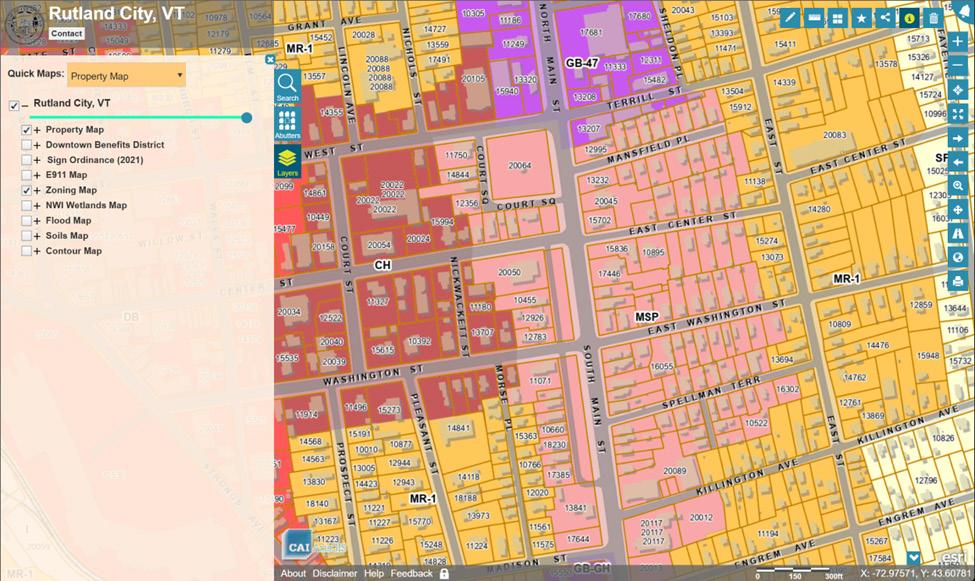
The most immediate development opportunity is any piece of property you or someone in your network already owns. With the possibilities afforded by the HOME Act, this could even be your current residence. Using your own property saves significant time and money on the land acquisition process and serves as immediate equity in qualifying for a loan.
Properties owned by family members or friends also present viable prospects for development. This extension of possibilities broadens your horizons and taps into preexisting relationships. It also provides the people in your network an opportunity to partner with you on the project or receive a cashout by subdividing a portion for purchase.
If you or your network doesn’t have a property handy, then vacant lots are the next best opportunity. Beyond this, the municipal assessor’s office and neighbors may be aware of double lots, which are common in many small rural towns. Some homes that appear to have a very large lot to the side of a single-household home are actually double lots, with the adjacent lot conforming to the zoning bylaw for adding additional homes. A double-lot owner might be interested in selling the lot based on your value proposition (or maybe they no longer care to maintain the extra yard space). The concept of subdividing land is discussed later in this chapter.
Sometimes lots will sell faster than time allows for you to do your feasibility study and make a reasonable offer. One strategy that small-scale developers employ to alleviate this pressure is an Option to Purchase Agreement, described below. It is always worth asking a seller about their willingness to extend a longer purchase and sales contract duration than the typical 30-90 days for most sales, particularly if it’s possible to costshare the carrying costs (taxes and insurance) or absorb these costs in the development budget to reimburse the seller when the purchase transaction occurs. In a few cases, some sellers may be willing
to offer seller-financing for the land purchase during construction. This typically requires an initial down payment, with full buyout and interest due at completion of the sale.
In the quest for a workable site, it is essential to cast a wide net and consider all available avenues beyond your immediate holdings. Consider the following:
One avenue to explore is delving into listings provided by real estate agents. These professionals are well-versed in the local real estate landscape and can introduce you to a variety of potential sites that might align with your project’s vision. By collaborating with a real estate agent you tap into their expertise and network, gaining access to properties that might not be publicly listed. This insider knowledge can be invaluable.
The community of developers—including nonprofit and affordable housing organizations—is a vast network of experience and knowledge. You can gain access to shared knowledge about available properties and their development potential through one-on-ones, events, online forums, or informal meetups. Learning from others’ experiences and exchanging information can also streamline your site selection process.
Finally, to find less costly sites, consider ones that might be created from existing underutilized parcels such as the double lot example from above. Also consider oddly shaped sites that a traditional developer might overlook. The unique unit types and allowable lot configurations that characterize small-scale development (and make up the content of this Workbook) opens up a whole new way of thinking about how a constellation of smaller projects can flow in and around the existing built fabric of a community.
Before spending your time and money on the following due diligence items, consider executing an Option to Purchase Agreement with a landowner. Using this approach eliminates the risk of purchasing a piece of land outright only to find out during the due diligence process that your idea isn’t feasible.
An Option to Purchase Agreement is a contractual agreement between a seller and a buyer (in our case, a small-scale developer) which gives the developer the option to purchase the land at an agreed amount by a certain date. This gives the buyer time to evaluate development capacity and obtain local approvals. At the end of the time period, the buyer can choose to exercise the option, extend it, pull out, or even sell the option to another potential buyer.
Consult your realtor when deciding to make contact with a seller. And consult your real estate attorney when drawing up the contract. Here’s the general outline of an Option to Purchase arrangement:
1. Your realtor contacts the seller’s realtor to explore options.
2. The seller agrees to an Option to Purchase Agreement.
3. You provide the seller with earnest money—a deposit that shows your good faith to potentially make the purchase in the future.
4. With the help of the real estate attorneys, you and the seller agree on the terms of the purchase contract. Specifics may vary, but this contract typically starts with a 90-day term with an option to cancel, extend, or close on the purchase.
5. Contract is executed.
6. At the end of the 90-day term, the small-scale developer either exercises their option to cancel, extend, or close on the purchase.
During this period, the small-scale developer will be conducting physical and legal due diligence on the potential development site while meeting with local planning officials to ensure project viability. The next section goes into more detail about the due diligence process.
Once you have identified a potential infill site, you need to complete some “Due Diligence” to confirm if a site you are interested in is a good candidate for missing middle homes infill. At the early stages of evaluating site development capacity, you want to stick with the big picture and avoid going into the weeds on every detail. Your first screening criteria should be confirming your property is:
1. Out of wetlands and floodplains,
2. Has access to adequate infrastructure to support your idea, and
3. Has zoning that accommodates your idea.
Beyond those bare minimum initial screening criteria, you should take into account the potential constraints covered in this section, using the Community Infill Design section of this toolkit as a model for how to engage in this process. The constraint categories highlighted below are:
1. Environmental
2. Infrastructure
3. Design
4. Regulatory
5. Legal
Once you’ve explored these constraints and have confirmed that your chosen site is a good candidate for missing middle homes infill, you should proceed to Chapter 6 to gain a deeper understanding of these issues and how to work through them for your site.
Before conducting research on design and regulatory constraints, you should first determine the concrete environmental constraints that would immediately place the project beyond your budget. Floodways, floodplains, and steep slopes are not conducive to affordable and sustainable development and should be avoided by new developers. The Agency of Natural Resource has an excellent mapping tool that allows developers to determine environmental features such as slopes and flood threats:
Natural Resource Atlas
1. Flood Risk: Make sure your parcel (or a significant developable area) is outside FEMA flood zones and State-designated River Corridors. See Chapter 6 for more detail on the jurisdictions and purposes of these two regulatory frameworks.
2. Steep Slopes: Make sure your parcel (or a significant developable area) is outside steep slope areas.
3. Natural Resource Conservation: Make sure your parcel (or a significant developable area) is outside protected conservation areas. For example, Vermont’s Wetlands Program covers an extensive area of the state; if your parcel includes protected wetlands near a potential building site, you should strongly consider alternative sites before investing in the rigorous permitting process.
Infrastructural constraints to development can also be prohibitively expensive to overcome at this scale of development. These two in particular are critical early-stage considerations:
1. Water & Sewer Access: Ensure your parcel has access to municipal sewer and water systems; if not, you’ll need to navigate Vermont’s stringent water and wastewater regulations, including securing permits for drilling wells or installing septic systems. Professional assessments are crucial in these cases to meet environmental and health standards.
2. Road Access: Ensure developable area of the parcel has capacity for direct access to a public right-of-way. Make sure your parcel allows for your design to include access to a public right-of-way.
Before delving into regulatory constraints, it is essential to first establish that the parcel’s shape and dimensions can physically support your vision for the site. This does not necessitate a full design; just a basic “development test-fit” to confirm if the developable land could feasibly accommodate what you have in mind.
1. Developable Area: Look for a parcel with significant developable area excluding existing buildings, infrastructure, steep slopes,
floodplains, and conservation areas. The size and shape of the unbuilt parcel area must at least fit the building footprint of the home type(s) you are considering and required parking spaces. If your site requires on-site septic, you need to factor that space in too. This often comes down to the width of the parcel (the wider the parcel, the easier it is to develop a feasible design). See the Design Guide and Community Infill Design sections of this Toolkit for further guidance on this.
Finally, it is critical to understand up front whether your development vision is permissible under the current zoning and land use regulations of the site’s municipality.
1. Supportive Zoning: When current zoning is not supportive of your development vision, it may be a nonstarter – unless you are willing to budget additional time and resources to get through a more arduous approvals process. Ideally, you will choose a site with zoning that already paves the way for your vision. Regardless, be sure to have a conversation with your local zoning and permitting officials if you are not sure or suspect the current zoning will undermine the development vision you have - they may be able to help you find a path forward. See Chapter 6 for a more in-depth look at local zoning.
Finally, a real estate lawyer can assist you on any issues with the title or deeds of a potential site. This includes identifying any mortgages or liens on the site and proof of the right of the seller to sell the land. This also includes covenants, conditions, and restrictions (CC&Rs) – legally binding rules set by a homeowners’ association (HOA), developer or other governing entity primarily in planned communities or subdivisions.
1. Covenants: These are promises included in the deed to a property. They can impose obligations for the use of the land, maintenance standards, or other aspects of the property’s appearance and functionality. For your project, covenants might limit the type or number of buildings you can construct, or how you can alter the property’s landscape.
2. Conditions: These are specific requirements that result in severe penalties (such as complete reversal of the property back to the original owner) if not met. For instance, a condition might require that any new construction on a parcel adhere to certain architectural standards or use specific materials, impacting the design of your multihousehold homes.
3. Restrictions: These are limitations on the use of property that result in fines or legal action if unmet. Restrictions can dictate a wide range of things, from the size and placement of buildings (which could limit the number of units you can build) to restrictions on the types of activities that can occur on the property (such
as commercial versus residential use).
The HOME Act does not override CC&Rs. This means if the CC&Rs limit the allowances afforded by the HOME Act, you would need to adhere to these rules. It’s crucial to thoroughly review and understand the CC&Rs associated with your parcel to assess how they might impact your project, such as limiting the scale of development, affecting the design and aesthetics of the homes, or imposing additional costs for compliance. Most property records establishing a legal constraint can be found in the Land Records of the municipality, sometimes called the 'Clerk's Vault'. Remember to consult with your real estate attorney when navigating the maze of legal constraints.
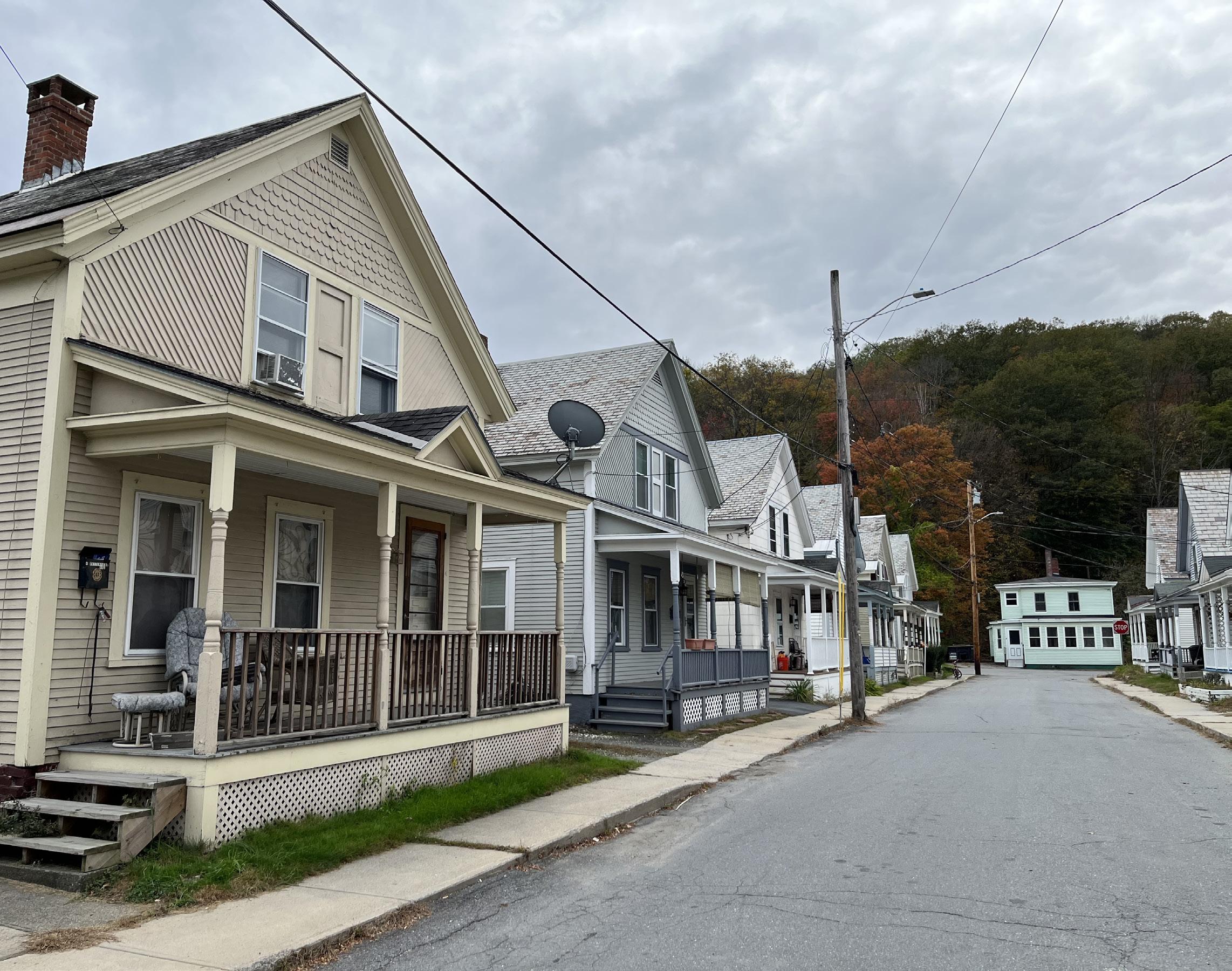
Finding larger lots to subdivide is one approach to adding 1 – 4 additional homes. Subdivisions are divisions of land into individual parcels, plots, or lots. This can be an option to discuss with local larger developers, condominium associations, nonprofit organizations, and homeowners who may have excess portions of land that can be developed with one to four homes in conformance with the existing zoning bylaws. The process of subdividing comes down to a lot-line readjustment, and takes the following shape:
1. Initial Survey: Conduct thorough research on local zoning regulations and assess the land’s potential for subdivision. Hire a licensed surveyor to draft a survey plat—a detailed map that outlines the specific features, boundaries, and dimensions of a property. Based on the plat, collaborate with your surveyor to draft a preliminary subdivision layout that adheres to all local guidelines.
2. Application Submission: Prepare and submit a comprehensive subdivision application, ensuring it includes the professional surveyor’s detailed report and the proposed subdivision blueprint. Engage in the review process managed by the local planning department, which may involve community input through a public hearing.
3. Application Approval: Upon receiving approval and incorporating any required changes, officially register the final subdivision plan, as verified by the survey.
Even in towns where a survey is not required, a survey, it should still be your first step. You should always address the survey and environmental compliance process before investing time to address zoning compliance. Completing an initial survey is not just about adhering to best practices; it is the foundation for many future steps and often becomes necessary, especially when acquiring a wastewater permit.
In the case of aggregation, if one or both lots have already been surveyed, a lawyer would rewrite the warranty deed to describe the parcel boundaries of the new lot and what portion of an existing lot is being sold and purchased. Lots fronting an existing street with infrastructure are generally easier to develop than lots that may require site work such as a new street, long driveway, or septic space.
Subdivision regulations are intended to ensure that the division of land into smaller parcels results in properties that can actually support their intended use (in our case, parcels with the size and dimensions to accommodate 1 – 4 unit housing development). Vermont municipalities treat subdivisions differently across the state— either through a stand-alone bylaw, or a ‘unified bylaw’ that combines subdivision and zoning requirements.
Many towns have specific exemptions in their subdivision regulations for activities such as ‘annexations’ (merging two lots into one), or lot line adjustments (altering the boundary to change the size of a lot).
To foster small-scale development and assist families, an increasing number of towns are also allowing the creation of one or two new lots from an original lot without requiring a full review process. This approach simplifies the procedure for families who wish to sell a portion of their property or allocate a new lot for a family member.
For detailed information and guidance on these exemptions, it is essential to consult with local zoning officials.
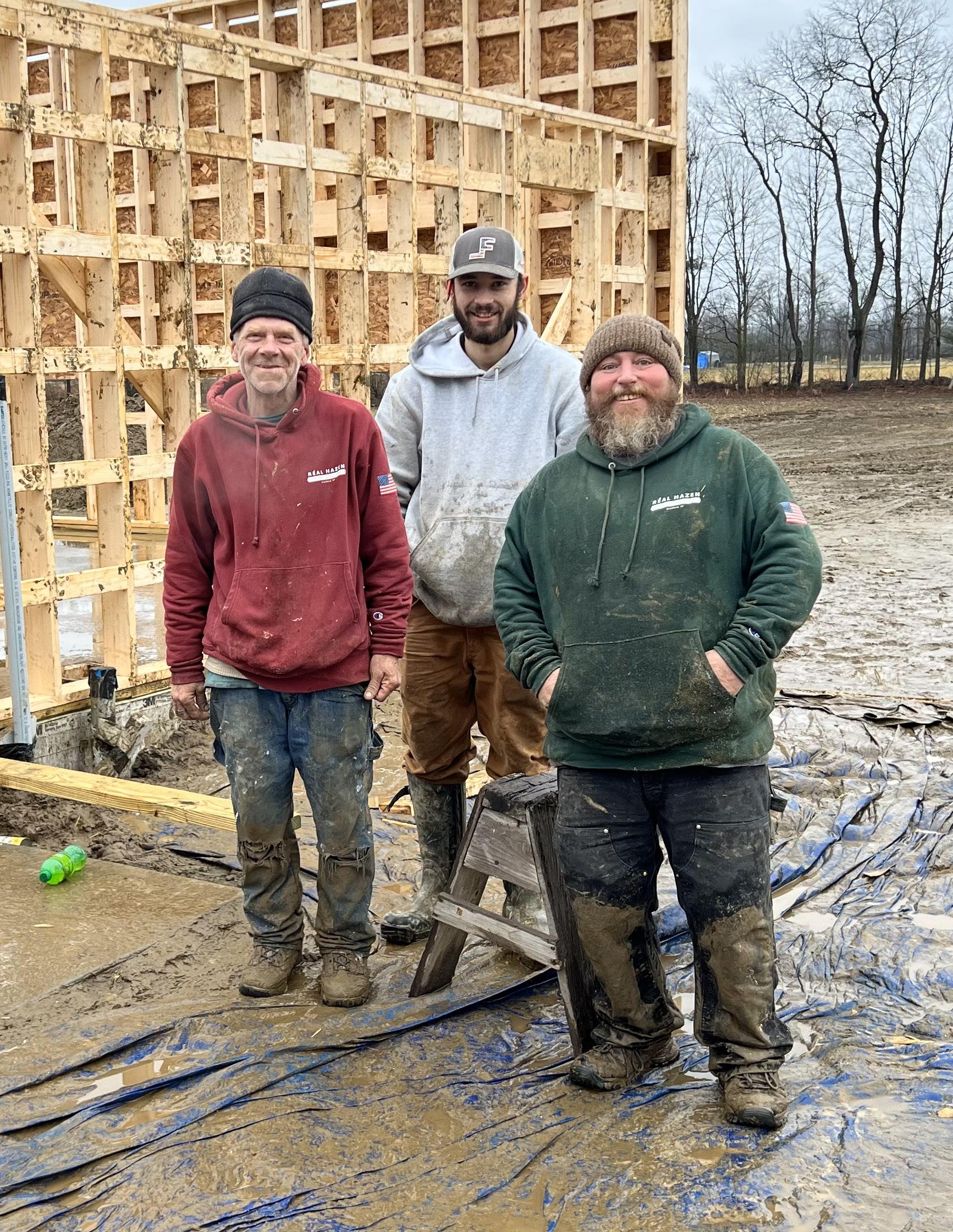
Real estate development is as diverse as the buildings and communities it creates—from towering skyscrapers to single-household homes, and dense downtowns to quiet villages. Starting small is a smart move, minimizing risks while gaining practical experience. It’s also a chance to build relationships with potential team members for future collaborations at a larger scale.
There is no certification required to practice real estate development, so guidance from a strong team of experienced professionals is key to building your own expertise and credibility. A great team on a suboptimal project is preferable to a subpar team on your dream project.
This section will explore outside technical expertise required depending on your skill sets and your project’s complexity.
Chapter at a glance:
Understand roles and develop a team member selection process
Step 1: Self-Assessment & Building Your Network
• Start with a self-assessment
• Take a Personal Skills Inventory
• Organize your personal financial documents.
• Conduct a personal financial assessment.
• Identify what skills or areas you need support in.
• Understand roles and develop a team member selection process.
• Real Estate and/or Land Use Attorney
• Engineer(s)
• Equity Partner
• Lender
• Architect/Designer
• General Contractor
• Bookkeeper
• Property Manager
• Examples of Project & Team Composition
Start with a self-assessment.
• Take a personal inventory of your strengths and weaknesses for real estate development: what you are confident in, and what you will need to outsource to specialists or develop yourself.
• Organize personal financial documentation.
• Conduct a personal financial assessment.
• Determine whether you plan to develop properties for rental or for sale, and whether or not you plan to pursue the project alone or with a group of others.
A successful developer needs more than the obvious hard skills such as real estate finance and regulatory proceedings. Don’t forget to take stock of key soft skills:
• Entrepreneurial Spirit: Assess your appetite for risk and your ability to think innovatively. An essential characteristic is tolerance for ambiguity and pivoting when assumptions turn out to be wrong or need to change.
• Communication Skills: Evaluate your capacity to ask questions, negotiate, persuade, and maintain effective relationships.
• Problem-Solving: Gauge your comfort level with navigating challenges as they arise. It is helpful to be able to see the big picture while also making detailed decisions on the spot.
Small-scale developers come from varied backgrounds with a range of skill sets that enable them to assume multiple roles during the development process. The developer stands at the center of the project and mediates between its many moving parts; so perhaps your most crucial task is knowing where help is needed at any given time. One method is to adapt your personal inventory into a skills checklist that you repeat for each phase of a development project. The practice keeps you focused on:
• Which skills you have covered
• Which skills are within your reach
• Which skills you should outsource
See page 9 of the Incremental Development Alliance Companion Manual for one such checklist.
Keeping with the three phases of development outlined in Chapter 1, start assessing your personal strengths and where in the development process
they are most relevant, including your capacity to fulfill the project management skill set required to coordinate work across all the phases.
• Phase 1: Startup. This phase involves applying fundamental development knowledge and identifying housing needs in a town or neighborhood.
• Phase 2: Assessing the Options. This phase involves comparing development options through physical and market conditions, zoning, and financial analysis.
• Phase 3: Moving Forward with the Best Project. This is the phase where a project becomes more tangible as it moves through several critical milestones:
• Financing is secured
• Site is under contract
• Technical drawings are produced
• The bureaucratic process is navigated
• Material and equipment begins showing up on site
• Marketing and ongoing operations commence once the project is sold or rented
Keep in mind that the three-phase process outlined in Chapter 1 (and repeated below in simplified form) is just one framework for development and is intended to provide a simplified entry point.
For comparison, Real Estate Development: Principles and Process from the Urban Land Institute (ULI) provides another way of thinking about the process that is rooted in slightly larger, more complex projects. ULI’s framework identifies eight stages of real estate development with more emphasis on the iterative process from the inception of an idea to testing feasibility before making any formal commitments. Whichever approach you choose to take, it is helpful to become acquainted with the tasks in each phase to identify strengths and needs for each.
Organize your personal financial documents.
Whether using either an owner-occupied approach or borrowing as a commercial entity, the lender will need to see certain financial statements. The specifics of what your lender will want to see will vary; but at a minimum, you will need tax statements, recent pay stubs (or a profit and loss statement if self-employed) and a credit check. Financing applications will require a list of all asset and liability values.
Gather the following items to make them readily available:
Tax Returns: Gather the past few years’ tax returns. This will include W-2 statements or paystubs if employed.
Bank Statements: Collect recent bank statements to showcase your financial stability.
Credit Report: Obtain a copy of your credit report.
Proof of Assets: Compile documents demonstrating your liquid and non-liquid assets.
Inception of an idea.
Feasibility and refinement of an idea.
Moving forward with the best project.
Don’t forget this process is iterative, not linear!!
Using the financial documentation, conduct a personal financial assessment to identify areas that may need improvement and where you may need support from an equity partner or investor. More detail on financial underwriting is provided in Chapter 5: Feasibility Methodology , Business & Financial Frameworks.
Credit Report: Obtain a copy of your credit report to understand your current credit score. The major credit report companies will provide one free report (Transunion). Identify and make a plan to resolve any outstanding issues and discuss how your lender evaluates medical debt and student loans, if applicable.
Debt-to-Income Ratio: Calculate your personal debt-to-income ratio. This is especially important when seeking financing for a property you plan to also occupy. Financing will limit your total debt-to-income ratio to somewhere between 28% – 35% depending on the loan product.
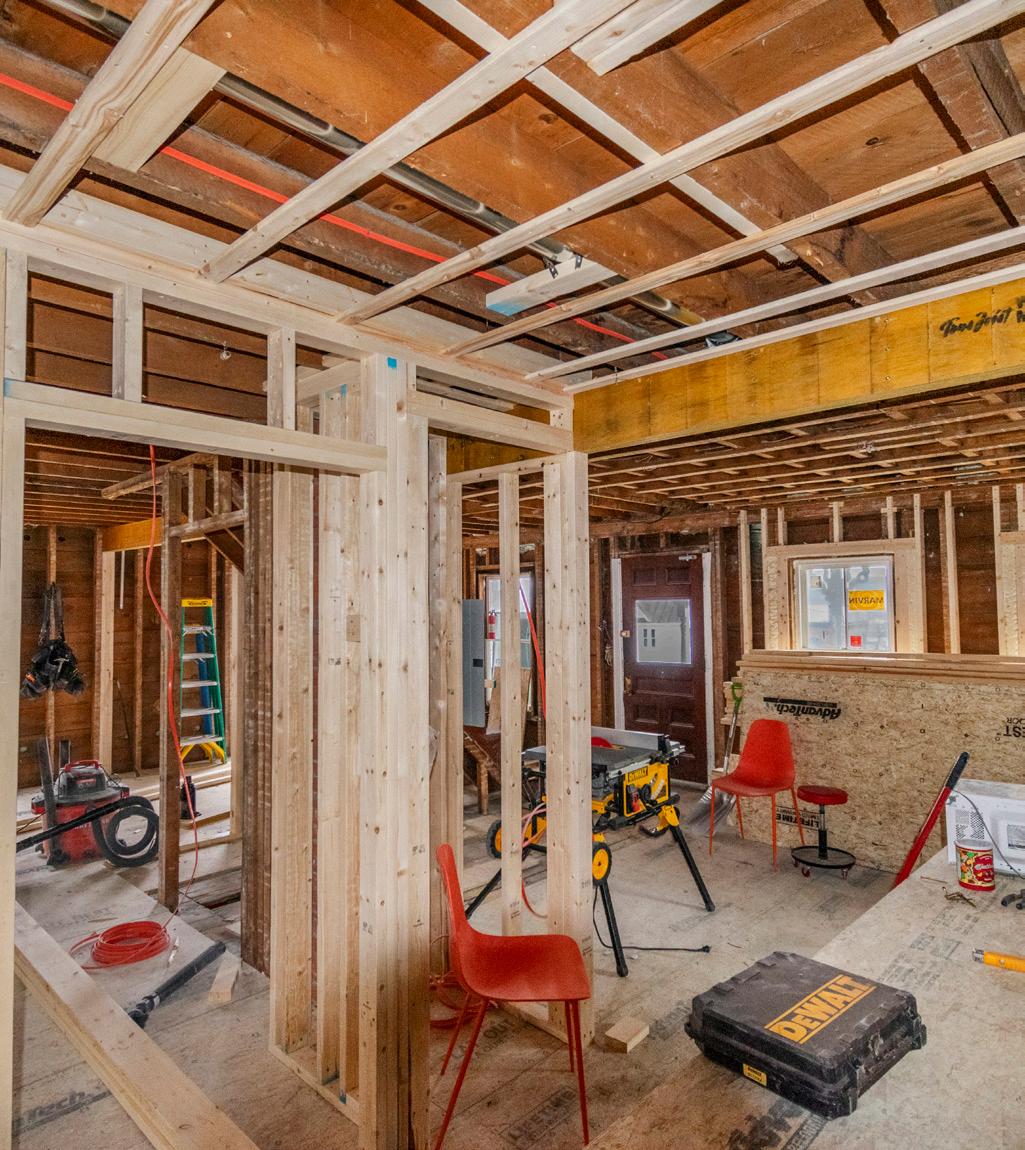
Your team should help fill in financial and skill gaps you uncovered in your self-assessment. At a minimum, key members of your team typically include:
• Equity partner/investor
• Lender
• Real estate/land use attorney
• Civil engineer
• Environmental engineer
• Architect/designer*
• General contractor*
• Bookkeeper**
• Property manager**
* denotes roles that can be the small-scale developer if they already have the prerequisite training and experience.
** denotes roles often carried out by the smallscale developer themselves
Other possible members of the team worth noting:
• Structural engineer: This team member is recommended for rehab to confirm any existing building’s structural capacity prior to making a purchase, and to support design goals. Any new construction involvement by a structural engineer is usually handled through your architect.
• Certified Public Accountant (CPA): this team member would advise and calculate real estate taxes.
• Energy Efficiency Consultant: this team member would conduct an energy audit, scope of work recommendations, and cost estimate on existing buildings, or would conduct a review of plans and scope of work/cost estimate for new construction.
If you are an architect, engineer, community planner, town official, tradesperson, lawyer, or real estate finance professional, then you will be able to perform many of these roles yourself. The roles laid out above can serve as a checklist to make sure all your bases are covered.
When running through your checklist of team roles, make note of which are must-haves and which are optional. For example:
• An equity partner and lender may not be necessary if the project is fully funded by cash or home equity loan.
• An architect may not be necessary if using a stock plan and the builder is able to sign off on permits.
• A bookkeeper may not be necessary if you are organized, have accounting experience, and/or are capable of tracking purchases and making payments yourself.
In the context of Vermont, if you are developing a new construction project (even if that project is small), both a real estate or land use attorney and a civil engineer are critical consultants. If undertaking a renovation project, environmental engineers are critical team members for services such as hazardous materials testing for lead-based paint hazards, asbestos, mold, radon, and old underground storage tanks. Depending on your project type, these consultants should be engaged at the outset to promptly identify any legal or physical constraints.
Often referred to simply as ‘real estate attorneys,’ these legal professionals can be more precisely delineated into two distinct roles: real estate attorneys and land use attorneys. While some practitioners may navigate both domains, others specialize exclusively in one. The distinction between the two is the difference between the act of a single transaction (real estate attorney) versus a project that involves obtaining regulatory permits and approvals (land use attorney).
Land use attorneys are knowledgeable about code language and timelines. They can be helpful during conversations with municipal staff, and with the negotiations of any permit conditions of approval if necessary. Developers typically engage land use attorneys early on to assist with zoning interpretation to make sure the project is compliant from the outset. As a small-scale developer, this kind of upfront legal advice will be critical; but beyond that, small-scale developers should be careful not to appear too litigious in communication with public officials. As someone familiar with the
community, you don’t want to signal mistrust or aggression. Your goal is to build connections. To that end, a design professional such as an engineer or architect may be a better representative to discuss initial options with local planning staff. In summary, you should plan to engage a real estate and/or land use attorney early on in your process and consistently seek their advice throughout the process, but that does not mean they should always be your spokesperson - be strategic about who is speaking for you in what setting.
Any project that adds housing units to an existing 1 – 4 unit building or vacant parcel will likely have to go through some type of discretionary review by a local approval board that will provide the opportunity for objectors to weigh in. To successfully navigate objections raised during discretionary review processes, it is recommended to engage a land use attorney early on to proactively identify issues. Sharing neighborhood feedback with your project’s attorney will help you identify ways to mitigate neighbors’ concerns within the zoning bylaw parameters. Attorneys know which concerns could become legitimate appeals. To build trust among your community and get ahead of any potential issues in the review process, you should take the initiative to knock on people’s doors and inform them of your project plans at the very outset.
Ways to find a real estate/land use attorney: In Vermont, land use attorneys are most likely to be found in larger municipalities such as Montpelier or Burlington, whereas real estate attorneys work throughout the state and tend to have a focus on a specific region.
• Vermont Homebuilders and Remodelers Association
• The VHRA has a ‘find a professional’ section with a comprehensive list of professional services and tradespersons.
• Vermont Bar Association
• The Vermont Bar Association has a ‘find a lawyer’ page with a dropdown list of primary topics with Real Estate as a selection. Further options allow the selection of all counties or a single county based on the selected topic.
Things to consider & questions to ask a land use attorney:
Determining whether a land use attorney is a good fit may be partially based on personality; however it is important that your evaluation goes beyond that. Some other things to consider are:
• Is this lawyer knowledgeable in the particular aspects of the project?
• What kinds of development projects have they worked on in the past?
• Do they ask critical, detail-oriented questions?
• Have you shared your plans and has the lawyer brainstormed potential issues associated with the zoning bylaw or other regulatory requirements?
• Suggest meeting in person or at least via Zoom. This initial meeting is usually offered for free and used to determine need and fit.
• Do they require a retainer? How much?
Engineer(s)
Engineering is a broad profession with many specialties. If working with an architect (or landscape architect), they may utilize mechanical and structural engineers in their process. In the Vermont context, civil and environmental engineering is especially critical for navigating issues of topography, hydrology, soil type, and water access that dictate the feasibility of a project. For example: some parcels have direct access to both water and wastewater, others have access to one but not the other, and some have access to neither. Each of these conditions has different requirements and calls for different approaches. Engaging a licensed engineer early is vital to understanding options that can make or break a deal. Outside of water and wastewater utilities, a licensed engineer can also help with identifying wetlands, wet soils, stormwater management, and designing around and/or connecting to existing utilities.
In Vermont, licensed engineers need to be registered with the state to design water/ wastewater utility systems. Engaging someone knowledgeable in both the systems design and the permitting process will be important—especially since local municipalities may have certain requirements—but the State’s Department of Environmental Conservation (DEC) will have to sign off on the permits. The DEC has a tiered system of licensing based on which systems are required, but the Secretary of State has a list of contacts.
Things to consider & questions to ask a civil engineer:
• What level of licensing is appropriate for the project you have in mind? Are their licenses/ credentials a good match?
• What work have they done? Do they have examples or references of projects that are similar to yours?
• Infill is more complex by having to work around existing built fabric. What issues have they encountered? How did they overcome them?
• Your project may also need to address stormwater management issues, depending on the extent of impervious surface your project would create. Be aware of wet soils, wetlands, and wetland buffer zones. This could be the same engineer, so it is best to ask if they do both.
As a small-scale developer, you may have extra money and are looking for opportunities to invest it somewhere that benefits the community while also providing a modest return. Most small-scale developers get started on a small project with the help of friends and family and a little bit of their own money as ‘skin in the game,’ especially since a small-scale project does not require the millions of dollars required for large-scale development.
The equity partner, also known as a capital partner, may consist of a single person or multiple people providing either the full amount of capital required for the project or the down payment necessary to obtain a loan. For an aspiring small-scale developer with limited experience, starting small and asking someone to be a financial partner on a low-risk project is a good way to secure buy-in and build your portfolio. You don’t want to expose fellow community members and yourself to a big risk without the experience to back it up.
Potential investors in a project will all have different goals, comfort levels, and timelines for repayment. Your early discussions should seek alignment between project needs and investor needs; conversely, you should not approach these discussions as a pushy salesperson. Again, as a small-scale developer embedded in the community, your number one goal is building trust. Not only will investors be partners throughout the whole business process, they may be your neighbors for life.
A for-sale project will have a shorter engagement duration of just a few years, whereas a rental project could see an investor in the project for up to 7 – 10 years. If your first project together goes well, an equity partner may be interested in rolling their investment into yet another project once the first reaches completion.
Things to consider & questions to ask a potential equity partner:
• What are their specific investment criteria, and how does your project align with their investment goals? You should present some scenarios for the project’s financial performance to support this discussion.
• What is their preferred exit strategy? You will need to analyze how their preferred exit strategy aligns with the project’s long-term objectives.
A lender is separate from an equity partner, even though both roles provide the backbone of the finances for your development project. A lender is typically a bank or credit union subject to federal regulations for banking institutions. This entity is likely to provide 70% or more of a project’s finances and have a general set of terms for various project types. These terms will differ by institution so it is important to make multiple contacts to understand what products and terms can be offered. Expect the lender to be intimately involved in your development pro forma prior to approving a loan. A pro forma is a financial statement that outlines the projected income and expenses of a real estate development project over time. It helps developers assess the financial feasibility of their projects and make informed decisions.
Many aspiring small-scale developers may have a checking account with a large national bank and assume this will be a good place to start. However, more often than not, it is the small, local, or regional banks and credit unions that should be first on your list to contact. These types of financial institutions are likely to understand the acute housing challenges in Vermont and have a vested interest in investing in the community.
Vermont has 23 local and national banks serving residents through 224 branches across 86 municipalities. Each has a different business model, but larger banks tend to focus on much bigger development projects while smaller banks and credit unions tend to focus on small projects.
These smaller institutions are attuned to the current housing crisis and the need for innovative loan products in the marketplace, especially for first-time homebuyers and those looking to either move up or downsize. Because they maintain a portfolio of loans locally, they are often able to offer additional flexibility in loan structure.
Going directly to the lender can be a good approach, but you should also consider working with a broker who has knowledge of loan products from various institutions that might align with your project needs. Having a presentable pitch package or prospectus goes a long way in communicating the needs of a project.
• Unless seeking a general question, have a pitch package ready to communicate the project.
• Do they service loans locally, meaning they do not sell the loan after closing? These are typically called Portfolio Loans.
• Have they loaned on similar projects?
• What are their requirements for equity, debt-toincome (if owner-occupied), and loan-to-value ratios?
• What are the terms of the loan, including interest rates, repayment schedule, and any associated fees? Model these terms in your pro forma and ask for modifications if it does not pencil out.
• Do they use local, independent appraisers or appraisal houses (which tend to be national chains)?
Architects understand how to optimize layouts, use materials effectively, and incorporate design elements that enhance the overall aesthetics of the project. The best architects also possess a deep understanding of construction techniques, building codes, energy efficiency, and regulations. They can navigate the complexities of permits, zoning restrictions, and environmental considerations, ensuring a project is compliant without compromising the overall vision and goals of the project.
If you hire an architect, they will often serve as project managers, coordinating other consultants such as contractors, engineers, and suppliers. They will also oversee the project timeline, budget, and quality control, ensuring the project progresses smoothly and meets the desired outcomes.
If you find hiring an architect too expensive, there are a few alternative options you can consider:
• Consult an Architect for Specific Services: Instead of hiring an architect for the entire project, you can engage them for specific tasks such as initial design consultation, reviewing plans, or obtaining necessary permits. This way, you can access their expertise while managing costs.
• Utilize Pre-designed Plans: Some architects offer pre-designed plans. These plans can be purchased at a lower cost compared to a custom design, and you can still benefit from professional input. A local architect may still be needed for adjustments to comply with local conditions.
• Seek Out Design-Build Firms: Design-build firms combine building design and construction services under one roof but may not have a licensed, registered architect. Engaging such firms eliminates the need for separate architect and contractor fees, potentially saving costs while ensuring a streamlined process.
• DIY, but proceed with caution: If the project is small enough, architectural drawings may be unnecessary, and the help of a contractor may suffice. If you have a good understanding of building codes, regulations, and design principles, you may attempt a DIY approach. However, recognize the potential risks and limitations involved because mistakes can be costly to rectify. Always have a structural engineer confirm that the building’s foundation and existing structural components can support the proposed changes. Remember, any costsaving measure you pursue cannot compromise the quality, functionality, and legal compliance of the project.
Things to consider & questions to ask an architect:
• Ask them to share examples of previous projects similar to yours. Ask them to explain their role in those projects. This will give you a sense of the architect’s aesthetics and level of involvement, which could be anywhere from initial conceptual schematics to final construction and permitting.
• How familiar are they with local building codes and regulations, and how do they ensure compliance in their designs? Finding an architect who is familiar with local code interpretations and clever workarounds is extremely valuable.
• How do they collaborate with other consultants,
such as engineers and contractors, to ensure a cohesive approach to the project? Your architect will be an immediate resource to connect to other potential members of the development team, particularly contractors they’ve worked with.
• What is their approach to managing project timelines, and how do they adapt to changes or unforeseen challenges?
A communicative and understanding general contractor (often abbreviated as a “GC”) with a large network of subcontractors is an extremely valuable member of the team. You should involve the general contractor early in the design process to ensure that construction considerations and cost-saving techniques are incorporated. In the design phase you should also consider the sophistication of the subcontractors; if architects’ designs are especially unique, subcontractors may overbid materials or construction techniques to cover their uncertainty about the design’s construction needs.
• Ask your existing network of friends and acquaintances for recommendations.
• Rely on your newly built small-scale development team to recommend contractors with good reputations in the field.
• Access the Vermont Builders & Remodelers Association and/or the Vermont Green Building Network where you may find members who are also engaged in small, infill development projects.
Pro-tip for finding contractors knowledgeable in meeting energy efficiency standards:
• Efficiency Vermont provides a list of qualified contractors for compliance with the Vermont Residential Energy Code — officially called the Vermont Residential Building Energy Standards. A resource for energy ‘excellence’ network of contractors.
• Vermont Green Building Network (see link above) is another great resource.
Things to consider & questions to ask a general contractor:
• Are they registered with the State of Vermont? Residential contractors who perform construction where the estimated value is $10,000 or more must be registered with the
State of Vermont’s Secretary of State. You can look up and verify current licenses with the Secretary of State office here.
• What level of completion should be expected? Does their scope of work result in a finished, move-in-ready unit? Some general contractors operate under the assumption that they are responsible for rough-in tasks (everything behind the drywall) and that finishing touches (everything in front of the drywall) will be performed by someone else. This is an important item to discuss upfront.
• Are they open to working on a smaller project like yours and how big of a crew do they employ yearround? Depending on the local development activity, contractors may have limited openings in their schedule or find it hard to focus on small projects when larger, higher-paying projects are happening elsewhere.
• Do they have examples of projects similar to yours that you can go see?
• How many jobs do they typically run at the same time? If a contractor is stretched too thin your project may take longer to complete.
• Will they be on-site, or do they delegate to a project manager?
• What options are available if the project experiences major delays? At some point is there a discount offered?
• How do they communicate cost overruns? Cost estimates are estimates, but at some point cost overruns should be communicated to the developer. The same goes for changes in materials. These should be discussed with the developer and documented as an approved change order.
• What warranties for work performed are in place?
• Are they able to provide a letter of credit from their bank?
In the realm of real estate development, a bookkeeper is responsible for recording and organizing all financial transactions, monitoring cash flow, keeping track of invoice payment due dates, ensuring compliance with tax regulations, generating financial reports, and facilitating informed decision-making. This role is highly dependent on project complexity and your personal capabilities. With the many transactions that take place during a development project, having records readily accessible, clear, and organized
is invaluable for keeping track of progress. This is especially important when tax time comes. Because of this flurry of activity and level of transactions, it is recommended to keep project funds separate from personal funds. This will also keep things clearer when reporting progress updates to equity partners.
Things to consider & questions to ask a bookkeeper:
• When selecting a bookkeeper for your real estate development project, consider asking the following questions:
• Do they have experience in real estate development projects? During construction, real estate development projects generate a lot of transactions at irregular intervals. This contrasts to other businesses where payroll and invoices occur on a regular basis.
• What accounting software are they familiar with, and have they used it in similar projects? You may want to assess if a given software supports easy external communication or is burdensome when reporting is desired.
• Can they provide examples of how they have ensured tax compliance for previous clients?
• How do they handle discrepancies within a project? Sometimes things do not align and an organized, clear system for sharing will help to quickly rectify any discrepancies.
• How do they typically communicate with clients, and how often can you expect updates on your financial status?
Property management is a broad term that includes:
• Marketing apartments when available.
• Reviewing applications and screening prospective renters, including credit and reference checks.
• Bookkeeping, including collecting and returning security deposits, rent collection, and paying property maintenance contractors.
• Facilitating inspections for move-ins and move-outs.
• Ensuring compliance with regulations such as Essential Maintenance Practices for lead-based paint and Fair Housing laws.
• Handling repair requests and scheduling property maintenance.
Property management can encompass all or just a
subset of these responsibilities, depending on how a given project and its team is structured. A skilled property manager will ensure that the property is managed efficiently, tenants are satisfied, and the investment yields positive returns over the long term. This requires legal knowledge, effective communication and problem solving, good organization, and an understanding of the market to set rents.
Many small-scale developers for rental projects choose to assume this role and self-manage their own units to earn extra income—or at the very least, save on expenses. However, even if you are the one assuming the property management role, it should always be included as a line-item expense in your pro forma. In the self-management scenario, the project pays the ‘property manager’ the typical local property management rate, usually a percentage of rents (this rate is highly variable, but one source puts it in between 8% – 12% of monthly rent in Vermont). By including property management as a line-item expense in your pro forma, you ensure the project’s ability to afford this role should you no longer be able to perform the role yourself (for example, if you are short on time, need to move out of the area, or simply need a break).
If you opt to hire a property manager, it is important to ensure that the property manager’s goals – such as responsiveness to tenants—align with your own. In a rental development project, high turnover due to poor management leads to a significant loss in revenue and reputation. Good property management also leads to good long-term tenants.
First, decide whether all property management activities are needed or just a subset. Then, select from the following questions based on what you are looking for:
• How many years of experience do they have in property management, and have they managed properties similar to yours?
• Do they offer a subset of property management services and can they provide itemized pricing for property management activities? This gives the opportunity for you to customize a preferred approach and control the budget.
• How do they handle tenant relations? What communication methods do they employ to foster a positive tenant experience? Some small-scale developers give their tenants holiday presents or small annual improvements to the property. Can the property manager work this into their service?
• How do they handle renters who become problematic? How do they handle complaints from one or more renter(s) about another?
• What is their approach to handling emergencies and unforeseen issues on the property?
• How do they manage and prioritize maintenance tasks? Do they have a network of reliable contractors? Providing a positive tenant experience includes resolving maintenance and repair issues promptly.
• Can they provide examples of financial reports for previous properties they have managed? This is important during tax season.
• What is their knowledge of Vermont’s Inspection, Repair and Cleaning Practices (IRC), Fair Housing, and security deposit laws?
As mentioned, members of the team will vary depending on where you are in the development process and what type of project you are pursuing. For instance, if you are using personal cash or a loan from friends and family to build an ADU, a bank lender will not be involved. If you are using a Home Equity Line of Credit or cash-out refinance, the lender won’t need any knowledge of the ADU; they will only be involved insomuch as is required to open the line of credit or close the refinance.
The diagram to the left highlights key team members depending on project type. Team members in pink are most likely vital, whereas purplecolored members of the team may be involved loosely or not at all depending on the specifics of the project.
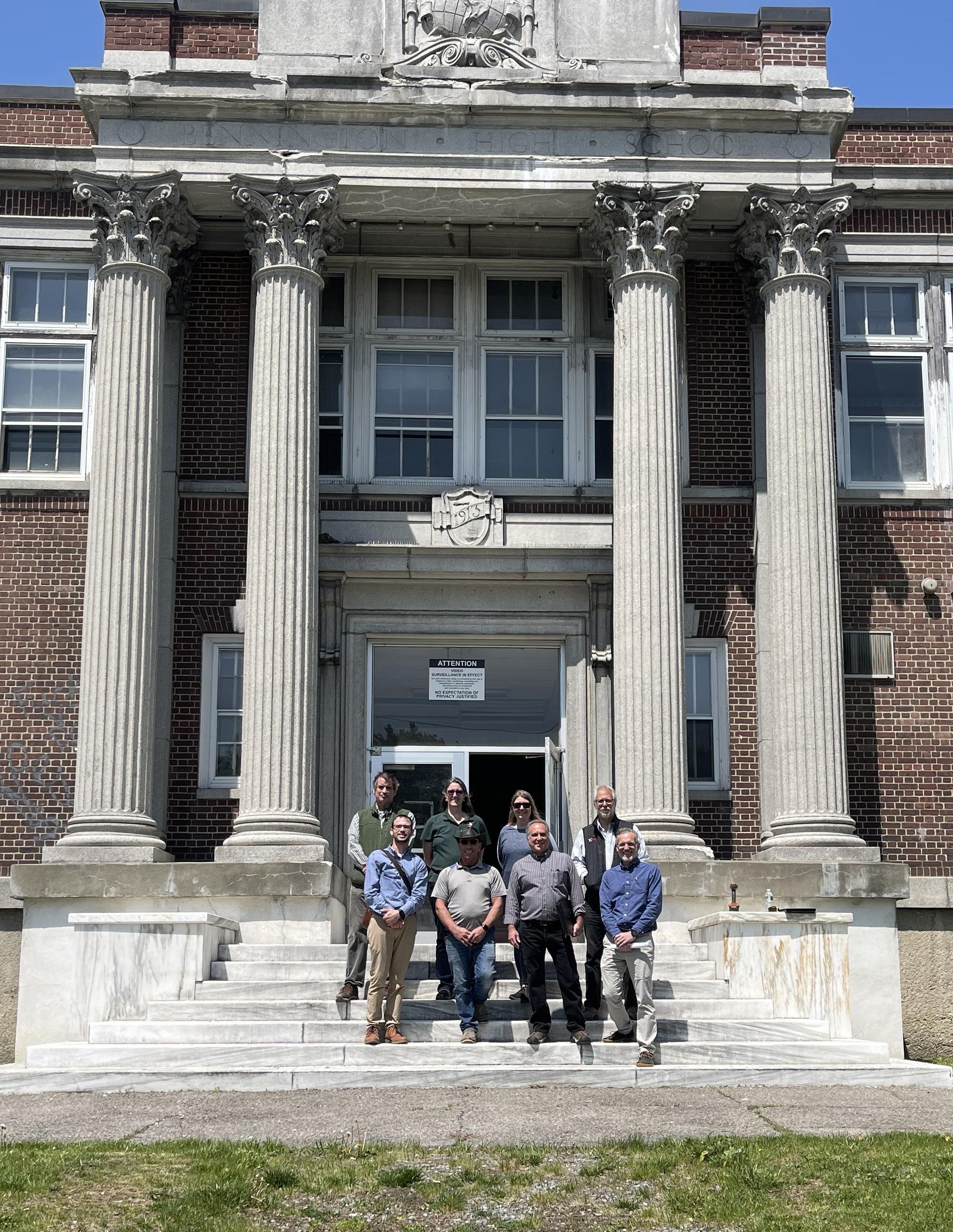
A major benefit of small-scale development is the opportunity to undertake a project without the need to form a separate business entity that is distinct from your own financial framework. This makes the task much more manageable. But this convenience does not come without its own caveats: your own personal assets could be exposed to the project’s risk, a fact which underscores the importance of a thorough risk assessment before taking a project on (See Chapter 3 for guidance on how to identify the right expertise for risk assessment).
Sometimes, establishing a separate business entity for your project is the right move. This chapter will walk you through what you should consider when exploring this option, and how to evaluate what business structure would best fit your goals for the project. Because business structure and financing strategy are so intertwined, this chapter will address both topics simultaneously and highlight some of the ways in which a decision in one area affects the other.
Chapter at a glance:
First Fork in the Road: Owner-Occupied or Not?
• What is a Limited Liability Corporation?
• Development Project Business Structure
• Operating Agreement
Matching Financing to Project Type
• Building your “Capital Stack”: Understanding Debt vs. Equity
• Differences Between Residential & Commercial Loans
• Loan Product Options
• Personal, Relationship & EquityBased Options
• Renovation Loan
• Construction Loan
• Permanent Loan
• Construction-to-Permanent Loan
• Navigating the Lending Relationship
This team is helping to renovate and convert the former Bennington High School building to a multi-unit residential project via a public-private partnership with Zak Hale of Hale Resources' development company. A project of this scale requires complex business and financial frameworks, but even for a smaller project, it is important that you are thoughtful about the business and financial frameworks that are the best fit for your idea.
Photo Credit: Zak Hale.
As a small-scale developer, many of the business and financial structure decisions you make will flow from one fundamental fork in the road: do you intend to live in the development for at least a few years or not? If you intend to live in the development for some period of time, your project would be considered “owner-occupied” and will have business and financing options not otherwise available.
This section outlines the distinct deal structure of an owner-occupied project. A more comprehensive discussion on deal structures more generally comes in the final section of the chapter, How it all Fits Together .
The following types of development fall into the category of “owner-occupied,” allowing access to residential mortgage loan financing and freedom from the requirements of a business structure.
• Tapping into your home equity to build an ADU
• Borrowing with a home equity loan or line of credit
• Refinancing with a renovation loan to build out a basement suite or an addition with 1 – 2 apartments
This is not an exhaustive list; owner-occupied residential mortgage loans may work for projects even more complex than the above examples. To qualify for an owner-occupied residential mortgage loan, you must be working on a 1 – 4 unit development that you intend to hold onto and occupy for a period of time. As such, the owneroccupied financing strategy is not appropriate for any projects intended to be for sale at completion.
Some small-scale developers use an owneroccupied strategy for multiple projects in succession before establishing an actual development company and bringing on investors. This is a great way for an aspiring small-scale developer to obtain favorable financing while also ‘getting their reps in’ as they grow in experience. Owner-occupied loans typically require the owner to live in a project for at least a year before being able to obtain another owner-occupied loan. See the diagram at the end of this chapter outlining a hypothetical three-project trajectory starting with
an owner-occupied loan strategy.
If you plan to use an owner-occupied strategy, consult with local lenders on your loan options. For some Vermont lenders, this approach is only available for mortgages that they sell to Freddie Mac or Fannie Mae. The rules could be slightly different for developments that are kept in the lender’s own portfolio, as they often have caps on the number of primary residence mortgages per borrower. With the Freddie Mac or Fannie Mae loans, there are no limits as long as the borrower meets the requirements of the previous note they signed (and, of course, qualify to hold multiple mortgages).
• Self + Friends or Family. The repayment structure of this deal is guided by verbal agreement or promissory note.
• Self + Lender. This is a familiar arrangement for anyone who has ever bought a home using a standard residential mortgage. This structure is guided by repayment terms of the mortgage set by the lender.
If you are pursuing an owner-occupied development strategy, this typically aligns with a residential loan type, but not always. See the “Differences Between Residential and Commercial Loans” section below to learn more about lending options.
If you do not intend to live in the project upon completion—or are doing more than four units at once—a commercial loan will be required. For commercial loans, you should consider creating a legal business entity. Within this business you may choose to operate as the sole owner or as a partner in business with a trusted family member, friend, or colleague.
Business structures can take on many forms to meet your specific need; however, in the world of small-scale development, the most important and commonly used business structure is the Limited Liability Corporation (LLC).
Operating partner + Equity partners + Lender. This deal structure is guided by a combination of the project LLC operating statement (the document that outlines everyone’s roles, profit distribution, and the operational process) and repayment terms of the loan. In this scenario, the lender is not a member of the project LLC.
Operating partner + Equity partners + Lender + Public agency. In this deal structure, which includes the additional entity of a public agency, neither the lender nor the public agency are members of the project LLC. This is a more sophisticated deal structure bound by conditions and restrictions set by any public agency, such as the Vermont Housing Finance Agency, offering funds toward a project for some type of social benefit such as senior or affordable housing.
If you are pursuing a non-owner occupied or commercial deal structure, see the “Forming a Business” section below for how to form an LLC and how to think about the establishment of roles and distribution of profits through the operating agreement.
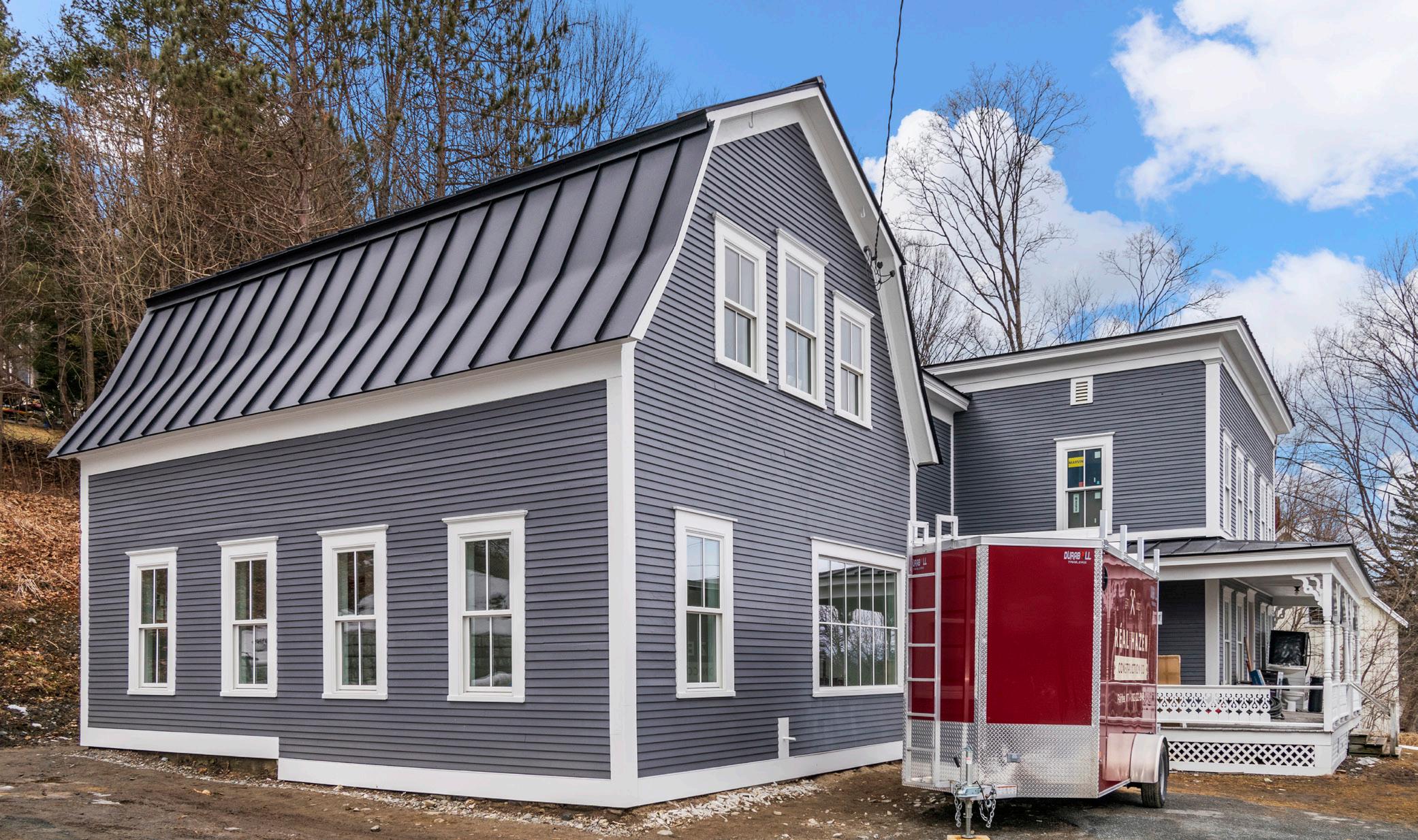
As mentioned previously, the Limited Liability Corporation, or LLC, is the most important and commonly used business structure to meet the needs of small-scale developers. Below we will offer a primer on what an LLC is and how to think about structuring your own.
An LLC’s primary advantage is that it separates the business’s legal and financial obligations from the personal assets of its owners. Members of the LLC typically enjoy limited liability, meaning that their personal assets are shielded from business debts and legal liabilities including credit default or personal litigation.
A key component of operating a business under the LLC structure is the ‘operating agreement’. Having an LLC operating agreement is not required in the State of Vermont, but is highly recommended because it fully outlines roles, responsibilities, return expectations, project management, and the procedures for dissolution.
Below, we will outline how the creation of multiple LLCs interact in a development project, who might be a member of one or the other, and how this business structure affects project finance options. Business structure also has implications for taxes and loans that will not be addressed at length in this workbook. You should discuss the specifics of your project with tax specialists and lenders to better understand how your chosen business structure will interact with taxes and loans.
If you are interested in exploring alternatives to the standard LLC structure described in this workbook, the Small Business Association (SBA) has details on other common business structures. Regardless of whether you opt for an LLC or another structure, you should plan to discuss the details of your business structure with a local attorney or tax advisor—especially since the requirements vary by state and online information may be inaccurate.
To separate personal assets and liability from the development business, you should consider forming a development company first as a limited liability corporation (LLC). The corporation will be the developer of each project you take on, and each project will also be its own individual LLC. Using this business structure protects the individual who is undertaking development projects, and protects those who invest in different individual projects developed by the company.
The development company does not typically require much operating cash since the small-scale developer will pay for each project separately - in other words, each project will have its own distinct capital stack (see section below, “Building Your Capital Stack”). The development company’s expenses consist of business insurance and office expenses. The development company’s revenue comes solely from developer fees and excess profits. These profits are drawn from the operating income of individual projects after all expenses and capital reserve contributions have been paid.
It is good practice to also form an LLC for each property being developed.
The project LLC consists of the development company LLC and its equity partners (those who have invested in the project). Again, the ‘operating agreement’ describes roles, responsibilities, return expectations, and how a member’s shares might be bought out.
Within this structure, and outlined in the operating agreement, are distinct roles with their associated responsibilities. Members of a project LLC can be individuals, corporations, another LLC, or even a trust. In the most straightforward structure of a project LLC, there are two primary roles:
a) member (the operating partner): this is you—the small-scale developer (or their development company LLC).
b) members (equity partners): your other investors in the project.
Creating separate LLCs for individual development projects allows members of each project to vary accordingly. Using the example above, let us consider adding a second project where Equity Investor A is not involved while Equity Investor B joins alongside another partner (Equity Investor C).
The Project LLC’s operating agreement should include, at minimum:
• Capital contribution
• Day-to-day management and control
• Distribution of profits
• Exit mechanism
Below we will help you think through your own Project LLC operating agreement.
The operating agreement, typically prepared by a business lawyer, will specify the amount of capital contribution expected from each member. In addition, it must also specify when this capital is due. For example, an equity partner may agree to contribute 25% of the required capital but only at a later stage of the development process. It is common for the small-scale developer to also contribute a portion of the equity required, maybe as cash or some other contribution of value such as a deferred developer fee or the predevelopment work described above.
The operating agreement is expected to specify in detail the structure and the responsibilities of both parties regarding the management of the development project. It is important to define the developer’s responsibilities in day-to-day operations and management of the development project, including design decisions. An investor may suggest a preferred color for the cabinets, but ultimately the decision is up to the developer, as described by the operating agreement. This is different from the day-to-day operations of a rental building once construction is complete and is occupied by tenants.
Profits from the project may not necessarily be equally distributed (just as investment and participation may not be equally distributed). The operating agreement should make this breakdown clear. Members that have invested more into the project are likely to receive a higher share of the profits, or possibly receive their share sooner.. Additionally, when operating a rental project, investors’ annual compensation will vary based on the rent and expenses for a given year.
It is essential for an operating agreement to detail how and when a member is no longer part of the LLC. A common approach amongst small-scale developers is to agree that the operating partner can buy out an equity partner’s share in the company for $1 after all return expectations have been met. The single dollar buyout simplifies the transfer process and offers an incentive for the operating partner to meet return expectations quickly so they can obtain full ownership at a nominal fee. In addition, the operating agreement must list out all the events that might allow one or both parties to trigger a premature dissolution.
This section will walk you through key concepts of lending and financing so you understand what questions you need to ask to make an informed decision.
Real estate development projects almost always need debt, and lenders typically lend no more than a certain percentage (often 70 – 80%) of the project cost (or its appraised value, whichever is less). The remaining 20 – 30% is referred to as "equity," and this can come from private investors. For some projects, the debt payments on a loan that represents 70 – 80% of the project costs will be so high that more than 20 – 30% equity will be necessary to cover them.
The combination of debt and equity is known as the “capital stack,” where different layers represent various sources of funding. The structure of debt and equity in a real estate development project depends on factors such as project size, risk tolerance, preferences of developers, investors, and the lender’s requirements. The image to the right represents a typical, basic capital stack for a small-scale development project. Larger, more complex projects will have substantially more complex capital stacks than the one illustrated to the right. Any contributions by a public agency would be included in the equity portion of the capital stack.
Debt and equity in real estate development represent different approaches to project financing. Debt involves borrowed funds with fixed repayment obligations, most likely from a local lender. Equity involves ownership stakes with variable returns. This is why your equity investors become members in a project LLC. Unlike debt, equity partners do not have a fixed repayment schedule. Their returns are often realized through the project’s cash flows, appreciation, or at time of sale as under the terms of the Operating Agreement. The percentage of each of these sources is a strategic decision made by the small-scale developer to balance risk, optimize capital, and support project viability.
Capital Stack Diagram
This diagram visualizes a small development capital stack. The lender has the lowest risk because they are in the first position. This is expressed through lower return rates. The developer gets paid last and has the highest risk, yet has the largest potential gains relative to financial commitment.
As mentioned at the start of this chapter, financing options largely flow from the initial fork in the road between an owner-occupied development strategy and a commercial development strategy. Below we’ll outline the corresponding fork in the road for financing: owner-occupied residential mortgage vs. commercial loan.
An owner-occupied residential loan is a type of mortgage loan that is used to finance the purchase of a home that the borrower intends to live in as their primary residence. This type of loan is different from investment property loans, which are designed for income producing properties that the owner does not intend to occupy.
Owner-occupied residential loans typically have more favorable terms and lower interest rates compared to investment property loans. Lenders often view owner-occupied borrowers as lower risks because they have a vested interest in the property and are less likely to default.
Key features of owner-occupied residential loans include:
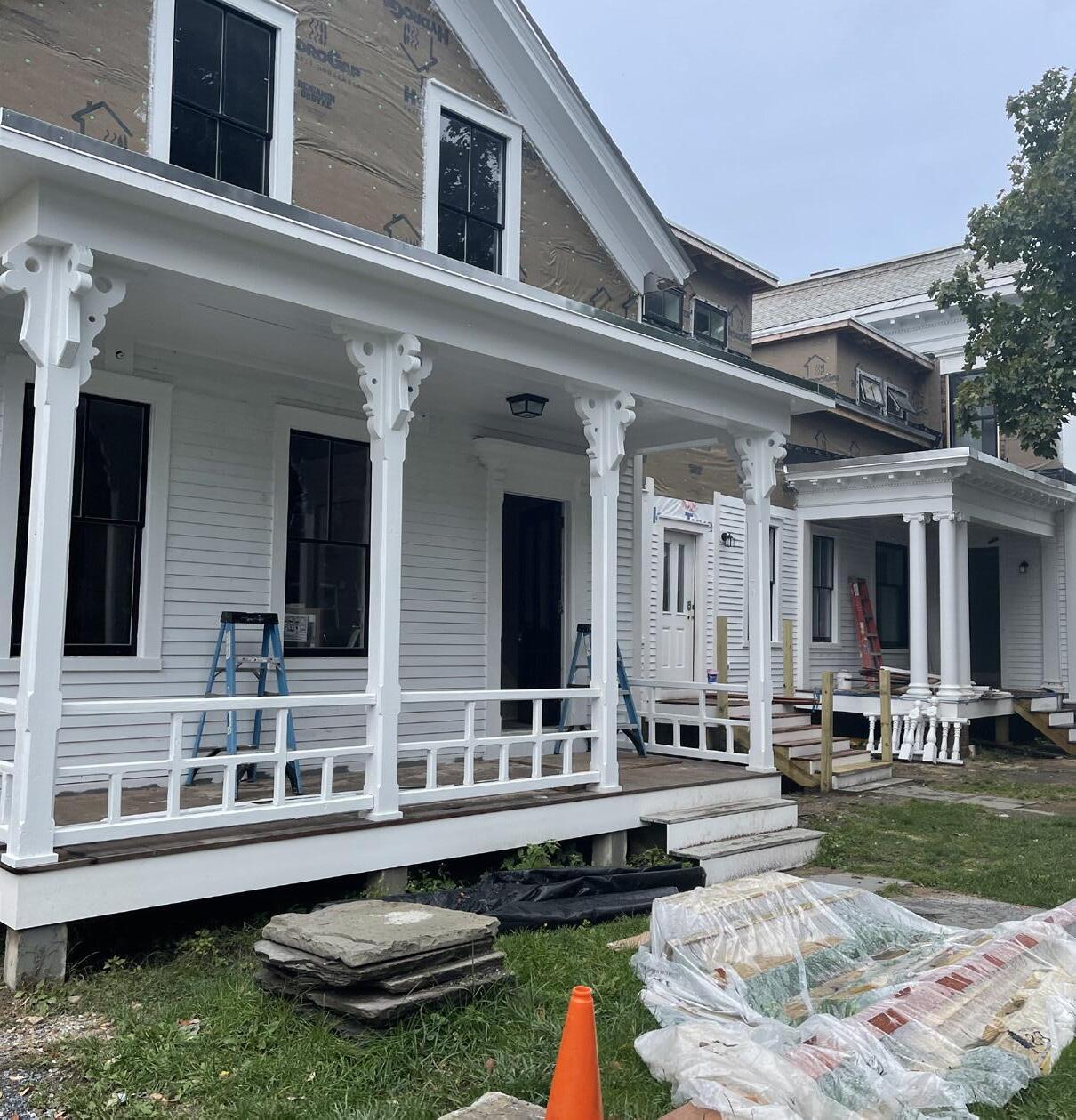
• Primary Residence Requirement. The borrower is required to live in the property as their primary residence. Lenders may have occupancy verification processes to ensure compliance with this requirement.
• Down Payment. The down payment requirement for owner-occupied loans is often lower than that for investment properties. It can vary based on factors such as personal credit score, loan type, and individual lender policies.
• Interest Rates. Interest rates for owneroccupied loans are generally lower than those for investment properties. The interest rates are also fixed for up to 30 years. Again, lenders often offer more favorable terms because they perceive owner-occupied borrowers as having a lower risk of default.
• Loan Program. Various loan programs, such as the Federal Housing Administration (FHA loan for short), Department of Veterans Affairs (VA loan for short), and conventional loans, may be available for owner-occupied properties. Each program has its own eligibility criteria and features.
Recent updates to the FHA loan program require only 5% down payment for buildings with 2-4 units while still maintaining less stringent credit score requirements. When purchasing buildings with 2-4 units, this loan product allows for a portion of projected rents to be applied toward qualifying for the loan, upwards of 75%. Putting only 5% down will require mortgage insurance, an additional cost to the monthly payment.
Conventional loans are different from FHA loans in that they are not insured or guaranteed by the government. They are offered by private lenders and follow guidelines set by Fannie Mae and Freddie Mac, requiring increased down payment and tighter credit score requirements, but these more stringent standards eliminate the need for mortgage insurance. Ultimately, talk to your lender about what is the best fit for your project and personal finances.
Exterior renovation underway at a historic building that was converted by small scale developer Zak Hale of Hale Resources into a multi-unit development.
Credit: Zak Hale.
Commercial loans in real estate development are primarily used to fund the development or construction of commercial properties. Commercial loans can include the purchase of raw land, site preparation, construction costs, and other related expenses.
Instead of relying solely on personal finances and credit score, the criteria for a commercial loan also includes the project’s performance, the financial strength of the development team or project LLC, and the developer’s track record in successfully completing similar projects or managing similar enterprises. Underwriting, a process in which a lender evaluates an application alongside the project’s development plan, utilizes key metrics from the small-scale developer’s pro forma to inform this evaluation. The key metrics include:
• Net Operating Income (NOI)
• Debt Service Coverage Ratio (DSCR)
• Loan-to-Value (LTV)
• Loan-to-Cost (LTC)
• Appraised Value.
See Chapter 5: Feasibility Methodology for more on these terms and other components of a pro forma.
Underwriting is when a lender reviews an applicant’s application against qualifying criteria alongside the development plan and pro forma to confirm the assumptions provided by the small-scale developer.
The value of a project plays a big role in qualifying for a loan and how much money the project may be eligible for. This is called the loan-to-value (LTV) ratio. Lenders have specific LTV ratios, describing the amount of financing relative to the project’s appraised value determined by the metrics described above. In practice, this is the same as a down payment. A 20% down payment translates to an 80% loan-to-value-ratio. Another term is loan-to-cost (LTC), which is used when constructing something new, wherein the lending amounts are a defined percentage of the total cost of construction. The only real difference is that LTV applies to a project with an existing structure, and LTC applies to a project that requires the construction of a new structure.
Beyond the fundamental fork in the road of owner-occupied residential loans and commercial loans, it is also important to understand common loan products so you can choose the one that best fits your project. Below we will describe a variety of loan products and offer a few resources to get you started. However, this section should not be used as a replacement for conversations with local lenders where you model the specific terms of any loan (or combination of loans) you are considering.
When evaluating what loan (or combination of loans) works best for your project, make sure you:
1. Plug Loan Terms into Your Pro-Forma. The specific terms of any loan product you are considering should be modeled in your project pro forma to make sure fees, interest, and repayment terms are accounted for. These fees will be noted in a loan estimate disclosure package containing all of the loan costs. These costs can then be used to update the development pro forma replacing the prior best guess or rule of thumb assumptions.
See Chapter 5: Feasibility Methodology to learn more about what a pro forma is and how to use it to evaluate feasibility.
2. Ground-Truth Local Lender Offerings. While federal agencies insure and guarantee certain loans, local lenders still need to provide these loan products. It is best to develop an understanding of federal loan programs and then ground-truth their availability with local lenders. The resources provided below are a good place to start, but be prepared for more conversations on the ground with local lenders to understand the market.
Many small-scale developers are interested in self-financing through cash, savings, and leveraging personal credit or equity. Similarly, many small-scale developers rely on the strength of their relationships with interested friends and family who are able to contribute to the development. These strategies can be particularly appealing to establish yourself early on if traditional lenders do not share your understanding of the market for your project.
Self—Cash, Credit, Equity.
• Cash or savings. While having cash or savings on hand is common, using debt to finance purchases can be more strategic. Even though debt incurs interest, it allows you to leverage the bank’s money, thereby stretching your buying power for the project and preserving your own cash reserves. An example includes acquiring one property for $500,000 cash or acquiring five $500,000 properties by leveraging the lender’s money and putting $100,000, or 20%, down on each.
• Line of Credit. Unlike a typical loan where a borrower receives a lump sum for a purchase, a line of credit allows the borrower to withdraw a predetermined amount in any increments as needed. A line of credit can be secured by some type of collateral; or they can be unsecured, meaning that no collateral is put up as a security against default. Without collateral, interest and repayment terms may be higher than a line of credit secured by collateral.
• Home Equity Line of Credit (HELOC). A HELOC can function such as a second mortgage. Although rates are typically higher and more variable than a standard home mortgage, a HELOC does not require refinancing and provides a way to access the equity in a property.
Friends and Family. Your project also provides an opportunity for friends and family to make an investment that offers a reasonable return in a specified timeframe. The familiarity, informality, and flexibility of this option is appealing to many, especially when traditional lenders are not proving to be good partners in your vision. Nevertheless, make sure you are still specifying the terms of any financial relationship in writing.
A renovation loan is a type of loan specifically designed to finance the costs associated with renovating or improving an existing property. These loans provide homeowners or real estate investors with a flexible financing option for projects involving upgrades, repairs, or additions to a home.
Renovation loans are structured to cover both the purchase price of the property and the renovation expenses, making them distinct from traditional mortgages. The FHA owner-occupied loan from above is considered an acquisition loan, so does not provide additional funds for property
improvements. The FHA offers a renovation loan, called a "203K loan." In Vermont, finding a 203k lender and licensed inspector can be tough, so having additional conversations with various lenders may reveal that they offer a different, yet similar loan option.
If you already own the property, you are eligible to refinance into the renovation loan. The key component of this type of loan is the ‘after construction value,’ so improvement plans will need to be submitted for appraisal–which factors into the amount of the loan. The loan-to-value amount specified by the loan terms itself also factors into the amount available. For example, a loan-to-value amount may be 85% resulting in the maximum amount to be loaned at 85% of the appraised after construction value. So, if the property plus improvements are valued at or below the newly appraised ‘after-construction-value’ minus the loan-to-value amount, the project can be fully financed. Any remaining amounts will need to be covered by the small-scale developer.
Many renovation loans allow for the construction of a new ADU, but because this type of loan requires a refinance, some find this unappealing when the interest rate of the current mortgage on the property is more favorable. Without refinancing, the lender for the loan on the ADU would need to be willing to take a ‘second position.’ Due to increased zoning allowance and demand for ADU construction, some lenders are creating new programs and loan products to address this exact scenario, so make sure to discuss these programs with local lenders.
Some acquisition loans allow for a portion of the projected rents to help a borrower qualify for the loan. Only recently have certain federally backed loans allowed the use of projected future rents to help qualify for a loan that includes an ADU. Previously, the borrower had to show income to cover the mortgage payments on the ADU in addition to their existing mortgage.
A construction loan is a type of financing designed to provide funds for the construction or development of a real estate development project. This type of loan is temporary and is used to cover the costs associated with the construction of a new building, or major renovation. Construction loans are typically short-term loans that are replaced by
a permanent mortgage once the construction is complete. Construction loans are used to finance the building of a new structure from the ground up. These loans can also be used for substantial renovations or improvements to an existing property.
During the construction phase, borrowers may be required to make interest-only payments on the amount disbursed. Funds are disbursed in stages or “draws” as specific construction milestones are met and lien waivers from the contractor are provided. Once construction is complete, the borrower transitions to a permanent mortgage. This can either involve a new loan application and closing process or the loan can be automatically converted to permanent financing depending on what the lender allows.
After construction is complete, the construction loan is either paid off when all new homes are sold, or, if holding onto the property, a new loan is obtained called a ‘permanent loan.’ Another term for this is ‘takeout financing.’ This type of loan has a longer repayment period and typically has terms ranging from 15 to 30 years, similar to traditional home mortgages. A permanent loan does not necessarily have to be with the same lender who provided the construction financing.
Also called a ‘single-close’ option, construction-topermanent loans conveniently provide a seamless transition from construction financing to longerterm permanent financing. One of the primary advantages of a construction-to-permanent loan is a single closing process. Borrowers do not need to go through separate closings for the construction loan and then the permanent mortgage. This streamlines the financing process and reduces administrative hassle. Once construction is complete, the loan automatically converts into a permanent mortgage.
While the single close is convenient, the decision between a construction-to-permanent loan and separate construction and permanent loans depends on the specific needs and preferences of the borrower, the complexity of the project, and the prevailing market conditions. If you believe you can obtain more favorable permanent financing than what is currently being offered in a singleclose option, you may choose the approach of construction loan and then shop around for the permanent loan.
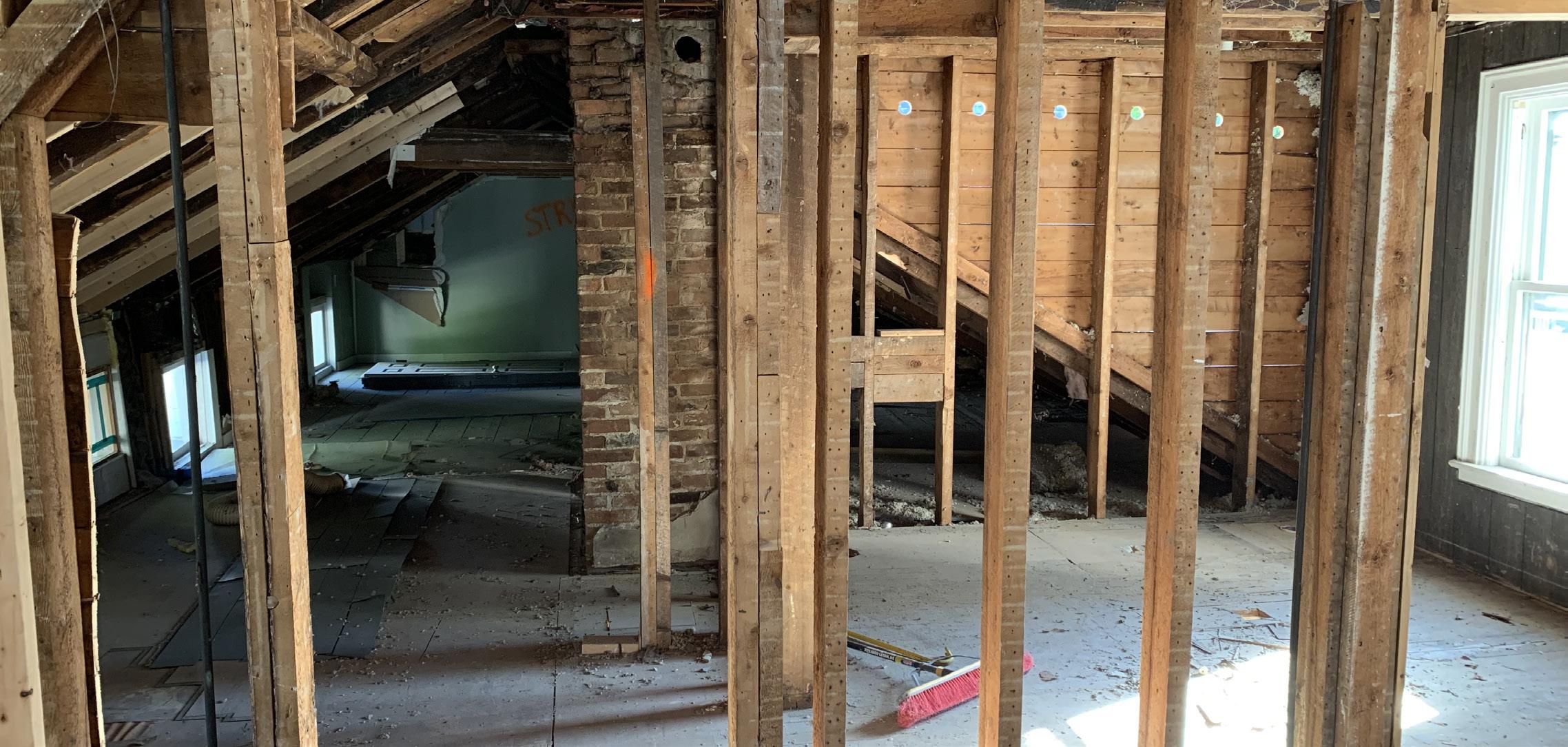
In addition to having a broad understanding of key concepts and approaches to financing a smallscale development project, it is also important that you negotiate terms, weigh risks of personal guarantees, and understand the dynamics of first and second positions as you work with lenders to negotiate and finalize your capital stack.
When it comes to dealing with banks and securing a loan, it is essential to keep in mind that banks are inherently risk-averse. They want to minimize the chances of losing money, and that is why they carefully assess the risks associated with lending. Understanding this perspective can help you navigate the process more effectively but still keep in mind that from the bank’s standpoint, offering you a loan is a business transaction. They want to sell you a loan product because it is beneficial for their business. They make money through the interest and fees paid, so it’s a symbiotic relationship. However, this also means you have some room for negotiation. Do not hesitate to discuss and negotiate the terms of the loan to ensure they align with your needs and financial situation.
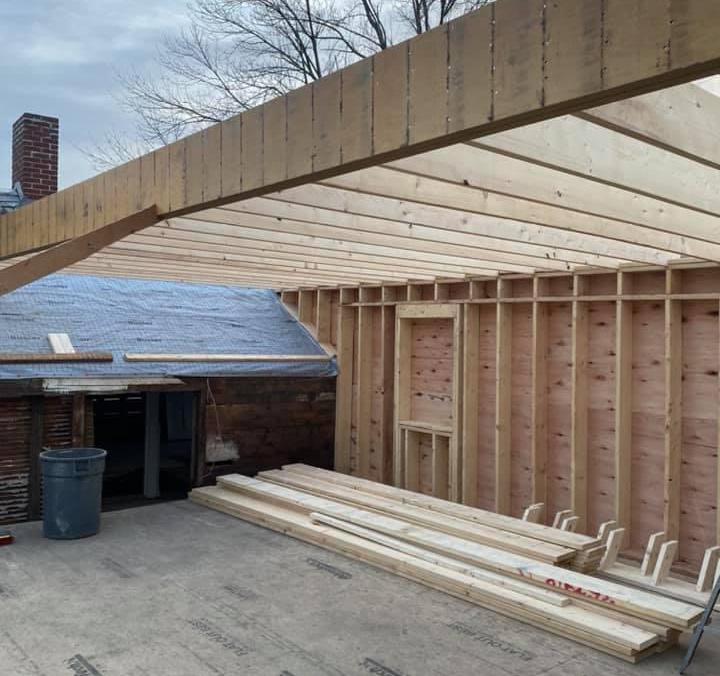
Weigh risks of personal guarantees. When dealing with real estate loans, you might come across the concept of a personal guarantee. This is a commitment by an individual to take personal responsibility for repaying the loan. This could look like agreeing to use another property or cash accounts as collateral. Essentially, it adds an extra layer of security for the lender. If there’s a default on the loan, the individual guarantor becomes personally liable for any outstanding debt remaining after the lender has taken back the development project and resold it.
Personal guarantees are quite common in commercial real estate financing, especially when the borrowing entity is structured as a Limited Liability Company (LLC). The terms of a personal guarantee aren’t set in stone and can be negotiated with the lender. However, it is crucial for potential guarantors to carefully weigh the associated risks. Before agreeing to a personal guarantee, it is wise to seek legal advice to fully understand the implications and protect the guarantor’s interests.
In the unfortunate event of a default where the lender is involved, the lender has the primary claim to repayment. This priority is often referred to as the “first position” in the lending and development industry. Essentially, it means that in the line of creditors seeking repayment, the lender is first in line. Any lender in second position comes next, then the investors.
Understanding these dynamics and being aware of your negotiating power can empower you in your interactions with lenders. It is a balancing act between your needs and the lender’s requirements, and being informed and proactive can lead to more favorable terms for your financial endeavors.
New framing for an extension as part of a renovation and conversion of a historic home by small scale developer Zak Hale of Hale Resources in Bennington, Vermont.
Photo Credit: Zak Hale.
As highlighted throughout this chapter, deal structures will vary depending on project type and are intertwined with business structure and financing strategy. This project type diagram shows an example of how a hypothetical small-scale developer might make use of different deal structures as they gain experience and take on different project types over time.
Investment Strategy
Owner-Occupied
Financing based on:
• personal income
• debt-to-income
• project value determined using comparables
• more favorable terms (less downpayment, fixed rate, longer amortization)
Building Type
Duplex
Business Structure
Self
Deal Structure
Self + family + lender
Loan Type
FHA 203b acquisition loan: 3.5% down, 30-yr fixed rate
Unsecured Line of Credit: renovation costs
Investment Strategy
Cash-out Refinance: pay back family investor + interest
HELOC: post renovation (used for 5% downpayment on next owner-occupied property)
Exit Strategy
Long-term hold
At the conclusion of the second project, the small-scale developer now manages four units over two properties using an owner-occupied strategy and is now being approached by investors to do ground up new construction for a third project.
Detached home adding basement suite & backyard ADU Building Type
Business Structure
Self
Deal Structure
Self + lender
Loan Type
Renovation loan refinance
ADU loan, 2nd position: 0% down, 20-year fixed
Investment Strategy
Refinance: finance with renovation loan; use funds for basement suite
ADU Loan: from lender willing to be in 2nd position
Exit Strategy
Long-term hold
Commercial
Financing based on:
• financial strength/experience of development team
• value of project based on comparables
• shorter term lengths, higher downpayment (20-35%)
Building Type
Multiple single-unit detached co ages
Business Structure
Development company LLC
Deal Structure
Project LLC (development company + equity partners)
Loan Type
Construction loan
Investment Strategy
Sell Co ages: pay o construction loan; returns to investors; developer gets fee plus returns on any equity)
Exit Strategy
Sell all co ages fee simple
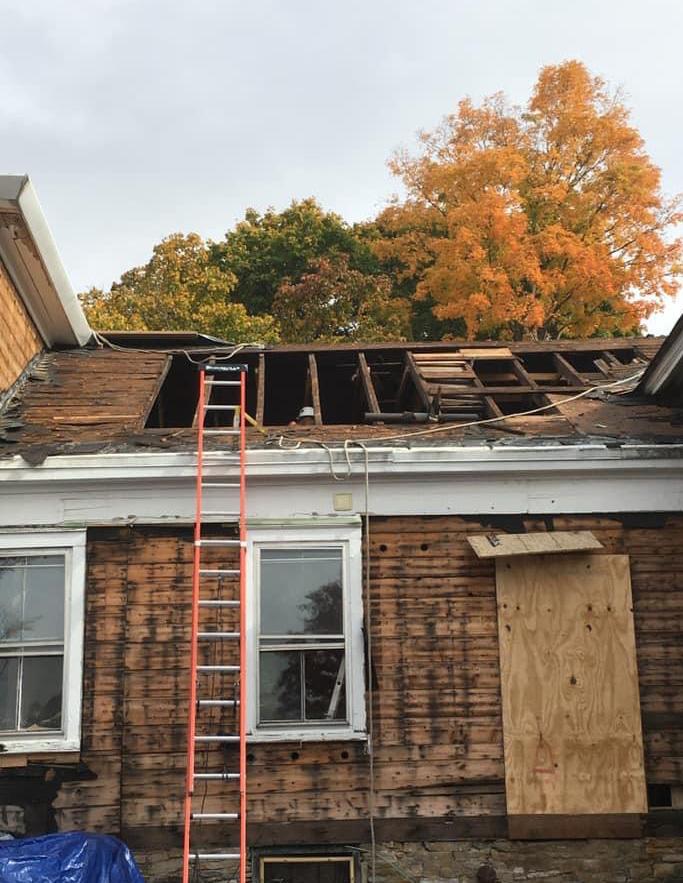
Developing a rigorous but flexible method for testing feasibility throughout a development project is critical to informed decision making and nimble adjustments. Feasibility is inherently intertwined with both market conditions and physical conditions and is therefore best addressed through an iterative process that leverages the role of both factors as an integral part of your feasibility method.
A key component of any development feasibility method is the use of a real estate development pro forma. A pro forma is simply a project budget. This budget tracks costs and incomes while measuring whether, and how much, incomes exceed costs. At the early stages of projects it is used in an exploratory and iterative manner to test alternative ways of bringing a project to market. As the project evolves and moves into implementation, your pro forma can also be a powerful tool for monitoring and adjusting the project approach based on new opportunities and constraints impacting the project's bottom line.
Your pro forma is a distillation of your understanding of how the individual pieces come together to paint a particular picture given certain financial assumptions. Your development feasibility methodology, as recorded in your pro forma, should always rely on a meticulous mosaic of data, research, and industry insight. The rest of this chapter is intended to demystify the process of developing a pro forma and get you comfortable working through ideas and assumptions in a way that leverages both market analysis and design insights.
• Identifying Market Types: Cash Market vs. Bankable Market
• Importance of Market Types
Leveraging the Power of a Pro Forma
• Getting familiar with key pro forma terms
• Getting comfortable using pro formas
• Sequencing of Project Costs
• Pro Forma Types: Parallel vs. Static Pro Formas
• Practicing Pro Forma Use
Putting it all Together—A Pitch Package
Roof and siding replacement underway at
While conducting a full market analysis may not be necessary for small-scale developers pursuing infill housing, understanding the local market type is essential and allows for better decision-making. Developers should consider engaging with local real estate professionals, appraisers, and lenders to gain insights into the prevailing market conditions. This collaboration helps in crafting strategies that maximize the potential for project success and financial stability. Having identified housing gaps in the market allows the small-scale developer to create a project that fits a community need while building trust in the community. Some good places to start your market research include:
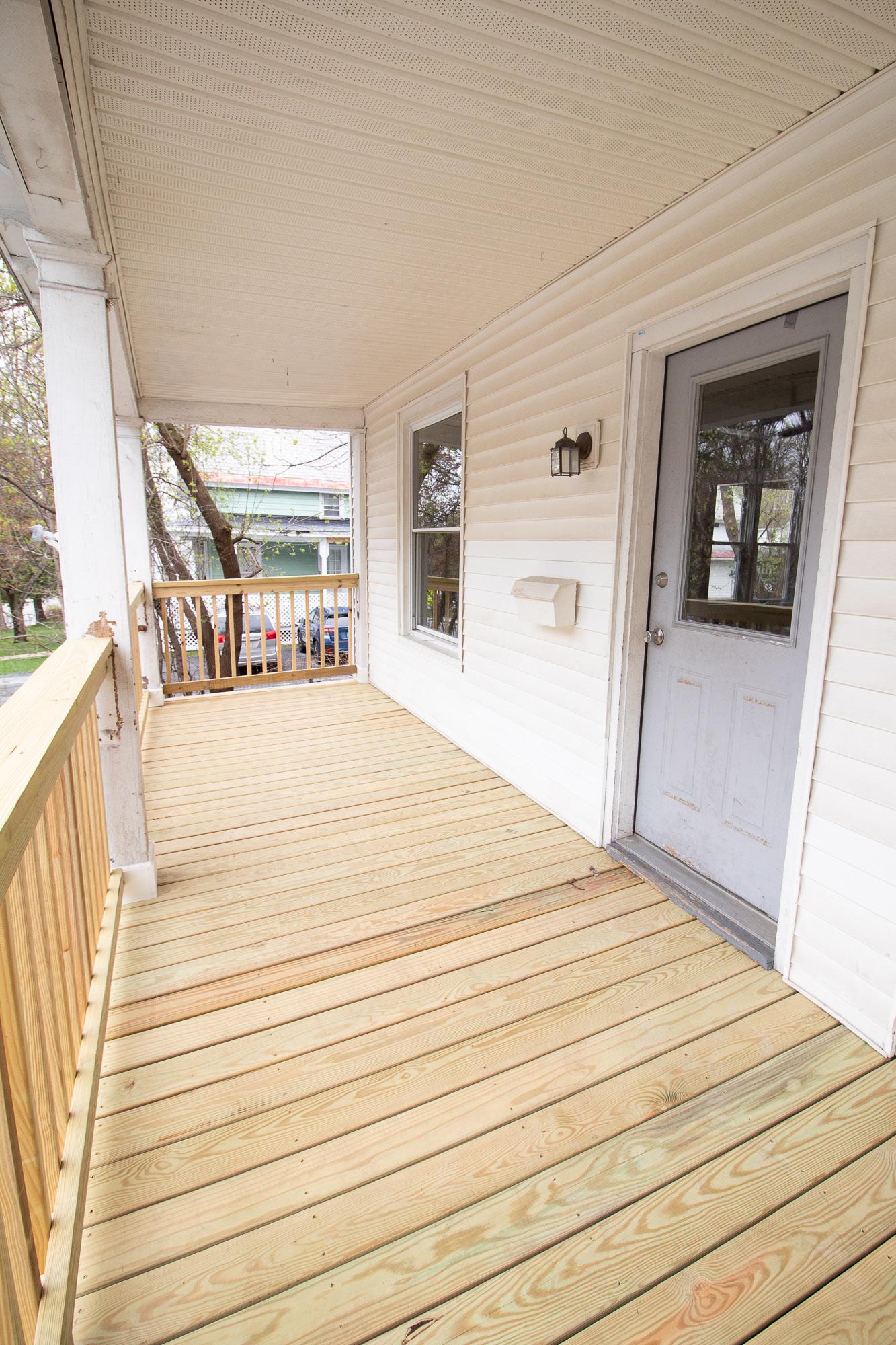
• VHFA’s Vermont Statewide Housing Needs Assessment 2020 – 24
• VHFA’s Vermont Community Profiles which show housing stock and demographic data
• VHFA’s Housing-Ready Toolbox
Distinguishing between a cash market and bankable market is crucial, as it impacts the project’s financing strategies. This knowledge helps developers tailor their approach and offerings to the specific market segment they intend to serve. The definitions below will help determine which market you may find yourself in.
1. Cash Market. In a cash market, properties tend to cost more to build than they appraise for. This means that the appraised value of the completed development is lower than the total investment made into it. This situation can be problematic when seeking financing, as lenders typically base loan amounts on appraised values. In a cash market, developers might face challenges securing the necessary funds to complete the project, leading to potential lending difficulties. In this type of market, taking small bets (such as cash financed renovations to confirm viable rents or sales) is a winning strategy. As these small bets prove successful in the market, the smallscale developer can start to establish their own portfolio of comparable projects. This collection of comparables will be beneficial for obtaining appraisals required for bank financing of future developments.
2. Bankable Market. In a bankable market, projects are considered financeable because the appraised value of the completed development is higher than the total investment made into it. This scenario is more favorable for developers seeking financing as lenders are more likely to provide loans when the property value supports the investment. In a bankable market, developers have a smoother path to obtaining funding for their projects.
Identifying whether the local market leans more towards a cash market or a bankable market is crucial for several reasons:
1. Financing Strategies. The market type directly influences how developers approach financing. In a bankable market, developers can be more confident in securing loans from traditional lenders, while in a cash market, alternative financing strategies may need to be explored. Occasionally, the promise of a particular area may not meet the strict criteria set by conservative lending institutions. In such cases, local, small-scale developers, along with investors who are focused on community development, can demonstrate the area's potential through several projects, effectively setting the stage for its growth.
2. Risk Management. Understanding the market type helps developers assess the level of
risk associated with their projects. In a cash market, there is a higher risk of facing financial challenges due to lower appraised values and achievable rents. A small-scale developer is able to take risk through understanding a variety of housing types available in a missing middle housing portfolio that conventional large-scale developers often overlook..
3. Project Viability. Developers can gauge the viability of their projects based on the market type. A bankable market offers a more favorable environment for completing projects if debt is required, whereas a cash market will require more money, if not fully self-financed. A project’s viability in the market is not determined by the underwriting standards of a lending institution, but by how it meets a local market need.
4. Tailored Strategies. Armed with knowledge of the market type, developers can tailor their project plans, pricing, and marketing strategies to align with the specific needs and preferences of the local market. Large-scale and conventional developers using institutional equity investors are unable to take this risk due to expected return rates. Local developers and equity partners can customize their return expectations to consider return on community just as much as return on investment.
Leveraging these insights into market type will allow you to craft realistic housing solutions for your community.
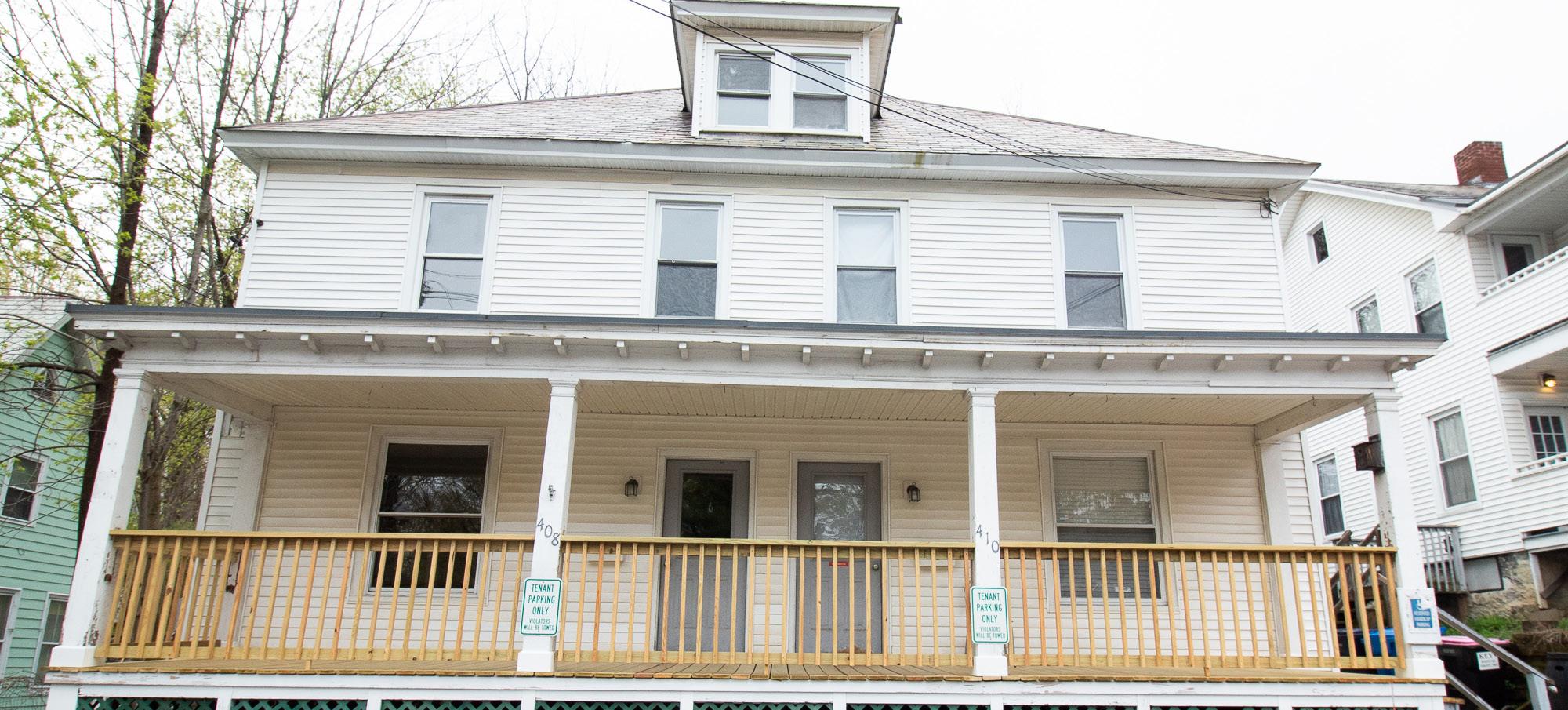
Sketching a site layout concept is a valuable skill that can can save money and make projects more livable and desirable to tenants or purchasers. Small-scale developers should be comfortable generating conceptual site layouts as part of their feasibility analysis. These site layouts do not need to be of high-quality artistic value, they only need to be able to clearly communicate the physical implications of ideas. Testing conceptual site layouts in tandem with your pro forma development will allow you to go back and forth between the physical and financial feasibility to find a workable approach for both.
Once a workable approach is determined, the site plan sketch can be used to communicate ideas to a designer, architect, zoning official, lenders, and contractors. More refined drawings from a design professional can come later but having the skill to do this initial legwork saves the small-scale developer from calling and paying a designer for every idea, only to find out it may not work. We recommend small-scale developers draw a concept sketch, then input the idea into the pro forma and rework as needed.
To do this, only a few tools and skills are necessary. Some may choose to use a software program, but a simpler approach is pen, paper, and markers or colored pencils.
A local arts supply store will have everything required, which includes:
• A double ended marker or felt-tipped pen with one thick end and one fine point end.
• See-through trace paper.
• Tape – a removable type such as drafting tape is easier to work with.
• Red and blue colored pencils for iterative drafting.
• Other colors for illustration such as light green for grass, dark green for trees, light gray for pavement, and dark red for buildings. These can be colored pencils or professional markers such as the AD Markers made by Chartpak.
• Optional: Engineering scale, but can also use a basic ruler.
• Optional: Parallel glide ruler for drawing lines. This is optional because measuring and making dots, then connecting these dots is perfectly acceptable. Also, a slightly wiggly line provides texture, where a perfectly straight line can appear too rigid, especially at this conceptual phase. Keep it loose.
A couple of insider notes before getting started.
Line weights. When drawing, designers use a concept of line weights to make a site plan easily legible by directing the observer’s eye to important items. Line weights refer to the thickness of a line to communicate its importance. For example, a lot boundary line will be thick because it is an important demarcation representing the limits of where ideas can take place whereas the outline of pavement will be lighter because it is more flexible as ideas change.
Line types. Some lines are not solid and have a standard way of being represented graphically:
• A lot boundary line is represented by a dash-dot-dot-dash.
• A setback line is all short dashes.
Start by measuring out the dimensions of the lot directly onto a piece of regular-sized printer paper. Place the street and the front of the lot at the bottom of the page and label the street, which will enable observers to quickly become oriented.
A scale of 1-to-20 works well with this size of paper. What this means is that every inch on a ruler translates to twenty feet in the drawing. So, a 100-foot-deep lot will be five inches. To make smaller measurements such as ten feet, use onehalf inch, or one-quarter inch for five feet.
After drawing the lot boundary line using the thick end of the Sharpie, refer to the relevant zoning standards (which should be recorded in a tab of your Static Pro Forma excel workbook accessible via the Sample Pro Formas appendix). Next, draw the front, side, and rear setbacks with the thin end of the Sharpie. These setback lines identify what is known as the ‘buildable area,’ where structures are allowed to be placed. Be sure to also include any
existing structures or other items that must remain and be worked around. Now you have a base layer to work from.
Using the printer paper with the lot boundary and setbacks as the base layer, lay a piece of trace over it and tape it down. This is where ideas can be sketched out but also easily crumpled up and thrown out if they do not work. You may also find yourself using a portion of the plan that you like but modifying another portion. This can be accomplished by laying yet another piece of trace over the top and tracing over the good parts while offering a blank space to modify what is not working as well.
The process of iterative drawing and adding pieces of trace can get confusing. One way to keep track of your ideas is to use red for things that do not, or cannot, change such as setbacks or existing streets
and sidewalks. Blue is used for flexible items such as new walkways or new building locations.
This is the phase of drawing where there should be the most back and forth from the drawing to the pro forma, especially when unit count or building square footage change. Other calculations, such as what percentage of lot area the buildings use, should be regularly checked to make sure the zoning standards are being met.
A final site plan can be drawn and colored once a workable plan has been determined. This final sketch should be drawn with good line weights, proper line types, and a bit of color to differentiate between features such as parking, landscaping, waste bins, utility features/boxes, snow storage, and structures. A phone picture or scan can be used to capture this final image digitally and then print or share.

A few basic tools and techniques is all it takes to begin a conceptual site plan. Shown is a 100-foot × 100-foot, 10,000 square foot lot with setbacks at 1:20 scale, where 1 inch equals 20 feet.
In addition to a glossary of terms used in this Workbook, key real estate development pro forma terms are described below. Familiarity with these terms is essential for assessing the financial feasibility of a project, discerning potential risks, and optimizing returns. This also provides common ground for effective communication within the real estate industry, including lenders or equity partners. To further explore the nuances of a real estate development pro forma, let’s delve into key terms and concepts.
Working capital. The funds that a developer maintains to cover day-to-day operational expenses during project construction.
Carrying costs. Project-related expenses a developer incurs once embarking on a project to keep the process moving forward. Working capital is used to cover carrying costs.
Construction financing. Funds loaned on a shortterm basis for the construction and stabilization period of a project. Payments are often interestonly during this period.
Permanent financing. Debt loaned on a longterm basis once construction and stabilization of a project are complete. Applicable when constructing units intended for rent.
Permit Fees. Fees associated with state and local permit applications.
Impact Fees. Fees for public improvements or project impacts to municipal services. These appear in some local Vermont codes as ‘necessary public improvements’ which most often relate to sidewalks, street tree plantings, and other frontage items. There can also be fees for transportation, utilities, schools, or parks. See this useful overview from the Vermont Planning Information Center and the Vermont Title 24, Chapter 131 on impact fees to learn more.
Connection or Tap fees. Depending on the infrastructure already in place at your site, you may need to incorporate connection or tap fees associated with new connections to municipal utilities, such as water. These are similar to but slightly different from impact fees.
Acquisition or Land Costs. Costs required to purchase or obtain “site control” over the property on which your project will be built.
Hard Costs. Costs related to the ‘stick and bricks’ of a project. These are the direct, tangible expenses associated with the physical construction and development of a property. These costs typically include expenses for labor, materials, equipment, and other physical components.
Soft Costs. Costs that encompass nonconstruction expenses such as permits, fees, design, engineering, legal, and financing. Some of these costs are identified for educational purposes but may not apply in all circumstances. Additionally, some small-scale developers avoid the tediousness of tracking every single line item and just use a percentage or round number estimate. An example is each and every fee associated with the closing costs of a loan.
Contingencies. Additional monies over an estimated amount to cover cost overruns or unforeseen circumstances. Most often expressed as a percentage of the total.
Gross Potential Income (GPI). The total amount of income generated from the rent or sale of units. In pro forma modeling, this total amount is always reduced by vacancy rates and project expenses.
Vacancy Rate. A reduction in Gross Potential Income to account for time in a year that a rental unit is unoccupied. This is most often expressed as a percentage, typically 5% in a healthy market. A lender’s underwriting may require a different rate.
Operating Expenses. These are expenses incurred while operating a building throughout the year and include items such as project management, regular maintenance, occasional repairs, and paid utilities.
Net Operating Income (NOI). GPI minus vacancy and operating expenses equals the Net Operating Income. This is arguably one of the most important measurements in a rental pro forma. This metric identifies whether a building is profitable. In commercial real estate development (5+ units), this metric is used to calculate the value of a building.
Debt Service. Another term for loan payment amount. This is expressed in a pro forma on both a monthly and yearly basis.
Debt Service Coverage Ratio (DSCR). A basic calculation that determines how much of the income from a rental building covers the debt service. Expressed as a decimal, the goal is to be around 1.20 to be a lender financeable project. A 1.0 DSCR means that revenue from the project covers the debt service 100%. A 1.20 means that the Net Operating Income covers the debt service with 20% left over. A DSCR of 1.0 leaves no wiggle room in revenue to cover payments to the lender. The more debt used in a project means more project income used toward debt service.
Loan-to-Value (LTV). The maximum amount that a lender will loan based on the total appraised value of a project. This concept can be conceived of as the inverse of the more familiar term, downpayment. A 20% downpayment equates to an 80% Loan-to-Value. This amount may change based on the loan product. Loan-to-Value and Loan-to-Cost can be found in the Loan Comparison section of the pro forma. Checking in with lenders is the best approach to understanding specific ratios and which of these metrics they prefer to use.
Loan-to-Cost (LTC). Like Loan-to-Value but sometimes used in new construction to determine the maximum amount that a lender will loan based on the total eligible cost amount to build the project.
Unleveraged Return on Project Cost (also known as Yield-on-Cost). A financial metric that measures the overall profitability of a development project. This is calculated by comparing the Net Operating Income (before debt payments) generated relative to the amount of Total Project Costs, expressed as a percentage. Unleveraged means that the analysis is not considering any debt payments in the analysis. A lower Return on Cost means that there is little cash flow in the project. An important consideration especially when hoping to return investor’s equity in a timely manner.
This Return on Cost measurement is highly affected by rents or sale prices but if rents or sales are too high the market may respond by choosing somewhere else that is more affordable. If a Return on Project Cost comes in low, the temptation may be to increase rent or sales prices, but instead
consider other aspects of the pro forma such as loan assumptions, amount of debt, developer fee, or construction costs. Maybe these estimated inputs have been overly conservative in their estimates.
Leveraged Cash-on-Cash Return. An annual return metric that analyzes the return based on the amount of cash put into the project and is focused on the immediate cash flow returns. This calculation considers debt financing provided by a lender. Whether the rate returned is a good one or not is highly subjective, but one thing to consider is how this return rate compares to other investment returns available in the market, whether compared to other projects, the stock market, or high-yield savings account.
Internal Rate of Return (IRR). A common return metric used to calculate investor returns at various intervals and with varied amounts. This return metric uses multiple assumptions around increases in rents and expenses over time (7-10 years) along with projected value at this future point where the project may be sold or refinanced. When this event occurs, investors are often fully repaid. A multi-year cash flow sheet is needed to construct this analysis for a rental project intended for a long-term hold period.
Now that you have a basic understanding of key terms, it is time to delve into some of the key concepts and different types of pro formas.
It is important to communicate that while all of the project costs are captured in a single spreadsheet when using a pro forma, the project’s development and operating costs are incurred at three distinct phases. A three phase sequencing of cost outlays are represented in a pro forma and described below:
• Pre-Development. This is the due diligence phase where a project may be under a purchase agreement while a variety of items are being checked and tested. A small-scale developer may have multiple sites under contract at the same time and due diligence efforts reveal a preferred option, so the purchase option on the other site is canceled. After getting a property under contract, the pre-development phase can include a comprehensive site and zoning feasibility analysis, building inspections, and finalizing financing options in order to purchase the property.1
Due Diligence
Acquisition Fees
Legal
Environmental Assessments
Property inspections
Hazardous Material Testing
Survey
• Development. This is the portion of the project where the development team is on board, the property is purchased, and a construction contract is in place. Costs are spent on a flurry of activity, some in lump sums, others on a monthly basis. At this point in the process, most of the professional consultants exit the development team, except for an architect who may be assisting with construction oversight.
• Post Completion/Operations. Project type will determine which costs apply. Units intended for sale will incur costs for marketing and sales such as realtor commissions or buyer concessions. A rental development will have ongoing expenses called operating expenses, which are explained in more detail later.
A table is provided below which categorizes project costs according to their sequence in the project. Before applying any figures to these categories, take some time to think through what these look like. Look up any that seem unfamiliar. Additional notation is also provided in the accompanying pro forma spreadsheets as reference.
Architecture
Engineering
Construction
Permits / Fees
Taxes During Construction
Insurance During Construction
Loan Origination Fee
Lender Inspection Fee
Working Capital
Accounting
Soft Cost Contingency
For-Sale:
Marketing / Broker Fees
Closing Costs
Seller Contingencies / Concessions
For-Rent:
Property Taxes
Property Management
Legal, CPA
Water & Sewer
Trash & Recycling
Landscape Maintenance
Repairs / Replacement Reserves
Turnover
Insurance
Op Ex Contingency
1. Depending on the developer’s networks, sometimes it is possible before entering into a purchase contract to have access to sales information about one or more properties, which provides an opportunity to perform basic feasibility exercises such as zoning requirements and utility conditions, and then “run the numbers” to get a sense of whether one or more sites is financially feasible. A few basic pieces of information such as zoning density, setbacks, and height restrictions along with the seller’s asking price is enough to calculate the preliminary feasibility of developing a site.
Two types of pro formas are described below, a parallel pro forma and a static pro forma. A parallel pro forma allows a small-scale developer to rapidly explore multiple ideas where a static pro forma goes into much more detail and accuracy.
Three Sample Pro Formas are provided as part of this workbook in the appendix:
• Parallel Rental Pro Forma
• For-Sale Static Pro Forma
• For-Rent Static Pro Forma
The remainder of this chapter will provide you a framework for when to use which type and how to use each of the sample pro formas.
The pro forma inputs associated with this workbook make no claims to being accurate in any market, and are only educational to see how the pieces work individually and together. All assumptions should be verified individually by the small-scale developer.
Developing pro formas requires careful consideration and validation of assumptions, often consuming a significant amount of time. Instead of delving deep into the intricacies of a single pro forma right away, it is beneficial to rapidly test possibilities. These serve as a preliminary step, acting as mini-pro formas to facilitate quick backof-the-envelope assessments for projects with varying characteristics, including different cost and income assumptions. Evaluating these scenarios helps pinpoint the most promising opportunities. Subsequently, more focused time and research efforts can be directed towards the specifics of a particular project.
The use of a parallel pro forma is especially helpful for novice small-scale developers. It provides an opportunity to create mock development projects for idea testing and gaining familiarity with the local market. For instance, if there is an underutilized or vacant property for sale in a specific area, the small-scale developer can input the sales cost into the parallel pro forma alongside potential rents
Parallel Pro Forma (preview)
This screenshot provides a preview of the primary tab of the sample parallel pro forma provided in this workbook. See the Sample Pro Formas appendix to access, download, and begin working with this tool.
based on an assumed development program. This allows them to quickly assess whether the returns justify pursuing the opportunity. Conducting such exercises across various locations provides valuable insights, helping the small-scale developer understand where certain approaches work better than others in different parts of town. This iterative process is instrumental in gaining practical experience and building confidence in real estate development.
This approach assumes that the small-scale developer can quickly determine zoning allowances and the ability to research market rents, sales prices, and various housing types. Using the missing middle home typologies in the Design portion of this workbook is an option to streamline the cost-estimating and development process.
It also recognizes that a novice developer may have a single idea and wishes to assess its feasibility. This is entirely acceptable and the parallel pro forma can be used to test the initial viability of a single project idea. Whether the developer is exploring multiple ideas or focusing on a singular concept, the parallel pro forma provides a valuable tool for preliminary testing and analysis.
The parallel pro forma associated with this workbook is split into five sections for clarity. Blue-colored cells with blue text represent input cells. These are the cells that receive data from the small-scale developer based on educated assumptions from local data research. Gray cells are cells that contain pre-existing formulas. Finally, descriptive notes at the right of a row help as an instructive reminder. Remember, pre-filled inputs are only a starting point. You should explore real market data and customize these inputs based on your local research.
Sections of the Parallel Pro Forma. These sections identify the primary components of any development pro forma. Any differences will be in the complexity and detail of each section. For example, a more complex development program may blend additional uses beyond just residential, and may be a mix of for-rent and for-sale. Another example includes the amount of money to be raised to contribute as downpayment on a loan, especially when multiple incentives, rebates, and types of investors are involved.
Note: The workbook uses ‘equity’ and ‘costs,’ but the real estate development industry often describes these as ‘sources’ and ‘uses’. Because market rate small-scale development does not typically require a complex list of sources, equity and costs are more relevant.
A) Program: What is the project?
B) Income: How much income will the project generate?
C) Costs: How much will it cost to create?
D) Finance: What combination of debt and equity is best for the project?
E) Return Metrics: Is this project financeable, is it profitable, does it generate enough cash flow?
Here is a more in-depth look at each of the sections of a Parallel Pro Forma:
A) Program. This is the starting point, which provides a brief overview of the project. Describe the types of development projects being considered. Keeping the zoning requirements for the site in mind, think through the project’s building type, number of units, their size, and overall project financing. A customizable loan assumption table is also provided to be updated with local and current finance assumptions.
The Loan Type dropdown list provides the opportunity to explore various options about whether the project is self-financed, an owneroccupied purchase/renovation, or a new build with a commercial loan. The Home Equity Line of Credit (HELOC) assumes financing based on equity in an existing property. The commercial loan scenario assumes permanent financing once the building is built and fully occupied, not a construction loan. The preset residential loan option assumes a Federal Housing Administration (FHA) 5% down, multi-unit, owner-occupied loan.
B) Income. Here, we gather all the income generated when the building is finished and ready for use. Inputting projected rents provides a Gross Potential Income. This can also be thought of as gross revenue in a business. From this figure certain assumptions are made around Operating Expenses and Vacancy Rate that result in a net income called Net Operating Income. It bears repeating that this is arguably one of the most important measurements in a rental pro forma and the basis for calculating various return metrics.
The Operating Expenses for an ADU are manual input. These are calculated differently than the other building types being analyzed because it assumes that the property is owner-occupied and that many of the property expenses are already part of the ongoing expenses of the main house. If the property is not going to be owner-occupied then the assumptions for Operating Expenses can be updated to be the same as the rental property scenario.
C) Costs. Cost to acquire land, renovate an existing building, or build a structure are captured in this section. Because the parallel pro forma is meant for rapid testing, a flat hard cost per square foot of construction figure is calculated regardless of unit size. The reality is that smaller unit sizes have higher per square foot costs to build. This is because the most expensive items are utilities, kitchens, and bathrooms. Extra square footage for another bedroom is minimal in comparison. Hard costs can be ascertained by talking with contractors but also calling local building officials to find out what they have seen locally. When discussing costs, be sure to clarify whether the figures being quoted are total cost to build (hard and soft costs) or hard (construction) costs alone.
Included in this section are also soft costs to account for those items which are outside of the construction contract. This figure is represented as a total percentage of hard costs.
D) Finance. This section is calculated based on the Loan Type dropdown list and inputs from the Loan Assumptions table. This section identifies how much capital will be needed, how much the loan will be for, and loan payments on a monthly and yearly basis.
The overall capital stack can be modified by adjusting the amount of downpayment assumed. Doing so will make changes to the Debt Service Coverage Ratio (DSCR) in the section below. Each project will need to find the correct balance of investor equity and lender debt.
E) Return Metrics. This section helps to inform the decision on whether to dig deeper into a specific project. If a given project shows promise, it may be worth taking the next step to build a much more detailed static pro forma. All of these return metrics can change dramatically given certain assumptions. The parallel pro forma is an excellent place to modify these assumptions to see how they are affected by costs or income assumptions, but also interest rates and downpayment amounts.
• The DSCR identifies the likelihood of being a financeable project if choosing lender financing. This metric is less important when considering an owner-occupied scenario because personal finances demonstrate the ability to make debt payments, even given a conservative rent scenario.
• The Yearly Cash Flow identifies returns in whole dollar amounts after all expenses and debt payments have been made. The smallscale developer and their team of investors must decide whether this amount represents a sufficient return for the effort and capital it takes to create it. Especially considering that this is what is left over to repay the down payment (equity) amount until the property is sold or refinanced after a period of time.
• The Cash-on-Cash Return is a quick glance at the return rate based on the amount of cash put into the project from the development team (small-scale developer and investors) to identify the project’s immediate profitability. Whether the rate returned is good or not is highly subjective, but one thing to consider is how this return rate compares to other investment returns available in the market, whether compared to other projects or the stock market or high-yield savings account.
A static pro forma is the more permanent pro forma that accompanies the developer throughout the project. It is called a ‘static’ pro forma because it represents a snapshot in time. A static pro forma does not consider what happens after project completion and only provides the financial picture of how a project comes to the market until being sold or fully occupied by tenants.
This is where many aspiring small-scale developers feel apprehension because of the many unknowns and assumptions that need to be itemized. The static pro forma represents a whole lot more detail than the previously described parallel proforma and gets into the “nitty-gritty.” Understanding and thinking through the steps of the development process will help, but so will having a team to call on to verify assumptions. Fortunately, some of the components of a static pro forma will already be familiar from the parallel pro forma.
While this may seem like a daunting task, understand that even a detailed static pro forma begins with the best assumptions in the moment but becomes more and more resolved over time. Even a static pro forma will not be precisely accurate immediately. Begin with what you do know, then make a best-informed guess for other inputs, conduct additional research, and then come back with something more precise and update the financial data. Additional worksheets can be created to act as a stand-alone calculator for more complex items such as city fees or due diligence costs.
Components of a Static Pro Forma
Pre-filled inputs are only a starting point. Explore real market data and customize these inputs based on your own local research.
Two static pro formas are provided with this workbook, for-sale and for-rent models. Similarly, blue-colored cells with blue text represent input cells. These are the cells that receive data from the small-scale developer based on educated assumptions from local data research. Gray cells are cells that contain pre-existing formulas. Finally, descriptive notes at the right of a row help as an instructive reminder.
Sections of the For-Sale Static Pro Forma. The sections of a static pro forma follow a similar pattern as the parallel but with additional detailed analysis. This pro forma also introduces a couple of new sections such as a summary dashboard and site utilization calculator.
A) Project Description & Type: What is the project?
B) Project Summary: This section rolls all the other sections into a summary dashboard.
C) Program: How many units and their size? Any unfinished space or storage?
D) Site Utilization: How much of the site is being used for buildings?
E) Construction Costs: How much will it cost to build or renovate?
F) Construction Loan: How much is required for the project to be financed?
G) Loan Value Comparison: What is the maximum loan amount I can expect?
H) Sale of Home: How much do I think I can sell each home for?
I) Costs for Sale of Home: How much does it cost me to sell these homes?
J) Capital Stack: How much capital do I need to raise and from whom?
For-Sale Static Pro Forma (preview)
This screenshot provides a preview of the primary tab of the sample forsale static pro forma provided in this workbook. See the Sample Pro Formas appendix to access, download, and begin working with this tool.
In addition to the sections of the ‘Static Pro Forma’ tab, two additional tabs are provided, a Soft Costs Calculator and an Amortization Table:
• The ‘Soft Costs Calculator’ tab allows for detailed costs to be input once researched. Some of the line items provided may be applicable, others may not be, while others may need to be added. Modify as necessary.
Listed below are soft cost line items from the pro formas associated with this workbook:
• Architectural
• Engineering
• Legal
• Survey
• Environmental Assessment
• Permits/Fees
• Taxes during construction
• Insurance during construction
• Construction Interest
• Loan Origination Fee
• Lender Inspection Fee
• Marketing / Advertising
• Permanent Loan Fees
• Developer Fee
• Project Management Fee
• Working Capital
• Soft Cost Contingency
• An ‘Amortization Table’ tab is also provided solely to estimate construction interest reserves. An amortization table takes any loan assumptions and calculates monthly principal and interest payments over the life of the loan.
Here is a more in-depth look at each of the sections of a For Sale Static Pro Forma:
A) Project Description & Type. Like the Parallel Pro Forma, this is the starting point to outline the name, location, and project type. Unlike the Parallel Pro Forma, this section does not use any dropdown lists.
B) Project Summary. This section allows the smallscale developer to see all calculations rolled up into a single location providing an overview of pertinent pieces of the project, and analyze the outcomes. Scanning this section allows one to see summary costs relative to the whole project to decide if any adjustments should be made.
C) Program. Like the Parallel Pro Forma this section outlines the number of units and their size but allows for more detail and accuracy to accommodate for variations in unit sizes. Included in this section are inputs for unfinished spaces such as garages, basements, or storage so that they are accounted for in the cost section. Finally, sometimes a property contains an existing structure that is intended to be renovated. If this is the case, input the square footage of the existing unit and estimated renovation costs.
D) Site Utilization. Site utilization is a simple way of calculating and communicating how much building footprint area is taken up relative to the overall lot size. Thisis an important item to track to determine when going from one to two-stories might be required to stay compliant with the local zoning standards.
E) Construction Costs. This section includes finished and unfinished spaces. Unfinished spaces, such as basements or storage, are typically not built to the same level of finish as interior living spaces, so they have lower total costs. Sometimes these spaces are included in the overall construction estimate, but a line item is provided in this section to account for their costs if considered a separate item.
F) Construction Loan. Loan assumptions are input here and include equity (downpayment)
amount expressed as a percentage. This amount can be as low as 5% and as high as 30% or more depending on loan type and lender requirements. Input interest rate, years that the loan is amortized, and term length. Interest rate and years amortized directly affect debt service amounts. Term length will do nothing for expected debt service payments but is an input to understand when the loan will need to be retired either through the project being sold or refinanced.
The monthly and yearly debt service amounts are calculated to demonstrate the amount required if payments are not interest only. When a loan, such as a construction loan, is offered as interest only, some lenders ask that a separate interest reserve account be established to provide security that these interest only payments will be made. The total interest amount for the estimated one year of construction can be identified by inputting 100% into the ‘construction interest reserve’ on the 'Soft Costs Calculator' tab , but this figure is already calculated in the ‘Amortization Table' tab The construction reserve is typically a portion of this figure. Consult with the lender to identify any preferred or required construction interest reserve ratios. The construction interest reserve amount is a soft cost that is often initially distributed at the very beginning of construction as materials are ordered. This often comes from the amount raised from equity investors if the full equity amount has not been provided to the lender upfront.
G) Loan Value Comparison. Lenders look at loan-to-cost but in many cases it is loan-to-value that is used to determine maximum loan amount. If something costs $1-Million to build but is only appraised for $750,000, they would lend a portion of the $750,000. However, if it appraises for $1-Million and only cost $750,000 they would likely choose to lend on the cost. The concept is similar to a purchase where they say they can lend x% of the appraised value or the purchase price, whichever is less.
H) Sale of Home. The income portion of the pro forma. Enter an estimated sales price per unit and the rest of this section auto-calculates identifying total sales income once all of the units are sold. If the small-scale developer is able to obtain presales prior to completion, this total income amount will be received in a short period of time. If not, the income from each unit will come as each individual unit is sold. Begin with an estimated sales price per unit based on comparables in the local market knowing that the actual sales price per unit will be entered once plans are drawn up and are appraised. Additionally, the appraised sales price per unit may end up being different than the actual sold price if the buyer is successful in negotiations and/or receives any concessions.
I) Costs for Sale of Home. Technically, these costs could be accounted for in the overall soft costs but for educational purposes of this workbook these costs are pulled out, separating the softs cost to acquire and build from those associated with selling. This helps to understand the general timing of when certain costs are expected to be incurred.
J) Capital Stack. This section ensures that all of the equity required is accounted for while identifying split rate and amounts between the small-scale developer and the equity partners.
Sections of the For Rent Static Pro Forma. A rental pro forma is quite like a for-sale pro forma but accounts for the costs to pay for the ongoing operations of a building, called Operating Expenses, ‘Op Ex’ for short. To help calculate these expenses, an additional tab called ‘Op Ex’ is available and includes typical line items as follows:
• Property Taxes (Municipal and Education)
• Property Management
• Legal, Certified Public Accountant, Tax preparation
• Water & Sewer
• Trash & Recycling
• Landscape Maintenance
• Repairs / Replacement Reserves / Turnover
• Insurance
• Operating Expenses Contingency
The sections of a rental pro forma are provided below referencing the sections within the pro forma itself.
A) Project Description & Type: What is the project?
B) Program: How many units and their size? Any unfinished space or storage?
C) Income: How much income will the project generate?
D) Construction Costs: How much will it cost to build or renovate?
E) Return Metrics: Does this project make money relative to its costs?
F) Construction Loan: How much is required for the project to be financed?
G) Depreciation Calculator: What is the potential offset to ongoing tax liability?
H) Capital Stack: How much capital do I need to raise and from whom?
The primary sections that vary from the for-sale pro forma are outlined below. These sections replace sections H & I from above, which pertain to the selling of newly constructed and/or renovated units.
Here is a more in-depth look at each of the sections of a For Rent Static Pro Forma:
E) Return Metrics. The same return metrics apply in a for rent pro forma but it is worth noting a newly introduced metric, the Internal Rate of Return (IRR). This metric is not calculated in the provided pro forma but is intended to be activated once referencing a multi-year cash flow sheet built in another tab. Many more assumptions go into the multi-year cash flow sheet including the projected increase in rents and expenses over time and how profit is disbursed to equity investors. This also
includes a final strategy, whether refinance or sale of a building to fully cash out any remaining investor equity.
G) Depreciation Calculator. Consult your tax advisor first, but the IRS allows an asset, in this case a building, to be depreciated over a number of years to be counted against tax liabilities. Residential rental property placed in service after 1986 is typically depreciated over 27.5 years. One option may be to share some of that depreciation with your equity investors to enhance their returns.
Now that you have a framework for understanding and using pro formas, it is time to practice. You can use the Sample Pro Formas to familiarize yourself with the impact of changes to different parameters, and as the starting point to build a customized pro forma for the project(s) you have in mind.
Remember that these pro formas are not a substitute for your own local research and that the pre-filled inputs are only a starting point. You should explore real market data and customize these inputs based on your local research. The VHFA resources described in The Role of Market Analysis earlier in this chapter are a good place to start your research.
If you are new to the concept of a pro forma, an excellent way to build familiarity and experience is to conduct mock pro forma exercises. You can do this one of two ways:
1. Start by selecting a residential property listed for sale in an area of town you care about. Use this property as a hypothetical testing ground for your idea. Do this for multiple areas of town with current listings assuming the posted list price as the acquisition or land costs.
2. Another way to do this is in reverse. First build out all of the cost and income assumptions, saving the acquisition or land costs for last. Finally, input posted listing prices to determine if your development program can support the acquisition costs of the listings you have found. Taking this approach allows one to determine if a piece of land is a good deal for you or not.
The more time you spend practicing applying pro formas, the more fluent you will become and the more readily you will be able to use a pro forma to work through your ideas.
This screenshot provides a preview of the primary tab of the sample for rent static pro forma provided in this workbook. See the Sample Pro Formas appendix to access, download, and begin working with this tool.
A pitch package, sometimes called a "deal book," is where all of the facets of a development are compiled for the purpose of being shared and discussed with potential investors and lenders. This pitch package should take all of the various pieces discussed in this Workbook and assemble them in a legible order and attractive format with maps and images where helpful. Depending on the size of a project, not all the components described below will be necessary, but to provide an example, the typical components of a pitch package may look like the following:
1: Cover page
2: Project Summary—brief descriptions of:
a) Property description: location, size, and zoning.
b) Proposed program: what kind of building and how many units.
c) Total project cost and amount of equity desired.
d) Proposed deal structure: estimated returns and timing of returns.
e) Anticipated Project Schedule
3: Project Location: Maps and description of neighborhood context
4: Architectural plans and elevations (images)
5: Site Plan (images)
6: Pro Forma Summary:
a) For-sale include:
i) equity
ii) total costs
iii) total sales
iv) return metrics
v) additional information relevant to your audience
b) For-rent include:
i) project cash flow
ii) debt service
iii) loan details
iv) return metrics
v) net operating income (gross potential income, vacancy, operating expenses)
vi) project costs (total and per square foot)
vii) additional information relevant to your audience
7: Detailed description of deal structure.
8: Resumes of the members of the development team (can include someone more experienced as an advisor to help add experience).
9: Contact information.
Being organized and able to speak confidently about the details of your project will lead to lenders and investors having confidence in you. This includes upsides, but also any downsides and potential risk mitigation strategies. Once you’ve completed a successful project, don’t be surprised when you get asked to do another.
Small scale developer Jonah Richard at the site of a property he is renovating and converting to a small multi-unit home in Bradford, Vermont.
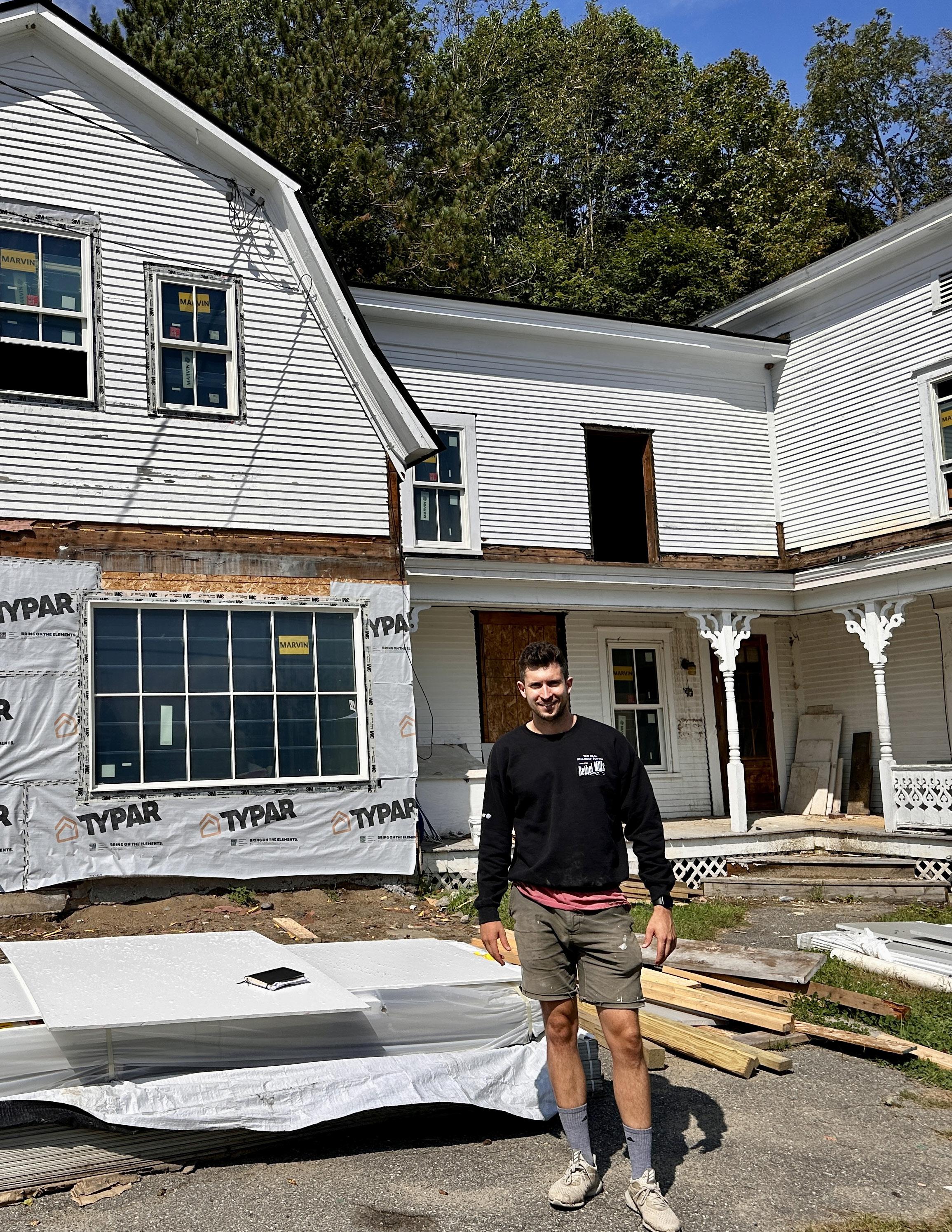
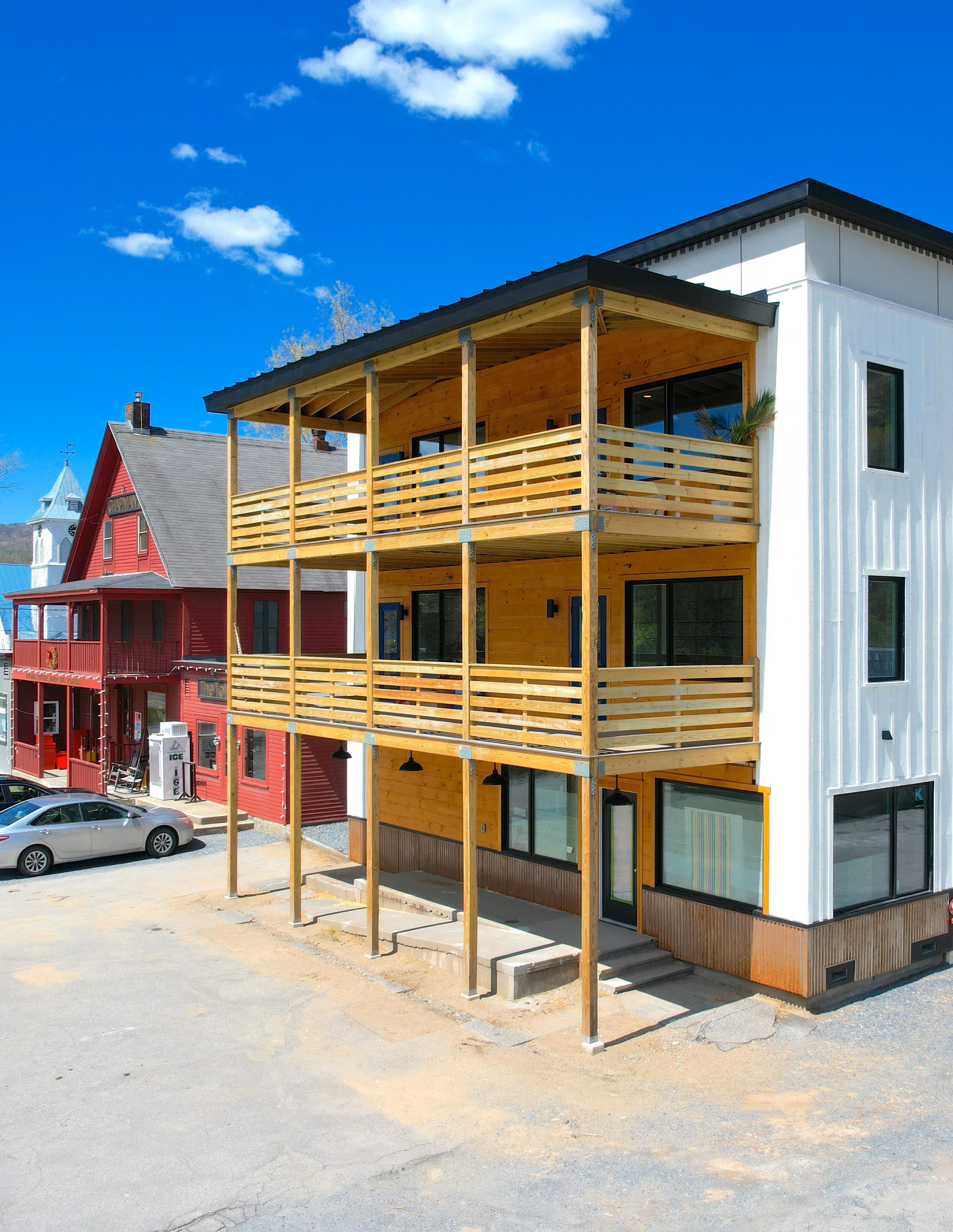
Developing one or more new homes on a small scale requires careful planning, attention to detail, and a thorough understanding of the state and local regulatory landscapes. Embracing strategic earlystage design decision making is an important way to generate broad support and buy-in from neighbors and key stakeholders. Additionally, early stage decision making can save money, get ahead of issues of regulatory compliance, and ensure alignment with key financing and grant or subsidy requirements.
Generally, by staying within the by-right provisions of the zoning bylaw and considering additional requirements such as the Fair Housing Act, Americans with Disabilities Act (ADA), utility connections, fire access, and the condition of existing infrastructure, developers can design successful projects that meet the needs of their communities. By following the steps outlined in this chapter, you can navigate the regulatory process and successfully contribute to the community’s housing stock.
Chapter at a glance:
The Site & Building Design Process
• The Interaction of Design, Costs & Finance
• Working With Design Professionals
• Building & Site Design Basics
Designing with Regulations and Requirements
• Step 1: Familiarize Yourself with the Local Zoning Bylaws
• Step 2: Research Additional Requirements Outside of the Zoning Bylaws
• Utility Connections (including water and wastewater)
• Condition of Existing Infrastructure
• Environmental Regulations, Sustainability & Resilience (including FEMA, River Corridors, Flood Resilience, and Stormwater Management)
• Building, Energy, and Life Safety Codes (including fire access and life safety code, energy code, and rental housing safety code)
• Fair Housing, Accessibility & Universal Design (including the Americans with Disability Act (ADA), Federal Fair Housing Act, and Vermont State Law - Act 115)
• Historic Preservation
This process involves designing the layout of the site—the location and orientation of buildings, parking areas, and landscaping—in a way that meets project goals, responds to the site context and constraints, and conforms to the requirements of the various regulations that apply.
Many consider design to be an optional aesthetic exercise whose only purpose is to improve curb appeal and address the style preferences of potential occupants and neighbors. We strongly discourage this approach and encourage you to instead treat design as an integral part of your early conceptualization and a tool to arrive at efficient, economically feasible solutions that are responsive to community needs. By engaging in these questions early, you can reduce unnecessary costs and focus your efforts on where you see the highest benefits. For example, early decisions about siting, scale, construction type, roof configuration, and building systems can help you achieve a good neighbor approach with simple, durable, and affordable design. See the Design Guide and Infill Design Case Studies section of this toolkit for more on these. In addition to surfacing opportunities to build more efficiently and economically, design can also impact what kinds of financing your development will be eligible for.
Because of how design choices are intertwined with issues of efficiencies, economic feasibility, and financing options, you should invest time in understanding basic site design elements and allow time to sketch out ideas that conform to the codes before hiring a team of design professionals. One way to gain an understanding of the dimensions
of items such as typical setbacks, driveways, parking stalls, or buildings and porches is to go out into the real world and either measure your own place of residence (or examples that you find interesting). Online resources such as Google Maps have a measure function that can also be used for measuring existing built developments (just right-click on the location in the map, and a pop-up list menu will appear with an item titled “Measure distance” at the bottom of the list). These may lack a bit of accuracy but are well within acceptable tolerances for a ‘napkin sketch,’ or site plan layout. Many municipalities also publish online GIS (Geographic Information System) software on their websites, which include property information, zoning overlays and boundaries, natural resource mapping (e.g. wetlands and protected land), flood hazard areas, and other pertinent information. These GIS viewers can also be helpful to pull dimensions of developable land in response to environmental and regulatory overlays. If you are up for it, you can use free SketchUp modeling software to get a sense for how your concept would look and feel in 3D.
This ‘napkin sketch’ design concept should then be used iteratively to generate inputs to the development pro forma so that you can test if the development concept makes sense both physically and financially.
When looking at the “soft costs” associated with a development project, it is tempting to avoid or substantially delay hiring a design professional. While this approach can limit up-front costs, it carries substantial risks and potential cost overruns in the permitting and construction phases of a project. A thoughtful, well-documented design helps to keep everyone on the same page and improve coordination between the many agencies, zoning and permitting officials, vendors, and trades that all have to do their part to get a development across the finish line.
So, how far can you get in your preliminary design thinking without hiring a designer or putting your development at risk? The short answer is that it depends a bit on the scale of the development you are considering:
• 1 – 2 units: Your development might not require architect/engineer stamps for approvals and permitting, but you will need a design for a builder to work from, and some level of assurance from a structural engineer that the building design is structurally sound to accommodate what you have in mind. Engaging an architect/engineer is still strongly recommended but at this scale may not be financially feasible. If the parcel lacks municipal water or wastewater, you will also need assurance from the Agency of Natural Resources that the regulations can be met.
• 3 – 4 units: We strongly recommended that you engage an architect/engineer early on as a partner even at the ‘napkin sketch’ stage.
The results of the iterative ‘napkin sketch’ exploratory idea phase of the project described earlier in this workbook can, with a little practice,
become engaging and useful for further conversations with planners and contractors before incurring the expense of an architect, landscape architect, or engineer. Furthermore, by engaging in design issues at a conceptual scale, a developer can help set the stage for an efficient, focused design process that minimizes subsequent professional design expenses.
Being well-versed in the site and building design basics introduced below will allow the aspiring developer to provide valuable feedback on concepts developed by hired professionals and advisors as part of the official design process. The site design must comply with all applicable regulations and requirements and be reviewed by local – and in many cases – state government officials before a construction permit is issued. If there is a particular project that the aspiring developer wants to use as a precedent, they can go to the local zoning office and pull the permit application to use as a reference.
Ultimately the decision to retain a design professional, such as an architect or engineer, is driven by the size and complexity of a particular project and should be made by the developer on a case-by-case basis. If a developer decides that a project does rise to this threshold, it is important to note that design professionals work within these permitting frameworks on a regular basis, and generally speaking, are wellversed in the design parameters and documents required by the process. Working effectively with design professionals is highly dependent on clear communication, and it is important to communicate your development goals at the onset to ensure a smooth process where everyone is on the same page.
Designing a building and site is a complex process but following good design practices and incorporating existing community design cues can help create a successful project. In this section, we explore the various components of the design process that small-scale developers can control to achieve efficient and functional site designs. Site planning and building design should be conceptualized in an iterative and integrated way to arrive at a holistic design approach.
We suggest starting with the bigger-picture site planning and then moving into building-scale design decisions. The most fundamental way to blend into the existing neighborhood fabric will be to start from a design approach that matches the orientation, relationship to the street, and the scale and form (sometimes called “massing” in the design world) of existing nearby development. Additional decorative elements can be considered once you have a better handle on your budget.
Beyond “blending in,” it is also valuable to take your cue from common historic siting patterns and building forms for other reasons. These forms were often developed over generations to be responsive to common needs that are specific to the climate and culture of a place. This is called “vernacular” design. Vernacular design is often used to talk about detailing and style, but it is really a much more basic idea - it is about how to manage seasonal weather fluctuations in terms of the shape and materials of a building, how to heat and cool a building to keep it comfortable, and how to sequence spaces to match the way they need to function. In other words, vernacular design often has a great deal of embedded wisdom, and many of the forces that shaped vernacular design remain
valuable in the present day even as the climate, culture, and uses of our spaces continue to evolve.
1. Environmental Constraints: As described in Chapter 2 on Identifying Development-Ready Sites , start by assessing topography, soil types, hydrology, and existing mature trees and ecologically sensitive areas. Generally, it is best to focus on the flattest, driest portion of the site with the most direct and flat access to a public right of way and the fewest mature trees. As stated previously, it is also critical that you steer clear of all FEMA zones and Statedesignated River Corridors to reduce the risk of flooding and increase resilience. Whether or not your site is close to a floodplain, it is also best to consider how water will flow across the site and make sure your building is not at a low point where water is likely to pool in a significant rain event.
2. Utilities & Infrastructure Constraints: As described in Chapter 2 , your design should be responsive to existing utility connections – of water supply, wastewater, and electric or gas connections. Design and permitting should be done ahead of finalizing the remaining site design in order to determine if all site needs can be accommodated.
3. Well-Located Parking: Parking is often an essential component of any development project, and is best considered early because it is often “the tail that wags the dog” in terms of both design and site constraints. Proactively considering all available parking resources
(including on-street parking and shared, public, or leasable parking spaces nearby), and determining the number and location of any required off-street parking can help to manage the impact on the surrounding community. Some local codes can recognize on-street or shared parking spaces, especially for visitor use. If you do need to provide off-street parking, you can control the location of parking by designing a project that locates it in the door yard (side yard) or rear yard of the primary building. Rear parking can be accessed by a shared service road or narrow private driveway at the edge of the property. Placing parking in front of a building should be a last resort because it limits the potential for interaction of residents with those passing by, and limits the potential for landscaping and other positive treatments of the front yard that will help your development contribute positively to the neighborhood. Smaller one or two-dwelling unit developments may consider tandem (one behind the other) parking arrangements, but additional thinking will be required to organize space-sharing agreements between residents of different units.
4. Stormwater Management: Stormwater impacts are intimately related to parking access and configuration (larger impervious surfaces will increase runoff from the site), and so stormwater runoff should be evaluated as part of the design of on-site parking. If the only way to achieve a viable configuration for required on-site parking results in a large paved area, make sure you consider strategies to reduce stormwater runoff. Stormwater runoff can be reduced through subtle changes in grading, drainage paths, and integration of onsite green infrastructure (e.g. rain gardens) and gray infrastructure (e.g. retention basins).
5. Good Property Edges: The property edge is the boundary between the development site and the surrounding community. It is important to design the property edge in a way that creates a welcoming transition between the development site and neighboring sites. You can control the property edge by incorporating landscaping and other features that create a welcoming and visually appealing transition. Also consider the potential for future incremental additions,
if part of the larger development scheme, and how internal edges and treatments may function in the interim.
6. Building Scale and Form: Building scale and form refers to the shape and volume of the building along with its relationship to the other buildings around it and the surrounding topography. It is important to consider the context of the surrounding community and the overall vision for the project. For example, if the surrounding buildings are predominantly two-story structures, a drastically taller building may be out of place and face greater resistance from adjoining property owners. As a small-scale developer, you are likely already proposing a compatible building form just by the nature of small-scale development itself, which may only achieve heights or total square footage incrementally greater than that of a large single-unit detached home.
7. Sustainability, Energy Efficiency, and Resilience: The most basic approach to reduce costs while maintaining energy efficiency is to build in rectangles. More complex shapes means more building surface area, which in turn means more surfaces that need to be insulated to prevent transfer of heat or cold. If those surfaces are not properly insulated your building systems will need to work harder to maintain a comfortable interior temperature. Building and site design can support energy efficiency through thermal comfort, daylighting, ventilation, and weather management. This can in turn help increase energy efficiency and lower the cost of utilities, making the resulting development more affordable and sustainable. For example, the quality of windows and their placement have a huge impact on overall building performance. While thermal efficiency is the primary driver (e.g. as a weak point in an insulated building envelope), windows also have significant impacts on the thermal comfort of occupants, the ability to maximize daylighting opportunities, and condensation control to minimize risks of mold and related indoor air quality issues - all significant concerns in Vermont. Other design and siting considerations have impacts on the
building’s ability to manage inclement weather events. For example, being mindful of how roof pitches correlate with site grading and building entrance points to prevent snowpack in areas that require frequent clearing, and locating critical building infrastructure (e.g. electrical panels, and mechanical equipment) out of basements where flooding is more likely to occur.
8. Difference in the Treatment of Building Fronts & Backs: The front of the building is typically the side that faces the street and is the most visible to the surrounding community. The back of the building is typically the side that faces a rear yard, courtyard, parking lot, alley, or other less-visible area. It is important to ensure that the front of the building is designed to create a welcoming and visually appealing entrance, while the back of the building is designed to be functional and utilitarian. Depending on budget constraints, you might consider allocating more budget to the treatment of the building’s front and less to the back.
9. Architectural Detailing: Architectural detailing refers to the use of materials and design elements that create visual interest by satisfying proportional relationships, enhancing the overall aesthetic of the building, and responding meaningfully to its context. This can include features such as ornamental moldings, decorative windows, or unique façade materials. These features do not necessarily need to add expense or rely on faux-historic features. A small-scale developer can control the architectural detailing by choosing simple, durable, and context-appropriate materials and design elements that complement the surrounding community and create a unique identity for the building using simple detailing and thoughtful forms. The home typologies included in the Home Design Guide portion of this toolkit offer examples of how designs can respond to local vernacular without resorting to faux-historic features. It is also worth noting that focused effort in the most significant and high-visibility areas of a building, such as a porch or entryway, can have an outsized impact.
10. Materials: The use of appropriate materials is crucial in creating a visually appealing building. It is important to select materials that not only look good but are also durable, easy to maintain, and promote sustainability— either through being sourced locally or having reduced environmental impact in the manufacturing process. Most Vermont exteriors consist of wood, cementitious siding (Hardi-plank), stone, brick, or metal. Each material has its own advantages and disadvantages, and the choice of material depends on the design of the building, energy efficiency levels, the surrounding environment, and the construction budget.
In addition to materials, design elements such as color, texture, and pattern can also enhance the architectural detailing of a building. Color can be used to create a visual contrast or a harmonious blend with the surroundings. Texture such as shingles or clapboard in lieu of board and batten can add depth and interest to a building’s facade, while patterns can create a sense of rhythm and repetition.
Here are some design considerations to keep in mind when thinking about the treatment of building fronts versus backs and sides:
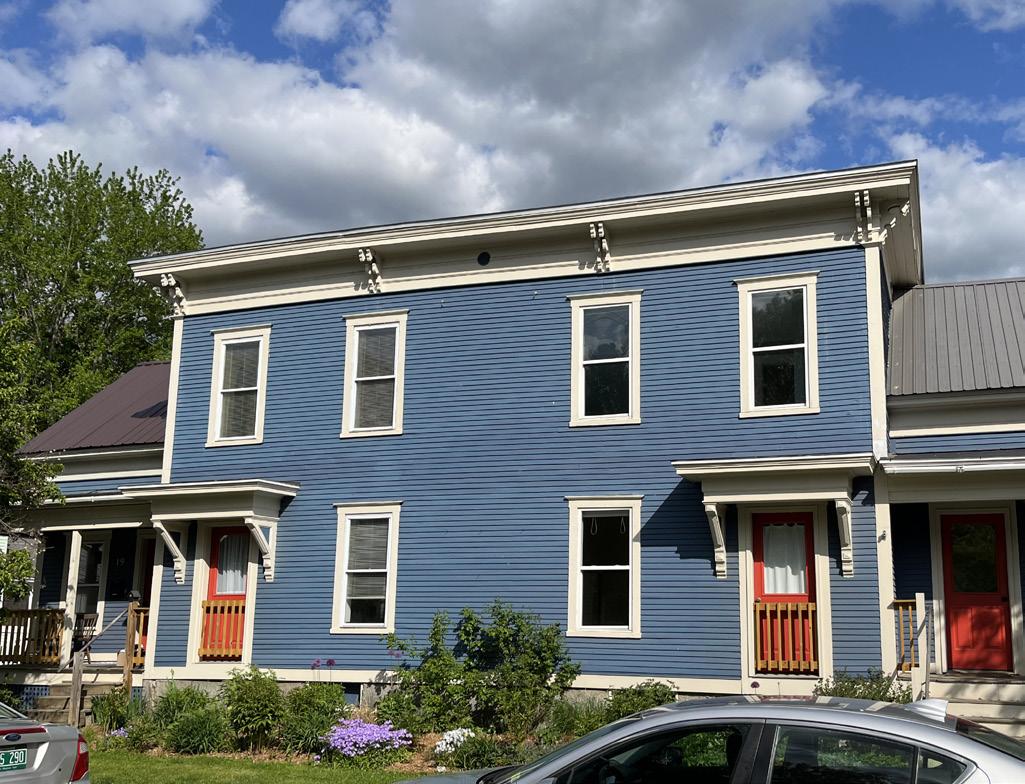
Entrance
The entrance is typically the focal point of the building front, and it is important that it be designed in a way that is welcoming and visually appealing. This can be achieved using landscaping, lighting, and other design elements that draw attention to the entrance. In buildings with more than one unit, additional entries can often be located along the sides.
Windows and Glazing
Windows can be used to create visual interest and enhance the overall aesthetic of the building. These windows are good candidates to receive additional treatment in the form of trim or shutters, for example. Windows with a vertical orientation, instead of a horizontal orientation, allow more light throughout the day and better align with the traditional approach seen in Vermont.
Materials
The materials used on the building front can have a significant impact on its overall aesthetic. This is an opportunity for the façade material to be of higher quality than that of the sides or rear. See below for more details on materials.

The backs and sides of the building are typically used for access and functionality, such as utility meters or garbage can storage. It is important to design these areas in a way that is functional and efficient, while still being aesthetically pleasing. This can be achieved using landscaping, screening, and other design elements that hide the less appealing parts of the building. Though not always avoidable, efforts should be made for electric dropdowns and other utility meters to be placed either on the side or rear of the building. Specific instructions on the location of these items may have to be given to the utilities installer during construction because the front facade may be perceived as the most accessible location.
Materials
While the materials used on the back and sides of the building may not be as important as those used on the front, it is still important to choose materials that are durable and easy to maintain.
The front and side of a historic side-byside duplex in Montpelier, Vermont.
Photo Credit: Utile.
Navigating the world of development regulations and requirements can seem overwhelming for aspiring developers. However, with careful research and planning, developers can successfully build new homes that meet regulatory requirements and community needs. This chapter outlines important regulatory considerations to help aspiring developers understand how the regulatory requirements may affect the overall final design.
Asking your state and local permitting officials what they require for a site and building design with the permit application is a good place to start. You’ll want to make sure you understand the parameters of a project as defined by the local zoning bylaw and state water and wastewater permitting requirements at minimum. Investing additional time at the outset to go beyond this minimum to understand the broader range of requirements and constraints that might impact your design is worthwhile - it will make your design process more focused and productive. You will need to consider and coordinate regulatory issues in an integrated way with other components of your development process, such as identifying the right unit types, determining the tenure and legal structure, securing financing, and ultimately marketing your development to potential buyers or tenants. Design professionals will be able to help you better understand and navigate the regulations relevant to your project in a more strategic and integrated way.
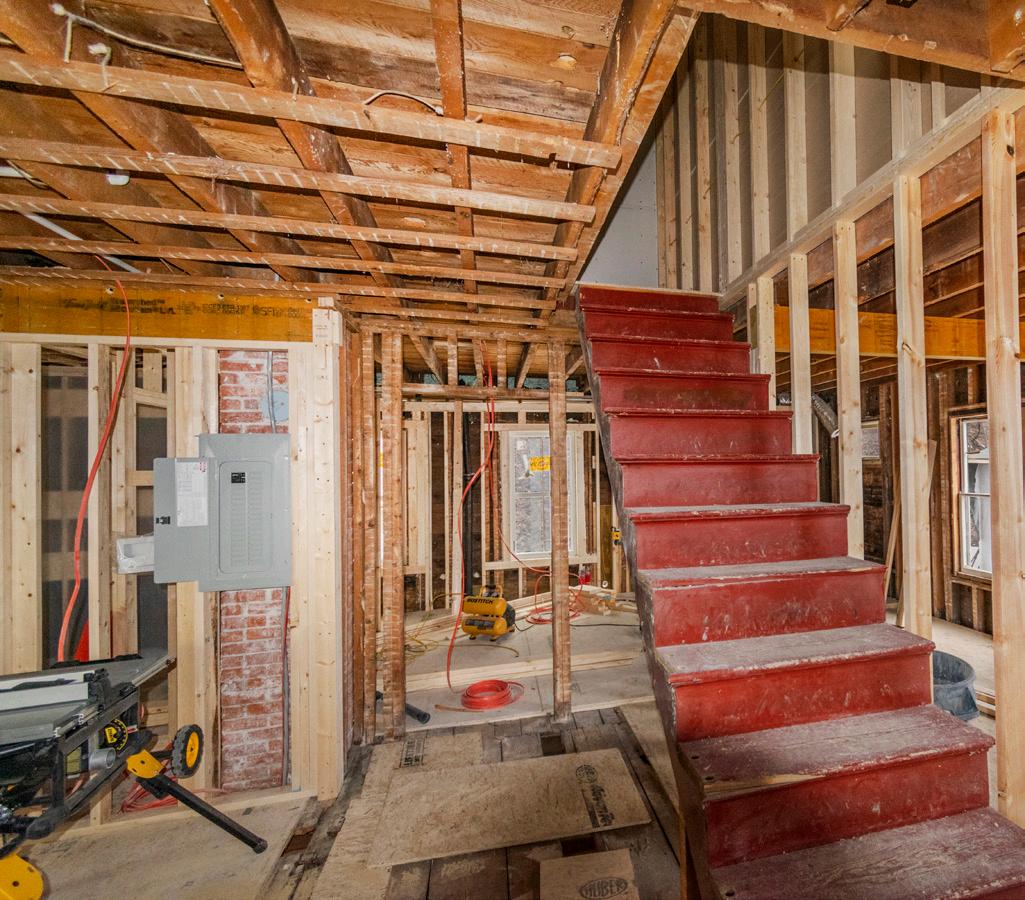
Before beginning any development project, familiarize yourself with the local zoning bylaws and the associated zoning glossary of terms. More than 80% of Vermont municipalities regulate land use. Zoning standards may include things like permitted uses, setbacks from property boundaries, height limits, how much of a lot can be covered by buildings and pavement, minimum parking spaces, and more. If you are new to zoning and land use law, we recommend starting out by reading Vermont’s Enabling Better Places: A Zoning Guide for Vermont Neighborhoods to gain a deeper understanding of key zoning concepts.
As mentioned in Chapter 2: Identifying Development-Ready Sites , a municipality’s zoning bylaws can usually be found online. The municipalities’ definition of something may differ from yours, so again, read the zoning glossary. The zoning bylaws outline the allowed uses for each district, the requirements for building setbacks, height, and parking, and the process for obtaining permits. As a general rule, new developers should try to stay within the “by-right” provisions of the zoning bylaw. By-right development means that a project complies with the local zoning bylaws and does not require any appeals, variances, waivers, or conditional approvals from the local government. Consider that variances are rarely granted in Vermont towns and conditional approvals processes add time, cost, and risk. Because these pathways provide less assurance to the outcome of a development project—and require an increased level of sophistication and public hearings to manage—they are not advisable, especially as a first development.
Familiarizing yourself with the local zoning bylaws can help you determine whether the project you are considering is even allowed and what kind of approvals you will need to obtain. It is important to note that zoning bylaws can vary greatly between municipalities, so it is critical to understand the specific requirements of the town, village, and neighborhood you plan to develop. Specific neighborhoods can have overlays that supersede the standards of the underlying zoning district’s code. In Vermont, zoning officials are generally happy to meet with you and walk you through applicable sections of the zoning bylaw. Conversations with your local zoning official typically result in better outcomes.
One essential aspect of the zoning bylaw is the permitted uses for each zone. For example, residential zones may only allow for homes, while commercial zones may only permit retail and office spaces. Understanding the permitted uses can help you determine whether your proposed project is compatible with the zoning bylaw. Location matters. Legislation passed with the 2023 HOME Act in Vermont means that municipalities cannot prohibit homeowners from adding a second housing unit to their property if all other regulatory requirements are met (e.g. water, septic, other zoning bylaw provisions).
While the State is encouraging local regulations to move away from dwelling unit density caps towards more form-based density metrics such as “Floor-Area-Ratio” (a.k.a. FAR), many local regulations have not yet implemented these changes. Historically, dwelling unit density controls have gone hand-in-hand with permitted use, so it is important to check for these and other kinds of constraints on density that might impact your development. The code may indicate how many residential units per lot are allowed. Some municipalities may also use “density bonuses” as an incentive in exchange for things like building fewer parking spaces or delivering the home to market at an affordable price point. Be sure to ask your zoning official about any incentives or costreduction techniques.
Another critical component of the zoning bylaw is
the building setbacks. Setbacks dictate how close a building can be constructed to the property line. This is important to consider when designing your project. Setbacks greatly impact the available building area and overall project design. Within the buildable area, the size of buildings may be additionally constrained by a maximum allowable lot coverage. Lot coverage sometimes relates only to building footprints, and sometimes to total impermeable surfaces (walkways and driveways included). Check the glossary and ask your zoning official for clarification on terms.
Height restrictions are another crucial component of the zoning bylaw. Zoning bylaws will typically specify the maximum height of a building allowed in a specific zone, though most small-scale projects are unlikely to exceed limitations. Understanding these restrictions is essential to ensure that your project complies with the regulations.
Parking requirements are also outlined in the zoning bylaw, though most likely in a different section than the lot standards. They may be titled along the lines of, ‘Off-Street Parking & Loading’. The code will typically specify how many parking spaces are required for different types of development. This is important to consider when designing your project because parking spaces and access are a set dimension (defined by the code), and can compete for the site’s buildable land area.
Finally, the process for obtaining permits is outlined in the zoning bylaw and other local ordinances. Be sure to discuss with your zoning administrator and public works officials the full range of requirements, including documentation, application fees, review process, and building permits through the Vermont Division of Fire Safety. This conversation might help you uncover additional regulations you should be aware of that could impact your project, such as subdivision regulations, public works ordinances, design standards, and historic preservation standards. Familiarizing yourself with the permit process can help you avoid delays and ensure that your project complies with all regulations. Good communication and relationship building with local zoning and permitting officials can be key to a smooth journey.
In addition to the local zoning bylaw, there are a variety of additional requirements that developers must be aware of when planning to build new homes. Most of these requirements are outside of the zoning bylaws, and are governed by state agencies. These vary depending on the location and scope of the project and may include regulations related to wastewater infrastructure, environmental protection, historic preservation, stormwater management, and more. Permitting in Vermont is a tangled web of overlapping state and local jurisdiction. The State’s Permit Navigator and Community Assistance Specialists are helpful starting points for many state permits, even some administered outside the Agency of Natural Resources (ANR). It may make sense to have the Agency of Natural Resources (ANR), Division of Historic Preservation (DHP), and Division of Fire Safety (DFS) also review plans for accuracy.
Other requirements in the municipal code that developers may need to investigate include:
• Site plan review requirements
• Highway access and curb-cut permits
• Excavation, fill, and erosion control
• Stormwater management
• Signage
• Exterior lighting
• Outdoor use areas
• Local requirements exceeding the State Fire and Building Safety Code or Residential Building Energy Standard
By conducting thorough research on these additional requirements at the municipal, state, and federal levels and taking steps to comply with them, developers can help ensure that their projects are successful and meet the needs of their communities and state-enforced codes. The remainder of this chapter will provide an overview of some other key regulations you should be aware of.
Developers must ensure that their projects are connected to necessary utilities such as water, sewer, and electricity or gas. Depending on the location of the project, this may involve coordinating with multiple utility providers as well as State and local government permitting authorities. Utility provider standards for
separation, easement, and access are important and will likely affect site layout and building placement. There also may be connection fees and infrastructure costs that are important to uncover early on so that you can build these costs into your financial model for your development.
As mentioned in prior chapters, the type of water and wastewater available in a given community represents a major fork in the road. If a community is actively considering establishing or expanding municipal water and sewer, there are incentives available to support new public drinking water systems and community wastewater disposal systems where this critical infrastructure is lacking, such as the Agency of Natural Resources (ANR’s) Village Water & Wastewater Initiative. However, this can be a long process so it is best to plan for current conditions even as you advocate for longerterm changes.
All permitting for water and wastewater utilities are subject to State approval. If you are developing in a community without a municipal water/wastewater system, or a fire district, this will fall under the VT ANR jurisdiction. For those connecting to municipal water or sewer, you may also need to request a water/wastewater connection permit or an allocation from your municipality, so be sure to talk with local zoning, permit, and utility officials about capacity and permitting needs early in your process.
Regardless of context, potable water suppIy is typically required to be separated from wastewater. If you are planning additional housing units in a rear yard, you will need to consider how these connections are placed and where they are most efficient. Developers will need a local qualified and licensed designer to assist with the site location, design, and permitting of these utilities. Water and wastewater variables are quite numerous and include the composition of local soils, adjacent topography, watershed patterns, and proximity to nearby water and wastewater systems on and offsite. However, it is helpful for you to have a general awareness of these constraints as they relate to site planning.
Finding a local licensed designer with experience in securing permits for small residential systems
should be a step taken early in the planning process. ANR offers permit assistance through a team of Community Assistance Specialists who can help developers understand what to expect with the Department of Environmental Conservation permit process before getting an engineer on board. See the Team Building chapter for more information.
Developers must consider the condition of existing infrastructure such as roads, sidewalks, and utilities. In some cases, it may be necessary to repair or upgrade existing infrastructure as part of the development project. This is a line item in the development budget often called ‘off-site improvements.’ In some local codes, these offsite public improvements appear as ‘necessary public improvements’ which most often relates to sidewalks, street tree plantings, and other frontage items found in the public right-of-way. These off-site improvements have the potential to add significant cost to a project through additional design, engineering, materials, and labor. It is best to proactively discuss with your zoning and public works officials whether you are expected to provide any off-site improvements, and if so to what standard.
Federal, state, and local regulations are in place to protect the environment and ensure that development projects do not have a negative impact on air and water quality, wildlife habitats, and other natural resources. Developers must be aware of these conditions and regulations, and take steps to comply with them. This may involve conducting environmental assessments, obtaining permits, and implementing mitigation measures.
As mentioned in Chapters 1 and 2, it is best to steer clear of development within designated flood risk areas for all residential development at this scale. There are two key regulatory frameworks that have overlapping jurisdiction in some Vermont Communities:
1.
The Federal Emergency Management Agency (FEMA) maintains a National Flood Hazard Layer and Flood Insurance Rate Maps (FIRMs)
nationwide. The different flood zones each carry different information about risk levels and regulatory obligations that impact things like ground floor elevation, floodproofing, and insurance needs. See FEMA’s Flood Insurance Rate Map (FIRM) Tutorial to learn more.
Vermont’s characteristic mountains and valleys, combined with seasonal patterns of snowmelt and precipitation, have a tendency to concentrate regional and local precipitation in ways that create lots of hyper-local flood risks surrounding major rivers as well as smaller streams and brooks. In order to help Vermonters understand and manage this kind of flood risk, the Vermont ANR maintains a system of designated River Corridors. River Corridors encompass areas adjacent to rivers where erosion, channel evolution and meander migration are most likely to occur. The River Corridors regulations strive not only to prevent loss of property and life, but also to maintain the ecosystem services and ecological functions of waterways.
In addition to carrying additional regulatory requirements, expenses, and adaptation needs, development is unlikely to be permitted within either of these kinds of floodplains. That being said, Vermont’s recent experiences in 2011 and 2023 with major flooding that displaced hundreds of residents made clear that both the FEMA Flood Zones and the State River Corridors vastly underestimate the escalating flood risks that Vermont communities face today and into the future. It is therefore a best practice to make basic design decisions to mitigate flood risk and increase flood resilience (such as locating utilities above grade), even well outside of regulated floodplains. You may find that local planning regulations require these kinds of basic precautions and adaptations.
Stormwater management is another important consideration for developers. Stormwater runoff can cause erosion, flooding, and pollution, so it is important to manage it properly. The State Agency of Natural Resources (ANR) and some communities have stormwater management regulations that require developers to implement measures designed and permitted by an engineer to capture and treat stormwater runoff. You can use this flow chart to determine whether you will need to obtain a State Operational Stormwater Discharge
Permit, and to learn more about the jurisdictional thresholds that apply to stormwater management. Generally speaking, sub-jurisdictional development will be the sweet spot for this scale of residential development.
Ten municipalities in Vermont have cooperative inspection agreements with the Vermont Division of Fire Safety and administer local construction codes for building, fire safety, electrical, plumbing, and structural compliance locally. These local codes must meet statewide baseline standards, but also allow municipalities to adopt higher standards, collect fees and conduct additional administration. Review and inspection fees vary.
Developers must ensure that their projects provide adequate fire access for emergency responders. This may involve designing roads and driveways to accommodate fire trucks and ensuring that buildings are located a safe distance from each other. The building code outlines separation standards based on number and size of openings in a wall, but be aware of any additional separation standards either in the local zoning bylaw, or state Fire and Building Safety Code.
Vermont delegates the authority to enforce the Fire and Building Safety Code to municipalities with proven capacity to implement code enforcement and permitting (commonly referred to as “Cooperative Inspection Agreement Municipalities”). All other municipalities rely on the Division of Fire Safety for code enforcement and permitting. In areas with deep lots, building placement may be affected by the maximum “hose pull” distance, a term in the fire code that describes the maximum distance of the furthest side of a building before being required to include a sprinkler system.
Residential Building Energy Standards (Energy Code)
The Residential Building Energy Standards (RBES) is the energy code for all residential buildings three stories or less above grade in Vermont. The RBES for both the Base code and the Stretch code apply to all new residential construction, including additions, alterations, renovations, and repairs. The RBES Stretch code is a building energy code for residential buildings that achieves greater energy savings than the RBES Base code.
The Vermont Department of Public Service
administers the dissemination of energy code information through the Vermont Energy Code Assistance Center. The Department and Energy Code Assistance Center work collaboratively with Efficiency Vermont to provide technical assistance and training. Both the Assistance Center and Efficiency Vermont have training videos on their websites, as well as copies of the Residential Energy Code Handbook (called “RBES Handbook” for short) which outlines detailed thermal calculations and standards.
Compliance with RBES is through self-certification by the builder and is submitted with a one-page form. After the list of basic requirements has been satisfied, there are five different ways to comply with the RBES:
1. A prescriptive list of features, 2. Tradeoff variations, 3. VT check software,
4. A home energy rating greater than or equal to 82, or
5. An A/E systems analysis.
If you are a homeowner-developer or your development includes a historic property, it is also worth noting that there is an exemption for limited historic properties and owner/builders, but the owner-builder still requires evaluation of compliance and disclosure of non-compliance upon sale. If the municipality requires zoning permit certification, the Zoning Administrator must verify that the certificate has been recorded in the land records prior to issuing a zoning permit certification. Non-compliance would allow a homeowner to seek damages in court from contractors or prior homeowners within six years of occupancy or the filing of the form.
Rental Housing Safety Code
Twelve municipalities have minimum standards for rental housing, and the Vermont rental housing code outlines a baseline statewide standard for every town, administered by local health officers. These standards often relate to sewage, lead, water quality, air quality, mold, and infestations. The Vermont Department of Health’s rental housing inspection checklist for municipal health officers is the most helpful list of requirements for prospective landlords. The list includes questions such as: does each dwelling unit have two separate ways out, are kitchen countertops non-absorbent, and are stairway handrails securely mounted?
Developers should be familiar with the concepts of accessibility and universal design, and more specifically the requirements of the Federal Fair Housing Act, State Fair Housing Laws, and the Americans with Disabilities Act (ADA) in order to ensure that their projects comply with these regulations. Even when it is not required, using the principles of Universal Design to the greatest extent possible is a best practice and will make your development more flexible and versatile over time.
As defined by the Center for Excellence in Universal Design, Universal Design is “the design and composition of an environment so that it can be accessed, understood and used to the greatest extent possible by all people regardless of their age, size, ability or disability.” This is a more expansive notion that builds on the concept of accessibility, which focuses on specific standards to ensure sites, buildings and facilities within them function for people with disabilities. Considering issues of accessibility and universal design early ensures that a development can function well for a broad range of potential residents and visitors over its lifetime and allows for aging in place without expensive retrofits. This is a good design practice regardless of regulations, but there are also specific regulations that require accessibility.
While the Americans with Disabilities Act (commonly abbreviated to “ADA”) is often used as if it were synonymous with “accessibility” as defined above, it in fact has a very specific purpose and applicability that is limited primarily to building types with public accommodations. Think of uses like commercial or retail, public buildings, and hotels that are wide-open to the general public.
For residential development, ADA generally is only applicable to areas that are “open” or “accessible” to the public - common amenities where members of the public (who may have physical impairments) can congregate for events, use the restroom, etc. For instance, in a large multi-unit building, the community room, leasing office, and common entrances would all be required to meet ADA because these spaces may be used by members of the public. The rest of the building, including units and amenities dedicated to residents (e.g. laundry,
fitness, etc.), are not subject to ADA.
As such, while all developments should strive to meet the highest standards of accessibility, the type of small-scale residential development we are discussing in this Workbook is not legally required to meet ADA design requirements. Private apartments and homes are not subject to ADA requirements, whether owned or rented. However, accessibility is still regulated through other tools such as the Federal Fair Housing Act and Vermont State Law via Act 115. There are also additional accessibility and fair housing considerations you need to be mindful of after the development has been completed. You can learn about post-construction accessibility and fair housing considerations in the Implementation & Management chapter of this Workbook. If you are curious, you can learn more about the specifics of ADA here.
The Fair Housing Act primarily focuses on prohibiting discrimination in housing based on race, color, national origin, religion, sex, familial status, or disability. The Federal Fair Housing Act relates to building design because it requires the inclusion of an accessible unit at specific thresholds. Like ADA, the Fair Housing Act uses the term ‘accessible’ but is focused on a different set of issues and regulates different uses and actions.
The Fair Housing Act states that, “both privately owned and publicly assisted housing, regardless of whether they are rental or for-sale units, must meet the accessibility requirements of the Fair Housing Act when they are located in a building of four or more units.” Make sure you do your research to confirm if this applies to your development; and regardless, it is a best practice to keep some units with ground floor entries and universal design features, and to make sure that all residential amenities (such as laundry or access to parking) have a clear and accessible path for residents with disabilities. These Federal Department of Housing and Urban Development (HUD) resources are intended to serve collectively as guideposts for compliance with the Fair Housing Act accessibility requirements:
• Fair Housing Act Accessibility Guidelines (1991)
• Question and Answer Supplement to the Guidelines (1994)
• Fair Housing Act Design Manual (1996) provides further guidance on ways to design
and construct housing that complies with the Fair Housing Act and is filled with detailed illustrations and sample room designs
• Fair Housing Accessibility, FIRST provides more information on the requirements and the seven safe harbors for compliance
Vermont State Law (Act 115)
Act 115 of Vermont State Law is also a great starting point to understand the kind of design features that will make your development more accessible. Vermont state law (via Act 115) requires all new residential construction, with a few exceptions, to meet minimum accessibility standards. Exceptions include single-unit dwellings built by the owner for personal occupancy and prefabricated homes built out of state. The Act 115 requirements include more generous doorway and hallway widths, specificity of mounting heights of controls and outlets, and wall reinforcement for bathroom grab bars. Development teams should refer to Act 115 and the Vermont Department of Public Safety Division of Fire Safety’s guidance on accessibility requirements.
Another important requirement is historic preservation. Municipal plans often include a statement outlining their policies on historic resources and many communities have historic districts or landmarks that are protected by local, state, or federal laws. Developers must be aware of these policies and districts and comply with any design or materials requirements. Start by asking your local zoning officials. Ultimately this may involve working with historic preservation professionals and/or obtaining recommendations for approval from a local historic preservation board. Historic preservation boards are advisory in Vermont, and they make their recommendations to a municipal panel that has jurisdiction.
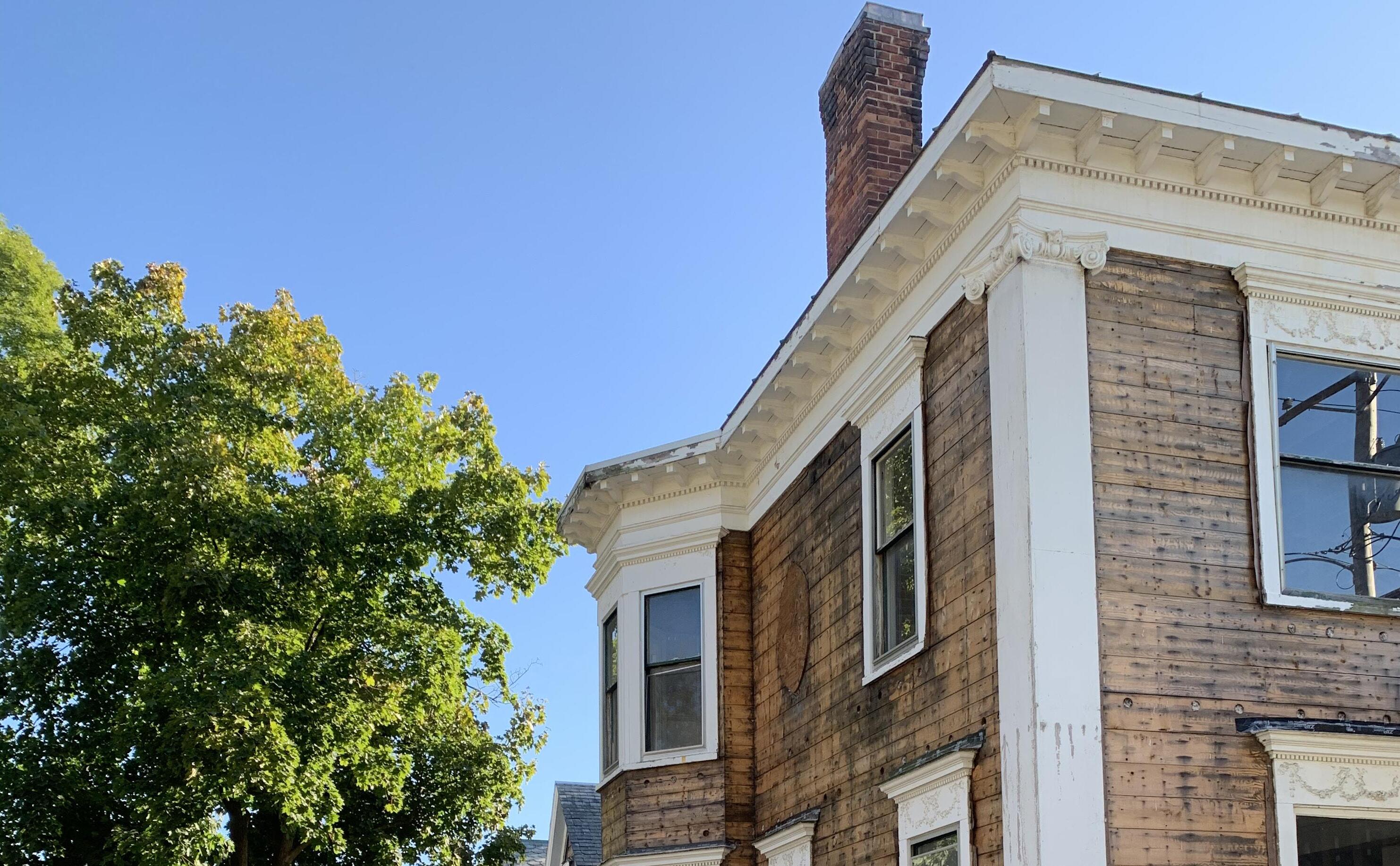
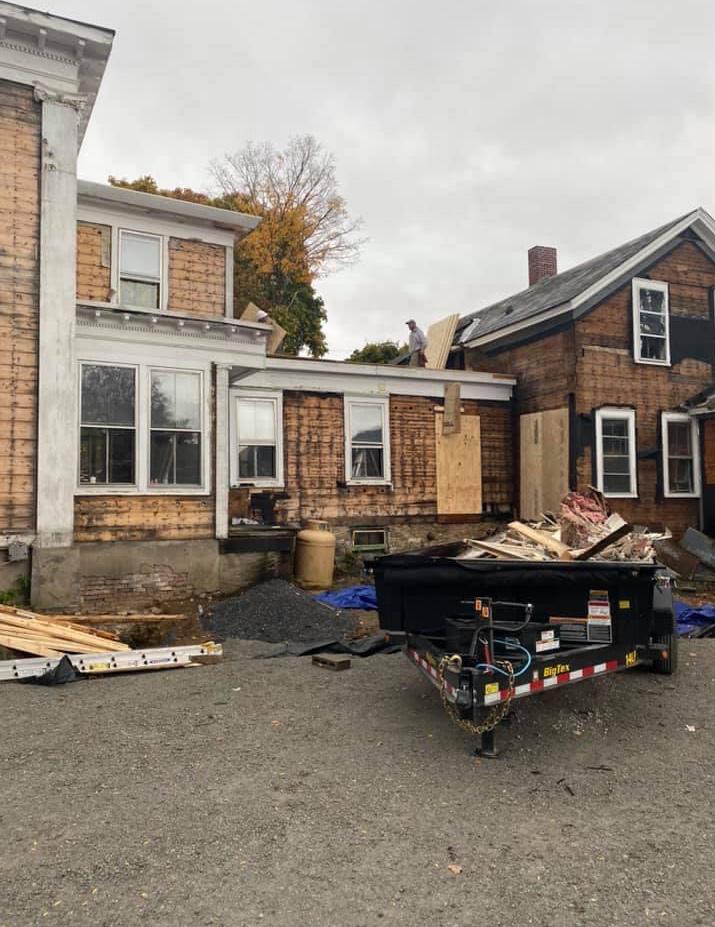
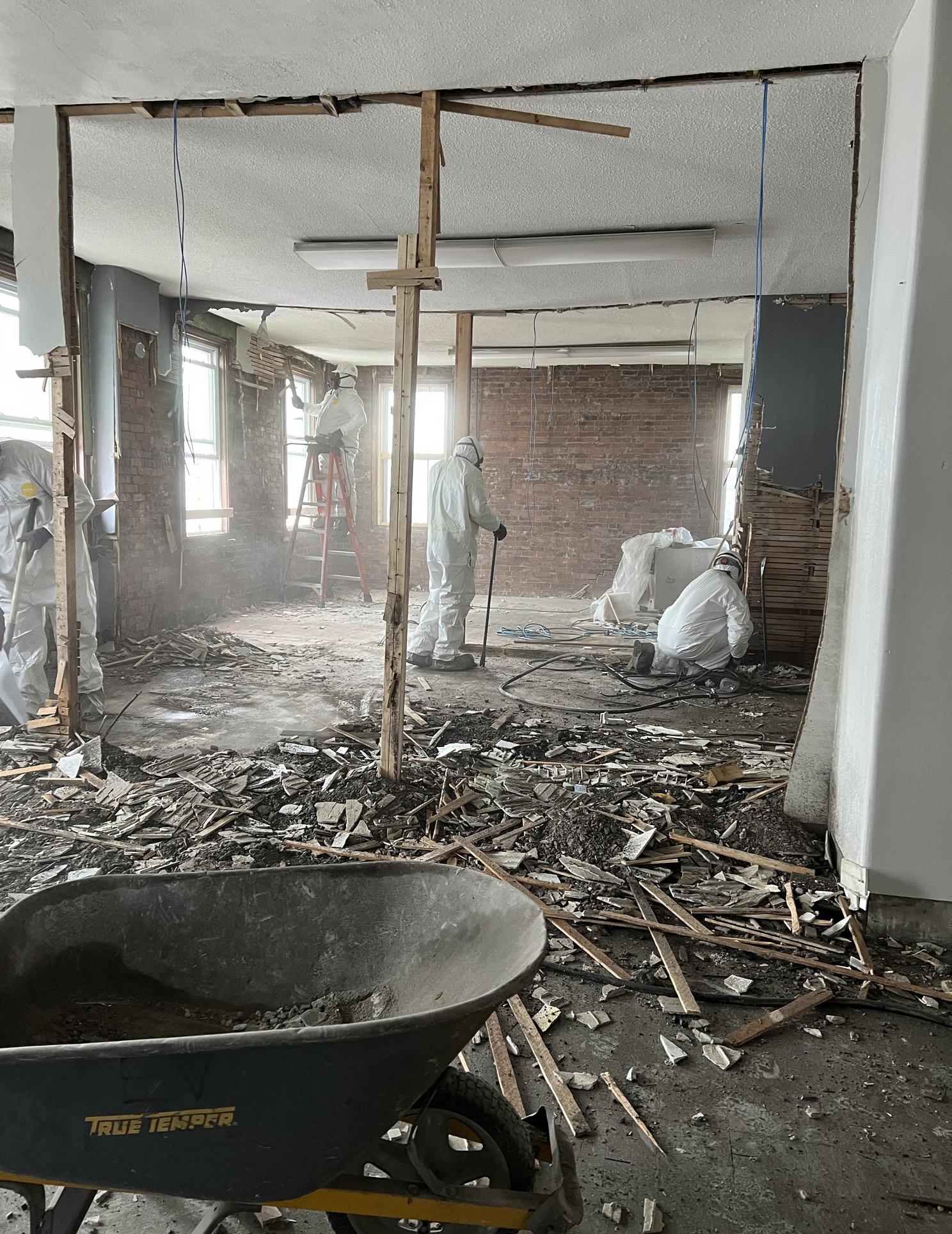
It is important to consider permitting and construction as your design begins to take shape so that the design is responsive to regulatory, permitting, and construction constraints. By considering these issues early, you have the opportunity to address these needs in an integrated, efficient, and effective way. If left to the last minute, responding to these constraints can result in unexpected costs, timing delays, and confusing or ineffective messaging to community partners and stakeholders.
Many of these permitting and construction-stage obligations are the final step to resolve and codify how your design responds to and ultimately meets the regulatory requirements discussed at length in Chapter 6: Design .
Chapter at a glance:
The Permitting Process
• Municipal Permitting
• State Permitting
Construction Delivery & Contracting
• Planning for Construction Seasonality in Vermont
• Construction Delivery Approach & Contract Structures
• Construction Process Roles
Demolition underway at the Northern Forest Center's mixed-use redevelopment in downtown St. Johnsbury, Vermont. This historic property is envisioned to be home to a mix of small commercial rentals and ten middlemarket apartments to help address the shortage of housing to attract and retain the workforce Vermont needs. The project used a mix of impact investment funds, tax credits, and private gifts and grants.
Photo Credit: Evan Oleson.
Some contractors will take on the responsibilities of permitting, and certain permits require the licensed tradesperson’s signature. Sequencing everything to meet lenders, contractors, and permitting authorities’ schedules can be complicated, and some permits can expire if no action is taken within a certain period. You will be better equipped to deal with the unexpected if you take the time early on to develop a detailed timeline with key deadlines and adequate buffer time for unanticipated hiccups.
The most basic permitting need at the municipal level is a zoning permit (also sometimes called a “building permit” or a “municipal land use permit”) which typically evaluates compliance with use and development standards within a zoning district. The best approach to permitting is to sit down with your municipal zoning administrator (ZA) before you embark on your project and tell them what you have in mind. In this conversation, your goal is not only to gain a grasp of all zoning bylaw requirements that your project faces, but also to understand explicitly what is needed for a zoning permit application submittal and any other local permitting obligations you should be aware of. Some common additional zoning permit obligations include:
• Municipal Impact Fees: If the municipality assesses an impact fee to support capital improvements affected by the development, a fee may be due at the time of municipal zoning permit application or certification. Fees can vary by size and type.
• Conditional Use Review: If there is an existing building on-site that is classified as a conditional use in the municipal bylaws/regulations district, subsequent development on the same site could be subject to a conditional use hearing by the ‘appropriate municipal panel,’ like a Development Review Board. A hearing requires 15 days’ notice (including adjoining property owners) and a decision within 45 days of the hearing’s close. Conditional use review includes some discretionary standards, such as “character of the area.” Review fees vary. Likewise, if the development includes a use not explicitly allowed in the zoning bylaw, you may need to go through the conditional use review process described above.
• Design and Historic Preservation Review: Some properties may be in special overlay districts that guide compatible neighborhood design and character in municipalities with bylaws regulating building design. Developments built in these districts will typically be reviewed by an advisory design review committee to evaluate construction materials and design plans prior to an approval by the ZA or appropriate municipal panel.
• Manufactured Housing Installation Form: If the municipality requires a zoning permit certification and the development includes one or more manufactured homes, then a HUD 309 Form must be provided to the zoning administrator for certification to verify that it has been properly installed.
• Certification of Permit: If the municipal regulations require a certification of occupancy or compliance verifying that permitted development matches what was built, the applicant applies for inspection upon project completion. The administrative officer has 30 days to act on the application. Review fees vary. Certifications can be appealed to the appropriate municipal panel.
Some common municipal permitting obligations in addition to the zoning permit include:
• Municipal Highway/Driveway Access Permit: If the project involves a new or expanded driveway curb cut or work within the right-of-way for utilities, a municipal highway access permit and inspection may be required. Fees, requirements, and timelines vary by local ordinance and custom (but are often integrated into the zoning permit review). State highway curb cuts are regulated under the State’s 1111 permit.
• Municipal Water/Sewer Permit: If the project involves new or changed service to municipal water and sewer, a municipal water/wastewater permit and inspection may be required. Fees, requirements, and timelines vary by local ordinance and custom (but are often integrated into the zoning permit review). Unless the project is located within a delegated community, this will also require a State water/wastewater permit (see below). Fees can be substantial and may require bonding to ensure proper installation.
• Municipal Building/Electrical/Plumbing Code Permit: As mentioned above, ten municipalities in Vermont have cooperative inspection agreements with the Vermont Division of Fire Safety and administer local construction codes for building, fire safety, electrical, plumbing, and structural compliance locally. These local codes must meet statewide baseline standards but allow municipalities to adopt higher standards, as well as collect fees and conduct administration. Review and inspection fees vary.
At a minimum, it is likely that the building permit application requires photos and drawings of the exterior building design proposed, placement of any new construction on the lot that clearly delineates lot coverage changes, parking accommodation, and accessories like paths of travel, fencing, lighting, trees, and any plantings. It is common to submit “cut sheets” of proposed windows, doors, roofing materials and color, and any other exterior components that will change the exterior appearance of the property. The more professional your drawings and images appear, the easier it will be to get through the process.
Before assembling the permit application and after conducting a feasibility analysis, it’s time to talk with the neighbors. The development review and/or zoning permit process will include public hearings, and the zoning office is required to notify all abutting property owners of the project’s permit application when a zoning hearing is scheduled. Therefore, proactive outreach and engagement before submitting the permit application can prevent surprises that threaten the project’s timeline. Chapter 1 offers suggestions for holding a neighborhood meeting and explaining to neighbors how important it is that Vermont’s housing stock grow as quickly as possible, and how gentle in-fill achieves this in a manner that is compatible with Vermont’s traditional development patterns.
The Two Rivers Ottaquechee Regional Commission (serving thirty municipalities in east-central Vermont) has a website that offers a well-done overview of the permitting process in Vermont. Keep in mind that this webpage may not reflect the most recent legislative changes and does not represent an accurate portrayal of local municipal requirements; rather, it is a high-level guide that is useful for getting oriented to the permit process.
After you have finished the feasibility process, conducted outreach to neighbors, and assembled an application package, ask if the zoning staff would be willing to review it for completeness.
Administrative permits (permits that can be reviewed by the ZA) must be issued within 30 days and review fees vary (24 VSA 4449). After receiving a permit, there is typically a 15-day appeal period that allows the permit applicant or adjoining property owners and other interested people to submit an appeal to the appropriate municipal decision body – typically the development review board or zoning board of adjustment. Be sure to check the appeal requirement with the municipality and avoid exterior changes to your proposed plans during this time.
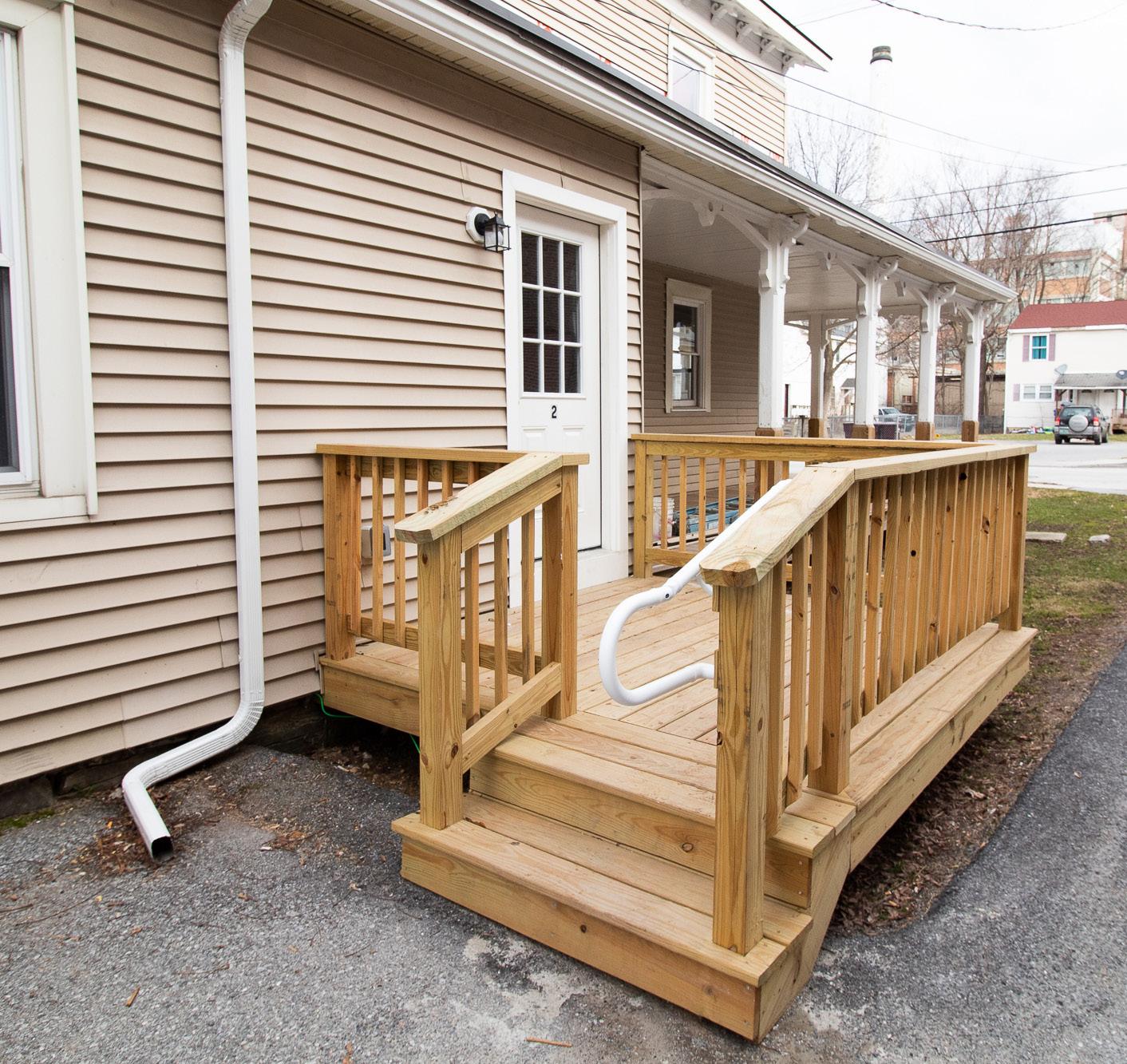
For State permits, there is no one-stop shop to interface with regulating State agencies, but the Department of Environmental Conservation (DEC) does support State Permit Specialists to flag potential permitting requirements across government agencies. If the project has enough complexity, a DEC permit specialist may complete a Project Review Sheet (PRS) with links to information sheets that can guide you through the process.
Note that all municipal zoning permits are required to contain a statement directing applicants to a VT DEC Community Assistance Specialist. They typically state this: “State and federal regulations may apply, may be more or less restrictive than municipal bylaws, and may affect this project; it is the applicant’s responsibility to obtain all required state and federal permits; call the State’s permit specialist with any questions.”
Following are the most common permits and required certification processes, but other environmental permits may be triggered, such as when your development is located near a lakeshore or wetland. Several of these requirements are specific to developments determined to be a ‘public building’ by the Division of Fire Safety (DFS), which is defined as any building that is NOT an owner-occupied, single-detached dwelling or certain types of farming and agricultural facilities.
• Construction Permit (Fire Prevention & New Buildings): In municipalities without a recognized code (ten municipalities have local codes), developments determined to be a ‘public building’ by the Division of Fire Safety (DFS) will need a construction permit. The State code is publicly available, and includes references to a proprietary code not publicly available. Without a building code professional, developers rely on the DFS guidance. The Division publishes code information sheets on topics like shortterm rentals. Developers will need to submit construction plans and application fees (which start at $50). The vast majority of applications, approximately 90%, are reviewed in 30 days. The State’s code does not require a unit to have its own heating source and thermostat, but locally administered State rental health codes do require adequate heat.
• Electrical & Energizing Permits: Developments determined to be a ‘public building’ by the Division of Fire Safety (DFS) will also need an electrical permit. Energizing permits are also required before the electric utility energizes the new service in a development. An electrician is a licensed profession in Vermont and a master electrician or journeyman must submit the work notice to Fire Safety. Fees vary based on the size of the installation. The statewide code requires that the units have access to a breaker panel, but it does not have to be a separate service for each unit.
• Plumbing Permit: Developments determined to be a ‘public building’ by the Division of Fire Safety (DFS) and any private residence connected to public water and sewer will require a plumbing permit. A plumber is a licensed profession in Vermont. Fees are based on size of installation.
• State Water/Wastewater Permit: This State permit requires a licensed designer or engineer to prepare a certification. Local permit pricing varies widely based on the pricing model needed to operate the local water/sewer system enterprise. Developments with existing water and sewer service or site-based systems may be eligible for a State Water/Wastewater Permit exemption if the capacity of the pipes and/or system is sufficient to support the proposed development.
• Residential Building Energy Standards (RBES) Compliance Form: Developers must affix a RBES compliance form in the home. The certifying person (typically a contractor) must provide a copy to the Department of Public Service and file a copy in the town land records for $10.
• Act 250: If there is an existing building on your site that was permitted under Act 250 and the District Coordinator finds that there’s a material change to the permitted project, the development would require an Act 250 permit amendment. Other jurisdictional triggers may apply. If no one requests a hearing, this would likely be processed as a minor amendment. Projects subject to Act 250 are sometimes subject to higher standards, like the new energy stretch code. If you are curious about what kinds of development is subject to an Act 250 permit you can learn more here and view the Act 250 Permit Application
• Lead Paint & Asbestos Abatement: If your project includes renovation or demolition of an existing building, be mindful that most older buildings will contain hazards that must be abated and handled with very specific protocols to not endanger those working on your site or living nearby. Prior to construction you must inspect for asbestos-containing materials with a certified asbestos inspector, listed on the Department of Health’s website, and notify the Department 10 days before abatement. Similarly, lead-based abatement activities require notice and a $50 fee. Rental units built before 1978 must also file an essential maintenance practices filing with the Dept. of Health. Abatement measures can cost several thousand dollars. The Vermont Housing and Conservation Board offers financial and technical assistance for Healthy & Lead-Safe Homes
• Rental Housing Safety Code Inspection: Twelve municipalities have minimum standards for rental housing, and the Vermont rental housing
code outlines a baseline statewide standard for every town, administered by local health officers. These standards often relate to sewage, lead, water quality, air quality, mold, and infestations. The Vermont Department of Health’s rental housing inspection checklist for municipal health officers is the most helpful list of requirements for prospective landlords. The list includes items asking things like: does each dwelling unit have two separate ways out, are kitchen countertops non-absorbent, and are stairway handrails securely mounted?
As a final note, please be sure to do your own research about what permits will be required for your project at the local municipal and state levels. This chapter is intended to orient you to the common permitting requirements, but every municipality, site, and development is unique. It is important to do your own due diligence to be sure you have a complete list of the permitting obligations your project has.
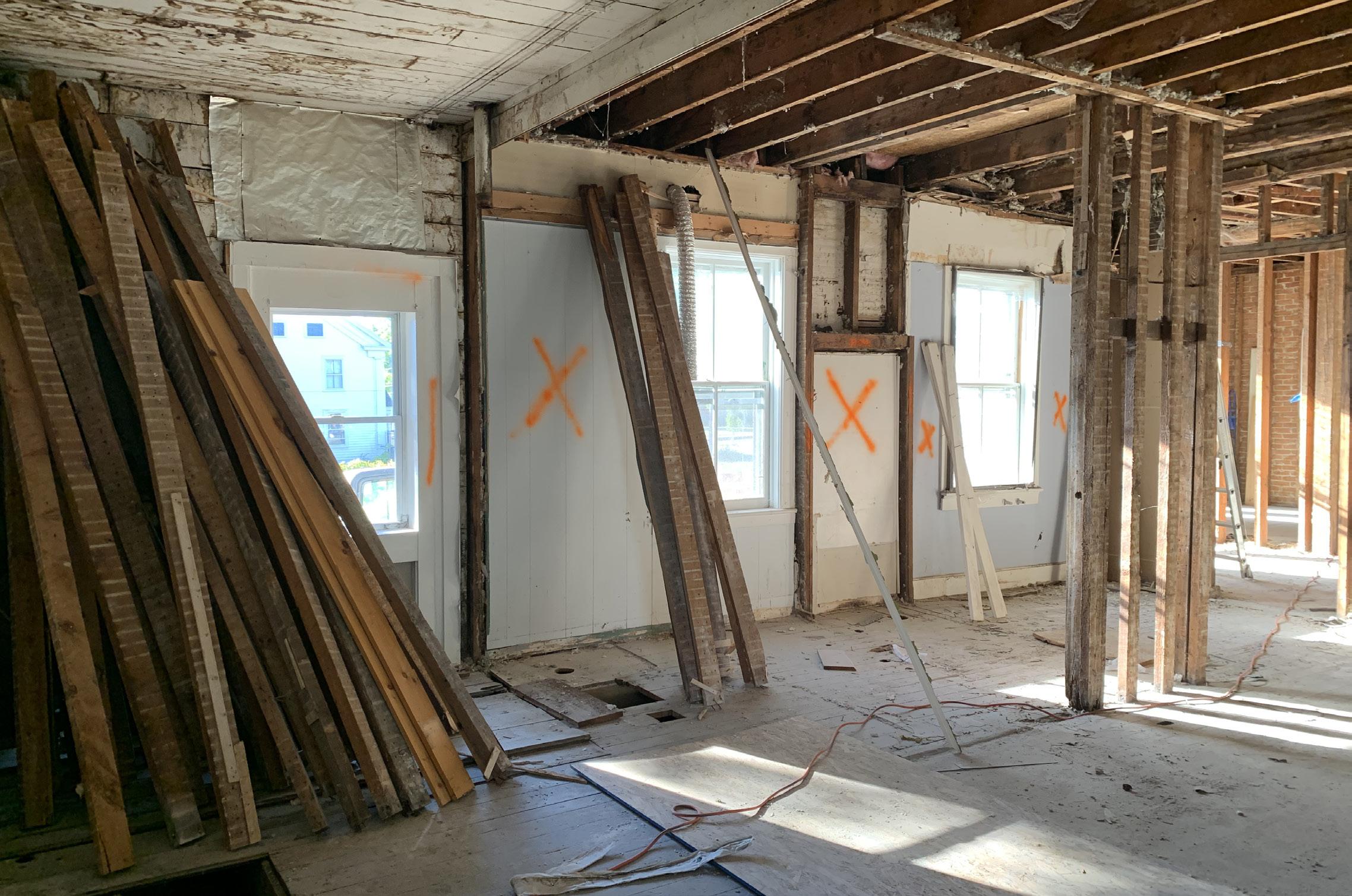
Once the design decisions have all been made and the development plan is approved and financed, construction can begin. Some small-scale developers who have experience in construction and relationships with tradespeople may choose to act as the general contractor for their own project. For others who do not possess this skill set or have the time capacity, understanding the most typical type of construction delivery approaches and contracts—and the pros and cons of each—will help the small-scale developer in their communications when hiring a general contractor. At this point in the development process construction costs should be well-defined and the pro forma updated to reflect this level of resolution.
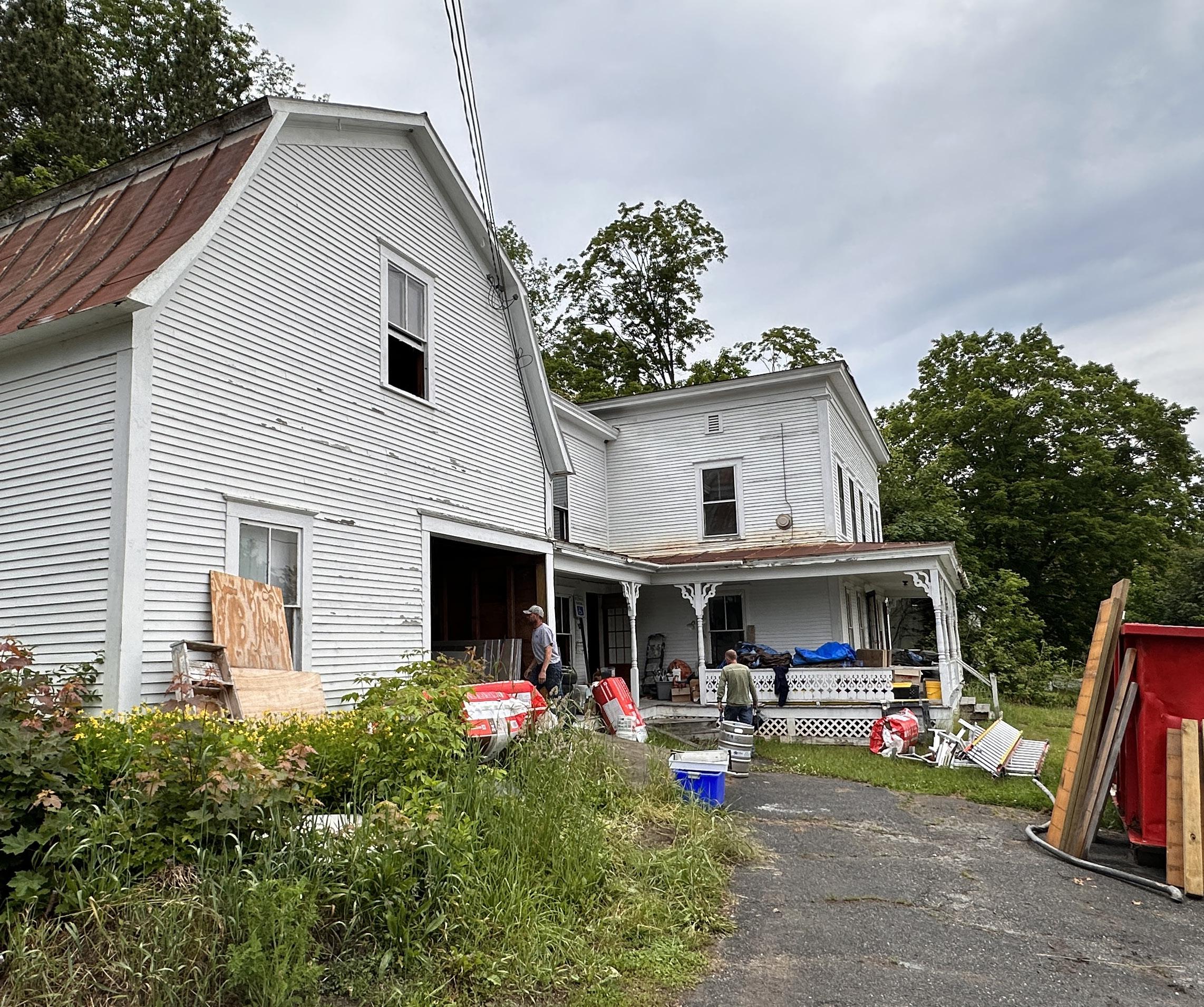
Mapping out accurate construction sequencing and construction phase durations has a profound impact on delivering a project on time and within budget. While day-to-day weather trends and impacts can only be tracked a week (or two) in advance, larger seasonal changes can be anticipated and incorporated into overall project schedules. With Vermont’s relatively short outdoor construction season, running approximately from May to November, it is important to take advantage of seasonal milestones as they occur. For instance, site work cannot occur when the ground is frozen solid, or when working conditions are too muddy; this means that winter and early spring are not ideal for site work. Early spring (e.g. mud season) is also not ideal for construction phases that require large construction equipment, such as well drilling rigs or excavators and loaders required for septic system installation and foundation excavation, but in some cases may be the only opportunity to install infrastructure lines. If that’s the case, be sure to budget for materials recommended by the contractor that reduce mud conditions. Warm months with infrequent rain are the most efficient for outdoor construction, and it is ideal to get buildings erected and sheathed (sometimes called ‘in the dry’) prior to the colder months in late fall and early winter. While outdoor construction during winter months is not impossible, project schedules should anticipate added time for snow removal and work stoppages for bitterly cold temperature snaps.
Even though construction is unable to begin before approvals and financing, ideally you have developed a relationship with a general contractor who has had the opportunity to provide high-level cost estimates and minor inputs to the overall design beforehand.
There are a variety of approaches to the designconstruction delivery method. The two most common approaches are listed, followed by a mention of how the small-scale developer’s experience is likely to occur:
Design-Bid-Build is the most commonly used approach. In this approach there are three distinct phases as the name implies: a design process is completed, then the resulting plans are sent to various general contractors who have the opportunity to submit bids proposing a total cost of construction and timeline, and finally the job is awarded based on the bids submitted. Instructions are provided by the developer’s design team on how bids should be submitted and the deadline for submissions. This approach is used by large-scale development projects and by public agencies. Included in the bid may also be specifications which outline desired level of completion (move-in ready vs. rough-in).
Design-Build is a process where the design and construction both occur in-house by a single firm. The design-build process is intended to streamline the overall process, saving time and money by having instant feedback cycles in both aspects. When engaging a design-build firm, the homeowner-as-developer or smallscale developer will most likely be expected to use the firm’s designers and construction project managers.
As discussed in Chapter 3 of this workbook, small-scale developers should reach out to both interview and build relationships with firms providing necessary services, and should seek advice and input from a general contractor on the construction delivery approach as well as current costs and timeframes to assume as part of the
development pro forma. In many cases, it will make sense to contractually engage your early advisors on construction delivery, costs, and timeframes for construction services.
Regardless of your selection process, once the general contractor has been selected, a contract will need to be signed between the construction firm and the developer. Typically the general contractor is the one who prepares and presents the contract, but some small-scale developers opt for a self-prepared construction contract, or one drafted by legal counsel.
Depending on the loan product being used, the lender may also need to be involved as a party in the contract. If using a loan product such as a Homestyle Renovation Loan or 203k Loan where the bank is a third party in the contract, additional items may need to be present in the construction contract. A completely separate contract furnished by the lender may also be required.
There are no hard and fast rules, and some structures can blend. Usually, if a project is using some type of bank finance, the bank will have a preferred contract approach that mitigates their risk. The general contractor may negotiate the bank's preferred contract to, for example, mitigate payment processing time. A construction contract will include the terms of the contract, budget, an estimated timeline, and a payment structure. Understanding some of the typical payment structures and the pros and cons of each will aid in your construction contract communications and negotiations:
A lump sum contract is the type of contract that developers prefer because they know what total costs are before work begins. In a lump sum contract, all work is completed for a stipulated amount – with contingency, of course. In this type of contract, the general contractor knows their fee and is paid in periodic draws as work is completed without providing material receipts throughout construction. The general contractor’s risk is that material costs may increase during construction and limit potential profit. To mitigate this, the general contractor will require tight controls to stay on budget.
In a time and materials contract, all costs are reimbursed to the general contractor, plus a certain markup and profit. This includes materials costs, but also subcontractor labor costs. This is the type of contract that a general contractor is likely to prefer because there is no risk to potential profit yet at the same time it requires a high level of documentation to justify the costs.
A cost-plus contract is like a time and materials contract, with the difference being that the general contractor does not add markup and profit to each line item; rather, the markup applies to profit on the total costs. Like time and materials, the risk to profit is minimal even if accurate documentation is required to justify material and labor costs.
Most often seen in a design-build construction delivery approach, the guaranteed maximum price contract is a combination of lump sum and cost-plus and protects both the developer and the general contractor. The developer has an expected maximum cost amount, and the contractor makes a profit up to this amount. Design-build firms will use this contract type to start construction while some aspects of design are still being worked out.
In the case of a dispute arising between the general contractor and a small developer, an arbitration clause within the contract will help decide how all parties can reach an agreement. Without this clause, the default method of settlement would be litigation in courts.
The ideal scenario is to have construction happen smoothly and quickly without any hangups. With so many players and so much coordination involved, this is hardly ever the case. Any number of items can cause delays: subcontractors being held up by another job, material and product supply chain issues, inclement whether, and unforeseen site conditions, to name a few.
With the high level of coordination required, you should consider who will represent you and manage coordination, communication, and payment with the general contractor during the construction process. On a small project with a limited budget, you will often wear many hats and operate in these roles yourself if you have the time and understanding. Larger development firms generally have construction manager and financial officer roles inhouse that handle different aspects throughout the construction process. Being aware of these tasks will help you make decisions about these roles ahead of time, and anticipate any issues with development schedule and cost.
Most often, a small developer will have their architect or designer act as a project manager should questions arise from the general contractor about potential modifications or clarifications of
construction details and documents. In a small project, a pre-construction meeting with on-call availability and occasional inspections should suffice. Depending on the terms of your lender, the architect acting as project manager will be asked to sign off on work as it is being completed and ensure that it is being performed in general conformance with the design documents.
When funds are released, the money sometimes goes to the developer, which means you will need to record payment amounts and process lump sum checks to the general contractor who then pays their subcontractors. Other times funds are released directly to the contractor after sign-off by the developer or the developer’s construction project manager or architect at specific intervals or project milestones. On developments where lenders require more verification, project managers or architects may be required to provide more specific/ detailed information about work being completed, and formal signoff before funds can be released. This varies considerably by lender, loan type, and project characteristics, so more research may be required to confirm what works best for your project team, project schedule, and contractor requirements.
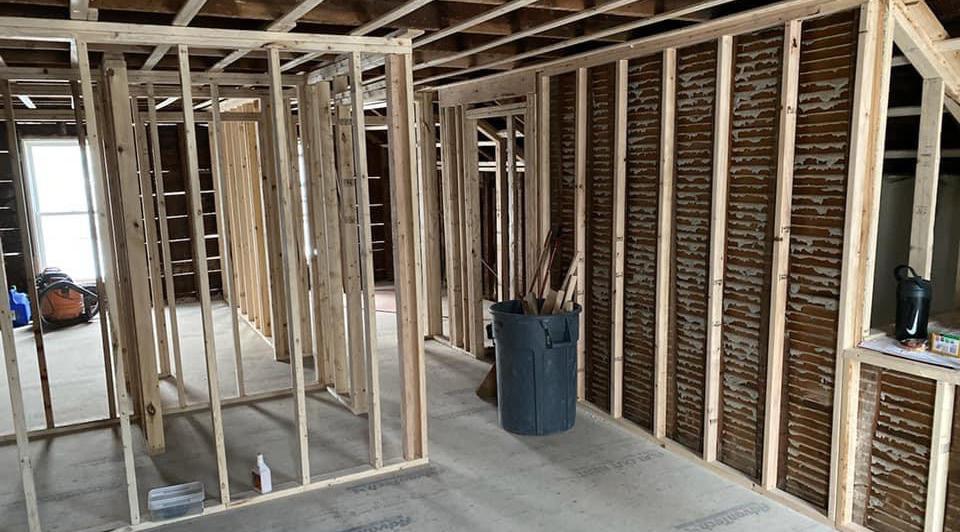
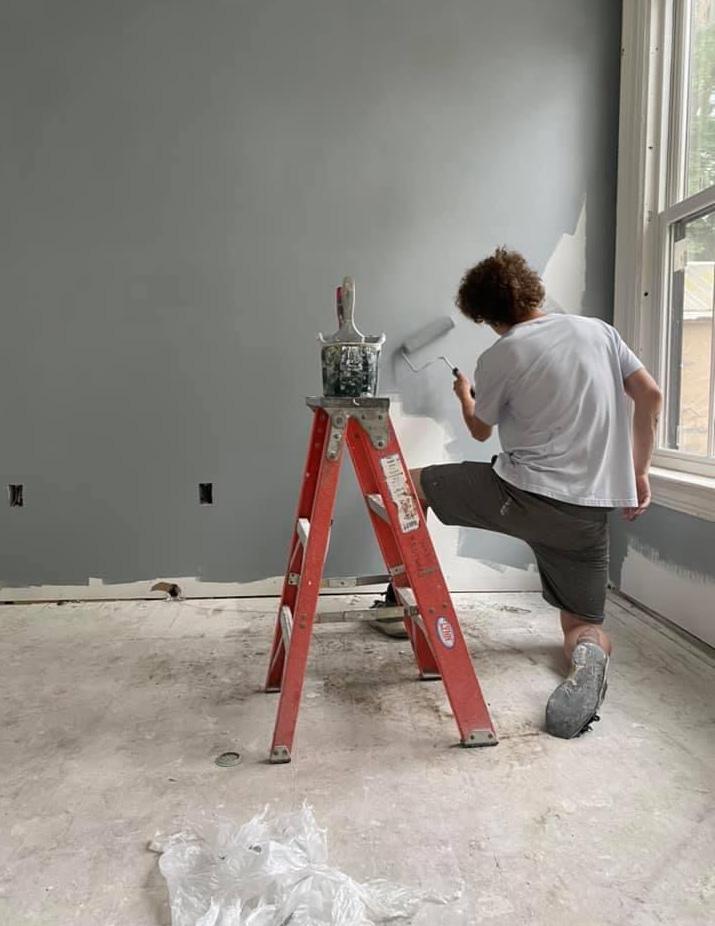
This section outlines both the rental and for-sale processes and explores post-construction intricacies of each. At some point all the flurry of construction activity will finally fade away and beautiful new missing middle homes will exist. Although beautiful, these homes will be empty. This chapter explores how newly created units become filled with homeowners or tenants and what a small-scale developer will need to do to reach that point.
Chapter at a glance:
What comes after construction is complete?
What comes after the Certificate of Occupancy?
• For-Sale Considerations
• Fee Simple
• Condominiums, Cohousing, and Planned Communities
• Tax Implications with For-Sale Projects
• Rental & Property Management Considerations
• Leasing
• Advertising
• Rental Inquiries
• Tenant Selection Laws
• Create a Positive Rental Experience
• Rental Payments, Security Deposits, and Procedure to Vacate Forms
• Responsiveness
• Turnover, Repairs, & Deposit to Hold
• What if things go bad and I need to evict a tenant?
• Appreciation and Thoughtfulness
Throughout the construction process, the small-scale developer will have become familiar with periodic inspections at certain milestones that serve to release funds. After construction is complete, one important final inspection remains. This final inspection is for the issuance of a Certificate of Occupancy. Sometimes called a CofO or a CO, this certificate officially determines that all construction has met applicable zoning and building code life safety requirements and is legally ready for habitation.
A CO is not required for basic renovations of existing properties but will be required for any project deemed a ‘major renovation’ and certainly any newly created units. Jurisdictions may vary in what is determined to be a ‘major renovation’ so check with your local planning staff. Some jurisdictions in Vermont do not issue CO permits, but only those who have entered into cooperative inspection agreements with the Vermont Department of Public Safety and the Division of Fire Safety. The full list of Vermont towns and cities who have entered this agreement can be found here: Vermont Municipal Inspection Agreements. Once issued a CO, the project is able to be sold or rented. A good project manager (the small-scale
developer) will have likely already begun to think about marketing the units prior to receiving this all-important certificate. If you are building forsale units, your realtor should have already listed these units as "coming soon" and reached out to their network to make other agents aware in case some potential buyers may wish to be first in line by negotiating a pre-sale agreement. Your realtor may begin this process as early as three to four months before completion. Similarly, rental units may be marketed ahead of time so that occupancy can start right away. Rental units in Vermont are often listed as much as six months ahead of time. All of these marketing efforts are intended to reduce carry cost and vacancy rates.
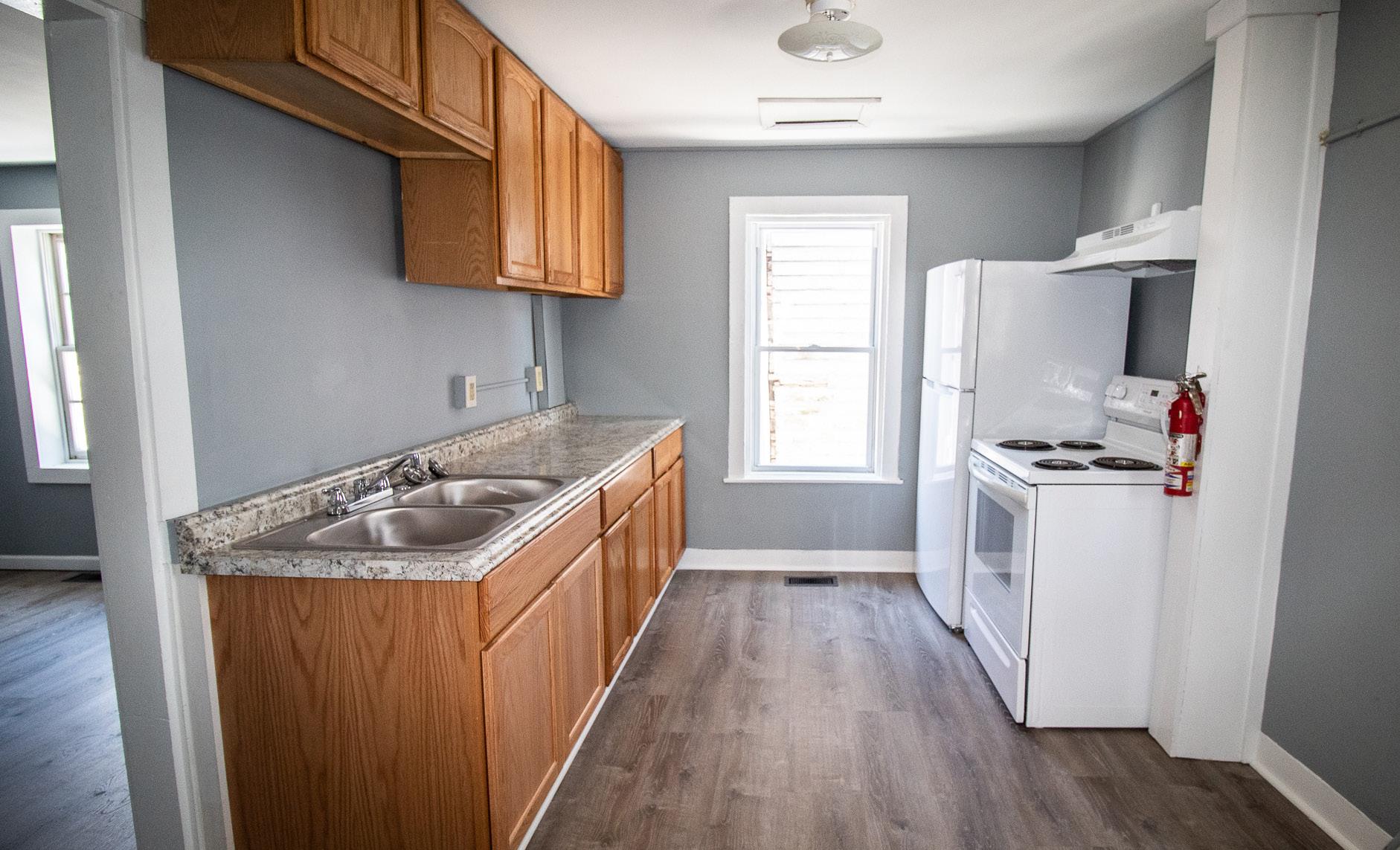
Fee simple is the most common and complete type of ownership interest in real estate (and applies only to single dwelling homes or multiunit properties owned by a single household that are not in a housing trust). When a property is owned in fee simple, the owner has the highest form of ownership interest possible, subject only to limitations imposed by government powers, taxation, and zoning regulations.
If developing a project to sell fee simple, marketing is an important process to outline and will rely heavily on the team built early on in the development process. The most common approach to selling your newly constructed, fee simple units (with COs) is with your realtor, who will represent you throughout the sales process. In this approach, your realtor would cover marketing efforts like posting online listings, contacting other agents, and hosting open houses. During this period, buyer offers will be received and reviewed and could include seller concessions like buying a new refrigerator for the unit. This process may take some time after construction is complete so the small-scale developer will want to have enough construction interest reserve built into the project to carry the loan costs during this marketing and sales period.
As individual homes are sold and money is received, the lender is paid first. This will help retire significant portions of the construction loan, resulting in less interest payment in the next billing cycle. Once this loan is paid and closed out, any remaining profit is distributed to the project’s equity partners according to the project’s return rate identified in the Operating Agreement. Lastly, the developer’s fee gets paid out.
It is easy to see how important it is to have rapid permitting, an accurate construction period estimation, and market knowledge of typical hold periods. Real estate sales are cyclical, with many more active buyers in the spring and summer than the winter, so the small-scale developer may want to keep this in mind for project scheduling. Additionally, work with your realtor to understand current market activity. Depending on your local real estate cycle, homes may sell more quickly or more slowly. These are factors that can significantly affect the costs associated with the hold period.
Finally, be aware of any local requirements when selling a home, such as reporting an energy score, and have a budget set aside for these items if they incur a cost. Vermont presently has one of the few energy codes in the country in which the builder self-certifies compliance. The law recognizes that it is the builder’s responsibility to understand the Residential Building Energy Standards (RBES), to build to the minimum technical efficiency standards, and then to certify (a one-page form) that the building complies with the law. Savvy buyers may ask for this during the sale because it is a best practice.
The following ownership structures can be associated with for-sale units but present an additional level of complexity due to direct customer involvement or additional legal documents that need to be drafted prior to selling.
Another for-sale structure is to sell as condominium or cohousing. Condominiums (condos), cohousing, and planned communities all fall under what is called “common interest communities’’ in Vermont law. The Vermont Common Interest Ownership Act applies to common interest communities created in Vermont after January 1, 1999. The condominium or planned community concept allows for private ownership of individual units while sharing ownership and responsibility for the land and additional common areas and amenities with other unit owners.
Spreading the land cost over the number of homes reduces the sales price of each home, thereby making condominiums slightly more affordable than single family homes on individual lots.
Condominiums and cohousing offer alternative ownership models, where planned communities offer a development model that is similar in legal structure but falls under its own zoning category. With each category having so much similarity, the nuanced differences are described below.
Condominiums: individual households own individual units on the same piece of land and are attached in the same building.
Cohousing: technically and legally structured as a condominium except that those intending to occupy a cohousing development are typically the developers (who might hire a development consultant to assist them). From a design standpoint, cohousing often involves shared community spaces like a communal living area and kitchen.
Planned Communities: A planned community means a common interest community that is not a condominium or cooperative, though a condominium or cooperative may be part of a planned community. Think of a planned community as a larger real estate development project like a subdivision containing common amenities, such as a recreation room or pool, all managed under a Homeowners Association Agreement. One could imagine a condominium building inside of a planned community but not a planned community inside of a condominium building.
When homes are detached, but the land is owned in common and is governed by a Homeowners Association (HOA), the condominium law refers to these as “planned communities.” An example includes a cottage court, or pocket neighborhood, where individually owned cottages are centered around a common green space. Often in a planned community, an individual owner will own the structure or dwelling and the amount of land that the dwelling sits on. This scenario is called a ‘footprint lot’.
Any of the previously described housing types that fall under the Vermont Common Interest Ownership Act will assume the following structure:
Ownership Structure:
• Each unit under the Vermont Common Interest Ownership Act is individually owned by the unit owner
• Owners have rights to the interior spaces between all walls, fixtures, and improvements within the unit.
• Owners share rights to use the common areas and amenities outside of the walls which can include attics, roofs, hallways, back yards, patios, courtyards, parking areas, and landscaping.
• Unit owner rights are granted (in exchange for a monthly fee) through the by-laws of the Homeowners Association.
Homeowners Association:
• A homeowners association (HOA) is created by the developer to take legal responsibility for managing and maintaining the common areas and amenities of the condominium complex.
• The HOA is responsible for:
• enforcing community rules and regulations,
• collecting dues or fees from unit owners to cover maintenance and repair costs through a monthly condo association dues charged to each unit owner,
• implementing maintenance, repairs, and capital improvements, and
• overseeing the overall management of the property
• Monthly condo dues should also include contributions to tax liabilities and a reserve fund for future repairs and capital improvements, including unexpected or emergency repairs.
The complexity for a small-scale developer is the need to create the initial legal status of the governing HOA document and define the upfront rules, regulations, and fees. It is essential to use an attorney who is well-versed in HOA documents for this purpose. Typically, upon completion of construction, the developer remains a member of the HOA until all of the individual condos are sold in order to protect their investment. Once the developer sells off the last condo, they phase themselves out and the buyers become the sole HOA members and are free to modify HOA documents as desired, within the governing statute, and establish their own leadership roles. Before that, it is essential for both developers and buyers to understand the terms outlined in the governing documents and work collaboratively to ensure the smooth transition of control and ongoing management of the community.
Condominium development has a couple of significant challenges, one being the financing both for the project and the future buyer. As a developer, obtaining debt financing can be incredibly difficult with Freddie and Fannie requiring a certain percentage of the project to be complete before financing can be put in place. This forces banks/ credit unions to portfolio these loans, which many do not want to do. On the buyer side, higher amounts of down payment including the additional cost of Homeowner Association dues can make it much harder to qualify for a purchase loan versus that of a single detached home.
The other challenge to any condominium/ cohousing structure is how the State of Vermont legislates its condominium defect liability. Condominiums are often a great design solution, but while condominium defect liability is intended to protect homebuyers, some developers will refrain from this option out of concern for future litigation and the increased costs around legal fees and insurance premiums. For more on the challenges of condominium defect liability laws visit this article by Up for Growth
On the sales side, mortgage bankers have stringent requirements for financing the construction of condominium developments. It is likely that the lender will require all buyers to be identified and have pre-approval for mortgage financing before making a development loan commitment. (Additionally, for both models, good faith deposits and pre-sale agreements may have been drafted and signed as a way to help secure construction financing).
Small-scale developers ultimately need to consult with tax professionals, accountants, or tax advisors who specialize in real estate taxation to ensure compliance with tax laws and to optimize tax planning strategies throughout the development process, but there is a defining difference to bear in mind when either developing to sell or to rent.
When developing to sell, the properties are held less than a year so profits from the project are taxed as capital gains and at the higher ‘ordinary income’ rate. A property developed to hold and rent beyond one year, even if sold later, are generally treated as long-term capital gains and taxed at preferential capital gains tax rates, which are typically lower than ordinary income tax rates. Additionally, long-term hold projects also bring the added tax benefit of writing off depreciation against existing tax liabilities. As mentioned in Chapter 5: Feasibility Methodology , a residential rental property placed in service after 1986 is typically depreciated over 27.5 years.
Once a rental development project is built and receives its Certificate of Occupancy, it enters a period of time called the ‘lease up’ period. Larger projects anticipate a year or more to lease up but small-scale projects typically take much less time because there are fewer units to fill, and could be occupied in a few months or even less if the units have been advertised ahead of time. This ‘lease up’ period is when the developer is accepting rental applications and vetting potential tenants.
Like many development tasks, leasing can be hired out to a leasing agent or property manager if the small-scale developer does not have the time or is uncomfortable doing it. Should you choose to do this yourself, let’s discuss some tips and general processes, understanding that rental property leasing is immensely detailed and also governed by federal, state, and local laws. Necessary forms like the lease agreement, deposits, pet addendum, property rules & regulations, move in conditions, move out instructions, or yard care addendum can be obtained by members of the Vermont Landlord Association
It would also be wise to become familiar with all aspects of Vermont’s landlord-tenant laws. The Definitive Guide to Renting in Vermont provides an overview from both the tenant and landlord perspectives. Another good resource is Vermont’s Legal Help Website, which is primarily a resource for tenants but contains a wealth of information about tenants’ rights, which are important for rental property owners to understand.
There are many online platforms to list available units and in some cases listing with one will automatically forward the listing to a handful of others. This resource from Roofstock outlines 29 different online platforms, and mentions that 4 out of 5 renters search for available rentals online. Through the options in the Roofstock resource, you can access these online platforms and analyze the number of active listings on each to determine which online platforms are used the most in your local area..
Some of these platforms also offer an online property management option to accept rental applications, conduct background checks, and process rental payments. This can be a preferred
option because you are not responsible for gathering and protecting sensitive information, such as social security numbers, from applicants. When dealing with this type of sensitive information there are security requirements such as locked filing cabinets and other measures in your home office space to protect the applicant. Please note that some of these sites may include information and/or fees that are not consistent with Vermont’s rental housing law
When advertising a unit, describe the property, space, and amenities, not who you think should live there. For example, if it’s a 500 square foot apartment with one bedroom, simply say that it is "a small one-bedroom" not that it is "good for a single person." Advertise to the widest audience possible and be careful when selecting targeting options in online ads so that you are not excluding specific groups of people.
It can be quite an exciting time once the listings have gone live and inquiries start to roll in. This is where the small-scale developer is reminded what all of the ideation, design, financing, and construction is all about. It is about people needing and deserving safe, secure, and respectable housing. A small-scale developer who chooses to manage their own units will quickly realize that they are now squarely in the people business and providing an important service that need not be a negative experience for either party. Good landlordtenant relationships result in a successful rental experience. This requires a positive and caring mindset, and also being well-organized and welleducated on both tenant and landlord rights and responsibilities.
Tenant screening and selection can be daunting so some tips to help are provided here. There are important legal items to be aware of, but first we’ll cover some options for how the process might go. Often, an inquiry will come back without much information about who is applying but with a message asking about whether the unit is still available and when they might come by for a tour. Lining up multiple tours throughout the week can be time consuming and exhausting, especially when the space does not work for many of the interested parties or the potential tenant does not qualify. It might go without saying, but you may not want to provide your personal phone number in the listing unless you are prepared to receive
multiple calls per day. Either set up a separate phone number or provide an email address specific to the property instead of your personal email. Online platforms do this automatically. To manage showing requests, using an online calendar and booking system could save you considerable coordination time by automating appointment scheduling when you are available.
An option to save time for all involved is to create and save a document of your rental criteria related to ability to pay rent, credit, and other policies like allowing pets or smoking on the property. Then make a list of questions you have for inquiries. Invite those who inquire to schedule a brief phone conversation prior to meeting in person to view the space. The purpose of this conversation is to discuss the space, the rental criteria, and answer any questions the potential applicant may have. If during the conversation, the potential applicant realizes that the space is not what they are looking for—for example, it’s a one bedroom but they need two—the conversation can stop and the time and effort of a tour is saved. If during the phone conversation it becomes apparent that the potential applicant will not qualify based on your standards, it is best to be up-front about this and politely end the conversation. Taking this approach also saves the cost of the application and background check. Meanwhile, it’s very important that throughout this process you respond to applicants in the order that their queries have been received and treat all applicants the same way. This is part of your responsibilities under state and federal fair housing law, which we will discuss in detail below.
Be ready to answer questions the applicants may have and share your approach to property management should any issues arise. Keep in mind that you are starting a business and your approach to managing properties, including how you quickly address any repairs or maintenance, will benefit you greatly over time by retaining tenants and limiting turnover.
Phone conversation questions may include:
• Do you have any questions about the space that were not addressed in the listing?
• Why are you moving?
• How many people will be on the lease?
• Do you have the means to pay your portion of the rent?
• We require a background check and references
from past landlords. Are you willing to supply that information?
• The application process will pull credit history. We have a minimum credit standard, will you be able to meet this standard?
• Do you have any pets?
• Do you or anyone in the household smoke?
If you don’t have the bandwidth for this more personable approach, another option is to develop an application process to address initial screening of potential tenants. But be sure you understand Vermont tenant laws before you develop an application.
Notice that the questions in the phone interview were all about the rental space itself and the standards set by the landlord but never specifics about the individual like if they have children, what country they are from, or whether they were married or not. Certain questions are illegal under Federal and Vermont Fair Housing laws.
Fair Housing Laws were enacted with the Fair Housing Act in 1968 and amended in 1988 to protect against illegal discrimination by housing providers in regards to:
• Race
• Skin color
• Religion
• Sex
• National origin
• Familial status, Including
• Pregnant women
• Parents with one or more children under 18
• Persons obtaining or who have legal custody of children under 18
• Disability (this includes physical and mental disabilities and being in recovery from substance abuse)*
* This includes the right to request reasonable accommodations and modifications that allow a person with a disability to have full use and enjoyment of their home like anyone else would. For example, a reasonable accommodation would be for an assistance animal in a “no pets” building or an assigned parking spot in an open lot; a reasonable modification would be a shower grab bar, ramp, or slow closing door.
Each state and even cities may have additional protected classes. The State of Vermont's additional protected classes include:
• Gender identity
• Sexual orientation
• Marital status
• Age
• Receipt of public assistance (rental vouchers/ Section 8, Reach Up, ThreeSquaresVT, etc.)
• Being a victim or survivor of abuse, sexual assault, or stalking*
* In addition to the anti-discrimination provisions, there are protections in Vermont’s rental statutes that allow a victim/survivor to break a lease, get locks changed, and other actions.
The US Department of Housing and Urban Development (HUD) is responsible for enforcing the federal Fair Housing Act and investigating complaints. According to HUD, no person may do any of the following because of one of the protected classes:
• Refuse to rent or sell housing.
• Refuse to negotiate for housing.
• Make housing unavailable.
• Deny a dwelling.
• Set different terms, conditions, or privileges forsale or rental of a dwelling.
• Provide different housing services or facilities.
• Falsely deny that housing is available for inspection, sale, or rental.
• For profit, persuade, or try to persuade, homeowners to sell their homes by suggesting that people of a particular protected characteristic are about to move into the neighborhood (blockbusting).
• Deny access to or membership in any multiple listing service or real estate brokers’ organization.
• Threaten, coerce, intimidate, or interfere with anyone exercising a Fair Housing right or assisting others who exercise that right.
• Advertise or make any statement that indicates a limitation or preference based on any of the federal or state protected classes.
Obviously, this is a serious matter so it is important to know the laws and landlord responsibilities. The Fair Housing Act applies to everyone connected with housing. This includes owners, property managers, leasing agents, administrators, maintenance staff, service providers, cleaning staff,
contractors, lenders, homeowners associations, condo boards, residents, etc. Not adhering to these responsibilities can lead to major repercussions, including being investigated by the Vermont Human Rights Commission or HUD, legal action leading to court ordered monetary repercussions, getting barred from being a landlord or managing rental properties, or being required to participate in trainings or use affirmative marketing in your listings. Ultimately, disqualifying an inquiry for not meeting the property standards is acceptable, but disqualifying for any of the above reasons when the applicant meets the standards is not.
Some properties are exempt from fair housing law, but discrimination based on race is always covered, as are all advertising and statements.
Fortunately, Vermont-specific resources for further education on this topic are available:
• Fair Housing and Discrimination Workshops and Training
• Vermont Tenants Rights and Resources
• Vermont Landlord Handbook
Additional resources and information are available from the Vermont Landlord Association.
Forms and legal requirements are a necessary part of renting, but property management is where small-scale developers as landlords get to shine by implementing their goal of providing a positive rental experience for their tenants. The goal, after all, is not just to find a great tenant, but to retain them for the long term.
It should not be lost that tenants pay a significant portion of their hard-earned income into your building. In return, excellent customer service should be provided. Successful landlords and property managers set clear expectations, communicate responsively, make expedient repairs, follow the law, and find ways to thank valued customers.
Landlords who value getting paid rent on time should make easy payment methods a priority. This can be done by using an online property management platform that contains renter information, accessible lease documents, and opportunity for tenants to make payments online directly connected to a specified bank account.
Other digital mobile app methods include PayPal, Venmo, Zelle, CashApp, Google Pay, or any other app preferred by the renter.
State and local laws clearly outline what is expected to receive the full deposit back including the timing and process for repayment. One option to accomplish this is to create a ‘Procedure to Vacate’ form that is provided at move-in. This form should clearly identify the level of cleanliness desired and items that should be replaced by tenants like any non-working light bulbs, or the aluminum grease trays under the burners on a stove. This approach provides an incentive for the tenant to return the unit in the same condition as when they received it, especially because the agreement stipulates that they will receive a full refund of their deposit upon meeting these conditions. Naturally, any damages incurred will affect this outcome. The cleaning fee plus the landlord’s time to coordinate the cleaning should be stated in this form should the standards not be met. Also, when inspecting a unit after move-out, be aware that normal wear and tear is not considered damage. Vermont law requires that the landlord must return the security deposit within 14 days. The security deposit return should include a written statement itemizing any deductions.
A tenant who does not receive their deposit back or who disagrees with some of the deductions the landlord takes may go to Small Claims Court to try to recover the deposit. (Tenants of apartments in Burlington can go to their local Housing Board of Review.) If the landlord willfully withholds or fails to return the security deposit and written statement, the landlord may, at a judge’s discretion, be ordered to pay the tenant two times the amount of security, plus reasonable attorney’s fees and costs if the tenant goes to court.
A major complaint amongst renters is responsiveness to issues that arise and timeliness to get these fixed. The easiest way to handle any issues that arise is to be directly available through text or email so that you can respond in a reasonably quick timeframe. Having a ready network of various contractors helps this should major issues arise, particularly plumbing and electricity. A go-to trusted all-around handyperson is an essential member of your property management team and can serve as the person who can swap out a sink sprayer or refinish a countertop at tenant turnover.
Communicate with your tenant that even seemingly benign inconveniences are important to you. Is there a door with a lock that is difficult to turn, did the interior door knobs become loose after construction? Tenants have varied levels of handiness and/or tools available and may not know how to tighten a door knob. Quick fixes like these are the best calls a landlord can get because they provide a chance to demonstrate responsiveness and cost little to no money.
Your rental building is your business and no call from a tenant is inconvenient, even if it is.
Remember to review Vermont statutes and rules for entering a renter’s home. Vermont’s Legal Help Website is a great resource for learning about your rights and responsibilities as well as the renter's. Some issues require immediate action by a landlord, such as the loss of heat in winter, even when you may be away on vacation. Cultivating relationships with trades and maintenance specialists and having a call list will help you be responsive in an emergency.
Unit turnover happens as the tenant’s life phases progress. This should be welcomed since these are usually positive events like marriage, buying a house, graduating, or finding a new job. Sometimes relationships don’t work and the tenants split up and maybe one tenant stays and finds a roommate instead. When the latter happens, a new lease will need to be created with the new tenant’s name on the lease. Any new tenant will also have to qualify according to your rental standards.
Turnover provides the landlord the opportunity to check in on items that may need minor fixes or updates.
In some cases, a newly qualified tenant will want to secure an available unit but is unable to immediately because they still need to give a 30day notice at their current address. In this scenario, a ‘Deposit-to-Hold’ agreement can be made where the new tenant provides a nonrefundable amount equal to one month’s rent. At move-in, after the 30 days are up, the lease agreement is executed with payment of first month’s rent and security deposit. This ensures payment for the unit while it is held, even if the new tenant fails to execute the lease. This 30-day hold period also provides the landlord time to access the unit and make any minor improvements like hanging new blinds or touching up paint and scuffs.
What if things go badly, and I need to evict a tenant?
If things go bad and a tenant needs to be evicted, this link provides additional Vermont-specific information about the steps and requirements of this process, including a hotline for advice for members: Vermont Landlord Association
Appreciation and Thoughtfulness
Showing appreciation goes a long way and the holiday season is a great time to show this through small gifts for your tenants. An example is a $100 short-term rental gift card with a note that mentions what a pleasure it has been to have them. Or perhaps a tenant may want to create a small garden box. Allowing this and working with them to find a good spot will show thoughtfulness.
Your responsiveness and thoughtfulness will all play into your personal brand of property management and operations. Good management will lead to good tenants and a productive property.
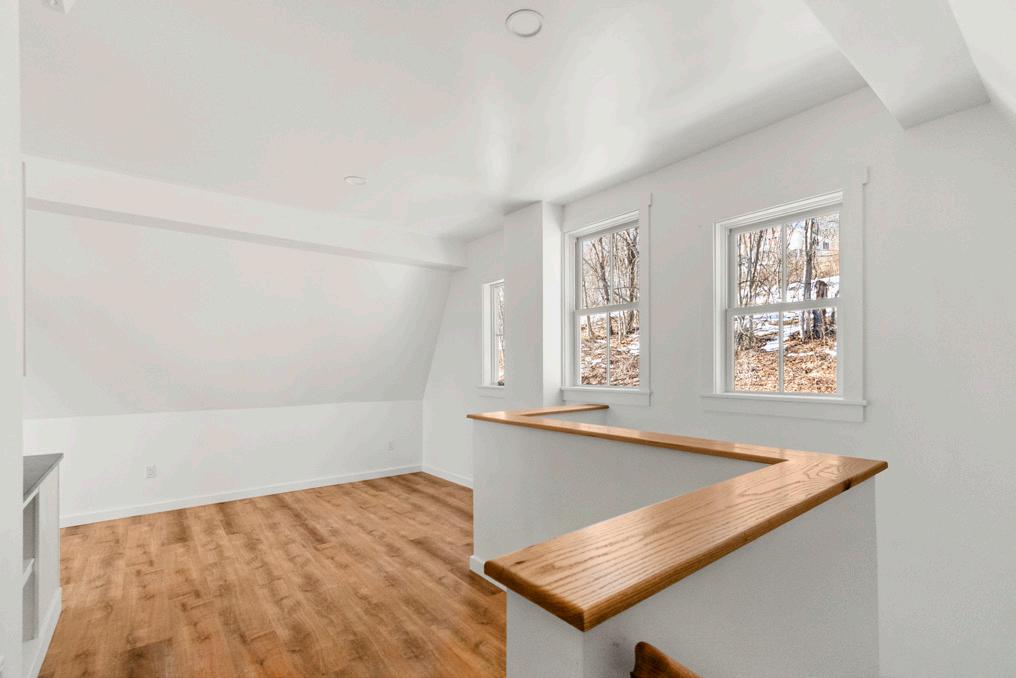
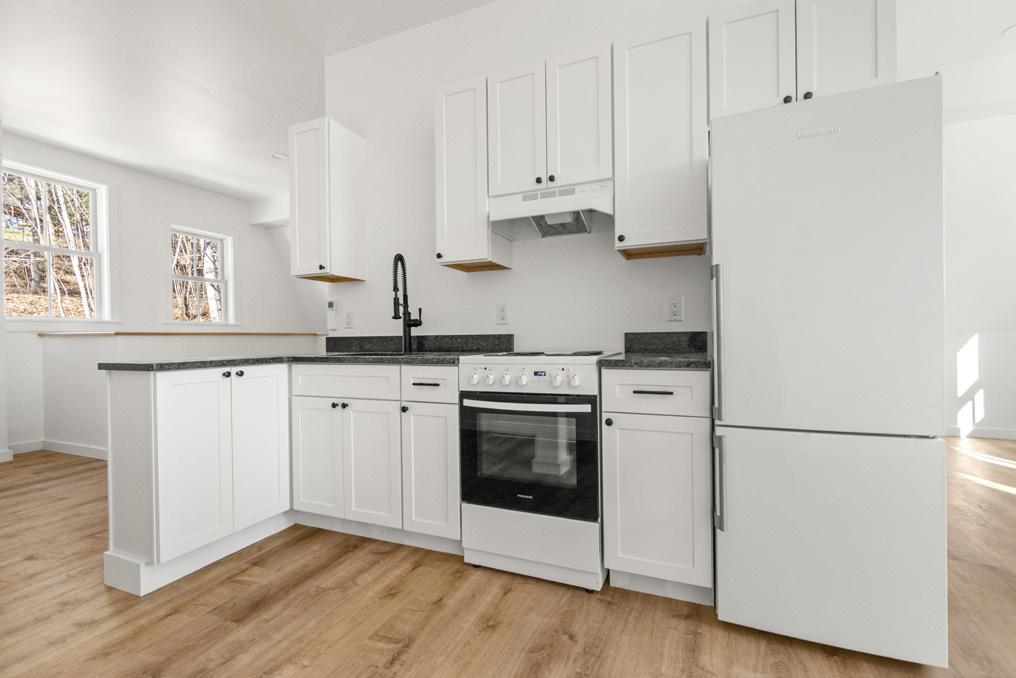
All home typologies in this Toolkit have been designed to take into account general residential architectural best practices at a schematic level. The home typologies are intended to serve as inspiration for developers to start thinking about their particular sites’ development opportunities. In all cases, further development of these designs by the developer and their architect, engineer, or other building professional will be required to certify that they meet local, state, and federal codes and are suitable for a particular site.
Generally speaking, typologies have been designed to be narrower than they are long. This enables them ito work in a wide array of vacant and underutilized parcels and allows for varying parking solutions within door yards (side yards), and rear yards. The overall parcel dimensions, environmental and infrastructural constraints, local zoning requirements, and parking dimensional requirements will dictate the typology and scale of development your parcel can support. Other site considerations that should be considered when laying out your potential development on your site include well and wastewater infrastructure placement, storage of household waste (trash/ recycling/compost), parking area, snow storage, retention of usable on-site open space, and location of mailboxes (e.g. aggregated in one common location, or individualized). See Chapter 6 of the Builders’ Workbook and the Community Infill Design section of this toolkit for more on these site-specific design considerations.
Each typology has been drawn with a recommended roof configuration that maximizes interior square footage while maintaining an exterior profile that is consistent with singledwelling unit norms. In some cases, typologies have been drawn to show both pitched and flatroof options. When selecting the roof type for your development (e.g. pitched vs flat), you should consider whether the roof type will shed excess snow and rain into specific areas of your property— especially emergency egresses. The inconvenience of rain shedding from a roof onto a unit entrance or related stair/ramp can easily be solved with gutters. However, snow and ice shedding from roofs onto circulation and egress areas can be dangerous. If pitched roofs are proposed, it is
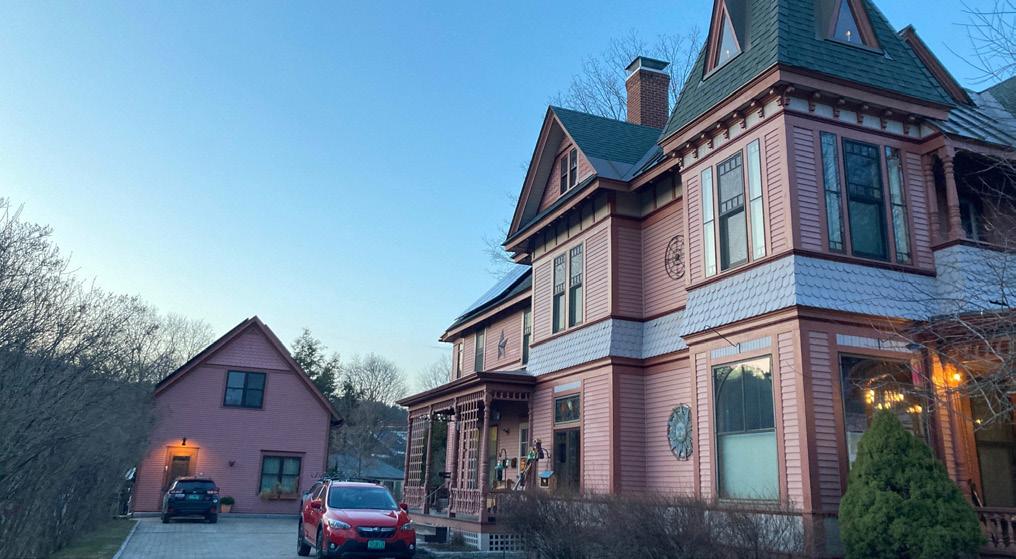
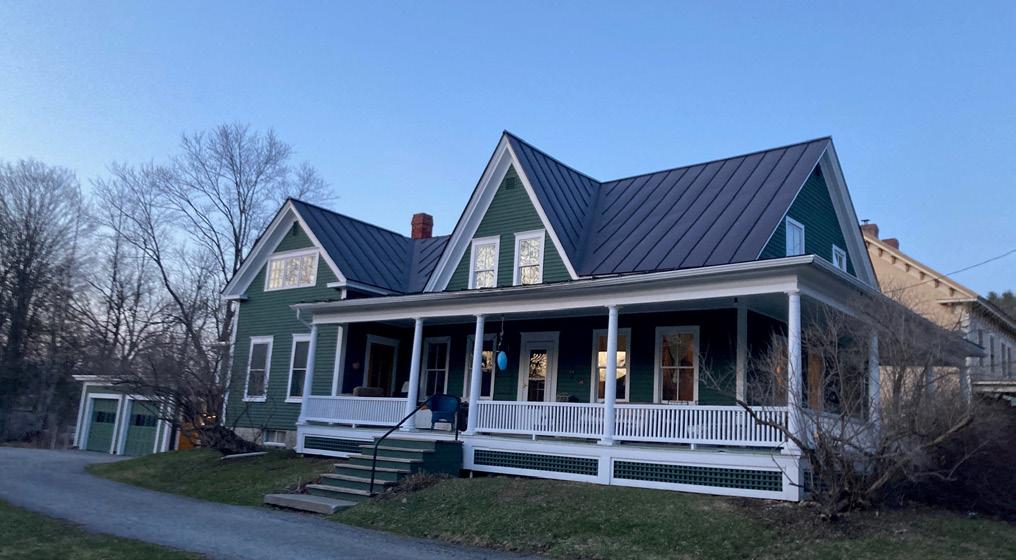
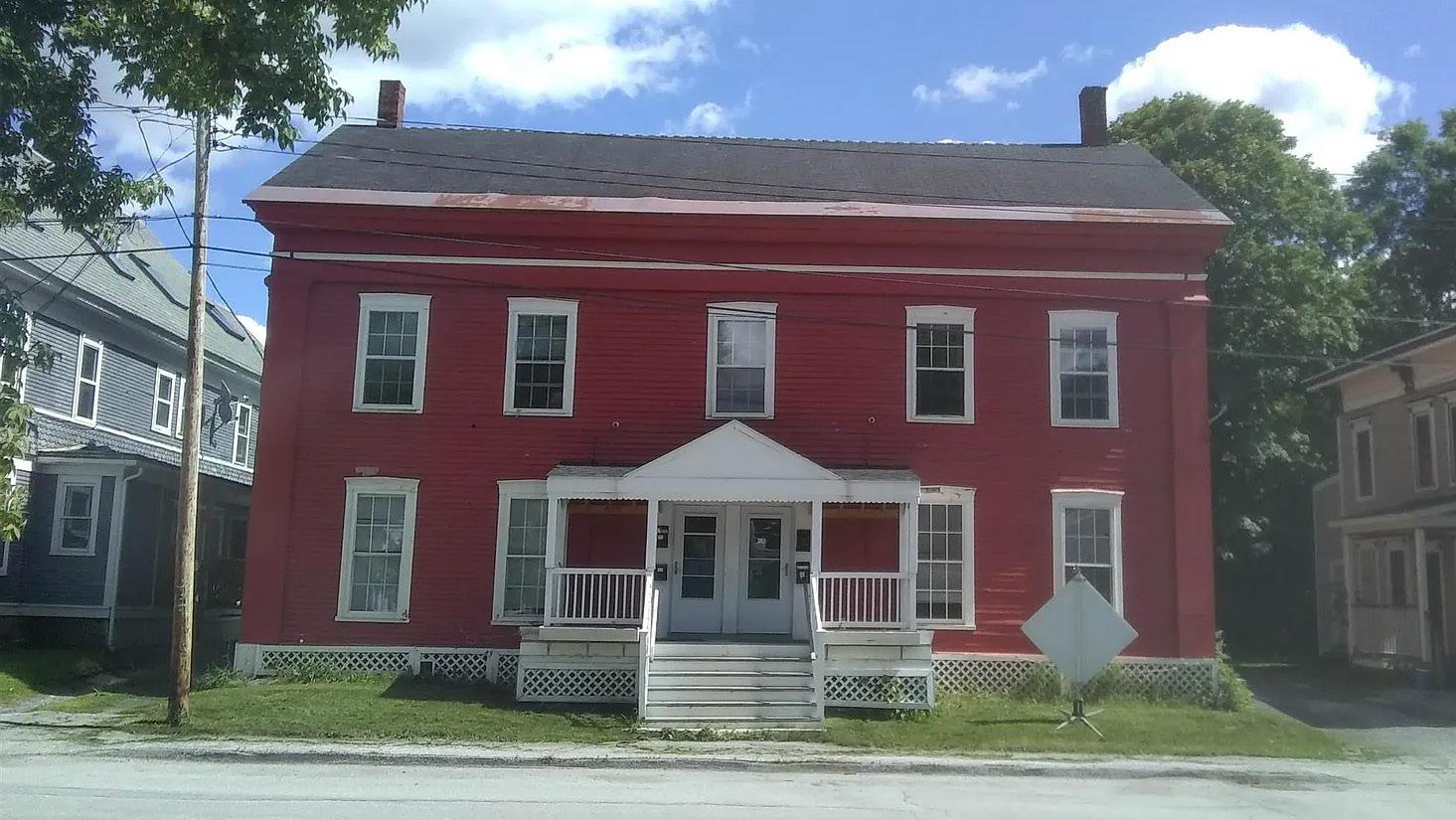
Existing Vermont homes that are, or could be, small multi-unit missing middle homes.
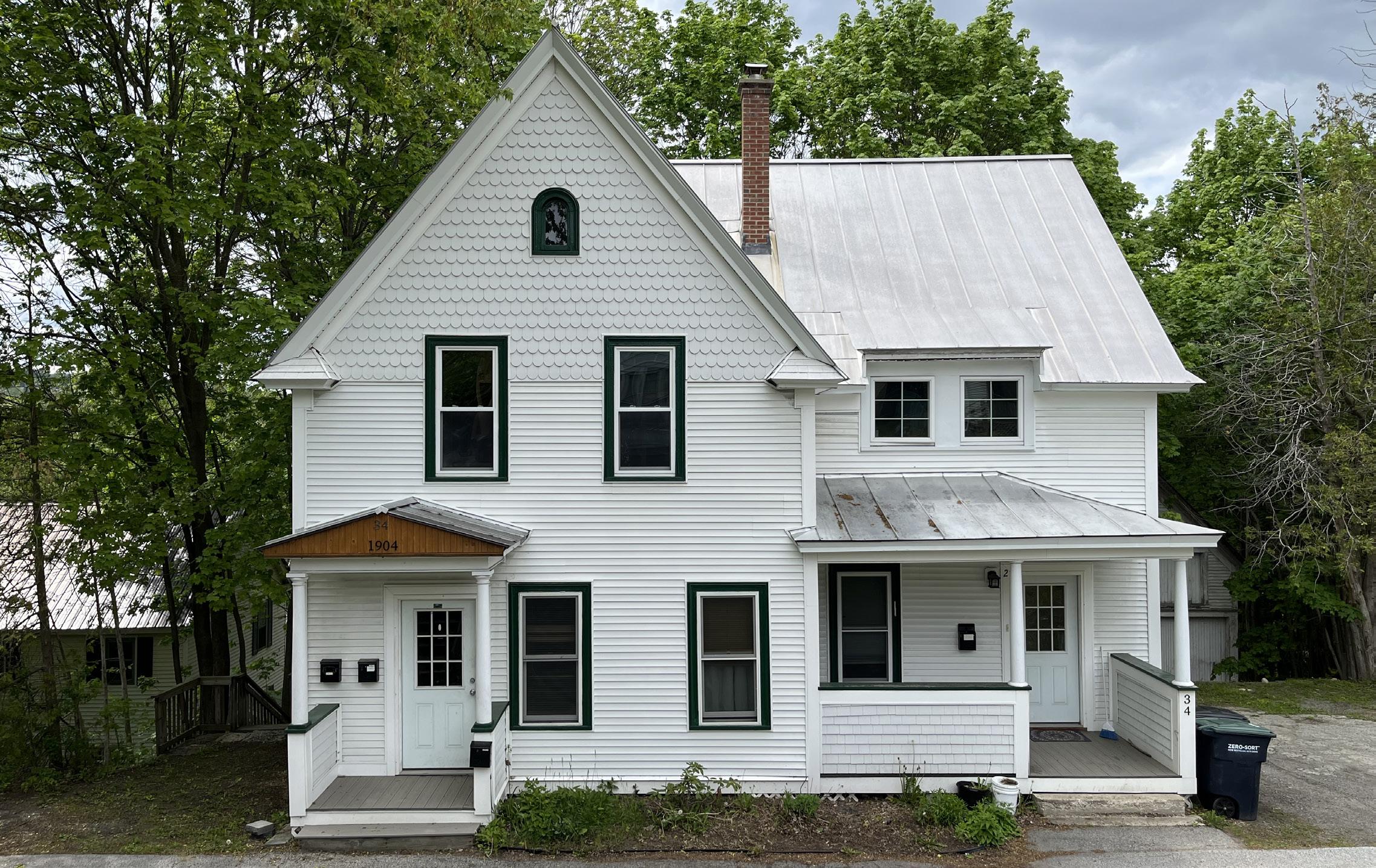
highly recommended that all unit entrances and related stairs/ramps be protected by a roof. Snow shedding into driveways and walkways is also a hazard, but this is often secondary to other competing design considerations.
Typology interiors have been designed to be efficient and practical while maximizing the resident experience:
• Shared common areas have been eliminated, as they can be difficult to manage and maintain. This means that each upper-floor dwelling unit has its own entry and stair.
• All entrances have been designed to include ample storage for coats and boots, and mudroom benches have been incorporated where feasible.
• Living areas are open-concept to allow for furnishing flexibility, while maintaining reasonable flooring joist spans to minimize
material cost and maximize ceiling heights. Where necessary to limit costly long joist spans, isolated columns have been incorporated into some layouts.
• In-unit laundry facilities have been provided in varying configurations (side-by-side or stacked) based on the constraints of each interior layout. Laundry has been incorporated on the same level as bedrooms where space permits for added convenience.
• Additionally, two-level dwelling units include a half bath on the ground floor to better accommodate guests and limit the need to traverse upstairs frequently.
In all cases, development teams will need to closely coordinate egress and code requirements with the local authorities who have jurisdiction, especially on means of egress, secondary means of egress/ escape, and placement of mechanical closets/ equipment relative to bedrooms.
All typologies include at least one single-story, ground level unit that has been designed to be accessible for residents with physical impairments and to support adaptation over time to become accessible for residents aging in place.
Generally speaking, accessible units have been designed to allow for:
• Wider clearances at door openings,
• Larger bathrooms and kitchens to accommodate wheel-chair turning radii,
• Side-by-side laundry configurations, and
• In-wall blocking to facilitate the installation of grab bars.
The accessibility features in these typologies are only designed to a conceptual level, and developers must closely review all accessibility requirements with their architect, design professional, and local authority having jurisdiction to confirm full compliance with applicable local, state, and federal regulations. When siting accessible and aging-inplace units, the developer and design professional should ensure that the approach to the home siting, grading, and entry sequence allows for entry to the interior of the unit (from the parking area and sidewalk) without any steps.
For each typology, individual units are designated as “Accessible” or “Age-Friendly” based on the design features of the unit to make clear what occupant needs can be met by each unit as drawn. Units with interior layouts including all of the above-listed accessibility features except side-byside laundry are labeled “age-friendly” instead of “accessible” in recognition of the stacked laundry configuration. Units without accessibility features, including multi-story and second story units, are designated as “Conventional” to make clear that they are not able to support accessible or aging-inplace occupant needs as drawn.
While the majority of development decisions impacting sustainability, resiliency, and energy efficiency occur in later design phases, these typologies include several assumptions that give developments a head start.
Basements & Ground Floor Elevation
Basements have been excluded from these typologies to reduce development costs and limit the potential for flooding and excess moisture, which can negatively impact indoor air quality (due to mold growth) and can damage building mechanical and electrical equipment. Ground levels have also been elevated to help mitigate localized flooding and ensure sensitive building materials are located further from soil and snow contact. While elevating above adjacent grades is best for increasing building durability and resilience, it necessitates careful grading and ramping solutions to maintain accessible paths into ground-level units. In all cases, sites and adjacent typography and hydrology (including at minimum FEMA floodplains and State-designated River Corridors) should be carefully researched to confirm potential flooding risks and determine what ground floor elevation and grading solution is best for your particular circumstance.
Energy Efficiency & Solar Energy Generation
Key features include:
• Exterior walls are drawn at thicknesses that account for 2" × 6" framing and continuous exterior insulation.
• Mechanical closets have been sized to provide space for all-electric heat pump space heating, conditioning, and water heating equipment, according to unit sizes.
• Plumbing is stacked to the extent feasible given other constraints in order to limit overall pipe runs and associated heat loss.
• Simple roof forms are employed to provide maximum flexibility for potential photovoltaic (PV) panel layouts.
In order to maximize overall building efficiency, later development phases will need to closely coordinate mechanical equipment sizing, plumbing fixture flow rates, window specifications, and airsealing details.
Due to ever-changing market conditions, material availability, cost escalations, variabilities in site conditions, and availability of water and wastewater infrastructure, construction costs are difficult to project at a conceptual phase. Many design variables also have significant impacts on overall project hard costs (i.e. those related solely to construction), including: window specifications, mechanical equipment selection, interior and exterior finishes, and percentage of the project that is contracted vs. self-performed (i.e. a tradesperson who utilizes their own professional services for a portion of the work). It is also important to recognize that square footage is only one metric in calculating project construction costs, as there are many fixed costs (regardless of the total area of a particular unit), including costs associated with kitchens, bathrooms, plumbing fixtures/piping, and mechanical systems.
With all of these caveats in mind, it is still helpful to have a reference point as you begin conceptualizing your project scope and budget. Given recent small-scale residential construction trends in Vermont, small-scale developments can assume as a starting point gross square footage (GSF) costs of approximately $350 to $450 per square foot, excluding soft costs and land acquisition costs. This means that the construction of a four-unit development with one-bedroom units of approximately 1,000 GSF could assume, as a starting point, $350k – $450k per unit, or $1.4M –$1.8M total.
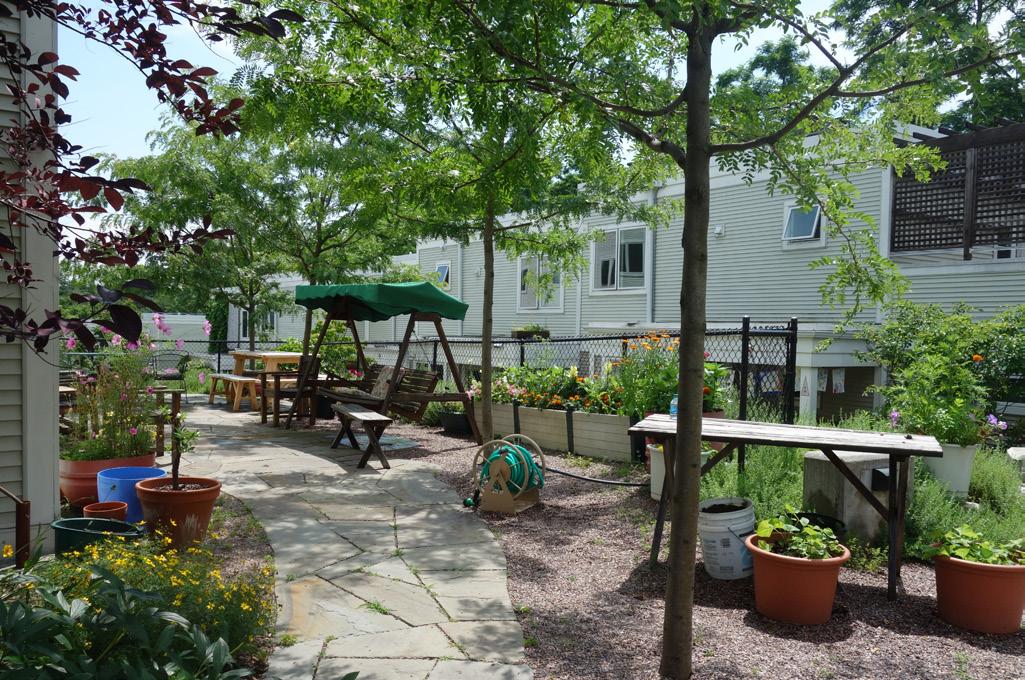
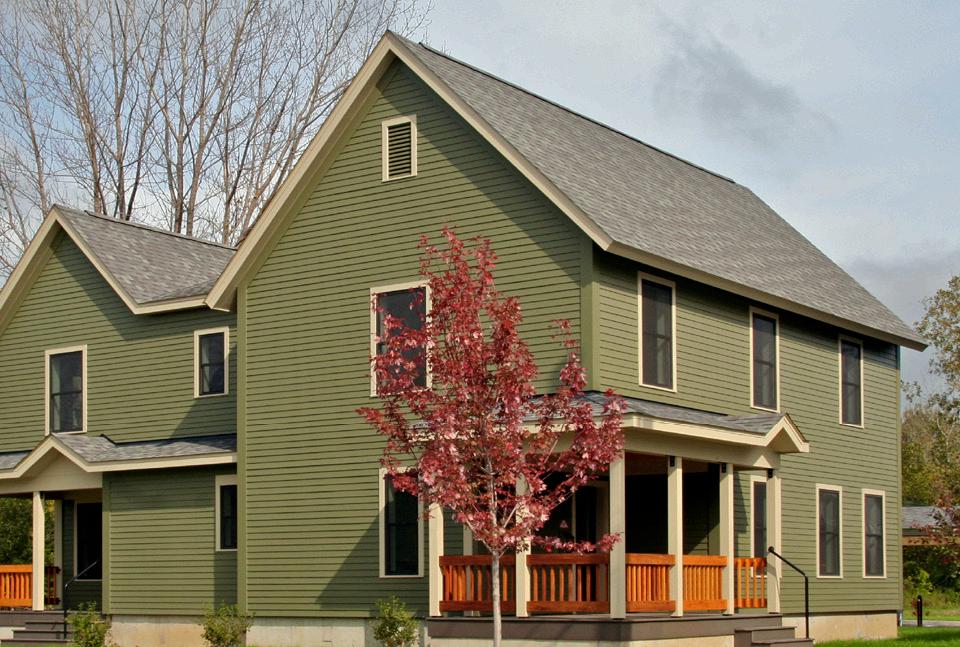
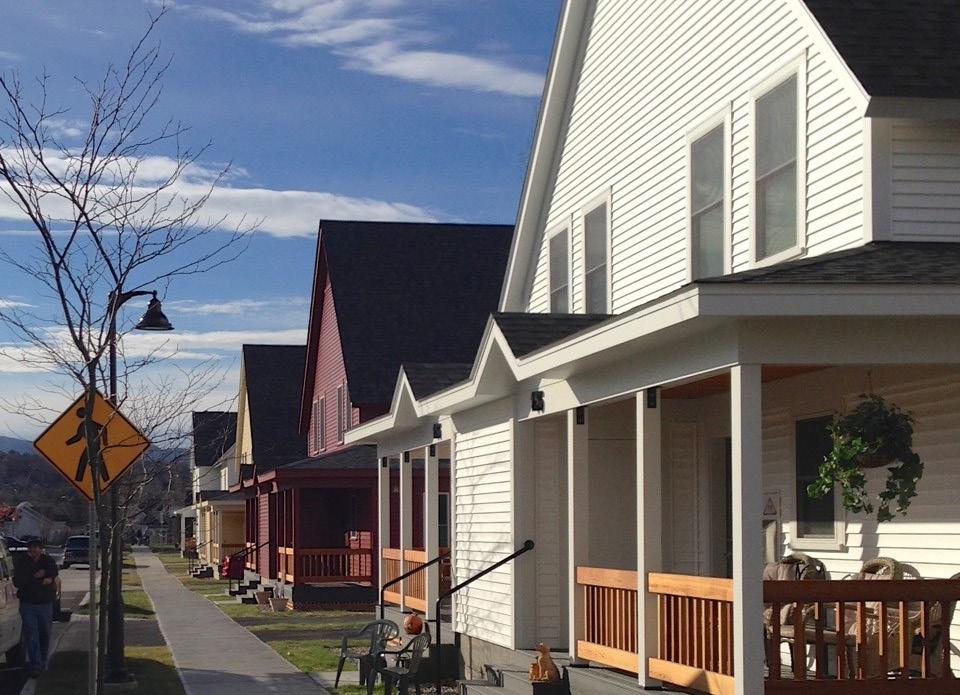
forms and materials composed thoughtfully using classic Vermont vernacular proportions.
These schematic typologies range in scale from one to four dwelling units and include a variety of contextual types, ranging from 2-story flat roof types (best suited for village centers and more urban locales), 1.5-story gable roof types (better suited for siting in more traditional residential neighborhoods or rural settings), and 1-story gable roof types (best suited for small-scale backyard development).
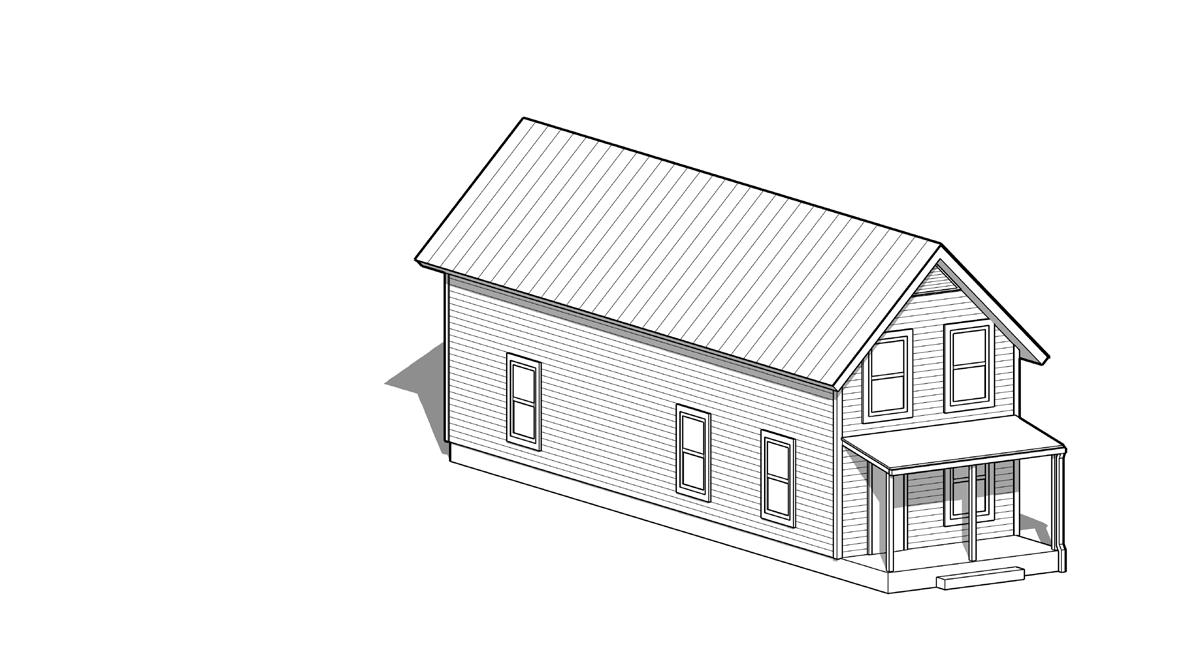
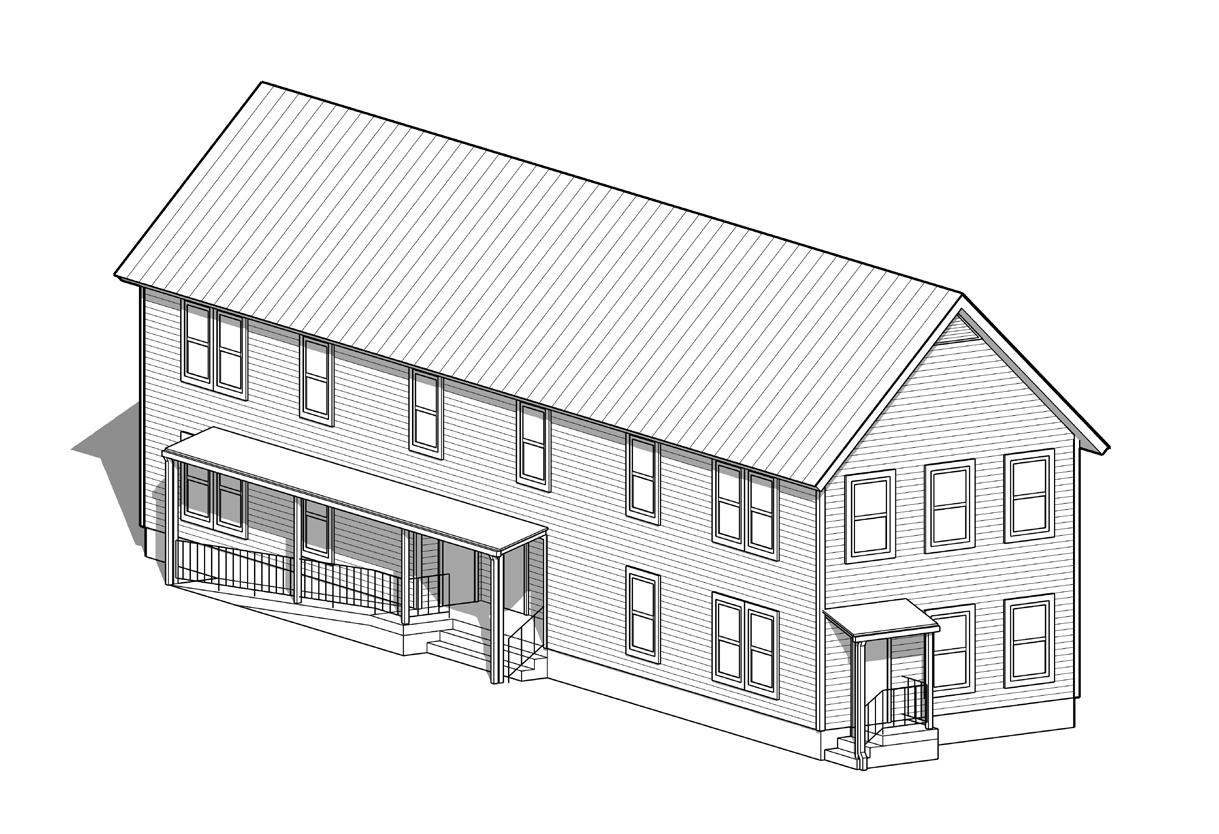
The slender profile of this single-unit typology makes it suitable for narrow lots and accessory dwelling units on underutilized side and rear yards of existing single-unit dwellings. The base model features a gabled roof with an age-friendly ground floor unit accompanied by a caretaker or guest loft. Variations on the base model adapt it to be a smaller single unit or a smaller two-story unit with an attached garage or carriage house.
The narrow profile of this four-unit typology makes it suitable for narrow lots and underutilized side yards in places with high demand for one-bedroom units. This typology can work well with a pitchedroof or flat roof form depending on the context and local density. The base model features aggregated side unit entrances for settings with greater density. A variation on the base model achieves a slightly shallower building by converting two of the four units into studios instead of one-bedrooms.
The distinctive gabled overhang in the front and well-placed dormers enable this relatively slender multi-unit typology to present as a single-unit dwelling while supporting multiple two and threebedroom units. This slightly wider typology fits best on ample underutilized side yards of existing singleunit dwellings as well as vacant lots in moderately dense settings. The base model features unit entries clearly defined by separate stairs and placements that allow the potential for delineated open space for each unit. A variation on the base model is slightly narrower with smaller units to make it more compatible with constrained village and town center sites.
The square footprint and naturally efficient interior layout of this two- to three-unit typology makes it suitable for underutilized and vacant lots in village and town centers. This typology can work well with a pitched-roof or flat roof form depending on the context and local density. All versions of this typology feature clearly defined street-facing entrances with options to include an accessible unit, additional bedrooms, or roof deck space to make it more versatile for a range of neighborhood densities and needs.
The ‘Telescoping Home’ building type is a common New England agricultural building type that can be observed in rural settings as well as in suburban, village, and town center settings. The distinct buildings and multiple entries of this building type has made it attractive for conversions to multi-unit dwellings throughout the State, especially in areas where the original agricultural use of the buildings is no longer economically viable or practical. By understanding the implicit rules and logic of the connected farm buildings of New England, it is possible to use this vernacular building type as a template to guide incremental additions to existing buildings or construction of new buildings that carry the same familiar rhythm of forms and proportions.
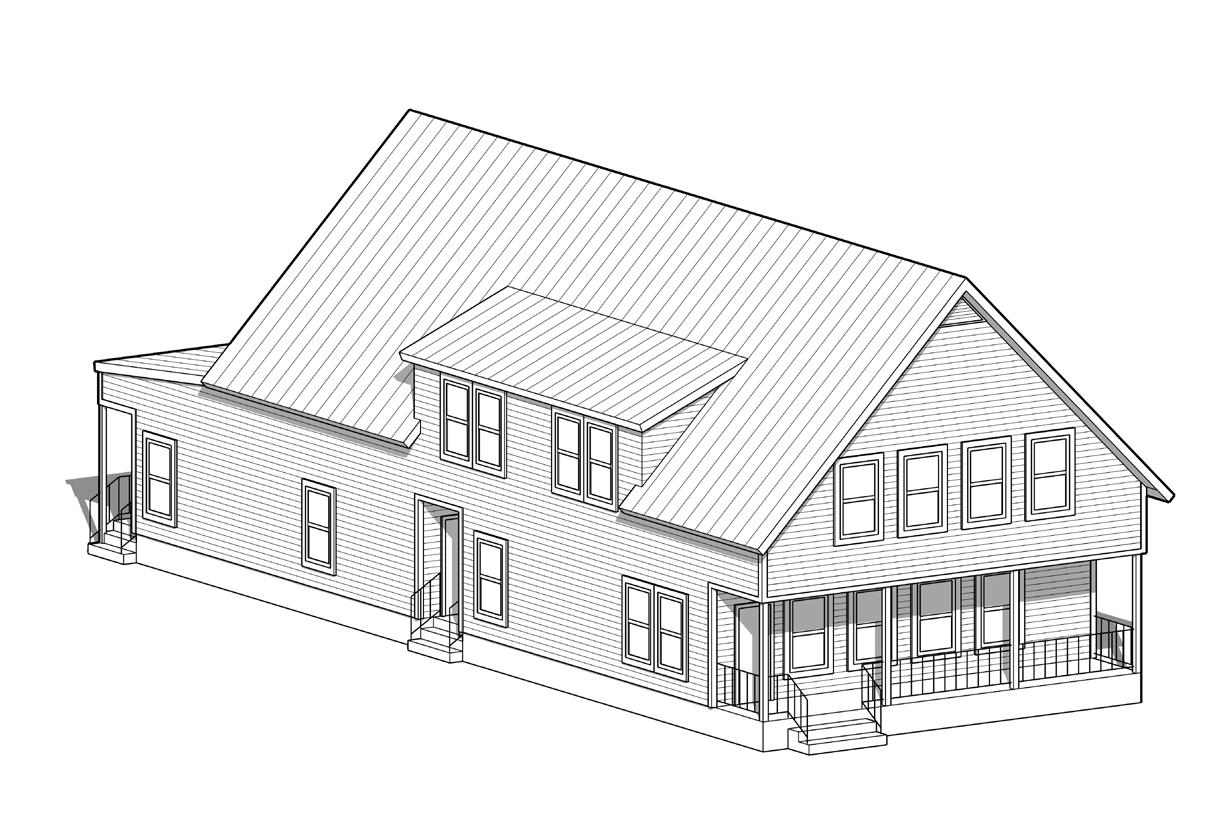
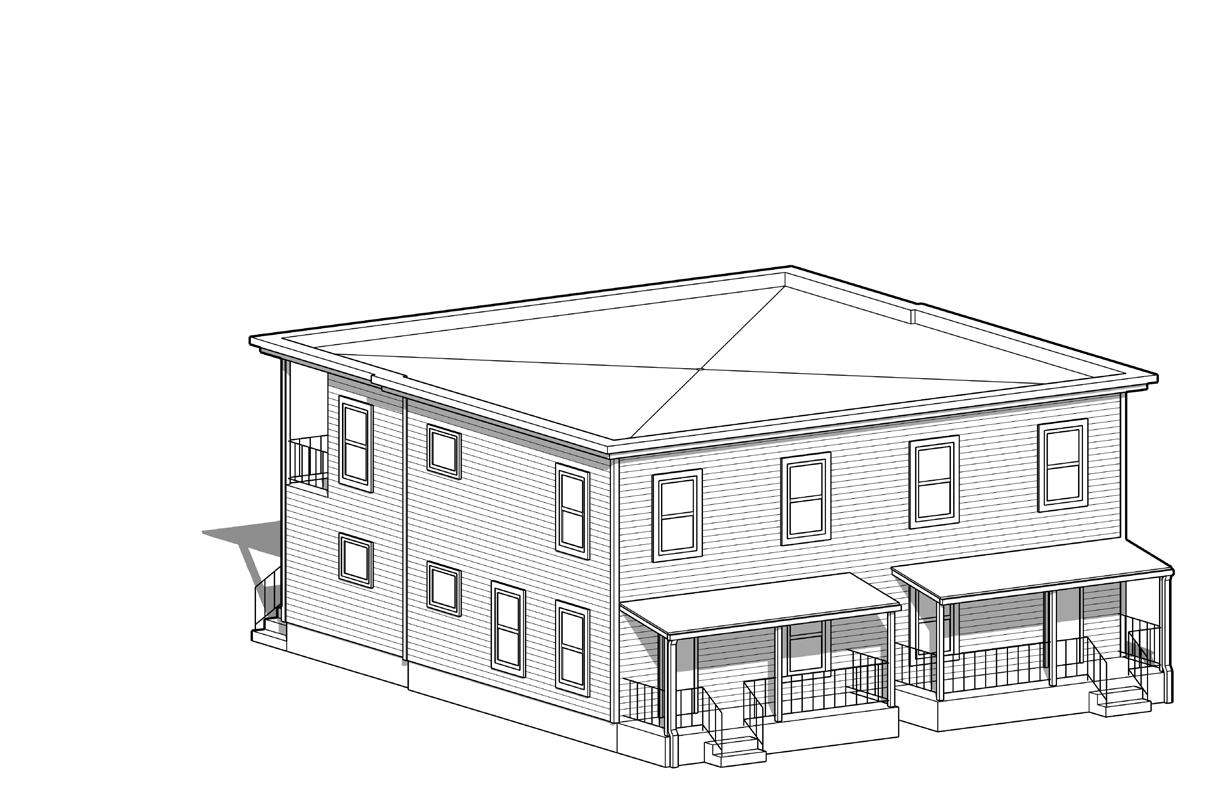
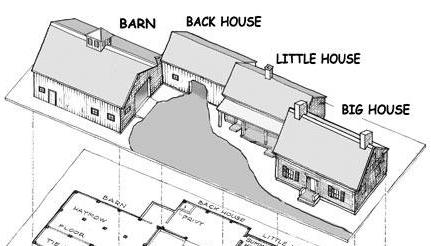
The slender profile of this single-unit typology makes it suitable for narrow lots and accessory dwelling units on underutilized side and rear yards of existing single-unit dwellings.
Development Metrics

This home in Montpelier was the inspiration for the Age-in-Place typology.
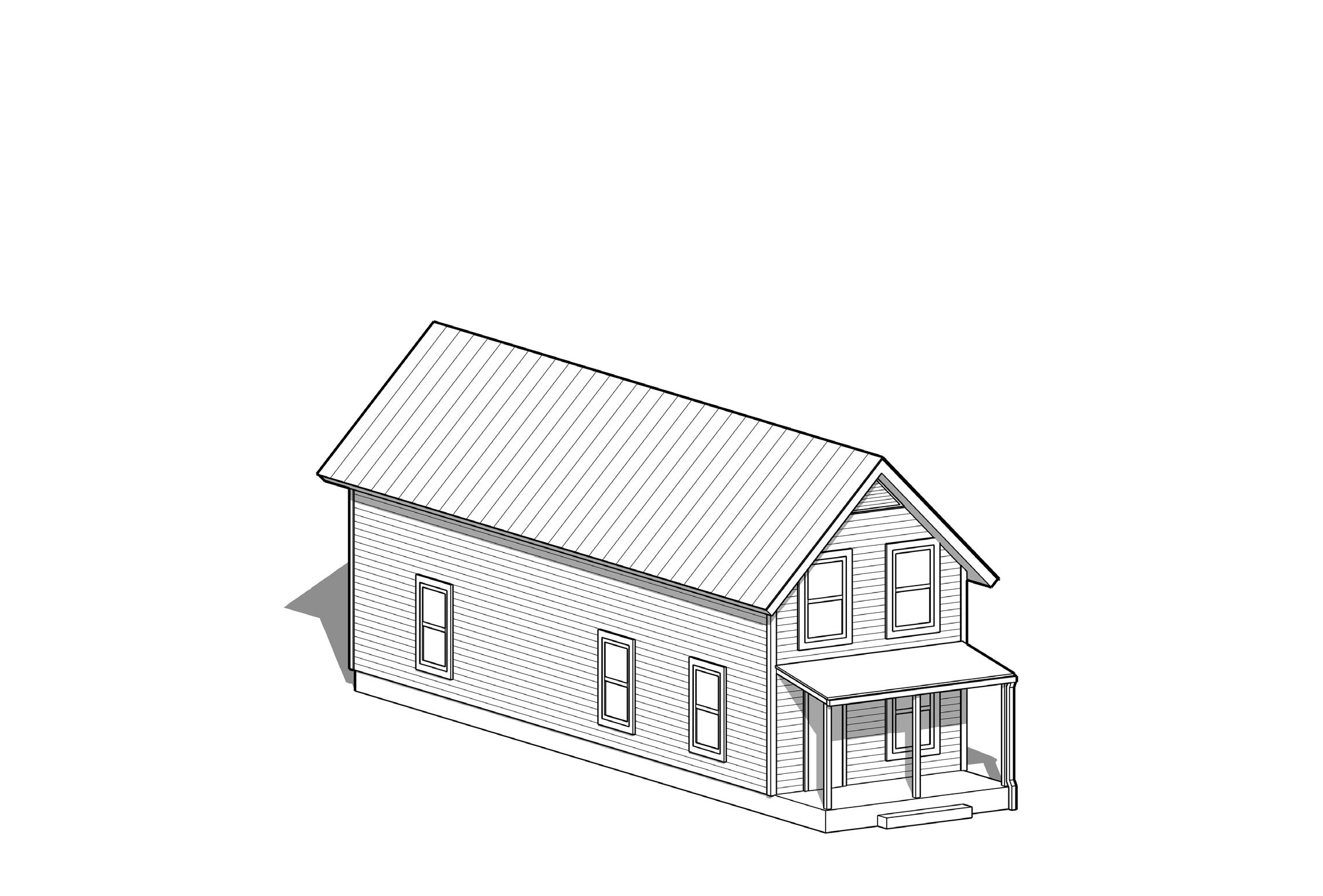
This depicts a schematic approach to the ground floor for this typology.
This depicts a schematic approach to the second floor for this typology.
Disclaimer: These plans represent a schematic approach to a one-unit building. Further development of the design by the developer and their architect, engineer or other building professional will be required to certify that it meets local and state codes, and that it is suitable for a particular site.
This variation on the Age-in-Place base model results in a more efficient and compact single-story dwelling suitable for aging in place and those for whom accessibility is a priority.
Development Metrics
Number of Units 1 Unit
Number of Bedrooms per Unit 1 Bedroom
Unit Types (Accessible/Age-Friendly) Age-Friendly
Gross Square Footage per Unit 644 sf
Building Footprint 14' × 46'
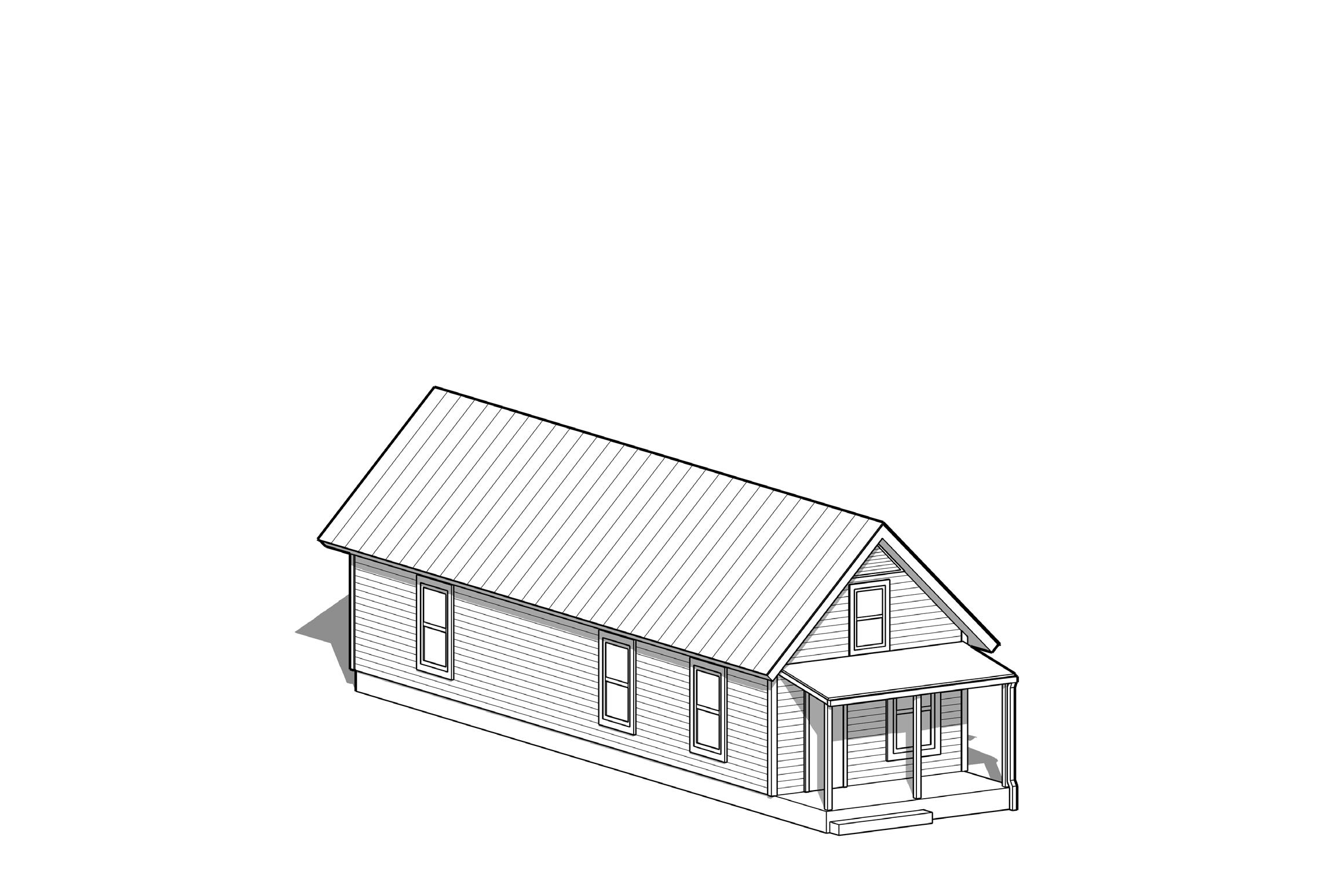
AGE-IN-PLACE SINGLE (1A) -GROUND FLOOR
Ground Floor Plan
This depicts a schematic approach to the ground floor for this typology.
Disclaimer: These plans represent a schematic approach to a one-unit building. Further development of the design by the developer and their architect, engineer or other building professional will be required to certify that it meets local and state codes, and that it is suitable for a particular site.
Ideal for adaptations or replacements of existing standalone garage and carriage barns to include an additional unit for rental income or multigenerational living, this variation on the Age-in-Place base model integrates a garage at the front with a two-story unit in the rear.
Development Metrics
Number of Units
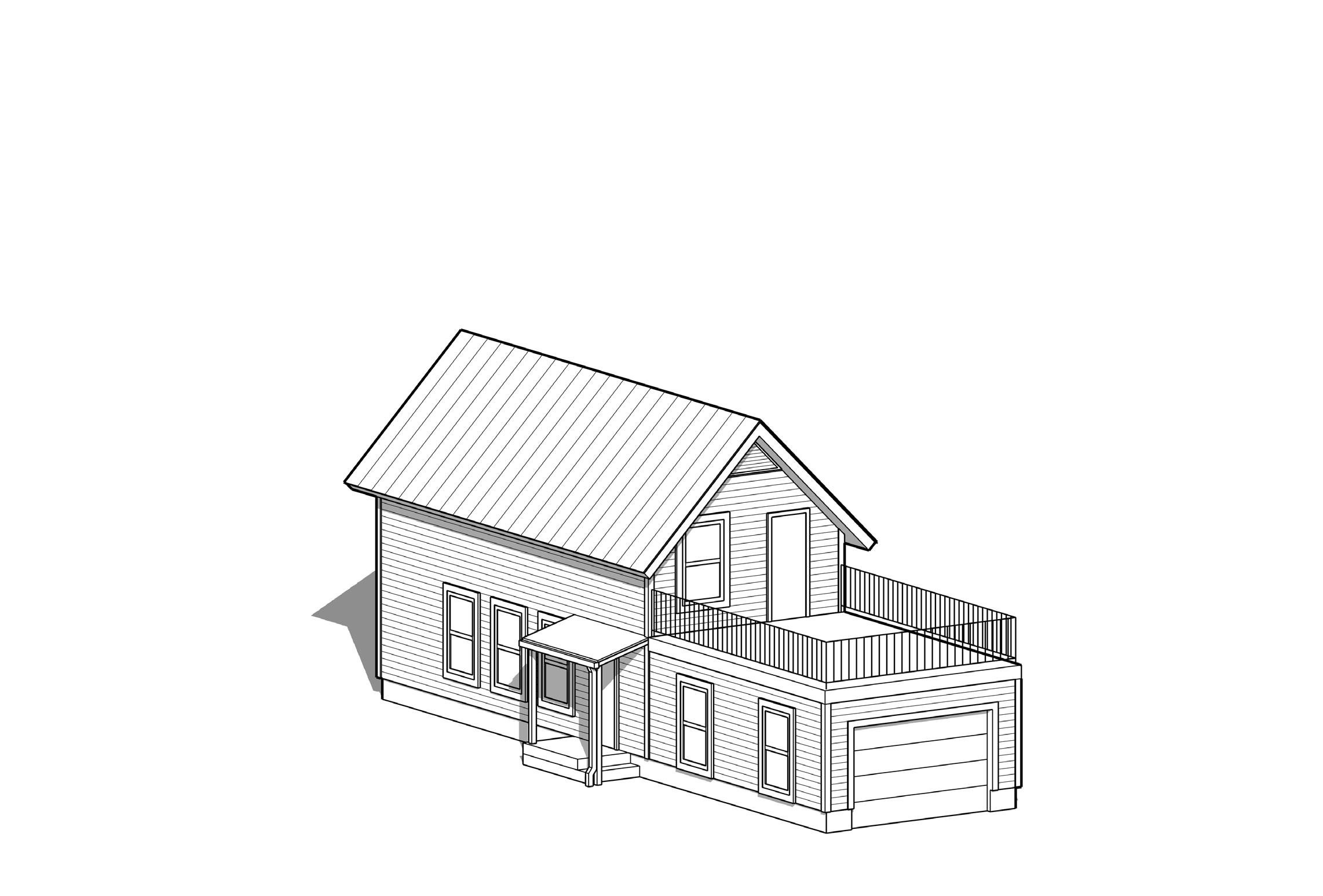
THESE PLANS REPRESENT
This depicts a schematic approach to the ground floor for this typology.
This depicts a schematic approach to the second floor for this typology.
Disclaimer: These plans represent a schematic approach to a one-unit building. Further development of the design by the developer and their architect, engineer or other building professional will be required to certify that it meets local and state codes, and that it is suitable for a particular site.
The slender profile of this four-unit typology makes it suitable for narrow lots and underutilized side yards in places with high demand for one-bedroom units. This typology can work well with a pitched-roof or flat roof form depending on the context.
Number of Units
4 Units
Number of Bedrooms per Unit (4) 1 Bedroom Unit Types (Accessible/Age-Friendly) (2) accessible, (2) Conventional
Gross Square Footage per Unit
Building Footprint
697 sf / 697 sf / 903 sf / 903 sf
20' × 80'
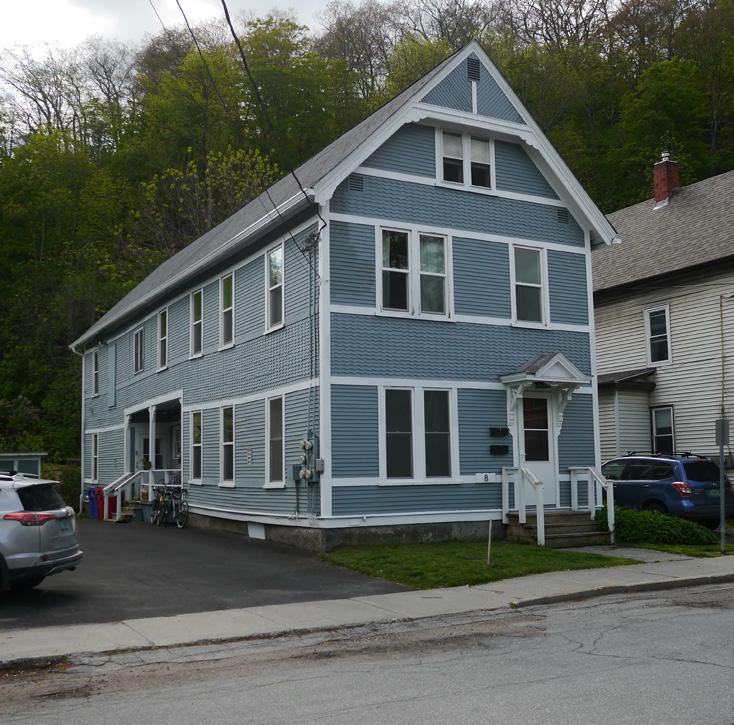
This home in Montpelier was the inspiration for the Narrow Lot typology.
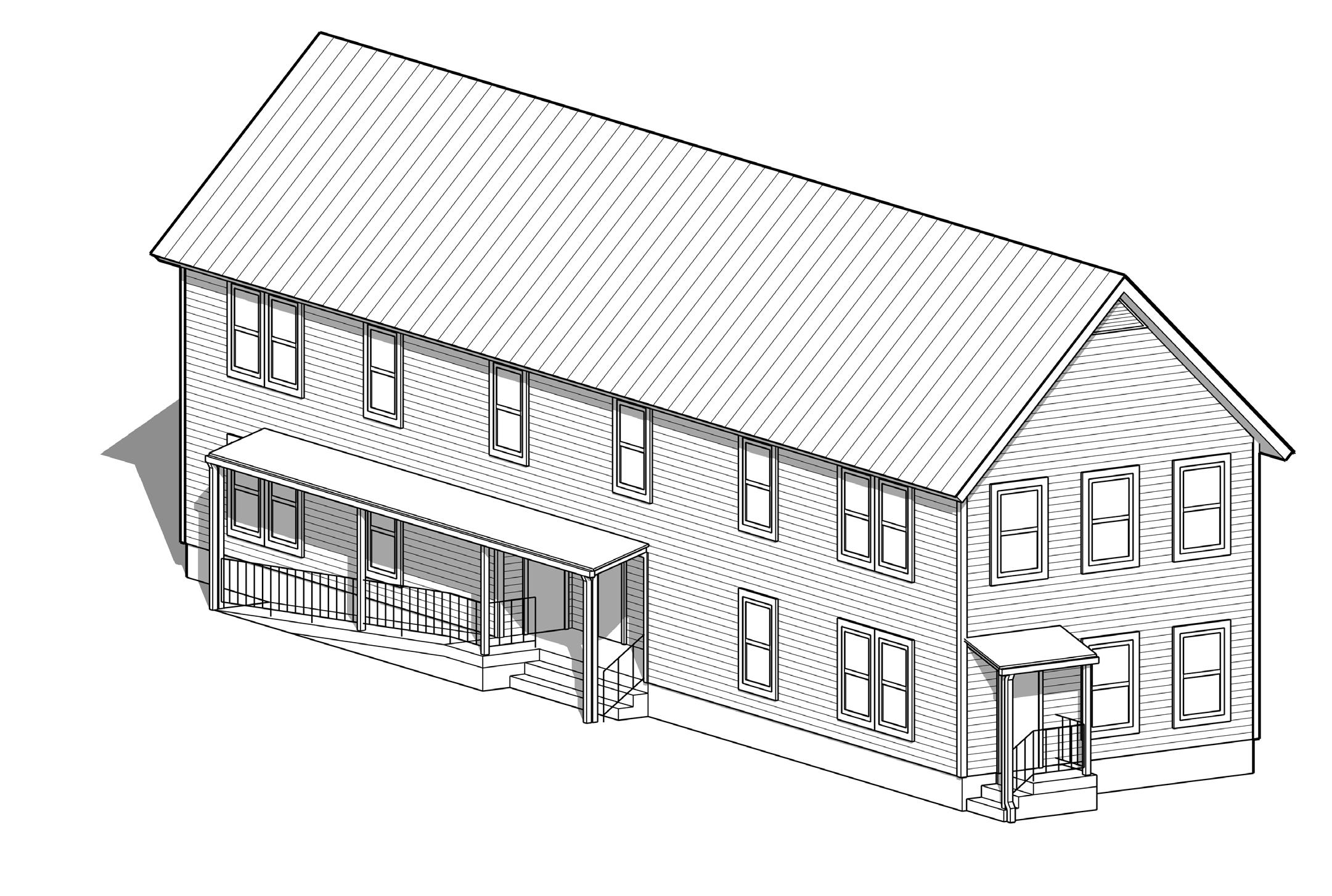
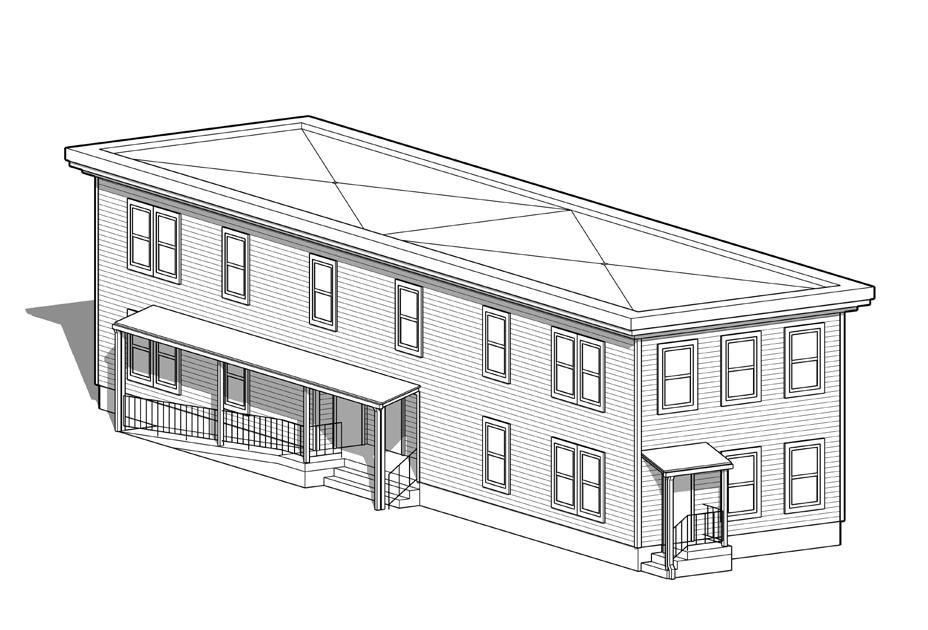
Alternative: Flat Roof.
This depicts a schematic approach to the ground floor for this typology.
This depicts a schematic approach to the second floor for this typology.
Disclaimer: These plans represent a schematic approach to a four-unit building. Further development of the design by the developer and their architect, engineer or other building professional will be required to certify that it meets local and state codes, and that it is suitable for a particular site.
This variation on the Narrow Lot base model results in a slightly shallower building by converting two of the four units into studios instead of one-bedrooms. Like the base model, this typology can work well with a pitched-roof or flat roof form depending on the context.
Development Metrics
Number of Units 4 Units
Number of Bedrooms per Unit (2) Studio, (2) 1 Bedroom
Unit Types (Accessible/Age-Friendly) (2) Accessible, (2) Conventional
Gross Square Footage per Unit
Building Footprint
506 sf / 688 sf / 713sf / 893sf
20' × 70'

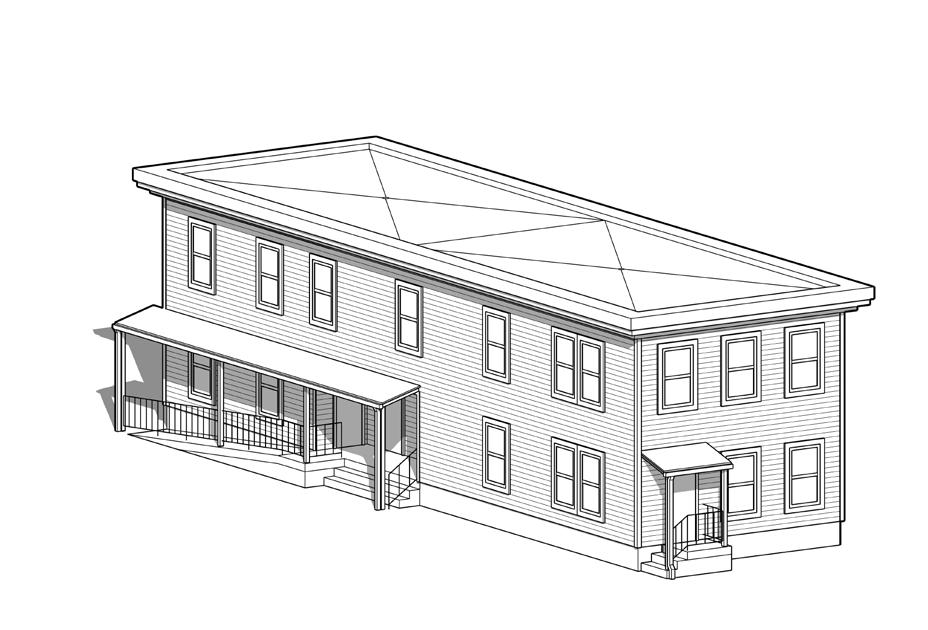
This depicts a schematic approach to the ground floor for this typology.
This depicts a schematic approach to the second floor for this typology.
Disclaimer: These plans represent a schematic approach to a four-unit building. Further development of the design by the developer and their architect, engineer or other building professional will be required to certify that it meets local and state codes, and that it is suitable for a particular site.
The distinctive gabled overhang in the front and well-placed dormers enable this slender multi-unit typology to present as a single-unit dwelling while supporting multiple two and threebedroom units. This typology fits best on ample underutilized side yards of existing single-unit dwellings.
Number of Units
3 Units
Number of Bedrooms per Unit (1) 1 Bedroom, (2) 3 Bedroom
Unit Types (Accessible/Age-Friendly) (1) Accessible, (2) Conventional
Gross Square Footage per Unit 676 sf / 1,426 sf / 1,496 sf
Building Footprint
30' × 70'
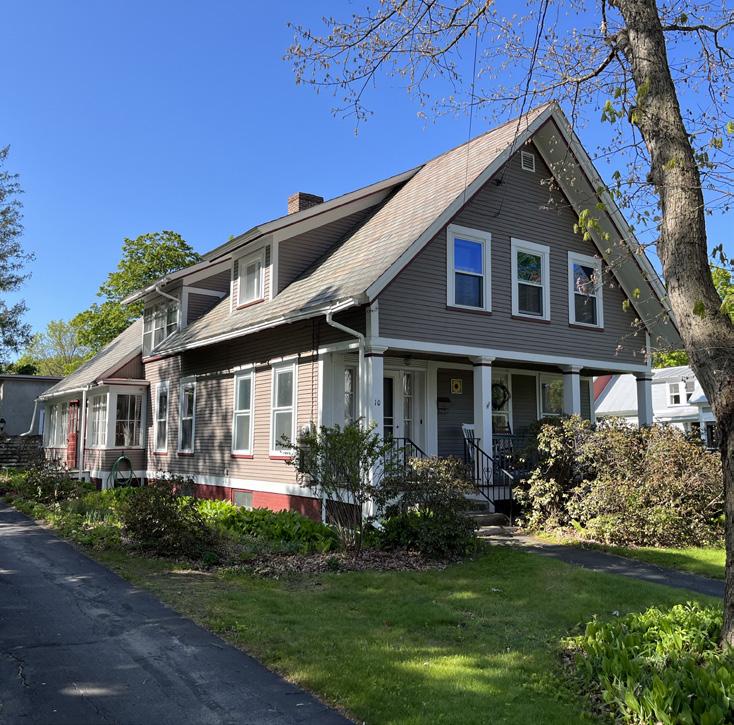
This home in Randolph was the inspiration for the Village typology.
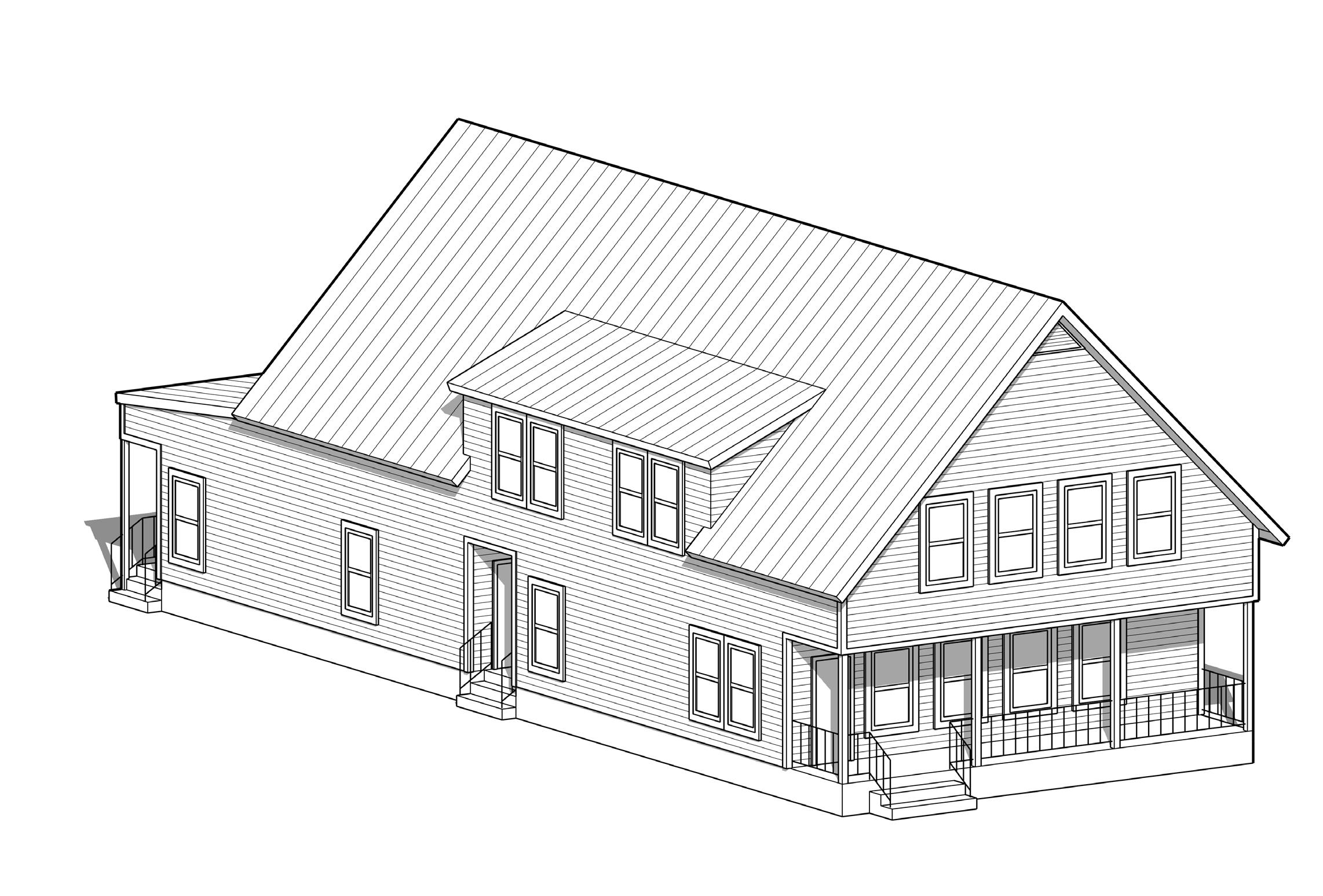
This depicts a schematic approach to the ground floor for this typology.
This depicts a schematic approach to the second floor for this typology.
Disclaimer: These plans represent a schematic approach to a three-unit building. Further development of the design by the developer and their architect, engineer or other building professional will be required to certify that it meets local and state codes, and that it is suitable for a particular site.
This variation on the Village base model is slightly narrower to make it more compatible with constrained village and town center sites. This narrower profile is achieved by reducing the bedroom counts of the units.
Development Metrics
Number of Units 4 Units
Number of Bedrooms per Unit (4) 1 Bedroom
Unit Types (Accessible/Age-Friendly) (1) Accessible, (3) Conventional
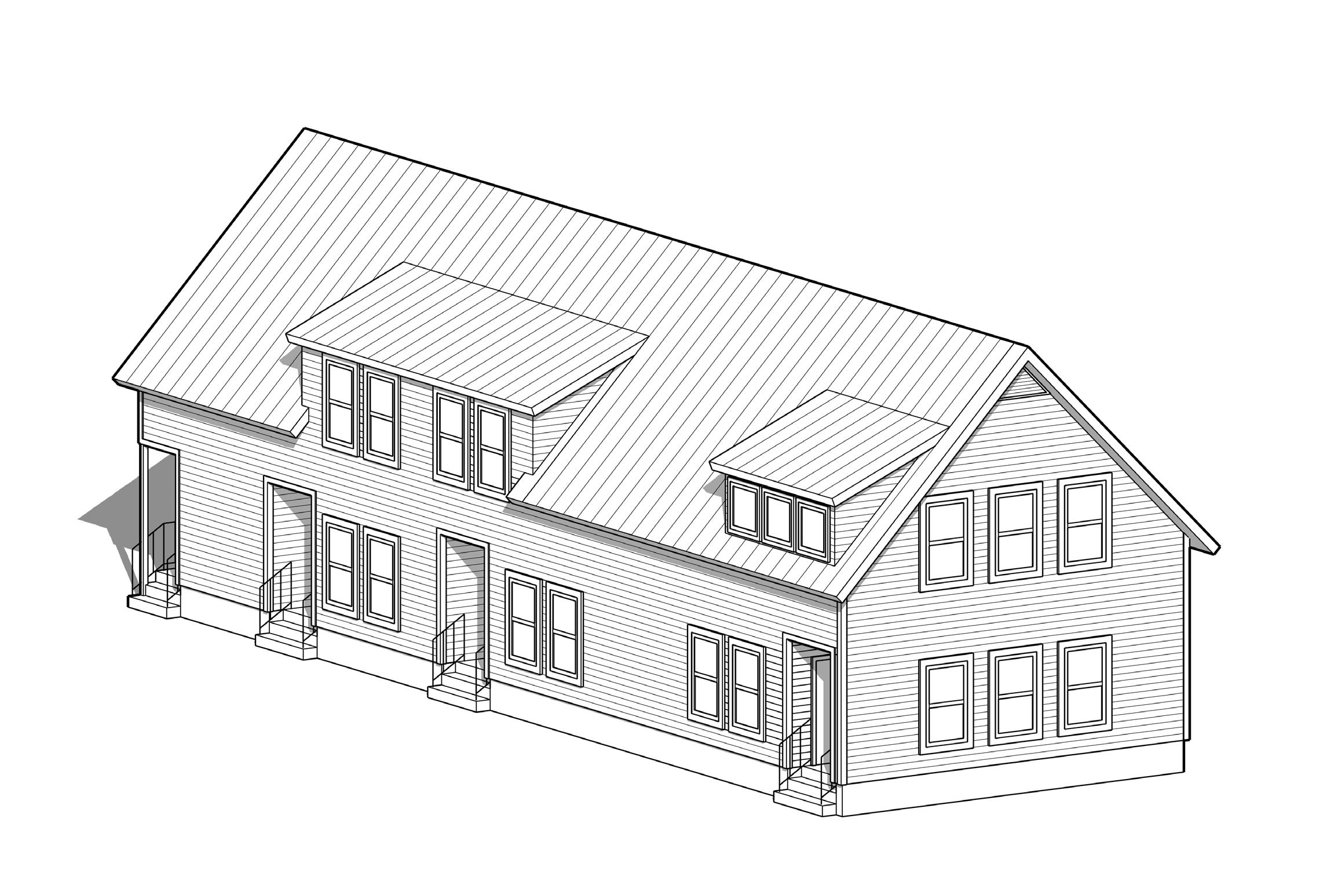
This depicts a schematic approach to the ground floor for this typology.
This depicts a schematic approach to the second floor for this typology.
Disclaimer: These plans represent a schematic approach to a four-unit building. Further development of the design by the developer and their architect, engineer or other building professional will be required to certify that it meets local and state codes, and that it is suitable for a particular site.
The square footprint and naturally efficient interior layout of this three-unit typology make it suitable for underutilized and vacant lots in village and town centers. This typology can work well with a pitched-roof or flat roof depending on the context.
Development Metrics
Number of Units
3 Units
Number of Bedrooms per Unit (1) 1 Bedroom, (2) 3 Bedroom
Unit Types (Accessible/Age-Friendly) (1) Accessible, (2) Conventional
Gross Square Footage per Unit 624 sf / 1,200 sf / 1,200 sf
Building Footprint
40' × 40'
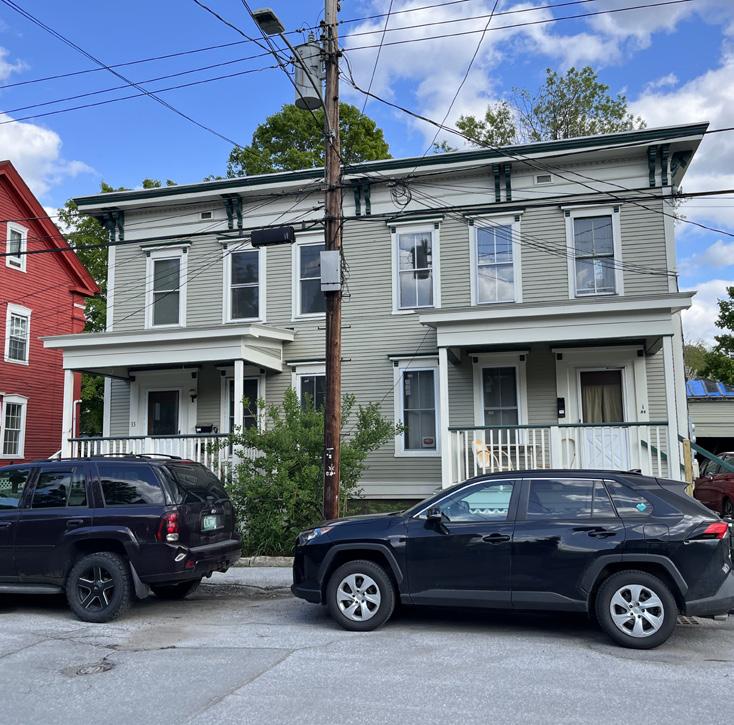
This home in Montpelier was the inspiration for the Side-by-Side typology.
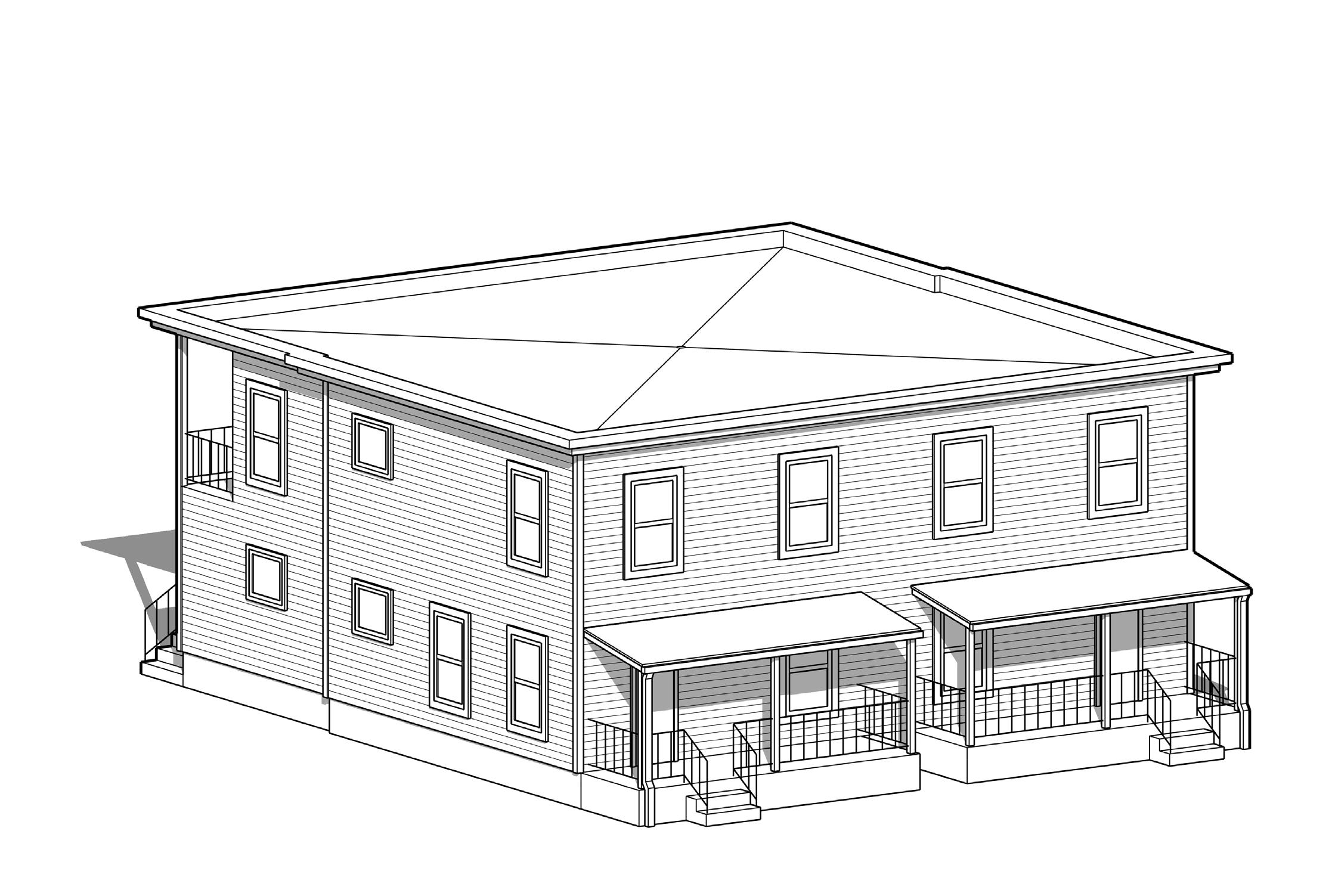
Ground Floor Plan
This depicts a schematic approach to the ground floor for this typology.
Second Floor Plan
This depicts a schematic approach to the second floor for this typology.
Disclaimer: These plans represent a schematic approach to a three-unit building. Further development of the design by the developer and their architect, engineer or other building professional will be required to certify that it meets local and state codes, and that it is suitable for a particular site.
This variation on the Side-by-Side base model reduces the bedroom count for the side-by-side units and removes the rear unit to make a compact and efficient building for areas where three-bedrooms are not as in-demand. This typology can work well with a pitched-roof or flat roof depending on the context.
Development Metrics
Number of Units
3 Units
Number of Bedrooms per Unit (1) 1 Bedroom, (2) 2 Bedroom
Unit Types (Accessible/Age-Friendly) (1) Accessible, (2) Conventional
Gross Square Footage per Unit
Building Footprint
624 sf / 1,000 sf / 1,000 sf
40' × 40'
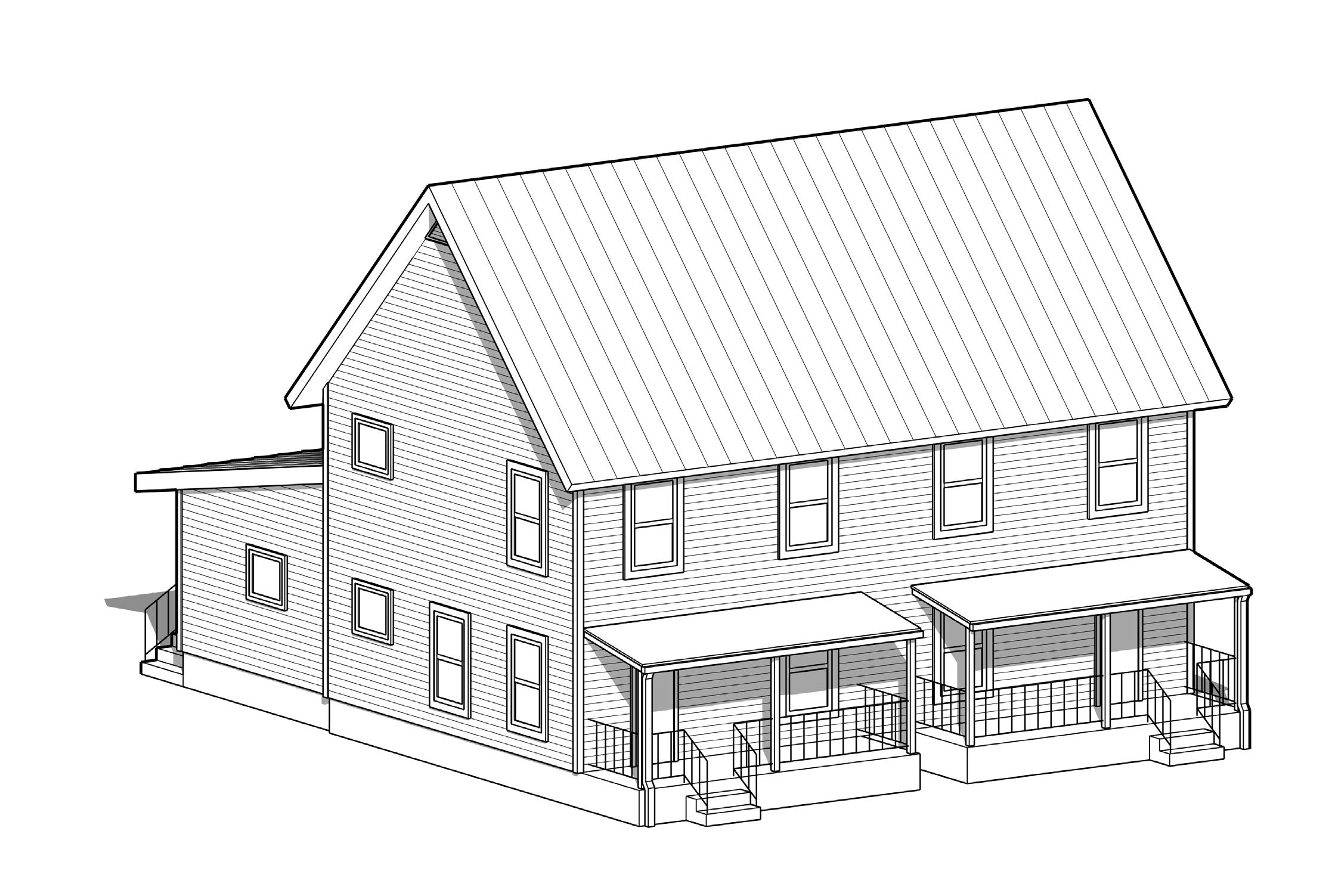
This depicts a schematic approach to the ground floor for this typology.
This depicts a schematic approach to the second floor for this typology.
Disclaimer: These plans represent a schematic approach to a three-unit building. Further development of the design by the developer and their architect, engineer or other building professional will be required to certify that it meets local and state codes, and that it is suitable for a particular site.
This variation on the Side-by-Side base model results in a shallower footprint suitable for properties that are shallow or have environmental constraints (such as steep slopes, streams, wetlands, and floodplains) that require development to stay close to the street.
Development Metrics
Number of Units 2 Units
Number of Bedrooms per Unit (2) 2 Bedroom
Unit Types (Accessible/Age-Friendly) (2) Conventional
Gross Square Footage per Unit 1,000 sf / 1,000 sf
Building Footprint 25' × 40'
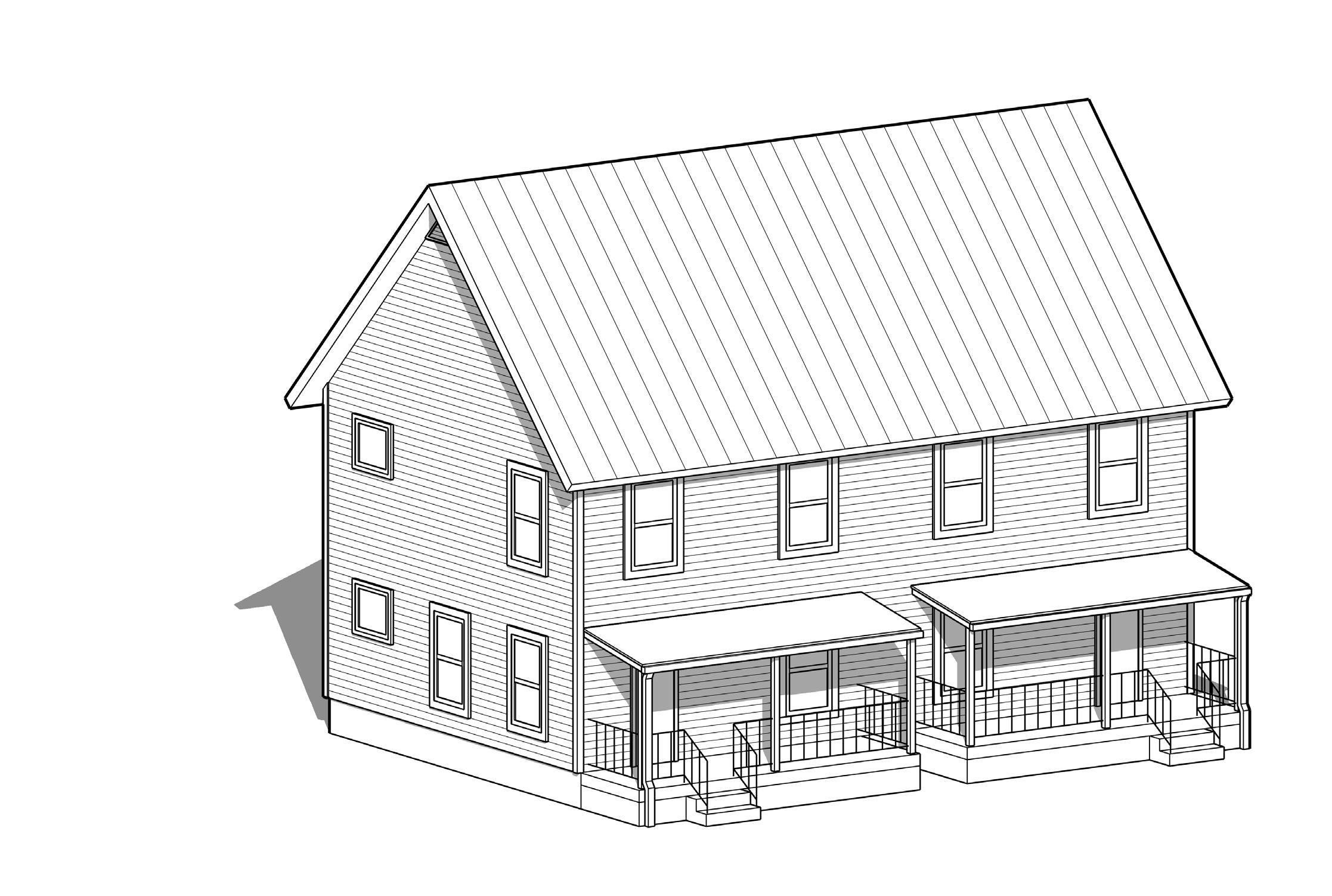
Ground Floor Plan
This depicts a schematic approach to the ground floor for this typology.
Second Floor Plan
This depicts a schematic approach to the second floor for this typology.
Disclaimer: These plans represent a schematic approach to a two-unit building. Further development of the design by the developer and their architect, engineer or other building professional will be required to certify that it meets local and state codes, and that it is suitable for a particular site.
The ‘Telescoping Home’ building type is a common New England agricultural building type that can be observed in rural settings as well as in suburban, village, and town center settings. The distinct buildings and multiple entries of this building type has made it attractive for conversions to multi-unit dwellings throughout the State, especially in areas where the original agricultural use of the buildings is no longer economically viable or practical. By understanding the implicit rules and logic of the connected farm buildings of New England, it is possible to use this vernacular building type as a template to guide incremental additions to existing buildings or construction of new buildings that carry the same familiar rhythm of forms and proportions
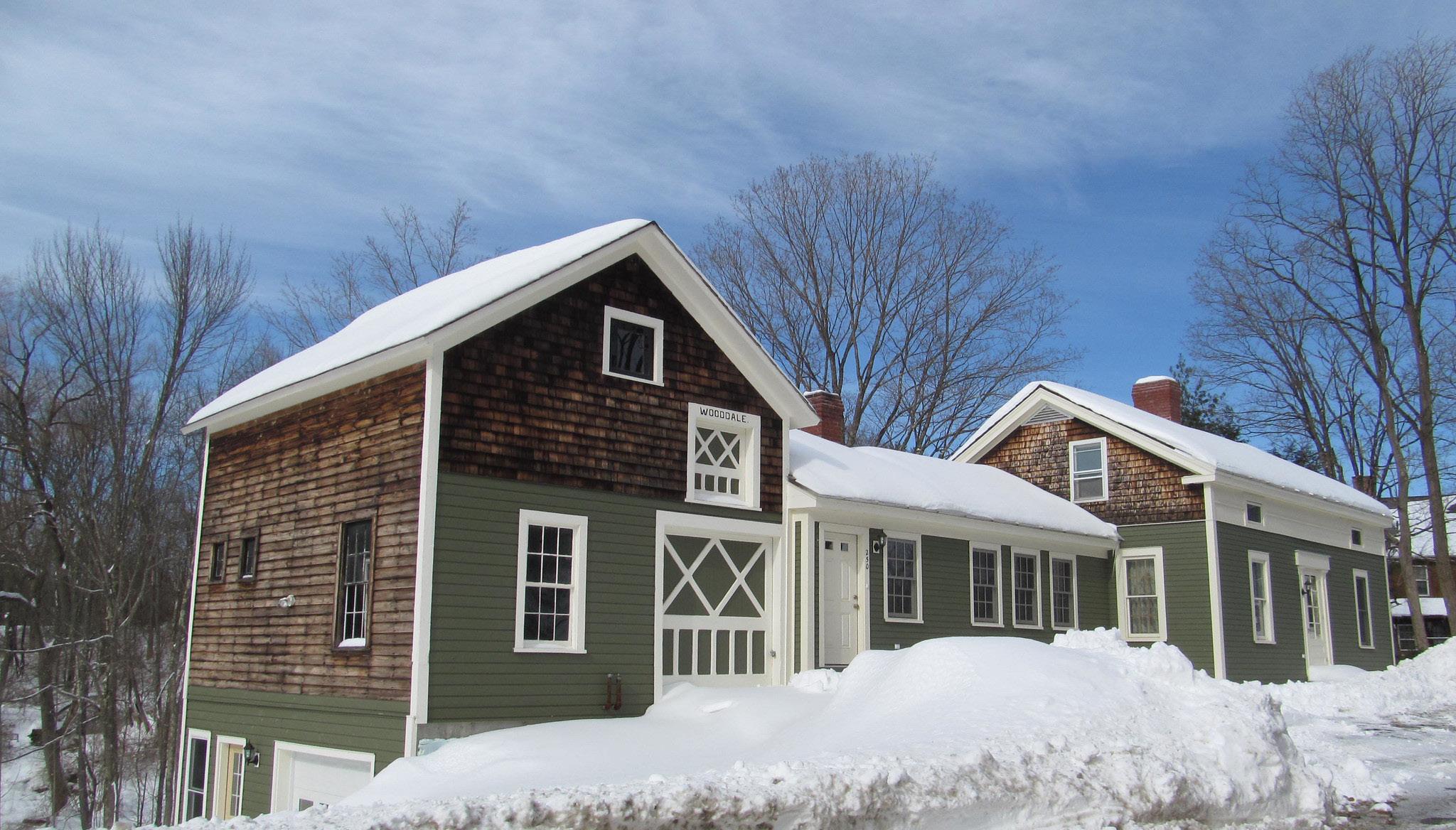
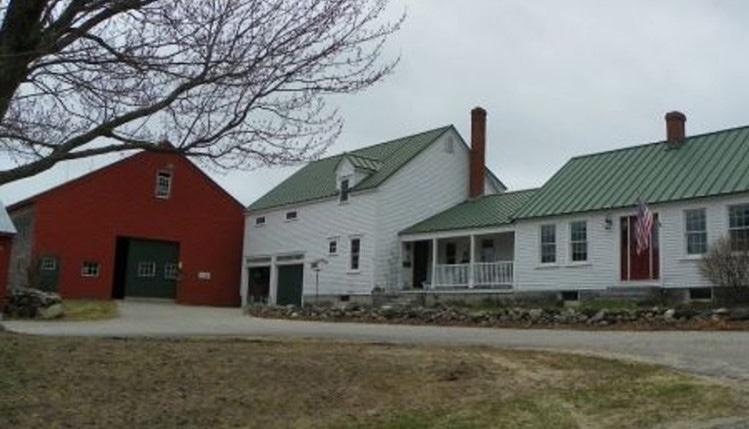
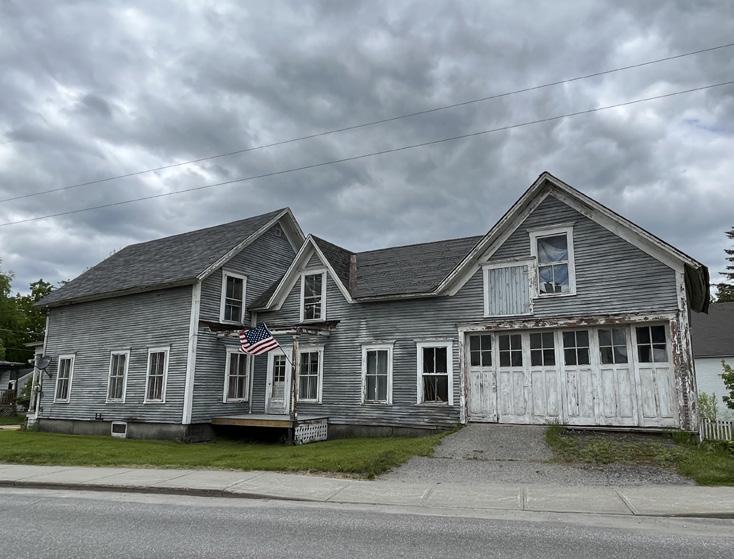
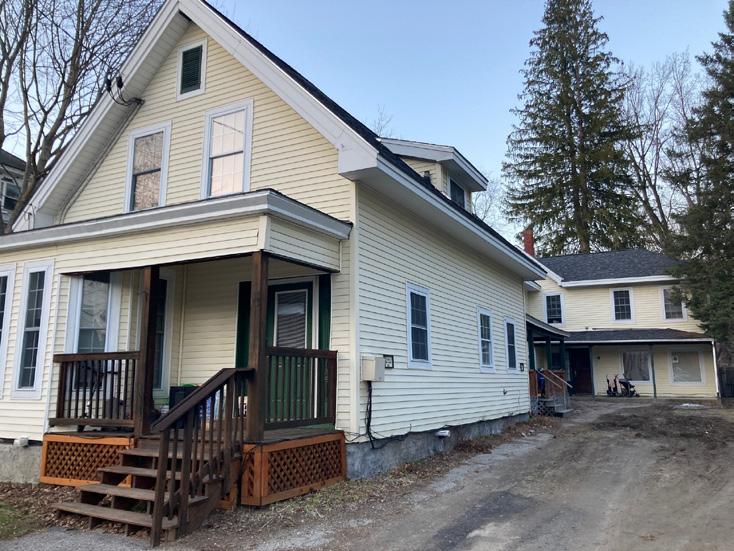
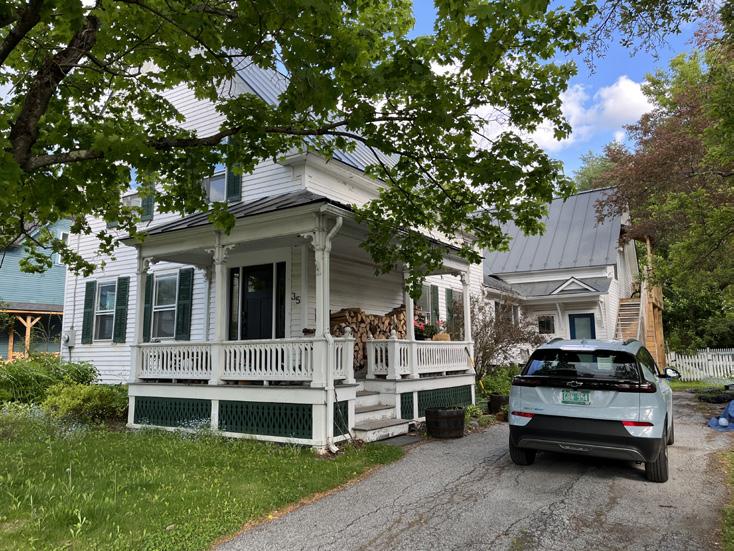
The observed pattern and logic of the “Telescoping Home” building type is documented meticulously in Thomas C. Habka’s 1984 book Big House, Little House, Back House, Barn: The Connected Farm Buildings of New England.
To replicate the logic of a traditional connected farm building it is helpful to understand the typical function and interrelationships of the buildings - the “big house” was typically the primary home and living space, often organized around the hearth or chimney, the “little house” was often intended to house the kitchen, the “back house” was conventionally a workshop or summer kitchen space for cottage industry, and the “barn” was for agricultural, animal husbandry, and mechanical uses.
Some of the key features include:
• A central sheltered dooryard is typically located to function as a multi-purpose side yard sheltered from the elements by the L-shape of the larger barn and workshoptype buildings enclosing the rear.
• Balance of proportion and mass is typically achieved through a “larger, plainer bulk of the barn” serving as a counterpoint to the slightly “smaller but more intricate mass of the big house”
• Each building is typically staggered from the footprint and roofline of the buildings it abuts.
• The entire complex typically has a unified architectural style, which is applied in greater detail to the big house and applied in a more diluted way to each successive building in the connected complex.
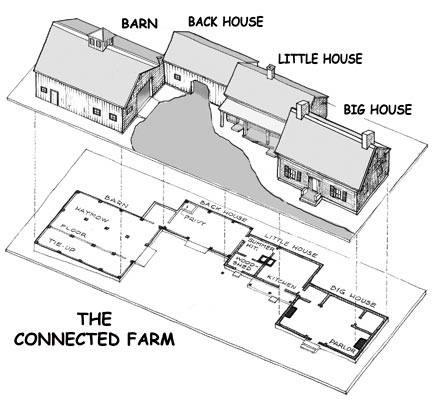
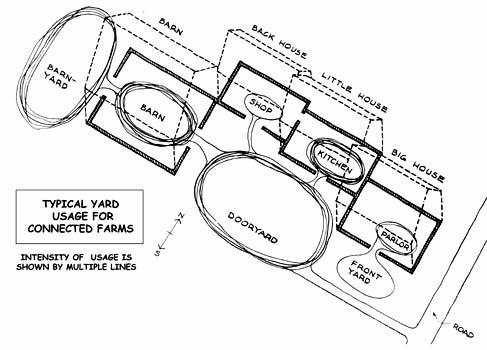
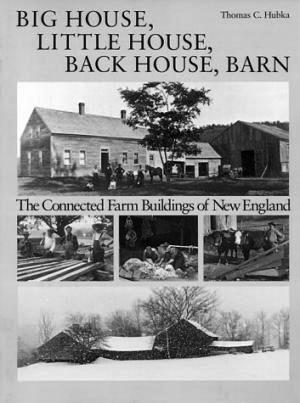
Above: Diagrams from Big House, Small House, Back House, Barn: The Connected Farm Buildings of New England by Thomas C. Hubka (1984).
In June 2023, the Department of Housing and Community Development (DHCD) put out a call to communities passionate about creating new housing opportunities to apply to be a Homes for All case study community. Through a competitive review process, five communities were selected as representative case studies of the range of communities found in Vermont: Arlington, Bellows Falls, Middlesex, Rutland City, and Vergennes.
The purpose of these case studies was to explore how the environmental, infrastructural, design, and regulatory characteristics of each community interacted with the Missing Middle Home typologies developed through this process. These case studies allowed us to test how the typologies performed in different settings for communities with different goals and constraints on development. Many of these case studies resulted in further refinement of our typologies or the addition of variations on the “base model” for a given typology to enable it to fit the conditions we found in each of these communities. This is a process we call “groundtruthing.”
In addition to serving as an important opportunity for feedback and refinement, these case studies are also intended to help communities understand what makes for a good infill opportunity and better visualize what missing middle infill might look like in a familiar setting. The infill parcel case study visualizations can serve as problem-solving tools for the community, revealing regulations that may be preventing desirable development, and illustrating strategies for advancing contextsensitive designs that meet community design objectives and are feasible from a market perspective. Stakeholders can use these visualizations to consider alternative configurations and explore ways in which they can overcome some common and unique challenges of infill development in Vermont’s existing neighborhoods.
We are grateful for the participation and support of the five case study communities during this process, especially municipal staff and officials, property owners, and interested community members who welcomed us into their communities, engaged in conversations around infill housing, and helped develop and refine our case studies.
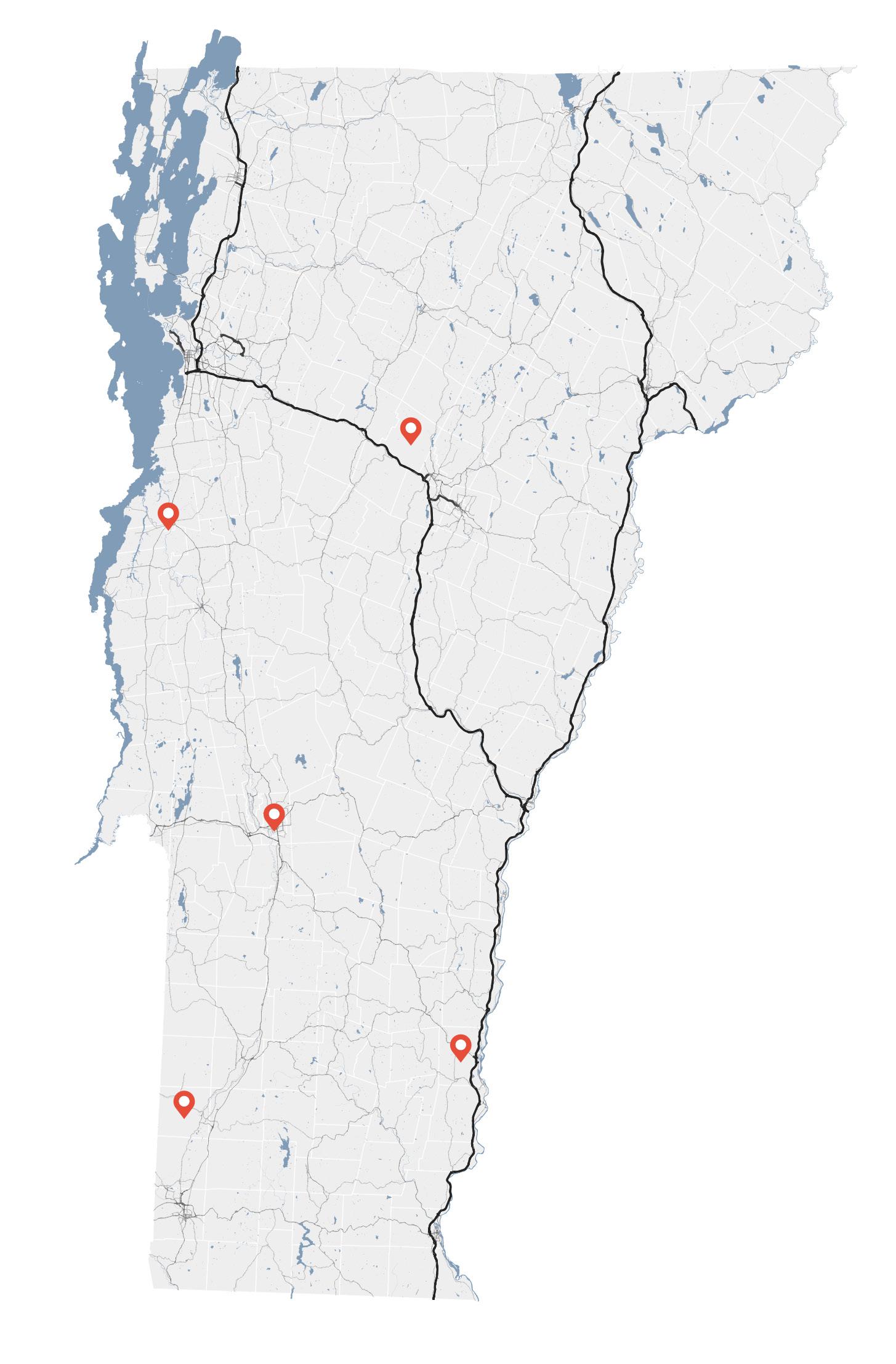
For each neighborhood infill design case study community, we conducted a four phase process to identify an Infill Focus Area, visited the community for a half-day walking tour and discussion, and then followed up with individual property owners within the Infill Focus Area for each community to develop a hypothetical infill test-fit that could illustrate an approach to bringing new Missing Middle Homes to that community.
1. Existing Conditions Analysis: existing environmental and infrastructural characteristics as well as zoning and regulatory overlays were mapped.
2. Research Area Identification: we had conversations with local leaders in each community to determine what areas were worth analyzing in greater detail for infill potential.
3. Initial Analysis: we then approximated developable area for the parcels within the initial research areas to determine which might be able to support infill of 1 – 4 units of new construction on the remaining unbuilt lot area.
4. Infill Focus Area Identification: we identified which couple-block area would provide sufficient diversity and concentration of infill conditions to become a representative “Infill Focus Area” for that community.
5. Infill Focus Area Site Visit: based on the Infill Focus Area, each community developed a walking tour for a half-day site visit in late October 2023. The conversations and field research during these infill visits provided vital input to help refine the typologies and identify parcels that could serve as effective illustrative case studies for each community.
6. Willing Property Owner Test-Fits: we worked closely with one property owner in each community to choose a Missing Middle Home typology that was a good fit for their property’s constraints and their goals. These were then developed as hypothetical test-fit visualizations illustrating how the chosen home typology would fit into its context and explaining the rationale behind some of the decisions.
Once we identified the areas for further research, we used the method suggested in the Builders’ Workbook Chapter 2: Identifying DevelopmentReady Sites under “Due Diligence: Evaluating Site Development Capacity.”
In this case, the specific criteria we used to determine good infill candidate parcels within the research areas were:
1. Parcel or significant developable area of parcel is outside FEMA flood zone and River Corridors.
2. Parcel or significant developable area of parcel is outside steep slope and high priority conservation areas.
3. Parcel has access to municipal water and sewer, where available.
4. Developable area of parcel or the whole parcel has or could have direct access to a public right-of-way.
5. Parcel is vacant or has significant developable area excluding existing buildings, infrastructure, and environmental constraints.
6. The size and shape of the developable parcel area can fit one of the missing middle home typologies spatially. In most cases, the developable width of the parcel was the primary constraint.
7. Parcel is (or will be) zoned to allow missing middle housing developments. In most cases, the infill parcel case studies shown in this Toolkit would not be possible under the byright zoning in their communities. However, the infill test-fits have all been developed to match the norms of existing development patterns and showcase, as well as inspire, the kind of development that would be possible with sensible zoning reforms.
The following maps show existing conditions such as FEMA flood zones and current zoning regulations.
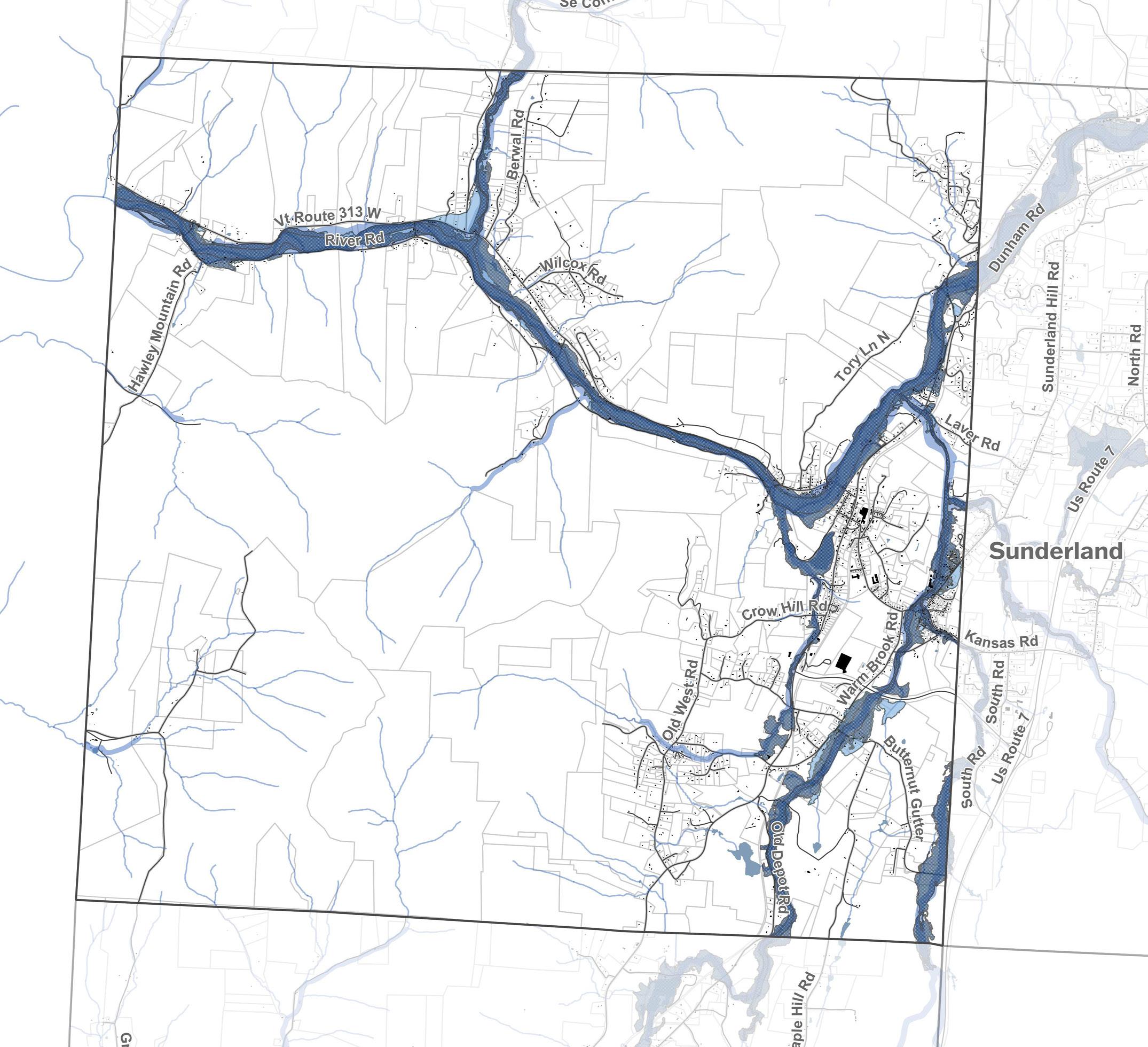
FEMA Flood Hazard Areas based on digitally available datasets.
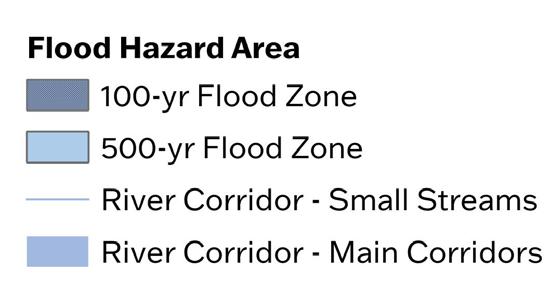
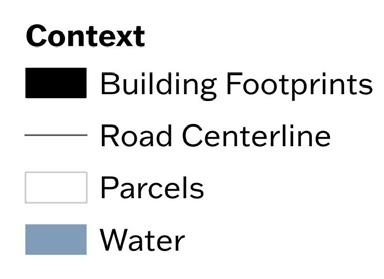
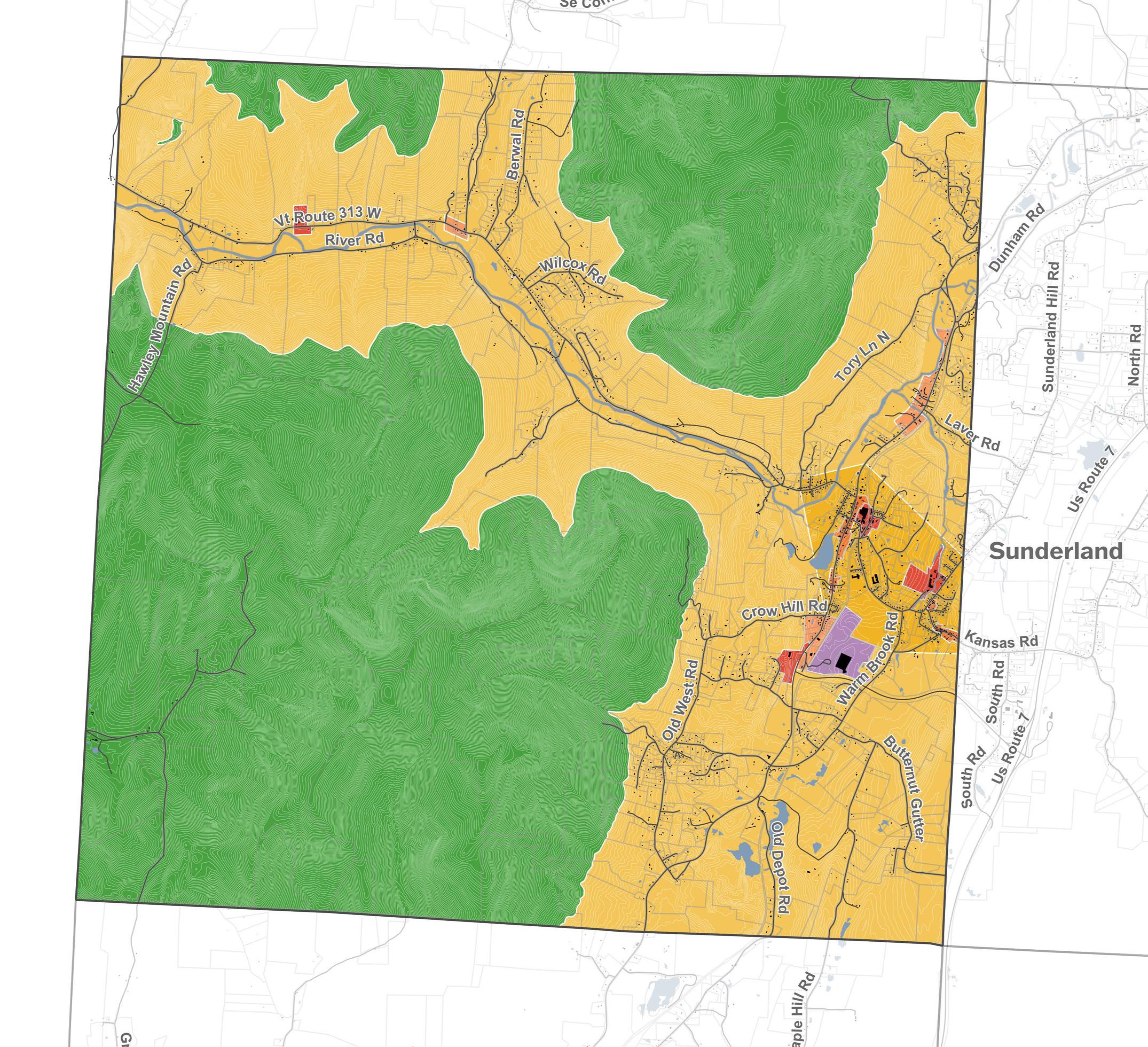
Current Zoning based on digitally available datasets.
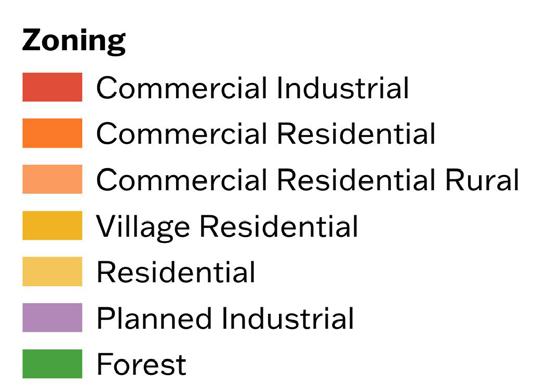
The following maps show initial analysis into development constraints and developable area.
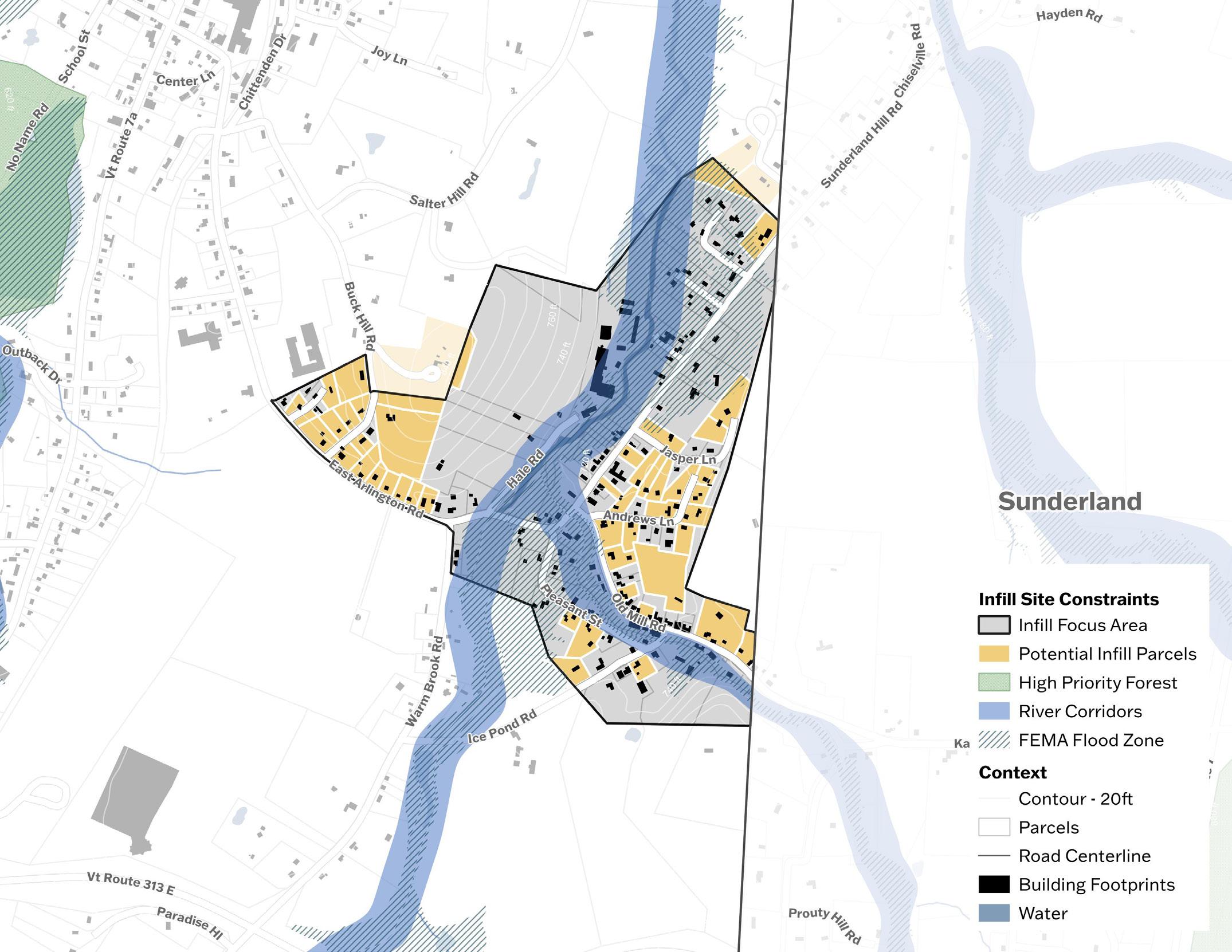
Environmental Constraints Analysis based on digitally available datasets.
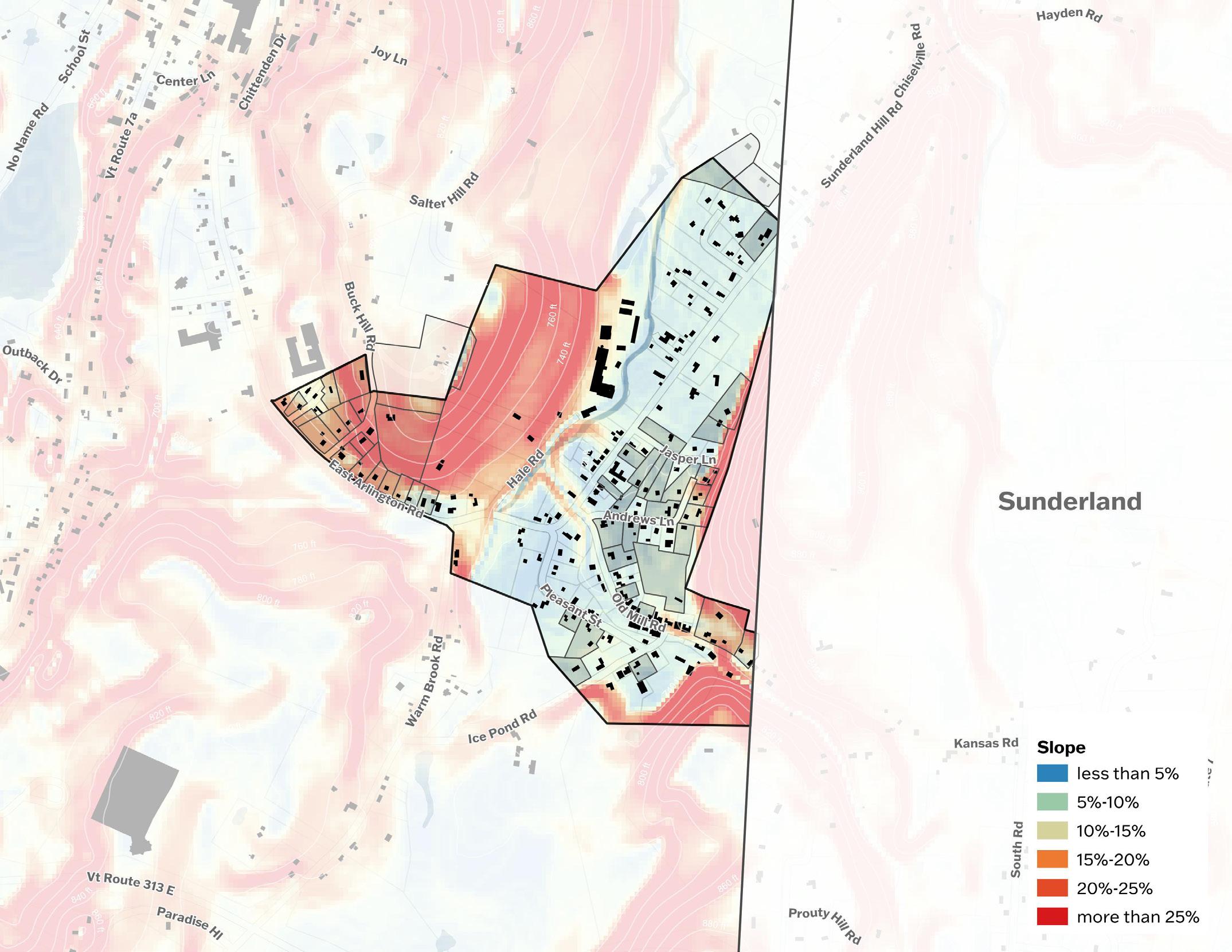
This Infill Focus Area was chosen in part because of the diversity of parcel conditions and their concentration or proximity to one another, as well as because of its proximity to a likely future municipal wastewater facility, which would enable all these parcels to support more development than would be possible with individual septic systems.
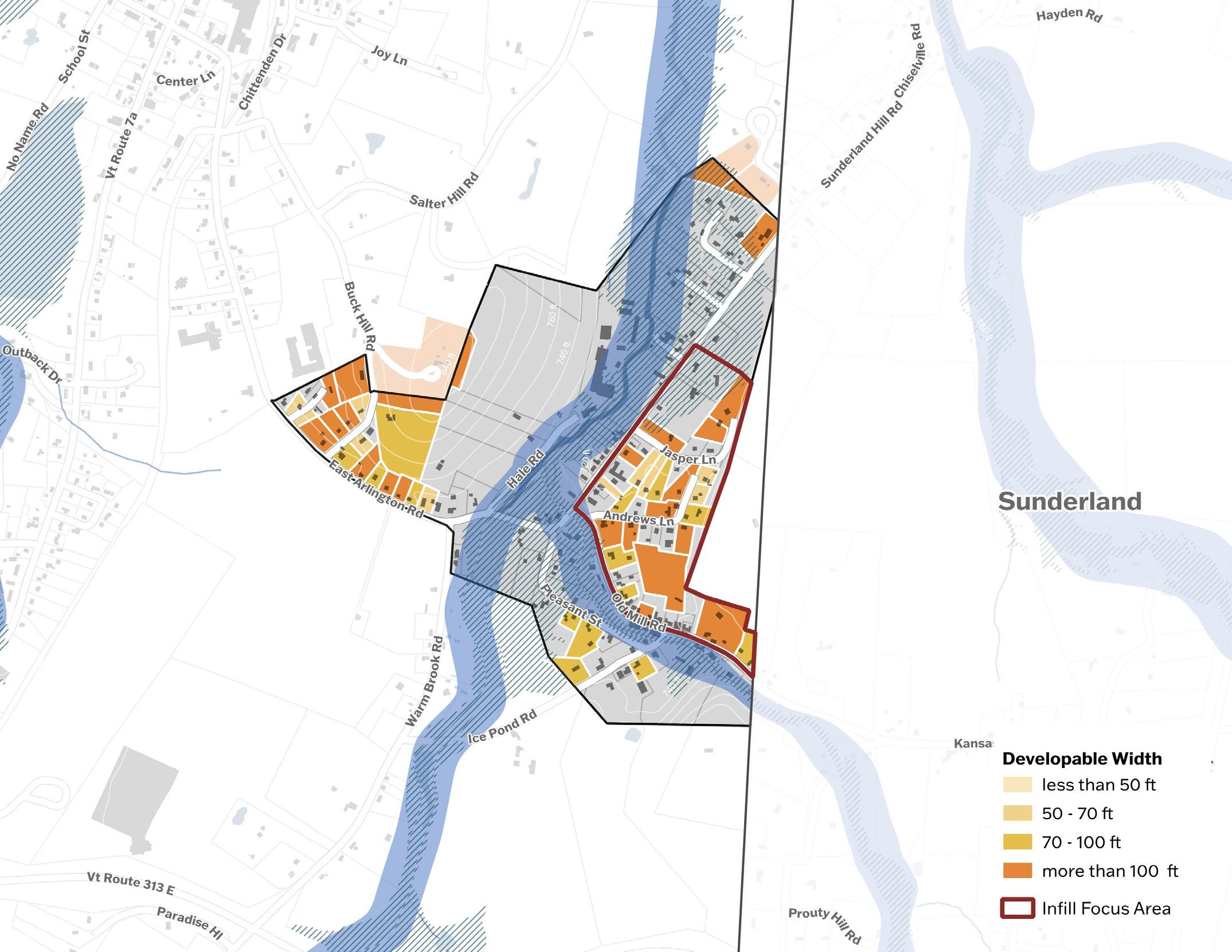
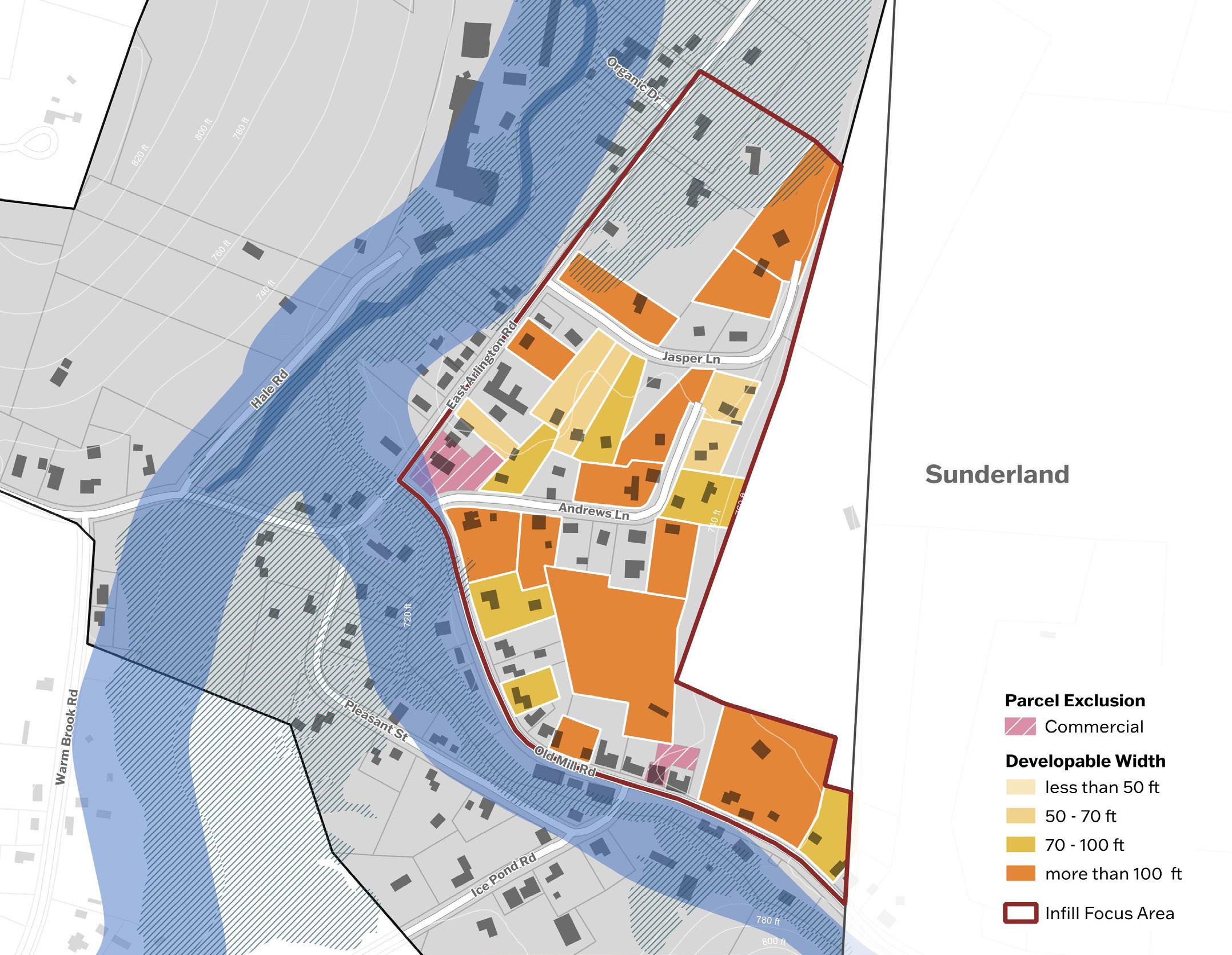
Parcel Address: 32 Andrews Lane
This East Arlington site was chosen because it has ample undeveloped area surrounding the primary home and is likely to have future access to municipal wastewater. Like most properties in East Arlington it is a short walk to a small market, a 15-minute walk from the high school and a longer 30-minute walk from the town center. The goal for the family that owns this property is to explore ways that the property could support multiple generations in a financially and operationally sustainable way.
The primary constraints on the site are its proximity to the FEMA floodplain and River Corridors on the Western side of the site, facing Old Mill Rd. Due to the configuration of the existing home, an additional building would fit best facing Old Mill Rd but it will be important to retain a substantial front setback and shared vehicular access from Andrews Lane to provide an ample buffer from the areas of the property that are most at risk of flooding. Maintaining the privacy of the existing home is also an important siting consideration.
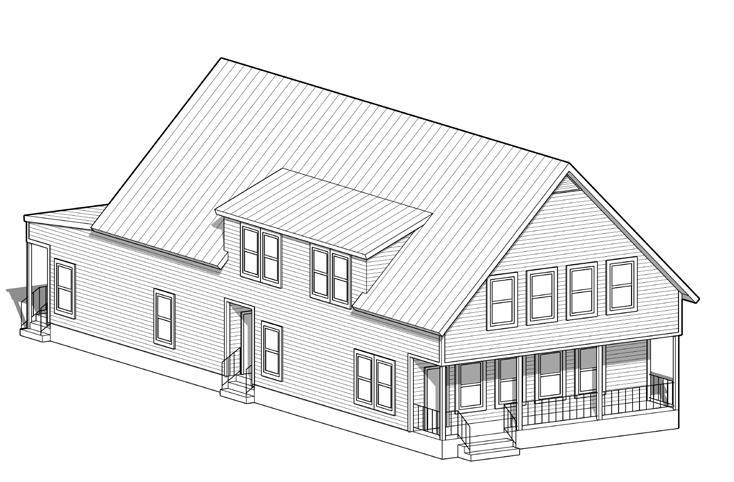
Infrastructure & Regulatory Constraints
Water Access Municipal
Wastewater Access Municipal (future)
Max # of Dwelling Units Allowed 10 units/acre
# Parking Spaces Per Unit 1 space/unit
Setbacks (Front / Side / Rear) 15' / 10' / 10'
Minimum Lot Size 0.5 acre
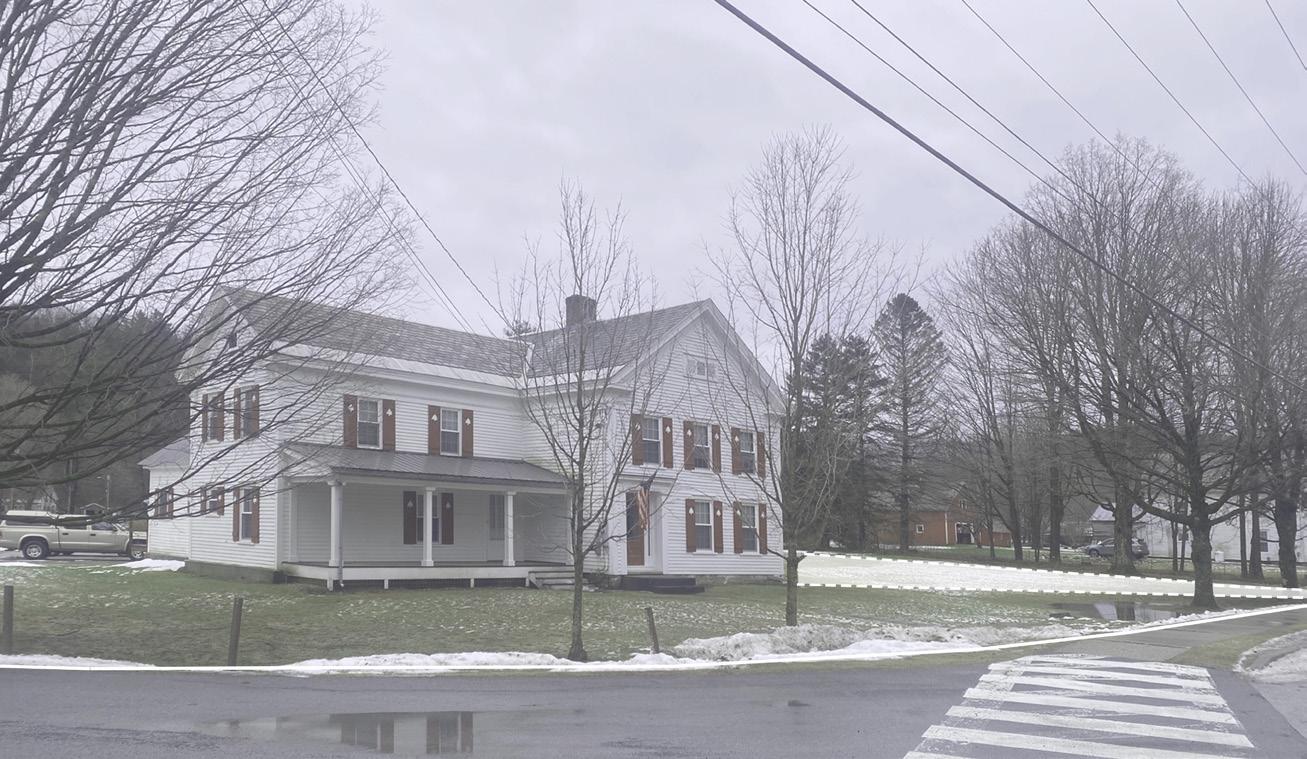
The Village Three, with its distinctive gabled overhang in the front and well-placed dormers, was chosen for this site for three reasons:
1. Its lower profile and limited second floor window exposure along the sides help retain privacy of the primary home.
2. The porch condition allows for accessible and flood resilient entries from the side and rear of the building.
3. The rear unit is ideal for aging in place, while the threebedroom units can support a young family, allowing for multigenerational living.
Number of Units 3 Units
Number of Bedrooms per Unit (1) 1 Bedroom, (2) 3 Bedroom
Unit Types (Accessible/Age-Friendly) (1) Accessible, (2) Conventional
Gross Square Footage per Unit 676 sf / 1,426 sf / 1,496 sf
Building Footprint 30' × 70'
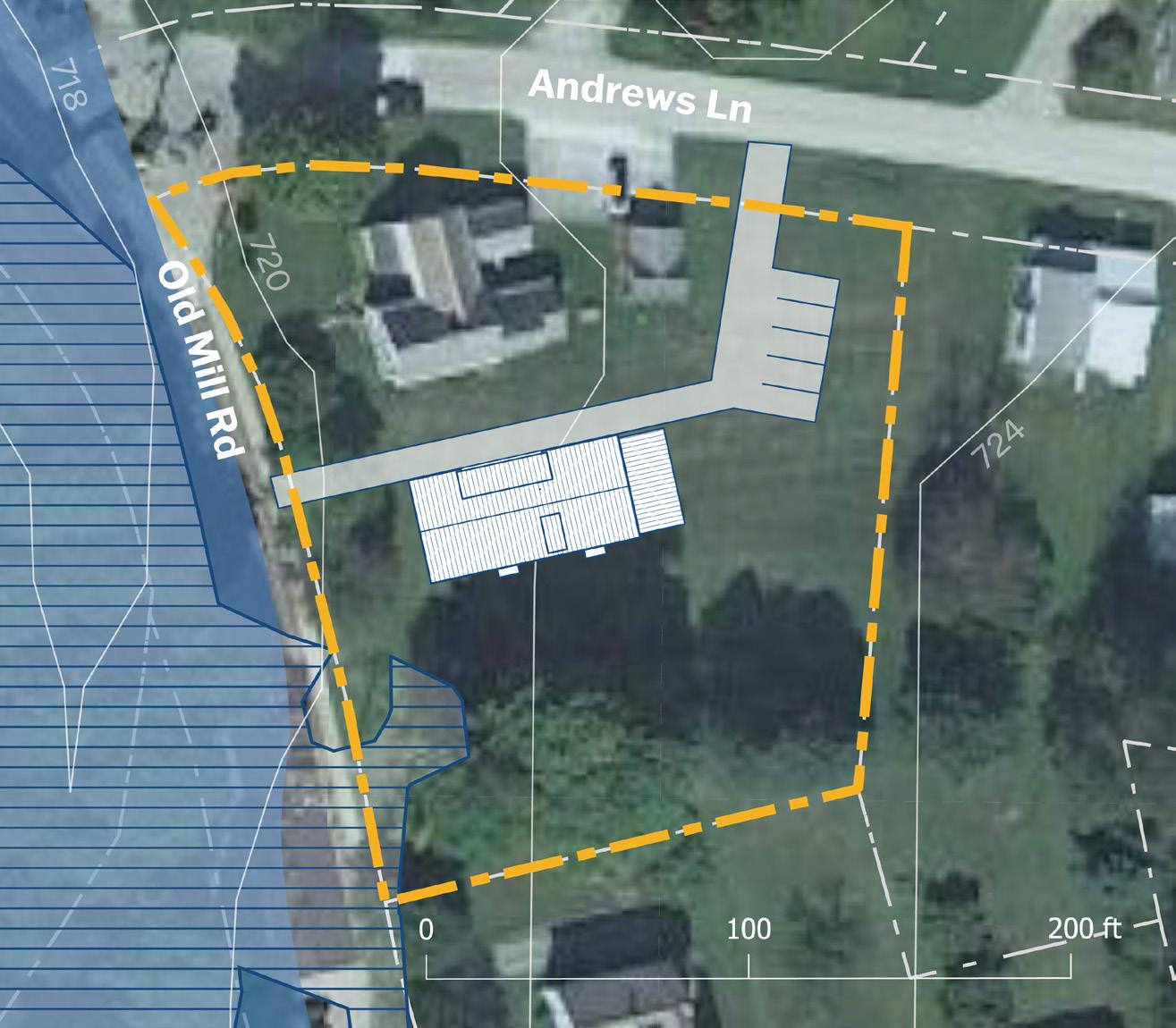
The site plan anticipates the building being located with a generous front setback off Old Mill Rd that is consistent with the setback of the existing home. The site plan also assumes vehicular access off Andrews Lane, at the rear, to provide accessible and flood resilient access to a slightly elevated ground floor while preserving dedicated open space for each unit. The siting allows each unit to have its own dedicated open space - one to the front, one to the side, and one to the rear.
The typology’s gabled overhang front porch echoes the character of the porch and frontfacing pitched roofline of the existing home. Its slender, dormered profile helps it fit well into the ample side yard of the existing home without crowding or competing with the existing home.
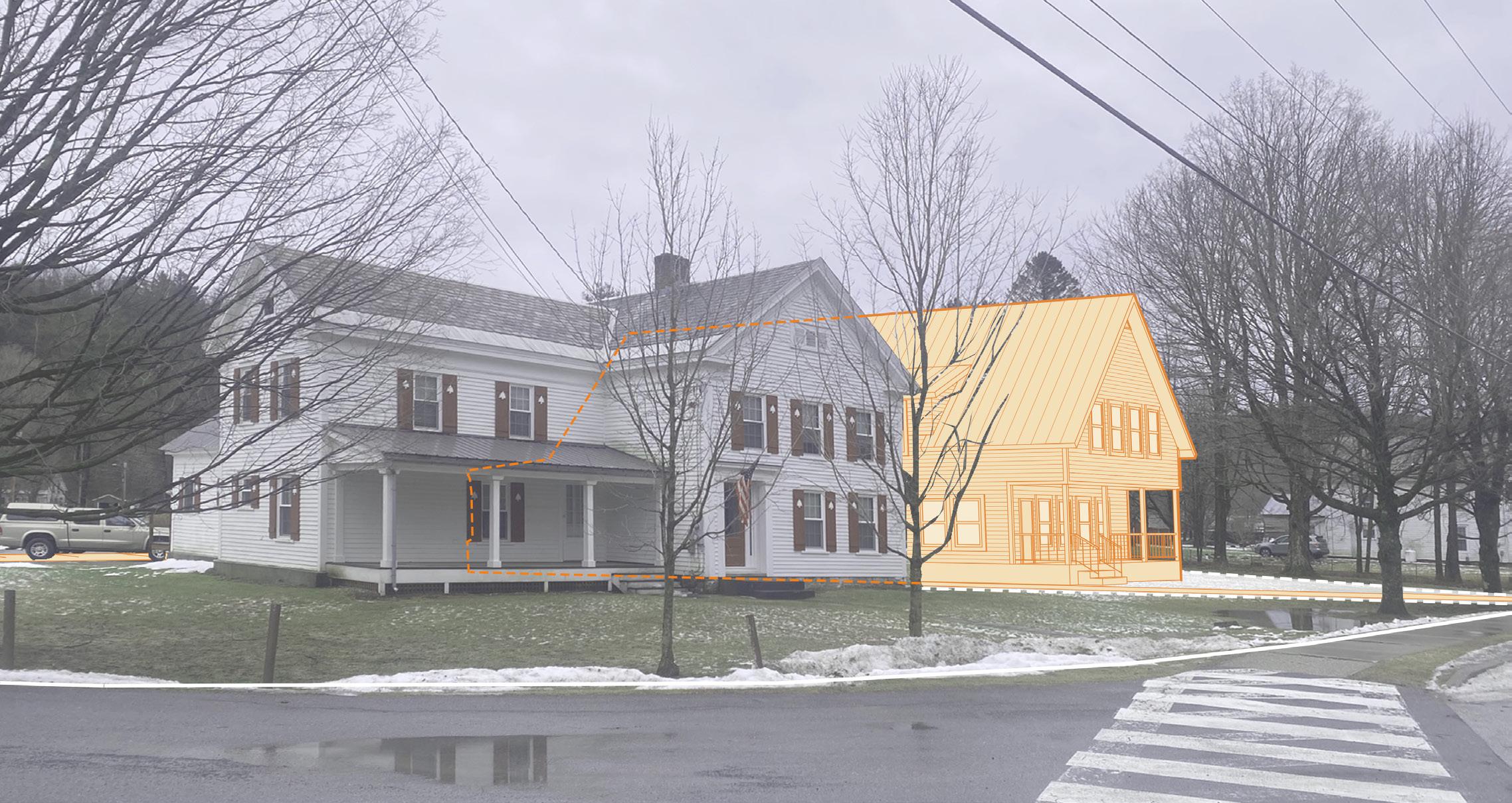
Disclaimer: In most cases, the infill parcel case studies shown in this Toolkit would not be possible under the by-right zoning in their communities. However, the infill test-fits have all been developed to match the norms of existing development patterns and showcase, as well as inspire, the kind of development that would be possible with sensible zoning reforms.
The following maps show existing conditions such as FEMA flood zones and current zoning regulations.
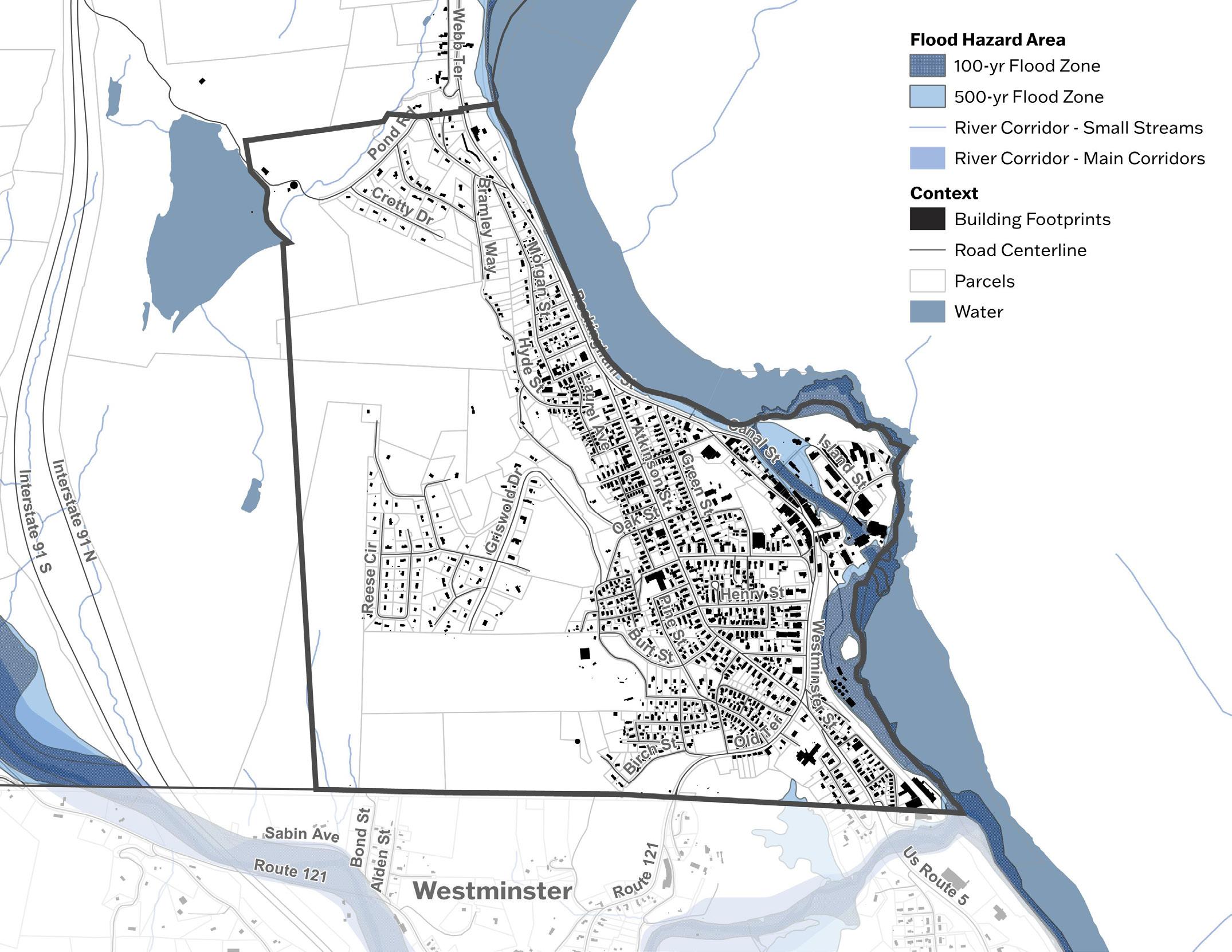
FEMA Flood Hazard Areas based on digitally available datasets.
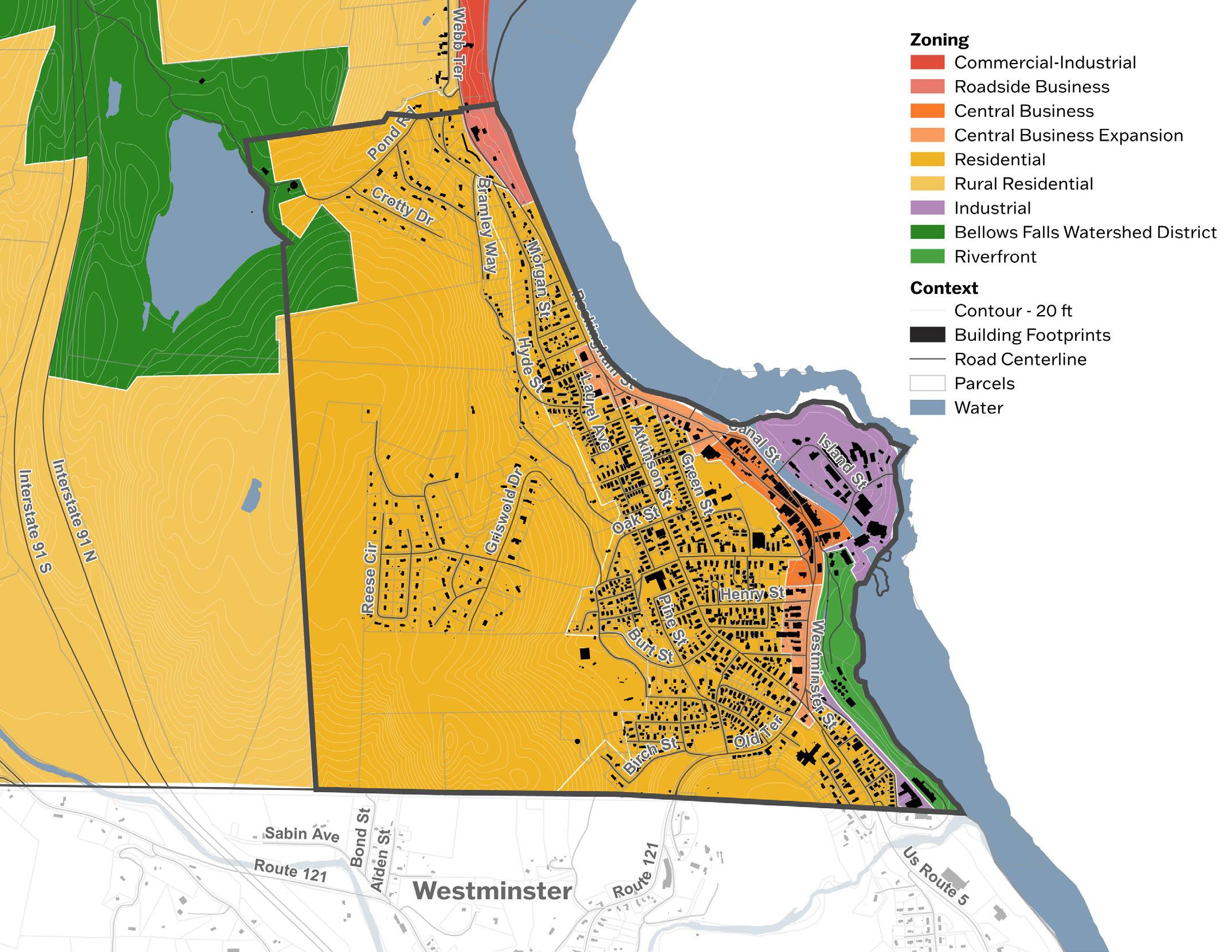
Current Zoning based on digitally available datasets.
The following maps show initial analysis into development constraints and developable area.
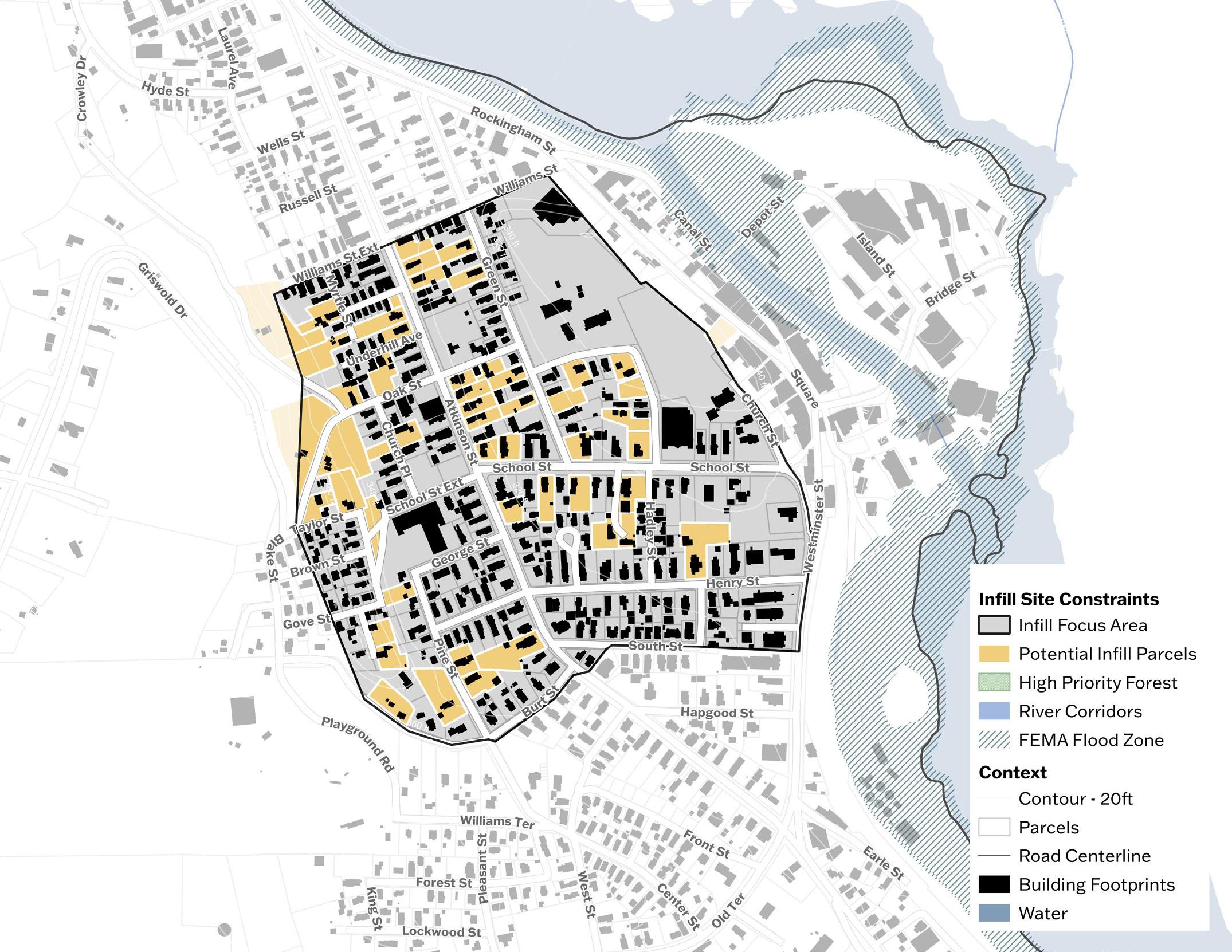
Environmental Constraints Analysis based on digitally available datasets.
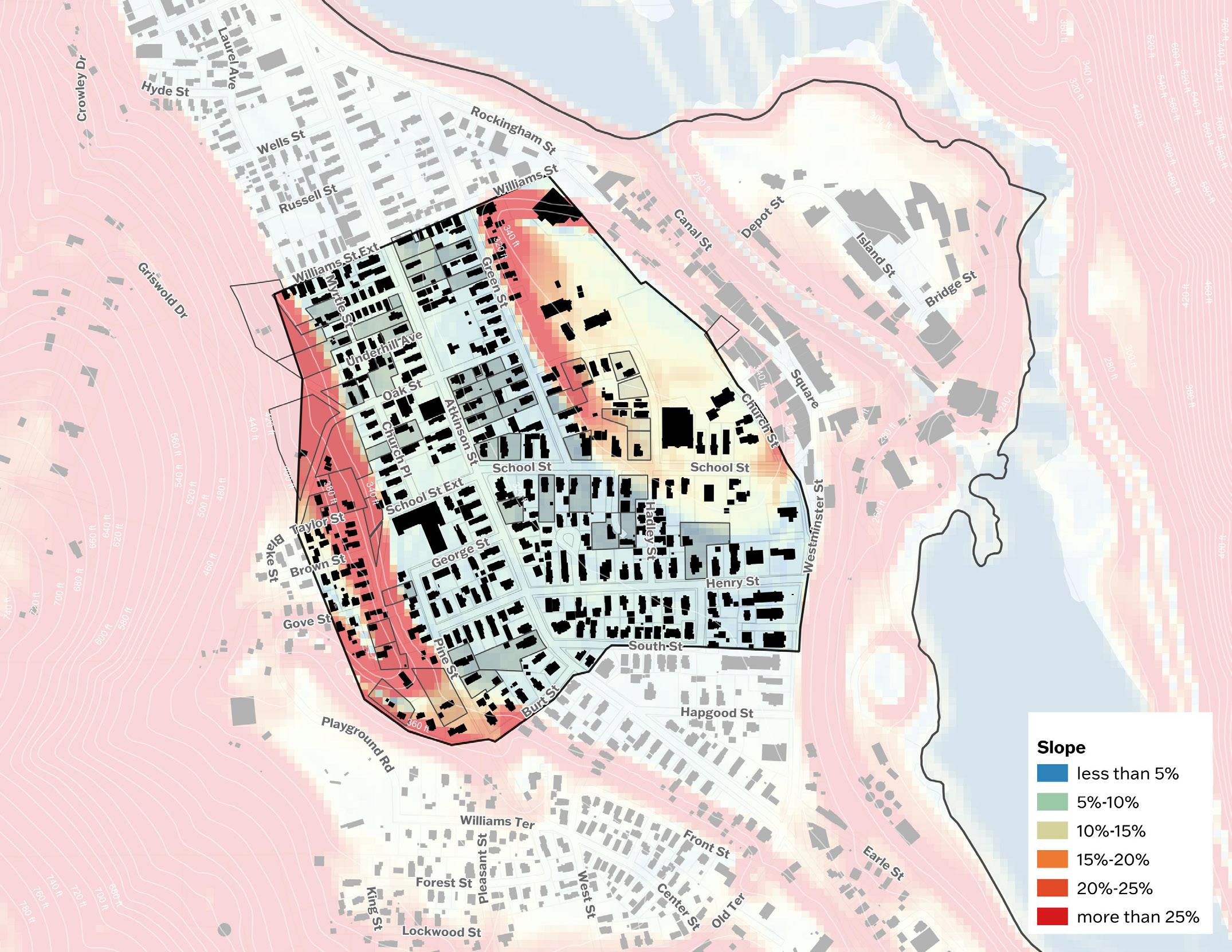
This Infill Focus Area was chosen in part because of the diversity of parcel conditions and their concentration or proximity to one another, as well as because of its walkability and proximity to the village center commercial district.
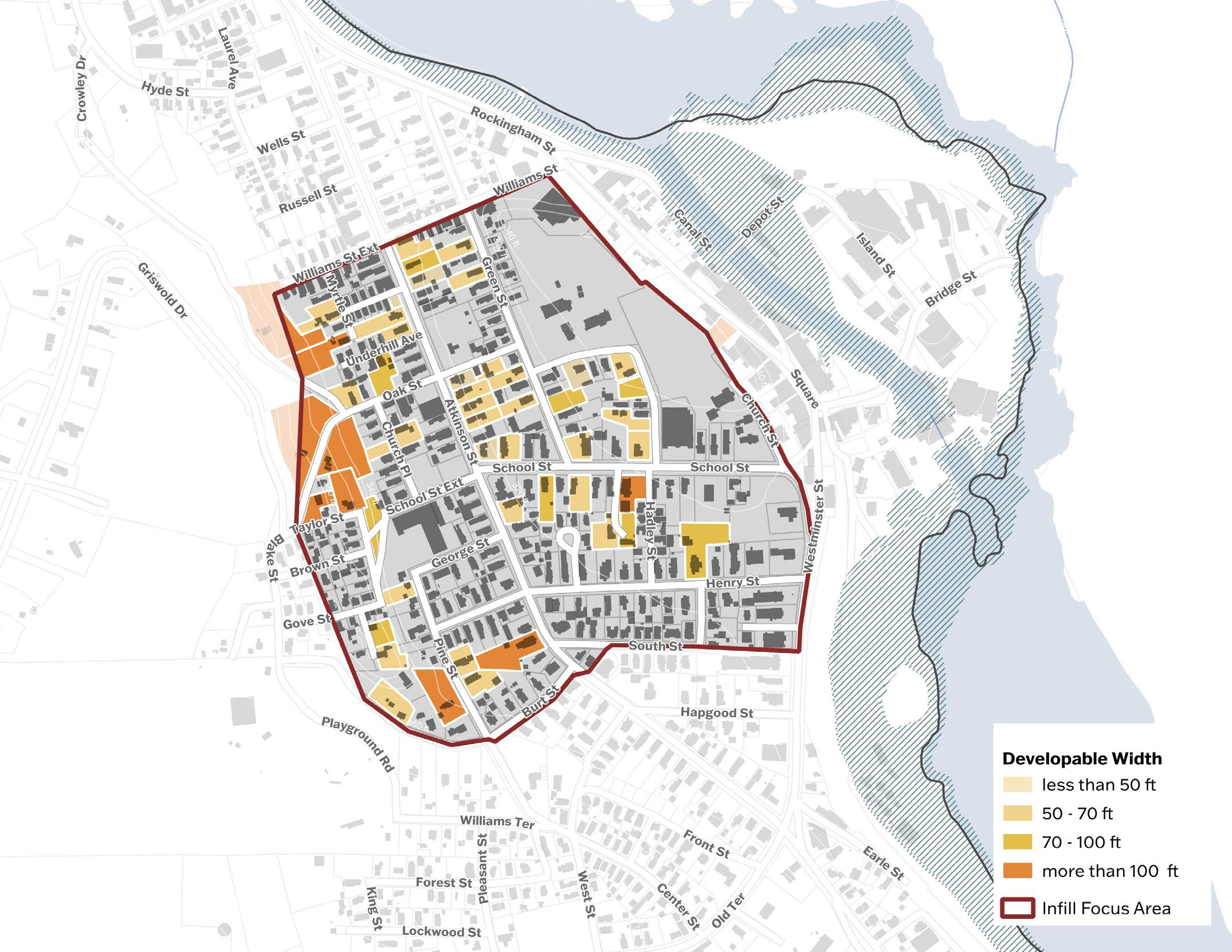
Developable Parcel Width Analysis based on digitally available datasets.
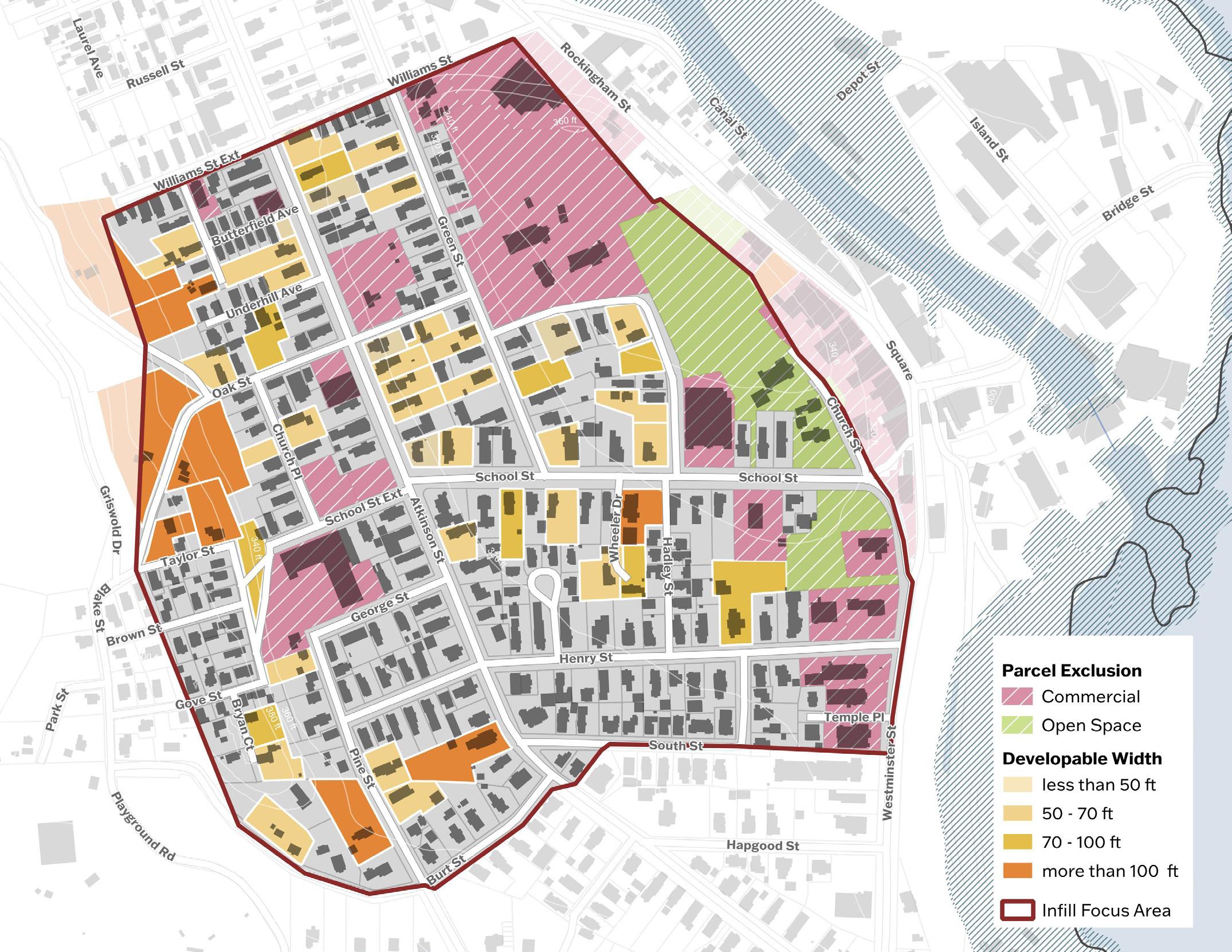
Parcel Address: 9 Myrtle Street
This site is walking distance to the village center. It is owned by a local developer that is already managing the other building on the site as a rental property. The goal is to develop a second building on the site that fits on the narrow lot but maximizes the number of studio and one-bedroom units in order to meet a local housing need and improve the financial feasibility of the development.
The primary constraints on the site are its relatively narrow width and accommodating sufficient on-site parking. Given the relationship with the adjacent property to the left, a shared parking solution for the two properties, accessed via a shared driveway, will be most spaceefficient. Use of on-street parking may allow for a greener site plan with more outdoor space for tenants.
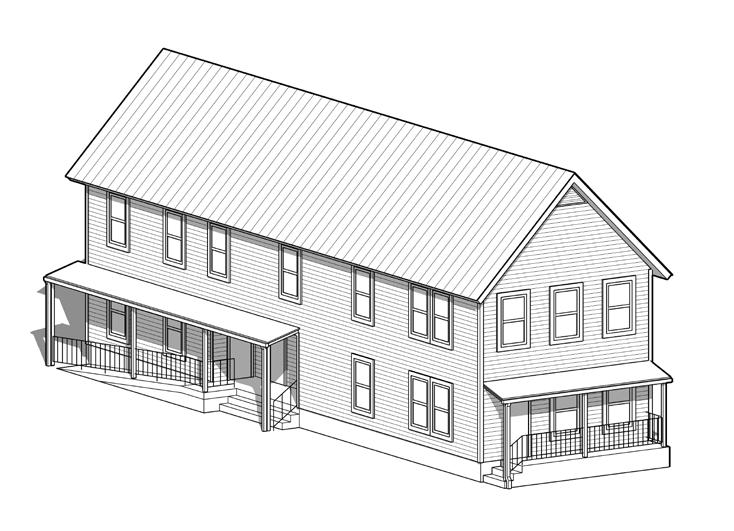
Infrastructure & Regulatory Constraints
Water Access Municipal
Wastewater Access Municipal
Max # of Dwelling Units Allowed 2 units
# Parking Spaces Per Unit 1 space/unit
Setbacks (Front / Side / Rear) 25' / 20' / 30'
Minimum Lot Size 7,000 sf, 2,500 sf/unit
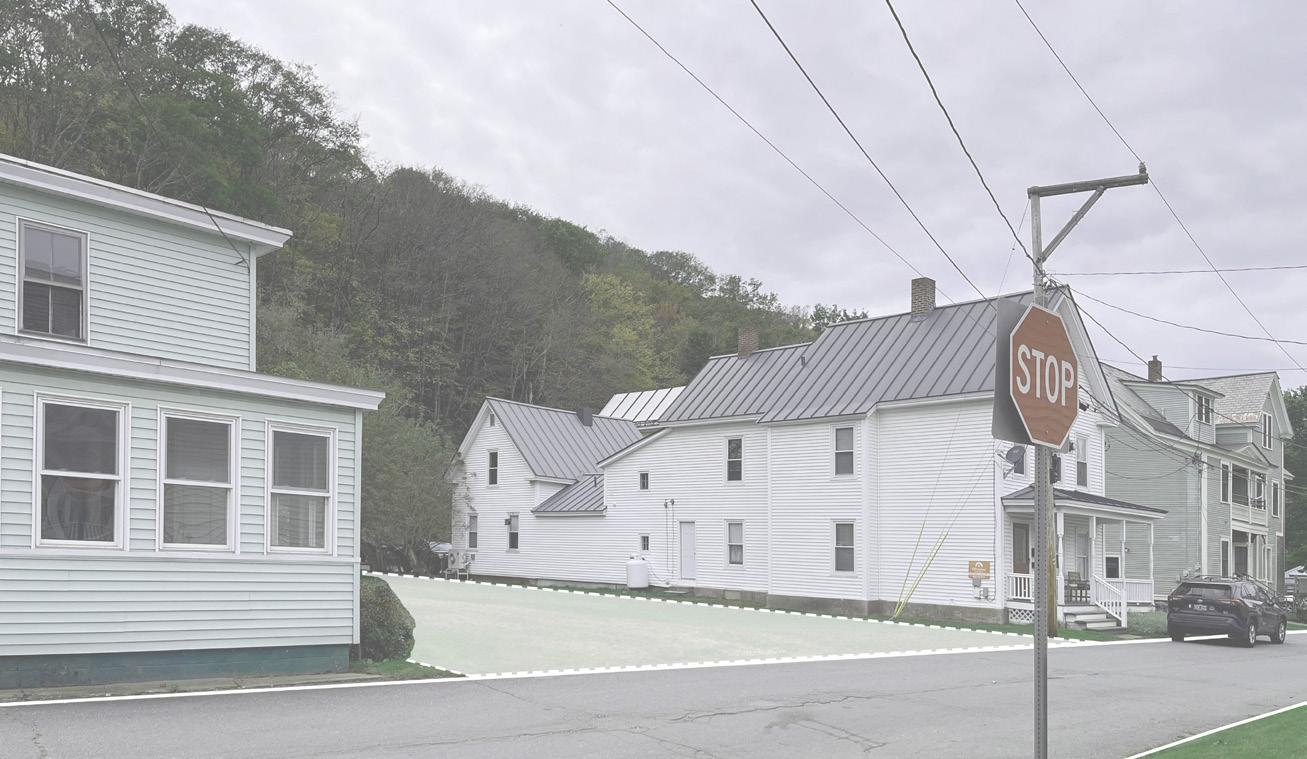
The Narrow Lot Four Shallow, designed to fit on narrow lots and underutilized side yards, was chosen for this site for three reasons:
1. Its dimensions fit the developable lot area well.
2. The unit types and sizes are a good fit for local housing need.
3. Its proportions very closely mirror that of the existing buildings near the chosen site.
Number of Units 4 Units
Number of Bedrooms per Unit (2) Studio, (2) 1 Bedroom
Unit Types (Accessible/Age-Friendly) (2) Accessible, (2) Conventional
Gross Square Footage per Unit 506 sf / 688 sf / 713 sf / 893 sf
Building Footprint 20' × 70'
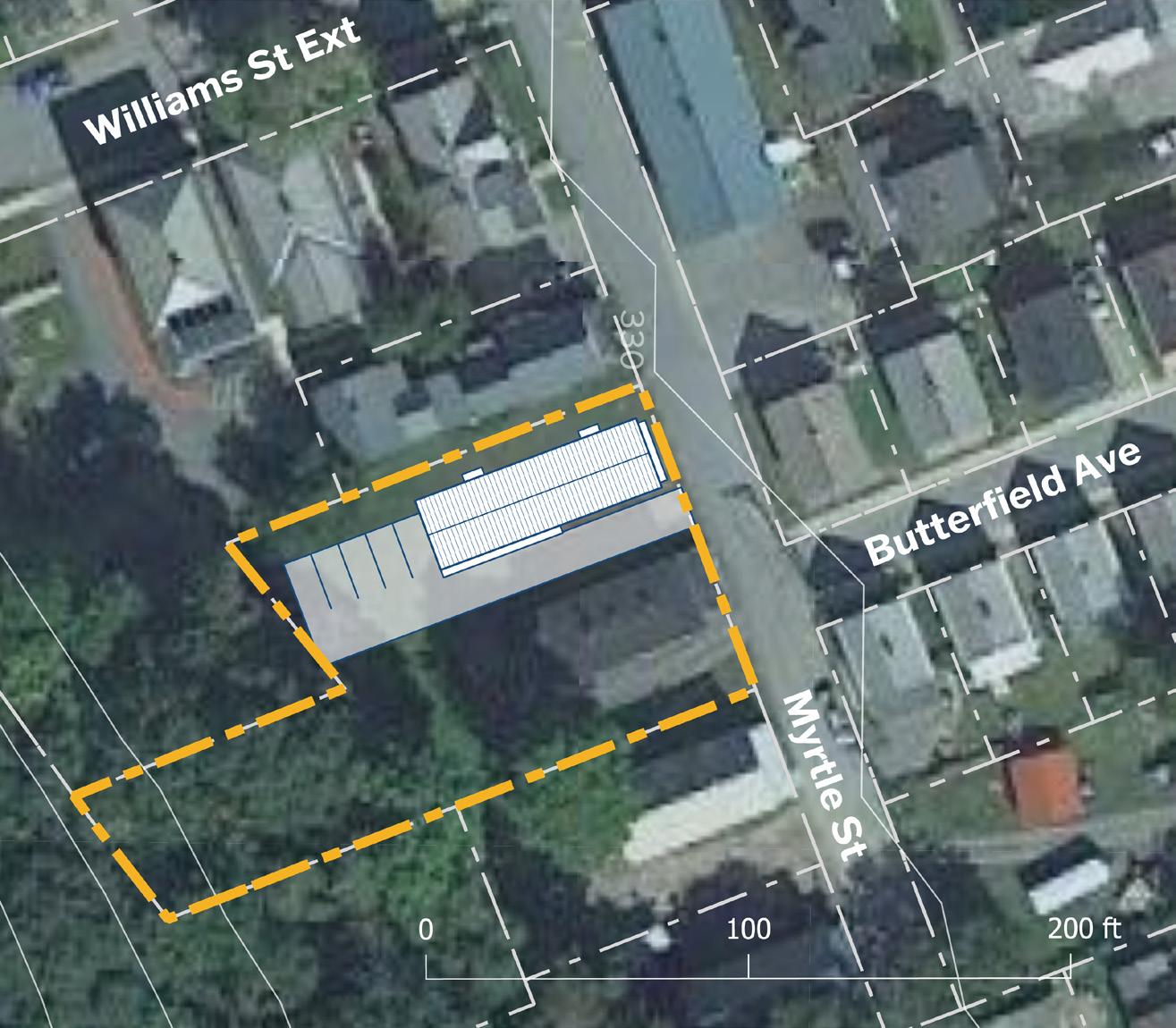
The site plan anticipates the building sitting closer to the northern parcel boundary to make room for a shared driveway at the southern side of the building to access shared rear parking. The site plan assumes side setbacks of 10 feet from the property line to the exterior wall of the building, and adopts the same front setback as adjacent existing homes.
The typology has been tailored to its context by adding a full front porch that very closely mimics that of the home immediately to its right. The roof pitch and proportions of the typology are already very similar to its neighbor to the right.
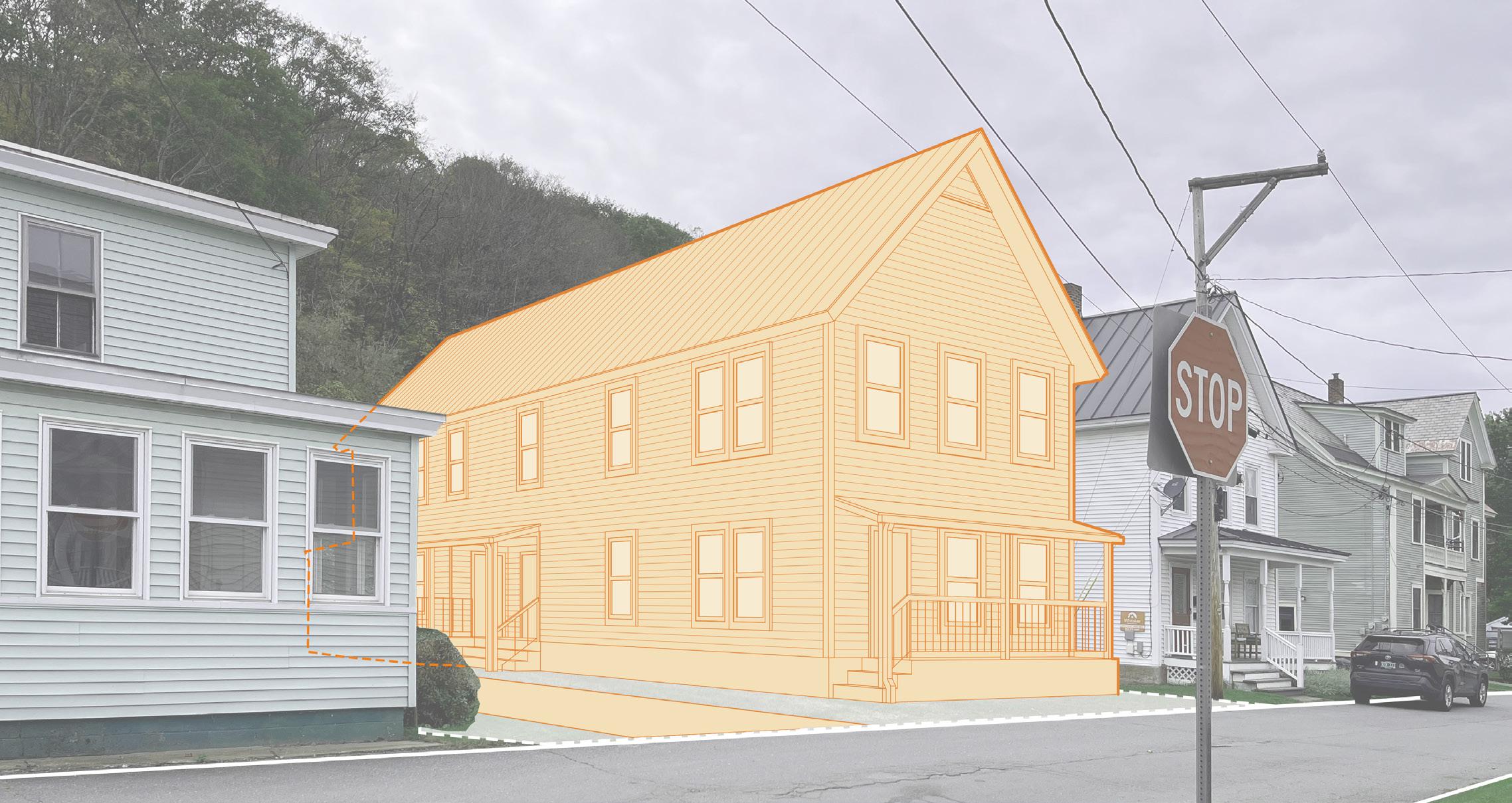
Disclaimer: In most cases, the infill parcel case studies shown in this Toolkit would not be possible under the by-right zoning in their communities. However, the infill test-fits have all been developed to match the norms of existing development patterns and showcase, as well as inspire, the kind of development that would be possible with sensible zoning reforms.
The following maps show existing conditions such as FEMA flood zones and current zoning regulations.
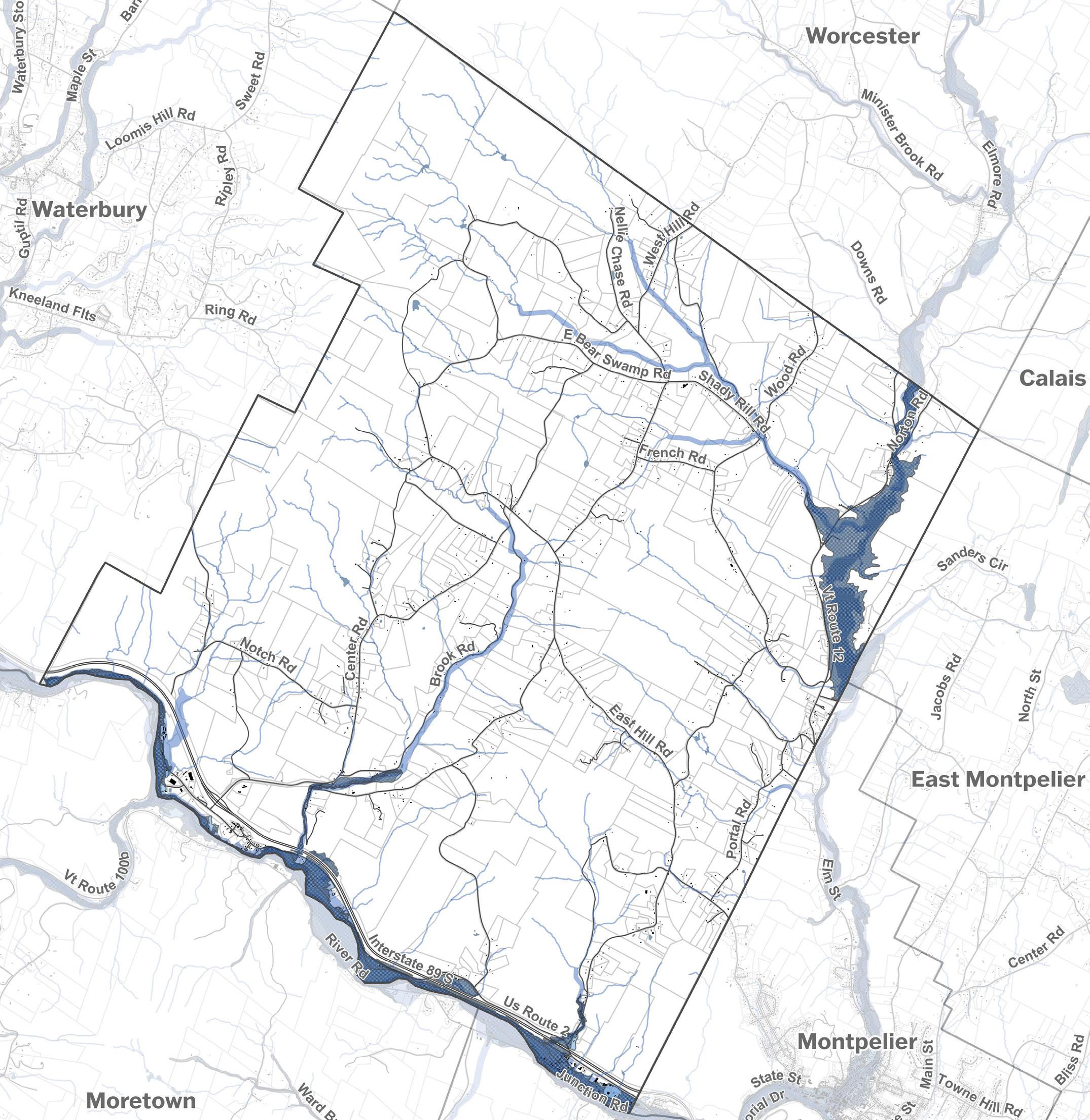
FEMA Flood Hazard Areas based on digitally available datasets.
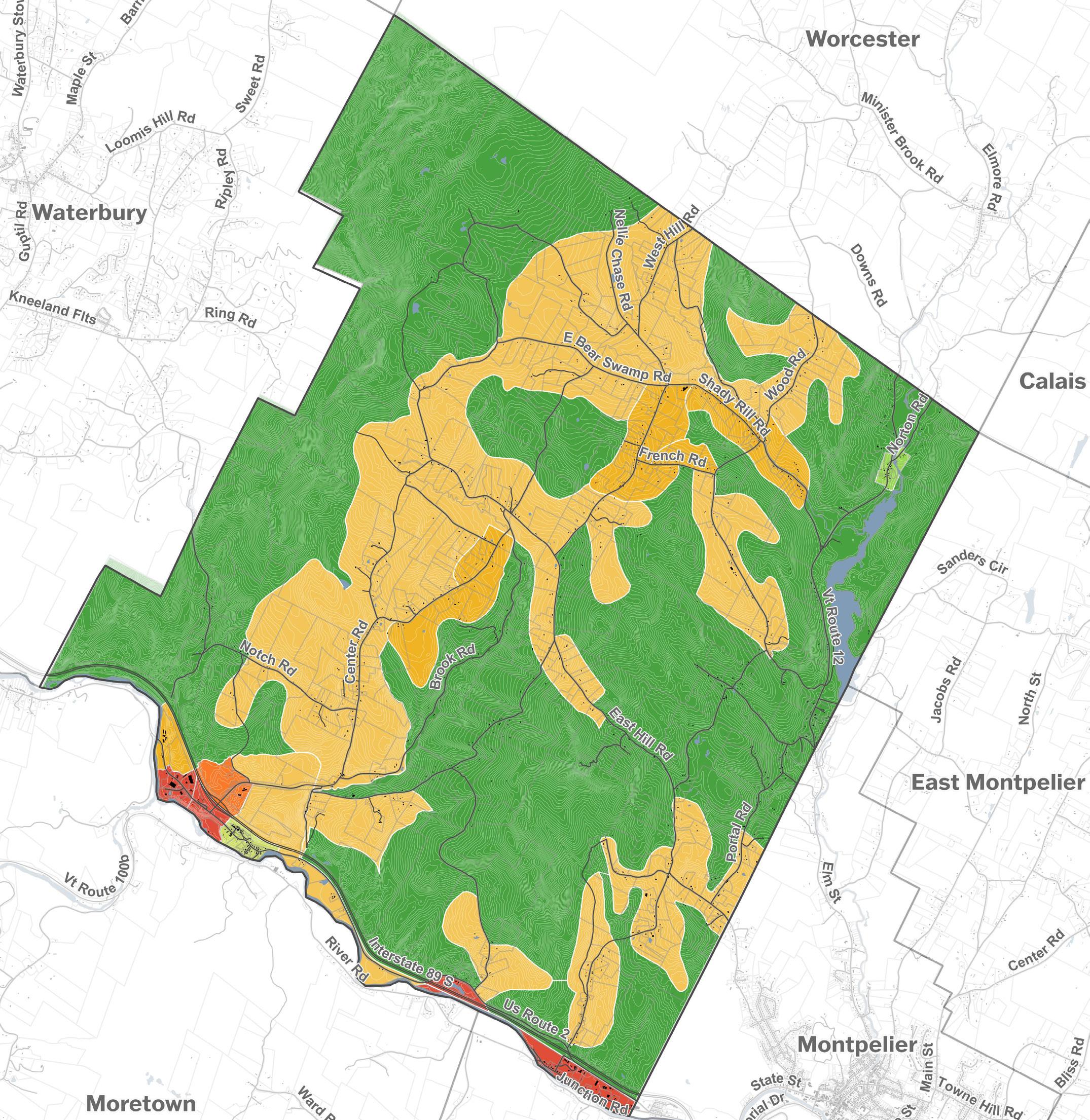
Current Zoning based on digitally available datasets.
The following maps show initial analysis into development constraints and developable area.
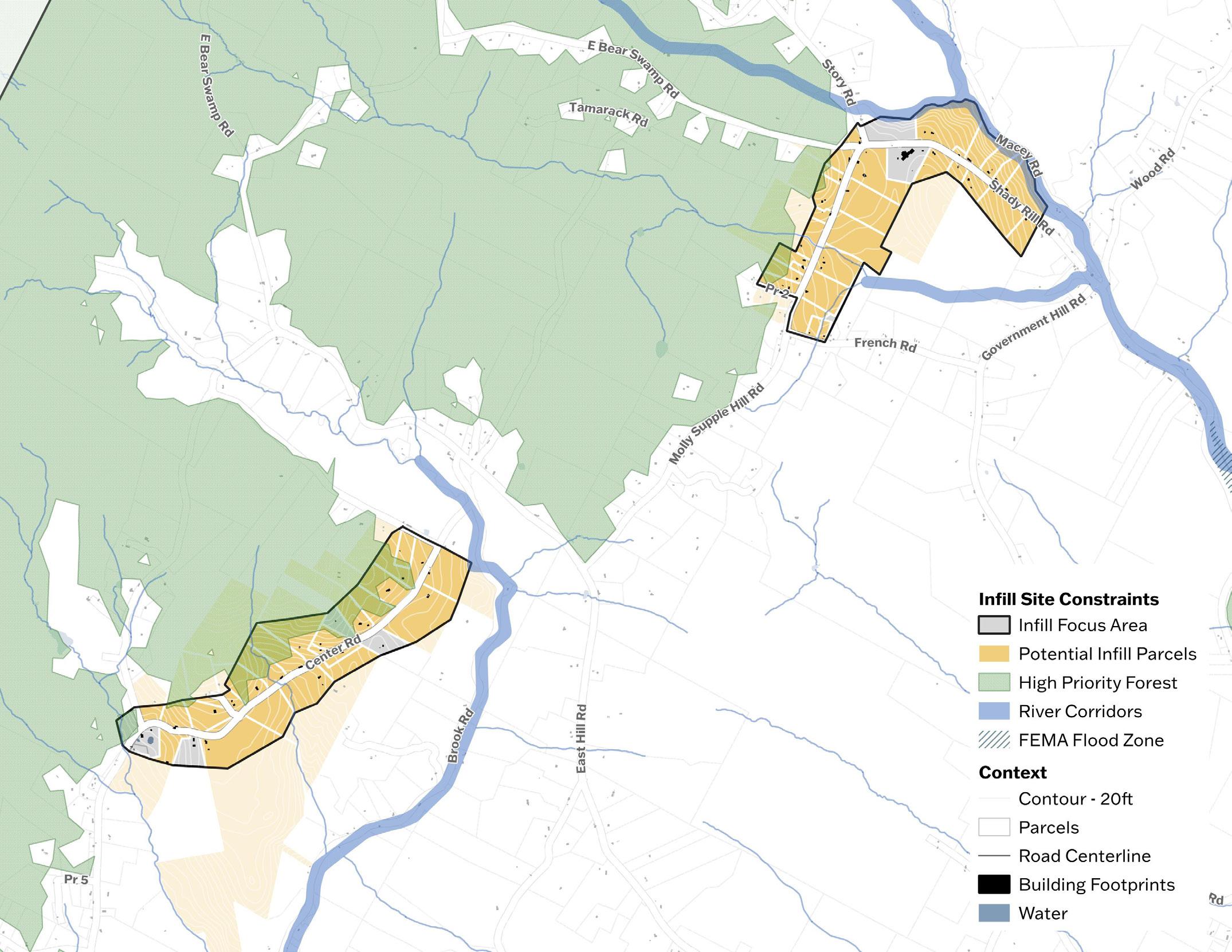
Environmental Constraints Analysis based on digitally available datasets.

This Infill Focus Area was chosen because of its favorable environmental and regulatory conditionsrelatively mild slopes, lack of floodplain and wetland, soil conditions, and zoning that is supportive of slightly higher densities.
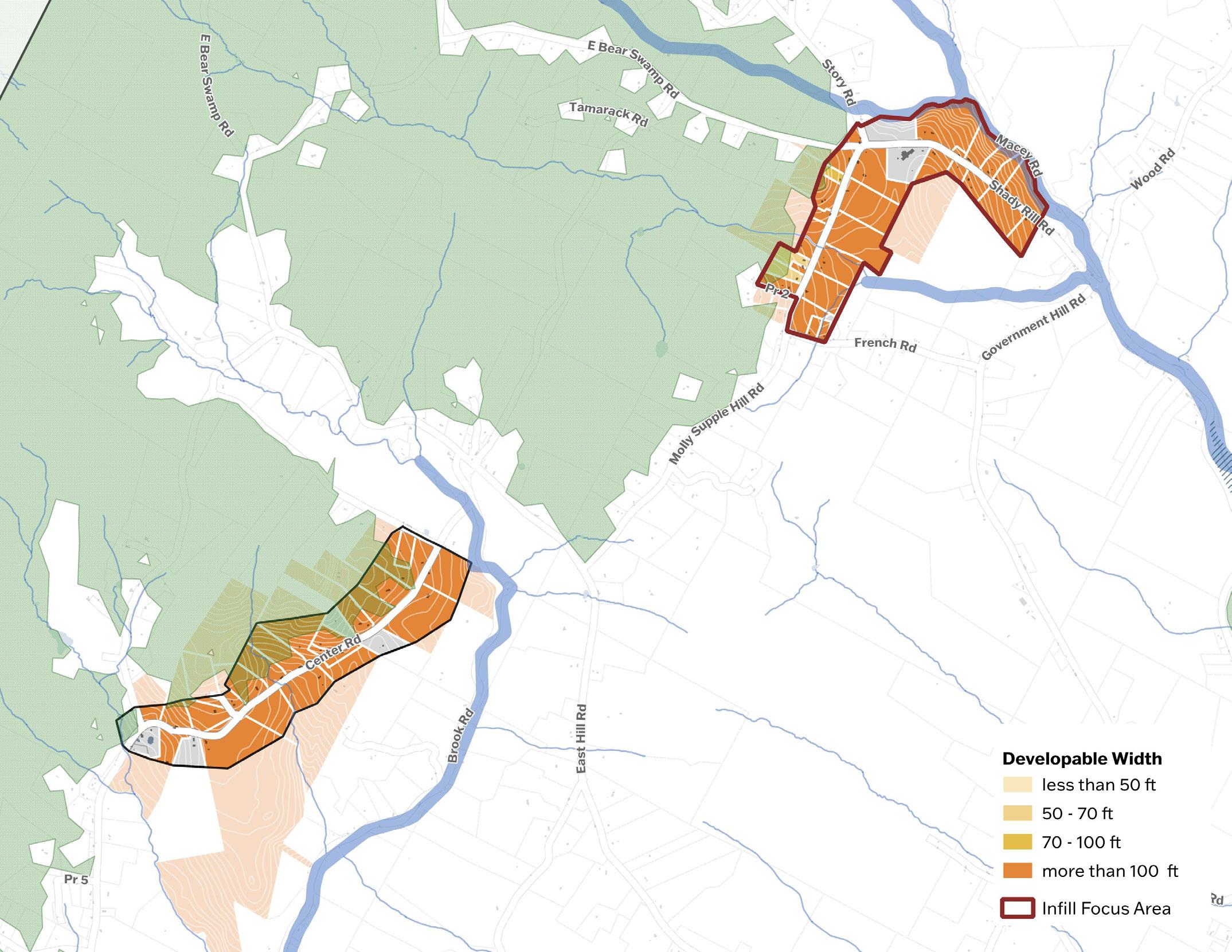
Developable Parcel Width Analysis based on digitally available datasets.
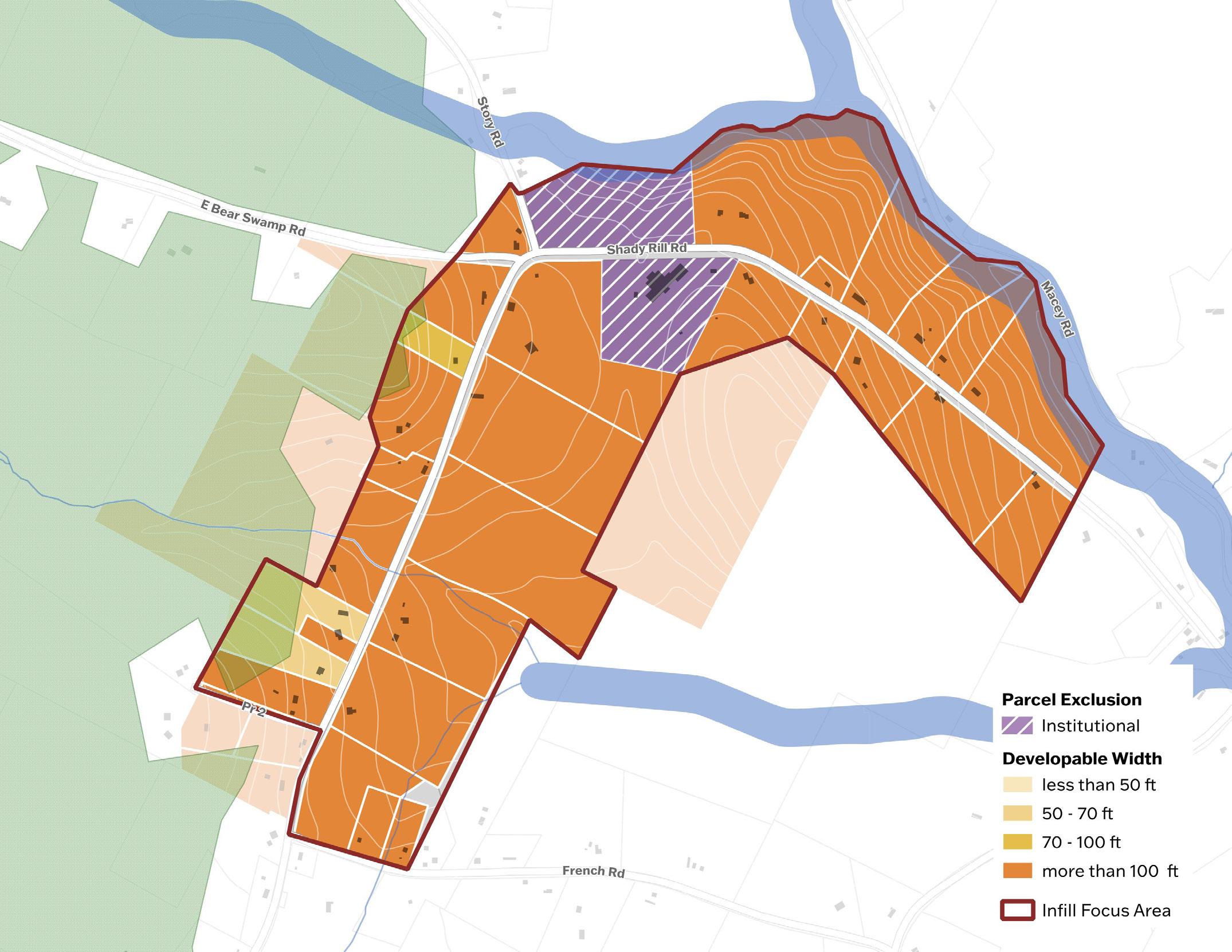
Parcel Address: 357 Shady Rill Road
This gently sloping property is close to the regional middle school as well as local park and recreation assets. It is owned and occupied by a young couple. The goal of the owners of the primary home is to develop a second accessory dwelling unit (ADU) to house their aging parents comfortably while maintaining privacy and separation for the two households.
As with many more rural sites, the primary constraints on development for this site are topography, driveway access, and water and wastewater access. The primary home has a shared well with the neighbor, and a septic system located next to the existing home. For this exercise, the new ADU is being shown further from the primary home for increased privacy, but this approach would need to be evaluated by an engineer to confirm if additional costs or constraints might make it preferable to develop an additional unit closer to the existing primary home.
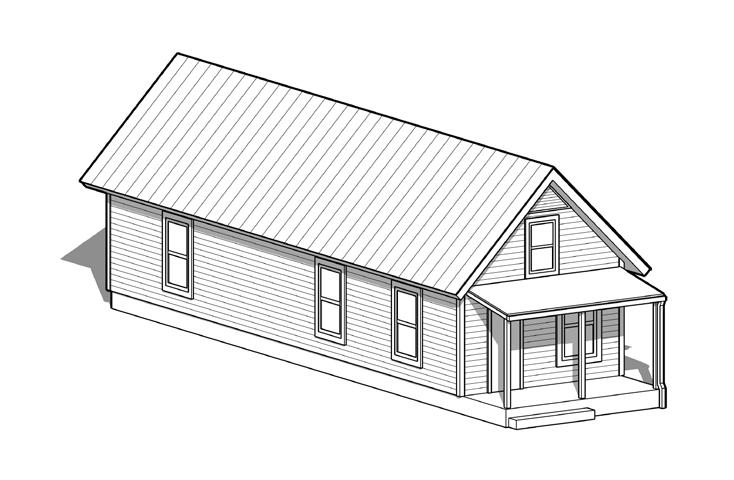
Existing Home
Infrastructure & Regulatory Constraints
Water Access Well
Wastewater Access Septic
Max # of Dwelling Units Allowed 2 units by right # Parking Spaces Per Unit no minimum
Setbacks (Front / Side / Rear) 75' / 50' / 50'
Minimum Lot Size 2 acres, 2 units/acre

This typology, with its efficient, compact, and age-friendly singlestory configuration, was chosen for this site for three reasons:
1. Its interior layout and accessible features make it ideal for the owner’s parents to age in place in this new unit.
2. Its simple, small footprint will make it less costly to build in this rural setting, given the topography and limited infrastructure.
3. Its lower, single-story profile makes it less imposing within the meadow, allowing the landscape to remain more prominent in deference to the rural setting.
Number of Units 1 Unit
Number of Bedrooms per Unit 1 Bedroom
Unit Types (Accessible/Age-Friendly) Age-Friendly
Gross Square Footage per Unit 644 sf
Building Footprint 14' × 46'
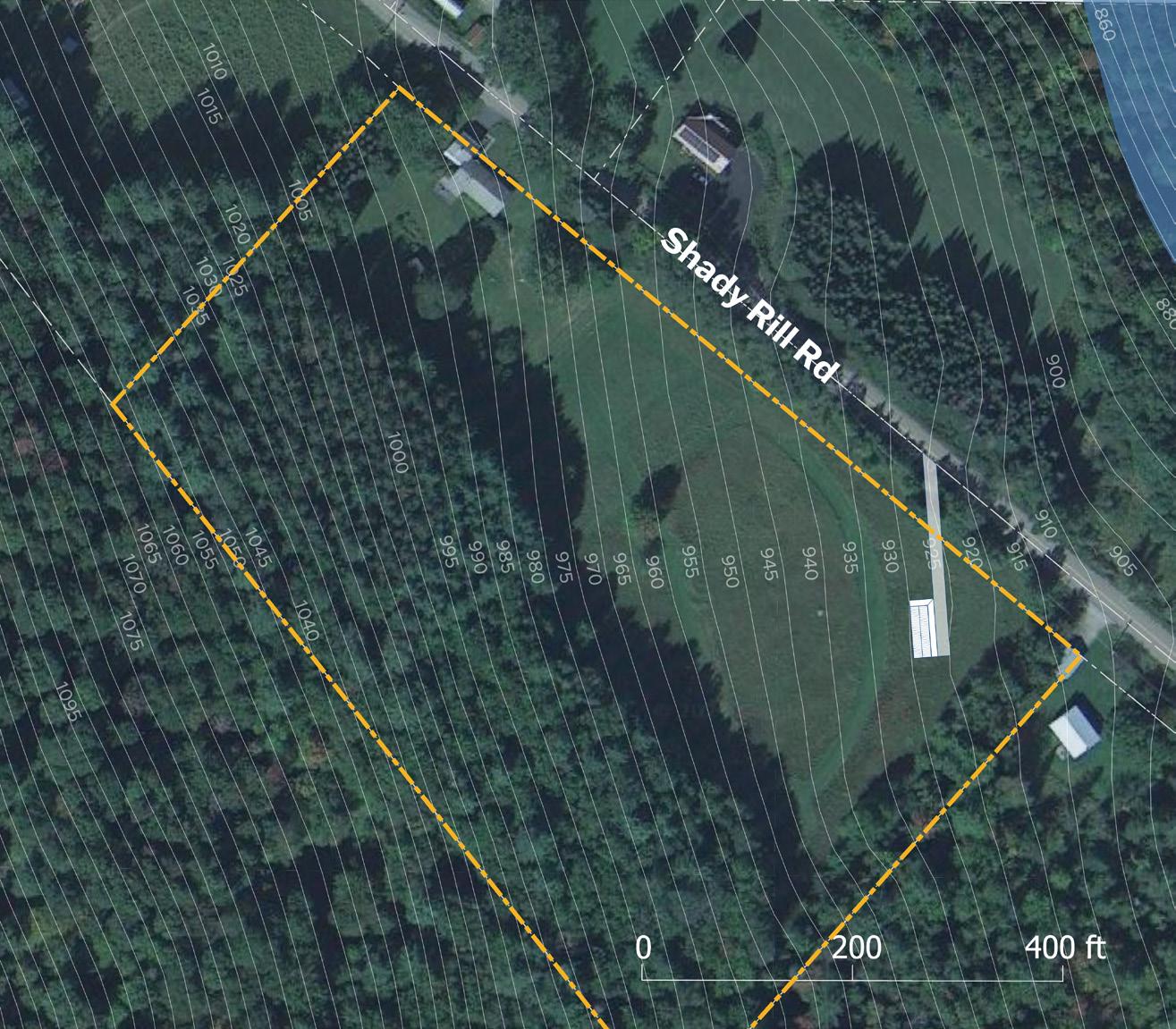
The site plan anticipates a separate gravel driveway diagonal to the road and in alignment with the existing site grading to minimize costly re-grading and potential erosion. The building is likewise sited to align with existing grade and connect to the existing mowed path through the meadow to the primary home. This siting also provides sweeping views of nearby mountains while maintaining privacy for and separation from the primary home.
The typology has been tailored to its rural context by adding an L-shaped wrap-around porch that expands usable outdoor space while addressing the need for an at-grade, accessible entry to the unit. Due to the orientation of the building dictated by the street and site grading, the porch is located on the northern side of the site. Low-impact landscape strategies, such as the addition of deciduous trees to reduce solar heat gain in the summer months from the southern exposure, could be beneficial to overall comfort and sustainability of the home. Windows could be made larger, as budget and energy efficiency permit, to tailor the design in response to the scenic rural setting.

Disclaimer: In most cases, the infill parcel case studies shown in this Toolkit would not be possible under the by-right zoning in their communities. However, the infill test-fits have all been developed to match the norms of existing development patterns and showcase, as well as inspire, the kind of development that would be possible with sensible zoning reforms.
The following maps show existing conditions such as FEMA flood zones and current zoning regulations.
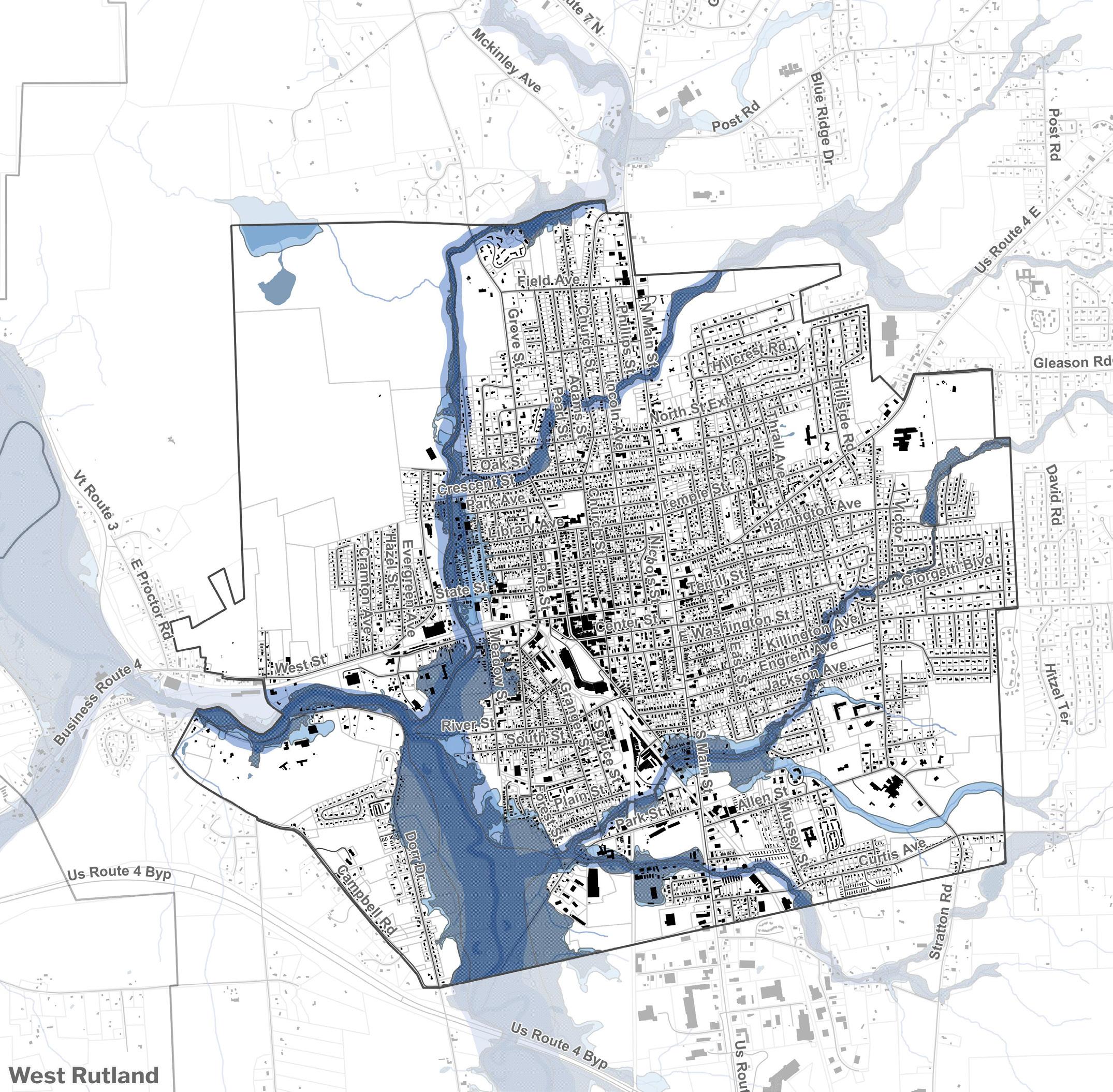
FEMA Flood Hazard Areas based on digitally available datasets.
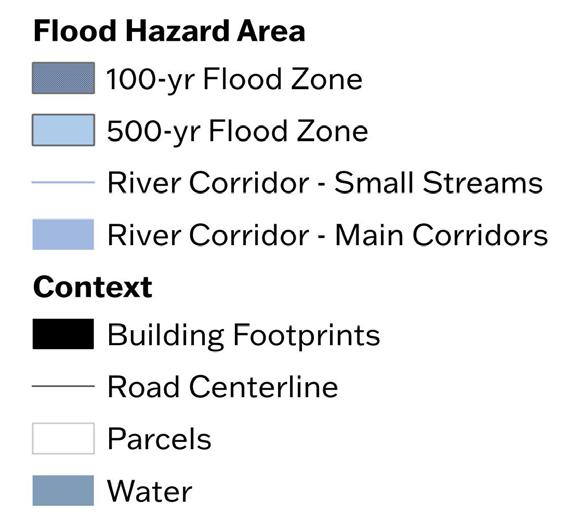
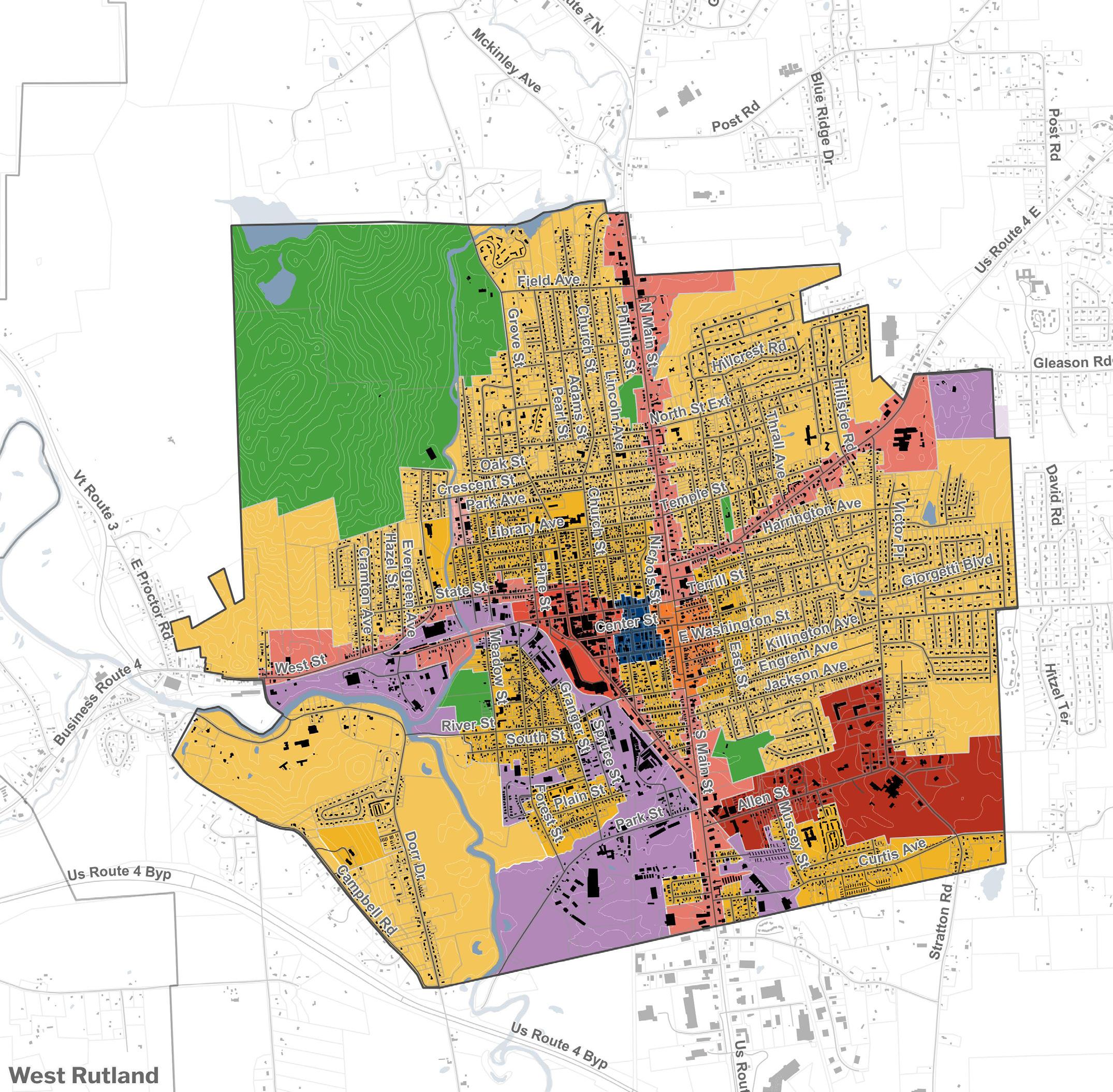
Current Zoning based on digitally available datasets.
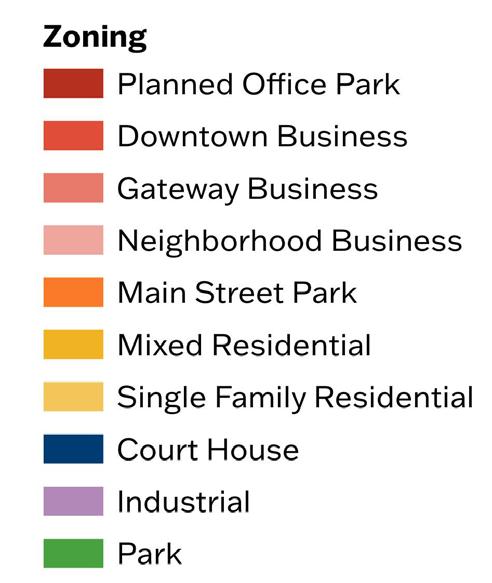
The following maps show initial analysis into development constraints and developable area.
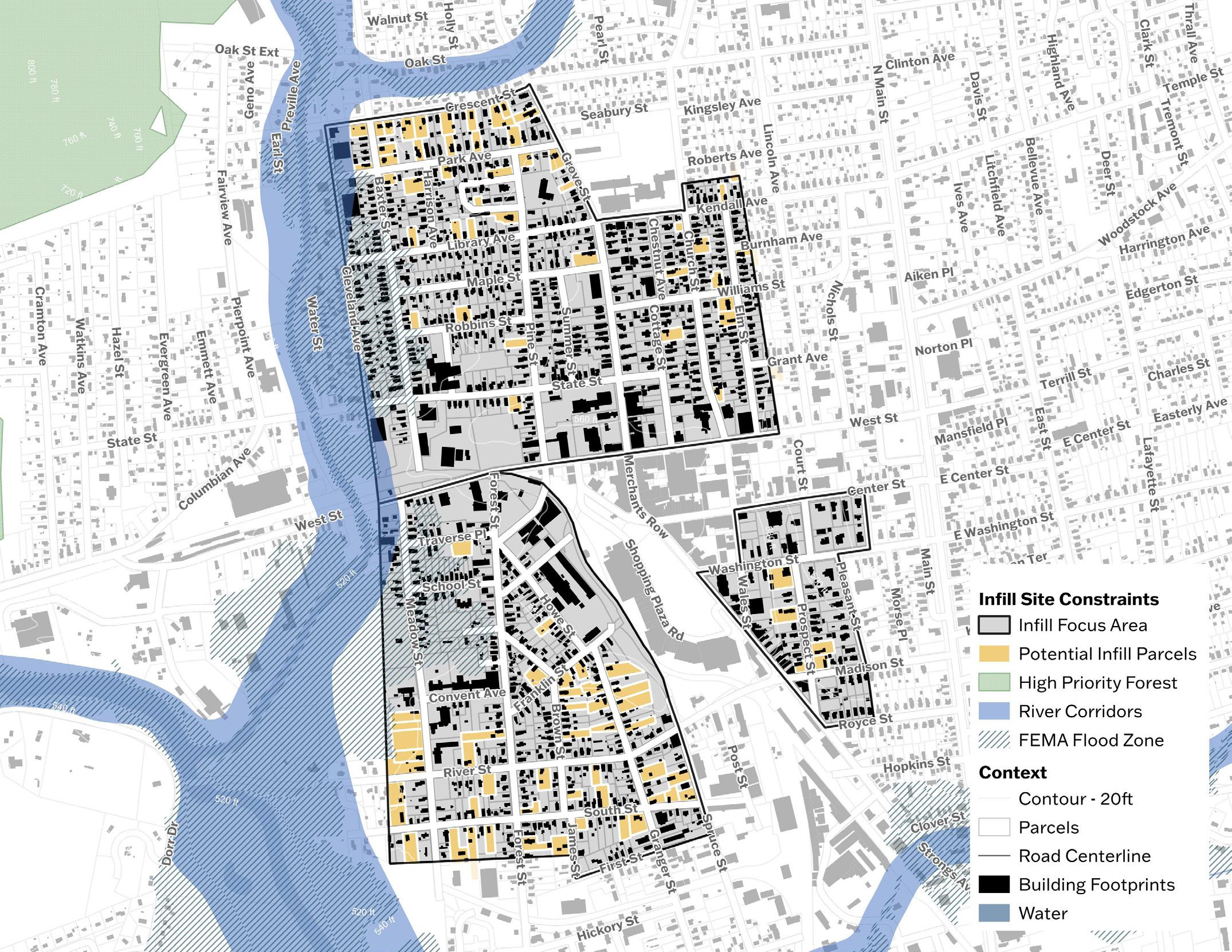
Environmental Constraints Analysis based on digitally available datasets.
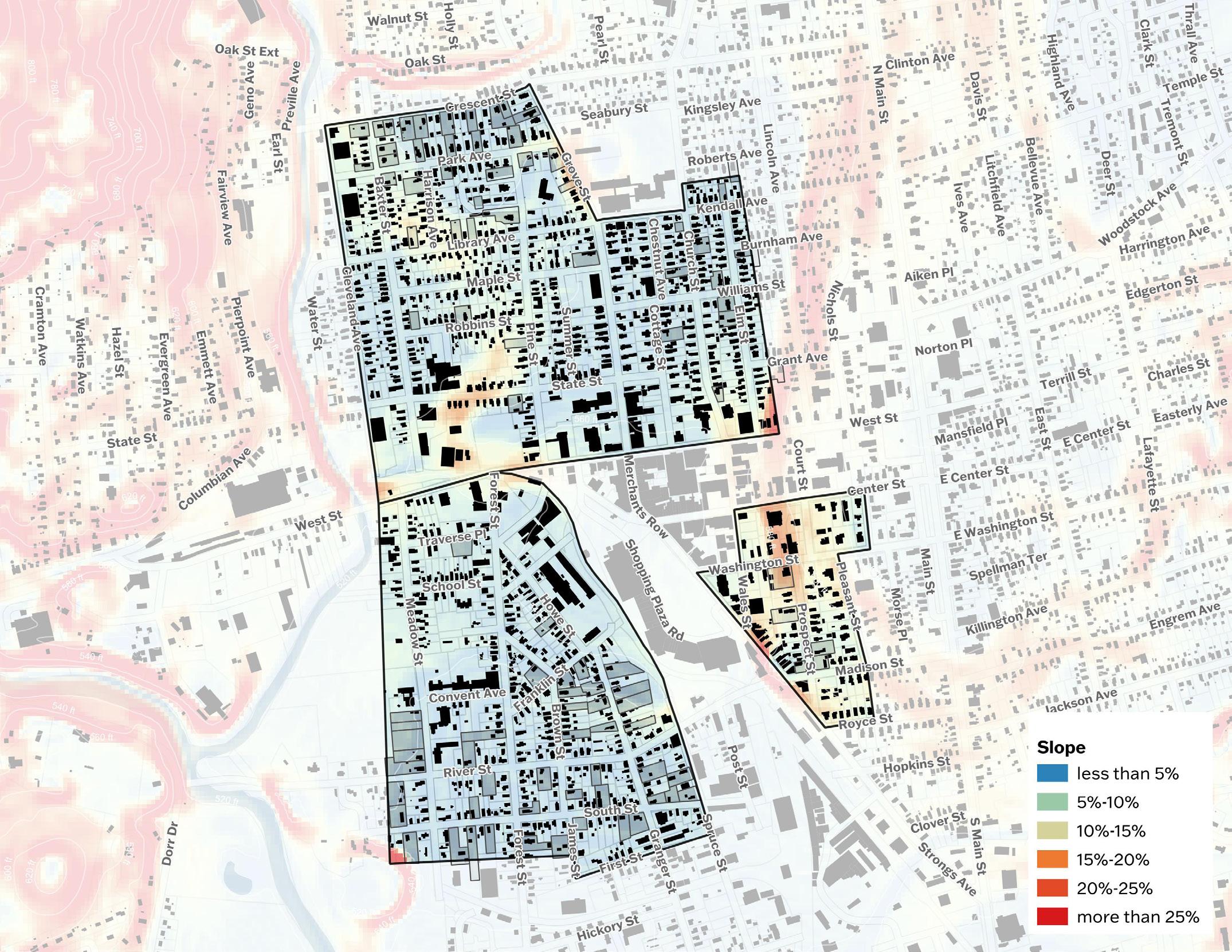
This Infill Focus Area was chosen in part because of the diversity of parcel conditions and its concentration or proximity to one another.
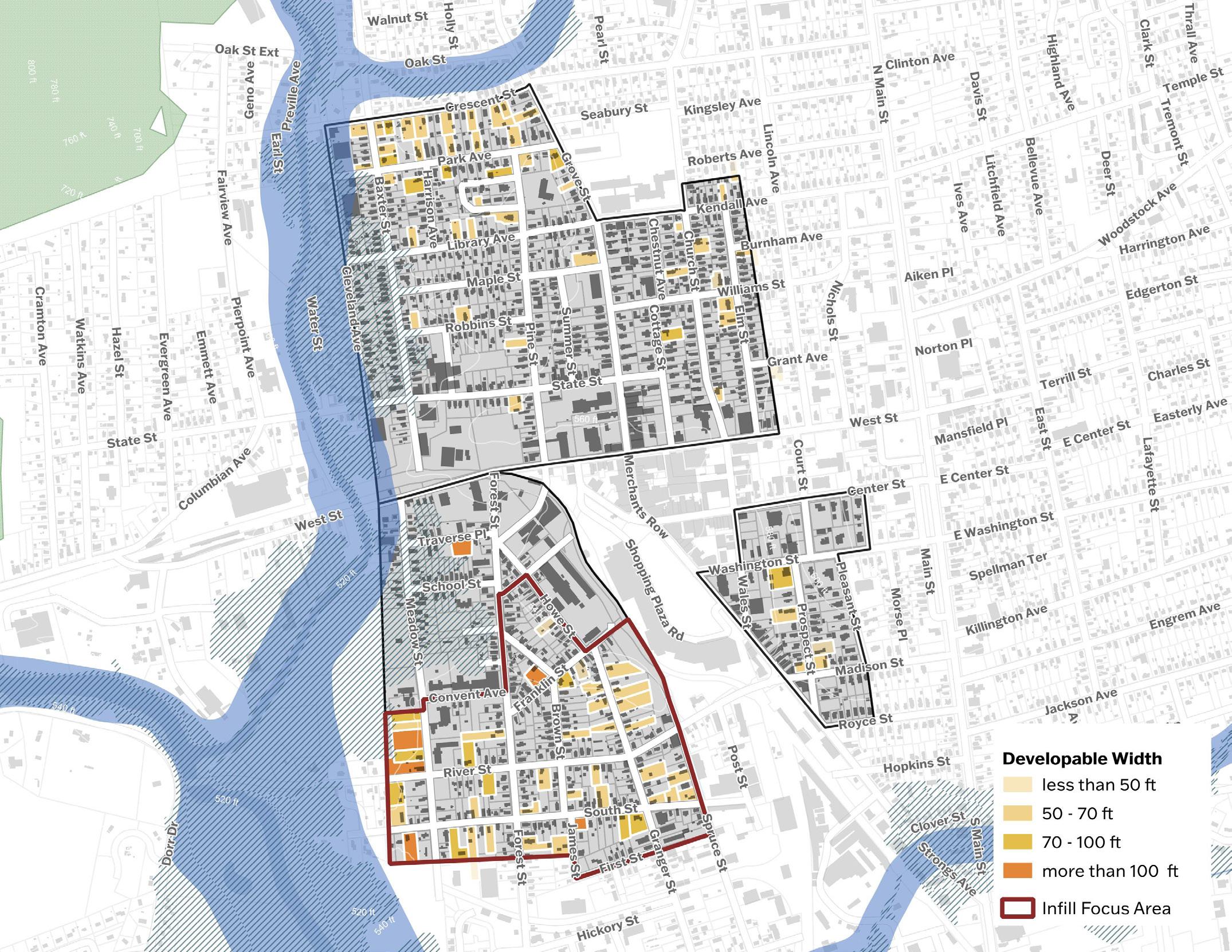
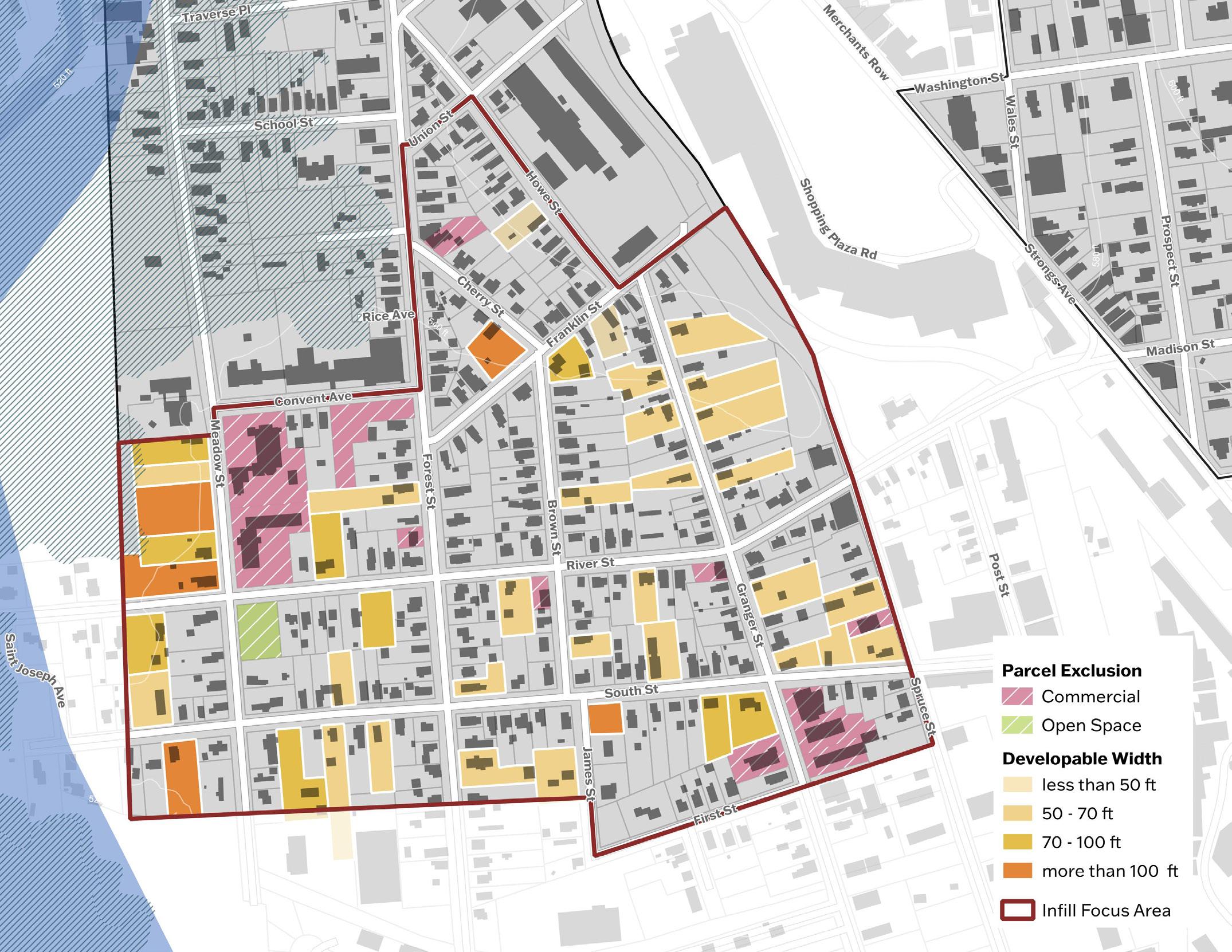
Parcel Address: 104 South Street
This vacant corner site is walking distance to Rutland’s train station and bike path, shopping center, and downtown commercial center. This gridded neighborhood is highly walkable with many existing small multi-unit dwellings ranging from one to two and a half stories. The owner of this site is already engaged in a gut rehab of a property a few blocks away and is interested in developing this site to maximize its potential as a rental property for one and two-bedroom units.
The site is flat and relatively unconstrained for a denser neighborhood like this one. South Street is the primary frontage and has an existing sidewalk and parking pad. Primary siting considerations are reinforcing and activating South Street as the primary frontage, preserving existing mature trees to the extent possible, and arranging the parking to allow for the preservation of some yard space while ensuring convenient and accessible access to the rear unit.
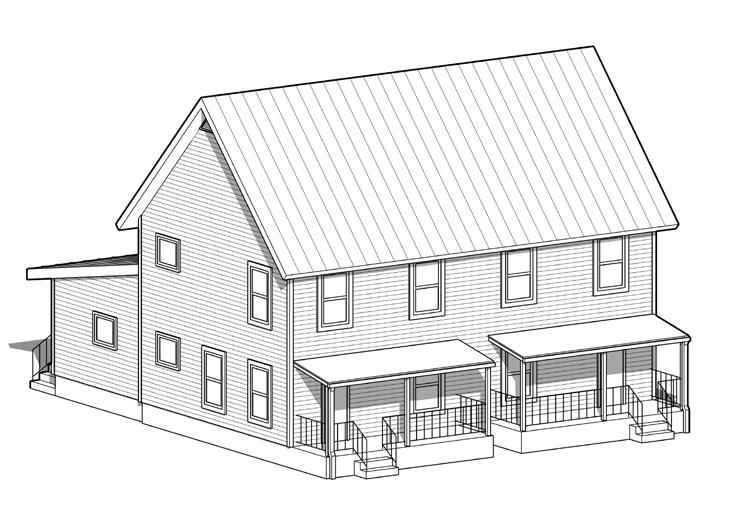
Infrastructure & Regulatory Constraints
Water Access Municipal
Wastewater Access Municipal
Max # of Dwelling Units Allowed 4 units
# Parking Spaces Per Unit no parking minimum
Setbacks (Front / Side / Rear) 20' / 10' / 20' – 50' (20% of lot depth)
Minimum Lot Size 0.15 ac / 6,500 sf
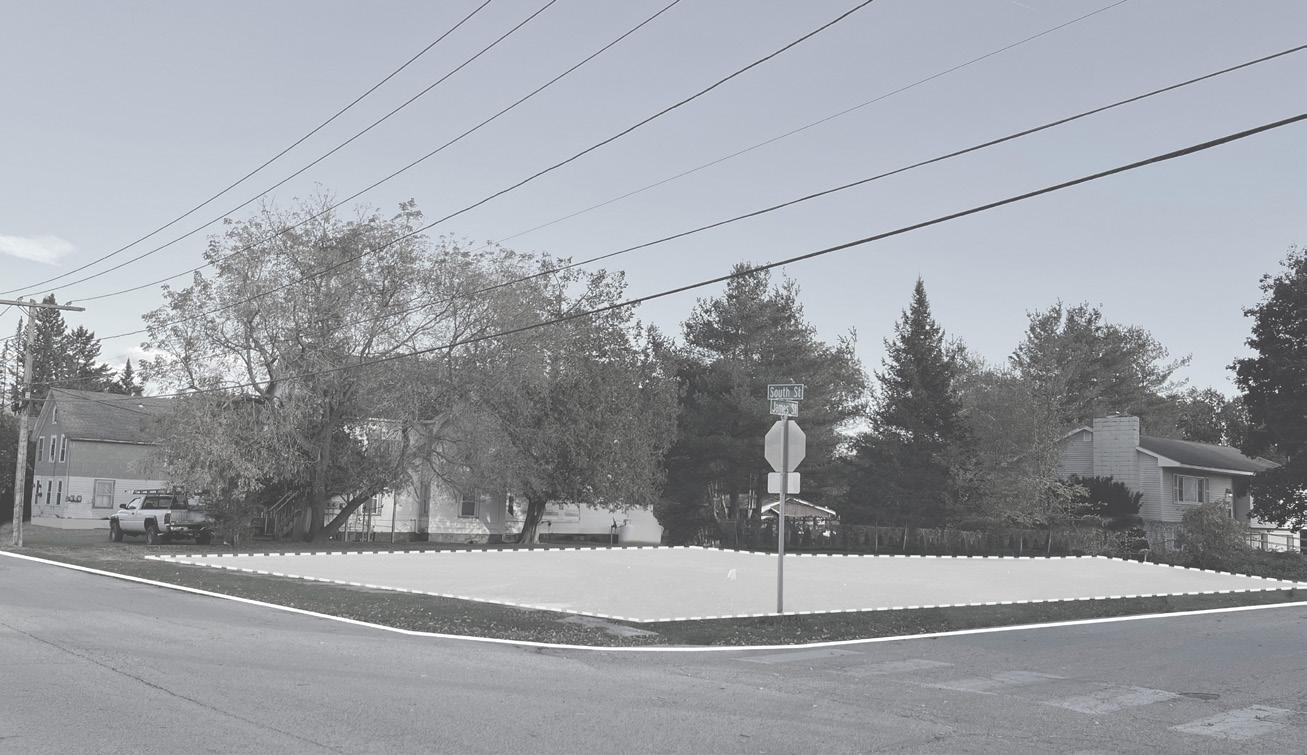
he Side-by-Side Plus One, with its square footprint and naturally efficient interior layout, was chosen for this site for three reasons:
1. Its dimensions fit the developable lot area well.
2. The unit types and sizes are a good fit for local housing need.
3. It works well with a corner lot that can accommodate efficient side parking, preserving more usable open space.
Number of Units
3 Units
Number of Bedrooms per Unit (1) 1 Bedroom, (2) 2 Bedroom
Unit Types (Accessible/Age-Friendly) (1) Accessible, (2) Conventional
Gross Square Footage per Unit 624 sf / 1,000 sf / 1,000 sf
Building Footprint 40' × 40'
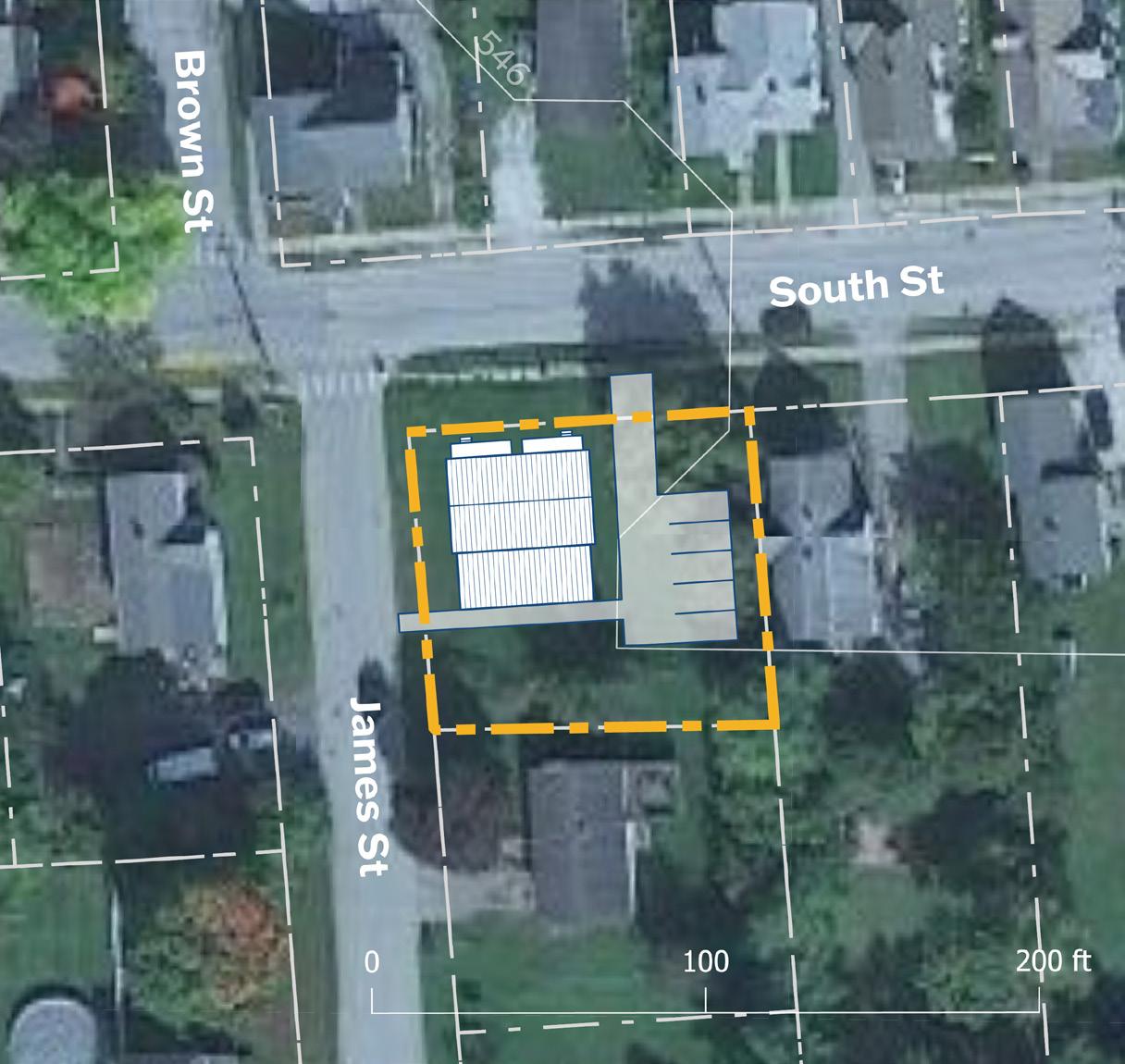
The site plan anticipates the building sitting close to the street to activate the South Street sidewalk and anchor the James Street corner in this walkable neighborhood. This position on the parcel also helps preserve an efficient side parking layout with an integrated ramp to the rear accessible unit and ample usable open space associated with each unit. Additionally, by siting the building to the northern side of the site we increase the chance of preserving south-facing kitchen garden opportunities.
A pitched roof form has been selected to align with the norms of nearby homes. The typology could be further tailored to its context by adding deeper front porches to support a more social neighborhood front porch culture. This typology also allows for the integration of rear-facing second floor outdoor decks extending over the rear unit on the first floor if desired at a future point.
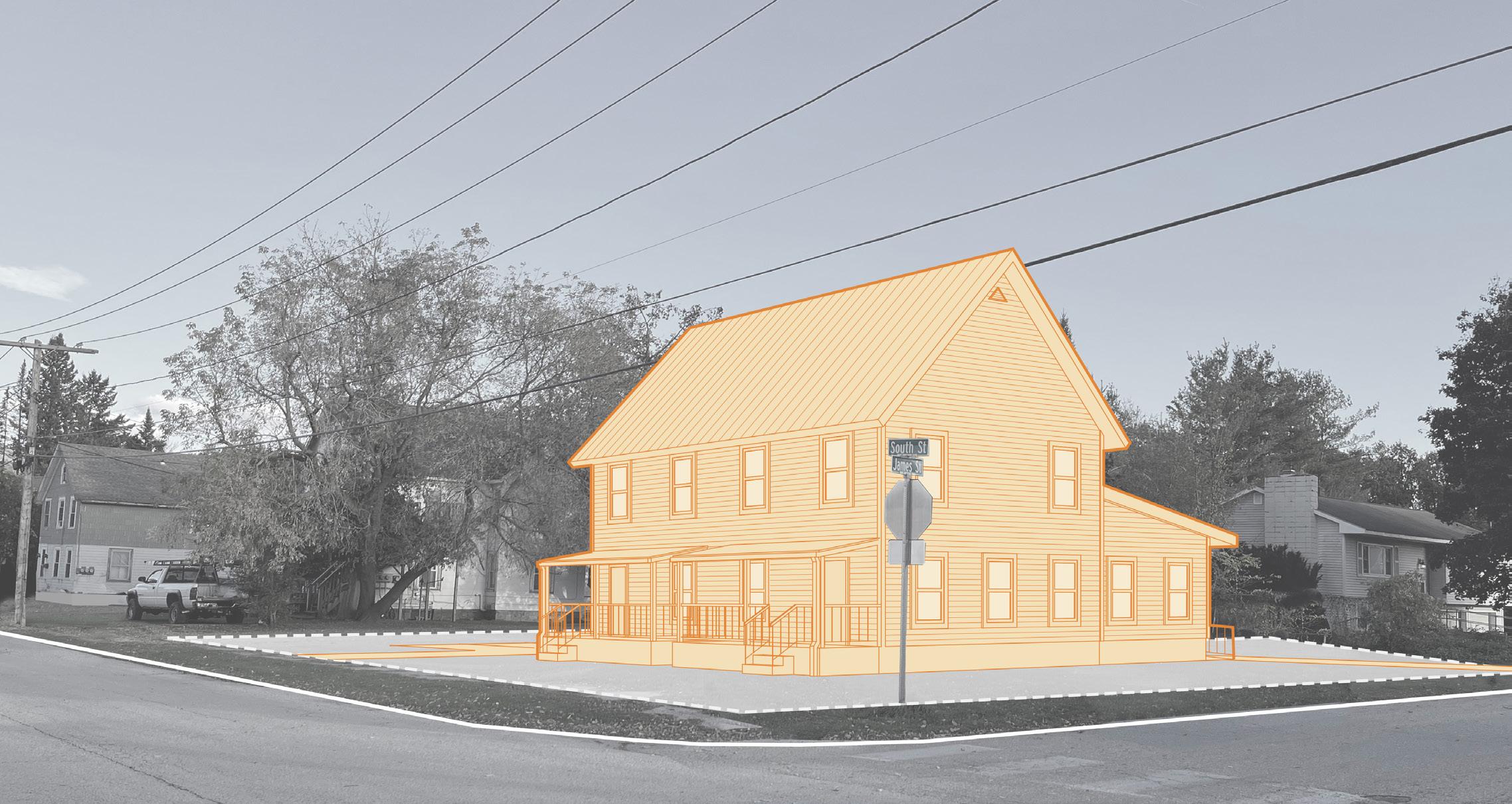
Disclaimer: In most cases, the infill parcel case studies shown in this Toolkit would not be possible under the by-right zoning in their communities. However, the infill test-fits have all been developed to match the norms of existing development patterns and showcase, as well as inspire, the kind of development that would be possible with sensible zoning reforms.
The following maps show existing conditions such as FEMA flood zones and current zoning regulations.
FEMA Flood Hazard Areas Vergennes FEMA data is not digitized and available in GIS, but we are aware of the boundaries of the FEMA
flood zone based on the zoning overlay map shared with the consultant team and shown above.
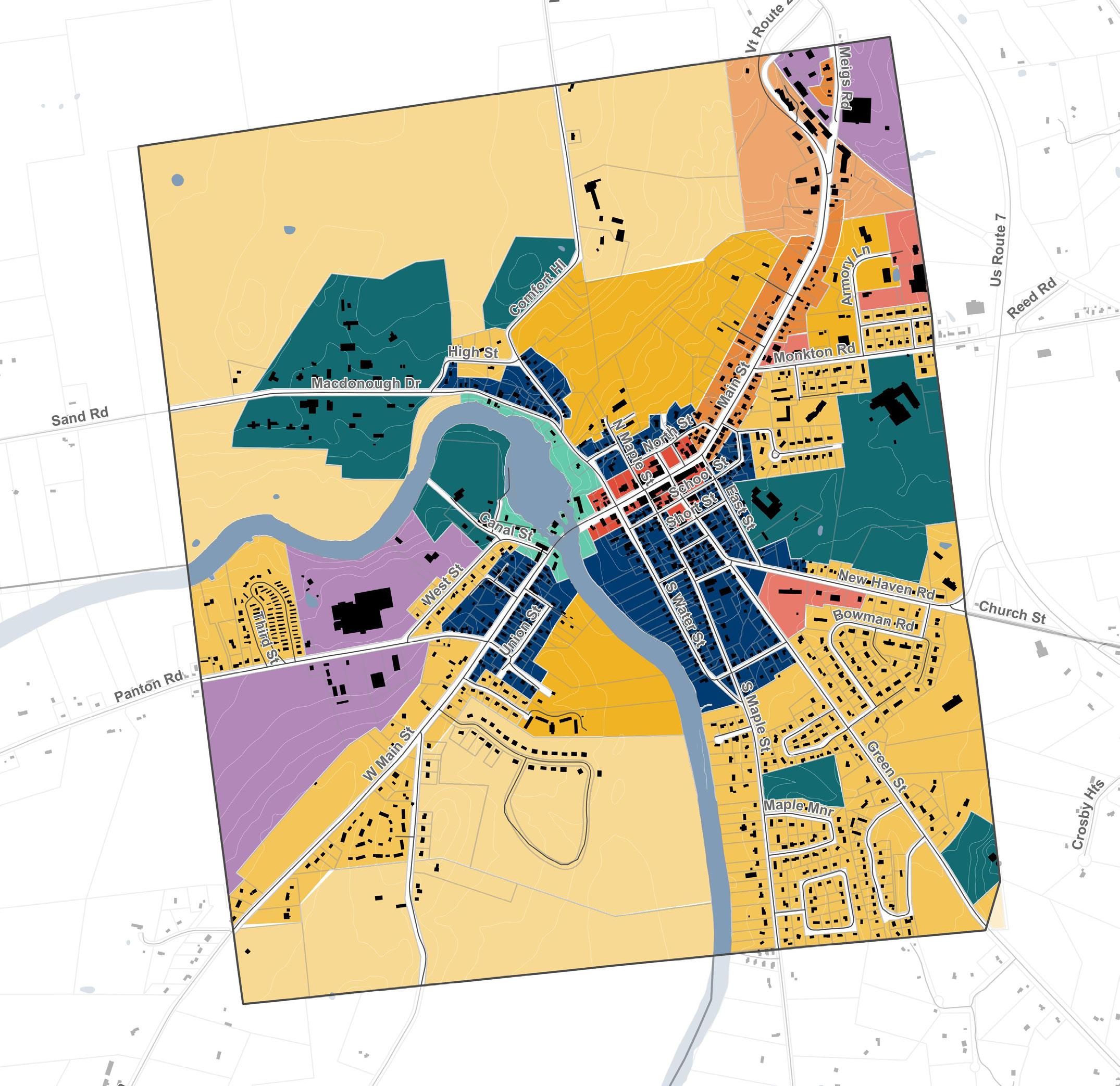
Current Zoning based on digitally available datasets.
The following maps show initial analysis into development constraints and developable area.
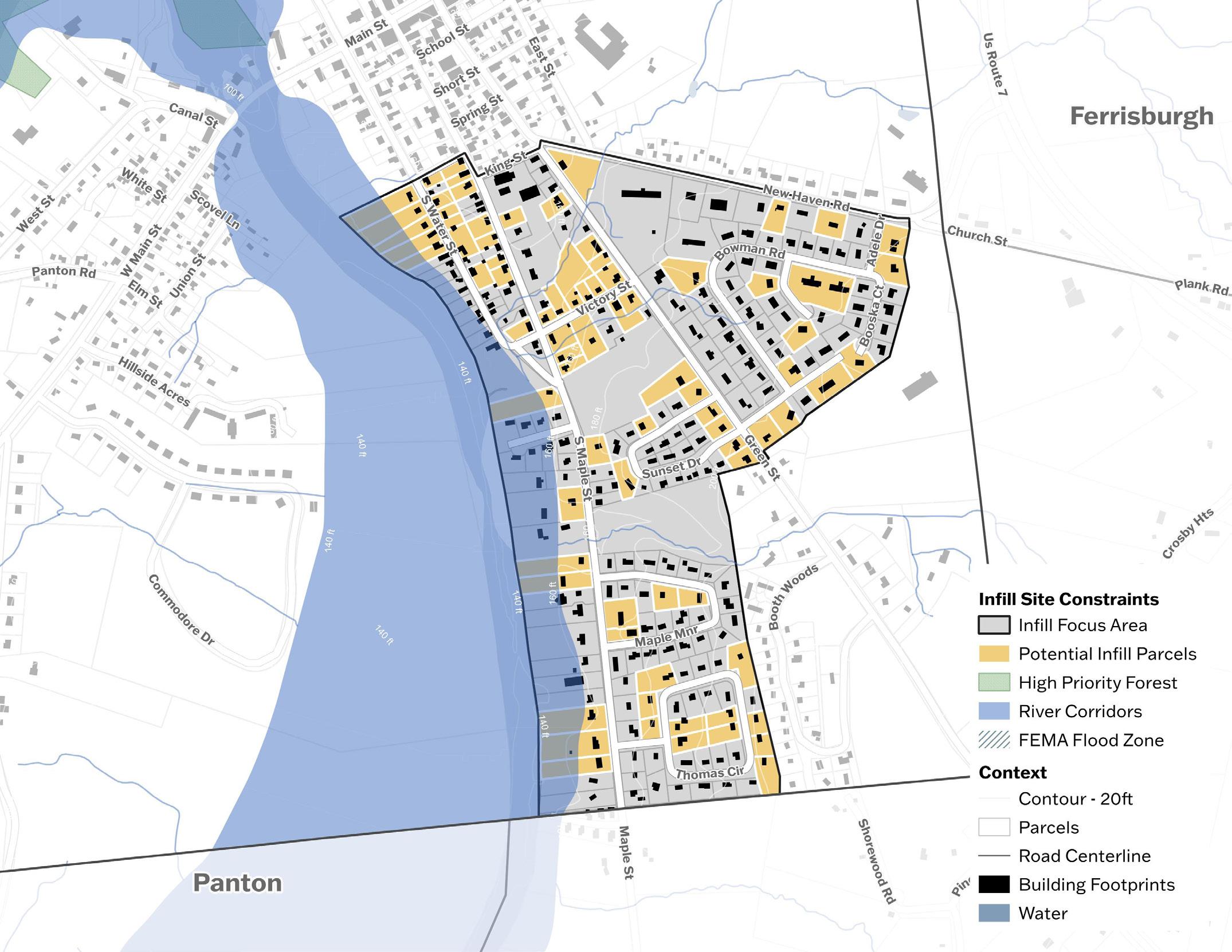
Environmental Constraints Analysis based on digitally available datasets.
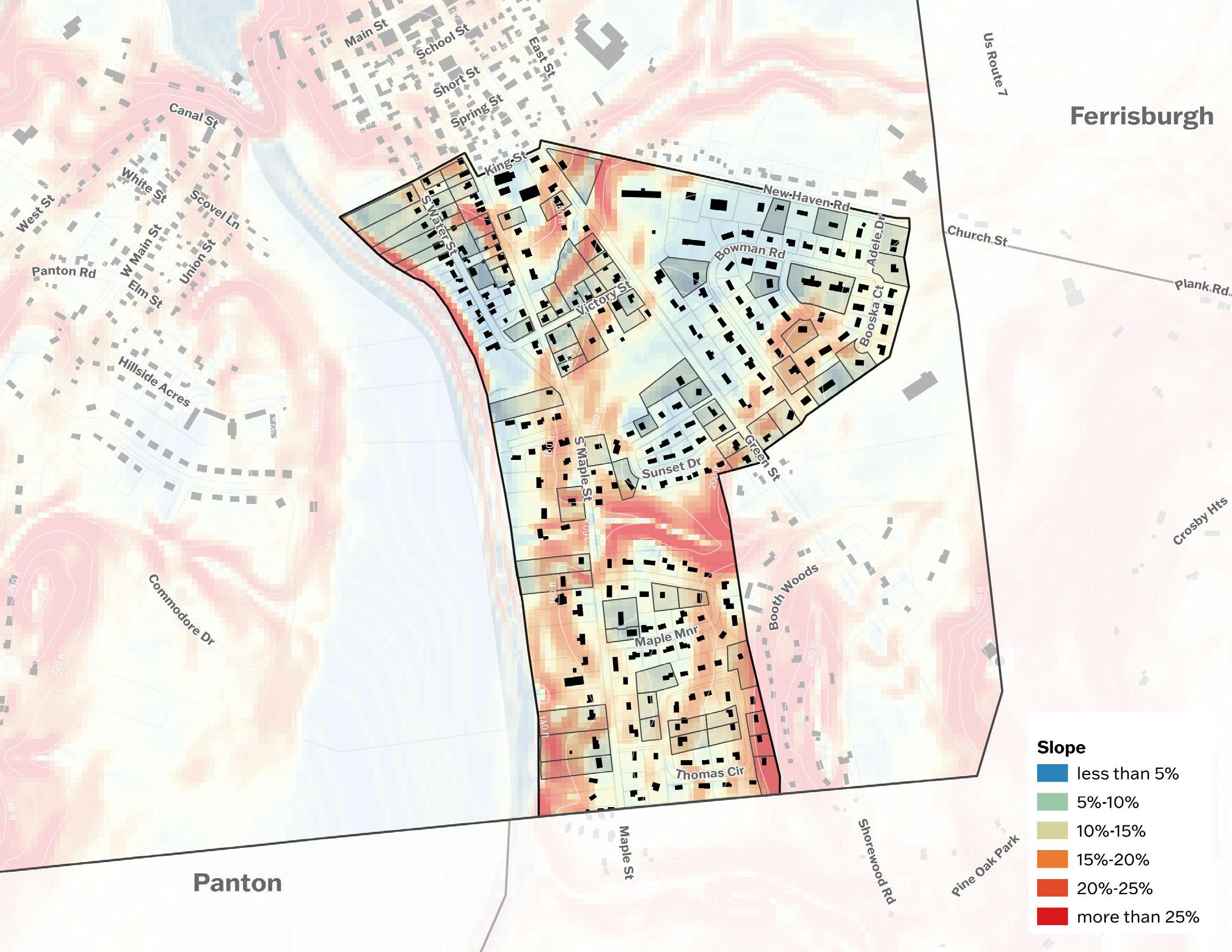
This Infill Focus Area was chosen in part because of the diversity of parcel conditions and their concentration or proximity to one another. It was also selected because it is walkable to the town center and recently experienced some infill development, demonstrating that there is interest in a slightly denser development pattern in this area.
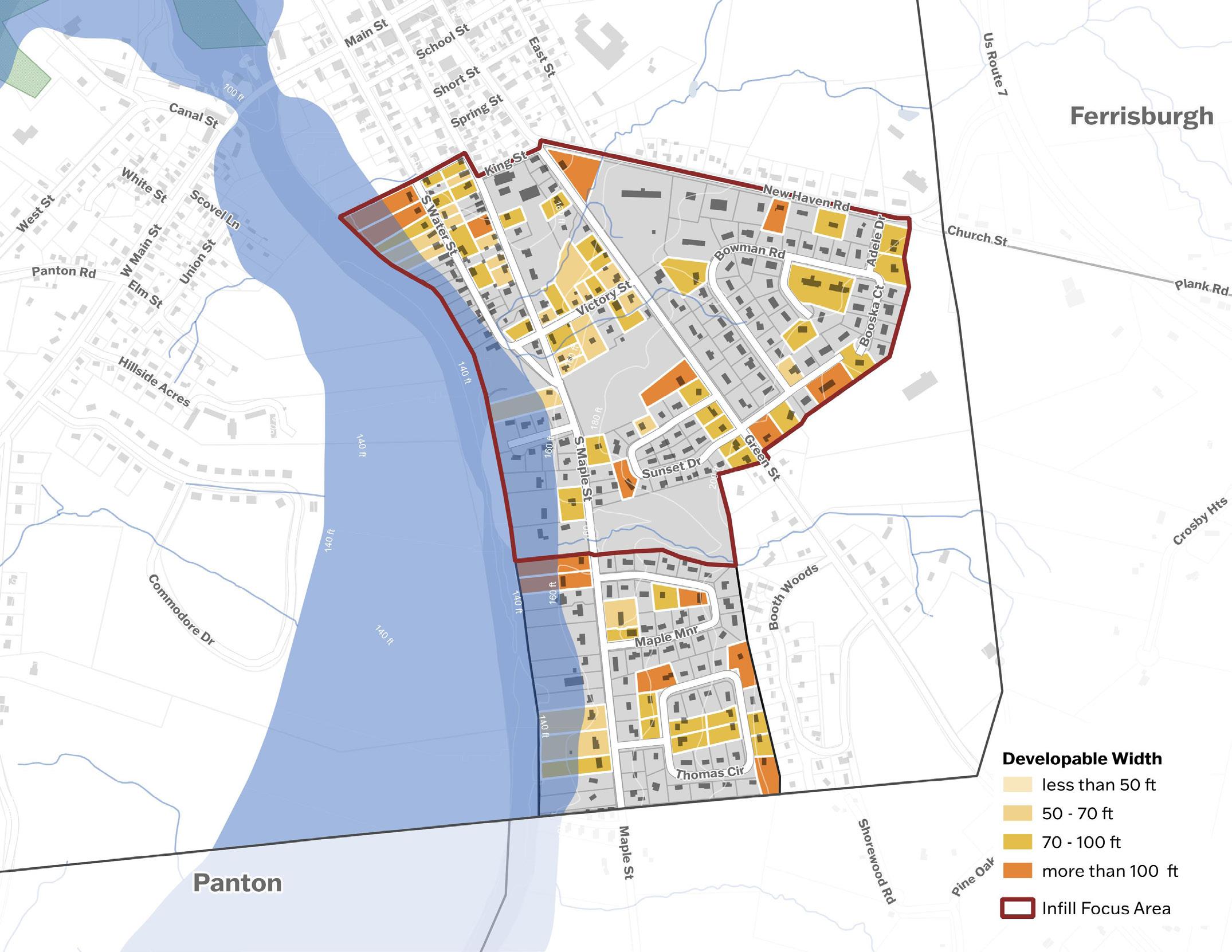
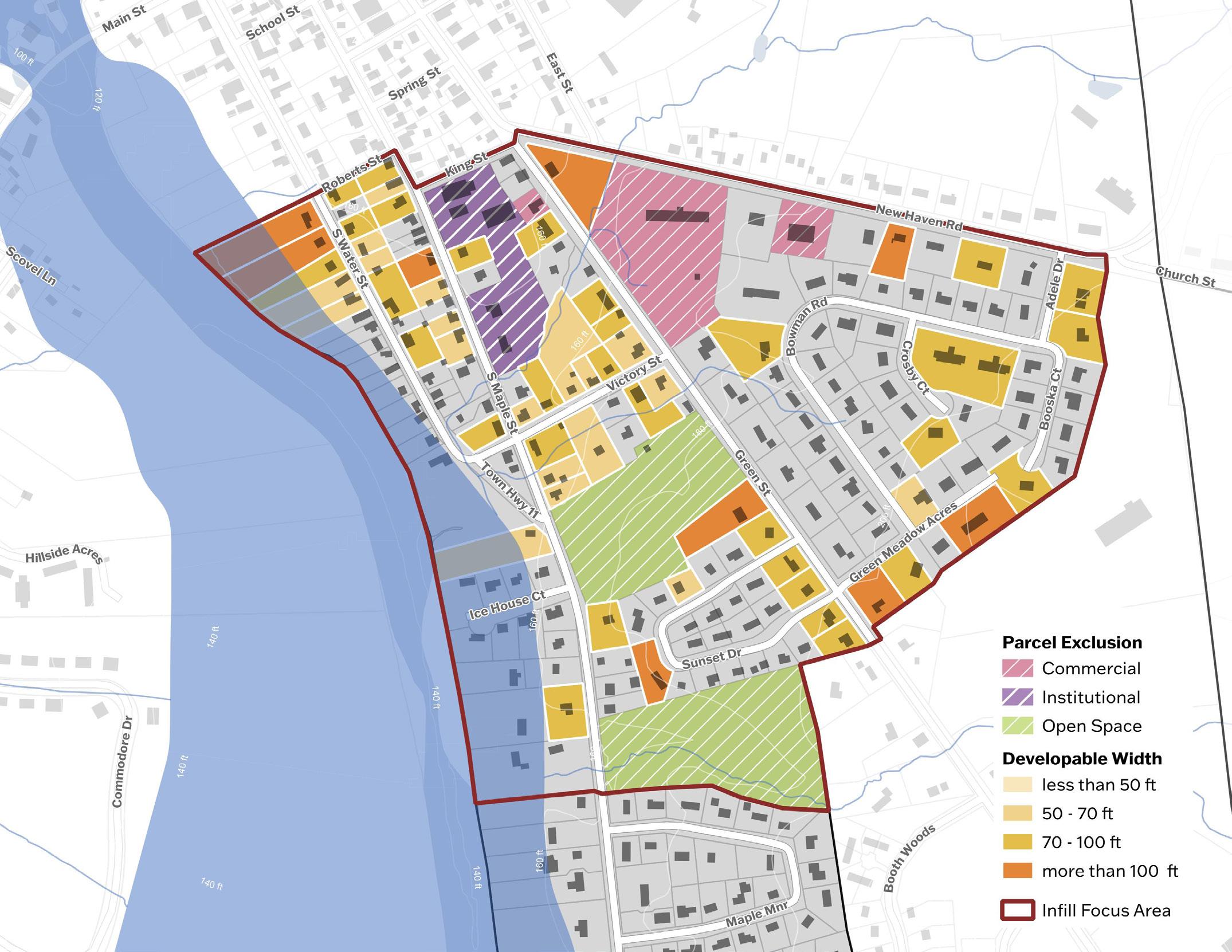
Parcel Address: 20 Victory Street
This site has an unusually deep rear yard and is walking distance to the town center. The couple who owns the property is interested in adapting the primary home to support aging in place with an additional unit to provide supplemental income. The idea is to continue to invest in renovating the existing primary home to allow for single floor living, and then to demolish the existing garage (which is not built to support a second floor) and to replace it with an additional unit integrated with a new garage.
The primary constraint on the site is the steep topography of the ravine surrounding the creek that crosses the rear of the property.
Infrastructure & Regulatory Constraints
Water Access Municipal
Wastewater Access Municipal
Max # of Dwelling Units Allowed n/a (approx. 13 units based on min. lot size per unit)
# Parking Spaces Per Unit 1 space/unit
Setbacks (Front / Side / Rear) 0' / 5' / 5'
Minimum Lot Size 4,000 sf/unit
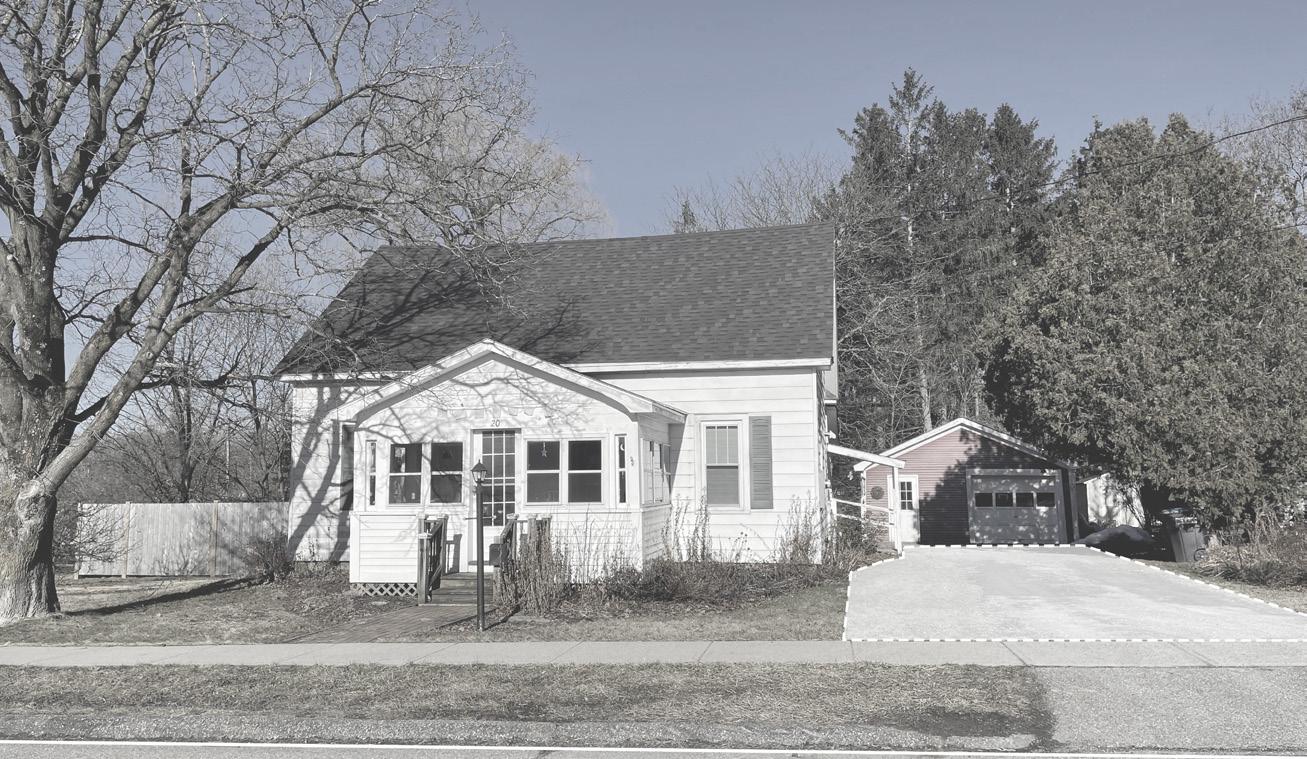
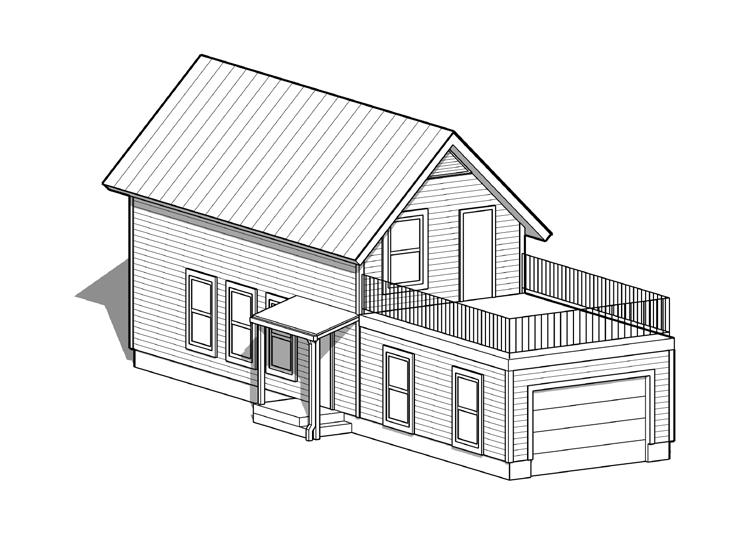
The Garage Single is ideal for adaptations or replacements of existing standalone garage and carriage barns to include an additional unit for rental income or multigenerational living. This typology was chosen for this site for three reasons:
1. Its interior layout accommodates parking on the ground floor, which is an ideal solution for this site and its owners.
2. Its dimensions fit the developable lot area well, fitting in the narrow side yard without building out over steep slopes.
3. The 1.5 story profile and pitched roof matches the context.
Number of Units 1 Unit
Number of Bedrooms per Unit 1 Bedroom
Unit Types (Accessible/Age-Friendly) Conventional
Gross Square Footage per Unit 1,134 sf
Building Footprint 14' × 50'
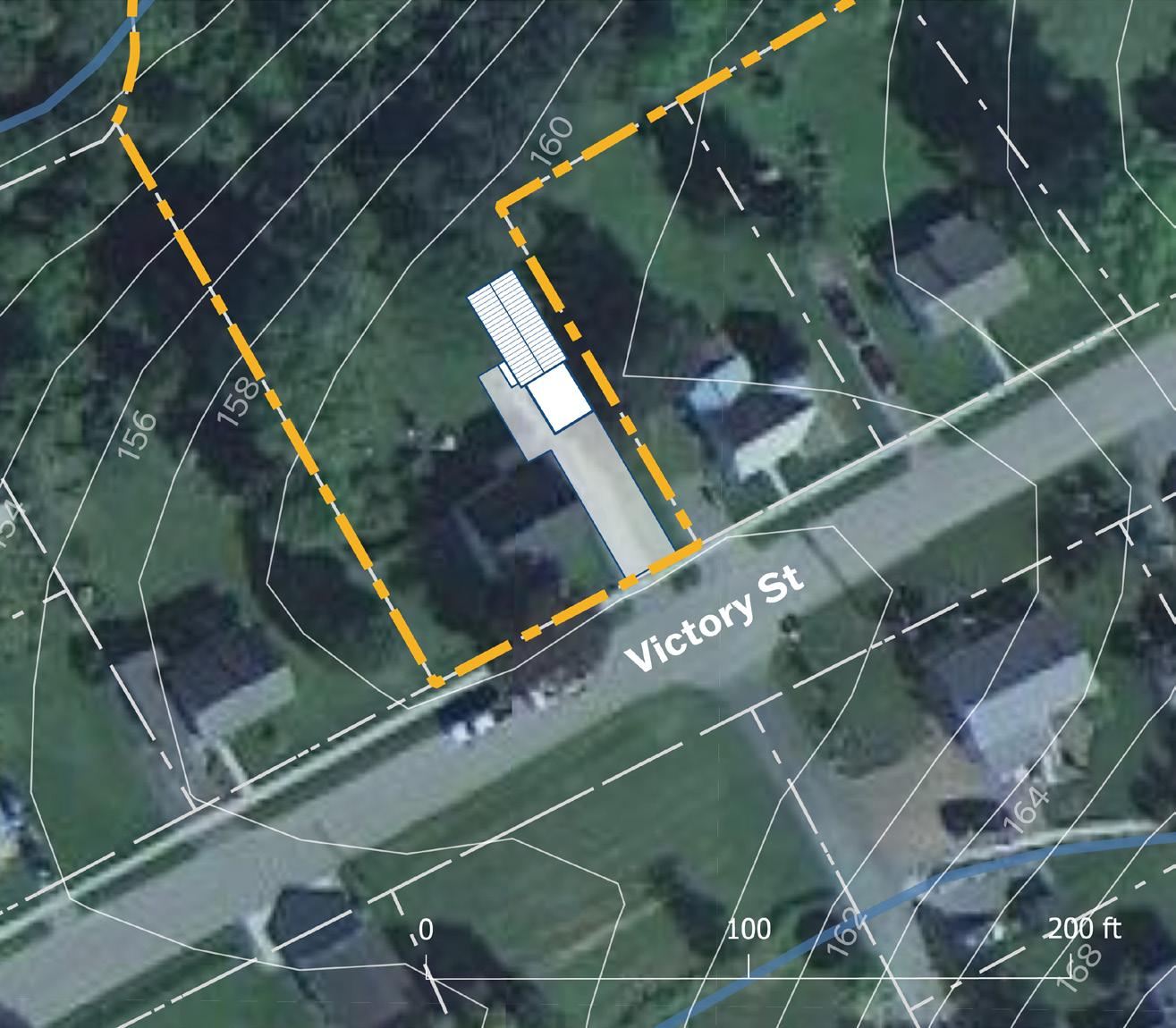
The site plan assumes demolition of the existing garage and rebuilding a garage and additional unit in roughly the same place to avoid steep slopes and create a stagger in the building footprints that helps to retain privacy and an ample usable rear yard for the primary home. To avoid difficult-to-coordinate multiunit tandem parking, the site is configured to allow for a direct entry to the rebuilt garage and a secondary pull-in surface parking spot adjacent to the primary home.
The typology was developed in response to this site and the owner’s desire to retain the option of a garage while adding an additional unit. This typology is tailored to its goals and context by working within the relatively narrow side yard and integrating a garage that makes use of the existing driveway and replicates current conditions while adding an ADU.
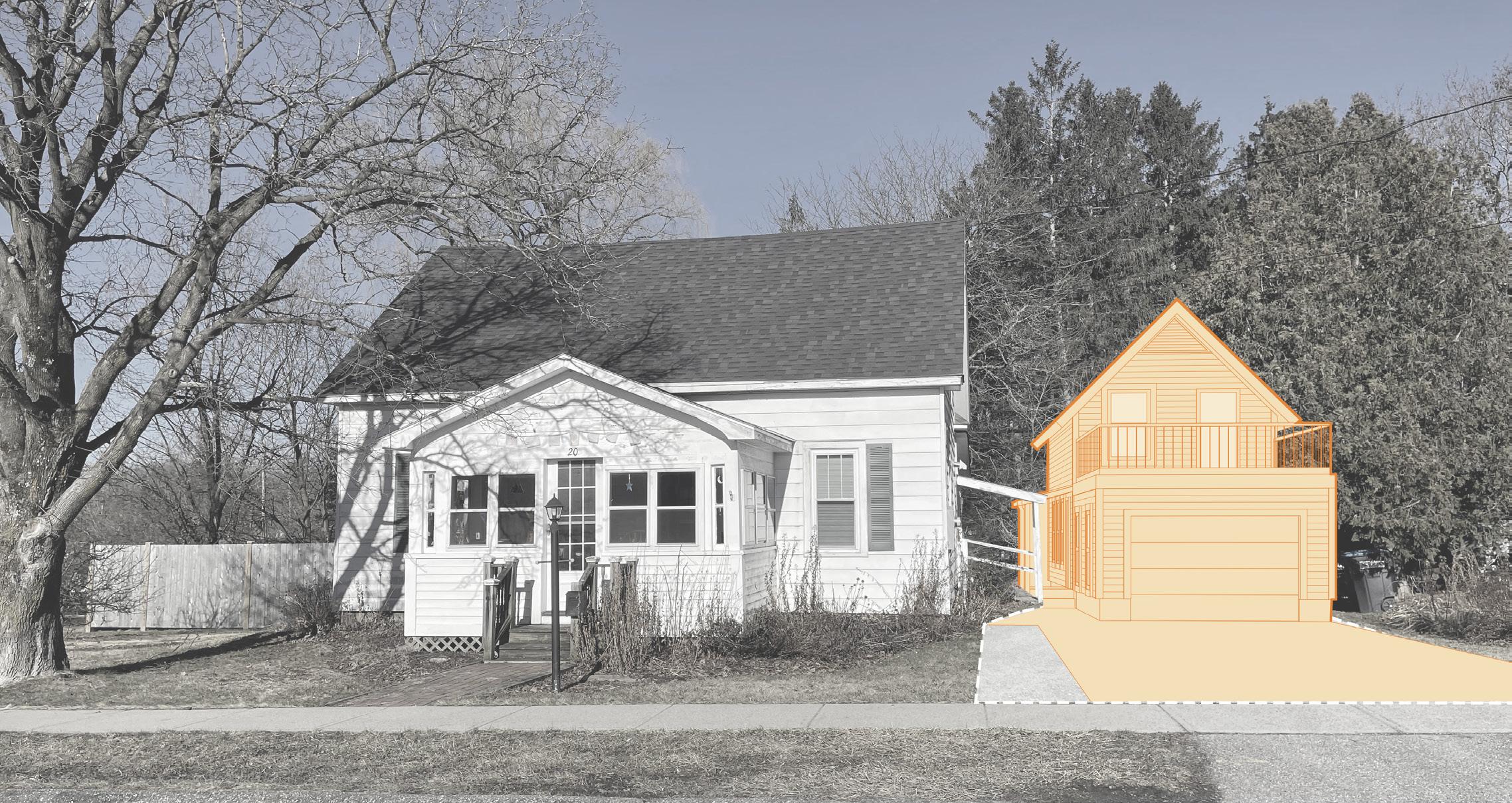
Disclaimer: In most cases, the infill parcel case studies shown in this Toolkit would not be possible under the by-right zoning in their communities. However, the infill test-fits have all been developed to match the norms of existing development patterns and showcase, as well as inspire, the kind of development that would be possible with sensible zoning reforms.
AARP (American Association of Retired Persons):
A nonprofit, nonpartisan organization focused on supporting individuals aged 50 and above in the United States. It provides its members with health insurance options, discounts, resources on retirement and health care, and advocates for senior-related legislative issues. AARP also publishes informational content through its magazine and bulletin, aiming to enhance the quality of life for older Americans.
ACCD (The Agency of Commerce and Community Development):
A Vermont state agency encompasses three major state departments and many programs that serve the Vermont public by enhancing the Vermont business climate, marketing Vermont to tourists and others, and strengthening our communities in a wide variety of ways - economic development, housing, community development, historic preservation, tourism & marketing, and THINK Vermont.
Accessibility and Universal Design:
Concepts and regulations aimed at ensuring that buildings and facilities are accessible to people with disabilities and designed to accommodate a diverse range of users.
Accessory Dwelling Unit (ADU):
A distinct unit that is clearly subordinate to a single-household dwelling and has facilities and provisions for independent living, including sleeping, food preparation, and sanitation.
Acquisition or Land Costs:
Expenses associated with purchasing or obtaining control over land or property for development purposes.
Act 250:
Vermont’s 1970 land use and development law, providing a public, quasi-judicial process to review and manage larger scale subdivisions and developments, ensuring they fit Vermont’s landscape, economy, and community needs by regulating the number of development projects in a given area by the same developer. Act 250
has evolved since the ‘70s and will continue to evolve.
Americans with Disabilities Act (ADA):
Federal law that prohibits discrimination against individuals with disabilities in all areas of public life, including employment, transportation, and public accommodation.
Amortization Table:
A schedule that outlines the repayment of a loan over time, detailing the principal and interest payments for each period.
Architect/Designer:
A professional responsible for designing and planning the physical layout, aesthetics, and functionality of buildings and structures in real estate development.
Architect/Engineer Stamps:
Certification provided by licensed design professionals (architects or engineers) indicating compliance with building codes and safety standards.
Arbitration Clause:
A provision in a contract that stipulates disputes will be resolved through a third party mediator rather than litigation in court.
Assessor Values:
The assessed monetary value of a property for taxation purposes, determined by local government assessors based on factors such as location, size, and condition.
Bookkeeper:
An individual responsible for recording and organizing financial transactions, monitoring cash flow, and ensuring compliance with tax regulations in real estate development projects.
Branding:
The establishment of a unique identity and reputation for a rental property owner, shaped by the landlord’s management style, responsiveness, and tenant interactions.
Building Permit:
Official permission from the local government to begin construction on a new building or structure, typically issued after review and approval of construction plans.
Business Structure:
The legal framework and organizational setup of a business entity, including factors such as ownership, liability, taxation, and management.
By-Right Approach:
Development approach where projects adhere strictly to zoning laws and regulations without requesting waivers or variances.
By-Right Development:
Development that complies with local zoning regulations and does not require special approvals or variances from the local government.
By-Right Provisions:
Provisions within zoning bylaws that allow certain developments to proceed without the need for special permits or variances, as long as they meet specific criteria outlined in the regulations.
Capital Contribution:
The amount of money or assets that members of an LLC agree to contribute to the company’s operations or projects, typically outlined in the operating agreement.
Capital Gains Tax:
A tax imposed on the profit from the sale of an asset, such as real estate or stocks, calculated as the difference between the sale price and the original purchase price.
Capital Stack:
The combination of different sources of funding, including equity and debt, used to finance a real estate development project.
Cash Market vs. Bankable Market:
Distinctions between types of markets based on the ease of financing projects. A cash market may require more self-financing or alternative
financing strategies, while a bankable market is more conducive to obtaining traditional loans.
Cash-out Refinance:
A refinancing option where the borrower takes out a new mortgage for more than the existing mortgage, with the difference being paid to the borrower in cash.
Certificate of Occupancy (CO):
A document issued by a local government agency after a final inspection, indicating that a building complies with relevant building codes and is safe for habitation or occupancy.
Certification:
Formal recognition or qualification granted by an authoritative body, indicating that an individual meets specific standards or requirements in real estate development.
Certification of Permit:
Verification process confirming compliance with permitted development plans and requirements, typically conducted after project completion.
Certified Public Accountant (CPA):
Licensed accounting professional qualified to provide financial advice, tax planning, and compliance services for real estate development ventures.
Chamber of Commerce:
A local organization representing the interests of businesses in a particular area, often involved in community development initiatives.
Civil Engineer:
A professional engineer specializing in the design, construction, and maintenance of infrastructure for development projects, particularly focusing on issues such as topography, hydrology, and soil analysis.
Co-operative Housing:
A form of housing where residents own shares in a cooperative corporation rather than owning individual units, emphasizing community involvement and shared responsibility.
Commercial Loan:
A loan type used for projects not intended for owner occupancy, including real estate development projects with five or more housing units. This type of loan has financing terms that differ from residential loans.
Communication Skills:
The ability to effectively convey ideas, negotiate terms, resolve conflicts, and maintain relationships with stakeholders in real estate development projects.
Comparables:
Properties similar to the one being developed, used for comparison in determining market value.
Condominium / Cohousing:
Ownership structures for multi-unit properties where individual units are owned separately while common areas are shared, with condominiums involving private ownership of individual units and cohousing often involving collaborative design and development.
Conditional Approvals:
Approval granted by local authorities for a development project that may not fully comply with zoning regulations, often subject to specific conditions or requirements.
Conditional Use Review:
Evaluation process for proposed developments that deviate from standard zoning regulations, often involving public hearings and discretionary decision-making by a municipal board.
Constellation of Smaller Projects:
Refers to the collective impact of multiple smallscale development projects within a community, contributing to neighborhood revitalization, diversity, and sustainability.
Construction Delivery:
The method or approach used to manage and execute the construction phase of a development project, including the coordination of resources, labor, and materials.
Construction Financing:
Short-term funds loaned for the construction and stabilization period of a project, often with interest-only payments during this phase.
Construction Funds Release:
The process of disbursing funds for construction activities, which may involve direct payments to contractors or developers based on project milestones and lender requirements.
Construction Loan:
Temporary financing used to cover the costs of constructing a new building or making substantial renovations to an existing property, typically replaced by permanent financing once construction is complete.
Construction Process Roles:
Various responsibilities and roles involved in managing the construction phase of a development project, including project management, coordination, communication, and financial oversight.
Construction Project Manager:
An individual responsible for overseeing the construction process, including managing subcontractors, ensuring compliance with plans and specifications, and coordinating with the developer and other stakeholders. This can also be the developer.
Construction-to-Permanent Loan:
A financing option that seamlessly transitions from construction financing to longer-term permanent financing, often involving a single closing process.
Contingencies:
Additional funds allocated to cover cost overruns or unforeseen circumstances during the project.
Covenants, Conditions, and Restrictions (CC&Rs):
Legal agreements governing the use, maintenance, and development of properties (often within a homeowners’ association or planned community), which may impose limitations or requirements on development activities.
Day-to-Day Management and Control:
The responsibilities and decision-making authority assigned to members of an LLC regarding the operational and strategic aspects of a development project.
Daylighting:
The practice of placing windows, skylights, and other openings to allow natural light into a building, reducing the need for artificial lighting.
Debt:
Borrowed funds with fixed repayment obligations, typically obtained from lenders, which must be repaid with interest, the rate of return for the lender, over a specified period.
Debt Service:
Loan payment amount expressed on both monthly and yearly bases, covering principal and interest.
Debt Service Coverage Ratio (DSCR):
A ratio indicating the proportion of income from a property that covers its debt service obligations, used to assess its financial health and lending risk.
Depreciation:
The gradual decrease in the value of an asset over time, used for tax purposes to allocate the cost of an asset over its useful life.
Deposit-to-Hold Agreement:
An agreement between a landlord and a prospective tenant in which the tenant provides a nonrefundable deposit to hold a rental unit for a specified period, typically before signing the lease agreement.
Design and Historic Preservation Review:
Assessment of proposed developments in special overlay districts to ensure compatibility with neighborhood design and historic preservation guidelines.
Design-Bid-Build:
A traditional construction delivery method where the design phase is completed before contractors bid on the project based on the finalized plans.
Design-Build:
A construction delivery method where the design and construction phases are managed by a single entity or firm, streamlining the process and potentially reducing costs and time.
Design-Build Firm:
A company that offers both architectural design and construction services under a single contract, streamlining the building process for real estate development projects.
Density Bonuses:
Incentives offered by municipalities to encourage developers to include certain features or amenities in their projects, such as affordable housing, in exchange for increased building density or other benefits.
Density Controls:
Regulations that limit the number of residential units allowed per lot or acre, often expressed as dwelling unit density caps or floor area ratios (FAR).
Development Company:
A separate legal entity formed to undertake real estate development projects, often structured as an LLC to limit personal liability and manage financial obligations.
Development Ready Communities:
Communities that have streamlined processes, supportive regulations, and infrastructure conducive to small-scale development and housing initiatives. This also includes having a supportive, housing-positive community ethos.
Discretionary Review:
A formal process through which local authorities evaluate proposed development projects, considering factors such as zoning regulations, community impact, and public feedback.
Distribution of Profits:
The allocation and sharing of profits generated by a development project among its members, as outlined in the operating agreement based on their respective contributions and ownership interests.
Due Diligence:
The process of thoroughly investigating and evaluating a property to assess its suitability for purchase or development, including legal, financial, environmental, and physical considerations.
Earnest Money:
A deposit provided by the buyer to the seller as a sign of good faith when entering into a real estate transaction, typically held in escrow until the completion of the sale.
Efficiency Vermont:
Vermont’s energy efficiency utility, which offers efficiency rebates, technical assistance, and a contractor network.
Efficient Design:
Design strategies aimed at optimizing resource use, minimizing waste, and streamlining construction processes to achieve cost-effective and timely project delivery.
Energy Efficiency Consultant:
Specialist providing expertise and recommendations for improving energy efficiency, sustainability, and environmental performance in real estate development projects.
Energy Efficiency Standards:
Regulations and guidelines aimed at reducing energy consumption and environmental impact in building design and construction.
Environmental Constraints:
Factors related to the natural environment that may affect the feasibility or desirability of developing a property, such as flood risk, streams, steep slopes, wetlands, and protected conservation areas.
Environmental Engineer:
An engineer specialized in assessing and managing environmental impacts, regulations, and compliance related to real estate development projects, particularly focusing on issues such as hazardous materials testing and remediation.
Equitable Housing Ecosystem:
A system that considers the diverse needs and capacities of various stakeholders in the housing market, including developers, homeowners, and community members.
Equity:
Ownership stakes in a project or business, representing a share of ownership, where returns are variable and realized through cash flows, appreciation, or sale proceeds.
Equity Partner/Investor:
Individual or entity providing financial capital or equity investment for real estate development projects in exchange for ownership or profitsharing arrangements.
Escrow:
A financial arrangement where a third party holds and regulates payment of funds or property on behalf of the transacting parties until the completion of a transaction.
Ex Parte Communications:
Restrictions on direct communications between developers and members of zoning or development review boards outside of official proceedings.
Exemptions:
Special provisions or exceptions in zoning/ subdivision regulations that exempt certain types of land divisions or transactions from full review or approval processes.
Exit Mechanism:
Provisions in the operating agreement that define the process and conditions under which a member can exit or withdraw from the LLC, including buyout procedures and dissolution triggers.
Fair Housing Laws:
Federal and state laws prohibiting discrimination in housing and real estate transactions based on factors such as race, color, religion, sex, national origin, disability, or familial status.
Fee Simple:
The most complete form of ownership interest in real estate, where the owner has absolute ownership subject only to government regulations and zoning restrictions.
Feasibility Methods:
Techniques and analyses used to evaluate the financial viability and feasibility of a real estate development project, including assessing market demand, construction costs, and potential returns on investment.
FEMA Zones:
Areas identified by the Federal Emergency Management Agency (FEMA) as having different levels of flood risk, which influence insurance requirements and building regulations.
Financial Feasibility:
The likelihood that a real estate development project will generate sufficient returns to justify its costs and risks, determined through financial analysis and evaluation of market conditions.
Financial Fluency:
Proficiency in understanding and analyzing financial data and concepts, particularly within the context of real estate development and investment.
Financial Incentives:
Monetary or tax incentives offered by governments or organizations to encourage specific behaviors or investments, such as affordable housing development.
First Position:
The primary claim to repayment held by a lender in the event of default, giving them priority over other creditors in seeking repayment from the borrower’s assets.
Flood Resilience and FEMA Zones:
Strategies and regulations aimed at mitigating flood risks and ensuring resilience to flooding events, including FEMA flood zones and statedesignated River Corridors.
Forming a Business:
The process of establishing a legal entity, such as an LLC, including registration, documentation, and compliance with relevant regulations and requirements.
General Contractor:
An entity responsible for overseeing and managing construction activities, subcontractors, and project timelines in real estate development projects.
Geographic Information System (GIS):
A system designed to capture, store, manipulate, analyze, manage, and present spatial or geographic data.
Gross Potential Income (GPI):
The total income generated from the rent or sale of units before accounting for vacancy and operating expenses. A loan specifically designed for commercial purposes, including real estate development projects, usually requiring a separate legal business entity and different financing terms compared to residential loans.
Height Restrictions:
Limits imposed by zoning bylaws on the maximum height of buildings or structures in a particular zone or area.
Historic Preservation:
Regulations and policies aimed at preserving historic buildings, districts, and landmarks, including requirements for design, materials, and approvals from historic preservation boards.
HOME Act 47 (Housing Opportunities Made for Everyone):
Vermont Legislation passed in 2023 aimed at increasing housing density in residential neighborhoods near downtowns and village centers. Link: Vermont HOME Act of 2023, Act 47 (S.100) | Agency of Commerce and Community Development.
Home Equity Line of Credit (HELOC):
A line of credit secured by the equity in the borrower’s home, typically used for home improvements, debt consolidation, or other expenses.
Homeowners Association (HOA):
An organization established by a real estate developer to manage and maintain common areas and amenities in a condominium or planned community, funded by dues collected from property owners.
Housing Crisis:
Describes a situation where there is a shortage of affordable and accessible housing, leading to difficulties for residents in finding suitable and affordable homes.
Impact Fees:
Fees for public improvements or project impacts to municipal services, such as sidewalks, utilities, roads, or parks.
Incremental Development:
Small-scale development projects undertaken by individuals with close ties to the community, focusing on creating additional housing units compatible with the local development patterns. Can also be a longer-term development strategy.
Infrastructure Constraints:
Limitations related to existing infrastructure, such as water and sewer access, and road connectivity, which can impact the feasibility and cost of development.
Infrastructure Permitting:
Process of obtaining permits for water and wastewater infrastructure, often involving coordination with state and local agencies and engineers. May also relate to highway access (ingress/egress).
Integrated Design:
A design approach that considers various factors, including regulatory and construction requirements, from the early stages of project development to ensure a cohesive and efficient design process.
Internal Rate of Return (IRR):
Return metric used to calculate investor returns over time, considering assumptions about future cash flows and project value.
Iteration:
The process of repeating a sequence of steps or actions to refine and improve a design or plan based on feedback and new information.
Jurisdictions:
Legal entities or administrative areas with authority over land use planning, zoning regulations, and permitting processes, typically at the municipal or state level.
Land Gains Tax:
A tax on the gain from the sale or exchange of Vermont land held by the seller(s) for less than six (6) years. The value of the land may include the proceeds from the sale of timber or timber rights.
Land Use Attorney:
A legal professional specializing in land use regulations, zoning laws, and permitting processes related to real estate development projects.
Lender:
A financial institution or entity that provides loans or financing for real estate development projects, typically secured by the property being developed.
Lease-Up Period:
The period after a rental development project receives its Certificate of Occupancy during which units are marketed, rental applications are reviewed, and tenants are vetted and selected.
Lead Paint & Asbestos Abatement:
Procedures for safely removing and handling hazardous materials such as lead-based paint and asbestos during renovation or demolition projects.
Limited Liability Company (LLC):
A legal structure often chosen for development projects due to its liability protections and flexibility in management.
Line Weights and Line Types:
Techniques used in architectural and site planning drawings to differentiate between different elements and highlight important features.
List Price:
The advertised price of a property for sale, typically set by the seller or listing agent based on market conditions and property characteristics.
Liveable Communities:
Communities designed to promote quality of life through features such as walkability, convenient access to amenities, and sustainable development practices.
Loan-to-Cost (LTC):
Maximum loan amount based on the total eligible cost to build the project, often used in new construction financing.
Loan-to-Value (LTV):
The maximum amount that a lender will loan based on the total appraised value of the project, expressed as a percentage.
Lot Coverage:
The percentage of the lot area that can be covered by buildings or impervious surfaces, such as driveways or sidewalks.
Lot Line Adjustment:
Modification of property boundaries to change the size or configuration of existing lots, typically without creating new lots.
Lump Sum Contract:
A contract where the total cost of the project is agreed upon upfront, providing clarity on expenses but potentially limiting flexibility. An alternative to a Time & Materials Contract.
Market Analysis:
The process of evaluating market conditions, trends, and dynamics to understand the demand and supply factors influencing a particular real estate market.
Market Data:
Information and statistics related to local real estate market trends, including property prices, rental rates, vacancy rates, and demand-supply dynamics.
Missing Middle Housing or Middle Housing:
Housing types that provide diverse options, such as duplexes, fourplexes, cottage courts, and multiplexes. These house-scale buildings fit seamlessly into existing residential neighborhoods and support walkability, locallyserving retail, and public transportation options. They provide solutions along a spectrum of affordability to address the mismatch between the available U.S. housing stock and shifting demographics combined with the growing demand for walkability.
Mock Pro Forma Exercises:
Simulated exercises aimed at practicing the use of pro formas, often involving hypothetical scenarios or real-world properties for analysis.
Municipal Highway/Driveway Access Permit:
Authorization required for new or modified access to municipal or state roads or highways, often involving inspection and compliance with local ordinances.
Napkin Sketch:
A rough, informal drawing or sketch used to explore initial design concepts or ideas.
Natural Resources Atlas:
An online geographic information system (GIS) tool provided by the Vermont Agency of Natural Resources, offering information about environmental features, land use, and regulations.
Net Operating Income (NOI):
The income generated from a property after subtracting vacancy and operating expenses, a key metric for assessing profitability.
NIMBYism:
Stands for “Not In My Backyard,” representing resistance or opposition from nearby residents to new development projects in their vicinity.
Nonprofit Affordable Housing Organizations:
Regional entities dedicated to providing affordable housing options to low- and moderate-income individuals and families, often through development, advocacy, and community engagement initiatives.
Oddly Shaped Sites:
Parcels of land with irregular or unconventional shapes, which may present unique development challenges and opportunities compared to standard rectangular or square lots.
Off-Street Parking & Loading:
Regulations specifying the number of parking spaces required for different types of developments, as well as standards for loading areas.
Operating Agreement:
A legal document outlining the internal operations, management structure, financial arrangements, and decision-making processes of an LLC, governing the relationships between its members.
Operating Expenses:
Ongoing costs associated with operating and maintaining a property, including property taxes, insurance, utilities, and maintenance expenses.
Owner-Occupied:
A type of real estate development project where the developer intends to live in the property upon completion, allowing access to residential mortgage loan financing and certain exemptions from business requirements.
Permitting:
The process of obtaining official authorization or approval from governmental authorities to undertake a specific action or project, such as construction or development.
Permitting Authorities:
Governmental bodies responsible for reviewing and granting permits for construction and development projects.
Permitting Process:
The process of obtaining permits from both state and local authorities for various aspects of a development project, including wastewater infrastructure, environmental protection, stormwater management, and historic preservation.
Personal Financial Assessment:
Evaluation of individual financial status, including income, assets, liabilities, creditworthiness, and debt-to-income ratio, relevant to real estate development endeavors.
Personal Guarantees:
A commitment by an individual to take personal responsibility for repaying a loan, often involving the use of personal assets or cash accounts as collateral to secure the loan.
Phase of Development:
Distinct stages or steps in the process of real estate development, typically involving initiation, planning, execution, and completion of projects.
Phases of Small-Scale Development:
Includes Startup, Assessing the Options, and Implementation, each involving considerations related to Place & Design, Team, and Business Models.
Portfolio Loan:
A loan that is originated and held by the lender rather than being sold on the secondary market, providing the lender with greater flexibility in terms and conditions.
Pre-construction Meeting:
A meeting held before the start of construction to discuss project details, clarify expectations, and address any potential issues or concerns.
Permits Fees:
Fees associated with state and local permit applications required for construction projects.
Project LLC:
A limited liability company formed specifically for an individual real estate development project, often involving the development company and equity partners as members.
Project Manager:
An individual responsible for overseeing and coordinating various aspects of the construction project, including scheduling, budgeting, and communication between stakeholders.
Project Viability:
The likelihood of a real estate development project achieving its objectives and generating the expected returns based on market
conditions, product demand, and other relevant factors.
Property Manager:
A person or entity responsible for the day-to-day operations, maintenance, and tenant relations of properties in real estate development portfolios.
Pro Forma:
A financial statement that outlines the projected income and expenses of a real estate development project over time. It helps developers assess the financial feasibility of their projects and make informed decisions.
Pro Forma Types:
Different approaches to creating financial projections for real estate development projects, including parallel pro formas and static pro formas.
Program:
The description of the development project, including its purpose, size, zoning requirements, and intended financing structure.
Public Agency:
Governmental or quasi-governmental organizations responsible for providing public services or regulating specific sectors, sometimes involved in real estate development projects for social or community benefit purposes.
Purchase Option Agreement:
A contractual arrangement allowing a developer to secure a property for potential purchase while finalizing financing and approvals.
Rapidly Test Ideas:
The process of quickly assessing the viability of different project concepts using parallel pro formas, facilitating initial decision-making and idea validation.
Real Estate Attorney:
A legal professional specializing in real estate law, focused on the transactions and contracts involved in a transaction.
Real Estate Brokers/Agents:
Licensed professionals who facilitate real estate transactions by representing buyers, sellers, or both, and providing services such as property listing, marketing, and negotiation.
Real Estate Development:
The process of creating, renovating, or improving buildings and communities for various purposes, including residential, commercial, mixed-use, and industrial projects.
Real Estate Sales Process:
The series of steps involved in marketing, negotiating, and completing the sale of real estate properties, including single-household building types, condominiums, and cooperative housing units.
Regional Office of the Drinking Water and Groundwater Protection Division:
A Vermont governmental agency within the Department of Environmental Conservation responsible for overseeing and regulating water resources and infrastructure at the regional level.
Regulatory Constraints:
Legal requirements and standards imposed by government agencies that must be adhered to during the design and construction phases of a project.
Regulatory Landscapes:
Understanding the regulatory frameworks at the state and local levels, including zoning bylaws, building regulations, and compliance requirements.
Regulatory Parameters:
Refers to the rules and regulations set by local authorities that govern development activities, including zoning, building codes, and land use regulations.
Renovation Loan:
A type of loan designed to finance the costs associated with renovating or improving an existing property, distinct from traditional mortgages.
Rental Housing Safety Code Inspection:
Evaluation of rental properties to ensure compliance with health and safety standards outlined in municipal ordinances and state regulations.
Residential Mortgage Loan:
A loan type applicable to 1-4 home buildings where one unit will be owner-occupied, offering favorable terms such as lower down payments.
Resilience:
The ability of a system or community to withstand and recover from disruptions, such as natural disasters or economic downturns.
Return-on-Community (ROC):
A holistic approach to measuring the success of development projects that considers long-term community benefits beyond financial returns.
Risk Assessment:
The process of identifying, analyzing, and evaluating potential risks associated with a project or activity to mitigate negative outcomes.
Risk Management:
Strategies and techniques aimed at identifying, assessing, and mitigating risks associated with real estate development projects.
Scale:
The ratio of the size of an object or drawing to its actual size, commonly used in architectural and engineering drawings to ensure accurate representation.
Scattered-Site Approach:
A development strategy involving the identification and development of multiple small, dispersed properties for housing, rather than concentrating development in a single area.
Second Position:
The secondary claim to repayment held by a lender or investor after the lender in first position, indicating their place in the line of creditors seeking repayment in the event of default.
Security Deposits:
Funds provided by tenants to landlords to cover potential damages to the rental property, which are typically refundable upon the tenant’s departure if the property is left in good condition.
Seller-Financing:
A real estate transaction arrangement in which the seller provides financing to the buyer, often in the form of a loan, to facilitate the purchase of the property.
Self-Assessment:
Evaluation of one’s own strengths, weaknesses, skills, and resources in the context of real estate development.
Setbacks:
The minimum distance required by zoning regulations between the building or structure and the property line.
Site Layout Concept:
A rough preliminary plan illustrating the spatial arrangement of buildings, infrastructure, and open spaces on a development site.
Site Plan Review:
A formal review process conducted by local authorities to ensure that proposed developments comply with local regulations and ordinances, including considerations such as site layout, building placement, and landscaping.
Site Subdivision:
The process of dividing a larger piece of land into smaller parcels or lots, typically for the purpose of development or sale.
Small-Scale Development:
Small-scale development refers to modestsized real estate projects, typically involving the construction or renovation of a limited number of residential or commercial units on compact parcels of land within specific neighborhoods or communities.
Soft Costs:
Non-construction expenses such as permits, design, legal, and financing, covering various project-related services and fees.
State Water/Wastewater Permit:
Official approval for new or modified connections to public potable water and sewer systems and private wells and wastewater treatment systems, including certification by licensed professionals.
Stormwater Management:
Techniques and systems used to control and mitigate the impact of stormwater runoff from development sites. Stormwater management is often addressed through low-impact development regulations, which appear in many zoning bylaws, especially in Municipal Separate Storm Sewer System (MS4) communities.
Subdivision Application:
A formal request submitted to local planning authorities to divide land into smaller lots or parcels, including detailed plans, surveys, and other required documentation.
Subdivision Regulations:
Local ordinances or laws that govern the subdivision of land, including requirements for lot size, dimensions, infrastructure, and environmental considerations.
Supportive Zoning:
Zoning regulations that align with or facilitate the intended development vision for a property, as opposed to zoning that may pose obstacles or require additional approvals.
Survey Plat:
A detailed map created by a licensed surveyor that delineates property boundaries, features, and dimensions, used in land subdivision and development planning.
Tax Implications:
Considerations regarding the tax treatment of profits from real estate development projects, including differences in tax rates for short-term capital gains versus long-term capital gains, and the benefits of depreciation for long-term rental properties.
Technical Expertise:
Specialized knowledge and skills required for various aspects of real estate development, such as financial analysis, construction management, zoning regulations, and project planning.
Telescoping House:
A traditional New England architectural style characterized by incremental expansions of a dwelling over time, often resulting in a series of additions to the original structure. Also referred to as “Big House, Little House, Back House, Barn.”
Tenant Appreciation:
Gestures or actions by landlords to show gratitude and build positive relationships with tenants, such as small gifts, accommodations, or responsiveness to tenant needs.
Tenant Selection Process:
The process by which landlords evaluate rental inquiries, conduct interviews, and select tenants based on specific criteria and legal considerations.
Time & Materials Contract:
A contract where costs are reimbursed to the contractor based on actual time and materials used, offering flexibility but potentially leading to higher overall costs. An alternative to a Lump Sum Contract.
Turnover:
The process of tenants leaving a rental property and new tenants moving in, which may involve lease renewals, vacancies, and property maintenance.
Underlying Infrastructure:
The foundational systems and structures that support the functioning of a community or development project, including water supply, sewage treatment, roads, and telecommunications.
Underutilized Parcels:
Land or properties that are not fully utilized or optimized for their potential use, often due to factors such as zoning restrictions and built characteristics.
Unified Bylaws:
A comprehensive set of regulations that combines zoning and subdivision requirements into a single document, often used by municipalities to streamline land use planning and development processes.
Underwriting:
The process by which lenders assess the creditworthiness of loan applicants and evaluate the risk associated with financing a particular project or investment.
Utility Connections:
The process of connecting new developments to essential utilities such as water, sewer, electricity, and gas, including coordination with utility providers and compliance with standards and regulations.
Vermont Housing Finance Agency:
A state agency that provides financing and other support to affordable housing initiatives in Vermont.
Vernacular Design:
Architectural style or design approach that reflects local traditions, materials, and building techniques, often developed over time in response to climate, culture, and available resources.
Vernacular Features:
Design elements or architectural styles that are characteristic of a particular region or locality, often reflecting local traditions, materials, and building techniques.
Warranty Deed:
A legal document that guarantees the validity of the title to a property and outlines the rights and responsibilities of the buyer and seller in a real estate transaction.
Wastewater System and Potable Water Supply Permit:
Official authorization from regulatory agencies, such as the State Agency of Natural Resources, for the installation and operation of sewage and water systems on subdivided land.
Water and Wastewater Infrastructure:
The systems and infrastructure for providing clean water and managing wastewater in communities, including considerations for municipal systems, permits, and environmental impact.
Working Capital:
Funds maintained by a developer to cover dayto-day operational expenses during project construction.
Zoning Bylaws:
Local regulations that dictate land use, building types, and development standards within a community. Other common names with the same meaning include zoning ordinance, zoning code, or zoning.
Zoning Compliance:
Adherence to local zoning regulations and ordinances governing land use, density, setbacks, and other development criteria.
Zoning Permit:
Authorization from local authorities allowing the use of a property in accordance with zoning regulations, typically evaluating compliance with land use and development standards.
203k Loan: A Federal Housing Administration 203(k) Rehabilitation Mortgage Loan
A/E: Architecture/Engineering
ADA: Americans with Disabilities Act
ADU(s): Accessory Dwelling Unit(s)
ANR: Agency of Natural Resources
ARPA: American Rescue Plan Act
CC&Rs: Covenants, Conditions, and Restrictions
CM: Construction Manager
CO: Certificate of Occupancy
CPA: Certified Public Accountant
CofO: Certificate of Occupancy
DEC: Department of Environmental Conservation
DHCD: Department of Housing & Community Development
DFS: Division of Fire Safety
DHP: Division of Historic Preservation
DSCR: Debt Service Coverage Ratio
FEMA: Federal Emergency Management Agency
FHA: Federal Housing Administration
FIRM: Flood Insurance Rate Map
FO: Financial Officer
GC: General Contractor
GIS: Geographic Information System
GPI: Gross Potential Income
HELOC: Home Equity Line of Credit
HOME Act: Housing Opportunities Made for Everyone Act (also referred to as Act 47)
HOA: Homeowners’ Association
HUD: Department of Housing and Urban Development
IRR: Internal Rate of Return
IRS: Internal Revenue Service
IRC: Inspection, Repair and Cleaning Practices (Vermont-specific)
LTC: Loan-to-Cost
LTV: Loan-to-Value
LLC: Limited Liability Company
MMH: Missing Middle Housing
NOI: Net Operating Income
NIMBY: Not In My Back Yard
OpEx: Operating Expenses
PM: Project Manager
PRS: Project Review Sheet
RBES: Residential Building Energy Standards
ROC: Return-on-Community
ROI: Return-on-Investment
SBA: Small Business Administration
USDA RD: United States Department of Agriculture Rural Development
VA: Department of Veterans Affairs
VHFA: Vermont Housing Finance Agency
VHRA: Vermont Homebuilders and Remodelers Association
VSA: Vermont Statutes Annotated
VT: Vermont
WW Permit: Wastewater System and Potable Water Supply Permit
ZA: Zoning Administrator
Once you have reviewed Chapter 5 to gain a framework for understanding and using pro formas, you can use the sample pro formas on the Homes for All website to familiarize yourself with the impact of changes to different parameters, and as the starting point to build a customized pro forma for the project(s) you have in mind.
Remember that these pro formas are not a substitute for your own local research and that the pre-filled inputs are only a starting point. You should explore real market data and customize these inputs based on your local research. The VHFA resources described in Chapter 5 under The Role of Market Analysis are a good place to start your research.
The pro forma inputs associated with this workbook make no claims to being accurate in any market, only educational to see how the pieces work individually and together. All assumptions should be verified individually by the small-scale developer themselves.
Visit https://accd.vermont.gov/homesforall to download and begin working with the following sample pro formas:
• Parallel Rental Pro Forma
• For-Sale Static Pro Forma
• For-Rent Static Pro Forma
Screenshot previews of the primary workbook tabs for each of the three sample pro formas are provided on the following pages. They each have customized supporting workbook tabs that record relevant inputs, outputs, and contextual information.
The housing crisis has become so pervasive that a lot more people might want to become developers, or consider themselves a potential developer, than before.
Amy Tomasso
Vermont Department of Housing and Community Development
Vermont Homes for All Toolkit
A ‘Design & Do’ Toolkit for Small-scale Home Builders, Investors, and Community Leaders
Website: accd.vermont.gov/homesforall Spring 2024