UTC | College of Arts & Sciences | Ampersand Magazine | Winter 2026
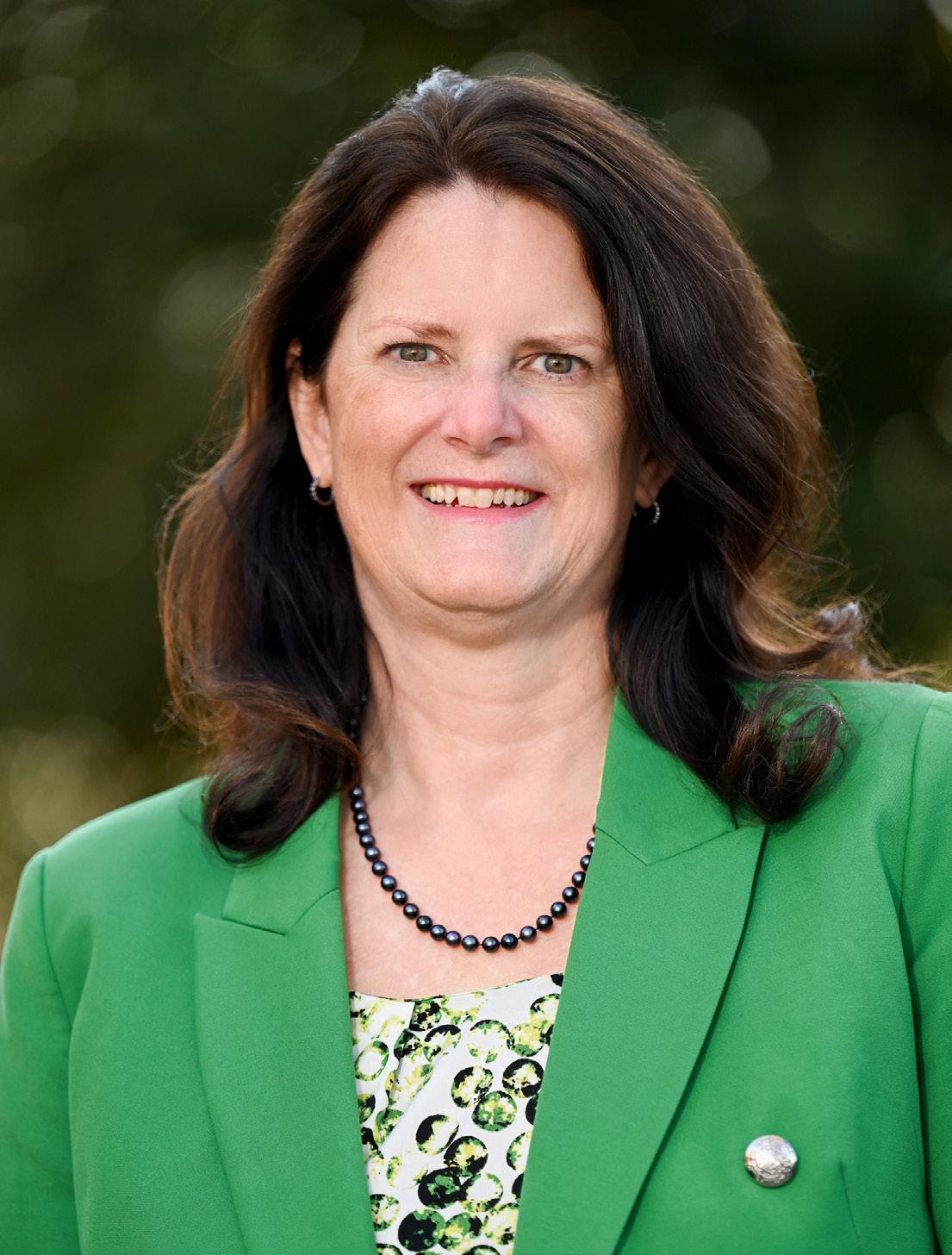
Dean Dr. Pamela Riggs-Gelasco
Editor Dr. Nikolasa Tejero
Managing Editor
Dr. Anthony Cepak
Writers Eli Dibrell
Ella Millard
Art Director
Jaelyn Araque
Graphic Designers
Ashlyn Attaway
LaShay Crabtree
Blessing Czeczuga
Grace Leun
Katie Scrip
Photographers
Angela Foster
Clara Paulson
Contributors
Chuck Wasserstrom
Peyton Schultz
Bethany Cothran
Matt McAllister
Carter Graham
Michael C. Watson
Amy Donahue
Editoral Assistant
Mallori Crocker
a message from the dean
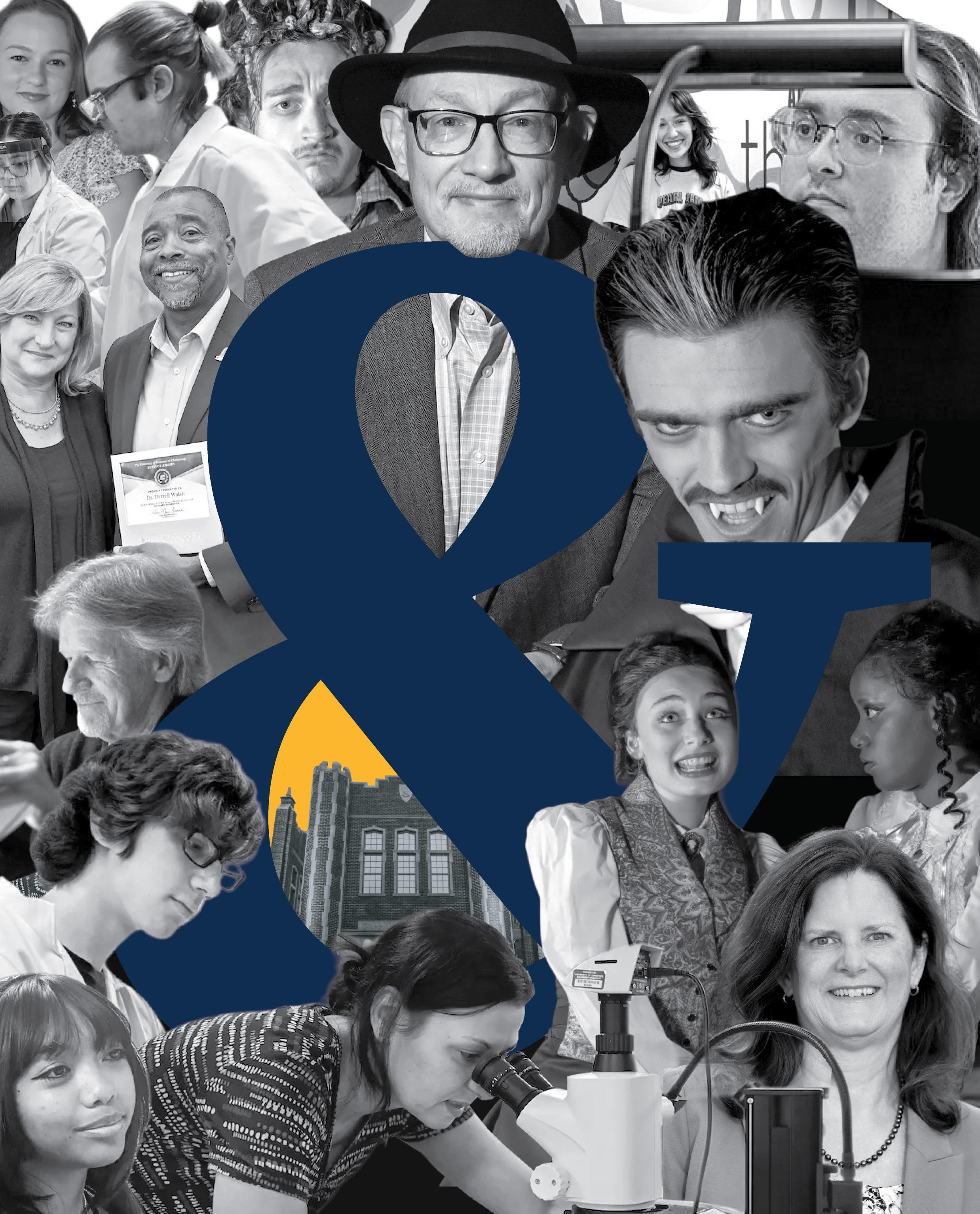
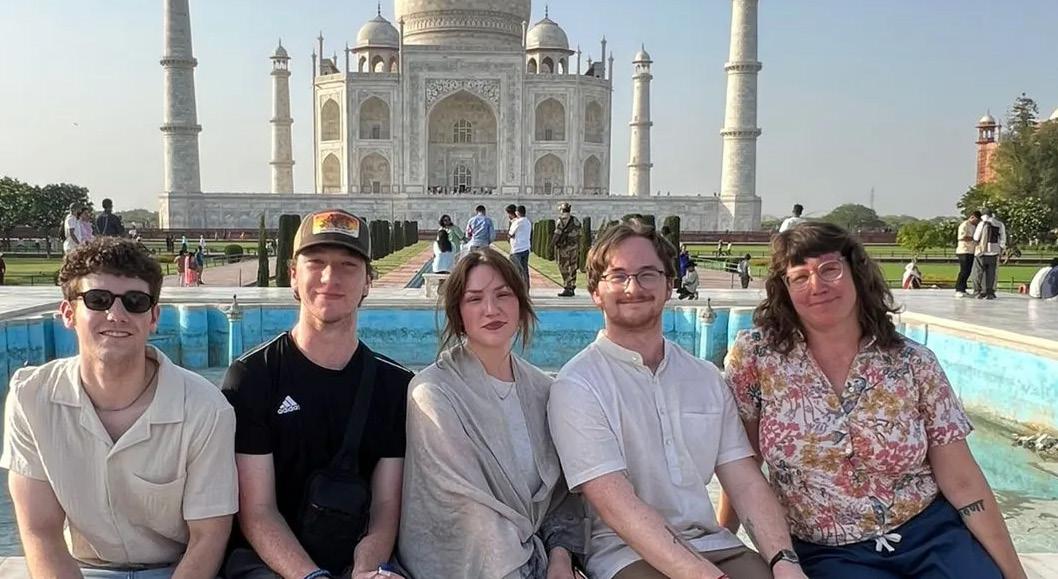
Welcome to our newly rebranded Alumni Magazine for the College of Arts and Sciences at UTC, Ampersand. Why Ampersand? The new title reflects our focus of offering students more than just high-quality courses and labs. We want to “add the &” to their experience at UTC by layering high impact experiences and practices onto their academic studies. You will read about some examples of that in this newsletter, including the construction of the newsletter itself. New this year, Dr. Tony Cepak in the Department of Communication is leading an interdisciplinary group of students from Art and Communication in the development of this first issue of Ampersand. Students are learning the professional skills of how to build promotional materials, from researching and writing stories, to designing graphics, selecting photography, and laying out the design. What you are reading today is the product of student creativity and careful mentorship by a member of the faculty. We see other examples of that in this issue. For example, Dr. Meredith Barbee in Chemistry created a Polymer Chemistry course where students collaborate with local industry chemists at Woodbridge Foam Corporation to work directly on problems relevant to the company. Students in Physics formed an Astronomy Club and are directly involved in delivering outreach activities for the community at “Star Parties” at UTC’s historic Clarence T. Jones Observatory. You’ll read about Dr. Jaclyn Michael’s (Philosophy and Religion) study abroad trip to India and Dr. Katelyn Hancock’s (Criminal Justice) work with Camp Hope America in Chattanooga with a graduate student studying recovery from trauma. You will read about faculty who have thriving research programs who are involving their students in every aspect of their work, including field work in the Outer Banks with Dr. Francesca Leasi and in Chile with Dr. Loren Hayes, both from Biology, Geology and Environmental Science. You will read about the newest academic program in CAS, Environmental Studies, a program intentionally designed with community engagement embedded into the curriculum and courses. All throughout this first issue of Ampersand, you will discover the ways students are adding to their experience here and how our dedicated faculty enrich the academic experience by adding the “&”. We are grateful for our readers’ support of the programs and students in the College of Arts and Sciences. Thank you!
Dr. Pamela Riggs-Gelasco
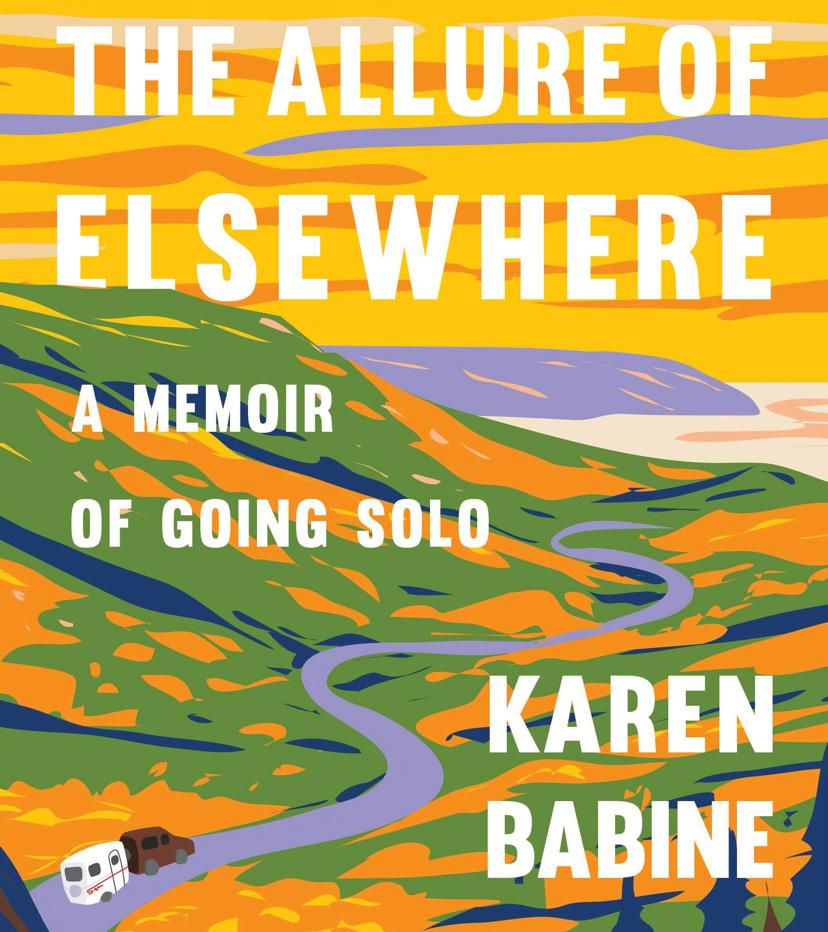
Karen Babine
UC Foundation Associate Professor (Department of English), “The Allure of Elsewhere: A Memoir of Going Solo.”
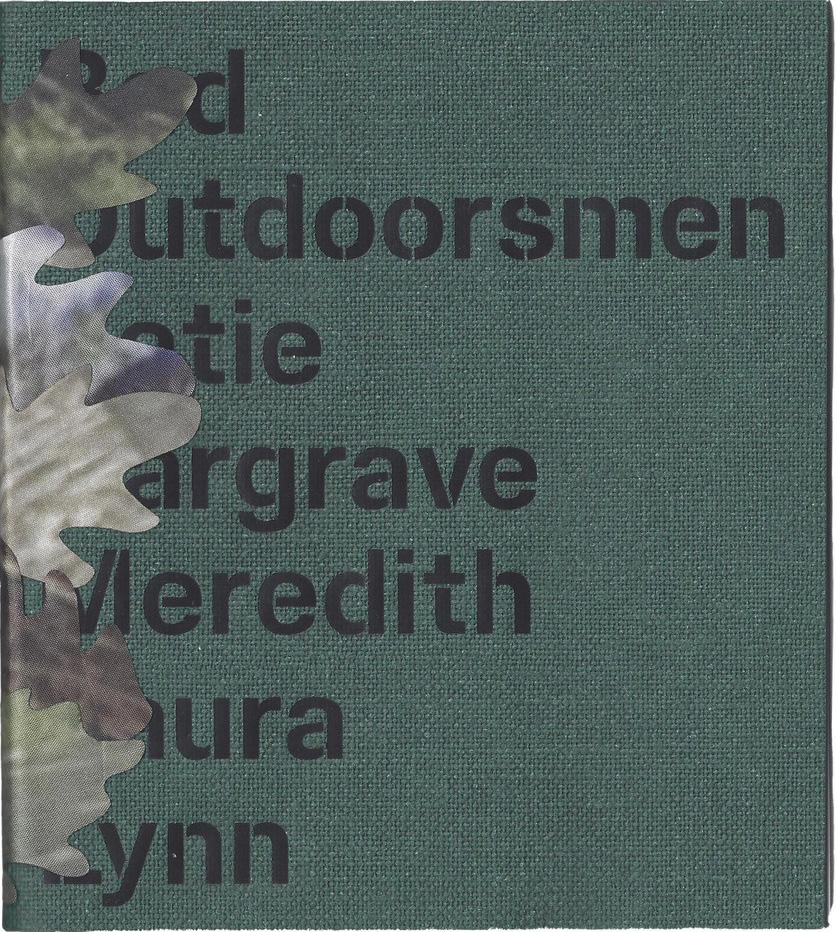
Katie Hargrave
UC Foundation Professor (Department of Art), “Bad Outdoorsmen.”
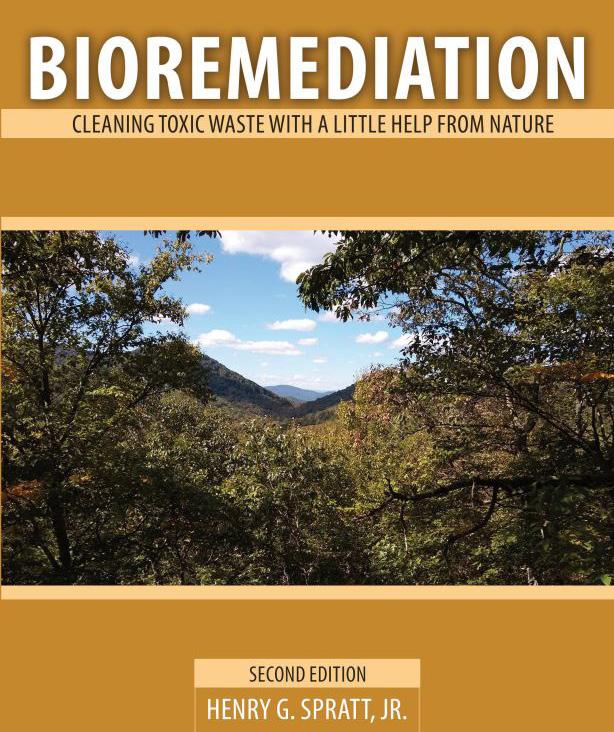
Henry G. Spratt, Jr.
Professor (Department of Biology, Geology, and Environmental Science), “Bioremeditation: Cleaning Toxic Waste with a Little Help from Nature, Second Edition.”
Faculty Books
RACE AND THE LAW IN THE UNITED STATES
A
Contemporary Perspective
Michelle D. Deardorff
Michelle D. Deardorff
Adolph S. Ochs Professor of Government (Department of Political Science and Public Service), “Race and the law in the United States: a contemporary perspective.”
Marcia Noe
Professor (Department of English), “The Innocent Midwest: Culture, Region, and Identity, 1793-1930.”
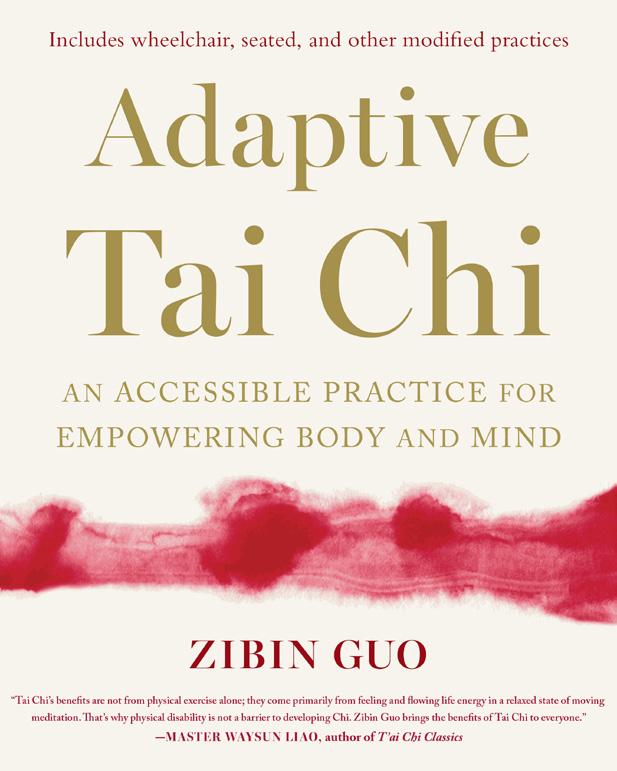
Zibin Guo
UC Foundation Professor of Medical Anthropology (Department of Sociology, Anthropology, and Geography), “Adaptive Tai Chi: An Accessible Practice for Empoweing Body and Mind.”
AMeRICaN
The
History of
A FOOD Phenomenon
MarK A. JOhNSON
Mark Johnson
Assistant Professor (Department of History), “American Bacon: The History of a Food Phenomenon.”
honors & accolades Faculty Kudos
Congratulations to Dr. Marcus Mauldin, of PSPS, and Erica Holmes Trujillo, of The Hub, were selected to participate in the University of Tennessee System Leadership Institute held in February in Chattanooga. The Institute is a systemwide leadership development program that recognizes faculty and staff who have demonstrated exemplary leadership skills and the potential for even greater service to higher education in Tennessee.
This year, three faculty members within the College of Arts and sciences were awarded the Guerry Professorship. They are Dr. John Swanson (History), Dr. Loren Hayes (BGE), and Dr. Nagwan Zahry (Communication). Congratulations!
Dr. DeAnna Beasley (BGE) is leading an initiative to raise awareness about the bioretention garden at Warner Park. Supported by a partnership with the city of Chattanooga and the Chattanooga Zoo and funded by Tennessee American water, her project invites visitors to contribute to a time-lapse of the garden’s evolution through the Chronolog photo monitoring system.
Kudos to Zibin Guo (SCJS) for representing UTC on the world stage as a speaker at the 2024 Global Martial Arts Forum in Chungju, Republic of Korea. His presentation highlighted his work developing and implementing wheelchair and other inclusive Tai Chi Chuan programs.
Randall Coleman (Music) finished his two years of service as President of the National Band Association and now serves as Immediate Past President of that organization.
Dr. Rich Walker (BGE) received a Ralph E. Powe Junior Faculty Enhancement Award from ORAU. He was one of this year’s 36 awardees selected from 164 applications from 91 member institutions.
Anne Swedberg (Theatre) earned her certification as a Patsy Rodenburg Associate Teacher.
Dr. Loren Hayes (BGE) gave a research seminar titled, “How to build a productive research program or how I stopped milking votes and came to worry ALL the time,” at Georgia Gwinnett College.
Edward Brudney (History) was featured in the podcast “Real Dictators” as a historical expert throughout the season on Jorge Rafael Videla, the primary leader of Argentina’s most recent military dictatorship (1976-1983). He was also invited to be the co-host of a Spanish-language podcast called “Historias” that helps disseminate English-language scholarship to primarily Latin American audiences through Spanish-language interviews with authors and scholars. The first episode featuring Dr. Brudney was released in January, with future episodes scheduled to appear monthly throughout the Spring semester.
Kudos to Dr. Katelyn Hancock (SCJS) for her creativity in designing “Pouring for a Purpose” in her course Ethics in Criminal Justice. Her students are confronting complex ethical issues in policing, courts and corrections through the lens of art. Hancock has also been named the recipient of the Ken Peak Innovations in Teaching Award by the Academy of Criminal Justice Sciences. The award recognizes faculty members for innovative and effective teaching methods that enhance learning experiences and have the potential to be replicated by other educators.
Dr. Chad Harriss’ (Communication) students organized a concert at Cherry Street Tavern. The assignment was part of their AMFY course that explored the local music scene. Harriss also represented UTC on the organization committee for the International Bluegrass Music Association’s World of Bluegrass held in Chattanooga.
Christina Vogel (Art) was one of 50 artists featured at 50 x 50 exhibition at the Emporium Center in downtown Knoxville as part of the Arts & Culture Alliance 50th anniversary.
Photo by Angela Foster
Student Kudos
Congratulations to Amy Johnson (ESC graduate student), who was awarded a $1,000 grant from Tennessee Wildlife Resources Foundation and a $625 scholarship from Ruby Falls. Kudos to her advisor, Dr. David Aborn (BGE), for his mentorship in this process!
Five undergraduates from various disciplines within our college attended the Posters at the Capitol event in April at the state capitol through the office of Undergraduate Research and Creative Endeavor (URaCE). They are Landon Boone (CHPH), Barbara Higgs (CHPH), Angelica Lance (BGE), Alyssa Matthews (CHPH), Anna Sherrill (BGE). Congratulations to the students, and kudos to their professors for teaching and mentoring these future scientists.
Congratulations to Michelle “Mimi” White (MS Environmental Science student) who has published a paper titled “Enhancing the Record of Hurricane Storm Surge Sedimentation on East Texas Gulf Coast Marshes: Variations in Sediment Distribution in the Right-Front Quadrant of Hurricane Ike” with Dr. Joshua Hodge (Sociology, Anthropology, and Geography) in Papers in Applied Geography.
Communication students, Addison Middleton and Kambria Ichikawa, talked about their experience developing the campaign for WTCI’s “Be My Neighbor Day” for PBS Kids on LocalNews3. Their work was part of the Comm Department’s new student PR agency led by professors Dr. Anthony Cepak and David Norman.
Lillian Walters (Communication) was named in the Ayers Foundation Trust “Top 25 to Watch” list.
Kudos to Kristopher Ware (Psychology student) who placed third and received the award for most outstanding research for his project, “Pilot Study: A Qualitative Study Exploring the Impact of Early Childhood Experiences on the Mental Health of Young Black Men,” at the Black Doctoral Network Conference in Los Angeles.
Meaghan Hibbs, recent graduate from Music, will be earning their Master of Music in Trumpet Performance from the Royal College of Music in London. Hibbs studied with Professor Dr. Erika Schafer (Music).
Congratulations to Andrew Gaddis, a student in Criminal Justice, for receiving the Secretary’s Meritorious Service Silver Medal at the U.S. Department of Homeland Security Secretary’s Award Ceremony in October.
Photo by Angela Foster
out about &
Painting with a purpose: Student’s murals reshape The Hub’s look and feel
By Chuck Wasserstrom
Sydney Zwart, a senior integrated studies major from Gallatin, Tennessee, came to the University of Tennessee at Chattanooga as a transfer student last year.
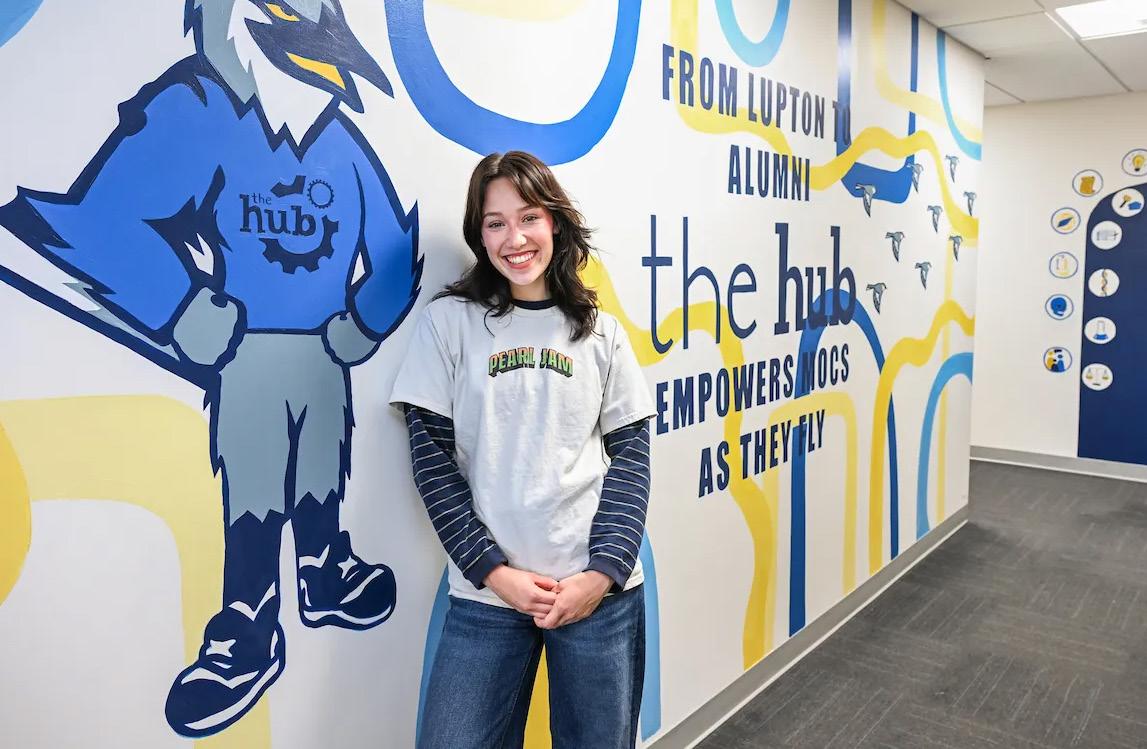
Today, her work is one of the first things students see when they walk into The Hub—the College of Arts and Sciences Student Success Center.
Zwart recently painted two murals for the space at the suggestion of Student Success Center Director Erica Holmes Trujillo.
“Sydney is an artist and works for us as a student employee,” Holmes Trujillo recalled. “We were chatting one day, just talking about how white and institutional our walls looked, and I said, ‘Sydney, can you make a mural for us?’
UTC senior Sydney Zwart has painted two murals that adorn the walls in The Hub in Lupton Hall. Photo by Angela Foster.
community
“She designed this entirely on her own— both the mural and the selfie wall.”
Zwart laughed as she recalled that initial conversation.
“I had been watching ‘Severance’ and I was like, this feels like the hallways in ‘Severance.’ They’re very white and just kind of sterile,” she said.
Had she ever done a mural before?
“This was my first time; I had never done a mural, but now I’ve done two of them,” she said.
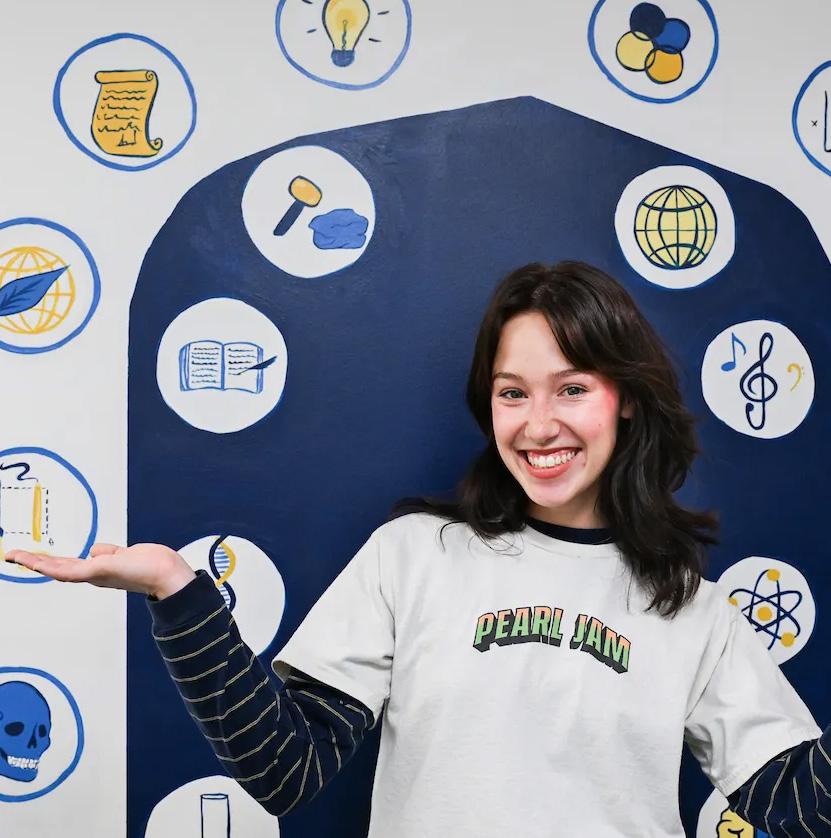
Zwart spent the summer designing and painting the first mural, which features Scrappy, and said it took about two months to complete. The second—a selfie wall listing majors around an archway so students can take photos pointing to their field—followed later and took a single day to finish.
With the murals complete, Zwart thought back on how she ended up at UTC.
“When I was in middle school, I did a project on my future career and UTC was the school that I chose. I then kind of forgot about it,” she said.
After finishing an associate degree in fine/studio art at Volunteer State Community College, she wanted to leave her small town and branch out while staying close enough to home.
UTC is approximately 150 miles from her hometown.
“I had friends in Chattanooga,” she said, “and I had visited people that I went to high school with who came here for college. I just fell in love with Chattanooga. I wanted to go to UTC.”
Finding her footing took time, Zwart said, but The Hub changed that.
“It took a little bit, but definitely working in The Hub helped,” she said. “I was able to connect with a lot of people through
here. I’ve got a really good support system here.”
She now plays that role for others. Holmes Trujillo described Zwart as a peer advisor who “will help these students navigate everything from choosing classes to class registration to tips and tricks with Canvas.”
“I really enjoy talking to students because I feel like they don’t realize how many opportunities they have to take different classes,” Zwart said. “I feel like students appreciate someone who’s on their level.”
She has also been able to talk to students about the advantages of being an integrated studies major. UTC’s Bachelor of Integrated Studies is designed for transfer, traditional and adult students
who want to build a pathway to a degree using completed credit and new coursework shaped around a goal. From a student perspective, Zwart said the program works.
“It helped me to really focus my education on what I wanted to do—art and education— not art education,” she said. “You’re able to craft your course schedule the way that benefits you in your future career.”
Zwart said coming to UTC changed what she thought was possible.
“It’s opened my eyes to so many different career options that I didn’t even know I could pursue,” she said. “I want to be an art teacher and I didn’t even know that was an option.”
Sydney Zwart’s selfie wall is an archway with icons of UTC majors painted around it that students can point to.
A new chapter in experiential learning at UTC
By Matt McAllister
The University of Tennessee at Chattanooga’s Office of Communications and Marketing has created “Method” magazine for the College of Arts and Sciences in past years.
This year, the magazine took a different approach.
“Dean (Pamela) Riggs-Gelasco and Dr. (Nikolasa) Tejero approached me last fall with the idea of designing a class around producing this magazine,” said Assistant Professor Anthony Cepak.
Cepak has an impressive background in production from his time at Michigan State University, where he was responsible for producing “New Educator” magazine for the College of Education, “The Communicator” magazine for the College of Communications Arts and Sciences, and “Stay Tuned”—a monthly programming guide for WKAR, the PBS and NPR affiliate for Michigan State.
Beyond its immediate impact, “Ampersand” represents a growing shift in higher education toward project-based learning
that bridges creativity and professionalism.
”
“Our initial steps in the class were a complete rebranding. The students all put together concepts and proposals and then presented them, which is the new look and feel that we’re looking for,” Cepak said.
“The magazine used to be called ‘Method.’ Now it’s called ‘Ampersand,’ which is a homage to the College of Arts and Sciences.”
The goal of this new modern magazine is to allow students to work hands-on in the field of production.
“Experiential learning is a real priority for the University, and it’s certainly a priority in our college,” said Cepak when explaining the importance of this course. “I always jump at the opportunity to give our students experiential learning opportunities. I think that students learn best by doing. I can stand up there and talk all day, but if they’re actually doing something and working together, that’s how they’re going to learn best.”
Dean Pamela Riggs-Gelasco played a role in the transition of this course, allowing students to participate in a project of this caliber.
“The goal of this whole project was to convert this need that the college has; we want to advertise the good things that are happening in the College of Arts and Sciences to external constituents, whether they’re graduates, alumni, or business leaders,” Riggs-Gelasco said.
The goal was not to give the University students a magazine to publish, but to let these students work together on a big project.
“Students can list this experience as a career skill in teamwork. That’s something that companies everywhere say that they want—employees who know how to work in a team,” RiggsGelasco said.
“We want to be equitable in the way that we share the love, we distribute the spotlights,” said Associate Dean and Professor Nikolasa Tejero. “Even though we cannot cover everything that’s happening, we want to make sure that we are being thoughtful about how we represent the many facets of our college.”
Tejero was another part of the administration who wanted to bring this magazine production team to life.
“There is the pressure of recruiting students who are at a sufficiently developed level in their skill development to be able to produce a professional-level, polished product,” she said.
Tejero and Cepak recruited a number of students to create this project. Students across the communication, English and art departments were chosen to create this masterpiece.
“This is a great opportunity for our students, but this is also an investment in the reputation of the college,” Tejero said. “The quality of the product matters. This is not just a lab; this is real life. This production will be mailed to close to 500 people associated with UTC.
“The stakes are high, and it adds a layer of risk, but with that risk comes excitement and a possible impactful outcome that’s linked to it.”
Tejero said having the opportunity to work on a professional product and to be able to show that to a potential employer is “really valuable.”
“Here’s evidence, here’s an artifact of what I have produced in the past,” she said. “This competitive edge that comes with this opportunity for our students is really on par with the kind of educational experience that we have challenged ourselves to provide across the board in our college.”
This professional product being created was also a fun way for these students to connect with each other.
“I’ve loved being a part of this team. Being in this class has been such a special experience,” said Blessing Czeczuga, a senior at UTC working as a designer. “It is exciting to know that our work will get to exist in the world beyond the classroom. I’m grateful for this opportunity and experience.”
“I think this opportunity is something that should stick around for as long as it can,” said Eli Dibrell, a senior communication major who wrote for the magazine. “It gives students the opportunity and freedom to create something, and at the end, you have a finished product, which I think is extremely valuable; it’s a masterpiece that’s yours and the rest of your classmates that you get to share with others.”
“I decided to take this class because I thought it was a great opportunity to get real-world experience, work with a team, and contribute to the campus,” said senior studio art major Ashlyn Attaway.
“I get to work alongside other creatives, and we ultimately manage ourselves because Dr. C puts so much trust in us. It’s nice to be trusted with something that feels so big as a student, and I know I’ll leave this class feeling proud of something,” senior studio art major LaShay Crabtree said. “Overall, a magazine design class with Dr. C overseeing it felt too good to pass up. I’m enjoying my time sharing ideas and working more intimately with a group of students on something that feels important.”
“My experience working on the magazine so far has been fun and exciting. I have enjoyed the collaboration that has gone into the rebranding of the magazine and learning about the technical aspects of the design process,” said studio art senior Grace Leun.
Tejero said the course will be available to students again next year.
“What would I suggest to students who would like to be considered in the future? Put yourself in the right place at the right time. Get connected with the classes that build skills in that direction, whether it is in the graphic design area, in photography, or in journalism,” she said.
“We encourage students to go see your professor, go to office hours, that kind of engagement with instructors, with faculty, with staff, really yields extraordinary results. It could be one of these extraordinary opportunities for a student, but they also have to take the risk.”
Beyond its immediate impact, “Ampersand” represents a growing shift in higher education toward project-based learning that bridges creativity and professionalism. By giving students ownership over every stage of production—from concept to publication—the course helps them understand real-world workflows, deadlines and collaboration.
“Ampersand” is creating a culture in which students graduate not only with knowledge but also with tangible experience. As UTC continues to emphasize innovation and interdisciplinary work, projects like this magazine prove that academic learning and professional readiness can thrive side by side.
“Ampersand” magazine will also be available to viewers on UTC’s website.
learn more
Visit the Ampersand website for more content and to meet the team of UTC students responsible for producing this issue of the magazine.
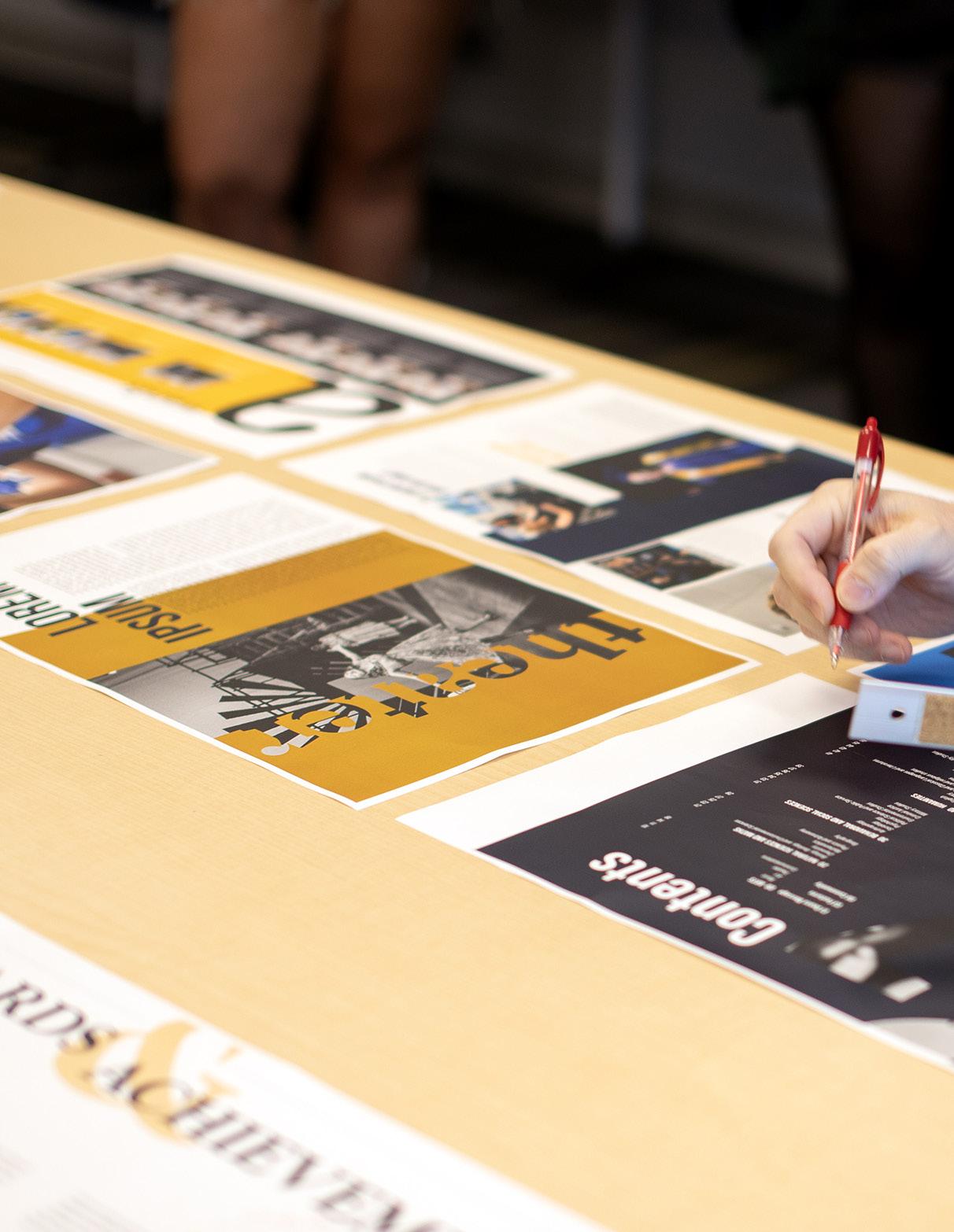
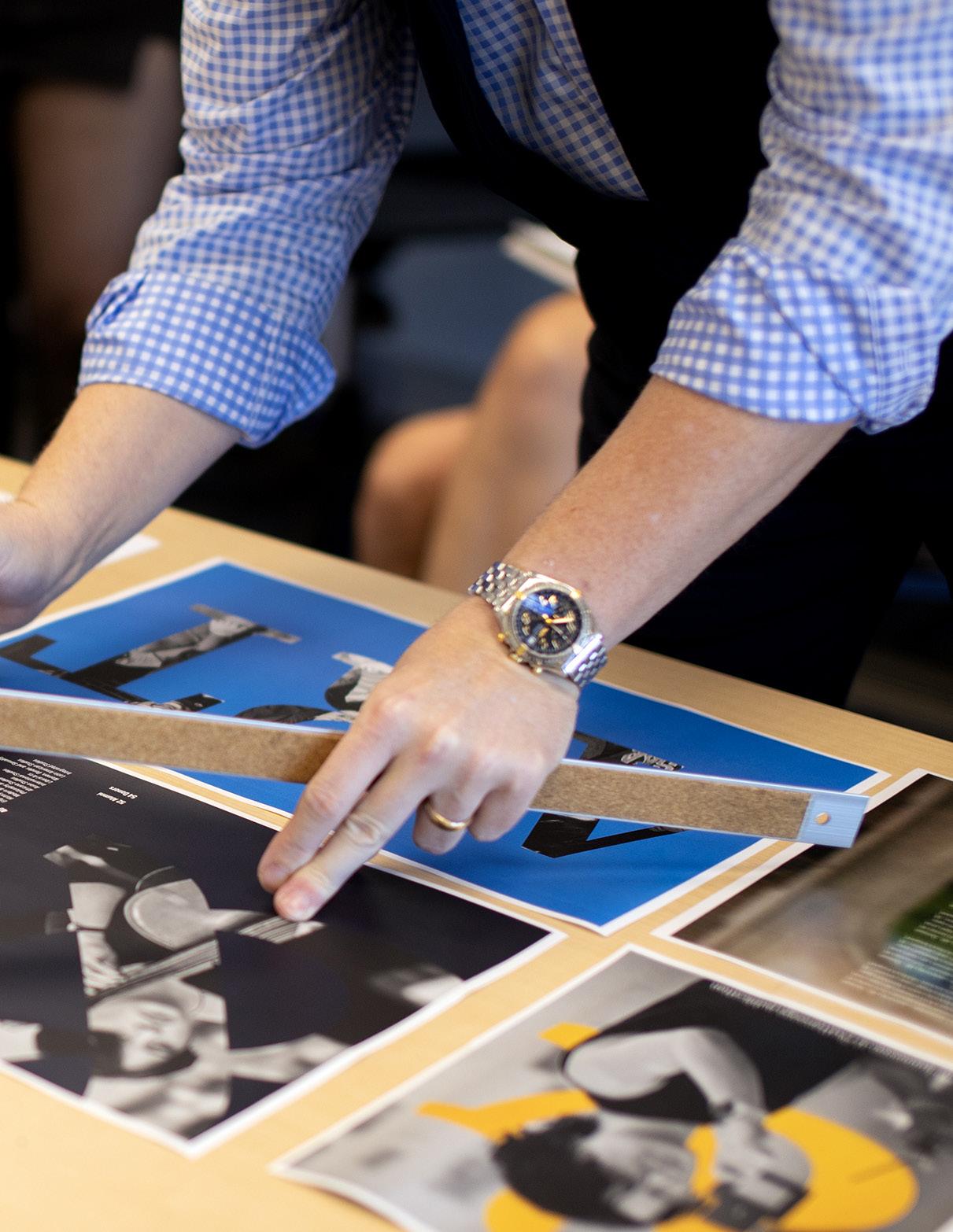
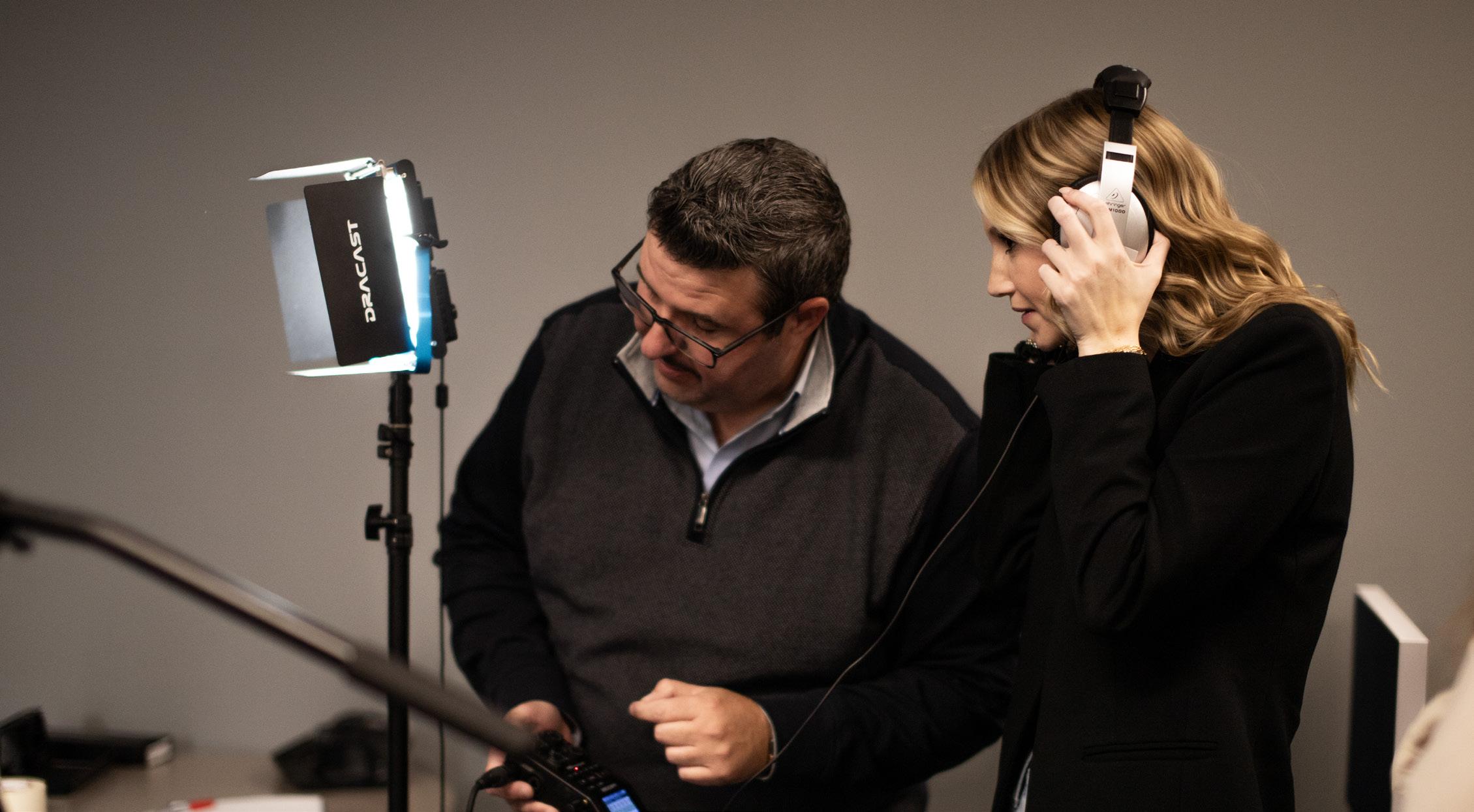
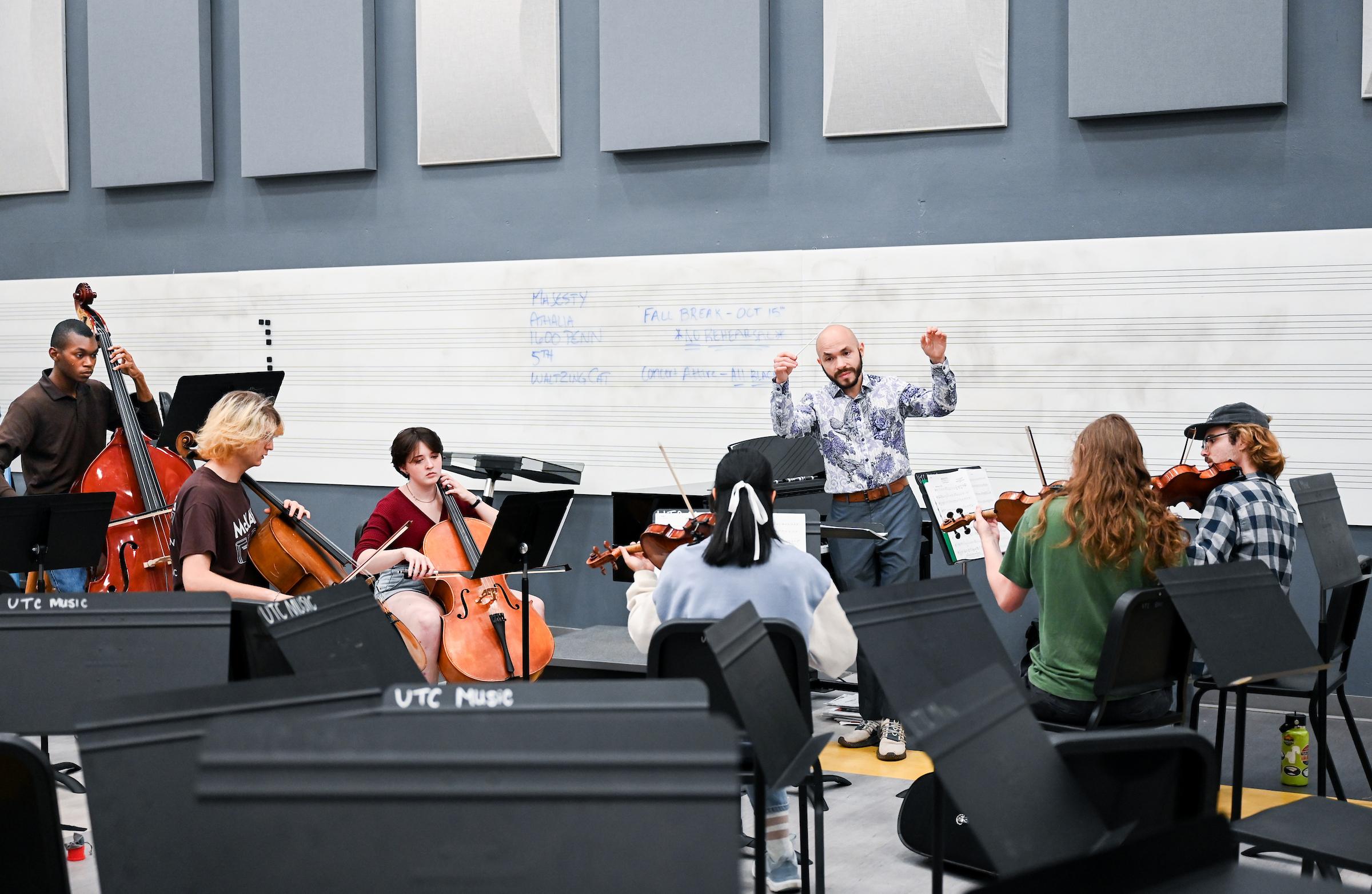
PREVIOUS PAGE: Feedback is given during the class’s initial concept ideation meeting. ABOVE: Ampersand writer Eli Dibrell (right) helps Dr. Cepak record testimonials of the magazine production class discussing thier experience working on the project. Photos by Clara Paulson.
& Arts
UTC Theatre Presents
DRACULA: MINA’S QUEST
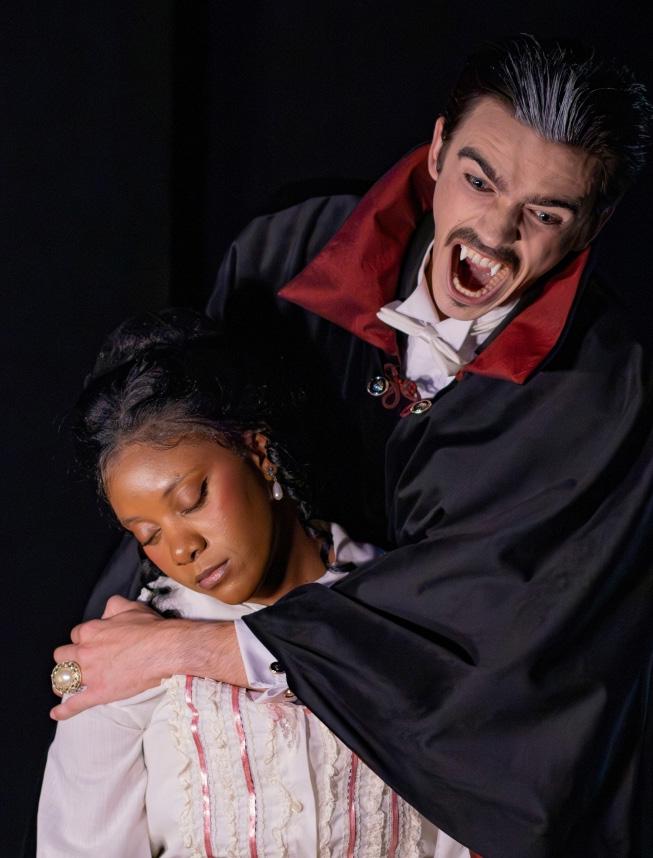
The UTC Theatre Co. opened its 2025-2026 season with “Dracula: Mina’s Quest,” Steven Dietz’s reimagining of Bram Stoker’s novel. This version moves Mina Harker to the center of the story, casting her not as a victim but as the driving force in a mystery where Dracula’s ultimate target is her soul.
The UTC Theatre Co. production was directed by Laurie Melnik Allen, Lyndhurst Chair of Excellence in Arts Education and professor of practice in Theatre Education.
“Staging horror live is a creative puzzle,” Melnik Allen said. “Most people know Dracula through film, but theater forces us to take risks and use inventive stagecraft. We want the audience on edge, surprised and fully immersed in the suspense of this story.”
For Melnik Allen, this production marks her return to directing for the first time since 2017.
“It’s been exciting to come back to the stage with a fresh perspective,” she said. “I’ve spent years researching creativity across disciplines, and that shapes how I approach this process. Our students are learning how
imaginative problem-solving in theater connects to challenges in science, technology and other fields.”
She added that the interdisciplinary nature of UTC makes this process especially meaningful.
“This production has pushed us to think in unexpected ways,” Melnik Allen said. “Directing a show like this feels almost like tackling a quantum research problem—we’re managing uncertainty and inventing solutions as we go. Sometimes that means wrestling with something as scientific as lighting design, and other times it’s figuring out what to use for stage blood. Both require creativity, risk-taking and a willingness to think outside the box.”
Steve Ray, head of the UTC Department of Theatre and artistic director of the UTC Theatre Co., said the play is a perfect fit for the season’s opening slot.
“I’ve been looking for a strong Dracula script for years,” Ray said. “We love offering something ghoulishly fun in October, and Dietz’s play gives us that. It’s suspenseful, beautifully written, and a great way to kick off our season.”
REMAINING UTC THEATRE CO. PRODUCTIONS DURING THE 2025-2026 SEASON INCLUDE:
“Alice by Heart,” music by Duncan Sheik, lyrics by Steven Sater, book by Steven Sater and Jessie Nelson, Feb. 24-28. In the rubble of the London Blitz of World War II, Alice Spencer’s budding teen life is turned upside down. She and her friend Alfred escape into their cherished book “Alice’s Adventures in Wonderland.” This musical from the creators of Spring Awakening encourages us all to celebrate the transformational power of the imagination, even in the harshest of times.
“Birthday Candles,” by Noah Haidl, April 14-18 Ernestine Ashworth spends her 17th birthday agonizing over her insignificance in the universe. Soon enough, it’s her 18th birthday. Even sooner, her 41st. Her 70th. Her 101st. Five generations, an infinity of dreams, and one cake baked over a century.
learn more
For more information, visit the UTC Theatre Co. webpage.
Liam Phillips and Kyra Hollmon as Dracula and Lucy.
Photo by Emma Hoffbauer/UTC Theatre Co.
UTC professor’s piano piece featured on nominated album going for the grammy
By Peyton Schultz
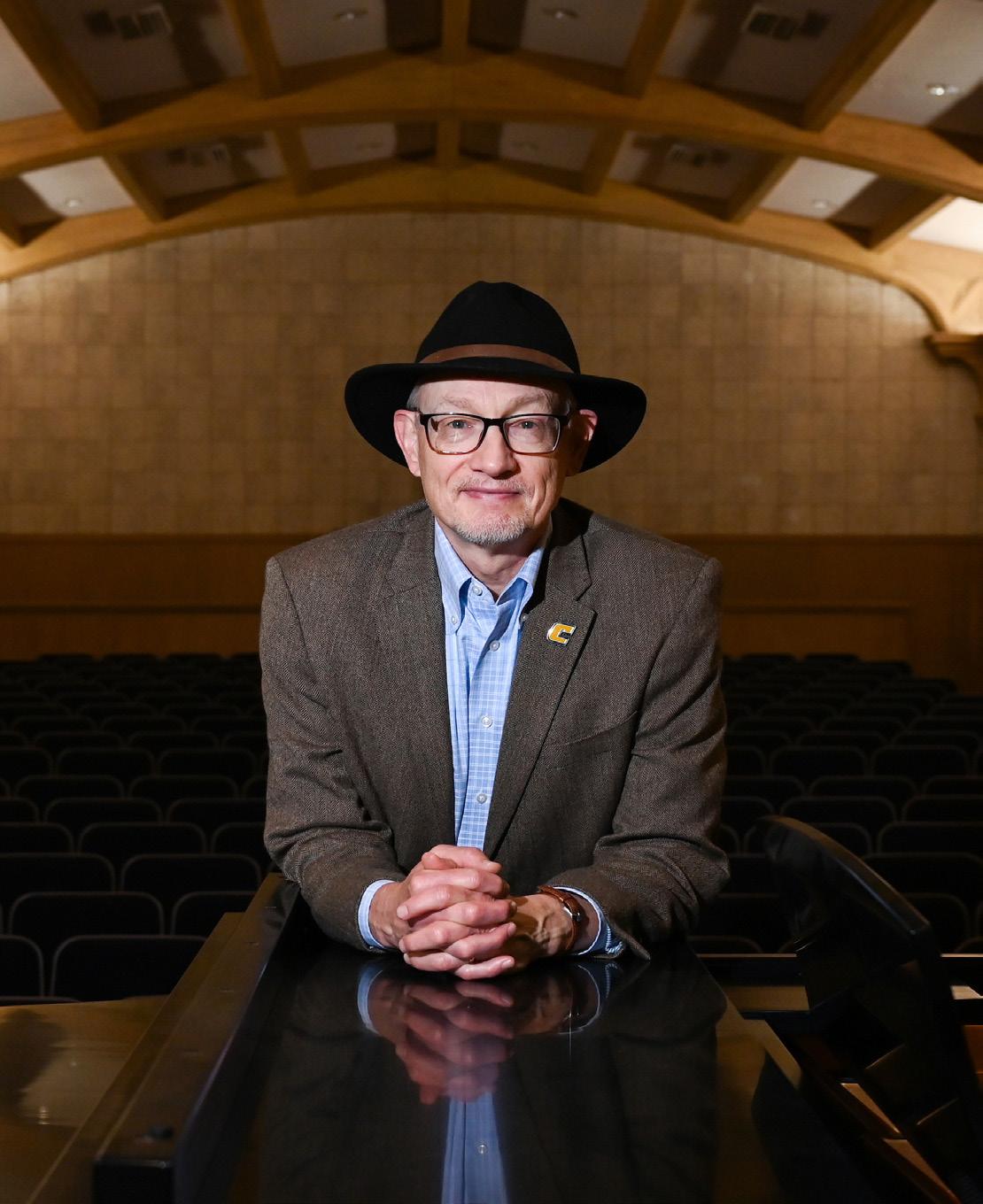
Ruth S. Holmberg Professor of American Music Jonathan McNair described with intricate detail a piano composition he wrote in the Appalachian Mountains at an artist residency program.
“It goes from a kind of mysterious opening to gradually becoming lighter and clearer, then bigger and ebullient and uplifting and grand. Later, the music moves higher and becomes more tender and vulnerable…” explained McNair, who has taught at the University of Tennessee at Chattanooga for 26 years.
He demonstrated with his hands how the composition is played as the melody “unfolds,” from grand harmonies to “quiet and
kind of mysterious at the end … as if you’re going backwards from a big river to the headwaters into the tiny little spring that began it.”
The piece came together while staying at the Hambidge Center for Creative Arts and Sciences during the summer of 2019. He named it “Rabun Gap” after a small local town.
At the time, he didn’t have any particular plan in mind for the composition. Now, to his surprise, the work is featured on a Grammy-nominated album.
The nomination stems from “Piano Crosscurrents,” an album by New York-based pianist and composer Max Lifchitz, founder of the North/South Consonance Ensemble. Created more than 40 years ago, Lifchitz’s ensemble is dedicated to performing and recording works by contemporary composers from across the Americas.
Lifchitz first performed the work in New York City after selecting it from an open call for scores, later inviting McNair to collaborate on a studio recording.
Supported by a UTC faculty development grant, McNair’s composition was professionally recorded and added to “Piano Crosscurrents,” which debuted in April 2025.
“He nailed it,” McNair said. “The sound is gorgeous. It was a wonderful studio and a really good engineer.”
Winners will be announced at the 67th Annual Grammy Awards on Feb. 2, 2026, at the Crypto.com Arena in Los Angeles.
When Lifchitz reached out with the news that the album had received a Grammy nomination, McNair said he was completely caught off guard.
“Never crossed my mind,” he said with a laugh. “I never expected this, and I’m happy. I’m grateful it’s not going to go to my head because I had no idea how the nomination came about.”
Receiving a Grammy nomination in the classical music world is a significant honor, McNair said, even though it may not come with the same public attention as it does for mainstream artists.
“The Grammys in classical music are important; they’re just less of a splash,” he said. “Everybody knows Beyoncé and whoever, but it’s a huge thing for us. If a classical soloist gets a Grammywinning recording, that’s great for their career.”
While McNair has long practiced music composition and piano, he gave some of the credit to the location where the piece originated.
“When you’re in such an incredibly gorgeous setting—the mountains, the waterfalls, the valleys—all of this stuff is going to infuse your soul,” he said. “At least for me, it did.”
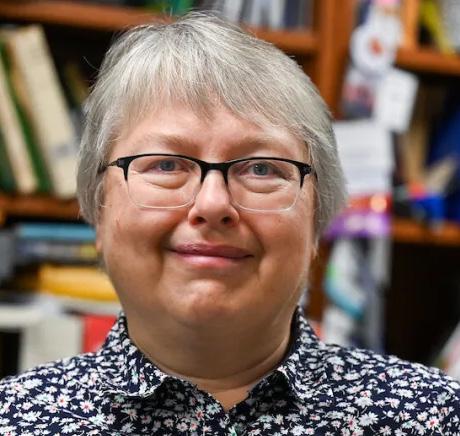
Jonathan McNair has taught at the University for 26 years. Photo by Angela Foster.
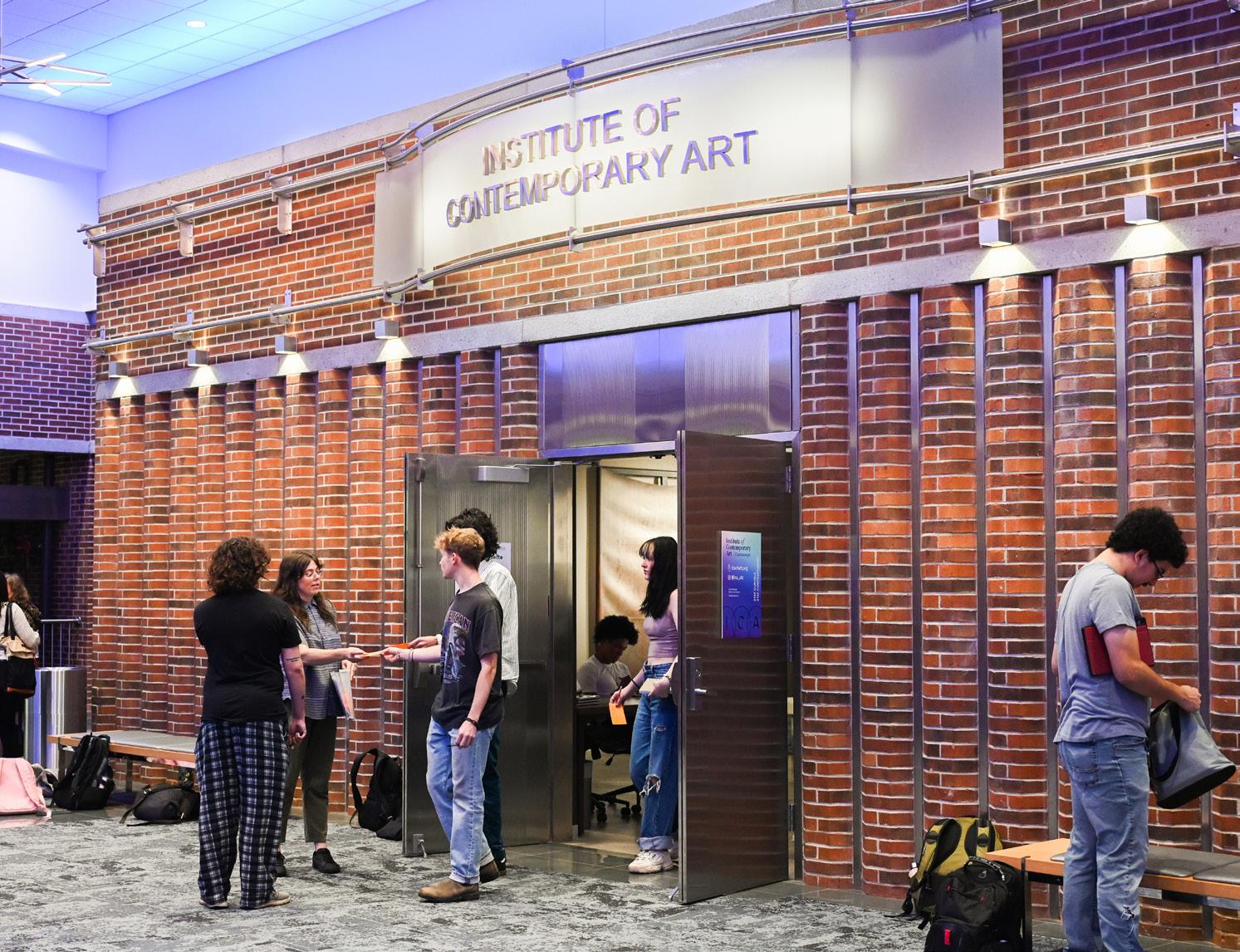
a hidden campus gem Inside UTC’s Institute of Contemporary Art
The Institute of Contemporary Art, housed in the University of Tennessee at Chattanooga Fine Arts Center, surrounds students with works that spark ideas and fuel their artistic growth.
In a place where music and theater fill the air, the Fine Arts Center has housed the ICA since 2021, which evolved from the Cress Gallery of Art and the University Art Gallery.
As the Cress Gallery of Art, the Department of Art showcased the work of artists in the Chattanooga region, but mainly displayed work from students and faculty. Transforming the gallery into the ICA, the department strived to redefine the space’s purpose.
According to the ICA’s interim director, Professor Angie To, “The ICA does still serve students and faculty, but the
By Bethany Cothran
focus is bringing contemporary art to Chattanooga and the UTC campus.”
After the previous director of the ICA, Rachel Waldrop, left UTC earlier this year, To stepped in to serve as the interim director while the department searches for a permanent replacement.
The ICA opened a faculty exhibition on Aug. 20, which was on display throughout the semester. In the spring, another faculty exhibition will open on March 25.
“We haven’t had a faculty show for a number of years, so it’s great to not only showcase the work of the faculty but also celebrate what we do within the art department,” To said.
“This year is really about celebrating the department in terms of research, materials, and processes.”
Life inside the ICA displays paintings like windows to other worlds, housed within a space that stretches beyond the idea of a standard university art gallery. Rather, the ICA serves as an extension of Chattanooga culture and art.
“It’s definitely not one of those places where you feel out of place,” To said. “We really try to create a welcoming, friendly atmosphere for people.”
With the ICA housed alongside art classrooms, there is no shortage of creativity for art students to find. As they often walk through the gallery, they are surrounded by inspiration to create art and the aspiration to have it displayed.
To said senior art students will curate a collection of art that will be showcased in the ICA for a short period.
“It’s just a wonderful opportunity for our students to show their work in a professional environment, but also in an environment that is right inside their learning environment so it makes it feel like it’s definitely attainable,” To said.
Every piece of art inside the ICA tells a story. The pieces are carefully designed and selected to ensure the ICA maintains a strong sense of integrity and wonder, as the ultimate goal is to preserve culture and inspire others.
“I think that it helps to open up a dialogue about the place of art in public life, but also the fact that we’re on a University campus that celebrates liberal arts, visual arts and performing arts,” To said.
Katie Hargrave’s Introduction
ABOVE:
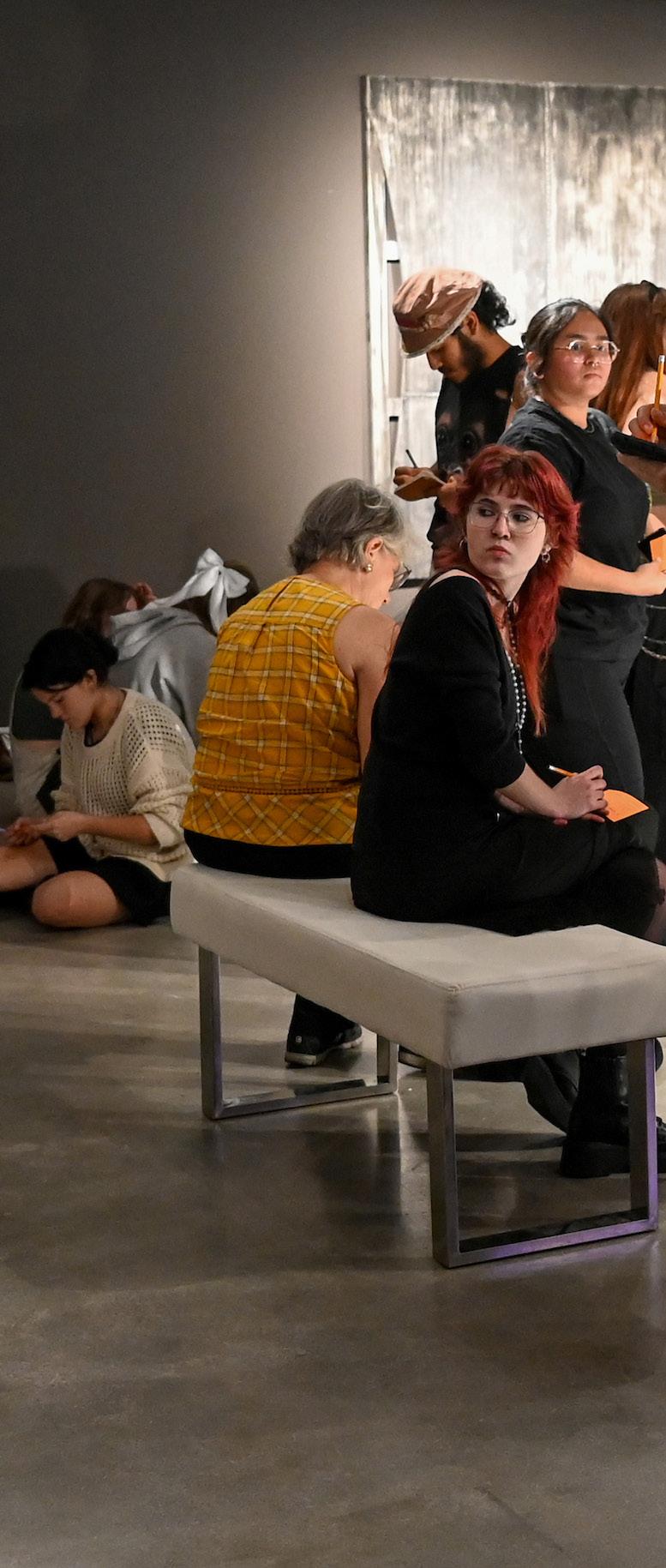
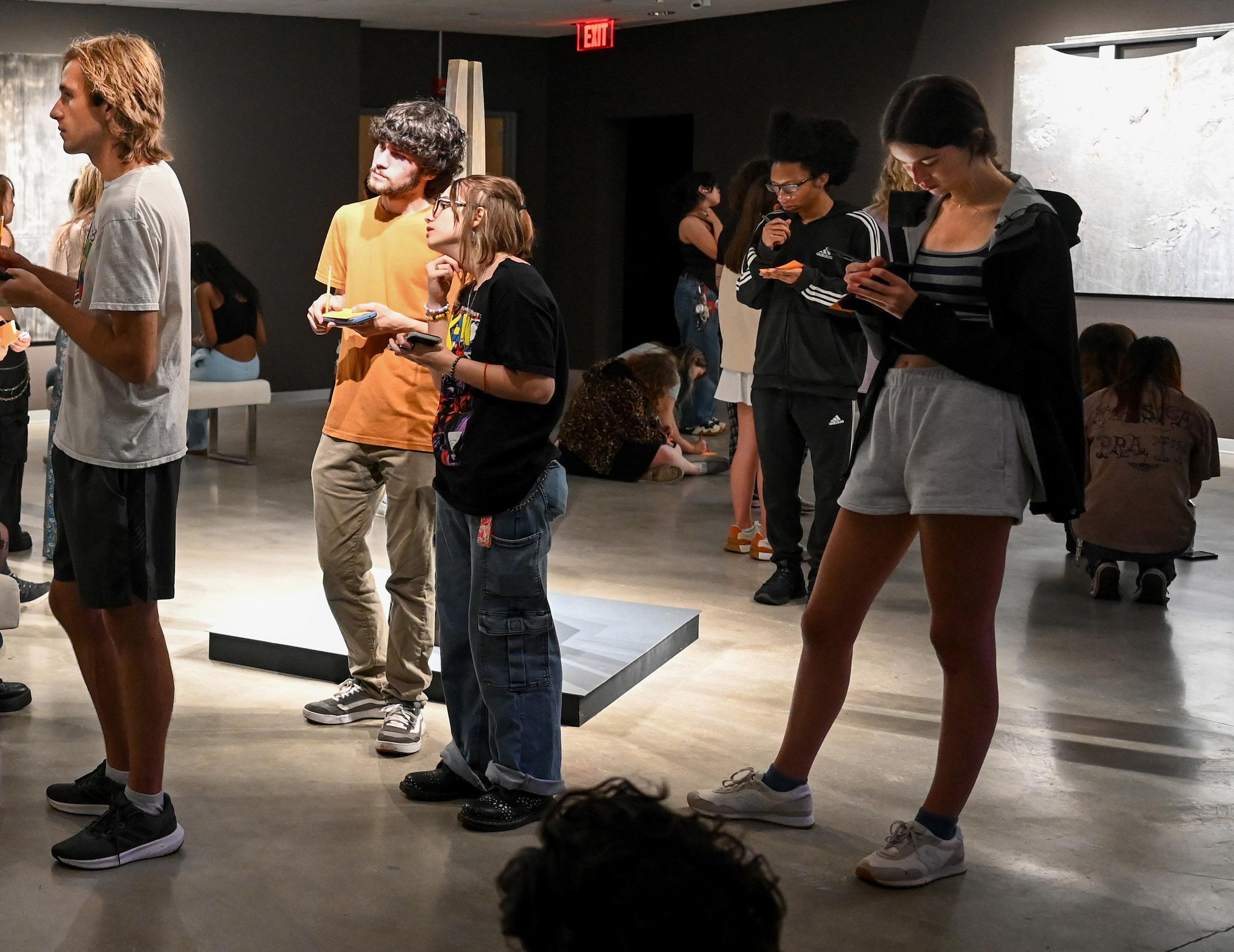
to Contemporary Art Practices students visit the Institute of Contemporary Art. Right: Students gather outside the Institute of Contemporary art.
Photos By Angela Foster
Natural Sciences and Math &
UTC professor honored as 2024 SPS Outstanding Chapter Advisor faculty honors
UC Foundation Professor of Physics Tatiana Allen was named the 2023–24 Society of Physics Students (SPS) Outstanding Chapter Advisor for her leadership and guidance of the SPS chapter at the University of Tennessee at Chattanooga.
The Outstanding Chapter Advisor—the highest honor given annually by the SPS—is bestowed to one advisor among approximately 850 chapters nationwide. The award recognizes exceptional leadership, student leadership development, and the support and encouragement an advisor provides to their chapter.
Allen received the award at the recent American Association of Physics Teachers winter meeting in St. Louis. Her accolade was also featured in “The SPS Observer,” published by SPS and the American Institute of Physics.
“It is a great honor,” said Allen, a member of the UTC faculty since 1993. “I learned later that our SPS students nominated me. They kept it a secret, so when I got a note from the national office, it was a big surprise.
“For me, being recognized for working with students is one of the greatest joys of our profession. I am very grateful.”
Dr. Keenan Dungey, head of the UTC Department of Physics and Astronomy, said that Allen—the associate head of physics, “has revitalized our chapter of the Society of Physics Students.”
“Under her leadership, the students have applied for and received national grants to support their projects. They also perform outreach to the community, such as volunteering for Earth Day at the Creative Discovery Museum,” Dungey said. “And we have resumed inducting members into Sigma Pi Sigma, the national physics honors society. Our chapter is one of the oldest in the country, established in 1929.”
Allen, who has taught physics for nearly 40 years, became the SPS chapter advisor in 2021. Her tenure began during the COVID-19 pandemic, a time when remote learning made it challenging to engage students—and SPS activities had largely ceased.
To revive student engagement, Allen proposed a project to assemble a LEGO model of the Kibble Balance—a device developed by the National Institute of Standards and Technology (NIST) to redefine the
kilogram based on the Planck constant. The project, funded by an SPS Chapter Research Award, became a catalyst for rebuilding the chapter’s sense of community.
Allen’s emphasis on hands-on projects and student leadership has led to notable successes. Physics major Landon Boone, who helped lead the LEGO Kibble Balance project as a freshman, went on to secure a Summer Undergraduate Research Fellowship at NIST. Following his fellowship, Boone—now a senior and the UTC SPS president—was offered a full-time position working with the Kibble Balance.
Allen’s most recent initiative is the LEGOLAS project— short for LEGO-based Low-cost Autonomous Scientist—a machine-learning model developed at the University of Maryland, College Park. UTC students received another SPS Chapter Research Award to construct the model, advancing the project by modifying the design and rewriting the manual.
Over the past two years, the UTC SPS chapter has received the national organization’s Outstanding Chapter Award, an honor earned by fewer than 15% of SPS chapters annually. SPS chapters are evaluated on their involvement with the campus community, the broader physics profession, the public and national SPS programs.
In “The SPS Observer” profile, Allen was asked to offer advice to advisors.
“Find good projects that will unite the group,” she said. “Let the students run them, own them, be leaders, be responsible and be creative. Be ‘on call’ if help is needed, but foster independence, problem-solving and building community. Students have so much to offer. Let them shine.”
UTC mathematician is helping elephants find their way home
By Carter Graham
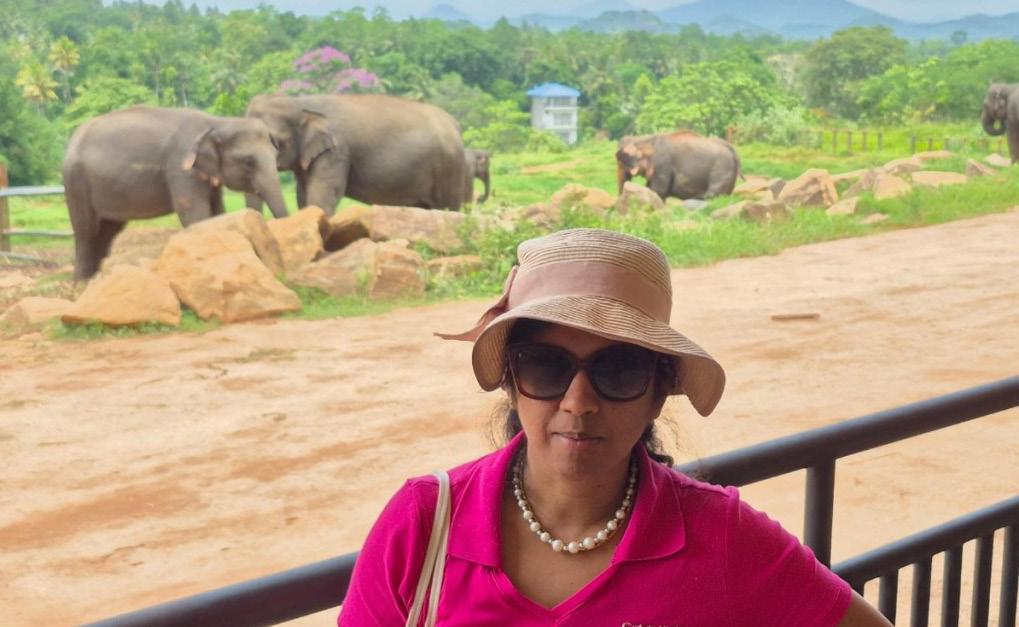
Dr. Lakmali Weerasena, an associate professor in the Department of Mathematics at the University of Tennessee at Chattanooga, spent her professional development leave designing elephant corridors in her native Sri Lanka to help prevent human-animal conflict.
Weerasena utilizes operations research, a subject that led to her thesis on the application of mathematical modeling in conservation biology, to determine which areas of land to create corridors to help elephants travel safely away from human contact.
“Human-elephant conflict is a huge problem because they always come to the residential areas and people also harm elephants,” she said. “The main issue is that there are no proper corridors for them to walk. There are some corridors and the government is introducing new corridors, but it’s an active research problem in Sri Lanka.
“I was thinking whether I can support that by applying the model I developed for providing corridors to reduce this human-elephant conflict.”
A member of the UTC faculty since 2016, Weerasena teaches courses focused on applied mathematics, which is related to operations research and her work in Sri Lanka.
“It’s an applied mathematics course and I always give students an opportunity to work on a project,” she said. “I want them to apply the techniques they learn in class to a certain real-world problem. They are free to select a problem from reality. They can pick the problem from home, workplace or school. But they need to apply the techniques they learned in the classroom to solve that real-world issue.
“Optimization is something we use without knowing the techniques every day. We wake up in the morning and need to do many things: we need to eat, wash and go to work. We have many goals, and we always need to plan the best way to achieve them. That’s a multi-objective optimization problem.”
In addition to her work in Sri Lanka, Weerasena mentors multiple Ph.D. students in conservation biology. For example, one student is currently developing a mathematical model to stop invasive plants from spreading in the Chattanooga area.
Dr. Chris Cox, professor and head of the UTC Department of Mathematics, cited a common real-world problem as an example of the work done in this field.
Cox described a UPS delivery driver and how they hypothetically make 100 stops a day, which he referred to as the “traveling salesperson problem.” The goal is to make the most efficient route possible, utilizing operations research and applied mathematics.
“It really is an integral part of math,” he said. “I’m an applied mathematician. I’m a numerical analyst. Most of my career and research has been taking problems from science and engineering, and figuring out how to do the same predictive modeling with them. That’s what she does in the sense of these optimization problems.”
Instead of door-to-door deliveries, Weerasena is optimizing elephant travel.
She was introduced to the concept during her undergraduate studies in Sri Lanka. The topic piqued her interest due to its practical applications. She further pursued operations research during her master’s and doctoral degrees at Clemson University.
“I took so many courses related to operations research because I saw applications,” she said.
Her thesis, focusing on conservation biology—which relates directly to her current work in Sri Lanka—has led her to some interesting conclusions, including the necessity for water specifically for elephants.
She explained that the water isn’t just for drinking. Elephants are prone to overheating due to their large frames.
“Elephants generate lots of heat and their bigger ear flaps help them to reduce that heat, taking it away from the body,” Weerasena explained. “Based on my experience, elephants need water not just for survival and not for drinking, but they need large water resources to play with to reduce their body heat. With my model, I have the freedom to adjust parameters to include new things.
“After analyzing the geographical region, when I design the corridor, if there’s a large water resource, I’m definitely trying to add that to the corridor. I’m trying to save that for elephants, not for people.”
Photo courtesy of Dr. Lakmali Weerasena. Associate Professor Lakmali Weerasena stands in front of several elephants during her visit to an elephant orphanage in Sri Lanka.
chemistry meets industry
UTC course engages students with “real-world learning experience”
When you look at the materials that make up the world around you such as tires, foams and plastics, chemistry probably isn’t the first thing you think of.
For Dr. Meredith Barbee, an assistant professor in the University of Tennessee at Chattanooga Department of Chemistry and Physics, chemistry is at the front and center—and she wants her students to have that perspective, too.
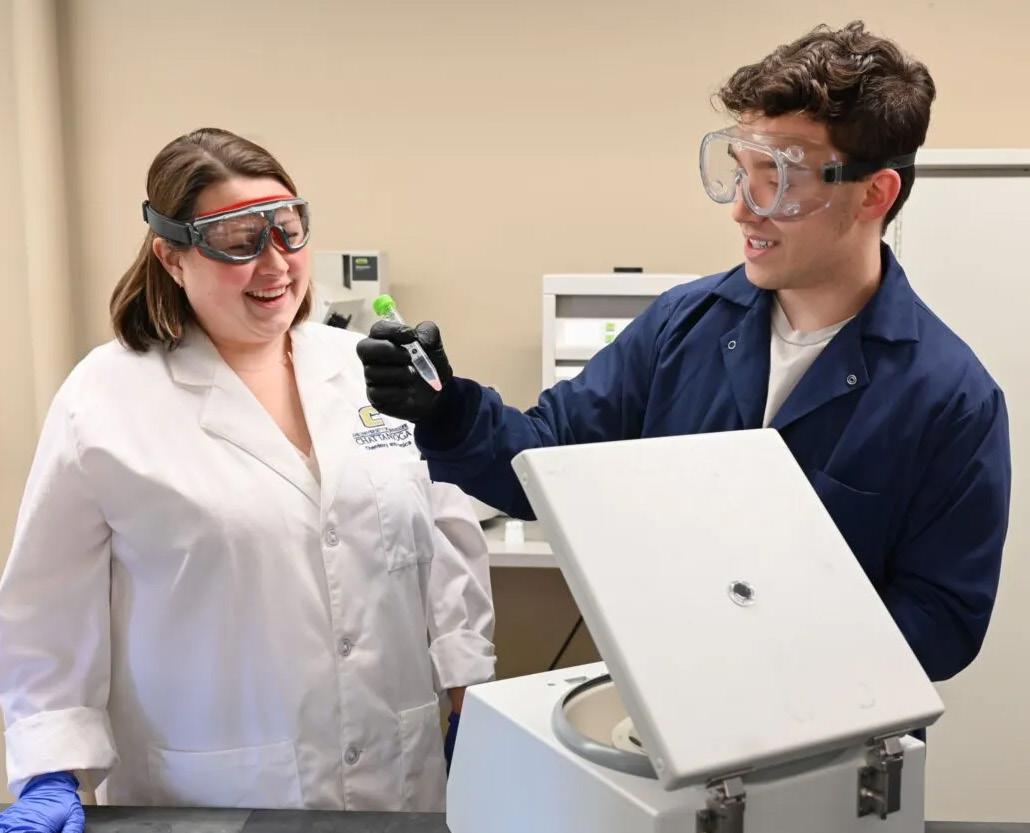
Dr. Barbee developed and taught a new course for the first time—Polymer Chemistry (CHEM 4040)—with a lecture and a lab focusing on the topic.
Polymer chemistry plays a crucial role in many industries, including manufacturing, medicine and electronics, as it enables the creation of advanced materials that meet specific needs and applications.
“Polymeric materials are made of long chain molecules that are built from the same atoms and bonds as other materials,” Barbee explained, “but their large size gives these materials properties that are distinct from small molecules that we cover in other chemistry classes.”
Rising UTC senior Laurel Washburn was one of her students.
“Polymer chemistry is my favorite chemistry course I have taken at UTC,” Washburn said. “Through the course I was able to see how the fields of organic, inorganic, bio- and physical chemistry intersect to create new materials.”
Along with the new course came an opportunity for students to collaborate with a local company.
Just 10 minutes from campus, Woodbridge Foam Corporation—a manufacturer of polyurethane foams—is using principles of polymer chemistry to design new materials and improve its manufacturing process.
Woodbridge is a global company with more than 7,000 employees in 40 locations spanning nine countries.
The company’s comprehensive material technologies cater to automotive, commercial, recreational, packaging, health care and building product applications with a full range of services— including prototyping, consulting, technical support, chemical R&D and accredited laboratory testing.
While seeking analytical support from UTC in 2023, Carlisle Glover, a senior development chemist for Woodbridge, was introduced to Barbee and learned about the polymer chemistry course being offered.
“After learning more about the course, I saw an opportunity to create a winwin-win for the students, UTC and Woodbridge by turning our analytical needs into a real-world learning experience for students,” Glover said.
When Barbee designed the new course, she wanted students “to experience the connection between the chemistry and polymer materials in a lab-based class.”
UTC’s chemistry degree is certified by the American Chemical Society, whose Committee on Professional Training establishes guidelines for the approval of bachelor’s degree programs.
“One of the most important guidelines is the requirement for laboratory experience,” said Barbee, a UTC faculty member since 2021. “Laboratory courses give students the opportunity to learn practical skills for safely handling hazardous reagents, synthesizing new compounds and analyzing data. They also provide the opportunity for experiential learning.”
Scientific problem-solving and critical thinking are also essential components, she said. In many conventional lab assignments, instructors and sometimes students already know what the outcome will be before the experiment begins. In science, that’s typically not the case.
“Chemists are often at the cutting edge of solving problems where outcomes are not known in advance,” Barbee said. “A top priority for me was for my class to put students in an environment where they would design the experiments, investigate real problems and contribute new knowledge to the field.
“As Mr. Glover and I began to work together, we realized that the problemsolving I was helping Woodbridge with would be the ideal opportunity for students to build scientific problemsolving skills and to learn on a deeper level.”
She explained that Woodbridge was obtaining different results from one batch to another in one of its product lines. The company was interested in understanding more about the structure and size of the polymers it was synthesizing.
Glover and Barbee worked together to include this problem-solving in the polymer chemistry lab course, with students traveling to the Woodbridge plant to learn about the manufacturing process and observe the pouring of the polymers to make foam.
Upon returning to the UTC lab, students worked in pairs to design their own
experiments using Woodbridge’s polymers. They discussed their experimental design with Glover and Kaitlyn Cathers, a development technician at Woodbridge.
The class presented the data they collected to Glover and Cathers at the end of the course.
“Collaborating on a project with Woodbridge was an exciting adventure that gave us freedom to use our polymer knowledge and devise a lab procedure to help Woodbridge and ourselves understand how small changes in the synthesis of an elastomer can greatly impact the durability and elastic
qualities,” rising UTC senior Chase Matusek said.
“Seeing the laboratory at Woodbridge gave me insight on the industry career route of chemistry and better understanding how the small scale but crucial research that goes on that lab is scaled up to for industry purposes.”
Barbee expressed gratitude to Glover, Cathers and Woodbridge for their collaboration.
“Working alongside these professionals has been an incredible opportunity for our students,” she said. “They collected never-before-seen data that will actually be used by Woodbridge in the future.”
Dr. Meredith Barbee and Chase Matusek work together in the lab at UTC. Photo by Angela Foster.
In the world of micro life, Francesca Leasi’s name looms large
By Chuck Wasserstrom
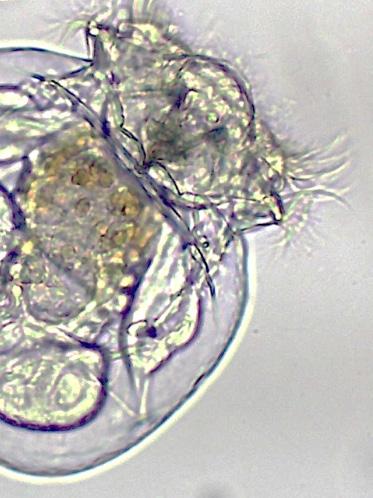
The microscopic animals Dr. Francesca Leasi studies can’t be seen with the naked eye. Yet for all their size, they may hold vital clues to how life adapts to environmental change and what traits allow organisms to survive it.
In early June, Leasi, a UC Foundation associate professor in the University of Tennessee at Chattanooga Department of Biology, Geology and Environmental Science, spent two intense weeks in the Outer Banks—a series of barrier islands off the coast of North Carolina—searching for answers hidden beneath the surface of saltwater.
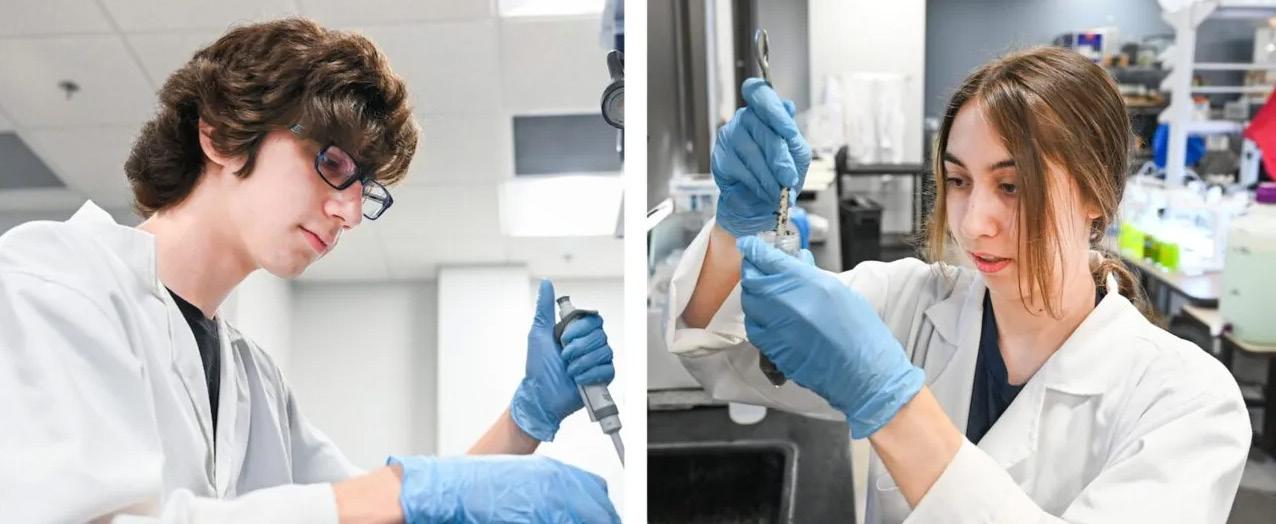
Accompanied in the field by UTC students Sebastian Jimenez and Jasmine Castellano and external collaborator Diego Fontaneto of the National Research Council of Italy, Leasi was investigating how tiny aquatic creatures, known as monogonont rotifers, survive dramatic shifts in salinity.
The research is supported by a four-year, $696,680 grant awarded to Leasi from the National Science Foundation in 2024.
“We are fortunate that Dr. Leasi is engaging our students in this exciting research,” said BGE Department Head and UC Foundation Professor Gretchen Potts. “Her students are gaining valuable experience in the field and the lab.”
Monogonont rotifers are crucial to ecosystem health, Leasi explained. They help break down organic material and serve as a food source for larger organisms.
“I’m very passionate about these small animals,” Leasi said. “They are very important and there is an entire world to discover and to describe.”
Leasi said the group spent long days extracting individual organisms for examination.
“We took the animals one by one. We placed the animals on a slide. We took photos and videos. Then we put each animal into a tube for DNA analysis,” she said. “We used a combination of morphology and DNA barcoding to investigate what’s in there.”
The results, she said, were incredible. At least 300 specimens were sorted, with 30 different species identified, and “we think at least three or four are potentially new to science.”
Their size? None of the organisms are visible to the naked eye.
“They are less than half a millimeter,” Leasi said. “They are in the order of microns. It takes a thousand microns to make a millimeter.”
But under the microscope, a surprising level of complexity emerged. Despite their scale, she explained that these animals are fully formed, complete with brains, stomachs and—in some cases—appendages.
I don’t think I know anyone else who’s had a species named after them. It is a really rare thing to happen and it is a really big deal. ” “
Leasi, who joined UTC in 2018, said the scope of the current fieldwork is to explore the biodiversity of these microscopic animals in the saltwater habitats along the western Atlantic coast from North Carolina to Florida—a previously understudied region.
“We began the field work in Miami back in February,” she said, “and this time we went to North Carolina, where the field work was more extensive, much longer and more intense.”
During this trip, the team collected water, algae and sediment samples near Roanoke Island, where they were based at East Carolina University’s Coastal Studies Institute. She said the location was selected for its wide range of salinity gradients, a key condition in rotifer habitats.
“We collected the samples by following a protocol that includes more traditional taxonomy, looking at animals under the microscope and identifying animals by morphology,” she explained. “But we also collected the samples for biomonitoring using molecular techniques.”
“You see complete animals that are of very different magnitudes in terms of size,” she said. “They are capable of withstanding very different ecological conditions.”
One of her favorite moments came when she observed a group of marine water bears—also known as tardigrades—clinging to grains of sand with tiny suction cups on their toes.
“They use it to anchor to a little sand grain so they’re not washed away by the current,” she said. “It was amazing. Microscopic world.”
It’s that adaptability—surviving across vastly different salinity levels—that is at the core of Leasi’s research.
“How they maintain this salt balance in the body,” she said, “because these animals were found across different levels of salinity from freshwater to hyper-saline conditions.”
Typically, these tiny animals only live for a few weeks. Many are female and reproduce asexually by cloning themselves, but when environmental conditions shift, they adapt in extraordinary ways.
“When the condition changes, they are capable of producing males,” Leasi said. “Males are much, much smaller. They don’t have stomachs. They carry sperm, they fertilize a female, and the product of this sexual reproduction is basically a new genotype.”
Guerry Professor and UC Foundation Professor Hope Klug said the undergraduate students participating in Leasi’s research “are getting this really holistic experience.”
“They’re going out in the field, they’re collecting organisms, they’re coming back, they’re looking at them under microscopes, they’re culturing them,” said Klug, whose focus is evolutionary and behavioral ecology. “In addition to that, they’re doing all this genetics and genomics work, so they’re learning these lab techniques. It’s just an incredible opportunity for these students at this early career stage.”
Two days after returning from North Carolina, Leasi received an email that left her stunned, and it directly ties into the research she has long been conducting.
The message was a congratulatory note: a newly discovered species of gastrotrich—a tiny marine organism—had been named in Leasi’s honor.
The species, Musellifer leasiae, was discovered in deep-sea sediments off the coast of Antarctica. At under half a millimeter long, it’s the first member of its family—Muselliferidae—to be formally documented in the Southern Hemisphere.
“One of the authors of a research paper sent me the email telling me the news,” Leasi said. “It’s definitely an honor. I was shocked. I was grateful.”
As it turns out, this was the third time that a species was named after her. All three species belong to a category known as meiofauna—animals smaller than one millimeter that live in the tiny spaces between sediment grains.
“When she told me about it, I was just blown away,” Klug said, “and then she said, ‘Well, it’s happened two other times.’ I had no idea. She receives these very impressive awards, but she’s just not someone who talks about them.
“I don’t think I know anyone else who’s had a species named after them. It is a really rare thing to happen and it is a really big deal.”
The first species named after Leasi, Proales francescae, was found in the Mediterranean Sea along the Côte d’Azur, France.
It belongs to the phylum Rotifera (rotifer).
The second species, Typhlopolycystis leasiae, belongs to the phylum Platyhelminthes (flatworms). It was discovered along the Pacific coast of Panama.
“I’m attached to this group of animals (Musellifer) because it was the focal animal group of my Ph.D.,” Leasi said. “They all live in the deep sea. They’re pretty rare to find. So it’s quite an honor to be named.”
She said the thrill of discovery never wears off.
“For me, it is definitely amazing,” Leasi said. “But in general, I get overly excited to see something that was previously discovered but I had never seen before.”
Leasi hopes that the recognition of Musellifer leasiae and the finding of new species will inspire greater interest in the microscopic world.
“I’m hoping that the new generations of scientists can have the patience and the curiosity to approach animals that might not seem so charismatic at first glance,” she said. “But if they have the patience to actually look at these animals under the microscope and understand the diversity, I think it can be a very, very cool job.”
Sebastian Jimenez and Jasmine Castellano working in Dr. Francesca Leasi’s lab in Holt Hall. Photos by Angela Foster.
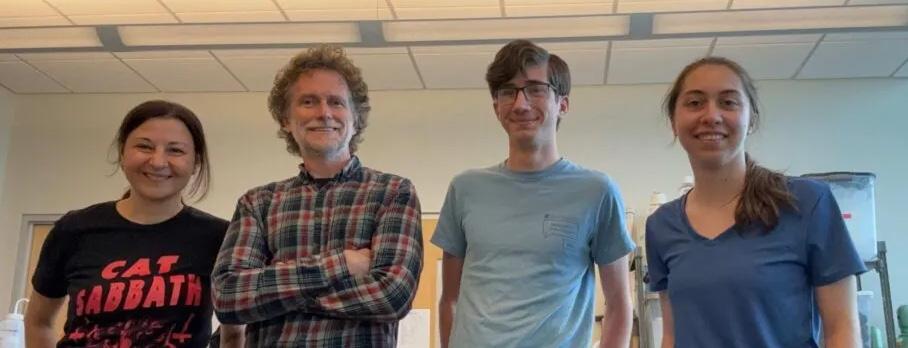
As part of her National Science Foundation grant research, Dr. Francesca Leasi spent the first two weeks of June investigating monogonont rotifers with external collaborator Diego Fontaneto of the National Research Council of Italy and students Sebastian Jimenez and Jasmine Castellano. Photo courtesy of Dr. Francesca Leasi.
Freshman physics major Pearl Allmon tours the Clarence T. Jones Observatory during her first week at UTC. Photo by Carter Graham.
Students discover a universe of possibilities at Clarence T. Jones Observatory
By Carter Graham
As students stepped onto campus for the first time or returned to the familiar surroundings of life on campus, the University of Tennessee at Chattanooga offered a chance to explore the night sky.
Early in the semester, as part of Welcome Week, the Clarence T. Jones Observatory’s open house—MOCS Under the Stars—hosted nearly 100 UTC students curious about the surrounding galaxy.
This was the second year the observatory open house was part of the opening week festivities. The Clarence T. Jones Observatory is located about 10 minutes southeast of campus at 10 N. Tuxedo Ave.
Observatory Director Steven Kline said this year was a welcome sight compared to last year’s turnout.
“We did a better job getting the word out a bit this year,” Kline explained. “One example was the College of Arts and Sciences Welcome Bash out on Heritage Plaza between the University Center and Grote Hall. We had solar scopes out during a really peak spot next to that big plaza. That was eye-catching. We were able to get the word of mouth a bit there as well.”
Kline hosted the interactive planetarium show for all attendees. Students asked questions, and some even got to visit their favorite planet.
The event was open to all students, and attendees included several who wish to study physics or have a general interest in space.
Jay Guthrie, an undecided first-year student, was advised by one of his professors to attend the event if interested.
“I started watching YouTube videos about it,” he said. “I just think it’s so cool, the fact that there’s so much unknown. You want to comprehend, so that’s why you want to keep searching for more.”
Guthrie was struck by the photos hanging from the walls of the 90-yearold observatory building, many of which had been captured from the locally made Cassegrain telescope on the second floor.
Pearl Allmon, a first-year physics major from Rhea County, discovered her passion for space years ago when a solar eclipse shrouded much of the Chattanooga area in darkness.
“I’ve always loved the stars,” she explained. “I’ve always loved space and the night sky. My entire plan is to major in physics, maybe get into astronomy and work for NASA someday. I’m working on that.
“I wanted to come here because there aren’t a lot of resources at home. When I was younger, my parents bought me a telescope for one of my birthdays, and I’ve always just loved looking at the sky.”
Allmon was greeted at the observatory by members of the newly restarted UTC Astronomy Club, including club president Giada Puhlman, who is double-majoring in physics and mechanical engineering.
Puhlman was elected president this past spring after the club was revived.
“We wanted to do something with space that wasn’t overly rigorously academic,” Puhlman said. “We formed our own little group and started gaining members.”
The club will be working the Jones Observatory’s weekly Sunday Star Parties, which are open to the public. The Star Parties offer a chance to learn more about space through a lecture on an astronomy topic, a planetarium show and an opportunity to look through the historic telescope.
Allmon said she feels more connected to the University after attending.
“It was great learning that there was an observatory right near campus,” she said. “Learning that they do this every Sunday night makes my entire year.”
Kline aims to continue to grow campus enthusiasm for space.
“We’re hoping to keep this momentum with student engagement,” Kline said. “We’re recruiting to get students if they want to engage, maybe a bit more casually, outside of a full physics degree.”
Kline hopes that anyone interested in space will attend events or consider joining the Astronomy Club.
“We really want to spark a little bit of curiosity,” Kline explained. “I try to highlight things they can go home and look at; maybe they can get some gears turning. Then, maybe that extends to, ‘There’s another star I see over here that stands out. What constellation is that a part of? Well, what is a star?’ I hope that organically spreads from there and maybe it will snowball.”
Behavioral and Social Sciences
Honors student’s journey from Ukraine to UTC fuels passion for policy
By Carter Graham
Senior Sofiia Skrypkar wants to make a difference, and this summer had the opportunity to attend the University of Texas at Austin’s Lyndon B. Johnson School of Public Affairs Public Service Weekend.
From July 18-20, Skrypkar spent three days learning from actual policymakers, attending sessions on various issues and visiting historic landmarks.
Skrypkar, a Brock Scholar in the UTC Honors College majoring in political science and public service with a concentration in public policy—and a minor in sociology—began her journey toward public service while growing up in Ukraine.
Her family came to the United States in 2011 to escape religious persecution from the post-Soviet region under the Lautenberg Amendment.
“My grandparents were religiously persecuted,” Skrypkar said. “Both of my grandfathers were put into jail for refusing to do military service against their religion. They are Seventh-day Adventists and also refused to work on the Sabbath.”
Skrypkar said she doesn’t remember much of her time in Ukraine, but it had a significant impact on her life.
“It definitely influenced how I view politics,” she explained. “My dad and I have conversations about this, too, because we love this country.
We’re now citizens of this country. We feel like it’s given us a lot.
“I have things that I want to fix growing up here. I feel very distinctly American. Sometimes I take for granted what we have.”
Going through this experience as a child, Skrypkar said she wants to help people in her future career.
There are a variety of areas that intrigue her.
“I’m interested in social policy, welfare policy, and the intersection with public health,” she said.
“I’m working on a project with one of my professors and another student in the Honors College about differences in mental health and connectedness that students feel if they’re living on campus or if they’re commuting to campus. Or if they have a community. I’m interested in the public health route.”
These interests led her to apply for—and be accepted into—the Public Policy and International Affairs workshop in Texas.
“I didn’t know what to expect,” Skrypkar said. “I know that Tennessee adopts a lot of similar policies that Texas adopts. I knew it in that sense, but I had never been there. It was interesting to go and see a different landscape.”
Skrypkar said she felt intimidated going into the experience, but by the end of the weekend, she knew she deserved to be there.
Her favorite part of the weekend was getting to see policymakers discuss real problems during a bipartisan panel.
“It was actually the best part seeing that because we see so much in our media and even in our classrooms, how difficult it is to have these kinds of conversations,” Skrypkar explained.
“The Republican lawmaker was from the community affected by the floods in Texas. He was talking about how good policy doesn’t have politics.
“He was talking about how we are all fundamentally good and we all want to work together. That stuck out to me. I kind of see the world like that, going into this field. You don’t want to feel that there’s a problem and I can’t do anything to solve it.”
She and other attendees participated in seminars and had conversations on border patrol, Latino identity and other local policies that affect constituents. They also visited the Lyndon B. Johnson Presidential Library.
“It was really awesome,” Skrypkar said. “It was an experience. What these weekends are about is opportunities to network and to hear from other public policy professionals. To see where you might want to fit in and where you want to go to graduate school as well—what kind of policy area someone wants to study.”
Sofiia Skrypkar
Professor learns firsthand how democracy was defended in South Korea
by Carter Graham
On Dec. 3, 2024, South Korea declared martial law, invoking military power and sending shock waves throughout the global community. The Parliament was surrounded by soldiers who blocked the entrance to the building and tried to prevent legislators from holding a vote to reverse the martial law. Some legislators had to climb through windows to cast their votes.
Six hours later, the presidential decree was unanimously reversed by 190 members of South Korea’s Parliament.
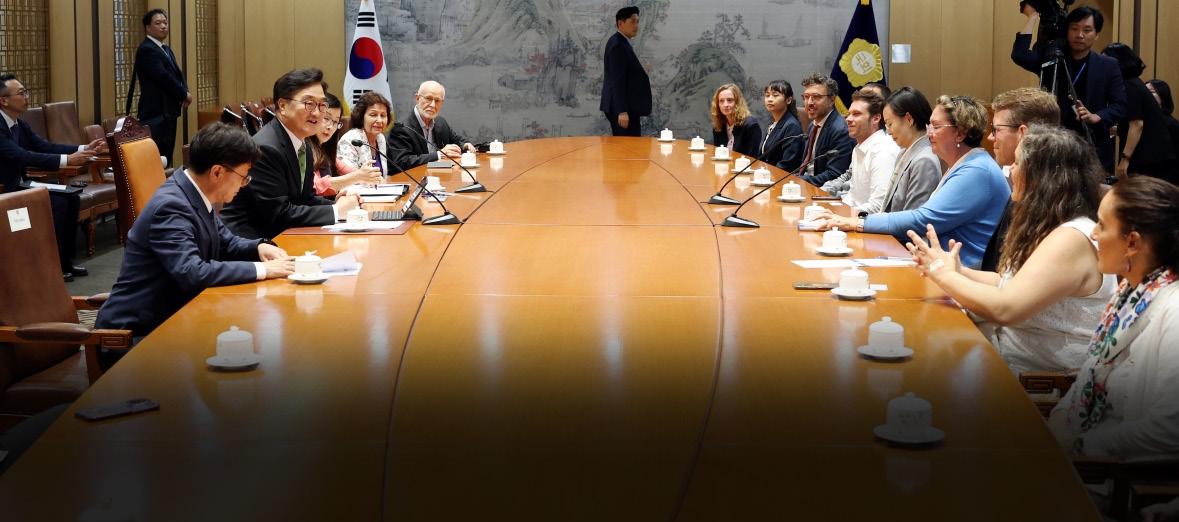
Dr. Irina Khmelko, a UC Foundation Professor in the University of Tennessee at Chattanooga Department of Political Science and Public Service, spent time this summer in Seoul meeting with the speaker, members of Parliament and policy experts to discuss legislative studies.
“It’s very easy to lose democracy,” she said. “It’s incredibly hard to get it back. It’s not just snapping your fingers and it’s right back. Nobody has a magic wand.
“What the Korean parliament did was truly magical. It’s truly a huge service to the nation in terms of preserving their democracy, in terms of keeping South Korea as a democratic country.”
Brought to Seoul for the World Congress hosted by the International Political Science Association, Khmelko chaired the research committee discussing legislative studies.
“I went there for multiple reasons to present the results of my research, to listen to others, to organize and to run the World Congress of the International Political Science Association,” she said. “At the same time, lead a delegation and work with the parliament because what we do is very significant in terms of practical implications.
“That was an important part of building our network of practitioners. Our organization works not only with researchers but also with practitioners, policymakers and international policymakers.”
Khmelko’s research focuses on comparative legislative studies, examining parliaments from across the world, with a specific focus on legislative-executive relations.
“The roles of parliaments are changing around the world,” she explained. “Some are losing power to the executives, some are gaining power and some are staying the same.
“I’m really looking at what’s happening with parliaments around the world. The main thing is: what allows any parliament to stay as an independently elected assembly and not become just some puppet institution for the president of any country.”
According to Khmelko, South Korea provided an excellent case study on legislative power.
“They saw on video cameras governmental forces, military approaching the parliament,” she said. “They were hectically voting, trying to stop it, and they succeeded. They stopped it. They managed to get enough people inside the building, and they literally had to go through the windows, through the basements, through all sorts of different ways to evade the barricades that the government put around. That was really something. That parliament did an amazing thing.”
After attending the World Congress conference, Khmelko and others had the opportunity to visit South Korea’s parliamentary building and meet with the speaker of the National Assembly of South Korea, Woo Won-shik.
During the declaration of martial law, Woo climbed a National Assembly fence to preside over the presidential impeachment vote.
“When you are there in person, it’s much different than just reading the book,” Khmelko said. “I can read, and obviously, I did read about that. I could read the news. I could read academic publications. It’s a totally different experience because it adds so much to the conversation, so much to the story or case study. It allows so much more in terms of the production of the research. It really allows us to produce more ideas.
Brown
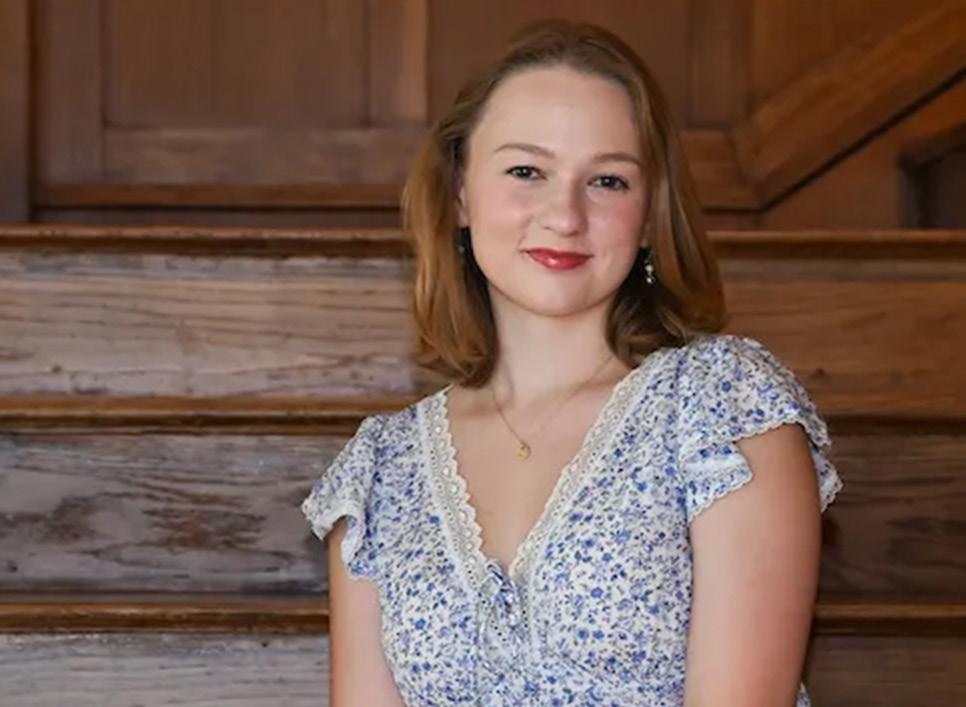
Amy Brown found her place at UTC and is helping other transfer students find theirs
By Peyton Schultz
Amy Brown’s path to higher education has been anything but traditional.
A transfer student from Cleveland State Community College, she received a bachelor’s degree in psychology from the University of Tennessee at Chattanooga in May. Now, she is a student in UTC’s master’s program in psychological science.
As a child, Brown was pulled out of school after the eighth grade to travel with her mother—who never advanced beyond the eighth grade herself—and later earned her GED diploma as an adult.
“We lived in a conversion van and traveled all over the United States,” she said. “I loved school when I was a kid, but my mom didn’t take education seriously. I felt like my education was robbed from me.”
For years, Brown poured her energy into taking care of others, including her six children, five grandchildren and her students as a middle school history homeschool teacher. After going through a divorce, she allowed her focus to slightly shift.
Amy
I really want to teach college students and I want to empower them, I want to connect with them inside and outside the classroom. I just want to make a change in that generation.
“It was the first time that I pursued my own dreams of completing an education and filling the big gap between eighth grade and college courses,” she said.
“Going through a divorce was difficult. For the first time, my eyes were opened to, ‘Wait a minute, what about me?’”
She enrolled at Cleveland State in 2021, just after her divorce was finalized.
“Pursuing my education has not been an easy route,” Brown said. “It’s been the most fulfilling route, but it’s not been easy. To jump in during the middle of COVID and learn computer skills, how to upload things and how to make PowerPoints was all very, very foreign to me.”
The experience was also new to her children.
“The whole learning curve for me also made an impact for them. I tried to shift a lot of my time commitments with school, double up on the weeks I didn’t have them and then dedicate more time to them,” she said. “It’s been difficult in a lot of ways, but I think it’s also been empowering for them. My hope and my prayer is that they will look at the obstacles I’ve had to overcome and the large gap I had to get through to get to where I am now.”
By the time she started at UTC, Brown had more confidence as a student but felt like she received less attention as a transfer student compared to traditional first-year students.
Despite her love for UTC, Brown doesn’t hold back when she talks about her first day on campus as a transfer student.
“There were no signs, no convocation, nothing,” she said. “I missed my very first class because I didn’t know where to park. I just felt really lost and confused.”
She recalled a conversation she had with a classmate who was also a transfer.
”
“We started comparing our stories and I just looked around the room at all the students. I was like, ‘We can’t be the only ones,’” Brown said. “She said, ‘No, absolutely not.’ I said, ‘We need to leave UTC better than we found it.’”
That conversation led to a year-long pilot program, and Brown became UTC’s first transfer student peer mentor.
In that role, she organized events to bring transfers together, as well as one-on-one mentoring meetings. She also made it a point to reach out to online-only transfers who often feel isolated.
She mentioned several situations where transfer students required specific assistance, such as a student from Pakistan and a single mother who was considering dropping out of school.
“My role has really been loving on and connecting with transfer students,” she said. “You have such a beautiful opportunity every single day to reach just one person and to make a difference.”
That’s why, she said, she is pursuing a career in teaching psychology.
“I really want to teach college students and I want to empower them,” she said. “I want to connect with them inside and outside the classroom. I just want to make a change in that generation.”
Now serving as a transfer student mentor in the Center for Student Success, Brown said she hopes to continue being a voice for the nearly 3,000 transfer students enrolled at UTC.
“Be patient with the process because everyone is working very hard to help,” she has told them.
“You’re seen and recognized, and UTC is a beautiful place for transfer students. There are a lot of resources, and it’s just about building that relationship with other transfer students and finding a place on campus that they can connect and bridge some gaps.”
Finding the First Floridians
Dr. Morgan Smith dives into underwater archaeology for PBS documentary
By Peyton Schultz
scan here to watch the full documentary
With an extensive background in anthropology and underwater archaeology, exploring the world of filmmaking was new territory for Dr. Morgan Smith.
That changed when Smith stepped into the role of co-producer for a feature-length documentary, “Finding the First Floridians,” which aired in December 2024 on WFSU-TV—a PBS affiliate in Florida.
“The PBS documentary was a really fun project,” said Smith, a UC Foundation associate professor of anthropology at the University of Tennessee at Chattanooga and director of the Geoarchaeology and Submerged Landscapes Lab. “About a year and a half ago, a buddy and I were having a conversation and we were like, ‘There are so few of us who do submerged landscape archaeology compared to shipwreck archaeology.’
“It doesn’t really come to mind; it’s not really taught in schools. There’s just nothing really out there highlighting it.”
Submerged landscape archaeology may sound like a mouthful, but it is really just the study of underwater archaeological sites—which is useful for understanding the people and societies that came before us.
For the project, Smith reconnected with Rob Diaz de Villegas, the author of the WFSU ecology blog in Tallahassee, Florida, with whom he had first worked during his dissertation in 2015. With Diaz de Villegas’ help, they were able to receive funding from the Florida Division of Historical Resources.
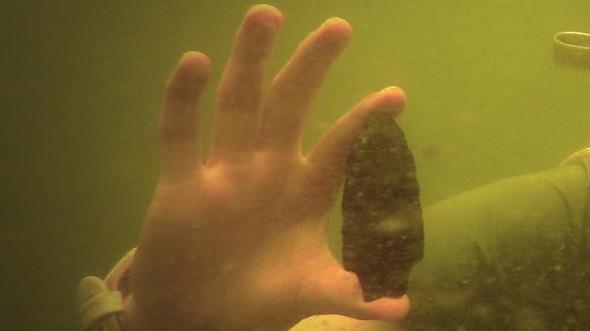
A major focus of the documentary is the Page-Ladson archaeological site, where Smith, as an undergraduate at the University of West Florida, discovered a 14,500-year-old stone knife in 2013—challenging previously accepted timelines. He continued his research at the site as a graduate student at Texas A&M University.
“That became kind of a flashpoint in submerged landscape studies because it just so happened to be one of the oldest archaeological sites in North America and one of the most securely dated sites in the hemisphere. It’s that early,” he said. “It also happened to be underwater.”
The documentary discusses how underwater discoveries reveal the lives of ancient Floridians, their tools and how they adapted to a changing environment.
“It’s been cool,” Smith said. “I got to interview a lot of these students that I employed on projects when they first started— and they’re now directing projects in Florida themselves. We got to showcase some of the next generation coming on.”
Organizing multiple boat trips and managing researchers from across the country made executing the project challenging, but Smith did his due diligence in coordinating logistics.
“I did my best to rally my network,” he said. “At the Society for American Archaeology Conference, which just so happened to be in New Orleans while we were doing the documentary, Rob and I drove over—and I basically shanghaied a bunch of my colleagues into sitting in a hotel room and being interviewed for 30 or 40 minutes at a time.
“That was great because we got a lot of really, really well-respected people on the documentary.”
The goal of the documentary, he said, is to help educate high school and undergraduate students about submerged landscape archaeology.
Although this was a completely new experience for Smith, he said it was both rewarding and successful.
“Something like this gets a ton of engagement online and gets people talking. It gets people excited about this,” he said. “It was a fun exercise in a totally different direction.”
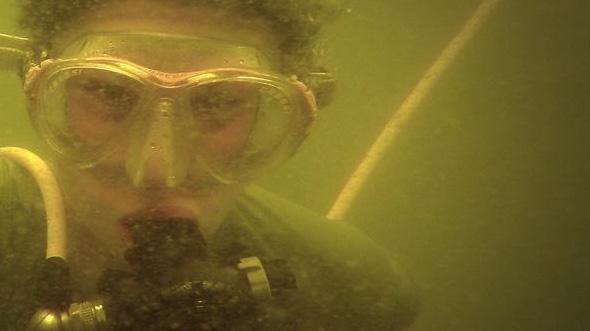
Dr. Morgan Smith is the UC Foundation associate professor of anthropology. Photo courtesy of WFSU-TV.
Photo courtesy of WFSU-TV.
UTC criminal justice duo helping to bring hope to Chattanooga youth
by Chuck Wasserstrom
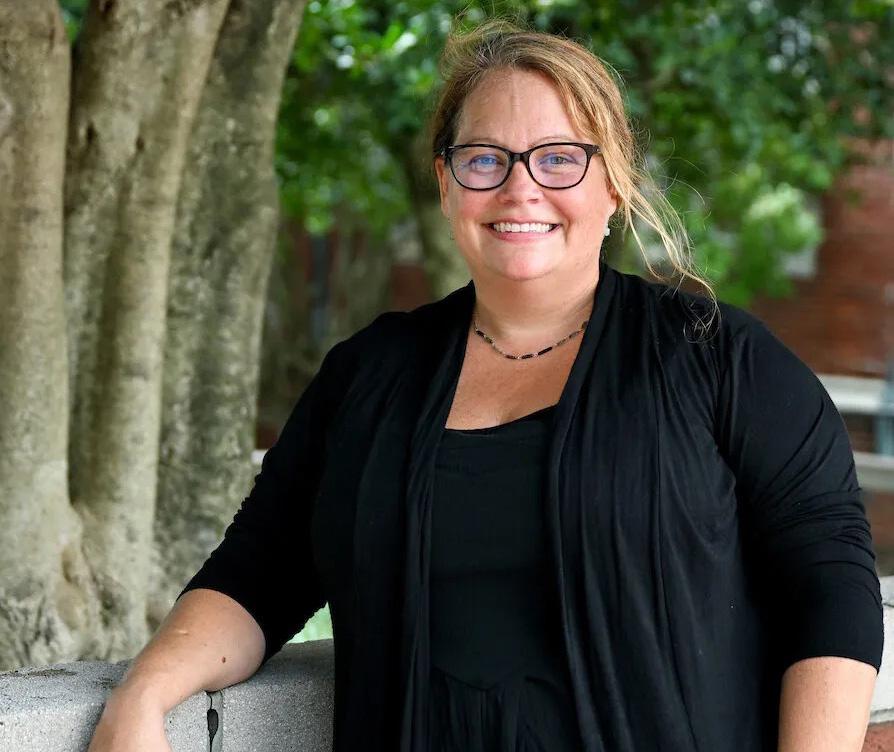
As the summer sun rose over the treetops at YMCA Camp Ocoee, Dr. Katelyn Hancock recalled, a group of teenagers stood silently watching the first light stretch across the water.
“It was still dark outside. Some of our Camp HOPE youth probably haven’t been backpacking or in the woods very much, and they were fearless in that they wanted to get out in the middle of the woods with the spiderwebs freshly webbed and the sun rising above the lake,” said Hancock, an assistant professor in the University of Tennessee at Chattanooga Department of Criminal Justice. “They wanted to see that.”
The sunrise was just one snapshot from a week full of connection, courage and growth at Camp HOPE America Chattanooga—a trauma-informed summer program serving youth who have experienced violence in their families or communities.
Operated by Partnership for Families, Children and Adults, Camp HOPE
typically serves children and teens ages 7 to 17, though exceptions are made for younger children and returning teens in leadership roles.
The 2025 summer camp, held July 28 through Aug. 1, was the culmination of year-round mentoring, group activities and one-on-one support.
A total of 61 campers participated this summer, with 107 youth currently enrolled in the mentoring program overall.
Michelle Howard, program manager for Camp HOPE America Chattanooga, said the camp isn’t just about getting away for a few days. It’s the centerpiece of an effort designed to provide stability, belonging and long-term healing.
“One week of overnight camp is equivalent to six months of therapy,” Howard explained. “We provide case management services throughout the year, but the camp gives kids something different. It allows healthy relationship building. It gives them an opportunity to
talk and share their feelings in a safe way and to have fun doing it.”
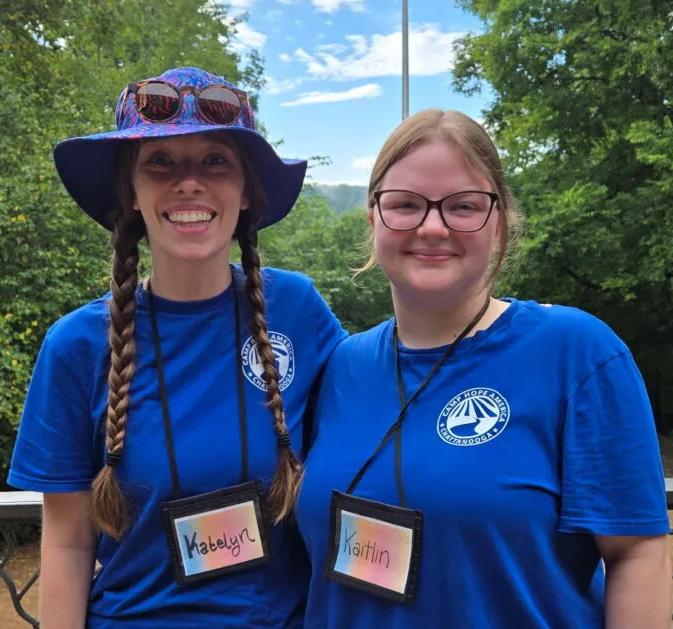
This year’s camp marked Hancock’s first time volunteering at Camp HOPE. Also volunteering was Kaitlin Brown, a UTC graduate student in the Master of Science in Criminal Justice program who has been involved with Camp HOPE for three years, starting as an intern in 2023.
This summer, she wasn’t just volunteering; she was conducting her own research.
Working closely with Howard and Hancock, Brown designed and administered a survey at camp to explore the role of belonging in the healing process for both campers and staff. Her work will serve as the foundation for her master’s thesis, a project that began taking shape earlier this year.
“I was in a class with Dr. H and I was hearing all my classmates talking about their thesis or if they were going to take the comprehensive exam,” said Brown,
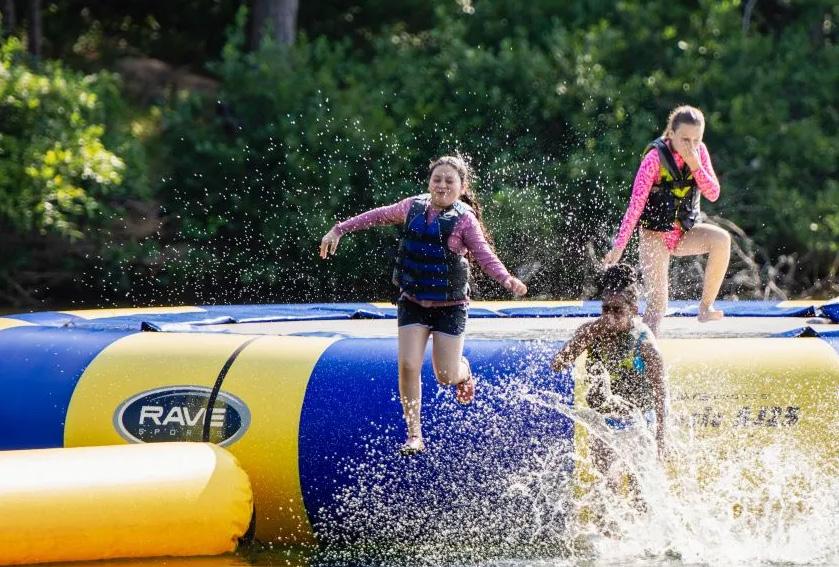
Camp HOPE America Chattanooga photo courtesy of Partnership for Families, Children and Adults.
who earned her bachelor’s degree in criminal justice from UTC in December 2024. “I was like, ‘I want to write a thesis.’”
A native of Summertown, Tennessee, Brown is on pace to graduate with her master’s degree in December 2026. While she has long envisioned a career in higher education, Camp HOPE has broadened her path.
“I still want to be a professor—that’s kind of whaere I want to end up—but I’ve really thought about entering the path of a children’s advocate,” she said. “Children are a population that doesn’t get heard because they’re so young.
“I’ve experienced that myself—feeling not heard—and I want to be able to provide that for kids.”
Howard said the connection with UTC, and the chance to collaborate on data collection and research, “is more than a partnership. It’s a support system.”
“It’s inspiring, and it gives us a strength—a backbone—to the data piece of our program,” she said. “It helps us hone in on where we can go, how we can make a bigger impact and how we can really spread hope throughout these families in a better way.”
Camp HOPE America Chattanooga, launched locally in 2020, is part of a national model that originated in California. The program serves children who have experienced trauma such as domestic violence, sexual assault or community violence. Campers participate in one-on-one and group mentoring activities.
“This year, we had four teenagers who aged out of the camper program and became camp counselors,” Howard said. “It was the first time we were able to take teenagers and mentor them into becoming camp counselors. That was a highlight for us.”
Brown, already a familiar face at Camp HOPE, played a lead role in helping train those new counselors.
“She helped us plan and facilitate a training,” Howard said. “She led our surveys. She encouraged the staff and managed the survey collection. Her mindset is to change the future for the better for anybody who comes on her journey.”
I’ve experienced that myself—feeling not heard—and I want to be able to provide that for kids.
One of Camp HOPE’s foundational practices, Hancock said, is its “challenge-by-choice” philosophy, which encourages campers to step out of their comfort zones without forcing participation. An example was during the high ropes activity, where campers and volunteers navigate an elevated obstacle course that ends in a zipline.
“I got up there and did the high ropes too,” Hancock said. “We emphasize: You don’t have to do it. But if you want to challenge yourself, you can.”
“There’s a lot of evidence behind the ‘challenge-by-choice’ concept,” Howard said. “Kids who’ve experienced trauma can feel like they have a bear growling in their ear all the time. They live in that heightened sense of fear. So we talk about whether they’re in their comfort zone, challenge zone or panic zone. We learn best and grow most when we’re in our challenge zone.”
Hancock said the work she and Brown are doing with Camp HOPE ties directly into broader discussions within criminal justice research, particularly around adverse childhood experiences—known as ACEs.
“A lot of our theories talk about how kids without strong social bonds—who’ve experienced ACEs—are more likely to follow a path of violence,” Hancock said. “What research is showing now is that when you can intervene and provide pro-social things, it gives them a way to change paths.”
Camp HOPE’s impact plays out in small moments and significant breakthroughs, Hancock said, recalling one rafting trip in particular.
“My group created a chant. They said, ‘Dip down!’ and screamed that as they paddled,” she said. “We all came together to try to paddle through the rapids and get ourselves unstuck. That’s something that Camp HOPE does: it brings people together and lets them work together and overcome hurdles.”
Brown said she’s already seeing that kind of impact on the campers she’s worked with.
“This year I was with an older group of teenage girls,” she said. “It allowed me to use different approaches—mindfulness, self-love, coping techniques—from what I’ve learned in school and from Michelle and the Partnership team.”
When one camper said she was interested in criminal justice, Brown and Hancock spent time with her talking about the field, their own experiences and UTC’s program.
“We were both like, ‘Let’s spend 30 minutes talking about the program we’re both a part of,’” Brown recalled. “That was really cool.”
Howard said that kind of mentoring is what the program is all about.
“The kids see these adults’ eyes light up when they walk in the door and it gives them a feeling of belonging, of being wanted and needed and important in someone’s life,” she said.
Brown’s nickname at camp is “Miss KK,” and she’s been embraced by returning campers each year she’s been involved.
UTC Assistant Professor Katelyn Hancock and graduate student Kaitlin Brown were volunteers this summer at Camp HOPE America Chattanooga. Photo courtesy of Dr. Katelyn Hancock.
UTC recognized among nation’s best veteransupporting universities by Military Times military science
The University of Tennessee at Chattanooga has again been recognized by Military Times as one of the nation’s top universities for veterans and military-connected students.
Military Times’ 2025 Best for Vets: Colleges list includes 357 colleges and universities across the country, the largest field in the program’s history. UTC placed second among Tennessee institutions and is the only university in the state recognized for offering both traditional in-person and online programs for veterans.
Military-connected students account for more than 15% of UTC’s enrollment, including veterans, active-duty personnel, National Guard and Reserve members, and spouses or dependents.
“We serve a community that relies heavily on trust,” said Sylvana Matthews, director of the Office of Veteran and Military Affairs at UTC. “Our students want to know the resources they need are here and that the doors are open when they arrive.
“Year after year, we hear that UTC feels like a place where they can settle in, ask questions and get the kind of support that helps them stay on track.”
Matthews said the University’s focus on relationships is central to the VMA experience. The Veteran and Military Affairs Student Ambassador Program provides peer connection from the start, and dependents often help create a sense of familiarity that eases the transition to college.
“Our goal is simple: We meet students where they are, listen to what they’re facing and help them find the resources that fit their needs,” Matthews said. “Some students are navigating education benefits for the first time. Others are balancing service commitments or returning to the classroom after being away for years. Every path looks different, so our support has to reflect that.”
UTC offers academic credit for military experience, personalized advising, an on-campus VA certifying official, and collaborations with partners such as Career Connections, the American Job Center and the U.S. Department of Veterans Affairs.
Military Times describes its rankings as the most comprehensive evaluation of higher education support for service members, veterans and their families. Evaluation is based on academic quality, student support services, affordability and outcomes for veterans—including graduation and retention rates.
According to the publication, this year’s national survey saw significant growth among public universities and community colleges, along with continued expansion of online program options and dedicated veteran resource centers.
“The record-breaking participation this year shows that higher education leaders are listening and working to create environments where veterans can thrive academically and personally,” said Jon Simkins, executive editor of Military Times and Sightline Media Group.
Photos by Angela Foster.
Dean Linda Frost has left her mark on UTC Honors College
By Chuck Wasserstrom
Dr. Linda Frost, the founding dean of the University of Tennessee at Chattanooga Honors College, will transition to a faculty role after the 2025-26 academic year.
Provost and Senior Vice Chancellor for Academic Affairs Jerold L. Hale shared the news in a campuswide announcement that Frost, who has led the Honors College since coming to UTC in 2013, will join the Department of English following her time as dean.
“Over the past 12 years, Dr. Frost has overseen extraordinary growth in size, scope and impact, as the Honors College has become a signature part of the UTC experience for students across all majors and a nationally recognized model of interdisciplinary learning,” Hale said.
Frost told Honors College students in a recent video message that the timing of the announcement reflects both her confidence in the college’s trajectory and a personal desire to be back in the classroom.
“I’ve decided that it’s time for me to go back to the faculty to spend some time in the classroom where I learned to first love this work,” she said. “It’s been a hard decision for me to make, but I feel really confident that the Honors College is in a wonderful place.
“It has been an amazing ride and I’m grateful to all of you for all that you have given me, all the wonderful experiences, all of the friendship, all of the love, all of your earnest hard work.”
Experiential Learning Opportunities in the Communication Department
By Eli Dibrell
TheUTC Communication Department offers a wide variety of unique opportunities that give students hands-on media experience.
Those media outlet opportunities include, The Echo, Mocs News, Rising Rock, and The Perch, which provide hands-on learning in reporting, broadcast news, and radio production.
Some courses in the department also combine real-world projects, including content creation, public relations campaigns with the community, publication design, video and audio production, podcasting, feature writing and photojournalism.
The outcomes of these courses continuously have been published in platforms like Chatter Magazine, and through partnerships like the BBC’s upcoming “Introducing in America: Tennessee” initiative.
Special topics and departmental projects further these opportunities.
The PULSE project gives students the chance to connect with public affairs reporting at the Tennessee State Capitol every spring.
While the partnership with WUTC 88.1 offers pathways for audio stories to be published or aired, additional collaborations include the Signal(s) production studio, the new College of Arts & Sciences Magazine, and photo night, which is an annual event that showcases students’ work.
While all of these opportunities are unique, Rising Rock stands out the most, it’s one of the strongest examples of experiential learning at UTC.
Billy Weeks runs the award-winning class like a real newsroom, dedicated to showcasing the people, culture and stories around Chattanooga.
Students in the COMM class create photo essays, multimedia features, and comprehensive reporting that has earned state and national recognition. Addison Middleton, head editor in Rising Rock describes the class as “a student led multimedia journalism class that focuses on non-fiction stories of Chattanooga residents and organizations.”
In addition to those opportunities, the class also helps the students create strong professional portfolios and connects them to major media organizations; currently the class has partnered with CNN International, with students’ work being submitted for national and global recognition.
CNN INTERNATIONAL FEATURED STORIES
Saving the Laural Dace
Addison Middleton
A Second Chance for the Sturgeon Syndey Banks
Fertile Land & Blurring Boundaries Zoie Denton
Growing for Change Ella Sole
Growing Green Minds
Ansley Barry
Chattanooga, the First National Park City in America
Delaney Holman
The History of the First National Park City in America
Malcom Key
alumni spotlight
Highly decorated UTC alumna named Pickering Fellow
By Chuck Wasserstrom
University of Tennessee at Chattanooga aluma Emma Sprayberry has been selected for the Thomas R. Pickering Foreign Affairs Graduate Fellowship—a prestigious U.S. Department of State program that prepares individuals for careers in the U.S. Foreign Service.
The May 2024 graduate is the first UTC student or alum to earn a Pickering Fellowship.
Sprayberry, who hails from Rossville, Georgia, was an Innovations in Honors student in the UTC Honors College with majors in both humanities: international studies (with an emphasis on Asian studies) and Spanish—as well as a minor in anthropology.
She is currently in Taichung, Taiwan, on a Fulbright English Teaching Assistantship, teaching English to students in grades 1 through 3 at Shu-De Elementary School.
“The Pickering is the exact award that Emma needs to move on in her career—which I think is going to be quite amazing,” said Dr. Trey Straussberger, director of the UTC Office of National Scholarships. “Emma has been building toward this for five years. This honor reflects the arc of her passion, her preparation and her commitment to a future in diplomacy.”
The merit-based Pickering Fellowship supports exceptional individuals from across the country in preparing for careers in the U.S. Foreign Service. Fellows receive two years of financial support to pursue a master’s degree in international affairs or a related field, along with mentoring, professional development and two high-level internships—one at the State Department in Washington, D.C., and one at an overseas embassy or consulate. Upon completing their graduate studies and meeting State Department entry requirements, fellows commit to at least five years of service as Foreign Service Officers.
Sprayberry said landing the fellowship was a “really overwhelming” and emotional moment.
“It felt like it couldn’t be real,” she said. “I applied months earlier and had gone through so many stages. Getting the email was surreal. I immediately thought of how many people helped me
along the way, especially my friends and cohort members who watched me go through the whole process.”
Through Pickering, Sprayberry will pursue a master’s degree at the Johns Hopkins University School of Advanced International Studies (SAIS)—spending her first year at its Bologna, Italy, campus and her second year in Washington, D.C.
“Getting Pickering means I can afford to go to graduate school and pursue a career in the Foreign Service, which is something I’ve worked toward for years,” she said. “I’m really excited to study in Italy and then finish the program in D.C. It’s going to give me so much exposure and experience before I begin my service.”
At UTC, Sprayberry amassed an impressive list of national competitive awards, including a Fulbright Canada-Mitacs Globalink Research Internship, a Killam Fellowship to study at McGill University in Canada, a Gilman Scholarship, a FreemanASIA Scholarship, and a Public Policy and International Affairs Junior Summer Institute Fellowship at Carnegie Mellon University in Pittsburgh, Pennsylvania. She studied abroad in Korea, Canada, Spain, Germany and Panama—all before earning her bachelor’s degree.
Sprayberry said her current experience in Taiwan has given her a new perspective on her future, saying she wants to focus on education policy.
“I’ve become more extroverted and I’ve learned how to step into unfamiliar environments and connect with people across language and culture,” she said. “That’s really important to me. I want to pursue a career in public diplomacy, and I know now more than ever that I’m on the right path.”
She also credited the UTC Office of National Scholarships for its role in helping her pursue international opportunities.
“I definitely wouldn’t have these opportunities without ONS,” she said. “I hope more students find out about it. It made all the difference for me.”
UTC history major Emily Kleiner, who helped curate “Glass from the Past,” stands with a vintage glass display at the Chattanooga Public Library.
UTC history student helps bring city’s past into focus
By Bethany Cothran
University of Tennessee at Chattanooga history major Emily Kleiner spent the spring 2025 semester curating a public exhibit for the downtown Chattanooga Public Library as part of her internship with Overlooked Materials, a local glass recycling service.
Early in her internship, Kleiner—who just completed her junior year at UTC—was invited to help curate a portion of the exhibit, “Glass from the Past,” which explores Chattanooga’s early 20th-century history of glass production.
“I’ve been doing a lot of research … a lot of talking to people, building connections and getting a better understanding of Chattanooga,” Kleiner said. “I’m not from here. I moved here (from New Jersey) around five years ago, so it’s very interesting learning about the unique, local history.”
More than 100 years ago, Chattanooga looked vastly different than the National Park City it is today. The urban landscape was dominated by factories and train stations rather than shops and restaurants, and the early 20th century was a time for industrialization in the old gateway to the Deep South.
During this time, glass was the standard for storing products from food to medicine, and its production in Chattanooga’s Alton Park factory made the city a leading source for glassware.
Chattanooga is widely known as the birthplace of Coca-Cola bottling, but fewer people realize the city was also once home to one of the nation’s largest glass manufacturers.
For decades, the Chattanooga Glass Company produced tens of millions of bottles each year for Coca-Cola and other major brands, employing hundreds of workers at its Alton Park facility before closing in 1988.
Now, many of the old factory buildings remain with other businesses taking their place. To Kleiner, recognizing the history of these places is an important part of connecting with the city.
“A lot of these buildings that used to be completely different businesses still stand today,” Kleiner said. “I think people can build a connection like, ‘This is what that building looked like 100 years ago versus now.’”
Once labeled the dirtiest city in America, Chattanooga has revitalized itself to become a popular tourist destination for its history and beauty. Exhibits like “Glass from the Past” highlight the importance of preserving the city’s industrial heritage even amid reinvention.
“When learning about the past and history, think of it as learning people’s stories. They’re now narratives,” she explained, “and that can be different from other people’s experiences.
“Learning those perspectives and learning the actual events … and using that to try to figure out what the narrative is can definitely be very helpful.”
Kleiner said working on “Glass from the Past” has been an exciting learning opportunity. Although she is not sure what she wants to do after graduation, she is more confident in her skills and goals after working on this exhibit.
“I’ve learned how important it is to talk to people and to build those connections because when you do that, those people can help you out and give lasting advice,” she said.
“This is Scenic City and it prides itself on local stuff,” Kleiner said. “I feel like learning that local history can make people feel more a part of the community.”
Photo by Angela Foster.
The Super Powers of the Humanities in an Increasingly Technological World q a &
Humanities are more essential than ever in this era that is being defined by artificial intelligence, quantum computing, and rapid technological transformation.
Society is facing profound questions about ethics, meaning, identity, and responsibility. Today’s technologies do more than automate tasks; they challenge long-standing assumptions about human agency, creativity, privacy, and the nature of knowledge itself. Science is pushing the boundaries of what is possible, and business and healthcare are adopting more intelligent systems that aim to reshape decision-making.
The humanities—encompassing a wide array of disciplines such as philosophy, religion, history, literature, and the arts—can provide the interpretive frameworks needed to navigate this new landscape with wisdom, experience and humanistic perspectives.
The humanities foster responsible innovation and help researchers anticipate the societal impacts of their discoveries. In business, they guide leaders in building human-
centered organizations amid the pressures of automation and data-driven strategy. In health, they ensure that care remains compassionate, ethical, and deeply attuned to lived experience—even as machine-learning models and precision technologies reshape diagnosis and treatment.
As we head into a future with machines that learn the humanities remind us what it means to be human. They are not separate from science, business, or health; they are the disciplines that help them remain aligned with the human condition. In the age of AI and quantum computing, the humanities are not a luxury—they are the compass by which we orient progress toward the common good.
The following is a question-and-answer session with Pam Riggs-Gelasco, a chemist and Dean of the College of Arts and Sciences—a college where the humanities intersect with natural and social sciences. The discussion centers on the importance of teaching the humanities and how the humanities foster interdisciplinary inquiry at UTC.
This is exactly what is needed in our body politic today, people that understand that the world is not black and white.
Q. What does studying the humanities teach us about what it means to be human?
The humanities are at the core of what makes our lives richer as humans: how we communicate, how we tell stories,how we worship, how we define our values, how we make decisions based on shared history or ethical frameworks, and just more generally, how we are connected to one another.
Q. How would society change if we stopped teaching or funding the humanities?
The National Humanities Alliance describes it this way, “Studying the humanities not only equips you to make a living but also to lead a fulfilling life.” How less rich would our lives be without literature and poetry opening windows of empathy through storytelling? How less safe would we be without understanding historical context before making decisions? What would the impact on justice be without people understanding ethics? How much less connected (and potentially less secure) would we be without understanding different languages, religions, and culture?
I hope we don’t find out the answer to these questions, but there is an alarming trend of devaluing the humanities relative to other scholarly disciplines that are thought to be more practical.
Q. How do the humanities help us understand other people’s experiences or cultures?
The study of languages, world history, and world religions all help to expand our understanding of others we share the planet with. Literature, too, helps develop empathy and understanding of people who have different lived experiences, even if those stories are fictional. What students inevitably discover is that the differences provide enrichment and aren’t something to be feared.
Q. What role do the humanities play in fostering democracy or civic engagement?
In the Humanities, students tackle complexity, whether it is analyzing a text for interwoven themes, the connections between languages or the ethical
conflicts that arise with new technology. This is exactly what is needed in our body politic today, people that understand that the world is not black and white, but a complex mixture of grays and other colors. Students who train in the humanities learn to look for complexity and context to their world and make better informed decisions because of it.
Q. How can the humanities bridge divisions in an increasingly polarized world?
Students who study the humanities learn to look for context and explore multiple viewpoints. They are equipped to articulate the connections between ideas and can help frame our discourse from a place of empathy and understanding. They are taught to consider multiple viewpoints. Differing opinions (and learning how to research and defend those opinions) sharpen our intellect. We could use a lot more of that!
Q. How do employers benefit from hiring people with humanities backgrounds?
We recently had a tech company in Chattanooga approach us for students to serve as interns specifically from the Humanities. They had worked with science students, engineering students, and business students before. The employer specifically wanted to hire students from the Humanities this time because of the skill sets they bring to the workplace: the ability to communicate well, to provide critical analysis of data and research, and to creatively find trends and connections for new business opportunities. Think about how many lost business opportunities there would be if we didn’t have people in companies who understand different cultures, who can communicate new ideas well, and who can creatively navigate the rapidly changing landscapes of the workplace.
Q. Can the humanities drive innovation in science, technology, or business?
Absolutely. Innovation is about ideas, creativity, and thinking outside the box, elements that are emphasized in the humanities. The technical expertise to implement those ideas can follow. In addition, humanities students are well suited for explaining and “selling” their
ideas and understanding what might resonate with their audience or consumers.
”
Q. What role will the humanities play in an AI-driven or technologically advanced future?
The humanities are already playing a major role in the development of AI, particularly with its ethical use. Humanists have highlighted the environmental effects of AI power usage, the infringement on copyrighted material and privacy, and the possible biases that could be magnified depending on the datasets used. On the positive side, AI can assist in digesting mountains of texts and has become a powerful aid in research for the Humanities. Faculty are also using AI tools in the classroom to help students refine their writing and communication skills. Humanities students have the strong language and critical thinking skills that align well with new jobs in prompt engineering. We do have a new program focused on the direct overlap of technology and the humanities in the Narrative Design minor offered through the English Department.
Q. How do the humanities help us navigate issues like climate change, biotechnology, or digital ethics?
Some experts believe that we are past the point of no return on climate change and that our task now is to learn to adapt to a hotter planet. Study of societal impacts of a hotter planet are now needed, and that will include ethical, social, and practical considerations.One of our newest majors, the Environmental Studies major, focuses on the intersectional space between the humanities and environmental issues. Ethics should also be playing a big part of the development of AI and any policies that emerge for its regulation, though many have argued that the ethical discussions are lagging in pace relative to the technical advances. I am reminded of Jeff Goldblum’s character in the movie Jurassic Park, in pointing out the ethical irresponsibility of creating dinosaurs, “Your scientists were so preoccupied with whether or not they could, they didn’t stop to think if they should.”
Four UTC students experience India’s history & humanity during overseas excursion
By Carter Graham
Athree-week study abroad trip to India gave four University of Tennessee at Chattanooga students the chance to experience the country’s rich culture, vast population and unique challenges firsthand.
Following the conclusion of the 2024-25 academic year, the students—led by Dr. Jaclyn Michael, associate professor of religion in the UTC Department of Philosophy and Religion—traveled across the country to iconic historical sites and landmarks while focusing on interacting with locals to experience their culture.
The students, Michael said, had taken philosophy and religion courses and were able to gain a better understanding of what they learned.
“The purpose of the trip is to extend their learning in the class and to gain in-country experience,” she said, “and learn about new aspects of the countries, cultures, religions, economies and politics that maybe we didn’t have a chance to do in class.”
Michael has spent a large portion of her life visiting India and mentioned that “it can be an overwhelming experience.”
“You’re having a full sensory overload,” she explained. “India has one of the world’s largest populations. It’s very crowded. I’ve been coming to India for 15 years now on a yearly basis, but still, it’s super different when you’re confronted with the heat. The sheer number of people is something that is really, really challenging to how you experience the space.”
&
In addition to the cultural shock, Michael and the students were flying into the country while India and Pakistan were in an active military conflict.
“That was a wake-up call for a lot of the students because often in the United States we don’t have to think about those kinds of things,” she said.
Knoxville, Tennessee, native Thomas Lynberg, majoring in philosophy and religion with a focus on pre-law and a minor in environmental studies, explained that he didn’t want a normal study abroad experience.
He got his wish when only 20 to 30 people were on the commercial flight to India.
“I was so nervous,” Lynberg said. “I’m going to be insanely cramped in this airplane. I’m going to hate the 16 hours of flight time. I got on there and I’ve got my own row and thought this can’t be that bad.”
Lynberg wanted a different experience and said he found it in India.
“I wouldn’t get that much of a different experience if I went to Europe,” he explained. “I went to India. The experience was delightful. It was wonderful. I managed to learn a lot of new things—partially a new language, which was very hard.”
The trip was split into two parts, Michael said. The first part was based around learning the culture, history and society of India. The second part was more interactive, where the group interacted with different constituencies.
They were insanely welcoming. They treated us like their home was our home.
”
She compared Delhi to another famous city steeped in history, Rome. She said it’s a place where “everywhere someone turns, there is a historical monument.”
Lynberg said he was fascinated by the religious customs and rituals.
“We visited loads of historical sites, 14th-century monuments, temples, shrines and tombs,” he said. “We got to see the Taj Mahal. We got to meet a lot of great people. They showed us many great things. We were immersed in the culture, not only in the popular sites. We got to see street shrines. We got to use their modes of transportation.
“We had the opportunity to go to rituals, spiritual connections, almost like Sunday at a church here in the United States. We got to go to their church and their prayers, which was a really great experience.”
Lynberg described the Taj Mahal as breathtaking and an experience he’ll never forget.
While in Delhi, Michael took students to two different universities to witness the differences in class and resourcesavailable to them.
She also introduced them to a local nongovernmental organization (NGO).
“This NGO works on water sustainability and harvesting because the area is semi-arid; it’s like a desert,” Michael said. “The students actually went to some of the field sites to see how that NGO works on harvesting water and keeping it safe. We had an impromptu meeting with about 25 farmers who work with that same NGO.”
Lynberg was impressed with their agricultural infrastructure and the differences in how they grow crops. Instead of massive one-crop farms, they had a variety of crops growing at a time.
“They said, ‘Let me show you what I grow. I want you to try it. Let me get you some milk from our cow and then we’ll get our tour started,’” he explained. “It was awesome. They were insanely welcoming. They treated us like their home was our home.”
Michael hoped that these experiences would make a lasting impact on her students.
UTC Honors Dr. Darrell Walsh for 35 Years of Service
&
By Ella Millard
As part of this year’s Founder’s Week festivities, the University of Tennessee at Chattanooga honored 194 employees during its Service Awards Luncheon. The event celebrated milestone anniversaries ranging from five to 55 years of service.
Among those recognized Assistant Professor Dr. Darrell Walsh was honored for 35 years of service and described the milestone as “surreal.”
He reflected on his first Service Awards Luncheon five years ago, recalling how employees with more than 20 years of service received a UTC-branded bag.
“I looked at that and I thought, ‘man, I want a bag,’” Walsh said. “I wasn’t really sure if I would be here for 20 years, but I really have enjoyed my journey.”
Walsh also pointed to a Confucius quote included in the event program: “Choose a job you love, and you will never have to work a day in your life.”
“I think that characterizes my experience,” Walsh said.
Dr. Walsh began his UTC career in 1990 as an Admissions and Financial Aid officer after earning his B.S. in sociology. He simultaneously launched a 31-year military career, retiring in 2015 as a Lieutenant Colonel. At UTC, he championed diversity recruitment and later coordinated the freshman seminar and Higher Ground programs to help students succeed.
After joining the sociology department as a lecturer in 2005, his doctoral studies were interrupted by three deployments to Iraq and Afghanistan. He earned numerous military honors, including the Bronze Star and campaign medals, before returning to campus to complete his Ph.D. and become a tenure-track Assistant Professor. Throughout his career, Walsh has served as a mentor and advisor to countless students.
Darrell Walsh with Chancellor Bruce at the Service Awards Luncheon.
New award provides first-ever summer funding for math and environmental science master’s students at UTC Stuckey Endowment Expands Support for Graduate Students
By Michael C. Watson
While completing his master’s degree in mathematics at the University of Tennessee at Chattanooga, Andrew Stuckey looked for a meaningful way to give back. With only his thesis left to finish, he felt compelled to support students who would follow a similar interdisciplinary path.
“I’ve spent the last decade moving between underwater cinematography, mathematics and environmental science, and I’ve learned that life is most beautiful where art, math and science intersect,” Stuckey said.
He credits his adviser, Dr. Xiunan Wang, for helping him navigate that journey. “She somehow managed to keep me focused while still giving me the space to explore. This field has shaped how I view the world, and this award is my way of helping support its future.”
With input from leaders in the Mathematics Department; the Department of Biology, Geology and Environmental Science; and guidance from College of Arts and Sciences Dean Pam Riggs-Gelasco, Stuckey’s idea became reality.
The Andrew Stuckey Endowed Award in Mathematics and Environmental Science now provides summer funding for a graduate student—support that previously did not exist.
Graduate students typically receive aid during the fall and spring semesters, leaving a financial gap during the summer when many are conducting research or completing fieldwork. Stuckey’s gift fills that need by helping cover housing, transportation and other basic expenses.
Math Department Head Chris Cox said the award will make an immediate impact.
“We’re grateful for Andrew’s thoughtfulness, knowing this merit-based award will benefit well-deserving
students, of which we are fortunate to have many,” Cox said.
The award is also unique in its cross-disciplinary focus, supporting students in mathematics as well as those pursuing graduate studies in environmental science.
Dr. Gretchen Potts, head of the Department of Biology, Geology and Environmental Science, said the gift strengthens her department’s ability to support students whose work crosses scientific boundaries.
“This gift will provide much-needed summer support for our graduate students working at the intersection of environmental science and computational science,” Potts said. “The department is very grateful that Mr. Stuckey has chosen to recognize our program along with math.”
Stuckey also asked how each department stays connected to its alumni. He hopes future recipients will maintain relationships with one another and serve as a professional network as they pursue advanced studies or career opportunities.
“One theme emerged while working with Andrew to define what this award would look like—collegiality,” said Michael Watson, director of advancement for the College of Arts and Sciences.
That emphasis aligns with Riggs-Gelasco’s strategic goal to expand student-facing support through scholarships, awards and experiential learning funds.
“Our graduate students are often left out of scholarship considerations, and they have unique needs relative to undergraduate students,” RiggsGelasco said. “It was terrific to see such a generous gift focused on their needs.”
For Stuckey, the award reflects gratitude—both for the faculty who guided him and for the academic programs that shaped his perspective. His gift demonstrates how one student’s inspiration can create lasting opportunities for future scholars.
a family in harmony
The Smith Legacy
By Amy Donahue
If music is the universal language, then Lee Lane Smith (’89) and her family speak it fluently.
A lifelong educator and current Gifted Education Teacher in Hamilton County Schools, Lee’s journey to the University of Tennessee at Chattanooga (UTC) began with music and a scholarship.
“I took lessons at Cadek with Christine Taussig Sasse and played in the Cadek Orchestra under Mark Reneau,” Lee recalls. “At sixteen, I started playing in the UTC Orchestra while taking violin lessons from Don Zimmer, the violin professor at UTC. I was later offered a performance scholarship to play with the orchestra and the string quartet.” Lee’s passion for music didn’t just shape her education; it also shaped her family. It was at UTC’s Roland Hayes Concert Hall that she met her husband, Daniel Smith (’93), a vocal performance major.
“Daniel and I met when he was performing in the opera The Masked Ball with the Chattanooga Symphony and Opera. He was still a student, and I had just graduated,” she said. “I’ve been a member of the CSO since I was in college in 1986.”
Though making a living as an opera singer proved challenging, Daniel was, in Lee’s words, “a renaissance man.” He owned Choo Choo Carpets, taught music at City High School, sold cars and eventually became a pipe fitter. Still, his love of music never waned. He continued to sing in church choirs and instilled his musical passion in their children, especially Ivy.
Ivy began their studies at UTC as a biology major before switching to piano performance and pedagogy, graduating in May 2025.
Tragically, Daniel passed away a year before Ivy’s graduation. In his honor and to celebrate Ivy’s achievements, Lee made a meaningful gift to the UTC Fine Arts Center through the Name-a-Seat Campaign.
“Between the three of us, we’ve probably performed on that stage over 100 times,” Lee shared. “We told Ivy about the named seat at their senior recital last April.”
A third-generation UTC family, Daniel’s mother, Mary Meyer Smith, earned her bachelor’s degree in social work from the University of Chattanooga in 1955 and later a master’s degree in Counselor Education in 1988. Daniel and Lee’s other daughter, Sarah Smith Weyler (‘21), is also a UTC alumna with a degree in Environmental Policy and Planning.
Now, as she looks toward retirement from Hamilton County Schools, Lee plans to open her own violin studio—continuing the family’s tradition of sharing the gift of music.
make a gift
Join the Smith family in leaving a lasting legacy. The UTC Name-a-Seat Campaign allows you to inscribe a name on a seat in the Roland Hayes Concert Hall or Dorothy Ward Theater— supporting student scholarships and ensuring your legacy is part of every performance for generations to come.
Lee Lane Smith (’89) and Ivy Smith (’24) posing in front of the Roland Hayes Concert Hall inside the Fine Arts Center.
The Roland Hayes Concert Hall in the UTC Fine Arts Center
Ivy Smith accompanying UTC’s Orpheus Chorale.
CAS Alumnus
Bo Watson
Honored with
2025 Outstanding Service Award
UTC’s Division of Advancement announced the recipients of its annual awards honoring distinguished alumni. Among these, the Outstanding Service Award celebrates community leaders who demonstrate exemplary personal service to the University of Tennessee at Chattanooga and the broader community. In 2025, the award honored Senator Bo Watson for his long-standing support of and service to the University.
The Outstanding Service Award is among UTC’s highest honors, recognizing alumni whose leadership and personal commitment strengthen the University and the Chattanooga community it serves. Watson’s career in public service and healthcare, paired with decades of engagement with UTC, reflects the spirit of service the award is designed to recognize.
Senator Bo Watson was first elected to the Tennessee General Assembly in 2004 and is currently serving the fourth year of his third four-year term. He previously served as Speaker Pro Tempore (2011–2016) and now serves as chairman of the Finance, Ways and Means Committee. In addition to his public service, Watson has practiced physical therapy for more than three decades and currently serves as director of sports medicine and therapy services at HCA Parkridge Medical Center.
Watson was connected to UTC long before enrolling as a student. He grew up attending football games on Chamberlain Field with his father and cheering on his older sisters, who were University students. He later graduated magna cum laude from UTC with a Bachelor of Arts in Biology before continuing to the UT Health Science Center, where he earned a Bachelor of Science in Physical Therapy (’84).
He continues to give back to his community through service with organizations including Baylor School, the University of Tennessee Alumni Association, the American Cancer Society Relay for Life, and the YMCA North River Branch.
“People often think that all the University is looking for is a financial commitment, when the most valuable treasure that any of us has is our time,” Watson said. “I’m very proud of the advocacy and influence I’ve been able to have on the University of Tennessee at Chattanooga. My DNA is invested in this school.”
Watson will be recognized at campus events throughout the year to celebrate his achievements and longstanding commitment to the University.
For Watson, service to the University has never been about recognition, but about ensuring future generations of students have opportunities to learn, grow, and lead.
college community &
Notes from
the
Dean’s Advisory Council
“I believe in the power of education and especially how art can be transformative in people’s lives. It certainly has helped me to work through some very difficult times in my own life. My education at UTC has impacted how I view the world, and what I can do to make a difference in the lives of those who are less privileged than I. I simply want to pay that forward.
– Olga de Klein
“My “why” for supporting UTC is to further bolster the institution that propelled me into adulthood. I believe the life experiences I have had since graduation allow me to offer valuable insights to current students and faculty, particularly on the essential balance between the arts and the sciences in understanding the world.
– Stephen Smith
learn & connect
Want to learn more about the College of Arts and Sciences, the Dean’s Advisory Council, or how you can give back to UTC? Scan the QR code or email CAS@UTC.edu.