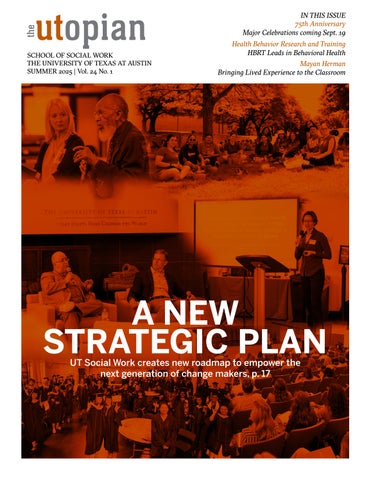
UT Social Work creates new roadmap to empower the next generation of change makers, p. 17
A Dean’s Perspective
"Acknowledging our common humanity is not just important; it’s transformative."
In a world that can be relentlessly challenging, social work calls us to recognize the humanity in others and in ourselves.
Recognizing our common humanity may serve as a strong anchor for thinking and acting in ways that promote a better world – a world replete with people flourishing.
Indeed, when social workers enter environments and situations of critical significance – when their professional training and commitments are utilized in places like hospitals and treatment centers, schools and military bases, boardrooms, soup kitchens and across kitchen tables –social workers are required to make ethical and informed decisions that honor the dignity and worth of every person.
We are required to recognize, embrace, and act in service to our common humanity. And this holds true whether we have much, or little, in common.
To see our humanity, to celebrate and champion it, is a noble and challenging task. You’ll read several stories in this issue about social workers succeeding at “being human” in the classroom and workforce. They are the outstanding alumni, faculty, staff, and students of our UT Social Work community.
Recognizing our common humanity is powerful. It creates change. Holding the conviction that every individual matters and has the potential for growth and transformation generates hope, drives opportunity, and inspires us to live, work, and serve in meaningful and impactful ways that improve lives.
The world needs people who can see and embrace being human. The world needs social workers who lead and help others see and embrace it. I have no doubt that social workers from UT Social Work will continue to lead in wisely recognizing that humanity.
With gratitude,
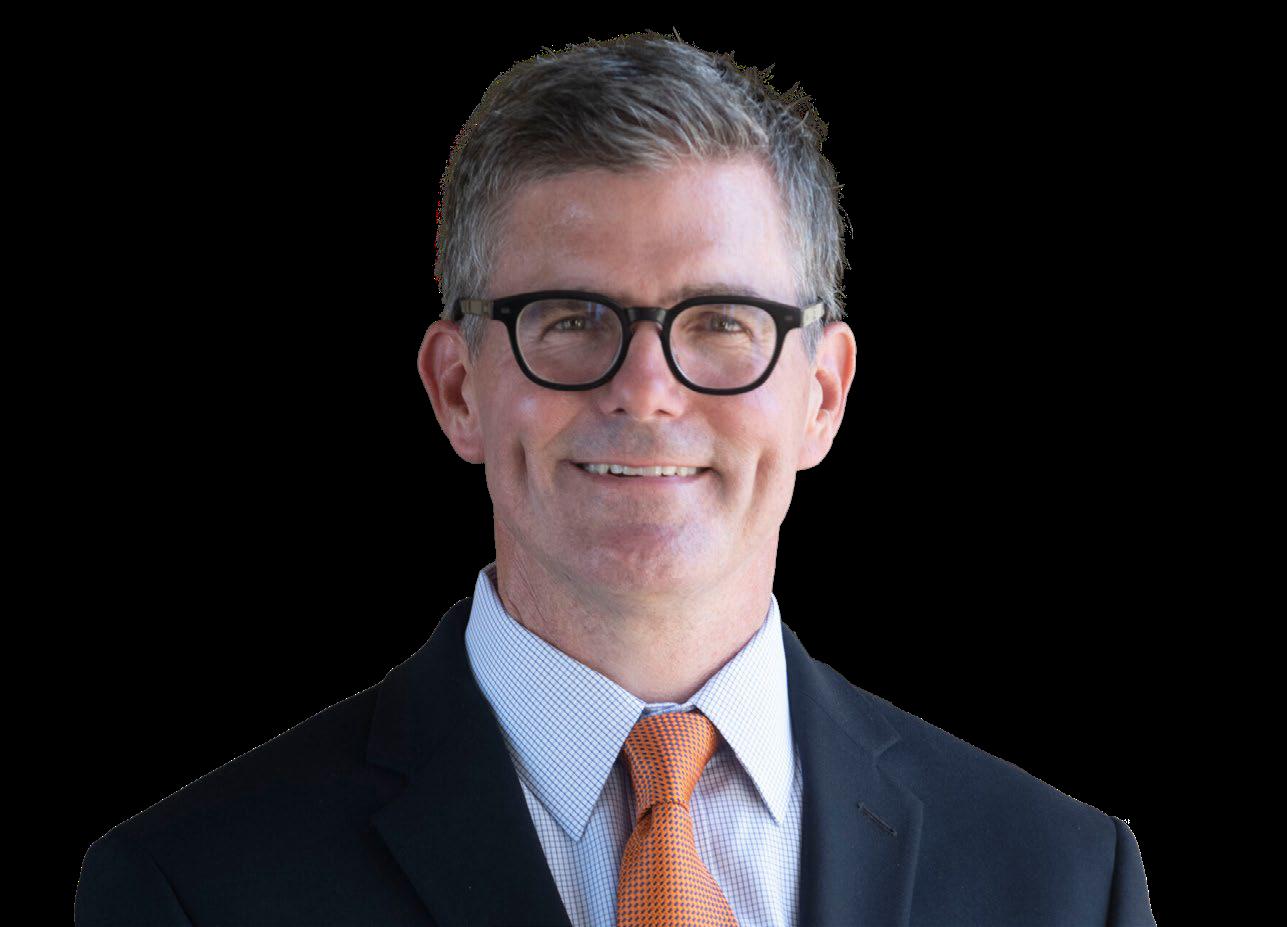
Allan Cole, Dean Allan Cole
01 People News
Recognizing new faces, thanking retiring faculty and staff, and highlighting student excellence
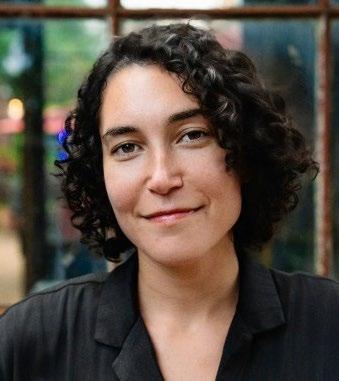
11 Mayan Herman
UT Social Work's newest clinical faculty member brings shared life experience to the classrom
04 Skyler Hamilton finds her Path
MSSW student excels as a firstgen student on the Forty Acres
07 Life Changing Investment
Marilyn White provides major gift for doctoral research
12
Pioneering
Prevention
HBRT leads research into behavioral health
13
Students take on Washington D.C.
New course "Social Work Leadership for the Public Good" teaches advocacy
23
Building Bridges to Learning
UT Charter School celebrates a long history of practicum placements 17
Defined pillars uplift a bold, grand vision for UT Social Work
PEOPLE NEWS NEW FACES
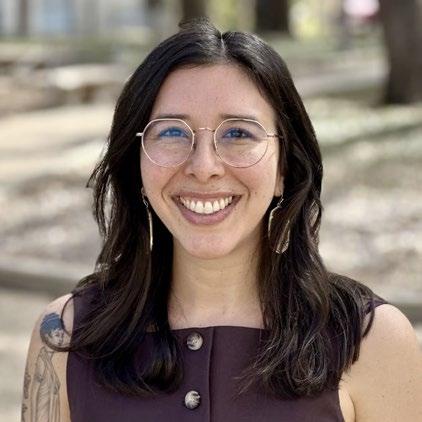
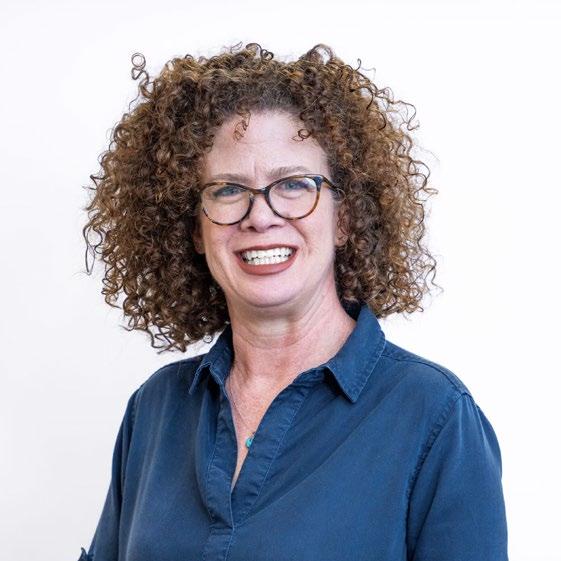
UT Social Work welcomes several new faces to our faculty and staff.
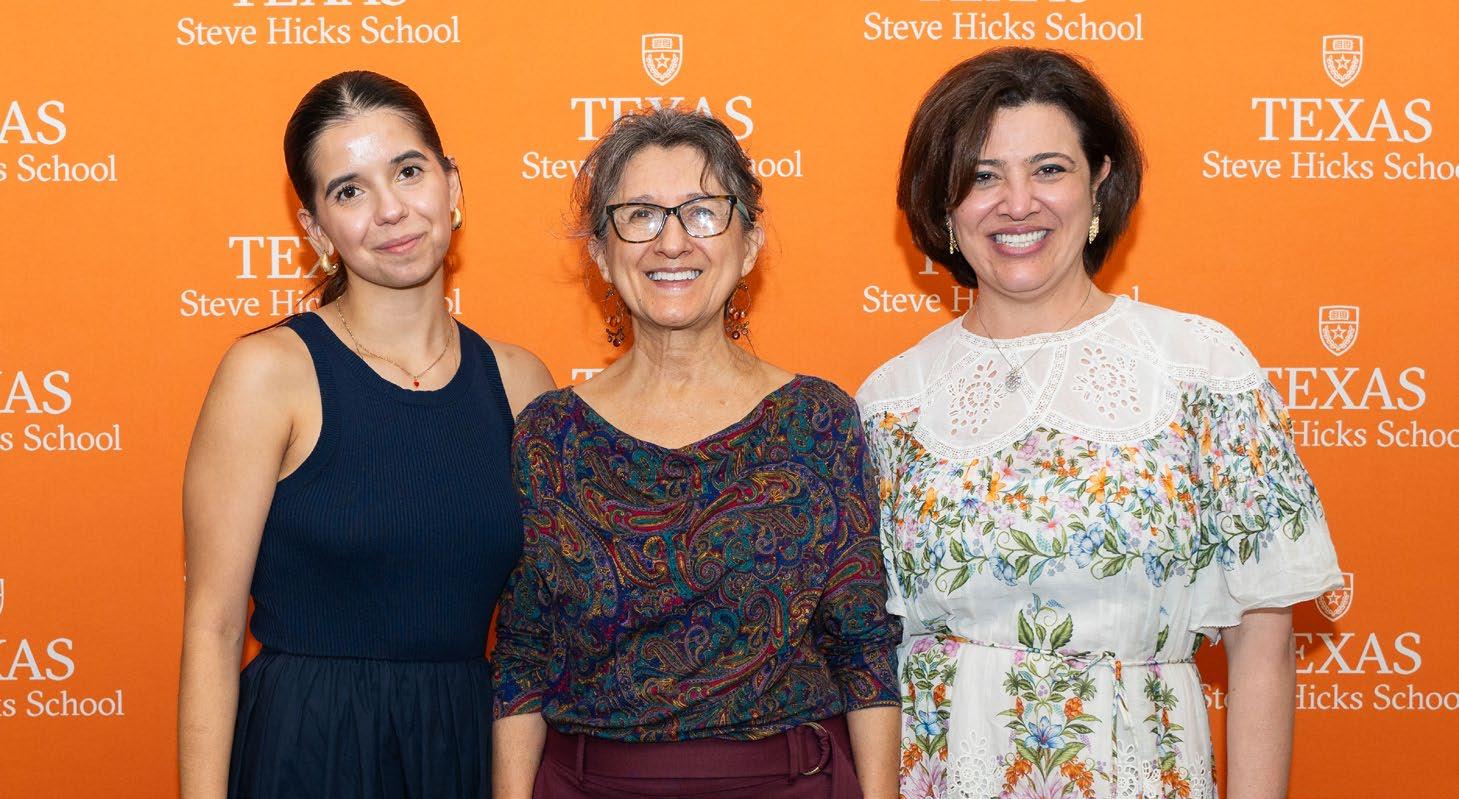
Travis Foster
Artist-in-residence
UT Social Work
Baker Hamilton Health & Technology Lead
Moritz Center for Societal Impact
Jane Kovacs Director of Public Relations
UT Social Work
Andy Langer Program Director
Moritz Center for Societal Impact
Abby Morales Doctoral Program Coordinator
UT Social Work
Aaron Rochlen, Ph.D. Program Director for Arts & Humanities
Moritz Center for Societal Impact
Simone Till Program Associate Hogg Foundation for Mental Health
Terrie Torres Career Success Coordinator
DiNitto Career Center
PEOPLE NEWS RETIREMENTS
UT Social Work thanks our retired faculty and staff for their dedication and service.
Sharon Brennan, director of faculty affairs, retired from UT Social Work in January 2025.
Brennan began her work at UT Social Work in 2019, when she became the executive assistant to former dean Luis Zayas. In July 2022, she became the director of faculty affairs, where she oversaw promotion and tenure processes, adjunct instructor rosters, and other faculty-related issues. In her retirement, she assists UT Social Work in faculty affairs under special projects.
The mission of our school and alumni is to provide national leadership to alleviate critical social problems and enhance human well-being.
PEOPLE NEWS STUDENT HIGHLGIHTS
UT Social Work celebrates the achievements and contributions of our students.
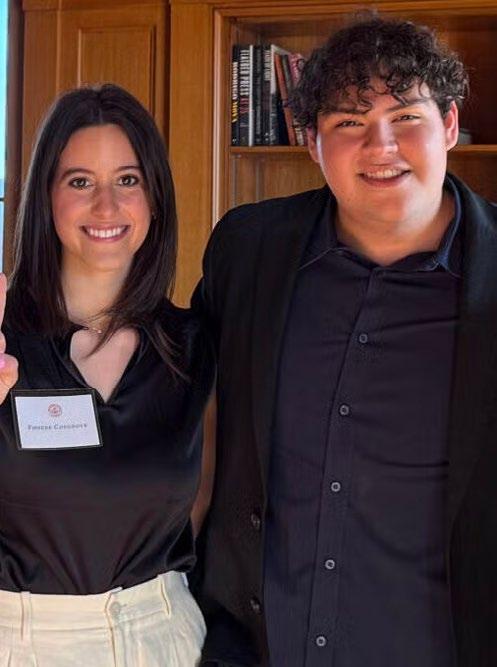
Phoebe Cosgrove & Andres Yengel
Two UT Social Work students are a part of the inaugural Texas Trailblazers: a new prestigious program in McCombs Business School created by Gay Gaddis, BFA '77 and co-founder of T3, that trains undergraduate students for leadership.
“Interdisciplinary work like the Texas Trailblazers program teaches you how to apply social work to the outside world,” said Cosgrove. “I want to apply my social work skills to business, and business skills to social work.”
“Social workers belong in leadership roles and mentorship with other leaders,” said Yengel. “I can’t wait to do that by learning from the best leaders on the Forty Acres and beyond.”
Addison Dodge
Addison Dodge, a second-year MSSW student, has been named one of the 22 recipients of the prestigious Ima Hogg Scholarships for 2025. The $5,000 scholarship is dedicated to graduate social work students in Texas who have committed to joining the state’s mental health workforce
“My ultimate goal is to work with children and adolescents who have experienced trauma, walking alongside them and supporting them in building resilience and charting brighter futures for themselves in an increasingly challenging world,” said Dodge.
Cheng Chow
Doctoral student Cheng Chow received the 2025 W. Parker Frisbie Outstanding Publication Award from the Population Research Center for his sole-authored paper entitled "Unveiling the Patterns and Drivers of Immigrant Health Integration Policies: A Global Examination in MIPEX Countries," published in Health Policy (2024). This annual award recognizes outstanding first-author publications by PRC trainees that address key questions in demographic research and population science.
SKYLER HAMILTON FOUND HER PATH AT UT SOCIAL WORK
Her MSSW carries more than just academic credentials.
Hamilton, a first-generation college student, found her calling in social work through personal experiences. Her journey from foster care to becoming an advocate for substance use disorder policy represents the transformative power of education and strategic philanthropy.
“I lost my father to suicide, compounded by substance use,” Hamilton said. “I decided to pursue an education in social work to work in harm reduction and homelessness.”
Scholarships Open doors
What might have remained an unreachable dream became reality through the generosity of John David and Leslie Moritz, whose scholarship support made her education possible.
“I’ve been able to focus on my courses without the added stress of financial worries,” said Hamilton.
Like many first-generation students, Hamilton faced significant challenges when beginning her academic journey.
“Just my overall confidence and general anxiety — it was a constant struggle when I first started school,” she recalls. “Being at UT Social Work offset a lot of these challenges. The staff and faculty care so much for their students.
My undergraduate academic advisor was a wonderful support for me.”
Throughout her time at UT Social Work, Hamilton has distinguished herself as a passionate advocate for improving substance use disorder policy and care for those struggling with substance abuse.
Her practicum experiences, as well as an undergraduate course entitled “Communities and Organizations,” proved particularly valuable for Hamilton, who focused on the value of work in grassroots organizations.
“My practicum experiences solidified my passion for working in harm reduction and homelessness,” said Hamilton.
Generosity Ripples
The initial scholarship endowment from the Moritz family in 2018 has enabled more than 50 outstanding students, like Hamilton, to pursue their dream of higher education. Their generosity creates ripples that will touch countless individuals struggling with substance use disorders. Every social worker trained at this level will positively impact hundreds, even thousands, of clients throughout their career.
For donors and supporters of UT Social Work, Hamilton's story demonstrates the profound return on investment that comes from funding scholarships. By removing financial barriers for promising students with diverse life experiences, benefactors like the Moritz family don't just change individual lives — they help transform entire systems of care.
Advice for Future Changemakers
“The impact of financial gifts doesn’t stop with the students. It also reaches communities they are able to serve,” said Hamilton. “Social work scholarships never stop giving."
TACKLING THE OVERDOSE CRISIS: JAKE SAMORA'S RESEARCH MAKES A DIFFERENCE
Doctoral student Matthew “Jake” Samora's research connects communities to save lives and transforms health outcomes.
As research staff member at the Addiction Research Institute, Jake Samora contributed to the development of TxCOPE (Texans Connecting Overdose Prevention Efforts), an innovative digital platform designed to improve data collection on overdose incidents throughout Texas. What makes his approach distinctive is his commitment to community-engaged research methods, bringing together diverse stakeholders, including outreach providers, first responders, as well as people who use drugs.
"My time at the Addiction Research Institute has been one of the most transformative periods professionally and personally," Samora said. "The communityengaged and clinical experiences that I was able to gain feed directly into the compass that guides my research agenda now."
Creating Connections Across Communities
Samora's research doesn't just gather data — it builds bridges between communities often separated by stigma and misunderstanding. His work is particularly focused on health outcomes experienced by people who use drugs, with special attention to the intersection of substance use and sexually diverse populations. His experience as a clinician on a randomized control trial with people who use drugs living with HIV provided unique insights into the challenges these individuals face related to substance use services, many of whom were also sexually diverse.
This clinical background informs his research on how stigma and adverse
experiences contribute to substance use outcomes in these populations.
"We have found through our research that there are systemic barriers to seeking care for these populations, even when there is a life-threatening situation like an overdose," Samora said.
Building Engagement and Continuing a Legacy
Samora has also investigated ways to engage college students in overdose prevention efforts. As coprincipal investigator on a project to disseminate TxCOPE and promote opioid overdose awareness among university students, he's contributed to research that will inform strategies to increase engagement with resources that could save lives.
This work connects to a significant legacy at UT Social Work. Samora worked with SHIFT, a campus organization aimed at empowering mindful decision-making and open conversations about substance use. The organization was formed in 2019 under the leadership of the late Dr. Lori Holleran Steiker, a beloved faculty member whose pioneering work in youth substance use prevention and recovery left an indelible mark on the School and whose mentorship
shaped a generation of social work researchers, including Dr. Kasey Claborn, Samora’s mentor, who was recently named a Texas Changemaker by Texas Research for her work in digital data, overdose response, and using information to address the opioid crisis in Texas.
Recognition and Community Support
Along with Madison Haiman, Samora received the prestigious and highly competitive University Continuing Fellowship for the 20252026 academic year. The fellowship recognizes doctoral students with exceptional accomplishments and well-defined research programs.
"In the program, I have found a community of wonderful, compassionate, brilliant cohort members, other doctoral students, and faculty mentors that all work every day towards improving health outcomes in the communities that they individually serve through research," said Samora. "Surrounding myself with a scientific community that I know cares deeply about each of the issues that they center in their own research continues to add fuel to my own tank."
"My time at the Addiction Research Institute has been one of the most transformative periods professionally and personally, The communityengaged and clinical experiences that I was able to gain feed directly into the compass that guides my research agenda now."
- Jake Samora, doctoral student
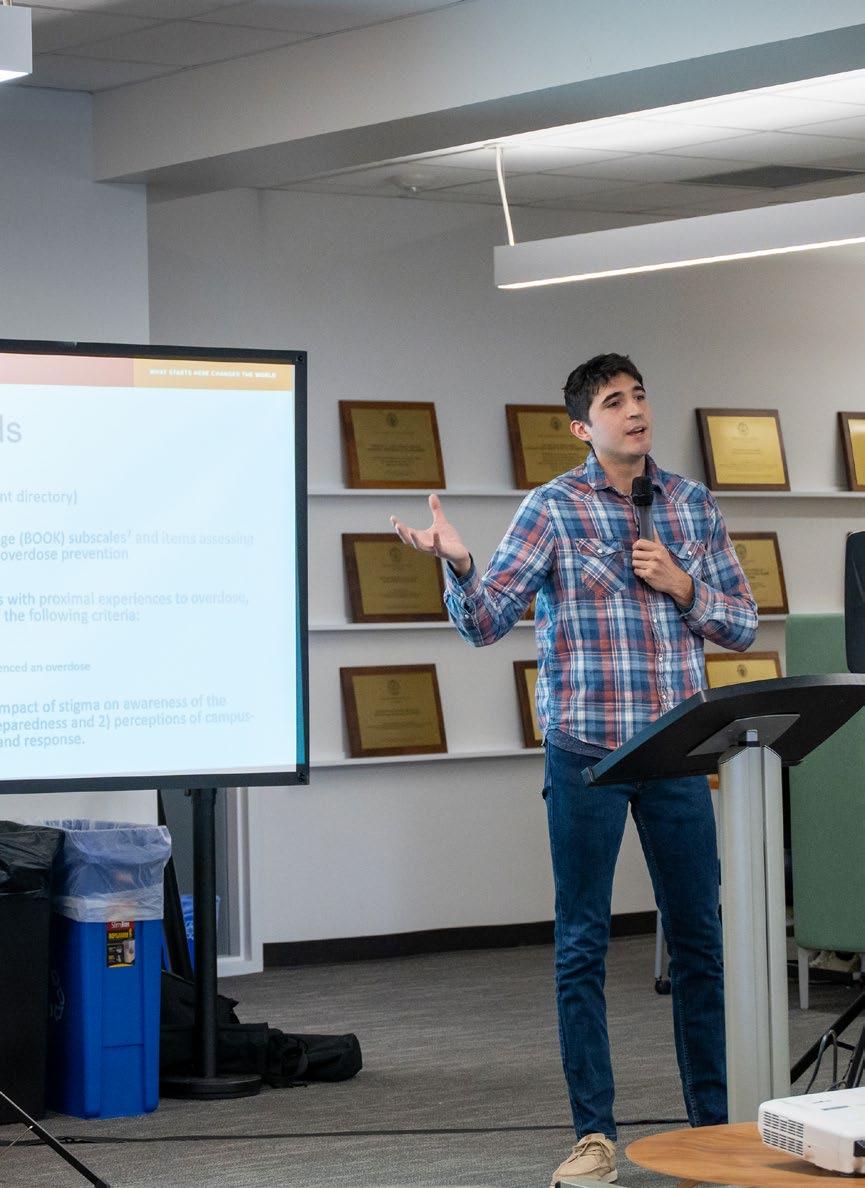
p Jake Samora lectures during the Spring 2025 research showcase at Walter Webb Hall.
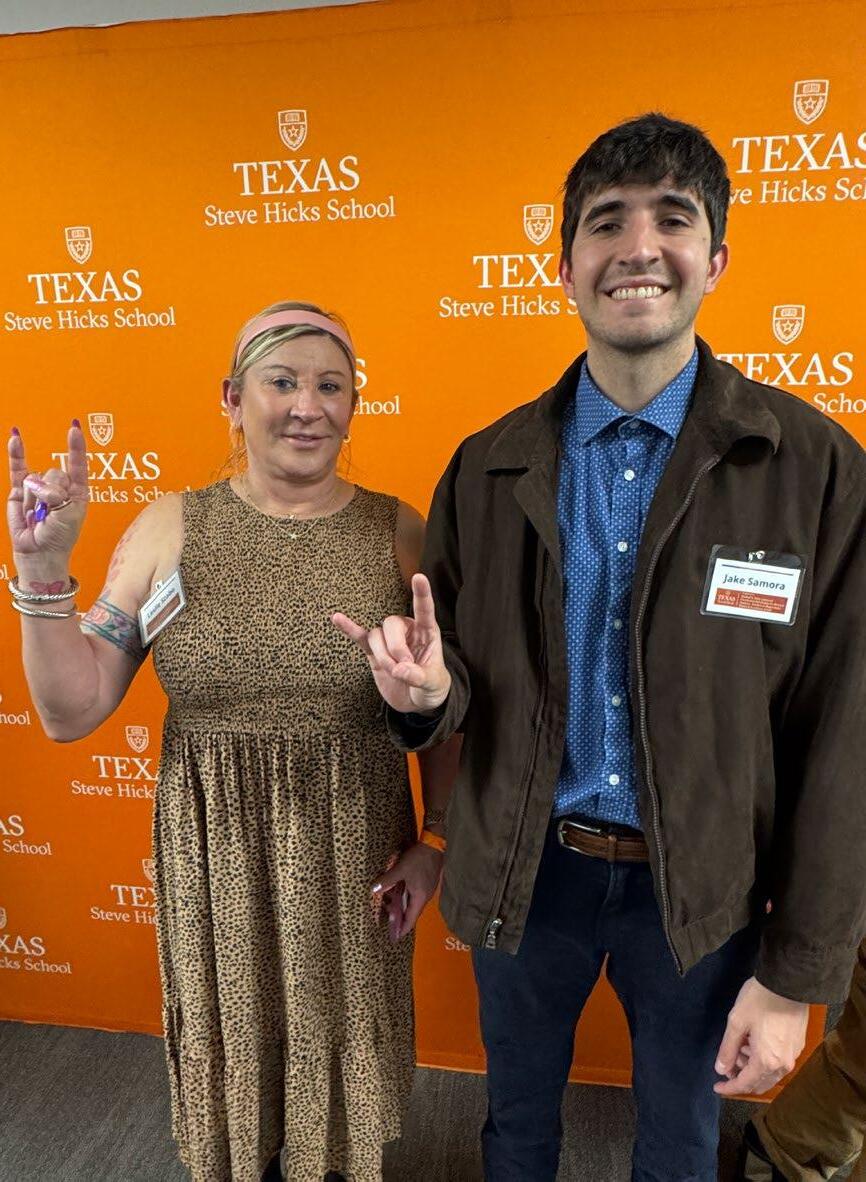
p Leslie Szabo and Jake Samora pose for a photo during the 2025 endowment donors appreciation event.
THE INVESTMENT THAT CHANGES EVERYTHING
How one alumna’s gift creates ripples far beyond the classroom
The conversation around the table was unlike anything Marilyn White had experienced in her decades of supporting University of Texas students. Five doctoral candidates from the School of Social Work shared their research passions with the 87-year-old mathematics alumna — studies on babies born to addicted mothers, addiction recovery, and overdose prevention strategies that meet people where they are.
Wounded Healers
“I was very touched by their individual stories and their ability to overcome adversity in their life and wanting to help others,” White recalls. “I love this quote by Henri Nouwen, ‘We’re all wounded, and once we admit we’re wounded, then we become wounded healers ’“
White knows something about wounded healers. Her own daughter celebrated 17 years of sobriety this year and recently testified before the Texas Senate Finance Committee about recovery policy. The journey to that moment taught White lessons about investment, patience, and the transformative power of refusing to give up on human potential.
“I saw life before recovery, and then I saw life after recovery,” White explains. “I know that changing one person’s life can be the world for them and for others. If
I can help one student be successful at UT, that’s all that matters — especially for that student.”
Investment in Human Potential
That philosophy drove White’s recent gift to UT Social Work, substantial funding designed to support doctoral students in ways that extend far beyond tuition assistance. Her gift helps students attend conferences, conduct and present research, build professional networks, and pursue the collaborative connections that define academic careers. Additionally, her gift gives doctoral students the time and space to focus on their dissertations and research.
“Sometimes students need gas money to get to their practicum sites,” White notes, referencing her support of the UTeach-Liberal Arts program. “Or they need funding to attend meetings where they’ll meet the colleagues they’ll work with for the rest of their careers. We think about helping people with tuition, but there’s so much more to a full life at UT.”
Among the students White met that evening was Jake Samora, whose research exemplifies the kind of realworld impact that draws her investment. Samora’s work focuses on overdose prevention and health outcomes among people who use drugs and intersecting
Marilyn White, pictured fourth from right, attends an event with her daughter, Shannon; Dr. Yessenia Castro; and several UT Social Work doctoral students.
subpopulations (i.e., people living with HIV) by drawing on community-engaged research methods, which are critical for developing solutions that save lives across Texas.
Research that Saves Lives
As research staff at the Addiction Research Institute, Samora contributed to TxCOPE (Texans Connecting Overdose Prevention Efforts), a platform that improves data collection on overdose incidents statewide. His approach brings together diverse stakeholders —
"I know that changing one person's life can be the world for them and for others. If I can help one student be successful at UT, that's all that matters — especially for that student."
- Marilyn White
outreach providers, first responders, and people who use drugs themselves — breaking down barriers that often separate communities.
“Harm reduction services are often delivered in street outreach environments, which enables caring for client populations experiencing significant social vulnerability who may not access any other formal system of care,” Samora explains. “We have found through our research that there are systemic barriers to seeking care for these populations, even when there is a life-threatening situation like an overdose.”
For White, meeting Samora created a profound sense of alignment between her personal experience and her philanthropic investment. Here was a researcher who understood that behind every data point sits a human being deserving of hope and second chances.
“I consider these students an investment,” White says. She found that in other doctoral students, such as Madison Haiman, Jeffrey Morris, Obi Onyegesi, and Cat Wilsnack.
The impact clearly resonates across recipients. “Ms. White hasn't simply invested in my projects — she's invested in me.” said Onyegesi, who credits her support for enabling conference presentations and research advancement. Fellow doctoral student Haiman echoed the sentiment: “As a doctoral student, you often have to be selective about what training opportunities to pursue due to limited funding, but Marilyn’s generous gift is giving me the freedom to attend more conferences and trainings
I otherwise would not have been able to attend.”
Relationships Matter
White’s giving philosophy emerged from years of supporting UT students, starting with small gifts that grew into deeper relationships. She chaired the Texas Exes scholarship committee for three years and was a member when they established the Forty Acres Scholars Program, now in its 16th year. She calls her scholarship recipients family and maintains lifelong friendships with graduates who are changing the world.
The approach defines White’s giving — direct, personal and relationship-centered — challenges traditional assumptions about major gift philanthropy. She specifically requests that her donations go directly to department heads “who can administer them without any strings attached.” More importantly, she places a priority on getting to know the students her gifts support.
“I’m always heartsick when I talk to people who received scholarships but never knew the donor,” White says. “That doesn’t fly for me. I want to know ‘my kids.’”
White’s message to potential donors reflects both the urgency of student need and the accessibility of meaningful impact: “If you have $100 to give, do it. If you have $1,000 or a million, whatever — do it today. Every dollar will change your life.”
The mathematics major who graduated in 1959 has spent decades proving that the most sophisticated calculations aren’t always numerical. Sometimes they’re about human potential, measured in lives transformed, careers launched, and communities served by people who understand that healing often comes from those who have been wounded themselves.
“Students who’ve been helped are motivated to help others,” White observes. “So, it’s really kind of a selfish gift for me, because I reap all the rewards of friendship and lifelong friends.”
Marilyn's gift supports five doctoral students researching addiction and recovery. Those students are:
Jake Samora
Madison Haiman
Jeffrey Morris
Obi Onyegesi
Cat Wilsnack
ROOTED IN CONNECTION, POWERED BY PURPOSE: THE BSW TEAM AT UT SOCIAL WORK LEADS THE NEXT GENERATION
The BSW advising team is dedicated to creating an individualized approach so students can confidently go out and change the world
Personalizing the Advising Experience
At UT Social Work, transformation begins with relationships and personalizing the advising experience for BSW students.
“It’s a core to everything we do,” said Dr. Yolanda Padilla, associate dean for undergraduate programs. With over three decades at the school and both her bachelor’s and master’s degrees from The University of Texas at Austin, Padilla’s commitment to student success runs deep.
Formed in 2024, the BSW advising team sees more than 70 students
each year in pursuit of their Bachelor of Social Work.
The advising team in itself is meant to support students and get students from their starting point when they come into the university, to graduation — ensuring they meet all academic requirements and take advantage of all the extra resources and opportunities we have to offer, said Andrea Tamez, the BSW program coordinator.
However, that is just the baseline. The BSW advising team differs from other advising teams because they strive for a personalized student experience. From ensuring student
degree plans align with their interests and post-grad plans to sending students targeted advising emails, the team prioritizes streamlining and humanizing the university experience for students.
This is effective when students are struggling academically and do not know who to go to.
“Because we’ve established a personalized experience, they know they can always come to us,” said Raniah Fattah, the senior academic advisor. “They know who we are and where to find us and we’re able to give them that extra support.”
Results That Reflect Impact
One of the team’s proudest achievements is SWEEP, the Social Work Education Enhancement Program. Designed to support first-year students, it offers peer mentorship, social events, and leadership opportunities to build connections from day one.
Tamez loves watching students grow. “Mentees apply to become mentors,” she said. “There’s so much pride in seeing that full-circle moment.”
Another standout initiative is Welcome to Texas, a university-wide
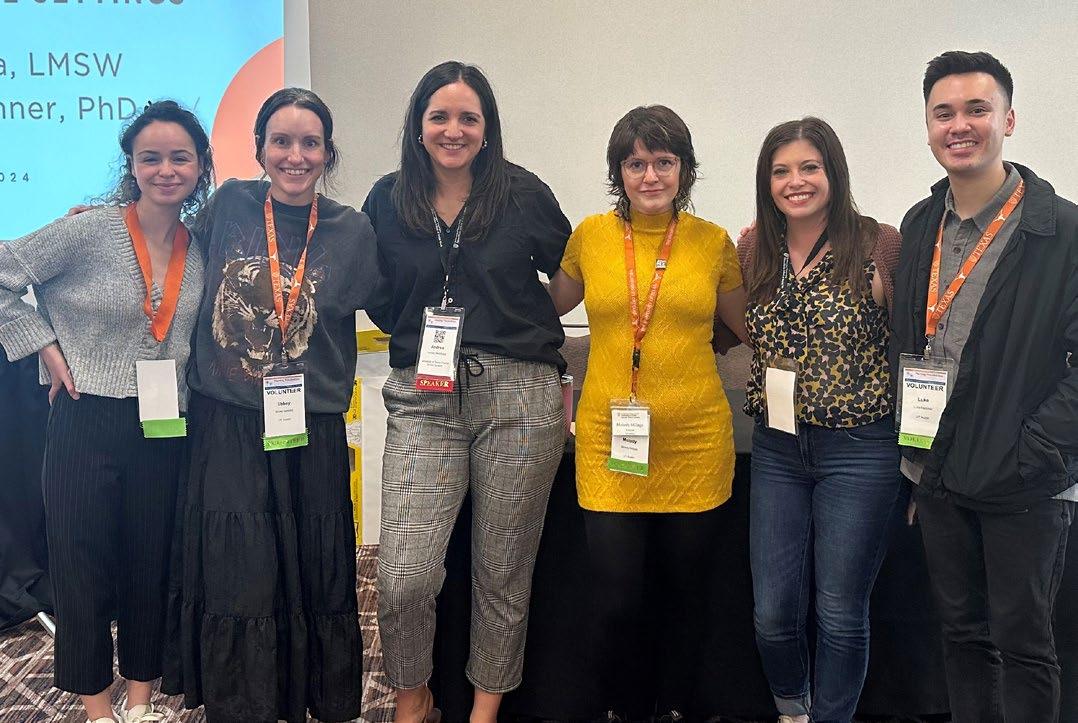
The BSW advising team, from left to right: Andrea Tamez, Dr. Yolanda Padilla, and Raniah Fattah.
recruitment event. The program is designed to introduce admitted students to the program before they commit. This year the BSW advising team exceeded expectations with attendance. Prospective students had the opportunity to speak with current students, and parents could meet the advisors.
While there were only 50 spots open for students and their families to attend, many more prospective students arrived unexpectedly.
“It was a good problem to have,” Tamez said.
These consistent positive interactions are also reflected in the success in survey results. The Student Experience in the Research
University survey is an important tool that measures student sentiment toward faculty interactions, classroom experiences, academic advising, and their degree plan. The results are then compared to peer university systems with similar populations. With nearly a quarter of students responding, which Padilla notes is rather high for a survey of this scale, the BSW program scored on top. Similarly, the BSW program ranked first in the student orientation survey when compared to UT schools of similar size.
Bright Students with Big Futures
Beyond attendance and survey results, the team is bonded by their
love for education and dedication to making an impact. The advising team has also noticed a common thread among today’s BSW students: a strong awareness of what’s happening on a broader, global level. Tamez noted a “pattern of students wanting to be aware of what’s happening at the global-macro level and passionate about it.” Students aren’t just focused on local challenges; they’re thinking big and bringing that perspective into their education and career plans.
With the support of a team that knows them, listens to them, and believes in their potential, these students are empowered to thrive.
DEAN ALLAN COLE WINS JOE AND BETTIE BRANSON WARD AWARD
UT Social Work Dean Allan Cole was named as the recipient of the prestigious Joe and Bettie Branson Ward Award for the academic year 2025 –26.
Granted once every three years by the Office of the Executive Vice President and Provost at The University of Texas at Austin, this award recognizes individuals whose teaching and research models and develops student’s abilities, attitudes and behaviors to participate in and bring about societal change.
Dean Cole’s nomination included highlights such as his interdisciplinary work as Dell Medical School’s first-ever deputy for health humanities and technology. In this newly created position, which strengthens the relationship between social work and Dell Med, he serves on the executive operational team and works on strategic initiatives related especially to teaching and research in artificial intelligence and digital health, implementation science, ethics and bioethics, and patient- and community-centered models of care.
His nomination also included his role as the founding director of the Moritz Center for Societal Impact, which facilitates new research and collaboration to help solve critical social problems and advance health and wellness in communities.
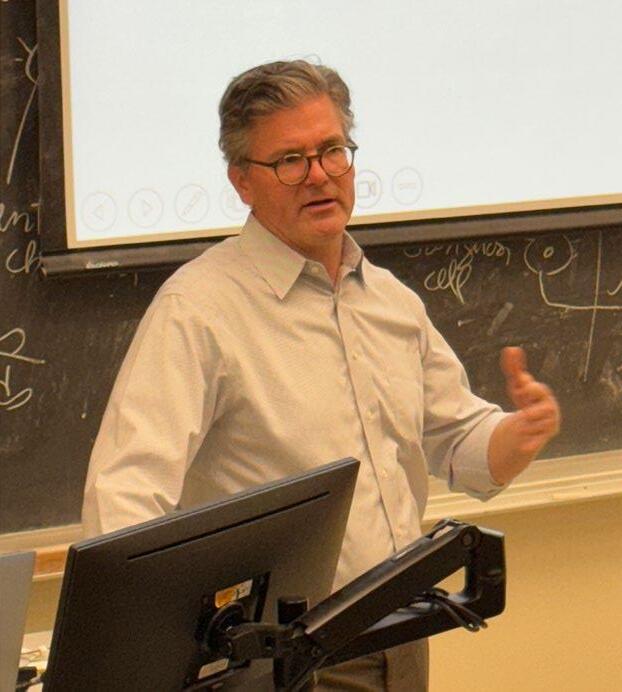
p Dean Allan Cole lectures in a class during the spring 2025 semester.
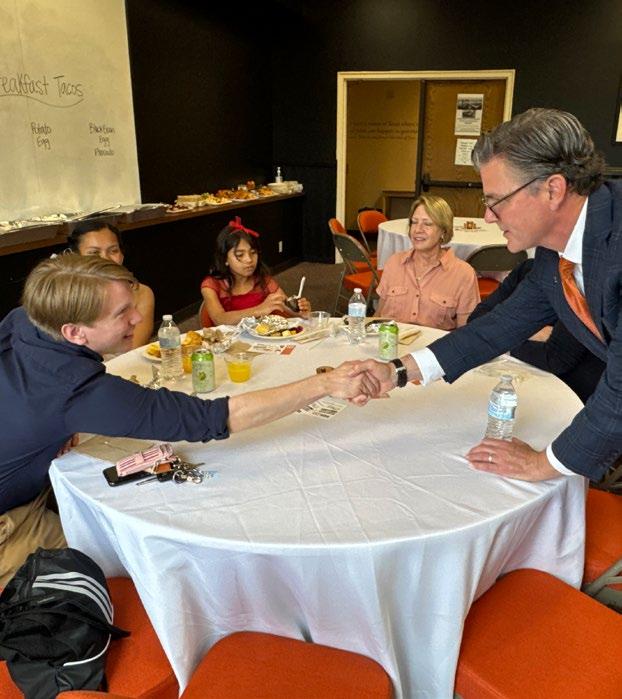
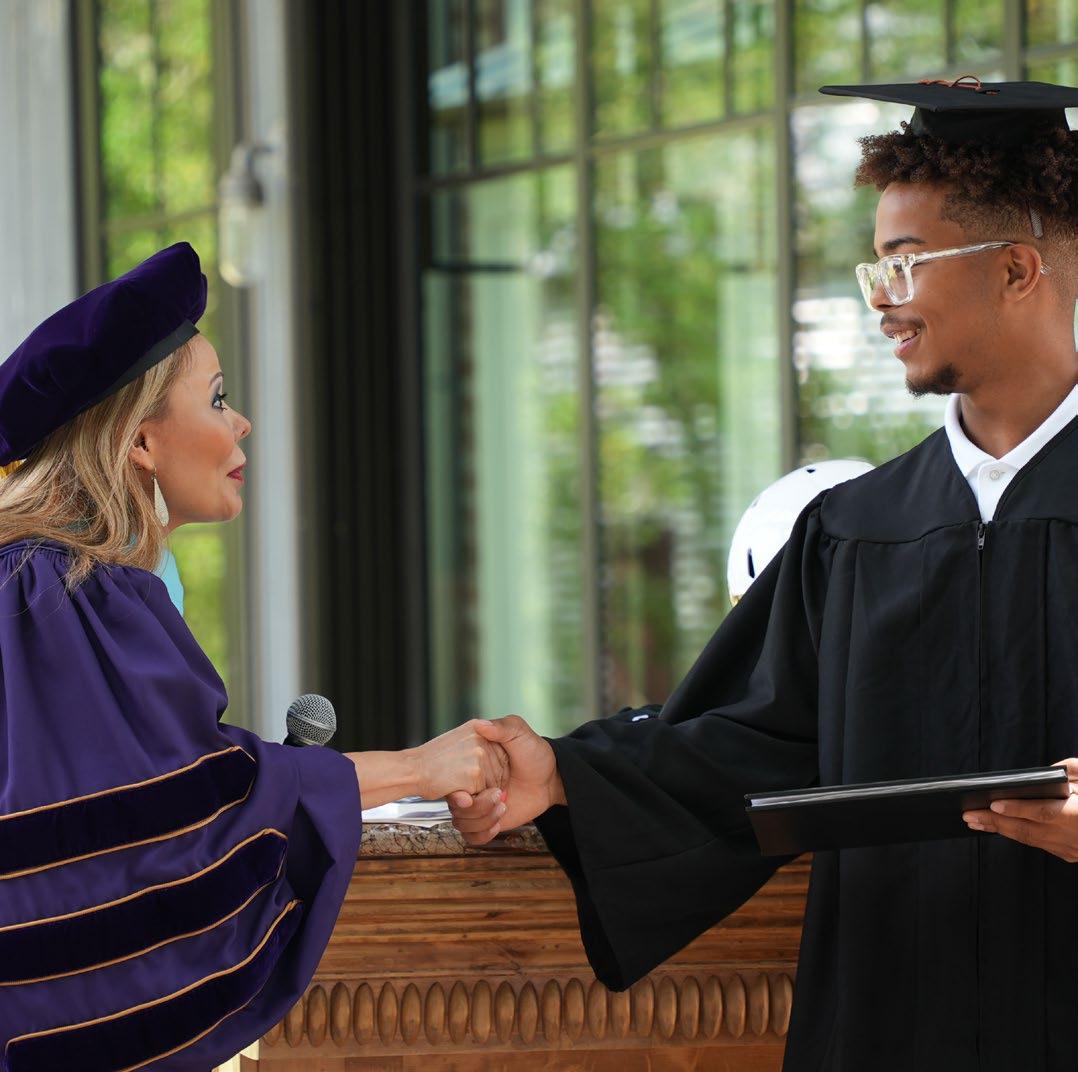
q Dean Cole shakes hands with a BSW honors student during a special event for honorees.
UT PROFESSOR ELEVATES SOCIAL WORK THROUGH LIVED EXPERIENCE
Mayan Herman draws on clinical and cultural experience to guide social work students
Experience Shaped a Career
Professor Mayan Herman was born into the world of social work. Her mother, while managing her own chronic pain, was active in their community, aiding clients with chronic pain as well.
“I grew up with social work around me,” Herman said. So, when deciding on her major, Herman thought social work “just made sense.”
Herman’s academic journey began at the University of Pittsburgh, where she joined the Child Welfare Education for Baccalaureates. The CWEB program is a partnership between federal, state and
accredited Pennsylvania social work programs to prepare undergraduate students for careers in the state’s public child welfare agencies.
During her time with CWEB, Herman drove extensively around Pennsylvania, witnessing food deserts, poverty, and the effects of a lack of public services. Though the cases were often disheartening, she remained dedicated to connecting with families and improving the lives of children under her care.
“I learned from the families,” Herman said. They had to teach and correct, said Herman, noting how the experience challenged her preconceived notions about parenting. After completing her master’s at the University of Michigan in 2016, she moved to Texas.
“I’m bilingual, so I wanted to work on my Spanish,” Herman said. The area in Michigan where she lived had very few Spanish-speakers, so Texas — and Austin specifically — offered both linguistic opportunities and other attractions like a great climate and live music scene. In Texas, Herman specialized in addiction treatment, a setting she quickly came to love. She ran education groups, created dialectical behavior therapy programs, and found joy in breaking down complex topics
like neurobiology. Even though she valued her clinical work, the toll was real. “I burned out from clinical work, big time.”
Transition from Clinician to Educator
“I like neurobiology, and talking about how the brain works, and how addiction impacts the brain and how people get addicted," Herman said. "So I started thinking, ‘I want to be a professor.’”
Having supervised UT interns at KIPP Austin Comunidad and Omega Recovery, she knew the incredible potential of the students coming from the UT School of Social Work.
“I loved it. UT students are smart,” Herman said. Having Mary Beer as her clinical supervisor helped as well. “She would tell me about teaching, and that fascinated me.”
Now in her first year as a full-time clinical assistant professor, Herman is using her field experience to connect with her BSW and MSW students in meaningful ways. As a clinical supervisor, she supports students as they transition from classroom to practicum, their first position with a social work agency.
Her teaching has evolved, too. “As a professor, I have grown a lot because I have taken a lot of feedback.” In her early semesters, she’d lecture the entire class period. “That’s the mistake I made when I first started teaching. I just talked and talked and talked forever.”
Today, Herman keeps sessions engaging by incorporating games and discussions about class content and the practicum experience. She plans to one day teach a course on creative writing and storytelling in social work, using it as a tool for reflection and self-care.
PIONEERING PREVENTION: A LOOK AT HBRT'S RESEARCH
At the heart of UT School of Social Work lies a powerhouse institute that's changing lives through innovative behavioral health research.
For more than two decades, Dr. Mary Marden Velasquez and Dr. Kirk von Sternberg have led the Health Behavior Research and Training Institute with a clear mission: developing evidence-based interventions that address critical health challenges.
The pair's collaborative leadership has established HBRT as a national leader in prevention science, particularly in addressing substance use disorders and preventing alcohol- and substance-exposed pregnancies. With over 20 years of continued federal funding, totaling over $35 million, their work spans behavioral interventions — from initial concept to widespread implementation.
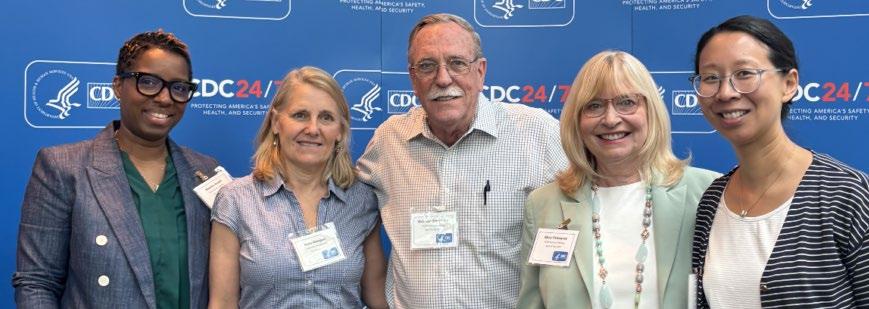
This commitment to practical application is evident in their current CDC-funded project, "Engaging Social Workers in Preventing Alcohol- and Other SubstanceExposed Pregnancies" (2022-2026). The project builds on their extensive work in substance use prevention, training social workers nationwide to
implement effective screening and brief intervention approaches.
Von Sternberg, HBRT co-director and UT Social Work professor, brings methodological expertise that complements Velasquez's clinical
“We're committed to translating research into real-world impact. It's not enough to develop effective interventions if they remain in academic journals.”
Dr. Mary Marden Velasquez
HBRT Director and Centennial Professor in Leadership for Community, Professional and Corporate Excellence
background. "Our interdisciplinary approach allows us to address complex health challenges from multiple angles," he explains. "We develop interventions that are both scientifically sound and practically applicable."
The institute's work also includes critical contemporary issues, such as the CDC-funded project "Engaging Social Workers in Boosting COVID-19 Vaccine Uptake" (2021-2024). This initiative demonstrates how HBRT's evidence-based behavioral change models can be adapted to address emerging public health challenges.
Their long-standing collaboration recently welcomed Dr. Danielle Parrish as HBRT's associate director. Parrish, who completed her postdoctoral fellowship at HBRT under Velasquez and von Sternberg's mentorship, brings additional expertise in adolescent behavioral health. Von Sternberg and Parrish currently serve as coprincipal investigators on the NIDAfunded study "CHOICES-TEEN," which adapts HBRT's successful CHOICES intervention for adolescent women in the juvenile justice system. In addition to the CHOICES-TEEN study, Parrish also has five other active grants totaling more than $5.5 million in funding.
DR. NOEL LANDUYT ADVANCES ORGANIZATIONAL HEALTH THROUGH RESEARCH AND PRACTICE
Social Work Leadership for the Public Good explores policy promotion in a new course for graduates and undergraduates
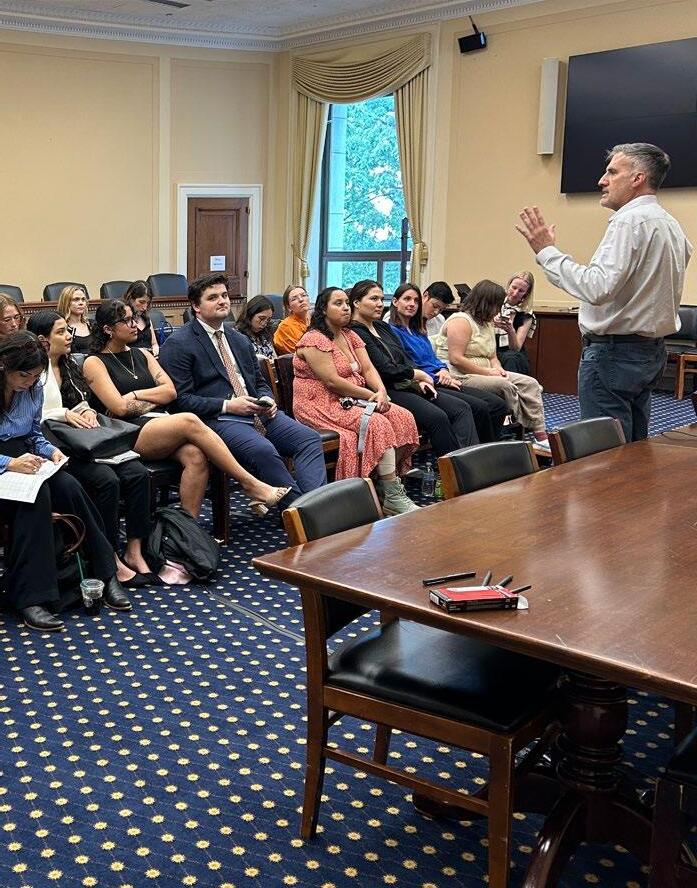
Dr. Noel Landuyt, assistant professor of instruction, is transforming how social work students prepare for policy careers through a threehour course. The new course entitled, "Social Work Leadership for the Public Good," is a hands-on curriculum that builds on the weeklong seminar that takes UT Social Work students to Washington, D.C. and meets with policy professionals in Austin.
“The creation and implementation of policy impacts the direction
and purpose of an organization,” explained Landuyt. “Social work values provide an excellent foundation to frame good leadership practices and advance policy for the public good.”
The Intersection of Social Work and Organizational Science
The course exemplifies Landuyt's approach to education: creating practical connections between organizational theory, relevant data and real-world application in social
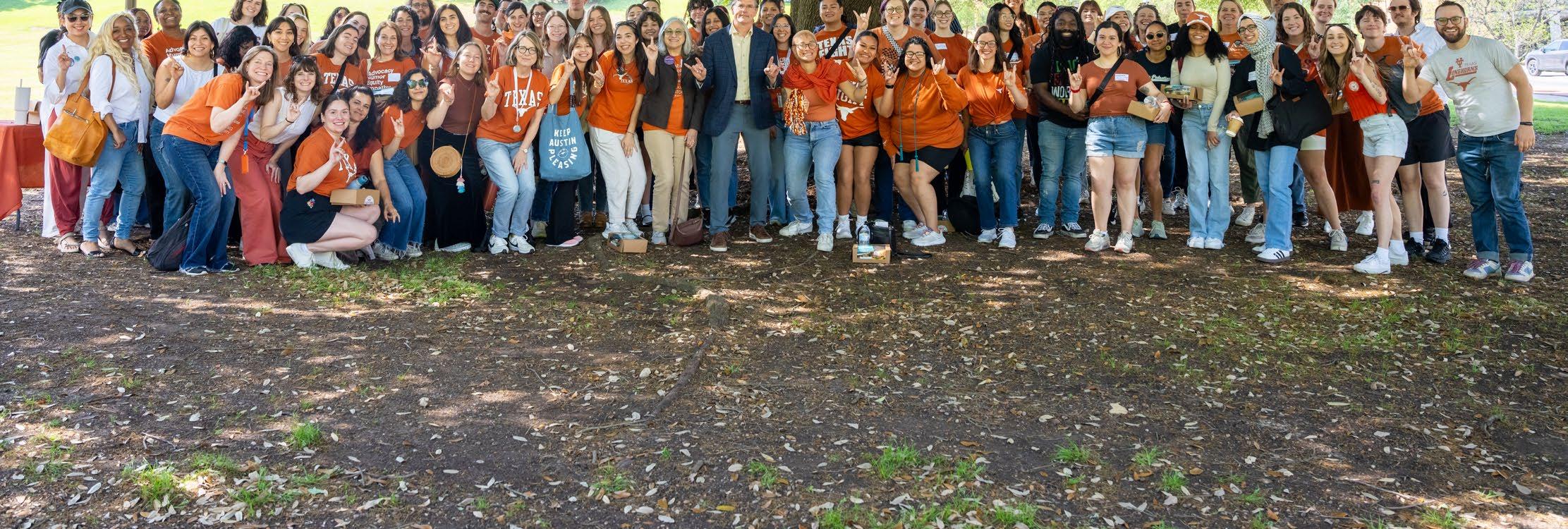
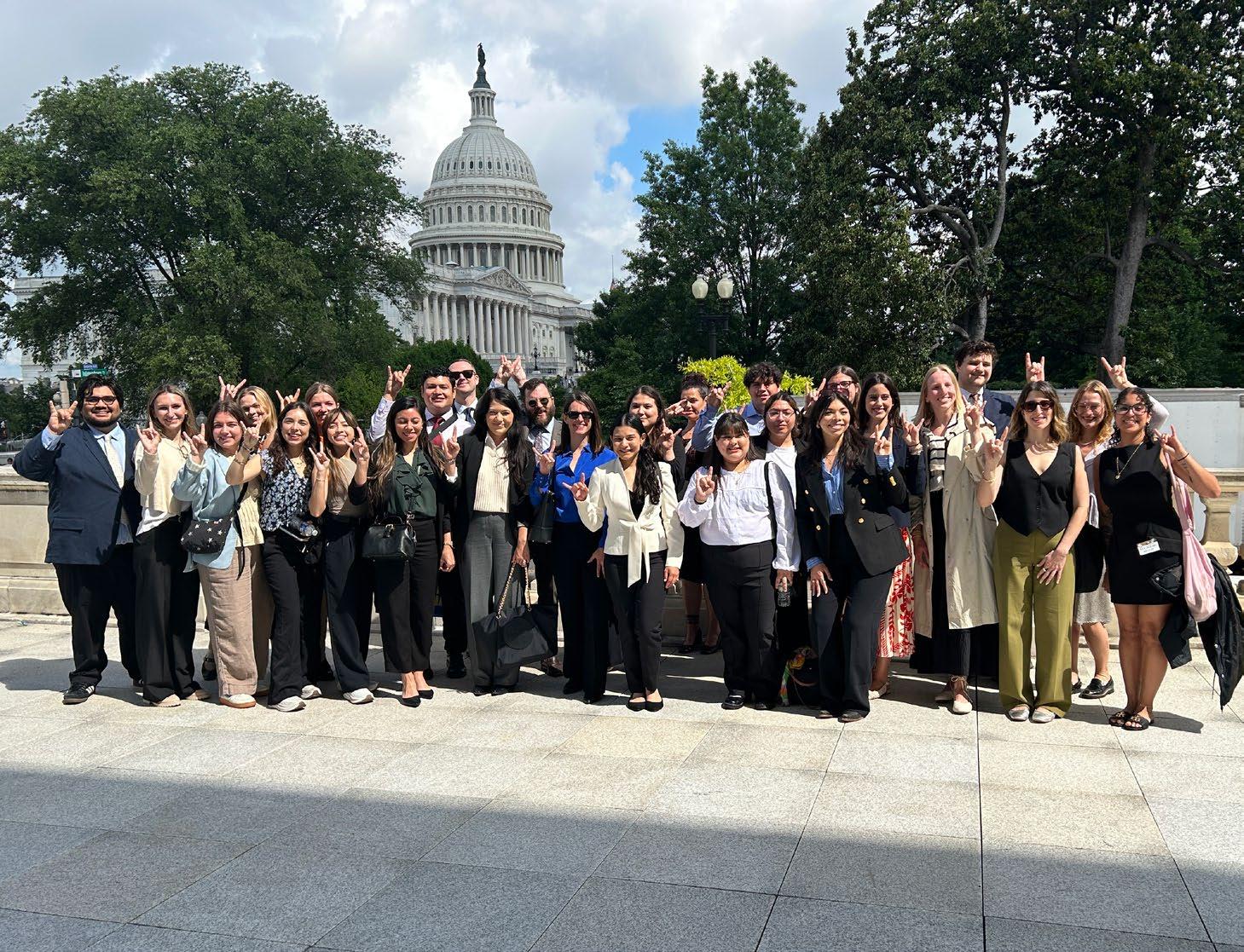
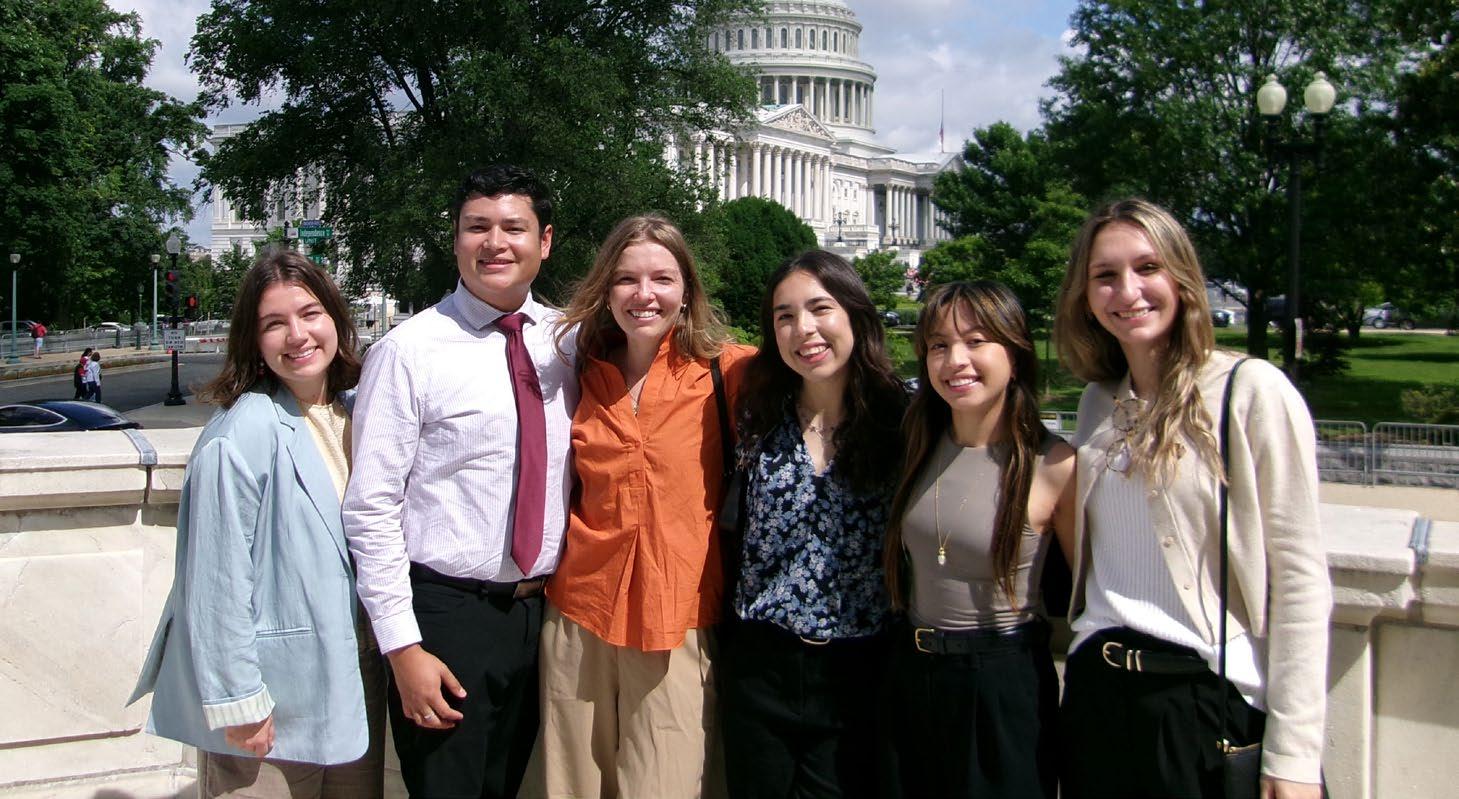
Students from UT Social Work and the LBJ School of Public Affairs pose for a photo in Washington, DC in May 2025. UT Social Work students took part in the inaugural "Social Work Leadership for the Public Good" course this spring.
work practice. Participants explore the processes for policy promotion and building constituencies to strategically advance issues impacting the public good. Statewide policy advancement is covered as well. The class is open to both graduate and undergraduate students, allowing for a mix of perspectives and experiences.
“The May term course was introduced following conversations with the past Washington Calling committee,” Landuyt noted. “The decision was made to institutionalize the program into a course to increase the impact and benefit for the students to receive elective credit and provide academic rigor to support student learning. If you want to know how policy works, you need to see where, how, why, who, when, and what goes into the policy development and promotion process.”
Through reconceptualizing the program, this year the course will deliver content in both Austin and DC, but in the future, it is not limited to those locations.
“Everyone is excited, and I have received some outstanding support from the Dean's Office, faculty, and other directors of institutes,” says Landuyt. “I believe everyone sees this course as a feather in the cap of
social work practice.”
Organizational Excellence Through Teaching and Research
It’s a natural extension of his work as the director of the Institute for Organizational Excellence at UT Social Work. Landuyt focuses on organizational development, customer service, leadership development, and employee engagement assessments.
The institute focuses on the macro practice of social work, using data and evidence-based practices to advance the overall health of an organization. Their work recently expanded into helping organizations build capacity for working with volunteers.
To that end, they have surveyed more than 200 organizations over the last year. To advance scholarship on this topic, multiple papers and dissertations have flowed from this work.
“Macro practice social work is critical to the function of all organizations and especially those in the nonprofit sector,” Landuyt explains. “There is a call for government efficiency and social work values, and
leadership in the field to grow and develop organizations that deliver results. Impacting the public good is fundamental.”
Landuyt's primary work centers on the Survey of Employee Engagement, a widely adopted assessment tool used throughout Texas governmental agencies, child welfare departments, health and human services organizations, and nonprofits nationwide. The survey identifies organizational strengths. and challenges, providing leaders with actionable data.
Beyond survey work, Landuyt
consults with diverse organizations on strategic planning, organizational design, assessment methodology, and nonprofit management. His expertise in 360-degree evaluations helps develop leadership within organizations. He has written and conducted presentations on these topics as well as on human resource utilization and organizational development. Landuyt also teaches a course in nonprofit board governance at the LBJ School.
Students take in the sights in Washington D.C. during the "Social Work Leadership for the Public Good" course
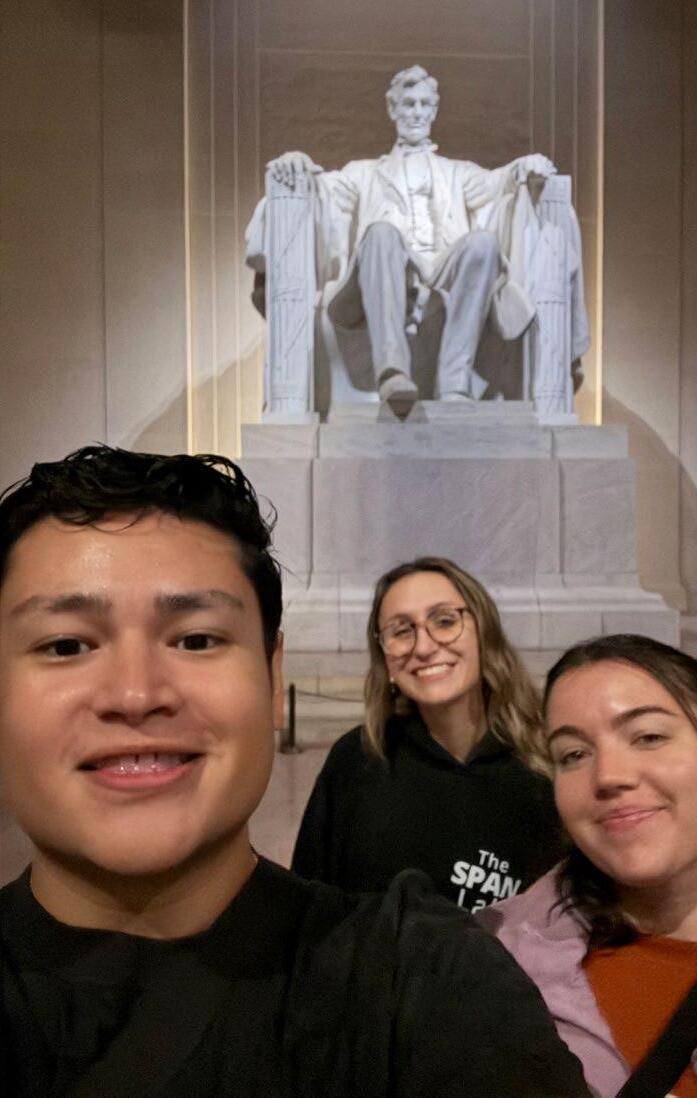
Lincoln Memorial Dr. Noel Landuyt speaking to the class
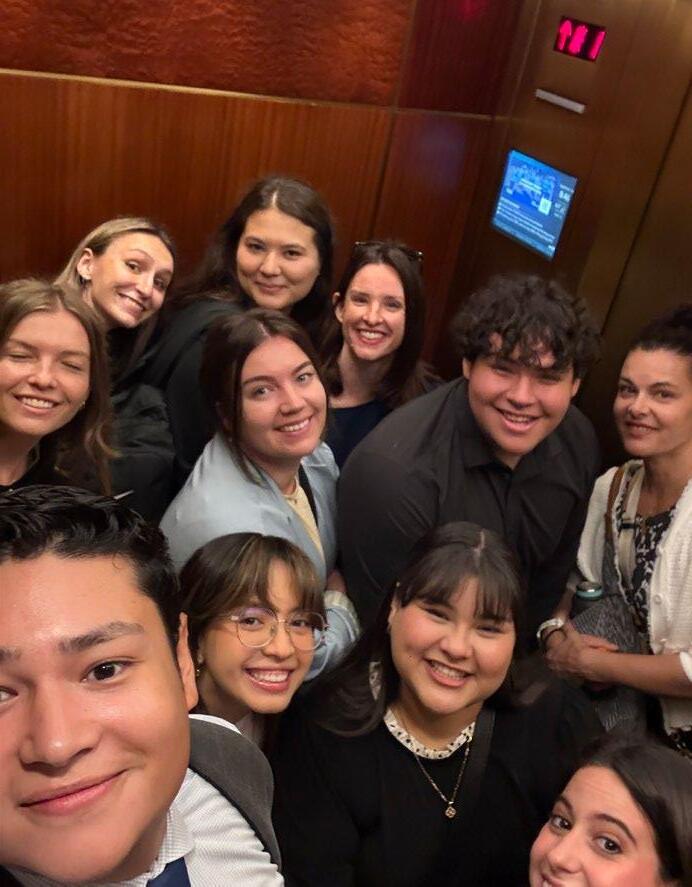
Students take a selfie in the elevator ahead of meetings
UT SOCIAL WORK RELEASES STRATEGIC PLAN
From pioneering behavioral health solutions to strengthening global partnerships, UT Social Work is embarking on a journey of transformation.
Earlier this year, UT Social Work unveiled a strategic plan that will guide our ambitious vision through 2026 and beyond.
This plan supports the School's stated vision: "To educate and inspire future social work leaders who are committed to advancing society through research, education, advocacy and practice. We strive to make a meaningful difference in people's lives and in the world through innovative teaching, impactful scholarship, and compassionate service."
“Since its inception, social work education and practice have advanced the values and ethical principles of justice and human well-being," said Mary M. Velasquez, Ph.D., centennial professor in leadership for community, professional and corporate excellence, and director of the Health Behavior Research and Training Institute." This plan is our roadmap to how UT Social Work will empower the next generation of changemakers."
The plan focuses on five strategic priorities that reflect our commitment to leadership in the field:
Research Advance the field of social work through rigorous and innovative research and scholarship that relates to critical social issues and informs evidence-based practices.
Education Provide comprehensive and interdisciplinary education with strategic partners at UT Austin, that embraces impactful discourse and develops future e"ective and ethical social work leaders.
Behavioral Health Develop and model new approaches to health care delivery and access and create robust research, innovation, education, and training.
Community Utilize advocacy approaches that drive meaningful policy change and include a broad range of perspectives and partners.
Global Strengthen a global ecosystem dedicated to research and education that fosters intercultural understanding, collaboration, and interconnectedness, and addresses international challenges.
The plan represents the collective wisdom of our community. Stacey Jordan, assistant dean for administration and planning, and Velasquez led eight initiative-area committees comprising students, staff, researchers and community representatives who worked from Spring 2023 through April 2024 to shape the school's direction.
Faculty, staff, and students engaged in discussions to address these foundational questions. More importantly, this process allowed the dean to formally incorporate his vision and direction for the school. In addition, Jordan and Velasquez aligned the final plan with the University’s strategic plan.
“Through this strategic plan, the school has had the opportunity to reevaluate its vision, mission, and purpose. We addressed important questions, such as, ‘Where do we want to make an impact? What will it take to achieve success? How will the School of Social Work evolve to
Diana DiNitto, Ph.D., laughs with her students during a school event. q
meet future challenges?’” explained Jordan.
This collaborative approach reflects the plan's core philosophy — that our vision should evolve alongside the communities we serve. The strategic plan is designed to guide faculty, staff, and students in aligning their efforts for both the short and long term. A key component is the commitment to conducting an annual internal review, ensuring that the school's programs and objectives remain relevant and effectively address the unique needs of the clients, communities, and systems with which social workers engage.
The School will revisit the plan in 2027, ensuring our work remains aligned with both University priorities and the evolving needs of the communities we serve. Jordan presented updates on the behavioral health and global initiatives at the April faculty and staff meeting, with more progress reports to follow.
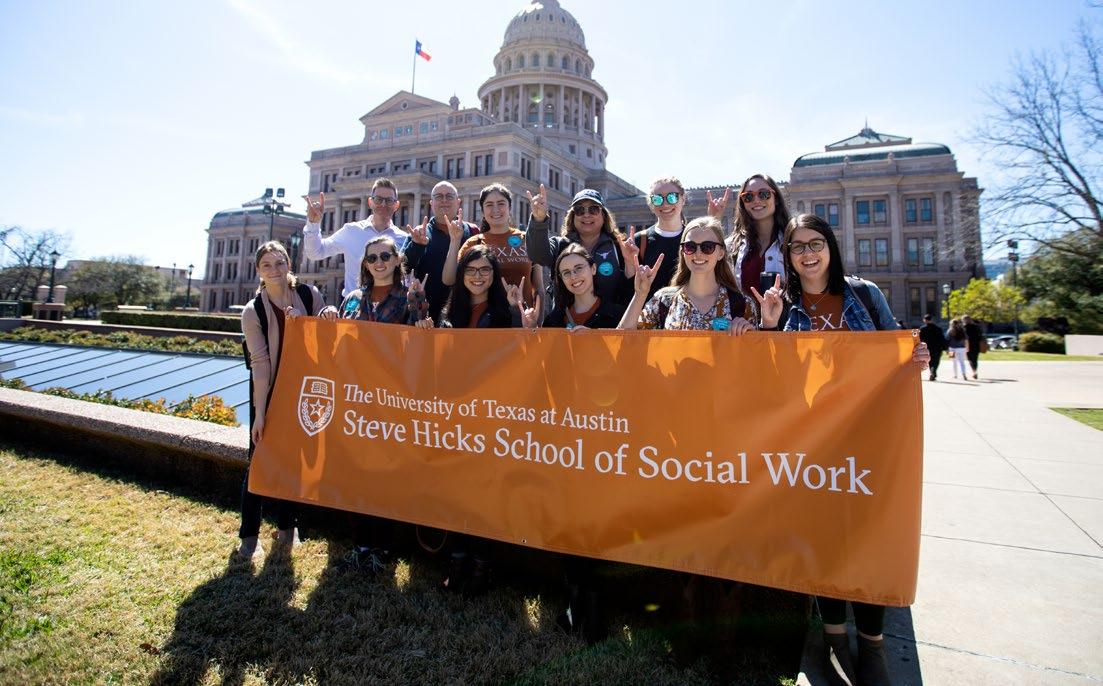
Students head to the Texas State Capitol to advocate for social work legislation. q
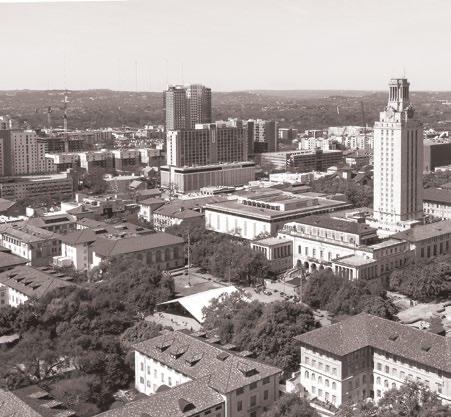
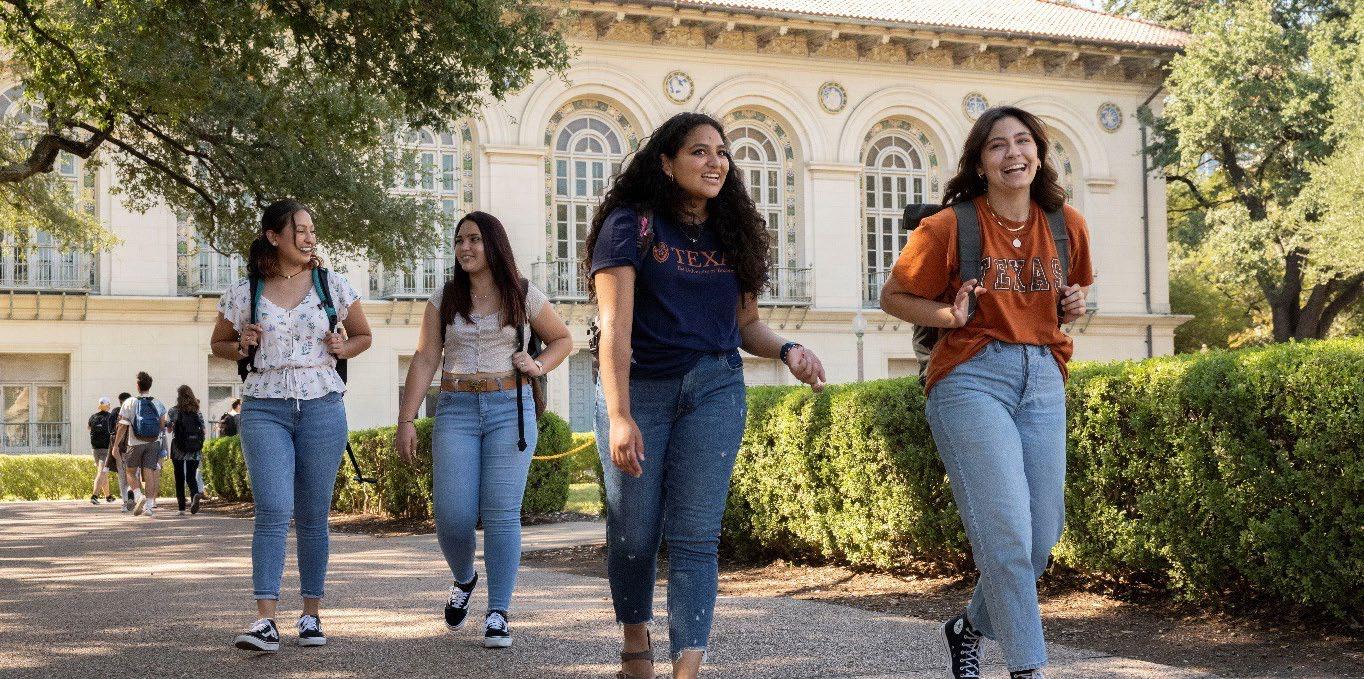
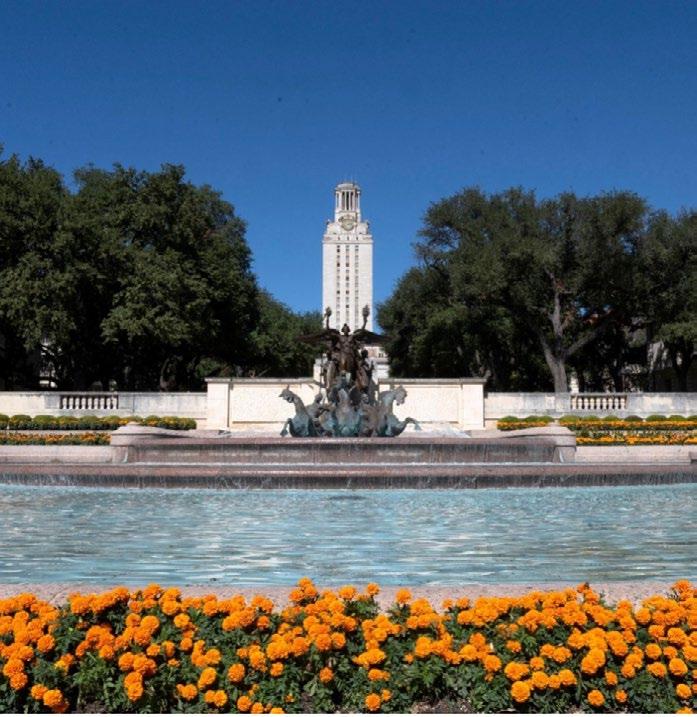
p Students walk near the Tower on the Forty Acres. A comprehensive and interdisciplinary education is a pillar of UT Social Work's strategic plan.
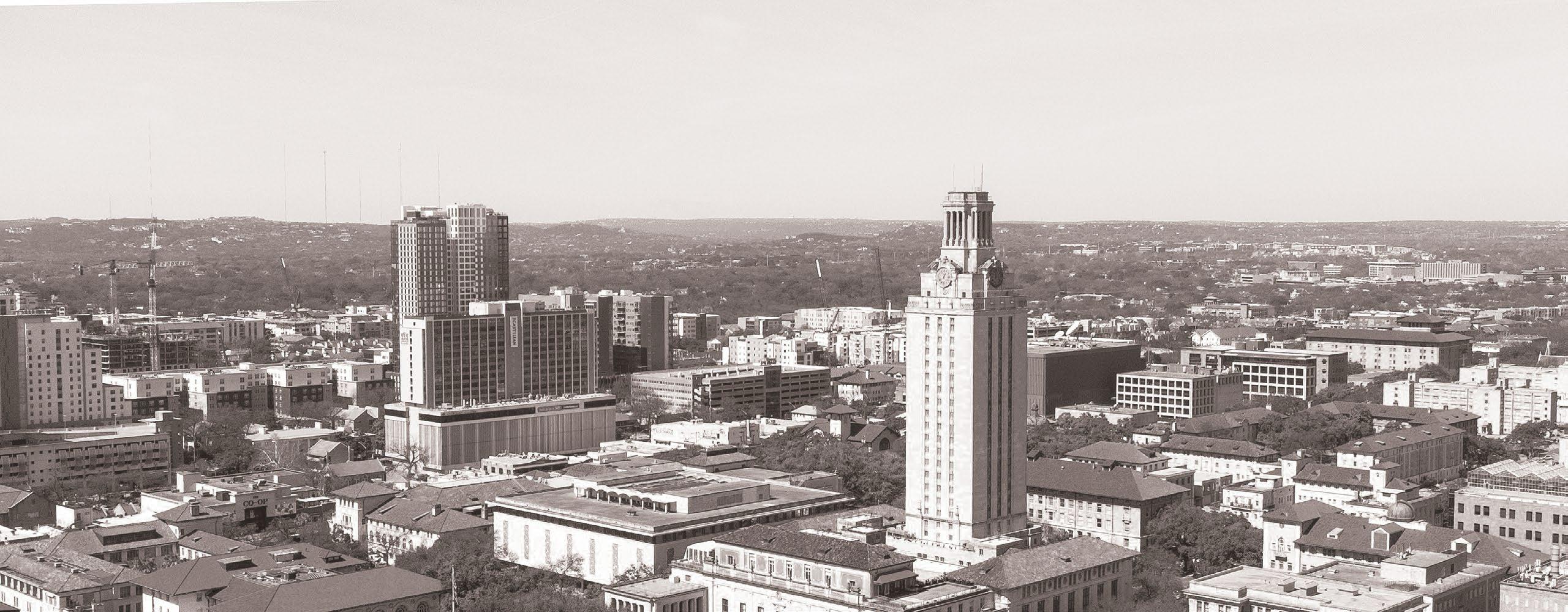
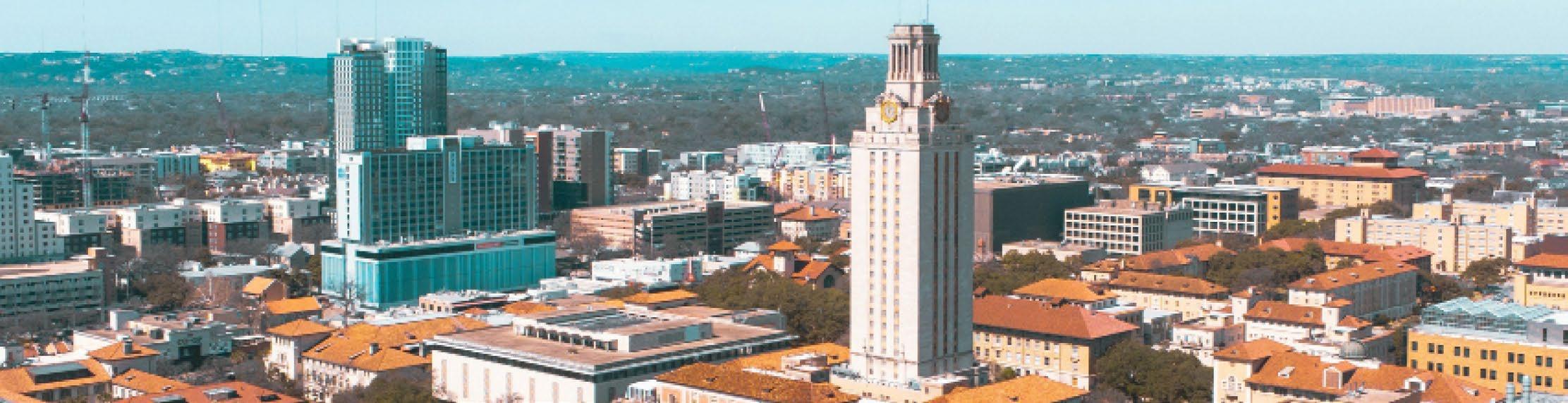
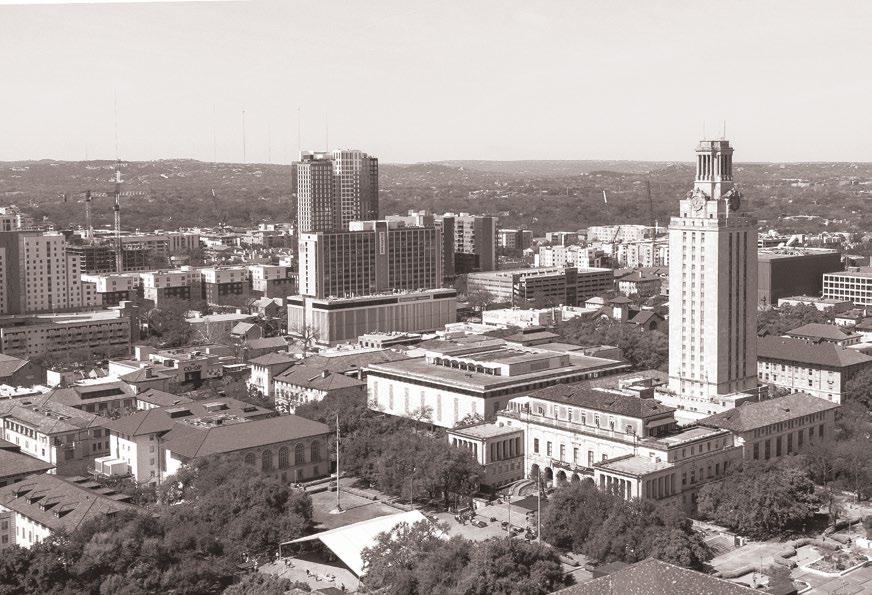
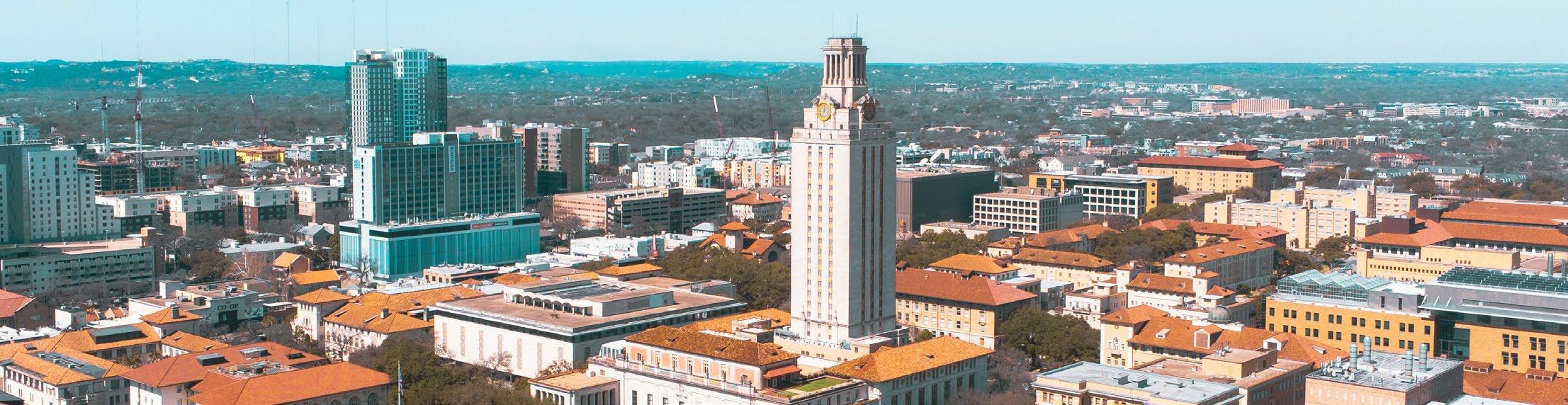
p The Tower stands tall on the Forty Acres, signifying the importance of the UT Social Work community.
BIG QUESTIONS with Dean Allan Cole
1
How was the first year in Walter Webb Hall?
I am in my 11th year at UT, and in certain ways this past year was among the best for our school. Many of our school’s highlights related to being in a new building and having a location at the intersection of academic and residential campus life. There’s a palpable buzz, both in our building and outside it, and having Roppolo’s for pizza and Lucky Lab for pastries has certainly improved the local food offerings within walking distance.
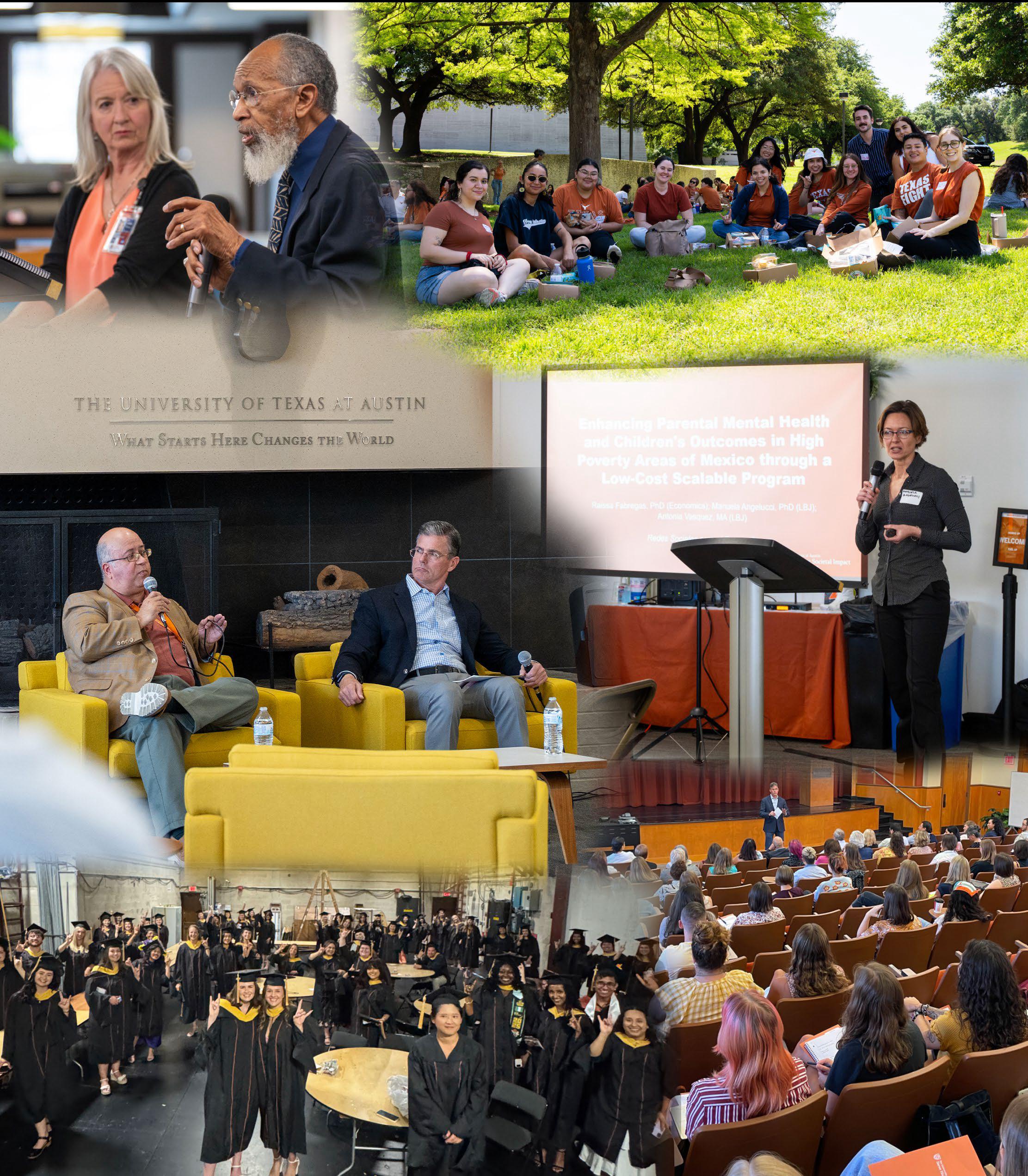
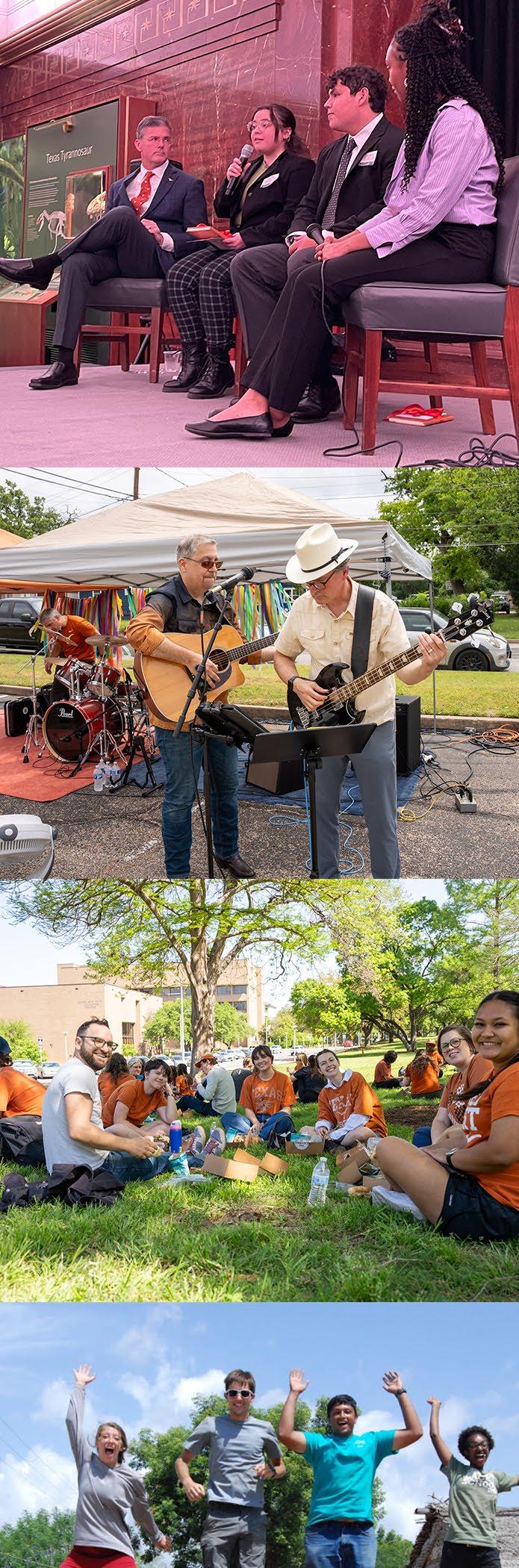
Being in a modern and inviting space that invites collaboration and partnerships has changed UT Social Work for the better. When I think of this past year, I think fondly of major speaking events like our Fireside Chats, featuring big thinkers around interdisciplinary and interprofessional work. I think of our research showcases, where students, faculty, and staff share life-changing research they're leading and implementing. I think of our community performing one of our best Social Work’s Got Talent shows, taking part in lunch-and-learns, and simply being with one another, sharing work and life — all of that makes for meaningful and memorable experiences that celebrate and strengthen community.
Our first year in Walter Webb Hall was terrific. I’m looking forward to building on its successes, especially as we prepare for our premier home in the coming years off Speedway in what is currently the McCombs School of Business.
2
UT Social Work has long prided itself on being a leader for first-generation students. What’s the current outlook for first-gen students?
As the first person in my family to graduate from college, I personally know the difference that a college education can make for generations to come. I am proud to say that UT Social Work leads the university in rates of firstgeneration college students — and we also do it while continuing to be leaders at the University in four-year graduation rates.
Consider that more than one in three students in our undergraduate program (BSW) are first-generation students, which is substantially higher than The
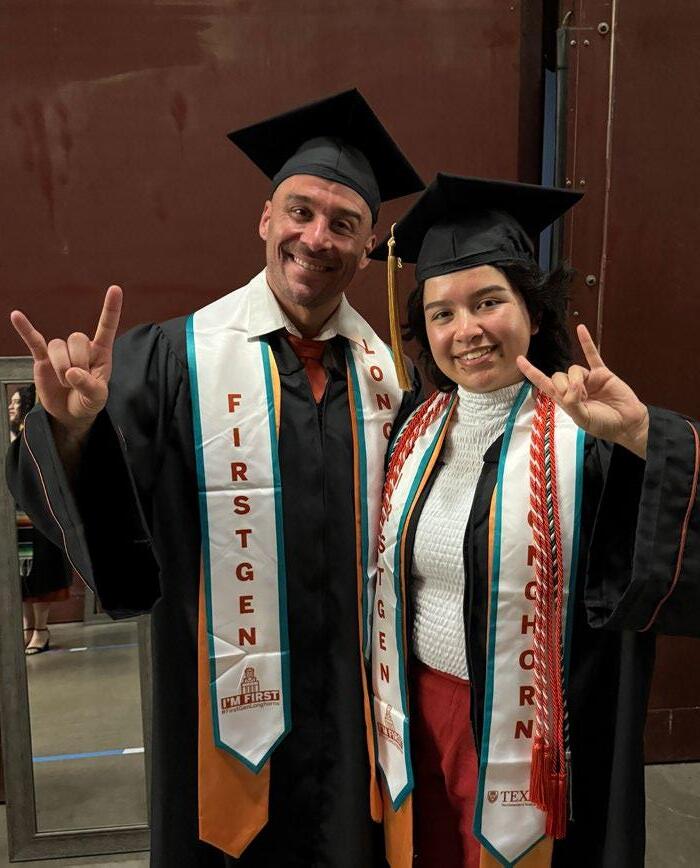
First-gen students prepare to walk the graduation stage q
p Dean Cole stands with students in front of Walter Webb Hall's fireplace.
University of Texas at Austin as a whole. Equally impressive is that the incoming cohort of first-year students for fall 2025 is approximately 45% first-generation, which is nearly double the rate of the incoming cohort for the Forty Acres.
Think about that! As social workers, we’re called to transform lives. A college education has long been connected to stronger career opportunities, higher earnings, and a better quality of life, not only in the present but for future generations as well. UT Social Work is changing lives and family legacies with the accomplishments of our firstgeneration students.
3It’s been a year since you were appointed Deputy for Health Humanities and Technology at Dell Medical School. What have you been up to in that space?
First and foremost, it’s been exciting to closely collaborate with exceptional clinicians, scholars, and medical leaders at Dell Medical School. They are the best of the best at what they do, and our school’s strategic partnership with Dell Med informs historic levels of collaboration.
More than 50 projects and studies are currently on-going between our faculty and Dell Med, and we continue to create and nurture interdisciplinary and interprofessional initiatives that focus on health care access and delivery, behavioral health, and patient outcomes. We also collaborate in several disciplines such as palliative and oncology care, medical humanities, Parkinson’s research, wellbeing, and a host of other ways showing that interprofessional practice improves patient experiences and outcomes.
One of my favorite things in this regard is leading a writing group with Dell Med faculty and leaders like Dr. Greg Wallingford. In these groups, we encourage medical providers to examine their experiences of treating patients to understand how those experiences affect them, emotionally and otherwise, and how to use that wisdom gained for ongoing growth as clinicians, teachers, scholars, and leaders. The exercises have been profound for doctors, residents, administrators and students alike.
To the best of my knowledge, no other school of social work in the country is as closely connected to its medical school as our school is, which allows us to be the leader when it comes to health and behavioral health in social work.
We saw this unique relationship when we hosted Dell Medical School’s dean, Dr. Claudia Lucchinetti, at Walter Webb Hall in April for a Fireside Chat. She and I discussed the importance of interprofessional teams, innovative approaches to patient-centered care, and how we are rethinking best practices. We also discussed approaches to bedside manner, difficult conversations, making ethical decisions when using artificial intelligence and related technologies, and conveying empathy during difficult medical decision-making by families.
Social work has a seat at the main table when it comes to healthcare practice and research on the Forty Acres, and we will continue to lead with excellence when it comes to “being human” in medicine.
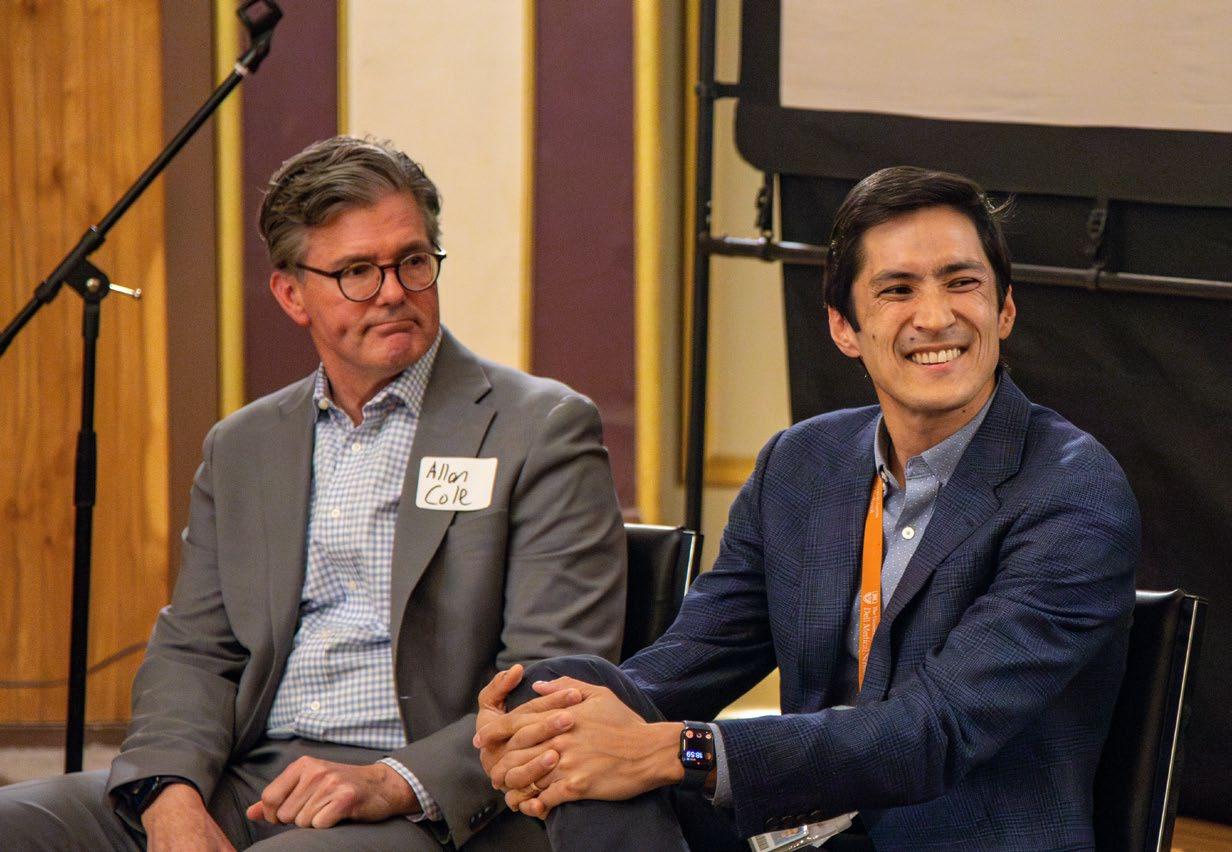
p Dr. Claudia Lucchinetti, dean of Dell Medical School, visits Walter Webb Hall for a Fireside Chat with Dean Allan Cole on April 8, 2025.
4
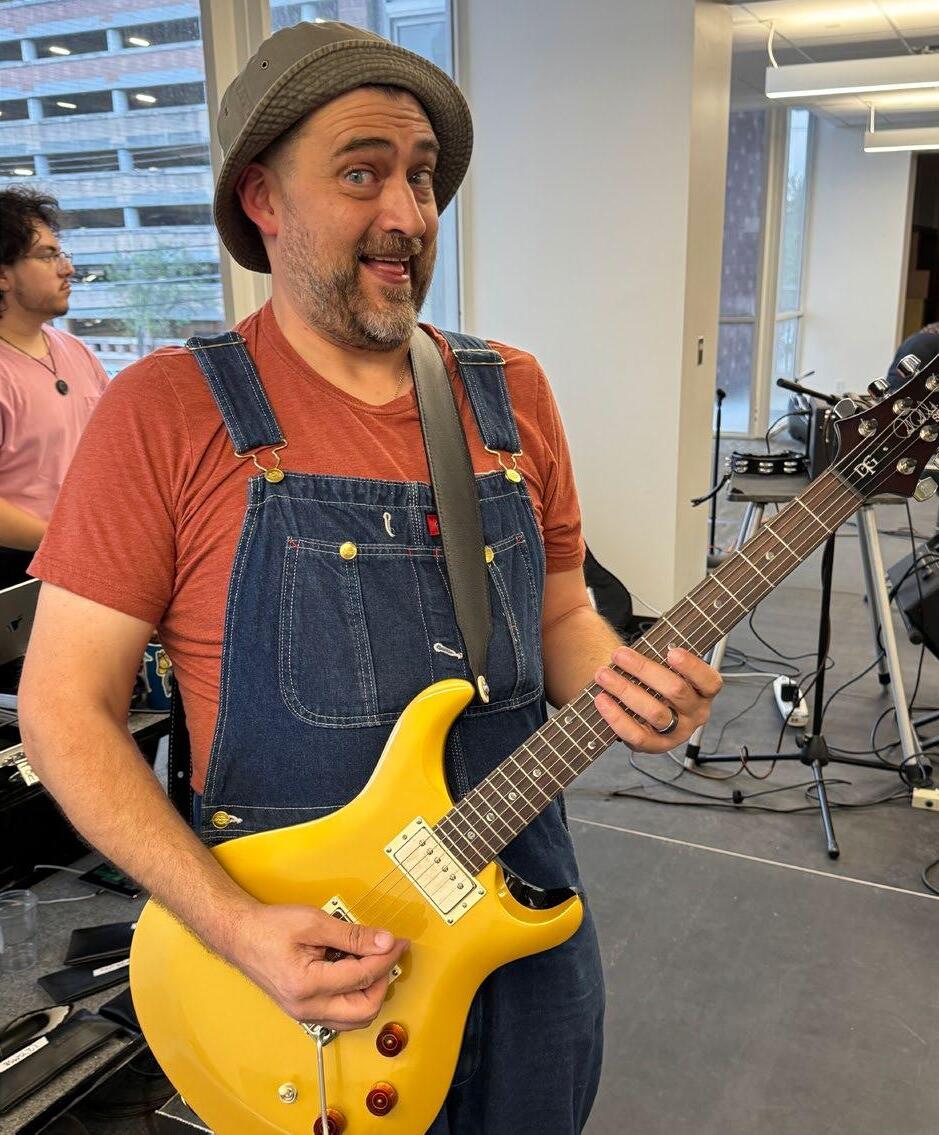
t Travis Foster, UT Social Work's first ever artist-in-residence, prepares for "Social Work's Got Talent" on March 29, 2025.
Speaking of “being human” in this setting, tell us more about your interest in arts and humanities. The school recently created an “artist-in-residence” position at UT Social Work. How do you see this role in social work education?
I firmly believe that arts and humanities can play a major role in shaping the human experience. Both the research and my own experience show the powerful effects of human expression through music, writing, art. and creativity on quality of life. This is true for social workers, patients, caretakers, families, and medical professionals alike.
In that spirit, our school is investing in enhancing social work research and practice through the arts and humanities. The Moritz Center for Societal Impact has appointed Travis Foster as UT Social Work’s first-ever artist-in-residence. His role is to integrate songwriting, music education, and creativity into our formative community life as well as in research and curriculum. His work prepares social work practitioners, educators, and researchers who alleviate social problems and increase human flourishing.
Similar residencies, such as the St. Elmo Arts Residency within the College of Fine Arts and the songwriter-inresidence program at The University of Texas at Austin, have been a part of the University’s efforts to expand experiences while integrating the campus community into Austin’s vibrant artist community. I believe that social work has significant contributions to make in this space as well.
In addition, our 75th Anniversary celebration in September will highlight our new partnership with the Hogg Foundation, which is co-sponsoring a new research opportunity for tenure-track assistant faculty. This initiative aims to support scholarship that advances mental health, well-being, and the arts and humanities, while also promoting the professional development of assistant faculty on the path to tenure.
Featuring the contributions of the arts and humanities is rare in a school of social work, and at UT Social Work, we intend to pioneer the practice as a model for other institutions. I’m excited about the future and how we’ll innovate in this space.
"UT Social Work is changing lives and family legacies with the accomplishments of our first-generation students."
- Allan Cole, dean of UT Social Work
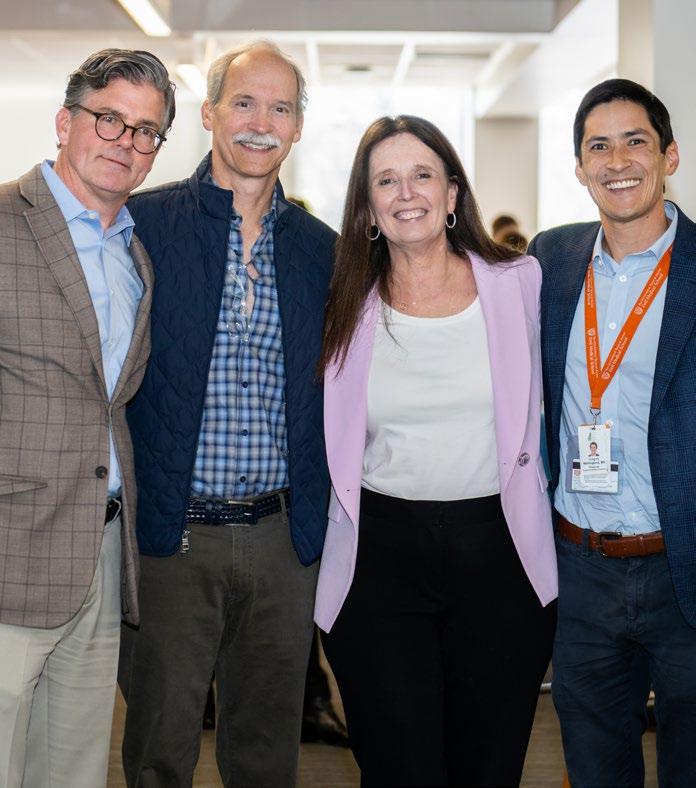
q Allan Cole and Greg Wallingford, pictured, lead initiatives in Dell Medical School that celebrate the human side of medicine.
5It’s been a banner year for global engagement, which was identified as a pillar of the school’s new strategic plan. Why does global work matter at UT Social Work?
A social worker’s most powerful tool is perspective. We believe that partnerships and experiences rooted in global contexts foster perspectives grounded in greater knowledge and understanding of human experience, need, and resources. Global partnerships help us meet our society’s greatest challenges. Therefore, we aim to be a school of social work that changes Texas, but also one that leads the world in addressing society’s greatest challenges.
Through strategic partnerships, interdisciplinary research and the dissemination of best practices, we’re expanding those opportunities for students, faculty, staff and researchers. We have purposefully expanded and fostered social work practicum placements in Europe, Africa, and Central America, among other international regions. We’ve also led international research projects such as solutions-focused brief therapy (SFBT) with Orebro University in Sweden, maternal health and parenting outcomes with the National Autonomous University of Mexico – Ciudad Universitaria, and international social work best practices with Pontificia Universidad Católica de Chile in Chile.
Our Office of Global Engagement continues to identify new opportunities for our social work community to expand beyond the Forty Acres and we will continue to support education that develops strong social workers with a penchant for multi-national impact.
BONUS
What are you listening to these days?
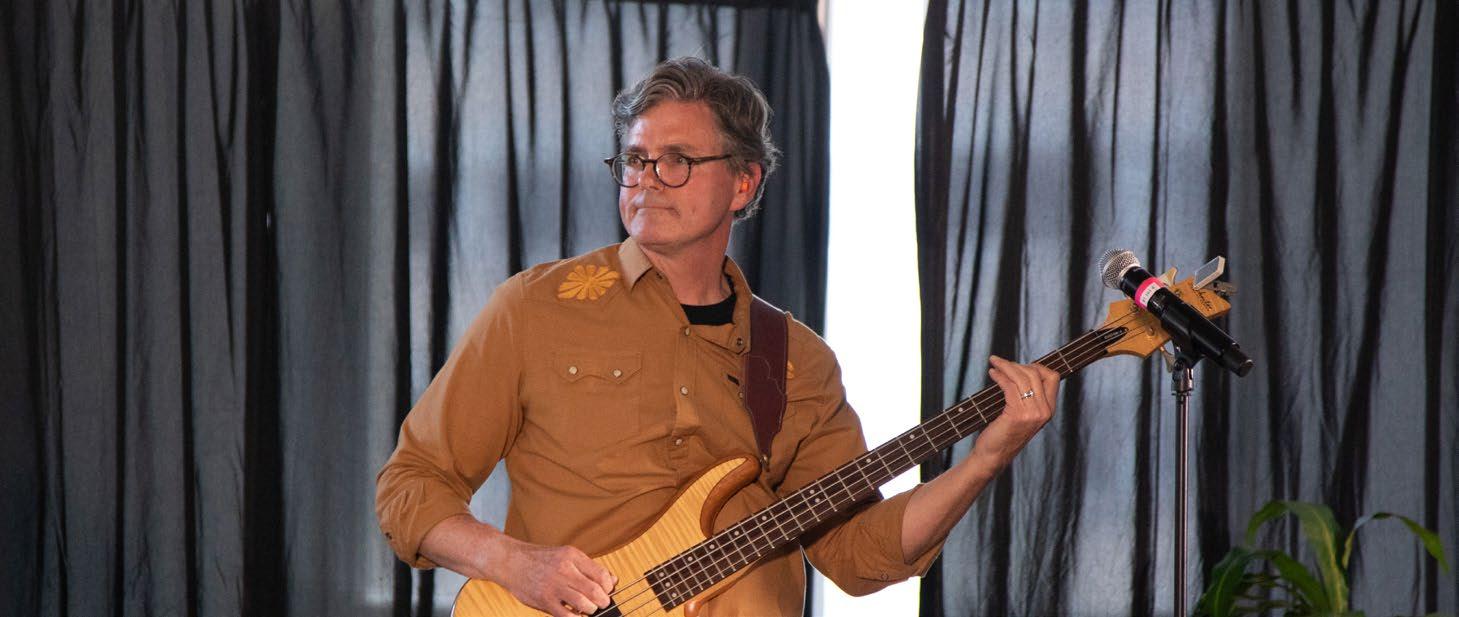
Lately I’ve been into songs made famous by the legendary New York music club CBGB. The club was opened in 1973 in the East Village of Manhattan, and featured the sound of several punk, new wave, and rock and roll bands. Songs like “I Can't Make It on Time” by the Ramones, “Once In A Lifetime” by the Talking Heads, “Radio, Radio” by Elvis Costello and “Private Idaho” by the B-52s have been on my playlists often. I’ve been practicing my vocals in addition to my bass guitar, and I’ve thoroughly enjoyed singing from this genre!
BIG QUESTIONS with Dean
Allan Cole
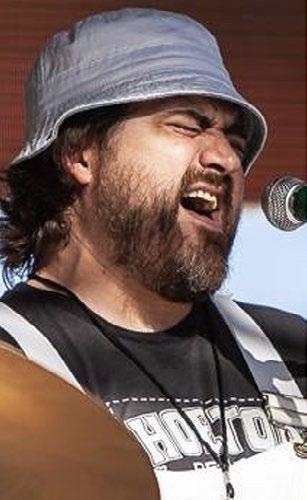
Dean Cole plays the bass guitar during "Social Work's Got Talent"
BUILDING BRIDGES TO LEARNING
How UT Social Work Powers UT Charter’s Mission
What happens when education meets the most vulnerable students where they are? At The University of Texas-University Charter School system, the answer unfolds across two distinct but complementary districts that serve different populations with the same commitment to excellence.
UT Elementary, a research-based demonstration school in East Austin, operates as a traditional charter serving pre-K through fifth-grade students through a lottery admission system. Founded in 2003 as a research-based demonstration school, it provides curriculum within nurturing environments that support each student’s learning journey while serving as a training site for future teachers, social workers, and other professionals.
But UT Charter’s 23 specialized campuses across Texas serve a fundamentally different population: unique learners in settings most schools never reach — psychiatric hospitals, residential treatment centers, specialized medical facilities. Here, the mission centers on creating safe, supportive environments where students facing complex challenges can achieve academic, social and emotional growth.
Fulfilling that vision requires more than innovative curriculum delivery. It demands practitioners who understand both learning and healing — which is where UT Social Work MSSW students create a powerful partnership that enhances support services while providing specialized training.
Andrea Menchaca, UT Charter’s school social work coordinator and the district’s only full-time social worker, oversees this collaboration across campuses where the stakes — and the learning opportunities — run extraordinarily high.
“We have implemented the neurosequential model into everything — from the way we train our teachers to our formal district policies,” says Menchaca. “This model helps our teachers understand how trauma impacts development, learning and behavior. It’s not about managing behavior — it's about understanding where those behaviors are coming from in order to create
educational environments respectful of a student’s need for safety, respect and connection.”
The Neurosequential Model of Education, created by Dr. Bruce Perry, emphasizes the importance of regulation as the foundation for learning and connection, helping educators understand both the science behind challenging behaviors and evidence-based intervention strategies. For Menchaca, this framework transforms intuitive teaching into systematic practice that delivers on the district’s vision of “academic, social and emotional success” for every student.
Unique Learners, Extraordinary Outcomes
UT Charter fulfills its mission of serving “unique learners in unique settings,” operating where traditional education cannot reach. Students live in residential treatment centers, psychiatric hospitals, and facilities serving children with brain injuries or neurological conditions. At Dell Children’s Hospital, teachers work bedside with medically fragile students awaiting surgery — like the student recently celebrated who received a heart transplant after months of hospital-based education. At Georgetown Behavioral Health, students receive halfday therapy alongside half-day academics, maintaining educational momentum during intensive treatment.
“Our teachers intuitively understand this population,” she explains. “But now we have the scientific foundation to understand why certain approaches work and how to replicate them across campuses.”
Practicum Under Pressure
This complex environment creates extraordinary learning
p Menchaca, third from left, pictured with UT interns at the School Social Work Conference.
opportunities for UT Social Work MSW students, who complete practicums across UT Charter’s network of specialized campuses. Menchaca supervises five interns each semester — most recently four from UT Social Work — deliberately maintaining a cohort model that provides peer support while exposing students to rapid-fire clinical decision-making.
“The amount of service we’re able to provide, I could never do by myself,” Menchaca notes. “Having other adults on campus whose sole responsibility is safety, connectionbuilding, trust, support — it’s huge.”
Social Work students engage in direct practice that demands adaptability: one-on-one support with UT Charter students who may transfer out of the program within weeks, small group facilitation with mixed-grade populations, family resource connection across complex care systems. The practicum students participate in Menchaca’s trauma-informed training sessions alongside district teachers, gaining exposure to both clinical work and systems-level intervention.
The experience addresses a critical workforce need. A comprehensive study by UT Social Work researchers, conducted at the request of the Texas Higher Education Coordinating Board, found a 27% unmet demand for social workers statewide — a number expected to rise to 36% by 2036. UT Social Work is actively addressing that gap with more than 65 school internship programs available to BSW and MSSW students. In addition, in June, the School announced the Post-Graduate Clinical Scholarship program to support graduates seeking licensure.
Menchaca makes no apologies for her recruitment agenda: “My not-so-secret plan — because I explicitly say
this to my interns — is I’m trying to indoctrinate them to be school social workers because we need more good, passionate social workers in education.”
Systems Thinking in Action
The partnership extends beyond individual student growth to organizational transformation. Menchaca’s social work students observe how evidence-based practices translate into policy development, staff training curricula, and cultural change management. They witness macro-level intervention strategies playing out in real time as she balances direct service delivery with district-wide trauma-informed implementation.
The mobility challenges — students frequently transitioning between facilities and back to home districts — require practitioners who can build therapeutic relationships quickly while maintaining the district’s commitment to high expectations for all. Despite complex circumstances, UT Charter students successfully earn credits, recover academic ground, and transition back to traditional settings prepared for continued growth.
“We specialize in making sure students can regain credits they’ve lost and catch up to grade level,” Menchaca explains. “When you’re moving from school to school — a byproduct of the foster care system — completing semester-long courses and earning credits is incredibly difficult. At UT Charter, we understand these educational challenges for non-traditional students and work to ensure they have specialized supports, including the opportunity for credit recovery.”
Menchaca emphasizes that successful practicum experiences require student self-advocacy. “This experience is for you to learn and grow as a social worker. It is also to serve the students, but it is both,” she tells her interns.
Beyond Comfort Zones
UT Charter represents practicum that transforms competent students into exceptional practitioners. The partnership demonstrates how specialized training environments can create competitive advantages for graduates entering demanding practice areas.
UT Charter began in 1998 as a distance education program, evolving over nearly three decades into its current model of embedded educational services for vulnerable populations.
The district’s innovative approach continues expanding, with Menchaca and her UT Social Work interns at the forefront of developing trauma-informed practices that other districts increasingly seek to replicate.
THREE FACULTY TO HOLD ENDOWMENTS
Faculty selected for advancements in social work research and practice
Fiona Conway, Fellow for Ruby Lee Piester Centennial Professorship in Services to Children and Families
Fiona Conway, Ph.D., will serve as the newest fellow for UT Social Work’s Ruby Lee Piester Centennial Professorship in Services to Children and Families, effective this August.
Dr. Conway is an assistant professor at UT Social Work and associate director of research at the Addiction Research Institute. She also serves as director of adjunct affairs.
Her research primarily focuses on substance use behaviors emphasizing recovery support services, digital health solutions, and substance use among adolescents and young adults.
Rebecca Gomez, Ph.D., will serve as the inaugural fellow for the newly established David Johnson Professorship in Social Work, effective this August.
The professorship, which is the newest endowed professorship at UT Social Work, was created through a significant gift from the estate of Dr. David H. Johnson, a graduate of UT Social Work’s doctoral program.
Dr. Gomez, who currently serves as an associate professor and the associate dean for academic affairs at UT Social Work, is a leading researcher in the field of complex trauma and is nationally recognized for her work on child and family well-being.
Danielle Parrish, Ph.D., will be the newest Steve Hicks Social Work Professor in Addictions and Substance Abuse Services, effective in August.
She is a professor at UT Social Work and associate director of the Health Behavior Research and Training Institute. Her research focuses on bridging the research-practice gap by developing and testing feasible and efficient behavioral health interventions and improving the implementation of empirically supported interventions.
Rebecca Gomez, Fellow for David Johnson Professorship in Social Work
Danielle Parrish, Steve Hicks Professor in Addictions and Substance Abuse Services
UT SOCIAL WORK REMEMBERS
UT Social Work mourns the loss of cherished members of our community and honors their legacy.
Jeremy Goldbach (MSSW '08, Ph.D. '12)
UT Social Work mourns the loss of two-time UT Social Work alumnus Dr. Jeremy Goldbach, 42, who died on June 7 following a courageous battle with cancer.
Goldbach earned his MSSW from UT Social Work in 2008 and his doctoral degree in 2012. He was described by his classmates as an incredibly kind, brilliant, and compassionate man of character who exemplified a life led by social work values and a career dedicated to improving society.
Goldbach was devoted to a career of research and teaching, particularly in supporting the well-being of LGBTQ+ children and adolescents. In 2022, he was appointed as the inaugural Masters & Johnson Distinguished Professor in Sexual Health and Education at the Washington University in St. Louis. He also served as the associate dean for faculty affairs at Washington University in St. Louis, and directed the school’s Sexuality, Health and Gender Center.
In January 2025, Goldbach was inducted as a Fellow of the American Academy of Social Work and Social Welfare, which is one of the highest honors a researcher in social work education can achieve. Goldbach is survived by his husband Evan, their children Ellias and Holland, as well as numerous friends, colleagues, and mentees.
Qusay Hussein (BSW '21, MSSW '22, Ph.D. '25)
UT Social Work mourns the loss of three-time UT Social Work graduate Qusay Hussein, Ph.D., who died Saturday, June 14, 2025, at 39, following a valiant two-year fight with kidney cancer.
Hussein survived a 2006 suicide bombing attack in Mosul, Iraq, which left him blind and critically injured. After 67 reconstructive surgeries, he resettled in Austin in 2012 as a refugee and became a powerful voice for underserved communities and individuals with disabilities.
He earned a dual bachelor’s degree in psychology and social work in 2021, followed by a master’s and Ph.D. in social work from our school. In doing so, he completed a promise he made to his father before coming to the United States. He received several well-deserved accolades throughout his life, notably including the Nemec Fortitude Award issued by the McCombs School of Business, and a recent inclusion as one of the Texas Exes 2025 Outstanding Young Texas Exes.
Dean Allan Cole noted that one of Hussein's mantras was "I'm going to the top and I'm taking everybody with me." This is “the kind of life Qusay led in his research, in his service, and throughout his everyday interactions,” said Dean Cole. “What he has given us will endure.”
In honor of Hussein's life, UT Social Work has established the Qusay Hussein Humanitarian Award. This award recognizes strength of character, resilience, and compassion for others. It will be given annually to a graduating student who has demonstrated these values in the school community.
Kathryn Kramer
UT Social Work mourns the loss of Kathryn Beth Kramer, Ph.D., former assistant dean for development. She was 75.
During her tenure, Kramer made significant contributions to the school as well as to The University of Texas at Austin. She helped UT Social Work acquire resources that continue to inform our work and advance our mission of alleviating critical social problems and enhancing human wellbeing.
After receiving her Bachelor of Arts in Mathematics from Lyon College (formerly Arkansas College), Kramer earned a master’s degree in sociology at the University of Memphis. She completed her Ph.D. in sociology and demography at The University of Texas at Austin.
Kramer’s passion for education led her to teach at various universities throughout Austin and neighboring communities. Her commitment to public service shone through her work with the State of Texas, including as the associate commissioner for service integration at the Texas Health and Human Services Commission.
Jose “Joey” Velasquez (Ph.D. '23)
UT Social Work mourns the sudden passing of U.S. Army Major and UT Social Work doctoral graduate Dr. Jose “Joey” Velasquez, 40, whose commitment to helping others defined both his military service and academic pursuits.
After earning his LCSW through the U.S. Army's MSW Program in partnership with Fayetteville State University, he completed his social work internship at Fort Bragg, North Carolina. He then became the behavioral health officer for the 7th Special Forces Group (Airborne), where he led the behavioral health clinic and deployed to Afghanistan.
This frontline experience with service members inspired Velasquez to pursue a doctoral degree at The University of Texas at Austin where his research focused on improving the quality and utilization of behavioral health services for U.S. Army Special Forces soldiers and their families.
At UT Social Work, Velasquez quickly became a beloved presence in the doctoral student lounge, known for his kindness, generosity, and authenticity. As a member of the UT Health Behavior Research and Training Institute (HBRT), he conducted valuable research on health behavior change alongside Dr. Mary M. Velasquez and Dr. Kirk von Sternberg, bringing his unique perspective as both a clinician and veteran to this important work.
NEWS FROM OUR ALUMNI
Cossy Hough LCSW, BSW '92, MSSW '93 selected as one of Dads' Association Centennial Teaching Fellows at The University of Texas at Austin. She recently retired from the University after 15 years of service.
Herchel Knapp, Ph.D., MSSW '95 published his latest textbook, "Introductory Statistics Using R: An Easy Approach" through SAGE Publications. This multimedia resource reproduces Dr. Knapp’s successful statistics teaching method for masters and doctoral students.
Becca Hutcheson, BSW '96 was a plenary speaker at the National Ryan White Conference on HIV Care and Treatment. She is a program manager at Public Health - Seattle & King County and leads King County's work under the federal Ending the HIV Epidemic initiative.
John F. "Fred" Thomas, MSSW '97 was promoted to professor in the University of Colorado School of Medicine and Colorado School of Public Health, Dept. of Epidemiology in 2024. He is the executive director of the Peer Mentored Care Collaborative at the CU School of Medicine, a community of colleagues that coordinate to provide specialty care to Coloradans.
Liliane Windsor, MSW '02, Ph.D. '08 was appointed as the Lillian F. Harris Professor at the Jack, Joseph and Morton Mandel School of Applied Social Sciences at at Case Western Reserve in Cleveland, Ohio.
Michele D. Hanna, Ph.D. '05 was appointed as the new editor-in-chief of the Journal of Social Work Education (JSWE), e"ective January 2025. Dr. Hanna serves as an associate professor at the University of Denver’s Graduate School of Social Work.
We always want to hear from our alumni! If you have news to share, send an email to utopian@utlists.utexas.edu.
Johnny Kim, Ph.D. '06 was named the No. 2 researcher in the world for solution-focused brief therapy by the American Journal of Family Therapy.
Michael Uebel, Ph.D., LCSW, MSSW '06 published a book, "Seeds of Equanimity: Knowing and Being". It studies the formation of the idea of equanimity, its philosophical meaning and psychological relevance. It advances equanimity as a primary way of relating to the self, others, and the world, one which systems of Eastern thinking such as Daoism and Buddhism, and Western philosophy (e. g., phenomenology and transcendentalism) have posited as central to the creation of vital existence lived in the fullest awareness.
Tim Bailey, LMSW, MSSW '12 began a new role as manager of complex care management at Oklahoma Complete Health.
Sarina Shaver, BSW '13 welcomed her first child, Raiden Grant Myers, to the world on Sept. 20, 2024. She currently resides in Silver Spring, Maryland where she works as a whistleblower reprisal investigator for the Department of Defense O!ce of Inspector General in our Sexual Assault unit.
Wysonda "Torri" (Smith) Scott, BSW '15, MSSW '16 recently began a new job at Dell Children’s Medical Center as the child abuse eesource and education team social worker. She was also married on Dec. 6, 2024.
Amelia Frank, LCSW, MSSW '18 started a role as a primary care social worker with UT Health Austin.
Anao Zhang, Ph.D. '18, LCSW, ACSW, OSW-C, ACBT was inducted into the SP2 Alumni Hall of Fame at the School of Social Policy & Practice at the University of Pennsylvania.
Kassidi Kaminski, LCSW, BSW '19, MSSW '21 now serves as an outpatient clinical therapist at LifeStance Health in Dallas, Texas, focusing on outpatient mental health services to children, teens, college students, and young adults.
Madeline Nassif Lucas, BSW '19 moved to Houston, Texas and began a new role as a philanthropy manager at Memorial Hermann Health System.
Deja Gamble, LCSW, MSSW '21 earned the Rising Star award for her work as a practicum instructor at the latest UT Social Work practicum instructors development institute training. Deja is a wellness counselor for Austin ISD at Govalle Elementary.
Anna Gonzalez, BSW '23 started a role as a therapeutic child specialist at Helping Hand Home for Children.
Elizabeth Muench, LMSW, MSSW '24 began a new position at Austin Oaks Hospital, where she serves as an inpatient therapist.