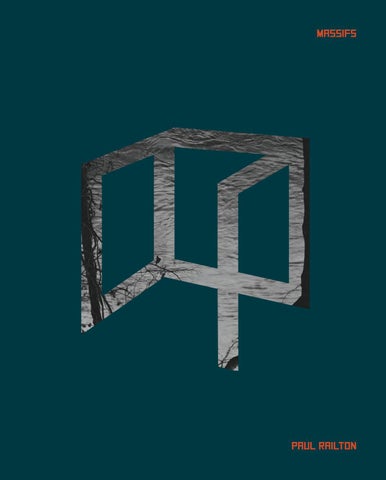
MASSIFS
PAUL RAILTON
Cyfres o ddelweddau yw Massifs a wnaed mewn ymateb i waredu 80,000 tunnell o fwd mewn banc tywod tanddwr o’r enw Tiroedd Caerdydd, sydd oddeutu 1.8 milltir o arfordir Caerdydd. Mae trafodaethau ynghylch diogelwch y mwd a chynlluniau i waredu hyd at 800,000 tunnell yn parhau ar hyn o bryd rhwng y cwmni ynni, EDF, llywodraeth y DU ac Adnoddau Naturiol Cymru. Mae’r grwpiau ar gyfer carthu a dympio’r mwd ymhellach wedi cael gwrthwynebiad chwyrn gan grwpiau amgylcheddol lleol, oherwydd y diffyg gwybodaeth ac ymgynghori â’r bobl yr effeithiwyd arnynt fwyaf. Trwy archwilio gwybodaeth mae’r prosiect hwn yn gofyn cwestiynau am effaith dympio mwd halogedig a allai fod yn niweidiol yn agos iawn at ddinas. Mae’r gwaith hefyd yn cyffwrdd â’r cyfnewidiadau sydd o fudd i’r ddwy ochr rhwng llywodraethau ac endidau corfforaethol, yn ogystal â’r dinasyddion a bywyd gwyllt y mae eu gweithredoedd yn effeithio arnynt, ond heb ddweud eu dweud. A oes gan lywodraethau ddyletswydd gyfreithiol neu foesol i amddiffyn eu dinasyddion? Mae’r delweddau yn y gyfres hon wedi’u gwneud ar hyd llinell arfordir Cymru, o Gaerdydd i Ynys y Barri. Dyma ardal llinell yr arfordir y bydd unrhyw halogiad yn effeithio fwyaf arni.
paulrailton.com
IG @paulrailton
Thank you to all of the people who have contributed to the course in 2020-21. More info www.southwales.ac.uk/courses/ma-documentary-photography
Massifs is a series of images made in response to the disposal of 80,000 tonnes of mud in an underwater sandbank known as Cardiff Grounds, which is located approximately 1.8 miles from the Cardiff coastline. Discussions around the safety of the mud and plans to dispose of up to 800,000 tonnes are currently ongoing between the energy company, EDF, the UK government and Natural Resources Wales. The plans for further dredging and dumping of the mud have been met with fierce opposition from local environmental groups, due to the lack of information and consultation with the people most affected. Through the exploration of information this project asks questions about the effect on local communities, as well as the environmental impact, of dumping potentially harmful contaminated mud very close to a city. The work also touches on the mutually beneficial exchanges between governments and corporate entities, as well as the citizens and wildlife affected by, but without a say regarding, their actions. Do governments have a legal or moral duty to protect their citizens? The images in this series have been made along the Welsh coast line, from Cardiff to Barry Island. This is the area of the coast line that will be most affected by any contamination.
NEW PHOTOGRAPHIC MANUAL
MATTHEW KEeNAN
Yn llawn meddyliau o gaethiwed, a rhywioldeb digroeso, portread perfformiadol a bywyd llonydd yn deddfu eiliadau o hunaniaeth wrywaidd Brydeinig, cysyniad mewn fflwcs gwastadol wrth i afael anhyblyg deuoliaeth draddodiadol rhyw ymsuddo. Efallai y bydd gan y gwrthrychau arwyddocâd pŵer, statws ac anian ar sail rhyw. Ar ôl ei bersonoli, gall ein heiddo ddod yn flociau adeiladu hunaniaeth a gellid eu defnyddio i ategu anghydbwysedd rhwng y rhywiau yn barhaus. Gofynnir i wylwyr ystyried yr hyn y mae’n ei olygu pan dynnir ffotograff o’r gwrthrychau hyn ar y cyd â’r corff gwrywaidd gwyn. Yn debyg iawn i’r camera, mae’n aml yn cael ei ystyried yn safle pŵer, mae’r corff hefyd yn safle bregusrwydd sy’n ofynnol i ni dyfu.
www.matthewkeenan.org
IG @matthewkeenanphotographer
Thank you to all of the people who have contributed to the course in 2020-21. More info www.southwales.ac.uk/courses/ma-documentary-photography
Suffused with thoughts of addiction, and unwanted sexuality, performative portraiture and still life enact moments of British male identity, a concept in perpetual flux as the rigid grip of traditional dualisms of gender subside. The objects may be imbued with gendered connotations of power, status and temperament. Once personified, our possessions may become the building blocks of identity and could be used to buttress a continual gender imbalance. Viewers are asked to consider what it means when these objects are photographed in conjunction with the white male body. Much like the camera, it is often considered a site of power, the body is also a site of vulnerability that is required for us to grow.
DOG NAMED BEANS
LORNA CABBLE
Mae ‘Dog Named Beans’ yn astudiaeth weledol o hunaniaethau, dyheadau a breuddwydion grŵp ifanc o ddawnswyr yng Nghymru a ddatblygwyd o ddefnyddio methodolegau cydweithredol i yrru’r naratif. Nod y delweddau (a’r testun) a ddefnyddir, a ddewiswyd gan blant a ffotograffydd, yw cynrychioli pob plentyn fel unigolyn ac mae’n gweithio ar y cyd â nhw i bennu lleoliad, dillad a naratif yn y delweddau a gymerwyd. Mae plant yn cynnig dihangfa i fyd plentynnaidd sy’n llawn pŵer, hylifedd a dychymyg. Bob dydd maen nhw’n cyflwyno gwahanol fersiynau ohonyn nhw eu hunain. Mae un diwrnod yn stori dylwyth teg, a’r llall yn gynrychiolaeth drawiadol o real o’u bydoedd a’u hamgylchiadau unigol eu hunain, yn ychwanegol at ein cymdeithas gyfan. Nod y prosiect yw herio cydbwysedd pŵer a chynrychiolaeth rhwng y ffotograffydd a’r pwnc trwy roi’r rheolaeth fwyaf i’r plant. Mae’r prosiect yn defnyddio ffotograffiaeth a fideograffeg i gyflwyno gwahanol agweddau ar fywydau’r plant - mae’r fideo yn canolbwyntio ar eu hyfforddiant dawns ac mae’r ffotograffau’n canolbwyntio ar eu syniadau a’u personoliaethau unigol.
lornacabble@yahoo.com
IG @lorna_cabblew
Thank you to all of the people who have contributed to the course in 2020-21. More info www.southwales.ac.uk/courses/ma-documentary-photography
’Dog Named Beans’ is a visual study of the identities, aspirations and dreams of a young group of dancers in Wales developed from using collaborative methodologies to drive the narrative. The images (and text) used, selected by both children and photographer aim to represent each child as an individual and works in collaboration with them to determine location, clothing and narrative in the images taken. Children offer an escape into a childish world full of power, fluidity and imagination. Every day they present different versions of themselves. One day is a fairy tale, and the other a strikingly real representation their own individual worlds and circumstances, in addition to our society as a whole. The project aims to challenge the balance of power and representation between the photographer and subject by giving the children most of the control. The project uses both photography and videography to present different aspects of the children’s lives - the video focuses on their dance training and the photographs focus on their individual ideas and personalities.
WALLS IN THE RIVERBED
JUSTIN KEENE
Walls in the Riverbed presents fragments of history, creating a setting in which the viewer can piece together a narrative from different sources of information related to the archive. The mixed media approach of the project resembles much of history’s gathering over time as a process of curation. It presents a colonial archive eluding to dominant power structures by interpreting institutional authorities and the ongoing social impact of imperialist visual culture. Darganfuwyd diemwntau alluvial yn ffurfiol yn Ne Affrica yn y Gogledd Cape ger Kimberley wrth flaenddyfroedd afonydd Oren a Vaal ym 1867. Erbyn 1870, roedd darganfyddiadau sylweddol ar yr hyn a elwir yn The Diamond Fields of Kimberley yn cael eu dilyn gan ddisgyniad torfol o Ewropeaid i hawlio hawliadau i adnoddau cyfoethog De Affrica. Wrth i’r wladwriaeth gyfagos, y Wladwriaeth Rydd, gael ei gwahanu oddi wrth diriogaethau Prydain a’i rhoi i Weriniaeth y Boer ym 1854, ar unwaith daeth The Diamond Fields yn goncwest wleidyddol - rhywbeth a fyddai’n aros yn rhan o dirwedd gymdeithasol De Affrica am flynyddoedd lawer i ddod. Gwelodd cloddwyr cynnar gloddwyr yn ceisio dargyfeirio’r afon yn ystod y misoedd sych, gan adeiladu waliau yng ngwely’r afon a newidiodd ei chwrs i gasglu mwy o bridd a chanfyddiadau. Mae Walls in the Riverbed yn cyflwyno darnau o hanes, gan greu lleoliad lle gall y gwyliwr lunio naratif o wahanol ffynonellau gwybodaeth sy’n gysylltiedig â’r archif. Mae dull cyfryngau cymysg y prosiect yn debyg i lawer o gasglu hanes dros amser fel proses guradu. Mae’n cyflwyno archif drefedigaethol sy’n cynnwys strwythurau pŵer dominyddol trwy ddehongli awdurdodau sefydliadol ac effaith gymdeithasol barhaus diwylliant gweledol imperialaidd.
www.justinkeene.com
IG @justinkeene_
Thank you to all of the people who have contributed to the course in 2020-21. More info www.southwales.ac.uk/courses/ma-documentary-photography
Alluvial diamonds were formally discovered in South Africa in the Northern Cape near Kimberley at the headwaters of the Orange and Vaal rivers in 1867. By 1870, significant discoveries on what became known as The Diamond Fields of Kimberley were followed by a mass descendance of Europeans to stake claims to the rich resources of South Africa. As the neighbouring state, the Free State, has been separated from British territories and given to the Boer Republic in 1854, immediately The Diamond Fields became a political conquest – something that would remain part of South Africa’s social landscape for many years to come. Early mining saw diggers attempting to divert the river in the dry months, building walls in the riverbed that altered its course to collect more soil and findings.
We Are Lichens
ILONA DENTON
Mae ein cyfnod cyfredol, yr ‘Anthropocene’ (a elwir felly oherwydd gweithgareddau terasffurfio ar raddfa fawr) yn rhagweld naratif apocalyptaidd o fyd gelyniaethus. Zalasiewicz, 2011) “Rhaid i ni feddwl” yn wahanol, yn datgan Donna Haraway ei llyfr Staying with the Trouble (2016) wrth iddi wahodd ei darllenwyr i ddyfalbarhau gyda’r dasg o ddargyfeirio diddymu’r byd naturiol, ac yn cynnig y bydd bodau dynol yn dod yn fwy symbiotig o fewn yr ecosystem os mae’r boblogaeth yn cael ei lleihau. Mae fy ngwaith yn archwilio chwedlau newydd; y corff dynol nid fel organeb fiolegol annibynnol, ond fel symbiont o ecoleg annatod. Mae cen yn symbiotig unigryw. Mae organebau ar wahân - ffwng, algâu a bacteria - yn addasu ac yn tyfu gyda’i gilydd mewn uned sefydlog. Mewn coetir hynafol, mae menywod di-bartner sy’n agosáu at oedran magu plant yn ystyried eu perthynas â mamolaeth, a’r amgylchedd. Wedi eu troi allan yn ‘siren-suit’ ac yn breuddwydio am argyfyngau mewn perthynas â’u bioleg eu hunain, yn gydnaws â galwad araf, syfrdanol newid yn yr hinsawdd, maent yn cydbwyso meddyliau o ddod yn rhiant unigol neu’n ddi-blant / yn ddi-blant. Mae paradocs yn amlygu fel awydd a cholled mewn dyfodol dystopig, ffuglennol, gan dynnu sylw at y cydadwaith parhaus rhwng pobl a rhywogaethau eraill, oherwydd “ni fuom erioed yn unigolion; cennau ydyn ni. ” (Gilbert, 2014).
ilonadenton.com
IG @ilonadents
Thank you to all of the people who have contributed to the course in 2020-21. More info www.southwales.ac.uk/courses/ma-documentary-photography
Our current epoch, the Anthropocene (so called because of large scale terraforming activities) forecasts an apocalyptic narrative of a hostile world. Zalasiewicz, 2011). “We must think” differently, declares Donna Haraway her book Staying with the Trouble (2016) as she invites her readers to persevere with the task of diverting the dissolution of the natural world, and proposes that humans will become more symbiotic within the ecosystem if population is reduced. My work explores new myths; the human body not as an independent biological organism, but a symbiont of an integral ecology. Lichens are uniquely symbiotic. Separate organisms - fungus, algae and bacteria - adapt and grow together in a stable unit. In ancient woodland, un-partnered women who are approaching post childbearing age consider their relationship to motherhood, and environment. Turned out in ‘siren-suits’ and dreaming of urgencies relative to their own biology, congruent with the slow, rumbling call of climate change, they balance thoughts of becoming a lone parent or childless / childfree. A paradox manifests as desire and loss in a dystopic, fictional future, highlighting the continual interplay between people and other species, for “we have never been individuals; we are lichens.” (Gilbert, 2014).
THREE DIFFERENT WAYS OF SAYING ‘HERE’ (2019-2021)
FRANCESCO MARCHINI
Gan ddefnyddio cyd-destun cymdeithasol Borgo Mezzanone, yn yr Eidal, fel man cychwyn, mae’r prosiect yn ymgysylltu â’r anawsterau o gynrychioli cymunedau sydd wedi’u dadleoli. Sut y gall delweddaeth syntheseiddio amgylcheddau gwahanol sy’n cynnwys strwythurau milwrol, cyfalafol ac amherffaith, a mynd i’r afael â’r berthynas rhwng gofodau a lleoedd sy’n gyfrifol am gynhyrchu anweledigrwydd? Pa rôl sydd gan ffotograffiaeth wrth benderfynu pwy sy’n cael ei weld a phwy sy’n gweld, a sut allwn ni ddelweddu ffiniau sydd wedi’u harysgrifio i’r dirwedd heb atgynhyrchu’r un ddeinameg? A yw’n wir y gall ffotograffiaeth gysoni profiad paradocsaidd penodol o ddadleoli â barddoniaeth o gaethiwo? Fel ffordd o gynrychioli’r ddelwedd ymfudol, ymfudol “Tair Ffordd Wahanol o Ddweud‘ Yma’” yn ymhelaethu ar effaith a chanlyniadau cyfyngu i’r rhai yr effeithir arnynt. Gan dynnu ar syniadau sy’n gysylltiedig â Lefebvre, a’r berthynas rhwng gofod cyhoeddus a phreifat, ochr yn ochr â thrafodaethau ar y ‘bywyd noeth’ fel yr aeth Giorgio Agamben i’r afael â nhw, mae’r gwaith yn defnyddio elfennau ffuglennol sy’n gysylltiedig â’r trallod strwythurol a’r arian wrth gefn arfaethedig sydd wedi’i beri ar y cymuned ymfudol i ddangos, Yma, nad yw cynhyrchu gofod yn ddim ond trychineb gwleidyddol.
www.francescomarchini.com
IG @f.marchini
Thank you to all of the people who have contributed to the course in 2020-21. More info www.southwales.ac.uk/courses/ma-documentary-photography
Using the social context of Borgo Mezzanone, in Italy, as a starting point, the project engages with the difficulties of representing displaced communities. How can imagery synthesize disparate environments that contain military, capitalist, and impermeant structures, and address the relations between spaces and places that are responsible for the production of invisibility? What role does photography have in determining who is seen and who sees, and how can we visualize borders that are inscribed into the landscape without reproducing the same dynamics? Is it the case that photography can reconcile a certain, paradoxical experience of dislocation with a poetics of confinement? As a way of representing the elusive, migrant image Three Different Ways of Saying ‘Here’ elaborates on the impact and consequences of confinement to those who are affected by it. Drawing on ideas associated with Lefebvre, and the relationship between public and private space, alongside discussions on the ‘bare life’ as addressed by Giorgio Agamben, the work uses fictional elements associated with the structural distress and the planned contingency that have been inflicted upon the migrant community to show that, Here, the production of space amounts to nothing but a political catastrophe.
SEARCHING FOR GREEN HORSES ON WALLS
DENISA MOLNAR
Mae ‘In Search of Green Horses on Walls’ yn defnyddio archif wladwriaeth Secret Police a gasglwyd rhwng 1981- 1982, wrth fonitro’r grŵp llenyddol Aktionsgruppe Banat. Wedi’u ffurfio gan leiafrif yr Almaen yn rhanbarth Banat yn Rwmania, ysgrifennodd y grŵp gerddi a oedd yn mynd i’r afael â materion cymdeithasol-wleidyddol a oedd yn ymwneud â lleiafrifoedd o fewn tiriogaeth Rwmania. Mae ffocws y gwaith yn y dehongliadau o’r cerddi hyn gan y synwyryddion, gan dynnu sylw at natur ddyneiddiol y rhai sy’n gysylltiedig â thasgau o’r fath. Yn gysylltiedig â ffotograffau a gymerwyd fel ymateb i’r ffeiliau hyn neu mewn ymdrech i adeiladu o amgylch y straeon sy’n cyd-fynd â nhw, mae’r prosiect yn cyflwyno’r dogfennau hyn mewn cyd-destun newydd ac efallai anghyfarwydd. Daw’r elfennau ysgrifenedig a darluniadol yn y gwaith at ei gilydd mewn ymgais i gyfleu natur farddonol y dehonglwyd y cerddi hyn gan y synwyryddion.
ilonadenton.com
you you really don’t have a choice dear resident that you look at our world without really understanding it but who tells you that we do
ti does gennych chi ddim dewis mewn gwirionedd preswylydd annwyl eich bod yn edrych ar ein byd heb ei ddeall mewn gwirionedd ond pwy sy'n dweud wrthych chi ein bod yn gwneud hynny
IG @denisanmolnar
Thank you to all of the people who have contributed to the course in 2020-21. More info www.southwales.ac.uk/courses/ma-documentary-photography
In Search of Green Horses on Walls uses Secret Police state archive gathered between 19811982, during the monitoring of the literary group Aktionsgruppe Banat. Formed by the German minority in the Banat region of Romania, the group wrote poems that addressed sociopolitical issues that concerned minorities within the Romanian territory. The focus of the work lies in the interpretations of these poems by the censors, highlighting the humanistic nature of those associated with such tasks. Intertwined with photographs taken as a response to these files or in an effort to build around the stories that accompany them, the project presents these documents in a new and perhaps unfamiliar context. The written and the pictorial elements within the work come together in an attempt to communicate the poetic nature in which these poems were interpreted by the censors.
RUNNING OUT FOR CIGARETTES
ADRIAN FEAR
Es i i’r goedwig i ddianc rhag pobl Yr hyn a ddarganfyddais oedd chi Dyn O gwmpas fy oedran “Ti’n iawn?” Syllodd dros y linell y coed wrth i’r tywyllwch ddechrau cwympo Yn wynebu i ffwrdd oddi wrthyf Rwy’n tapio’i ysgwydd “Ti’n iawn?”
I went to the forest to get away from people What I found was you A man About my age “You alright” He stared over the tree-line as the darkness started to descend Facing away from me I tap his shoulder “You alright?”
Sylwais bryd hynny nad oedd yn penlinio, ond wedi ei atal, trowsus gan ei fferau Wedi’i atal gan strap ratchet Wrth ei wddf Ceisiais ei ddatod Pam oedd yn rhaid i chi glymu cymaint o glymae ar y ddolen olaf honno? Ni allwn ddatgysylltu’r un olaf hwnnw Tynnwch y pwysau oddi ar ei wddf neu fe allai dorri Fe wnes i lapio fy mreichiau o amgylch ei gorff a’i godi ychydig bach yn unig Dim digon yn ôl pob tebyg, ond roeddwn i’n rhy wan Yna roedd hi’n dywyll iawn
I noticed then he was not kneeling, but suspended, trousers by his ankles Suspended by a ratchet strap By his neck I tried to untie him Why did you have to tie so many knots on that last loop? I couldn’t untie that last one Take the pressure off his neck or it might just break I wrapped my arms around his body and lifted him just a tiny bit Probably not enough, but I was too weak Then it was really dark
Fe wnes i sgrechian “HELP” “HELP” “MAE YNA DYN, FE GEISIODD HONGIAN EI HUN” Ni allwn ddisgrifio lle’r oeddwn Neu estyn am fy ffôn Hanner awr, dim ond fi ac ef oedd hi Ni allwn wirio ei guriad, efallai ei fod wedi bod yn farw y holl amser Cesiais gyfarwyddo lleisiau yn y goedwig, pam es i ffordd wahanol adref? Ni allai neb ddod o hyd i mi Hyd nes i’r plant hynny ddilyn y sgrech “Daliwch ei ffycin coesau, byddwch yn arwr am unwaith yn eich ffycin bywyd!” Rwy’n dymuno na fyddai’n rhaid i mi fod mor ddi-flewyn-ar-dafod Rwy’n dymuno gallwn fod wedi ei ddal yn uwch Roedd fy nghorff cyfan yn awchu Gwnaeth y rhai a allai helpu Y rhai na allent, wneud hynnu Mwy o weiddi, mwy o ddagrau Ni ddylech orfod gweld hynny yn 15 mlwydd oed Y plant anffodus hynny, dim ond ceisio yfed ar y traeth mewn heddwch Dim ond grwp o blant yn y ffycin dref honno lle nad oedd cyllell gan yr un ohonyn nhw
I screamed “HELP” “HELP” “THERE’S A GUY, HE TRIED TO HANG HIMSELF” I couldn’t describe where I was Or reach for my phone Half an hour, it was just me and him I couldn’t check his pulse, he might have been dead the whole time I tried to direct voices in the forest, why did I go a different way home? Nobody could find me Until those kids followed the scream “Hold his fucking legs, be a hero for once in your fucking life!” I wish I didn’t have to be so blunt I wish I could’ve held him higher My whole body ached Those who could help did Those who couldn’t didn’t More shouting, more tears You shouldn’t have to see that at 15 Those poor kids, just trying to drink on the beach in peace Only group of kids in that fuckin town where not one of them had a knife
Atgofion yn aneglur, efallai’n hunan-sensro Mwy o bobl Torrodd yr heddlu ef i lawr Gofynasant imi daflu goleuni arno CPR Parafeddyg Diffibriliwr ar ei frest Dywedon nhw nad oedd unrhyw bwynt Safodd pawb o gwmpas o dan olau fflachlamp.
Memories blurred, perhaps self-censored More people Police cut him down They asked me to shine a light on him CPR Paramedic Defibrillator on his chest They said there was no point Everyone stood around under torch light
Pwy oedd yn gwybod y gallai strap ratchet newid popeth? Trwy’r strap neilon a’r bwcl metel oer y mae’r pwer i orfodi dyn yn rhy gynnar i’w wneuthurwr. Roedd ymylon yn cael eu hystumio am byth trwy foment cwantwm, wedi’u clymu yng nghanghennau enaid pren sy’n heneiddio. Symudodd orbitau. Dynameg popeth. Mae pob cam bob amser ychydig oddi ar y cilfach. Y dirfodol wedi ei gladdu ymhlith dail y cyffredin. Marw dy dyst.
Who knew a ratchet strap could change everything? Through the nylon strap and cold metal buckle the power to force a man too early to his maker. Peripheries forever distorted through a quantum moment, entangled in the branches of an aging wooden soul. Orbits shifted. The dynamics of everything. Each step always slightly off kilter. The existential buried amongst the leaves of the mundane. Death thy witness.
Thank you to all of the people who have contributed to the course in 2020-21. More info www.southwales.ac.uk/courses/ma-documentary-photography
IG @ilonadents
ilonadenton.com
COMMON GROUND
ADAM BENNETT
The Bell
003°06’07” W 54°22’10” N
004°52’19” W
Goss Moor
50°24’19” N
Esher Common
000°22’56” W 51°20’55” N
002°22’28” W
Lower Woods
51°35’21” N
Drigg Common
003°26’28” W 54°21’12” N
003°17’28” W
Rannerdale Knotts
54°33’15” N
Grassmoor
003°17’07” W 54°34’17” N
002°39’31” W
Prees Heath Common
52°55’29” N
Yn ystod y 18fed a’r 19eg ganrif, preifateiddiwyd oddeutu 22% o direwedd Lloegr trwy sawl Deddf Amgaeadau a basiwyd trwy’r senedd, gan ganiatáu i’r uchelwyr a’r uchelwyr briodol hen dir comin priodol i mewn i gyfalaf amaethyddol. Disgrifiodd W.J.T Mitchell y broses hon o amgáu a dadfeddiannu’r boblogaeth wledig fel “gwladychiad mewnol o’r wlad gartfref” a “thrawsnewidiad o’r hyn a alwodd Blake yn “dir gwyrdd a dymunol yn dirwedd, arwyddlun o hunaniaeth genedlaethol ac imperialaidd”. Roedd symud y boblogaeth o ganolfannau gwledig i ganolfannau trefol yn bennaf yn ystod y chwyldro diwydiannol yn un o ganlyniad i gaeau. Yn y canolfannau trefol hyn y gweithredodd y pellter y bobl o’r dirwedd wledig i gadarnhau’r sefyllfa lle y gallai “syllu heb ddiddordeb gael ei gyfeirio at yr amgylchedd.” Cyhoeddwyd bod amgau’r tiroedd comin yn anghenraid economaidd, heb ystyried y dirywiad ecolegol a ddeilliodd o drawsnewid tir trwy welliannau amaethyddol. Yn yr oes sydd ohoni, mae 3% o dir Lloegr yn parhau i fod wedi’i gofrestru fel tiroedd comin. O’r tiroedd comin hyn sy’n weddill, mae 57% wedi’u cofrestru fel safleoedd o ddiddordeb gwyddonol arbennig, dynodiad cadwraeth a roddir i leoliadau sy’n aml yn cynnwys rhywogaethau prin o ffawna neu fflora, gan ddangos cryfderau budd cymunedol dros berchnogaeth breifat ar dir fel modd o gadwraeth ecolegol.
adam-bennett.com
IG @adamrbennett
Thank you to all of the people who have contributed to the course in 2020-21. More info www.southwales.ac.uk/courses/ma-documentary-photography
During the 18 th and 19 th centuries, approximately 22% of the English landscape was privatised through several Enclosures Acts passed through parliament, allowing the aristocracy and gentry to appropriate former common land into agricultural capital. W.J.T. Mitchell described this process of enclosure as an “internal colonization of the home country” and a “transformation from what Blake called ‘a green & pleasant land’ into a landscape, an emblem of national and imperial identity”. Enclosing the commons was proclaimed an economic necessity, taking no account for the ecological degradation resulting from the transformation of land through agricultural improvements. In the present day, 3% of England’s land remains registered as commons. Of these remaining commons, 57% are registered as sites of special scientific interest, a conservation designation given to locations which often contain rare species of fauna or flora, demonstrating the strengths of communal interest over private ownership of land as a means of ecological preservation. These spaces appear as small oases, dotted throughout the otherwise homogenous agricultural landscape, containing some of the rarest plant species still in existence.