
Kellie Webb, Melanie Stock, Ben Scow, Cheyenne Reid, Victoria Xiong, Claudia Nischwitz, and Nick Volesky
Carnation is one of the most popular cut flowers worldwide and has been grown for centuries. The delicate, fringed petals of miniature carnation have a spicy, clove-like scent and are often used commercially in potpourri and perfume. Florists value the scent, versatility in both large and small design work, long vase life, and broad range of colors, which include yellow, orange, pink, white, red, and purple. While traditionally grown under cover in regions like Colombia and Ecuador, carnation may be a viable cut flower for U S Intermountain West growers, as plants tolerate frost and grow well in both cool and warm seasons. In Utah State University (USU) trials, miniature carnation also reliably produced blooms with limited water and nutrients but was sensitive to weed pressure.
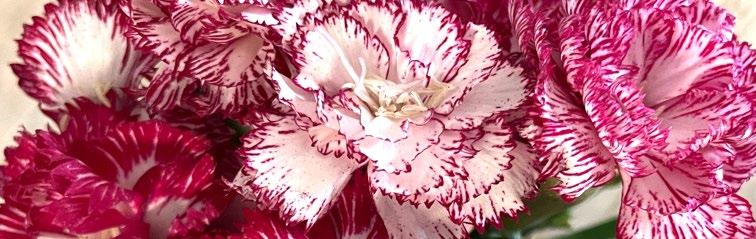
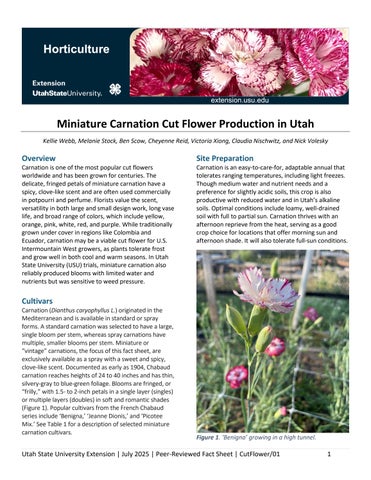
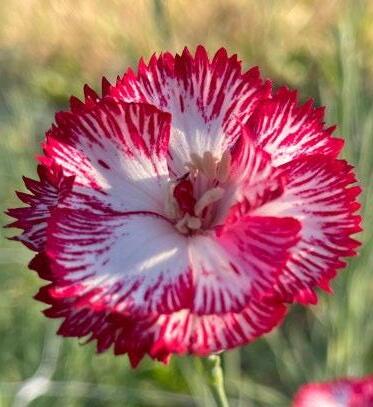
Carnation (Dianthus caryophyllus L.) originated in the Mediterranean and is available in standard or spray forms. A standard carnation was selected to have a large, single bloom per stem, whereas spray carnations have multiple, smaller blooms per stem. Miniature or “vintage” carnations, the focus of this fact sheet, are exclusively available as a spray with a sweet and spicy, clove-like scent. Documented as early as 1904, Chabaud carnation reaches heights of 24 to 40 inches and has thin, silvery-gray to blue-green foliage. Blooms are fringed, or “frilly,” with 1.5- to 2-inch petals in a single layer (singles) or multiple layers (doubles) in soft and romantic shades (Figure 1). Popular cultivars from the French Chabaud series include ‘Benigna,’ ‘Jeanne Dionis,’ and ‘Picotee Mix.’ See Table 1 for a description of selected miniature carnation cultivars.
Carnation is an easy-to-care-for, adaptable annual that tolerates ranging temperatures, including light freezes. Though medium water and nutrient needs and a preference for slightly acidic soils, this crop is also productive with reduced water and in Utah’s alkaline soils. Optimal conditions include loamy, well-drained soil with full to partial sun. Carnation thrives with an afternoon reprieve from the heat, serving as a good crop choice for locations that offer morning sun and afternoon shade. It will also tolerate full-sun conditions
‘Benigna’
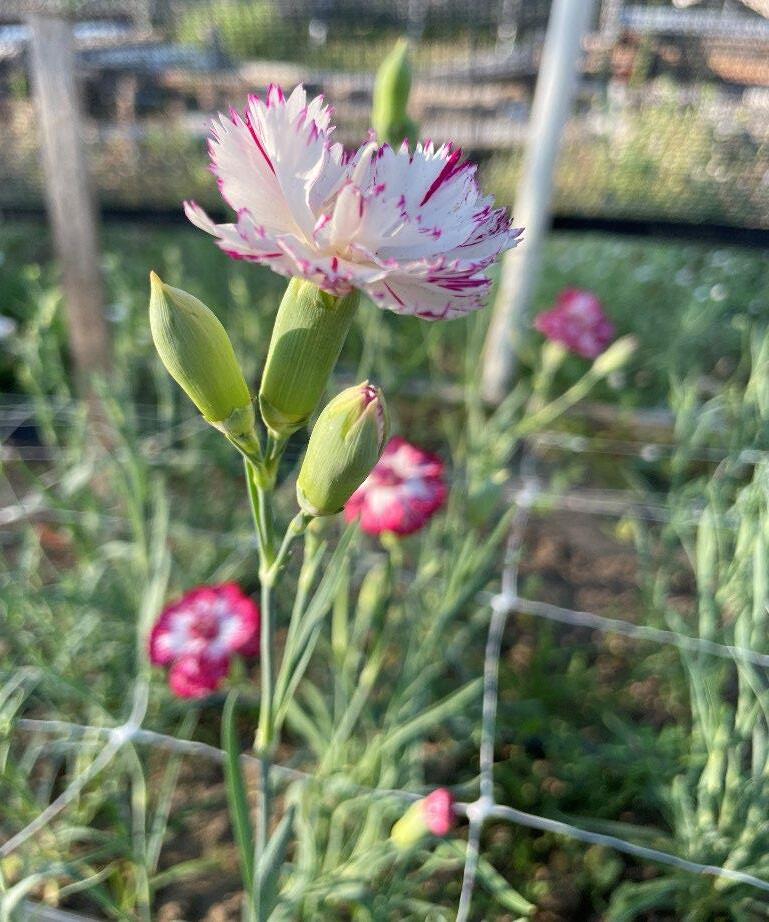
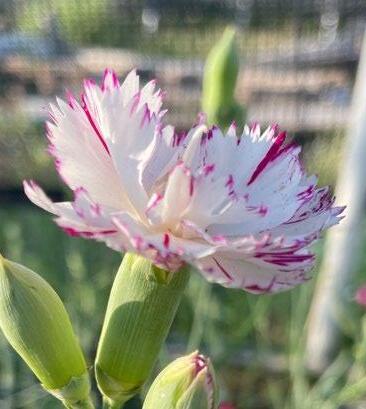
Beautiful white to cream petals etched with dark red, pink, or maroon along the edges. The varying amounts of etching across each bloom makes this cultivar more marketable as a mix rather than a consistent or exact shade.
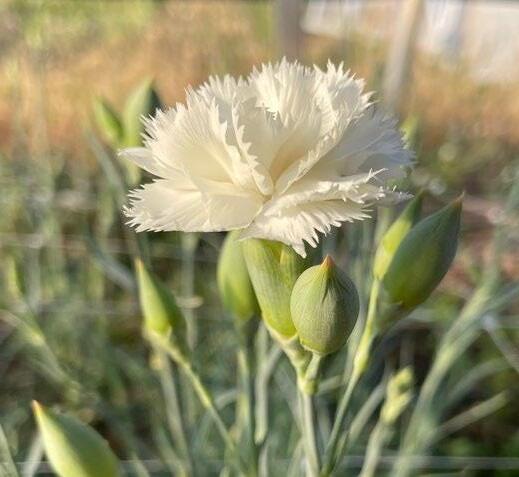
‘Jeanne Dionis’
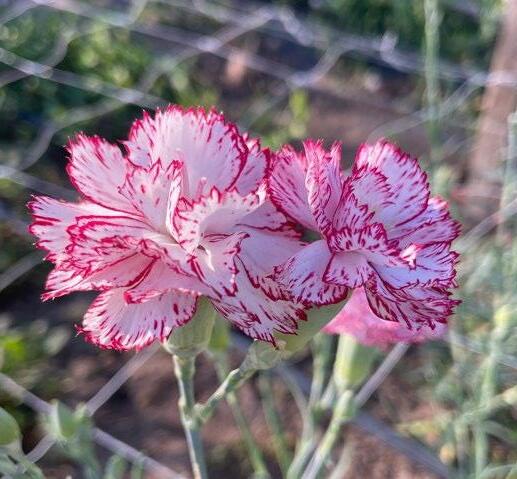
Pure white petals with an occasional hint of blush pink makes this cultivar ideal for wedding and event work. The petite blooms are perfect for boutonnieres and corsages.
As always, a soil nutrient test is recommended in new planting areas or where soil testing has not occurred in 2 years. USU’s Analytical Laboratories (USUAL) perform soil tests, with pricing and sampling instructions available on their website.
For carnation grown in high tunnels, planning and preparation begin the previous fall by installing the plastic high tunnel covering before heavy rain or snowfall. This ensures the soil will not be too wet to work early the following spring and decreases the risk of disease. For both high tunnel and field plantings, till (or broadfork, if practicing no-till) and rake the soil smooth, forming beds that are 3 to 4 feet wide. If desired, install drip irrigation prior to planting.
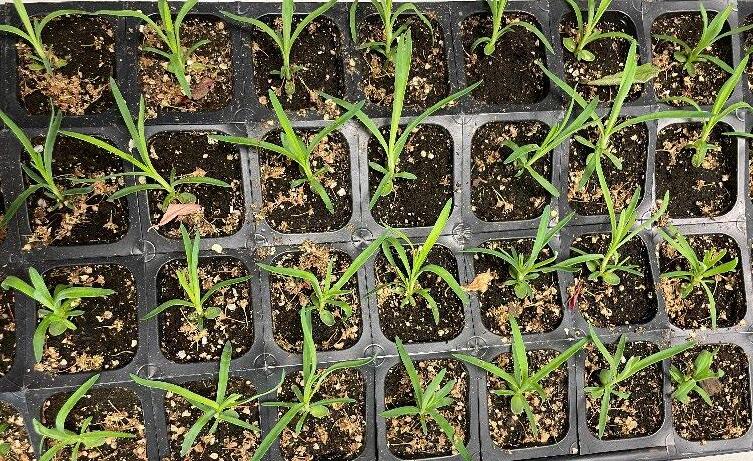
Carnation can be direct sown or transplanted; however, transplants are recommended in Utah Sow seeds indoors 6 to 8 weeks before transplanting, with 2 to 3 seeds per cell in 72-cell flats or preferred size. Fill trays with a high-quality peat/perlite soilless media or seedling mix and cover the seeds lightly with fine vermiculite. Bottom water or mist the soil until emergence to avoid seed displacement. Carnation does not need light for germination. Expect germination between 7 to 14 days at 65 to 72 degrees. Once the seedlings emerge, begin watering deeply to moisten the
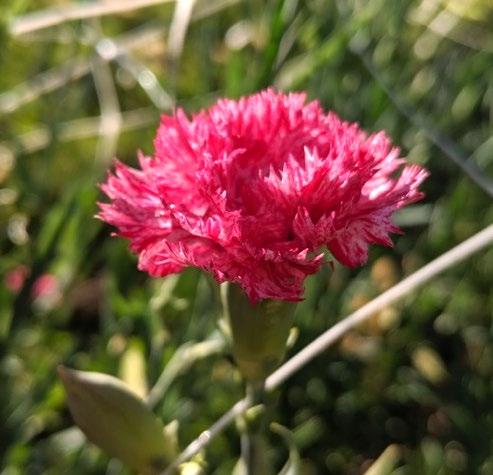
‘Picotee Mix’
Petals in this mix can range from pink, deep maroon, salmon, purple, cream, and white and have a high degree of “striping” inside the petals, as well as along the edges. This is a bolder mix with a lot of variety.
cell and maintain temperatures at 65 degrees. Thin to the strongest seedling per cell (Figure 2).
Early transplant during cool conditions is key for optimizing this crop, with temperatures of 50 to 55 degrees necessary to produce vigorous basal growth and branching. While carnation can tolerate light frosts and temperatures down to 28 to 30 degrees, prolonged exposure to subfreezing temperatures without cover may damage young plants. Conversely, transplanting when night temperatures exceed 65 degrees will produce undesirable, soft growth. Likewise, temperatures above 90 degrees may slow growth and flowering.
Flowering is also sensitive to daylength. Short days will encourage a greater number of nodes per plant, while long days (more than 12 hours, ideally 16 to 18 hours) will encourage carnation to flower faster (Freeman, 1965), regardless of stem length. Therefore, an early, cool establishment period promotes both multiple flowering buds and long stems.
For spring transplant, plan to plant into high tunnels 6 to 8 weeks before the last freeze date Fields with low tunnels may be transplanted 4 weeks before the last freeze date (with frost cloth ready to cover plants for deeper freezes) or after the last freeze for unprotected field production (May). Harden off flats and plant in the morning, evening, or on a cloudy day to reduce transplant shock. Space plants 6 to 9 inches apart to avoid overcrowding at maturity; USU trials found 6-inch spacing to be adequate. Separate compacted roots. Settle the plants into place by gently packing and firming the displaced soil. Water deeply and thoroughly after transplanting.
USU research focused on spring transplanting to establish baseline production for high tunnel and field systems in Utah, limit the variability from winter conditions, and simulate drought conditions (see the USU Miniature Carnation Trials section on page 5).
Transplanting high tunnels in the fall, however, is a new method to stagger production with spring transplant systems While overwintering research is needed to determine survival, timing, quality, and yield thresholds in the U S Intermountain West, other regions reported success In Albion, Maine (USDA Hardiness Zone 5a), Johnny’s Seeds overwintering trials showed 100% survival from a fall transplant around the first freeze date (October) in an unheated high tunnel. Carnations began blooming in late June of the following year, the same timing as USU’s spring-transplanted high tunnels. Fall plantings, however, reached 36 inches in height and produced greater yields, at 15 to 20 stems per plant. This account shows potential to improve quality and yield by fall-transplanting into a high tunnel and creating successive harvests by spring-transplanting a field after the last freeze.
Pinching is recommended for carnation, as this will encourage the stems to branch for more robust harvests. Pinch when young plants are approximately 12 inches tall (approximately 3 to 4 weeks after transplanting), removing 4 to 6 inches from the central
stem. Pinching carnations may help to achieve multiple side shoots per stem (Farmer Bailey, 2024).
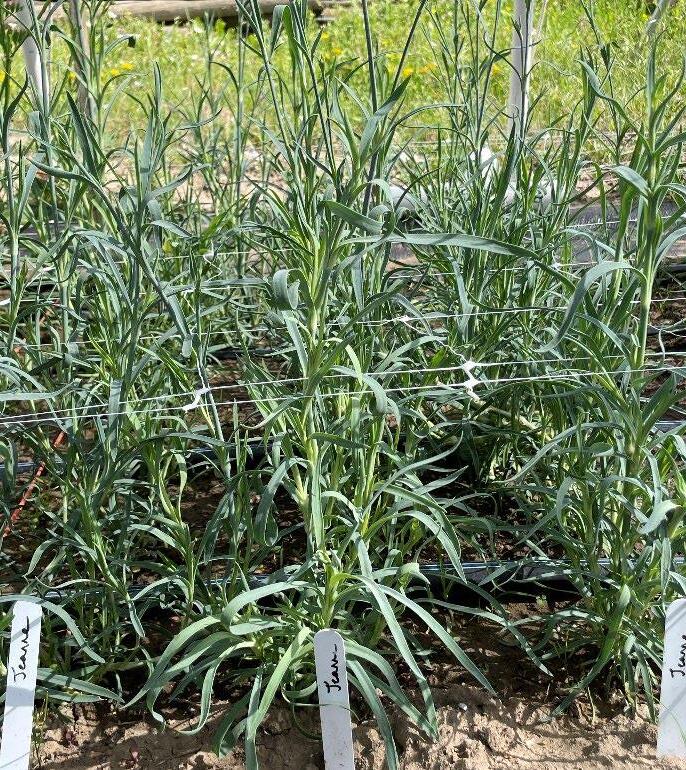
Figure 3. Horizontal trellis installed at half the crop height adds support and encourages straight stems.
A horizontal trellis (also known as netting) is recommended to reinforce plants and promote straight, marketable stems, especially in high-wind locations. Carnation stems can be wispy and delicate and may topple under the weight of the flower heads. Under ideal field conditions, carnation can reach up to 40 inches tall, and mesh trellis (6-by-6-inch) pulled taut across the bed is the most effective support (Figure 3) Trellis is easiest to install before or right after planting and can also serve as a planting grid. Installing when the plants are taller is cumbersome and can damage the stems. Two methods for staking the trellis can be implemented. If shade or low tunnels are used, the hoops can support the trellis across the row. See USU Extension’s “Low Tunnels for Field Cut Flower Production” fact sheet for more information. Alternatively, wooden stakes or rebar can be installed at 3- to 5-foot intervals along the bed edge. Move the trellis upward as the plants grow to match half the height of the tallest stems.
Carnation has moderate nutrient requirements. A general recommendation is 0.2 pounds of nitrogen per 100 square feet applied as a split application. For
example, use up to 7 ounces (about ½ cup) of conventional urea fertilizer (46-0-0) or 1.7 pounds (about 6 cups) of organic 12-0-0 fertilizer. Apply half of the nitrogen amendment during soil preparation prior to transplanting and the other half before blooming begins. Slow-release nitrogen sources are also recommended. Add phosphorous and potassium before or at planting, based on soil test results, as these nutrients can build up in the soil. USU Extension’s “Urban Garden Soils: Testing and Management” is a useful tool for calculating nutrient applications
While the new transplants establish roots, irrigate 2 to 3 times per week to ensure the soil stays moist. Once established, carnation has lower water needs, and irrigation may be reduced to twice per week with up to 1.5 inches of water per week. Avoid overwatering and saturated soils, which can lead to root rot. Carnation is also vulnerable to weed and pest pressure, including aphids, caterpillars, grasshoppers, and spider mites, so keep a watchful eye on plants for early intervention and management. See Tables 2 and 3 for common diseases and pests, as well as USU Extension’s “Pest Management for Utah Cut Flower Production: Insects and Their Relatives.”
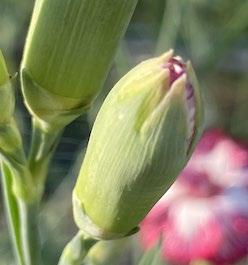
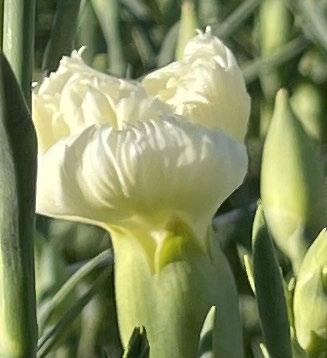
Carnation has a longer maturation period than other annual cut flowers, with approximately 130 to 140 days from seed to bloom. Likewise, determining the right harvest stage for carnation is greatly dependent on the sales channel or market. Standard flowers with one bloom per stem are harvested when the bud is cracked and showing color (referred to as the “star stage”) or when petals are straight up or open but not yet
horizontal. However, this stage is too soon to harvest spray carnations. Spray carnations, like the Chabaud series, should be harvested when at least one bloom on a stem is fully open and one to three other buds are beginning to open (referred to as the “paint brush stage”) (Figure 4). Blooms may be too mature when petals are horizontal and the center of the flower is exposed.
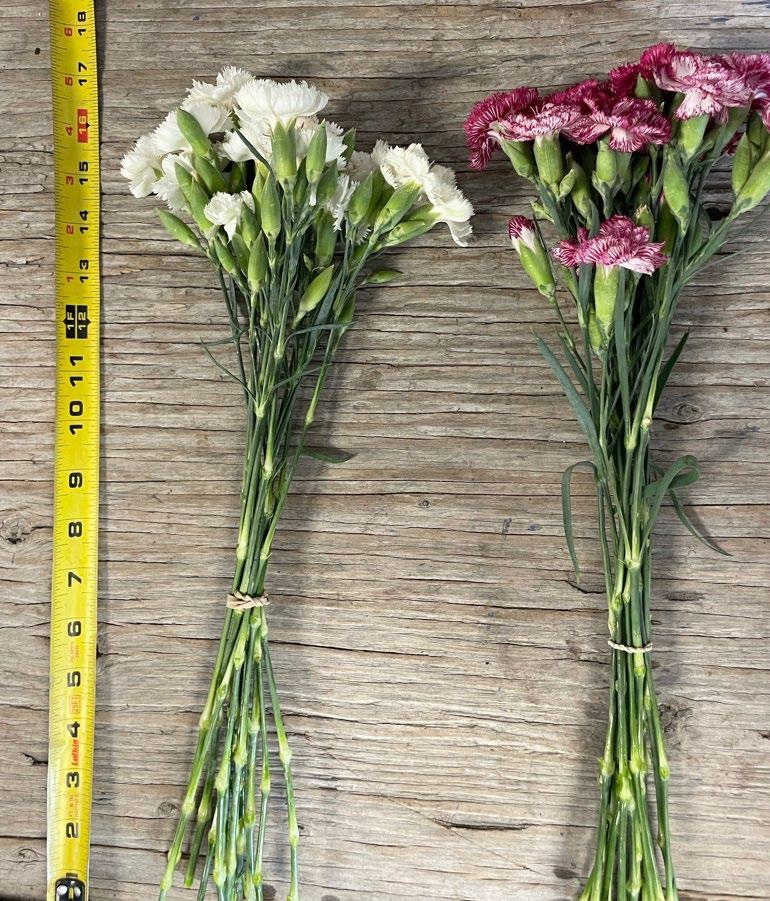
for market Note the range in striping on the bunch to the right.
The acceptable minimum length for stems is 12 to 18 inches on local markets, though USU trials found a preference for stems that were at least 16 inches long.
Harvest using clean, sharp shears and cut the stem directly above a set of leaves. Stems will subsequently branch from this cut point. Line up the flower heads carefully and cut the bunch evenly to the shortest stem, wrapping securely with a rubber band (Figure 5). Band in 10- to 15-stem bunches, depending on stem thickness. Note, unlike most other cut flower crops that are specifically bunched by a single-color shade, carnation is inherently varied. In USU trials, local markets accepted bunches ranging around a shade with a varied degree of striping or edging. Always check with your local market for preferences. Stems are unmarketable (culls) if they are too short, deformed, or have damage. Immediately place bunches in clean buckets filled with several inches of cool water.
Floral preservative increases the vase life of a standard carnation. Preservative, however, may be less effective for spray carnations, as the blooms are at different stages of maturity and, therefore, do not take up the solution uniformly. Carnation can be dry-stored at 32 to 34 degrees for 2 to 4 weeks and wet-stored at 40 degrees for 1 week. Carnation is very sensitive to ethylene, especially if the bloom is open (i.e., no longer in the bud stage). Exposure to ethylene can cause premature wilting, also referred to as “sleepiness.” Vase life for carnation is considerable and can range anywhere from 9 to 28 days, when blooms are properly stored (Dole, 2017).
Carnation is one of the most valued cut flowers due to its pleasant fragrance, long storage window, long vase life, and versatility in floral design. Florists can use carnation in anything from vase arrangements, installations, and detailed design work, like boutonnieres and corsages. Carnation also does well in floral foam, and is often used for funerals and weddings, with the frilly blooms adding both softness and texture. Carnation is, however, readily available from imported wholesalers. Miniature carnations may be priced as low as $6 to $8 per bunch (Agricultural Marketing Service, 2025). However, highly fragrant and soft-palette heirloom varieties, like the Chabaud series, are more difficult to find. As such, heirloom spray carnations may be a good crop option for local growers. In florist markets along the Wasatch Front and Cache Valley, expect prices ranging from $1.00 to $1.30 per stem.
In 2023 to 2024, miniature carnation trials were conducted at the Utah Agricultural Experiment Station –Greenville Research Farm in North Logan, UT (USDA Hardiness Zone 6a), as well as in Hurricane (8b), Kanab (7a), and Vernal (5b) in 2024. The goal of the North Logan study was to test high tunnel versus field production under water restriction. Irrigation was applied twice weekly and delivered up to 1.0 to 1.5 inches per week. Two cultivars, ‘Jeane Dionis’ and ‘Chabaud Benigna’, were trialed through transplanting into high tunnels in April (6 weeks before the last freeze date) and transplanting into the field in late May (right after the last freeze date). Methods to further conserve water were tested in each system. The plastic covering the high tunnels was replaced with shade cloth, creating a cooler, protected microclimate, and hence lower water demand. In the field, half of the soils were left bare, and the other half were covered with raw sheep wool at an application rate of 10 pounds per 16 square feet, which was approximately 4 inches thick at the beginning of the season The effects on harvest timing, yield, and bloom quality were evaluated, as well as soil moisture and temperature.
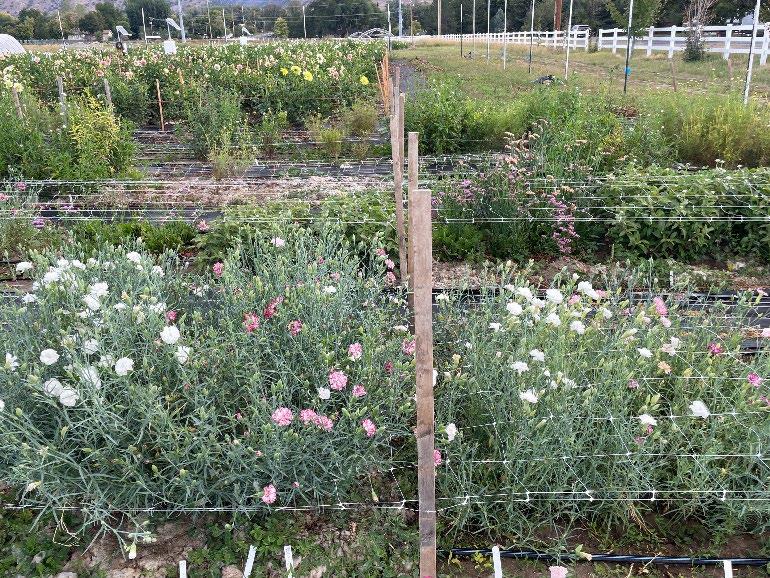
Figure 6. ‘Jeane Dionis’ and ‘Benigna’ grown in an unprotected field during USU trials. The plants to the left of the stake are grown in soil covered with raw wool mulch, while the ones to the right are grown in bare soil. Note the height difference.
Harvest began in the high tunnel in late June, approximately 4 weeks earlier than in the field, but the total yield from the field was generally greater than that from the high tunnel. Across the years, the average yield was three to seven stems per plant in the high tunnel, 11 to 12 stems per plant in the field without
wool mulch, and 15 to 16 stems per plant with wool mulch. We averaged 81% marketable stems across these systems. Miniature carnation thrived with low water, and production was improved without the use of shade and with the application of wool mulch (Figure 6), which maintained greater soil moisture with limited irrigation, cooler rootzone soil temperatures, and provided a slow-release nitrogen source Late spring freezes, insufficient irrigation (<1 inch of water per week), and weed competition all reduced yields. In the satellite sites of Hurricane, Kanab, and Vernal, yields ranged 3.5 stems per plant with 72% marketable (Vernal, unprotected) to 11.3 stems per plant and 87% marketable (Hurricane, high tunnel). Key differences were a need for early planting in southern Utah, where high tunnels helped moderate heat, to a later planting in Vernal to avoid cold injury.
Carnation is among the most popular and classic cut flowers worldwide, known for a spicy, clove-like fragrance and fringed petals. Coming in a range of colors, including yellow, orange, pink, white, red, and purple, carnation is highly valued for its long vase life, versatility in floral design, and pleasant scent. Florists use carnation in diverse floral arrangements, from large installations to boutonnieres, and the blooms are durable in floral foam for weddings and funerals. While carnation is one of the most imported flowers worldwide, heirloom spray cultivars, like the Chabaud series, may be a great option for Utah growers wanting to offer a scented, romantic flower with an excellent vase life.
Table 2. Common diseases of carnations for cut flower production.
Disease
ROOT, STEM, CROWN ROTS
(Pythium sp., Rhizoctonia sp.)
Fungi that infect roots and crowns, producing dull-colored foliage or wilting followed by yellowing. Roots are dark, soft, or decayed. Plants may be stunted and eventually die.
Table 3. Common pests of carnations for cut flower production.
Pest Identification
APHIDS
CATERPILLARS
A diverse group of small insects that damage plants by piercing tissues and sucking sap. This feeding causes distorted growth, yellowing, sticky honeydew residue, and may spread plant viruses.
Plugs should be transplanted with well-developed roots that are not root bound. Plant in welldrained soil and avoid excessive irrigation and moisture. Dig out and destroy infected plants.
ERIOPHYID MITES (Eriophyidae)
The larval stage of moths and butterflies. Adults lay eggs on host plants, which hatch into larvae that feed on stems or foliage before pupating and continuing the life cycle. Common species like armyworms, cutworms, and loopers vary in the severity of damage they cause.
Identification: Adult and larval coloration, host plant preferences, and life cycle timing differ by species, making accurate identification important for effective management.
Damage: Various bud, blister, gall, and rust mites cause abnormalities in plant tissue, such
Monitor frequently using visual observation and yellow sticky cards, as populations can increase rapidly. Release beneficial insects in covered crops (e.g., greenhouses, high tunnels) or attract them outdoors with flowering plants. A strong stream of water can dislodge and kill colonies. When pest thresholds are reached, use organic insecticides like insecticidal soaps or horticultural oils.
Monitor caterpillar feeding damage, as severity indicates population levels. Use pheromone traps where applicable and exclude egg-laying adults with insect netting or spunbond fabric. Support natural predators by planting flowers and maintaining suitable habitat. Hand-remove or squish larvae or apply an organic or synthetic foliar insecticide labeled for both the pest and crop when necessary.
Eriophyid mites rarely cause serious damage, and crops can tolerate populations, requiring minimal management. If the problem is severe, remove or
as galls and blisters, from feeding They affect aesthetics more than overall plant health. Identification: Microscopic (<3/64 in.), translucent, and cigar-shaped. They are active early in the season.
Common in greenhouses and enclosed spaces, especially wet areas, such as pots. Damage: Larvae feed on roots causes stunted growth or dieback in young plants. Adults are primarily a nuisance. Identification: Adults are small (~1/8 in.), delicate insects with dark bodies, long legs, and clear wings. The larvae are translucent white.
prune off infected parts. If necessary, consider an insecticide labeled for eriophyid mites and the crop, such as horticultural oil. Note: Spraying may have low efficacy due to mites being protected in gall or blister structures.
Monitor for adults in greenhouse spaces using yellow sticky traps. Monitor for larvae using potato slices on soil surface. Ensure proper drainage in soil media trays and let soil surface dry between waterings. For biocontrol, drench pots/soil with beneficial nematodes or release beneficials (mites or rove beetles).
GRASSHOPPERS
SHORE FLIES
Adults are highly mobile and recognized by their large hind legs. Their feeding primarily damages foliage but can affect other plant parts as well. Identification: Size, color, and pattern vary by species and life stage. Egg clusters overwinter a few inches below the soil. Population levels depend on weather and past management practices.
Common in greenhouses, especially with excess irrigation and prolonged wet surfaces. Neither adults nor larvae feed directly on plants but can spread spores of plant pathogenic fungi, impacting seedling production. Identification: Adults are small (<1/16 in.) and dark gray with short antennae. Eggs are laid in algal scum, where the larvae feed before pupating into adulthood.
Begin monitoring early for young nymphs and feeding damage. Because grasshoppers are highly mobile, manage across a wide area. Baits (e.g., wheat bran with carbaryl or Nosema locustae) are most effective early in the season. Use trap plants (grasses) around crops and/or row covers. Apply insecticides preferably on trap plants only when needed.
Monitor in greenhouse spaces using yellow sticky traps. Ensure proper drainage in soil media trays and prevent overwatering. Mitigate algae growth on the floor and benches. Consider insecticides (concentrates and soil drenches) with active ingredients labeled for shore flies and greenhouse use.
SLUGS AND SNAILS
Soft, slimy bodies with a distinct head and sensory tentacles. Snails have a spiral shell, while slugs lack a shell.
SPIDER MITES
(Tetranychidae)
TRUE PLANT BUGS
With a wide range of host crops, they feed on the undersides of leaves, causing leaf stippling (small yellow spots), bronzing, or scorch. High populations leave noticeable webbing. Identification: Spider mites are microscopic, translucent, and yellow. They are most active during mid- to late-summer and have multiple generations in a season.
Small true bugs (~1/4 in.) are mottled brown with a distinctive triangular shape on their back. Adults and nymphs frequently damage plants by piercing them with their piercingsucking mouthparts, causing stippling, distortion, and discoloration of plant tissues.
Reduce excess moisture and standing water. Set up copper-based barriers around plants. Place traps or bait containing iron phosphate or metaldehyde
Avoid water stress. Minimize conditions in and around planting that cause dust to collect on plants (i.e., bare soil). Control surrounding weeds. Avoid or limit broad-spectrum insecticide, as mite outbreaks often follow. Spray plants with water, insecticidal oil, or soap.
Populations tend to be greatest midsummer to fall, but monitor throughout the season. Reduce weed pressure (alternate hosts) in production areas. If populations reach damage threshold, consider insecticides containing permethrin, gamma-cyhalothrin, or malathion.
WEEVILS (CURCULIONIDAE)
This diverse species of small insects (≤¼ in.), including hollyhock weevils, billbugs, or rose curculios, cause damage by boring into plant parts and leaf-feeding, causing notching or small holes. Identification: elongated snouts. Color, host preferences, and life cycles vary depending on the species.
VARIOUS MAMMAL PESTS
Whiteflies are small insects commonly found in greenhouses. Adults and nymphs feed with piercing-sucking mouthparts, causing yellowing and eventual wilting. Identification: Adults are tiny (<1/8 in.), white, with wings folded flat against their backs. Nymphs are scale-like, translucent, and have flat bodies.
Deer, rabbits, and rodents (mice, voles, gophers) are all mammal wildlife that can cause destruction to cut flower production in home landscapes or farms. Damage may include feeding on above or below ground plant parts or plant trampling.
Monitor feeding damage and beetle/larvae presence through visual inspection or shaking leaves over paper. When thresholds are reached, apply an organic or synthetic insecticide labeled for the specific weevil and plants.
Monitor in greenhouses with yellow sticky traps. Purchase beneficial insects for protected crops (greenhouse, high tunnels) or encourage them outdoors with flowering plants. Apply insecticidal soap or horticultural oil at the nymph stage and repeat when necessary. Reduce the use of synthetic insecticides to prevent resistance.
Larger mammal pests are best prevented through physical exclusion (i.e., fences). Rodent populations fluctuate season to season. Monitor for activity (e.g., burrows, feeding, etc.) Use lethal or nonlethal trapping mechanisms. Bait stations can be used with pelleted products labeled for control of specific species.
Note. Most pests are general classifications, and research is ongoing for further classification.
Agricultural Marketing Service. (2025). Specialty crops market news. U.S. Department of Agriculture.
Dole, J. (2017). Post harvest h andling of cut flowers and greens. Timber Press.
Farmer Bailey. (2025). Dianthus and carnation growing guide (vegetatively propagated varieties)
Freeman, R., & Langhans, R. (1965). Photoperiod affects carnations New York State Flower Growers Incorporated.
Johnny’s Selected Seeds. (2025). Dianthus (sweet William/carnation) - key growing information.
Johnny’s Selected Seeds. (2024). Overwintering flowers
Maughan, T., Cardon, G., & Drost, D. (2016). Calculating fertilizer for small a reas [Fact sheet]. USU Extension
Stock, M., Maughan, T., & Grossl, P. (2020). Urban garden soils: Testing and management [Fact sheet]. USU Extension . Stock, M., Maughan, T., & Miller, R. (2019). Sustainable manure and compost application [Fact sheet]. USU Extension
Utah Climate Center. (2025). Utah freeze dates. USU. Utah State University Analytical Laboratories (USUAL) (2023) Analytical laboratories
Using original figures and tables without written permission from the authors is prohibited. Panel 3 from Table 1 courtesy of Sego Lily Flower Farm. This project was funded by the Western Sustainable Agriculture Research & Education, the Association of Specialty Cut
Flower Growers, and USU Extension grants. The information reflects the views of the authors and not funding agencies.



In its programs and activities, including in admissions and employment, Utah State University does not discriminate or tolerate discrimination, including harassment, based on race, color, religion, sex, national origin, age, genetic information, sexual orientation, gender identity or expression, disability, status as a protected veteran, or any other status protected by University policy, Title IX, or any other federal, state, or local law. Utah State University is an equal opportunity employer and does not discriminate or tolerate discrimination including harassment in employment including in hiring, promotion, transfer, or termination based on race, color, religion, sex, national origin, age, genetic information, sexual orientation, gender identity or expression, disability, status as a protected veteran, or any other status protected by University policy or any other federal, state, or local law. Utah State University does not discriminate in its housing offerings and will treat all persons fairly and equa lly without regard to race, color, religion, sex, familial status, disability, national origin, source of income, sexual orientation, or gender identity. Additionally, the University endeavors to provide reasonable accommodations when necessary and to ensure equal access to qualified persons with disabilities. The following individuals have been designated to handle inquiries regarding the application of Title IX and its implementing regulations and/or USU’s non-discrimination policies: Executive Director of the Office of Equity, Matt Pinner, JD, matthew.pinner@usu.edu, Title IX Coordinator, Hilary Renshaw, hilary.renshaw@usu.edu, Old Main Rm. 161, 435-7971266. For further information regarding non-discrimination, please visit equity.usu.edu, or contact: U.S. Department of Education, Office of Assistant Secretary for Civil Rights, 800-4213481, ocr@ed.gov or U.S. Department of Education, Denver Regional Office, 303-844-5695 ocr.denver@ed.gov. Issued in furtherance of Cooperative Extension work, acts of May 8 and June 30, 1914, in cooperation with the U.S. Department of Agriculture, Kenneth L. White, Vice President for Extension and Agriculture, Utah State University