
Managing Prairie Dogs on Agricultural Lands
Cory Farnsworth and Nicki Frey, Ph.D.
Introduction
Utah is home to three of the five species of prairie dogs in North America, the Utah prairie dog (Cynomys parvidens), Gunnison’s prairie dog (Cynomys gunnisoni), and white-tailed prairie dog (Cynomys leucurus) (Division of Wildlife Resource, 2026). Prairie dogs belong to the Sciuridae (squirrel) family and occur in the grasslands of the United States and Mexico (Witmer et al., 2023; Figure 1). The three species in Utah can be hard to distinguish, so it is often best to refer to their distribution for quick identification Animals within each species are often 12–16 inches long and weigh 14–59 ounces (1–4.5 pounds; Bowers et al., 2004).

Prairie dogs are considered a “keystone species” because their burrows provide shelter for a suite of wildlife species; they are also a prey species for many mammals and birds. However, because of their diet and ability to burrow, they compete with agricultural practices, including alfalfa production and livestock grazing. Therefore, they can be considered a conflict species around human development.
General Ecology
Prairie dogs live in colonies, a community of family groups, within burrow systems. The density and extent of the burrow system and colonies differ among the species. Prairie dogs forage on a mixture of grasses and forbs throughout the day, distributed from open prairies to high mountain valleys; they may hibernate during extensive cold periods, and stay underground during hot days.
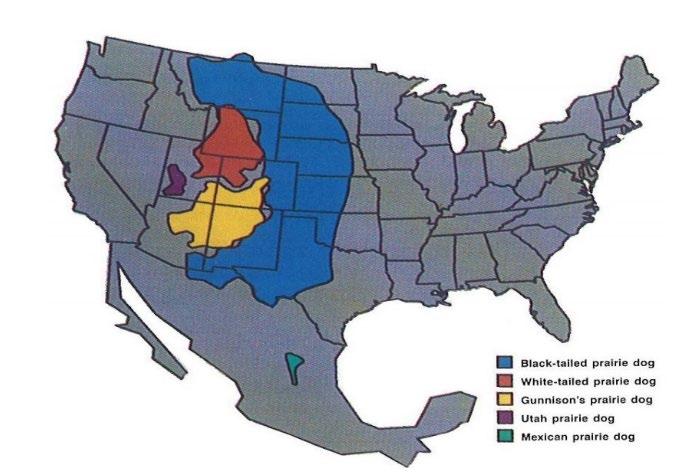
Figure 1. Distribution of Prairie Dog Species Native to North America
Source: Whitmer et al., 2023
A prairie dog colony is formed by a group of coteries. Each coterie consists of a breeding male and female, several female offspring, and the young born that year. Prairie dogs reach maturity in their first winter and breed from January to
March, with northern locations breeding later. Up to six young are born, remaining in the burrow for 6 weeks before emerging, usually in May and June. By fall, the young are fully grown, and juvenile males may begin dispersing during this time. Usually, juvenile males have dispersed by the age of 2 to form their own coterie. Juvenile females will often stay at their natal burrow.
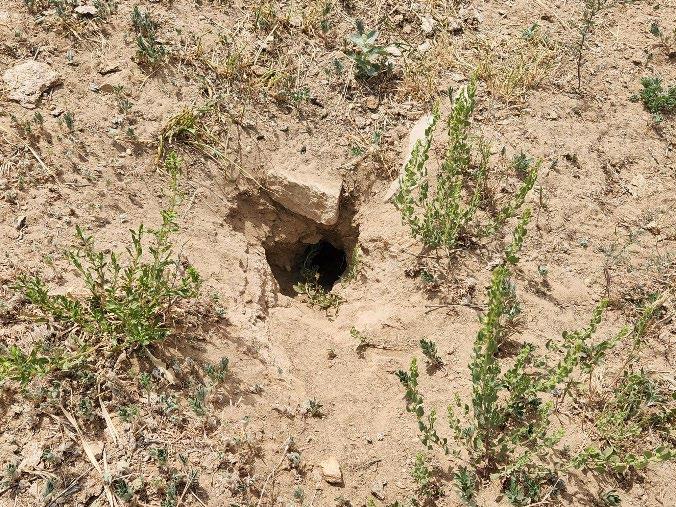

Photo credit: Cory Farnsworth
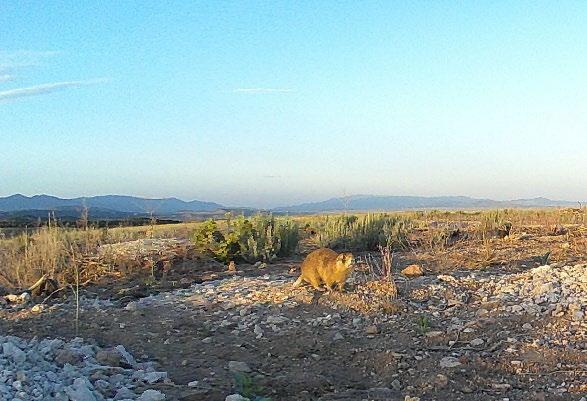

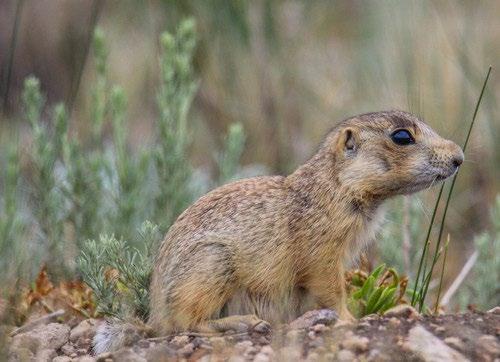

Photo credit: rwcannon57, iNaturalist, CC BY-NC, no changes
The presence of prairie dogs in an area can be determined by the presence of several burrows in proximity. Not all burrows will have an associated mound of soil (Figure 2). Burrow entrances are never buried, and the holes are approximately 4 inches wide. Additionally, the grass in the colony will be eaten, leaving a barren, patchy landscape compared to the surrounding habitat. Sometimes, when prairie dog density is low, it is difficult to determine whether the grass has been reduced. However, one can easily find prairie dog burrows. Usually, a prairie dog or two can be seen and heard defending their burrow upon your arrival.
Utah Prairie Dog
The Utah prairie dog is found in Beaver, Garfield, Iron, Kane, Piute, Sevier, and Wayne counties in Utah’s Southwest; no other species of prairie dogs occur in these counties (Figure 3). Utah prairie dogs have cinnamon to clay-colored fur (Figure 3). They also have a dark eyebrow or black spot above each eye. Utah prairie dogs are listed as threatened and protected under the Endangered Species Act. Due to their protections, it is illegal for anyone to lethally remove or harm this species without first consulting with the Utah Division of Wildlife Resources. For more information on managing Utah prairie dogs on agricultural and private lands, see USU Extension’s “Managing Utah Prairie Dogs on Private Lands” (Frey, 2015). This article focuses on managing Gunnison and white-tailed prairie dogs rather than Utah prairie dogs
Gunnison’s Prairie Dog
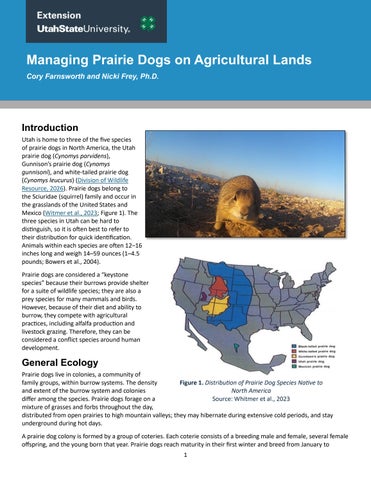
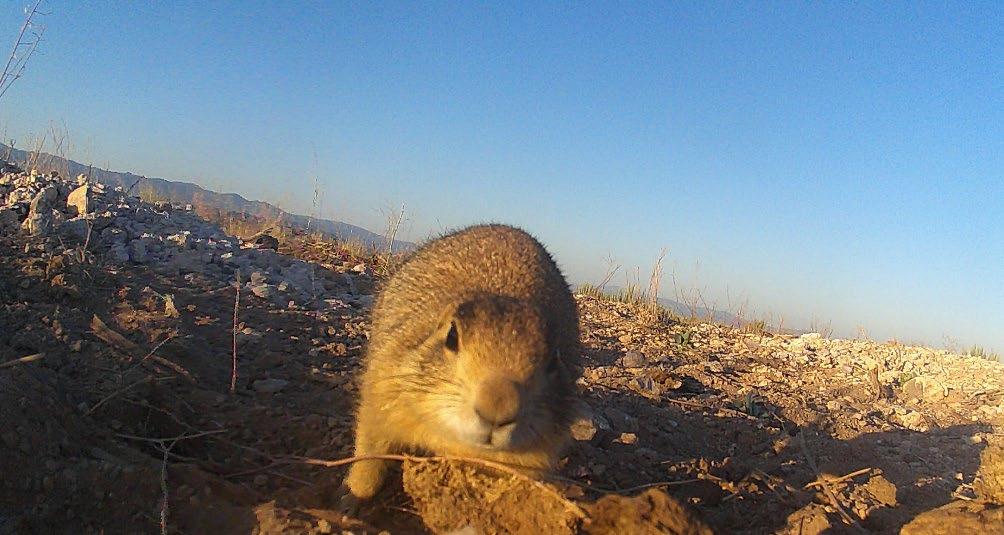
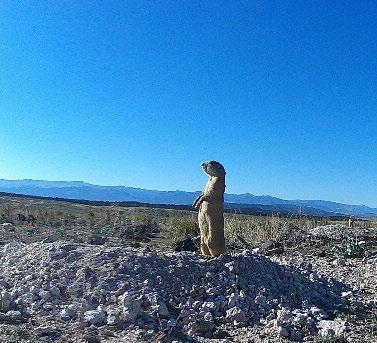
Gunnison’s prairie dogs are found in southeastern Utah (Grand and San Juan counties east of the Colorado River), and parts of Colorado, Arizona, and New Mexico. They are yellowish-buff with black guard hairs; usually their head and cheeks are slightly darker than their body (Figure 4).
Due to their limited population distribution, the Western Association of Fish and Wildlife Agencies (WAFWA) determined a conservation plan to outline research needs and manage conflicts (WAFWA, 2007). Additionally, Utah created a Gunnison’s conservation plan (Lupis et al., 2007) that aligns with WAFWA. Hunting or shooting Gunnison’s prairie dogs is prohibited on public lands from April 1 to June 15, but they can be removed from private lands year-round (R657-19-10) without bag or possession limits (R657-19-5; Division of Wildlife Resources, 2026).
Figure 4. Gunnison’s Prairie Dog (Cynomys gunnisoni)
Figure 2. Example of a Prairie Dog Burrow Entrance Without the Typical Soil Mound
Figure 3. Utah Prairie Dogs (Cynomys parvidens)
Photo credit: Nicki Frey
White-Tailed Prairie Dog
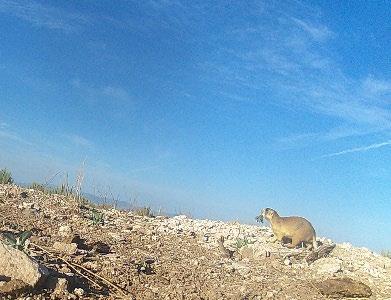
White-tailed prairie dogs can be identified by their bright white tail tip (Figure 5). White-tailed prairie dogs are distributed through Wyoming, Colorado, Utah, and Montana (Knowles, 2002). In Utah, white-tailed prairie dogs can be found in Rich, Summit, Daggett, Uintah, Duchesne, Carbon, Emery counties, and west of the Colorado River in Grand County (WAFWA, 2007).
Similar to Gunnison’s prairie dogs, white-tailed prairie dogs are a species of greatest conservation need in Utah due to their declining numbers. WAFWA and Utah have written conservation strategies for white-tailed prairie dogs (Lupis et al., 2007) in an effort to keep them off the endangered species list. In Utah, hunting or shooting white-tailed prairie dogs is prohibited on public lands from April 1 to June 15, but they can be removed from private lands year-round (R657-19-10) without bag or possession limits (R657-19-5; Division of Wildlife Resources, 2026). However, because they are an important prey species to the endangered black-footed ferret (Mustela nigripes), no hunting is allowed within the black-footed ferret recovery area that borders Colorado (Table 1, Figure 6).
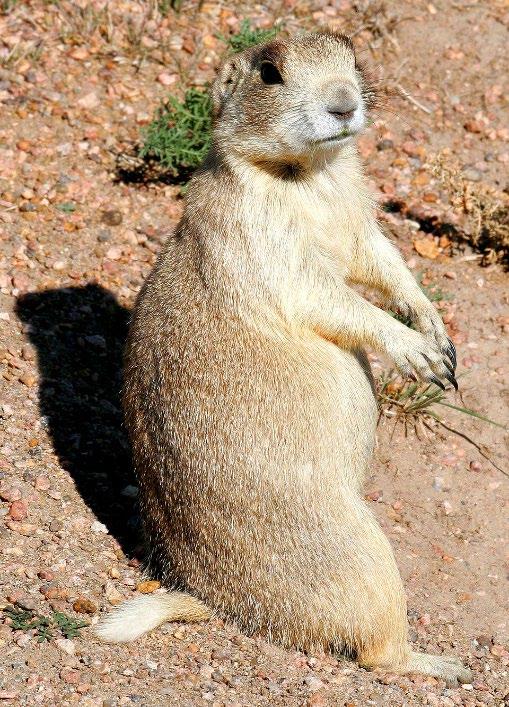
5. White-Tailed Prairie Dog (Cynomys leucurus)
Table 1: Summary of Protections and Hunting Restrictions on Prairie Dog
Species Found in Utah
Photo credit: Devon Pike, CC BY 3.0, no changes
Species Status in Utah Protection
Utah prairie dog Endangered
Gunnison’s prairie dog
White-tailed prairie dog
No removal or hunting.
Species of Greatest Conservation Need No hunting on public lands April 1–June 15
Species of Greatest Conservation Need No hunting on public lands April 1–June 15. No hunting allowed in the black-footed ferret recovery area.
Prairie Dogs and Human Conflicts
Human Health
The primary concern with prairie dogs is their ability to contract plague, a bacterial disease caused by the bacteria (Yersinia pestis) transmitted by a flea bite. Other mammals, wild or domestic, can contract the plague by being bitten by an infected flea or eating an infected prairie dog. Humans can also contract plague by getting bitten by a flea.
While extremely lethal to prairie dogs, the plague can be treated in humans and pets with prompt and proper medical attention. Most prairie dogs live in remote areas where the possibility of interacting with people or their pets is very low. However, in some areas, such as agricultural land where prairie dogs are located, interactions might occur. If you encounter a dead prairie dog, do not handle it or allow your pet near it. If your pet has encountered a prairie dog where plague is suspected, seek advice from a veterinarian.
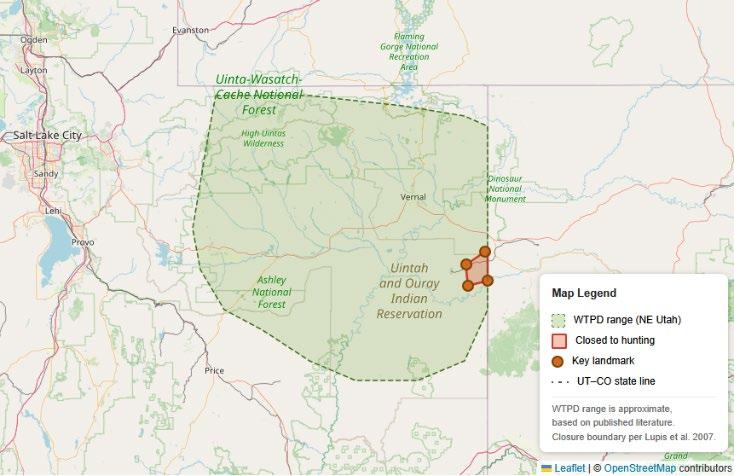
Figure 6. Area Closed to White-Tailed Prairie Dog Hunting Due to Black-Footed Ferret Recovery Areas

Figure
Agriculture
Prairie dogs can reduce crops, like wheat, alfalfa, vegetables, and orchards (Figure 7), and in some species, reduce forage availability. Burrows and their holes can damage farm equipment and endanger livestock use of the land (Elmore et al., 2006)
Prairie dogs prefer loose soil that is easy to dig, which helps them build and maintain a burrow system. Unfortunately, these soils are also desirable for croplands, such as irrigated grains and orchards.
Methods to Reduce Conflicts on Agricultural Lands
Habitat Modification
Prairie dogs prefer short, sparse vegetation throughout their colony. This helps them maintain their safety. Managing cattle through a rest-rotation schedule can help to increase the height of the surrounding vegetation. Black sediment cloth can also create a temporary visual barrier around crops, making the area less comfortable for prairie dogs. Similarly, planting a border of taller crops to protect short crops can discourage prairie dogs (Witmer et al., 2023).
Exclusion
Creating fences to exclude prairie dogs can be effective (Franklin & Garrett, 1989; Witmer et al., 2008). However, the fencing must be installed belowground as well as above to discourage digging. Therefore, fencing can be an expensive management option. However, if protecting high-value or longlived perennial crops such as orchards or alfalfa, the reduction in damage may support the cost of fencing.
Shooting
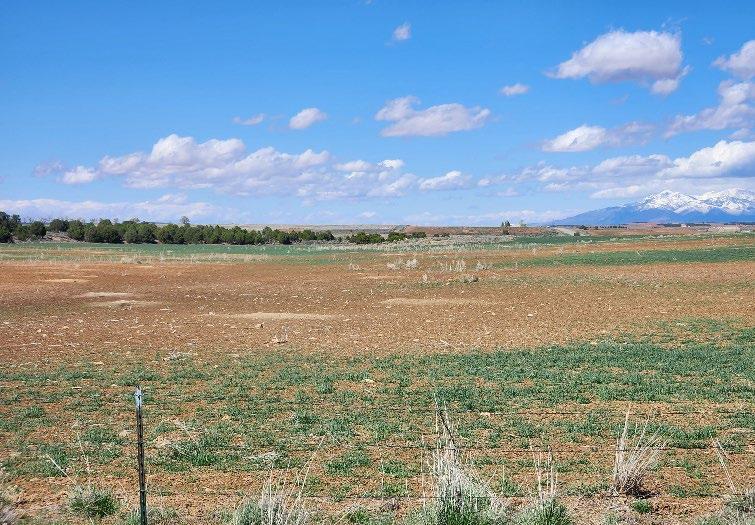
Prairie Dog
San Juan County, Utah
Notice the lighter soil indicating the locations of the burrows.
Photo credit: Cory Farnsworth
Focused shooting of prairie dogs can be effectively reduce conflicts when populations are high; however, it is not a useful method in controlling population numbers over time. At lower populations, other methods of reducing conflict may be more efficient. However, take care to follow the regulations outlined for each species (Table 1). Generally, shooting is considered a temporary solution and is often used in conjunction with other management methods. Additionally, prairie dogs learn quickly to avoid people, which increases the difficulty of shooting over time (Witmer et al., 2023)
Generally, a .22 caliber rifle is suitable for shooting prairie dogs. The advantage of this method over toxicants and fumigants is that there are no nontarget risks. More recently, hunters may use CO2 or pre-charged pneumatic air rifles, which are generally quieter and thus may be more successful at not alarming the target.
Trapping
Live trapping can be an effective tool for removing prairie dogs from problem areas, but it is not a useful tool for managing prairie dog populations. Lethal trapping, using body-gripping or piercing traps, is an effective tool for removing prairie dogs from problem areas and potentially decreasing their numbers. While it takes time to trap effectively, there is little nontarget hazard, and one can be confident that the problem animals are removed.
We recommend a 120 body grip trap, with two springs, which ensures a humane kill. The trap is 4.5 by 4.5 inches and works well on Gunnison’s prairie dogs. With some trigger adjustments (using a pan on the triggers for the animals to step on), they may also be successful on white-tailed prairie dogs. If pets are in the area, avoid the larger 120 body grip traps.
Figure 7. Gunnison’s
Damage to a Wheat Field in
Note.
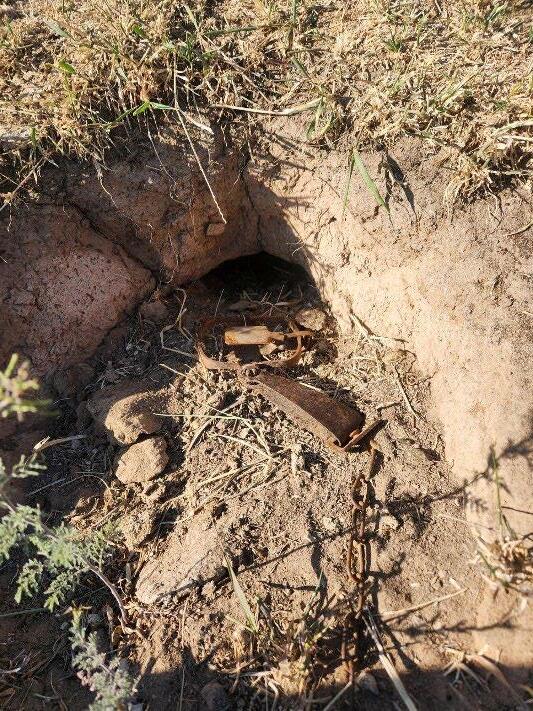
For white-tailed prairie dogs, which are smaller than Gunnison’s, a # 1 long spring trap (Figure 8) will catch the animal by the paw and restrain it until the animal can be killed humanely. These traps need to be checked daily, ideally each morning and evening to ensure the animal does not suffer. Traps need to be staked down as birds of prey and other predators will try to drag trapped animals away.
Tunnel traps are a striking killing trap, but due to the usually steep entrance of the hole, the traps don’t perform well in most scenarios. Cage traps and tunnel traps are both more expensive than other trap options. If cage traps are used, remember that it is illegal to relocate wildlife (Farnsworth & Frey, 2025).
Poison Baiting (Oral Toxicants)
Poison baits, or toxicants, can be successful at removing prairie dogs. Generally, grain such as oats or wheat is coated with a toxicant and considered “bait.” Prior to using this treated bait, one disperses non-coated grain to acclimate the prairie dogs to eating this food source. Once the prairie dogs are known to be consuming the grain, one begins to distribute the bait according to the label directions. Generally, oral toxicants are used outside of the normal growing season, when fresh vegetation is less available, and animals are looking for seeds and grains. These poisons are usually not lawful to be used aboveground and must be placed in bait stations or belowground to avoid poisoning nontarget species. Poison must be used according to the label.
Figure 8. A #1 Long Spring Trap Useful for Catching White-Tailed Prairie Dogs

Toxicants are regulated by the state of Utah and federal agencies to control the method and timing of application in order reduce nontarget hazards (including humans) and increase the toxicant’s effectiveness. Label restrictions and instructions should be strictly followed when using this method. To date, all toxicants that are labeled for use on prairie dogs zinc phosphide and diphacinone are restricted use pesticides and can only be used by a certified pesticide applicator. Registrations change, so check regulations before use. Oral toxicants pose a nontarget hazard to other vertebrate species; additionally, predators can suffer when they eat prairie dogs killed by toxicants. Thus, 2 or 3 days after applying toxicants, survey the area and remove any dead prairie dogs that are aboveground.
Fumigation
Fumigation involves using gas cartridges or reactive tablets that produce toxic gases to fill a burrow system and kill prairie dogs. Unfortunately, fumigants are nonspecific and will kill all animals living within the burrow system. Therefore, one should ensure other sensitive species, such as burrowing owls and black-footed ferrets, are not residing in the area prior to the use of fumigants.
There is one gas cartridge fumigant registered for nonrestricted use to control prairie dog populations. It contains 53% sodium nitrate, 28% charcoal (containing carbon), and 19% inert ingredients (Witmer et al., 2023). Aluminum phosphate and magnesium phosphate tablets are also successful fumigants. These products are restricted use pesticides and can only be used by certified pesticide applicators (Witmer et al., 2023).
Encouraging Avian Predators (Owl Boxes and Hawk Perches)
Encouraging avian predators of prairie dogs is an emerging practice; however, to date, this method has not been shown to reduce an area’s prairie dog numbers significantly. Installing raptor perches along agricultural fields can encourage species such as red-tailed hawks, ferruginous hawks, and eagles to hunt in the area. However, installing perches in
otherwise flat landscapes might increase the abundance of ravens, a species also known to cause damage to livestock operations.
Other Options
Frightening devices are ineffective at removing prairie dogs from an area once they have already established their burrow system (Witmer et al., 2023).
Repellants are ineffective at removing prairie dogs from an area and are not registered for use with any species of prairie dog.
Summary
While prairie dogs are an important species in the region, due to the damage they can cause in cropping and range systems, their populations may occasionally need to be controlled. After you have identified which prairie dog species you are in conflict with and the scope of the damage, you will want to decide how to manage them. If you are only dealing with a handful of animals or merely trying to maintain their population in your area, it is likely that hunting and trapping will be the most effective tool. In certain cases, you may be successful at excluding or deterring them with habitat modifications. If you are dealing with a large-scale problem, these management options may not be feasible or realistic, and you may be limited to toxicants and poisons. In most cases, an integrated approach will provide the most sustainability in managing prairie dogs. Always consider the safety of humans, pets, and wildlife when deciding the best management practices for managing prairie dogs in your area.
References
Bowers, N., Bowers, R., & Kaufman, K (2004) Field guide to mammals of North America. Houghton Mifflin Press. Division of Wildlife Resources. (2026) Administrative rule R657-19 Utah Department of Natural Resources. Accessed June 24, 2026, from https://wildlife.utah.gov/rules/r65719?highlight=WyJwcmFpcmllIiwiZG9nIiwiZG9ncyIsImRvZydzIl0= Elmore, R. D., & Messmer, T. A. (2006) Public perceptions regarding the Utah prairie dog and its management: Implications for species recovery. Berryman Institute Publication No. 23, Utah State University. https://digitalcommons.usu.edu/cgi/viewcontent.cgi?referer=&httpsredir=1&article=3276&context=wild_facpub Franklin, W., & Garrett, M (1989). Nonlethal control of prairie dog expansion with visual barriers. Wildlife Society Bulletin, 17, 426–430 Farnsworth, C., & Frey, S. N. (2025). What to do now that you’ve trapped a nuisance wild animal [Fact sheet]. Utah State University Extension. https://digitalcommons.usu.edu/cgi/viewcontent.cgi?article=3516&context=extension_curall Frey, S. N. (2015). Managing Utah prairie dogs on private lands [Fact sheet]. Utah State University Extension. https://digitalcommons.usu.edu/cgi/viewcontent.cgi?article=1698&context=extension_curall Knowles, C. (2002). Status of white-tailed and Gunnison's prairie dogs. National Wildlife Federation and Environmental Defense, 30 pp. Accessed April 30, 2026, from https://digitalcommons.usu.edu/cgi/viewcontent.cgi?article=1162&context=govdocs
Lupis, S. G., Bunnell, K. D., Black, T. A., & Messmer, T. A. (2007). Utah Gunnison’s prairie dog and white-tailed prairie dog conservation plan. Utah Division of Wildlife Resources. Accessed 11 July 11, 2025. from https://wildlife.utah.gov/pdf/prairie_dog_plan.pdf.
Note: As of April 30, 2026, this document is no longer accessible online. Western Association of Fish and Wildlife Agencies (WAFWA). (2007). Gunnison’s prairie dog conservation plan: Addendum to the white-tailed and Gunnison’s prairie dog conservation strategy [Unpublished report]. Western
Association of Fish and Wildlife Agencies, 39 pp Accessed April 30, 2026, from https://wafwa.org/wpcontent/uploads/2020/07/GPD_CP_2007.pdf
Witmer, G W., Gionfriddo, J , & Pipas, M (2008) Evaluation of physical barriers to prevent prairie dog colony expansion Human–Wildlife Interactions, 2(2), Article 15. https://doi.org/10.26077/sdhv-6e14
Witmer, G., Grant, J., & Cross, K. (2023). Wildlife damage management technical series: Prairie dogs. Animal & Plant Health Inspection Service (APHIS) Wildlife Services, United States Department of Agriculture (USDA). Accessed July 10, 2025, from https://www.aphis.usda.gov/sites/default/files/prairie-dogs.pdf
In its programs and activities, including in admissions and employment, Utah State University does not discriminate or tolerate discrimination, including harassment, based on race, color, religion, sex, national origin, age, genetic information, sexual orientation, gender identity or expression, disability, status as a protected veteran, or any other status protected by University policy, Title IX, or any other federal, state, or local law. Utah State University is an equal opportunity employer and does not discriminate or tolerate discrimination including harassment in employment including in hiring, promotion, transfer, or termination based on race, color, religion, sex, national origin, age, genetic information, sexual orientation, gender identity or expression, disability, status as a protected veteran, or any other status protected by University policy or any other federal, state, or local law. Utah State University does not discriminate in its housing offerings and will treat all persons fairly and equally without regard to race, color, religion, sex, familial status, disability, national origin, source of income, sexual orientation, or gender identity Additionally, the University endeavors to provide reasonable accommodations when necessary and to ensure equal access to qualified persons with disabilities. The following office has been designated to handle inquiries regarding the application of Title IX and its implementing regulations and/or USU’s non-discrimination policies: The Office of Equity in Distance Education, Room 400, Logan, Utah, titleix@usu.edu, 435-797-1266. For further information regarding non-discrimination, please visit equity.usu.edu, or contact: U.S. Department of Education, Office of Assistant Secretary for Civil Rights, 800-421-3481, ocr@ed.gov or U.S. Department of Education, Denver Regional Office, 303-844-5695 ocr.denver@ed.gov. Issued in furtherance of Cooperative Extension work, acts of May 8 and June 30, 1914, in cooperation with the U.S. Department of Agriculture, Justen Smith, Interim Vice President for Extension, Utah State University.
The authors did not use generative AI in creating this content, and it is solely the work of the authors. Authors provided the photographs in this fact sheet , unless otherwise noted

June 2026
Utah State University Extension
Peer-reviewed fact sheet