Overview
Nick Volesky and Melanie Stock
Larkspur is an annual crop that provides vertical structure, height, and balance to floral arrangements. Stems also dry well, making them ideal for dried floral designs and other products. The name "larkspur" refers to the distinctive spur-like structure on the back of the flowers. Preferring cooler temperatures, seeds can be sown in either spring or fall. Each plant produces a single primary stem, along with secondary side stems that may also be of harvestable quality. Larkspur is an excellent choice for early high tunnel production, and harvest can be staggered by pairing production with an unprotected field crop.
Consolida ajacis and Consolida regalis are the two most common species grown for cut flower production. C. ajacis is taller, more robust, and features densely clustered flowers, often informally referred to as "giant" or "rocket” larkspur (Figure 1). In contrast, C. regalis is shorter and produces looser flowers with a more airy, wild, single-bloom appearance, sometimes called "forking" or "cloud" larkspur. Both species possess desirable design attributes that are highly marketable to florists. Larkspur seeds are often sold by series, which are cultivar groups of varying colors that are bred and marketed together. Utah State University (USU) trialed three colors for each Cannes, Fancy, and QISTM series (C ajacis) in 2023 and 2024. The study results are detailed at the end of the fact sheet.
As a direct-sow, annual crop, site selection is important. Direct sowing and initial germination can be challenging when soil conditions are too dry or wet. Competition from germinating weeds also limits survival. Optimal
conditions include average, well-drained soil with partial to full sun. Performing an initial soil test and incorporating compost or organic matter prior to planting is recommended for establishment and longterm plant health. USU’s Analytical Laboratories (USUAL) perform soil tests, with pricing and sampling instructions available on their website.
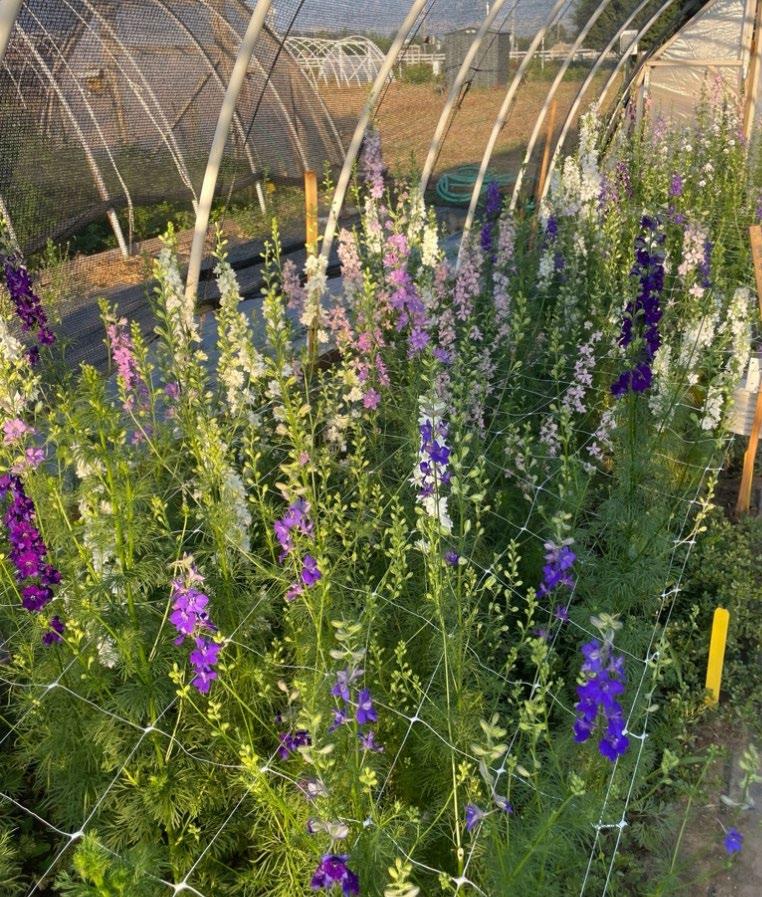
a quarter to one-third of
open.
Direct sowing is most common for cut flower production, as indoor plug production can introduce challenges with taproot development and transplant establishment. Direct sowing is done either in the fall or early spring. Seeds are slow to germinate and benefit from a stratification period. When sown in fall, this occurs naturally. For spring-sown, chill the seeds under dry conditions at 35 °F to 40 °F for 3 weeks before sowing.
Prior to sowing, till and rake the soil smooth, forming beds that are 3 to 4 feet wide. If desired, install drip irrigation before sowing Sow the seeds ¼-inch deep and ensure the seeds are covered (Figure 2).
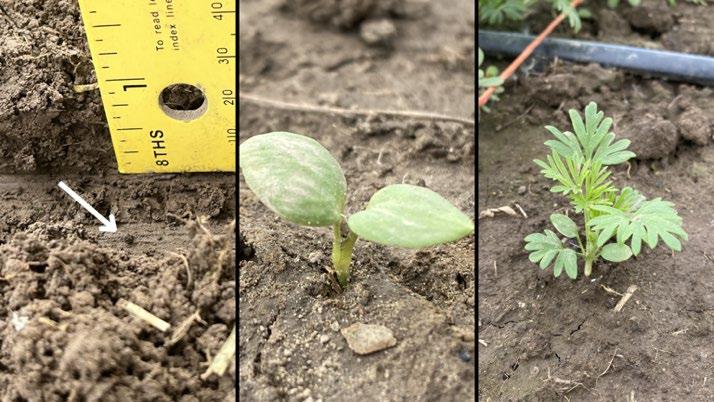
Figure 2. Direct-sown larkspur, from sowing (left) to germination (center), to initial development of true leaves (right).
For both fall- and spring-sow timings in high tunnels, planning and preparation should begin in the previous fall by installing the plastic covering before heavy rain or snowfall. This helps ensure proper soil moisture for workability and reduces the risk of disease. Research at USU focused on spring sowing to allow for greater control over production and avoid unpredictable overwintering conditions that can reduce germination and establishment. For spring sowing, plan to directsow seeds 7 to 8 weeks before the average last freeze date in high tunnels, and at least 2 to 3 weeks before the last freeze date in the field. See Table 1 for a recommended sowing schedule in Northern Utah, based on anticipated and successive harvests.
Sowing at 3 times the intended plant density is recommended to ensure an adequate stand, as USU trials experienced a range in germination and survival rates. However, after germination, seedlings should be thinned for ample space to grow. In high tunnels, a lower density (e.g., three to four plants per square foot, approximately a 6-inch spacing in and between rows)
allows plants to grow larger at maturity within a protected environment, while reducing the risk of disease spread. In open-field systems in Utah, a higher planting density (e.g., five to six plants per square foot, approximately 5- to 6-inch spacing) can improve overall establishment in unprotected conditions where environmental stress may reduce survivability and growth
Table 1. A spring schedule for direct-sowing by production system for successive harvests in Northern Utah.
System Direct sow Harvest
High tunnel
Mid to late March Late June to late July
Field Late April to early May Mid-July to midAugust
A horizontal trellis (also known as netting) may be used to support plants and promote straight, marketable stems, particularly in high-wind locations, where tall plants like larkspur are vulnerable to lodging. However, trellising can complicate harvest, as stems may be more difficult to pull through the netting without breakage, and foliage may become damaged. If used, trellising is most effective when installed before or immediately after planting and can also serve as a planting grid. Installing trellises after plants have grown taller may damage the stems. Mesh netting with 6-by-6-inch openings, stretched taut across the bed, works well when supported by wooden stakes or rebar placed at 3to 5-foot intervals along the edges (Figure 3). The trellis should be gradually raised as the plants grow to reach approximately half the height of the tallest stems.
Larkspur has moderate to high nutrient requirements. Bala et al. (2005) recommended 0.3 pounds of N per 100 square feet, which is up to 2/3 pound (just under 1 cup) of conventional urea fertilizer (46-0-0) or 2.5 pounds (about 8 cups) of organic 12-0-0 fertilizer. USU trials divided this total rate into three, split applications at the following times: (1) incorporated within 2 weeks before the sow date; (2) broadcast or injected during the vigorous vegetative growth stage; and (3) broadcast or injected at the onset of the reproductive stage (i.e., 1 week prior to harvest). At USU, these timings occurred in mid-March, mid-May, and late June in a high tunnel, and late May, mid-June, and mid-July in a field. Add phosphorous and potassium before or at planting, based on soil test results, as these nutrients can build
up in the soil. USU Extension’s “Urban Garden Soils: Testing and Management” is a useful tool for calculating nutrient applications. Iron deficiency may also occur in alkaline soils. Visual symptoms include interveinal chlorosis and yellowing of young leaves, which is treated with chelated iron fertilizer, ideally EDDHA-based (#138), based on soil or tissue test results (Black et al., 2009).
3.
grown with drip-line irrigation and
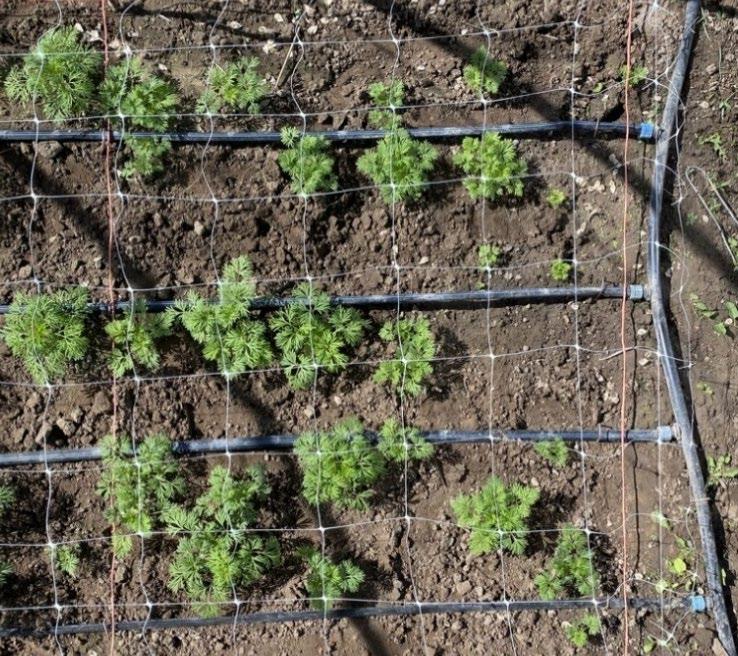
horizontal trellising in Northern Utah.
Maintaining consistent soil moisture will optimize germination. Avoid saturated conditions, and make sure the seeds stay covered, as the seeds are prone to dislodgement from shallow sowing just below the soil surface. Therefore, extra care and frequent monitoring are essential during germination and early establishment. Though research is needed to determine specific rates, 1 to 2 inches of water per week is generally recommended after establishment and depends on temperature, growth stage, and production system. Very early spring plantings initially require less water, depending on soil moisture at transplant and the subsequent growth rate. For early high tunnel plantings, water may need to be supplied from a freeze-protected culinary source, as most secondary irrigation systems in Utah are not turned on until later in the spring. Larkspur can be prone to a variety of plant disease, and arthropod problems and should be monitored frequently throughout the season. See Tables 2 and 3 for common diseases and pests.
Harvest stems when a quarter to one-third of the florets on the raceme have opened. The optimal time for harvest is in the early morning when temperatures are cool and sunlight is less intense. Place stems in clean buckets filled with cool water immediately after cutting.
From USU trials, the minimum marketable stem length was typically 12 inches for sale to florists. Stems can be further graded to determine pricing preferences based on local demand and individual market standards. In 2023 and 2024, stems were graded for sale to florists as Premium: >24 inches and Standard: 12 to 24 inches. Stems were unmarketable (culls) if they were too short, deformed, or had insect damage. To maximize stem length and yield per plant, the following is recommended. For larger plants, harvest the primary stem first, measuring from the bloom tip downward to ensure the cut stem meets the 24-inch Premium grade. Subsequent secondary stems, each at least 12 inches long, can then be harvested as Standard.
Remove excess foliage that may interfere with banding. Florist market feedback from Utah cut flower farmers and cooperatives recommended Premium grade be banded in 10-stem bunches and Standard grade to be banded in 15- to 20-stem bunches (Figure 4) When processing, line up stems of the same color carefully and cut the bunch evenly to shortest stem, wrapping securely with rubber bands. Store between 36 °F and 41 °F. Larkspur can be held in a cooler for up to 5 days, with an expected vase life of 8 to 10 days if preservative is used and water is changed out at least once during storage. Use caution in handling to prevent tipping or stem damage during storage and transport.
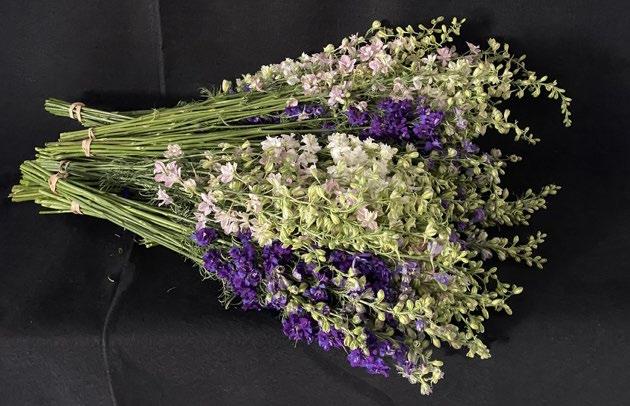
Figure 4 Harvested larkspur that was processed and bunched by color and stem quality for sale to florists
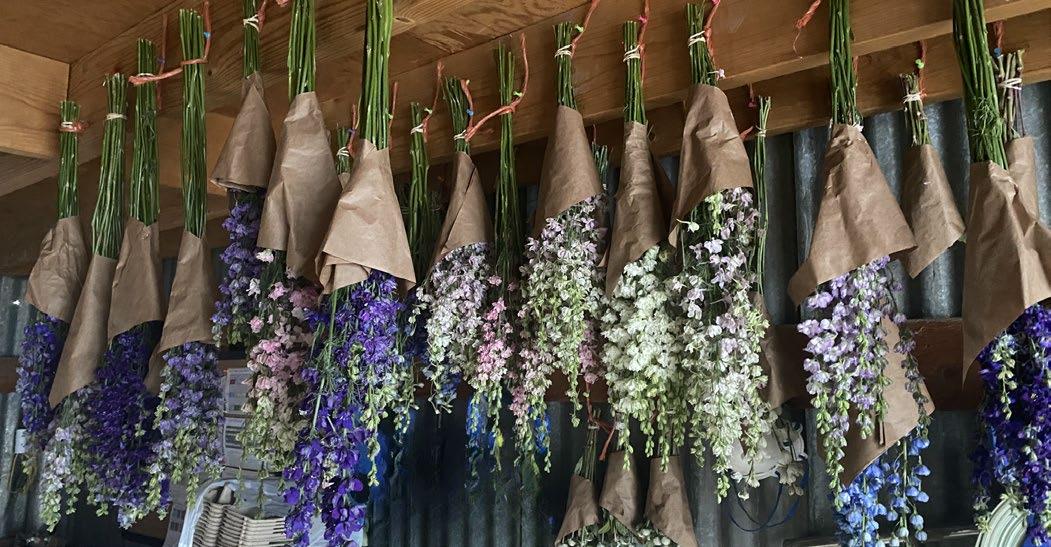
Last reported in 2023, imported larkspur for wholesale was priced at $12.50 to $18.00 per 10-stem bunch ($1.25 to $1.80 per stem) (Agricultural Marketing Service, 2023). From 2023 to 2024, USU-grown larkspur sold for $9.00 to $13.00 per Premium-grade bunch ($0.90 to $1.30 per stem), and $15.00 per Standardgrade bunch ($0.75 to $1.00 per stem) in Utah’s Cache Valley and Wasatch Front markets. Alternatively, larkspur can be dried for additional markets, although pricing for dried bunches was not evaluated (Figure 5).
Disease Identification
POWDERY MILDEW1
VARIOUS FUNGAL DISEASES
CAUSING WILT, CROWN ROTS, STEM ROTS, OR ROOT ROTS2
White, powdery coating (spores) on the leaves and stems, causing reduced photosynthesis, distorted growth, and overall aesthetic degradation of the plants (Figure 6)
Soilborne fungal diseases of larkspur can affect stems, crowns, or roots, causing wilting, discoloration, and decay that weaken structure and hinder growth (Figure 7)
Control
Use proper spacing and monitor for early infection. Apply myclobutanil or sulfurbased fungicides (avoid sulfur above 90 °F); effectiveness declines later in the season. Remove and destroy stems after frost.
These soilborne diseases are highly hostspecific. Prevent spread by avoiding contaminated soil or plants, rotating crops, and removing all plant debris at season’s end. Infected plants cannot be cured.
1 Erysiphe aquilegiae, Erysiphe spp., and Podosphaera spp 2Fusarium osysporum and Pythium spp.
Table 3. Common pests of larkspur for cut flower production.
Pest Identification
CATERPILLARS (Tissuefeeding)
Caterpillars are the larval stage of moths and butterflies. Adults lay eggs on host plants, which hatch into larvae that feed on stems or foliage before pupating and continuing the life cycle. Common species like armyworms, cutworms, and loopers vary in the severity of damage they cause.
Identification: Adult and larval coloration, host plant preferences, and life cycle timing differ by species, making accurate identification important for effective management.
Aphids are a diverse group of small insects that damage plants by piercing tissues and sucking sap. This feeding causes distorted growth, yellowing, sticky honeydew residue, and may spread plant viruses.
Identification: Aphids are small (~1/8 in.), pear-shaped insects. Their color, preferred host plants, and life cycles vary by species.
Control
Monitor caterpillar feeding damage, as severity indicates population levels. Use pheromone traps where applicable and exclude egg-laying adults with insect netting or spunbond fabric. Support natural predators by planting flowers and maintaining suitable habitat. Hand-remove or squish larvae or apply an organic or synthetic foliar insecticide labeled for both the pest and crop when necessary.
Monitor frequently using visual observation and yellow sticky cards, as populations can increase rapidly. Release beneficial insects in covered crops (e.g., greenhouses, high tunnels) or attract them outdoors with flowering plants. A strong stream of water can dislodge and kill colonies. When pest thresholds are reached, use organic insecticides like insecticidal soaps or horticultural oils.
EARWIGS
GRASSHOPPERS
Earwigs are omnivorous insects that feed on both pests and plants. They hide in dark, tight spaces and may damage stems, leaves, flowers, and fruits, especially during midsummer when populations peak. Identification: Earwigs have elongated brown bodies (~5/8 in.) with noticeable rear “pincers” (cerci). They are active throughout the season but are most abundant in summer.
Grasshopper adults are highly mobile and recognized by their large hind legs. Their feeding primarily damages foliage but can affect other plant parts as well. Identification: Size, color, and pattern vary by species and life stage. Grasshoppers overwinter as egg clusters a few inches below the soil. Population levels depend on weather and past management practices.
Monitor feeding damage and check for earwigs often hiding in blooms or tight spaces early in the morning or evening. Use bait traps (e.g., soy sauce or oil in lidded containers with holes) buried at soil level, replacing them regularly and repeating each season. If thresholds are met, apply an organic or synthetic insecticide (concentrate or granular) labeled for both earwigs and the target plants.
Begin monitoring early for young nymphs and feeding damage. Because grasshoppers are highly mobile, manage across a wide area. Baits (e.g., wheat bran with carbaryl or Nosema locustae) are most effective early in the season. Use trap plants (grasses) around crops and/or row covers. Apply insecticides preferably on trap plants only when needed.
MITES (SPIDER MITES)
SLUGS AND SNAILS
Spider mites (family Tetranychidae) have a wide range of host crops. They feed on the undersides of leaves, causing leaf stippling (small yellow spots), bronzing, or scorch. High populations leave noticeable webbing. Identification: Spider mites are microscopic, translucent, and yellow. They are most active during mid to late summer and have multiple generations in a season.
Slugs and snails are soft-bodied mollusks with distinct heads and sensory tentacles. Snails have a spiral shell, while slugs do not. Most species prefer moist, shaded environments and feed on a wide range of plants, damaging young seedlings or chewing holes in the foliage of mature plants (Figure 8).
Begin monitoring lower leaves in late spring, as mites crawl up from the ground. Maintain plant health, since stressed plants are more vulnerable. Encourage or release natural predators (e.g., predatory mites) and reduce dust buildup around crops. A strong water spray can dislodge mites. If thresholds are reached, consider organic insecticides like insecticidal soaps or horticultural oil.
Monitor early in the season, particularly in high and low tunnels. Minimize excess moisture and standing water near plants. Use copper barriers around plants and apply bait or set traps with products labeled for slug or snail control and the specific crop.
Note Most pests are general classifications, and research is ongoing for further classification.
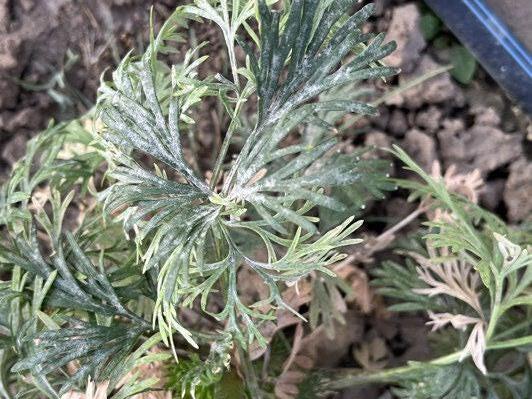
Figure 6. Advanced powdery mildew symptoms on larkspur. Initial identification can be difficult due to the thin, highly lobed leaves.
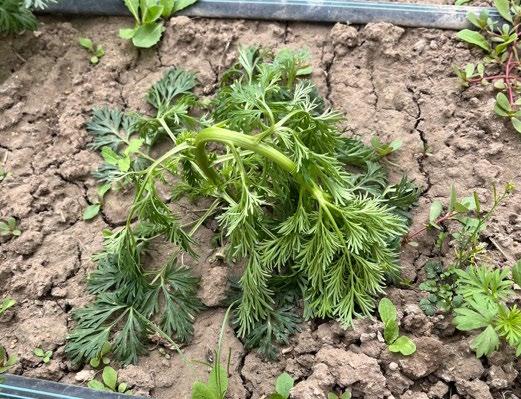
Figure 7. Larkspur plant showing symptoms of wilting caused by a soilborne fungus.
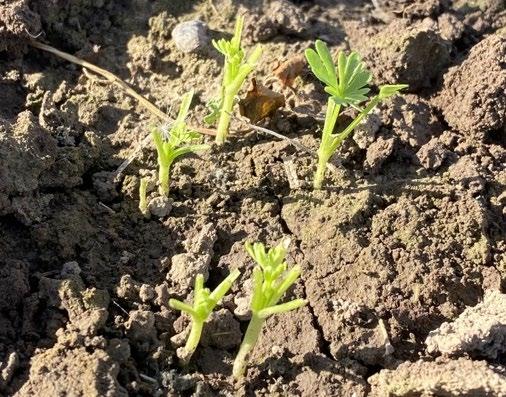
Figure 8. Newly germinated larkspur with true leaves chewed off due to slug feeding.
In 2023 to 2024, trials were conducted at the Utah Agricultural Experiment Station - Greenville Research Farm in North Logan, UT (USDA Hardiness Zone 6A, average last freeze date: May 15) to optimize bloom timing, yield, and quality. We tested spring direct-sow timings of three series in high tunnel and field systems, along with the use of shade cloth (30% shade) in the field. This trial evaluated the growth and production of plants each year.
Seeds were direct-sowed in mid-March and late March in high tunnels (7 to 8 weeks before the average last freeze date) and late April and early May in the field (1 to 3 weeks before the average last freeze date) For the Wasatch Front and other areas warmer than Cache Valley, transplanting may be 2 weeks earlier or more Locations with a higher elevation or cooler climate may sow later. The series (C ajacis) in this study included ‘Cannes’ (colors: Deep Blue, Lilac, and White); ‘Fancy’ (colors: Belladonna, Purple Picotee, and Smokey Eyes); and ‘QIS™’ (colors: Dark Blue, Light Pink, and White)
High-tunnel-grown plants produced up to 2 times more marketable stems per plant (i.e., >12 inches) and harvests occurred by late June, 2 to 3 weeks earlier than those in the field Yields averaged 2.3 marketable (3.4 total) stems per plant in the high tunnel compared to 1.5 marketable (1.7 total) stems per plant in the field (Table 4) More optimized growing conditions in high tunnels produced taller plants and subsequently more secondary harvestable stems. In contrast, field-grown plants were shorter and often allowed only a single, harvestable premium-grade stem (>24 inches). In the field, 30% shade had little effect on larkspur yield or stem quality, indicating that shade is not necessary for this crop in Utah. Together, staggered sowing across both high tunnel and field systems created a harvest duration lasting up to 7 weeks.
Direct-sow dates only differed by 2 weeks in each the high tunnel (mid-March vs late March) and field (late April and early May) but significantly affected yield and stem quality. In each production system, plants from the earlier sow date began blooming about 1 week earlier and yielded up to 1.7 times more marketable stems per plant than plants from the later sow date
(Figure 9). Based on these findings, earlier sow dates are recommended, as well as future trials that explore even earlier sow dates to further stagger harvest, while balancing cold temperatures and risk of injury.
Table 4. Average stems-per-plant marketable yield by color within series and production system (high tunnel and field), across sow dates and years, and including production system average.
Series Color
Colors within the Cannes and QIS™ series performed similarly, averaging 2.5 total stems per plant. Colors within Fancy had more variability. Genetically distinct, Belladonna produces single flowers, unlike the predominantly double-flowered Smokey Eyes and Purple Picotee. Belladonna outperformed Smokey Eyes and Purple Picotee in survival and yield across all sowing dates and systems. In high tunnels, Belladonna had up to 3.7 times greater survival and 4.4 times higher yield than Smokey Eyes and Purple Picotee See Table 5 for series and color images with descriptions.
Larkspur is an annual crop that has distinctive colors, stature, and versatility in various floral arrangements Seeds can be direct-sowed at least 7 to 8 weeks before the average last freeze date without the risk of cold injury. This crop is an excellent choice for early-season high tunnel production. Early, direct sowing across both high tunnel and field systems staggers harvests for up to 7 weeks of total production duration, allowing for a continuous market supply from late June through midAugust The wholesale receipts ranged from $9.00 to $15.00 per bunch in Northern Utah. Paired with low input costs compared to many other flowers, larkspur is a competitive local crop for small farms.
Table 5. Larkspur cultivars grouped by series or type with descriptions from USU trials in North Logan, Utah.
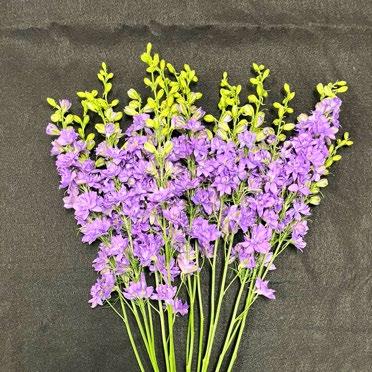
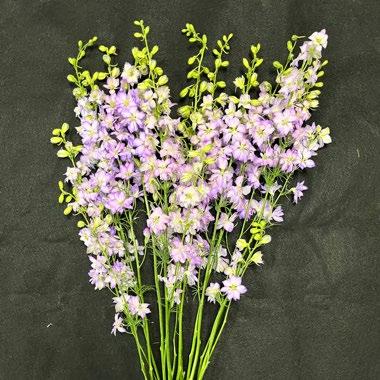
Lilac
Soft, elegant, and dense with mostly double blooms, 2- to 4.5-feet tall.
High yielding.
Color: pastel purple
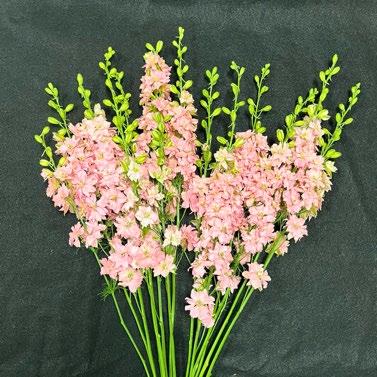
Pink
Gentle and dense with mostly double blooms, 2- to 4.5-feet tall.
Low to moderate yielding.
Color: muted pink
Picotee
Showy, textured, and dense with mostly double blooms, 2- to 4.5-feet tall. Low yielding.
Color: white centers with purple edges
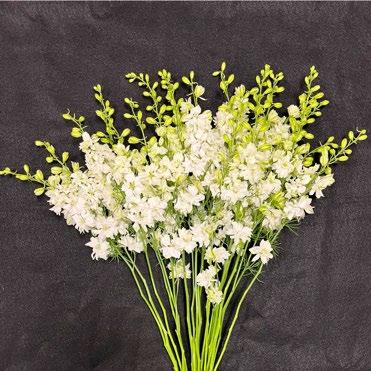
Graceful and dense with mostly double blooms, 2- to 4.5-feet tall.
Moderate to high yielding
Color: white
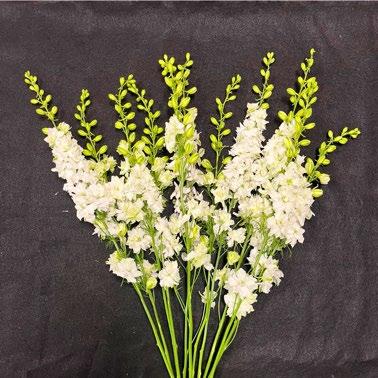
Clean, crisp, and dense with mostly double-flowered blooms, 2- to 4.5feet tall. Low-moderate yielding Color: white
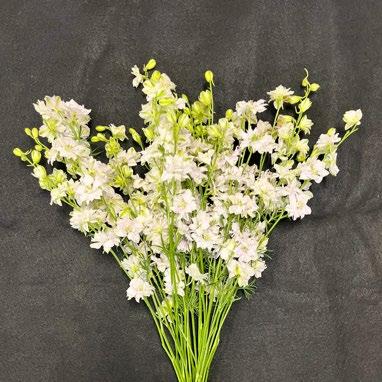
Smokey Eyes
Florist favorite and dense with mostly double blooms, 2- to 4.5feet tall. Low yielding.
Color: silvery-white base with subtle lavender centers
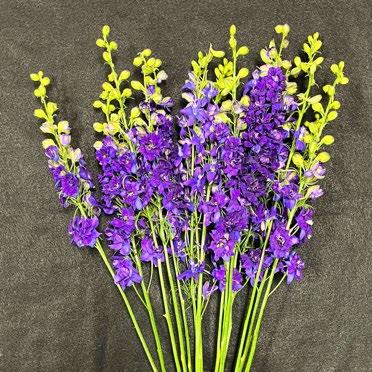
Deep Blue
Bright and dense with mostly double blooms, 3- to 5-feet tall.
Moderate yielding.
Color: violet-blue to indigo
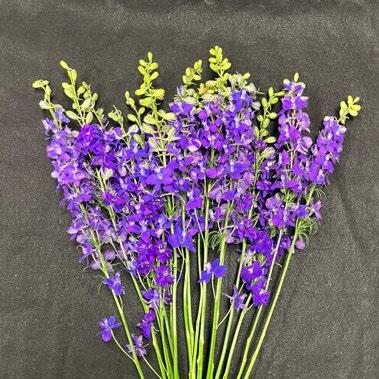
Blue
Bold and dense with mostly double blooms, 2- to 4.5-feet tall. High yielding
Color: violet-blue to indigo
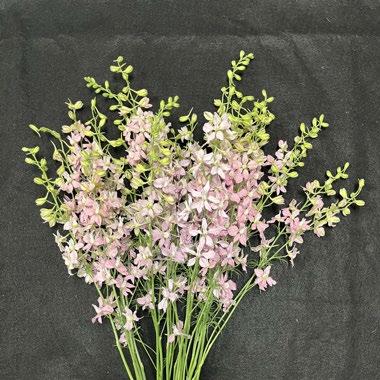
Big producer and dense with single blooms, 2- to 4.5-feet tall. High yielding.
Color: soft light pink
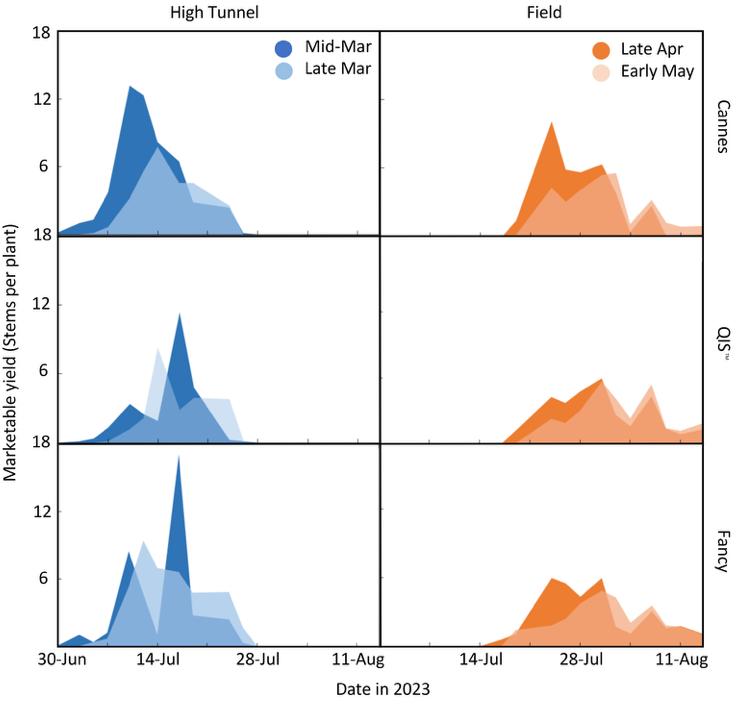
Figure 9. The average daily marketable yield (in stems per plant) in 2023.
Notes. Harvested plants were sowed in mid-March (dark blue) and late March (light blue) in high tunnels (left panels) and late April (dark orange) and early May (light orange) in fields (right panels). The top panels show yields of Cannes, middle panels are of QIS™, and bottom panels are of Fancy.
Agricultural Marketing Service (AMS) (2023).
Ornamental wholesale market report – Boston, MA U.S. Department of Agriculture.
Armitage, A., & Laushman, J. (2003). Specialty cut flowers (2nd ed) Timber Press
Bala S, Patil, P. V., & Kadam, J. H. (2005). Effect of plant densities and levels of nitrogen on yield of larkspur. Journal of Maharashtra Agricultural Universities, 35(2), 2010.
Black, B., Cardon, G., & Ransom, C. (2009). Iron chlorosis in berries [Fact sheet] USU Extension
Johnny’s Selected Seeds. (2017). Larkspur – key growing information
Maughan, T., Cardon, G., & Drost, D. (2016). Calculating fertilizer for small areas [Fact sheet] USU Extension. Nau, J. (1993). Larkspur, pp. 74-75 In Ball culture guide: an encyclopedia of seed germination (2nd ed.). Ball Publishing.
Stock, M., Maughan, T., & Grossl, P. (2020). Urban garden soils: Testing and management [Fact sheet]. USU Extension.
Stock, M., Maughan, T., & Miller, R. (2019). Sustainable manure and compost application. USU Extension. Utah Climate Center. (2025). Utah freeze dates. USU.
Using figures and tables without written permission from the authors is prohibited. Canva provided the banner image. Figures 1–9 and images within Table 5 are from Utah State University. We thank Heather Griffiths of Wasatch Blooms and Ali and Lorin Harrison of Florage for their production and marketing recommendations as well as Claudia Nischwitz for her crop disease feedback and expertise This project was funded by the Western Sustainable Agriculture Research & Education and the United State Department of Agriculture’s National Institute of Food and Agriculture. The information reflects the views of the authors and not funding agencies


In its programs and activities, including in admissions and employment, Utah State University does not discriminate or tolerate discrimination, including harassment, based on race, color, religion, sex, national origin, age, genetic information, sexual orientation, gender identity or expression, disability, status as a protected veteran, or any other status protected by University policy, Title IX, or any other federal, state, or local law. Utah State University is an equal opportunity employer and does not discriminate or tolerate discrimination including harassment in employment including in hiring, promotion, transfer, or termination based on race, color, religion, sex, national origin, age, genetic information, sexual orientation, gender identity or expression, disability, status as a protected veteran, or any other status protected by University policy or any other federal, state, or local law. Utah State University does not discriminate in its housing offerings and will treat all persons fairly and equally without regard to race, color, religion, sex, familial status, disability, national origin, source of income, sexual orientation, or gender identity Additionally, the University endeavors to provide reasonable accommodations when necessary and to ensure equal access to qualified persons with disabilities. The following individuals have been designated to handle inquiries regarding the application of Title IX and its implementing regulations and/or USU’s non-discrimination policies: Executive Director of the Office of Equity, Matt Pinner, JD, matthew.pinner@usu.edu, Title IX Coordinator, Hilary Renshaw, hilary.renshaw@usu.edu, Old Main Rm. 161, 435-797-1266. For further information regarding non-discrimination, please visit equity.usu.edu, or contact: U.S. Department of Education, Office of Assistant Secretary for Civil Rights, 800-421-3481, ocr@ed.gov or U.S. Department of Education, Denver Regional Office, 303-844-5695 ocr.denver@ed.gov. Issued in furtherance of Cooperative Extension work, acts of May 8 and June 30, 1914, in cooperation with the U.S. Department of Agriculture, Kenneth L. White, Vice President for Extension and Agriculture, Utah State University.