Geothermal Energy in Utah: A Safe Technology With Limited Environmental Impacts Joseph Harding1, Kendall Becker1,2, Logan Mitchell3, Jennifer Bodine3, Scott Hotaling1,2 1
Utah State University (USU) Climate Adaptation Intern Program 2 USU Department of Watershed Sciences 3 Utah Clean Energy
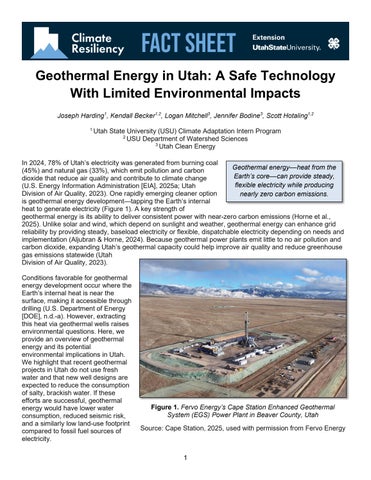
In 2024, 78% of Utah’s electricity was generated from burning coal Geothermal energy––heat from the (45%) and natural gas (33%), which emit pollution and carbon Earth’s core––can provide steady, dioxide that reduce air quality and contribute to climate change flexible electricity while producing (U.S. Energy Information Administration [EIA], 2025a; Utah Division of Air Quality, 2023). One rapidly emerging cleaner option nearly zero carbon emissions. is geothermal energy development—tapping the Earth’s internal heat to generate electricity (Figure 1). A key strength of geothermal energy is its ability to deliver consistent power with near-zero carbon emissions (Horne et al., 2025). Unlike solar and wind, which depend on sunlight and weather, geothermal energy can enhance grid reliability by providing steady, baseload electricity or flexible, dispatchable electricity depending on needs and implementation (Aljubran & Horne, 2024). Because geothermal power plants emit little to no air pollution and carbon dioxide, expanding Utah’s geothermal capacity could help improve air quality and reduce greenhouse gas emissions statewide (Utah Division of Air Quality, 2023). Conditions favorable for geothermal energy development occur where the Earth’s internal heat is near the surface, making it accessible through drilling (U.S. Department of Energy [DOE], n.d.-a). However, extracting this heat via geothermal wells raises environmental questions. Here, we provide an overview of geothermal energy and its potential environmental implications in Utah. We highlight that recent geothermal projects in Utah do not use fresh water and that new well designs are expected to reduce the consumption of salty, brackish water. If these efforts are successful, geothermal energy would have lower water consumption, reduced seismic risk, and a similarly low land-use footprint compared to fossil fuel sources of electricity.
Figure 1. Fervo Energy’s Cape Station Enhanced Geothermal System (EGS) Power Plant in Beaver County, Utah Source: Cape Station, 2025, used with permission from Fervo Energy
1