or the 36th year, the Midwest Symposium for Leadership in Behavior Disorders will address cutting-edge issues of interest to professionals working with students with emotional/behavioral disorders and autism spectrum disorders. Our comprehensive, three-day program starts with workshops on Thursday followed by keynote, breakouts, posters, exhibits and more.
A Tribute & Celebration of the Life of Rich Simpson!
When - Thursday February 22, 2018, 8:15pm to 10:00pm or as long as partcipants wish to contnue…
Where - Empire Room, Sheraton Kansas City Hotel at Crown Center, 2345 McGee Street, Kansas City, MO 64108. Phone 866-932-6214.
Program - There will be a brief informal program hosted by Jason Travers, President of the Midwest Symposium. There will then be an open microphone for anyone atending to share their thoughts about Rich, his life, & his work (one minute tme limit). A cash bar will be available at the event.
Who Can Partcipate? - This celebraton is open to anyone! Although the event is being held as a part of the Midwest Symposium, you do not need to register for the conference to partcipate in this event. Please share this announcement with others who you think would be interested.
Informaton? Info about Rich and Memorials can be found at: htp://mslbd.org/who-we-are/remembering-rich-simpson.html.
Rethinking Behavior welcomes proposal and manuscript submissions, for information visit www.mslbd.org or email rethinkingbehavior@mslbd.org
Remembering Our Colleague and Friend
Just prior to the release date of our frst issue we were shocked and sad to learn of the death of our long-term friend and colleague, Rich Simpson. It is indeed difcult to express the many personal and professional contributons Rich made to the feld of behavioral disorders/autsm and our community of the Midwest Symposium for Leadership in Behavior Disorders (MSLBD).
Rather than delaying the frst issue and adding a brief note of Rich’s passing we decided to take tme to devote signifcant atenton to Rich’s legacy in this second issue. In the interview contained in this issue you will see the passion and heart that Rich brought to our feld. Driven by his memories of the lack of optons for his sister with mental illness, Rich describes how these memories sparked his desire to make a
signifcant contributon to betering the services and outcomes for youth with signifcant emotonal or behavioral disorders. And indeed, he did. Rich could have led a successful career solely focusing on his university career. Rather than doing this, he devoted many hours to the vision of MSLBD and the support of professionals who are entering our feld. And, we are all the beter for it.
However, for those who knew Rich, what we will miss the most is his “presence”. He was thoughtul, but had the ability to add acerbic comments regarding almost any topic, a great ability to wisecrack, and had a sparkling quick wit. Let’s hope that we can absorb, and contnue to express in ourselves this “presence” as we move forward with our own work!
The Editorial Team
My Most Memorable Student I Had Never Been Called “Teacher” Before
By Mary Margaret Kerr1
When thinking back on my career there is one student who changed me with one single word. This student is my most memorable student and the one who frst inspired me. I was about twenty-one years old when I was allowed to begin my internship at Duke University’s Department of Child Psychiatry. They had a school where I had volunteered as an undergraduate in psychology. So, I was familiar with the school and had a sense of what I was headed into. At least untl the night before, when I panicked. I grabbed every relevant book in the library and I managed to stay up all night so that I would be well prepared for my frst day of teaching. I didn’t fnd much help in those textbooks, maybe because I read them all the night before in a panic.
Of course, I did not sleep all night and realized at about 7:00 a.m. the next morning that I had
lef my hard contact lenses in all night. This resulted in a visit to the Emergency Room. I was discharged with not one but two eye patches to begin my frst day of teaching. It was quite a challenging day, as you might imagine. I tried to take my eye patches of. My eyes watered. I looked terrible. I was in pain. It was quite a morning, and I knew then that I was not going to be asked back. My crying with scratched corneas just made everything worse.
At the end of the day, I was sitng at my desk sort of holding it lovingly, thinking, “Wow this was really going to be such a great career. I don’t know what I’m going to do now, but it’s over.”
A child came back into the room. He said the word that changed my entre life when he stated, “Teacher.” I turned to him, having never been called teacher in my life, and I said “yes.” He said, “Will you be back tomorrow?” I said, “No, son,
I won’t be back tomorrow. But they’ll get you a really good teacher and it is going to be great. I know you’re going to do well, and I sure did have fun with you today. We had a good tme and you are a good student.” He listened to me and then turned and walked out of the room.
In a couple of minutes, he reappeared at the doorway. “I bet if you keep coming back every day, you will be a good teacher, too.”
I made a decision right then and there. They were probably going to kick me out of Duke University’s graduate program, but I would apply to any program on earth. I would claw and scratch my way to get back into this feld because that’s what I wanted to do.
violence preventon center, STAR-Center, which provides crisis response services, training, and policy consultaton to school districts and agencies across Pennsylvania.
Mary Margaret Kerr, University of Pitsburg, Pitsburg, PA, mmkerr@pit.edu
B B B
We are certainly a richer feld because Mary Margaret Kerr came back every day and stll does.
A graduate of Duke University and American University, Mary Margaret Kerr is Professor and former Chair of Administratve and Policy Studies, Professor of Psychology in Educaton, and Professor of Psychiatry at the University of Pitsburgh. Also licensed as a superintendent, Dr. Kerr has worked in urban school districts throughout her academic career. In the Department of Psychiatry, Dr. Kerr initally directed school-based research and training programs. Taking a public service leave from the University, Dr. Kerr served Pitsburgh City Schools as Director of Pupil Services. In 1995, Dr. Kerr was appointed by the federal court in California to serve as Consent Decree Administrator for the Chanda Smith special educaton case in LAUSD, where she worked for nearly a decade to reform all special educaton services for over 82,000 students. Returning to the University, Dr. Kerr directed training services for the University’s youth suicide and
Dr. Kerr currently teaches undergraduate and graduate students and consults with teachers. Her research team studies the experiences of children who visit and correspond with the Flight 93 (9/11) Natonal Memorial, the Pentagon Memorial, and other such painful heritage sites. Her second area of research explores the emotonal lives of teachers and students in K-12 schools.
Dr. Kerr is the recipient of the Jean Winsand Distnguished Woman in Educaton Award, the University of Pitsburgh Chancellor’s Distnguished Teaching Award, the Provost’s ACIE Award for Innovaton in Educaton, and the Department of Psychiatry Teaching Award.
1 This story is a part of the Midwest Symposium for Leadership in Behavior Disorders video series: “My most memorable student”, which allows educators to talk about their most memorable students. The Kerr video is available at: htps://archive.org/details/ MaryMargaretKerr346. Over 40 other stories of memorable students can be found at: htp://mslbd.org/what-we-do/educator-stories.html.
Jim Teagarden, Associate Professor, mrt@ksu.edu
my room at that moment you would have seen just how cute the two of us looked.
Ben was leaning against my chest and I was repeatng, “When your body is calm, I will know you are ready to talk.” Within a minute, Ben’s body was calm (or so I thought). Then I thought, “Look at me, I am teacher of the year! Ben followed my directons and now he is sitng calmly.” I relaxed my hold and put my hands down at my sides.
Young Teacher Lesson #4. Things are not always what they seem.
What came next was hands-down the most memorable part of my career to this day. You see, Ben had a fascinaton with cowboys and loved to wear cowboy boots. He wore them with shorts and with pants. He wore them in the fall, winter, and spring. He always wore cowboy boots. When I let my guard down, Ben swung his leg from the foor to my forehead. Before I could even react, the tp of his cowboy boot hit me smack in the middle of my forehead. Ben did not stand up and swing his leg. Oh no, stll sitng against my chest, Ben brought his leg up and over his own head to kick my forehead. To this day I have not seen such fexibility, even on the gymnastcs circuit.
Young Teacher Lesson #5. Don’t underestmate fexibility.
I was so shocked and amazed, I just sat there in silence. Afer everything I tried, this silence is what broke him. In a few moments, Ben gave me the biggest hug, apologized over and over, and begged me not to tell his grandma. Ben and I went on with our day. However, I cannot tell you how many people asked me about the bruise on my forehead.
Afer that incident and many more during that school year, Ben was moved to a more restrictve placement. I do hope Ben received the help he needed to become a successful student and I wish I knew where he was today. He should be in high school now but I have not seen his name on the
high school roster. I assume his family has moved out of our school district.
In our scufe, Ben apologized to me, but today I would love to see Ben and be the one to apologize to him. I had no idea how to work with students with challenging behavior at that tme. He was the frst of many students who made me realize that I needed to grow in the area of behavior management. Since then I have obtained certfcaton in the area of behavior analysis. I would love to turn back the clock and help Ben with the knowledge I now have. One of my current goals is to help pre-service teachers build their knowledge and skills to help students like Ben. I want them to avoid learning the young teacher lessons I’ve shared plus one more.
Young Teacher Lesson #6. Leave the stletos at home.
Jessica Nelson, Kansas State University, Manhatan, KS, jessnelson@ksu.edu
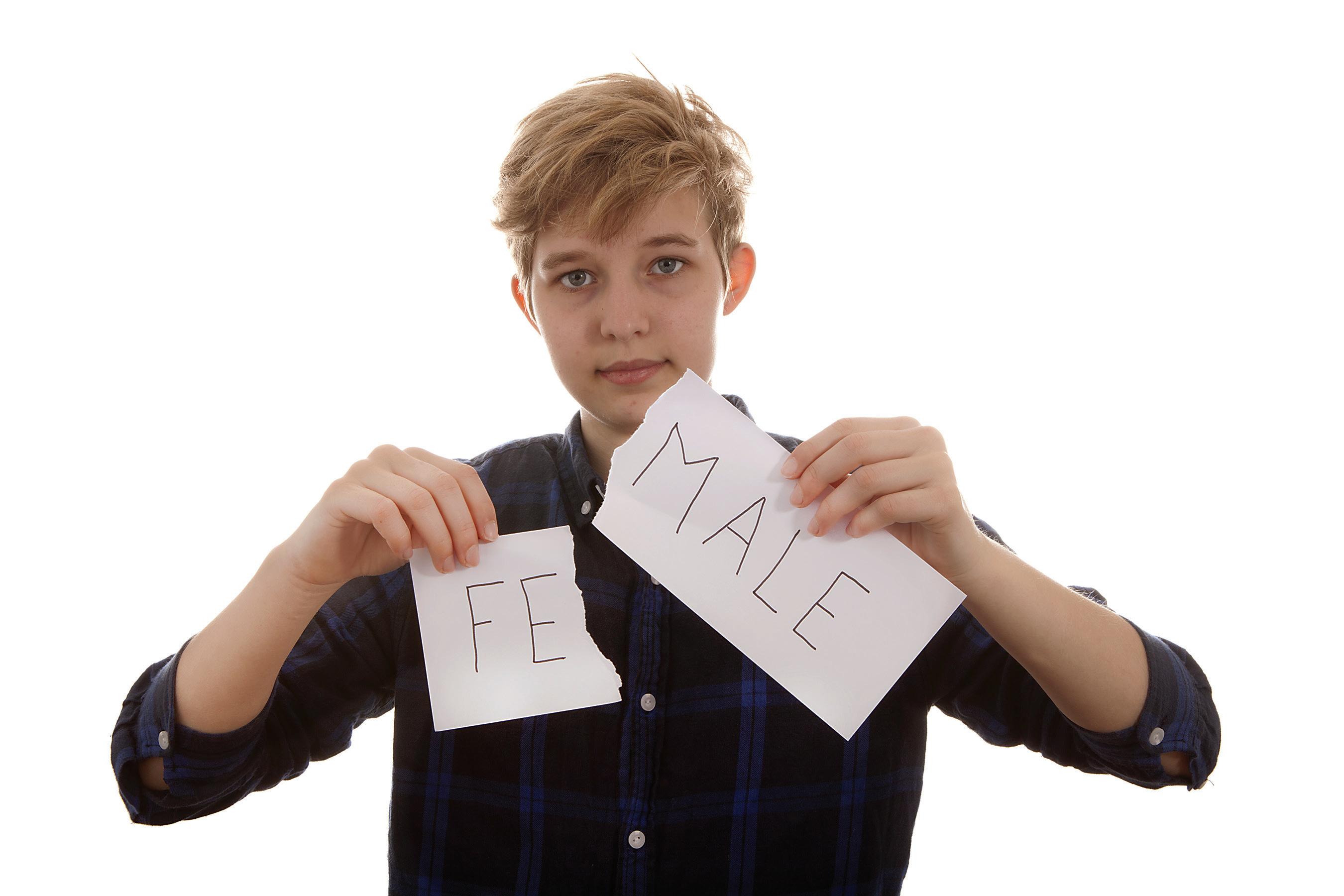
One Family’s Experience with Transgender: It Needs to Become Not a Big Deal
By Mike Paget
On January 29th, 2017 16-year-old Aaron and his mom, Shanna, were having a somewhat typical end-of-the-day checkin, just catching up on things when Shanna asked her normal “mom queston”, “Is there anything about your day (life) that I don’t know about...that I haven’t thought to ask?”
Unlike the typical day, this night, Aaron replied “Well, actually Mom, there is…”
But, it wasn’t just a yes. Aaron started taking deep breaths and Shanna could tell this was something really, really big. Really important. Shanna quickly ran through her mental checklists as to what this could be about and prepared herself to take the next few words seriously.
“I… I… I’ve realized that I’m transgender.” Aaron said.
This wasn’t on Shanna’s checklist, but she knew Aaron, now Kallie, was speaking her truth so Shanna said, “Okay… tell me more.” And so began this family’s journey along the complicated path of gender identty.
Shanna and Mat Haun have two children, a twenty-year-old daughter, Mackenzie, and sixteen-year-old Kallie (previously Aaron, who for most of this artcle I will use the name she selected for herself when she came out as transgender). They live in a comfortable suburban neighborhood near Kansas City, where the children have atended public schools. Mat and Shanna both work full tme, Mat as a customer relatonship manager, Shanna as a yoga and ftness trainer/ instructor. The family
is actve in their faith traditon, with Mat and Shanna having held leadership roles in their local Jewish congregaton. Mackenzie was in her senior year in college, while Kallie was startng her junior year in high school at the tme of this artcle.
Sexual orientaton and gender identty issues have been part of the American cultural discussion for decades. It seems that in the area of civil rights, the trend has been towards removing stgma and ensuring equality for all. But the trends evolve slowly, with legal and cultural dissonance, sometmes moving towards greater understanding, and sometmes retreatng into periods of confusion and tension.
As is the case with many civil rights issues, sexual orientaton and gender identty have made their way into schools. As local administrators, faculty, and policy makers come to terms with how to manage these issues, schools ofen fnd themselves navigatng caring for the student and responding to challenges from the local community.
The purpose of this discussion is to describe this one remarkable journey, in hopes that it will provide insight or even a model for how the journey of others might be handled.
Kallie’s Story
At least as far back as age eight, Aaron struggled to understand how he ft in. With the support of his family and friends, Aaron showed both remarkable talents and clear preferences early on. He has always been intelligent, and has never followed stereo-typed roles for boys and girls. Ofen preferring to play alone for hours on end with Legos and other creatve toys, Aaron never liked the rough-housing that sometmes is a favorite actvity of “boys”.
Aaron was diagnosed with Asperger’s (high functoning Autsm Spectrum Disorder) and Crohn’s Disease at age eight. Perhaps that
provided some type of answer to the ever-present sense of just being diferent from other kids. But whatever was going on, Aaron’s family did all they could to handle the challenges, while contnuing to raise their child to be happy and successful.
On January 29th, 2017, Aaron came out as a transgender 16-year-old woman, Kallie. Though all of the “research” Kallie had done getng ready for this moment suggested she should expect the worst, her family went into refecton and understanding mode. It might be accurate to say that they went on a “family retreat”, talking, thinking, feeling...and supportng the complex path their daughter was on.
Sexual orientation and gender identity have made their way into schools.
There are many remarkable aspects to their story. As a family, they embraced their daughter’s identty. Together, they made plans for revealing this signifcant development, frst to close friends and family, then to extended friends, then to the greater community. At each stage of the revelaton, the predominant response was an outpouring of support.
Part of their journey has been Kallie’s decision to directly address the issue with her school. She made this decision because she wanted to speak her truth and not feel that she was living a secret. The family met with key school personnel, including an administrator and school psychologist, to explain Kallie’s desire to share with her peers. Kallie wanted to talk to each of her classes and announce who she is. The school supported her decision, ensuring that an administrator would be present in each class as she delivered her statement. And, in every class, all day long, the
response was the same. Kallie received applause, and an overwhelming gesture of support from her peers. All her teachers have been very supportve and acceptng, quickly adaptng to using Kallie’s preferred name.
The ttle of this artcle, “It Needs to Become Not a Big Deal,” refects the supportve response that Kallie received from her school. It just hasn’t been a big deal. Life has contnued, teachers and classmates have been supportve, and the administraton has respected the wishes of Kallie and her family. A recent example was when Kallie, and several other students, were asked to report to the ofce. The school wanted to ofer new student ID cards, using the students’ preferred names. The students had not made this request; the school simply was being proactve.
Kallie’s story clearly difers from some of the stories reported from other schools where intense confict has been created. In the words of the school principal at Kallie’s school, there are three guiding principles in how the school is run. First, academics are the reason the school exists, and the school creates multple opportunites for student learning and success. Second, every student needs to feel safe at school, including no tolerance for harassment or bullying. One tool the school uses to maintain safety is an anonymous online reportng system. When a parent, student, or teacher enters a concern, that informaton immediately goes out to all school administrators and to the school resource ofcers. The school personnel go about discretely investgatng, taking any acton necessary. The third guiding principle is that the school wants all students to have fun at school, to value learning, and to have healthy and satsfying relatonships with peers and adults. An example of how that principle is implemented is in the creaton of a constantly evolving list of school clubs and interest groups. One group pertnent to this discussion is the Gay-Straight Student Alliance. Kallie partcipates in this alliance.
Certainly there will be (and there have been) moments when the support is neither clear nor evident. While school leaders didn’t expect any negatve reactons based on experience and the culture that the high school tries to foster among the students, they did tell Kallie that all the staf was there to support her and introduced her to partcular people to seek out if there were any issues. With the base of understanding and support of her family, friends, and school, Kallie is going to thrive.
I spent two evenings talking with the family. In their immense generosity, they wanted their story to be heard by others. I encourage you to take tme and listen to their words in the recorded interview. And, as Shanna says, “...this just needs to be not a big deal.” You can also follow more of Kallie’s story on Facebook via the Highly Adaptable page.
Thank you to the Haun family for extending their kindness to others in sharing Kallie’s story. An audio recording of the interview (approximately 37 minutes) is available here: htps://www.dropbox. com/s/2zw32m6r526ms9t/Mike%20Paget%20 Haun%20Family%20Interview.m4a?dl=0
Mike Paget. Consultant, Overland Park, KS, mcpaget@gmail.com
Things are Better: A Conversation with Richard Simpson
By Jim Teagarden, Robert Zabel and Marilyn Kaf1
It is with heavy heart that the Janus Oral History Project shares part of the rich history and wealth of knowledge that our friend and colleague Rich Simpson has lef with us. Rich’s unexpected passing last November gives us cause to pause and refect on the mission and focus of his professional life and his many contributons.
Richard Simpson was Professor Emeritus of Special Educaton at the University of Kansas (KU). Dr. Simpson’s responsibilites at KU included roles of staf psychologist, teaching associate, assistant professor, project director, associate professor, professor, and chairperson for the Department of Special Educaton. Rich directed numerous KU and University of Kansas Medical Center demonstraton programs for students with autsm and other disabilites. He authored many books, artcles, and assessment instruments on a variety of topics related to students with disabilites. Simpson was the senior editor of Focus on Autsm and Other Developmental Disabilites. He was a frequent presenter at regional, natonal,
and internatonal conferences, meetngs, and workshops throughout his career. His professional contributons and leadership were recognized and honored with numerous awards, including the Council for Exceptonal Children Research Award, Midwest Symposium for Leadership in Behavior Disorders Leadership Award, Autsm Society of Kansas Leadership Award, and the Gene A. Budig Endowed Teaching Professorship of Special Educaton. Rich was one of a small group who conceived and founded the Midwest Symposium for Leadership in Behavior Disorders, and he played a central leadership role in the organizaton throughout it’s history.
Rich’s tremendous energy, keen intelligence, leadership abilites, collaboratve skills, and engaging nature have guided and supported many people in their work. The foundaton upon which a feld is remembered and guided could fnd no beter icon than Rich has been for many of us. What follows is drawn from the transcript of a Janus Project conversaton with Dr. Simpson in 20142 .
B B B
How did you end up working with children who have some very unique challenges?
Simpson: The backdrop of all of this is that I had an older sister. She had a prety signifcant emotonal/ behavior disorder and was in and out of psychiatric hospitals the entre tme I was a child. I saw my parents struggle dramatcally with this. On one hand, I was interested in behavioral sciences and it was sort of a natural thing to fnd myself interested in.
I have to tell you, I did not have a lot of respect for the people that were working with kids at the tme. I was watching my parents struggle. Being in school and not responsible for things, I think it was a litle easier to be distanced. I didn’t have to deal with the phone calls. My sister - this was pre94-142 - was out of school and spending so much tme at hospitals and psychiatric facilites.
B B B
Were you in Kansas?
Simpson: I was. I grew up in the Kansas City area and my father was a business owner, so we were a middle-class family. We were not without resources, but I saw my parents struggle. I saw the work that was being done and I had so litle respect for the therapists. It was at a tme when one of the primary things that was done was shock therapy and some prety draconian, almost barbaric things.
On one occasion, a therapist came to our house and led a family meetng because my sister was
coming home from the psychiatric hospital and was being phased back into our home. I was probably a junior or senior in high school, and I thought these are the most uninformed, lack of common sense thoughts and ideas that I ever heard in my life.
So, that’s sort of the backdrop. When I started seriously looking at what I was going to do with my life’s work, I went from [studying] animals to school psychology, and then I kind of had an epiphany moment where I realized that schools are where the acton is. I felt heartened by that and it made sense to connect with school setngs.
B B B
What do you think has had the greatest positve impact on the feld in general?
Simpson: I think one of the strongest movements is a willingness by policy makers at the federal level to pass legislaton declaring all kids need an educaton and that as a society we have an obligaton to serve people with special needs. It’s bafing to me that it took us so long to get there. Kind of tracking back to my childhood and seeing my parents struggle with the questons like, “What are we going to do? Where are we going to send our daughter?” There wasn’t anything and the things they tried to do to support her were, stck her in a state hospital, stck her in a private hospital, and let them do these really bad things to her.
That was an era when it was a litle bit of fend for yourself. In my mind, clearly, it was the policy makers who had the perspectve that humanity is important enough that we’re going to provide these opportunites. I think we’ve done that. Without that, I don’t think that many of the things that we now struggle with would even be on the radar screen. We’re talking about things like evidence-based practces, full integraton and inclusion. Well, that’s far, far down the path from where we began. We have far to go, but we’ve made progress.
B B B
What would you consider to be the most negatve impact on the feld?
Simpson: I think there are several. One of the movements that I fnd somewhat distressing and that I would love to see change, is a reliance on generic training models.
I think one of the things that’s happening is that we have moved away from categorical and specifed training models to training models where we expect every educator to be able to be successful in working with kids with disabilites and every special educator to handle every type disability. In some ways like with high incidence disabilites, generic-training models may make some sense. The caveats are kids with emotonal/ behavioral disorders and kids with autsm.
B B B
Are you saying they need certain kinds of skills that they just aren’t going to get in general educaton setngs?
Simpson: Specialized teachers are few and far between and so, politcally, there has been a movement to have generic licensure. I think that
has eroded some of our capacity. When I look back on some of our training approaches, I think we were learning lots of things and we had some folks that came into the feld and were commited, trained and dedicated to partcular types of groups of kids. Now, the people that come to this [MSLBD] conference, they’re stll there. They’re stll working with EBD kids and kids with autsm, however, it’s much, much more difcult for them to be strong people for a partcular group of kids with which they have expertse.
Another issue that comes to mind for me is the lack of integraton between mental health services and educatonal services. It’s very difcult. We have the DSM [Diagnostc and Statstcal Manual] lexicon, we have IDEA [Individuals with Disabilites Educaton Act] protocol and it’s a challenge to integrate those two and sort out responsibilites.
Integrated services clearly are the soluton, that’s the easy part. But the fact is that 20% of our school-aged populaton is in need of mental health services. We’re serving a tny percentage - 1 to 2% - of those kids. Our prevalence is way up and our services in the schools are way down. We’re under-resourced. I think that has been a drag on our capacity to move forward.
One of my hopes for the future is that we have the foresight to pull out some high-need areas where particular expertise is required and create systems that will permit us to have expertise, specifically with kids with emotional/ behavioral disorders.
Frankly, we have incredibly talented and dedicated people. I’m just amazed at what people are doing, the progress they make. I don’t work in a public school, but I know from hearing the stories that these folks are not getng all the reinforcement and the support in the world. They’re kind of doing this out of the goodness of their hearts and by the skin of their teeth, too. There’s room for improvement.
B B B
What do you see for the future of the feld?
Simpson: One of my hopes for the future is that we have the foresight to pull out some highneed areas where partcular expertse is required
and create systems that will permit us to have expertse, specifcally with kids with emotonal/ behavioral disorders. To me, that would be the future I hope is coming down the pike. I would love to see a greater connecton between mental health and schools and to have more integrated programming. I think the 3-ter model as a platorm very much makes sense, so I think we have a foundaton to build on. It’s not like we’re startng totally fresh or need to start totally without any sort of capacity existng.
I would also love to see more atenton - sort of a movement - to be able to work with criminal justce and the judicial system on behalf of our kiddos who are on track from poor school performance to incarceraton. Talk about a human tragedy! I don’t care if you’re the most conservatve politcal individual on the planet, if you look at not only the human misery connected to the system we have in place, but also fnancially, it’s just a heartbreaker. Exclusion from schools - suspension and expulsions - are really the beginning of the pathway to places we don’t want our kids to go. Once they get trapped in there, it’s tough to get out.
My hope is that in the future we’re going to see more of that kind of moving upstream a litle bit and try to provide programs for these kids. I’m not sure that policy makers are going to do this out of the love that they have for difcult kids, but I think we have evidence that we can do lots of things to mitgate some of those disasters and that resources will be saved if we invest in youth and youth programs. It just makes so much sense.
B B B
What is your advice to someone entering the feld?
Simpson: I think it’s an incredibly excitng tme. One of the bits of advice I would ofer people is follow your heart. If this is the right ft, then go for it. There are just lots and lots of opportunites.
His parents died at an early age of a tuberculosis epidemic. He was raised by an uncle who was a superintendent of schools. My dad grew up in an educator’s family and everybody had teaching as a profession. My dad, much to the horror of his family, dropped out of college and bought a gas staton. He turned out to be a very successful businessman, owned a business in town and throughout the Midwest had stores. My dad was like the black sheep of the family because he didn’t go into educaton. Then he had a daughter, my sister, who had horrible experiences in school and was treated, I think, prety shabbily as was typical at the tme. The take away of this is that I remember when I went away to college, my dad said, “Do anything you want. This is your opportunity. Go for it. This is your tcket to a higher quality of life than you’d have otherwise. But my
When I was growing up, my dad was an orphan.
advice is, stay away from the school of educaton because I grew up in those families. I know what it’s like. Do you want to be paintng houses during the summer for the rest of your life?”
I remember thinking that’s probably prety good advice, but that’s where my heart was and it felt comfortable. So I would say to young folks, “If it feels good, even if people are telling you to get an MBA or a law degree or be a hedge fund manager, if it’s your thing, go for it.” There are so many benefts to the work that we do and so many payofs. It sounds corny, but I encourage young people to follow your heart and passion. If this is where your passion is, these kids are very needy and their families are needy, and it’s so fulflling when we do it right.
Following your heart and passion, focusing on teamwork, and remaining true to those for whom this work is about are all contained in Rich’s thoughtul reply. The lives of countless children, their families, and educators are beter because of Rich Simpson’s life-long leadership. It was our pleasure to have shared our tme with him. He will be greatly missed.
I took great delight, in observing the positive outcomes that accrued when a well-trained multipdisciplinary staff used effective practice methods in a coordinated fashion in accordance with family need preferences, and resources.
1 This is based upon an edited transcript of a conversaton with Dr. Simpson which appeared in Interventon in School and Clinic (Zabel, Kaf, & Teagarden, 2016) and an artcle in Ingrams Magazine in 2014.
2 The Janus Oral History Project is supported by the Midwest Symposium for Leadership in Behavior Disorders (MSLBD) for which Rich Simpson was a founding member. The Janus Project collects and shares the thoughts and refectons of leaders in the feld of educatng children with emotonal and behavioral disorders. These conversatons capture an individual’s perspectves about the past, present, and future of the feld. The video of Dr. Simpson’s conversaton can be viewed at: htps://archive.org/ details/Simpson4529. Many conversatons with other educators serving students with emotonal/behavioral needs can be viewed at: htp://mslbd.org/what-we-do/ janus-project/.
Jim Teagarden, Associate Professor, mrt@ ksu.edu; Robert H. Zabel, Professor Emeritus, roberzabel@gmail.com; Marilyn S. Kaf, Associate Professor, mkaf@ksu.edu; Kansas State University, Manhatan, KS
Perhaps Rich’s contributon is best summed up with his own words in an artcle in Ingrams Magazine when he was named an Icon in Educaton. Rich was quoted as saying, “I took great delight, in observing the positve outcomes that accrued when a well-trained multpdisciplinary staf used efectve practce methods in a coordinated fashion in accordance with family need preferences, and resources.“
Eliminating Restraints and Seclusions! Things to Do and Things to Stop Doing!
By Michael P. George, Former Director of the Centennial School
Our school program did something quite special; and the achievements of Centennial School at Lehigh University were apparently so unique that we received many natonal accolades. Curiously, the accolades were not for something “we did” but for something “we did not do” – we taught students classifed with serious emotonal and behavioral disabilites without the routne use of physical restraint and seclusion. In the absence of these aversive and intrusive interventons, we were able to create a school culture that was safe and
productve for students and teachers alike and one that brought success to some of our community’s neediest children and their families.
The Centennial School of Lehigh University is a separate, alternatve day school for students, ages 6 through 21 classifed with emotonal and behavioral disorders (EBD). As you know from your own experience, these are students who have been described as abusive, unpredictable, quarrelsome, irritable, bossy, irresponsible, disorganized,
destructve, defant, impulsive, friendless, and isolated from others. These behaviors were judged to be severe enough to require a special day school.
In the Beginning – Contnuous Restraints and Seclusions
As the new administrator in the building in 1998, I was unsetled by the violence I witnessed at the school. Like many other day schools in this country, the use of physical restraint was commonplace. During the frst 20 days of the school year, there were 112 physical restraints, usually basket holds involving 2 to 3 persons – loud, messy and violent afairs that efectvely shut down any instructon occurring in the vicinity. Like many other dayschools in this country for students with emotonal and behavioral disabilites, Centennial students who misbehaved were physically escorted to one of two locked tme-out rooms – rooms that were flled from the moment the school doors opened in the morning untl school dismissed in the afernoon, and on most days even longer.
Data from the previous school year showed that the 76 students enrolled that year had been subjected to 1,064 physical restraints. Other data showed there had been 31 assaults on teachers, 16 of which were so serious they resulted in referrals to law enforcement. In fact, police had been called 39 tmes to the school that year because of violent and destructve behaviors; and 11 students had been sent by ambulance directly to the psychiatric wards of local hospitals for out-of-control behavior that was injurious to themselves and others. In
additon, 22 teachers visited emergency rooms for injuries sustained on the job.
By the end of the frst 40 days of my frst year at the school the number of physical restraints had more than doubled to 233. If lef unabated, we would have easily surpassed 1000 physical restraints for yet another school year.
In the End – Virtual Eliminaton of Restraints and Seclusions
Within six months, with largely the same group of students and the same group of teachers, we went from conductng 233 physical restraints during the frst 40 days of school to only one physical restraint during the last 40 days of school, with no physical restraints occurring during the last 20 days of school. In doing so, we broke a 20-year trend on the use of physical restraint at the Centennial School.
Today, physical restraints are rare, and the restraints of today bear litle resemblance to the restraints of 20 years ago and indeed may not have even been recorded as physical restraints back then. There are no tme-out rooms, so students are no longer secluded. Physical assaults on teaching staf are virtually non-existent, and police are infrequent visitors to the building. As compared to the 1997-98 school year, truancy is down by 88% and the rate of suspensions is down by 97%.
Data from the previous school year showed that the 76 students enrolled that year had been subjected to 1,064 physical restraints.
Last year, 2016-2017, with an average daily atendance of 78 students, or an unduplicated count of 14,780 atendance days, there were no physical restraints, no episodes of police involvement, and only 3.5 total days of suspension that involved four diferent students. I’ll admit, it was an extraordinary year. Nonetheless, the one thing that hasn’t changed over the past twenty years is the classifcatons and severity of students who are referred and accepted into the program.
What Changed?
I plan to share with you the keys to our success in this regard; “things we did” and “things we quit
doing,” and how other schools and educators can proft from our experiences with this very challenging group of students. I will share with you a diferent perspectve, along with some efectve strategies and useful hints. I believe these strategies will apply whether the services you provide are in general educaton environments or in alternatve day-schools such as Centennial School, and suggest that this approach will work for ALL students in your schools, not just those students having emotonal and behavioral problems, and will beneft everyone – students, parents, teachers, and administrators alike.
I remember interviewing the people at the school in an efort to fnd out why the school operated this way and what factors accounted for the level of violence I was witnessing. I was told things like, “These students and their families don’t value school.” “The students here are the worst of the worst.” “The students here can’t control their behavior and they can’t be held accountable for what they do; they are emotonally disturbed, conduct disordered, schizophrenic, and personality disordered. And because they can’t control themselves, it is up to us, the adults, to control them.” I was given other atributons as well, like poverty, illicit drug usage, neighborhoods, and so on.
Creatng a Vision
It was within that chaotc context that we began a process for transforming our school environment. Where did we begin? To quote the late Steven Covey (1989), we began, “With the end in mind.” That is to say, we created a vision of what we wanted our school culture to look like in the future. We envisioned a school where faculty,
students and their parents would want to come to learn new skills that would beneft them now and into the future. We talked about creatng a learning community where everyone would strive to learn and be open to learning from one another, where students would engage in academic work, complete homework, and strive to atain Honor Roll. We talked about developing a safe school where students would treat teachers and one another with respect; where students could form relatonships and could make friends. We dreamt about making a school where students would choose to spend their days because it would be the very best place they could to be in their day.
And where did this vision come from? It was a group actvity for sure, but the majority of the elements we eventually incorporated into our vision came directly from the teachers and administrators themselves. I challenged the group to describe an ideal workplace – a school they would fnd satsfying and productve to work within. A school that would excite them and a school they would be eager to come to every morning for 180 days.
Once we created a vision of the school we wanted in the future, we set out to develop goals and
procedures that would help us fulfll that vision. We operatonalized our vision by establishing three primary goals: to create a safe, civil learning environment, to develop an excitng and engaging curriculum, and to develop partnerships with the parents of our students. I remember saying at the tme that we would know when we were successful in achieving these goals when we decreased and eventually eliminated the routne and serial use of seclusion and physical restraints from the setng.
Key Elements in Our Transformaton – Things We Did
What were the key elements of this organizatonal transformaton? I will share with you six features that I consider to have been the most infuental.
Element #1
First, we changed our beliefs and assumptons about the children under our care. We began to talk about student behavior, not in terms of unalterable psychological and environmental conditons, but in terms of skills. Skills students had or did not have, meaning skills that could be taught, just like we teach reading or math skills
We began to speak about our students as individuals who could learn to control themselves, who could manage their own behaviors, and as students who could learn to make good choices, if we took the tme to teach them to do so. And once they had learned right from wrong, we could hold them accountable for their behaviors.
Mindful of the Rosenthal studies on expectancy efects conducted in the 1960s, we acknowledged the noton that our beliefs and assumptons about students largely determine the goals we choose for them, the interventons we devise for them, and the outcomes they will eventually achieve. Consequently, we began to talk about our students not as the failures they had been in the past but as the successes they would be in the future, largely because of our eforts.
Element #2
Second, we developed and taught clear expectatons. Here we adopted the approach of School-wide Positve Behavior Supports, and developed and taught clear school and classroom expectatons for student behavior under fve monikers: Be There Be Ready, Be Respectul, Be Responsible, Mind Hands and Feet, and Follow Directons. I will describe for you two noteworthy features of the system that we put into place at the Centennial School.
Simply telling students what not to do teaches them nothing at all.
The frst has to do with the frequency we review and teach the expectatons with our students. At Centennial School we review expectatons before and afer every period of the day. Before a class or actvity begins, teachers review orally student expectatons; that is, how to behave so as to succeed in that partcular class or actvity. Then at the end of the class period or actvity, teachers fll out students’ point sheets and privately inform each student how well he or she met the 5 expectatons. In doing so teachers praise and thank students for performing in accordance with the expectatons during the period or actvity, or teachers share specifc ways students can beter meet the expectatons next tme, if they were unsuccessful in meetng the expectatons during the class period or actvity.
The elementary program has 11 periods throughout the day, including recesses and lunch, so that’s 22 renditons of the expectatons
every day. If you multply 22 by the 180 days of the school year, you get 3,960 recitatons of the expectatons throughout the year. Middle and high schoolers get a slight break but only because they have fewer class periods during the day. They hear the expectatons for success only 3,240 tmes.
Teachers also use the tme when they are reviewing expectatons for building a readiness set for the instructon that is about to occur, and as important, for reminding students to use a coping mechanism if they become frustrated or upset during instructon. For example, a teacher might say before introducing a new concept in math, “Today we’re going to learn a new thing in math that may be quite challenging and difcult for you to grasp. I don’t expect you to know it because I haven’t yet taught it to you, so it’s okay not to know it. But remember, if you get frustrated or become upset by the material in front of you, all you have to do is raise your hand and I will be there to assist you.” For learners who have received litle or no instructon in social behaviors throughout their short school lives, this type of prompt goes a long way in preventng and thereby reducing social errors in the classroom.
Element #3
A third thing we did was to change our language. The literature reveals that language may be a teacher’s most powerful tool for helping students develop self-confdence and a sense of belonging. When students hear teachers acknowledge them positvely, they begin to see themselves in a positve light. They begin to view themselves how they want to be in the future, not as individuals who have failed in the past. In other words, our language strongly afects a student’s sense of identty.
Second, once we had developed expectatons for our students we developed expectatons for ourselves. These expectatons became the standards of behavior for our workplace, or the new rules of the game that we commited to follow among ourselves. Taken together, student and adult expectatons became the underpinnings of our school culture. You will hear me refer to some of these adult expectatons throughout the remainder of my talk.
This recogniton led us as a faculty to commit to a new organizatonal expectaton for the adults at our school. From here forward, we would strive to use only positve and neutral statements in our work with students. So what does that look like in practce?
Rather than telling students what not to do, we tell them what we would like them to do instead. For example, rather than say, “Don’t run in the hallways,” we say, “Please walk.” Instead of asking a student to stop talking out, we remind him to raise his hand and be recognized by the teacher before speaking. Telling students what you want them to do gives them important informaton and
teaches them the appropriate ways to behave. Simply telling students what not to do teaches them nothing at all.
Atemptng to use only positve and neutral statements proved a bit challenging at frst, but with practce and a bit of lightheartedness we mastered it. Teachers now take data on one another’s use of language in the classroom, tallying oral statements a teacher makes during class into one of three columns: positve, neutral and negatve. A neutral statement is something like, “Open your book to page 37.” Here is an actual example of one of those observatons. In a 30-minute reading class with six elementary students, the teacher issued 117 positve statements, 37 neutral statement and 0 negatve statements. Now I ask you, what student wouldn’t want to be in a class like that?
Along with using only positve statements in our school, we also expect our teachers to focus their atenton on students who are following the class expectatons, and ignore students who are engaging in low-level misbehavior. We defne lowlevel misbehaviors as side-talking, pencil tapping, mutering, of-task and the like. Giving teacher atenton to appropriate behaviors is simply reinforcement theory applied to the classroom. By notcing and reinforcing the positve things students do in school, we are increasing the probability the behavior will occur with greater frequency in the future.
When confronted with low-level misbehavior in class, Centennial teachers do one of two things: ignore it and re-state the expectaton for the entre class; for example, “Remember, I am looking for students to…raise their hands to talk,” or “have their eyes on me,” or “remain in their seats,” or whatever the expectaton might be, or ignore the misbehavior and go to the good model.
Finally with regard to language, we asked teachers to use a sof and quiet voice volume throughout the day, even during episodes of escalated behavior. We established a simple rule: praise publicly and correct privately. Although regarding the former, we frst check to see if it is okay with the student to include him or her in public praise because some students don’t like that. But most do. If you were to visit the Centennial school today, you would hear a gentle murmur throughout the building, and if you listened closely, you would hear teachers using positve language only. You would never hear teachers shout or scream or raise their voices, even during “a crisis.” These techniques contribute greatly to a positve school atmosphere, one that is immediately recognizable and commented on by visitors when they enter the building.
Element #4
A fourth element that contributed to our success is our problem-solving approach to rule infractons. Rather than use Ofce Discipline Referrals and the traditonal code-of-conduct approach to discipline we introduced a procedure we call ProblemSolving.
…students can’t learn appropriate school and classroom behaviors or reading and math skills sitting at home.
Problem-Solving is a language-based approach to rule infractons. The purpose of Problem-solving is to teach students new ways of handling issues that prevent them from successfully partcipatng in class. Unlike traditonal school discipline where rule infractons result in predetermined and usually punitve consequences, problem-solving
is a four-step process where students learn new responses to problematc situatons.
Based on the work of William Glasser (1965), Problem-Solving assumes that students don’t know a correct social response to use in situatons that are challenging for them or that they are not yet fuent in the appropriate response and need more informaton and practce to be successful. The process of problem-solving is done in conjuncton with students and consists of four steps: problem identfcaton, preventon, plan, and commitment. As part of the problem-solving process we ask students “What changes could you make so this won’t happen again,” and help them explore possible replacement behaviors; for example, “I could raise my hand and ask for help,” or “I could ask to take a break from the task and try to get my anxiety under control.” Although our primary focus is on the use of positve consequences to teach behavior, there are tmes when negatve consequences are deemed necessary. The negatve consequences we use are best defned as “natural consequences.” Natural consequences follow logically from a rule infracton and tend to make sense to the student when applied. For example, students who fail to complete schoolwork during class tme because of misbehavior are held accountable for the work they missed during their break tmes.
successful here, but when you behave in these egregious ways, you cannot be here.” Because we strive to have a school that truly is the best place the students can be in their day, suspension or even the looming possibility of suspension is indeed a very powerful interventon for us. I should note Centennial School administers only one-day suspensions at a tme – regardless of the ofense. We surmise that the message of disapproval can be sent as efectvely in one day as in multple days; and afer all, students can’t learn appropriate school and classroom behaviors or reading and math skills sitng at home.
Element #5
As another example, students who deliberately and repeatedly misbehave afer multple problemsolving sessions may earn themselves a more severe consequence like a 1-day suspension out of school, accompanied by the message, “We want you to be in school and we want you to be
A ffh feature I atribute to our ongoing success is the quality of our academic instructon. By acknowledging the central importance of instructon, we abandoned the nonsensical noton that frst you teach behavior and then you can concentrate on the teaching of academics. We believe you cannot teach behavior in a vacuum. Instead, we teach school and classroom behavior through academic instructon. Said another way, academic instructon provides the milieu for teaching behavior.
We learned that a rich and stmulatng curriculum, accompanied by solid instructon, is one sure way to reduce behavior problems in schools, not just schools for students with disabilites but in all schools. We also learned that most behavior problems begin in the classroom, and that most behavior problems usually occurred as result of a mismatch between students’ skill levels and the curriculum being presented.
Element #6
A fnal key feature of our success and for the sustainability of the practces over tme was our professional development program. We increased the tme devoted to professional development from 10 minutes per week to nearly 3 hours per week. Episodes of professional development consist of collaboratve, actve learning opportunites. The topics focus on the fundamental strategies teachers can use tomorrow for success, and cover such subjects as the school’s guiding assumptons and beliefs, instructonal strategies, data collecton, behavior management, and the professional behaviors that comprise the culture of the school. We believe in repetton and practce and just like professional sports players, we go over the basics tme and tme again.
Things We Stopped Doing
In additon to things we began doing to transform the school, there were many other things we stopped doing altogether. Most of the practces we eliminated were simply incompatble with our vision of a positve and rewarding environment for us and for our consttuents. Our most important consttuents, of course, being the students.
Here are some examples of things we stopped doing. We agreed as a school faculty to…
• Stop shoutng commands and directves at one another during tmes of crises.
• Stop raising our voices at students and stop using sarcasm with them.
…school cultures don’t just happen; they are created and nurtured.
• Stop the practce of telling “war stories,” that is, the retellings of students’ aggressive and sometmes bizarre past exploits within the school and community.
• Stop assuming students should know beter and teach them what we expected them to know.
• Stop all gratuitous negatve talk about parents and their circumstances.
• Stop talking negatvely about our fellow coworkers, simply because that type of talk wasn’t very helpful or productve.
• Stop physically forcing students to comply with our directves and requests, instead seek to understand beter why they didn’t comply with our directves and requests through the FBA process.
• Stop the practce of having large male adults circle around anxious, agitated, and frustrated students in antcipaton of a crisis; in fact, we disbanded our crisis team altogether.
• Stop grabbing students when they were agitated and escalated in their behaviors.
• Stop recognizing crises altogether; simply employ a diferent set of procedures when students escalate their behaviors.
• Stop using untrained one-to-one aides for seriously involved students; establish and use teacher teams instead.
• And because we had established teacher teams, we stopped using substtutes for teacher absences, and in doing so gained
greater consistency in the implementaton of our procedures.
• And fnally, we stopped the seemingly endless interruptons to our academic class periods by other teachers and related service personnel so that instructon, the most sacred thing we do at our school, could contnue uninterrupted from bell to bell.
Success Based on Three Beliefs
Today, our work at Centennial School stands as a testament to the validity of a few simple propositons:
First, that kids – any kids – even ones with emotonal and behavioral problems, do well in school if they can, and if they do not do well, it is likely because they lack the skills to respond adaptvely to life’s challenges.
Second, that children and youth with emotonal and behavioral problems can learn to control their emotons and make appropriate choices, they can learn to think before they act; and they can be held accountable for their behavior once we, the adults in their lives, take the tme to teach them how to do so.
And third, when students learn to control themselves and make responsible choices, adults won’t feel the need to control them through aversive practces like seclusion rooms and physical restraint.
Conclusion: The Importance of Positve School Culture
A positve school culture makes a huge diference in the everyday lives of students and faculty. I’m usually at a loss when asked to defne the concept of school culture. Like most of you, I know a good one when I see it. At Centennial it is manifested when a student new to the school is eager to show the adults the reasons he or she was referred, and the other students correct the new student by saying, “Hey, you don’t need to do that at this
school. If you’re upset, all you need to do is ‘take a break’ or ask the teachers for help.” A positve school culture is manifested when teachers come early, stay late and even show up during the summer months to prepare for the next school year, not because they were asked to do so but because as one teacher put it, “I just like hanging out here.”
One thing I do know about school culture, it is immediately notceable upon entry into a school building. It consists of the things we can see, hear and feel, like the relatonships among teachers, staf, students, parents, and related services personnel. It incorporates the mechanisms in place for accomplishing tasks, the policies, procedures and the courtesies we extend to others. The culture of a school embodies its assumptons and beliefs about others, especially about children and the role educaton has in their lives. Or, as Terrance Deal (1999) succinctly characterized school culture, “It’s simply the way we do things around here.” The important lesson here is that school cultures don’t just happen; they are created and nurtured. It is our collectve obligaton to do so.
References
Covey, S.R. (1989). Seven habits of highly successful people. NY: Simon & Schuster.
Glasser, W. (1965) Reality Therapy, NY: Harper and Row.
Michael George, Former Director of the Centennial School. mpgeorge11@gmail.com.
STRATEGIES
Persistent and Inconvenient Behavior: What Can You Do?
By Sharon A. Maroney
Persistent and inconvenient behaviors, I’ve got them and I bet you do too. If you have ever tried to change some of your own persistent and inconvenient behavior problems, you know just how difcult it can be. In this artcle, I will share what I consider the very best practces for dealing with behavior problems in the classroom. Many of them will be familiar to you, confrming what you already know. Hopefully others will be new-to-you, increasing your toolbox of what works. The goal is to use these strategies together with consistency and integrity to the best of your ability, knowing some days will be beter than others.
When teachers ask me how they can best work with students with challenging behavior, my queston for them is
What can YOU do to make it easier for your students to learn and behave?
I have found that teachers don’t typically approach behavior management by considering what they can
do diferently. They more ofen focus on what they want the students to do diferently. Teachers who focus on what they can do to make it easier for their students to learn and behave approach behavior management from a problem-solving perspectve with an added sense of control. They are not being controlled by challenging students. Working with students with persistent and inconvenient behavior problems requires efectve management skills, a problem-solving and instructonal approach, and strategies for developing individualized behavior interventons. I’ll start with my Top Ten Behavior Management Strategies.
1. Focus on preventng undesired behavior rather than reactng to it.
Since instructon is more successful without behavior problems I’ll repeat myself, “What can YOU do to make it easier for your students to learn and behave?”
• Think ahead. What have you and your coworkers found that works to prevent undesired behavior? Use those strategies consistently.
• Be prepared and organized in your content, materials, behavioral expectatons, student needs, and physical environment. We all know what can happen when students need to wait.
• Be interested in your students, in your content, and in your positon as the instructonal leader.
• Be positve, Be creatve, Be caring, and Be aware/Demonstrate withitness.
I frst learned about teacher withitness from Kounin’s work in the 1970’s (Emmer & Evertson, 1981). It’s that teacher who has eyes in the back of her head, who knows exactly who did what even when she’s wasn’t looking. This skill is easier for teachers who very observant and maybe a bit nosey, who frequently visually scan the classroom, move around a lot, and positon themselves and their students so everyone can see everyone.
2. Consider Why Students Behave and Misbehave
In most cases students behave well because
• They know what to do and they know how and when to do and not do it.
• They are able to do it correctly and for as long as needed.
• They are motvated to behave.
In most cases students do not behave well because
• They don’t know what, how, or when to use or not use a partcular behavior.
• They cannot do it correctly, the way you want them to, or for as long as needed.
• They are more motvated to misbehave than to behave.
Therefore, teachers need to teach students behavior expectatons and motvate students to follow those expectatons. Instructon is a powerful behavior change tool.
3. Take an Instructonal Approach to Behavioral Interventon
Make it a habit to view student undesired behavior as a “teachable moment.” For some teachers this is a huge shif in their thinking. When a student enters the classroom and cannot perform long division, we assume an instructonal approach. We assess their current division skills, identfy their errors, and make a plan to teach them how to do what we want them to do. We don’t punish them for their lack of long division skills and we don’t assume that they are old enough to know long division. Let’s view a student’s lack of behavior skills in the same way, as a “teachable moment”.
4. Establish Classroom Expectatons or Rules
Whatever you choose to call them, expectatons or rules, the basic steps remain the same (Jones & Jones, 2016; Scot, Anderson, & Alter, 2012).
• Set three to fve expectatons.
• State each one positvely. “Be on tme” rather than “Don’t be late”.
• State what students should do.
• Post and publish the expectatons.
• Teach each expectaton to your students, reteach untl all students achieve mastery, and reteach throughout the school year to maintain mastery.
• Remind your students to follow expectatons.
• Motvate your students to follow expectatons with praise, recogniton, and appreciaton.
In following a PBIS model (Positve Behavioral Interventons and Supports, OSEP Technical
Table 1: Behavioral Expectatons
Classroom KHFOTY (Keep Hands Feet and Objects To Yourself)
Stay in your assigned place
Use materials correctly
Hallway KHFOTY
Face forward and keep head up
Allow others to pass
Bathroom KHFOTY
Report problems to adults
Cafeteria KHFOTY
Stay in your assigned place
Wait your turn
Clean up spills
Bus KHFOTY
Report problems to adults
5. Establish Classroom Procedures
Assistance Center Website) model, many classrooms and schools develop and use a consistent set of behavioral expectatons, as shown in Table 1. All teachers, staf, and students are taught and follow the same expectatons for all locatons of the school, thereby making it easier for students to learn and demonstrate desired behavior and for adults to recognize and reward students for desired behavior.
RESPECTFUL
Listen to others
Respect others with space, voice, and language
Take turns
Use your quiet voice
Listen to adults
Respect others with space, voice, and language
Respect the privacy of others
Respect others with space, voice, and language
Use your quiet voice
Keep your area clean
Use good manners
Respect others with space, voice, and language
Listen to the driver
Respect others with space, voice, and language
Use your quiet voice
Procedures are your methods for how something should be done in your classroom or throughout the school. Procedures include entering and leaving the classroom, using the restroom, making up missed assignments, and what to do in emergency
RESPONSIBLE
Have your materials ready
Do your best
Be on tme and on task
Follow directons
Stay in your assigned area
Move in a tmely fashion
Follow directons
Do your business, wash your hands, and leave
Flush toilet
Return quickly
Know your lunch number
Get all your lunch items
Eat your own food
Keep your belongings inside the bus
Take your belongings when you leave
situatons. Afer defning your procedures, post the steps of each procedure, teach each procedure to your students, reteach ofen, and remind your students to use the procedures. A guide to assist you in establishing classroom procedures is available at this link: htp://teachingthreads/procedures.pdf
6. Teach Desired Behavior (Are you sensing a theme in this artcle?)
Research has shown that teachers who spend tme teaching behavioral expectatons and procedures every day for the frst two weeks of school experience beter classroom behavior throughout the school year (Jones & Jones, 2016; Marzano, Marzano, & Pickering, 2003; Scot, Anderson, & Alter, 2012). There is no mystery to teaching behavioral expectatons and procedures to students. The steps are very similar to the steps of explicit instructon used to teach academic skills.
• Tell Them
• Engage Them
• Teach Them
• Watch Them
• Coach Them
• Practce, Practce, Practce
• Encourage Them Throughout
• Remind and Reteach Them
• Teach in Other Setngs/Situatons
• Instructonal Content and Goals
• Establish Relevancy
• Teacher Modeling and Instructon
• Guided Student Practce
• Feedback on Performance
• Opportunites for Correct Practce
• Motvaton Throughout
• Review to Maintain Mastery
• Teach for Generalizaton
7. Consider Behavioral Expectatons when Planning Lessons
Another strategy to prevent behavior problems is to consistently address these three questons when planning your lessons.
• What behavior expectatons are needed for the successful completon of the lesson?
• Can my students perform these expectatons? Have I observed and evaluated student performance? Or do I need to teach, reteach, practce, and/or remind them?
• Do I need to provide supports for students who cannot perform the necessary expectatons so that they can successfully partcipate in this lesson?
One additonal friendly reminder when planning lessons is this.
The only accurate way to determine if a student can do something is for you to actually observe them. If you have not seen your student perform a specifc behavior, you do not know if they can. If you have not seen your student complete a math worksheet or atend for more than 15 minutes, then you cannot assume they could if they wanted to.
8. Use Frequent Praise, Recogniton, and Appreciaton
In my opinion, teacher praise, recogniton, and appreciaton are the best motvators. They are free, always available, unlimited in variety, require very litle planning ahead, can be fun and funny, and feel good to give. While several others have writen about teacher praise and recogniton strategies (Jones & Jones 2016; Lane, Cook, & Tankersley, 2013), I also include teacher appreciaton.
Implementng Class Expectatons – An Example
Jersha and Adam have been teaching for two years and while things go fairly well in their classrooms, they know things could be beter. Afer reading this artcle they decided to work together to improve their classroom management and selected four goals.
• Prevent problems
• Increase withitness
• Teach rules and procedures
• Make teacher praise go viral
To prevent problems for their students and themselves, Jersha and Adam decided to really plan each lesson and actvity beforehand and to set out all needed materials the day before. They admited that sometmes they shortchanged their planning and made instructonal decisions on the fy, which were not always the best decisions. They also knew that not having all the materials ready caused students to wait which too ofen led to disengagement and behavior problems.
The term withitness was new to them but both Jersha and Adam wanted to be teachers who knew what was going on in their classroom and they wanted their students to see them that way. The frst thing
they did was rearrange their classrooms so that there were designated spaces where the teacher would deliver instructon. Then they arranged student desks so that every student could clearly view instructon and the teacher could clearly see every student. The desks were spaced so the teacher could easily walk among the students as he/she taught and monitored their work.
During the frst few days of schools, Jersha and Adam had presented the class rules and procedures to their students, but they had not explicitly taught these skills to their students. They decided not to assume their students knew what to do or how to do it and began planning lessons to teach desired classroom behavior. They began with a lesson to present and model class expectatons, prepare posters, and distribute expectaton info to students and parents. Each day, two or three mini-lessons on a specifc expectaton or procedure would be presented right before students needed to use that skill. This would allow Jersha and Adam to monitor student performance and determine which students needed re-teaching.
Jersha and Adam really wanted to make teacher praise go viral in their classrooms. They wanted to avoid those grouchy days and have more smiley days. They were determined to use genuine praise and appreciaton as ofen as possible to acknowledge students who followed expectatons, met academic goals, helped one another, and demonstrated initatve. With their cell phones in their pockets, they would make audio recordings at diferent tmes during the day to determine if in fact they were making teacher praise go viral.
Photos from Shuterstock.com
“Thanks for being prepared and ready for class today.” While it’s motvatng and important to praise and recognize others for their eforts or accomplishments, extending appreciaton reinforces the social nicety of saying Thank You, we ofen teach our children. To best use praise, recogniton, and appreciaton:
• State the behavior being praised, recognized, or appreciated. Thank you for coming in quietly and taking your seats.
• Use praise, recogniton, and appreciaton frequently, genuinely, quickly, with eye contact and a big smile.
While the numbers vary, research has suggested that teacher praise and recogniton statements should outnumber correctve statements by four or fve to one. For several years I have asked teachers to make a predicton of their behavior, then audio-record their instructon and count their praise, instructonal, and correctve statements (Keller & Dufy, 2005). They are surprised at their results.
9. Use Surface Management Techniques
Surface management techniques, initally presented by Long in the 1970’s (Long, Newman, & Morse, 1996), are stll efectve for managing the early stages of inatenton or of-task behavior and bringing students back to task (Scot, Anderson, & Atler, 2012).
• Physical proximity. We have all seen a teacher walk toward specifc students, not saying a word, and quickly the students are atending to the teacher and the lesson. This also helps with teacher withitness, observaton of student work and behavior, and increasing teacher availability to students.
• Signals. Teachers can use preplanned non-verbal and/or verbal signals that are taught to the students and posted as class expectatons. For example, Lights of means Quiet Down and Look at the Teacher.
• Removing distractng objects. While this may sound obvious, it is sometmes overlooked.
. . . research has suggested that teacher praise and recognition statements should outnumber corrective statements by four or five to one.
• Redirecton to task. Simple pointng, questoning, and signaling are positve strategies that can bring a student back on task.
• Interest boostng. Teachers can quickly incorporate student interest in instructon. For example - Several of you have pets. Let’s take a look at the cost of feeding and caring for your pets.
• Change of routne. Even afer planning the best lesson ever, there are tmes when teachers need to change the schedule or lesson. On a busy or stressful day, a structured practce actvity might be more efectve than a challenging or creatve lesson. Have a few dependable actvites ready.
10. Deliver More Efectve Reprimands and Correctves
Even afer using all of the best behavior management strategies, there will be tmes when reprimands, frmly stated directves, are needed. The efectveness and positve tone of reprimands can be increased by the following guidelines (Jones & Jones, 2016; Marzano, Marzano, & Pickering, 2003; Sprick, 2012)
• Establish proximity to the student, avoid acrossthe-room reprimands.
• Use non-threatening, calm, and assertve toneof-voice, eye contact, and body language.
• State what the student needs to do.
• Keep the interacton very short.
• Give the student tme to comply.
• Thank the student for their compliance. Remember to view student misbehavior as a teachable moment.
• Avoid expressing sarcasm, frustraton, impatence, or anger. Avoid humiliatng or embarrassing the student.
Recognizing that students learn from the behavior of the adults in their world, consider what you want them to learn from your use of reprimands in the classroom.
Now that I’ve shared my Top Ten Behavior Management Strategies, let’s return to the queston What can YOU do to make it easier for your students to learn and behave? Hopefully you have several more answers than you did earlier. Since there is no one strategy that works with all students, especially students with persistent and inconvenient behavior problems, building a bigger management toolbox is essental. Efectve interventon requires hard work, sound behavior management skills, an instructonal approach to behavior change, informaton gathering and problem-solving, a focus on building meaningful and caring relatonships, and an above-average interest in and desire to assist the most challenging students make beter behavior choices. Add to that a fexible sense of humor and a strong dose of common sense and you’re ready. Good Luck.
References
Emmer, E. T. & Evertson, C. M. (1981). Synthesis of research on classroom management. Educatonal Leadership Jan 1981 Associaton for Supervision and Curriculum.
Jones, V. & Jones, L. (2016). Comprehensive classroom management: Creatng communites of support and solving problems, 11th Ed. Boston, MA: Pearson.
Keller, C.L. & Dufy, M.L. (2005). “I said that?” How to improve your instructonal behavior in just 5 minutes per day through data-based self-evaluaton. Teaching Exceptonal Children, Vol. 37, No. 4, pp. 36-39.
Lane, K. L., Cook, B. G., & Tankersley, M. (2013). Researchbased strategies for improving outcomes in behavior. Boston, MA: Pearson
Long, N. J., Newman, R., & Morse, W. (1996). Confict in the Classroom: The Educaton of At-Risk and Troubled Students, 5th Editon, Austn, Texas: PRO-ED.
Marzano, R. J., Marzano, J. S., & Pickering, D. (2003). Classroom management that works: Research-based strategies for every teacher, 6th Ed. Alexandria, VA: Associaton for Supervision and Curriculum Development.
Positve Behavioral Interventons and Supports OSEP Technical Assistance Center htps://www.pbis.org
Scot, T. M., Anderson, C. M., & Alter, P. (2012). Managing classroom behavior using positve behavior supports Boston, MA: Pearson.
Sprick, R. (2012). Teacher’s encyclopedia of behavior management: 100 problems and 500 plans, 2nd Ed. Eugene, OR: Pacifc Northwest Publishing.
Teaching Threads Website (2016). Sharon A. Maroney htp:// www.sharonmaroney.net
Sharon A, Maroney, Professor Emeritus, Western Illinois University, Moline, IL sa-maroney1@wiu.edu
Snow Day Announcements
The longing this tme of year of educators and students alike is the elusive “Snow Day”! Principal Chadd Caddel of Union Pointe Academy in Tennessee has found a way to spread the joyous announcement of a snow day by singing a musical parody. Enjoy his parody of Garth Brooks “Friends in Low Places” at htps://www.youtube.com/ watch?v=jeZfVa-8ZTc, or Mariah Carey’s “Hero”, or Taylor Swif’s “Blank Space” to announce that school’s out for a snow day at the school’s Facebook page at htps://www. facebook.com/unionpointeacademy/videos/2078690269027866/.
Addressing Health Literacy in Students with Disabilities
By Jacqueline Huscrof-D’Angelo and Alexandra L. Trout
Consider the last tme you visited a health care provider. Recall the steps you took to make the appointment. How did you fnd your doctor? When were you expected to show up? What materials or informaton did you need to bring (e.g., insurance card, identfcaton, payment method)? How did you determine which costs would be covered by insurance and which you would have to pay out-ofpocket?
Next, try to remember the discussion with your health care provider during that appointment. Consider what and how much informaton you were provided. Were you given instructons on what to do next? Were test or lab results shared with you? Were you provided a prescripton that needed to be flled? Your ability to successfully complete these actvites relates to your level of functonal health literacy.
If, during your appointment, you found yourself uncertain about any of the procedures, paperwork, or informaton you were provided, you are not alone. Only 12% of US adults have profcient health literacy (Crane Cutlli & Bennet, 2009). Health literacy is the ability to obtain, process, and understand the basic health informaton and services needed to make sound decisions about heath. To demonstrate adequate health literacy, an individual must be able to listen, analyze, and make decisions across various health related domains. This includes basic skills such as setng appointments and flling prescripton medicatons, to more complex skills such as selectng appropriate health insurance plans. Everyone needs to understand how to manage their health, however, instructon on health literacy is typically overlooked.
Establishing profcient health literacy plays a critcal role in managing short and long-term health care needs. For example, there is a clear link between low health literacy and negatve social, educatonal, economic, employment, and health outcomes (American School Health Associaton, 2014). This includes lower educatonal achievement, increased rates of chronic health conditons, more frequent hospitalizatons, less frequent use of preventatve care, lower reports of overall health status, and increased healthcare costs. In contrast, profcient health literacy is linked to positve health behaviors such as high rates of physical actvity, improved academic achievement, and increased self-esteem (Barros et al., 2009). Schools and educators can become key contributors to the achievement of public health
Health literacy is the ability to obtain, process, and understand the basic health information and services needed to make sound decisions about health.
goals by promotng health literacy and recognizing specifc groups of youth who may be at greater risk.
Health Literacy and Students with Disabilites
Health literacy depends on both individual and systemic factors. Youth with disabilites are likely at increased risk for limited health literacy due to elevated risk (e.g., poor performance, poor functoning, comorbidity) in areas such as academics, behavior, family stability, and cooccurring physical health challenges (Lepore & Kliewer, 2013). The link between health and school outcomes is well established for students with disabilites such as learning disabilites (LD) and emotonal or behavioral disorders (EBD). For example, it is known that students with LD and EBD experience higher rates of depression, anxiety, bullying, and isolaton that may increase their risks to overall well-being and physical health (Lepore & Kliewer, 2013). Studies have also concluded that students with LD and/or EBD are at increased risk for conditons such as asthma, obesity, diabetes, epilepsy, comorbid medical conditons, and weaker immune functoning (Trout et al., 2015). These conditons result in frequent visits to health care providers, more follow-up examinatons, and decreased school atendance. Unfortunately, despite the elevated health care needs, when compared to students without disabilites, youths with disabilites also demonstrate poorer health literacy (Trout et al., 2017).
Health Literacy Instructon
Achieving health literacy for students with disabilites is crucial, yet seldom is health literacy included in youth’s IEPs or transiton planning. To address these key skills, teachers must have a way to evaluate youth present level of performance and systematcally address skill defcits through explicit, guided instructon. While current supports to meet these two goals are limited, leading government agencies such as the Ofce of Disease Preventon and Health Promoton and the
Centers for Disease Control and Preventon have identfed the skill sets needed for profcient health literacy; health promoton, health protecton, disease preventon, health care and maintenance, and health navigaton (see Table 1). These key topics include example skills that could be easily incorporated into a student’s IEP and transiton plan. IEP goals related to these fve key topics would stress the importance of health literacy in educatonal planning and require monitoring of targeted health literacy skills.
Health Promoton The ability to improve and maintain your overall health.
• Reading health related informaton online, in news artcles, or magazines
• Understanding healthy eatng
• Reading nutriton labels
• Knowing the signs of stress
• Creatng good sleep habits
Health Protecton Understanding how to take care of your health and the larger community.
Disease Preventon Preventng illness by getng regular check-ups and screenings.
• Reading labels on cleaning products
• Reading informaton on air quality
• Understanding health informaton on posters
• Selectng and using products safely
• Making appointments for screenings
• Reading and understanding lab results
• Being able to understand graphs and charts presented by a doctor or specialist
• Making follow up appointments as necessary
Health Care & Maintenance Establishing regular contact with your health care providers (i.e., physician, dentst, or nurse)
Health Navigaton Accessing health services, health insurance, and selectng from a variety of diferent health services.
• Completng medical forms
• Reading medicaton labels
Knowing family and medical history
• Locatng reliable health related informaton
• Managing any ongoing illnesses or diseases
• Fill out applicatons for health insurance or services
• Understand statements of rights and responsibilites
• Provide informed consent
• Understand all aspects of your health insurance coverage
Note. Topics were identfed by several government agencies and health initatves including the CDC, Natonal Center for the Study of Health and Adult Literacy and Learning Initatve, Ofce of Disease Preventon and Health Promoton.
Table 1. Health Literacy Topics for IEP and Transiton Planning
Evaluatng Present Level of Performance in Health Literacy
There are several quick assessments which are appropriate for use with adolescent populatons that can provide baseline and progress data on health literacy skills. The “Newest Vital Sign” (NVS) is one of the most widely used and validated measures of applied health literacy in youth. It contains only six items and is focused on the skillsbased aspect of health literacy (e.g., interpretng a food labels, conductng basic calculatons). Students are provided with a nutriton label for ice cream and asked a series of questons in which they have to interpret informaton from the label. This includes understanding porton size, carbohydrates, fats, and calories. The assessment is quick to administer, does not require reading, and can be administered in both English and Spanish. (To learn more about the NVS, visit htps://www.pfzer.com/health/literacy/publicpolicy-researchers/nvs-toolkit.)
Other measures of health literacy that are appropriate for adolescents include the Test of Functonal Health Literacy in Adults – Short and the Rapid Estmate of Adolescent Literacy in
Medicine - Teen. These measures require a bit more tme to administer and require reading; however, provide insight into diferent key aspects of health literacy such as readability and comprehension of health-related informaton.
Instructonal Approaches to Improve Health Literacy
Providing opportunites to directly apply health literacy skills in realistc actvites is essental for efectve instructon. Examples of instructon that can be designed to teach students health literacy include the instructon on how to understand the need for insurance cards and how to complete actual health history forms that students might encounter in a doctor’s ofce. Teaching students how to read and interpret health bills or explanaton of beneft forms might also be included. Teachers should develop student skill levels through scafolding, moving from guided practce to independent performance. Actvites should incorporate “real world” scenarios to build skills needed by youths and adults to independently navigate health care systems and responsibilites. With permission, educators can incorporate the personal experiences and
documentaton of students in instructonal actvites.
Many students receive additonal support from various special educaton support staf such as occupatonal therapists, physical therapists, speech language pathologists, or behavioral interventonists. Each of these supports provide a unique perspectve on topics related to health care. Establishing opportunites for students to engage in conversatons and practce opportunites with these specialists is another strategy teachers can use to build youth health literacy. For example, students can complete interviews to learn the health-related services and benefts provided by diferent specialists. Students can be taught how to locate service providers in their community, and specialists can teach students how to understand, describe, and advocate for their needs. Opportunites to practce scheduling appointments, having appropriate conversatons, obtaining informaton, and asking questons of various specialists are easy to incorporate into these actvites and are critcal for independently managing health needs in adulthood.
One challenge educators have with providing health literacy instructon to youths is that currently, no comprehensive, evidence-based curricula exist. To address this need, researchers from The Academy for Child and Family WellBeing at the University of Nebraska-Lincoln were awarded a grant from the Insttute for Educaton Sciences in 2016. They created HealthyU, an online, self-paced curriculum focused on building health literacy skills in secondary students with high-incidence disabilites. Currently, HealthyU is being piloted with secondary students who have been verifed with a disability. The curriculum consists of seven content modules and two evaluaton modules. While engaged in the HealthyU program students watch videos, read presented material, apply skills through real-life scenarios and interact with games or actvites to reinforce key concepts. Each session is designed
to be completed in approximately 45 minutes and does not require teacher instructon. The HealthyU curriculum objectves include:
• Developing skills necessary for personal management of individual health;
• Increasing self-sufciency to manage personal health-care needs;
• Improving health-related quality of life;
• Improving health-related knowledge and skills that infuence employment and economic stability; and
• Identfying health-related services, resources, and supports
The HealthyU objectves are met through the scope and sequence of the program curriculum. Content is broken down into skills and applied actvites to help build health literacy strategies that are intended to generalize to real-world situatons. Table 2 presents examples of content and actvites completed in the HealthyU curriculum.
Establishing a health literate adult populaton is a natonal priority, which is of partcular importance for students with disabilites. Students need instructon to build their health literacy. The following recommendatons can be applied to help students be successful in the transiton to adulthood. First, recognizing the importance of health literacy in transiton planning and goal setng will promote graduatng students who are prepared to navigate health systems. Second, IEPs
Table 2. Examples of Modules for Improving Health-Related Quality of Life in the HealthyU, Curriculum
Title Objectves
Through video tutorials and interactve actvites, at the conclusion of each module the student will be able to:
Module 1: Introducton to Health Literacy
Module 4: Do I need Insurance?
Module 8: Preventatve Self-Care
• Understand how to navigate the HealthyU program including use of electronic support tools (audio features, dictonary, and transcript).
• Complete an inital pre-knowledge assessment of health literacy.
• Identfy the topic of health literacy and how it relates to individual health.
• Explain why health insurance is important.
• Describe group and individual health insurance.
• Describe Medicaid.
• List what to consider before buying health insurance.
• Read and understand a medical document from a health insurance company.
• Describe ways to be safe when alone at home.
• Identfy ways to protect himself or herself from being hurt by others.
• Identfy common emergencies and what to do in these situatons.
and transiton plans that include self-advocacy and independent functoning goals, can also incorporate health literacy skills. Third, talk to your students, parents, and co-workers about the importance of health literacy skills. Finally, begin discussions with the other specialists (occupatonal therapists, physical therapists, speech language pathologists, or behavioral interventonists, etc.) who serve your students on ways to incorporate health literacy skills, and practce in applying those skills in various actvites with the youth they serve.
References
American School Health Associaton (2014) Advocacy: Priority areas and core beliefs in acton. Available at: www.ashaweb.org/news-events/advocacy (accessed 17 July 2016).
Barros R.M., Silver E.J., & Stein R.E.K. (2009). School recess and group classroom behavior. Pediatrics, 123, 431-436. doi:10.1542/peds.2007-2825
Crane Cutlli, C. & Bennet, I.M. (2009). Understanding the health literacy of America: Results of the natonal assessment of adult literacy. Orthapedic Nursing, 28(1), 27-32.
Lepore S.J., & Kliewer W. (2013). Violence exposure, sleep disturbance, and poor academic performance in middle school. J Abnorm Child Psych, 41, 179-1189. doi:10.1007/s10802-013-9709-0
Trout, A. L., Lambert, M. C., Nelson, T. D., Epstein, M. H., & Thompson, R. W. (2015). Prevalence of physical health issues of youth with disabilites in residental setngs. Disability and Health Journal, 8(1), 118-122. doi: htp:// dx.doi.org/10.1016/j.dhjo.2014.06.006
Trout, A. L., Lambert, M. C., Epstein, M. H., & Avery, M. (2017). Health literacy of students with and without Individualized Educaton Programs: A brief report. Exceptonality, 26(1), 35-45 doi: 10.1080/09362835.2017.1283630
To learn more about the topic of health literacy and the HealthyU program visit htps://cehs.unl. edu/ccfw/health-literacy/.
Jacqueline Huscrof-D’Angelo, jndangelo@unl. edu and Alexandra L. Trout, alex.trout@unl.edu, University of Nebraska-Lincoln.
POLICIES
Addressing Behavior in IEPs
The Decision in Endrew F. v. Douglas County School District (2017)
By Mitchell L. Yell
Specifc United States Department of Educaton (DOE) ofces are especially important to state and local special educaton ofcials, administrators, and teachers as these ofces provide leadership, enforcement, and fscal resources to assist states and local school districts to educate students with disabilites under the Individuals with Disabilites Educaton Act (IDEA) and Secton 504 of the Rehabilitaton Act. The U.S. DOE is made up of a number of ofces, including the Ofce of Civil Rights (OCR), the Ofce of Special Educaton and Rehabilitatve Service (OSERS), and the Ofce of Special Educaton Programs (OSEP), located within OSERS. OSERS and OSEP provide guidance on meetng the requirements of the IDEA and OCR provides guidance on meetng the requirements of Secton 504 as well as felding and addressing complaints of discriminaton.
One way in which OSERS, OCR, and OSEP provide guidance is through developing, communicatng, and disseminatng federal policy interpretatons on special educaton through policy leters, guidance documents, and memos. Although these interpretatons do not have the force of law, they may be cited in hearings or court cases because they do have some legal authority. Guidance from OSERS, OCR, and OSEP are sometmes writen in the form of a “Dear Colleague Leter” (DCL) or
Photo by Sebastan Pichler on Unsplash
“Questons and Answer” (Q&A) document. These ofcial documents are open to the public and are very important to special educaton administrators and teachers because they provide ofcial guidance and clarifcaton on the implementaton of the IDEA and, in the case of OCR, the implementaton of Secton 504. The Department of Educaton maintain websites that collect the leters of guidance. Selected guidance leters from OSEP and OSERS can be found at htp://www2. ed.gov/policy/speced/guid/idea/memosdcltrs/ index.html
Selected guidance documents from OCR can be found at htps://www2.ed.gov/about/ofces/list/ ocr/frontpage/faq/rr/policyguidance/disability. html.
In 2016, OSERS and OSEP issued an important DCL regarding the educaton of students with disabilites who have problem behaviors. The DCL addressed the use of discipline with students with disabilites and made it clear that IEP teams should proactvely address a student’s problem behavior by including positve behavioral interventons and supports in his or her IEP. Ofcials in OSERS and OSEP also suggested that the use of short-term disciplinary procedures should trigger a school’s personnel to strongly consider whether a student’s IEP addressed his or her misbehavior. In the DCL, ofcials from OSERS and OSEP noted that when a student with disabilites experienced behavioral challenges that resulted in suspensions or other exclusionary disciplinary measures, the IEP team may need to reevaluate the student’s IEP to ensure that the IEP appropriately addresses his or her behavior so that the student receives FAPE (Free Appropriate Public Educaton).
The DCL also identfed circumstances that, when present, may indicate that a school district had failed to provide a FAPE to a student with disabilites who was experiencing behavioral challenges that impeded his or her learning or the learning of others. These circumstances included
failing to (a) consider the inclusion of positve behavioral interventons and supports in response to the student’s behavior, (b) schedule an IEP Team meetng to review the IEP to address behavioral concerns afer a reasonable parental request, (c) discuss the parent’s concerns about the student’s behavior and its efects on the student’s learning during an IEP meetng, or (d) implement the behavior supports in a student’s IEP or where school personnel have implemented behavioral supports that are not included in the IEP that are not appropriate for the student. The OSERS/OSEP DCL is available online at htps://www2.ed.gov/ policy/gen/guid/school-discipline/fles/dcl-on-pbisin-ieps--08-01-2016.pdf)
IEP Team may need to reevaluate the student’s IEP...to ensure the student receives FAPE.
On December 7, 2017, the Ofce of Special Educaton and Rehabilitatve Services (OSERS) in the U.S. Department of Educaton issued a Q & A document on the U.S. Supreme Court’s unanimous ruling in Endrew F. v. Douglas County School District (U.S. Department of Educaton, 2017). The document can be found at htps://www2. ed.gov/policy/speced/guid/idea/memosdcltrs/qaendrewcase-12-07-2017.pdf
The intent of ofcials at OSERS in issuing this document was to provide parents, educators, and other stakeholders with a synopsis of this important ruling and describe how the decision in the Endrew case should inform school districts’ eforts to improve academic and functonal outcomes for students with disabilites. The
document includes 20 questons and OSERS responses to these questons.
In the document, ofcials in OSERS examined the importance of the new higher educatonal beneft standard developed by the Supreme Court and reiterated that to meet the higher standard, IEP teams must develop special educaton programs that “provide meaningful opportunites for appropriate academic and functonal advancement and to enable the child to make progress” (U.S. Department of Educaton, 2017, p.6). According to OSERS, IEP teams can accomplish this by focusing on the individualized needs of a student and conductng thorough and meaningful assessments of all of a student’s needs, and then focusing on a student’s academic and functonal needs, the views of the student’s parents, a student’s disability, and a student’s potental for growth, when developing his or her IEP. Moreover, to ensure that a student’s IEP is reasonably calculated to enable a student to make academic and functonal progress, the student’s IEP must include ambitous and challenging goals and objectves, and be revisited if he or she is not making the expected progress. Monitoring a student’s progress is partcularly important because, according to OSERS, the Supreme Court’s decision in Endrew “clarifed that the standard for determining whether an IEP is sufcient to provide FAPE is whether the child is ofered an IEP reasonably calculated to enable the child to make progress that is appropriate in light of the child’s circumstances” (U.S. Department of Educaton, 2017p. 7). Ofcials at OSERS wrote that a student’s “parents and other IEP team members
should collaborate and partner to track progress appropriate to the child’s circumstances” (U.S. Department of Educaton, 2017, p. 8) and also noted that local educaton agencies (LEAs) and state educaton agencies (SEAs) should provide support and guidance to school personnel to ensure that they develop IEPs that meet the new Endrew standard for conferring a FAPE.
State special educaton ofcials, school administrators, and teachers, as well as college and university personnel who prepare special educators, need to keep current of legal developments in special educaton. An important way to do so is to monitor DCLs and Q & A documents from the U.S. Department of Educaton.
Mitchell L. Yell, Fred and Francis Palmeto Chair in Teacher Educaton, Special Educaton, University of South Carolina, myell@mailbox.sc.edu.
Photo by pan xiaozhen on Unsplash
Podcast Pulse
By Marc Benedeto
Do you have the winter blues? Are you snowed in? Here is round two of our recommendations for your listening and viewing pleasure. Topics Include working with traumatized students, mindfulness in education, the importance of connecting with students, and the difficulty students of color encounter in our educational system.
Tips for Working with Traumatzed Kids in Your Classroom (11:46
The host of Inside the Minds of Teens and Tweens podcast, Dr. Regina Lamourelle from Santago Canyon College features two guests on this program. The frst is Maura McInerny, a senior atorney at the Educaton Law Center in Pennsylvania. She and Amy McKlindon authored Unlocking the Door to Learning: Trauma-Informed Classrooms and Transformatonal Schools, a publicaton of the Educaton Law Center. The second guest is Heather Wolpert-Gawron, an award winning middle school teacher from Los Angeles, California. They discuss the need to build an environment and culture of safety within a school, the vital role the school leadership team plays in establishing this safety net, and the importance of implementng a restoratve justce approach.
Caverly Morgan and Peaceful Schools
(29 minutes)
Mindfulness in Educaton is a free podcast on iTunes hosted by Daniel Rechtschafen, the found-
er and Director of Mindful Educaton. In this podcast, Rechtschafen interviews Caverly Morgan, the Director of Peaceful Schools located in Portland, Oregon. She tells the rather fascinatng story of how she started an aferschool program at a Portland high school, which developed into the frst credited class in mindful educaton. She explains the components of this semester class and the fnal project that is completed four hours of silent meditaton. She details the role of a principal who championed the cause because of the ongoing mental health issues at his school. She also discusses her experiences at two diferent Portland high schools and how the mindful educaton curriculum has impacted the students. Some of their research can be located on their website: www. peaceinschools.org/mindfulness-research/.
To listen to this podcast, go to iTunes, search iTunes podcasts for Daniel Rechtshafen, and locate the podcast ttled Caverly Morgan.
Rita Pierson was a life-long educator and had a variety of experiences as a teacher, counselor, special educator, and administrator. Pierson also conducted numerous professional development seminars. This TED Talk is an excellent cure if you need some motvaton and a few laughs. Ms. Pierson expounds on the fact that all learning is based on relatonships and that every student needs a champion. Pierson passed away in 2013.
Dena Simmons is a former teacher and currently the Director for Emotonal Intelligence at the Yale Center. In this TED Talk, Dena recounts her personal story growing up in Brooklyn, atending a boarding school,
Books
Child Rearing: Does It Really Take a Village? A Review of Kevin Wilson’s Perfect Litle World
By Carl R. Smith
Contrary to the contentons of many, an undergraduate degree in psychology does have benefts. This experience allowed me to explore various related felds such as philosophy, politcal thought, and biology. A second advantage was to just learn enough of the feld of psychology to foster a life-long interest in trying to keep up with psychology trends and research fndings.
During that tme I was able to atend a lecture by B.F. Skinner as well as being exposed to the writen words of Freud, Jung and many other leading voices in psychology. Among the more behaviorally oriented readings that I completed was Walden Two that presented B.F. Skinner’s vision of a “modern” version of the ideal society. To top this of I had an opportunity to visit Twin Oaks, a communal setng outside of Richmond Virginia that was hailed as being one of the fore-
and her years as a teacher to make her points about our educatonal system. It is a thought provoking ten minutes. The tag line for this episode is “every child deserves an educaton that guarantees the safety to learn in the comfort of their own skin.”
Marc Benedeto, Special Services Coordinator, Westside Community Schools, Omaha, NE, benedeto.marc@westside66.net
most examples of the implementaton of Skinner’s vision for Utopia. It was indeed fascinatng to see the concept of communal living with shared responsibilites by all who lived in this quaint, small community.
When queried regarding the challenges being faced by Twin Oaks, two issues were shared. First, despite the shared responsibilites across members for the general welfare of the group, there was stll the need for some members to work “outside” the commune in order to earn additonal income to keep the community viable. The second challenge, pointed out as being more so than the employment issue was that it was newly
announced that a member of the community would soon be delivering a baby. While you might suspect that this would be celebrated as is true throughout most of our communites, this was not so within Twin Oaks. The lingering queston was whether the parents of this newborn, partcularly the mother, would be willing to give up their child for communal child rearing. Such an approach would, to many, lead to the parents stepping back from their “special” role to foster communal parents for the child.
A similar theme is visited in Kevin Wilson’s recent novel, Perfect Litle World (Harper Collins, 2017). The main character, Izzy, has just graduated from high school, is uncertain of her future plans, and has just discovered she is pregnant from a secret afair with one of her high school teachers, whom we quickly realize is not available to help Izzy in any manner. Adding to this dilemma is that Izzy lives alone with her father, who does not have the means of providing any support. Izzy works locally at a barbecue restaurant where she does the difcult job of preparing pig parts for preparaton.
Izzy is provided an opportunity to escape her fate. The mother of Izzy’s lover, knowledgeable of her son’s role, meets with her and ofers an opportunity to join a scientfc study. This study will bring together parents of ten children who will live together and give up individual rights to parent their children for the sake of communal child rearing. As Izzy weighs this opton:
[Izzy] thought, for the millionth tme, of her future as it lay before her without the aid of this project, working two jobs to make ends meet, her son in the cheapest day care she could fnd, so tred at the end of the day that her baby felt like an unbreakable curse, failing each and every day untl the botom fell out of the world.
What does this novel have to say to us in the feld of behavioral disorders? I see several messages. First, think of the numbers of youth we serve who come from situatons that may be comparable to that faced by Izzy. How do we avoid the temptaton to blame the parent or pass judgment if primary parentng responsibilites are “shared” with extended family? How do we view the parent who is not married and without a partner? What about the tmes the parent fails to show up for conferences or meetngs? Is this a ratonale for determining that they don’t care? What about those situatons when a parent has given up their role as a mother or father in search of a perceived beter future for their child? Do we view this as an easy way out or a decision made with the child’s interest in mind? All of these scenarios challenge us to suspend judgment and seek to understand the situaton faced by each parent.
As you can probably tell, I highly recommend this novel to reinforce the humility we need to seek in our work. I recently visited the website for Twin Oaks. It is stll up and running and stll is heavily based on Skinner’s vision of building a community and sharing day-to-day responsibilites. In regards to the child caretaking responsibilites, it looks like parents, with the support of their community members, have returned to more of a traditonal role in parentng. And so it goes . . .
Carl R. Smith, Professor Emeritus, Iowa State University, Ames, Iowa, csmith@iastate.edu
The Good Doctor, A Review
By Jeannine Saadeh
As a special educaton teacher, I am naturally inclined to focus on artcles, shows, and podcasts centered around students with disabilites. On my social media pages, almost everything I share is related to my feld, because I am passionate about educatng myself and others about all types of disabilites. I recently graduated with my Masters in Low-Incidence Disorders. My emphasis has always been on autsm spectrum disorders (ASD) because of my work experiences with students who have ASD. When I heard there was a new show whose main character had autsm, I knew I had to watch it! I was curious to see how the television network would portray the main character, and if the show would accurately depict what people with autsm go through in their day-to-day lives. The show is called, The Good Doctor and it frst premiered on Sep. 25, 2017 at 10/9 on ABC network.
Freddie Highmore stars as the main character, Dr. Shaun Murphy, a surgeon who has autsm and savant syndrome, which is a conditon in which a person with a mental disability demonstrates prodigious abilites beyond what would be considered “normal”. This would be a difcult role to play even for people who are knowledgeable about these conditons. Autsm is a broad spectrum, and as actvist Dr. Stephen Shore says, “When you’ve met one person with autsm, you’ve met one person with autsm.”
Prior to watching the show, I was concerned that the producers would not understand the
individuality of people who have autsm. Afer watching the frst several episodes, I am happy to report that they defnitely tried to make the program not just inspiratonal, but meaningful to those in the autsm community.
The Good Doctor has surpassed my expectatons in the way it portrays the main character, Dr. Murphy. He shows many characteristcs that can be part of an autsm diagnosis, such as using visuals, demonstratng lack of eye contact, stmming, social awkwardness, and playing with hands during stressful situatons to name a few. These characteristcs do not always mean that someone has autsm, but it is helpful to see these
Photo by Geralt on Pixabay
signs to give viewers a beter understanding of characteristcs that manifest for individuals on the spectrum. I am looking forward to see how his character evolves with tme.
Exceptonal Minds, a computer animaton studio and non-proft animaton and visual efects school and studio for young adults on the autsm spectrum, worked on some scenes for The Good Doctor. Andrew Dugan, a 27-year-old visual efects artst at Exceptonal Minds Studio, believes in shows like The Good Doctor because they reveal how far autsm has come over the years. He states, “I would never talk about having autsm before. Now, it’s okay to have autsm and it’s even an advantage. Being in a group of other people with autsm who share my interests and my career path, it’s made me aware of just how much I appreciate being who I am. When I learned that the doctor thought in pictures similar to how I do, I felt good knowing that the show’s producer and actors have done their homework and have a prety good understanding of what it’s like to be on the spectrum.”
The producers and actors address common misconceptons about people with autsm. One example is a scene in which Dr. Murphy was mentoned by his co-workers, which then led to a discussion about how people with autsm lack empathy. The characters on the show made inaccurate statements such as, “People with autsm cannot emotonally connect to others.”
They asked, “How can they care for people if they don’t want to make friends?” and “How can they emotonally connect to others?” Unfortunately, I have heard this said within my own community, usually by people who have never met a person with autsm. This misconcepton most likely spread because some people with autsm have difculty making friends or socializing with others, but it does not mean they do not want to make friends or that they do not care for their loved ones. I have worked with students who upon frst meetng me, seemed shy and distant. But, as they got to know me, they expressed their love and care for me in ways I cannot quantfy. Their gestures of afecton came in diferent ways, in ways I would not have notced had I not taken the tme to understand them. I am glad that the
producers have incorporated scenes where Dr. Murphy connected with his patents as a way of dispelling this stereotype.
When Dr. Murphy was questoned about why he wanted to become a surgeon, he said it was because he wanted to help people. Viewers were shown how his traumatc past inspired him to dedicate his life to others. This scene really revealed the depth of some individuals with autsm, and how they can be afected and shaped by their experiences, just as anyone else. The fact that this main character is a skilled surgeon, also shows that many individuals with autsm are as capable of succeeding in life as those not on the spectrum.
I identfy with Dr. Murphy in many ways. I respect his care for people, passion for his work, and atentveness to detail. I know many of my friends with ASD watch this show because Dr. Murphy is depicted in such a positve way. It is difcult for me to notce any “faws” about the way his character is portrayed, and it is clear that the actors, directors, writers, and producers did their research before airing the show. The only critcism I have about this show is that Dr. Murphy is portrayed as a stereotypical prodigy who happens to have autsm. This, too, is another misconcepton that people have about autsm; that the people who have it are all “geniuses.” As we know, autsm is a spectrum disorder with great variability across individuals. However, the fact that the show chose to portray Dr. Murphy in this manner emphasizes that individuals with autsm can have skills and abilites to ofer our world. It also lends itself to the noton that we should be open to getng to know them as individuals worthy of respect, regardless of where they are on the spectrum.
Learning about autsm is only one reason that viewers should tune in. Based on research from the Department of Labor, many people with disabilites in the U.S. are unemployed. Seeing
someone with a disability employed as a doctor highlights the importance of including these people in our workplaces and communites.
The Good Doctor ofers a unique perspectve by showing the challenges and blessings of living with autsm. Although Dr. Murphy struggles to live and work with those who do not understand his diagnosis, we also see how he excels in his workplace, despite the fact that he learns in a diferent, yet remarkable way. Dr. Murphy learns through images and it is fascinatng to see how he visualizes the human body and remembers the defniton of specifc words. The show highlights the beauty of diversity in the ways we think and view the world.
One quote from the character, Dr. Glassman, who frst met Dr. Murphy as a young boy, will forever resonate with me: “Aren’t we judged by how we treat people? I don’t mean as doctors. I mean as people. Especially those who don’t have the same advantages that we have. We hire Shaun and we give hope to those people with limitatons that those limitatons are not what they think they are. That they do have a shot. We hire Shaun and we make this hospital beter for it.”
People are more than just a diagnosis, and it is up to us to recognize and embrace that fact. I encourage everyone to watch The Good Doctor not only because it teaches us about what it is like to live with autsm, but also about what it’s like to be human. I hope that this show is only the beginning of a long awaited journey to give a voice to people with disabilites. The Good Doctor provides us with an opportunity to learn about how others see the world, and Dr. Murphy gives hope to all viewers by showing that it is possible to overcome obstacles and follow one’s dreams.
Jeannine Saadeh, Graduate Student, University of Kansas, Lawrence, KS, j769s687@ku.edu
AFTER HOURS
A Little Advice from the Old Gal
By Deborah Sisco
Afew years back, I retred from a 25-year career in Special Educaton. Afer 6 months at home I was bored to death and jumped at the opportunity to manage a grant-funded project for a local hospital. Walking into the building the other morning, I experienced a “face-the-factssweetheart” moment I won’t soon forget.
As I entered the building, I stopped at the recepton desk to have a “Good Morning” chat with the greeter at the front desk. “I love your dress,” she said. “You always look so nice.” I smiled. “Well, thank you very much. What a nice way to start my day.”
“You know who you remind me of?” she asked. “Do you remember that TV show, Three’s Company?” “Sure,” I said.
“You remind me of that lady who lived downstairs. You know, the one who was married to the guy that was their landlord.” “Whaaaaat???” I could feel the room begin to spin. I almost couldn’t breathe. “Mrs. Roper?” I think I may have shrieked the name. “I
remind you of Mrs. Roper? Moo-moo-wearing, goldshoed old-lady Mrs. Roper?”
She didn’t mean to upset me. She thought Mrs. Roper was a very atractve older woman. By then, I couldn’t hear what she was saying. There was a constrictng vice in my chest, a ringing in my ears, and, in big bold leters, the words, YOU ARE OLD NOW stamping themselves across my brain.
That experience has given way to much selfrefecton. Sadly, I must face the fact that my days of being “cute” are gone. Wearing a skirt above the knees is now ofcially criminal. It’s tme for me to pass on any and all life lessons to those younger than me. Afer all, who can say how many days I might have lef? With that being said, I choose to leave my frst tdbits as a card-carrying member of the “Old Wise One” club to those who are new to the career that so greatly enriched my life. What do you say to someone just coming into the feld of teaching and looking for ways to make it 25 years?
Below are my few bits of food for thought. Feel free to add to the list my fellow aging friends. Our new teachers (who all happen to look 12 to me by the way) can use your wise and honest mentoring. So, without further adieu…
To all who choose to come into the feld of educaton:
1. Welcome to the most important job on the planet. It will never make you rich in dollars, but the profession will bring you tremendous wealth in spirit. You will walk into your classroom thinking that you can change the world. You won’t… but you will have tremendous power and infuence over the lives of countless souls during your career. Parents bestow upon you an honor and a privilege when they drop their babies at the schoolhouse door. Cherish that gif.
2. Chocolate is an educator’s drug of choice. Always keep some in your desk.
3. Spend the frst week of your school year teaching every possible expected classroom behavior and routne to your students, right down to how you expect kids to sharpen their pencils. It will save you countless hours of instructonal tme throughout the year.
4. Down tme in the classroom is the work of the devil.
5. Never ever…. EVER make the ofce staf, the lunchroom staf, or the maintenance staf mad. They are the people who REALLY run the show. You will need them a lot. If by chance, you upset a member of these tremendous teams, refer to #2. Share the chocolate with groveling apologies.
6. Administrators are people too. Refrain from joining the ranks of those who mumble and complain about decisions coming down from the top. You don’t live in the shoes of these individuals and I can assure you they work ten tmes harder than you think they do. They make difcult decisions every single day. They protectvely have your back far more than they will ever let anyone know.
7. A litle wine afer 5 never hurt anybody.
8. Jeans with holes in them are for afer hours.
9. Pray a lot.
10. Take advantage of every bit of professional development you can get your hands on. Teaching is life-long school.
11. Contrary to what some may tell you, I stll believe in hugging kids.
12. Do not live in isolaton. Share what you know. Help another teacher. Listen to your colleagues. You are all full of tremendous ideas. When you share, everyone is beter.
13. Ask.
14. Say thank you to someone every day, including the kids! I can look back and see that the kids taught me far more than I probably ever taught them.
15. Get your paperwork in on tme.
16. Plan ahead.
17. Be willing to throw a plan out the window. If the horse is dead, discontnue the ride.
18. Dig deeper.
19. Keep the data. It truly is your friend.
20. Every word that you say to a student maters. Many will remember what you said for the rest of their lives. Make sure your words are afrming.
So, there are my top twenty. The most important pieces of advice this old gal can give. Come on my friends. Add to the list…. May God bless you as you bless those young lives. As for me, I am going to Google the annual dues for the Senior Centers.
Deborah L. Sisco, Retred, St. Joseph School District, St. Joseph, MO, dhammersisco@yahoo.com
Mary Jane “Mae” West (1893-1980), was an American actress, singer, comedian, and sex symbol, known for her wity quips. These might help understand our student behavior, or our own behavior.
“Anything worth doing is worth doing slowly.”
“When I’m good, I’m good. When I’m bad, I’m better!”
“Whenever I am caught between two evils, I take the one I’ve never tried!”
“Too much of a good thing is wonderful.”
“I generally avoid temptation unless I can’t resist it.”
Disordered Defnitons
Totally real defnitons you totally won’t fnd in your textbook…
Bass-drum-line (noun) - The pounding sensaton in your head when you are trying to fgure out how to collect baseline data.
“Manuel couldn’t focus on the data sheet he was creatng. His atenton is impaired by a serious case of bassdrum-line.”
Individual Educaton Planet (noun)That place you visit when your whole world seems to revolve around getng ready for IEPs.
“Ugh, I’ve got three IEPs this week, so I spent all day Saturday on Individual Educaton Planet.”
Misbehaviorism (noun) - The scientfc study of how to push your teacher’s butons in the most precise and efectve way imaginable.
“Judging by my daily stress level, I’d guess my middle school students all have PhDs in misbehaviorism”
Save the Date for the First Annual Richard L. Simpson Conference on Autism!
OCTOBER 4 & 5, 2018
Edwards Campus • University of Kansas, Overland Park
This conference will honor our friend and colleague who has been a leader in working with children and youth with autism!
Open to all educators who serve children and youth with autism! Sessions and speakers will focus on improved understanding of evidence based practices in school contexts for serving students with Autism Spectrum Disorders.
Keynote Speakers! Workshops! Half Day Workshops!
Sessions!
Breakout Sessions with topics –final titles and descriptions to be announced!
Augmentative and alternative communication: Jennifer Ganz
Evidence-based practices in ASD: Paul Lacava & Stephen Crutchfeld
Social Skills: Jeannine Steichter
Executive Functioning: Lisa Robbins and Kaye Otten
ABA and discrete trial teaching in school settings: Sonja de Boer
Teaching academic writing to learners with ASD: Rob Pennington
Paraprofessional training, management, and support: Jessica Nelson
Play-based instruction: Terry McGill
Employment training for transition-aged youth with ASD: Leslie Bross
Assessment & evaluation for instructional programming: Lee Stickle & Brooke Young
Skillstreaming for Youth with Autism: Ellin McGinnis-Smith
Early childhood peer-mediated interventions: Jose Martinez
Social Thinking: Theresa Kemper and Theresa Earles-Vollrath
Watch for announcements!
Go to http://mslbd.org/
Email: manager@mslbd.org.
Sponsored by the Midwest Symposium for Leadership in Behavior Disorders And The Kansas Technical Assistance System Network (TASN)
Keynote Speakers! Topics to be announced! Matt & Brenda McNiff
Brenda Smith Myles Workshops!
Full Day Workshop
Verbal Behavior for Teachers: Mary Beth Patry & Stacy Martin
A Special TASN Workshop for administrators of school programs for learners with autism.
Half Day Workshops and Topics: Titles to be announced!
Rural Special Education: Rob Pennington
Sexuality Education: Jason Travers
Video-based instruction: Paul Lacava
Functional Behavior Assessment: Kaye Otten
Cognitive Behavioral Therapy and Self-Management: Stephen Crutchfeld
Visual Supports: Theresa Kemper and Theresa Earles-Vollrath
LIAR
Have you ever been asked to write a leter of recommendaton for someone you couldn’t really recommend? Wouldn’t it be nice if you could convey unfavorable informaton without having that person perceive it as such? Well weep, worry, wafe, and gnash no more. The Lexicon of Intentonally Ambiguous Recommendatons or LIAR for short has been designed expressly for this purpose. Maybe Robert Thornton’s book is for you!
Recommendaton Statement
I am pleased to say that this candidate is a former colleague of mine.
When this very intelligent young man lef our employment, we were quite hopeful he would go a long way with his skills.
Real Meaning
I can’t tell you how happy I am that she’s moved on.
We hoped he’d go as far away as possible. You won’t fnd many people like her.
In fact, most people couldn’t stand her. He takes a lot of enjoyment out of work. And he ruins it for others too. It was a pleasure working with her for the short tme that I did. Thank Goodness it wasn’t longer. She worked for us for a year more or less.
It was hard to tell just what she was doing.
Thornton, R. (2003). The Lexicon of Intentonally Ambiguous Recommendatons (L.I.A.R.)
RETHINKING Behavior is a free online magazine for professionals serving children and youth with behavioral needs published three times per year by the Midwest Symposium for Leadership in Behavior Disorders. Access RETHINKING Behavior at: www.mslbd.org/RTB.html
Our goals are to:
• Lend support and afrmation;
• Provide thoughtful and simulating discussion;
• Provide a source of analysis and commentary;
• Provide current news and information;
• Present personal stories and perspectives;
• Provide unique information; and
• Ofer humor, parody, and fction.
What are you thinking?
What do you like? What should we add?
What do you take issue with? Agree with?
Did we make you think? Smile?
Send thoughts or a proposal to rethinkingbehavior@mslbd.org.
Tell us on Facebook at: https://www.facebook.com/mslbd1/ or on Twitter at @MSLBD1 and search #rethinkingbehavior.