PRSSA hosts Utah Rep Jason Thompson at empathy workshop with the Stephen R. Covey Leadership Center
By Bailey Daniels STATESMAN SENIOR REPORTER
Jason Thompson’s role as a member of the Utah House of Representatives not only requires knowledge of politics and business but also empathy. From founding a company to becoming a father, Thompson has realized the importance of understanding people. Thompson could be found in Utah State University’s Carolyn & Kem Gardner Learning and Leadership Building on March 19 leading an empathy-based workshop.
The Covey Empathy Workshop was put on through the Jon M. Huntsman School of Business Stephen R. Covey Leadership Center. It was part of a series of workshops with themes such as adaptability and communication. According to huntsman.usu.edu, the workshops are designed to “elevate leadership potential by developing skills that research shows students lack and employers actively seek.”
Before Thompson began his section of the workshop, Presley Whitesides, a Covey leadership fellow and the director of experiences and human resources for the center, explained that many students were there to earn a leadership credential. The requirements for students to earn the credential include studying “The 7 Habits of Highly Effective People” by Covey, attending eight workshops, attending four approved “experiences” such as trips and conferences and completing a capstone project.
“We are now wrapping up the year,” Whitesides said. “The capstone project is a really unique opportunity for you to present to your peers and to some of us what you’ve learned through your experience through the Covey Leadership Center.”
This specific workshop was in collaboration with USU’s Public Relations Student Society of America.
Chloe Miller, a senior majoring in journalism and communications is the president of this chapter.
“We do all kinds of things like PR, marketing and comms,” Miller said. “Students who are interested in anything like that should definitely give our club a look. We have a lot of resources for national opportunities, for internships, jobs, things like that.”
Miller said the reason she chose to collaborate with the center for this workshop was because ethics is a large focus of their club, making her feel as though empathy is relevant and important to discuss.
Thompson grew up in Miami, attending five different high schools and graduating with a 1.9 GPA. He mentioned growing up around crime and drugs, noting many people are surprised when they learn about his early life due to how successful he has become.
He said one of the first things to really transform his life was joining the Church of Jesus Christ of Latterday Saints at the age of 16.
“From that point on, I had leaders show up for me in my life,” Thompson said. “Suffice to say, there were tremendous challenges in my life — a ton of instability and moments where the future felt ridiculously uncertain for me. If I’m being honest, there were times I didn’t see much in myself at all.”

According to Thompson, one of the most important aspects of empathy in leadership is vulnerability. Being vulnerable about his past has allowed him to connect with others and offer transparency with those he leads. “I am honestly frustrated with the lack of true leadership that we have at the highest levels of government and business,” Thompson said. “Maya Angelou said, ‘I’ve learned that people will forget what you said, they will forget what you do, but people will never forget how you made them feel.’ How often do we wonder, ‘How am I making this person feel?’” Thompson said it was important to emphasize that
empathy towards others is not weakness but strength under control. The ability to understand varying perspectives while leading is one of the most important leadership skills, he said.
Thompson stressed the understanding of mental health.
“Mental health is real. Yes, I am in the political world, but I have social anxiety,” Thompson said. “All of you, to some degree, have anxiety. To some degree, all of you have good and bad days, and we all have to see each other as human beings. We’re all the same, dealing with similar things, just a little bit different.”
In a leadership context, Thomspon is a state representative and an entrepreneur, but he wants people to remember he is human and believes society forgets the “human side of things” far too often.
“Empathy is not just a leadership skill — it’s a human responsibility. When you understand people, you can lead them. When you invest in people, you can change them,” Thompson said. “When you change people, you change everything. If you want to increase your influence, start by increasing your empathy.”

Bailey Daniels is a senior studying technology systems. She loves Lana Del Rey, sweet treats and all things whimsical.
— bailey.daniels@usu.edu
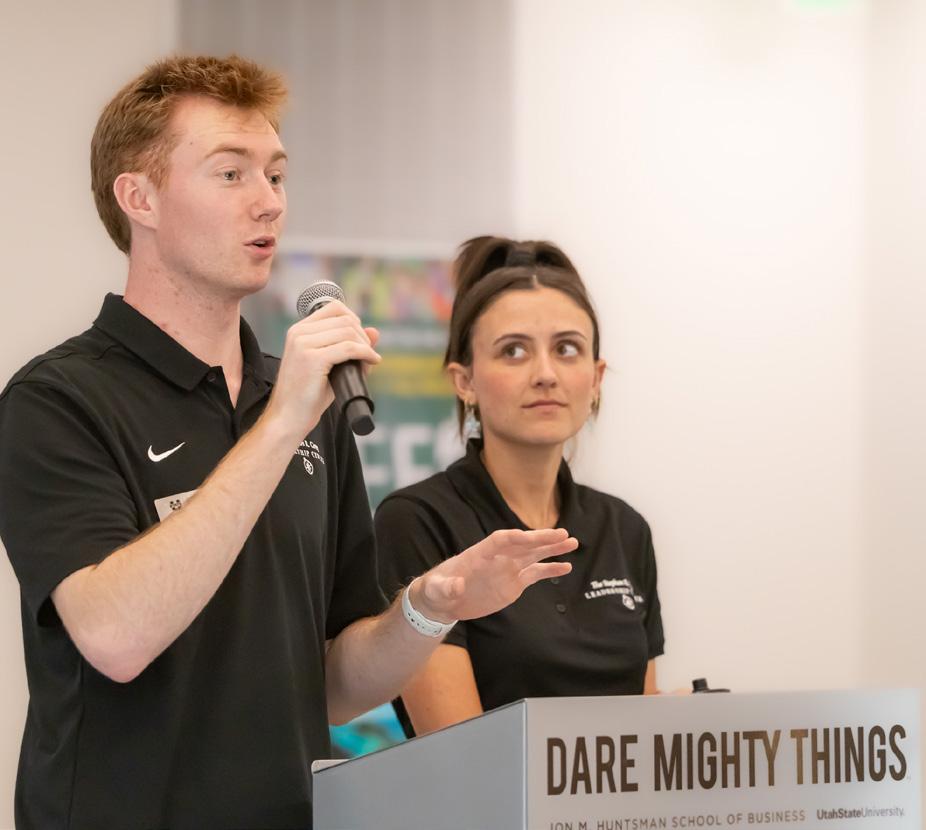
PHOTOS BY Jack Burton Covey Leadership Fellow Braylen Carlson introduces Jason Thompson at the Carolyn & Kem Gardner Learning and Leadership Building on March19
Speaker Jason Thompson interacts with the crowd during his workshop.
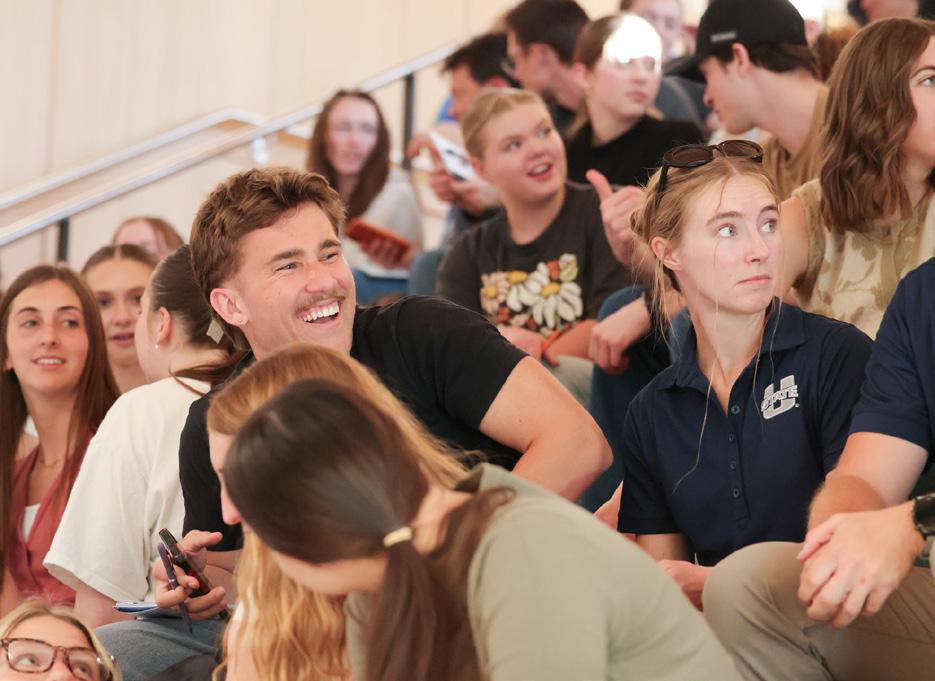
Attendees of the empathy workshop listen to the speaker.
Motion design graduate degree offered at Logan campus starting summer 2026
By Dylan Moore STATESMAN REPORTER
The Utah State University College of Arts & Sciences is offering a new graduate degree aimed to prepare designers for a growing and specialized field in digital media. Beginning this upcoming summer semester, students can enroll in a master’s in motion design program designed to blend traditional graphic design training with animation and motion-based media.
The program is structured as a three-semester degree completed over the course of one year. Faculty say the accelerated format allows students to expand their technical abilities without committing to a multi-year graduate program.
There exists one other master’s degree of motion design program in the country. However, faculty described the program at USU as unique.
Ryker Kimball, graphic design professional practice assistant professor at USU, described motion design as a natural extension of graphic design that focuses on movement rather than static visuals.
“It’s kind of like graphic design, but it’s graphic design that moves,” Kimball said. “Usually when I explain to people, I explain using examples of animated logos or commercials. You see a lot of motion design in commercials or title intros for movies.”
Unlike character animation commonly associated with film studios, motion design is used heavily in advertising, branding and digital media. Kimball said the field also extends into emerging technologies such as 3D product visualization.
“It’s more advertising-focused, so it’s animating logos, typography, and it actually bleeds into 3D as well,” Kimball said.
Kimball explained the degree was created to address a gap in the design industry. Many professionals specialize in either animation or graphic design, but few are formally trained in both.
Mike Daines, USU professor of graphic design, said studios and agencies often struggle to find designers who can merge strong visual design principles with motion expertise.
“They are looking for motion-capable people who are also really good designers, but it’s kind of a unicorn,” Daines said. “Usually people are either really good at animation or they’re really good at design because both of them take a lot of study and a lot of practice.”
Daines said the program emphasizes typography, branding systems and design foundations while teaching students how those elements function in motion.
“There’s a lot of motion applications in broadcast, in advertising, in branding that would benefit from someone who has that skill set in graphic design,” Daines said.
The curriculum is geared primarily toward students with undergraduate degrees or professional experience in graphic design who want to expand their capabilities. Kimball explained the program is not intended for experienced animators but for designers seeking to add motion skills to their portfolios.
“Applicants don’t have to be graphic design graduates, but that definitely helps,” Kimball said.
“It’s more for people who don’t have any experience in motion design but have a strong foundation in graphic design.”
Faculty expect strong employment outcomes for graduates because of industry demand and the program’s specialized focus.
“I hope to see students ready for the job industry, and I hope placement rate is very high,” Kimball said. “Knowing graphic design and motion design, it was relatively easy for me to find jobs and get job offers.”
Daines emphasized the degree adds a competitive advantage without replacing the strength of traditional design education.
“Any expansion of your skill set will make you more marketable,” Daines said. “It is this niche that is in high demand but really low supply.”
The program will admit 10 students each year. While many applicants are expected to come from USU, the program is open to students nationwide.
Kimball said the program also aims to help students adapt to a rapidly evolving creative industry by encouraging flexibility and continuous learning.
“I think this program will expose them to more software and get them more comfortable learning new tools to be more creative,” Kimball said. “In this age of AI, our creativity and vision and taste for things is going to be more important than our ability to master tools.”
Faculty say the combination of design fundamentals and motion expertise positions graduates for roles in advertising agencies, branding studios and digital media production.
“This streamlined yearlong program teaches students everything that took me years to learn on my own,” Kimball said.

Dylan Moore is a junior majoring in political science. He always loves going on outdoor adventures and cooking.
Caywood
Colvin Jayke Martin
McNeill
Moore
Nielsen
Peterson
Shelite
Ferraro

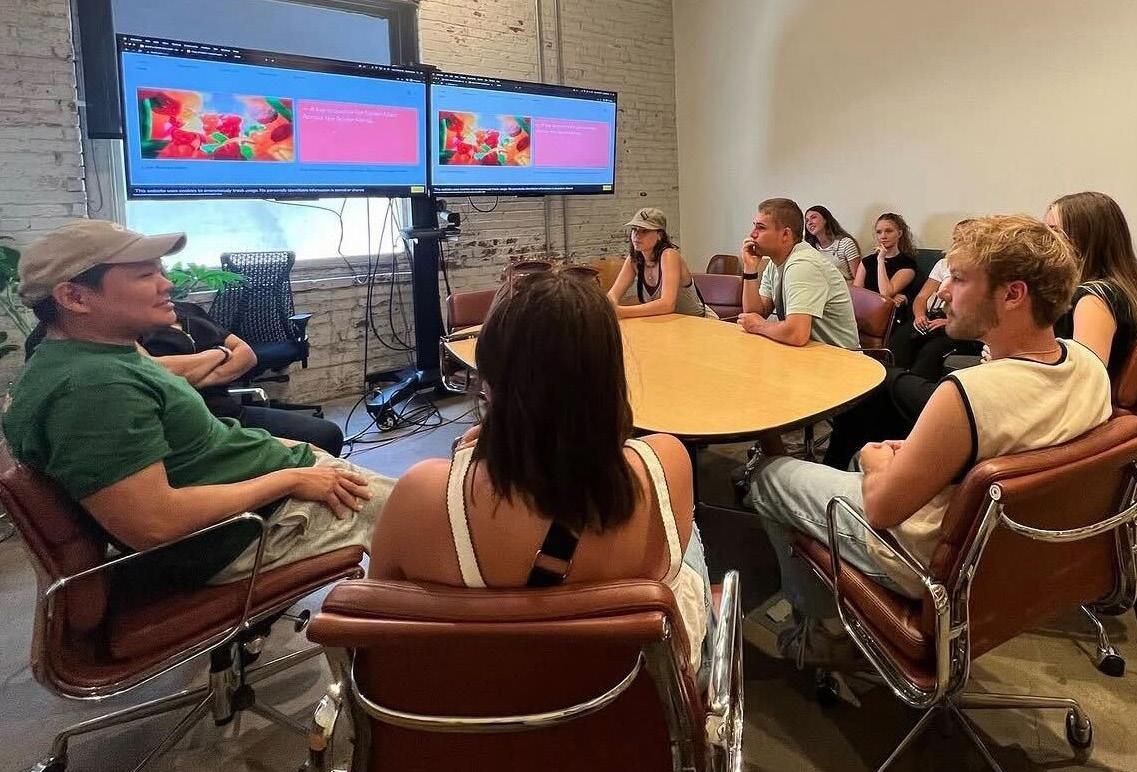
SUBMITTED PHOTO A meeting about the motion design program is held in August 2023.
USU Transparency Project raises concerns over leadership
By Emma Barker STATESMAN REPORTER
Arecently formed independent self-described watchdog group with a small online following is raising questions about the possibility of a conflict of interest pertaining to the departure of a top Utah State University administrator. The university’s refusal to answer questions about the timeline is drawing criticism from online voices.
The USU Transparency Project, an independent organization describing itself as “committed to transparency, accountability, and equality at Utah State University” posted its claims. The organization, USUTP, raised concerns about former USU Executive Vice President and Chief Operating Officer John O’Neil’s departure from the university. The group posts its findings regularly to Reddit, where commenters react under anonymous, unverifiable usernames, and Instagram, where it currently has fewer than a dozen followers.
Both USU’s Office of Marketing & Communications and O’Neil were contacted by The Utah Statesman multiple times with a request for a comment, but neither responded.
According to Utah business registration records, O’Neil registered a private consulting firm, Old Main Consulting LLC, on Feb. 12. The university announced his departure five days later on Feb. 17. According to O’Neil’s posts on LinkedIn, he had already begun advertising for the new firm on Feb. 16.
USUTP’s concerns were centered on the window of time: Unless O’Neil’s official last day was Feb. 11 or earlier, he may have been running a private corporation with

interests differing from the university’s while still holding all access to USU’s confidential records and data.
When USUTP asked USU officials to confirm O’Neil’s official end date, the university directed them to file a formal GRAMA request. GRAMA, Utah’s Government Records Access and Management Act, is the state’s equivalent of a federal public records request. The group argued O’Neil’s official end date is public information and not protected by employee privacy laws.
When asked questions about O’Neil’s exit, USUTP said a university spokesperson told them, “With President Mortensen in his new role for just under four months, we don’t have answers to the questions regarding prior decisions.”
Before former USU President Elizabeth Cantwell created the position when she arrived from the University of Arizona in 2023, O’Neil’s initial role at USU did not exist. The position, vice president for operational strategy and special adviser to the president, came with an annual salary of $332,946.06, but when benefits are added, it was $482,563.56. President Brad L. Mortensen has confirmed the role will not be backfilled.


Emma Barker is double-majoring in journalism and communications and sociology. When she’s not reporting, she enjoys spending time with her dog and husband, thrifting and attempting to keep her sourdough starter alive.
— emma.barker@usu.edu
DESIGN BY Kate McInnes
USU College of Arts & Sciences celebrates inaugural ArtSci Week
By Rory McNeill STATESMAN REPORTER
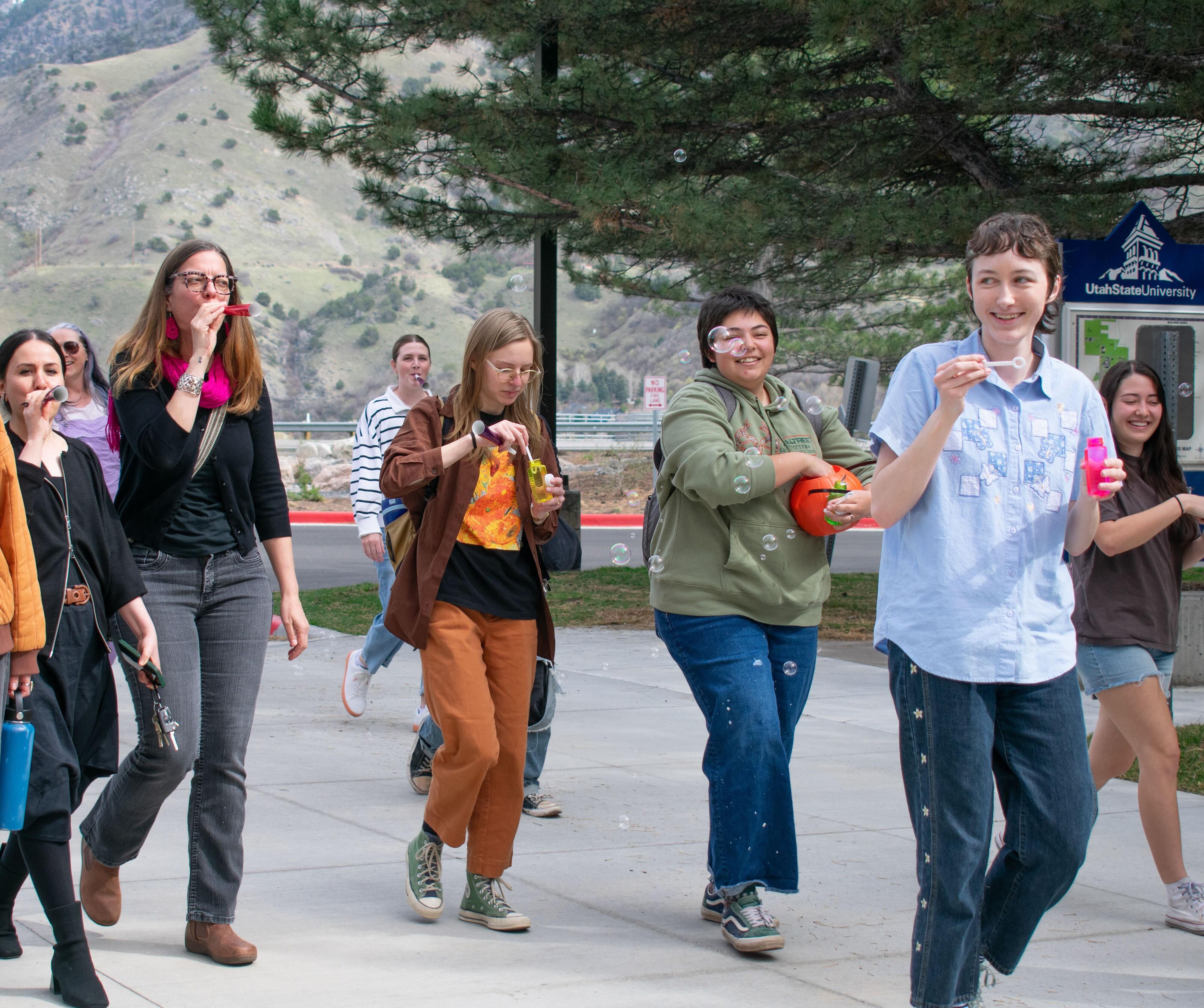
Last week, Utah State University held its first-ever ArtSci Week, celebrating and sharing work from throughout the newly-organized College of Arts & Sciences. As part of the restructuring of the colleges that occurred last year, the former Caine College of the Arts, College of Humanities and Social Sciences and College of Science were all merged into one large college covering a vast range of programs. This year’s ArtSci Week celebrated students from across its range of studies. Running from March 23-28, the leadership of the college prepared all year to create what they hoped would be a memorable and meaningful week for ArtSci students. Being the first-ever week dedicated to the new college, the organizers faced some unique challenges during their preparation.
we were dividing up days and focusing on each individual part of the college. But then, as we moved forward, we realized that’s not what our mission has been throughout the rest of the year.”
One of the main focuses for the week was to help grow the sense of community among the college following the chaos of the merger.
“We are a huge college with vast interests and topics that we cover. That’s something that we’re focusing on celebrating this week,” said Breanna Cahoon, College of Science senator. “We want this to be collaborative, and we want everyone to be involved. We had to generalize a little bit in order to represent everyone, but hopefully we will have a better sense of community amongst all the programs.”
Despite the college’s size, an increase in support and help from around the college and its leadership helped make planning the week a possibility, according to Cahoon.
“While we’ve talked about planning with all three councils, there’s also been individual events where delegated councils have planned what they wanted to do,” Cahoon said. “Because there are so many people, allowing a degree of freedom in creative direction amongst each of those councils is helping representation across the college.”
“Because it’s our first college week as a merged college, I’m excited to see what new traditions we can make and get people more excited about the college,” Takemoto said.
As the first-ever ArtSci Week, many will remember it as a launching pad for the college going into the future, helping students feel at home and create traditions that will stick with the college.

“We’ve been planning pretty much all school year, especially trying to figure out what the best activities are going to be and how to sort of approach this week as the first ArtSci Week,” said Lily Takemoto, Caine College of the Arts senator. “Originally, when we started planning,
Kicking off Monday with a parade around campus and a party, the college held other events throughout the week, including Soda with Soldiers, ArtSci 20x20, Collage Night, Cereal with the Senators, Networking Night, Scholarship Showcase and the ArtSci Bash, wrapping up with an ArtSci PoBev. Throughout the week, there were also various smaller events, such as snacktivities
McNeill is a sophomore from Rocklin, California studying mechanical engineering. He loves Aggie sports, skiing, golf and writing music. — rory.mcneill@usu.edu
in the TSC.
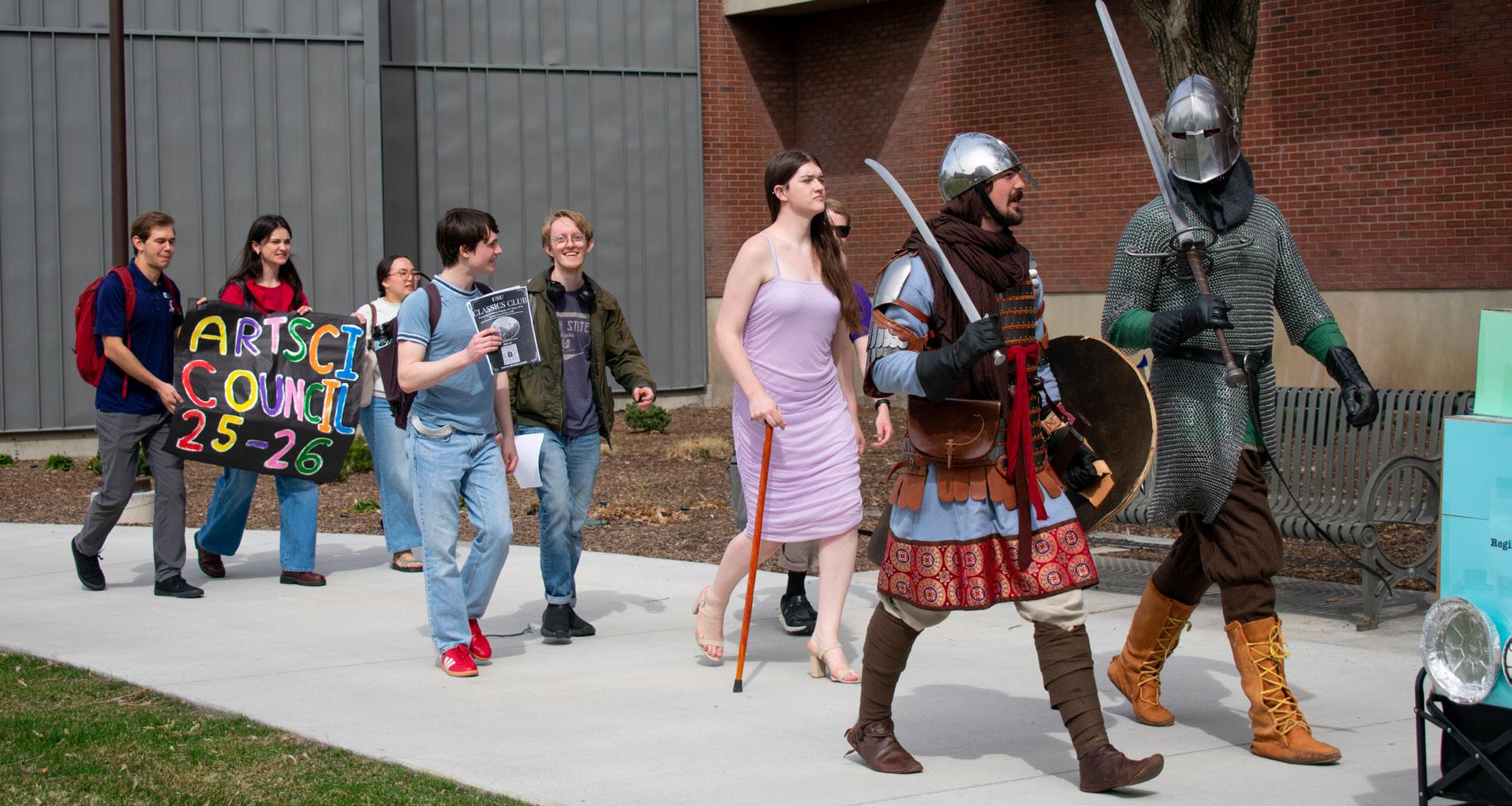
Participants in the ArtSci Week parade pass the Nora Eccles Harrison Museum of Art.
PHOTOS BY Elise Gottling
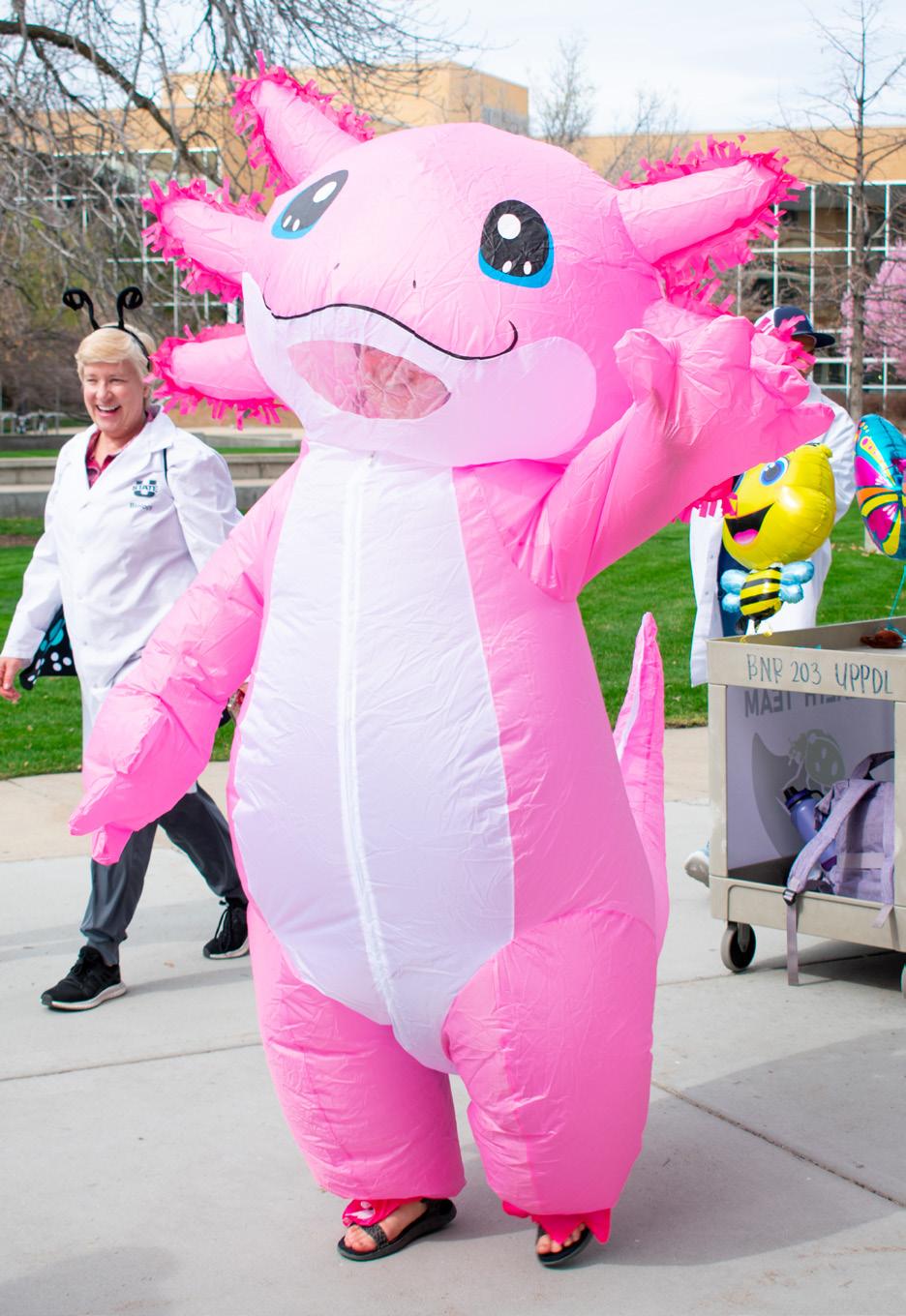
A participant of the ArtSci Week Kick-Off Parade dressed as an axolotl walks across campus on March 23.
Rory
Naomi Market reopens after hiatus
By Essence Barnes STATESMAN SENIOR REPORTER
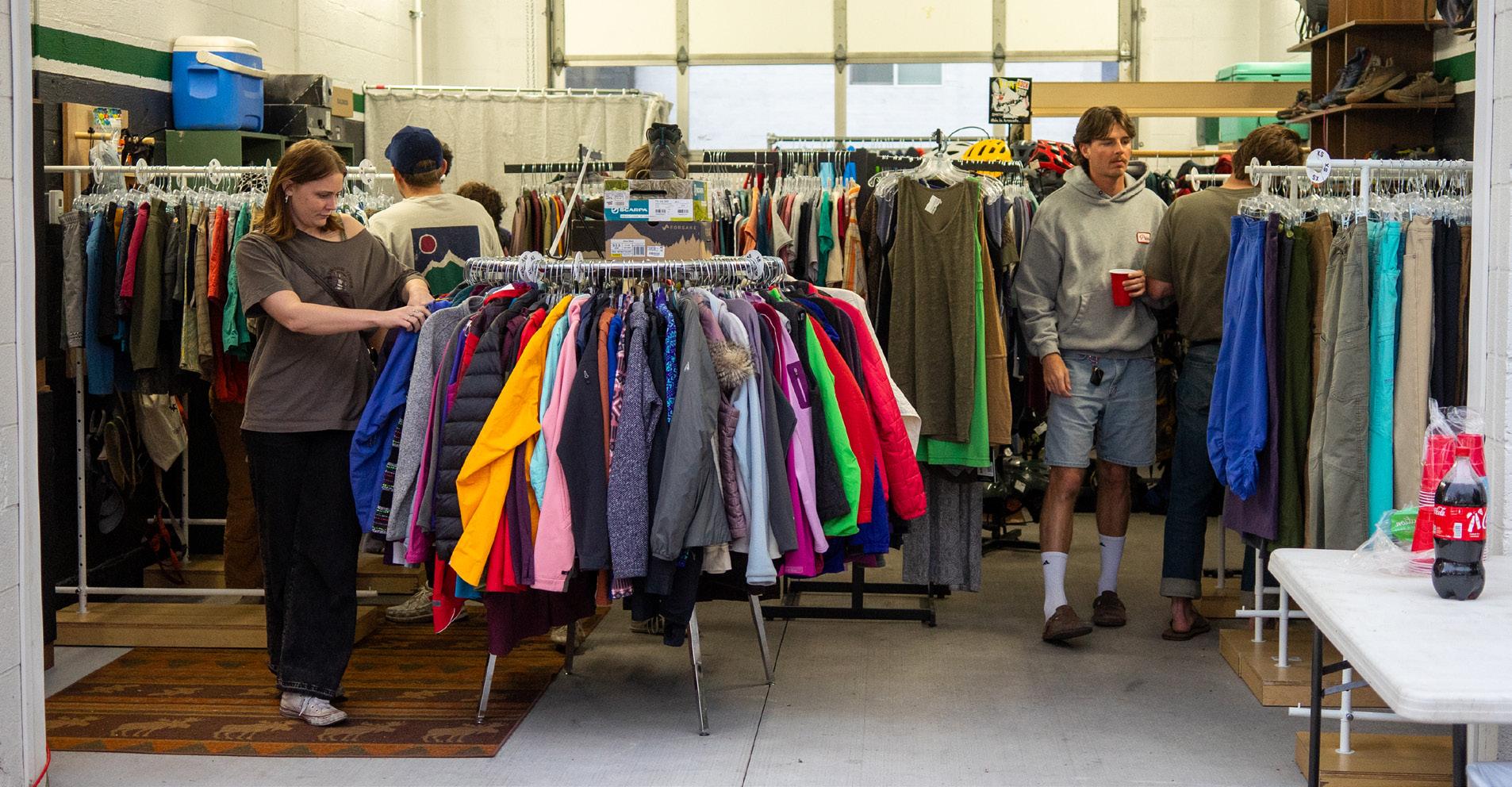
After an almost three-week hiatus, Naomi Market has officially reopened its doors in a new and more accessible part of town. To celebrate the new space, the market hosted a grand reopening event, treating attendees to food, drinks, live music and an affordable outdoor gear selection.
Carson Field, the owner and creator of Naomi Market, said the move from North Logan to Main Street in Logan was necessary.
“We were just off the beaten path as far as retail was concerned, and I had way overgrown the space,” Field said.
Naomi Market first opened its doors in 2024, and the shop was initially run out of a house. Since then, the business has received a larger influx of consigned donations and needed a bigger space to accommodate.
“It started small but kind of snowballed throughout those two years,” Field said. “I kind of still see this as an intermediary space, but it’s a good step in the right direction.”
Event attendees said they were excited about the accessibility of the new location.
“Before, it was up in North Logan, and there weren’t really any other shops nearby,” said event attendee Addie Anderson. “Now it’s just down the street from where I work … there’s a grocery store across the street. It’s just more convenient.”
Aside from the change in location, Field said he also plans to implement a repair service and expand retail options.
“I would like to start doing bindings, mountings, especially the more niche side of doing backcountry mountings and stuff because there’s nowhere in Logan
that offers that,” Field said. “I’ve also started doing a little bit of retail, mostly in the climbing sector, and then also carrying some local or local-ish brands.”
According to Field, unlike other outdoor gear shops in Logan, Naomi Market is unique in that it receives a majority of its product through consignment.
“We still carry the name brands and stuff, but lightly used, and so we can mark down from retail insanely,” Field said. “You can find your shoes here for 20 bucks instead of paying $150 for a new pair of shoes.”
Consignment is the process of bringing goods to a business to sell them on one’s behalf. The business retains a percentage of the sale while the original owner of the goods receives the rest of the commission.
“I like reselling outdoor clothes, so a lot of stuff in here is actually mine,” said event attendee Jacob Clarke. “You can choose to take 70% profit in store credit, which no other consignment place gives you that much … or you can get 60% in cash.”
Field said another aspect of the store that makes it unique is its “local and homey” vibe.
“I don’t ever want it to be like a commercial box-storetype feel,” Field said. “That’s why we have this kind of living-room-type setup where people can just come and hang out.”
Event attendees said they admired the store’s devotion to making outdoor gear — which can often be expensive — more affordable.
“I just really like the idea of secondhand,” Anderson said. “Sometimes I just don’t want to pay full price for something, so I like the concept of reusing it.”
Attendees also said they like being able to support local businesses.
“Spending your money local keeps your money local,” Clarke said. “Since it’s a small town, that really counts.”
Field said providing the Logan community with

sustainable and affordable outdoor gear selections is very important to him.
“I think there’s a lot of waste in the world and just overconsumptions of everything,” Field said. “Being able to give back in a positive way and providing good services and cheap gear for people, I think, is very valuable and helpful to the community.”
Both Field and event attendees encouraged Logan residents to shop more locally.
“I think it’s valuable to support businesses like this that are a bit more local and supportive of the community, rather than the big stores that couldn’t care less, have no idea what’s going on here and that have no stock in the community,” Field said.

PHOTOS BY Dane Johnson
A rack of helmets are seen at the new Naomi Market location during its grand opening on March 21.
Volunteers prepare returns as VITA program hits deadline
By Emma Shelite
REPORTER
As the April 15 tax deadline looms, the Volunteer Income Tax Assistance, or VITA, program at Utah State University closed its doors for the season after a whirlwind semester of spreadsheets, tax forms and a massive surge in community demand.
Operating out of the George S. Eccles Business Building, the program provides free federal and state tax preparation for students and community members.
Led by Paul Campbell, a former public accounting professional turned USU full-time accounting lecturer, the program saw a significant revitalization this year with about 85 student volunteers. However, as the program concludes its final sessions this week, organizers are already looking toward next year with a plea for the public: Don’t wait until March.
The VITA program is a rigorous, student-led initiative that begins long before the first tax return is filed. Every January, student volunteers undergo a two-week intensive training session based on IRS, or the Internal Revenue Service, guidelines. To ensure accuracy and taxpayer protection, every volunteer
must pass IRS-administered certification exams before they are allowed to assist the public.
“What we do, first of every year, January, when students come back from winter break — we’ll put together a couple of weeks of training sessions,” Campbell said.



“Mypinkipodshuffle” is curated each week around whatever Emmaree is feeling nostalgically inspired by. Expect zero consistency except for in musical discovery. Tune in on Mondays at 2 p.m. on Aggie Radio 92.3 FM.











As The World Falls Down David Bowie Sina Djavan
STATESMAN
PHOTO BY Hadley Sintay
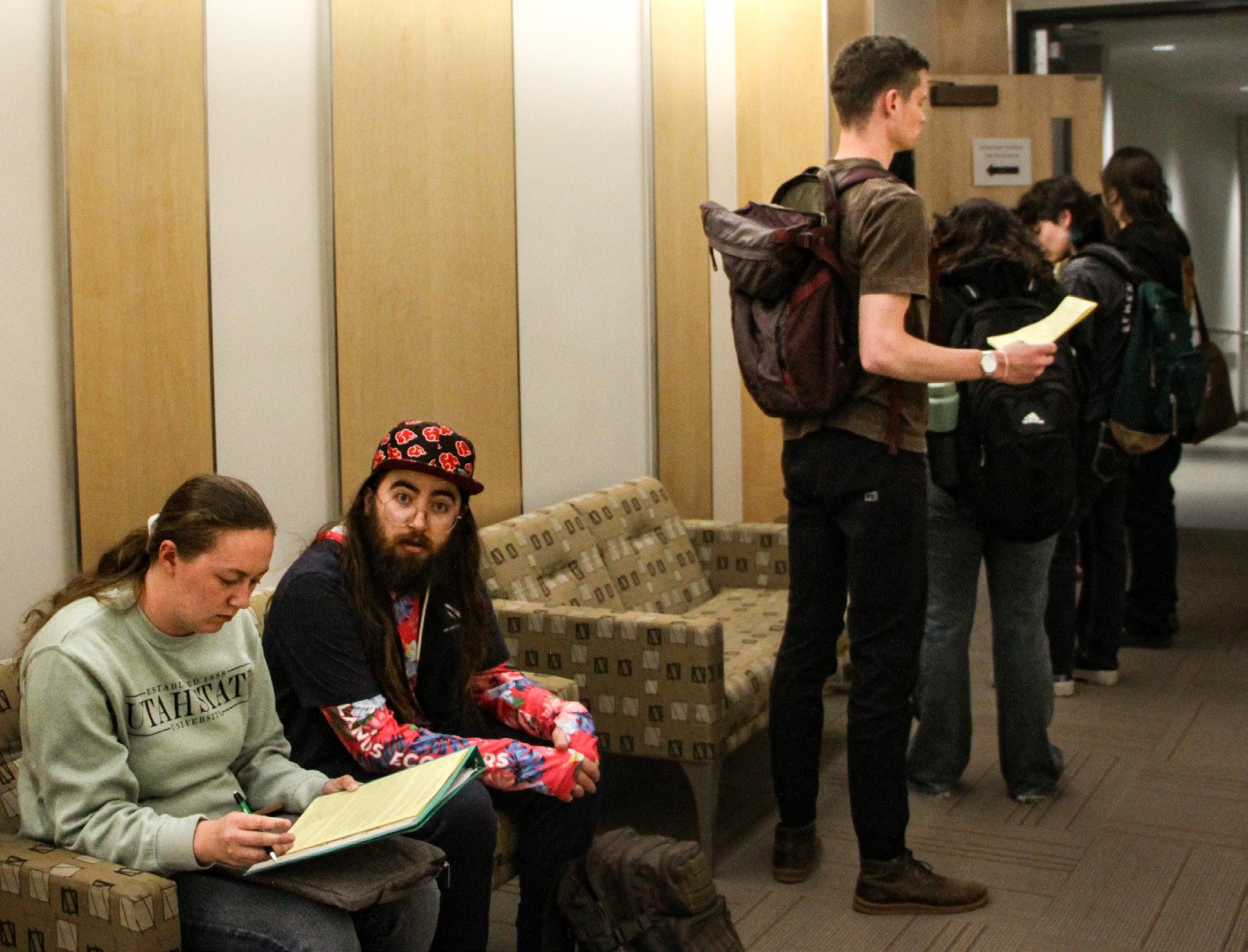
Utah State students wait in line for the VITA tax program on March 24.
Emma Shelite is a senior pursuing a bachelor’s degree in communications and journalism. Outside of the newsroom, she is passionate about cooking, athletics and her love for dogs.
Utah State Gymnastics ends championship season, prepares for NCAA tournament
By Jillian Peterson STATESMAN REPORTER
Utah State University Gymnastics had a record-breaking season with six consecutive meet scores of 196 or higher, an undefeated record at home, and by winning back-to-back Mountain West Conference championships.
Utah State has now won nine conference championships in its program’s history. The team scored 196.400 at the conference championships and was followed by Boise State University with a score of 196.200.
Avery Bibbey, a senior on the team, said she’s especially proud of the consistency of the team’s scores near the end of the season.
“Having scores of 196 for six weeks now is crazy. It’s something we haven’t been able to do at all my four years here. So, I’m just proud of that, and then making it past round one of regionals — that has been a big success,” Bibbey said.

Kristin White, gymnastics head coach, said the goals for the season included winning the championship and qualifying for the NCAA tournament.
“They were actually able to exceed those goals by winning the regular season, which was really exciting,” White said. “Instead of being in round one of the NCAA tournament this year, we’ve qualified for round two.” White said the team is now aiming to qualify for round three.
“Round three would deem that we’re in the top 16 teams in the country left in the tournament, which would be really exciting,” White said.
Olivia Orengo, a sophomore on the team, said she is grateful the team has made it so far.
“In preseason, we had lot of injuries, so it was a little scary because we didn’t know who was going to be in lineups,” Orengo said. “But as soon as the season started, everyone stepped up, and we just began building from each meet. From there, we kept breaking records and kept winning.”
Orengo said she has been able to improve individually this year and hopes to continue advancing her skills into future seasons.
“I feel like I gained a lot more confidence in my gymnastics compared to last year, and I knew that every routine I did counted,” Orengo said.
Orengo tied her career high on beam and floor at the conference championship with a score of 9.785 on beam and 9.850 on floor. She also earned All-Mountain West honors on bars.
“Bars was not always my strongest event growing up, so it’s kind of a full circle moment that I was able to earn this honor this year,” Orengo said.
Five other Utah State gymnasts also earned honors, including Sydney Jelen, Nyla Morabito, Isabella Vater, Mya Witte and Lundyn VanderToolen.
White said the team’s bond has helped them to get this far.
“They’re a group of phenomenal women. You can see the friendships flourishing. You can see that they’re believing and trusting one another,” White said. “I think that’s created a lot of great success, you know, not only on the competition floor but in our team culture as well.”
This season, White received a contract extension through 2030.
“I’m really excited to see where the program can be in the next four years because the past four years have been absolutely amazing to see the growth of this team,” White said.
The Aggies will compete in the Baton Rouge Regional on April 2 at 12 p.m. facing Stanford University, University of Michigan and University of North Carolina. To advance to round three, the team will need to place in the top two.

Jillian Peterson is a sophomore studying communication and media. She is a big fan of concerts, snowboarding and the Taco Bell drive-thru.
— jillian.peterson@usu.edu

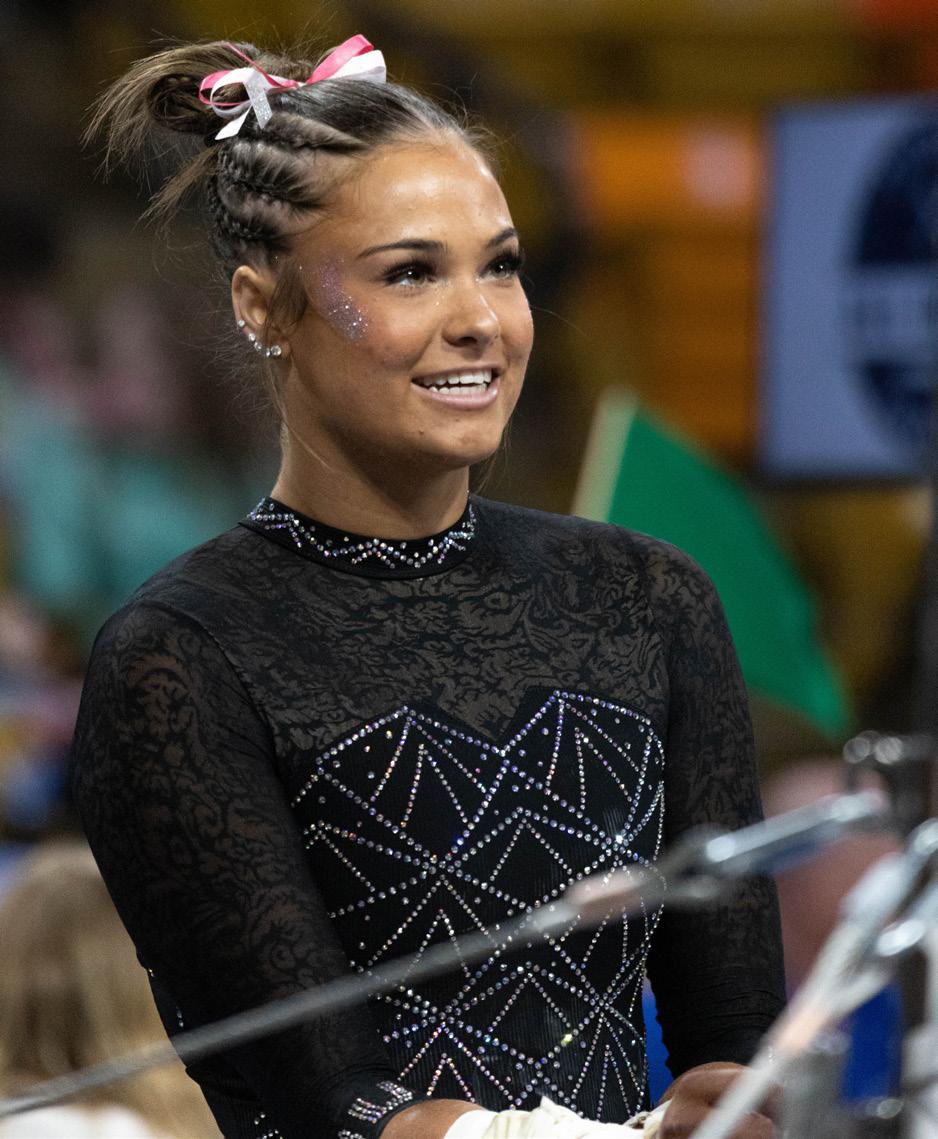
Utah State Gymnastics celebrates as Olivia Orengo completes her floor routine during a meet in the Dee Glen Smith Spectrum on Feb. 27.
PHOTOS BY Jack Burton
Sydney Jelen prepares for her routine on the bars at the Dee Glen Smith Spectrum on Feb. 27.
Olivia Orengo looks to the judges as she starts her routine on the beam at the Dee Glen Smith Spectrum on Feb. 27.
Bill Garren named Mountain West Video Coordinator of the Year
By Mia Nielsen STATESMAN REPORTER
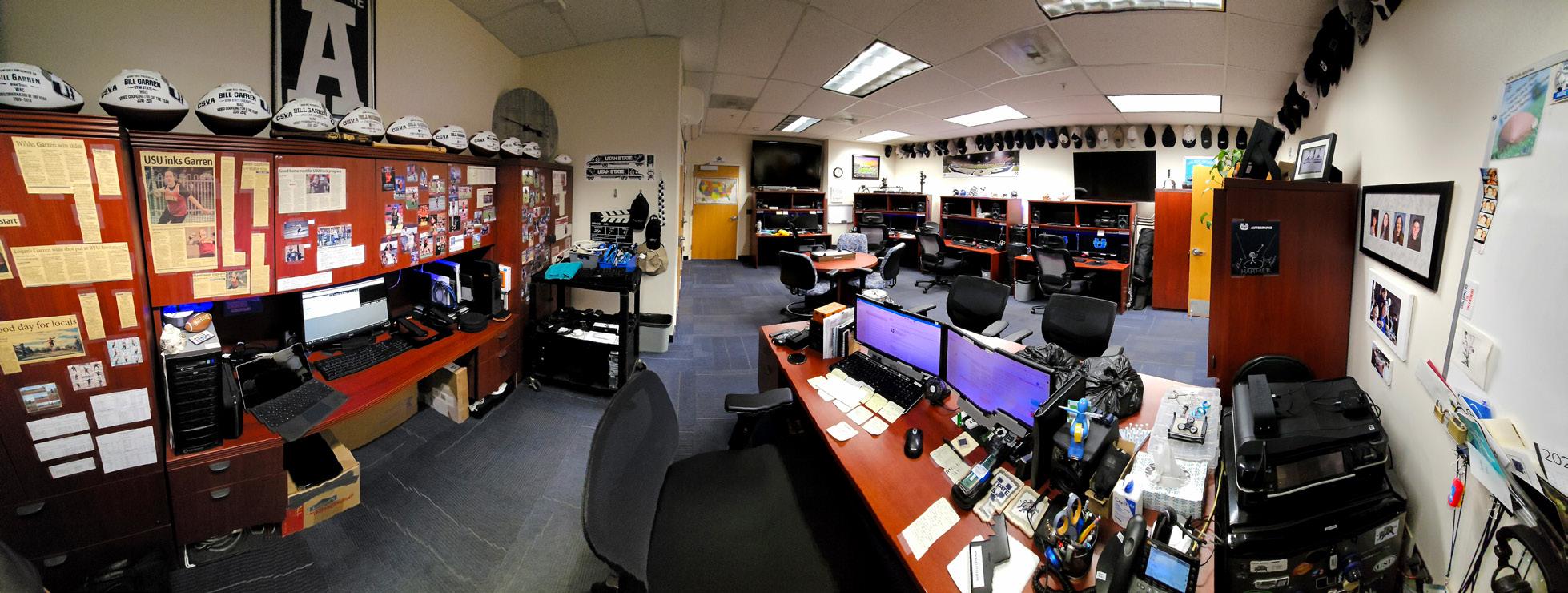
For Utah State University assistant athletics director and director of video operations Bill Garren, Aggie Football is more than what happens on the field. Eight-time Mountain West Conference Video Coordinator of the Year, Garren is involved in Mountain West Conference broadcasting and the behind-the-scenes footage that helps coaches and players win games.
“It’s a little different than what you would see on a live broadcast,” Garren said. “I’ve got students that are strategically put in spots that are for coach’s film, and then we handle all of the stuff that’s on the field.”
Garren is in his 20th year as the director of video operations at USU. During his time in the industry, Garren has seen a massive technological shift from VHS tapes to digital servers. Now, coaches and players can watch film as soon as they walk off the field.
According to Garren, the videos they take aren’t just movies — they’re packed with data.
“Every play, everything that we do, has some piece of data that goes with it,” Garren said. “It could be play name. It could be formations. It could be anything that they want to use.”
Garren also supports streaming for softball and soccer games.
“We do the full production where we have multiple cameras around, just like you when you’re watching it on TV,” Garren said. “You get the tight shots, and you get the broadcasters that are talking and the play-byplay announcer and all that stuff. That’s all our crew.”
Garren said working with students and coaches is what excites him the most about his job.
“I love working with the staff and then seeing how what we do translates onto the field,” Garren said.
According to Garren, players interact with a huge variety of people before making it to the field.
“I think that’s the driving factor for me, is to work with the students and teach them the importance of something like this that goes way beyond any one person,” Garren said. “It’s all of us working together to put a product out there that coaches and players can watch, which hopefully will translate on a game day.”
According to Parker Weber, the director of video for football at Boise State University and a previous student filmmaker at USU, Garren’s mentorship is invaluable.
“He’s really still my mentor to this day. I wouldn’t be where I’m at without him,” Weber said.
After graduation, Weber was hired to work as Garren’s assistant, and he said Garren’s attention to detail and the way he leads students are what make him great at his job.
“He knows how to get the best out of students, out of people he’s working with, out of his team,” Weber said. Weber said Garren has been a support system not only for himself but for students and others in the industry.
“He’s willing to help anybody in any way he can,” Weber said.
After playing football at Ricks College, now known as Brigham Young University-Idaho, and Idaho State University, Garren said he wanted to stay in coaching.
“I was helping with coaching, and video became one of those things I could help out with,” Garren said. “I really didn’t have any prior experience. I just said, ‘Put me wherever you need me to help out.’”
Garren said his time as a student-athlete helped prepare him for the quick evolutions of the job.
“Back then, I didn’t fully know what was happening to get the film in front of me to watch it, but as an athlete, you learn how to become resilient,” Garren said. “You learn how to be adaptable to the changes and the fast pace.”
John Sullivan, associate commissioner for football of the Mountain West Conference, described Garren as a multitool: well-versed in broadcast, video and other

relevant subjects. Sullivan said he believes Garren has been nominated for the award so many times for both his technical abilities and his communication skills.
“He works really well with myself, the conference office. He works really well with all the video coordinators within the Mountain West and on the national scale with all FBS conferences,” Sullivan said.
“He keeps everybody on track and on task and very well organized.
Garren says he’s proud of the achievement and credits his student crew and full-time staff.
“We worked long, long hours and tirelessly to make sure that this stuff looks good for the viewers and the players and coaches,” Garren said.

Mia Nielsen is a sophomore studying plant science and journalism. When she’s not writing, she enjoys live music, driving up Logan Canyon and daydreaming about moving to Spain.
Bill Garren
AGGIEROX rocks Utah State University in cardio, strength training event
By Grace Colvin STATESMAN REPORTER
A3-mile run. Six full-body muscle endurance exercises. One heart-pumping event. For some, it seems to be a challenge not for the faint of heart. For the Utah State University students who competed in the inaugural AGGIEROX event, however, it was simply “game on.”
Organized by USU Campus Recreation, AGGIEROX took place on March 21 at the Aggie Legacy Fields. The fitness event began at 10 a.m. and saw participants competing in a unique cardio and strength training regime that mixed a 3-mile race with six different muscle endurance tests. Registration for the event was open to all and, according to campus recreation,
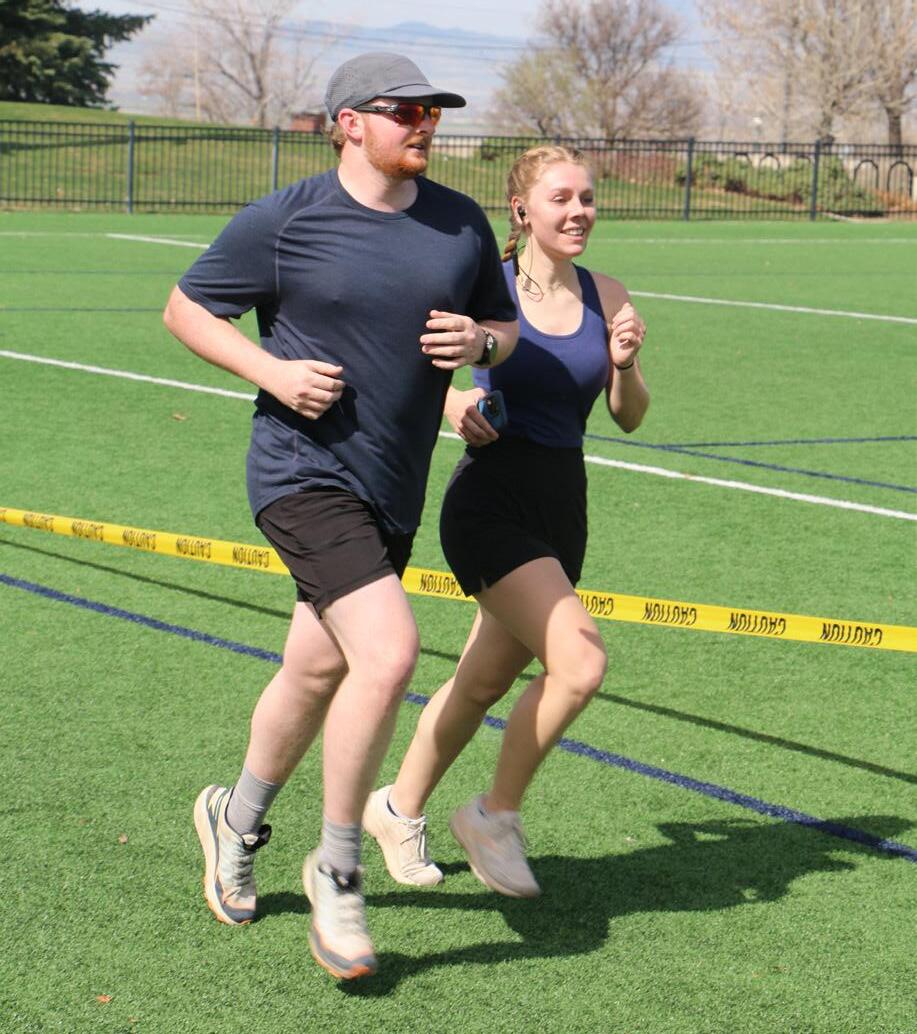
filled up well before the event, seeing 25 duo teams participating in men’s, women’s and co-ed races.
Although the event is new to the USU campus, the style and setup of AGGIEROX may be familiar to some athletes. It takes inspiration from the global fitness phenomenon HYROX, which describes itself as “the sport for everybody” on its official website.
According to campus recreation marketing assistant Julia Smith, AGGIEROX was designed to be a shorter “demo version” of HYROX, the latter of which features an 8-kilometer run and eight muscle workout stations. However, despite its shorter runtime and fewer exercises, campus recreation coordinator of fitness Nathan Phillips said he believes AGGIEROX perfectly captured the spirit of HYROX.
“There’s usually a variety of different exercises with cardio in between to really get that full body workout and just overall pushing yourself to the limit,” Phillips said. “I think things went really, really well.”
For AGGIEROX, teams started by running two laps around the Aggie Legacy Fields, which is a half mile, according to Smith. Next, they completed a set on the rower and ran an additional two laps. Before taking a third set of laps, they competed in sled pulls, which were followed by burpees, the farmer’s carry, lunges and weighted ball throws, each with another set of laps in between.
The fastest-finishing individual, as released in an email from campus recreation, was Sophia Benson with a completion time of 29 minutes and 29 seconds. The fastest team was Jacob Moore and Ana Weaver with 29 minutes and 21 seconds.
One half of the winning team, Moore holds the title of Mr. USU for the 2025-26 school year. After his initial teammate dropped out due to a last-minute injury, he paired up with Weaver and, in his words, ended up “just barely taking first.”
“The staff did a really good job,” Moore said afterward. “I had a great time. I almost died out there, but we made it.”
While the competitive nature of recreational sporting events is exciting to many, Smith said campus recreation believes an equally important aspect of events like AGGIEROX is the positive, fun community fostered on the field.
“I think events like these are just fun. If you want to take it seriously, you can, but mostly it’s just to come out, get active and have fun,” Smith said.
Moore also commented on the feeling of community and support at the event, claiming that every participant was “cheering each other on” throughout the race.
When asked if students should expect AGGIEROX to become an annual event, Phillips’ answer was a resounding yes.
“This is just a great way for the community to just kind of get together — try different things,” Phillips said. “This is something that’s brand new to USU. We’re hoping to bring it back next year, and it’s just a great way to get a bunch of different people to try new things and just to interact with people that have the same hobbies.”

Grace Colvin is a sophomore in the theater education program at USU. After graduation, she plans to become a middle school drama teacher. When she isn’t writing or working on a play, she loves making crafts and woodworking.
— grace.colvin@usu.edu

PHOTO SUBMITTED BY USU CAMPUS REC Utah State students participate in AGGIEROX at the Aggie Legacy Fields on March 21.
The heart of discovery: Celebrating curiosity at USU

Chaseton Beardall serves as digital content assistant in Utah State University’s Research Communications department, where he supports outreach and content strategy. He is pursuing a degree in marketing.
— a02488642@usu.edu
Wrap Shrink

This column offers general mental health information and is not a substitute for professional counseling. Students in crisis or seeking professional support are encouraged to contact USU Counseling and Prevention Services (CAPS) at 435-797-1012, visit TSC 306, or access after-hours crisis support by calling or texting 988.
Dear Shrink Wrap, How can I increase motivation to do homework and go to class?
Dear Aggie, We’ve all been there! There are days — maybe weeks — where getting to class feels like climbing a mountain and opening a textbook feels like a punishment. You’re not broken. You’re not failing at college. You’re a person navigating a really demanding season of life, and that deserves a little grace before it deserves a lecture. Focus on the purpose. The first thing worth knowing is that motivation isn’t something you’re born with or without. It’s more like a fire that needs the right conditions to catch. And one of the best ways to light it? Connect what you’re doing to something you really

care about. Not “I need this degree” — dig a little deeper. Maybe you’re here because you want to build something, heal someone, change an industry or make someone in your family proud. Whatever it is, hold onto that. Write it on a sticky note. Put it on your laptop. On the days everything feels pointless, that little reminder can be surprisingly powerful.
Just begin. Here’s another thing that might feel counterintuitive: You don’t have to feel motivated to get started. In fact, waiting until you feel like doing something is often the trap. Try this — tell yourself you’ll just do two minutes. Open the document. Read one page. Walk into the lecture hall. More often than not, once you’ve begun, your brain catches up and the resistance melts away. Starting is almost always the hardest part, and two minutes is something anyone can do. Remember, humans are social beings. For class attendance specifically, a little honesty goes a long way. Showing up regularly really does make a difference — not just in your grades but in how connected you feel to the whole college experience. Sitting in a room with a professor and your peers creates a kind of rhythm and community that’s genuinely hard to replicate from a
recording. If a class is feeling irrelevant, try talking to the professor after hours. You might be surprised — a single conversation can reframe an entire course. Your environment matters. Your brain picks up on cues more than you realize. If you can carve out one consistent spot — a library nook, a cozy café — where you go to work, your brain will start to associate that place with focus. It sounds simple because it is, and simple things work.
You’ve got this. Truly. College is a lot, and the fact that you’re thinking about how to do it better already says something wonderful about you. One small step, one class, one page at a time — that’s all it takes to get the momentum going again.
— USU Counseling and Prevention Services




PHOTO BY AARON FORTIN
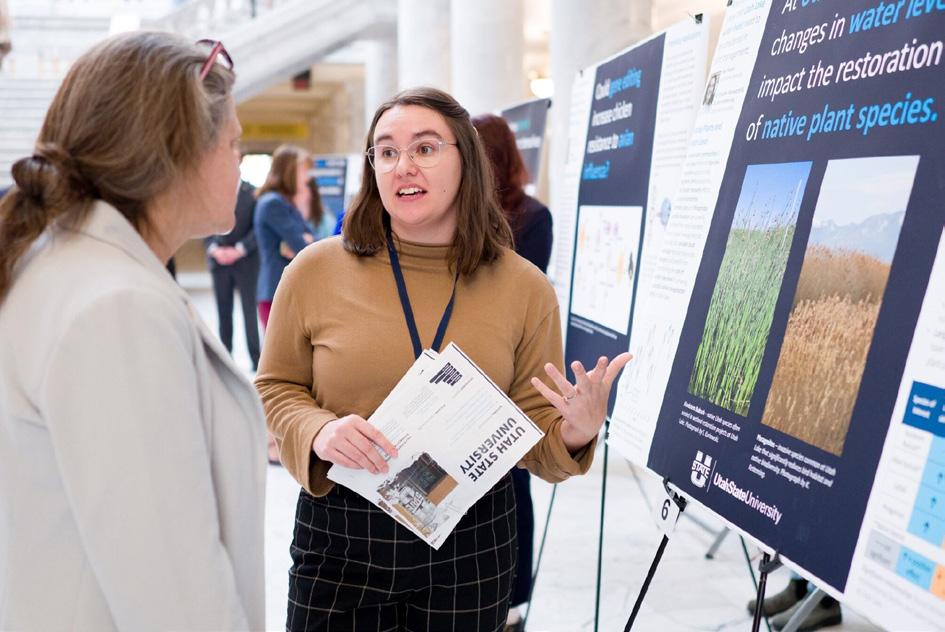
Mac Cutler presents a poster about water level fluctuations in Utah Lake during the Research on Capitol Hill event in Salt Lake City.







Elise Gottling is a sophomore studying outdoor product design and loves being behind the camera. When she’s not taking photos, she can be found hiking, enjoying the outdoors or trying to amp up her guitar skills.


White Chicken Chili
Find most of these ingredients at SNAC!
Ingredients:
2 pounds boneless, skinless chicken or turkey
3 cans white beans, drained
1 can corn
1 Tablespoon taco seasoning mix
1 can chopped green chilies
1 can cream of chicken soup
1 can or 2 cups chicken broth
½ cup half and half or milk
1 can green enchilada sauce (optional)
Instructions:
Place chicken in slow cooker
Top with beans, corn, and green chilies
In a separate bowl, mix soup, taco seasoning, and broth and then pour over ingredients in slow cooker.
Cover and cook on low for 6-8 hours
Shread chicken and serve, topping with cheese, sour cream, or green onions!

Last week’s solution:

Stocking up over spring break
This spring break, we stayed busy! While Aggies were taking a rest from school work, SNAC filled its shelves with food from three great partners of ours. In total, SNAC collected over 9,327 lbs! This food will allow us to have fuller shelves, and to provide more variety to our student patrons. Cache
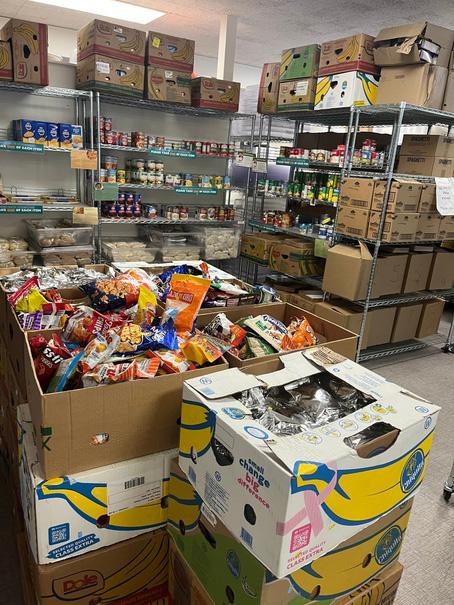
Community Food Pantry supported us with our weekly pickup of shelf-stable goods, Utah Food Bank donated fresh produce and hygiene products, and our local Big Deal Outlet donated a pallet of recovered snack foods
We are grateful for these partners for assisting SNAC, and happy that our Aggies are back to visit!

Sudoku puzzles are provided by www.sudokuoftheday.com.
SNAChampions
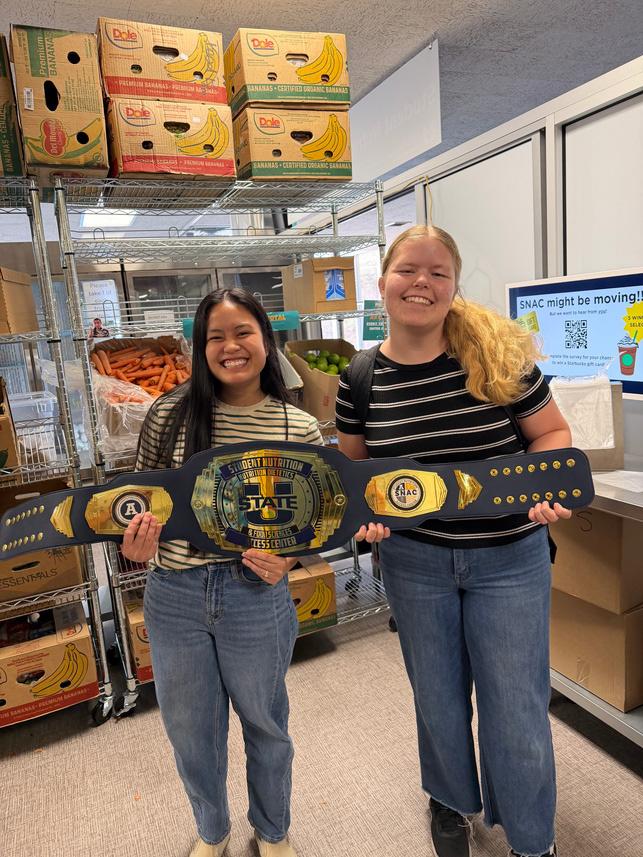
Meet Sariah and Alyssa- some of SNAC’s Champions! Every Thursday evening, these two friends volunteer their time at SNAC repackaging food, getting it out on the shelves, and having fun while doing it! We are so grateful for their easy smiles and positive attitudes! Be sure to say hi next time you’re in SNAC!



APRIL 3, 2026
Taggart Student Center Ballroom
The Robins Awards are the most coveted of all Utah State University honors and the awards night is the year’s most prestigious event. This year marks the 77th year since William “Bill” E. Robins was student body president of Utah State University. It is in his name that we continue to celebrate this renowned tradition.
Included here are the individuals who have been nominated for the awards this year. We welcome you to join us at the event.
ROBINS FAMILY
memorial awards
The Bill E. Robins, Geraldine Robins, and Nicholas Robins Memorial Awards recognize students that excel academically, have displayed outstanding leadership and dedication to Utah State, and possess traits that set them apart as a rare individual. Each of these awards take into account the student’s contributions over their entire time at Utah State. Students can only be one-time recipients of the award.






Mahri Dorius Tavo Estrada Zoey Olaveson
Brandon Sorensen
Ella Stott
Shailynn Spangler
GRADUATE STUDENT TEACHER
of the year
This award goes to the graduate student teacher who has shown superior teaching capability and academic excellence.






The David & Terry Peak Prize
UNDERGRADUATE RESEARCHER
of the year
This award honors the individual student who has engaged in significant undergraduate research, scholarship, or creative activity that makes an impact in their field of study.






MASTER STUDENT RESEARCHER
of the year
This award goes to the master’s student researcher at Utah State University who has shown superior research capability and academic excellence.






DOCTORAL STUDENT RESEARCHER
of the year
This award goes to the doctoral student researcher at Utah State University who has shown superior research capability and academic excellence.






Katherine Garland Nick Singleton
Patrick Kelly Cara Haderlie Spencer Kimball Gavin Munson
Trace Taylor
Rosemary Yahne
Tia Lawrence
Jared Vance Bridger Porter Ella Stott
Mufti Nadimul Quamar Ahmed
David Evans
Jesse Brown
Hassan Sher Emily Bowers Morgan Feuz
Haley Fisher Kawsar Uddin
Gavin Green Jentrie Gilliland Kristine Peterson Tori Strausser
SCHOLAR
of the year
This award goes to the student who has demonstrated outstanding knowledge and skill in mastering subject matter and made a singular contribution in research, application, and determination to succeed.





LEGACY OF UTAH STATE
award

The Legacy of Utah State Award was created in memory of those involved in the rollover accident of 2005. The award is given each year to the student who embodies the true spirit, heart, and soul of Utah State and demonstrates love and support for the university family while leading with a vision of hope for the future.




FEMALE ATHLETE
of the year
This award is presented to the individual female athlete who has demonstrated exceptional athletic skill, sportsmanship, determination, and has brought recognition to the Utah State University Athletics program.


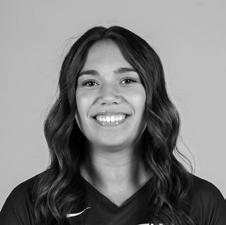




MALE ATHLETE
of the year
This award is presented to the individual male athlete who has demonstrated exceptional athletic skill, sportsmanship, determination, and has brought recognition to the Utah State University Athletics program.
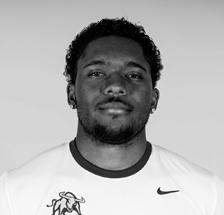




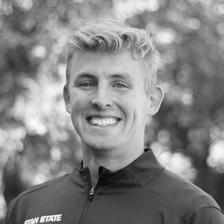
Grace Engst
Connor Waite
Kaitlyn Line Eva Jones
Clarissa Richins Kade Robison
Carlie Prinster
Maryn Sadler Eloise Ribeiro
Brooklyn Stevenson
Chase Goetschel
Jean-Baptiste Badon
Logan Hammer Bryson Barnes Garrett Woodhouse Mason Falslev
Kaylie Kofe
Karyn Sanford
Kaylie Chambers
Terezia Mlkva
Natalie Swain
Kaylee Erickson Mya Witte
Mashaylee Jones
of the year
This award is presented to the individual who demonstrates an outstanding mental endowment or superior capacity in the fields of music, art, or theatre.

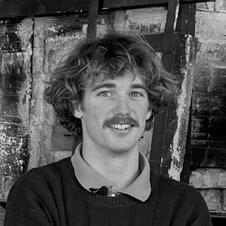

ACHIEVEMENT
of the year
This award goes to the individual member or organization of the University that has accomplished something by superior ability, distinctive effort, great courage, or heroic action.





ORGANIZATION
of the year

This award is presented to the student organization that demonstrates the excellence of the organization’s stated purpose and service to Utah State University.




Val R. Christensen
SERVICE
This award, established in honor of Val R. Christensen’s oustanding lifetime contribution to volunteerism, is presented to the student or organization whose volunteer service significantly impacted Utah State University and the community.





Carter Lee Sam Richards Holden Smith
Grace Wheeler Student Nutrition Access Center (SNAC)
Mufti Nadimul Quamar Ahmed Transforming Communities Institute
Emilia Huff Onur Vural
The Utah Statesman
We Engineer (WE)
Kappa Delta USUSA Student Events Student Nutrition Access Center (SNAC)
The HURD
Shailynn Spangler
USU Harvest Rescue
Adelaide Berry Student Nutrition Access Center (SNAC)
Ben Burdette
Zoey Olaveson