

Students react to the passing of HB84
By Emma Shelite STATESMAN REPORTER
Anew state law is shifting the landscape of campus safety across Utah, sparking a mix of apprehension and support among the Utah State University community.
House Bill 84, “School Safety Amendments,” was passed during the recent legislative session, effectively removing existing statutes that restricted the permitless carrying of dangerous weapons on public college and university campuses.
The legislation allows individuals 21 or older to carry concealed weapons at higher education institutions without a permit. While it maintains restrictions on open carry, the bill also clarifies that individuals aged 18 to 20 may carry an unloaded firearm in any public location not otherwise prohibited by state or federal law.
Recent data suggests the student body is deeply divided on the implications of these changes. In early February, the USU Government Relations Council, GRC, conducted a poll via social media and word-of-mouth to gauge student sentiment.
“I do want to make it clear that this information reflects the data from a poll conducted on students at Utah State University,” said Shailynn Spangler, a member of the USU GRC. “These opinions do not necessarily reflect the stance of the university or the Government Relations Council.”
The poll results revealed a fragmented student body. Out of 56 respondents, 20 reported being “very against” the bill, while eight expressed they were “happy with the bill and excited for it to be considered.” Six respondents reported feeling “torn,” while the remaining 22 were neutral, unaware of the bill or declined to answer.
The qualitative feedback from students highlighted the emotional weight of the Second Amendment debate on campus.
One anonymous student respondent expressed strong support, stating, “I feel it is one of the best and most important bills that the state legislature has brought to the table this year and it is needed to have people feel safe on college campuses.”
Conversely, other students voiced significant fear regarding the increased presence of firearms.
“I feel scared and disgusted,” one anonymous student respondent wrote. “It feels extremely irresponsible, especially following Charlie Kirk’s shooting at Utah Valley. It’s frankly unnecessary and kind of idiotic.”
While the bill focuses on firearm regulations, it also addresses broader school safety protocols. At the local level, law enforcement officials emphasize that physical security is only one piece of the puzzle.
Officer Micah Talbot of the USU Police Department noted that while HB84 addresses safety objectives, the university continues to prioritize a community-centered approach, particularly at campus-affiliated schools like Edith Bowen Laboratory School.
“In discussing HB84 and school safety, I believe it’s

essential to choose solutions that genuinely meet the needs of the school community,” Talbot wrote in an email to The Utah Statesman. “At Edith Bowen, options were carefully evaluated, and in partnership with Utah State University, the school selected the School Resource Officer model.”
Talbot argues the presence of an officer provides benefits that legislation alone cannot offer, such as building a “direct connection” to local law enforcement.
“From my many years serving as a School Resource Officer, I’ve seen firsthand that the role extends far beyond safety protocols,” Talbot wrote. “An effective SRO builds meaningful relationships with faculty, students, and parents. Those relationships strengthen trust, improve communication, and ultimately create a safer and more supportive environment for everyone.”
As the university moves forward under the new legal framework, the debate remains on whether safety is best found in increased personal protection or in the established presence of law enforcement professionals.
Emma Shelite’s writing is fueled by Dr Pepper and an extroverted personality. Outside of the newsroom, she is passionate about cooking, athletics and her love for dogs.
— emma.shelite@usu.edu
DESIGN BY Kamrin McNeill
Logan City launches Project Inspire
By Dylan Moore STATESMAN REPORTER
The City of Logan is inviting students to turn creative ideas into community projects through a new grant program tied to the America250 celebration.
Project Inspire will award nine $500 grants to students at Utah State University, Logan High School and Logan Middle School. Organizers hope the program will encourage young people to design projects that bring residents together and improve the community.
Suggested projects could range from public events to service initiatives. Logan Mayor Mark Anderson said proposals might include charity fundraisers, arts activities or educational gatherings that respond to local needs. Anderson said the idea originated from his desire to highlight youth creativity as part of the city’s commemoration of the 250th anniversary of the United States.
“One of our pillars of the celebration is inspiration,” Anderson said. “As I tried to figure out how to inspire our community, I thought about the people that inspire me, and it’s my kids.”
Anderson said watching his daughters pursue ambitious goals helped him recognize meaningful work does not always require large budgets. Instead, he wanted to provide small amounts of seed money that could help students bring thoughtful ideas to life.
“We don’t need a lot of money to be creative and to do something that really makes a difference,” he said.
Each institution will receive three grants worth $500 apiece. Students may apply individually or in groups by submitting written proposals, videos or both. Applications are evaluated based on creativity, potential community impact and how clearly students explain their ideas and plans for using the funds.
Anderson said he is looking for projects that immediately stand out.
“I want to look at it and go, ‘That’s awesome,’” he said. “How many people is it going to affect? How many people can participate?”
Funding for the program is shared equally among the city, the Logan City School District and Utah State, each contributing $1,500.
If strong applications exceed available funding, Anderson said he plans to seek additional sponsors from local businesses to expand the number of awards.
The application deadline is currently March 20, but Anderson said it may be extended to accommodate student schedules.
Utah State University leaders say the program strengthens ties between campus and community.
Devin Wiser, vice president for government and external affairs at Utah State, said the initiative allows students to see themselves as active members of the community, even during their time at the university.
“Students may only be here for a few years, but they’re still Logan residents and still members of the Cache Valley community,” Wiser said. “We want them to feel engaged and feel like they can give back.”
Wiser said the collaboration also allows community members to see students contributing in visible ways, strengthening connections between residents and the university.
“It helps bridge that gap that sometimes occurs between the university and the city,” Wiser said.
Although the program is tied to the America250 celebration, both Anderson and Wiser said they hope it continues beyond this year.
“I would love to see it continue,” Anderson said. “It’s not a lot of money, but to someone who wants to make a difference, you can do a lot with $500.”
Wiser agreed making the program recurring could create a lasting impact.
“If this could be an annual thing and get students involved year after year, I think that would be a real legacy,” he said.
Organizers hope the program will spark projects across the city throughout the spring and summer and possibly into the fall, depending on student timelines.
For Anderson, the goal is simple.
“Inspire me,” he said. “Make me say, ‘This is awesome.’”
Dylan Moore is a junior majoring in political science. He always loves going on outdoor adventures and cooking.
— dylan.moore@usu.edu
Correction: March 16, 2026: The number listed as the expected student fee increase was incorrect in the article “Tuition set to increase by 3.36%.” The correction from $145 to $41.91 has been made online at usustatesman.com.
Barker Alyssa Caywood
Colvin Jayke Martin
McNeill
Moore
Nielsen
Peterson
Shelite
Ferraro

SUBMITTED PHOTO
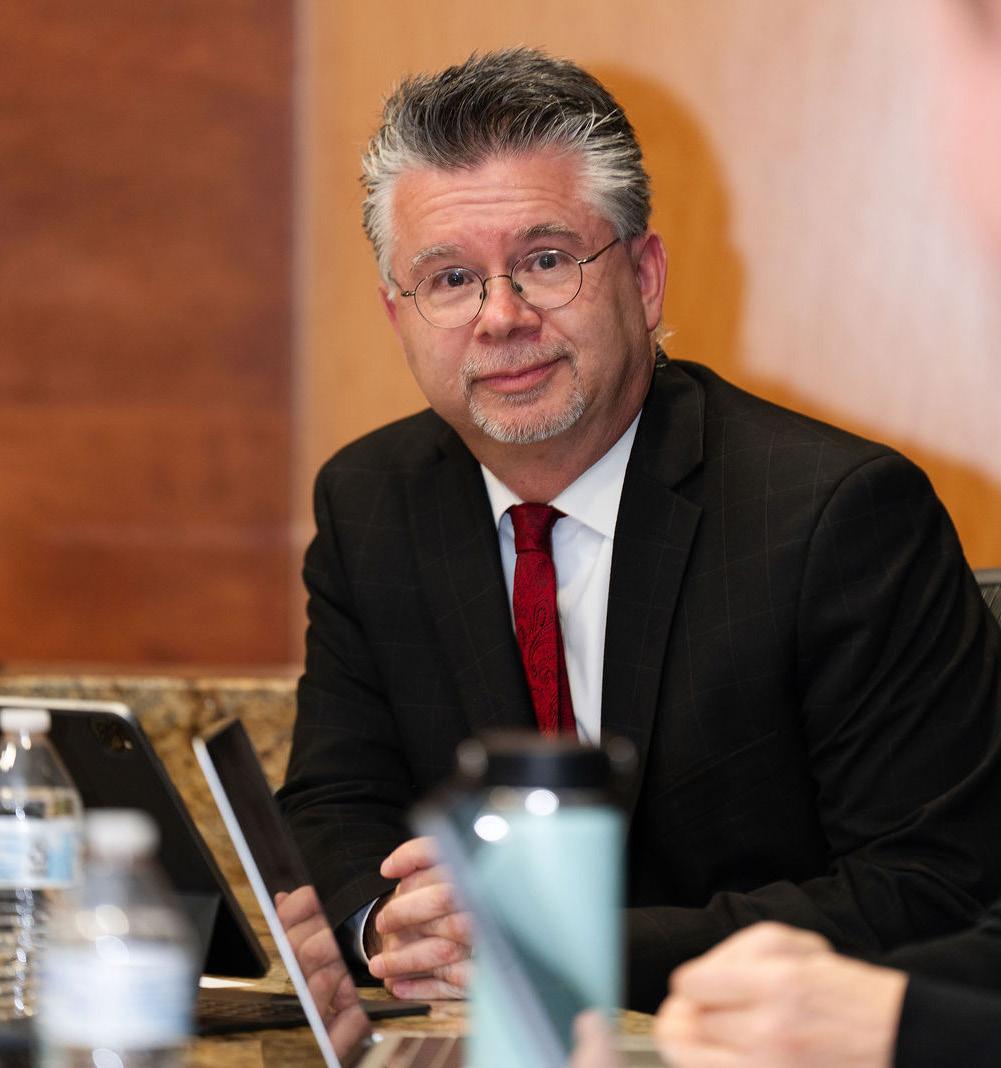
Mayor Mark Anderson at a city council meeting on Jan. 6.
Art students showcase final works in ‘Ouroboros’ capstone exhibition
By Jayke Martin STATESMAN REPORTER
Graduating art students at Utah State University will present the culmination of their undergraduate work in the BFA capstone exhibition, “Ouroboros,” which opened March 18 in the Tippetts and Eccles Galleries.
The exhibition features work from graduating students across several disciplines, including art education, drawing and painting, photography, ceramics, sculpture and printmaking. The show will run March 18 through April 1 and will be open Monday through Friday from 9 a.m. to 5 p.m.
Ceramics artist Allie Saunders said the group chose the exhibition title together and felt the symbolism captured the moment graduating artists are experiencing.
“We just all got together and came up with title ideas and then voted as a group until we honed in on that title ‘Ouroboros,’” Saunders said. “It is referencing an ancient symbol of a snake eating its own tail. And it kind of symbolizes renewal, like endings and renewals, and kind of that continuous cycle as well as unity.”
Saunders said the meaning resonates with artists preparing to leave the program and begin their careers.
“It’s quite fitting for a group of senior graduating artists to kind of showcase the ending of a cycle and the renewal of us going out into the world as artists,” Saunders said. Saunders, who primarily works in ceramics but also paints, plans to submit sculptural ceramic vessels for the exhibition.
“There are a bunch of sculptural vessels that I’ve
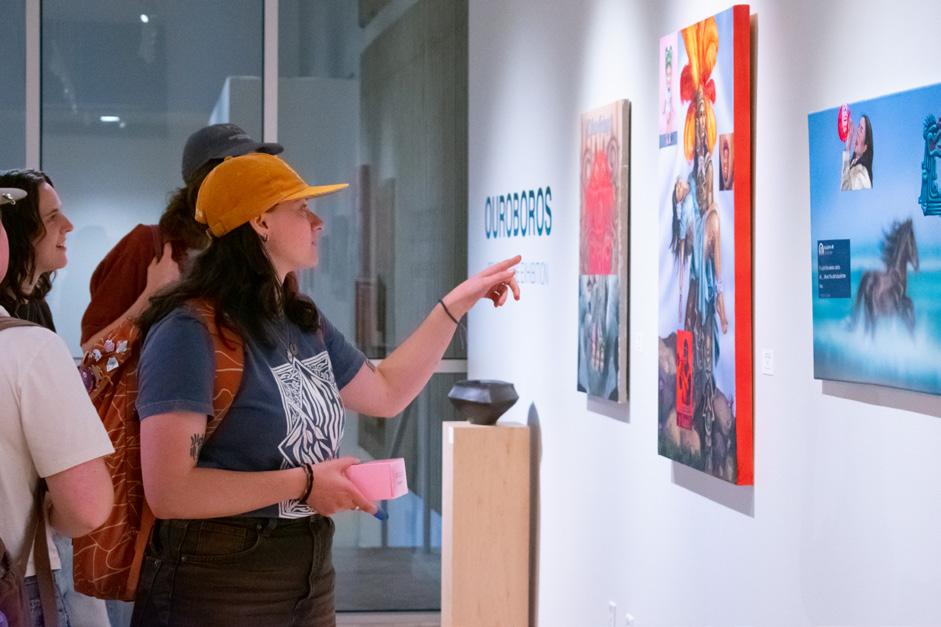
the Tippetts and Eccles Galleries on March 18.
constructed,” Saunders said. “These works are about exploring the kind of humanistic projections we put onto objects and art and where we look for humanity in objects. We kind of anthropomorphize things sometimes.”
The exhibition also provides students with experience beyond creating artwork, allowing them to participate in the entire exhibition process.
“We get to be in the studio and make the work, selecting and curating the works, but then we also get to collaborate on designing the show, doing the installation, the public outreach and reception,” Saunders said. “It’s really valuable experience for us to do all aspects of an exhibition, not just the art side of it.”
Saunders said one of the most exciting aspects of the show is seeing the work of classmates whose studio
practices are often hidden behind closed doors.
“All these other students I’m doing this show with — I walk past them in the halls, and I’ve taken foundations courses with them,” Saunders said. “They’re all very familiar faces, but I’m not seeing what they’re getting down in their studio working on.”
Painter Elise Ames will also present a series of oil paintings created during the semester.
“I’m doing oil painting, oil on linen exclusively,” Ames said. “I’m working with appropriated imagery from medical journals and historical kinds of paintings, and I’m collaging those together through paint.”
Ames said her work is connected to an Undergraduate Research and Creative Opportunities grant project, a program at Utah State University that supports undergraduate research and creative projects.

Jayke Martin is a junior studying journalism with a minor in theater. She loves reading and meeting new people. . — jayke.martin@usu.edu


March 13
K-9 Officer Sage and Officer Nebeker attended a Future Farmers of America, or FFA, convention. They interacted with participants at the event to promote awareness and build relationships with the communiy as part of the USU Department of Public Safety’s Critical Incident, Crisis Response and Community Engagement K-9 initiative.
March 14
A bicycle, last seen March 6 was missing from the bike rack on the southwest corner of the complainant’s residence. After searching nearby bike racks and frequently visited locations, USUPD was unable to locate it. The bicycle is a dark grey Trek Verve 1 worth approximately $500. Please contact USUDPS at 435-797-1939 if you have any information that would aid in the recovery of this item.
March 15
Officers observed an individual enter a river near First Dam and move upstream to a restricted area. After making contact, authorities identified the subject and informed them of the safety risks and legal responsibility to observe signs located in the area and follow the posted warnings.
March 16
Officers responded to the report of a suspicious vehicle. The complainant reported a dark colored SUV or truck that was not in a parking spot and had been running for multiple hours. Upon arrival, contact was made with the occupants of the vehicle, officers explained why they had been alerted and it was determined that the party had been visiting and lost track of time. Officers concluded the call was no law violation or threat to public safety, and officers returned to service.
PHOTO BY Elise Gottling
Abigail Chambers observes the art shown for the BFA capstone exhibit at
PRSSA chapter connects students to professional world
By Rory McNeill STATESMAN REPORTER
Utah State University is full of clubs and programs with the goal of helping students find their footing in their respective industries upon graduation. One such club is the USU chapter of the Public Relations Student Society of America. In the fast-paced world of public relations, experience is key, and PRSSA aims to give students opportunities to excel upon entry to the public relations world.
As part of a nationwide society that holds chapters not only at universities but for professionals in cities across the country, PRSSA can help students find jobs and internships in public relations by placing them in real-world situations.
“PRSSA is the bridge from the classroom to the workforce and the community in the field of public relations,” said Scooter Porras, USU PRSSA vice president. “We learn a lot of stuff in the classroom. PRSSA helps us take those same principles and apply them with professionals and real-world experiences.”
Porras said the club not only helps students gain connections on a national scale but also on a local level, working with companies in Cache Valley. The students also partner with the Salt Lake City chapter of the Public Relations Society of America to help find students jobs and internships across the region.
“PRSSA prepares students with real hands-on experience in internships and jobs. It connects students with local mentors along with national mentors like the Salt Lake City chapter, which is our mother chapter,” said Chloe Miller, chapter president. “You get exposure to really large agencies, businesses, organizations through this national outlet that you wouldn’t be able to otherwise. Logan is pretty rural, and public relations tends to be a metropolitan thing, so it connects you to that world if that’s what you’re looking for.”
One of the top priorities of the club is to help students find jobs and internships, according to Miller. To do this, students maintain a strong presence in the industry to find new connections to assist students.
“We try to be very active with our social media presence on Instagram, and we’re growing our LinkedIn. We’re constantly posting and trying to make connections across the country,” Miller said. “We have an online job board that we try to keep updated all the time. We’re constantly just posting opportunities for students.”
While the club puts effort into helping students find jobs and internships across the country, it also helps students make connections on campus by creating a tight-knit group that can support each other throughout their academic and professional careers. A relatively small club compared to similar clubs across campus, students rely much more on each other for their success, according to Porras.
“Everyone in this club is super close to one another.

I would say we have a chip on our shoulders — sometimes it feels like we are fighting tooth and nail. Our college just got merged, and they don’t think we put enough jobs out there, even though everyone I’ve met who has graduated from this program is currently working and doing super cool things,” Porras said.
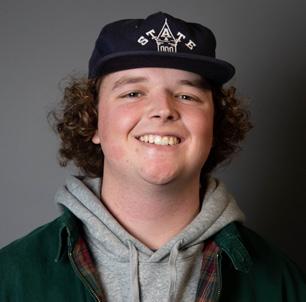

“Jayden Spins” is every week on Fridays from 6-7 p.m. — funny number. The show explores fempunk to industrial to alternative. The goal of my show is to expose the listener to as many different genres as I can. Tune in at Aggie Radio 92.3 FM!











Sound and Vision
David Bowie
After Party shame
Rebel Girl Bikini Kill catch these fists Wet Leg
Head Like A Hole Nine Inch Nails
Rory McNeill is a sophomore from Rocklin, California studying mechanical engineering. He loves Aggie sports, skiing, golf and writing music.
PHOTO SUBMITTED BY Chloe Miller
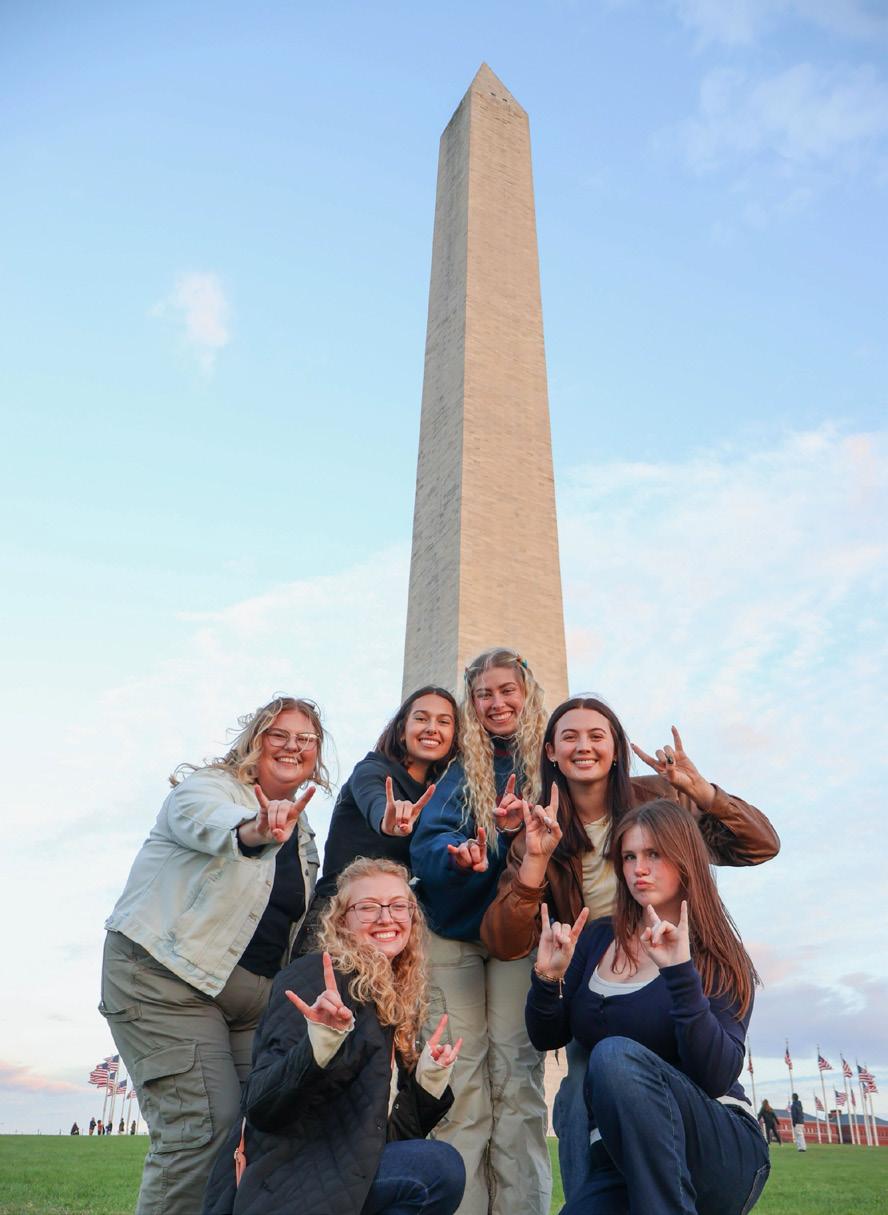
Bobbee Russell Verhoef, back left, Isabelle Anderson Davis, Sada Christensen, Chloe Miller, Sarah Hunt, front left, and Carter Truscott hold up a “Go Aggies” in front of the Washington Monument.
Meet the Cazier Professor Lifetime Achievement Award nominees
By Essence Barnes STATESMAN SENIOR REPORTER
After decades of teaching, mentoring and research, five senior faculty members at Utah State University are being recognized for careers that have shaped generations of students. This honor, known as the Cazier Professor Lifetime Achievement Award, chooses one outstanding staff member with more than 20 years of experience at USU to hold the title forever. The Utah Statesman sat down with the 2026 nominees to discuss their careers and impact.
David “Andy” Anderson
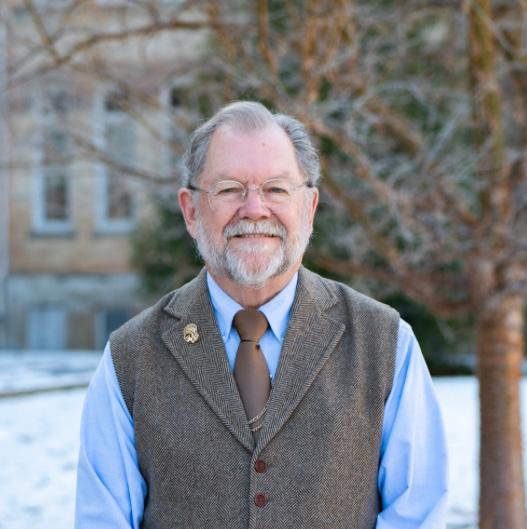
Nominee Andy Anderson, a principal lecturer and prehealth adviser in the Biology Department, has taught medically-related courses at USU for 43 years.
“I actually volunteered for the army,” Anderson said. “I didn’t have much direction until then, and the army trained me as a medical microbiologist at a place called Fort Baker.”
Anderson said his time in the U.S. Army helped shape his path into biology, and he received the GI Bill to help support him through his medical education.
“The student feedback is the real drive,” Anderson said. “I tell the students, ‘If you pay really close attention, you’ll see that everything is connected.’ Even to other classes that are even non-science classes — they’re connected as well.”
Anderson said he doesn’t plan on retiring anytime soon.
“I can, but the drive that I have is for students to wake up and see that it’s worth the trip,” Anderson said. “They need to know why they’re in these classes and why they’re even at Utah State University.”
James “Jim” Powell
Like Anderson, who discovered his passion through realworld experience, mathematics professor Jim Powell has built a career on connecting disciplines and expanding learning beyond traditional boundaries.
“I didn’t really realize what a unique, interdisciplinary atmosphere Utah State has,” Powell said. “It was not like the department heads were worried that I was wasting my energy teaching biology students, and if I co-supervised a PhD student in natural resources or biology, nobody batted an eye about it.”
Powell said as a child, he dreamed of becoming a mathematician, but he soon realized his interests spread far wider, inspiring his work with the Logan Forestry Sciences Laboratory and the National Science Foundation. “I started studying with them, went into the field with them and helped with the lab research with them,” Powell said. “The more I did it, the more fascinating it was. There were all kinds of interesting questions that nobody had ever figured out how to address mathematically before.”
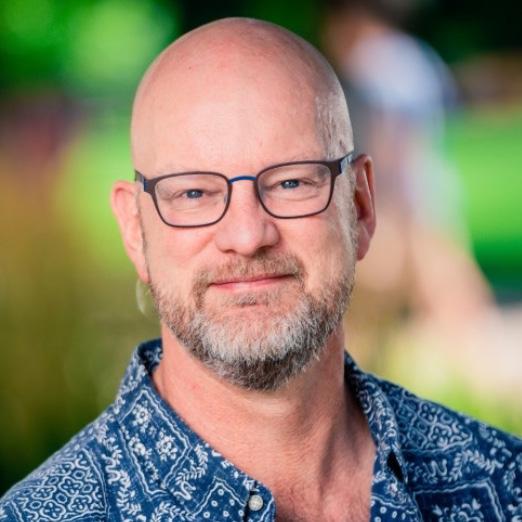
Claudia Radel
While Powell’s work bridges mathematics and science, Claudia Radel’s career has taken an international approach, focusing on the intersection of environment, gender and development.
“I was probably growing up in a context of awareness about international and national environmental issues and challenges facing society,” Radel said. “I really kind of gravitated in my professional interest towards natural resource environmental challenges in the context of human well-being and socioeconomic development.”
Radel has spent consistent time in international
helping
climate change and community development.
“Being able to kind of think about the way we operate as a country and the way we run our economic systems or political systems or social systems with the comparison of having seen other ways that people organize these things helps me as an educator,” Radel said.
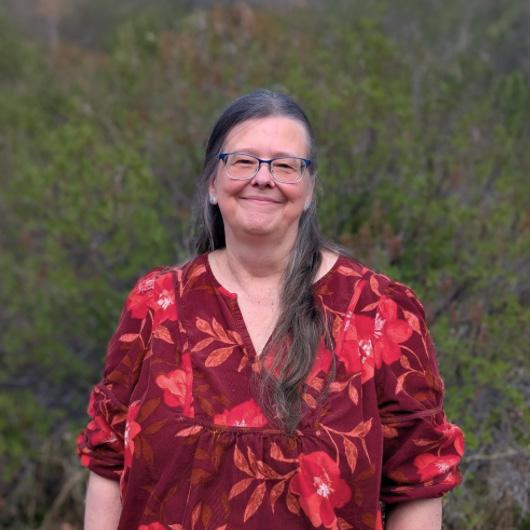

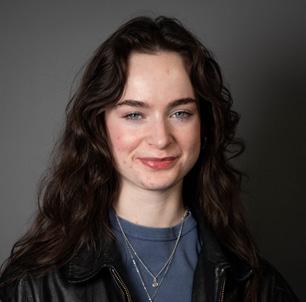
Barnes is a third-year student majoring in journalism who enjoys reading, writing and storytelling.
— essence.barnes@usu.edu
countries
teach, address and research problems related to
Essence
David “Andy” Anderson VIA USU.EDU
Claudia Radel VIA USU.EDU
James “Jim” Powell VIA USU.EDU
Utah State competes in program record fourth-straight NCAA tournament
By Mark Greenwood STATESMAN EDITOR
After a 28-6 combined regular season and conference tournament campaign, Utah State University is dancing in the NCAA tournament for a program record fourth-straight season. The Aggies, under second year head coach Jerrod Calhoun, have now qualified for the tournament in seven of the last eight seasons.
“It’s really neat to get texts from Danny [Sprinkle] and Craig [Smith] and all those guys. When you sit in the chair, it’s a great deal of pressure,” Calhoun said. “There’s a legacy here. Sam Merrill has hit me today. He loves the Aggies. Just the support and the tradition here is tremendous.”
The lone season in the last eight years USU hasn’t qualified was Ryan Odom’s first season in Logan in the 2021-22 season. Additionally, the Aggies qualified in 2020 but did not play due to the COVID-19 pandemic.
During that stretch, Utah State is 1-5 in the tournament, with the only win coming in an 88-72 victory over Texas Christian University during the 2023-24 season.
Utah State won both the Mountain West Conference regular season championship and tournament championship for the first time in school history in its final year in the conference. The Aggies won each of their last four games on their way to two conference titles and are hoping to see similar results.
“We had an edge. We won three games — three days. Having an edge is playing every possession possession by possession. Whether it’s on offense, defense, coming out of a timeout,” Calhoun said. “We’ve got to do all those things, and it starts in your prep.”
In Calhoun’s first season, the Aggies fell in a lopsided game against the University of California, Los Angeles in the first round. This year, with additional returning players, Calhoun is hoping that experience takes over in a way it couldn’t a year ago.
“I think a lot of these teams — as you watch them, they get anxious, whether it’s shooting the ball or just playing in general,” Calhoun said. “There’s a lot of hoopla with the NCAA tournament — rightfully so. It’s the greatest tournament on earth. But our guys have played in this environment before.”
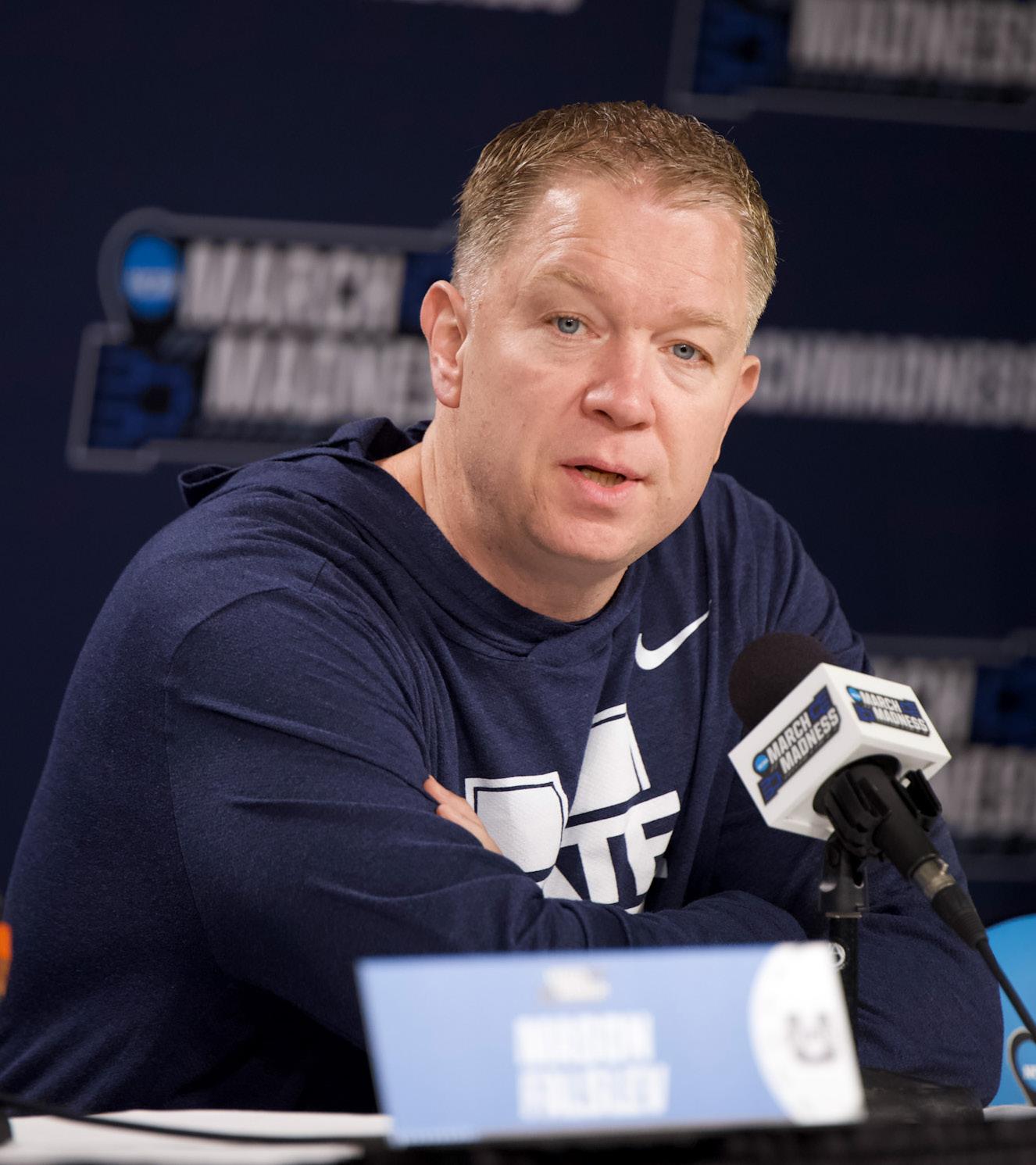
Headlining the Aggie players who have been dancing before is junior guard Mason Falslev. Falslev has been a part of each of the previous four NCAA tournament appearances, playing in three and attending once as a redshirt freshman.
The Aggies also have six players, not including redshirt freshmen, who have never been on an NCAA tournament team.
“I’ve been fortunate to be a part of this tournament four times. I’d just say, ‘Enjoy it. Soak up every moment,’” Falslev said. “You don’t know if you have another chance. Not a lot of people can say they’ve
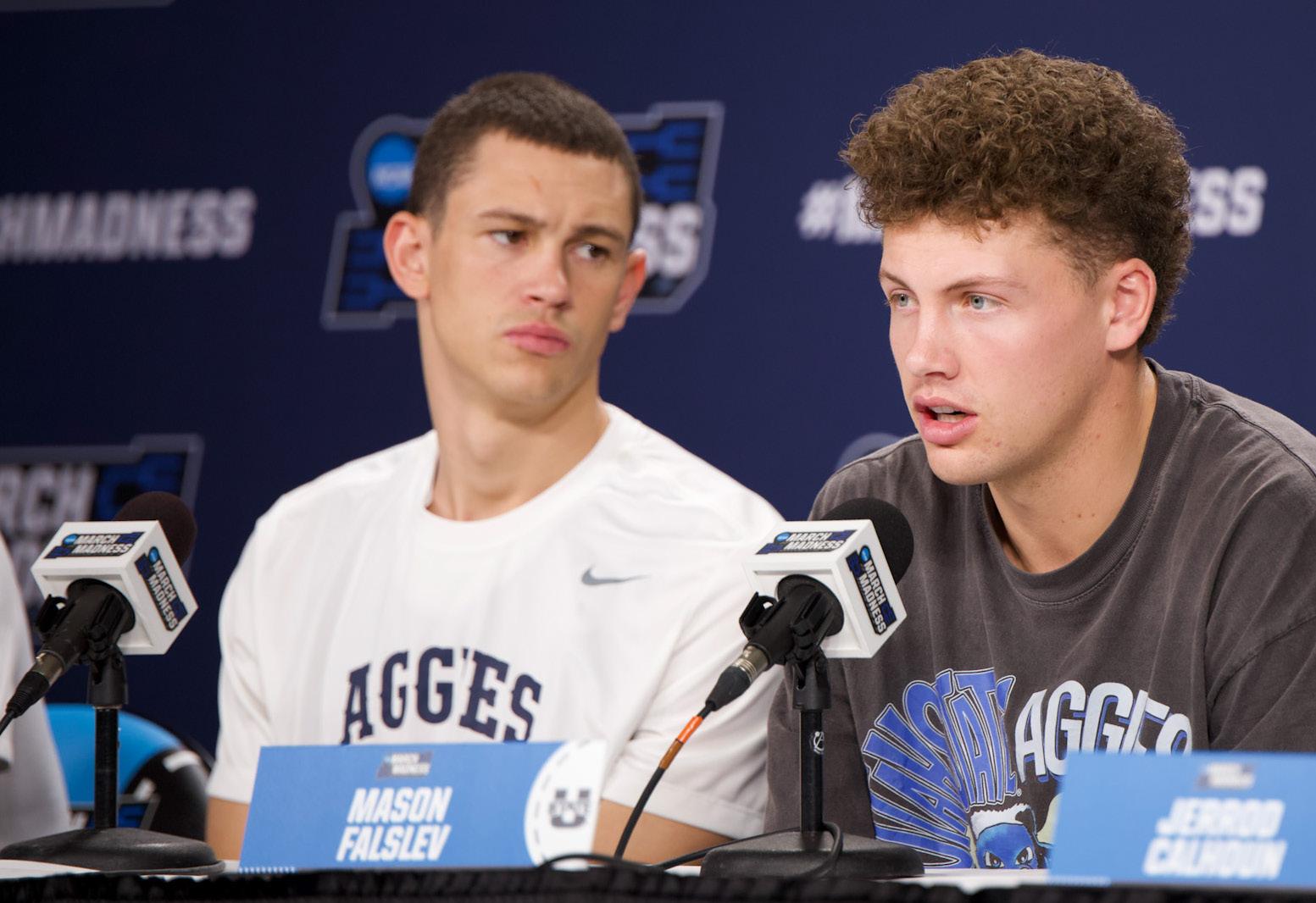
played in March Madness. Just give it all you’ve got and leave it all on the court.”
Despite the lopsided NCAA tournament record in recent years, the Aggies are hoping to make the most of their stay in San Diego.
“I think we all know what it felt like losing in the first round last year. It’s not a great feeling,” guard Drake Allen said. “We know the goal of this team was to make it here. Now that we’ve made it, we have a goal of winning a couple of games, and we truly believe that we can do that.”
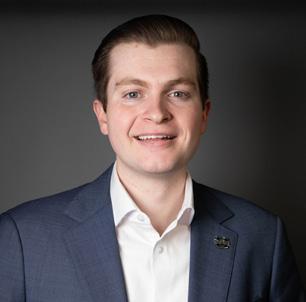
Mark Greenwood is a senior at USU studying finance. He is an avid Los Angeles Dodgers fan and loves playing golf and skiing.
PHOTOS BY Briggs Rober
Mason Falslev speaks during the Aggies press conference at Viejas Arena in San Diego before the team’s first-round game against Villanova University.
Utah College Media Collaborative: Music therapy students combine arts, sciences for mental health
By Avery Truman STATESMAN EDITOR
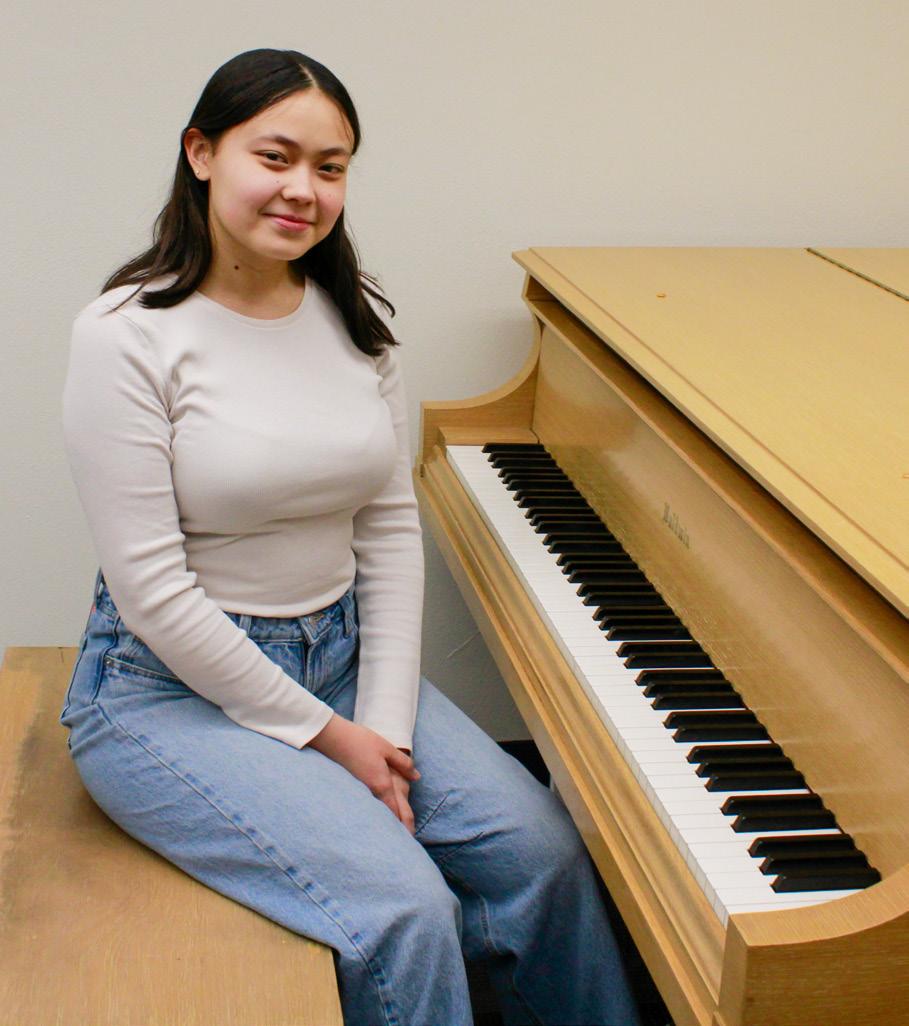
Carlin Troska was 17 when she found herself in a psychiatric hospital. She wasn’t disheartened to be there — she was inspired. The soft, calming music that flooded the room was Troska’s first encounter with music therapy, a discipline she’s since devoted her studies and career to.
When the music therapist started playing, Troska said it was a bittersweet moment that drew her to learn more.
“I kind of saw someone in front of me, and I was like, ‘okay, this is what my future could be.’” Troska, now a senior in Utah State University’s music therapy program, said. “I saw for myself, in the eyes of a patient, how powerful it was.”
Combining Art and Science
In her arc from patient to practitioner, Troska said she found a passion for bringing together two fields that, to an outside perspective, might seem opposite.
“When art and science go together — when people of those disciplines work together — it makes a product that is so much stronger,” Troska said.
Students in Utah State University’s music therapy program do just that by using their voices and instruments to improve the mental health of others. From hospital bedside visits to group sessions and even kindergarten classrooms, music therapy has proven versatile.
“Its hard in a talk-therapy setting sometimes to share,
but music can really help serve as a container and something that can make someone feel a little bit more comfortable with expressing how they’re feeling,” Troska said. “Sometimes, it’s not with words. Sometimes, it’s with how they play.”
During a session, the music therapist may play or sing songs, teach music as a coping strategy or experiment with lyrics adapted to the patient. A patient may simply listen to the music or contribute as an active participant by playing an instrument.
The music therapy program landed in USU’s College of Arts and Sciences after the university restructured and placed arts, sciences and humanities under one umbrella.
Many of Troska’s friends didn’t understand the choice to combine the colleges, but for someone who studies both, Troska said the decision made sense to her.
“It doesn’t have to be science or art,” Troska said. “They can very much go together, and that’s when music therapy really is. Music therapy is a scientific field, but it’s also a creative field.”
The Role of Music in Therapy
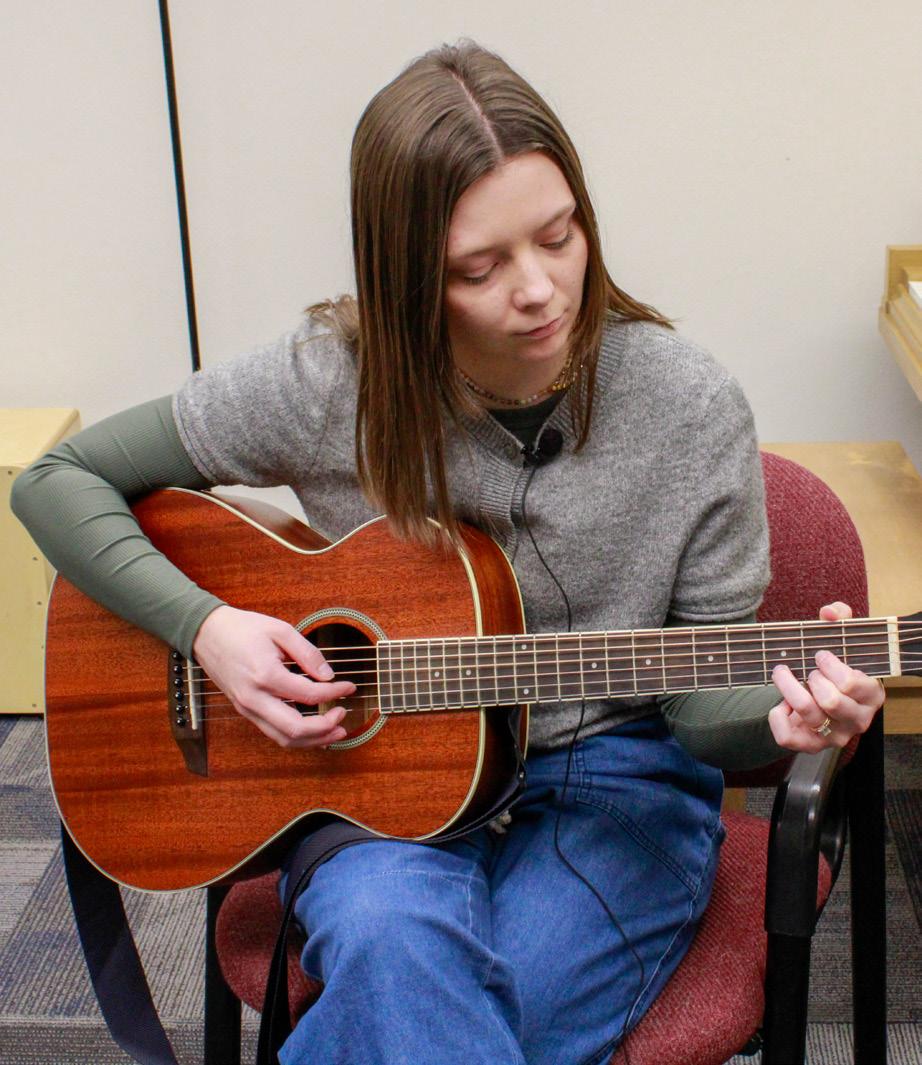
Clarissa Zollinger, a senior in the program, has loved music since childhood. When she was 3 years old, she asked her parents for violin lessons and started her classical training at age 5. Now, Zollinger plays the violin, guitar and piano.
She is currently completing her practicum requirement while working with music therapists in Cache Valley.
“This semester, I’m with a behavioral health group in Logan, and it’s been really cool to see how music therapy works with adolescents with various mental health diagnoses,” Zollinger said. “It’s a cool way to create interventions around their interests and the things that will help them have that release and build their own self-esteem.”
Throughout a session, participants might work on writing lyrics to tie music to their own personal circumstances, learn to play an instrument or participate in guided breathing meditation.
The session ends with box-breathing techniques and a “goodbye song,” giving participants a stairway to wind down after an energetic session.
“Music just plays such an essential role in so many lives … whether it’s something that people are listening to on their own, or creating a release within their own music that they’re creating,” Zollinger said. “It’s such a valuable tool to be able to bring into the community — of providing [a] higher quality of life for those who are in hospice. They don’t have much life left … to be able to bring something so beautiful into their lives as they’re transitioning to the end of life, I think is so impactful.”
Zollinger said music therapy can positively influence people at all stages of life, from adults with disabilities who use music as a way to express themselves to preschoolers who learn valuable lessons from songs that teach skills like sharing.
“Music just plays such an essential role in so many lives …,” Zollinger said. “It’s such a valuable tool to be able to bring into the community — of providing [a] higher quality of life for those who are in hospice … to be able to bring something so beautiful into their lives as they’re transitioning to the end of life, I think is so impactful.” Zollinger said music therapy can positively influence people at all stages of life, from adults with disabilities who use music as a way to express themselves to preschoolers who learn valuable lessons from songs that teach skills like sharing.

Avery Truman is a senior pursuing environmental studies and geography. When she’s not obsessing over science fiction, she enjoys managing the chaos of the newsroom.
— avery.j.truman@usu.edu
Clarissa Zollinger plays guitar in USU’s Music Therapy Clinic on Feb. 9.
PHOTOS BY Avery Truman
Carlin Troska sits at the piano in USU’s Music Therapy Clinic on Feb. 11.
Collaborative: The Persistence of Art Logan music scene rebuilds after venue closure
By Hazel Harris-Staples STATESMAN EDITOR
When Whysound, one of Logan’s primary venues for live music, unexpectedly closed in April 2025, it left local musicians and the broader community without a dedicated place to gather and be heard.
The Utah Statesman reported that Whysound closed due to “multiple allegations of sexual assault within their management.”
Whysound cancelled shows and its annual festival after the allegations surfaced, saying in a public statement that the venue and management wanted to address community concerns and seek “transparency for everyone involved in the music scene and Logan community.” The statement also said they are working with Citizens Against Physical and Sexual Abuse and have opened an anonymous comment form for anyone to voice their concerns.
While the venue has since reopened, the disruption left uncertainty in Logan’s live music scene and prompted musicians and organizers to create new spaces.
A Scene Without a Stage
In the months that followed, the absence of a venue dedicated to live music and discovering local talent became increasingly visible.
Sydney Traveller, a local singer-songwriter and self-described avid local music fan, discussed the importance of live music venues and the connection she finds there. Traveller attended local shows, particularly at WhySound, before it closed.
“I think it’s a really great way to meet people, it’s so easy to connect with people over music,” Traveller said.

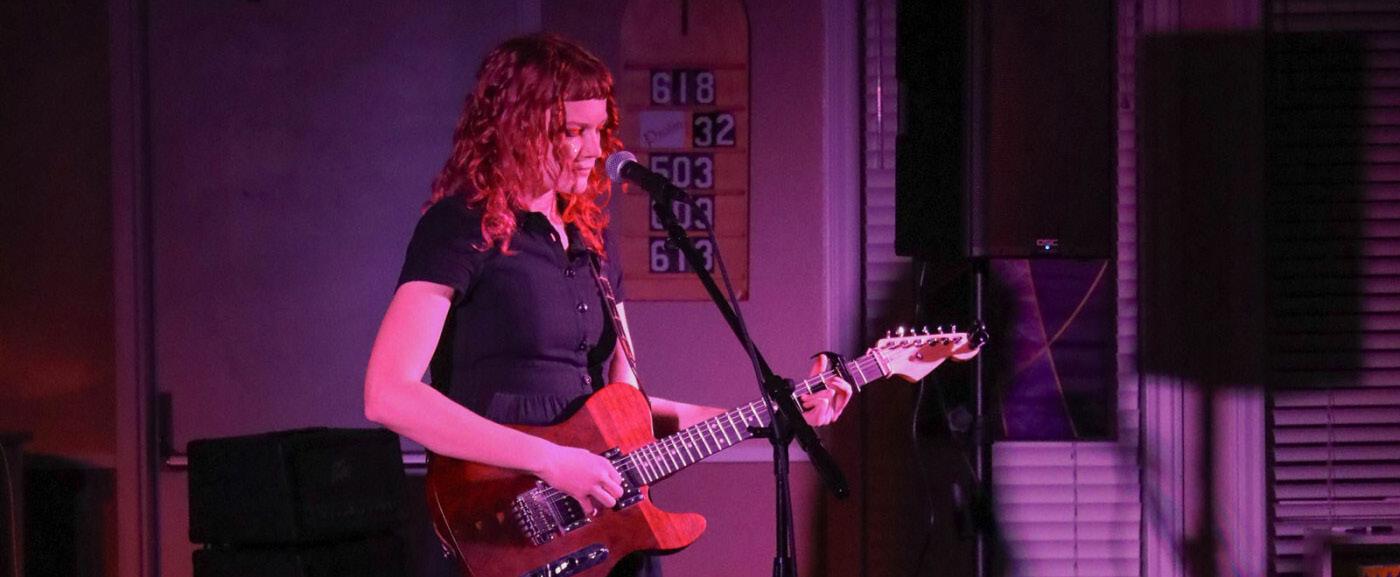
She said parts of this community-building have been missing since their temporary closure.
New to performing live, she said the lack of a stable music venue has made it difficult to break into the scene.
“How are you supposed to know where to start?” Traveller said, “There’s nowhere to go. There’s no way to meet people.”
Traveller said the closure limited both performance opportunities and her access to discovering new artists and bands. When it’s hard to find shows to play, she said, it also makes it hard for audiences to discover new bands.
This uncertainty extends beyond individual performers. Venues can give an overall reading of the music scene, said Preston Tangren, member of the Logan band Faux Fiction.
“The biggest thing that’s happened is we can’t get a good litmus test on the health of the local music scene, because it’s really hard for them [bands] to find a place to showcase,” Tangren said.
Tangren doesn’t believe this lack of a venue has hindered the creativity of Logan’s musicians.
“I think we’re surprisingly diverse for a very seemingly culturally homogenous area,” Tangren said. “We have Midwest emo bands, we have punk bands, we have folk bands, we have indie rock bands. I think that’s really good and I feel like there’s more out there, but they just haven’t had their chance to show it.”
This diversity is what makes the live music scene in Logan so important, said Tanner Merritt, bassist for local band dustdust, Aggie Radio DJ and Utah State University student.
“I think it’s important to have a music scene that provides a safe space for queer people, and for women and for racial minority groups,” Merritt said.
Tangren said it’s important to have a space for musicians to give back to something that means so much to them.
Hazel Harris-Staples is a junior studying photography, art history and entrepreneurship. She enjoys supporting the arts, eating food with hatch green chiles in it and yapping with her friends.
— hazel.harris@usu.edu

These stories are jointly published as part of the Utah College Media Collaborative, a historic cross-campus project bringing together emerging journalists from Salt Lake Community College, the University of Utah, Utah State University and Weber State University. The collaborative is an Amplify Utah project with support from PBS Utah.
PHOTOS BY Hazel Harris-Staples
Dylan Baldwin, left, and Elliott Lucherini perform at Prince of Peace Lutheran Church on Feb. 21.
Sydney Traveller sings and plays guitar at the Old Star Audio show, held at Prince of Peace Lutheran Church on Feb. 21.
Aggies post strong showing at Pro Day
Avinger delivers standout, all-around performance
By Carson Frost STATESMAN SENIOR REPORTER
Utah State University Football’s 2026 Pro Day provided a final opportunity for a group of seniors and transfers to make their case to NFL scouts, and defensive back Noah Avinger delivered the most complete performance of the day.
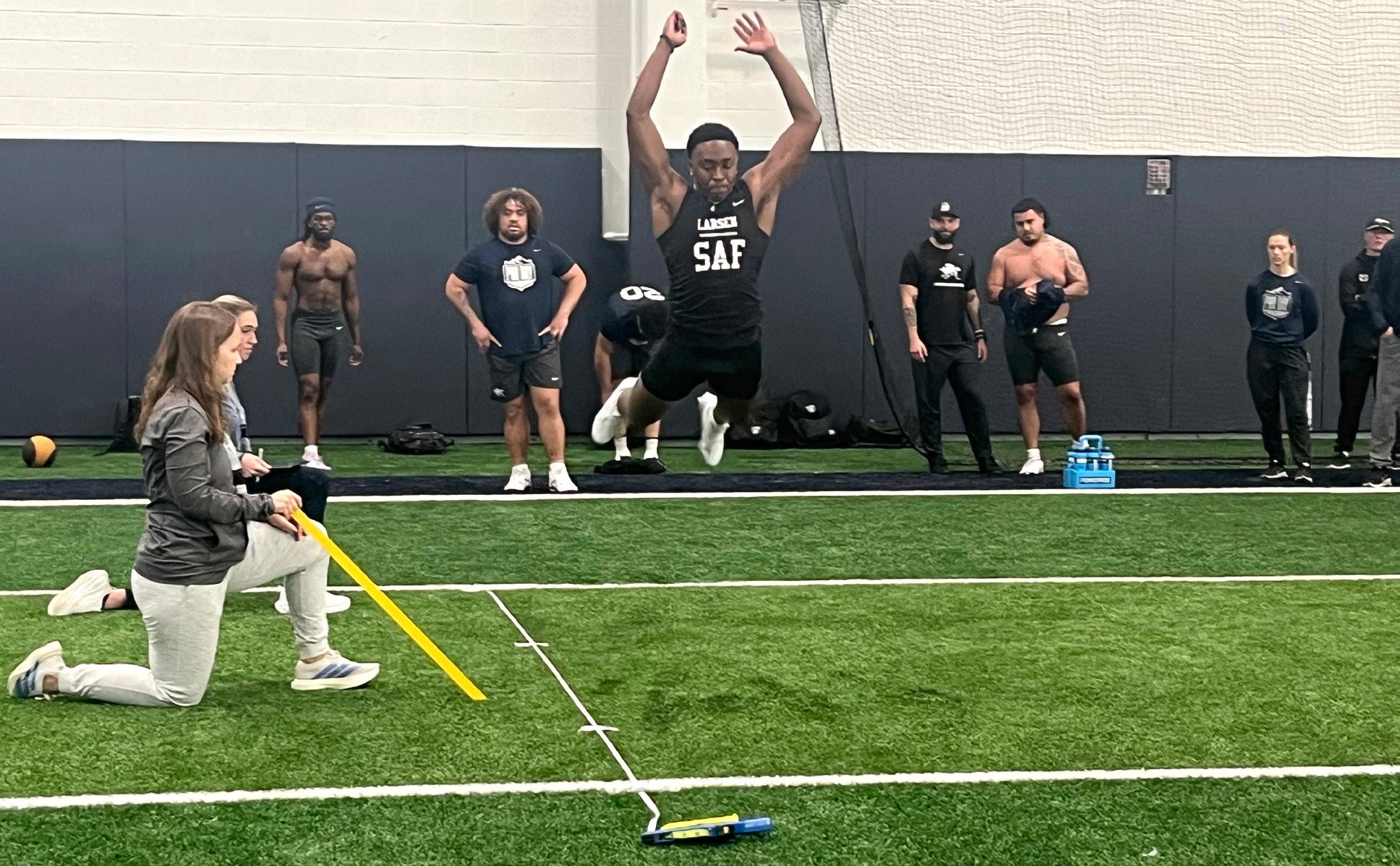
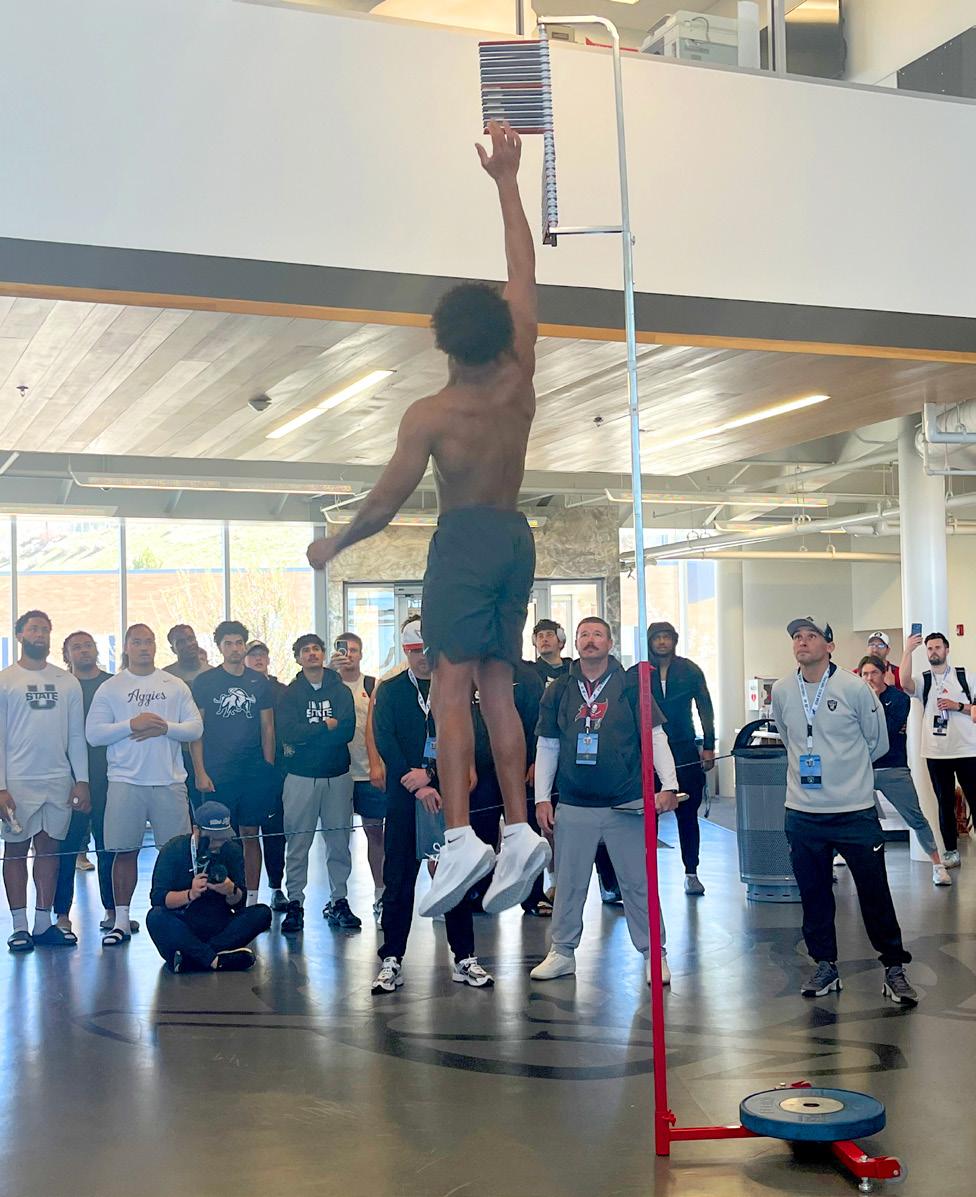
Avinger measured in at 5-foot-11 and 188 pounds with a 75-inch wingspan and posted strong numbers across the board, including 17 reps on the bench press, a 42-inch vertical jump and an 11-foot-4 broad jump. His broad jump would have led all participants at this year’s NFL Combine, while his vertical and bench press also ranked among the top-tier marks relative to Combine results.
“I felt like I had a great day,” Avinger said. “I’ve been training the past two months for this moment. I think I surprised them a little bit with how athletic I was.”
Avinger’s testing added to a productive 2025 season in which he showed versatility, playing both safety and cornerback. He totaled 41 tackles and three interceptions in his first five games at safety before moving to cornerback, where he recorded 43 tackles, 3.5 tackles for loss, eight pass breakups, a forced fumble and a fumble recovery over the final seven games.
“It took me a little while to get to this strength,” Avinger said of his bench press. “I had some injuries in the past, but I trained it for the past two months.”
Wide receiver Brady Boyd also turned in a solid overall
performance, measuring at 6-foot-1 and 195 pounds and running a 4.45-second 40-yard dash to go along with a 40-inch vertical. Boyd said he hoped for a faster 40 time but was encouraged by feedback from scouts.
“I was hoping to go faster than that 40 for sure, but I’m happy with what I’ve heard from scouts,” Boyd said. “I know I’m on people’s radar. If I just get in the building, I just can’t let them get me out of there.”
Boyd said his bench press — nine reps — exceeded expectations after identifying it as a focus during training.
“Coming out here and doing nine was a shock for sure,” Boyd said.
He is scheduled to participate in Texas Tech University’s Pro Day on March 26.
Quarterback Bryson Barnes did not participate in testing but took part in positional drills, where he completed a high percentage of intermediate throws and connected on several deep balls, including multiple completions to Boyd.
“He just came out here and slung that thing around like everyone knows he can,” Boyd said. “Any team that gets him is going to be lucky.”
Several other Aggies produced notable results. Cornerback Bryson Taylor ran the fastest 40-yard dash of the day at 4.40 seconds and added a 37.5-inch vertical and a 10-foot-5 broad jump. Wide receiver Kahanu Davis ran a 4.46, while running back Miles Davis ran a 4.50 and posted a 39-inch vertical.
Utah State’s defensive back group was the deepest unit on display, with Avinger, Taylor and Dylan Tucker — 4.53 40, 38-inch vertical — all participating. Avinger’s performance stood out even within that group.
“I feel like he was the best DB I went against all year,” Boyd said. “Iron sharpens iron.”
For many of the participants, Pro Day served as a step in an ongoing process rather than a final evaluation. Boyd emphasized that point when asked about his path forward.

Safety Ike Larsen ran a 4.56 with a 37-inch vertical and 10-foot-1 broad jump, and he stood out in positional drills. Offensive tackle Jake Eichorn recorded 25 bench reps, and defensive tackle Naki Fahina led all participants with 35 reps, a number that would have ranked No. 2 at the NFL Combine.

Frost is a transfer
from Denver studying journalism. His family originally hails from Los Angeles, and he is a passionate fan of the Lakers and Dodgers.
— carson.frost@usu.edu
Carson
student
Column: New Utah State administration offers breath of fresh air
By Mark Greenwood STATESMAN EDITOR
In my nearly three years at Utah State University, I’ve had three different university presidents, three different athletic directors, two different football head coaches and two different basketball coaches. Admittedly, some of that turnover came during a two-year gap for religious service, but three different presidents and athletic directors in five years is still well past normal.
During that time, the university has been plagued by poor administration that has led to legislative investigations, U.S. Department of Justice investigations, firing of coaches for reasons beyond poor athletic performance and just an overall misrepresentation of the reality of the student body and alumni.
In fact, the recent audit presented to the Utah Legislature claimed USU has a “history of weak oversight and controls at the presidential and executive leadership level.” While the leaders primarily responsible for these issues are no longer at the helm, it is nonetheless concerning as a Utah State student to see this type of abuse of the university. The previous underlying attitude and above-the-law mentality is something that does not resonate with me or with my peers.
USU has since replaced two executive leaders in the form of new Vice President and Director of Athletics Cameron Walker in early October and President Brad L. Mortensen in November.
Though they’ve only been in their roles a short time, they have been a welcome breath of fresh air the university desperately needed from an administrative standpoint. Their genuine, down-to-earth personas are beyond refreshing after such disappointing leaders left in such disappointing fashion.
This was highlighted to me in my recent trip to Las Vegas to cover Utah State Men’s Basketball’s Mountain West Conference tournament run. In Utah State’s semifinal matchup against Nevada, I was glancing around the arena after a foul was called against the Aggies. While doing so, I noticed Walker in the crowd, standing with his arms raised in frustration, as were the throng of other Aggie fans who made the trip. Just a few seats away from him sat Mortensen.
Initially, I was confused, as the university and alumni association had a suite in the arena where those previously in their roles had sat. I then thought of Walker’s pregame address to those at the alumni association tailgate, where rather than regurgitate some pre-formed speech, he launched into an analysis of Nevada’s basketball team and how he thought if Utah State established themselves in the paint early, they’d have a good chance at winning. There was no pandering — no talking down or speaking with an air of superiority. In that tailgate, Walker presented himself as equal with everyone else in that room: an Aggie basketball fan, excited to watch his team play and nervous at the prospect of losing. He then took his seat with the rest of the fans to cheer on the Aggies, next to the university president, who was donning a USU hoodie and jeans.
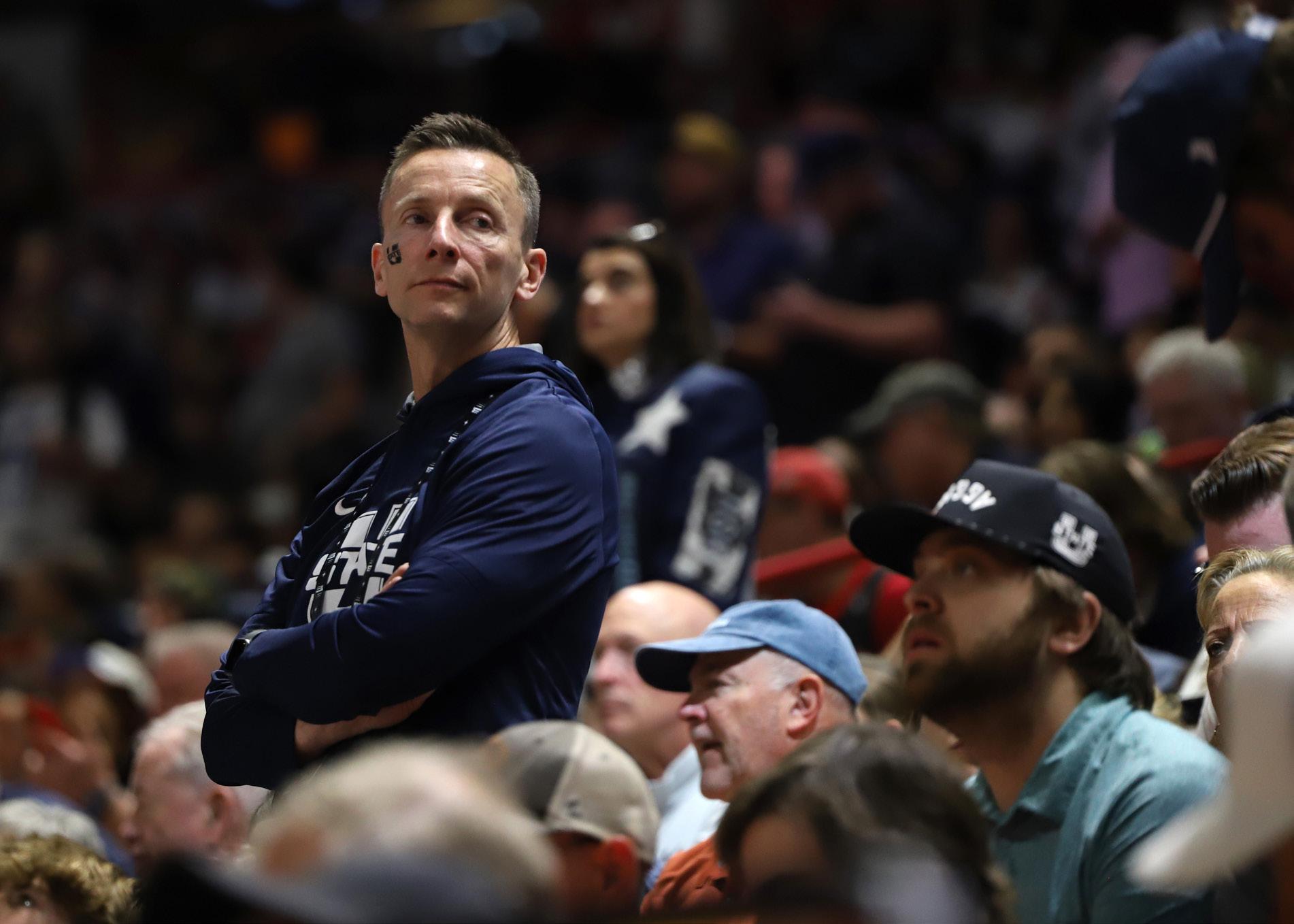
In a recent town hall with USU Student Media and Mortensen, I asked him about this perplexing image.
“I am just a huge sports fan generally, and it’s a lot more fun to watch the game in the crowd than in the suite,” Mortensen said. “You can focus on the game more in the crowd than in the suites. Oftentimes, people in the suites just want to talk.”
Both Walker and Mortensen returned to those same seats for the tournament’s Saturday championship game — though Mortensen made a pit-stop at the HURD to give high fives and pick up a pair of latex gloves. That is a far cry from trying to sell a portion of the student tickets behind their back to try to squeeze out a few more dollars.
Utah State’s student and alumni population have a very similar mix of Utah, Idaho and Wyoming locals with strong values and cultural similarities. Even those who don’t fit that mold frequently come to Logan because they want to be a part of that environment. Those who feel Logan doesn’t have good enough restaurants or high-quality wine don’t typically come to Cache Valley or at least stick around very long.
Mortensen, a USU alumnus himself, and Walker, a rural Idaho native, embody what it means to be an Aggie much more than previous administrators who were publicly slammed for indulging in lavish office remodels, business trips and dinners and even using university funds to travel to and interview for a new job.
This extends beyond the administrative level. The previous head football coach was very publicly fired with cause due to systemic issues within the program that even led to a DOJ investigation. Now, the head football coach can be found roping with the USU Rodeo Club and inviting them to ride out on horseback in front of the team before home games.
What is more representative of an ag school than that?
Utah State has seen extreme turnover in university administration and athletic coaches in the last five to 10 years. Part of the issue is the hiring of coaches and administrators with no local or regional ties and who’s values do not align with those of the campus community. The latest iteration of coaches and leaders brings a refreshing realism to campus that we haven’t seen in a while.
That doesn’t mean they’ll be here forever and won’t leave for bigger or better jobs. But hopefully now, we’ve seen the impact that leaders have, and next time around, we’ll know what type of character to look for to serve as the faces of the university.
— mark.greenwood@usu.edu
PHOTO BY Mark Greenwood
Utah State President Brad L. Mortensen looks on during the Mountain West tournament championship game on March 14 in Las Vegas.
Review: ‘Marty Supreme’ is a movie that held my attention
By Hazel Harris-Staples STATESMAN EDITOR
I’m not a very big movie guy. I typically have to find something to do with my hands — crocheting, scrolling, picking my hangnails, peeling off a water bottle label — to distract me in order to pay attention to the plot of anything that’s longer than a TikTok video. Recently, I found myself quite intrigued by a man with a dream, an alarming amount of confidence and a box of neon orange ping pong balls. I watched “Marty Supreme” at a Megaplex Theatre on New Year’s Day. I committed to a feature-length film because I saw how excited my husband was — he’d been saying, “Marty Supreme, Christmas Day” to anyone he could get to listen since he saw the trailer in late October. Directed by Josh Safdie, the movie follows Marty Mauser, a fast-talking New York City hustler who wholeheartedly believes he is the greatest table tennis player in the world. Played by Timothée Chalamet, Marty is loud, delusional and deeply committed to advancing his own agenda.
I didn’t like Marty very much, but I really wanted him to succeed. He lied, he cheated, he stole and he cajoled his way
through every single one of his interactions, but somehow, I was convinced he was the greatest table tennis player in the world and that he deserved to win the championships.
I think the tension between not liking Marty and still rooting for him is what made the rest of the film work for me. The movie never asks the audience to excuse Marty’s behavior — it just asks us to keep up with him. The film moves at his pace, which is fast, sloppy and unapologetic. Watching Marty live this way made it feel less important that everything tied up neatly because the character himself never did.
In most of the reviews of the film I’ve read, people are criticizing what they feel are unresolved subplots. There’s the side story about Moses the dog and the man who may or may not have been a gangster, the entire saga of trafficcone-orange limited-edition ping pong balls and the not one but two married women Marty fell into bed with — well, not always a bed because sometimes it was the back of his uncle’s shoe store. But to me, these loose ends weren’t mistakes. They were indicators of the kind of life Marty was living and the kind of man he was. These side plots feel unfinished because Marty left them that way. There’s no neat closure because he didn’t believe in it.
I think the point of the film is to lean into that chaos rather than correcting or even trying to explain it. The movie never stops to make Marty more likeable — instead, it trusts the audience to sit with discomfort, unanswered questions and a protagonist who is both magnetic and completely exhausting. “Marty Supreme” feels less like a traditional sports movie and more like being dragged along by someone who refuses to slow down, even when it would be better for everyone involved if he did. As someone who rarely finishes movies without fidgeting, “Marty Supreme” managed to hold my attention — not by being tidy or redeeming but by being relentless. It’s a film about obsession, momentum and the stories we tell ourselves to keep going, even when we probably shouldn’t. Really, this movie made me think: What lengths am I willing to go to accomplish the things I set out to do?
For someone who went into the movie more concerned about reclining chairs and the amount of butter on my popcorn, it seems like this film did what it set out to do.
— hazel.harris@usu.edu
The plight of the generation: AI from a student perspective
The last few years have seen an unprecedented increase in the use of generative AI technology, particularly in higher education. In the 2025 HEPI Student Generative AI Survey, the percentage of students who used AI in some way to assist in their education jumped from 66% in 2024 to 92% in 2025, with 64% of all surveyed students reporting using it for text generation.
I love writing, and I clearly see its value, but while pondering how to convince students that the benefits of writing offer a greater incentive than AI-usage does, I couldn’t justify my stance. A common analogy used by AI opponents imagines the AI-using student as a gym member who, instead of using the weights to build muscle and get physically fit, picks up the weights and moves them to a different rack, as if that was the whole point. The metaphor seeks to explain that the point of education is not to hand in a polished paper and get the grade (moving the weights) but to strengthen critical thinking skills and gain knowledge (building muscle). It condescendingly paints the AI-using student as a fool who wastes their tuition money without realizing the true purpose of education. Let me ask you: would you still pick up those weights, do a good 20 bicep curls, and potentially drop them on your foot, if you knew that just by moving them to the other rack, you
could get a well-paying job? Or if, as research has shown, moving those weights to the rack seems like the only way to get a well-paying job? Let me be clear: I am not an AI supporter, but the incentives that the higher education system has put in place are making it increasingly difficult for the average student to justify ignoring the tempting advantages of these tools.
The higher education system is centered around what Professor Andrew Horne and his colleagues term “gradefocused interactions,” where the student’s main concern is the grade they receive on assignments and the grade they get in the class. Students who adopt this approach are frowned upon and told “it’s not about the grade.” This is no better illustrated than in the patronizing label for students who negotiate for a few extra points as “grade-grubbers.” Educators seem baffled by students’ hyperfixation on grades, the system that they maintain, not understanding that in many minds more points mean a degree, and a degree means money. And now, we are presented with AI, the ultimate point-generator. This is the plight of our generation. The AI-utilizing student compromises their education for the promise of a stable future, and the conscientious student risks suffering a major disadvantage to preserve their integrity. The academic
economy threatens students with failure, gives them the perfect tool to avoid that failure, and what do they expect them to do? Work hard and pray you get the grade too, so it doesn’t go to waste? No wonder the student begins to devalue their education. Even before AI, we’ve been taught, not through words, but through actions, that there is a greater incentive.
Professor Daniel Cryer compares our dilemma to a governance strategy called responsibilization. Through responsibilization, the government shifts responsibility for a certain issue to an individual level, reducing its own role in that issue.
Morgan Evans is a writing fellow at Utah State University.
Where Education and Culture Create Community Center for Community
Everyone is welcome - come learn and celebrate with us! Who can attend the USU annual Echoing Traditional Ways Pow Wow?

This event is free and open to all! It is a public cultural gathering which offers a meaningful opportunity to learn about Native American traditions.
The USU annual Echoing Traditional Ways Pow Wow and Its History
The USU annual Echoing Traditional Ways Pow Wow is a celebration of renewal and the arrival of spring through song, dance, drumming, and ceremonial practices, honoring Indigenous traditions. It is a vibrant space for cultural sharing, education, and community connection while uplifting Indigenous presence, history, and continuity at USU.
The USU Pow Wow was initiated in 1971 by the USU student organization Many Eagles Indian Council as they established “Indian Emphasis Week” It is one of USU's longstanding cultural traditions bringing together students, families, Tribal Nations, and the broader community to learn about and experience powwow traditions Visit our Instagram as we celebrate Asian American and Pacific Islander Heritage Month this May!
Celebrate freedom and community at our annual Juneteenth Celebration!
Join us on Friday, June 19, 2026, at Bridger Park in Logan, Utah! 5:00 p.m. to 8:00 p.m.
Follow us ! MyUSUgroup
March 23, 2026 center _ for _community
Questions? Call us at (435) 797-0446
We're here Monday–Friday, 8:00 AM to 5:00 PM TSC 227 and 314


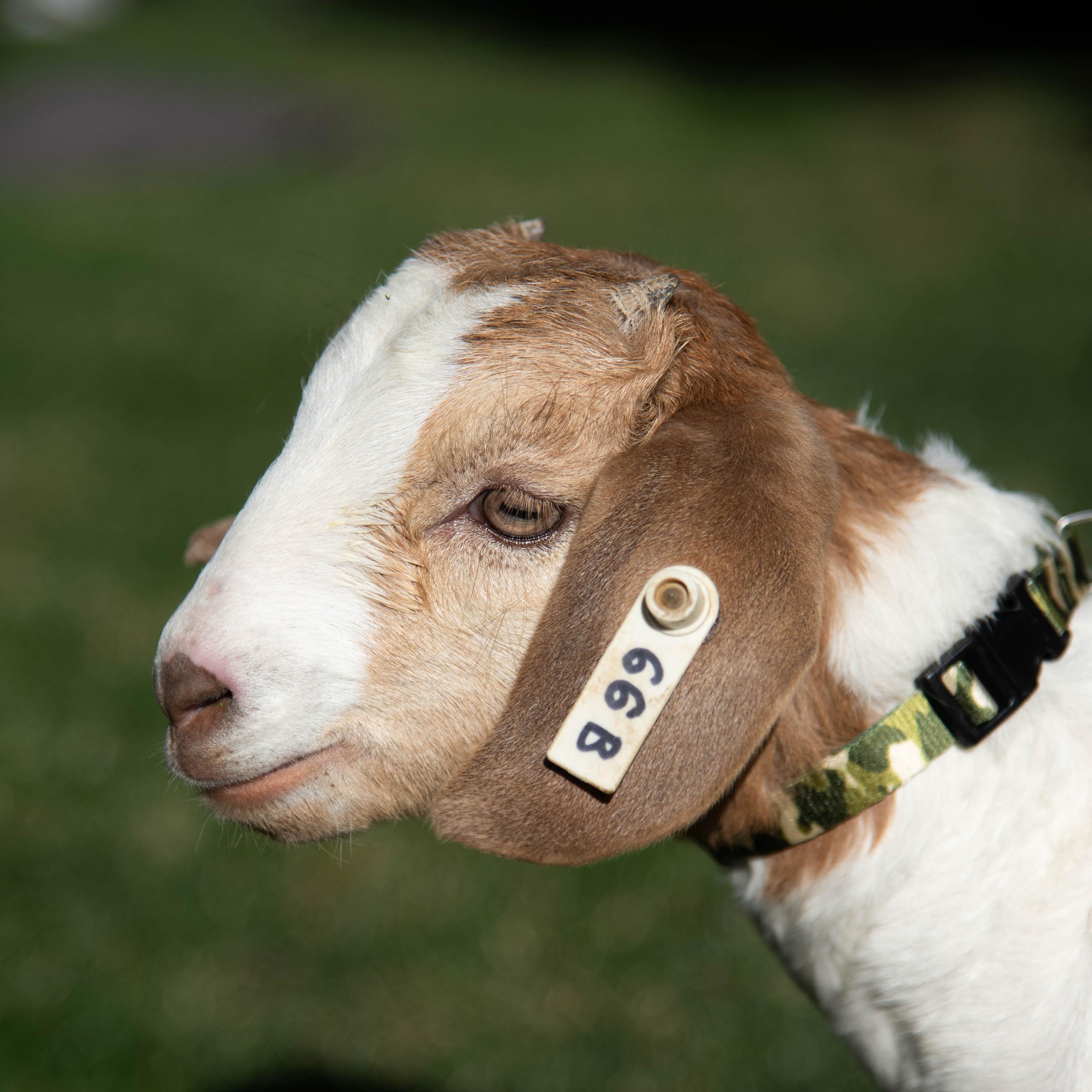
Baby Goats & Yoga

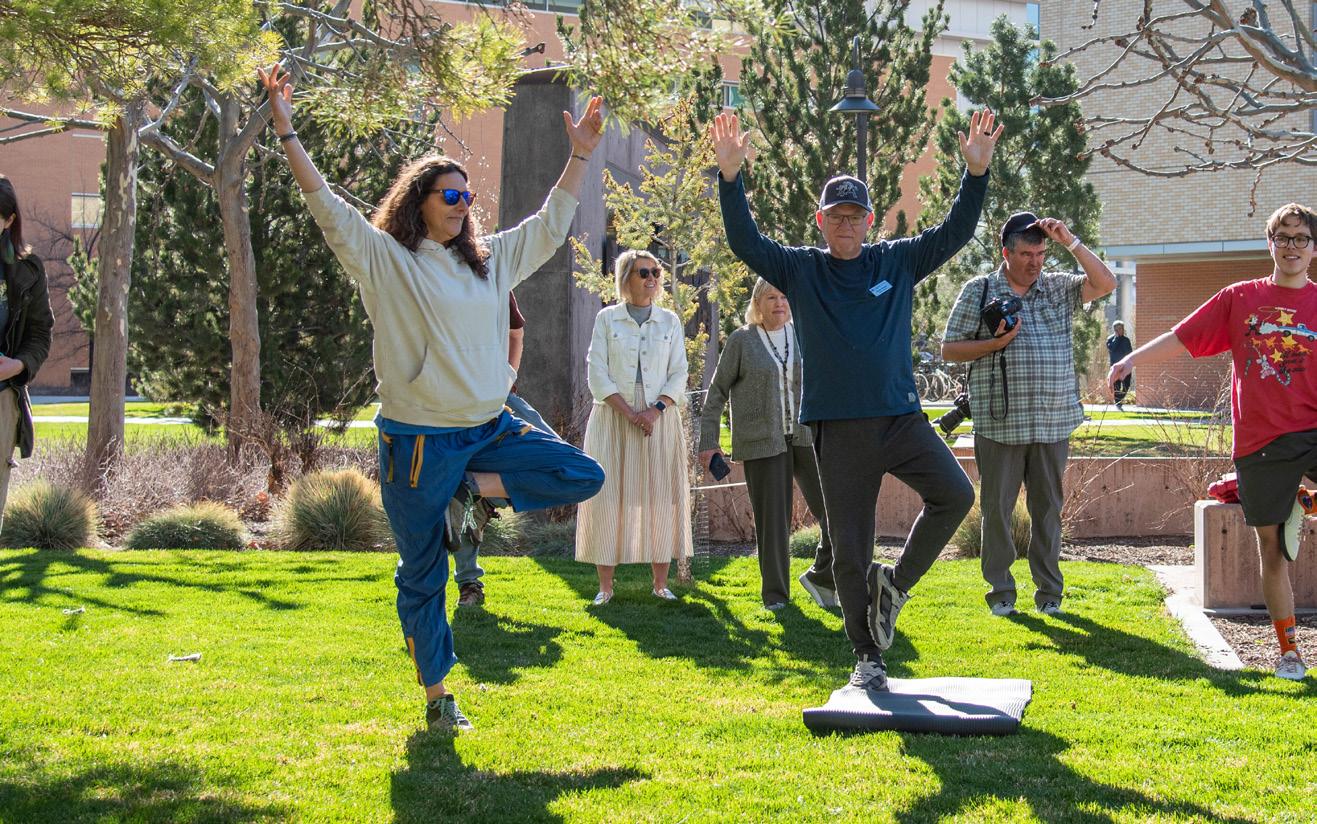
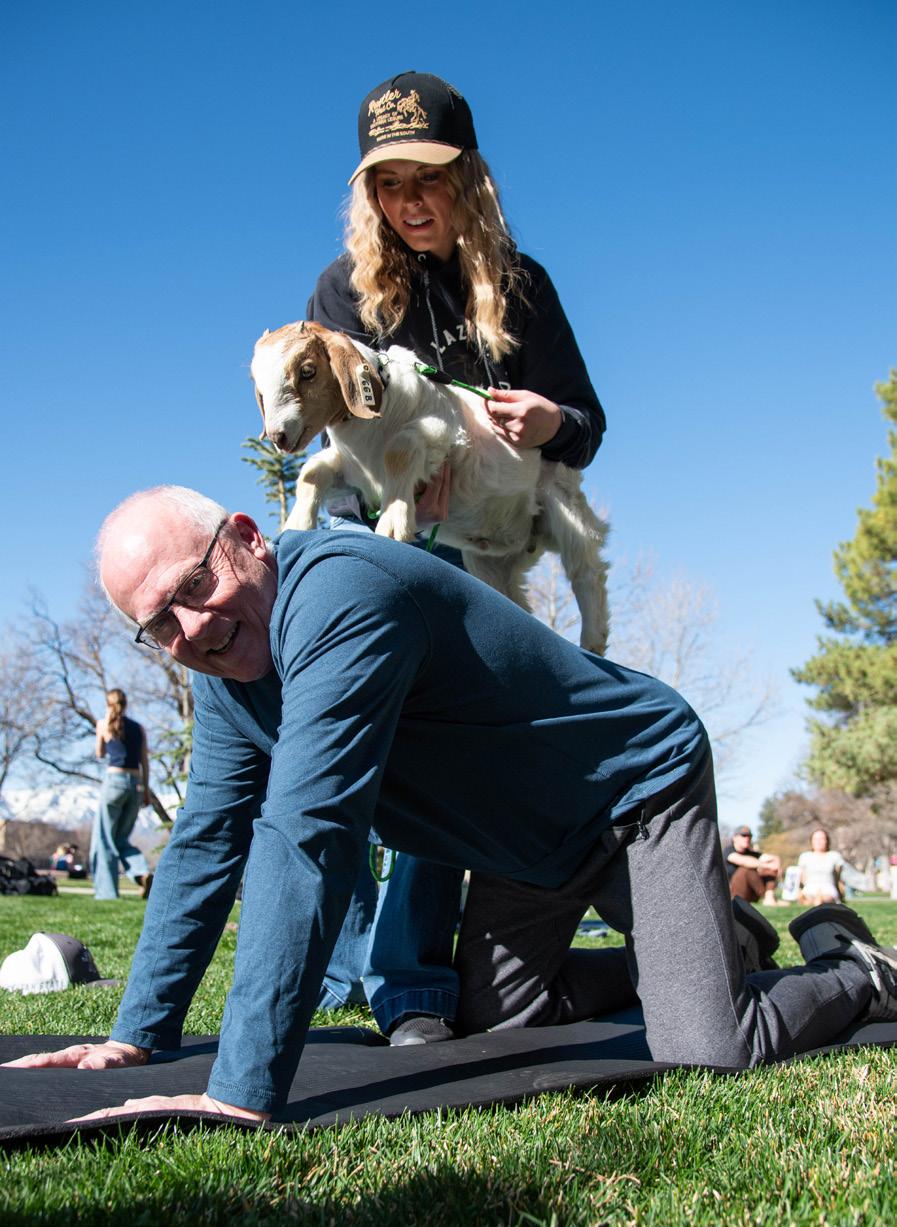

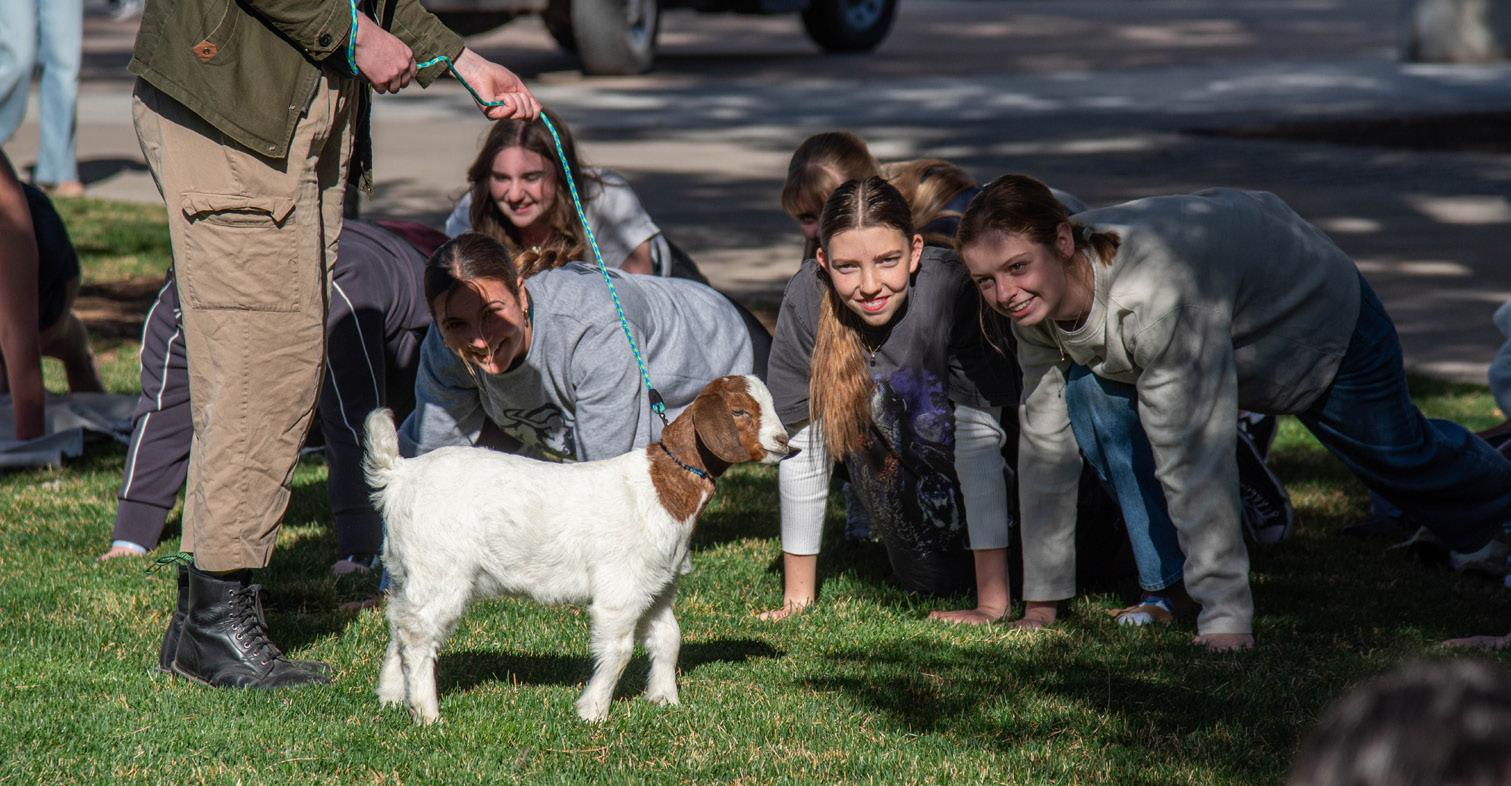

Jack is a senior studying graphic design. His favorite color is green, he likes to listen to Joywave and he is pretty confident that he is roughly halfway to becoming the 32nd best photographer in northern Utah.



www.sudokuoftheday.com.


By Jack Burton