HIGHLANDER magazine


Soil Club Digs Deep, Sets Sights on National Stage
How USU Students Can Find Jobs in Natural Resources
USU Members of the Great Salt Lake Strike Team
USU’s Natural Resource Camp Helps Students Break Barriers and Sharpen Skills
Low-Head Dams Present Dangerous Currents for Recreationists
New Nature Parks Offer Gateway to Outdoor Learning for Students & Community
Wuda Ogwa Project Heals Land, Water, Culture
Utah Conservation Corps Celebrates 25th Anniversary
Utah Law Leaves Little Room for Wolves in Northern Utah
Reimagining Agricluture: Indigenous Practices and Permaculture in Cache Valley
From the Great Barrier Reef to Great Salt Lake: Inside USU’s Marine Ecology Program


HIGHLANDER EDITOR:
Hazel Harris-Staples
GRAPHIC DESIGNER:
Kamrin McNeill
REPORTERS:
Emma Barker
Alyssa Caywood
Grace Colvin
Bailey Daniels
Carson Frost
Jayke Martin
Rory McNeill
Dylan Moore
Mia Nielsen
Avery Truman
PHOTOGRAPHERS:
Jack Burton
Sydnie Fonoti
Elise Gottling
Dane Johnson
Rylee Patterson
Hadley Sintay
ADVERTISING:
Carson Day
COPY EDITORS:
Camille Simpson
Ella Stott
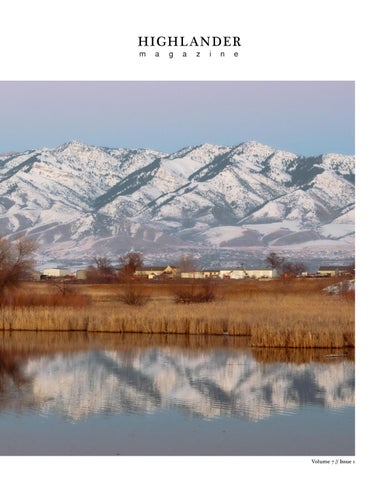
Cover Photo By Rylee Patterson
Published and Distributed by The Utah Statesman
0165 Old Main Hill Logan, Utah 84322-0165

In a soil pit five feet underground, there are no shortcuts.
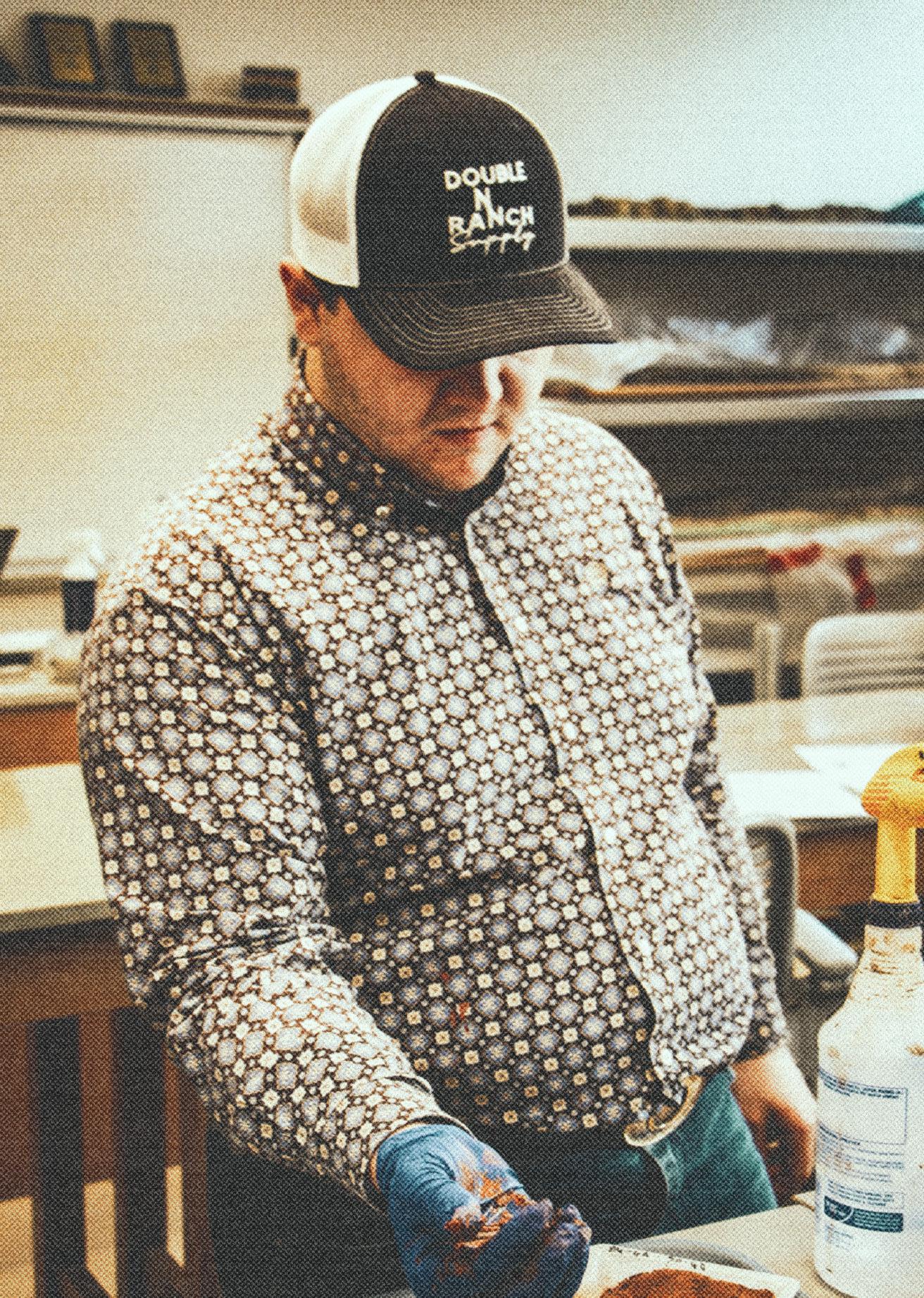
Students climb down into the earth, press damp soil between their fingers and attempt to identify its properties.
At Utah State University, that work happens through the Soil Judging Team, a competitive and academic organization housed in the S.J. and Jessie E. Quinney College of Agriculture & Natural Resources.
The team, often referred to as the soil club, trains students to analyze soils in field pits, interpret their characteristics and apply that information to real-world land-use decisions. This year, after
placing No. 2 overall at the Northwest Regional Soil Judging Competition, the USU team qualified for the National Collegiate Soil Judging Competition in Raleigh, North Carolina.
Cody Manhard, a senior majoring in plant science and minoring in soil science and agronomy, explained what the club does.
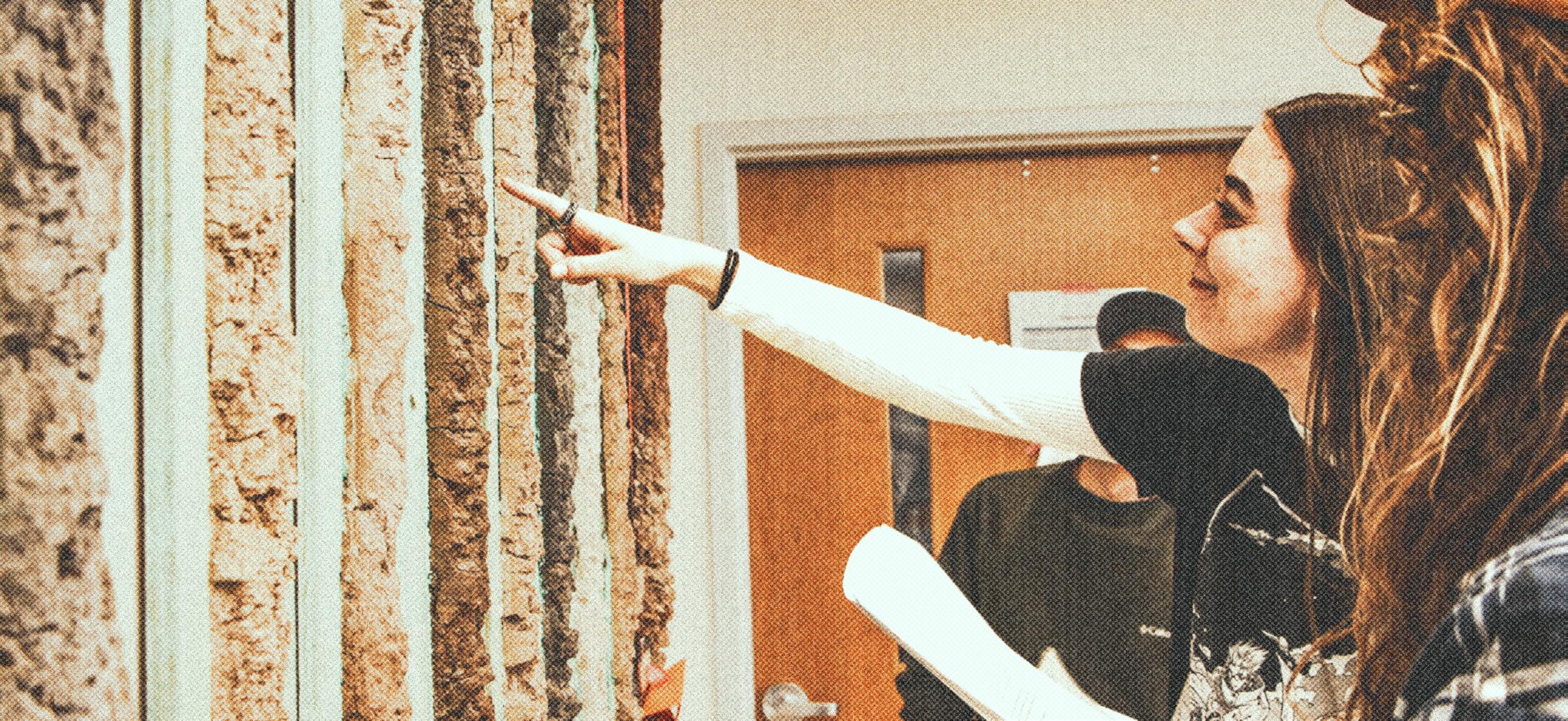
“We dig a pretty large pit into the ground — about 150 centimeters, about 5 feet deep,” Manhard said. “What you’ll see is all these horizonizations occurring down in the soil.”
Those horizons — distinct layers formed over decades or centuries — tell a story.
By Dylan Moore
Students are trained to identify texture, color, structure and composition by sight and feel. From that data, they interpret what the land can sustain.
“Is this good agricultural land? Could you maybe do a forestry operation here? Could you build a house with a basement here? Would this be a good place for a septic field?” Manhard said. “You give your interpretation as to what it would be good for.”
Regionals, held within the northwest region of the United States, bring together universities from states including Washington, Oregon, Utah, Idaho and Colorado. Teams spend two days practicing in unfamiliar landscapes before one day of individual and group judging events.
Chelsea Duball, assistant professor in the USU Plants, Soils and Climate Department and soil club adviser, described it as “a place-based learning experience” where students assess not just the soil itself but the broader landform and geomorphology shaping it.
“They’re immersing themselves into those landscapes,” she said. “To describe more than the soil, they do some geomorphology assessments to understand the landform of that area and how those soils came to be in that place.”
Duball and Manhard both expressed how rigorous the competitions are.
“The learning curve is scarily steep for a lot of the students,” Manhard said. “You show them the scorecard, and it’s just, whoa, information overload.”
Competition days start before sunrise and stretch late into the evening. Students are in the pits by 5 a.m., sometimes before daylight, judging soils until nightfall. Still, Manhard insists the payoff outweighs the exhaustion.
“The quality of the education from this club, these events — it’s worth every penny of the degree if you were to get no classes,” he said. “It’s the networking. Everybody goes there who matters.”

Manhard, now in his second year competing, started with no formal soils coursework. He attended his first competition before ever taking a class in the subject.
“I had no idea what I was doing, and it was amazing,” he said. “I learned so much.”
Each competition sharpened his skills. At the most recent regional event, he placed No. 9 individually — meeting a personal goal to score in the top 10 before graduating.
While competition remains central, Duball said the club is working to broaden its reach.
The organization is open to any student, not just those within the QANR. In recent years, members have included students in natural resources, wildlife and related disciplines.
The club has also begun hosting events beyond team practices, including a World Soil Day celebration, where members created artwork using soil-based paints.
“We’re always looking for new students to join,” Duball said. “We welcome everybody to come and practice.”
Practice sessions during winter are typically held in the soil lab in the Stan L. Albrecht Agricultural Sciences Building, where students study sample profiles and review scoring methods.
When weather permits, they travel to one of roughly 10 maintained soil pits throughout Cache Valley, many located on university property.
Standing in those pits, sometimes shoulder-to-shoulder with 15 other students, team members refine their ability to identify sand and percentages by touch alone and distinguish subtle variations in color that indicate drainage patterns or mineral presence.
For Manhard, the club’s competitive drive extends beyond personal achievement.
In the western conference, he said one university in particular has dominated in recent years. The prize is a ceremonial “golden shovel” trophy awarded to the top team.
“I would love to see that just spend one year here at USU,” he said. “It’s been here before several times, but it’s been a little while.”
That ambition now carries into nationals, where students will encounter soils unlike those found in Utah — a challenge Manhard described as both educational and rewarding.
Above all, he emphasized, the experience is about understanding soils as foundational to agriculture, infrastructure and environmental management.

“Soils are interconnected with everything,” Manhard said. “There are few things you can put on your resume more impressive than enhanced soil experience if you work in ag or natural resources.”
For Manhard, the soil club offers more than trophies. It offers field experience and professional networks.
The club will recruit anyone at any time during the school year but focuses on recruiting during the fall to ensure participation in competitions.
For Duball and Manhard, the soil club, although rigorous, is a fun experience that has a lot to offer. They both hope to keep the momentum going for next year.

By RoRy McNeill

The S.J. and Jessie E. Quinney College of Agriculture and Natural Resources strives to help students prepare and acquire skills to manage and protect environments and the natural resources in Utah. For the past four years, the Color Country Natural Resources Camp has been an opportunity for students to learn and practice skills that they will take with them into their fields, as well as to break down barriers between their peers.
“Essentially, it is a camp where we go out into the canyon and teach students field skills, try to help them build community within the College of Natural Resources,” said Utah State University sophomore Ashley Starr, who is the committee chair for the camp. “We do workshops, camp out and have a good time out there.”
For others, the camp goes beyond simply teaching skills, additionally helping students to meet others within the college and create friendships that go beyond the classroom.
“I definitely feel like it’s about breaking down barriers between people who want to work outside. There are some skills you learn and some experiences that really go a long way. But I think it’s definitely about getting outside with your cohort and doing things with new people,” said former camp equipment manager Kennedy Price. “You’re meeting other people who are interested in things like you. I’ve seen a lot of friendships blossom from the camp. We have a broad range of what we’re shooting for. To get people into workshops, learn some new skills and knock down some of those barriers.”
Cortlyn Graves shared similar thoughts about her experience with the camp as a first-year student at USU.
“As a first-year student, I didn’t really have a lot of friends, especially in my major, yet, so it was really great to meet a bunch of people,” Graves said. “I am still friends with every single person that I met at camp, and now a lot of them are in my classes.”
With the recent merger between the College of Agriculture and Applied Sciences and the S.J. and Jessie E. Quinney College of Natural Resources, the camp may look different as it aims expand beyond natural resources and include activities to help agriculture students as well.
“Because of the merger, we’re hoping to expand our workshop and our accessibility a little bit more to be able to include a lot of the agriculture majors that joined the college when we combined,” Starr said. “The main goal is to help students get field skills, so we’re hoping to add more workshops to fit students from agriculture majors.”
While the camp is oriented towards students within the QANR, it is not limited to students in the college. Anyone interested is encouraged to go out with the group.
“In the past, it has definitely been natural resources-heavy, but we invite other colleges to come out as well. By inviting other colleges, we try to make sure that some of the workshops are interesting to them. Last year, we invited plant soil climate and some agriculture students, and we did a soil workshop,” Price said. “While some workshops might not be exactly your cup of tea, we try to do a broad range of things for everyone. Even if you just want to go camping for the weekend and hang out with your friends and do some cool workshops, you’re more than welcome to come along.”
The camp’s workshops include activities from all sorts of environmental fields. From wildfire management to eco-art, there are activities for everyone to enjoy, according to Starr.
“Last year, we had an e-fishing workshop, a wildlife trapping workshop and more, but we didn’t just do workshops. We also did fun stuff like eco-art, which is a student club on campus,” Starr said. “It’s all to help students find community while also learning how to do stuff in the field. As well, if your major is unexplored and you don’t know 100% what
you want to do, then we try to provide a little bit of everything so you can figure out what you enjoy.”
The workshops are directed by USU faculty as well as professionals from various fields who help create engaging and informative workshops for students to learn from.
“The professors help a lot with the workshops. They love to help out because our college has such a close culture, and they really want to support us,” Price said. “We’ve gotten some outside help as well. Last year, we had the USGS [United States Geological Survey] come and teach the electrofishing. They brought all their equipment and talked about how to do it safely and professionally.”
Despite the hard work it takes to organize and plan the camp, for those who run everything behind the scenes, seeing students learn and grow makes the effort worthwhile.
“I would say my favorite part of the camp is seeing everything come together because it is a little bit stressful leading up to it. We spend all spring semester and the beginning of the fall semester planning everything and getting everything together,” Starr said. “Seeing how happy and involved students are in the workshops and seeing them get to know each other and create lifelong connections within the college is really great.”
Regardless of one’s major, Starr and Price said the Natural Resources Camp has something for everyone, whether participants are there to add skills to their resume or simply to enjoy the outdoors.
By avery TruMan
Brad Parry’s great-grandfather survived the Bear River Massacre by “lying down on the ground and playing dead.” This is a story Parry’s grandmother has relayed to him many times while standing at the site together.
“It has a special meaning to me just because that was our family that was there, and they survived,” Parry said. “When we used to go there, it was a really sad place.”
In 1863, the United States Army killed hundreds of the Northwestern Band of the Shoshone Nation. Over 150 years later, Parry’s life mission is to lead the restoration of the Wuda Ogwa, the Bear River, cultural site through collaboration, togetherness and culture.
This undertaking has attracted hundreds of volunteers and partner organizations. Involvement has only grown — starting with about 400 volunteers during the first
event and nearly 900 people showing up for the most recent tree-planting day. Parry said they had to space the event over two days to account for these numbers.
“As the positivity grew, the place has changed for me,” Parry said. “It’s a special and sacred place, but I’m excited with what we’re doing.”
This project of healing is a wide-reaching venture. It entails planting native flora, removing invasive Russian olive trees, installing wildlife cameras, conducting roadkill studies, building a walking trail, conducting hydrological and geomorphological studies and more.
According to Parry, one of their main goals is to restore the wetlands of Battle Creek, which would have been known as Beaver Creek at the time of the massacre. Parry said beaver dams keep the water clean and biodiverse.
The restoration project has expert input from hydrologists, anthropologists, engineers and geologists who study the rocks, soils and hot springs.
“The professional people that come work on it have just told me this is their favorite project just because it means something,” Parry said.
Among the many partner organizations is Utah State University. Natural resources classes aid in studying wildlife crossing options and setting up game cameras, which have captured images of coyotes, raccoons, bobcats, deer and more.
Cristina Chirvasa is a graduate student at USU who is designing her Ph.D. project in collaboration with the Northwestern Band of the Shoshone Nation and the restoration at Wuda Ogwa. She also works as USU professor Eric LaMalfa’s lab manager to coordinate undergraduate researchers.
“We’re just trying to see what’s at the site and how that’s going to change in response to restoration,” Chirvasa said. “Our undergraduate research technicians can just pick a topic they’re interested in,
and we can work with them to make a project around it.”
Student projects range from studying reptiles to analyzing bird diversity and using sensors to collect bat echolocation data. The students are also working to help reestablish sego lilies.
“It is our state flower but also a very important cultural resource for the Northwestern Band,” Chirvasa said. “We’re trying to establish that so that the tribal elders can use it to educate youth.”
Anthropologic studies have shown Indigenous presence helps sego lilies flourish, according to Chirvasa, which is why undergraduates are mimicking how Indigenous peoples would harvest the flowers.
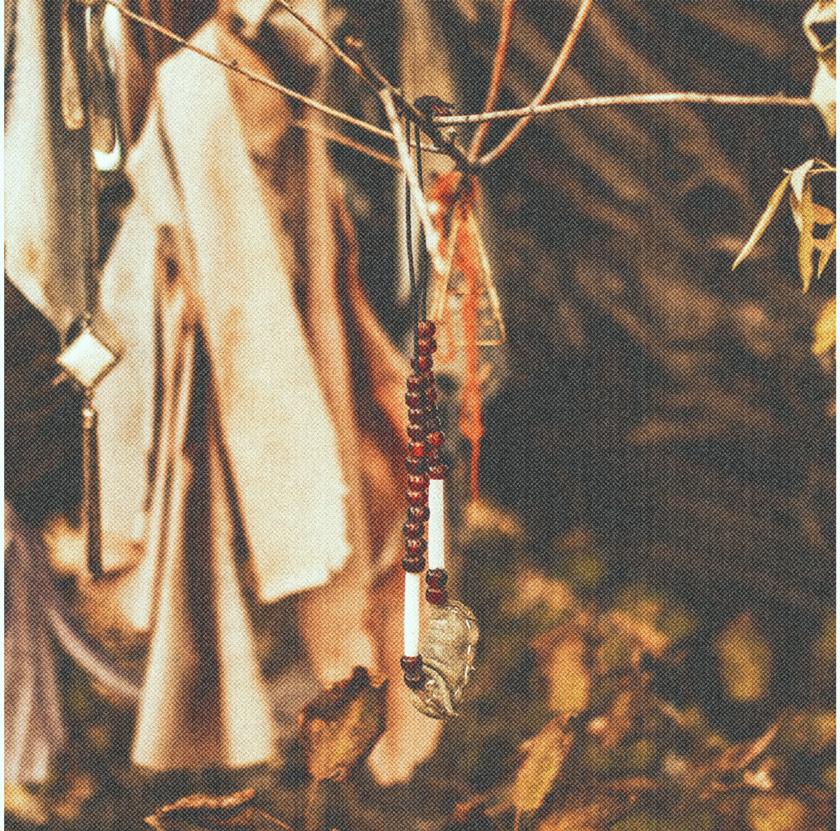
Rios Pacheco, the cultural analyst for the Northwestern Band of the Shoshone Nation, holds ceremonies to retain respect for the land and the ancestors.
“Usually what we do is we have a tobacco offering to the land,” Pacheco said. “We take care of all the ancestors that still have their spirits on the land. I make sure that all our cultural understanding is explained to those that are working with us and those that come out and volunteer with us and that we show respect for what we’re doing.”
According to Pacheco, removing invasive plants will increase the populations of birds, insects, frogs, snakes, pollinators and other native animals.
“What our project does is bring people together,” Pacheco said. “It allows us to not just share the culture but to share knowledge of nature.”
The restoration project is a good opportunity to teach the youth how native plants are used for food, medicine, cords or clothing, according to Pacheco.
“Most of all, we’re making it a place where people can come and re-energize themself because it will be a place of calmness,” Pacheco said. “Where the water flows, people lose a lot of their stress.”
The water from Beaver Creek flows into Bear River, one of the largest tributaries that feed into the Great Salt Lake. Pacheco said the restoration of native plants along the creek will help filter clear water downstream.
“It’s a good learning lesson for other management of different waters, rivers and anything that flows — creeks that flow — into the Great Salt Lake,” said Maria Moncur, the communication director of the Northwestern Band of the Shoshone Nation. “Another goal is that we’ll return at least 10,000 acre-feet of water back to the Great Salt Lake each year, and that’s a modest estimate.”
Moncur married into the tribe 27 years ago. She decided to join the restoration project due to her professional background and experience.
“It’s more than just what happened 163 years ago. It’s hope for the future,” Moncur said. “This community, working together, can accomplish anything.”
Moncur said partner organizations have been valuable to the project and in creating strong, lasting friendships.
“Those partnerships have been invaluable in just continuing getting the science feedback and drawing the line between cultural and scientific,” she said.
According to Parry, these partnerships are what make the project so successful and widespread.
“People that come out and volunteer just say they feel welcomed, and we’re pleased that they’re there,” Parry said. “People ask me, ‘Why do you have so many settler volunteers? They kind of pushed you out.’ We’re like, ‘No, we live among them. They live among us.’ We don’t carry that grudge. We want to promote that this land is togetherness and that this land is rebirth and regrowth.”
Parry encouraged volunteers to remember the trees they planted by pinning each location on their phones.
“We want, in 20 years, people coming back because they feel connected,” Parry said.
This connection is what lets the project hold deeper meaning for those who participate, Parry said. He hopes volunteers
will bring their future kids and grandkids to the trees they planted.
“Everyone’s going to forget my name in the future, but this project will still be there, and that’s the goal,” Parry said. “I don’t care if they know who started it. It’s just all about the future.”
As Pacheco said, “It’s a restoration for not just nature, but for people.”
By Bailey Daniels
Utah State University students studying natural resources are navigating a changing job landscape as federal hiring freezes and shifting government priorities affect available jobs and planned career paths.
Students majoring in fields such as wildlife ecology and environmental management have historically pursued jobs with federal agencies such as the U.S. Forest Service or National Park Service. However, policy changes and workforce shifts over the past few years have created uncertainty for some students preparing to enter the workforce.
On U.S. President Donald Trump’s first day in office on Jan. 20, 2025, he implemented a federal hiring freeze. As stated on whitehouse.gov, no vacant federal civilian position “may be filled, and no new position may be created except as otherwise provided for in this memorandum or other applicable law.”
The freeze was extended multiple times, pushing back the end date. An executive order released by Trump on Oct. 15, 2025, titled “Ensuring Continued Accountability in Federal Hiring,” maintained ongoing limits on federal hiring
and required agencies to receive approval before filling certain positions.
Despite the ambiguity surrounding finding work for natural resources students, there are resources offered by USU to assist in the process. Peter Howe is the associate dean for strategic academic initiatives in the S.J. and Jessie E. Quinney College of Agriculture and Natural Resources and is involved in coordinating the college’s internship program.
This program has partnerships with agencies such as the Forest Service, National Park Service and the Utah Division of Wildlife Resources.
“Over the past couple of years, there’s certainly been some variation in the jobs that are available and the timing when they’re offered,” Howe said. “Because of the employment changes that have happened, hiring freezes and some layoffs at the federal level, these agencies are finding that these are really critical positions.”
This realization, according to Howe, has encouraged these agencies to increase staffing for the summer 2026 season. He believes that students should feel optimistic about finding jobs.

“More and more positions are being listed, particularly for seasonal technical positions through places like the Forest Service,” Howe said. “When you look at positions such as ones involved in wildfire management, there’s understandably a big need for people to fill those roles.”
One USU resource Howe encouraged students to take advantage of is the natural resources peer advisers. Based in the Natural Resources Building, these peer advisers help with things like preparing a federal resume and navigating federal hiring platforms.
One of these peer advisers is Kennedy Price, a student majoring in wildlife ecology and management and the president of the USU student chapter of the Wildlife Society. Being a senior, Price has experienced navigating the current job market.
“I’m a peer adviser this year because it was so helpful to me when I was trying to find a job,” Price said. “They can tell you what the best job boards are, how to fix your resume and how to write a cover letter.”
Price explained there are different resumes needed for applying for a federal job, a job with state departments or nonprofit organization jobs.
A lot of federal jobs are posted with deadlines that have a very quick turnaround, as emphasized by Howe, adding to the challenge of securing one.
“I’d say check back often and look for keywords like ‘forestry,’ ‘wildfire’ or ‘natural resources,’” Howe said. “We also have an email list in natural resources that any student at USU can subscribe to, where we send around job opportunities.”
According to qanr.usu.edu, the QANR has a 75% job placement rate upon graduation. The website states another 10% of graduates move on to advanced degree programs, suggesting 85% of students get opportunities within the field.
Price clarified that hiring season is from November to March, when many apply to seasonal summer jobs, grad school or what she referred to as “real big kid jobs.”
“This year has definitely been better. A lot of those cuts happened right before hiring season last year,” Price said. “It was kind of a disaster because all of those got cut, the government got shut down and funding got pulled out. I think we’re kind of on the up and up now.”
USU hosts several federally-funded labs such as the Utah Water Research Laboratory, the United States Department of Agriculture Bee Biology and Systematics Laboratory and the USDA Poisonous Plant Research Laboratory. Many labs require student technician support, offering opportunities for undergraduate and graduate students.
“There’s certainly been some shifts and some projects that have been paused,” Howe said. “But I think, generally, I’m really happy that we’re still able to provide a lot of these job opportunities for students.”
The internship program within QANR is hiring for summer 2026 positions that only USU students are eligible for. Howe advises students to access qanr.usu. edu’s “Jobs and Opportunities” page to take advantage.
As a student, Price said she believes federal natural resources jobs used to feel the most stable and consistent.
“There was always a place, always a job with great benefits. Once you’re in, you’re in forever. With the changing politics, that’s not true anymore,” Price said. “That was a foundational truth in the natural resources, and that shook a lot of people, and I don’t know if people have bounced back from that.”
Price equated finding a job to being lost at sea but said USU’s resources have offered students a way to be tethered.


“Natural resources is a pretty big community, and we’re all in the same spot trying to find a job for the summer,” Price said.
LOW-HEAD DAMS PRESENT DANGEROUS CURRENTS FOR RECREATIONISTS;
By alyssa CaywooD
In an environment where outdoor and water recreation is highly popularized, researchers say it is crucial for individuals to be aware of possible risks and take action to prioritize their safety and the safety of others.
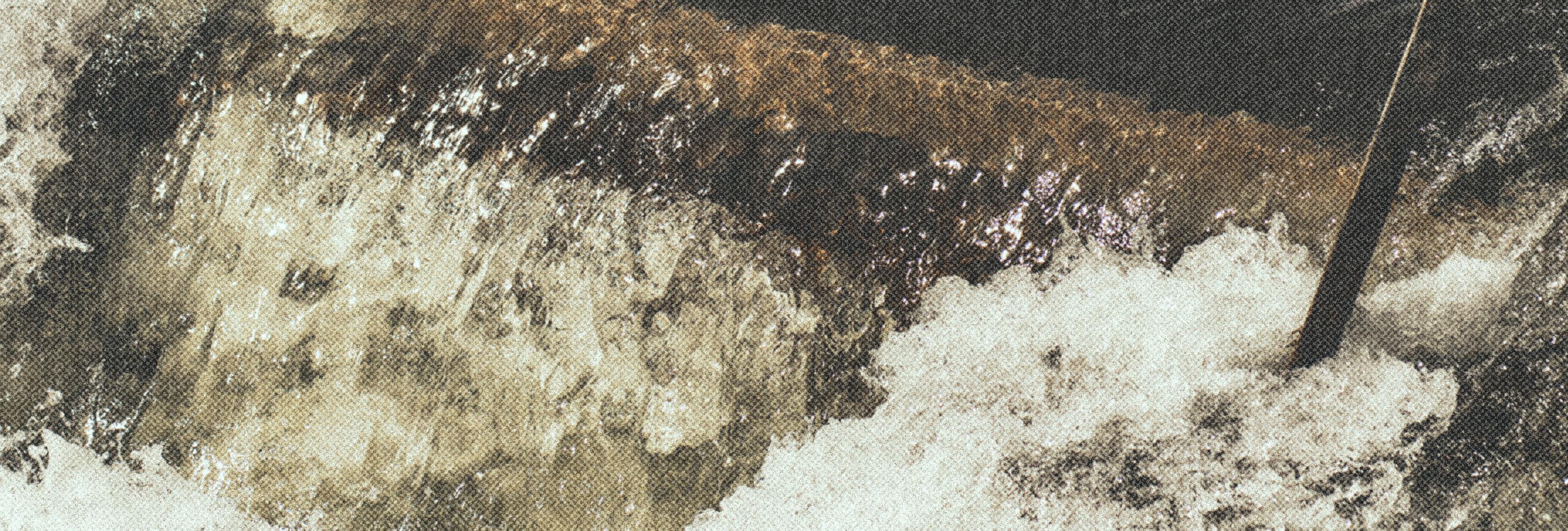
Dangerous currents created by lowhead dams, typically under 15-25 feet tall, have caused nearly 1,000 drownings in the United States since the 1970s, prompting researchers to develop new software designed to help recreationists evaluate river safety.
With more than 20,000 low-head dams across the country, many of which are located near popular recreation areas, researchers say improving awareness and safety tools could help prevent future tragedies on U.S. rivers.
“We don’t want to wait until someone loses their life at a structure to know that it’s dangerous,” said Brian Crookston, professor in the Civil and Environmental Engineering Department at Utah State University.
During the past 20 years, there have been three fatalities on the Jordan River between Utah Lake and the Great Salt Lake.
“Two of those fatalities occurred at the Winchester Street crossing at about 70th South,” said Rollin Hotchkiss, a professor at Brigham Young University in civil and construction engineering who is researching low-head dams. “At that location, there was a water drop of 18 inches, and a couple went over that in a two-person inflatable kayak, capsized and drowned. You can stand up in that water, but if you’re thrown out of a canoe, the turbulence during higher flows will just kill you.”
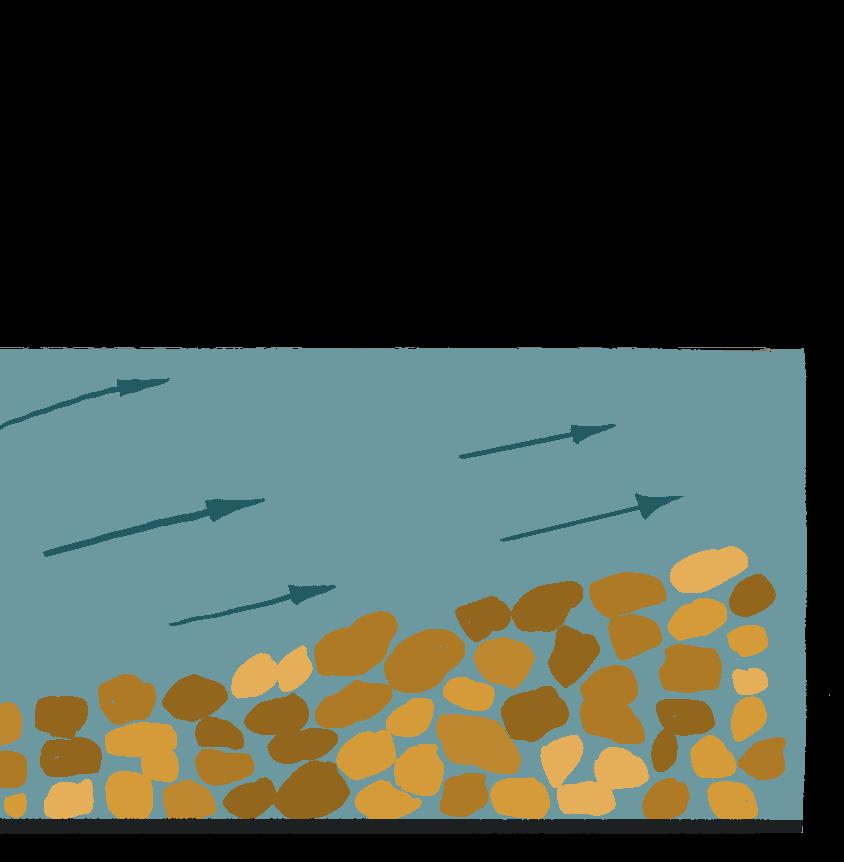
Since then, that 18-inch drop has been replaced with a series of rock weirs, stone barriers across a waterway with the purpose of controlling erosion, reducing water velocity and managing sediment.
Another major concern with low-head dams is the ability of aquatic organisms to freely move upstream and downstream. Aquatic organisms include anything that lives in the water but are generally identified most easily as fish.
“A low-head dam represents a barrier to the ability of fish to move upstream, and if that species of fish migrates upstream, for example, to spawn, then the spawning opportunities are limited,” Hotchkiss said.
Hotchkiss said in order to understand what alternatives would be reasonable and effective for low-head dams, it first must be understood why they are in place.
“The reason is you want to raise the water level upstream to a constant and reliable elevation so you can divert water out of the river with a canal or a pipe,” Hotchkiss said. “If we don’t have a low-head dam there, the water level in the river will constantly rise and fall, leaving the diversion works high and dry.”
However, many low-head dams are no longer used for their original purpose. According to Hotchkiss, it is estimated that many low-head dams in the United States have been reported as no longer serving their initial function of raising water levels for diversion.
“So, the first thing we can do is ask, ‘Is the low-head dam still required?’” Hotchkiss said.
If the low-head dam is not still required, it then raises the follow-up question of who will pay for its removal. Removal of these dams can cost between $250,000 to $500,000.
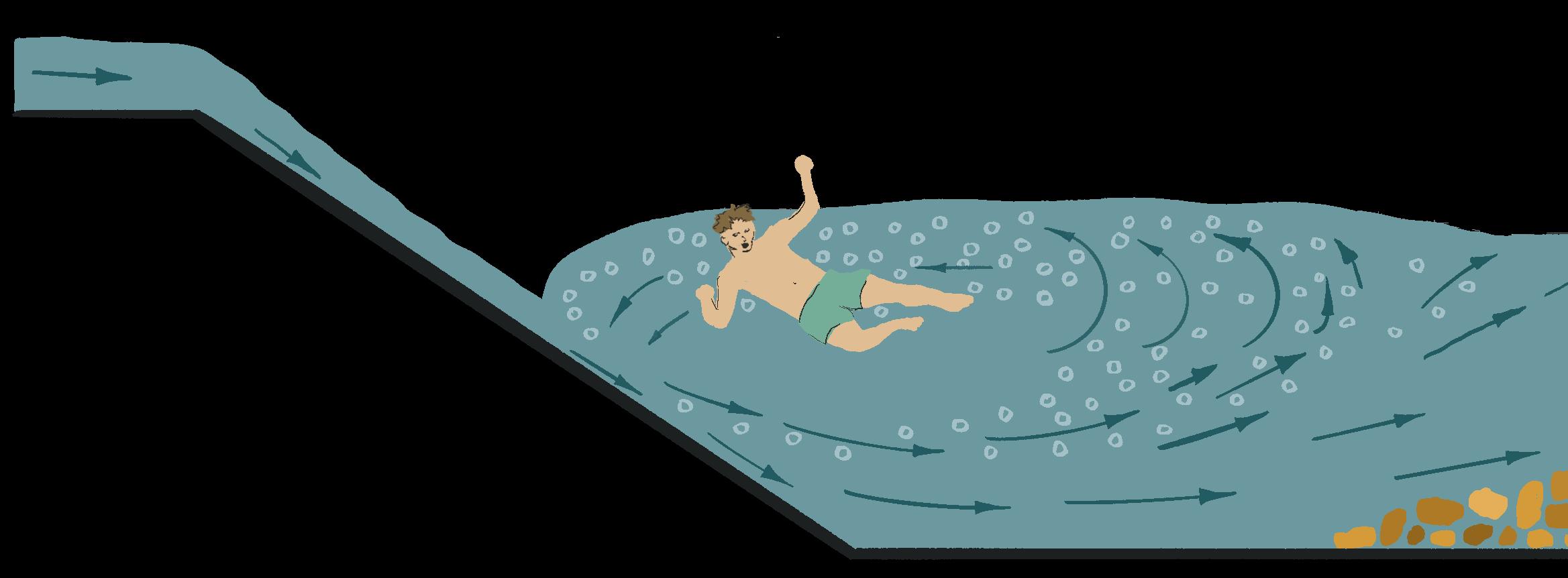
This high cost requires funding that is not always easy to obtain. In fact, as concerns across multiple areas continue to grow, allocating financial resources has become an increasingly difficult issue. “It’s easier to get funding to remove the low-head dam to provide additional fish habitat than it is to get funding to improve public safety,” Hotchkiss said.
Because of this, Hotchkiss has taken on the role of principal investigator on a project with the U.S. Department of Homeland Security and the Federal Emergency Management Agency, where he has worked with Crookston to develop a software toolbox and help minimize the deaths that are a result of dangerous currents at low-head dams.
“These fatalities need not occur,” Hotchkiss said. “They don’t have to happen. They are completely avoidable.”
Hotchkiss and Crookston were able to connect with other individuals across the country with a similar drive to create safer river environments. They are advocating with FEMA and DHS, which have helped with the funding for their research.
“Trying to advocate for safety has led to signage, and then it’s led to some research,” Crookston said. “Now we’ve actually, separate from this project, developed a nationwide inventory of all the structures where this might be a possible problem.”
This research has led to state safety programs, parks and recreation initiatives and the development of a software toolbox.
The purpose of this toolbox is to provide a two-step process of testing procedures for recreationalists to analyze the risks of a dam, which would give them an idea of whether or not it is safe to recreate in that area.
The first step, designed by Hotchkiss, would allow users to look at a map of the U.S., enlarge it, and select a low-head dam they are interested in. It would then allow users to run a testing procedure and get an idea of the dam’s safety based on the results.
If the results turn up inconclusive or if there are warnings, the user can then move on to step two for further analysis.
The second step, developed by Crookston, is a computationally advanced toolbox of educational materials that allows individuals to use their favorite piece of software and perform the analysis they want to do.
“It will be public access, so anyone can go into this website,” Crookston said. “There’s going to be some guidance materials that walk someone through everything from conceptualizing to using the tool to the data that you would need to how you collect the fuel data to how you put together your model for the toolbox.”
There will also be training videos and PDFs that can aid users in understanding what the toolbox is and how to properly utilize it.
The toolbox is expected to be complete and available to the public in about a year.
“We hope that our work catches the attention of state legislators who, while providing additional funding to their state dam safety programs, can actually begin to focus on low-head dam removal for these dangerous locations,” Hotchkiss said.


By GraCe Colvin
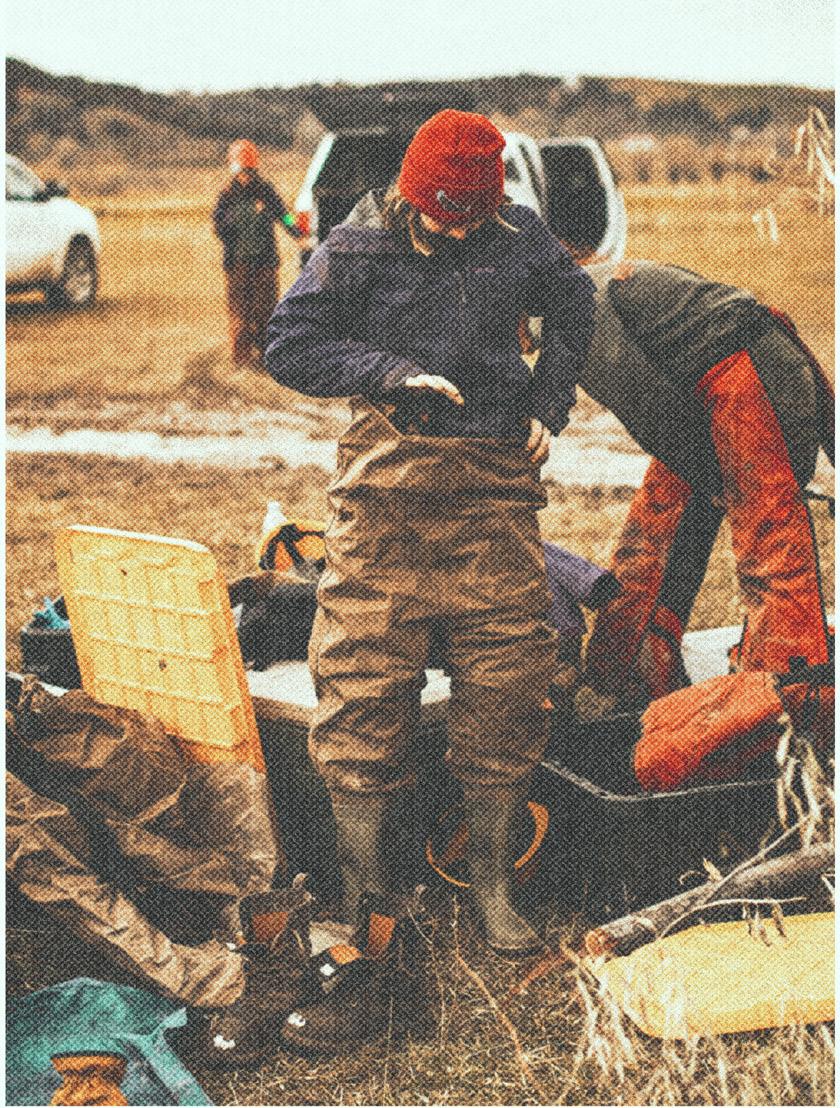
In 1999, a group of Logan residents had the idea to create an organization to protect their local environment. Now, over two decades later, their idea is celebrating its 25th anniversary as a leading conservation organization in northern Utah.
Officially beginning its work in 2001, Utah Conservation Corps is a statewide environmental conservation program that aims to protect and improve the vast natural resources of Utah. The organization is based on the Logan campus of Utah State University and garners hundreds of volunteers every year, many of whom are USU students.
As part of the larger AmeriCorps organization — a federal program that helps fund and run local projects such as UCC — the corps works on a case-by-case basis to determine projects that will best serve the current needs of the state. They then send volunteers to work in those fields alongside trained professionals and environmentalists.
There are two volunteer pathways used by the corps: members either join a crew of UCC volunteers to work on a specific site, or they are assigned to an individual placement, where they will be sent alone to work with federal agents or preexisting organizations.
According to the UCC website, volunteers commit to a certain amount of service time ranging from a few months
to a year and will receive a cost-ofliving stipend while they’re in the field. Students who volunteer with the corps are also eligible for an education award, which is a monetary grant that goes directly to schooling costs.
UCC also hosts local nonmember volunteer opportunities through organizations such as Urban Community Farm.
According to the executive director of USU’s Center for Community Engagement and UCC co-founder Sean Damitz, these volunteers have been hard at work across the state this year, having started and completed several successful endeavors in 2025. Notable among them was a project reducing fuel at Bryce Canyon National Park.
“The fuel by these structures was something built up for years and decades — really good about being able to get to that,” Damitz said. “It gave our members a lot of great workforce development skills.”
Volunteers began work on the project last fall and were funded by the National Park Foundation.
Additionally, UCC has spent the last several years working with the Northwestern Band of the Shoshone Nation at the Utah-Idaho border, helping the community restore historic lands damaged in the 1863 Bear River Massacre.
“What they’re doing is they are trying to — both from an ecological and a cultural standpoint — restore the area to where it looked and how it functioned pre-settler, pre-colonial,” Damitz said.
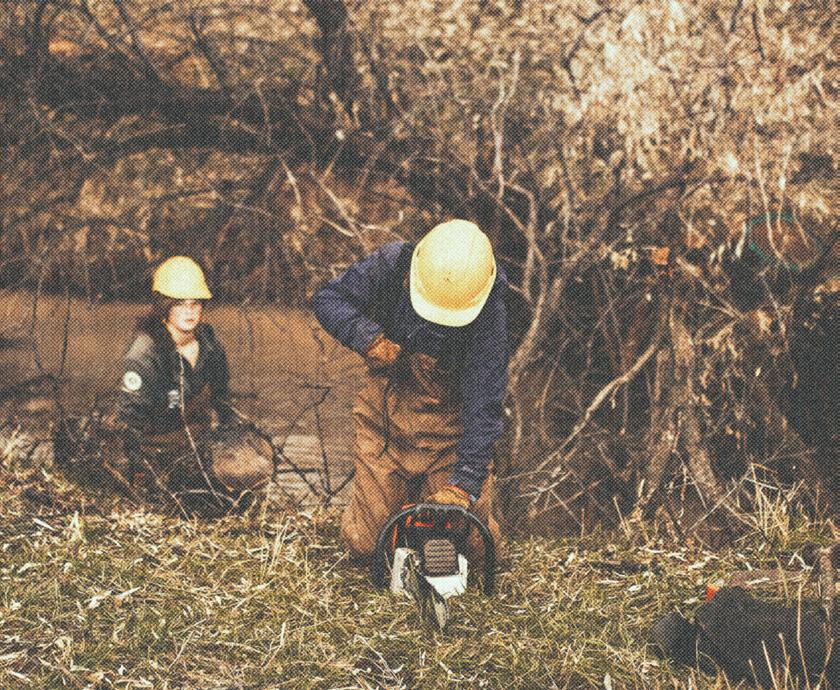
For this project, the crew’s main job is to clear out invasive plant species that have taken over the land.
“There’s also been a tremendous support from the community,” Damitz said of the project. “They’ve had planting days out there. I think the last two or three years, in the late fall, we’ve gotten hundreds and hundreds of volunteers all throughout northern Utah.”
Although UCC is based out of northern Utah, UCC AmeriCorps program coordinator Temis Taylor explained it has volunteers in every corner of Utah, allowing its reach to extend far beyond Logan.
“We have members that are serving across the state,” Taylor said. “They run programs like the Rakes and Shovels program and the Harvest Rescue program. We have members serving at Ogden Nature Center, doing environmental education there, Red Butte Garden, Moab Community Gardens.”
This year, UCC is celebrating its 25th anniversary. When asked what has made UCC able to withstand a quarter of a century of service, Damitz and Taylor had a clear answer: the people.
“These are incredibly hardworking young people who come — not all of them come from Utah. We get people from all across the country. They come here because Utah is an incredible place. They want to give back to the planet and to support the outdoor access that we have here in Utah. That’s pretty amazing,” Taylor said.
The organization also credits its partnership with USU for its enduring presence in the community.
“We have research in our backyard. We are connected to statewide campuses and the extension program, and not a lot of corps have that,” Taylor said.
According to Damitz, a large number of volunteers for the corps are students who work summer crew positions, gaining on-the-job experience in conservation. He claims many of UCC’s volunteers ultimately take on conservation projects of their own, such as USU’s Aggie Blue Bikes program.
“That’s been really great to see a lot of students go through the pipeline and to help them get through their college experience and graduate with some really good in-the-field experiences,” Damitz said.
Moving forward, Damitz and Taylor hope UCC will continue its work for another 25 years and beyond.
“I think we both hope that this corps will outlast us — that it will establish a durable, sustainable program that’s able to go on into the future,” Taylor said. “We are pivoting to meet the needs of the state, to follow our funding opportunities and to give our members the best experience possible.”
By essenCe Barnes
To Utahns, the Great Salt Lake is more than just a salty body of water. It is a habitat for wildlife, a defense against toxic dust exposure and a key contributor to the state’s “Greatest Snow on Earth.”
When the lake shrank in 2022 to its lowest-ever recorded level of 4,188.5 feet, a group of researchers, state agencies and experts from across Utah came together to do something about it. That effort became the Great Salt Lake Strike Team.
“The strike team was actually one of the first that was formally built to address some of the data issues surrounding how we can know where we’re at and what types of research or projects could be helpful during this time of crisis,” said Anna McEntire, managing director of the Utah State University Janet Quinney Lawson Institute for Land, Water, and Air and one of the team’s original organizers.
The team was created to serve as a trusted, primary source for data about
the Great Salt Lake to help policymakers improve watershed management and increase water levels.
“What we see is people from the state to grassroots advocates to other researchers really leaning on the work that the strike team does, as this is the agreed-upon data,” McEntire said. “So, when we’re talking about what really is the elevation of Great Salt Lake, we’re using the same numbers. When we’re talking about how much water agriculture uses, we’re using the same numbers.”
The team is made up of researchers from USU and the University of Utah, as well as state agencies like the Utah Department of Natural Resources, Department of Agriculture and Food and Department of Environmental Quality.
“The idea behind [the team] is bringing together researchers from different departments … different methodologies, different areas of expertise,” McEntire

said. “We’re not just, you know, the ivory tower … [we’re] really closing that gap between implementation and data.”
Team member Sarah Null, a USU professor of watershed sciences, researches the impact of climate change on water inflows to the lake, water storage strategies and functional flow requirements.
“I work a lot in environmental water management, and so I tend to focus on how we can enhance or sustain ecosystems but still think about those human water uses,” Null said. “My students and I are working on how much water will get to Great Salt Lake with climate change … taking our current demands … and saying, ‘With future climate changes, how much water do we think we’ll get to the lake given all these other water rights and water uses?’”
Null said one of the goals of the team is to get water to the lake and keep it there by filling in legal holes and informational gaps.
“For example, [in] some of our recent work, we realized that all of the measurements in rivers were upstream, and as we get closer to the Great Salt Lake, we don’t really have very many measurements, and we don’t understand where water is going,” Null said. “Then other agencies, like USGS [United States Geological Survey] and all of Utah State agencies could come in and start to say, ‘Okay, here are places where we should add more measurements.’”
David Tarboton, a USU professor of water resources engineering, brings expertise in hydrology, hydrologic modeling and terrain analysis to the team.
“My role has become the person who says what will happen with lake levels depending on how much the inflows are. Initially, we started out with the questions, like, ‘How much water would it take to get the lake back to healthy levels?’” Tarboton said. “That sort of provides a target for the efforts of conservation to get that additional water.”
Tarboton emphasized using creative solutions rooted in data to help sustain the lake’s health, and his recent research has looked at impounding Farmington Bay and assessing water from the Newfoundland Basin.
“The state as a whole needs to recognize that it needs to be in for the long haul in terms of solutions for the lake, and maybe the strike team needs to mature into that sort of mode too,” Tarboton said. “We need to think about immediate information but also longer-term knowledge, data systems and monitoring systems so we actually know that if this action is taken, it results in this much water getting to the lake.”
McEntire said her role on the strike team is as the unofficial organizer and manager. She is also the editor and shaper of the annual strike team data and insights summary.
“The strike team report is kind of long in the sense of pages, but for the amount of
content that we actually discuss and put together, we do a lot to keep it just to the high-level items and what are the critical things that people need to know,” McEntire said. “My other piece is putting together a census, as well as understanding the way people have engaged on policy.”
While the team has seen mindset and policy changes being made to support the health of the lake, they recognize that a consistent effort must continue to be made.
“Change is hard, you know, and we need change from everybody who uses water, which is all Utahns, to really think about how we can use a little less,” Null said. “Not only that, but how can we take the water that’s been conserved and really make sure it gets dedicated to Great Salt Lake?”
The trio highlights the importance of the multi-agency, multi-university partnership and how critical every part of the team is in supporting the creation of this data.
“We all want to see the Great Salt Lake saved, and we recognize that there are lots of trade-offs that come with making a decision to save Great Salt Lake,” McEntire said. “Hopefully, we can save Great Salt Lake while saving agriculture and recreation, water use and economic vitality and have the most wins with the fewest trade-offs.”
As lake levels continue to fluctuate, the strike team’s work underscores one simple truth: Saving the Great Salt Lake will require not only better data but state-wide volition.
By Jayke Martin
Cache Valley residents will soon have expanded opportunities to explore nature and learn about the environment with the development of the Nibley Outdoor Classroom.
The project aims to create spaces where children, families and community members can engage with wildlife, local ecosystems and outdoor recreation while building skills and confidence.
Interest in the site has already grown as visible improvements take shape.
“People suddenly noticed it when we put the gate in. People started coming in like, ‘What is it with the gate?’” said Kendra Penry, executive director of Stokes Nature Center.
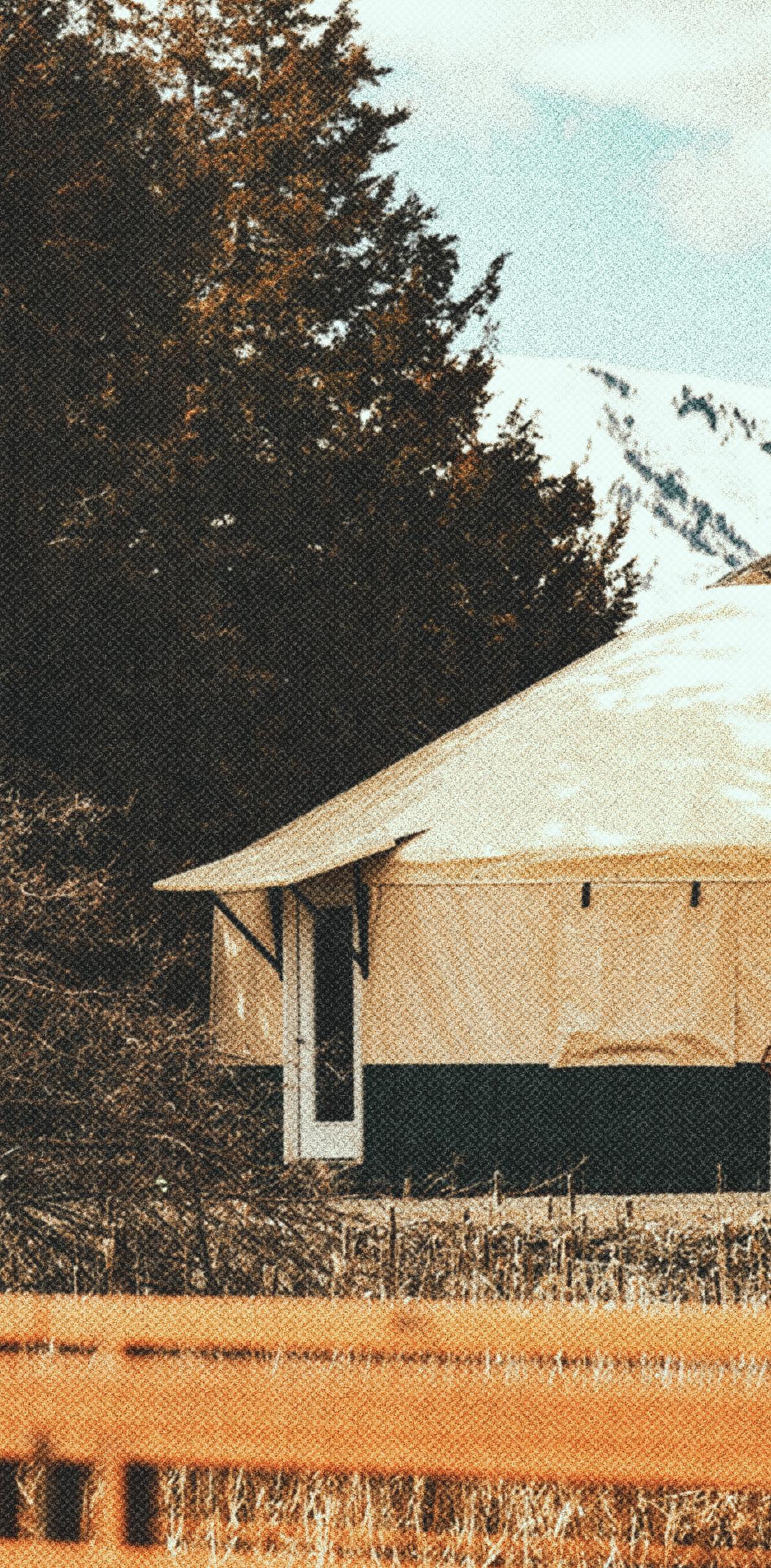
Developed by the center, the outdoor classroom features two pavilions, a pollinator and food garden, an indigenous garden and protected wildlife habitats. The site is designed to host school programs, university research and community events while providing accessible outdoor experiences for visitors of all ages.
Jordan Smith, outdoor recreation and tourism professor at Utah State University, said spaces like this provide something many children lack.
“These nature parks are not entirely new but offer a very different flavor of outdoor exploration and play than kids are traditionally used to,” Smith said.
Over time, Smith said, playgrounds have become increasingly structured and safety-focused, sometimes limiting opportunities for independence and exploration.
“These new nature parks offer just that opportunity for a little bit more risky play that allows them to develop a little bit more capacity or capability in developing skills that they otherwise wouldn’t,” Smith said.
Research shows that supervised but self-directed play can help children build resilience, self-confidence and independence.
Smith added that preserving natural features rather than overdeveloping them is key to that experience.
“It’s helpful to have them to keep it natural and to not go over it with whatever kinds of things they want to build but just embrace what’s already there,” Smith said.
For many families, simply seeing natural spaces as places for recreation is not automatic.
“For a large proportion of our population, a large proportion of our kids, they don’t really think about those places as places to play — places to recreate,” Smith said.
Smith said many children don’t immediately see nearby outdoor spaces as places where they can spend time or explore nature.
“These types of more proximate or closer-to-home opportunities provide opportunities for kids who had never thought about maybe going camping — maybe never thought about going for a hike,” Smith said.
The Nibley site, donated to the center in 2003, has experienced construction delays due to weather and a nesting sandhill crane. The site is intended to serve groups ranging from elementary school students to university researchers.
“Quite a few schools ... are excited about using it for their students to learn outside,” Penry said.
In addition to K-12 programming, university students will have opportunities to conduct soil and water quality testing, plant studies and interpretive signage projects.
“We’re open to ideas. If faculty or students want to use the space in ways that expand their learning and benefit the property, we’re interested,” Penry said.
Gardens are central to the classroom’s educational mission. A 65-bed pollinator and food garden is designed to accommodate children and adults of all abilities, reinforcing connections between ecosystems and everyday life.
“That’ll be a teaching garden, kind of like that connection between pollinators in our food supply,” Penry said.
Fruit trees along the front of the property provide harvests donated to local food pantries, while an indigenous garden introduces lessons on low-water and sustainable food practices.
“It raises food for the food pantry but also is a great programming opportunity about low-water-usage food and will feed them well with healthy and fresh foods,” Penry said.
Wildlife conservation is another key focus. The property is managed to allow animals to thrive, giving visitors opportunities to witness natural interactions firsthand.
“We had a day where we saw a bald eagle flying and started dive-bombing a duck on the lake, and I was like, ‘That is what we’re here to do — is to create chances for people to see that,’” Penry said.
Smith said these experiences can shape how children understand their environment.
“It opens them up to things that we maybe haven’t thought about before. It might be something that they want to encourage more than they would have if that kid didn’t have the opportunity to do it at a local playground,” Smith said.
Accessibility also played a role in selecting the Nibley location. While the Logan Canyon nature center offers valuable programming, Penry said it can be more difficult for some families to access.
“This is just much simpler. Once you get here, parking is easy, and the simpler we can make it for people, the more likely they are to get outside,” Penry said.
Beyond education and recreation, both Smith and Penry emphasized the importance of small, meaningful outdoor moments.
“We do our hummingbird hand-feeding nights, and it’s so simple. There’s no TV, your phone’s not going to work, and that’s what we’re hoping for — is these small, little experiences that 20 years from now, is a core memory,” Penry said.
The ecosystems at Nibley differ from those found in the canyon, offering
visitors the chance to observe distinct habitats within a short distance.
“We’re not going to have sandhill cranes nesting in the canyon, but they will here,” Penry said. “It shows how two ecosystems that feel close together are actually very distinct yet dependent on each other.”
Despite construction delays caused by nesting cranes and unpredictable weather, the Nibley Outdoor Classroom is expected to be completed by late spring.
“We’re already doing programming. We’re just hoping we can finally call it done by late spring and then really get programming going,” Penry said.
Ultimately, organizers hope the site will inspire long-term engagement with the outdoors.
“These new nature parks get students out of the routine and lets them really choose their own adventure,” Smith said.
The recent lethal removal of three wolves in Cache County has renewed a long-running question in Utah wildlife management: not just whether wolves belong in the state, but whether they are allowed to play any ecological role at all.
On Jan. 9, 2026 three wolves were killed near Avon after entering livestock areas in northern Utah.
According to a statement from Utah Division of Wildlife Resources public information officer Faith Jolley, the action followed existing state law.
“Three wolves were lethally removed on Friday, Jan. 9 by the Utah Department of Agriculture and Food,” Jolley wrote in an email to The Utah Statesman. “The wolves were removed in the delisted area of northern Utah in Cache County and were in areas with livestock.”
The removals occurred inside what Utah law defines as a “delisted” management zone, a small region north of Interstate 80 and east of Interstate 84 where the state has authority over wolves and is directed to prevent breeding packs from forming.
“State law directs the DWR to prevent wolves from establishing breeding pairs in the delisted area of northern Utah,” Jolley wrote. “Although there have been confirmed wolf sightings over the years — and rare instances of wolf-related livestock depredation — there are currently no known established packs in Utah.”
The policy places Utah in a unique position compared to much of the American West, where wolves have gradually reestablished populations over the past three decades.
For many people, wolves are defined by controversy: livestock conflicts, hunting debates or cultural symbolism. However, wildlife researchers say their ecological role is broader and often misunderstood.
Julie Young, a wildlife ecologist at Utah State University who studies carnivore behavior and human-wildlife conflict, said wolves function similarly to other large predators but operate at a larger scale.
By Carson FrosT
“They typically take down large prey like elk and mule deer,” Young said. “They eat a lot of it but then also provide a lot of carrion for other species — a lot of birds and smaller carnivores.”
Those leftovers ripple through the ecosystem.
“You’ll see skunks, raccoons, sometimes coyotes and bobcats,” Young said. “Even mountain lions might come in and scavenge off a wolf kill … all of the cascading effects on all of the smaller and smaller species until we get down into the bug world.”
In that sense, wolves create ecological opportunities beyond predation itself, supporting scavengers and nutrient cycling across landscapes.
Young emphasized that ecological benefits often collide with economic realities when livestock are involved.
“The problem usually exists when it becomes that they’re affecting the livelihoods of people in the community,” she said.
Livestock losses, she added, can determine “whether or not they’re going to make profit that year or be in debt.”
Research shows wolves are not the primary predator responsible for livestock losses nationwide.
“Across the United States, coyotes are still the number one problem animal,” Young said. “They kill the most livestock.”
Still, wolf impacts can feel disproportionately large at a local level.
“If you’re living in the area where that pack is killing livestock, then you might have really high losses,” she said.
Young’s research focuses on reducing those conflicts through nonlethal methods — tools she says are often underused despite strong evidence of effectiveness.
“There is nothing that’s going to work 100% of the time, but it can significantly reduce that risk,” she said.
Among the most effective strategies are livestock guardian dogs and increased human presence, sometimes called range riders.
“It usually pays for itself,” Young said. “The amount of cattle that live because you’re using these things gets you more money than it costs you to use those tools.”
Young said she believes part of today’s conflict stems from lost institutional memory.
“Because people haven’t lived with wolves here in so long, it’s just forgotten,” Young said. “Their great-grandfather probably knew a lot of these tricks and tips.”
While ecology shapes how wolves behave, researchers say policy largely determines whether they can exist in Utah at all.
Daniel MacNulty, a Utah State University professor who has studied wolves for three decades — beginning with Yellowstone National Park’s 1995 wolf reintroduction — said Utah’s framework effectively prevents wolves from establishing a long-term presence.
“That law basically is saying wolves do not belong in the portion of northern Utah that’s in the delisted zone,” MacNulty said.
He described Utah’s approach as unusual among western states.
“The precise scheme that Utah has in terms of really effectively not being a welcome place for wolves in any fashion — that is unique,” he said.
Even where wolves are allowed to live, MacNulty said their ecological influence is often overstated.
“Don’t overestimate the impact of wolves on the ecosystem,” he said. “Wolves, like other predators, are sort of ecological followers. They’re not necessarily ecological leaders.”
Rather than reshaping landscapes outright, wolves typically respond to prey availability.
“They’re going to where the elk are. They’re going where the deer are,” he said. “They’re usually responding to the distribution of resources, not necessarily dictating it.”
Still, predators may provide indirect benefits, including a possible role in limiting disease spread among big-game animals.
“There is potential for wolves and mountain lions to slow the establishment and spread of chronic wasting disease,” MacNulty said, emphasizing that research remains ongoing. He said such effects could carry significant economic implications given the value of hunting in Utah.
Most western states with wolves designate areas where populations are managed or allowed to persist. Utah, by contrast, maintains a zone where packs are actively discouraged while federal protections control wolves elsewhere in the state.
The result, MacNulty said, is straightforward.
“[It] effectively reduces the chances of long-term presence here in northern Utah
to zero,” he said. “There is no opportunity for wolves, by law, to provide any sort of ecological service here in northern Utah.”
Ecologically, researchers say northern Utah could support wolves.
“We seem to have a pretty healthy deer and elk population,” Young said. “This is good habitat — lots of wilderness areas and public lands.”
Wolves already live alongside dense human populations in states such as Colorado, California, Oregon and Washington, suggesting human presence alone does not prevent recovery.
Instead, both scientists pointed to management decisions and surrounding regional policies — including hunting pressure in neighboring Wyoming — as major limiting factors.
Ultimately, Young said, coexistence depends less on biology than on social acceptance.
“I think there’s lots of public land and lots of opportunity,” she said. “It’s just a matter of whether people are willing to have them here.”
Wildlife management in the United States blends science with public opinion, economics and politics — a complexity both researchers emphasized.
“Wildlife isn’t necessarily managed just by the science,” Young said. “It’s also managed by the public, state legislators, ballot initiatives, so it’s pretty complex.”
MacNulty framed the debate even more simply.
“The big picture really boils down to that simple question: Where do wolves belong?” he said.
For now, Utah law provides a clear answer in northern parts of the state.
Despite occasional sightings and dispersing animals crossing state lines, wolves remain unlikely to establish packs — not because the landscape cannot support them, researchers say, but because policy prevents it.
Until that changes, the ecological role wolves might play in places like Cache Valley will remain largely theoretical.

By Mia nielsen
As environmental pressures increase, two gardens in Cache Valley are looking past John Deere Green and the agriculture of Fisher Price toys and country songs to imagine a more sustainable way to grow.
Darren Parry is the former chairman of the Northwestern Band of the Shoshone Nation. He teaches a class at Utah State University and the University of Utah called “Indigenous Land Stewardship,” where students learn about how Indigenous people have interacted with the land over time and question the sustainability of the nation’s current agricultural system.
“My class really focuses on capitalism versus this traditional ecological knowledge that’s always been there and is thousands of years old,” Parry said. “Maybe we need to start paying atten-
tion to it. Not that we’re going to change one system, but what if we collaborated and put both systems together? Could we make a more sustainable system?”
Parry taught his students that indigenous plants are still around and are a sustainable, drought-resistant alternative to traditional crops.
Last year, Parry planted a garden at Stokes Nature Center with 31 varieties of indigenous vegetables, melons, beans, squash and corn.
“I really wanted to show the community what’s possible,” Parry said. “They saw 31 varieties of plants that they’d never seen before, but the food was delicious.”
Throughout the season, the garden hosted community weeding events, a community harvest and a dinner where
they cooked the produce that had been grown in the garden.
According to Parry, there are a few key differences between modern agriculture systems and Indigenous practices.
“If you lived in this one space for thousands of years. I think you would have a pretty intimate knowledge of that land — what it’s capable of, what it’s not capable of,” Parry said.
Parry said this view contrasts with the modern commodification of land and its mistreatment for short-term profit.
“We looked at land as a relative, something that we need to nurture and care for,” Parry said.
According to Parry, modern monocropping practices and genetic modification
conflict with Indigenous beliefs and practices. He emphasized the importance of reciprocity and relationship — one taking care of the land so it will take care of them.
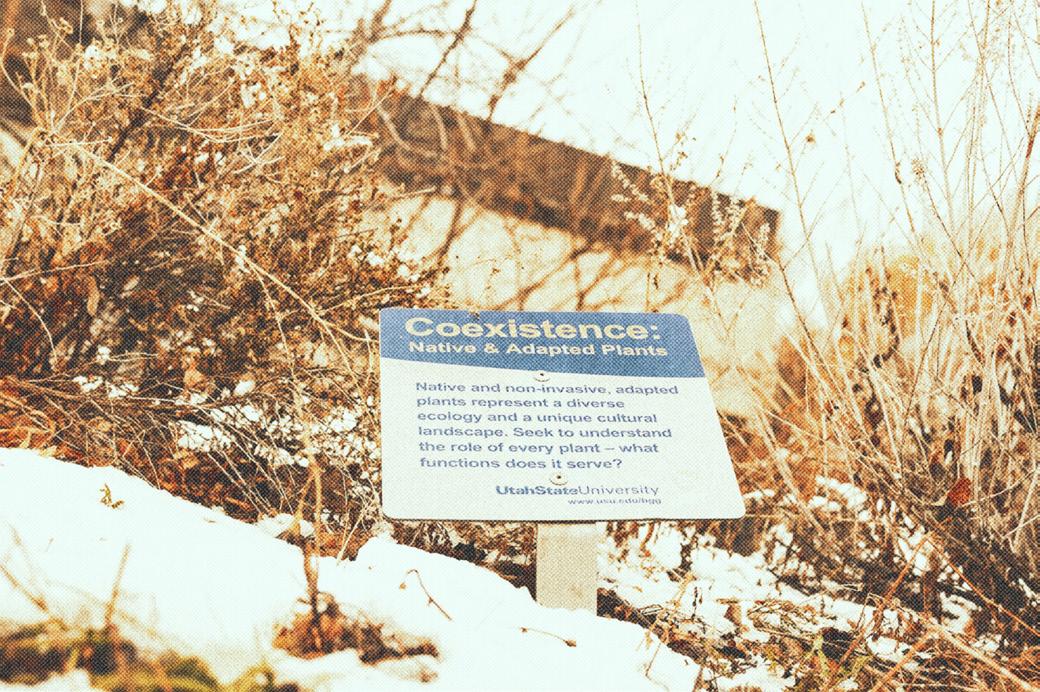
These principles align with the USU Permaculture Initiative.
“Permaculture is a design framework for growing ecological culture, based on three ethics (earth care, people care, and fair share) and a set of principles. The term stems from a merging of permanent and culture, and permaculture is a mindset, a way of thinking and seeing the world. It is thus applied on multiple scales ranging from agriculture to alternative means of financial exchange,” wrote Roslynn McCann, USU Permaculture Initiative co-lead, in an email to The Utah Statesman.
In 2013, McCann started the initiative and created a teaching garden behind the Aggie Ice Cream building.
“Over a decade later, the site is still producing food through a mix of perennials and annuals, and we offer monthly educational workshops in and around the space on a range of topics from perennial edibles to native bees,” McCann wrote.
McCann said people are welcome to visit the main campus garden and sample products as long as they know what they are eating, harvest ethically and treat the space with respect.
According to McCann, both large-scale and small-scale sustainability initiatives play an important role.
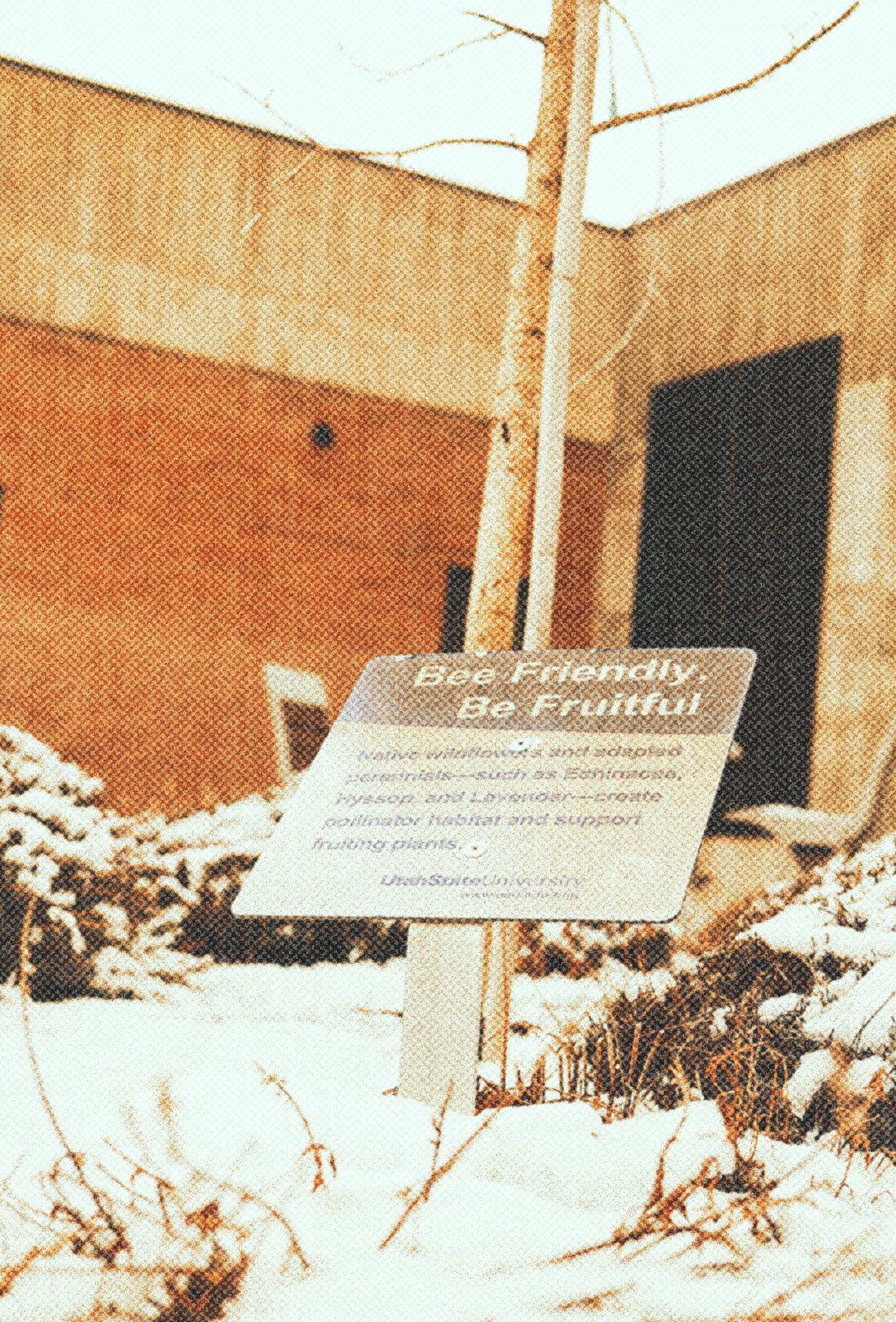
“If we can preserve agricultural land from development, incentivize growers to implement regenerative agricultural practices, and provide market outlets for the crops grown, the future of regenerative agriculture in Utah and the Cache Valley in particular can be very bright,” McCann wrote. “Without land conservation, incentives, and a clear market, I see regenerative agriculture mainly occurring at micro-scales, in backyard gardens and even the grass strips between sidewalks and roadways. Both scales are important, yet the potential ecological impacts of diversified systems increase significantly at larger scales.”
Parry emphasized the importance of inviting Indigenous voices into the conversation, suggesting that through dialogue, wisdom from ancient and modern practices can be combined to create a better, more sustainable future.
“The Hopi grow these huge, beautiful blue corn crops down in the middle of the desert in Arizona with no water and no irrigation, and they have lived that way for thousands of years. Do you think there’s something that we might be able to learn from those people?” Parry said. “We seem to think that we have all the answers, we know everything, and very seldom do we ever tap into that traditional ecological knowledge that’s been around forever, and I think it’s time we need to start doing that, especially in the age of climate change. The Earth is getting drier and hotter, and maybe it’s time we start listening to somebody that had been doing it for a long time.”
Parry plans to expand the garden this year. Information about future events can be found Stokes Nature Center website at logannature.org.

By eMMa Barker

Cuttlefish eggs sit in tanks at Utah State University’s aquatic ecology lab, adjusting to different salinity levels — a climate change experiment happening in the mountains, 800 miles from any ocean. This is marine science in a landlocked state.
USU launched its freshwater and marine ecology degree in August 2025, but 30 students enrolled before the program had even officially begun.
Trisha Atwood, associate professor of watershed sciences at USU, didn’t plan to return to the Rocky Mountains for marine research after earning her degrees at the University of Hawaii at Hilo and University of British Columbia. She spent her postdoctoral work in Sydney studying the Great Barrier Reef mangrove systems and seagrasses. Then, two aquatic ecology positions opened up at USU.
“I was living in Sydney, Australia,” Atwood said. “I hadn’t been back to this area in, like, 15 years.”
Originally from Evanston, Wyoming, she applied alongside her husband Ed Hammill, also a marine researcher. Both got offers. Both accepted.
“It reminded me very much of the universities that I went to in Hilo,” Atwood said. “It was smaller. A lot of the classrooms were more personal.”
The freshwater and marine ecology program launched a full semester earlier than either Atwood or Hammill had expected.
“We were actually unprepared for it to be launched,” Atwood said. “We got 30 students without really even knowing that the program was going to be there.”
Some students transferred from other universities specifically for marine science. According to Atwood, many found the program through USU’s connection with the Loveland Living Planet Aquarium, which promoted it.
BY:
Among the students who are enrolled in watershed sciences programs are Braxton Eames, an Ogden native with a childhood obsession with the ocean, and Mac Cutler, a Washington, D.C. transfer who switched her degree from applied mathematics and spent the summer researching coral reefs in Australia.
Neither had originally planned to study marine science at a landlocked university hundreds of miles from the sea. Both, however, have fallen in love with their educational craft.
Cutler started at USU in 2018 as an applied mathematics major. After a twoyear break, she switched to management and restoration of aquatic ecosystems with a marine science minor.
“I really liked the math, but this isn’t what I want to do for a career,” Cutler said. “I want to do things that are more applied.”
She went on a study abroad last summer to Heron Island in Australia. For her final project, she and a partner researched and studied the relationships between fish species and coral shapes. They analyzed hours of footage they filmed with GoPros.
“There were some predatory fish called wrasses. They look like a hot dog shape in the water,” Cutler said. “They were more present in the less branching areas. The compressed-body-shape fish really like the super branching corals.”
She was able to discover symbiotic relationships between certain fish and coral during reproduction.
Cutler officially added her minor after that trip.
“A lot of people, once they go to Heron, they’re like, ‘Oh my gosh, I should add this minor’ because that experience is just so positive, and it ignited so much scientific curiosity for so many people,” Cutler said.
Eames discovered the new freshwater and marine ecology degree through a Google search three days after the Salt Lake Tribune announced the program’s launch. He’d been studying biology at Weber State University, which doesn’t offer a general biology bachelor’s degree but rather botany, zoology and microbiology.
“I just Googled, like, ‘Marine biology — how do I do this?’” Eames said. “Everything’s kind of just fallen into place since then.”
He spent a year emailing with Atwood, planning out the transfer path. He did one year at Weber State and then transferred to USU.
Eames now works in the bioenergetics lab under PhD candidate Lauren Head, monitoring migratory bird populations at Great Salt Lake wetlands.
“There are a lot of the same principles in freshwater that can be applied to marine research,” Eames said. “That’s kind of why they grouped it into one thing.”
According to Eames, his interest in the ocean started young and has only grown, despite growing up in Ogden. His favorite hobby, surfing, has only fueled his interest in oceanography, specifically in mapping the ocean floor.
“The ocean’s so scary that it kind of comes back around,” Eames said. “It’s always so scary. Why is it scary?”
Atwood’s research draws from work that doesn’t require constant ocean access. Her National Geographic-funded study researches the climate impacts of bottom trawling, where fishing nets scrape the seabed.
“One of our biggest stores of carbon is actually the seabed,” she said. “When these trawlers go over the top, they rip up the seabed, and they resuspend all that sediment.”
If left undisturbed, that carbon would stay buried for tens of thousands of years. Much of this research happens through satellite analysis and modeling.
“I’ve worked with National Geographic for years now,” Atwood said. “I do all that through modeling. I go to the ocean for fun. My actual work is largely modeling.”
Atwood’s current cuttlefish study through USU examines how ocean freshening affects the development and eventual survival rate of the fish. The eggs arrived at 35 parts per 1,000 salinities, normal for the ocean. Some will be adjusted to 27 parts per 1,000 to simulate freshening conditions. The eggs should hatch in about two weeks’ time.
For students, class sizes in the USU program differ from coastal universities. According to Atwood, while some costal universities have more than 150 students in their marine biology classes, USU has about 20 and is better able to take its students on research boats.
“They get more hands-on here,” Atwood said. “They also get more one-on-one with the faculty. What’s going to get you a job at the end of this is a solid written reference letter.”
For Cutler, the marine science minor has reshaped her career vision.
“I don’t think in the future I’m going to be doing fisheries management,” she said. “But I’ve learned so much about fisheries management, and I’ve learned more about my field from learning about marine fisheries.”
The minor coursework focuses on and addresses conservation, restoration and cultural factors across international boundaries.
“In the real world, it’s often more complicated,” Cutler said. “There’s often cultural factors that are different across international boundaries that you’re going to have to think about.”
Cutler said within it all, Atwood’s mentorship stands out.
“[Atwood and Hammill] are some of the most undergraduate-focused faculty I’ve ever met,” Cutler said. “They just really, really care about the students and getting you to where you want to be professionally.”
For more information about the freshwater and marine ecology program, contact Trisha Atwood, faculty adviser, at trisha. atwood@usu.edu or Ed Hammill, department head, at edd.hammill@usu.edu.
“If you have an interest, there are people here that are going to get you to where you want to be,” Cutler said. “Don’t be afraid to go after that. You will find out that there are actually really important things going on.”