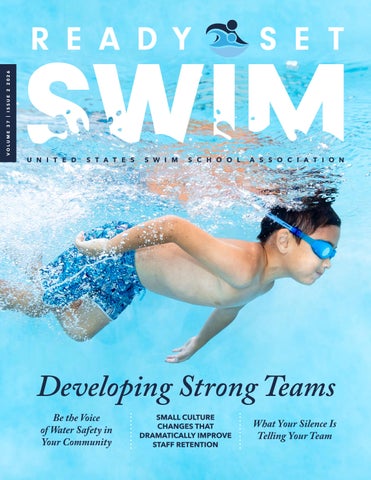

Developing Strong Teams












IN THIS ISSUE
ASSOCIATION HEADQUARTERS
4815 E. Carefree Hwy., Suite 108-480
Cave Creek, AZ 85331
480.837.5525
usssa@usswimschools.org usswimschools.org
Executive Director
Lisa M. Zarda, CAE, CNAP
Editor
Jessica Zimmer
ASSOCIATION OFFICERS
President
Rose Cholewinski, SwimAmerica – Davis
Vice President
Micha Seal, Watermelon Swim
Treasurer
Debbie Sayers, DolFUN SWIM Academy
ASSOCIATION DIRECTORS
Lori Klatt America’s Kids Swim School
Melissa McGarvey British Swim School
Brittany Moog Bitty Bubbles Swim School
LETTER FROM THE PRESIDENT
Leadership often asks us to make difficult decisions, especially when it comes to our teams.
One of the most challenging realities is recognizing when someone is not the right fit for their role. It is rarely about whether someone is a good person. More often, it is about alignment with the standards, culture, and expectations that define our organizations.
As leaders, we invest deeply in our people. We hire, train, coach, and hope for growth. When things are not clicking, our instinct is to give more time and more support. While development is critical, we must also be honest with ourselves. Sometimes the issue is not training, but fit.
Holding on too long carries hidden costs. It impacts culture, drains emotional energy, and sends a message about what we are willing to tolerate. Strong leadership requires clarity, consistency, and the courage to act when necessary.
Making the decision to move on is never easy, but it can be the most respectful choice for everyone involved. It allows individuals to find environments where they can thrive and protects the integrity of the team.
When we focus on having the right person in the right seat, we strengthen our organizations and lead with purpose.
You can read my article “Terminating an employee – The Cost of Getting It Wrong” on page 29.

ROSE CHOLEWINSKI President US Swim School Association




FROM THE DESK OF THE EXECUTIVE DIRECTOR
If there’s one thing I’ve learned over the years, it’s this: teams don’t struggle because people don’t care, they struggle because people aren’t always communicating clearly.
We spend so much time focusing on getting the job done, hitting deadlines, and doing things the way we know works, that we sometimes forget something important, everyone works a little differently. And when we don’t take the time to understand those differences, small issues can turn into big frustrations.
That’s why communication isn’t just a “nice to have.” It’s the backbone of how a team functions.
One of the voices I consistently return to on this topic is Shari Harley from Candid Culture. Her work emphasizes a simple but often overlooked truth: we cannot assume we know what our team members need, we must ask. Harley’s approach centers on direct, thoughtful conversations that uncover what truly motivates and supports each individual.
One of the things I love most about her approach is how simple and practical it is. She encourages leaders to ask questions like:
• What will keep you working here, and what would make you want to leave?
• What’s the best way to get information to you—voicemail, text, or email?
• What frustrates you at work?
• What are your pet peeves?
• What’s something you want to learn that you haven’t had the chance to yet?
• What’s something you wish I would start, stop, or continue doing?
These aren’t complicated questions, but they open the door to honest, meaningful conversations.
And here’s the reality: we often don’t ask them. Instead, we assume. We assume someone prefers email. We assume they’re happy with a project. We assume silence means everything is fine.
But those assumptions can lead to real problems.
Maybe someone isn’t responding to emails, not because they’re disengaged, but because they’d respond instantly to a quick text. Maybe a team member leaves, and it feels like it came out of nowhere, but in reality, they’d been quietly unhappy for months. Maybe we assign a project thinking it’s an opportunity, when it actually feels like a burden to the person receiving it.
None of these situations are about bad intentions. They’re about missed communication.

LISA M. ZARDA, CAE, CNAP Executive Director US Swim School Association
And the good news is, this doesn’t have to be formal or complicated. These conversations don’t need to wait for annual reviews. They can happen in a quick check-in, during a team meeting, or even just in passing. The key is being intentional and actually listening to the answers.
Sometimes the changes that come from these conversations are small—adjusting how you communicate, shifting responsibilities slightly, or simply being more aware of someone’s preferences. But those small changes can make a big difference in how people feel at work.
At the end of the day, strong teams are built on trust, and trust is built through communication.

2026 SPRING WORKSHOP RECAP
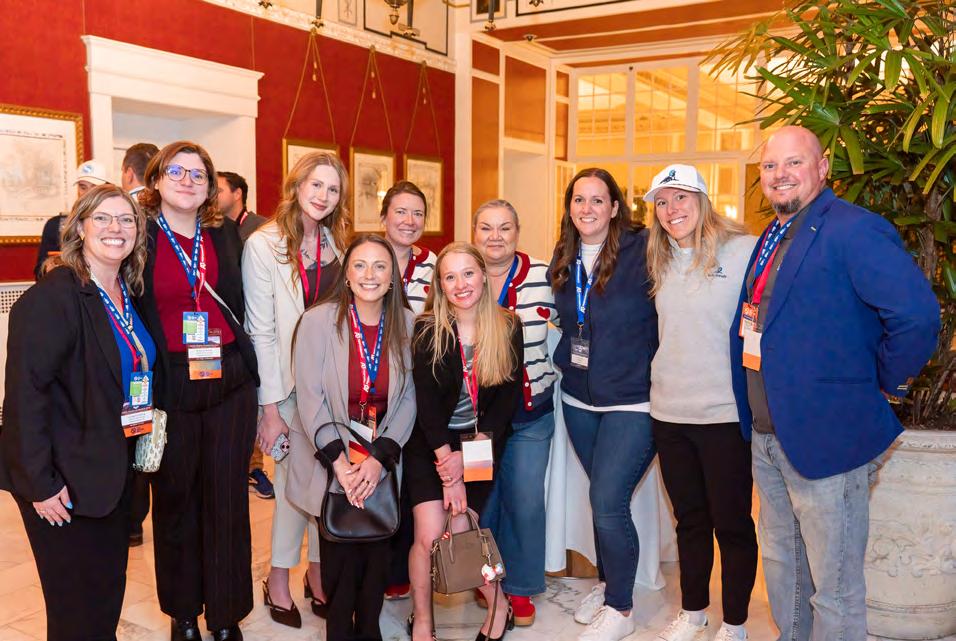
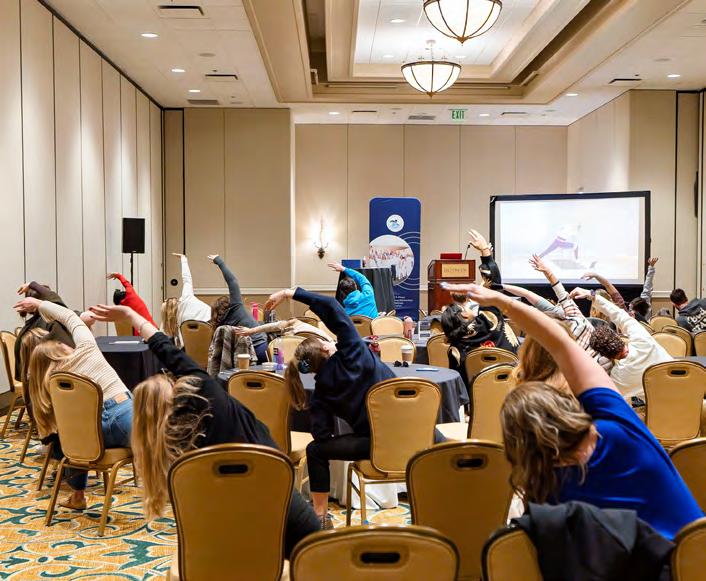
This spring, the U.S. Swim School Association brought members together in one of the most inspiring settings yet, Colorado Springs, Colorado, for a collaborative workshop experience alongside our partners at the Association of Aquatic Professionals Conference.
Set against the stunning backdrop of The Broadmoor, the event delivered more than just education; it created a space for connection, growth, and shared purpose within the swim school community.
From the moment attendees arrived, the tone was set. The Broadmoor’s renowned service and attention to detail offered an experience that went beyond expectations. As one attendee shared, “Hotel was AMAZING. Just the experience of quality and service was a learning experience in itself.” That level of excellence carried into every aspect of the workshop.

The educational sessions delivered both practical takeaways and forwardthinking strategies across a variety of key topics. Mastering the Staffing Game: Win with People-First Hiring & Training with Sal Ulloa was a standout, earning enthusiastic praise: “Love love love this type of content!” Attendees also found tremendous value in Mastering the Fundamentals of Facilities Management with Andrew Kline, particularly those in growth or planning phases—“This was very helpful as I am planning to open a facility and gave me tons of information to consider while in the building phase!” Modern marketing strategies also took center stage in Building Trust Through Social Media with Jacob Siegel, which left attendees energized and eager for more: “I want more! Such a great topic and great way to educate all of us, both newbies and professionals.”
Beyond the sessions, roundtable discussions created space for honest dialogue, shared challenges, and collaborative problem-solving. As one attendee shared, “If you are new or well experienced, these sessions are wonderful. It’s a great way to collaborate and really have the swim community shine together!”
Continued on next page...
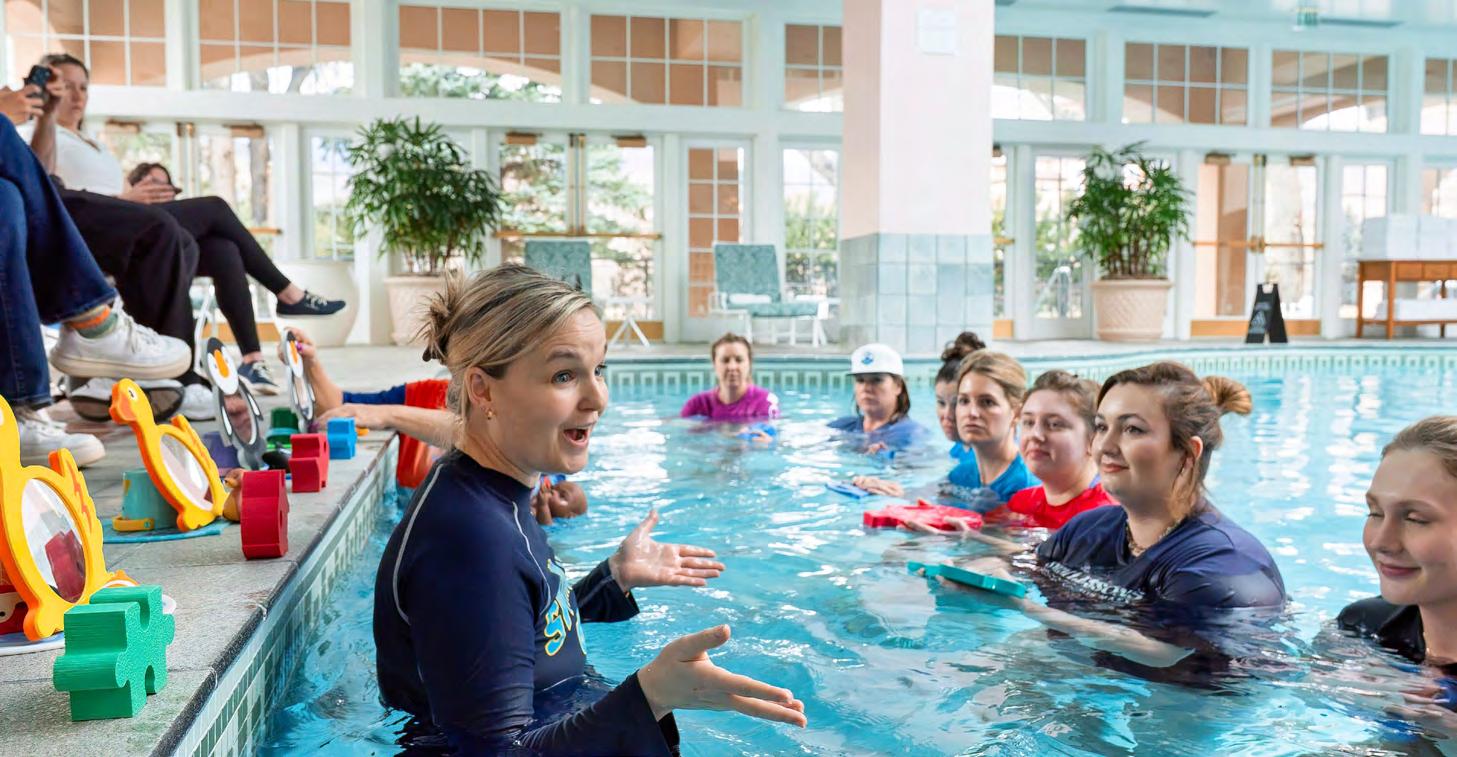
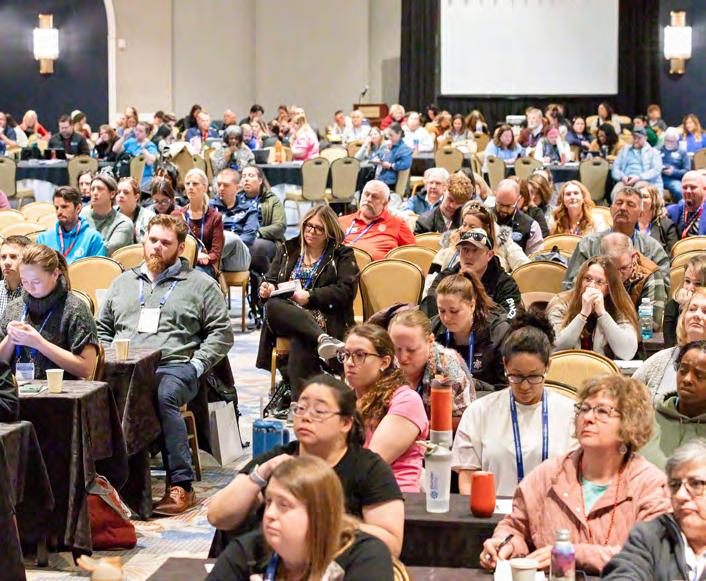
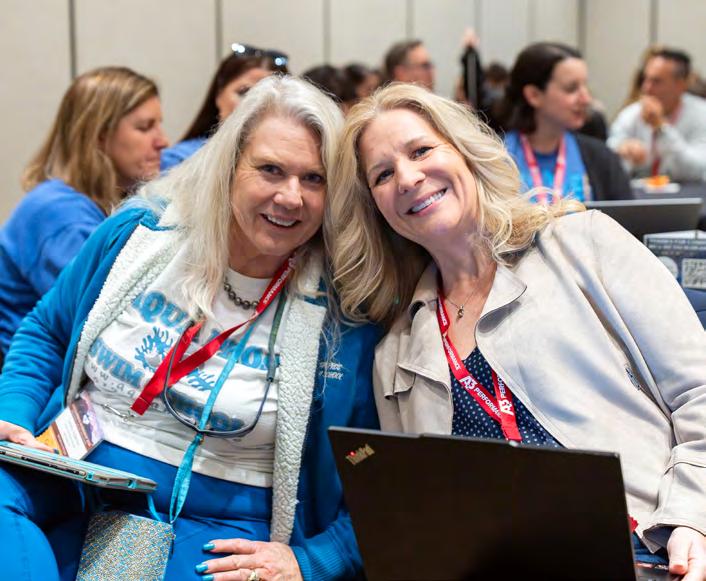
Overall, the workshop delivered a well-rounded experience that blended education, connection, and inspiration. One attendee summed it up best: “This work shop was one of the best we have attended, in terms of what we are taking away, the networking, and the opportunities for growth and learning.”
Experiences like this continue to reinforce what makes the U.S. Swim School Association community so special, an environment where ideas are shared openly, professionals support one another, and everyone leaves better than they arrived. As we look ahead, the momentum from Colorado Springs serves as a strong reminder of the impact we can create when we come together with a shared commitment to growth.




DISCOVER THE LATEST BOOKS THAT HAVE BEEN CREATING A BUZZ AMONG OUR MEMBERS!


THINK AGAIN: THE
POWER OF KNOWING WHAT YOU DON’T KNOW ADAM
GRANT
This book encourages you to question your assumptions and stay open to rethinking what you believe. Grant uses engaging stories and research to show how intellectual humility and curiosity lead to better decision-making and more innovative thinking.
Why it’s a great read: In a fastchanging world, the ability to unlearn and relearn is essential. This book is perfect for leaders, educators, and professionals who want to stay agile and effective.

THE INFINITE GAME SIMON SINEK
Sinek explains the difference between finite games (with winners and losers) and infinite games (where the goal is to keep playing). He argues that businesses and leaders thrive when they focus on long-term vision, purpose, and resilience rather than short-term wins.
Why it’s a great read: If you’re thinking about sustainability, legacy, and culture over profits and quick wins, this book reframes how to lead and build with endurance in mind.
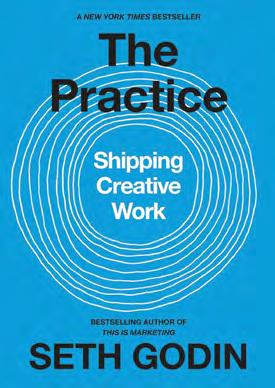
THE PRACTICE: SHIPPING CREATIVE WORK SETH GODIN
This book is about building a habit of creativity—not waiting for inspiration. Godin emphasizes the importance of showing up consistently, embracing the process, and committing to the work, even when it’s uncomfortable.
Why it’s a great read: Perfect for anyone in a creative or leadership role who struggles with perfectionism, procrastination, or fear of failure. It’s like a motivational nudge wrapped in wisdom.
Continued on next page...

MULTIPLIERS:
HOW THE BEST LEADERS MAKE EVERYONE SMARTER
LIZ WISEMAN
Wiseman distinguishes between “Diminishers” (leaders who unintentionally drain talent) and “Multipliers” (leaders who amplify the intelligence and capabilities of their teams). It’s backed by research and filled with leadership strategies.
Why it’s a great read: If you manage people or mentor others, this book offers powerful insights on how to unlock the full potential of your team without micromanaging or overshadowing them.

THE POWER OF MOMENTS: WHY CERTAIN EXPERIENCES HAVE EXTRAORDINARY IMPACT
CHIP HEATH & DAN HEATH
This book explores why certain moments—good or bad—stand out in our memories and how we can intentionally create meaningful moments in business, leadership, and life.
Why it’s a great read: It’s a great resource for anyone creating experiences—whether in customer service, education, or team culture— and shows how to turn everyday interactions into memorable, transformative events.
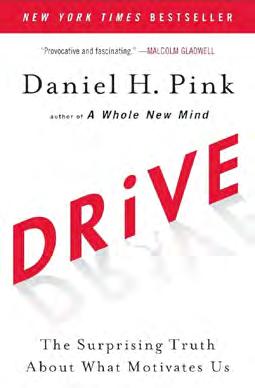
DRIVE: THE SURPRISING TRUTH ABOUT WHAT MOTIVATES US
DANIEL H. PINK
Pink unpacks the science behind motivation, showing that autonomy, mastery, and purpose are far more effective drivers than external rewards. He outlines how these principles apply in business, education, and personal growth.
Why it’s a great read: If you lead a team or are trying to motivate yourself or others, Drive gives practical insights into building environments where people feel truly motivated and engaged.
NEW MEMBER LIST
MARCI SWIM
Marci Dever
Decatur, GA
HUDSON VALLEY SWIM
RICHMOND WEST
Derek Evans
Midlothian, VA
SET2SWIM, INC.
Jennifer Chavez
Woodland Hills, CA
SHORE SWIM SCHOOL
Celeste Wise
Cape May, NJ
MS JEN’S SWIM SCHOOL
Jennifer Corso
Palm Bay, FL
CANNONBALL
SWIMMING ACADEMY
Dara Carmack
Barbourville, KY
THE JONES CENTER
Jeff Poole Springdale, AR
TRITON SWIM SCHOOL
Gregory Holdiness Cincinnati, OH
Strong swim programs are built on more than water
safety.


Strong teams are built on more than ust s ills they're built on safe, positive environments When your facility delivers clean air and water: Swimmers stay focused and confident Instructors perform at their best Families keep coming back Swim programs work hard to teach water safety from floating to stroke development. But one critical element is often overlooked: the air swimmers an instru tors breathe


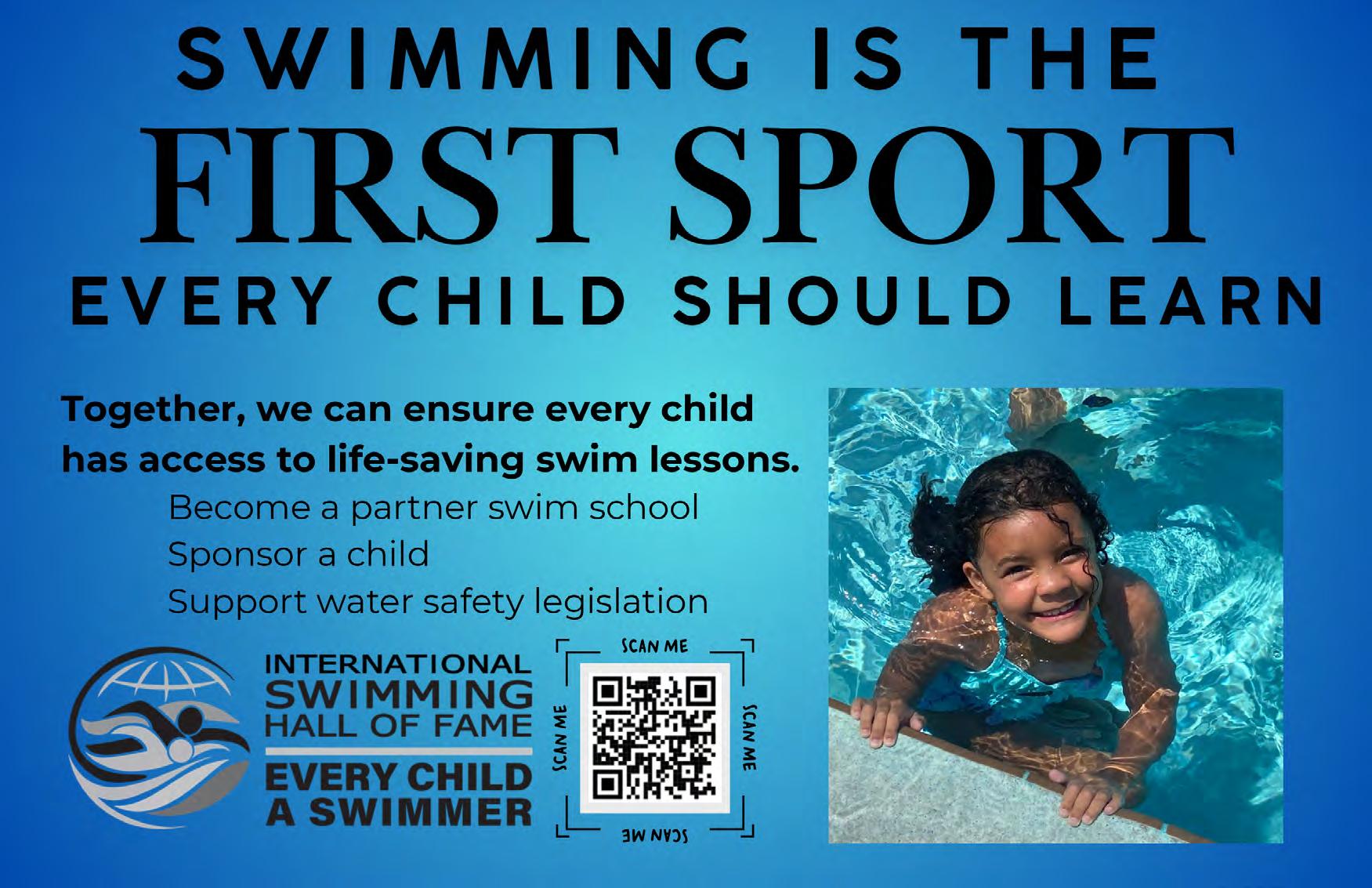



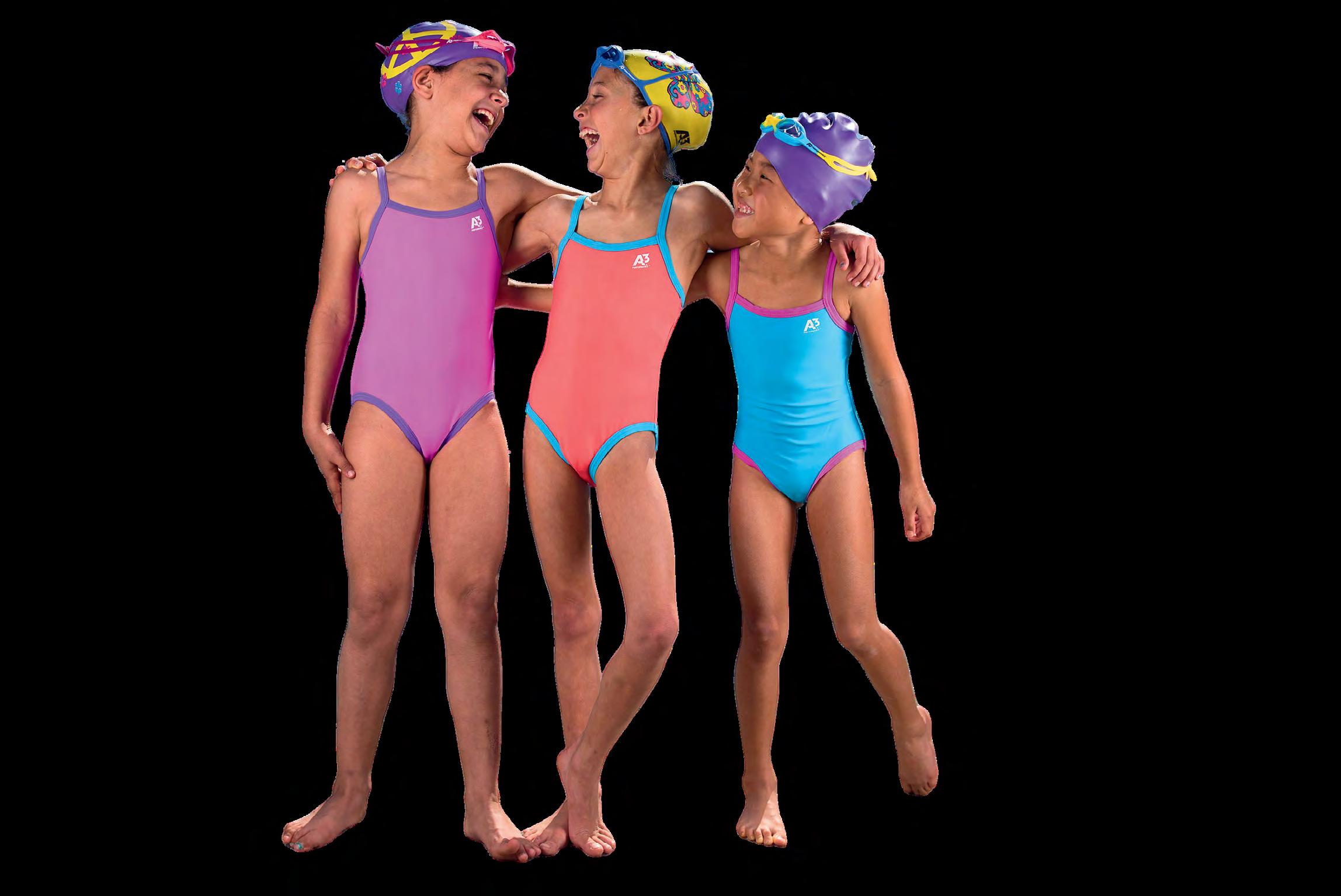

CREATING SAFER COMMUNITIES THROUGH SWIM EDUCATION & ACCESS
BY CASEY MCGOVERN EVERY CHILD A SWIMMER
Across the country, swim schools are doing far more than teaching a skill, they are saving lives. Drowning remains one of the leading causes of death for young children in the United States, yet it is also one of the most preventable causes. Formal swim lessons significantly reduce risk, build confidence, and equip children with the skills they need to be safer in and around the water. Still, for many families, access to consistent, quality swim instruction remains out of reach due to financial barriers.
This is where meaningful collaboration can create lasting change.
The Every Child a Swimmer (ECAS) program partners with swim schools to expand access to high-quality lessons for children who may not otherwise have the opportunity. Together, we can ensure that financial hardship does not prevent a child from learning a life-saving skill. Just as important as access is retention, helping families stay committed long enough for children to develop true water competency and confidence.
Swim schools also play a critical role in educating parents and caregivers. The time families spend at lessons is an invaluable opportunity to share knowledge about supervision, risk factors, and water safety best practices. We must use this time intentionally to maximize what we can do to ensure each child becomes safer and gains the skills needed to navigate water environments with confidence. Education for parents is just as important as instruction for the child. When families understand the real risks of drowning and the proven value of lessons, they are more likely to stay engaged and prioritize swim education. By guiding families toward consistent participation and safe behaviors, we strengthen not only individual swimmers but entire communities.
By working together, we can expand access, strengthen the industry, and create a future where every child, regardless of financial circumstance has the opportunity to learn to swim.
Let’s collaborate to create meaningful change and ensure every child has a safe place to learn and thrive in the water.
Into a Better Way to Run Your Swim School





SMALL CULTURE CHANGES THAT DRAMATICALLY IMPROVE STAFF RETENTION
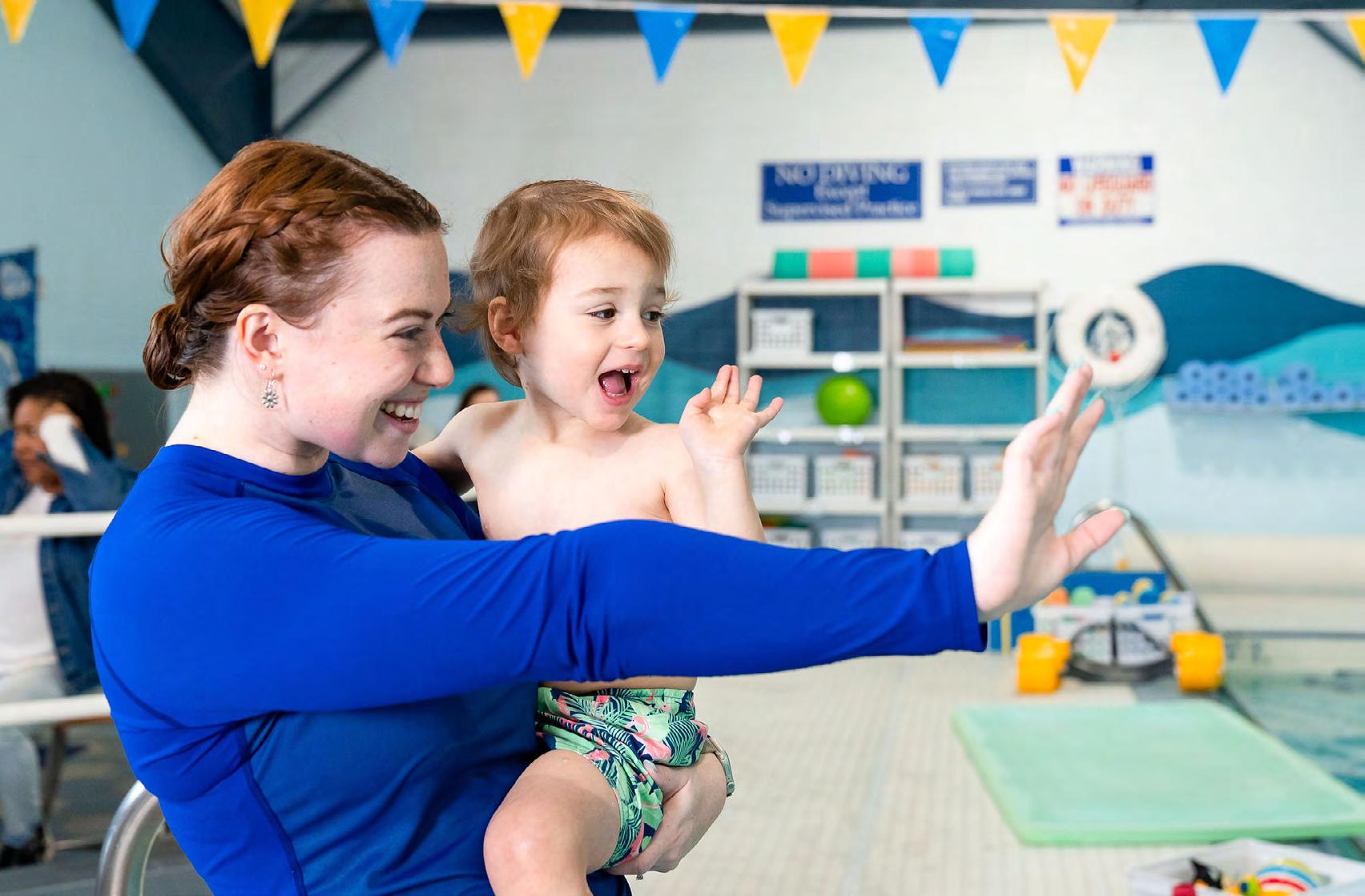
Staff retention is one of the biggest challenges swim schools face today. Recruiting and training instructors requires significant time and energy, and when team members leave after only a short period, it can disrupt consistency for both students and families.
While compensation and scheduling certainly matter, many owners are surprised to learn that culture often plays the biggest role in whether employees stay or go.
The good news is that improving culture does not always require major overhauls. Often, small intentional changes can make a meaningful difference in how valued and supported staff members feel. Here are several simple culture shifts that can dramatically improve retention in your swim school.
Continued on next page...
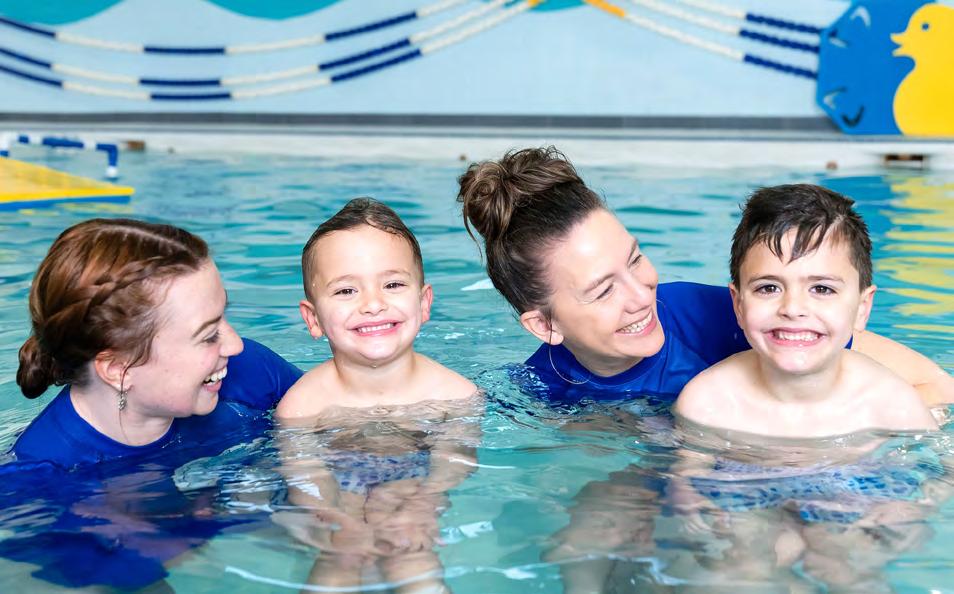
START WITH RECOGNITION THAT FEELS PERSONAL
Many swim school employees are young instructors or part-time staff who are early in their careers. For them, feeling seen and appreciated can be just as important as a paycheck.
Recognition does not have to be elaborate. A quick acknowledgment during a team meeting, a note thanking an instructor for helping a nervous swimmer succeed, or highlighting a staff member’s effort in a group message can go a long way. What matters most is that recognition is specific and genuine.
When instructors feel their work is noticed, they are far more likely to stay engaged and committed to the team.
MAKE COMMUNICATION CONSISTENT AND CLEAR
Unclear expectations are one of the fastest ways to create frustration among staff. If instructors are unsure about procedures, policies, or performance expectations, it can lead to unnecessary stress.
Strong teams thrive on consistent communication. Regular team meetings, short preshift check-ins, and accessible written procedures help ensure everyone understands how things should run. Just as important is creating an environment where staff feel comfortable asking questions.
When communication is clear and open, employees feel more confident in their roles and more connected to the organization.
INVEST IN TRAINING AND PROFESSIONAL DEVELOPMENT
One of the most effective but often overlooked ways to improve retention is through strong training. Instructors who feel confident and capable in their roles are far more likely to enjoy their work and stay with the organization.
When new instructors are thrown into lessons without enough preparation, they can quickly feel overwhelmed. On the other hand, well-trained instructors understand how to manage classes, communicate with parents, and help swimmers progress safely. That confidence leads to better experiences for both staff and students.
Providing structured training also communicates that your organization is invested in your team’s success. Professional development opportunities give instructors a sense of growth and pride in their work.
Programs like the Certified Fundamental Swim Instructor (CFSI) certification from the US Swim School Association can play an important role in this process. By offering a certification that focuses on the fundamentals of swim instruction, swim schools can help instructors build stronger teaching skills while also demonstrating a commitment to professional standards.
When instructors feel supported through training and development, they are more likely to see their role as a meaningful opportunity rather than just a temporary job.
CREATE OPPORTUNITIES FOR GROWTH
Many swim school instructors begin their roles without realizing there are opportunities to grow within the organization. Without a clear path forward, some employees may leave simply because they believe there is no room to advance.
Even small growth opportunities can make a difference. Consider identifying experienced instructors who can mentor new staff, assist with training, or step into deck leadership roles. Highlighting these opportunities communicates that the organization values professional development.
When employees can see a future for themselves within your team, they are more likely to stay.
ENCOURAGE TEAM CONNECTION
Swim schools are busy environments, and instructors often move quickly from class to class with little time to interact with colleagues. Without intentional effort, staff may feel disconnected from the team.
Simple actions can help build stronger relationships. A brief team huddle before a shift, occasional staff appreciation events, or even a shared communication channel where instructors can celebrate successes can strengthen team bonds.
When staff members feel they belong to a supportive team, their work becomes more meaningful and enjoyable.
ASK FOR FEEDBACK AND ACT ON IT
One of the most powerful ways to improve culture is simply asking employees for their input. Staff members often have valuable insights about scheduling, training, and daily operations.
Regularly checking in with instructors, either informally or through short surveys, communicates that leadership values their perspective. More importantly, when staff see their feedback lead to real improvements, trust in leadership grows. Employees who feel heard are far more likely to remain committed to the organization.
LEAD BY EXAMPLE
Culture ultimately starts with leadership. Owners and managers set the tone for how team members treat one another and how challenges are handled.
Leaders who demonstrate respect, consistency, and a willingness to support their team create an environment where employees feel safe and valued. Over time, these behaviors become part of the organization’s culture and are reflected throughout the staff.
SMALL CHANGES, BIG IMPACT
Retaining great staff does not always require sweeping policy changes or major investments. Often, it begins with thoughtful adjustments to how people are recognized, supported, and included.
By focusing on clear communication, meaningful recognition, strong training, growth opportunities, and team connection, swim schools can create a culture where employees want to stay and grow.
Strong teams are not built overnight. But with small, intentional culture changes, swim schools can create workplaces where staff feel valued, supported, and excited to be part of the mission.
CELEBRATING EXCELLENCE: USSSA CERTIFIED FUNDAMENTAL SWIM INSTRUCTORS
The Certified Fundamental Swim Instructor (CFSI) certification is designed to help swim schools strengthen their teams by providing instructors with a solid foundation in effective swim instruction. The program focuses on core teaching principles, safety, and best practices that help instructors succeed in the water.
By supporting instructors in earning certifications like CFSI, swim schools demonstrate a commitment to professional development while building a more confident, capable staff.
Learn more about the CFSI certification at https://usswimschools.org/certification-faqs
MACKENZIE ALLAN
Nitro Swimming Cedar Park, TX
ADDISON EICKMAN Wisconsin Swim Academy Appleton, WI
VICTORIA KECHEDZHI Somerset Swim and Fitness Nashua, NH
AILA KECHEDZHI Somerset Swim and Fitness Hollis, NH
AUSTIN ROFFINO Nitro Swimming Cedar Park, TX
CALENDAR OF EVENTS
FOR MORE DETAILS, VISIT: USSWIMSCHOOLS.ORG/EVENTS
APRIL 30
USSSA 2026 MARKETING VIRTUAL SEMINAR VIRTUAL
MAY 1 – 4
4TH INTERNATIONAL SWIM SCHOOLS SPECTACULAR – (ISSA) CASCAIS, PORTUGAL
MAY 13
USSSA WEBINAR –MANAGING YOUR RISK –PROTECT YOUR INVESTMENT! SPONSORED BY STARFISH AQUATICS INSTITUTE VIRTUAL
MAY 14 – 15
CERTIFIED POOL AND SPA OPERATOR (CPO) COURSE VIRTUAL
AUG 5
CREATING NEXT LEVEL BABY TEACHERS PART 1 VIRTUAL
AUG 12
CREATING NEXT LEVEL BABY TEACHERS PART 2 VIRTUAL
AUG 19
CREATING NEXT LEVEL BABY TEACHERS PART 3 VIRTUAL
THANK YOU ANNUAL SPONSORS




A3 PERFORMANCE
AQUAMENTOR
COUNSILMAN-HUNSAKER
CRESSI
EVERY CHILD A SWIMMER
INNOVATIVE PRODUCTS UNLIMITED
NEPTUNE BENSON, XYLEM
O2C BRANDS (GREEN SPROUTS)

POOLCORP COMMERCIAL AQUATICS
PROVEN PROMOTIONS
SBR SPORTS INC. (TRISWIM)
SNYDER INSURANCE SERVICES, INC.
SPORTS ENGINE
SWIM INFLUX
VORGEE USA
LIST OF ADVERTISERS
3rd Level | p40
A3 Performance | p14
Aqua Mentor | p23
Career Plug | p6
CES | p27
Cintas | p33
Counsilman-Hunsaker | p9
Cressi | p4
EOS | p36
Every Child A Swimmer | p14
FINIS | p10
Flashpool | p34
Green Sprouts | p23
iClass Pro | p2
IPU | p35
Jackrabbit Swim | p16
Neptune Benson | p24
Paddock | p13
Poolcorp | p27
Proven | p42
Risk Management | p20
Snyder | p22
Splash About | Inside Front Cover
Sports Engine Motion | p43
Starfish Aquatics Institute | p31
Swim Influx | p51
Tri Swim | p39
Vorgee | p39
























Solving critical water and air quality challenges for aquatic facilities
Filtration, disinfection, and circulation solutions trusted since 1956
Scan the QR code to learn how we can help your facility:
• Minimize downtime
• Lower operational costs
• Enhance bather experience
• Deliver clean and clear water
• Protect against chlorine-resistant pathogens
• Save water, chemicals, energy, and space








A COMPLETE GUIDE TO SWIMMING CONCUSSIONS
Parents and coaches, pay attention. Concussions do happen in the pool. The following will help guide you through the risks, symptoms, and treatments for concussions. Be head smart in the pool with the complete guide to swimming concussions.
CONCUSSIONS IN YOUTH SPORTS
Five to 10 percent of athletes will suffer from a concussion during any giving sporting season; the highest demographic is athletes between the ages of 15 and 17 years, according to the Southwest Athletic Trainers Association (SWATA). Swimming is one of the most popular sports because it is generally safer than most contact sports. What you need to know is that concussions can occur in all sports. The risk is just lower in some, like swimming.
Approximately 2 million high school athletes suffer from concussions per year. Of those injured, 500,000 result in doctor’s visits and 300,000 land athletes in the hospital. The biggest concerns with concussions are repeated blows and long-term injuries. SWATA reports that 96 percent of Americans feel that it is important for youth athletes to be seen by a healthcare professional before returning back to the game, and I am betting that you are one of the majority.
WHAT IS A CONCUSSION?
A concussion is a type of traumatic brain injury. Concussions are usually caused by an impact or blow that thrusts the brain back and forth inside the skull. The impact can happen to the head, or it can be the result of a blow to the body. When the brain shifts inside the skull, it can twist, stretch and impair healthy brain cells.
HOW DO SWIMMERS GET CONCUSSIONS?
Swimmers can get concussions in or out of the pool. Common ways swimmers get concussions are:
• Hitting the head when diving
• Running into wall during backstroke
• Running into another swimmer
• Slipping on the deck
• During dryland training
Continued on next page...
BY DR. G. JOHN MULLEN SWIMMING WORLD
WHAT ARE THE SYMPTOMS OF A CONCUSSION?
Swimmers are not immune to concussions. Common concussion scenarios include falling on the deck, hitting the head or body on the diving board, swimming into the wall, and even entering the water incorrectly. Polo players experience concussions from blows to the head from the ball and other players.
As soon as a swimmer falls, hits his/her head, or receives a violent blow to the body, the coaching team must take immediate action to look for signs of swimming concussion. Immediate signs of concussions include:
• Confusion
• Unable to recall events, time, or day
• Loss of consciousness or “blacking out”
• Change in mood, behavior or demeanor
It is critical that parents and the coaching staff look for the signs of a concussion because about 47 percent of athletes don’t report any symptoms after experiencing an injurious blow to the body or the head.
If athletes do report symptoms, the most common are:
• Nausea
• Headache and dizziness
• Throbbing
• Memory trouble
• Tiredness or sluggishness
• Light sensitivity
• Pressure in the head
• Trouble falling asleep or excessive sleeping
• Difficulty concentrating
If a swimmer experiences any of the above symptoms, or if the parents or coaching staff notice any changes, it is important to seek medical treatment immediately. Even if the swimmer is asymptomatic, only a healthcare professional can clear the swimmer. Coaches and parents do not have the training and expertise to diagnose the severity of a concussion.
HOW COACHES AND PARENTS CAN HELP
Parents and coaches must have the swimmer’s health in mind. The steps taken after the swimmer receives a concussive blow can have a significant impact during recovery and on the long-term health of the swimmer. Remember this when dealing with a head injury:
• Provide swimmers with the safe space to express concerns, pain, and symptoms.
• A swimmer must NOT return to the water the day he/she receives a concussive blow.
• Coaches and parents must not encourage a swimmer to push through the pain, and they must never dismiss the pain the swimmer experiences.
• Be vigilant when dealing with an injured athlete. The swimmer must not return to the water if symptoms remain or before being cleared by a medical professional.
• Play an active role in recovery and support the swimmer in doing the same.
USA SWIMMING AND CONCUSSIONS
USA Swimming has taken a proactive and firm stand on concussions, issuing guidelines for participation, training, compliance, and management. USA Swimming insists that coaches, parents and athletes all observe the symptoms of and care for concussions. USA Swimming prohibits swimmers from returning to the water after receiving a concussive blow until a medical professional has cleared the athlete. Clubs, Hosts, and LSCs are required to remain compliant and state concussions management and education policies.
Concussions are a serious concern for athletes of all ages, and effects of the injury can last for years. Education and management are key to protect a swimmer’s health. If a swimmer returns to practice or competition too soon after a concussion, they risk persistent, increasing or devastating consequences. When in doubt, sit the swimmer out.
Say Goodbye to Chlorine Odor, Bather Irritation, and Toxic Pool Water!

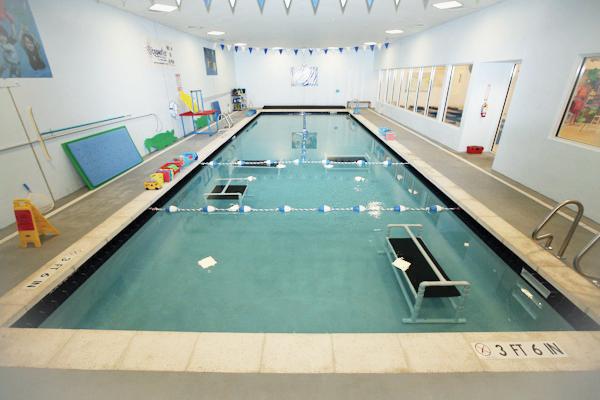

Proven swim school treatment systems since 1983 including:
UV • Saline • Ozone • Chemistry Controls • Drinking Water-Grade ltration
Wirelessly control your pump room including chemistry, UV, Heaters.
Choice of leading USSSA Swim Schools!
Proven On-Site Support and Service throughout the US via the SSD™ Network.
Experts in new construction and renovation treatment programs.

Commercial Energy Specialists • 952 Jupiter Park Lane • Jupiter, Florida 33458 • 800.940.1557 • www ceswaterquality com



TERMINATING AN EMPLOYEE –THE COST OF GETTING IT WRONG
Think about it…when was the last time you terminated someone—or as I prefer to say, freed up their future— and truly regretted it? If you’re honest, probably not often. And yet, we hesitate. We second-guess. We hold on longer than we should. Why?
Experience share: I remember when I first started training staff. I was working as a Resident Director for THE Ohio State University. I had a staff of 20 Resident Assistants. There was one person who kept missing shifts, turned in important reports late, and bent the rules a bit AND he was loved by everyone. He was enthusiastic, funny and charismatic.
I knew what I needed to do but I kept hoping he would change. I kept coaching him with a lot of HOPE for him and me (but it’s not about me, right?).
As an RA, they get free room and board and a stipend each month. I was worried about how he would finance the rest of the year at college. I didn’t want that enthusiasm to go away. I didn’t want to train someone else. I was worried how others would react. Ultimately, after hanging on too long, I had the difficult conversation and freed up his future. Initially, it was hard and in a short time, I could tell the staff missed him (so did I) BUT there seemed to be some relief, a reminder of our unique culture and it was the right decision for the bigger picture for the team AND for him.
WE REMEMBER THE INVESTMENT.
We hired them. We onboarded them. We checked their references. They showed energy and enthusiasm. Then we trained them—sometimes 20, 40, even 60 hours before trusting them with their own class. Depending on your state’s minimum wage, that’s easily $1,000 or more in payroll investment before they even begin delivering independently.
So when things don’t click, our natural response is: They must need more training. We give them more time. More shadowing. More corrective conversations. We create awareness forms, offer coaching, and try to “mold” them into what we need.
HERE’S THE HARD TRUTH:
Sometimes, it’s not a training issue, it’s a fit issue….wrong person. USSSA runs on EOS. EOS points to having the right person in the right seat. It’s that simple. He was not the right person.
BY ROSE CHOLEWINSKI SWIM AMERICA – DAVIS
THE HIDDEN COST OF HOLDING ON While you’re investing more time and emotional energy trying to develop someone who isn’t the right fit, several things are happening behind the scenes:
• Your culture is being diluted
• Your team is watching what you tolerate
• Your emotional bandwidth is being drained
• Your clients (or families) begin to notice and talk
You start hearing things like, “We prefer not to be in that coach’s class.” Schedules shift. Trust erodes. Morale dips.
And perhaps most importantly, you unintentionally send a message to your team: Mediocre is acceptable here. That’s not leadership… that’s compromise.
IT’S NOT ABOUT “BAD PEOPLE”
Let’s be clear: this is rarely about someone being a bad person. That RA I trained at THE Ohio State was a really, really good person. Just not the right person in the right seat.
It’s about alignment. Someone can be kind, energetic, and well-intentioned, and still not be the right person for your business, your standards, or your culture. And staying in a role where they’re failing? That’s uncomfortable for them too.
In fact, the longer we delay the decision, the more we prolong their discomfort and limit their opportunity to find a place where they can truly thrive. Ending a poor fit early isn’t failure, it’s service. To your business. To your team. And to them.
Continued on next page...
GETTING IT RIGHT: PRACTICAL REMINDERS
If we want the right person in the right seat, we must be intentional, both in hiring and in holding the line on standards. **If you have read up to this point, send your name to me via email: Rose@swimamericadavis.com , give me feedback about this article, share 1-2 topics you’d like to hear about in the future and I will enter your name into a drawing for $100 off your registration fee for 2026 National conference in Orlando, Florida. Deadline: June 1, 2026. Ok, back to the article.
1. Slow down the hiring process
Avoid the pressure of “we have to fill this role.” Urgency often leads to compromised standards. It’s better to run short temporarily than to carry the wrong person long-term.
2. Be honest with yourself
Is this truly the right person for the role? Are there gaps trainable skills or are they rooted in character and mindset? Remember: Hire character. Train skill. Skills are wayyyyyy easier to train than character. Don’t you agree?
3. Provide continuous, clear feedback
If they don’t know, they don’t have the opportunity to improve. Feedback is not optional, it’s essential. Remember, you said “yes” to the hire. Be sure to give them the opportunity to grow and learn from feedback. If you have to terminate, communication is a critical piece of the process. If they don’t know it’s coming, if you don’t have good documentation, if you haven’t coached them, the “sting” will hurt more. They deserve to know the process. When I was working with the RA at THE Ohio State University, I provided constant feedback. He saw the writing on the wall. Let’s talk about coachability.
4. Evaluate coachability
Are they receptive? Do they apply feedback? Or do you see resistance, eye rolls, defensiveness, or no behavioral change? Coachability is non-negotiable in a healthy culture. The RA I am speaking about wasn’t coachable for THIS position.
5. Define your threshold for “chances”
Know ahead of time how many opportunities you’re willing to give. Have you created a “coaching conduct form” to outline your expectations and what may happen if there aren’t changes. Without clarity, it’s easy to keep extending timelines indefinitely. Again, EOS reminds us “Clear is Kind”.
6. Own your role in the outcome
You said yes to hiring them. You trained them. You coached them. If, after all of that, it’s still not a fit, make the decision. Free up their future. That RA was given opportunities. He was treated with kindness and a yearning for his growth. In the end, it was like forcing a square peg into a round hole. It drained my emotional budget.
FINAL THOUGHT
Leadership isn’t just about developing people—it’s about making the tough calls that protect your culture.
When you prioritize having the right person in the right seat, everything improves: your team’s morale, your client experience, and your own leadership clarity.
And when it’s not the right fit? The most respectful and loving thing you can do, for everyone involved, is to recognize it early, act decisively, and allow both the individual and your organization to move forward stronger.
Update on my experience share:
The RA that was terminated went on to be a contributing member of society. It wasn’t easy to find housing mid year, but he survived. I would like to think he was reminded about accountability and coachability. I have lost contact with him, but my guess is he remembered that experience. Maybe he talks about it to his own staff. Maybe that experience was one of the best learning opportunities at THE Ohio State University. Ha. I can only hope that the outcome helped shape his future. I know it was the RIGHT thing to do.

WHAT IS ONE THING YOU IMPLEMENTED IN YOUR SWIM SCHOOL THAT SIGNIFICANTLY IMPROVED TEAM CULTURE OR STAFF MORALE?
Having the team nominate an employee each month. Everyone has to submit their form by end of month and then we announce the Employee of the Month. They get a bonus!!!
WENDY COX OWNER, LOW COUNTRY SWIM SCHOOL
We created an incentive program where employees were rewarded with points anytime they helped out a fellow teammate. Simple description - when they pick up sub shifts, they get points. At the end of the quarter, there is a grand champion for whoever had the most points, and everyone can then redeem all their points for cool prizes such as uggs, a keurig etc.
LEIGHANN DAY
OWNER, NORTH JERSEY AQUATICS
Started the Happy People Team - a small group of team members who meet once a week for an hour (paid) and they plan out 1 small staff event per month (unpaid event, we cover about $50 for pizza/ice cream), run the buddy system for new hires, and put together get to know you posters for new staff, they also help planning our bigger staff events that we do twice a year.
NICK CURL OWNER, PROPEL SWIM ACADEMY










EOS Implementer Matchmaker

GET THE TOOLS YOU NEED TO BUILD YOUR BEST SWIM SCHOOL BUSINESS
Even the savviest business owners can't do it all on their own. Gaining Traction® requires a team of people who have a clear understanding of what your vision is, and how to achieve it. Mary Reilly-Magee has over 20 years of experience owning her own swim school business and has been running on EOS since 2017, so she knows exactly how to match the right people together to build effective teams. She's spent years building relationships, being coached and coaching others. She can teach you how to get on the fast track to building an even better business now.
What You Get From Mary:
• 30-minute one-on-one conversation
• A s safe, judgment-free space to talk about your business
• Experience shares and personalized resources
• A trusted referral resource with access to great implementers at all price ranges
What You Won't Get Froom Mary:
• Annoying, salesy jargon
• Pressure to work with someone who's not right for you
• Untested business theory
BE THE VOICE OF WATER SAFETY IN YOUR COMMUNITY
Water Safety Month is more than a moment on the calendar. It is an opportunity for swim schools to step into a leadership role within their communities and reinforce a message that saves lives.
As business leaders and educators, swim school owners are uniquely positioned to influence behaviors, build awareness, and create safer environments around water. The key is to move beyond your facility walls and bring water safety into the everyday lives of the families you serve.
BE VISIBLE, CONSISTENT, AND INTENTIONAL
One of the most effective ways to promote water safety is through consistent communication. Families are more likely to retain and act on information when they see it repeatedly and in different formats.
Use your social media platforms to share simple, clear messaging about active supervision, swim readiness, and safe behaviors around water. Keep the tone positive, actionable, and easy to understand. Encourage engagement by asking families to share posts, tag friends, and participate in conversations about water safety.
Inside your facility, reinforce those same messages through signage, conversations, and staff engagement. When your team consistently communicates the same priorities, it builds trust and credibility with your families.
Continued on next page...
TAKE WATER SAFETY INTO THE COMMUNITY
Water Safety Month is the perfect time to extend your reach beyond your swim school. Look for opportunities to connect with families where they already are.
Participate in local events, visit community centers, or partner with organizations such as schools, parks, and childcare providers. These partnerships not only expand your impact but also position your swim school as a valuable community resource.
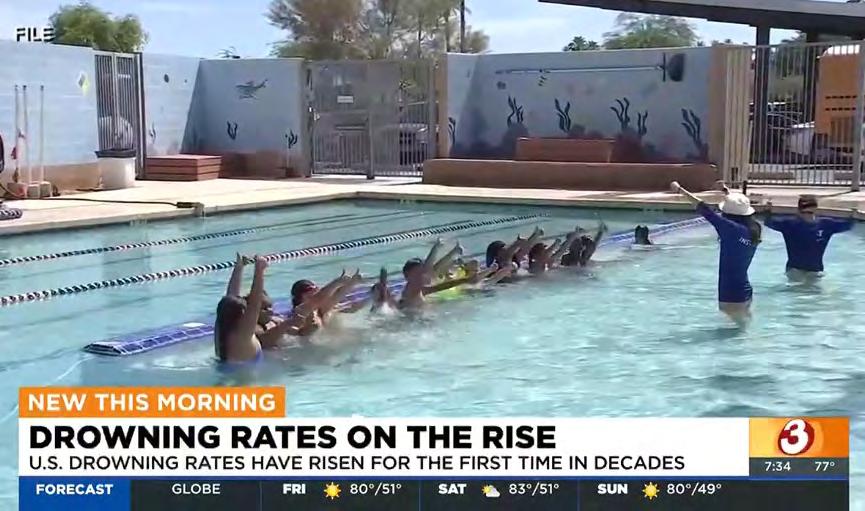
Consider reaching out to local news stations, radio shows, or community media outlets to offer a water safety segment. Many outlets are looking for timely, seasonal content, and this is a valuable opportunity to share expert guidance while increasing visibility for your swim school.
When pitching to media, keep your message simple and relevant. Tie your outreach to Water Safety Month and focus on the value to local families. Position yourself as an expert who can demonstrate water safety tips, speak about drowning prevention, and provide practical, actionable advice for parents.
Make it easy for media outlets to say yes by offering ready-to-go segment ideas such as “Top Water Safety Tips for Families,” “How to Assign a Water Watcher,” or “What Parents Need to Know Before Swim Season.” Be sure to include your contact information, availability, and flexibility on filming location.
If you do not hear back right away, a polite follow-up can make all the difference, especially during a busy seasonal news cycle.
Bringing water safety into the community also strengthens your brand. When families see your commitment to safety and education, it reinforces your role as a trusted authority and can naturally lead to new relationships and enrollments.
WATER SAFETY MONTH RESOURCES FROM USSSA
To support swim schools in their outreach efforts, the United States Swim School Association provides a comprehensive Water Safety Month Toolkit designed to make promotion simple, consistent, and effective. These resources are available in your USSSA Portal.
At the heart of these tools is a shared commitment to water safety and a dedication to helping swim schools confidently inform and educate the families they serve. By equipping members with clear, consistent messaging, USSSA supports your role in reinforcing the importance of supervision, awareness, and safer behaviors around water.
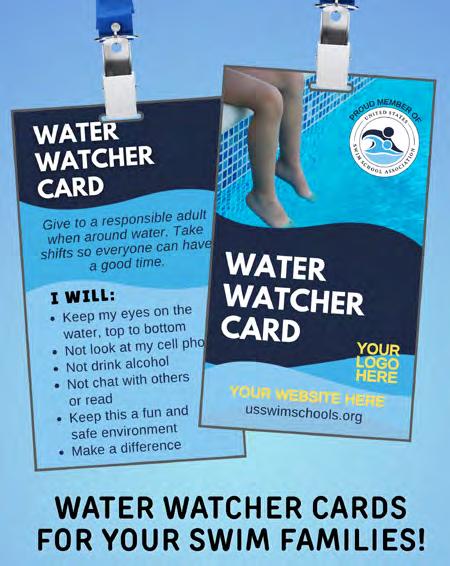
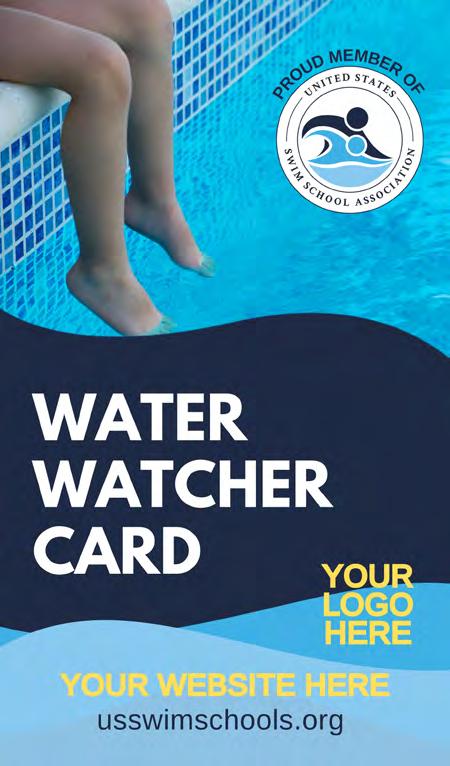
These tools are created with swim school businesses in mind, helping you save time while maintaining a professional and impactful presence. Along with a variety of ready-to-use social media images and a parent letter, the toolkit includes a customizable Water Watcher Card template.
The Water Watcher Card is a simple but powerful resource that encourages adults to take turns providing dedicated supervision around water. Swim schools can download the card, add their logo and website, and distribute it to families, at events, and throughout the community. It serves as both a safety reminder and a meaningful touchpoint for your brand.
Bringing these tools into your outreach not only reinforces your messaging but also gives families something tangible they can use to create safer environments.
A LASTING IMPACT
Water Safety Month is a starting point, but the habits and awareness built during this time can last all year long. When swim schools lead with intention, consistency, and purpose, they do more than promote safety. They help create a culture where water safety is understood, valued, and practiced every day.
Your leadership matters. Your message matters. And together, we can make a meaningful difference in the communities we serve.




From Your Initial Idea to the Ribbon Cutting
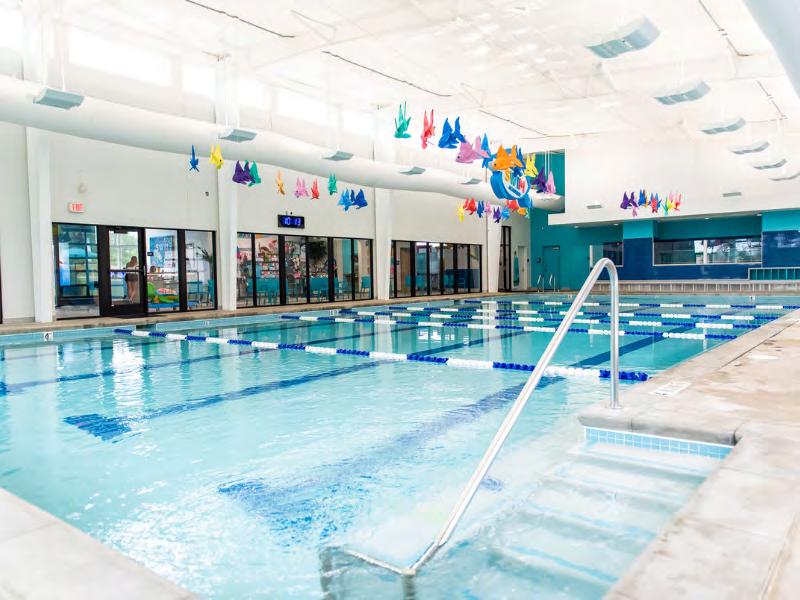
You will receive guidance and tools that work for all different kinds of building projects. However, we know that there is no one right way. That’s why we customize our resources for each unique client to bring your vision to life.

new swim facilit y but don’t know where to star t? From concept to completion, our team will walk you through every step of the
BY JOHN SPENCE

WHAT YOUR SILENCE IS TELLING YOUR TEAM
I recently delivered a workshop on organizational culture to a large group of senior executives from companies around the world. The session covered six elements of what I call a high-performance culture: trustworthy leadership, shared purpose, belonging and connection, empowered collaboration, growth and development, and well-being and recognition. Each element matters, and all of them reinforce one another. However, my recommendation on the frequency of praise drew resistance.
I pointed out that Gallup has studied employee engagement across millions of workers. One question appears consistently in their research because of its strong correlation with engagement: “In the last seven days, have you received recognition or praise for doing good work?” Employees who answer yes are significantly more likely to be engaged and committed to their organizations.
Once a week is the cadence their data supports, and it is the standard I recommended to the group.
After the session, a few executives approached me with the same concern. Some said they simply did not have time to praise their people once every week. Several others had made a deliberate decision to withhold praise altogether, concerned that frequent recognition would lead employees to expect a raise or promotion.
I was taken aback and frankly saddened. I imagined a workplace where no one was being told they were doing a good job. How do you stay motivated when your leader says nothing positive? Why would you strive for excellence if it seemingly went unnoticed? I certainly would not want to work someplace like that. Would you?
These are both pitiful excuses. Genuine appreciation for your team belongs at the top of your calendar.
As a leader, your most important customer is your employee.
If they don’t feel appreciated and supported, they’re not going to give their best effort, and the downstream effect will negatively impact your business.
Remember, the customer’s experience will never exceed the employee’s experience.
I coached one CEO who almost never left his office. He thought it was a poor use of his time to walk around and talk to his employees. Dead wrong. Taking 15 minutes a day to visit with your team to show genuine appreciation for their work demonstrates that you are interested in them and feel they matter.
What that recognition looks like is simpler than many leaders expect. Examples like “You did a wonderful job handling that customer’s complaint” and “Thank you for being so well prepared for the meeting” are small, specific acknowledgments that someone’s effort was seen.
When it’s a big deal for the boss to compliment you for your work, many people will interpret sporadic positive feedback as an indication they deserve a raise or promotion. Inconsistent gratitude creates those expectations.
Culture is a primary driver of organizational performance.
It shapes whether an organization can attract and keep the talent that sustained performance requires. Leaders build culture through repeated daily behavior, and what they choose to notice and acknowledge sends the clearest signal about what the organization values. What message are you sending?







Actionable insights on swim instruction, business growth, customer service, and more
Engaging sessions led by respected industry leaders
Collaborative learning that sparks ideas and solutions you can implement right away
Valuable networking with peers who share your goals & challenges
Meet and connect with exhibitors offering innovative tools, technology, and resources to support your success




Hilton Orlando Lake Buena Vista 1751 Hotel Plaza Boulevard
Lake Buena Vista, FL (407) 827-4000
Reservation Cutoff Date*: September 25, 2026
USSSA Group Rate (per room, per night)

$249 (Single/Double) • $269 (Triple) • $289 (Quad)
For group rates, please reference: USSSA 2026 National Conference when booking. All-In Registration: Includes 3 conference lunches, 3 reception drink tickets, and the Awards Banquet
1st Attendee: $825
2nd Attendee: $795
3rd, 4th, & 5th Attendees: $765 each 6 or more attendees: call D’Nette to get a group discount!
Basic Registration:

Includes 3 lunches. Does not include drink tickets or the Awards Banquet.
$665 per attendee
Two-Day Registration: Includes 2 lunches. Does not include drink tickets or the Awards Banquet.
$550 per attendee
GETTING TO KNOW YOUR BOARD OF DIRECTORS
Professionalism isn’t just about appearances it’s about the consistent practices that keep a school running at its best. For this issue, we asked our Board of Directors to share the one habit or system that has given them the biggest professional edge in running a high-performing swim school.
What is a lesson you’ve learned about leading a team that has made your staff stronger and more successful?
This is a great question…please read “from the desk of the president” article regarding holding on to someone who isn’t the “right person”.
One point I will add is: as I continue to learn about leadership, I am admitting I am not the one with all the answers. I have surrounded myself with resourceful, smart, fun, passionate people.
ROSE CHOLEWINSKI
SWIMAMERICA
AND SWEET PEAS, DAVIS
ONE
OF
THE BIGGEST LESSONS I HAVE LEARNED
IS THAT YOU CANNOT
EXPECT A STRONG TEAM WITHOUT CONSISTENTLY INVESTING IN THEIR GROWTH.
Training is not something you do once and move on from. It has to be ongoing, intentional, and built into the culture of your organization.
At Watermelon Swim, we focus heavily on continuous learning. We train, we revisit, we coach in real time, and we create opportunities for our team to gain experience, not just knowledge. Because experience is what builds confidence, and confidence is what drives performance.
When people feel like they are growing, they stay engaged. They take more ownership. They start to think like leaders, not just employees.
That commitment to constant development has made our team stronger, more capable, and more prepared to deliver at a high level every day.
MICHA
SEAL WATERMELON SWIM
One of the most meaningful lessons I’ve learned as our team has grown is that leadership visibility doesn’t diminish with layers, it becomes more intentional.
Early on, when the team was smaller, recognition happened naturally because I was involved and working closely with all staff day-to-day. But as we expanded and added a new layer of management, I realized something important: even if I don’t interact with every team member regularly, they are still watching, and my voice still carries weight.
That became very clear to me after I received feedback that team members thought that I did not value their contributions. I felt surprised at this feedback because I value our team. Talking with other leaders, I was reminded that as the leader, team members look to me for feedback and gratitude. This reminded me that a simple acknowledgment from leadership can have a ripple effect far beyond that one interaction.
I learned that gratitude at the leadership level can’t be passive, it has to be intentional. You have to look for it, call it out, and say it out loud. When people feel seen by the organization’s leadership, it strengthens morale, builds confidence, and reinforces the behaviors you want to see across the team.
I continue to work to incorporate recognition of great work at every level, because no matter how large the team becomes, a genuine “thank you” from the leader still matters and often more than we realize.
LISA ZARDA USSSA
ONE OF THE BIGGEST LESSONS I’VE LEARNED AS A LEADER IS THAT THERE IS NO SINGLE “RIGHT” WAY TO LEAD, BECAUSE THERE IS NO SINGLE “RIGHT” WAY PEOPLE ARE MOTIVATED, SUPPORTED, OR SUCCESSFUL.
Earlier in my career, I had a clear vision of how things should be done. While that created structure and consistency, it didn’t always bring out the best in each person on the team. What changed for me was taking the time to really understand individuals. How they communicate, what motivates them, and what kind of support actually helps them succeed. Whether that comes from personality assessments, understanding communication styles, or even something as simple as how someone prefers to receive feedback, it has made a significant difference.
When you lead this way, people feel seen. They feel valued as individuals, not just as part of a team. That builds trust quickly and creates a stronger connection to the work they are doing.
There is also a practical side to it. It actually makes leadership easier. When you understand what drives someone, you spend less time managing challenges and more time supporting progress. You can adjust your approach, remove barriers faster, and help them move forward in a way that works for them.
The biggest shift for me was realizing that leadership is not about getting people to fit into my preferred style. It is about being willing to adapt while still holding a clear standard. Supporting people in a way that aligns with who they are, while guiding them toward where they need to go.
That is when you start to see real growth. Stronger individuals, more confident teams, and better overall results.
MELISSA MCGARVEY
BRITISH SWIM SCHOOLS
One of the most important lessons I’ve learned about leading a team is that clarity and consistency build confidence—and confident staff perform better.
Early on, I thought being a good leader meant stepping in often and solving problems quickly. But I realized that doing that too much actually limits growth. What made the biggest difference was shifting to clear expectations, consistent communication, and trusting my team to take ownership.
A big part of that shift is how I respond when staff come to me with questions or challenges. Instead of immediately giving them the answer, I ask, “What do you think?” That simple question has been powerful—it helps develop leadership, builds confidence, and makes people feel seen and heard. It encourages them to think critically and trust their own judgment, rather than relying on me for every decision. Now, I focus on setting a clear vision, defining roles, and making sure everyone understands not just what they’re doing, but why it matters. I also work to create an environment where staff feel supported but also accountable. That balance has helped my team become more independent, proactive, and confident in their decisions.
As a result, I’ve seen stronger collaboration, better problem-solving, and a team that takes pride in their work—because they feel trusted, capable, and valued.
LORI KLATT
AMERICA’S
KIDS SWIM SCHOOL
One of the most impactful lessons I’ve learned as a leader is that growth doesn’t happen in a single moment it’s built through every challenge, every season, and every shift in how you show up for your team.
Early on I believed being a strong leader meant being highly involved, stepping in often, solving problems alongside my team, and making sure everything was handled “the right way.” And while that support came from a good place, I realized over time that too much handholding was actually limiting my team’s ability to grow. My team became stronger when I stopped handholding and started empowering.
That shift meant moving from giving answers to asking better questions. Instead of immediately stepping in, I began coaching my team to think through situations, make informed decisions, and take ownership of their role. It wasn’t about stepping away, it was about stepping back just enough to allow them to step forward.
At Bitty we focus heavily on connection before correction, adaptability over rigid curriculum, and true ownership. These values have shaped how our team approaches even the most challenging moments especially when working with swimmers who need extra support. I’ve watched our instructors grow more confident in handling complex behaviors, not because they were told exactly what to do, but because they were trusted to figure it out with guidance and support.
What’s been most rewarding is seeing how that empowerment extends beyond individual performance. Our team doesn’t just rely on leadership, they rely on each other. They collaborate, problem-solve together, and step in to support one another in meaningful ways. Strong teams aren’t built by having all the answers as a leader, they’re built by developing people who are confident enough to find their own.
BRITTANY MOOG
BITTY BUBBLES SWIM SCHOOL
Continued on next page...
GETTING TO KNOW YOUR BOARD OF DIRECTORS CONTINUED...
What is a lesson you’ve learned about leading a team that has made your staff stronger and more successful?
CONFIDENCE IS BUILT BY DESIGN— NOT BY CHANCE.
You can count on me bringing the energy—it’s just how I show up. And over the years, I’ve learned that while energy can spark momentum, it’s not what builds strong teams. Systems do.
Early on, like many of us, I believed that if I hired passionate people and led with enthusiasm, everything else would fall into place. And while passion absolutely matters, it’s not what creates consistency—or a business that can grow with confidence.
What changed everything at DolFUN was a shift in mindset:
We stopped relying on great people to “figure it out,” and built a clear, repeatable way for them to succeed.
That meant getting intentional about:
• Defining what a great lesson looks like—every time
• Standardizing safety, confidence, and progression
• Training to consistency, not personality
• Coaching continuously, not just onboarding once
And just as importantly — we measure what matters
The result? When expectations are clear, teams don’t feel restricted—they feel confident, supported, and capable.
In our world, families aren’t just paying for lessons—they’re trusting us with their child’s safety and quite literally their lives. And that trust is built in the details, showing up the same way across every instructor, every class, every day.
Over time, a few things have become very clear:
• Your brand lives at the instructor level
• Clarity is one of your strongest retention tools
• Strong systems don’t limit your team—they develop future leaders
And systems alone don’t build culture—how you lead within those systems does. We prioritize real-time coaching, positive reinforcement, and celebrating progress— whether it’s a child’s first face-in-the-water moment or an instructor refining a teaching cue.
Those small wins compound into consistent results—you see it in retention, in skill progression, and in the confidence of every swimmer and instructor in the water.
The real impact becomes clear when you look at this, at the end of the day, strong teams aren’t built by pressure; they’re built by clarity, consistency, and belief. When your team feels confident and supported, that confidence transfers directly to the families you serve.
That’s not just good leadership—it’s good business. And in our industry, it’s what sets great programs apart.
Energy will always be part of how I lead and systems are what have made our team stronger, our staff more successful, and our impact more consistent.
”We don’t leave safety, confidence, or team success to chance: we build it, train it, measure what matters, and deliver it. Every lesson. Every instructor. Every time.”
DEBBIE SAYERS DOLFUN SWIM ACADEMY


Swim Influx 2.0 was built specifically for swim schools offering a fully integrated marketing system that supports every stage of the customer journey utilizing A.I. & Automation. From generating high-quality leads to converting them into loyal clients, we help you streamline your growth by handling the marketing for you. Our team of specialists becomes an extension of yours so you can stay focused on teaching while we focus on filling your schedule.
Services
Targeted Customer Acquisitio paid ads

Google Review Growth to boost local visibility & trust
Referral Engine that turns happy customers into promoters
Social Media Management & Optimization to build brand awareness
Automated SMS & Email Campaigns for lead nurturing & retention
A.I.-Powered Chat Widget to engage and convert website visitors 24/7
High-Converting Websites built to drive action and bookings

In 2025, Swim Influx helped 115+ swim schools generate more than 136,000 leads proven results, not promises.
Train your team Before Summer! Train your team Before Summer!
CERTIFIED FUNDAMENTAL SWIM INSTRUCTOR (CFSI)
A professional credential that equips you with the knowledge and skills to deliver safe, effective, and engaging lessons while setting the standard for excellence in water safety and foundational swi m instruction. Bulk Pricing Avaialable!
PRESCHOOL INSTRUCTOR
Preschool instruction methods, science of swimming, early skills, safety, and purposeful play. Great for quickly training sea sonal or new staff. Bulk Pricing Available!
CREATING NEXT LEVEL BABY TEACHERS
Equips instructors of children 6–36 months to build comfort, confidence, and water success—without trauma. Follow-Up Workshop Available.
ADAPTIVE AQUATICS
Helps instructors develop the skills and confidence to teach swimmers who may need extra support. Giving a fresh perspect ive on working with diverse learners, families, and lesson plannin g. Newly Revised!
PLAY WITH PURPOSE
Shows how age-appropriate play enhances learning, instructor engagement, and parent satisfaction.
MOVEMENT & BRAIN DEVELOPMENT
Explores the link between movement and a child’s physical, emotional, and cognitive growth.
GREAT BEGINNINGS LEAD TO GREAT FINISHES
Teaches balance, breath control, and gentle movement to build trust and a foundation for lifelong swimming skills.