‘Life Has Become Like a Prison:’ Hazara Women Who Served in the Security Forces in Afghanistan
Sisterhood and Solidarity
University of San Francisco
International Human Rights Clinic

‘Life Has Become Like a Prison:’ Hazara Women Who Served in the Security Forces in Afghanistan
Sisterhood and Solidarity
University of San Francisco
International Human Rights Clinic
This report was researched and produced by Sisterhood and Solidarity under the leadership of Yalda Royan in partnership with the University of San Francisco School of Law’s International Human Rights Clinic. Contributing Clinic members include Kasia Cherubin ’24, Elise Chu ’25, Molly Giguiere ’25, Kimia Hadidi ’26, Keaton Maring ’25, Gianni Valentino ’26, and Clinic Director, Professor Lindsay M. Harris. Thanks go to Sohaila Gulistani who conducted the interviews, and to Azada Raz Mohammad, PhD candidate at the University of Melbourne, and others for reviewing the draft report. Pseudonyms are used throughout the report to protect the identities of the women interviewed. To the women, thank you for trusting us with your stories to share your message with the world.
Yalda Royan Executive Director Sisterhood and Solidarity
March 2025
“I loved my work, but everything changed with the arrival of the Taliban…Not only did they deny me the right to work, but they also intended to kill me.” –
Haawa
As forgotten victims under the Taliban regime, Hazara women who served in the security forces present a stark reminder of what occurs to those who served in the former government and fought the Taliban. The triple threat of being a woman, a member of the Hazara community, and a former service member makes this group of women particularly vulnerable to Taliban targeting while the international community turns a blind eye.[1]
Hazaras are a historically marginalized ethnic group in Afghanistan that predominantly practice Shi’a Islam, whereas the Taliban practice Sunni Islam. [2] This religious discord and historical persecution led to deliberate attacks and discrimination against the Hazara community by the Taliban and other groups in the mid-1990s, which has intensified since August 2021 under Taliban-controlled Afghanistan.[3] A little over a year after the Taliban takeover, The Islamic State of Khorasan Province (“ISKP”) injured and killed at least 700 people in sixteen brutal attacks against the Hazara community.[4]
The Afghan National Security Forces were created in the early 2000s during the United States-NATO intervention into Afghanistan when previously factional militias banded together to create a cohesive organization.[5] Initially, women were excluded from serving in the Security Forces, but eventually, the Afghan government allowed women to join with government encouragement and support from the international community. More than 6,600 women were employed in the previous government’s Ministry of Interior Affairs and the Ministry of Defense, but no one has paid mind to the status of these women after the Taliban took over in August of 2021.[6]
Women made up approximately two percent of the Afghan National Security Forces and, even prior to the Taliban takeover, often faced harassment or lack of support from family or male colleagues when they joined.[7] After August 2021, this persecution increased dramatically as the Taliban went door to door, shooting former security forces members.[8] These women experienced physical violence as well as financial and food insecurity, forcing families to split up to survive. The Taliban’s treatment of women who served in the former security forces as enemies of the state has left certain groups, especially Hazara women, at a heightened risk.[9]
As just one prominent example, a Hazara woman and former Senior Prison Official, Alia Azizi, disappeared on duty on October 2, 2021.[10] Azizi was the head of a women’s prison in Herat Province.[11] She received a call from the Taliban to come back to work, and after she left home, she disappeared. Her family confirms that she did not reach work.[12] Azizi remains missing as of the time of writing and the Taliban have failed to launch any investigation into her disappearance and are presumed responsible.
This report brings to light the experience of fifteen other Hazara women who served in the security forces. Interviews with the women reveal their harrowing journeys to seek safety outside of Afghanistan, in Iran and Pakistan, only to be faced with challenges accessing employment, education, food, and healthcare in those countries. This report makes clear the need for thoughtful and robust resettlement routes for women who served their country and are now at extreme risk if returned to Afghanistan and/or living in limbo and instability in neighboring countries in the region without any status.
The project began in January 2024 with research on the background of the Taliban’s rule and how Hazara communities were impacted by the Taliban regime. Sisterhood and Solidarity collaborated with the University of San Francisco’s International Human Rights Clinic and Sohaila Gulistani to perform a qualitative research study through structured remote interviews in March and April 2024. Interviews were conducted in Farsi and took approximately 60 to 90 minutes to complete. The interviewees for this report included women who previously served in various roles for the Afghan government’s security forces, as soldiers, police officers, and military members. The interviewees participated in the interviews with full and informed consent. To protect the identities of these women, pseudonyms are used throughout the report.
Given the precarity of this group of women, living in hiding in Afghanistan and often not open about their identities and former occupations even in Iran and Pakistan, women were identified for interviews using the snowball method, or referral sampling.[13] This approach begins by selecting a small number of initial participants who meet the study's eligibility criteria.[14] These participants are then asked to recommend others who also qualify, gradually expanding the sample size through a chain of referrals. Initial referrals came from reaching out to officials who use to work in the Ministry of Internal Affair or Defense, asking them to connect with previous members of these government ministries. All of the interviewees identified as Hazara women who currently live in Pakistan or Iran. They range from twenty-five years old to forty-two years of age. Nine of the women fled into Pakistan, while the other six escaped to Iran.
Hazara women who served as former military personnel are in acute danger under Taliban rule due to their intersectional vulnerabilities as women, members of a marginalized ethnic community, and veterans with prior service under the former government. The previous Afghan government’s military system employed approximately 4,000 women.[15] The majority of the female population in the former Afghanistan military forces, just like the majority of Afghan women who worked with the U.S. military,[16] were Hazara women, due to poverty and a relatively better freedom of choice compared to women of other ethnicities. These women played an important role in the security forces, from responding to domestic violence to active combat.
Prior to the Taliban takeover, Western countries present in Afghanistan supported enlistment and training programs that encouraged women to join military or police forces.[17] Hazara women overwhelmingly enlisted into these positions compared to the low percentages of women from other ethnic groups in Afghanistan.[18] Countries involved in the International Security Assistance Forces (ISAF), the UN-mandated, NATO-led military mission in Afghanistan between 2001-2014, hold a duty to protect these Hazara women for their service to not only Afghanistan, but in assisting their own countries in their military operations.
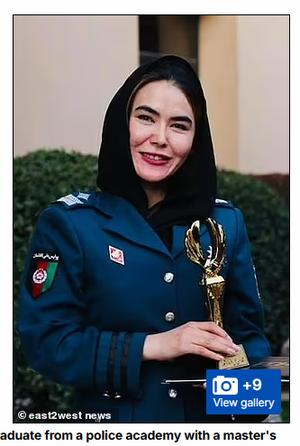
“After the Taliban takeover, we first faced discrimination because of our gender as women, and second because of our religion and ethnicity, we were deprived of all rights. All our efforts were reduced to nothing, and we fled our country like criminals.” – Sugrha
This section highlights the significant challenges that Hazara women who served in the security forces face in Afghanistan. The women we interviewed, who had made it, against the odds, outside of Afghanistan’s borders, shared what they endured during their time living under Taliban rule and what women still in hiding in Afghanistan must navigate. These challenges included restrictions on religious practices as the Taliban severely discriminate against anyone who does not practice the Sunni sect of Islam, lack of employment after the Taliban dissolved the previous government, problems with family, including domestic violence, ostracization and rejection, safety and security, and finally, their dangerous journeys to escape.
Women who served in the security forces face significant threats to their lives in Afghanistan. The women interviewed had numerous fears due to their gender, Hazara ethnicity, and status as former members of the security services associated with the previous government. The Taliban have notoriously limited women’s lives to their homes where they cannot go out or even speak in public.[19] Sukaina explains that “[a]fter the Taliban came, my spirit was crushed, and I became confined in the house.” Khadija shared her fear that neighbors would report to the Taliban that she and her husband served as police officers, living in fear and moving from place to place. She also mentioned that women are even banned from speaking to each other in private.
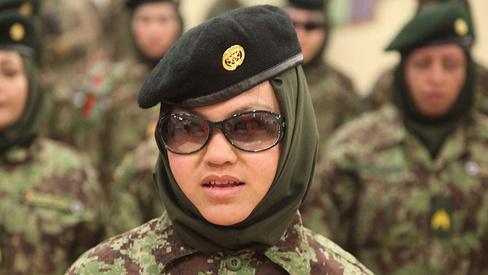
As reported elsewhere,[20] the interviewed women confirmed that the Taliban heavily discriminate against Hazara communities, threatening and condoning violence during their religious ceremonies, indiscriminately firing them, and stripping them of their land. As Hawwa noted, even men were fired for simply being Hazara. The women affirmed that the Taliban have violently targeted Hazara religious ceremonies and congregations. Ashura ceremonies became dangerous. Numerous women noted that they could not attend religious rituals due to security threats and explosions; that Shia Muslims cannot gather in mosques for religious ceremonies.[21] Women among those interviewed have lost many people in explosions and suicide attacks during Shia religious rituals. For example, one former military official, Sughra, reports that her neighbors lost their son when the Taliban fired into the air during an Ashura ceremony for Shias in Ghazni province. The women explained that the Taliban deemed the Hazara people illegitimate and by doing so, taken their land. A former police officer, Ruqia, shared: “the genocide of Hazaras is ongoing in Afghanistan.” Masuma explained that the Taliban target Hazara communities “because the Hazara people focus more on education and development, the Taliban who fear education and awareness, target them to prevent them from reaching their goals.” Historically, Hazara women enjoyed certain social and political freedoms due to the community’s relatively progressive position on women’s and girl’s education, employment, and participation in political and social spheres.[22] As Hazara women were highly accomplished in the realm of education, they played a strong role in the civil society and security sectors before the Taliban takeover in 2021.[23]
The women shared that the Taliban have imprisoned and killed former members of the security services under various pretexts and without question.[24] Fatima expanded that the Taliban even forced relatives and neighbors of the interviewees to reveal addresses of people who worked in the previous government through force and oppression. She underscored that “because we were women and military personnel, we were considered criminals by the Taliban.” Two other women explained that the Taliban labeled “Hazara people as infidels and non-believers and stripped them of their fundamental rights.” As one former soldier, Zainab, described, “the Taliban do not accept any thought or belief other than their own. If an ethnic group or any group opposes their oppression and injustice, the Taliban either kill or imprison them.”
Maryam explained that “the Taliban do not allow women and girls to walk or work on the streets, and because I was begging on the streets, I was imprisoned by the Taliban. They warned me that if I did it again, I would be imprisoned permanently.” Prior to the Taliban takeover, Maryam worked as a soldier and a police officer. After the fall of Kabul, however, the Taliban killed her husband, and she was left unable to work and forced to the streets to beg. She explains that she is now unable to afford medical care where “[her] children suffer from malnutrition and anemia, and I am afflicted with a herniated disc and severe leg pain. Sometimes my legs go numb, and I am unable to move.” This dire situation is emblematic of the situation for many Hazara women who formerly served in the security forces in Afghanistan.
The impact of life under the Taliban on women's employment is severe. Many of the interviewed women’s departments were dissolved, and when they attempted to contact their department heads about documents and duties, they received no answer. The Taliban initiated door-to-door searches for anyone employed with the previous government or who worked with NATO. [25] Zahra noted that women could not even return to retrieve personal belongings from their workplace. Fatima highlighted how she went from having a good position and status to being on the run. While she used to receive medals and certificates of appreciation for service, now she is forced to live in hiding. Women with military backgrounds had biometric data registered with the previous government, and in the hands the Taliban, that information further threatened their already constricted ability to apply to jobs.[26] The Taliban issued bans on women working with NGOs[27] and prohibit women and girls from seeking education beyond sixth grade.[28] Rabia explained: “[Hazara] women do not have the right to go outside, especially those who were police officers in the previous regime. They cannot move freely; life has become like a prison.”
Nearly all the women we spoke to burned photographs, and destroyed their physical identity documents, including education and career certificates or documents, and military uniforms as they feared Taliban officials would discover their identities and past careers. Numerous women noted that the Taliban consider police officers as their enemies, and as women who served as police officers, they had no place to live in Afghanistan. Interviewees consistently reported that if the Taliban discovered they were military personnel in the previous regime, they would root them out, torture them, interrogate them, imprison them, and even kill them.[29] Sughra, a former major in the military explained: “My security was compromised because our general manager was assassinated by the Taliban, and the Taliban were hunting down high-ranking former military personnel to take revenge on them. I had no security.”
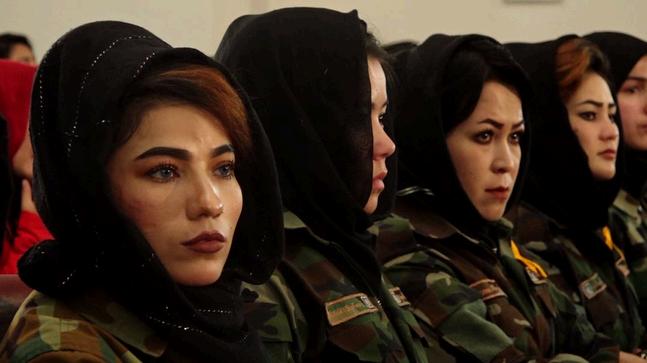
Unfortunately, as the Taliban tightened their hold over Afghanistan, family members became stricter on the movement and freedoms of the women in their family. Multiple family
members attempted to pressure unmarried interviewees to marry. Several women that were formerly correctional or police officers were killed by their own relatives due to the reputational shame that they believed such work caused. The Taliban required women to go out with a mahram (male accompanier) and then, in August 2024, the Taliban regime issued an edict that prevented women from being or heard outside their houses.[30] Rabia expressed that single women faced greater concerns because as unmarried women, relatives stopped visiting and they could not go out without a male relative. This isolation comes with mental health ramifications that have been documented under Taliban rule. [31] Sukaina explained that having fought against all odds to work as a professional, recruiting women into the military, against her in-laws and their will, she felt completely crushed and resorted to using tranquilizer medications. Hawwa also shared: “I constantly have nightmares and feel paranoid about being followed when I go outside. I never felt safe anywhere I went.”
If not isolated, some women who had previously divorced or escaped abusers faced the threat of themselves and their children being forced back into the homes of their abusers. Zainab explains: “The situation got worse after the Taliban took over. I was not able to go anywhere as a single and divorced woman. my husband came to Kabul to return me and my children to the province and district with force.” Zahra’s family wanted her to marry, her relatives believed she was a failure for refusing to do so, and she lost all hope for the future; she experienced "nightmares at night . . . and felt like a prisoner.” Zahra’s father physically abused her and her brother verbally abused her in pressuring her to marry. Zahra “even considered suicide, as [she] could not find any other way to escape this situation except for killing [her]self.” Other women reported friends back in Afghanistan committed suicide.
Sukaina shared “my friend committed suicide and ended her life after the ban on education and restrictions imposed by the Taliban.”
All of the interviewees reported cutting off any contact with friends and family to protect them from the Taliban using them to get to the women. Zainab, who previously worked in the military communications department, explained: “I have cut off my communications with my family members and friends for my own safety and their safety.”
Imposing self-isolation also protected the womens’ loved ones from knowing any information that might also put their lives at risk. In doing so, these women were deprived of family and community. Two interviewees, Nafisa and Sukaina, shared that the Taliban imprisoned the family members of Hazara women who served in the security forces and continue to detain them today, merely because of their relationship to someone in the former regime’s security forces. Other interviewees explained that due to the risk of association with women who served in the security forces, many times if the women themselves did not cut off their loved ones they themselves would end up ostracized. The risk was too great to be associated with them, leaving them isolated and alone either by choice or by force as their loved ones would be forced to cut off contact to protect themselves.
From the interviews, a common theme emerged where the women were afraid of repercussions for themselves and their family members once the Taliban took over Afghanistan. Many women were forced into hiding to protect themselves from imprisonment, torture, and death. Human Rights Watch has reported about the surveillance former female police officers feel from their neighbors, who they fear will turn them into the Taliban.[32] Several interviews noted that the Taliban would imprison or kill any military personnel they found without question. If any security official of the previous regime was found, the Taliban would imprison and torture them under knocked on their houses or their relatives’ houses several times to ask about them under the guise of attempting to find military weapons. Fatima explained that hey threatened “you must tell us your sister’s address.” There were even fears of being followed. Khadija’s husband worked to avoid starvation, but due to the fear that the Taliban might arrest and imprison him, the couple decided to flee Afghanistan as they were both former military
personnel. Maryam, a former soldier, shared that the Taliban killed her husband simply because he worked as a cook in the police station.
The Taliban presents a clear danger to Hazara women who served in the security forces of the previous Afghan government. Although only fifteen women were interviewed, these women represent the tip of the iceberg; due to the Taliban’s growing power, it is increasingly difficult to communicate with women in Afghanistan. Many more women are still hiding in Afghanistan, enduring daily fears of being followed or discovered by the Taliban, unable to regain their livelihoods and sense of security.
“During the republic era, I was free, had a job, and did not face financial problems. I was studying and had many plans for the future. However, with the arrival of the Taliban, everything had vanished, and we did not even have bread to eat. I lost my hope and motivation for the future.” -Zahra
Some women interviewed shared that they initially protested when the Taliban issued a ban on women’s employment. Protesting put the women in direct danger from the Taliban, and they were forced to leave Afghanistan after their faces became recognizable to the Taliban. For example, a formersoldier, Zahra, shared that families would often attempt to prevent women from protesting because “people would look down on us, and any girl imprisoned by the Taliban would be labeled with a bad reputation by society.” The Taliban beat and tortured Zahra’s sister several times after her sister protested, and Zahra herself received several phone calls where she was interrogated and threatened. Zahra’s sister was forced to migrate to Pakistan and cut off communication channels due to her poor mental health following the torture she endured. Zahra herself explains that after the arrival of the Taliban “everything vanished, and we did not even have bread to eat. I lost my hope and motivation for the future. I had nightmares at night, could not sleep, and felt like a prisoner.”
“Without a doubt, secretly leaving is extremely difficult for a woman, something I can never forget. It remains in my mind like a nightmare, and I am unable to fully describe it.” – Kubra
Many of the women had difficulties getting across the border and out of the country given the rules on mahrams, the dangerous routes, and the necessity for secrecy and covertness. Zainab shared that some women feared that simply applying for legal documentation in order to leave Afghanistan would put them at risk given their status as former government personnel. Rabia described how the smuggling route to Iran was so dangerous that at one point she fell from a cliff and had to climb over a high wall. She broke her leg in the process and proceeded to walk with the broken leg because she knew that she would not survive in Afghanistan. Similarly, Khadija left Afghanistan illegally with her family because neither she nor her husband could obtain or apply for visa as former military personnel. After Khadjia and her young children traveled for four days on foot through mountains and difficult paths, the children became ill from the extremity and stress of the journey. Finally, Maryam with four young children walked through mountains for several difficult days, fearing arrest by either the police in Iran or the Taliban in Afghanistan. Her four-year-old son suffered from anemia and vision problems, exacerbating the high stress of the situation and fear that they would get caught or severely injured.
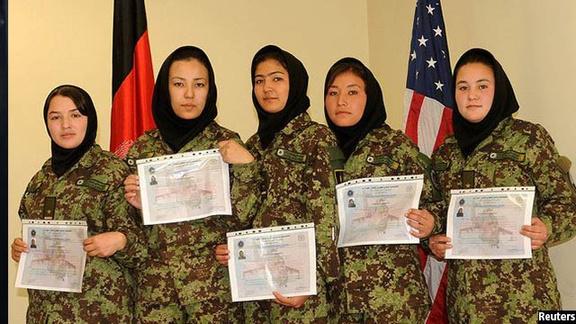
For the women who traveled without a male relative, they faced extra fears of being caught by the Taliban for both escaping and violating the edict on women traveling without a mahram. Zahra recounted, “I was a single girl, and along with my friends, we spent three days and nights on the road through Kandahar and Helmand, filled with fear and stress, worried that the Taliban would arrest us for traveling without a mahram.” Nazanin had to leave with her five children and travel to Pakistan alone without family or a mahram because her elderly husband had spent most of his life in a village and failed to understand the severity of the situation. Freshta, left alone with her four children because her husband is addicted to drugs, became afraid of going outside in Afghanistan without a mahram. She attempted to find work doing laundry in people’s homes once the Taliban took over, but even that kind of work was not sufficient. Freshta recounted how her husband was mentally unstable, beating her and her children, so she had to escape. Sughra, a former employee of the Afghan Human Rights Commission and the Ministry of Defense, summarized the experience as follows:
The journey was extremely dangerous and terrifying. At the border, when I was about to enter Pakistan, the Taliban stopped me and asked, ‘Where is your Mahram?’ I was wearing a burqa and hid my face. I told them that the man I had come with was my Mahram. If they had recognized my face, they would not have allowed me to enter Pakistan.
In line with reporting from Human Rights Watch, the women interviewed emphasized how challenging life is living in a liminal status, at risk of deportation back to Afghanistan, in Iran and Pakistan.[33] While in Pakistan and Iran, the women interviewed noted that they have the freedom to think and believe and that no one tells them to not study, go outside, or to wear a hijab, they suffer financial difficulties, threats of deportation, an inability to pursue their education and livelihood. The women, who entered Pakistan and Iran illegally, face daily fears that they will be deported; they are constantly threatened by the police and if they are arrested, they fear deportation to Afghanistan. Sughra reported that “in Pakistan, we also lack security. On Monday at midnight, four soldiers with large rifles came to our door and asked who we were and what we were doing. With much fear and panic, we told them we are migrants from Afghanistan.” Given their exigent flight from Afghanistan, many of the women lack documentation. Now, at least five of the women explained, their asylum requests take exceedingly long to process and in the interim they lack access to stable employment, healthcare, and other basic necessities as they struggle to survive.[34]
Due to lack of funds and restrictions on refugees, children of mothers and families who fled are unable to resume their education. Gaps in their education will place these children even further behind academically and professionally, especially as the Taliban issued a ban on Afghan girls going to school in September 2021. However, the issue of lacking access to decent education has not ceased upon these women leaving the country. The same families we spoke to who struggled to access education for themselves and their children struggle to survive in Pakistan and have enough to eat and paying school fees for the four children is too much. Khadija said that ever since they arrived in Pakistan, her children cannot go to school because they cannot afford the school fees.
All the women who migrated to Pakistan and Iran face significant financial challenges without the legal ability to work in these countries. They have rent and living expenses to afford, payments for education for any children, no reliable income, and no legal status.
The interviewees noted that if women are widowed, they may have no means to support themselves on their own. Fatima explained that the financial situation for many of the women is so disastrous that they cannot provide proper nutrition for their children, and they are forced to choose between feeding their children or sending them to school. Rabia, who broke her leg en route to Pakistan, is unable to see a doctor or get medical attention without protection from her legal status or sufficient financial resources. Zainab, a former oldier who was forced to give up her career and much of her belongings in escaping Afghanistan, says, “the cost of medical examinations and visiting a doctor in Pakistan is extremely high and I cannot afford to go to a doctor.” Zahra, a former soldier in the National Army, explains that her teeth feel “damaged and painful,” but she cannot afford to see a doctor in Pakistan or access the mental health services she needs.
Zainab and Freshta shared that women hide their former military service in Afghanistan because potential employers avoid hiring anyone who might pose issues with the Taliban. Zainab explains: “if I tell people, even Pakistani citizens, that I was a soldier in the military in the previous Afghan government, they will not hire me. Therefore, I hid my previous job to prevent problems.” Freshta shared that women are unable to work in occupations related to their prior experience or careers, forcing them to do manual labor, including work like cleaning or sewing. These types of jobs often referred to as “survival jobs”—can be a practical solution to help people make ends meet, but they can take a mental toll on refugees like these women who have advanced training and professional qualifications. They face a disconnect between their skills and the work available when forced to flee, ultimately taking a toll on their mental well-being. While maybe these jobs provide temporary immediate income, they can exacerbate feelings of displacement, unfulfilled potential, loss of old way of life, and highlight a need for pathways for these women to be opened up to integrate into their chosen professions.
More than half of the women interviewed expressed a fear of being deported from Pakistan or Iran back to Afghanistan.[35] Because there is no legal pathway for Afghan refugees to enter Iran or Pakistan, the women simply crossed the border without documentation. Khadija expressed that although they are free to maintain their own thoughts and beliefs in their homes, they face the constant fear of deportation. Many of the interviewees explain that because they lack legal documents, they struggle to work, cannot conduct their activities, and they are deprived of opportunities to study. Khadija stated that if these women or their family members are caught by Pakistani or Iranian police, they will be arrested and sent directly back to Afghanistan. The financial burden of obtaining legal documents is too significant for these women who have used their savings to protect themselves and their families by escaping their country.[36] Even if they have the means to renew their visa, Pakistan places a renewal cap on visas for Afghans. If they are deported back to Afghanistan, they face certain death as the Taliban targets Hazaras, women, and those who served in the security forces.
Hawwa and Masuma expressed that even women with legal residency documents face fears, as their visas are about to expire and they do not have the money to pay for renewal. Both Hawwa and Masuma indicated their serious concerns that many people who have opposed the Taliban in the former government have been assassinated in Pakistan.
Given the dire situation for Hazara women who served in the security sector prior to the fall of Kabul, this section offers solutions to ensure their protection and dignity. These recommendations come from the women interviewed themselves and are in line with recommendations from the global diaspora of Afghan women:
1. Open safe routes for resettlement and safety for these women
2. Codification of gender apartheid as a crime under international law
3. Non-recognition of the Taliban regime as a government by the international community
4. Offer financial assistance for women forced to flee Afghanistan under the Taliban
These four recommendations are discussed in depth below, and this report calls on international actors to realize these recommendations and implement protections for these women.
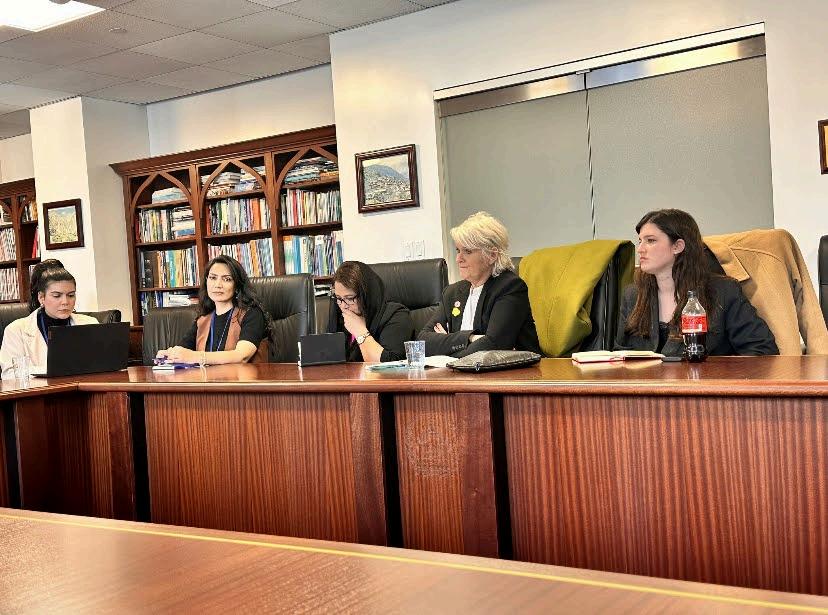
“The only option is to facilitate their departure from Afghanistan, so they can leave the country that the Taliban have turned into a prison and hell, especially for women and girls.” – Kubra
The interviewed women beseeched the international community to focus on helping the women left behind to obtain asylum and visas in other countries. It’s very important to consider these women agents of change who served their communities. This plea is supported by Human Rights Watch’s 2024 report, calling on countries that previously supported the recruitment and training of women including US in the police and national army to identify and support former military women from Afghanistan who have been temporarily relocated to third countries.[37] Several women interviewed for the HRW report stated that other governments have remained silent while former military women have endured threats and violence under the Taliban. [38] One powerfully emphasized: “I no longer have any hope from the international community. If they intended to help us, they should have done something in the past three years.”[39]
It remains evident that foreign countries have yet to fulfill their promises to the Afghan people. In Germany, the country only took in 1,000 Afghans per month, and by late 2022, thirty Afghans died waiting to be evacuated.[40] In
the United Kingdom, the government created the Afghan Citizens’ Resettlement Scheme to allow up to 20,000 refugees to resettle in the UK.[41] The plan focused on women and minorities in danger from the Taliban, but at the end of March 2023, only 1,000 refugees had been offered permanent housing while nearly 9,000 others lived in hotels for nearly two years.[42] Thousands of Afghans who helped the UK government remain at real risk in Afghanistan and have yet to be relocated.[43]
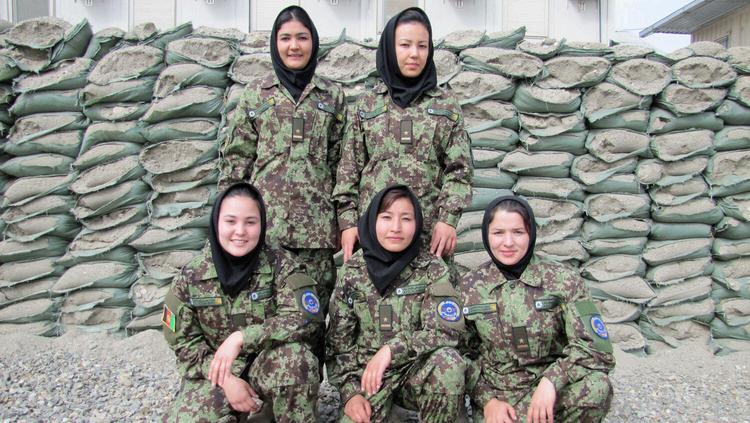
Canada welcomed around 55,000 Afghans following the Taliban takeover but has recently suspended their special programs for Afghan refugee admissions.[44] Prior to its suspension in November 2024, the Afghan resettlement programs permitted the private sponsorship of refugees seeking to enter and reside in Canada; the pausing of these programs will remain in effect until December 31, 2025.[45]
The United States helped around 88,000 Afghans into the country, including nearly 19,000 Afghans on Special Immigrant Visas, those who did work for the U.S. government.[46] As of late 2022, there were 63,000 applications in limbo which leaves the fates of over 315,000 Afghans in jeopardy.[47] During the 2024 U.S. election, now-President Donald Trump committed to stricter immigration limits with additional security checks during his first term, which is likely to continue.[48] As of March 2025, Afghanistan is anticipated to be listed as one of the countries from which any immigration is “banned.”[49]
All of the interviewed women emphasized the need for governments to create resettlement pathways for Hazara women, who served in the security forces. They ask that the international community work to accept (undocumented) migrants and transfer them to safe countries. They emphasize that governments need to address asylum applications and create a speedier process for asylum seekers to guarantee them safety and security. While many of the women may have escaped the extreme conditions of home, until these steps are taken, they cannot enjoy a full life with safety and security. Across global efforts to assist Afghan women, no efforts have been made to resettle women in this particular group, those who served with the Afghan Ministries of Defense, Interior, and Intelligence, and face a significant security risk.
“We ask the international community and supporting countries to recognize gender apartheid in Afghanistan and to now allow the Taliban to deprive women of their basic and human rights.” – Sahar
Although the crime of “gender apartheid” has not been officially established in international law, gender apartheid illustrates the methodical and organized oppression the Taliban is employing against women and girls. Codifying the crime of gender apartheid provides a comprehensive framework that accurately characterizes the systematic oppression and serves as a structure for international bodies to prosecute potential future crimes of gender apartheid as international bodies did against South Africa during their apartheid regime.[50] Zainab explains that the “denial of women’s human rights and exclusion of women from social life is gender apartheid.” Zahra shares that “suppressing a large segment of society and ignoring them is gender apartheid.”
“The [International Community] should not recognize the Taliban government, as the Taliban are still the same terrorists they were twenty years ago, without any change.” – Hawwa
Interviewees called upon Afghan men to show courage and make necessary sacrifices to make change for Afghan women as a whole. Rabia encouraged Afghan men to “[s]tand alongside your sisters, wives, mothers, and daughters for their right to education, work, and freedom to live a health life, and clearly declare your support.”
Zainab said men should “[s]tand up against oppression and ignorance, join their daughters and women, and not allow the Taliban to turn their daughters into slaves. They should pursue education because an uneducated man is more likely to become violent and unaware of his own rights, as well as the rights of women and girls.” Beyond Afghan men, the women urged the international community not to recognize the Taliban.
Kubra spoke about how Afghans feel as if they are pawns in the global politics over Afghanistan. She emphasized that “we should
not allow the Taliban to continue using the suffering of the Afghan people for political games. Women and girls from impoverished communities are becoming victims. At the very least, human rights, especially for the defenseless ethnic minorities in Afghanistan, should be defended.” Many women in Afghanistan and the interviewed women want the United Nations to not recognize the Taliban and to stand with women and girls in Afghanistan. However, the UN scheduled the Doha 3 meeting for the end of June 2024 where the UN encouraged Taliban leaders to attend to provide global attention to the country.[51] The UN crafted an agenda which excluded human rights and excluded Afghan women from the meetings, thereby sidelining and excluding those persons who are most impacted by the Taliban abuses.[52] In doing so, the UN has signaled to the women – who have suffered under imprisonment and torture, had their family members killed or disappeared, and faced constant fears over the fate of their country – that they do not matter if the UN can entreat with the Taliban members. As we approach Doha 4, the women interviewed and this report urge nonrecognition of the Taliban.
It is not enough to provide secure immigration status in a neighboring or third country for this population of women. As former security service professionals, the women emphasize that there need to be efforts focused on financial support and stability for this population. Prior to the Taliban takeover, these women held stable careers which enabled them to be independent and support themselves and their families. For all of these women, that is not the current reality. Their ability to be financially independent, and in turn have access to basic living necessities cannot be dependent on their status, lest we continue to force these women to live in a state of uncertain, unsafe limbo.
With resettlement comes an inherent interim, limbo period of financial uncertainty. Some organizations focus on offering temporary relief during this time, but many times, these women are left out of those aid efforts. For example, there are funds such as the funding window run by the United Nations supporting Women Human Rights Defenders and the Humanitarian Fund Window meant to protect women and human rights formally or informally at a local, national, regional, or international level.[53] However, the women featured in this report are not included in this targeted cohort and not eligible for these channels of support. This is representative of the way this group, Hazara women who are former security force members, are a forgotten people in the eyes of the international community.
With training, support, and cooperation from the allied forced, Hazara women bravely served the Republic of Afghanistan in the Ministries of Defense, Interior, and Intelligence. Unlike Afghan women who formerly served as prosecutors, judges, and human rights activists, these women have largely been excluded from international relief efforts. Through the recognition and implementation of this report’s recommendations, Hazara women, as an exceptionally vulnerable population, will be recognized for their service and receive the aid and pathways to safety that they desperately need. The international community, led by its individual states, must provide targeted assistance and develop pathways for Hazara women to acquire legal status and stability in their lives.
[1] Abbasi, Fereshta, Natasha Arnpriester, & Buru Yavan, An Avenue to Justice for Afghan Women: Bringing a CEDAW Case Before the International Court of Justice, Cambridge J. of Law, Politics, & Art, (Sep. 13, 2024).
[2] Hasrat, M.H., Over a Century of Persecution: Massive Human Rights Violations Against Hazaras in Afghanistan, OHCHR, (2019). Some Hazaras are Ismalia, a separate branch of the Shi’a religion, or Sunni Muslims too.
[3] Id.; see also Yalda Royan, Religion, Ethnicity, and Gender: The Taliban’s Inter-Sectional Attack on Hazara Women, 8 Women and Public Policy Journal: Afghanistan After August 2021 – Appraisal and Way Forward (2025)
[4] Human Rights Watch, Afghanistan: ISIS Group Targets Religious Minorities, (Sep. 6, 2022).
[5] Ali A. Jalili, Afghanistan National Defense and Security Forces, United States Institute of Peace, (May 2016)
[6] Safi, Mahtab & Atef, Sana, Forgotten victims of the Taliban: Women in the former Afghan security forces, Zan Times, (Oct. 10, 2024) [Hereinafter “Forgotten Victims”].
[7] SIGAR, DOD Efforts to Recruit, Retain, and Train Women in the ANDSF, SIGAR, (February 2022).
[8] Zahra Joya, Hungry, Hunted, Terrified: Unending Plight of the Afghan Women Who Served in Military and Police, The Guardian (Aug.14, 2023) [Hereinafter “Hungry, Hunted, Terrified”].
[9] Karacalti, Asena, Elliott Bynum, and Christian Jaffe, Two Years of Repression: Mapping Taliban Violence Targeting Civilians in Afghanistan, ACLED, (Aug. 11, 2023).
[10] Amnesty International, Afghanistan: Taliban Authorities Must Reveal Alia Azizi’s Whereabouts, (Jan. 21, 2022).
[11] Human Rights Watch, Afghanistan: Herat Women’s Prison Head Missing Six Months, (Apr. 20, 2022).
[12] Id.
[13] Snowball Sampling, Oregon State Univ. Div. of Research and Innovation, [14] Id.
[15] Hunted, Hungry, Terrified, supra note 8.
[16] Luke Broadwater & Ana Sasani, Afghan Women Who Fought with U.S. Military Seek legal Immigration Status, New York Times (Apr. 27, 2023) (discussing the women in the Female Tactical Platoon – “Most of the women are Hazara, an ethnic minority that has faced violent persecution under Taliban rule. “)
[17] Human Rights Watch, Double Betrayal: Abuses Against Afghan Policewomen, Past and Present, (Oct. 10, 2024) (“Between 2009 and 2021, the US, Germany, Japan, and the EU spent millions on building facilities and training female recruits as well as paying their salaries.”); see also U.S. Army, ISAF, Afghan Ministry of Labor and Social Affairs host Gender Integration Luncheon (Feb 29, 2012) (“ISAF has also been deeply involved in the training and development of female members in the Afghan National Security Force.”).
[18] Royan, supra note 3 at 100-101 (explaining that “Hazara women enjoyed certain social and political freedoms due to the community’s relatively progressive position on women’s and girl’s education, employment, and participation in political and social spheres. As Hazara women were highly accomplished in the realm of education, they played a strong role in the civil society and security sectors before the Taliban takeover in 2021.”) (citations omitted).
[19] United States Institute of Peace, Tracking Taliban’s (Mis)Treatment of Women.
[20] Royan, supra note 3.
[21] Fereshta Abbasi, Attacks Target Afghanistan’s Hazaras, Human Rights Watch, (May 3, 2024).
[22] Farkhondeh Akbari, The Risks Facing Hazaras in Taliban ruled Afghanistan, Program on Extremism, George Washington University (2022).
[23] Farkhondeh Akbari & Kobra Moradi, Hazara Women: How Gender and Ethnicity Intersect in the Taliban’s Repression, Just Security (Mar. 7, 2024); see also Royan, supra note 3 at 100-101.
[24] United Nations Assistance Mission in Afghanistan, Impunity Prevails for Human Rights Violations Against Former Government Officials and Armed Force Members (Aug. 22, 2023).
[25] BBC, Afghanistan: Taliban carrying out door-to-door manhunt, report says, BBC, (Aug. 19, 2021).
[26] Forgotten Victims, supra note 6.
[27] Al Jazeera, Taliban Orders NGOs to Send Women Workers Home, (Dec. 24, 2022).
[28] Emma Graham-Harrison, Taliban Bans Girls from Secondary Education in Afghanistan, The Guardian (Sept. 17, 2001).
[29] UNAMA, supra note 23.
[30] Anna Kelly & Zahra Joya, ‘Frightening’ Taliban law bans from speaking in public, The Guardian, (Aug 26, 2024)
[31] Royan, supra note 3
[32] Human Rights Watch, Double Betrayal: Abuses Against Afghan Policewomen, Past and Present, (Oct 10, 2024)
[33] Human Rights Watch, Pakistan: Afghans Detained, Face Deportation, (Oct 31, 2023); Mitra Naseh, One of the World’s Largest Refugee Populations, Afghans Have Faced Increasing Restrictions in Iran, Migration Policy Institute (Jan 7, 2025) (“Hundreds of thousands of Afghans have been forcibly removed from Iran each year since the Taliban’s resurgence, and the [Iranian] government in September said that it planned to deport as many as 2 million Afghans lacking legal status by March 2025 ”)
[34] Amnesty International, Pakistan: Government must not deport Afghan Refugees, (Oct 4 2023)
[35] Davies, Caroline, Afghan Hazara Refugees Live in Fear of Being Deported by Pakistan, BBC, (Dec 5, 2023); see also Ayaz Gul, UN Sounds Alarms Over Pakistan’s New Afghan Deportation Plans, VOA, (Feb 5, 2025)
[36] Human Rights Watch, Pakistan: Afghans Detained, Face Deportation, (Oct 31, 2023)
[37] Human Rights Watch, Double Betrayal: Abuses Against Afghan Policewomen, Past and Present, (Oct 10, 2024)
[38] Id
[39] Forgotten Victims, supra note 6
[40] InfoMigrants, Germany's new admission program for Afghans suffers mixed reviews, (Oct 19, 2022)
[41] BBC, Afghanistan: How many people has the UK resettled?, BBC, (Aug 15, 2023)
[42] Id
[43] Human Rights Watch, Joint UK Parliamentary Briefing on Afghanistan, Human Rights Watch, (Aug 2022)
[44] Eivy Joy Quito, Canada Welcomes Over 55,000 Afghan Refugees Through Specialized Programs, ImmigCanada, (Nov 15, 2024)
[45] Government of Canada, Temporary Pause on Intake of Refugee Sponsorship Applications from Group of Five and Community Sponsors, Immigration, Refugees & Citizenship Canada (Nov 29, 2024)
[46] Semple, Kirk and Stockton, Alexander, The Text Messages from Desperate Afghans Left Behind: ‘Show This to the People of America,’ New York Times, (Nov 30, 2022); see also Lindsay M Harris and Yalda Royan, Afghan Allies in Limbo: The U S Immigration Response, 61 Univ of San Diego L Rev (2025)
[47] Id
[48] Norman, Kelsey, and Gil, Anna Martin, 3 Years After Fall of Kabul, US Congress Has Still Not Acted To Secure Future of More Than 70,000 Afghan Evacuees in US, Baker Institute for Public Policy, (Aug 15, 2024)
[49] Charlie Savage & Ken Bensinger, Draft List for New Travel Ban Proposes Trump Target 43 Countries, New York Times (Mar 14, 2025) (listing Afghanistan in the “red” category with most restricted immigration to the United States)
[50] Atlantic Council & Global Justice Center, Joint Call to Amend the Draft Crimes Against Humanity Convention to Encompass Gender Apartheid, Global Justice Center, 4 (Oct 5, 2023)
[51] Gul, Ayaz, UN 'hopeful' about Taliban's presence at 'Doha III' meeting on Afghanistan, VOA News, (June 11, 2024)
[52] Fetrat, Sahar, UN Meeting Blocks Afghan Women from Agenda, Participation, Human Rights Watch, (June 24, 2024)
[53] Women’s Peace & Humanitarian Fund, The WPHF Funding Window for WHRDs