NIADA President Touts Mentors, Education
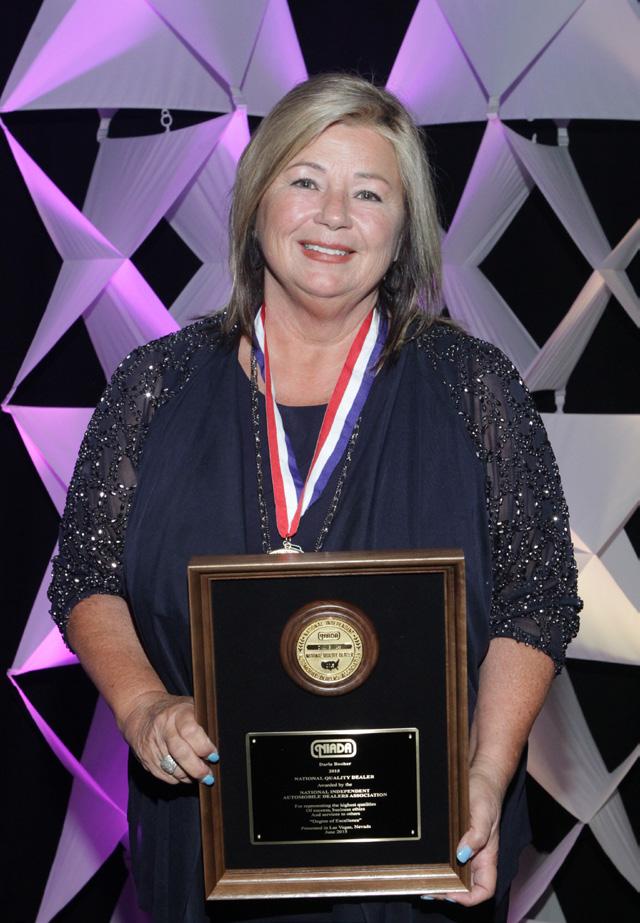
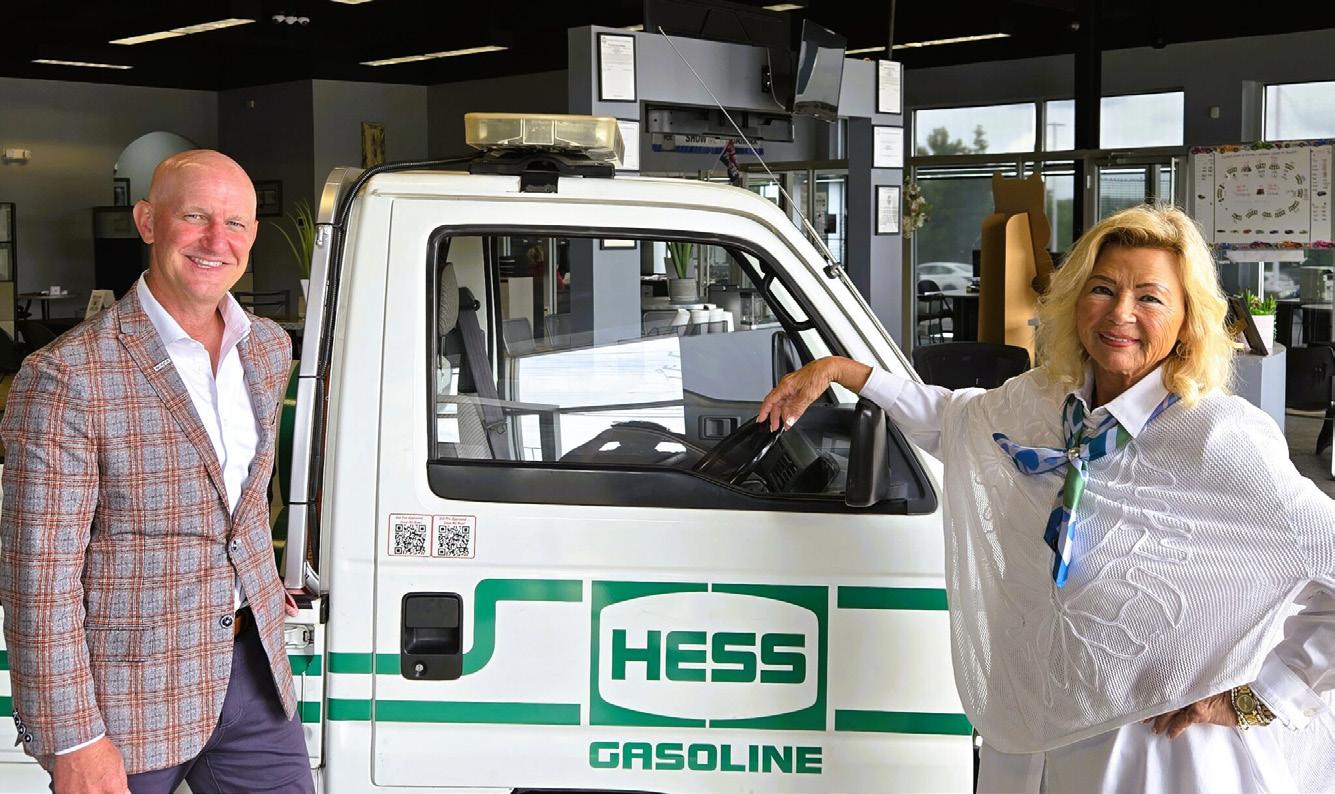
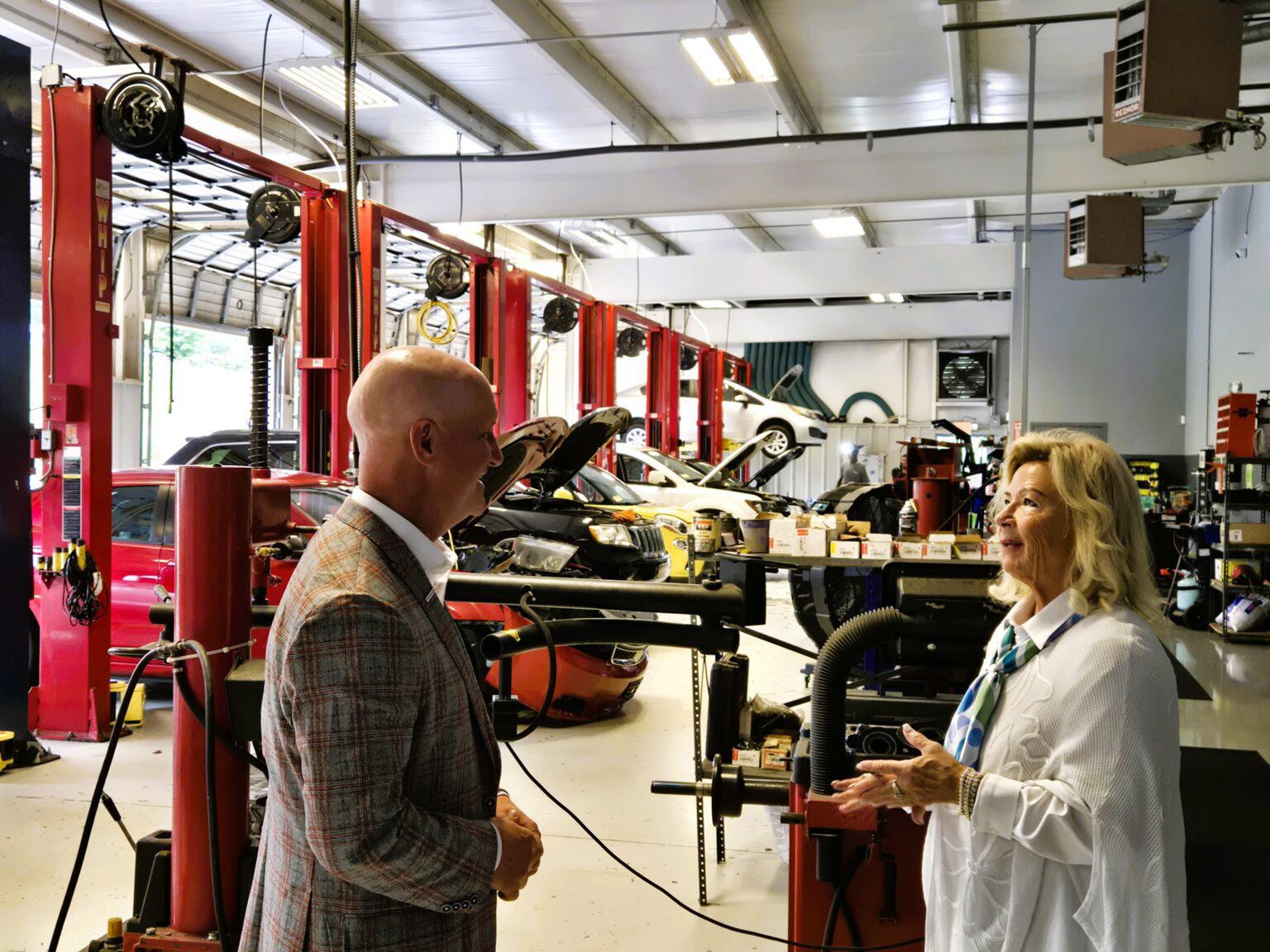
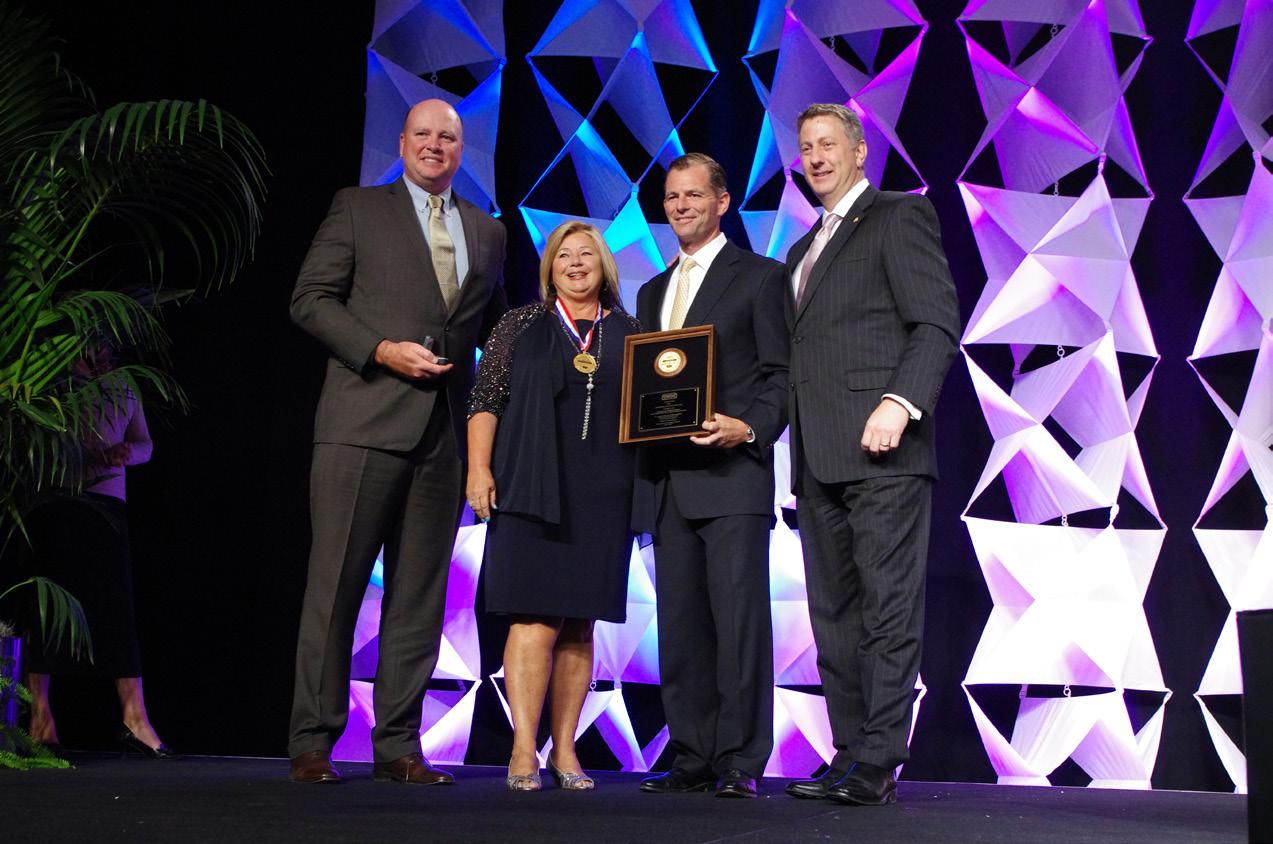
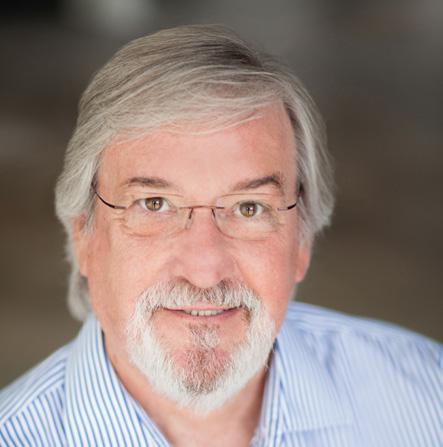
Darla Booher is owner and president of Deal Depot Inc. in Greer, S.C. She was the 2015 NIADA National Quality Dealer. This month, she will start her term as president of the National Independent Automobile Dealers Association at the NIADA Convention & Expo June 21-24 in Denver.
Used Car News: Tell us about your background and how you got into the car business?
Darla Booher: I didn’t plan it. It happened in a roundabout way. I moved to Louisiana in 1988. Originally, I’m from Illinois. I made my way to South Florida as a young girl and eventually moved to Louisiana, which was one of my favorite places in the world. But I didn’t realize that there was a terrible oil depression in that area in 1988 so I couldn’t find a job. I had friends in South Florida who used to sell cars and I knew that made good money. So, I said, I’ll give it a shot. It turns out I had a knack for it. I started selling cars in 1988. But I didn’t stay long because my son was 13 and my ex-husband was living in South Carolina. So, I moved with my son to South Carolina so he could be closer to his dad. He was an impressionable young man and I knew that he needed his dad. I’ve been here in South Carolina since 1988, so it has grown on me.
The nice thing about the car business is that once you learn how to sell a car and you’re pretty good at it, then it’s not hard to get a job doing it. I always tell my grandkids, if you can sell something, you can sell anything. I got a job at a Chevrolet dealership and worked my way up from sales. Fortunately, I worked
for a dealer who had multiple lines – Cadillac, Olds, Buick, Saturn, Acura and Honda. He sent me to Saturn school, Oldsmobile school, going to every school out there. The dealer was really good about it. I learned so much.
I want to add that I had some really hard-on-me sales managers and mentors in the car business. I was a little naïve. I was a little sensitive, maybe. They thickened my skin up. They did, I promise you. It wasn’t easy. I’m thankful that they taught me but didn’t baby me. Next thing you know, I was sales manager of a franchise dealership.
Later, in the early ’90s, I was approached by someone in the independent sector, who said you’ve got to work here. I said, “I don’t think so.” But since it was one of my mentors, I said I’ll go and talk to (the independent). At the time I was making six figures and he made me prove it with check stubs and tax returns. But he matched it so I took
the leap and worked for an independent BHPH dealer. It was Ray Lyle (2005 National Quality Dealer) who interviewed me and he was a strong mentor. He made me stronger and taught me lot. After about six years in BHPH, I just thought it was time to open my own.
UCN: You have a BHPH model, which has become common of a lot of NIADA members. What has been the biggest challenge with this business model?
Booher: I would say over time, the biggest challenge has been the exit of available capital. I’ve been blessed because I’ve had a lot of private capital and significant com-


mercial capital as well. But I know that for a lot of dealers in the industry, that’s been a big deal. One of the big things that I understood coming out of the franchise business is to never keep all of your eggs in one basket. So, I never counted on one lender. When one decided

to take down their tent and leave, I wasn’t left high and dry with a $5 million portfolio where I needed to find capital in 90 days. I was approached by private capital and it kind of grew. One person told another and another. I never advertised it. There was a group that was
Continued on page 3


NIADA Preview
6/15/2026
President – Continued from page 1
involved in mortgage financing and they thought they’d get their money back quicker if they did it on car loans. They saw the value in that and one by one they started joining me.
UCN: What prompted you to join NIADA and get involved through the years?
Booher: Before I started my own dealership, Ray Lyle let me come to his dealership and shadow him for about a week. There was no question off the table. He was completely transparent with me, the good, bad and ugly of what I needed to do to run a dealership. He was highly involved in the industry. I knew there were dealer conventions, so I started going to those. When Ray won the National Quality Dealer of the Year award – I’m going to get teared up about this – he inspired me. He inspired me to be the same. I wanted to make him proud of me and all that he invested in me.
I got involved in it with a servant’s heart. I didn’t really go into it expecting anything out of it. I thought it was going to be a one-way flow and I was OK with that. I wanted to give back, mentor people the way people mentored me. I joined early on with the Carolinas IADA after I started my dealership. Then I went to the NIADA and took the CMD (Certified Master Dealer) program. It really cemented the importance of education because I realized I didn’t know what I didn’t know. And the value of the networking was so fabulous. Then I joined a 20 group and that was even more fabulous. I still have friends, that I consider great friends, from that 20 group. It just springboarded from there. When I won National Quality Dealer in 2015, he was one of the first ones to reach out and congratulate me.
UCN: What would you tell fellow dealers, especially other women, about your experience in NIADA leadership?
Booher: This is one of the hardest things for me to put into words, but I’ll do my best. I think a lot of people have this perception that there are barriers to becoming involved in NIADA leadership and there aren’t. There really isn’t for anybody from any walk of life. We have so many different leaders from so many different walks of life now. There’s no reason not to get in-
volved. The doors are open. Come in with a servant’s heart. You’re there to help other dealers and you can do it so many ways, whether it’s the legislative committee, the finance committee or charity, which would be the NIADA Foundation. Just get plugged in.
UCN: What issues do you see that are the most pressing current for independent dealers in general and BHPH in particular?
Booher: My concern in BHPH is the insurance. Each state has their own rules and regulations, but it’s kind of nationwide, since we all use a lot of the same insurance companies. One part is about getting reasonable garage coverage since there are a limited number of carriers in the states. So, you have to be so careful to even make a claim because you might get canceled. Then if you get canceled there might not be anyone else to write it. So, you really have to protect that coverage.
The other part for the BHPH specifically is lienholder protections and the role of the insurance companies in when it comes to paying and settling claims. There are so
many issues with that. It’s making sure we have the coverages as stated, making sure we’re given our notices and making sure that when there is a claim that it’s handled timely and fair for the right amount. It’s all of the above. We have to stand our ground with these insurance companies.
We’re no different than any other lender, whether it’s a credit union or large lenders like Ford Credit or Ally.
UCN: Dealers always have opportunities, even in challenging times. As a dealer/leader, what opportunities do you see today for your fellow dealers?
Booher: There is no ceiling on what a big operator can do with their operation. If you are willing to do the basics and do them well, treat your customers well. There is not really a ceiling on how you can grow your business. As long as you are willing to do it right and treat your customers with dignity and respect.
UCN: It’s been over a decade since you were named National Quality
Dealer, how did that help your business?
Booher: There have been some game-changers in my career and NQD was definitely one of them. It helped me to promote my business and elevate my business. It opened doors that maybe wouldn’t have opened before. Capital availability was one area, to say nothing about how it helped my reputation in my community.
UCN: This year marks America’s 250th birthday. What does it mean to you?
Booher: Not only do we have the 250th anniversary of the country, but my little town is celebrating 150 years and I’m celebrating 25 years in business. So, it all lines up.
But I travel the country and realize how many nations can’t claim that they’ve been sovereign for 250 years. They may have been around longer but they haven’t been sovereign.
We just can’t take that for granted. Freedom isn’t free.
We should not take it for granted and we should hold it precious.
NewsBriefs
Nissan Will Pay Refunds NEW YORK – New York Attorney General Letitia James announced that the Nissan Motor Assurance Company (NMAC) will provide refunds for all New Yorkers who were unfairly overcharged for their leased vehicles.
An investigation by the Office of the Attorney General (OAG) found that 15 Nissan dealerships added junk fees or falsified the price of leased vehicles that custom-ers wanted to buy when their lease ended, forcing them to pay higher costs. As a result of OAG’s investigation, those 15 dealerships have already paid $1 million in pen-alties for overcharging on end-of-lease buyouts and refunded more than $4.5 million to over 3,100 consumers who paid more for their vehicles than they were promised. This new agreement with NMAC will provide refunds for even more New Yorkers, ensuring that anyone overcharged at any of the 45 New York Nissan dealerships that were not part of the initial settlements will also receive full restitution for any overcharges.
“Buying a car is a major financial decision, and New Yorkers should not have to worry about dealers using illegal junk fees to drive up the price,” said James. “Nissan dealers across New York misled their customers with junk fees and other costs to cheat them out of their hard-earned money.
After securing refunds for customers of 15 Nissan dealerships, my office is now making sure that every New Yorker who was defrauded by any Nissan dealership gets their money back. We will always take action to stop illegal schemes that deceive consumers.”
The OAG opened an investigation into Nissan dealerships after consumers reported they were being overcharged and given inaccurate receipts for end-of-lease buyouts during the COVID-19 pandemic.
The investigation found that the consumers leased their Nissan cars under an agreement that gave them the option to purchase the vehicle for a set amount after the lease term ended.
However, when they returned to

the dealerships to buy their cars after their leases were up, the dealerships substantially overcharged them. The dealers added miscellaneous “dealership fees” or “administrative fees,” or inflated the vehicle’s price on the invoice given to the consumer.
James previously secured settlements with 15 different Nissan dealerships for charging customers with these illegal fees and inflated prices.
The new settlement with NMAC will deliver restitution to all New Yorkers who were victimized by these lease overcharge schemes at all remaining Nissan dealerships in New York.
In addition, consumers who took out loans financed by NMAC to buy their leased car at the wrongfully inflated price will be refunded the additional loan interest they paid.
The settlement also requires NMAC to make changes to its lease terms and business processes.
BDC Provider Names CEO
Better Car People announced the appointment of Alex Eckelberry as chief executive officer. Eckelberry brings more than 30 years of executive leadership experience across cybersecurity, automotive technology, and proptech to the customer engagement platforms.
Better Car People combines industry-built AI, human expertise, and operational insight to ensure every customer interaction, whether automated or human-led, is compliant and effective. The platform serves thousands of rooftops across North America.
“Alex is an exceptional leader who brings deep operational experience, a proven track record of scaling technology companies, and, most importantly, a profound respect for what we have built here,” said Matthew Belk, board member and founder, Better Car People. Eckelberry has roots in automotive technology from his tenure at AutoLoop and Affinitiv.
“I’m thrilled to join Better Car People, a leader in auto technology with a strong position in AI and omnichannel marketing services,” Eckelberry said. “BCP’s portfolio – including Brooke AI, Proactive Training, and a broad suite of solutions across service and sales – represents a compelling opportunity, and I’m excited about what we’ll accomplish together.”
Eckelberry began his career at Borland International before holding roles at Quarterdeck Corp. and Bulldog Capital Management, now part of Monitor Deloitte.
Advertising
Production:
Subscribers:
Succession Planning
6/15/2026
Independent Dealer Completes Exit Strategy, Calls it a Career
By Jeffrey Bellant
NIADA will hold a dealer panel on succession planning at its annual convention this month in Denver.
One panelist, a past NIADA president, has real life experience in his exit strategy that he can share with attendees.
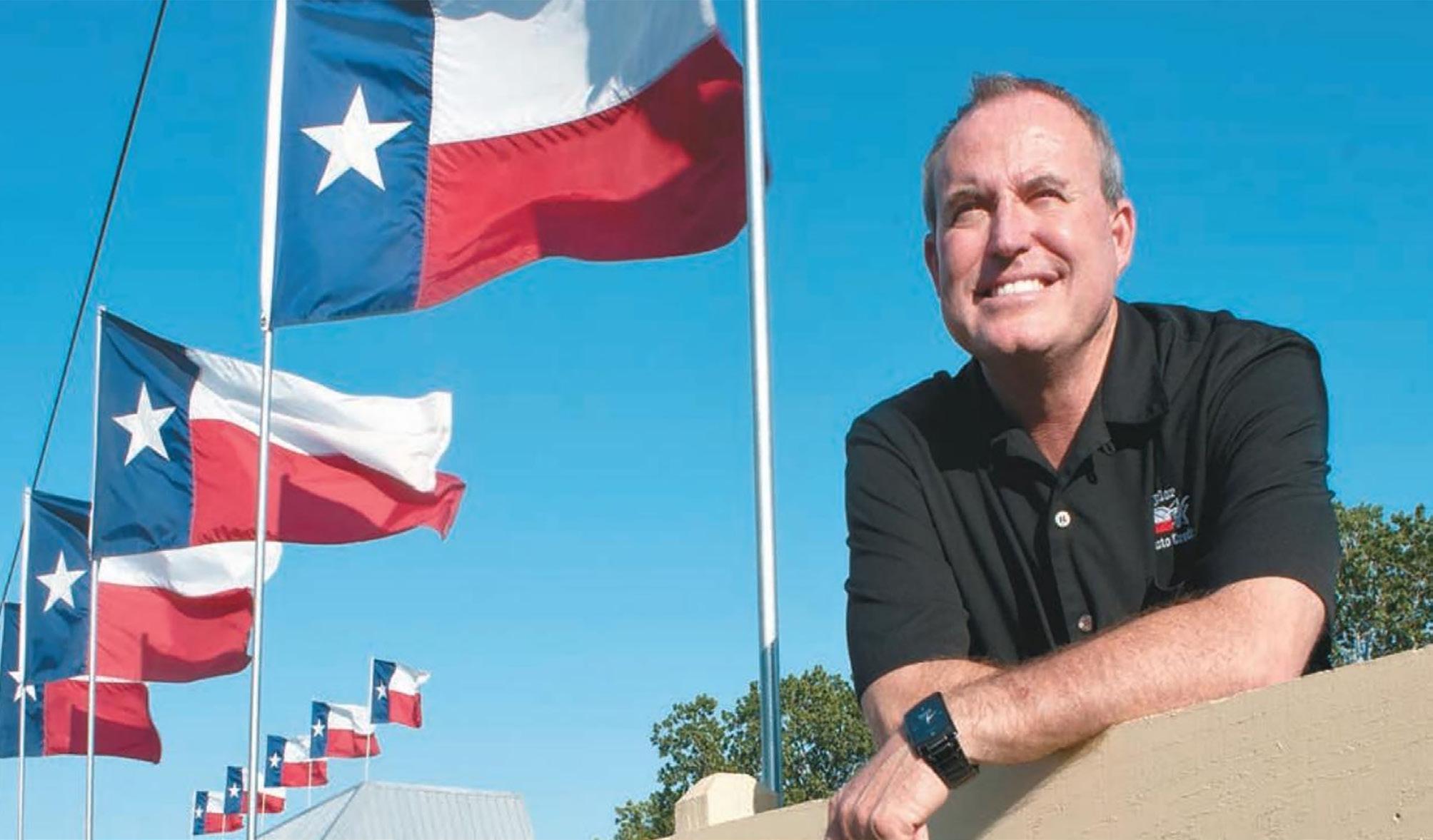
This year, Keith Hagler officially closed out a 35-year career as an independent used-car dealer.
Hagler ran Taylor Auto Credit, a Texas-based buy-here, pay-her dealership, until 2022, when he sold the business to America’s Car-Mart,
Under the deal, Hagler, 69, remained as general manager of the dealership for three years, leasing out his dealership property and selling his inventory to Car-Mart.
Hagler’s deal allowed him to collect on his final 1,000 accounts, which were still closing out even as he officially turned over the keys to the dealership for good this February.
It was important for him that his employees – several of them had been with Hagler for 25 years – were treated right.
His employees “felt like the sky was falling” when they heard Hagler’s plans. But no one left and it seems to have worked out.
Exit plans always seem to be a blind spot for dealers. Hagler earlier told Used Car News of a conference years ago put on by the Texas IADA.
“We met to have a session about exit strategies and it lasted about five minutes because nobody had one,” Hagler said.
As years went by, Hagler and his wife started looking at an exit plan.
“I started getting to that age where I had friends of mine that suddenly weren’t around anymore,” Hagler said. “I saw other car dealers pass away and what happened with their wives.
“I just wanted everything cleaned up in case anything ever happened.”
In 2022, Hagler was attending the NIADA convention in Las Vegas and bumped into a fellow dealer who was wearing an America’s Car-Mart polo and discovered the group had bought the dealer’s business. He met with the rep from America’s CarMart and eventually made a deal.
“They did everything they said they would do,” Hagler said. “It really went smooth.”
Being able to stay in the same building and being allowed to collect out his remaining notes was a
big draw.
At the time of the deal, Hagler had 1,000 accounts on the books, so that provided continued cash flow as he began to transition out of the usedcar business.
Once America’s Car-Mart bought the business, Hagler strictly focused on collecting while America’s took over retail car business. All his employees went over to the new ownership.
Hagler ended his three-year transition commitment to America’s earlier his year, officially ending his long run as a retail car dealer.
“There’s mixed emotions because I was in it over 35 years,” he said. “But it’s a good feeling, too. Neither of my daughters, Avery or Cameron, wanted to be in the car business. And Marcia didn’t want to be in the car business without me, because she just worked on the collection side. She didn’t really get into the other stuff. Her concern was always, if something happened to me, what would she do?”
The timing couldn’t be better.
In January, Hagler had a health scare that could have been scarier if he hadn’t made the move he did three years ago.
In the middle of the emergency, he had a moment of clarity.
“I’m sitting there and I’m thinking, I got my car business taken care of. I’m fixing to get my earn-out done,” he said. “I got all that taken care of and got all my trusts together. So as far as my family, I’m in great shape
and I know where I’m going when I die.
“I just had this peace come over me.”
Hagler admits, however, that had he not made the deal with Car-Mart and still had debt that would fall to his wife, this moment would have put him “in panic mode.”
He added that he is grateful for his experience in the used-car business.
“Just being in the buy-here, payhere business, it made me,” Hagler said. “I wouldn’t be who I am today if it wasn’t for buy-here, payhere. I wouldn’t have what I have. I wouldn’t have been able to have done what I’ve done.”
Another benefit of his business is helping people who didn’t have another finance option when they needed cars.
“When we were collecting out (our last notes), we were still working out of the same office and we’d hear from customers, ‘We’ve done business with you for some 25 years,’ some even longer.”
“They’d say, ‘Man, we’ve been with you all forever. You’ve all been so good.’”
Hagler joked that he didn’t really hear that when he had to collect car payments that were late.
“I told Marcia, ‘I didn’t know this many people really loved us,’” he said with a laugh. “But hearing that we helped with their lives and how we were always there for them, it just makes you think, ‘Did I get out too soon?’”
But Hagler believes it was definitely the right time.
Hagler’s tale is one dealers will want to hear during the convention panel called “Succession Planning and Exit Strategies” during NIADA’s Convention & Expo. The panel will discuss what it actually takes to exit or transition out of your business. The dealers will discuss several strategies from succession planning to full exit.
“I tell people all the time, even if they’re not ready to do something today, they need to be thinking about tomorrow and what if something happens,” Hagler said.
“Be ready.”
He may have given up his car dealership, but he’s not hanging out at the beach.
He and his wife, Marcia, have owned rental properties for decades and they continue to work that business. One of his daughters also works in that business.
“That’s what everybody used to laugh about,” he said. “People would come in to make their car payment and their rent payment at the same time.”
Hagler also has a cattle ranch and breeds Texas Longhorns, which is something he loves to do.
He wants to stay involved in NIADA activities. Hagler still has his dealers license and can operate as a wholesaler.
“I’m always going to be a dealer. I can’t imagine not being a car dealer.”
Finance News
Affordability Remains Issue for Automotive Financing
By Jeffrey Bellant
Experian’s State of the Automotive Finance Market Report for Q1 2026 showed affordability issues are still an issue in the auto market, while there are shifts in lending sources, credit scores and market share.
The percentage of used vehicles with loan terms more than six years hit 31.54%, up from 28.60% in Q1 2025. Meanwhile, used vehicles with loan terms more than 85 months grew to 1.40% in Q1 2026, from 1.32% the year prior.
Melinda Zabritski, Experian’s head of automotive financial insights, said used car buyers are buying older models.
“Essentially, consumers are buying 9+ model year vehicles almost 45% of the time,” Zabritski said.
Only 13% of the used car market is late-model vehicles.
She’s seeing more constriction in the market for the 4- to 8-modelyear vehicles.
Used has increased its share of vehicles financed in Q1 to just over 58% of vehicles purchased. That’s slightly up from last year, but below the peak of 62% three years ago.
Over 61% of used vehicles are purchased using cash, Zabritski said, and most used vehicles are being purchased through franchise stores.
“The independents are 43.58% of all used transactions,” Zabritski said. “Of course, when we do look at the independents, we got a lot more share by the buy-here, pay-here and other lender categories. Meanwhile, the banks do most of the financing (of used) at the franchise stores.”
Zabritski said we are seeing more consolidation among the biggest lenders in the market.
On the used-car side, the top 25 lenders make up 53% of all lending.
Experian shows credit scores have dropped in Q4 2025 and again in Q1 2026. Average used credit scores dropped 2 points to 682 while average new-car buyers saw a bigger dip of 5% to 751.
The growth in terms of credit segment for financing is on the Near Prime and Subprime side, while Prime and Super Prime saw dips in financing share.
Cars continued to lose marketshare down to 16.4%, while truck share has increased to almost 18% year-over-year. The share of the SUV/CUV market was relatively flat year-over-year.
The percentage of used vehicles

with loan terms more than six years hit 31.54%, up from 28.60% in Q1 2025. Meanwhile, used vehicles with loan terms more than 85 months grew to 1.40% in Q1 2026, from 1.32% the year prior.
“Affordability continues to shape financing decisions across the automotive market,” Zabritski said. “While shoppers continue to lean toward larger, more expensive vehicles, we’re seeing more consumers take advantage of longer-term loans to offset rising monthly costs.”
On the used side, the average loan amount saw an uptick of $785 from a year ago to $27,070 in Q1 2026, and the average monthly payment grew from $523 last year to $531 this quarter.
“Banks dominate the used loan space,” Zabritski said. Previously, the credit unions had held the lion’s share of financing for used vehicles. Banks make up 30% while credit unions made up 26% of financing for used vehicles. Financing companies rose to more than 21% of financing share of used vehicles, Experian showed.
On the used loan side, Prime customers make up a large part of the market, but it has steadily been decreasing, Zabritski said.
One jump on the used financing side occurred in Deep Subprime, which rose to 2.5%, one of the higher percentages Experian has seen recently.
The average loan amount for new vehicles hit an all-time high creeping near $44,000, while the average loan amount for used vehicles topped $27,000.
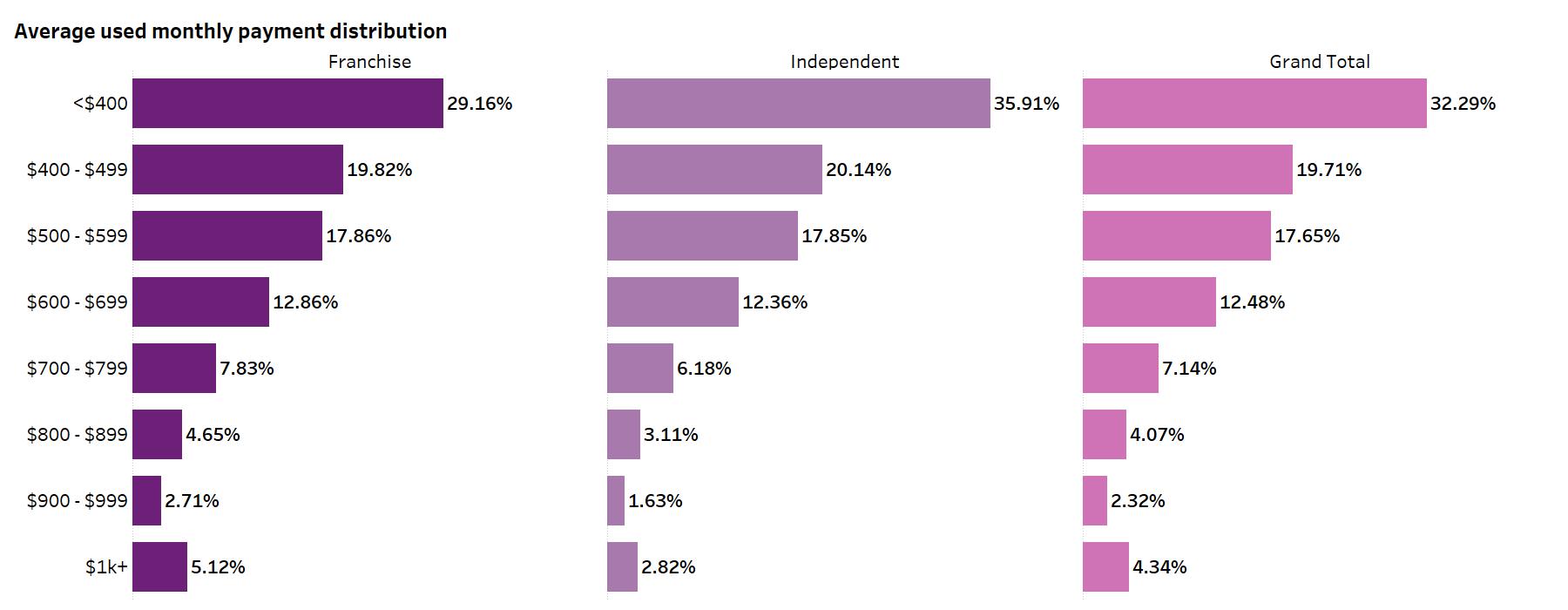
Interestingly, while the average monthly payment for new vehicles continues to rise, nearly 20% of new vehicles had an average monthly payment less than $500 in Q1 2026.
Used loan-to-value amounts have decreased even as they have risen on the new vehicle side.
Used payments have a better trendline than new.
“For the entire used space, a little over 32% of the payments are under $400,” Zabritski said.
Still, over 4% of used loan payments top $1,000 a month. ICE vehicles dominate the market, with 76% of the vehicles financed in Q1 in that category.
EVs financed dipped to just over 6% this year from nearly 11% of the market in Q1 2025. Gas/electric hybrids financed rose to nearly


Compliance News
6/15/2026
Massive Fraud Scheme Used ‘Sham’ Dealerships
U.S. Attorney for the Southern District of New York Jay Clayton announced the arrests of 11 defendants in connection with a multimillion-dollar scheme to evade tolls and parking and traffic tickets using fraudulently obtained temporary license plates.
The defendants are charged in a five-count indictment with offenses including wire fraud and access device fraud. All 11 defendants were arrested between May 19, 2026, and May 20, 2026.
Nine of them are expected to appear in White Plains federal court before U.S. Magistrate Judge Victoria Reznik.
Felix DeJesus Jimenez is expected to be presented before U.S. Magistrate Judge Brian Meyers in the Eastern District of North Carolina. Ramon Eligio Dejesus Peralta is expected to be presented before U.S. Magistrate Judge Marty Fulgueira
Elfenbein in the Southern District of Florida.
“For over five years, the defendants allegedly conspired to use fraudulently obtained temporary license plates, or ‘temp tags,’ to avoid fees, tolls, and parking traffic tickets,” said U.S. Attorney Clayton. “Their schemes deprived New York State and New York City of millions of dollars in revenue. Hard-working, honest New Yorkers were footing their bills.
This Office and our law enforcement partners are committed to protecting New Yorkers from fraud, waste, and abuse.
The defendants allegedly spent years scheming to avoid tolls and tickets. Their bill has now come due.”
The FBI said the defendants “allegedly turned temporary tags into tools for evading accountability, allowing drivers to dodge tolls, and
lawful traffic penalties.
“Our investigations found approximately a total of $15 million in unpaid parking violations, tolls, and vehicle registrations.
Not only were millions of dollars in unpaid violations uncovered, but investigators also found that certain temporary registrations and license plates were linked to multiple criminal offenses.
As alleged in the Indictments filed on May 13, 2026, in White Plains federal court: Licensed auto dealerships may issue temporary motor vehicle registrations (“temp tags” or “paper tags”) in connection with bona fide sales or leases of vehicles.
In recent years, individuals have abused this system by setting up sham auto dealerships to generate fraudulent temp tags—unconnected to bona fide sales or leases of cars—that are then sold in, among other places, the Southern District
of New York.
From at least in or about June 2017 through at least in or about March 2024, Felix DeJesus Jimenez, Julio Frias, Bladimir Tomas Valdez, Alba Nellys Rodriguez Gonzalez, Jefrey Raphael Herrera Espinal, Sammy Rodriguez Francisco, Xavier Rodriguez Francisco, Clarisa Rodriguez Francisco, Cindy Rey, Luciano Moises Estrella, and Ramon Eligio Dejesus Peralta participated in a scheme to defraud New York State and New York City of revenue from vehicle registration fees, tolls, parking enforcement, and traffic enforcement, through the use of fraudulent temp tags.
As part of the scheme, the defendants created a series of companies for which they obtained used motor vehicle dealer licenses in the States of New Jersey and Georgia. The defendants and their co-conspirators Continued on page 10
Attorneys Ask: Is Disparate Impact Dead?
By Rebecca Kuehn and Erica Kramer*
Recent federal developments may suggest a pullback from disparate impact theories of fair lending liability. For auto dealers and auto finance companies, however, the practical risk is not going away.
Disparate impact refers to facially neutral policies (such as pricing or underwriting decisions) that result in statistically significant differences in outcomes for protected consumers, even without evidence of intent to discriminate. For years, regulators relied heavily on this theory in fair lending examinations and enforcement, particularly in the indirect auto finance space, challenging finance companies to provide a legitimate justification for the policies that had an apparent discriminatory effect on protected consumers.
Recent federal regulatory actions have moved against reliance on the disparate impact theory under the Equal Credit Opportunity Act and have also sought to narrow or remove agency rules implementing disparate impact
under the Fair Housing Act.
In April, the Consumer Financial Protection Bureau amended Regulation B to state that the ECOA does not authorize disparate impact liability, marking a significant shift away from prior regulatory interpretations that supported an “effects test.”
At the same time, the Department of Housing and Urban Development has proposed rescinding its disparate impact regulations under the FHA, signaling a broader policy shift against potential effects-based liability at the federal level.
Despite these developments, reports of disparate impact’s death are greatly exaggerated.
First, the U.S. Supreme Court has already held that disparate impact claims are cognizable under the FHA in the 2015 case of Texas Department of Housing and Community Affairs v. Inclusive Communities Project, Inc.
The Supreme Court has not, however, opined on disparate impact claims under the ECOA, leaving open the possibility of private litigation.
Second, state legislatures and
regulators have begun to fill the gap in federal enforcement. For example, New Jersey has adopted regulations implementing its Law Against Discrimination, which codifies the use of a disparate impact theory of liability in fair lending and fair housing cases.
In April, the New York Department of Financial Services reminded regulated entities that, under state law, credit decisions that produce a disparate impact on protected consumers may constitute unlawful discrimination.
There have been similar moves with respect to fair housing law: Maryland and New York both adopted bills that codify the use of disparate impact liability in housing discrimination cases.
The recent federal regulatory actions are already being contested.
A coalition of 16 attorneys general has sued HUD over its proposed rule, and, on May 27, a case was filed challenging the final rule under Reg. B.
Therefore, the best reading of the current environment is not that disparate impact is dead but that disparate impact liability has become more jurisdiction-specif -
ic and theory-specific.
Federal agencies may be less inclined to pursue effects-based discrimination claims, yet statistical disparities in credit-related outcomes for protected consumers and non-protected consumers can still trigger supervisory scrutiny, fuel allegations of intentional discrimination, and support state or private actions.
Consequently, compliance systems should continue to test for unexplained disparities, document legitimate business justifications for policies that result in apparent disparities that adversely affect protected consumers, and evaluate less discriminatory alternatives where feasible.
*Rebecca Kuehn is a partner in the Washington, D.C., office of Hudson Cook, LLP. She can be reached at 202.715.2008 or by email at rkuehn@hudco.com. Erica Kramer is a partner in the Tennessee office of Hudson Cook, LLP.
© CounselorLibrary. Based on an article from Spot Delivery. Single print publication rights only to “Used Car News.”


Manheim Atlanta
ADESA Boston
JULY 3, 17, 31
508-626-7000
ADESA Charlotte
JULY 9, 23
704-587-7653
ADESA Chicago
JULY 17
847-551-2151
ADESA Cincinnati/Dayton
JULY 21
937-746-4000
ADESA Golden Gate
JULY 7, 21
209-839-8000
ADESA Indianapolis
JULY 7, 21
317-838-8000
ADESA Kansas City
JULY 7, 21
816-525-1100
ADESA Lexington
JULY 2, 30
859-263-5163
ADESA New Jersey
JULY 9, 23
908-725-2200
ADESA Salt Lake
JULY 14
801-322-1234
ADESA Tulsa
JULY 10
918-437-9044
Columbus Fair
JULY 1, 22, 29
614-497-2000
JULY 9, 15, 23
404-762-9211
Manheim Baltimore Washington
JULY 14
410-796-8899
Manheim Dallas
JULY 1, 14, 15, 29
877-860-1651
Manheim Denver JULY 15
800-822-1177
Manheim Detroit JULY 9, 23
734-654-7100
Manheim Fredericksburg
JULY 16
540-368-3400
Manheim Milwaukee JULY 1, 15, 29
262-835-411436
Manheim Minneapolis JULY 8
763-425-7653
Manheim Nashville
JULY 1, 28, 29
615-773-3800
Manheim Nevada JULY 24
702-730-1400
Manheim New England JULY 21
508-823-6600
Manheim New Jersey
JULY 1, 15, 29
609-298-3400

Manheim Atlanta
JULY 9
404-762-9211
Manheim Dallas
JULY 14
877-860-1651
Manheim Milwaukee
JULY 15
262-835-4436
Manheim Nashville JULY 1, 29
615-773-3800
Manheim Nevada
JULY 24
702-730-1400
Manheim Palm Beach
JULY 1, 29
561-790-1200
Manheim New Orleans
JULY 1, 15, 29
985-643-2061
Manheim Orlando
JULY 7, 14, 21, 28
800-822-2886
Manheim Palm Beach
JULY 1, 2, 29, 30
561-790-1200
Manheim Pennsylvania
JULY 3, 9, 10, 17, 23, 24, 31
800-822-2886
Manheim Phoenix
JULY 2, 16, 30
623-907-7000
Manheim Pittsburgh JULY 15
724-452-5555
Manheim Riverside JULY 2, 14, 16, 28, 30
951-689-6000
Manheim Seattle
JULY 22
206-762-1600
Manheim Southern California
JULY 9, 23
909-822-2261
Manheim Tampa
JULY 9, 23
800-622-7292
Manheim Texas Hobby
JULY 9, 23
713-649-8233
Manheim Atlanta
JULY 9
404-762-9211
Columbus Fair
JULY 1, 29
614-497-2000
Manheim Dallas
JULY 14
877-860-1651
Manheim Milwaukee JULY 15
262-835-4436
ADESA Boston
JULY 3, 17, 31
508-626-7000
ADESA Charlotte
JULY 9, 23
704-587-7653
ADESA Golden Gate
JULY 21
209-839-8000
ADESA Salt Lake
JULY 14
801-322-1234
Columbus Fair
JULY 22
614-497-2000
Manheim Nashville
JULY 1, 29
615-773-3800
Manheim Nevada JULY 24
702-730-1400
Manheim Orlando
JULY 14
800-822-2886
Manheim Palm Beach JULY 1, 29
561-790-1200
JULY 2026
Manheim Pennsylvania
JULY 3, 9, 23
800-822-2886
Manheim Phoenix JULY 2, 16, 30
623-907-7000
Manheim Riverside JULY 2, 16, 30
951-689-6000
Manheim Seattle JULY 22
206-762-1600
Manheim Dallas
JULY 1, 15, 29
877-860-1651
Manheim Fredericksburg
JULY 16
540-368-3400
Manheim Milwaukee
JULY 1, 29
262-835-4436
Manheim New England
JULY 21
508-823-6600
Manheim New Jersey
JULY 1, 15, 29
609-298-3400
Manheim Orlando
JULY 7, 21
800-822-2886
Manheim Pennsylvania
JULY 10, 24
800-822-2886
Manheim Pittsburgh JULY 15
724-452-5555
Manheim Seattle JULY 22
206-762-1600
Manheim Southern California
JULY 9, 23
909-822-2261
Manheim Pennsylvania
JULY 3, 9, 23
800-822-2886
Manheim Riverside
JULY 2, 16, 30
951-689-6000
Manheim Seattle JULY 22
206-762-1600

Manheim Atlanta
JULY 15
404-762-9211
Manheim Dallas
JULY 14
877-860-1651
Manheim Milwaukee JULY 15
262-835-4436
Manheim Palm Beach
JULY 1, 29
561-790-1200
Manheim Pennsylvania
JULY 3, 9, 23
800-822-2886
Manheim Riverside
JULY 2, 16, 30
951-689-6000
USED CAR NEWS
6/15/2026
Fraud – Continued from page 8
used those dealerships to generate a total of more than 100,000 temp tags, a significant portion of which were registered to addresses in the Southern District of New York
Then they were sold in the district and elsewhere at prices ranging from approximately $50 to $250 per tag, producing millions of dollars in profits.
In selling temp tags, certain defendants represented at times, in sum and substance, that, by using a temp tag generated by a dealership, customers would avoid having to pay tolls and/or tickets.
Since at least in or around 2017, temp tags issued by the dealerships have incurred at least approximately $11,800,000 in unpaid parking and traffic tickets in New York City and at least approximately $3,100,000 in un -
paid E-ZPass tolls in New York State.
Temp tags issued by the dealerships have been the subject of numerous complaints lodged with the New York Police Department and other law enforcement agencies, including by victims who have received bills for tolls and tickets that they did not incur.
Additionally, temp tags issued by the dealerships were involved in at least approximately 1,200 incidents reported to the NYPD, including at least six homicides.
Felix Dejesus Jimenez, 62, of Englewood, N.J., Julio Frias, Age 61, of Teaneck, N.J., Bladimir Tomas Valdez, 30, of Manhattan, N.Y., Ramon Eligio Dejesus Peralta, 52, of Miami, Fla., Alba Nellys Rodriguez Gonzalez, 25, of Bergenfield, N.J., Jefrey Raphel Her-
rera Espinal, 26, of Yonkers, N.Y, Sammy Rodriguez Francisco, 25, of Yonkers, N.Y., Xavier Rodriguez Francisc, 23, of Waterbury, Conn., Clarisa Rodriguez Francisco, 27, of Yonkers, N.Y., Cindy Rey, 28, of Hazleton, Pa., and Luciano Moises Estrella, 42, of West Milford, N.J., are each charged with one count of conspiracy to commit wire fraud, which carries a maximum sentence of 20 years’ imprisonment
They were also charged with two counts of wire fraud, each of which carries a maximum sentence of 20 years’ imprisonmen.
Charges also include one count of conspiracy to commit access device fraud, which carries a maximum sentence of 5 years’ imprisonment, and one count of access device fraud, which carries a maximum sentence of 10 years’
imprisonment.
The minimum and maximum potential sentences in this case are prescribed by Congress and are provided here for informational purposes only, as any sentencing of each defendant will be determined by a judge.
Clayton praised the outstanding investigative work of the FBI’s New York Field Office, Westchester County Resident Agency, the New York Police Department, the New York State Troopers, the New Jersey Motor Vehicle Commission Special Investigations Unit, and the Georgia Department of Revenue Office of Special Investigations.
The case is being handled by the Office’s White Plains Division. Assistant U.S. Attorneys Jake Sidransky, Benjamin Klein, Stephanie Simon, and Daniel Listwa are in charge of the prosecution.


Wholesale Markets
GEORGIA
Corey Sanford, general manager, America’s Auto Auction – Atlanta, Cartersville, Ga.
“We’ve been in business since 2003. We have four lanes.
“In January and February I was running about 1,240. Now, I’m running right at 1,000.
“We are 300-sold above last year at this time. We’re not down. Our sales percentages are terrible, at 48% to 54% throughout the year. I think there’s a price adjustment. I think dealers put too much into trades they bought a month ago. Now the bottom has dropped on everything and the dealers are stuck with them. Gas prices have hurt everything.
“On the retail side, dealers tell me cars are bringing tons of money but sellers are complaining they’re not bringing
enough. Buyers are saying that others are out-bidding them, it’s a crazy high market. Sellers agree with that.
The problem, again, is that the sellers put too much into their trades.
“Because of all this, we are having more reruns. In the last week of May, we had 58% reruns. That tells me we were probably going to have a 45% to 48% sale. But when that number is 70% or greater, we sell 55% or greater.
“We run 80% dealer and 20% commercial. One of our commercial consignors is Navy Federal Credit Union, one of the best in the country.
“We also have Primeritus Financial, Veros Credit, UHaul International and others.
“During the sale we’ll have 153 bidders in the lanes on average and about 550 online.
“Our average price across the block is $9,500.
“I think the market is going to get a little worse before it gets better. It’s an election year, and though it’s only a mid-term, there are some different midterms than what we’ve had in the past.”
WISCONSIN
Kristie Letizia, president, Greater Milwaukee Au-to Auction, Milwaukee, Wis.
“We’ve been in business 22 years this year. We have five lanes. We’re running right around 500 cars a week.
“The volumes are 50/50 between dealer cars and commercial (units).
“We host Ally Financial sales. We also get Holman vehicles and we just won Holman’s Auction of the Year award at the NAAA Spring Remarketing Ex-




change event in March.
“We also are excited to announce Exeter Finance vehicles at Greater Milwaukee. We also have U-Haul, JD Byrider and several lanes of fleet vehicles.
“We’ve also noticed the market hasn’t adjusted like it normally does after tax season because of supply and demand. There is still a strong buyer appetite. Our sales percentages are high – 70% – because of the that demand.
“Our average price in the lanes is $5,500 right now. It has been retty steady. We’ve got a good mix at this auction. We’ve got everything.
“We’re officially celebrating our 22nd anniversary in next month. The sale will be July 9. We’re hoping for probably 900 cars that day. We’re going do a complimentary big meal, a lun-

Compiled by Jeffrey Bellant
cheon. People prefer to be fed. Also, every dealer present will get a gift. Those gifts are being made right now.
“We’re really focused on doing a wonderful job with what we do have.
“It’s about keeping the accounts that we do have happy. For example, Exeter Finance, our new fleet account, is a big account. We’re putting a lot of effort to make sure their launch is successful.
“I think sometimes the fleet companies are not being treated as well by the big corporate auctions. Costs have gone up so high for them that they look to an independent, which is both more budget-friendly and more responsive to their needs.
“We have cars. We have great relationships and we’re growing in our fleet space. I’m really positive.”





Retail Markets
GEORGIA
Parker Cole, Cole’s Automotive Group, Monroe, Ga.
“Cole’s has been in business for 60 years, formerly known as Lilburn Motor Sales. My grandfather, James Cole, started the dealership in 1966 with the financial help of his uncle and the rest is history. His hours were “can until can’t.” He instilled a work ethic in his two sons, Tim and Mark, from an early age. He also knew what it meant to be a part of the community.
“James Cole would tow cars after hours for the Lilburn Police, loan cars and give fuel to the department when needed.
“The real advantage to being a family run dealership is that we all have the same tendencies and understand the task at hand. We don’t have to train and re-train
our way of doing things to would-be employees.
“Our sales between cars, trucks, and SUVs are somewhere around 10-15% cars, 40-45% trucks and 45-50% SUVs. We have seen an uptick in SUV and truck sales. We also sell golf carts, trailers, and the occasional tractor. We feel it’s best to be diversified in anything with a motor and offer our customers a ‘one-stop-shop.’
“We do our best to attend auctions in person so we can accurately examine the vehicles. We all know how accurate auction condition reports are. Am I right? We do our best to buy the nicest vehicles we can to reduce recon costs. We also get phone calls from previous customers and word-of-mouth clients about buying their vehicles from them, private party.
“Our customers in the car
and/or small to mid-SUV market are 90% interested in import vehicles. They are known to last better in the long haul. Japanese cars specifically Honda and Toyota. Now, my customers in the large SUV and truck market are 75% in favor of domestics. We see Chevrolet and Ford dominate that market in our area.
“We do not offer BHPH. It was attempted back in the late ‘80s and was soon ended. Chasing money and repossessing someone’s car wasn’t something we had the heart for. Now we do offer in house financing through our third-party lenders.
“I would have to say the average down payment from our customers is roughly $2,000. We get our fair share of $0 down and have the rare $10-15k down.
“Right now, on average we are spending around $1,200-
1,500 per vehicle for reconditioning. We go through them when they come in and the bare minimum we do is change the oil and replace the filters while also performing an inspection on the rest of the vehicle. We also include a detail in our recon. We also stand behind what we sell for 3 months or 3,000 miles.
“We have our own on-site service facility. We have been servicing our customers’ cars since the late ‘70s. Our shop is to be credited with a big part of our customer retention.
“In our pre-COVID inventory we kept around 80-100 vehicles on the lot for sale at any given time. During COVID we were lucky to get 40-50 cars on our lot that met our standards. Now that we are out of that market, we have managed to keep 65-75 in sellable inventory for the

last year and a half.
“COVID tried its best to get us to change the way we do business. But we believe having a person to talk to and ending every deal with a handshake matters. We believe our customers appreciate it too.
“My advice to someone starting in the car business would be to control your emotions when buying inventory. Don’t get attached. It will cost you. Realize that what you like isn’t what always sells. I would say, there’s a lot of money in the car business IF you’re willing to put the work in. The car business can’t be automated. There is always something happening and changing the market. You have to be aware.
“The last car I sold was a 2021 Chevy Colorado ZR2 with 71k miles on it. It sold for $31,995 plus tax.”


Compiled by Ed Fitzgerald















































































Let Auto Assign do the heavy lifting, automatically routing vehicles to the best-fit auctions based on your custom rules. Faster decisions. Better results.
Tony Moorby
I-95 is part of the nation’s lifeblood – the east coast’s aorta! It seems it’s never not busy – at least in the daytime. And there are always roadworks. North Carolina has about 50 miles worth of construction and that’s in just one section. South Carolina has undertaken a new project to widen the road from two to three lanes to match Georgia’s busy area around Savannah. That means the construction occasionally takes up one lane of the current two-lane piece. Rush hour means just the opposite.
For me, a trip to Costco means a choice of which way to go; a gamble on I-95 – success being a 45-minute sprint at the speed limit or a gentle meander over the coastal wetlands and marshes and the edges of Savannah.
This week I opted for the slow way there and the
“quick” way home, on the basis of having a car full of all those groceries that I had no idea I needed, along with the aroma of their renowned rotisserie chicken.
I took my ancient Range Rover – old faithful – it needed a run as the battery was a bit low. I still love it but the only thing Terry would love is to see its rear end disappearing over the horizon – forever.
Admittedly there’s always something that needs to be fixed but there’s no denying its utility as a hauler of domestic detritus.
So the morning trip back home was full of the promise of stripping the chicken for lunch and making stock in the afternoon. And surprise, surprise, I-95 was clear northbound – that chicken was going to be history in no time.
I was zipping along at about 75 mph (anything less

By Myles Mellor
around here is considered a nuisance) on the outside lane until – nothing – everything went as dead as a Dodo; not a puff or a wheeze and the dashboard was just as lifeless; not a light or a dial anywhere.
There was no room on the left shoulder because there wasn’t one, so I had to coast over to the right one instead, across three lanes (I was still in Georgia) – it probably took ten seconds but felt like a half an hour and fortunately I managed to only upset one other driver who had to swerve to avoid my powerless diversion.
By now the day had warmed up to a point of discomfort, as I couldn’t wind the windows down and air conditioning was out of the question. I called AAA, knowing full well that it would take time for the organization to figure out where I was and what was
wrong.
This was made more difficult by the fact that no human being comes anywhere near the phone.
Their AI was lacking the necessary intelligence and was, in fact, a total dunce! It took an hour just to establish where I was. I needed a wrecker and the nearest service seemed like it was in Jacksonville!
I opened the front and rear passenger doors to get some air circulating as the aroma of the chicken was becoming less desirable and I felt it was me that had been on the rotisserie.
Two hours seemed twice as long as big rigs tore by twelve feet away so I never took my eyes off the rearview mirror.
I didn’t even have the radio to listen to as the old girl didn’t have enough power to use it.
Eventually a nice young
fellow turned up and we were riding home in no time.
Nothing was a big deal as he dexterously loaded the car onto the JerrDan deck and slid it expertly off onto my driveway when we got home. I didn’t even pick at the chicken – it made a very rich stock.