AIM TO WIN
LYNDA SUDDERBERG MAKES HISTORY AS THE FIRST USCA WOMEN'S AC NATIONAL CHAMPION
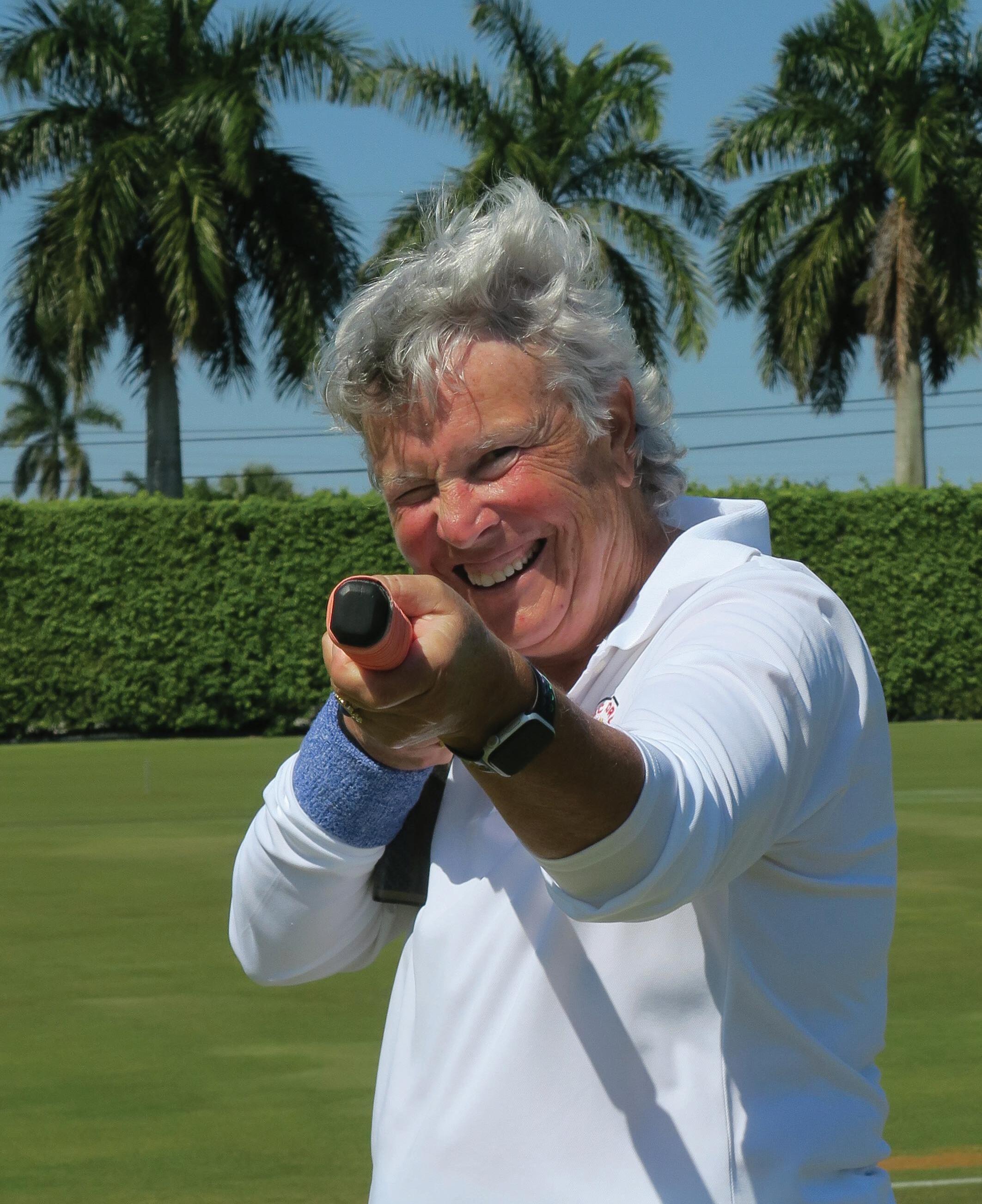
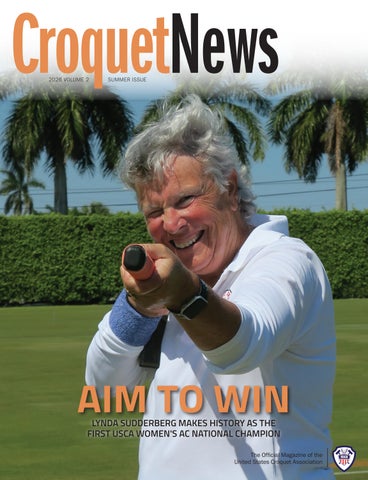
LYNDA SUDDERBERG MAKES HISTORY AS THE FIRST USCA WOMEN'S AC NATIONAL CHAMPION
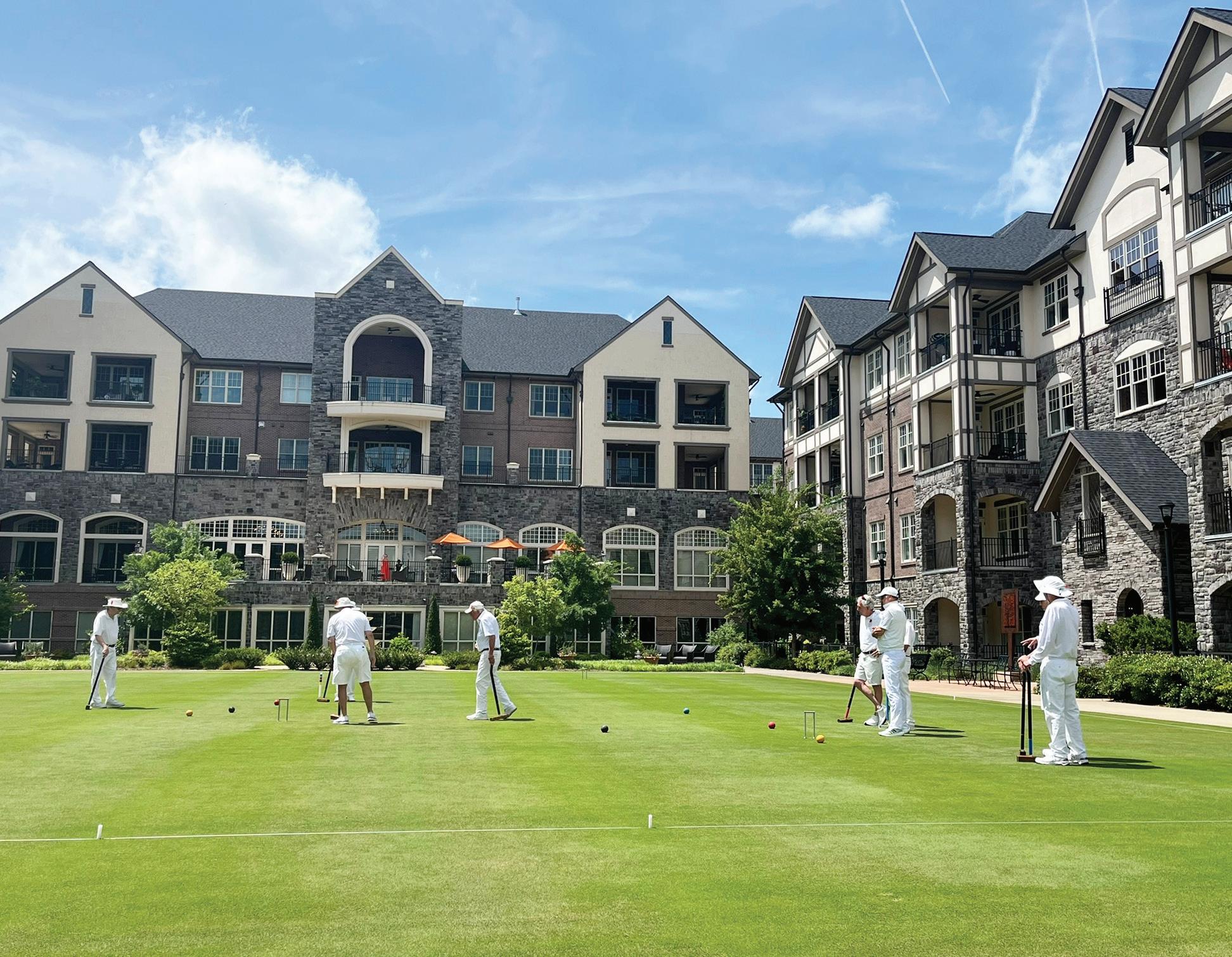
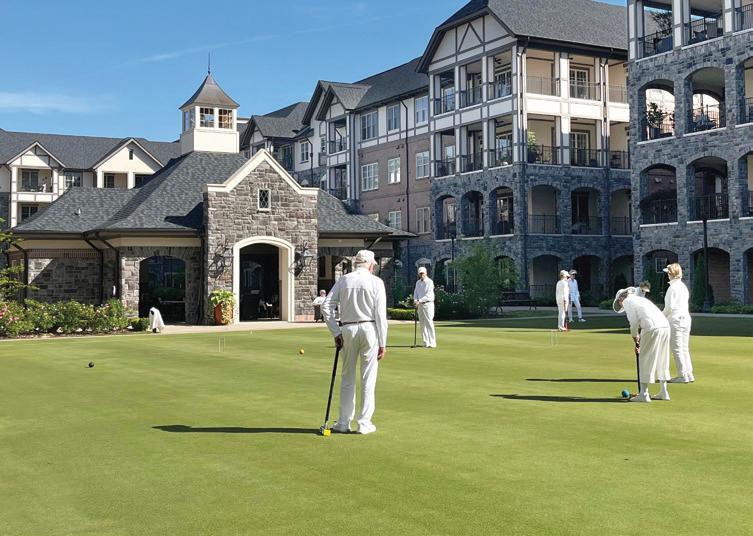
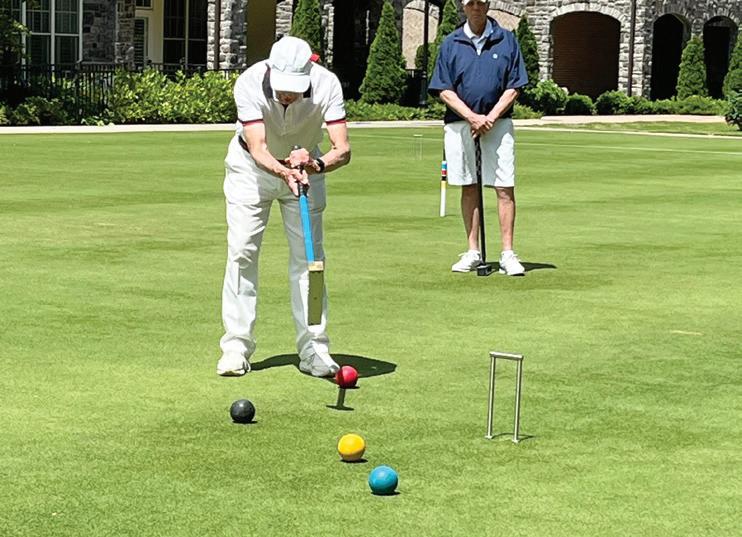
When you see the two immaculately manicured croquet lawns at the heart of Peachtree Hills Place, it’s easy to understand why croquet enthusiasts love this luxury Life Plan Community in the heart of Atlanta.
Here you’ll find elegant homes, upscale dining, attentive staff, fitness center with resort-style pool, and an on-site Wellness Center...all in an historic Buckhead neighborhood.
Visit us to meet a lively group of friends you can don your whites with every day.
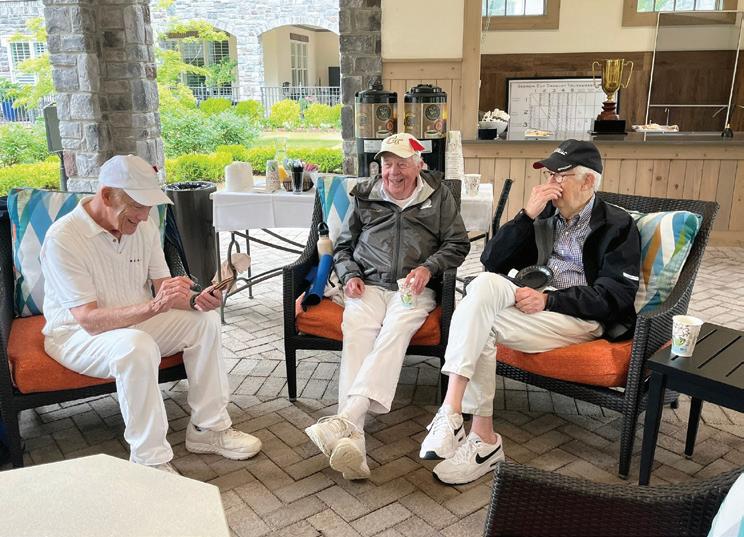

“Great and grateful.”- Jim Erwin
I like starting my Courtside column with a quote. I try to find ones that are particularly inspiring for me, with the hope that others may too. Everyone who knows Jim Erwin has probably heard these words from him. The first time for me was an early Saturday morning. I was walking out to Court 10 at the National Croquet Center to play in John Blamire’s group. Erwin was already in a game with Dave Spivey, sitting courtside at #11, watching Spivey run the break. I said, “Good morning, Jim! How are you?” With a big grin, he answered me, “Great and grateful.” I laughed and said, “I love that – thank you! Me too!” Since that day, he has had the opportunity to say that to me many times, and it always brings a smile to my face and serves as a good reminder.
Reflecting on my first year as president, I feel gratitude and pride for what the USCA has accomplished. The progress we have made and the people who are involved in setting the pace for new ideas and growth are all greatly inspiring. Our committees are thriving with projects and our leadership is strong. Thank you to my entire team for giving the best of yourselves to help grow the game and enhance the competition.
This issue celebrates a truly special moment – our first female National Champion!
Congratulations to Lynda Sudderberg, winner of the 2026 Women’s Association Croquet National Championship. Sudderberg has long been a superior role model for women in the sport of croquet. I have greatly admired her for her sportsmanship and serious determination. We applaud her achievement and hope that her history-making victory will inspire more women to pursue and excel in the AC game.
Our Second Annual U.S. Open GC Championship has also helped launch 2026 with strong and positive momentum. Congratulations to our Champion, Matthew Essick, on his outstanding play. We also extend sincere thanks to Bill Simmons, Event Founder, whose vision and dedication have established this tournament as one of the
premier events in the world, attracting many of the sport’s most elite players.
During USCA Croquet Week, the USCA Management Team gathered in West Palm Beach, Fla., for a team retreat, which was especially meaningful since much of our work together is done virtually. We were happy to step away from Zoom and have an opportunity for time together with genuine connection. Our retreat topic centered on the theme, “Croquet in America: Telling the Right Story.” Around the table, we shared what matters most to each of us about the game – social play, tournament competition and the genuine bonds that lead to lasting friendships. We talked about how these shape the experience of our sport and how the USCA can best present this to others.
Players are still talking about the fun and excitement experienced at the American Rules 6W Club Teams, played at the National Croquet Center in West Palm Beach. Fla. With more than 100 players participating this year, Macey White did a terrific job as Tournament Director, with Nancy Crouch as his assistant. We also had the Dream Team Event Committee, led by Tish Peterkin, who brought us a Caribbean-style croquet vacation, packed with special events, fun with friends and lots of croquet. Thank you to the committee and to all who came with their teams to take part in what is my favorite tournament of the year! I hope you all come back and bring your friends next year.
I will end with a story of one afternoon during Club Teams. Randy and I had played a couple of tough matches that day, and now, after finishing, I decided to walk out to Court 8 to watch a match that was finishing up. A crowd was intently watching, so I quietly took a seat, not really paying attention to who was gathered. A couple of minutes went by when I felt a tap-tap on my arm and looked over. The person said to me, “Just in case you were wondering – great and grateful.” I smiled appreciatively and nodded, “Yes, and that’s a good reminder for me right now, Jim.”
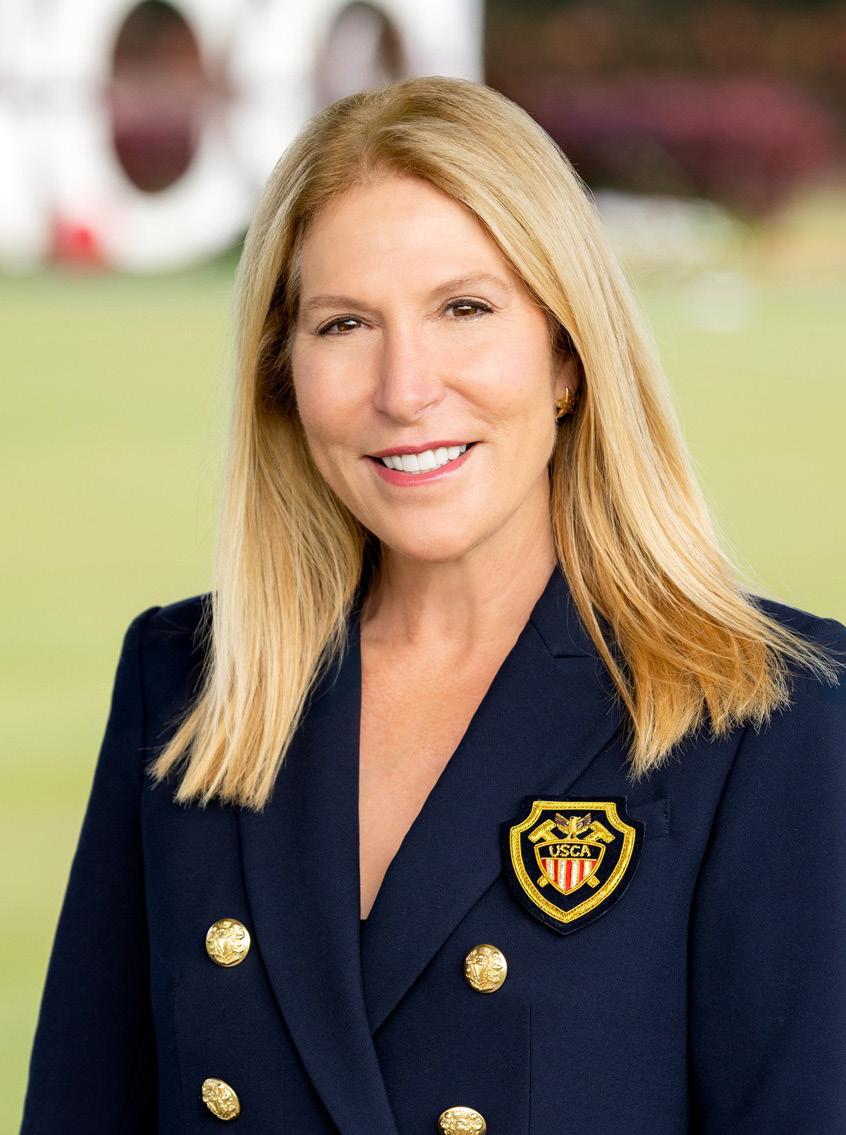
Bev Cardo
USCA President president@croquetamerica.com www.croquetamerica.com
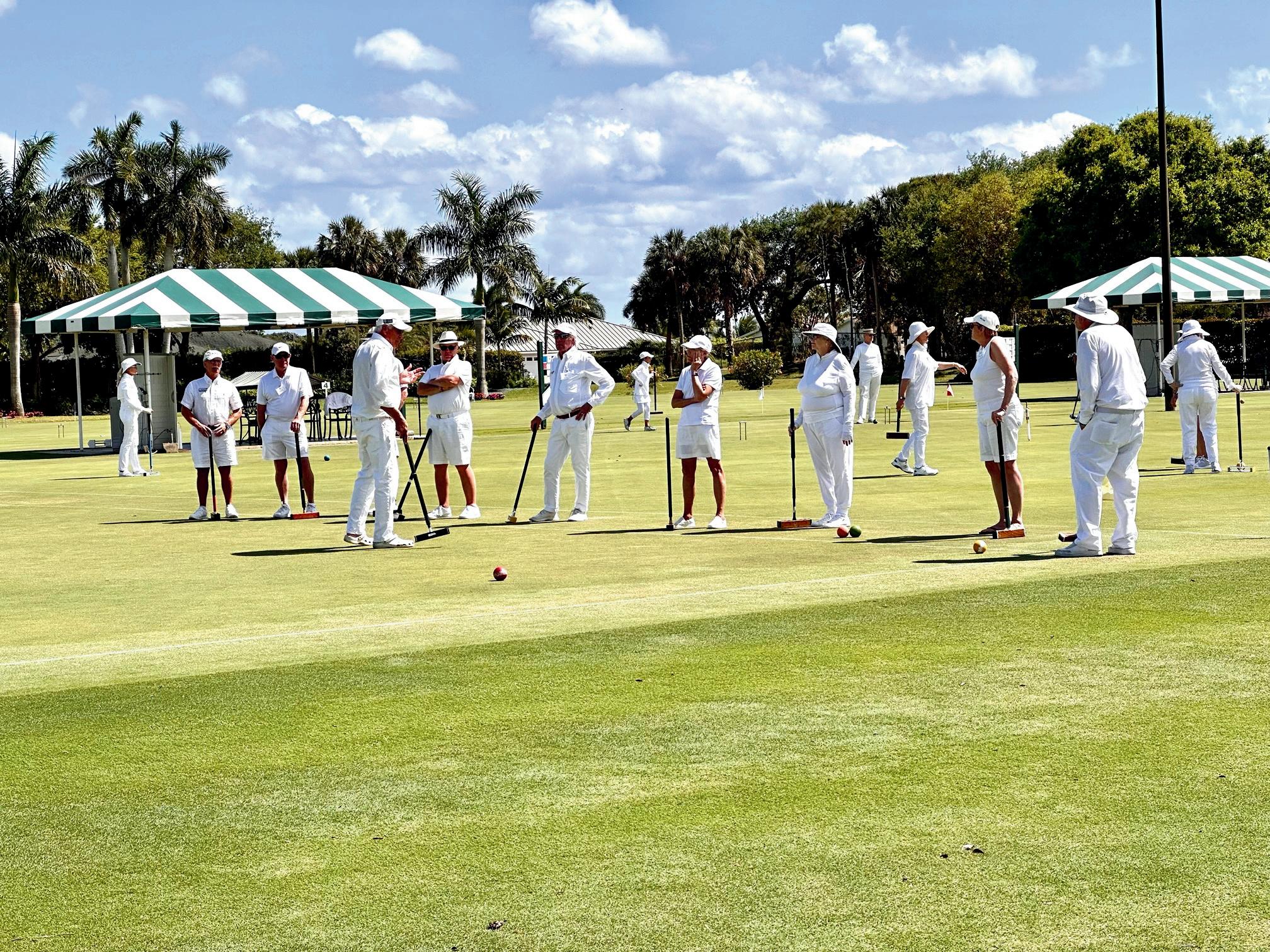
Our schools are taught by top USCA-certified instructors who are qualified and experienced players selected by our staff because of their croquet expertise and ability to communicate to those who wish to learn to play the game correctly. Students will have the opportunity to play croquet in a structured environment. Classes are small (8:1 or less student-to-teacher ratio) and are tailored to the specific playing levels of the participants.
AMERICAN 6W (3 days)
Oct 20-22, 2026
GOLF CROQUET (2 days)
October 6-7, 2026
December 1-2, 2026
ASSOCIATION (2 days) October 13-14, 2026
5 hours/day of on-court instruction (9:30-3:30)
Use of equipment
Official Rulebook (New A6W or GC members)
USCA Shot-making Manual (1st time A6W)
United States Croquet Association
700 Florida Mango Rd, Suite 200 West Palm Beach, FL. 33406
Daily Continental Breakfast and Lunches (9:00-9:30)
Certificate of Completion & Photograph
Wine and Cheese Graduation Party (3:30-4:30)
www.croquetamerica.com
Publisher
Managing
Submissions
Submit
Management Committee
President Beverley Cardo president@uscroquet.com
First Vice President John Brown firstvp@uscroquet.com
Second Vice President Adam Lassiter secondvp@uscroquet.com
Treasurer David Isaacs treasurer@uscroquet.com
Secretary John Craddock secretary@uscroquet.com
REGIONAL VICE PRESIDENTS
Florida Alex Galasso floridarvp@uscroquet.com
Mid-Atlantic
Chris Morris midatlanticrvp@uscroquet.com
Midwest Scott Spradling midwestrvp@uscroquet.com
Northeast Kathleen Green northeastrvp@uscroquet.com
Southeast Linda Trifone southeastrvp@uscroquet.com
Western Patrick Sweeney westernrvp@uscroquet.com
USCA STAFF
Office Manager
Ursula Peck membership@uscroquet.com
Tournament Brian Hovis tournament@uscroquet.com
Tournament & Schools
Adam Peck usca@uscroquet.com
Membership Coordinator Stephanie Lutge croquetoffice@uscroquet.com
United States Croquet Association 700 Florida Mango Road, Suite 200 West Palm Beach, FL 33406
www.croquetamerica.com
Tel. (561) 478-0760
Fax (561) 686-5507
The United States Croquet Association (USCA) has announced the creation of a new Executive Director position, marking a significant step forward in the organization’s continued evolution and commitment to long-term sustainability.
Based at the USCA’s headquarters in West Palm Beach, Fla., the full-time role will report directly to the Board of Directors and serve as the Association’s chief staff leader. The position is not remote.
The introduction of an Executive Director reflects a broader effort to strengthen the USCA’s national presence while supporting its growing network of members, clubs and competitive programs. In this role, the successful candidate will work in close partnership with the board to guide day-to-day operations, oversee financial management and help shape the strategic direction of the organization.
Core areas of responsibility include organizational leadership, operational and financial oversight, membership growth, governance support and the development of sponsorships and partnerships. The position is designed to bring greater continuity and professional management to the association’s activities while enhancing service to the croquet community.
The USCA, which promotes the awareness, development and enjoyment of croquet across the United States, views this hire as an important milestone in aligning its structure with the needs of a modern, nationally coordinated sport.
For additional information, interested candidates are encouraged to contact the USCA directly at EDSearch@uscroquet.com .
In March, the United States Croquet Association introduced the official logo for its 2027 semicentennial celebration. The winning design was created by Cecil Creasey of Midlothian, Va., and selected through a fully anonymous national logo competition conducted by the USCA Semicentennial Planning Committee, ensuring all submissions were judged solely on their design strength, symbolism and suitability for representing the association’s 50th anniversary.
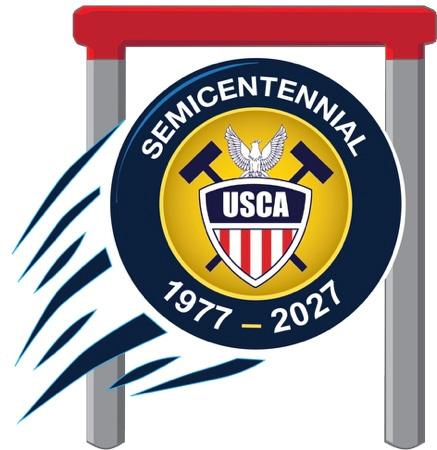
Creasey’s design captures several elements that define the sport of croquet. The wicket is one of the game’s most recognizable symbols, while the red rover wicket subtly represents rover, the completion of the course and a successful game. The motion of the ball conveys energy and forward momentum as the USCA looks ahead to the next 50 years of croquet in America. As Creasey describes the concept, “The ball in motion is meant to symbolize the dynamic potential of our sport.”
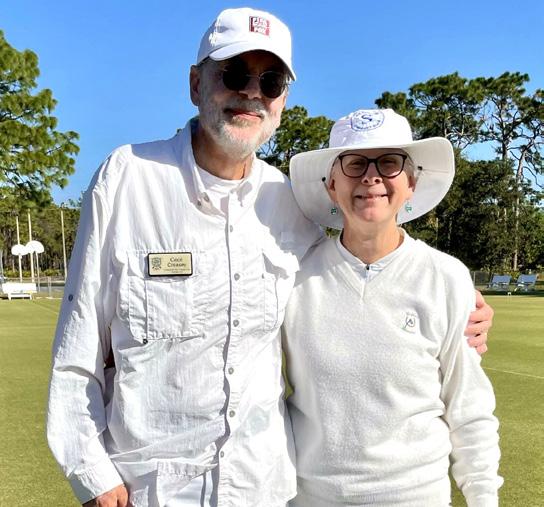
The final logo preserves Creasey’s winning design while incorporating minor technical refinements to ensure consistent reproduction across digital media, print publications, embroidery, lapel pins and commemorative items. This mark will represent the United States Croquet Association throughout its semicentennial celebrations in 2027 and will become the visual signature of the USCA’s 50th anniversary. Over the coming months, the mark will become a familiar sight across USCA tournaments, communications and events as the association celebrates 50 years of croquet in America.
—John Craddock, MD, USCA Semicentennial Planning Committee Chair
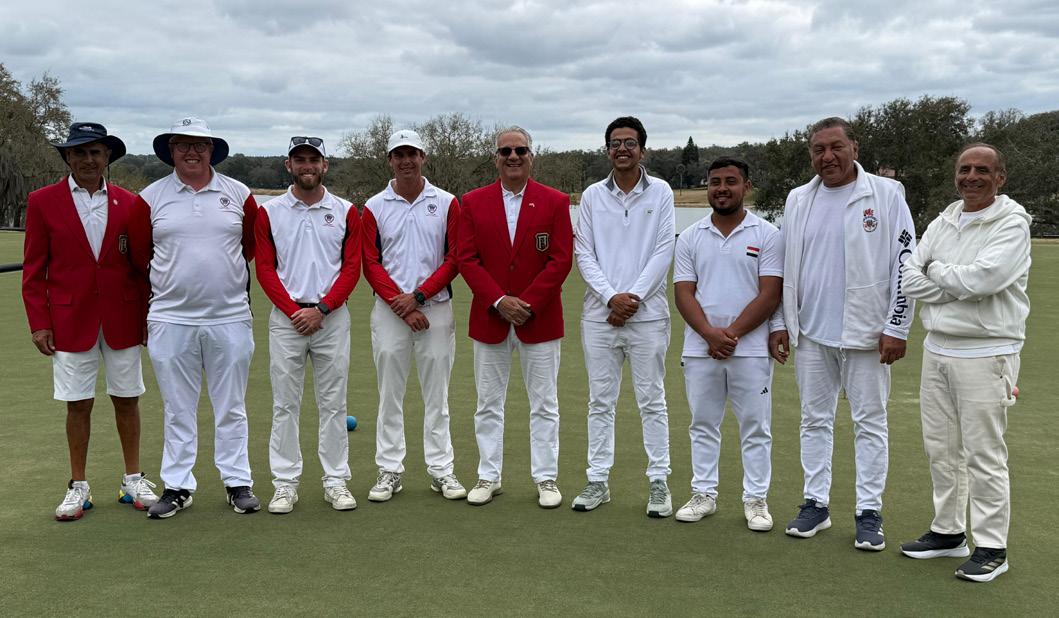
Team USA defeated Egypt 8-5 at the Kamal Cup, held February 15-16, 2026, at Mountain Lake Croquet Club in Lake Wales, Fla. The U.S. team featured Matthew Essick, Tom Balding, Sherif Abdelwahab and Kyle Maloof, while Egypt was represented by Yasser Sayed, Ahmed Elmahdy, Yasser Fathy and Saif Elyamany.




OPINION 1-2026
Question: In a doubles game, Bob is playing Blue, Randy is playing Red, Barb is playing Black and Yvonne is playing Yellow. The following sequence occurs:
1. Bob plays Blue when it is his turn to play;
2. Randy correctly follows Bob, but plays Yellow instead of Red;
3. Barb plays Black, not noticing that Randy played the wrong ball;
4. Yvonne plays Red;
5. Bob plays Blue, not noticing that Yvonne played the wrong ball;
6. Randy and Yvonne forestall further play, claiming that Bob and Barb condoned the wrong ball faults and that Bob has played out of turn.
What is the proper ruling?
Answer: The wrong ball faults committed by Randy and Yvonne have been condoned, but there has not been an out-of-turn error and it is Randy to play Red.
Discussion: Rule 11.2c provides that a “ player can commit a wrong ball fault only when it is that player’s turn.” Therefore, in step 2 above, Randy committed a wrong ball fault under Rule 11.2a(2) because it was his turn to play and he played his partner’s ball (Yellow). In step 3, Bob and Barb condoned the wrong ball fault when Barb played Black (Rule 12.1). In step 4, to start her turn, Yvonne committed a wrong ball fault when she played her partner’s ball (Red). In step 5, Bob and Barb once again condoned this wrong ball fault when Barb played Blue. However, there were no out-of-turn errors committed because Rule 11.1a(2) provides that in doubles, a player has played out of turn if the player plays when it is the partner’s or opponent’s turn. The turn belongs to a player, not to a ball. Since it was Randy’s turn when he played Yellow and it was Yvonne’s turn when she played Red, neither of these turns could constitute an out-of-turn error and when Bob played Blue in step 5, it was his turn to play.
As the USCA approaches its 50th anniversary, a major effort is underway to preserve the history of the sport’s national championships. Several years ago, longtime USCA member Bob Kroeger undertook the ambitious task of documenting the first 30 years of USCA national championships. Drawing on photographs, tournament records and archival material from across
the country, he created a video series that captures the champions, venues and defining moments of those early decades. The result is far more than a record of winners. Kroeger’s work preserves the people, places and stories that shaped competitive croquet in the United States.
As part of the semicentennial, Kroeger has agreed to extend the project to include the most recent 20 years of national championship history. When complete, the expanded series will document the first 50 years of USCA national championships and will be presented as a digital archive on the USCA YouTube channel.
Following an initial request to the membership, additional materials are still welcome. Members who attended or participated in national championships over the past two decades may have photographs, video clips, newspaper coverage, tournament programs or other memorabilia that capture these events. Even informal images from matches, awards ceremonies or social gatherings can offer valuable glimpses into the history of the sport. If you have materials related to USCA national championships from the past 20 years, the USCA invites you to share them for possible inclusion in the series.
Items of particular interest include:
• Photographs from championship matches or tournament play
• Video clips from matches or awards ceremonies
• Newspaper or magazine coverage
• Tournament programs, score sheets or related memorabilia
Materials may be sent electronically to Bob Kroeger: bobkroeger@aol.com. Please include “USCA” in the subject line of your email to avoid being mistaken for spam, and include the year and tournament location, if known, when submitting materials. Through this effort, the USCA is building a lasting visual record of its national championships and of the players and clubs who brought them to life.
One of the many new initiatives introduced by USCA President Beverley Cardo is the development of a Women’s Advancement Fund. Recognizing that the Lee Olson Fund was established to support team events only and not individual competitions, the USCA saw an opportunity to create resources dedicated to promoting the growth of women in the sport.
Five categories of contribution make up the Women’s Advancement Fund:
General: donations to the overall fund representing all codes of the game with funds dispersed as determined by managers of the fund, with input from the women’s committee.
Training and Development: providing training opportunities for Advanced Women ahead of the 2027 Women’s World Championships and future international
events; Intermediate Women – providing opportunities to elevate and advance; Novice mentoring; Collegiate women.
Outfitting: ensuring that women receive appropriate attire such as skirts/skorts, shorts, capris, pants, etc. styled to women’s preferences, along with shirts, jackets, hats, etc., for future events.
Travel: assistance for both domestic and international travel, including training opportunities, competitions, test matches and international events.
Livestreaming: providing visibility and remote learning opportunities
Highlighting and supporting women plays a vital role in the growth and balance of the sport by providing a platform where women can compete, lead and build confidence in an inclusive and supportive environment.
Specialized training opportunities and women’s-only tournaments help level the playing field, encouraging participation from players who might otherwise feel overshadowed in mixed competitions. They are being created to celebrate women’s achievements, highlight emerging talent and to create visible role models who inspire the next generation of players. Beyond competition, women’s events strengthen community, foster mentorship and contribute to a more diverse and dynamic future for croquet as a whole.
Please contact Bev Cardo, USCA President, if interested in donating to the Women’s Advancement Fund.

The Croquet Foundation of America’s Board of Directors announces the implementation of its succession plan as David McCoy steps down as Chairman of the Board.
The newly elected Officers took office on March 18, 2026:
• Nancy Sansalone, President
• John Bannister, Vice President
• Donald Allison, Treasurer
• Allison Worthington, Secretary
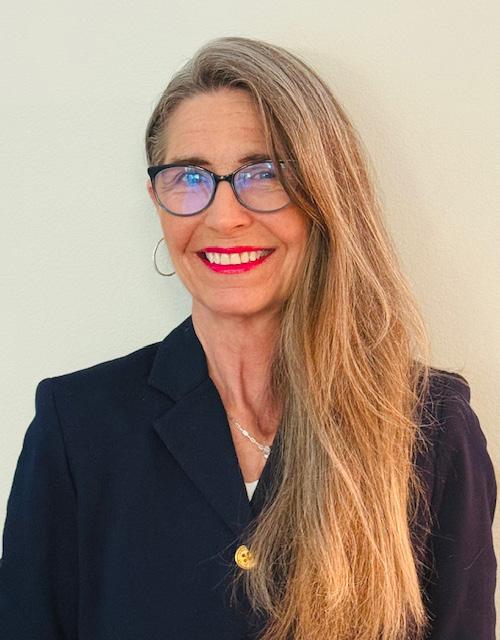
Nancy Sansalone steps into the leadership role previously held by David McCoy. Sansalone, an active member of the National Croquet Club since 2021, brings extensive experience in nonprofit management, with a professional background spanning organizational leadership, strategic planning and financial oversight. She has held senior executive leadership roles, formerly with the American Society for Microbiology, where she served as Deputy Executive Director/CFO and then Executive Director/CEO. She also served as CFO/ COO at Special Library Association and other nonprofits in Washington, D.C., supporting boards of directors, managing complex operations and advancing development and fundraising initiatives. She simultaneously served in volunteer roles as elected President of the National Association for Women in Education, Co-Founder of the Leveraging Library Leaders National Roundtable and Chair of the National Conference for College Women Student Leaders. Throughout her career, Sansalone has worked closely with staff, boards, volunteers and business partners to strengthen governance, improve operational effectiveness and ensure longterm sustainability for mission-driven organizations. Her depth of experience and steady leadership have made her a trusted advisor in the nonprofit sector.
David McCoy was named Chairman Emeritus, ex officio, by the board in recognition of his leadership and significant contributions to the Foundation, the National Croquet Center and the National Croquet Club over the last 20-plus years. McCoy’s involvement with CFA began in 2003 and deepened when he took a leadership role to avoid the NCC from becoming insolvent in 2006 through the 2008 recession. He was elected to the CFA Board in 2009 as President and later to the position of Chairman/CEO. He initiated numerous fundraising efforts and fundamentally reorganized operations, changing from Croquet Enterprises, a forprofit management company running the Center, to the non-profit CFA. He created the National Croquet Club in 2010. McCoy was inducted into the United States Croquet Hall of Fame in 2014.
Hal Denton was named President Emeritus, ex officio, by the board for his significant contributions, especially to the operations of the Center for the last 14 years at the center as President/COO of the Foundation. Hal was inducted into the United States Croquet Hall of Fame in 2020.
Last September, the Board hired Franck Meunier as the Executive Director. He directs and manages the day-to-day operational, financial, administrative and business practices at the center and works closely with the board to advance the mission, ensure sound governance and plays an important role in taking the organization to its next stage of growth and impact. Meunier has already made major contributions to the efficiency and effectiveness of the center and last month, the board agreed to change his title to Chief Executive Officer to clarify his role
The CFA mission continues to be the same: to develop and promote the amateur sport of croquet in America, with a strong emphasis on using our facilities for charitable and educational croquet programs that benefit individuals, our community and society in general. The new leadership team, along with the entire 13-person Board and the CEO, will continue to support and build upon the enhancement of the site by upgrading the back courts, adding new court lighting and a Grand Pavilion and Patio, as well as other improvements at the National Croquet Center. Further development of our charitable and educational outreach programs will also be prioritized to position the National Croquet Center as the Center of Excellence and “jewel in the crown” of croquet venues worldwide.
For more information, please contact Franck Meunier, CEO, at executive.director@croquetnational.com or 561-478-2300.
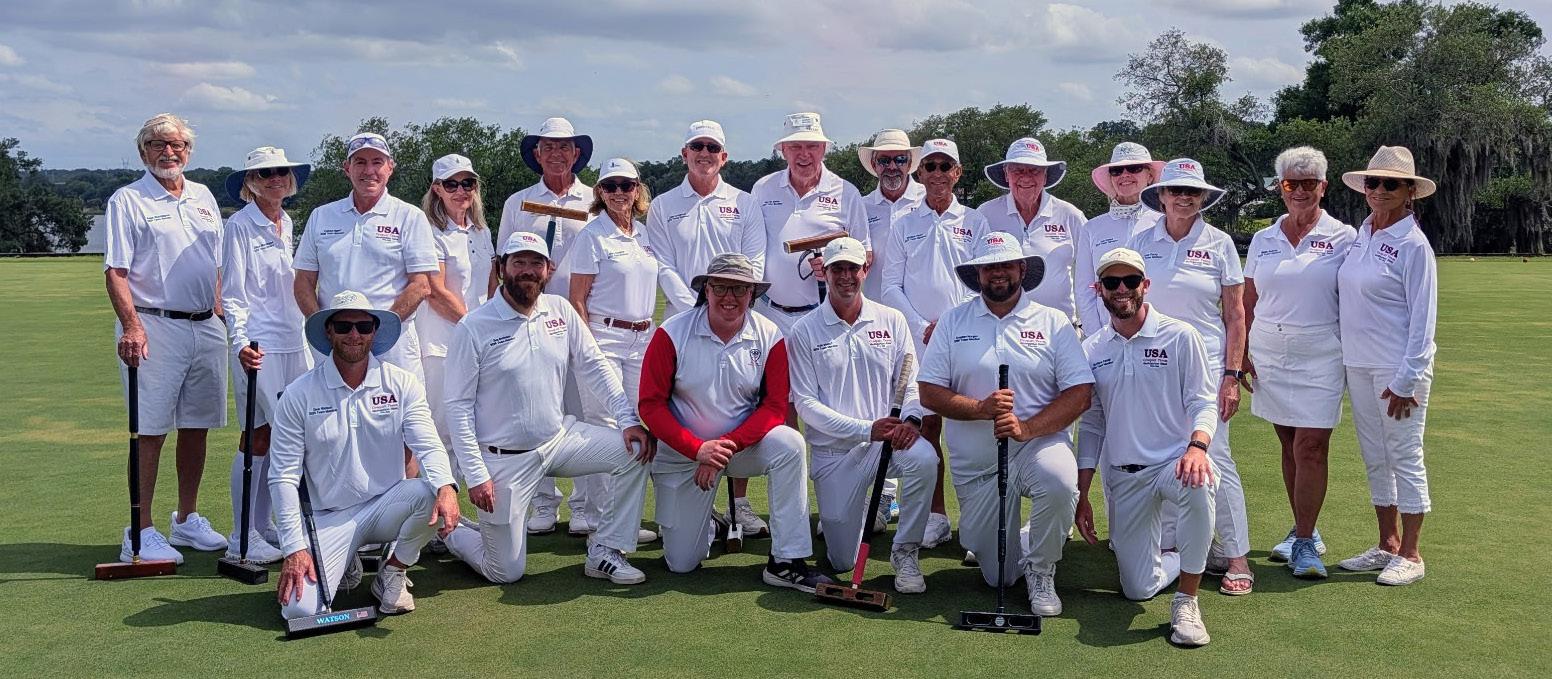
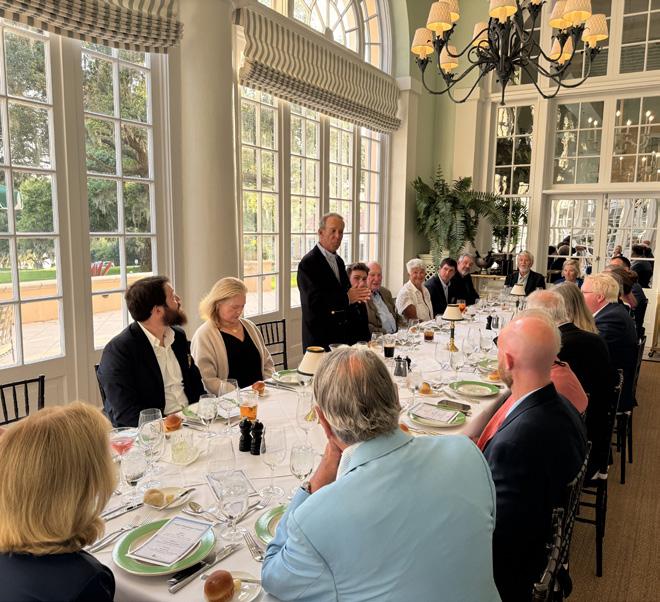
On April 19, 13 sponsors of the 2026 MacRobertson Shield Team USA, gathered at the Mountain Lake Club in Lake Wales, Fla. The Mountain Lake Club is one of the most beautiful spots in Florida, developed in 1916 on some of the highest land in the state. The Colony House serves as the social hub of the club with multiple dining venues, suites and social gathering areas, as well as a beautiful pool.
Just below and to the side of the 18th green are the three championship croquet courts. They sit above the lake giving the players a breathtaking view across it and the surrounding hills filled with beautiful homes and gardens. Many of the private gardens and all of the public ones were designed by Frederick Law Olmsted, Jr. It is a testament to his genius that 110 years later the giant oaks are perfectly spaced.
Adjacent to the club property is Bok Tower and Gardens. The carillon tower and gardens were built by Edward Bok (one of the original members of the club). He gifted them to the people of the U.S. as a thank you for providing him, an immigrant, with the opportunity to become successful.
The sponsors each paid $4,500 to attend a two day and night ProAm.This was created to provide funding, through the USCA’s Lee Olsen Fund, for the expenses that will be incurred by Team USA. They will travel to London this July for the three-weeklong MacRobertson Shield. Of each entry fee, $3,000 was a tax deductible donation to the fund. The event raised just over $40,000 to support the team this summer.
All six Team USA members attended the event. The days were split between semi-private clinics with each of the six Pros and Golf Croquet games allowing players to pair with a different Pro each game. The evenings included a cocktail hour in the club followed by a presentation before dinner. The first talk was from Karen Connery PHD, a retired clinical psychologist who spoke about the mental aspects of the game. She detailed how some of the best athletes in the world use these tools to prepare for competition.
The second evening, our six Team USA members hosted a round table discussion and spoke about the pressures of playing on a team and participating in an event that is essentially three, five-day tournaments backto-back. One “Test” against each of the three other countries. Each “Test” consists of 21 best of three matches against the finest players from those other countries.
The MacRobertson Shield was played for the first time in 1925 in London between England and Australia. It was a way to rekindle friendships made during the First World War. Later New Zealand was added and finally the U.S. This year’s tournament was originally planned to be played in 2025 on the centennial but Covid shifted all world tournaments forward a year. Our team this year is not only the youngest ever fielded by the U.S, it is arguably the most talented. We are hoping for our best ever finish in the Mac.
Thank you for organizing such an enjoyable and worthwhile event. I appreciated the opportunity to meet and learn from some of the best croquet players in the world. The pros were friendly, patient and incredibly generous with their time. The accommodations, food and staff were excellent! I had a wonderful time. Looking forward to our next encounter. The Mountain Lake ProAm 2026 ranks as our top croquet experience ... making new friends, meeting top professionals and learning so much more about this wonderful sport. Emila and I were happy to support the team in the pursuit of the MacRobertson Shield.
Ralph and I had a fabulous time at Mountain Lake. The ProAm was sensational in every way. We particularly liked that it wasn't a tournament and we were able to spend time with each of you and even have a 6W lesson from David. It was extremely well organized and we can't thank you enough.
The weekend was a remarkable experience for both of us. Mountain Lake Club, its staff, and the Maloof family created an atmosphere that was both gracious and memorable, and you and Karen made everyone feel truly part of something special. The opportunity to spend meaningful time on court with our top American players — learning, competing, and sharing in their preparation — was both inspiring and instructive. It was a privilege to support the USA MacRobertson Shield team in such a direct and personal way.
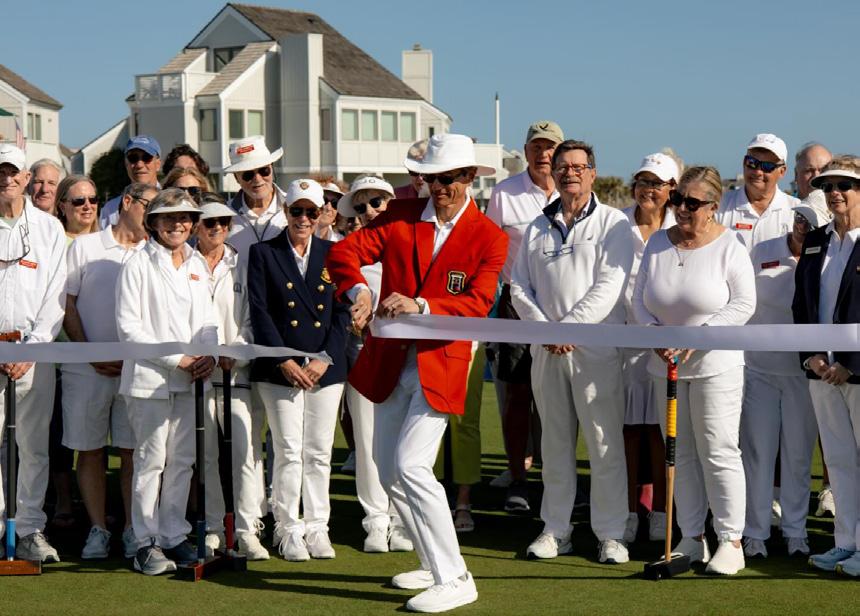
Members of the Bald Head Island croquet community gather for the official ribbon-cutting ceremony celebrating the opening of four new courts, marking a significant expansion of the club’s facilities. Leading the ceremony, Jeff Soo cuts the ribbon alongside club members and supporters, with Beverley Cardo and others in attendance for the occasion. The new courts position Bald Head Island as an emerging venue on the national tournament calendar and will soon host the GC Eights from June 4-7. With preparations underway, the club looks forward to welcoming players for the event and building on the momentum of this milestone addition to its program.
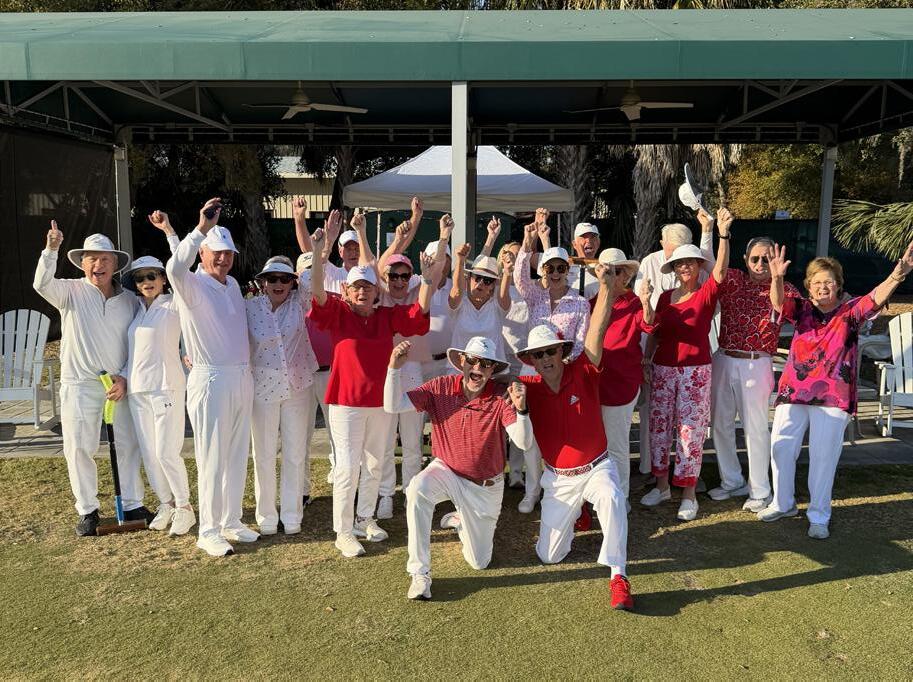
There was a loud and enthusiastic “HOORAY” heard throughout the Country Club of Orlando (CCO) on Valentine’s Day. The club’s Croquet Pro, Matthew Essick, won the U.S. Open Golf Croquet Championship and the players wildly cheered for their pro and friend. Essick has been the pro at CCO for many years, coordinating the busy croquet season and frequently teaching lessons. Congratulations, Matthew, from your CCO fan club!
Combine Charles Steuber’s vision with an emotional Hall of Fame dinner and American Six-Wicket croquet wizardry with the new National Croquet Center (NCC) development plans and an utterly fantastic finals match and you’ll have a full picture of American Croquet.
The addition of $35,000 worth of prize money certainly had an effect this year. Far more A6 players than Golf Croquet players participated: 60 versus 24. In past years, GC players were beginning to outnumber A6. So, thanks to Bob Chilton’s trust, generously provided by Missy Chilton, the strategy for promoting the American game is working.
Over five days at the lovely NCC, the American game was on full display with six flights of A6 players and 10 courts in use. The weather was generally excellent until the last day and the meals were generous and luxurious. Altogether a fine recipe for a perfect croquet tournament.
In the lower flights, the number of one-point games was pronounced, indicating the see-saw battles we all know and love. But it was the final, a game between Zack Watson against last year‘s national champion, Stuart Lawrence, that may indicate where our game is going.
In his third turn, Watson, playing Blue/Black, attacked Lawrence‘s Red and Yellow balls in the fourth corner. He set the break and then ran it to rover on his next turn and left a perfect leave. Lawrence managed to hit in from full court by touching an opponent ball on the boundary — incredible! From there, Lawrence was well on his way to equalizing the game, but a mishap at hoop six ended the turn. Unfortunately for Lawrence, Watson created a break from the opportunity and finished the match quickly with precision shooting. Such excellent play is a testament to the American level of play these days.
Watson not only showed us the impact that the AC game is having on the other croquet codes, he also walked away with the $8,000 paycheck. The game is on the USCA YouTube channel and is worth watching again and again.
Other flights enjoyed the normal, challenging back-and-forth of American rules. The game most of us are used to trying to figure out as we enjoy the stress and toil.
In the Golf Croquet final, Adam Peck took on Bruce Hindin and never slowed down. After knocking out David McCoy, Peck carried that form into the final and proved unstoppable against Hindin, who had defeated Tate Russack.
It took an army of volunteers and sponsors; a big thanks to all. Missy Chilton was the fearless leader, with assistance by Jennifer Othen at the front desk, Tournament Manager Doug Moore and Tournament Directors Tom and Loretta Cooper. Franck Meunier and his team provided another great event and an awesome Hall of Fame dinner where we congratulated David Maloof and cherished Carla Rueck as they were admitted to the Croquet Hall of Fame.
—By Tom Cooper
Hoping to learn more about our club’s early days, I caught up with Bob Piekenbrock following a recent Wednesday evening doubles match. Piekenbrock is a newer member of the Milwaukee Lawn Bowling and Croquet Club, but I knew he had been involved with the club in its infancy in the early 1990s. I wanted to learn more about his experience then and his decision to rejoin after an absence of several decades. He kindly indulged my curiosity with a lively and engaging conversation.
Piekenbrock grew up in Whitefish Bay, Wisc., in the home where his sister and brother-in-law, Mary and Tom Hennelly, now reside. While in high school, he and a group of friends from several area schools
formed a “croquet club.” This may have been one of the first croquet clubs in the Milwaukee area, dating to around 1980. But from the sound of it, very little croquet was actually played. As Piekenbrock candidly admits, the boys spent most of their time drinking beer and telling stories in their backyards. Still, the friendships
endured, and he recently co-hosted a 45th reunion of the original group at the beer garden at Estabrook Park.
The next chapter in Piekenbrock’s croquet journey came in 1991, when he was working as a public relations professional at McDonald Davis & Associates. He was tapped to help promote a benefit for the Penfield Children’s Center, an event closely connected to the beginnings of the Milwaukee Croquet Club.
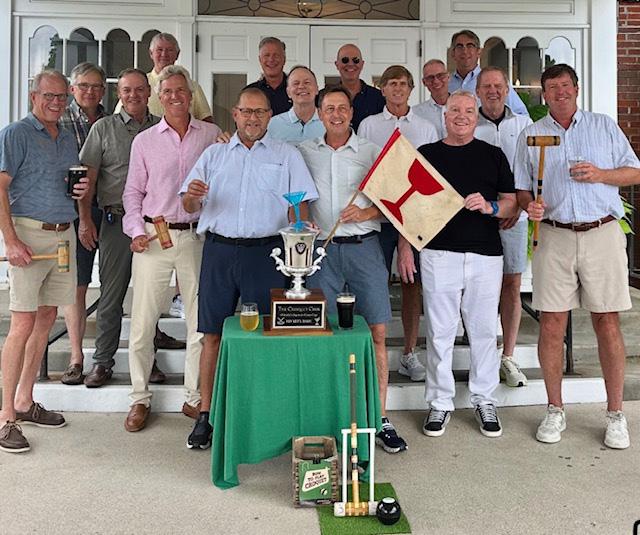
Linda Cummins, then development director for Penfield, had the idea of creating a croquet-themed fundraiser. With the help of others, including Keith Anderson, the Penfield Croquet Tournaments were established, initially held at Boerner Botanical Gardens. These events soon gave rise to the “Croquet Ball” at Milwaukee Country Club, as well as a “City/County Grudge Match” featuring Mayor John Norquist and County Executive Tom Ament — a key publicity driver for the event.
Piekenbrock played a creative role in developing the advertising and publicity for those early Penfield events. He was also among the group of participants who enjoyed the sport so much that they decided to form a club to continue playing. In this way, the Milwaukee Croquet Club was born, and Piekenbrock was there at the beginning.
As life progressed, with marriage, children and career responsibilities, he stepped away from the game. Still, he says he was always with the club “in spirit.”
When he retired in 2024, he made the decision to return. Today, he is once again an active member, bringing with him a deep appreciation for the club’s history, as well as enthusiasm for its continued growth.
Asked what he enjoys most about the club today, Piekenbrock points to the people, the setting and the camaraderie. Qualities that have remained constant even as the club has evolved over the years.
—By Kathy Rivera. Originally published in the August 2025 issue of The Hoop, the Milwaukee Croquet Club newsletter.
The making of a classic club tournament is likely one that involves a curmudgeon surrounded by a group of willing volunteers that will keep the tournament running after you move to Hawaii to be with your kids after you turn 87. In fact, any tournament that keeps going and growing in popularity after 24 years must be something special. I know 15 years ago, I wanted to play in this event.
The Bob Riddell is a tournament held around St. Patrick’s Day each year at Mission Hills Croquet Club in Rancho Mirage, Calif. It is a golf croquet tournament for its club members with handmade awards, tournament hats with the year you won and a feeling all along that something special is happening. As tournament director, I could sense the special effort each player and volunteer gave toward the event.
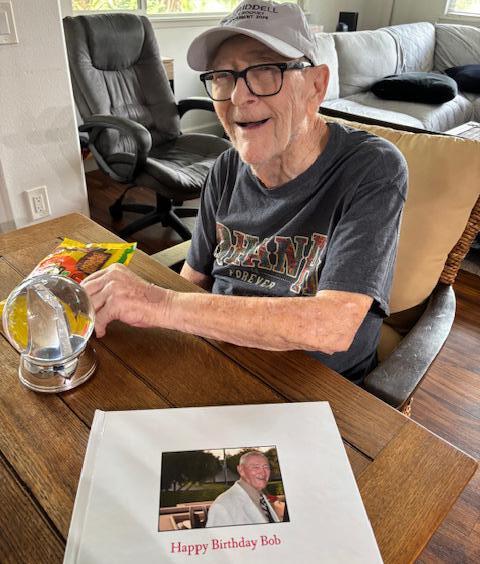
When Riddell first moved to the Palm Springs area, he caught glimpses of movie stars, like Groucho and Harpo Marx, who played croquet well into the night at the Marrakesh Country Club. There, he met Mik Mehas, who was an avid lover and promoter of GC. They, along with hall-of-fame member Mohammad Kamal, held the first USCA GC Nationals in Palm Springs, Calif. Riddell played all versions of the game: GC, A6W and Association. He taught croquet to any member and supported Pat Apple in
the development of croquet at the club by making and maintaining a variety of equipment accessories: ball carriers, center pegs, stringing machines, as well as the hardware to attach them around the court. He developed a way to suspend the deadness boards on the opposite sides of the court so that they were visible and prominent fixtures.
With two flights and 28 players, this tournament is better attended than some invitational open events. Perhaps this is a statement about the popularity of GC over the Association or American Six-Wicket game and one that Bob Riddell would be proud of. Held March 16-21, the 2026 Bob Riddell started with forecasts of exceedingly hot weather ahead. As TD, I decided to play the doubles early in the morning and schedule the singles play immediately following those rounds. Some players came up with a brilliant strategy to play some of their singles matches a day or two earlier (in the morning when the temps were only reaching 100 degrees instead of the afternoon temp of 113 degrees).
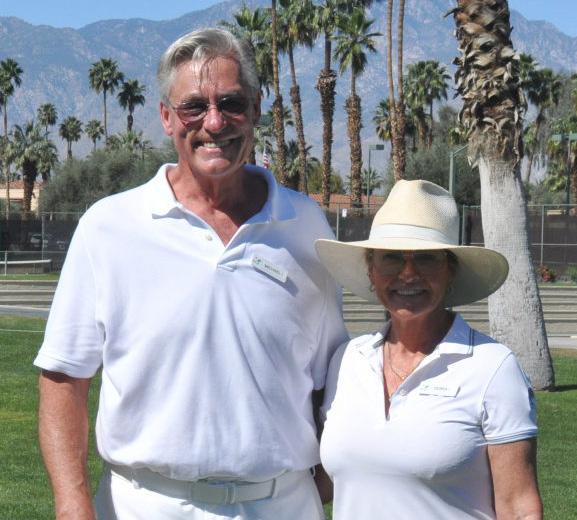
Winners in the Championship Flight included Sandra Knuth in singles and Chris Kaas and Mike Humphries in doubles. First Flight saw Francene Fisher win in singles and Marty Ormby and Ray Ogden take the doubles title.
An opening party was held on St. Patrick’s Day at Sandra Knuth’s new condo. The spread was fantastic and everyone helped with the housewarming. Enough food was left so folks were invited back the following night and for days after.
Before the start of the tournament, we got notice that Bill Sullivan’s brother-inlaw had passed and the Sullivans would not be able to participate. This allowed two players to move up from First Flight into the Champions block. Shortly before the beginning of the event, Greg Fisher had to drop out due to a case of walking pneumonia and a short visit to emergency care. This final change moved the Chris Kaas and Mike Humphries doubles team up to Championship doubles once Francene found a partner in the First Flight Doubles block. Bennett wanted to keep the numbers even in FFD since some of its players were only playing doubles.
Following the Bob Riddell, Mission Hills has a “newbie tournament” for beginning players. The event includes a coach to follow and assist the players during the game. While Debra Ilyinsky was out of town, she instructed Mike Ilyinsky to sign them up for the newbies tournament. When she arrived back in town, she got notices to play early games in the Bob Riddell tournament. The Ilyinskys did not want to upset Bennett’s schedule and so they agreed to go ahead and participate in the Bob Riddell. I want to compliment all their opponents for giving advice and help throughout each game they played.
A plated dinner was served on Saturday evening to present the awards. It was wonderful to have the club president, John Parks, introduce all the new club members, to have words spoken to answer the question that was asked during the opening cocktail party, “Who is Bob Riddell?” as well as celebrate Myran Wenzel’s birthday and hand out the handmade trophies. It was truly a pleasure to direct this tournament and to contribute to the legend of Bob Riddell. —Paul Bennett TD

The World Croquet Federation (WCF) has confirmed key dates for the 2026 Golf Croquet World Championship (GCWC), which will take place in Egypt this November.
A qualifier will be held event from November 14-18, followed by the Opening Ceremony on November 20. The main championship event will run from November 21-29.
ACWTC TIERS 2 AND 3: In July, the Nottingham Croquet Club in England will host the Association Croquet World Team Championship (ACWTC) Tier 2 and Tier 3 events, which have drawn a record number of entries.
MACROBERTSON SHIELD: Later in the summer, July and August will see the return of one of the sport’s most historic competitions: the MacRobertson Shield, the Tier 1 event of the AC World Team Championship. The 2026 contest marks the centenary edition of the storied test series, in which the traditional “big four” croquet nations compete.
ORGANIZATIONAL MILESTONE: The WCF also announced an important structural change. On January 28, 2026, the federation formally became a company limited by guarantee based in England, a move intended to strengthen governance and support the organization’s longterm development.
EXPANDING MEMBERSHIP: The WCF welcomed Mauritius and the Netherlands as its newest Recognized Croquet Organizations (RCOs), bringing total membership to 31 national bodies. Mauritius has already established a reputation for hosting international competitions, including a successful annual tournament. Meanwhile, the Netherlands is preparing to open a purpose-built croquet lawn expected to be ready later this year.
Forty-six women participated in the 5th annual Women’s International Friendship Cup hosted by the Women’s Golf Croquet Academy at the National Croquet Center in West Palm Beach, Fla. This threeday golf croquet singles event featured three divisions and offered a range of competition from experienced world-class players to those newer to tournament play. Four Egyptian players traveled to compete in this prestigious event with women from across the U.S.
After battling it out in block play to determine seeding position in the knockout rounds, all players advanced into the round of 16 playoffs. Players who lost in the first round moved into the plate consolation playoffs.
Championship Flight: Julie Wright came on strong in the knockout, getting past Ellie Griffith and Cheryl Bromley to face off against 2025 Champion Debbie Davidoff in the semifinals. Stellar play by Davidoff clinched her spot in the final.
On the other half of the draw, Cami Russack took care of business, eliminating Lisa Maloney and Ghada Abdel Rahman, moving her into the quarterfinals against another hard-hitting opponent in Helen Covington. Covington came off two solid wins against Mervat Elshazly and Maha Eldardiry before being stopped by Russack.
The final was a very competitive 19-point game, which showcased incredible shotmaking by both women. Russack found her form on her placement shots while Davidoff kept the pressure on with sensational clearing shots from long distances. The battle went back and forth until the 18th hoop, where Russack was able to capture the match 10-8.
First Flight: Both Sue Emond (5-2) and Caryl Firth (6-1) were top of their blocks heading into the knockout rounds. They had their work cut out for them, but were able to methodically take out their opponents one by one to reach each other in the final. Their final match featured a marathon battle at Hoop #4 before Firth grabbed the momentum to cross the finish line and claim the title with a 10-4 win.
Second Flight: Coming out of the Blocks, the top four favorites included Jane Grandusky, Deb Kalish, Cheryl Beckert and Cathy Long from Block E and Robin Dobbs, Suzanne Turner, Diane Young Rose and Kath Jenkins from Block F. In the knockout, Polly Joa made a run for it before getting stopped by Turner in the semifinals, while on the other side of the draw, Deb Kalish rolled up her sleeves and took out three of her opponents to secure her spot in the final against Turner. The final was a timed, 70-minute game and proved to be highly competitive, with Kalish scoring just three hoops to Turner’s one, but it was just enough for Kalish to secure the victory and the 2026 title.
Championship Flight Winner ............. Cami Russack
Championship Flight Finalist Debbie Davidoff
Championship Flight Plate Ellie Griffith
First Flight Winner
Caryl Firth
First Flight Finalist ............................... Sue Emond
First Flight Plate
Second Flight Winner
Kim Beaty
Deb Kalish
Second Flight Finalist .................... Suzanne Turner
Second Flight Plate Cheryl Beckert
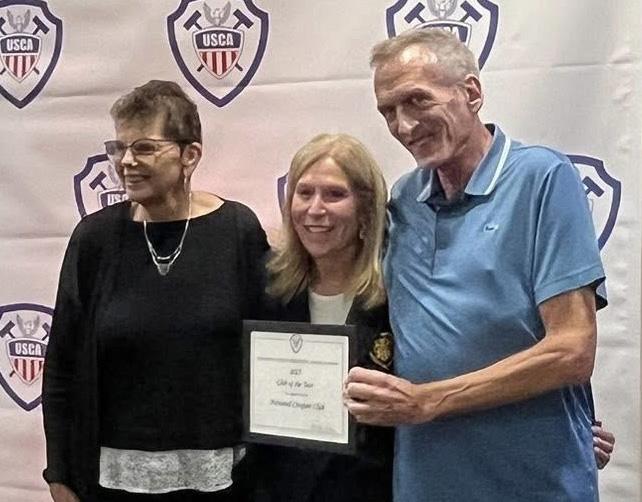
CLUB OF THE YEAR
National Croquet Club
CLUB PRESIDENT OF THE YEAR
Bob Baker
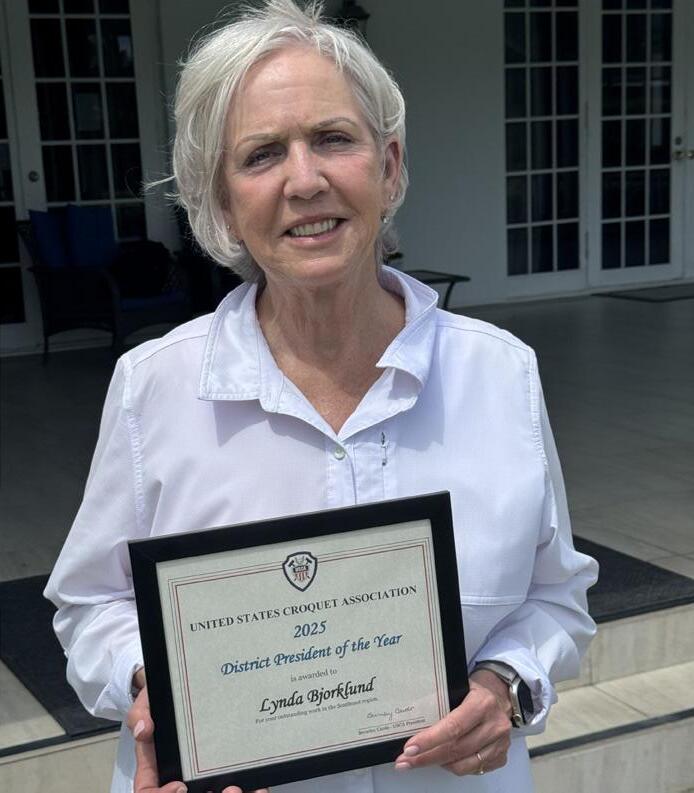
DISTRICT PRESIDENT OF THE YEAR
Lynda Bjorklund
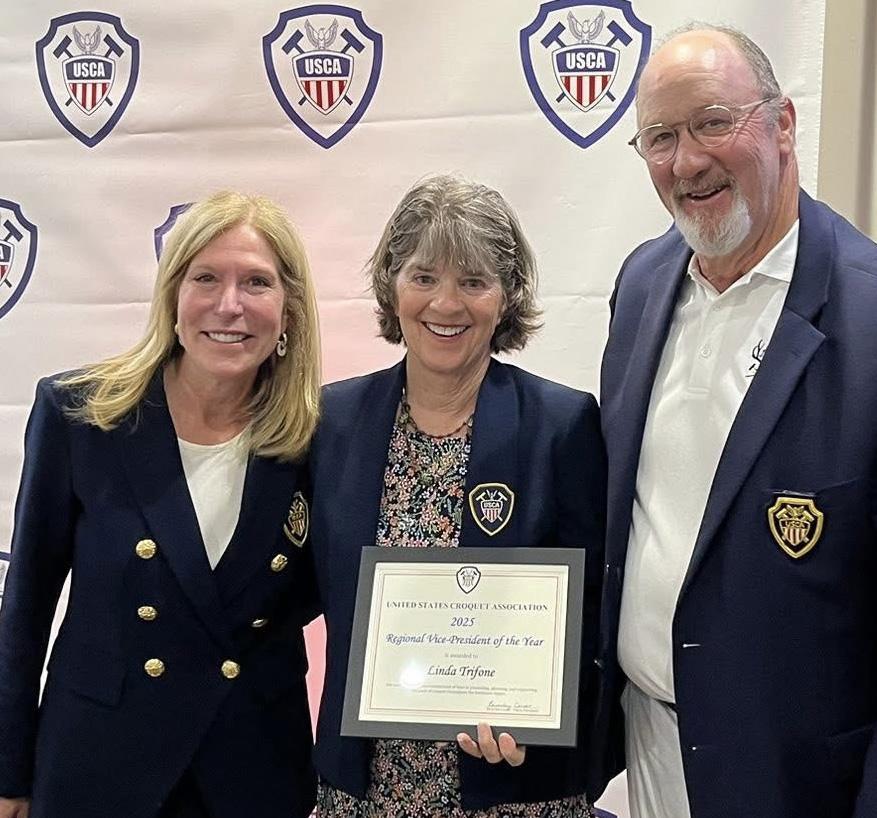
REGIONAL VICE PRESIDENT OF THE YEAR
Linda Trifone
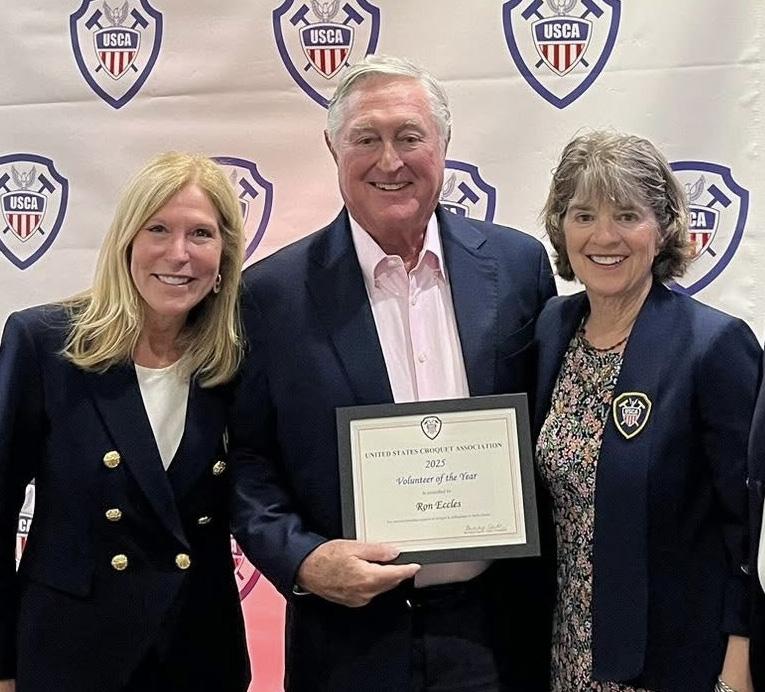
VOLUNTEER OF THE YEAR
Ron Eccles
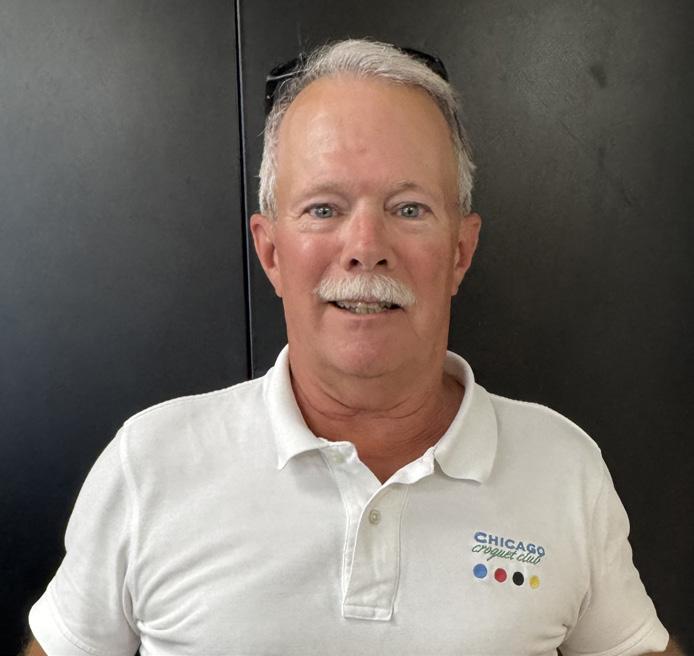
VOLUNTEER OF THE YEAR
Rick Hayes
MICHAEL STRAUSS AWARD FOR JOURNALISM
Fred Heald
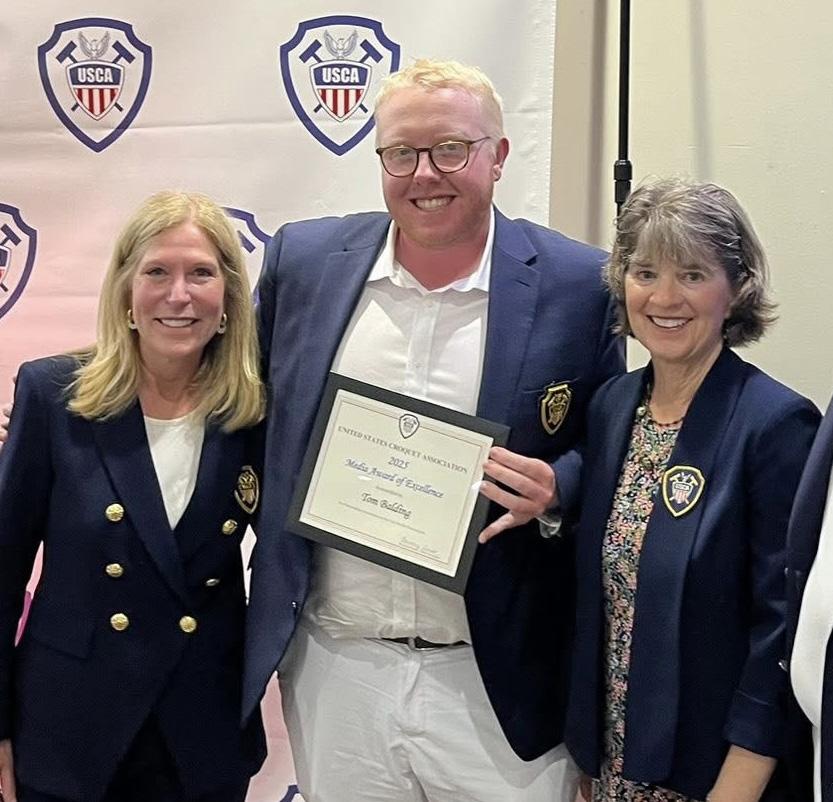
MEDIA AWARD OF EXCELLENCE
Tom Balding
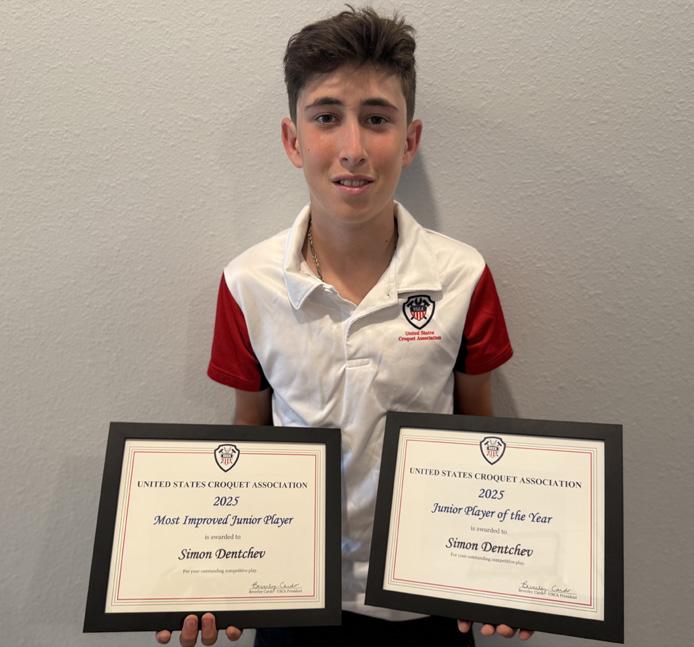
MOST IMPROVED JUNIOR PLAYER
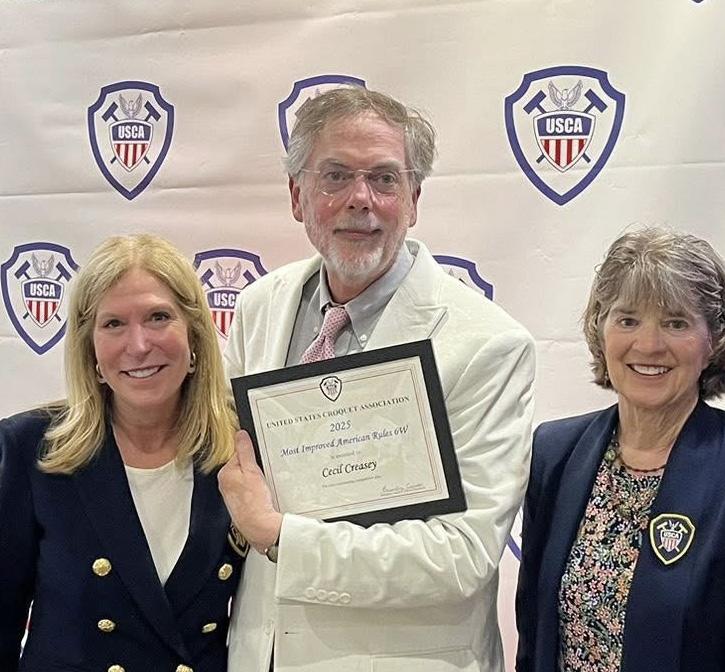
MOST IMPROVED AMERICAN RULES 6W
Cecil Creasey
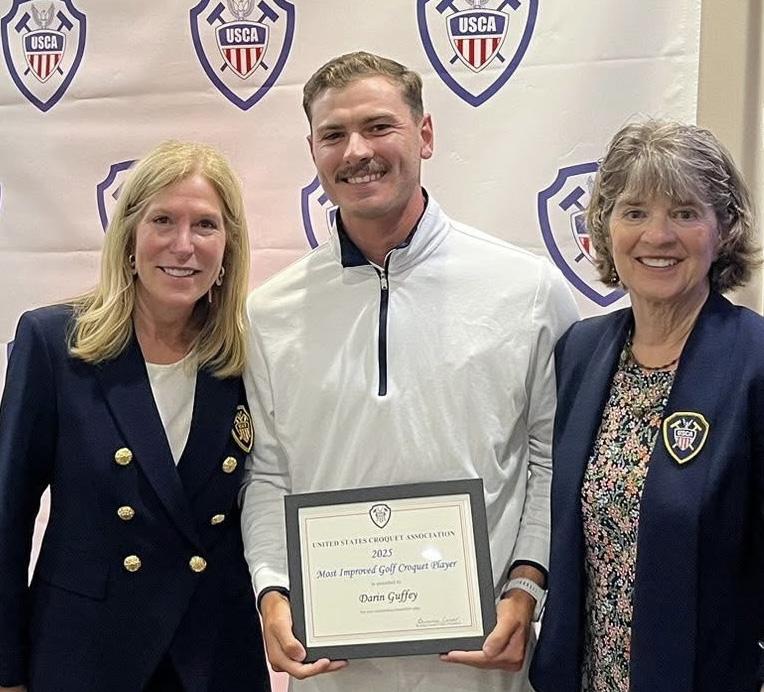
MOST IMPROVED GOLF CROQUET
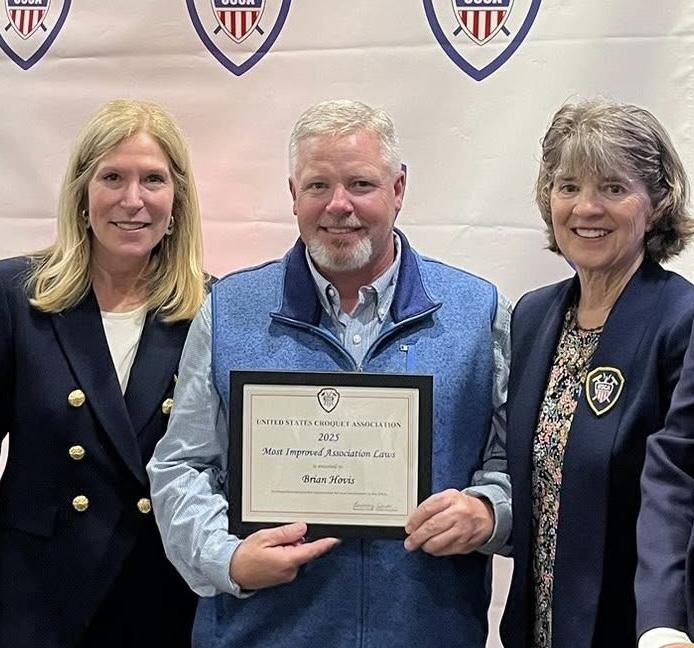
MOST IMPROVED ASSOCIATION LAWS
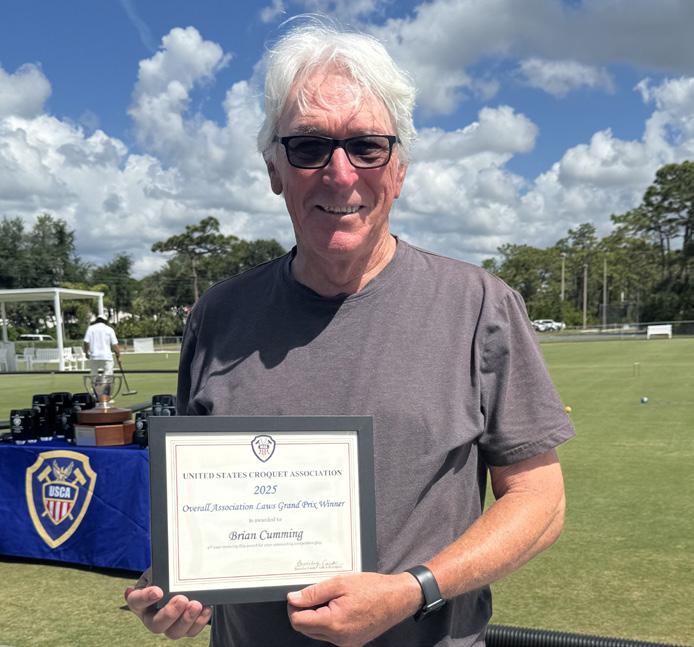
Brian Hovis
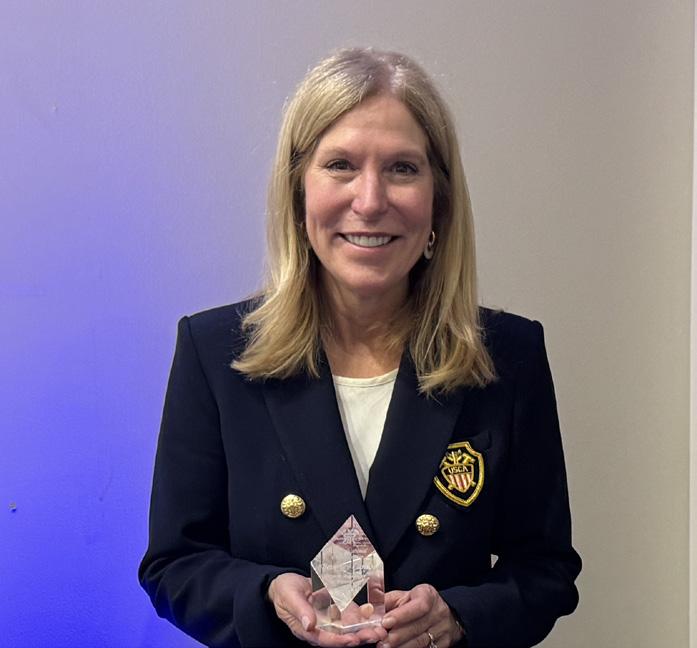
Bev Cardo
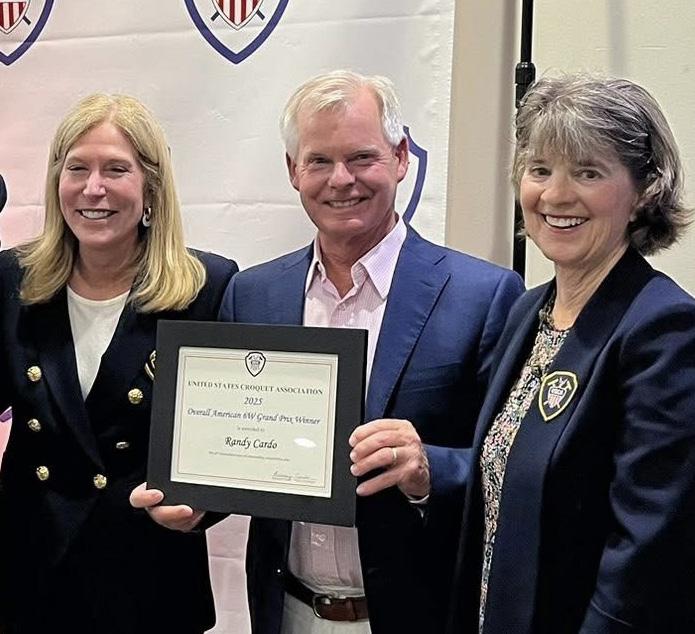
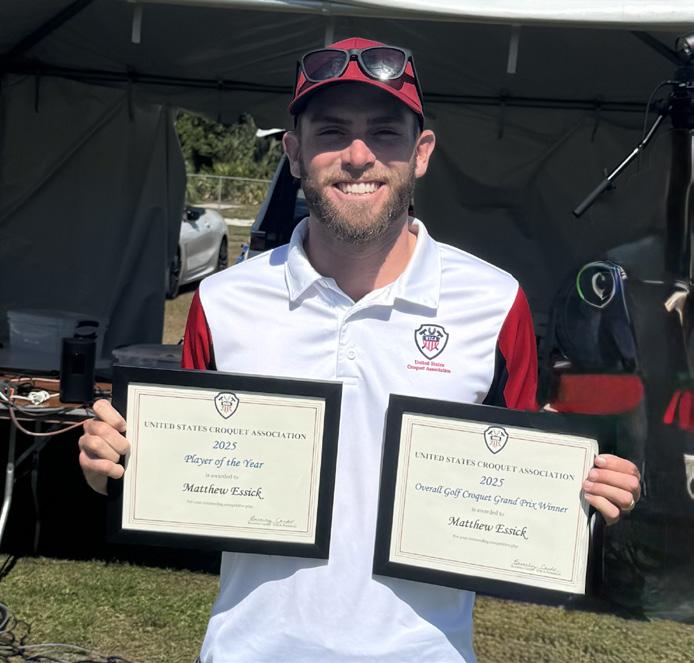
OVERALL GC GRAND PRIX WINNER
Matthew Essick
PEYTON BALLENGER AWARD
(A6W NATIONAL FEMALE WINNER)
Bev Cardo
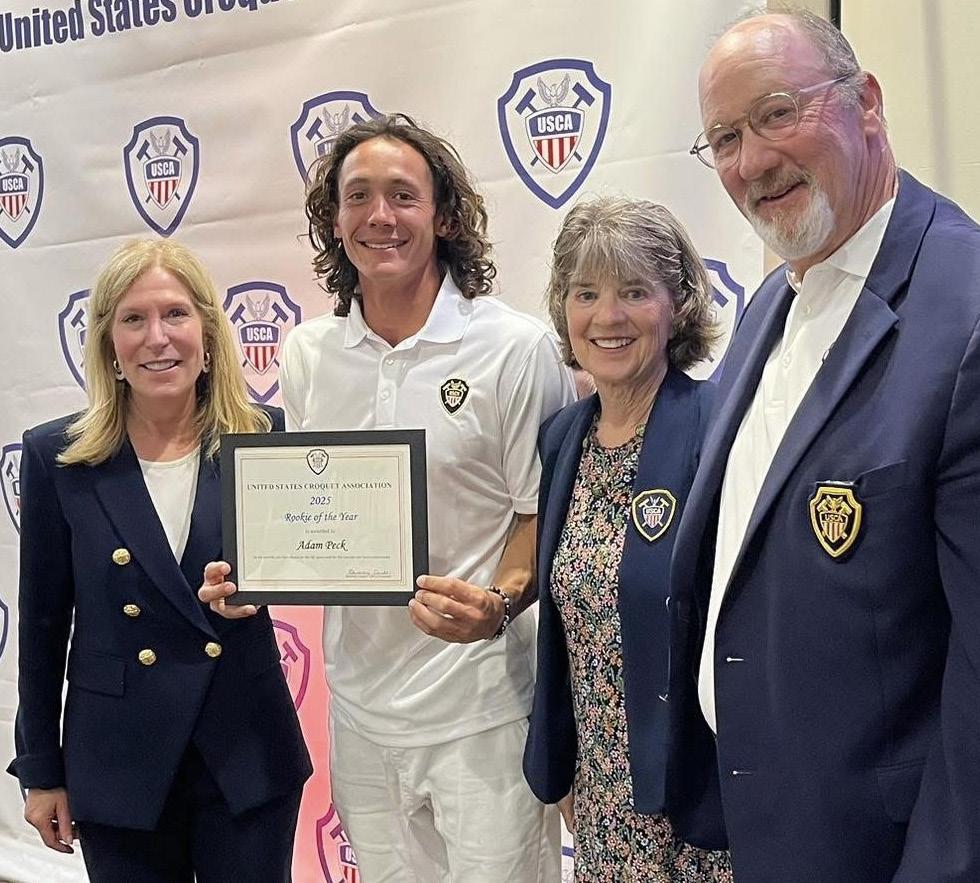
ROOKIE OF THE YEAR
Adam Peck
JUNIOR PLAYER OF THE YEAR
Simon Dentchev
SENIOR PLAYER OF THE YEAR
Ron Eccles
FEMALE PLAYER OF THE YEAR
Bev Cardo
PLAYER OF THE YEAR
Matthew Essick
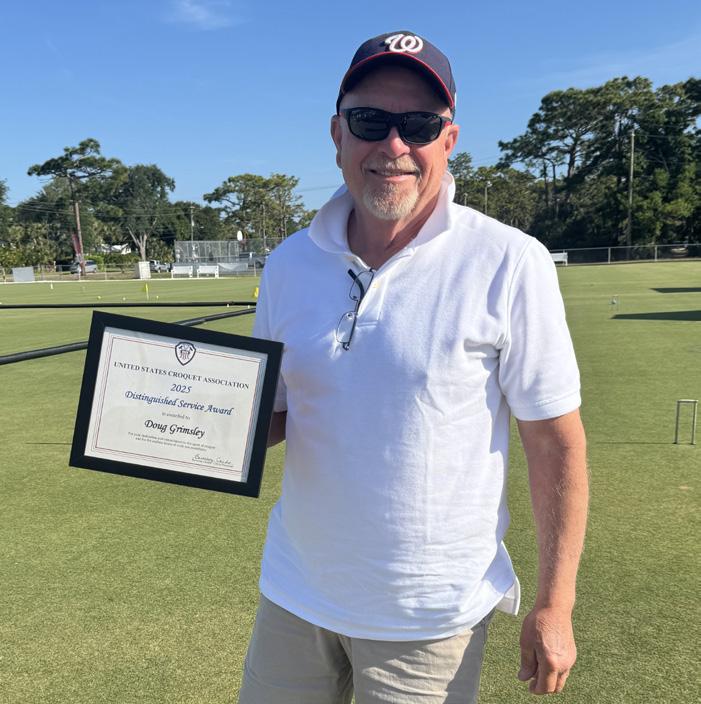
DISTINGUISHED SERVICE AWARD
Doug Grimsley
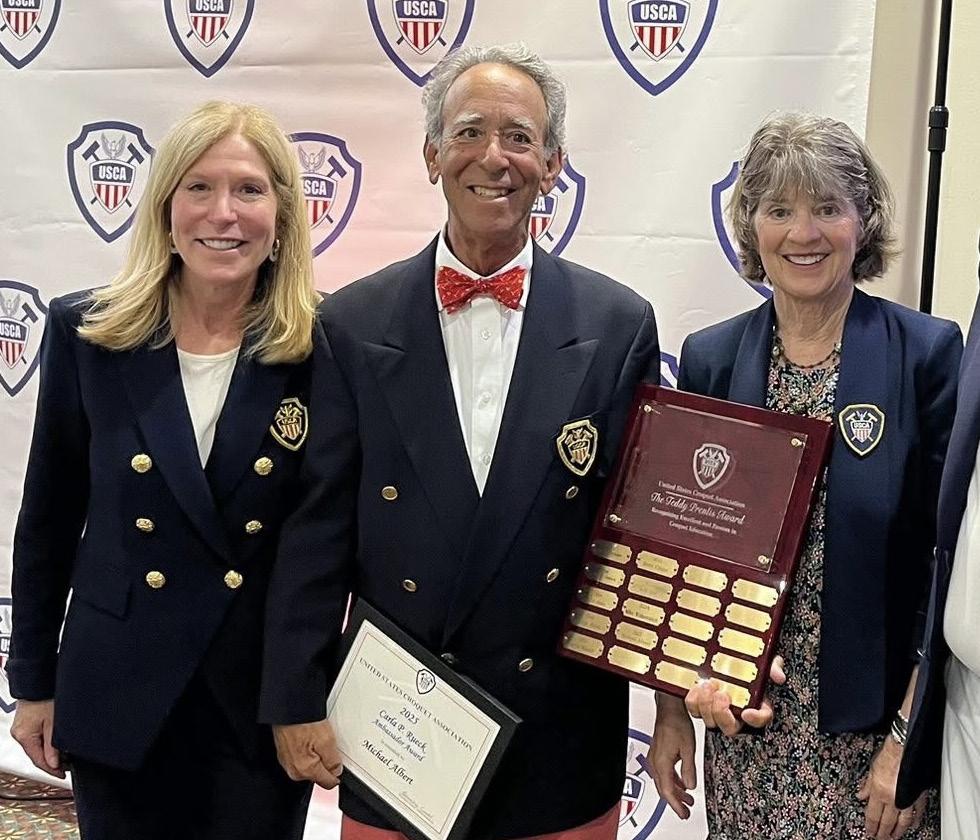
TEDDY PRENTIS AWARD (EXCELLENCE AND PASSION IN CROQUET EDUCATION)
Michael Albert
CARLA P. RUECK AMBASSADOR AWARD
Michael Albert
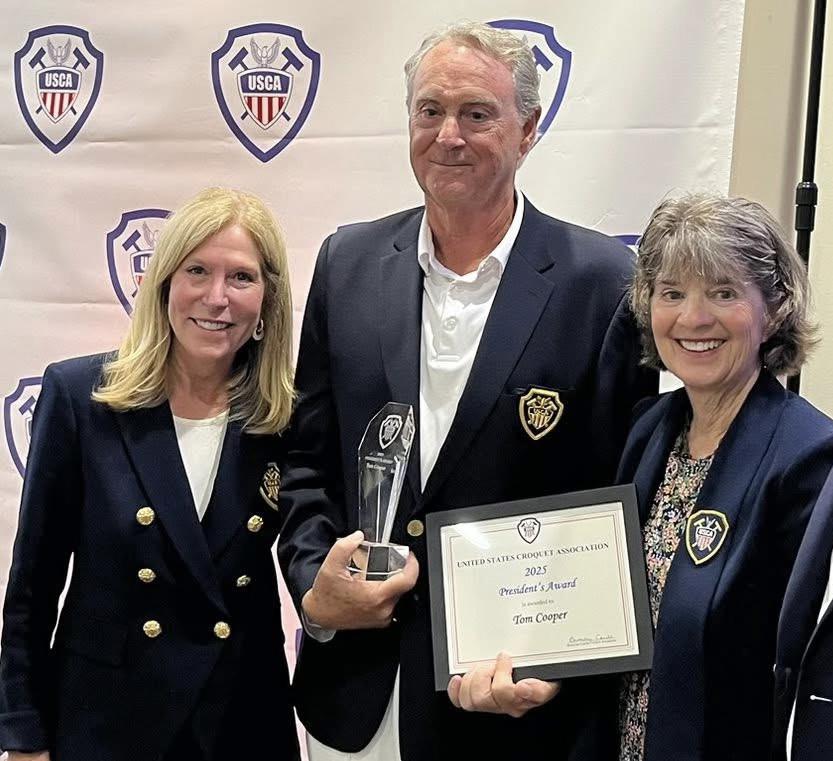
PRESIDENT’S AWARD
Tom Cooper
Special Recognition to our Gold Medal Donors:
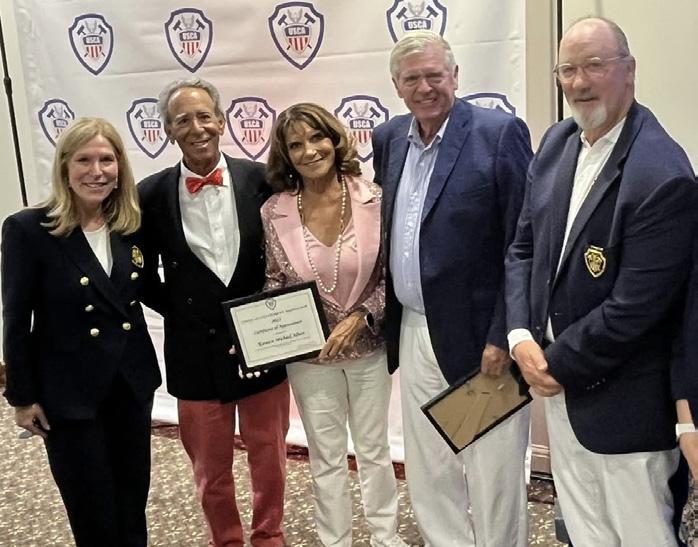
Jay Carey
Karen and Michael Albert
TOURNAMENT DIRECTOR FOR U21 WORLDS AND AC WORLDS
Michael Albert
OUTSTANDING SUPPORT FOR AC WORLDS THROUGH MEDIA CONTACTS
James Bartle
TOURNAMENT DIRECTOR FOR AC WORLDS
Beverley Cardo
AC WORLDS PLANNING COMMITTEE
Jane Casey
MARKETING & PLANNING FOR U21’S AND AC WORLDS
Tom Cooper
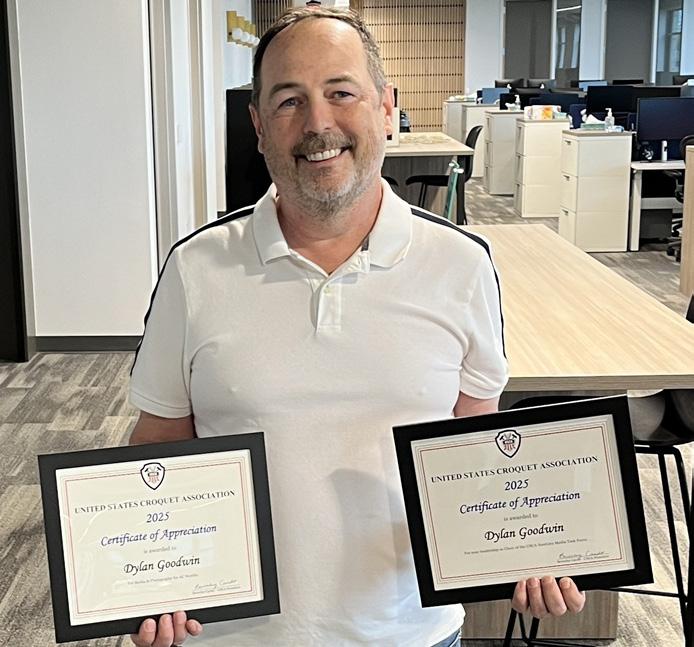
MEDIA & PHOTOGRAPHY FOR AC WORLDS
Dylan Goodwin
AC WORLDS PLANNING COMMITTEE
Franck Meunier
OUTSTANDING SERVICE AT U21 WORLDS AND AC WORLDS
Adam Peck
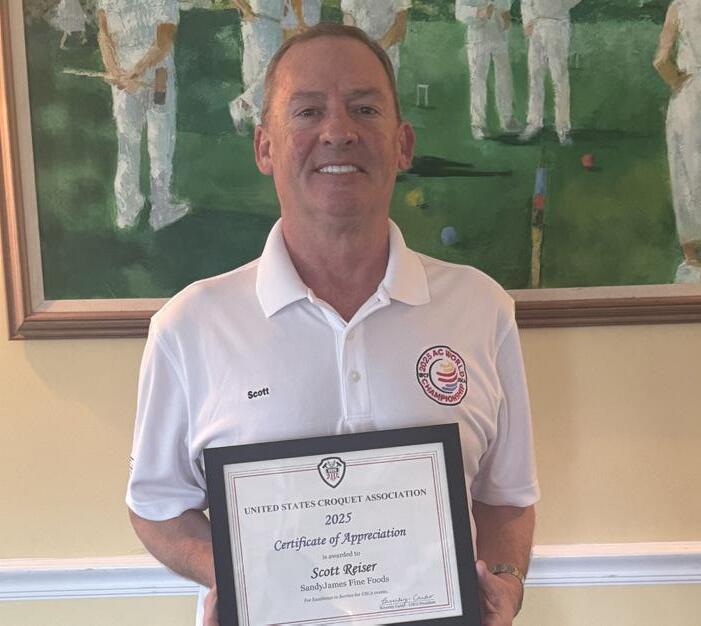
EXCELLENCE IN SERVICE FOR USCA EVENTS
Scott Reiser
(SandyJames Fine Foods)
OUTSTANDING SUPPORT FOR U21 WORLDS AND AC WORLDS
Cami and Tate Russack
TOURNAMENT MANAGER FOR US OPEN GC
Bill Simmons
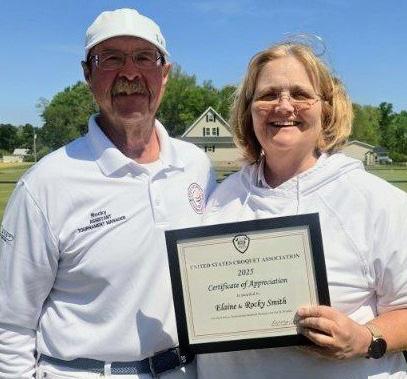
TOURNAMENT ASSISTANT MANAGERS
Elaine and Rocky Smith
TOURNAMENT MANAGER FOR U21 WORLDS AND AC WORLDS
Jeff Soo
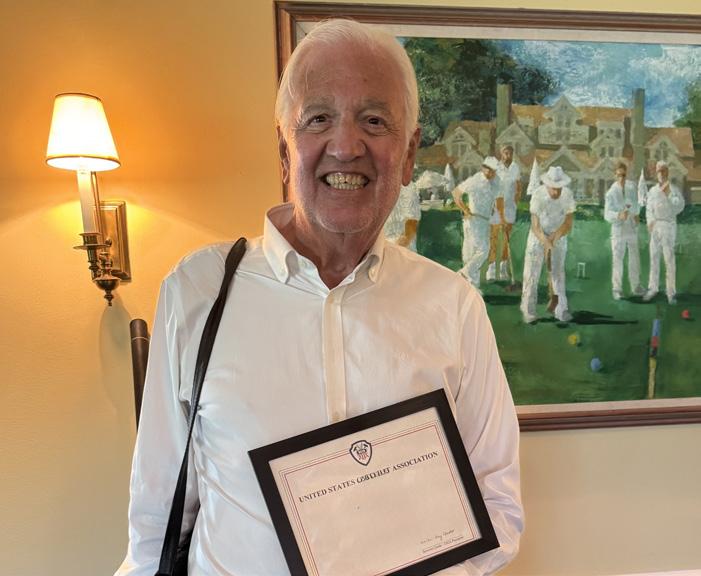
AC WORLDS PLANNING COMMITTEE
Michael Todorovich
OUTSTANDING SUPPORT THROUGH THE GRANT PROGRAM
Palm Beach Sports Commission
EXCELLENCE IN LIVESTREAMING OF AC WORLDS I DO Livestreaming
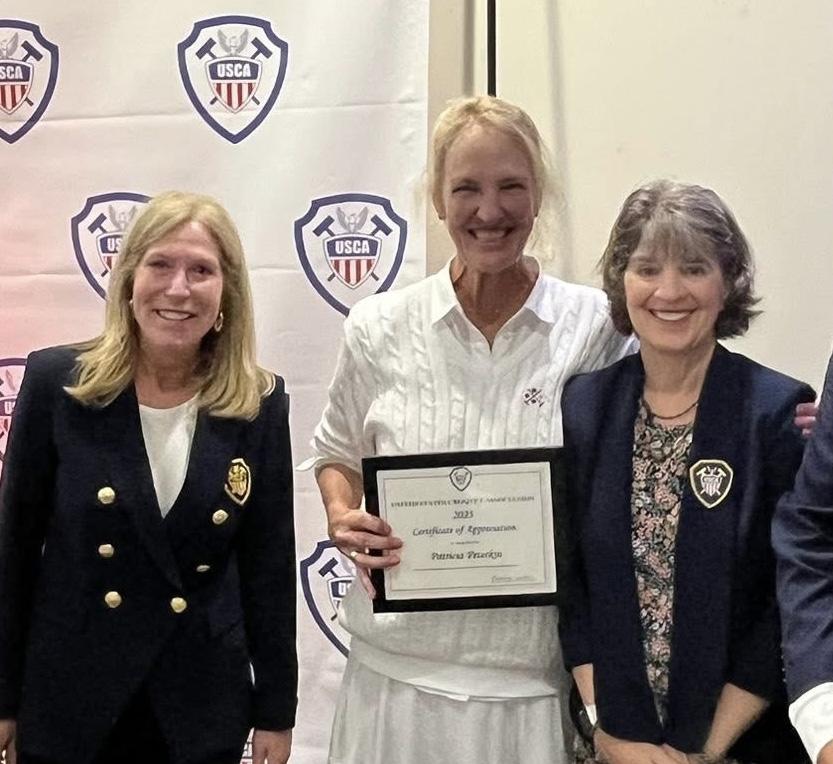
A6W CLUB TEAMS COMMITTEE
Tish Peterkin, Chair
A6W CLUB TEAMS COMMITTEE
Cheryl Harders
A6W CLUB TEAMS COMMITTEE
Karen Heckman
A6W CLUB TEAMS COMMITTEE
Allison Worthington
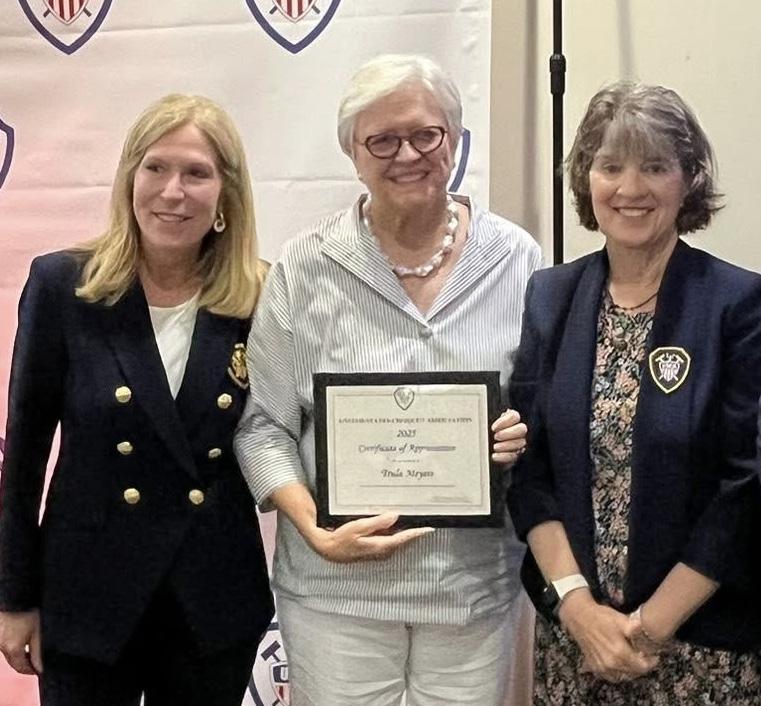
MEMBERSHIP COMMITTEE
Trula Myers, Chair
NEXTGEN MEDIA TASK FORCE
Dylan Goodwin, Chair
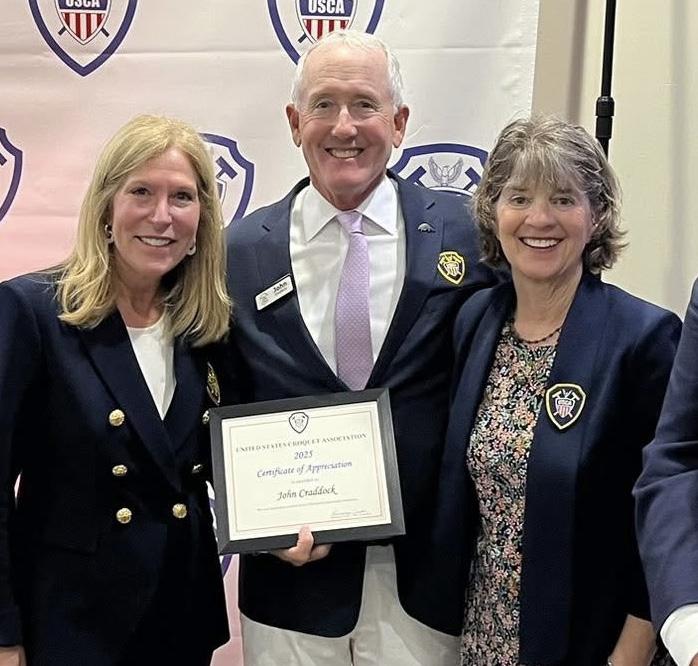
SEMICENTENNIAL COMMITTEE
John Craddock, Chair
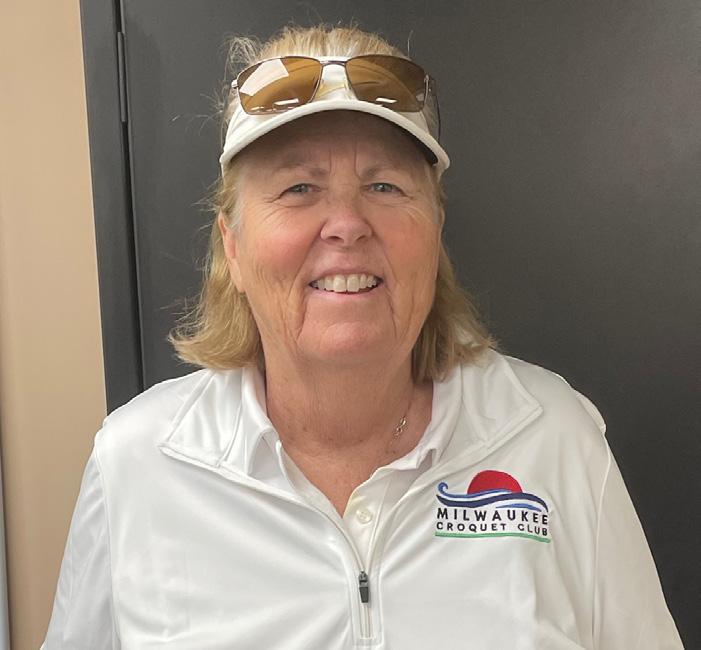
WOMEN’S ADVANCEMENT COMMITTEE
Cheryl Bromley, Chair
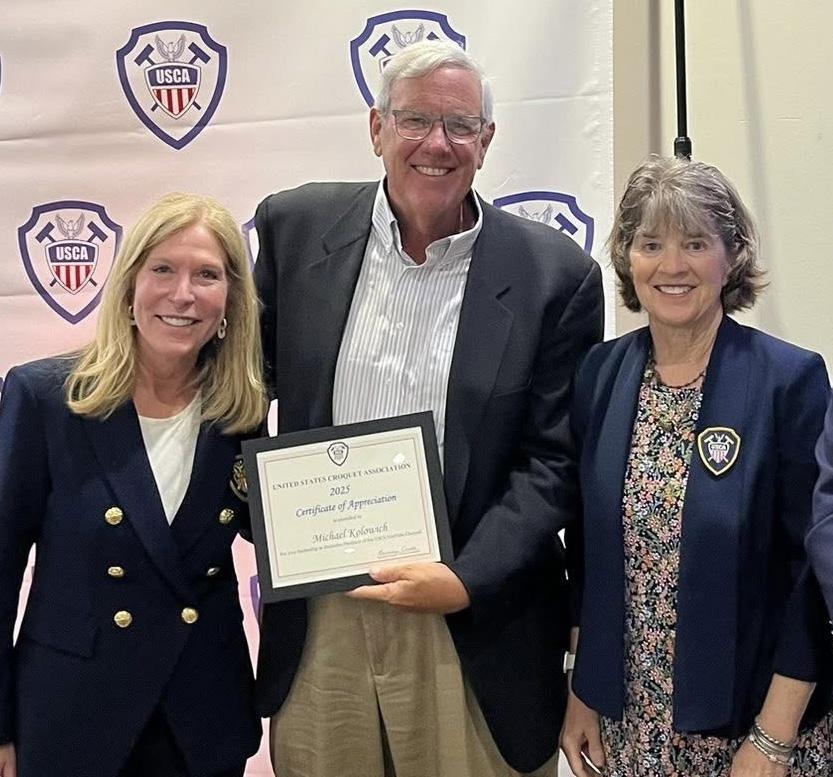
YOUTUBE CHANNEL
Michael Kolowich, Executive Producer
Gold Medal ($25,000+)
Albert, Michael & Connery, Karen
Carey, Jay
Virtue Cup ($10,000+)
Cardo, Randy & Bev
Palm Beach Sports Commission
Russack, Tate & Cami
Championship
($5,000+)
Cinque, Gay
Galasso, Alex & Mary
Goddard, David & Myers, Trula
Bowl ($2,500+)
Barley, Chris & Gail
Beaty, Kim
Brown, John & Carter, Georgia
Coles, Peter
Craddock, John & Mary
Fletcher, Robert - Invectus
Hinkebein, William
Johnston, Dick & Pat
Johnston, Vickie
Kepner, David & Cristina
Licursi, Anne
Oakley, Don
Pannill, Kit
Simmons, Bill
Weihs, Chris & Karen
Shield ($1,000+)
Bjorklund, Lynda
Boger, Dick
Chilton, Missy
Conway Foundation - Worthington, Allison & Ralph
Curington, John
Curtis, Ralph
D’Ambriosio, Madeleine & Kuhn, William
Dillon, John
Firth, Caryl
Flowers, Priscilla
Head, Trevor
Heckman, Karen
Hendrick, Kendall & Laura
Hindin, Bruce & McSharry, Anita
Joseph, John & Jennifer
Lawrence, Stuart & Nerwen, Diane
McCoy David & Millie
Pendill, Michael & Mary Lou
Scanlon, Alice
Singer, Louis Fund - Timmins, Peter
Stearns, Marc & MaryCarol
Teoman, Cornell & Betty
The Chattooga Club
Wren, Diane
Wright, Tim & Julie
Plate ($500+)
Cooper Croquet, LLC
Gibbons, Michael
Holdsclaw, Howard & Lois
Knuth, Sandra
McLaughlin, Sean
O’Laughlin, Tom & Barbara
Ormsby, Martha
Rendleman, Richard & Nancy
Teel, James & Suzanne
Trifone, Linda
Walker, Diana
Weimerskirch, Michael
Williams, Terry
Winston, Anyse
Adams, Susan
Bensch, Alan & Gloria
Bidencope, Ross & Deanne
Biesecker, Eric
Blackwood, Willis
Boatwright John & Field
Burris, Matthew & Jeanne
Burt, Jonathan
Cerullo, Donald
Clark, John & Jane
Coble, James & Karen
Cohen, Jeffrey
Connor, Pat
Cook, Cici
Creasey, Cecil & Susan
Croquet Foundation of America
Cullen, Janne
Dolan, Judith & Green, John
Edwards, Sara
Eggleston, Tom & Joyce
Elsbree, Connor & Meredith
Evans, Susan
Fisher, Cheryl
Fortenberry, Carol Lomax
Gamble, Gary & Kathie
Gavin, Linda & Paul
George, Raymond & Sheila
Glicken Howard & Barbara
Goat Island Assn of Neighbors
Gonzales, Gregory
Gray, Nick
Grout, John & Lynette
Guild, Corina & Haines, William
Guillot Jr., Thomas
Gulden, Kent & Suzanne
Hallett, Tracy
Hawke, Michael
Heald, Fred
Heller, Bob, Kathy & family
Horton, Dan & Catherine
Hunt, Tom
Jones, Courtney
Keatley, Randy & Karen
Kent, Donald
Killilea, Kevin & Anne
Knight, Barbara
Kockakian, Charles
Kolowich, Michael
Levinson, Jack & Alison
Lingren, Amy
Lovvorn, Kent
Lupo, Dick & Anne
Lyle, Thelma
Maloof, David and Mieke
McCauley, Geraldine
McCormick, Timothy & Alexander, Charles
McGowan, Civil
McKaig, Mary
Mills, The Nolan Mills Family
National Croquet Club
Peck Ursula
Peck, Adam
Peterson, Hans
Peterson, Sheila
Quogue Field Club
Rodeberg, Kern & Mary
Rothfus, William & Mary
Schrader, Joseph & Rebecca
Sellner, Craig & Judy
Stahl, Briggs
Stahller, Mark
Stine, Warren
Stinson, Margo
Stovall, Brett
Taylor, Ronald
Tega Cay Croquet Club
Van Otterloo, Eyk
Van Tassell, Bob
Walker, John & Diane
Watrous, Jim & Jan
Westerfield, Ann
Zipes, Douglas & Joan
LYNDA SUDDERBERG MADE
HISTORY BY TAKING THE TITLE AT THE INAUGURAL USCA WOMEN’S AC
NATIONAL CHAMPIONSHIP AT THE NATIONAL CROQUET CENTER IN FEBRUARY.
When seven women gathered at the National Croquet Center in West Palm Beach, Fla., from February 15-18 for the inaugural USCA Women’s Association Croquet National Championship, they were doing more than competing for a title. They were writing the first page of a new chapter in American croquet. When the dust settled on the finals, it was Lynda Sudderberg who claimed the title after a pair of tightly contested games against Canada’s Arlene Parker.
Croquet News caught up with Sudderberg shortly after the championship to talk about the event, her path into AC and where she thinks the game goes from here.
Congratulations on winning the first USCA Women’s AC National Championship. What was the experience like? Thank you very much. I was a little disappointed in the turnout. Several women have been playing AC who weren’t able to attend for one reason or another, including Sandra Knuth, Jodie Rugart, Dawn Jupin and Mary Rodeberg. I think part of it was short notice. But I was happy to have it, and especially happy to win it.
INTERVIEW BY DYLAN GOODWIN
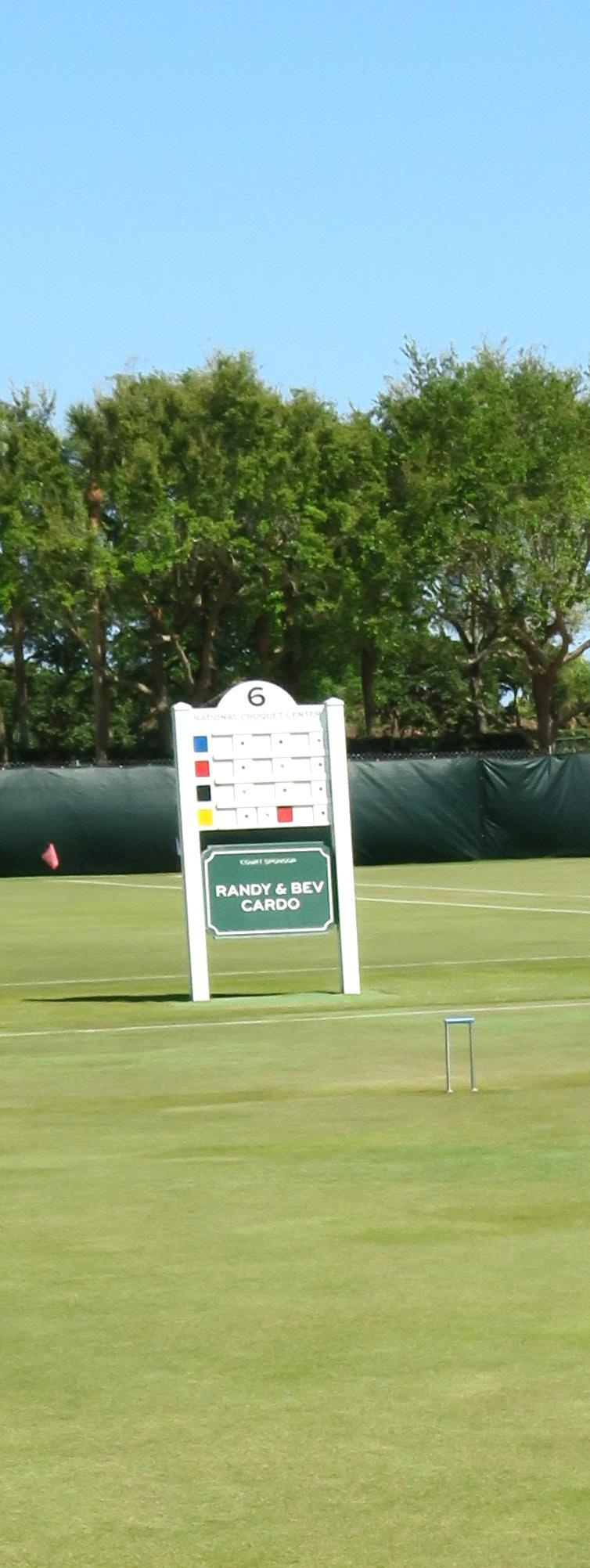
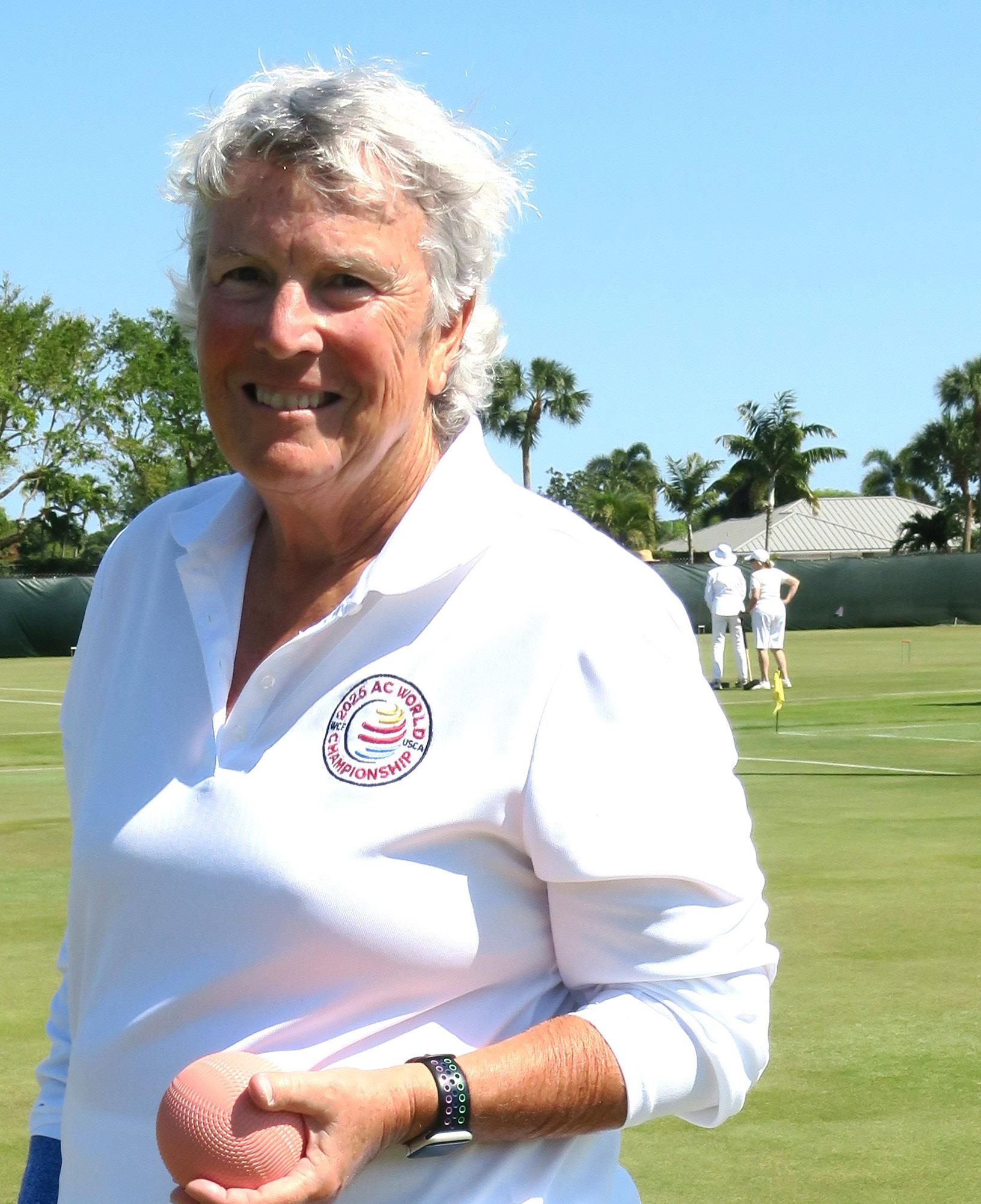
Lynda Sudderberg won the USCA’s inaugural Women’s AC National Championship, beating Arlene Parker 13-11, 13-12 in the best-of-three final. Her name will be engraved on the Lily Gower Trophy, donated by the Denver Croquet Club. (Lily Gower was one of the leading players of the early 20th century, one of only three women to have won the British Open championship.)
Seven players contested the championship. The field had an international flair with Canada’s Arlene Parker and Egypt’s Jana Mohamed Saeed (one of the USCA’s newest members) joining USA’s Loretta Cooper, Cami Russack, Chris Smith, Lynda Sudderberg and Karen Weihs. Play began with a complete round-robin block, all seven players advancing to the knockout. Parker won the block 5-1 with an attacking style and solid break play, earning a bye. Sudderberg and Cooper, who had tied at 4-2 for second place in the block, won their quarterfinal matches to join Parker in the semifinal round. The fourth semifinalist was Saeed, brand new to AC but a quick study, who built on her impressive GC skills to figure out the game on the fly, winning her last three block games and then making it four in a row by winning her quarterfinal match.
Sudderberg survived a defensive battle against Cooper, 10-3, to advance to the final. Parker and Saeed played aggressive tactics throughout their semifinal, Parker advancing 16-8. The final match featured high-quality play from both players with the relatively low scores mainly a function of the short time limits; both players advanced a clip to fourback with a good leave in each game.
Eileen Soo was the Tournament Referee. Jeff Soo was the Tournament Director. Thanks to Ron Eccles for arranging the donation of the Lily Gower Trophy and for hosting a cocktail party after the semifinals.
—Jeff Soo
01. Lynda Sudderberg
02. Arlene Parker
03. Loretta Cooper
04. Jana Saeed
05. Cami Russack
06. Chris Smith
07. Karen Weihs
You were the top seed and the favorite. Did that create pressure?
It created some tension, because a lot of people kind of expected me to win it — and you never know. Arlene Parker from Canada is a very good player and a friend, and she played well. I played well. Nothing particularly remarkable sticks out in my mind about the finals; we both just played well, the games were close and I was glad when it was over and I had won.
The event report noted time limits in the finals. Did that have an impact on the match?
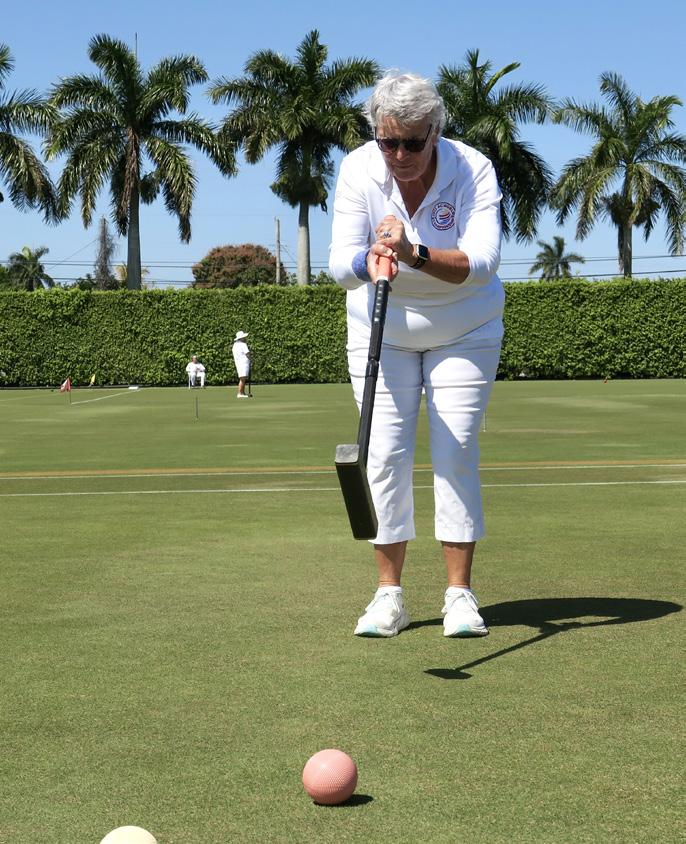
I think the time was right around 2:15 or 2:30. Honestly, we’re both at kind of a first-flight level. We’re not in with the big boys who are doing triple peels. That’s my next big thing: being able to do a triple peel in competition would be fabulous.
I’m not sure that an American woman has done a triple in competition. Is that the goal?
I don’t believe anyone has, and my goal is to be to be the first. You’d think I’d work harder at it. My coach, Zack Watson, would like me to work harder on it. I’m confident I have the ability, but your game really has to be put together. Your break play must be kind of immaculate because you’ve got all this other stuff going on. You’re going for a different hoop with your peel-ee than you are with your striker ball. It’s not just the skill. You have to keep your head in it too — where you need to go next, how to position to get there and getting two balls down there. It’s not particularly easy, although there are many of the top men’s players who make it look easy.
So, what do you think it will take to get there?
I don’t practice as much as I should. I’ve never been a great practicer, and I need to do that, especially for the triple peel. The tricky part of doing it in tournament play is that you want to win the game, but going for the triple sometimes takes the focus off just the break that gets you there. And it’s riskier for a lower-level player.
You and Steve started in Columbus, Ohio. How did that begin?
Around 2005, at the New Albany Country Club. They had one lawn — I think it was three-quarter size, but immaculately kept, like a green. We were both working, and it’s seasonal there, so we really only played on summer weekends. We eventually started playing some tournaments and taking classes at the NCC. We were very fortunate back in New Albany to have some old-time players who taught us the fundamentals — Lenny and Bill Copeland, Chuck and Norni Loving, Jake and Tibbi Johnson as well as John and Jenny Joseph, Leo and Cameron James. As a group, we were lucky to have them.
What brought you to Florida?
When we both retired in 2014, we made the decision to move down for croquet. That’s really the reason we’re in West Palm Beach. We were fortunate enough to find a house only three miles from the NCC. You’ve got to love that.
How did the shift toward Association Croquet happen?
Back around 2017 or 2018, Danny Huneycutt reached out to a number of women — we ended up calling ourselves Danny’s Dames. There were probably 10 to 12 of us, and we had a boot camp at Pinehurst. In 2019, he arranged a trip for us to go play in Ireland during one of their tournaments. That was the introduction. Then this past summer, Michael Todorovich, who’s all-in on Association, made sure we could have a lawn and play AC on our normal Tuesday, Thursday and Saturday games. I really didn’t play any American Rules all summer, and that was huge. Playing with Michael, Tom Cooper, and Sandra Knuth really helped my game. I’ve come a long way since I’ve been focusing on it.
Do you prefer AC now?
I do, by a lot. I worked my American Rules handicap down from -1.5 to -2, but it’s not my game of choice. I don’t like the 75-minute time limit, I don’t like the rotation and I don’t like the deadness. The game, in general, doesn’t promote playing big or taking chances. It punishes taking chances.
How would you describe your approach on the lawn?
It’s different in a casual game than in a tournament. In a casual game, I take chances and push myself to take what I call the big-boy shots. In tournaments, let’s face it, the goal is to win the match, so I’ll sometimes pull back. I feel bad about it, but I don’t want to lose the game either.
I’m fortunate as a woman that I can roll balls. I can do a split roll from one end of the lawn to the other. I can be down on the south boundary and send two balls to Hoops 2 and 3. A lot of women can’t do that, and I have a lot of confidence in my splits and rolls.
Is the long, split roll really an issue?
I think it’s a problem for some women, and some men — the older guys. But it really doesn’t take a lot of muscle. It’s all about technique.
You’ve competed in other sports — swimming, handball, paddle tennis and equestrian. Does that background shape how you approach croquet?
They’re all sports. I view them kind of the same. Whichever one you’re playing, you’re trying to play your best and advance. I just like competition. It keeps me motivated and energized and gives me a reason to do what I’m doing, because as I said, I’m not a great practicer.
Do you play golf croquet?
I’ve backed away from it. I’ve worked so long and hard on getting my tempo and slowing my stroke down, and then I get out on the GC court and turn into a cowboy. It tempts me to just swing hard and be crazy, and all that work flies out the window. On the outside, the two games look similar, but they’re very different in their mental approach.
The field at the championship was small, and only one player was on the younger side. How do we get more young women involved?
It’s a complicated issue. I think a lot of it comes down to time. Women often have more family responsibilities, especially when they’re younger, and that makes it harder to commit to the sport. But I do think events like this championship are important. The plan is to have women’s national championships in all three codes going forward, and that’s a great step.
What would your advice be to new players, including women, who are thinking about competing?
Do tournaments. A lot of people are a little hesitant, but don’t be. You’ve got to start somewhere; everybody does. Generally, you’re going to be playing with people around your same skill set, and it’s fun. You really meet a lot of people. The croquet community is fabulous. When Steve and I decided to move to Florida, we didn’t worry about meeting people because we knew we’d have the croquet community. We know people all over the country — really, all over the world — through croquet.
Is there anything about the culture of the sport you would change?
I would love to see the all-white requirement rethought. A lot of players, especially younger ones, are turned off by it. They may get over it eventually, but their first reaction is, “Oh, that’s the game where everyone wears white.” If we’re serious about appealing to the next generation, we can’t keep designing the sport around what the old guard prefers. We need to figure out what younger people actually want.
LYNDA SUDDERBERG
Age: 71
Home Clubs:
National Croquet Center and the Sarasota County Croquet Club
Grip: Standard
How long have you been playing croquet?
My husband Steve and I started around 2005 in Columbus, Ohio, so about 20 years now.
Favorite croquet venues?
The National Croquet Center is just fantastic — great lawns, clubhouse and overall atmosphere. I also love Pinehurst and Sarasota.
Do you have a favorite tournament?
I enjoy tournaments in general. Each one offers something different, and I like the competition.
Do you play any other sports?
Not really anymore. I used to compete in swimming, handball, paddle tennis and equestrian sports.
Favorite sports teams?
I don’t really follow traditional sports. I do enjoy equestrian events like Grand Prix jumping and combined driving.
What is the best thing about croquet?
The competition and the community. It keeps me motivated, and you meet people from all over the country — and even the world.
What would you like to see happen in croquet over the next 10 years?
I’d like to see more growth in the women’s game and more opportunities for women to compete. And I think we should reconsider traditions like all-white clothing to make the sport more appealing to younger players.
One piece of advice for players looking to improve? Don’t hesitate to play in tournaments. You’ve got to start somewhere, and it’s a great way to improve and meet people.
2026 USCA AC National Championship
Venice, Florida | April 12-18, 2026
MATTHEW ESSICK RISES TO THE TOP IN A MILESTONE 40TH EDITION OF THE USCA’S AC NATIONALS, DEFEATING ZACK WATSON IN A GRIPPING FIVE-GAME FINAL.
The 2026 edition of the USCA AC National Championship was played April 12-18, at the Sarasota County Croquet Club in Venice, Fla., with Matthew Essick grabbing his fourth national AC singles title with a classic five-game battle against Zack Watson that entertained a global livestream audience thanks to the USCA YouTube channel and iDO Livestreaming.
Notably, the 40th edition of the event had 40 players participate in singles and doubles at the Championship and First Flight levels. For Championship singles, the group had four blocks of seven players each. Watson rolled through Block A with six triples and no losses. Canadian Brian Cumming (5-1), Stuart Lawrence (4-2) and Brian Hovis (3-3) rounded out the top four spots to advance to the knockout.
Essick also went undefeated in his B Block with four triples. Sherif Abdelwahab (4-2), David Maloof (4-2) and Chris Barley (3-3) claimed second through fourth to advance to the round of 16. Block C saw Darin Guffey go 5-1 with a +90 net on hoops, with Tom Balding also at 5-1 with a +61. Kyle Maloof went 4-2 for third while Doug Grimsley and Matt Griffith went 3-3.
Rounding out the Block action, Edmund Fordyce was 6-0 in the D Block, with two triples and a quadruple. Matt Smith 5-1, Stephen Morgan (4-2) and Steve Scalpone (3-3) followed to claim spots in the main knockout.
In the round of 16, all matches went according to seed and finished in two games. The quarterfinals offered a bit more intrigue as #25 world-ranked Fordyce was able to dispatch #17 Balding in two games to advance to the last four. Watson beat Morgan 26-11, 26tp-0 to advance, with Essick tripled twice to get past Kyle Maloof 26tp-8, 26tp-9. The Smith and Guffey match was the only one to get to three games as the two players scrapped for the final spot. In fact, game three had to wait overnight. It was Guffey with only 26 ranked AC games that found a way with a 25-17, 13-26, 22-17 score to put a fresh name in the last four semifinals round.
The semifinals were best-of-five and Watson and Fordyce were featured on the morning livestream. Watson got through in three with a 26tp-11, 26tp-0, 26tp-23 scoreline. Guffey went straight into battle with Essick and got on the board in game one, but Essick used three straight triples (26tp-18, 26tp-0, 26tp-0) to set up the final’s showdown with Watson.
The final did not disappoint as the doubles partners traded blows all day in a fantastically interactive match. Only game five seemed to follow the traditional AC storyline as games one through four all had something unique for fans. In the end, Essick came out on top by a score of 26otp-12, 9-26tp, 26tpo-18, 10-26, 26tp-0.
While presenting trophies on behalf of the USCA, Michael Albert said, “In all the time I’ve been playing croquet that I’ve ever seen a finals match that was that exciting. Kudos to both players.” – this isn’t great grammar. Maybe paraphrase to Michael Albert said that in all the finals matches he’s watched, he’s never seen one that was that exciting. “Kudos to both players,” he said.
With his fourth title in singles, Essick now stands alone at the top of USCA history for AC Nationals. Damon Bidencope, Leo McBride and Jeff Soo all follow with three titles.
The AC Doubles National Final featured Balding/Kyle Maloof and Essick/Watson. The match went to three games and also offered a back-and-forth display for the spectators.
The match started in typical fashion, Balding and Maloof won the toss and opened with a super shot, which led to Balding running his first break early and setting a leave. After a narrow miss by Watson, Maloof got started on his triple, but had an unfortunate breakdown early on, which allowed Watson back in to run his nine hoops. Maloof missed the hit in and Essick converted a textbook triple peel to win the first game.
The second game took a more unusual turn. It started similarly enough, with Maloof hitting in and running the first break around, but Essick managed to hit the lift shot and proceeded to perform a TPO to peg Maloof’s ball out of the game. During this turn, he also peeled Balding’s ball through Hoop 1 to leave his clip on 2.
2026
A two-versus-one game ensued, which saw Balding make several attempts to hit the opponents from across the court, the first few of which were unsuccessful. Watson would respond by maneuvering their balls across the court and attempting to set a trap for Balding to shoot into.
Balding took a shot that would mean game over if missed but managed to make contact and converted the three-ball break to clinch victory in game two, tying up the match.
Game three opened with Maloof missing on turn three after the super shot, followed by a hit in from Watson as he took the first break around. After he set his leave, Maloof got the hit in but was unable to get the break established. Essick began the triple but stuffed Hoop 3 while attempting to run it gently. This gave Maloof the opening needed to run his break around. Essick missed the long lift shot down the East boundary, and Balding finished the match.
In First Flight play, the 2026 event had nine players participate, with newcomer Adam Peck going on a tear in block play with a perfect 9-0 record, pegging out in six of those wins. Teresa Errickson also had a great showing, going 6-2 to take second in the block, followed by Christof Weihs and Cami Russack, who both went 5-3.
The playoff featured eight players and one game only in the first round. The round saw a couple of upsets, including #5 seed Rick Alderson getting an 8-7 victory over Russack to advance. In the semifinal, he went up against Peck in a best-of-three and lost game one 26-11 but then fought back in game two 15-13 to end Peck’s 10-game win streak. Game three was even tighter, but Peck was able to prevail 14-13 to secure a place in the final.
Going back to the first round, #6 seed Kathie Hart found her way to the next round by grabbing a 7-6 win over #3 seed Weihs. She went up against #2 Errickson and dropped game one 5-4. But the tide turned and she claimed the next two, 4-2, 5-4, for a berth in the final versus Peck. There, Peck got back on track and dispatched Hart 26-8, 26-6, to claim the First Flight title. Of note, Peck’s first ranked AC event was just a few weeks prior. Overall, he is now 20-4 in AC play, pushing his brand-new starting grade up by more than 100 points.
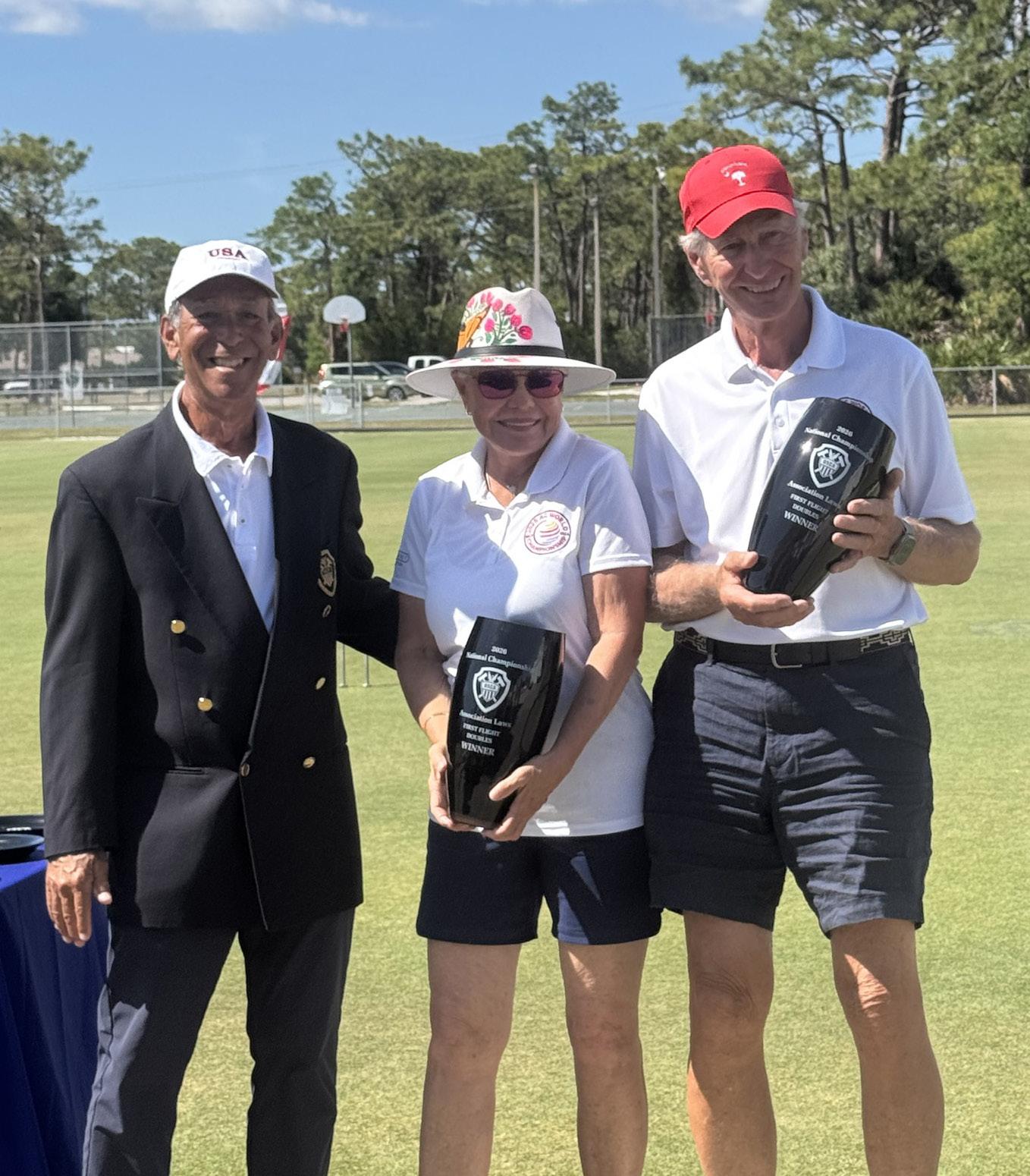
In First Flight Doubles, Christof and Karen Weihs took first place with a 3-1 record in a field of three teams.
Other winners in the event included Brian Cumming in the Championship Plate with a 4-0 record. Martyn Selman and Steve Scalpone took the Championship Double Plate with a 3-0 record. Christof Weihs won the First Flight Plate, with Rick Alderson and Kathie Hart taking the First Flight Doubles Plate.
Michael Albert, who worked as the field producer for the livestream, said, “I’d like to thank all of the volunteers at the Sarasota County Croquet Club for going above and beyond all week long. They’ve been out here every morning from 6:30 to 7:00 setting wickets, and they made sure we were well fed twice a day.”
He also recognized the support behind the event’s YouTube production, including Oakley Woods Croquet, Chris and Gail Barley, Karen Weihs, Artist, Visit Sarasota and Sarasota Parks and Recreation, and noted the critical role the Sarasota County Croquet Club played in delivering a first-class championship throughout the week. All livestream matches from the 2026 championship are available to watch on the USCA YouTube channel, offering a chance to revisit one of the most compelling finals in recent memory. The USCA has also confirmed that the 2027 Association Croquet National Championship will return to Sarasota next April.
Tom Balding and Michael Albert both contributed information to this report.
01. Matthew Essick
02. Zack Watson
03. Edmund Fordyce
03. Darin Guffey
05. Stephen Morgan
05. Tom Balding
05. Matt Smith
05. Kyle Maloof
09. Matt Griffith
09. Sherif Abdelwahab
09. Martyn Selman
09. Stuart Lawrence
09. Brian Hovis
09. Chris Barley
09. Steve Scalpone
09. Brian Cumming
17. David Maloof
18. Doug Grimsley
19. Tom Cooper
20. Jack Rush
21. Sandra Knuth
22. Arthur Olsen
23. Arlene Parker
24. Lynda Sudderberg
25. Curtis Drake
26. Stephen Errickson
27. Rich Curtis
28. Mike Todorovich
01. Adam Peck
02. Kathie Hart
03. Rick Alderson
03. Teresa Errickson
05. Chrstine Smith
05. Cami Russack
05. Christof Weihs
05. Karen Weihs
09. Becky Essick
01. Tom Balding/Kyle Maloof
02. Matthew Essick/Zack Watson
03. Brian Cumming/Doug Grimsley
03. David Maloof/Stephen Morgan
05. Sherif Abdelwahab/Sandra Knuth
05. Edmund Fordyce/Darin Guffey
05. Matt Griffith/Matt Smith
05. Chris Barley/Gene Raymond
09. Rick Alderson/Kathie Hart
09. Steve Scalpone/Martyn Selman
09. Tom Cooper/Adam Peck
09. Brian Hovis/Lynda Sudderberg
09. Arlene Parker/Jack Rush
09. Rich Curtis/Stuart Lawrence
09. Michael Albert/Curtis Drake
09. Stephen Errickson/Teresa Errickson
01. Christof Weihs/Karen Weihs
02. Cami Russack/Bill Simmons
03. Becky Essick/Christine Smith
Championship Plate Winner
Brian Cumming
Championship Doubles Plate Winners
Martyn Selman/Steve Scalpone
First Flight Plate Winner
Christof Weihs
First Flight Doubles Plate Winners
Rick Alderson/Kathie Hart
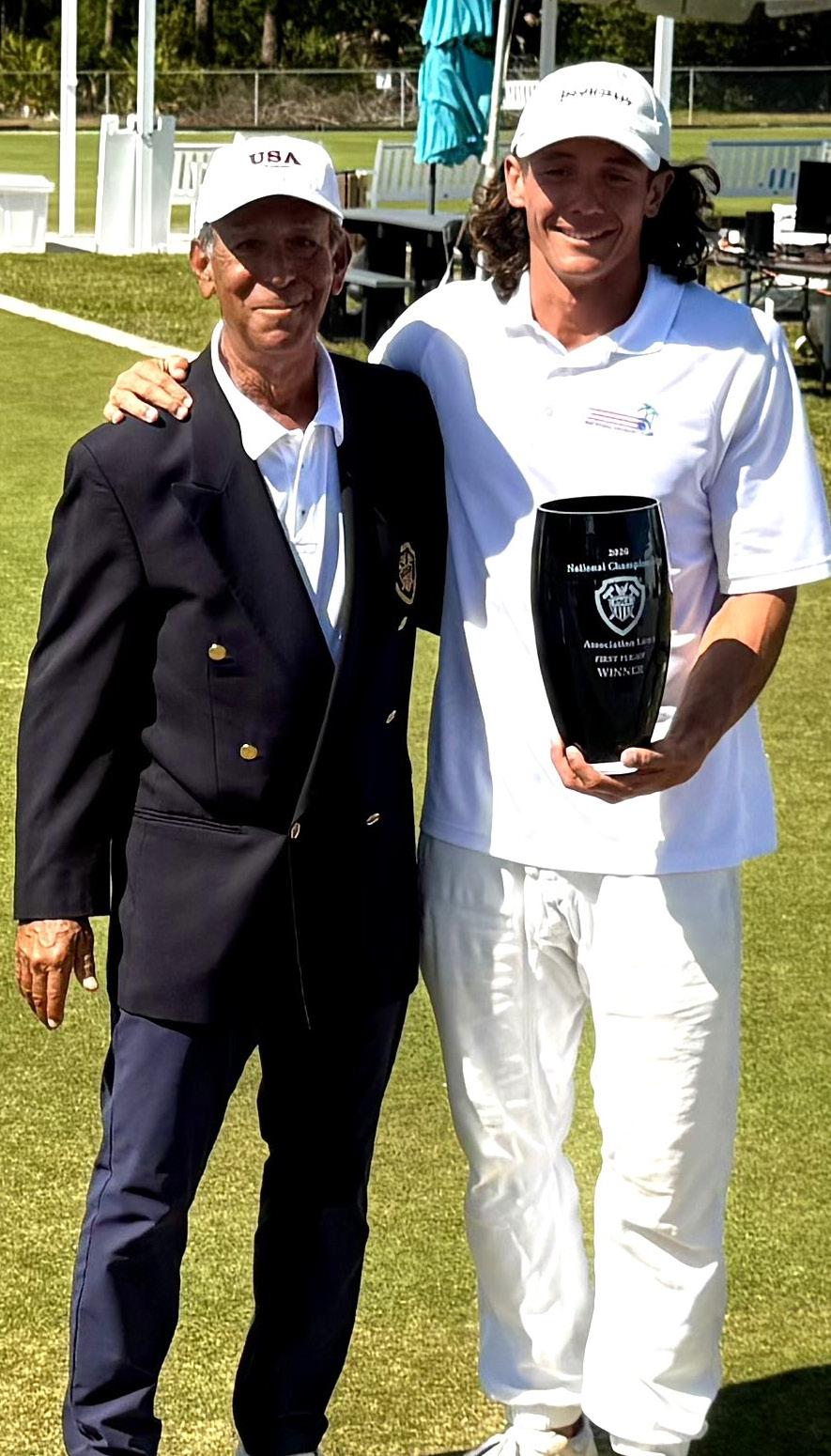
First Flight Doubles champions Karen and Christof Weihs. Photo provided by Sarasota County Croquet Club.
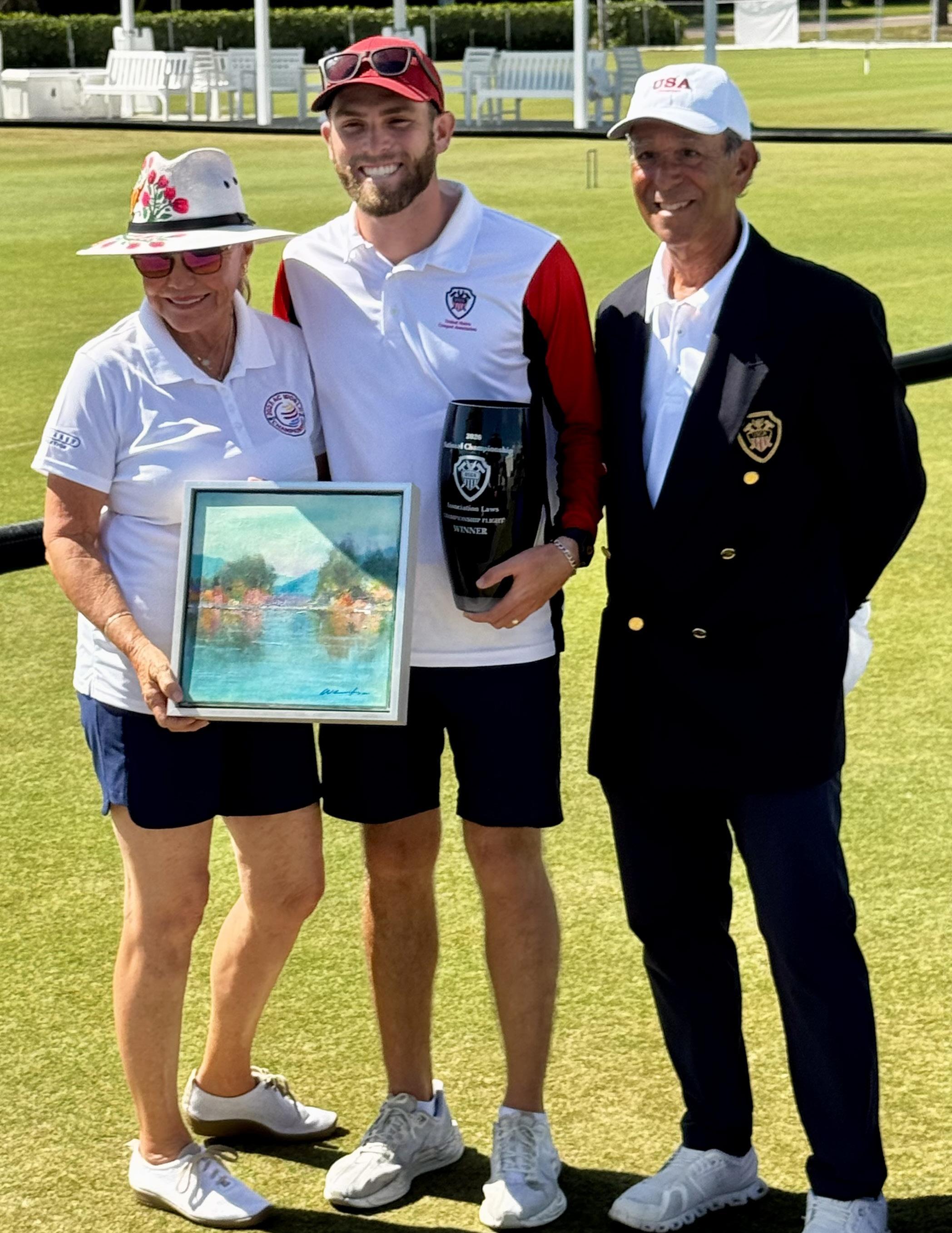
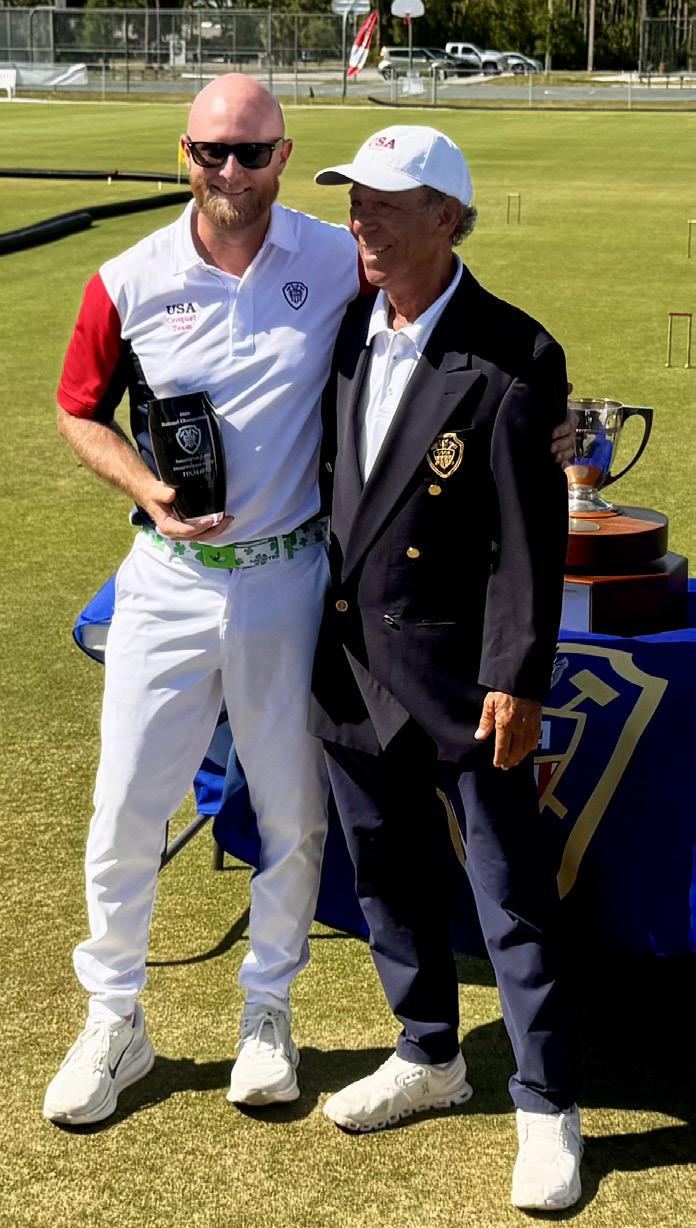
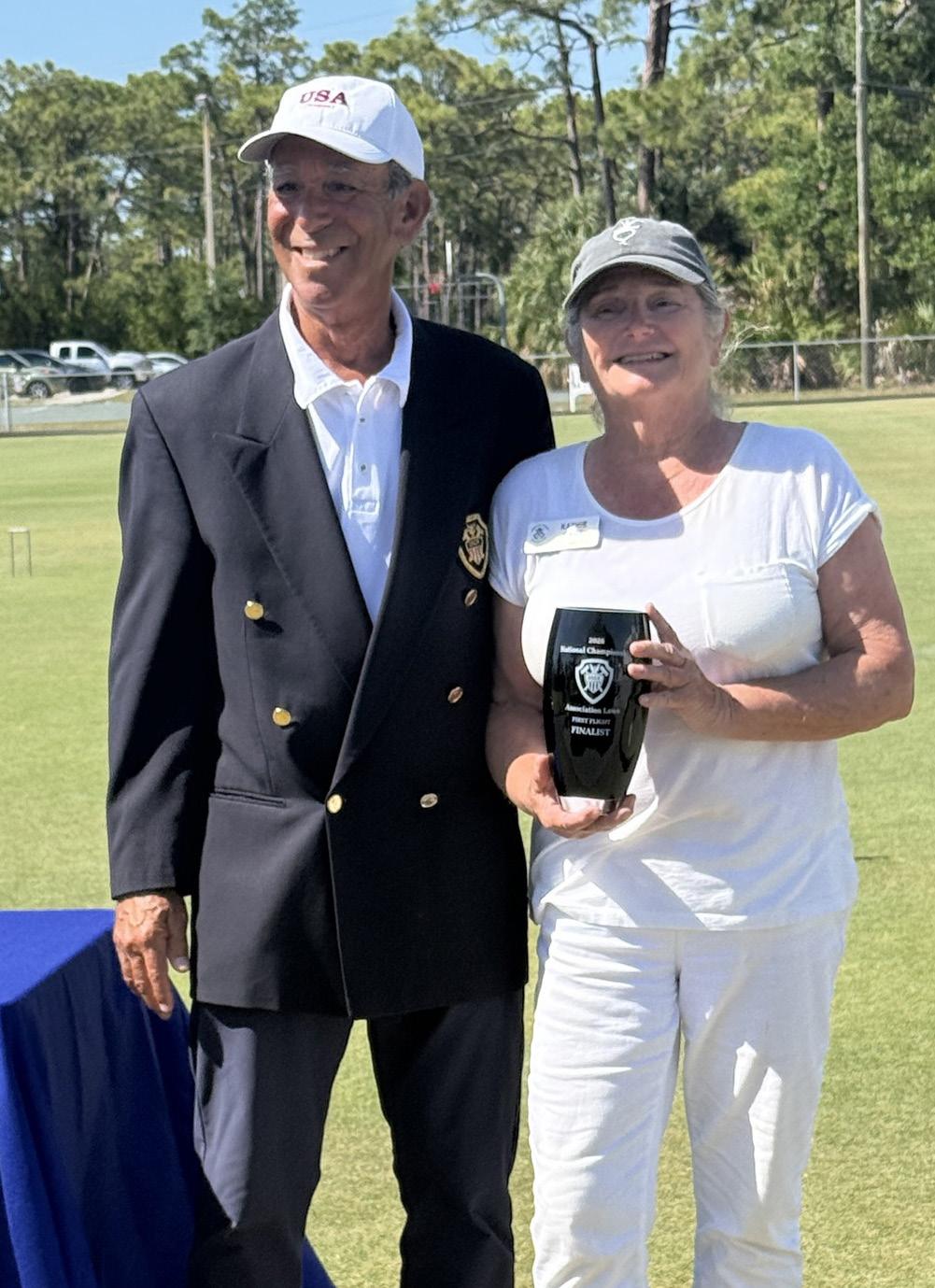
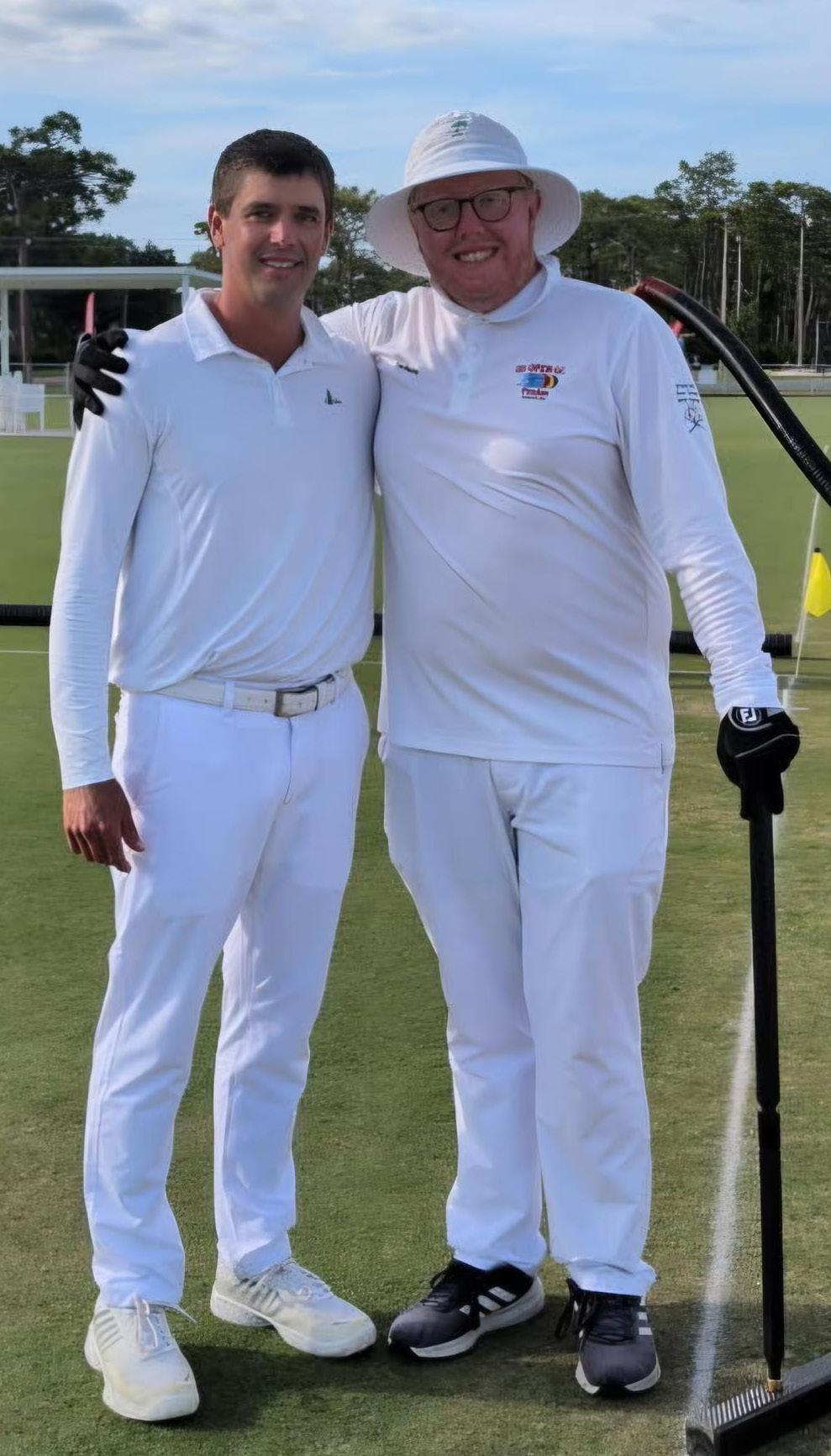
TOP LEFT: Runner-up Zack Watson. Photo by Sandra Knuth.
TOP MIDDLE: Doubles champions Kyle Maloof and Tom Balding. Photo provided by Sarasota County Croquet Club.
TOP RIGHT: First Flight Champion Adam Peck. Photo by Sandra Knuth.
BOTTOM: First Flight runner-up Kathie Hart.
Photo provided by Sarasota County Croquet Club.
AC NATIONAL CHAMPIONSHIP WINNERS
SINGLES
2026 — Matthew Essick
2025 — Robert Fletcher
2024 — Tom Balding
2023 — Matthew Essick
2022 — Matthew Essick
2021 — Jeff Soo
2020 — Matthew Essick
2019 — Stephen Morgan
2018 — Jeff Soo
2017 — Stephen Morgan
2016 — David Maloof
2015 — David Maloof
2014 — Jeff Soo
2013 — Ben Rothman
2012 — Rich Lamm
2011 — Stephen Mulliner
2010 — Danny Huneycutt
2009 — Ben Rothman
2008 — Brian Cumming
2007 — Rich Lamm
2006 — Jerry Stark
2005 — Danny Huneycutt
2004 — Bob Cherry
2003 — Leo McBride
2002 — Jacques Fournier
2001 — John Taves
2000 — Jerry Stark
1999 — Leo McBride
1998 — Mik Mehas
1997 — Mik Mehas
1996 — Leo McBride
1995 — Archie Burchfield
1994 — Tony Stephens
1993 — John Taves
1992 — Tremaine Arkley
1991 — David Openshaw
1990 — Damon Bidencope
1989 — Damon Bidencope
1988 — Damon Bidencope
1987 — Bob Kroeger
INTERVIEW BY TOM BALDING
Fresh off one of the most compelling USCA AC Nationals finals in recent memory, Matthew Essick sat down with commentator Tom Balding to break down the match and mindset behind his victory over Zack Watson in the 2026 USCA AC National Singles Championship.
Tom Balding: Matthew, congratulations, that was an incredible match. Possibly one of the most exciting AC finals I’ve ever seen. What was it like from your perspective?
Matthew Essick: Yeah, it really had everything. We saw two-balls, TPOs, one-ball situations; just about every element of top-level AC.
Balding: I want to go to that key moment in Game 3. Zack had been hitting everything, and you chose to go for a New Zealand TPO. Given how difficult peels have been this week, what led you to that decision?
Essick: Against Zack, it’s just not a winning strategy to sit back and hope he misses. He’s going to hit at a really high clip. So, my thinking was to set the standard New Zealand TPO: get the first peel while establishing the leave, then look to complete the rest. The idea was to maybe play the first couple of hoops like I was going for a sextuple, hoping to pick up a peel along the way, but really it was always about transitioning into a TPO. I wanted to get to a one-ball game where I felt confident. At the end of the day, giving him a shot and hoping he misses isn’t enough. You have to create pressure and change the dynamic.
Balding: You had a few misses early but then seemed to lock in again. For players watching at home, how did you reset mentally?
Essick: Honestly, I only made one bad swing all day. I missed a few shots, sure, but most of them were good swings that just didn’t go. I felt really good about my swing overall, better than I had the rest of the week. My break play has been consistent, so once I got in, I trusted that part of my game. The big question was whether I could keep up with Zack’s shooting. Once I hit a solid shot early in Game 5, I felt like I was back. From there, it was just about staying composed and executing.
Balding: In Game 5, you set the three-ducks leave instead of the more defensive option we’d seen earlier. What was the thinking there?
Essick: I’d already tried the ultra-defensive leave, and he handled it perfectly — hit, rushed and got going with no trouble. So, I wanted to apply more pressure. With three ducks, there’s no ambiguity; if he misses, I’m finishing. I knew he was likely to hit a long shot anyway, so I’d rather make that shot feel more consequential. It was really just about saying, “Please miss one.” When he finally did, it was a huge moment.
Balding: You placed the balls to make both shots nearly equal distance. Was that intentional?
Essick: Exactly. I didn’t want to give him a clearly shorter option. I knew he’d take the easiest shot available, so I tried to make them as close as possible in difficulty. At that point, it’s about maximizing pressure and hoping for a miss.
Balding: You and Zack know each other’s games extremely well as doubles partners. Was there anything from this match that stood out or that you’ll both take away?
Essick: I was really proud of how level-headed we both stayed. It never felt like momentum swung too heavily either way. Every time someone got behind, they responded with a big shot or a solid turn. If there’s one takeaway, it’s adaptability. When someone’s not hitting, you can play more straightforward: set a leave and wait. But when someone is hitting like Zack was, you have to change tactics. Doing the same thing over and over doesn’t work at this level. I felt comfortable adjusting my approach, and I think that made a difference.
Balding: Your fourth national title. What does this one mean to you?
Essick: They’re all special, but this one stands out because of the level of play and the quality of the match. It was a real battle, and I’m proud of how I handled it.
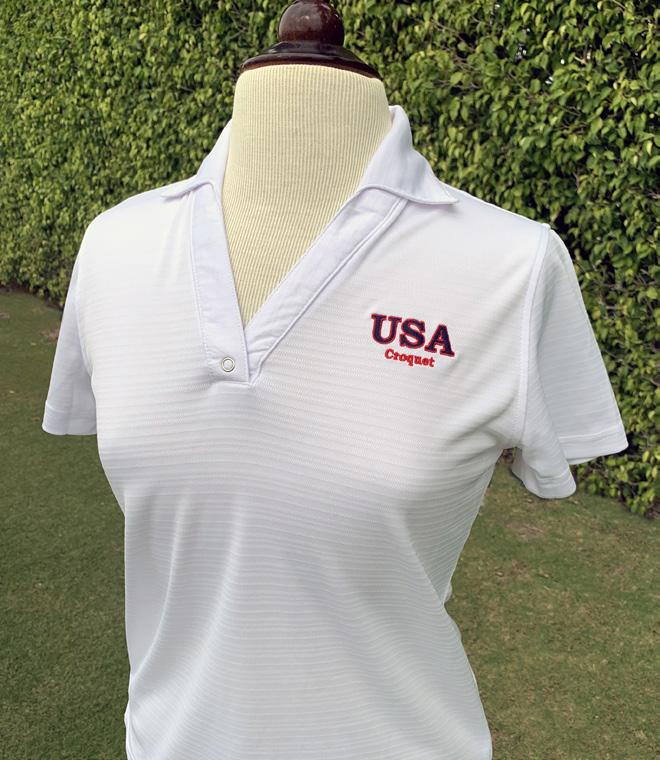
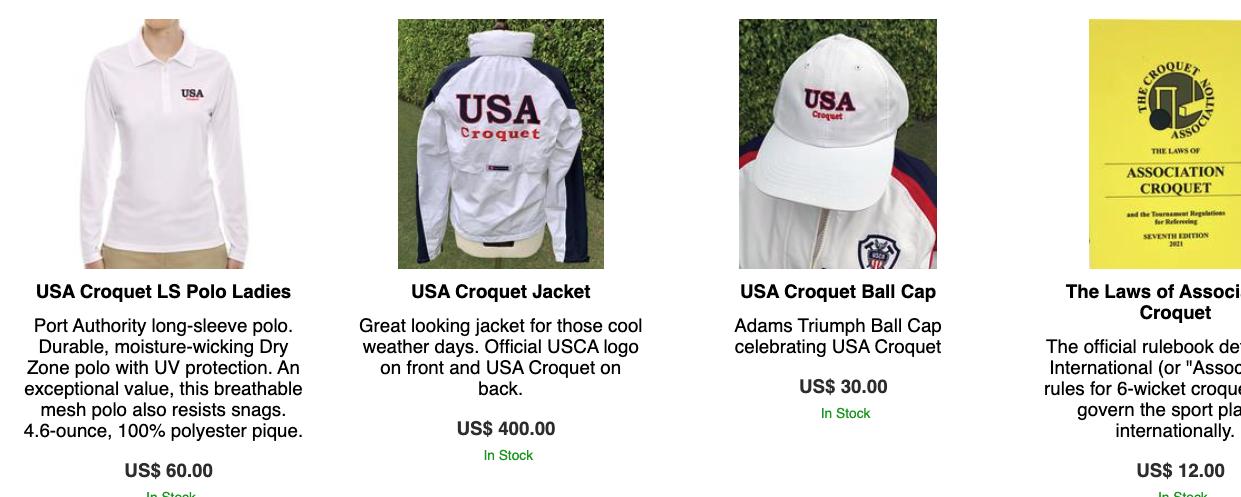
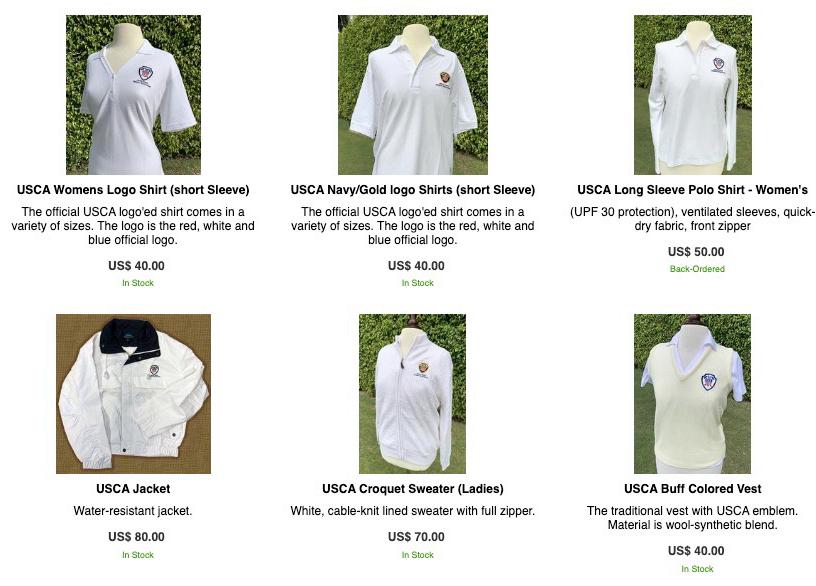
Need






www.croquetamerica.com
Look under the Members-Only tab under Merchandise..
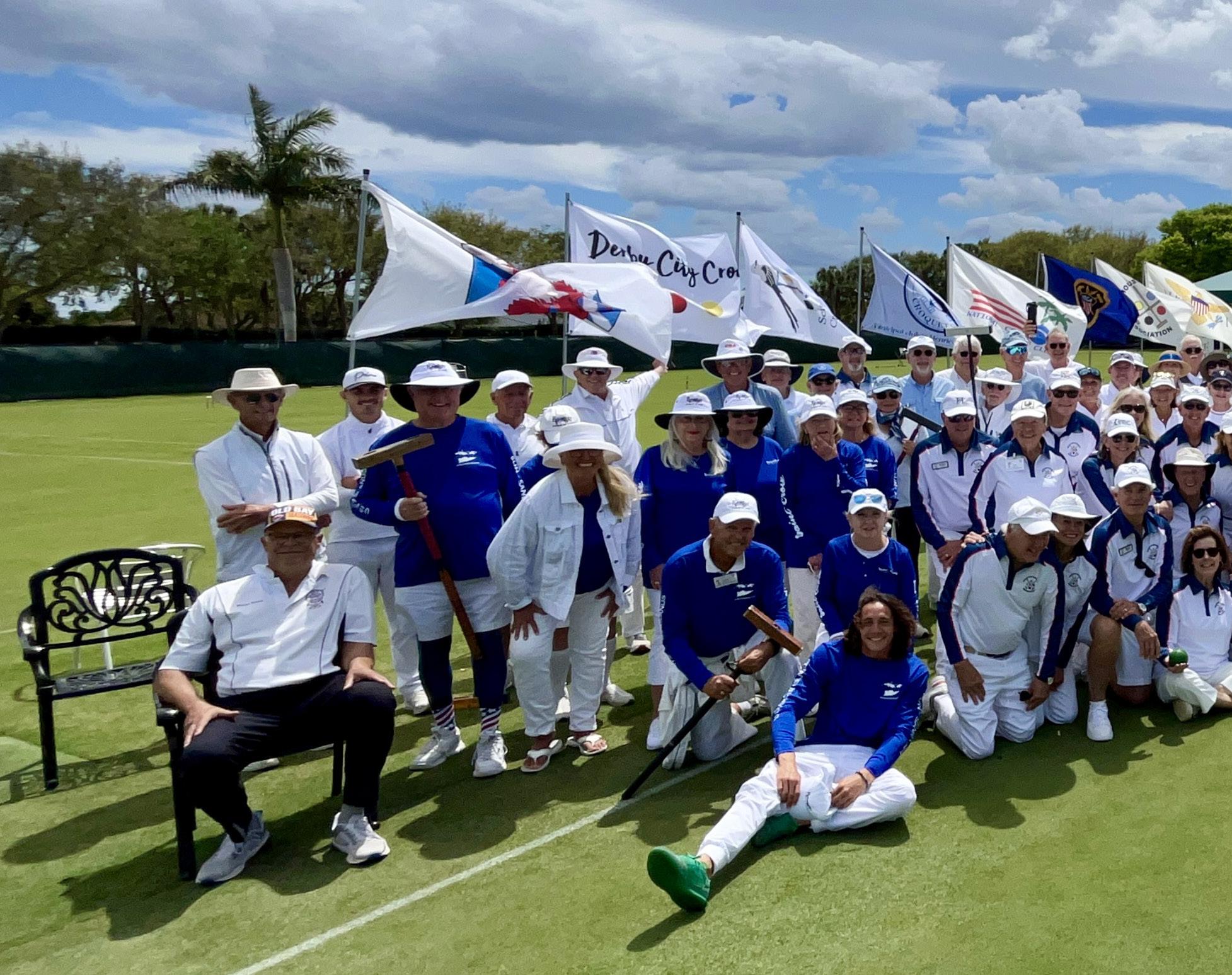
THE 2026 AMERICAN SIX WICKET CLUB TEAMS TOURNAMENT, HELD AT THE NATIONAL CROQUET CENTER IN WEST PALM BEACH, FLA., MARCH 19-22, WAS A FUN-FILLED EVENT WITH AN EXCITING FINISH AND WAS THE LARGEST A6W EVENT HELD IN THE PAST 10 YEARS.
BY MACEY WHITE
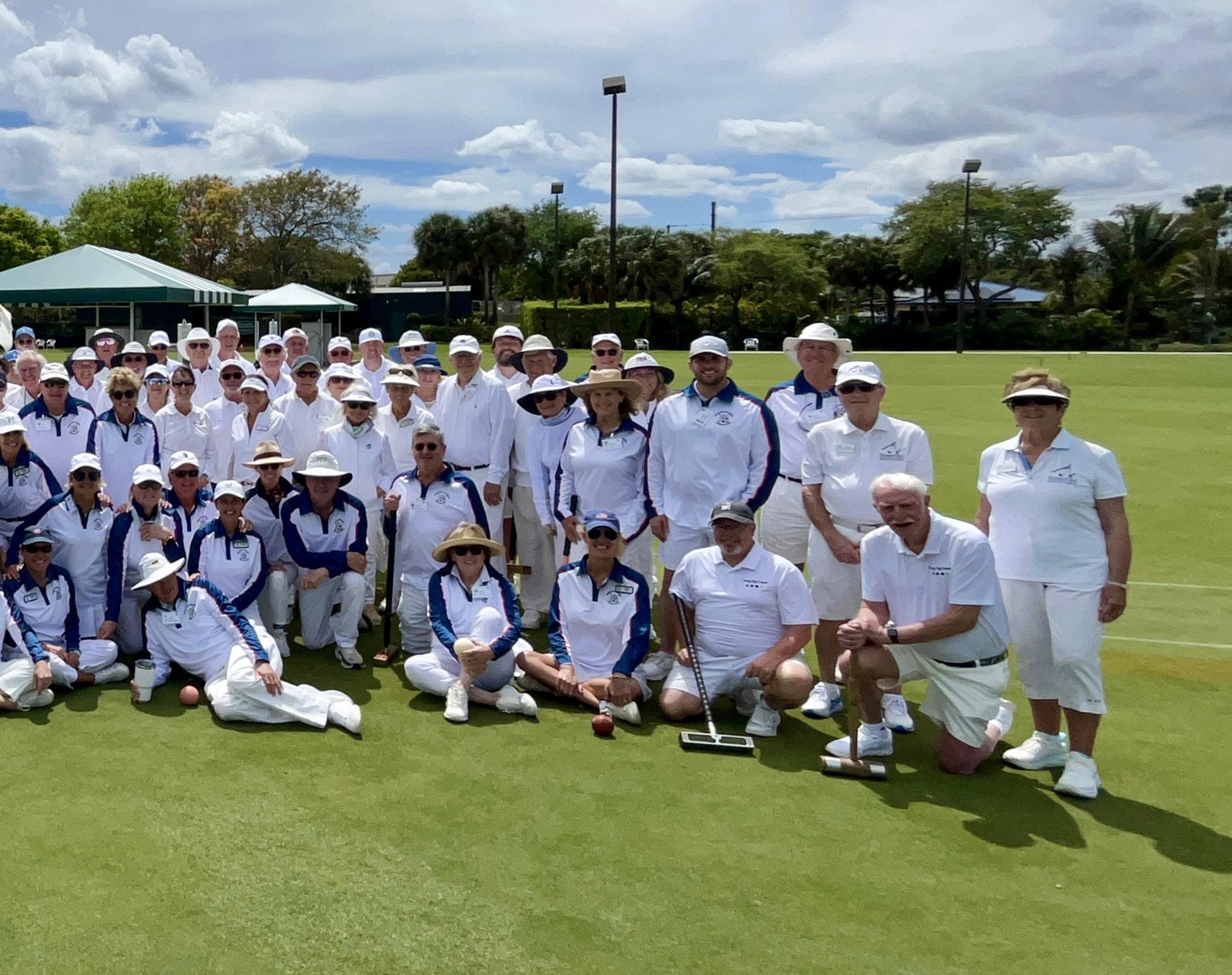
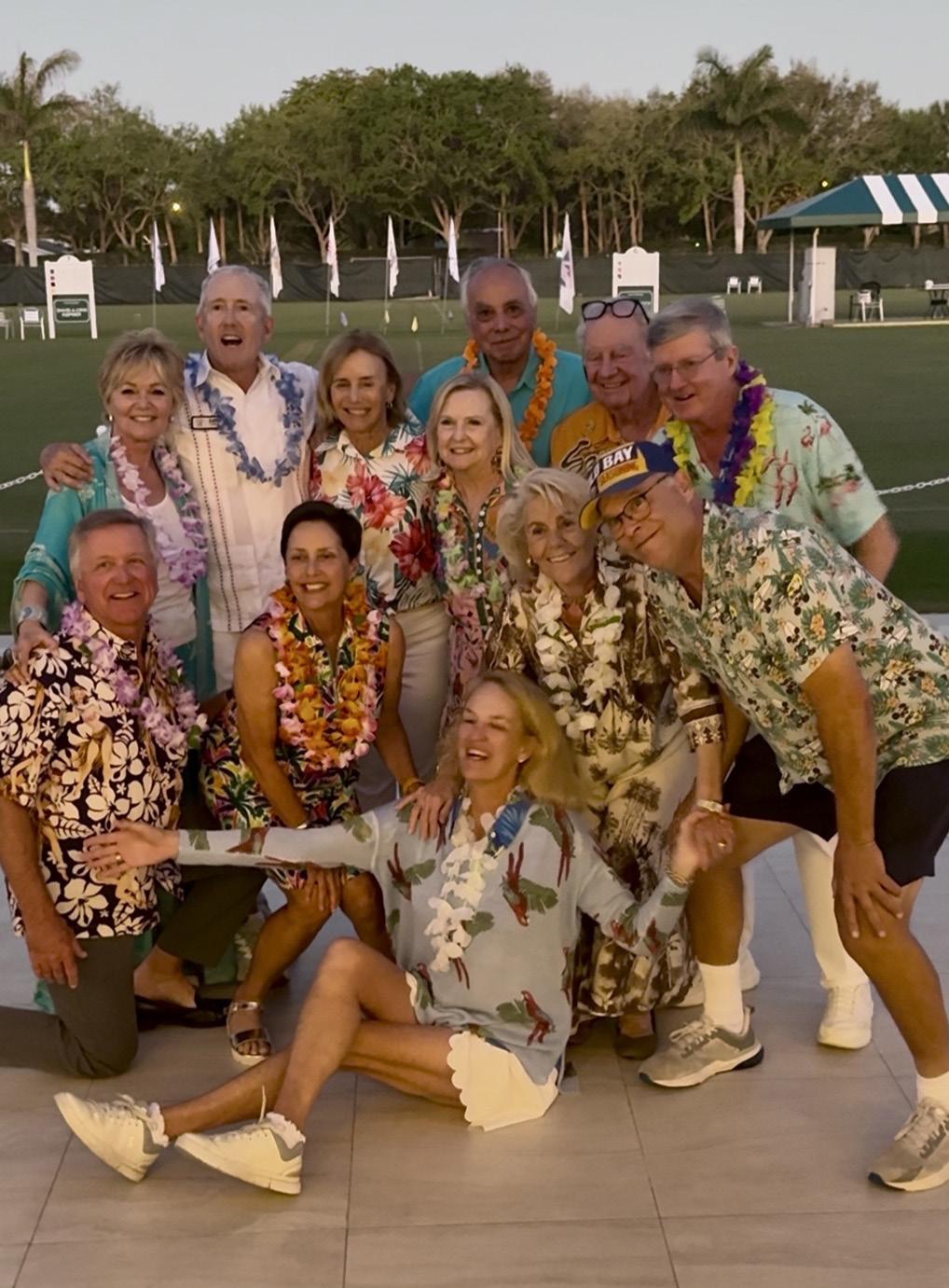
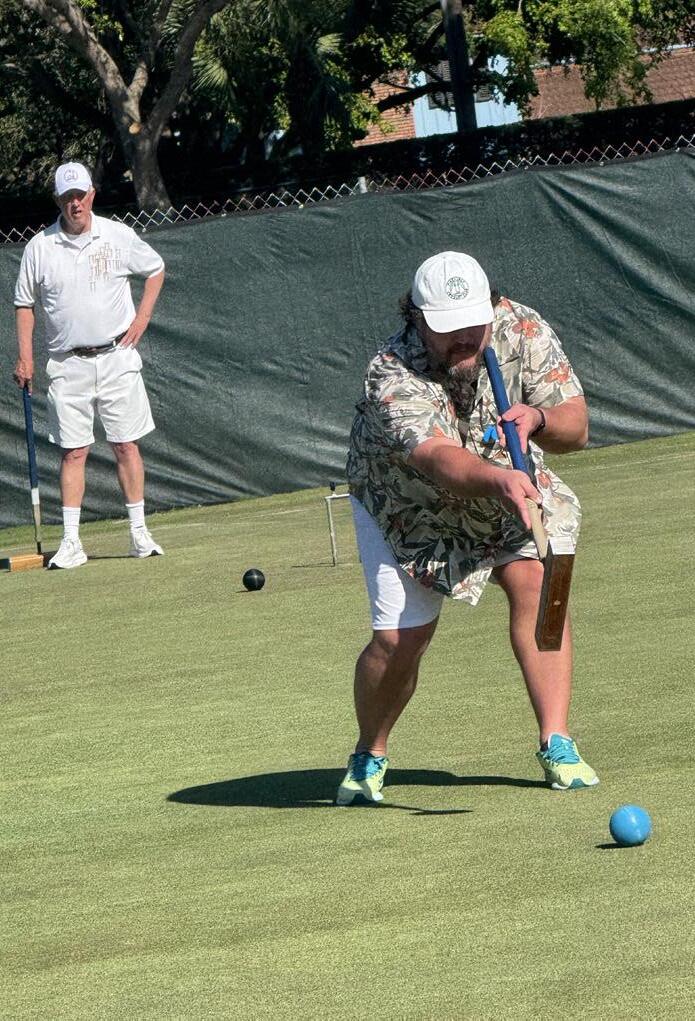
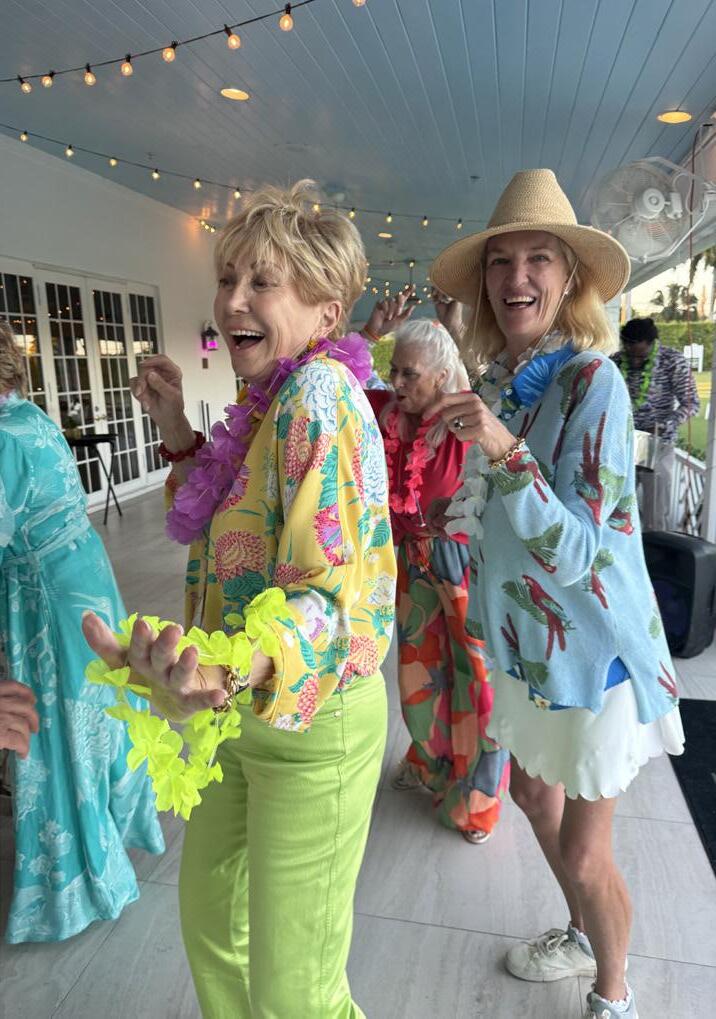
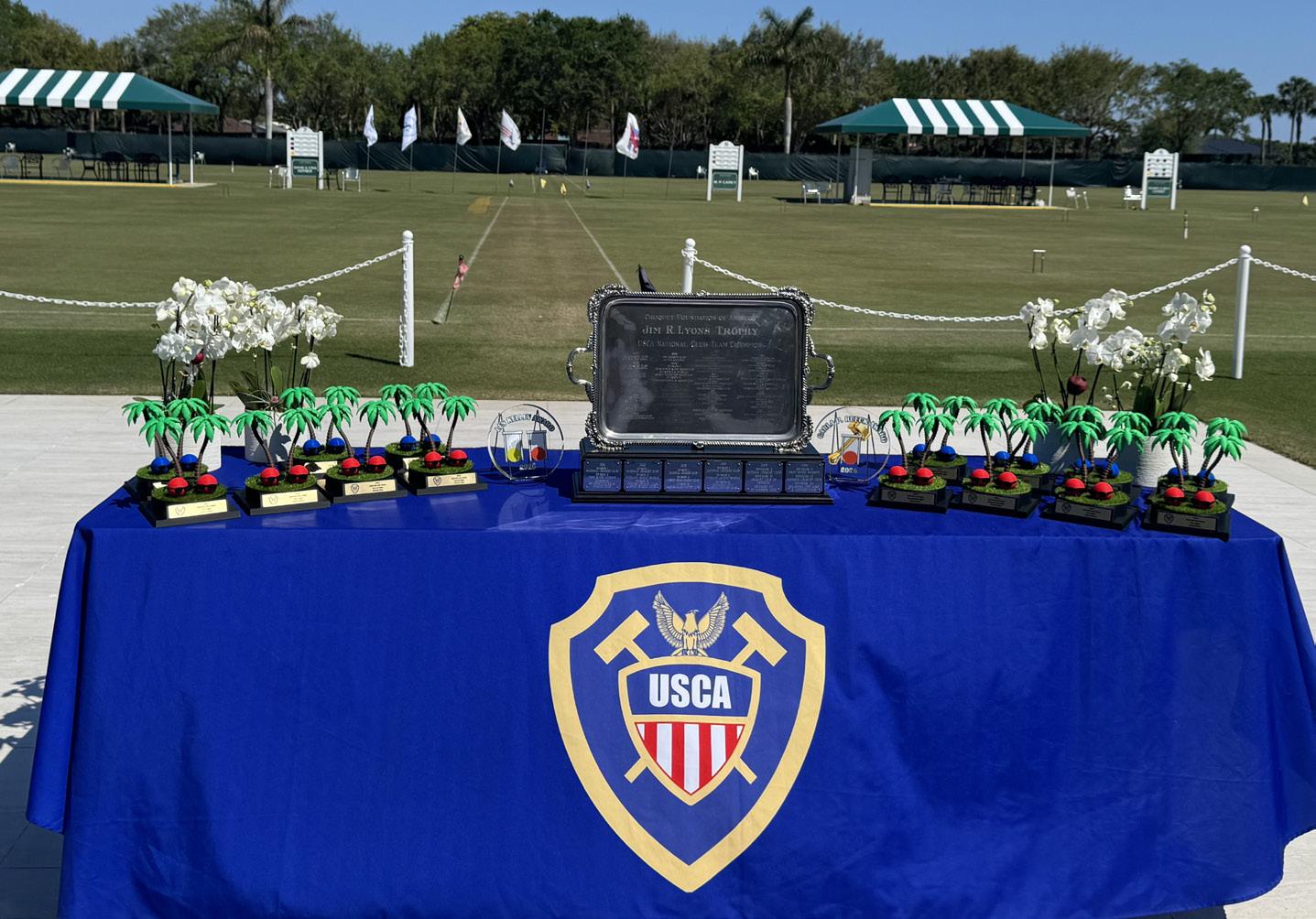
The tournament ran smooth as silk with 104 players, thanks to the Tournament Directors, Macey White and Nancy Crouch, Organizing Committee, Tish Peterkin, Karen Heckman, Allison Worthington and Cheryl Harders, the USCA staff and great cooperation from all of the players.
Doubles teams from 10 clubs from across the country played in this prestigious doubles event and competed for a winning spot in one of five flights and for top club. Clubs were flighted by size, with small clubs having four or fewer players, medium-sized teams having six to 12 players and large clubs having more than 14 players. Doubles teams were flight-based on USCA handicap into six flights from Championship to Fifth Flight. Teams earned points for their club based on how they finished in their flights.
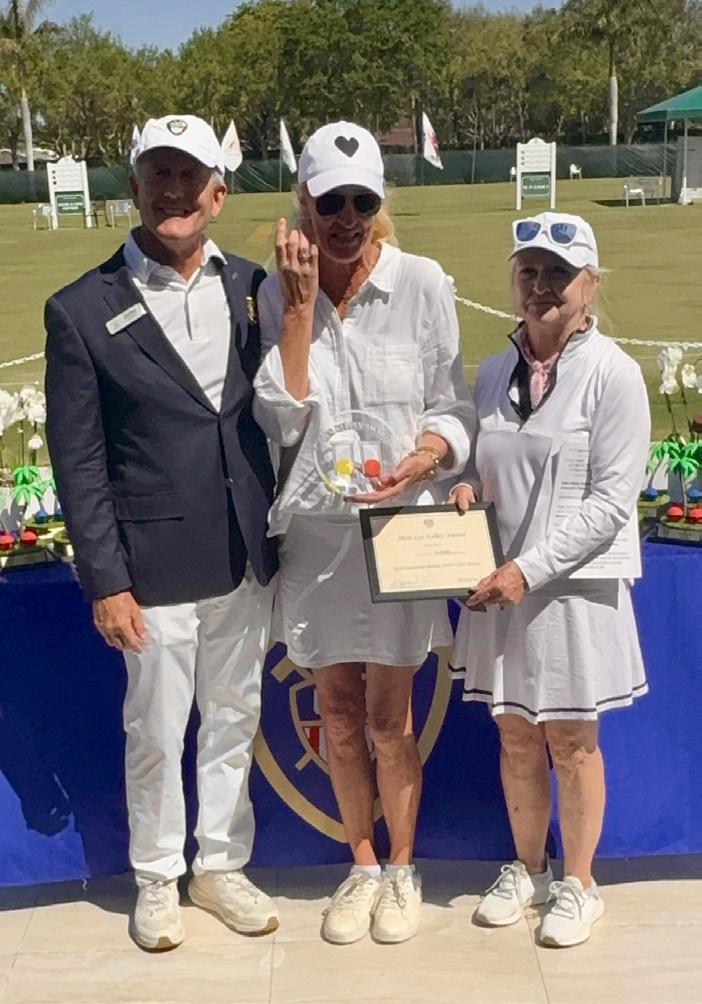
Club Teams started in 1980 and has a long tradition of fun-filled social events and competition between clubs. In the early years, Les Kelley from the Bombay Croquet Club, nicknamed “The Commish,” was the sparkplug for fun and revelry. Kelley is well remembered and each year the Les Kelley award is given in his honor to the person who embodies the characteristics of revelry and fun. This year’s unanimous winner was Tish Peterkin from Houston. According to Tish, “Club Teams was my first tournament where I even got to play with my future husband, George Peterkin.” Also, as a side note, the TD team of Macey White and
Nancy Crouch (now engaged) played in club teams together as their first date in 2022.
The 2026 Club Teams sported social activities every night and clubs were encouraged to wear club colors and bring a club flag. There were special awards for best flag (won by the Scissortail Croquet Club from Oklahoma City) and best team uniform (won by the Bombay Croquet Club from St. Croix).
Social events included the Competitors Reception, Pizza Party, USCA Annual Meeting and Banquet and Caribbean Night.
Ten courts were used at the NCC. Roundrobin play dominated the first two days and trickled into the third. On the afternoon of Saturday, March 21, the playoffs began. All players went to the playoffs and there was no double-banking for the entire tournament.
What players couldn’t see is that starting that Saturday afternoon, behind the scenes, tournament staff was busy tabulating club scores. As each player finished their playoff play, a point value was awarded for their finishing place in the flight. Flight winners received eight points, second place got six points, ties for third place got four points, ties for fifth place got two points and everyone else got one point. All flights were scored the same, so winning Fifth Flight earned as many club award points as winning Championship Flight. These club award points were tabulated and used to determine the club winners.
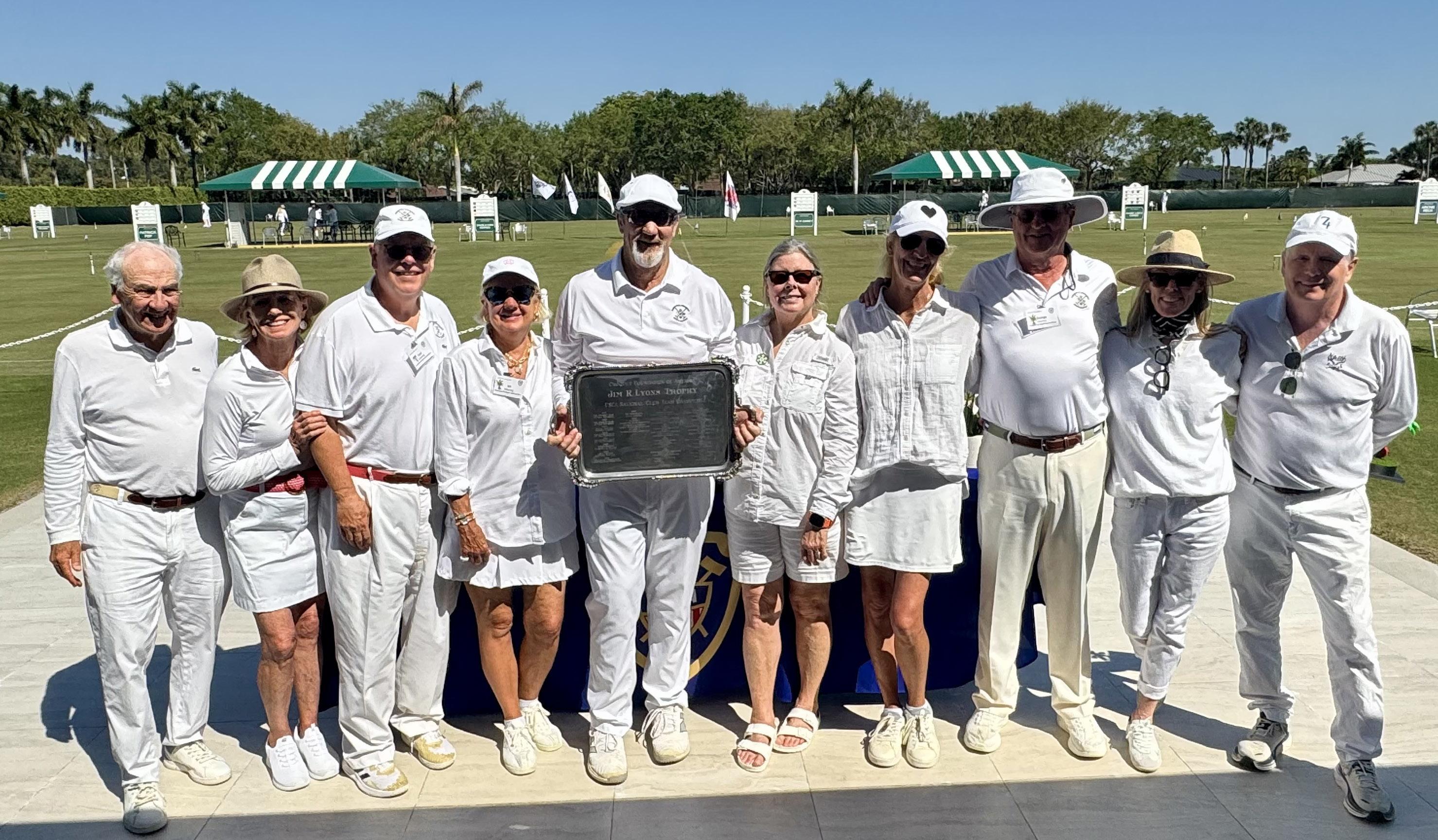
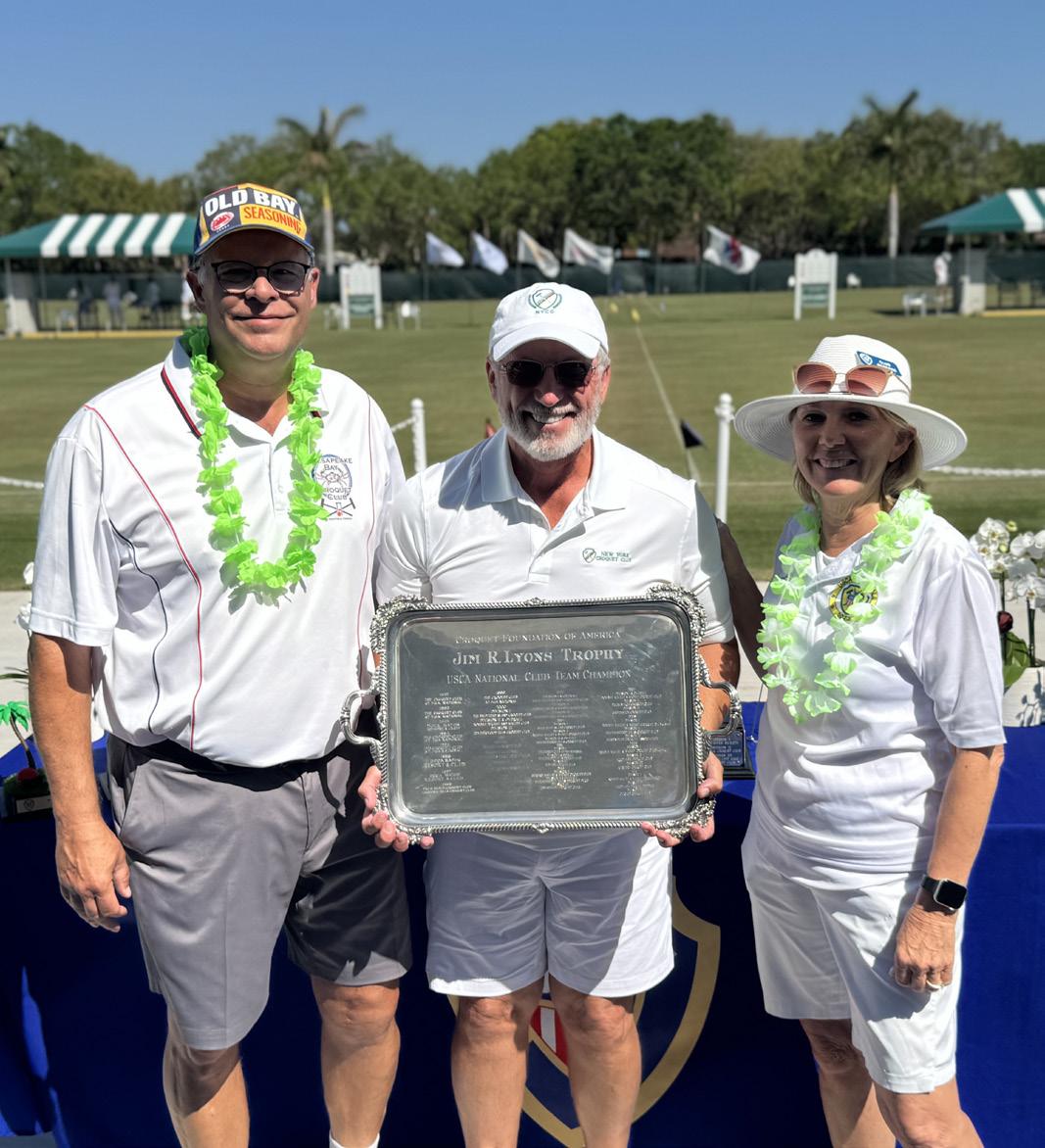
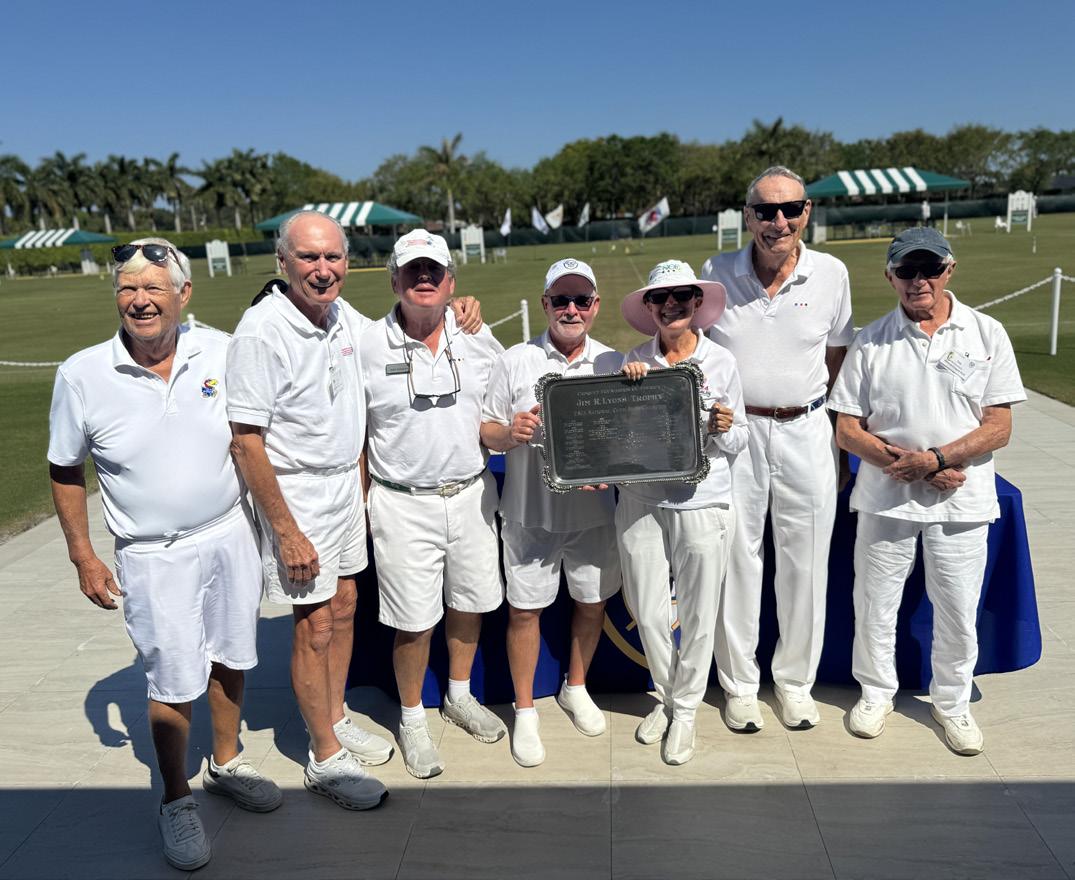
01. Randy Cardo/Bev Cardo The Beach Club
02. Robert Pulitzer/John Brown Houston Croquet Association
03. Richard Sullivan/Bob Van Tassel National Croquet Club
03. Conrad Rugart/Danny Huneycutt The Beach Club
05. Adam Lassiter/Randy Lassiter Albemarle Croquet Club
05. Rodney Lassiter/Joshua Lassiter Albemarle Croquet Club
05. Brian Hovis/Dean Rowland Derby City Croquet Club
05. Mary Rodeberg/David Ekstrom Bombay Mallet & Wicket CC
09. Thomas Cooper/Norris Settlemyre New York Croquet Club
09. Suzanne Spradling/Scott Spradling Scissortail Croquet Club
09. Kevin Hansley/Jodie Rugart The Beach Club
01. Darin Guffey/Henry Hagan St. Andrews Club from Delray Beach
02. Larry Lynch/Calvert Chaney St. Andrews Club
03. Mark Ski/Linda Trifone New York Croquet Club
03. Bob Hafner/Kevin Fasano Houston Croquet Association
05. Ronald Eccles/Patricia Spratt Bombay Mallet & Wicket CC
05. William Trower/Bill Simmons National Croquet Club
05. John Craddock Jr/Charlotte Pulitzer Houston Croquet Association
05. John Watson/George Peterkin Houston Croquet Association
09. Susan Creasey/Cecil Creasey The Springs Croquet Club
09. David Kepner/Vickie Johnston The Beach Club
01. Adam Peck/Karen Heckman Bombay Croquet Club from St Croix
02. Michael Kolowich/Bo Prillaman The Springs Croquet Club
03. Alex Galasso/Priscilla Flowers National Croquet Club
03. Jeanne Branthover/John Grabow The Beach Club
05. Dick Goldman/Jan Fisher St. Andrews Club
05. Stuart Baker/Jane Casey The Beach Club
05. Thomas Tribby/Richard Carlson The Beach Club
05. Georgia Carter/Patricia Peterkin Houston Croquet Association
01. Richard Brickley, Jr./Richard Corey The Beach Club
02. Boyd Parker/Bass Wallace Houston Croquet Association
03. Tom Lindley/Clint Fowlkes National Croquet Club
03. Mary Craddock/Jackie Wallace Houston Croquet Association
05. Leslie Heilakka/Liddy Chaney St. Andrews Club
05. Christof Weihs/Karen Weihs The Springs Croquet Club
05. Allison Worthington/Missy Chilton The Beach Club
05. Charles Duncan/Leslie Duncan Houston Croquet Association
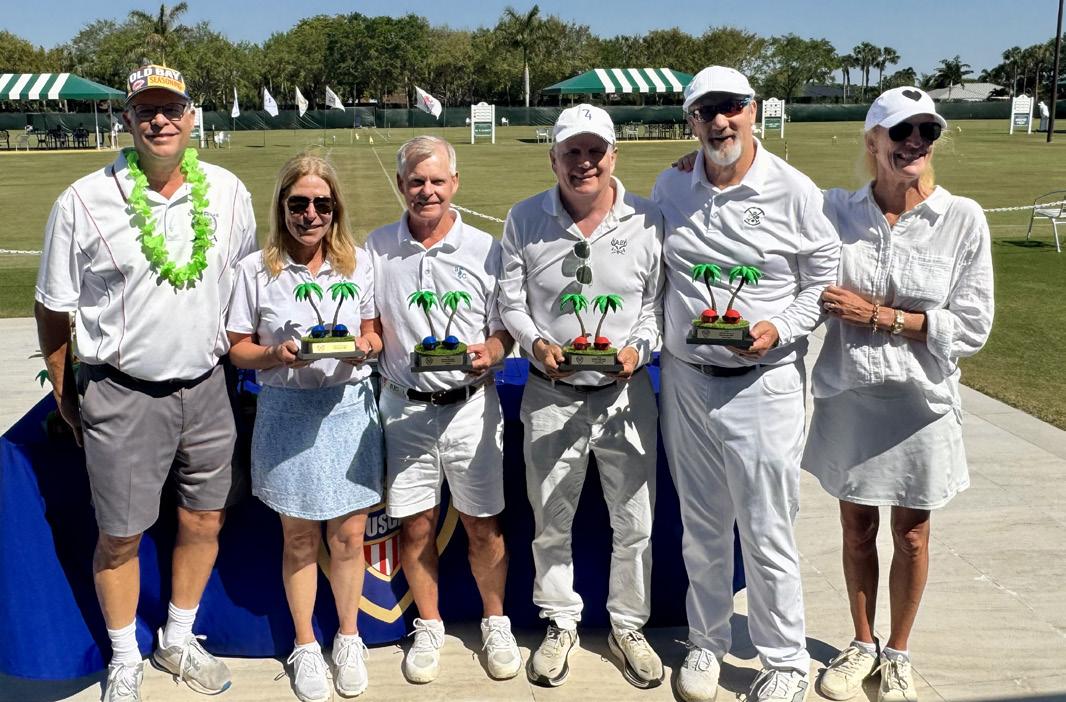
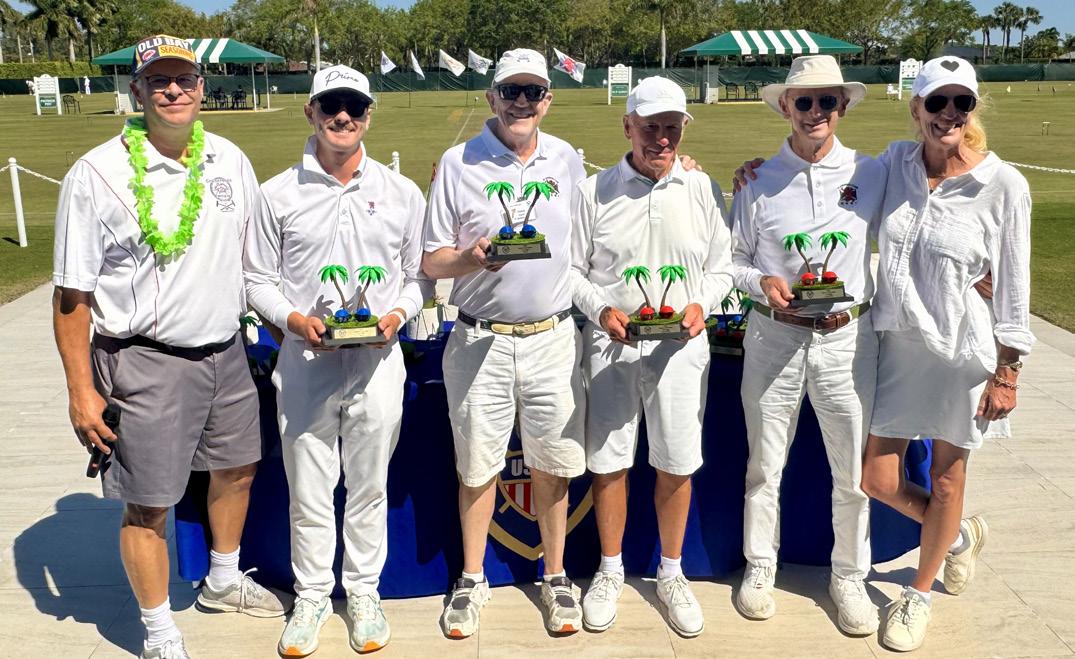
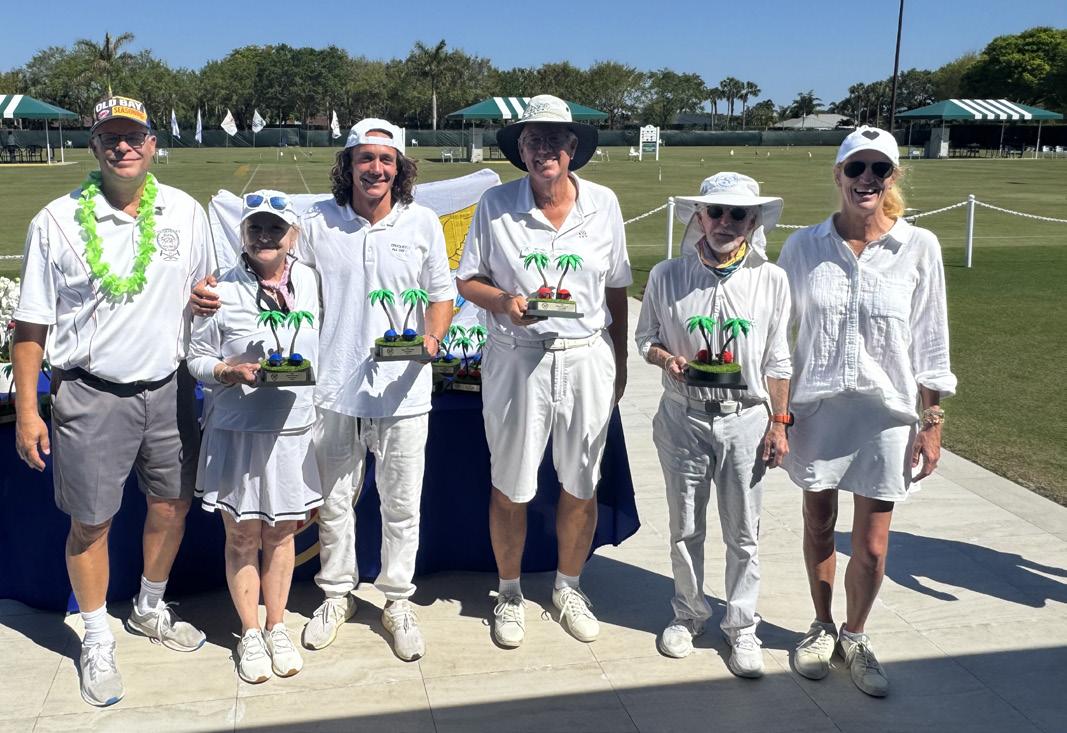
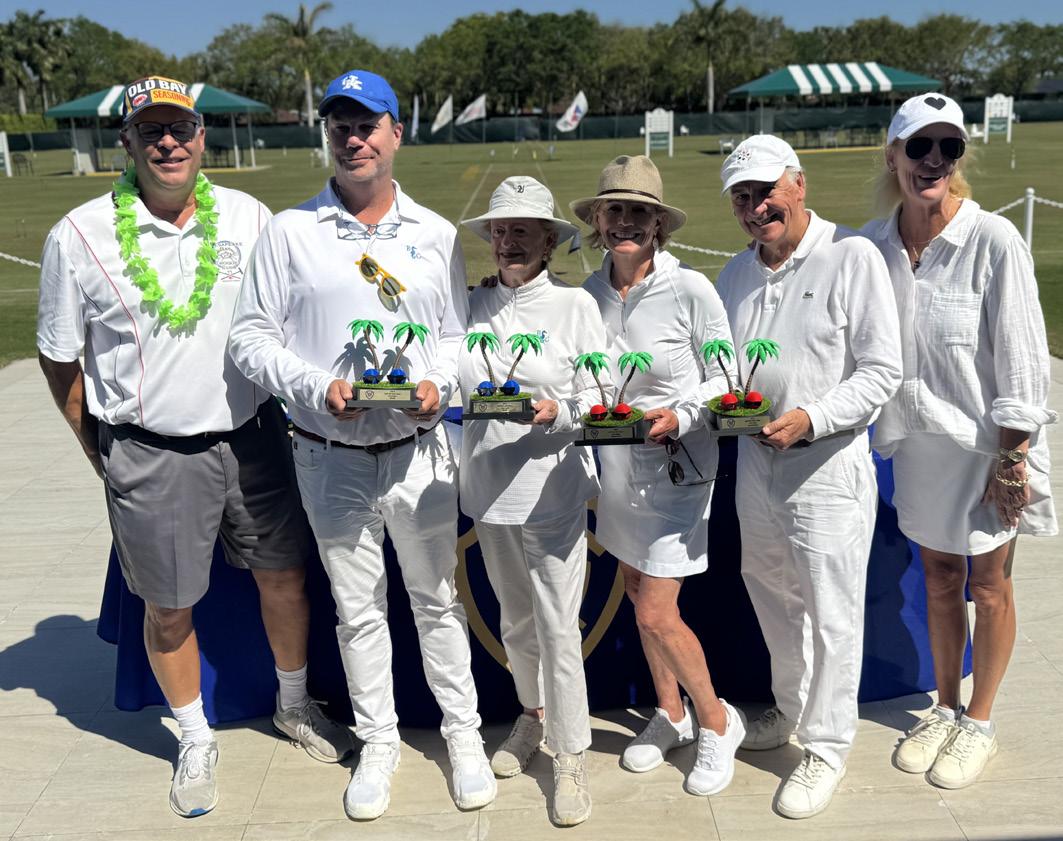
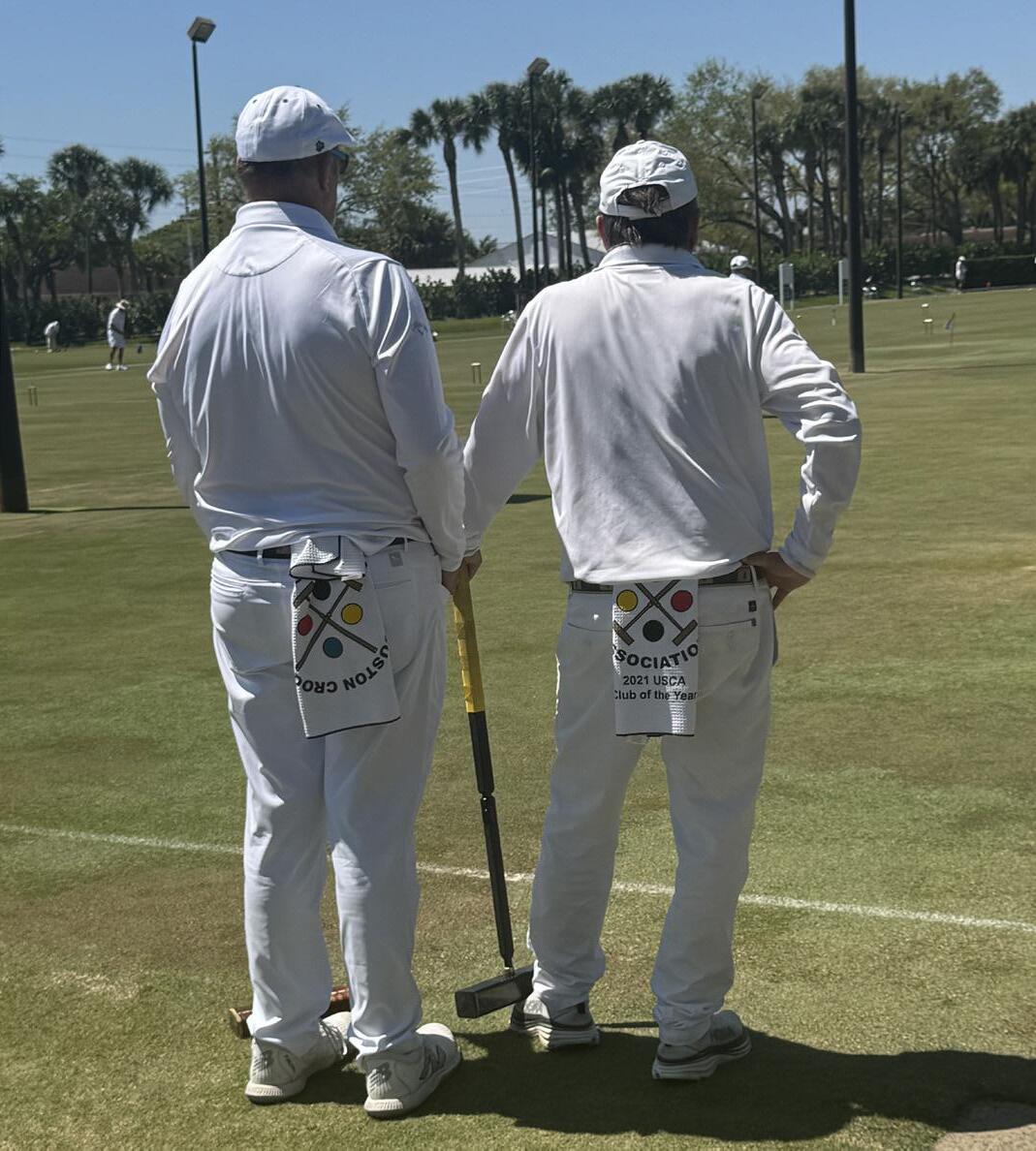
01. Carl Detering/Kit Detering Houston Croquet Association
02. Inez Cancienne/Deborah Hafner Houston Croquet Association
03. Timothy McCormick/Linda Merk National Croquet Club
03. Ralph Worthington IV/John Bannister National Croquet Club
05. David Beccia/Fei Fei Williams The Beach Club
05. Eileen Cornacchia/Jeanette Tribby The Beach Club
05. Don Chapoton/Mary Jo Chapoton Houston Croquet Association
05. Bob Palmquist/Betty Palmquist Houston Croquet Association
01. Maggie Kirkbride/Peter Ashby Howard The Beach Club
02. Rob Kerr/Mimi Kerr Houston Croquet Association
03. Jessica Beccia/Sally Ohrstrom The Beach Club
03. Joan Mauel/Lucy Chambers Houston Croquet Association
05. Norma Jean Brent/Nancy Hasson Bombay Mallet & Wicket CC
05. Sharon Sudol/Patricia Richmond Bombay Mallet & Wicket CC
05. Ellen Donnelly/Frank Donnelly Houston Croquet Association
LARGE CLUBS
01. Houston Croquet Club (30 players and 116 club points)
02. The Beach Club (26 players and 96 points)
MEDIUM CLUBS
01. National Croquet Club (12 players and 44 club points)
02. St. Andrews Croquet Club (8 players and 36 points)
03. Bombay Mallet & Wicket Croquet Club (10 players and 32 points)
04. The Springs Croquet Club (6 players and 18 points)
SMALL CLUBS
01. New York Croquet Club (4 players and 10 club points)
02. Albemarle Croquet Club (4 players and 8 points)
03. Derby City Croquet Club (2 players and 4 points)
04. Scissortail Croquet Club (2 players and 2 points)
LES KELLEY AWARD
Tish Peterkin
CARLA RUECK GOLDEN HAMMER AWARD
Ron Eccles
BEST TEAM UNIFORM
Bombay Mallet & Wicket Club
BEST TEAM FLAG
Scissortail Croquet Club
2026 USCA Florida Golf Croquet Regional Championship West Palm Beach, Florida | March 5-8, 2026
BY ELAINE SMITH
The 2026 USCA Florida GC Regional was held at the National Croquet Center in West Palm Beach, Fla., March 5-8. The field consisted of 30 singles players and 32 doubles players, in two flights each. The average DGrade in Championship Flight was 1920, and First Flight was 1612. With priority given to players of the Florida Region, the field also included players from North Carolina, South Carolina and Canada.
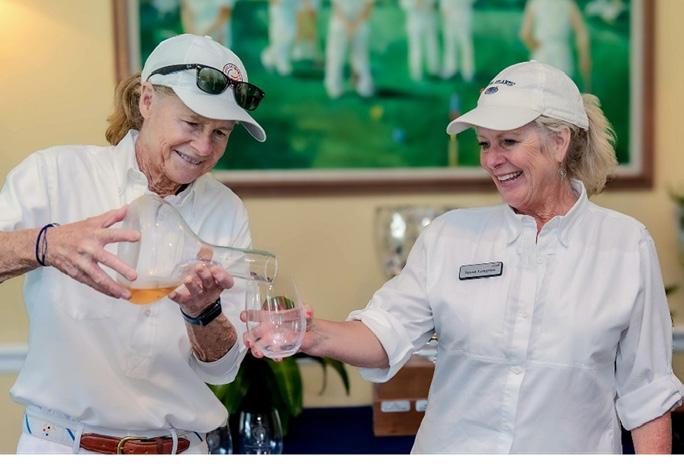
We started each day with a doubles match, providing players with the opportunity to warm up before the singles games began. The Doubles finals opened Sunday play, with the team of Curtis Drake/Brian Cumming defeating Bruce Hindin/David McCoy to win Championship doubles. Luke Sand/Rick Brown won First Flight doubles, defeating Jeff Morrison/Rick Hayes. Hindin won the Championship Singles, defeating finalist Matt Griffith in two games. Griffith fought hard right to the end, pushing the second game to the hook. Jodie Rugart won the Championship Plate, defeating Curtis Drake. Kim Jones won First Flight singles, defeating finalist Susan Langston. Langston was undefeated through the entire tournament, right up to the finals game. Pat Spratt defeated Luke Sand for the First Flight Plate.
Bruce Hindin, Matt Griffith, Kendall Hendrick and Adam Peck in Championship Flight and Kim Jones, Susan Langdon, Rick Hayes and John Strasser in First Flight all earned prequalification status to the upcoming GC Nationals in September
Regional Vice President Alex Galasso presided over the games as Tournament Manager, with Elaine and Rocky Smith as Tournament Directors. Priscilla Flowers served as head referee. Continental breakfast and buffet lunches were provided each day by the always great SandyJames, with the Sunday buffet of fried chicken and all the fixings being the special favorite.
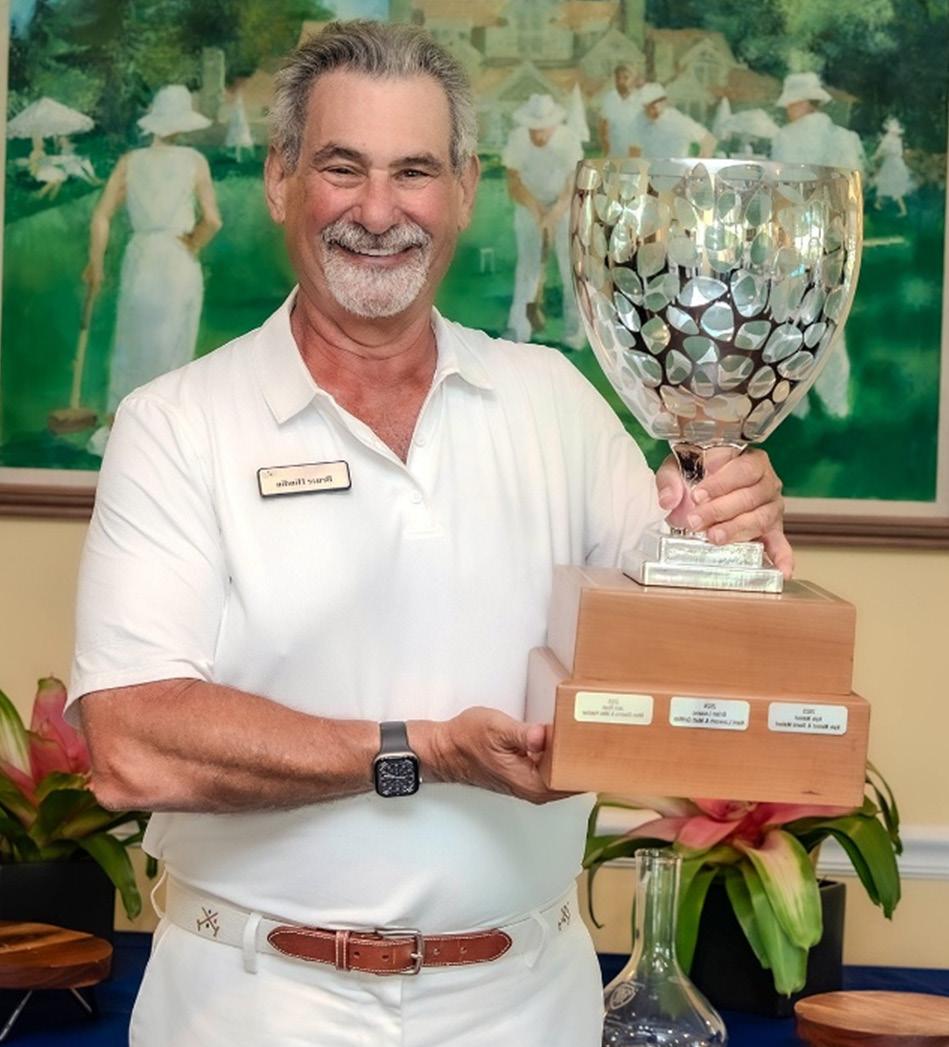
01. Bruce Hindin
02. Matt Griffith
03. Kendall Hendrick
03. Adam Peck
05. Bill Simmons
05. Billie Ray
05. Mike Hoggatt
05. Brian Cumming
09. Jodie Rugart
10. Curtis Drake
11. Alex Galasso
12. Rick Brown
12. Cami Russack
14. Billy Harper
15. David Ekstrom
16. Mike Carroll
01. Kim Jones
02. Susan Langston
03. Rick Hayes
03. John Strasser
05. Jason Collins
05. Jay Carey
05. Jeff Morrison
05. Caryl Firth
09. Pat Spratt
10. Violet Frizzell
10. Laura Hendrick
10. Luke Sand
13. Gay Cinque
13. Dale Fenwick
01. Curtis Drake/Brian Cumming
02. Bruce Hindin/David McCoy
03. Adam Peck/Lucia Morlaes-Halaby
03. Kendall Hendrick/Mike Hoggatt
05. Conrad Rugart/Cami Russack
05. David Ekstrom/Alex Galasso
05. Billy Harper/Bill Simmons
08. Matt Griffith/Billie Ray
01. Rick Brown/Luke Sand
02. Jeff Morrison/Rick Hayes
03. Kim Jones/Jay Carey
03. Mike Carroll/Dale Fenwick
05. Susan Langston/Violet Frizzell
05. Caryl Firth/Bill Trower
07. SuSu Day/Frank Ferro
07. Pat Spratt/Jason Collins
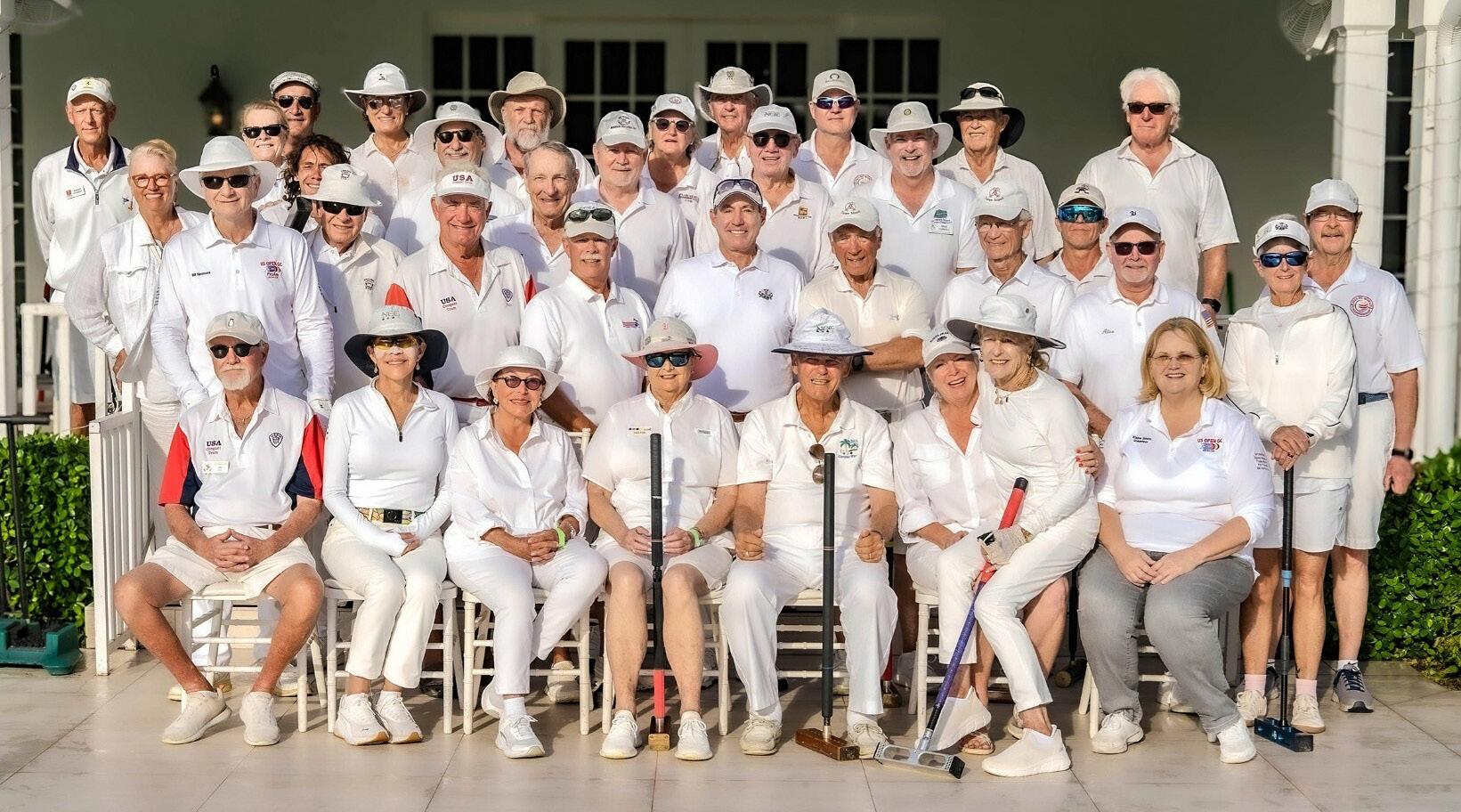
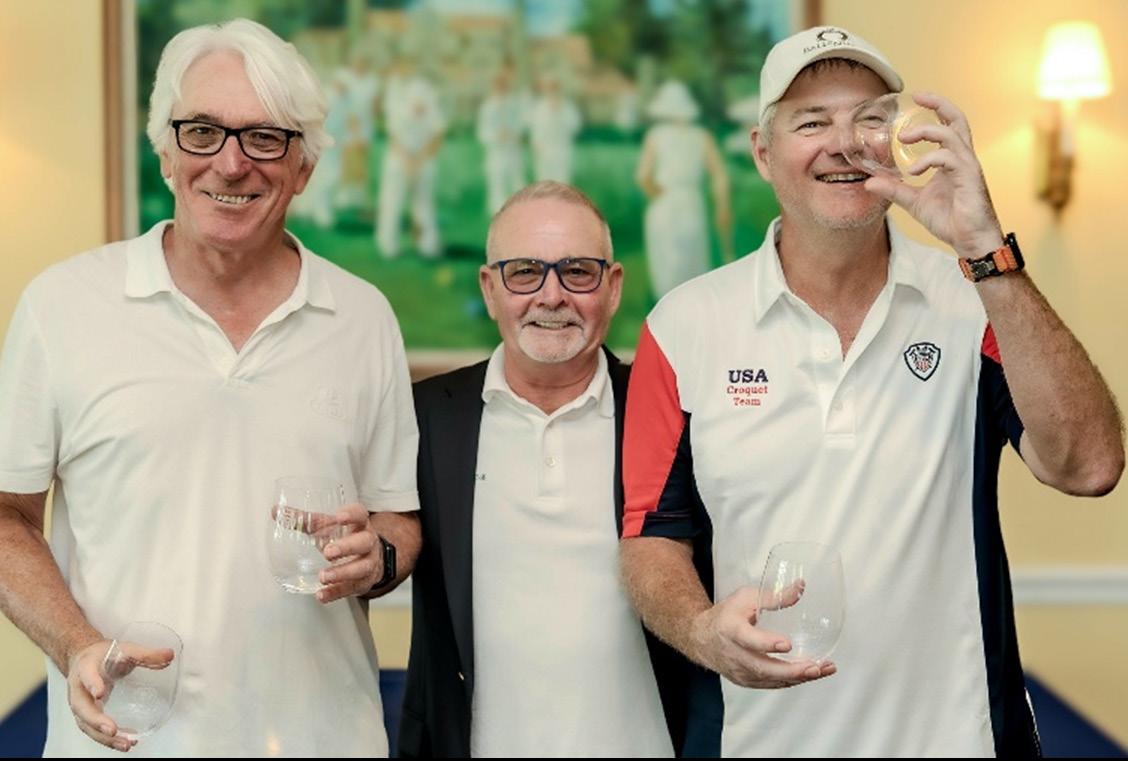
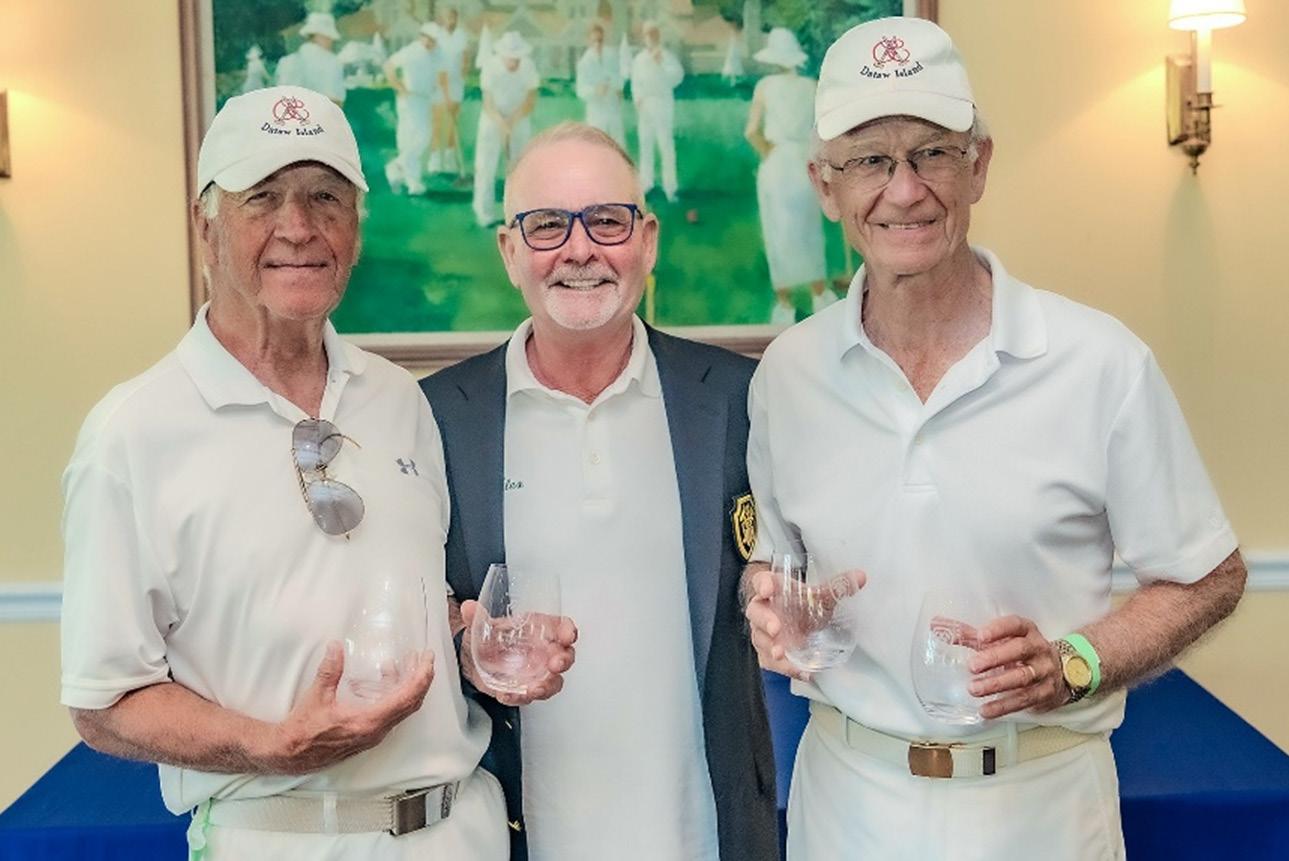
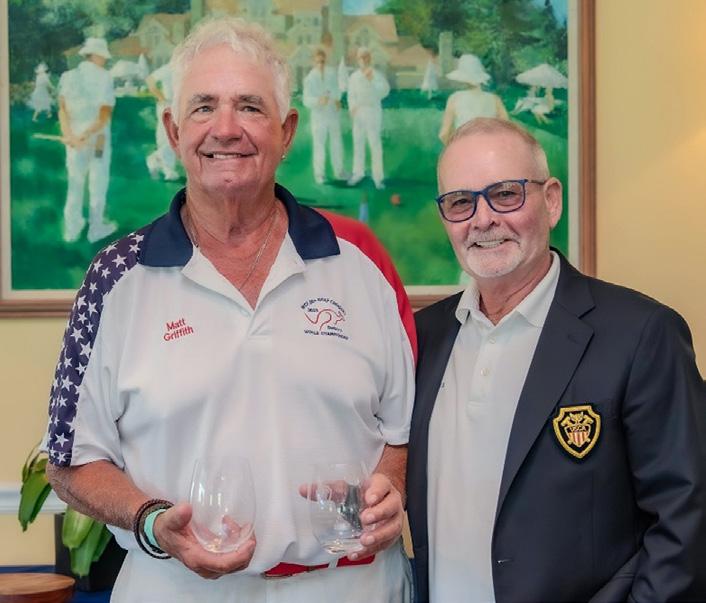
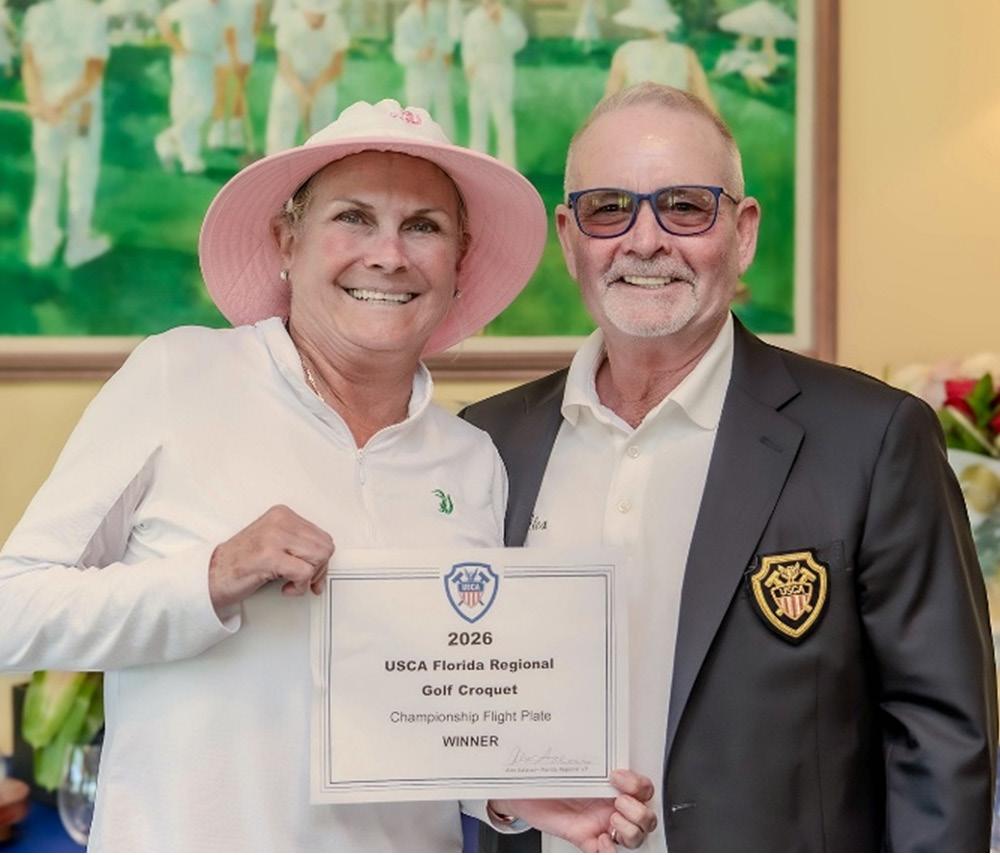
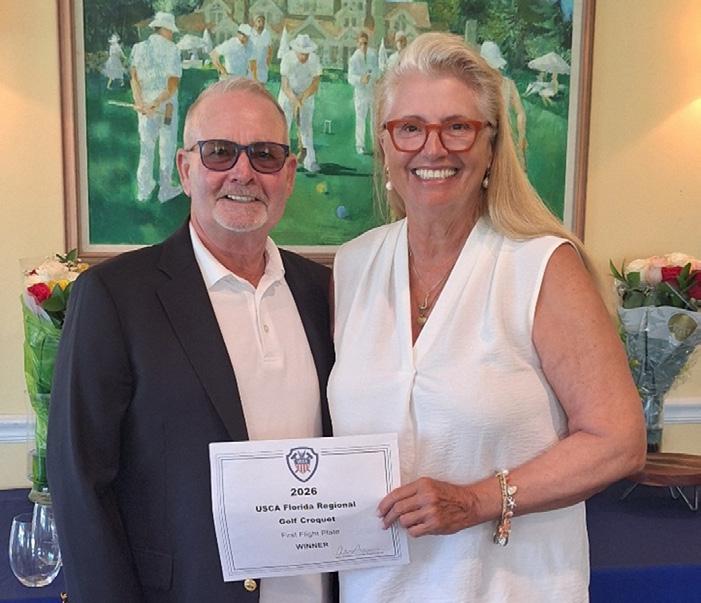
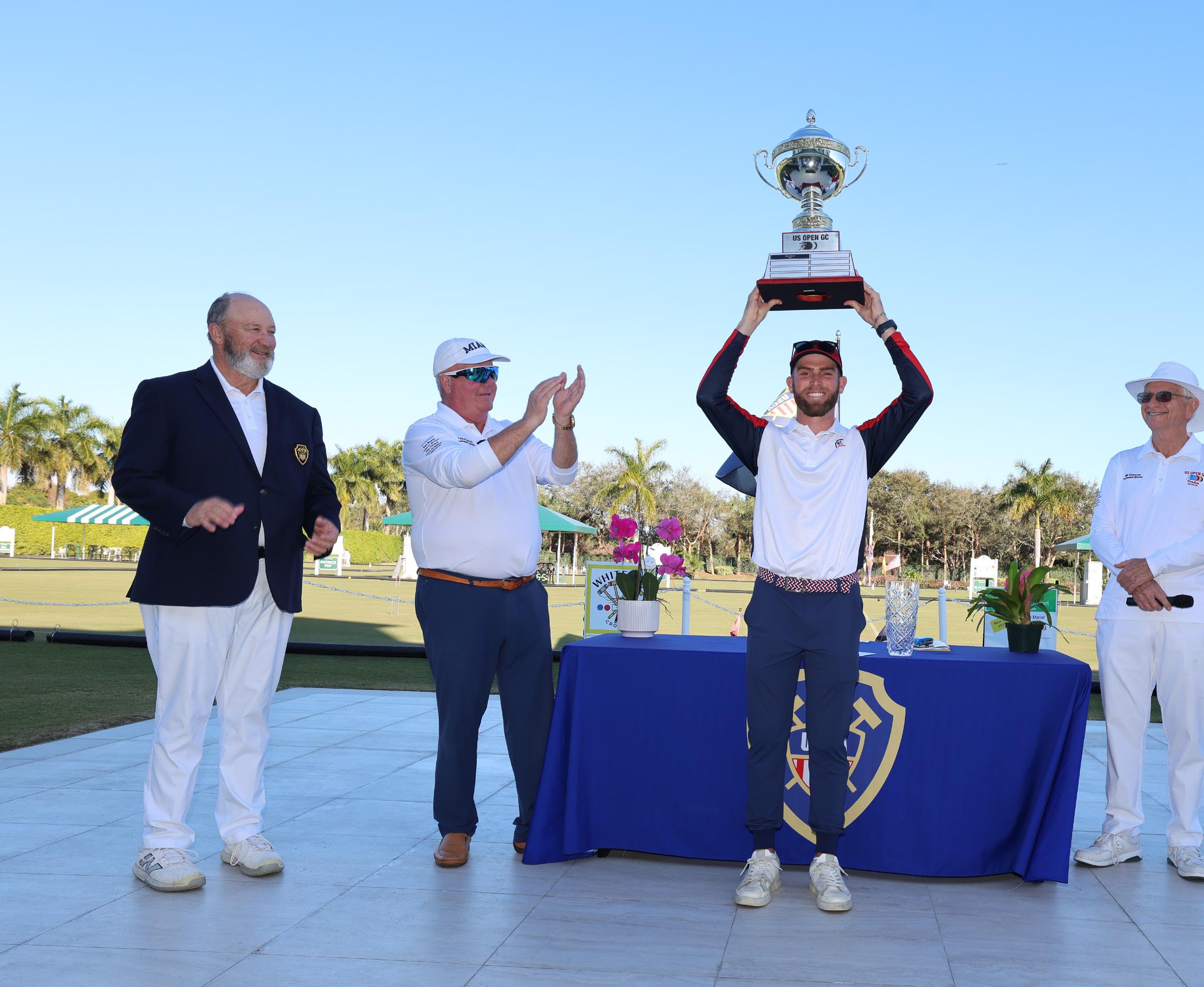
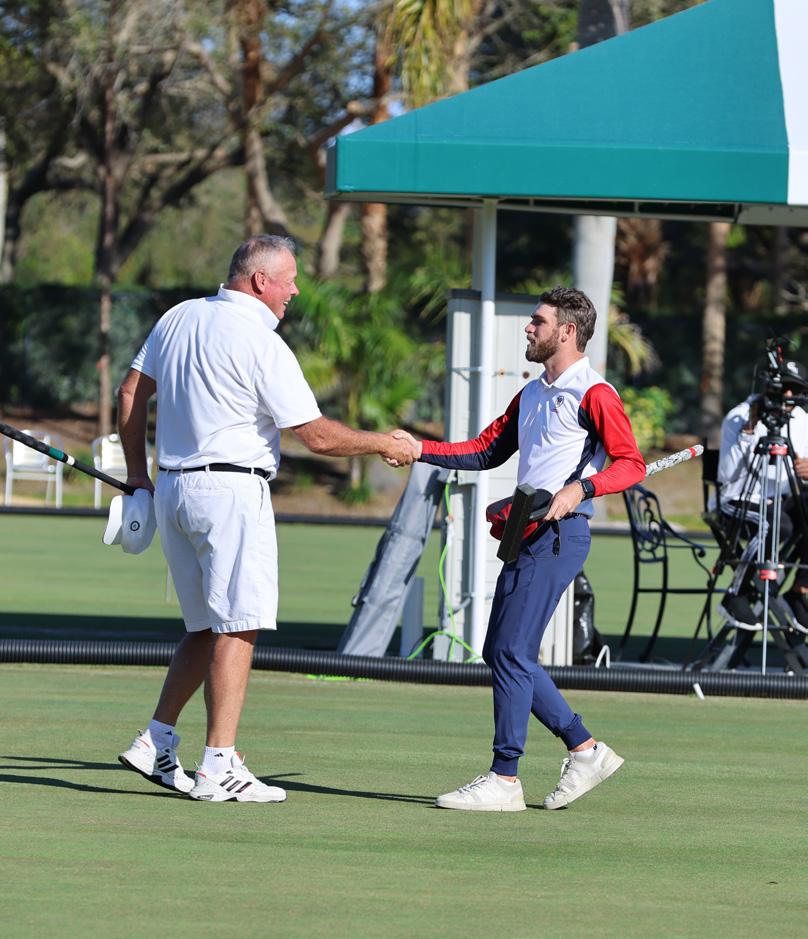
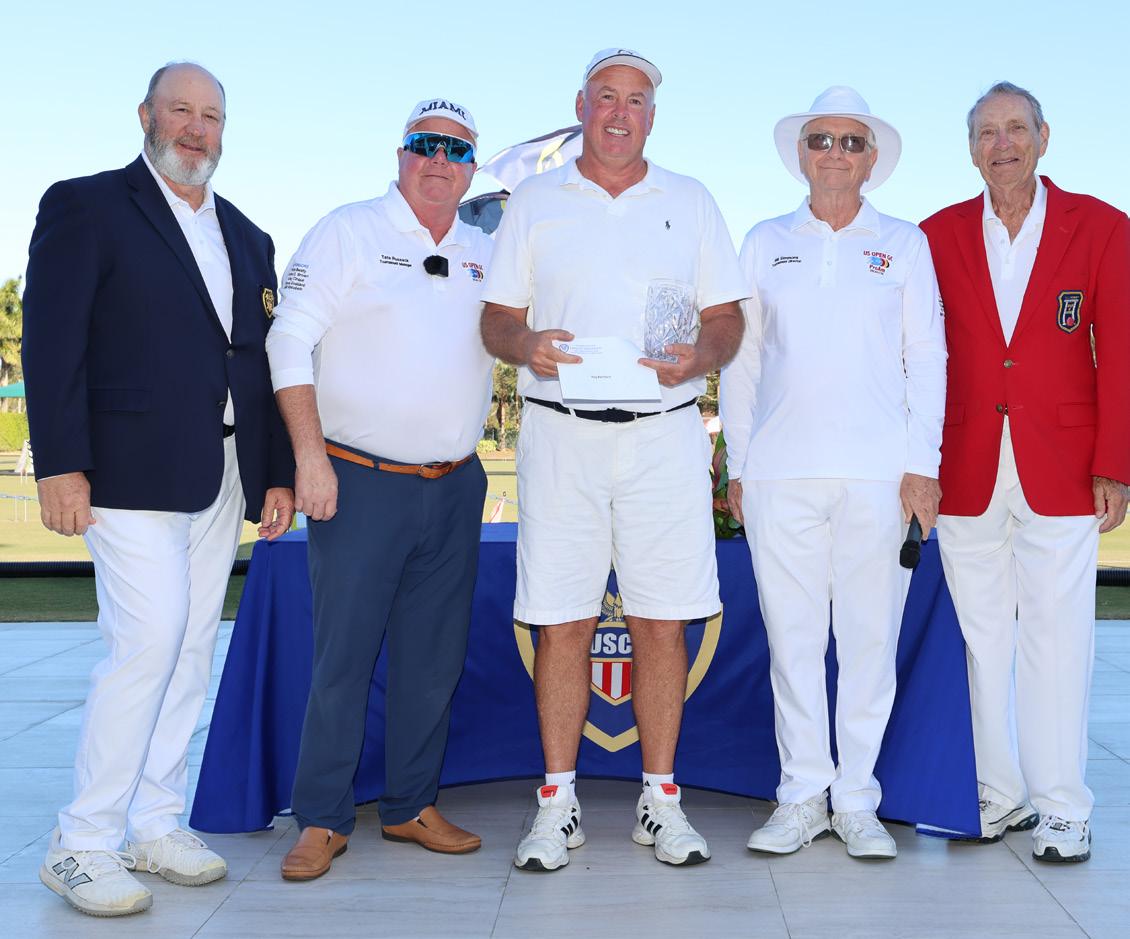
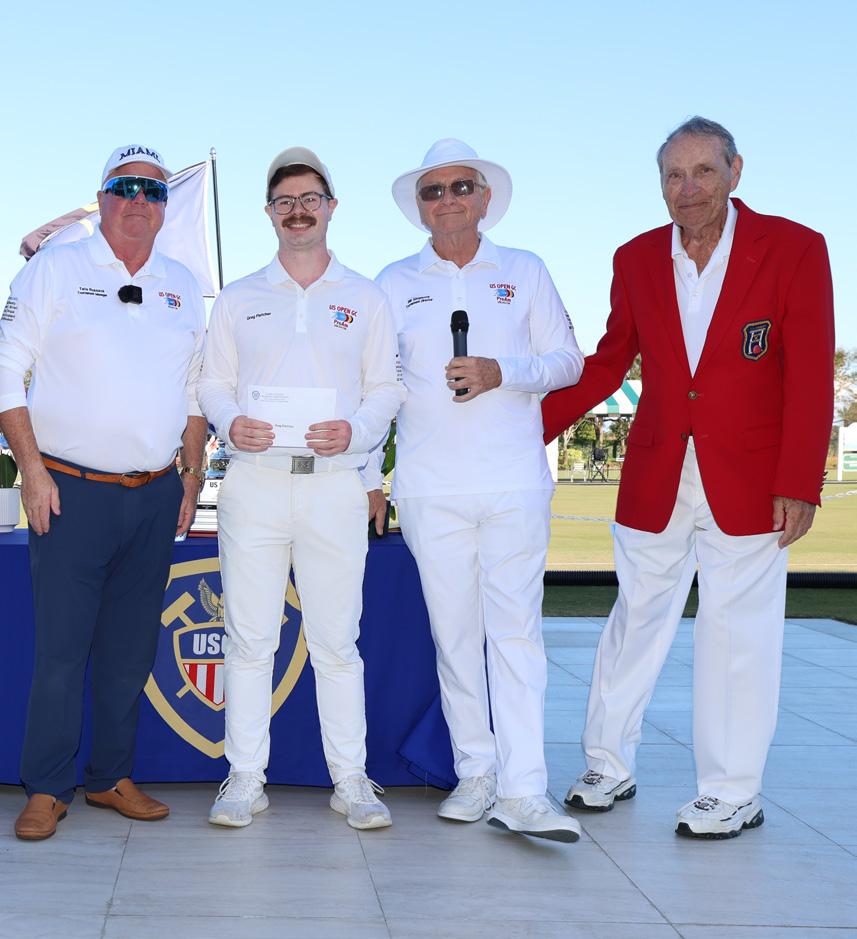
U.S. OPEN GC REACHES NEW HEIGHTS IN 2026 ELITE
INTERNATIONAL FIELD AND DRAMATIC KNOCKOUT ROUNDS CEMENT THE EVENT’S RISE AMONG THE SPORT’S PREMIER TOURNAMENTS.
BY BILL SIMMONS
The 2026 U.S. Open GC delivered exactly what the sport demands at its highest level — precision, nerve and moments of pure drama. When it was over, Matthew Essick stood alone at the top, completing a relentless campaign to claim the title.
After falling in the 2025 U.S. Open GC semifinal to Malcolm Fletcher, Essick surged back in 2026 with purpose. In the final, he faced fellow world champion Reg Bamford, one of the most formidable competitors in the game. What followed was a battle of control and composure. Essick struck first and never truly let go, securing the championship three games to one in a best-of-five clash.
This was no ordinary field. With an average DGrade of 2351, the 2026 U.S. Open GC ranked among the most competitive tournaments of the past year, second only to the Egyptian Open at DGrade 2414. The 2024 World GC Championship averaged 2468. The message was clear: this event is rapidly becoming one of the sport’s defining stages.
Bill Simmons, Founder and U.S. Open GC Committee Chairman, says, “The mission of the U.S. Open GC is to create the premier Golf Croquet tournament in the world. Building on last year’s success, the 2026 Open is a step closer to achieving that goal.”
PHOTOS
The event was live-streamed to audiences around the world, showcasing top-tier talent. The player guide and match coverage are available at www.usopengc.com.
Nine nations converged, their flags lining the lawns: Australia, Canada, England, Egypt, Mexico, New Zealand, Spain, South Africa and the United States. Among the field stood four former World Champions: Ahmed Elmahdy, Matthew Essick, Reg Bamford and Salah Hassan. The top player from five nations and the first and 13th ranked women in the world joined the field. The United States brought the largest contingent (13), closely followed by Egypt (10), setting the stage for an international showdown.
From the opening day of block play on February 10, the intensity was unmistakable. Every hoop mattered. Every miss carried consequences. Only one player emerged unscathed.
Rising Egyptian star Fawzy Helmy tore through the field undefeated, even taking down Reg Bamford — a result that sent a clear signal to the rest of the draw. Close behind, a pack of contenders — Essick, Fordyce, Bamford, Watson, Balding and Fahmy — each dropped just a single match, positioning themselves for the knockout rounds.
TOP: Matthew Essick raises the US Open GC Trophy. Event organizers left to right: John Brown, Tate Russick, Bill Simmons and David McCoy. LEFT: Runner-up Reg Bamford congratulates Essick. CENTER: Bamford received his runner-up award. RIGHT: Greg Fletcher claimed third place.
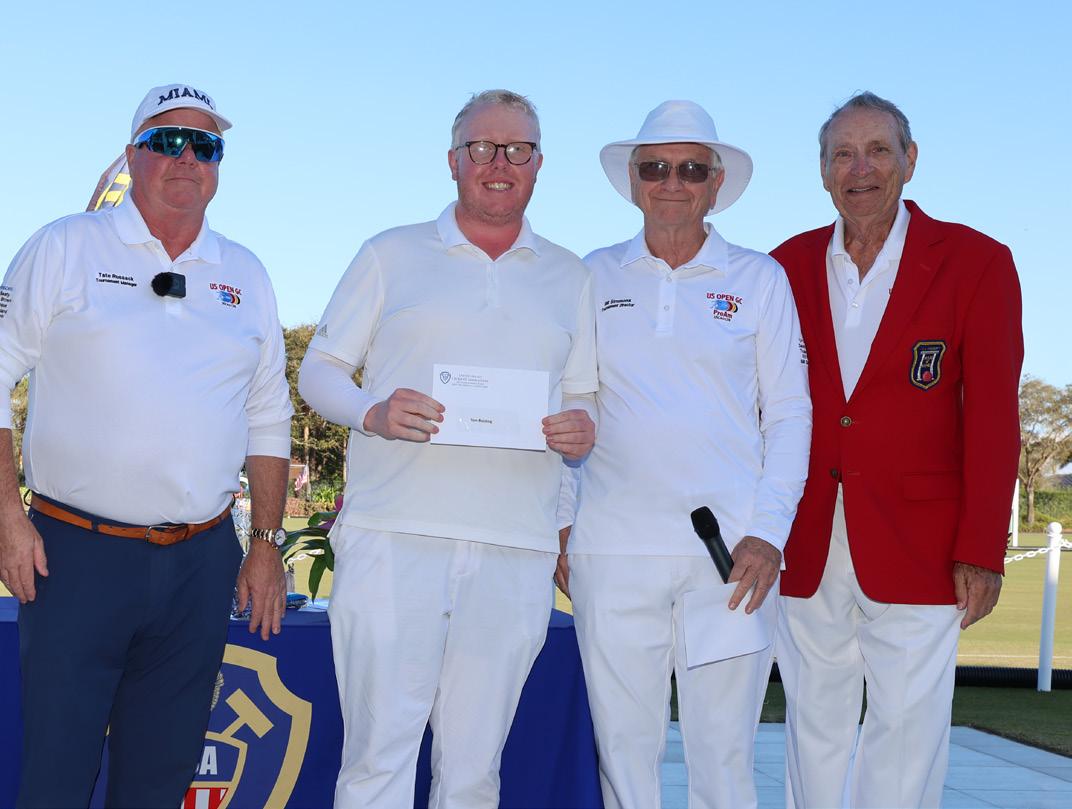
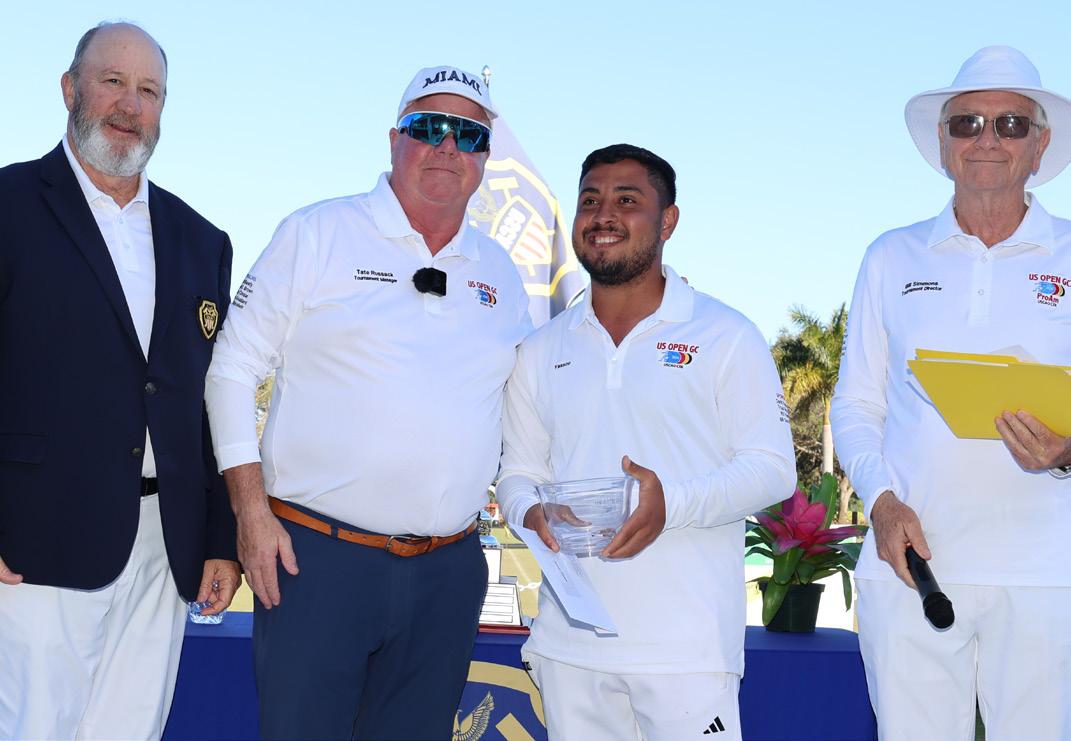
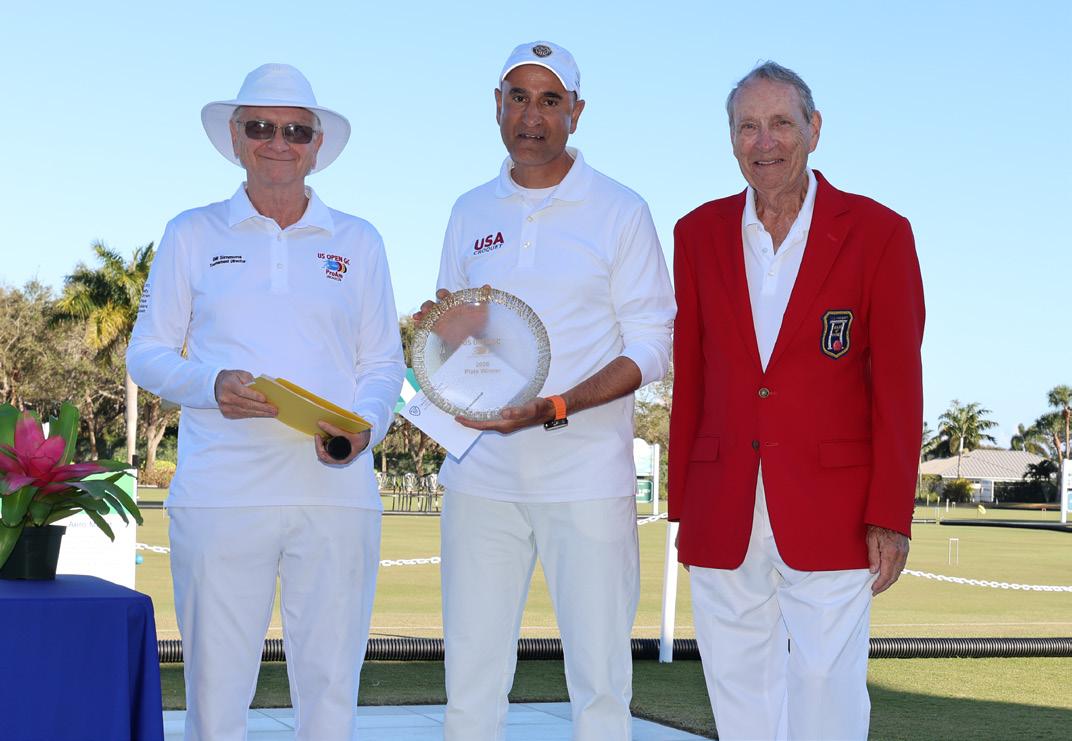
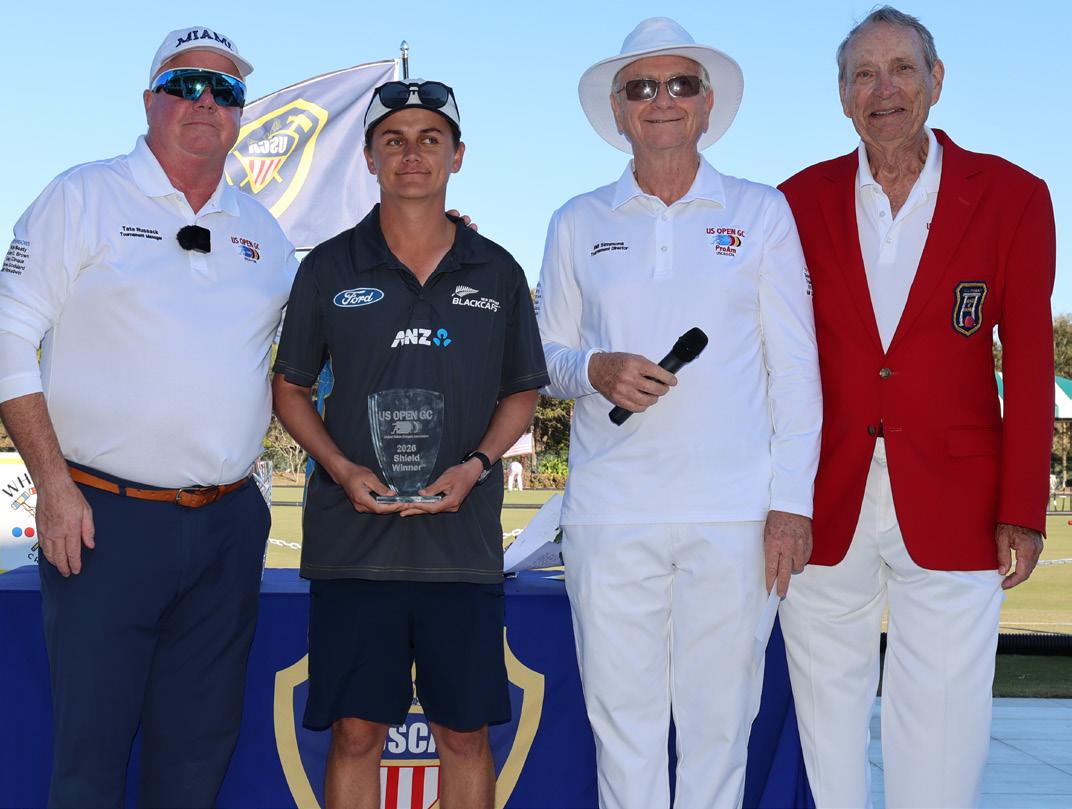
But not all stories were about advancement. Darin Guffey’s campaign ended in heartbreak, just one hoop short. In a decisive match against Zack Watson, a single moment — a fortunate, almost improbable shot — shifted everything. In a field this strong, margins were razor-thin.
When the Championship Playoffs began, the tension sharpened. Six of 13 Americans advanced, along with five of the 10 Egyptians. Allies became opponents. Countrymen faced off with no room for sentiment. Zack Watson eliminated Kyle Maloof. Moe Karem advanced past Soha Moustafa. Promising runs ended abruptly, including Stephen Morgan’s loss to Edmund Fordyce.
Then came the first shock. Tamer Hatata stunned the tournament by defeating the previously unbeaten Fawzy Helmy, abruptly ending the young star’s dominant run and proving that no lead, no record, was safe.
The quarterfinals pushed players to the edge. Hatata nearly delivered another upset, forcing Greg Fletcher to a deciding third game before falling by a single point on the final hoop. Zack Watson did the same against Essick. Again, one hoop separated victory from defeat.
The semifinals brought the tournament’s most unforgettable moment. Essick advanced with authority, dispatching Tom Balding in straight games. But on the other side, Reg Bamford and Greg Fletcher produced a match that defined the event. Five games. No separation.
In the deciding game, Fletcher controlled the match, leading all the way to Hoop 12. Victory was within reach. Even Bamford, one of the sport’s great champions, removed his hat, ready to concede. Then everything changed. Fletcher missed. In that instant, the momentum flipped. Bamford seized the opening, took the final hoop and with it, the match. What had seemed certain dissolved into disbelief.
Yet even in defeat, Fletcher’s resolve was unshaken. Smiling, he told Bill Simmons, “I am coming back next year, and I am going to win this.”
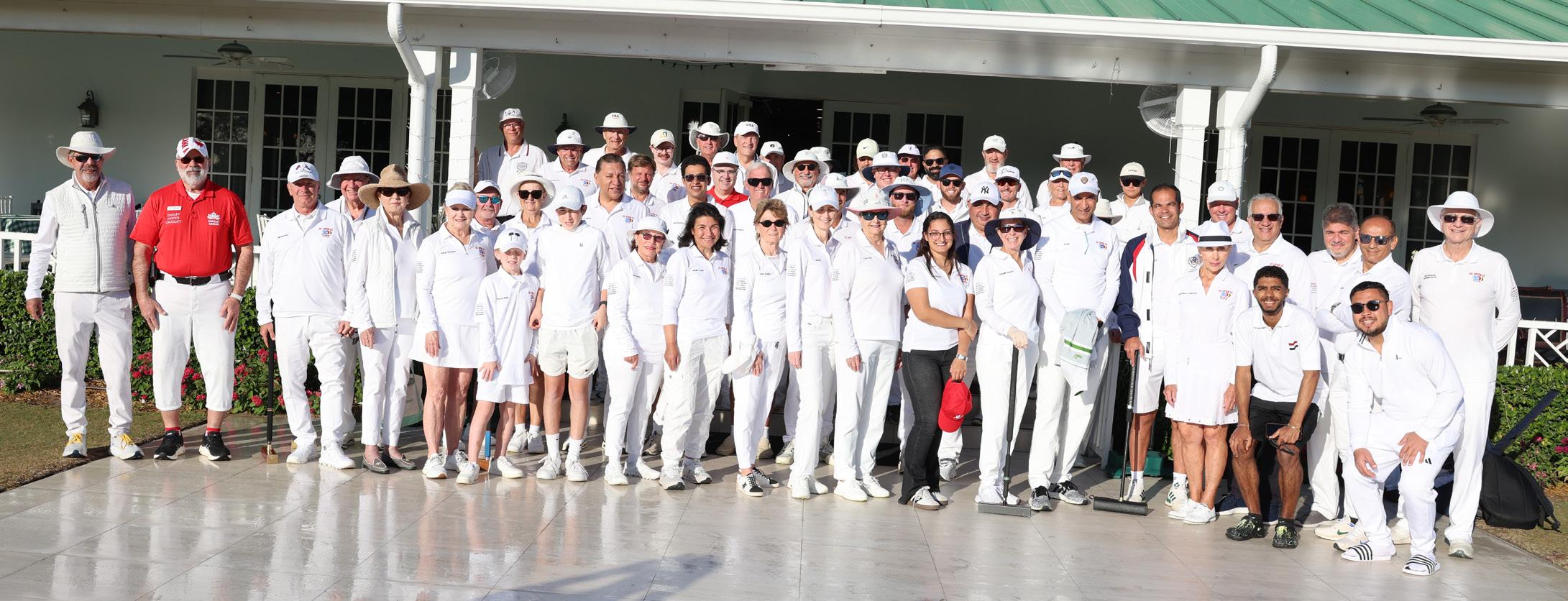
The championship match was a clash of generations and legacies. Matthew Essick, the 2022 World Champion and ranked 2nd in the world, versus Reg Bamford, a twotime (2013, 2017) World Champion, ranked third and one of the game’s enduring forces.
From the outset, Essick imposed his rhythm. He took the first two games 7–4, 7–4, applying steady pressure. Bamford answered in game three, narrowing the gap with a 7–5 win. But the fourth game carried the weight of the tournament. For Bamford, it was survival. For Essick, it was the finish line. They traded control, point by point, until Essick pulled ahead. With a final 7–5 victory, he closed the door and claimed the title. Matthew Essick became the 2026 U.S. Open GC Champion.
Even beyond the final, the competition never eased. In the Shield (losers of the quarterfinal), Edmund Fordyce outlasted Moe Karem. In the Bowl (first round playoff losers), Yasser Sayed defeated Brian Lozano.
And in the Plate (the bottom 16 players from block play), where pride and resilience define the battle, Ahab Abdelwahab emerged victorious. After navigating a field packed with talent, he defeated Darin Guffey in the plate final to claim the title.
Across every round, the 2026 U.S. Open GC proved something unmistakable: At this level, nothing is guaranteed. Not leads. Not reputations. Not even the final shot. Only those who hold their nerve to the very last hoop endure.
Guffey USA
Elmahdy Egypt
A UNIQUE FORMAT PAIRS AMATEURS WITH THE WORLD’S BEST, CREATING COMPETITION, CAMARADERIE AND UNFORGETTABLE MOMENTS.
BY BILL SIMMONS
The second annual ProAm is now in the books. John O. Brown and Tom Balding defeated Mark Ski and Matthew Essick in the final, 7-3. Twenty-four USCA members paired with the top players in the world for an exciting one-day doubles tournament that delivered both high-level competition and unforgettable experiences.
Have you ever wondered what it’s like to play in a world-class tournament? To compete alongside a world champion? To learn directly from the best players in the world? What are these elite players really like? The ProAm offers exactly that — a rare opportunity to meet, play with and be coached by them, all while competing on an international stage.
The event was live-streamed to audiences around the world, showcasing not just top-tier play but also the unique spirit of croquet. A spirit that brings together players of all ages and skill levels. You can find the player guide and match coverage at www.usopengc.com.
The first live-streamed match perfectly captured that spirit. Ten-yearold Trevor Head and Jana Elsaeed faced off against 86-year-old Kit Pannill and world number one Soha Moustafa.
Head began playing at age six and entered last year’s ProAm as his first-ever tournament. Pannill, on the other hand, only took up the sport at age 84. Meanwhile, Moustafa and Elsaeed, ranked first and 13th women in the world, respectively, represent the highest level of the game.
The match was a blend of emerging talent and elite execution. Early on, Head placed his ball in the jaws, only to have it cleared by Moustafa from the sideline. Elsaeed responded with a well-executed setup, capitalizing after a missed clear to score and advance down to Hoop 2, which she then scored.
At hoop three, Elsaeed again applied pressure with a jaws shot, and was promoted by a missed jump shot by Moustafa. Head contributed several strong plays, including an impressive eight-foot angled shot into the jaws at Hoop 5, highlighting just how much his game has developed.
As conditions changed and the grass dried, shots started going long at six. Head continued to position himself effectively right in front of six. An attempt to clear Head by Pannill put his ball in the jaws, which was then scored.
Ultimately, Elsaeed secured the final hoop for a 7-0 victory. The result, however, tells only part of the story. In 2025, Head scored just one hoop and lost all his matches. One year later, he and Elsaeed won 40 percent of their games, finishing 19th — a remarkable improvement.
Head proved you’re never too young to compete, while Pannill showed you’re never too old to begin. Together, they exemplify one of croquet’s greatest strengths: accessibility. It’s a sport where generations meet, where men and women compete equally, and where improvement comes with practice and experience.
The ProAm followed a Swiss format with five rounds, ensuring every team competed throughout the day. Winners faced winners, and teams were progressively matched based on performance, leading to a final between the top two teams. The competition was fierce. After five rounds, no team remained undefeated, and five teams finished with four wins. Final standings were determined first by total wins, then by net wickets, the cumulative margin of victory minus losses.
Two teams emerged tied at +10 net wickets: John O. Brown and Tom Balding, and Mark Ski and Matthew Essick. To break the deadlock, they agreed to a playoff match at the bar to determine a true champion.
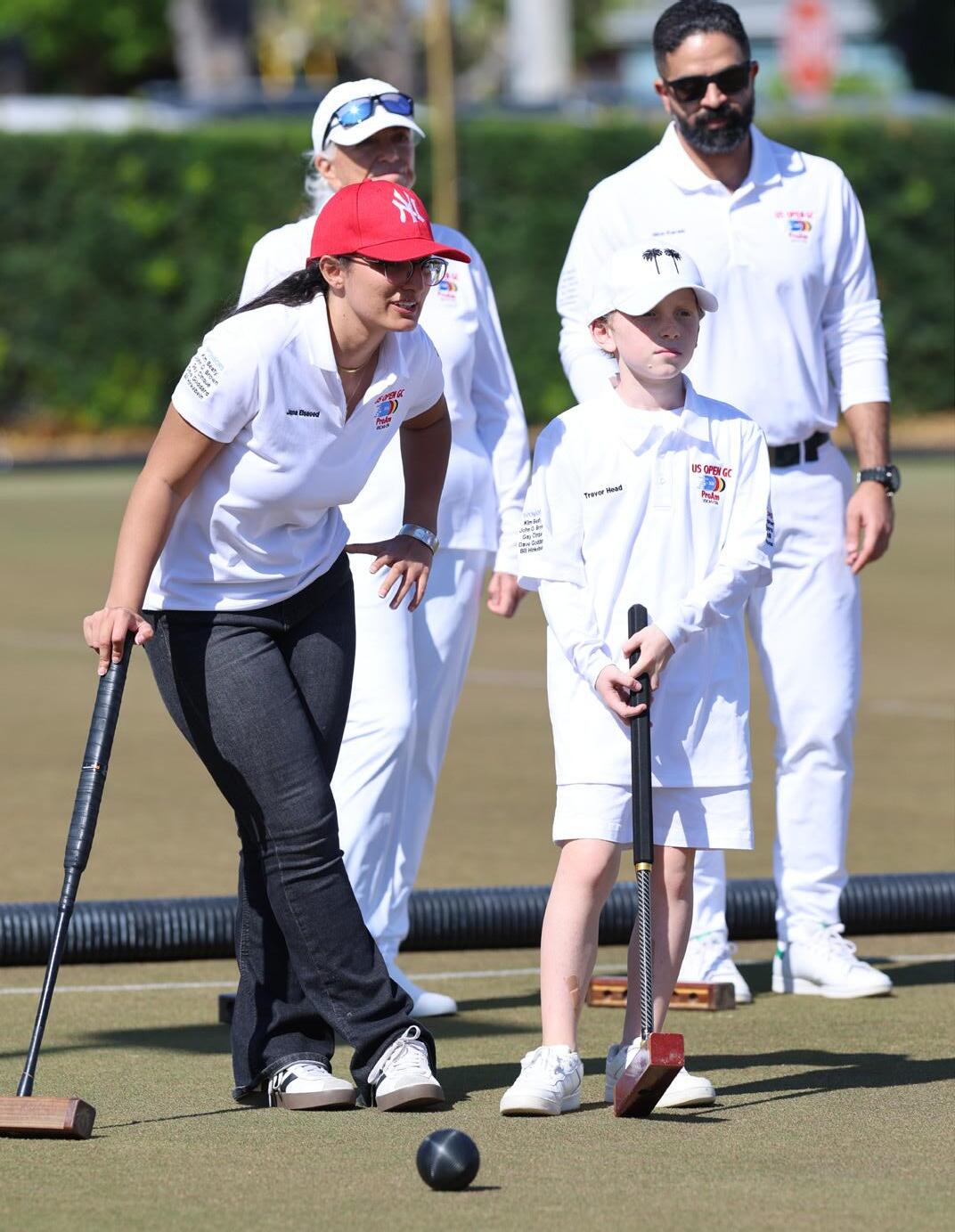
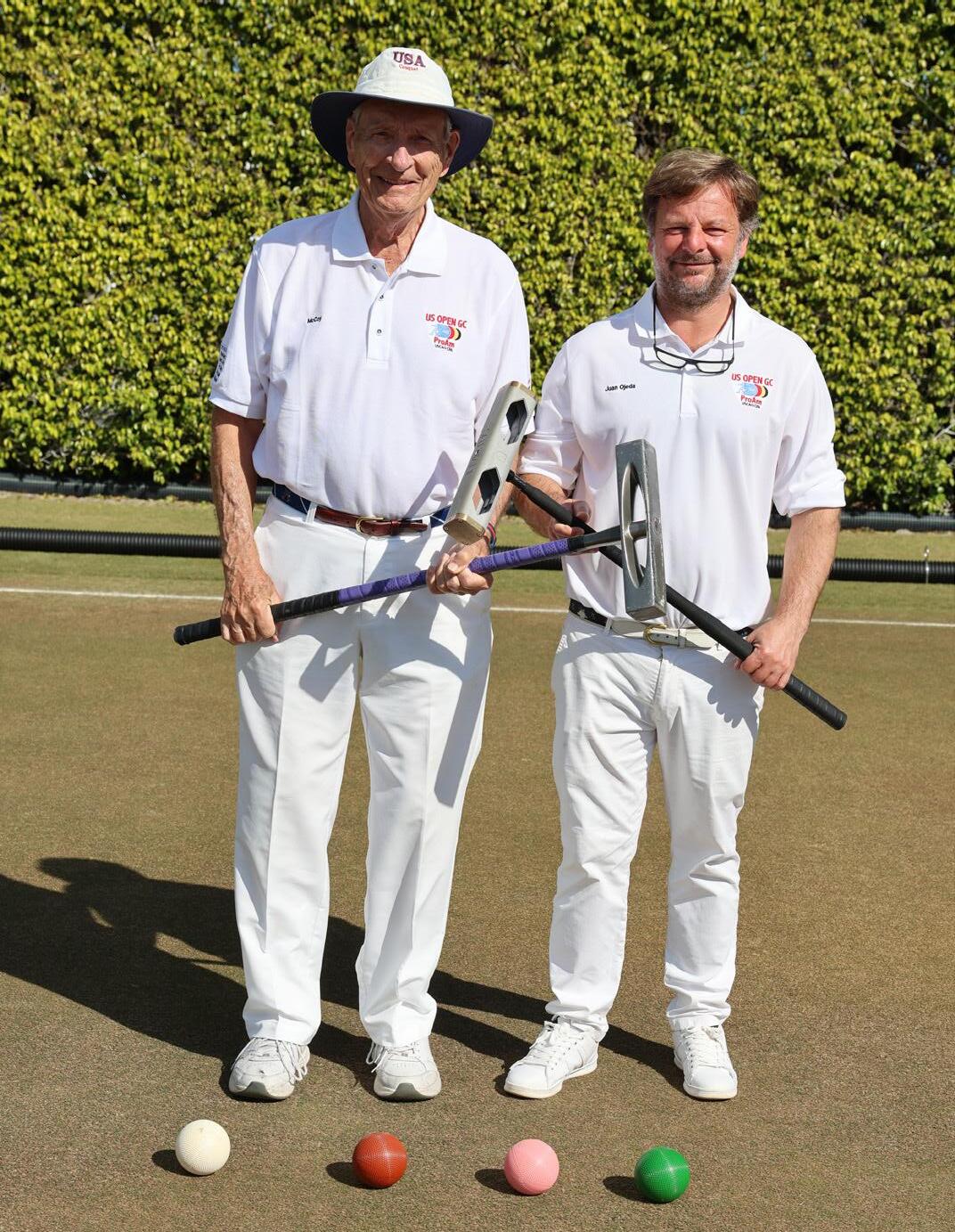
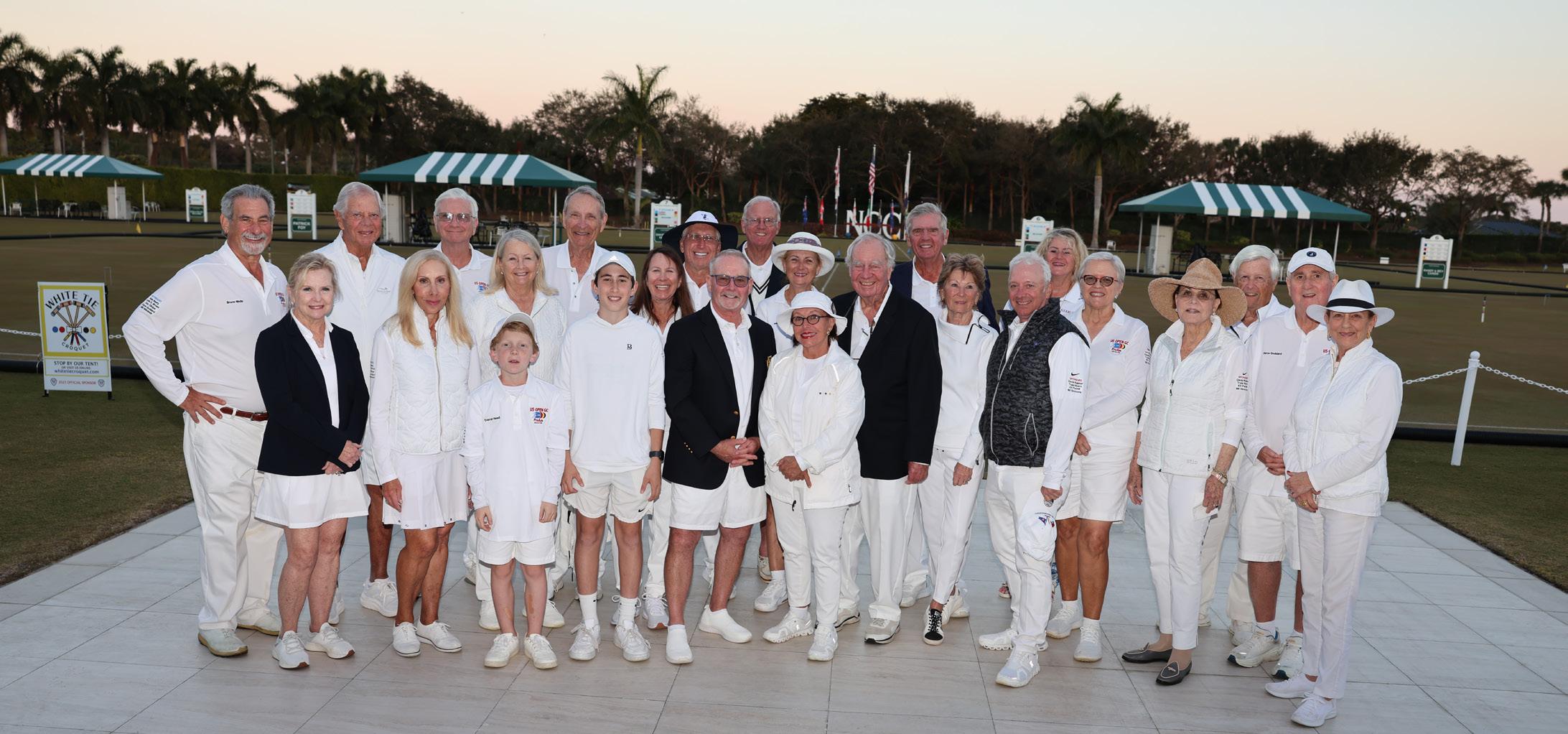
The opening hoops were tightly contested, with both sides trading points while focusing on precise clears and careful ball positioning. At Hoop 5, Matthew Essick delivered a clutch jump shot to give Red and Yellow the advantage. O. Brown and Balding answered immediately, taking Hoop 6 to even the score.
At Hoop 7, Ski set up well but missed his hoop shot on the following turn. The momentum shifted when O. Brown executed a long, accurate clearing shot. Moments later, Balding converted a difficult boundary-line shot, giving Blue and Black the lead. At Hoop 8, after a series of exchanged clears, Blue extended their advantage by scoring the hoop. On Hoop 9, O. Brown capitalized on a missed baseline shot by Essick, pushing the lead to 6–3.
Hoop 10 brought the final drama. All four balls were in scoring position. Yellow’s clearing attempt only clipped Blue, allowing Blue to send Essick deep to the boundary. Facing a difficult cross-court clear to stay alive, Red missed. With the match on the line, Black stepped up and calmly scored the final hoop, sealing the victory.
The ProAm is also a fundraiser for the U.S. Open Golf Croquet Singles Championship, which begins the following day. Who can play in the ProAm? You can. If you are a USCA member with a DGrade below 2000, or no DGrade at all, you are eligible to participate as an amateur sponsor. Spots are filled in the order registrations are received.
Participants enjoy far more than just competition. Each amateur is paired with an elite player, sharing not only matches but also lunch and a banquet dinner, which creates an opportunity to connect, learn and build lasting memories. All players and sponsors receive exclusive event items, including a tournament shirt, commemorative coin and ProAm pin — keepsakes available only to participants.
Mark your calendar for February 8, 2027. Signup announcements will be sent out this summer. With the anticipated completion of new lawns at the National Croquet Center, the event is expected to expand to 32 teams. The U.S. Open ProAm is more than a competition; it’s an experience. Whether you’re stepping onto the court for the first time or competing alongside the world’s best, it offers something few events can: a chance to be part of the game at its very highest level.
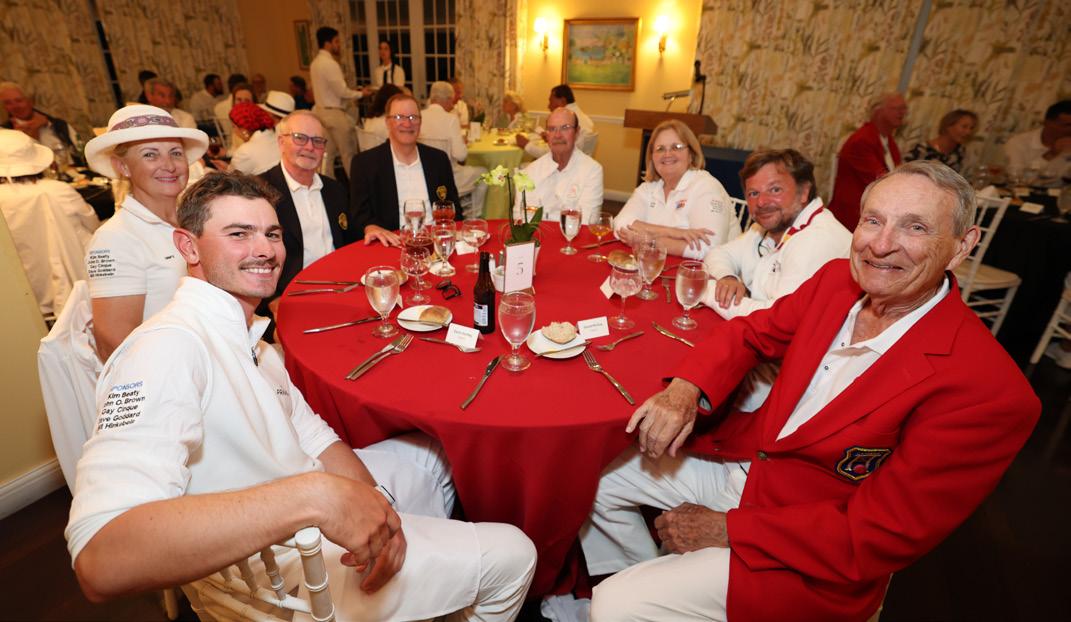
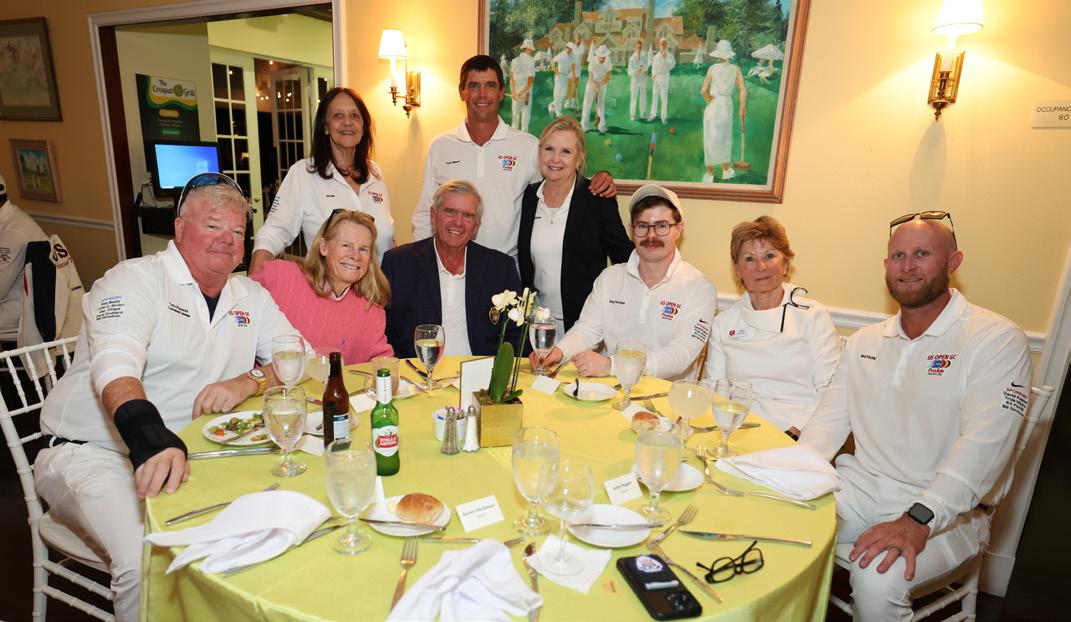
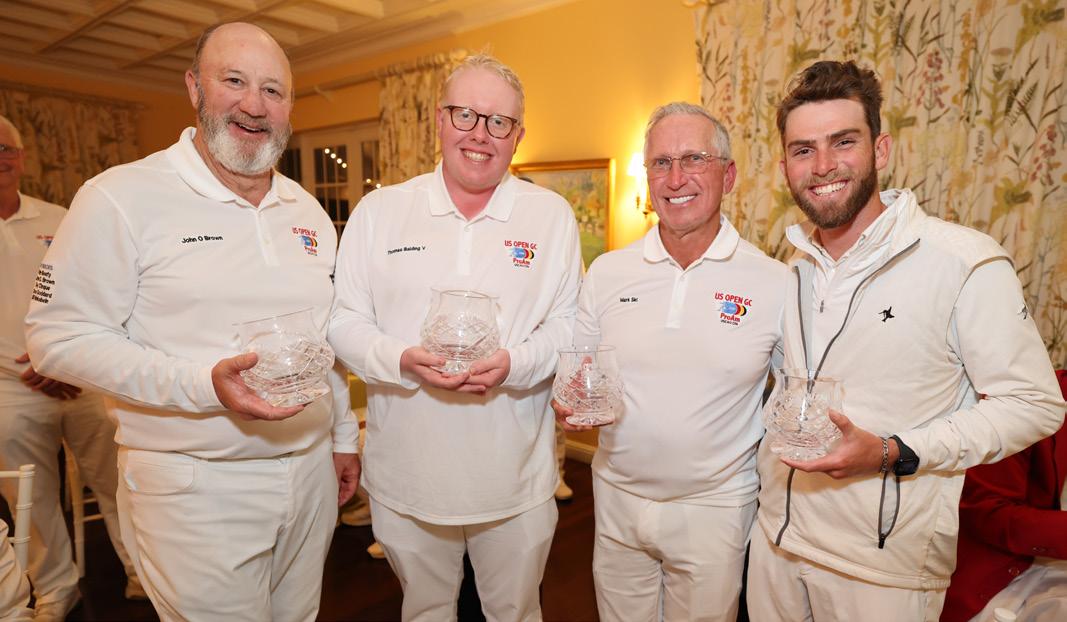
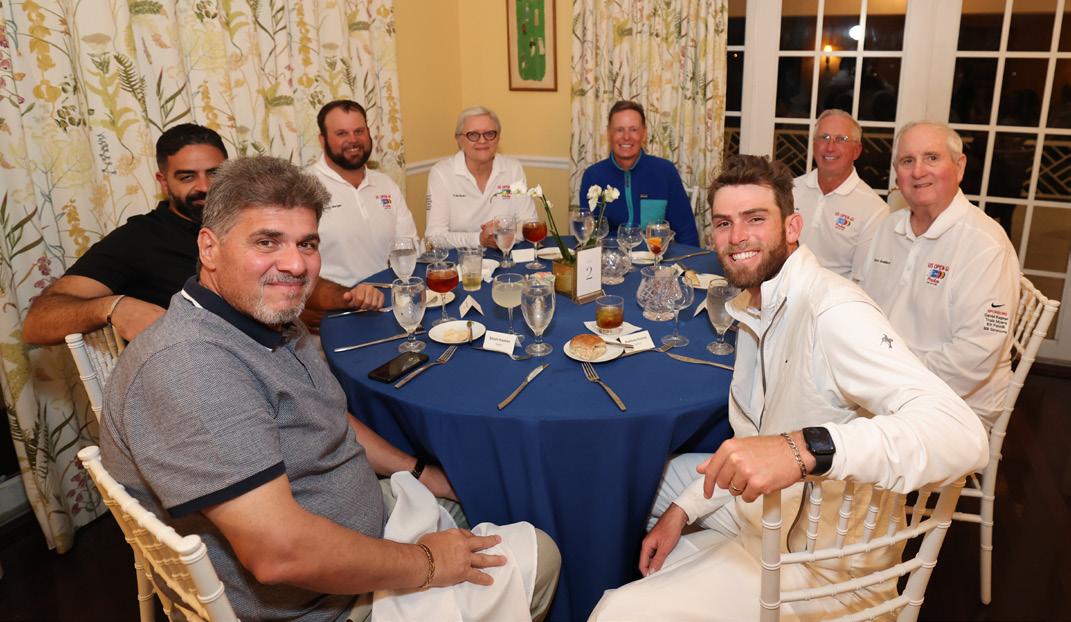
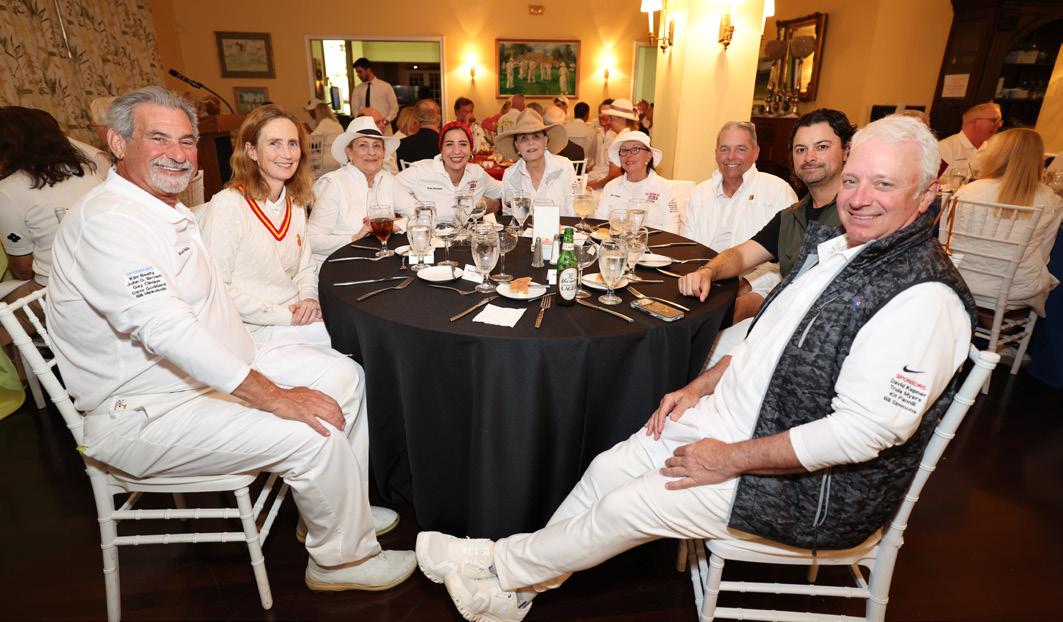
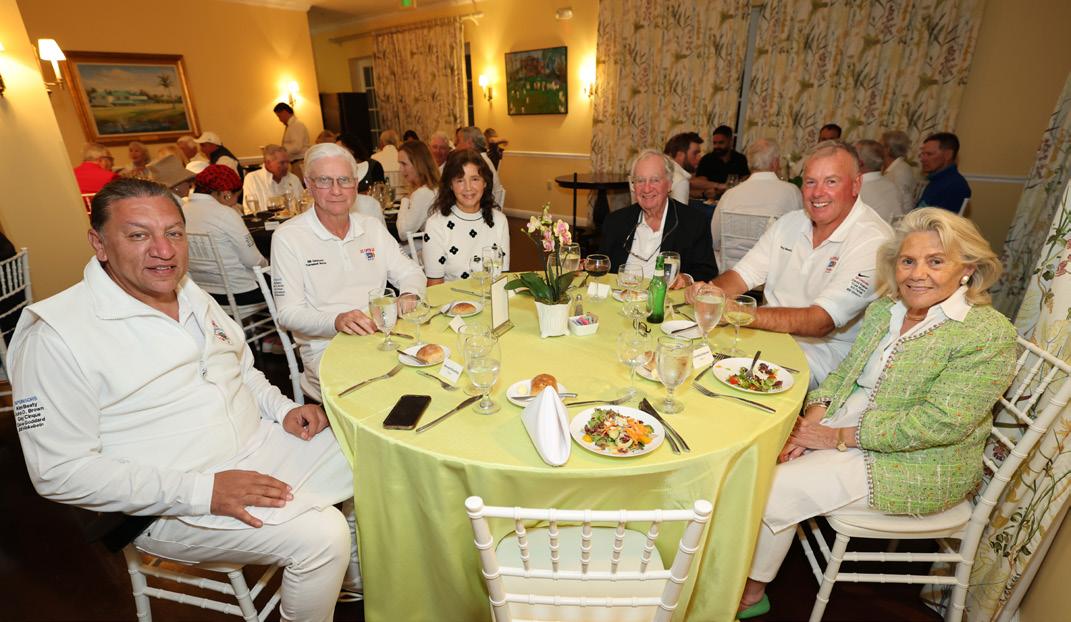
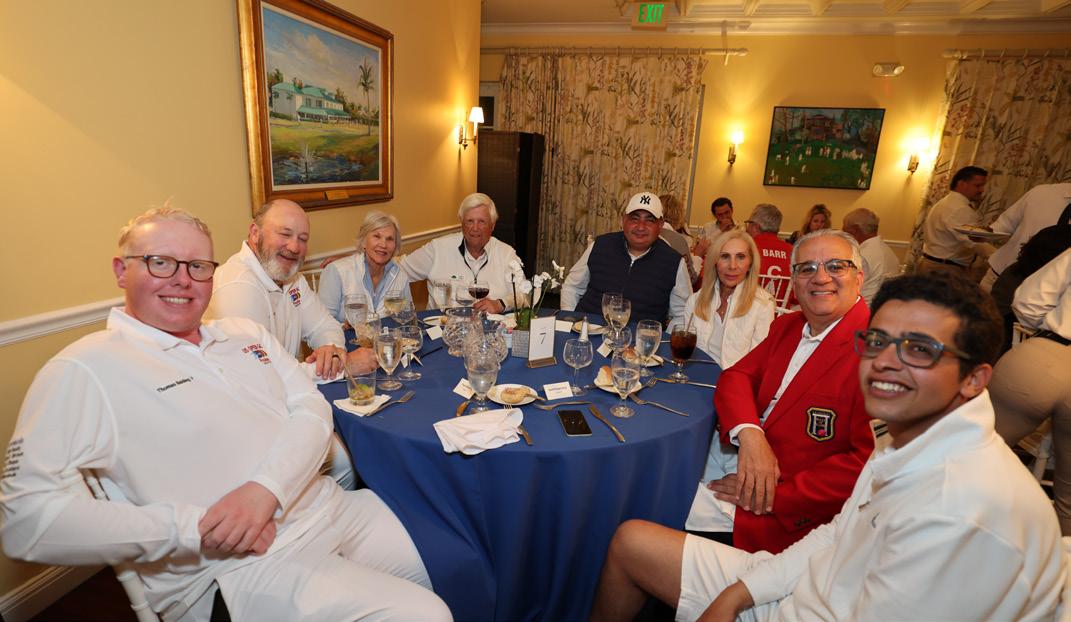
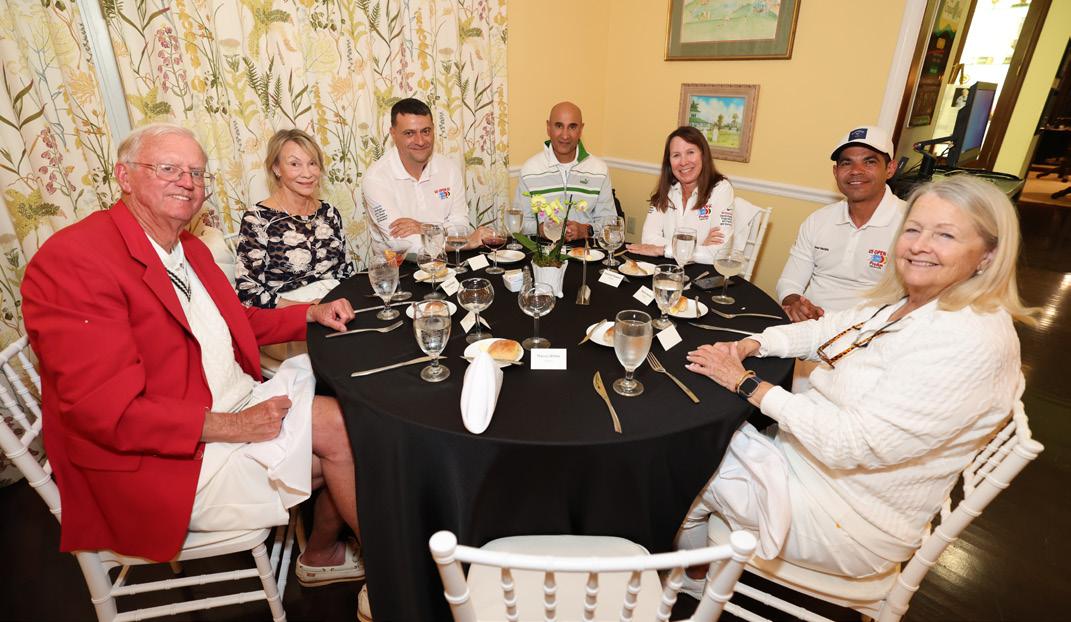
AS THE UNITED STATES CROQUET ASSOCIATION PREPARES TO MARK ITS 50TH ANNIVERSARY IN 2027, ONE MESSAGE FROM THE MEMBERSHIP RINGS ESPECIALLY CLEAR: CELEBRATE LOCALLY, KEEP IT FUN AND MAKE IT WELCOMING.
That message comes through loud and clear in the USCA Semicentennial Member Survey, which drew more than 300 responses from across the country. Designed to be brief and accessible, the survey captured both structured responses and openended feedback, offering a revealing snapshot of who today’s croquet players are and how they hope to celebrate this milestone anniversary.
Survey participation was strong and broad-based, with more than 300 completed responses analyzed. While members from every region weighed in, participation was strongest in Florida and the Southeast, reflecting current membership concentrations.
Notably, nearly two-thirds of respondents have been USCA members for 10 years or less, underscoring how much the organization has evolved in recent years and how many newer voices are now shaping its direction. Golf Croquet dominates as the primary discipline for most respondents, though nearly half also play American Six-Wicket, highlighting the multi-code nature of today’s membership.
When asked how the USCA should mark its 50th anniversary, members overwhelmingly favored celebrations that feel local, participatory and accessible.
The most popular format by a wide margin was club-level and regional events and socials, signaling that members want the Semicentennial to show up where they already play and gather. National signature events and historical projects also generated interest, but at lower levels, suggesting these should complement rather than replace grassroots celebrations.
Interest dropped sharply for more formal approaches. Youthonly events and gala-style programming ranked near the bottom, reinforcing a preference for celebrations that feel inclusive rather than exclusive.
The survey also explored what kind of anniversary members want, and here the results were striking. “Fun” and “welcoming” topped the list of preferred themes, followed closely by an approach that honors history without being trapped by it.
Far fewer respondents emphasized competitive intensity or elegance and formality. The takeaway is unmistakable: members want the Semicentennial to feel like a celebration they can join, not a ceremony they observe from the sidelines.
When asked where they would be most likely to participate in Semicentennial activities, members again pointed to the local level. More than 80 percent said they would take part in club-based events, with participation dropping steadily at the state, regional and national levels. This pattern reinforces a central conclusion of the survey: local clubs are the engine of participation. National initiatives may set the tone, but meaningful engagement will happen lawn by lawn.
Encouragingly, the survey revealed a deep well of potential volunteer support. More than 40 percent of respondents said they would be willing to help locally, with another 40 percent are open to helping if expectations are clear and manageable. Members repeatedly emphasized the importance of “light-lift” volunteerism, suggesting that simple, well-defined roles will be key to turning goodwill into action.
When it comes to Semicentennial keepsakes, members spoke with surprising unity. Apparel emerged as the runaway favorite, followed by pins and patches. Interest in documentaries, photo books and other historical content was more mixed but still positive, with many respondents open to engaging if such projects are presented as enhancements rather than centerpieces. The message here is balance: history matters, but members want it woven into the celebration, not positioned as the main event.
A LOOK AT WHAT MORE THAN 300 MEMBERS SHARED ABOUT HOW WE CELEBRATE 50 YEARS OF CROQUET

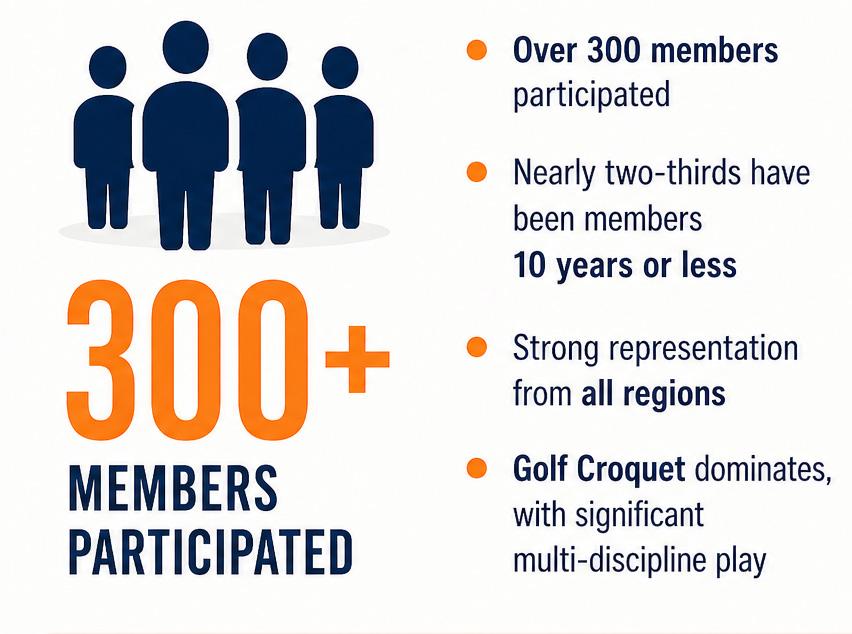
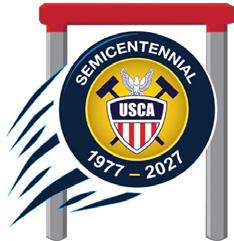
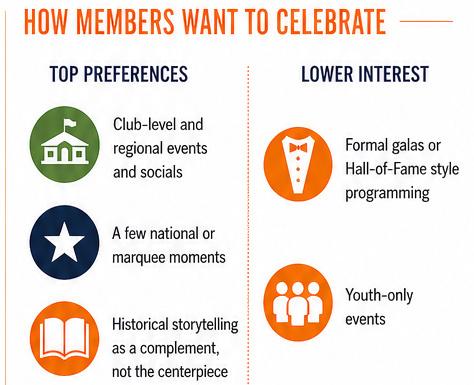
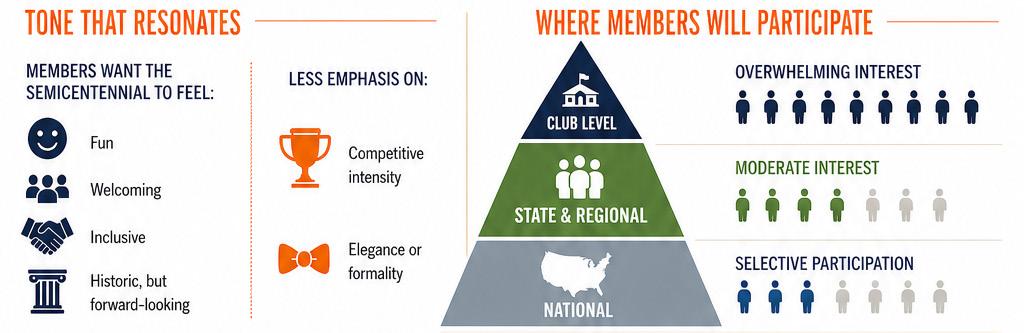
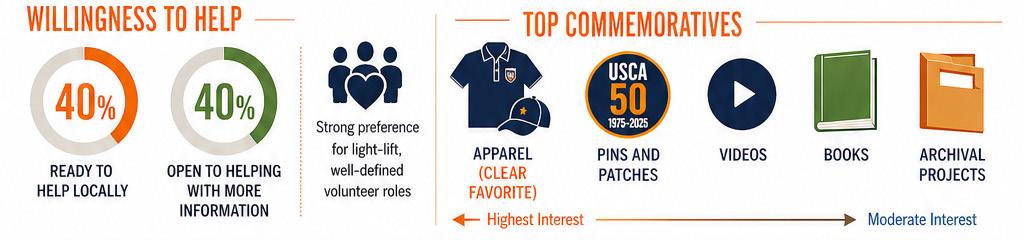
• Celebrate locally. Keep it fun. Make it welcoming.
• Club-level events are where members say they are most likely to participate.
• History matters, but members don’t want formality to dominate the celebration.
• There is strong willingness to help, as long as the lift stays light and expectations are clear.
• The Semicentennial should feel inclusive and participatory, not ceremonial.
Open-ended responses echoed and reinforced the structured survey results. Again and again, members called for local club celebrations and open houses, a few marquee national moments, better promotion beyond the existing croquet community, storytelling that connects past and present and affordable, inclusive events. Taken together, these comments paint a consistent picture of a membership eager to celebrate, provided the celebration feels accessible and authentic.
The overall takeaway from the Semicentennial survey is both reassuring and clarifying. Members envision an anniversary that is grassroots-driven; fun, welcoming and inclusive; anchored locally and supported regionally with a few national highlights; powered by manageable volunteer involvement; and enriched by history and commemoratives without being dominated by formality.
As planning continues, these results provide a valuable compass. The USCA’s 50th anniversary is not just an opportunity to look back, but a chance to reflect who today’s croquet community is and how it wants to gather, play and celebrate together.
The USCA Semicentennial Member Survey was designed to listen first and plan second. With more than 300 responses, members offered clear guidance on how they would like the Association to celebrate its 50th anniversary in 2027.
The results are already informing the work of the Semicentennial Planning Committee. Rather than prescribing a single national celebration, the survey points decisively toward a grassroots-driven approach, with local clubs and regions serving as the heart of the anniversary year.
• Shape tiered priorities for Semicentennial initiatives
• Emphasize club-level and regional celebrations
• Calibrate national events so they enhance, rather than overshadow, local participation
• Define volunteer roles that are manageable and clearly scoped
• Balance history and storytelling with fun, forward-looking activities
• Guidance and ideas that clubs can adapt locally
• Select national or marquee moments that unify the year
• Clear communication about how to participate or help
• Commemorative offerings that reflect member preferences
Perhaps most importantly, the survey ensures that the Semicentennial reflects today’s croquet community, not just its past. Members asked for an anniversary that feels welcoming, inclusive and fun — and those principles will continue to guide planning as recommendations move forward.
The USCA’s 50th anniversary is not just a milestone. It is an opportunity to gather, play and celebrate in ways that reflect how and where members enjoy croquet today.
2026 A6W OVERALL GP STANDINGS
Player
01 Cardo, Randy 4900 8500 13400
02 Brown, John O 3200 5400 8600
03 Pulitzer, Robert 4100 4050 8150
04 Van Alen, Lucus 4525 1601 6126
05 Ski, Mark 1590 3942 5532
06 Van Tassell, Robert 3000 2250 5250
07 Cardo, Beverley 0 5100 5100
08 Creasey Jr., Cecil H. 3990 928 4918
09 Griffith, Matthew 2100 1870 3970 10 Errickson, Stephen 3210 670 3880 11 Stuart, Preston 2500 850 3350 12 Ekstrom, David 2100 1200 3300 13 Sudderberg, Lynda P. 3190 0 3190 14 Watson, Zack 3000 0 3000
15 Pulitzer, Charlotte 1475 1479 2954 16 Settlemyre, Norris 2600 350 2950 17 Lynch, Larry A 1403 1452 2855
18 Raymond, Gene 1765 1020 2785
19 Chaney, Calvert 1100 1602 2702
20 Barley, Chris 2600 0 2600
Total players: 200 Updated 4/27/2026. 2026 GC OVERALL GP STANDINGS
Matthew Essick 7634 2208 9842
Tom Balding 4149 3163 7312 03 Reg Bamford 5421 1850 7271
Cami Russack 3203 695 3898 10 Brian Lozano 2854 938 3792
Bruce Hindin 2172 1369 3541
Kyle Maloof 2033 1492 3525
Ahab Abdelwahab 1907 1270 3177
John Brown 0 3163 3163
Caryl Firth 1741 1244
Beverley
Sudderberg, Lynda P. 3190
Donato Selby, Yvette 1695
BY JEFF SOO
Abbreviations used: blUe, Red, blacK, Yellow
How many games have you won or lost because of tactics? The answer is exactly none. Tactics exist only in your head, but to score points you must actually hit balls through wickets. Tactics are — literally — pointless.
Speaking of points, it’s natural to think of tactics as a sort of roadmap, the sequence of steps you need to get from point A to point B. And this is not a bad metaphor, if we understand that what we’re trying to plot out is not a direct route. The court diagram in Rule 1 has a lovely map of the shortest route through all the wickets. Playing a ball along this path in the fewest possible strokes makes for a pretty good practice drill. But in a practice drill, we can play as many shots in a row as we need. In a game, our turn ends as soon as we fail to earn a continuation shot, either by scoring a wicket or by making a roquet and playing a croquet shot without sending a ball out of bounds. As a tactical guide, this map merely shows us the next wicket; it tells us nothing about the best way to get there.
And this is a problem, especially for beginning and low-intermediate players, who naturally tend to focus on getting to the wicket, rather than getting through the wicket. Getting fairly close to a wicket is easy enough to do from most positions on the court, especially if you are joined with your partner and can take two shots to get there. And getting through a wicket is possible from a wide range of positions. But you don’t win games with possible wicket shots. The main goal of tactics is to help you get position for highly probable wicket shots. And this is where the path from A to B gets interesting.
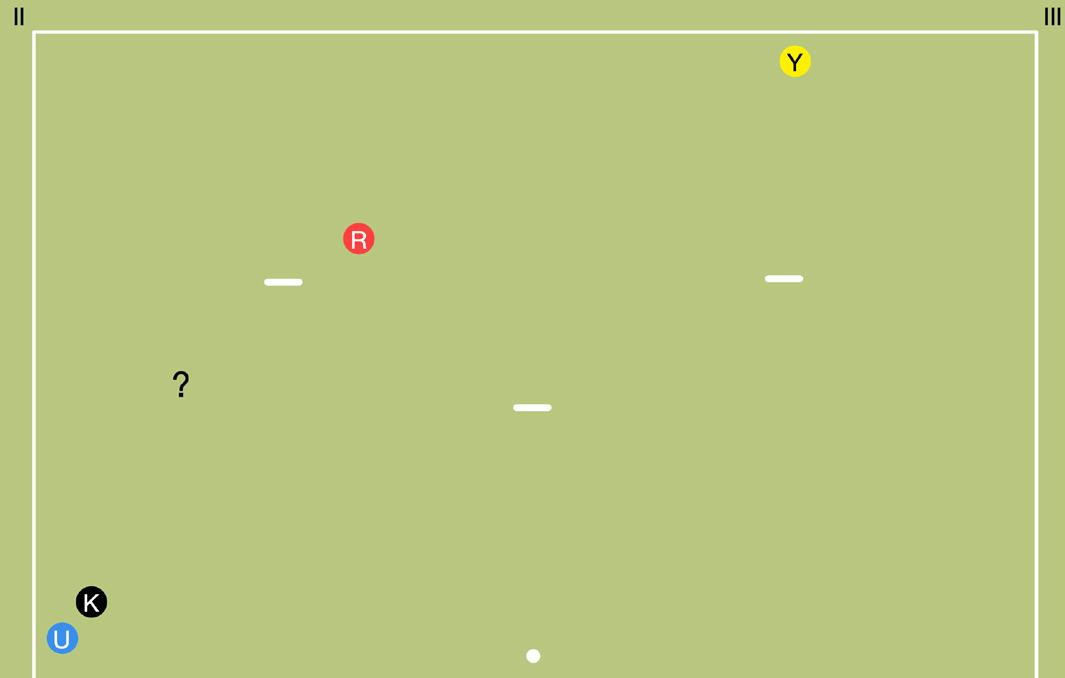
FIGURE 1: A Second Flight game. U to play. Y is for 3, all other balls for 2, all balls clear.
Figure 1 shows the start of a Second Flight game, in which Y had rushed R to 2, hoping to score the wicket and rush R to 3. Y did score the wicket but went too far through for a rush to 3 and opted to play to the boundary instead of going dead on
partner. Even though this leaves U a potential three-ball break, Y made a prudent choice to stay clean; three-ball breaks at Second Flight level tend not to last very long. And, indeed, U is not even thinking about trying one, knowing from bitter experience how often three-ball break attempts end in tears. U will be happy to score a wicket or two and get off the court safely.
U is already set with a rush on K, offering a simple and direct path to the wicket. Having set up that rush, and with R on the non-playing side of the wicket, many players at this level will opt for that direct path, giving no thought to using R until after scoring the wicket. At most they will think of R as a backup plan in case the rush on K goes poorly.
But rushes often do go poorly. Again, the question is how to maximize the odds of getting through the wicket. This gets us back to what I have repeatedly stressed in these articles as the most important of all tactical precepts: look for the play that gives you the best chance to take croquet near your wicket, preferably from the playing side (see “One Rule to Ring Them All,” Croquet News, 2022, Volume 3).
You probably noticed I stuck a question mark in Figure 1. It doesn’t take a particularly poor stroke for U’s rush on K to end there: playing the shot a little off-line and not quite connecting solidly with K will do it, two swing errors that often go together. Not only is that an uncomfortable spot from which to approach the wicket, it is also an awkward spot from which to take off to R to get a rush back to the playing side of the wicket, due to the length of the take-off and the fact that the wicket is in the way.
With R so close to the wicket, you should plan to use it right away. Instead of aiming at the wicket, try to rush K all the way to R, or just past it. That leaves an easy croquet shot to get an excellent rush on R, and with R so close to the wicket you have the best possible chance of getting good scoring position. (If the rush on K comes up short, it may well stop right in front of the wicket, in which case you can opt for Plan B and approach the wicket directly, leaving R alone until after the wicket.)
Another advantage of this plan over the direct rush on K to 2 is that if it goes well you will be better positioned to use R and K to arrange an easy rush to 3, rushing your friend K there instead of the dangerous R. Think it through and see if you can discover why; my answer will come later in the article.
Our hypothetical Figure 1 player (who ignored R and attempted the direct rush to 2) has fallen into a common tactical error: failing to adapt to new information. Two turns ago K set up one of the most basic of all scoring patterns: giving partner a rush to its wicket. But then Y played and left R near 2. The original pattern — rushing K to the wicket — is still available, but R’s
arrival on the scene creates an alternative pattern: the three-ball break. (If U uses both K and R to score 2, it is technically a three-ball break, even if U declines to follow the typical pattern of sending K to 3 as a pioneer before scoring 2.)
We can think of tactics as the art of choosing among available patterns. Being able to recognize these patterns is an obvious requirement, and, with experience, we learn more and more of them. But it’s not enough to see patterns — we need a meaningful way to compare them. In the example above, I compared two patterns on the basis of the all-important precept to take croquet close to the wicket — on the playing side whenever possible — when approaching that wicket. There are several such general-purpose precepts we can use to inform our tactical decision-making. Indeed, as explained in “Creating a Rush” (Croquet News, 2024, Volume 1), this precept is itself derived from two even more fundamental ones: short shots are more accurate than long shots, and it is more forgiving to approach a critical shot along the target line than across it.
Two other precepts are specific to split shots: stop shots and drive shots are generally more accurate than roll shots, and narrow splits are generally more accurate than wider ones. That’s not much help when you find yourself faced with a long, wide-angle roll shot; the point is to use rushes to avoid getting into such positions in the first place.
For intermediate and advanced players, these five precepts are the building blocks of break management, the art of choosing targets for rushes, croquet strokes and wicket shots (when you are close enough to run the wicket with control) while making a three-ball or four-ball break. But let’s return to our cautious Second Flight player in Figure 1, who would like to score a couple of wickets, but is worried about breaking down at 2 if attempting a standard three-ball break.
“Creating a Rush” (referenced above) works through an example of a helpful problem-solving technique: thinking through a sequence of shots in reverse. Let’s apply that technique here. In Figure 1, U plans to score 2, then rush partner (K) to 3. Obviously, this can be done with a plain two-ball break, but it would be foolish to ignore the easier alternative offered by R. The crux of the sequence is the long rush on K to 3. U wants excellent position for that rush — close to and directly west of K — and R is the key. U should plan to roquet R first after running 2, then use the croquet stroke to get into position for the rush on K. Getting position for a rush is similar to approaching a wicket, and we give ourselves the best chance of excellent position by taking croquet close to and on the correct side of the ball we want to rush. Figure 2 shows how this might look:
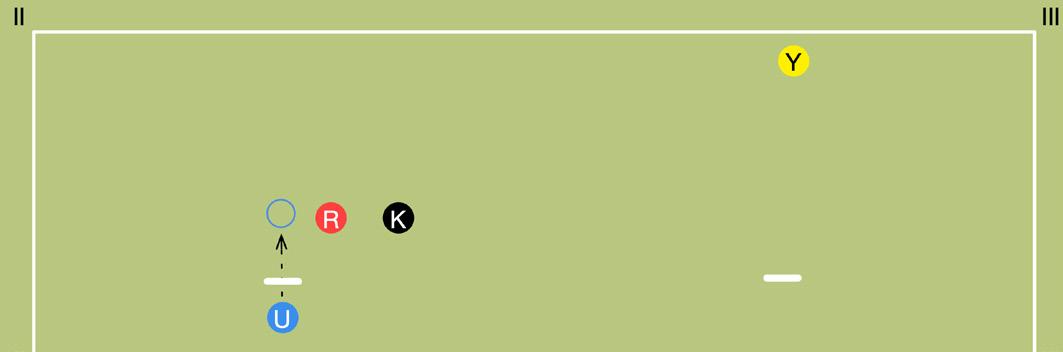
You might have noticed that R’s position in Figure 2 is not much different from where it was originally; U has rushed it to 2 and then sent it back to nearly the same place. Why bother? U could get to a similar position by rushing K directly to 2 and then sending it to the east of R while approaching the wicket:
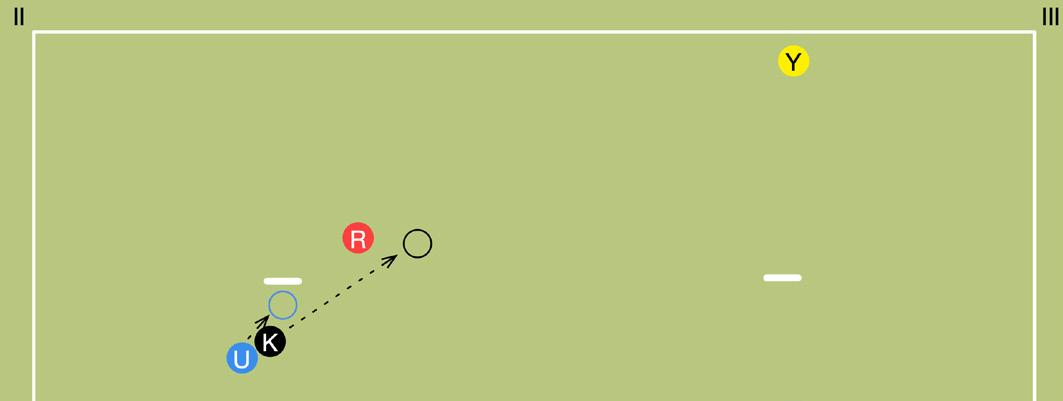
But, because of the distance U has to send K on the croquet stroke, this approach shot is more difficult, and less likely to result in good wicket-running position. The initial rush on K also needs to be more precise. It is much better to make use of R; Figure 4 shows the prelude to Figure 2:
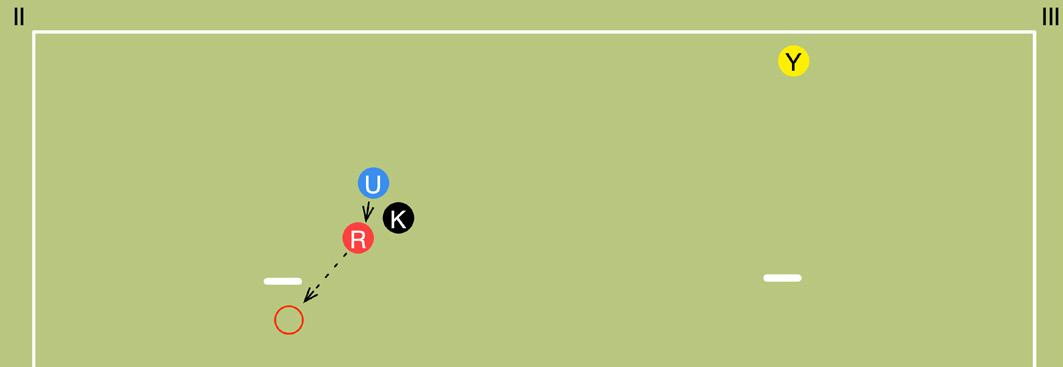
With this sequence we get a greater margin of error for the initial rush on K and will have a much shorter rush (on R) to the wicket, improving our chance of getting good position and running the wicket with control. This in turn gives us a better chance of a good rush to 3. By using both R and K, we can bend the risk/ reward curve in our favor. And that is the point of tactics.
I would like to note that there were errors in the page layout for Jeff Soo’s American 6W Tactics column in the print version of the 2026 Volume 1 issue of Croquet News . The column title was inadvertently repeated from the previous issue, and two paragraphs were mistakenly omitted. This was corrected for the digital version of the magazine. Jeff has taken the opportunity to expand on the column topic in this edition. I apologize for the errors and we have implemented a process update to help prevent similar issues in the future.
—Dylan Goodwin, Publisher
BY CHERYL BROMLEY
Many of you may have experienced playing timed matches in golf croquet. This is often necessary to keep a tournament running on schedule. It definitely changes the nature of the game, particularly if you are having a great battle and run out of time before the entire game is completed. On the other hand, it does encourage playing with dispatch.
Below are some ideas on how to deal with timed matches.
1. Think ahead: Efficiency is important and is a time saver. Be thinking about your upcoming shot options while your opponent is taking their shot to cut down on the amount of time needed to make your decision when it is your turn.
2. Get off to a good start: Be ready to go from the start. This means being warmed up both mentally and physically in advance. Building a lead and staying ahead is especially important as time winds down.
3. String together multiple hoops: All the odd-numbered hoops are straight shots down to the next hoop. Try to run the hoop and take position down at the next one in the same shot. For example, Hoop 1 to Hoop 2, Hoops 3 to 4, Hoops 5 to 6, etc.
4. Walk with purpose: Don’t dilly-dally while walking over to your next shot. As always, stay still and remember not to walk when your opponent is preparing to shoot.
5. Stay alert and know the rules: Be on the lookout for a potential wrong-ball situation and forestall play before it occurs, as is required by the rules, and is particularly important to save time. Be clear on how the game ends when regulation time runs out, e.g., how to deal with ties, extra turns, etc.
6. Maintain your pace and tempo: This is important if you come up against a slower player; be sure to keep your rhythm. Conversely, if someone is playing exceptionally fast, take the time you need to execute your shots while still managing time efficiently.
7. Make your opponent hit tough shots and keep the pressure: this comes down to executing your stop shots crisply and clearing shots with authority to maximize the distance your opponent has to shoot from.
It is Pink to play and finds itself with a half inch of space between itself and the Green ball. Brown has an open, slightly angled two-yard hoop shot. What would you do? Be sure not to double tap. Set this scenario up at your next practice session, mark the balls to be able to have the opportunity to bring them back if a fault occurs and see what options might work for you.
NEW TO SECONDARY COLORS?
Green = Blue
Pink = Red
Brown = Black
White = Yellow
Birmingham–
Birmingham Croquet Club
John Somerset
Chula Vista–Croquet Mexico
Victor Abitia
Pasadena–
Pasadena Croquet Club
Sean Chasworth
David Collins
Rancho Mirage–
Mission Hills Croquet Club
Nancy Cameron
Grahame Clark
Linda Harradine
Sharon O'Shea
Greg Shumavon
Tricia Shumavon
Millsboro–
Baywood Greens Croquet
Kim Hall
Boca Grande–
Gasparilla Inn Mallet Club
Pam Bayly
Dan Bayly
Diane Bean
Angela Corning
Barney Corning
Cynthia Gerdsen
LeeAnn Maloomian
Charles Nadler
Louise Nadler
Julie Newell
Casey Newell
Denny Parker
Pam Tinkler
Doug Tinkler
John Toole
Bokeelia–
Useppa Island Croquet Club
Joel Bentley
Bonita Springs–Bonita Bay Club
Sara Edwards
Richard Pearce
Deborah Pearce
Coral Gables–
Coral Gables
Merrick House Croquet
Yvelisse Bonilla
Fort Myers–Shell Point Croquet Association
Jonathan High
Ft. Lauderdale–At Large Member
Lyndy Thatcher
Clive Thatcher
Naples–Audubon Croquet Association
Ann Davey
Naples–Naples Croquet Club of Florida
Sybil Burt
Brett Starr
Orlando–The Country Club of Orlando
Mitchell Cooper
Guongyi Henson
Victoria Leedy
Orlando–Winter Park Croquet Club
James Hall
Palm Beach–Everglades Club, Inc.
Dick Williams
Palm Beach Gardens–Croquet Club at PGA National
Melanie Guttridge
John Guttridge
Ponte Vedra Beach–At Large Member
William Tomson
Anne Tomson
Hal Denton (Hall of Fame) National Croquet Club and Croquet Club of Annapolis
Fred Heald Naples Croquet Club and Sky Valley Croquet
Frank Lockett Linville Golf Club
Gail Munn Boca Raton Croquet Club and National Croquet Club
Lou Tyrrell National Croquet Club
Neil Wilkie Croquet Club of Annapolis
The Villages–
The Villages Croquet Club
Brian Thielges
Venice–
Sarasota County Croquet Club
Thomas Burwinkel
Linda Coleman
John Coleman
Lori Hemmelgarn
Jerome Mueller
Susan Murphy
Sandy Rendell
George Rendell
Vero Beach–At Large Member
Donna Bleck
George Golensky
Anne Golensky
Vero Beach–
John's Island Croquet Club
Joan Henderson
Bob Tait
Vero Beach–Oak Harbor Club
Connie Phypers
Vero Beach–
Quail Valley Golf & River Club
Arianne George
Edward Meehan
Sandra Meehan
Vero Beach–
Riomar Country Club
Staunton Peck
Thomas Piper III
Vero Beach–The Moorings Club
Marcia Humphrey
West Palm Beach–At Large Member
Helena Rowland
West Palm Beach–
National Croquet Club
John Baldwin
Becky Foley
Sean Foley
Cynthia Gronroos
Anne Ilyinsky
Allen Kressman
Gilbert Meister
Doris Meister
Charles Nemetz
Anne Nemetz
Nick Noviello
Cathrine Noviello
Mary Paul
James Paul
Robin Reardon
Rene Von Richthofen
John Wren
Nicholas Young
Lawrence Zaffuto
Western Kentucky Croquet Club ................... Princeton, Kentucky
Coral Gables Merrick House Croquet Coral Gables, Florida
West Palm Beach–
Palm Beach Atlantic University
Dean Burgin
Ella Gustafsson
Madeleine Jones
Adam Leatherman
Mary-Allison McGuire
Jackson Overholt
Brayden Valliere
Olivia Weaver
GEORGIA
Atlanta–At Large Member
Jane McLaine
INDIANA
Fishers–At Large Member
Irving Scully
KENTUCKY
Morehead–At Large Member
Pam Rowland
Princeton–
Western Kentucky Croquet Club
Thomas France
MARYLAND
Galesville–
Croquet Club of Annapolis
Julie Beal
Anne Gillis
Josh Head
Margaret O'Bryon
Patrick Sergeant
Gibson Island–
Gibson Island Club
Elizabeth Hagan
MISSISSIPPI
Jackson–
The Country Club of Jackson
Amy Robinson
NEW JERSEY
Sea Girt–
Green Gables Croquet Club
Linda Willis
NORTH CAROLINA
Pinehurst–
Pinehurst Croquet Club
Karen Conlin
Caleigh Conlin
Maclain Conlin
Sean Conlin
Julie Milton
Mark Van de Water
Read Van de Water
PENNSYLVANIA
Haverford–
Merion Cricket Club
Valerie Bowman
SOUTH CAROLINA
Aiken–At Large Member
Don Hutchins
Bluffton–Belfair
Chris Olsen
Charleston–At Large Member
Anne Griffin
John Griffin
Elizabeth Sullivan
Charleston–Bishop Gadsden
Joe Marino
Patricia Marino
Libby Moon
Tom Moon
John Schauer
Mary Beth Schauer
TEXAS
Houston–
Houston Croquet Association
Anne Symonds
Taft Symonds
VERMONT
Manchester–
Ekwanok Country Club
Cathy Long
Cairo–At Large Member
Jana Alsaeed
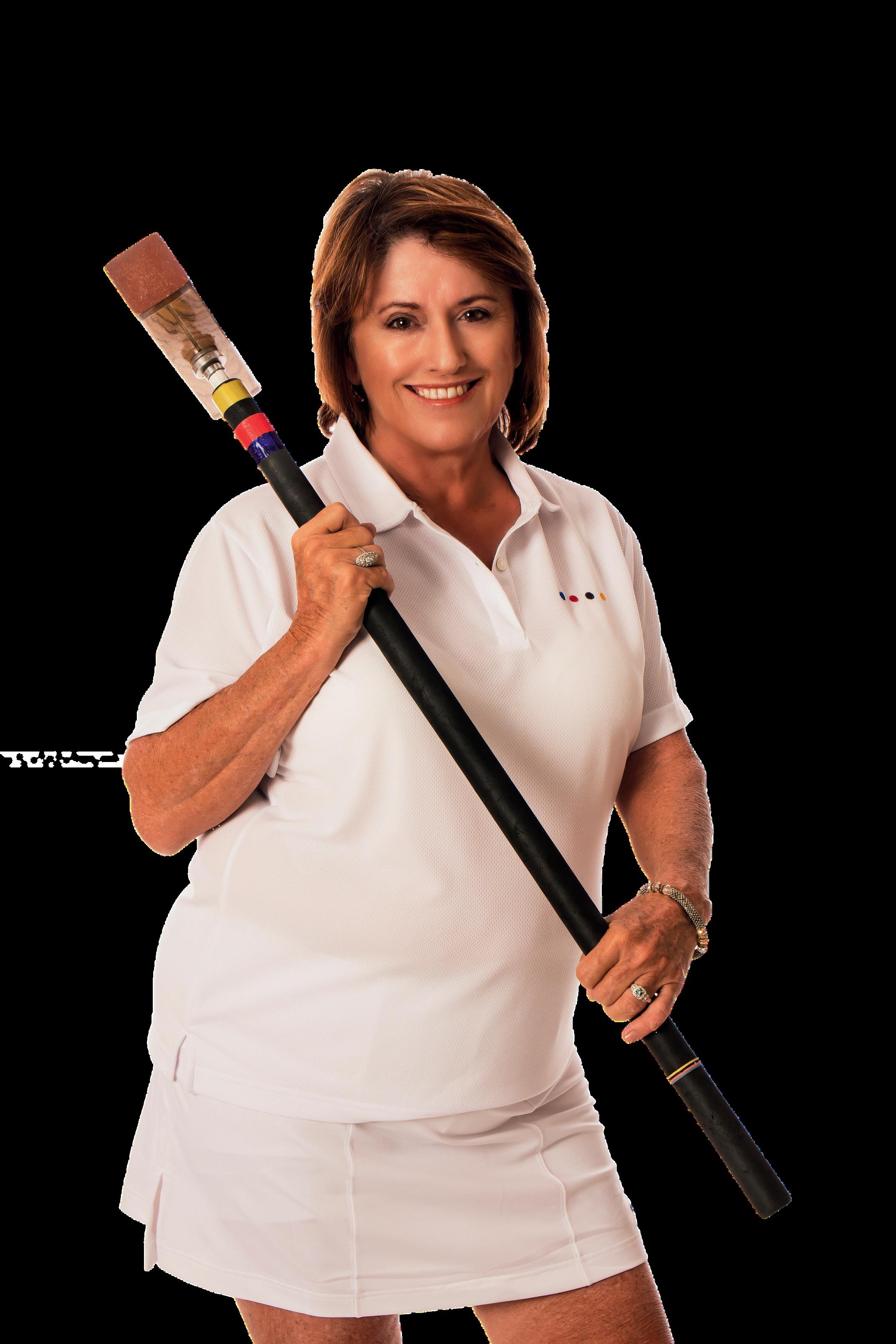


USCA FL Southwest District GC
Championship
Wyndemere Country Club
Naples, Florida
April 16-18, 2026
Championship Flight
01. Tate Russack
02. Mike Hoggatt
03. Billy Simmons
03. Jose Benjumea
05. Caryl Firth
06. Tom Eggleston
07. John Joseph
First Flight
01. Glo Ghegan
02. Mary Hennelly
03. John Grout
03. Anne Killilea
05. Richard Pearce
06. Thomas Hennelly
07. Jeffrey Cohen
Second Flight
01. Raymond George
02. Deborah Jacobson
03. Trula Myers
03. Howard Glicken
05. Jason Collins
05. Sybil Burt
Third Flight
01. Brett Starr
02. Eijk Van Otterloo
03. Juli Burke
03. Lynn DeVault
05. Robert Krimsier
05. Ying Benns
Albemarle Croquet Club GC Open
Albemarle Croquet Club
Belvidere, North Carolina
April 8-11, 2026
Championship Flight
01. Cecil Creasey
02. Josh Lassiter
03. Adam Lassiter
03. Rodney Lassiter
05. Nancy Rendleman
05. Gary Gamble
05. John Lassiter
05. Randy Lassiter
09. Ned Sperry
10. Dick Rendleman
11. Dan Horton
11. Susan Creasey
13. Lee Robinson
13. Rick Pratt
15. Sarah Persons
16. Lisa Maloney
First Flight
01. Kim Beaty
02. Briggs Stahl
03. Cathy Horton
03. Bob Natole
05. Wayne Meade
06. Wayne Maloney
07. Rocky Smith
Second Flight
01. Janet Mullen
02. Thomas Birckhead
03. Craig Sellner
03. Becky Mclawhorn
05. Holly Sperry
06. Tom Mullen
07. Judy Sellner
08.Debra Boyce
Swiss Doubles
01. Adam Lassiter/Kim Beaty
02. John Lassiter/Rocky Smith
03. Cecil Creasey/Susan Creasey
04. Josh Lassiter/Bob Natole
05. Dan Horton/Cathy Horton
06. Nancy Rendleman/ Dick Rendleman
06. Randy Lassiter/Wayne Meade
08. Lee Robinson/Briggs Stahl
09. Rick Pratt/Sarah Persons
10. Gary Gamble/Kathie Gamble
11. Ned Sperry/Holly Sperry
12. Craig Sellner/Judy Sellner
13. Rodney Lassiter/Thomas Birckhead
14. Tom Mullen/Janet Mullen
15. Lisa Maloney/Wayne Maloney
16. Debra Boyce/Becky Mclawhorn
NCC AC Weekender Open
National Croquet Center
West Palm Beach, Florida
April 3-5, 2026
Championship Flight
01. Danny Huneycutt
02. Michael Todorovich
03. Calvert Chaney
First Flight
01. Larry Lynch
02. Adam Peck
03. Rick Hayes
04. Sandra Knuth
2026 SCCC AC Open
Sarasota County Croquet Club
Venice, Florida
March 27-29, 2026
Championship Flight
01. Chris Barley
02. Gene Raymond
02. Linda Sudderberg
04. Curtis Drake
05. Matt Griffith
05. Stephen Errickson
07. Walt Janitz
First Flight
01. Sandy Janitz
02. Kathie Hart
03. Michael Kolowich
03. Teresa Errickson
05. Christine Smith
06. Rick Alderson
07. Chris Weihs
08. Karen Weihs
2026 Women’s International
Friendship Cup
National Croquet Center
West Palm Beach, Florida
March 25-27, 2026
Championship Flight
01. Cami Russack
02. Debbie Davidoff
03. Julie Wright
03. Helen Covington
05. Cheryl Bromley
05. Rania Gabr
05. Ghada Abdel Rahman
05. Maha Eldardiry
09. Ellie Griffith
10. Mervat Elshazly
11. Mary Galasso
11. Amy Hempt
13. Jan Spoerl
13. Lisa Maloney
First Flight
01. Caryl Firth
02. Sue Emond
03. Sarah Persons
03. Glo Ghegan
05. Susu Day
05. Jacquie Harris
05. Caroline Robinson
05. Mary Carol Stearns
09. Kim Beaty
10. Madeleine D’Ambrosio
11. Anne Killilea
11. Pam Groh
13. Mary Hennelly
13. Lynda Forbes
13. Karen Albert
13. Jane Louisa Smith
Second Flight
01. Deb Kalish
02. Suzanne Turner
03. Polly Joa
03. Susie Day
05. Jane Grandusky
05. Janet Anthos
05. Lynn DeVault
05. Marcia Riching
09. Cheryl Beckert
10. Diane Young Rose
11. Fran Alexakos
11. Robin Dobbs
13. Carolyn McLendon
13. Mary Miech
13. Cathy Long
2026 Croquet Week
National Croquet Center
West Palm Beach, Florida
March 13-15, 2026
Championship Flight
01. Alex Galasso
02. Rondal Taylor
03. Rania Gabr
03. Nancy Rendleman
05. Tate Russack
06. David Ekstrom
07. Billy Simmons
07. Khaled Kholief
First Flight
01. Joe Harris
02. Rich Rose
03. Nicholas Capobianco
03. Richard Rendleman
05. Lois Clay
05. Richard Hayes
05. Violet Frizzell
05. Jacquie Harris
06. Mary Galasso
07. Sarah Persons
08. Jeff Morrison
08. Jason Collins
09. Caryl Firth
Second Flight
01. Jan Grandusky
02. Christopher Darton
03. Ned Fleming
03. Amy Bothwell
04. Barbara Taylor
05. Lynn Foley
2026 SCCC A6W
Singles Championship
Sarasota County Croquet Club
Venice, Florida
March 13-14, 2026
Championship Flight
01. Chris Barley
02. Neil Houghton
03. Matt Griffith
03. Walt Janitz
03. Gene Raymond
06. Stephen Thurston
First Flight
01. Sonia Alexandra
02. Michael Kolowich
02. Mervyn Harvey
04. Christine Smith
04. George Claffey
06. Rick Alderson
07. Karen Weihs
Second Flight
01. Linda Taber
02. Pauline Harvey
03. Debbie Martin
04. Bob Taber
05. Jeffrey Cohen
06. Julie Doric

2026 Blaine Davis Invitational
Gasparilla Mallet Club
Boca Grande, Florida
March 5-8, 2026
Championship Flight
01. Mike Weimerskirch
02. Gene Raymond
03. Michael Kolowich
04. George Claffey
05. Ron Eccles
06. Kathie Hart
07. Lewis Carlisle
08. Eick Alderson
First Flight
01. John Grout
02. Debbie Martin
03. Scott McMurray
04. Bob Bake
05. Katie Bull
06. Greg Presley
07. Laurien Trowell
The Steuber Classic - GC
National Croquet Center
West Palm Beach, Florida
February 25-March 1, 2026
Championship Flight Singles
01. Adam Peck
02. Bruce Hindin
03. David McCoy
03. Tate Russack
05. Mary Galasso
05. James Creasey
05. Bill Harper
05. Chirs Morris
09. Cami Russack
09. Mike Hoggatt
09. Nancy Rendleman
09. Dick Rendleman
First Flight Singles
01. Rich Rose
02. Dick Corey
03. Whitney Thain
03. Kathy Brown
05. Josh Head
05. Don Allison
05. Howard Glicken
05. Jason Collins
09. Randall Roe
09. Barbara Glicken
09. Chris Eaton
09. Trevor Head
Championship Flight Doubles (Waterford)
01. Cami Russack
02. James Creasey
03. Chris Morris
04. Bill Harper
05. Mike Hoggatt
06. Nancy Rendleman
07. Adam Peck
08. Bruce Hindin
First Flight Doubles (Waterford)
01. Mary Galasso
02. Don Allison
03. Whitney Thain
04. Tom Lindley
05. Jason Collins
06. Dick Rendleman
07. Dick Corey
08. Chris Darton
Championship Plate
01. Mike Hoggatt
02. Dick Rendleman
First Flight Plate
01. Chris Eaton
02. Trevor Head
03. Barbara Glicken
03. Randall Roe
The Steuber Classic - A6W
National Croquet Center
West Palm Beach, Florida
February 25-March 1, 2026
Championship A Singles
01. Zack Watson
02. Stuart Lawrence
03. Brian Cumming
03. John Brown
05. Randy Cardo
05. Danny Huneycutt
05. Michael Todorovich
05. Robert Pulitzer

Championship B Singles
01. Lucas Van Alen
02. Norris Settlemyre
03. David Ekstrom
03. Stephen Errickson
05. Preston Stuart
05. Doug Moore
05. Calvert Chaney
05. Ron Eccles
First Flight Singles
01. Yvette Donato-Selby
02. Mark Ski
03. Ron Millican
03. Charlotte Pulitzer
05. Mary Rodeberg
05. Larry Lynch
05. Jeff Morrison
05. David Kepner
Second Flight Singles
01. Deborah Millican
02. John Craddock
03. Patricia Spratt
03. Sally McGrath
05. Teresa Errickson
05. Stephen Grassbaugh
05. Richard Hayes
05. Thomas Tribby
The Steuber Classic - A6W
National Croquet Center
West Palm Beach, Florida
February 25-March 1, 2026
(continued)
Third Flight Singles
01. Alex Galasso
02. David Dill
03. Michael Kolowich
03. Rob Franks
05. Bo Prillaman
05. Danna Huneycutt
05. Priscilla Flowers
05. Scott Brown
Fourth Flight Singles
01. Bill Simmons
02. Georgia Carter
03. John Grout
03. Fei Fei Williams
05. Mary Craddock
05. Melissa Nelson
05. John McGrath
05. Geoffrey Johnson
09. Francisco Echeverria
09. Ralph Worthington
Championship Flight Doubles (Waterford)
01. Charlotte Pulitzer
02. Deb Millican
03. Jim Erwin
04. Randy Cardo
05. Stephen Errickson
06. Bob Pulitzer
07. Teresa Errickson
08. Brian Cumming
09. Mark Ski
10. David Ekstrom
11. John Brown
12. Rick Hayes
13. John Craddock
14. Ron Eccles
15. Ron Millican
16. Jeff Morrison
17. David McCoy
18. Pat Spratt
19. Larry Lynch
20. Norris Settlemyre
21. Yvette Donato-Selby
22. Preston Stuart
23. Lucas Van Alen
24. Mary Rodeberg
First Flight Doubles (Waterford)
01. Fei Fei Williams
02. Alex Galasso
03. Priscilla Flowers
04. Erica Williams
05. Rob Franks
06. John McGrath
07. David Dill
08. Danna Huneycutt
09. Ralph Worthington
10. Melissa Nelson
11. Sally McGrath
12. John Grout
13. David Kepner
14. Jeanette Tribby
15. Mary Craddock
16. John Bannister
17. Randall Roe
18. Michael Kolowich
19. Gerry Kagan
20. Georgia Carter
Sarasota CCC GC Shootout
Sarasota County Croquet Club
Venice, Florida
February 20-22, 2026
Championship Flight
01. Cami Russack
02. Mike Hoggatt
03. Gene Raymond
03. Kendall Hendrick
05. Matt Griffith
06. Billie Ray
06. Joe Fairbanks
08. Tate Russack
08. Stephen Errickson
10. Todd Russell
First Flight
01. Chris Weihs
02. Michael Kukla
02. Graydon Bell
04. Bill Simmons
04. Sally Mills
06. Michael Kolowich
07. Sandy Janitz
08. Penn Pendleton
Second Flight
01. Rick Alderson
02. Teresa Errickson
03. Karen Weihs
03. Jeffrey Cohen
03. Walt Janitz
06. Kathie Hart
07. Janice Baysden
07. Rita McNamara
Third Flight
01. Ronald Baysden
02. Frank Merschman
03. Julie Doric
03. Carl Caruso
03. Robert Ferraro
06. Juli Burke
07. Lyudmila Kiseleva
08. Alex Feinstein
Fourth Flight
01. Paul Panaccione
02. Kelly Callahan
03. John Delappa
04. William Jackson
04. Russell Grace
04. Linda Kemerer
05. Tess Chick
06. Maria Petrola
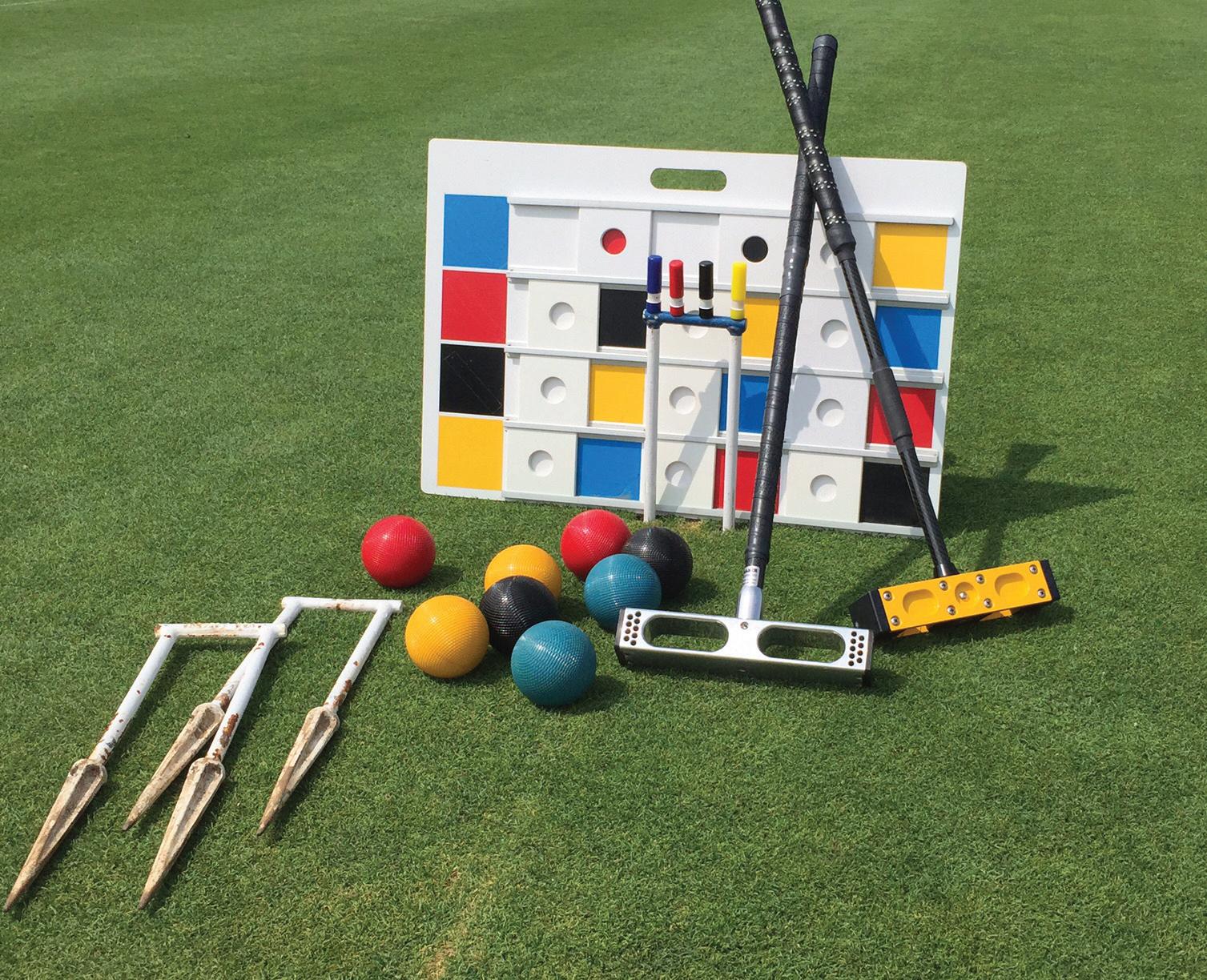
Country Club of Orlando Invitational
Country Club of Orlando
Orlando, Florida
February 20-22, 2026
Championship Flight
01. James Welch
02. Jeff Smith
03. Mike Hatcher
04. Gail Barley
05. Scott Scharlau
06. Mitchell Cooper
07. Jim Hardy
08. Tom Colman
First Flight
01. Becky Welch
02. Susie Day
03. Diana Colman
04. Paige Vietor
05. Lucy Fender
US Open GC Managers Tournament
National Croquet Center
West Palm Beach, Florida
February 9, 2026
Results
01. Yasser Fathi
02. Salah Hassan
03. Mohammad Kamal
04. Amr Hamdy
05. Rania Gabr
2026 SCCC A6W Club Doubles
Sarasota County Croquet Club
Venice, Florida
February 6-7, 2026
Championship Flight
01. Matt Griffith/Bob Gelineux
02. Webster Bull/Gene Raymond
03. Russ Cuccia/Neil Houghton
04. Stephen Errickson/Teresa Errickson
05. Walt Janitz/Stephen Thurston
First Flight
01. Michael Kukla/Rita McNamara
02. George Claffey III/ Michael Kolowich
03. Mervyn Harvey/Christof Weihs
04. Chris Smith/Sandy Janitz
05. Kathleen Bull/Nancy Hart
06. J R Rowell/Rick Alderson
Second Flight
01. Bob Taber/Linda Taber
02. Pauline Harvey/Linda Orff
03. Toni Marie Gelineau/Bruce Miller
04. Alex Feinstein/Debbie Martin
05. Karen Weihs/Juli Burke
06. Nona McGinnis/Julie Doric
07. Kathy Hart/Shirley Ricci
2026 Loggerhead GC Tournament
Grand Haven Croquet Club
Palm Coast, Florida
February 5-8, 2026
Championship Flight
01. Macey White
02. Chris Barley
03. Brett Stovall
03. Jim Jamison
05. Gary Gamble
05. Ron Taylor
07. Billy Roche
07. Brian Zindel
Championship Flight Doubles
01. Ron Taylor/James Podraza
02. Jim Jamison/Sarah Persons
03. Macey White/Dana Silliman
03. Gary Gamble/Dorothy Silliman
05. Brett Stovall/Rick Pratt
06. Brian Zindel/Billy Roche
First Flight
01. Jim Podraza
02. Barbara Jamison
03. Susu Day
03. Curtis Loftin
05. Dorothy Silliman
06. Rick Pratt
07. Sarah Persons
07. Carmen Roche
First Flight Doubles
01. Barbara Jamison/Gail Montgomery
02. Susu Day/Rich Iuliucci
03. Mike Debitetto/Chris Eaton
03. Alice Scanlon/Jason Collins
05. Carmen Roche/Sarah Thompson
06. Greg Presley/Susie Day
Second Flight
01. David Betsill
02. Greg Presley
03. Sarah Thompson
03. Mike Debitetto
05. Gail Montgomery
06. Susie Day
07. Chris Eaton
07. Jason Collins
The Beach Club Invitational
The Beach Club
Palm Beach, Florida
January 28-February 1, 2026
Championship Flight
01. Randy Cardo
02. Robert Pulitzer
03. John Brown
03. Preston Stuart
05. David Ekstrom
05. Cecil Creasey
05. Courtney Green
05. Lucas Van Alen
09. Norris Settlemyer
09. Michael Todorovich
11. Mark Ski
11. Calvert Chaney
13. Linda Trifone
13. Donna Dixon
15. Ronald Eccles
15. David McCoy
First Flight
01. Charlotte Pulitzer
02. Dennis Leddy
03. John Craddock
03. Yvette Donato Selby
05. Yen Sullivan
05. Richard Hayes
05. Stuart Price
05. Patricia Spratt
09. Jeanne Branthover
Second Flight
01. Bo Prillaman
02. David Kepner
03. Sally McGrath
03. Chris Weihs
05. Christopher Morris
05. Kathleen Green
05. Jan Fisher
05. Michael Kolowich
09. Karen Heckman
09. Carl Archiniaco
11. Bill Sullivan
11. Danna Huneycutt
Third Flight
01. Priscilla Flowers
02. Scott Brown
03. Bass Wallace
03. John McGrath
05. Alex Galasso
05. Georgia Carter
05. Marc Blumberg
05. Karen Weihs
09. Lee Hamel
09. Mary Craddock
11. Susan Creasey
11. Dick Corey
13. Randall Roe
13. David Beccia
Fourth Flight
01. Ralph Worthington
02. Amy Bothwell
03. Fei Fei Williams
03. Christopher Darton
05. Donna Wilson Hamel
05. Jessica Beccia
Championship Flight Doubles
01. Randy Cardo/Mark Ski
02. John Brown/Lucas Van Alen
03. Bill Trower/Courtney Green
03. Preston Stuart/Cecil Creasey
05. David McCoy/Donna Dixon
06. David Ekstrom/Linda Trifone
07. Calvert Chaney/Ronald Eccles

The Beach Club Invitational
The Beach Club
Palm Beach, Florida
January 28-February 1, 2026
(continued)
First Flight Doubles
01. Dennis Leddy/Bo Prillaman
02. Sally McGrath/Kathleen Green
03. John Grabow/Michael Kolowich
03. Patricia Spratt/Chris Weihs
05. Charlotte Pulitzer/ Christopher Morris
05. Jan Fisher/Bill Sullivan
07. Jeanne Branthover/David Kepner
07. Richard Hayes/Carl Archiniaco
09. Yen Sullivan/Danna Huneycutt
09. John Craddock/Missy Chilton
09. Stuart Price/Karen Heckman
Second Flight Doubles
01. Georgia Carter/Randall Roe
02. Priscilla Flowers/David Beccia
03. Alex Galasso/Karen Weihs
03. Allison Worthington/Susan Creasey
05. Mary Craddock/Dick Corey
06. Liddy Chaney/John McGrath
Third Flight (Waterford) Doubles
01. Bass Wallace/Lee Hamel
02. Jackie Wallace/Eileen Cornacchia
03. Marc Blumberg/Fei Fei Williams
03. Donna Wilson Hamel/ Jessica Beccia
05. Scott Brown
05. Ralph Worthington
05. MaryAnne Mathys
2026 Jones Invitational
Sarasota County Croquet Club
Venice, Florida
January 22-25, 2026
Championship Flight
01. Cecil Creasey
02. Stephen Errickson
03. Matt Griffith
04. Lynda Sudderberg
05. Gene Raymond
05. Webster Bull
07. Brian Hovis
07. Roger Vorraber
09. Ron Eccles
09. Stephen Grassbaugh
09. John Joseph
09. Steve Thurston
First Flight
01. Peter Gordon
02. Patt Spratt
03. Teresa Errickson
04. Mervyn Harvey
05. Richard Hayes
05. Jan Fisher
07. Becky Essick
07. Christine Smith
09. Michael Kolowich
09. George Claffey III
09. Chris Weihs
09. Rick Alderson
Second Flight
01. Karen Weihs
02. Kathie Hart
03. John Grout
February Issue (Spring) – 1/15/27
To get started, contact Dylan Goodwin at croquetnetwork@gmail.com
04. Billy Simmons
05. Debbie Martin
05. Pauline Harvey
07. Cynthia Chess
07. Katie Bull
09. Susan Creasey
09. Gloria Gordon
09. Jeffrey Cohen
09. Linda Merk
2026 Women’s GC Open
National Croquet Center
West Palm Beach, Florida
January 15-18, 2026
Championship Flight
01. Cheryl Bromley
02. Ana Sanchez de Granda
03. Cami Russack
03. Julie Wright
05. Beatriz Cabeza de Vaca
06. Lisa Maloney
07. Helen Covington
07. Debbie Davidoff
09. Jodie Rugart
10. Jan Spoerl
11. Priscilla Flowers
11. Maria Antonia Verela
13. Carmen del Rio Zuazo
13. Inmaculada Palomares
13. Caryl Firth
13. Adrienne Lucke
17. Sabine Martinsone
18. Vickie Johnston
19. Mary Galasso
19. Kim Gottshall
21. Diane Waterfall
21. Lynda Bjorklund
21. Anne Killilea
First Flight
01. Maria Eugenia Ortiz
02. Lucia Morales-Halaby
03. Susan Langston
03. Barbara Jamison
05. Sarah Persons
05. MaryCarol Stearns
07. Sue Emond
07. Kim Beaty
09. Amy Hempt
10. Paloma Casanova
11. Patricia Spratt
11. Karen Heckman
13. Enriqueta Cuartero
13. Ellen O’Brien
13. Madeleine d’Ambrosio
13. Gay Cinque
17. Marisa Palomares
18. Glo Ghegan
19. Mary Hennelly
19. Kathleen Brown
21. Jane Grandusky
21. Patti Malpass
21. Betty Robinson
21. Alice Scanlon
Second Flight
01. Susan Hogan
02. Cheryl Grigg
03. Cathy Long
03. Pam Groh
05. Janet Anthos
06. Janice Baysden
07. Diane Rose
07. Maria Jose Palomares
09. Suzanne Turner
10. Caroline Robinson
11. Chris Eaton
11. Sheila Peterson
13. Janet Mullen
13. Polly Joa
13. Lin Irey
17. Marcia Riching
18. Fei Fei Williams
19. Lynn DeVault
19. Lynn Foley
21. Patricia Richmond
21. Judy Sellner
21. Bess Gallanis
21. Frances Alexakos
Snowbird GC Challenge
Chesapeake Bay Croquet Club
Hartfield, Virginia
December 15, 2025-February 27, 2026
Results
01. Rick Pratt
02. George Anas
03. Joe Ward
04. Kevin Cordray
05. Kari Lee Donovan
06. Kellie Hinkle
06. Frank Jemmison
Green Turtle 6W Challenge
Grand Haven Croquet Club
Palm Coast, Florida
December 15, 2025-January 31, 2026
Championship Flight
01. Billy Roche
02. Edmund Giancola
03. Mike Debitetto
04. Gloria Gordon
05. Carmen Roche
Green Turtle GC Challenge
Grand Haven Croquet Club
Palm Coast, Florida
December 15, 2025-January 31, 2026
Championship Flight
01. Nancy Crouch
02. Billy Roche
03. David Betsill
04. Kathie Gamble
05. Mike Debitetto
06. Dana Silliman
07. David Arkley
08. Carmen Roche
09. Alise Scanlan
May
5/14/26 - 5/16/26
Albemarle Croquet Club GC Open
Albemarle Croquet Club
Belvidere, NC
Adam Lassiter | 252-326-1231 adamllassiter@gmail.com
5/21/26 - 5/24/26
Blue Crab A6W Tournament
Chesapeake Bay Croquet Club Hartfield, VA
Macey White maceywhite@gmail.com
5/21/26 - 5/24/26
2026 Rockfish GC Tournament
Chesapeake Bay Croquet Club Hartfield, VA
Macey White
maceywhite@gmail.com
5/22/26 - 5/25/26
Indian Territory Open - A6W Lafortune Croquet Pavillion Tulsa, OK
Bob Baker | 918-688-7777 bobbaker688@gmail.com
5/28/26 - 5/31/26
9W National Championship
Morehead City Park Complex
Morehead, KY
Brian Hovis | 561-478-0760 tournament@uscroquet.com
June
6/4/26 - 6/7/26
GC Eights
Bald Head Island Croquet Club
Bald Head Island, NC
Brian Hovis | 561-478-0760 tournament@uscroquet.com
6/4/26 - 6/7/26
ScissorTail Oklahoma Championship
Oklahoma City Golf & Country Club Nichols Hills, OK
Suzanne Spradling | 405-590-7264 sshawsprad@cox.net
6/6/26 - 6/7/26
National Croquet Day
Tom Cooper marketing@croquetamerica.com
6/11/26 - 6/14/26
2026 Southeast Regional A6W Championship
Chesapeake Bay Croquet Club Hartfield, VA
Brian Hovis | 561-478-0760 tournament@uscroquet.com
6/12/26 - 6/14/26
US Golf Croquet Classic Denver Croquet Club Denver, CO
Matt B Smith | 660-238-7035 croquet1@hotmail.com
6/12/26 - 6/14/24
NY State GC Championship
New York Croquet Club New York, NY
Paul Neubecker | 716-359-6018 paul.neubecker@gmail.com
6/15/26 - 8/15/26
Stingray 6W & GC Challenge
Chesapeake Bay Croquet Club Hartfield, VA
Macey White | maceywhite@gmail.com
6/18/26 - 6/21/26
Berkshire Invitational - 6W Lenox Croquet Club Lenox, MA
Stuart Lawrence | 646-483-3000 plus26tp@gmail.com
6/25/26 - 6/28/26
Woodlawn Invitational
Woodlawn Croquet Court Ellsworth, ME
Perry Mattson | 207-667-9335 newburyneckshore@gmail.com
July
7/2/26 - 7/5/26
USCA Western GC Regional Pasadena Lawn Bowling and Croquet Club Pasadena, CA
Rick Zazueta | 818-306-0240 rick.zazueta@gmail.com
7/15/26 - 9/15/26
Bluefish GC & 6W Challenge Chesapeake Bay Croquet Club Hartfield, VA
Macey White maceywhite@gmail.com
7/16/26 - 7/19/26
Canadian National GC Championship North Toronto Croquet Club Adam Barr | 647-519-2149 adamcbarr@gmail.com
7/24/26 - 7/26/26
USCA Northeast Regional GC Championship
Lenox Croquet Club Lenox, MA
Brian Hovis | 561-478-0760 tournament@uscroquet.com
7/24/26 - 7/26/26
Milwaukee GC Doubles Open
Milwaukee Croquet Club Milwaukee, WI
Cheryl Bromley | 954-242-8601 bromleycroquet@gmail.com
7/30/26 - 8/8/26
Buffalo Invitational - A6W Deleware Park Buffalo, NY
Robert Gannon | 716-432-1500 thehangmen@msn.com
7/30/26 - 8/2/26 NC Club Teams NC
Tom Balding | 631-708-7575 tclareb5@gmail.com
August
8/1/26 - 8/2/26
Sticky Wicket Weekend - GC Merion Cricket Club Haverford, PA
Whitney Thain | 610-642-5800 wthain@merioncricket.com
8/7/26 - 8/9/26
USCA Northeast Regional A6W Championship
Sandwich Croquet Club
East Sandwich, MA
Brian Hovis | 561-478-0760 tournament@uscroquet.com
8/7/26 - 8/9/26
Rochester Invitational A6W Croquet Tournament
G&T Sports Park Hilton, NY
Rich Curtis | 585-461-2365 rgcrover@aol.com
8/13/26 - 8/16/26
Woodlawn Vacationland
GC Tournament
Woodlawn Croquet Club
Ellsworth, ME
Timothy McCormick | 207-329-5343 tmccorm1@gmail.com
September
9/4/26 - 9/7/26
NC State A6W Singles
Championship
Albemarle Croquet Club
Belvidere, NC
Adam Lassiter | 252-326-1231 adamllassiter@gmail.com
9/9/26 - 9/13/26
Woodlawn Big Lobster
Woodlawn Croquet Club
Ellsworth, ME
Perry Mattson | 207-667-9335 newburyneckshore@gmail.com
9/13/26 - 9/19/26
USCA Golf Croquet National Championship
National Croquet Center
West Palm Beach, FL
Brian Hovis | 561-478-0760 tournament@uscroquet.com
9/18/26 - 9/20/26
Osborn Cup
New York Croquet Club
New York, NY
Paul Neubecker | 716-359-6018 paul.neubecker@gmail.com
9/23/26 - 9/27/26
Pinehurst Invitational
Pinehurst Country Club
Pinehurst, NC
Elaine Moody | 910-986-3164 halliburton_2@msn.com
9/26/26 - 9/27/26
The Croquet Invitational - 6W & AC
Merion Cricket Club
Haverford, PA
Whitney Thain | 610-642-5800 wthain@merioncricket.com
October
10/1/26 - 10/4/26
Albemarle Croquet Club Fall
GC Open
Albemarle Croquet Club
Belvidere, NC
Elaine Smith | 330-231-1071 elainesmith8543@gmail.com
10/4/26 - 10/10/26
USCA A6W National Championship
National Croquet Center
West Palm Beach, FL
Brian Hovis | 561-478-0760 tournament@uscroquet.com
10/6/26 - 10/7/26
USCA GC School
National Croquet Center
West Palm Beach, FL
Adam Peck | 561-478-0760 usca@uscroquet.com
10/13/26 - 10/15/26
WGCA 2nd Annual Women’s
GC Doubles Open
Albemarle Croquet Club
Belvidere, NC
Cheryl Bromley | 954-242-8601 bromleycroquet@gmail.com
10/13/26 - 10/14/26
USCA Association School
National Croquet Center
West Palm Beach, FL
Adam Peck | 561-478-0760 usca@uscroquet.com
10/15/26 - 10/18/26
North American Open GC Tournament
Chesapeake Bay Croquet Club Hartfield, VA
Macey White maceywhite@gmail.com
10/20/26 - 10/23/26
WGCA Women’s Doubles Open
Albemarle Croquet Club Belvidere, NC
Brian Hovis | 561-478-0760 tournament@uscroquet.com
10/20/26 - 10/22/26
USCA A6W School
National Croquet Center West Palm Beach, FL Adam Peck | 561-478-0760 usca@uscroquet.com
10/22/26 - 10/25/26
USCA Selection Eights (AC)
National Croquet Center West Palm Beach, FL
Brian Hovis | 561-478-0760 tournament@uscroquet.com
November
11/4/26 - 11/8/26
USCA Seniors Masters (A6W)
National Croquet Center
West Palm Beach, FL
Brian Hovis | 561-478-0760 tournament@uscroquet.com
11/13/26 - 11/15/26
The GC Shark Tooth Open Sarasota County Croquet Club Venice, FL Nancy Hart | 803-530-2035 nh13sc@gmail.com
11/19/26 - 11/22/26
USCA GC Seniors & Masters
National Croquet Center West Palm Beach, FL
Brian Hovis | 561-478-0760 tournament@uscroquet.com
December
12/1/26 - 12/2/26
USCA GC School
National Croquet Center West Palm Beach, FL
Adam Peck | 561-478-0760 usca@uscroquet.com
12/3/26 - 12/6/26
USCA GC Club Teams Sarasota County Croquet Club Venice, FL Brian Hovis | 561-478-0760 tournament@uscroquet.com
12/11/26 - 12/13/26
Seahorse GC Invitational
The Beach Club Palm Beach, FL
Jane Casey | 203-570-1866 rjntkc@gmail.com
12/11/26 - 12/13/26
The Holiday Classic Sarasota County Croquet Club Venice, FL
Nancy Hart | 803-530-2035 nh13sc@gmail.com
January 2027
1/8/27 - 1/10/27
NCClub A6W Singles
National Croquet Center
West Palm Beach, FL
Julia Johnston | 561-852-1413 medstone100@me.com
1/14/27 - 1/17/27
Women’s 6th Annual GC Open
National Croquet Center
West Palm Beach, FL
Priscilla Flowers | 828-421-3543 pmflowers375@gmail.com
1/27/27 - 1/31/27
Beach Club 6W Invitational
The Beach Club
Palm Beach, FL
Jane Casey | 203-570-1866 rjntkc@gmail.com
February 2027
2/8/27 - 2/8/27
US Open GC Pro-Am
National Croquet Center
West Palm Beach, FL
Brian Hovis | 561-478-0760 tournament@uscroquet.com
2/9/27 - 2/13/27
US Open GC
National Croquet Center
West Palm Beach, FL
Bill Simmons | 908-625-9189 bjsjr1957@comcast.net
2/24/27 - 2/28/27
The Steuber Classic
National Croquet Center
West Palm Beach, FL
Franck Meunier | 561-478-2300 general.manager@ croquetnational.com
March 2027
3/12/27 - 3/14/27
USCA Croquet Week Golf Croquet
National Croquet Center
West Palm Beach, FL
Brian Hovis | 561-478-0760 tournament@uscroquet.com
3/18/27 - 3/21/27
USCA Club Teams 6W
National Croquet Center West Palm Beach, FL
Brian Hovis | 561-478-0760 tournament@uscroquet.com
3/31/27 - 4/4/27
USCA Women’s GC Nationals
National Croquet Center
West Palm Beach, FL
Brian Hovis | 561-478-0760 tournament@uscroquet.com
April 2027
4/9/27 - 4/11/27
NCC Club GC Singles
National Croquet Center
West Palm Beach, FL
Julia Johnston | 561-852-1413 medstone100@me.com
June 2027
6/3/27 - 6/6/27
USCA GC Eights
Albemarle Croquet Club Belvidere, NC
Brian Hovis | 561-478-0760 tournament@uscroquet.com