What’s Really Behind Your Hangar Door? 4 When the Unthinkable Happens 8 Business Aviation Crisis Response 10 Plus: Quiz Yourself on Runway Excursion Prevention
G reek philosopher Heraclitus noted that change is the only
constant. Think a minute about how the organization you fl y or work in differs today from when you arrived. More’s likely changed than you usually pay much attention to. Big things stand out: a new aircraft, leader or business line. But subtle shifts like time- or resource- saving refinements, new tools, tech, ‘work smarter’ ideas, customer suggestions adopted, or new hires joining the team often don’t get much consideration. But all these things (and more) modify the ‘what’ and ‘how’ of the work being done. If Heraclitus is right that no organization is static, are you evolving or drifting?
What Makes a Flight Department a Risk Worth Insuring?
KEVIN KOVARIK USAIG SVP; Head, General Aviation Underwriting
As North America’s oldest aviation insurer, USAIG is an industry leader in partnering with flight departments that value safety,
professionalism, and continuous improvement. We look to insure organizations that share a safety mindset and see value in a long - term relationship with an insurer that does more than just respond to claims. Our team offers risk management support, contractual review, emergency response planning, and regular engagement to promote operational safety. The departments that capture our attention aren’t necessarily the biggest or most well-funded, but the ones that are engaged, informed, and always strive to do better. When a flight department invites us in and says, “How can we improve?” we know we’ve found an operator that shares our collaborative mindset and is ready to differentiate itself from others.
There are some who believe getting insurance on their fleet is just “checking a box,” but communication and trust are critical in the aviation industry, and insurance plays a vital role in the safety of the aviation community as a whole.
FAA PILOT QUALIFICATIONS ≠ INSURABILITY
For a non-aviation example, let’s say a bakery renown for its bread brings on a new baker. He’s taught the doughmaking procedure: certain ingredients get warmed to specific temps before items are then added in a set order, with several interim mixing and kneading stages. This baker has made dough more simply in prior jobs and, when falling behind in his tasks some weeks later, he skips the pre-warming and just blends everything at once in one kneading. The finished bread
A common refrain we’ve heard over the years is: “If the Federal Aviation Administration (FAA) says I am legal, why is that not acceptable to insurers?” It’s a fair question, but it stems from a fundamental misunderstanding. FAA regulations and your aviation insurance policy are two entirely separate frameworks, each with its own priorities and risk assessments. While the FAA sets baseline legal requirements to protect the public, insurers evaluate risk through a different lens rooted in liability, actuarial data, and financial exposure. For insurers, the financial exposure is potentially in the hundreds of millions of dollars for each and every flight. For this reason, being
looks the same in the display case and no ramifications seem evident. The baker adopts the quicker method for all future batches. That’s drift.
Is this a bad thing? Probably, from an organizational culture standpoint. But in the broader scheme? Consider an alternate chain of events in which management realized (perhaps because bakers told them) that bread demand had reached a point where production could no longer keep up. Options such as new equipment, hiring more staff, or adjusting procedures were weighed. It was found that mixing the dough all at once saves 2 man-hours/day, yet still yields a great product. So a trial was run on some batches and customer satisfaction impacts were monitored. Ultimately, the simpler way was validated and became the bakery’s SOP. They evolved strategically.
Let’s be real: both kinds of change happen in your organization and the drift part isn’t all driven by cornercutting. It just as easily occurs when a well-meaning worker implements a new idea on their own without broader coordination. No shade cast on bakers, but technical interdependencies and change risks are especially significant in aviation. Huge safety vulnerabilities can arise if drift becomes prevalent, as far too many accident reports attest.
Thoughtful leadership can support innovation, while at the same time avoid drifting into unrecognized consequences or risks. Is your whole team aware of the risk drift presents and the proper way to advance process change ideas in your operation? Are tough questions asked and sufficient, purposeful observations made to catch and manage drift? Questions along these lines may not be especially revolutionary, but their answers in your organization could be evolutionary. Stay well, fl y smart, and fl y safe. ❖
“legal” and meeting basic metrics for safe operation in the eyes of the FAA doesn’t automatically translate to being “insurable” under the terms of your policy. I often explain that while the FAA sets the minimum standard to legally operate, insurers set their own standard for which each market feels comfortable deploying capacity (in capital) as insurance. High-performing flight departments know this, and invest in quality pilot training, proficiency tracking, and mentoring. An operator’s ability to demonstrate pilot quality and professional development is a key indicator of its risk profile. Having a conversation with your insurance provider about actions taken or contemplated above and beyond the required FAA minimums can go a long way in showing your commitment to optimizing your insurability.
A CONVERSATION: UNDERWRITERS PROVIDE PROFESSIONAL INSIGHT FOR MAXIMUM INSURABILITY
It is a rewarding experience to share perspectives with flight departments and make suggestions on why additional training or a type of specific training might make an insured a better risk. While it is not a USAIG underwriter’s goal to tell an insured how to run their business, it does cause strain when an insured hires a pilot prior to engaging in dialogue, only to then learn the pilot is not insurable or will require additional training prior to the underwriter naming them on the policy. During underwriting visits with insureds, our underwriters are often asked: “What accidents have you seen in the industry? How can we do better so that doesn’t happen to us?” These conversations are beneficial to all parties – fostering a bond between the flight department and the insurer as we talk through scenarios and brainstorm solutions that work for both of our organizations. Conversations like this confirm we are on the same page. Maintaining insurability is important for all operators, and it’s worthwhile to periodically consider what your organization can do today to preserve its attractiveness to top carriers tomorrow.
WHY DO RATES FLUCTUATE, EVEN WITHOUT A LOSS?
If you’ve been in this industry for any amount of time, it’s likely you’ve asked, “Why did my rates go up when I didn’t have a claim?”
Insurance pricing is influenced by many factors beyond individual loss history. Market dynamics (such as reinsurance costs, claims trends across the industry, aircraft values, and global economic conditions) can impact rates. Additionally, changes in the aircraft fleet, pilot roster, operational profile, or even hangar location can affect risk exposure and premiums.
At USAIG we aim to be transparent about these factors and work closely with policyholders to ensure they're informed and prepared. Proactive communication and clear documentation go a long way in managing these fluctuations together.
LOSSES:
NOT THE ‘BE-ALL’ OR THE ‘END-ALL’
Realistically, losses are inevitable for an insurance company. Premiums from the masses pay the losses of the few (in ideal conditions). If you fl y long enough, something may well happen. This is not a cynical outlook, it’s just reality and why we exist as an insurance industry. Losses come in
all shapes and sizes. Attritional losses such as lightning, hail, and bird strikes, foreign object damage etc., are more likely as the number of cumulative hours flown increases. Operational losses like ground handling incidents, pilot deviations, and general mistakes also happen. Simply having a loss does not make you a poor or less insurable risk. But when a loss occurs, having the ability to explain it to your insurer and, if possible, demonstrate a plan to mitigate similar losses in the future will put you in the most favorable situation and minimize impact on insurability.
SUPPORT THAT GOES BEYOND COVERAGE
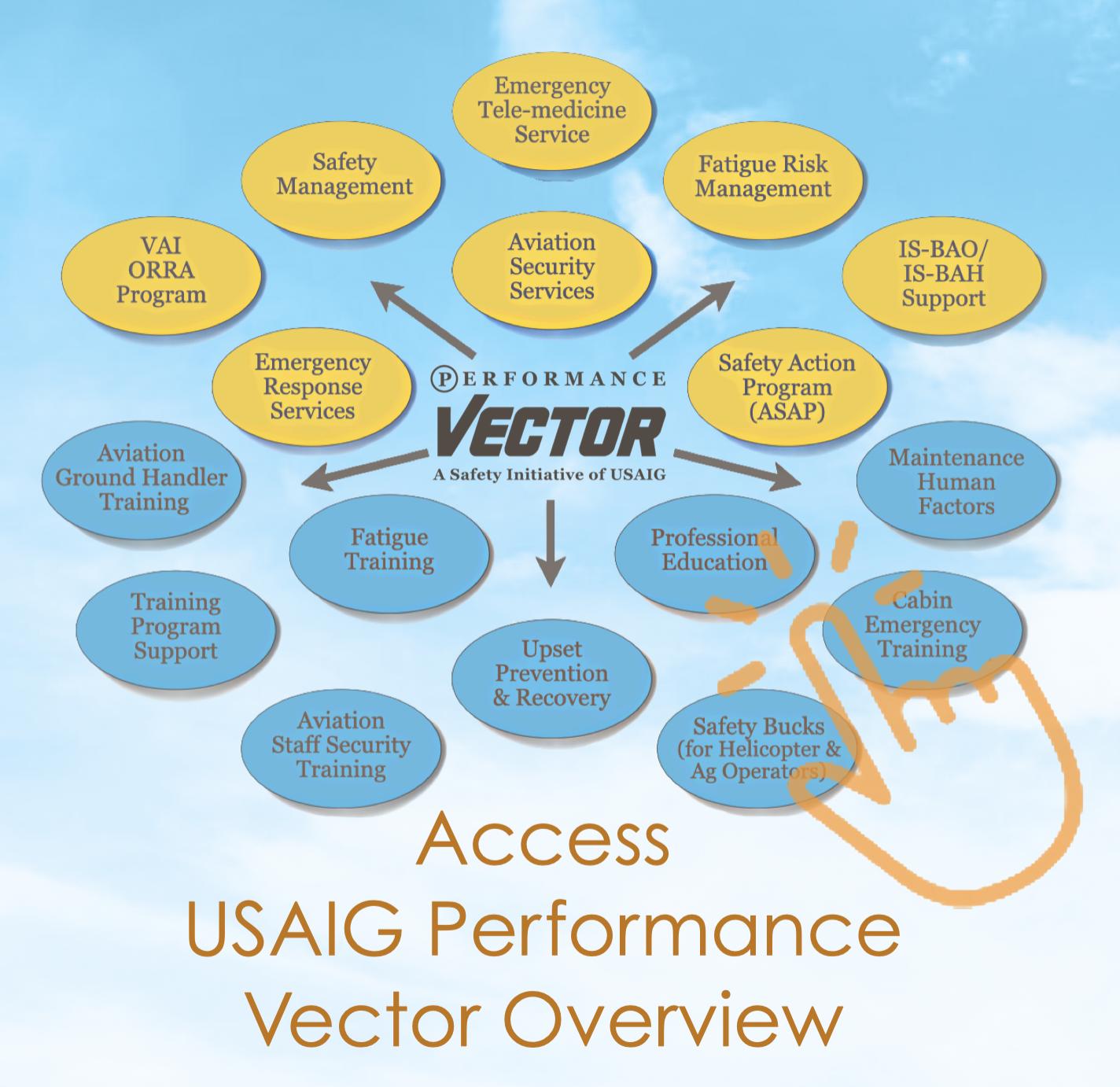
Taking advantage of value-added services through your insurance provider can increase or preserve insurability and promote the safety culture of your flight department. USAIG offers to take a role in its insureds’ loss control through a program called Performance Vector (PV). PV is a cornerstone of how we help flight departments improve safety and manage risk proactively by offering access to industry-leading training, safety management tools, emergency response preparedness services, and more. Depending on the policy count and type, eligible departments can select from a menu of safety services designed to strengthen their safety culture. PV empowers departments to go beyond compliance and embed continuous improvement into their operations. It’s USAIG’s way of facilitating access to a set of services we believe to be best-in-class. Since the introduction of PV, I have met with insureds that continually strive to improve their operations, and they tangibly experience the value it provides. When these programs are used, we take notice. If your flight department does not currently take this type of support into consideration, it’s time to make that call; not solely for insurance purposes, but for the safety of your people and organization.
FDM, FOQA & SMS: WHERE SAFETY MEETS STRATEGY
Modern risk management relies on data. USAIG strongly supports the adoption of Flight Data Monitoring (FDM) programs, including Flight Operations Quality Assurance (FOQA) and comprehensive Safety Management Systems (SMS). These tools enable flight departments to detect issues before they become accidents, fostering a culture of datainformed decision-making. Insurers value departments that embrace this proactive approach not just because it reduces risk, but because it demonstrates a commitment to the highest standards of professionalism and safety.
Departments with robust FDM and SMS programs are often better equipped to respond to incidents, reduce training gaps, and maintain a consistent safety record. USAIG does not require in-depth insight into these initiatives beyond knowledge that they are (or are not) deployed in the organization. Though not required, FDM and SMS information that an insured opts to share is valuable and demonstrates a collaborative outlook.
NOT JUST A POLICY, A PARTNERSHIP
More than your car insurance or life insurance policy, an aviation insurance policy should include a trusted relationship. At USAIG we believe that the best aviation insurance partnerships are built on shared values, open communication, and a mutual commitment to safety. We’re proud to work with flight departments that lead the way in operational excellence and we strive to match that standard.
I consistently urge our insureds to seek ways to go above and beyond minimum standards. Any additional feathers you can place in your hat will only show how you deserve the most favorable rating when your renewal cycle begins.
Another piece of advice: always advocate for yourself. I ask insureds to tell me about their operation in its entirety. Explain how you are unique. When an insured can demonstrate they are an expert in their area of operation yet still value third party input, it puts them in the most advantageous position at policy renewal time.
At the end of the day, insurability reflects more than just compliance or a clean loss record. It reflects a flight department’s mindset. A commitment to continuous learning, transparency, and proactive safety isn’t just good practice… it’s what defines a resilient and respected operation in today’s aviation landscape. ❖
Cultivating a Safe Culture
What’s Really Behind Your Hangar Door?
ROBERT SUMWALT
Executive Director, Boeing Center for Aviation and Aerospace Safety at Embry-Riddle Aeronautical University
Adapted and re-published with permission. This article first appeared in the September/October 2020 issue of Business Aviation Advisor.
When I was growing up, my dad was executive VP and partner in a commercial construction company. In the late 1960s, as their business expanded throughout the southeast, they did what many smart organizations do – they purchased a twin-engine airplane and hired a pilot. When I was around 13, Dad took me along on a business trip, where he was able to visit job sites in three cities in one day. We were back home in time for dinner. Inflight, while I was pretending to be the official copilot, Dad sat in the passenger cabin and dictated notes for each job.
Dad always told me how much he loved being able to be so efficient with the company plane, and he always spoke so highly of the pilot. However, that changed on a cloudy morning in 1976 when my parents and another couple were traveling to a convention. While on approach to a foggy runway, the plane descended below the authorized altitude while still in the clouds, careened into trees, and caught fire. Looking at the pictures of the wreckage, to this day I am amazed and thankful that all were able to get out with only minor injuries. The aircraft was destroyed completely.
In the days following the crash, it was discovered that the pilot had not completed a recent flight review, as required by the Federal Aviation Regulations. When the aircraft was purchased, the sale was never recorded with the FAA – a violation of FAA requirements. There was no operations manual. There really was no true oversight over the operation and maintenance of the airplane.
Yes, the airplane was shiny and glitzy, the pilot always appeared professional, and he made good landings. He could almost always get passengers to their destination. But, as demonstrated by this crash and many others, those aren’t the best metrics of a safe operation. In fact, after being involved with several accident investigations over the years, and looking back at this one, I’ve wondered: Do many
business aviation owners really know what’s behind their hangar door? As an operator, do you take the steps needed to stay factually aware and confident things are as they should be? Although there are no absolute assurances, there are a few questions that might help provide some important information about your operation.
Are There Written Policies and Procedures?
Charter and fractional operators are required to have these, but it is not an absolute requirement for private owners. In my time at the National Transportation Safety Board (NTSB), I have seen several aviation accidents which fall into one of two categories – the organization either does not have adequate written documentation, or if it does have such, it does not adhere to it rigorously.
How Do You Ensure Compliance?
A few years ago, we investigated the crash of a Gulfstream IV, which claimed seven lives, including the high-net-worth owner of the jet. On the surface, the aviation department had all the makings of a very professionally run organization. After the crash, we learned that the pilots were not even following basic procedures such as using cockpit checklists and checking flight controls before flight – factors which were directly causal to the crash.
How do you ensure compliance with procedures and regulations? External audits are a good start, but in this crash, the operator had received high marks during its last audit. Yet, our investigation found a completely different story.
An increasingly-used assurance strategy is having a flight data monitoring (FDM) program, where data from flights is routinely downloaded and analyzed to look for noncompliance. Following a chartered jet crash in 2015 which claimed nine lives, the NTSB stated: “Operational flight data monitoring programs could provide… operators with objective information regarding the manner in which their pilots conduct flights, and a periodic review of such information could assist operators in detecting and correcting unsafe deviations from company standard operating procedures.” Major airlines have been doing this for years, as do many corporate aviation departments. If your organization is not employing FDM, are the reasons for not doing so valid?
How Do You Gauge and Manage Risks?
It’s unlikely that you would be as successful as you are if you didn’t manage risks to some degree. But are formal and systemic means of managing risks in place to ensure safety?
data, it was mutually agreed upon to use a larger airport which, as it turned out, was just minutes farther than the smaller airport. The point is that risks should not be blindly accepted.
What About Safety Culture and Safety Management?
Is there a collective commitment by everyone to emphasize safety over competing goals? Are your crews empowered and comfortable saying ‘no’ when necessary?
Seeking to grow your aviation leadership knowledge and skills?
USAIG’s Performance Vector Program now includes Tuition Support for ERAU ProEd courses!
Smart business aviation operators require pilots to complete a flight risk awareness assessment before flight to ensure the planned flight is not predicting an unwarranted level of risks. If the level of risk is higher than acceptable, how can those risks be managed so they are at an acceptable level?
In a former life, I was recruited from an airline career to manage a small flight department for a Fortune 500 company. We routinely flew into a particular airport because it was near the company’s business unit in that town. When I took over the department, I realized there were hazards at that airport which didn’t provide a comfortable safety margin. The instrument approach did not provide the highest safety margins; the runway was relatively short; there were ditches on either end of the runway; and there were no airport rescue and firefighting facilities. We did a risk assessment and then presented that information to the senior leadership of the company. The leaders agreed that they were not willing to accept that level of risk, yet our pilots had always gone there because that’s what they thought the leadership wanted. Based on
Details here
Although required for airlines, a Safety Management System (SMS) is not required by the FAA for business aviation operators, while new SMS requirements for charter operators are in an implementation period and not yet in force. Based on accident investigations, the NTSB has recommended that business aviation operators, including those operated for charter, have a SMS.
SMS is a business approach to managing safety by providing a structured way to do so. Don’t be fooled by thinking an SMS is just a manual on the shelf – it is something that must be actively practiced and incorporated into everything an organization does. Contrary to being something ‘had,’ it really should be something ‘lived by.’ An effective SMS incorporates and addresses the questions raised above.
Business aviation is a powerful tool which helps businesses succeed. I’ve seen those benefits with my dad’s company, and I saw that when running a Fortune 500 flight department. I’ve also seen how devastating an aviation accident can be to a business, to those involved, and to those they leave behind. Consistently asking and getting the correct answers to the questions above should help you remain confident about what’s behind your hangar door. ❖
Robert Sumwalt is the executive director of Embry-Riddle’s Boeing Center for Aviation and Aerospace Safety. Previously, he was appointed by three US presidents to serve on the NTSB, where he served for 15 years including four years as chairman. Before that, he was an airline captain for a major US-based international airline for 24 years and also managed a Fortune 500 company’s aviation department. We’re delighted that he’s a recurring contributor to Premium on Safety
Runway Excursion Prevention: Stay on the Runway!
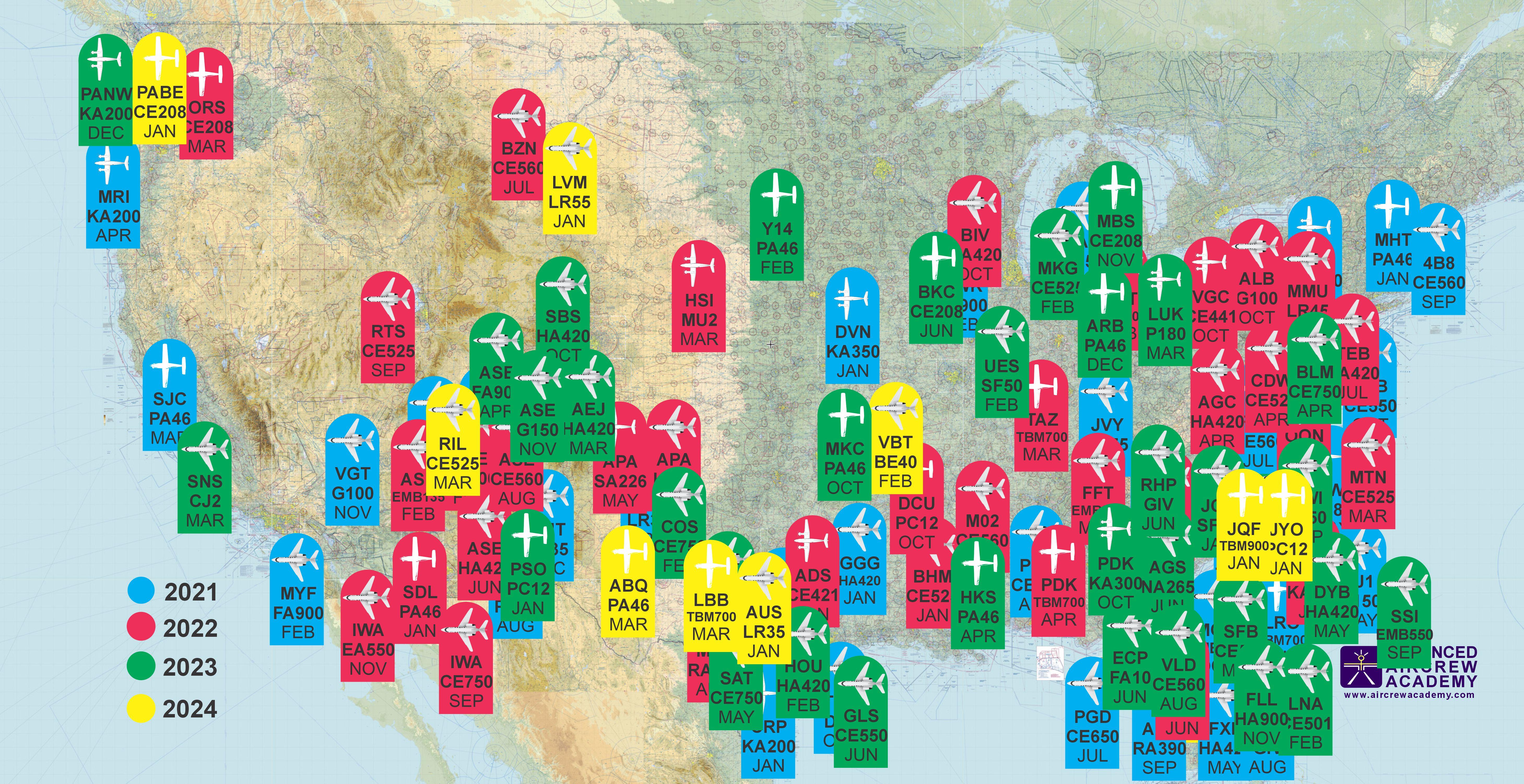
On average, there is one business aviation runway excursion per week in the United States. It’s the most frequent incident in the business aviation sector, posing threats to passenger safety, aircraft assets, and operator credibility.
In recent years, industry stakeholders have emphasized the importance of robust risk management, enhanced pilot training, and improved ground handling practices to mitigate the risk of veering off runways during takeoff or landing. Key contributing factors often include weather variability, runway contamination, equipment confusion (such as antiskid activation), miscommunications during rollouts, and pressure on schedules. Operators are increasingly adopting scenario-based training, stabilized approach criteria, and go-around protocols that prioritize safety over on- time performance. Advances in airport surface detection equipment and the installation of Engineered Materials Arrestor Systems (EMAS) by more airports have improved survivability and reduced hull losses. There were two business aviation operator excursions at different airports on the same day (September 3, 2025) that were aided by EMAS.
Recent industry developments underscore the importance of a collaborative approach to prevention. Regulatory bodies and industry groups have called for stricter emphasis on runway safety management systems (SMS) and more transparent incident reporting to identify systemic patterns. The broader aviation ecosystem (airlines, business aviation operators, maintenance organizations, and air traffic control) has been exchanging best practices on briefings, crosschecks, and decision-making during critical phases of flight. In addition, several operators have deployed enhanced de-icing and contaminant monitoring during winter operations, and airports are investing in runway inspections and surface condition reporting to reduce the likelihood of loss of control on contaminated surfaces. The combination of data sharing, targeted training, e-learning, and proactive maintenance practices is shaping a more resilient posture for business aviation in the face of runway safety challenges.
News from the past few months underscores a continuing need for accountability and strong safety cultures. Reports of incidents in business aviation often emphasize the importance of conducting rigorous post-event analysis and implementing corrective actions across fleets.
Depiction of U.S. business aviation runway excursions 2021-2024 as compiled by Advanced Aircrew Academy .
Aviation industry media have highlighted new performance dashboards that track runway excursions, pilot workload, and environmental conditions to inform proactive decisionmaking. In addition, several operators have announced investments in cockpit alerting systems and enhanced ground support services to reduce human factors risks during critical phases of flight. As the sector grows, the emphasis on preventive measures, situational awareness, and cross -industry collaboration is likely to remain central to sustaining safety and confidence in business aviation. ❖
Let’s see how you do on our Runway Excursion Prevention Quiz: (quiz answers on page 14)
1. A Runway Condition Code (RwyCC) of 2 indicates braking action is _________________
a. Medium to Poor c. Good
b. Poor d Nil
2. If you have a high- speed rejected takeoff at or above V1, what two things are likely to occur?
a. Tire fuse plugs will blow out and nosewheel steering failure
b. Tire fuse plugs will blow out and brake fire
c. A hydraulic system overload and brake fire
d. Manual braking will automatically activate and hydraulic fire.
3. A standard EMAS installation can stop a business jet- sized aircraft predictably at speeds up to _____ knots.
a. 80
c. 120
b. 70 d 60
4. During a maximum-effort stop, pulsation of the anti- skid
a. indicates the pilot is pressing too hard on the rudder pedals
b. indicates a malfunctioning braking system
c. is normal in aircraft braking systems
d. is a reminder to take your foot off the brake
Advanced Aircrew Academy is a USAIG Performance Vector-participating service provider offering comprehensive eLearning modules and curricula for business aviation professionals. Customized online courses, training materials, and scenario-based training improve crew skills in areas such as crew resource management, emergency procedures, and operational effectiveness. Their extensive and adaptive training catalog has eLearning for every person in your flight department.
5. As a technique, you should not conduct a rolling takeoff when the takeoff is "critical," which is anytime the runway required will be within ______ feet of the runway available.
a. 1200
c. 900
b. 1500 d 1000
6. NACO products indicate a runway is grooved on the ______________. Jeppesen products indicate a runway is grooved on the __________________.
a. Chart Supplement; Instrument Approach Procedure
b. Airfield Diagram; Airfield Diagram
c. NOTAMs; Chart Supplement
d. Chart Supplement; Airport Information page, Additional Runway Information Quiz answers on page 14
When the Unthinkable Happens
JENNY SHOWALTER Founder, Showalter Business Aviation Career Coaching
Some of my best days and some of my worst days have been lived at the airport. Among the best are memories of meeting my husband and of our kids growing up with aviation at their fingertips. And on the hardest days, when the unexpected happens and an accident occurs, the weight that settles over the airport is almost too much to bear. What we do in aviation carries life-or-death consequences. Most flights end exactly as planned, but we must be ready for the moments when they do not.
A DAY I WILL NEVER FORGET
I will never forget my closest brush with tragedy when my family still owned our FBO in Orlando. That afternoon I left work early with my four-month-old son and was close to home when I received a call.
It was our line service manager telling me that two of our employees had gone down in a fl ying club airplane near my house. He said they had set it down at a golf course. I went straight to the scene.
When I arrived, I saw an airplane wrapped around a pole, emergency vehicles everywhere, a helicopter lifting off with one of our employees, and an ambulance taking the other to the hospital. We later learned they had suffered engine failure from a loss of oil pressure. By some miracle they avoided golfers, a clubhouse and restaurant, a busy street, and a nearby neighborhood. But not the pole.
I remember running across the golf course, carrying my infant, trying to explain to first responders that these men worked for my family. I was held behind the police lines watching the aftermath of this tragedy.
What do you do when tragedy like this strikes in your aviation community? You go to the airport. That evening we gathered in the lobby to wait and to pray. Our prayers were answered for one, but not for the other. One of our employees went on to live a full life, raising a family and continuing his fl ying career. The other’s life was cut short, filled with promise that would never be realized.
THE HARDEST CALL
Even though the airplane was not ours and the employees were not on our clock, my mom, who was both our company president and their boss, quickly
realized she would have to make the call no parent ever wants to receive. With no training, she picked up the phone and made what was surely the most difficult call of her life to his parents, who were stunned and horrified to learn the fate of their beloved son, lost doing what he loved.
To say that event marked all of us is an understatement. I don’t think about it often, probably on purpose. But when I do, the images are vivid: standing there, clutching my baby, pressed against the police tape, helpless. Knowing the seriousness of the situation but not the outcome.
It is a feeling many in this industry, unfortunately, share. If you have never experienced it, count your blessings. If you have, my gut tells me you embrace safety more seriously than someone who has never walked this path.
GOOD INTENTIONS ARE NOT ENOUGH
In the moment, we did what we thought was right. We went to the scene. We gathered at the airport. We sent people to the hospital. My mom made the hardest call of her life. But there was no playbook, no checklist, no preparation for who should do what or how to handle the flood of emotion, media, and logistics that come with tragedy. After all, it was not our airplane, and we did not have a flight school. We were prepared for other scenarios, but not this one. We learned that day that tragedy can reach beyond the boundaries you expect.
Emergencies arrive without notice and demand decisions and actions that cannot wait. That is the role of an Emergency Response Plan. It does not take away the pain, but it gives people direction. It keeps chaos from compounding heartbreak. And it helps ensure that even in the worst moments, we can respond with clarity, compassion, and competence.
WHY IT MATTERS TO ME
You may be thinking to yourself: she writes resumes for a living what does she care about ERPs? The answer is simple. I am the wife of a pilot. I also know many people in this industry, and I pray that none of them ever face an emergency that forces their ERP into action. But if they do, I want to know their plan will guide them, protect their people and their families, and do the job it was designed to do in their time of need.
THE BREAKING NEWS REALITY
We also live in a time where, as soon as an event happens, it is on social media or the news within minutes. You can almost guarantee there will be video. Gone are the days when an ERP could unfold methodically before the outside world learned what’s happened. That is why ERPs are even more critical now, because an accident or incident can be public before you know the details, leaving little time to control the narrative or notify key people and critical partners. Today, it is just as likely that a family member or coworker will first learn of a tragedy by turning on the TV or scrolling through their feed. That reality hit me hard this past February as I sat with my husband at the Air Charter Safety Foundation’s annual safety symposium in Daytona Beach, Florida.
We listened to representatives from Hop-A-Jet outline the tragic details of their 2024 Naples, Florida crash, reminding me of the videos I watched on social media just moments after it happened. We also heard from Tim and Sheri Lilley, who spoke with incredible courage only six weeks after losing their son, First Officer Sam Lilley, in the midair collision in Washington, DC that claimed Sam’s life and the lives of 66 others, and was almost instantly replayed on national news. Their stories and bravery were heartbreaking reminders that behind every headline are people and families forever changed, and that how we respond in those first moments matters deeply. Both presentations prompted a serious conversation between my husband and me about what the plan in his flight department looks like in the event of tragedy. Logically, I asked, “Who would call me? Would I see it first on the news?”
A CALL TO ACTION
I implore you to ask those same questions about your own families and teams. Many flight departments have ERPs and practice them, but too many remain vulnerable, a split second away from crisis.
If your organization does not have an ERP, ask why and offer to be part of the solution. At minimum, identify your partners and maintain an updated contact list with employee families, company leadership, legal counsel, insurance representatives, a media spokesperson, and grief support resources. Clearly define roles so there is no uncertainty about who makes family notifications, who communicates internally, and who speaks externally. An ERP should never sit idle. Drills and tabletop exercises ensure that when the unthinkable happens, no one is left guessing.
If you have never attended a safety symposium like ACSF’s, make the time. Organizations such as the Central Florida Business Aviation Association host annual safety standdowns, many of them free and often with virtual options. There is no excuse not to attend. Hopefully your organization will support this and take the lead. But if not, don’t wait. Take the initiative to learn, prepare, and inspire your team to take ERP planning seriously.
Do not fall into the trap of thinking an emergency cannot or will not happen to you. The only thing worse than facing tragedy is facing it unprepared. Ask yourself, as I have, “how would I want to be treated if something happened to my loved one?” The answer is simple: with honesty, compassion, and care.
An ERP is not just a binder on a shelf. It is a promise to families, employees, and organizations counting on us to be ready when it matters most. Make sure yours is a living plan that delivers on that promise. ❖
USAIG agrees wholeheartedly with Jenny’s Call To Action! The article that follows, from our colleagues at Empathia Crisis Solutions, outlines key considerations for Emergency Response Plans and offers insights to help you self-assess your organization’s readiness to confront a crisis situation.
Jenny Showalter is a third-generation business aviation professional and founder of Showalter Business Aviation Career Coaching (SBACC). With nearly 30 years of experience, she helps industry professionals strategically elevate their careers through individualized coaching, resume writing, interview preparation, LinkedIn optimization, and outplacement services. Learn more at www.showalter.com or email jshowalter@showalter.com Safety Program Resources
Business Aviation Crisis Response A Guide for Preparedness
RICK HOAGLUND / EMPATHIA CRISIS SOLUTIONS, INC.
Business aviation maintains an exceptional safety record. With skilled personnel, strong compliance, and advanced equipment, some may question the need to invest in comprehensive emergency response planning.
The answer is straightforward: aircraft accidents, though rare, do occur. When they happen, the consequences extend beyond the immediate incident, affecting employees, the public, and the company's financial value. Reputational damage can persist for years or even decades, and some businesses may not survive the aftermath.
BEYOND SAFETY: THE ROLE OF EMERGENCY MANAGEMENT
While safety programs serve as the backbone of most business aviation departments, emergency management often receives less attention. Many organizations view it simply as a plan to retrieve from the shelf after an accident something that otherwise sits idle collecting dust.
When properly implemented, emergency management is proactive. An effective program focuses on anticipating potential crises in advance and minimizing the impact by identifying risks, creating and practicing scenarios before a crisis occurs, defining clear roles and responsibilities, and being ready to demonstrate the best of the organization during the most challenging times.
MEETING HEIGHTENED EXPECTATIONS
Following a business aircraft accident or serious incident, those directly affected expect the same level of care they would receive after a commercial aircraft accident. Consequently, business aviation operations often implement components associated with major airline accidents, even when not legally required, including family assistance centers, call centers for family information, and long - term support for those affected.
Organizations must determine whether they fall under the Aviation Family Assistance Act of 1996. The key question is: Does the business hold a Certificate of Public Convenience and Necessity? If so, the business aviation unit must comply with the same rules and regulations applicable to commercial airlines. For most business aviation departments, legal requirements are considerably less extensive.
YOUR CRISIS RESPONSE PLAN’S FOUNDATIONAL ELEMENTS
Safety Program Resources
Empathia Crisis Solutions—a participating service provider in USAIG’s Performance Vector safety benefits program—helps USAIG policyholders prepare for, respond to, and recover from crises of all kinds. Policyholders that select the Empathia option as their annual safety benefit receive up to 6 hours of consultative support to optimize their ERP (first year only), access to web-based and quarterly training, integration with Empathia’s proprietary Disaster Information Management System (DIMS) and access to a scalable array of specialized resources and services to help meet the response and recovery demands of an emergency.
Additionally, we recommend advising your broker and underwriter of planned ERP drills, so USAIG can assist and participate if logistically possible. For further assistance in gauging your organization’s emergency preparedness, USAIG’s ERP Best Practices Guide is freely available. Our Claims professionals can give USAIG policyholder ERPs a looking over too. Contact safety@usaig.com to coordinate an ERP review.
Organizations that rely on ‘just meet in the boss's office if something happens’ face enormous risk. Without planning, practice, or direction, responding effectively to a complex crisis becomes extremely difficult. Each position on the emergency response team requires backup personnel. However, assigning backup team members to cover multiple positions creates dangerous vulnerabilities. The program should include documented support from company officers, demonstrating their support for the plan. Through this support they are granting the authority for the crisis response team to make difficult, potentially costly decisions.
Continues next page
Every plan should clearly explain when to activate, with specific parameters that trigger the plan’s implementation. Business aviation response must accommodate team members working remotely by establishing tools and protocols that allow full participation from those unable to attend in person. An all-hazards approach is far superior to creating separate plans for specific events. This approach uses the same basic plan across a wide variety of potential incidents, allowing crisis teams to become intimately familiar with their roles, reducing duplication of planning efforts, and providing flexibility to scale up for large events or down for smaller ones.
CORE PROGRAM COMPONENTS
• Written instructions for family assistance and training protocols, including a clear definition of family (current thinking favors "anyone related by blood or emotional significance”).
• A listing of the types of assistance and expenses the organization anticipates providing or covering.
• Procedures for contacting and notifying listed families or emergency contacts.
• Guidance for assisting investigative authorities and procedures for securing records and documents.
• A communications strategy for internal and external audiences that defines communication channels, designated personnel responsible for content and press relations, and approval processes. The social media aspect of the plan requires a clear strategy and pre-identified communication tools.
• A list of approved potential spokespersons, all of whom should hold senior organizational positions, be selected for their ability to remain articulate and compassionate under pressure, and be advised of their assignment in advance.
ETHICS AND MORALITY IN CRISIS RESPONSE
Ethical stressors can arise during an activation alongside the physical and emotional ones. Fatigue from continuous high- stress decision-making, conflicting values between groups, and situations where business -preservation motives compete with ethical concerns can create dilemmas. Leaders must ensure team members do more than simply check the box on legal requirements. The human element is essential. Without ethical considerations, pressure-driven decisions may focus solely on achieving outcomes with little regard for how those outcomes are met. Key ethical principles include anticipating moral dilemmas and focusing on keeping decisions ethical and sound, owning decision consequences through transparent communication and accountability, prioritizing human life and dignity, ensuring fairness when distributing aid or prioritizing actions, and remaining truthful in communication.
ASSESSING PROGRAM MATURITY
Organizations can be categorized into three levels of crisis response program development. Programs can advance or regress between categories. Objective assessment helps identify current status and necessary steps for advancement.
Beginning Level
Observation: "It feels like each time there is a crisis the business is reinventing the way to handle each situation."
Situation: The Crisis Response Team has had few or no meetings or training sessions and feels rusty. No plan exists, or the existing plan is inadequate with missing or outdated tools. No formal leadership by someone with appropriate skills exists. Each response is treated as if it is unrelated to previous responses.
Intermediate Level
Observation: "It feels like there is a plan, but team members are not confident when making decisions. People are worried about overstepping their roles. Too much discussion and analysis paralysis."
Situation: Multiple training sessions, exercises, and plan updates have been conducted. Teams are well coordinated. With encouragement, team members speak up and participate. The organization has worked with outside agencies like the NTSB, FAA, Red Cross, and Fire Department. The plan is updated regularly, including after each crisis event.
Advanced Level
Observation: "The crisis team feels confident. Team members can anticipate the next step and trust the team leadership to make confident decisions."
Situation: Crisis management is integrated into the organization's culture. The organization conducts crisis training with employees and team members. At least one major drill and various team exercises occur annually. The response plan is used in each major incident. Every organization member understands their emergency response role. Team members use proper tools. Out-briefings and reports follow all drills and activations. The aviation division conducts training with other business units. All team members feel valued. Outside agencies are familiar with the organization's crisis plan. Senior company leadership participate in periodic training and drills.
CONCLUSION
Business aviation crisis response is a fundamental commitment to preparedness, responsibility, and the people who depend on your organization. While an admirably low accident rate demonstrates dedication to safety, it does not eliminate the need for comprehensive emergency management. The difference between organizations that successfully navigate crises and those that struggle comes down to preparation. A well-designed program is proactive, anticipates challenges, practices responses, and empowers team members to make confident, ethical decisions under pressure. Above all, crisis response must never lose sight of its human element. Behind every checklist are people who deserve compassionate, ethical treatment during their darkest hours. The question is not whether your organization will face a crisis, but whether you will be ready when it arrives. ❖
This Is Not Normal
DAVID JACK KENNY
Aviation safety culture doesn’t lack for catchphrases or hesitate to use them. Unfortunately, repetition
can undermine rather than bolster their effectiveness. If you’re working in the front lines of the industry, phrases like “safety management systems” and “crew resource management” can fade into the background, losing their meaning when they’re thrown at you too often. That’s too bad, because some of them capture ideas with real importance for day- to-day operations and even seemingly minor decisions.
Prominently among these is “normalization of deviance,” the notion that shaving into your margins for error makes it easier to keep shaving them until you’ve shaved them clean away. It’s the principle that “The trouble with getting away with something is that you’ll think you can get away with it.” If nothing bad happened the first time corners were cut, it’s easier to excuse cutting them again. This long - term process was at the root of catastrophes ranging from the explosion of the space shuttle Challenger to the wreck of the cruise ship Costa Concordia and the destruction of Baltimore’s Francis Scott Key Bridge. And it’s been a major factor in any number of aviation disasters. The ongoing investigation may find the January 2025 mid-air collision that killed 67 just outside Washington, D.C. to be a conspicuous example. The November 2023
destruction of a Gulfstream 695A (a/k/a Turbo Commander) in Queensland, Australia is certainly one. The 1982-model turboprop was imported into Australia in 2014 and registered as VH-HPY. At 10:55 local time on November 4, it departed from Toowoomba on an IFR clearance to conduct aerial imaging of fire zones near Mount Isa. One pilot and two camera operators were on board. At 11:20 it leveled off at its filed altitude of FL280 and was handed off to the next sector just before 11:27. Fourteen minutes later the pilot requested a descent to FL150, which was granted. The airplane’s rate of descent initially reached 3,900 feet per minute (fpm) but then slowed. It remained at FL150 for just over six minutes. At 11:47:43, the pilot requested and was given clearance to climb back to FL280. A frequency change assigned during the climb was accomplished without difficulty. At 12:21:49, the Gulfstream once again leveled at FL280.
The first sign of trouble came four minutes later when the pilot read back another frequency change, this time to 122.1 MHz, but never checked in. Over the course of 30 minutes, from 12:47:51 to 13:17:48, the controller tried 12 times to re-establish radio contact and also unsuccessfully attempted to raise the flight by highfrequency radio and by relaying messages through a commercial passenger flight in the vicinity. The controller also noted that the airplane was drifting off
course and informed the shift manager. At 13:18:20 ATC declared an “uncertainty phase” (INCERFA), recognizing that “uncertainty exists as to the safety of the aircraft and its occupants” and notified the air traffic management director (ATMD). The Commander’s lateral excursion reached 2 km (1¼ miles).
After twenty more minutes, the ATMD called the mobile phone number listed on the flight plan. The call went unanswered, but the pilot called back to report “no joy” on frequency 122.4 (rather than the assigned 122.1). The ATMD noticed that the pilot’s speech sounded slow and “flat,” and after the call the INCERFA was upgraded to an “alert phase” (ALERFA) due to “apprehension … as to the safety of the aircraft and its occupants.” ATC initiated the hypoxic pilot inflight emergency response (IFER) checklist, including repeated radio transmissions advising, “Oxygen, oxygen, oxygen, descend to one zero thousand feet.” Another call to the pilot’s mobile phone also went unanswered; the ATMD left a voicemail asking the pilot to check the oxygen supply and return the call. A Royal Australian Air Force (RAAF) aircraft nearby also unsuccessfully tried to make contact.
At 13:41:31, a minute and a quarter after ATC broadcast the oxygen alert, the Gulfstream pilot broadcast his call sign, flight level, and the radio frequency on 122.1, but ATC was again unable to establish contact. For the next nine minutes they continued to instruct the pilot to descend, including via relays from other aircraft, two text messages, and an e-mail to the pilot’s mobile phone.
At 13:50 the RAAF aircraft established communications with the Commander after hearing a “weak” transmission on frequency 118.6 and subsequently advised ATC that the Gulfstream was “ops normal” and maintaining FL280. The ALERFA was downgraded to an INCERFA, and with the help of the RAAF crew, ATC re-established contact on frequency 123.95. The pilot’s voice sounded “clear and concise” as he confirmed that the craft’s oxygen system was operating normally. The INCERFA was cancelled, and at 13:57:34 the flight was cleared to begin line scanning operations near Mount Gordon.
The pilot twice requested confirmation that the controller had copied his readback, after which the pilot read back the clearance again. Recordings showed
that his speech was again deteriorating: On the last readback he had difficulty pronouncing “Cloncurry,” and initially gave the location as “Mount Ball” before correcting that to “Gordon.” The next frequency change went unanswered, and over the next eight minutes the controller tried eight more times to reach the pilot without success.
Beginning at 14:23:20, the aircraft began to slow from its cruising airspeed of 236 knots. At 14:25:25, at an airspeed of 138 knots, it departed controlled flight and entered a steep and increasingly rapid counterclockwise descent. Passing through 10,500 feet, it snapped right into “a tight clockwise helical descent, likely an aerodynamic spin,” coming down at an average rate of some 13,500 fpm. Two witnesses saw it twisting down “in a nose-down, clockwise, corkscrew motion” that was briefl y interrupted, then resumed. Impact occurred at about 14:27:15, destroying the aircraft, killing all three occupants, and igniting a fire that consumed almost all of the wreckage. Photographs of the scene show almost nothing recognizable as an aircraft.
Not surprisingly, the Australian Transport Safety Bureau (ATSB) concluded that:
“The pilot’s ability to safely operate the aircraft was almost certainly significantly degraded by the onset of altitude hypoxia.”
The fact that one of the two camera operators had a commercial pilot’s license and sufficient multiengine experience (72 hours) to take command of the aircraft effectively excluded other causes of pilot incapacitation. The airplane’s deceleration during the last four minutes of the flight, which was accompanied by “a very shallow descent,” was calculated to correspond to a reduction to about 25% of maximum continuous power. The power setting was similar to that used in the earlier descent to FL150, and one possibility cited in the ATSB’s report is that the pilot subsequently disengaged the autopilot to perform a spiraling emergency descent that he proved too impaired to control. The final spin was almost certainly the result of an accelerated stall during a last-minute attempt to pull out of an extremely high- speed spiral dive.
Fatal incapacitation traced to a sudden failure of the airplane’s pressurization system would qualify as an isolated tragedy. But the ATSB’s investigation found that pressurization deficiencies in this airplane were anything but sudden or unexpected.
Fatal incapacitation traced to a sudden failure of the airplane’s pressurization system – and the pilot’s delayed
response – would qualify as an isolated tragedy. But the ATSB’s investigation found that pressurization deficiencies in this airplane were anything but sudden or unexpected. VH-HPY had defied repeated attempts dating back to 2016 to troubleshoot a persistent failure to achieve more than 2.2 psi of its designed 6.6 psi maximum cabin differential, particularly during climb. The fault had been reported by the operator’s head of fl ying operations, chief operating officer, and the accident pilot. Eight days before the accident the chief operating officer recorded cell phone video of the instrument panel showing a cabin altitude of 20,000 feet with the altimeter indicating FL280. His accompanying e-mail to the company’s maintenance provider included the line “O2 will need a top off please sir … got the job done.”
Subscribe to Premium on Safety, view past issues, or share your comments, questions, and general feedback with USAIG
In the six weeks before the crash, the accident pilot flew this airplane on 24 line scanning flights, 19 of them at FL280. In a series of e-mails to management, he described operating for as much as 90 minutes at a time at a cabin altitude of 19,000 feet, using the emergency oxygen system and short respites at lower altitudes to manage the effects of hypoxia. Archived track data showed that on seven previous flights, he made similar brief descents that had no other apparent purpose. The ATSB noted that the airplane’s oxygen supply was only intended to prevent hypoxia during an emergency descent and was not sufficient for extended use. Supplying three people would exhaust a fully charged bottle in less than half an hour.
The minimum required equipment list in the Gulfstream 695A’s Pilot Operating Handbook (POH) requires the airplane to be operated unpressurized in the event any pressurization system components are inoperable. Under Australian regulations, that would have limited maximum altitude to less than 14,000 feet, and less than 12,500 feet for all but a maximum of 30 minutes. There were no topographic or navigational hazards that required conducting these flights at higher altitudes. No 15,000-foot peaks stand between Toowoomba and Mount Gordon, and the line scanning equipment can be operated as low as 5,000 feet. The choice of FL280 reflected a desire to maximize both efficiency during the en route flight and scan width during the imaging operations.
Emergency procedures and associated equipment are meant to be reserved for emergencies. They’re the last line of defense against outcomes ranging from unpleasant – say, gear-up landings – to catastrophic. Relying on them as a work-around to continue normal operations is a compromise with reality that works until it doesn’t. Pressure to get the job done is undeniable and often difficult to resist. But using the avoidance of disaster ‘so far’ to justify a pattern of taking avoidable risks is anything but normal. ❖
Your feedback is vital to our safety programs because it helps us focus on what’s most important to you. USAIG’s website (USAIG. com) offers a convenient way for us to receive your thoughts or suggestions. A visit there will provide a great look at all our services, including the “Safety” tab that outlines our safety programs. All the Safety pages contain a feature you can use to communicate directly with our Director of Aviation Safety Programs. We look forward to your comments on the newsletter (or our other safety programs) and advancing Premium on Safety in step with your needs and suggestions. Fly smart and fly safe!