Controlled Flight Into Terrain: A Preventable Threat (+ Quiz) 8
Getting Involved Beyond Your Flight Department 10 Lessons Learned: No Way to Get Home 12
Risk Management Is also Trust Management
PAUL RATTÉ
USAIG Safety Programs
S ociety celebrates risk takers especially those who win.
Motivational quotes urge us to dare and take bold steps as pathways to success, fulfillment, and notoriety. That can feel at odds with the reasoned, dispassionate decisions modern aviation expects of its practitioners. You might go around from every unstable approach, prudently circumnavigate every hazardous weather system in your way, and never duck below approach minimums across an entire career. But you’ll never get as famous for doing that as a guy who stayed awake for 50 straight hours soloing a single engine airplane by dead-reckoning across the Atlantic. Is there ever a subconscious urge to chase a reputation by coloring outside the lines?
Lithium Ion Battery Fires –A Clear and Present Danger
DR. BECKY LUTTE AND DR. KRISTY KIERNAN
Boeing Center for Aviation and Aerospace Safety at Embry-Riddle
Lithium-ion batteries are getting a lot of attention in aviation these days. And no wonder - in January 2025, a power bank stored in the overhead
compartment of an A321 caught fire prior to departure from Busan South Korea, destroying the aircraft. In October, passengers aboard an Air China flight captured video of a battery fire in an overhead compartment that resulted in an emergency landing in Shanghai. While these are the most vivid examples of the threat posed by lithium-ion batteries, they are emblematic of a larger problem. In 2025, lithium-ion batteries led to smoke, fire, or extreme heat incidents twice a week in US passenger and cargo operations alone. The risk for these events is at its highest point since the industry began tracking lithium battery events five years ago. Why are these batteries catching fire, and what can we do about it?
How do lithium-ion batteries work?
I was thinking about this during the recent Artemis II lunar mission. Sending people to the moon is stunningly complex. Even before you ponder the risks in systems reliability, there’s the fact that we don’t yet have the ability to send enough mass to the moon to have fuel and engines of sufficient heft to slow down and re-enter Earth orbit on the way back. Coming home, a ship
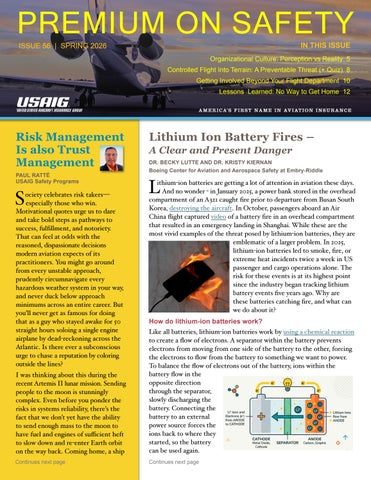
Like all batteries, lithium-ion batteries work by using a chemical reaction to create a flow of electrons. A separator within the battery prevents electrons from moving from one side of the battery to the other, forcing the electrons to flow from the battery to something we want to power. To balance the flow of electrons out of the battery, ions within the battery flow in the opposite direction through the separator, slowly discharging the battery. Connecting the battery to an external power source forces the ions back to where they started, so the battery can be used again.
Why do lithium-ion batteries catch fire?
Lithium-ion batteries are more likely to catch fire than regular batteries because they store a lot of energy, the chemicals used to generate power are flammable, and the separators are thin and more delicate.
Normally, lithium-ion batteries dissipate the small amount of heat they generate. But when damaged, misused, or degraded, heat can be generated faster than it can be dispersed. When detected early, overheating batteries can be cooled and contained. However, when batteries are out of sight, overheating may not be detected until the battery enters thermal runaway, in which the overheating accelerates, resulting in fumes, fire, or even explosion. Faulty or rapid charging, physical damage such as crushing or puncturing, high ambient temperatures, poor ventilation, and battery age all increase the risk of thermal runaway.
What happens when lithium-ion batteries catch fire?
When a battery cell is damaged and begins to overheat, the reaction releases heat and toxic fumes, causing the battery to bulge. As the reaction accelerates, more toxic fumes are released, which may result in visible smoke. The heat generated by the damaged cell now propagates to other cells, inducing thermal runaway in neighboring cells, until all the cells are compromised. The progress of the fire is volatile and unpredictable, and it will continue to generate intense smoke and heat until the reaction is stopped.
Halon, effective against fires involving ordinary combustible material, flammable liquids, or electrical equipment, will suppress the flames from a lithium-ion battery, but will not stop the chain reaction leading to the flames. Cooling the battery by submerging it in water is the best approach to stop the reaction.
How pervasive is the problem?
Lithium-ion batteries are lightweight, long -lasting, and store a lot of energy in a small space, which makes them ideal for small devices. You are probably within arm’s reach of at least two lithium-ion battery-powered devices right now, including laptops, phones, tablets, headsets, smart watches, digital cameras, hearing aids, electric toothbrushes, ecigarettes, and a host of children's toys. Mobility devices such as electric wheelchairs are also powered by lithium-ion batteries.
According to a study performed by Underwriters Laboratory (UL) as part of their voluntary Thermal Runaway Incident Program (TRIP), the average traveler brings 4 lithium-ion powered devices on board every commercial flight. The most common devices brought on board are phones (81%), laptops (40%), wireless headphones (38%), tablets (35%), portable
Continues next page
Trust Management from page 1
not equipped to slow down is continually accelerated by Earth’s gravity to well past orbital velocity until it hits the atmosphere and dissipates that blistering speed as heat. Temperatures 65% hotter than for a craft returning from orbit result, challenging both materials science and nerves. One shot from a quarter million miles out: no go-arounds, holds, or diverts.
A combination of high stakes, expense, complexity, and history’s hard lessons make the risks in space travel among the most intensely studied and managed in any human activity. Much of that happens behind the scenes by professionals who don’t mind it being that way. From outside a complex system, general impressions might simplistically mark it as ‘cool,’ ‘daring,’ adventurous,’ or ‘convenient.’ But safety demands more from insiders. It’s common for lay people who respect space exploration and hail astronauts as heroes to say there’s no way they’d accept a seat in an Orion capsule to the moon. They wouldn’t get on that ship, but most would readily walk aboard yours.
A comparison between your next trip and ventures into new frontiers isn’t exactly fair, and that’s my point. Those are two very different things. What guides your daily risk management outlook? There’s nobility (not to mention longevity) in the consistent, professional calls made day in and day out, for all the right reasons, mostly out of the limelight. Humans have only traveled to the moon ten times. But the trust balance in ‘terrestrial’ aviation’s bank account has been built up over millions of well-managed flights. Make deposits, not withdrawals.
Stay well, fl y smart, and fl y safe. ❖
chargers (29%), and e-cigarettes (10%). The risk varies by device. Despite being brought on board by only 10% of travelers, vapes or e-cigarettes were responsible for 28% of battery events in 2024. Power banks were responsible for 19% of the reported incidents. By contrast, cell phones were only responsible for 18% of reported incidents.
What are the risks in Part 91 and Part 135 operations?
FAA and TRIP voluntary reporting programs allow some estimation of risk for Part 121 operators, but no equivalent program exists for Part 91 or Part 135 operations. Simply by virtue of passenger capacity, the risk exposure for general aviation should be lower than in Part 121 operations. An A380 may have over 2,000 lithium batteries on board, while a Challenger 300 may have fewer than 50. But smaller aircraft may also not have cabin crew, who are a critical first line of defense in a battery incident. Further, lithium-ion battery use is on the rise in general aviation aircraft. This includes not only the installation of lithium-ion batteries due to the light weight and storage capability, but the increased use of battery packs to charge portable devices on board. In one example in 2024, a Mooney M20E experienced a cabin fire because of a damaged lithium-ion battery pack. The battery pack, used to power a portable ADS-B receiver, had been dropped on the ramp and damaged prior to the flight. The fire started while taxing and preparing to depart. The pilot was able to escape, but the airplane was substantially damaged.
Regardless of the per-flight risk, the consequences of un-contained battery fire are the same. Ask any pilot what their worst fear is in the airplane, and chances are it will be fire – specifically an uncontrolled fire in the cabin. Engine or electrical fires have checklists and procedures that can be run from the flight deck to control a fire before it spreads, but a cabin fire can’t be suppressed from the flight deck, and once it’s out of control, there’s not much you can do besides put the airplane on the ground wherever you happen to be – even if that means ditching.
And while safety is the chief concern, battery incidents also have operational and economic impacts. While high-profile incidents such as the Air China and Air Busan events are thankfully rare, data from TRIP show that 1 in 5 lithium-ion battery incidents resulted in passenger impacts such as delays, cancellations, or aircraft evacuations.
What can you do?
Risk mitigation requires a multi-layered, operation- specific approach. The details will vary by type of operation, but here are general steps everyone should take:
Equip your aircraft
• Carry enough water. To extinguish a lithium-ion battery fire, you need to fight the flames and fight the heat. Halon fire extinguishers should be used to suppress the flames, but cooling the battery is essential. Immersing the battery in water will cool the battery and stop the reaction. Make sure your aircraft has adequate water on board, and a container big enough to hold a device and water.
• Procure a burn bag. After the device has cooled, it needs to be placed in a containment bag in case the fire re-ignites. Despite some advertising, there are no “FAA-approved” burn bags. However, bags that meet ANSI/CAN/UL 5800 have been proven robust to the circumstances of fire onboard an aircraft.
• Invest in fireproof gloves. Someone will have to put the device into the water and then later into a containment bag. Protect them with gloves.
Train your crew
• Recognize the warning signs. Flight deck and cabin crew should be aware of the signs of overheating devices and take immediate action to cool the device.
• Know how to extinguish the fire. Crew members should clear the area of passengers, don personal protective equipment, knock down flames with fire extinguishers as necessary, cool the device, and place it in a containment bag.
• Plan for an emergency landing. Although an emergency landing may not be necessary, planning for an emergency and following through until the fire is completely contained can be the difference between life and death.
• Practice. Contingency plans should go beyond simply ‘throw it in the bag’ and instead be built around recognition, coordination, and scenario-based training. On aircraft without flight attendants, the response depends heavily upon the phase of flight. Should a pilot go aft to address a potentially escalating situation in the cabin, or is it more prudent to keep both pilots at their stations and prioritize getting on the ground as quickly as possible? Scenario-based training can help crews prepare for different situations.
Continues next page
Educate
your passengers
• Explain the risk. Most travelers have no idea what lithium batteries are or the hazards they pose. According to the UL survey, 50% of Americans know nothing about lithium-ion batteries, and 38% of Americans admit to putting lithium-ion powered devices in their checked luggage. Basically, half your passengers don’t know the danger and the other half don’t care. The FAA’s PackSafe program has resources to help educate travelers. Concise information, repeated often, is your best way to reach passengers.
• Prohibit or advise against using power banks in flight. ICAO recently recommended that airlines restrict passengers to two power banks, and prohibit recharging of power banks during flight. However, you should take into account the general behavior of your passengers. Hiding use of a power bank is worse than using a power bank where it can be monitored.
• Require passengers to keep all lithium-ion battery powered devices visible and accessible. Power banks should not be kept in overhead bins or inaccessible baggage compartments.
• Make sure your passengers know to inform the cabin or flight crew immediately if a device gets hot or starts to bulge.
Bottom line: The threat is real.
More resources:
Airbus: Lithium Battery Fire in the Cabin or in the Cockpit
UL Report: Lithium-Ion Battery Incidents in Aviation: 2024 Data Review
FAA Circular 120-80B: Firefighting of General and High-Energy In-Flight Fires:
FAA SAFO: Managing the Risks of Lithium Batteries Carried by Passengers and Crewmembers.
FAA Lithium Battery Incidents interactive chart
Managing the risk of lithium-ion battery fires requires equipping your airplanes with the right equipment, training your crews to recognize early warning signs and respond decisively, and educating your passengers to know what to watch for and when to speak up. Ultimately, lithium battery safety will require an all-industry effort, with manufacturers, operators, regulators, crews, and passengers playing a role in reducing risk to protect the safety of all who fl y. ❖
If device ignites, put out flames with fire extinguisher, then submerge in water to cool and counter the battery reaction.
Say What You Mean. Mean What You Say.
Culture Perception vs. Reality
JENNY SHOWALTER
Founder, Showalter Business Aviation Career Coaching
External perception and internal reality are not always the same, especially when it comes to organizational culture. In preparation for this article, I launched a three-part LinkedIn poll series asking business aviation professionals:
• How they assess culture before joining an organization.
• How organizations can gauge their own culture externally.
• What employees value most in workplace culture.
The response was immediate, and I received direct messages from professionals sharing stories, frustrations, observations, and experiences related to workplace culture.
I often joke that I wouldn’t have much of a career coaching business if leadership and workplace culture were not such frequent topics. Many clients come to me trying to recover from burnout, navigate leadership breakdowns, escape unhealthy environments, or rediscover professional fulfillment after difficult experiences within their organizations.
These conversations have reinforced an important reality: the culture organizations believe they have, the culture they promote externally, and the culture employees actually experience are not always the same.
I was in an Uber recently with a driver who had spent decades working for a well-known manufacturing company before it was sold to a private equity firm. During our conversation, he spoke passionately about how much he had loved working there prior to the sale. What stood out most was not compensation, benefits, or perks, but trust. He described how employees felt valued not just through words, but through consistent actions across decades working for the founding family.
That feeling changed almost immediately after the acquisition. Employees struggled to build trust with the
new ownership. Over time, many of the concerns employees initially felt proved valid as operations shifted and positions (including his) were eliminated.
What struck me most was that he immediately recognized something had changed with the new ownership because he already knew what a healthy culture looked and felt like from working under the founding family’s leadership.
Organizations often describe culture through mission, vision, and values statements. But employees remember how leadership, communication, and daily interactions make them feel.
Looking In From the Outside
From a job seeker’s perspective, organizational culture can be difficult to assess externally. In many cases, people do not fully understand the culture until they are already inside the operation. And by the time they realize the culture is unhealthy, emotionally exhausting, or misaligned, the damage may already be done.
Interviewing for a job can sometimes feel like speed dating with a marriage proposal at the end of the night, where a few professional conversations are expected to predict the success of a much longer relationship.
Sometimes that relationship develops into a healthy environment where people truly thrive. Other times, the experience falls flat once the realities of the workplace begin to surface.
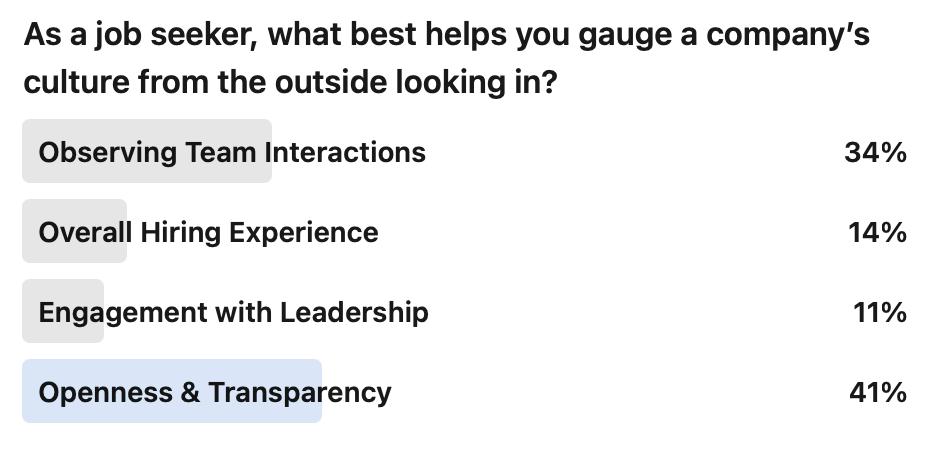
So, how can job seekers assess culture before joining an organization?
The message is clear: people trust observable behavior more than polished messaging.
Continues next page
Jenny Showalter is a third-generation business aviation professional and founder of Showalter Business Aviation Career Coaching (SBACC). With nearly 30 years of experience, she helps industry professionals strategically elevate their careers through individualized coaching, resume writing, interview preparation, LinkedIn optimization, and outplacement services. Learn more at www.showalter.com or email jshowalter@showalter.com
Poll #1
Several professionals shared that they evaluate organizations by observing the reputation and character of the people already working there. Others emphasized that inconsistent communication or shifting expectations during hiring can quickly erode trust before employment even begins.
The way organizations communicate during the hiring process often sets the expectation for how employees will later experience communication, transparency, and accountability within the operation. In corporate flight departments, culture can be especially difficult to assess because there is often very little public information available about the operation itself, particularly when supporting highnet-worth principals.
Even within larger corporations, the challenge remains. A company may publicly promote its mission, vision, and values through websites, recruiting materials, and corporate messaging. But in many cases, those values do not fully translate into the culture of the flight department. There is certainly value in a strong organizational reputation. Healthy cultures often become talent magnets, attracting professionals who want to be part of stable, supportive, and high-performing environments. But reputation alone cannot tell the full story.
I recently worked with a client who told me he knew within the first week of a new job at a major Fortune 500 company that there was a significant culture misalignment between the culture he was sold on and the culture he experienced once he became an insider. What made the situation especially difficult was that he had done everything “right” before accepting the position. He researched the organization, asked thoughtful questions, and carefully evaluated the opportunity before accepting the role. But once inside the organization, the workplace reality felt very different from what had been presented during hiring.
Like many professionals, he initially tried to adapt. Over time, the experience took a significant toll, and it became clear that the healthiest path forward was to leave. While looking for his next position, he approached the process very differently. He asked tougher questions, sought additional perspective, and compared opportunities. He became far more intentional about assessing leadership behavior, transparency, interactions, expectations, and whether the culture being described actually aligned with reality and his personal values.
Reputation vs. Reality
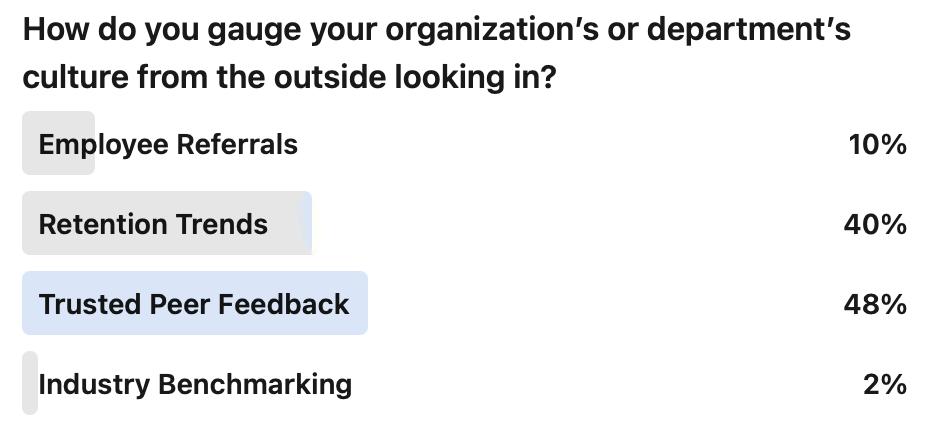
Whether leadership realizes it or not, organizations are constantly being evaluated by employees, peers, former team members, and the industry around them. So how can organizations determine whether their external reputation actually aligns with employees’ internal experiences?
Companies may promote culture through websites, recruiting materials, and leadership messaging, but employees and peers often evaluate it through lived experience, reputation, and peer-to-peer conversations.
I have worked with several professionals who entered a job search focused almost exclusively on a specific company or flight department because of what they had heard about its reputation within the industry. I often remind them that reputation and culture are highly subjective. What works exceptionally well for one person may feel completely misaligned for another, and lived experiences within the same organization can vary significantly.
The challenge is that organizations often struggle to objectively evaluate themselves because unhealthy behaviors,
Continues next page
Poll #2
communication patterns, and expectations can quietly become normalized over time, even within highperforming teams. That normalization can create significant operational risk.
Several professionals emphasized that external perception is heavily influenced by the people organizations hire and retain, how former employees speak about the organization, turnover patterns, and peer feedback shared quietly throughout the industry.
Where Culture Meets Safety
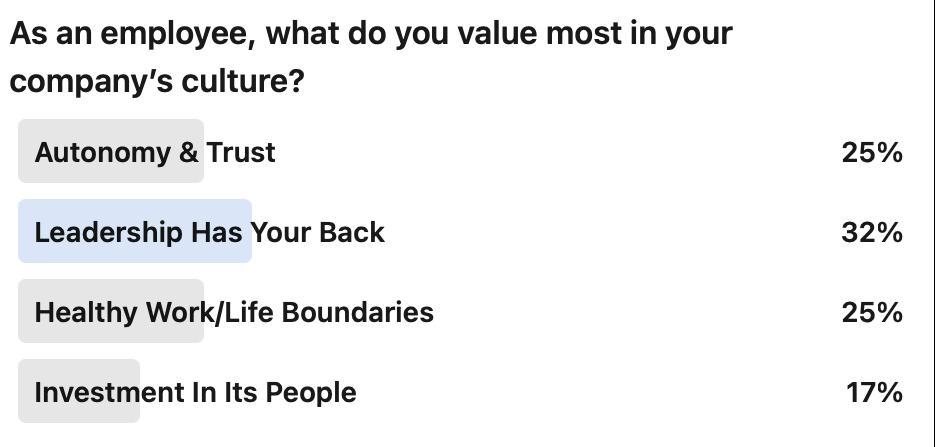
In aviation environments where safety depends heavily on communication, trust, and teamwork, culture is not separate from operations. It directly influences them. Once inside an organization, what aspects of culture matter most to employees?
Poll #3
Rather than prioritizing perks or branding language, respondents prioritized leadership support, autonomy and trust, and healthy work/life boundaries. When employees feel trusted and supported by leadership, it creates the foundation for autonomy, accountability, flexibility, healthy boundaries, and operational confidence.
One professional emphasized that investment in staffing, training, compensation, and professional development does far more than improve morale. It strengthens consistency, accountability, pride in work, reliability, and burnout prevention.
Another professional highlighted the importance of employees feeling safe enough to ask questions, admit mistakes, challenge assumptions, report concerns, and contribute honestly. This is where a just culture comes into play.
In business aviation, cultures that leave employees emotionally surviving rather than thriving can quietly affect communication, teamwork, decision-making, and ultimately, safety.
Beyond the Mission Statement
Organizations ultimately have to decide what type of culture they are creating. Is it a culture where employees are simply “working for the weekend”? Or is it an environment where people feel valued, engaged, invested in the mission, and ultimately committed to the safety and success of the operation?
External perception and internal reality are not always the same. The strongest cultures in business aviation are the ones where trust, accountability, communication, and support are consistently experienced throughout the operation rather than simply advertised. ❖
Safety Program Resources
Resourcing a robust safety program can be daunting. This recurring feature illuminates ideas and resources to help.
A Cultural Check-up
Culture surveys aren’t silver bullets that find or fix everything that might need attention. But they are vital tools that help organizations steer and validate efforts to build and sustain strong teams. Specifically in the safety arena, NBAA offers a best practices guidebook and exemplar organizational safety culture survey.
Advanced Aircrew Academy is a USAIG
Controlled Flight Into Terrain:
A Preventable Threat in a Modern Cockpit
Advanced Aircrew Academy’s Aviation Challenge
Controlled Flight Into Terrain (CFIT) remains one of aviation’s most unforgiving yet preventable accident categories. The aircraft is airworthy. The crew is in control. There is no system failure. And still, the flight ends in an accident.
Despite advanced avionics, terrain awareness systems, and training, CFIT continues to occur in business aviation. The reason isn’t a lack of tools; it’s how risk is managed in real time.
Understanding the Risk
CFIT occurs when an aircraft, under pilot control, is unintentionally flown into terrain, obstacles, or water. Most events happen during descent and approach, often in reduced visibility, at night, or in complex terrain. CFIT prevention depends on:
• Adherence to stabilized approach criteria
• Respect for minimum altitudes
• Proper use of TAWS/EGPWS
• Effective crew coordination
Yet CFIT accidents still emerge when small deviations go uncorrected.
Case Study: San Diego Citation S550 (2025)
In May 2025, a Cessna Citation S550 operating under Part 91 crashed while approaching Montgomery-Gibbs Executive Airport (MYF) in San Diego.
The aircraft was fl ying an RNAV (GPS) approach in instrument meteorological conditions. The AWOS at MYF was out of service. Weather at a nearby field included ½-mile visibility and a 200-foot ceiling. As the flight progressed:
• The pilot was cleared to descend
• ATC queried whether the pilot if he was going to “make your descent”
• The pilot responded, “I think we’l be alright”
Performance Vector-participating service provider offering comprehensive eLearning modules and curricula for business aviation professionals. Customized online courses, training materials, and scenario-based training improve crew skills in areas such as crew resource management, emergency procedures, and operational effectiveness. Their extensive and adaptive training catalog has eLearning for every person in your flight department.
The aircraft continued descending and ultimately impacted a residential area short of the airport. All six onboard were fatally injured. There were no reported mechanical issues.
This accident reflects a familiar CFIT pattern:
• Challenging weather
• High workload during approach
• Continued descent despite uncertainty
The approach likely felt manageable until it wasn’t.
The Modern CFIT Trap
Today’s cockpits provide more information than ever: GPS guidance, vertical navigation, and terrain alerts. But CFIT is no longer about missing information, it’s about misinterpreting or mismanaging it. In many cases, the crew is not unaware; they have simply lost situational awareness. CFIT accidents often reflect predictable human behaviors:
• Workload saturation – reduced monitoring during critical phases
• Overconfidence – especially in familiar operations
Technology: A Safety Net, Not a Strategy
Terrain Awareness and Warning Systems (TAWS/ EGPWS) have significantly reduced CFIT accidents, but they are not a primary defense. Industry data highlight a critical concern: pilot responses to TAWS alerts are often inconsistent and, in some cases, delayed or incorrect. Even when alerts are clear and unambiguous, crews may hesitate, attempt to rationalize the warning, or continue the approach momentarily before reacting. Key reminders:
• TAWS is a last line of defense
• Alerts require immediate, decisive response
• Any delay reduces already limited safety margins
Continues next page
To better understand how pilots actually respond in real-world scenarios, the NBAA Safety Committee is gathering data through a TAWS Alert Response Behavior Survey
Participation helps identify gaps between training and behavior. Understanding these behaviors is essential, because technology only protects you if it’s used correctly. Technology can warn, but it cannot decide.
Breaking the Chain
Preventing CFIT requires disciplined execution of fundamentals:
• Respect Minimum Altitudes and StepDown Fixes – They guarantee terrain clearance. Descending below them without required visual references removes that protection.
• Commit to Stabilized Approaches – Unstable approaches increase risk. If the aircraft is not on profile, properly configured, and within parameters, go around.
• Verify Automation – Never trust it blindly. Confirm altitude constraints; cross -check vertical modes; ensure the correct approach is loaded and flown.
• Use Crew Resource Management – The pilot monitoring is essential. Call out deviations; challenge unsafe descents; speak up early. Many CFIT accidents involve missed opportunities to intervene.
A Cultural Imperative
CFIT prevention is not just procedural, it’s cultural. Organizations that reduce risk:
• Normalize go-arounds
• Reinforce strict adherence to minimums
• Train for high-risk environments
• Encourage assertive communication
Final Thoughts
CFIT accidents are rarely caused by a single mistake. They result from small, reasonable decisions that gradually remove safety margins.
The aircraft is functioning. The approach is familiar. The crew is confident. But confidence is not protection.
Disciplined fl ying especially when things feel “manageable” is what prevents CFIT. ❖
Check Your Knowledge!
(quiz answers on page 14)
1. What is an advantage of waiting until reaching the Visual Descent Point (VDP) before descending below MDA?
a. It ensures a normal descent rate and stable path to the runway
b. It allows for a steeper descent to minimize time in IMC
c. It guarantees visual contact with the runway environment
d. There are no advantages
2. The “black hole” illusion can significantly affect visual approaches at night. How does this illusion typically impact a pilot’s perception of the aircraft’s position relative to the runway?
a. The aircraft appears farther away and lower than it actually is, leading to a delayed descent
b. The aircraft appears closer and higher than it actually is, leading to an early descent
3. Departing VFR in marginal VMC conditions presents increased CFIT risk. What is the safest way to mitigate this risk?
a. Proceed through IMC to reach VFR-on- top conditions before obtaining a clearance
b. Receive an IFR clearance before departure
c. Maintain a reduced airspeed until a clearance is received
4. VASI and PAPI systems provide vertical guidance that ensures obstacle clearance within what distance from the runway and lateral limits?
a. 3.4 NM (VASI) / 4 NM (PAPI) and ±15° from centerline
b. 10 NM (VASI) / 9 NM (PAPI) and ±10° from centerline
c. 4 NM (VASI) / 3.4 NM (PAPI) and ±10° from centerline
d. 4 NM (VASI) / 3.4 NM (PAPI) and ±30° from centerline
5. You are conducting a night visual approach without vertical guidance or VNAV. To maintain a standard 3° glidepath at 140 knots groundspeed, what approximate descent rate should you use?
a. 140 feet per minute
b. 500 feet per minute
c. 700 feet per minute
d. 1000 feet per minute
6. Before departing an uncontrolled airport after receiving a “cleared as filed” clearance, what action should you take to ensure terrain clearance in IMC or at night?
a. Fly a published Departure Procedure (DP)
b. Wait for radar vectors from ATC before climbing
c. Fly direct to the first fix or along the filed route
Quiz answers on page 14
Getting Involved Beyond Your Flight Department A Practical Guide for Business Aviation
Professionals
DAN BOEDIGHEIMER, PH.D.
Chief Safety Officer, Advanced Aircrew Academy
F or many professionals in business aviation, the day- to-day demands of running safe, efficient operations leave little time to think about involvement outside the flight department. But at some point, many people begin to wonder: Would getting involved in industry groups be worth it? Would my leadership support it? What would it actualy require?
The short answer: yes, it can be one of the most valuable career decisions you make and it’s far more accessible than most people think.
Why Get Involved?
A key to a successful career in business aviation is networking. While that phrase can feel over-used, its importance becomes very real when you’re faced with a challenging operational, safety, or organizational issue and need a trusted perspective - fast.
Through my own experience volunteering on the NBAA Safety Committee for the past 10 years, I can say without hesitation: I have gotten back much more than I have given.
Committee involvement has helped me develop leadership skills that directly translated to my day job; strategic planning, organizational design, improved communication techniques, and more effective collaboration. These aren’t abstract benefits, they are practical tools that enhance how you lead and operate within your own organization. Perhaps even more valuable is the network. Committee work has connected me with incredible professionals across the industry, people I now have on speed dial. When a new challenge arises, chances are someone in your network has already faced it. That access to real-world experience is something you can bring back to your flight department to benchmark procedures, validate decisions, and identify best practices.
What Opportunities Are Out There?
There is no shortage of ways to get involved. Opportunities exist at multiple levels:
National Organizations:
Groups like NBAA offer a wide range of committees covering safety, maintenance, operations, training, and more. If safety is your focus, the NBAA Safety Committee is a great place to start, but there are many others depending on your interests. You can explore options here
Other national organizations, such as the Air Charter Safety Foundation (ACSF), also offer committees and working groups focused on advancing safety and operational excellence.
Regional and Local Associations:
Don’t overlook opportunities closer to home. Regional groups can be incredibly impactful and often provide more frequent, face- to-face interaction. For example, serving on the board of the Colorado Aviation Network has allowed me to connect with a much broader cross - section of business aviation; FBO managers, charter sales teams, marketing professionals, aircraft detailers, and operators.
This broader exposure helps you better understand the entire ecosystem your operation functions within, not just the cockpit or hangar.
What Should You Expect?
One of the most common misconceptions is that volunteering requires a massive time commitment. In reality, most organizations are designed with working professionals in mind.
Time Commitment:
Expect to dedicate a few hours per month. This might include attending virtual meetings, participating in email discussions, or contributing to small projects. Most groups are flexible and understand that you have a full- time job and personal commitments. Missing an occasional meeting is not uncommon.
Travel and Expenses:
Some national committees may include in-person meetings that require travel. Typically, these organizations do not cover personal travel expenses. You may also encounter membership dues or event registration fees.
That said, many meetings, especially in recent years, are conducted virtually, making participation easier than ever.
Level of Effort:
The real investment is engagement. Simply being listed on a committee won’t yield much value. The benefits come when you actively participate; sharing ideas, volunteering for small tasks, and contributing to discussions.
The good news is you don’t need to be an expert to get started. These organizations are not starting from scratch. There is institutional knowledge, established processes, and experienced members who will be eager to help and guide you. You’ll often be paired with others on tasks, allowing you to learn while contributing your own fresh perspective and ideas.
How to “Sell” It to Leadership
If you’re considering getting involved, gaining support from your Director of Aviation or leadership team is often the first step. The key is to frame your involvement as an investment in the organization, not a personal side project.
Here are a few points that resonate with leadership:
• Enhanced Safety and Best Practices: You bring back insights, lessons learned, and benchmarking data that can improve your operation.
• Industry Awareness: Participation keeps you ahead of emerging trends, risks, and regulatory developments.
• Professional Development: You gain leadership, communication, and organizational skills that directly benefit your role.
• Networking Advantage: Access to a trusted network of professionals can help solve problems faster and more effectively.
• Industry Contribution: Supporting industry initiatives reflects positively on your organization and demonstrates a commitment to safety and professionalism.
Position it as a low-cost, high-return opportunity. Compared to formal training programs, committee involvement often delivers significant development at minimal expense.
Making the Most of It
Once you decide to get involved, approach it with intention:
• Raise your hand early. Volunteer for small tasks or subgroups.
• Be reliable. Follow through on commitments, your reputation builds quickly.
• Ask questions. You’re there to learn as much as to contribute.
• Bring it back. Share insights with your team and leadership regularly.
Final Thoughts
Getting involved in business aviation outside your flight department isn’t just a resume builder, it’s a career accelerator. It expands your perspective, strengthens your skills, and connects you to a network that can support you throughout your career.
If you’ve been wondering whether it’s worth it, consider this your nudge: raise your hand. The industry needs engaged professionals, and the return on your investment will likely exceed your expectations. ❖
Dan Boedigheimer, Ph.D., is an aviation safety leader, educator, and business aviation professional with experience in both Part 91 and 135 operations. He currently serves as Chief Safety Officer at Advanced Aircrew Academy. Dan contributes to industry advancement as Chairman of the NBAA Safety Committee, a member of the IS-BAO Standards Board, and a board member for the Colorado Aviation Network.
No Way to Get Home
DAVID JACK KENNY
If the U.S. Federal Aviation Regulations set the baseline for safe operations, there’s also a great deal of truth in the warning that generations of flight instructors have given their students: “What’s legal isn’t necessarily safe.” That’s particularly obvious when the regulations impose more stringent restrictions on some types of flights than others in identical situations. For example, commercial passenger flights under either of Parts 121 or 135 can’t even initiate an instrument approach if current weather conditions are below the procedure’s published minimums – but on positioning flights flown under Part 91, the same pilots fl ying the same aircraft can do it over and over again. Likewise, there’s no statutory ban on private, business, or instructional flights attempting below-minimums approaches – often in much less capable aircraft. In January 2013 a Piper Arrow crashed from fuel exhaustion after missing four approaches into three different airports, all of them completely legal (NTSB Accident No. ERA13LA111).
The Arrow accident points up another option that’s allowed but not necessarily wise: trying again rather than diverting after a missed approach. Yes, it can make sense if the weather’s improving or the pilot caught a glimpse of the airport while initiating the missed – but if the field’s socked in, the fuel burned during another missed approach just reduces the range available to reach an alternate. The desire to make it in the next time might increase the temptation to descend below the charted minimum – and there’s no guarantee a second approach will be flown more precisely than the first, particularly if fatigue becomes a factor at the end of a long day.
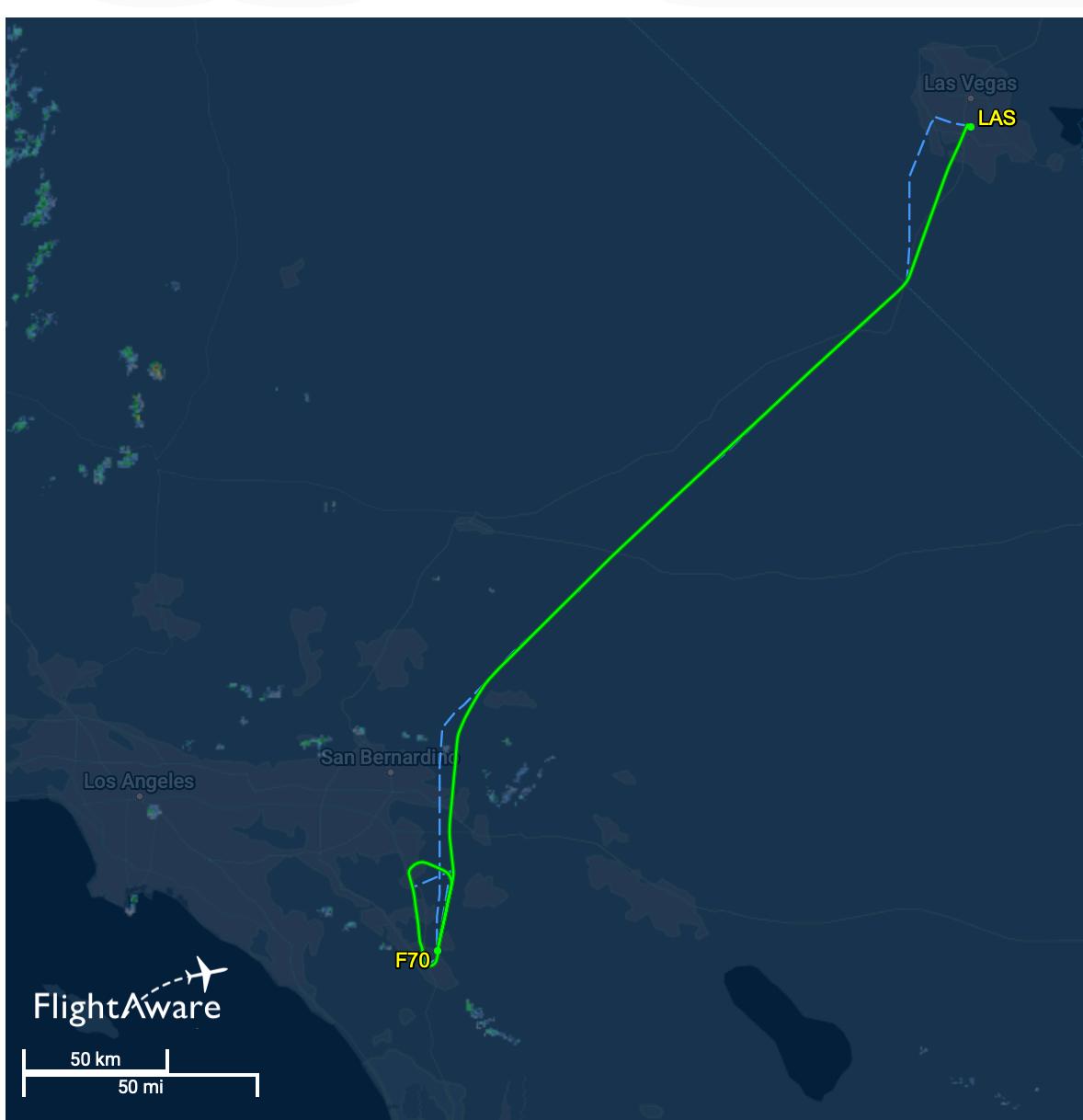
On the evening of July 7, 2023, a Cessna 550 flew from the French Valley Airport (F70) serving Murrieta and Temecula, California to the Harry Reid International Airport in Las Vegas (KLAS), departing at 21:18 Pacific
Daylight Time. “About 6 hours later,” according to the NTSB’s final report – i.e., at about 03:18 – the twinengine jet took off from KLAS on the return flight and climbed to its cruising altitude of 19,000 feet. On board were two commercial pilots, each with a CE-550 type rating requiring a second PIC-rated pilot, and four passengers. At 03:44, after initiating a descent, the pilot checked in with the Pomona sector radar controller of the Southern California TRACON (SCT) requesting cancellation of their IFR clearance. The most recent surface observation from F70, issued nine minutes earlier, reported light southeasterly winds, clear skies, and 10 statute miles of visibility. The controller acknowledged the cancellation and provided the current altimeter setting; the pilot confirmed that he had current weather and landing information.
At 3:51:03 the pilot reported having received an updated weather report and requested the GPS approach to F70’s Runway 18. A METAR issued four minutes later included calm winds and three-quarters of a mile visibility in mist under a 300-foot overcast. Another F70-based pilot later told investigators that the marine layer had begun affecting airport operations with increasing frequency.
The controller cleared the Citation direct to TIQMU, the initial approach fix, at 6,000 feet, then cleared it for the approach with instructions to cross TIQMU at or above 4,600 and report passing the fix inbound. The pilot read back the clearance, then made the inbound report at 3:53:31 and was cleared to change to advisory frequency and instructed to report IFR cancellation on the frequency or by telephone after landing.
ADS-B data showed that the jet flew the approach without ever slowing below 128 knots. The relevant reference speeds cited in the airplane’s operating manual are 95 knots at a gross weight of 9,500 pounds or 99 knots at 10,000 pounds. It leveled off at 1,650 feet msl (300 feet agl) for a couple of seconds and then began to
Continues next page
climb. At 04:00:21, after a broken transmission, the pilot contacted the Pomona controller to report that they were performing a missed approach and requested clearance for another try. The controller instructed him to execute the published missed approach procedure, climb and maintain 5,000 feet, and confirm that he was proceeding directly to JESEX, which serves as both the missed-approach holding fix and initial approach fix for the procedure. At 4:02:49 the controller advised that the flight was now 11 miles south of JESEX. He cleared it for the approach with instructions to cross JESEX at or above 5,000 feet and authorized a procedure turn at the pilot’s discretion.
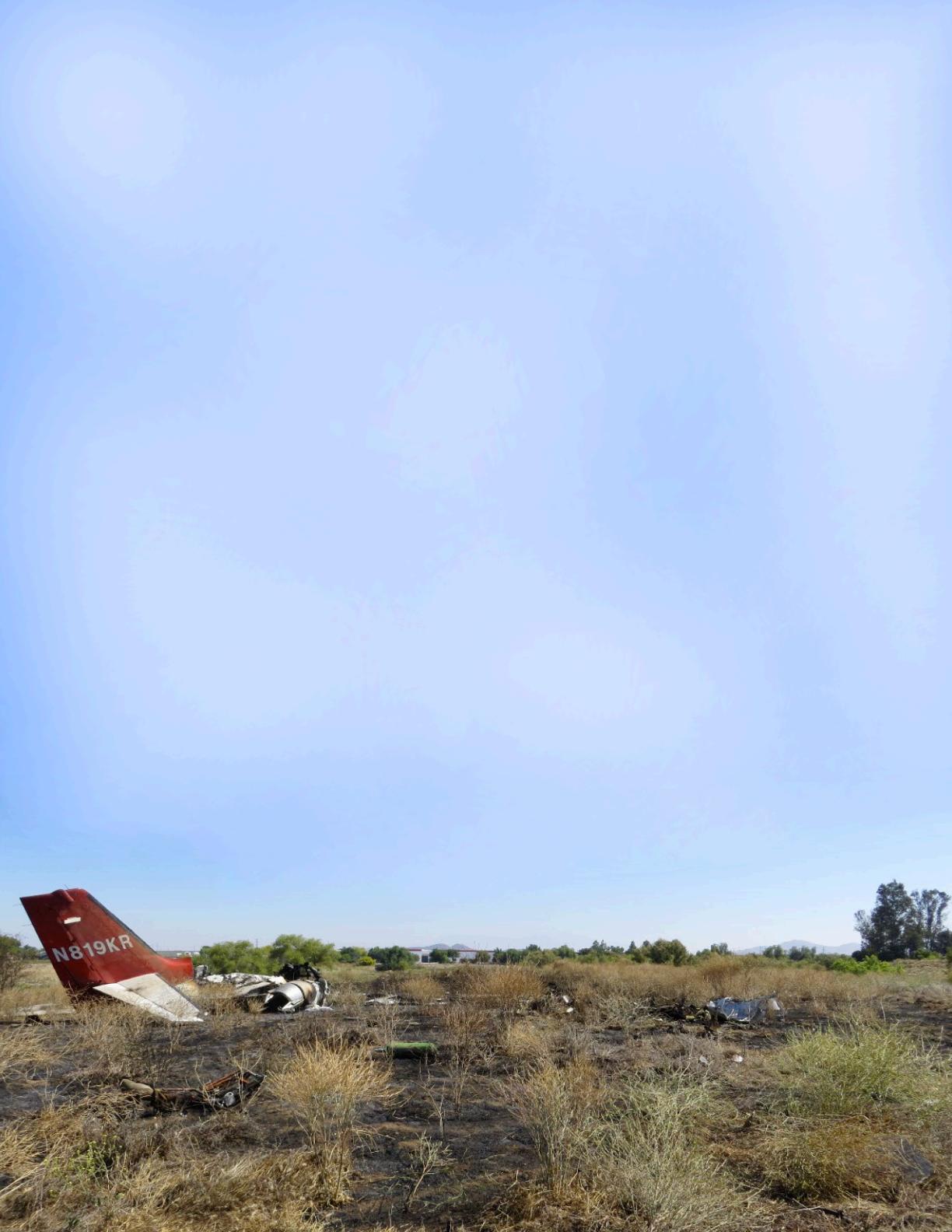
Four and a half minutes later the pilot again requested a change to advisory frequency, which was approved. The controller advised that they were now five miles from TIQMU and asked them to report IFR cancellation either airborne or on the ground, which the pilot acknowledged. The second approach was also flown fast; groundspeed remained at or above 128 knots through the final ADS-B position fix. Before the track ended the Citation descended to 100 feet above the ground; then, just after the final ADS-B report, it crashed into the sagebrush about 810 feet short of the runway threshold. All six on board were killed and a post-crash fire consumed most of the fuselage. Data captured by its Garmin GTN 750 navigator indicated that during the last three seconds of the flight, its rate of descent increased from 762 to 2,320 feet per minute.
The bulk of the wreckage came to rest about 100 feet south of the initial point of impact, a ground scar roughly 12 feet long, 10 feet wide, and two feet deep. Burn scars extended 50 feet to either side. Investigators were able to determine that the landing gear was down and the flaps were fully extended. The N1 spools of both engines showed impact damage, while the low-pressure
turbine blades were intact. Both thrust reversers remained stowed. The NTSB’s final report concluded that they found “no evidence of mechanical failures or malfunctions that would have precluded normal operation of the airplane.”
The cockpit voice recorder was recovered and downloaded, but proved to have captured no audio from the accident flight.
The lowest minimums for the GPS approach to Runway 18 at F70 require equipment capable of localizer performance with vertical guidance (LPV), which provides both positional sensitivity and cockpit indications similar to a Category 1 ILS. LPV minimums for this approach were a decision altitude of 1,600 feet msl (250 feet agl) and 7/8 of a mile visibility. The GTN 750 installed in the aircraft had LPV capability, and the NTSB’s final report presumes that the pilots used it during both approaches.
But while the reported ceilings were just above that minimum, the reported ¾-mile visibility was already below – and decreasing. In the next METAR, released four minutes after the accident, visibility was down to half a mile in fog. The reported ceiling remained at 300 feet, though that was specific to the sky just above the airport’s ceilometer. There is no way to know whether the Citation actually broke out at or above decision height on either approach.
Likewise, it’s not clear whether the pilots decided to try a second approach after catching a glimpse of the airport on the first, perhaps too late to actually make the landing. Leveling off at decision altitude instead of immediately initiating the missed could be equally consistent with trying to resolve whether blurry lights on the ground were indeed the airport or just hoping it would come into sight. The same F70-based pilot who
Continues next page
commented on the marine layer suggested that on the second approach, the crew might have mistaken the lights from an industrial park just off the approach path for those of the airport. He also quoted an A&P mechanic who was at the airport at the time as saying that “the weather was on the deck and ‘rolling down the runway,’ and that there was no layer to actually descend below that would have allowed for landing.”
The applicable regulation is 14 CFR 91.175, which defines the conditions under which an aircraft can descend below the decision height or minimum descent altitude during an instrument approach. It lists 10 visual references for the intended runway, including various runway markings and lighting systems, at least one of which must be “distinctly visible and identifiable to the pilot.” Citing this, the NTSB found the probable cause of the crash to be:
Subscribe to Premium on Safety, view past issues, or share your comments, questions, and general feedback with USAIG
The flight crew’s decision to descend below the decision altitude of an instrument approach without having the appropriate runway visual reference(s) distinctively identified and with the visibility below the minimum that was prescribed for the approach, which resulted in controled flight into terrain (emphasis added)
Their report did not address a number of details that would have helped put the accident into context. Information about the pilots’ rest and duty histories prior to the overnight operation is not provided. The relationship between pilots and passengers is not discussed; nor was the reason for the flight, though its timing leaving after 9:00 p.m. and returning after 3:00 in the morning makes a business trip seem unlikely. We aren't told whether the pilots remained at the airport in the meantime or went elsewhere, and if the latter, how they spent the time. This might be of interest, because while the pilot's toxicology results were negative, the copilot's showed elevated concentrations of alcohol and the limitations on their type ratings meant that both were required crew members. Acknowledging that sources other than alcohol consumption (such as postmortem putrefaction) can in some cases account for elevated ethanol levels, the NTSB opted not to speculate on whether the SIC’s “ability to make a positive contribution to flight safety (such as by helping to monitor the approach)" might have been impaired.
Also worth bearing in mind is that while both pilots were familiar with the local environment, neither could claim decades of experience. While the NTSB report is short on details, it does report that the 25-year-old pilot in the left seat (who was presumably acting as pilot in command) had accumulated a total of 950 hours of flight time. The 32-year-old right- seat pilot claimed 1,600 hours. Make-andmodel and actual instrument experience were not reported for either, but it’s a reasonable bet that the sudden onset of below-minimums weather wasn’t a routine occurrence for either, and encountering it at 4:00 a.m. didn’t maximize their ability to cope. ❖
Your feedback is vital to our safety programs because it helps us focus on what’s most important to you. USAIG’s website (USAIG. com) offers a convenient way for us to receive your thoughts or suggestions. A visit there will provide a great look at all our services, including the “Safety” tab that outlines our safety programs. All the Safety pages contain a feature you can use to communicate directly with our Director of Aviation Safety Programs. We look forward to your comments on the newsletter (or our other safety programs) and advancing Premium on Safety in step with your needs and suggestions. Fly smart and fly safe!