PREMIUM ON SAFETY
ISSUE 55 | WINTER 2026

IN

ISSUE 55 | WINTER 2026
JENNY SHOWALTER Founder, Showalter Business Aviation Career Coaching
Ahow to advance. Just how to get in.
The Business Aviation Mystique
Proactive Midair Collision Avoidance (+ Quiz!) 4 The Illusion
6
8

PAUL RATTÉ USAIG Safety Programs
s a career coach, I hear the same question over and over from people who want to work in business aviation: How do I break in? Not
TLet’s face it. The mystique of business aviation is real. For many aspiring professionals, it appears like a world that exists just beyond reach. From the outside looking in, it can feel closed off and nearly impossible to get a foot in the door. People are drawn to the professionalism, the pace, the aircraft, and the sense of community. What they struggle with is access.
When I first started my career, I participated in marketing trips, calling on flight departments across the country. At that time, many still had a literal front door. You could walk up, see a company name on the door, knock, and have a real conversation with someone inside. Those spontaneous interactions mattered. They created connection, put a face to a name, and made the industry feel human and accessible. Those days are largely gone.
The question of how to break in has become harder to answer. If you can’t knock on the door, how are you supposed to get in? And how does an industry that depends on talented, committed people continue to grow if access is limited?
Competing for Top Talent
This challenge is magnified by the reality that business aviation is competing for talent against an industry that has made entry clear and structured. The airlines have built deep, well-funded pipelines that actively guide interested candidates into Part 121 careers. From university partnerships to cadet programs and clearly defined career paths, the airlines quite literally hand-walk people into their ranks.
By comparison, business aviation often relies on informal networks, timing, and luck. That imbalance puts business aviation at a disadvantage



here are lots of low (or no) cost ‘good-for-you’ habits that we
should follow, but sometimes let slide. Staying in touch with extended family, regular exercise and dental hygiene come to mind. A practice you should follow in the 15 minutes after every trip can make you better and safer.
If you’ve watched recent features on Navy and Air Force flight demo teams (thanks Amazon, NetFlix) you’ve seen the rigor they apply to critiquing every flight. They’ve proven it’s a pathway to continually get better and safer (your goals too). Your might not need their level of detail, but in any case where you haven’t taken a few minutes as a crew right after a trip finishes, while everything’s still fresh, to review what was done and learned, you’ve missed out. Ever struggled to articulate how your SMS manifests in your daily routine? Form and stick to a post-flight debriefing habit and you won’t have that problem.
Formality is not required, but “I’ve got nothing; how ‘bout you?” sells it short. A few questions on a cue card tucked in your flight bag (at least until the habit’s firm) will serve you far better; keeping debriefs short yet thorough.
when it comes to attracting new talent, even when the long - term career opportunities are equally compelling. Let’s be clear-eyed about the vital importance workforce talent plays in sustaining professional, efficient, and safe operations; and strive to compete more effectively.
Two of the most effective ways to create access in business aviation are internships and industry volunteerism. Both can be powerful tools. When done well, they replace mystery with exposure and connection. They give aspiring professionals a way to see the industry up close, build relationships, and experience business aviation

Take the many university and college aviation programs that exist today. Personally, I am very active with several schools in Central Florida, where there are a wealth of aviation programs feeding students into aviation career tracks. What often surprises me is how many students enrolled in these programs get little to no business aviation exposure at all. Their awareness is frequently limited to the airlines simply because that is the most visible path. Those who know about and seek a business aviation career must work extra hard to create a path to achieving their goal.
Internships and industry events create a critical bridge. They allow business aviation to reach students who, despite having a strong interest in aviation careers, may not even realize this segment of the industry exists. These students are exactly the audience business aviation should be engaging.
As a resume writer, I regularly work with professionals who had the benefit of interning in a business aviation operation while they were still in school. Every time I include one of those internships on a resume, I am reminded of their impact. These individuals often describe them as the moment business aviation stopped being an idea and became a clear career goal. They gained hands -on exposure, were mentored in real time, and began building networks that still serve them years later.
Internships come in many forms. Some last only a few weeks, others span a summer. Some focus on specific projects, while others rotate students
The Internet has examples to get you started on a trip review rubric, but many find building their own based on their operations and needs is better. Most things work best in the context for which they’re designed. Whatever you use, consider the following:
Cover every trip the same way. If you only review flights that seemed to go poorly or frustrated or scared you, you’ll miss key insights from things done and encountered on smooth trips that made them go that way.
Procedural dilemmas are learning gold mines. If you would have done something else except for procedures or policy that prevented it, that’s worth talking about. If any procedures were overlooked, skirted, stretched, or outright bypassed to get the job done, that needs to be discussed and a consensus reached on any follow-up.
Safety management systems work best in a reporting culture. Structured trip debriefs are culture-builders. Consider, “what lessons or events fom this trip should we report or share?” as a cue. Maybe it’s an FBO preference or a ‘taxi gotcha’ for your aircraft’s geometry discovered at an airport you visited. If you normalize deciding what should be shared and agreeing on who will do it during trip debriefs, fewer reportable concerns will get missed and your reporting culture will grow stronger.
Suppressing any tendency to shy away from the topic and honestly considering how the humans performed is vital too. The trip’s in the books and you’re down safe; but were there knowledge or proficiency gaps? A constructive review triggers sensible remedies like self- study, mentoring, or other steps. If you habitually debrief trips, you know the benefits. If you don’t, you should. Also, don’t skip that run. Floss too. Stay well, fl y smart, and fl y safe. ❖
through different departments within an organization to gain a 360-degree perspective. In some cases, interns are even able to observe flight operations firsthand. One student I know flew to the Paris Air Show on a company aircraft while interning with a Part 91 flight department. That experience cemented the student’s commitment to a career in business aviation and reinforced the power of hands -on exposure.
For students who are not enrolled in university aviation programs or formal internships, the pathway into business aviation often depends on self-directed networking. Many opportunities are discovered by actively searching for internships through LinkedIn and targeted internet research, then reaching out directly to industry organizations. Building a visible LinkedIn profile, following business aviation operators, engaging with industry content, and attending events can surface opportunities that are rarely advertised publicly. For operators willing to support internships, it’s important to be active and visible in these channels to reach your audience and promote the opportunities you’re offering.
For those already in the industry or trying to find their footing, connection can be just as challenging as access. Many people come to me unsure how to meet others, build networks, or feel connected in an industry as broad as business aviation. One of my most consistent pieces of advice is simple: volunteer.
Early in my career, while navigating imposter syndrome and finding my place in an industry where my parents were also my bosses, I made the decision to raise my hand and volunteer at the first industry conference I attended, the National Business Aviation Association Schedulers and Dispatchers Conference in 1996. At the time, it felt uncomfortable. Looking back, it was one of the most pivotal choices I’ve ever made.
That single act of volunteering led to relationships that have shaped my career and remain meaningful parts of my life decades later. Twelve years after my first industry volunteer experience, I stood at the podium leading the Schedulers and Dispatchers Conference in 2008 as the committee chair. I am living proof that volunteerism can change careers and lives.
One thing business aviation does exceptionally well is networking, and there is no shortage of opportunities to volunteer. National organizations, regional associations, and local groups across the country rely on volunteers to function and thrive. Events like Girls in Aviation Day, scholarship programs, committees, and conferences all offer entry points for people at every stage of their career. These experiences not only build networks, they create a sense of belonging and shared purpose, and they foster long - term commitment to business aviation.
Business aviation has always been a relationship-driven industry. If we want it to continue to attract and retain talented people, we must be intentional about creating ways for others to find their way in.
For flight departments and industry organizations, that starts with a willingness to create access. If you do not currently have an internship program, consider this a call to action. Internships do not need to be complex or resource-heavy to be impactful.
If you are unsure where to begin, the NBAA offers resources to help organizations build meaningful internship programs. I’m also happy to connect leaders with flight departments that have successfully implemented programs, or with professionals whose careers were shaped by early internship opportunities.
Internships and volunteerism open doors, create lasting connections, and strengthen the future of business aviation. Access does not happen by accident. If we want the next generation to choose business aviation, we must open the door intentionally. ❖
Jenny Showalter is a third-generation business aviation professional and founder of Showalter Business Aviation Career Coaching (SBACC). With nearly 30 years of experience, she helps industry professionals strategically elevate their careers through individualized coaching, resume writing, interview preparation, LinkedIn optimization, and outplacement services. Learn more at www.showalter.com or email jshowalter@showalter.com

Advanced Aircrew Academy’s Safety Challenge is Here
By Advanced Aircrew Academy
Midair collisions remain a grave but preventable risk in aviation. Midair Collision Avoidance (MCA) recommends training in response to the NTSB Safety Alert 58, Prevent Midair Collisions: Don’t Depend on Vision Alone.
The alert emphasizes that relying solely on “see and avoid” is insufficient in today’s airspace, where higher traffic density, faster reaction times, and complex operations demand a more robust approach to collision risk management. Training should integrate insights from FAA Advisory Circular 90-48E, Pilots Role in Collision Avoidance, and build on research into the limitations of the “See and Avoid” concept, promoting the Search and Detect technique as a practical, proactive alternative.
Business aviation operates in diverse environments, from congested corporate airfields and busy corridors to remote destinations with limited ground support. The unique nature of these operations requires precise situational awareness, disciplined workload management, and continuous vigilance.
While there is no explicit requirement to train specifically on Mid Air Collision Avoidance unless added to an operator’s training program requirements, a rise in midair collision incidents has led some Principal Operating Inspectors (POIs) to emphasize this topic. The aim is not to create compliance-driven box- ticking but to foster a culture of proactive risk management on every flight.
Advanced Aircrew Academy is a USAIG Performance Vectorparticipating service provider offering comprehensive eLearning modules and curricula for business aviation professionals. Customized online courses, training materials, and scenariobased training improve crew skills in areas such as crew resource management, emergency procedures, and operational effectiveness. Their extensive and adaptive training catalog has eLearning for every person in your flight department.
Understanding how human vision works and fails in real-world flight conditions is foundational to effective collision avoidance. The eye's physiology influences how pilots perceive traffic, judge speed, and detect potential conflicts. Brightness changes, glare, peripheral drift, eye fatigue, and pupil response can delay detection of other aircraft, especially in fast-moving or distant encounters.
Training should reinforce practical strategies to mitigate these limitations, including scanning patterns that optimize coverage of the airspace, recognizing how lighting and weather affect visibility, using radio communications and instrument indications as complementary cues, and maintaining vigilance during high-workload phases (such as approach and holding) when attention is divided.
Challenging the adage “see and avoid,” the training highlights the Search and Detect concept as a structured, proactive approach to finding potential threats.
The core idea is to deliberately search for traffic using integrated scanning, situational awareness, and timely interpretation of cues from the airspace, position-report communications, ADS-B, and ATC advisories.
Key elements include a systematic scanning pattern that covers the airspace around the aircraft; early detection to allow ample time for avoidance or coordination; continuous information gathering from ADS-B, traffic, weather services, and other pilots; and a steady decision tempo to assess risk, evaluate options, and communicate intentions.
Extensive research on See and Avoid reveals limitations
Continues next page
that can compromise collision avoidance, including visual blind zones, perceptual errors, cognitive overload, and environmental factors such as glare and rain. Concrete solutions favor adopting the Search and Detect technique as a formalized process, leveraging avionics and automation to complement visual detection, establishing standardized radio procedures to coordinate with other aircraft and ATC, implementing organized cockpit procedures to preserve scan priority, and conducting regular scenario-based training that simulates mid-air risk encounters in diverse conditions.
Human factors play a central role in collision avoidance. Stress, fatigue, and resulting miscommunication can erode judgment at critical moments. Training should address workload management to prevent tunnel vision, crew resource management to ensure clear traffic information sharing, decision-making under pressure to cultivate a confident cadence for risk assessment and action, and training complacency by maintaining regular refreshers and post-flight debriefs that analyze near-misses or observed traffic patterns.
Practical takeaways for business aviation operators include incorporating Mid Air Collision Avoidance into your eLearning training even if not mandated, emphasizing physiology-informed scanning and the Search and Detect method as standard practice, and investing in scenario-based simulations that reflect realities near hubs and busy airways.
Operators should leverage modern surveillance aids while reinforcing that they supplement, not replace, the human element. Safety leadership should audit and reinforce training, especially after increases in mid-air incidents.
Mid Air Collision Avoidance training is a practical response to evolving airspace risks. By combining eye physiology, a disciplined Search and Detect approach, awareness of See and Avoid limitations, and a strong focus on human factors, business aviation operators can reduce collision risk and promote safer skies for crews and passengers. ❖
1. Which of the following may increase the risk of a mid-air collision?
a. Avoiding distractions in the cockpit
b. Only fl ying while on an IFR flight plan with ATC clearance
c. Completing non-essential tasks that require heads -down time during higher mid-air collision risk phases of flight
2. When do most midair collisions and Near Mid-Air Collisions (NMACs) occur?
a. During good weather and nighttime hours
b. During good weather and daytime hours
c. Low IFR conditions and during nighttime hours
d. Marginal VFR conditions with limited visibility
3. If another aircraft appears to have no relative, lateral or vertical motion, but is increasing in size, you should:
a. Focus on your ACAS/TCAS display
b. Refocus your eyes on a distant object
c. Take immediate evasive action
d. Look approximately 10 degrees below, above, or to either side of the other aircraft
4. Your peripheral vision channel is best used ______________.
a. For aircraft target detection and acquisition
b. For cockpit instrument scan
c. To identify an aircraft
d. To process rich visual details
5. You are overtaking another aircraft after getting cleared for a visual approach and have not yet entered a traffic pattern. You shall _________ to pass well clear.
a. alter course to the left
b. descend/remain below
c. climb/remain above
d. alter course to the right
6. Visual information that is processed directly through the fovea (center of vision) is best used for what?
a. To detect movement
b. For aircraft target detection and acquisition
c. To view a wide arc of the horizon at one glance
d. To identify aircraft in daytime
Quiz answers on page 12


DR. KODEY BOGART, AvD CEO, KB Aviation Solutions
In the high- stakes world of aviation, safety is not just a priority it is the bedrock upon which every flight, operation, and decision is built. Over the past two decades, the industry has made significant strides in implementing proactive safety measures, most notably through the adoption of Safety Management Systems (SMS). These systems are designed to identify hazards, manage operational risk, analyze data, and create a culture where accountability and continuous improvement become embedded into an organization’s DNA.
However, despite these advancements, a concerning and somewhat paradoxical trend has emerged: the illusion of safety.
Defining the Illusion
The illusion of safety is the condition in which safety structures, documentation, and processes exist primarily for appearances checked boxes, audits, or regulatory compliance rather than as functional and effective mechanisms that drive safer behavior and decisionmaking. It is the gap between the presence of safety tools and the actual use or integration of those tools in the real-world workflow.
This illusion occurs when:

safer operations. In fact, they can foster a dangerous sense of complacency. When team members and leadership believe that safety is being “handled” simply because systems are in place, they may overlook latent hazards, ignore cultural red flags, and assume a level of risk control that doesn’t actually exist.
An Illusion Rises
Several factors contribute to the growing prevalence of the illusion of safety in aviation:
As regulatory bodies such as the FAA, EASA, etc. mandate the adoption of SMS, organizations often rush to develop the necessary documentation and procedures to achieve compliance. However, in the pressure to "check the box" and pass audits, some organizations focus more on documentation than on real implementation. In these cases, safety becomes performative a demonstration of compliance rather than a true organizational value.
The illusion of safety poses a significant risk in aviation. When safety measures become symbolic rather than functional, they can obscure real dangers and lead to catastrophic outcomes. By recognizing and addressing this illusion, organizations can move towards a more authentic and effective safety culture, where protocols are not just documented but lived and breathed in every aspect of operations.

• Policies and procedures are written but not followed or understood.
• Safety training is conducted to meet minimum standards, but the lessons are not internalized.
• Hazard reports are submitted but never addressed or resolved.
• Safety manuals, such as SMS documentation, exist as symbolic artifacts sitting on a shelf rather than being living, breathing components of the organization.
While these elements may satisfy external auditors or regulatory bodies, they do not necessarily translate into
2.Organizational Bureaucracy and Complexity
Larger organizations, in particular, may develop intricate layers of safety documentation, risk matrices, checklists, and reporting tools. While these are intended to enhance oversight, they can inadvertently overburden personnel and obscure the core purpose of safety processes. In practice, employees may become disengaged or overwhelmed, leading to minimal compliance and lost effectiveness.
In many organizations, the safety department operates in a silo separated from operations, maintenance, or executive leadership. When safety is not integrated into day- to-day activities and strategic planning, it becomes an add-on rather than a cornerstone of organizational function. This disconnection reinforces the illusion that safety is being managed when, in fact, it’s marginalized.
4. Superficial Safety Culture
Culture cannot be mandated it must be cultivated. A safety culture that rewards transparency, learning, and accountability is vital for SMS to thrive. However, when the organizational culture is punitive, hierarchical, or dismissive of concerns, safety systems falter. Employees may refrain from reporting hazards or errors for fear of reprisal, and managers may gloss over issues to maintain the appearance of operational success.
Misplaced
With the rise of safety management software, data dashboards, and automated monitoring systems, there is a temptation to assume that technology will solve human problems. While digital tools can enhance visibility, they do not replace critical thinking, communication, or leadership. A perfectly calibrated SMS dashboard may look impressive but if the underlying behaviors and attitudes do not support genuine risk management, the data is meaningless.
6. Erosion of Institutional Knowledge
In an industry experiencing rapid growth, high retirement rates, and workforce turnover, institutional knowledge is at risk. New managers or safety personnel may inherit robust-looking systems without fully understanding their origins, intentions, or limitations. This knowledge gap can result in the maintenance of safety practices in name only, while their practical utility fades.
The Dangers of Superficial
Superficial safety measures can have dire consequences. The Challenger space shuttle disaster remains a poignant example. Despite known issues with the Oring seals, the normalization of deviance led to repeated acceptance of flawed components, culminating in tragedy. This case illustrates how systemic complacency and the facade of safety can obscure critical risks. In aviation, similar patterns can emerge when safety protocols are not actively engaged. For instance, if incident reports are filed but not analyzed, or if safety meetings occur without actionable outcomes, the organization may believe it is maintaining safety standards while vulnerabilities persist.
To counteract the illusion of safety, organizations must:
• Integrate SMS into Daily Operations: Ensure that safety protocols are not isolated documents but are actively applied and referenced in routine activities.
• Foster a Safety-First Culture: Encourage open communication about safety concerns, and empower all employees to take ownership of safety practices.
• Regularly Review and Update Safety Measures: Continuously assess the effectiveness of safety protocols and make necessary adjustments based on feedback and incident analysis.
• Invest in Training and Education: Provide ongoing training to keep safety knowledge current and relevant, ensuring that all staff understand and can implement safety procedures effectively.
• Encourage Transparent Reporting: Create an environment where employees feel comfortable reporting safety issues without fear of reprisal, facilitating early detection and resolution of potential hazards
It’s time to move beyond the illusion. If you're in a position of influence whether as a safety officer, maintenance supervisor, pilot, or executive ask yourself: Is our SMS truly active, or just administrative?
• Revisit your organization’s Safety Management System manual. Is it guiding daily decisions or collecting dust?
• Engage your teams in open conversations about safety. Are your front-line personnel empowered to speak up?
• Audit not just your documentation, but your culture.
True safety is lived, not laminated. Let’s commit to closing the gap between what’s written and what’s real. Because in aviation, the cost of illusion can be measured in lives. ❖
References:
• A pragmatic approach to the limitations of safety management systems in aviation. Safety Science, Volume 166, October 2023.
• Assessing and Advancing Safety Management in Aviation. MDPI, 2025.
• Linking aviation security failures to human-mediated error. Journal of Transportation Security, 2020.
• Process Safety: Prevent The Illusion Of Protection. Chemical Processing, July 8, 2019.
• Why Learning Opportunities From Aviation Incidents Are Lacking: The Impact of Active and Latent Failures and Confidential Reporting. Aviation Psychology and Applied Human Factors, Vol 11, No 1.
Dr. Kodey Bogart, AvD, is a decorated US Army Aviator and Operation Iraqi Freedom Veteran. She has over 20 years experience as a highly skilled pilot, aviation safety professional, SMS expert, consultant, author and educator; and is the founder and CEO of KB Aviation Solutions.

Finding the right resources to support a robust safety program can be daunting. This recurring feature highlights various available services. In this issue, we share our invitation for eligible USAIG policyholders to have their maintenance workers attend world-class human factors training.
Safety Program Resources

USAIG Announces the Spring 2026 convening of the
Presented by Convergent Performance
The Most Common and Costly Maintenance Errors are all 100% Preventable
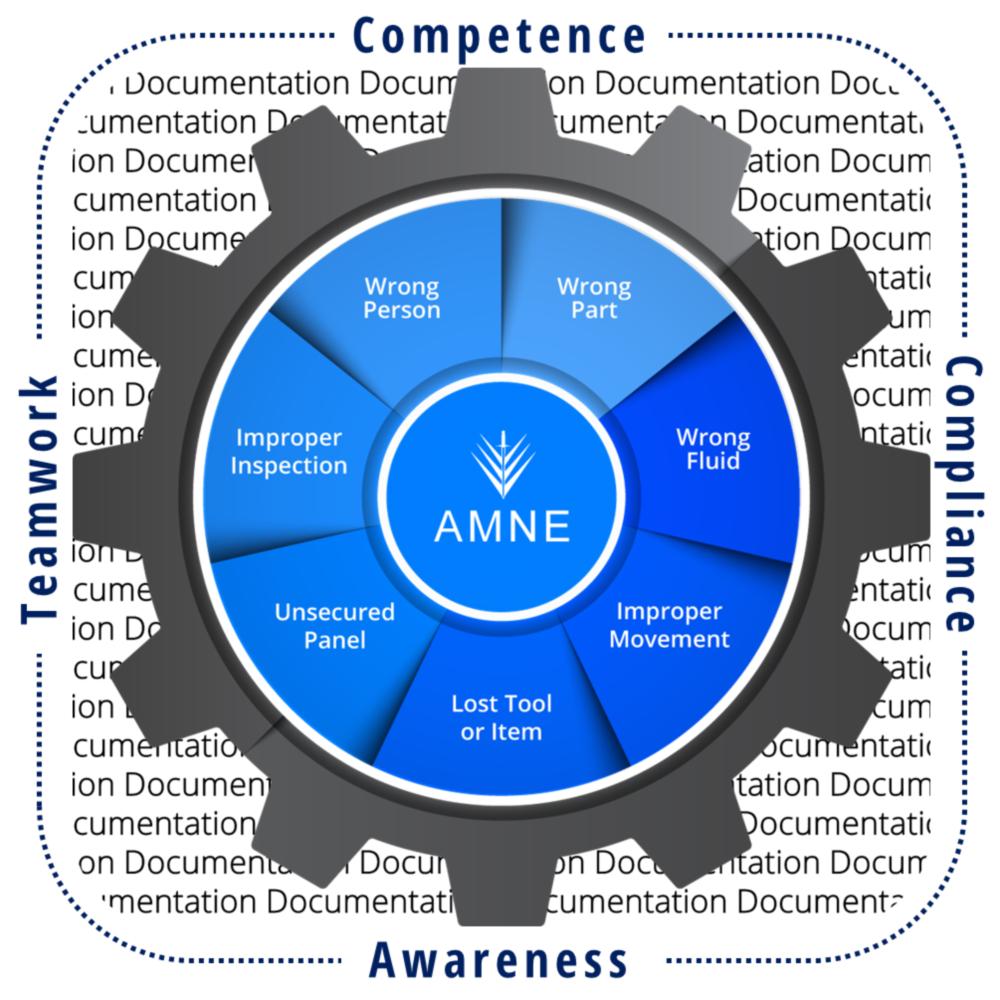
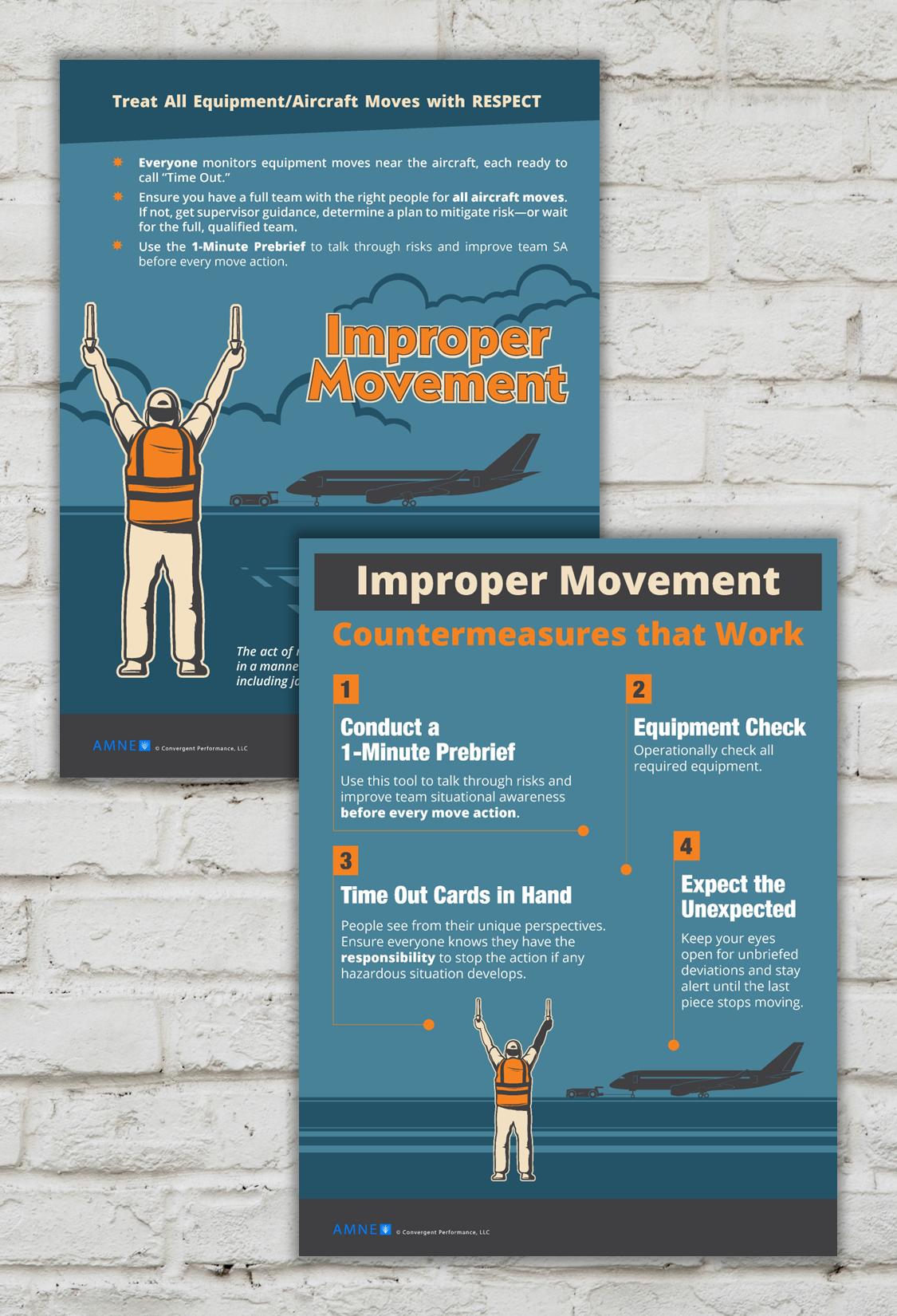
This aviation maintenance and ground handling program is proven to reduce injuries, incidents, accidents, damage, and rework by taking aim at the seven events that industry data shows are at the root of $40 billion in losses annually. We call these occurrences the “Never Events” because they are 100% preventable by applying four familiar qualities: Competence, Compliance, Awareness, and Teamwork, plus thorough Documentation (illustrated in the image to the right)
This engaging course is comprised of four 1-hour webinar sessions spaced 2 weeks apart and offers your team the opportunity and tools to improve individual and team performance starting with session one. Any flight operation with a USAIG Performance Vector-eligible policy* can enroll maintenance and ground support personnel in this course at no cost and conveniently participate from any location.
* USAIG Performance Vector offers are available to most USAIG policyholders who operate turbine-powered aircraft wholly insured by USAIG, or who place multiple policies with USAIG. Check with your broker, underwriter, or policy documents to confirm eligibility.
Wednesday, April 8th
Wednesday, May 6th
Wednesday, April 22nd
Wednesday, May 20th
Have a conflict with any of these dates? Not a problem all participants also get links to a recording of each session that remain active for 60 days. It’s best for teams to gather and participate together for the valuable discussions this course facilitates. Recordings make it possible to deploy the course in organizations with even the most challenging schedules, enable catching up if individuals miss a session, and facilitate self-review of the case studies, concepts, and strategies that prevent the Never Events.
Developed by technicians for technicians, the AMNE program is an FAA- sanctioned high-impact training solution that enhances mission readiness, ensures compliance, and slashes operational costs. After a decade of experience and data training over 100,000 maintainers and delivering reported saves we know how well this works.
Right from Session one, participants learn to use the Take 5 Briefing Tool, which is printed and shipped to your organization prior to training. This tool provides the framework for maintainers to conduct a 1-Minute Pre-brief to ensure everyone is properly trained and qualified for the task and on the same page before beginning the work. It also provides an opportunity for any maintainer to call a 2-Minute Pause on operations if they see something unsafe or situational awareness has been lost. Finally, it offers a 2-Minute Debrief that can be used to examine close calls and document improvement opportunities while the job is still fresh. With this tool, any maintainer can make the most of every task they complete.
The remainder of the training is scenario-based and designed to have immediate impact on technician-caused damage by changing the behavior of individuals and teams through a renewed dedication to professional discipline, precision, and airworthiness. Participants learn to prevent the seven Never Events using a combination of Four Skills +1: Competence to stop unintentional errors, Compliance to stop violations, Awareness of hazards/conditions that lead to Never Events, and Teamwork to catch errors and violations, plus flawless Documentation as the systemic foundation for safety. All critical training information is also included on 14 Safety Promotion posters for your organization to download and display digitally or print and put up in your hangar or shop. By leveraging the natural problem- solving skills of maintenance personnel and embedding new team briefing standards with the Take 5 Briefing Tool, AMNE drives a lasting culture shift and transforms your maintenance team into a unified force against preventable errors, delivering measurable safety and performance gains while fostering a culture of ownership and excellence with the pledge: “Not on my team, not on my watch, not on my aircraft.”❖

If your team is ready to eliminate the Aviation Maintenance Never Events® on your aircraft and hangar floor, here’s your checklist:
1. Select one person to coordinate enrollments for your operation.
2. Have that person use the button below to confirm your interest. We'll confirm your policy's eligibility and send that person an enrollment roster for your company's participants.
3. Coordinators: return completed rosters as soon as ready, NLT March 27, 2026.
Don't Delay: Attendance slots are limited, and enrollments will be allocated 'first come, first served' based on receipt of completed rosters.
For other questions, please email us at safety@usaig.com.
DAVID JACK KENNY
It’s tempting to assume that the data and procedures cited in a Pilot’s Operating Manual (POM) include
some unknown safety margin tempting, but potentially perilous. Performance figures, for example, should be considered best-case scenarios, particularly numbers quoted in any kind of marketing material. Crisp technique may enable you to attain the POM’s figure of a 3,000-foot takeoff roll on a dry, sea-level runway with a 10-knot headwind. But you shouldn’t expect to get off any sooner. Likewise, procedures particularly sequences of steps and details of aircraft configuration define conditions under which the manufacturer’s shown the aircraft can be operated safely. Maybe there are others, maybe not. Maybe nobody’s ever checked. Do you want to be the first?
More difficult questions arise when it’s necessary to venture beyond the range of ordinary line operations. Post-maintenance checks and new equipment installations may require testing the aircraft’s behavior in situations passenger and ferry flights would normally avoid. Whatever guidance is provided by the POM may not seem entirely adequate. Worse, crucial details may be scattered between operating, service, and even the manufacturer’s flight- test manuals. Pilots who choose to take post-maintenance checks on rather than referring them to qualified, professional test pilots should, at the very least, make sure to satisfy all applicable conditions set out in the POM.
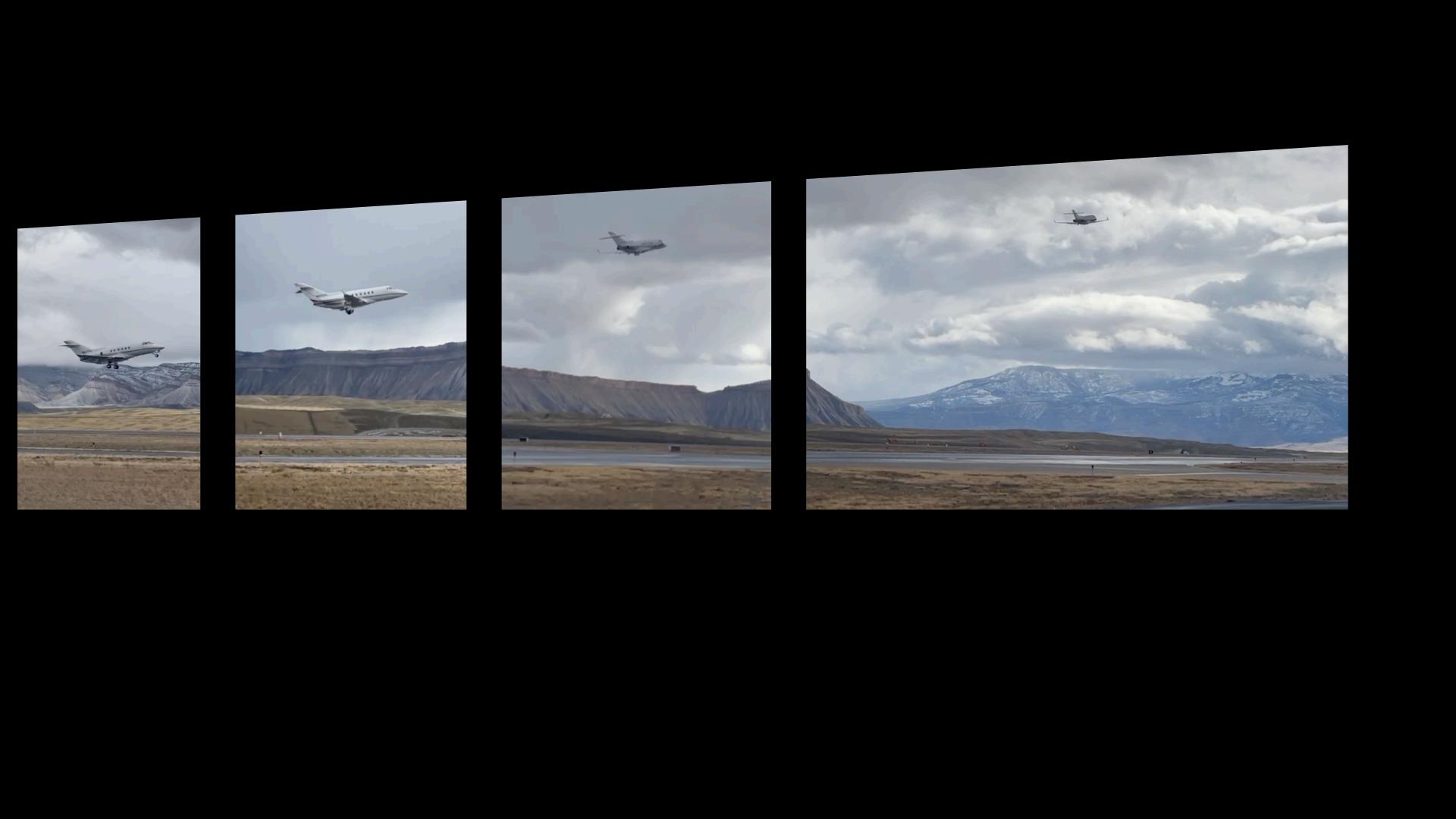
On February 6, 2024, N900VA, a 2007-model Hawker 900XP, was released for service at the Grand Junction
intervals to inspect for cracks and evidence of corrosion. Following the inspection, the airplane’s structural repair manual (SRM) requires testing for “unacceptable stall characteristics” and verifying calibration of the stall protection system. Unsatisfactory results are addressed by adjustment of the jet’s stall spoilers.
The Hawker 900 POM includes a procedure for performing intentional stalls and describes “unacceptable stall characteristics” including roll beyond 20 degrees not corrected by “normal use of ailerons” and aileron snatch (which the FAA defines as “violent back and forth movement of the aileron control as airflow changes over the surface”). It also includes the warning that:
PILOTS CONDUCTING STALL CHECKS SHOULD HAVE PRIOR EXPERIENCE IN PERFORMING STALLS IN THE HAWKER AND MUST BE PREPARED FOR UNACCEPTABLE STALL BEHAVIOR AT ANY POINT LEADING UP TO AND THROUGHOUT THE MANEUVER.
It does not, however, describe the level of experience recommended or how to conduct the actual stall tests. The SRM provides explicitly detailed instructions on how to adjust the stall spoilers in response to the results, but merely calls for the pilots performing the test to “stall the airplane in all configurations.”
N900VA’s regular flight crew arrived at the airport at 8:45 on the morning of February 7 with the intention of performing the test while en route to Gig Harbor,
Continues next page

in make-and-model. His most recent recurrent training was four months earlier in a Hawker 800XPi simulator, and in December 2019 he had served as second-incommand (SIC) in a stall test in the same airplane. The 58-year-old SIC had 8,188 hours of flight experience but just 70 in the Hawker, having completed his initial training four months earlier at the same commercial simulator facility.
Just before the Hawker took off at 10:37 local time, the cockpit voice recorder (CVR) captured the SIC confirming that the ice-protection was turned off. At 10:39:54, as they climbed on a southeasterly heading, the PIC said, “We’ll request a[n] altitude once we get above in VMC;” at 10:42:25 the SIC asked Denver Center for a block altitude from FL 180 to FL 200, which was approved. The airplane leveled at 20,000 feet, and at 10:44:00 its flight data recorder (FDR) logged a gradual increase in pitch and angle of attack (AOA) as it began to slow from 219 knots. The autopilot was disconnected at 10:45:01 as the crew discussed the stall test.
“A sound consistent with the gear warning horn” was picked up at 10:45:51, which the PIC acknowledged. “A sound consistent with the stick shaker” was recorded at 10:46:33 along with the SIC’s comment “one-nineteen.”
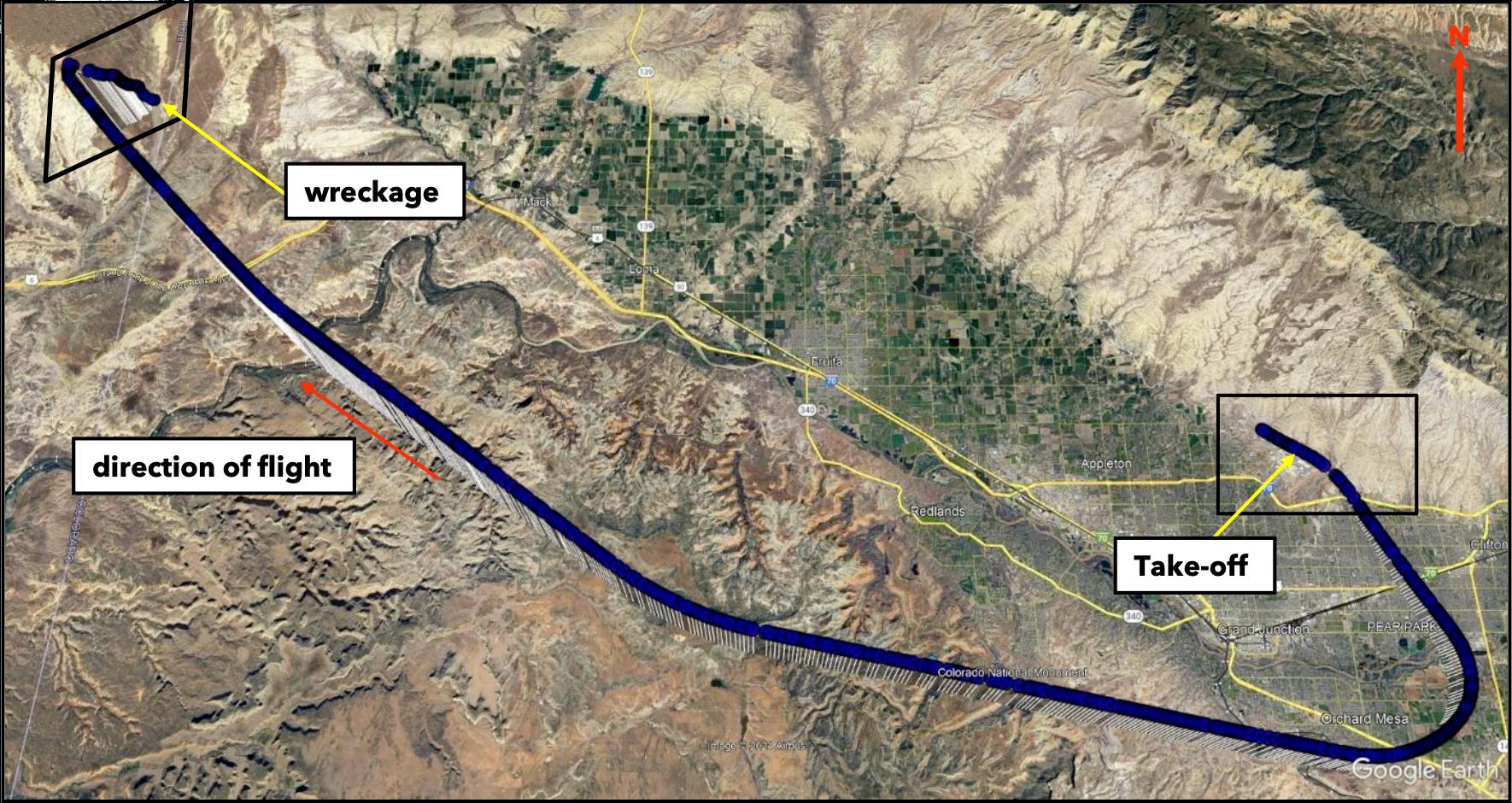
Pitch attitude continued increasing, and AOA was measured at 0.91% in the right wing and 0.93% in the left. ADS-B track data showed that ten seconds later the jet entered a tight, corkscrewing descent that continued through the last data point, recorded at an altitude of 11,875 feet at 10:47:44. The wreckage, mostly consumed by fire, was subsequently found on flat open ground at an elevation of 4,800 feet.
The FDR recording showed that as the stick pusher activated, the airplane rolled right beyond 45 degrees at a rate above 40 degrees per second. The crew responded with full left aileron and full aft pressure on the control column while increasing power from idle to full. They maintained full left aileron as the right roll increased to 84.7 degrees
at 10:46:41; then the jet began rolling left in a 20-degree nose-down attitude. In the next 10 seconds it rolled through inverted and back upright while its nose-down attitude reached –75.4 degrees. AOA values remained at 1.0% and both stall valves remained open, indicating continuing stick pusher activation.
The NTSB concluded that the pilots’ “attempted remedial action … aggravated the aerodynamic stall and led to a loss of control from which they were unable to recover,” probably a flat spin. They also surmised that “it is unlikely that the flight crew members’ simulator training … and the PIC’s previous participation in a stall test flight … adequately prepared them to conduct a stall flight test or address any unacceptable stall behavior.” That’s not surprising since the simulator, in fact, was programmed not to demonstrate such excursions and the training provider “did not teach full stalls.”
Questionable qualifications weren’t the only factor working against the crew. Failure to follow the POM’s procedures made successful completion of the test less likely, perhaps even impossible. The manual lists seven conditions for conducting stall demonstrations of which the crew satisfied only three: ventral tank empty, autopilot off, and stall warning system activated. But it also calls for conducting stalls between 10,000 and 18,000 feet msl, at least 10,000 feet above clouds (or terrain) in daylight VMC, with a clear visual horizon and the airframe free of ice
A mechanic interviewed during the investigation recalled “precipitation and sleet” falling as he helped the crew perform their preflight inspection. An AIRMET for moderate icing was in effect between the freezing level, estimated at 6,500 feet, and 20,000 feet. Modeling based on NOAA sounding data showed multiple broken or overcast layers above 8,200 feet, and radar imagery indicated that the cloud tops around the accident site reached about 17,500 feet.
It is not clear why the crew chose to climb through the clouds with ice protection disabled; the NTSB report conjectures that they may have been concerned that deicing fluid would “contaminate the airflow over the wing during the stall test.” Analysis by the National Center for Atmospheric Research concluded that the airframe might have accumulated as much as 1 mm of ice during the climb, and icing studies of a similar airfoil design found that even a two-minute icing encounter could reduce the wing’s critical AOA by as much as 6 degrees. The CVR did not record either pilot mention checking the airframe for ice.

Subscribe to Premium on Safety, view past issues, or share your comments, questions, and general feedback with USAIG


A performance study based on the FDR data found that the stick shaker and pusher both activated at very close to the expected airspeeds – but the stall occurred just as the stick pusher activated, giving the crew no warning before the jet rolled into an unusual attitude. A former Hawker factory test pilot interviewed by the NTSB recalled briefing his copilots to expect the airplane to get slower than they’ve previously been in the Hawker – and to see “more grass in the windshield” than usual when it pitched down during the recovery. Nothing in the known histories of the accident crew suggests that they were trained to recover from a sudden departure from controlled flight.
The same test pilot, whose career to date includes some 360 of these stall tests, also forcefully asserted that the only authoritative directions on how to perform them is provided in Hawker Beechcraft’s production flight test procedure (PFTP) – a proprietary reference that’s not normally available to line pilots or maintenance providers. This is one of at least four recent accidents during postmaintenance stall testing in this series of jets. Cases can be made that what is, after all, a test flight in a craft of uncertain airworthiness may best be contracted to a specialist with that level of expertise; and that the professionals who fl y and maintain these jets aren’t well- served by a lack of access to complete documentation of the test procedure.
The destruction of N900VA with the loss of her crew underscores that prospects for safely completing any flight are rarely improved by ignoring the procedures that are documented, or trying to improvise your own. ❖
Premium on Safety is published by United States Aviation Underwriters (USAU) as managers of the United States Aircraft Insurance Group (USAIG) ©2026.
USAIG
AMERICA’S FIRST NAME IN AVIATION INSURANCE
125 Broad Street, 6th Floor New York, NY 10004
212.952.0100 | usaig.com
Publisher: John T. Brogan
President & CEO, USAIG
Editor: Paul S. Ratté
Your feedback is vital to our safety programs because it helps us focus on what’s most important to you. USAIG’s website (USAIG. com) offers a convenient way for us to receive your thoughts or suggestions. A visit there will provide a great look at all our services, including the “Safety” tab that outlines our safety programs. All the Safety pages contain a feature you can use to communicate directly with our Director of Aviation Safety Programs. We look forward to your comments on the newsletter (or our other safety programs) and advancing Premium on Safety in step with your needs and suggestions. Fly smart and fly safe!
