URSINUS MAGAZINE
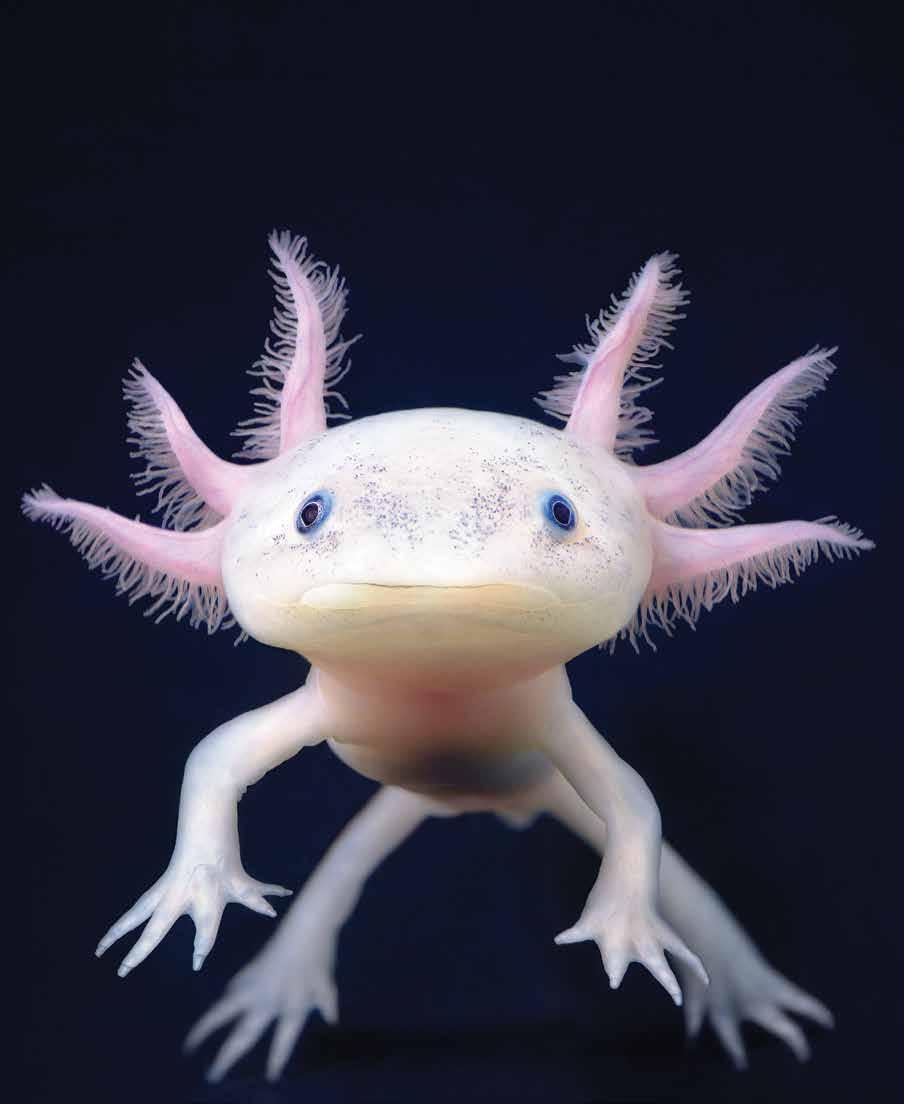
FROM AXOLOTL RESEARCH TO DARWIN LECTURES, Ellen and Robert Dawley’s complementary careers influenced thousands of students and defined what a shared academic life looks like.
As part of APEX, Ursinus students are eligible for up to $2,000 in Experiential Learning Grants. These grants can be used to offset costs associated with Ursinus-affiliated and credit-bearing unpaid internships, externships, co-ops, study abroad programs, and mentored-research.
Experiential Learning Grants:
Open doors to internships, externships, study abroad, and mentored research
Build real-world experience and professional networks
Strengthen job placement and graduate school admission rates
Contact the office of advancement to learn how you can help make Experiential Learning Grants possible.
VOLUME #146 SPRING 2026
PRESIDENT
Gundolf Graml, Ph.D.
VICE PRESIDENT FOR EXTERNAL RELATIONS & STRATEGIC INITIATIVES
Michelle Yurko
SENIOR DIRECTOR OF MARKETING AND COMMUNICATIONS
Brianne S. Farris
URSINUS MAGAZINE STAFF
MANAGING EDITOR & CREATIVE DIRECTOR
Steve Thomas
SENIOR EDITOR
Jennifer L. Post-Whisted
ASSOCIATE EDITORS
Alyssa Kratz
Connor Donohue
GRAPHIC DESIGNER
Lexi Macht
PHOTOGRAPHER
Jack Hopey
ONLINE MAGAZINE
Erin Hovey ’96
Ursinus Magazine is published two times a year. Update your contact information at ursinus.edu/updatecontact.
Copyright © 2026 by Ursinus College.
Editorial correspondence and submissions:
Ursinus Magazine
601 E. Main Street
Collegeville, PA 19426
610-409-3000 ucmag@ursinus.edu
ON THE COVER: Photograph by Tim Flach timflach.com
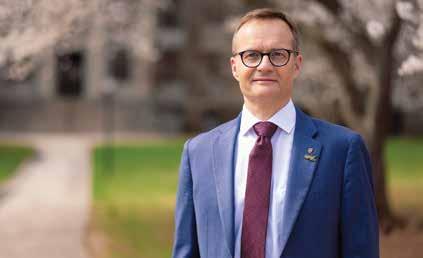
This spring I stepped into a new role at Ursinus College, and I am deeply grateful for the support that I have received from the Ursinus community. As the 20th president, I am honored and humbled by the confidence the board of trustees has placed in me, and I am energized by the opportunity to lead a college with such a distinguished history and a clear direction for the future.
As I begin this chapter, I do so with great confidence in Ursinus College’s role in shaping the future of an applied liberal arts education.
The world of work is changing, shaped in part by the transformation of many traditional entry-level roles. Yet this moment only reinforces what has always been true: the most enduring and valuable skills are profoundly human ones — critical thinking, ethical judgment, communication, creativity, and leadership. These are, and have long been, the defining strengths of a liberal arts education.
What sets Ursinus apart is our intentional commitment to helping students translate those strengths into lives of purpose and professional success from their very first day on campus.
Through APEX (Applied. Professional. Experiential.), our new learning ecosystem that connects classrooms to careers, we model how we can bring the world of work into the college and the college into the world of work. We enable all students to learn how to think, how to know, and how to do throughout their four years in college. In doing so, we transform and futureproof our residential liberal arts mission.
The liberal arts have always evolved in response to the needs of society. At Ursinus, we are embracing that evolution and we are implementing a new applied liberal arts approach with confidence and ambition.
Thank you for your continued support and for sharing in the exciting future that lies ahead for Ursinus College. I look forward to seeing you at BearFest, our homecoming and family weekend, on Oct. 16-17, 2026!
Sincerely,
Gundolf Graml, Ph.D. President
In Steve Kolwicz’s HaMM lab, six seniors found mentorship, friendship, and confidence alongside four years of hands-on research.
For more than four decades, spine surgeon Richard Guyer, M.D., ’71 has approached artificial disc replacement with relentless curiosity, continuing to innovate and perform nearly 100 surgeries annually.
Retiring after 36 years, Ellen and Robert Dawley have shared an academic life and partnership that has shaped generations of students.
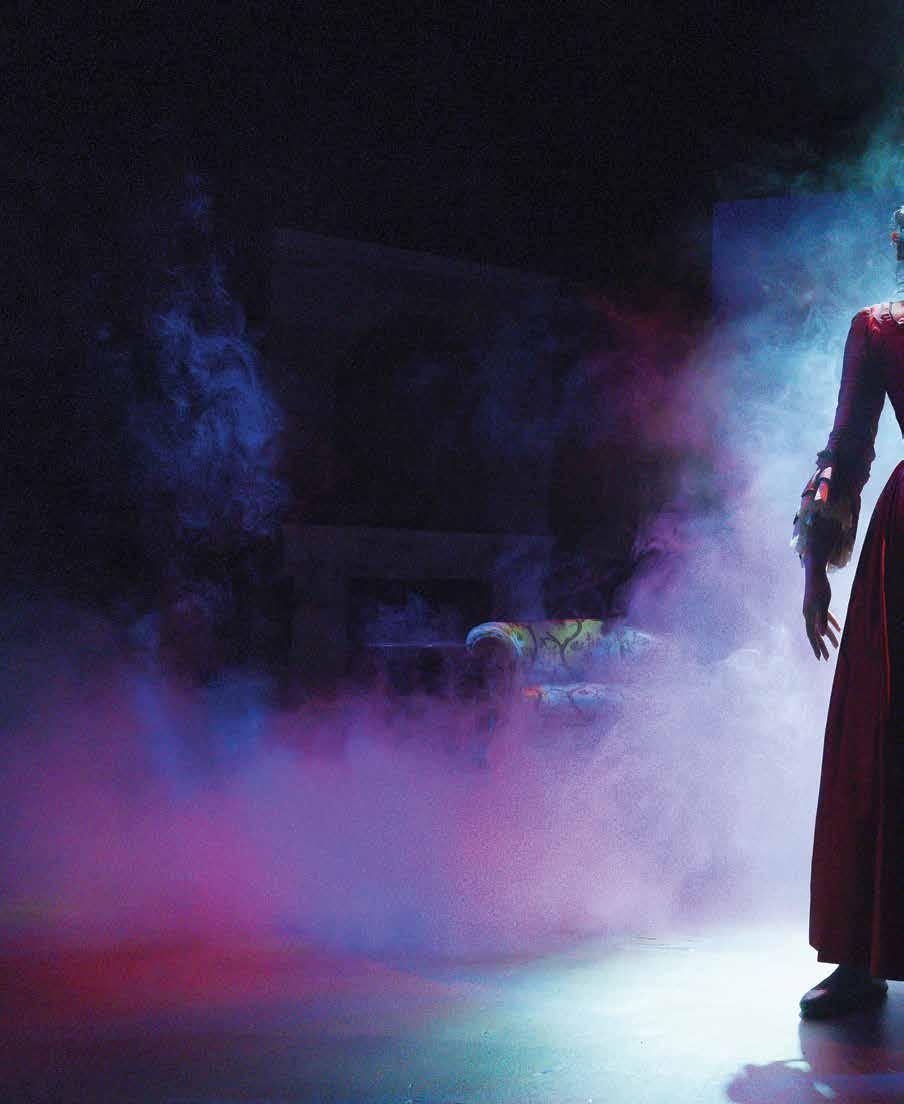
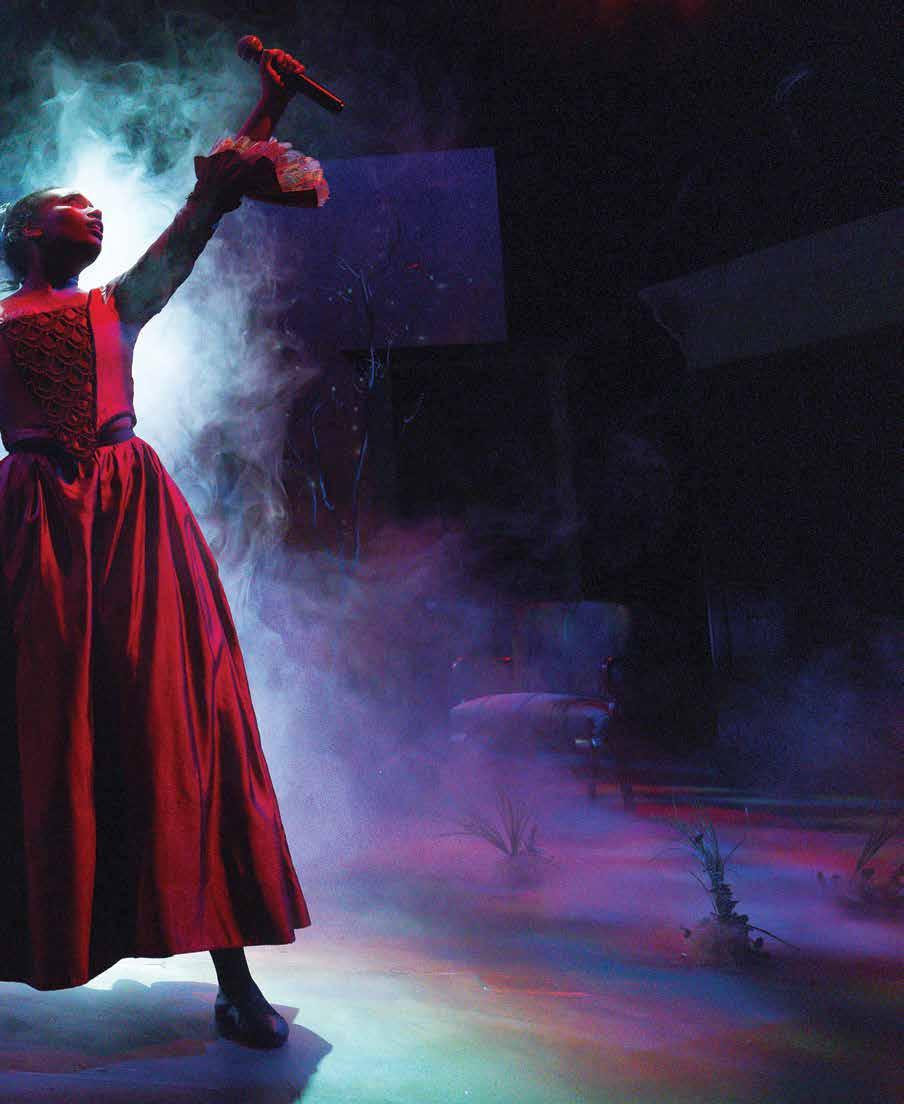
From the Ursinus stage to New York City, Patrick McAndrew ’13 merges theater and technology through groundbreaking original work.
With no roster, no schedule, and no guarantees, head wrestling coach Joe Jamison has built a program that has competed on the national stage.
science, neuroscience, and physics & astronomy. The initiative invests in the STEM pipeline while increasing the persistence and success of academically talented, low-income students.
❚
PH.D., NAMED
Following a successful period of interim leadership, the Ursinus College Board of Trustees announced in April the appointment of Gundolf Graml, Ph.D., as the 20th president of Ursinus College.
Graml served as interim president after serving as the senior academic administrator at Ursinus since 2024. “President Graml has demonstrated the steady, collaborative leadership that Ursinus needs at this moment,” said Joseph M. DeSimone, Ph.D., chair of the board of trustees.
“The interim period provided clear evidence of his ability to lead with integrity, advance the college’s priorities, and build trust across the campus community. The board is confident in his ability to prepare the institution to emerge ready for a strong future accessible to future generations.”
During Graml’s interim presidency, Ursinus advanced key strategic priorities focused on academic innovation, student opportunity, and experiential learning. Ursinus also made significant progress on initiatives that support student success and institutional momentum, including investments in academic infrastructure, resulting in new majors and expanded access programs.
“I am honored by the board’s confidence and grateful for the support of the Ursinus community,” Graml said. “Ursinus is a remarkable institution with an enduring commitment to student success, personal transformation, and career readiness.
I look forward to continuing our work together to strengthen the college’s future and expand opportunities for our students.”
Ursinus was awarded nearly $2 million from the National Science Foundation (NSF) to launch a Scholarships in Science, Technology, Engineering, and Mathematics (S-STEM) program called “PERSIST: Partnerships for Engagement, Resilience, and Support through Interdisciplinary STEM Teamwork.” The six-year PERSIST program will provide scholarships to 24 Ursinus students majoring in biochemistry and molecular biology, biology, chemistry, computer
A $1.49 million grant from the Mellon Foundation will help to launch the Center for Humanities in Action (CHIA) in fall 2026. The interdisciplinary center will support curriculum innovation, community-engaged learning, and career preparation through the humanities. Part of the college’s APEX initiative, CHIA aims to expand student engagement across disciplines while advancing social justice, civic life, and career-ready skills rooted in critical thinking and empathy. For Lori Daggar, Ph.D., associate professor of history and primary investigator on the grant, it is both an affirmation of the humanities’ lasting value and a forwardlooking investment in their future. “The humanities remind us that a world that is both humane and human is desirable, achievable, and necessary,” she said. “It champions critical thinking and foregrounds empathy that we need for the world that we have.”
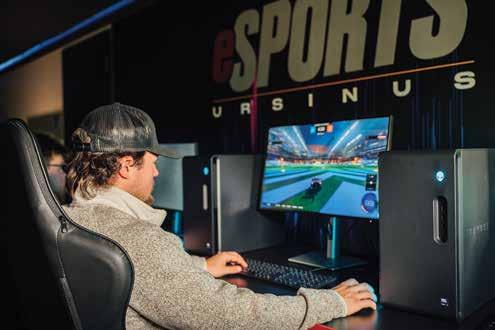
In April, Ursinus completed a new, state-of-the-art esports gaming room in Ritter Hall. The space features a dozen Alienware gaming computers, along with new keyboards, mice, and headsets. The new facility supports the
Ursinus College’s inaugural Experiential Learning Week delivered a powerful introduction to real-world learning, transforming classrooms into corporate offices, policy chambers, and community settings. Part of APEX (Applied. Professional. Experiential.), the initiative places students into hands-on environments early, helping them explore — and sometimes rethink — potential career paths.
“Experiential Learning Week exemplifies what APEX is all about — giving students opportunities to apply knowledge in real contexts and build connections to the world of work,” said President Gundolf Graml, Ph.D.
Students quickly discovered that learning feels different when they are fully immersed. Lola MacRae ’29 sharpened her strategic thinking in a negotiation intensive, culminating in a UN-style simulation led by alumnus Paul Cottam ’19. Tomir Sawicki ’29 stepped into the world of corporate finance at SEI Investments, shadowing professionals like Rob Wrzesniewski ’91 (pictured) and gaining insight into day-to-day operations, while Fiona Sanders ’29 experienced the human side of health care at Frederick Living, where small interactions proved just as meaningful as clinical knowledge.
Alumni opened doors across industries. At The Haverford Trust Company, Keith Aleardi ’89 guided
formation of campus esports teams for specific games and opens opportunities for competition with teams from other colleges and universities.
❚ URSINUS/ROCHESTER PARTNER ON 4+1 BUSINESS PATHWAY
Ursinus signed a new affiliation agreement with Simon Business School at the University of Rochester. The five-year Business Master’s Pathway program offers students a streamlined route into one of Simon’s five fulltime master’s programs — accounting, finance, business analytics, marketing analytics, and artificial intelligence in business. The program is designed for high-achieving undergraduates who want to get a head start on solidifying their post-graduation plans. Simon is ranked among the top 30 business
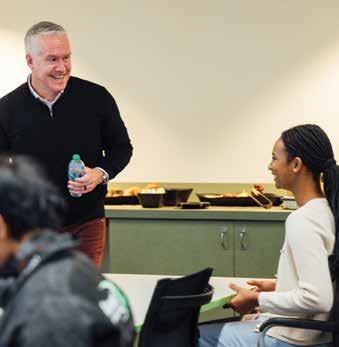
students through a “micro-internship” in financial services, while Kate Herr ’06 welcomed students to Johnson & Johnson, highlighting the many nonlinear paths within the field.
From witnessing legislation signed into law to exploring careers in finance, health care, and public service, students gained clarity, confidence, and perspective.
Other alumni participants included: Alexandra Jorgensen ’96 (IBX), Arlene A. McLean Ph.D. ’62 (Meadowood), Dean Fox ’06 (Flagship Financial), Frank Hennessey ’88 & Mark V. Greim ’07 (Premier Planning Group), Janice Witt ’16 (Special Equestrians), Jessie Kemper ’12 & Jeffery M. Cocci Jr. ’23 (Perkiomen Watershed Conservancy), and Mike Piotrowicz ’78 (Legacy Advisors).
schools in the United States. Students can apply to secure their seat in the program as early as their senior year of high school when applying to Ursinus College. They can also apply as a college junior at Ursinus.
❚ URSINUS LAUNCHES GLOBAL LEARNING PROGRAM
Ursinus is preparing to send students far beyond the boundaries of campus, and alumni are already investing in the vision. Part of APEX (Applied. Professional. Experiential.), Go Global is a tuition-inclusive initiative that gives sophomores the opportunity to participate in immersive domestic and international learning experiences beginning in spring 2027. Destinations include Ireland, England, Puerto Rico, the Dominican Republic, and
Appalachia. Alumni support has already surpassed $2 million, boosted by a $1 million gift from Bill Pepper ’89.
In the fall, Addison Hessler ’29, John Teryan ’28, Mia Bompensa ’28, and Jaden Ottley ’29 took home first place in America250PA’s Direct Effect Innovation Challenge at the State Capitol Building in Harrisburg. The three-round marketing challenge gave students from colleges and universities across Pennsylvania the chance to design and launch a marketing campaign for America250PA, the official state commission for the United States’ 250th anniversary in 2026. It is the second first-place finish for Ursinus in the last three years.
Three Ursinus women’s athletics programs received a significant financial boost, thanks to a generous gift from alumna Carolyn Estes Williams ’77. Estes Williams gifted the college $100,000, with $50,000 designated for the women’s field hockey program and equal $25,000 gifts benefiting both the women’s tennis and women’s basketball programs. The gift, made in honor of longtime Ursinus field hockey coach Adele Boyd ’53, will have an immediate impact, enhancing resources for student-athletes across all three programs. During her time at Ursinus, Estes Williams was a multisport athlete.
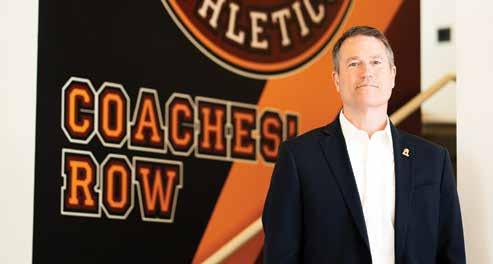
Men’s Basketball Head Coach Kevin Small wrapped up his 25th season at the helm of the Bears in 2026. Small has four Centennial Conference titles to his name and is the program’s all-time wins leader. The St. Joseph’s University alumnus is one of six coaches in conference history to have over 300 career wins. In 2025-26, Small led the Bears to an 18-9 (10-3) record and the second round of the conference tournament. Mohammed Toure ’26 was named Centennial Conference Men’s Basketball Player of the Year, the eighth player to earn the accolade under Small’s watch. He has coached the program’s all-time leaders in scoring, rebounds, assists, steals, and three pointers while placing dozens of athletes on all-conference, all-academic, and all-American teams. Small is a twotime NABC Mid-Atlantic Coach of the Year.
❚ BEAR2BEAR IMPACT AWARD FOR LEADERSHIP AND SERVICE
Margaret “Peg” A. Williams, Ph.D., ’80, a long-time serving member and vice chair of the Ursinus College Board of Trustees, was honored by the college with the Bear2Bear Impact Award for Leadership and Service. The award, presented annually to an individual or organization who has had a great impact on their community, while being a strong supporter of Ursinus and the college’s mission, was given to Williams at this year’s Bear2Bear Benefit & Bash. Since graduating from Ursinus, Williams has spent years supporting the college as both a volunteer and donor.
❚ LENAPE SYMPOSIUM RETURNS TO URSINUS
Ursinus College and the Delaware Tribe of Indians co-hosted the third
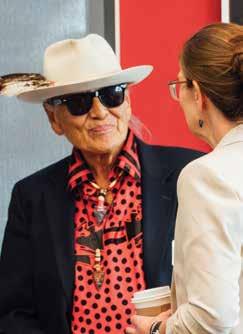
annual Lenape Symposium in April after a yearlong hiatus. Representatives from three federally recognized tribes gathered to discuss Lenape history, sovereignty, and future visions. “Given the history of colonialism and forced removals, it is rare that citizens and leaders from these nations can gather collectively in their homeland of Lënapehòkink,” said Lori Daggar, Ph.D., associate professor of history and coordinator of Native American and Indigenous Studies. “That these leaders of sovereign nations were present, together at Ursinus, is in itself noteworthy. That they all shared their perspectives on their history, culture, and their visions for the future is an honor and incredibly special.” The Lenape Symposium is part of Ursinus’s commitment to the Statement of Mutual Intentions.
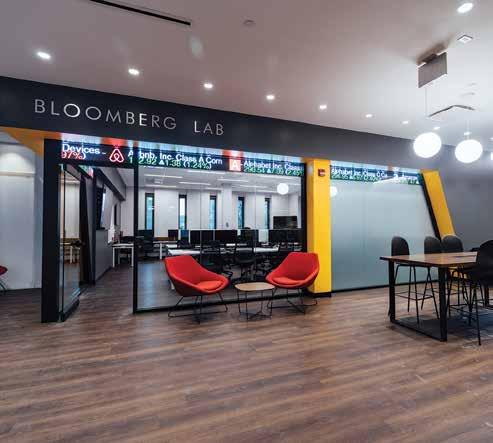
In January, a grand opening was held to officially launch Ursinus’s new Bloomberg Lab, celebrating the realization of beloved late professor Scott Deacle’s dream. Twelve stateof-the-art Bloomberg terminals, which allow students to study the stock market in real time and earn finance certifications, have transformed Myrin Library’s lower level into a trading floor, complete with a stock market ticker. Alumni Rosana Biter, CFA, ’02, global head of companies data at Bloomberg, and Johnathan Myers, CFA, ’19, an MBA candidate at Dartmouth, spoke at the grand opening about their experiences at Ursinus and beyond.
This spring, Ursinus launched the America250 Tuition Promise for Montgomery County, guaranteeing eligible local high school seniors tuition capped at $10,000 annually for up to four years. The initiative aims to expand access and prioritize county students while honoring the nation’s 250th anniversary. “This program is about removing uncertainty for families and sending a clear message to our local Montgomery County students that Ursinus is invested in them,” said Lauren Sciocchetti, associate vice president for enrollment management. “As we approach America’s 250th anniversary, we’re proud to honor our region’s history by making an Ursinus education more accessible to the students who live, learn, and contribute here.”
Wrestler Ashley Diaz ’28 competed at the Puerto Rico National Championships in May and took home two national titles. Diaz advanced to the Pan-Am Championships and World Championships to be held this summer and fall in Peru, Brazil, Slovakia, and Las Vegas. Head Coach Joe Jamison said, “The world championships are the highest level of our sport for age-level competitions. Ashley is officially on the Olympic ladder and will have every opportunity to make the Puerto Rican Olympic team in 2028 and 2032.” Read more about Ursinus women’s wrestling on page 32.
PAYING IT FORWARD
For Joseph DeSimone, Ph.D., ’86, P’12, H’99, the path to an extraordinary career began close to home.
Raised in Norristown, Pa., DeSimone grew up in a blue-collar family where college wasn’t often discussed — even if it was quietly expected. His father worked as a tailor at JCPenney, and his mother worked in accounting, but DeSimone would become the first in his family to graduate from college.
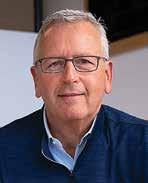
Today, nearly four decades later, DeSimone has made a $250,000 gift, which will be used to support local students through the America250PA Tuition Promise for Montgomery County.
For DeSimone, the Sanjiv Sam Gambhir professor of translational medicine and chemical engineering at Stanford University, and cofounder, board chair, and former CEO of the additive manufacturing company Carbon, the gift is deeply personal.
“Ursinus changed the trajectory of my life,” he said.
To read more: ursinus.edu/fullcircle
FUELING BETTER SLEEP | Assistant Professor Alyssa Tindall, RDN, Ph.D., published pilot findings in the journal “Nutrients” examining how diet quality relates to sleep and health. Using data from students who tracked their diets and sleep habits with the ASA24 tool, Tindall identified key patterns, including low nut consumption and links between better diet quality and improved sleep. Her research highlights how simple dietary changes may influence overall well-being. Building on these findings, Tindall is developing a randomized controlled trial to test whether walnuts — rich in polyphenols, fatty acids, and melatonin — can improve diet quality, sleep, and body composition, advancing practical, evidence-based strategies for student health.
TINDALL, RDN, PH.D. ASSISTANT PROFESSOR OF HEALTH SCIENCES
DOMENICK SCUDERA, M.F.A. PROFESSOR OF THEATER
WRITING HIS NEXT ACT | While Professor Domenick Scudera’s career has been largely defined by directing, recent accolades mark a shift into playwriting. His one-act play, “The Rules,” which centers on two brothers from Long Island who reunite after their mother’s death, was selected for the Italian American Playwright Series in New York City, where it was featured in a professional reading in December. The same play went on to win again as one of three selected works in the WordWave One-Act Play Competition in Lake Tahoe. At the same time, another of his works, “The Half of It,” which emerged from a sabbatical project, was named co-winner of the Carnegie Mellon University Press Inaugural New Play Contest and will be published this fall. “The Half of It” was inspired by the life of Bert Savoy, a Vaudeville-era drag performer whose rise to fame was cut tragically short when he was struck by lightning and killed.
BRIE BERRY, PH.D. ASSISTANT PROFESSOR OF ENVIRONMENT & SUSTAINABILITY
STRENGTHENING TEACHING PRACTICES | Assistant Professor Brie Berry, Ph.D., was selected as an Early Career Fellow by the Nielsen Center for the Liberal Arts at Eckerd College in St. Petersburg, Fla. The fellowship brings together faculty from small liberal arts colleges for sustained, smallgroup conversations aimed at supporting and strengthening teaching and professional development. Berry also recently presented work on an upcoming book on the future of secondhand markets and circular economies at the Society for Economic Anthropology Annual Meeting in Colorado. She serves as chair of the steering committee for the Pottstown Area Food Collective, serves on the executive committee for the Montgomery County Food Policy Council, and runs a research lab at Ursinus called Community Engaged Research for Circular Local Economies (CERCLE), through which students conduct applied research on reuse economies and food insecurity.
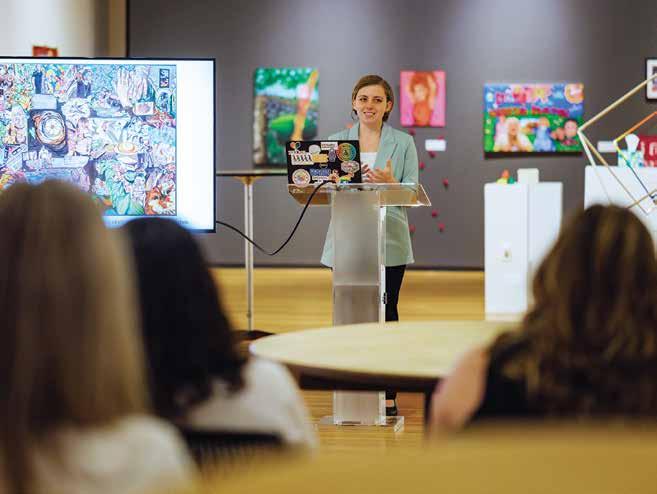
Nearly 300 students representing every discipline participated in this year’s Celebration of Student Achievement (CoSA), a culmination of the research and creative endeavors that students have been engaged in all year. For first-year students to seniors, CoSA was a day filled with talks, poster presentations, theater and dance performances, and a student art exhibition at the Berman Museum.
WILLIAM MONGAN, PH.D. ASSOCIATE PROFESSOR OF MATHEMATICS, COMPUTER
SCIENCE,
AND STATISTICS
AI’S IMPACT ON TEACHING | Associate Professor William Mongan, Ph.D., and several of his students are exploring artificial intelligence and its ability to help teachers by drafting feedback they can review and refine for students. Using archival student work and mentor responses, the group compared several AI approaches to see how well they respond to student ideas. While AI can produce feedback that sounds teacher-like, it struggles with decisions to correct, question, or extend a student’s thinking. The work highlights why teachers remain essential in guided learning. Mongan’s paper on the topic, written with student co-authors, has been accepted for publication. The group also continues to work with Drexel University and the 21st Century Partnership for STEM Education, with support from the Gates Foundation, to investigate AI’s use in coaching teachers to give more engaging student feedback.
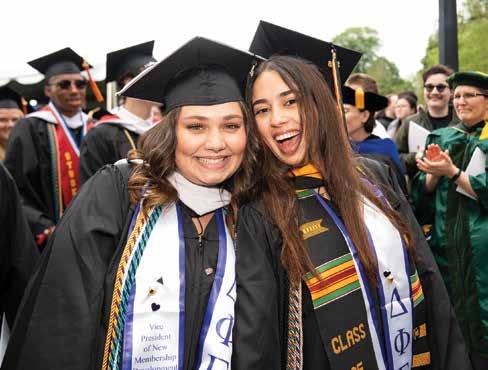
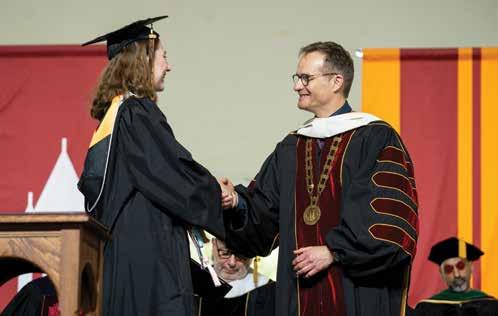
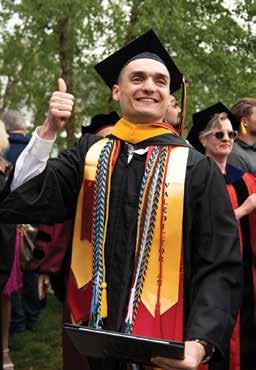
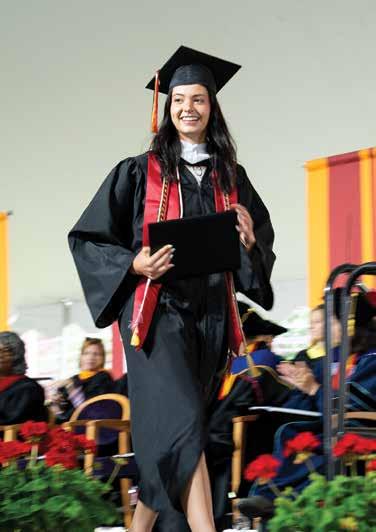
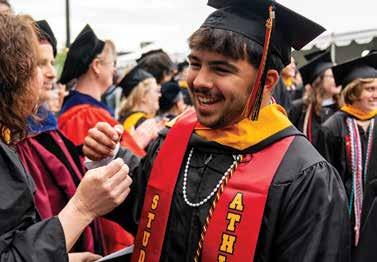
“You have survived a pandemic. You have navigated a world more divided than any of us expected. You have earned this degree through challenge, sacrifice, and a kind of grit that most people your age do not even know they have yet. You — right here, right now — are the proof that brave works,” said Tracy Davidson as she addressed graduates at Ursinus’s 153rd commencement ceremony on May 22. Davidson, who received an honorary doctor of humane letters, is a 15-time Emmy Award–winning journalist turned full-time speaker who is known for inspiring audiences to rise above adversity and lead with resilience. The Rev. Luis Cortés, founder and chief executive officer of Esperanza, a leading Hispanic faith-based evangelical network in the United States, delivered the baccalaureate address and received an honorary doctor of humane letters. Mathematics major Kya M. Jones ’26 was the student commencement speaker.
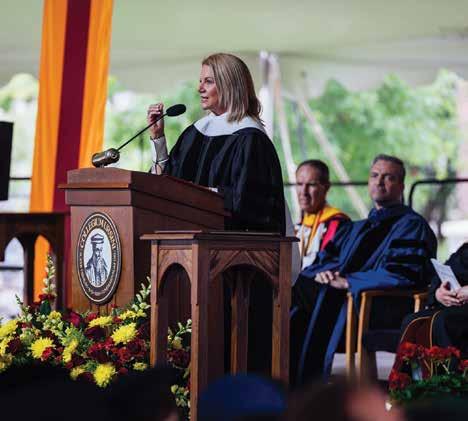
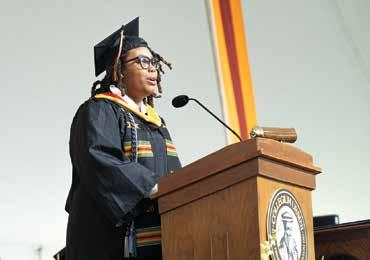
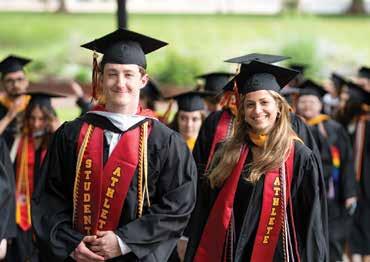
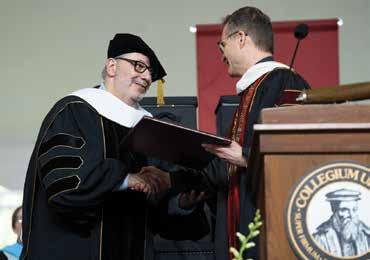

By Alyssa Kratz
by Jack Hopey
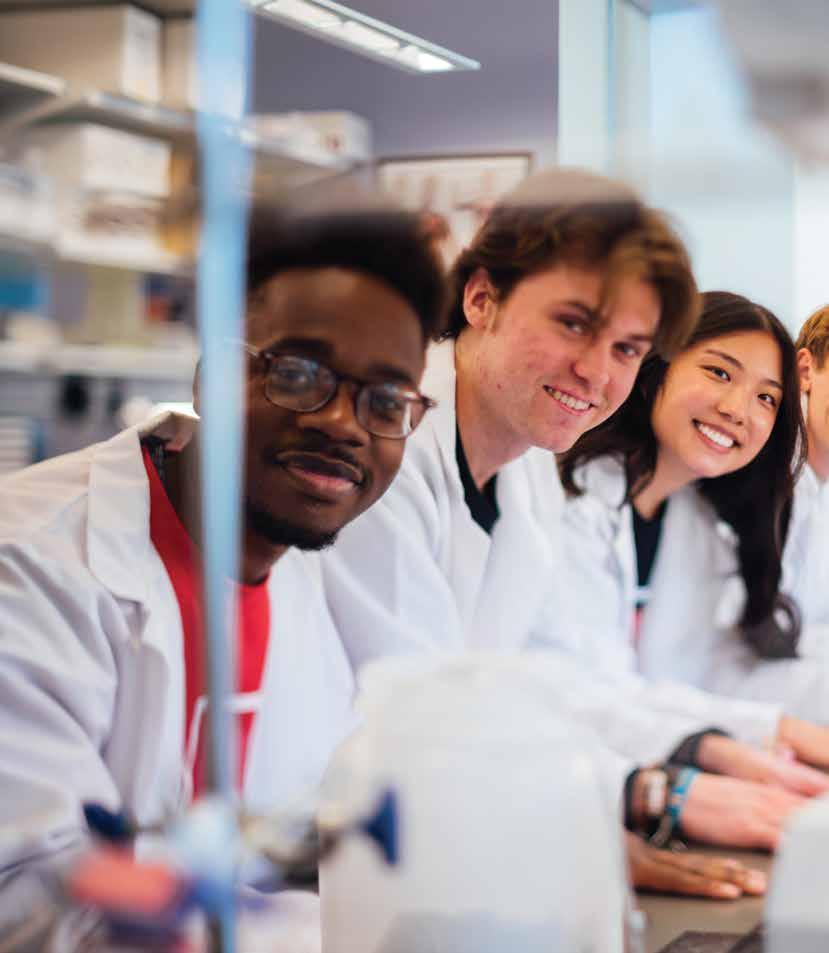
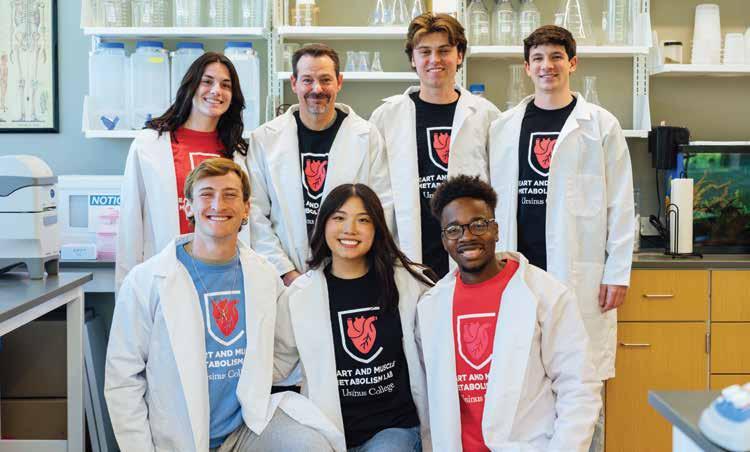
In Associate Professor Steve Kolwicz’s lab, six Ursinus seniors found more than hands-on research experience — they found mentorship, confidence, and a community that shaped their college journey.
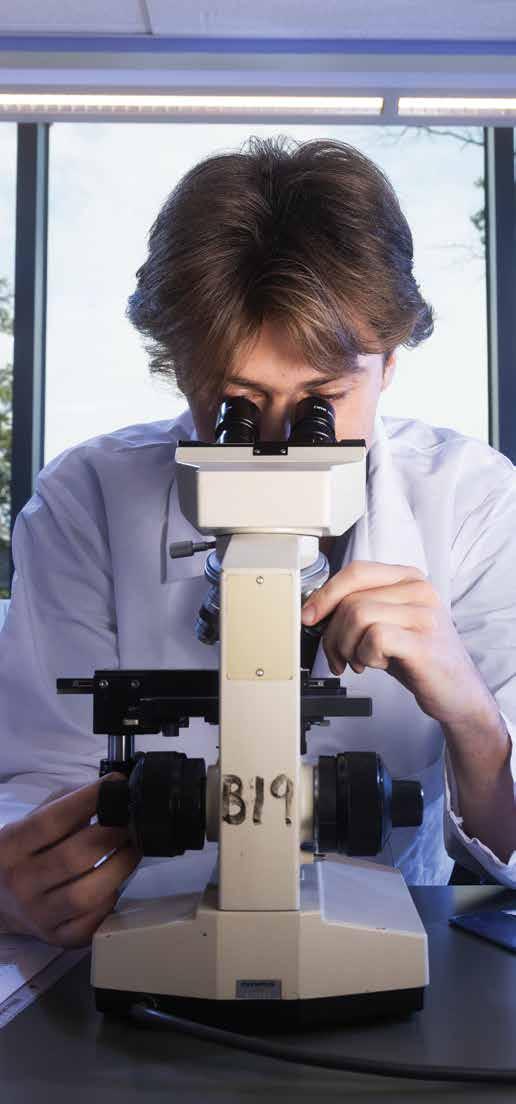
It’s 3 p.m. on a Friday, and for many students, the weekend has already begun. But inside room 216 of the Innovation and Discovery Center, the Heart and Muscle Metabolism (HaMM) Lab is still bustling.
One student leans over a microscope. Another jots down data for an experiment. Others chat while working on homework. At a nearby table, Associate Professor Steve Kolwicz, Ph.D., places another piece into a jigsaw puzzle of the human heart, simultaneously trading laughs with his students.
Afternoons like this one quickly became routine for six Ursinus seniors — CJ Cunningham ’26, Alexandria Chin ’26, Max Matalavage ’26, Josh Oduwole ’26, Aiden Tobin ’26, and Renee Washart ’26. Together, they spent countless hours not only conducting research in Kolwicz’s HaMM Lab, but building friendships that extend far beyond lab experiments.
“This group of six is unique,” said Kolwicz, who’s known to his students as Dr. K. “I’ve been at Ursinus for nine years, and this is the first time I’ve had a group that stayed together in the lab for all four years.”
The students remember the fall of 2022, when they arrived on campus and began their first semester. They all shared an interest in health sciences — medicine, research, or other fields — and were looking for ways to gain hands-on experience.
The HaMM Lab provides opportunities for students interested in researching metabolic adaptations that occur in cardiac and skeletal muscle during both health and disease states. In the lab, students use mice to identify changes in the structure and function of various organs. Another focus is identifying the metabolic changes that result from exercise.
“I thought it sounded really interesting,” said Chin. “Some biology and chemistry concepts feel abstract, so I liked the idea of working with something tangible. Working with mice felt a lot more real to me than something like nanoparticles.”
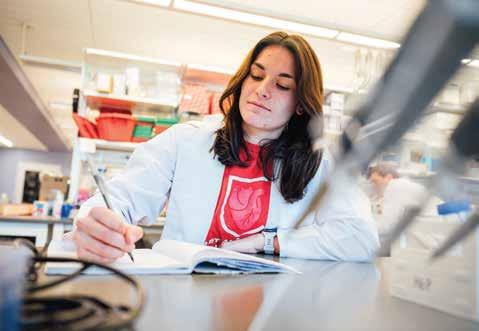
As curiosity grew, Kolwicz started hearing from the students, one by one.
After several emails and subsequent meetings with each student — Cunningham, Chin, Matalavage, Tobin, and Washart joined the HaMM Lab in the spring semester of their freshman year.
“Dr. K brought me in and showed me what I could potentially be doing by my senior year, and I was hooked,” Tobin recalled.
Oduwole joined the lab that summer, as part of Ursinus’s FUTURE research program, and with that, the crew of six was complete.
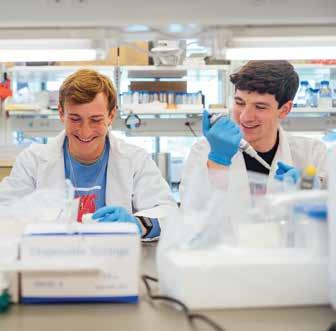
While they spent the past four years together in the HaMM Lab, the six seniors carved out six different research paths. Their projects ranged from working with stem cells and insulin to studying brain activity and exercise performance in aging mice, as well as analyzing the impacts of Prozac, physical activity, and different diets on mice.
Some, like Tobin, took over research started by students who came before them. He ran the lab’s Langendorff perfusion system.
“Basically, I take a heart out of a mouse and bring it back to life,” Tobin simplified. “It runs a buffer that simulates blood and provides enough of what is given in the mouse’s body. So, the heart beats by itself.”
Others pursued experiments that had never been done before in the lab. To run his study about aging mice, Matalavage had to figure out how to dissect a mouse brain.
“Dr. K found some educational videos online, but once you actually have the mouse in your hands, everything you watched kind of goes out the window,” he said. “Luckily I
was taking mammalogy at the time, so I knew the anatomy of the skull and how to cut it and I was able to figure it out from there.”
Washart focused on the effects of Prozac on mice, something she said started as a bit of a joke.
“I like to read science nonfiction books, and I saw this study in a book where they gave mice Prozac. I was like, ‘Oh what if I gave the mice here Prozac and looked at how it affected exercise?’” she said. “It wasn’t really even serious, but I asked Dr. K and he was like ‘Yeah, I think we can do that.’
“Especially as a freshman, hearing that my idea was worth it, helped me grow a lot more confident,” she added.
“I try to listen to my students,” said Kolwicz. “As scientists, we can get narrow-focused so anything they throw out, if it sounds different…Renee’s study has actually been fruitful. It’s probably going to extend after she graduates because I think there are some interesting things we need to figure out. She presented it at a conference; she won an abstract award with it.”
While they eventually became leaders in the lab, the six seniors started out as freshmen with a lot to learn.
Oduwole remembers asking a lot of questions. “I was always asking about what we were doing and why we were doing it,” he said.
That willingness to learn has become a defining part of the HaMM Lab’s culture.
For Kolwicz, who received his Ph.D. in exercise physiology, a culture of learning from one another is all part of the process — a process he learned from his postdoctoral mentor.
“Everyone in the lab had their own project and own expertise, but she focused on making us learn each other’s
techniques,” he said. “If you wanted to learn something new, you would go to the person who had that expertise and they would train you. That’s the model I try to use here.”
His students came to know it as — “See one. Do one. Teach one.”
“That’s been Dr. K’s process the whole time,” said Tobin. “You watch someone first to get a feel for the experiment, but then you’re hands-on as quickly as possible. The goal is to master it to the point where you’re teaching new people coming in.
“Now I have students watching me do my procedure, and I teach them the same way I was taught, so maybe down the line, they’ll be able to teach other people,” he added. “It’s like passing the baton.”
For all six seniors, the HaMM Lab helped them become more confident not just as researchers, but as people.
“When I first started, I was very quiet,” said Cunningham. “Over the years, I got more comfortable with the people and with the work I was doing.”
Oduwole agreed: “Over time, asking all those questions helped me become more independent. Now I run a lot of the processes on my own, and I’m helping teach younger students.”
When tour groups of prospective students swung by the lab, Kolwicz invited them inside — and let his students take the lead in explaining what’s going on.
Moments like that reminded the students how far they had come — and how much of the journey they shared with each other.
Working in the lab has done more than just grow the students’ confidence and skills as researchers. It has contributed to lasting friendships. Hours spent in the lab quickly turned into study sessions, group chats, and hanging out on weekends.
“The six of us are all really close,” said Washart. “Freshman year, I knew Max and Aiden, and CJ a little bit, but I met Alex and Josh through this lab, and now they’re some of my closest friends.”
Even when they weren’t running experiments, the seniors often found themselves back in the HaMM Lab, using it as a study space or just popping by to see one another.
“I definitely prefer to come here than say, the library, if I have work to get done,” said Cunningham. “It’s a stress-free environment most of the time.”
“I’ll be walking outside past the building, and I’ll see the light on and see Max’s head bob by, or CJ’s head, and I’ll just go in there to say hi,” Washart added. “I think a lot of us do that. If we see anybody in the lab, we pop in.”
Chin agreed: “And if [we’re in the lab] and we see someone outside, we’ll bang on the windows and wave at them.”
The close-knit friendships made for even stronger chemistry in the lab.
“It makes it so much more enjoyable to come to lab knowing my friends are all there,” said Matalavage. “They’re
CONTINUED ON PAGE 40





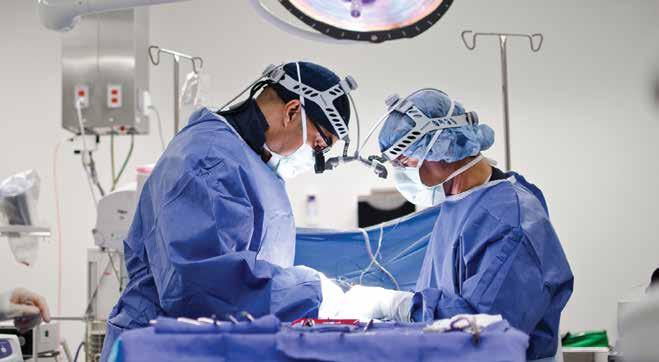
AS A PIONEER IN ARTIFICIAL DISC REPLACEMENT, RICHARD GUYER, M.D., ’71 HAS TREATED SPINE INJURIES FOR MORE THAN 40 YEARS, NOT AS A SOURCE OF PAIN, BUT AS A PUZZLE WORTH SOLVING AND A FRONTIER WORTH EXPLORING. NOW IN HIS MID-70S AND STILL PERFORMING NEARLY 100 SURGERIES A YEAR, HE REMAINS ONE OF MEDICINE’S MOST COMPELLING EXAMPLES OF WHAT HAPPENS WHEN REMARKABLE TALENT MEETS RELENTLESS CURIOSITY.

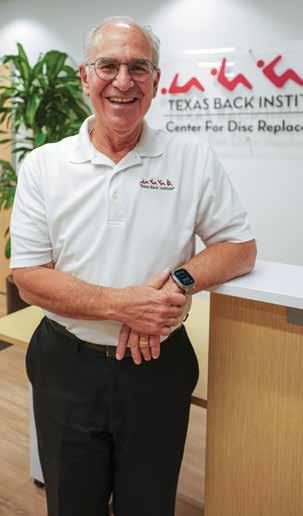
On a steamy Dallas morning, long before the first patient arrives, Richard Guyer, M.D., ’71 walks the quiet hallways of the Texas Back Institute, one of the largest multidisciplinary academic spine centers in the world. It’s a place he helped build that has allowed thousands to live lives without agony and pursue their passions without pain.
It’s a long way from Collegeville, Pa., where a young biology major once sat in Pfahler Hall, unsure of where his inborn curiosity would lead him. But even now, after more than four decades as one of the nation’s leading spine surgeons and an innovator in artificial disc replacement, Guyer still traces the roots of his career back to Ursinus College. Ursinus is the place where professors challenged
him, friendships steadied him, and his sense of purpose first took shape.
Guyer is part visionary, part entrepreneur, and part artist. His calm presence and caring demeanor have steadied thousands of patients facing the most vulnerable moments of their lives.
Compassionate and caring, paternal and personable, he would fit perfectly into a John Updike novel. He relates as easily to an oil rig worker as he does a world class athlete and he is passionate about getting to know his patients as people, not just cases.
He asks about their families, their jobs, their lives. It isn’t just warmth for its own sake — it changes




how he treats them.









Affable and amiable, he says hello to everyone — people on the loading dock, front-desk staff, post graduate fellows at the institute. It’s just his way, and always has been since his undergraduate days.








“I blame Ursinus for that,” he said, laughing. “I used to walk down the main drag in Collegeville and say hello to everyone,” he said. “When I got to Penn for medical school and tried that in West Philly, people looked at me like I was crazy.”





But that’s when he first realized how much it mattered. “A smile, a hello — it costs nothing, and changes everything,” Guyer said.









boys, he was the son of a surgeon who practiced medicine the old fashioned way, making house calls with a little black doctor’s bag tucked under his arm.


Guyer grew up outside of Philadelphia, in suburban North Wales and then Blue Bell, in the kind of household where the line between work and vocation was blissfully blurred. The youngest of three


a fraternity. He was the one who showed up, worked hard, and learned how to think.


“I always knew I wanted to be a doctor,” he said. “I loved watching how my dad interacted with people. I loved the way he made them feel. I was just a little kid, but I knew that’s what I wanted to do.”














And Ursinus didn’t just prepare him academically. It prepared him emotionally. It taught him discipline, resilience, and the value of treating people with kindness. At the end of four years, of the 300 students who had started as pre-med freshmen, somewhere between 24 and 25 went on to medical school.


When it came time to choose a college, the question wasn’t what to study but where. His family weighed the classic dilemma: big fish, small pond, or small fish, big pond? They settled on Ursinus and it was, he says now, exactly the right choice. Though he didn’t fully appreciate it at the time because Ursinus had a way of making students work to their “full potential.”
Guyer was among them. He got into 11 schools, a fact he confides with humility but also gratitude. “I don’t know that I could have done that if I went to a big university. My father used to remind me: Ursinus was great for you,” he said. “And you know, he was right.”


A smile, a hello — it costs nothing, and changes everything,”









He lived at home for three of his four years, focused almost entirely on getting into medical school. He wasn’t the college student who joined clubs or captained teams, although he did pledge




– Richard Guyer ’71

































Guyer attended the University of Pennsylvania for medical school, where he discovered orthopedics and, eventually, spine surgery. But it was his yearlong internship at Parkland Hospital in Dallas — a trauma center famous for treating President Kennedy prior to his death in 1963 — that changed everything.


There, he rotated through the burn unit, trauma, and complex injuries, gaining skills he wouldn’t have gotten elsewhere. “I saw all the messy things I never would have seen at Penn,” he said. “It made me a better doctor.”





After residency, he and his wife, whom he met before medical school and who grew up in Houston, moved to Texas. He worked briefly at the University of Texas (where he still sits on the faculty at their Southwestern Medical Center campus), but Dallas kept calling him back.
In 1982, Guyer joined two colleagues, Steve Hochschuler, M.D., and Ralph Rashbaum, M.D., to build what would become the Texas Back Institute. At

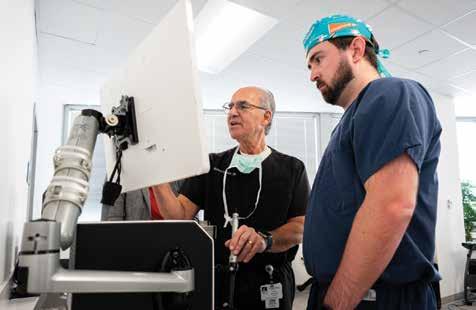
the time, spine surgery was still a new frontier. Many orthopedic subspecialties had matured — sports medicine, hand surgery, joint replacement — but the spine remained an unsolved puzzle.
Starting with three surgeons and nine employees, the practice grew quickly.
Today it has 25 surgeons, 10 physician assistants, five physical medicine
also served as president of the North American Spine Society.
And through it all, he has remained the same: curious, calm, and relentlessly positive.
Ask Guyer what he’s most proud of, and he won’t mention research, leadership roles, global lectures, or his high-profile patients like golf legend Tiger Woods. He’ll talk about his fellows. The fellowship program he founded in 1986 is now in its 40th year, having trained more than 150 spine surgeons, something he has a special passion for.
doctors, and more than 200 employees across a dozen offices in North Texas.
The institute has a research foundation and publishes at a rate Guyer compares, without exaggeration, to a university. He himself has authored more than 150 peer-reviewed articles, written numerous books, and delivered hundreds of lectures worldwide. He has
‘Photography
“I love teaching, and I love our fellows,” he said. “I love to see the light bulbs go off in their heads. I like to see when they first come in and they’re green, and then, somewhere during the year, it goes, boom.”
If teaching is what makes Guyer happiest, his clinical legacy is something
CONTINUED ON PAGE 41
Gazing upward from the polished marble floor of the packed Sistine Chapel where he’s lying flat on his back, spinal surgeon extraordinaire Richard Guyer, M.D., sees things from a different perspective.
Motionless for a moment, he looks straight up at Michelangelo’s famous fresco from the same vantage point the master must have had while painting it. Then, raising his camera, fires the shutter, with the tattletale clicking sound of an aperture closing lost in the din of hundreds of visitors. No worse for the wear, he captures an image that will last a lifetime.
It was his photographer’s instinct, but surgeon’s intuition, which led him to snag the memorable shot from a most unlikely angle, (now one of the proudest in his 100,00-plus photo collection). But it was accomplished with the same reflex that has driven his entire medical career: when a
conventional approach doesn’t give you what you need, create a new one — just the kind of approach you might expect from the product of a liberal arts education.
Long before he became one of the nation’s leading spine surgeons, Guyer fell in love with photography. What began as a hobby in med school became an unexpected training ground for the work he would one day do in the operating room.
Photography, he said, teaches you how to see. Not just to look, but to see — the difference between glancing at a scene and noticing the subtle interplay of light, shadow, angle, and detail. In surgery, that distinction can mean everything.
“When you’re operating on the spine, millimeters matter,” Guyer explained. “Photography trains your eye to pick up the small things.”
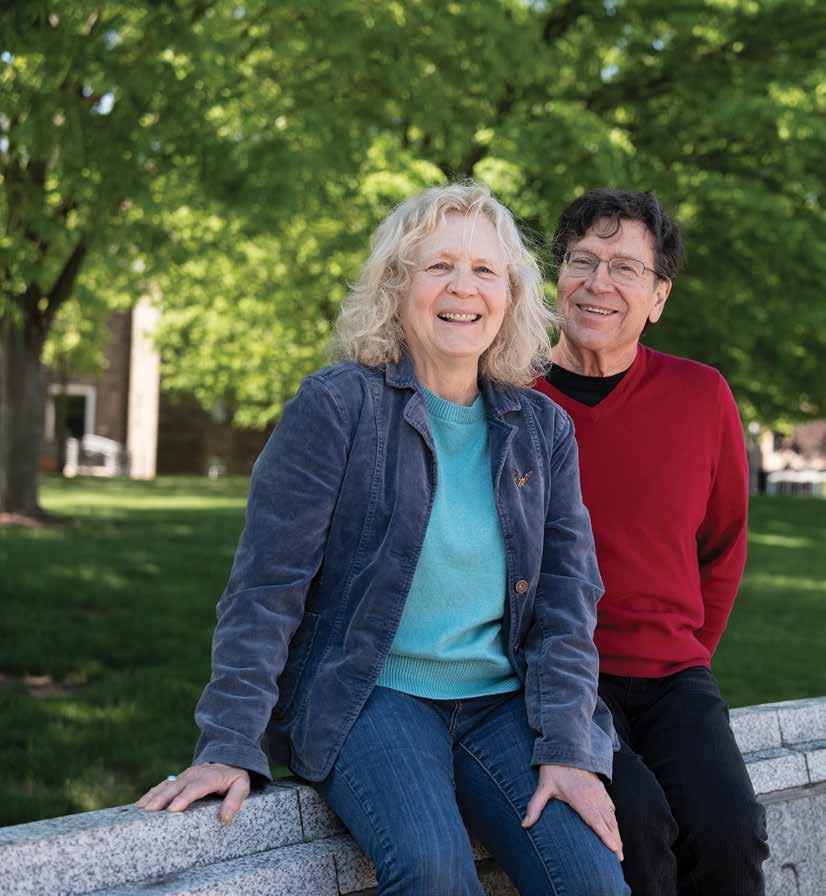
From axolotl research to Darwin lectures, Ellen and Robert Dawley’s shared academic life and partnership shaped generations of students.
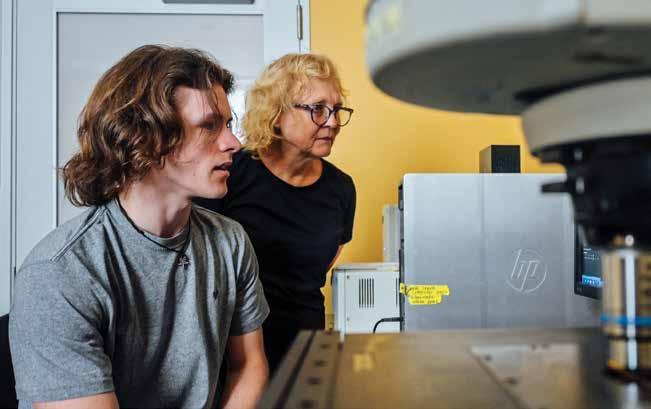
Ellen Dawley, Ph.D., peers into a microscope in a Pfahler Hall lab as research student Veronica Filippone ’26 waits nearby for confirmation that the axolotl spinal cord section she prepared is viable.
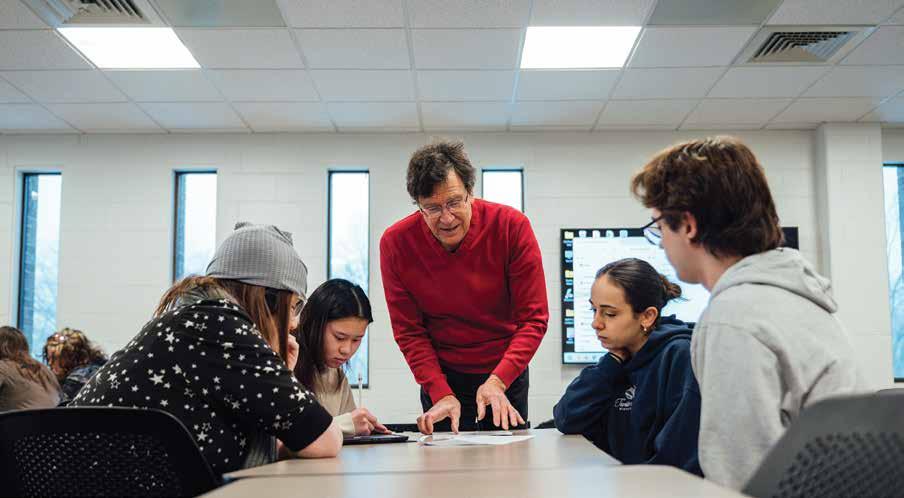
Upstairs in Thomas Hall, Robert Dawley, Ph.D., moves slowly between groups of students deep in discussion about Darwin and evolution. Pausing beside one table, his face lights up as he explains how the sight of a peacock’s tail once made Darwin uneasy.
For 36 years, Ellen and Robert Dawley occupied different corners of the biology department at Ursinus College — one most at home in the lab, the other thriving in the classroom. Together, they mentored generations of scientists, physicians, veterinarians, and curious thinkers. This spring, the couple who built careers side by side retired, leaving behind a legacy shaped as much by their differences as their shared passion for biology.
When Ellen and Robert arrived at Ursinus College in 1989, they didn’t just join the biology department — they shared a single assistant professor position.
At the time, the arrangement was unusual, especially for a married couple. While many institutions hesitated, Ursinus leadership — Dean William Akin and Biology Chair Peter Small — were willing to take the risk. The Dawleys split teaching responsibilities, allowing them to build careers while raising a young family in nearby Green Lane.
“We get along incredibly well,” Ellen said. “In fact, we’ve known each other since I was 16.”
Introduced by Ellen’s brother while Ellen was in high school, the pair bonded over shared academic interests, studied together in college, and later pursued doctoral degrees at the University of Connecticut.
“We ended up not only becoming interested in each other, but in the same subject,” Robert said with a laugh. “Ellen was the more mature one though. I
Ellen Dawley works with Connor Evangelisto ’25 during his summer fellows research in 2024. Evangelisto was studying the regeneration abilities of axolotls and their potential to change modern medicine.
was more indecisive and wasn’t thinking about the future, at least not as deliberately as Ellen was.”
After postdoctoral work at Cornell and a year at Bowdoin, they arrived at Ursinus with their 4-year-old son and a daughter on the way. In 2000, after 11 years of sharing one position, including co-chairing the department, and promotions to associate professors with tenure, they were each awarded full-time positions by President John Strassburger and Dean Judy Levy.
While their similarities brought them together, it is their differences that define them.
She’s petite. He’s tall. She’s known to be tough, but fair, with a dry sense of humor. He’s described as kind, patient, and gifted at breaking down complex concepts. She’s more at home in the lab; he finds his joy in the classroom. She served as pre-med advisor; he led the Parlee Center for Science and the Common Good. They are homebodies, and they both love to travel.
In graduate school, she became interested in the intersection of evolution, behavior, and neuroanatomy, initially studying how salamanders identify mates. During the breeding season, she explained, they produce more olfactory neurons, which helps them recognize their own species.
But the work required sacrificing animals — something she found difficult. That led her to shift focus to spinal cord regeneration, where she could study stem cells without ending an animal’s life.
For the past two decades, Ellen has focused on axolotls, aquatic salamanders from Mexico known for their “forever young” appearance — and made famous thanks to their inclusion as a pet in Minecraft.
The research has centered on how neural stem cells enable spinal cord regeneration, a capability that mammals lack.
Doing research with the students — they are the sweetest, smartest, most hard-working people. They make you feel so optimistic about the future.”
– Ellen Dawley, Ph.D.
Sharing a career — and a life — worked, Ellen said, because “we have different strengths and weaknesses.”
ELLEN DAWLEY, PH.D.
Ellen’s love of biology began early.
“One of my earliest memories,” she said, “is of a blue jay that had fallen out of a tree as a nestling. My mom nursed that baby back — it had broken legs, but it lived with us for eight years. That’s probably where I get my love of animals.”
For Ellen, the most meaningful part of her work has been mentoring students. “Doing research with the students — they are the sweetest, smartest, most hard-working people,” she said. “They make you feel so optimistic about the future.”
This spring — Ellen’s last semester — she worked with three research students, all preparing for careers in veterinary or medical fields.
Biology and finance major Veronica Filippone ’26 credits Ellen with shaping her path. “She inspires you to take risks, to believe in yourself,” she said. “She has given me so much insight about getting into vet school and helped me find a vet tech
position at Prospect Park Veterinary Clinic.”
Former students echo that sentiment. Keven Hoogheem ’16, now a second-year emergency medicine resident at Albany (N.Y.) Medical Center, appreciated how Ellen guided rather than directed. “I was able to explore whichever path I felt most passionate about,” he said. “She provided a rough framework with the challenge to approach things in my own way, which I found to be much more rewarding than just having a topic chosen for me.”
His twin brother, Christian ’16, now a physician associate in Jefferson City, Mo., said her high standards ultimately proved invaluable. “Her high expectations were fair and achievable for those who were willing to put in the time and work,” Christian said. “I always valued her honest, straightforward feedback and encouragement.”
If Ellen’s domain was the lab, Robert’s was the classroom.
Although he knew in high school that he wanted to study biology, his academic journey began in paleontology. As a graduate student, he helped excavate a prehistoric predator in Wyoming —
later named Heptasuchus in his master’s thesis.
“Ellen came with me to that dig in Wyoming,” he said. “We were in the middle of nowhere Wyoming.”
Over time, his interests shifted toward biology, history, and the ideas of Charles Darwin — subjects he brought to life in the classroom.
“I’ve always been deeply engaged in what I’m teaching,” Robert said. “And Ursinus has been an ideal place for that.”
Known for his ability to synthesize and explain complex ideas, Robert also played a key role in shaping some of Ursinus’s most distinctive academic programs.
He was an early contributor to the Common Intellectual Experience (CIE), a two-semester course that explores fundamental questions about knowledge, society, and purpose. “It’s immensely valuable, not only for the students, but even for the people who teach it,” Robert said.
In 2012, a grant from the Howard Hughes Medical Institute helped launch another distinctive Ursinus program — the Parlee Center for Science and the Common Good, which Robert has directed since its founding. “The Parlee Center exists to remind students of those big
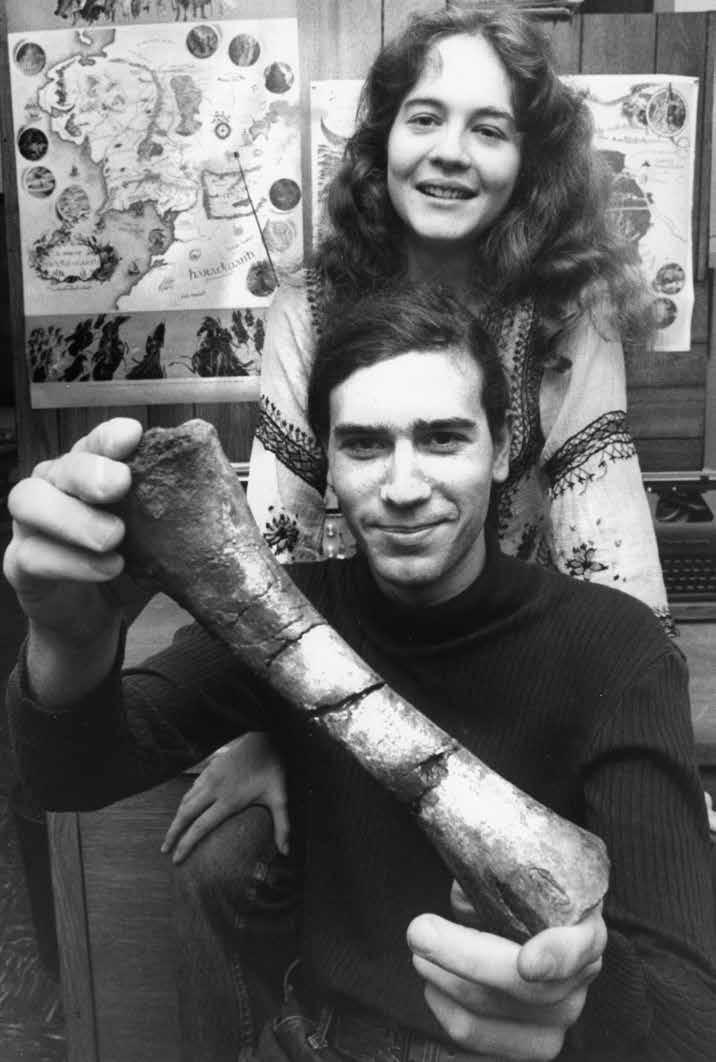
Taken during a dig in Wyoming in 1977, this photo of Robert and Ellen, which appeared in their hometown paper Detroit News, hangs on the door to Robert’s office in Thomas Hall. The bone is from a prehistoric predator, later named Heptasuchas in Robert’s master’s thesis.
I’ve always been deeply engaged in what I’m teaching. And Ursinus has been an ideal place for that.”
–
Robert Dawley, Ph.D.
questions from CIE,” he said. It connects science with broader societal issues through lectures, fellowships, and research opportunities.
“Science doesn’t exist in isolation,” he said. “Students need to think about its impact.”
The spring 2026 semester marked a full circle moment for both Robert and its new director.
Aubrey Paris ’15, one of the first Parlee Fellows and now the new director, credits Robert with shaping her path.
“Robert brought to campus a number of speakers, such as Dr. Richard Heinzl of Doctors Without Borders and Dr. George Atkinson of the Institute on Science for Global Policy, who were really influential to me and my career,” she said. “Robert’s ability to create unique, interdisciplinary opportunities for students was unmatched, and I can’t imagine an Ursinus campus without him.”
For Robert, CIE and the Parlee Center have been more than part of his job, “they’ve also been really personally fulfilling and an important part of my personal education,” he said.
Still, Robert’s greatest joy has remained teaching. Although his favorite class to teach is BIO 101, “When I’m teaching CIE, I’m leading discussions and drawing students into the conversation, and that’s fun, too,” he said. “It’s a different type of teaching. It’s unpredictable in the best way.”
While their professional strengths differed, Ellen and Robert have always shared a love of travel — one that became an extension of their teaching.
As undergraduates, they took cross-country road trips on a tight budget. And once at Ursinus, they began asking a simple question: Where could they take students and continue to explore and learn themselves?
For biologists, the answer was clear — the tropics.
From the mid-1990s until 2018, the Dawleys led students on immersive trips to Costa Rica, spending three weeks exploring its rich biodiversity — some years their two young children even tagged along. In 2008 and 2010 they expanded the experience into full semester programs in Mexico.
Students studied Spanish, visited archeological sites, and conducted fieldwork, while also snorkeling, hiking, and experiencing local culture.
“The students who went with us were wonderful,” said Ellen. “We worked hard, but the students were great. They embraced everything we planned.”
For many, the experience was transformative.
“Many of my most deeply held beliefs and how I view the world stemmed from ideas covered in their classes and experiences they curated on those study abroad trips,” said Sabrina (Cimerol) Arnberg, DMD, ’12, now a dentist in Mammouth Lakes, Calif.
“I continue to love the outdoors,” Arnberg said. “I spend all my free time trail running and ski mountaineering. Most of the joy I get from my life today builds on learning to love nature with the Dawleys,” she said.
Kari (Baker) Lenhart, Ph.D., ’05, an assistant professor at Drexel University who runs her own research lab, said it was the Dawley’s “contagious enthusiasm for neotropical biology” that convinced her to travel to Costa Rica — and she’s glad she did.
“It was on that trip that I met Ryan Lenhart ’06. Ellen and Robert both not only attended our wedding nine years later, but Robert read and Ellen sang during the ceremony,” Kari said. “The best parts of my adult life — my career and my family — are the direct result of the Dawleys taking such an interest in me and supporting me through the years. I can’t begin to express the love that my husband and I have for both of them.”
CONTINUED ON PAGE 42
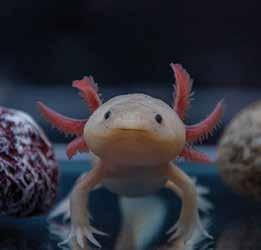
THEY BARK. THEY SMILE. THEY’RE ADOPTABLE. Forever young and impossibly charming, axolotls are unlike almost any other animal. Native to Mexico, these fully aquatic salamanders are famous for keeping their youthful features throughout their entire lives — along with an almost permanent “smile.” They’re also remarkable for their ability to regenerate limbs and other body parts, a trait that has made them invaluable to Ellen Dawley and her research students.
As it turns out, they also make surprisingly delightful pets.
For Ursinus College alumnus Connor Evangelisto ’25, now a first-year medical student, working with axolotls was one of the reasons he was so excited to join Dawley’s lab as an undergraduate. He remained in the lab throughout all four years at Ursinus — and after graduation, he couldn’t quite say goodbye. He adopted two of them: Kirby and Oliver. “Axolotls are wonderful pets,” Evangelisto said. “They have personality, are active swimmers, are easy to take care of, and even sometimes bark!”
Yes — bark.
Assistant Professor of Biology Colleen Bove, Ph.D., who adopted Marvel in 2023 for her lab group, agrees that these quirky salamanders quickly win people over. “The program is so special because it allows people to learn about this really unique organism.”
According to Vanessa Worley ’23, vivarium manager in the Ursinus biology department and coordinator of the adoption program for retired research axolotls, they may be uncommon pets, but their care is straightforward.
Meals: Feed two to three times a week with aquatic pellets, small earthworms, or frozen bloodworms
Home: A 20-gallon bare-bottom tank with cool, clean water
Temperature: Keep water below 65°F
Maintenance: Change the water weekly
“They’ll eat pretty much anything they can fit in their mouth, so it’s important to keep a bare-bottom tank or use only fine sand that can safely pass through their system,” Worley said. “And any water temperature above 65 degrees can really stress them out.”
Over the last 20 years, many retired research axolotls from Dawley’s lab have found homes through the program — with 39 still waiting for adoption.
Interested in bringing one of Ursinus’s most lovable lab legends home? Contact Vanessa Worley at vworley@ursinus.edu.
By Alyssa Kratz
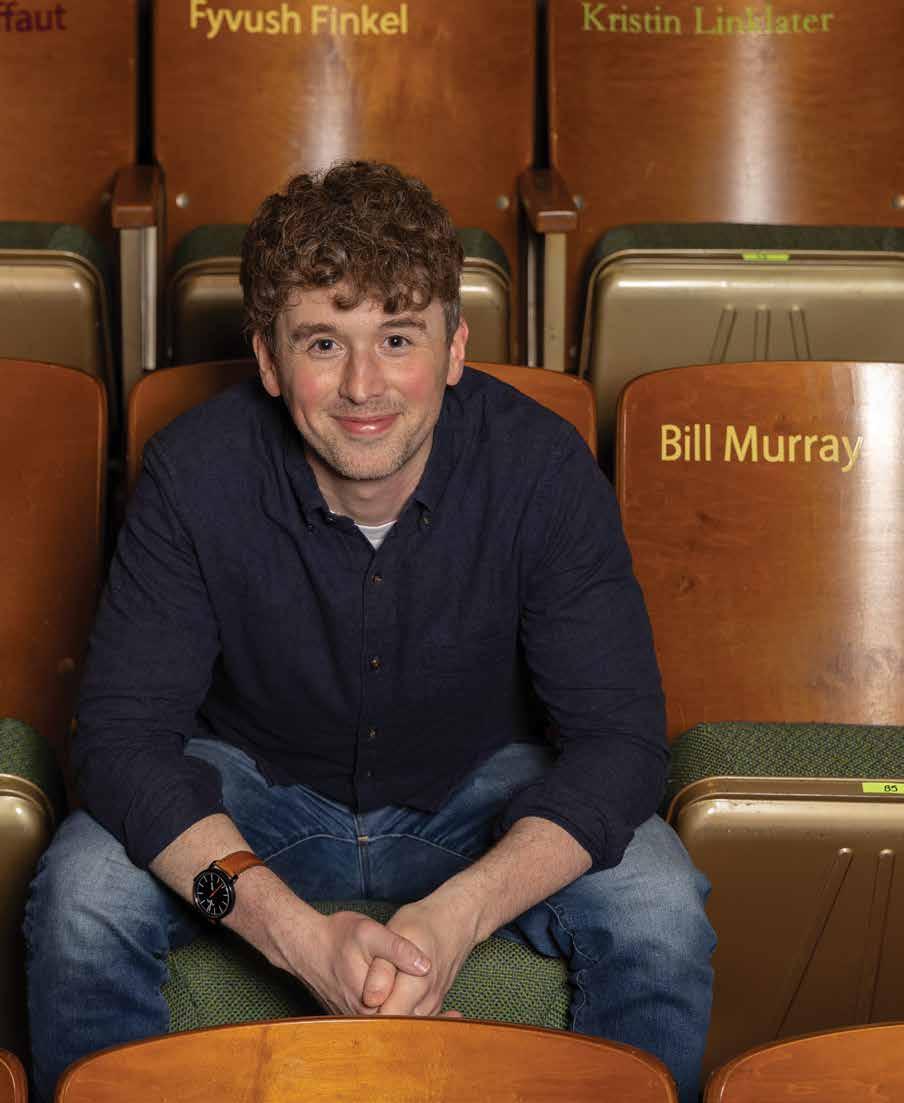
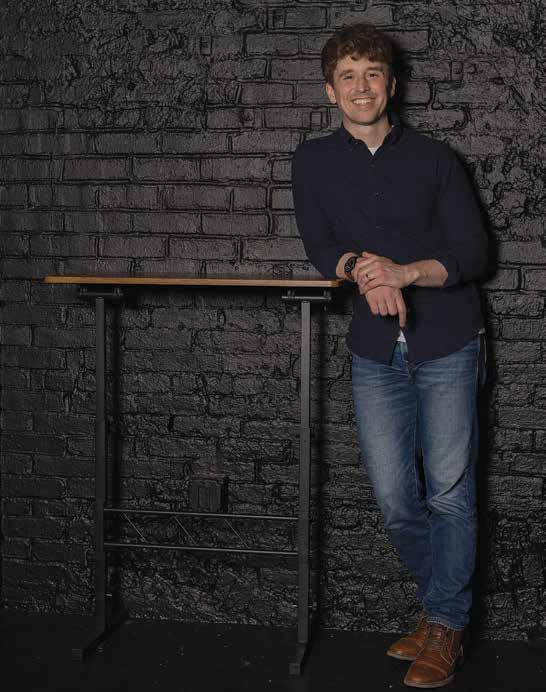
Since his first performance at Ursinus, Patrick McAndrew ’13 has played almost every role in the theater industry, both onstage and behind the scenes. Now his original work, which bridges theater and technology, has come to life in New York City.
Patrick McAndrew ’13 sat in a packed New York City theater, watching a musical play out on stage. Around him, audience members watched with anticipation, sharing laughs.
For McAndrew, the moment carried a bit more — excitement, pride, and a bit of nerves. He wasn’t just watching “The Startup.” He was watching his own work come to life.
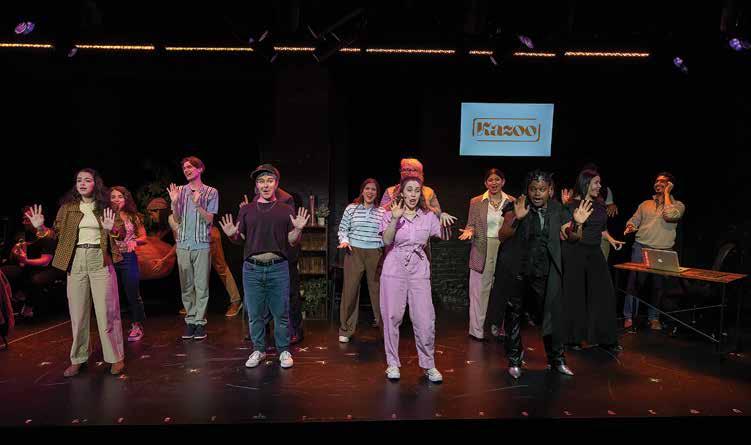
“The Startup,” which McAndrew co-wrote and produced, is a satirical musical that dives into the tangled relationship between humans and technology. The show premiered offBroadway on April 1 at The Flea Theater in Tribeca and went on to complete a two-week run.
That moment was seven years in the making — one McAndrew never saw coming when he set foot on Ursinus’s campus back in 2009.
“Back in high school, theater was something I always thought about getting involved in, but never did,” McAndrew explained. “I was in marching band and that was my bread and butter.”
But during his first semester of college, McAndrew told
I always credit Ursinus with being the place where I discovered my love for theater and discovered how crucially important it is in today’s world.”
– Patrick McAndrew ’13
himself to step out of his comfort zone and onto the stage.
“I auditioned for ‘Dr. Jekyll and Mr. Hyde,’ directed by Professor Domenick Scudera, and I had no idea what I was doing,” McAndrew laughed. “Domenick will tell you that, but he was gracious enough to cast me.”
McAndrew didn’t have a single line in the play, but the experience still proved to be transformative.
“I remember being backstage before our first performance and saying, ‘This is incredible,’” he said. “I fell in love with not only performing on stage, but the collaborative environment theater creates.”
He went on to major in theater, and as part of his Independent Learning Experience, McAndrew wrote a children’s play that was
performed at daycares and other spots near campus.
“That was my first time writing a show and I loved the experience,” he said. “I learned so much and I have taken that experience with me through my career.”
After graduating in 2013, McAndrew remained at Ursinus for two years working as an admission counselor before earning his master’s degree in theater at Villanova University.
Since then, he has built a career at the intersection of theater and technology. His graduate school thesis explored the human relationship with technology and how it can intercept relationships with others.
“I was noticing everyone spending so much time doomscrolling on their phones,” he recalled. “I’d have a conversation with someone, and it would go over their head because they were so distracted by their phone.”
After moving to New York City in 2017, he created and performed in a show inspired by those very experiences.
“It was well-received and that show essentially got me into what’s called the ‘responsible tech movement,’ which is a community of people looking to develop technology in a humane way,” McAndrew said.
After spending a few years working not just as an actor, but in various roles in the theater industry, McAndrew decided to go back to his storytelling roots, while navigating both the worlds of theater and technology.
“As I met more people in the tech space, I thought, ‘What could I bring to this movement that is maybe a little bit different?’” he said.
That was the impetus for McAndrew to create “The Startup.” The story follows an up-and-coming social media company that is trying to rewrite the rules of tech and create
an ethical social media platform. It explores themes around data privacy, social media use, influencer culture, and AI.
“I wanted to tell a story people could enjoy, people could feel a part of, but also walk away from thinking more critically about their relationship to technology,” McAndrew explained.
For McAndrew, “The Startup” reflects something he deeply believes — that theater plays (and will always play) a critical role in the digital world.
“It always made sense to me to combine these worlds because I see theater as almost the antithesis to tech — in that as emerging technology, especially AI, starts to become more prevalent in our lives, I truly believe studying theater is going to become more and more important because it’s rooted in human skill sets that AI won’t ever be able to replace,” he explained.
Bringing that vision to life required taking on one of the most challenging roles of McAndrew’s career: lead producer. In this position, he was responsible for securing funding for the musical, coordinating the cast and creative team, handling logistics, and more.
“You have your hand in all these buckets, which is liberating in a lot of ways,” McAndrew said.
The production did not take shape quickly. McAndrew remembers the first staged reading for the show in 2021.
“I remember thinking, ‘This is going to be a long process,’” he said.
He watched the musical go through various forms, from several edits and revisions to staged readings and demo recordings. The process was rooted in many long days of work from him and the rest of his team.
Now seeing the show come to life on stage in front of a live audience, McAndrew describes the experience as surreal.
“It’s so cool to see it all happen and come to
CONTINUED ON PAGE 41
Above: The cast of “The Startup” performs the final number of the show, “At The Startup Reprise.”
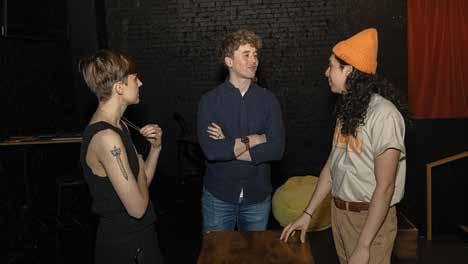
Below: McAndrew speaks with production stage manager, Azran Starkweather (left), and actor, Clayton Matthews (right), as they prepare for their dress rehearsal performance.
By Connor Donohue
HAS GROWN INTO A PROGRAM READY FOR THE NATIONAL STAGE.
The recruitment pitch was backwards. During his interview in 2019, Joe Jamison laid out a transformative plan to introduce a women’s wrestling program to Ursinus College. He was clear, persistent, and unwavering: the program would offer high-achieving student-athletes the chance to wrestle while maintaining rigorous academics.
“We had a proposal on the president’s desk in January 2020, then the pandemic hit, and everything was in limbo,” Jamison recalled. “I decided to start recruiting girls even though I didn’t have a lot to offer.”
It was a recruitment pitch for a program that didn’t yet exist. Sydney Bowman ’22 and Laura Bradley ’24 were the first Ursinus students to join the program on the men’s side, competing whenever Jamison could find competition. The first high school recruiting class consisted of three girls, including Kalli Roskos ’26.
“My dad wrestled at Princeton and knew Coach through the Princeton Wrestling Club,” Roskos said. “He promised he’d do everything to make sure we could wrestle and compete, and I completely trusted him.”
Roskos was immersed in wrestling at a young age. With a father and a younger brother who wrestled, she loved the sport but had few opportunities until a high school coach encouraged her to give it a try.
“There weren’t a lot of girls in the sport, so I never really took the initiative to
try it out,” Roskos said. “Once I did and wrestled in my first couple of matches and tournaments, I knew it was the best decision. I always wish that I had done it sooner.”
At Delran High School in New Jersey, Roskos excelled as a three-sport athlete in lacrosse, soccer, and wrestling. She earned All-State honors in soccer and became a three-time regional wrestling champion and a two-time state finalist.
For a student who prioritized academics and wanted to continue as a dual-sport athlete in wrestling and soccer, Ursinus was the perfect opportunity.
Roskos was one of three women in Jamison’s initial high school recruiting class along with Bradley, who was competing on the men’s roster. That is, until Calista Kolmer ’25, Elizabeth Harris ’23, and Lauren Gherman ’25 showed up.
“The three of them knock on my door and said they’d love to try out wrestling,” said Jamison. “One was a power lifter, another played rugby, and we welcomed them in with open arms.”
With seven women in seven different weight classes, Jamison and the administration announced women’s wrestling as a varsity sport in the summer of 2022.
Success followed quickly. In its first season, the team went .500 in duals. Roskos went 21-10, qualifying for her first of two National Collegiate Women’s Wrestling Championships and earning Ursinus Athletics Rookie of the Year.
“I honestly wasn’t expecting much my first year, even though I made it to nationals. I didn’t fully understand the level of wrestling and competition that surrounded me,” she admitted.
Roskos missed nationals her sophomore year by a single match but returned strong in her junior year with a 26-8 record, a regional championship at 124 lbs., and continued success in women’s soccer — all while maintaining a high GPA as a health sciences major.
“Since I was a three-sport athlete in high school, I’ve always been able to balance academics as my priority with sports being a very close second,” Roskos said.
Wrapping up her Ursinus career on the
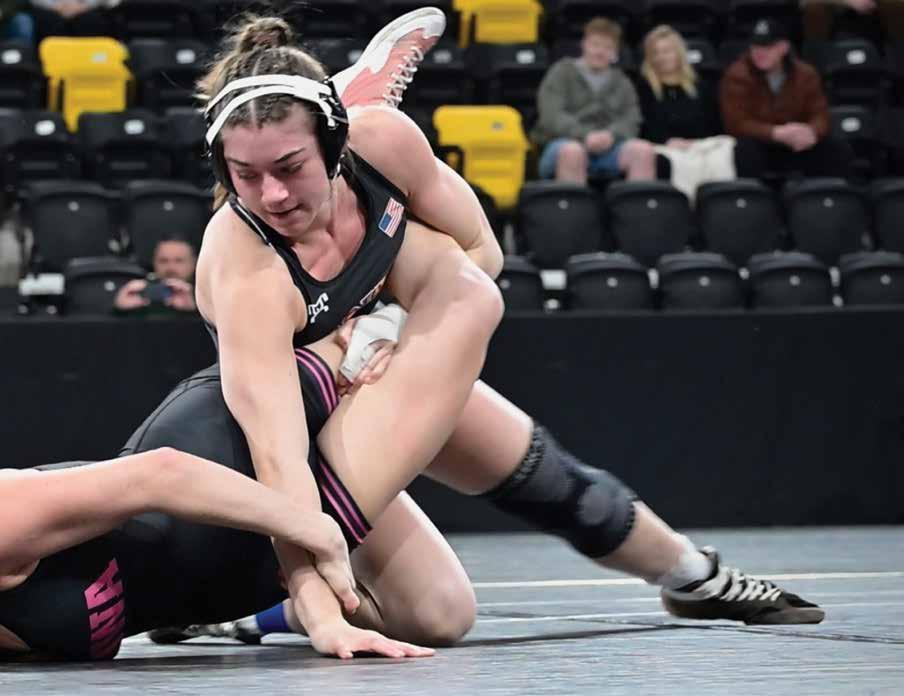
mat with a sixth-place finish at regionals, she ended her four years in Collegeville as the program’s all-time wins leader with 83 victories.
Jamison could not be prouder of the recruit who committed even before a team was formed. “This program is Kalli. She built this all on her back,” Jamison said. Roskos’ competitive spirit has helped lead the women’s wrestling program to new heights. Most notably, competing against 2026 national champions McKendree University and arguably the most successful college wrestling program, the University of Iowa.
In April 2024, Iowa Head Coach Clarissa Chun asked Jamison if Ursinus would like to travel to Iowa City to compete against the Hawkeyes and McKendree.
“I was telling our assistants that Chun approached me and asked if we wanted to wrestle Iowa, and Kalli overheard me,” Jamison recalled. “She looked me dead in the face and said, ‘I want to wrestle Iowa,’ and I was like, ‘Alright, I guess we’re going to Iowa.’”
The Bears traveled to Iowa in February for the inaugural For Her Duals tournament. They put up double-digits against the Hawkeyes and bested No. 20 William Jewell College (Mo.) and NAIA ranked No. 7 Indiana Tech, and they’ll be
back next season.
“It sent a message to not only our own team, but to the rest of the country that we will wrestle anybody, anytime, anywhere. You just have to invite us,” Jamison said.
With women’s wrestling earning NCAA championship status through the Emerging Sports for Women program in 2026, a division split is coming in the 2027-28 season — Ursinus will compete in division three.
“Despite the upcoming split, we’re still recruiting at a high level,” Jamison said. “I know we’re going to send girls to world team trials, win regional tournaments, and eventually win a national championship.”
WILLIAM R. FISCHER ’52 and wife Nancy of Quakertown, Pa., celebrated 73 years of marriage on Sept. 20, 2025.
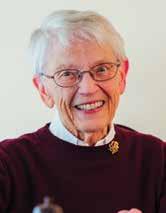
ARLENE (ANDREWS) MCLEAN, PH.D., ’62, who began a career at Merck in 1966 as a junior statistician and later became a senior director contributing to the development of several vaccines, was recognized by Merck, who named a room in its facility in recognition of her contributions. The “McLean Room” features a plaque in her honor. Arlene was also recognized by the Philadelphia Business Journal in its “Faces of Philanthropy” for 2026.
MARILYN (MAURER) CASEY ’62 wrote to share that she and her husband, Bill went on their last cruise with Holland America in 2019. It was a 35-day cruise that included Greenland, Iceland, Norway, and the Netherlands. Marilyn said, “We met so many wonderful people and had so many eye-opening experiences, especially seeing the effects of climate warming in Greenland and Iceland. An ideal extension of a great education, which started with my time at Ursinus College.”
CRAIG GARNER ’64 has written and published his first novel at age 82. “I Came to Play Your Game,” a story about a teenage boy who has been sent by another civilization possibly on the edge of extinction to study various parts of American culture, is available on Amazon and in independent bookstores and libraries. According to Craig, “The story is fast-paced and filled with humor and subtle lessons about loyalty, courage, and identity.”
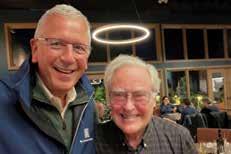
H. CRAIG HELLER, PH.D., ’65, professor of biology at Stanford University, swapped Ursinus stories with Stanford faculty colleague and
Ursinus Board Chair JOSEPH M. DESIMONE, PH.D., ’86 at a dinner in April.
LINDA ANN (RICHTMYRE) HAY ’69 writes that she is active with her Unitarian Universalist Church, still getting to protests in support of the Constitution, and recently became a grandparent. “I never had a [biological] child, but now my refugee daughter and her husband have given me a grandson. We live together in Vermont. I familiarize him with English, and his parents [familiarize him] with one of their native languages. I have started to write him a book about his parents’ lives in a very different part of the world. They can translate it into their native language so he will have it in both.”
TOM MCMORROW ’71 was inducted into the Princeton High School Athletic Hall of Fame on Nov. 8, 2025, for his coaching of the boys’ and girls’ cross country and track teams from 1982 to 1988. The cross country teams had a combined total of seven undefeated seasons, four Mercer County Championships, and one Group III State Championship.
After 23 years of employment, STEVEN R. WILSON ’76 retired from the Yale University School of Medicine as a veterinarian, an assistant professor in the Department of Comparative Medicine, and as the assistant director of the Laboratory Animal Medicine residency program.
CAROLE TUREK, M.D., ’78, a retired anesthesiologist and wildlife photographer, was featured in the winter 2025 issue of Audubon Magazine. Seven years ago, Carole embarked on a mission to photograph every hummingbird species in the
world — all 366 of them. To date, she has photographed more than 270 species, including one that was long considered extinct. Carole is also the founder of a popular YouTube channel and website, Hummingbird Spot.
PATRICK DEGNAN, D.M.D., ’79 wrote to share that a second grandson, Cyrus, has arrived, joining big brother Carver. He writes: “Both are happy and healthy. Livin’ life in the fast lane out there on the Big Island in Hawaii. Life is good!”
RICK MILLWARD ’80 wants to spread the word that Beta Sigma Lambda will be holding a 100th Anniversary Celebration on Oct. 17, 2026, during Ursinus Homecoming. For more information, contact Rick at rjcjmill@comcast.net or register at www.betasigmalambda.com.
MICHAEL F. COLA ’81 has been named chief executive officer of Helus Pharma, a clinical-stage biopharmaceutical company focused on developing novel serotonergic agonists (NSAs) to treat mental health conditions like depression and anxiety.
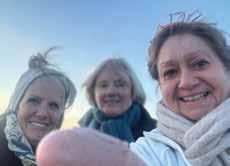
TESSA DOEFF ’81 wrote to share that she got together with friends WENDY (HELFFERICH) WHITE ’81 and BARB (FRANCE) GRASSIE ’81 in Cape May Point, N.J., in March. “This is what 49 years of an Ursinus friendship looks like!”
JAY DEFRUSCIO ’82, GARY MCANENEY ’87, and CHARLES “CHUCK” ODGERS, M.D. ’88, returned to campus in March to serve on a panel for the Sports and Humanity APEX Hub. They spoke about different career paths for students interested in sports and the blend of business and health options. Jay is chief
operating officer for the Archdiocese of Philadelphia, and a former college head coach, athletic director, and NBA assistant coach. Gary is chief financial officer of Oak View Group, a global company that works with some of the largest sports and entertainment venues in the world. Chuck is a leading orthopedic surgeon specializing in sports medicine.
KEVIN MURPHY ’86, long-time Washington Township High School (N.J.) director of athletics, was inducted into the Gloucester County (N.J.) Sports Hall of Fame in October 2025. Kevin has been director of athletics at WTHS since 2002.
BILL FURLONG ’87 was named head football coach for Haddon Township High School (N.J.). He has 28 years of head coaching experience with stops at Burlington Township, Phoenixville, Manchester, and West WindsorPlainsboro North/South.
ESMA ALI ’88 recently published a book titled, “Was Jesus a Narcissist? A Muslim’s Journey through the Bible.” The book invites readers to examine long-standing religious beliefs through scripture, psychology, and reason.
In December, ROBERT ENDERLEIN ’88 spoke to a group of Ursinus business students about his career and experience, which includes more than 34 years in the insurance industry. Bob is senior vice president of field operations with Eastern Alliance Insurance Group.
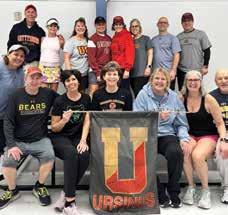
HEATHER (SIMONS) DOUGHERTY ’89 wrote to share that many Ursinus alumni got together for the inaugural UC Bears Pickleball play day. Anyone
interested in learning more about the next gathering may reach out to Heather at Heatherdoc3@gmail.com.
DAVE KOVACH ’90, P’21 served on the 2026 Ursinus College Bear2Bear Benefit and Bash Committee. Dave has served on the committee since its inception in 2019. The event was held in April at the Union League Liberty Hill, Philadelphia.
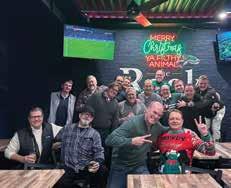
ROB GILFILLAN ’91 hosted a group of Ursinus alumni during the holidays in December.
NEIL SCHAFER ’91 was recently named head track and field coach at the University of Valley Forge.
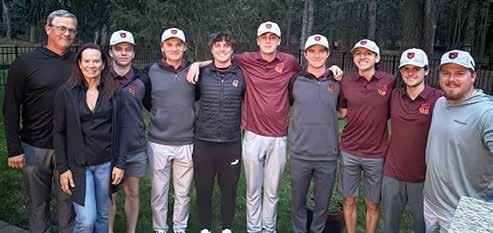
CLEARY CLARK MALY ’92 hosted the Ursinus men’s golf team at her home in Virginia after the team played a round of golf at Two Rivers Country Club in Williamsburg, Va., during spring break in March. Cleary also served on the 2026 Ursinus College Bear2Bear Benefit and Bash Committee. The event was held in April at the Union League Liberty Hill, Philadelphia.
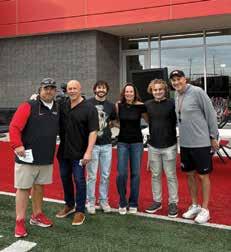
University of Las Vegas Defensive Coordinator PAUL GUENTHER ’94 and Head Coach DAN MULLEN ’94 pose with fellow alumni DAVE KOVACH ’90, AUSTIN KOVACH ’21, and CLEARY CLARK MALY ’92 at the UNLV vs. Utah State game on Nov. 15, 2025.
Education Attorney ALLISON (SNYDER) PETERSEN, ESQ. ’97 joined Wisler Pearlstine as a partner in the firm’s Blue Bell office in January.
JOANNA M. (MILLER) WEXLER ’97 was selected by the Central Bucks (Pa.) School District to serve as superintendent. She was officially appointed to the post at a special meeting of the board in April. Joanna previously served as assistant superintendent in the Great Valley (Pa.) School District.
PAT CURRY ’01 served as the chair of the Ursinus College Bear2Bear Benefit and Bash Committee. The event was held in April at the Union League Liberty Hill, Philadelphia.
In December, LYLE HEMPHILL ’02 was promoted to defensive coordinator for Texas A&M.
Lyle joined the Texas A&M football coaching staff as associate head coach for defense in June 2025.
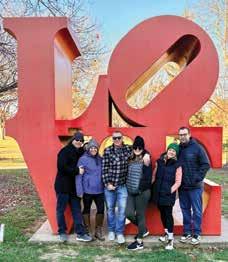
JESS (MARKOWITZ) KRIEGNER ’02 shares that she and her husband, CHRIS KRIEGNER ’04, got together with fellow alumni MIKE LOMBARDO ’04 and BOB GRAY ’04 and their families on the Ursinus campus during Thanksgiving break.
JOSHUA STOBER ’03 was appointed co-chair of the Corporate, M&A, and Securities practice group at Blank Rome LLP, effective Jan. 1, 2026.
Ursinus Trustee FLYNN CORSON ’04 served on the 2026 Ursinus College Bear2Bear Benefit and Bash Committee. The event was held in April at the Union League Liberty Hill, Philadelphia.
JENNIFER (NOLAN) GOODRICH, M.D., ’04, a board-certified facial plastic and reconstructive surgeon, has joined the physician team at Metro ENT and Facial Plastic Surgery, a division of the Centers for Advanced ENT Care, in Rockville, Md.
DENNIS C. VONDRAN JR. ’06 was elected a partner of Lamb McErlane PC. Dennis concentrates his practice on estate planning, estate administration, orphans’ court, Medicaid long-term care planning and applications, and guardianships.
REBECCA (COHEN) KASEN ’07, executive director of the Women’s Center of Greater Lansing, welcomed Governor of Michigan Gretchen
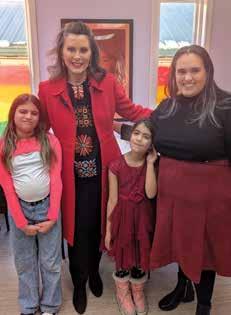
Whitmer to the center in December. Gov. Whitmer toured the facility and helped wrap presents as part of their holiday giving tree program.
CHRISTINA COOPER ’08 served as an alumni panelist for a virtual discussion titled “Building a Humane, Digital World: AI, Ethics, and the Future We’re Creating” at Ursinus in March. Christina is a chief AI security & transformation officer, founder of the T.R.U.S.T. Framework™, and bestselling author of “Raising AI Right.”
MARIA L. DEOLIVEIRA ’08 was selected by the American Bankruptcy Institute (ABI) for its 40 Under 40 honor. She was recognized at a special ceremony in December in Tucson, Ariz. Maria is an associate at Brown Rudnick, LLP in New York, where she focuses on bankruptcy litigation and general litigation matters. Maria earned a juris doctorate from Rutgers Law School and a master of business administration from Lehigh University.
KATIE MORELLO ’08, a producer and editor for NFL Films, returned to campus in March to participate in an alumni panel for the Sports and Humanity APEX Hub. Panelists spoke about the different career paths for students interested in sports and the blend of business and health options.
In Nov., LAUREN (DORSEY) BRADY ’09 was the featured speaker at an event on campus sponsored by the Parlee Center for Science and the Common Good and the Building a Humane Digital World APEX Hub. Lauren serves as director of translational data science at Genmab, an international biotech company
specializing in antibody therapeutics for the treatment of cancer. She is also the author of a children’s book, “Decode AI,” which was awarded a “Best in STEM” award from STEM.org.
KRISTI (BLUST) SMITH ’09 married Andrew Smith on Sept. 29, 2022. They welcomed their son, Silas Julian Smith, on Dec. 28, 2022. He joins older siblings, Peri, 13, and Edward, 11.
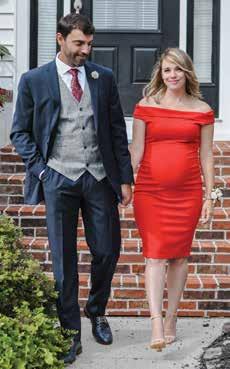
JENNIFER THOMPKINS ’09 has been appointed president and chief executive officer of the Urban League of Greater Pittsburgh. She previously served as president and CEO of Metropolitan Wilmington (Del.) Urban League (MWUL), where she significantly expanded their programs and impacts to address the growing needs of Wilmington and the broader Delaware community.
To share your news, scan the QR code. Submissions will be edited for length and style, and will be published as follows: Fall issue - April-Sept. Spring issue - Oct.-March
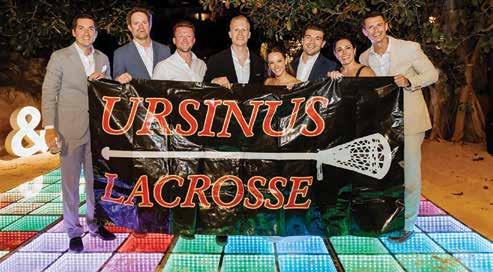
JOHN DISCEPOLA ’12 married Dana Manning on Feb. 14, 2026, in Playa Del Carmen, Mexico. Ursinus alumni in attendance included:
ERNIE CONSTANTINE ’11, TOM ADELSBERGER ’11, DAVID KRAUS ’12, PATRICK ’11 and ELLE (KURZ) ’12 GILLEN, and MICHAEL ZAPICCHI ’12.
JOSHUA STRICOFF ’12 has been named partner by Herrick, Feinstein LLP. Joshua focuses his practice on general commercial, real estate, and construction litigation.
ALEXANDRA DOLL ’13 was recognized by Women We Admire as one of their Rising Star Women Leaders in Human Resources for 2025. Alexandra is the director of human resources communications at RWJBarnabas Health, where she leads HR communication strategies across the organization.
CAROLINE E. LIPPE, DO, ’13, a fellowship-trained breast surgical oncologist who completed her Breast Surgical Oncology Fellowship at Bryn Mawr Hospital in 2025, recently joined the Margaret West Comprehensive Breast Center/West Cancer Center in Germantown, Tenn., as a breast oncology surgeon.
SHAWN CAVEN ’14 served on the 2026 Ursinus College Bear2Bear Benefit and Bash Committee. The event was held in April at the Union League Liberty Hill, Philadelphia.
SEAN DELANY, M.D., ’14, a board-
certified non-operative sports medicine physician specializing in the diagnosis and treatment of musculoskeletal injuries, has joined Rothman Orthopaedics. After earning his medical degree from the Lewis Katz School of Medicine at Temple University, he completed residency training in physical medicine & rehabilitation at Temple University/ MossRehab and a fellowship in primary care sports medicine at Thomas Jefferson University.
RACHEL BROWN, MPH, ’15 delivered a lecture at Ursinus in February titled “The science of social care: addressing the hidden drivers of health inequality” as part of the Parlee Center for Science and the Common Good’s lecture series. Rachel is a clinical research program manager for Children’s Hospital of Philadelphia.
CRYSTA (ZURAD) DURYEA ’15
published her debut novel, “What Happened to Liz,” a coastal mystery set in a fictional beach town inspired
by the South Jersey shore. Crysta resides in Cape May, N.J., with her husband, DAVID DURYEA ’15, and their two dogs.
AUBREY PARIS, PH.D., ’15 has joined Ursinus as the new director of the Parlee Center for Science and the Common Good, a position created by an endowed gift of the Parlee family. Aubrey was one of the first fellows of the center. She returns after receiving her Ph.D. in chemistry at Princeton University and working as a senior policy advisor for the U.S. Department of State.
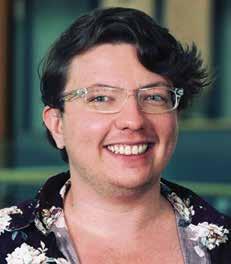
KAIDEN (KATE) POWER ’15 is a postdoctoral research fellow at Boston Children’s Hospital/Harvard Medical School. He earned a doctorate in molecular biology from Rutgers in 2024.
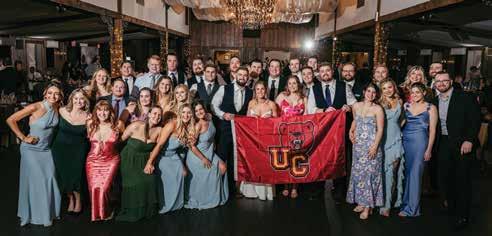
LINDSAY (RUSH) HIGHLAND ’19 and BRETT HIGHLAND ’19 were married on April 25, 2025, in Blue Bell, Pa. Many Ursinus alumni were in attendance.
Elizabeth “Betsy” (Clayes) Dillard ’46 died Jan. 5, 2026.
Janet “Jan” (Koenig) Ayres ’47 died Dec. 31, 2025.
Fay E. (Horner) Alexander ’49 died Oct. 10, 2025.
Joyce E. (Derstine) Baur ’50 died Oct. 30, 2025.
T. Lawrence Fleisher, M.D., ’50 died Dec. 4, 2025.
Audrey R. (Rittenhouse) Cox ’53 died Dec. 18, 2025.
Donald G. Devonshire ’53 died Aug. 25, 2025.
Samuel M. Keen, Ph.D., ’53 and 2013 Ursinus honorary doctor of humane letters recipient, died March 19, 2025.
Fue Lun (Wong) Hom, M.D., ’54 died Dec. 3, 2025.
Bevolyn E. “Bev” (Syvertsen) Oliver ’54 died Nov. 2, 2025.
Robert C. Hansell ’55 died May 2, 2025.
Arlin D. Lapp ’56 died Aug. 19, 2025.
Helen E. (Balthaser) Zern ’57 died Feb. 22, 2026.
C. Ross Westley, M.D., ’58 died Nov. 11, 2025.
Anthony P. Cianci ’59 died Oct. 29, 2025.
Laverne R. Joseph, D.D., ’60 died Jan. 31, 2026.
David R. Emery ’61, former mathematics lecturer, died Nov. 29, 2025.
Wayne P. Owen ’61 died Jan. 10, 2026.
Lynne (Maloney) Kurz ’62 died June 9, 2025.
Gary L. Leach, M.D., ’62 died April 5, 2025.
Peter C. Wise ’62 died Jan. 2, 2026.
Eleanor A. Boehner ’63 died March 10, 2026.
Sandra K. (Fix) Fisher ’63 died Dec. 29, 2024.
Carole (Widmaier) Jones, M.D., ’63 died March 4, 2026.
David J. Wells ’63 died July 6, 2025.
Ralph V. Barndt ’64 died March 6, 2026.
Paul C. Sparks, M.D., ’64 died Feb. 19, 2026.
L. Keith Fretz ’65 died Nov. 27, 2025.
Commander Stuart F. Glasby, USN, (Ret.) ’65 died July 8, 2025.
John W. Fertig Jr. ’67 died Sept. 11, 2025.
Joyce A. (Demcher) Moran ’67 died Feb. 20, 2026.
Cynthia Powell ’67 died Nov. 14, 2025.
Patricia A. (Patton) Hough ’68 died Jan. 8, 2026.
Marguerite C. (Atkinson) Kaupp ’68 died Jan. 1, 2026.
Carolyn R. Meredith, Ph.D., ’68 died July 8, 2025.
John P. Mills ’70 died Jan. 16, 2026.
Joseph B. Zehner, M.D., ’70 died Oct. 25, 2025.
Sandra L. “Sandy” (Wood) Wilkes ’71 died Aug. 24, 2025.
Jay L. Wicks ’71 died Feb. 6, 2026.
William “Bill” Creighton Jr. ’72 died May 28, 2025.
Donald W. Hans Jr. ’72 died Jan. 31, 2026.
Lesa Marie (Spacek) Worsham, Ph.D., ’72 died Nov. 7, 2025.
James M. Dori ’74 died March 7, 2026.
Judith B. (Bogardus) Hess ’75 died Feb. 26, 2025.
Jeffrey A. Okamoto, M.D., ’76 died Feb. 7, 2026.
Robert Simpson III ’76 died Feb. 1, 2026.
Susan (Baumgaertner) Buck ’77 died Jan. 18, 2025.
Gary R. DelBuono ’78 died Feb. 20, 2026.
Jane A. Statzell ’80 died Nov. 29, 2025.
Joan E. Kingslake ’83 died Oct. 21, 2025.
Simon J. Levy ’83 died Feb. 4, 2026.
Donald M. Wolf ’83 died Oct. 13, 2025.
Charles D. Fellers ’91 died Jan. 11, 2026.
William A. Blewitt ’96 died Feb. 18, 2026.
Elizabeth M. “Beth” (Johnson) Gomez ’97 died Sept. 2, 2025.
Jeffrey M. Bolcavage ’98 died Oct. 23, 2025.
Maria “Ella” Lazo-Hannecart ’04 died Oct. 30, 2025.
Samuel A. Giler ’12 died May 24, 2025.
Austin J. Fox ’14 died Sept. 18, 2025.
Hudson B. “Pete” Scattergood, retired senior vice president for college relations, who was with the college from 1989 to 2007, died Nov. 29, 2025.
Marilyn L. Steinbright, trustee emeritus and Ursinus honorary doctor of laws recipient, died Nov. 23, 2025.
CORRECTION: In the annual report section of the fall 2025 issue, Winfield Boyer’s name, in reference to the Winfield C. Boyer ’62 and Barbara W. Boyer Endowed Scholarship, was misspelled. We regret the error.
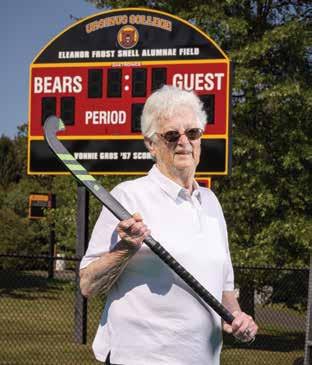
Vonnie Gros ’57, who died Feb. 28, 2026, carved out one of the most remarkable athletic legacies in Ursinus College history. Arriving in the mid-1950s, she became the school’s first AllAmerican in both field hockey and lacrosse in 1957 — launching a career defined by excellence on and off the field.
A standout on the U.S. National Field Hockey Team for 13 years, she later guided that same program to its only Olympic medal. After the U.S. boycott of the 1980 Moscow Games denied her her first Olympic coaching opportunity, she returned in 1984 to lead a heavily underdog American squad to a historic bronze medal.
Vonnie also built an exceptional coaching résumé at West Chester University, Princeton University, and Ursinus. Her impact on the game is reflected in her induction into at least eight Halls of Fame, including the U.S. Field Hockey Hall of Fame and multiple regional and collegiate honors — cementing her place as a true pioneer in women’s athletics.
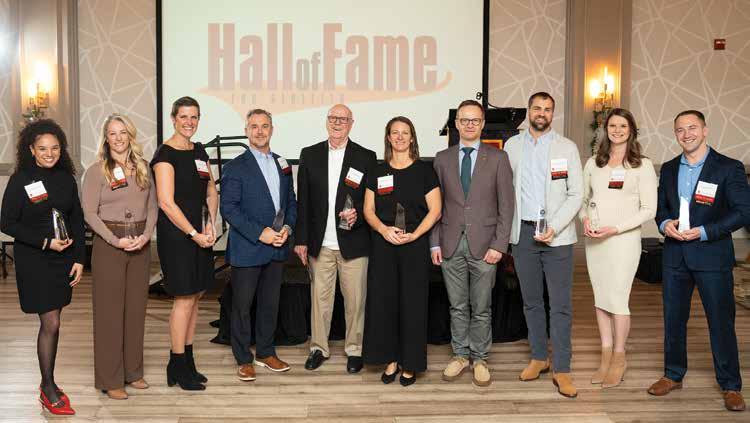
HALL OF FAME FOR ATHLETES Honoring athletic accomplishments and the qualities of character — work ethic, leadership, and humility — Ursinus celebrated the 2025 induction class in December. Congratulations to (left to right): Amanda Laurito ’14, track and field; Kristen (Calore) Carney ’00, field hockey, lacrosse; Taryn (Brackin) Barrett ’00, lacrosse; Lou Haenel ’90, football, track and field; Walter Manning, Ph.D., soccer coach; Aubrey (Andre) Whittier ’05, soccer, lacrosse; Ursinus President Gundolf Graml; Ryan Ridinger ’15, lacrosse; Kristin (Aichele) Lockard ’15, gymnastics; Richard Jasinski ’15, wrestling; and Victoria Goodenough ’14, track and field (not pictured).
THE HEART OF HAMM | CONT. FROM PAGE 17
all so smart and everyone has these unique skills. We’re all willing to help each other. Like one day, I had to leave early, and CJ stayed after for two hours and finished my pipetting for me.”
“We know we can always ask each other for help,” added Chin. It’s always nice, when you’re doing something difficult, to be doing it with your friends.”
The jigsaw puzzle that greets visitors as they enter the room has become something of a tradition for the HaMM Lab. Like the skills and relationships within the lab, it’s something built piece by piece over time.
“Dr. K started doing the puzzle thing before we got here, with other students,” said Oduwole. “It’s become a community thing — everyone puts a couple of pieces in the puzzle [when they can] and the really good ones he hangs around the lab, and we all sign our names on them. It’s a cool way to take a break from lab but still use our problem-solving skills.”
Team jigsaw puzzles, like this one of a human heart, have become one of many HaMM Lab traditions.
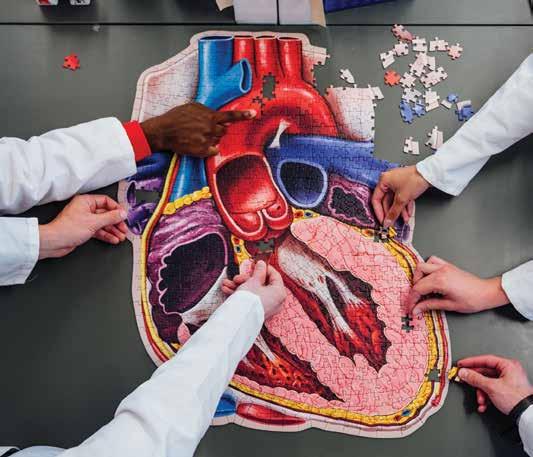
“You can see us through the front door glass sometimes, all just huddled around the table working on a puzzle,” added Chin.
The puzzle is just one tradition that has taken shape among students in the HaMM Lab. Kolwicz admits the idea was inspired by Professor of Biology and Associate Dean for Undergraduate Studies Rebecca Lyczak. But others were born in-house. At the end of every spring semester, for example, the group gathers for a pizza party to celebrate their accomplishments.
“We sit on the IDC roof and Dr. K gives out an award for ‘MVP’ of the lab each year,” Matalavage explained.
For Kolwicz, these moments have become an important way to express his gratitude for his students and the time they invest in the lab.
That investment has led to invaluable academic and professional achievements for the group — published research, conference presentations, awards, and even a major National Institutes of Health (NIH) grant for the program. “I’ve gotten two research internships with Lehigh Valley Hospital while I’ve been here. When I interviewed, they liked that I wasn’t just cleaning lab glass — I was doing hands-on research starting freshman year,” said Tobin. “It shows that you’re actually useful in a research lab and that you can take ownership of a project without someone holding your hand the whole time.”
The seniors have also leaned on each other as they navigated the next steps in their careers. All six have plans to continue their education, whether through medical and veterinary school or post-graduate research and master programs.
“We talk about internships and what we’re doing, give each other resources,” said Oduwole.
“I’m always asking CJ for advice,” said Chin. “He’s going to medical school so I’m always asking him for interview tips. We all push each other, too; we’re all go-getters. They push me to be better.”
Beyond the academic and career milestones, the students agree it’s the people who were the best part of their four-year journey. When asked what they would miss most about the HaMM Lab, the answer was unanimous.
“Dr. K,” said Cunningham.
Chin added, “Just working with Dr. K all four years. I know I’ll always have my friends to reach out to but I’m going to miss coming here and seeing him.”
For Kolwicz, hearing that is deeply meaningful.
“About 10 years ago, I was sitting on the beach with my family and I thought about the next 20, 25 years of my life,” he recalled. “I thought, in that time, could I make a scientific impact that would change the world? Possible, but not likely.
“When I looked back, I felt I probably had a better shot of making an impact on students through training and mentorship. I love teaching. I came here [to Ursinus] specifically to make an impact. When I hear students say that, I feel validated and I know I set out to do what I want to do.”
In doing so, Kolwicz did something else — he created a space that became a home for his students.
“I’m going to miss all the jokes, the constant laughing. It’s just like home,” said Oduwole.
Like the jigsaw puzzles they put together over the last four years, each of these students made their mark on the HaMM Lab — piece by piece, over time.
far more transformative: helping to pioneer artificial disc replacement surgery in the United States.
It’s the one area where Guyer’s impact has been most profound. In the early 2000s, he and his colleagues became national leaders in the procedure, which preserves motion in the spine rather than fusing vertebrae together, a common surgical solution that remains popular today.
In 2024, he published a 20-year follow-up study covering more than 2,000 patients. The revision rate — the percentage who needed additional surgery — was approximately 1 percent at 20 years, far lower than the 10–15 % revision rate seen in hip and knee replacements over the same period.
“When we started, we thought if the discs last 10 years, that would be great,” he said. “Now we know they last much longer.” Their work has changed lives. It has also changed the field.
At 76, Guyer still operates, still teaches, still greets everyone he passes. He still believes the glass is half full and in learning something every day. “If you follow your passions, you’re never gonna work,” quipped Guyer.
fruition,” he smiled. “I’ve recognized that even though it’s a show I wrote, it’s much bigger than me. There are so many people involved with this production and it’s about us as a collective putting this show together…everyone plays a part and I’m so proud to have built this team.”
It’s a journey that would have never happened, if not for Ursinus, he said.
“I always credit Ursinus with being the place where I discovered my love for theater and discovered how crucially important it is in today’s world,” said McAndrew.
As he reflects on how far he’s come, he hopes his story is one that could inspire the next generation of Ursinus students looking to take that same first step. He built on this hope by providing complimentary tickets to a group of Ursinus students to see “The Startup” during its offBroadway run.
“If I could inspire even one student to get involved with theater, and show them this is possible,” McAndrew said, “It’s worth it.”
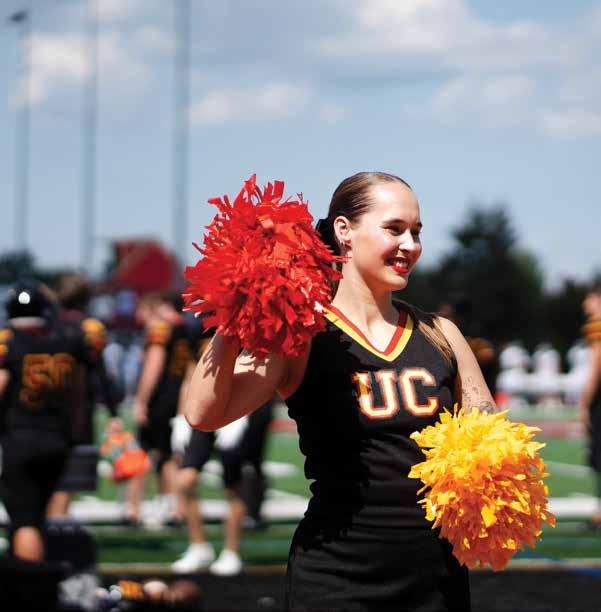
OCTOBER 16-17, 2026
Where Homecoming and Family Weekend combine in a celebration of everything that makes Ursinus special. From spirited traditions and campus celebrations to time with the people who matter most, you won’t want to miss this event.
When you support the Ursinus Fund, you empower students to dream boldly — and provide the college with resources to turn those dreams into real-world, hands-on experiences. Make your gift today. Return the enclosed envelope or scan the QR code to give online at ursinus.edu/give.
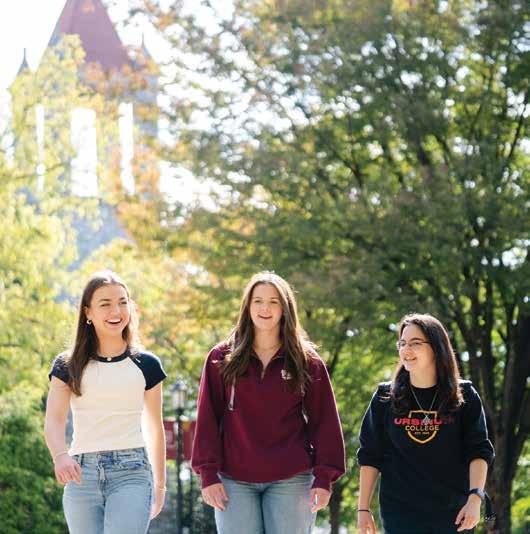
EVOLUTION OF TEAMWORK | CONT. FROM PAGE 27
Two years ago, as they began to think about and plan for retirement, the pair went back to the original model — sharing a position; Ellen focusing more heavily on research and Robert spending more time in the classroom.
Though they are stepping away from full-time employment, they have no plans to slow down.
The avid hikers plan to travel across country in the fall making stops at national parks to hike along the way, with future trips to New Zealand and South America in mind. Ellen hopes to continue her research, while Robert plans to finish a manuscript on Darwin and explore teaching on YouTube.
After 36 years, their influence endures — not just in programs or publications, but in the students they taught.
Many still remember exactly where they were sitting when Robert made Darwin click, or the moment Ellen challenged them to think like scientists.
Together, they helped generations of students see the natural world — and their place in it — more clearly.
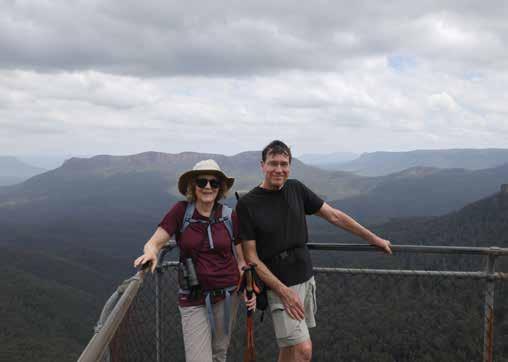

Coming fall 2026... New and reimagined majors!
Allied health studies
Kinesiology and exercise science
Health and physical education
Public health
Business administration
Economics
Finance
Marketing
Sports management
Marine science
Applied sustainability
Music technology
Forensic chemistry
Business analytics
Cybersecurity
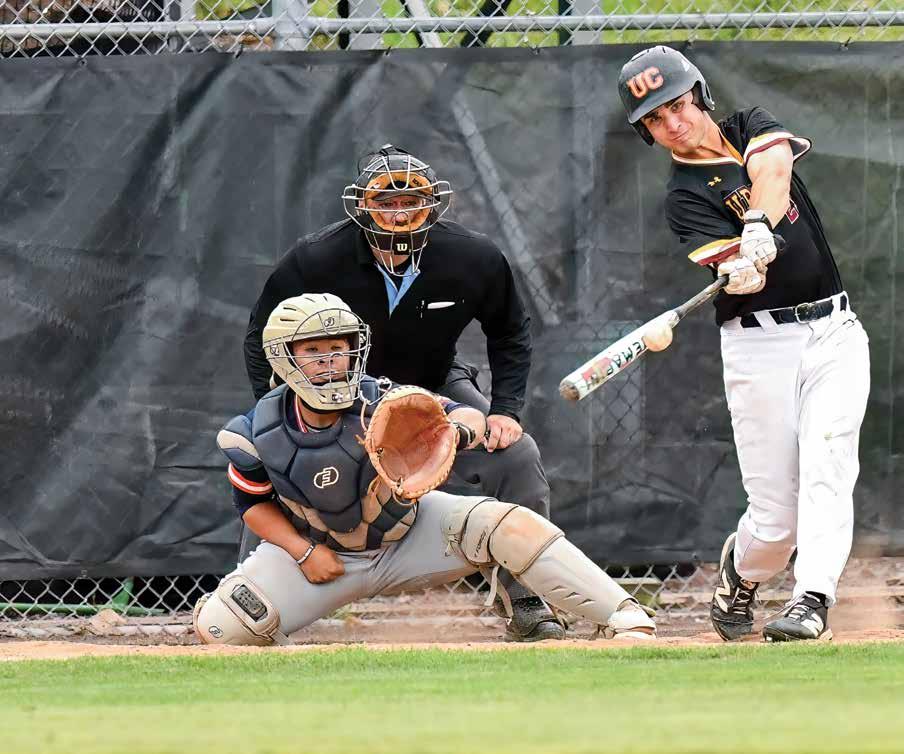
BASEBALL CAPS 25-WIN SEASON WITH CHAMPIONSHIP BERTH THE URSINUS BASEBALL TEAM QUALIFIED FOR THE CENTENNIAL CONFERENCE TOURNAMENT AND CHAMPIONSHIP GAME FOR THE FIRST TIME SINCE 2017. THE BEARS WON 25 GAMES IN 2026, TYING THE 2017 SQUAD FOR THE PROGRAM’S HIGHEST WIN TOTAL SINCE 2000.