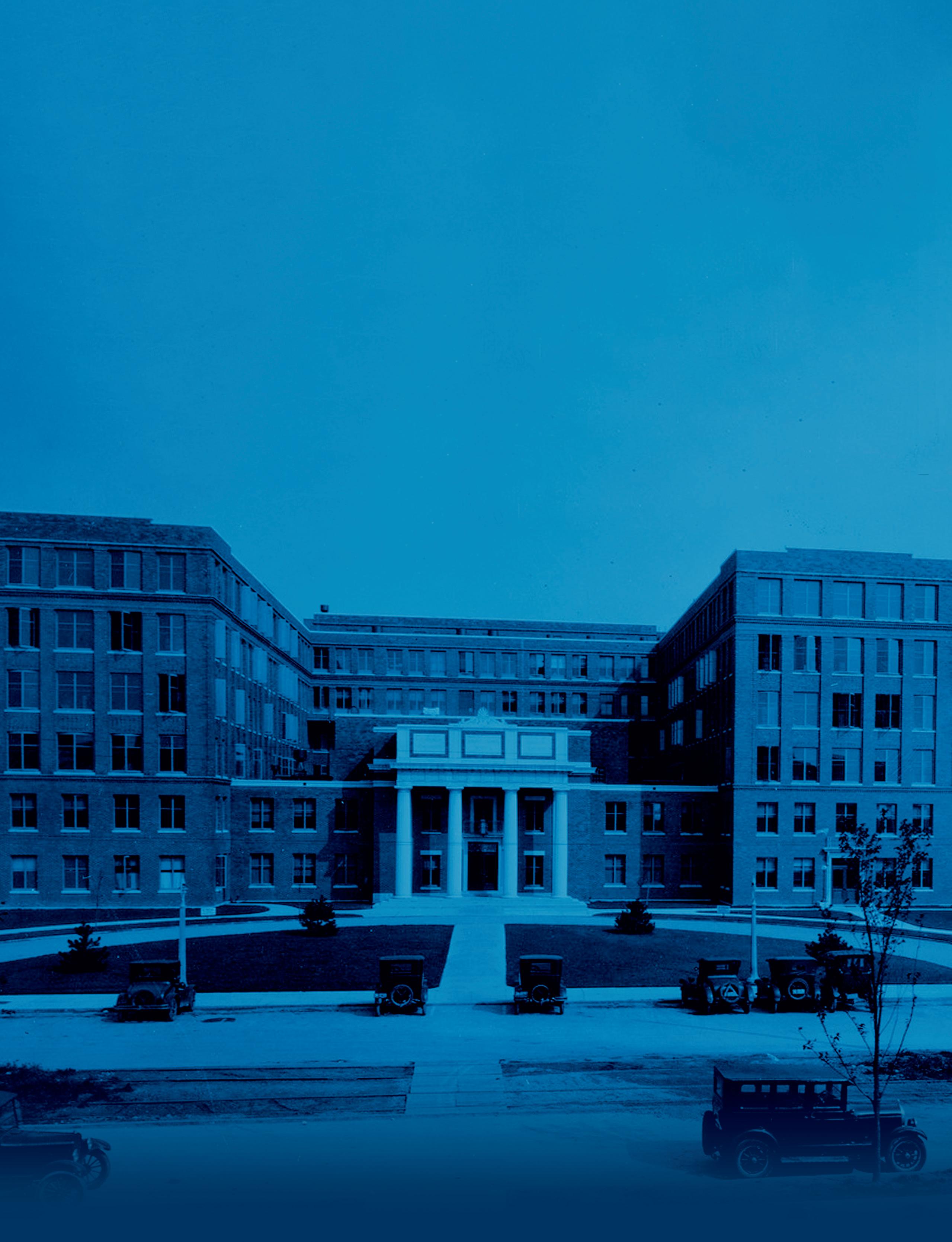
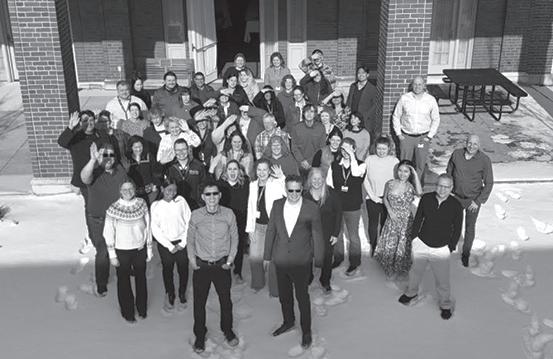
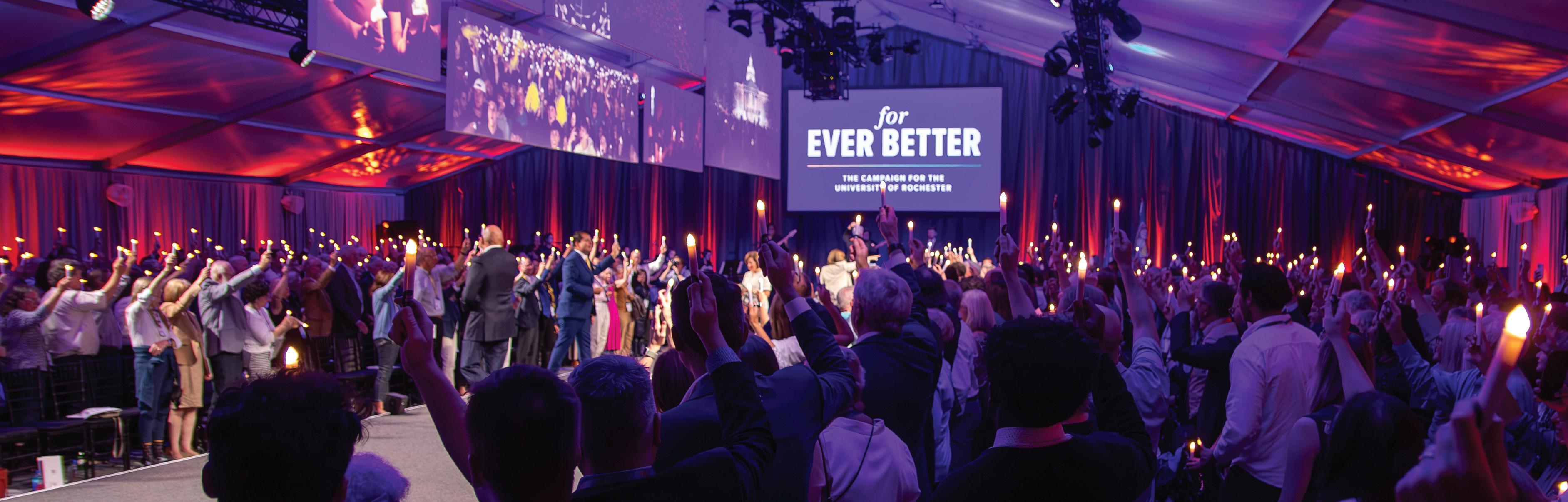
The School of Medicine & Dentistry is celebrating its centennial.
POINT OF VIEW
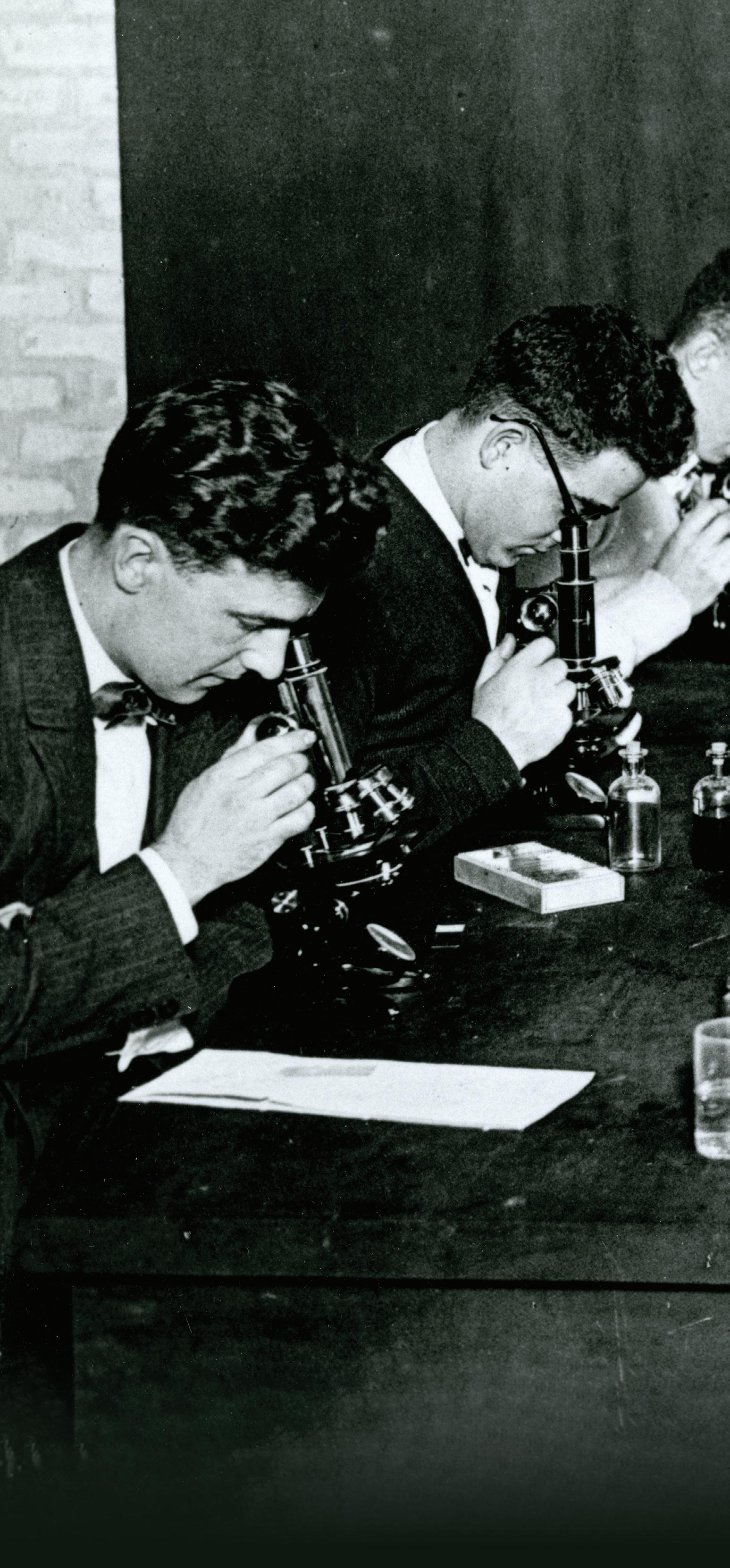
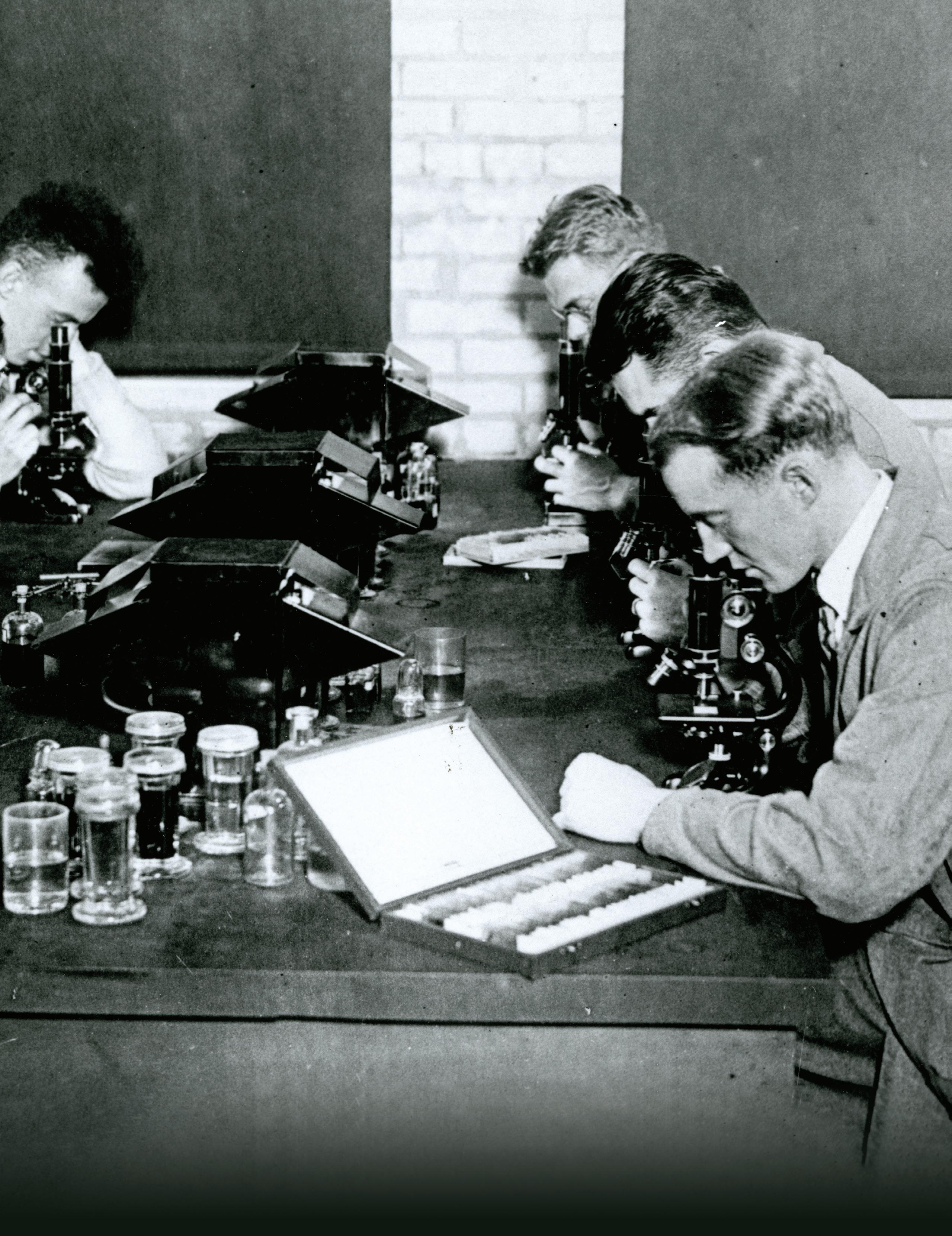
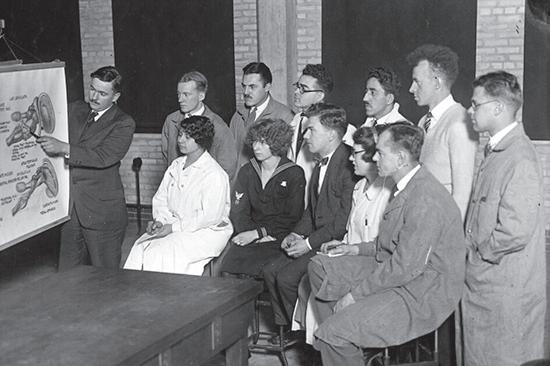
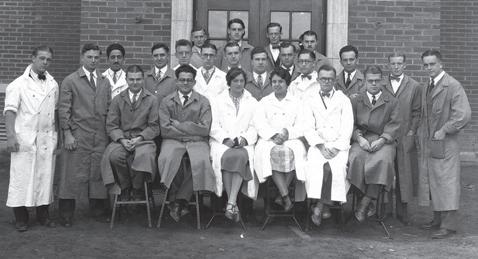
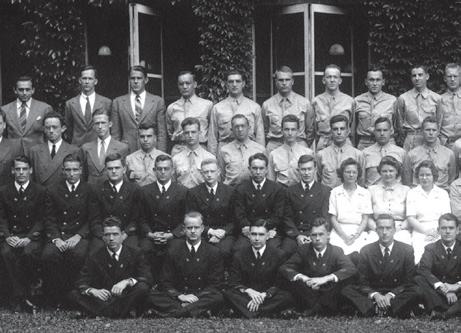
Microscopy Class, 1926
From left: George Ericson, Joseph Leone, Walter Shields, Philip Wickens, Elmer DuBois, and Donald Posson.
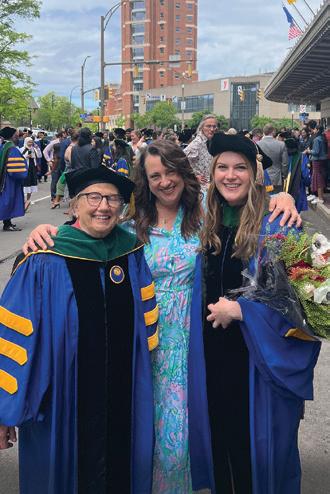
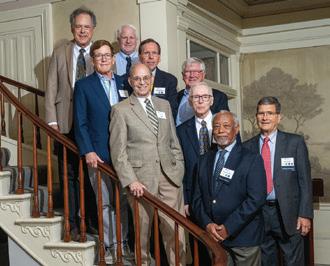
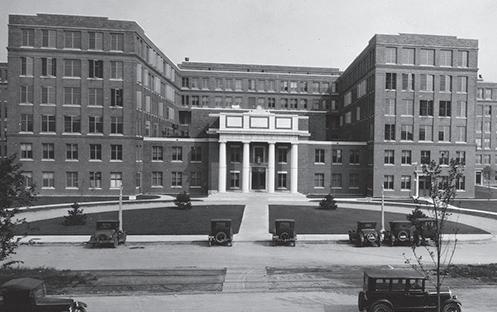
Class of 1929
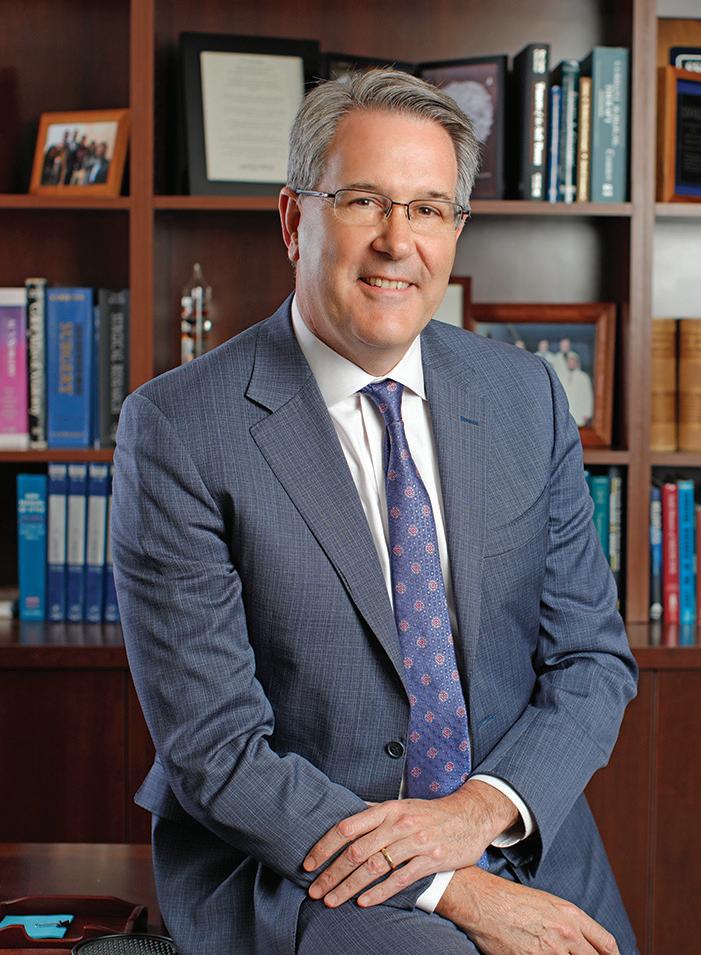
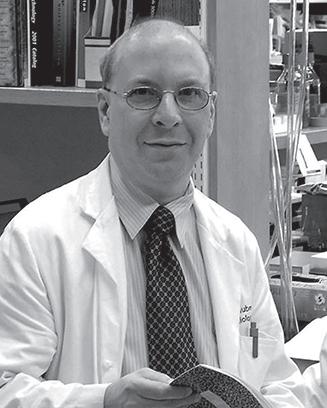
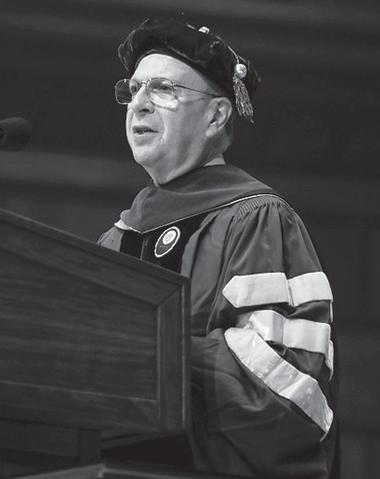
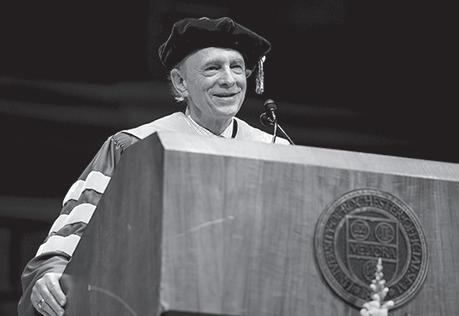
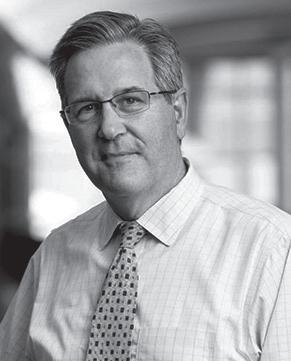
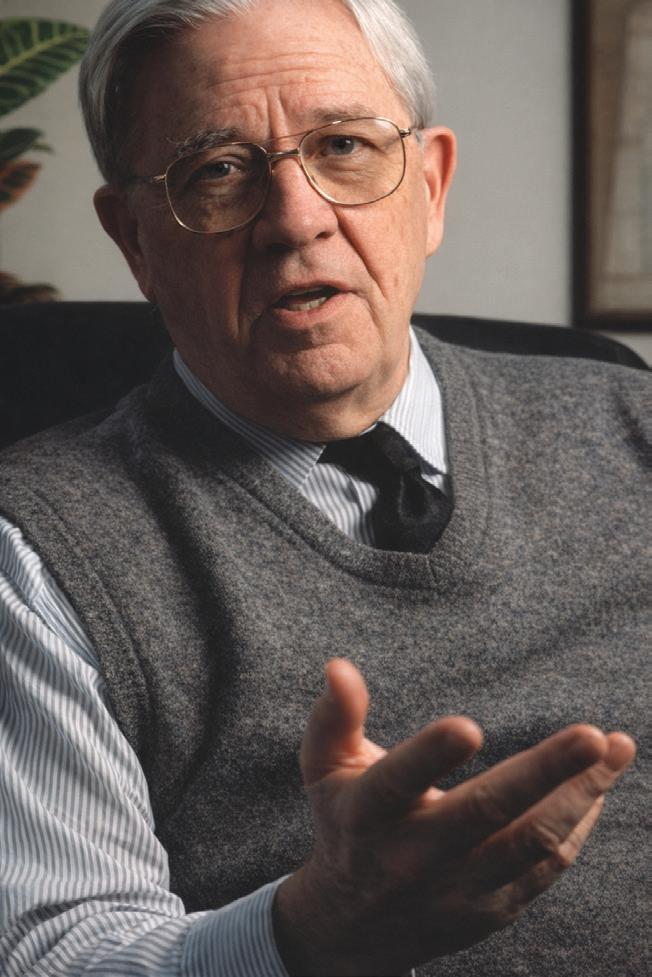
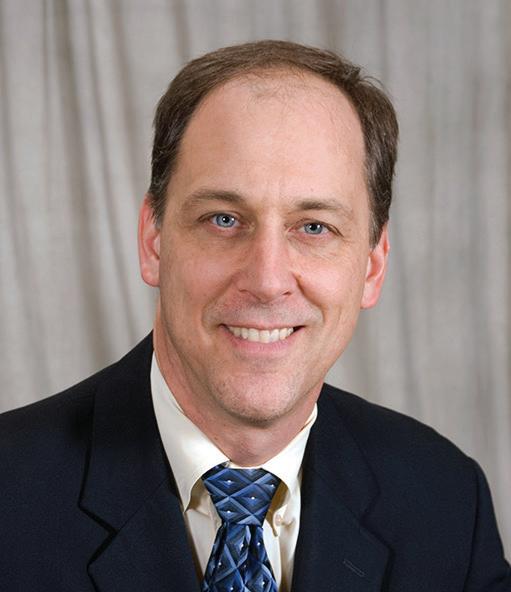
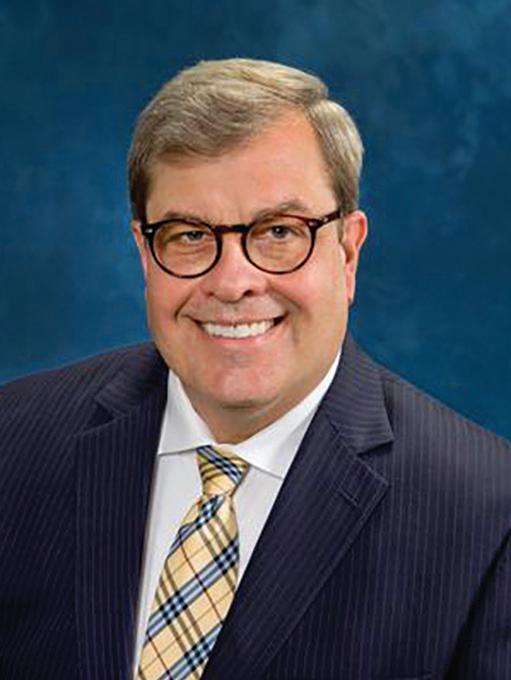
David Linehan, MD
CEO, University of Rochester Medical Center
Dean, School of Medicine and Dentistry
Senior Vice President for Health Sciences
Celebrating Our Milestone Moment
A century ago, American medical schools would often accept students with no high school education into programs with no universal standards and little lab training or clinical exposure.
Education reformers began suggesting major changes to prevent schools—which were purely for-profit—from churning out graduates with inadequate training. Out of that backdrop, the University of Rochester School of Medicine and Dentistry was conceived. Our bold new approach for ensuring academic excellence and research-based training was established as a national model.
Now, as we celebrate 100 years, we’re taking time to look back at our achievements through the decades and what that means for the future.
This special centennial issue of Rochester Medicine can cover only a fraction of the numerous people and moments that have made us who we are today. Our aim is to give a varied glimpse into the rich history behind what makes SMD so special.
You’ll see the people who gained national and international renown, but you’ll also meet alumni who blazed trails in their own unique ways. All told, their stories show the breadth of how we can contribute to the greater good when we remain dedicated and determined.
We also take a look forward to see where we’re poised to make a difference in research, education, and clinical care as we begin our second century.
It’s both humbling and exciting to be a part of such an accomplished institution. My hope is that this issue of the magazine can help remind us of what can be done when a good idea like academic medicine gets put into motion by caring, capable people.
I hope these stories inspire you and bring an appreciation for the work that has been done and the task at hand as we continue our vital mission.
If you’d like to explore more centennial content, you can visit urmc.rochester.edu/centennial online.
–David
What do you think?
Rochester Medicine welcomes letters from readers. The editor reserves the right to select letters for publication and to edit for style and space.
Brief letters are encouraged.
RochesterMedicineMagazine@urmc.rochester.edu
Read more Rochester Medicine RochesterMedicine.urmc.edu
Submit Class Notes RochesterMedicineMagazine@urmc.rochester.edu
Write to Us
Rochester Medicine magazine
University of Rochester Medical Center 601 Elmwood Avenue Box 643 Rochester, New York 14642
Centennial Stories
4 Medical Center Rounds
10 Rooted in Reform
Rochester Was Singled Out for a Bold Experiment. It Would Become a Model for a New Approach to Medicine.
11 100 Years of History
A Timeline of the School of Medicine & Dentistry
14 Profiles from a Century of Service
Seymour Schwartz, the Mind Behind “the Surgeon’s Bible”
A Veteran Makes a Big Difference in Small-Town America
Three Generations of Female Psychiatrists
The Kornbergs, a Nobel Couple
29 From the Archives: Three Stories
The Alum Who Eradicated Smallpox. A Biotech Pioneer. And a Famous Photographer Comes to Rochester.
44 Beyond the Centennial
How Rochester Is Poised to Shape Medicine in the Future
49 Inspiration from the Class of 2029
10
21 Other Sections
52 Meliora Weekend and Dean’s Circle Awards
59 White Coat Ceremony
60 Faculty News
64 Class Notes and News
65 In Memoriam
Feature
Contributors
Nina
Scott
Mark
Leslie
Susanne
Sandra
Kelsie
Find
Wilmot Team Receives $3M to Develop New Pancreatic Cancer Treatments
By Leslie Orr
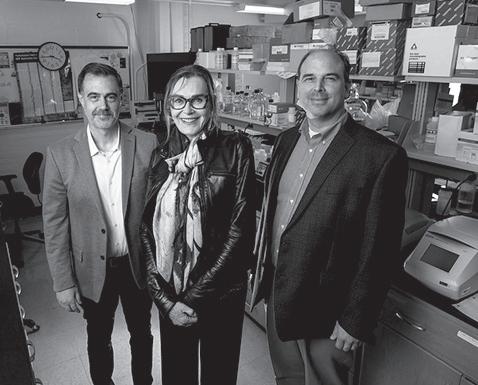
Wilmot Cancer Institute investigators Darren Carpizo, MD, PhD, and Scott Gerber (MS ’01, PhD ’05) recently won a $3 million award from the National Cancer Institute to develop a new generation of treatments that can overcome the complex barriers to treating pancreatic cancer.
Their approach is a one-two punch: an experimental drug, NP137, to target the cancer cells’ internal drivers and an immunotherapy with localized stereotactic body radiotherapy (SBRT) to target the tumor’s surrounding environment.
They believe their approach can kill cancer cells while also reprogramming the surrounding environment to become less hospitable to cancer recurring. The Gerber-Carpizo team plans to launch a phase 1 clinical trial. Earlier research by URMC CEO and SMD Dean David Linehan, MD, laid the foundation for the study.
Fragile X Syndrome: Findings Challenge Current Theories
By Emily Boynton
In a new study in the journal Molecular Cell , SMD scientists have established a novel foundation for developing therapies from the scientific ground floor—fundamental knowledge of how the molecules in our cells function and interact. The research clarifies how the FMRP protein works and what happens when it’s missing in patients with genetic conditions such as Fragile X syndrome.
RNA biologist and senior study author Lynne Maquat, PhD, founding director of the Center for RNA Biology and the J. Lowell Orbison Endowed Chair and Professor of Biochemistry & Biophysics at SMD, describes FMRP as a molecular brake pad in brain cells. Proteins need to be produced at precise times and places in order to support learning and memory, adaptation to new experiences, and response to injury. Like lifting your foot off your car’s brakes when a traffic light changes, FMRP lifts the brakes and allows protein production in a cell once it gets the appropriate signal from the brain. FMRP does this by interacting with our messenger RNAs (mRNAs).
Maquat’s team discovered that FMRP plays a key role by sequestering a quarter of our mRNAs, preventing them from making protein until it has delivered them safely to locations in the brain. It waits for a signal from the brain and then unleashes the mRNAs to make the desired proteins.
When FMRP is absent, as it is in Fragile X, there is no brake; mRNAs travel through cells unchecked, haphazardly producing protein. This creates chaos and contributes to the cognitive and behavioral symptoms seen in Fragile X syndrome.
“Currently there is no cure for Fragile X, and available treatments are inadequate; we need more options for patients,” said Maquat. “Until we understand what is going on at the most basic level, we’re shooting in the dark.”
Through meticulous cell-based experiments and imaging analysis, Maquat’s team showed that FMRP isolates and insulates mRNAs—rather than stalling mRNAs—to make sure proteins are produced when and where they’re needed in the brain.
Chris Pröschel, PhD, study author and professor of Biomedical Genetics at SMD, said, “When you’re pushing up against established findings, you need to be confident in your work. The team conducted an exhaustive number of stringent tests, with many checks and balances, to make this discovery.”
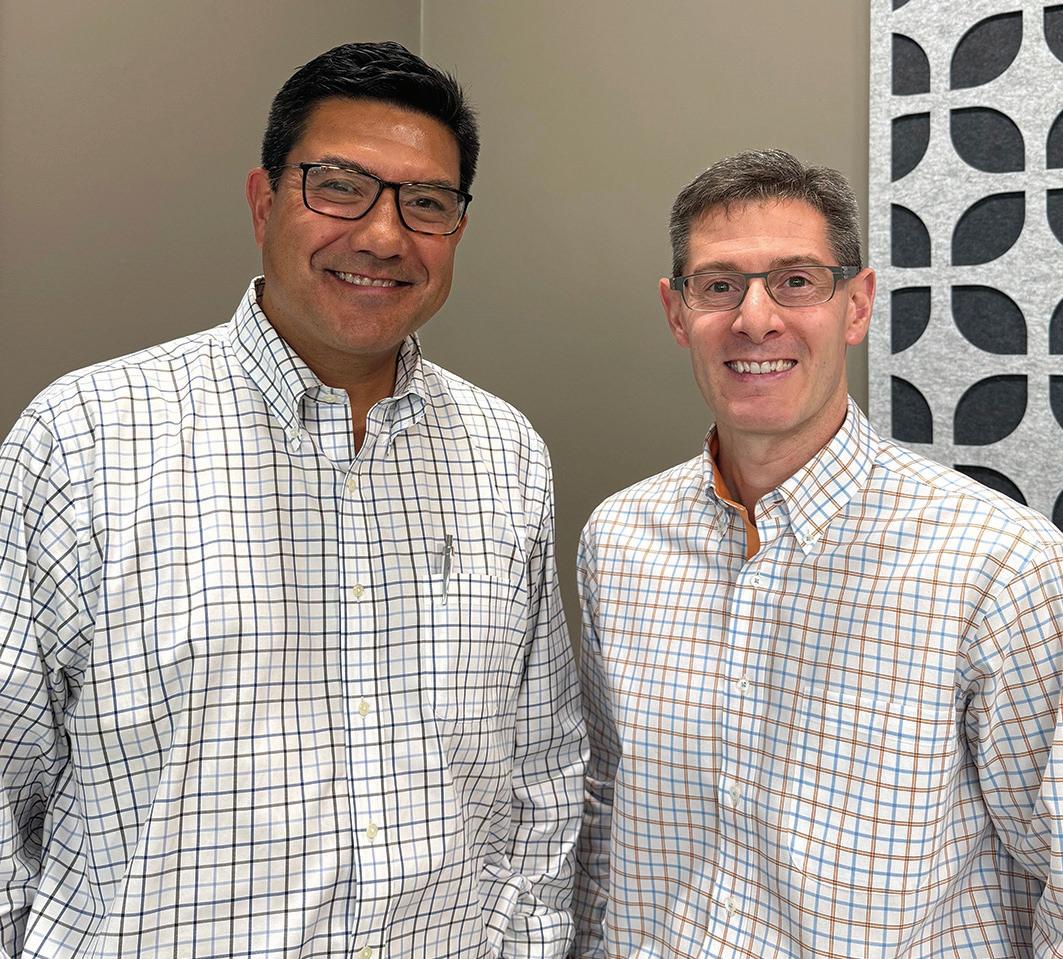
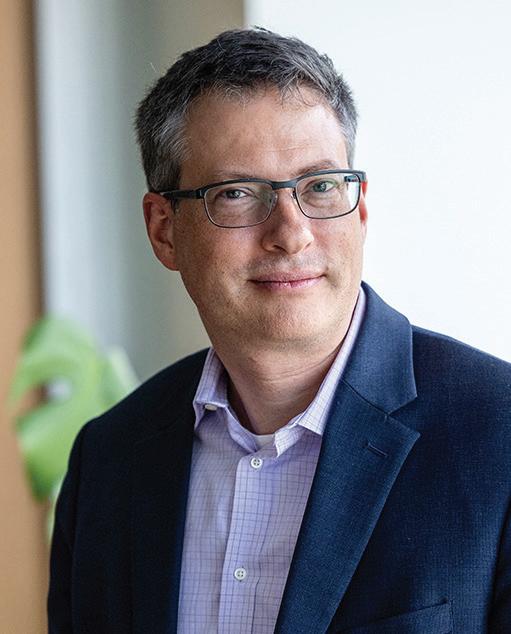
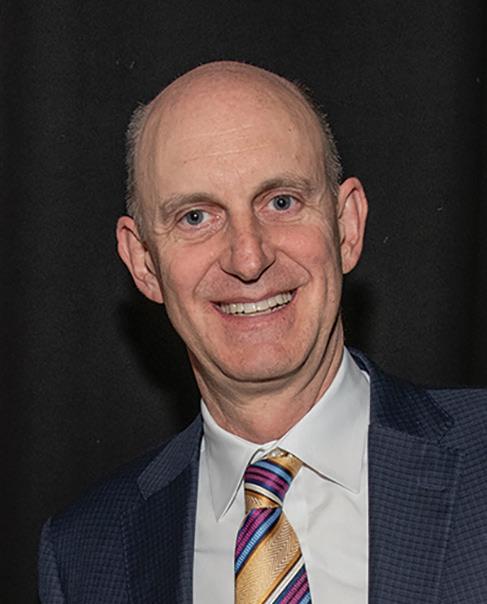
Darren Carpizo, MD, PhD, and Scott Gerber (MS ’01, PhD ’05)
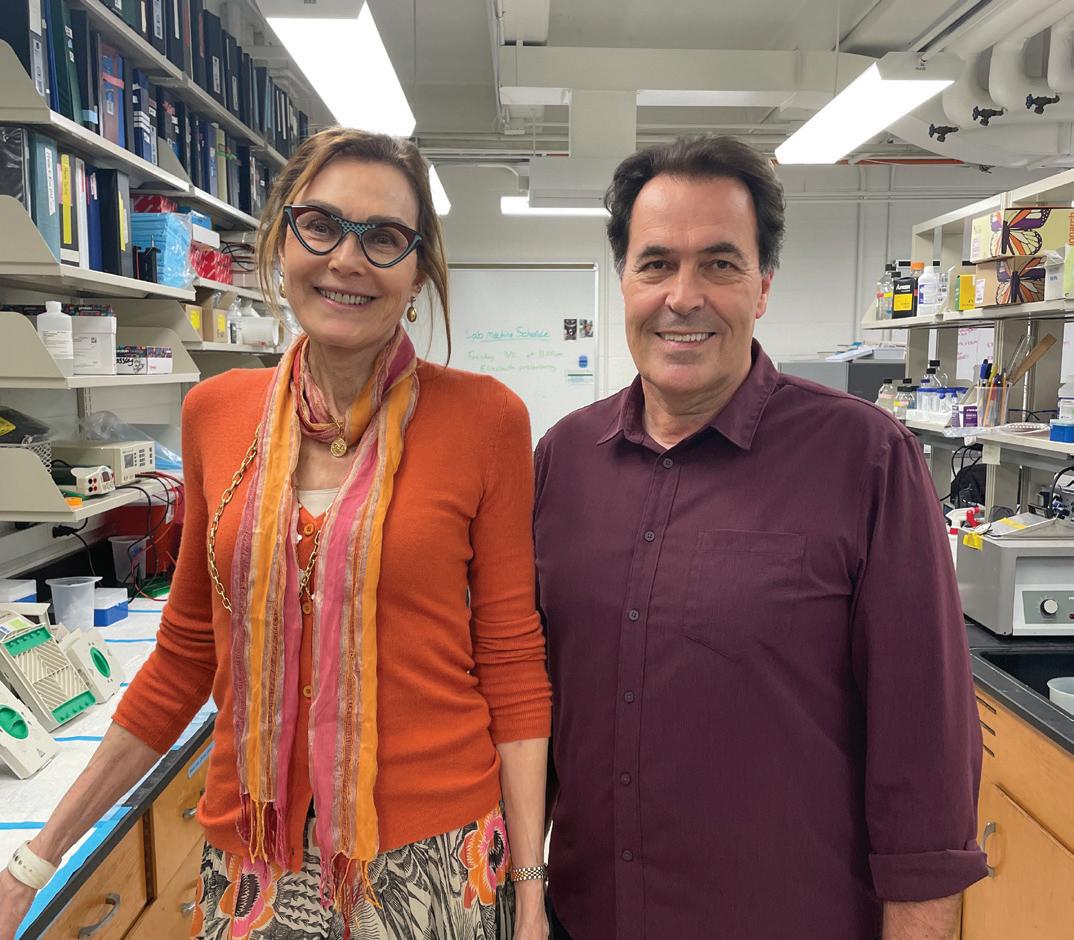
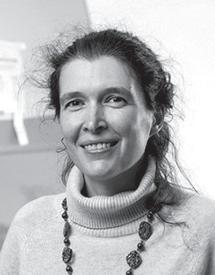
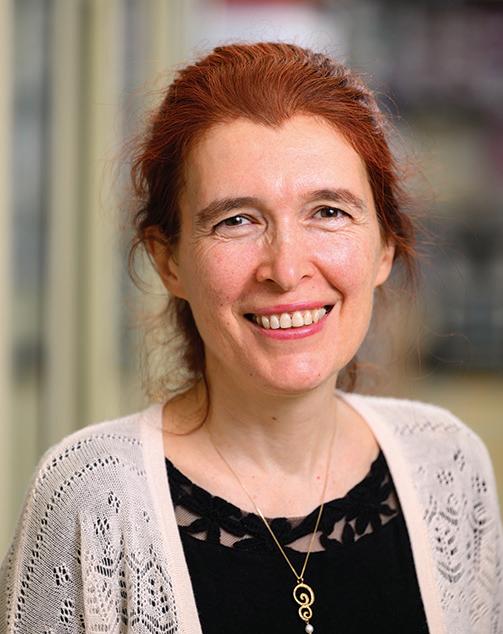
Lynne Maquat, PhD, and Chris Pröschel. PhD
First Advance in 20 Years for Rare Brain Cancer
By Leslie Orr
Art Sullivan, a 38-year-old Ironman athlete, and Josh Lehman, 48, who works at the University of Rochester, are connected by an unlikely foe: a type of brain tumor called an astrocytoma. Both are also benefitting from the first new treatment in decades for this cancer—and it’s changing their lives. In August 2024, the FDA approved vorasidenib to treat astrocytoma.
“The new drug has been mentally transformative,” said Lehman, who was diagnosed with brain cancer 15 years ago, went into a long remission, and then saw it return in 2024.
Wilmot Cancer Institute neuro-oncologist Nimish Mohile, MD, has 30 patients using the new medication, including Lehman and Sullivan.
In 2021, Mohile was part of the expert panel that wrote the first-ever national guidelines for treating brain cancer, and this year he and the national group published new guidance about the practice-changing research supporting vorasidenib for some types of brain tumors. The guidelines are available online through the Journal of Clinical Oncology
Aside from vorasidenib, most brain cancer treatments used today were developed in the 1990s.
“When radiation becomes a core part of brain cancer treatment, eventually it causes cognitive issues—memory and emotions, for example—which interfere with work and relationships, and in rare cases puts patients at risk for later cancers,” Mohile said. “So, whatever we can do to delay or avoid radiation therapy to the brain, especially in younger people, is a good thing.”
Kerry O’Banion, MD, PhD, professor at the University’s Del Monte Institute for Neuroscience and a Wilmot faculty member, is also investigating how to protect the brain during radiation therapy for cancer. He focuses on stopping damage to the nerve cells during radiation exposure as the brain attempts to rewire itself.
Although there is excitement around vorasidenib, it is not a cure. “It’s a big step forward in a rare disease that’s hard to study,” said Mohile, the Ann Aresty Camhi
Rochester.
Brain’s Immune Cells Key to Wiring the Adolescent Brain
By Kelsie Smith-Hayduk
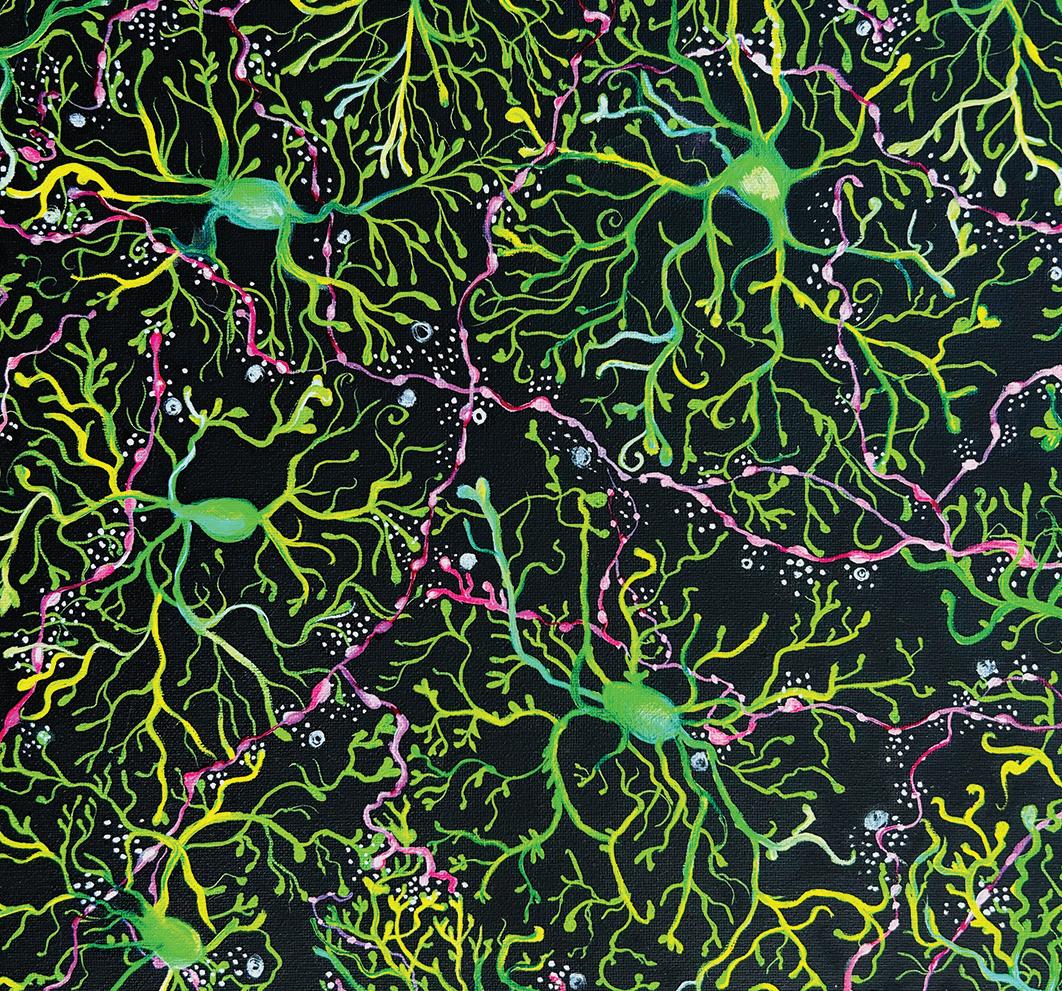
Researchers at the Del Monte Institute for Neuroscience have discovered that microglia play a key role in how the brain adapts to changes in the frontal cortex during adolescence. This may transform how neurodevelopmental disorders are treated at this age and, possibly, into adulthood.
“This area is susceptible to change, both good and bad, during adolescence,” said Rianne Stowell (MS ’16, PhD ’19), research assistant professor of Neuroscience at URMC and first author of the Nature Communications study. “Previous work in our lab has found that both direct activation of frontal dopamine circuits and the rewarding of behavior drive plasticity of dopaminergic connections to the frontal cortex during adolescence, but not adulthood.”
According to Stowell, the findings show that the brain’s immune cells appear to play a key role in strengthening its communication network.
“This research suggests that microglia are very sensitive to changes in dopamine activity, and there is a compelling connection between microglial contact and structural changes at the axon.”
Stowell said that future research will explore whether combining pharmacological therapies with dopamine stimulation, such as through exercise, could help treat psychiatric disorders due to deficits in this area of the brain.
Professor in Neurology at the University of
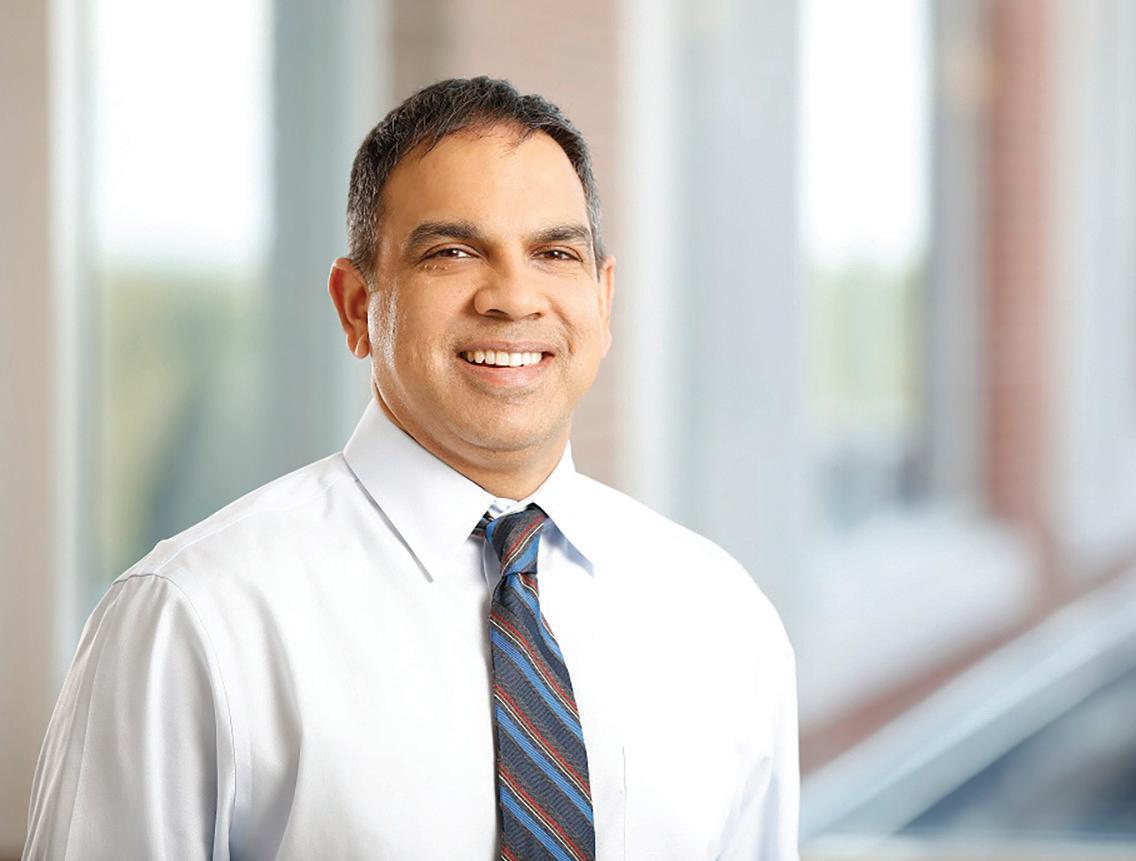
Nimish Mohile, MD
Oil painting depicting microglial processes (green) responding and interacting with dopaminergic axons (magenta), by Rianne Stowell, PhD, the first author of the study published in Nature Communications
AI-Driven, Instructor-Free Platform Could Transform Surgical Training
By Mark Michaud
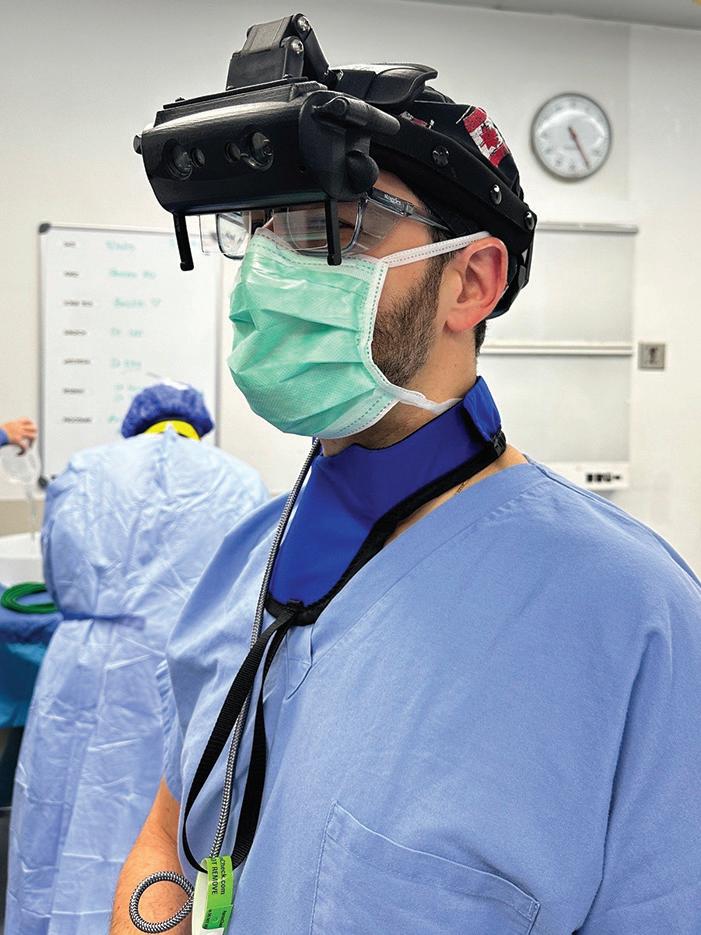
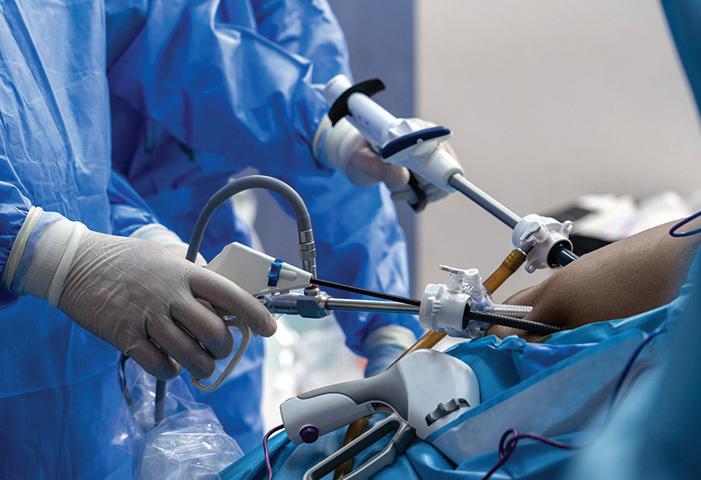
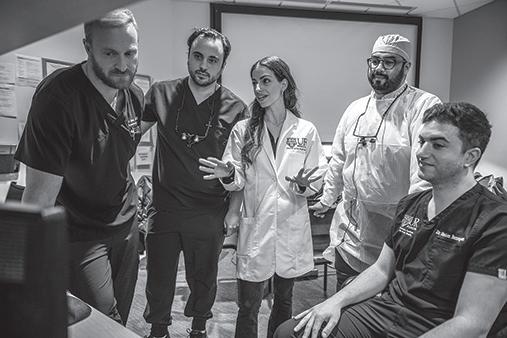
The traditional surgical training model—“see one, do one, teach one”—depends on having a skilled instructor present, which isn’t always possible. To overcome that challenge, URMC researchers have developed an autonomous educational system that pairs realistic, 3D-printed organs with an augmented-reality headset and AI to create a closed-loop training environment.
The system, Educational System for Instructorless Surgical Training (ESIST), is described in a study published in the Journal of Medical Extended Reality.
“This proof-of-principle demonstrates that deep learning, paired with extended reality, can autonomously teach and assess a critical surgical maneuver with near-perfect accuracy and high user satisfaction,” said Jonathan Stone, MD, director of Surgical Innovation at URMC. “As AI architectures mature and hardware becomes more ergonomic, such systems are poised to transform both how surgeons learn and how AI augments surgeons in real time.”
ESIST evaluated surgeons as they performed one of the steps in a partial nephrectomy. The simulation involved lifelike organs created through a combination of medical images, 3D printing, and tunable hydrogels, a process developed by Stone in collaboration with the URMC Department of Urology.
When 17 participants tried ESIST, the AI correctly identified artery clamp placement 99.9 percent of the time. Trainees reported that the real-time feedback felt valuable, and 84 percent of their survey responses rated the system favorably for teaching this critical step.
“The goal is to move the very early portion of the learning curve outside of the operating room,” said Stone. “This system doesn’t replace the mentor; it prepares the student better before they work with that mentor on patients.”
The same technology could grow to cover entire procedures, offering consistent, data-driven instruction at scale. In the future, surgeons might even use similar AI-powered overlays during real operations, receiving alerts about anatomy or technique in real time.
University Awarded Prestigious Aging Research Center Grant
By Susanne Pallo
The NIH has awarded University of Rochester aging researcher Vera Gorbunova, PhD, a prestigious Nathan Shock Center grant. The grant will provide nearly $1 million per year over the next five years to establish the Upstate NY Comparative Biology of Aging Nathan Shock Center.
The center will compare the biology of various long- and short-lived animal species to identify biological mechanisms that promote longevity.
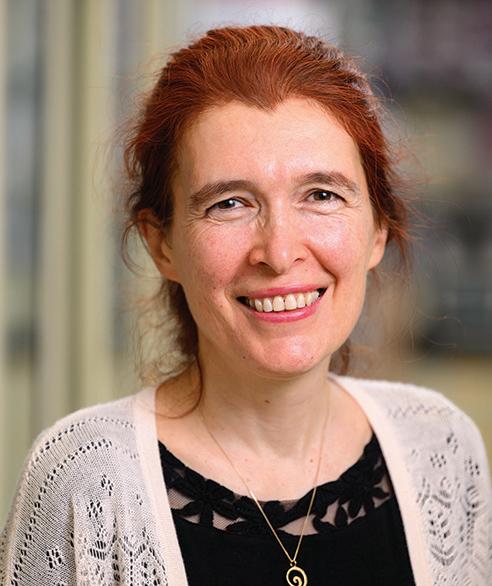
“It is about making people healthier overall,” says Gorbunova, the Doris Johns Cherry Professor of Biology, co-director of the Rochester Aging Research Center, and professor of Geriatrics/Aging at URMC. “It really is about preventing all diseases.”
Gorbunova will lead a transdisciplinary team of faculty, spanning the University and the Medical Center, with expertise in veterinary biology, molecular biology, biochemistry, genetics, mass spectrometry, and bioinformatics.
“There are only eight centers like this in the country, so receiving this grant really puts us on the map in a more prominent way,” says Gorbunova.
Vera Gorbunova, PhD
Prenatal Exposure to Forever Chemicals Shapes a Baby’s Immunity
By Mark Michaud
New research reveals that tiny amounts of PFAS—“forever chemicals”—cross the placenta and breast milk to alter infants’ developing immune systems, potentially leaving lasting imprints on their ability to fight disease.
URMC researchers tracked 200 healthy mother–baby pairs, measuring common PFAS compounds in maternal blood during pregnancy and then profiling infants’ key T-cell populations at birth, six months, and one year. At 12 months, babies whose mothers had higher prenatal PFAS exposure exhibited significantly fewer T follicular helper (Tfh) cells—vital in helping B cells produce strong, long-lasting antibodies—and disproportionately more Th2, Th1, and regulatory T cells (Tregs), each linked to allergies, autoimmunity, or immune suppression when out of balance.
“This is the first study to identify changes in specific immune cells that are in the process of developing at the time of PFAS exposure,” said Kristin Scheible (MD ’04, Res ’07, Flw ’10), associate professor of Pediatrics and Microbiology & Immunology at URMC and lead author of the study, which appears in the journal Environmental Health Perspectives
“Identification of these particular cells and pathways opens up the potential for early monitoring or mitigation strategies for the effects of PFAS exposure, in order to prevent lifelong diseases.”
Mothers in the study had relatively low PFAS blood levels compared to people in other regions, yet the immune shifts were pronounced—even in this small sample.
“The cells impacted by PFAS exposure play important roles in fighting infections and establishing long-term memory to vaccines,” said Darline Castro Meléndez (PhD ’25), a researcher in Scheible’s lab and first author
of the study. “An imbalance at a time when the immune system is learning how and when to respond can lead to a higher risk of recurrent infections with more severe symptoms that could carry on through their lifetime.”
The team plans a longer follow-up to determine if these T-cell imbalances persist into toddlerhood and whether they translate into more infections, allergies, or autoimmune diseases.
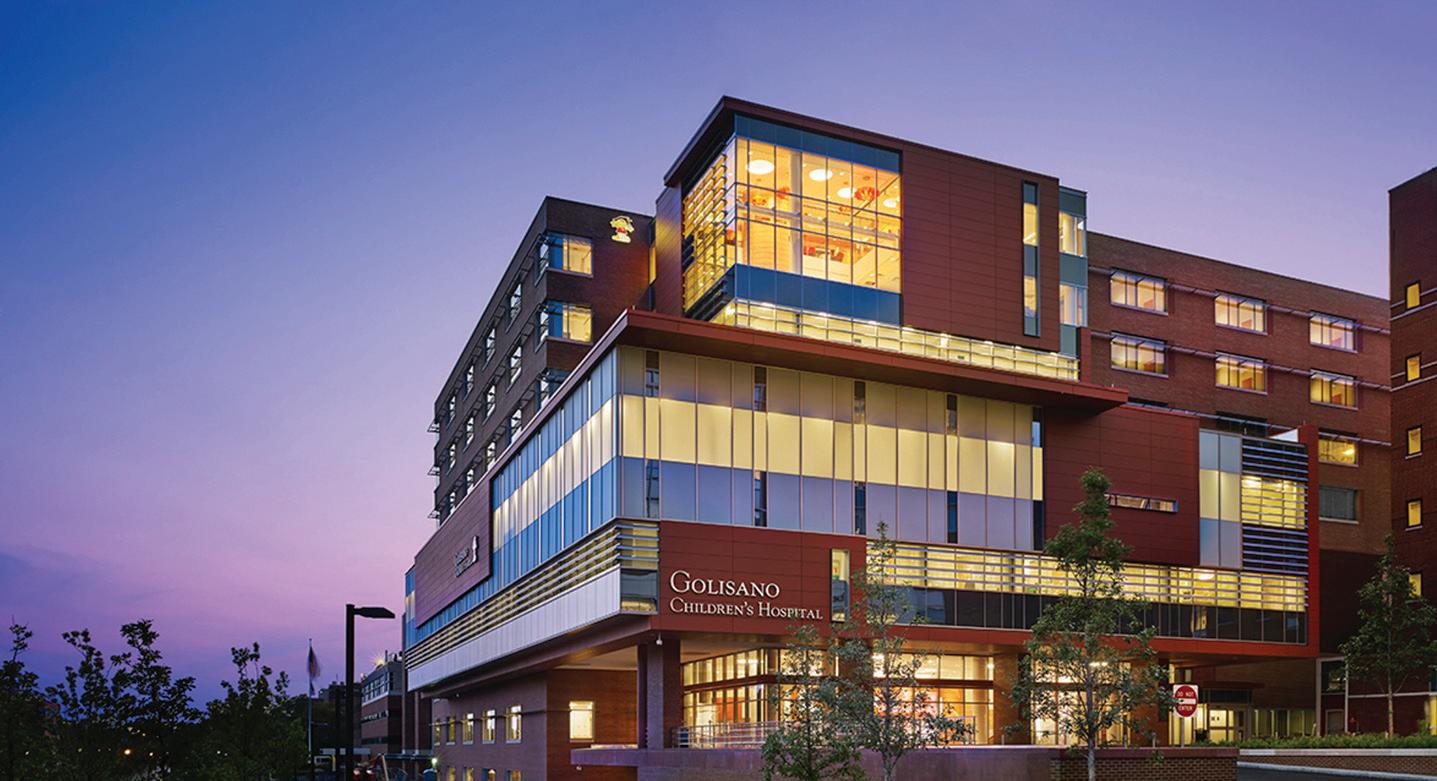
Golisano Children’s Hospital Earns National Recognition in Four Specialties
By Scott Hesel
UR Medicine’s Golisano Children’s Hospital has once again been recognized among the nation’s best in the 2025–2026 U.S. News & World Report Best Children’s Hospitals rankings.
The rankings, released Oct. 7, placed GCH in:
• Neonatology: #45
• Neurology and Neurosurgery: #41
• Pediatric Cancer: #42
• Pediatric and Adolescent Behavioral Health: Top 50
This marks the third consecutive year Neonatology has been ranked, and the second straight year for Pediatric and Adolescent Behavioral Health. Pediatric Cancer was recognized for the second time in three years, while Neurology and Neurosurgery earned a national ranking for the first time since 2017.
“We are honored that Golisano Children’s Hospital continues to be recognized among the best in the nation across multiple specialties,”
said Jill Halterman (MD ’94, Res ’98, MPH ’01), physician-in-chief of Golisano Children’s Hospital. “These rankings reflect the commitment of our outstanding clinicians and staff, who work every day to provide exceptional
care for children and families throughout our region and beyond. I am incredibly proud of our teams for their dedication to advancing pediatric health and helping every child reach their full potential.”
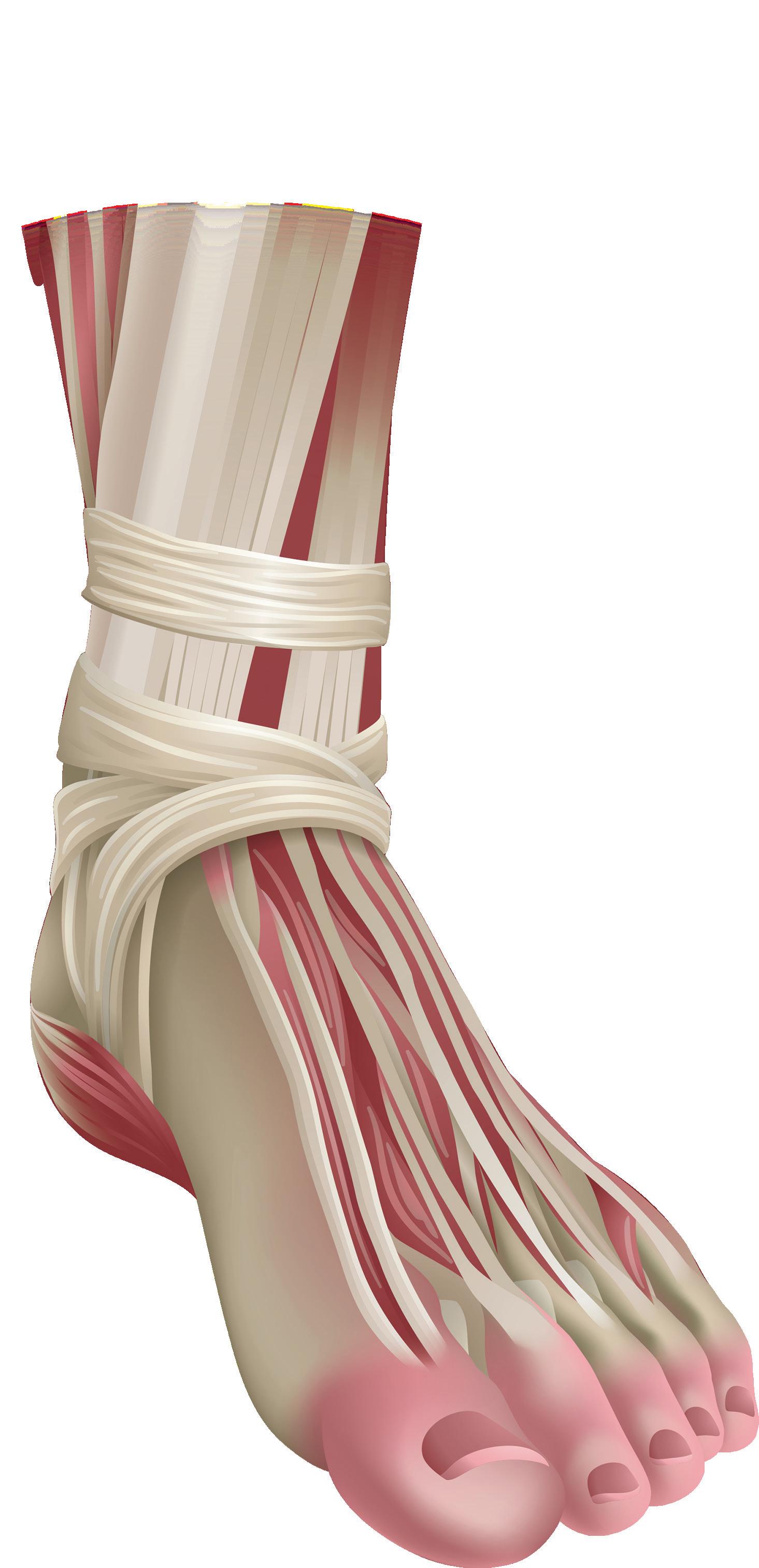
Tracing Poor Tendon Healing and Retraining Cells for Better Recovery
By Barbara Ficarra
In a study reported in Nature Communications, Rochester researchers for the first time traced and manipulated a key player in the healing process—the epitenon cells that form a thin outer layer surrounding the tendon. Their discovery may pave a path to new translational treatments.
Severed tendons are generally repaired surgically but often heal poorly due to the weak cell-regeneration capacity of tendon tissue and the likelihood of excessive scar formation. Currently there is no post-operative intervention to improve tendon healing beyond physical therapy. UR’s Center for Musculoskeletal Research (CMSR) is one of a handful of centers around the world focusing on tendon healing at the cellular level.
The tendon has long been seen as a simplistic body part, but recent research in the CMSR has centered on uncovering the great diversity and complexity of tendon cells. CMSR researchers are revealing how these cells induce or interfere with healing at different points.
“One of the challenges in tendon is being able to target all these different cell populations,” said lead author Anne Nichols, PhD (Flw ’22), assistant professor of Orthopaedics at URMC’s Center for Musculoskeletal Research.
Nichols and her team aimed to show that shutting down certain cellular processes in specific cells during a precise healing timeframe can reduce excess scar formation without compromising tendon stability.
The study focused on the epitenon, a primary orchestrator of early tendon healing. The team found that a portion of the cells followed tenocytes into the crucial bridging tissue that helps tendons repair, but a larger percentage migrated to form a capsule of scar tissue around the injury site. This suggests that epitenon cells are involved in both productive healing and undesired scar tissue.
When researchers killed epitenon-derived cells in mice, using a genetically encoded toxin, they confirmed that suppressing these cells at the right time and place in the healing trajectory significantly improved tendon range.
“The cells we identified as problematic for forming scar tissue in a mouse also exist in the human scar, which suggest they play a similar scar-forming role in humans following tendon injury,” Nichols said.
“In theory, if we were able to target these cells in humans, we could get the same outcome in them as we could from a beneficial treatment in mice.”
Anne Nichols, PhD (Flw ’22)
For a world fueled by collaboration.
The challenges facing our world rarely fit neatly into one discipline. At the University of Rochester, collaboration drives discovery. Our size empowers us to work across boundaries—to unite thinkers, creators, and innovators who see connections where others see limits. Building on more than 175 years of progress, we turn curiosity into discovery, and discovery into solutions.
CANCER FUSION DATA OPTICS AGING MENTAL
ROOTED in REFORM
Rochester was singled out for a bold experiment. It would become a model for a new approach to medicine.
In the early 20th century, a new idea was taking hold in American medicine. For too long, medical schools had functioned as for-profit institutions with minimal academic standards and little oversight.
Teacher and education reformer Abraham Flexner, backed by the Carnegie Foundation, set out to change that. The Flexner Report of 1910 advocated for a new model of academic medical centers that integrated rigorous scientific research with hands-on patient care and comprehensive medical education.
Flexner went looking for a site to serve as an exemplar for this new approach. He came to Rochester and met with University of Rochester President Benjamin Rush Rhees to lay out his vision: to build a new kind of medical school grounded in research, scientific rigor, and clinical integration.
Rhees saw how this aligned with his goal to shape the University into a world-class institution. He recruited support from Rochester’s leading philanthropists—including George Eastman, whose passion for education and public health made him a natural partner. Eastman ultimately contributed $5 million and turned his dental clinic over to the University to support the endeavor. Additional backing came from the General Education Board of the Rockefeller Foundation and the Strong family in Rochester.
Together they set out to make models like Rochester the blueprint for academic medical centers across the country.
A Model Ahead of Its Time
In 1925, the University of Rochester presented its School of Medicine and Dentistry, Strong Memorial Hospital, and the School of Nursing as an integrated triad. All three were designed from the beginning as a fully cohesive academic medical center, where patient care, education, and research were closely interconnected in daily operations—a rare structure for its time.
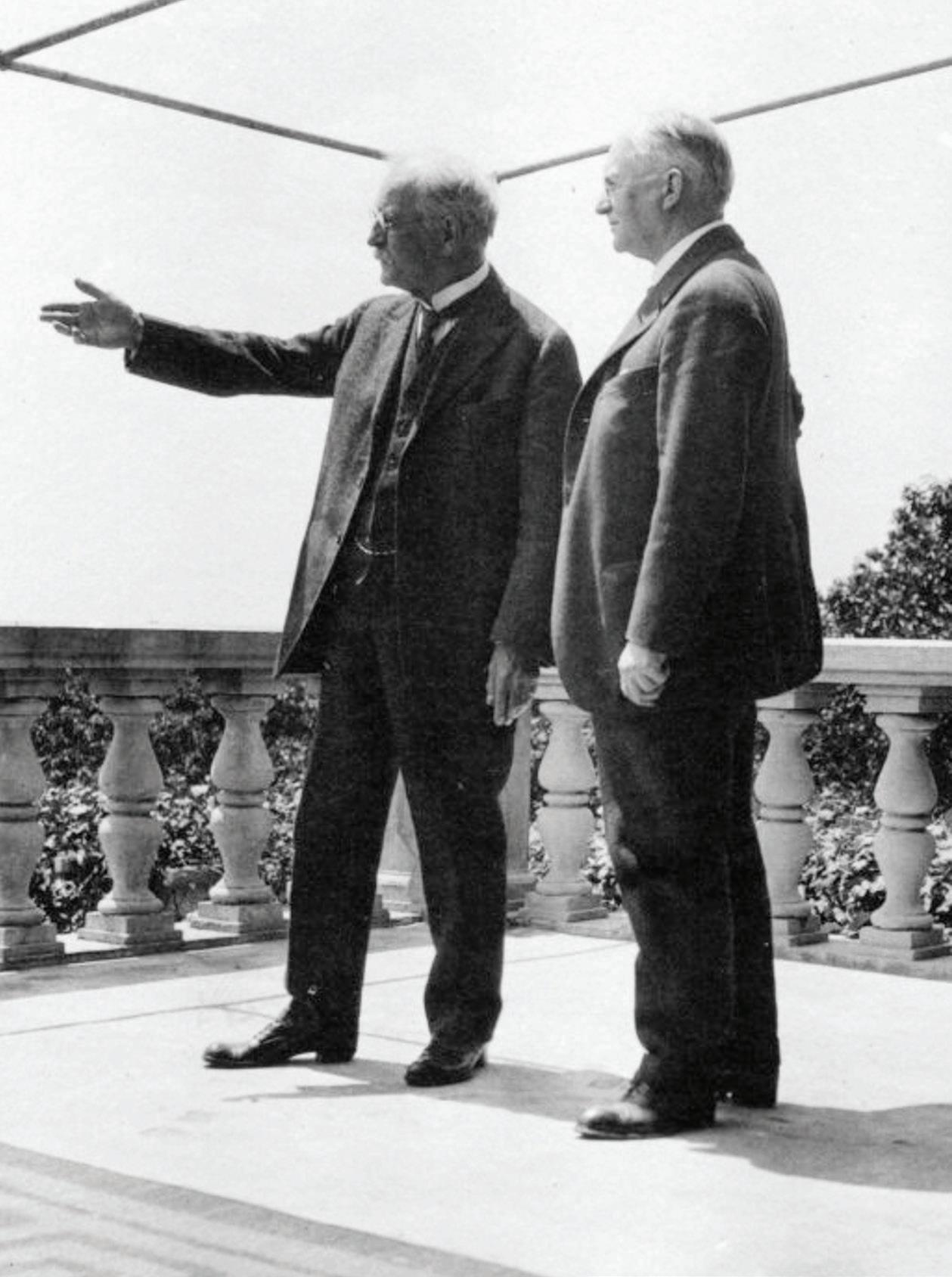
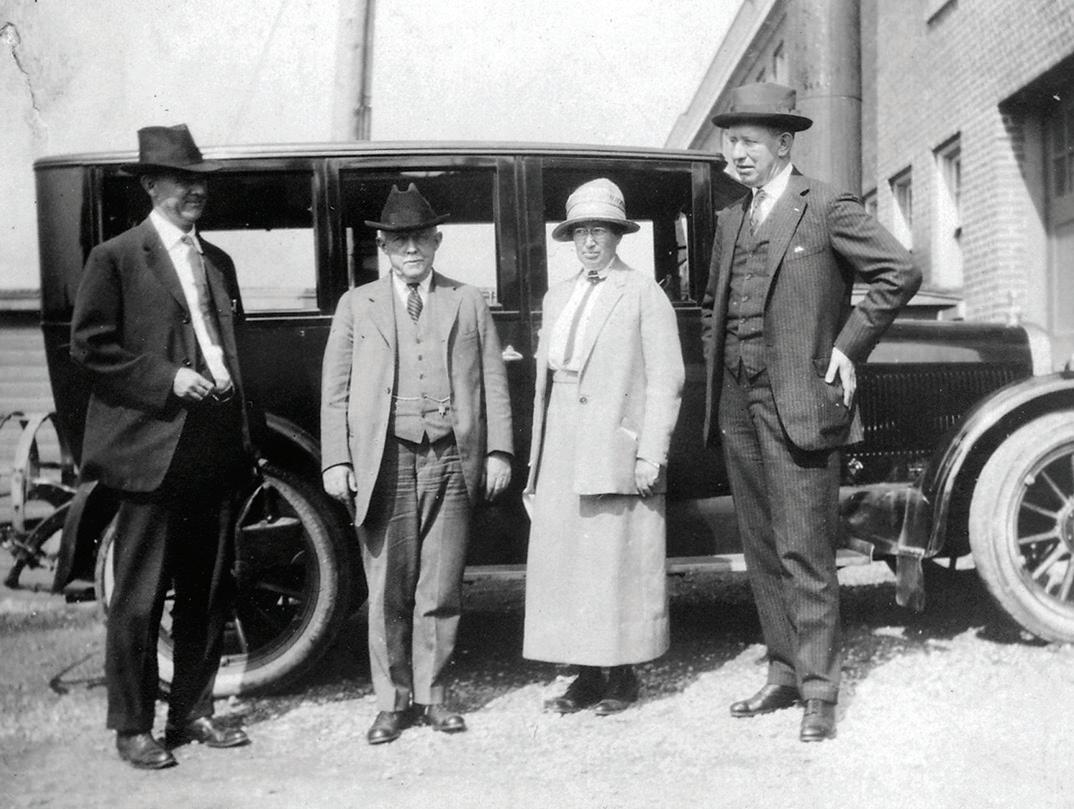
Abraham Flexner and George Eastman envisioning the future of medical education in Rochester.
100 YEARS of HISTORY at the University of Rochester School of Medicine & Dentistry
1920 Abraham Flexner visits Rochester Abraham Flexner, medical education reformer behind the Carnegie Foundation’s Flexner Report, asks University President Rush Rhees if George Eastman would help found a School of Medicine in Rochester based on a new academic medical center model.
1921
Dr. George Whipple appointed Dean Rhees shares the vison for the medical school with George Whipple, who agrees to become its founding dean and would also serve as director of the Medical Center until 1953. His legacy at Rochester is decidedly mixed—characterized by his Nobel Prize-winning research on anemia but also his refusal to admit Black students to the medical school through the 1930s.
Photos: University of Rochester Medical Center Photograph Collection, History of Medicine Section, Edward G. Miner Library.
George Whipple, Rush Rhees, Helen Wood, and W. Smith stand outside the Animal House research laboratory.
As founding dean, physician-scientist and Nobel laureate George Whipple developed a curriculum grounded in laboratory science and clinical training. His faculty included figures like Stanhope Bayne-Jones (later a brigadier general in World War II and technical director of research for the Office of the U.S. Surgeon General) and Harold Hodge (the first president of the national Society of Toxicology). They and others helped establish Rochester as a hub for rigorous academic medicine.
From the outset, students were immersed in both research and bedside care, guided by the belief that understanding disease required a deep knowledge of both biology and human experience. In September 1925, the School admitted its first class of 22 students, selected not only for their academic performance but for their promise as future physicianleaders. Eighteen of those students graduated—including one woman.
The hospital also served as a site for public health education, offering clinics in dentistry, tuberculosis, and pediatrics in the same building as
1922
Dr. Nathaniel W. Faxon appointed Director of Strong Memorial Hospital Faxon would serve as director until 1935.
inpatient care.
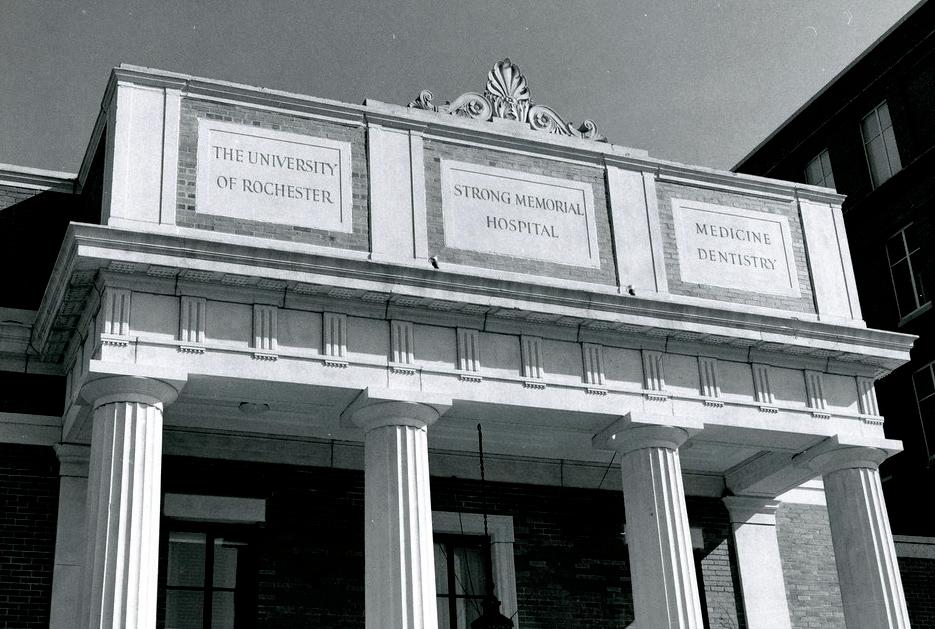
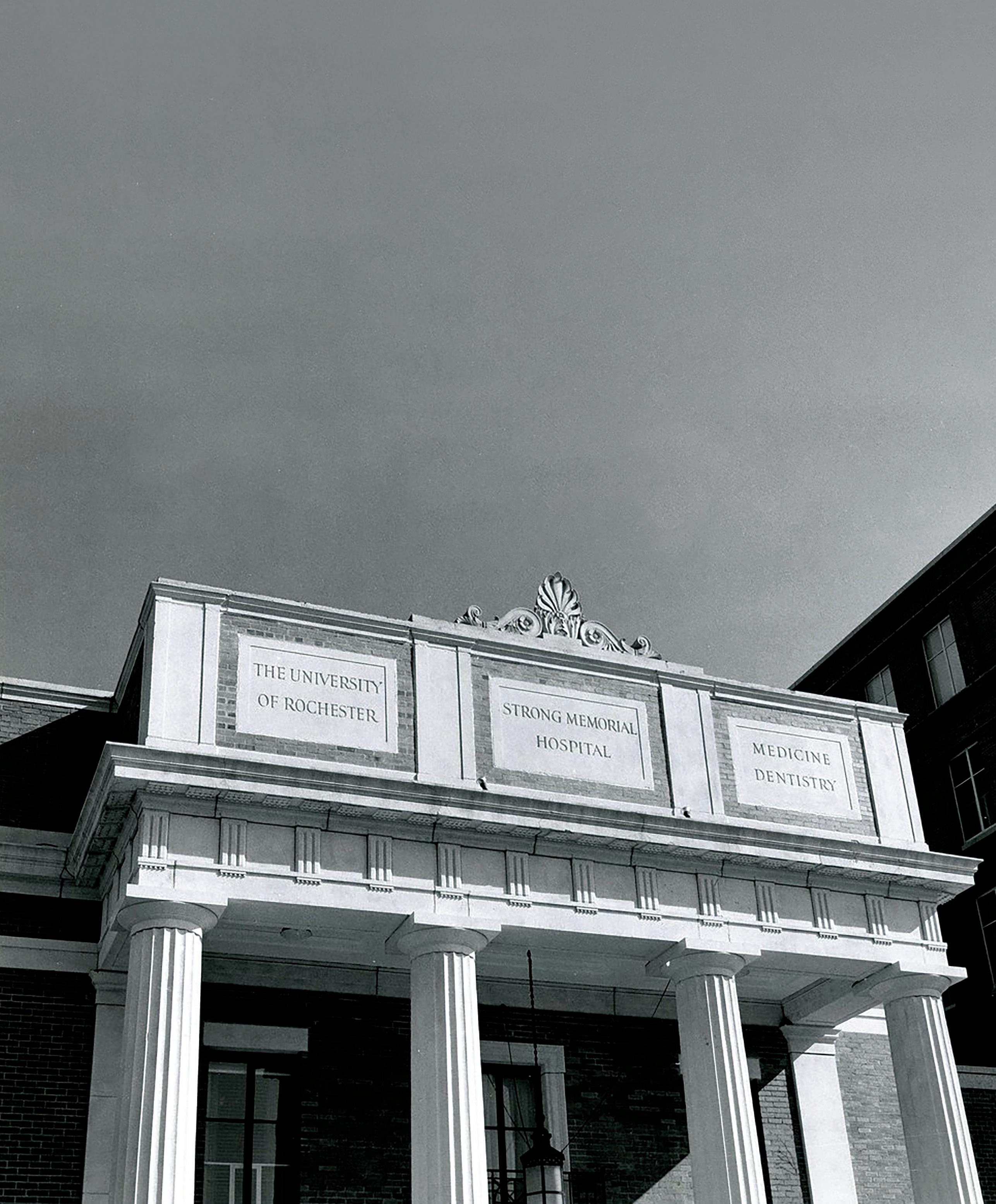
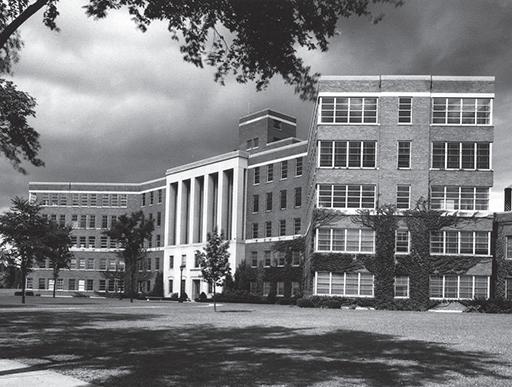
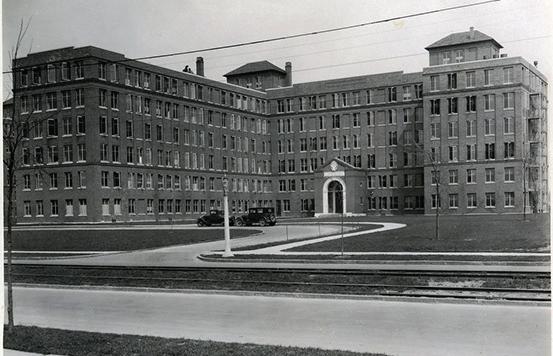
Strong Memorial Hospital opened in January 1926 with 250 beds, staffed in part by medical and nursing students. Its architecture reflected the era’s emphasis on hygiene, light, and efficiency, with facilities including surgical suites, radiology, and a clinical pathology lab.
This early integration of services set a precedent. Rochester’s new medical center was not only a place to learn and practice—it was designed to advance the very systems by which care was delivered and understood.
Innovation Across the Street
At the same time, nursing education was undergoing a transformation. The 1923 Goldmark Report, commissioned by the Rockefeller Foundation, called for higher educational standards, more faculty training, and better integration with universities. Nursing should be taught as a profession, it argued, not just a trade. The University of Rochester seized
1922
Construction of “Animal House”
completed
The first building constructed on the Medical Center campus, the research laboratory gets its name from its many animal occupants; senior staff and faculty share the two-story building with a vivarium and laboratories.
1924
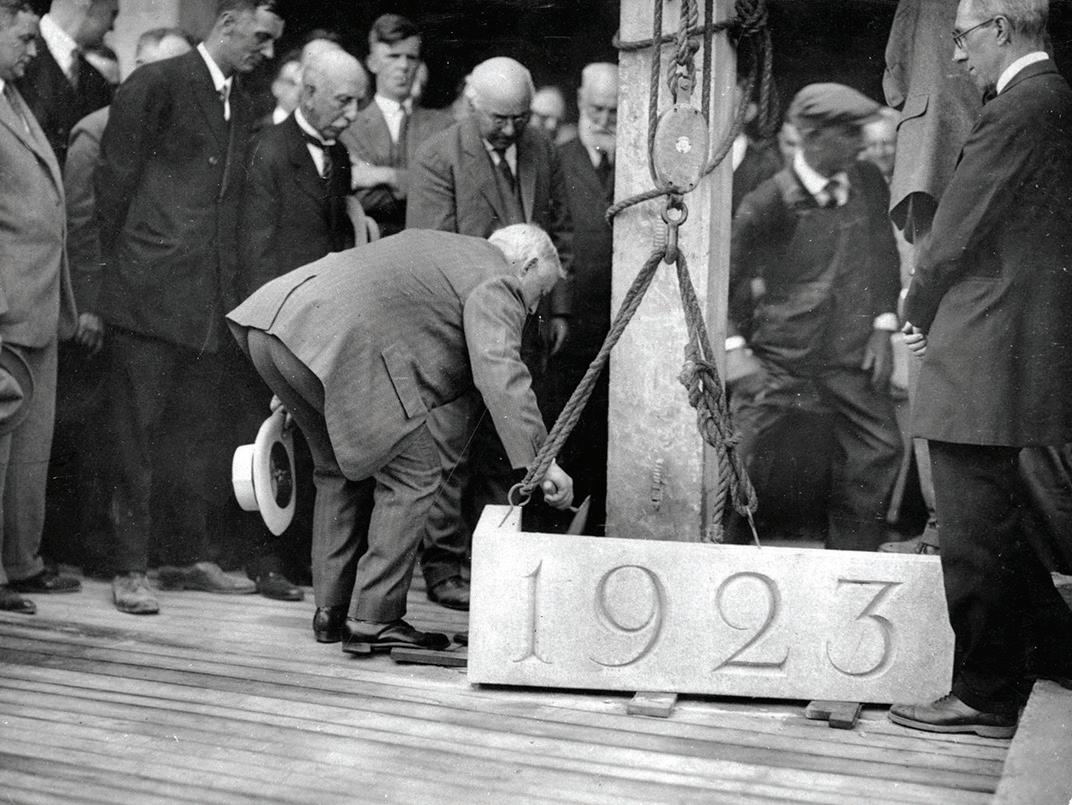
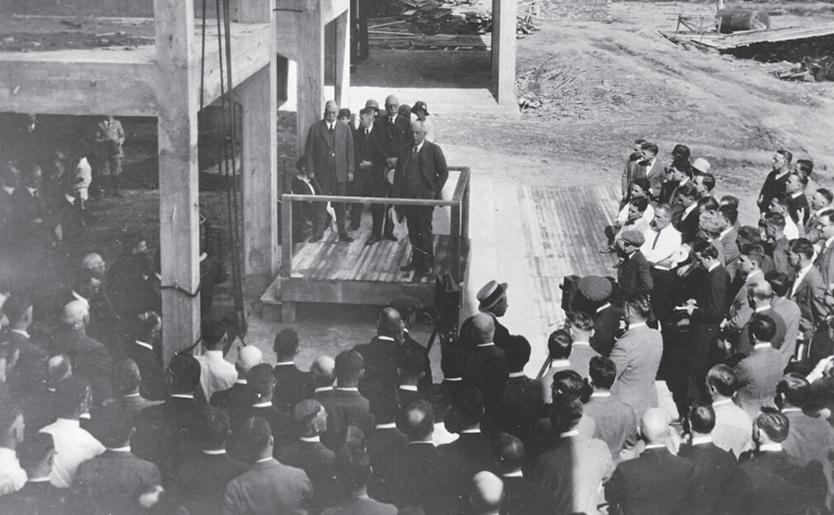
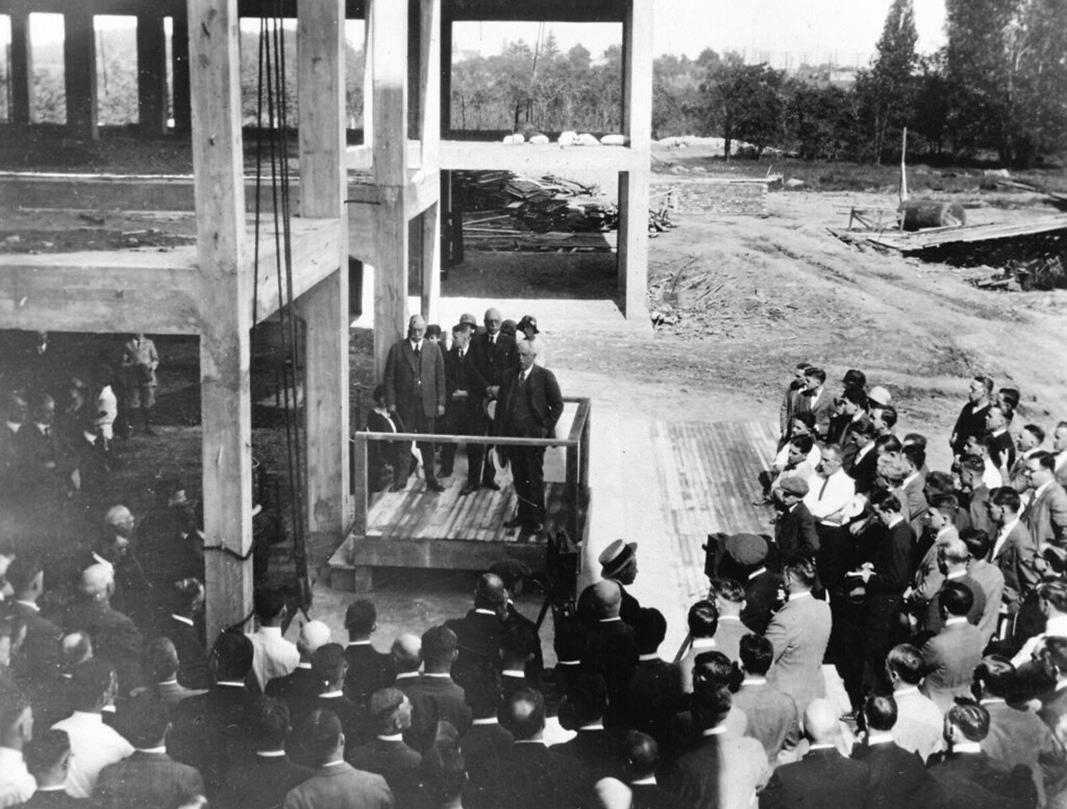
Cornerstone is laid
The School of Medicine & Dentistry and Strong Memorial Hospital cornerstone is laid during Commencement Week (delayed from 1923 by weather). The principal speaker is University alumnus Dr. Edward B. Vedder, Lieutenant Colonel in the U.S. Army Medical Corps.
UR President Rush Rhees lays the Medical Center cornerstone.
this moment to become a national pilot: The School of Nursing’s founding superintendent, Helen Wood, served on the Goldmark committee and came to Rochester to bring its vision to life.
Wood championed a model in which education, clinical service, and research were intrinsically linked. In the fall of 1925, the School of Nursing welcomed its first class of 16 students, with courses in the liberal arts and the sciences, biology, chemistry, public health, and psychology (a subject beginning to gain traction in nursing programs). Students gained clinical experience at Strong Memorial Hospital and participated in community outreach that laid the groundwork for modern population health.
Complicated Past
The academic medical center model was a bold and ambitious start that launched a century of discovery and innovation. Yet, like many institutions of the era, URMC’s early years were marked by exclusion. Despite
1925
School of Medicine opens
The first class consists of 22 students: 20 men and 2 women. After registration, students begin their training with a 20-week anatomy course from Dr. George Corner.
1926
Strong Memorial Hospital opens
The Hospital opens its doors on Jan. 4, but the first patient— Harry Commons—feels the “welcome was too great” on opening day so he leaves. He returns the next day as the first admitted patient.
outstanding academic records, Jewish and Black students were often denied admission or advancement, and women faced systemic barriers across programs. Men were not allowed to enroll in the nursing school until 1960, and married women faced strict restrictions unless their husbands were serving abroad.
Change over the years was driven by determined students, alumni, and community members, whose challenges to the status quo helped open doors and set in motion a culture of ongoing self-reflection and reform—a work in progress, but progress nonetheless.
The original bold idea—that research, education, and patient care are strongest when united—did live up to its promise. It took visionary leaders and a community that believed in the transformative power of academic medicine.
A century later, that vision continues to guide how SMD educates, innovates, and cares for patients. RM
1926
First baby delivered Robert Strong Beavers, the grandson of the hospital’s first Chief Pharmacist, is given his middle name in honor of his birthplace.
1926
Formal dedication of the medical school and hospital
The dedication is held in conjunction with a two-day scientific medical conference at the University.
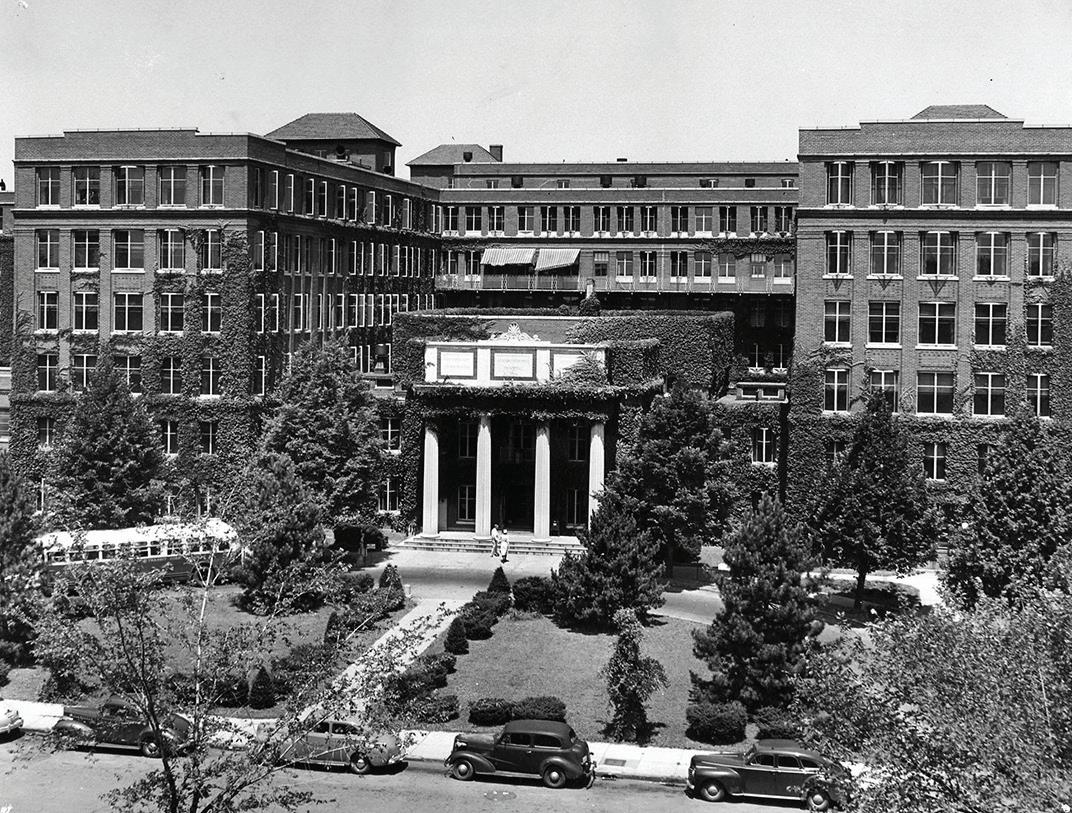
A crowd gathered for the Medical Center cornerstone ceremony. The Strong Memorial Hospital main entrance in 1945.
Profiles From a Century of Service
A child of immigrant families goes on to write “the surgeon’s Bible.”
A WW II veteran makes a big difference in small-town America.
Two women follow in the footsteps of a gender trailblazer.
A brilliant couple overcomes racism to make a world-changing discovery.
(From the Archives) A doctor becomes the first person to eradicate a disease from the planet. (D.A. Henderson)
(From the Archives) A researcher emigrates and changes the face of biotechnology. (Alejandro Zaffaroni)
(From the Archives) A famed photographer finds needed inspiration in Rochester. (Ansel Adams)
The SMD century spans historical touchstones and cultural landmarks. Meet several alumni and others who have lived some of that history— and left their own mark along the way.
1927
Ground is broken for the River Campus
Construction begins on the University’s new campus, separated from the medical center by Elmwood Avenue and Mount Hope Cemetery. The College for Men will move to the River Campus in 1930.
1928
First nursing class graduates
1929
First medical class graduates
1929
Dr. George Corner and Willard Allen isolate progesterone
Anatomist George W. Corner and medical fellow Willard M. Allen, after two years of preparing and analyzing more than 100 extracts in Corner’s lab, identify and isolate the hormone progesterone.
The Mind Behind ‘the Surgeon’s Bible’
Seymour Schwartz rose to the top of his profession, but he never stopped mentoring and learning
While he was one of the most distinguished surgeons in America, Seymour I. Schwartz (Res ’57) edited and co-wrote the textbook that would be used to teach generations of medical students. He also led the top surgical societies that shaped his profession.
Yet in his introduction to the 11th edition of Schwartz’s Principles of Surgery (2019), which is still known as “the Surgeon’s Bible,” Sy Schwartz wrote an apology of sorts. His book was (and remains) the definitive text on surgery. But he’d learned a lot since that first edition, and he wanted to emphasize that being a surgeon requires life-long learning.
The man who wrote the defining educational book in his discipline was the first to admit he was still studying.
Schwartz, who died in 2020, liked to tell students that their job was to find everything that was wrong in his textbook.
Seymour Schwartz (Res ’57) said he stayed in Rochester because of the opportunities it offered.
1930
Dental Fellowship program founded A grant from the Rockefeller Foundation enables a program for graduate training in dental research. Dr. Basil G. Bibby, one of the first fellows, would go on to serve as Director of the Eastman Dental Center from 1947 to 1970.
1934
George Whipple receives a Nobel Prize For his research contributing to the effective treatment of pernicious anemia with liver, Whipple is awarded the Nobel Prize in Physiology or Medicine, shared with George R. Minot and William P. Murphy.
1940
Researchers publish pioneering study on fluorine and fluoride
Basil G. Bibby and M. Van Kesteren publish “The Effect of Fluorine on Mouth Bacteria” in the Journal of Dental Research
1942
Medical accelerated program begins
With the demand for trained medical professionals during WWII, SMD temporarily shortens its program to allow for completion in three years.
According to Kathy Parrinello, president and CEO of Strong Memorial and Highland hospitals, Schwartz used to say, “We do a lot of things today that you are going to learn more about and say, ‘There’s a better way to do this.’”
Schwartz succeeded because he had a deep hunger for uncovering and charting hidden truths.
As a surgeon, he pioneered intravenous treatment for bleeding esophageal veins and shared a patent for an implantable device to control blood pressure. As an accomplished cartographer later in life, he wrote books on how Europeans’ understanding of the Americas shifted as they explored the continents.
1943
But to his students, he was the warm, self-deprecating mentor who challenged everyone around him to be ever better.
All this from someone who almost went into theater instead of medicine.
From the Stage to the Operating Theater
Born and raised in the Bronx, Schwartz was the son of Jewish immigrants. His father, Samuel Schwartz, taught anatomy at Polyclinic Hospital but believed his boy should pursue a career in the theater. Instead, Schwartz took pre-med courses
1943
1943
at the University of Wisconsin (he was accepted to Yale but couldn’t afford the tuition). He went to medical school at Syracuse University and New York University.
Far from Broadway, Schwartz found his home in the operating theater, completing his internship in Rochester and rising through the ranks as he performed thousands of complex surgeries, wrote his textbook, and eventually served as president of the country’s three most important surgical societies: the Society of Clinical Surgery, the American Surgical Association, and the American College of Surgeons.
At URMC, he chaired the Department of Surgery from 1987 to 1998 and retired from surgery at age 72. But he remained influential well into his oldest years by continuing to write, teach, and commit his time to physicians in Rochester and across the globe.
“I’m totally indebted to this institution,” Schwartz said in an article in the Democrat and Chronicle newspaper. “My wife and I stayed in Rochester because we realized what opportunities there are here, the uniqueness of it.”
According to the article, Schwartz’s wife, Ruth, “was a pioneer for female obstetrician/gynecologists in a field that had been dominated by men. She delivered thousands of babies here, and in 1985 Harper’s Bazaar magazine named her one of the top 150 female doctors in the country.”
When Schwartz retired from surgery, Ruth told him he needed to get a hobby.
“Go out and find me one,” he replied.
So she did. Across the street from her office was a bookstore. She picked up a book on cartography for 50 cents and handed him what became his second career of sorts.
URMC Joins the Manhattan Project Pioneering Professor of Radiology Dr. Stafford Warren is recruited to the secret project and later becomes medical director to advise on safety for working with radiation and toxic chemicals. This research would include controversial studies on the effects of radioactive isotopes, where hospital patients were unknowingly injected with plutonium, polonium, and radium.
“The Annex” is constructed Built between Elmwood and Mount Hope Cemetery to house the Manhattan Project work, the building known as The Annex was rushed to completion so research could begin.
Edwin A. Robinson graduates
Admitted in 1940, Dr. Robinson becomes the first Black graduate of SMD. He would serve as president of Highland Hospital medical staff from 1967–68 and chair the Advisory Committee on Minority Recruitment in the 1970s.
1946 Department of Psychiatry
founded
The first new department to be added to the medical center since its inception, the Department of Psychiatry is led by Dr. John Romano, who was appointed Professor and Psychiatrist-inChief in 1945.
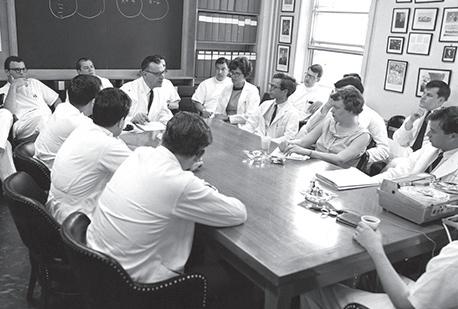
Schwartz leading a meeting at the School of Medicine & Dentistry.
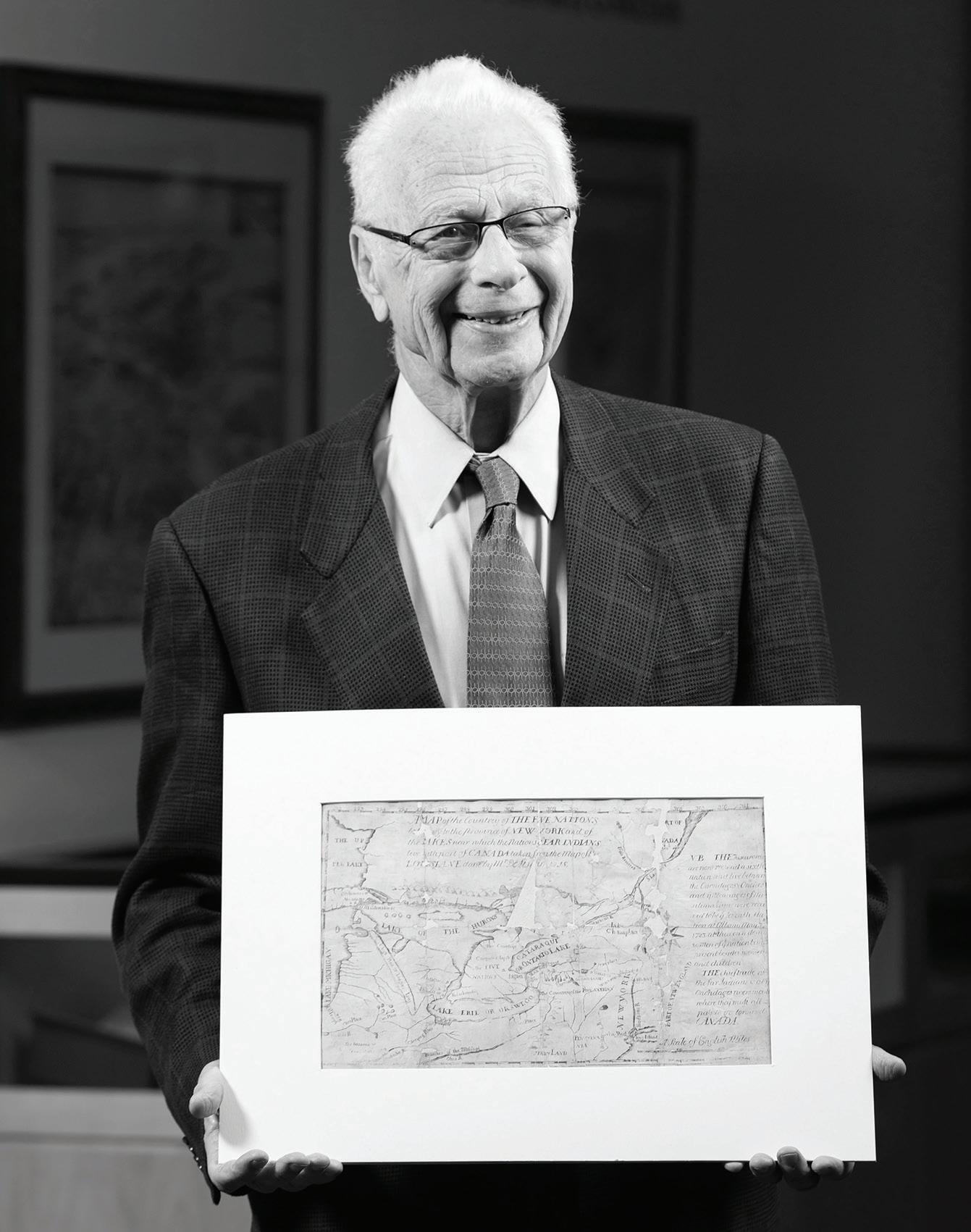
“I don’t know why it struck my fancy,” Schwartz said. “I love old maps.”
His love of old maps led him to write four books on American cartography: The Mapping of America, This Land Is Your Land: The Geographic Evolution of the United States, Mis-Mapping of America, and Putting “America” on the Map.
Schwartz’s renown as a cartographer led him to serve as a board member for the Smithsonian’s National Museum of American History and on the advisory board for the geography and map division of the Library of Congress.
More Than Luck
Schwartz was the kind of guy who could win an accordion in a poker game and then teach himself to play it, which really did happen when he was in the Navy. He had a talent for learning, but he never thought that he was special.
“I think most of that stuff that’s happened to me has been just happenstance,” Schwartz said in a video interview. “I was there at the right time. I can’t tell you how much has been luck.”
But it was Schwartz’s humility and energy that helped make his luck. He wasn’t just respected by students and colleagues—he was also loved.
“Sy is the aspirational mentor that we all want to emulate,” says URMC CEO and SMD Dean David Linehan, who came to Rochester as the Seymour I. Schwartz Professor in Surgery.
Today, Schwartz’s old Medical Center office is preserved much as he left it, and a plaque hangs outside its door, recounting his storied career. He probably wouldn’t have thought he deserved such special consideration— one more thing he was wrong about. RM
1946 Construction of Psychiatric Unit (Wing
R)
Mrs. Helen Woodward Rivas gifted funds to build and maintain a psychiatric clinic. Construction on the clinic, named Wing R, is completed in 1948.
1947 Atomic Energy Commission takes over The Annex
The newly formed University of Rochester Atomic Energy Commission (AEC) takes over the facilities and contracts of The Manahattan Project.
1947
Edith Hartwell Clinic established A branch of Strong Memorial Hospital, the Edith Hartwell Clinic opens to treat and rehabilitate childhood neuromuscular disorders, notably cerebral palsy. It would close in 1958.
1950
25th Anniversary
The SMD Class of 1950 helped celebrate the milestone year.
Schwartz became an expert in cartography.
Man of a Century
A Veteran Makes a Big Difference in Small-Town America
by Mark Liu
1953
Donald G. Anderson appointed Dean Anderson would serve as dean and director of the Medical Center until 1966.
1959
Arthur Kornberg (MD ’41) receives the Nobel Prize in Medicine
The biochemist and 1941 SMD grad, with Severo Ochoa, wins the Nobel Prize in Medicine for isolating the first DNA polymerizing enzyme.
He learned hard work growing up on the family farm in Western New York during the Depression—every morning he had to milk the cows before heading to school.
He learned the rewards of getting involved, joining ROTC, band, choir, theater, orchestra, and track and field as a student.
He learned what it means to serve, enlisting in the Navy in 1943 at the age of 17.
He learned sacrifice: He married his classmate Jeanne Gallaher and then promptly reported to duty. Their honeymoon was the several days spent traveling from midshipman’s school in Indiana to Boston, where he boarded the USS Biscayne and headed to the Pacific Theater of World War II.
And then, Frank Tooze (MD ’53, Res ’64) combined all these lessons into a hard-working career of service as a physician who returned to his roots—small-town America, where he could make a big difference in people’s lives. His life and work would serve as an inspiration for a community and the generation to come.
Tooze turned 100 in 2025 along with the medical school that enabled his career. Recently, a volunteer at the facility where he lives in Colorado told Tooze he wants to become a doctor. Tooze talked up his school.
“Anyone who wants to become a real doctor should go to Rochester,” Tooze said. “You will know how the job should be done.”
Tooze was inspired to pursue medicine partly by his mother, a hospital and private-duty nurse, and partly by his time on the USS Biscayne after he befriended the ship’s doctor.
As a junior officer, Tooze was part of close-combat support, helping landing vehicles reach their destination on the black sands of Iwo Jima.
1963
Rochester Municipal Hospital becomes part of the University of Rochester Built adjoining Strong Memorial Hospital in 1926, the hospital and surrounding land is sold to the University. The structure still remains largely intact as part of the medical center facilities.
1966
James Lowell Orbison appointed Dean Orbison would serve as dean and director of the Medical Center until his retirement in 1979.
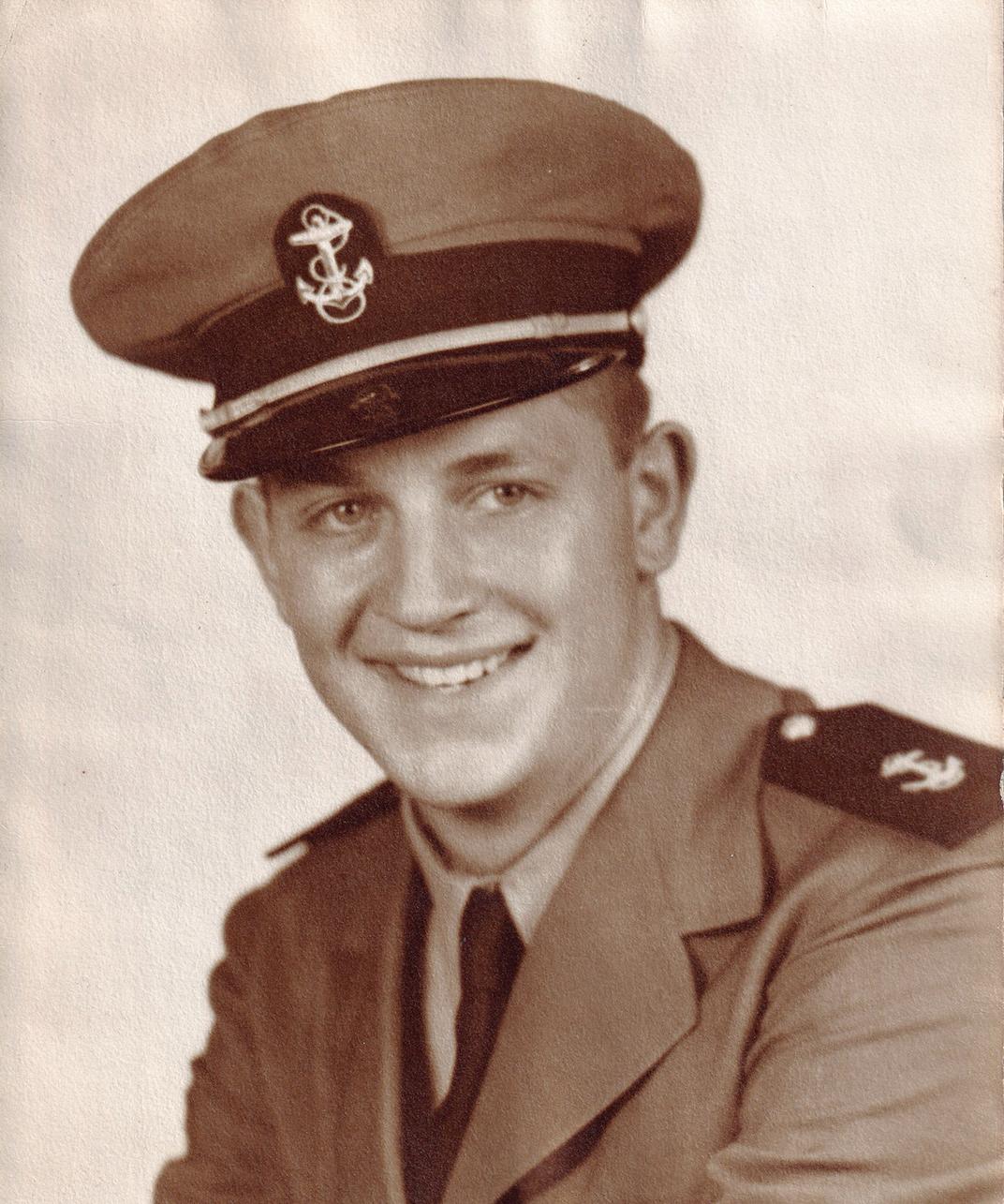
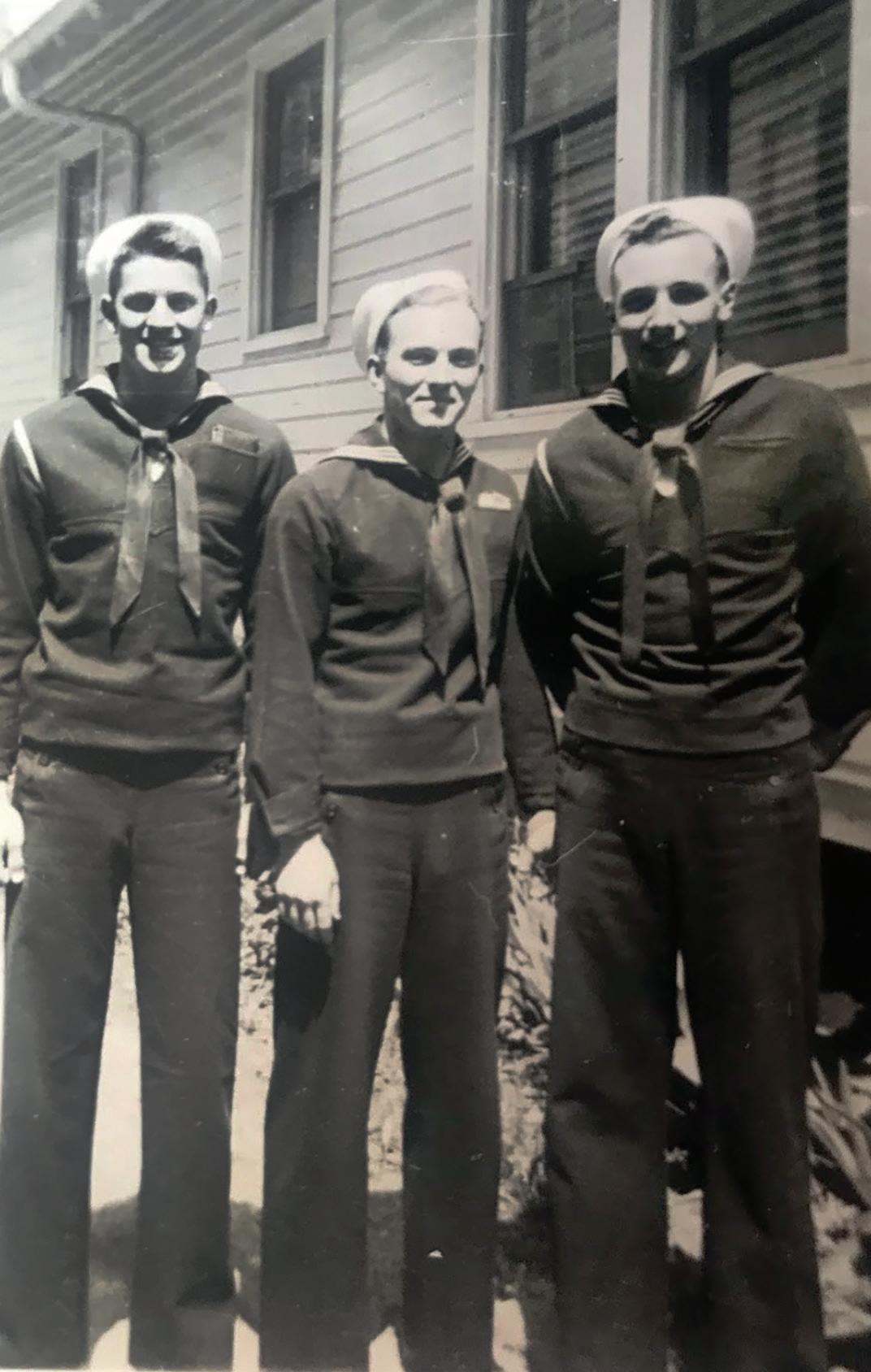
Frank Tooze (MD ’53, Res ’64) circa 1944
He withstood the chaos of war and hostile fire, witnessed the famous scene of soldiers raising the US flag on Mt. Suribachi.
He also met Ernie Pyle, the Pulitzer Prize-winning journalist who had gained international fame for his war reporting from the bunkers of Europe. Pyle was traveling on the Biscayne in 1945, and Tooze had breakfast with him one morning. Pyle then left to join Army soldiers ashore an Island near Okinawa, Japan, and hours later was killed by gunfire.
Tooze said that after his Naval service, he often thought of the Winston Churchill quote, “Nothing in life is so exhilarating as to be shot at without result.”
The GI Bill allowed Tooze to go to medical school. After earning his degree in Rochester and completing an internship in Michigan, Tooze and Jeanne searched for the right place for him to practice and for them to raise their growing family—they would have four children in all. They were driving through the small town of Westfield, N.Y., near the western border of the state, where an old friend insisted they stop so he could show them around. Their stay convinced them to put down roots there.
Tooze set up his office in the front of their house, charging $1 for a visit. Sometimes, family and work life merged. When the Toozes’ third child, Sherry, was five or six, she didn’t like going to bed early. One evening, during her father’s office hours, she got out of bed and entertained the waiting patients by dangling one of her socks on a string from the staircase above.
Tooze’s daughter Cathy Surgenor remembers her father’s schedule: hospital rounds and office hours in the morning, office hours in the afternoon and early evening, then house calls when needed.
“He went way up into those little, poor, rural communities,” she said. If patients couldn’t pay, they bartered with whatever they could.
Tooze did what his community needed, riding with firefighters on emergency calls, responding to emergencies around the region. Once he helped save a boy who had fallen into a ravine near Lake Erie, joining the rescue team to pull him to safety and treat him.
Tooze credits his work as a small-town doctor for his ability to truly listen and relate to people. One patient mentioned a sports event involving his son.
1969
Groundbreaking for new Strong Memorial Hospital
Work begins on a 698-bed structure to replace the original hospital facilities.
1972
Ruby Belton graduates
Dr. Ruby Belton becomes the first Black woman to graduate from SMD.
1974
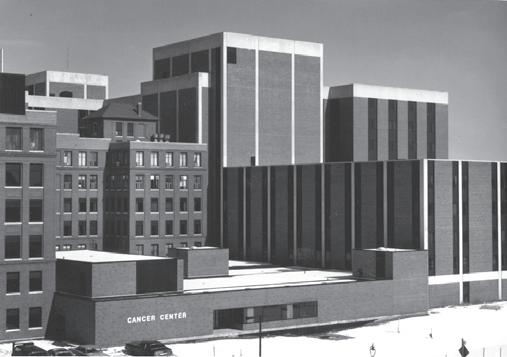
Cancer Center established
With the establishment of the University of Rochester Cancer Center, work begins on a new building to house its research and treatment facilities.
1975
New Strong Memorial Hospital opens
With over 900,000 square feet of usable space, the new hospital adds five towers of patient care units, a new lobby, new cafeteria, and more.
Ensign Tooze (left) circa 1944
“My dad put it in his notes,” Surgenor said. “Somebody asked him later, ‘Why is this in your medical notes?’ And he said, ‘Well, if he thought it was important enough to tell me, then it’s important enough for me to take note of it.”
Eventually, she said, her father got to know “everyone in Westfield.” He also wanted to do even more. He had four children and a busy practice, but he wanted to become a surgeon, so he began commuting to Erie, PA, to begin training.
He saw a presentation on “the Hiroshima maidens,” Japanese citizens who had been disfigured by the atomic bomb. Years later they traveled to the United States for plastic surgery to heal them. Their stories helped
1976
Rochester Plan established Designed to prepare students for careers in health, the Rochester Plan included an early-selection program for the MD degree.
1977
Formalizing the Biopsychosocial Model
George Engel, with psychiatrist John Romano, publishes a paper on the Biopsychosocial Model. It calls for an understanding of health and illness in the context of the patient’s life, transforming medical education globally toward compassionate care.
inspire Tooze to become a plastic surgeon. The family packed up and made their way back to Rochester and SMD for his residency.
“We rented the shabbiest house on the block,” Surgenor recalls.
After residency in 1964, Tooze moved the family to Erie, 30 miles from Westfield. He was the first board-certified plastic surgeon in the area and would go on to serve three hospitals. He founded and served as chief of the Plastic Surgery department at Hamot Hospital and as chief at St. Vincent’s Hospital in Erie. He became president of several regional plastic surgery societies and a member of the American Society of Plastic Surgeons, serving as chair of its Ethics Committee.
Yet Tooze remained a physician known for how he cared for people. One patient, a teenager with epilepsy, had a seizure and was scalded in the shower. She was severely burned, but Tooze treated her painstakingly. She recovered and, later, invited him to her wedding, where he was able to dance with the bride.
His first cleft palate/lip surgery was on a baby girl who had a double cleft lip and cleft palate. He was happy with the results. Many years later, grown up now, she returned to his office because her own baby had the exact same issues. He operated on her baby, with equally excellent results.
Darrin Hubert, MD, recalls his mother working as a nurse for Tooze. The families became close, not the least from several visits young Hubert had to pay to the doctor’s office as a patient. At Hubert’s high school graduation party, Tooze said to him, “I still think that medicine is the greatest profession.”
Hubert later said, “That was the moment that I decided to go to medical school.” And he couldn’t imagine studying anything but plastic surgery. In a tribute to Tooze, Hubert told him, “The impact you have had on so many peoples’ lives extends further than you will ever know.”
And Tooze’s son, Steven, is carrying on the family legacy. An orthopaedic surgeon in Delaware, Steven has tried to mold his practice according to his father’s guiding principles.
The most important? “Treat your patients as if they are members of your own family.” RM
Frank and Jeanne Tooze
1979
Frank Young appointed Dean He would serve as dean until 1985.
1985
Robert Joynt appointed Dean He would serve as dean until 1989.
1990
Marshall Lichtman appointed Dean He would serve as dean until 1995.
All in the Family
Three generations of female psychiatrists show the power of role models and support
By Bethany Bushen
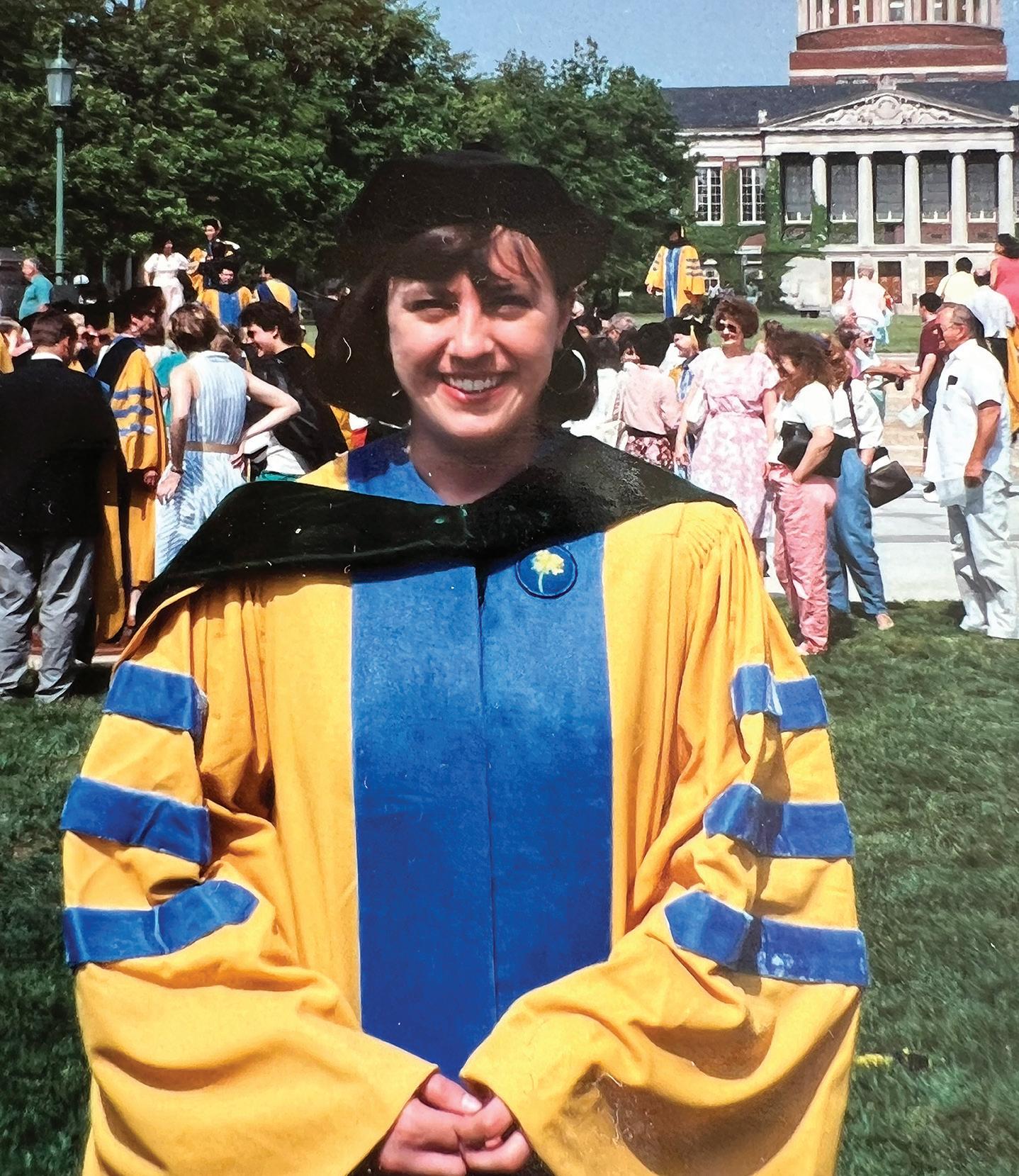
In May 2024, Anastasia “Tasia” Gibson stood in her blue graduation robe as she prepared to receive her medical school diploma from SMD. When her name was called, she crossed the stage to a familiar face waiting for her.
Her grandmother, Joyce Kales, also in blue, smiled as she reached up to lift the hood over her granddaughter before wrapping her in a hug.
Tasia (MD ’24) is on track to be the third-generation female psychiatrist in her family. Her mother, Helen Kales (MD ’92), chair of Psychiatry at UC Davis Health, followed in the footsteps of her mother, Joyce, who entered the field at a time when pursuing academics—or any full-time career for that matter—was uncommon for women with young families.
In the ceremonial hooding that day in Rochester, mothers and fathers took part but there were very few grandparents doing so. And definitely no grandmothers, Tasia recalls.
“It was a full-circle moment,” she said. “It felt like such an accomplishment and amalgamation of so many years of hard work from my whole family. Having my grandmother be the one to do it felt really incredible and special.”
Their special family story of accomplishment and perseverance began with trailblazers who didn’t set out to blaze trails.
Lives Intertwined
Joyce (then Danielski) came from Polish immigrants. Growing up in Detroit, where her father was a factory worker after World War II, she and her siblings saw higher education as a way forward. Joyce admired her older brother, who came home from medical school with fascinating stories.
1990
Rose, Reichman, and Bonnez start vital work on HPV
Virologists Robert Rose, PhD; Richard Reichman, MD; and William Bonnez, MD, would create virus-like particles that mimicked HPV 16, which causes most cancers related to HPV. Their breakthrough is a crucial step toward developing HPV vaccines like Gardasil, first approved by the FDA in 2006.
1996
Lowell Goldsmith appointed Dean He would serve as dean until 2000.
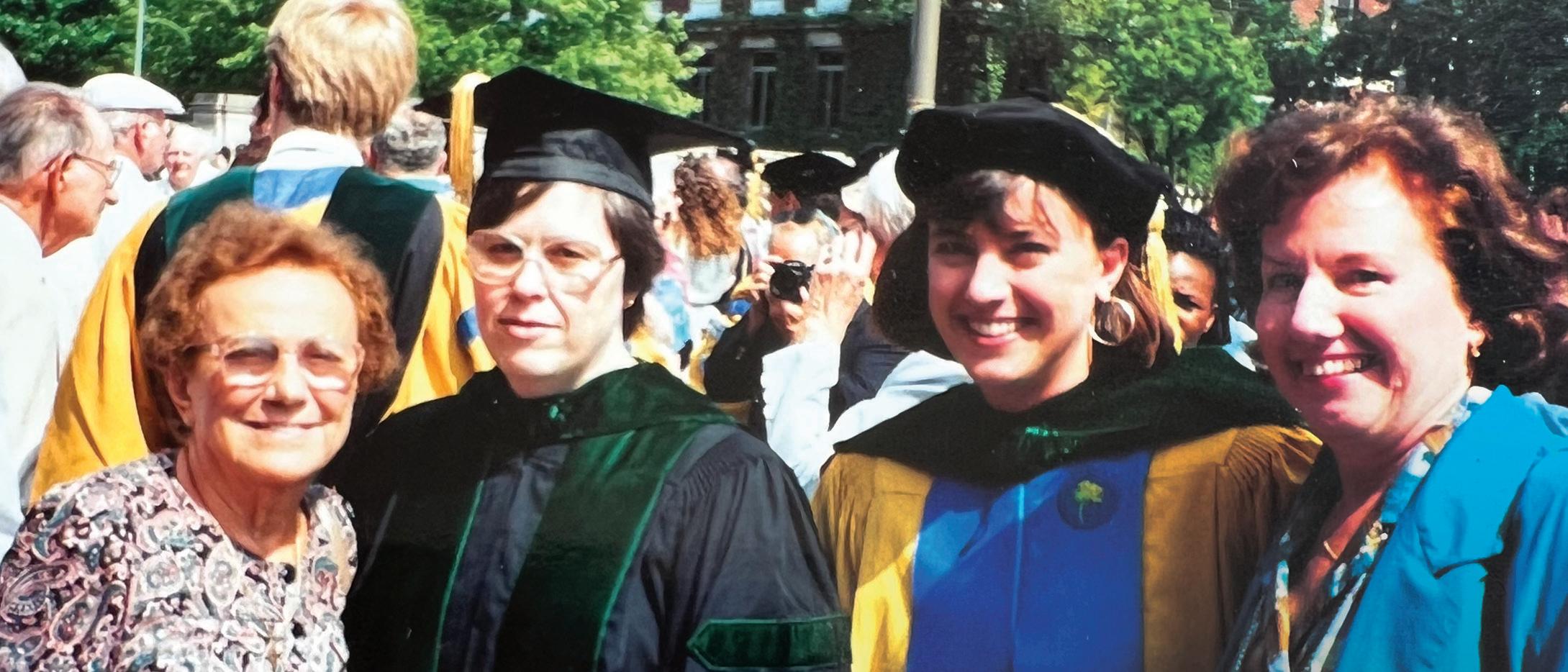
Joyce, Helen, and Tasia at the SMD graduation ceremony in 2024. In a meaningful and full-circle moment for the family,
was hooded by her grandmother.
1997
Highland Hospital affiliates with Strong Memorial Hospital
It’s the first step toward the creation of an integrated healthcare delivery system. Eventually the system would grow to encompass eight hospitals.
1999
Kornberg Medical Research Building opens
The 240,000-square-foot space houses the Aab Institute of Biomedical Sciences and education rooms. An extension (MRBX Del Monte Research Institute) would open three years later.
Tasia
In the early 1950s, Joyce attended Wayne State University in Detroit, unsure what to study but never thinking medicine was an option. One day, in biology class, she was partnered with a young man for a frog dissection. He brazenly insisted they finish the lab report at her house. Little did she know that first encounter with Anthony “Tony” Kales, the bright and magnetic son of Greek immigrants, would lead to intertwined lives and careers.
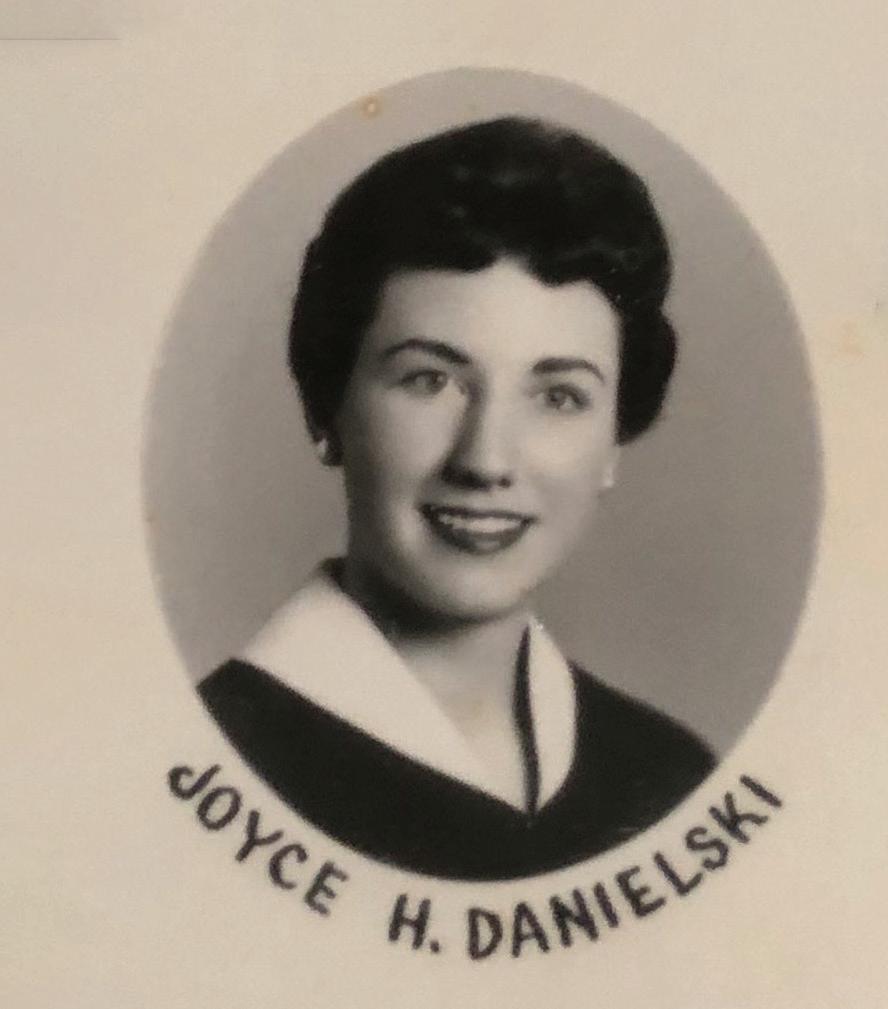
Joyce’s medical school yearbook photo (1960) from Wayne State University College of Medicine. She was one of only four women in a class of 63 students.
1999
Double Helix curriculum introduced
Named after the structure of DNA, the curriculum intertwines basic science and clinical medicine throughout all four years of medical school, allowing students to care for patients as they learn the scientific fundamentals of treatment and prevention.
The two began dating. When Tony went off to medical school, he said she should do the same. “You really belong here,” he told her. Those simple words landed at the right time.
Joyce graduated from medical school at Wayne State in 1960—one of only four women in her class. She and Tony married and moved to Los Angeles, where he began his residency in Psychiatry at UCLA.
Reflecting on then versus now, she notes that the cost of med school is no longer $150 per semester and there’s greater gender diversity. But gender discrimination in medicine persists, and working mothers still face many of the same challenges.
“I can't say that the barriers have really come down for women,” said Joyce, looking back on the scarcity of working mothers in her era. “Because there were so few of us, we were kind of like the unicorns. We were unique.”
Tony and Joyce’s partnership was both personal and professional. Joined by their interest in psychiatry, they worked together to become pioneers in the new field of sleep research.
She and Tony navigated their careers while bringing up three children: Stefanos, Eleni (Helen), and James (Dimitris). Helen was born midway through Joyce’s residency at VA Brentwood, which took her five years to finish instead of four.
One way they modeled work-life balance was involving the whole family. Sleep study was the unofficial “family business” (a concept close to Tony’s heart as the son of entrepreneurs) and the whole family often traveled to scientific
2000
Edward M. Hundert appointed Dean He would serve as dean until 2002.
2001
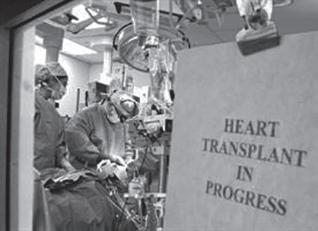
First heart transplant
Performed by H. Todd Massey, MD, the transplant marks the start of the first local heart-transplant program.
conferences abroad. The parents reasoned that visiting different countries would help their children learn more than what could be taught in a classroom.
The Family Business
Tony got involved in sleep research psychiatry at UCLA, which according to Joyce was “wide open frontier” in the traditionally psychoanalysiscentric field. They moved to Pennsylvania in 1971 when Tony was named Psychiatry chair at Pennsylvania State University. But because of nepotism rules, Joyce couldn’t serve on the same department’s faculty.
Instead, she worked for the Department of Family Medicine until the rules changed. It was a roundabout way to come back to her chosen field, but it bore a silver lining of introducing her to community psychiatry.
She worked on a team of psychiatrists that traveled across rural Pennsylvania, presenting to school counselors and staff on topics like substance abuse, teen depression, anxiety, suicide, and eating disorders. At a time before adolescent mental health and school counselors were the norm, it was innovative.
“That was not being done in those days,” Helen said about her mother’s work. “It was unusual that they were getting out of the ivory tower and taking the show on the road.”
At Penn State, Joyce eventually was able to conduct extensive sleep research. Together, she and Tony founded the Penn State Sleep Research and Treatment Center and co-authored the book Evaluation and Treatment of
2002
David Guzick appointed Dean He would serve as dean until 2009.
2003
C. McCollister Evarts appointed URMC CEO He would serve as CEO until 2006.
Insomnia (1984), which is still regarded by many as “the book” on insomnia.
Joyce said the psychological aspects of medicine always drew her in first, whether it was in gynecology, surgery, or ENT.
As it turned out, the same natural curiosity took root in her daughter. Helen was a Spanish and biochemistry major at Bucknell University, where the sciences were on one side of campus and arts on the other.
“It was literally like the right brain and left brain moving back and forth, and I really liked that,” Helen said. “The idea of going to medical school appealed to me, but I specifically chose Rochester because [George Engel’s] Biopsychosocial Model had been created there. I believed, and still do believe, we should look at people that way.”
Ironically, Tony and Joyce also had learned from Engel. He was a visiting professor in their department at Penn State, teaching on treating the “whole person,” including the environmental factors that influence their behavior.
Despite the “family business,” Helen was encouraged to explore whatever subjects interested her. When she showed interest in Rochester for training, they thought about the link to Engel. “He was from Rochester, so I knew from the get-go that that would be a really good place,” Joyce said.
Ultimately, she chose medical school at Rochester, graduating in 1992. Much like her mother, Helen was naturally curious about the reasons behind people’s actions. On clinical rotations, she specifically wondered why
2006
Bradford Berk appointed URMC CEO He would serve as CEO until 2015.
physicians did home visits for OB patients who were reluctant to come in for care.
“That led me to think about personal and systemic barriers,” Helen said.
While at Rochester, she looked up to faculty mentors including Anton Porsteinsson, MD, and Mary Lou Myers, MD, who modeled how a holistic approach translated into clinical care.
Helen did her psychiatry residency and geriatric psychiatry fellowship at the University of Michigan, where she became a faculty
2006 Clinical and Translational Science Award
The NIH makes the Medical Center one of 12 institutions to get a coveted CTSA, becoming part of a national consortium to shape the emerging field of translational science. The $40M grant, spread over 5 years, is the largest ever from the NIH to URMC.
2007 Center for RNA Biology formed
Today the Center has 23 members and over $25 million in annual funding and is on the cusp of important cures for numerous diseases.
member and excelled in research and teaching— specializing in geriatrics, specifically aging-related mental health and dementia treatment.
When Helen had a daughter of her own, grandparents “Yiayia” (Joyce) and “Pappou” (Tony) supported her the way they knew best. They were a constant presence in their lives, handling morning and afternoon rides for their grandchildren’s daycare. Their support continued through Tasia’s youth, into her college years and beyond.
2009
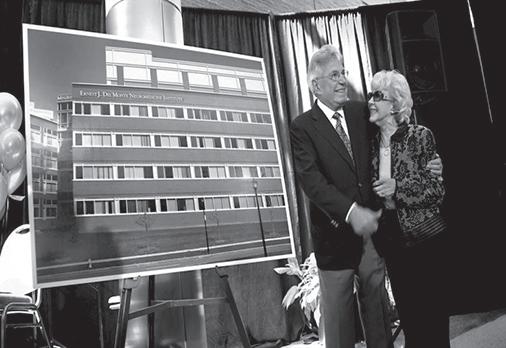
Del Monte Institute for Neuroscience established
A donation from Ernest J. Del Monte and his wife, Thelma, establishes an institute for collaboration between several departments, research centers, and clinical care programs across the Medical Center and River Campus.
From left, the Kales family: Tony, Helen, Stefanos, Joyce, and James.
2009
Eastman Institute for Oral Health established
EIOH brings together Eastman Dental Center, SMD’s Department of Dentistry, and the Center for Oral Biology.
2010
Mark Taubman appointed Dean He would serve as dean until 2024.
2010
Helen returned to the West Coast in 2019 to become chair of Psychiatry at UC Davis. The American College of Psychiatrists awarded her the Geriatric Research Award in 2021 for her lifetime contributions to the field of mental health and aging.
In the ensuing years, their family went through many highs and a few lows. Tasia met her husband-to-be, who was welcomed with open arms by everyone including Yiayia and Pappou, who treated him like a grandson. But Tony’s health started to decline around the time that Tasia decided to pursue psychiatry as a specialty. He was incredibly moved by her decision. “You’ll never regret this,” he told her. “I knew this was right for you.” Tony died in 2023.
Today, Helen reflects on the example set by her parents, who had successful careers but still managed to make family their first priority.
“In the ’70s, she was the only mom in the neighborhood who worked outside the home,” Helen said. “Yet my mom was really available and present, and that had a big influence on me. I never thought that I couldn’t be a doctor and a mother.”
‘No One Way’ to Succeed
While it was less common in her day, Joyce also remembers seeing working mothers who made an impression. She remembers working at a hospital as a pharmacy student, seeing a female physician going to deliver a baby while “hugely pregnant” herself. Later, she saw the same woman in the cafeteria with five children of her own.
The Center for Health + Technology established CHeT is created to accelerate clinical research and advance the development of therapeutics. As of 2025, it has supported clinical studies that have led to 12 FDA approvals.
2011
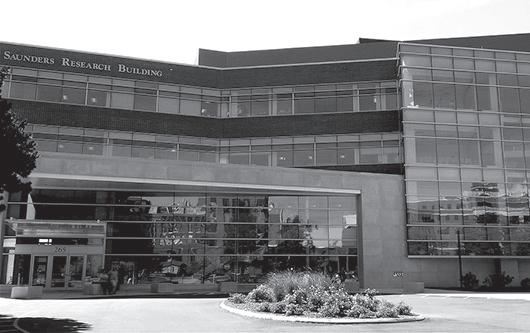
Saunders Research Building opens
The 200,000-square-foot space becomes home to the Clinical and Translational Science Institute and several research programs and departments, accelerating the application of medical research.
Helen Kales at her SMD graduation in 1992.
“I said to myself, ‘Wow. I guess you can be a mother and a physician,’” said Joyce. “Having role models is very important.”
Her daughter, in turn, was profoundly influenced by what her mother went through in her career.
“I watched her resilience,” Helen said, “and that’s something I think we all need in medicine because it’s always changing and it’s complicated and there are a lot of barriers. But you know, the gratification, too, is pretty amazing.”
Today, both grandmother and mother proudly see that legacy continuing in Tasia, who
2015
Mark Taubman named URMC CEO
He also retains his role as dean of the School of Medicine & Dentistry.
2015
is a PGY-2 psychiatry resident at the University at Buffalo. Like her mom, she grew up surrounded by psychiatrists (a point of humor in their family) and for her it was a foregone conclusion that she would go into medicine. Seeing both her mother and grandmother do it normalized what had once seemed out of reach for Joyce as a young woman. It was even more special when Tasia chose her mother’s alma mater for medical school, and psychiatry as her focus.
Their family legacy is built on a strong foundation of love and mutual support. Joyce, now 90, lives in Florida but speaks daily with
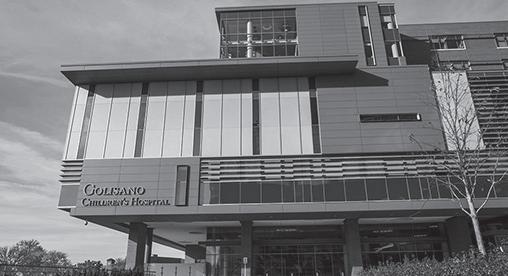
Golisano Children’s Hospital building opens
The new tower adds more than 245,000 square feet of space and 148 beds, made possible through a donation by local philanthropist Tom Golisano, whose donation in 2002 gave the hospital its name.
2016
Helen and is a regular winner in the family Wordle competition. Tasia likewise speaks daily with her mom. Reflecting on their journeys, they share hope for the next generation despite the challenges—particularly for young women like Tasia. For them, Joyce shares this advice:
“People will say, ‘Well, how do you make it work?’ There’s no one method,” she said. “You’re balancing things all the time. Sometimes a kid gets sick or you get sick and things kind of fall apart momentarily. But you pick yourself up and you figure out a way. And there’s no one way. But you’ll figure it out.” RM
URMC selected for national initiative to improve residency training
The Medical Center becomes one of only eight physician training programs in the US that will lead Pursuing Excellence in Clinical Learning Environments—a fouryear, nationwide effort to improve residency training for doctors.
2018
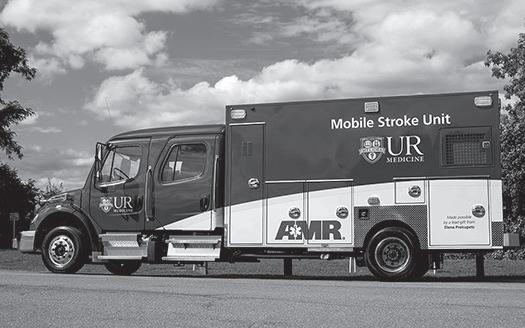
Upstate New York’s first mobile stroke unit
Described as an ‘emergency room on wheels,’ the unit contains highly specialized staff, equipment, and medications used to diagnose and treat strokes more quickly.
(From left) Helen’s YiaYia (grandmother) Demetra; mentor Mary Lou Myers, MD; Helen; and Joyce at Helen’s SMD graduation in 1992.
The Nobel Couple
Their journey began at the University of Rochester. Their discoveries in DNA replication changed how the world understands life itself
By Nina Elias
Sylvy Kornberg ’38, MS ’40 (University photo, University Archives)
2019
University of Rochester Aging Institute founded Designed to promote innovation between University campuses and the Rochester community, the Institute has supported research, clinical programs, and education initiatives.
2020
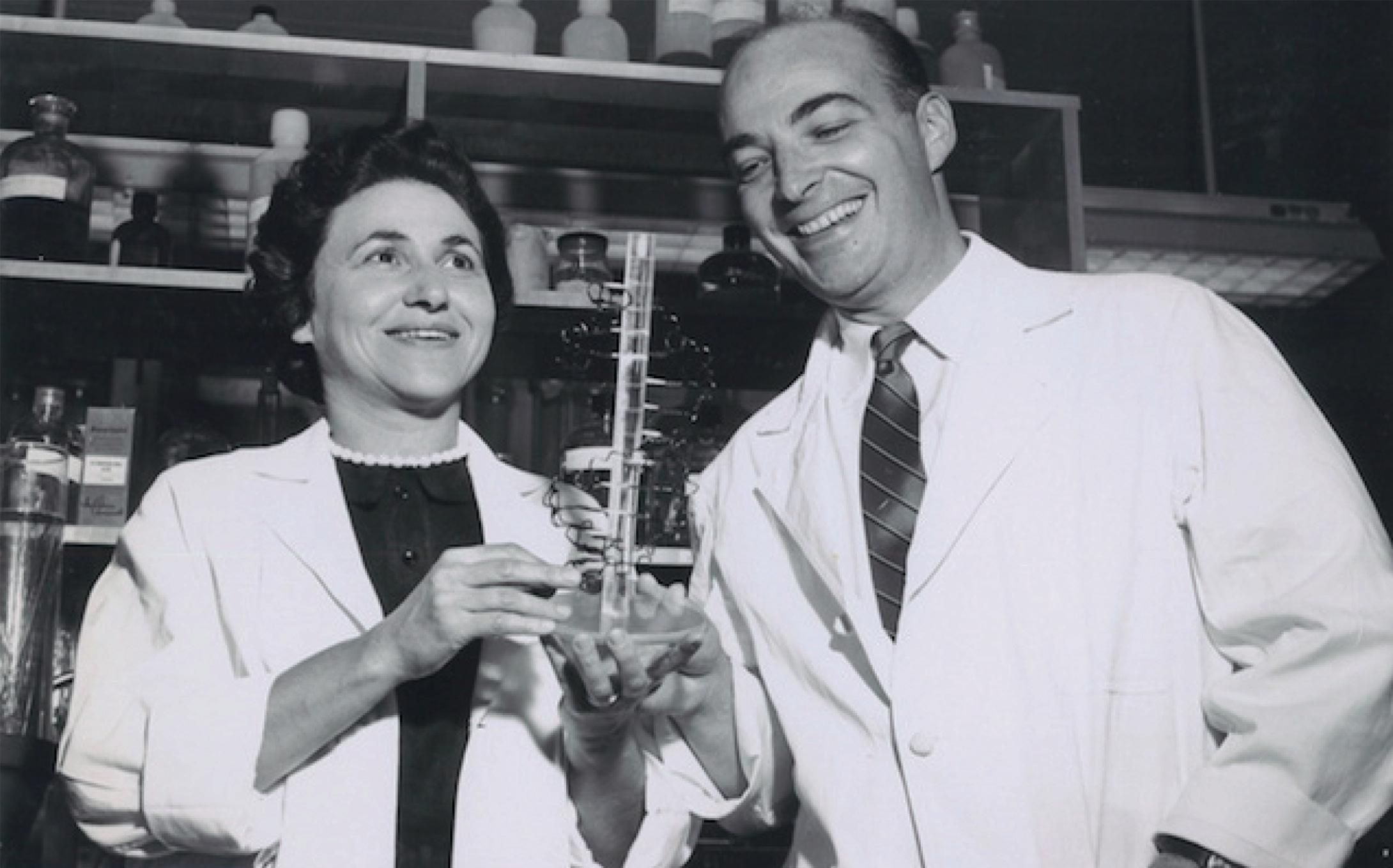
In the early 1940s, two brilliant young scientists met in a University of Rochester lab. Over the next half-century, Arthur and Sylvia (Sylvy) Kornberg would transform our understanding of genetics, earn the highest honors in science, and raise a family steeped in discovery.
From URMC to the Nobel Prize
Arthur Kornberg (MD ’41) arrived at Rochester at a time when antisemitism limited opportunities for even the most promising Jewish students (despite graduating at the top of his class, Arthur was not offered a fellowship). He found a place at SMD, where he launched a career that would change the trajectory of biomedical research.
Sylvy Levy (MS ’40) was pursuing science as an undergraduate at the University of Rochester when she met Arthur. When Arthur boasted that he had earned a perfect score in chemistry on the New York State Regents Exam, Sylvy quietly replied that she had done the same—in chemistry, algebra, and geometry.
Sylvy and Arthur married and eventually moved on to research positions at the National Institutes of Health and to Severo Ochoa’s lab at NYU, where Arthur first focused on enzymes. Sylvy paused her lab work while raising their three sons but stayed connected to science by editing academic manuscripts.
The Blueprint of Life
Sylvy returned to the lab once their sons were grown. Now at Washington University in St. Louis, the Kornbergs made their most transformative contribution to science. At the time, biologists were just beginning to uncover how genetic material worked at the molecular level. Arthur focused his research on one of the most fundamental questions in biology: how DNA, the blueprint of life, is accurately copied when cells divide. Working side by side, the couple isolated and identified DNA polymerase, the enzyme responsible for assembling new DNA strands using existing ones as a template.
Alum Harvey J. Alter wins Nobel Prize
An alum of both the undergraduate college (‘56) and SMD (‘60), Alter receives the award along with Michael Houghton and Charles Rice for the discovery of Hepatitis C virus.
2023
Groundbreaking for Strong Expansion
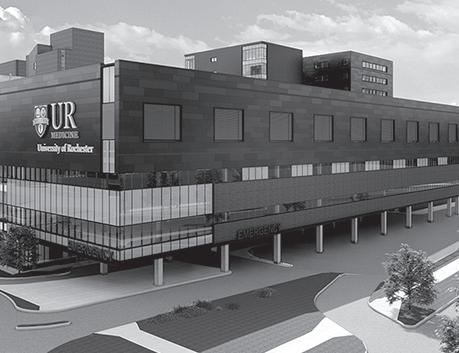
Expected to open in 2027, the new Strong Memorial Hospital will add 650,000 square feet of space and more than triple the size of the current Emergency Department.
2023
Saunders Center for Orthopaedics & Physical Performance opens With over 300,000 square feet and high-tech spaces, the Center is the largest and most comprehensive orthopaedics facility in the Northeastern U.S.
2023
Institute for Human Health and the Environment launched The University-wide Institute builds collaborations and catalyzes scientific discoveries related to environmental impacts on health.
2024
David Linehan appointed SMD Dean and URMC CEO
Linehan was originally recruited in 2014 to chair the Department of Surgery.
2024
$50 million commitment from Golisano
Tom Golisano makes a historic commitment to build the Golisano Intellectual and Developmental Disabilities Institute.
2025
Nathan Schock Center grant awarded
Provided by the NIH to Vera Gorbunova of the URMC Rochester Aging Research Center, it brings nearly $5 million over five years to form the Upstate NY Comparative Biology of Aging Nathan Shock Center, spanning River Campus and URMC.
2025
Wilmot Cancer Institute receives NCI designation
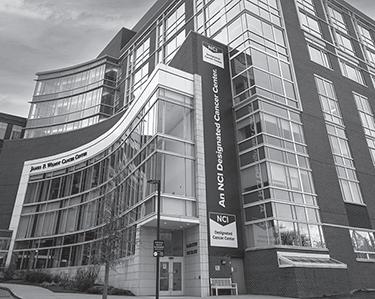
The designation from the National Cancer Institute places the institute in the top 4 percent of all cancer centers in the U.S., recognizing its excellence in research, care, and outreach.
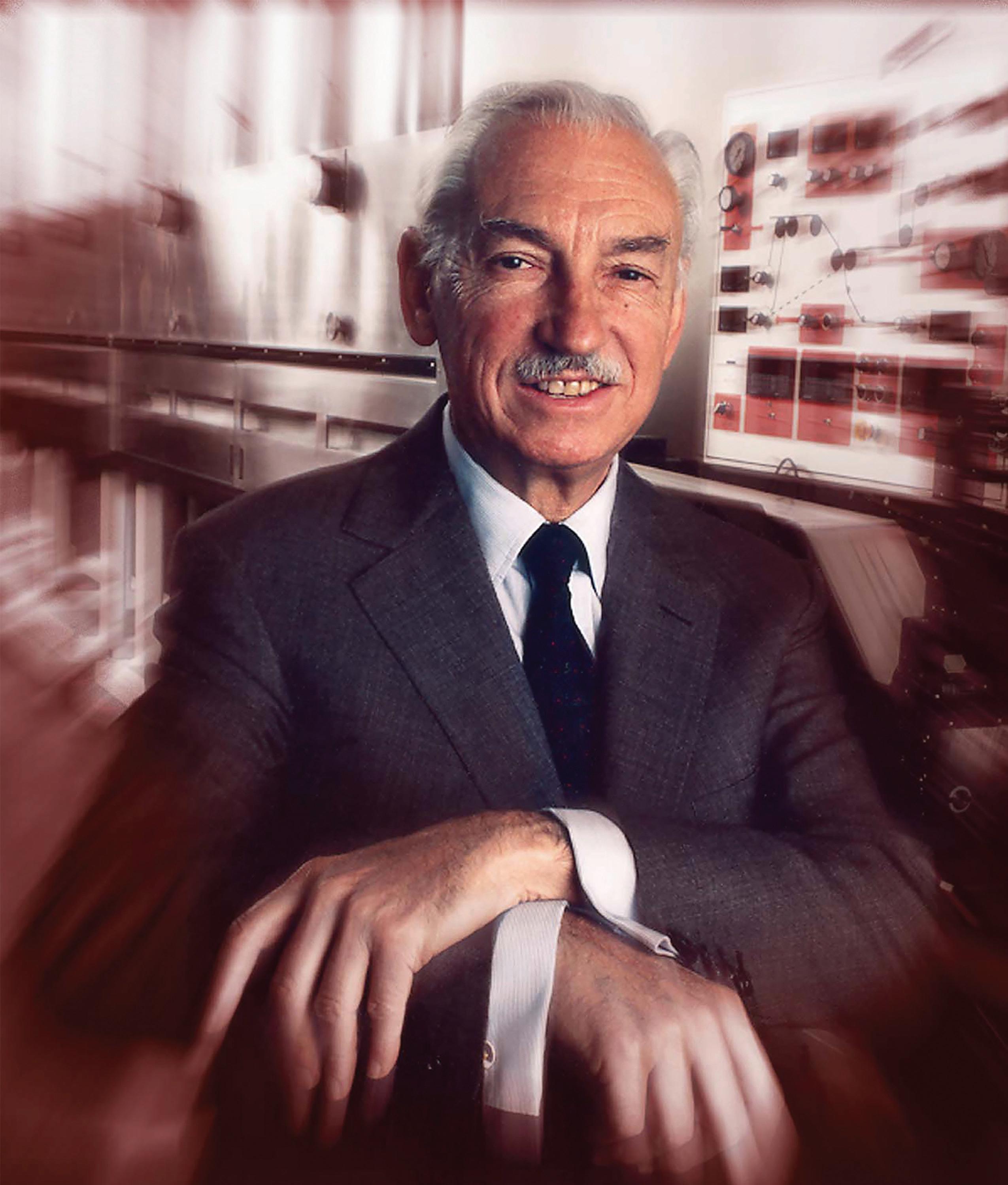
Arthur Kornberg. The discovery behind the mechanics of DNA revolutionized how we understand genetics and made possible entire fields of research.
This was the first time scientists had shown how cells replicate genetic information with such precision.
Their discovery provided the first clear look at the mechanics of DNA replication, and it became a cornerstone of molecular biology. It not only revolutionized how we understand genetics but also made possible entire fields of research, including genetic engineering, forensic science, and modern biotechnology.
In 1959, Arthur received the Nobel Prize in Physiology or Medicine. Sylvy, who contributed significantly to the discovery, said with a smile to a reporter: “I was robbed.”
Her scientific contributions are documented in multiple published studies, including discoveries about enzymes that affect DNA replication and protection inside cells. In his memoir, For the Love of Enzymes, Arthur wrote that Sylvy “contributed significantly to the science surrounding the discovery of DNA polymerase.”
Science as a Family Legacy
The Kornbergs’ passion for discovery didn’t stop with Arthur and Sylvy. Two of their three sons became prominent scientists, and Roger Kornberg—who followed his parents into the study of DNA and RNA—won a Nobel Prize of his own in 2006 for his work on the molecular basis of gene transcription.
Sylvy’s and Arthur’s work helped unlock the very code of life, opening new frontiers in understanding how cells function, how diseases develop, and how medical science could harness the power of genes.
A Lasting Tribute to Discovery
Later in life, Arthur rekindled his relationship with URMC.
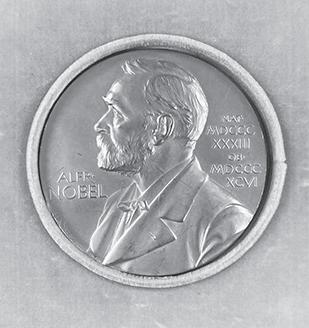
When CEO Jay Stein proposed that a new URMC building be named after Arthur, Stein recalled, “he was so thrilled that he reached into his drawer and handed me his Nobel medal [and] asked us to put the medal in a nice place for the public to see.”
Anyone who walks into the Flaum Atrium in the Kornberg Medical Research Building, opened in 1999, can see that medal on full display. It, and the building itself, stands as a symbol of discovery, integrity, and possibility—all part of the legacy of two pioneers who partnered in research and in life. RM
Arthur Kornberg said that Sylvy contributed significantly to the science that would lead to the Nobel Prize.
From the Archives
We’ve excerpted three stories from past issues, about three very different endeavors:
A researcher from the Class of 1949 emigrated and changed the face of biotechnology.
A doctor from the Class of 1954 became the first person to eradicate a disease from the planet.
Famed photographer Ansel Adams found needed inspiration at the University of Rochester and the Medical Center.
For the complete articles, use the QR codes or links provided with each story.
A Researcher Emigrates and Changes the Face of Biotechnology
NOTE: This story originally appeared in the FALL / WINTER 2004 issue of Rochester Medicine magazine. Zaffaroni died in 2014 at the age of 91.
Dream Job
Alex Zaffaroni’s inventive mind has changed the face of biotechnology
by Mark Liu
Excerpts from the Archives. Go online for the full stories.
More than once, when Alejandro Zaffaroni (PhD ’49, FLW ’51) has run an invention idea past a colleague, the response has been, “That’s impossible.” And more than once, Dr. Zaffaroni has gone forth and turned his impossible idea into something that not only works but also changes the world.
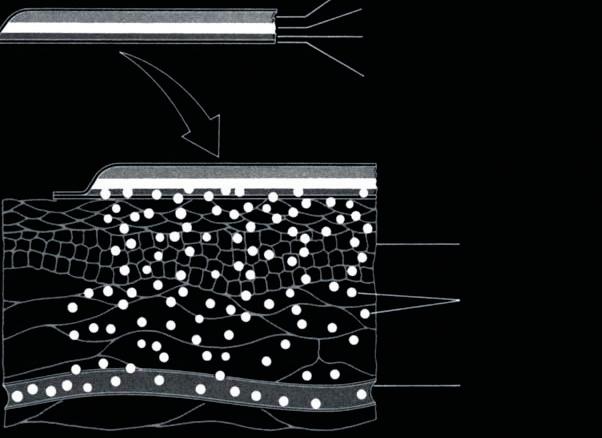
His might not be a household name, but when people use “the patch” or “the Pill,” or if they take any of numerous “controlledrelease” medications, they’re using innovations that Dr. Zaffaroni had a hand in or exist only because they first lived in his imagination.
His accomplishments have reached legendary status in scientific and business circles alike. In all, Dr. Zaffaroni has founded more than a dozen biotech companies—and counting—and continues to invent and work at age 81. (Editor’s note: Zaffaroni died in 2014 at the age of 91).
One of the secrets to his success, say colleagues, is his total commitment to projects. At his first research job, after his biochemistry graduate and fellowship studies at Rochester, Dr. Zaffaroni’s commitment took him into the Veracruz jungle on a search for wild yams.
It was 1951, and Dr. Zaffaroni had joined a Mexican company
A Researcher Emigrates and Changes the Face of Biotechnology
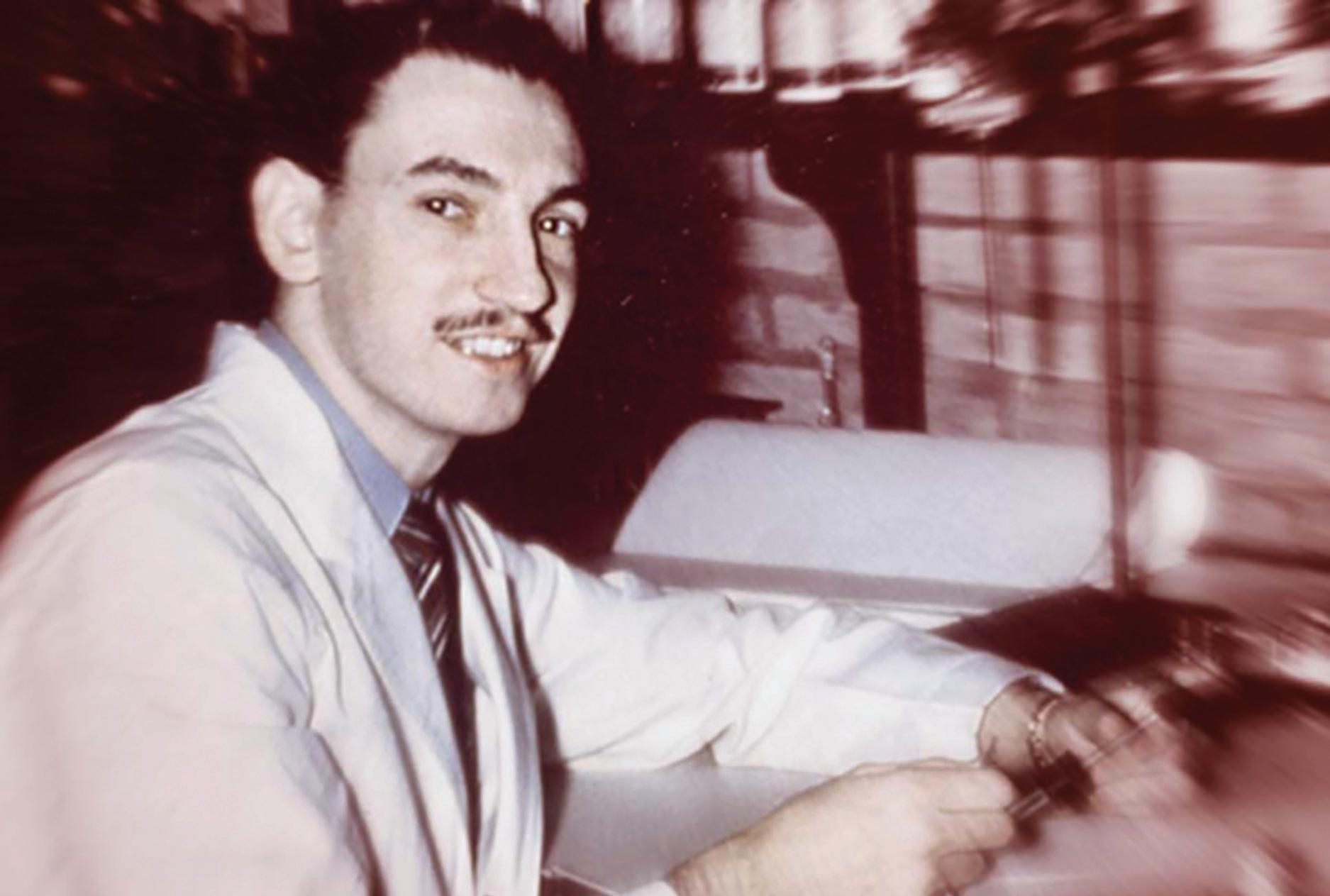
Dr. Zaffaroni enjoyed having his own lab while studying at Rochester.
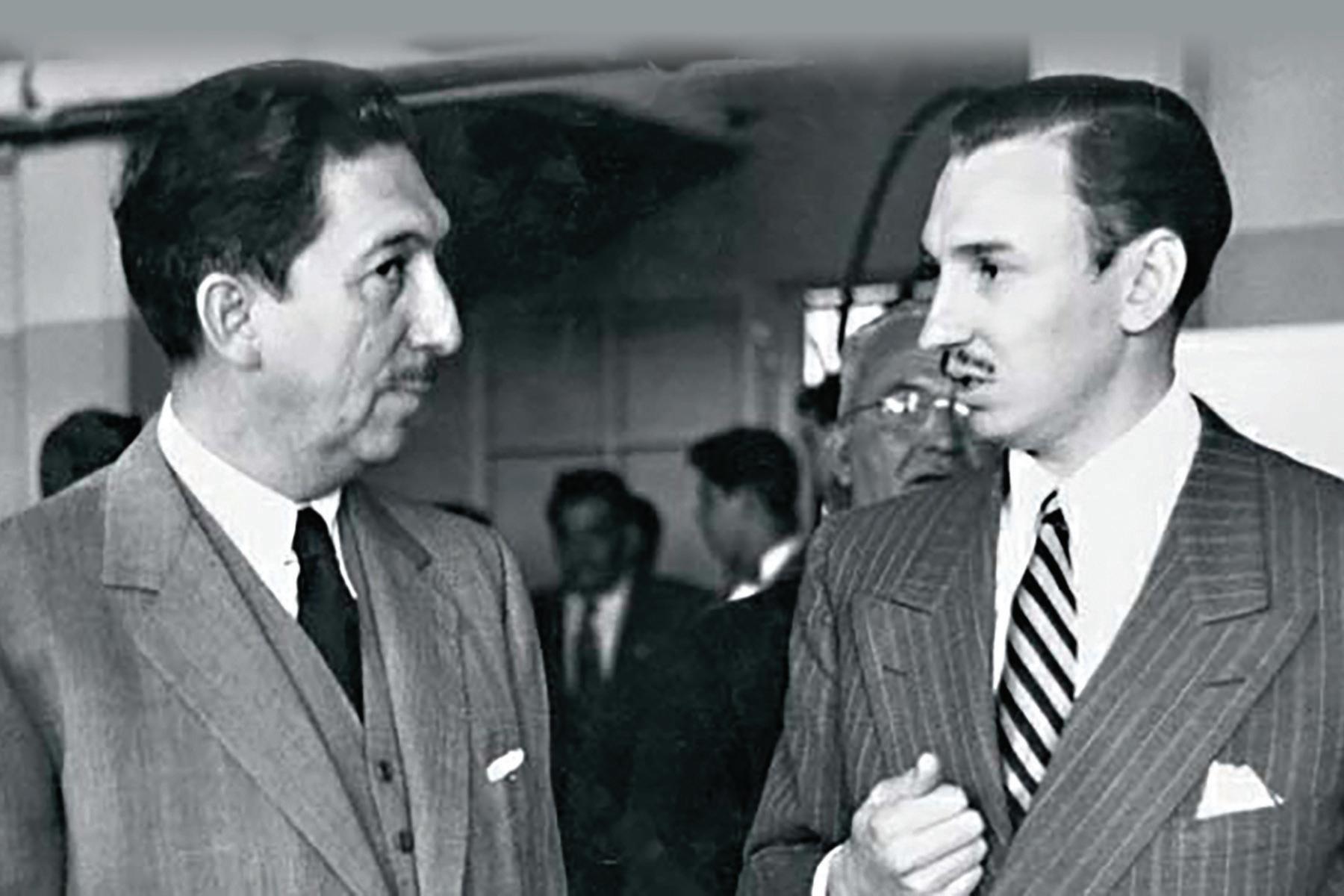
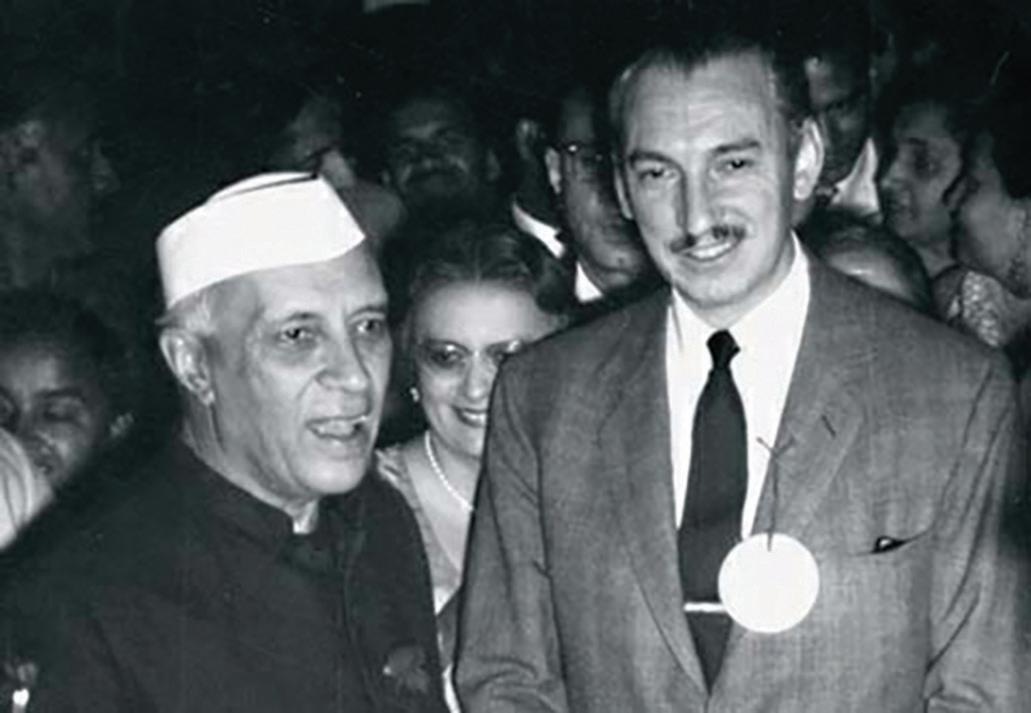
Dr. Zaffaroni’s accomplishments brought him in contact over the years with the likes of Mexican President Miguel Aleman (left) and Indian Prime Minister Jawaharlal Nehru (facing page).
It was 1951, and Dr. Zaffaroni had joined a Mexican company called Syntex, which was small in size but huge in significance. It had just won a furious race to synthesize the wonder drug cortisone, beating out the pharmaceutical giants north of the border.
Dr. Zaffaroni was hired to establish a research lab at Syntex, which was extracting the plant steroid diosgenin from Mexican yams for conversion into human steroid hormones. While he waited for the new laboratories to be built, Dr. Zaffaroni decided to look into the steroid production process.
“One of my first realizations was that, if we could improve the collection process of the raw materials, we should be able to get a better quality product,” he said.
Everyone, even the founder of the company, said it couldn’t be done. Locals gathered the yam roots in their off hours and would simply pile them up outside for someone else to deliver. But Dr. Zaffaroni searched and found someone interested in helping him deploy equipment designed for chopping potatoes so the raw material could be properly stored and promptly delivered to the factory. Dr. Zaffaroni then introduced a new step, adding the precursors for the biosynthesis of steroids. His new process improved the quality and yield immensely.
It was a pattern he would follow throughout his career. As Arthur Kornberg (MD ’41) wrote in his illuminating book The Golden Helix, “Alex had recruited local laborers and imbued them with a team spirit to advance the technology by their efforts. By applying the scientific insights acquired in his graduate research at Rochester, he had made a real impact on a practical problem.”
Syntex’s research prowess soon yielded an even larger prize: Dr. Zaffaroni’s colleagues Carl Djerassi and George Rosenkranz led the effort to synthesize norethindrone, the active ingredient in what would become the birth-control pill. To bring it to market, Dr. Zaffaroni left the jungles of Mexico for the jungles of the boardroom, where he led successful licensing negotiations with the Johnson & Johnson subsidiary Ortho after leading clinical testing of the new product. Tiny Syntex had struck again.
“The pill” got the headlines, of course. But it was the blockbuster success of another Syntex drug that would foreshadow an entire new approach to how drugs are delivered into the body.
Dr. Zaffaroni, who was named president of Syntex Laboratories in 1962, led the development of a steroid cream called Synalar, which became the leading topical anti-inflammatory product of its day. The medication incorporated a new technique based on the simple observation that the medication worked better when wrapped in Saran Wrap.
It was a hint of how Dr. Zaffaroni would reach true biotechnology fame, with his idea of new drugdelivery systems that spawned innovations such as the transdermal patch. Controlled-drug delivery was one of those ideas that caused heads to shake when Dr. Zaffaroni mentioned it, and his own company wouldn’t touch it.
The Jules Verne Approach
Dr. Zaffaroni was born in Uruguay’s capital city of Montevideo in 1923, a year before the tiny country shocked the sports world by winning the Olympic soccer gold medal. Uruguay took gold again at the next Olympics, then won the first-ever World Cup tournament in 1930, held in Dr. Zaffaroni’s very hometown. Soccer was clearly king in Uruguay, but Dr. Zaffaroni suffered from asthma as a child, which meant he couldn’t join his friends in their “futbol” games.
For the rest of the story, scan the QR code or go online to https://bit.ly/3Zcomup
How D.A. Henderson Saved the Planet from Smallpox—Twice
NOTE: This story originally appeared in the SPRING / SUMMER 2002 issue of Rochester Medicine magazine. Henderson died in 2016 at the age of 87.
Best prepare for the worst
How
D.A. Henderson,
M.D., M.P.H.,
saved the planet from smallpox, and how he plans to do it again.
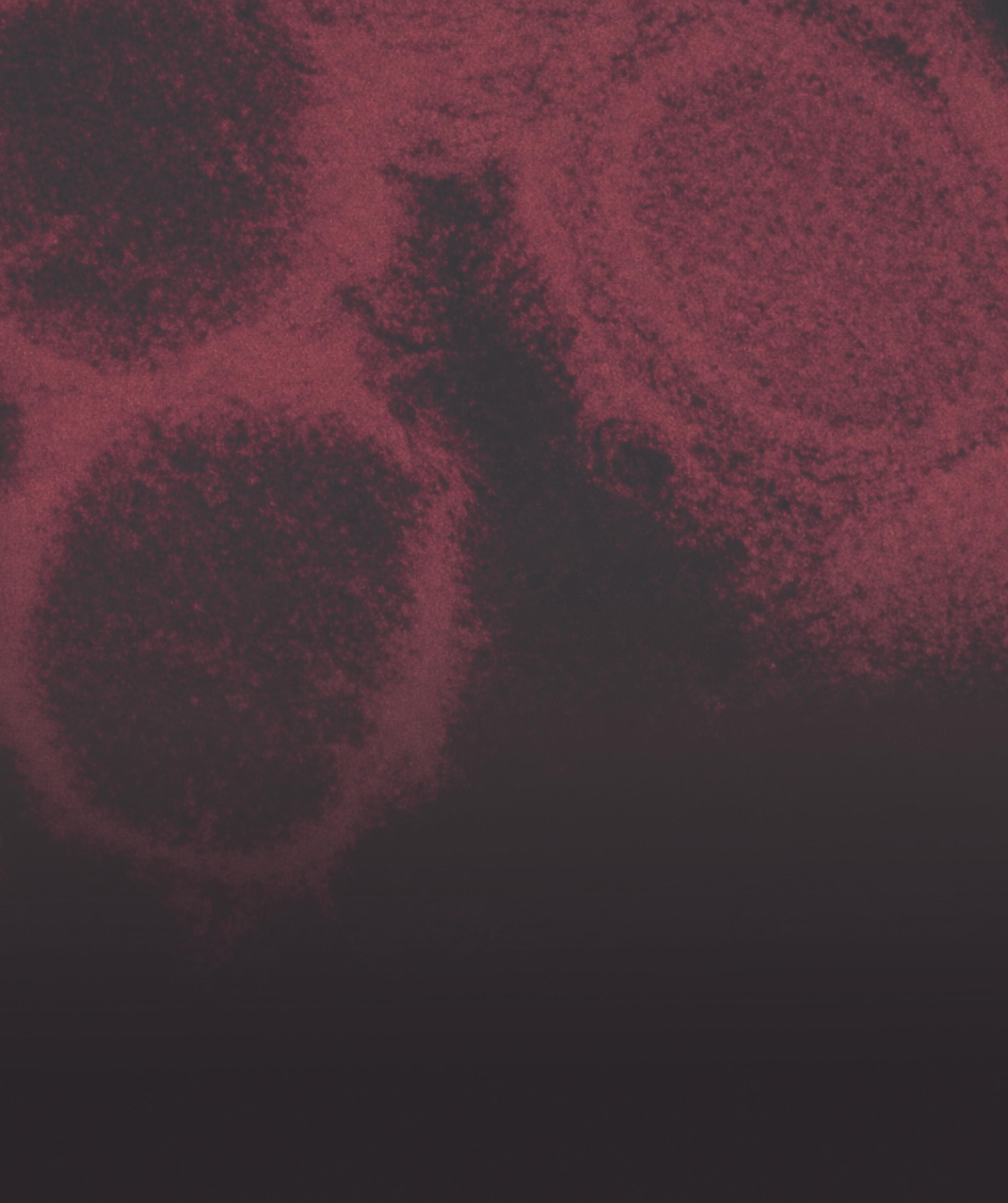
Electron micrograph of variola virus isolated from a specimen from the last case of smallpox in the world.
Mark Liu
Henderson is quick to credit the many people who contributed to the World Health Organization’s smallpox by
Really, he just wanted to be a cardiologist. Instead, in a globe-spanning career packed with high adventure and serious risk-taking, D. A. Henderson, M.D., M.P.H.(M ’54), became known as the first person in history to wipe a disease from the face of the earth.
eradication program in the ’60s and ’70s. But he was the one in charge. He was the one who transformed previous eradication attempts into a successful global campaign. He was the one who innovated at every step, learning on the run and applying experimental techniques against a disease that killed one of every three people who contracted it.
Now, after evading gunfire and dodging land mines, after decades of outfoxing epidemics and human suffering, Henderson is maneuvering through what may be the trickiest landscape of them all: government. (Editor’s note: Henderson died in 2016 at the age of 87).
When he was named director of the newly formed federal Office of Public Health Preparedness in November 2001, a daunting task lay before him.
He became responsible for the medical and public health response to terrorism, with a special emphasis on bioterrorism. The man who waged war against natural epidemics was now faced with the sad and ugly reality of defending against manmade ones.
At least one key person thinks he’s up to the task.
“Dr. Henderson brings a lifetime of preparation for the demands of this job,” says Tommy Thompson, Secretary of the Department of Health and Human Services. “His distinguished record speaks for itself, and we are fortunate to have him join thedepartment on a full-time basis.”
In many ways, the position is the logical culmination to the work Henderson did throughout the ’90s, in his other career as a bioterrorism expert and White House advisor.
Back then, he and a handful of others implored the government
to take the bioterrorism threat seriously. It was a tough sell—until anthrax hit the headlines last fall.
“It felt like we were praying for rain in the desert,” says Henderson from his Baltimore home. “And then when it came, it was a flood.”
How he became the man at the floodgates—how he gained the insight to predict a problem that plagues us now—is the stuff of a good page-turner. And, in fact, he was working on the book. But duty called. The book will have to wait.
Into Africa
Donald A. Henderson earned his medical degree from Rochester in 1954, then completed his internship at Bassett Hospital in Cooperstown, N.Y. With the “doctor draft” still in effect, Henderson applied to the Centers for Disease Control and Prevention (CDC), even though the CDC was little known and very small at the time. Henderson had only one qualification for public health work: He had written a paper on the history of cholera in Rochester for a contest, which he had entered only because he wanted the prize money to buy a hi-fi.
“I applied to the CDC not because I was interested in public health or anything like that. But we all had to do military service,” he says. I thought, ‘Well, I’ll spend two years in public health.’ ”
Henderson ended up in the Epidemic Intelligence Services (EIS) in Atlanta, among a group of epidemiologists who, with the Korean War fresh in their minds, were looking into the problem of biological warfare. They were ahead of their time in other respects, as well. When they got word of an epidemic, they responded like an emergency department that made house calls. They packed their bags and went, bringing with them the latest ideas in vaccinating and isolating patients to contain outbreaks.
“ It was an incredible achievement to get people from all over the world to cooperate.”
Bob Berg, M.D., professor emeritus, Community and Preventive Medicine, University of Rochester Medical Center
On one assignment, to fight an outbreak of botulism toxin in Argentina, local officials asked Henderson if he wanted to see any sights. He said he wanted to see a case of smallpox.
Henderson and a World Health Organization (WHO) doctor were flown far up the Amazon to a tiny
Photo by John Dean
D.A. Henderson
How D.A. Henderson Saved the Planet from Smallpox—Twice FIRST PUBLISHED IN2002
town, where he got his first glimpse at how complicated smallpox work could be out in the trenches. The clinicians in the treatment tent were baffled by smallpox patients who seemed to be experiencing relapses several weeks later. As it turned out, some patients with chickenpox were acquiring smallpox, and others with smallpox were getting chickenpox. It was a good, first-hand lesson in differentiating one disease from the other.
Henderson had come face to face with the disease that would make him famous.
He tried to stick to his original plan, returning to Cooperstown to study internal medicine, but he decided that public health was far more exciting. He enrolled at Johns Hopkins University to earn his M.P.H., then found himself back in Atlanta, running the surveillance section of the EIS. Henderson was already thinking big about what the EIS could do. Lawrence Altman, M.D., now a medical correspondent for The New York Times, remembers his very first conversation with Henderson when Altman came to the EIS for a job interview.
“He was talking about eradicating smallpox,” says Altman. “I had never heard the concept of eradicating a disease before. It was never talked about in med school, or any other training. It was just an eye-opener.”
The idea was to break the human chain, which
would stop the disease because it was communicable only through human contact.
When an outbreak occurred, epidemiologists could vaccinate a ring of people around the outbreak, effectively cutting off all paths for it to spread. The premise was simple enough, but everything else would be dizzyingly complex. Eradication would require teams of experts to cross world cultures and negotiate through civil wars, in places that had the least developed health services in the world. They would have to secure and transport hundreds of millions of doses of vaccine in places that barely had roads, let alone communication systems—all with the Cold War heating up around them. Understandably, talk of smallpox eradication was just that: talk, with no practical plan in sight.
Even when Henderson saw a chance to fight the disease in a major hot spot, he wasn’t thinking about eradication. In 1965, the U.S. Agency for International Development (AID) was fighting a losing battle against measles in West Africa. AID turned to Henderson for more manpower, which the EIS really couldn’t spare. But rather than say it that way, Henderson cleverly said the opposite. He proposed a massive, combined effort to fight measles and smallpox in 18 countries, at a staggering cost of $35 million.
D. A. Henderson (circled) with members of the Global Commission for the Certification of Smallpox Eradication in the late 1970s.
Essentially, it was a bluff. Henderson knew that neither group was equipped to handle such an undertaking. As he tells it, he was thinking, “We know they’ll turn it down, and then we’re off the hook. But we needed to offer something.”
Henderson, an avid bridge player at the time, had played his cards right. AID did turn down his proposal, and he was off the hook—for a moment. Then something completely unexpected happened. For its 20th anniversary, the United Nations had declared 1965 “International Cooperation Year,” and President Johnson was looking for a cause to showcase American cooperation. Someone in the Public Health Service brought the big, unwieldy smallpox-measles proposal to a presidential advisory committee, explains Henderson. They liked the idea, and so did the president.
Henderson. “So all of a sudden, there we were with an enormous program.”
History would see Henderson’s bluff differently. Don Millar, M.D., a 32-year CDC veteran who led the CDC portion of the eradication effort, says, “If a single idea can be said to have launched the global smallpox eradication program, it was D. A.’s proposal for a joint smallpox-measles program in Africa. It stands as a bold stroke of managerial genius.”
The idea snowballed, and suddenly the United Nations was voting on launching a 10-year effort for global smallpox eradication. It passed by only two votes, says Henderson, and the director of WHO, a Brazilian, was livid.
He blamed the Americans for getting us into this terrible mess, because he felt it could not succeed,” says Henderson. The WHO director wanted an American to head the program, notes Henderson, so when it failed, the United States would receive the blame it deserved. Henderson was his guy—his fall guy, actually.
At that point I was thoroughly overwhelmed trying to get this West African program under way,” recalls Henderson. That overwhelming program was now just one piece of something much, much larger. Programs would need to be conducted in 50 countries, with a total population of more than a billion people. The WHO budget provided for only $2.6 million; the rest would have to come from contributions, volunteer work—wherever it could be found. For the rest of the story, scan the QR code or go online to https://bit.ly/4qOf9Ej
Ansel Adams Turned the Sights of the University into Works of Art
NOTE: This story originally appeared in the FALL / WINTER 2002 issue of Rochester Medicine magazine.
The University Landscape
Ansel Adams turned the sights of Rochester into works of art.
by Mark Liu
Ansel Adams, the famed nature photographer, was bored. It was 1952, and the 50-year-old Adams was confiding to friends that he had hit a creative impasse and was lacking inspiration—a shocking development for someone so dedicated to his craft. But then a call came.
The University of Rochester was looking for someone to take photographs for a new brochure. The University wanted to combine its men’s and women’s campuses, and it needed a special publication to help raise money to build new dormitories, a dining center and academic buildings.
photo courtesy of The Democrat and Chronicle and Rochester Museum and Science
And so he came, far from his haunts in the rocky peaks of Yosemite, to the autumnal banks of the Genesee. Nobody can be sure what role his Rochester visit might have played in re-energizing Adams, but it did get him behind a camera at a time when, as he wrote to a friend: “I have had no burning desire to make a picture in a long time.” It did lead to more than 200 photographs—work so impressive that the University decided to pay an extra $1,000 (in 1952 dollars) for exhibit prints, so it could display them in the main library. And it did result in a beautifully conceived publication that helped the University meet its goal and integrate its campus.
ABOVE
Conducting a medical research project.
LEFT Ansel Adams, earlier in his career.
Photo courtesy of: Department of Rare Books and Special Collections, Rush Rhees Library (Ansel Adams Collection)
Ansel Adams Turned the Sights of the University into Works of Art
Now, 50 years later, the Ansel Adams photographs offer a glimpse into the history of the University through the eyes of one of the greatest artists ever to peer through a lens. Included are a half dozen shots of the Medical Center and its people, including faculty, a medical intern and the first dean of the School of Medicine and Dentistry—Nobel laureate George Whipple.
That the photographs are fascinating is little surprise. What is more of a surprise is the inspiration Adams seemed to gain from the University. Initially he had planned to stay only one or two weeks, but he ended up working on the project for a month. In Rochester Review magazine the following year, he explained that he had expected to stay just a short while: “But your University,” he said, “turned out to be about 10 times as large and interesting as I had expected.”
The connection that brought Ansel Adams to Rochester was Beaumont and Nancy Newhall. Beaumont Newhall, then curator of the George Eastman House and the International Museum of Photography in Rochester, had been a curator at the Museum of Modern Art in New York, where he and his wife had become close friends with Adams.
Nancy Newhall and Adams collaborated on numerous photography books and exhibitions. At times they wrote several letters a day to each other.
RIGHT
Charles G. Cochrane, M.D. (M ’56, B ’51), recounts sitting for this photo:
I was cramming down a sandwich in Bill’s lunch room, prior to attending a conference, when in walked a strange-looking smiling fellow who balanced the loss of hair on the top of his head with a huge growth of beard. He walked straight up to me and asked if he could take my picture. I replied in the negative as I was so short of time. He retorted that it was for the University. Since I was devoted to the school that provided me so much, I assented to the photograph rather than the conference. Little did I know what he wanted.
He marched me to the surgical suites and asked that I don surgical scrubs, and in response to my question regarding time, responded that an hour should do. I tempered my annoyance with the thought that I could send to my parents, who had been so supportive of my schooling, a copy of the photo or the negative.
After the promised hour and endless flashes of the camera, he announced we were done. I then sought my reward, asking for a negative or a copy of the photo. He looked me straight in the eye and then broke into a loud laugh that I can hear to this day. It was obvious my education was not in the realm of photography.
But after my humiliation, he added that he would see what he could do, and within a month or so, I received a copy of a positive, together with the name of the bearded, smiling intruder on my sacred lunch-time: Ansel Adams. The latest I have seen of Ansel Adams’ work in galleries, the cost per print was out of sight, which explains the laugh in response to my question. I also have found that his negatives are tightly held in museums such as that at the University of Arizona. We learn in various ways.
Excerpts from the Archives. Go online for the full stories.
Ansel Adams Turned the Sights of the University into Works of Art
By this time, Adams had established himself in the small world of art photography, but he still needed to do commercial work.
“Photography, as an art form, was fairly new,” says Melissa Mead, librarian at the University’s Rare Books and Special Collections, where a set of the prints is archived. “You didn’t make a lot of money out of it.”
ABOVE
Marjorie Dawley Davenport ‘50, ‘51N, a pediatric surgical nurse at Strong Hospital. This image was used in Blue Cross/Blue Shield brochures for a number of years.
RIGHT
Dr. W. Albert Noyes, Jr., former chairman of the department of chemistry and dean of the graduate school.
Photo courtesy of: Department of Rare Books and Special Collections, Rush Rhees Library (Ansel Adams Collection)
Beyond the Centennial How Rochester Is Poised to Shape Medicine in the Future
By Sandra Parker
After a century of innovation and discovery, the School of Medicine & Dentistry is poised to shape medicine into its next century as well.
The foundation has been set in many disciplines—from a pivotal role in the development of the HPV cancer vaccine to the discovery of a new liver therapy; from the birth of the groundbreaking biopsychosocial model to fundamental molecular research that has brought us to the brink of a new class of cures.
One of SMD’s strengths in a challenging healthcare environment is an emphasis on partnership. Team science is built into the landscape, with the Medical Center and the University’s River Campus situated next to each other. SMD Dean and URMC CEO David Linehan, MD, is encouraging cross-disciplinary research to speed the pace of cures. With a major focus on developmental therapeutics, SMD will become a “clinical trials powerhouse,” he says.
Here are just a few of the ways Rochester is leading into a new era of discovery, education, and care. (For more research news, visit urmc.rochester.edu/news/story/research).
RESEARCH
FROM A TINY EYEGLASS SHOP set up in 1883 by German immigrants John Bausch and Henry Lomb to George Eastman’s revolutionary invention of the Kodak camera in 1888, Rochester has long been a center of optics and photonics innovation.
Leveraging imaging technology led to the 2012 breakthrough discovery of the glymphatic system by neuroscientist Maiken Nedergaard, MD, DMSc, and her team at SMD. The system’s dysfunction is a factor in neurodegenerative conditions such as Alzheimer’s disease.
As a leader in the science of aging, SMD is using its resources and research breakthroughs to better understand diseases such as Alzheimer’s and Parkinson’s. John J. Foxe, PhD, director of the Del Monte Institute for Neuroscience, notes that the number of patients with some form of dementia is expected to double to 13 million by 2050.
THE STUDY OF INTELLECTUAL DISABILITIES has long been a Rochester specialty, and the recent $50 million donation from philanthropist Tom Golisano for the creation and construction of the Golisano Intellectual and Developmental Disabilities Institute has positioned SMD as a current and future heavyweight in the field.
Researcher Emily Knight, MD, PhD, (Flw ’22), is investigating the neurophysiologic mechanisms underlying sensory perception
Maiken Nedergaard, MD, DMSc
John J. Foxe, PhD
in autism spectrum disorders, which holds great promise in diagnosing and treating the disorder that now affects one in 31 children, Foxe says.
Gene editing is another key focus. Currently and in the decades to come, research and clinical trials are being designed to reach major findings for stemming the development of some IDDs.
URMC RECENTLY EXTENDED its participation in the National Institute of Neurological Disorders and Stroke (NINDS) Network for Excellence in Neuroscience Clinical Trials. The grant arrives as the field is transforming, with new gene therapies addressing the underlying genetic mechanisms of diseases.
Robert Holloway, MD, MPH (Res ’93, Flw ’96), chair of the Department of Neurology, is principal investigator of the Rochester site, which is poised to accelerate the development of drugs targeting a wide range of rare and more common neurological and neuropsychiatric diseases.
Neurology faculty were among the earliest to understand the challenges of rare and ultra-rare disease research, which positioned URMC as an early leader in gene therapy trials across several areas such as Batten disease and neuromuscular diseases, including spinal muscular atrophy, Duchenne muscular dystrophy (DMD), and myotonic dystrophy.
URMC was one of the first three sites in the nation to use a gene therapy in a phase 3 clinical trial to treat ambulatory pediatric patients aged four to five who had Duchenne muscular dystrophy.
This was the first such therapy approved to treat this debilitating and fatal disease.
Emma Ciafaloni, MD, director of the UR Medicine Duchenne Muscular Dystrophy Clinic, has been involved in DMD clinical research for decades.
Ciafaloni says she see patients who have been receiving the drug for several years, “and their ability to get off the floor, jump, and run is not something you typically see in a seven-, eight-, or nine-year old with Duchenne.”
NEW BREAKTHROUGHS CONTINUE to come out of the University of Rochester Center for Health + Technology (CHeT), one of academic medicine’s most successful experiments in translating science into patient benefit.
What began as a small coordination effort in the late 1980s has evolved into a global model for how an academic research center can run industry-grade clinical trials and move therapies from lab to life more quickly. CHeT has supported clinical trials that have led to 12 FDA drug approvals and devices to market, including landmark treatments for Parkinson’s, Huntington’s, and neuromuscular diseases.
Emily Knight, MD, PhD
Robert Holloway, MD, MPH
A key to success has been a relentless emphasis on benefit. “Every new technology or trial design we adopt should be focused on improving the lives of the people we’re striving to help,” said CHeT Director Chad Heatwole, MD, MS-CI.
CHeT has deployed the use of smartphones, wearables, and radio-wave sensors in virtual studies to enable trial participation from anywhere. Their work has provided new insights into diseases such as Parkinson’s and Huntington’s in assessing the effectiveness of experimental and approved therapies. In the future, CHeT will be taking these tools global.
And the Center is forging ahead into new frontiers, from brain-computer interfaces to AI-driven clinical trial modeling.
ALREADY DISTINGUISHED in preventing, detecting, and treating cancer, Wilmot Cancer Institute’s designation in 2025 as one of only 73 National Cancer Institutes has vaulted it into the top echelon of national institutions researching cancer cures.
“This designation is an accomplishment but also a beginning,” says Jonathan Friedberg, MD, MMSc, Wilmot director. “It puts us in the world-class group, but this is not a scenario where you can sit still.”
Along with playing a pivotal role in developing the HPV vaccine, which has been 90 percent effective in preventing cervical cancer, SMD researchers also developed anti-nausea drugs for chemotherapy—saving lives by allowing patients who couldn’t tolerate chemo to return to treatment. Other research helped lead to a vaccine that nearly eliminates meningitis in children. Now, research is progressing on vaccines to prevent AIDS, MRSA infections, and new strains of “super flu.”
Vera Gorbunova, PhD, co-director of the Rochester Aging Research Center, is delving into the fundamental biology of aging. Friedberg says her examination of cancer-free species such as the bowhead whale, which can live more than 200 years, will result in vital information in the search for ways to extend the human lifespan.
The research of Lynne E. Maquat, PhD, founding director of the Center for RNA Biology, and her team holds the promise of understanding how RNA contributes to the progression of cancer.
Already, Rochester has been at the forefront of immunotherapy CAR T-cell therapy, modifying a patient’s T-cells in the lab to find and attack cancer cells when reintroduced into the patient. A next wave in Rochester’s immunotherapy research over the coming decades will be treatments to “turn off” cancer cells without damaging healthy cells.
“Cancer diagnostics is another area in which Wilmot is poised to lead,” Friedberg says, noting that researchers are already using imaging technology to detect cancers sooner and ultrasound technology to treat them.
Friedberg expects that symptom-management research will also bear fruit in the next two or three decades. Developmental Therapeutics is a niche for Wilmot, he says, and he plans to “dramatically accelerate the number of clinical trials, particularly early-phase trials, which will set SMD apart.”
SMD’S DECADES-LONG LEADERSHIP in cardiac research has saved hundreds of thousands of lives, starting with the development of cardiopulmonary resuscitation for cardiac arrest and, later, developing better ways to identify risk factors and prevent sudden cardiac death. Now, thanks to two grants totaling more than $54 million, SMD research will likely prompt major changes in heart failure care.
Studies funded by the grants are comparing the two main beta-blockers used in treatment and also comparing outcomes of patients treated with and without implantable cardioverter defibrillators (ICDs).
“Our current analysis suggests that at least 50 percent of the patients who receive an ICD today do not derive a survival benefit from it,” said director of URMC’s Clinical Cardiovascular Research Center
Emma Ciafaloni, MD
Chad Heatwole, MD, MS-CI
Jonathan Friedberg, MD, MMSc Vera Gorbunova, PhD
Ilan Goldenberg, MD, who is leading the North American study. “I believe the whole paradigm of heart failure treatment will change.”
SMD’S DEPARTMENT of Environmental Medicine and Environmental Health Sciences Center continues to grow, exploring toxicology and the complex environmental exposures that influence health—from pollution to microplastics. A new, Rochester-based, cross-disciplinary research center is studying the life cycle of microplastics, their exposure to humans, and their effects on human health.
ROCHESTER ALSO HAS A LONG HISTORY of innovation in dental research and care, ever since George Eastman’s novel idea to provide preventive dental care and make it widely available. In 1915, he founded the Rochester Dental Dispensary, which went on to develop essential components for white fillings and become one of the first facilities in North America to perform dental-implant surgeries. Now breakthroughs from the Eastman Institute for Oral Health—such as developing the first smartphone app to detect cavities—continue to shape the field.
Some of EIOH’s many advancements include:
• collaborating across neuroscience, psychology, engineering, nursing, and the laser lab to address chronic pain
• translating research findings into new approaches for early childhood caries prevention and safer alternatives to opioids
• training dentists how to better treat patients with complex medical conditions such as cancer and Alzheimer’s
• devising new methods to expand access for people with special needs
TEAM SCIENCE can create unexpected partnerships. The Rochester region’s historical expertise in imaging technology and music has created unique opportunities.
“Investigating the link between music and medicine is a very distinctive space for us and one in which we are a leader,” says Stephen Dewhurst, PhD, vice president for Research at the
University of Rochester and vice dean for Research at SMD. People with memory issues can sometimes recall a song even if they can’t carry on a conversation. “What is that telling us about how the brain is wired? We can take advantage of that. Very few other places have a potential for partnerships as we do.”
CLINICAL
In 1977, George L. Engel, MD, pioneered a new model of care when he argued that health was determined not only by biology but also psychological and social factors. The concept of social determinants affecting health—the basis of his biopsychosocial model—has become an important part of the discussion around the future direction of healthcare.
“Others are now seeing it, but we’ve had it right all along,” says SMD Chief Operating Officer and Vice Dean for Education Sarah Peyre, EdD. “It’s not new to us. We know that the context we live in impacts our health.”
To address these factors, SMD aims to expand its community engagement to determine barriers to care and develop methods to increase access.
“The future,” says URMC Chief Medical Officer Michael J. Apostolakos, MD, (Res ’90, Flw ’93), “is about being more patientand consumer-centric and providing access to care. It’s not helpful to have the best cancer center if people can’t access it.”
The future of patient care also requires a decentralized model to allow patients to be treated at home. AI tools being tested at SMD will make it possible for patients to conduct simple medical tests such as blood draws via smartphone or other digital devices and transmit the results remotely.
Lynne E. Maquat, PhD
Ilan Goldenberg, MD
Michael J. Apostolakos, MD
Sarah Peyre, EdD
“Many patients want care on demand,” Apostolakos says. “We’ll keep people monitored, but it won’t be in a bricks-and-mortar hospital.” The Hospital at Home program and similar ones will be expanded in order to provide care according to the patient’s wishes.
And prevention will be a big part of the medicine of the future. “Disease is always going to occur, but if we can prevent it or even delay it, it’s going to be a benefit to our patients and to our community.”
Part of improving the quality of care is to focus also on the caregiver, Apostolakos says. AI note-taking tools are expected to address physician burnout by reducing the number of hours spent writing notes.
SMD is pioneering a new digital system devised by Qualified Health, an AI-platform company, to assist clinicians with repetitive tasks and allow them to spend more time on patient care. Qualified Chat allows clinicians to streamline basic administrative tasks, such as drafting patient education materials and refining emails for clarity. The idea is for the system to generate notes and facilitate research and also perform tasks such as scanning patient records to determine that it’s time for preventive tests, such as a colonoscopy, then notify patients.
EDUCATION
Medical training at SMD went global in 1969 when Seymour I. Schwartz (Res ’57), the internationally revered surgeon at URMC, wrote what would become known as “the Surgeon’s Bible.” Schwartz’s Principles of Surgery has been required reading at medical schools around the world for more than half a century (see story on page 15).
Other trends in training were started at SMD and adopted by medical schools around the nation, including the advisory dean process, in which cohorts of 25 students meet weekly with a dean; assessment days embedded in the curriculum to offer early feedback; the Meliora program, offering early training for non-traditional students; and integration of avatars to teach empathy.
Educating future physicians requires constant innovative thinking as medicine undergoes dramatic changes, notably the integration of digital tools and a shift in patients’ expectations.
As the medical ecosystem restructures, so too does the curriculum. While the “Double Helix—Translations and Transitions” curriculum retains its core components of scientific knowledge and clinical
decision-making, Peyre continues to integrate soft skills that will be needed in a complex health ecosystem.
She notes that “many people think that innovation means disruption. But in academic medicine, innovation means expanding our capacity to think more broadly or boldly.”
Thinking boldly means an emphasis on education beyond simply sharing knowledge with students—recognizing that “learning is behavioral, cognitive, sociocultural, and influenced by age. We are preparing them to have a mindset of collaboration, communication, and coordination, which is how they will practice medicine in a larger ecosystem.”
Engaging the learner is now a central concept in the curriculum, which incorporates asynchronous learning via smartphones, gaming activities to engage and measure learning, interaction with avatars and lifelike mannequins, and other digital tools.
Most notably, the power dynamic between patient and physician has shifted, Peyre notes. In his 2014 book The Patient Will See You Now, Eric Topol (MD ’79) calls this era in medicine a “Gutenberg moment,” as innovations such as MyChart and the smartphone create a new balance between physician and patient.
“The physician is still the driver, but we now recognize the role of the patient, and not every patient wants the same type of care,” says Peyre, who is confident that changes made at SMD will continue to influence medical education around the nation.
READY FOR CHANGE
As it heads into its second century, SMD is already undertaking major expansion and modernization projects. A new emergency department, slated for completion in 2028, will triple the size of the existing one and include a new nine-story inpatient bed tower with dedicated floors for cardiovascular care. A state-of-the art cancer research building is in the planning stage. The new Saunders Center for Orthopaedics and Physical Performance campus is one of the largest such facilities in the Northeast and is a model of decentralized care.
SMD aims to be bigger but also better as it meets future challenges.
“We produce physician leaders who will be responsive and adapt to changes,” Peyre says. “That’s our legacy and that’s what we will continue to do for the next 100 years.” RM
Inspiration from the Class of 2029 White Coat Ceremony Student Address
Here’s what fourth-year medical student Alex Schick said to the centennial class—a sign that students are in good hands going into SMD’s next century.
Today marks the beginning of a lifelong journey—one that will challenge you, shape you, and surprise you in ways you can’t yet imagine. As you slip on your white coat for the first time, you step into a tradition of healing, of curiosity, of service—and of profound human connection.
When I started medical school, I thought I knew what being a doctor would look like. I thought it meant having the right answers, making the right decisions, knowing the right things to say. But as I moved through my clinical years, I began to understand that some of the most meaningful parts of medicine happen in the quiet, uncertain spaces. I want to tell you a story about one of those moments, and one of my patients.
Her name was Grace.
When I first met her, she was sitting by the window. Her breakfast tray sat untouched, and a stack of coloring pages rested in front of her. She was quiet, but her anxiety filled the room. She was waiting—for a diagnosis, for clarity, for the terrifying unknown. A mediastinal mass. A question mark in her chest.
At first, we talked about anything but the mass. We talked about fantasy novels, her son’s love for Bluey, the stories behind her tattoos. Slowly, she began to trust me. Eventually, she opened up about her fear. About the weight in her chest—not just the physical mass, but the emotional one.
I wished I had answers, but instead, all I had to offer was my presence. I handed her tissues and held her hand. I could sit with her. I could listen. I brought her colored pencils and pages with butterflies, like the ones she used to see in her grandparents’ garden. Her room began to transform—each day marked by a new drawing, new colors, and new moments of connection.
When the results finally came, I was there, too. Holding my breath. Hoping. Fearing. She got her answer—and a new care team. On her last day, she reached for my hand and said, “You really listened. You heard me in a way no one has in a long time.” That moment reminded me of something we don’t always talk about enough in medicine: how much healing happens when we simply show up, even when we don’t have the answers.
As medical students, especially early on, it’s easy to feel like you’re not doing enough. You’re not the one placing the orders or making the big decisions. But never underestimate the power of your presence. You might be the only one on the team who has time to sit down. The one who remembers the name of a patient’s dog. The one who notices when someone seems a little quieter today. That matters more than you know.
You’re about to enter a world where knowledge is essential, but not always enough. You’ll spend the next four years memorizing mechanisms, refining skills, and learning how to diagnose and treat—and you should. But don’t lose sight of the simple but powerful act of being present with someone. That’s where the real art of medicine lives.
In that way, Grace’s story isn’t just about me and her. It’s about the generations that came before me, too.
My grandfather was a physician. His parents were physicians in rural New York in the early 1900s. My great-grandmother, Dr. Dorothy Ollswang, graduated from medical school at just 20 years old—a rarity for a woman at the time—and took a job at a women’s prison when few others would hire her.
She went on to open a home medical practice with her husband, my great-grandfather, where they saw patients in their living room, performed
surgeries in their home, and accepted payment in the form of livestock or groceries if a patient couldn’t afford care. They built a practice around values that have stayed with me: service, compassion, and deep respect for the human experience.
My grandfather, Dr. Richard Cooper, carried those values into his own career as an oncologist. He worked long hours, saw patients at fifteen hospitals, and often gave his time to a local free clinic. What mattered most to him wasn’t the awards or the accolades, but the people he helped. The patients he remembered decades later weren’t defined by their diagnoses, but by the lives they lived despite them.
He told me once, “You don’t need to cure someone—you just need to stop the disease from killing them. What we’re trying to do is give people a good life.” That’s the kind of doctor I want to be.
And while his era looked very different from his parents’, and mine looks different still, the heart of medicine remains the same. We are called to be present in people’s most vulnerable moments. To treat with knowledge, yes—but also with compassion. To walk with people through uncertainty, not just toward answers. Medicine will stretch your heart in ways you didn’t expect. It will ask you to hold space for grief, and it will surprise you with joy. But you won’t go through it alone.
Your classmates—the people sitting beside you right now—will become some of the most important people in your life. They’ll study with you, cry with you, encourage you, and challenge you to grow. Lean on them. Learn from them. Celebrate each other. You’ll all have different strengths, and one of the best parts of this journey is figuring out how to grow together.
And just as importantly, find what grounds you outside of medicine. For me, that’s meant getting involved in leadership, teaching, and mentorship. Through clubs and community programs, I found a space where I could connect back to my purpose and give back in a different way. Whether it’s research, advocacy, music, writing, or family—nurture the parts of yourself that make you whole. They are not distractions. They are your roots.
So as you begin this journey, I hope you’ll carry this with you:
There will be times you don’t know what to say. There will be patients whose stories stay with you, who color the walls of your memory long after they’ve gone. You may feel unsure of your role, especially early on. But remember this: You don’t have to know everything to make a difference.
When you don’t know what to say, start with compassion. When you don’t know what to do, start by being present.
Wear your coat with pride, but also with humility. Let it remind you not only of the science you’ll learn, but of the people you’ll serve. Of the questions you’ll ask. Of the lives you’ll touch—sometimes without even realizing it.
Congratulations—and welcome to the journey. RM
Alex Schick
FOR EVER BETTER LAUNCHES AT MELIORA WEEKEND
SPONSORED BY THE OFFICE OF ADVANCEMENT
Comprehensive campaign seeks to raise $1.75 billion for the University of Rochester’s future— including $850 million for the Medical Center—while expanding alumni and community engagement
By Kristine Kappel Thompson
For 175 years, the University of Rochester has advanced discovery, supported communities, and educated the most exceptional students. This fall, as the University marked that milestone, it also launched For Ever Better: The Campaign for the University of Rochester—an effort to raise $1.75 billion to fund research; to expand access to education, healthcare, and the arts; and to engage alumni and friends around the world in the next five years.
The announcement of the public phase of the campaign came during Meliora Weekend 2025, when more than 12,000 alumni, families, and friends returned for reunions, lectures, performances, and celebrations—linking the University’s past to its future.
The Medical Center will play a central role in this effort, with a goal of raising $850 million—half of the campaign’s fundraising total. As part of the campaign, the School of Medicine & Dentistry aims to raise $425 million. The School of Nursing, Eastman Institute for Oral Health, Golisano Children’s Hospital, Wilmot Cancer Institute, Highland Hospital, UR Medicine Home Care, and Flaum Eye Institute each have their own goals, too, all contributing to the broader Medical Center effort.
“The For Ever Better campaign will define our future and extend our legacy as a community that embraces opportunities and challenges with bold ideas and an optimistic vision,” says President Sarah Mangelsdorf. “With this campaign, I look forward
Campaign regional launch events
We’re taking For Ever Better on the road in 2026. Full details online at everbetter.rochester.edu.
NEW YORK CITY February 26, 2026
SAN DIEGO March 4, 2026
LOS ANGELES March 5, 2026
WASHINGTON, D.C. April 29, 2026
to advancing knowledge, enhancing care, and creating environments where everyone connected to Rochester can thrive.”
University of Rochester Medical Center CEO and Dean of the School of Medicine and Dentistry David Linehan, MD, emphasizes the importance of the For Ever Better campaign. “The future of medicine depends on what we do today,” he says. “The campaign will fuel discovery, strengthen healthcare through education, and raise the level of care and compassion for our patients and families.”
The campaign comes at a time when higher education faces significant headwinds—from financial pressures and demographic shifts to challenges in effectively communicating its relevance and impact. In this environment, the For Ever Better campaign underscores the importance of collective effort. Through actions both large and small and contributions from individuals and groups, it advances a shared mission to improve humanity.
BUILDING FROM STRENGTH
The For Ever Better campaign enters its public phase with momentum. Leading up
to the campaign’s launch, Rochester secured more than $880 million in commitments supporting students, faculty, research, and facilities.
Thomas Farrell ’88, ’90W, senior vice president for University Advancement, says the campaign is both purposeful and urgent. “We have made remarkable progress, with three record fundraising years in a row and the highest levels of engagement in our history,” he says. “Now we’re inviting the entire University community to help shape what comes next.”
Overall campaign priorities include creating 150 endowed professorships, supporting more than 500 scholarships and fellowships, and making investments that reinforce Rochester’s leadership in research, healthcare, and the arts. Farrell adds, “A cornerstone of this campaign is balancing philanthropy and engagement—we hope to raise significant funds for our priorities while strengthening the culture of ownership among our volunteers and all those who care about the University.”
MORE
THAN FUNDRAISING
While the $1.75 billion target is historic, leaders stress that For Ever Better is about people first. The campaign
seeks to engage 250,000 alumni, parents, students, grateful patients, faculty, staff, and friends worldwide. It will inspire giving, energize volunteerism, bring people together at events—both in person and virtual—and strengthen connections.
Volunteer leaders at the helm of the Medical Center’s campaign say they are motivated by a desire to make an impact in the community. “As proud alumni and community members, the University and its Medical Center have played a meaningful role in our lives,” say Peter Landers ’83 (MS) and Kathy Landers ’82, URMC Campaign Co-Chairs. “We have experienced firsthand the compassion, expertise, and dedication that define URMC. Supporting its mission honors the care our family has received while helping ensure future generations experience the same excellence, comfort, and hope.”
University Trustee Kenneth Ouriel ’77, ’86M (Res), ’87M (Flw), and Joy Bracker Ouriel P’08S, fellow URMC Campaign Co-Chairs, underscore this: “Supporting the University is our way to pay it forward. It’s about creating possibilities for those with the same mindset as us—those whose mission is to make life better and healthier for others.”
A MOMENT OF MEANING
Launching during Meliora Weekend carried special resonance: 2025 also marks the centennials of the School of Medicine & Dentistry, Strong Memorial Hospital, and the School of Nursing. Together with the University’s 175th anniversary, these milestones underscore how Rochester has always grown by seizing
opportunities at the right time—and how this campaign represents the next step.
The weekend’s energy—emanating from full lecture halls, reunion celebrations, and sporting events— underscored a common purpose: extending the Rochester spirit toward the next generation.
DEFINING ROCHESTER’S NEXT CENTURY
The campaign’s goals are ambitious. But leaders emphasize the true measure will be how fully alumni, families, and friends stay connected with the University and help carry its mission forward.
“Our For Ever Better campaign is less about the total dollars raised and more about what those resources and the engagement make possible,” adds Farrell. “It’s a chance to show that the community that has sustained Rochester since its founding is ready to help define what the University can be in its next century.”
CAMPAIGN MOMENTUM
UNPRECEDENTED MEDICAL CENTER
SUPPORT: In 2024, transformative gifts from two local Rochesterians made history for the University. A $50 million gift from Tom Golisano to build the Golisano Intellectual and Developmental Disabilities Institute was the University’s single largest gift, ever. A $30 million gift from Trustee Emeritus Phil Saunders and the Saunders Foundation to support orthopaedics and nursing was the Medical Center’s second-largest single gift of all time.
MAKING HISTORY: The Strong Memorial Expansion Project—the University’s largest capital project ever—signals a new era in healthcare for the region. “We are literally building the future of medicine right here in Rochester,” says President and CEO of Strong and Memorial Hospitals Kathy Parrinello ’75N, ’83N (MS), ’90W (PhD). Once open, it will expand and improve care across the region.
EXCEPTIONAL LEADERSHIP AT WILMOT:
In September 2025, University Board Chair Emeritus Robert “Bob” Goergen ’60 and Pam Goergen made a $2 million gift to establish an endowed professorship at the University’s Wilmot Cancer Institute, recognizing its director and Goergen’s oncologist, Jonathan Friedberg, MD, MMSc.
LANDMARK GIFT FOR DENTAL RESEARCH:
R. William “Bill” Cornell, Jr. ’64D (Pdc), DDS, and Chloe Cornell have made an historic $2 million gift to the University of Rochester’s Eastman Institute for Oral Health (EIOH) to advance urgently needed dental research while honoring former EIOH pediatric dentistry chair, Roland R. Hawes ’49, ’51M, DMD, who passed away in 2018.
JOIN THE CAMPAIGN!
Support the people, ideas, and innovations that make our world ever better. There are so many ways to help: Make a gift, get involved, stay connected, and share your Rochester story.
Learn more at everbetter.rochester.edu.
Meliora Weekend 2025 Brings Reunions, Celebrations, and Learning
Hundreds of alumni along with their families and friends gathered at the School of Medicine & Dentistry to enjoy this year’s Meliora Weekend and help the school kick off the Centennial celebration. Attendees took part in a mix of events including reunion festivities, MED Talks that highlighted the importance of research in academic medicine, and the George Engel, MD, Memorial Lecture, which focused on a century of medical education.
Mark your calendar for the next Meliora Weekend, Oct. 1–4, 2026.
Members of the MD Class of 1975 commemorate their milestone 50th Reunion at at their class’s special dinner.
Alumni took a trip down memory lane while touring the school and reminisced at the class photos hanging in Alumni Hall.
Scan this QR code to access recordings from key events
Sarah E. Peyre, EdD, COO, vice dean for Education, talks with alumni from the MD Class of 1975 during the 50th Class Reunion Breakfast Celebration.
Carl Soderland (MD ’75, Res ’79) asks a question during the George Engel, MD, Memorial Lecture, which featured David R. Lambert, MD, senior associate dean for Medical School Education, who shared an interesting look at academic medical education through the last one hundred years. He also shed some light on the direction he thinks medical education will go in the future.
Back row, from left: Beth Lovell (MD ’00), Marni Nicholas (MD ’00), Ivette Motola (MD ’00); bottom row, from left: Rebecca Moles (MD ’00), Eileen McKay (MD ’00) and Belinda Birnbaum (MD ’00) celebrate their 25th reunion with a dinner at the Genesee Valley Club.
Richard Brown (MD ’80), his spouse, Eileen Brown; Sherrill Tracy (MD ’80); Don Kernan (MD ’81); Stanley Hochberg (MD ’80); and Nanette Harvey (MD ’82) reconnect in Flaum Atrium during the reception following the George Engel, MD, Memorial Lecture.
Yearbooks were displayed in Flaum Atrium for alumni to browse while reconnecting with friends and classmates.
Sarah E. Peyre, EdD, COO, vice dean for Education, welcomed honorees and attendees to the Memorial Art Gallery for the annual Dean’s Circle Brunch and Alumni Awards Presentation.
Ryan C. Fields, MD, FACS, Seymour I. Schwartz Professor of Surgery and Chair, Department of Surgery, was one of the featured speakers during this year’s MED Talks. Fields captivated attendees by sharing his thoughts on the importance of research in academic medicine.
Dean’s Circle Award Winners
The School of Medicine & Dentistry celebrated its alumni at the 54th annual Dean’s Brunch and Awards Ceremony during Meliora Weekend.
Sarah Peyre, EdD, COO, and vice dean for Education and the Alumni Council recognized alumni and friends who have demonstrated extraordinary achievements in their professional accomplishments, dedication to underserved populations, and a commitment to the ideals of the school.
Here are this year’s accomplished recipients:
Robert H. Notter, MD, PhD (MD ’80)
Distinguished Alumnus Award
Robert H. Notter, professor emeritus in Pediatrics and Environmental Medicine at URMC, led pioneering, multidisciplinary research in pulmonary biology for over three decades.
Notter’s groundbreaking research helped establish clinical surfactant replacement therapy for neonatal respiratory distress syndrome (NRDS), a leading cause of infant mortality. From 1983–85, his lab prepared the first animal-derived lung surfactants used successfully in the U.S. to treat premature infants with NRDS in Rochester and Buffalo. This led to two NIH Specialized Center of Research grants and numerous NIH-funded grants to study surfactant dysfunction and therapy for pediatric and adult acute lung injury.
Mary Ellen Gilder (Res ’11)
Robert G. Newman ’63M (MD) Humanitarian Award
NOTE: Gilder was out of the country during the ceremony, so Colleen Fogarty (Res ’95), who nominated her and is pictured at right, accepted the award on her behalf.
Mary Ellen Gilder is a family physician and researcher specializing in tropical medicine, maternal health, and lactation pharmacology. Since 2011, she has served as a clinical researcher with the Shoklo Malaria Research unit along the Thailand-Myanmar border, where she contributes to maternal and child health initiatives for marginalized and migrant populations facing systemic barriers to care.
His later work advanced the development of fully synthetic surfactants, generating University-patented compounds with potential clinical impact.
Trained as a chemical engineer, Notter earned a BS/MS from Stanford University and a PhD from the University of Washington, where he also completed an NIH postdoctoral fellowship in bioengineering. In 1980, Notter received an MD with distinction in research from SMD and joined URMC’s Department of Pediatrics. He received an NIH Career Development Award in 1981 and maintained continuous NIH principal investigator funding from 1980–2015.
Notter has authored three books and over 200 publications. He served as director of the University’s Biomedical Engineering Program for over a decade and taught extensively across both the Medical Center and River Campus. Now retired, he remains engaged with the University and is deeply proud of its collaborative culture and enduring commitment to multidisciplinary research.
Board certified in family medicine and breastfeeding and lactation medicine, Gilder has led studies addressing malaria, gestational diabetes, anemia, and health literacy in pregnancy. Her expertise in lactation pharmacokinetics contributed to changes in World Health Organization treatment guidelines for malaria. A dedicated mentor and clinician, she also provides training and support to midwives and local birth attendants, advancing equitable maternal care in low-resource settings.
Gilder earned her medical degree from Albany Medical College and completed her residency in SMD’s Family Medicine program. She holds an MPH from the London School of Hygiene & Tropical Medicine and is pursuing a PhD at the University of Oxford, focusing on the treatment of plasmodium vivax malaria in pregnant and lactating women. In 2023, she was honored with the Albany Medical College Alumni Association Humanitarian Award for her global health impact.
OJ Sahler (MD ’70, Flw ’77, MS ’24) Alumni Service Award
Olle Jane (OJ) Zagraniski Sahler is a professor of Pediatrics, Psychiatry, Health Humanities & Bioethics, and Oncology at SMD, where she has dedicated more than 50 years to the care of children, the education of medical professionals, and the advancement of integrative, ethical, and psychosocial medicine.
A behavioral pediatrician and leading educator, Sahler is renowned for transforming pediatric medical education, including the redesign of the department’s clerkship and the pioneering use of computer-assisted learning tools. She founded national initiatives in medical student education and was instrumental in integrating outpatient training and complementary medicine into the curriculum. She served as founding president of the Council on Medical Student Education in Pediatrics and held national leadership roles in medical education and advocacy.
Jill M. Weimer (PhD ’06) Alumni Achievement Award
Jill M. Weimer is a nationally recognized neuroscientist and biotechnology leader, advancing treatments for rare pediatric neurological diseases. She serves as chief science officer at Amicus Therapeutics and senior director of therapeutic development at Sanford Research, where she oversees preclinical research and translational development programs aimed at conditions such as Batten disease and neurofibromatosis type 1.
Sahler has also been a trailblazer in pediatric palliative care. Her landmark publication in Pediatrics helped define the field, and in 1978 she edited The Child and Death, one of the earliest U.S. texts on children with terminal illness. As director of psychosocial services in Pediatric Oncology, she led NIH-funded studies on family-centered interventions, notably developing the widely adopted “Bright Ideas” program.
Her more recent research explores the role of music therapy in care and recovery—a commitment reflected in her ongoing work with the Eastman Performing Arts Medicine Center.
Her honors include election to the American Pediatric Society, the Pioneer In Integrative Medicine Award from the American Academy of Pediatrics, and the Ruth A. Lawrence Award in Community Service from the Department of Pediatrics. A devoted community leader, she has served on the boards of the Canandaigua City School District as well as the Wayne-Finger Lakes BOCES. In 2024, Sahler completed a Master’s degree in Medical Humanities and Bioethics, reflecting her enduring passion for the ethical dimensions of care.
Weimer’s groundbreaking research has led to the first-ever gene therapy clinical trials for CLN3 and CLN6 Batten disease, earning her international recognition among patient communities and advocacy groups. Her lab’s work integrates basic science and translational approaches, including small molecule screening, antisense oligonucleotide therapy, and gene editing.
She has secured more than $20 million in competitive research funding and co-authored more than 100 peer-reviewed publications. A passionate mentor, Weimer has trained dozens of students and postdoctoral fellows, fostering a collaborative research culture across academic and industry partnerships.
She completed postdoctoral training at the University of North Carolina before joining Sanford Research in 2009. A triple alum of the University of Rochester, Weimer holds Bachelor’s, Master’s, and Doctoral degrees in Neuroscience. She has served in multiple leadership roles for the University, including president of the SMD Alumni Council and member of the University’s Alumni Board.
She is the SMD chair on the For Ever Better campaign committee and a member of the URMC campaign committee. Today, her work continues to bridge the lab and clinic, bringing hope to families affected by rare diseases and shaping the future of precision medicine.
Ronald A. and Mary K. Pluta John N. Wilder Award
Ronald A. and Mary K. Pluta are longtime civic leaders and philanthropists whose commitment to healthcare, education, and community service has left an enduring mark on the Rochester region. Both graduates of St. John Fisher University and natives of West Irondequoit outside Rochester, the Plutas have spent more than four decades volunteering, organizing, and leading across a wide spectrum of causes.
The Plutas, along with their family members, played a pivotal role in transforming cancer care in New York State. Following the closure of Genesee Hospital in 2001, they helped establish the Pluta Cancer Center as the state’s first independent, not-for-profit cancer center. In 2012, the Center joined the Wilmot Cancer institute, where both Plutas continue to serve on the advisory board. Ron chairs the Pluta Cancer Center foundation board, and Mary co-founded two of the foundation’s signature fundraising events—the Emerald Ball and the Très Chic Fashion Show.
Their philanthropic reach extends even further. They have chaired events for Make-a-Wish, Wilson Commencement Park transitional housing community, and numerous local schools, including Mcquaid Jesuit and Our Lady of Mercy. Ron is a longtime trustee of St. John Fisher and a past president of Oak Hill Country Club, where he led efforts around major golf championships, including serving as general chair for the 2023 PGA championship. In 2017, Mary was honored as a Woman of Distinction for the 56th Senate District.
The Plutas’ work continues to support cancer research, patient care, and education throughout the region.
William H. Goodrich Dean’s Medal
William H. Goodrich is chairman and CEO of LeChase Construction Services, a role that caps a nearly four-decade career with the company. Under his leadership, LeChase has become one of the largest construction firms in the eastern United States, generating more than $1 billion in annual revenue.
He joined LeChase in 1985 and has held progressively senior positions, including vice president, chief operating officer, president, and managing partner. Since becoming CEO in 2007 and chairman in 2024, Goodrich has led the company through multiple strategic acquisitions, expanding its presence along the East Coast and strengthening its capabilities across commercial and institutional markets.
Goodrich is known for cultivating a values-driven culture rooted in safety, integrity, quality, customer care, and community engagement. He actively supports workforce development and career pathways in construction and is a former leader of Rochester Careers in Construction.
A committed civic leader, he serves on the boards of the Greater Rochester Chamber of Commerce, Greater Rochester Enterprise, Roc2025, and the New York State Trooper Foundation. He chaired the 2021 United Way of Greater Rochester Campaign and, with his wife, Rhonda, has served as honorary chair for several philanthropic events, including the Golisano Children’s Hospital Gala and the Strong Museum 2025 Play Ball.
White Coats for the Centennial Class
Wise
words and a warm welcome from those who came before
For a century now, the School of Medicine & Dentistry has welcomed students into the profession with open arms. The tradition continued as the Class of 2029—a diverse group of 104 students from across the U.S. and beyond—took part in the annual Dr. Robert L. & Lillian H. Brent White Coat Ceremony.
Senior Associate Dean for Medical Student Education David Lambert, MD, said, if given the chance to speak to the School’s first class in 1925, he would extend thanks for how they forged the way for future generations.
“They would be as proud and happy, as all of our alumni are, that we’re still a great medical school with a research-based institution, owned by a university that continues to teach and embrace the Biopsychosocial Model, which is key to Rochester’s past, present, and future,” said Lambert.
Speakers offered messages of support and encouraged students to respect the obligation that comes with wearing the white coat.
Medical Center CEO and SMD Dean David C. Linehan, MD, told them, “The white coat that you receive today is more than just fabric and thread. It’s a promise to your patients, colleagues, and to yourself. It symbolizes trust, compassion, and the lifelong pursuit of knowledge.”
Natalie Whaley, MD, associate professor of Obstetrics and Gynecology, elaborated on the profound symbolism: “The white coat signals our authority in society, our expertise, and the responsibility we have to be the voice for patients both inside the exam room and beyond. This is what your training will afford you—the expertise and the position to use as an advocate in your workplace, your families, and your communities.”
faculty news
Neurobiologist Suzanne Haber Elected to National Academy of Medicine
By Emily Boynton
Suzanne N. Haber, PhD, an internationally renowned scientist whose work has transformed our understanding of the brain networks that play a central role in many mental health disorders, has been elected to the National Academy of Medicine (NAM). The distinction, one of the highest accolades in health and medicine, acknowledges Haber’s contributions to the fields of neuroscience and psychiatry over the past 40 years.
Haber is dean’s professor in the Department of Pharmacology and Physiology at SMD. She is a biological map maker, charting the brain regions and circuits that regulate motivation, cognition, and motor control. Through anatomical studies and the use of advanced imaging techniques, she has identified abnormalities in brain circuitry that contribute to neurological and mental health disorders ranging from schizophrenia and OCD to post-traumatic stress disorder, addiction, and depression.
Leader of the NIH-funded Silvio O. Conte Center for Basic and Translational Mental Health Research at UR, Haber partners with scientists and physicians nationwide to turn her findings into treatments.
“Suzanne’s research is highly translational,” said Steve Dewhurst, PhD, vice president for Research at the University of Rochester. “Her broad knowledge of brain networks ... combined with the state-of-the-art expertise of imaging specialists and physicians attuned to patient needs, creates an
ideal foundation for understanding how the OCD network regulates brain function in both health and disease ... This recognition is a testament to her remarkable insight and collaborative nature.”
Haber, who is also a professor of Neuroscience and of Psychiatry, Brain & Cognitive Sciences, has authored more than 200 scientific papers. She received the prestigious Barbara Fish Memorial Award from the American College of Neuropharmacology in 2023 and the Gold Medal Award from the Society of Biological Psychiatry in 2020.
“I was surprised, overwhelmed, and very honored to be elected,” said Haber. “It takes a team to make meaningful developments in research and patient care, and I wouldn’t be here without my colleagues, the trainees who have worked in my lab over the years, and the extraordinary support of Bob Dirksen and the department of Pharmacology and Physiology.”
AAP Appoints Lainie Ross as Chair of Committee on Bioethics
By Mark Michaud
The American Academy of Pediatrics (AAP) has tapped Lainie Friedman Ross, MD, PhD, to a four-year term as chair of the AAP Committee on Bioethics. Ross will guide the Academy in crafting and reviewing policy statements, technical reports, and clinical guidelines on complex ethical issues in pediatric care.
The AAP Committee on Bioethics serves as the Academy’s principal advisor on ethics in pediatric medicine.
“Medicine is a moral endeavor,” said Ross. “As such, it is important that we proactively address the moral questions raised by our practices, guidelines, and use of new and evolving technologies— from artificial intelligence to gene therapies.”
As chair of the Committee on Bioethics, Ross will also be a liaison to the American College of Obstetricians and Gynecologists Committee on Ethics and serve as a member of the American Academy of Pediatrics Ethics Committee.
Ross is the inaugural chair of SMD’s new Department of Health Humanities and Bioethics and director of the Paul M. Schyve, MD,
Center for Bioethics.
An internationally renowned bioethicist, she has published five books and more than 225 peer-reviewed articles and is authoring a sixth book on ethical issues in siblings’ roles in healthcare.
Ross has been deeply involved with the AAP’s ethics work for more than two decades. She has actively shaped policy on organ transplantation, genetics, clinical research ethics, and human subject protections and serves on multiple national committees, including the Secretary’s Advisory Committee for Human Research Protections and the United Network for Organ Sharing Ethics Committee.
Lainie Friedman Ross, MD, PhD
Suzanne N. Haber, PhD
Wyatte Hall Named to Forbes’ Accessibility 100
By Susanne Pallo
Wyatte Hall, PhD, an expert in language deprivation as a social public-health epidemic in deaf communities and an assistant professor of Public Health Sciences at SMD, was named to Forbes’ inaugural Accessibility 100 list. The list recognizes the “100 top innovators and impact-makers in the field of accessibility.”
Hall, assistant professor of Pediatrics, Obstetrics and Gynecology and in the Center for Community Health and Prevention, has overcome his own accessibility challenges and has worked to smooth the path for others. Born to a hearing family before the days of newborn hearing screening, Hall wasn’t diagnosed as deaf until age two. His parents, following the predominant advice that persists even today, tried to give their son access to the hearing world through spoken language.
“I had hearing aids, I did not know sign language, and I was falling further and further behind,” Hall recalled.
He was five when he finally accessed sign language. Luckily, he caught up quickly. But he recalls many deaf peers continuing to fall behind while others progressed like their hearing peers. Later, as a newly practicing clinical psychologist, Hall noticed that most of the adults who came to him did not have adequate access to sign language—much less a first language—when they were young, which seemed to impact their mental health and quality of life.
At the time, “language deprivation” was a fairly new term. Hall came across it during his doctoral training in the Deaf Wellness Center at URMC, and “it was like a light bulb turned on,” he said.
After receiving his doctorate in clinical psychology from Gallaudet University and completing a clinical fellowship at the University of Massachusetts Medical School, he returned to URMC as the first trainee in the Rochester Postdoc Partnership, the only postdoctoral program in the world to advance the research and academic careers of deaf scientists.
Hall’s work has been cited in the American Academy of Pediatrics’ clinical guidelines recognizing risks associated with language deprivation for deaf children and in a recent policy statement from the ACLU identifying language deprivation as the greatest threat to the civil rights of deaf and hard of hearing individuals.
He has contributed to language deprivation being continually named a legislative priority of the National Association of the Deaf and has co-authored several position papers for the World Federation of the Deaf on language rights for deaf people.
Hall established an informal peer-mentoring group to support deaf trainees at all levels and worked toward improving Deaf Professional Interpreting Services at the University. He also co-created an educational program to introduce deaf high-school students to the world of science and medicine, with a focus on cancer research.
Tanya Mayadas Appointed Chair of Microbiology and Immunology and Inaugural Director of New Institute
By Mark Michaud
Tanya N. Mayadas (PhD ’89) is the new chair of the Department of Microbiology and Immunology and director of the new Institute for Immunological Sciences.
Mayadas returns to Rochester after joining the faculty of Harvard Medical School in 1993 (tenured in 2010) and serving as a staff scientist in pathology at Brigham and Women’s Hospital.
“Dr. Mayadas’s deep roots at the University of Rochester and her impressive academic track record will be invaluable as we seek to expand collaborative research initiatives across disciplines,” said URMC CEO and SMD Dean David Linehan, MD. “Dr. Mayadas will help us build on the strength we already have in immunology to create a new Institute with national and international prominence.”
The Mayadas lab investigates how innate immune cells are recruited from the bloodstream into tissues during inflammation to engulf and destroy threats, inadvertently causing tissue injury in autoimmune diseases and cancer. Her research has been recognized through continuous NIH funding for more than 30 years and with awards such as the Lupus Research Alliance Distinguished Innovator award.
“As a former PhD student at URMC, I know firsthand the warmth and support of this community,” Mayadas said. “I’m a people person, and relationships matter to me. URMC offers the ideal blend of quiet confidence, deep expertise, collaboration, and community.”
Mayadas is a dedicated mentor whose former trainees now lead labs worldwide and hold leadership positions in academia and industry. She received Excellence in Tutorial Facilitation awards at Harvard Medical School and, nationally, contributes to NIH study sections, editorial boards, and the American Society for Investigative Pathology.
Tanya N. Mayadas (PhD ’89)
As the inaugural director of the Institute for Immunological Sciences, Mayadas envisions “building a world-class immunology institute by recruiting experts in key immune cell types, advancing systems immunology to uncover complex immune networks and therapeutic targets.”
Wyatte Hall, PhD
Kah Poh “Melissa” Loh, at the Forefront of Geriatric Cancer Care
By Leslie Orr
In August 2025, Kah Poh “Melissa” Loh, MBBCh, BAO, MS, was part of an esteemed international panel that presented guidelines on how oncologists can better help older adults with cancer who live and/or work in places with limited resources. JCO Global Oncology published the new guidelines, which she co-authored, suggesting tools and ways to tailor care to overcome geographical barriers, workplace shortages, and lack of knowledge about geriatric oncology.
Loh, associate professor of Medicine, Hematology/Oncology at the University of Rochester and Wilmot Cancer Institute, has built an impressive career around improving cancer care for older people. In 2026, the American Geriatrics Society (AGS) will induct her as a fellow. AGS fellows
represent a distinguished cohort of experts committed to high-quality, person-centered care for older adults.
Born and raised in Malaysia, Loh attended college in England, medical school in Ireland, and did a student exchange program in Bahrain in the Middle East. Loh joined the UR faculty in 2019 and stayed because of Wilmot, which she describes as “a really great bubble to be surrounded by ... People will support you because they value this kind of work.”
Her current research, as a member of Wilmot’s Cancer Prevention and Control program, centers on using mobile apps to facilitate exercise at home for older adults so they can improve weakened physical function, compromised memory, and other symptoms during cancer treatment. Another project focuses on using telehealth.
David Lambert to Step Down as Senior Associate Dean for Medical Student Education
By Jim Miller
David R. Lambert, MD, who guided SMD’s MD program through both a pandemic and a curriculum overhaul, will step down from his leadership role at the end of June.
“I have truly loved serving in this role and the opportunities it brought to work with talented, dedicated colleagues and students.” Lambert said. “It has been a privilege and an inspiration to see so many classes of students progress from admission to graduation to successful careers.”
Lambert will transition to a non-full-time role and continue his clinical work in general medicine.
URMC CEO and SMD Dean David Linehan, MD, said Lambert’s forward-thinking leadership positioned the medical school for continued success. “One of his many key contributions was his oversight of the curriculum remodel that led to our innovative Double Helix Curriculum— Translations and Transitions. His leadership and vision also led to three successful accreditations—in 2008, 2016, and 2024.
That SMD received the maximum eight-year accreditation each time is a tribute to his administrative excellence. The hundreds of successful physicians who graduated under his watch stand as a tribute to his care and dedication as an educational leader.”
Lambert was the first person to hold the position of senior associate dean for medical student education. During the COVID pandemic, Lambert ensured that SMD could “pivot on a dime” to remote learning and maintain clinical education.
Mark Taubman, MD, former SMD Dean and URMC CEO, praised Lambert for the strong relationships he forged with students and colleagues alike. “He made it clear to the students that their education and their wellbeing were his top priorities,” Taubman said.
Nationally, Lambert served on the Liaison Committee for Medical Education and was chair his final year. He has also been a member of AAMC’s Group on Educational Affairs, serving on the committee overseeing medical-student performance evaluations.
David R. Lambert, MD
Kah Poh “Melissa” Loh, MBBCh, BAO, MS
Faculty In Memoriam
Ruth A. Lawrence, MD, a Trailblazer in Lactation Medicine and Child Health
By Scott Hesel
Ruth A. Lawrence, MD, pediatrician and internationally recognized leader in breastfeeding science, passed away Oct. 12, 2025, at the age of 101. During a career spanning more than seven decades at URMC, she helped propel breastfeeding from what was once considered a marginal field of medicine into a mainstream discipline of clinical practice and scholarly inquiry.
“Dr. Lawrence’s work reshaped how we understand and support infant feeding, and her legacy lives on in every clinician, nurse, and researcher who carries forward her vision,” said Kathy Parrinello, RN, PhD, CEO of Strong and Highland hospitals.
Lawrence graduated from Antioch College in 1945. “During my final semester at Antioch, I applied to 10 medical schools,” Lawrence recalled in a 2019 Rochester Review interview. “Many didn’t want women back then. Rochester was the first to respond: ‘You must come for an interview. Time and money should be no object.’”
While studying medicine at Rochester, she met classmate and future husband Bob Lawrence. They earned their medical degrees in 1949 and married the following year. Soon after, Ruth became the first woman to be offered an internship at Yale University, while Bob was commissioned as a physician in a Mobile Army Surgical Hospital (MASH) unit during the Korean War.
When she returned to Rochester, Dr. Bill Bradford —then chair of Pediatrics and an associate dean at the University of Rochester— asked her to run the well-baby and preemie nurseries at Strong Memorial Hospital. “It was unusual for a woman to have a job like this, but I had the experience,” Lawrence recalled.
In 1958, Lawrence established the Poison Control and Drug Information Center, only the second such center in the nation and the first to provide direct, 24/7 advice to the public.
Her career continued in pediatrics, newborn care, the care of premature and sick neonates, and poison control. All the while, the Lawrences expanded their family, and her personal and professional experiences converged. Ruth breastfed each of their nine children, strengthening her belief that breastfeeding was both a foundation of maternal and child wellness and a public health priority.
Lawrence began speaking publicly about the benefits of breastfeeding and teaching about “rooming in” and infant feeding practices, at a time when formula feeding was dominant and breastfeeding struggles were often dismissed. Her early publications on breastfeeding quickly gained traction.
Ruth A. Lawrence, MD
In 1979, she and her son, Robert M. Lawrence, MD, co-authored Breastfeeding: A Guide for the Medical Profession. Now in its ninth edition and translated into multiple languages, the textbook has become a cornerstone of medical education worldwide. She also authored more than 200 research papers.
In 1985, Lawrence founded the Breastfeeding and Human Lactation Study Center at the University of Rochester, serving as its director. She also played a crucial role in developing Rochester’s first neonatal and pediatric intensive care units and was a frequent consultant for public health agencies, a voice in national policy dialogues, and an ardent proponent of equity and evidence in infant nutrition.
Her legacy endures through the many clinicians she mentored and the Department of Pediatrics’ Division of Breastfeeding and Lactation Medicine, established in 2022 as one of the first dedicated divisions of its kind in the world.
“Dr. Lawrence was foundational in building the science and advocacy of breastfeeding,” said Casey Rosen-Carole (Flw ’16), the division’s chief and one of Lawrence’s former fellows, “and we are proud to continue her legacy.” RM
class notes and news
William Torch (MS ’68, MD ’68)
William Torch (MS ’68, MD ’68) is preparing a historical review to be published and presented titled A Grand Theory of Neurodegeneration. The central idea is that neurodegeneration in the limbic system could be a common underlying cause of a broad syndrome of dementia and neuropsychiatric disorders, including Alzheimer’s-like dementias. Torch suggests this theory could apply across a wide range of conditions, including stroke and traumatic brain injury. Torch is also writing a book on the universal needs, best interests, and rights of all children.
Robert W. Hogan, II (MD ’74, ’77 Res)
Robert W. Hogan, II (MD ’74, ’77 Res) has written a children’s book titled How Clydesdales Saved Christmas: A New Santa Story. The story is about how a worried Santa, with help from Mrs. Claus, overcomes difficulties from climate change to make Christmas Eve deliveries.
Kevin Campbell (MS ’76, PhD ’79)
Kevin Campbell (MS ’76, PhD ’79) received the 2025 Louisa Gross Horwitz Prize, awarded annually by Columbia University to honor a scientific investigator or investigators “whose contributions to knowledge in fields of biology or biochemistry are deemed worthy of special recognition.” Campbell is the Roy J. Carver Professor and Chair of the Department of Molecular Physiology and Biophysics and director of the Wellstone Muscular Dystrophy Specialized Research Center at the University of Iowa. He is also an investigator emeritus of the Howard Hughes Medical Institute.
Mark A. Levine (MD ’79)
Mark A. Levine (MD ’79) retired from his role as Commissioner of Health for the state of Vermont in March. Levine, who was appointed in 2017, served as one of Governor Phil Scott’s longest-tenured commissioners. He led the department through the COVID-19 pandemic and served as a key advisor on public health matters.
Robert C. Smith (MD ’80)
Robert C. Smith (MD ’80) wrote Has Medicine Lost its Mind?, which published in March. Smith’s core message is that for patients to truly heal, medicine must reclaim its humanity by treating the whole person, not just the disease.
Inginia Genao (MD ’95)
Inginia Genao (MD ’95) has been named the inaugural vice dean and vice president of Penn State Health’s Health Advancement and Community Engagement Office. The new office integrates the Penn State Health and College of Medicine Offices of Diversity, Equity, Inclusion, and Belonging into a unified structure, reflecting the organization’s ongoing and expanded commitment to improving population health outcomes, reducing health disparities, and fostering meaningful partnerships between Penn State Health, Penn State College of Medicine, and the communities served.
Kimberly Arcoleo (MPH ’96, PhD ’06)
Kimberly Arcoleo (MPH ’96, PhD ’06) received the inaugural 2025 Implementation Impact Award from the Midwest Nursing Research Society during its annual conference. Arcoleo was recognized for her real-world implementation of the school-based asthma therapy program in Columbus, Ohio, originally developed by her long-time collaborator, Jill Halterman (MD ’94, Res ’98, MPH ’01), chair of Pediatrics and physician-in-chief for Golisano Children’s Hospital at URMC.
Christina deZafra (MS ’96, PhD ’98)
Christina deZafra (MS ’96, PhD ’98) has been accepted as a Fellow of the Academy of Toxicological Sciences (ATS). This recognition, awarded through a rigorous peer-review process, highlights excellence in education, professional development, and contributions to the field.
Mary K. Mulcahey (MD ’06)
Mary K. Mulcahey (MD ’06) recently started a podcast called “Lead Change,” which focuses on leadership in medicine. You can find it on Spotify, Apple podcasts, and YouTube.
Aasim Padela (Res ’08)
Aasim Padela (Res ’08) has written Maqasid Al-Shariah and Biomedicine, a book examining the relationship between the higher objectives of Islamic law and contemporary healthcare. It also lays a foundation for integrating Islamic legal principles with modern healthcare practices and policies.
Brandon Davis (MS ’20, PhD ’24)
Brandon Davis (MS ’20, PhD ’24) co-founded RHM Innovations, a Buffalo-based company that focuses on developing solutions for aging-related problems and for individuals with limited mobility. Davis’ involvement with the Simon Business School’s Ain Center for Entrepreneurship and Innovation while a student helped fuel the company’s early success at both regional and national competitions.
IN MEMORIAM
The School of Medicine & Dentistry expresses its sympathy to the loved ones of alumni and friends who have passed. (Through Sept. 2025)
Blair Whittermore (Flw ’21), July 7, 2025
Virginia Janda (MS ’45), April 4, 2025
Julie Lobotsky (MS ’46), Aug 30, 2025
Kenneth H. Doolittle (MD ’56), May 26, 2025
Leo L. Stolbach (MD ’58), July 10, 2025
Michael M. Finigan (MD ’59, Res ’64), July 10, 2025
Gilbert Simon (MD ’62), Jan 3, 2025
Donald R. Taves (PhD ’63, Res ’86), March 23, 2025
Thurman E. Tobias (MD ’63), Aug 2, 2025
Aaron Satloff (Res ’64), Aug 23, 2025
David A. Clark (MD ’65), March 11, 2025
Keith R. Volkmann (PhD ’73), Aug 27, 2025
Svend W. Bruun (MD ’65), May 14, 2025
Munir J. Katul (Res ’67), April 7, 2025
Kenneth T. Steadman (Res ’68), May 1, 2025
Thomas W. Panke (MS ’68, MD ’70), May 22, 2025
Leon C. Terry (Res ’70), Jan 28, 2025
Share Your News
William C. Milroy (MS ’70, PhD ’72), June 6, 2025
Steven G. Gilbert (MS ’83, PhD ’86), July 15, 2025
Raymond J. Mayewski (Res ’76, Flw ’79), July 8, 2025
Robert D. Buckland (Flw ’76), Aug 6, 2025
Kavita A. Rajpal (Res ’77), May 28, 2025
Diana (Mark) Malchoff (PhD ’78), April 5, 2025
Robert F. Asbury (Flw ’79), June 13, 2025
Timothy D. Landry (PhD ’80), Aug 10, 2025
Eileen Paterson Williams (Flw ’83, Res ’93), March 28, 2025
Louis J. Perretta (MD ’83), July 8, 2025
David M. Dobrzynski (MD ’83, Res ’86), July 31, 2025
Kathleen M. Thaney (Flw ’83), Sep 2, 2025
Harry T. Anderson (Res ’86), March 11, 2025
Robert M. Elfont (MS ’86, MD ’88, Res ’89, PhD ’90), June 5, 2025
Larry Denk (Res ’90), June 6, 2025
Scott Stewart (Flw ’93, Res ’93), July 27, 2025
Keith VanNostrand (PhD ’12), Feb 9, 2025
Your classmates want to hear about you! Did you move to a new city, begin a new project, or make a career shift? Tell us about your recent travels, job developments, family updates, or anything else you want to share by submitting a class note.
Submit notes to your class agent online at uofr.us/smdclassnotes, or scan the QR code.