Sixth Form Prospectus
Sixth Form at a Glance
Welcome & Vision:
A message from the Headmistress
Welcome from the Head of Sixth Form at Uppingham Cairo
School Mission and Values
Our Heritage and connection with Uppingham UK
Why Uppingham Cairo Sixth Form?
Our Approach to Teaching and Learning
The Personal Tutor
Independent Study
Super Curriculum
Academic Programme
A Level Pathway
A Level Subjects
A Level Assessment
Extended Project Qualification (EPQ)
The IB Diploma (IBDP) The
The IBDP and
Subject Choices A Level or IBDP
FAQs (A Level and IBDP)
Futures
Expected A Level and IBDP Requirements for Degree Courses
Provisional Time-Line for Lower and Upper Sixth
Entry Requirements
Facilities Day Boarding
Scholarships
Parent Partnerships – The Parents’ Circle
Sixth Form at a Glance
Two Academic Pathways. One Sixth Form Experience.
All pupils belong to one Sixth Form community, sharing Houses, Personal Tutors, Futures provision, leadership opportunities, enrichment and facilities. Academic pathways differ by design; culture and expectation do not.
Academic Structure
Class sizes: capped at 12 (most will be smaller)
Personal Tutor groups: 8 pupils
Teaching model: linear courses, depth over haste
Assessment: internal exams, formal tracking, early intervention
A Levels with EPQ:
• Typically three subjects (four only where academically appropriate, e.g. Maths + Further Maths)
• All examinations at the end of Upper Sixth
• All pupils embark on the Extended Project Qualification (EPQ)
The Sixth Form Journey
International Baccalaureate Diploma Programme (IBDP)
• Three Higher Level + three Standard Level subjects
• Core: Extended Essay, Theory of Knowledge, Creativity / Activity / Service
• Breadth, depth and global perspective
The Uppingham Cairo Sixth Form is deliberately structured as a two-year journey, with each phase designed to prepare pupils for the next.
Lower Sixth – Foundation & Direction
• Establishing Sixth Form study habits and independence
• Subject consolidation and pathway confidence
• Futures Programme: academic behaviours, exploration of disciplines and destinations
• Leadership development and exploration of interests
• Internal assessments to inform progression and university strategy
Upper Sixth – Depth & Destination
• Academic specialism and exam readiness
• University applications, interviews and offers
• Leadership, mentoring and preparation for independent adult life
Personal Tutoring & Pastoral Care
• Weekly one-to-one Personal Tutor meetings
• Academic tracking, wellbeing support and goal-setting
• Tutors act as the primary link between pupil, family and school
• Daily House community under experienced House leadership
Every pupil is known, supported and challenged as an individual.
The Futures Programme
A structured, two-year programme guiding pupils from Sixth Form entry to university and beyond.
• Winter (Lower Sixth): study habits, routines, academic identity
• Spring: exploration of degrees, careers and global admissions systems
• Summer: UCAS preparation, aptitude tests (UCAT, LNAT, MAT/TMUA, TSA, PAT, CAT, Cambridge CTs), campus research
• Upper Sixth: interviews, offers, transition to university life
• Specialist Preparation: Oxbridge, Medicine, Dentistry, Veterinary Science, US universities and other highly competitive pathways.
Super Curriculum & Enrichment
• Pupil-led academic societies (Medicine, Law, Sciences, Humanities and more)
• Guest lectures from academics, professionals and industry leaders
• Leadership through societies, committees, sport and service
• Intellectual curiosity celebrated beyond examination syllabi
Day Boarding & Co-Curricular Excellence
• Extended school day enabling balance of study, sport and enrichment
• On-site partnerships with elite academies:
• Rafa Nadal Tennis
• NBA Basketball
• Chelsea Football Club
• Paulina Nikolova Gymnastics
• Best Swimming
• King’s Polo Club
A disciplined, university-style rhythm without boarding.
Facilities
• Dedicated Sixth Form building
• Specialist classrooms, laboratories and workshops
• Private study rooms and seminar spaces
• Central academic atrium for discussion and collaboration
• Coffee-shop style kiosk and outdoor lounge
• Performing Arts Centre and world-class sports complex
Who Thrives in Our Sixth Form?
Uppingham Cairo Sixth Form pupils are:
• Academically ambitious and intellectually curious
• Ready to be challenged and stretched
• Open to debate, research and independent thought
• Motivated to lead, contribute and shape their future deliberately
A message from the Headmistress
At Uppingham Cairo, we are committed to cultivating exceptional young leaders who are equipped not only with outstanding academic achievements but also with the resilience, integrity, and vision needed to go into the world and shape it. Full immersion within our Sixth Form is where we get to make the final, deliberate preparations ahead of sending the future doctors, engineers, lawyers, inventors, entrepreneurs, and high-flyers of the world out to influence it. And crucially, it is here that we get to have a critical and formative hand in guiding that path, helping our pupils make the decisions that align their passions, their talents and their sense of purpose with the world they are preparing to enter... and one day lead.

destinations, course choices and careers. Building an entirely tailored strategy around each individual pupil requires trusted relationships between school and family, exceptional teaching and the expertise of a highly experienced Sixth Form team. That is exactly what we have created at Uppingham Cairo.
The choice of school at this stage is therefore significant. It will influence not only the grades a pupil walks out of school with, but the quality of the Sixth Form experience they have while securing them, and that, in turn, shapes the confidence, readiness and trajectory with which they enter university life. Sixth Form is complex: pupils (and parents) face major decisions about pathways (A Level or IBDP), subject combinations, extension programmes such as EPQ or DofE, internships, sport, societies, leadership roles, and of course university
Some pupils enter Sixth Form knowing exactly what they want to do with their lives but most do not. In truth, most discover it here. Sixth Form is the moment where genuine intellectual curiosity is triggered, where a subject becomes more than a syllabus and becomes a passionate pursuit, and where pupils start to identify the part of the world they want to go and fix… and develop the confidence that they can - and will.
I hope you enjoy reading about our Sixth Form, and I invite you to consider how our environment, our personalised approach, and our culture of scholarship would shape you. While we are blessed with state-of-the-art facilities, the real magic is delivered by the seasoned experts who teach here, anchored in the rigour and heritage of over 440 years of excellence in British education.
Welcome from the Head of Sixth Form at Uppingham Cairo
I am delighted to welcome you to Uppingham Cairo Sixth Form, the final stage of your journey through our school and an exciting gateway to the future.
As a proud member of the Uppingham Cairo community, I have seen first-hand the transformative impact of a truly exceptional education. Our Sixth Form builds on this foundation, providing an environment where academic excellence, intellectual curiosity and personal growth flourish.

opportunities available to them tomorrow, we are committed to helping them navigate those choices with confidence and ambition.
Sixth Form is a period of exploration and discovery. It is a place where pupils pursue subjects they are passionate about, deepen their understanding of the world around them and develop the skills needed to succeed in an ever-changing global society. Beyond the classroom, they are encouraged to lead, contribute and make a meaningful difference within the school and wider community.
Education should extend far beyond the classroom. Sixth Form is a time when young people develop independence, resilience and confidence. As they develop from pupils to Sixth Formers, they are encouraged to think critically, communicate effectively and embrace new challenges, preparing them not only for university but also for life beyond school.
At Uppingham Cairo, we recognise that every pupil is unique. Through strong partnerships between school and home, we support each individual in making informed decisions about their academic pathways and future aspirations. While the choices pupils make today will shape the
Most importantly, Sixth Form is about becoming the person you aspire to be. It is a time to challenge yourself, discover new strengths and prepare for the opportunities ahead.
I look forward to welcoming you to Uppingham Cairo Sixth Form and supporting you on this exciting next step. Together, we will help you realise your potential and equip you to make a positive impact on the world.
School Mission & Values
At Uppingham Cairo Sixth Form, our mission is to inspire young people to become independent, curious thinkers who are ready for the world beyond school. We value academic ambition, personal responsibility, kindness and integrity. We challenge our pupils to pursue excellence, think critically, lead positively and contribute to the wider community. Our Sixth Form culture is built on trust, respect and high expectations, where each pupil is known as an individual, supported by expert teachers, and empowered to pursue the subjects, pathways and enrichment experiences that best suit their future. We aim to develop confident young adults who leave Uppingham Cairo not only with outstanding qualifications, but with the character, resilience and global mindset needed to thrive at university and in life.
Our heritage and our connection with Uppingham UK
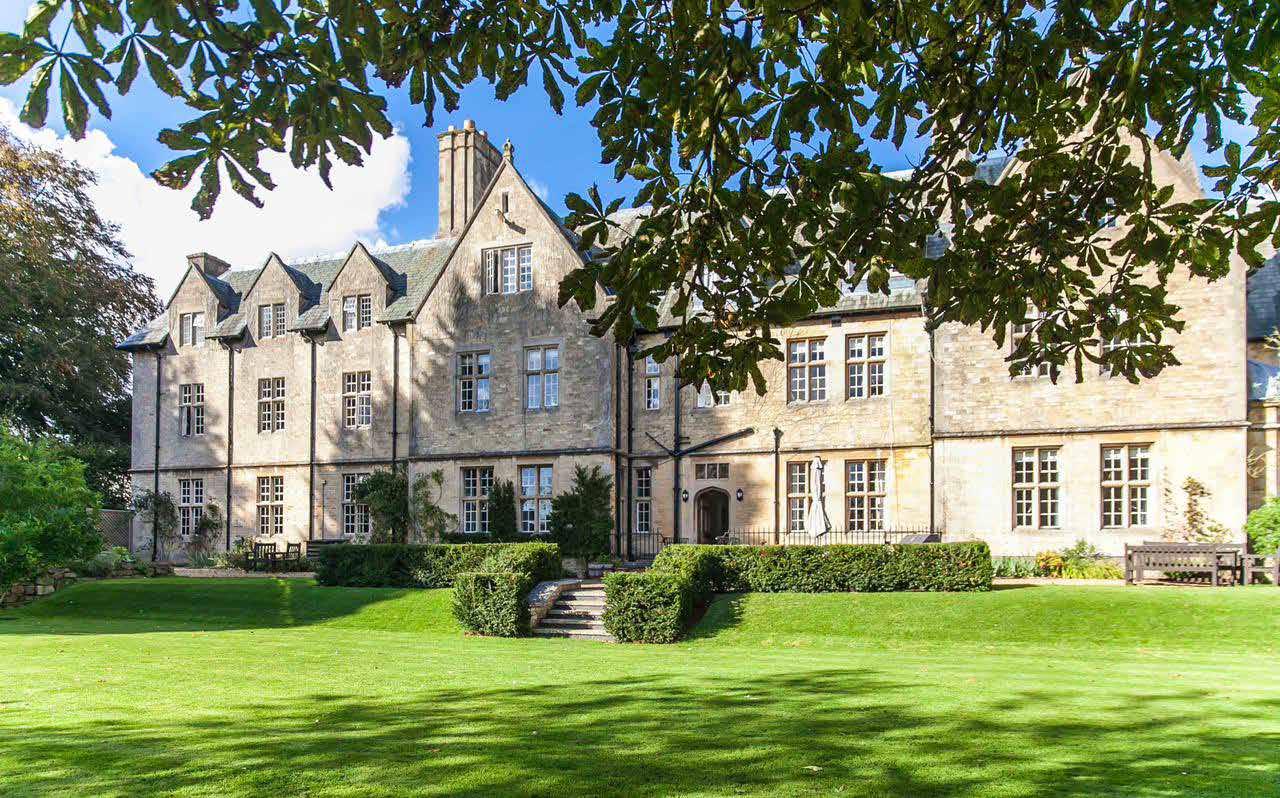
Uppingham Cairo is founded upon, and deeply connected to, the heritage, intellectual character and standards of Uppingham School UK, one of England’s most respected boarding schools since 1584. We share the same educational DNA: uncompromising academic ambition, a culture deliberately rooted in scholarship, and a commitment to forming curious, confident young people who will lead and contribute to the world beyond school. The Uppingham Cairo Sixth Form is not a copy of Uppingham; it is a contemporary translation of a centuries-old educational philosophy, authentically adapted for Egypt and the region, yet always held to the same expectations, thinking traditions and values as Uppingham in the UK.
Why Uppingham Cairo Sixth Form?
Two Academic Pathways. One Sixth Form Experience.
Whether pupils follow A Levels or the IBDP, they belong to a single Sixth Form community. They share Houses, Personal Tutors, Futures provision, leadership roles, study spaces and enrichment opportunities. Pathways differ by academic design; the experience does not.
What makes our Sixth Form distinctive
Uppingham Cairo Sixth Form offers genuine and authentic academic rigour, with teaching delivered by hand-picked, seasoned subject matter experts who know how to stretch, challenge and truly elevate Sixth Form learning. Our unique Futures programme ensures that every pupil is intentionally prepared for Sixth Form success and fully ready for a seamless transition to world-class universities. Beyond academic excellence, we deliberately cultivate leaders through our rich breadth of sports, societies and committees, enabling pupils to test themselves, take responsibility and grow in confidence. Above all, Uppingham Cairo Sixth Form holds a scholarly culture: celebrating thinking for its own sake and developing a lifelong love of learning that transcends examination success.
Pastoral & Academic culture
Our pastoral and academic culture is built upon high-value relationships between staff and pupils, enabled by class sizes capped at twelve and Personal Tutor groups of eight, where weekly one-to-one meetings ensure each pupil is known, supported and challenged as an individual. Personal Tutors play a central role in subject review, academic tracking and university preparation, working closely with subject teachers and the Futures team to ensure coherence across every pupil’s Sixth Form experience. Every pupil is a member of a House, led by a Housemaster or Housemistress (HSM), and House communities meet daily, strengthening identity, connection and belonging within the school. Sixth Formers live their days with pace and purpose: learning to balance the full spectrum of academic, co-curricular, sporting, ambitious and socially responsible commitments that shape them into thoughtful ‘Uppinghamians’. And in everything we do, we actively cultivate an environment where opinions are defended, debate is welcomed, research is normalised, innovation is expected, competition is healthy, entrepreneurship is respected, and rigour is non-negotiable.
Our Approach to Teaching and Learning
The Personal Tutor Independent Study
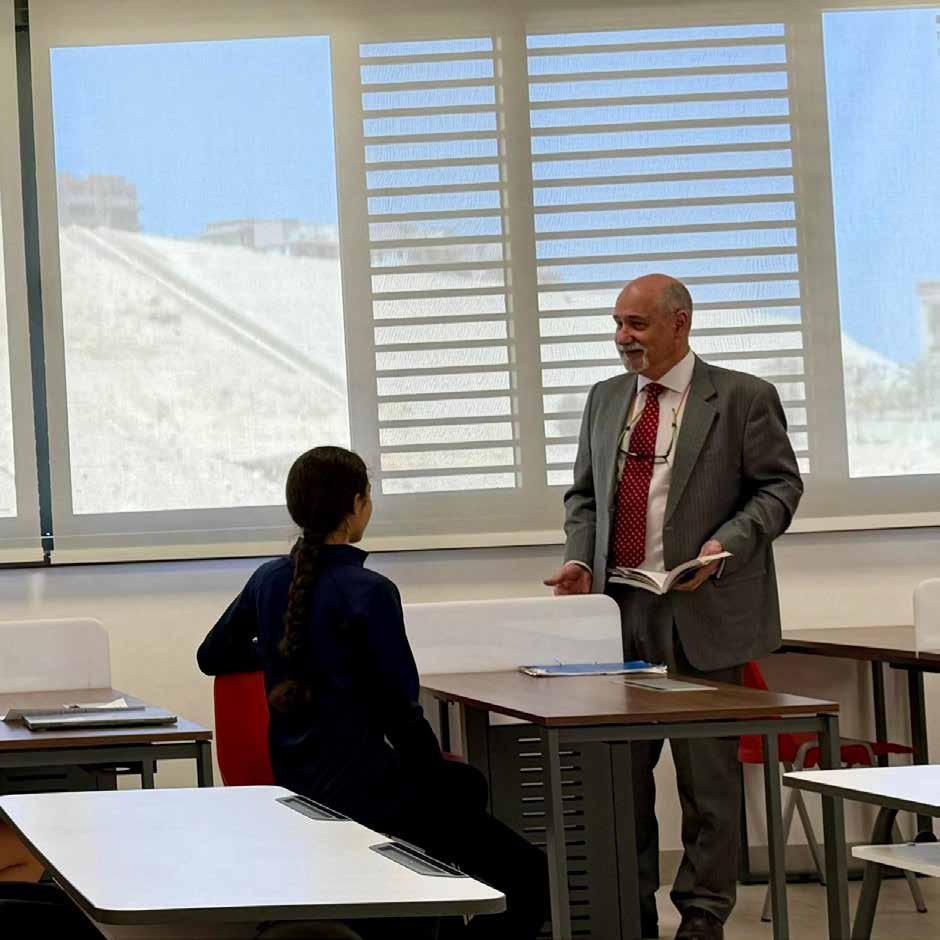
At Uppingham Cairo, our personalised tutor programme is a fundamental part of our approach to supporting each pupil's growth and wellbeing. Each Personal Tutor is responsible for only eight tutees, allowing for a meaningful and tailored relationship. Beyond daily monitoring, tutors dedicate time each week for a one-on-one discussion with their tutee, typically lasting around 20 minutes. As the closest member of staff to each pupil, the Personal Tutor monitors progress closely, providing early intervention and guidance wherever needed. They are the first port of call for pupils seeking support, whether academically, emotionally, or personally. In addition, the Personal Tutor acts as the primary point of contact for parents, ensuring open communication and a collaborative approach to helping pupils succeed academically and flourish as individuals.
Independent learning and genuine educational ownership are non-negotiable hallmarks of successful Sixth Form pupils, and we build these habits deliberately from the first weeks of the Lower Sixth at Uppingham Cairo. The Personal Tutor works one-to-one with them: setting goals, reviewing strategies, and supporting them to take increasing responsibility for their academic trajectory. Combined with our small class sizes, teachers track progress with precision, intervene early and coach pupils to think metacognitively about how they learn, not just what they learn. In this way we develop academic resilience, intrinsic motivation and the mindset that learning is something pupils actively drive rather than it being something that simply happens to them.
Personalised Learning & Mentoring
Our approach is personal by design. It begins before a pupil even starts Sixth Form, with careful conversations about their academic strengths and long-term ambitions, ensuring that the pathway they enter, be it A Level or IBDP is genuinely the right one for them. From there, subject selections are deliberately crafted to sit at the convergence of talent, interest and aspiration, creating an academically coherent programme. Each pupil is paired with a Personal Tutor chosen not just for expertise, but for alignment of interests and outlook, enabling the kind of authentic mentoring relationship that makes growth possible. Within subjects, small class sizes ensure meaningful teacher - pupil relationships where appropriate stretch, challenge and scholarly provocation sit alongside tailored guidance for further reading, research and enrichment.

Academic Programme
Curriculum Overview
A Levels
We monitor developments in university courses and requirements and provide expert advice to ensure that our pupils follow the pathway, subjects and specifications that best prepare them for the next stage of their education. A levels at Uppingham Cairo offer a broad range of subject options, enabling pupils to choose courses that suit their interests, aptitudes and aspirations. All A levels follow a linear model with all examinations at the end of the Upper Sixth. This allows time for in-depth study and research into the area of interest for the Extended Project Qualification, and the opportunity to challenge oneself through ‘The Sixth Form Futures Curriculum’. Most of our A level pupils will study three subjects from the start of Lower Sixth. Four subjects are only recommended if you wish to study both Maths and Further Maths.
The International Baccalaureate Diploma Programme
The IBDP is an international qualification, if pupils choose this pathway they will study three Higher Level subjects and three Standard Level subjects, enabling them to demonstrate both depth and breadth in their learning. They will also study the core elements of the IBDP, the Extended Essay (EE), Creativity, Activity, Service (CAS) and Theory of Knowledge (ToK), developing critical and reflective skills, alongside research skills and an appreciation of global issues. Selecting the correct path for your child is a big decision and it’s one our Sixth Form team are well accustomed to facilitating. Our highly experienced team will work closely with Sixth Form candidates to ensure they start on the right path for them as individuals.
Assessment,
Feedback and Academic Tracking
Academic progress in the Sixth Form is closely monitored and proactively supported. Regular internal assessments, combined with detailed teacher feedback and Personal Tutor oversight, ensure that pupils receive early guidance, targeted intervention and informed advice about their next steps. Formal assessments in the Lower Sixth play a critical role in shaping predicted grades and university references ensuring that advice is evidence based. These conversations also relate to application strategy and ensuring that pupils are neither over nor under stretched.
A Level Pathway
An overview
A Level is a British examination system that is internationally recognised, and some Uppingham Cairo parents may be familiar with the system from their own education. The A Level courses ensure that we maximise teaching and learning over the two years; all the subjects are taught as two-year courses, with all external written examinations to be taken in the summer of the Upper Sixth year. Internal school examinations for both A Level and IBDP pupils take place at the start of the Summmer Term in the Lower Sixth to provide information about their progress so far, and enable pupils to consolidate their learning as they move into the Upper Sixth.
We expect all pupils who opt for the A Level pathway to choose three A Level subjects. Those who choose Mathematics may choose further Mathematics as an additional A Level taking their total to 4.

Level 2 A Level 1
Level 3
A Level 4
Further Mathematics only
All A Level pupils will undertake the Extended Project Qualification (EPQ). The project is completed early in the Summmer Term of the Lower Sixth. The EPQ is highly valued by many universities.
The A Level system allows for a degree of specialisation through the Sixth Form, giving the experience of studying usually three or possibly four subjects in depth for two years. While specialisation can be attractive, pupils should bear in mind that they are preparing for a world of work that is rapidly changing. They will benefit from developing skills and experiences beyond their A Level subjects and will have the opportunity to do this through additional study for the Extended Project Qualification (explained at the end of this section) and extra- and super-curricular activities.
Universities have indicated that they expect the vast majority of candidates to have three A Levels. Many have also stated that they value the EPQ highly as it teaches pupils to be independent thinkers and equips them with invaluable research and extended essay writing skills.
Examinations
Pupils entering the Sixth Form in September 2027 will take all written examinations in May/June 2029.
The Extended Project Qualification (EPQ)
All A Level pupils at Uppingham Cairo complete the Pearson Extended Project Qualification during the Lower Sixth. This stand-alone qualification, worth half an A Level, involves a pupil-led research project usually resulting in either a 5,000-word dissertation or a practical artefact with an accompanying report, plus a presentation and Q&A. Built into the timetable, projects are supervised by an individual project supervisor, and pupils follow a taught skills programme covering time management, academic research, academic integrity and essay writing, supported by a dedicated EPQ team.
The IB Diploma (IBDP)

studies and through experiential learning within the school context and beyond. By nurturing a growth mindset and encouraging reflection in all aspects of their studies, we strive to ensure that pupils undertaking the IBDP develop into lifelong learners, motivated to effect positive change in their own lives and the global community (of which we are a part).
develop inquiring, knowledgeable and caring young people who help to create a better and more peaceful world through intercultural understanding and respect.
To this end the organization works with schools, governments and international organizations to develop challenging programmes of international education and rigorous assessment.
These programmes encourage students across the world to become active, compassionate and lifelong learners who understand that other people, with their differences, can also be right.”

The IBDP Curriculum

IBDP pupils must choose one subject from each of five groups (1-5) ensuring breadth of knowledge and understanding in English, a modern foreign, the social sciences, the experimental sciences and mathematics. For their sixth subject, pupils may choose either an arts subject from Group 6, or a second subject from Groups 2 to 4. At least three and not more than four subjects are taken at Higher Level (HL) while the other subjects are taken at Standard Level (SL).
We recommend that pupils take three HL and three SL subjects as there is no requirement to complete four HL courses and all universities base their offers on three HL subjects and a total number of points. Some pupils who are undecided will start with four HL subjects and decide which one to drop to SL, usually by the end of the first year. The main difference between Higher Level and Standard Level is the depth in which you cover the subject. It will vary from subject to subject but the differences could be in the depth of the content covered or in the level of questioning for the final exams.
Group 1
Group 2
Group 3
Group 4
Group 5
Group 6
Language A
Language B
Individuals and Societies
Experimental Sciences
Mathematics
Creative Arts and Electives
The IBDP Core
English Literature
French B, Spanish B
Business Management, Economics, Geography, History, Philosophy
Biology, Chemistry, Physics
Analysis and Approaches
Visual Arts or a second choice from Groups 2, 3 or 4
The Extended Essay (EE) asks pupils to engage in independent research through an in-depth study of a question which pupils devise relating to one of the DP subjects they are studying. The World Studies Extended Essay option allows pupils to focus on a topic of global significance which they examine through the lens of at least two DP subjects.
Theory of Knowledge course (ToK) is a holistic approach to thinking. Through stimulating group activities and discussions, it teaches pupils how to think and allows for a cross-disciplinary and pluri-dimensional understanding of what knowledge is and how we know things to be true or not. The thinking skills developed in ToK are universal and can be applied to all six subjects studied as part of the IBDP course and beyond.
Creativity, Activity, Service (CAS) involves pupils in a range of activities alongside their academic studies throughout the Diploma Programme. It encourages pupils to pursue new interests and challenges, develop their existing skills and passions and reflect on what these experiences have taught them through varied extra-curricular commitments. pupils are encouraged to participate in activities where they can: explore their Creativity; remain active and healthy through physical Activity; and volunteer for Service experiences which will help others and be of learning benefit to themselves. CAS is designed to help pupils learn even more about themselves and the world around them, and provide them with an even more vibrant and varied Sixth Form journey.
of the IBDP
Assessment
Pupils take written examinations at the end of the programme which are marked by external IBDP examiners. Pupils also complete assessment tasks in school, which are either initially marked by teachers and then moderated by external moderators or sent directly to external examiners. Depending on the subject, internal assessments are usually worth between 20 and 50% of the overall mark and are completed over the course of the two-year programme.
whole programme and to satisfactory participation in the Creativity, Activity, Service requirement. The highest total that a Diploma Programme pupil can be awarded is 45 points. (6 subjects x 7 points + 3 for core subjects = 45). The global pass rate for the IBDP is 81.26% with a global average score of 30.58 points.
Assessment is criterion-related, which means pupil performance is measured against pre-specified assessment criteria based on the aims and objectives of each

Subject Choices: A Level or IBDP
Pupils who decide to follow the A Level route will complete three A Levels and the EPQ (Extended Project Qualification) or four A Levels including Further Mathematics and the EPQ; experience has shown us that a greater number of A Levels than this compromises high grades and super-curricular activities.
If you decide to follow the IBDP route, you will have a wider choice, since you will be studying six subjects. However, do not worry if you are not as strong in some of these subjects as others. Pupils choose to study three of their subjects at Standard Level. This means that there is an appropriate opportunity for everyone to be successful.
(A Level and IBDP)
How do universities regard A Levels and the IBDP?
A Level and the IBDP represent two different philosophies of education, and university admissions tutors both here and abroad make offers to candidates taking either route. The IBDP is considered to be an excellent base for university study because encouragement of an enquiring, independent approach is embedded in the programme syllabuses. Universities also value highly the additional components of the EE and ToK which can build research and critical thinking skills. However, many A Level pupils are now developing their research skills through the EPQ and there are plenty of opportunities to develop your depth of knowledge through super-curricular and enrichment activities.
Pupils sometimes ask about comparative levels of depth of study. The IBDP is broader than A Levels, but Higher Level subjects are also studied in depth. Complementary subjects can be taken in both pathways and competitive universities will expect evidence that pupils have read beyond the confines of their syllabuses. Both A Level and IBDP pupils have achieved considerable success at UK universities which place an emphasis on depth of study, and at US universities which provide a broad Liberal Arts programme. A Level offers from UK universities are normally based on three subjects, and typical offers from the universities to which our pupils will be applying are in the range A*A*A - ABB. In our experience, IBDP offers from universities in the UK, USA and mainland Europe have compared favourably with A Level, with most offers ranging from 32 to 39 points out of 45, with a 6 or 7 in one or, very occasionally, two of the HL subjects.
Will my friendships be affected by the pathway I choose?
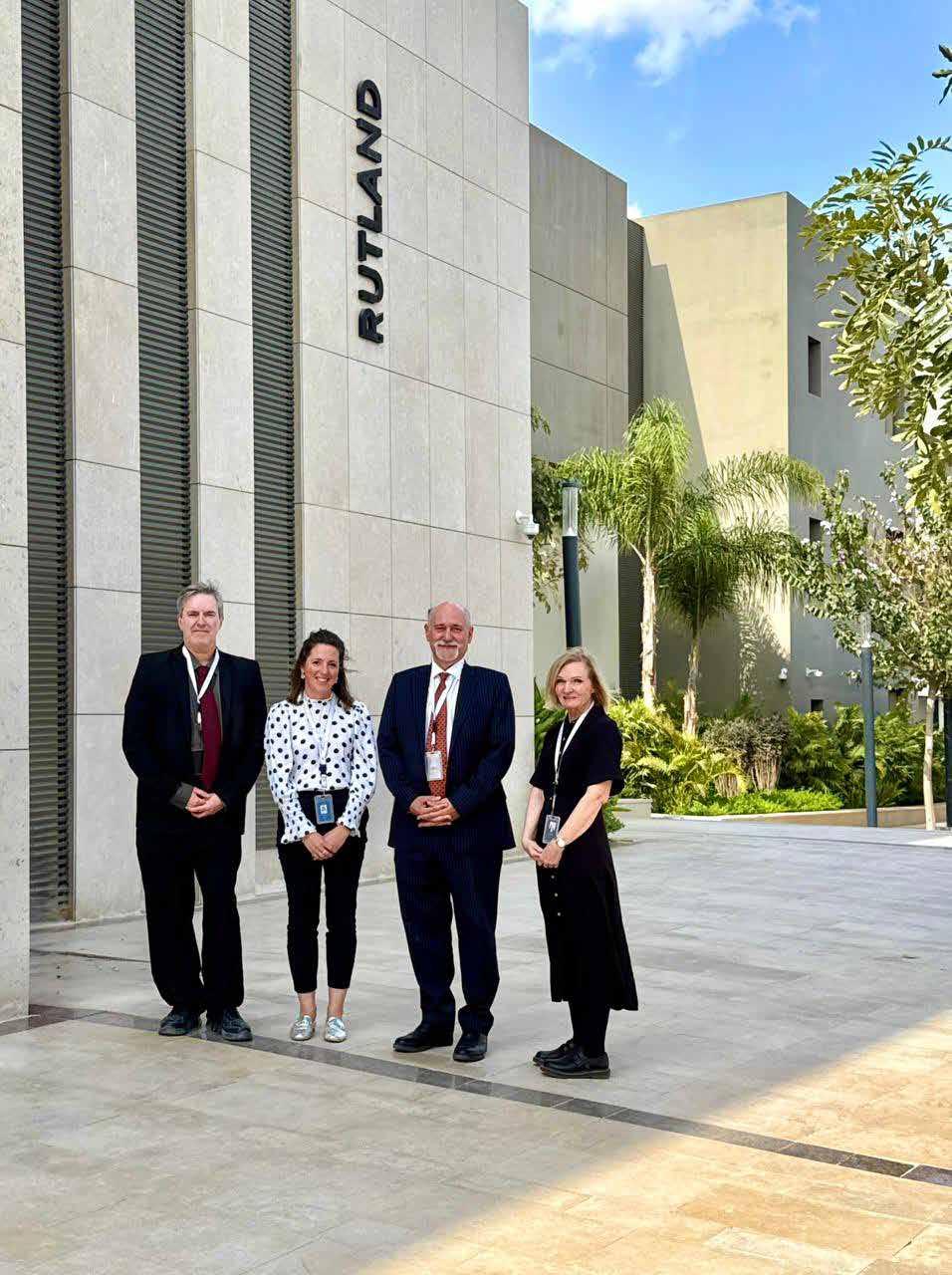
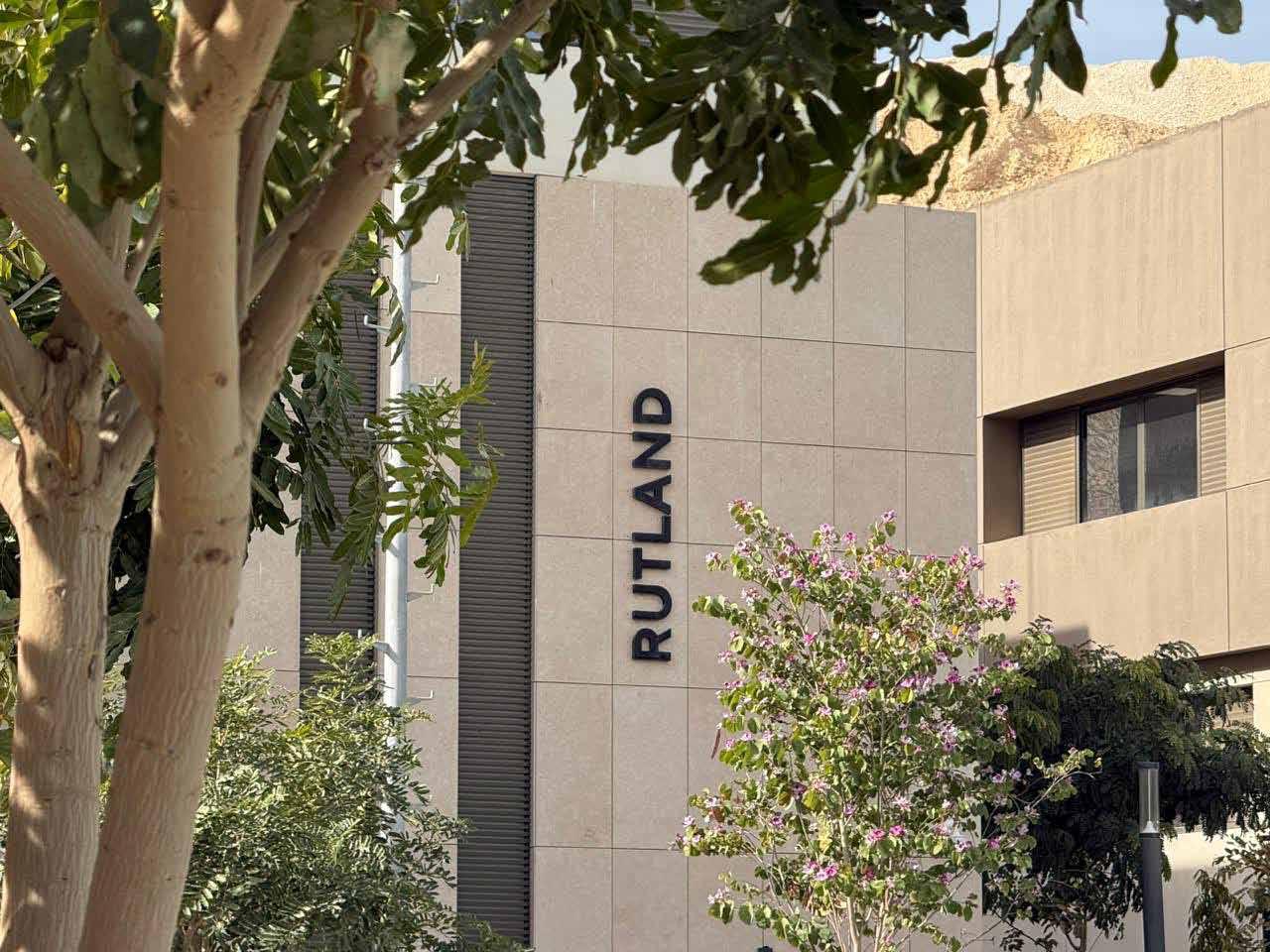
Choose the pathway that seems right for you. Good friendships depend on much more than your academic courses. In the Sixth Form, you meet new pupils because of your subjects, houses, tutor groups, the freedom of the Sixth Form building (Rutland), field or practical work, school trips, super-curricular and extra-curricular activities, your Higher Education aims, Upper Sixth positions of responsibility, and much more. Often pupils following either pathway will make new firm friends as well as retaining close long standing relationships.
What are the advantages and disadvantages of each route?
This is a difficult question to answer as it is very much a question of personal preference and the differences mentioned throughout this booklet will be seen as advantages or disadvantages by different pupils. The holistic nature of the IBDP ensures a balanced education, offering a wide range of study, the opportunity to keep career and higher education options open for longer and greater awareness of other cultures and communities. However, the A Level route allows free choice, within the confines of the timetable. Careful selection of three A Level subjects can also provide some breadth of further studies.

How do the different workloads compare? Is one pathway harder than the other?
Over the course of the two years, there is some difference between the workloads of those who study three A Levels and those who take the IBDP (21 lessons + TOK). The different timing of coursework deadlines creates different pressure points within both programmes; planning ahead and using holidays effectively is essential for both pathways. As far as levels of difficulty are concerned, it is very hard to get top scores in either pathway.
Do Medical Schools show any preference for A Level or IBDP pathways?
For Medicine, as for all subjects, the universities are keen to take strong and committed applicants from either route. Varied work experience is crucial and Chemistry at A Level/HL is required by all. The organisational and communication skills developed within the IBDP are highly valued; A Level pupils can develop these through extra-curricular activities and the EPQ.
Which is more important, subject choice or pathway choice?
All pupils at Uppingham Cairo have the ability to take either pathway but your subject preferences may help you to make a final decision. Please bear in mind that choosing A Level or HL subjects you enjoy and are good at is the greatest recipe for success. You should also look carefully at the section entitled ‘Expected A Level and IBDP requirements for degree courses’ which gives specific advice. If you are considering a ‘new’ subject like Economics, make sure you have a clear understanding of what this subject will involve. Sometimes pupils select the IBDP but are not so keen on, or skilled in, one or two of the required subject areas, eg. Mathematics or Languages. These would be best taken at Standard Level and you will probably find that you enjoy them much more than you expected. However, as you will be aware from reading this booklet, none of these choices should be made in isolation. There is plenty of advice and guidance available in school.

Futures
Deciding one’s future is far more complex than simply choosing what to study and where to study it. It is a deeply personal process that must be thoroughly informed, intentionally supported, and calmly provide the freedom to rethink, refine and recalibrate as pupils grow. Our Futures Programme at Uppingham Cairo has been purposefully designed to guide, mentor and challenge each young person through their transition into Sixth Form, through the two years of, and onto the pathway that is the right fit for their emerging identity, ambition and potential. It is a programme that moulds around the individual, recognising that most Sixth Formers are still in the process of deciding their future.
In the first half of the Winter Term, the Futures Programme focuses on mastering the habits, disciplines and academic behaviours required for Sixth Form success: the purposeful use of study periods, business-like routines, high-quality note-taking, and evidence-based revision techniques. The second half of the Winter Term pivots into the exploration of fields of academic interest and, crucially, why. Pupils begin to investigate possible university destinations and will receive multiple talks on global admissions processes, enabling them to understand the landscape early and make informed decisions.
Early in the Spring Term, the Futures Programme moves into preparation for independent living at university. Financial management, transport, cooking, washing and other essential life skills are explicitly taught and practised. At this stage we also identify our Highly Academic and Competitive Courses (HACC) group for pupils who may credibly pursue early applications to Oxford, Cambridge, Medicine, Veterinary Science or Dentistry and begin the specialist preparation. Pupils considering US universities begin structured preparation for the Common App at this time. Later in the Spring Term, pupils undertake full UCAS application training, including talks from university Admissions Tutors.
The Summmer Term of the Lower Sixth is devoted to active research, campus comparison and preparation for aptitude assessments, including UCAT (Medicine), LNAT (Law), MAT / TMUA (Maths or Computer Science), TSA (Economics, PPE, Humanities for Oxford), Cambridge course-specific CTs, PAT (Physics at Oxford), CAT (Oxford Classics) and more. Throughout this entire journey, pupils are supported by the combined expertise of their academic teachers, their Personal Tutors, the Head of Careers and the Head of Sixth Form ensuring that every young person is not only guided, but empowered, to step into a future that is deliberately chosen and confidently owned.
Courses
Expected A Level and IBDP Requirements for Degree
Both A Level and IBDP qualifications are equally acceptable for entry to universities in the UK and overseas. Subject requirements for UK degree courses are listed below.
For popular courses such as Economics, English Literature, History, Medicine, or Psychology, all of the competitive universities require at least grades AAA at A Level or, usually, a score of 37-39 IBDP points; the most competitive require A*AA (or even occasionally A*A*A) or 7 points in one or more HL subject. Universities such as Bath, Bristol, Durham, Imperial, Manchester, UCL and Warwick may also require A*AA or 7 points in a HL subject for courses in Sciences, Engineering or Mathematics; a few of these courses will require IBDP pupils to have 7 points in a specific HL Science or Mathematics and A Level pupils to have A* in a specific Science or Mathematics.
Cambridge prefers those who are intending to study for a humanities, social sciences or arts degree to have studied two of the following subjects: English Literature, History, Mathematics or a Modern Foreign Language. Cambridge currently requires a minimum of A Level grades of A*AA for all Arts courses and for Psychological and Behavioural Sciences, and A*A*A for all Science courses, Computer
Science and Economics. Irrespective of course, the standard IBDP requirement is 40-42 points, including 776 in the three Higher Level subjects. In practice, however, higher (or lower) offers are sometimes made to both A Level and IBDP pupils; these are decided on an individual basis.
Oxford currently requires A Level grades of AAA for all Arts courses and for Human Sciences, A*AA for most Science courses, Economics and Management, Geography, and Psychology, Philosophy & Linguistics, and A*A*A for Chemistry, Engineering and Mathematics courses. Irrespective of course, the standard IBDP requirement is 38-40 points with 666-776 in the three Higher Level subjects. Unlike at Cambridge, these entry requirements are standardised across the university and are rarely raised or lowered.
Pupils applying for Medicine, Dentistry or Veterinary Medicine, for a range of courses at Oxford and Cambridge, and a few courses at other universities (eg Mathematics at Warwick or Imperial) are also required to sit specific Admissions Tests, either in October/November of the Upper Sixth year or at interview. UCAT for medicine or dentistry is sat during the Lower Sixth summer holiday. Those applying for Law should note that the LNAT admissions test is taken externally at approved test centres.
The table below indicates usual entry requirements. However, the list is not exhaustive and it is important to check the exact requirements for a course before application as requirements can change.
Degree Course
Anthropology
Archaeology
A Level Requirements
Biology is preferred, English would be helpful
IBDP Requirements
Biology HL and English Literature
Architecture
Art & Design
Geography or History would be helpful
Most courses prefer a mixture of Arts and Science subjects. For some courses (eg Bath)
Mathematics or Physics is highly desirable, and Fine Art is required or preferred. A portfolio of artwork and an interview is usually required.
Geography or History HL may be required
HL Mathematics or Physics is preferred by some universities (eg Bath). For some courses
SL/HL Visual Arts is required. A portfolio of artwork and an interview is usually required.
It is normal to progress to Fine Art, Fashion Design, Graphic Design, 3-D Design, Theatre Design and other Art & Design degree courses from a one-year Art Foundation course.
Selection for entry to Art Foundation courses is based on the A Level Art portfolio and an interview.
Selection for entry to Art Foundation courses is based on HL Visual Arts portfolio and interview.
Biochemistry
Chemistry plus at least one other Science/Mathematics. Some courses (eg Exeter, St Andrews and KCL) specify Biology. Oxford recommends Mathematics. UCL requires Chemistry, Biology and Mathematics.
HL Chemistry plus at least one other HL Science/Mathematics. Some courses specify the second HL must be Biology (eg Exeter, St Andrews and KCL). Oxford recommends Mathematics.
UCL requires HL Chemistry, Biology and Mathematics.
Biology
Biology plus at least another Science/ Mathematics. Some universities (eg Oxford, Imperial) require Mathematics and prefer a third science
At least two HL sciences/ Mathematics required, one of which should be Biology. Some universities (eg Imperial) require Mathematics HL and prefer two HL Sciences.
Degree Course A Level Requirements
Business / Management
A mix of humanities and Science/ Mathematics is strongly recommended. Mathematics will be required by some courses (eg LSE, UCL).
IBDP Requirements
A mix of humanities and Science/ Mathematics HLs is strongly recommended; HL Mathematics is required by some courses (eg LSE).
Chemistry
Chemistry is required. Maths is required by some (eg Oxford) or strongly preferred. If Maths is not studied, another Science is required.
Computer Science
Maths and often Further Maths required
Computer Science is desirable but not essential. Some universities e.g. Manchester require a science in addition to Maths.
Dentistry Chemistry and Biology and strong GCSE profile with a minimum of 6 grades 7-9.
HL Chemistry required. Some courses also require HL Maths. If Maths is not studied at HL, another Science HL is required plus a high score in Maths SL.
HL Mathematics is required. Some universities e.g. Manchester require a science in addition to Maths.
Drama
Economics
English Literature or Drama usually required, some will accept another essay based subject.
Maths almost always, some also require Economics. Some of the more competitive universities also require Further Maths. All universities also require at least 1 essay subject.
HL Chemistry with another HL science or maths, some require HL Biology. Strong GCSE profile also required: minimum 6 grades 7-9.
A small number of universities will accept HL English, History, or Theatre.
Requirements vary between HL or SL Maths, most will expect grade 6 or 7. Some require Economics HL.
Degree Course A Level Requirements
Engineering
All require Maths and Physics, Further Maths would be a big advantage.
English Literature
English Literature
Geography
Geography
History
IBDP Requirements
All require HL Maths and Physics, some require a second HL Science.
HL English
HL Geography
HL History History
Law No specific subjects but at least 1 essay subject. Edinburgh requires English Literature / Language.
Linguistics
Mathematics
Medicine
Most require English, Maths or science can be helpful. A language would be required for studying Linguistics with a language.
Maths usually at A or A*, Further maths is usually an advantage. Chemistry or Physics may be preferred for the more competitive courses.
Chemistry and Biology, maths is common. EPQ is very helpful. Most universities require the exams to be taken in one sitting. A strong GCSE profile required: most grades 8-9.
No specific subjects but at least 1 HL essay subject. Edinburgh requires English Literature / Language.
HL English would be required, HL language would be required for Linguistics with a language.
HL Maths is required, an HL science or HL Economics are also preferred.
Most require HL Biology and Chemistry, some require HL Maths. A strong GCSE profile required: most grades 8-9.
Degree Course A Level Requirements
Modern Languages A Level in the chosen language. Some languages (Italian and German) can just require any language at A Level.
IBDP Requirements
For French, German, Spanish – HL in that language. For German and Italian, any language at HL may be OK in some cases.
Music
Natural Sciences
Music and usually ABRSM Grade 7/8, some also specify Grade 5 piano.
HL Music and usually ABRSM Grade 7/8 in an instrument also required. Some courses will specify Grade 5 piano.
HL Maths and a science required. Maths and a science required, some will want two sciences.
Philosophy No specific subject required although Religious Studies would provide a useful foundation.
Physics Maths and Physics. Some universities will want Further Maths
Physiotherapy Most will require Biology, those that don’t will want a science. Some may require a second science and / or maths.
Politics Some require one Social Science or a Humanity. History, Politics or Economics would provide a good foundation.
No specific subject required although HL/SL Philosophy would provide a useful foundation.
HL Maths and HL Physics
HL Biology usually required, some will require a second HL science or Maths.
HL in a Social Science or Humanity subject (History, Global Politics, or Economics at HL / SL would provide a good foundation).
Degree Course A Level Requirements
Politics, Philosophy and Economics (PPE)
Some require Maths, at least one of History, Politics, Philosophy, or Economics would provide a good foundation.
Psychology Universities are increasingly looking for one or two sciences (which may include Geography) or Maths. A strong EPQ is also desirable.
IBDP Requirements
Some require HL Maths, or a strong SL Maths (6/7). One of History, Philosophy, Global politics or Economics at HL would provide a good foundation.
A science (which may include Geography at some universities) or Maths at HL will be required or preferred by most universities. Some require 2 sciences.
Sociology
Veterinary Science
No specific requirements. Economics, English or Politics could be helpful. Some prefer at least one humanity.
All Veterinary schools will expect performance of AAA/A*AA. Chemistry and at least one other science are required, some specify Biology. A strong GCSE profile is required; minimum of five GCSEs at grades 7-9.
No specific requirements, but a social science such as Economics, Geography or Global Politics at HL could be helpful.
HL Chemistry and often HL Biology with excellent grades. A strong GCSE profile is required; minimum of five GCSEs at grades 7-9
Provisional Timeline for Lower and Upper Sixth
Winter Term 2027
Spring Term 2028
Lower Sixth
• Talks from US, Canadian and European college representatives.
• US Admission test preparation classes (extra cost).
• Information evening for Lower Sixth parents.
• Parents’ evening.
• Introduction to the Extended Essay and EPQ, and allocation of supervisor.
• Evening meeting for pupils and their parents about Higher Education choices.
• Higher Education Forum - an evening which offers Lower Sixth pupils and their parents an opportunity to attend talks describing degree courses in a range of academic disciplines.
• Individual meetings about Higher Education options commence in January.
Summmer Term 2028
• School examinations for pupils on the IBDP and A Level pathways.
• Individual meetings and advice continue.
• Planning and booking attendance at university open days.
• Parents’ Evening.
• UCAS and Higher Education preparation: navigating the UCAS Hub application, further advice and guidance on course and university choices.
Pupils receive Information for Higher Education Applicants: The Application process.
• Advice sessions (group and individual) for applicants to Oxford, Cambridge, US, Canadian and European universities, and Art Foundation courses.
• Subject specific enrichment sessions in preparation for applications.
• Preparation sessions for university admissions tests (UCAT, LNAT, TSA), weekly practice sessions available
Winter Term 2028
Spring Term 2029
Upper Sixth
• Advice and assistance with applications given by Personal Tutors and the Sixth Form Team.
• Weekly university preparation sessions to help prepare for interviews and admissions tests.
• Early applications should be submitted by 8 September. Practice interview evening in late October for applicants to Oxford and Cambridge, in conjunction with Uppingham UK, and for courses that interview as part of the selection process. Further practice provided by departments in November.
• University offers begin to be received in late October.
• US early application deadline is 1 November.
• Applications to Canadian universities and other overseas universities should be submitted during the Winter and Spring term (deadlines vary).
• University admissions tests are taken between mid-October and early November.
• University interviews commence in late November/early December.
• US Early Application decisions received around 15 December.
• School examinations.
• US Regular Decision deadline is 1 January.
• Parents’ Evening.
• University offers continue to be received until April/May.
• Candidate decisions about Firm and Insurance choices made in early May.
• US Regular Decisions received by 1 April.
• US College Decision Day is 1 May.
Summmer Term 2029
• IBDP examinations start at the end of April/beginning of May.
• A Level examinations May-June.
• IBDP results early July.
• A Level examination results mid-August (date tbc).
• Advice and guidance from relevant staff in post-results period
September 2029 Post-results applications for Higher Education are completed. These pupils receive a similar programme of advice and guidance to pupils who made an application in their Upper Sixth year.
Entry Requirements
The demands that Sixth Form subjects make are considerable. You need to be mature and well-organised, and start working as soon as you enter the Sixth Form. Higher education places are competitive, and the reference the School provides on the UCAS application form has to be based primarily on your performance in the Lower Sixth year, assessed by School exams towards the end of that year and tests at the beginning of the Upper Sixth.
For these reasons there is a minimum standard we require from pupils joining the Sixth Form:
• At least three grade 7s and three grade 6s at GCSE.
• To continue a subject into the Sixth Form from GCSE (see exceptions for Maths, Science and Modern Languages below): grade 6 is the minimum; however, we would recommend at least grade 7 at GCSE to continue on to a subject at A level
This tariff is applied in your best interests.
Those who achieve less than this will struggle to perform well in the Sixth Form at Uppingham Cairo. In most cases only grades 7-9 at GCSE indicate that you are likely to gain A*-C grades at A level in that subject (for Maths, the Sciences and Modern Languages it is 8-9).
In addition to our general tariff for Sixth Form entry, there are some subject-specific requirements for study into the Sixth Form:
• Mathematics requires 8-9 at GCSE. Further Maths requires a 9 at GCSE.
• Biology, Physics and Chemistry require 8-9 at GCSE . A 7 in Maths GCSE is also required to study Biology and Chemistry at A level, and at least an 8 in Maths to study Physics. Pupils opting for Physics are strongly advised to take A level Maths in the Sixth Form.
• New joiners in the Lower Sixth offering Dual Award Science must achieve grade 8 at GCSE to study a Science subject alongside the GCSE Maths requirement for that Science.
• Modern Foreign Languages (French, Spanish) require 8-9 at GCSE.
Facilities
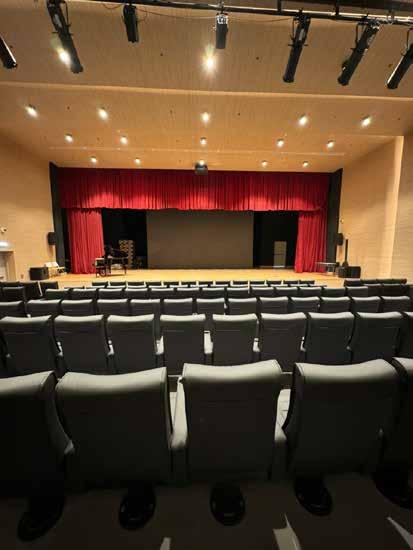
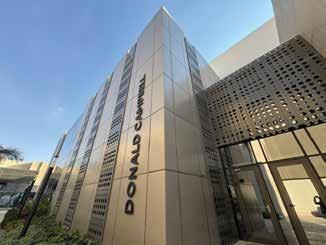
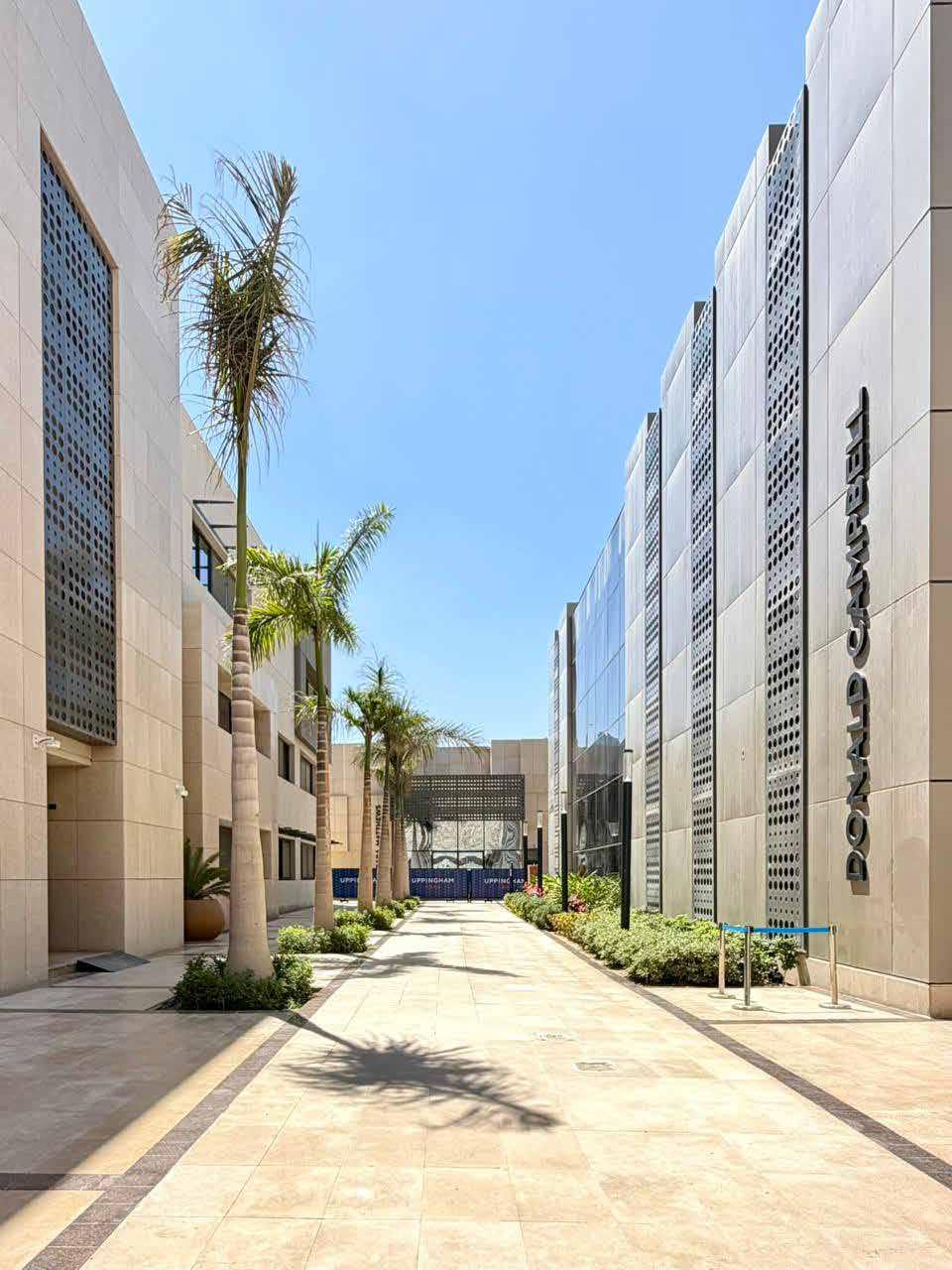
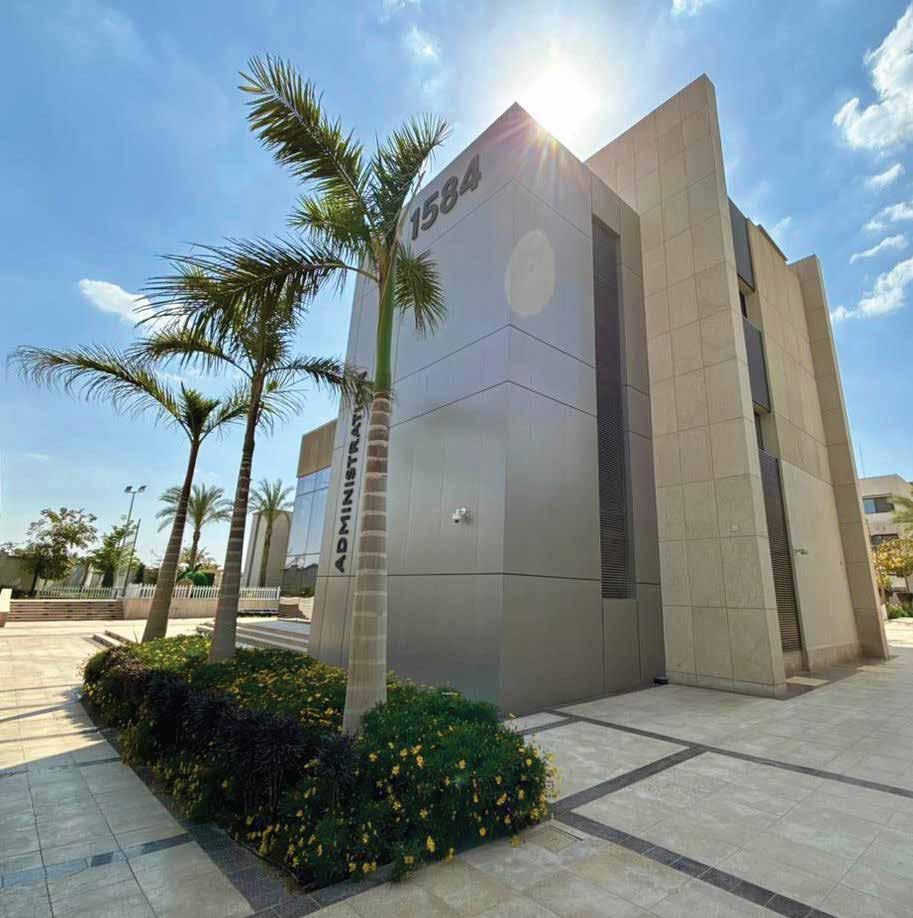
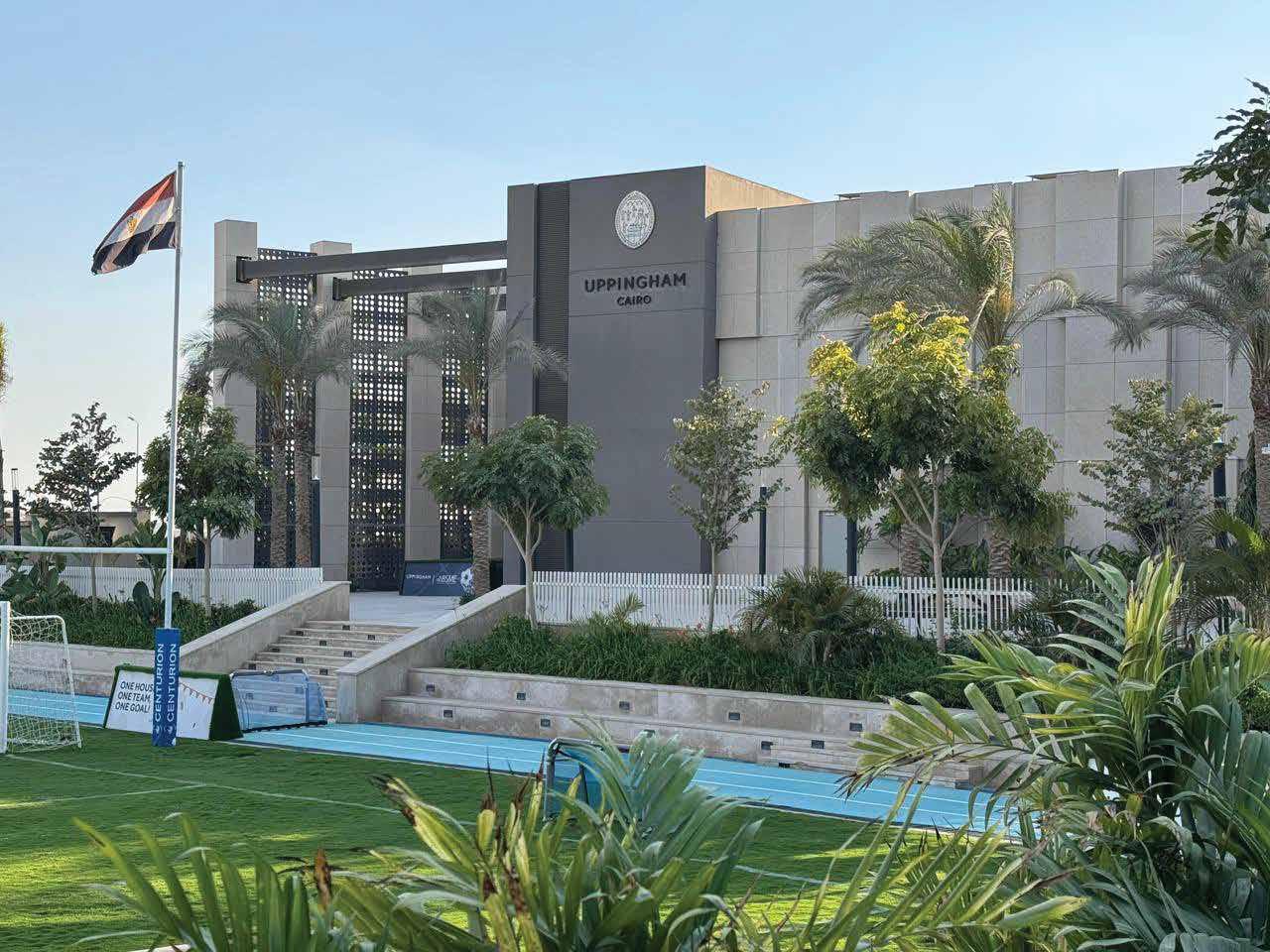
Our Sixth Form is housed within a state-of-the-art building exclusively designed for senior learners, giving them a genuine sense of independence and ownership of their environment. Within this dedicated Sixth Form space, pupils benefit from specialist classrooms, laboratories and workshops, as well as quiet private study rooms and seminar-style spaces for tutorial work. At the heart of the building sits an open communal atrium deliberately designed to spark the rich academic conversations that take place between pupils, and between tutors and tutees, across a range of relaxed lounge settings. Sixth Form life is supported by a coffee-shop style kiosk and outdoor lounge terrace, creating the tone of a pre-university environment. The wider campus includes our Performing Arts Centre with a large theatre, drama rehearsal rooms, music practice studios and a dance studio.
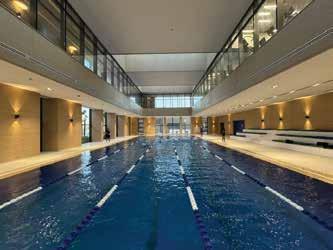
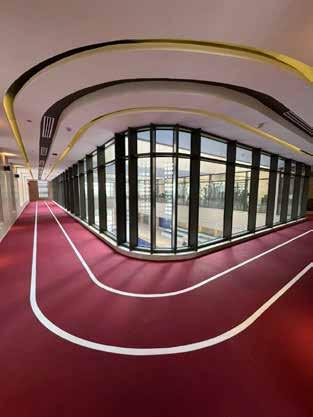
Our state-of-the-art sports complex ensures that wellbeing and performance are developed alongside scholarship, with access to a swimming pool, basketball court, padel courts, tennis courts, football pitch, squash facilities, golf simulator, free-weights and fitness room, and an indoor running track amongst various other specialist facilities.
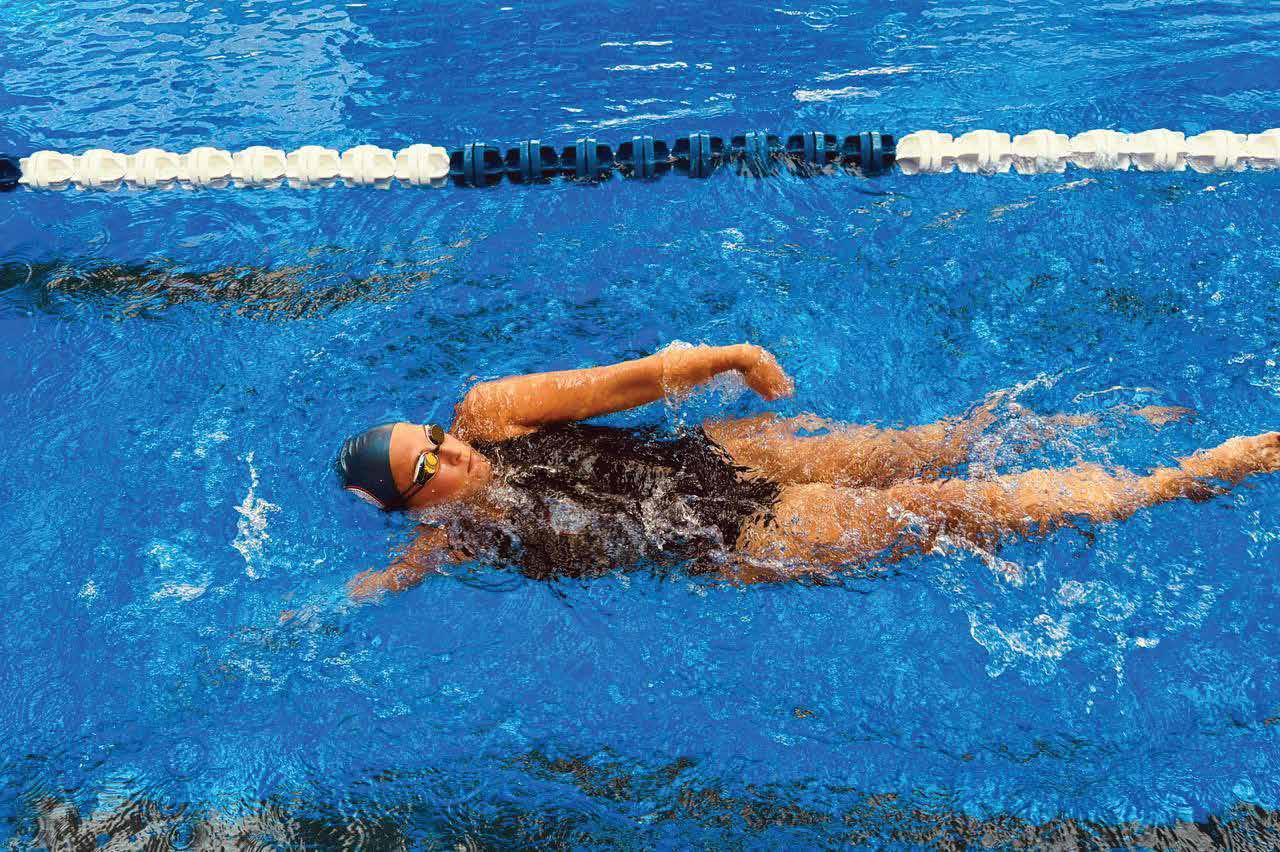
opportunities and world-class academy programme on offer. Pupils remain on campus through the extended school day, allowing them to balance rigorous study with elite-level training and enrichment through our mostly on-site partnerships with: Rafa Nadal Tennis, NBA Basketball, Chelsea Football Club, Paulina Nikolova Gymnastics, Best Swimming and King’s Polo Club. This structure provides the time, consistency and the professional environment required for academic focus, high-performance sport and personal development to co-exist, and gives Sixth Formers a realistic taste of the disciplined independence they will need at university and beyond, all while returning home each evening.
Scholarships
What does an Uppingham Cairo Sixth Form Scholar look like?
Uppingham Cairo Sixth Form Scholars should demonstrate, for example, the same potential as might be expected of intended Oxbridge entrants. While we are looking for candidates who also share the same values as us at Uppingham Cairo, such as being forward thinking, innovative and future-facing, we look for our Scholars to be intellectually and independently inquisitive, critical and lateral in their thinking, academically resilient, and engaged and proactive in their own academic learning.
With our Scholars, we aim to excite intellectual curiosity and create self-sufficient pupils who are stretched, challenged, and imbued with thinking skills such that they can thrive academically, engage intellectually with their learning, and achieve excellent outcomes.
We look for the following skills in our prospective and successful candidates:
• Critical thinking and the ability to question
• The ability to make links across ideas
• The ability to reflect on criticism or different ideas
• The ability to absorb and make further decisions based on (new) information given
• A true undirected desire to know, to further interest, to learn for learning’s sake
• Further information regarding our Sixth Form Scholarship can be found in our Scholarships Guide
Parent Partnership The Parents’ Circle
The Uppingham Cairo Parents’ Circle plays a vital and active role in the life of the school. It is a partnership forum through which parents engage meaningfully with leadership, support the strategic enrichment of school culture, and contribute to the vibrant community life that surrounds our pupils. Through events, volunteering, professional expertise, and constructive dialogue, the Parents’ Circle strengthens the educational ecosystem in which our young people grow. It acts as a channel for informed parental voice, promotes shared ambition and values, and enables families to work alongside the school in shaping opportunities, celebrating achievement, and enhancing the overall experience of every Uppingham Cairo pupil.