
KINTSUGI

Howdo werepairwhat’s broken?
Run The World 2026ISSUE1
ACKNOWLEDGEMENT OF COUNTRY
We would like to acknowledge the Traditional Custodians of the lands throughout Australia on which our editorial team and readers reside.
We acknowledge their ancestors, their diverse and interconnected languages, their cultural practices and customary laws, and recognise their continuing connection to land, sea, and community.
We pay our respects to any Elders past and present, and extend that respect to any Aboriginal and Torres Strait Islander people reading this publication.
EDITOR’S ADDRESS
Hi everyone!
Welcome to the first issue of Run the World 2026, titled ‘Kintsugi’. Following our last issue, ‘Fractures and Fictions’, published in 2025, this theme refers to the traditional Japanese practice of repairing broken ceramics with golden lacquer, and invites our readers to join us on a journey of restoring the fractures in our legal, cultural, and social systems.
In this issue, our writers explore a wide variety of issues, raising key questions on the experiences of women in both the legal system and wider society. These pieces draw on contemporary sociocultural issues and offer unique perspectives that challenge and disrupt the longbroken status quo.
Thank you for your time in joining us on this important dialogue, and we hope these pieces may resonate with your experiences or offer a fresh perspective that you will take on board.
Angelina Tang 2026 Women’s Officer
ACKNOWLEDGEMENTS
WOMEN’S OFFICER
Angelina Tang
WRITERS
Alannah Byrne
Alicia Von Hausswolff
Juhlin
Amelie Archer
Jasmine Tanazefti
Kainaat Ali Sukhera
Kesar Sarwara
Mica Casarotto
Reiyan Sahul
EDITORS
Caroline Sinn
Devika Choudhary
Elanah Sebastian
Jhaanavi Karunapalan
Julia Tan
Peoly Gunaratne
Zoya Zoya
GRAPHICS TEAM
Abbey Glendenning
Amy Santos
Angelina Tang
Anika Bahinipati
Ria Matharu
Sophia Pastoral


D i s c l a i m e r : T h i s c o n t a i n s
d i s c u s s i o n a b o u t f o r c e d
m a r r i a g e , h o n o u r k i l l i n g s , a n d
s u i c i d e . R e a d e r c a u t i o n i s
s t r o n g l y a d v i s e d . C o n t a c t t h e
h e l p l i n e i f n e e d e d . T h i s a r t i c l e
d o e s n o t i n t e n d t o o p p o s e o r v i l i f y a n y r e l i g i o n o r c o u n t r y .
T h e a r t i c l e r e c o g n i s e s a n i s s u e
t h a t i m p a c t s p e o p l e w i t h i n t h e
r e s p e c t i v e c o m m u n i t y .
1 8 0 0 R e s p e c t : c a l l
1 8 0 0 R E S P E C T o n 1 8 0 0 7 3 7
7 3 2 , t e x t 0 4 5 8 7 3 7 7 3 2 , 1 8 0 0
R e s p e c t H e l p l i n e
M y B l u e S k y : c a l l 0 2 9 5 1 4
8 1 1 5 , t e x t 0 4 8 1 0 7 0 8 4 4 , o r
e m a i l h e l p @ m y b l u e s k y . o r g . a u
L i f e W i t h o u t B a r r i e r s : 1 8 0 0
4 0 3 2 1 3
L i f e l i n e 1 3 1 1 1 4
H o n o u r k i l l i n g s a r e c o u n t e r i n t u i t i v e . R a t h e r t h a n
r e s t o r i n g t h e h o n o u r o f f a m i l i e s a n d m a i n t a i n i n g t h e
i n t e g r i t y o f c o m m u n i t i e s , h o n o u r k i l l i n g s p e r p e t u a t e
p a t r i a r c h a l a n d m i s o g y n i s t i c v i o l e n c e a g a i n s t w o m e n ,
s u s t a i n t h e c u l t u r a l o p p r e s s i o n o f w o m e n , a n d d i m i n i s h e s
t h e s t a t u s o f w o m e n i n b o t h We s t e r n a n d n o n - We s t e r n
s o c i e t i e s D o g a n s u g g e s t s t h a t t h e c o n c e p t o f h o n o u r
k i l l i n g s i s d i f f e r e n t f r o m s i m p l y “ r e p u t a t i o n a n d p r e s t i g e ” ,
i m p l y i n g t h a t i n s o m e c u l t u r e s h o n o u r i s d e e m e d t o b e
s a n c t i f i e d , w i t h “ l o s s o f h o n o u r ” e q u a t e d t o l i f e I n i t i a l l y ,
I t h o u g h t t h i s v i e w h a d m e r i t a s a n a v e r a g e i n d i v i d u a l

u p h o l d s t h e i r h o n o u r a g a i n s t t h e i r t r e a t m e n t ( o r p e r c e i v e d
s t a t u s i n t h e w i d e r c o m m u n i t y I w i l l b e e x p l o r i n g t h i s
i d e a / n o t i o n / c o n c e p t t h r o u g h t h e c a s e s t u d y o f S h a f i l e a
A h m e d a n d h e r s t o r y . T h e s e h o n o u r k i l l i n g s a r e j u s t i f i e d
b a s e d o n a p e r s p e c t i v e t h a t e m p h a s i s e s c o n s e r v a t i v e
c o n c e p t s o f m o d e s t y a n d h o l d s t h a t f a m i l y h o n o u r w i l l b e
r e s t o r e d o n c e a n h o n o u r k i l l i n g h a s t a k e n p l a c e . E v e r y
h u m a n h a s a n i n h e r e n t r i g h t t o l i f e , a n d k i l l i n g a n i n d i v i d u a l d u e t o c u l t u r a l p r e s s u r e i s u n d u l y u n j u s t i f i e d 2 1 2
1 R e c e p D o g a n ( 2 0 1 6 ) ‘ T h e D y n a m i c s o f H o n o r K i l l i n g s a n d t h e P e r p e t r a t o r s ’
E x p e r i e n c e s ’ , H o m i c i d e S t u d i e s , 2 0 , 1 , 5 3 , 5 4
2 I b i d





T h i s t h r e a t o f w o m e n e x p e r i e n c i n g G B V ( g e n d e r -
b a s e d v i o l e n c e ) i s u s u a l l y i n h e r e n t i f t h e y l i v e i n t h e
‘ h o n o u r ’ s y s t e m w h i c h s u g g e s t s t h a t f o r c e d v i o l e n c e
i s b o u n d t o h a p p e n i f t h e y d o n o t h a v e a t h r e a t t o
t h e i r l i f e T h e r e p r e s e n t a t i o n o f v i o l e n c e a g a i n s t
w o m e n i n B r i t i s h S o u t h - A s i a n c o m m u n i t i e s a d h e r e s t o g e n d e r h i e r a r c h i c a l d o m i n a n c e G i l l e x p l a i n s h o w
h o n o u r - b a s e d v i o l e n c e ( H B V ) c o n t e n d s t o b e s e e n a s
a n o r i e n t a l i s t s t r u g g l e r a t h e r t h a n p a t r i a r c h a l a n d
c u l t u r a l o p p r e s s i o n w h e r e t h e s t r u c t u r e s o f I s l a m i c t r a d i t i o n s a r e p r e v a l e n t I n t h e B r i t i s h m e d i a , S o u t h
A s i a n s , m o s t p a r t i c u l a r l y P a k i s t a n i s a r e p a i n t e d a s
“ b a r b a r i a n ” p o s t 9 / 1 1 , d u e t o t h e i r c o n n e c t i o n w i t h I s l a m , w h i c h i s b a s e d o n H B V ( H o n o u r - b a s e d
v i o l e n c e ) a l t h o u g h h o n o u r k i l l i n g s e x i s t i n a l l
c u l t u r e s . H B V a r e o f t e n c o n t r o l l e d b y i z z a t
( r e s p e c t / h o n o u r ) a n d s h a r a m ( s h a m e ) , w i t h a r e c e n t s u r v e y s h o w i n g t h a t B r i t i s h A s i a n s ( 4 3 1 % o f t h e m
f r o m P a k i s t a n i o r i g i n ) m a l e s a g e d 1 6 - 3 4 y e a r s
a g r e e d w i t h t h e p r a c t i c e t h a n f e m a l e s d u e t o h i g h e r
v i c t i m i z a t i o n r a t e s 3 4 5 6
3 R o x a n n e K h a n ( 2 0 1 8 ) “ H o n o u r ” - B a s e d V i o l e n c e i n a B r i t i s h S o u t h A s i a n
C o m m u n i t y ’ , 1 7 ( 1 ) S a f e r c o m m u n i t i e s 1 1 , 1 3
4 A i s h a G i l l ( 2 0 1 4 ) I n t e r r o g a t i n g C u l t u r a l N a r r a t i v e s A b o u t ‘ H o n o u r ’ -
B a s e d V i o l e n c e E u r o p e a n J o u r n a l o f Wo m e n ’ s S t u d i e s , 2 1 ( 1 ) , 7 2 , 7 5 - 7 6 5 H e l e n C a r t e r ( 2 0 1 2 ) S h a f i l e a A h m e d ’ s Tr a g i c H i s t o r y o f V i o l e n c e T h e G u a r d i a n < h t t p s : / / w w w t h e g u a r d i a n c o m / u k / 2 0 1 2 / a u g / 0 3 / s h a f i l e a -
a h m e d - h i s t o r y - o f - v i o l e n c e >
6 C h e s l e r , P ( 2 0 1 6 ) , “ H o w A c a d e m i a W h i t e w a s h e s M u s l i m H o n o u r
K i l l i n g s ” , M i d d l e E a s t F o r u m < w w w m e f o r u m o r g / 5 8 6 7 / h o w - a c a d e m i a -
w h i t e w a s h e s - h o n o u r - k i l l i n g s >
O n 1 1 S e p t e m b e r 2 0 0 3 , S h a f i l e a A h m e d w a s n o t e d
f o r h e r d i s a p p e a r a n c e f o r a w e e k b e f o r e t e a c h e r s
i n f o r m e d t h e p o l i c e H e r d i s a p p e a r a n c e a r o s e a s a
P a k i s t a n , w h e r e s h e s w a l l o w
e s c a p e a n d l a t e r s u f f o c a t
P a k i s t a n i d i a s p o r a c o m m u n
t o t h e i r c o m m u n i t y ’ s r e s p e
o r c u l t u r e o v e r t h e w e l l b e i n T H E S T R U G G
7 I b i d
r e s u l t o f d i s c u s s i o n s o f f o r c e d m a r r i a g e t o h a p p e n i n




O F W O M E N I N T H E
N D P A T R I A R C H A L
C T U R E S
a r g u e t h a t t o a c e r t a i n e x t e n t c u l t u r a l ,
n s a n d r e l i g i o n s s h o u l d b e m a i n t a i n e d i n a
m u l t i - f a i t h a n d m u l t i c u l t u r a l s o c i e t y , h o w e v e r , a c t s
o f g e n d e r e d v i o l e n c e s h o u l d n o t b e t h e r e a s o n n o r m s
a r e p r a c t i c e d . S i d d i q u e e x p l a i n s t h a t t h i s c h a n g e i s
l a r g e l y p r e v a l e n t i n t h o s e i n m u l t i c u l t u r a l
h o u s e h o l d s t h a t s t r o n g l y n e e d c o u r t i n t e r p r e t e r s ,
s t a t i n g “ c r e a t i n g s i g n i f i c a n t d e l a y s t o t h e c a s e ” a n d
“ l e a v i n g v i c t i m s i n v u l n e r a b l e s i t u a t i o n s . ” F o r
e x a m p l e , H B V a n d a b u s e h a v e i n c r e a s e d b y m o r e
t h a n 6 0 % i n E n g l a n d i n t h e p a s t t w o y e a r s d u e t o a
r i s e i n g l o b a l p o l i t i c a l i n f l u e n c e a n d i n s t a n c e s w h e r e
d e f e n d i n g t h e f a m i l y ’ s h o n o u r i s m o r e p r e v a l e n t
T h i s s h o w s t h a t t h e s y s t e m f a i l s t o p r o t e c t w o m e n

e m i n v u l n e r a b l e
c e d u e t o s o c i e t a l
v a l u e s 8
b u s e i n E n g l a n d I n c r e a s e s
2 4 / a p r / 0 7 / h o n o u r - b a s e d> 9
T h i s i s p a r t i c u l a r l y t r u e o v e r t h e p a s t t w o y e a r s ,
w h e r e p o s t - C O V I D - 1 9 , t h e r e i s r e s i s t a n c e t o
c h a n g e , a n d m a n y r e l a t i v e s a r e i n f l i c t i n g v i o l e n c e
s i n c e t h e y w o n ’ t b e p u n i s h e d a n d c a n g e t a w a y w i t h
i t . I n t h e U K , i t i s r e p o r t e d t h a t 1 0 - 1 5 h o n o u r
k i l l i n g s t a k e p l a c e e a c h y e a r a l t h o u g h i t i s e s t i m a t e d
t h e n u m b e r w o u l d b e h i g h e r i f c o m m i t t e d o v e r s e a s
b y E n g l i s h c i t i z e n s i n n o n - w e s t e r n c o u n t r i e s l i k e

P a k i s t a n W h i l s t t h e m u r d e r s r e m a i n l o w c o m p a r e d
t o t h e a c t u a l h o n o u r a b u s e , I a r g u e t h a t t h e a b u s e
o f t e n b e c o m e s p r e m e d i t a t e d a n d t h e s e f i g u r e s h a r d l y
r e f l e c t t h e t r u e n a t u r e o f t h e s e m u r d e r s .
F u r t h e r m o r e , t h e s e a r e u s u a l l y c o v e r e d a s ‘ f o r c e d
s u i c i d e ’ a s a s u b s t i t u t e a n d h i d i n g t h e c r i m i n a l s ,
f l e e i n g t h e c o u n t r y , o r a r r a n g i n g f a l s e a l i b i s . I n
A h m e d ’ s c a s e , s h e e x p e r i e n c e d h o n o u r - b a s e d a b u s e
s u c h a s p h y s i c a l a b u s e , i s o l a t i o n , a n d t h r e a t s w h i c h
t h e n r e s u l t e d i n f o r c e d m a r r i a g e w h i c h t u r n e d t o
h o n o u r k i l l i n g . 9
S a f e g u a r d i n g H u b ( 2 0 2 3 ) H o n o u r B a s e d A b u s e – T h e F a c t s
S a f e g u a r d i n g H u b < h t t p s : / / s a f e g u a r d i n g h u b c o u k / h o n o u r - b a s e d - a b u s e -
t h e - f a c t s / # : : t e x t = H B A % 2 0 c r i m e s % 2 0 a r e % 2 0 b r o a d % 2 C % 2 0 r a n g i n g >

P E R C E P T I O N S
O F T H E
P A K I S TA N I -
D I A S P O R A I N
R E C O G N I Z I N G
W O M E N ’ S
S TA T U S

1 2


P a t r i a r c h a l v a l u e s n e c e s s i t a t e t h e n e e d f o r v i o l e n c e a n d
e x e m p l i f i e s h o u s e h o l d s y s t e m s t o m a i n t a i n c o n t r o l
t h r o u g h o u t w o m e n l i v e s i n t h e s t a t u s q u o w h i c h r e s t r i c t s
b a s i c r i g h t s f o r t h e w o m e n i n P a k i s t a n a n d t h e P a k i s t a n i
d i a s p o r a l i v i n g o v e r s e a s T h e ‘ U n i t e d N a t i o n s
P o p u l a t i o n F u n d ( U N F PA ) ’ h a s r e p o r t e d 5 0 0 0 h o n o u r
k i l l i n g s i n 2 0 2 3 f r o m A m n e s t y I n t e r n a t i o n a l , a l t h o u g h
N G O s h a v e r e p o r t e d t h e r e t o b e 2 0 , 0 0 0 h o n o u r k i l l i n g s g l o b a l l y O n t h e o t h e r h a n d , t h i s l e a d s t o m e n h a v i n g n o
o f h u m a n s a r e i m p l e m e n t e d 1 0
l e g a l r e p e r c u s s i o n s f a c e d f r o m H B V g l o b a l l y a n d
s u s t a i n i n g t h e c y c l e o f a b u s e u n l e s s e d u c a t i o n a l s c h e m e s
Tr i b a l C o u n c i l s a s S o - C a l l e d ‘ H o n o u r K i l l i n g s ’ < h t t p s : / / w w w a m n e s t y o r g / e n / l a t e s t / n e w s / 2 0 2 3 / 1 1 /
m
s
i n t e n s i f y - p r e s s u r e - t o - e n d - i m p u n i t y - o f - t r i b a l - c o u n c i l s - a s - h o n o u r -
k i l l i n g s - c o n t i n u e - u n a b a t e d / >


T h i s c o n s t r u c t i o n o f m a s c u l i n i t y l i e s w i t h i n t h e c o n c e p t s o f h o n o u r t o
m a i n t a i n t h e n o t i o n o f c o m m u n i t y a n d f a m i l y h o n o u r s u b j e c t t o
c o n t r o l b e h a v i o u r o f d a u g h t e r s , m o t h e r s , a n d w i v e s . T h e ‘ w o m e n ’

f i g u r e i s s e e n a s a c o m m o d i t y r a t h e r t h a n t h e i r o w n i n d i v i d u a l p e r s o n a
w h i c h d e g r a d e s t h e i r o w n s e l f - w o r t h o n l y w h e n t h e i r i m p o r t a n c e i s
r e q u i r e d i n a h o u s e h o l d . R a z a c o n c e r n s t h e a r c h e t y p e o f ‘ g o o d w o m e n ’
w h i c h m u s t b e m a i n t a i n e d i n n o t e x p r e s s i n g s e x u a l i t y o r i n d e p e n d e n c e ,
o t h e r w i s e t h i s i n i t i a t e s v i o l e n c e a n d f o r c e a s a m e a n s o f c o n t r o l
T h e r e f o r e , i n P a k i s t a n a n d S o u t h - A s i a n c u l t u r e s t h e n e e d f o r h o n o u r i s
s o m e w h a t t h e r e f o r c u l t u r a l a n d e c o n o m i c r e a s o n s a l t h o u g h t h e
t r a d i t i o n a l p r a c t i c e s a r e m a i n t a i n e d d u e t o u n d e r l y i n g s o c i a l n o r m s 1 1 1 2
T
h e r o l e o f w o m e n i n t h e P a k i s t a n i d i a s p o r a i s o f t e n s e e n a s
h o u s e m a k e r s a n d d o m e s t i c l a b o u r t h a t r a i s e s c h i l d r e n a n d d o e s a l l t h e
h o u s e w o r k , w h i l s t d u e t o p a t r i a r c h a l v a l u e s k e e p t h e w o m e n
i n s u b o r d i n a t e T h e P a k i s t a n i d i a s p o r a c o m m u n i t y f a i l s t o a s s i m i l a t e t o
t h e c u l t u r a l n o r m s a n d c o n t e x t s f o r w e s t e r n v a l u e s A l t h o u g h , w h i l s t
y o u s h o u l d c o n f o r m t o s o m e e x p e c t a t i o n s o f w h a t i t m e a n s t o b e a
g o o d c i t i z e n , t h e n o t i o n o f h o n o u r k i l l i n g s h o u l d n o t s o l e l y b e f o r
r e l i g i o u s r e a s o n s a s n o r e l i g i o n p e r m i t s t h e a c t o f h o n o u r k i l l i n g a s p e r m i s s i b l e . O v e r a l l , I b e l i e v e t h a t t h e c o n c e p t o f h o n o u r k i l l i n g e x i s t s i n t h e P a k i s t a n i - d i a s p o r a c o m m u n i t y i n t h e U K , E U / N o r d i c a n d
We s t e r n c o u n t r i e s ( C a n a d a , U S , A u s t r a l i a ) b e c a u s e t h e p e o p l e w h o i m m i g r a t e t o t h e U K a l s o b r i n g t h e i r o w n s e t o f v a l u e s , t r a d i t i o n s , a n d
c u l t u r e .
M a y e d a ( 2 0 1 6 ) A R e v i e w o f t h e L i t e r a t u r e o
R a z a ( 2 0 0
) ,
1 2
S
l o g y C o m p a s s , 1 0 ( 5 ) , 3 5 3 , 3 5 9


r e s e n t a
o m e n o r a r c h a i c l o g i
b e i n g t h e c a u s e o f i n t e r g e n e r a t i o n a l a n d
v i o l e n c e o f t h e h o n o u r s y s t e m i t s e l f w h i
i n d i a s p o r a c o m m u n i t y a n d r e s u l t e d i n t
m a n y m o r e w o m e n w h o s u f f e r e d a s i m i l a r
t h e e n t r e n c h e d n a t u r e o f h o n o u r k i l l i n
T h i s r e m a i n s d i f f i c u l t t o a d d r e s s d u e t o t h e t e n s i o n s b e t w e e n l e g a l
s y s t e m s a s s e e n i n t h e c a s e s t u d y o f S h a f i l e a A h m e d ; a n d t h e
d i s c r e p a n c y b e t w e e n e n t r e n c h e d c u l t u r a l p r a c t i c e s a n d m i s t a r g e t e d l e g a l
r e f o r m . I n P a k i s t a n , t h e w i d e l y e n t r e n c h e d n a t u r e o f t h i s c u s t o m ,
c h a n g e i s s l o w - g o i n g - i m p l e m e n t a t i o n o f t h e l a w f a i l s t o p r o v i d e
r e d r e s s t o v i c t i m s d u e t o t h e l a c k o f c o r r e s p o n d i n g r e g u l a t i o n , a n d
s y s t e m i c s o l u t i o n s , s u c h a s a c c e s s i b l e e d u c a t i o n , i s i n s u b s t a n t i a l o r n o n -
e x i s t e n t t o b r i n g a w a r e n e s s t o P a k i s t a n i d i a s p o r a . T h i s i s a n i s s u e w h i c h
h a s p e r s i s t e d d e s p i t e d i s t i n c t d i f f e r e n c e s i n t h e l e g a l s y s t e m s o f
P a k i s t a n a n d m o s t We s t e r n s o c i e t i e s , w h e r e h o n o u r k i l l i n g s a r e
p r o h i b i t e d a n d c o n s i d e r e d a n e g r e g i o u s t r a n s g r e s s i o n o f h u m a n r i g h t s , i n d i c a t i n g t h a t t h e p r a c t i c e i s c u l t u r a l l y i n g r a i n e d .
I n t r i b u t e t o S h a fi l e a A h m e d a s we l l a s S a n a Yo u s s e f, Q a n d e e l B a l o
S o b i a B at o o l S h a h , H a l e e m a B h u t t o, S a j i d a Ta s n e e m , S a m i a S h a h i
Ko h i s t a n i G i rl s ( Vi d e o M u rd e rs ) a n d c o u n t l e s s o t h e rs wh o s e s t o r i e s












Wemustneverforgetthatitisaconstitution weareexpounding…intendedtoendurefor agestocome,andconsequently,tobeadapted tothevariouscrisesofhumanaffairs¹

ithin a decade, Ireland achieved something remarkable. The country once known as ‘Holy Catholic Ireland’- whose Constitution was drafted with the assistance of the Archbishop of Dublin,² whose laws criminalised contraception³andwhosehospitalsdeferredtoChurchauthority⁴-reinvented itselfasaliberaldemocracyattheforefrontofprogressiveconstitutionalchange.
Thistransformationoccurrednotthroughquietlegislativereform,butthroughreferendums. Twice in a decade, Irish voters dismantled constitutional provisions once considered untouchable,: and which had contributed to the shaping of Ireland as ‘a Catholic…idealist land’⁵In2015,Irelandwasthefirstcountrytolegalisesame-sexmarriagebypopularvote In 2018,votersrepealedtheEighthAmendmentwhichsince1983hadplacedtherighttolifeofthe unbornonequalfootingwiththatofthemother,effectivelyconstitutionalisinganear-absolute banonabortion⁶Bothreferendumswoncomfortablyandwerecelebratedinternationally
Emboldened by these successes, the Irish government proposed two further constitutional amendments in 2024 However, the overwhelming defeat of these proposedamendmentsendedIreland’sstreakofprogressiveconstitutionalreformand revealedtherelationshipbetweenconstitutionalchangeandenforceablerights
BunreachtnahEireannasaTextat
WarwithItsOwnCountry
he Irish Constitution (Bunreacht na hEireann) was enacted in 1937 and may only be amended by referendum.⁷ Drafted principally by Eamon de Valera, it was, in Justice Gerald Hogan’s words, 'suffused with Catholicism’.⁸ ArchbishopJohnMcQuaidheavilyinfluenceditsdrafting,providingdeValerawith‘suggestions’imbuedin‘Catholic socialteaching’.⁹TheresultwasaConstitutionthatconceivedonlyofthemaritalfamilyinArticle41and,inArticle 41.2,enshrinedadeeplytraditionalvisionofwomanhood:
Inparticular,theStaterecognisesthatbyherlifewithinthehome,womangivestotheStateasupportwithout whichthecommongoodcannotbeachieved.TheStateshall,therefore,endeavourtoensurethatmothersshallnot beobligedbyeconomicnecessitytoengageinlabourtotheneglectoftheirdutiesinthehome.¹⁰
he influence of Catholic doctrine was direct The papal encyclical Rerum Novarum - cited by McQuaid in correspondence with de Valera - provided that ‘a woman is by nature fitted for home-work’¹¹ That philosophy enteredtheconstitutionaltextalmostunchanged
Evenin1937,theprovisionwascriticised.TheNationalUniversityWomenGraduates’AssociationcondemnedtheConstitution as‘sinisterandretrogressive’,whilecampaignsobjectedtotheuseof‘woman’asasubstitutefor‘mother’.¹²Bythestandardsof contemporary Ireland - where dual-income households are often economically necessary¹³- Article 41 is an anachronism bordering on the offensive. The Citizens Assembly on Gender Equality recommended its removal with near-unanimity, concludingthatArticle41.2‘shouldbedeletedandreplacedwith[gender-neutral]language’andthatArticle41shouldprotect householdsoutsidethe‘maritalfamily’.¹⁴
The question was never whether the reform should occur, but whether the proposed replacements would create meaningful legalobligations.
ProgressiveChange:2015and2018
efore examining the 2014 failure, - it is worth understanding why the preceding referendumssucceeded
TheMarriageEqualityReferendum2015
he34thAmendmentinsertedasingleunambiguoussentenceintoArticle41: Marriage may be contracted in accordance with law by two persons withoutdistinctionastotheirsex.¹⁵
The amendment conferred a directly enforceable constitutional right (not requiring interveninglegislation).¹⁶Courtscouldenforceit.Individualscouldrelyuponit.
TheEighthAmendmentRepeal2018
he 36th Amendment removed Article 40.3.3, - which since 1983, had placed therighttolifeoftheunbornonanequalfootingwiththatofthemother.¹⁷Its operation had been confirmed by the Supreme Court in Attorney General v X,¹⁸wheretheCourtheldtheprovisioncouldrestrainapregnantwomanfrom travelling abroad for a termination Removing the amendment cleared the path for the Oireachtas to enact the Health (Regulation of Termination in Pregnancy) Act 2018 Voters were asked to remove a provision with a known litigated history, and replace it with a legislative competence Thus,legalconsequenceswerespecificandascertainable

Both referendums share a defining characteristic: they were ‘easily translatable into concrete social change’.¹⁹ According to Whyte, Irish constitutional referendums command public confidence when proposed changes operate ‘at the level of enforceablelegalobligationratherthanmereconstitutionalaspiration’.²⁰In2015and2018,thatconditionwascomprehensively met.In2024,itwasnot.
The2024Referendum:SymbolismwithoutSubstance?
heproposalsputbeforevotersinMarch2024differedfundamentallyfromtheir predecessors.TheFamilyAmendmentproposedexpandingtheconstitutionaldefinition offamilybeyondmarriagetoinclude‘otherdurablerelationships’.²¹However,thephrase waslegallyundefined.FLACwarnedthat,withoutdraftlegislation,diversefamiliesmay
beforcedtolitigatetheirnewrightsintoexistence.²²Unlikethe2018abortionreferendum-supported bydraftlegislationintheformoftheTerminationofPregnancyBill-the2024referendumlacked implementinglegislationandthusthreatenedconstituentswithunintendedlegalconsequences.
The Care Amendment proposed replacing Article 41.2 with a new provision - inserted as Article42BundertheFortiethAmendmentoftheConstitution(Care)Bill2023-whichread:
TheStaterecognisesthattheprovisionofcare,bymembersofafamilytooneanotherby reasonofthebondsthatexistamongthem,givestoSocietyasupportwithoutwhichthe commongoodcannotbeachieved,andshallstrivetosupportsuchaprovision.²³

Although the removal of gendered language was welcome, critics argued the amendment imposed no meaningful obligationsontheState Article412forallitsarchaism,atleastidentifiedmothersasmeritingprotectionfromeconomic compulsion²⁴ In FLAC’s formulation, this was a‘sexist’ amendment which endorsed ‘a status quo wherewomen undertake the bulk of care work’²⁵ The ICCL concluded the amendment ‘will not provide meaningful legal protection’tothosewhogiveorreceivecare²⁶
Critically,theGovernment’sownAttorneyGeneralacknowledgeduncertaintysurroundingthephrase‘shallstriveto support’.InadviceleakedbytheDitch,AttorneyGeneralRossaFanningwarnedtherewasa‘lackofguidancefrom thecourts’onhow‘strive’wouldbeinterpretedandwhetheritimposedobligationsmoreonerousthan‘endeavour’thetermcontainedinArticle41.2.²⁷TheGovernmenthad,ineffect,replacedoneuncertaintermwithanother.
Theresultsweredecisive.TheFamilyAmendmentwasrejectedbynearly68%ofvotersandtheCareAmendment by nearly 74% - thehighestNovotepercentageinIrishconstitutionalreferendumhistory.²⁸Conventionalexplanationsblamedpoorcampaigningandinadequateconsultation.Yet,thedefeatrunsdeeperthanbadpolitics . AsFLACchiefexecutiveEllisBarrryobserved,theoutcomereflected‘theunmetdemandforenforceable socialrightsthatimposemeaningfulobligationsontheState’.²⁹
TheIrishelectoratehad,ineffect,conducteditsownruleoflawanalysis-andfoundtheGovernment’s textwanting
TheRuleofLawDimension
hile voters may not have framed their concerns in such specific terms, their decision reflected an instinctive preference for constitutional rights that are certain and enforceable Thus, the 2024 defeat poses a question fundamentaltoconstitutionaltheory:whatisthevalueofanormthatcourtscannotenforce?
TheIrishConstitutionhasalwayscontainednon-justiciableprovisions.TheDirectivePrinciplesofSocialPolicyunderArticle45 - which instruct the Oireachtas to pursue, inter alia, ‘the welfare of the whole people’ - are expressly stated to be ‘not cognisable by any Court under any of the provisions of this Constitution’³⁰ Although intended to constitutionalise social and economicaspirations,theexperimenthashad‘seeminglynosubstantialeffect’onpoliticalorlegislativebehaviour³¹
This failure of legal precision carried consequences in Irish constitutional case law In TD v Minister for Education [2001], the Supreme Court confirmed its reluctance to enforce positive State obligations - particularly where this required resource allocation - absent a clear constitutional mandate The majority held that courts could not compel the executive to construct facilities or allocate public funds, as to do so would usurp functions vested in the Oireachtas and Government³² Scholars Kenny and Whyte described TD as casting a ‘dark shadow’ over Irish constitutional law, significantly narrowing the scope for socio-economic rights claims³³ A provision using the language of ‘strive to support’ - which the Attorney General acknowledgedmightbeinterpretednomoreonerouslythananonjusticiabledirectiveprinciple-couldnotplausiblyovercome theTDthreshold
The comparison with the Children’s Rights Amendment of 2012 is instructive Although passed with unanimous political support,itspracticallegalimpacthasbeen‘modestatbest’withfamiliesoftenrequiredtofighta‘Herculeanbattletoenforce expressconstitutionalrights³⁴
Thealignmentofcivilsocietyagainstthe2024Amendmentswasunprecedented.In2015and2018, theseorganisationswerearchitectsofconstitutionalchange.³⁵In2024,FLAC,theICCLand IndependentLivingMovementIrelandallconcludedtheamendmentswere incompatiblewiththeUNConventionontheRightsofPersonswithDisabilities.³⁶
The deeper principle is foundational to constitutional government itself As Dicey established,theruleoflawrequiresnotmerelythatlawexists,butthatitbecapable ofdoinglegalwork-resolvingdisputesandprovidingremedies³⁷
WhatConstitutionalReformMustNow Mean
he 2024 defeat does not signal the end of Ireland’s constitutional evolution There is still pressure to reform Articles 41 and 412: the clauses’ language is an embarrassment to any modern constitutional document Reformshouldandwillcome Butitmustcomedifferently

The Citizens Assembly on Gender Equality had already demonstrated what serious reform looks like. Its 2021 report recommended that the Constitution should oblige the State to take reasonable measures to support care within the home.³⁸ Thewordobligecarrieslegalweightandadutycapableofjudicialenforcement.
Any future amendment must therefore do the legal work that the 2024 text refused to do This means, at minimum, three things
First, replacement text must create enforceable obligations The language should impose identifiable duties on the State and providecitizenswithmeaningfullegalrecourse
Second,reformmustengagehonestlywiththequestionofStatefundingforcare.
Third, constitutional reform must be accompanied by legislative clarity. One of the most damaging features of the 2024 campaign was the absence of draft legislation explaining how the amendments would operate in practice, whether through childcareinvestmentorhome-caresupport.
There is also a broader lesson about the relationship between constitutional reform and Citizens Assemblies. Ireland’s deliberative democratic model works best when governments treat Assembly recommendations as substantive rather than consultative.³⁹
Conclusion:TheLimittoSymbolicConstitutionalism
he 2024 referendums mark an important inflection point in Irish constitutional history, They demonstrate that a society’sprogressiveinstinctsdonotoperateindependentlyoflegalanalysis Whenvotersareaskedtoendorsea constitutionaltext,theyareincreasinglyaskingnot‘doesthistextreflectourvalues?’but‘doesthistextchangeour law,andwillitdelivertangibleequalityforwomen’?
The answer to the first question, in March 2024, was broadly yes There was widespread societal consensus, reflectedintheworkoftheCitizens’Assembly,thatconstitutions’genderedlanguagewasoutdated Theanswer tothesecondwas,rightly,no-oratleastnotenough
Ireland’s constitution remains a text shaped by assumptions of its origin, now required to serve a radically different society That friction will require continued constitutional surgery But the surgery mustcuttotheboneoflegalobligation Itcannotmerelysmooththesurfacelanguagewhilstleaving underlyingdeficitsofrightsintact
The quiet revolution that transformed Ireland between 2015 and2018wasbuiltonlegalprecision.Thenextchapterofthat revolutionwillrequirethesamefoundation.




f f L a ai i L

L A W
AMELIE ARCHER

rtificial intelligence presents a paradox concerning gender-based violence within Australianlaw;AIissimultaneouslybeingused to perpetuate the sexual abuse of women and being deployed by government to protect women from violence In both roles AI fails women Thisarticleanalysesthefragmented legislative response to deepfake sexual abuse, and the accountabilityvacuumcreatedinusingAItoassessriskof domestic violence These are not remote failures, but rather are representative of women being disregarded in bothAIdesignandthelegislationconcerningit
Data from the eSafety image-based abuse scheme found that the appearance of explicit deepfakes increased by 550% between 2019and2023. 98%ofdeepfakecontentportrayedpornographic
videos with 99% of the images depicting women and girls AI presents a new problem for technologyfacilitated abuse: not only does it facilitate cheap fast and accessible images to just about anyone but deepfakes erode the trustworthiness of people's online identities, can predict women’s movements through analytics, and algorithmic amplifications - including those employed by social media companies such as Meta - allows abusive content to endure online, long after being “taken down”anderased Theharmsofimagebasedsexualassault(IBSA)tovictim-survivorscanbevast,with victim-survivors reporting symptoms of anxiety, distress, depression, humiliation, PTSD and suicidal thoughts These impacts highlight the severity of the abuse on those impacted, and underpins the needforaunifiedlegislativeresponse

However Australia’s response to the heightened emergence of IBSA has been fragmented, with a victim’s legal remedies depending heavily upon which state she lives in. New South Wales has criminalised possession, specifically the creation andsharingofexplicitdeepfakesattractingamaximum 5 penalty of $11,000 or 3 years imprisonment While South Australia criminalises the generation and distribution of deepfakes with a maximum penalty of $20,000 or imprisonment of 4 years The state further criminalises threatening to distribute artificially generated explicit images with a maximum penalty of $5,000 or 1 year imprisonment The remaining states have criminal offences which cover nonconsensual distribution of explicit images but do not expressly criminalise the production and distribution of deepfakes Federally, the Criminal Code Amendment (Deepfake Sexual Material) Act 2024 criminalises using a carriage service to distribute explicit material which depicts, or appears to depict, another person who appears over the age of 18 The Bill was scrutinised for its ambiguity surrounding the realism threshold appealing the definition of “consent” from the act and making it unclear whether teenager-to-teenager deepfake abuse would be captured by the Act. Further there are civil remedies available under the Online Safety Act 2021 (Cth), and it grants the Safety Commissioner to provide a removal noticetosocialmediaplatformstoremoveexplicitdeepfakeswithin24hoursand
penalisethemforlackofaction 10



his poses a fundamental question; is criminalisation enough to deter deepfake abuse? Criminalisation is a necessary but insufficient response to deepfake sexual abuse; while it provides a means for victim survivors to obtain a legal remedy and expresses clear normative condemnation, criminalisation is a reactive response and thus addresses the offender after the harm has already taken place Further even though deepfakes have been criminalised, the enforcementrequiredtoaddresstheissueislacking-victim- survivorsaresilencedbefore they report and digital platforms are complicit in facilitating the circulation of deepfakes In criminalisingimage-basedabuse,theselawshavecreatedahighvisibility‘quickfix’ratherthan implementing a preventative solution to stop the harm before it occurs Australia would perhaps benefit from implementing a civil tort remedy for image-based abuse that does not require a criminal conviction and a platform which imposes proactive duties on carriage services to prevent harm rather than simply respond to it. A civil tort for deepfake sexual abuse would provide victims with an avenue of compensation against creators and distributors of deepfakes without the need to prove intent nor rely on a criminal conviction Ultimately, until Australia shifts from a fragmented state legislated criminal response towards a proactive framework that treats explicit deepfakes as a systemic harm, the law will continue en
f Australia’s law does not end with the inadequacy of the nation’s legislative mage-basedabuse,itextendstoAIsystemswhichhavebeendesignedtokeepwomen y AI is increasingly being used to recognise and prevent domestic violence through skassessmenttools Theappealofalgorithmictoolsstemsfromits istrainedusinghistoricaldata,invitingittoreplicate s at a scale beyond that of an individual person or judge could detect that is notorious for being under-resourced, AI provides an avenue to hichisanattractiveandcompellingproposal However,itpresentsa sfromexistinginformation,andinthecaseof

olence,itlearnsfromexistinglegalprecedent dataindicatesthatAustralianjudgementsand
dent systemically use language that minimises stic violence in a manner that obscures the offender essenstheimpact,andAIreplicatesthis Thisindicates AI is not a neutral tool as it inheri ultimately exacerbating and repl redassumptions.
nsequences of inherent AI bias are ample, Spanish police use an AI to assess risk of domestic viole are misclassified Itziar P as at low husband Ricardo C after she pro policeofhisthreatstoherandthe dge denied her request that her h eirchildreninfamilycourt Sevenm d their two children aged two an by global measures VioGen remain oolsofitskindandfewarguethat betterprotectedwithoutit,thesoftwarehasbeenfoundtosystematically

underrepresent risk The very act of reporting to the police is a high-risk event given that abusers may be provoked by it, yet the AI consistently classifies matters as low risk Itziar P’s case is not an isolated event When AI systems inherit the institutional biases of the legal frameworks that produced them it ultimately results in harm to the women the systems are designedtoprotect 18
his article has characterised AI as both a weapon and a safeguard, and in both respects the failure of the AI share three root causes; women are excluded from the design of these systems, legal frameworks respond to harm rather than anticipate it, and there is ambiguity as towhoisresponsiblewhenthesystemfails Addressing thesefailuresrequiresacoherentAIgovernance framework, centred around three reforms First, legislation should mandate AI specific actions including gender-responsive impact assessments and incorporating technology-facilitated gender-based violence as a risk category. The EU Artificial Intelligence Act classifies AI according to its risk and imposes obligations on the developers of such systems,providingaframeworkthatAustraliacouldmodelthisreformon

Second a civil tort for deepfake sexual abuse would provide victims with an avenue of sationagainstcreatorsanddistributorsofdeepfakeswithouttheneedtoproveintent or rely on a criminal conviction This could establish a duty of care for AI developers whocreateplatformsthatcanbeusedingenderedviolencecontexts,imposingliability where the harm is foreseeable, as in torts of negligence Finally, the Online Safety Act 2021 duties should extend to require platforms to detect and remove explicit deepfakes before they have been reported, mirroring the UK's Online Safety Act, ultimately anticipatingtheharmratherthanreactingtoit
In implementing t be at the forefr and domestic vio the forefront o gend chno

niela Schnidrig Bridging the gap: Addressing technology-facilitated gender-based olence in global AI governance’ Association for Progressive Communications (online, 25 bruary 2026) < https://wwwapcorg/en/pubs/bridging-gap-addressing-technologycilitated-gender-based-violence-global-ai-governance> rtificial Intelligence Act, ‘High-level summary of the AI Act’, Future of Life Institute ne 27February2024)<https://artificialintelligenceacteu/high-level-summary/#>
or Science Innovation & line Safety Act: explainer’, UK (Online 24 April 2025) vuk/government/publications/o t-explainer/online-safety-actdoes-the-online-safety-act-do>

ths, ‘Criminal Code Amendment (Deepfake Sexual Material) Bill 2024’ (2024) Bills Digest


A soft life for a hard-bitten lawyer
Kesar Sarwara



It has been fed time and time again to those blessed with precise articulation, witty rhetoric, and distinctive personal voice, “You
should become a lawyer.” Students with minds catered towards the humanities and skills in the written and spoken word are frequently urged to undertake the study of law. The result of this is that you wind up with a rather large mass of creatives enrolled in a program that is instead designed almost entirely for the mathematical mind. Indeed, the pipeline that is advertised is but a myth. Law is, first and foremost, logical, impersonal. For those of us who seek soft edges among all these hard lines, this piece offers some explanation and some direction
American legal scholar Lani Guinier suggested in her 1994 paper, Becoming Gentlemen: Women's Experiences at One Ivy League Law School, that women studying law forsake their own female voices to feel legitimated in law school. She wrote:
“These women describe a dynamic in which they feel that their voices were “stolen” from them during the first year. Some complain they no longer recognize their former selves, which have become subm one author has called an alienated "social male."”1
This “social male” is a deeply relevant concept for what occurs in the classroom and shall continue to occur in the workplace This “social male” is a deeply relevant concept for what occurs in the classroom discussion space and shall continue to occur in the workplace meeting space (perhaps to an even greater degree). Guinier cites her source for the term as being legal scholar Christine Littleton, who defines the “social male” as a person assuming characteristics deemed culturally male, independent of their otherwise gender.2
Lani Guinier et al, ‘Becoming Gentlemen: Women’s Experiences at One Ivy League Law School’ (1994) 143(1) University of Pennsylvania Law Review 1, 4

Christine A Littleton, ‘Reconstructing Sexual Equality’ (1987) 75 California Law Review 1279, 1309


These traits might manifest as diving headfirst into role-differentiated morality so as to appear detached and logical rather than emotionally sensitive, as well as being generally adversarial They may manifest to the opposite effect of becoming more reclusive because it is daunting to perform this identity
In order to be perceived as ‘competent’ or ‘leader-like’, many female law students suppress traits culturally coded as ‘feminine’ (e.g. forethought, empathy, collaboration, emotional openness) and instead perform this forward, hyper-rational persona. This is particularly rewarding where class participation yields a high weightage of marks, or for activities such as mooting. However, the result is a lack of authenticity and a certain technocratic detachedness from the real-world implications of mere rules in abstraction. For the aforementioned creative, these two things are disastrous. The very reason they were led to study law was because of their individual voice. However, its relevance has dwindled. What matters now is being a parrot for the reading, a tool for the hand of justice, an officer for the court, a worker for the system. Where does that leave us?
A commonly circulated view among female lawyers (noticeably in social media spaces) is that a “soft life” (that is to say, a life of emotional peace, balance, and slow intentionality rather than constant struggle, overwork, and hyper-productivity) may be found in certain areas of practice that are less lucrative and less glamorous than ‘Big Law’ This includes areas such as estate planning, wills, and being in-house counsel. Certainly, these areas are not advertised with nearly as much allure. It is nevertheless a good option to bear in mind, particularly amidst the noise surrounding Big Law among students who equate ambition with the highest salary achievable. Indeed, my personal ambitions lean towards balance rather than purely financial gain. However, Janette Barnes raises an interesting point about this option in her paper Women and Entrance to the Legal Profession. She writes:

consideration of a woman ’ s role in society it may well be men lawyers, by and large, seem to have been accepted in some alizations. Women will find they are more easily accepted e a legal specialization not traditionally reserved for men such tions, real estate or probate. Thus, women lawyers are not found, for the most part, in practice in such areas as criminal litigation matters. They are usually found in those areas of the law which could more readily be considered as reflecting the traditional 'womanly' concerns, matters of the home and family (i.e. in trusts and estates or domestic relations).”3
The reason a creative might feel more comfortable in these areas of law coined ‘feminine’ is because they provide space for a contextual, contemplative and less high-stakes approach that softens the hard-and-fast approach that is needed in ‘masculine’ dominated areas As a matter of fact, the latter is the root of much injustice seen today. A commonly cited example is Kathleen Folbigg, who was acquitted for the homicides of her children on appeal only after the courts opened themselves to uncertainty and alternative scientific explanation. The prior proceedings with their overly linear and adversarial approach amounted in wrongful conviction.
4
It is problematic, as Barnes suggests, that certain spaces must serve as respite from others. In an ideal world, all legal spaces would be equally accepting and appealing in their different ways just as in an orchestra, each instrument has a unique purpose, sound and importance to the overall symphony. As it stands, a fresh graduate must weigh far more considerations than merely these to make their decision for their future, whether a woman, a creative, or both.
I am hopeful that all those of us who do not wish to be me slaves, who wish to have a distinctive voice, may find the sp ethic to build such a life. A soft life is hard fought, in the fie
3 Janette Barnes, ‘Women and Entrance to the Legal Profession’ (1970) 23(2) Journal of Legal Education 277. Folbigg v R [2023] NSWCCA 325. 4

MORE THAN PRESENCE

I. Where the Conversation happens
A great deal of feminist conversation is conducted by people whose material circumstances insulate them from the sharpest end of what they describe.
Relatively fluent and well-referenced, these people often have the resources to translate their awareness into action. But every vantage point has its blind spot, and this one is no exception With the distance between where this conversation tends to happen and where its stakes land in practice, it is worth acknowledging that contemporary popular feminist discourse, for all its sophistication, tends to focus on the texture of oppression rather than its weight.
The costs are clear Leaving a violent relationship for many women is a choice between safety and financial survival. 7 in 10 women who left a violent partner left property or assets behind, and 44% of those who had experienced partner violence reported cash flow problems compared to 7.2% of those who had not. In 2025, The Institute for Fiscal Studies found that women entering abusive relationships experience an average 12% income decline and a measurable fall in employment persisting long after the relationship ends. Financial precarity is frequently not incidental to abuse but its method: restricting bank access, sabotaging employment, and accumulating debt in a partner's name. The Australian Bureau of Statistics (ABS) found that 7 8% of men have experienced partner economic abuse, although women experience it at twice the rate and face compounding disadvantages that make leaving harder.
3
p with awareness than accountability, more articulate in than in the actions of structural change.
In Undoing the Demos (2015), Brown traces how neo that reduces social questions to individual market cho movements by absorbing them into the language of p Feminism's mainstream moment in the 2010s follow your seat, optimise yourself. The promise was that th was a confidence problem. When women leaned in a problems persisted, the framework had nowhere to g moments, T-shirts, a Netflix category. Raising awaren fluent enough in culture to sell itself must ask whethe comfortable to demand structural change
In Undoing the Demos (2015), Brown traces how neoliberalism, the political logic that reduces social questions to individual market choices, neutralises progressive movements by absorbing them into the language of personal empowerment. Feminism's mainstream moment in the 2010s followed this pattern: lean in, claim your seat, optimise yourself. The promise was that the system was fair, and the gap was a confidence problem. When women leaned in and found the structural problems persisted, the framework had nowhere to go So it became a brand: viral moments, T-shirts, a Netflix category. Raising awareness matters, but a movement fluent enough in culture to sell itself must ask whether it has also become too comfortable to demand structural change 8
What flourishes in that space, where feminist visibility is high and demand for structural changes is low, is aesthetic. In The Second Sex (1949), Simone de Beauvoir argued that femininity is not something women are born with but something they are continuously made into, through culture, repetition, and expectation, until it feels like it was always just them. We cannot escape the fact that our cultural environment does cognitive work on us. In 1999, Spencer, Steele and Quinn established that stereotype threat operates below conscious belief: women reminded of the stereotype that they underperform in mathematics subsequently performed worse, even when prior ability was identical. The same mechanism operates on men. Research shows that men reminded of stereotypes about male emotional incompetence perform worse on social cognition tasks regardless of actual ability The conditioning is not a women ' s issue but a feature of how gender norms distort performance in everyone they touch, which is why examining only one side produces an incomplete conclusion. 9 10 11
Social media has not created this process. It has monetised it. The content generating most engagement frequently frames women as endearingly incompetent, whose emotional responses are shorthand for irrationality
Research in the Children and Youth Services Review (2025) found these trends ironic in intent but reinforcing in effect. A 2026 Ipsos survey across 29 countries found 31% per cent of Gen Z men believe a wife should always obey her husband, more than double the 13% per centpercent of Boomer men. Yet YouGov found only 6% per cent of Gen Z men express outright negative views of women, comparable across generations The data is not contradictory: overt hostility has not increased, but endorsement of the structural gender norms that constrain everyone has A generation watching feminist visibility rise without the structural change that was supposed to follow has become more sceptical that the movement is about equality rather than advantage, which is a problem the movement has partly created by framing itself as it has
In Australia in 2024, men accounted for 76 5% per cent of all suicides, a ratio held for over a decade. A meta-analysis found adherence to norms of stoicism and selfreliance unfavourably associated with every mental health outcome measured A feminism genuinely interested in dismantling gender norms would examine the full picture of what those norms produce Failing to do so is not just an oversight. It makes the movement easy to dismiss as partial rather than principled, and it widens the disconnect with the young men whose cooperation structural change would require.
III. The IronyThis Piece Cannot Escape
What is worth sitting with is why the gap persists, and whether naming it again in a publication read largely by people already inside the conversation does anything to close it. A piece about the distance between discourse and material reality, written from inside that discourse, risks becoming another iteration of the problem. The irony is not a reason to stay silent. It is a reason to be honest about what this kind of writing does and does not do.
Genuine engagement with these questions, not performative engagement, requires proximity to the actual stakes. Not everyone can have that geographic or economic proximity, pretending otherwise is a form of bad faith. But proximity can also be intellectual and ethical. The willingness to ask what this conversation is for, who it reaches, what demands of the people having it, and whether having it is being mistaken for the work itself
I do not have a solution to offer. The discomfort of not having a clear answer is more useful than the comfort of performing one, which I believe, at least, is something feminist discourse could afford more of.

Body BeforetheWorld

ByMicaCasarotto








EFAKINGHERTEARS?




Time and time again, a female victim of abuse has come forward and been met with nothing but animosity.
The “perfect victim” is expected to be docile, virtuous, and likeable, and a victim who speaks out but does not fit exactly into these boxes is crucified (especially if she is accusing a beloved male celebrity).¹ By analysing the experiences of Lindy Chamberlain, Amber Heard, and Blake Lively, I will examine the effects of mass smear campaigns on female victims and how they affect their pursuit of justice.
Ritual, Rumour and the Court of Public Opinion
Lindy Chamberlain is a name we all recognise
Many remember her case by the famous phrase ‘the dingo ate my baby’ The case began when Chamberlain’s daughter disappeared from their tent, and the Chamberlains claimed a dingo took her. The case was a long legal battle, spanning multiple coronial inquests, a trial, and two appeals.² Throughout this process, the case received significant media attention and Chamberlain faced a great deal of prejudice. She was deemed ‘cold and calculating’ due to interview footage that edited out moments where she appeared upset, with news outlets describing her as ‘more interested in looking pretty than in the death of her
child’³ There were also rumours circulating about the Seventh-day Adventist Church, which the Chamberlains were
members of, and a story spread that Chamberlain killed her daughter in a ritual sacrifice⁴ These perceptions of Chamberlain bled into the case, with the existence of a ‘pre-trial jury bias’ negatively impacting her as she was wrongfully convicted and was not exonerated until 1988⁵ Her case was sensationalised, and the media (and general public as a result) viewed her as evil and capable of murdering her daughter These superficial and baseless criticisms focused almost entirely on Chamberlain and were rarely levelled at her husband When dealing with matters of criminal law, society requires that a villain be found, so the media takes advantage of that desire to vilify any woman they deem imperfect, while men who commit much worse crimes than appearing ‘cold and calculating’ get off scot free
Chamberlain’s case demonstrates how women are judged not only on evidence, but also on how “perfectly” they act when coping with devastating situations, and how easily one false move can lead to their criminalisation⁶ The adversarial system was built to discriminate against the disadvantaged while protecting the privileged, forcing women to balance advocating for themselves with upholding a perfect, docile image This creates an impossible standard that impedes their pursuit of justice and, in Chamberlain’s case, leads to wrongful convictions

‘A PERFORMANCE’?
DARVO in Plain Sight
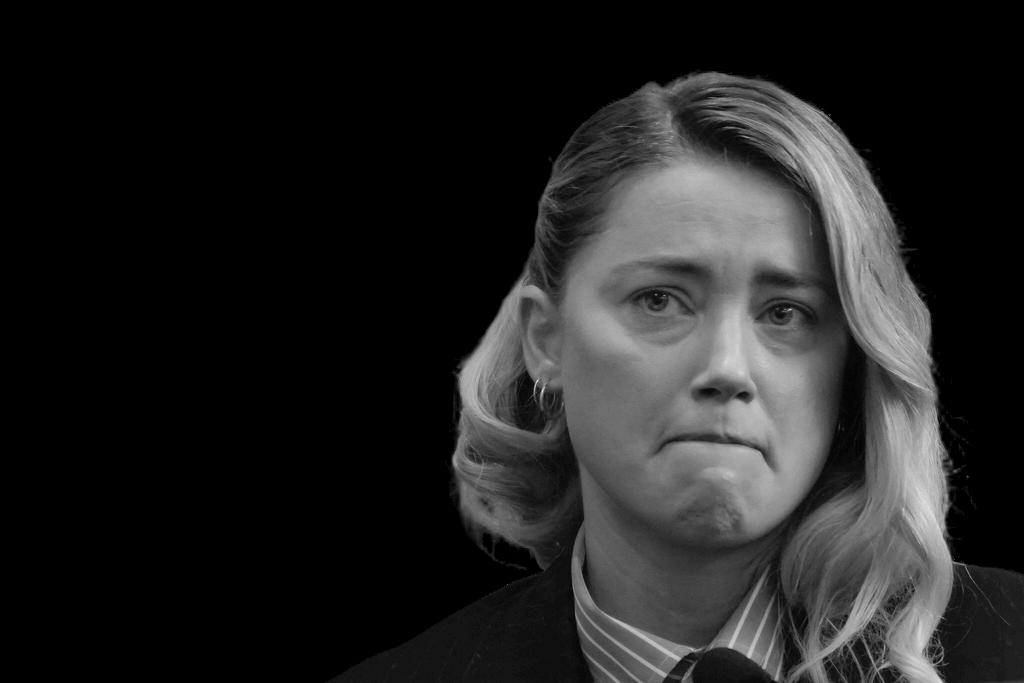
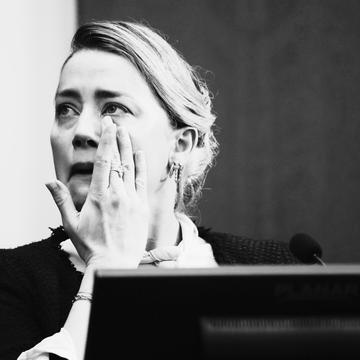
Decades after Chamberlain’s case, one would expect society to have eradicated their desire for female villains and learned not to allow media smear campaigns to control the justice system Alas, as seen in Depp v Heard, the lust for misogyny is ever-present This case was part of a widespread resurgence of victim-blaming, using the abusive strategy of DARVO (Deny, Attack, Reverse Victim and Offender) to frame female victims as the side with the power.⁷ On the opposite end of the spectrum from Chamberlain, Amber Heard’s tearful testimonies were deemed ‘fake crying’ and ‘a performance’ by many viewers – proof that women are placed under the microscope regardless of how they express themselves.⁸ In the United Kingdom, Depp sued The Sun for libel after they published an article on Heard’s allegations against him, but the judge held that 12 of 14 alleged incidents of domestic violence had occurred.⁹ After this, Depp sued Heard in Virginia, primarily to take advantage of the state’s narrow anti-SLAPP (Strategic Lawsuit Against Public Participation) laws, in order to prevent Heard from filing a special motion to dismiss the case as a frivolous SLAPP lawsuit.¹⁰
How XXXXX lied in court to take down her husband

This decision by Depp is common amongst powerful politicians and celebrities, doing what critics call ‘libel tourism’ and using lawsuits to intimidate people from exercising their First Amendment rights.¹¹ This demonstrates how easily legal loopholes can be exploited in the adversarial
system, allowing powerful men to avoid accountability for committing heinous acts This trial dramatically shifted the perception of the case, televising the whole process and allowing short snippets to be taken out of context and used to harshly judge Heard To this day, the court of public opinion still views Heard as the Antichrist, and her name is frequently associated with myths that were publicised in the United States trial, including that she copied her testimony from The Talented Mr Ripley, lied about using makeup to cover her bruises, and defecated in Depp’s bed¹² On the other hand, Depp’s private messages to Paul Bettany stating that he wanted to ‘burn’ and ‘drown’ Heard, and his legal team’s attempt to submit ‘nude pictures’ of Heard to be shown in the televised trial have been largely ignored by the public¹³ Throughout the trial, people with no legal or psychiatric credentials provided live commentary online, “analysing” Heard’s body language to prove her “guilt”¹⁴ She was depicted as vengeful and greedy, or as ‘a troubled woman with an undiagnosed mental health problem’¹⁵ The prevalence of social media users as executors of judgement and the barrage of vitriol this created - with Depp fans clamouring outside the courthouse to harass Heard - meant that the jury physically could not ignore the influence of the media, despite the requirement that they remain unbiased¹⁶
Overall, this was one of the most successful and widespread examples of DARVO, carried out not only by Depp himself but also heavily by the media, which mass disseminated stories of Heard being the “real” abuser Thus, in perpetuating this ideal of a “perfect victim”, the media provides an easy pathway for abusers to continue villainising their victims for speaking out
Alicia Juhlin
The hate train against Heard was a public manifestation of DARVO, slandering her for speaking up and turning every perceivable flaw into evidence of her “guilt” This is reflective of the misogyny that permeates the adversarial system, and how willing it is to blindly believe harmful narratives against women when a powerful male celebrity tells it to When the public expects a woman to be perfect and she inevitably falls short of this impossible standard, her experiences are all dismissed and discredited How can the law be said to apply to everyone equally when we refuse to believe half the world’s population?
Mean Girl or Scapegoat?
Most recently, Blake Lively has also been crucified for filling the role of an imperfect victim While filming It Ends With Us, she spoke out, alleging that men on set (most famously, director/actor Justin Baldoni) had repeatedly violated physical boundaries and made sexual comments to her¹⁷ In 2024, she filed a legal complaint against Baldoni¹⁸ The judge dismissed Lively’s sexual harassment claims on a technicality, classifying her as an independent contractor rather than an employee, which disqualified her from bringing forward certain claims¹⁹ This indicates that the adversarial system was never created to genuinely protect all women, as it turns the pursuit of justice into a task of fulfilling criteria, punishing female victims for not fitting into prescribed boxes Almost immediately after Lively filed her complaint, stories surfaced about her being ‘difficult and demanding’ to work with²⁰ Old interview footage was dug up to brand her as tone-deaf and a bully²¹ Subsequently, Baldoni was portrayed as a weak victim who had his movie stolen by “big bad bully Blake” This framing of Lively as a
“mean girl” created a narrative of division amongst women, encouraging them to view her as the enemy and discouraging them from believing her claims as if mean girls are immune to sexual harassment The pattern becomes especially clear when one identifies who orchestrated these smear campaigns: both Depp and Baldoni worked with the same Public Relations (PR) manager, Melissa Nathan.²²
Alicia Juhlin
While Baldoni’s PR team were getting thousands of bots to attack Lively, they were simultaneously crafting a public persona for Baldoni as a man who works to ‘elevate women’ and ‘combat gender-based violence’, leading the public to believe he was incapable of sexual harassment²³ During the film’s promotion, Baldoni actively highlighted the domestic violence subject matter of the movie, shifting at the last minute from the pre-decided plan to promote the film as a lighthearted rom-com and steer clear of this topic Lively and the rest of the cast followed the original direction, with Lively being harshly criticised for telling viewers to "grab their friends and wear their florals" to watch the movie²⁴ The vitriol for this promotion was directed almost entirely at Lively, making her a scapegoat and fueling the hate campaign instead of questioning the overall creative decision Blake Lively is, by no means, a perfect role model, but when every mistake you’ve ever made in the public eye is dug up, there are bound to be some valid criticisms to be made However, a woman does not need to be a perfect role model to be a victim of sexual harassment, and the existence of this
standard is the reason why so many female victims are still failing to gain justice By attacking those who do speak up, this teaches women around the world to stay silent, because speaking up leads to greater abuse from the wider public Ultimately, this has severe impacts on the rule of law in our justice system If female victims cannot access a fair trial because of the media’s penchant for misogyny toward imperfect victims, then the law cannot be said to apply to everyone equally
Conclusion
Smear campaigns have been perpetuated against female victims across and throughout history. For each of the aforementioned women, their path to justice was filled with obstacles, and for some, the battle is still ongoing. famous, and privileged women are failing to obtain justice, what cha regular woman have? The adversarial system’s susceptibility to infl hateful media is highly detrimental to those who are most m particularly poor and racialised women with mental health issues²⁵ The these smear campaigns are already evident, one example being an violently attacked his partner and changed her phone contact nam Heard’ to call her a liar²⁶ Thus, legal facts and critical reasoning must the court of public opinion, in order to attain justiciable outcomes a future onslaughts of vitriol towards imperfect female victims Th campaigns are typically orchestrated purposefully, to distract the greater crimes Real women face these crimes on a daily basis, and th women’s fights are simply a small part in a global battle for safety, s justice



Alicia Juhlin

BEYOND BEYOND BEYOND
byReiyanSahul
INCARCERATION
TheGenderedPenalty
The rule of law is the foundation. Yet, inequality defines the system. In every first-year law student’s class, they are taught the rule of law, the cornerstone of the Australian Legal System - that, unlike other legal systems, the rule of law offers equitable protections, rights and adversarial experiences.
In theory, it sounds simple; however, the rule of law is directed at promoting equality in a system that continues to mirror patriarchal paradigms and power structures that premise their origins. With particular scrutiny given to the criminal punishment and incarceration, detention facilities are yet to keep up with the increasing pervasiveness of the feminist movement. Though parts of the feminist movement have advocated for sex-segregated prisons, the solution in practice is facile.
The term ‘women’s correctional facilities’ suggests institutions designed around women’s needs and experiences. Yet, such facilities continue to implement routine male staffing, and fail to adopt gender-responsive models of care, rehabilitation and governance. Therefore, the term functions as a label for denoting gender-based separation rather than a reflection of an intentional, tailored institutional design. In practice, correctional frameworks remain predominantly male-centric, having been historically developed to control and rehabilitate incarcerated men.
Ingrid Matthews and Nigel Stobbs, ‘Affirmative Consent and Patriarchal Paradigms of Power in the Criminal Law’ (2025) 48(2) The University of New South Wales Law Journal 470, 486 (‘PatriarchalParadigmsofPower2025’) Sisters Inside Inc, Womenandgirls’experienceofthecriminal‘justice’system(Report, 2021).
(n 1).

These archaic and standardised frameworks continue to perpetuate systemic gendered inequalities and re-expose incarcerated women to trauma. Without overstating the claim, female incarceration in these settings can therefore be understood as a covert form of gendered violence, one that informally punishes women both prior to and beyond their formal sentence. Without diminishing the experiences of all incarcerated individuals, female prisoners have specific needs and concerns that are not adequately captured by an ordinary inmate blueprint - female inmates face a higher likelihood of having experienced sexual and physical trauma, alongside specific healthcare needs. When these frameworks are applied to women, facilities intended to support rehabilitation and reduce recidivism may instead hinder effective social reintegration. Thus, by imposing a male-centred framework on women’s correctional facilities, the system continues to prioritise penal equality at the expense of gendered equity.
Lorna Bartels and Antonette Gaffney, Good practice in women’s prisons: A literature review (Report, 2011).
Australian Institute of Health and Welfare, The health and welfare of women in Australia’s prisons(Report, 2020).
Hilde Tubex and Natalie Gately, ‘Vicious Cycle pushing more women into prison’, The Conversation (Online, 27 May 2025) <https://theconversation.com/no-support-nohousing-no-job-the-vicious-cycle-pushing-more-women-into-prison-257218>.
When these concerns are inadequately addressed or completely overlooked, further psychological and physical harm is compounded.7
Approximately 80% of women entering correctional facilities have experienced physical or sexual abuse. Consequently, prison practices that may appear routine or administratively necessary often recreate and rehash the trauma from past abuse. When unresolved trauma is subjected to correctional procedures designed around male models of incarceration, women are at greater risk of retraumatisation and psychological distress.
StripSearches
Routine strip searches exemplify this failure. The United Nations Bangkok rules recognised the harms of strip searches, and required that searches of women prisoners be conducted by female staff, only where strictly necessary, and never as a routine practice.
While Australian correctional facilities justify the practice as being directed towards ensuring security, the Queensland Commission of Human rights found that strip searches fail to improve prison safety.
Mary Stathopoulos et al, Addressing women’s victimisation histories in custodial settings (Report, 2012)
Community Justice Coalition, ‘Specific Population’, Prison Insider (Webpage) <https://wwwprison-insidercom/countryprofile/prisonsinaustralia?s=populationsspecifiques>
9
Australian Institute of Health and Welfare, The health and welfare of women in Australia’s prisons(Report, 2020)
United Nations Rules for the Treatment of Women Prisoners and Non-custodial Measures for Women Offenders (the Bangkok Rules), GA Res 65/229, 3rd Comm, 65th sess, Agenda Item 105, UN Doc A/RES/65/229 (16 March 2011) annex I (‘Rulesofgeneralapplication’)rule 19.
The invasive nature and unprecedented frequency of these searches, particularly where male officers are present or observing, can replicate experiences of humiliation and violation. Subsequently, trauma is compounded and rehabilitation fails.
The scale of strip searches further undermines its justification. In Queensland, women were subjected to more than 16,000 strip searches in a single year, despite contraband being detected in only 0.01% of cases.
It is also noteworthy that much of the so-called contraband was hair clips, gum or clothing. Similar concerns arise in New South Wales, where corrective services have acknowledged they do not maintain records of why strip searches were conducted or who performs them. 11 12
This facilitates arbitrary and excessive strip searching, transforming a purported security measure into a mechanism of institutional control. An incarcerated Aboriginal woman, who was a survivor of sexual assault, was strip searched while menstruating before being permitted to attend her grandmother’s funeral.13
Flat Out and Human Rights Law Centre, Submission to the Australian Law Reform Commission’s Justice Responses to Sexual Violence: Issues Paper, Ending state-perpetrated sexualviolenceinprisons(12 May 2024) 12.
Sisters Inside Inc, Women and girls’ experience of the criminal ‘justice’ system (Report, 2021).
11 12 13
Andreea Lachsz, Health Care for Women in Prison Must be Improved, The Conversation (Webpage, 8 March 2023) <https://wwwuts edu au/news/2023/03/health-care-womenprison-must-be-improved>
She reflected on the experience, stating, “So, you can only imagine the horror…and absolute fear and shame I was experiencing”. Along with retraumatising, fear of undergoing these searches may discourage women from maintaining contact with family and the outside world, further compounding isolation and psychological distress.
The continued use of trauma-inconsistent practices demonstrates that women’s correctional facilities can transform incarceration into a form of gendered violence.
LimitedAccesstoWomen’sHealthcare
Despite Australia spending $7.3 billion on penal infrastructure, femalespecific healthcare routinely provided in the general population is not extended to incarcerated women. This gap is particularly evident in relation to menstrual and reproductive health, where limited access to sanitary products reflects broader systemic neglect within correctional facility budgeting practices that are designed around incarcerated men. In some facilities, insufficient supply results in rationing. Women who require more products than the rationed quantity may be required to request products directly from staff. This can create additional barriers for inmates who experience shame or cultural stigma surrounding menstruation, particularly where requests must be made to male officers.
Justice Reform Initiative, New data reveals soaring prison costs across Australia: a convict countryfollowinganAmericanmodel,Justice Reform Initiative (Webpage, 4 February 2026).
Kathryn Tapp and Abigail Henson, ‘“For men, by men”: Menstrual victimisation and the weaponisation of period products in carceral settings’ (2024) 20 SageJournals1.
Kate Smith, ‘A Period in Custody: Menstruation and the Imprisoned Body’ (2009) InternetJournalofCriminology 1.
Women are subsequently forced to use products beyond recommended periods, increasing risks of infection and toxic shock syndrome.
Additionally, access to menstrual products can also operate as a form of institutional control. Sanitary items may be treated as conditional or discretionary, distributed in response to perceived compliance or ‘good behaviour’. The weaponisation of menstrual products introduces elements of coercive control, where access to basic hygiene is contingent on disciplinary assessments.
The result is a manufactured form of period poverty amongst incarcerated women, where inadequate access to reproductive healthcare functions as a form of gendered inequality and gendered violence.
The failure of Australian prisons to adequately accommodate female incarceration exposes a deep gendered contradiction within the rule of law, where legal institutions continue to operate through masculine frameworks. This incompatibility produces conditions that perpetuate and trigger trauma, while undermining dignity through overlooking gender-responsive healthcare. Ultimately, punishment extends beyond sentencing and imprisonment.
Female incarceration departs from the ideal of proportionate punishment and institutional rehabilitation. Instead, it moves towards a mechanism of systemic gendered violence within the rule of law.
17 18
Kathryn Tapp and Abigail Henson, ‘“For men, by men”: Menstrual victimisation and the weaponisation of period products in carceral settings’ (2024) 20 SageJournals 1.
Ibid.
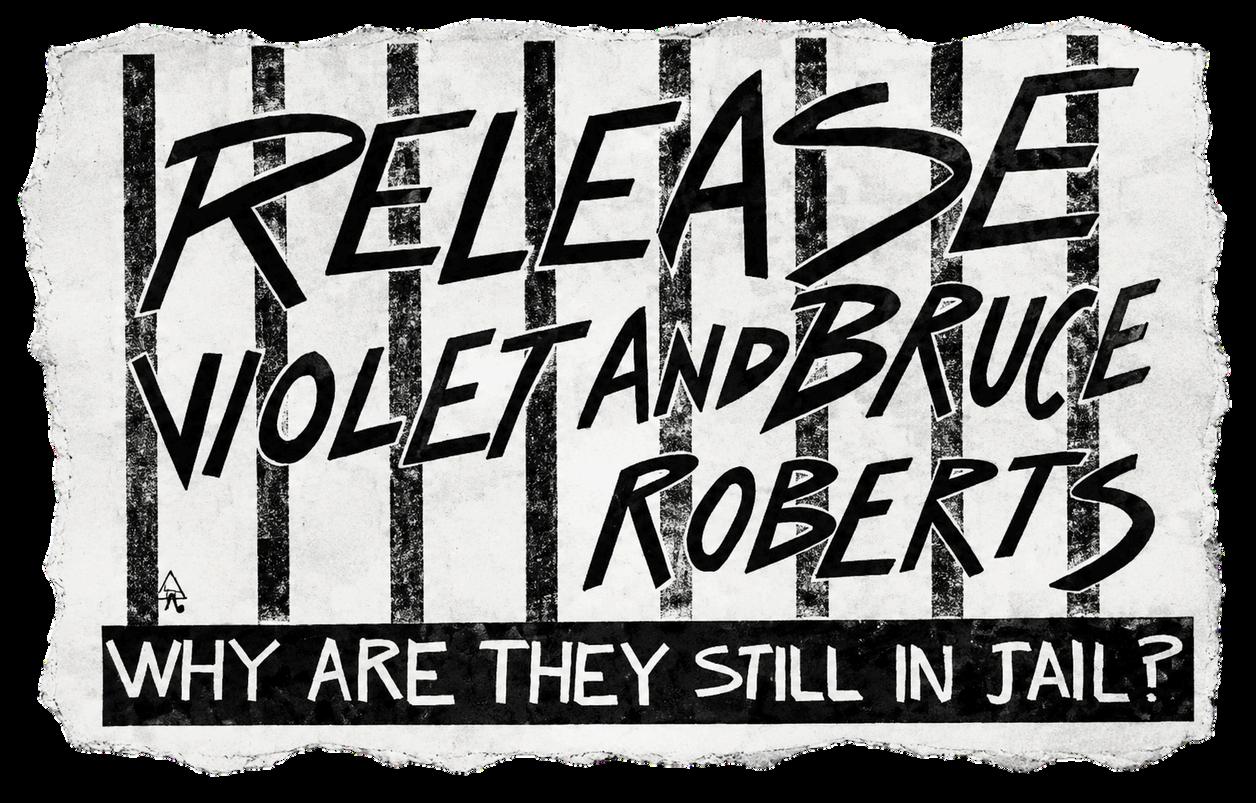
THE STORY OF VIOLET AND BRUCCE ROBERTS
BY JASMINE TANAZEFTI

“Rememory as in recollecting and remembering as in reassembling the members of the body, the family, the population of the past. And it was the struggle, the pitched battle between remembering and forgetting, that became the device of the narrative.”
– Toni Morrison, 2019

1975
ItisawarmDecembernightinPacificPalms,ontheNewSouthWalesNorthCoast.Amotherandherteenagesontalk lateintothenightoveraglassofwine,playingcassettesinanoldbusatthebackoftheirproperty
Soon, Violet Roberts, forty-seven, and Bruce, seventeen, would be arrested for the murder of Eric Roberts. Violet’s husband,andBruce'sfather.
Aswithallthings,wearepresentedwithaseriesofstories First,twostoriesfromthatnight:2
Bruce will say that he and his mother discussed the possibility of killing Eric. It was her idea. They went to the house, he assembled the rifle, and handed it to her Thinking she wouldn’t go through with it, he returned to the bus She fired the shot
Violet will say she waited until Eric fell asleep, before meeting Bruce out in the bus They discussed shooting Eric They went to the house, but when she returned to the bedroom, having left Bruce to assemble the rifle, he simply said: “He is already dead”
In both stories, they hid the gun and called the police
ItisawarmDecembernightinPacificPalms,ontheNewSouthWalesNorthCoast Amotherandherteenagesontalk lateintothenightoveraglassofwine,playingcassettesinanoldbusatthebackoftheirproperty
Soon, Violet Roberts, forty-seven, and Bruce, seventeen, would be arrested for the murder of Eric Roberts. Violet’s husband,andBruce'sfather
Aswithallthings,wearepresentedwithaseriesofstories.First,twostoriesfromthatnight:2
Bruce will say that he and his mother discussed the possibility of killing Eric. It was her idea. They went to the house, he assembled the rifle, and handed it to her Thinking she wouldn’t go through with it, he returned to the bus She fired the shot
Violet will say she waited until Eric fell asleep, before meeting Bruce out in the bus They discussed shooting Eric They went to the house, but when she returned to the bedroom, having left Bruce to assemble the rifle, he simply said: “He is already dead”
In both stories, they hid the gun and called the police . DuringthetrialofRvRoberts,wearepresentedwithaseriesoflegalnarratives:3
Bruce will say that he and his mother discussed the possibility of killing Eric It was her idea They went to the house, he assembled the rifle, and handed it to her Thinking she wouldn’t go through with it, he returned to the bus She fired the shot
Violet will say she waited until Eric fell asleep, before meeting Bruce out in the bus They discussed shooting Eric They went to the house, but when she returned to the bedroom, having left Bruce to assemble the rifle, he simply said: “He is alreadydead.”
In both stories, they hid the gun and called the police
Andthen,thereisthestorythatmustbereassembled Theonethatwentuntold:
Eric Roberts' history of violence and abuse.
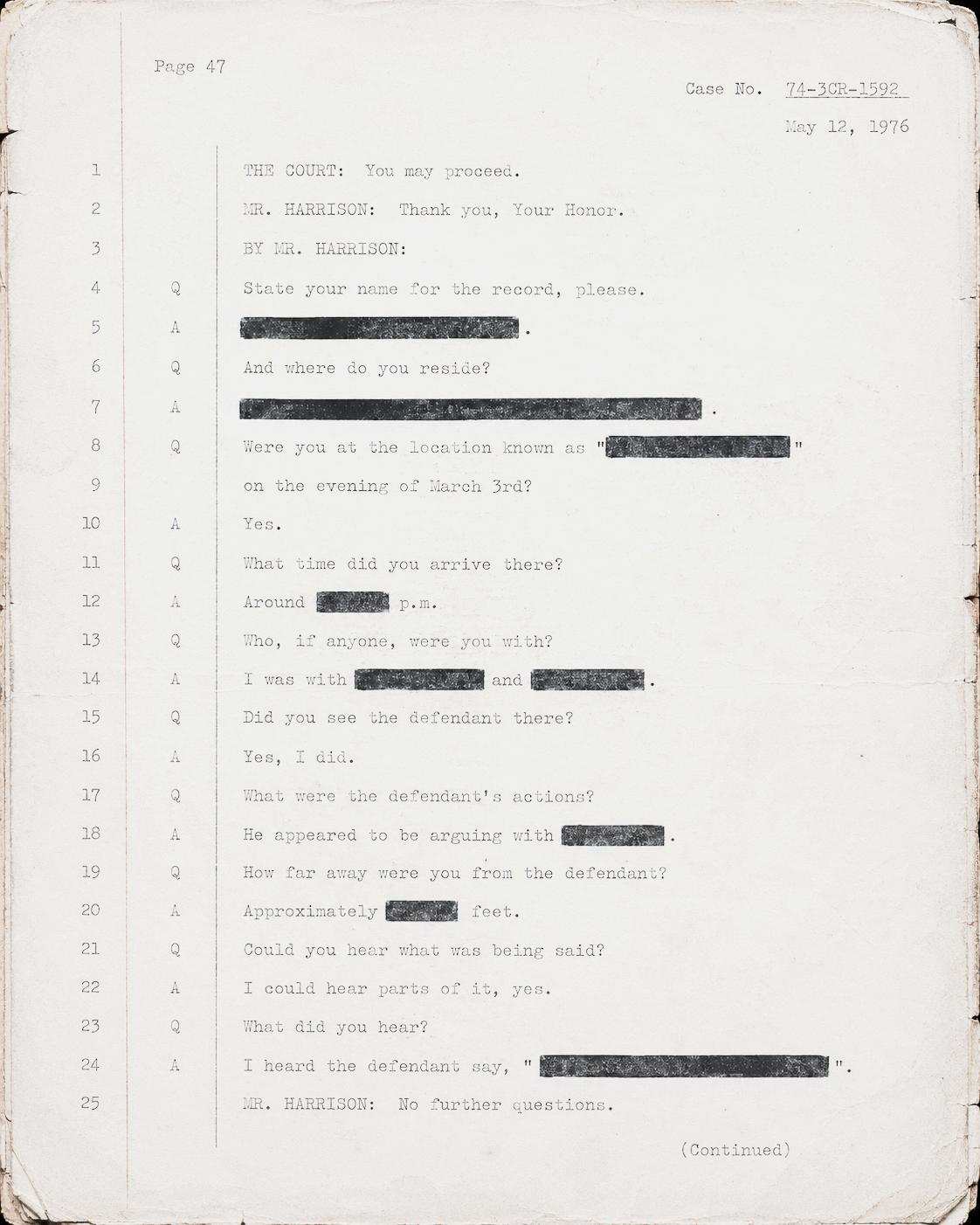
No witnesses were called to speak to Eric’s drunken outbursts against his family No medical or police records documenting Violet's injuries were ever produced Not even evidence of one New Year’s Eve beating that sent Eric to jail for six months An attack so severe that Violet would later say she believed he “would have pummelled me to death” had his father and brothers not pulled him off her With her six children also victims of their father’s violence, Eric’s possessive surveillance of Violet kept her physically and financially trapped
Evidence of her psychiatric hospitalisations, her alcoholism and her bouts of depression following her son David’s death was admitted, but only within the confines of the defence's diminished responsibility argument Never examined on its own terms; a grieving family, only fractured further by the violence of a father, a husband
Violet herself did not testify. Her unsworn statement, which was not read out in court, said:
“I have never been a violent person…although I have drunk to excess at times, my husband Eric was really terrible He often beat me up and the children, and towards the end I put up with it, because a few times I had called the police and after the police would go away I would get another hiding for having told the police what he had done ”4
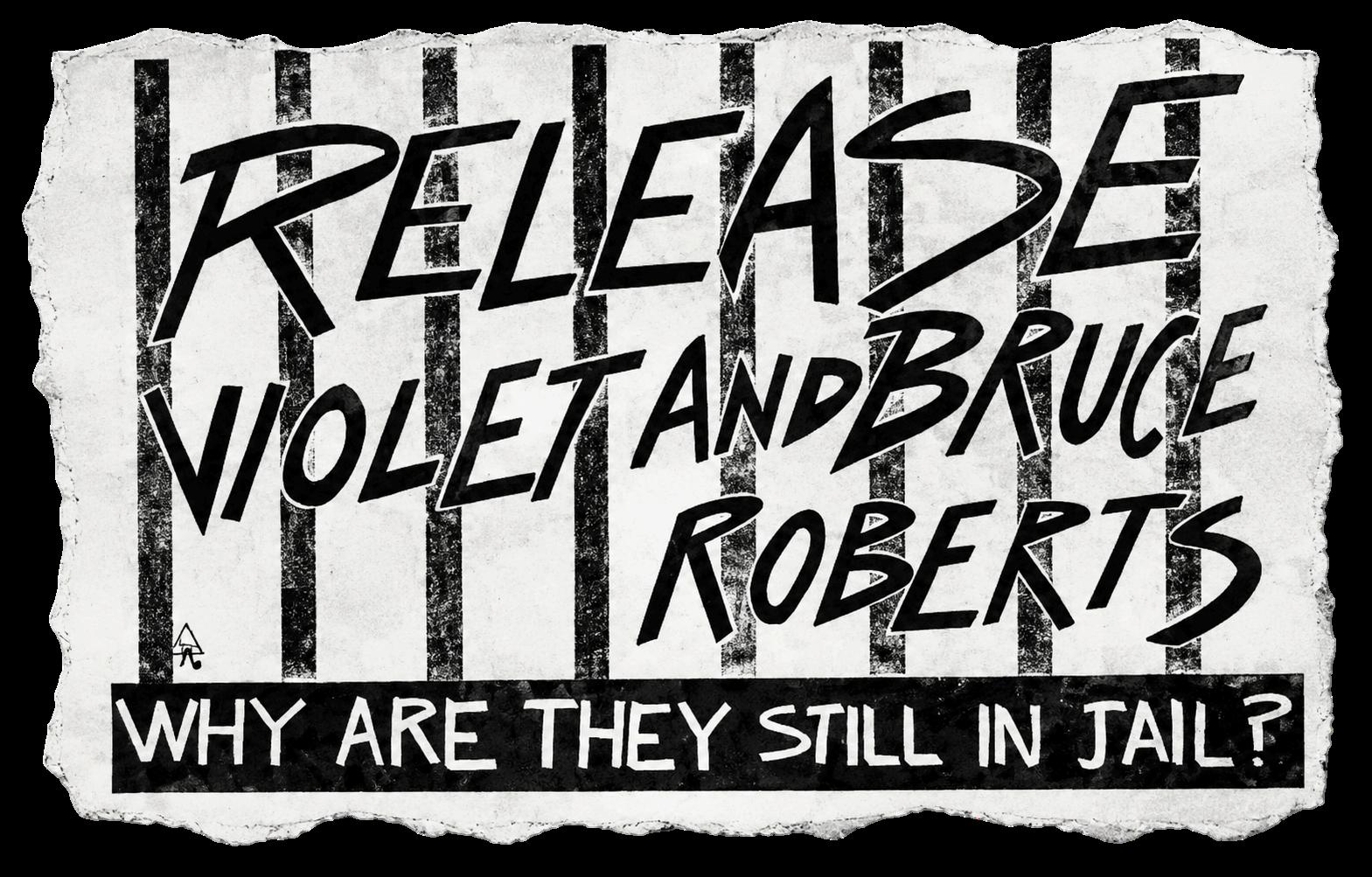
Violet Robertswassentencedtolife imprisonment in1976,the mandatoryrequirement forhomicide at the time Her sonwasgivenfifteenyearsasanaccessory,thejudgeholdingthatwhileBrucewastheonewhoshothisfather,Violet wasultimatelythe“instigator.”
AndsomewherebackinPacificPalms,thecassetteshadlonggonestill Whateverhadpassedbetweenamotherand hersononthatwarmDecembernightin1975–theirfear,thehistorythatledthemthere–remainedlost.
Leftoutsidethecourtroomdoor



It is a cold afternoon, and rain taps softly against the metal and glass exterior of the Campbelltown Arts Centre Inside, people slowlymovethroughRememory,theexhibitionattheheartofthe 25thBiennaleofSydney.
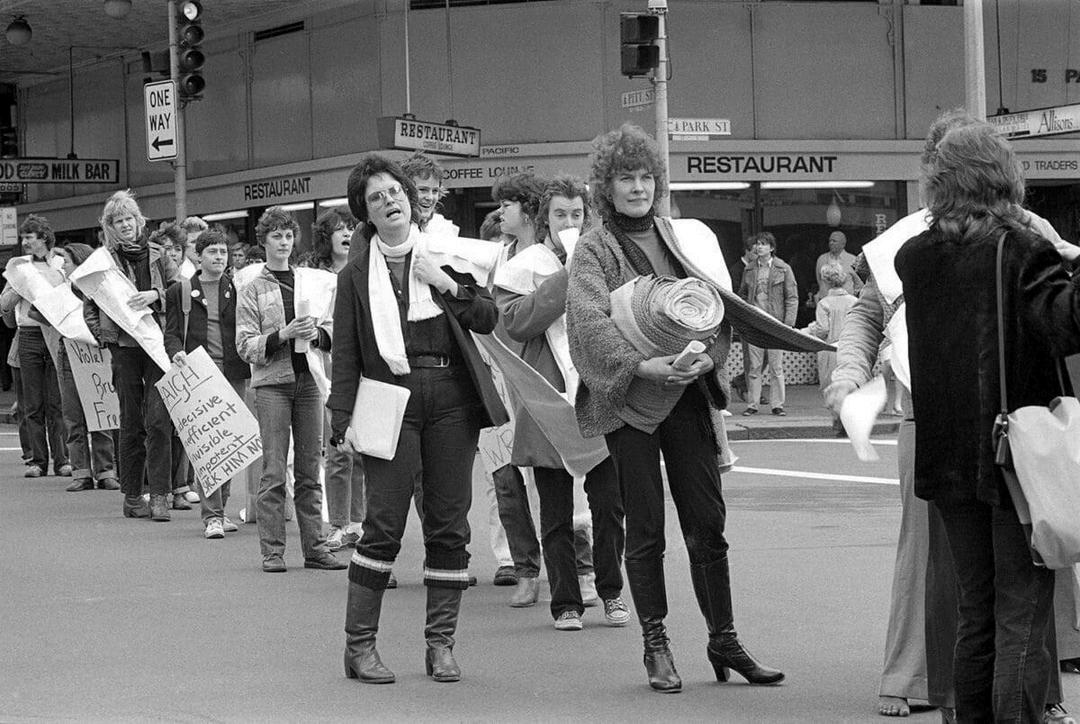
A wall of black and white, with a large-scale print of police officers standing in rigid formation, dominates the corner of the exhibition space. Opposite the officers, the wall’s viewer become witness to a new narrative; one painted by artist, filmmaker and teacher,HelenGrace Throughtheartist'slens–candidimagesof protesters,activists,thevigilstheyheldandthemarchestheyled–visitors are drawn closer, absorbing the story of solidarity unfoldingbeforethem.
Helen Grace's Justice for Violet and Bruce depicts the public campaignorganisedbythefeministactivistgroup,WomenBehind Bars,tofreeVioletRobertsandhersonfromprison.
The pair's story – which involved a lifetime of abuse – was deemed illegitimate, not just by rules of evidence and legal principle, but also by our default assumption of measuring violence; in which there can only be one victim, one perpetrator, one event. In the purely legal record,Violet Roberts identity as a woman and as a survivor is reduced to that of an “instigator,” her son an “accessory.” It was precisely these generalisations – no doubt rooted in gendered assumptions about culpability and control–thatGrace'swork,alongsidethatofWomenBehindBars, soughttochallenge.Astheyworkedtoreshapeandreconstructthe publicnarrativesurroundingthecase,andbygivingvisualformto their story, the artist and the protestors transformed a private injusticeintoapublicreckoning.
5 VioletandBruceRobertswerereleasedfromprisonin1980 Their demonstrations successfully rallied public outrage and caught the attention of politicians and the judicial system alike, revealing the extent to which existing laws on self-defence and provocation were deeply gender biased However, as an area of law so controversial and contested, it has continued to be reformed, reconsidered,andrewritteninthedecadessince.
6

When speaking on her work, Grace has since said, “When I first took these images, I didn’t think I had anything very interesting Butfortyyearslater,theyhaveapresence.Theybecomehistorical, partly mythological, and partly allegorical.”7 After seeing her exhibition, one can only agree After all, people are and always willbedrawntothestoriesleftuntold,tothepeoplewrittenoutof history. By tapping into this shared fascination, the artist's documentarypracticereignitesnarrativesofwomenthathavebeen silenced,distorted,orburiedbyinstitutionsthatwereneverbuiltto hearthem
Listening to the multitude of voices that exist outside the courtroom – the ones that make up the true story of Violet and Bruce beyond that one night in Pacific Palms – ensures they endureastheirowncounter-narratives.
Anactofreassemblingaloststory;anactofrememory