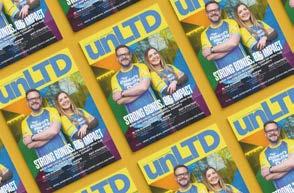
unLTD MAY 26 Connecting business across Sheffield City Region #98
Here’s
what our customers say
Simoda have been brilliant for us. They’re not like the usual IT support companies - really approachable, easy to talk to, and their support is never a hassle to use. Everything just feels smoother with them. Would happily recommend to anyone.” “
Contents
Welcome to the May issue of unLTD Business Magazine.
It’s been another busy month at HQ. On the other side of our humble publishing business, we’ve been prepping for the return of our annual Exposed Awards – the big bash we throw at Peddler to celebrate Sheffield’s thriving independent hospitality, arts and culture scenes. Always a memorable night out, even if recollections can be a touch patchy the next morn.
Over on unLTD, we’ve been hosting sold-out working lunches built around insightful panel debates on how AI is impacting the job market, putting on Traitors-themed team-building activities (sans Claudia Winkleman, unfortunately), planning the next speed networking event and finalising some exciting additional details for our upcoming business expo in the autumn.
Somewhere in between all of that, we’ve found some time to put together this thing in your hands. You may have noticed our distinctly different cover this month – and that’s intentional, as it links closely to our discussion with a range of local creatives on the rise of AI image generation following OpenAI’s big update last month. Scoot over to page 26 to hear from illustrators, designers and photographers about the caution required when businesses embrace – or cut corners with – this exciting but risky new technology.
That’s the main event, but flick through and you’ll find a wide range of news, advice, analysis and reaction from the South Yorkshire business scene, plus features on local companies and interviews with entrepreneurs making significant strides.
That’s all from me this month – let’s catch up in June!
Joseph Food, Editor.
CONTENTS
24: THE HUMAN TOUCH
AI image generation is improving at remarkable speed, but what could that mean for people working in the creative industries? We speak to Sheffield-based designers, illustrators and photographers about the opportunities, concerns and ethical questions thrown up by ChatGPT’s latest update – and why the human touch still matters.
22: FOOD FOR THOUGHT
AI is changing the world of work at pace – but what happens when traditional entry-level roles begin to disappear? At our latest Working Lunch, business and tech leaders explored the opportunities, risks and future skills needed in an AI-driven economy, sparking lively debate from panellists and audience alike.
18: READY TO ROAR
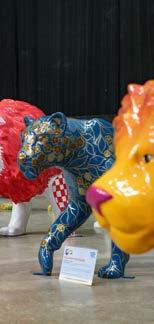
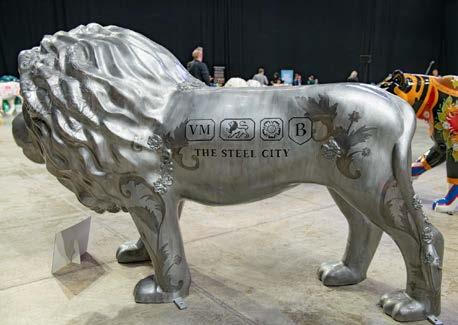
Ahead of this summer’s Pride of Yorkshire trail, we attended a special preview event at Utilita Arena where all 150 lion sculptures were unveiled together for the first time. Get a sneak peek at the spectacular designs before they take over South Yorkshire’s streets this summer in support of Sheffield Children’s Hospital.
50: DOUBLING UP
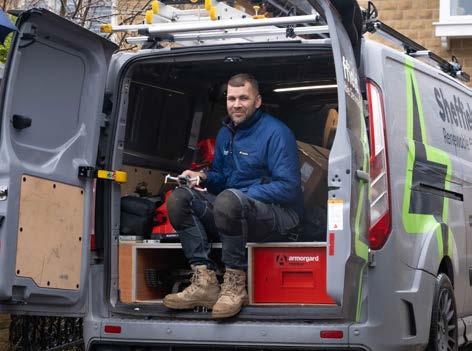
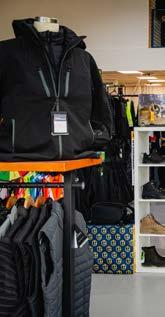
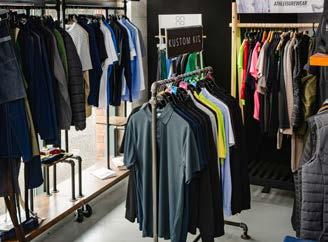
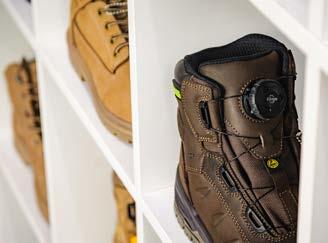
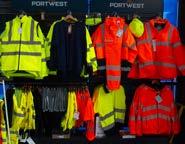
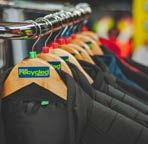
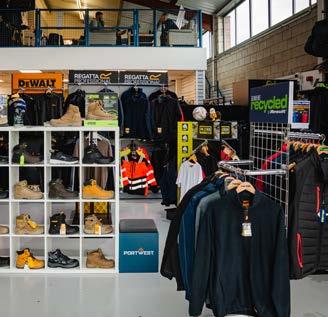
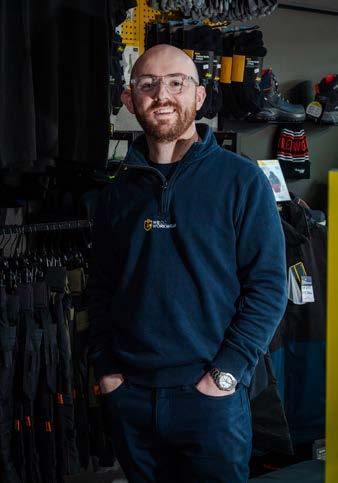
unLTD visited Sheffield-based We Do Workwear to speak with owner James Smith about the company’s recent expansion into new premises at Newhall Works. With a dedicated showroom, improved operations and growing demand for stylish, practical workwear, we hear how the family-run business is entering an exciting new chapter.
EDITORIAL
EDITOR
Joe Food
Joe@unltdbusiness.com
ONLINE EDITOR
Ash Birch
Ash@unltdbusiness.com
DESIGN
Marc Barker
ADVERTISING
Phil Turner
phil@unltdbusiness.com 07979 498 034
Nick Hallam
nick@exposedmagazine.co.uk 07843 483536
FINANCE
Lis Ellis accounts@ exposedmagazine.co.uk
CONTRIBUTORS
Dan Bumby
Steve Brown
Wendy Ward
Jill White
unLTD
The
contained herein are not necessarily those of Blind Mice Media Ltd and while every effort is made to ensure information throughout unLTD is correct, changes prior to distribution may take place which can affect the accuracy of copy, therefore Blind Mice Media Ltd cannot take responsibility for contributors’ views or specific listings.
THREE WAYS TO GET INVOLVED Agenda
JOIN THE CLUB
The unLTD Business Club is thriving – with a whole raft of new offers from our partners now included for 2026!
At unLTD Business Magazine, our mission has always been clear – to connect, support and celebrate the South Yorkshire business community. Now, we’ve taken that commitment even further with the launch of the unLTD Business Club – an exciting new membership initiative designed to give local businesses of all sizes more opportunities to grow, collaborate and thrive.
And this month we have unveiled four new benefits for all our members:
⚫ 20% off your bill at all True North venues (Monday to Friday) with a True North Business Card
⚫ 1 hour free photoshoot with Marc Barker Photography
⚫ 1 branded polo shirt from We Do Workwear (any size/colour)
⚫ 25% discount on the day delegate package and room hire from PJ Taste
… with much more to come!
So whether you’re a growing SME looking for meaningful networking opportunities, an entrepreneur wanting to stay ahead of the curve, or a larger organisation seeking strategic
brand exposure, unLTD Business Club offers a range of benefits tailored to meet your goals.
We’re open for signups now – with immediate access to a host of benefits depending on your subscription tier.
Why Join?
It's about more than just perks – it’s about being part of a community. Members will benefit from the power of local connections, increased visibility through South Yorkshire’s leading business publication and insider access to some of the region’s most anticipated networking events.
Whether you’re looking to raise your profile, grow your network, or simply stay up to speed with the region’s dynamic business landscape, this is a platform to support your ambitions.
Get Started Today
Visit unltdbusiness.com/ businessclub to sign up or email phil@unltdbusiness. com for more information on Business Partner opportunities. Let’s grow together – join the unLTD Business Club today.
BUSINESS CLUB MEMBER
£10/month or £99/year (plus VAT)
Designed for professionals who want to network and engage more actively:
⚫ Priority access to all unLTD Business Breakfasts, Socials and other events – free of charge
⚫ Monthly e-newsletter
⚫ A guaranteed print copy of unLTD Business magazine
⚫ 10% discount on exhibition stands at the unLTD Business Expo
⚫ 20% off your bill at all True North venues (Monday to Friday) with a True North Business Card
⚫ 20% off your bill at all True North venues (Monday to Friday) with a True North Business Card
⚫ 1 hour free photoshoot with Marc Marker photography
⚫ 1 branded polo from We Do Workwear (any size/ colour)
⚫ 25% discount on the day delegate package and room hire from PJ Taste
BUSINESS PARTNER
Tailored packages available
Benefit from all the benefits of a Business Club Member as well as promoting your brand through our digital platforms and print magazines… our premium tier for businesses looking for strategic exposure and deeper engagement:
⚫ Monthly print advertising and editorial features in unLTD Business magazine and on unLTDbusiness. com
⚫ Social media promotion via LinkedIn
⚫ Opportunity to co-host networking events with the unLTD team
⚫ PLUS… All Business Club member benefits
BUSINESS SUBSCRIBER
£2.50/month (plus VAT)
⚫ Ideal for readers who want to stay informed, this entry-level tier ensures you receive:
⚫ A guaranteed copy of unLTD Business magazine each month
⚫ Monthly e-newsletter featuring news, insights and upcoming events
Agenda
Sheffield DocFest has unveiled the full programme for its 2026 edition, returning to the city from 10–15 June with a packed line-up of premieres, talks and immersive events
Now in its 33rd year, the UK’s leading documentary festival will host more than 200 screenings and over 100 events across venues including the Showroom, Curzon and the Crucible. This year’s theme, Realities in Motion, brings together bold storytelling from around the world, spanning activism, artificial intelligence, climate justice and contemporary culture.
Among the global premieres and big-name subjects, there’s a strong Steel City thread running through the programme. A major highlight is the world premiere of Heaven 17: The Last Temptation, following the city’s synth-pop pioneers as they head out on what could be their final tour. The film promises a reflective look at legacy, ageing and the band’s enduring connection to Sheffield’s musical identity.
The city also takes centre stage in the festival’s expanded XR strand. Sheffield of Stories will
transform Sheffield into a shared Minecraft world, co-created with local children and families. The interactive project invites visitors to build and explore a digital version of the city, blending gaming with documentary storytelling in a way that feels distinctly rooted in place.
Elsewhere, the festival opens with We, The Hated, offering insider access to Just Stop Oil protesters, while the wider programme includes more than 80 features and 24 shorts selected from nearly 3,000 submissions. Subjects range from Katie Price and Jesy Nelson to Billie Jean King and Eric Cantona.
The full line-up of screenings, talks and special guests will include Michael Sheen, Miriam Margolyes, Chris Packham, Rose Ayling-Ellis, Norma Percy and Andrea Arnold.
Guest of honour Maxine Peake will also play a central role, presenting a curated selection of films and performing a live reading
of her play Queens of the Coal Age alongside a collaboration with Sheffield electronic outfit the Eccentronic Research Council.
To view the full programme and purchase tickets, head to sheffdocfest.com.
DocFest is a vital part of Sheffield’s cultural life and international reputation as a city that champions culture, creativity, documentary and debate. We are proud to support the festival and the opportunities it creates for people in Sheffield, South Yorkshire and beyond to engage with world‑class film, ideas and talent.”
KATE JOSEPHS, CHIEF EXECUTIVE, SHEFFIELD CITY COUNCIL
SHEFFIELD DOCFEST BY NUMBERS:
• 25,000+ attendees visit Sheffield each year
• 3,500+ film and TV industry delegates attend
• Estimated £4m+ boost to the local economy annually
• Founded in 1994, now one of the world’s leading documentary festivals
ABBEYDALE CELEBRATES MILESTONE WITH TAPROOM OPENING
Abbeydale Brewery has officially opened the doors to Abbeydale Beerworks, a new brewery-owned taproom located just steps away from its production site on Abbeydale Road.
The launch comes during a landmark year for the Sheffield brewer, which is celebrating its 30th anniversary and its position as the UK’s first 100% employee-owned brewery.
Situated around 200 steps from the brewery itself, Abbeydale Beerworks has been created as a showcase venue for the company’s latest beers, limited-edition brews and small batch specials. A major cellar refit has equipped the venue with eight keg lines and four cask lines, alongside a takeaway fridge stocked with the brewery’s full canned beer range.
Abbeydale's taproom will also host exclusive tasting events led by the brewery team.
In addition to Abbeydale Brewery’s own beers – all of which are gluten free – the venue features a rotating guest keg line under the banner “Friends of Abbeydale Brewery”, highlighting beers from other independent brewers.
Recognising that not every visitor will be heading out purely for a pint, the venue also offers a curated drinks selection including cider, wines, spirits and soft drinks, with several products sourced from local suppliers.
The business says the venue has been designed as a welcoming community space, with both families and dogs welcome.
Its opening marks Abbeydale Brewery’s latest investment in Sheffield’s independent food and drink scene as the business continues to expand its presence in the city after three decades of brewing.
NEWS IN BRIEF
TAKE-OFF BACK ON THE CARDS
Doncaster Council has voted to proceed with £57m borrowing to support the reopening of Doncaster Sheffield Airport. The funding, first approved in November 2025, will back early-stage work through council-owned FlyDoncaster ahead of £160m in expected devolved funding. Reform UK councillors had originally raised concerns over lease terms but agreed to continue the loan pending scrutiny of the final agreement.
NEW STORE PROMOTES LOCAL TALENT
Independent retailer In the Making has opened at Orchard Square in Sheffield city centre, showcasing products created by local makers and artists. The store enjoyed a strong launch on 2 May, attracting shoppers keen to explore handcrafted gifts and homeware. Orchard Square Centre Manager Shay Murray said the addition brought “something fresh, independent and rooted in Sheffield’s identity” to the growing retail destination.
REACHING FOR THE SKIES
The Government has announced £46.5m to support drone and flying taxi technology, including £20.5m for a new drone identification system to help police tackle illegal use. The funding, delivered through the Civil Aviation Authority, will also streamline regulation and support commercial drone services, with flying taxis targeted for UK skies by 2028. Projections suggest the sector could contribute £103bn to the economy by 2050.
SOMETHING TO RELISH
The University of Sheffield has submitted plans for a £300,000 redevelopment of the former Henderson’s Relish factory on Leavygreave Road. The proposals would transform the long-empty building into events, retail and office space, including a university merchandise shop and marketing office. The university bought the site in 2015, but previous plans for hospitality and leisure uses were never progressed.
JOIN THE CLUB
A new private members’ club is set to open in Sheffield city centre’s Arts Quarter. The Mulberry Club will occupy the Grade II-listed former Midland Bank on George Street, opposite the Curzon cinema. Built around “heritage, discretion and quality”, the venue has applied for a licence to operate until 2am daily. The building, vacant since 2021, is currently undergoing refurbishment and expected to open during the summer.
Agenda
Sheffield developer Sky‑ House Co has received national recognition for its work on the Waverley Central residential development, one of the region’s largest regeneration projects.
The company secured a bronze award in the £5m-£50m project category at the National Site Awards 2026, organised by the Considerate Constructors Scheme.
The awards celebrate organisations demonstrating high standards across construction projects, with a focus on community impact, environmental responsibility, workforce
UK’S LARGEST RETRO GAMING MARKET TO RETURN NATIONAL AWARD RECOGNISES LOCAL DEVELOPMENT
wellbeing and consideration for neighbouring residents and businesses.
Sky-House Co was recognised for its contribution to the wider Waverley development, the growing mixed-use community situated between Sheffield and Rotherham. Members of the company’s team attended the awards ceremony in Manchester, where the accolade was presented by Considerate Constructors Scheme managing director Desiree Blamey.
The latest phase of the development, Waverley Central, covers a 4.2-acre site close to the area’s Olive Lane retail and leisure quarter. The
scheme will deliver 96 homes, including two-bedroom starter homes, mews properties, townhouses and larger detached family homes across a range of tenures.
The development continues Sky-House Co’s design approach, which draws inspiration from Victorian and Georgian urban planning principles, with an emphasis on walkability, community living and public space.
David Cross, founder and director of Sky-House Co, said the award reflected both the quality of the development and the company’s approach to construction.
“Following the success
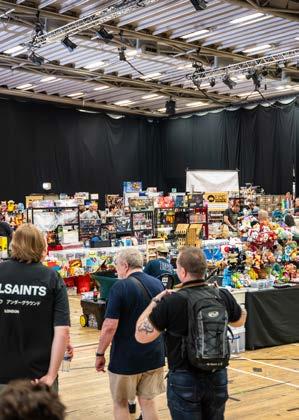
Replay Events’ Video Game Market will be back in Sheffield this June after attracting almost 2,800 visitors to its debut event in the city last year.
The event, recognised as the UK’s largest and longest-running retro gaming market, will once again take place at Ponds Forge Leisure Centre, bringing together traders, collectors and gaming enthusiasts from across the country.
Visitors will be able to browse a wide range of retro games, consoles, accessories and gaming memorabilia, with organisers promising an expanded event following the success of the inaugural Sheffield market in 2025.
Replay Events, which has hosted markets in cities including London, Glasgow, Cardiff and Birmingham, has announced that the Sheffield event will now become its flagship Yorkshire show.
The decision reflects Sheffield’s longstanding connection to the UK gaming industry. The city played a key role in the early development of video gaming
through companies such as Gremlin Graphics in the 1980s, while Sheffieldbased Sumo Digital has grown into one of the country’s leading game developers. Sheffield is also home to the National Video Game Museum.
Andy Brown, managing director of Replay Events, said: “We’re very excited to return to Sheffield after last year’s incredible success – this time bigger and better.
“With Sheffield’s gaming heritage, and the wonderful National Video Game Museum in the city too, it was a no-brainer for us to make this our regional flagship event.”
The growing popularity of retro gaming continues to drive interest in events across the UK, with industry figures showing increased demand for classic consoles and games.
Tickets for the Sheffield Video Game Market start from £4, with early entry tickets also available from sheffieldgamingmarket.com.
Sheffield has a rich gaming heritage dating back to 1984, when Gremlin Graphics was founded in the city and went on to create hit titles including Zool and Lotus Turbo Challenge. Former Gremlin staff later launched Sheffield based Sumo Digital in 2003, whose credits include Forza Horizon, Crackdown 3 and Sackboy: A Big Adventure.
of our two well-established Waverley sites, Waverley Central places us even more firmly at the very centre of the Waverley community, creating a homely, lively and sustainable residential heart,” he said.
“It’s our most innovative development yet, with hitech and sustainable design featuring semi-modular construction, air-source heat pumps, PV solar panels and EV charging too.
“What this award also demonstrates, however, is the way in which we constantly strive to work with our neighbours, building with care and with a determination to cause the least disruption.”
Sky-House Co has expanded significantly across South Yorkshire and Derbyshire in recent years, with developments already established in Stocksbridge, Oughtibridge and Killamarsh.
Stripping back the biggest business stories – what happened, who’s involved and why it matters to our region.
LABOUR SUFFER IN SOUTH YORKSHIRE
What are the main takeaways?
Labour suffered heavy losses across South Yorkshire in the local elections, with Sheffield City Council leader Tom Hunt among the most high-profile casualties. Hunt lost his Walkley seat to the Green Party by 73 votes, while former Lord Mayor Jayne Dunn was defeated in Southey by Reform UK.
Overall, Labour lost 13 seats and the Liberal Democrats lost five. The Greens gained six seats and Reform UK secured 12 gains. Despite the losses, Labour remains the largest party on the council with 25 councillors, ahead of the Liberal Democrats on 22, the Greens on 20 and Reform on 13.
Elsewhere in South Yorkshire, Reform UK took control of Barnsley Council, ending Labour’s 50-year hold on the authority. Reform won 41 seats, compared with Labour’s 11.
What does this mean?
The results point to growing political fragmentation across South Yorkshire, with voters shifting away from the traditional dominance of Labour and the Liberal Democrats towards smaller and emerging parties.
The council remains under no overall control, with 45 seats needed for a majority. That said, the balance of power at the Town Hall is now more divided than ever, raising questions about how effectively parties will be able to work together.
The results also underline the impact of national politics on local elections. Senior Labour figures suggested dissatisfaction with the national party and leader Keir Starmer had influenced voting behaviour in cities such as Sheffield, with voters demanding quicker progress and visible change.
Barnsley’s result is particularly significant, marking the first time in five decades that Labour no longer controls the council. Reform UK’s rapid rise across the region signals a changing political landscape ahead of future local and national elections.
Who said what?
Tom Hunt described the election results as “extremely disappointing” for Labour and said national political issues had shaped voting patterns in Sheffield.
“We've seen national issues persuade people here about how they're going to vote,” he said. “Voters are rightly impatient for change and they want to see change happen quicker.”
With Jill White of Andy Hanselman Consulting
A MONTH OF DISCOVERIES!
The month started with a wine discovery thanks to an IoD cheese and wine tasting at the fabulous Henry Boot Heart of the City offices.
Thanks to hosts Pete Shillito and Rich Davies, and to Andrew Lofthouse, the Northern Wine Guy, for introducing us to some fantastic new tastes.
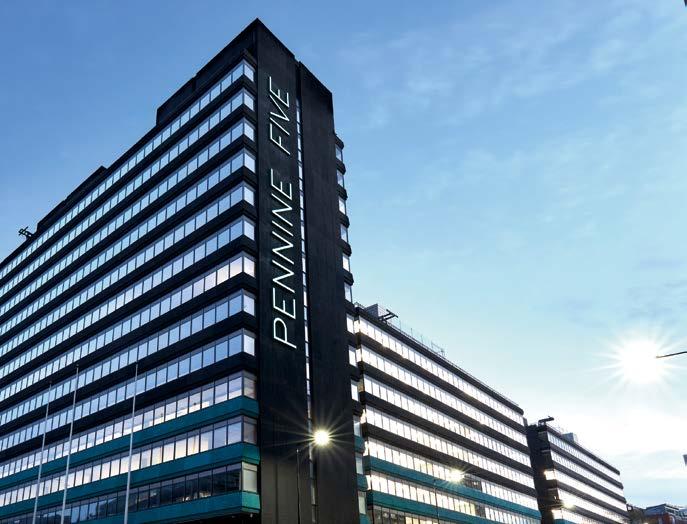
Next up was The Discovery, the new bar and venue at Pennine Five. It had been a while since we visited and what a transformation. Hats off to Business Development and Campus Manager Christina Staniforth, and to host Dave King.
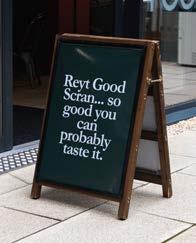
Dave has also launched ‘The Scrannery’ there – both are well worth a visit.
We enjoyed it so much we returned for our 3D Connect breakfast, with several Pennine Five tenants joining the panel alongside David Richards from Digital Forge and Yorkshire AI.
Kudos to David King, Robert Bell and Nick Dytczak from Midworth, who both excited and terrified us with their insights into the future of AI. We all left far more informed and, in my case, inspired too.
A book festival and book launch followed on consecutive days, both at the lovely Victoria. Respect to Believe and Achieve gym owner Claire Moore, whose book It’s OK to Wobble was launched there. It's worth a read.
Believe and Achieve also hosted the South Yorkshire Health and Fitness Network, with yours truly joining the panel. It was great to hear more about the work Rory Finch and Joe Pattison are doing with the group.
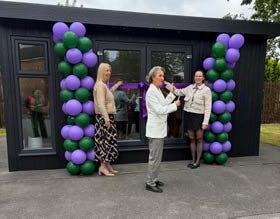
Leonard Curtis hosted their annual Beer and Bubbles event, and it a privilege to attend the YWAC Wellbeing Launch, opened by Sarah Champion in Rotherham.
What a fabulous organisation – and one I’m looking forward to discovering more about.
Catch you next month!
Follow Jill at uk.linkedin.com/in/jilltywhite or find Andy Hanselman Consulting at andyhanselman.com.
LET’S GET DOWN TO BUSINESS
South Yorkshire’s must-attend business event is back – bigger, bolder and with plenty of exciting new additions.
The unLTD Business Expo returns on Wednesday 14 October – and it’s shaping up to be a key date in the South Yorkshire business calendar.
Held again at Magna, this year’s event promises even more reasons to get involved – whether you’re looking to exhibit, network or simply explore the region’s vibrant business community.
Following the success of the last three expos, this year's event is set to scale up in every sense. With expanded workshops, curated talks and a host of new entertainment zones, attendees can expect a full day of insight, connection and inspiration, with more programme details still to be announced.
“We’ve always focused on making the expo a useful and enjoyable experience,” says unLTD director Phil Turner. “This year, we’re doubling down on that – creating more things to do, more opportunities to connect and ensuring visitors are engaged from start to finish.”
Exhibitors will benefit from face-to-face access to hundreds of potential customers, collaborators and decision-makers from across South Yorkshire. With over 60,000 businesses in the region, the Expo is the perfect place to showcase your products and services – or discover what others have to offer.
And for attendees, it’s completely free to visit. Alongside the exhibition stands, there’ll be expert-led workshops, insightful panel sessions and plenty of extras designed to keep energy high throughout the day.
Among the highlights announced so far are three dedicated speed networking sessions running across the day, offering structured, fastpaced opportunities to meet new contacts and spark conversations – ideal for making meaningful
connections in a short space of time. There’s also a special 3D Connect: unLTD Business Expo edition, hosted by Andy Hanselman. This lively session brings together business leaders who are ‘Unknown in Sheffield, But Succeeding Outside Of It’, sharing honest insights, real stories and practical takeaways on growing successful businesses beyond the city – including Tom at IntelliAM, with more speakers to be announced.
For those looking to sharpen their marketing skills, a live social media post build will take place on stage, where a marketer creates a full week of content in real time. Expect practical guidance on writing effective hooks, understanding algorithms, choosing visuals and crafting strong calls to action – all designed to demystify content creation.
New for this year is the Chef Demo & Drinks Stage, in collaboration with Roisters. This will feature live cooking demonstrations from the event catering team, alongside a talk from Andrew Lofthouse, The Northern Wine Guy, and a panel discussion exploring the events industry.
With more sessions and speakers still to be revealed, this year’s Expo is shaping up to offer even more opportunities to learn, connect and get inspired.
As ever, spaces are limited and stands are booking up fast. Exhibitor slots are allocated on a first-come, first-served basis – so early booking is strongly advised to avoid missing out.
So, whether you’re a start-up, SME or established brand, this is an unmatched platform to raise your profile, meet new contacts and be part of something that celebrates and champions the region’s thriving business scene.
Book your stand or register your place today at
IN A NUTSHELL:
Date: Wednesday 14 October 2026
Venue: Magna
Time: 9.30am – 3pm
Entry: Free to attend
WHAT’S ON:
• Over 60 local exhibitors
• Expert talks and practical workshops
• Speed networking sessions throughout the day
• 3D Connect special session with Andy Hanselman
• Live social media post build session
• Chef Demo & Drinks Stage with Roisters
• New entertainment zones
• A full day of insight, ideas and connections
Stands are first come, first served –book now at expo.unltdbusiness.com
READY TO ROAR
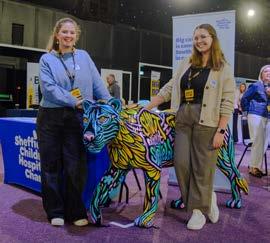
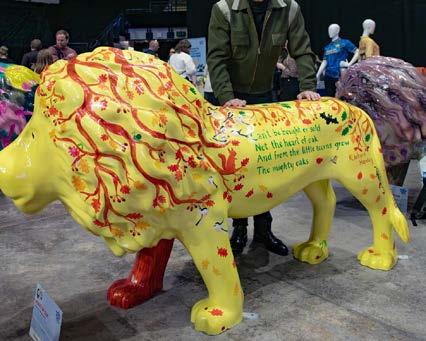
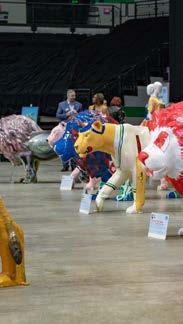
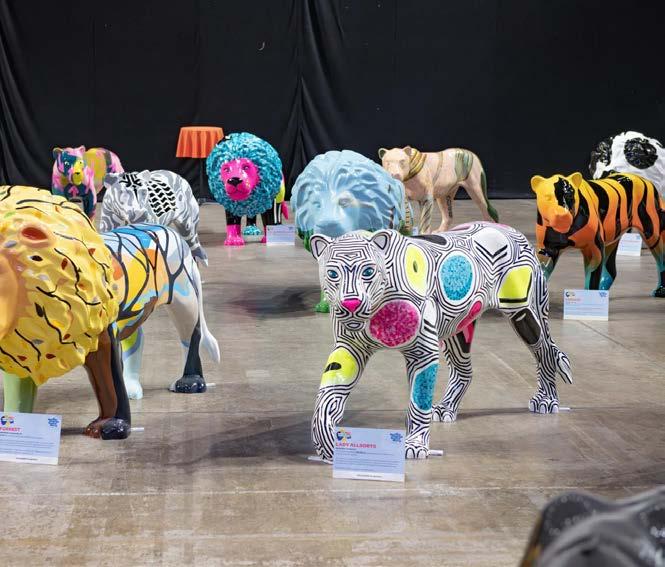
A spectacular collection of 150 lion sculptures were unveiled together for the first time ahead of this summer’s Pride of Yorkshire trail, which will take over streets and public spaces across South Yorkshire from June.
Utilita Arena Sheffield hosted a one-night-only preview event where guests were given the first opportunity to see the full collection side by side before the sculptures are installed across Sheffield, Doncaster, Rotherham and Barnsley next month.
The ambitious public art trail has been created to celebrate 150 years of Sheffield Children’s Hospital and is expected to become one of the UK’s largest free art trails.
During the launch event, organisers also announced that Pride of Yorkshire will raise £2.8m towards a £20m transformation of Sheffield Children’s Hospital’s Emergency Department and Major Trauma Centre.
The redevelopment comes as the department continues to operate well beyond its
original capacity. Opened in 1977 and originally designed to treat 24,000 patients annually, the Emergency Department now sees more than 62,000 children and young people every year.
Ruth Brown, chief executive of Sheffield Children’s, said the investment would help create a calmer and more child-friendly environment for patients and families.
“With support from Pride of Yorkshire, we can transform our ED and Major Trauma Centre into a calm, childfriendly space that reduces fear and anxiety, supports recovery, and matches the outstanding care our teams provide every day,” she said.
The collection itself draws heavily on South Yorkshire’s cultural identity, with sculptures inspired by artists and bands including
Arctic Monkeys, Self Esteem, Def Leppard, Richard Hawley and Bring Me The Horizon, alongside designs celebrating the region’s sporting, film and creative heritage.
John Armstrong, chief executive of Sheffield Children’s Hospital Charity, described the unveiling as “something really special”.
“Each lion marks a year in the life of Sheffield Children’s, and a year of caring for children and families across this region and beyond,” he said.
The Pride of Yorkshire trail follows the success of Bears of Sheffield and Herd of Sheffield, but is twice the scale of both previous projects. The lions will be on display from 8 June until September before being auctioned off in October to raise funds for the Children's Hospital Charity.
FluidOne
JOEY HEMINGBROUGH, COMMERCIAL DIRECTOR, SHEFFIELD
IT GROWING PAINS
Joey Hemingbrough, Commercial Director at FluidOne’s Sheffield branch, breaks down the common IT support mistakes growing businesses make, and how to fix them. With a background in IT MSP, Joey calls out some of the trends she's seen over the years:
Most growing businesses recognise this moment. The phones are busy, new starters are coming through the door, systems are creaking a bit, and IT feels constantly “on fire”. Someone can usually fix things quickly enough, but it never quite feels under control. That’s when many SMBs double down on their idea of good IT support: fast responses, closed tickets, back to work. On the surface, that makes sense. When you’re scaling, you just want problems gone. The issue is that firefighting works, until it doesn’t.
As businesses grow beyond 20, 50, or 100 people, IT stops being a set of isolated problems and becomes part of the operating model. Systems connect. Risks multiply. Expectations rise.
Simply fixing what breaks masks deeper issues around how technology is planned, owned, and used.
Another common misconception is that IT support and IT strategy are separate things. Many suppliers are brilliant at fixing laptops and resetting passwords, but they don’t advise. They rarely ask where the business is heading or whether today’s setup will still work in two years’ time. The result is a lack of visibility, no roadmap, and decisions made in isolation.
Then there’s the hidden cost of fragmentation. One supplier for phones, another for cloud, a freelancer for security, someone else for software. Each tool and contract solves a local problem, but nobody owns
the whole picture. When something goes wrong, accountability is unclear and leaders are pulled into technical conversations they shouldn’t need to have.
People and process often get overlooked too. Users get blamed for “doing it wrong” when onboarding is rushed, training is patchy, and ways of working vary by team. That hits morale as much as productivity.
Good IT support looks very different. It’s predictable, not reactive. It’s built on clear standards, documented processes, and sensible governance. It comes with commercial awareness on
understanding budgets, growth plans, and risk appetite, and advice that connects technology decisions to business outcomes. Most importantly, it treats IT as an enabler of growth, not a blocker.
For growing businesses, the right IT support isn’t about fixing today’s problems, it’s about preventing tomorrow’s. That’s the thinking behind FluidOne’s approach. Less focus on ticket volumes, more focus on people, process, and outcomes. Because when IT support keeps pace with the business, growth feels a lot less painful.
FOOD FOR THOUGHT
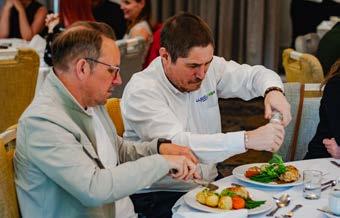
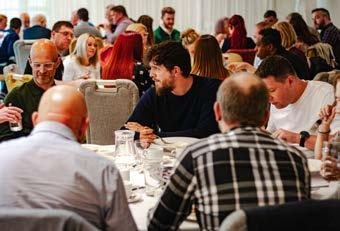
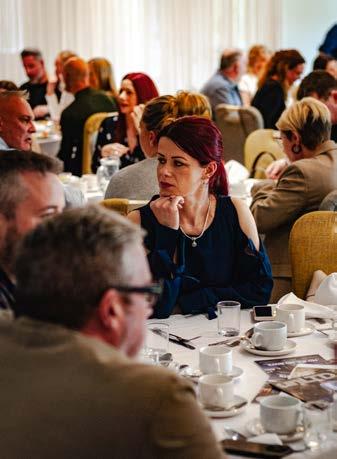
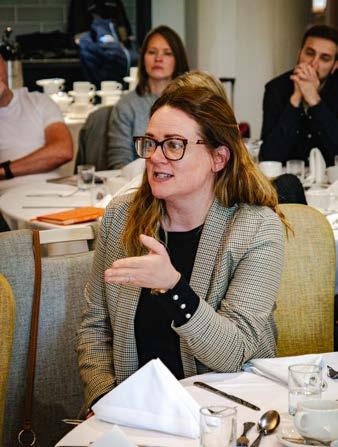
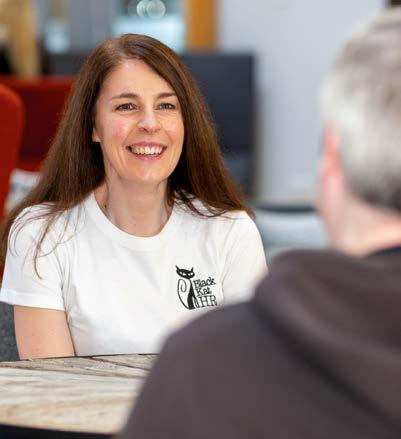
A brilliant turnout last month at Kenwood Hall for our latest Working Lunch, which also marked the first event in our new three-part AI debate series: AI and the Next Generation – What Jobs Are Left?
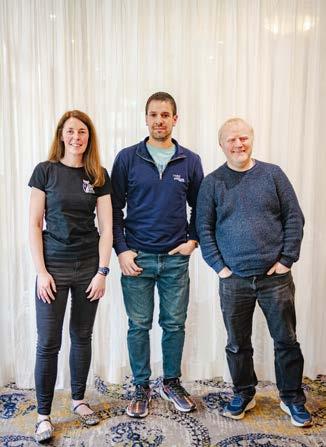
Hosted by unLTD’s Phil Turner, the panel brought together a range of perspectives from across business, technology and HR:
• Paul Ridgway – founder, The Curve
• Dan Kirkland – co-founder, NED, tech advisor and AI postgraduate
• Kat Derbyshire – Black Kat HR
The discussion explored how AI is already reshaping entry-level roles, career pathways and the future of skills development. It also raised important questions around what happens when traditional junior positions begin to disappear, and how future leaders gain the experience they need in an AI-driven economy.
There was plenty of thoughtful debate from both the panel and audience, particularly around the role universities and education providers will play in preparing young people for a rapidly changing world of work.
For those who could not join us, here are some of the key themes that emerged from the discussion:
• AI is accelerating existing trends
Most panellists viewed AI as an evolution rather than an entirely new phenomenon, although the speed of adoption is unprecedented.
• Entry-level roles are most vulnerable
AI may not eliminate jobs overnight, but it is already reducing the number of people required in some areas.
• Human-centred roles remain more resilient
Sales, relationship management, customer service and skilled trades appear less exposed in the short term.
• Expertise still matters
While AI can generate outputs quickly, strategic thinking, judgement and technical architecture remain highly valuable.
• There are legal, HR and data risks
Poor use of AI can create compliance, confidentiality and employment-related challenges for businesses.
• New industries will emerge
While AI is likely to replace some roles, it is also expected to create opportunities across infrastructure, engineering and entrepreneurship.
• Government intervention may be needed
Retraining, regulation and new approaches to welfare could all become increasingly important.
A huge thank you to everyone who joined us, contributed questions and helped make it such an engaging and thought-provoking afternoon.
This was only the beginning – there are plenty more conversations to come. Scan the QR code opposite, take a look and get involved!
For this month’s cover feature, Joseph Food spoke to Sheffield creatives about the opportunities, anxieties and human cost behind Chat GPT’s latest image generation update.
When OpenAI unveiled ChatGPT Images 2.0 on 21 April, the reaction across social media was divided. For some, it represented another exciting leap forward in AI capability – a tool capable of producing better visuals and marketing assets with improved layouts, text rendering and photorealistic imagery done in seconds. For others, particularly those whose livelihoods depend on creating those very assets, it felt like a warning shot at best and a slap in the face for hard-earned creative talent at worst.
As such, this latest iteration of AI image generation has heightened an already uneasy conversation around creativity, ownership and value. Graphic designers, illustrators, photographers and videographers have spent years refining their craft, building relationships and investing in equipment and expertise. Suddenly, it appeared that businesses could generate passable artworks, visuals and graphics with a few simple prompts and a monthly subscription fee.
For smaller companies and owners facing tight budgets, the appeal is obvious. AI tools promise faster turnaround times, lower production costs and the ability to generate large volumes of content with little resource. In an increasingly competitive marketplace, particularly for those without dedicated creative teams, the temptation to lean more heavily on automation is understandable.
CARL FOSTER DIRECTOR, FOSTER & SCOTT
But at what cost? While AI can now generate images to a higher standard, it cannot replace lived experience, instinct or human connection. A bot cannot physically sit with a client, build trust and fully understand the nuance behind a brand’s story, nor can it provide the kind of creative judgement that comes from years spent working in an industry and honing a craft. There is also the very salient point that, while the capability has clearly improved, there is still something distinctly uncanny and homogenised about what is being pumped out en masse by the latest update.
For many, the fear is not necessarily that AI will replace creatives entirely – though there is real concern that work already has been, and will continue to be, lost to the lower effort option of punching in a prompt – but that it risks devaluing the work behind the final product. And that is before you scratch the surface of the ethical and environmental concerns, which are whole other discussions in themselves.
As businesses continue to explore what tools like ChatGPT Images 2.0 can offer, the debate is unlikely to disappear any time soon. We spoke to a selection of individuals from Sheffield’s creative community to hear where they stand on the issue and get their perspective on the key challenge underpinning it all: understanding where automation adds value and where the human touch still matters most.
Historically, AI-generated imagery always had obvious flaws – weird text, incorrect logos, strange proportions – things that immediately gave it away. The detail is much more believable and polished now, and I can understand why a lot of creatives are starting to feel uneasy about where this is heading.
At the same time, I still think there are limitations once you begin properly dissecting what it produces. We were having a bit of fun with it recently and generated an image of Cristiano Ronaldo signing for Burnley. On first glance it looked impressive. It had the stadium, the kit, the branding, the typography – all the elements were there. But once we started looking closely, there were mistakes everywhere. The club badge wasn’t quite right, certain details were missing and when we tried adapting the image into another format it suddenly added an extra letter into Ronaldo’s name. Those are the kinds of things a lot of people probably wouldn’t spot immediately, but from a professional or commercial point of view, they matter.
That’s partly why I still think human oversight is incredibly important. You need
people with an eye for design, detail and consistency. AI can generate something quickly, but it doesn’t necessarily understand why something works visually or strategically.
One thing we keep coming back to internally is that AI-generated work is always pulling from somewhere else. It’s scraping, referencing and combining things that already exist online. So while it can create something that looks polished, there’s a lack of originality underneath it. That’s a problem for businesses trying to stand out in crowded markets.
For us as an agency, branding is where the limitations become most obvious. A brand isn’t just a nice-looking logo. It’s strategy, storytelling, application and purpose. We actually tested AI-generated branding recently and the results were awful. It might produce something visually acceptable on screen, but it doesn’t think about practical use. Can this logo work embroidered on a shirt? Will it reproduce properly on signage? Does it scale? Does it actually communicate anything meaningful about the business? Those are the questions designers and agencies ask automatically.
A report involving more than 10,000 creatives found 32% of illustrators reported losing commissions or work because of generative AI.
(Association of Illustrators – Justice for Creators campaign, 2025)
AI CAN GENERATE SOMETHING QUICKLY, BUT IT DOESN’T NECESSARILY UNDERSTAND WHY SOMETHING WORKS VISUALLY OR STRATEGICALLY.”
I also think there’s a wider conversation happening around the environmental and ethical impact of AI that people still aren’t fully paying attention to. The amount of power, infrastructure and processing involved is enormous, and I wouldn’t be surprised if eventually we start seeing regulations or even taxation around AI usage in some industries. Personally, I don’t see AI replacing agencies like ours any time soon. We already use AI tools in certain ways, and I think most businesses will eventually use them to some degree. But I still believe people value originality, strategy and human creativity. If a business simply wants a quick, cheap visual, AI can probably provide that. But if they genuinely want to stand out, tell a story and build a lasting brand, they still need real people behind the work.
Honestly, I sometimes feel a bit out of the loop with a lot of this stuff because I don’t spend loads of time actively following AI updates. Most of what I see comes through social media when other creatives start talking about it. So when this latest ChatGPT Images update landed, I only really became aware of it because people started posting examples of what it could suddenly do. And I’ll admit, some of it is impressive. Some of the realism now is wild. But at the same time, there’s still something about it that doesn’t feel human.
I still think, most of the time, you can spot AI a mile off when it comes to branding, graphics or marketing visuals, I still think a lot of it feels really hollow and samey. What I find interesting is that people seem to enjoy AI when it’s used for more silly entertainment stuff, like making memes or novelty images to share with friends, but I don’t think people like being marketed to with AI. I keep seeing cafes, restaurants and bars posting AI-generated food photos and it’s so jarring to me. Why would I want to see a fake version of the sandwich you sell instead of an actual photo of it? Even if it’s taken on an iPhone, at least it’s real. AI removes that trust.
Compared to some of my peers, I’m not hugely worried
WHY WOULD I WANT TO SEE A FAKE VERSION OF THE SANDWICH YOU SELL
INSTEAD OF AN ACTUAL PHOTO OF IT? AI REMOVES THAT TRUST.”
long term. Maybe I’m too optimistic, but I feel like we go through these waves every few years where everyone panics about new technology and then eventually things settle down again. There’s all this excitement and hysteria, industries panic, and then people slowly lose interest when the novelty wears off. My gut feeling is we’ll eventually come full circle with AI image generation as well.
That’s not to say it isn’t affecting people now. Work is quieter for a lot of creatives at the moment, and there are definitely concerns around clients cutting corners. But I still think people value human creativity and human understanding. A huge part of my job is sitting down with clients, talking through ideas, understanding their personality and instinctively knowing what they’re trying to achieve. I’ve worked in this industry for more than a decade now, and a lot of the time I can tell what someone wants just from having a conversation with them. You can’t really replicate that with prompts.
And when people hire a designer, they’re not just paying for software or visuals. They’re paying for experience and honesty. If a client suggests something that won’t work, I’ll tell them and explain why. AI won’t do that. It’ll just generate something regardless.
I think there’s a misconception that AIgenerated work is somehow more premium or futuristic, when actually I think it often looks tacky. Too polished in the wrong way. Timeless design, good branding and genuinely creative work still come from people, not generators. emilystancer.co.uk
EMILY REDFEARN ILLUSTRATOR, ANIMATOR AND DESIGNER
I don’t think many people working in the creative industries were particularly shocked by the latest ChatGPT Images update, because we’ve all seen how this technology has been developing. But I do think a lot of people were surprised by just how fast it’s improved. Before, AIgenerated images still had that obvious weirdness to them. You could usually tell straight away something looked off, whether it was the hands, the lighting or just the overall feeling of the image. Now, the realism and the text rendering are so much better that it definitely feels more threatening than it did even a year ago.
I think what worries me most is the effect it could have on the value of creative work. A lot of us have spent years building up skills, portfolios and relationships with clients, and now there’s this idea that you can replace that with a few prompts. I can understand why smaller businesses might find it tempting, especially when budgets are tight, but when massive companies with larger budgets are increasingly using this it's extremely disappointing to see
You won’t get honest opinions; it can’t interpret emotion or bring lived experience into the process. And honestly, even though the technology’s improved, there’s still something really uncanny about a lot of the images when you look at them together. You’re simply not going to be getting anything new or original.
I also don’t think people fully understand the wider impact yet. There are environmental concerns, ethical concerns, safeguarding concerns – it’s much bigger than just whether something looks impressive online.
I’ve already noticed clients starting to send AI-generated references in briefs. I suppose that’s the lesser of two evils if they’re still commissioning artists afterwards, but it still feels uncomfortable, because all of this technology is trained on existing work scraped from the internet. As an illustrator, that’s a horrible thought. You don’t want your own work being fed into systems that can then imitate styles and potentially undercut the people who created them in the first place.
I still believe there will always be people who value human creativity. It’s still seen by a lot of people as the lazy option, and I think there will always be clients and audiences who want work made by real people with something genuine to say.
emilyredfearn.co.uk
YOU DON’T WANT YOUR OWN WORK BEING FED INTO SYSTEMS THAT CAN THEN IMITATE STYLES AND POTENTIALLY UNDERCUT THE PEOPLE WHO CREATED THEM IN THE FIRST PLACE.”
66%
of UK tech workers think people would be more worried if they fully understood AI’s capabilities.
(Tech Radar,
2025)
The UK creative industries contribute around £125bn annually to the economy. (The Guardian, 2025)
Photo: Joe Horner
FUEL is a UK wide roadshow created to make it easier for businesses to understand, prepare for and access the right finance. Many leaders know they need funding to grow or manage cashflow, but finding the right route and being ready for it is often the biggest challenge. FUEL brings clarity, practical guidance and direct access to national funders, investors and advisers, all in one place.
Each full day event brings together over 250 business leaders from different sectors to explore the funding options available to them and understand what “funding ready” really looks like.
Attendees can also take part in Meet the Money sessions: tailored, pre matched appointments with active funders who are looking to back businesses like theirs. With lending to SMEs falling significantly over the past decade and many businesses unsure where to turn for finance, FUEL aims to remove complexity and give leaders the support they need to take confident next steps.
Backed by national partners and delivered by UMi – an organisation that has already unlocked £1bn of investment for UK businesses – the roadshow offers a focused, practical day designed to spark progress and remove barriers.
300
20 +
1 WHAT FUNDING IS RIGHT FOR YOU
2 HOW TO GET FUNDING READY
3 WHO’S READY TO BACK YOU 4 HOW TO TAKE THE NEXT STEPS
unLTD readers save £20 on full-price tickets with code:
A public study showed only 14% of people are comfortable with fully autonomous AI systems, while just 43% trust businesses to manage AI responsibly. (ITPro, 2025)
JAMES
MARTIN DESIGN LEAD, CHAPTER II
When I first looked at the ChatGPT Images 2.0 update, my reaction was probably the same as everyone else’s – it’s impressive on a surface level. The quality has clearly improved really quickly. It can produce things that, at first glance, look genuinely convincing.
But I still think, once you start properly looking at it, the cracks show quite quickly. We were testing some things in the studio the other day, including editorial layouts and adverts, and although the outputs looked polished initially, there were loads of little mistakes. Paragraph indents were inconsistent, alignments were off, spacing didn’t make sense. It felt a bit like working with someone new to design: they have the general idea, but don't fully understand why things should sit where they do.
designer does.
I also think there’s still something very uncanny about a lot of AI-generated visuals. Even when they’re technically impressive, they often feel soulless. You can usually tell there’s something slightly off, even if you can’t immediately explain what it is. Humans are actually really difficult to trick visually. We instinctively notice when something doesn’t feel grounded in the real world.
At the same time, I don’t think pretending AI is going away helps anyone. It’s here now and creative industries have to adapt to that reality. In some ways, it’s just another tool. AI already exists within Photoshop, InDesign and Illustrator, and there are definitely areas where it speeds workflows up and removes some of the more repetitive tasks.
HUMANS ARE ACTUALLY REALLY DIFFICULT TO TRICK VISUALLY. WE INSTINCTIVELY NOTICE WHEN SOMETHING DOESN’T FEEL GROUNDED IN THE REAL WORLD.”
That’s the thing I think a lot of people outside design maybe don’t realise. Creative work isn’t just about generating an image that looks nice. There’s loads of technical and strategic thinking behind it. If you’re producing a magazine, for example, it’s not enough for something to simply look good on screen. Is it set up properly for print? Are the images the correct resolution? Is everything editable? Has it got bleed and crop marks? AI still really struggles with those practical details.
We were experimenting with really simple edits on an AI-generated advert at one point and every tiny change completely altered the whole thing. You ask it to tweak one line of copy and suddenly the fonts, layout and imagery all shift as well. It doesn’t understand nuance or consistency in the way a human
The danger is when people think AI can completely replace creative expertise. A lot of business owners might see it as a quick shortcut, where you type in a prompt and instantly get exactly what you need, but it’s nowhere near that straightforward. Even using AI well still requires direction, judgement and experience.
For me, the most important thing is reinforcing the value of the human side of creative work. Ideas, taste, instinct, storytelling and problem-solving still matter. AI can generate content, but it still struggles to generate genuinely thoughtful creative work with personality behind it. And I think most people can still feel that difference, even if they can’t quite put their finger on why.
chapterii.agency
WILL ROBERTS PHOTOGRAPHER AND VIDEOGRAPHER,
Honestly, the pace of improvement with this latest update is incredible. AI has always been developing quickly, but this feels exponential now. Everyone jokes about the 'Will Smith eating spaghetti' video, but it really does show how fast things have moved in a short space of time. The images are getting sharper, the text rendering’s getting better and everything feels much more polished and usable than it did even a year ago.
That said, I’m probably more relaxed about it than some people in the creative industries. I know photographers who’ve lost work because of AI already, and there are definitely areas of photography and design where I can completely understand why people feel nervous. But in my own day-to-day work, AI currently helps me more than it hinders me.
A lot of the software I use already has AI integrated into it. Things like subtitling videos, audio clean-up, removing unwanted objects from photos, sorting through hundreds of images after a shoot – those are all jobs that used to take hours and now take minutes. Nobody enjoys spending half a day formatting subtitles or manually editing out a fire exit sign in the background of a shot. AI’s massively sped that side of things up, and from a workflow point of view that’s hard to ignore.
snooker or filming an event, someone still physically has to be there to capture it. AI can generate an image of a room or a person, but it can’t recreate a genuine moment as it’s unfolding.
The bigger issue for me is probably the lack of regulation and transparency around all of this. The technology is moving so much faster than the conversations around ethics, copyright and environmental impact. Businesses are already using AI-generated visuals commercially, often without making it obvious that they’re AI-generated. I think at some point there’ll need to be clearer rules around disclosure and how this stuff is being used.
I can also understand why creatives feel frustrated when massive organisations start cutting corners with AI despite having the budgets to hire real people. There’s a difference between a local business experimenting with tools because money’s tight and huge companies replacing creative jobs just because they can save time or cash.
IN MY OWN DAY-TO-DAY WORK, AI CURRENTLY HELPS ME MORE THAN IT HINDERS ME.”
I think where I feel more reassured is that so much of what I do still relies on human interaction and real-world environments. I mostly shoot events, businesses, people and live moments. You can’t really fake that. If you’re photographing the Crucible during the
At the same time, I don’t think this is necessarily the end of creative industries. Every new technology creates panic at first. People thought television would kill radio, or the internet would kill television. For me, it’s more about adapting than resisting completely. AI’s already part of the tools we use every day, whether people realise it or not. The challenge now is making sure it’s used responsibly, transparently and without losing the human side of creative work altogether.
voxmultimedia.co
of creative professionals said AI tools help speed up repetitive tasks such as editing, resizing, transcription and admin work. (Canva, 2025)
Tel: 03330524641
Email: hello@empowr.uk
Web: empowr.uk
HR with Personality
Empowr delivers no-nonsense, pragmatic HR consultancy for businesses that need clear and commercial solutions.
Services include: Ongoing Telephone and Email Support / Contract and Policy Reviews / HR Audit / Engagement Survey / Management and Supervisor Training
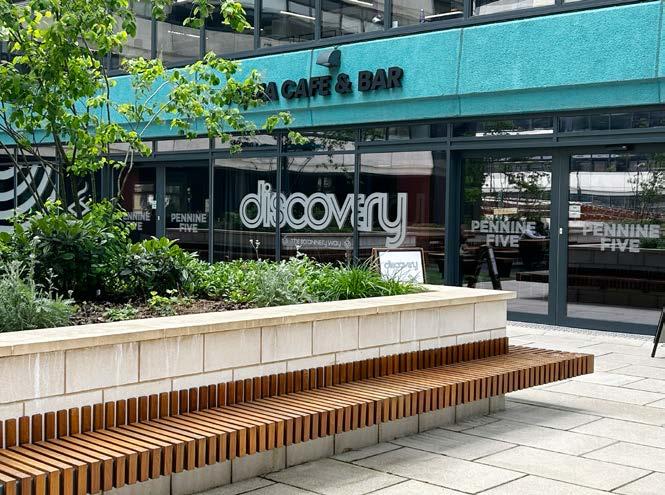
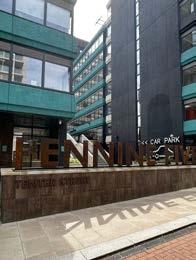
There’s a new spot to meet, make and mull things over in Sheffield city centre. Discovery, the flagship venue from homegrown hospitality brand Scrannery, has opened its doors at Pennine Five – right along the city’s fast-evolving Innovation Spine.
Set within Block 4 near Tenter Street, Discovery is pitched as more than your standard city centre café spot. It’s a hybrid space designed to flex with the rhythms of the area – part coffee stop, part workspace, part event venue – serving the growing mix of businesses, students and residents who now call this stretch of the city their daily orbit.
Inside, the layout is built around three distinct zones. The Snug offers a tucked-away setting for one-toone meetings. The Studio caters for workshops and talks, while The Floor opens up for larger gatherings and events. A weekday café
service keeps things ticking over niceley, with later openings from Wednesday to Friday for after-work conversations and drinks.
For Scrannery, which already runs several cafés across the region, this marks a step up in scale and ambition. Discovery has been conceived as a response to Pennine Five’s changing landscape – a place where office life, nearby residential living and public space overlap more than ever.
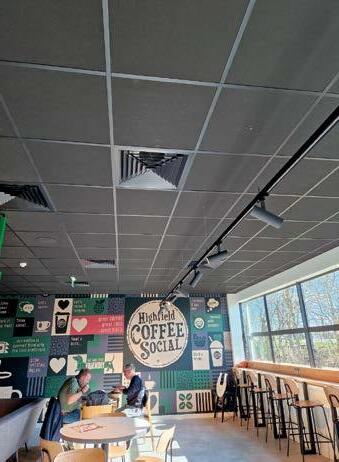
Distinctive artwork by Sheffield artist Jo Peel runs through the venue, anchoring it firmly in its surroundings. Known for her distinctive line work and large-
scale murals, Peel captures urban environments in flux. Here, her pared-back architectural forms and blocks of colour mirror the shifting identity of the Innovation Spine itself – a city in mid-transformation, sketched in real time.
Dave King, Scrannery cofounder and managing director of Differentis, sees Discovery as a natural fit for the area’s momentum.
“Pennine Five is quickly becoming a focal point for businesses in this part of the city. We saw an opportunity to create a space that supports that community – somewhere people can meet properly, work comfortably and spend time without feeling rushed.
“Being based here ourselves, we understand how people use the campus day to day, and Discovery has been shaped around that.”
That sense of local grounding runs through the project. Cofounder Kieran Morgan-McGeehan adds: “Scrannery has always been rooted in Sheffield, and opening at Pennine Five felt like a natural next step for us. Discovery carries the same approach we apply across our cafés – good food, proper coffee
DISCOVERY
and considered spaces – but on a larger scale.
“We’re pleased to be contributing to a development that is bringing more activity back into this part of the city centre.”
It’s not just about coffee and co-working. Christina Staniforth, campus manager at RBH, is already eyeing up a busy calendar. “We are delighted to have the new cafe bar open on the plaza. The space has been designed to enhance amenities on-site for tenants, but also to bring more people into the campus to enjoy our evergreen space.
“We're really looking forward to seeing a wide range of events this year, from AI workshops, business networking, summer BBQs and even a board game evening. If you want great coffee, freshly baked pastries, nutritious lunches or an after-work drink on the plaza, come and discover Discovery.”
The opening follows earlier plans for a café-bar at the heart of the development, with outdoor seating set to spill into the courtyard as warmer months roll in.
Find out more or book a space at discovery.scrannery.uk
WE’RE PLEASED TO BE CONTRIBUTING TO A DEVELOPMENT THAT IS BRINGING MORE ACTIVITY BACK INTO THIS PART OF THE CITY CENTRE.”
GREEN SHIELD GROUP
ADAM ELDER
GREEN SHIELD GROUP
WHY RISING ENERGY COSTS ARE FORCING HOSPITALITY TO THINK DIFFERENTLY
For years, energy was a manageable overhead for hospitality businesses. It sat in the background alongside other fixed costs – something to review at renewal, but rarely a factor in day-to-day decision making.
That’s no longer the case.
Whether you’re running a bar, restaurant or hotel in South Yorkshire or beyond, the pressure on margins is already significant. Labour costs, supply chain increases and shifting customer behaviour have all made trading conditions more challenging. Energy is now adding another layer of complexity – and, increasingly, influencing decisions that go far beyond the monthly bill.
What’s changed is not just the level of pricing, but the level of uncertainty.
Energy markets remain volatile, and while prices may not be at the extreme highs seen in recent years, they are still heavily influenced by global events, supply constraints and market sentiment. For hospitality operators working with tight margins, even relatively small fluctuations can have a noticeable impact on profitability.
The risk is that energy is still treated as something to react to, rather than something to plan for.
In many cases, businesses continue to approach procurement in the same way they always have – waiting until contracts are close to renewal, taking a view on the market at that moment in time, and locking into
what appears to be the best available deal. The challenge with that approach is that it leaves businesses exposed to timing risk, particularly in a market that can move quickly.
A more effective approach is to treat energy as part of a wider operational strategy.
That starts with understanding usage in more detail. When and where energy is being consumed can often reveal opportunities to reduce waste or shift demand, particularly in kitchens, refrigeration and heating. Small adjustments, when applied consistently, can deliver meaningful savings over time.
It also means planning ahead. Reviewing contracts well in advance of renewal creates more options –
whether that’s securing more favourable pricing, exploring different purchasing structures, or aligning contracts with wider business plans.
For some operators, it may also mean looking at longer-term solutions. On-site generation, such as solar, is becoming an increasingly viable option for hospitality businesses with suitable space. While not right for every site, it can provide a degree of protection against wholesale price volatility and help stabilise a portion of energy costs over time.
None of this removes the wider pressures facing the sector. Hospitality remains one of the most challenging environments to operate in, and there are no quick
fixes when it comes to cost management.
But energy is one area where businesses have more control than they might think.
Those that take a more proactive approach – understanding their usage, planning ahead and considering a broader range of options – will be far better placed to manage uncertainty and protect their margins. Because in the current climate, energy is no longer just a background cost. It’s a strategic consideration that can shape how a business operates, competes and grows.
WILDFIRE
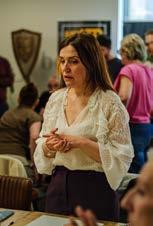
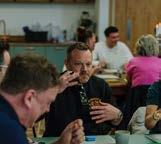
Last month’s unLTD Business Breakfast was a bit of a departure from our usual programme.
WORDS: ASH BIRCH
Yes, there were still croissants, coffee and the chance for a proper network natter with the great and good of Sheffield’s business community – this time in the welcoming surroundings of The Gold Digger Trust’s Refinery café. But, for once, the traditional panel discussion on a pressing business topic took a back seat.
Instead, this event was all about having a bit of fun.
That fun came courtesy of Wildfire Agency, one of the UK’s most dynamic events companies, who had been quietly transforming the upstairs events space while we were sipping our flat whites downstairs.
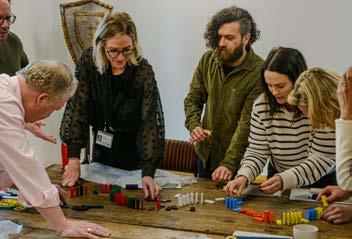
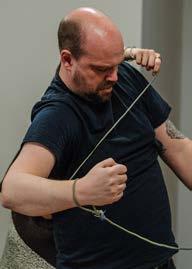
By the time we headed up, the room – inspired by, but definitely not infringing on the copyright of, a certain BBC reality show – had been decked out with suits of armour and shields. Four tables awaited us, each set up with challenges we were yet to uncover.
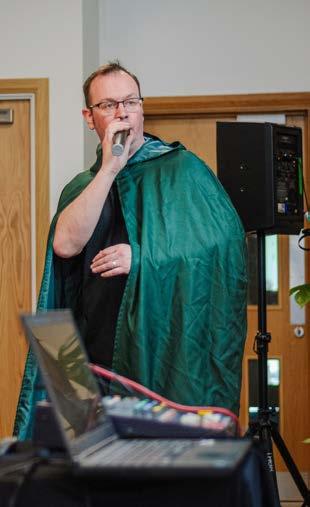
A cloaked Wildfire founder, Nathan Angus, stepped neatly into the Claudia Winkleman role as the rules were revealed. We were split into four teams and faced a series of tasks –the faster we completed them, the more money we’d win. The twist? Somewhere among us lurked a traitor, quietly working to sabotage our efforts.
At the end of each round, we had to vote to ‘banish’ whoever we suspected. Catch a traitor and the prize pot grew. You get the idea –especially if you’ve seen the show.
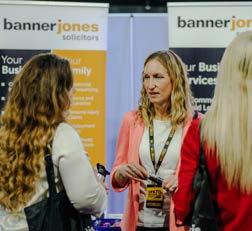
Thankfully for our team, Andy Hanselman proved to be a terrible liar and was uncovered early on. Sara Patel of Banner Jones then sniffed out the second traitor, Emma Parker from Opportunity Sheffield putting us in a strong position.
Unfortunately, that’s about where our success ended.
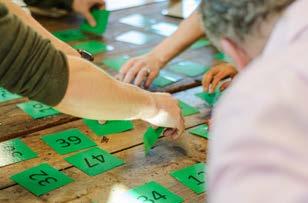
The challenges themselves – from building an elaborate domino run to memory tests and escaping rope ties –proved less of a triumph. Safe to say, we didn’t exactly cover ourselves in glory.
In truth, I can’t even remember who won overall, but it hardly mattered. The session was a genuinely fun, feel-good way to spend a Thursday morning – a welcome break from the usual routine. In fact, people were enjoying themselves so much they lingered longer than planned, with more than a few risking going over their parking.
The good news? This wasn’t a one-off. Another event with Wildfire is already in the works – this time, The Master of Tasks. I’ll let you guess which show that one’s inspired by.
Access HR expertise now at a fraction of the cost of employing your own specialist.
Follow the QR link to choose the right option for you...
SUSTAINABLE ENERGY & SOLAR PANEL SPECIALISTS
Sheffield Renewable Services – your local solar energy company, specialising in solar panels, battery storage and renewable energy systems. We deliver complete energy solutions for homes and businesses, designed for efficiency, performance, and long-term savings.
Arrange a personalised home visit to assess your property and design the right renewable energy solution for you.
| EV CHARGERS | HEAT PUMPS
AN APPETITE FOR CHANGE
As Sheffield Food Festival approaches its 15th year, Noemi Antonelli, managing director of Swans Events, explains how the event reflects a city reshaped by its independent food scene.
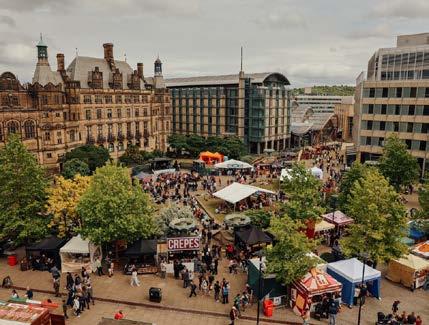
This May bank holiday weekend, Sheffield Food Festival celebrates 15 years at the heart of a city that has reinvented itself as one of Britain’s most vibrant food destinations.
Sheffield has long been defined by its industrial heritage, with a quarter of the city’s population employed in metal trades at its peak. Today, it is increasingly celebrated for something quite different: its thriving food and drink scene. Across the city, former industrial buildings have been reimagined as food and drink destinations. Old steelworks and factories have been converted into restaurants, bars and food halls. Cutlery Works, housed in a former cutlery factory, was named the UK’s best food hall in both 2022 and 2023.
Sheffield’s food scene has attracted significant national attention in recent years. In 2023, The Observer Food Monthly named Sheffield its UK foodie hotspot, and in the same year Time Out placed it as the second-best city break destination in Europe. Hospitality analysts Accor named Sheffield the UK’s food capital in 2024, awarding it a near-perfect 99 out of 100 based on Google reviews, Michelin ratings, social data and the strength of its food festival scene – with Sheffield Food Festival playing a significant role – notably stating: ‘This
city distinguishes itself as a hub for food festivals and markets.’
What runs through all of this is a fiercely independent character. This reputation has not been driven by national chains but built by the local community. That independence is reflected in this year’s Sheffield Food Festival line-up: Yee Kwan’s East Asian ice cream, The Taco Trailer from Kelham Island, Nam Song’s Vietnamese coffee, Paradiso’s artisan tiramisu and craft ales from Thornbridge Brewery. Alongside returning
favourites, the festival is actively championing emerging artisans – giving new producers discounted spots to grow alongside the city that shaped them. The variety reflects a city with a genuinely diverse, locally rooted food culture.
When the festival first began fifteen years ago, it was a far smaller, more local affair – a reflection of a food scene still finding its identity. This year’s edition is set to be the biggest yet. For the first time, the festival will extend beyond its usual footprint in Peace Gardens, Town Hall Square, Fargate and Millennium Square, with Orchard Square and Leah’s Yard joining the celebrations. As the city has shifted from industrial powerhouse to creative, independent food destination, the festival has evolved with it – expanding in scale, ambition and diversity.
Over fifteen years, it has grown in step with Sheffield’s food scene, always reflecting what is happening in the city’s food culture more broadly. With Sheffield’s profile higher than ever, this feels like a natural milestone to mark.
Fifteen years in, Sheffield’s food story is still very much being written, and the festival remains one of its most exciting chapters.
@shefffoodfest
SHEFFIELD FOOD FESTIVAL
When: Saturday 23 – Monday 25 May 2026
Where: City centre – Peace Gardens, Town Hall Square, Fargate, Millennium Square, plus Orchard Square and Leah’s Yard
Time: 10am–7pm (Sat & Sun) | 10am–6pm (Mon)
Entry: Free
rent reviews. Can you clarify where the legislation does –and does not – apply?
The starting point is that the Renters' Rights Act 2025 does not regulate ordinary commercial rent reviews in business leases.
From 1 May 2026, the Renters' Rights Act 2025 will introduce sweeping changes to the private rented sector, handing tenants stronger protections and reshaping the obligations placed on landlords. While the legislation is primarily aimed at residential renting, it has also prompted questions from the commercial property world – particularly among landlords, investors and businesses with mixed-use assets.
For standard office, retail and industrial leases, it is largely business as usual. The Act does not overhaul traditional commercial leasing structures or rewrite the usual rent review mechanisms used in business tenancies. However, where residential units sit within a wider commercial portfolio – such as flats above shops, mixed-use developments or other assured tenancies embedded within commercial assets –the picture becomes more complex.
In those cases, the reforms could have implications for everything from valuation and compliance to possession risk, lender scrutiny and long-term asset management. Residential tenancy structures, rent increase mechanisms and vacant possession assumptions may all come under closer examination as the new rules take effect.
We spoke to Brandon Titterington, head of the commercial property department at Taylor & Emmet, to explore what the changes could mean
in practice for commercial portfolios and investors.
From a commercial property perspective, what are the key elements of the Renters’ Rights Act that landlords and investors need to be aware of?
For purely commercial leases, the Act does not replace the Landlord and Tenant Act 1954 regime, which remains the core framework for business tenancies. That means shop, office and industrial lease issues are still mainly governed by the lease terms and the 1954 Act, not the Renters' Rights Act 2025.
However, for mixed-use assets and portfolios with residential units above or within commercial buildings, any residential element will fall within the new regime, even where the overall investment is commercial in character.
Perhaps the most important points to be aware of are:
• Section 21 “no-fault” evictions are abolished for residential assured tenancies, so vacant possession planning for flats above shops, offices
and other mixed-use property becomes less straightforward.
• Landlords must rely on statutory possession grounds, with stronger tenant protections and longer notice periods in some cases, especially where the landlord wants to sell or move in.
• Fixed-term residential tenancies are replaced by a more periodic model, affecting tenancy structuring and asset management assumptions.
• Rent controls are tighter: rent increases are limited to once a year and tenants can challenge above-market increases used to force them out.
For standard office, retail and industrial leases with no residential occupation, is it largely business as usual?
It is. The Landlord and Tenant Act 1954 regime remains in place and is unaffected for purely commercial property.
There has been some confusion about whether the Act affects commercial
However, the Act does apply where the occupational arrangement is residential, including flats above shops and mixed-use buildings with residential occupation that fall within the new regime. In that setting, provisions such as rent increase controls, tenant challenges and the new possession framework can affect the residential component of a mixed-use asset.
For landlords with mixed-use assets, how significant could the changes be in practice?
• Recovering possession of the residential element becomes harder and slower because “no-fault” evictions have gone and landlords must instead rely on statutory grounds.
• Tenancy management becomes more complex, with fixed-term tenancies replaced by periodic tenancies and tighter controls on rent increases.
• Buyers and funders will want certainty about who occupies residential accommodation and on what terms, which is likely to lead to additional enquiries and potential delays.
• Valuations may be affected where vacant possession is assumed, as it can no longer be treated as guaranteed.
What are the biggest implications for investors holding commercial portfolios that include residential units?
Investors would be wise to treat residential units within commercial portfolios as regulated sub-assets requiring closer scrutiny around possession, compliance, valuation and exit strategy.
What sort of due diligence should buyers now be carrying out when acquiring
We provide a full Business Legal Health Review, giving businesses a clear and structured understanding of where their legal risks sit”
commercial assets with residential elements?
• Establish exactly what tenancies exist within the residential parts and whether they are assured tenancies caught by the new regime.
• Consider whether vacant possession is needed for redevelopment, refinancing, sale or restructuring, and how easily it can now be achieved.
• Ensure compliance obligations around registration, notices, disclosure and complaint handling have been met.
Looking longer term, do you see the Act — or changing public opinion and policy — having any wider impact on the commercial property market, even indirectly? It is likely the Act will contribute to wider market changes. A two-tier market could emerge, with mixeduse assets potentially valued lower because residential occupation is harder to control, affecting yield assumptions and exit values. Greater regulatory pressure on residential letting may also push more institutional capital towards purpose-built or professionally managed residential stock rather than informal mixed-use holdings.
How does the TE Business Assist product you offer help support landlords and investors?
We provide a full Business Legal Health Review, giving businesses a clear and structured understanding of where their legal risks sit. For landlords and investors, that includes risks arising from the Renters' Rights Act 2025. It forms part of our wider ethos: “For you. For life.”
Taylor Emmet comprises experts in a wide range of disciplines, here to help individuals and businesses with all types of legal matters. To book a free legal health review, email Taylor Emmet’s team of experts at info@tayloremmet.co.uk
BY BETH CRACKLES, CHIEF EXECUTIVE, SHEFFIELD HOSPITALS CHARITY
Every month, 2,500 people undergo diagnostic tests for cancer at Sheffield Teaching Hospitals. For many, these tests – carried out at the Royal Hallamshire and the Northern General – bring reassuring news. But sadly, some people do receive a cancer diagnosis and may require surgery.
As CEO of Sheffield Hospitals Charity, I see every day how generosity can transform healthcare. I also feel a profound responsibility to honour the trust people place in us when they donate. Our role is not simply to raise funds, but to ensure those funds are spent wisely, transparently, and on what matters most to people in our region.
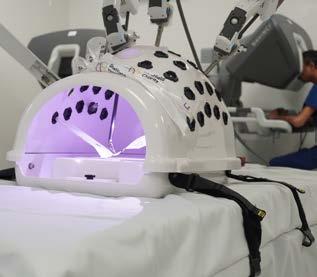
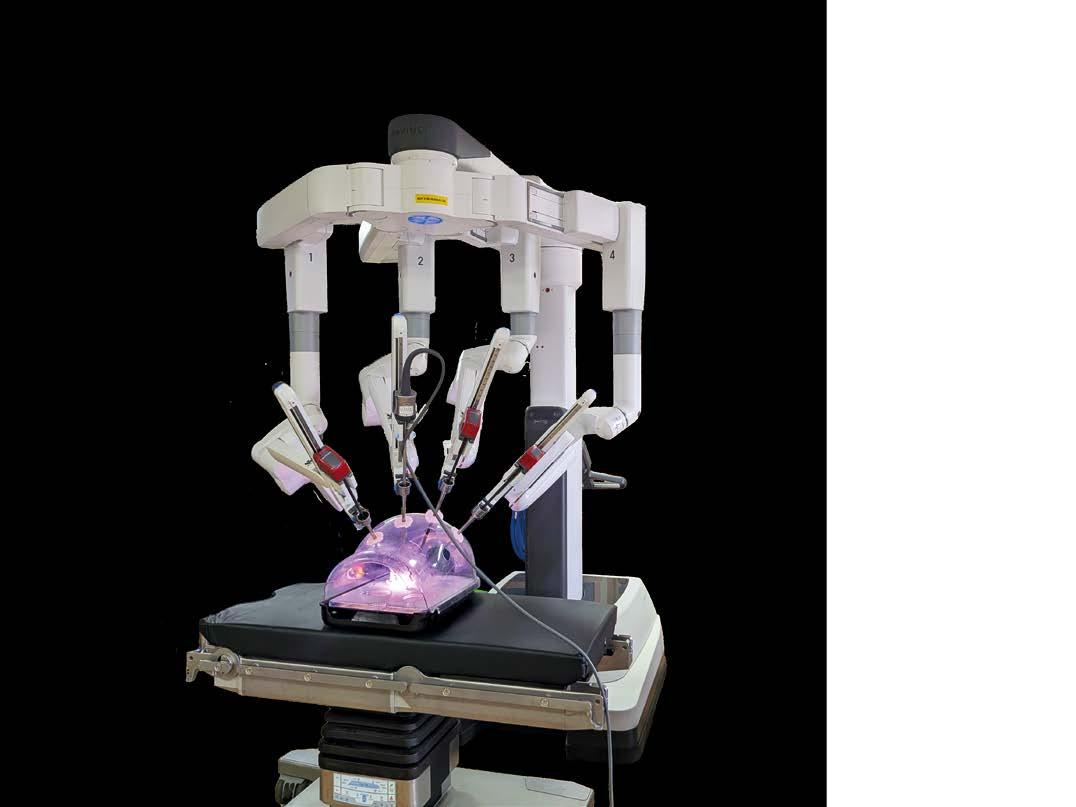
The arrival of the new da Vinci Xi surgical robot at the Northern General is, to me, a powerful expression of this responsibility.
We have contributed £1.45 million towards this robot – the largest single donation Sheffield Hospitals Charity has ever made. At a time when the NHS is under unprecedented strain, I firmly believe that charitable funding should be used purposefully and with ambition.
Each year, more than 3,600 cancer surgeries are performed across the Royal Hallamshire and the Northern General. Diagnosis and surgery take place almost exclusively across these two sites, and this new robot strengthens that vital partnership by expanding advanced surgical capability at the Northern General.
The technology allows surgeons to work in hard-toreach areas using robotic arms with flexible, fully rotating wrists and a high-definition 3D view. This enables them to see up to ten times more than the naked eye, enlarging something the size of a 2p coin to that of a dinner plate.
What makes this investment especially meaningful is how it has been raised. This funding represents years of generosity from thousands of people across our communities – playing our weekly lottery, leaving a gift in their will, taking part in events, fundraising at work, giving regularly, and donating in moments both big and small. This robot is not the result of a single act of giving, but a collective achievement shaped by people who care deeply about our local NHS.
Beyond the clinical outcomes of fewer and less invasive incisions, faster recovery times, and shorter hospital stays, this technology offers something just as important – it gives people precious time back with those they love. By coming together, we strengthen our NHS and improve the care that our families, friends, and communities rely on across Sheffield and beyond.
From us all at Sheffield Hospitals Charity, and the patients whose lives will be changed, thank you.
SOUTH YORKSHIRE BUSINESSES: ARE YOU READY TO UNLOCK FUNDING FOR GROWTH?
NATIONAL ROADSHOW BRINGS INVESTORS, ADVISERS AND PRACTICAL SUPPORT TO ROTHERHAM THIS JUNE
South Yorkshire’s business community is being offered a rare opportunity to cut through the complexity of funding and speak directly to those who can unlock it. On Wednesday 10 June, the FUEL roadshow arrives at Rotherham’s AESSEAL New York Stadium, bringing together funders, investors and advisers for a day designed to help SMEs take decisive steps towards growth.
At a time when access to finance remains one of the most persistent barriers facing smaller businesses, the event aims to replace confusion with clarity. Rather than a traditional expo, FUEL is structured around pre-arranged, one-to-one meetings, giving attendees the chance to have focused, practical conversations tailored to their business ambitions.
The format has already shown early promise. When the roadshow launched in Newcastle in March, more than 180 meetings took place between businesses and funding providers. Several of those conversations have already translated into tangible outcomes, with offers exceeding £2 million secured by participating firms.
For South Yorkshire, where entrepreneurial energy is abundant but access to capital can be uneven, the timing feels significant. According to Small Business Minister Blair McDougall MP, the need to bridge that gap is pressing.
“Small businesses are the backbone of the economy in Yorkshire with over 400,000
of them employing more than one million workers. However, too many still lack the finance to unlock their full potential to create jobs, opportunities, and growth.”
His comments underline a broader national push to improve funding access, with institutions such as the British Business Bank playing a central role. Events like FUEL, however, bring that ambition to ground level, offering direct engagement rather than distant policy.
Delivered by UMi, a longstanding player in the UK’s business support landscape, the roadshow builds on nearly two decades of experience connecting firms with funding and advice. Since 2007, the organisation has supported hundreds of thousands of businesses and helped unlock substantial investment across the country, including significant activity within Yorkshire.
More recently, UMi has continued to deepen its regional presence. Its involvement in initiatives such as the Great Ideas programme, offering grants of up to £60,000 alongside intensive support, signals a continued commitment to fostering innovation and growth across the North.
Nicki Clark OBE, CEO of UMi, is clear about what sets FUEL apart from more conventional business events.
“FUEL has been designed so business owners up and down the country can have access to everything they need in one place over the space of just one day,” she says. “By enabling attendees to have direct, tailored, one
to one conversations with investors, advisors and industry figures, they can go away confident in the knowledge that they are on the right path.”
Her emphasis is on practicality. For many SMEs, the challenge is not a lack of ambition, but navigating a system that can feel opaque and fragmented.
“Too many brilliant businesses are held back by complexity, jargon and missed opportunities,” she adds. “FUEL isn’t a ‘trade expo’ but more so ‘get it done’ workshops and meetings where those delivering ambitious growth plans, overcoming cash flow challenges, or diversifying, can get the support they need.”
For attendees, the promise is a clear one. By the end of
the day, businesses will leave with a stronger understanding of their funding landscape and a clearer route forward:
• what funding is right for you
• how to get funding ready
• who is ready to back you
• how to take the next steps
That focus on action rather than theory is likely to resonate with South Yorkshire’s business base, where time and resource are often in short supply. The ability to have meaningful, decision-focused conversations in a single day could prove particularly valuable for firms looking to scale or adapt in a changing economic landscape.
The event is supported by a strong network of partners, including NatWest, the Confederation of British
Industry, and the Department for Business, alongside specialist organisations and advisers. Together, they represent a broad cross-section of the funding ecosystem, from traditional finance to alternative investment and advisory support.
For business owners, the message is straightforward. Whether you are planning expansion, navigating cash flow pressures or exploring new markets, the opportunity to engage directly with those who can support that journey is not one that comes around often.
To book your place or find out more, visit fuelroadshow. co.uk.
FUEL has been designed so business owners up and down the country can have access to everything they need in one place over the space of just one day By enabling attendees to have direct, tailored, one to one conversations with investors, advisors and industry figures, they can go away confident in the knowledge that they are on the right path.”
Nicki Clark OBE, CEO of UMi
IN A NUTSHELL –FUEL ROTHERHAM
• What: FUEL national funding roadshow
• Where: AESSEAL New York Stadium, Rotherham
• When: Wednesday 10 June
• Who it’s for: SMEs, start-ups, scale-ups and established businesses looking to access finance or plan growth
THE POWER SHIFT
As solar adoption reaches record levels, Sheffield Renewable Services is helping businesses and homeowners cut costs and take control of their energy use.
More than 1.5 million UK homes now have solar panels installed, according to government figures released as part of the UK’s Solar Roadmap in 2025. To put that growth into perspective, there were only around 28,000 solarpowered households across the country in 2010, meaning adoption has increased by more than 5,000% in roughly 15 years.
The commercial sector is accelerating its solar uptake too. Warehouses, offices, factories, farms and retail sites are increasingly turning rooftops into energy-generating assets as businesses look to reduce costs, improve energy security and meet sustainability targets. Throughout 2025, record numbers of new installations were registered nationwide, with March alone seeing around 21,000 new systems installed – the highest monthly figure since 2015.
For Jay Reid, founder of Sheffield Renewable Services, those figures reflect what he is seeing every day on the ground in South Yorkshire.
The Sheffield-based company, founded in 2021, specialises in solar PV installations, battery storage systems, EV chargers and renewable energy solutions for homes and businesses across
the region. While the business itself is relatively young, Jay brings nearly 20 years of industry experience to the role.
An electrician by trade, he has worked on projects ranging from terraced homes to offshore oil rigs. But renewable technology was always where he saw the industry heading.
“I first got into solar back in 2005 when the feed-in tariffs were around,” he explains. “Then the funding got cut and I ended up working offshore for about 10 years. But once battery technology started improving, I knew I wanted to get back into renewables properly.”
Initially running the business alongside offshore work, Jay soon realised demand was building quickly enough to commit fully to Sheffield Renewable Services.
“About a year in, it really started gaining traction, so I just went all in and it’s been a great decision.”
Today, the family-run business works predominantly on larger residential properties, while also delivering renewable installations for commercial customers looking to reduce energy costs and future-proof their operations.
Recent increases in electricity tariffs have only accelerated interest.
“Whenever there’s a sharp rise in energy prices, we see
enquiries jump straight away. Businesses using lots of electricity during the day can benefit massively from solar.”
One of the company’s biggest strengths is its emphasis on tailored advice rather than one-size-fits-all packages. Jay is keen to stress that renewable systems can evolve over time depending on a customer’s budget and needs.
“It’s not all or nothing,” he explains. “Some people might start with solar panels now and add battery storage later. Others might want EV charging added in the future. You can build the system up gradually.”
That flexibility is helping to challenge some of the misconceptions that still surround solar technology.
Sheffield Renewable Services now uses AI-powered software that allows customers to receive detailed estimates online through an easy-to-use quote generator, using satellite imagery and household energy usage data.
The software also analyses roof size, orientation, shading and electricity consumption before producing projected savings, installation costs and estimated break-even timelines.
Jay says the technology has become a particularly valuable part of the company’s
offering, giving customers the chance to explore their options and understand the potential savings in their own time. “It removes a lot of barriers. People can explore their options without feeling pressured into booking appointments straight away.”
The figures themselves are often persuasive. According to Jay, most systems pay for themselves within six to eight years, while the panels are expected to continue generating electricity for decades afterwards.
“The systems are there for 30 years. And with rising energy costs, most systems end up paying themselves back quicker than the official estimates.”
Commercial customers are increasingly recognising the long-term value too, particularly with grant funding and finance options helping reduce upfront investment costs.
“Businesses in Sheffield can access grants that cover a significant percentage of thehe installation cost,” he says. “When you combine that with the savings on energy bills, it starts making a lot of sense financially.”
Alongside solar and battery systems, Sheffield Renewable Services also works with trusted partners on heat pump installations and EV charging infrastructure, reflecting the
broader shift towards lowcarbon living and transport.
He points out that renewable technology is steadily becoming standard rather than optional. Newbuild homes are already required to include minimum levels of solar generation, and he expects that trend to continue.
Yet, despite the company’s rapid growth, Sheffield Renewable Services remains intentionally local and handson. Their ethos revolves around the belief that personal service is often what separates independent specialists from larger national providers.
“With this technology, customers need support and advice after the installation as well. We help people understand tariffs, how to get the best from the system and what options they’ve got going forward.”
As South Yorkshire businesses and homeowners continue searching for ways to manage rising costs and improve sustainability, Sheffield Renewable Services is proving that renewable energy is no longer simply about environmental credentials. Increasingly, it is becoming a practical business decision too.
Get a free quote for your home or business at sheffieldrenewables.com
Highlighting the vision, adaptability and grit behind South Yorkshire’s longeststanding success stories.
There’s a familiar point in the Sheffield calendar when attention turns to Bonfire Night. For years, Illuminate the Gardens drew thousands. Now, the team behind it –led by managing director Bob Worm – are returning with an even more ambitious proposition: Arcnight, a largescale event designed to meet demand and operate at a significantly bigger capacity.
Set to take over Don Valley Bowl on Thursday 5 November, Arcnight is being positioned as Sheffield’s only large‑scale fireworks show this year. For Bob, it represents both a creative and operational step up, but also a strategic response to shifts in the local events market.
“This is a family-based firework and lighting celebration show,” he tells unLTD. “We’re bringing together everything that makes Bonfire Night special, but elevating it into something much bigger, much more immersive.”
At its core, Arcnight blends spectacle with local culture and identity. The name itself nods to the city’s industrial past – the arc of a firework mirroring the spray of steel – rooting the event firmly in place.
“The theme is about melding the heritage of Sheffield with its culture and creativity,” says Bob. “It’s a green city, it’s got that welcoming feel and we want the event to reflect all of that.”
Moving from the Botanical
Gardens to Don Valley Bowl opens up a different level of scale. Where Illuminate was constrained by capacity and location, Bob explains that Arcnight is designed to bring up three times as many people together in one space, with infrastructure that supports a more complex, commercially viable event model.
“We used to do 5,000 people a night across three nights. Here, we can bring 15,000 people together and create something properly spectacular.”
That shift in scale underpins a broader model. The event combines two fireworks displays – including an earlier ‘low bangs’ show – with live entertainment, food and drink and fairground attractions extending dwell time and offering audiences a fuller experience than a traditional display.
“It’s easier to get to, easier to move around and we can design the experience properly,” adds Bob. “You come along like you would to the arena – you’re part of
something big.”
With more than 30 years’ experience delivering major events in the city, he is clear that success depends on more than the headline display. Operational planning, crowd management and contingency all play a central role and well as some tried and tested non-negotiables Events Collective bring to the table.
“The first rule is give people what they want. Then give them something they didn’t know they wanted. And finally, leave them wanting more.”
That approach informs both programming and pricing. Tiered tickets, including early bird offers,
I’VE SEEN THE FLOW OF CULTURE CHANGE OVER THE YEARS. RIGHT NOW, THERE’S A HUGE AMOUNT GOING ON IN THE REGION – MUSIC, HOSPITALITY, EVENTS. IT’S GROWING FAST.”
form a key part of the strategy, alongside efforts to keep the event accessible for families while maintaining commercial viability in a rising-cost environment.
“Historically we’ve sold thousands of tickets before summer,” says Bob. “People like to plan ahead, especially when there’s value there – and that’s becoming increasingly important to provide.”
As the city’s cultural and hospitality sectors continue to grow, Arcnight is positioned as both a seasonal anchor and a scalable live events business, with potential to expand in future years.
“I’ve seen the flow of culture change over the years,” Bob
reflects. “Right now, there’s a huge amount going on in the region – music, hospitality, events. It’s growing fast.”
Beyond the commercial considerations, the Events Collective team believe the long-term value of events like Arcnight lies in their wider impact –supporting local suppliers, creating temporary employment and driving footfall into the city.
“It’s about bringing light into the dark,” he says. “Stepping away from everything else and just enjoying something together.”
arcnight.com // @arcnightsheffield
ABOUT EVENTS COLLECTIVE
With more than 30 years’ experience, Events Collective is an event production and management company working across South Yorkshire and beyond. The team pride themselves son delivering a tailored, client-focused service, regardless of scale or budget.
Projects range from large public events such as Sheffield Food Festival to major fixtures linked to the Tour de Yorkshire. Find out more at eventscollective.com.
After a decade of steady growth, Sheffield-based We Do Workwear has taken a major step forward with a move into new premises at Newhall Works in Attercliffe – and the family-run business is already seeing the benefits.
The independent company, which supplies branded workwear and custom clothing to businesses across the region, officially moved into its new home earlier this year after outgrowing its former base at Sheaf Bank Business Park. The new unit is almost twice the size at just under 7,000 sq ft and, crucially, has given the team space to introduce something completely new –a dedicated retail showroom.
For co-owner and director James Smith, the move had been on the radar for some time.
“We’d been looking for probably 12 months,” he tells unLTD. “There were so many boxes to tick in terms of size, location, price and whether it fitted our requirements internally with office space, production space and then the shop space, which has now added an important additional string to our bow.”
The business secured the keys in December and completed the move over the Christmas period, opening from the new premises in January.
Crucially, the extra space has also opened the door to new opportunities. At the front of the building, We Do Workwear has created a welcoming retail area where tradespeople, businesses and walk-in customers can browse products, try on clothing and
get expert advice from the team.
“It’s been amazing and it’s doing really well,” says James. “We’re getting a good amount of people every day coming in wanting to try things on and make sure they’ve got the perfect fit, especially for items like boots and trousers.”
Other improvements have centred around operational efficiency. The previous site involved multiple floors and an unreliable service lift, meaning staff were regularly moving heavy boxes up and down stairs. The new layout has streamlined the entire process.
“Deliveries now come
straight into the rear warehouse, get checked in and then move through production much more efficiently,” says James. “Everything just flows better. It’s quicker, more organised and far less time gets wasted.”
The ground floor showroom is proving particularly useful for local companies ordering workwear for their teams.
“We’ve got businesses now sending their employees down to try things on before placing larger orders,” he explains. “Instead of ordering 50 pairs of boots and hoping they fit, they can get it right first time.”
While retail is a new venture for the business, James says it has been an enjoyable learning curve.
WE DIDN’T REALISE QUITE HOW WELL THE SHOP SIDE WOULD DO, BUT IT’S BROUGHT IN COMPLETELY NEW CUSTOMERS FOR US. HAVING A
GROUND-FLOOR PREMISES WHERE PEOPLE CAN WALK IN HAS MADE SUCH A DIFFERENCE.”
“It’s definitely been a challenge because we’ve never done it before, but they’re good problems to have. It’s things like making sure everything’s priced correctly, having the right stock levels and building the right product ranges.”
They’ve also made the call to expand the brands they stock, with several new names joining the shelves in the coming months. Among them is an internationally recognised fashion and footwear brand (currently under wraps), which has selected We Do Workwear as one of only 12 UK stockists
Quote UNLTD in store for a 10% discount on your first purchase
for a new product range launching this summer.
For James, it reflects changing attitudes towards workwear, particularly among younger customers looking for products that combine comfort, safety and style.
“You’re seeing more people wanting workwear that feels good and looks good as well,” he says. “Some tradespeople might finish work and head to the pub or out somewhere after, so they want something comfortable they can keep on.”
The move also marks a wider shift in ambition for the company as it continues to grow both online and in-store.
“Overall, this gives us room to support more customers, hold more stock and improve what we offer. We want to keep developing the website and things like click-andcollect too, so customers can order online and pick up instore when it suits them.”
A few months in, he says the team already feels confident they made the right
decision.
“We didn’t realise quite how well the shop side would do, but it’s brought in completely new customers for us. Having a ground-floor premises where people can walk in has made such a difference.”
And while the business continues to evolve, James says the core focus remains the same – helping local businesses find the right workwear solutions.
“There’s nowhere else in Sheffield where you can come into a dedicated workwear showroom, try things on properly and get advice from people who know the products. That’s what we want people to know. So if you’re sorting workwear for your team, come down and see us.”
WE DO WORKWEAR Unit 5 Newhall Works, Newhall Road, S9 2QL 0114 398 9454 wedoworkwear.com
Ten years in, Sheffield-based International Freight Solutions is proving that in a complex, fast-moving global market, clear advice, strong relationships and a steady hand still count for everything.
from the outset. “We didn’t focus on any particular area or lane, or mode of transport,” Paul explains. “We looked at every enquiry that came in just to get us up and running – and that’s still what we do today. We’re pretty much an all-rounder.”
Flexibility remains central to the offer. IFS operates across air, sea and road freight, supporting businesses with both imports and exports. The technical side of freight forwarding can be complex, but the company’s role is to make the process as stressfree as possible for our clients
“As a freight forwarder, we’re like a middleman – an agent, broker, forwarder, however you want to call it,” says Paul. “Basically, we’re here to help businesses arrange imports and exports in the best possible way.”
Words: Joseph Food Photography: Marc Barker
For a business built on movement, International Freight Solutions has taken a measured approach to growth. Ten years on from its launch in 2016, the Sheffield-headquartered freight forwarder has expanded steadily, building a five-star reputation on clarity, responsiveness and a distinctly personal way of working.
Managing director Paul Johnson traces the origins of IFS back further than the official start date. “I’ve been involved in the freight and logistics industry going right back to the mid90s,” he tells unLTD. "While building a UK-based courier company
focused on domestic shipments, we increasingly received requests from customers for international delivery services as well."
What began as an add-on quickly became something more substantial.
“It kind of landed on my shoulders to provide that service. I didn’t really know too much about it to begin with, but the more I got into it, the more interested I was – and I found that I absolutely loved it.”
The decision to launch IFS as an independent business followed naturally. Free from the constraints of a larger operation, the company was able to take a broad, open approach
WE’RE HERE TO GUIDE BUSINESSES THROUGH THE WHOLE PROCESS, DOOR TO DOOR.”
For larger organisations with inhouse logistics teams, that process is often handled internally. IFS tends to work with businesses that do not have that resource. “The small and medium-sized companies that don’t have that expertise are the ones that come to us and say, we’ve got these goods to ship, we don’t really know where to start,” he says.
From there, the work becomes highly specific. “Every shipment is different. It’s about listening to the client’s requirements and coming up with the best solution to get the goods moved.”
Over the past decade, that approach has supported consistent growth. The business has expanded year on year, adding staff and capacity as demand has increased. Five years ago, IFS moved into its Ecclesfield headquarters, and in 2024 opened a second office in Bradford – a move that extends its reach while keeping its Yorkshire base intact.
“It’s been steady, managed growth,” Paul says. “We’ve now got a team of five in Ecclesfield, and a similar setup in Bradford. It’s working very well.”
Our team blends both experience and fresh perspective, with two of our consultants bringing over 90 years of combined industry expertise. At the same time, our youngest team member joined with no prior exposure to freight forwarding and, within just a few months, was confidently liaising with agents and
carriers across the globe.
The past ten years have also brought disruption. Covid-19 and Brexit, arriving within months of each other, reshaped the logistics landscape. For IFS, the impact was less about stopping work and more about adapting to new conditions.
“Fortunately, Covid didn’t impact us too much because goods still had to be moved,” Paul explains. “But Brexit had a massive effect on the service we offered.”
Namely, the introduction of new customs procedures created immediate challenges. “Prior to Brexit, moving goods between the UK and Europe was just like moving them within the UK – there were no restrictions,” he says. “As soon as that changed, a lot of our customers didn’t have a clue what to do. It was a big learning curve for us as well.”
That period pushed the business into a more advisory role. “Once we got our heads around it, we had clients coming to us asking for help. We were able to arrange for goods to be cleared through customs and keep them moving,” he says. “In the end, it did benefit us.”
That shift towards consultancy has become a defining part of the offer. Freight forwarding is no longer just about booking shipments – it involves navigating regulation, managing risk and responding to global events.
Current tensions in the Middle East, for example, are already affecting global shipping routes, with delays, diversions and rising costs feeding into day-to-day operations. For IFS, the focus remains on practical solutions –finding alternative routes, managing expectations and keeping clients informed.
Communication runs through all of it. “We’ve got to be proactive,” Paul says. “If there are any issues, we need to be on top of it and informing the client. Otherwise you’re reacting, and the client is chasing you asking what’s happening with their goods. We ensure that it doesn’t get to that.”
It is a simple principle, but one that is often overlooked in a sector that can feel transactional. IFS leans into the opposite approach, building relationships through regular contact and straightforward updates.
“We’re a small team, but we’ve got a lot of experience,” Paul says. “We get asked all sorts of questions every day, and if we don’t know something, we work it out. It’s a very personal
service.”
The day-to-day reflects that variety. One job might involve a small, time-critical shipment heading to the US, while another could be a full container load arriving from Asia. “No two days are the same,” he says. “It could be anything from documents to full containers – plastic jerry cans, coffee machines, all sorts.”
Occasionally, the work becomes more unusual. “We’ve shipped oxygen tanks for racehorses from
HANDLING THE UNEXPECTED
China to Dubai,” Paul notes. “And full-scale model Formula One cars for McLaren.”
Whatever the cargo, the process remains the same: understand the requirement, plan the route and see it through to delivery. “When you follow a job all the way through and can tell the client their goods have arrived safely, that’s the best part,” he says.
As IFS approaches its tenth anniversary in June, there is no sense of changing direction. The focus is on continuing the same steady progression, supported by new investment in marketing and business development.
“We’re looking to continue that growth and development,” Paul says. “We’re working with other local businesses to help us on that journey.”
For companies considering international trade, his advice is straightforward. “It’s not as frightening as it might seem,” he says. “There’s a lot of help out there, and as a freight forwarder, we’re here to guide businesses through the whole process, door to door.”
To get a quote for your business, get an online quote at intfreight.co.uk, call (01709) 610 000 or email Info@ intfreight.co.uk.
Not every shipment fits neatly into a container. Over the years, IFS has handled its share of unusual consignments – often requiring quick thinking as much as careful planning.
One such job involved transporting a full-size McLaren Formula One car model made entirely from paper. Collected from Prague and delivered to Southampton, the piece was packed in a bespoke crate measuring over six metres in length. Despite its scale and fragility, IFS arranged a direct trailer service, with the model arriving safely in the UK within three days.
Another standout project saw the team manage the international movement of an equine hyperbaric oxygen chamber – a specialist piece of equipment used in horse racing. Shipped from China and weighing nearly seven tonnes, the consignment was already complex, classified as out-of-gauge cargo and loaded onto a flat rack container. Midway through transit, however, the final destination changed from France to Dubai. IFS coordinated with customs and shipping partners to reroute the cargo en route, ensuring it still arrived on schedule.
Andrew Fielder, head of business legal services at Banner Jones, outlines the key steps business owners should take to prepare for a successful sale. and ensuring it all goes smoothly…
Selling a business is a major milestone and one that requires careful planning to maximise value and avoid unnecessary delays. In the current economic climate, many business owners are reviewing their options earlier than expected, whether because of rising costs, pressure on cash flow or the need to release capital tied up in their business.
Alongside long-term succession planning, some businesses are also considering a full or partial sale, or the disposal of assets such as commercial property, to manage financial pressures while protecting
future stability.
Recent changes to capital gains tax (CGT) have added further urgency. In April 2025, the CGT rate for gains qualifying for Business Asset Disposal Relief increased from 10% to 14%, with a further rise to 18% due in April 2026.
Lay strong legal foundations
A legally robust business is more attractive to buyers and far less likely to stall during due diligence – a critical advantage where a sale is under time pressure. Getting the fundamentals right is essential: from shareholders’ agreements
to business wills, LPAs and clear dispute resolution processes.
Sort the shareholders’ agreement
For businesses with multiple owners, a well-drafted shareholders’ agreement is crucial. It ensures clarity on ownership rights and prevents disputes that could disrupt a sale at a time when certainty is vital.
Do your business will and LPAs
Having a structured plan in place protects operations and safeguards the value of the business, which is especially important where owners are navigating financial uncertainty.
Dispute resolution mechanisms
Clear processes for resolving disagreements between business partners can prevent conflicts from delaying or jeopardising a sale or disposal.
Premises and asset considerations
Many established businesses, particularly across Sheffield, Chesterfield, Dronfield and Mansfield, hold significant value in their premises or wider asset base. If your business operates from owned or leased property, addressing property-related matters early can significantly improve outcomes – whether the intention is to sell the business, sell surplus assets or dispose of commercial property to improve liquidity.
Clarify lease agreements
Buyers want certainty. An expiring or problematic lease, or unclear property arrangements, can deter interest or affect value. Renewing or clarifying lease terms in advance can strengthen a business’s position.
Commercial property and asset sales
Selling a freehold property, part of a portfolio or non-core business assets can release capital and support ongoing trading – but these transactions still require careful legal preparation to avoid delays, tax inefficiencies or value erosion.
Maintenance and compliance
Outstanding repairs, title issues or regulatory breaches can quickly become obstacles. Addressing them early reassures potential buyers and strengthens negotiating positions.
Managing employees and HR considerations
A well-managed workforce is a core asset in any business sale – and one buyers will scrutinise closely. Clear structures, consistent policies and up-to-date documentation
demonstrate stability and help minimise disruption during a transaction. This is particularly important where a sale or restructuring is being pursued under financial pressure and certainty around people and processes is essential.
Update employment contracts and policies
Ensuring that all employees have up-to-date contracts with clear terms is key to presenting a stable, well-run business. Where required, we work closely with our specialist employment team to support clients in putting the right documentation and processes in place, particularly where a sale or restructuring forms part of a wider response to financial pressure.
Mitigate business risks
Whether a sale is driven by longterm planning or shorter-term financial concerns, proactive risk management can enhance a business’s saleability and reduce the chance of costly complications.
Take a legal health check
Reviewing supplier contracts, standard terms and regulatory compliance can help identify potential issues before a buyer does, allowing issues to be resolved on the business’s own terms.
Standardise terms and conditions
Robust, enforceable contracts
strengthen a business’s negotiating position and help maintain confidence during negotiations.
Why acting early matters – take the advice!
There is a lot to consider when selling a business or disposing of assets, and even more so when decisions are being made against a backdrop of financial pressure. But acting early can protect value, preserve choice and lead to far better outcomes. At Banner Jones, we guide business owners through every stage – whether they are planning ahead or responding to changing circumstances.
For expert legal advice on selling a business or disposing of commercial assets, contact the Banner Jones team in Chesterfield, Sheffield and Mansfield via info@ bannerjones.co.uk, or 0333 200 2301.
CHARTING A DIFFERENT ROUTE
PEAKPACT FOUNDER BARRY CARNEY IS HELPING BUSINESSES RETHINK THE WAY THEY WORK THROUGH VALUESLED STRATEGY, CREATIVITY AND A FRESH APPROACH
TO RESILIENCE AND GROWTH.
For Barry Carney, business should feel less like survival and more like an adventure.
That mindset sits at the heart of Peakpact, the Peak Districtbased consultancy he launched in August 2025 to help organisations reconnect with their values, rethink how they operate and navigate an increasingly unpredictable business landscape.
“We spend a very significant chunk of our life at work,” he tells unLTD. “That should be a positive thing. It should contribute to our development and collective prosperity.”
Peakpact was born from a blend of personal motivation and professional experience. As the father of two young boys, Barry wanted to model a healthier relationship between work, purpose and life. At the same time, years spent across sustainability, ESG and creative industries convinced him that many businesses are still relying on outdated approaches that no longer fit the world around them.
“Business as usual is increasingly no longer fit for purpose. The landscape keeps shifting, and businesses need the confidence and creativity to adapt, rather than simply doubling down on what worked before.”
Rather than offering rigid consultancy frameworks or generic business advice, Peakpact takes a more bespoke approach. Barry believes every organisation has its own context, pressures and opportunities, even within the same sector.
“If you get clarity on your values first, decision-making becomes much easier. You’ve got a north star.”
That values-first philosophy runs through every aspect of the business.
Whether supporting strategy development, organisational change, AI ethics or workplace culture, the aim is to help companies align what they say with what they actually do.
“A business, like an individual, has an authentic self. The work is about helping businesses make that identity visible in their decisions, operations and relationships.”
The practical
applications are broad. A company that values environmental wellbeing might rethink procurement processes or logistics. A business focused on community could strengthen local partnerships and sourcing. Those prioritising resilience may invest more heavily in employee wellbeing, governance and longterm planning.
Creativity also plays a central role in Peakpact’s approach, shaped in part by Barry’s unconventional career path. Before moving into sustainability and consultancy, he spent years building props and sets for film and television productions.
“There’s no instruction manual for building a 20-foot giant mushroom,” he laughs. “But there are core skills around collaboration and problemsolving and bringing someone’s vision to life. Those same skills are incredibly valuable in business.”
That experience now feeds into workshops designed to help teams reframe challenges, spot patterns and think differently. The goal is not simply to solve immediate problems but to build cultures that are more adaptable and innovative over time.
“A skills gap can become a development opportunity. Declining sales can become a trigger for innovation. It’s about helping businesses see things differently.”
The consultancy’s outdoorinspired ethos is also no accident. Based amid the stunning scenery of the Peak District, Barry is naturally drawn to the outdoors in his leisure time and sees a clear connection between business resilience and the surrounding landscape.
“Being out here reminds me what business should ultimately be for – positive communities, healthy environments and creating something meaningful. It’s easy to
BEING OUT HERE REMINDS ME WHAT BUSINESS SHOULD ULTIMATELY BE FOR – POSITIVE COMMUNITIES, HEALTHY ENVIRONMENTS AND CREATING SOMETHING MEANINGFUL.”
get lost in the day-to-day pressures of running a business, but having that connection to nature helps keep the bigger picture in view.”
That connection influences not only the company’s identity but also its methods, meaning it is intentionally organic and flexible when working with clients.
“If a workshop will help, we’ll develop a workshop. If new frameworks are needed, we’ll introduce them. If a meeting would be more productive walking on the Peak District trails, then we’ll stick our boots on.”
The broader aim is to help leaders step outside the pressures of day-to-day operations and regain perspective.
“When organisations go through difficult periods, there’s a tendency to hunker down and only focus on what’s directly in front of you. Sometimes you need someone to help you lift your head up again and look outward.”
That wider perspective is becoming increasingly important as organisations grapple with rapid developments in artificial intelligence. Rather than viewing AI purely through the lens of efficiency, Peakpact encourages businesses to consider broader questions around bias, accountability, sustainability and employee wellbeing.
“How will AI empower employees? How will it support innovation and flexibility? Does it align with the values of the business?”
Although Peakpact is still in its early stages, Barry already has a clear vision for the future. Long term, he hopes to grow the business, build a wider network of valuesled partners and create the kind of workplace culture he believes many organisations still struggle to achieve.
“I’ve worked for companies where the work itself could have been brilliant, but the environment took all the enjoyment out of it. Creating a genuinely good place to work excites me.”
For now, the focus is on helping businesses rediscover purpose, build resilience and perhaps view the journey a little differently.
“Business can absolutely be challenging. But if you approach it in the right way, even the difficult days can become part of something rewarding.”
Discover a different way forward for your business at peakpact.co.uk
A prime central location in the heart of Sheffield, Pennine Five is just minutes from the city’s best amenities and transport connections, and benefits from over 390 secure car parking spaces.
Comprising five distinctive blocks arranged around a unique central plaza, Pennine Five offers highly flexible accommodation ranging from 3,229 sq ft (300 sq m) to over 100,000 sq ft (9,290 sq m).
With flexible leases and versatile floor plates, Pennine Five is designed to adapt to your business. Speak to our team to find the right solution for you.
chat about a space for you!
FROM HYPE TO HIGH IMPACT: WHY BUSINESSES NEED A CLEARER PATH TO TECHNOLOGY AND AI TRANSFORMATION
BY KATE HILL, COMMERCIAL DIRECTOR & DANIEL BUMBY, MANAGING DIRECTOR AT SIMODA
For most businesses, technology has become both an opportunity and a source of pressure. Expectations around resilience, security and productivity continue to rise, while budgets remain tight and boards demand clear returns on investment.
At the same time, automation and AI are rapidly moving from future ambition to business-as-usual - often without a clear plan for how they should be adopted safely or effectively.
This shift is changing what organisations expect from their technology partners.
At Simoda, conversations with customers have moved beyond what technology they should buy, to how it delivers growth, reduces complexity and supports long-term business goals.
In response, Simoda has evolved its operating model around a structured 7 Pillar Strategy - designed to align technology decisions with real business priorities and measurable outcomes. Rather than focusing on individual projects or products, the framework ensures that every solution, from infrastructure and cloud to security and AI-enabled services, is scalable, supportable and commercially aligned from day one.
As Simoda’s Managing Director and Founder, Daniel Bumby, explains: “Businesses want confidence that technology decisions genuinely support growth. The 7 Pillars give customers reassurance that we’re organised, intentional and aligned to their success - not just delivering technology but
delivering outcomes.”
The rapid rise of AI has only increased the need for structure. Many organisations feel pressure to act quickly, without a clear understanding of readiness, governance or risk.
Simoda’s approach deliberately starts with assessment before action.
By establishing a clear view of current capability across technology, data, security and operations, businesses can identify where automation or AI will genuinely add value rather than introducing unnecessary complexity.
This disciplined approach was reflected at FORGE 2026 hosted at the Octagon Centre, Sheffield on 14th - 15th May where Simoda sponsored world-renowned business speaker, Carrie Rose. The event focused on helping organisations move from ambition to action. Simoda - rather than positioning AI as a silver bullet, focused on discussions centred on practical decision-making, accountability and longterm planning, supported
by a structured Technology & AI Diagnostic offering for businesses.
From a delivery perspective, this emphasis on consistency is critical. As Paul Uttley, Service Delivery Director at Simoda, puts it: “This is about doing the basics exceptionally well. The 7 Pillars give our teams a clear framework, so solutions are designed to be supportable, delivered consistently, and managed properly long after implementation. Automation and AI enhance the service - they don’t replace accountability.”
Technology decisions today extend far beyond the IT function. Leaders across operations, finance and the boardroom are increasingly accountable for balancing stability, innovation and responsible AI adoption.
By combining digital selfservice with human expertise, standardised delivery and a formalised customer success model, Simoda’s 7 Pillar Strategy aims to reduce day-to-day friction and support customers as their
needs evolve - whether that’s scaling operations, improving security or introducing AI in a controlled, value-led way.
As Daniel Bumby concludes: “This isn’t about rebranding or short-term change. It’s about trust and maturity and giving customers a framework they can rely on as their business grows.”
Simoda’s Technology & AI Diagnostic is available now for organisations looking to understand their current capability, reduce risk and build a clear, prioritised roadmap aligned to business outcomes. We’ve already seen a huge uptake in businesses wanting to take the next step with us and this service is here to help you align your technology needs to your business outcomes.
For many businesses, clarity - not speed - remains the most valuable first step.
CHARITY THE FINAL PUSH!
Weston Park Cancer Charity is calling on the South Yorkshire community to help deliver a final fundraising push for a pioneering new MRI Simulator at Weston Park Cancer Centre.
The charity’s ‘see it. treat it.’ appeal has now raised £1.6m towards its £1.85m target, bringing Sheffield closer to securing its first dedicated MRI Simulator for cancer treatment planning.
Once installed, the advanced imaging technology is expected to transform the way radiotherapy is planned and delivered, helping clinicians target tumours with greater precision while reducing damage to surrounding healthy tissue. The charity says this could lead to improved outcomes, fewer side effects and faster recovery times for patients across the region.
Only five cancer centres in the UK currently have a dedicated MRI Simulator, meaning the equipment would place South Yorkshire among a small number of centres offering the technology.
A significant contribution to the appeal has come from long-term charity supporter Westfield Health, which pledged match funding of up to £500,000, doubling donations made towards the campaign.
The appeal has also inspired a wide range of fundraising efforts from individuals, businesses and organisations across the region.
Among those taking on a challenge is Sheffield United supporter James Kemp, better known as Blade on a Bike, who plans to cycle
to all 23 of the club’s away fixtures during the 2026/27 season in support of the charity. Upcoming journeys include trips to Norwich, Southampton and Swansea.
Supporters will also soon be able to take part in the charity’s new ‘Donate a Day’ initiative, launching in June, which encourages people to donate a portion of a day’s wages to the appeal.
Businesses, schools and community groups are also being encouraged to sign up for this year’s Master Cutler’s Challenge, which is raising funds for the MRI Simulator campaign. The annual initiative provides teams with £50 seed funding and challenges them to generate as much money as possible through entrepreneurial fundraising ideas.
The finale of the Master
Cutler’s Challenge, taking place in October, will mark the conclusion of the ‘see it. treat it.’ appeal.
Emma Clarke, CEO of Weston Park Cancer Charity, said the response from the local community had been extraordinary.
She said: “We launched the ‘see it. treat it.’ appeal a year ago – and what a year it’s been.
“We’re so grateful for our fantastic community; the current fundraising total of £1.6m is a testament to the generosity, commitment and sheer determination of our supporters.
“The MRI Simulator will revolutionise radiotherapy at our hospital – helping more people to live, with and beyond cancer.
“Only five cancer centres in the UK have a dedicated
MRI Simulator, and it’s incredibly exciting to think we’ll be adding South Yorkshire to that list.
“As we close in on our target of £1.85m, we’re asking people across the region to help give us a final push.”
People wishing to support the campaign can donate directly through Weston Park Cancer Charity’s website or by texting CANCERAPPEAL followed by the donation amount to 70580.
For more information or to support the appeal, visit: www.westonpark. org.uk/mri-appealdonate
BUSINESSES GEAR UP FOR STEEL CITY CUP
Businesses from across Yorkshire are preparing to battle it out on the track this summer as the Steel City Cup returns to Sheffield in support of The Children’s Hospital Charity.
The karting competition, spearheaded by Sheffield motorsport driver Rowan Campbell Pilling, will see teams compete across a series of qualifying races at Parkwood Karting in Neepsend throughout June.
Teams of four will take part in a 20-minute qualifying session before competing in a one hour and 40-minute endurance race around the venue’s 400m circuit, covering more than 130 laps. The fastest teams will progress to the grand final in September and compete for the Steel City Cup title.
The previous event in 2024 attracted more than 20 teams, with companies including Gripple, Mattress Online, Cobra Sport Exhausts, Irwin Mitchell and H Harrold & Sons reaching the final stages.
Rowan, who has been an ambassador for The Children’s Hospital Charity since 2022, said: “I’m beyond excited to see the Steel City Cup return to Sheffield and bring businesses together to raise money for a cause very close to my heart.
“It’s an incredible opportunity to introduce people to karting, the thing that started my motorsport career, while also boosting the charity’s funds.”
To date, Rowan has raised £30,000 for the charity, including £4,000 during the final of the last Steel City Cup. Funds raised help provide specialist medical equipment and facilities for patients and families at Sheffield Children’s Hospital.
Caitlin Hallatt, philanthropy manager at The Children’s Hospital Charity, said the event offers businesses “a unique opportunity” to support the charity while enjoying a competitive day of racing.
Alongside his charity work, Rowan is currently competing in the 2026 GB3 Championship with Xcel Motorsport, having secured three top-10 finishes so far this season.
STAY ON COURSE
Your Business Plan – when was it last reviewed? Have you even got one?
Operating a business without a plan is like getting in the car without punching the postcode into the SATNAV. You’ll still drive somewhere – but whether it’s the right direction is another matter entirely.
Not knowing where you’re heading creates a perilous journey: uncertainty, constant firefighting and the exhaustion that comes from being reactive instead of proactive. It can leave businesses underresourced, struggling to meet objectives and ultimately falling short of their full potential.
Setting a budget is the first step, alongside creating a cashflow forecast to understand exactly where your income is coming from and where it’s going. A solid business plan then gives you a strategy to follow, with as much detail as possible. Getting your team involved in creating that plan is equally important. Their input gives them ownership of the vision rather than simply following instructions. It encourages people to take a genuine interest in how the organisation operates and how it can best serve clients, communities and wider objectives.
So, when should you review your business plan? Regularly. Whether that means weekly, monthly or quarterly will depend on your organisation –but don’t leave it longer than that. You can drift seriously off course in 90 days.
And if you don’t yet have a business plan in place, consider starting one today. Taking control of your strategy means taking control of your organisation’s future – and the future of your employees, volunteers, beneficiaries and wider community impact too.
If you’d like support with bid writing, business planning or funding strategy, get in touch: Wendy Ward, Let’s Save
GARY HARGRAVES SPORT:80
Fresh from receiving the King’s Award for Enterprise for a second time, Sheffield‑ based Sport:80 continues to grow its global footprint from its Kelham Island HQ. We caught up with CEO Gary Hargraves to discuss the company’s journey, international expansion and what the latest royal recognition means for the team.
For those who may not be familiar with Sport:80, how would you describe what the business does?
We build sports business management technology that empowers National Governing Bodies (NGBs) and other sports organisations to increase participation, enhance member experience, generate sustainable revenues and reduce administrative workload. Our flagship product, the Sport:80 Platform, includes tools for membership management, event registrations, compliance management, data reporting and analytics, and member engagement. These are the operational systems sports organisations rely on every day.
However, the way we work matters just as much as – if not more than – what we do. We actively manage, maintain and continuously develop the platform alongside our clients. Every enhancement and update is shared across the community. I believe we have created the best global example of a shared service model in the sports sector, and that is the reason we have been able to grow the way we have.
At its heart, Sport:80 exists to give sports organisations more time and resource to focus on growing their sport. That’s what drives us.
What problem were you trying to solve when you first set up the company?
I’d spent decades working in and around sport, and I kept seeing the same thing: governing bodies doing incredible work for their members,
held back by outdated technology and fragmented systems. They were spending precious time and money on admin – resource that should have been going into participation, development and growth.
The solution already existed in other sectors, but nobody had built it specifically for sport, so we did.
We built a solution from the ground up, specifically for the way sports organisations work – tailored to their membership structures, event calendars, compliance requirements and revenue models.
That focus hasn’t changed. Fourteen years on, every decision we make is still shaped by the same question: does this make life better for a sports governing body and the members they serve?
How did it feel to hear that Sport:80 had won the King’s Award for Enterprise for a second time?
I am absolutely over the moon – it truly means everything to me.
Winning the Queen’s Award in 2022 was one of the proudest moments of my career, and I genuinely didn’t think anything would top it.
But hearing we’d won it again, four
years later, as the King’s Award … I couldn’t quite believe it.
To be recognised at this level once is extraordinary, but to be recognised twice tells me that the work we are doing, and the people doing it, are truly market-leading. It shows that the standard we set in 2022 is the floor, not the ceiling.
Above all, I felt an enormous amount of gratitude – to the Sport:80 team, to every single one of our clients, and to everyone who has played a part in our journey.
What do you think has been the key to achieving repeat recognition in the International Trade category? Consistency in the way we work.
Our model is all about identifying organisations that share our values –finding businesses and leaders who want a genuine long-term partner, and delivering for them day in, day out.
When one of our existing clients recommends us to their counterparts at other federations, that is a direct result of the relationships we have carefully grown and nurtured for more than a decade – relationships that have opened doors in Australia, Europe and at international level.
All your operations are run from Kelham Island. Why has it been important to keep the business rooted here? Because Sheffield is one of the world’s great sporting cities – and perhaps the most underrated in the UK.
The English Institute of Sport, the Crucible, the Olympic Legacy Park, the Advanced Wellbeing Research Centre, Ponds Forge International Sports Centre, Sheffield FC – the list goes on. Even the Ryder Cup was forged in Sheffield.
Our home city genuinely plays a significant role in this country’s sporting success.
Our community now spans the globe, but we’ll always be proud to be Made in Sheffield.
Finally, what would success look like for the business over the next three to five years? We are on a mission to design, deliver and support innovative technologies that enable the growth of sport. That’s what gets us out of bed every morning.
Every organisation that joins us is another governing body, another membership base, another community brought closer to the tools that help their sport thrive.
For us, international growth means more organisations aligning with that mission – more sports, in more countries, with the infrastructure to grow participation, improve member experience and build a stronger future for the sport they serve.
The vision we’re working towards is a unified future for the industry – one geared towards greater sporting participation, enjoyment and success across every sport and territory.
sport80.com
SYIP is a £3 million programme supporting organisations across the region to innovate and grow; develop new ideas, improve processes, access new markets, and launch new products.
You can access funding and support tailored to your organisation’s needs, and the stage you are at in your innovation journey:
DISCOVER DEPLOY DEVELOP
“I want to innovate, but I don’t know what’s out there”
“I know what I want and it’s available ‘off-the-shelf’”
“I know what I want, but there’s no solution on the market”
Experiment in the Digital Media Centre MakerLab and CreatorLab. Learn how to innovate at funded workshops. Access funding to implement an innovative business solution.
Work with sector specialist academics to develop a bespoke innovative solution tailored to your unique needs.