unLTD JUNE 26 Connecting business across Sheffield City Region #99
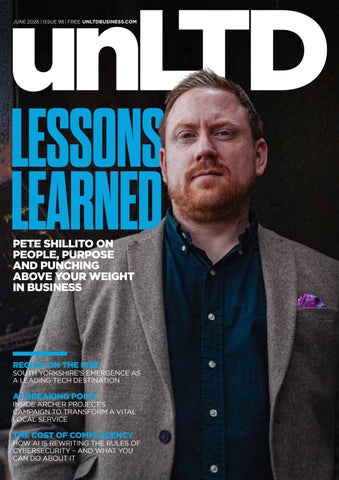
PETE SHILLITO ON PEOPLE, PURPOSE AND PUNCHING ABOVE YOUR WEIGHT IN BUSINESS
REGION ON THE RISE
SOUTH YORKSHIRE'S EMERGENCE AS A LEADING TECH DESTINATION AT BREAKING POINT INSIDE ARCHER PROJECT'S CAMPAIGN TO TRANSFORM A VITAL LOCAL SERVICE
THE COST OF COMPLACENCY
HOW AI IS REWRITING THE RULES OF CYBERSECURITY – AND WHAT YOU CAN DO ABOUT IT
2 COURSE
Here’s
what our customers say
Simoda have been brilliant for us. They’re not like the usual IT support companies - really approachable, easy to talk to, and their support is never a hassle to use. Everything just feels smoother with them. Would happily recommend to anyone.” “
Contents
Hello and welcome to the latest issue of unLTD!
In a world of “let’s hop on a Teams/Zoom/Google Meet”, it’s all too easy to end up doing most of your journalism from behind a desk. But the reason most of us are in this gig is because we enjoy meeting people, getting a feel for places and hearing stories straight from the source. That, and of course, the readies.
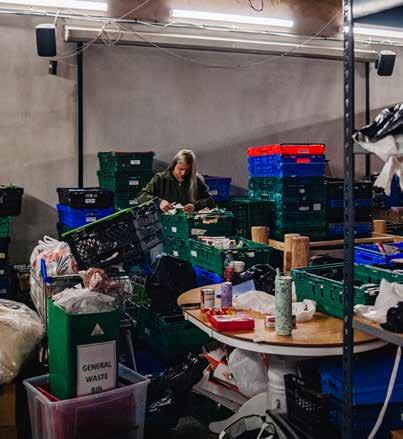
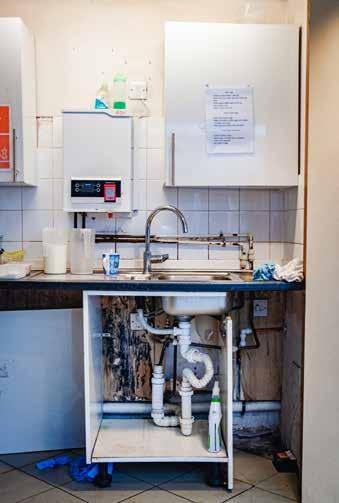
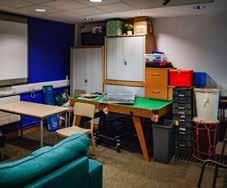
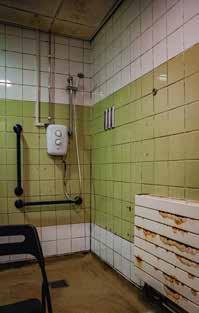
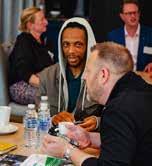
Which is why it was refreshing to spend an afternoon at the Archer Project recently, the Sheffield homelessness charity aiming to raise £2m to rebuild its Campo Lane centre. That might sound like a huge sum – because it is – but seeing the state of the building and the cramped conditions where staff deliver life-changing support quickly puts the challenge into perspective. Speaking to the team and meeting some of the people they help is an experience that has stayed with me all month, and one you simply couldn’t replicate through a laptop screen. Head to page 38 to find out more about the vital work they do and how you can support their campaign.
Elsewhere, we kick off with the exciting news that Sheffield and South Yorkshire has been named the UK’s number one rising tech ecosystem. I caught up with TECH SY founder Tracey Johnson to discuss what the recognition means and how they plan to build on that momentum.
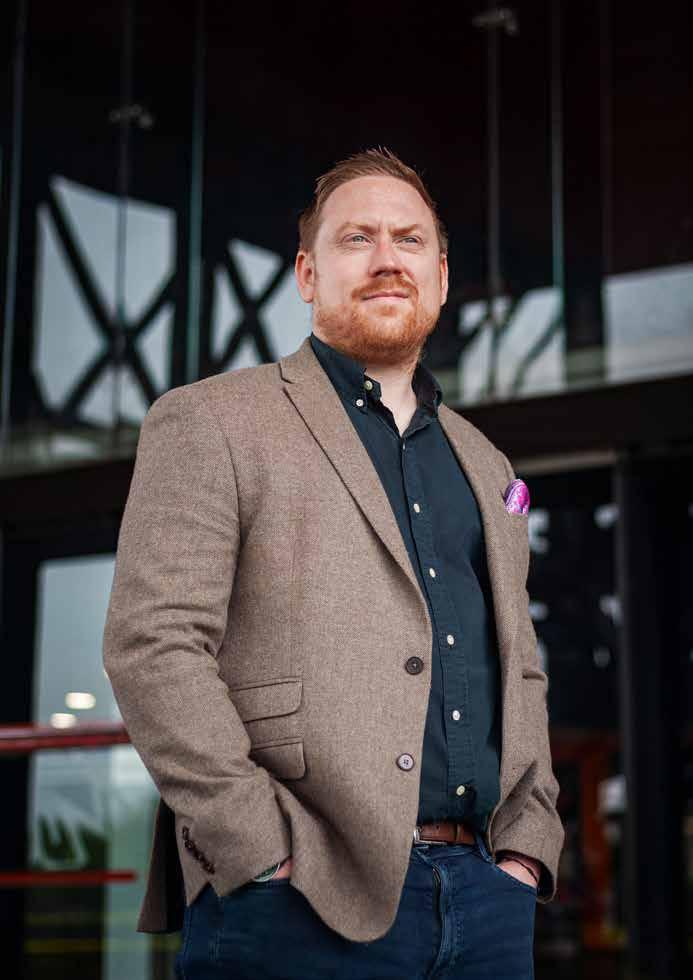
For our cover chat, I headed to Magna to meet Pete Shillito, founder of Shillito Group and one of the city’s best-known recruitment heads. With more than 20 years’ experience in the sector and having recently completed a two-year stint as Chair of the Institute of Directors South Yorkshire, Pete has plenty to say about leadership, growth and opportunities facing the region. Enjoy the issue, and we’ll catch up next month.
Joseph Food, Editor.
CONTENTS
24: LESSONS LEARNED
From fax machines to LinkedIn, Pete Shillito’s 20-plus year career has given him a front-row seat to changing business habits. For this month’s cover feature, his ten key lessons challenge assumptions about scale and success, making the case for local knowledge, stronger relationships and a more confident South Yorkshire.
8: REGION ON THE RISE
A global ranking has put Sheffield and South Yorkshire firmly on the tech map. But what sits behind the data? As investors, founders and universities pull in the same direction, TECH SY’s Tracey Johnson explains why the region’s momentum is attracting attention far beyond the UK.
34: ZERO DAY HAS LANDED
AI is helping businesses streamline their workflows, but it is also making life easier for cybercriminals. As so-called ‘zero day’ threats emerge faster than ever, Ashley Harris of IT firm Jibba Jabba explores why traditional defences are struggling to keep up, how AI is changing the risk landscape and the practical steps businesses can take to protect themselves.
38: ROOM FOR CHANGE
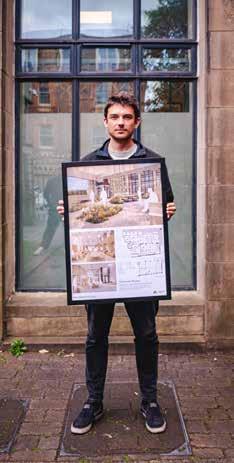
Supporting more than 1,200 people each year, the Archer Project has become a vital part of Sheffield’s response to homelessness. But with demand rising and facilities stretched beyond capacity, the charity is seeking £2m to transform its ageing city-centre hub. We explore what’s at stake and how local businesses are being asked to help.
EDITORIAL
EDITOR
Joe Food
Joe@unltdbusiness.com
ONLINE EDITOR
Ash Birch Ash@unltdbusiness.com
DESIGN
Marc Barker
ADVERTISING
Phil Turner
phil@unltdbusiness.com
07979 498 034
Nick Hallam
nick@exposedmagazine.co.uk 07843 483536
FINANCE
Lis Ellis accounts@ exposedmagazine.co.uk
CONTRIBUTORS
Dan Bumby
Steve Brown
Wendy Ward
Jill White
unLTD
THREE WAYS TO GET INVOLVED Agenda
JOIN THE CLUB
The unLTD Business Club is thriving – with a whole raft of new offers from our partners now included for 2026!
At unLTD Business Magazine, our mission has always been clear – to connect, support and celebrate the South Yorkshire business community. Now, we’ve taken that commitment even further with the launch of the unLTD Business Club – an exciting new membership initiative designed to give local businesses of all sizes more opportunities to grow, collaborate and thrive.
And this month we have unveiled four new benefits for all our members:
⚫ 20% off your bill at all True North venues (Monday to Friday) with a True North Business Card
⚫ 1 hour free photoshoot with Marc Barker Photography
⚫ 1 branded polo shirt from We Do Workwear (any size/colour)
⚫ 25% discount on the day delegate package and room hire from PJ Taste
… with much more to come!
So whether you’re a growing SME looking for meaningful networking opportunities, an entrepreneur wanting to stay ahead of the curve, or a larger organisation seeking strategic
brand exposure, unLTD Business Club offers a range of benefits tailored to meet your goals.
We’re open for signups now – with immediate access to a host of benefits depending on your subscription tier.
Why Join?
It's about more than just perks – it’s about being part of a community. Members will benefit from the power of local connections, increased visibility through South Yorkshire’s leading business publication and insider access to some of the region’s most anticipated networking events.
Whether you’re looking to raise your profile, grow your network, or simply stay up to speed with the region’s dynamic business landscape, this is a platform to support your ambitions.
Get Started Today
Visit unltdbusiness.com/ businessclub to sign up or email phil@unltdbusiness. com for more information on Business Partner opportunities. Let’s grow together – join the unLTD Business Club today.
BUSINESS CLUB MEMBER
£10/month or £99/year (plus VAT)
Designed for professionals who want to network and engage more actively:
⚫ Priority access to all unLTD Business Breakfasts, Socials and other events – free of charge
⚫ Monthly e-newsletter
⚫ A guaranteed print copy of unLTD Business magazine
⚫ 10% discount on exhibition stands at the unLTD Business Expo
⚫ 20% off your bill at all True North venues (Monday to Friday) with a True North Business Card
⚫ 20% off your bill at all True North venues (Monday to Friday) with a True North Business Card
⚫ 1 hour free photoshoot with Marc Marker photography
⚫ 1 branded polo from We Do Workwear (any size/ colour)
⚫ 25% discount on the day delegate package and room hire from PJ Taste
BUSINESS PARTNER
Tailored packages available
Benefit from all the benefits of a Business Club Member as well as promoting your brand through our digital platforms and print magazines… our premium tier for businesses looking for strategic exposure and deeper engagement:
⚫ Monthly print advertising and editorial features in unLTD Business magazine and on unLTDbusiness. com
⚫ Social media promotion via LinkedIn
⚫ Opportunity to co-host networking events with the unLTD team
⚫ PLUS… All Business Club member benefits
BUSINESS SUBSCRIBER
£2.50/month (plus VAT)
⚫ Ideal for readers who want to stay informed, this entry-level tier ensures you receive:
⚫ A guaranteed copy of unLTD Business magazine each month
⚫ Monthly e-newsletter featuring news, insights and upcoming events
A REGION ON THE RISE
Sheffield and South Yorkshire have been named the UK’s number one ‘Rising Star’ in the Dealroom Global Tech Ecosystem Index 2026, a data-led ranking that benchmarks more than 325 tech ecosystems across 77 countries.
For TECH SY, the initiative established to support and connect the region's tech sector, the recognition marks a significant milestone in South Yorkshire's emergence as a major hub for innovation, entrepreneurship and investment.
We spoke to project director Tracey Johnson about what the ranking means, what's driving the region's growth and where the ecosystem goes next.
WHAT DOES THIS ACCOLADE MEAN FOR THE REGION?
It's always good to be acknowledged, but what's making this particularly different is that this is Dealroom’s Global Index. This is a really global piece of data that's used by governments, ecosystems, businesses and decision-makers across the world. It's basically giving us a platform that we've never had before.
The index categorises cities across the world and benchmarks ecosystem against ecosystem. The Rising Stars ranking is a way of understanding who's coming next. It's saying these are places that have got the potential to make a big difference.
To be ranked 77th globally, and then to be the number one UK city in the Rising Stars category, is probably the most powerful indicator we've had that's embedded in data to say we are doing something right. By "we", I mean our businesses, our founders, the investors into them, and that supportive system that's developed around them.
It's probably the most powerful bit of recognition we've had for the tech ecosystem and its role in South Yorkshire and Sheffield.
WHAT'S BEEN DRIVING THAT GROWTH OVER THE LAST FEW YEARS?
There are a few key factors. With any ecosystem, you need lots of things to play their part. You need founders with brilliant ideas, you need talent, you need investment, you need a supportive culture around it, and you need the right regulation and policy.
The important factor is that the system works much better than it ever did. People talk to each other
THE RISING STARS RANKING IS A WAY OF UNDERSTANDING WHO'S COMING NEXT. IT'S SAYING THESE ARE PLACES THAT HAVE GOT THE POTENTIAL TO MAKE A BIG DIFFERENCE.”
a lot more. The work of TECH SY has been about getting people who make decisions about business support in a room together to understand what we need to do more of and do better.
A really essential component is the commercialisation journey at the University of Sheffield, which is supporting spinouts. Over the last five or six years that process has become incredibly focused on researchers and their potential as founders. Over the last 10 years, 39 spinouts have emerged from the university and, when we look at the companies that are scaling, the majority have come out of that system.
We've also seen more investment going into companies and more regional investors backing regional businesses. You've got Yorkshire AI Labs, Venture Community and Sheffield Angels all playing important roles. The flow of capital is always important to growth in the tech world.
But above all, it's the whole system working better together. I think we're finally getting past this "hidden gem" thing. It shouldn't be a hidden gem. It's incredibly well known and well respected in some circles, but what we haven't had before is validation like the Dealroom report gives us.
FOR READERS UNFAMILIAR WITH TECH SY, WHAT EXACTLY IS THE ORGANISATION'S ROLE?
TECH SY is funded by the South Yorkshire Mayoral Combined Authority and delivered through Barnsley Council, but we work for
the whole region.
We operate across a few main areas. One is strategy, bringing people together around a longterm plan for the tech ecosystem. Another is positioning. We've spent a lot of time improving our understanding of the data because, if you can't measure it, how do you know it's changing?
We've been working with Dealroom, Beauhurst and our own local data to understand exactly what our asset base looks like and where our strengths and weaknesses are. That gives us a much more sophisticated understanding of where we need to intervene and where the opportunities are.
Another pillar is business support. We've been piloting different support products, particularly around very early-stage ideas, to understand how we can strengthen the pipeline of future businesses.
Underpinning all of that has been marketing and communications, making sure South Yorkshire is visible nationally and internationally.
LOOKING AHEAD THREE TO FIVE YEARS, WHAT WOULD BUILDING ON THIS SUCCESS LOOK LIKE?
There are a lot of plates to spin because there isn't a silver bullet.
We need to make sure the system flows properly for founders and businesses, whether that's access to investment, talent, workspace or support.
The place-based element is really important. Barnsley has been doing this for a while and now you've got the Digital Campus emerging there. You've got Gateway One in Doncaster developing as a significant AI hub. You've got the Sheffield Innovation Spine bringing together assets in a way we've never seen before. You've got opportunities emerging across Rotherham too.
We need more investors. You never have enough money, so we need both regional and external investors continuing to back companies here.
We're also excited about the long-term spinout landscape. Those companies need support as they start to scale. We have real strengths in deep tech, particularly in areas such as quantum, semiconductors and cyber, and we need to understand what those industries need to succeed.
Tech shouldn't be hidden away. It should be plugged into the wider business ecosystem of South Yorkshire because it's already infusing everything we do.
FINALLY,
WHY IS A THRIVING TECH ECOSYSTEM SO IMPORTANT FOR SOUTH YORKSHIRE?
We can't ignore the role of technology in our lives. It infuses everything we do. We're seeing exponential growth in technology adoption and, if we shove our heads in the sand and ignore it, the opportunity passes us by.
We need to think about the jobs of the future for younger people. We need to think about how careers will evolve. We need to make sure entrepreneurial people have opportunities to build wealth and opportunity in the region.
Tech offers an opportunity for growth that sometimes doesn't exist in other sectors. We need to back the winners because that success comes back into the ecosystem. It creates a virtuous circle.
But it's not all about creating wealth for a few. It really is about creating opportunities for many. We need to make this as accessible as possible so that people don't feel they have to move to London or San Francisco to succeed.
You can have a brilliant idea and see it succeed in South Yorkshire. That's a really important part of building a successful region.
techsy.co.uk
Agenda
PEDDLER PLUGS IN
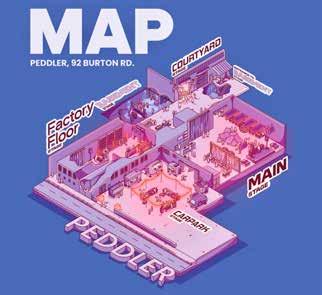
Peddler Market is launching a major new chapter, transforming from a street food-focused event into a freeentry monthly music festival across its Kelham Island site.
Twelve years after helping to shape Sheffield’s street food scene, the popular market will introduce five music stages featuring live bands, DJs, record shops and promoter takeovers, while retaining the food offer that has become its trademark.
Founder Jordan Roberts said the move reflects the event’s natural evolution.
“We’ve always been a street food event with two music stages,” he said. “Now we’re expanding to five music stages, working with some of the best emerging and established promoters from Sheffield and beyond.”
Inspired by the early, freeroaming days of Tramlines, the revamped layout is designed to encourage exploration, with stages and performances spread throughout the venue.
“It’s like a little mini festival,” Roberts added. “Festivals should feel like an adventure of discovery, and I want to bring that labyrinth-like element to it.”
The new format will feature three live music stages and two dedicated DJ spaces. Areas
across the site will develop their own identities, including a vinylfocused lounge in the car park, a punk-leaning indoor programme curated by Midnight Creatures, a carnival-inspired courtyard hosted by Funky Drummer and a club environment known as Factory Reset.
The changes coincide with a new management structure.
Co-founder Ben Smith, who launched Peddler alongside Roberts in 2014, is stepping away from the business to focus on Depot Bakery. Naomi Buckland has been appointed company director.
“I’m excited to take the reins with Jordan and navigate the next chapter with the team, keeping Peddler a household name in Sheffield,” she said.
Despite the shift in emphasis, organisers say Peddler’s commitment to independent culture, grassroots collaboration and showcasing local talent remains unchanged.
Further details and line-up announcements will be released via @peddlermkt.
NEWS IN BRIEF
SHEFFIELD MUSIC TRAIL SET TO SHOWCASE CITY TALENT
The University of Sheffield will host the free Sheffield Music Trail on 20 June, bringing four live music stages to venues across the city centre. Running from 12.30pm to 5pm, the event will feature established artists and emerging talent ahead of the forthcoming Sheffield City of Music report. The University has also partnered with Tickets for Good and the Sheffield Independent Venues Alliance to support grassroots venues and widen access to live music.
TICKETS FOR GOOD EXPANDS INTO EUROPE
Tickets for Good has launched in Germany, extending its international platform that provides free and discounted event tickets to healthcare workers and community organisations. Announced at Berlin's WISE Festival, the move follows the distribution of more than 1.2 million tickets worldwide. The Sheffield-born organisation aims to improve access to culture while supporting wellbeing, social connection and community engagement.
SHEFFIELD’S SMALLEST CINEMA OPENS
A new independent cultural space has opened on Chapel Walk, combining a record shop, gallery and what is being billed as Sheffield’s smallest cinema. Created by curator and archivist Alex Wilson, Memory Dance will celebrate Sheffield and northern culture through vinyl, film, photography and design. Its opening exhibition explores the city’s record shop heritage, with further screenings, exhibitions and talks planned throughout 2026.
SHEFFIELD MANAGEMENT SCHOOL
RETAINS GLOBAL ELITE STATUS
The University of Sheffield Management School has secured a five-year unconditional reaccreditation from the Association of MBAs (AMBA), retaining its prestigious Triple Crown status. Awarded to institutions accredited by AACSB, AMBA and EQUIS, the accolade is held by only around one per cent of business schools worldwide. Reviewers praised the School's teaching quality, employability support, regional impact and strong institutional backing, reinforcing its position among the world's leading business schools.
Importing from China?
You Could Be Overpaying by 20-30%
If your supplier is arranging freight, you're probably paying too much.
IFS offers a fully managed door-to-door service from China and the Far East, with all UK arrival and customs charges included.
No surprises - just savings Find out how much you could save. Get in touch with IFS.
Values in action
Agenda
THE LIONS ARE LOOSE
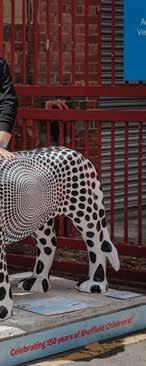
A pride of brightly decorated lions has arrived across South Yorkshire as a major sculpture trail celebrating 150 years of Sheffield Children’s Hospital officially gets underway.
The Pride of Yorkshire trail launched today, with 150 large lion and lioness sculptures appearing across Sheffield, Barnsley, Doncaster and Rotherham, alongside 150 smaller lion cubs created by schools and community groups as part of the Little Pride project.
Organised by Sheffield Children’s Hospital Charity, the trail is one of the UK’s largest free public art events
and aims to raise funds for the hospital’s Emergency Department.
The launch was marked by the unveiling of three sculptures at Weston Park, designed by artists Josephine Dellow, Lydia Bennett and Amrit Singh.
Across Sheffield, visitors can discover 90 sculptures at locations including the Peace Gardens, Fargate, Sheffield Cathedral and Meadowhall. A further 20 sculptures have been installed in each of Doncaster, Barnsley and Rotherham, encouraging people to explore destinations across the region throughout the
summer months.
An interactive online map and dedicated website are now live, allowing visitors to track their progress and plan routes as they attempt to find all 150 sculptures.
John Armstrong, chief executive of Sheffield Children’s Hospital Charity, described the launch as a significant milestone.
“The launch of Pride of Yorkshire is a huge moment for Sheffield Children’s Hospital Charity and for South Yorkshire,” he said. “We hope people will enjoy getting out, exploring the region and discovering the sculptures this summer, while helping us celebrate
CROSSED WIRES TURNS UP THE VOLUME
Podcast festival Crossed Wires has unveiled a fresh wave of acts for its 2026 event, with news hosts, broadcasters, comedians and household names set to descend on Sheffield next month.
Returning for its third year from 2–5 July, the festival recently announced appearances from BAFTA-winning actor Paul Whitehouse, broadcaster and writer Danny Robins, comedian Matt Forde, former world boxing champion Johnny Nelson and Australian podcast creator Jemma Sbeg, host of the globally popular The Psychology of Your 20s
Elsewhere, British Scandal hosts Alice Levine and Matt Forde will examine some of the UK's most notorious controversies, while Whitehouse and education expert Dr Mine Conkbayir MBE will take to the stage for I'm ADHD! No You're Not, exploring neurodiversity with a celebrity guest yet to be announced.
Danny Robins will return to the
Lyceum Theatre with Uncanny: Cold Cases, bringing his popular paranormal storytelling series to one of the festival's most atmospheric venues.
Sheffield boxing legend Johnny Nelson will also host a live edition of That Boxing Show, featuring fight analysis, predictions and stories from the sport.
The latest additions join a line-up that already includes How to Fail with Elizabeth Day, JaackMaate's Happy Hour, The Elis & John Show, The Blindboy Podcast, Weirdos Book Club and Get A Grip: Bras Off.
Festival co-founder Dino Sofos said: “Are we in for a treat this summer. Huge names, cult favourites and future classics all heading to Sheffield for the biggest podcasting party in the world. We can't wait.”
The festival will also see the return of the free BBC Sounds Fringe, alongside a BBC Radio 4 stage takeover and an additional venue for 2026. For tickets and information, visit crossedwires.live.
This year, Crossed Wires Festival are expecting 35,000 attendees at the festival – a number that has constistently risen from 20,000 last year and 10,000 in its inaugural 2024 edition. Organisers have hinted that if the growth continues, there could be additional events added across the UK and even international expansion on the horizon!
150 years of Sheffield Children’s Hospital and support its future.”
Funds raised through the project will support plans to transform the Emergency Department to meet growing demand and create a more child-friendly environment for patients and families.
The trail follows the success of the popular Bears of Sheffield initiative and is first time the charity has expanded a sculpture project across the whole of South Yorkshire.
Pride of Yorkshire is free to visit and runs throughout the summer. Head to Kelham Island Museum and you might even spy an unLTD big cat!
Further information, including maps and trail details, can be found at prideofyorkshire.org.
Stripping back the biggest business stories – what happened, who’s involved and why it matters to our region.
VATS THE PROBLEM CAMPAIGN GEARS UP
WHO'S BEHIND IT?
Chef and publican Tom Kerridge is spearheading the #VATsTheProblem campaign, bringing together hospitality businesses from across the UK to push for a fairer VAT rate for the sector.
WHAT'S IT ALL ABOUT?
Campaigners argue that hospitality is being held back by one of the highest VAT rates in Europe. In the UK, customers pay 20% VAT on meals, drinks and overnight stays. By comparison, countries including France, Spain and Italy apply a 10% rate, while Germany's rate is 7%.
The campaign's message to Government is straightforward: a 10% VAT rate would provide meaningful support to an industry facing continued cost pressures.
LET'S HEAR A LOCAL VOICE
Danny Clare, co-owner of Sheffield venues Two Thirds Beer Co and Kapital, says the issue is critical for hospitality businesses operating on already tight margins.
"We are burdened as an industry with probably the highest VAT rate in Europe, and it makes such a massive difference," he says.
"As an industry, we work on very thin margins. If we see four or five pence in profit from every pound we turn over, we've done really well."
Clare believes VAT is only part of a wider challenge, alongside business rates and employers' national insurance contributions.
"Tax the profit, no problem. If you've made money, that's absolutely fine. But the turnover taxes that stop us making a profit, employing more people and growing as a business are hard to stomach.
"This is a serious, major lifeline that's available for hospitality in the UK."
HOW TO SHOW SUPPORT
On 1 July, hospitality businesses across the UK will come together to raise awareness of the campaign and encourage the public to back calls for a lower VAT rate for the sector.
You can help by signing and sharing the petition. Use your place of work, website, social media, email newsletters and social media channels to encourage customers, colleagues and contacts to sign. The aim is to build as much public support as possible and demonstrate the strength of feeling across the industry.
More info: vatstheproblem.co.uk
SMART STARTS
From lecture theatres to launchpads, the University of Sheffield’s Emerge Awards are helping transform student ideas into businesses with real impact.
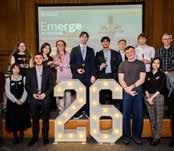
Walk into Mappin Hall on any given Thursday, and you might expect to find lectures on advanced engineering or a historical performance. But on 14 May last month, the historic hall was transformed into a high-stakes arena for the finale of the 2026 Emerge: Be enterprising Awards Showcase.
Supported by Santander UK Universities, the University of Sheffield competition saw 101 applications whittled down through a rigorous "Dragons Den” pitching process, ultimately injecting £19,000 in equity-free funding into seven trailblazing student and graduate start-ups.
For the South Yorkshire business community, however, the real story isn't the prize money; it is the calibre of the businesses being built right on our doorstep and their potential to reshape our local economy. This is about moving beyond academic theory and enabling businesses to test, iterate, and move forward alongside the region’s best
leaders and investors.
A standout example of this real-world impact is Zap Dock, one of this year’s showcase success stories by Sujaya Fernando. Zap Dock is a "Scan, Grab, Go" network of automated kiosks dispensing portable power banks with built-in cables. While it’s a brilliant convenience play for a generation glued to their phones, Zap Dock’s founder saw a much deeper, civic-minded opportunity to improve student safety during nights out.
A dead phone battery at 2:00 AM on West Street
isn't just an inconvenience; it’s a safety vulnerability. By ensuring young people always have the means to call a cab, track friends, and get home safely, Zap Dock is tackling a distinct challenge within the night-time economy.
The concept is already gaining rapid traction, with kiosks successfully established in staple Sheffield nightlife spots like West Street Live and Tiger Works. To expand this safety net across the city, Zap Dock is actively looking for new bars, clubs, and venues to host their sleek charger kiosks.
South Yorkshire healthier, greener, and more innovative for everyone. By connecting student ideas with the city’s enterprise ecosystem, the University is cultivating a vibrant, future-ready economy that retains talent within the region.
TURNING ACADEMIC EXCELLENCE INTO REALWORLD SOLUTIONS IS WHAT MAKES SOUTH YORKSHIRE HEALTHIER, GREENER AND MORE INNOVATIVE FOR EVERYONE.”
For partners, it is an easy win-win: venues seamlessly turn customer dwell time into a brand-new revenue stream while providing a critical, value-added service to their patrons. It is a perfect blueprint for how student-led commercial tech can simultaneously drive profitability and local corporate social responsibility.
Ultimately, turning academic excellence into realworld solutions is what makes
To keep this vital pipeline flowing, the Enterprise Team is always looking for individual founders and established businesses who are willing to inspire the next generation of innovators. The team runs a masterclass series throughout the academic semester and invites local leaders to get in touch for collaboration opportunities, whether through mentoring, speaking, or strategic partnerships. The 2026 showcase may have concluded, but the work of building Sheffield's future economy continues and the region's business community is invited to help shape it.
Scan the QR code to find out how you can get involved
Agenda
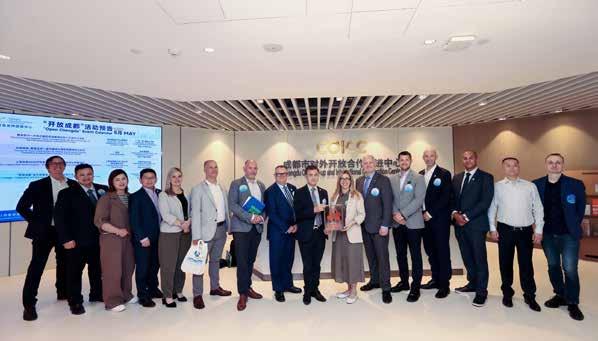
The Sheffield Chamber of Commerce and Industry recently joined a five-day trade mission to Hong Kong and China, jointly led by the Master Cutler, Professor Keith Jackson, and Jerry Cheung, President of Sheffield Chamber and Managing Director of New Era Developments. Following the visit, Jerry reflected on the lessons learned, the partnerships forged and the opportunities the mission could unlock for South Yorkshire.
What do you think was the most valuable moment of the trip for the delegates?
Visiting a sustainability facility serving a district of four million people and learning about the pace of China's national sustainability programme was particularly valuable. Seeing a car manufacturing plant and a battery factory powered by AI and automation, alongside witnessing the remarkable scale of a central business district built in just 10 years in Panyu, was genuinely eyeopening.
The conference in Chengdu, Sheffield's sister city, was also a standout experience.
Is there anything you saw on the mission that you are ready to turn into action straight away now that you've returned?
The Asia Summit on Global Health, held on the first day at the Hong Kong Convention and Exhibition Centre, was an
outstanding experience.
Meeting representatives from InvestHK, InnovateHK and the Hong Kong Trade Development Council will undoubtedly open doors for future collaboration.
The Sheffield Chamber of Commerce and Industry has also signed a memorandum of understanding (MoU) with the Guangzhou Hong Kong Macau Youth Business Incubation Centre, and we are ready to put that partnership into action.
What were the key opportunities unlocked on the trip?
South Yorkshire excels in design, high-value innovation and advanced materials research through institutions such as the Advanced Manufacturing Research Centre (AMRC).
The Greater Bay Area offers integrated electronics and hardware supply chains, rapid prototyping capabilities, large-scale manufacturing and access to finance..
What was your highlight of the South Yorkshire Trade Mission?
The junk boat tour on Victoria Harbour, organised by the Hong Kong Tourism Board and followed by dinner at Hutong on the first evening, was an absolute joy.
IT SIGNALS THAT THE CITY IS THINKING GLOBALLY, BUILDING MEANINGFUL INTERNATIONAL RELATIONSHIPS AND POSITIONING ITSELF AS A SERIOUS PLAYER ON THE INTERNATIONAL STAGE.”
Together, these strengths create a powerful partnership. Sheffield provides the design and innovation expertise, while the Greater Bay Area offers the capacity to scale, manufacture and finance new products and technologies.
You can think of it as a lab-to-market corridor, with innovation rooted in Sheffield and manufacturing and investment centred in the Greater Bay Area.
For Sheffield, however, the trip represents more than a series of meetings and site visits. It signals that the city is thinking globally, building meaningful international relationships and positioning itself as a serious player on the international stage.
With a signed MoU, a growing network of international contacts and a clear vision of how South Yorkshire's innovation strengths can complement the Greater Bay Area's manufacturing and financial capabilities, we returned from the trade mission energised and ready to act.
With Jill White of Andy Hanselman Consulting
PIONEERING FESTIVAL TO PUT LOCAL TALENT CENTRE STAGE
No Bounds Festival has unveiled the first artists for its 2026 edition, with a programme that places South Yorkshire's electronic music pioneers firmly in the spotlight.
Returning to venues and cultural spaces across Sheffield and Rotherham from 9–11 October, the festival will feature performances, exhibitions and community-led projects that celebrate the region's longstanding influence on music, art and technology.
Leading the line-up is Rotherham-born electronic innovator Mark Fell, who will premiere new work as part of a programme designed to showcase South Yorkshire's contribution to contemporary culture. Barnsley techno producer Blawan, Steel City electronic legends The Black Dog and artist/musician Kid Acne will also headline across the weekend.
The opening night will see internationally acclaimed composer and audiovisual artist Max Cooper bring his immersive 3D live show to Peddler Warehouse, performing material from his latest album Feeling is Structure alongside favourites from his back catalogue.
Other artists confirmed include dubstep pioneer Mala, bassline star Oppidan, Copenhagen producer Main Phase and XL Recordings artist KAVARI. No Bounds has also announced a UK debut performance from Gyrofield, alongside new projects from long-time festival collaborators 96 Back and Rian Treanor.
The festival's commitment to nurturing local talent remains central to its identity. A new collaboration between Toddla T's Steeze Factory, Pattern + Push, Slambarz and Tracks will showcase emerging artists from across South Yorkshire, while Kid Acne will premiere material from his forthcoming album.
Alongside the live programme, exhibitions, community projects and a new symposium will explore the intersection of music, culture and technology as No Bounds looks ahead to its tenth anniversary in 2027.
SPRINGING OUT AND ABOUT
Two bank holidays and a trip to Hay Festival didn't leave much time for local networking, but continuing the away-day theme, there was a fantastic Super Sheffield Day in London.
It was also a rather special month for Andy and me, as we were delighted to be invited to a Royal Garden Party at Buckingham Palace. We still don't know who nominated us, but we were incredibly grateful and had a wonderful day.
We weren't the only Sheffield representatives there either. It was great to catch up with Rachel Abbott from Cobra Sport, while Tracy Viner from Sheffield Chamber, Martin Singer from South Yorkshire Community Foundation and Emily Jones from Roundabout were also among those flying the flag for the city.
The Children's Hospital Charity was another organisation showcasing Sheffield at its best. Tchad Western, Rob Gurruchaga and Kathy Parsons-Singh hosted a fantastic Bright Young Dreams fundraiser at The Comedy Store in London, attended by a strong contingent from across the city, including Westfield Health, IPM Group and Barmy Army. With Dan Walker and Jon Richardson leading proceedings, it was certainly a night to remember.
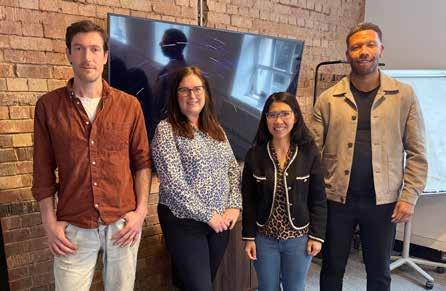
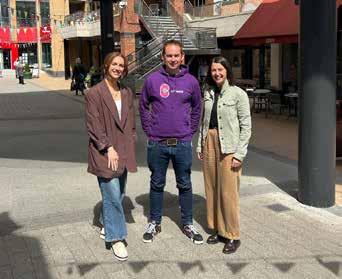
Back in Sheffield, Chris Hanson welcomed us to his impressive new venue, Merchant's Court, for May's 3D Connect event. Joining Chris on the panel were Samantha Headford from See It Be It, Rich Davies from R3D2 and Andrew Lofthouse from b.friend. Together they shared insights on wearing multiple hats in business and the importance of giving back – proving once again that givers really do gain.
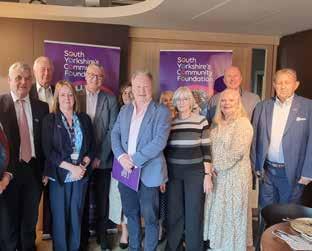
Finally, it was a pleasure to join Jack Kidder at Henry Boot HQ for the South Yorkshire Community Foundation Patron's Launch. Andy and I are delighted to be working alongside Martin Singer, Michelle Dickinson and the team to help raise awareness of the incredible work they do across the region.
Watch this space.
Follow Jill at uk.linkedin.com/in/jilltywhite or find Andy Hanselman Consulting at andyhanselman.com.
Agenda
AI OF THE BEHOLDER
Three new AI-powered businesses are entering the regional economy with ambitions to scale, after graduating from Sheffield Technology Parks’ startup incubation programme, the Cooper Project.
The founders behind EdTech platform Chalkie, AI concierge service Pulse AI and automated content platform 3Me shared their journeys at a recent graduation event hosted by Sheffield Technology Parks (STP), highlighting how specialist space, support and community helped them turn early-stage ideas into revenue-generating businesses.
Leading the cohort is Chalkie, an AI-powered lesson-planning platform founded by entrepreneur Mark Hughes, previously co-founder of Tutorful. Launched just over a year ago, the business has already secured £3m in investment and reached £5m in annual recurring revenue (ARR), with the platform now operating in 13 languages across the globe.
Chalkie was born after Hughes and his co-founders interviewed teachers to better understand the pressures they faced around lesson planning and resource creation. The business has since scaled rapidly, using AI to help educators generate high-quality teaching resources more efficiently.
Meanwhile, Pulse AI has already begun creating jobs locally. Founder Lee Duncan made the company's first hire in Sheffield, recruiting a recent graduate after striking up a conversation at his workplace, Tesco.
They provide an AI concierge service for private dental practices, helping clinics manage patient enquiries and improve conversion rates. Duncan developed the idea after
extensive market research with dental practices across the UK, identifying a growing operational challenge around handling inbound demand.
The third graduating founder, Kristina Rutherford, launched 3Me, an AIpowered platform designed to help small businesses create consistent, evergreen marketing content at scale.
Coming from a background in NHS leadership and marketing consultancy rather than software engineering, Rutherford taught herself coding while building the platform.
Her journey reflects the increasingly accessible nature of AI innovation and the opportunities available for non-technical founders to build scalable digital products.
Rose Tran, incubator manager at Sheffield Technology Parks, said:
"While these businesses
are all very different, there are clear common themes behind their success. Each founder took the time to deeply interrogate and understand the problem they were trying to solve and to properly research their market before building a solution.
"Their approach wasn't, 'We've got an AI tool, now let's find a use for it.' Instead, they identified genuine operational problems and then used AI technology in a focused, practical way to solve them.
"That mindset is what gives these businesses real commercial potential and is exactly the kind of innovation we want to support here in Sheffield."
Tom Wolfenden, chief executive of Sheffield Technology Parks, said the success of the three founders demonstrates the role specialist incubation support can play in helping
early-stage businesses commercialise and scale.
"The Cooper Project exists to help founders from a variety of starting points, whether they are first-time entrepreneurs, experienced founders or people transitioning into tech from entirely different careers.
"These businesses are proof that, with the right support, environment and connections, Sheffield can continue producing ambitious, globally scalable technology companies."
The Cooper Project is Sheffield Technology Parks' startup incubation programme, designed to support early-stage founders through one-to-one mentoring, accountability, peer networks, and access to workspace and professional services.
For more information, visit www.shefftechparks.com.
Easy to navigate website / Discounted golf day sets / New awards for 2026 available Call 07583 679846 or email sales@golftrophy.co.uk now We offer a wide range of golf trophies, from traditional claret jugs and presentation cups to modern glass trophies, crystal golf awards, and engraved golf medals. Every award is carefully selected to deliver quality, prestige and lasting memories for players and organisers alike.
Agenda
More than 350 business leaders gathered in Sheffield in May for FORGE 2026, as organisers unveiled ambitious plans to grow the event into a 2,000-plus delegate business festival by the end of the decade.
Held at the University of Sheffield’s Octagon Centre on 14 and 15 May, the two-day conference brought together business owners, directors and senior decision-makers from across Yorkshire, Derbyshire, Greater Manchester, Lancashire and beyond.
Hosted by MyBusiness Group, FORGE focused on helping businesses accelerate growth through practical insights on leadership, sales, marketing,
Ambitious New Event Sets Out to Become the North’s Defining Business Festival
strategy and technology.
Delegate feedback suggests the event struck a chord. According to organisers, 99.4% of attendees said they would return for future editions, underlining FORGE’s growing reputation as one of the region’s most prominent business gatherings.
For founder Jon Asquith, however, attendance figures tell only part of the story.
“FORGE was never created to be another business conference,” Jon said. “It was created to become an economic driver for Sheffield and a catalyst for growth across the North.
“Every ticket sold supports
local businesses. Every delegate who visits the city spends money in local venues. Every relationship formed has the potential to create jobs, investment and opportunities. We believe business events should leave a legacy that extends far beyond the people sitting in the room.”
That philosophy shaped how the event was delivered. Organisers worked with independent suppliers, hospitality providers and venues across Sheffield, with businesses in the city centre reporting increased footfall during the conference. Several venues experienced particularly busy lunchtime trading periods as delegates
explored the city between sessions and networking events.
A key differentiator for FORGE is its not-for-profit structure. Jon said the event has been established as a community-focused initiative, with all revenue reinvested into future editions and broader business support programmes.
“The organisers will never take money out of FORGE,” Jon said. “If we create a surplus, our intention is to use those funds to support bright Northern start-ups and earlystage businesses that need help turning great ideas into successful companies.
“We believe the North has some of the most ambitious entrepreneurs in the country. If FORGE can play a small role in helping those businesses grow, create jobs and contribute to our regional economy, then that is a legacy worth building.”
The event’s programme reflected its ambition to bring world-class expertise to the region. Delegates heard from an impressive roster of speakers including Carrie Rose, founder of awardwinning marketing agency Rise at Seven; Professor Steve Peters, author of The Chimp Paradox; Damian Hughes, cohost of the High Performance Podcast; and Daniel Priestley, entrepreneur and author of Key Person of Influence.
They were joined by marketing strategist James Burke, behavioural researcher Nathalie Nahai,
Businesswoman of the Year
2024 Suman Randhawa and Marcus Sheridan, creator of the influential They Ask, You Answer framework.
By attracting speakers of this calibre, organisers believe FORGE helps remove a longstanding barrier for regional businesses, giving leaders access to ideas and expertise that might otherwise require travel to London or overseas.
The conference also contributes to Sheffield’s growing profile as a destination for innovation, entrepreneurship and business development.
As the city continues to attract investment across sectors including advanced manufacturing, technology and professional services, events such as FORGE are helping showcase the strength of the region’s business ecosystem to a wider audience.
Emily Bonsall, managing director of Chesterfield-based Certroa Training, described FORGE as the best business conference she had attended.
“Hands down the best business conference and networking event I've ever attended,” Emily said. “Vibrant, engaging and delivered with the perfect balance of humour and professionalism.
“Exceptional speakers, an energised audience and brilliant hosts combined to create an environment that inspired reflection, creativity and real growth across businesses, networks and communities.”
Organisers believe these connections could become one of the event’s most important longterm outcomes, creating partnerships, commercial opportunities and collaborations that continue long after delegates leave Sheffield.
“When ambitious people come together, opportunities are created,” Jon added. “A single introduction can lead to a new client, a new supplier,
a new investor or a new job. The real impact of FORGE will be measured in the growth stories that emerge long after the event has ended.”
Momentum is already building for next year’s event, which will move to Sheffield’s Crucible Theatre on 13 and 14 May 2027.
The first wave of confirmed speakers includes former world champion boxer and broadcaster Johnny Nelson MBE, entrepreneur and Dragons’ Den investor Sarah Willingham, Grenade founder Al Barratt, rugby league legend Jamie Peacock MBE, entrepreneur Alex Depledge MBE, criminal psychologist Dr Julia Shaw and behavioural science expert Rory Sutherland, vice-chairman of Ogilvy.
Looking further ahead, MyBusiness Group has
outlined plans to transform FORGE into a city-wide business festival by 2030. The vision would see attendance increase from 350 delegates today to more than 2,000, with multiple stages, specialist workshops, investment opportunities and sector-focused content delivered across a week-long programme.
If realised, the expansion could generate significant economic benefits for Sheffield while cementing its position as a major destination for business events in the UK.
“Cities become known for the events they host,” Jon said. “We want Sheffield to become synonymous with ambition, innovation and business growth.
“By 2030, our goal is for FORGE to be recognised as the business event that
every ambitious leader in the North wants to attend, while generating meaningful economic impact for local businesses, attracting visitors from across the UK and showcasing everything Sheffield has to offer.”
The event forms part of MyBusiness Group’s wider mission to positively impact 100,000 people across the North by 2030 through coaching, networking, investment and leadership development.
Its success offers another example of how business events can contribute to Sheffield’s growing reputation as a hub for enterprise and innovation.
To find out more about the event or secure tickets for FORGE 2027, visit forgesheffield.co.uk.
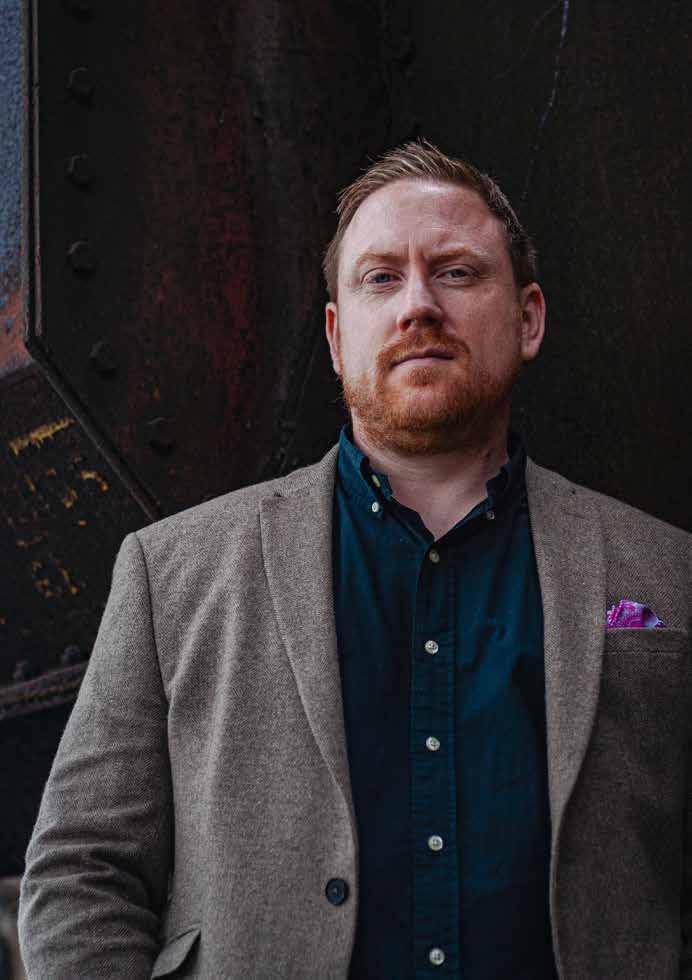
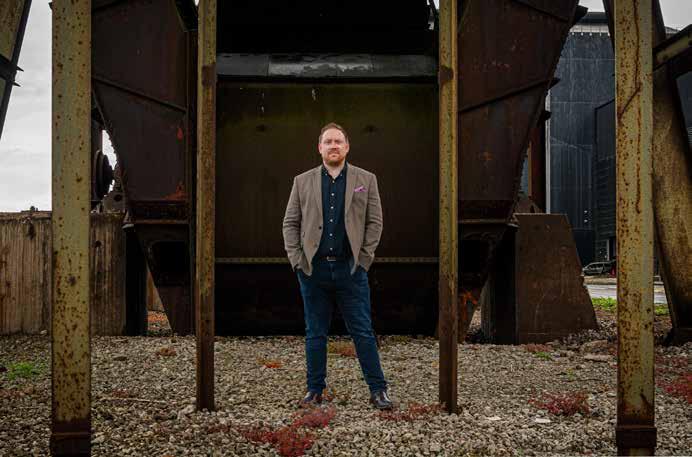
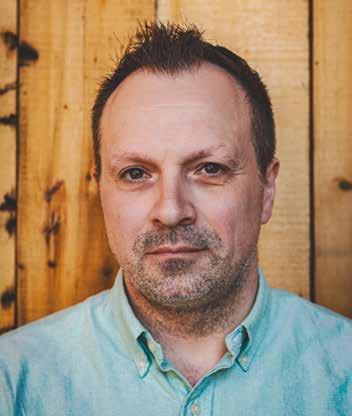
After more than 20 years in recruitment, Pete Shillito has learned that bigger isn’t always better. Having built his career with several leading firms before launching Shillito Group and Shillito Executive Search in 2023, he has become a passionate advocate for specialist, relationship-led recruitment across the region. Fresh from completing his tenure as South Yorkshire Chair of the Institute of Directors, he shares 10 lessons on business, leadership and why passion-led local firms are increasingly punching above their weight.
For years, conventional wisdom suggested that if you wanted the best professional services support, you looked to the biggest firms in the biggest cities. The assumption was simple: bigger budgets, bigger teams and bigger brand names meant better results.
This month’s cover star, Pete Shillito, has spent much of his career proving otherwise.
The Sheffield-based recruitment specialist has built Shillito Group into a respected regional player with a growing reputation in executive search, manufacturing recruitment and commercial appointments. Despite competing against national and London-based firms, his business continues to win work across Yorkshire and beyond.
The growth of the business reflects a wider trend: more organisations are turning to specialist, independent firms that offer deep sector knowledge, local insight and direct access to experienced professionals who care.
Which leads us nicely into lesson number one…
LESSON 1: LOCAL KNOWLEDGE IS A COMPETITIVE ADVANTAGE
Much of Shillito Group’s work is rooted in South Yorkshire, particularly within manufacturing and engineering. While the business undertakes assignments further afield, there is usually a Yorkshire connection somewhere in the story.
For Pete, that local expertise is one of the region’s most undervalued strengths.
“There’s a lot to be said for having boots on the ground in the area
recruiting people,” he says. “You understand it more. You know the area, the market and the people.”
He points to examples where large London-based companies have been brought in to recruit for senior positions in the region, only to identify candidates that local recruiters already knew.
“Other people I know in recruitment know the exact same person and would have found that same person. The London search firm just charged them £20,000 more for the service.”
It is, he argues, a reminder that understanding a place and its people can often be the difference between a good appointment and a great one.
“You might not know the subtle differences between Rotherham, Barnsley and Doncaster if you’re from outside the area. But there are subtle differences. The nuances, the businesses, the people – that knowledge of where you’re recruiting for is key.”
LESSON 2: RELATIONSHIPS STILL MATTER MORE THAN TECH
Recruitment has changed dramatically since Pete entered the profession more than 20 years ago – a world long before LinkedIn, ChatGPT and WhatsApp.
“When I started recruitment, we did actually use fax machines,” he laughs. “We did speak to people on landlines because hardly anyone had mobiles.”
Today, artificial intelligence is continually transforming how businesses across all sectors operate, including recruitment.
Shillito Group has embraced AI to improve efficiency and streamline administrative processes, but Pete draws a firm line when it comes to client relationships.
“The front-facing stuff will never be done by AI. It’ll be done by people.”
He believes the most successful recruiters have always been those who invest time in relationships rather than hiding behind detached or often lazy technology. In an era increasingly dominated by automation, that commitment to human interaction has become a differentiator rather than an oldfashioned habit.
“The most successful people I know in recruitment are brilliant at the personable side of the job. They’re not doing that by hiding behind a phone or behind an email address. They’re doing it because they’ve got themselves out and sat with people to spend time with them.”
LESSON 3: EXPERTISE COMES FROM IMMERSION
Pete’s connection to manufacturing runs deep. His father spent decades working within the sector before becoming part of a management buyout team, while other family members worked for major Sheffield manufacturers including Forgemasters.
Although he jokes that he is “absolutely useless” when it comes to making things himself, his relationships with people in the industry has shaped his understanding of how to approach business.
“Knowing some of the history of some of the businesses in this area helps when speaking with clients. They know you’re invested and know your stuff right from the off. Everyone likes someone who knows what they’re talking about.”
After two decades recruiting in the sector, he has watched companies evolve, merge, expand and reinvent themselves.
“You get that deep connection to it. That passion is so important in separating yourself from the competition.”
The lesson is simple: specialisation matters. Businesses that genuinely understand their market often create more value than those trying to be everything to everyone.
LESSON 4: KNOW WHEN TO SAY NO
One of Pete’s most striking observations concerns something many growing businesses struggle with: turning work away.
He admits it’s not always the easiest thing to do, but Shillito Group has built its reputation by focusing on areas where it knows it can deliver.
“I’ve always said on this that I would rather us not recruit for something if we’re going to do a poor job.”
For him, it’s all about playing the long game. The business
prioritises lasting relationships over transactional wins and is willing to walk away from opportunities that do not fit its values.
“We want to build strong, longlasting relationships with people. You build credibility through honesty and consistency – that’s worth far more than a quick fee here and there.”
LESSON 5: SMALL BUSINESSES CAN OFTEN OFFER THE BEST TALENT
Recruitment remains a fiercely competitive sector, but Pete believes the rise of independent and boutique firms has changed the landscape significantly.
His theory is pretty straightforward.
“If you find the people that have set up their own businesses, they are usually the best performers coming from bigger recruitment agencies.”
Many of the independent recruiters he works alongside built their reputations within larger organisations before launching their own ventures. As a result, clients often gain direct access to highly experienced specialists rather than junior staff working within larger teams.
“With a small business, the person you meet is going to be involved all the way through because it matters.”
That hands-on involvement creates a more personal experience and often delivers better outcomes. It is one reason why he sees growing demand for independent firms across professional services: people increasingly want to work with people, not faceless brands.
LESSON 6: COLLABORATION BEATS COMPETITION
One of the more surprising themes that emerges during our conversation is how collaborative South Yorkshire’s recruitment community can be.
Rather than guarding opportunities, Shillito Group and Shillito Exec frequently share work, referrals and advice with fellow recruiters.
“I must have conversations with three or four recruitment friends a week, just to see how they’re doing, pass on advice and receive advice.”
If a client brief falls outside their expertise, he is happy to recommend another recruiter.
“It’s a case of saying, ‘We’re not best placed to recruit that, but speak to her, speak to him. I know them. I can recommend them. They’ll do a great job.’”
That approach reflects a wider characteristic Pete sees across South Yorkshire’s business community.
“I think South Yorkshire, in
general, is very good at wanting to see other people do well. What’s good for the overall ecosystem is good for your business, too.”
Despite describing the region as a friendly and collaborative place to do business, Pete believes it still has work to do when it comes to telling its story.
Which leads neatly to the next lesson...
LESSON 7: SOUTH YORKSHIRE SHOULD BE MORE CONFIDENT
Away from recruitment, Pete has become one of South Yorkshire’s most vocal business champions. During his tenure as Chair of the Institute of Directors South Yorkshire, which ended last month, he helped drive membership growth and encouraged greater engagement across the region’s business community.
His motivation stems from a belief that South Yorkshire frequently undersells itself.
“I think sometimes people need reminding what Sheffield and South Yorkshire contribute and have contributed.”
Reflecting on his time with the IoD, Pete points to the enthusiasm of local business leaders and the appetite for stronger connections within the region.
“There was a group of us who were enthusiastic and committed, who wanted to put events on in South Yorkshire and invite people to them. I think people resonated with that and wanted to be involved.”
Whether it is advanced manufacturing, defence, engineering, digital technology or university spinouts, Pete believes the region is producing extraordinary work that often goes unnoticed.
“There’s so much happening in the city – from big cultural events to business innovation. The more good that comes out of this area, the better it is for all of us. More people will want to invest here, build new factories here and bring more jobs into the economy. Big parts of Sheffield are unrecognisable now – it shook off the Full Monty look a long time ago.”
The challenge, he says, is making sure more people hear about it.
LESSON 8: BE SELECTIVE WITH YOUR TIME
As a business owner and father of two young children, Pete has become increasingly protective of his time.
“I’ve come to see my time as a lot more valuable because time is the one thing you can’t get more of.”
That perspective has changed how he approaches networking and business development. Rather than attending every event available, he focuses on those that offer genuine value.
“I’m much more picky about the events and networking I’m at these days. I want to be in the right rooms with the right people. I’ve been guilty in the past of turning up to an event and thinking, ‘Great, there are 80 people here’, but for
the advancement of the business it wasn’t the room I needed to be in. The bacon sandwich might have been lovely, but I needed to be somewhere else.”
LESSON 9: DEFINE SUCCESS ON YOUR OWN TERMS
Many entrepreneurs are conditioned to think growth must always mean bigger offices, more locations and relentless expansion. Pete sees things differently.
When he launched the business, one of the driving motivations was creating flexibility around family life.
“My other half was expecting our first child, and I wanted and needed the flexibility to be a dad because that is my favourite and most important job. I never wanted to have to ask permission to do something with my family.”
While the business continues to grow, his ambitions are deliberately measured.
“We’re not looking at opening five branches across the UK and Europe or taking over the world. We’re looking to grow this brand, grow this business and continue to be successful, but in a way that works for us.”
In a growth-obsessed, LinkedInflexing world, it offers a different definition of success: building a sustainable business that delivers excellent work while supporting the life he wants to lead.
THE FINAL LESSON: BACK YOURSELF
As our conversation draws to a close, Pete is asked what advice he would offer someone considering launching their own business while worrying about competing with much larger rivals.
His answer comes without hesitation.
“Back yourself.”
He takes a couple of seconds before expanding on the point.
“There’s a reason that you want to do it. Whether that’s recruitment or anything else, above anything else, back yourself.
“You are better than you think. Put yourself in the right rooms with the right people. Put yourself out there. You are more than good enough.”
shillitogroup.com // shillitoexec. com // info@shillitogroup.com
Most business owners obsess over products, service and interiors. Tim Hull, Head of Growth at Audalize, explains why atmosphere may be the most overlooked commercial tool of all – and why Sheffield's businesses deserve better than a hastily compiled Spotify playlist and a Bluetooth speaker.
For readers who may not have come across Audalize before, what does the business do?
We’re an all-in-one venue atmosphere platform: music, digital signage, audio-visual ads, digital jukebox, at-table ordering – everything that shapes how a space feels, managed in one place. The belief at the heart of it is simple: sound and visuals are not background noise, they are the feeling your guests and customers carry home with them. Most businesses leave that entirely to chance. We give operators the tools to make it deliberate.
We started in Australia in 2019, built the model across 1000+ venues, and we are now properly establishing ourselves in the UK. Sheffield is our base and we are growing out from here, working with hospitality groups, hotels, retailers, fitness and wellness operators, and corporate spaces –anyone who understands that how a space feels is as important as how it looks.
Why should atmosphere serve as a business priority rather than being an afterthought?
Because people feel it before they have consciously registered anything else. You can invest heavily in a fit-out, a product range, or a brand identity, and completely undermine it within 30 seconds of someone walking through the door. Wrong music, wrong energy, wrong feeling – and that investment starts working against you.
What I find fascinating, and slightly maddening, is that most operators already know this intuitively. Ask any experienced business owner whether atmosphere matters and they will tell you of course it does. But then ask them what their music strategy is and you will get a pause. Because for a long time there simply was not a practical way to do it properly. You either handed it to whoever happened to be around, or you left Spotify running and hoped for the best. Neither of those is a strategy. The data is clear on what is at
stake. Dwell time, spend per head, return visits, customer conversion – all of it moves when the atmosphere is right. It is not a soft metric. It is a commercial one.
You mentioned Spotify. How widespread is the issue of businesses using consumer platforms without the right licensing?
It is the norm rather than the exception. The vast majority of venues and businesses I speak to are running a personal Spotify or Apple Music subscription through a tablet or a Bluetooth speaker and have no idea that sits outside their licensing. I want to be clear: it is not deliberate. These are brilliant consumer products and people use what they know.
The point we care about is this: the royalties that should be reaching the artists and rights holders behind the music simply never arrive when it is played this way. We work with labels including Universal Music, Warner, Sony and Virgin, and that relationship only exists because we take compliance seriously. It matters to us that the people creating the music that shapes your space are properly paid for it. That is not a technicality. It is just the right thing to do.
What are the most common mistakes you see businesses making around atmosphere?
Three things, consistently. The first is treating it as a day-one decision that never gets revisited. The music gets set up when the business opens, the person who chose it moves on 18 months later, and nobody quite knows what is playing or why.
The second is handing control to whoever happens to be nearby. I walked into a venue recently on a Tuesday lunchtime, families in for lunch, and I Predict a Riot was playing at full volume. Great song. Genuinely wrong moment. No experienced DJ would ever make that call, but nobody was thinking about it.
The third is assuming consistency when actually every site in a group has quietly drifted in its own
ATMOSPHERE IS ALREADY DOING SOMETHING IN YOUR VENUE. THE ONLY QUESTION IS WHETHER IT IS DOING WHAT YOU WANT.”
direction. Brand identity erodes one playlist at a time and most operators do not notice until the damage is done. These are not catastrophic failures. They are quiet ones. But across a business, the compound effect is very real.
Who benefits most from Audalize?
The businesses that feel the value most immediately are those where consistency matters across multiple locations – hospitality groups, hotel brands, retail chains, gym operators, corporate office estates. Anyone where a head office is trying to hold brand standards without micromanaging every site. Ten venues or spaces each doing their own thing on music is 10 quiet inconsistencies happening at once. But the common thread is not the sector or the scale. It is whether the operator believes atmosphere is part of their product or just something that happens in the background. A boutique hotel, an independent gym, a coffee shop on the high street, a corporate reception – all of them create a feeling the moment someone walks in. The ones who want to control that feeling are the ones we work with.
What trends are you seeing across different sectors at the moment?
Operators across the board are getting more intentional about the total experience. The conversation has genuinely shifted. A few years ago, you would be explaining why atmosphere mattered. Now the question is how to get it right. In hospitality and retail, people are investing in experience as seriously as they invest in product and service, because they have to. In fitness and wellness, the right soundtrack is part of the offering itself. In corporate and hotel environments, atmosphere is increasingly understood as part of brand. What links all of it is a move from reactive to intentional. The businesses doing it well are treating atmosphere as a system, something designed and held in place, rather than something left to personality and habit.
What is the one thing you would want a local business owner to take away?
That atmosphere is already doing something in your space right now. The only question is whether it is
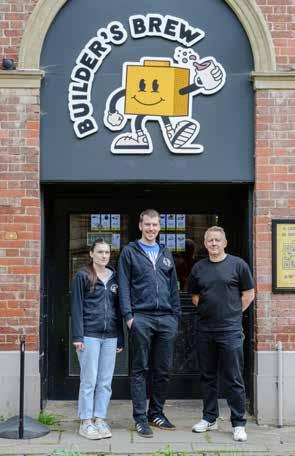
"We’ve loved working with Audalize this year to shape the atmosphere at Builder's Brew LEGO Cafe. Their dynamic playlists shift based on the time of day, so the music always fits the vibe. Audalize’s technology gives us the peace of mind that our music identity will stay consistent across both spaces."
James & Laura, owners of Builder's Brew Cafe
doing what you want.
WHY GO WITH AUDALIZE?
REAL HUMANS. NOT ALGORITHMS.
Every soundtrack is curated by expert DJs and music curators who understand your brand, your audience, and the difference between a quiet Tuesday lunch and a Friday night.
WHAT DO YOU WANT YOUR CUSTOMERS TO FEEL?
Not the decor. Not the menu. The feeling. That invisible thing that makes a guest stay another round or leave early. Audalize engineers that.
WE BRIEF BEFORE A SINGLE TRACK PLAYS. Every partnership starts with understanding your brand, your dayparting and your audience. The schedules we build reflect your venue, not a generic playlist.
COMMERCIALLY LICENSED. NO GREY AREAS.
THE LICENSING REALITY
"In our experience, the majority of venues are playing music without the right commercial licence - and have no idea. It is not malicious. They just use what they know from home."
Sound and visuals are not background. They are the feeling people carry home, the reason they come back, the thing that makes a space feel worth being in. Great businesses do not leave that to chance. And the good news is that getting it right does not have to be complicated. It just has to be deliberate. That is exactly what we are built to help with.
For more information about how Audalize can help create the right soundtrack for your venue, contact Tim Hull at tim.hull@audalize.com to discuss your requirements and arrange a consultation.
Fully licensed for commercial use across labels including Warner, Sony, Virgin and Universal. Artists get paid. You have nothing to worry about.
IT'S GROWING. Currently working in 1000+ venues in Australia, Audalize is now also based in Sheffield and growing across the UK.
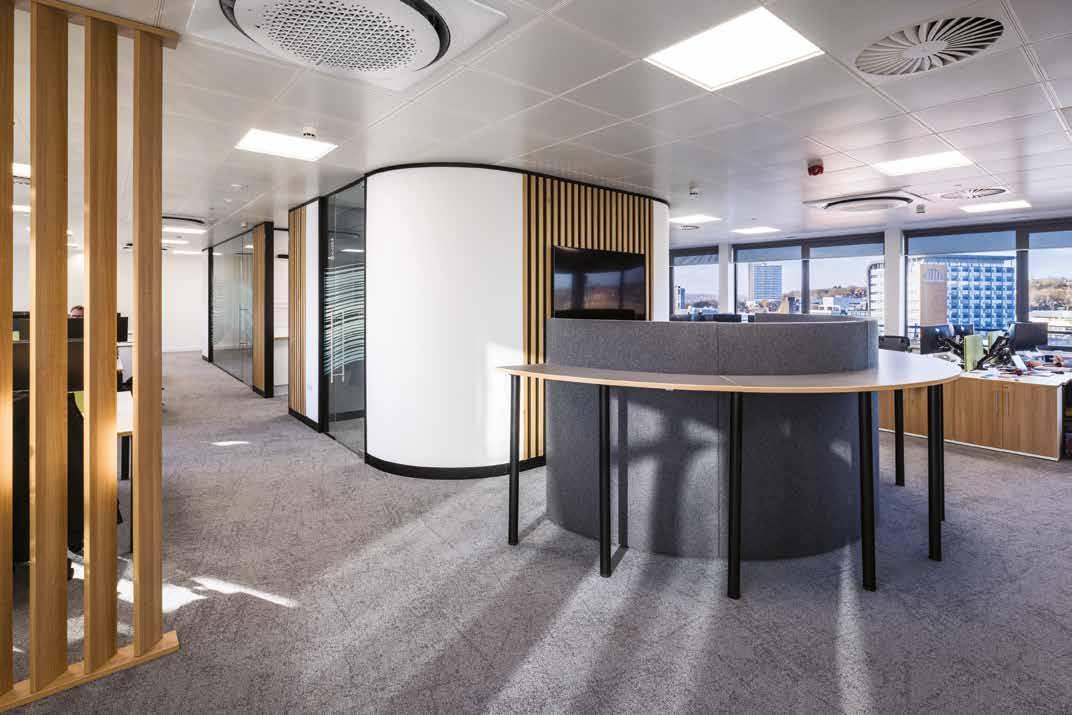
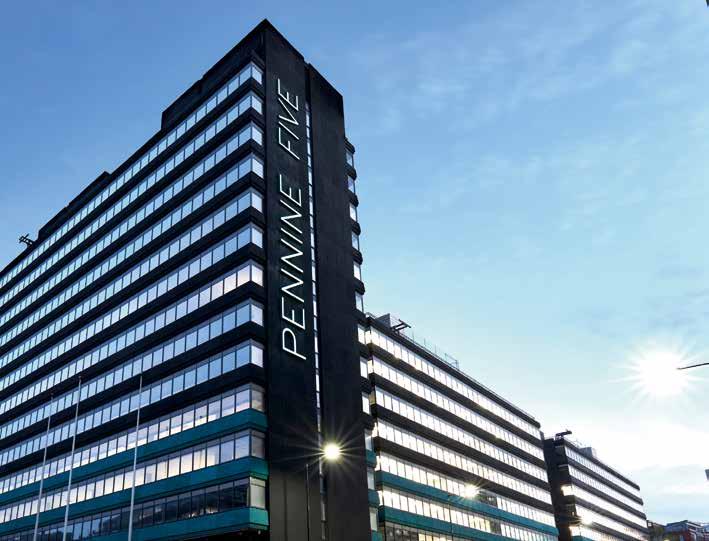
A prime central location in the heart of Sheffield, Pennine Five is just minutes from the city’s best amenities and transport connections, and benefits from over 390 secure car parking spaces.
Comprising five distinctive blocks arranged around a unique central plaza, Pennine Five offers highly flexible accommodation ranging from 3,229 sq ft (300 sq m) to over 100,000 sq ft (9,290 sq m).
With flexible leases and versatile floor plates, Pennine Five is designed to adapt to your business. Speak to our team to find the right solution for you.
chat about a space for you!
SO… WHAT DOES IT MEAN?
ARRIVED
Ashley Harris on why AI is making cyberattacks faster, smarter and harder to stop – and what businesses need to do about it.
Businesses across South Yorkshire are embracing AI at pace. From drafting contracts and analysing data to automating routine processes and improving customer service, the technology is already helping organisations become more productive and efficient. For many business owners, AI has quickly moved from a curiosity to an everyday tool.
The problem is that businesses are not the only ones benefiting.
Hackers and cybercriminals are adopting AI just as enthusiastically, using it to identify vulnerabilities and develop increasingly sophisticated methods of gaining access to systems and data. According to Ashley Harris, managing director of South Yorkshire IT and telecoms
specialists Jibba Jabba, this shift has fundamentally altered the landscape.
"Historically, there was usually a gap between a vulnerability being discovered and somebody exploiting it," he explains.
"Developers would have time to identify the issue, create a patch and get it rolled out before attackers could do too much damage. The problem now is that AI has massively accelerated that whole process. Vulnerabilities are being found quicker, exploits are being written quicker and attacks are happening much faster than they used to."
The result is what cybersecurity professionals increasingly refer to as the "Zero Day" problem.
BUSINESSES CAN NO LONGER ASSUME THEY'LL HAVE TIME TO REACT ONCE A PROBLEM EMERGES.”
A zero-day vulnerability is a software flaw that developers are unaware of, meaning they have had zero days to create and distribute a fix before criminals attempt to exploit it. While such attacks are not necessarily a new concept, AI is dramatically increasing both the volume and speed of these threats.
"Software companies don't really stand a chance if they're relying on the old way of doing things," says Harris. "AI has sped everything up. We've seen situations where software that once only needed checking periodically now requires constant monitoring because the threat landscape is moving so quickly. Businesses can no longer assume they'll have time to react once a problem emerges."
For businesses, that means the traditional approach of waiting for a problem and then responding to it is no longer enough. Preparation and ongoing monitoring have become critical.
KEY POINT: AI IS BOOSTING PRODUCTIVITY – BUT FOR EVERYONE
Much of the conversation around AI understandably focuses on its positive impact. Ash himself is a strong advocate of the technology and uses it extensively within his own business.
"People should embrace it, but they should do so with caution," he says. "When computers first arrived, there were concerns that they would replace jobs. What people often forget is how many new industries and opportunities they created. I think AI will do exactly the same. There will be entirely new roles and specialisms that don't exist today, and businesses that embrace the technology will have an advantage."
The difficulty, however, is that every efficiency gain available to legitimate businesses is also available to criminals.
AI can help attackers generate convincing phishing emails, identify weaknesses in software, automate coding tasks and dramatically reduce the time required to launch an attack. In effect, the same technology helping businesses work smarter is helping cybercriminals do the same.
That creates a new reality for SMEs, many of which still assume
cybercrime is something that primarily affects large organisations with household names.
In reality, smaller businesses are often viewed as easier targets precisely because they may have fewer resources dedicated to cybersecurity.
WHY CYBER INSURANCE IS NOT ENOUGH
One of the biggest misconceptions Ash encounters is the belief that cyber insurance provides a complete safety net.
Recently, a client shared their cyber insurance documentation with Jibba Jabba for review. While the business believed it was adequately protected, the detailed policy conditions painted a different picture.
"The insurance certificate looked fine at first glance, but when we got into the detail, the small print was enormous," Harris explains. "The insurer expected them to have a whole range of security controls in place that they either didn't have or hadn't fully implemented. My immediate concern was that if they suffered a serious incident, there could be significant questions about whether the policy would actually pay out."
Basic antivirus software is no longer considered sufficient. Many insurers now expect organisations to have measures such as multifactor authentication, advanced threat monitoring, access controls and documented cybersecurity procedures in place before claims will be honoured.
A NEW FACTOR IN BUSINESS VALUE
The importance of cybersecurity now extends well beyond protecting systems and data.
Ash has noticed a significant change in the way mergers, acquisitions and business sales are conducted. Increasingly, prospective buyers are treating cybersecurity as a core due diligence issue.
"I know of people selling their businesses where the buyer's team wanted a detailed breakdown of the company's cybersecurity arrangements," he says. "In one case, we spent a full day answering questions about systems, processes and security controls. That's something we simply weren't
seeing a few years ago. Buyers now see cyber risk as a genuine business risk."
Just as buyers scrutinise financial records, contracts and operational performance, they are increasingly looking for reassurance that hidden cybersecurity weaknesses will not become an expensive problem after a deal completes.
IMPORTANTLY, THIS DOESN’T NEED TO COST A FORTUNE
Despite the growing risks, Ash is keen to emphasise that effective cybersecurity is not always about spending large sums of money.
Many businesses can significantly strengthen their position by making better use of tools they already have.
For example, organisations using Microsoft 365 can enable multi-factor authentication and restrict account access to approved geographical locations. Simple configuration changes such as these can eliminate a substantial proportion of attack attempts.
"A lot of businesses already have access to security features they're not using," Ash explains. "There are
things you can do within Microsoft 365 today that cost nothing extra but make a huge difference. Sometimes it's not about buying more technology – it's about making sure the technology you've already got is configured properly."
THE BOTTOM LINE?
Yes, AI is transforming business in remarkable ways and its potential benefits are undeniable. However, the same technology is also making cybercriminals more capable, more efficient and more difficult to defend against.
The Zero Day era has arrived. For businesses, the greatest danger is not the new technology itself, but complacency.
As Ash puts it: "Ignoring the problem is probably the biggest risk. AI isn't going away and neither are the threats that come with it.
The businesses that will be in the strongest position are the ones that prepare now rather than waiting until something goes wrong."
To find out how your business can stay ahead of the game, call Jibba Jabba on 01302 247530 or visit jibbajabba.co.uk.
Tel: 03330524641
Email: hello@empowr.uk
Web: empowr.uk
HR with Personality
Empowr delivers no-nonsense, pragmatic HR consultancy for businesses that need clear and commercial solutions.
Services include: Ongoing Telephone and Email Support / Contract and Policy Reviews / HR Audit / Engagement Survey / Management and Supervisor Training
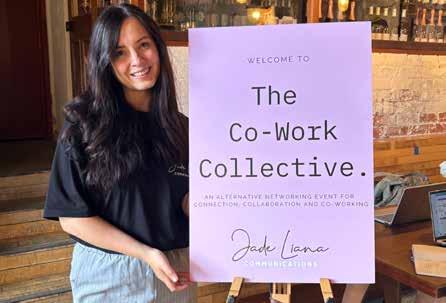
THE CO-WORK COLLECTIVE – WHY FRESH WAYS TO NETWORK ARE VITAL
As remote and hybrid working continue to reshape professional life, more people are seeking meaningful ways to connect. Jade Liana March of Jade Liana Communications explains why she created The Co-Work Collective and how an alternative approach to networking is building a thriving community across South Yorkshire.
For years, networking has been viewed as an essential part of professional life. Yet for many people, the word itself can trigger a feeling of dread and anxiety.
Just the thought of walking into a room full of strangers, balancing a coffee or breakfast sandwich in one hand and a stack of business cards in the other, isn't something everyone enjoys. It certainly wasn’t something I enjoyed.
In fact, when I spoke to business owners, freelancers and professionals across South Yorkshire, I kept hearing the same thing. People wanted to meet others and build connections, but they didn't all enjoy traditional networking events. They can feel dated and forced. I wanted to change that.
That was the reason I created The Co-Work Collective in April 2025.
Rather than another networking event centred around pitches and sales conversations, I wanted to create something more natural. A space where people could come together, get some work done, have genuine conversations and build relationships without the pressure that often comes with conventional networking.
What started as a simple idea has grown into a
community that brings together people from all walks of professional life. Business owners sit alongside employees. Freelancers work next to corporate professionals. Senior leaders share a table with people at the beginning of their careers.
There are no membership requirements, no expectations and no cliques. The Co-Work Collective is free of charge and completely inclusive.
The incredible response has highlighted something important about the way we work today.
While remote and hybrid
PEOPLE AREN'T SIMPLY LOOKING FOR NEW CLIENTS OR CAREER OPPORTUNITIES. THEY'RE LOOKING FOR COMMUNITY.”
working have transformed our professional lives, they've also reduced many of the opportunities for spontaneous connection that once happened naturally. Casual conversations and shared ideas have largely been replaced by video calls, emails and instant messages.
As a result, many people are experiencing a sense of isolation despite being more digitally connected than ever.
That's why I believe spaces that encourage genuine human interaction are becoming increasingly important.
People aren't simply looking for new clients or career opportunities. They're looking for community.
If business development opportunities come from attending one of my events –that is fantastic – but it is not the main objective.
Business has always been
built on relationships, and those relationships are often strongest when they develop organically.
The growth of my alternative networking/ co-working concept has reflected just how much demand there is for a different approach to professional connection in South Yorkshire.
Following a successful first year, the event is now held monthly at The Victoria Clubhouse Social in Sheffield, creating a regular space for people to work, connect and collaborate.
I’m also expanding The Co-Work Collective into Rotherham, with a regular event launching at the Vetro Lounge in the town centre.
Follow The Co-Work Collective on LinkedIn for upcoming event dates and updates.
From hot meals and healthcare to counselling and housing support, the Archer Project helps more than 1,200 people a year. But can it continue to do so from a building that no longer meets the needs of those who rely on it?
WORDS: JOSEPH FOOD PHOTOGRAPHY: MARC BARKER
“The main problem is that this building was opened over 20 years ago,” says Joe Logan, Head of Fundraising at the Archer Project, “but our service and approach have entirely changed in that time. The quality and breadth of support we offer is simply not in sync with the space we’re in.”
Joe has buzzed unLTD through the front door of their Campo Lane centre, a vital hub for the thousands of people in Sheffield affected by homelessness. In 2025 alone, the charity supported 1,201 individuals –and they’re certainly not expecting that number to drop anytime soon.
While the building provides a temporary haven for its beneficiaries, a place where they provide what Joe describes as "a wide-ranging service that understands the root causes of homelessness", the immediate surroundings feel anything but compassionate.
A small doorway area pens you in before leading to a cramped reception room. Cracked walls, peeling paint and an incredibly uninviting fixed metal bench greet between 100 to 120 individuals at lunchtime. It’s a narrow squeeze
from there to an equally tired lounge room, and space remains at a premium through to the canteen area where last year they served over 23,000 free meals. A 2017 survey confirmed what they already suspected: the centre was operating above capacity – and by some distance.
A lack of room and strained facilities are difficult to navigate for any organisation. But when you’re dealing with an issue as complex as street homelessness, such challenges are magnified tenfold.
“The people who come through our doors are often experiencing the effects of trauma and all have unique experiences,” says Joe. “For example, one person might be loud, distressed and highly agitated, while another struggles to make eye contact or feel comfortable around others. We're trying to help both of
those people, but we don't have the private areas needed to provide that level of support.”
He explains that the redesigned building will include dedicated spaces for private conversations, therapeutic assistance and de-escalation when someone is experiencing a mental health crisis. Ageing shower facilities will be modernised, while an expanded canteen will replace the warehouse space that still bears the scars of a 2020 arson attack. Additional areas for activities, skills development and one-to-one support will also be created.
Taken together, the changes will allow the Archer Project to better address individual needs and help more people progress away from what Joe describes as "entrenched homelessness".
But, as ever, there is a catch. And it’s a big one. To get to where they need to be, the Archer Project have launched their largest fundraising campaign to date: £2m to rebuild
the entire centre.
For a charity whose annual running costs already exceed £1m, it's an ambitious target. Yet Joe and the team know that standing still is no longer an option.
"The reality is that homelessness is one of the most complex issues in society,” he says. “The only thing a lot of the people who come through our doors have in common is that they don't have a house. Beyond that, you might be dealing with abusive relationships, undiagnosed neurodivergence, addiction, acquired brain injuries and all sorts of different life experiences. It takes time and the right environment to help people move forward."
Rather than a traditional public appeal, the campaign is focused on securing support from businesses, particularly those involved in construction, plumbing, electrical work, fixtures and fittings. They are also seeking donations of materials and expertise to help reduce costs. Encouragingly, a number of local
firms have already stepped in to lend a big hand. Forgemasters has joined the steering group and is helping connect the project with suppliers, McLaughlin & Harvey is providing pro bono project management and headline sponsor Homes by Honey has committed £100,000 towards the appeal.
However, there remains a long way to go before the vision can be realised.
Whereas some charities can appeal directly to people's lived experience, the difficult fact remains that homelessness is still a deeply stigmatised and often misunderstood issue. Seen by some as an eyesore, The Archer Project has even faced questions over why its centre should remain in the heart of central Sheffield rather than using the money to relocate to the fringes or away from higher-footfall areas altogether.
I put this to Joe and he's happy to tackle it head on. "We have had some comments asking why
spend this money here rather than move somewhere else. But we're in the city centre because people experiencing homelessness are in the city centre. If we moved elsewhere, homelessness wouldn't disappear in town. The people would still be here, but they'd be further away from the support they need."
“We also have a hugely important relationship with Sheffield Cathedral,” he adds, “without whom we wouldn’t be able to do what we do."
Another response to such views is explaining how the redevelopment is not solely about helping those who access the service. In fact, data shows that an improved Archer Project hub will benefit the city as a whole, reducing pressure on public services from healthcare to policing and creating more opportunities for people to rebuild their lives.
“Research suggests that every pound donated to us returns four pounds to the public purse,” says Joe. “If we weren’t here, that’s money the council would be spending. A new building will further help alleviate pressure on healthcare services, probation services and other public organisations.”
That sentiment is echoed by Mark*, a former Archer Project beneficiary who now volunteers at the centre after finding stable housing.
When he first arrived, Mark recalls having “basically shut down” and largely keeping to himself as a result.
“Luckily it wasn't quite as busy then as it is now,” he tells me. "I’d just come in and sit quietly at the start. People probably thought I was doing nothing, but actually I was healing. I don't think I'd be able to do the same now because it's that busy. I wouldn't be able to get that bit of peace.
"I originally came because I needed food, but it turned out to be much more than that. Everything was here – medical services, support for drugs and alcohol issues, help in contacting the council. It brings it all into one space.”
With lived experience of using the centre and seeing today’s increased demand first-hand as a volunteer, he believes that redevelopment is essential.
“It’s really important. Something's got to happen because there are more and more people becoming homeless. They just won't be able to cope otherwise.”
Mark is one of many examples of
what can happen when people are given the time and space to recover before engaging further with the support available. Continuing our tour of the centre, we're met with evidence of wear and tear at almost every turn. But beyond the aesthetics lies a more structural issue: a multitude of services and activities competing for the same cramped spaces and, all too often, getting in each other’s way.
As we’re shown back out onto Campo Lane by Joe, he makes clear that much of it ultimately comes down to dignity.
“A huge part of what we try to do is centred around helping people believe they're worthy of something better. Our staff are saying, 'You're worth more than this,' but the building at the moment is saying, 'No, this is what you're worth.' That needs to change, and we can't bridge this gap without Sheffield getting behind us.”
Businesses interested in supporting the appeal through financial contributions, construction services or gifts in kind can email joseph@ archerproject.org.uk.
*Name changed at the interviewee's request.
Empowr HR co-founder Rachel Storey on bringing clarity to a changing workplace
Launching a business is rarely a decision made overnight. For Rachel Storey and Kris Kerins, the creation of Empowr was the culmination of more than a decade spent working together, supporting businesses through workplace challenges and developing a shared view of what good HR advice should look like.
The South Yorkshire-based consultancy, which will soon be celebrating its first year, was born from a simple belief: businesses need practical, commercially minded people and HR support from advisers who understand the realities of running a company.
"We've worked together on
and off for 12 years," Rachel tells unLTD. "We both worked for a local independent business and ended up back working together directly in the HR consultancy team. When the company was acquired, it became much more corporate and Kris and I started talking about whether we could do this ourselves and do it our way."
Doing things "their way" means occupying a space that many SMEs have struggled to find. Rather than offering the call-centre style support associated with some national providers, or the higher-cost route of engaging employment lawyers, Empowr positions itself firmly in the middle.
"We sit between the online HR consultants and the lawyers," she explains. "We're experts in employment law, but we're not lawyers and we're not at that price point. What businesses tend to need is somebody who can understand where they're trying to get to and help them find the best route there with the least risk."
That distinction is important because, as they see it, HR is rarely about delivering black-and-white answers. Businesses face complex decisions every day, often under commercial pressure, and advice needs to reflect that reality.
It’s an approach that appears to have struck a chord. In less than a year, Empowr has grown to more than 40 retained clients, alongside a growing number of businesses engaging the company for project-based support, management training and specialist HR work.
The growth comes at a time when many organisations are facing increasing pressure on the people side of their business. Employment legislation continues to evolve, economic conditions remain challenging and workplace expectations have shifted significantly over the past decade.
Alongside those challenges sits a growing need for expert guidance around legislative change. While larger organisations may have dedicated HR teams with specialist knowledge, many SMEs simply do not have those resources available internally.
A large proportion of Empowr's clients are ownermanaged businesses where directors are handling people matters themselves, often alongside the countless other responsibilities that come with running a company.
Others may have an HR manager in place but
encounter a situation they rarely deal with, whether that's a redundancy process, a complex disciplinary matter or a significant organisational change.
"When those situations arise, people want a sounding board," says Rachel. "They want somebody who can sense-check what they're doing and make sure they're approaching it in the right way."
The changing role of HR itself is another theme we return to during our conversation. While the function has traditionally been viewed as the department employees only hear from when something has gone wrong, she believes modern HR has become far more focused on culture, engagement and helping people perform at their best.
"We do a lot of work around culture," she says. "Ultimately, if you're supporting employees properly and creating the right environment from the off, you're much less likely to end up having difficult conversations further down the line."
Those cultural considerations have become increasingly important as businesses compete for talent. Younger employees, in particular, are placing greater emphasis on organisational values and whether a company aligns with their own beliefs.
As a result, Rachel explains that managers are expected to be far more than supervisors.
"It's never been harder to be a manager. You're not just the boss anymore. You're a coach, a support system and sometimes a counsellor, while still having to hold people accountable and get the best out of them."
Despite the growing influence of technology and AI across the profession, Rachel remains convinced
The value comes from understanding the business, understanding the people and knowing what's right for that organisation."
that successful HR consultancy ultimately comes down to relationships. Empowr is already investing in systems and technology that reduce administrative workloads, freeing up more time for client conversations.
"We've always talked about the people," she says. "It's building those relationships, getting to know businesses and watching them succeed. People buy from us because it's a trust and relationshipbased service. Sometimes that means helping them make difficult decisions, but making sure the outcome is right for the business."
That philosophy also shapes the company's ambitions for growth. While Empowr has enjoyed a stronger first year than anticipated, they are keen that expansion does not come at the expense of the personal service clients have come to expect.
The business plans to continue growing across South Yorkshire and the wider region, but maintaining that local connection remains important.
"We want to stay regional because that's part of who we are. We know Yorkshire businesses, we know Yorkshire people and we know how important those relationships are."
As the company looks towards its second year, the immediate focus is on building steadily, supporting more businesses and eventually bringing additional consultants into the team when the time is right.
However, about everything else, maintaining the personal approach that clients buy into remains the priority.
"People buy our expertise, but they can get expertise elsewhere," Rachel says. "The value comes from understanding the business, understanding the people and knowing what's right for that organisation."
If you live in South Yorkshire, Global Windows in Sheffield is your trusted installer of windows, doors and conservatories. We’re an award-winning company, recognised for the quality of our installations and customer care. With a 10-year insurance-backed guarantee and an excellent rating from 98% of customers, you can enjoy complete peace of mind. Visit our indoor showroom to explore our quality products and experience our outstanding service firsthand. Contact us today for your home improvement needs!
Global House Orgreave Drive, Handsworth
Sheffield, S13 9NR
Tel: 0114 288 95 95
sales@global-windows.co.uk
www.global-windows.co.uk
EVENTS
ON THE FAST TRACK
Our first unLTD Business Speed Networking event took place on 20 May at Kenwood Hall, bringing together around 30 businesses from across South Yorkshire for an afternoon dedicated to making new connections and growing professional networks.
From the moment the event got under way, the room was full of energy, with delegates taking part in a series of fast-paced conversations designed to maximise introductions in a short space of time. Business cards were exchanged, ideas shared and opportunities for future collaboration quickly began to emerge.
The event highlighted the strength and diversity of South Yorkshire's business community, bringing together organisations from a range of sectors in a relaxed and welcoming environment.
A huge thank you to everyone who joined us and helped make the inaugural event such a success. If you missed out this time, the next unLTD Business Speed Networking event is already in the diary for 4 November at Kenwood Hall. Further details and booking information will be available soon.
From Gut Instinct to Growth
After a decade spent helping businesses improve everything from customer success and project management to manufacturing operations, Jack Kershaw launched Kershaw Consulting to return to where he believes the real excitement lies – working alongside ambitious SMEs. He spoke to unLTD about data, efficiency, AI and why processes may not be considered "sexy", but understanding them is key to sustainable growth.
What led you to launch Kershaw Consulting?
I've spent about 10 years working within SMEs, alongside a few larger businesses, across a range of sectors. I started out running customer success teams, then moved into project management because I wanted to fix some of the root causes behind the same issues cropping up repeatedly. That led me into data warehousing and eventually manufacturing, where I was an operations director leading around 80 staff.
It's been a real SME story of wearing lots of different hats and learning new things every day to keep all the plates spinning. I've worked on acquisitions, company culture projects and manufacturing transformation programmes. Throughout all of that, the common thread was building systems, growing teams and helping businesses move from pen-and-paper processes to having dashboards
that allow owners to make data-led decisions.
The downside of working with fastgrowing SMEs is that they don't stay SMEs forever. As businesses grow, roles change. For me, launching Kershaw Consulting was about stepping away from directorship and getting back involved at the coalface, where the magic happens.
What is it about working with SMEs that appeals to you?
You never get bored. No two days are the same. One day you're solving one problem, the next you're wearing a completely different hat. That variety is what makes SMEs so exciting. They're constantly evolving and you're always learning.
How would you describe what Kershaw Consulting does?
I work with a pretty wide range of businesses. One week it might
be a wine bar, the next it could be a manufacturer or a professional services firm.
The way I work is by taking everything back to first principles and looking at how processes operate, whether they're physical or digital. I apply a manufacturing mindset, particularly lean methodologies, to remove waste and improve efficiency.
It's also a data-first consultancy. There are two principles that underpin everything I do. The first is that you can't manage what you don't measure. The second comes from Toyota's concept of genchi genbutsu – go and see.
A lot of businesses are initially run on gut instinct, and entrepreneurs are often brilliant at making instinctive decisions. You have to be, otherwise your business probably doesn't survive its first year. But eventually you need data.
At the same time, you can't lose sight of what the data relates to. You need the numbers, but you also need to speak to the people behind those numbers and understand the processes you're measuring. Statistics can tell any story you want them to if you're not careful. The real value comes from combining data with a genuine understanding of what's happening on the ground.
What are the most common challenges you encounter?
The reality is that systems aren't particularly exciting or sexy, so people tend to stick with tools and processes for as long as they can get away with. If something works, there's a psychological safety in keeping it. But businesses don't grow by standing still.
Sometimes it's complacency, sometimes it's fear of change, and sometimes it's simply that business owners don't know what alternatives are available. They're busy running their company and don't have time to keep up with new technology, new methodologies or better ways of working.
It's the classic challenge of working in the business rather than on the business. You don't always get the chance to lift your head up and ask what everyone else is doing or what lessons you can learn from others.
When should businesses start reviewing their systems and processes?
BUSINESSES ARE EAGER TO EMBRACE AI, BUT GOOD IMPLEMENTATION DEPENDS ON HAVING CLEAN, CONNECTED DATA AND A CLEAR UNDERSTANDING OF HOW EVERYTHING FITS TOGETHER.”
The boring answer is: yesterday, and the second-best time is today.
With AI developing at the pace it is, there's never been a better time to review how your business operates. I hear people saying there are only two types of businesses: those that adopt AI and those that won't be businesses anymore. I think that's a bit dramatic, but there is a serious point behind it.
AI is a tool. I use it every day, but AI can't fix bad systems. If your processes don't connect properly and your data isn't structured correctly, automating them won't give you the results you're looking for.
You’ve spoken a lot about data silos in what you do. What do you mean by that?
Think of a silo an isolated container. In many businesses you'll find finance operating in one silo, project management in another, sales in another and so on. Every department is measuring different things and pursuing different objectives, sometimes without realising they're working against one another.
One of the most powerful exercises I ever ran involved getting all the department heads of a manufacturing company into a room and asking them to map out their priorities across monthly, annual, three-year and fiveyear timeframes. We then looked at which objectives supported one another and which conflicted.
It's amazing how often you discover one department pushing in a direction that another department simply can't support.
Part of solving that is getting the right people into the same room and having honest conversations about what success looks like. The other part is stitching systems together, so everyone is working from the same information and speaking the same language.
How does your consultancy process work?
It usually starts with a business recognising that something isn't working as well as it could.
From there, I analyse processes, workflows and timings. Whether it's a digital service or a physical product, I look at how work moves through the organisation and how much effort is involved at each stage.
Anything that doesn't add value to the customer needs a strong
justification for existing. Some tasks are unavoidable, of course, but wherever possible we want to reduce the time and effort spent on activities that don't directly contribute to customer value.
Nobody enjoys spending their day doing repetitive, manual processes. AI and automation can help remove a lot of that burden.
I spend time understanding how the business works, learning what's important to the team and then applying process thinking to identify what drives value and what doesn't.
I often describe it as defining the issue, designing a solution and then continually refining it. Businesses don't stand still, so neither should their systems.
Can you share an example of a successful recent project?
One example involved a large manufacturing business where we introduced a performance-related pay model.
We measured how long key tasks took, linked output directly to compensation and worked closely with HR and finance to ensure the scheme was robust. The results were remarkable. What the business previously considered good performance effectively tripled within a few months.
Employee earnings increased
significantly, while the business became much more efficient. It completely changed how they thought about staffing and productivity.
On the digital side, I've worked with organisations to integrate project management and finance systems, removing manual administration and reducing the risk of human error. Tasks like allocating invoices to projects don't excite anybody, but automating them frees people up to focus on work that genuinely creates value.
What opportunities are SMEs currently missing?
The biggest issue is that many businesses don't fully understand how they operate behind the scenes.
If you don't have visibility of your processes and your data, you're not really making informed decisions. You're guessing.
Entrepreneurs are often very good at guessing, but there's a limit to how far instinct alone can take you.
The other major opportunity is AI. Businesses are eager to embrace AI, but good implementation depends on having clean, connected data and a clear understanding of how everything fits together.
Finally, what advice would you give to a business owner who feels their processes are holding back growth?
If you're a smaller business, start by mapping out where your time goes. Identify the activities that energise you and the ones that don't. Then look at how technology, AI or external support can help eliminate the tasks that add the least value.
For larger organisations, speak to your people.
Understand what's causing frustration and slowing things down.
Processes will continue to involve people for a long time yet, so change has to bring people along with it. You can't simply tell teams that the old way is wrong. You need to help them understand what's possible and get excited about where the business is heading.
Ultimately, when I leave a business I want them to be intentional, datadriven, and structurally set up for longterm success long after my departure.
Get in touch with Jack at jack@ kershawconsulting.co.uk to book an exploratory chat about how he can help your business.
Business Sheffield offers free, practical support to help local businesses start, grow and move forward.
Our advisors bring real-world experience, including senior leadership and boardlevel roles, as well as building and scaling successful companies. They understand the day-to-day realities of running a business.
Whether you need support developing an idea, improving your marketing, accessing funding or planning your next step, we’re here to help.
If you need help navigating council services, including business rates or licensing, we can support with that too.
Need something more specialist? We’ll connect you to the right people.
Practical support. Real people. No cost.
WHEN MICHAEL BEAUMONT ARRIVES AT THE UNLTD OFFICE, HE IS SQUEEZING THE INTERVIEW INTO A PACKED DAY OF TROPHY DELIVERIES ACROSS SHEFFIELD. THE FOUNDER OF SPORTS TROPHY CO IS IN THE MIDDLE OF ONE OF THE BUSIEST PERIODS ON THE CALENDAR, WITH SUNDAY LEAGUE FOOTBALL SEASONS DRAWING TO A CLOSE AND CLUBS HOLDING THEIR END-OF-SEASON PRESENTATIONS.
WORDS: JOSEPH FOOD PHOTOGRAPHY: MARC BARKER
“From April onwards, it’s all hands on deck,” Michael tells me. “We’re the only business doing what we do in South Yorkshire, so demand is high. I’ve already had four deliveries to make today, and there are another five to get out before the end of the week.”
For nearly two decades, Sports Trophy Co has been helping mark sporting
achievements, milestones and special occasions. Based in Tinsley and run by Michael alongside his wife Gail, the family business supplies trophies, medals, cups and engraved awards to customers across the UK.
The business began in 2007, following Michael’s earlier career as a web developer. Having worked on websites for English Pewter
and Lincoln Trophy Centre, he gained valuable insight into the trophy industry and spotted an opportunity to strike out on his own.
“When they said they didn’t need me anymore, I thought: ‘What can I do with all this experience?’ So I created my own trophy website,” he recalls.
What started as a side venture alongside other
web development contracts gradually evolved into a full-time family business. Gail initially joined part-time after leaving her teaching role, before eventually committing fully to Sports Trophy Co.
Today, the pair divide responsibilities according to their strengths. Michael focuses on marketing and the online side of the business, while Gail manages sales, ordering and much of the engraving work.
Despite operating nationally, it remains a distinctly personal business. Michael believes that hands-on service is what separates them from larger competitors.
“We take the call, speak to the suppliers, receive the items, engrave them and keep the customer informed throughout,” he says. “We’re involved in the whole process.”
That personal touch often proves invaluable when deadlines are tight. Michael recalls recently receiving a call late one evening from a customer who had suddenly realised a long-serving employee was leaving the next day without any recognition planned.
“She said, ‘Can you do his award? He’s been here with us for 30 years, but we need it by tomorrow.’ We turned it around in a day and everyone was happy. You won’t get
that sort of service with a bigger company.”
The same flexibility extends to correcting mistakes (a rarity, he is keen to add). More commonly, an engraving plate may need replacing or an award may be damaged, and Sports Trophy Co can often resolve the issue within hours rather than days.
For Michael, however, the most rewarding aspect of the business is seeing the reaction when recipients receive their awards.
“Making sure they’ve got exactly what they want, then seeing them happy when it’s presented. Sometimes they’ll send us a photo on of a kid with a huge smile on their face. That’s what gets us through the day.”
It is a reminder that trophies are often about much more than the objects themselves. Whether it is a grassroots footballer collecting a first player-ofthe-year award or a volunteer
being recognised for years of service, the moments attached to them can last a lifetime.
While football and golf trophies remain a major part of the business, they have diversified significantly in recent years. A substantial investment in laser engraving technology has enabled the company to bring glass and crystal award production inhouse, opening opportunities in the corporate events market.
Among those projects are the engraved awards presented at the unLTD Business Awards. Michael has also produced commemorative awards for Sheffield Arena events, including presentations connected to major acts such as Peter Kay and Def Leppard.
The company has supplied replica Ryder Cup trophies, created awards for charities and produced bespoke
pieces for businesses, sports clubs and community organisations. More recently, Michael has been exploring opportunities in sports such as darts, swimming and basketball to help balance the seasonal nature of football and golf.
The business continues to operate from home, a model that provides flexibility and helps control costs. While Michael would like to open a dedicated shop one day, he is realistic about the challenges facing bricks-and-mortar businesses.
Asked who in Sheffield he would most like to present with a trophy, Michael initially highlights former Sheffield City Council leader Tom Hunt (praising his efforts to champion the city and noting that independent businesses need all the support they can get). However, after a moment's reflection, he settles on a different recipient much closer to home.
Michael is quick to acknowledge Gail's contribution to the company's success.
"She's been amazing, because it has been tough at times," he says. "She's stood with me through thick and thin."
For a business built on recognising the achievements of others, it is perhaps telling that when asked who deserves a trophy of their own, Michael's thoughts ultimately turn to the person who has been beside him throughout the journey. And as Sports Trophy Co continues to grow, the couple remain focused on providing the personal service that has become the hallmark of the business.
Web: sportstrophy.co.uk
Tel: 07583 679846
Hours: Monday to Friday, 7am–7pm Saturday and Sunday, 11am–1pm
IN THE FRAME
For over 30 years, Sheffield-based double glazing company Global Windows has been at the forefront of the industry in our region. But rather than just tell you about the quality of their workmanship, we've asked Managing Director Liam Hulme to talk us through a recent project in Doncaster –alongside some great before-andafter shots...
Belton Installation
This recent project in Belton, Doncaster, involved replacing the property's existing windows with 32 new flush sash windows in white, giving the home a clean, traditional appearance while benefiting from modern performance and energy efficiency.
Flush sash windows are a popular choice for homeowners looking to retain a classic aesthetic, as the window sash sits flush within the frame, creating a sleek and elegant finish.
To complement the new windows, we also installed a composite front door in agate grey, finished with a contemporary long black bar handle. The combination of the subtle grey tone and contrasting hardware helps create a striking entrance while maintaining the character of the property.
The completed installation has transformed the appearance of the home, delivering improved kerb appeal along with the practical benefits of modern, highperformance windows and doors.
FLUIDONE
BY HENRY BARKER, HEAD OF ENTERPRISE SALES
DIGITAL RESILIENCE: SOUTH YORKSHIRE'S NEXT BUSINESS CHALLENGE
South Yorkshire businesses know a thing or two about resilience. Industrial change, economic pressures and supply chain disruption aren't new challenges –they're part of the region's DNA.
Today, however, the nature of risk has changed.
Over the past few years, businesses have rapidly digitised. Systems, data and connectivity now sit at the heart of dayto-day operations. For many organisations, if the technology stops, the business stops.
The challenge is that infrastructure has often evolved faster than the thinking around it. Many businesses aren't as resilient as leadership teams assume – they simply haven't been tested yet. In reality, some are just one incident away from discovering that their resilience looks better on paper than it does in practice.
Historically, resilience meant protecting physical assets such as sites, machinery, stock and logistics. Today, disruption is just as likely to come from a failed login system, a supplier outage, a ransomware attack or even a simple human error.
Rarely is it a single catastrophic event that causes problems. More often, it's a combination of smaller weaknesses – overreliance on key individuals,
limited visibility of systems, unmanaged devices, weak access controls or unsupported software. Individually they seem manageable; together they create fragility.
This challenge becomes even more significant as South Yorkshire continues to strengthen its reputation in advanced manufacturing, technology and innovation. Greater digital capability creates greater opportunity – but also more potential points of failure.
The organisations that thrive won't necessarily be those with the most technology. They'll be the ones that understand how their business functions
when something goes wrong and treat resilience as an operational discipline, not simply an IT issue.
In practice, that means having visibility across systems and dependencies, reducing unnecessary complexity, understanding ownership when incidents occur, and ensuring recovery processes work under pressure. Most importantly, it means designing operations that can continue functioning even when something breaks.
There is no such thing as a disruption-proof
organisation. Systems fail. Suppliers experience problems. Mistakes happen.
The real test of resilience is whether the business stops –or keeps moving.
South Yorkshire businesses have always demonstrated an ability to adapt under pressure. The next step is ensuring their digital operations can do the same.
Speak to the FluidOne team to identify where your risks lie and what it would take to keep your business moving when disruption strikes.
Peak District
Venue hire
Longbow Venues offers three stunning locations for your next corporate away day, The Maynard in Grindleford, The George in Hathersage and The Peacock at Rowsley, with rooms suited for up to 130 seated guests. All are within easy reach of Sheffield, Manchester, Derby and Nottingham, with The Maynard and The George accessible via the Hope Valley train line.
Day delegate packages start from £38 per person and 24-hour options from £235, with buffet menus and refreshments included.
Step away from the boardroom and reset your team in the Peak District, with countryside walks from the doorstep, creating an engaging and rewarding team building experience.
Stay the night with bedrooms across all our venues and turn your event into a memorable retreat.
Get in touch
THE MAYNARD Grindleford, S32 2HE events@the-maynard.com | 01433 424110
THE GEORGE Hathersage, S32 1BB enjoymore@thegeorgehathersage.com | 01433 650436
THE PEACOCK AT ROWSLEY Rowsley, DE4 2EB enjoymore@thepeacockatrowsley | 01629 733518
THE BUSINESS OF FOOTBALL
In the latest episode of the unLTD Business Podcast, James Marriott sat down with Spencer Fearn, whose career has spanned coaching, club ownership, education and professional sport. Best known for buying East Stirlingshire FC, widely regarded at the time as the worst football club in Britain, Spencer offered a fascinating insight into the realities of running football clubs, taking risks and chasing ambitious goals. Here are five key takeaways we learned from the interview.
THE CHAMPIONSHIP'S FINANCIAL MODEL IS BROKEN
The dream of reaching the Premier League continues to drive clubs to spend beyond their means, but Spencer believes the economics simply do not stack up for many teams.
"A lot of clubs with the Championship, it's a basket case of a division, so many people chasing that dream, but the thing is, when they get to the Premier League, it's very rare they make money as well, because they've signed better players, better contracts, everything, the bonuses to get promoted. So, even though it's where people want to be as a football club owner, they're not going to make this £100 or £150 million they speak about."
It is a sobering assessment of a division where promotion is often seen as the ultimate prize, but where financial sustainability can quickly disappear in pursuit of success.
EAST STIRLINGSHIRE REALLY WERE THE WORST FOOTBALL CLUB IN BRITAIN
When Spencer bought East Stirlingshire at the age of 31, he was not inheriting a sleeping giant. He was taking charge of a club that had become a national punchline.
"East Stirlingshire finished bottom of the Scottish Third Division for five seasons on the bounce. They got eight points one season, won two games the following season, got eight points, conceded over 100 goals. They were the absolute laughing stock of British football."
After first discovering the club through Jeff Stelling's Soccer Saturday coverage, he became determined to help change the narrative around a team that had become synonymous with failure.
TURNING AROUND A FOOTBALL CLUB REQUIRES MORE THAN MONEY
While football ownership
is often associated with wealthy benefactors, Spencer's experience showed that leadership, trust and community can be just as important.
"I was 31 years of age. Yes, I thought I knew a lot about football, very quickly realised I didn't know a lot about football, particularly how to run a football club, but it was about getting people on board and being authentic.”
He credits much of the club's revival to the supporters and the people around him.
"The fans are the best in the world. There's probably only 200 of them, but watching your team for five years getting pumped every weekend takes some doing."
The lesson extends well beyond football. Successful businesses are often built through collaboration, honesty and bringing people along on the journey.
FOOTBALL OWNERSHIP CAN LEAD TO SOME
EXTRAORDINARY SITUATIONS
The business of football occasionally strays into territory that feels more suited to a Hollywood script than a boardroom.
Recalling one particularly surreal episode involving intimidation linked to the club's former owner, Spencer said:
"I had to go for a dawn meeting with two very wellknown hoods in Glasgow, in a pub in Glasgow. I went
from Euston to Glasgow Central, I’ll never forget it –empty pub, nobody else in there. And they gave me a few options of how it could be dealt with."
"That was like being in a Guy Ritchie film."
Stories like these form a large part of Belief, Spencer's book released last year that details his time at East Stirlingshire and some of the tough lessons learned along the way.
BELIEF IS OFTEN THE DIFFERENCE BETWEEN STANDING STILL AND TAKING A CHANCE
Although football provides the backdrop, Spencer says his book is really about backing yourself and being prepared to take calculated risks.
"It's more about having belief in yourself. It's a story of me growing up – oneparent family, free dinners, no money, having to start work at 11, paper rounds,
milk rounds."
The message is one he now shares with business audiences and students as much as football fans.
"You've got to have belief and when to take your risks. Probably better to take them in your twenties than your fifties, that is for sure, because you've got more commitments. But if you really want something in life, you just have to go after it."
TO HEAR THE FULL CONVERSATION WITH SPENCER FEARN, SCAN THE QR CODE ON THIS PAGE AND LISTEN TO THE LATEST EPISODE OF THE UNLTD BUSINESS PODCAST.
START WITH THE PROBLEM, NOT THE PRODUCT
In business, particularly in technology, it's tempting to jump straight to solutions – a
latest shiny innovation.
from
new
platform,
a new tool or the
But the real value doesn't come
how quickly you deploy something. It comes from understanding the problem you're trying to solve first.
It sounds simple, but one of the most valuable things any SME can do is pause, take stock and properly assess where they are today before deciding where they want to go next.
We often compare it to motor racing. Drivers such as Rowan Campbell-Pilling don't simply turn up on race day and hope for the best. They study the track, analyse conditions and spend hours in simulators before they compete. Business transformation should be no different. Assessment comes first.
That's why we've built our entire approach around early-stage assessments.
Understanding Before Acting
Having worked with hundreds of organisations, we've seen the same pattern time and again. Businesses invest in solutions that fail to deliver the expected results, not because the technology is wrong, but because the starting point wasn't clearly understood.
Before making any significant investment, organisations should ask themselves:
∙ What are the real challenges?
∙ Where are the inefficiencies?
∙ What's holding growth back?
∙ Where are opportunities being missed?
Without clear answers, even the best solutions can fall flat.
That's why early engagement matters. It's not about selling products or services; it's about listening. We take time to understand an organisation's challenges, ambitions, pressures and constraints before recommending any course of action.
Only then can you build something that genuinely delivers value.
Keeping It Simple
One thing we've learned is that effective assessments don't need to be complicated.
In fact, simplicity often delivers the best results.
We've developed a range of free assessment services covering infrastructure, cyber security, data and AI, communications, managed services and network services. Each assessment is built around 12 carefully designed questions that help establish current maturity, identify risks and inefficiencies, and create a practical framework for improvement.
The result is a clear, nononsense view of where a business stands today, without the complexity or lengthy consultancy engagements that often put people off.
For SMEs in particular, that's important. You don't
need six months of analysis to start making better decisions. You simply need the right questions, asked in the right way.
Turning Insight into Action
Of course, an assessment is only the beginning.
The real value comes from what happens next.
Once we've built a clear picture, we focus on two priorities: identifying quick wins and creating a longerterm roadmap.
Quick wins are often the most powerful. They build confidence, create momentum and can deliver immediate operational or commercial benefits. That might mean improving visibility of business data,
strengthening cyber security or streamlining collaboration between teams.
Alongside those early improvements, we help organisations develop a roadmap tailored to their specific goals, priorities and pace of change.
Why AI Makes Assessment More Important Than Ever
If there's one area where assessment is particularly important right now, it's AI. Every business is being told it needs an AI strategy, but far fewer are being shown how to apply AI in a way that is practical, relevant and commercially valuable.
This is where things can quickly go wrong.
The objective isn't to
HAVING WORKED WITH HUNDREDS OF ORGANISATIONS, WE'VE SEEN THE SAME PATTERN TIME AND AGAIN. BUSINESSES INVEST IN SOLUTIONS THAT FAIL TO DELIVER THE EXPECTED RESULTS, NOT BECAUSE THE TECHNOLOGY IS WRONG, BUT BECAUSE THE STARTING POINT WASN'T CLEARLY UNDERSTOOD.
build something complex. It's to identify where AI can make a genuine difference today, often through small, targeted use cases that are low-risk but high-impact.
That could mean automating routine tasks, improving customer insight or supporting better decision-making.
Start small, prove the value, then scale.
Clarity Creates Confidence
Ultimately, early-stage assessments provide clarity.
Clarity creates confidence. Confidence drives better decisions. And better decisions lead to better outcomes.
For SMEs, where every investment of time, money
and resource counts, that clarity can be the difference between a successful transformation and an expensive mistake.
At Simoda, we've seen time and again that lasting success comes not from rushing to solutions, but from understanding challenges properly and building a roadmap that fits the business.
It may not be the most glamorous part of transformation, but it's the part that makes everything else possible.
To find out more about Simoda's assessment services, get in touch with the team today.
For businesses looking to take conversations out of the boardroom and into more inspiring surroundings, The Peacock at Rowsley is increasingly positioning itself as one of the region's most distinctive corporate destinations.
Set within a historic building dating back to 1652, on the edge of the Peak District near Bakewell, the venue has long been known for its luxury accommodation and acclaimed dining. Now, alongside a renewed focus on food and guest experience, The Peacock is expanding its appeal to organisations seeking a premium setting for meetings, leadership retreats, client hospitality and corporate events.
The venue offers two dedicated private spaces designed to accommodate a range of business requirements. The larger Wye Room can host up to 24 guests, with full-length windows providing plenty of natural light and a flexible layout suited to meetings, presentations and workshops.
For smaller executive gatherings, the Derwent Room accommodates up to 15 guests in a more intimate setting.
Its location is part of the appeal. Surrounded by gardens leading down to the River Derwent and set within the heart of the Peak District, The Peacock offers businesses an opportunity to step away from the day-to-day office environment while remaining easily accessible from South Yorkshire and the wider region.
The venue's corporate packages have been designed to support everything from half-day strategy sessions to overnight leadership retreats. Delegate options include meeting room hire, refreshments throughout the day, working lunches,
technology provision, complimentary Wi-Fi and parking. For teams requiring a longer stay, 24-hour packages incorporate accommodation, dinner in the restaurant and breakfast the following morning.
That hospitality element is increasingly becoming a differentiator. Head Chef Simon Harrison, who joined six months ago, has helped shape a menu centred around seasonal produce and ingredients sourced from the surrounding landscape. His approach has contributed to a growing reputation for dining that combines refinement with a strong sense of place.
"This is one of my favourite times of year in the kitchen," says Simon. "The change in season brings such an exciting variety of produce and it really inspires the way we create each dish."
Alongside the food offering, General Manager Catherine Koch has overseen a period of change that has strengthened the guest experience and helped build a close-knit team. The result has been a growing number of five-star reviews and a renewed sense of momentum across the business.
For organisations hosting clients or rewarding teams, the combination of business facilities, luxury
accommodation and awardworthy dining creates a compelling proposition. The Peacock's 15 individually designed bedrooms blend traditional character with modern comforts, allowing guests to extend their stay and make the most of the surrounding countryside.
Beyond the meeting room, visitors can take advantage of afternoon tea, private dining experiences and seasonal events, including live music sessions in the gardens during the summer months.
As businesses place greater value on meaningful face-toface engagement, venues that can combine productivity with experience are increasingly in demand. The Peacock at Rowsley appears well placed to meet that need, offering South Yorkshire companies a venue where business objectives and exceptional hospitality sit comfortably side by side.
thepeacockatrowsley.com | @thepeacockatrowsley
Successful charity walk returns to Meadowhall raising funds for dementia care in Sheffield
This summer, hundreds of people will lace up for the Red Shoe Walk, a fun, family-friendly event raising vital funds for dementia care across Sheffield.
Meadowhall in partnership with Sheffield Hospitals Charity invite people of all ages and abilities to take part in a relaxed 2km route on Sunday 2nd August. Whether walking with friends, family or colleagues, you can expect a morning filled with community spirit, colour and celebration.
Everyone that takes part will get a commemorative Red Shoe Walk t-shirt, exclusive discounts at participating Meadowhall retailers on the day, and free rides at the Summer Beach Club after the walk.
The Red Shoe Walk is inspired by one woman’s lifelong love of red shoes - a simple memory trigger that helps her connect with her past.
The event brings people together to reflect, connect and raise vital funds for dementia care.
This year’s event will be hosted by BBC Radio Sheffield presenter Ellie Colton, who will lead the day’s celebrations alongside her own family, who have a very personal connection to the cause.
Ellie said: “My dad was diagnosed with Young Onset Alzheimer’s disease last year at the age of just 59. It has been incredibly hard and isolating at times, so I knew I had to take part in this event.
“I’m proud to host the Red
MY GRANDAD PASSED AWAY WITH DEMENTIA OVER 10 YEARS AGO AND I GOT THE INSPIRATION FOR THE MUSICAL FROM HIM. I WANT TO DO THE WALK WITH MY THREE YOUNG CHILDREN, REMINISCE AND TELL STORIES ABOUT HIM
Shoe Walk this year and walk with my parents. It is so important we all come together to raise money and awareness to support those affected and their families as much as possible.”
Sheffield singer, songwriter and playwright Joe Carnall Jnr (Milburn, Reverend & The Makers) will be performing live with cast members from his new musical ‘How Could I Forget?’ ahead of the walk. The show is a love letter to grandparents that Joe wrote after experiencing his own loss.
“My grandad passed away with dementia over 10 years ago and I got the inspiration for the musical from him. I want to do the walk with my three young children, reminisce and tell stories about him and connect with other people who have their own experiences of dementia.”
Open to everyone, the Red Shoe Walk is a chance to celebrate loved ones, raise funds and awareness to make a real difference, one step at a time.
Sign up to take part at www. meadowhall.co.uk/red-shoe-walk.
PARTNERSHIP AND PADEL POWERS B:FRIEND PROGRESS
Sheffield charity b:friend has been named Orchard Square’s Charity of the Year, marking the start of a 12-month partnership aimed at tackling loneliness and social isolation among older people across the region.
The partnership, which begins this month, will see a range of fundraising and community-focused activities take place at the city centre retail destination. One of the first initiatives will be the introduction of Orchard Square’s new ‘Chatty Bench’, painted in b:friend’s distinctive colours and designed to encourage conversation among visitors.
Featuring the message ‘Have a seat and have a chat’, the bench will act as a visible reminder of the importance of social connection while also providing information for those interested in volunteering or supporting the charity through donations.
Shay Murray, Centre Manager at Orchard Square, said: “We are delighted to welcome b:friend as our Charity of the Year. Their work has such a positive impact in communities across our region and beyond, and as an organisation that places such importance on community, we are proud to support a charity that helps bring people together and tackles loneliness in such a meaningful way.”
Since launching in 2017, b:friend has created more than 3,200 friendships across South Yorkshire, Derbyshire
and Nottinghamshire. The charity matches volunteer befrienders with older neighbours for a weekly visit or phone call, helping to build meaningful relationships and reduce feelings of isolation.
Alongside its befriending service, b:friend runs 17 social clubs offering activities ranging from dancing and creative writing to boxing and mocktailmaking, helping older people stay active,
connected and engaged within their communities.
Colette Bunker, CEO of b:friend, said: “We are incredibly thrilled and grateful for the opportunity to be Orchard Square’s Charity of the Year. Orchard Square is a real community hub in the heart of Sheffield and a perfect fit for us. Together, we can make a huge difference to the lives of older people who may otherwise face loneliness and isolation.”
TOGETHER, WE CAN MAKE A HUGE DIFFERENCE TO THE LIVES OF OLDER PEOPLE WHO MAY OTHERWISE FACE LONELINESS AND ISOLATION.”
Also on the horizon is b:friend’s second annual 24-hour Padel-a-thon at Play Padel Sheffield The fundraising challenge returns in September and is currently seeking the final few corporate sponsors to support the event. Sponsorship packages include on-court branding, media and social coverage, interview opportunities and time on court during the challenge itself. With the headline sponsor already secured and several key sponsors confirmed, the charity is encouraging local businesses to get involved and help make this year’s event another success.
Businesses interested in sponsorship opportunities can contact andrew@ letsbfriend.org.uk.
A FOUNDATION FOR SUCCESS
South Yorkshire's Community Foundation (SYCF) has celebrated a record-breaking year after distributing £2.1m in grants to voluntary and community groups across Barnsley, Doncaster, Rotherham and Sheffield.
The figure marks the highest annual total in the charity's 40year history and brings its overall grant funding to £40m since it was established.
During the latest financial year, SYCF supported projects reaching more than 669,000 people across the region, with almost four in five grant applications successfully funded.
Martin Singer, chief executive of SYCF, said the milestone reflected the generosity of the charity's donors and partners and the impact of grassroots organisations across South Yorkshire.
"Thanks to the generosity of our donors and partners, we've been able to distribute more than £2m in funding in just 12 months, reaching communities in every corner of South Yorkshire," he said.
"That funding has gone directly to grassroots organisations, the people who know their communities best and are there when it matters most."
The funding has supported a wide range of initiatives focused on health and wellbeing, education, employability, community safety and access to green spaces.
Among the organisations benefiting from grants are Barnsleybased Jolly Good Communities, which runs activities for young people, Doncaster social enterprise Fashion Fusion, which delivers sustainable fashion workshops, Rotherham dementia charity Lost Chord and Sheffield's Darnall Education and Sports Academy (DESA).
Recipients said the funding had enabled them to expand their reach, remove financial barriers for participants and provide vital support to local communities.
As SYCF marks its 40th anniversary, Singer said the charity is looking to build on its success by encouraging more individuals and organisations to support local giving.
"Our anniversary isn't just about celebrating what we've achieved," he said. "It's about continuing to invest in South Yorkshire's future together."
When small grants aren't enough
There seems to be no shortage of £2,000-£3,000 grant programmes at the moment, but far fewer opportunities offering the substantial funding needed to run a project over 12 months.
Of course, smaller grants are hugely valuable, particularly for grassroots organisations. However, when you factor in wages, venue hire, materials and marketing, it can be difficult to deliver a meaningful project for less than £5,000.
My advice is to apply for these smaller grants where appropriate, but always check whether funders are happy for projects to receive support from multiple sources. Some prefer to fund an entire project themselves rather than contribute alongside others.
Funding applications require a significant investment of time, so it's important to consider the return on that investment. Trustees and boards rightly expect organisations to focus their efforts on activities that deliver the greatest impact and outcomes.
Here in South Yorkshire, we're fortunate to have excellent support available. The South Yorkshire Funding Advice Bureau regularly shares new funding opportunities and delivers affordable, highvalue training. We also benefit from South Yorkshire Charity Mentors, a network of volunteers offering free advice and guidance to non-profits across the region.
Make the most of these free resources, sign up to funding newsletters and portals, and attend funder webinars before applying. They often provide invaluable insights into what assessors are looking for and how to strengthen your application.
And if you don't have the time, skills or capacity to write bids yourself, there are plenty of experienced bid writers who can help – including me!
If you’d like support with bid writing, business planning or funding strategy, get in touch: Wendy Ward, Let’s Save Consultancy Services 0772 948 1010 / wendy@letssave.biz
THE SHEFFIELD GOSPEL ACCORDING TO JON
Reverend and the Makers frontman Jon McClure has long been one of Sheffield and South Yorkshire's biggest cheerleaders. I sat down with him recently to discuss a couple of things: a new album and his recently appointment as chairman of Sheffield FC were top of the agenda. But, as is often Jon's wont, the conversation naturally drifted towards passionate takes on his hometown –where it's at and how he thinks it can get to where it needs to be. I thought borrowing a snippet would be a fitting way to finish off this month's issue. So, here's your sermon from the Rev –honest, to the point and, I think, packed with more than a few truths worth hearing.
“We’ve always had this thing in Sheffield where we downplay ourselves, like we’re trying to act chilled and humble. It’s like – who are you trying to be cool for? So that needs to stop, and I’m now much more like, nah –Sheffield’s mega. And we should just say that from the start and back it. There’s nothing wrong with being proud of where you’re from. It’s almost like people from here think if you say something positive about Sheffield, you’re showing off, but you’re not. You’re just telling the truth. What do we need? We need outside investment. We need new types of jobs. And if the way to do that is by amplifying our culture and our sporting legacy, for example, then let’s go and do it. I’m not saying let’s copy Manchester or Leeds. It’s not about that. It’s about backing what we’ve already got. We’ve got to stop doing this performative negativity pretence where things tend to get dismissed or downplayed straight away.
If you don’t shout about yourself, someone else will shout louder. Look at when some ITV moved north –Sheffield was in the conversation, but Manchester got it. Channel 4 went to Leeds. We never really had a proper look in. And part of that is on us. For a creative city, we’re bad at storytelling. Robin Hood’s from here – he’s ended up in Nottingham. We invented football. We’re the home of snooker. We practically birthed electronic music. But we don’t package it up and present it properly. We’ve got to be better at that, because the assets are there. It’s just about how you frame them.
I think we’re close. You can see it in different parts of the city – things are improving, changing, evolving. A lot of the people running the city now understand culture and its importance, which is a big shift. Steel was the old story. Now it’s culture and sport for me. We’ve just got to embrace that and push it forward properly.
Basically, we’ve got to tell a new story. So, let’s stop talking about it and go and do it.”
IF YOU DON’T SHOUT ABOUT YOURSELF, SOMEONE ELSE WILL SHOUT LOUDER.”