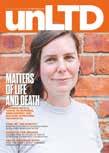
unLTD JULY 26 Connecting business across Sheffield City Region #100
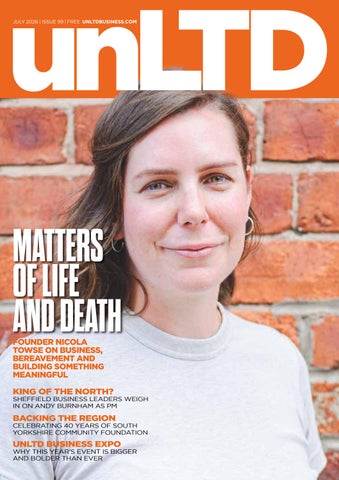
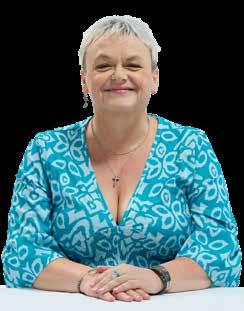
FOUNDER NICOLA TOWSE ON BUSINESS, BEREAVEMENT AND BUILDING SOMETHING MEANINGFUL
KING OF THE NORTH? SHEFFIELD BUSINESS LEADERS WEIGH IN ON ANDY BURNHAM AS PM
BACKING THE REGION
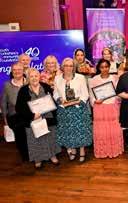
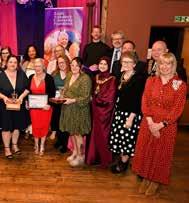
CELEBRATING 40 YEARS OF SOUTH YORKSHIRE COMMUNITY FOUNDATION
UNLTD BUSINESS EXPO WHY THIS YEAR’S EVENT IS BIGGER AND BOLDER THAN EVER
Here’s
what our customers say
Simoda have been brilliant for us. They’re not like the usual IT support companies - really approachable, easy to talk to, and their support is never a hassle to use. Everything just feels smoother with them. Would happily recommend to anyone.” “
Contents
Hello, and welcome to the latest issue of unLTD Business Magazine.
Never a dull moment in this country, is there? Blistering heatwaves, dramatic World Cup campaigns and the increasingly likely prospect that, later this month, we'll be swearing in the seventh UK prime minister in little more than a decade.
Yes, barring any last-minute shocks – and let's be honest, who'd bet against them in the current climate? – it seems the media-christened "King of the North", Andy Burnham, will soon be taking the reins. But what could that mean for businesses in South Yorkshire? Early signals around devolution, reindustrialisation and a greater focus on supporting northern cities sound promising on paper, but how do we make sure Sheffield receives its fair share alongside Manchester, Leeds and Liverpool? More to the point, what does our region need from Burnham in terms of policy and economic priorities to drive growth? Those questions, and plenty more besides, are explored by a range of local business leaders from page 18 onwards.
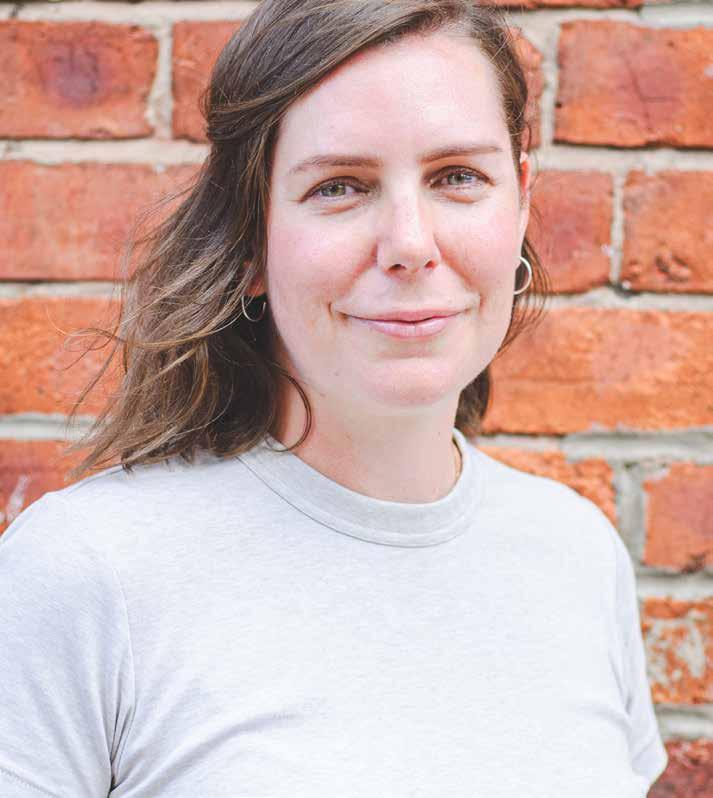
From the political to the personal, our cover interview this month tackles some big topics. Russ Thompson speaks to Risqly founder Nicola Towse, who discusses how redundancy prompted her to launch her own tech startup, before also revealing how her work as a death doula has informed her approach to business.
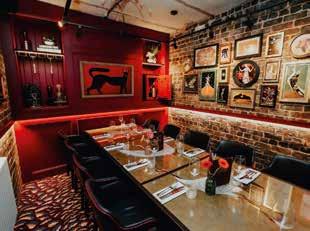
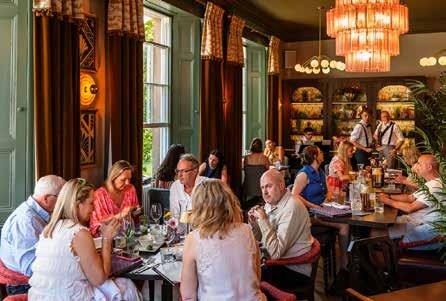
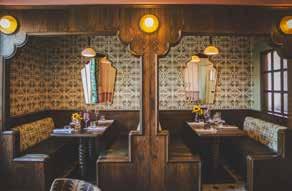
Elsewhere, we speak to the leader of South Yorkshire's largest grant-giving organisation, reveal why this year's unLTD Business Expo is shaping up to be unmissable, and the team heads to Bakewell for a decidedly bougie lunch at a new Jazz Age bar and restaurant that wouldn't feel out of place in The Great Gatsby
Do have a read, old sport, and we'll catch you next month.
Joseph Food, Editor
CONTENTS
26: LEADING WITH EMPATHY
How do you go from running a Great Barrier Reef business to founding a Sheffield tech startup and training as a death doula? Russ Thompson sits down with Risqly founder Nicola Towse for a fascinating conversation about resilience, leadership, difficult conversations and why embracing uncertainty can lead to unexpected opportunities.
21: KING OF THE NORTH?
Andy Burnham looks set for No 10, but what could that mean for South Yorkshire? We examine the policies likely to shape Britain's next government, from devolution to business rates, and ask people across the region what they want to see from a Prime Minister with northern roots.
34: A FOUNDATION FOR CHANGE
For 40 years now, South Yorkshire's Community Foundation has helped channel funding where it's needed most. We speak to chief executive Martin Singer about the power of local giving, the challenges facing communities across the region and why businesses have a vital role to play in creating lasting social impact.
40: BOTTLING SUCCESS
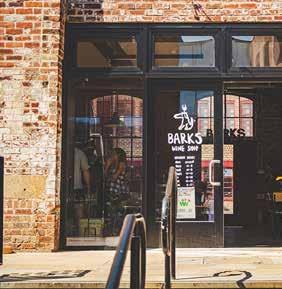
What started as a leap of faith has become one of Sheffield's favourite wine destinations. We catch up with Barks founder Charles Cornelius to hear how the business outgrew its first home, why collaboration is fuelling the city's wine scene and what's next for the ever-popular bottle shop and bar.
The views contained herein are not necessarily those of Blind Mice Media Ltd and while every effort is made to ensure information throughout unLTD is correct, changes prior to distribution may take place which can affect the accuracy of copy, therefore Blind Mice Media Ltd cannot take responsibility for contributors’ views or specific listings.
THREE WAYS TO GET INVOLVED Agenda
JOIN THE CLUB
The unLTD Business Club is thriving – with a whole raft of new offers from our partners now included for 2026!
At unLTD Business Magazine, our mission has always been clear – to connect, support and celebrate the South Yorkshire business community. Now, we’ve taken that commitment even further with the launch of the unLTD Business Club – an exciting new membership initiative designed to give local businesses of all sizes more opportunities to grow, collaborate and thrive.
And this month we have unveiled four new benefits for all our members:
⚫ 20% off your bill at all True North venues (Monday to Friday) with a True North Business Card
⚫ 1 hour free photoshoot with Marc Barker Photography
⚫ 1 branded polo shirt from We Do Workwear (any size/colour)
⚫ 25% discount on the day delegate package and room hire from PJ Taste
… with much more to come!
So whether you’re a growing SME looking for meaningful networking opportunities, an entrepreneur wanting to stay ahead of the curve, or a larger organisation seeking strategic
brand exposure, unLTD Business Club offers a range of benefits tailored to meet your goals.
We’re open for signups now – with immediate access to a host of benefits depending on your subscription tier.
Why Join?
It's about more than just perks – it’s about being part of a community. Members will benefit from the power of local connections, increased visibility through South Yorkshire’s leading business publication and insider access to some of the region’s most anticipated networking events.
Whether you’re looking to raise your profile, grow your network, or simply stay up to speed with the region’s dynamic business landscape, this is a platform to support your ambitions.
Get Started Today
Visit unltdbusiness.com/ businessclub to sign up or email phil@unltdbusiness. com for more information on Business Partner opportunities. Let’s grow together – join the unLTD Business Club today.
BUSINESS CLUB MEMBER
£10/month or £99/year (plus VAT)
Designed for professionals who want to network and engage more actively:
⚫ Priority access to all unLTD Business Breakfasts, Socials and other events – free of charge
⚫ Monthly e-newsletter
⚫ A guaranteed print copy of unLTD Business magazine
⚫ 10% discount on exhibition stands at the unLTD Business Expo
⚫ 20% off your bill at all True North venues (Monday to Friday) with a True North Business Card
⚫ 20% off your bill at all True North venues (Monday to Friday) with a True North Business Card
⚫ 1 hour free photoshoot with Marc Marker photography
⚫ 1 branded polo from We Do Workwear (any size/ colour)
⚫ 25% discount on the day delegate package and room hire from PJ Taste
BUSINESS PARTNER
Tailored packages available
Benefit from all the benefits of a Business Club Member as well as promoting your brand through our digital platforms and print magazines… our premium tier for businesses looking for strategic exposure and deeper engagement:
⚫ Monthly print advertising and editorial features in unLTD Business magazine and on unLTDbusiness. com
⚫ Social media promotion via LinkedIn
⚫ Opportunity to co-host networking events with the unLTD team
⚫ PLUS… All Business Club member benefits
BUSINESS SUBSCRIBER
£2.50/month (plus VAT)
⚫ Ideal for readers who want to stay informed, this entry-level tier ensures you receive:
⚫ A guaranteed copy of unLTD Business magazine each month
⚫ Monthly e-newsletter featuring news, insights and upcoming events
Agenda
RAISING THE BAR
With a refreshed, ambitious programme of talks, experiences and networking opportunities confirmed, we’re making sure this year’s unLTD Business Expo is elevating expectations for business events across South Yorkshire.
Let's be honest: business expos can sometimes be a bit ... predictable. A stroll around the exhibition hall, a handful of conversations, a tote bag or two and then it's time to head home.
That’s exactly what we’re trying to change with this year’s unLTD Business Expo.
From the outset, the focus has been on creating an event that delivers genuine value for exhibitors and visitors alike, while making the day enjoyable, engaging and worthwhile. For 2026, that ambition has been taken several steps further.
Returning to Magna Science Adventure Centre on 14 October, this year's Expo features the most ambitious programme the team has assembled, transforming the event into a full-day business experience packed with opportunities to learn, connect and get involved.
Alongside a busy exhibition showcasing businesses from across South Yorkshire and beyond, visitors can expect an extensive programme of keynote talks, interactive activities, live broadcasts, networking sessions and handson workshops. Whether the goal is to discover new ideas, build relationships, challenge yourself or simply enjoy a day away from the office, there will be something happening from the moment the doors open.
One of the biggest attractions comes courtesy of headline sponsor Wildfire Events, which is bringing its popular Pressure Chamber experience to Magna. Inspired by the hit TV show The Cube, the fastpaced challenge puts teamwork, communication and problemsolving under pressure in a fun, competitive environment.
The Expo floor will also play host
to the unLTD TV Studio, delivered in partnership with Media Partner LensGo. Throughout the day, unLTD editor Joseph Food will interview exhibitors, speakers and business leaders, capturing conversations and insights from across the event. Nearby, the Confidence Booth will give visitors the chance to step in front of the camera, tell their story and push themselves outside their comfort zone.
For anyone wanting to improve how they present themselves and their business, Andy Hanselman's Pitching Clinic will offer practical advice, constructive feedback and a supportive space to build confidence.
Learning remains at the heart of the Expo, with an impressive line-up of speakers sharing honest experiences and practical advice that delegates can apply within their own organisations.
Among the highlights is the candid Fk Up Club** panel, where successful business leaders Ashley Tate, Jilly Cross and Nathan Angus will discuss the setbacks, mistakes and difficult decisions that ultimately helped shape their careers.
Artificial intelligence also takes centre stage in a session from Richard Askew, who will cut through the hype to explore where AI is genuinely creating value for businesses today and how organisations can use it effectively in practice.
Elsewhere, David Coslett of Hello Social Avenue will put one brave business under the microscope during a live marketing makeover, while aspiring entrepreneurs can pitch their ideas to an expert panel during Dragons' Den: Tech Edition, featuring Yorkshire AI Labs co-founder David Richards and
ATTEND
If you're planning to attend as a visitor, now's the time to get your free badge and start mapping out your day. Explore the full programme, book your places on selected sessions and discover everything waiting for you at Magna on 14 October. Scan the QR code for more.
EXHIBIT
If you're looking to showcase your business to hundreds of decision-makers and professionals from across the region, exhibition stands are available to book now and we recommend doing this to get the most from the day. Scan the QR code here for more info.
FindAUniversity co-founder Andy Pritchard.
The day concludes on a more relaxed note with a sparkling wine tasting hosted by multi-awardwinning wine expert Andrew Lofthouse.
Those sessions represent only part of a packed programme.
Visitors can also expect Andy Hanselman's special Expo edition of 3D Connect, discussions around business exits, ownership and legacy, plus a full schedule of talks, workshops and panel conversations designed to inform, challenge and inspire.
Networking is receiving a significant boost too. Following strong demand in previous years, Speed Networking returns with three dedicated sessions across the day, giving attendees multiple opportunities to meet potential collaborators, suppliers, customers and new contacts in a structured but welcoming environment.
unLTD Director Phil Turner explained the changes:
"We've spent a lot of time thinking about what people actually want from a business expo. Yes, they want to meet suppliers and make connections, but they also want to be inspired, entertained and leave feeling like they've spent their time well.
"This year we've worked incredibly hard to bring together a programme that offers all of that. We're really proud of what we've put together and can't wait to welcome everyone to Magna in October."
Businesses looking to put themselves in front of hundreds of decision-makers from across the region can still book exhibition stands, while visitors are encouraged to explore the full programme in advance and reserve places on selected sessions to make the most of everything on offer. expo.unltdbusiness.com
Northern Tech Summit to bring tech leaders together in Sheffield
More than 500 entrepreneurs, investors, policymakers and business leaders are expected to gather in Sheffield this October as the inaugural Northern Tech Summit aims to strengthen collaboration across the North's technology sector and boost its global competitiveness.
Taking place at the Crucible Theatre on 21 and 22 October, the two-day event is organised by TECH SY and will focus on the theme Collaborate to Compete. The summit will explore how closer partnerships between Northern cities and regions can help unlock investment, support highgrowth businesses and raise the North's profile on the international stage.
The programme will feature keynote speakers, panel discussions, debates and networking sessions designed to encourage collaboration across the region's tech ecosystem while showcasing the breadth of startups and scaleups operating across Northern England.
The first confirmed keynote speaker is Yoram Wijngaarde, founder and CEO of global data intelligence platform Dealroom. A former investment banker in London and New York, Yoram established Dealroom in 2013 to help connect high-growth businesses with investors by providing detailed insights into venture capital ecosystems around the world. Earlier this year, the company secured $7m in funding to support its own growth.
During the summit, Yoram will share his entrepreneurial journey and discuss what it takes to build a successful technology business in an increasingly competitive global market.
"It's fitting that the Northern Tech Summit
will take place in Sheffield, especially as the region was recently ranked the number one rising star in the UK in our Global Tech Ecosystem Index," he said.
"Future success will not come from individual cities competing in isolation, but from building a more connected, collaborative ecosystem that can operate and compete on a global scale."
Dealroom's latest research estimates the North's technology ecosystem is now worth £82bn. Earlier this year, Sheffield and South Yorkshire were named the UK's top-performing region in the Rising Stars category of Dealroom's Global Tech Ecosystem Index, which measures fast-growing technology hubs across more than 325 cities in 77 countries.
The report valued South Yorkshire's tech ecosystem
at a record £4.3bn, representing fourfold growth since 2019. Businesses across the region also secured more than £52m in early-stage investment during 2025.
Oliver Coppard, Mayor of South Yorkshire, said the summit would build on the region's growing reputation as a centre for digital innovation while strengthening links across the North.
"South Yorkshire is leading from a position of strength," he said. "Sheffield has been recognised as the UK's number one rising-star tech ecosystem, our digital and ICT sector has grown faster than any other Northern region over the past decade, and the University of Sheffield is helping create some of the UK's most exciting new businesses.
"But our ambition doesn't stop at our boundaries. By bringing together partners
from across the North, we can build stronger connections, attract more investment, support more high-growth businesses and make the case for the North as a globally competitive tech powerhouse."
Tracey Johnson, project director at TECH SY, said the summit would demonstrate the collective strength of the North's technology sector.
"There's a lot of investment, work and effort going into promoting and supporting the tech economy in the North at city and regional level," she said. "This summit will show that the North is more than the sum of its parts, with the capacity to challenge the world's leading technology ecosystems and grow exceptional businesses."
Early bird tickets, priced at £10 until August, are available at techsy.co.uk.
Agenda
Capital&Centric has completed the purchase of Fitzwilliam, paving the way for work to begin on a 192-home build-to-rent development that forms the latest phase of its growing Mesters’ Village neighbourhood in Sheffield.
The social impact developer has now taken ownership of the site, located between Sheffield city centre and Kelham Island, with plans to create a community centred on long-term renting and shared spaces designed to encourage social interaction.
FULL OF BEANS FITZWILLIAM DEAL COMPLETES
Alongside a mix of apartments, the scheme will feature communal lounges, co-working areas, a landscaped courtyard and a rooftop terrace overlooking the city. At street level, space has been allocated for an independent café-bar operator, adding to the area's growing hospitality offer.
The project also includes improvements to the surrounding public space. Capital&Centric will open up streets around Fitzwilliam to create a new walking route linking the development
with its Eyewitness neighbourhood, making the area more accessible..
Fitzwilliam builds on the developer's continuing investment in Sheffield. Its nearby Eyewitness scheme, created through the transformation of the former Cutlery Works, is now home to hundreds of residents and a growing creative community. Capital&Centric will also soon begin construction on a separate development at the former Cannon Brewery site in Kelham Island.
Mark Edwards,
Sheffield is set to celebrate its thriving independent coffee scene with the launch of Sip Fest, a new citywide festival taking place from 28 September to 4 October 2026.
The week-long event will combine a programme of free activities across the city with a major finale at Trafalgar Warehouse, showcasing the businesses and people behind Sheffield's growing reputation as a speciality coffee destination.
More than 40 cafés, coffee shops, roasteries, brunch venues and creative spaces will take part in a free fringe programme running throughout the week, encouraging visitors to discover independent venues and support local businesses.
The festival culminates on Friday 2 October with a free industry party for those working across coffee, hospitality, food, drink and the wider independent business community. On Saturday 3 October, Trafalgar Warehouse will host a ticketed public festival featuring more than 30 exhibitors, talks, tastings, Coffee School
sessions, street food, DJs, Sheffield's biggest latte art competition and what organisers describe as the UK's biggest coffee run.
Sip Fest has been founded by Matt Cottrill of Steam Yard and Corner Store and Neil Midgley of Motore Cafe, with creative direction by Molly Kirk of Steam Yard.
Matt Cottrill said: "Sheffield has one of the most exciting independent coffee scenes in the country and we want to showcase this to the city and beyond.
"Sip Fest is about celebrating the places, people and energy that make Sheffield's coffee culture what it is. We want it to feel like something people genuinely look forward to every year."
Designed to appeal to everyone from coffee enthusiasts to casual café-goers, the festival will feature Sheffield independents alongside national coffee brands.
Early bird tickets for the Saturday event are available now, priced at £5, from sipcoffeefestival.com.
The UK has more than 11,400 coffee shops, of which around 45% are independent businesses. Sheffield has several nationally recognised speciality coffee businesses, including Steam Yard, Foundry Coffee Roasters, Smith Street Coffee Roasters, Frazer's Coffee Roasters, Pollards Coffee and Kilnfolk Coffee, with many regularly featured in national coffee guides.
development director at Capital&Centric, said completing the purchase represented an important milestone for the wider neighbourhood.
He added: "Completing on the land means we can now push ahead with bringing forward 192 new homes alongside public spaces for people to socialise. But it's not just about the buildings, we're opening up routes through the area, improving connections and creating a neighbourhood that feels social, walkable and full of energy."
Further details, including construction timings and commercial operators, are expected to be announced as the development progresses. Head to their website for the latest updates.
capitalandcentric.com
Stripping back the biggest business stories – what happened, who’s involved and why it matters to our region.
YOUTH JOBS GRANT LAUNCHES FOR SOUTH YORKSHIRE EMPLOYERS
What are the main takeaways?
Businesses across South Yorkshire can now access a new government-backed Youth Jobs Grant worth £3,000 for every eligible young person they recruit.
Available from 30 June 2026, the scheme is designed to help employers take on 18 to 24-year-olds who are entering the workforce, while supporting up to 60,000 young people into employment over the next three years. The funding is paid in two instalments once milestones have been met, with eligible roles required to be at least 25 hours a week and expected to last a minimum of four months.
Barnsley & Rotherham Chamber of Commerce has welcomed the initiative, highlighting its potential to ease recruitment costs for employers at a time when many remain under financial pressure.
What does this mean?
For SMEs in particular, the grant offers a practical financial incentive to recruit new staff at a time when rising employment costs, higher taxation and subdued business confidence continue to affect hiring.
The funding also sits alongside a broader package of support, including apprenticeships, wage subsidies and skills programmes, giving employers more options to build their workforce. Businesses that may previously have delayed recruitment could find the grant helps make new roles more affordable.
The Chamber is also encouraging employers to look beyond the grant itself. As the Employer Representative Body for the South Yorkshire Local Skills Improvement Plan, it continues to work with businesses and education providers to ensure local training reflects employer needs and helps tackle skills shortages across sectors.
Who said what?
Shane Young, operations director at Barnsley & Rotherham Chamber of Commerce, said the grant could give many SMEs "the confidence to create roles that might otherwise have been delayed".
He added: "Supporting young people into work is not only the right thing to do, it is an investment in the future workforce our businesses need.
"By combining initiatives like the Youth Jobs Grant with apprenticeships and local employment programmes, we can help businesses grow while creating more opportunities for young people across our region."
Employers interested in the scheme can also explore related support, including apprenticeships, the Local Skills Improvement Plan and local programmes such as Pathways to Work Rotherham through the Chamber website.
TOWERING ACHIEVEMENT
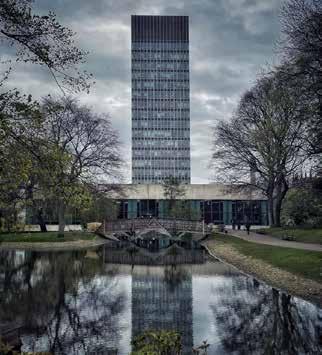
The University of Sheffield recently marked 60 since the official opening of the Arts Tower, one of the city's most recognisable landmarks and home to the world's largest paternoster lift.
Officially opened by HM Queen Elizabeth The Queen Mother on 23 June 1966, the Grade II* listed building stands 78 metres tall and remains the UK's tallest academic building. At the time of its completion, it was also the tallest academic building in Europe.
The tower's best-known feature is its distinctive paternoster lift, recognised by Guinness World Records as the world's largest. Made up of 38 open two-person cars travelling continuously around the building, it has become a rite of passage for generations of Sheffield students and an unlikely social media attraction.
One of its earliest stories involves George Porter, professor of physical chemistry at the University from 1955 to 1966 and later a Nobel Prize winner. He recalled becoming stranded in the lift with his wife on the way to a tea party. Rather than cancelling the gathering, the vice-chancellor joined them on another floor and served tea while they waited for the lift to restart.
Designed by Gollins, Melvin Ward and Partners, the Arts Tower has been carefully refurbished over the years, including major improvements in the late 2000s that upgraded its facilities while preserving its architectural character and iconic lift.
Today, the building remains at the heart of University life. It houses the School of Architecture and Landscape, more than 850 professional services staff and, more recently, a John's Van café in the basement.
The Arts Tower will form a key part of the University's Future Campus Plan, which aims to create a more sustainable, connected and efficient estate while ensuring one of Sheffield's defining buildings continues to serve future generations.
NEWS IN BRIEF
SERVING UP SUCCESS
Sheffield has become the UK’s leading city for outdoor pickleball after adding 18 new courts across Graves, Hollinsend, Millhouses, High Hazels, Hillsborough, Abbeyfield and Norfolk parks. Delivered by Sheffield City Council, Courtside and Sheffield Pickleball Club, the expansion makes the fast-growing sport more accessible. Courts are available to book on a pay-and-play basis or through an annual pass, with free and low-cost beginner sessions also on offer.
BUSINESS AS USUAL FOR HALLAM
Sheffield Hallam University's Sheffield Business School has secured the maximum five-year reaccreditation under the Small Business Charter, recognising its longterm support for SMEs, entrepreneurship and regional economic growth. Awarded by the Chartered Association of Business Schools, the accreditation highlights the school's impact through teaching, business support and partnerships. The school also delivers the government-backed Help to Grow: Management programme, which has supported more than 300 SME leaders across South Yorkshire.
TEMPLEBOROUGH HUB TAKES SHAPE
Work has begun on the £6 million Templeborough Business Zone, a partnership between Rotherham Council, Magna and HBC Construction. The development, next to Magna Science Adventure Centre, will create eight flexible business units, including commercial and food-and-beverage spaces, alongside landscaped public areas. Backed by Town Deal funding, the scheme is designed to support SMEs and will benefit from links to the new Magna tram-train station. Completion is expected in 2027.
AWARDS SEASON CLOSES IN
Entries are now open for the 2026 Barnsley & Rotherham Business Awards, with businesses, charities and individuals across South Yorkshire invited to showcase their achievements. Organised by Barnsley & Rotherham Chamber of Commerce and sponsored by Barnsley College, the awards feature 13 categories. Winners will be announced at a black-tie ceremony at Magna on 6 November. Entry is free, with submissions closing on 11 September.
COUNCIL REDUCES OVERSPEND Agenda
Sheffield City Council has reported an improved financial position after reducing its forecast overspend by £7.8m during the final quarter of the 2025/26 financial year.
The authority closed the year with an £11.1m overspend on its General Fund, down from the £18.9m deficit forecast earlier in the year. The final figure represents around 1.9% of the council's total budget.
The improvement follows measures introduced across the organisation to reduce spending pressures and strengthen financial controls, with the council reporting no significant issues emerging during the closing months of the financial year.
Despite the progress, the council says it continues to face significant financial challenges driven by sustained demand for frontline services. Areas including adult social care, children's services, housing and support for young people with additional needs remain under pressure.
They say a balanced budget has now been set for 2026/27, with the authority pledging to continue focusing on managing demand, improving value for money and strengthening its long-term financial sustainability.
Councillor Elle Dodd, chair of the Finance and Performance Committee, welcomed the year-end position, saying it reflected the work of council staff to improve financial management.
“We pleased to see this improvement in the council's financial position, with the annual overspend less than 2% of the budget, and more projects are being delivered on time,” said Dodd. “That reflects the hard work by staff across the council to ensure we get the best value for every pound spent."
She added: "Our priority remains meeting the needs of people in Sheffield. We continue to experience high demand for services, particularly for children in care, vulnerable adults, homeless people and children with disabilities. We're working hard to improve our services while maintaining our financial sustainability."
With Jill White of Andy Hanselman Consulting
HOT TOPICS
Well, there's no doubt the temperature has soared this month but has it affected our getting out and about?
Of course not!
For us, the month started in Delhi, where temperatures topped 40 degrees. Now that's definitely hot!
In 2011 we were delighted to host an intern, Preeti Gaiwak, who was studying at the University of Sheffield. She was such a boost to our business that we've stayed in touch ever since, and this was our third visit to see her.
This time we launched 3DInDia together, hosting sessions in both Delhi and Dehradun.
Good luck, Preeti – we wish you all the very best.
Back in the UK just in time for Sightlines, Sheffield Theatres' creative network hosted by Liz Barran and Adam Battey in the Crucible.
No 'rain stopping play' but 'sun stopping play' at our own 3D Connect network, and thanks to the Food Works team who quickly redirected our meet from Norton Nurseries to their Community Café at Sharrow Vale. Greenhouses and a polytunnel were probably not the best location!
Sarah Baird and Natalie Flanagan wowed us with the fabulous work they do there.
Master Cutler Challenges were also well underway, and it was great to attend the Bhayani Barbecue at Triple Point Brew. Thanks to Jay Bhayani, Alex Barlow and their teams.
And finally, it was wonderful to end the month with a warm fuzzy feeling thanks to the See It Be It team and their Big Community Challenge Awards at Cutlers' Hall.
Cheryl Plant, Sam Headford – thank you for all you do with our Sheffield schools.
The future is safe.
Follow Jill at uk.linkedin.com/in/jilltywhite or find Andy Hanselman Consulting at andyhanselman.com.
Few figures in British politics have become as closely associated with the North as Andy Burnham. After an undeniably fruitful stint as Mayor of Greater Manchester, where he built a reputation for championing devolution, public transport reform and securing investment, he is now on the brink of entering Downing Street.
At the time of writing, Burnham has secured the backing of 322 Labour MPs in the first round of leadership nominations, leaving him just one supporter short of the point at which it would become mathematically impossible for a rival to enter the contest. With no other candidate expected to stand, he looks set to be confirmed as Labour leader next week before becoming prime minister on 20 July.
His arrival would represent more than a change of leadership. For many, it signals the strongest indication yet that the political and economic focus of government could shift beyond London and the Southeast. Burnham has long argued that cities and regions outside the capital deserve greater powers, and his record in Greater Manchester suggests he will bring that perspective to the highest office.
What remains less clear is exactly how that philosophy will translate into national government. Beyond broad commitments to regional growth and economic renewal, many of the details of Burnham's programme have yet to emerge. What kind of economic agenda is likely to define his premiership? Which policies could have the greatest impact on businesses across South Yorkshire? And what are local business leaders hoping to see from a government led by the self-styled "King of the North"? In this feature, we explore the potential direction of travel and ask voices from across the region for their verdict.
POTENTIAL POLICIES AND PRIORITIES OF BRITAIN'S NEXT PRIME MINISTER
DEVOLUTION
The overarching message in a key speech made in Manchester last month, Burnham promised a “rebalancing of power” which would shift control away from central government and into the hands of regional powers.
Key to overseeing and facilitating this transfer would be a new ‘No. 10 North’ unit established in Manchester. The hope is to level the playing field in terms of living conditions across Britain and is a key tenet of Burnham’s brand of “Manchesterism” established during his time as Mayor of Greater Manchester, a period that saw local leaders given more responsibility on decisions affecting their local communities.
UTILTIES
A key element of Manchesterism is a blend of devolution with nationalisation – or at least, bringing sectors under “greater public control”. An example of this would be Burnham’s work on the Bee Network in Greater Manchester, a project that saw the local authority take charge of routes, fares and standards, while private companies competed for contracts to operate services under one public transport system.
As such, you can expect a similar approach to reducing water and energy costs, although details of how this would work in practice remain scarce. However, it is worth noting that Burnham has called for Thames Water to be brought into full public ownership following the company's gross financial mismanagement and the controversy surrounding its repeated discharges of sewage into rivers and waterways.
TAX
While there has been nothing concrete from Burnham on personal taxes, he has confirmed in interviews previously that he’d stick to the Labour manifesto pledges not to raise VAT, income tax or national insurance.
However, he has also claimed that there is “some room within that manifesto for movement on tax”. Separate comments on his beliefs that wealth in the UK is undertaxed has led to speculation that he may raise capital gains tax – a charge on the profit made on selling shares, property or valuable possessions.
HOUSING
Describing Britain as being caught in a "housing trap", Burnham has pledged the biggest council housebuilding programme since the post-war era. Central to his plans is a much greater role for the public sector in shaping where and how new homes are built, with councils taking a stronger lead on land, planning and development.
Naturally, it will be a huge project to fund, but he has claimed that publicly owned land should be used to reduce the cost of building council homes, making large-scale construction more affordable. He has also called for England's entire £39 billion affordable housing budget over the next decade to be directed towards social rent homes, arguing they provide the most affordable option for people struggling to access secure housing.
BUSINESS
In his speech last month, Burnham said he wanted to protect Britain's "sovereign manufacturing" capability in sectors including steel, defence, energy and farming. He also pledged to make it easier for UK firms to secure public contracts, arguing that government should prioritise British businesses over "cut-price deals" overseas.
During the Makerfield by-election campaign, he also outlined plans to reform business rates. He pledged a 20% reduction for pubs, clubs and music venues, while saying he would raise the threshold at which smaller independent hospitality, leisure and retail businesses begin paying business rates. The proposals would be funded partly through higher levies on large warehouses used by online retailers such as Amazon, alongside measures targeting the owners of long-term vacant high street properties.
YOUR VOICE THE REGION’S BUSINESS COMMUNITY HAS ITS SAY…
TOM WOLFENDEN CEO SHEFFIELD TECHNOLOGY PARKS
The prospect of Andy Burnham becoming Prime Minister should give Sheffield and the wider North some confidence.
“Manchesterism” may be the slogan, but the idea behind it matters more: stronger local powers. Decisions made closer to the places they affect. Northern cities working together rather than being pitched against one another.
For a few years, people have talked about the emerging 'Northern Triangle' of Manchester, Leeds and Sheffield. Taken together we have real scale in these cities. There are major universities, strong business bases, deep industrial expertise and a population that compares with much larger conurbations elsewhere.
But even within that triangle, Sheffield has a far lower GVA per hectare than Manchester or Leeds. Those local imbalances matter. A northern growth strategy can't just mean backing the places already moving fastest. It also needs to help cities like Sheffield turn their strengths in research, advanced manufacturing, technology and innovation into more jobs, more investment and higher productivity.
In saying this, I don’t want to slow down progress elsewhere. It is about giving people across the North confidence that their potential is recognised, and backing up the restless northern instinct to get things done with proper commitments.
SARA PATEL EMPLOYMENT LAW SOLICITOR
As South Yorkshire looks ahead to a new Prime Minister, what local businesses are crying out for isn't political pointscoring. It's certainty. Businesses can adapt to change, but they need to know what's coming next so they can focus on growth, creating jobs and investing in the economy.
From an employment law perspective, it's important that workers' rights remain high on the agenda. Most employers I work with want to do the right thing by their people. The challenge is making sure any reforms are practical and proportionate, particularly for the SMEs that make up the backbone of our local economy.
Across Sheffield and South Yorkshire, we're home to some world-class manufacturers, engineers and innovative businesses. They operate in competitive markets and need the flexibility to respond quickly to changing demands. New laws should support growth and good jobs, not create unnecessary complexity or discourage employers from taking on staff.
I'd also like to see the new government focus on skills, workforce wellbeing and helping employers develop local talent. We have incredible strengths here, and with the right support, there's a real opportunity to help businesses thrive.
A NORTHERN GROWTH STRATEGY CAN'T JUST MEAN BACKING THE PLACES ALREADY MOVING FASTEST.”
That means better connections between our cities, more meaningful devolution and longterm investment rather than short funding rounds and recycled announcements.
And bluntly it means money. Lots of it. Because the whole country benefits when the North is able to grow.
THE GOVERNMENT SHOULD WORK WITH BUSINESSES RATHER THAN SIMPLY REGULATE THEM.”
Above all, the government should work with businesses rather than simply regulate them. The most effective employment laws are those that protect workers while remaining practical for employers to implement. If the new PM can strike that balance, there's every reason to be optimistic. South Yorkshire has a strong business community, a highly skilled workforce and a proud history of innovation. With the right leadership and a clear plan for growth, our region has every opportunity to build on its strengths and continue attracting investment and creating opportunities.
PETE SHILLITO FOUNDER, SHILLITO GROUP AND SHILLITO EXECUTIVE SEARCH
I think Andy Burnham is coming into what is a very difficult job. He can’t really move too far from the Labour Manifesto as only a very small amount of the country voted for him and he wasn’t an MP when Labour won the election.
I’d like to see a new prime minister do something to address the flatlining business confidence across the UK, which is close to falling back to record low numbers.
We need a pro-business prime minister who sees the challenges facing companies across the UK and can offer solutions to some of the biggest issues.
Employment has stalled, job numbers are falling month-on-month and the business case for employing new staff, including apprentices, has been weakened.
Over the last two years, the government mantra has been all about growth, but those leading businesses feel they have been hampered at every turn.
Whether that be from increased energy costs, the implementation of the Employee Rights Bill, tax raises or the new steel tariffs coming into effect this month.
OVER THE LAST TWO YEARS, THE GOVERNMENT MANTRA HAS BEEN ALL ABOUT GROWTH, BUT THOSE LEADING BUSINESSES FEEL THEY HAVE BEEN HAMPERED AT EVERY TURN.”
Business shouldn’t be a dirty word and everyone agrees that growth is good for the country, so I’d love to see those running businesses being given a bit of assistance to unlock the spending, provide the employment – and the growth – that the country desperately needs.
DANIEL BUMBY
MANAGING DIRECTOR, SIMODA
The UK is entering a period where leadership matters more than politics. Businesses across the country are dealing with rapid change, economic uncertainty, skills shortages and the biggest technology shift we've seen in a generation through AI. Whoever leads the country next has an opportunity to help create confidence and clarity at a time when many organisations are looking for both.
From my perspective, I don't think businesses are asking for handouts or quick fixes. What they want is stability, a clear direction of travel and the confidence to invest. The UK, and especially South Yorkshire, has incredible talent, innovation and entrepreneurial spirit.
I'D LIKE TO SEE A PRIME MINISTER FOCUSED ON PRODUCTIVITY, SKILLS AND TECHNOLOGY ADOPTION.”
I'd like to see a PM focused on productivity, skills and technology adoption. If we want to improve living standards and compete globally, we need to help embrace digital transformation, remove barriers to growth and create an environment where investment is encouraged. AI and automation have the potential to unlock significant economic value, particularly for SMEs that make up the backbone of our economy.
For the technology sector, the priority should be helping organisations move beyond simply buying technology and towards genuinely using it to achieve better outcomes. Technology should improve productivity, customer experience and profitability, not just add cost and complexity.
Ultimately, the UK's success won't come from political promises alone. It will come from creating the conditions for businesses to innovate, invest and grow.
However, every new prime minister comes in with promises they ultimately can't keep.
EMMA WORTHAM
PUBLISHING AND RETAIL MANAGER, MEZE PUBLISHING
I'm really excited to see a fellow Northerner in No 10. It's encouraging to hear Andy Burnham talking about shifting more political focus to the North. While a lot of the discussion may be Manchester-centric, I'm hopeful that the benefits will extend to places like Sheffield too, which can only be a positive businesses across the region.
From a publishing perspective, one of the biggest challenges we've faced since Brexit has been shipping books overseas. Our titles are available worldwide and, before Brexit, sending books to Europe was relatively straightforward. Now, whether we're sending a single book to a customer or larger consignments to warehouses, we're dealing with import VAT, customs charges and a significant amount of additional paperwork.
One area I'd love to see addressed is the simplification of trading arrangements with Europe. If Burnham could push for more streamlined agreements for UK businesses exporting goods, it would make a real difference. Reducing bureaucracy and making it easier to trade with European wholesalers and retailers would benefit businesses across many sectors.
ANYTHING THAT SIMPLIFIES EXPORTING AND CUTS UNNECESSARY ADMINISTRATION WOULD BE HUGELY WELCOMED.”
We've had to learn an entirely new set of rules in a very short space of time. Every country has slightly different requirements, and the straightforward process we once had no longer exists. Anything that simplifies exporting and cuts unnecessary admin would be hugely welcomed. Beyond that, I share the hopes of many for tackling the cost of living and making everyday life more affordable. It'll be interesting to see what the future holds, but I'm pleased to see a Northerner in charge and hope we see positive change for our region.
LUKE JAMES
TAX DIRECTOR, GRAVITATE
You’d think the UK was used to fiscal whiplash by now, with multiple budgets, shifting thresholds and the lingering effects of pandemic-era debt. It has all felt quite chaotic.
Tax professionals will be hopeful that Andy Burnham’s arrival brings positive, proactive change. Not necessarily lower taxes, but smarter ones.
It’s been so long since we had genuine stability that we’ve almost forgotten what it feels like. The South Yorkshire business community isn’t asking for handouts, just a fair opportunity to plan for long-term growth. When capital gains tax treatment can change overnight, or R&D relief rules shift repeatedly, the cost goes beyond the financial. Problems become systemic and operational.
The fiscal devolution conversation is exciting in theory. For local businesses, the most meaningful change would be genuine rate-setting powers for mayors, allowing regions to set their own rates rather than simply redistributing Westminster’s decisions. Done well, this creates real skin in the game. Done badly, it risks a postcode lottery favouring already well-resourced regions.
What concerns me is the rumoured alignment of CGT rates with income tax combined with proposals to remove the market value uplift on death.
I’D LIKE A PM WHO TREATS THE TAX SYSTEM AS INFRASTRUCTURE, NOT THEATRE.”
Currently, inherited assets are reset to probate value for CGT purposes. Remove that, and beneficiaries would bear the deceased’s original cost instead, resulting in a vastly higher CGT bill on eventual sale, further compounded by any rate rise. For some families and business owners, this could be severe.
Above all, I’d like a PM who treats the tax system as infrastructure, not theatre. Tax should be our most powerful tool for building the stable economy that businesses and individuals deserve.
ANDREW LOFTHOUSE
THE NORTHERN WINE GUY AND B:FRIEND AMBASSADOR
The momentum is certainly with Andy Burnham, and through his initial conversations he appears keen to establish a new precedent by leading a government based in the North.
My concern, however, is that anyone taking office mid-term means doing so under an existing party manifesto. Coupled with tight public finances and the obvious constraints on changing direction halfway through a parliamentary term, I remain somewhat sceptical about how much meaningful change can realistically be delivered.
On the one hand, it's encouraging that the North has a stronger voice in government, led by someone who understands the region's challenges and opportunities. On the other hand, without having been elected on a manifesto of his own, it does feel slightly anticlimactic.
THE HOSPITALITY SECTOR NEEDS MEANINGFUL REFORM, PARTICULARLY AROUND VAT”
The hospitality sector, for example, needs meaningful reform, particularly around VAT, to help businesses facing continued financial pressure. The third sector, including charities and not-for-profit organisations, also requires greater government support, especially given the pressures on the NHS and the vital role these organisations play in supporting communities that might otherwise fall through the cracks.
Overall, I'm pleased to see Burnham in the hot seat. Whether he can deliver the scale of change many people are hoping for remains to be seen. For now, the jury is still very much out.
MARK SHIPLEY
MANAGING DIRECTOR, FENTI
As a marketing agency, we work across a wide range of sectors, from leisure and construction to manufacturing and healthcare. That gives us a firsthand view of how the wider economy influences the decisions businesses make every day.
When companies are optimistic about the future, they invest in new websites, advertising, recruitment and expansion. When confidence falls, those plans are often put on hold. Marketing is frequently one of the first budgets to be reduced, not because businesses question its value, but because they need to keep an eye on spending.
The past 18 months have been challenging for many SMEs, particularly with rising employment costs and increases in National Insurance. While we recognise the pressures facing government, measures that ease the burden on businesses enable them to reinvest and contribute to the economy.
Burnham's ambition to strengthen the North is encouraging. Organisations across South Yorkshire face different challenges from those in London, so giving leaders more influence over policies affecting their local economies would be a positive step.
We're also pleased to see hospitality recognised as a priority. Many of our clients operate in the sector, and measures such as reducing business rates for pubs and venues could make a big difference.
GIVING REGIONAL LEADERS MORE INFLUENCE OVER POLICIES AFFECTING THEIR LOCAL ECONOMIES WOULD BE A POSITIVE STEP.”
We'd like to see a government that gives businesses the stability and confidence to invest for the future. When companies are able to move forward with certainty, they create jobs, support local supply chains and strengthen communities. That's good for individual businesses, agencies like ours and the wider economy.
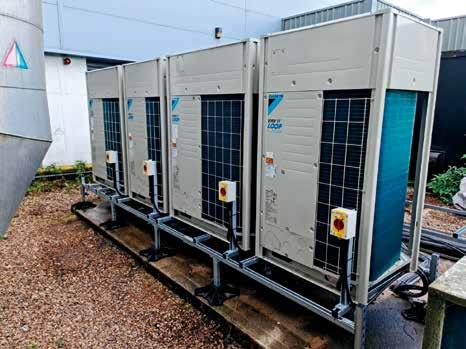
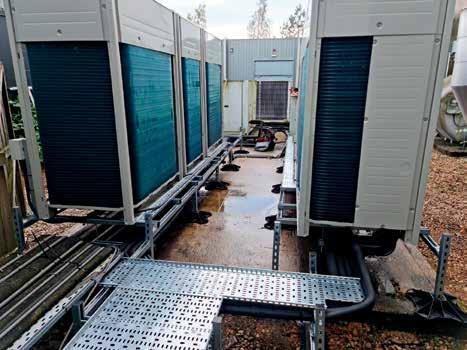
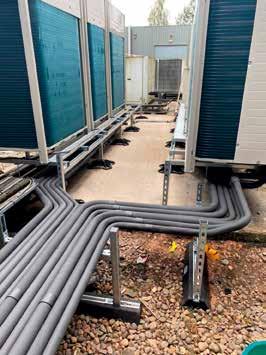
We design, install and maintain bespoke energy-efficient systems for heating and cooling, commercial plumbing and ventilation.
Shown here, Airmaster successfully completed the full mechanical design and build of a replacement air conditioning system for the B&Q National Distribution Centre in Worksop, in a very tight 8 week timeframe, along with all buildings still in full use and with strict Covid restrictions in place. Get in touch now to see how we can help you.
ROAR TALENT
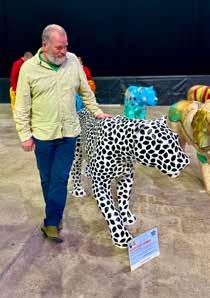
The Pride of Yorkshire sculpture trail has been live for over a month now, and if you're like us, you'll have been on the hunt for beautifully designed big cats to tick off across South Yorkshire. But did you know unLTD Mag has its very own lion, situated a stone's throw from our office near Kelham Island Museum? We caught up with the man behind the design, artist James Brunt, to hear about his inspiration for the project and why he was so keen to take part.
Hi James, how did you first get involved with the Pride of Yorkshire project and what appealed to you about taking part?
I first saw the initial call-out from Sheffield Children's Hospital online and, like many people, was reminded of how many times I'd sat in there with my own kids. Delving further into the details, I was keen to see how I could adapt my work to translate onto the lion and lioness templates. Once I'd submitted my designs, I'd kind of forgotten about it until I got the email inviting me to work on the sculptures. It was so exciting because it would be a very different kind of opportunity for both me and my work.
For readers who might be discovering your work for the first time, how would you describe what you do and the ideas behind it?
Most of my work takes place outdoors, creating temporary arrangements and designs using foraged natural materials – leaves and twigs in the woods, and pebbles on beaches, for example. The work is very fleeting and returns to nature as soon as I've finished and documented the results.
We love your Pride of Yorkshire sculptures. Could you talk us through the design process and how the final pieces came together?
Thank you. I tried to keep the process as close as possible to the way I work outdoors. I took two key elements of my work – pebble
spirals and leaf arrangements – and based the designs around them.
I love the connections spirals have with the natural world: fossils, snail shells and the way fern fronds unfurl. The leaves I based the lioness design around were beech leaves – often described as the queen of the forest – so I loved the connection they shared with the lioness.
Did you approach the lions differently from your usual work, or were there elements of your existing style that translated naturally to the project?
The location was different and the lions presented a very unfamiliar canvas to work on, but no – I approached them as if I was turning up to a beach or woodland setting. Once I'd started each sculpture, I settled into a process that continued until the entire surface area was filled.
I noticed that most of the other artists working in the space at the same time approached things very differently. They had their initial designs in front of them and transferred them onto the lions' surfaces. I didn't even have my original designs with me because I knew it would be the process of repetition that determined the
outcome.
How did you find working on the sculptures themselves? Were there any particular challenges or learning curves along the way? I really enjoyed it. Creating what would normally be a flat image on an unpredictable 3D object meant there were lots of unknowns and, at times, I had to trust the process and see what came out the other side. I also had to deal with a bit of imposter syndrome, being surrounded by so many fantastic painters and designers, all with wonderful, detailed ideas for their sculptures.
What emerged at the end was a lion and lioness that were distinctly my work, I hope, so trusting the process paid off.
Finally, where can people find out more about your work and follow what you're doing?
People can follow my work on Instagram (@jamesbruntartist) or Facebook (James Brunt Artist), where I share workshop opportunities and details of public sessions.
Find out more about how you can join
The Inside Track: Nicola Towse
REAL INSIGHTS FROM THOSE WHO MAKE THINGS HAPPEN
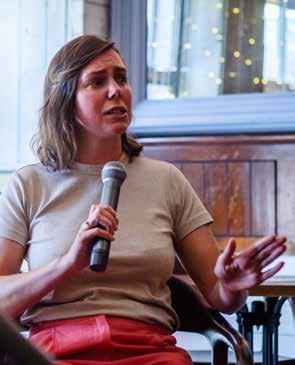
The latest episode of The Inside Track was recorded live at The Forum, where Russ Thompson sat down with Nicola Towse, founder and CEO of Sheffield tech startup Risqly.
A founder on Sheffield Tech Parks' Cooper Project and a member of TECH SY's FoundHERy cohort, Nicola is building a business designed to help organisations spot customer problems before they become significant issues. Away from the startup world, she's also training as a death doula, an experience that has shaped her views on communication and resilience.
Here's the conversation as it happened, covering everything from travelling the world and finding her way back to Sheffield, to building a tech startup, supporting people at the end of life, and why tackling difficult conversations early can make all the difference.
NICOLA TOWSE
Nicola, welcome to The Inside Track. Tell us about yourself. What’s your story? What has brought you to where you are today? I’m from Sheffield and grew up in Stradbroke, although most people don’t know where that is, so I usually just say Handsworth. I went to Sheffield Hallam University, studied History and, when I was 21, decided I didn’t really want a “proper” job, so I went travelling. I told my family I'd go away for a year. That one year turned into six and a half years, with six years spent living in Australia, where I ended up running a Great Barrier Reef company. Eventually I came back to the UK. Unfortunately, there aren’t many Great Barrier Reefs in Handsworth! You can probably go snorkelling at Rother Valley if you really want to, but it’s not quite the same.
When I came back, I worked for Sheffield Hallam University where, interestingly, I met my husband, although we didn't actually date while we worked together. In fact,
we were just friends at the time!
After that I joined Procter & Gamble, where I spent ten years, eventually becoming a Senior Strategy Planning Manager.
Last year, whether it was turning 40 or simply asking myself some bigger life questions, I realised I was happy but not fulfilled in my role. Around the same time, two things happened. Firstly, I decided I wanted to train as a death doula and enrolled on the course. Secondly, I found out my role at Procter & Gamble was being made redundant.
Around that time, I decided it was finally time to start a technology business. That’s really how I ended up where I am today.
You’ve already mentioned Australia, becoming a death doula and launching a tech company. There are so many different parts to your story. One question I ask everyone is about those “sliding doors” moments in life. I think everybody has at least
one. Looking at your journey, you’ve probably got several. Is there one that really stands out?
There are quite a few, but the biggest one for me was coming back from Australia. I never expected to settle back in the UK. I thought I was coming home for about three months before deciding where else to live.
I took a temporary job, really enjoyed it, and they kept extending my contract. I spent time looking at opportunities in London and even considered moving to the Middle East, but nothing quite felt right.
I’m a big believer in trusting your instincts and following what feels right. If I’d made a different decision then, I wouldn’t have met my husband and I wouldn’t have started the business. Looking back, that really was a huge sliding doors moment.
So what actually brought you back?
My family, mainly. I grew up with my mum, who was a single parent, and my nan
LIFE HAS INVOLVED A LOT OF CHANGE, SO I THINK I’VE BECOME COMFORTABLE WITH UNCERTAINTY.”
played a huge part in bringing me up.
One of my cousins came to stay with me in Australia for three months. It was after she left that I suddenly felt this real pull to come home. I’m so grateful I listened to that feeling because it gave me precious time with my family. I was able to travel with my mum, our relationship changed as we both got older, and I was able to care for my nan towards the end of her life. Those are memories I wouldn’t swap for anything.
You mentioned becoming a death doula. Was caring for your nan part of what inspired that?
Absolutely. Within about two years I experienced six deaths around me. Some were close family and some weren’t, but each one had an impact. When my nan was diagnosed with terminal cancer I went to therapy because I found it incredibly difficult. I felt guilty when I wasn’t with her, but heartbroken when I was.
Therapy helped me learn how to be the best granddaughter I could be. It meant I could support her properly, even helping to plan her funeral, something my mum and aunt found too difficult emotionally.
Although she had a very difficult death, I now see it as one of the greatest lessons she ever gave me. It made me realise how much support people need at the end of life and how often they don’t receive it.
For anyone who doesn’t know, what is a death doula?
It’s a non-medical role where you’re there to support someone who is dying and the people around them. That support can be practical, emotional and spiritual.
It’s about understanding what matters to that individual. Have they got a will? Do they have a lasting power of attorney? Have they
The Inside Track: Nicola
Towse
had the conversations they want to have?
Sometimes it’s simply being an independent person they can talk to about things they don’t feel comfortable discussing with family.
It’s also about helping people think about how they want to die. Death has become very medicalised and often happens in hospital, away from home. We ask questions like: what would make you feel comfortable? What sounds or smells would you like around you? What legacy do you want to leave? Legacy sounds like a huge word, but it could simply be leaving letters, a photo album or recordings for loved ones.
It sounds like emotional intelligence plays a huge part in that role. It definitely does. You have to be able to read the room and understand not only the person who is dying but everyone around them.
Some of that can be developed, but for me it started very young. My mum was diagnosed with cancer when I was eight, and she still has cancer today. Thankfully it's not terminal, but from being a child I became one of her carers. From a young age I learned to read situations, understand how she was feeling and respond accordingly.
That must have been a huge responsibility. It was, but when something has always been part of your life it becomes normal. It was just the two of us, so you get on with it.
Because of that, I probably became more of the parent at times. I joke that I have a 63-year-old child.
It’s interesting because, on the surface, a death doula and the CEO of a technology company seem like two completely different worlds. But are there common
threads?
Definitely. As CEO of Risqly, I spend a lot of time understanding customers, listening carefully and adapting quickly. That’s exactly the same when supporting someone at the end of life. You have to listen, understand what they need and respond.
The common themes throughout my life are people, communication and care.
Community also seems to be incredibly important to you. It really is. I’ve always volunteered and been involved in community projects.
One of the things I support is Dignity in Dying, helping people understand the choices available to them at the end of life. I also volunteer with SCCCC’s Good Neighbour Scheme, because I genuinely believe communities become stronger when people help one another.
THE COMMON THEMES THROUGHOUT MY LIFE ARE PEOPLE, COMMUNICATION AND CARE.”
One thing I’ve noticed about carers is they’re often brilliant at looking after everyone else but not themselves. How do you look after yourself?
Honestly? I don’t always get it right.
Being outside is incredibly important to me. Walking, hiking and simply being in nature helps me reset.
At the end of last year, I took a month for myself and went hiking in New Zealand. I’d gone from redundancy straight into starting two
completely new careers and I needed to reconnect with myself. Being somewhere so vast reminded me that life isn’t all about me, even though today I’m sat on stage talking about myself!
Let’s talk about Risqly. Lots of people know what a CRM is, but you’re trying to solve a slightly different problem. My co-founder had worked in software for years and kept seeing the same issue. Businesses were using lots of different sys tems, subscriptions and spreadsheets. Their customer health data was fragmented across all of them, and no one had a clear, unified picture of what was happening.
People were drowning in information but couldn’t actually use it to make better decisions.
That's what Risqly is designed to solve - we pull CRM, billing and product usage data into one place and turn it into a single customer health score, so CS and RevOps teams can see which accounts are at risk before they churn.
There’s almost a human cost to not having that clarity. Exactly. We’ve been working with businesses that are growing quickly, but leadership doesn’t always have a clear view of what’s happening in sales. Investors want answers, sales teams become frustrated and nobody has a complete picture.
Ultimately, we’re trying to help people make better decisions with better information.
You’ve also been heavily involved with Sheffield’s technology ecosystem. I’ve been really fortunate. Soon after leaving my job, I joined the Cooper Project at Sheffield Technology Parks. They provide mentoring, workshops, introductions
The Inside Track: Nicola Towse
and support that’s invaluable when you’re starting a business.
I’ve also joined TechSY’s Female Founders Accelerator, which has been fantastic. It’s about helping women build confidence, develop their businesses and support each other.
There are still relatively few women in technology, so building that network is really important.
You’ve also become an ambassador for a number of initiatives. Tell us about that. Mostly because I’m incredibly curious!
I love finding out what people are doing and then connecting them with other people who might help.
Sometimes being an ambassador isn’t about standing on stage. It’s simply about remembering opportunities and introducing the right people when you’re in the right room.
Helping somebody else doesn’t reduce my opportunities. If anything, it creates more opportunities for everyone.
For me, thing I think your story demonstrates is embracing change. Lots of people find change difficult, but you actually seem to thrive on it.
I actually enjoy change. I don’t like standing still.
I think I’m kinder to myself when I’m learning something new because I don’t expect perfection. If I’ve been doing something for years, I can be quite critical of myself, but when I’m learning I accept that mistakes are part of the process.
Life has involved a lot of change, so I think I’ve become comfortable with uncertainty.
COVID was difficult because I’m naturally extroverted and get energy from people. During that time I spent a lot of time learning the piano. I wasn’t very good,
WHAT IS INSIDE TRACK?
In an age of curated success and quiet comparison, Inside Track is about flipping the script. These conversations focus on honesty over hype, and people who turn setbacks into stepping stones. The aim is simple – to source inspiration, not envy.
To find out more about Russ’s work and how you can join the conversation, visit director-on-demand. co.uk
but it gave me something positive to focus on.
Looking back over the last couple of years, what are you most proud of?
Starting the business, without question.
Someone asked me recently how happy I am now compared with being employed, and honestly this is the happiest I’ve ever been.
Being made redundant turned out to be one of the best things that ever happened to me. People assumed I’d be devastated after ten years with the company, but my reaction was, “You’ve just paid me to follow my dream.”
That redundancy gave me the opportunity to retrain, start Risqly and completely change my life.
Looking ahead, what excites you most?
Building something meaningful.
We’re still at that exciting stage where we’re testing ideas, learning quickly and asking, “What could this become?”
Five years from now I’d love Risqly to be making a real difference, but what excites me just as much are the people I haven’t met yet, the conversations I’ll have and the opportunities that don’t even exist today.
We always finish with the same question. If you could create one rule that everybody in the world had to follow, what would it be?
I'd stop people watching videos on their phones while walking down the street! If you're not looking up, your phone should audibly 'boo' you until you do - so you're forced to look where you're going instead of your screen.
Find out more at https:// risqly.com.
PLATFORM FOR SUCCESS
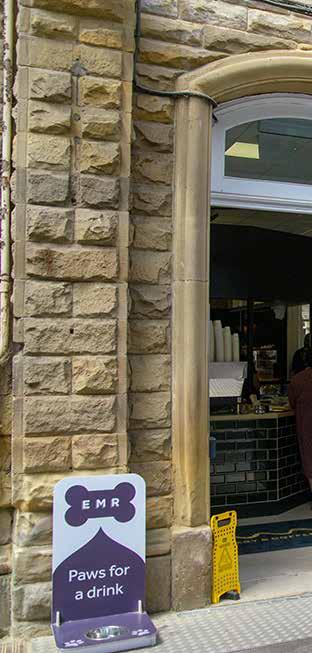
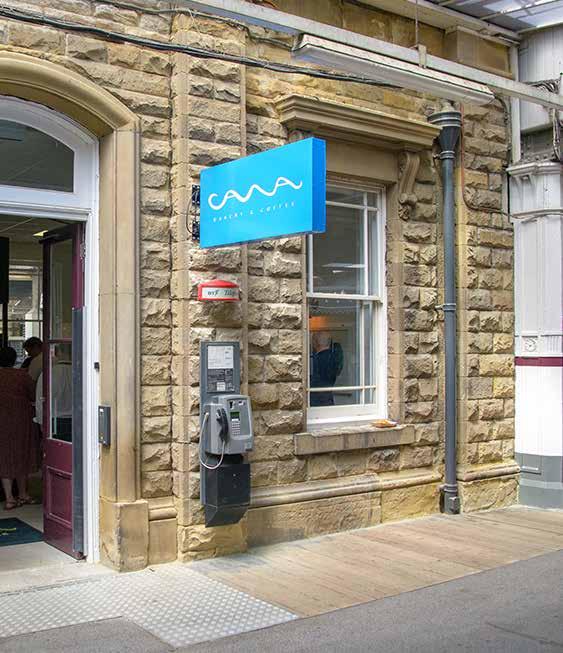
If your experience of grabbing food before a train journey usually involves settling for a limp sandwich and an overpriced coffee, Cawa is hoping to change your expectations.
The South Yorkshire coffee company has officially opened its latest venue inside Sheffield Station, transforming the former First Class Lounge on Platform 5 into a brand-new café serving freshly baked pastries, loaded croissants and its own locally roasted coffee.
With cafés in Sheffield, Chesterfield and Nottingham train stations, as well as an outlet at
Leeds City Bus Station, Cawa has built a reputation for doing things differently. Rather than offering standard grab-and-go fare, the business bakes fresh seven days a week and sources as many ingredients as possible from local suppliers.
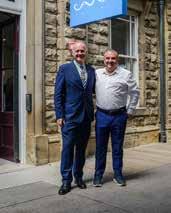
"When you travel, your expectations of the food that's available at most train stations and services are probably pretty low," says Business Development Director Deon Jacobs. "So, we wanted to create something new.
"People drive to Tebay Services because the food's very, very good. We're kind of similar. People will actually jump on a train at Chesterfield rather than Sheffield because they want to buy something there. They know they're going to get good quality."
That quality-first approach runs throughout the business, which now employs around 80 people across six primary locations.
"We bake seven days a week, fresh, so we supply all our stores every day," Deon explains. "From the milk to the flour, to the butter, whatever we can get locally, we do."
While the new station café offers
WHEN YOU TRAVEL, YOUR EXPECTATIONS OF THE FOOD THAT'S AVAILABLE AT MOST TRAIN STATIONS AND SERVICES ARE PROBABLY PRETTY LOW"
much of the existing Cawa menu, it's been designed with commuters firmly in mind.
"It's basically most of the products that we offer anyway, but what we try to do here is more of a fast-food offering," says Deon.
"People are very welcome to sit in, but a lot of customers will be catching a train, so they'll come in and grab something. It's going to be warm, it's going to be fresh. We roast our own coffee as well, so it's really, really good fresh products."
Of course, no visit to Cawa is complete without one of its nowfamous loaded croissants.
The business first grabbed international attention with its Fish Finger Croissant, which quickly went viral online and has since been joined by increasingly adventurous creations including Wagyu beef, chicken tikka and lamb doner fillings. It's enough to make a few French bakers wince, but Deon is more than happy to defend the concept.
"With a croissant, because of the buttery side of things, it's like a sandwich, but much creamier," he says. "Instead of a dry sandwich, you've got a buttery pastry, with really nice filling."
The Platform 5 site also marks something of a homecoming for the business.
"We've been wanting to get onto Sheffield Station for a long time," says Deon. "This is our home, and I think the station is the first place a lot of people see when they come into the city. We want to offer something that shows the kind of feeling that Sheffield is about."
The new café has retained the character of the historic First Class Lounge while giving the space a fresh lease of life.
"Our vision was simple – to respect the character and heritage of this remarkable space whilst creating something fresh, welcoming and relevant for the future," Deon says. "We didn't want it to be somewhere people just grab a coffee before a train. We wanted it to be somewhere people can meet, work, connect and enjoy being part of Sheffield life.
"Whether you're a daily commuter or a visitor arriving in the city for the first time, we hope this becomes a place where people feel welcome."
Given the choice between another disappointing station meal or a viral fish finger croissant and freshly roasted coffee, we know which platform we're heading for.
For more info, check out Cawa’s socials: @cawacoffee
FOUNDATION FOR CHANGE
For four decades now, South Yorkshire's Community Foundation (SYCF) has connected generous individuals, businesses and organisations with the grassroots groups making a difference across the region. As the region’s largest local grant funder, the foundation helps donors give in ways that create lasting impact, supporting a wide range of community projects tackling issues from poverty and mental health to employability and the environment. With the charity celebrating its 40th anniversary this year, we spoke to chief executive Martin Singer DL about its achievements, the challenges facing communities across South Yorkshire and why place-based philanthropy has never been more important.
How did you first get involved with SYCF?
I made the change from a corporate career, so 25 years in retail leadership before moving into the voluntary sector and, more recently, this role at SYCF. The sense of purpose that drives you in the morning is massive. You go out to see groups doing amazing work with relatively small sums of money and making a real difference to people's lives. That's something that motivates all of us.
For readers who may not be familiar with the organisation, what does South Yorkshire's Community Foundation do?
South Yorkshire Community Foundation is the region's biggest local grant funder. We work with local philanthropists, corporate donors, businesses and statutory partners, including local authorities and the NHS, to get money out to community groups tackling some of the biggest issues facing our communities, whether that's poverty, homelessness, mental health,
and national level.
The voice of the voluntary sector is really important and one of our roles is to advocate on its behalf. We work closely with local authorities, the South Yorkshire Mayoral Combined Authority and others to make sure those voices are heard.
What are the biggest issues affecting communities across South Yorkshire at the moment?
The themes have been pretty consistent. Cost of living remains a major challenge and that connects to the long-term issue of poverty. There are still far too many people living in poverty in our region and we have some of the highest areas of deprivation in the country. That's something we don't always recognise enough.
climate or the environment.
The broad description is that we connect people who care with the groups doing work in the areas our donors care about most. It's a really pivotal role because we're connecting the people doing the work, who need financial support to continue, with those who are generously willing to fund it.
Why is it so important that decisions are driven by local communities and people on the ground rather than a topdown approach?
For me, that's crucial. I often say to policymakers and decision-makers that it's a real missed opportunity if they don't have regular conversations with community organisations facing some of the biggest challenges in our communities.
Those organisations have often not only identified the issue, they've identified solutions as well. There's a missed opportunity if we don't join those dots and use that experience to make the right decisions at a local, regional
There's also a lot of work around mental health, particularly for young people. Climate and the environment is another growing area, and employability is a big focus too, looking at how we remove barriers to work.
Every three to four years we produce a report called Vital Signs, which involves talking directly to communities about what's important to them. That helps us understand the issues that matter most and allows us to have informed conversations with donors.
How do you work with businesses and donors who want to make a difference?
Every donor receives a bespoke experience. Whether it's an individual or an organisation, we spend time understanding what they're looking to achieve through giving and why those issues matter to them.
From there, we'll recommend the best approach. That could be joining our business-led Social Value Network, making donations, or creating a longterm legacy fund through our endowment.
We're experts in placebased giving and place-
based philanthropy in South Yorkshire. We use that expertise to guide people professionally and hopefully that leads to investment in our communities.
This year marks SYCF's 40th anniversary. Are there any recent projects or successes that particularly showcase the impact of your work?
I always hesitate to single out individual organisations because there are so many incredible examples.
We recently held our 40th anniversary celebration, recognising groups from Barnsley, Doncaster, Rotherham and Sheffield. Hearing their stories and reading the award submissions was incredible. It really showed the role our donors have played over four decades.
Last year we distributed £2.2 million in grants, our biggest year yet. That demonstrates the scale of the impact we can have across South Yorkshire.
We're really blessed in this region to have some absolutely magnificent voluntary sector organisations that are brilliantly led and
making a real difference to people's lives every day.
The voluntary sector faces many of the same pressures as business. What challenges are you seeing from your end?
We're a charity ourselves, so we're not immune to those pressures. Like many organisations, we're seeing increasing demand for services alongside pressure on funding and rising costs.
There are lots of parallels with the business community. Despite that, our mission remains helping communities across South Yorkshire to thrive. We'll continue attracting new funding, building partnerships and working with our generous donors so we can get more money to the organisations tackling the issues that matter most.
Looking ahead, what are your priorities for the next five to 10 years?
Our mission won't change. It's about helping communities across South Yorkshire to thrive through generous donors, supporting voluntary organisations to become more sustainable and helping them
WE CONNECT PEOPLE WHO CARE WITH THE GROUPS DOING WORK IN THE AREAS OUR DONORS CARE ABOUT MOST.”
grow their impact.
Ultimately, we'd love to be able to say we've made a significant impact on poverty across the region and helped improve life for everyone in South Yorkshire.
Finally, what's your message to businesses and individuals considering supporting their communities?
Please think about the role you or your organisation can play in helping our communities to thrive. The generosity of individuals and business donors makes a massive difference to the lives of so many people across the region, and together we can make South Yorkshire better for everyone.
From a business perspective, communities are where your employees live, work and play. It's where many of your customers come from and where your future employees will come from. They're a really important part of the ecosystem in which you're operating.
Please work with us and help those communities to thrive.
sycf.org.uk
Bakewell’s most exciting new arrival.
The Charleston is an Art Deco bar and restaurant housed in a beautifully restored bank, bringing 1920s glamour to the heart of the Peak District.
Brunch from 9am till 4pm, evening dining until late and Sunday roasts to linger over. You’ll also find Afternoon Tea, coffee and cake and a bar menu made for grazing from morning until late.
When the sun is out, our outdoor courtyard is the place to be. As the evening draws in, live music played on our baby grand piano fills the room every night, from smooth jazz and soulful grooves to toe-tapping swing.
Some occasions deserve a special setting.
For something more private, The Speakeasy awaits. Set within the original bank vault, this intimate room seats up to 10 guests and is perfect for corporate lunches, celebration dinners and everything in between. Corporate packages start from £38pp, with every detail taken care of by our team.
We are fully accessible downstairs, with lift access from the courtyard.
Bookings welcome. Walk-ins too. Come and see what all the fuss is about.
UNLTD EVENTS
STAY CURIOUS: THE HUMAN ADVANTAGE IN AN AI WORLD
AI can generate ideas, write copy and speed up creative work – but it cannot replace human curiosity.
That was one of the strongest messages from our latest unLTD Business Working Lunch, which brought together business leaders and creatives to explore how artificial intelligence is reshaping the creative industries.
The panel featured Yasmin Sherriff from Fenti Marketing, Gerry Arcari from Vivid Creative and Rob Taylor from Plan.Grow.Do., with James Marriott guiding a really lively discussion.
Gerry spoke openly about his journey from AI sceptic to enthusiastic adopter. While he now sees it as a powerful creative tool, he stressed that it still needs human judgement, experience and imagination to avoid producing work that feels bland or generic.
Rob’s reminder was equally important: businesses must take responsibility for how they use AI. It should help people refine and develop ideas, not replace the curiosity and entrepreneurial thinking that created them in the first place.
Big thanks to everyone who joined the conversation, and to Francesca Androsiglio, David Heugh and the Mercure Sheffield Kenwood Hall Hotel & Spa team for hosting us.
Our next event, Master of Tasks, takes place at Gold Digger Trust on 22 July. You can book online at unltdbusiness.com now.
SCAN THE QR CODE FOR NEWS AND TICKET INFORMATION ON ALL UPCOMING UNLTD EVENTS.
For this month’s trip away from the office confines, unLTD heads for the Peak District, where in the ever-picturesque town of Bakewell we sampled the latest offering from Longbow Venues: The Charleston.
Words: Joseph Food Photos: Marc Barker & Tom Hodgson
Long gone are the days when the main culinary offerings in charming Peak District towns extended to little more than afternoon teas and a ploughman's lunch. Places like Bakewell now boast bustling culinary scenes of their own, with everything from artisan coffee hangouts to Michelin Guide-listed small plates restaurants.
While the oft-dubbed capital of the Peaks still retains its traditionally quaint charm, complete with retro sweet shops, traditional pubs and the ever-bustling home of the original Bakewell Pudding, there are plenty of establishments catering to a more contemporary crowd. A craft beer micropub overlooks the central roundabout, while just around the corner an artisan cheese and wine
bar pairs local produce with natural vinos in a setting that wouldn't feel out of place on Sharrow Vale Road.
A fresh addition to this lively food and drink scene is The Charleston, the latest of six venues run by award-winning independent hospitality experts Longbow Venues. A multi-million-pound renovation has seen the company turn a Grade II-listed former bank into an elegant 1920s-themed bar, restaurant and jazz venue spanning two floors.
Team unLTD arrived at lunchtime on a sweltering Friday and, from the moment we stepped inside, it was clear no expense had been spared or corners cut. The ground-floor bar feels like stepping into a grand hotel during the Roaring Twenties, with Art Deco touches, rich
timber, burnished brass and gold detailing giving the place a real sense of occasion. It's luxurious without feeling over the top, and the sort of venue that's genuinely fun to have a wander around. There are plenty of little details to take in, including a private dining room tucked away inside the building's former bank vault.
We took our seats in the upstairs restaurant. Significant thought has clearly gone into their summer brunch menu, pairing familiar breakfast classics with bold, seasonal flavours. There’s everything from elevated egg dishes and indulgent waffles to colourful salads, refined small plates and hearty mains, all underpinned by a strong commitment to locally sourced ingredients.
Parched, we kicked things off with a round from the aptly named 'Start Your Day Hotsy-Totsy' menu, our drinks arriving promptly in gleaming glassware. The Rhubarb Spritz was tangy and wonderfully refreshing, while the Bloody Mary packed a satisfyingly savoury punch thanks to a combination of Hendo’s, Tabasco and warming spices. The Spicy Margarita brought plenty of citrus zing, finished with a fiery jalapeño kick. Our designated driver opted for the alcohol-free Lunetta Spumante, a crisp
sparkling wine with tropical fruit that provided welcome refreshment on an increasingly blazing hot afternoon.
Then came the food. We began with small plates that were most sportingly shared amongst the group. The agreed standouts were the beautifully cooked Poached Halibut, served with caper beurre blanc, sea herbs and crispy vegetables, and the Scallop & Chorizo Skewers, where succulent scallops met smoky chorizo crumb and a silky broccoli velouté. The Gochujang Pork Belly Bites struck a perfect balance of sticky sweetness and savoury richness, while the Venison Carpaccio, lifted by apple gel, pickled baby apples, crispy capers and shaved Parmesan, more than held its own.
Mains maintained the momentum. The Steak & Egg Deluxe saw a perfectly cooked medium-rare bistro steak elevated by a fragrant Szechuan glaze and paired with crisp Cajun sweet potato wedges. The Waffle Sandwich was incredibly indulgent, balancing crispy buttermilk chicken with smoky bacon inside two crisp golden waffles. The Fish Tacos – my choice – were fresh, suitably light for the heat, zesty and flavoursome, while the Crispy Pork Chop proved a pleasant
surprise. Encased in panko breadcrumbs, it retained all its succulence, with the crisp coating adding an unexpected but thoroughly welcome crunch.
With the generous portions still keeping us comfortably full, dessert was never really on the cards. Instead, we rounded things off with a round of crisp Monte Carlo Beer – the perfect antidote to the rising afternoon temperature –before settling up.
So, what was the final verdict as we wound our way back over the hills to Sheffield? We were all in agreement: The Charleston brings a welcome splash of glamour to the heart of a historic market town. Whether you're calling in for cocktails, catching up over coffee and breakfast, lingering over a brunch or making an evening of it with live jazz, it delivers plenty of style without ever losing substance. It's more than worth the short drive out for an afternoon that could’ve been been plucked from the pages of F. Scott Fitzgerald.
The Charleston Rutland Square Bakewell DE45 1BT the-charleston.com @thecharlestonbakewell
BOTTLING SUCCESS
Charles Cornelius took a gamble on a city centre wine shop. A year later, we hear how Barks is thriving in a much bigger home.
WORDS:JOSEPH FOOD PHOTOGRAPHY: MARC BARKER
unLTD arrives at Barks Wine during the Great Sheffield Heatwave of '26 and, for a brief moment, we could've sworn we'd landed in a Lisbon square or a trendy corner of Bordeaux. Their sun-soaked terrace overlooks the crowds tucking into lunch outside Cambridge Street Collective, while Pound's Park adds a welcome splash of greenery to the right. All around, glasses clink with Vinho Verdes, Chenin Blancs and all manner of delicious grapey goodness from across the globe.
It’s moments like these where you pause and think to yourself, “Just when did Sheffield get this cool?”
After quickly outgrowing its original 'Baby Barks' unit in Leah's Yard, owner Charles Cornelius took on a larger space in the same development, which opened back in April.
Even by his own admission, it was
a big move. "Five times the size, you know, it's a risk no matter which way you put it. I've got practically no business experience at all. To be quite honest, I opened up Barks pretty much on a whim."
That opportunity first presented itself in early 2025. After being made redundant from a job selling spirits, Charles was tipped off about a vacant unit in the yard. He did his research and one thing stood out immediately.
"There were no wine shops in the city centre, but wine culture was on the up" he explains. "It persuaded me to make the move and open Baby Barks in April last year."
The timing couldn't have been much better. A strong first summer and the addition of more outdoor seating at Leah’s Yard helped turn curious passers-by into regular visitors, with Barks building a loyal following that now feels less like a specialist retailer and more like a friendly neighbourhood local.
In fact, someone recently described it as "a wine pub" – a label Charles is more than happy to embrace.
"I really love that description. Everyone talks about making wine accessible or demystifying it, and there are always going to be some barriers, but we just like providing a space for people to come and enjoy wine as they see fit. We’ve built a really lovely community in the process.
"You can come here and get a £5 glass or spend £20 on a glass. We've got £12 bottles and £60–£70 bottles.
Moving into a bigger Barks allowed me to expand both sides – the more affordable end and the more premium stuff."
That broad, welcoming approach feels like one of the reasons Barks has become such a fixture in the city’s growing wine scene. Whether you're after an interesting orange wine, a crisp Portuguese white or a kalimotxos (red wine and Coke – don’t knock it, etc.), there's zero sense of pretension waiting for you at the bar.
It also helps that Charles is something of a larger-than-life, naturally social character. His deceptively simple pairing videos –matching wines with famed Sheffield scran like Beres pork sarnies (beaut with a rich brut, apparently) and China Red's Szechuan prawns (grab a fruity Portuguese rosé) – have become something of an online hit, cementing Barks' place among the city's ever-growing food and drink scene.
It's also part of a much bigger picture. Rather than seeing the city’s growing collection of wine bars and bottle shops as rivals, Charles sees collaborative potential, and he’s keen to tip his hat to the teams at The Old Shoe, Not Open; Don’t Come, Gills & Co, Starmore Boss, and Tenaya Wines, who he sees as friends as opposed to rivals.
"We all go to tastings together, we all organise bits for the wine events together, we all meet up and have social drinks,” he says. “There's plenty of wine to go around for us all and crucially, we all are good at
specialising in certain niches within wine. That’s what makes a strong scene."
The bigger space has naturally allowed them to expand their range, with around 300 bottles on the shelves and an ever-changing by-theglass list that sees 22 of its 27 wines rotated every week. It's also opened the door to one of the shop's most exciting new additions: Experiences at Barks. Running Tuesday to Friday, these bookable two-hour tastings pair five wines with everything from artisan cheese to, in a rather iconic move, Scampi Fries.
"It's just a fantastic way to have a bit more of an informed Barks experience," says Charles. “But it’s still very much a laidback and social atmosphere at the heart of things.”
Alongside that, there are winemaker evenings, seasonal events and plenty more planned, all delivered with the same relaxed, inviting ethos that has made Barks such a winning addition to the city centre.
"People often fall into a comfort zone in wine, which is understandable," Charles adds, switching into service mode as a new group of punters comes through the door. "But it’s about having that exploratory conversation, showing them what else is on offer.
“What’s really important to me is getting people to try as much wine as possible,” he concludes with a laugh. “You can say that’s my mission."
@barks.wine
UNCORKED: THE UK’S NEW WINE WAVE
49.5%
Almost half of the UK's independent wine merchants now also operate as wine bars, compared with around 25% in 2014 – showing how retail and hospitality are increasingly merging.
280
The UK is now home to 280 wineries, up 15% year on year.
22%
People aged 18–34 now account for 22% of UK wine drinkers, with younger consumers driving demand for more adventurous styles, premium bottles and sustainable producers.
£9.4bn
Britons spent an estimated £9.4 billion on wine in hospitality venues (restaurants, bars and hotels) in 2025.
BANNER JONES
BY: EMPLOYMENT LAW SOLICITOR, KATIE ASH
NEGOTIATING THE EXECUTIVE EXIT: A SENIOR EMPLOYEE’S GUIDE TO SETTLEMENT AGREEMENTS
Whether prompted by a breakdown in relationships at board level, a shift in business strategy, or a discreet “parting of ways”, senior exits are rarely straightforward.
From an employee’s perspective, the stakes are particularly high. Here, Employment Law Solicitor, Katie Ash, explains that an executive exit is about negotiating a financial package that reflects your seniority, contribution and contractual entitlements, while also safeguarding your future career prospects.
WHAT DO YOU NEED TO DO?
Build Your Case
A successful negotiation starts with understanding and strengthening your position.
Identifying Potential Claims
Assess whether there are grounds for legal claims such as unfair dismissal, discrimination or whistleblowing. Even if you have no intention of issuing proceedings, these potential claims can form valuable leverage in negotiations.
Remuneration Audit
Take a comprehensive view of your financial entitlements, not just your basic salary:
• Bonuses: Consider how any termination might affect your contractual eligibility for any bonus payments.
• Share Schemes & LTIPs: Review how your departure will impact share awards.
Reputation Management
Think about how you want any comms about your termination to be framed and then carefully negotiate
how your exit will be communicated.
Understanding Restrictive Covenants
Restrictive covenants can significantly affect your ability to move on after an executive exit, so it’s essential to understand both what they mean in practice and how they can be challenged or negotiated. Under English law, overly broad or excessive restrictions may not be enforceable.
With the right approach, you may be able to reduce the duration or scope of covenants, or negotiate compensation in return for
adhering to them.
Tax and Timing
Tax treatment and the structure of your settlement can make a significant difference to the overall value you receive, so it is essential to address this early in negotiations.
One effective strategy is to explore whether part of your settlement can be paid as an employer pension contribution.
Why Specialist Advice is Essential
Taking advice from a specialist employment solicitor is not just advisable
— it is a legal requirement, as you cannot enter into a valid settlement agreement without receiving independent legal advice.
Beyond the legal formalities, this is a critical moment in your career, and having an experienced Employment Law solicitor on your side ensures your interests are properly protected, your settlement is maximised, and nothing is overlooked.
Contact Banner Jones Employment Law team in Sheffield, Chesterfield and Mansfield today.
HR with Personality
Empowr
Tel: 03330524641
Email: hello@empowr.uk
Web: empowr.uk
Services
Over the past decade, Launchpad has helped thousands of people across South Yorkshire turn bright ideas into thriving businesses. As the programme celebrates its 10th anniversary, we caught up with Business Sheffield's Service Manager, Rob Lawley, to reflect on its impact so far, how business support has evolved and why there's never been a better time to take that first step.
For readers who may not be familiar with Launchpad, can you explain what the programme offers and who it's designed to support?
Every successful business starts with an idea. Launchpad is here to help people across South Yorkshire turn those ideas into successful businesses.
In Sheffield, the programme is delivered by Business Sheffield and supported by the South Yorkshire Mayoral Combined Authority (SYMCA). It gives people with business ideas and early-stage businesses access to expert guidance, workshops, networking opportunities and, where eligible, funding.
The programme supports people at different stages of their journey, from those exploring a business idea for the first time to entrepreneurs looking to grow an existing venture.
What makes Launchpad different from other business support programmes available to entrepreneurs?
What makes Launchpad different is that it's built around people and individual businesses rather than a one-size-fits-all approach, and it's completely free to access.
We genuinely want everyone who comes through our doors to succeed, so our focus is on giving each person the support, knowledge and confidence they need to build a successful business.
Because Business Sheffield supports hundreds of entrepreneurs and businesses each year, we see first-hand the opportunities and challenges they face, whether that's
finding customers, securing finance, building confidence or simply knowing what to do next.
The support is practical, tailored and rooted in local knowledge. We understand Sheffield's business community and the realities of starting and growing a business here.
One thing we hear time and again is that people are surprised by how approachable the support is. You don't need to have all the answers before getting in touch. That's exactly what we're here for.
We've also created opportunities for businesses to test their ideas in real-world settings. Through the Launchpad Pop-Up Shop in Sheffield city centre, more than 30 early-stage traders sold from a prime retail location in the run-up to Christmas, gaining valuable customer feedback, confidence and exposure before taking the next step.
How has the programme evolved since it first launched in 2016?
When Launchpad started in 2016, many of the conversations were about business plans, funding and taking those first steps into selfemployment.
Those subjects are still important, but today entrepreneurs are also asking how AI fits into their business, how to sell online, how to stand out in
crowded markets and how to adapt in a rapidly changing economy.
The way we support businesses has evolved alongside those changes. We've expanded the range of topics covered, introduced more specialist support and created more opportunities for entrepreneurs to learn from one another.
Launchpad has supported more than 13,000 people and delivered over 109,000 hours of support. What impact have you seen on the region from these figures? Those figures are impressive, but what matters most is the people behind them.
Across South Yorkshire, the Launchpad programme has helped thousands of people turn ideas into businesses, develop new skills and create opportunities for themselves and others.
In Sheffield, Business Sheffield's delivery of Launchpad has supported more than 3,630 clients, helped create over 424 new businesses, supported the creation of hundreds of jobs and delivered more than 27,500 hours of one-to-one support. The programme also delivers more than 90 free workshops each year.
But the real impact goes beyond numbers.
We've supported people who started with a kitchen-table idea, freelancers turning a passion into income, entrepreneurs taking a chance on something new and founders creating their first jobs.
What are some of the most common challenges faced by the businesses you work with, and how does
Launchpad help them overcome these?
Funding, marketing and finding customers are common challenges, but one of the biggest barriers is often knowing where to start.
Many people have a great idea but aren't sure how to turn it into a viable business. Others are trying to build something new alongside work, family commitments or financial pressures.
Launchpad helps break those challenges down into manageable steps. We help early-stage businesses access practical guidance, expert advice and fresh perspectives that help them move forward with confidence.
Sometimes the most valuable thing we can offer is reassurance, helping people realise that the challenges they're facing are normal and that support is available when they need it.
How important is a programme like Launchpad to the long-term growth of the South Yorkshire economy? Small businesses are the backbone of South Yorkshire's economy. They create jobs, drive innovation and contribute to vibrant local communities.
Programmes like Launchpad help remove barriers that prevent people from starting or growing a business. Not everyone has access to professional networks, mentors or specialist expertise when they're getting started.
By helping entrepreneurs build successful businesses, we're investing in the region's future.
Peak Pickleball is a great example
of the long-term impact Launchpad can have. The founders first came to us while developing their idea, and through one-to-one support and workshops they've gone on to open a successful venue in Attercliffe while continuing to engage with Business Sheffield.
In Sheffield, Business Sheffield sees first-hand how the right support at the right time can help transform an idea into a successful business. Today's start-ups could become tomorrow's employers, exporters, innovators or Sheffield's next success story.
What are your priorities for the next phase of Launchpad?
One of our biggest priorities is reaching people who don't think business support is for them.
Many people assume business support is something you access once your business is established. In reality, it's often most valuable before you've even started.
We want more people across Sheffield and South Yorkshire to know that help is available from the moment they begin exploring an idea.
If someone is reading this and wondering whether Launchpad is right for them, what would you like them to know?
Don't wait until you have everything figured out. You have nothing to lose by starting the conversation. Our support is free to access, and we're here to help you explore your ideas, answer your questions and give you the confidence to move forward.
Many successful businesses start with nothing more than an idea and a conversation. You don't need a perfect business plan or years of experience before asking for support.
If you're based in Sheffield and you're thinking about starting a business, have recently launched or want help to grow, we'd encourage you to get in touch with Business Sheffield and explore what support may be available through Launchpad. Every successful business starts somewhere. More often than not, it starts with a conversation. If you've got an idea, we'd love to help you take the next step.
From tech start-ups to creative agencies, Pennine Five is home to a growing community of ambitious businesses helping shape Sheffield's future. In the latest instalment of our Meet the Residents series, we catch up with Pete Hopton, Founder and Chairperson of Venture.Community, to find out how the organisation is backing the next generation of founders – and why Pennine Five has become the perfect base for building the city’s entrepreneurial ecosystem.
For readers who haven't come across Venture. Community before, can you tell us a bit about the organisation and what you do?
Venture.Community® is the world's first mutual society for venture entrepreneurs. The society is mutually owned by its members, democratically operated, and began in Sheffield: Seven entrepreneurial family offices, venture studios and lead angels – who each found themselves spending most of their time supporting founders – combined their efforts into a structure so that they could collaborate.
Our premise is that ‘venture
is a team sport.’ Founders build. We back the people who build. We do this through a network of Fellows, Specialists, Angels and Members.
For every Supported Company, a Founder is paired with a Fellow who has built, raised, hired and exited, for one-on-one support through their journey. Specialists provide depth of knowledge on demand. Angels invest directly, first, on the terms founders give to people they trust.
The community has backed 24 startups so far. Between them, they have raised £23.9m. 88% of participants raising a venture capital (‘VC’)
round have done so within six months.
Sheffield has a growing reputation for deep tech and science-led businesses. What opportunities do you think the city offers that make it a strong place to build a startup?
Sheffield has the raw materials for deep tech: two world-class universities in the city centre, AMRC and Factory 2050 on the doorstep, and generational depths in engineering, advanced manufacturing and materials. The spinout pipeline is strong, and the cost base means a science-led company's runway stretches further here than almost anywhere else in the UK.
It is less well known that necessary experience and capital exist here also.
Sheffield has one of the highest concentrations of millionaires for any city outside London, for example, and a generation of operators who have built and exited technology companies. Venture.Community connects that experience with founders coming through, and regional deal flow has grown from around £12m to more than
£20m a year since the society began operating.
Deep tech takes longer than software and needs more patient backing. Having a community of experienced builders who understand that – rather than a purely transactional funding scene – is what enables a city like Sheffield hold onto scienceled companies as they mature.
What are the biggest challenges facing early-stage founders at the moment, and where do you think you can make the greatest difference? Three failure modes account for most early-stage losses and none of them are due to the product.
One: founders run out of energy because building a company can deplete that for the people who build it. Two: companies chase too many markets at once, or the wrong one. And thirdly: capital and customers come through people, so a founder without networks stays stuck regardless of merit.
Venture.Community preempts those failure modes. Every ‘Supported Company’ gets one-on-one support from the Fellow it is paired
OUR PREMISE IS THAT ‘VENTURE IS A TEAM SPORT.’ FOUNDERS BUILD. WE BACK THE PEOPLE WHO BUILD.”
with. Before anything else, founders select a beachhead, a focused initial market, with ‘operator judgement’ behind the decision rather than theoretical advice. Also, networks for capital and traction are the membership itself: Angels aligned with the community's standards of conduct, and customers introduced by Fellows already working in those beachhead markets.
The principle underneath all of this is that you need scale the founder before you scale the company. We don't make founders look investable. We help make them investable.
You're based at Pennine Five, a development that's becoming home to an increasingly diverse business community. How does being part of that wider ecosystem benefit your members?
Pennine Five is the operational home of Venture.Community: Specifically Block 3 on Tenter Street. It’s where we hold events for our members.
Entrepreneur’s Breakfasts and investor visit days are run through the campus as well, and a number of Supported Companies are based on site.
The wider ‘P5’ community matters as much as the space. Founders share the campus with engineers, agencies and university spinouts, and that mix produces the collisions a first customer or a first hire often comes from. We tell every new Venture. Community region that it needs a physical anchor: a place that is central, accessible and welcoming, where the community actually gathers. P5 is that anchor for Sheffield.
The Innovation Spine has become a focal point for growth in Sheffield. How does Venture.Community fit into that wider vision for the city?
The Innovation Spine runs through our front door. The Spine’s route arcs from the University of Sheffield's campus, through Tenter Street and West Bar, via Castlegate and the Digital Campus, Sheffield Hallam and the main station. By virtue of Pennine Five, our members work within the Spine itself.
The Spine is a twentyyear strategy to link labs, workspace and facilities that knowledge-led businesses need, and it will fill this part
of the city with companies Venture.Community exists to back.
We contribute human infrastructure. Founders turn labs and workspace into companies, and to do it they need first cheques, first customers and people who have made the journey before. The society's scope is now national but Sheffield remains home. P5 and the Spine are a large part of that.
Looking ahead, what would success look like over the next three to five years?
Success is a network of selfsustaining, founder-centric ecosystems, each mutually owned by members and each built on the ‘Sheffield model’: a community hub, a Fellowship of experienced operators, and cohorts of Supported Companies.
In December 2025, the membership voted to extend the society's scope across the UK. Chapters are coming together in important locations including Germany and the United States.
At home in South Yorkshire, success looks like more founders choosing to build here and stay as they scale;
maximising their probability of success, with us supporting them all the way.
There is a longer arc as well: Recognition of companybuilding as a profession, with the society as reflecting that as a professional body. Fellows and members already carry post-nominals, for example, as members of other professions and industries do.
For entrepreneurs who are considering taking the leap into starting a business, what would you say to encourage them to become part of your network?
You don't have to take the leap alone and you don't have to take it all at once.
Venture.Community membership is £10 a year. Step in and see. Come to an event at Pennine Five. Listen and ask questions. The room is full of people who have been where you are and want to help.
When you're ready to build, the structure is here: a Fellow beside you, specialists on hand, supportive members and Angels who invest on terms founders offer to people they trust.
https://Venture.Community
A prime central location in the heart of Sheffield, Pennine Five is just minutes from the city’s best amenities and transport connections, and benefits from over 390 secure car parking spaces.
Comprising five distinctive blocks arranged around a unique central plaza, Pennine Five offers highly flexible accommodation ranging from 3,229 sq ft (300 sq m) to over 100,000 sq ft (9,290 sq m).
With flexible leases and versatile floor plates, Pennine Five is designed to adapt to your business. Speak to our team to find the right solution for you.
WHY DIALPAD’S NEW AGENTIC AI COULD TRANSFORM CUSTOMER EXPERIENCE
BY HARRY THOMAS, DIGITAL MARKETING EXECUTIVE
Artificial intelligence has spent the last few years helping businesses work faster. It can summarise conversations, generate content, analyse data, and support employees with information when they need it. But a new phase of AI is now emerging, one that doesn’t just assist people but actively acts on their behalf.
This is the world of Agentic AI, and with the recent launch of Dialpad’s Agentic AI capabilities, businesses now have a practical way to bring this technology into customer communications without ripping out existing systems or completely redesigning their operations.
Unlike traditional AI tools that wait for instructions, Agentic AI is designed to understand context, make decisions, complete tasks and continuously learn from interactions. It can answer customer enquiries, perform multi-step actions, follow up on outcomes, route conversations to the right people, and provide personalised support without constant human intervention.
For organisations under pressure to improve customer service while controlling costs, the potential is significant. Customer-facing teams spend a huge amount of time handling repetitive requests, searching for information, and manually following up on actions. Agentic AI can automate many of these tasks, freeing employees to focus on conversations that require empathy, expertise, and complex problemsolving.
What makes Dialpad’s
approach particularly interesting is that the Agentic AI has been designed to support both customers and employees. Human agents gain real-time access to customer information, relevant knowledge, and AI-generated recommendations, helping them deliver better outcomes faster. At the same time, customers benefit from quicker responses, more personalised interactions, and access to support through their preferred communication channels.
The technology is also creating new opportunities beyond customer service. Every interaction generates valuable business intelligence. AI can identify patterns across thousands of conversations, uncover recurring issues, highlight opportunities for
improvement, and provide insights that support strategic decision-making. Rather than being viewed purely as a support function, customer communications become a source of competitive advantage.
Perhaps most importantly, businesses no longer need to wait until the end of a communications contract or undertake a major transformation project to begin taking advantage of AI. Dialpad’s latest innovation allows organisations to introduce Agentic AI, automation, and omnichannel engagement in a practical, scalable way alongside existing environments. This lowers the barrier to entry and makes AI adoption more achievable for organisations of all sizes.
As AI continues to mature, the conversation is shifting away from experimentation
and towards measurable business outcomes. The organisations that succeed will be those that can combine technology and human expertise to create better experiences for customers and employees alike. Agentic AI represents another step in that journey, moving businesses from AI that informs towards AI that actively helps get work done.
If you would like to understand how Dialpad’s new Agentic AI capabilities could help modernise your customer communications, improve efficiency, and create more intelligent customer experiences, speak to Simoda.
BY JOEY HEMINGBROUGH, COMMERCIAL DIRECTOR, SHEFFIELD
TECHNOLOGY CAN ACCELERATE PROGRESS, BUT CLARITY HAS TO COME FIRST
I have seen plenty of businesses invest in better technology, only to find that the biggest barrier to progress was not the tool itself.
It was clarity.
New systems had been bought, tools added, upgrades paid for and strategy decks reviewed. In many cases, those investments made sense. But underneath the surface, the issues holding them back were often more operational than technical: unclear ownership, inconsistent processes, different ways of working, and accountability that had not been clearly defined.
As businesses grow or change direction, ways of working can quickly become fragmented. Technology can accelerate progress, but it works best when the business is clear on what needs to
change, who owns it, and what good looks like.
More software does not always mean better outcomes
One mistake I often see is businesses trying to solve process failures with more software. A team struggles with handovers, so a workflow tool is introduced. Reporting is inconsistent, so another dashboard is built.
Sometimes that investment is necessary. But if ownership and behaviours are not addressed, technology does not solve the problem. It simply makes the problem more visible.
In the worst cases, it gives the business documented chaos.
The organisations that get the most value from IT are not always those spending the
most. They know what good looks like, who owns what, and what needs to change first.
Clarity changes the quality of every technology decision and helps people understand how technology supports the business.
Clarity comes first Technology matters, but technology alone is rarely the answer.
The real value comes when it is connected to clear priorities, disciplined processes and strong ownership.
Before investing in the next system, platform or upgrade, it is worth taking a step back and asking three questions:
⚫ Are we clear on the problem we are asking technology to solve?
⚫ Do we know who owns the outcome?
⚫ Have we defined what good looks like?
If the answer to any of those questions is unclear, the next technology decision may not need to start with a product conversation. It may need to start with a clarity conversation.
For business owners reviewing their technology roadmap, operating model or future investment priorities, that conversation can be a valuable place to begin.
TO LEARN MORE ABOUT HOW FLUIDONE CAN SUPPORT YOUR ORGANISATION, SCAN THE QR CODE, CALL 0114 292 3800 OR EMAIL SHEFFIELDENQUIRIES@FLUIDONE.COM.
The Employment Rights Act 2025 is one of the biggest overhauls of UK employment law in decades, with many of its provisions taking effect throughout 2026 and into 2027. From recruitment and probationary periods to zero-hours contracts, harassment and family-friendly rights, the reforms will affect businesses of every size.
We spoke to Matthew Ainscough, Senior Associate and Head of Employment at Taylor Emmet, about what employers need to know and why preparation now could save significant time, money and disruption later.
The Employment Rights Act 2025 has been described as one of the biggest reforms to UK employment law in decades. What makes it so significant?
I think it's probably the scope of it. It's going to impact businesses' operations from recruitment right through to termination, so it affects all aspects of employment.
The biggest change is unfair dismissal rights. At the moment it's two years, but that's coming down to six months. It's not giving companies long to assess someone's capability. Previously, employers had a big cushion of two years to really get to know someone and see whether they were a good fit for the business. Now they've got a very short period in which to make that assessment.
I think it's going to completely transform recruitment practices. Companies are going to have to be much more forensic upfront about someone's suitability for a role. They won't have the chance to rely on trial and error as they might have done previously.
Does that mean employers need to rethink how they recruit?
Definitely. Interviews are going to have to become much more practical, focusing on assessing someone's skills and experience rather than relying on gut instinct.
Recruitment may previously have been guided by personality and whether someone felt like the right fit, knowing there was time to deal with any issues later. Now, if someone doesn't have the skills from the outset, employers could face an expensive termination process.
Recruitment in itself is quite expensive, so getting it wrong is going to be costly. You've got the cost of the recruitment exercise, the cost of terminating employment if it doesn't work out, and then the cost of recruiting a replacement. It's almost like a triple whammy of costs. If you get the recruitment right first time, you'll obviously save yourself a lot of money.
Another major area of reform is zero-hours contracts. What changes should employers be aware of?
The main change is that once somebody on a zero-hours contract has worked a set number of hours, they'll be entitled to be offered guaranteed hours going forward. For example, if somebody spends two months working 30 hours a week, the employer will be required to offer those 30 hours on a permanent basis. If those hours then can't be provided because shifts are cancelled, the worker has the right to be compensated.
It's quite a big shift and it will be
particularly difficult for businesses where demand fluctuates significantly, such as hospitality, tourism and seasonal employers. If work suddenly drops off, employers may still have to pay people even though there aren't enough shifts available. For a very small business, costs like that could become extremely difficult to absorb.
What should employers do to prepare?
If it's possible to forecast work levels, businesses should do that before offering guaranteed hours. Make sure you're satisfied you'll be able to provide those hours going forward.
The reforms also strengthen restrictions around 'fire and rehire'. What does that mean in practice?
Consultation has always been important whenever you're making significant contractual changes. People don't like having changes imposed on them without the chance to consider them properly or understand how they'll affect them.
A lot of workplace conflict comes from employers introducing contractual changes without allowing employees to query, negotiate or discuss them. That's bound to lead to grievances, resignations and disputes.
Going forward, the fire and rehire provisions make that approach even more difficult. Except in very rare circumstances, dismissing employees simply to re-engage them on different contractual terms will effectively become unlawful and amount to an unfair dismissal.
How important is documentation under the new rules?
It's absolutely essential.
If you're consulting on contractual changes, you need to document everything so you can demonstrate agreement if it's challenged later.
Record-keeping has also become increasingly important. Employers are now required to keep holiday records for up to six years, so businesses need good systems for storing employment records, sickness absence records and contracts.
If you can put your hand on the relevant documents quickly, you're in a much stronger position to defend a tribunal claim. Employers who are scrabbling around trying to evidence agreements are immediately on the back foot.
Technology can make that
OUR TE BUSINESS ASSIST PACKAGE IS DESIGNED TO HELP EMPLOYERS GET AHEAD OF THE CHANGES.”
much easier. We work with a digital platform that allows employers to securely store contracts, holiday records and employment documentation in one place, making administration much more manageable.
There's also a greater emphasis on preventing workplace harassment. How does that change employers' responsibilities?
At the moment it's more reactive than proactive. Employers can defend themselves if they've taken reasonable steps to prevent harassment.
Going forward, the emphasis is much more on preventing it before it happens.
The best approach is proper training so employees understand what harassment is, what it looks like and how to report it if they experience or witness it.
Businesses should also have clear reporting procedures, particularly in larger organisations, so employees know who they can speak to confidentially if an issue arises.
Trade union rights are also being strengthened. What impact do you expect?
For businesses with unionised workforces, the impact could be significant.
One of the biggest changes is that trade unions will have greater rights to access workplaces in order to recruit members. Employers will need to provide suitable space for meetings and allow employees time away from work to attend them.
For businesses that haven't previously dealt with trade unions, that will be quite a significant cultural shift.
That said, it's not necessarily a negative development. Sometimes unions can help resolve issues before they escalate. Because they're independent, they can provide objective advice to employees and potentially head off grievances that might otherwise have landed on an employer's desk.
Aside from those headline reforms, are there any other important changes businesses should know about?
Enhanced maternity protections are one of the key changes. Employees who are pregnant or returning from maternity leave will receive extended protection when redundancy
situations arise and will have priority for suitable alternative roles.
Statutory Sick Pay has also changed, with entitlement now beginning from day one rather than after the fourth day.
If a business owner starts preparing today, where should they begin?
The first step is reviewing employment contracts and policies.
One of the biggest practical changes is probationary periods. If employers continue using six-month probation periods, employees could gain unfair dismissal rights before their probation review takes place.
We're recommending three-month probation periods, with a final review at five months, giving employers enough time to complete a fair process if performance isn't where it needs to be.
Companies need to be starting now, really. Some changes begin this year, while others arrive in 2027, but updating contracts and policies isn't something that can be done overnight.
HOW CAN TAYLOR EMMET HELP BUSINESSES PREPARE?
Our TE Business Assist package is designed to help employers get ahead of the changes.
We provide legally compliant employment contracts for both junior and senior staff, drafted to reflect the new legislation and appropriate probationary periods. Alongside that, we produce a staff handbook containing up-to-date policies covering maternity, flexible working, disciplinary procedures, grievances and more.
Having compliant contracts and policies in place puts employers in a much stronger position to manage their workforce lawfully and confidently as the new legislation comes into force.
We'll take care of the legal side, allowing businesses to focus on running their organisations with confidence.
- Sangria Red or White, 1.25 Litre Jug 22.50 - Prosecco Bottle 22.50
- All Mocktails 4.50
- Estrella Galicia 0.0% (bottled beer) 3.80
**DOWNSTAIRS BAR EXTENDED HAPPY OFFER**
We have extended all of the above Happy Drinks offers for a further two hours, until 8pm, Sunday to Friday in the downstairs bar **only available in the downstairs bar
AVAILABLE UNTIL 6.00pm, SUNDAY TO FRIDAY
Treat yourself to a delicious cocktail or two! Fantastic value when you dine early. APPLIES TO ALL TABLES SEATED AND ORDERING BEFORE OR AT 6PM.
Call in and chill out at the end of a hard day, unwind and soak up our relaxed Latino vibe whilst enjoying our ‘Happy Tapas’ deals.
2 tapas dishes for £13.50 £5.00 off ANY Of our tapas set menus –– OR ––
Please note our Happy Drinks and Happy Tapas Offers are not available on Bank Holiday Sundays
RECRUITMENT, SIMPLIFIED
Drawing on 16 years in recruitment and experience of leading his own business, David Clark, Associate Partner at Inc. Consulting, shares practical advice that can help attract and hire better people.
For small business owners, understanding how to recruit effectively, with minimal hassle and at a reasonable cost, has never felt so confusing.
Recruitment has always been about finding the right people with the right skills to help businesses get things done. But somewhere down the line, we convinced ourselves recruitment needed to be far more complicated, with employer value propositions, candidate journeys and applicant tracking systems.
After 16 years in recruitment and having previously ran my own business, I've learned that most hiring challenges aren't nearly as complicated as people make out. So here are five practical lessons I've picked up that can dramatically improve your chances of landing great people, whether you use a recruitment agency or not.
#1: ATTRACTION IS 99% OF THE BATTLE
I've never had a client call me to complain that they had too many brilliant candidates to choose from. The problem is almost always the opposite.
It's easy to spend far more time discussing interview questions or building an ever-growing list of 'must haves' than thinking about what actually makes the role attractive in the first place.
If you're struggling to recruit, it's worth asking who's responsible for attracting people into your business and whether they have the time and skillset to do it well. Being professional and presentable isn't enough. Neither is the ability to write a perfectly respectable job description.
Do they instinctively understand what different groups of people care about? Can they communicate it in a persuasive way? Can they create excitement around an opportunity? Because a fundamental part of recruitment is sales and marketing – and it doesn't matter how efficient or compliant your process is if it hasn't got anyone you want in it.
#2: CREATE BASIC MARKETING MATERIALS
One of the easiest wins available to most
businesses is creating a simple piece of recruitment marketing. Nothing fancy. Just something that proves you've actually thought about why someone would want to work for you.
Include real photographs and quotes from current employees. Explain how people can progress. Talk about the benefits that matter to your target audience rather than generic statements about being a "great place to work".
Many businesses expect candidates to commit years of their career based on a two-page job description explaining a job they already know how to do and a website that hasn't been updated since Boris Johnson was Prime Minister.
Canva has plenty of free templates, and even something simple can make a big difference.
A little effort here immediately separates you from a large chunk of the market.
#3: PUT THE RIGHT PEOPLE IN CHARGE
This might be controversial, but some of the people best placed to help your recruitment process are often nowhere near it.
If you needed to attract new customers, you'd involve your best salespeople and marketers. Yet when attracting employees, they're often left on the sidelines, while job adverts end up reading more like legal documents than something designed to sell an opportunity.
Recruitment is about creating a feeling. Selling an idea. Influencing a decision. That's exactly what good marketers do every day.
That doesn't mean you need to hire a marketing person to conduct your interviews, but someone with that skillset should absolutely have input into how the opportunity is positioned and promoted.
#4: DON'T RELY ON GUT FEEL ALONE
Having been there myself running a business, I understand the temptation to trust your instincts. Good instincts are often what helped build the company in the first place.
GOOD RECRUITMENT ISN'T COMPLICATED, BUT IT REQUIRES YOU TO CUT THROUGH THE NOISE AND FOCUS YOUR EFFORTS ON THE AREAS THAT ACTUALLY MATTER.”
The problem is that many owners end up interviewing people they can't properly assess from a technical perspective.
If you're recruiting a finance person, HR professional or specialist engineer, you may not have done that job yourself. So naturally, you fall back on gut feel.
If this is your go-to technique, there's a risk that comes with it: you simply end up hiring the best interviewer or the person most similar to you.
Gut feel still matters, of course. I certainly trust mine, but I never use it in isolation.
Bring in someone who understands the role. Speak to trusted contacts. Ask your accountant, suppliers, close customers, or external advisers for input if they can help.
The more important the hire, the less sensible it is to make the decision based purely on whether someone seemed nice over a cup of coffee.
#5: DO THE RESEARCH YOUR APPLICANTS WILL
It's no secret that before applying, candidates will Google you. They'll check LinkedIn, read reviews, ask around and what they find matters.
Every business picks up the occasional unfair review. That's just a fact of life.
But if negative comments are dominating the conversation about your company, it's worth taking the time to address them.
If you have bad reviews, always respond professionally and take ownership where appropriate. Challenge genuinely false reviews with the platform they're on – and remember you can always dilute them by encouraging happy employees, customers, and clients to share their experiences.
Your reputation is often influencing candidates long before you ever get sight of them.
Every one of these points comes back to the same principle: good recruitment isn't complicated, but it does require you to cut through the noise and focus your efforts on the areas that actually matter.
The businesses that recruit well aren't necessarily the biggest, the most famous or the highest paying. They’re the ones that understand what people want, communicate it properly, and make a genuine effort to stand out.
Get that right and you'll be ahead of most of your competition.
Find out more at incconsulting.co.uk, or email hello@incconsulting.co.uk.
YOUR PITCH
LEO TURNBULL - STUDYBREAK
After spotting a gap in student and apprentice social life, Leo Turnbull launched studybreak to help people make friends through affordable events. With backing from SYCF's SWEF Enterprise Fund, the idea is already bringing people together –and has ambitions to grow nationwide.
What inspired you to launch studybreak?
When I started my degree apprenticeship, I realised there wasn't really an easy way for students and apprentices to meet each other outside of work or university. Everyone wants to make friends, but unless you're already part of a society or course, it can be difficult. I wanted to create something simple where people could turn up, try a fun activity and meet others in the same stage of life – all while not spending loads of money!
What were the biggest challenges in getting studybreak off the ground?
The biggest challenge was starting from scratch. I didn't have any network in Sheffield, or guarantee that anyone would come. I also had to balance organising events alongside working full-time! Building trust and getting those first few people through the door was definitely the hardest part.
How important was SYCF's SWEF Enterprise Fund grant in turning the idea into reality?
It made a huge difference. It meant I could buy materials, find people, and run events without worrying about covering every cost myself. It also gave me a huge confidence boost; the fact that other people believed in the idea was just as valuable as the funding.
What sort of feedback have you received so far?
The best feedback has been from people saying they wouldn't have met each other without studybreak, or that they were nervous about coming but were really glad they did. We've also had lots of people come back to multiple events, which is obviously great!
What advice would you give to other young people who have a business idea but aren't quite sure
where to start?
Don't wait for everything to be perfect – just do what you can and get started. You'll learn far more by actually trying something than by planning forever. There are also lots of organisations that genuinely want to support young entrepreneurs, so don't be afraid to ask for help.
What does success look like for
you in five years' time?
I'd love to see studybreak running regularly in cities across the UK, with students and apprentices able to find welcoming social events every week. If we've helped thousands of people make friends and feel more connected, for me that would be a monumental success.
studybreak.uk
Finding a Better Model
HOW ME AGAIN IS REDEFINING HAIR LOSS SERVICES
After more than 30 years in hairdressing, Conrad Blandford could see the warning signs long before many others.
Having built successful salons in Sheffield over three decades, he watched an industry that had once enjoyed healthy margins become squeezed from every direction. Rising overheads, staffing pressures and changing customer habits were making the traditional salon model increasingly difficult to sustain.
Rather than accepting decline, Blandford asked a different question: what if the future of hairdressing lay beyond haircuts?
That question became the foundation of Me Again, the Sheffield business he cofounded with internationally renowned hair specialist Laurent Berquet and former City Taxis owner Arnie Singh. Combining a traditional salon with advanced hair loss services, the business has developed a model that not only fills a gap in the market but is already preparing for national expansion.
Just over two years after launching, specialist hair loss treatments now account for around half of the company's turnover.
"We've all seen what has happened to hairdressing over the past few years," says Blandford. "When I started, salons could make 25 to 30% profit on their turnover. Over time, the costs of products, staffing, business rates and running the business have all increased, but customers haven't necessarily got more money in their pockets. You
can't simply keep putting prices up."
The result has been an industry under enormous pressure.
"There are salons closing every day. Businesses have had to reduce apprenticeships, cut reception staff and strip costs out wherever they can. It's become much harder to run a profitable salon."
For Blandford, the answer wasn't simply to work harder. It was to rethink the business entirely.
Looking Beyond Hairdressing
Rather than looking at what other salons were doing, Blandford found inspiration elsewhere.
"I started looking at businesses like opticians and dentists," he explains. "Opticians don't just test your eyes. They offer a range of glasses, sunglasses and specialist services. Dentistry has evolved in exactly the same way. Hairdressing hadn't really done that."
Historically, traditional salons and hair loss specialists had existed as two completely separate industries.
"If someone lost their hair through illness or another condition, they'd often end up visiting a wig shop, which felt completely separate from a salon environment. We thought, why shouldn't those services sit together?"
That thinking led to Me Again, where clients receive everything from traditional hairdressing through to advanced hair replacement systems, scalp analysis, referrals for hair transplants and bespoke solutions for
conditions including alopecia, burns, scarring, hormone imbalances, eating disorders and cancer related hair loss.
Around 40% of the company's specialist work is linked to people affected by cancer treatment, with many clients referred after chemotherapy or surgery.
The expertise behind the business is equally distinctive. Blandford's decades of experience are complemented by Laurent Berquet, who trained at the renowned Dessange salons in Paris before spending almost three decades working internationally with Hairdreams. Having transformed clients everywhere from the Cannes Film Festival to editorial shoots, films and catwalk shows, Berquet now applies that expertise to helping people living with hair loss regain their confidence.
Removing the Stigma
Blandford believes attitudes towards hair loss are changing rapidly.
"There used to be a lot of stigma attached to wigs or hair replacement. Now people are much more open about cosmetic procedures in general. Men openly talk about travelling to Turkey for hair transplants. People are much more comfortable investing in themselves."
Technology has also transformed what is possible.
"The old perception of a wig isn't really what we do anymore. Modern systems are incredibly sophisticated. Sometimes it's a full system, sometimes it's a small bespoke piece to cover a scar or an area where hair simply won't grow back."
The salon now sees around 150 specialist consultations every month.
For many clients, the emotional impact is just as significant as the physical transformation.
"We kept hearing people say the same thing at the end of their appointment: 'I feel like me again.'
"That's actually where the business name came from. It
wasn't something we invented. It came from our clients."
A Better Business Model
While the work is personally rewarding, it also creates a more resilient business.
Traditional salon appointments have become increasingly spread out.
"When I first started hairdressing, clients might visit every four or five weeks," Blandford explains. "Now, because of colour techniques like balayage, many people only come every 10 or 12 weeks."
Hair replacement services create a very different relationship.
"Clients come back every month. Their systems need maintaining, adjusting or replacing. It creates consistent, recurring revenue rather than relying on appointments becoming further and further apart."
That recurring income has helped transform the business.
Hair loss services have grown from around 15% of turnover to approximately 50% in just over two years.
"It's become a much bigger part of what we do, and the market is huge."
Building Something Bigger
Although Me Again is still refining its Sheffield operation, the long term ambition stretches far beyond one location.
Blandford believes there is an opportunity to create the UK's first recognised national hair loss brand.
"There isn't really a Vision Express for hair loss," he says. "There are wig companies, transplant clinics and specialists doing individual parts of it, but nobody has really brought everything together under one brand."
The business is now completing the groundwork needed before expansion begins, most likely in early 2027. That includes trademarking the brand, developing training systems, building relationships with private healthcare providers and creating the operational framework that will allow other
salons to adopt the model.
Rather than opening company owned branches from scratch, Blandford sees existing salons as the key to growth.
"We don't want to replace hairdressers. We need them.
"Our plan is to work with established salons, helping them add these specialist services alongside their existing business. They're already trusted businesses in their communities. We simply expand what they're able to offer."
The Lipstick Effect
For Blandford, the journey hasn't been about abandoning hairdressing. It's been about evolving it.
He describes the business as responding to both commercial realities and changing customer needs.
One idea he often returns to is the "lipstick effect", the economic theory that during tougher financial periods, people continue spending on smaller purchases that improve how they feel about themselves.
"People might delay buying a new car or moving house," he says. "But if something is affecting their confidence every time they look in the mirror, they'll often invest in fixing that."
That combination of commercial resilience and meaningful impact is what continues to drive the business.
By bringing together traditional hairdressing, specialist hair replacement and healthcare partnerships under one roof, Me Again has created a model he believes could be replicated across the UK.
"We're still refining it," he says. "This year is about getting everything exactly right. Next year is when we'd like to start expanding.
"If we can help more salons survive while helping more people regain their confidence, then that's something worth building."
You’ll find Me Again on Ecclesall Road and online. Call 0114 266 6646.
TRAMLINES FOUNDER CHARITY EXPANDS
The Sarah Nulty Power of Music Foundation has announced a new partnership to expand its work across South Yorkshire.
The partnership, which brings together the Foundation, the South Yorkshire Mayoral Combined Authority (SYMCA) and South Yorkshire Music Hub, will support grassroots music initiatives and help build a more connected music ecosystem across the region.
Since its founding in 2020, the Foundation has worked with thousands of people from a diverse range of backgrounds, creating opportunities through hundreds of local projects. It works with charities, voluntary and community organisations, schools and local authorities to encourage greater inclusion within the music industry.
"This partnership with SYMCA is a hugely exciting step forward for the Sarah Nulty Power of Music Foundation and for continuing Sarah's legacy across South Yorkshire," said foundation chair Julie Voisey. "Sarah was deeply passionate about supporting grassroots music and creating opportunities for people and communities through music, and we are proud to continue that work in her name."
The Foundation has launched its Open Doors Small Grants Programme, with applications now open for children and young people aged under 25. Grants of £750–£2,000 will support inclusive music projects, widen access to music and remove barriers to participation across Barnsley, Doncaster,
Rotherham and Sheffield. The fund will also improve access to instruments and equipment while identifying gaps to help inform future investment in music.
"The fund will enable young people across South Yorkshire to access important musical experiences that they may not otherwise have had the opportunity to enjoy," said Toby Smith, Rotherham Music Service manager. "The whole region will benefit from the new experiences and wider reach that the Foundation will now be able to provide."
To apply for the 2026/27 fund, visit thesarahnultypower ofmusicfoundation.co.uk.
CHARITY
GOLDEN ANNIVERSARY FOR FAMILY HOLIDAY CHARITY
A Sheffield charity that helps families create lasting memories is celebrating its 50th anniversary.
Since 1976, the Sheffield Family Holiday Fund (SFHF) has provided holidays and short breaks for thousands of local families experiencing hardship, offering a chance to step away from the pressures of everyday life and spend valuable time together.
Run entirely by volunteer trustees, the charity works in partnership with the national Family Holiday Charity, which provides the operational support needed to organise breaks while fundraising and referrals remain firmly rooted in Sheffield.
Working with organisations including Sheffield Young Carers Project, Sheffield City Council, Sheffield Shelter and Zest, the charity funds traditional seaside holidays to destinations such as Cleethorpes, Filey and Butlins in Skegness, alongside an annual Christmas pantomime trip to Sheffield's Lyceum Theatre.
The families supported by SFHF are often facing significant challenges, including illness, disability, bereavement, domestic abuse and homelessness. For many, a holiday is something they have never experienced, with 62 per cent of families supported by the charity taking their first-ever break.
The benefits extend well beyond time away. Figures from the charity show that 93 per cent of families reported improvements in their children's mental health following a holiday, while 80 per cent said family relationships had grown stronger. More than three-quarters returned home
with a more positive outlook on life.
In 2025, the charity supported 57 families, helping 221 people, including 113 children, enjoy a much-needed break. Referrals came from frontline services across the city, with young carers, families raising children with special educational needs, and those experiencing homelessness among the largest groups supported.
David Meadows, chair of Sheffield Family Holiday Fund, said: "Reaching our 50th anniversary is a significant milestone, but it also highlights that our mission to provide a vital lifeline for Sheffield families facing adversity is as urgent now as it was in 1976. A holiday is not a luxury for a family in crisis; it is a proven intervention that repairs fractured relationships, boosts children's confidence, and improves mental health.
"I'd like to thank all of our supporters over the last 50 years who have made it possible for us to help thousands of Sheffield people to make memories together that will last a lifetime."
The charity's work has been supported over the decades by local donors and organisations including the Cutlers' Company, Sheffield Town Trust and the Sheffield Church Burgesses Trust.
Looking ahead, SFHF is encouraging more people to support its work, ensuring even more Sheffield families can enjoy the simple pleasures of a day at the seaside and the lasting benefits that a break away can bring.
To find out more and to make a gift visit www.
sheffieldfamilyholidayfund.org
RECOGNITION FOR ROUNDABOUT
Roundabout has been recognised as one of the UK's highest performing youth homelessness charities following an independent evaluation of its National Lottery-funded prevention work.
The Sheffield-based charity, which has supported vulnerable young people for almost 50 years, was praised for the impact of three key services funded through The National Lottery Community Fund's Reaching Communities programme.
According to the report, Roundabout exceeded all of the targets agreed as part of the £343,535 four-year funding package awarded in 2022. More than 1,600 young people have accessed the Drop In or Talk It Out services during that period, while every one of 762 young people supported through the Drop In Service achieved an accommodation outcome, with none facing rough sleeping.
The report commends Roundabout's collaborative approach and says its work demonstrates how investment in prevention services can significantly reduce youth homelessness. It also suggests there is much that local authorities can learn from the charity's model.
Ben Keegan, Roundabout's chief executive, said: "The statistics provided within the report speak for themselves – in that time well over 1,600 young people have accessed our Drop In Service or Talk It Out Mediation Service for advice and support.
"Based on a group of 762 young people who came to the Drop In Service for help, 100 per cent had an accommodation outcome with none left facing the prospect of sleeping rough."
Following the success of the programme, Roundabout has secured a further £455,306 from The National Lottery Community Fund to continue its prevention, crisis intervention and peer education services over the next five years. The funding will also enable the charity to expand its homelessness prevention work into Rotherham, helping thousands more young people access support before reaching crisis point. roundabouthomeless.org
BEYOND GRANT FUNDING
It is important for all not-for-profit organisations to understand how their expenditure will be funded and where that funding will come from. There are many options available, and organisations should aim to develop three or four different income streams.
Let's spread activity across a range of income streams so that not all our eggs are in one basket and we have choices about how different expenditure is funded. Grants have been the norm for many years, but the funding landscape has changed. There is now more competition for less funding, with successful grants on average 20 per cent smaller than they were 10 years ago. This has been compounded by rising costs, meaning organisations are having to do more with less. Some grants can also take many months to secure, delaying when projects and expenditure can be funded.
Grant funding is often restricted in how it can be spent, as well as the timeframe in which the money must be used. Other income streams offer greater flexibility and allow organisations to plan expenditure over longer periods. Grants also tend to require monitoring and impact reporting, creating additional work for management teams.
Core costs and salaries are often difficult to fund through grants because they don't make the most compelling funding story. At the same time, these costs have risen significantly in recent years, driven by increases to the National Living Wage and employer National Insurance contributions.
Seek advice to better understand your cashflow forecast so you can identify any funding gaps and determine the most appropriate mix of income streams to bridge them.
For more information about developing a funding strategy, contact Wendy Ward at Let's Save Consultancy Services on 07729 481010, email wendy@letssave.biz or visit www.letssave.biz.
THE FACTORY RESET
With Andy Burnham on the cusp of becoming Prime Minister, talk of reindustrialising Britain has returned to the political agenda. But what would it actually take to revive UK manufacturing after decades of decline? In this month's Last Word, leading South Yorkshire industrialist Kevin Parkin draws on a lifetime in the sector to assess the challenges facing British industry and why he believes regions like South Yorkshire could play a pivotal role in the country's economic future.
WORDS: KEVIN PARKIN
Prime minister-in-waiting Andy Burnham says he wants to reindustrialise Britain.
As a seasoned South Yorkshire industrialist who has spent decades turning around and growing manufacturing businesses, I have heard it all before.
Successive governments have talked about supporting industry but have done little to give us confidence. Instead, they have focused on the service sector and the City at the expense of everywhere else.
Now Burnham is promising a No 10 in the North – albeit across the Pennines in Manchester.
In theory, this is a good thing. Spreading finance and
decision-making across the regions would help. But not if devolution simply leads to an increase in bureaucracy.
Industry is facing many challenges. We need to instil a stronger work ethic
UNIVERSITIES NEED TO WORK MORE CLOSELY WITH INDUSTRY TO FILL THE GAP AND INCENTIVISE COURSES RELEVANT TO MANUFACTURING.”
among young people and teach them how to get a job. The number of NEETs is catastrophic for the future.
For generations, large manufacturers trained apprentices and created a deep pool of talent. But the declining number of PLCs in Yorkshire has drained that pool. Universities need to work more closely with industry to fill the gap and incentivise courses relevant to manufacturing.
We cannot expect manufacturers to invest and compete internationally when energy costs are so high. I believe the public would accept pushing back net zero deadlines by two decades.
Despite these challenges,
South Yorkshire is showing what's possible. The region is now a national hub for defence manufacturing.
Sheffield Forgemasters is undergoing a £1.3bn recapitalisation programme. And Castings Technology, the company I chair, is investing £17m in one of the world's largest titanium castings foundries, here in Sheffield.
Reindustrialising Britain requires long-term structural change. The vision is right. At the very least, it looks like we will have a prime minister who recognises there is life north of Watford.
Kevin is Vice-Chairman of the British Manufacturing Consortium