Opinion: Conor McGregor Is Not Fit to Represent
Minister James Lawless
Maintains that Course Fee Increases Are to Come: Page 4
Isabel Nolan and Georgina Jackson Represent Ireland at the Venice Biennale: Interview on Page 5

Maintains that Course Fee Increases Are to Come: Page 4
Isabel Nolan and Georgina Jackson Represent Ireland at the Venice Biennale: Interview on Page 5
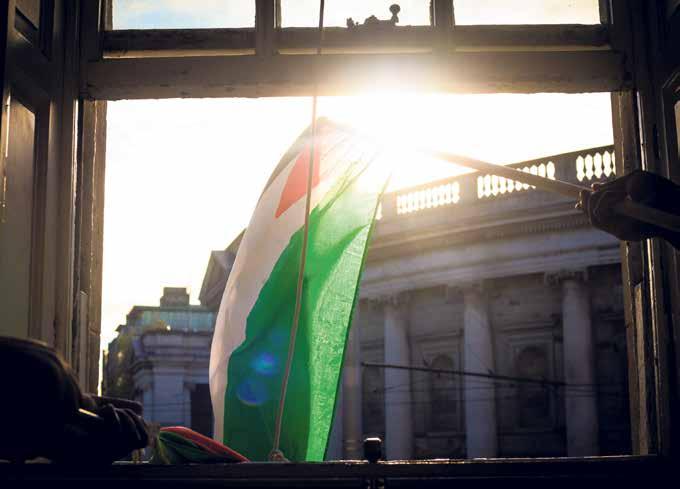
Trinity’s faculty of Health Science has advertised research fellowships with the Canadian Institute of Advanced Research (CIFAR) Azrieli Global Scholars Programme. The email included two opportunities, both of which take place in Israeli academic institutions: Azrieli International Visiting PhD Fellowship and the Azrieli International Postdoctoral Fellowship.
In an open letter posted to the Instagram’s of Academia for Palestine Trinity and Academics for Palestine Ireland, they state that researchers in the Faculty of Health Sciences had received an email promoting “prestigious fellowship opportunities” from the Azrieli Foundation. The letter, sent on March 11th, states, “the email seems to have been sent directly from a representative of the Foundation, Dafna Sofrin-Frumer, to the Faculty Dean, and forwarded to all staff in the Faculty with no considerations for the harm that promoting Israeli-linked funding schemes is likely to have on recipients”.
During Trinity College Dublin Students Union Comhairle on March 11th, a motion to condemn the Azrieli Foundation was passed unanimously. This motion came from Business School Convenor Patrick Keegan, who stated that the foundation has been accused of operating in the West Bank Settlement and also has been linked to IDF funding, as well as advertising fellowships for students to conduct research in Israel.
Director of Communications of the Azrieli Foundation emailed The University Times, writing that an article published to UT’s website covering the Comhairle motion “reiterates false allegations about the Azrieli Foundation relating to our ongoing fellowship collaboration with Trinity College Dublin”. Also written in the email was the statement “to be clear, the Azrieli Foundation does not operate in the West Bank, nor does the Foundation have funding ties to the IDF. As a non-profit, we are strictly
apolitical and remain steadfast in our commitment to a peaceful coexistence.”
According to the Canadian NGO Just Peace Activists, the Azrieli Foundation has funded the Jerusalem Foundation and the Jewish National Fund, whose charitable status was removed by the Canada Revenue Agency following a public campaign exposing the foundation’s ties to the Israeli military and illegal settlements. They also reported that the foundation has donated to the Zionist organisation Im Tirtzu.
The Azrieli Institute of Israel Studies at Concordia University was also founded by the Azrieli Foundation, which was described by farright Zionist Gerald Steinberg as an intentional “counterattack” against BDS advocacy on campus. According to their website, the foundation has two important international relationships, one with the Rothberg International School of the Hebrew University of Jerusalem and the second with the Ben-Gurion Research Institute for the Study of Israel and Zionism.
The Azrieli Group has past and present investments in companies that do business on illegal West Bank settlements.
The Guardian referred to the Azrieli Foundation as the “the charitable arm of the Azrieli Group, Israel’s largest publicly traded real estate company which has holdings in Bank Leumi. The Office of the United Nations High Commissioner for Human Rights has listed Bank Leumi as operating in Israeli settlements in the occupied Palestinian territories”.
The Azrieli Group is Israel’s leading real estate company, according to their website. The website writes “income-producing properties extend over 1.4 million sqm [square metre], yielding an NOI of over NIS 1.6 billion per year. with an additional 1 million sqm under development” and that “the Azrieli Group has shaped the way Israelis work, buy, and live for over four decades” . These properties are
held in the occupied West Bank and East Jerusalem as well as owning 4% of shares in Bank Leumi. According to the Artists Against Artwashing (AAA), who have protested against the Azrieli Foundation, several European pension funds have recently divested from the bank, “citing its violations of international law in financing settlements, extracting natural resources and building infrastructure in occupied territory”.
Additionally, following the events of October 7th, Azrieli announced via their website that they would be sending $10 million to Israel, stating the foundation “stands united with Israel as it defends itself”.
The foundation was recently protested this past November at the annual gala fundraiser for the Toronto Arts Festival (TAF). AAA wrote in an open letter at the time that “Past and present Board members of the Azrieli network also represent ties to illegal weaponry research, military intelligence, and efforts to ‘rebrand’ the image of Israel and censor Palestinian voices by donating $25k annually to Honest Reporting Canada.” The Art Newspaper describes Honest Reporting Canada as an Israeli advocacy group that routinely harasses journalists who publish articles critical of Israeli policy.
Dublin City University has also advertised Fellowships with the Azrieli Foundation, including the Azrieli Foundation International Postdoctoral Fellowship.
Last May, following the encampments led by Boycott, Divestment, Sanctions (BDS), Trinity College agreed to full divestment from Israeli companies and institutions.
In a statement released at the time, College wrote that they had a “firm commitment” regarding initiating “a process to divest from investment in companies that have activities in the Occupied Palestinian Territory” and “appear on the UN blacklist”. College have been contacted for comment.
Students have taken to social media to protest Trinity’s violation of the Official Languages Act. Pádraig Mac Brádaigh, the Students’ Union Irish officer, states that the violations are widespread. Under the Official Languages Act of 2003, public bodies are required to respond to written and electronic communications in the language in which they were received. According to the act’s official guidebook, “The Act directly provides that public bodies have a duty to reply to communications, in writing or by electronic mail, in the official language in which the communication was received”. However, students say that Trinity has failed to uphold these requirements, particularly within the academic registry.
TCDSU Oifigeach Gaeilge Pádraig Mac Brádaigh recounted an incident earlier this year in which a student emailed the academic registry in Irish and was “told to email them in English.” He also shared his own experience receiving responses in English from multiple college bodies despite emailing them in Irish. He stated, “I’ve received correspondence in English from a large variety of bodies within the college,” adding that even the senior dean himself responded in English. The University Times has seen the aforementioned correspondence. Students also raised concerns about the lack of Irish signage around campus. While the official guidebook states that “where a public body communicates in writing or by electronic mail with the general public or a class of the general public for the purpose of furnishing information to the public or the class, the body shall ensure that the communication is in the Irish language or in the English and Irish languages,” Mac Brádaigh pointed to the academic registry’s failure to comply with this. He noted that earlier this year during the exam time “all of the exam locations were signposted with English signage” and did not include Irish. Mac Brádaigh calls this a direct “vi-
olation of the law,” which he says is “discriminatory towards Irish students”. Mac Brádaigh in response, “went around with a marker and wrote the Irish on them.”
While Mac Brádaigh says the academic registry is preparing new signs for the upcoming Hillary term and “progress is being made,” he notes that “when it comes to Irish legislation, the response is always reactive rather than proactive.”
Mac Brádaigh notes that Trinity is not the only public body not complying with the law. One example he mentions is the dental hospital, which is associated with Trinity. He states that the hospital’s compliance is “worse than other buildings associated with Trinity College” and mentions this is the “only building associated with Trinity that I’ve seen where there is no Irish signage language at all”. In response to these concerns, Mac Brádaigh says that he has met with estates and is currently preparing a presentation for the college Bursar about the lack of Irish language signage. While he says that the states and facilities say they don’t have money to replace a lot of signs he believes, “That’s not an excuse; it’s the law, so Trinity has to have enough money”. He warns that if funding is not secured from the Bursar, then the issue will escalate, stating, “If we do not get the money from the Bursar, then I will submit a huge report to An Coimisinéir Teanga detailing extensive violations of the law that Trinity has done within this year, or they will be facing a serious investigation by the An Coimisinéir Teanga”. According to PEIG, The An Coimisinéir Teanga (the Irish Language Commissioner) is responsible for enquiring “into any valid complaint where public bodies are considered to have failed to fulfil their duties under the Official Languages Act, under any regulations made under the Act and/or under any scheme confirmed with a public body under the Act.”
Mac Brádaigh further states that he has done his due diligence, spending months trying to cooperate with Trinity in hopes that they will find a
solution. According to PEIG “if the Language Commissioner cannot resolve the complaint satisfactorily on an informal basis, he may launch an investigation or formal inquiry.” Brádaigh states if the college still “doesn’t provide this funding, then that “would make any complaint to the An Coimisinéir Teanga far, far worse because it would show that the college is simply not willing to fulfill its obligations under the legislation.”
In a statement to The University Times College said: “Trinity’s Academic Registry is taking a phased approach to the increase of Irish in the department. Phases on and two are the development of all signage bilingually and having a library of Irish responses to Irish queries received. These are now fully implemented. In addition, students can request service in Irish and can be connected with Irish-speaking staff in AR. Phases three and four are Irish Language training with Service Desk staff through the Irish Language Office, and an active review of the Academic Registry website translation to Irish. Phase five is a review with IT Service Colleagues of the student portal and translation of that into Irish. This involves system redevelopment and will take longer as a result.”
When presented with this statement, Mac Brádaigh said that he had repeatedly met with Academic Registry and IT services and found that insufficient progress was made over several months. While An Comisinéir Teanga does not have the ability to penalise public bodies for their lack of compliance with Irish language directives, they do work in co-operation with bodies to improve access to the Irish language which is the first language of Ireland and has equal standing in the Irish consititution alongside the English language. Mac Brádaigh has reiterated his commitment to making the College compliant with the Official Irish languages Act and is “90% sure” he will report the College to the Comisinéir Teanga.



to be allowed to join the fun. While the event was reserved exclusively for ticket holders, the spirit of Holi is one of sharing and inclusivity. Although tourists were not allowed to formally participate, many
students and organizers happily shared handfuls of colored powder with them, letting them experience a piece of the festival. While the colors, music, and energy of the event successfully captured the spirit of Holi, something essential was missing—food. Traditionally, Holi is as much about festive treats as it is about colors. Across India, the festival is marked by the sharing of sweets and snacks, with classic delicacies like gujiya (sweet dumplings filled with nuts and dried fruits) and thandai (a spiced milk drink infused with saffron, cardamom, and almonds) playing a key role in the celebrations. However, despite Holi being a festival of indulgence and togetherness, the Indian Society did not arrange any food or snacks for the event—an omission that left many attendees disappointed. Yet, the spirit of Holi, breaking down social barriers and fostering unity,remained strong throughout the celebration. Friends, classmates, and even the curious onlookers watching from outside the square were touched by the festival’s warmth and inclusivity. Though food was missing, the shared experience of colors, music, and joy brought people together, reinforcing Holi’s essence as a festival of community and connection.
For many international students, the event was a heartfelt connection to home, allowing them to relive cherished traditions despite being thousands of miles away. For others, it was an exciting introduction to Indian culture, offering an immersive experience that transcended language and background. Whether it was their first Holi or one of many, everyone left covered in color, music ringing in their ears, and memories of a festival that truly embodied unity, joy, and celebration.
After a tragic railway station collapse in Novi Sad and subsequent interference with a peaceful vigil, Serbian students have been protesting against their country’s corruption and current government since late November of last year. Students have been demanding the release of documents relating to the construction of the railway and prosecution of those who had attacked the protesters as well as the release of students who have been arrested for partaking in them.
Continuing their protests for almost four months, the students have been continuously supported by the University of Belgrade and many other institutions as well as citizens. Consequently, this movement has become, according to Slavoj Žižek, one of the largest student-led movements in Europe since 1968 and the largest protest in Serbian history. However, despite their efforts, the students’ demands have not been met, and the government has accused the protesters of being “supported by foreign powers” multiple times. The protests have seen mass support, with videos and pictures circulating on social media of senior citizens supporting the students with food and water. In February, the students were supported in their traffic blockade by truck drivers and other motorists. While the Western response and coverage have been slow, on the sixth Comhairle on March 11th TCDSU (Trinity College Students’ Union) adopted a motion of support for university students in Serbia. This means that the Union can now lobby for the College to officially support the Serbian student movement and the University of Belgrade.
Speaking about the motion, the motion proposer, Jovan Jeromela stated that, “My primary motive for submitting this request was to inform Trinity students and staff about the perseverance and
dedication that their colleagues in Serbia are showing at the moment,” further stating that, “I hoped that the news of the Motion passing and the Trinity students union officially noting and supporting the Serbian students would be a welcome change in this outside perception.”
Detailing the protests Jeromela expressed hope for the student movement stating, Student actions like these are reawaking hope across Serbia that a change is finally possible, as evidenced by many moving videos of very old

Pádraig Mac Brádaigh and Daniel Walsh of the Students’ Union are both running to be Officers of Congress within the Union of Students in Ireland (USI). USI is a representative body for students of affiliated third-level institutions across the country. Trinity College Dublin and its students are members of the organisation. Pádraig Mac Brádaigh is contesting the position of Leas-Uachtarán don Gaeilge (Vice-President for the Irish Language) and is one of three candidates running for
Mac Brádaigh is currently TCDSU Oifigeach na Gaeilge (Irish Language Officer). Speaking to The University Times, Mac Brádaigh shared, “I have extensive experience with all aspects of the job and if elected, I will work hard to meet other student unions where they are in terms of Irish language policy and implement not only ambitious, but sustainable action plans to increase the presence of Gaeilge in
all they do.” In reference to his role as Oifigeach na Gaeilge, Mac Brádaigh said, “Within one year, I have made AMLCT/TCDSU the most bilingual union in the country through cooperation with my fellow officers and workable translation structures which provide results. want
Brídín Ní Fhearraigh-Joyce
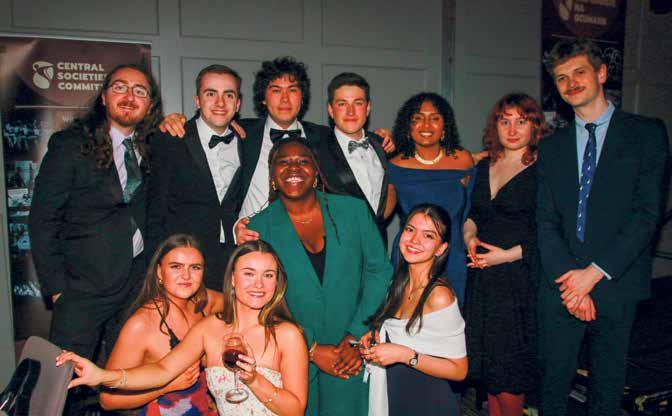
Tbest event award was presented by Linda Doyle to the Literary Society for their murder mystery dinner. The best multi-day event award went to DU History Society for their Palestinian lecture series which hosted academic lectures over multiple weeks. The Filipino society – which was recognised last year – were decorated with the societies’ choice award which was voted upon on the night by society members. Their win was lauded by CSC Chair Faith Olopade who praised how far they have come. The Women’s Health Society also
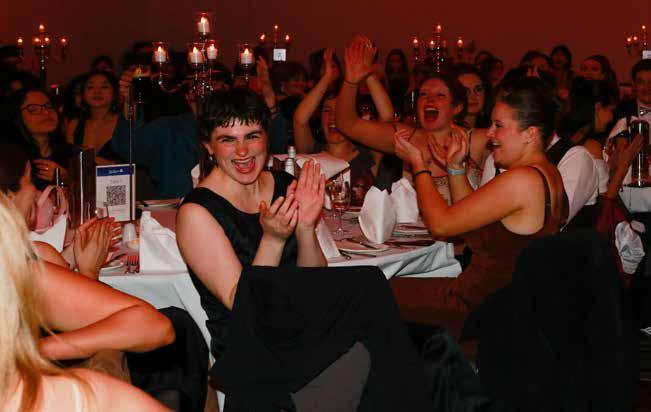
had success having been awarded the prize for
ing wind storms, has ravaged their crops of cassava, maize, and sweet potatoes and prevented any food security. In 2021, the people of Androy endured what experts are now saying is the first climate-change-induced famine. The population now suffers from recurrent famine events, known as the “Kere” in Malagasy, which literally translates to “starved to death”.
In the south of Madagascar, up to 1.3 million people face acute food insecurity and almost 40% of children are chronically malnourished.
The study, led by researchers from Trinity’s School of Psychology, along with researchers from Catholic University of Madagascar, Queen Mary University of London, University College London, and CBM Global, demonstrates that climate effects are already damaging mental health. Dr Hadfield, Associate Professor in the School of Psychology and Trinity Cen-
tre for Global Health, explained, “we found that chronic climate stressors — not just extreme weather events — are already shaping adolescent mental health. In higher-income countries, climate anxiety often focuses on future risks, but in Madagascar, young people are already living the reality”.
The authors of the study link climate change to a mental health crisis in 83 Madagascan adolescents through mixed-methods surveying. They found that over 82.1% of the participants scored as having probable depression, while up to 86.8% scored as having probable generalized anxiety disorder. The researchers found three causes of this crisis: “loss of household resources, a state of uncertainty, and a disruption of coping mechanisms”.
In the first, food insecurity has crippled the region and
Patrick Keegan
ty College Dublin.
TTMI’s bold new strategy will come into effect this year, outlining the steps to be taken over the next 5 years to ensure continued growth and success. The key focus of their strategy is collaboration in all its forms - across disciplines, with industry partners, and on an international scale. In his statement, Professor Little explained
“By fostering a dynamic environment where clinicians, scientists, and academics work in unison, we can accelerate the development of novel diagnostics, therapeutics, and interventions that will improve the quality of life for countless individuals.”
bank build on the St James’ hospital campus. This development will dramatically increase TTMI’s capacity for sample usage and lay the groundwork for national approaches. When asking TTMI’s new director Professor Little, about his personal vision for the institute, he stated that TTMI aspires to be recognised as a global leader in translational health research. His goal is to drive patient-centred, innovative solutions that transform scientific discoveries into tangible improvements in patient care and overall health outcomes. The passion
en the recent reports that the Irish Government may scrap the Rent Pressure Zones at the end of the year, which limit increases in rental prices in certain areas at 2%, in-
cluding Student Accommodation. Many believe that the Government should invest more into building purpose built, university owned accommodation. In a comment to The University Times, the Sinn Féin Spokesperson on Further and Higher Education, Research, Innovation and Science Donna McGettigan TD stated that “They need to put more funding into affordability but also allow TUI borrowing to build on campus accommodation. They have the means to do this but the government do not allow them to borrow”. McGettigan continued on by stating that “if we [Sinn Féin] were in government we would provide €300 million in capital expenditure. We have spoken to students on this and they have told us
Cestablished key objectives, such as fostering collaborative partnerships, enhancing core facilities, navigating challenges such as GDPR and Big Data, and integrating patient voices into research. These goals have largely been achieved, leaving a solid foundation for the next phase of growth under its new director, Professor Mark Little, Fottrell Professor of Nephrology at Trini-
From its inception, TTMI aimed to bridge and consolidate all areas of expertise, and this mission will continue in its new strategy. A key focus is creating a bridge for research-active clinicians to engage with worldclass bench scientists, easing the path for development of disease cohorts and unlocking biobanking opportunities. TTMI have developed a new “THRIVE” framework to define its key focuses for the next five years. This acronym highlights their core aims: Transformative Discovery, Harmonised Collaboration, Research Talent Development, Impactful Health Solutions, Visionary Sustainability, and Excellence in Science. Biobanking involves the storage of patient biological samples, such as DNA and blood cells, to drive a personalised medicine approach that aligns an individual’s genetic and cellular patterns with diagnostic and treatment approaches. This ensures that the right therapies are applied to the right patients at the right time. Currently, TTMI is consolidating its biobanking pathways in line with the newly ratified large-scale bio-
TTMI’s annual conference will be held onFriday, March 28th, showcasing exciting new research in the fields of cancer, vaccines, stroke, and iron metabolism. Key speakers include Dr. Angela O’Neill, a Trinity Research Fellow in radiation therapy, and consultant neurologist Professor. Dominick McCabe. The conference will also illustrate TTMI’s renewed focus on clinician-scientist engagement, with Professor Little giving a talk titled “TTMI the Next Five Years and Beyond”. With its bold new strategy, a strengthened focus on collaboration, and a visionary leader at the helm, TTMI is positioning itself as a global force in translational medicine. Over the next five years, we have a front-row seat to witness how TTMI will transform patient care through innovation, setting new standards in medical

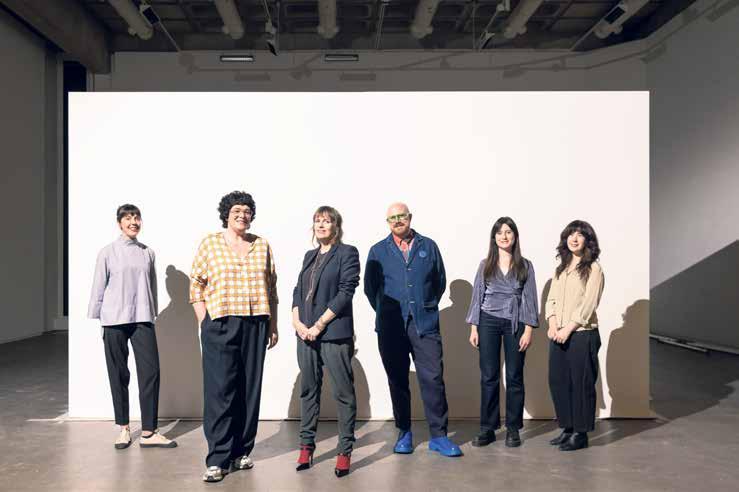
ing other people are really taking care of the rest of the work. It is exciting to work with Georgina again within an intellectual space, to really think about this project and develop it over time.
Potts So it might be a good time to ask you, Georgina, what will your role be in this?
Jackson am the curator of the pavilion and work really closely with Isabel on the development of the exhibition.
A key part of this is the long relationship have had working with Isabel. The very first exhibition that curated was in 2004 and as a budding curator invited Isabel, an artist who I respected hugely, to believe in me and make a new work. The first time I went to the Venice Biennale was in 2005. So, it is an amazing kind of arc to think about, from working with an artist for the very first time and attending the biennale as a visitor, and then over twenty years later to work together on this hugely influential global platform with hundreds of thousands of visitors.
The Venice Biennale was founded in 1895 and has a remarkable history; both the artists who have exhibited there and key exhibitions that have shaped how we think about art. The curator who will oversee the 2026 Biennale is Koyo Kouoh, the Executive Director of Zeitz Museum of Contemporary Art Africa in Cape Town, and the first African woman to curate the biennale. She has a phenomenal
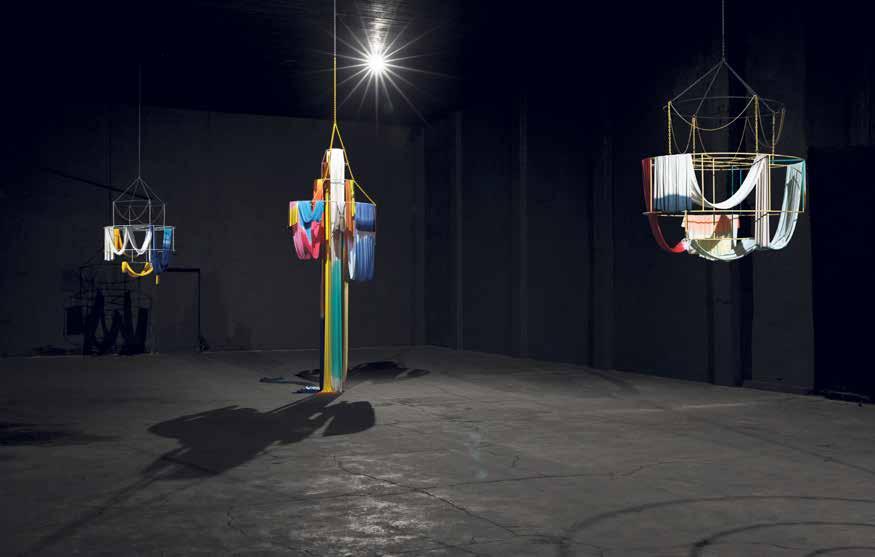
curatorial practice which at the core explores how we can think about making the world a better place….so critical at this time.
Isabel’s work is rooted in big subjects but has a remarkable capacity to speak to audiences on a human level, looking for ways to like, or even love, the complex world we’ve made. Another key part of curating is thinking about how to engage audiences both in Venice and here in Ireland. The exhibition will return to Ireland in 2027 and be shown in three fantastic spaces including The Douglas Hyde.
So I think for all of those reasons, it’s just really exciting to be part of this, and be immersed and part of such trailblazing history, to create such visibility for Isabel and the vitality of visual arts in Ireland, and fundamentally make a brilliant exhibition…. one that lives in peoples’ minds for years to come. Potts Your work often delves into themes like cosmology, mortality, and mythology. How do you envision these ideas resonating with the distinct context of Venice and amongst such diverse audiences?
Nolan I’ve always been quite fascinated by Italian culture, and even did an Erasmus in Italy while was
in NCAD. probably got interested as a kid through mythology and the influence that Greek history and mythology had on the evolution of the Roman world. What I’ve been looking at recently is the history of humanism and the concept of the secular, which emerged with Christian thought, but also has its origins in the writings of Cicero, the first person who uses the word humanitas. I’m looking at a particular time in Northern Italian history the late medieval, early renaissance period it seems a hinge moment, massively influential. It feels like a good way to consider what is happening in the world and the shape that Western society is in now. The present moment is obviously so contingent on certain events, decisions and ways in which history unfolded and am slightly obsessedor very preoccupied should say - by the late Middle Ages. How that interest translates into or emerges in the work is an entirely different matter.
Potts: You have described art as having a strange and special capacity to make and test powerful kinds of community. In what ways do you hope to foster a sense of connection and shared experience?
Nolan I say it because feel it, because I believe that it is true. Art has
been a very important part of my world since was a kid, and even from my early teens as a way to think about the world - not just to represent it. find forms of love or solidarity and forms of learning and pleasure and confusion in the visual arts. I turn to literature a lot too, but there’s something about the visual arts that find profoundly, peculiarly compelling, and know that other people do too.
In a sense it’s very simple, it’s not necessarily thinking about how to activate a specific audience. It is about a collective capacity to say hello to the world and have the world say hello back in a material way.
Potts Following on from that, your practice includes a variety of media, including sculpture, text, styles photography and writing. Can you share any hints about the kinds of work on media you might consider?
I can’t provide any specific details about what one can expect to see at the moment, although can say that I will be, as with my previous exhibitions, using various mediums. Potts In announcing the appointment Minister Catherine Martin emphasised the Venice Biennale as a pivotal moment for Irish visual arts. How does it feel to represent your country with such

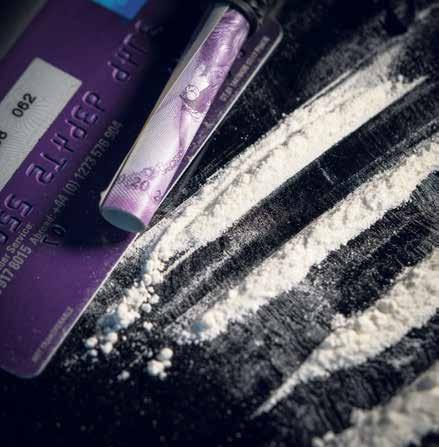
Dreducing risk rather than enforcing abstinence. In contrast, Ireland remains largely rooted in prohibitionist policies, with universities relying on formal bans and disciplinary action, despite evidence suggesting that criminalization does little to deter use. The official stance of the university is, as expected, prohibitive. The Misuse of Drugs Policy outlines clear restrictions, and initiatives such as the Healthy Trinity: Alcohol Campaign attempt to curb excessive consumption. But these measures function more as institutional formalities than as meaningful interventions. Policy without cultural traction remains performative, a gesture toward regulation that does not meaningfully engage with the realities of student life. When the dominant attitude is one of nonchalance, prohibition becomes little more than a bureaucratic backdrop. If there is to be a shift, it will not come from stricter policies or reactionary crackdowns. It will come from an honest interroga-
tion of why this culture persists and what purpose it serves. Why is drug use so deeply enmeshed in
Harper Alderson
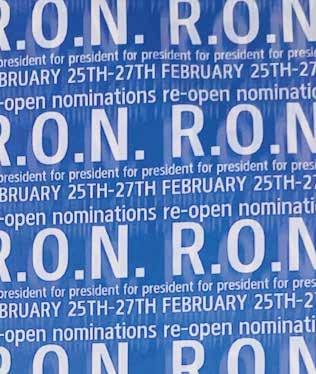
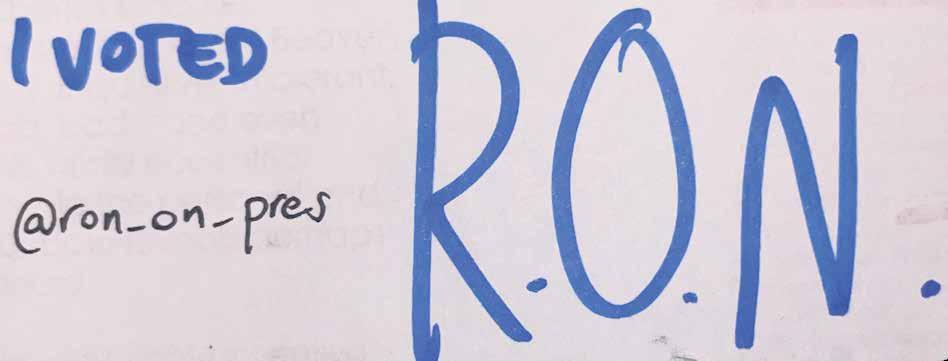
On 31st January at around 6:00 PM, from the steps of House 6, the candidates for President of the Trinity College Dublin Student Union (TCDSU) were announced. Seán Thim O’Leary, Patrick Keegan, and Giovanni Li were set to contest the race. On 18th February, an Instagram account appeared: @rononpres. RON refers to the option to “reopen nominations”, available on all ballots in TCDSU elections. The Instagram stated “There is no viable candidate in the TCDSU/AMLCT presidential race for 25/26”. RON was consequently cemented as the fourth (unofficial) candidate.
Trinity’s
enon. From the
and
is not a
20th century
has
acceptance. The 1970s and 1980s saw an influx of recreational drug use tied to broader cultural shifts in Ireland and beyond, with cannabis and psychedelics finding their place within certain academic and artistic circles. By the late 1990s and early 2000s, the rise of party drugs like MDMA and ketamine paralleled the growing electronic music scene, aligning student drug use with nightlife and club
culture. Trinity, being both a historic institution and a hub of youth culture, has long occupied a space where intellectual curiosity, social experimentation, and hedonism intersect. Despite periodic crackdowns, the approach to drug use on campus has often been laissez-faire, particularly for students from privileged backgrounds. This normalization is not without consequence. What does it mean when a university culture renders drug use unremarkable? Trinity is often regarded as a space of privilege, where students, particularly those from wealthier backgrounds, experience the freedom to engage in risk with minimal repercussions. Unlike in working-class communities, where drug use is often met with punitive responses from the state, here it exists within an insulated ecosystem, largely detached from the kinds of legal and social consequences that might otherwise accompany it. This disparity is rarely acknowledged. The same behaviors that could derail lives elsewhere are, within the Trinity bub-
ble, little more than a rite of passage, a footnote in the university experience. Yet, beneath this surface of detachment, research suggests a more complicated reality. Studies led by Dr. Jo-Hanna Ivers at Trinity’s School of Medicine examine substance use not as an isolated choice but as the product of broader psychological, social, and environmental factors. Addiction, after all, does not develop in a vacuum; it is a symptom of deeper anxieties, an attempt to navigate stress, social pressure, or, in some cases, a need for control. Even within the elite social strata of Trinity, drug use is rarely just about pleasure. It is often about escape.
Trinity is not unique in this. Drug use in university settings has long been a global phenomenon, shaped by similar forces of socialization, stress, and cultural acceptance. In Ireland, national studies have shown an increasing prevalence of drug use among young people, particularly in urban centers and university towns.
A 2019 report by the Health Research Board indicated that one in three young adults in Ireland had used an illegal drug in the past year, with cannabis being the most common, followed by cocaine and MDMA. The trend mirrors broader patterns seen in European and North American universities, where high levels of academic pressure, party culture, and the availability of substances create an environment where drug use flourishes. Globally, universities have responded in different ways. In the United States, for instance, there has been a growing push for harm reduction policies, with some institutions providing drug testing kits and safe-use education rather than strictly punitive measures.
The Netherlands, known for its progressive stance on drug policy, has integrated harm reduction strategies into university life, offering counseling services and informational campaigns aimed at
is
to
and expecting the university to
ically
it would be
However, given the amount international students pay in fees, it’s fair to expect at least some structural support – whether that’s more guaranteed housing, dedicated rental support, or even just not ignoring students when they reach out for help. However, this is not the reality. When student Joline Perdue reached out for help while living in a mould-infested house, Trinity’s response? Silence. Another student Alice Weaver -, after failing to secure on-campus accommodation, was essentially told to “check the newspaper”. If you’re one of the lucky ones who have managed to find a place to live, now you have to figure out how to afford it in addition to the rest of day-to-day costs – which you may find are extortionate and depressing. Many students are forced to work part-time jobs to cover basic living expenses. Student Michelle Chan shared that she had to juggle two jobs and full-time studies, with the added pressure of preparing for the
Foundation Scholarship exams – an exam that offers immense financial relief but disproportionately benefits those with the “luxury of time” to study for it. This sums up the heart of the problem: students are not given the space or the resources to focus solely on their studies. The financial burden fundamentally alters what it means to be
In the wake of RON’s emergence, @rononpres gained more Instagram followers than any other candidate, were the subject of an “emergency debate” from the College Historical Society (the Hist), splashily graced the front page of the Piranha, and burst into Trinity’s collective consciousness. On 23rd February, Trinity News released the results of their annual week-long poll for first choice preferences: 19.82% for RON. On 25th February, Trinity News published a 24-hour “snap poll”: 54% for RON. On 28th February, results were announced upstairs at LoSt LaNe. TCDSU elections use the single transferable vote (STV) system, meaning, this election would likely go to multiple counts. The total valid poll was 3,214 votes.
After a period of nervous waiting interspersed by electoral celebrations of the six other sabbatical officers, the first count was announced by TCDSU Education Officer Eoghan Gilroy. RON led with 38.12% of first-preference votes. Li was eliminated. The room was charged. O’Leary’s hands flew to their head in shock, Keegan stood resigned, and Li mournfully shrugged. Most union members in attendance expressed they had voted RON, but restrained themselves beyond furtive glances and hushed exchanges. However, the spirit of dissent was palpable.
On count 2, RON’s lead over O’Leary was closing, and Keegan was eliminated. “Seán or RON” reverberated through the walls and floors. As people nervously shuffled, anxious discussions about “candidate-to-candidate transfers” and the mechanics of STV dotted the prevailing “I’m buying a drink” consensus.
On count 3, Gilroy cleared his throat and struggled to hush the rowdy spectators. He announced “Re-Open Nominations has received 1,310 votes”, continuing, to a suddenly silent crowd, “Seán Thim O’Leary received 15–” immediately
cut off by a roaring, eclectic, response. O’Leary was TCDSU president-elect, defeating RON. O’Leary’s campaign manager, junior sophister PPES student Eoin Connolly, pronounced “We completely flipped it.” He elaborated, “We won, not necessarily decisively, but certainly clearly (...) you cannot ask for much more in an STV [single transfer vote] election.” He attributed the traction RON gained to “a response to the radical wave in the union that was going to lull at some point”. Connolly resolved that the TCDSU had seen “activist-type people” in charge for the last two years (as opposed to the more service-based approach of O’Leary), and “the realisation that that was coming to an end” sparked the RON campaign.
Senior fresher English and Sociology student Amy Kennedy, the RON campaign manager, disagreed. She argued “It’s not fair to say that regardless of who ran, there would’ve been a RON. The candidates were at fault, there’s been good recent leadership and a bad outlook going forward.” Presidential candidate Giovanni Li echoed these sentiments, calling the candidate spread “controversial” continuing, “A SocDem [O’Leary], a Sinner [Keegan], and a first-year [Li].” Patrick Flynn, a senior sophister environmental science student, who was going to run for president if RON had succeeded, called RON’s success “a clear declaration of wanting more.” He explained that he initially didn’t run because “it wasn’t apparent that students wanted a more radical fighting movement on campus.” Kennedy agreed, stating “that level of unprecedented success showed there was an interest in a radical union, and a union for students”.
While Kennedy made it clear that the RON campaign was started by “radical leftist students”, not all RON voters agreed. An anonymous member of Freedom 4 Students (a group advocating for the right to opt out of TCDSU) stated that RON’s popularity in the election proved that “many students are dissatisfied with the overtly performative and political acts that the SU orchestrates.” Senior fresher PPES student James Ryan, the chair of Trinity People Before Profit, however, put it succinctly: “RON happened because the candidates failed to show the passion or dedication not only to fulfill their own manifestos but to form a cohesive vision for the union.” While there is apparent irreconcilable disagreement across the board
as to why RON garnered so much support so quickly, it is abundantly clear that the RON campaign was a campaign of passion. All stakeholders identified the fiery and intense essence of the RON campaign, representing a stark contrast from the original three candidates’ campaigns. Kennedy described the campaign itself as a “community”. She laughed, “the RON campaign was a bit of drama, a bit of gossip, a bit of mystery.” She explained that the RON campaign connected with the student body, continuing “if you are disconnected from the student body, you can’t represent the student body.” Flynn called the movement “spontaneous (...) we even felt it through our phone screens [referring to the Trinity News Snap Pool].” Flynn continued “People got their hopes up, like, maybe people do really want a bit of passion, or a bit of bold energy”.
Li similarly characterised the RON campaign as an outburst as a mass intensity among students. However, he likened it to “a disease that was spreading.” Li expressed “when many students have that collective idea, it can become something more violent, mischievous, even malevolent.” Connolly more specifically referenced the RON community: “those people need to stay in the Union,
they make the Union better.” He explained that “highlighting shortcomings” is crucial. Li agreed, stating that the RON campaign “raised legitimate concerns” though adding “I do not believe the way they did it was correct.”
Hist Auditor Tom Francis, architect of the “This House Would Vote RON for President” emergency debate shared his reasoning, clarifying that the debate happened because of “important and organic conversations happening on campus” continuing “The Hist sees it as important to have these conversations.”
Francis referred to RON’s 10-pointlead over O’Leary on the first count, explaining “when people had a strong preference, they voted RON.” Continuing, he said “people who didn’t care as much and saw candidates as fine or bearable ranked them.” RON’s first count lead shows an outpouring of enthusiasm, while Seán’s victory represents a voter consensus.
The RON campaign itself raises broader questions about how TCDSU’s structures and campaign rules allowed a situation where no presidential candidate was suitable for a large proportion of the voting population. Francis said that “TCDSU’s engagement with societies is generally quite poor, especially given their budget.” As far as elections, he cited that candidates cannot endorse one another, share platforms, do negative campaigning, or speak in debate formats.
Kennedy also took issue with the SU’s ability to bring in new students, saying “the union needs to focus a lot on student engagement, even with the notably high voter turnout, it was still 3,351 of 22,000.” She continued, “there’s an in-group

The event brought together politicians, civil servants, academics, and students for an in-depth discussion of Ireland’s potential membership. Mitchell emphasised the significance of this meeting, stating that he was “not sure it would have happened without that meeting.” Though Irish researchers have had limited contributions to CERN projects in the past, their participation has still been highly impactful. University College Dublin (UCD), which hosts Ireland’s only experimental particle physics research group, played a role in the discovery of the Higgs boson, which later won a Nobel Prize. UCD physicists have also been exploring applications of CERN-developed technology in Irish hospitals. The benefits of CERN membership go beyond research. CERN is committed to open science,
is someone in Ireland studying one of the fields that is researched in CERN and they are interested in advancing their research, they’ll want to connect with CERN and be able to use the facilities there. Some of our best and brightest have gone to the UK or France to study, because they know they’ll have access to CERN over there that they haven’t had here.” One of the campaign’s defining moments came through a chance encounter with Trinity College Dublin’s Provost, Linda Doyle. Mitchell seized the opportunity to convey the importance of CERN membership, prompting Provost Doyle to organise a gathering at the Provost’s House.

the most delicate part, which is why Blue Ghost was equipped with an advanced autonomous landing system that enabled a precise and controlled descent. It carried a payload that consisted of carefully chosen scientific instruments to study the Moon’s soil composition, thermal properties, and radiation levels data that will be crucial for future missions. Blue Ghost’s success has shown the world that private companies are capable of completing difficult and complex spatial missions, which were once exclusive for government space agencies like NASA or ESA. This represents a big step towards the commercialisation of space exploration. FUTURE OF SPACE EXPLORATION The ability of private companies to conduct successful space missions is reshaping the future of space exploration and of humanity’s role beyond Earth, raising crucial questions about what lies ahead.. One of the most important impacts of this success is the acceleration of
lunar exploration. Private companies drive innovation, rapid technological advancements and cost efficiency, allowing for more frequent and ambitious missions. This is because these enterprises have more flexibility than governmental organisations, enabling faster and efficient progress towards bigger goals such as permanent lunar bases and interplanetary journeys. Government-led space programmes must consider diverse factors such as political, economic, and social constraints, which can slow down decision-making in space exploration. However, private companies tend to take greater risks, meaning they can pursue more complex and ambitious advancements at a faster pace. This enables them to expand the boundaries of exploration and technology in a way that these traditional organisations cannot. Another important aspect is the resource utilisation; Blue Ghost and similar missions are laying the groundwork for extracting lunar materials to support a sustained human presence in space, but this is raising concern on who has the rights to exploit these resources and how to keep space a shared domain rather than a private frontier. Additionally, we should also consider the growth of space tourism, satel-
Rachel Ranjith
Application season can be a wild ride for anyone in college. While law and business students often conjure up the image of hurriedly sending out polished résumés to well-known firms, STEM students experience a frenzy of their own—albeit with a different flavour. Instead of aiming exclusively for traditional internships, many future scientists, engineers, and tech wizards juggle research gigs, lab positions, clinical rotations, hackathons, and even their own side projects. The variety can feel overwhelming, but it also opens up paths that might offer even more hands-on experience than a classic internship. If you’re a STEM student, or considering a STEM field, you might wonder just how important the time-honoured internship really is, compared to research in a cutting-edge lab or spending a weekend glued to your computer at a hackathon. In reality, no single route holds all the answers, and the best path is the one that lines up with your passions, your learning style, and your ultimate goals. Take the pre-med or medical school crowd, for instance. Everyone pictures them in a hospital, wearing white coats and stethoscopes, but there’s plenty more that goes into becoming a doctor than classroom lectures. One piece often overlooked by people outside the field is shadowing, which is exactly what it sounds like: you follow a practicing physician around on their day-to-day rounds, watch them interact with patients, and get a sense of the rollercoaster of emotions that comes with real-world medicine. Reading about patient care in a textbook doesn’t compare to witnessing a doctor navigate an emergency with worried family members. That experience alone can reinforce (or sometimes challenge) your belief that medicine is your true calling. Clinical work—such as volunteering in a hospital or helping with patient intake—goes one step further by letting students engage in the care process, if only in small ways Sure, you might not be making diagnostic decisions, but you learn the rhythm of a hospital and how to handle tough, high-stress situations. Research also plays a starring role in a budding doctor’s life. Working with a professor on a new treatment method, investigating advances in surgical techniques, or diving into statistical data about patient outcomes might push you to develop skills in data analysis, critical thinking, and collaboration. Even though it’s not the same as be-
ing in a corporate environment, med schools and future employers look favourably upon the curiosity and specialised knowledge that come with research experience. Students in the “pure” sciences—biology, chemistry, physics, and related fields—might find labs and research projects often hold more weight than any short-term internship could. In a lab, mistakes happen. Things spill, instruments break, and unexpected results throw a wrench into your neatly planned experiment. As frustrating as that can be, it’s also where the real learning occurs. Problem-solving becomes second nature as you figure out how to salvage your work or adapt your experimental methods. That sort of adaptability looks fantastic on a résumé, especially when you can point to a tangible outcome, like meaningful data or contributions to a peer-reviewed paper. Collaboration in a lab can also teach you how to work in a team with fellow researchers, postdocs, and undergraduates. Sometimes, professors even encourage students to come up with their own project ideas, fostering a sense of ownership and creativity that a cookie-cutter internship may not offer. Employers in scientific industries often place more emphasis on these experiences because they showcase not just that you can memorise content, but that you can tackle unexpected challenges head-on, plan an experiment from scratch, and interpret your findings in a way that moves the field forward.
The tech sector, which has boomed so rapidly, has traditional college programs struggling to keep up with the latest languages and frameworks. As a result, tech internships can be fantastic - you might be writing code, analysing data, or testing software for a well-known company which can be hard to implement dynamically in rigid course structures. However, if you find the internship application process to be cutthroat or simply don’t land that top-tier position, there’s no need to panic. Hackathons, certifications, and personal projects can be just as powerful in proving your skills. Hackathons, in particular, are pressure-cookers for creativity. You and your team stay up all night brainstorming, coding, and debugging to build something from scratch within a short, intense timeframe, and, when it’s over, you walk away with a working product (or at least a half-working one) that you can show off as a conversation piece in interviews. Meanwhile, certifications—whether in cloud com-

puting, data science, or cybersecurity—provide a stamp of approval in a specialised niche. It’s a quick way to demonstrate mastery when a hiring manager skims your résumé. But let’s not forget the simple brilliance of personal projects. Building an app, running your own server, contributing to open-source code, or experimenting with machine learning models on your own time can set you apart in a world where a sea of other candidates are listing the same set of computer science classes. A well-documented GitHub repository can go a long way toward showing potential employers that you’re a doer, not just a talker. Engineering students often find a sweet spot somewhere between the hands-on lab work of the sciences and the product-focused world of tech. Whether you’re studying mechanical, civil, electrical, aerospace, or some other branch of engineering, it’s likely you’ll have chances to work on large-scale design projects, labs, or competitions that mirror real-world challenges. In some cases, an internship with a major engineering firm can open doors by offering direct exposure to advanced manufacturing techniques or large-scale project management. But just like in other areas of STEM, internships are only one piece of the puzzle. You might find that a senior capstone project, where you take an idea from initial
concept to functional prototype, is far more valuable for demonstrating your problem-solving chops and engineering mindset. Or maybe you excel in design competitions where you build a solar-powered car or a rugged robot to solve a specific task. Those events can be a playground for creativity, camaraderie, and practical know-how, all while adding impressive bullet points to your résumé. Plus, you’ll end up with a tangible creation you can literally hold up as proof of your skills. Documenting this work is crucial. Take pictures, record data, and outline your process so that when future employers or grad schools ask for details, you can walk them through every step and show exactly what you contributed. Given this whirlwind of possibilities—internships, research gigs, shadowing, clinical work, hackathons, projects, and more—it’s natural to wonder if the traditional internship holds as much weight in STEM fields as it does in business or law. The short answer? Yes and no. Internships still matter because they can provide direct industry exposure, networking opportunities, and a potential fast track to a job offer. You often get to see the real-world application of your studies and confirm if this is what you want to do. But if landing that shiny internship doesn’t happen, or if you feel like your passion lies somewhere beyond the typical office environment, don’t assume you’re at a dead end. In many STEM fields, employers
Leah Newman
Hlite deployment and in-space manufacturing. These advances present economic benefits and exciting opportunities, but they also introduce significant ethical and legal challenges. As private companies expand their reach beyond Earth, concerns about regulation, ownership, and sustainability are increasingly pressing. One of the primary concerns is that space is considered a common heritage. In 1967 the Outer Space Treaty was signed by more than 60 countries, and today over 100 countries are signatories of the treaty. It establishes that space belongs to all humanity and cannot be claimed by any nation or private entity, among other things. However, as private companies seek to mine lunar resources and establish a commercial structure with them, questions arise about the validity of the treaty who really owns these assets? The monopolisation of space resources could lead to economic and political tensions between the different countries. Another concern is the environment. The accumulation of space debris, excessive lunar exploration, and unchecked commercial activities could be a threat to the sustainability of
and
environment; the
exploitation we see on
be done on space, on the Moon, Mars or even other planets. With space once dominated by government agencies like NASA and ESA, the regulation and oversight of private companies remain unclear. There are actually no laws for corporate activities beyond Earth, so a new legal framework needs to be imposed to address concerns such as property rights, fair resource distribution, and liability. Firefly Aerospace’s Blue Ghost mission’s success marks the beginning of an era where space exploration is no longer exclusive to nations, but open to scientific and technological progress from a commercial point of view. Despite the advantages of increased lunar exploration, resource utilisation and space tourism, clear ethical and legal regulations are urgently needed. While the Outer Space Treaty provides a foundation the increasing movement from private corporations raises concern about ownership, sustainability and international oversight. We need regulations that ensure no economic and political tensions, and a legal framework to safely explore and exploit space in a manner that is right for all humans. The future of space should be about collective progress, ensuring that all humanity benefits from it, both for us and for generations to come.
ave you ever asked your teacher why a formula works, only to be brushed off with “Just use it”? You’re not alone! From the integral of sin(6x) to the linear motion equations, many students are left frustrated by a system that prioritises memorisation over understanding. The Leaving Cert’s rigid, time-pressed curriculum forces both teachers and students into a cycle of rote learning, stripping away the deeper reasoning behind maths and science. This is unfair to both teachers and students.
In Leaving Certificate Mathematics, students are given an enormous number of formulae that they are simply expected to apply without understanding why. The explanations and derivations behind these? Nowhere to be seen. It is only when a student takes Applied Mathematics or begins third level education in Mathematics that they are provided with detailed reasoning behind all of these formulae. These are often fairly basic explanations that allow students to understand why we use these formulae, rather than being told to just use them. We are all familiar with the quadratic formula. Yet the proof of this is not specifically included in the mathematics curriculum at Leaving Certificate Level. However, if it was, this would help students to see algebra and functions in a new and interesting way. This is also seen with the differentiation
rule we all know and love - the chain rule. The derivation of this is in no way out of the scope of what a Leaving Certificate higher level Mathematics student could understand. Yet it, along with the other rules of differentiation, are not given the privilege of an explanation. While time constraints are a major factor for their omission, they would help immensely with the students’ understanding of calculus and Mathematics as a whole. The overreliance on memorising formulae can greatly hinder problem-solving skills in students and can evoke a fear of maths and science among them. Instead of students being shown the true beauty that lies in the realms of mathematics and scientific reasoning, they are instead told to rote learn it, as if it were a textheavy subject, like History or Business. If students are not taught how to derive formulae and problem solve on their own, they will likely end up forgetting most of the information they learned after the exam. Whereas if the student was instead taught the logic behind what they are learning, they may grow to actually enjoy what they are learning, and remember it as a result. Despite its flaws, there are a certain number of advantages associated with the simplification of curricula.
It makes these subjects accessible to a much wider population of students.
It also allows an extremely wide variety of topics and chapters to be cov-
ered in a relatively short amount of time, even if it is often only at surface level. This raises the question: should we prioritise covering a large number of topics at a surface level, or focus on attaining a deep understanding of a smaller selection of them?. A way to accomplish this would be to allow more choice in the topics students study. For example, a student could be given the freedom to study three or four chapters in a greater level of detail, rather than a dozen plus topics that may not be of interest to them. This would also allow students to study topics of relevance to their future careers or educational paths. Does the simplification of ideas set students up for failure or success in the future? It is hard to tell. There is absolutely no differential mathematics in the Physics curriculum. However, in University, the study of Physics contains an abundance of complex mathematical equations. This could result in students making uninformed decisions in deciding what to study in college – wasting both time and money. However, if the Physics curriculum included the mathematics true to what physicists use daily, this whole situation could have been avoided.
Perhaps the Leaving Certificate should take inspiration from Finland’s educational system, which focuses more on conceptual learning rather than the rote learning that is so prevalent in Leaving Certificate Biology, Chemistry, and Physics. This often benefits students with excellent memories, rather than those who take the time to actually understand it. In the end, this leaves us with lots of random facts but without the ability to apply them. We need to encourage students to ask why things are as they are, instead of just accepting them. We

Editor
Brídín