Historic Pensacola Magazine
The Magazine of the UWF
President
Manny Diaz Jr.
Vice President, University Advancement
Tori Bennett ’12, ’16
Historic Trust
Catrina Burks
Robert Overton Jr.
Wendi Davis
Executive Editor
Brittany Sherwood ’14, ’25
Managing Editor
Zachary Farrington ’14
Creative Direction
Jennifer Peck ’08, ’25
Design
Hannah Bledsoe ’21
Carly Richards ’25
Photography
James Baldwin
Brian Butler
Jon Rose
Conlan Taylor ’23
Writers & Editors
Jessie Cragg ’19
Maria Goldberg
Savannah Guilford
Paige Hennessy Spradlin ’24, ’26
Micayla Yates
CONTACT US
Web historicpensacola.org
Email historictrust@uwf.edu
Phone 850.595.5985
Mail UWF Historic Trust, 120 Church St., Pensacola, FL 32502
TO GIVE
Online uwf.edu/give
Historic Pensacola Magazine is published annually by the UWF Historic Trust and University Marketing and Communications. The purpose of the Historic Pensacola Magazine is to showcase Northwest Florida’s rich history and community activities.
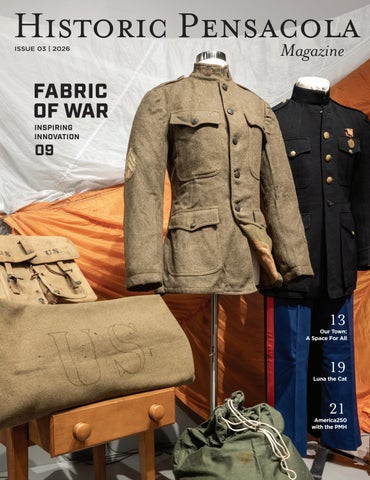
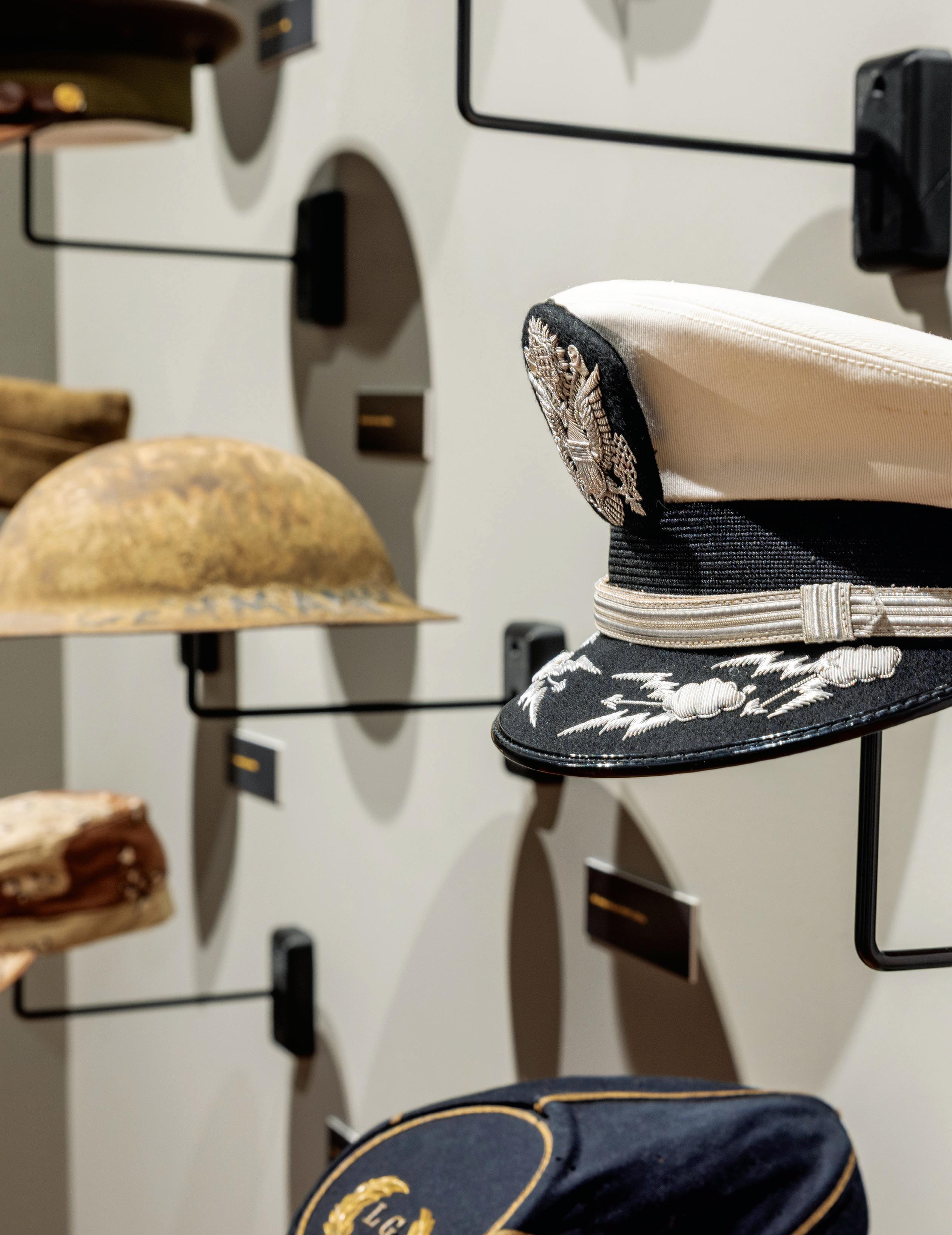
PENSACOLA’S MUSEUM OF HISTORY explores how military textiles adapt to meet the needs of American war heroes.

13 PENSACOLA CHILDREN’S MUSEUM: OUR TOWN 1 DEVELOPMENT SPOTLIGHT: BELLE BEAR
PECULIAR PENSACOLA: LUNA THE CAT
1 HT SITE FEATURE: “AMERICA250” FLORIDA’S VERSION WITH THE PMH 3 EVENT PHOTOS 6 SUPPORTER PROFILE: PARKER DESTIN
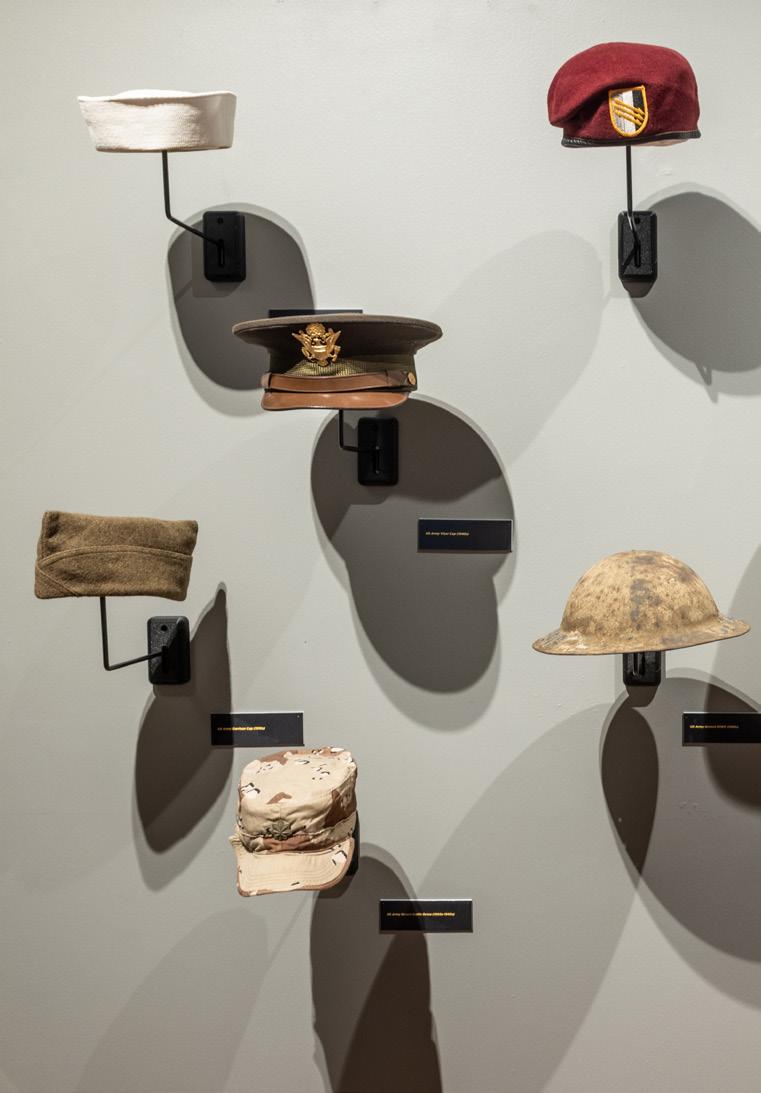
Helmet M1917
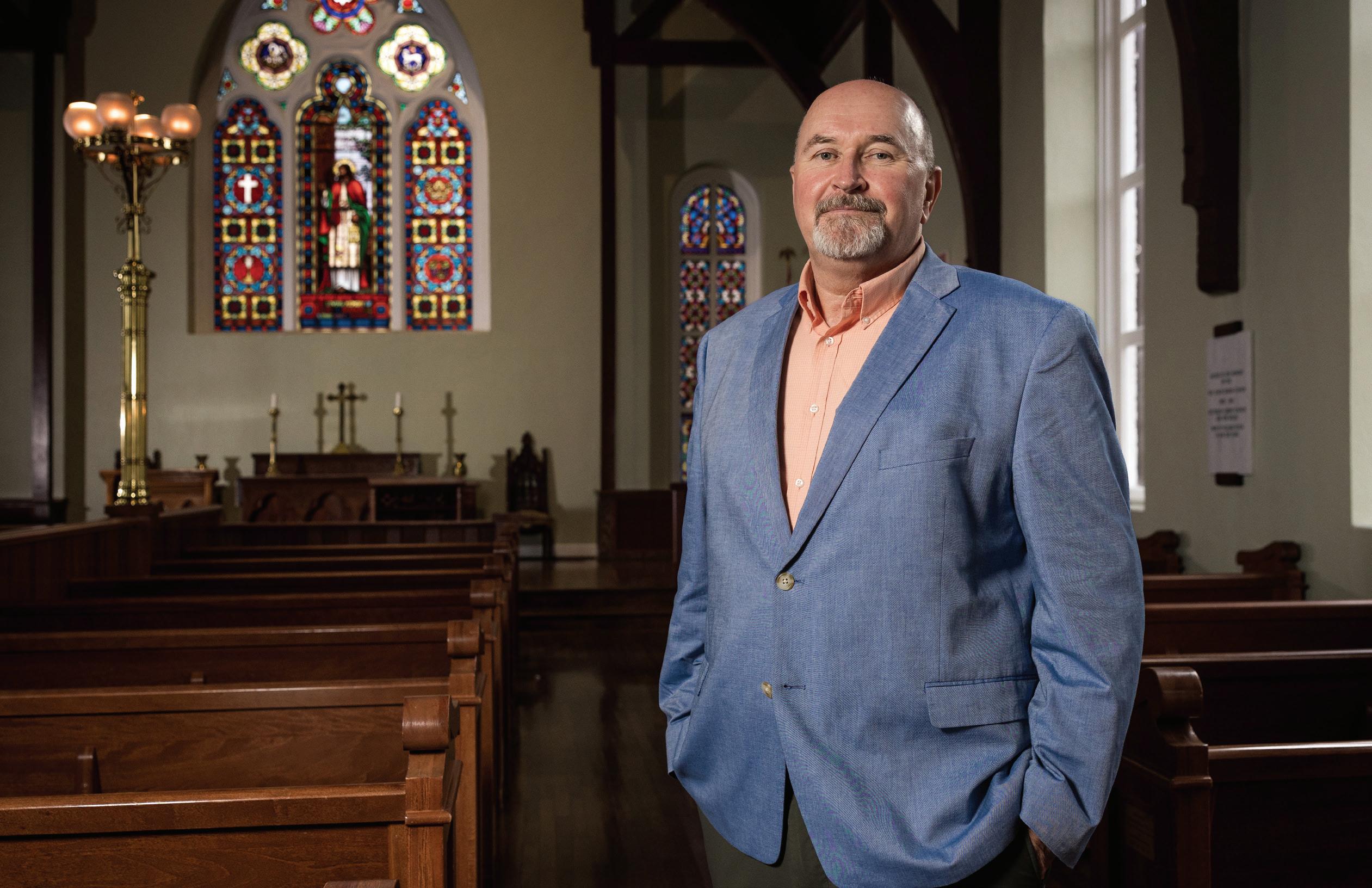

The Executive Director LETTER FROM
Serving as executive director of the UWF Historic Trust gives me a front-row seat to some of the richest and most fascinating aspects of Pensacola’s history, and I am especially excited to share them with you in this issue of “Historic Pensacola Magazine.” As the nation celebrates its 250th anniversary, Pensacola natives often share a knowing smile and a familiar refrain: “Well, technically speaking, we were here first,” a nod to our distinction as the site of America’s first multi-year settlement.
Pensacola residents will find much to enjoy this year as we explore thought-provoking historical artifacts, unveil exciting new developments and celebrate the people who make this community so special. If you are visiting our area, we hope the stories in these pages spark your curiosity about the rich history of our city, our coast and the moments that have shaped who we are today.
At the UWF Historic Trust, we share a deep commitment to preserving and sharing both the history and culture of Northwest Florida. Whether you fell in love with this region long ago or are just beginning to discover our beautiful white-sand beaches and unique sense of place, we hope this magazine invites you to explore Pensacola’s story even further.
Enjoy the magazine!
Rob Overton Executive Director of the UWF Historic Trust
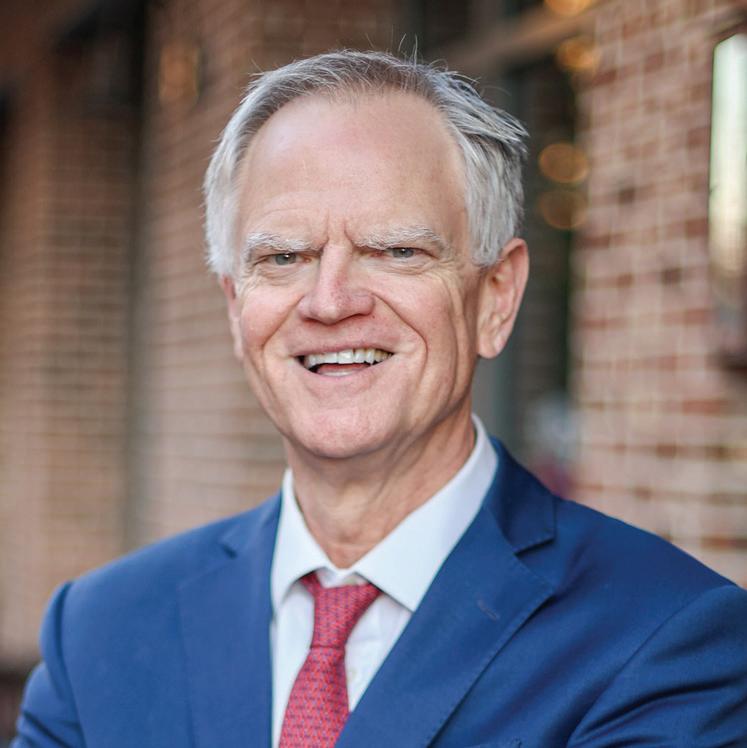
LETTER FROM THE Board Chair
It has been an honor to serve another year as board chair of the UWF Historic Trust. Each issue of “Historic Pensacola Magazine” invites you to experience our city in new ways, whether you’ve been here ten hours or ten years.
This year’s issue explores how we bridge the past and future. As America’s first settlement, Pensacola offers a unique vantage point as the nation approaches its 250th anniversary. In the pages ahead, you’ll discover a new exhibit tracing the evolution of American military uniforms and a remarkable 1700s letter from Benedict Arnold urging Spanish forces to attack Pensacola.
You’ll also meet two UWF faculty members using historical storytelling to spark curiosity in young learners and see how the Historic Trust is enhancing its properties to create more dynamic experiences for residents and visitors. Recent additions — including the new Sculpture Garden and entry at the Pensacola Museum of Art and the Lewis Bear Jr. sculpture — reflect the generosity and civic spirit that continue to shape our cultural landscape.
Thank you for helping us preserve and share Pensacola’s story.
Collier Merrill
UWF Historic Trust Board Chair
Community NEWS & NO TES Recent news from the UWF
Historic Trust
BY MICAYLA YATES AND PAIGE HENNESSY SPRADLIN ’24
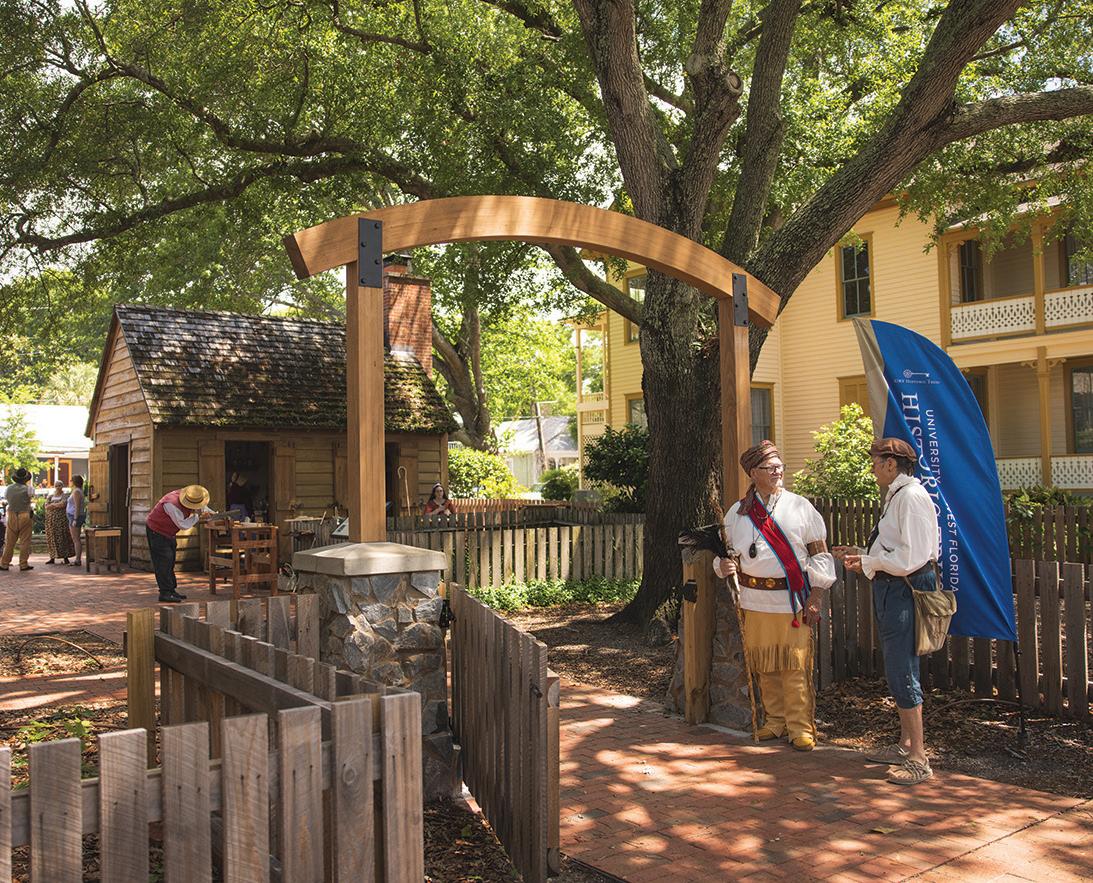
HISTORIC TRUST WELCOMES C OMMUNITY FOR ANNUAL OPEN HOUSE
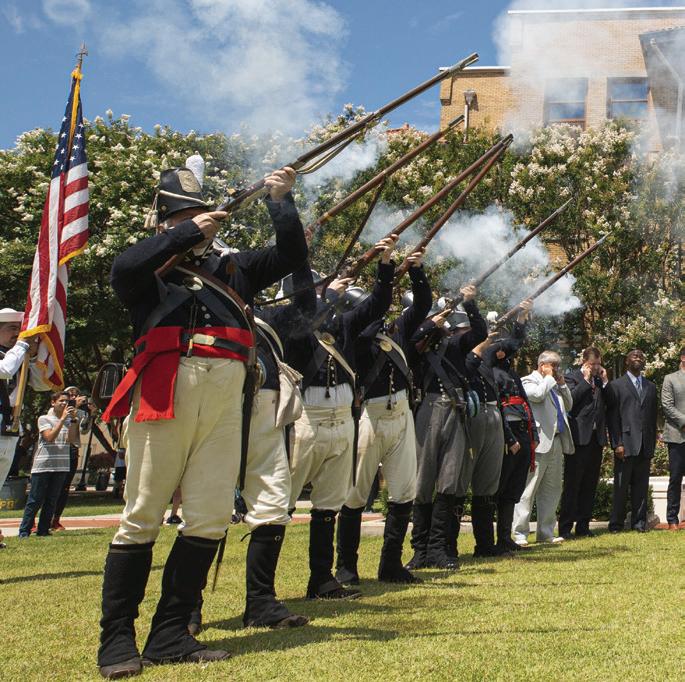
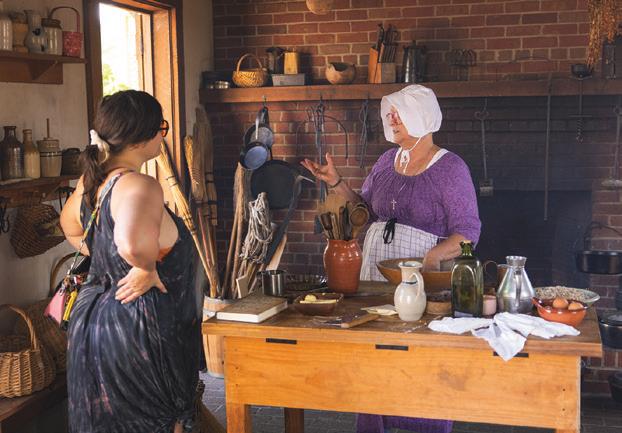
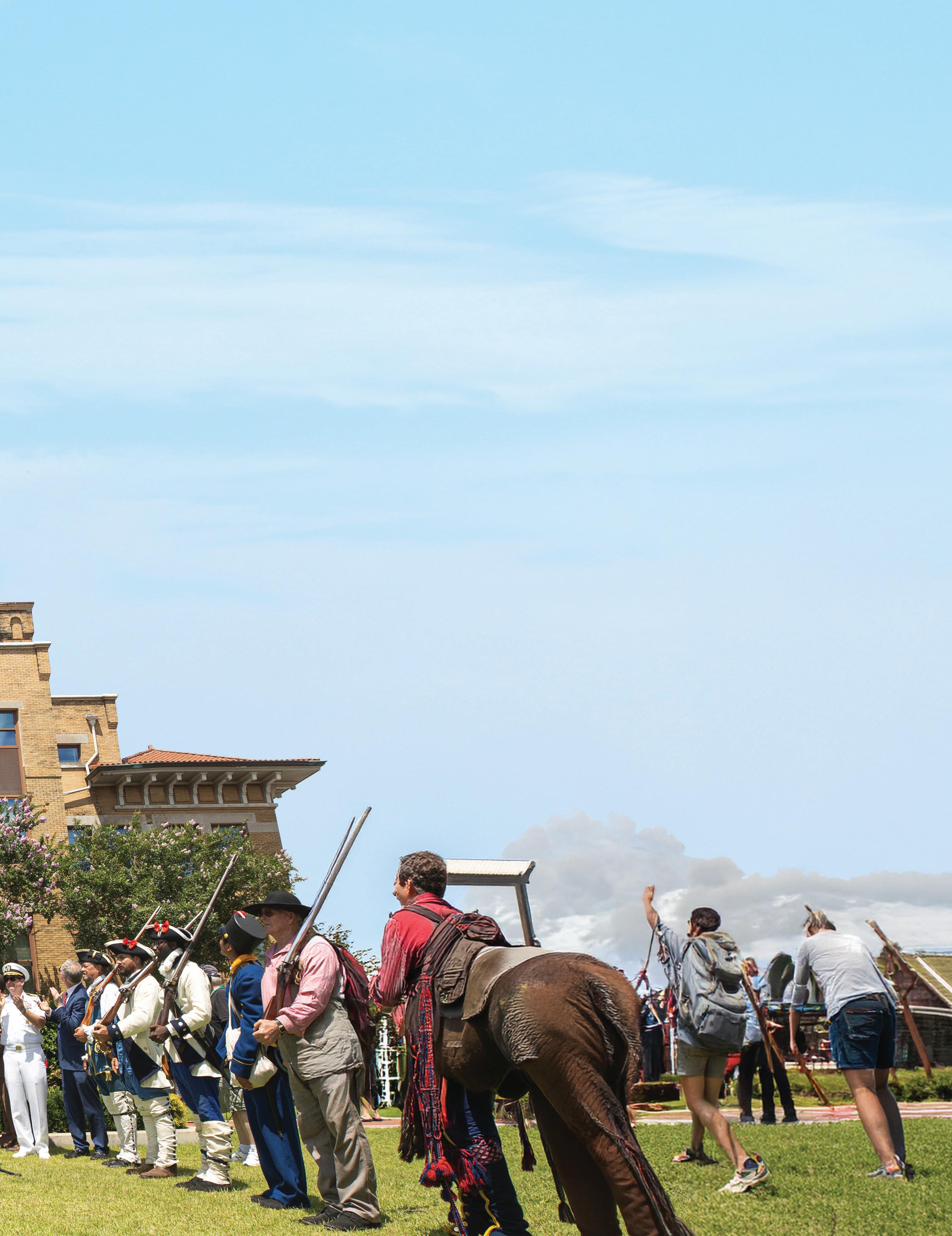
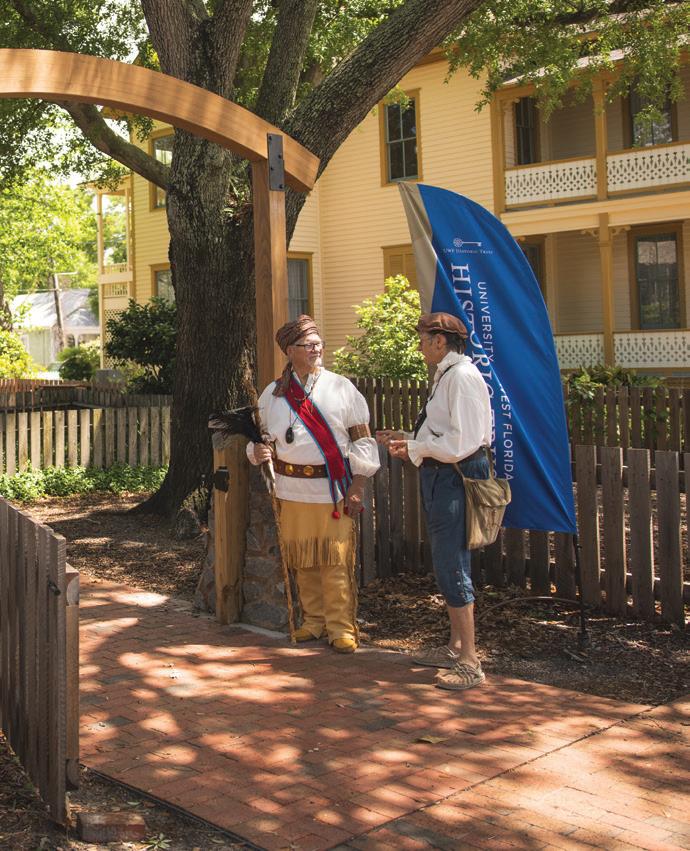
The UWF Historic Trust’s annual open house in May 2025 brought hundreds of visitors to its historic sites with a day of free admission and community festivities. Guests enjoyed food trucks, local vendors, special programming and living history reenactments during the event.
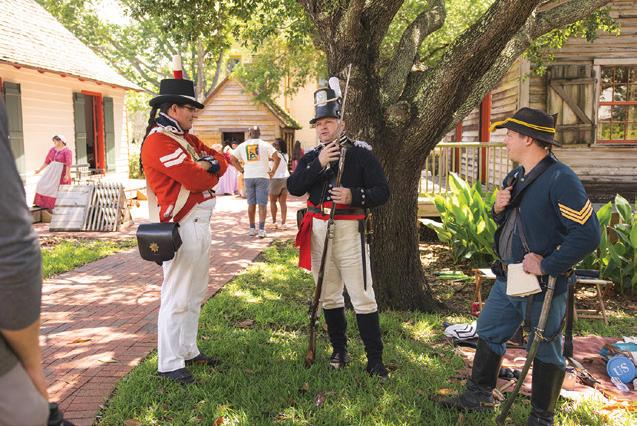
UWF CELEBRATES THE SEASON WITH ANNU AL HOLIDAYFEST
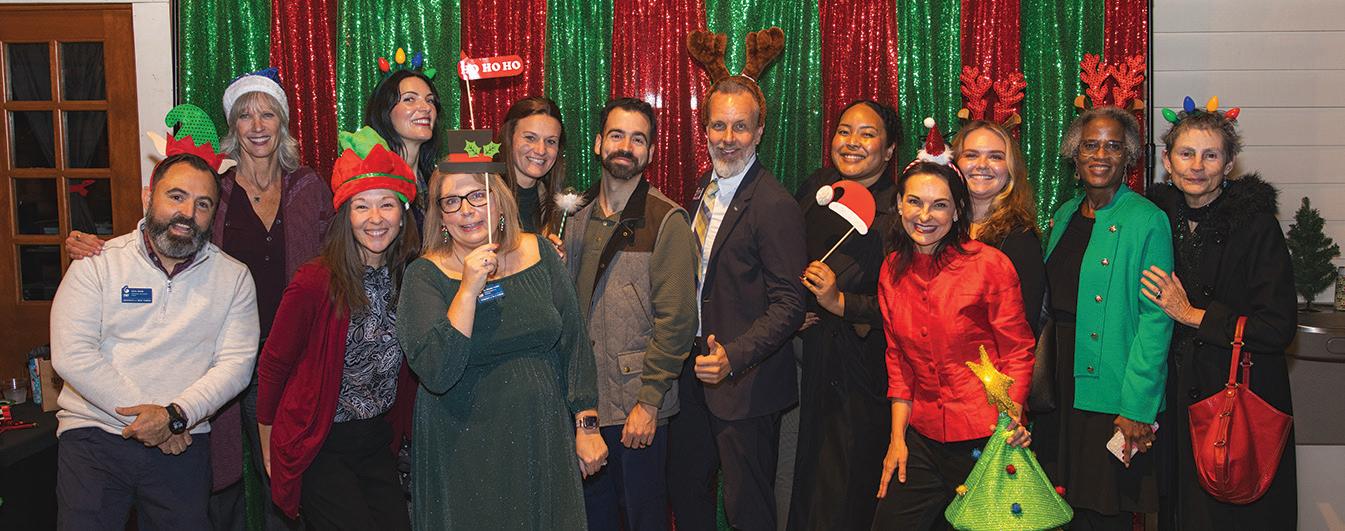
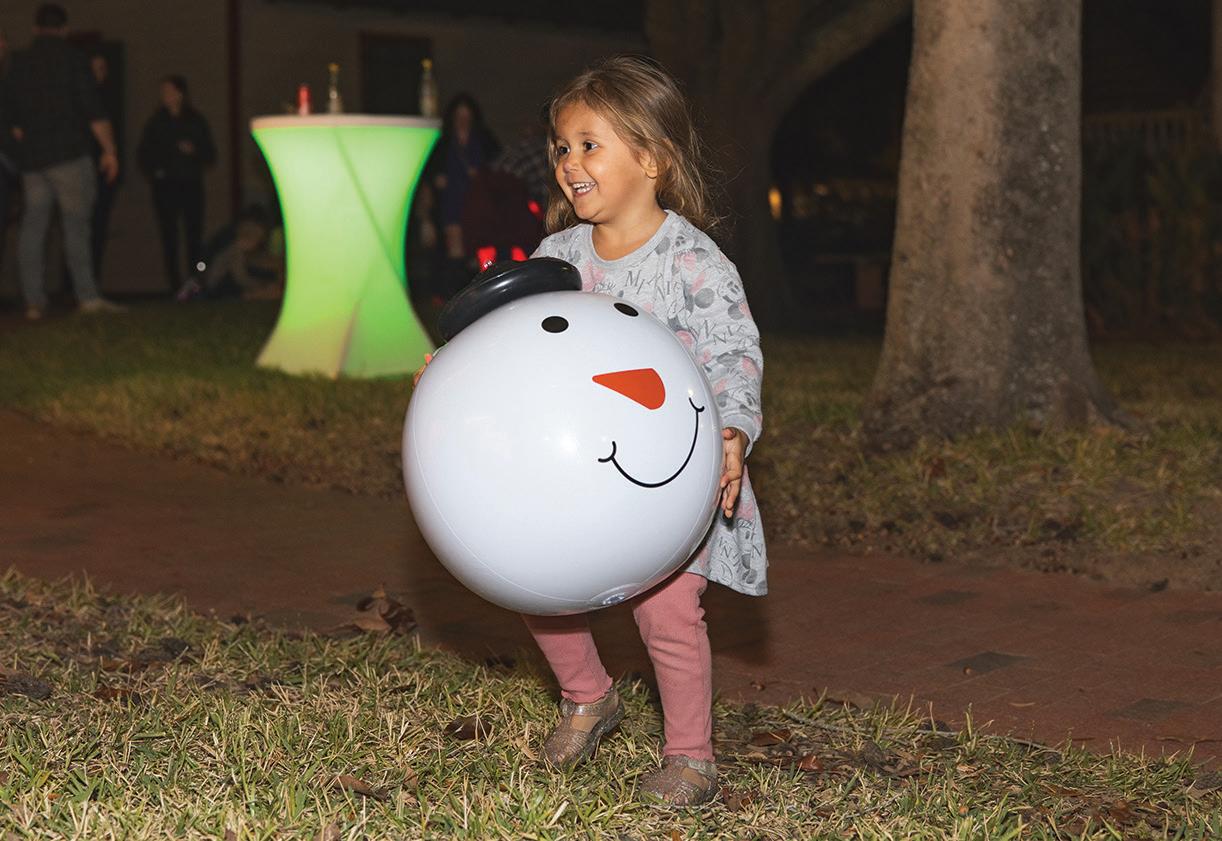
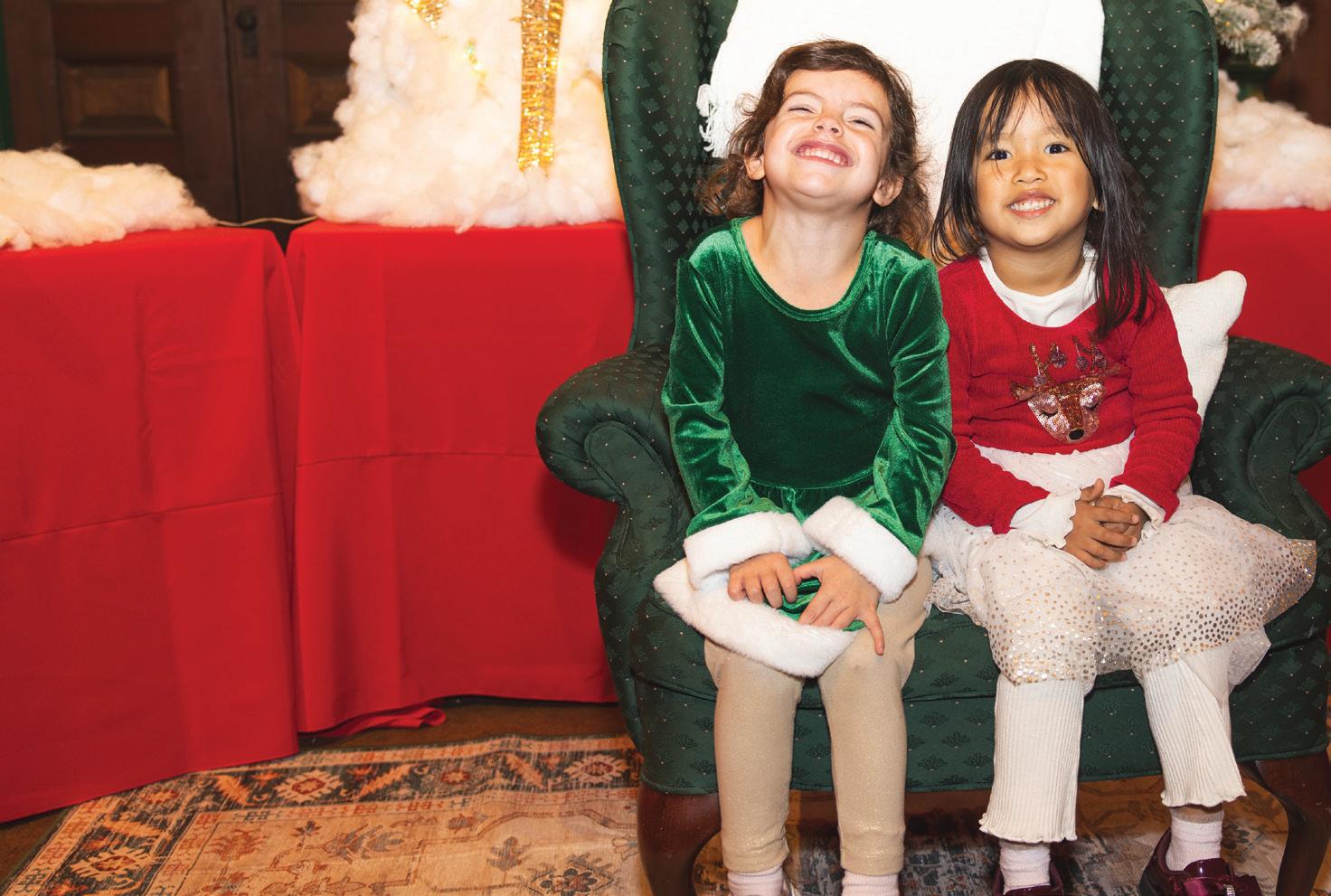
Members of the Pensacola community enjoyed holidaythemed festivities as part of UWF’s annual Holidayfest at the Pensacola Museum of Commerce in December 2025. The event welcomed families for an evening of children’s crafts, light refreshments and seasonal cheer, while also collecting donations for Argo Pantry and the Rally Foundation for Childhood Cancer Research.
NWFL SEAFOOD HERITAGE SERIES PRESENT S “A MULLET STORY”
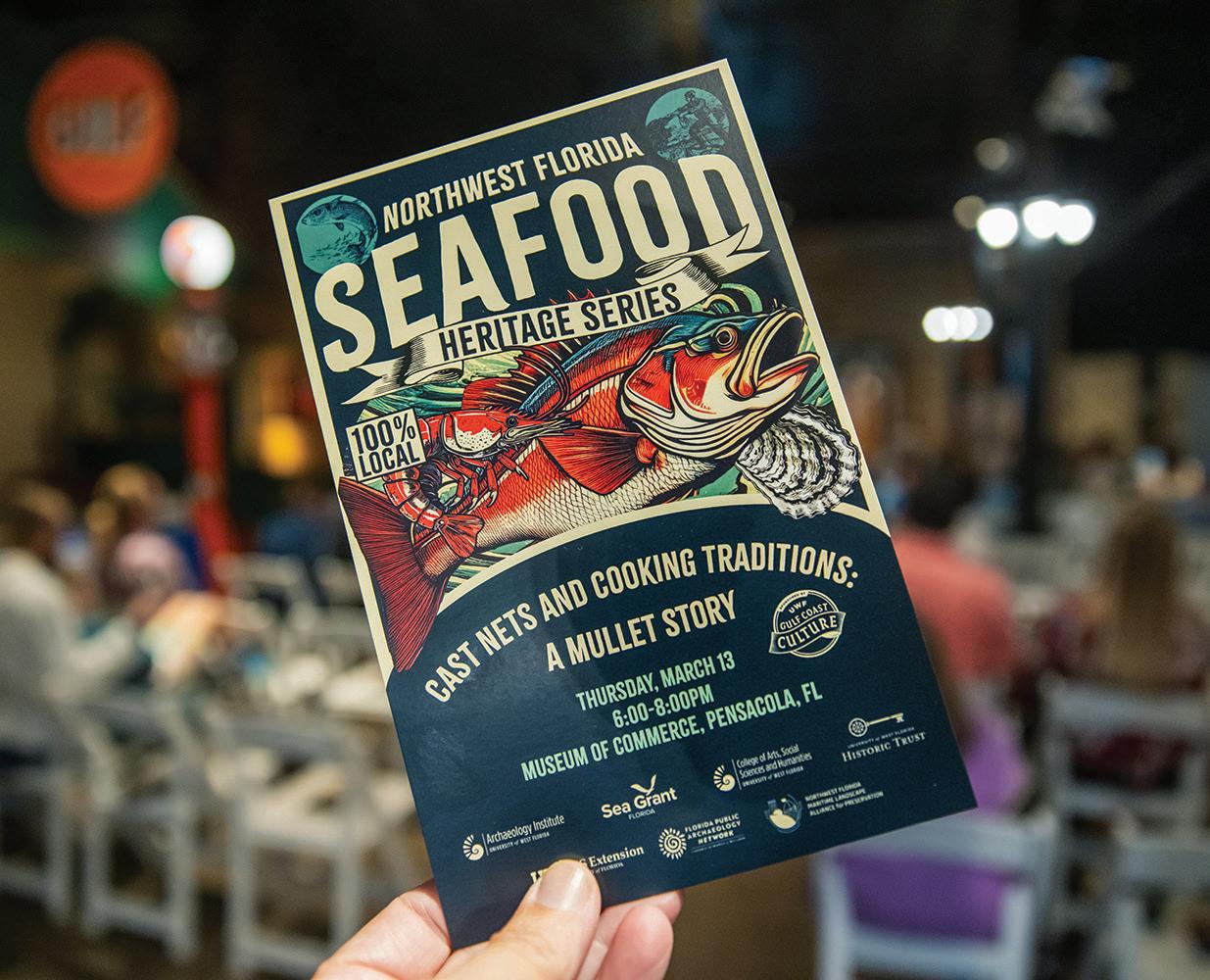
Seafood lovers gathered at the Museum of Commerce in March 2025 for “A Mullet Story: Cast Nets and Cooking Traditions,” celebrating Pensacola’s rich seafood heritage. A full house of enthusiastic guests explored the history, sustainability and cultural significance of mullet fishing while enjoying some incredible dishes prepared by local chefs. This event came together thanks to the combined efforts of the UWF College of Arts, Social Sciences and Humanities’ Gulf Coast Culture Series, UWF Historic Trust, Florida Sea Grant, UF/IFAS Escambia and Santa Rosa Extensions, and the Northwest Florida Maritime Landscape Alliance for Preservation.
PENSACOLA MUSEUM OF ART HOSTS SPECIAL ARTIS T TALK
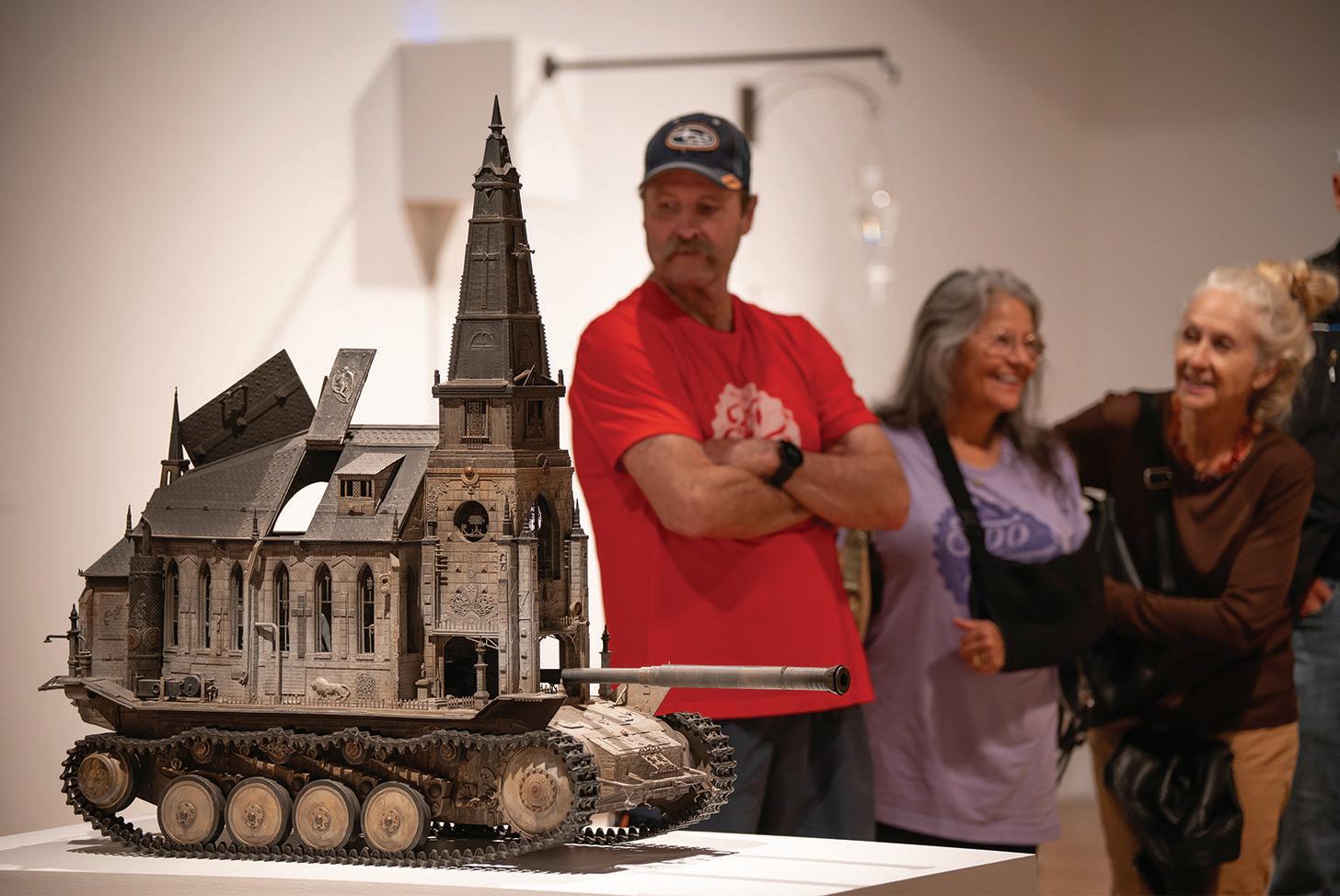
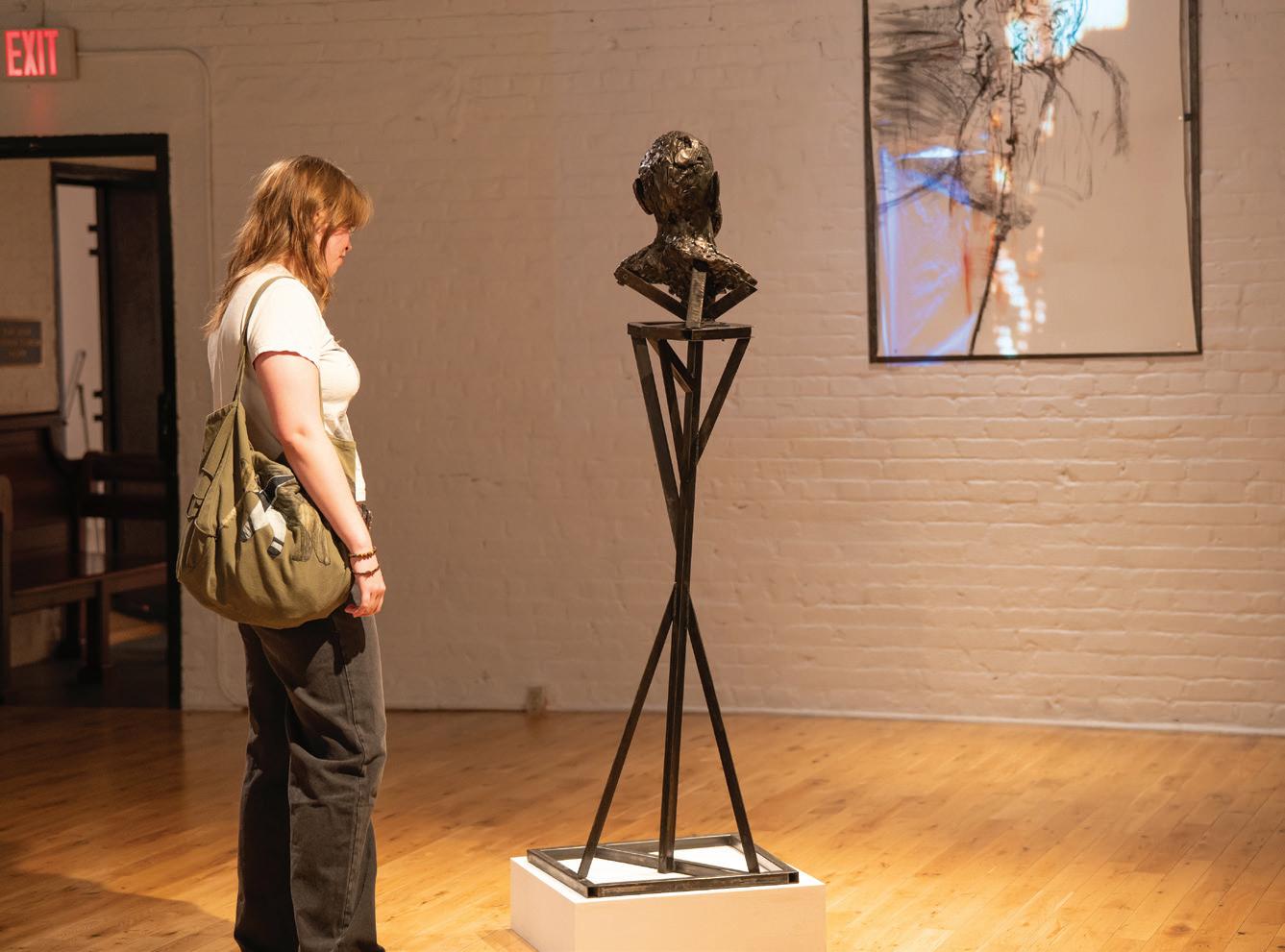
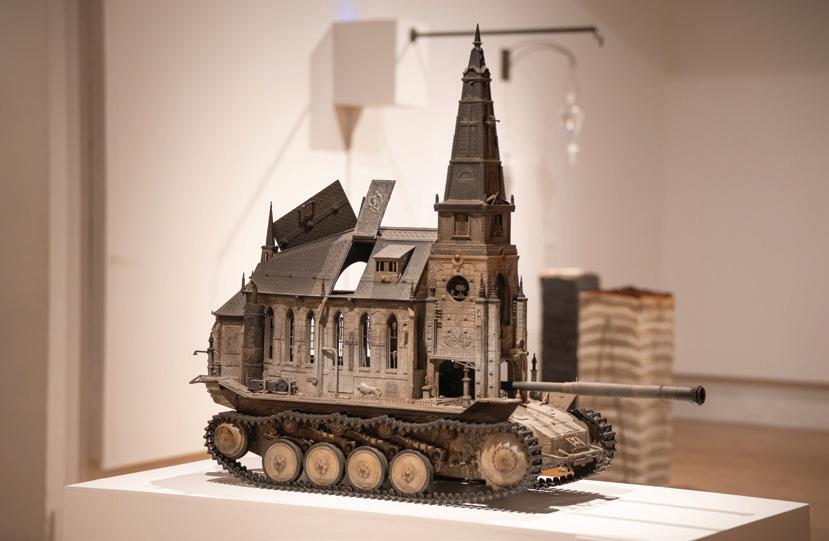
The Pensacola Museum of Art welcomed visitors for a series of artist talks and special programs connected to the “Dualities,” exhibition which explored the tension between physical and metaphysical experiences through contemporary sculpture. Throughout the fall, featured artists and guest curator Jimmy Rhea led discussions, tours and a panel conversation that gave guests deeper insight into the creative processes, materials and ideas behind the works on display. The programs brought together artists, students and community members to examine how modern sculptors interpret themes of contrast, balance and shared human experience.
PENSACOLA CHILDREN’S MUSEUM OPENS NEW SENSOR Y SPACE
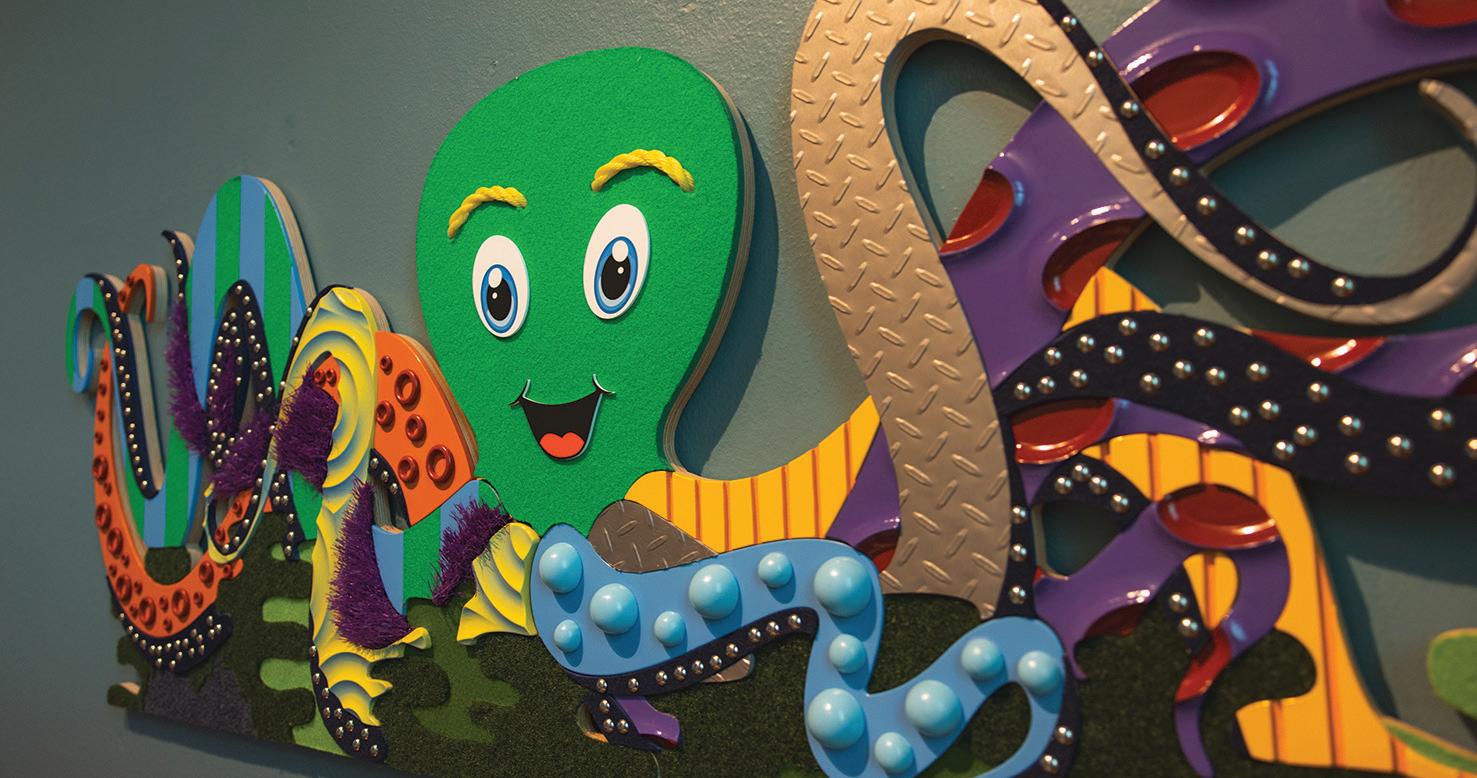
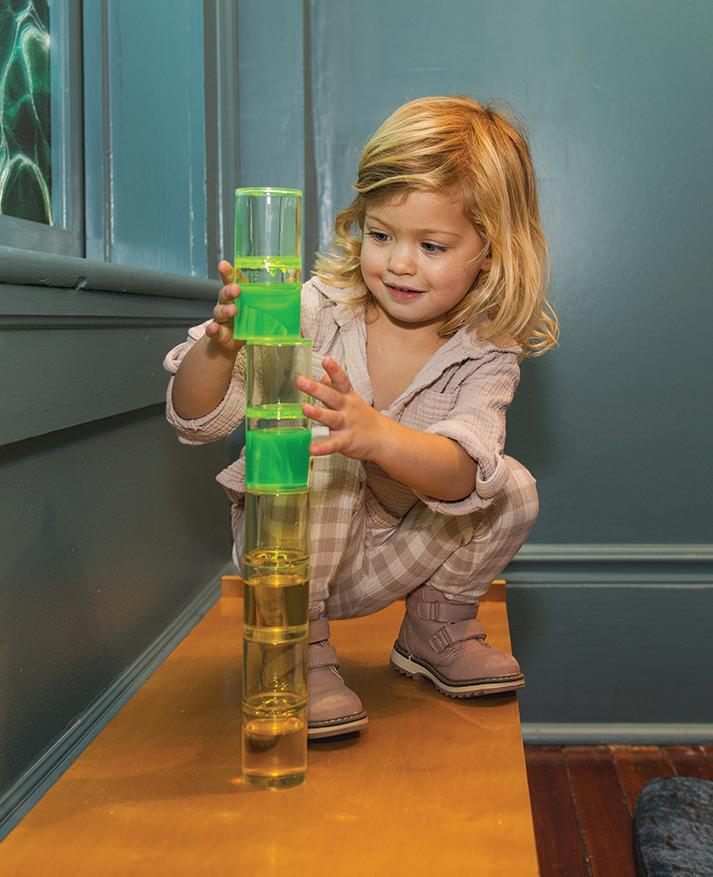
The Pensacola Children’s Museum debuted a new publicly accessible sensory space on the second floor entitled “Calming Seas Sensory Space,” funded through an IMPACT 100 Pensacola Bay Area grant. The first of its kind in Northwest Florida, it will serve as a quiet space for guests to center themselves amongst the activity and bustle of the Children’s Museum and includes a tactile octopus mural, mesmerizing bubble tube and sensory toys to create a calm space for children to regulate.
To better meet the needs of visitors with sensory processing differences, part of the grant was also allocated to train museum staff to provide a therapeutic and enriching environment for relaxation, stimulation and improved sensory experiences for guests. This training included staff sensory certifications and the creation of interactive sensory bags throughout the museum complex.
PENSACOLA MUSEUM OF ART HO STS FIFTH ANNUAL YOUTH ART FOCUS
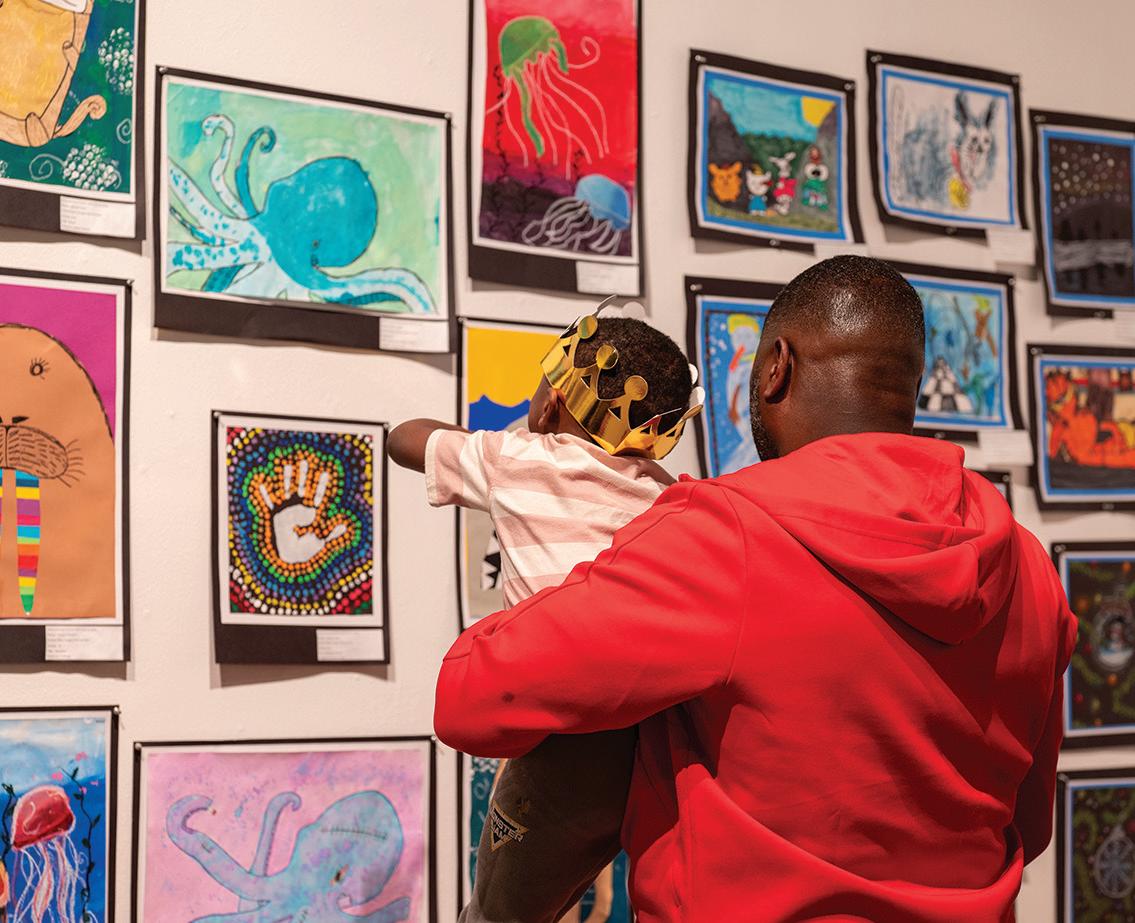
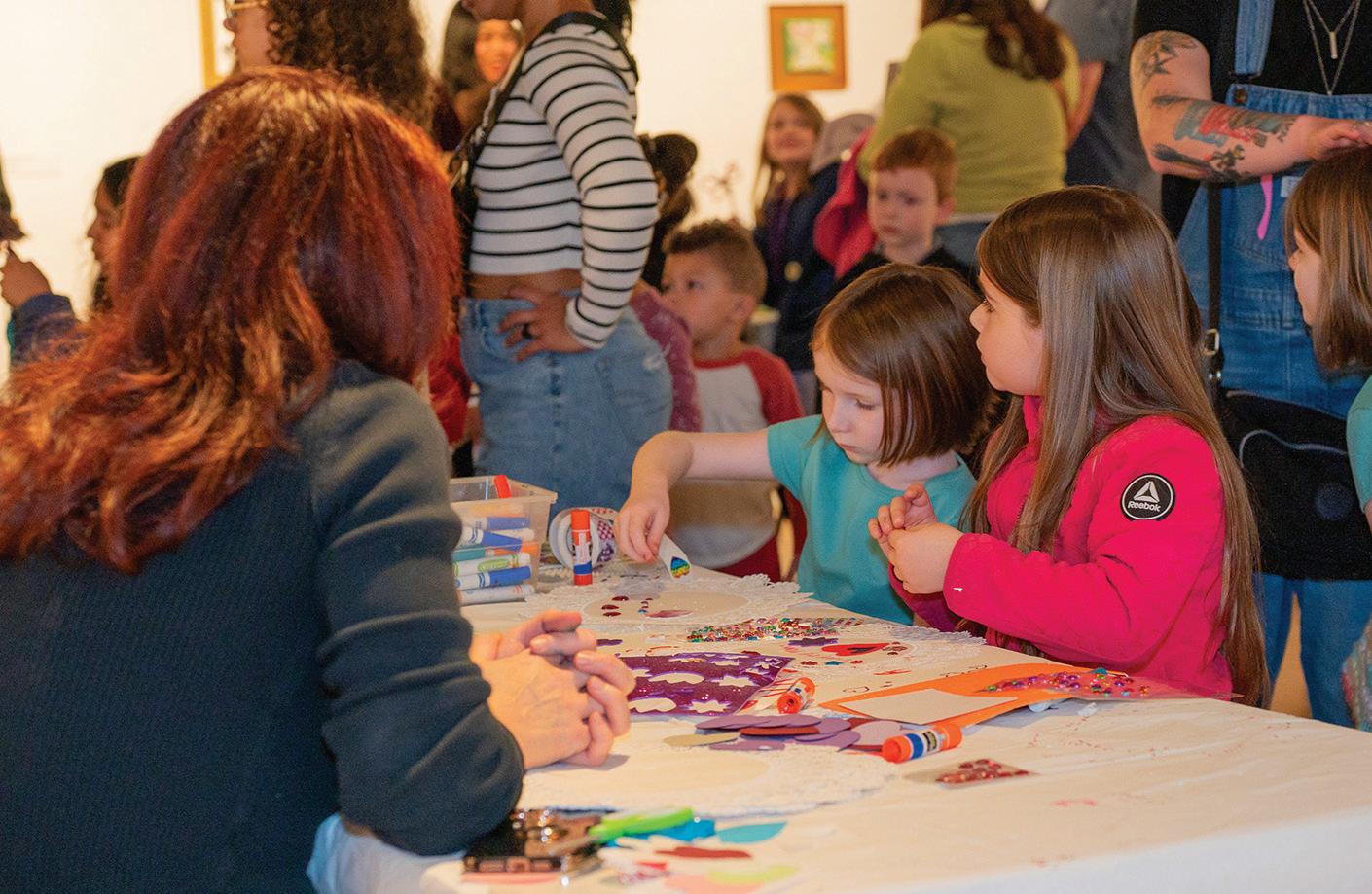
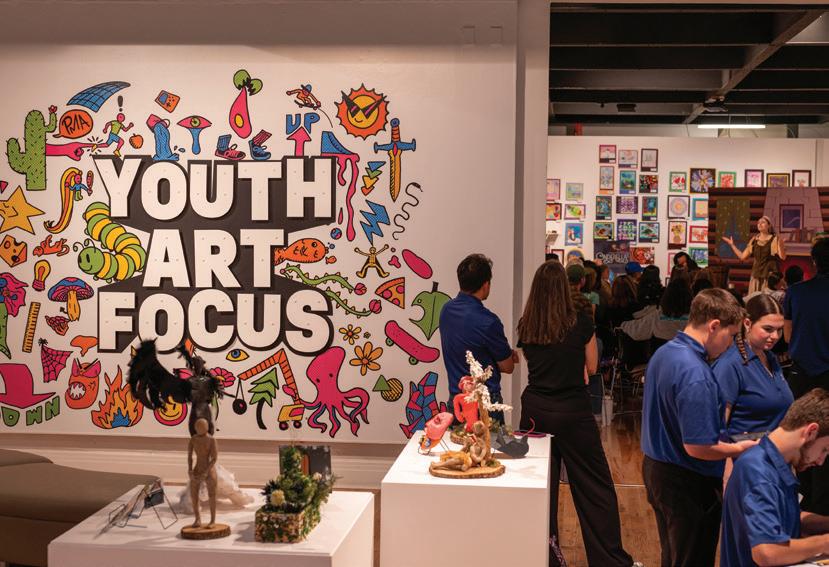
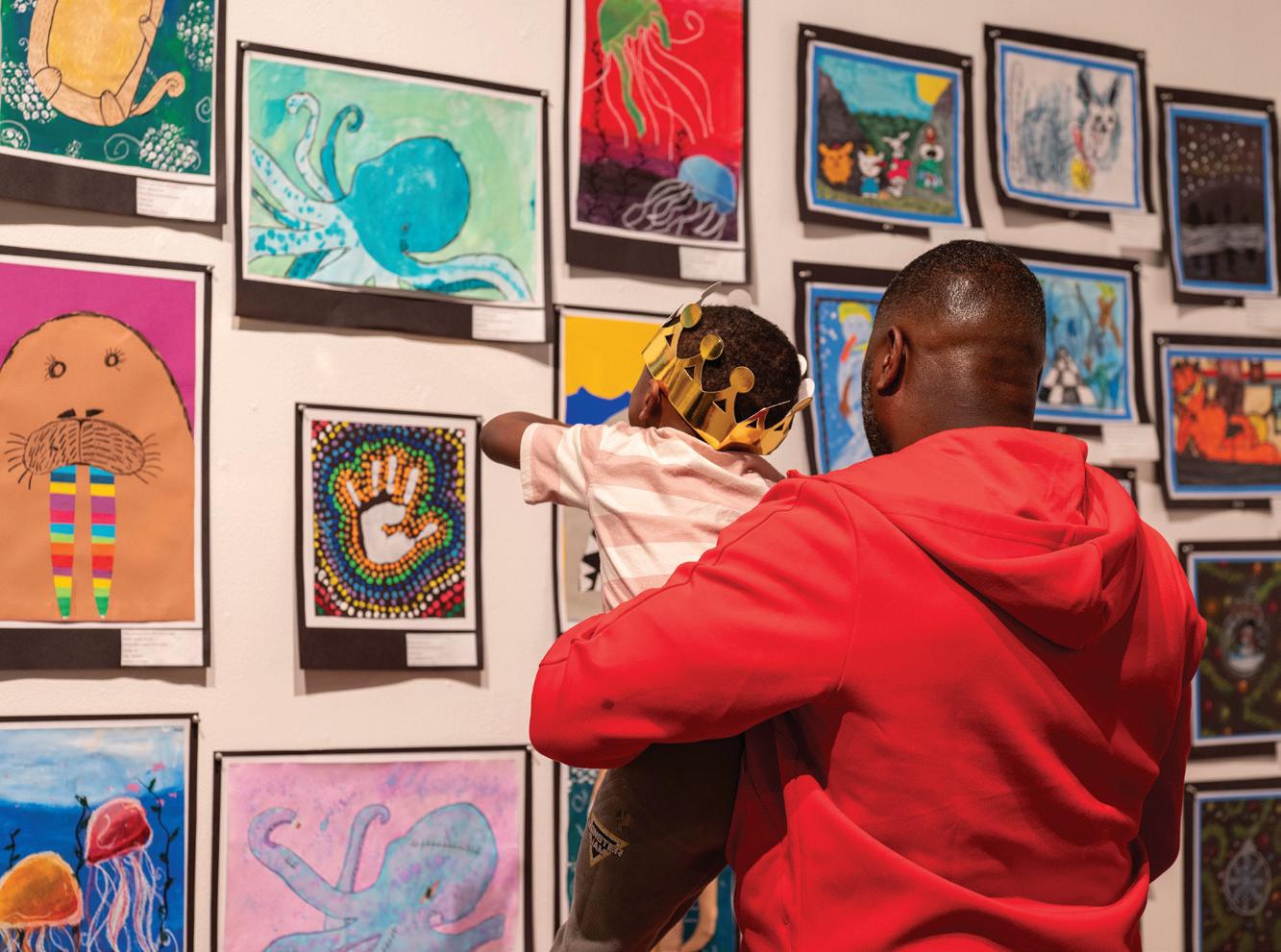
In partnership with the Pensacola Museum of Art Guild and Escambia County Public Schools, the PMA hosted its fifth annual Youth Art Focus community event celebrating the 72nd Annual Youth Art Focus exhibition. The free event highlighted artwork by K–12 students from across the district while offering hands-on art activities, a scavenger hunt and youth performances from local arts organizations, including the Children’s Chorus Ambassadors, Pensacola Opera and musicians from the Pensacola Symphony Youth Orchestra.
UWF ARCHAEOLOGY INSTITUTE MONITORS P ALAFOX CONSTRUCTION
The UWF Archaeology Institute was contracted by the City of Pensacola to carefully monitor the construction site of the Palafox Street upgrades, identifying any archaeologically significant findings that could potentially qualify for inclusion in the National Register of Historic Places. This vital work helps ensure that historic Pensacola’s rich history is documented and preserved for future generations while also training the next generation of student archaeologists.
NEW EXHIBITS
PENS ACOLA MUSEUM OF ART
The Poetics of Painting: John Markowitz Through August 14, 2026
Classic Cartoon Illustration May 22 - September 6, 2026
PENSACOLA MUSEUM OF HIS TORY
The Fabric of War On display now
Road to Revolution: Commemorating the 250th Anniversary of the American War for Independence On display now

PENSACOLA’S ROLE IN THE REV OLUTION
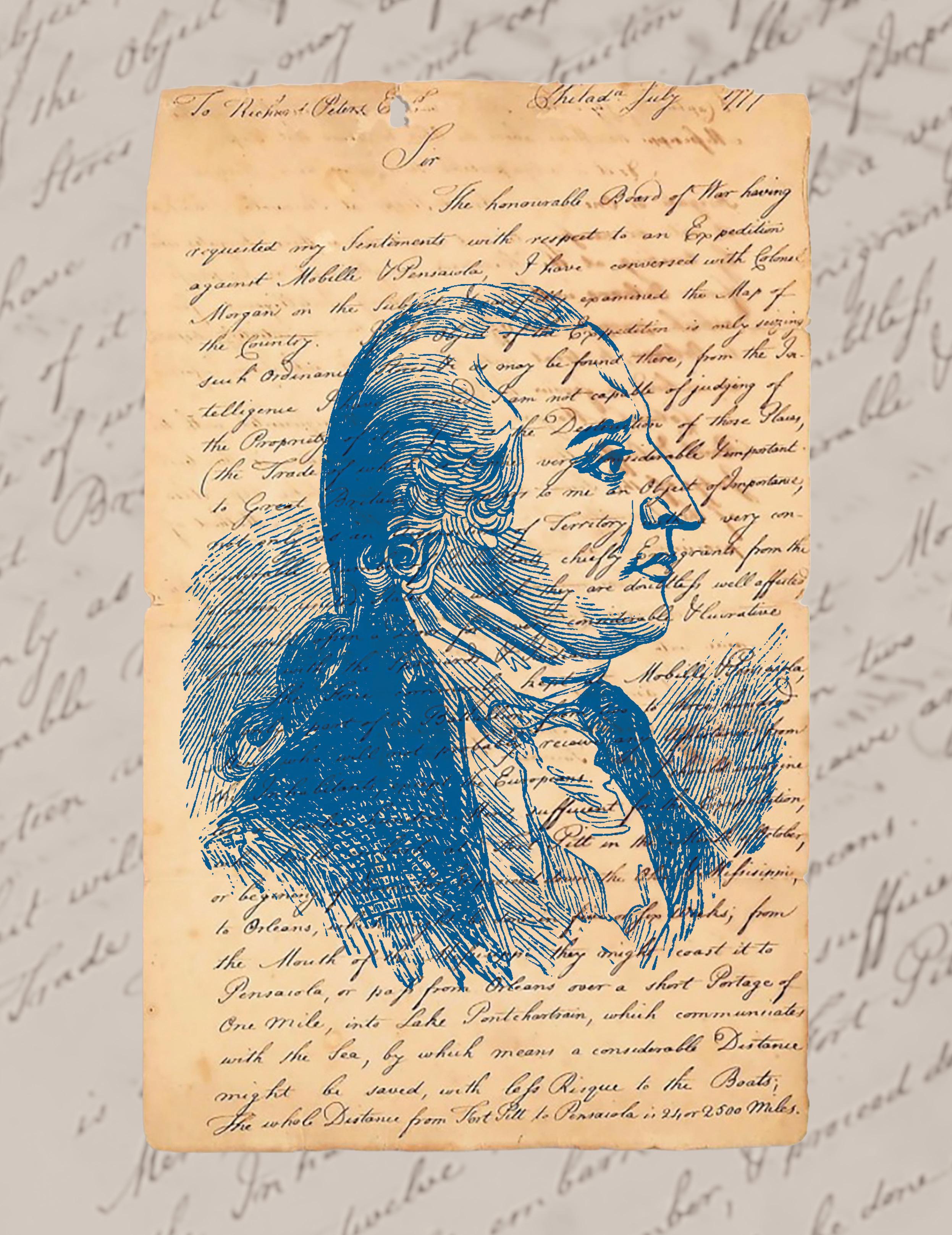
The Benedict Arnold Letter
BY JESSIE CRAGG ’19
Pensacola’s role in the American Revolution is often ignored, though the region had significant impacts on British, Spanish, French and American interests at the time. While it is true that none of the Revolutionary leaders visited the city, as it remained a British stronghold until 1781, many of the era’s most brilliant tactical minds of the time recognized the importance of this small port town.
Prior to hostilities exploding with the Battles of Lexington and Concord in 1775, West Florida was emerging as an ideal frontier for colonists. Now under British rule following the Treaty of Paris of 1763, which ended the French and Indian War,
implemented, and the harbor filled with ships ferrying trade goods between the Native Americans of the interior and colonial cities in the Caribbean. Some 2,500 miles from the major colonial capitals, Pensacola must have felt like a world unto itself – far removed from the British-colonist tensions spreading through the northern colonies.
By 1777, however, it was finally sinking in that the British were not going to quell the American rebellion as easily as once believed. With the bloody business of war settling into its grim routine, Spain saw an opening to reclaim what had once been promising territory.
Several expeditions were planned to strike British outposts along the Gulf Coast,
while only if the goal is to capture the cities for good. In turn, that would allow the American colonies to capitalize on the considerable trade flowing through the region and further weaken British holdings.
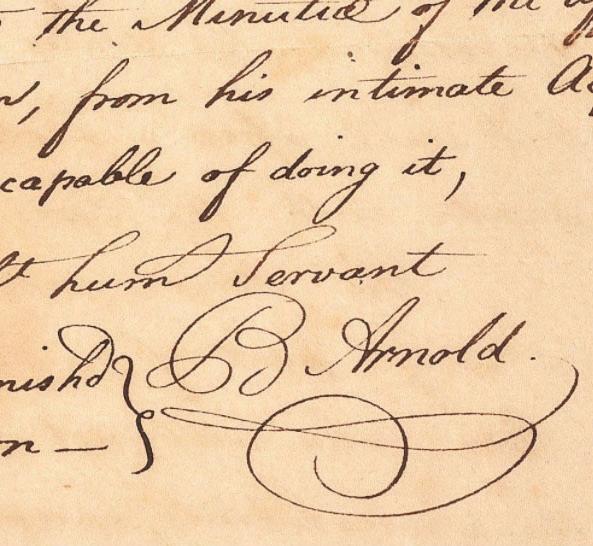
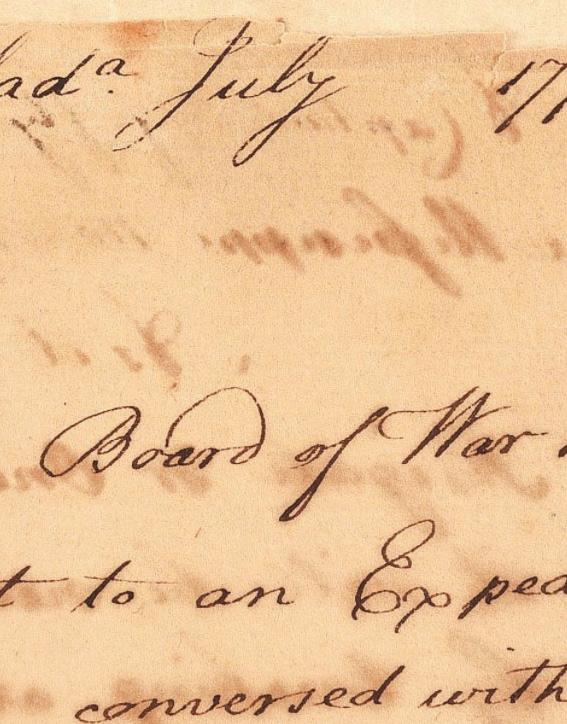
Arnold outlines the obstacles he was aware of: the distances involved, British warships at Pensacola Bay and an unknown number of citizens who may or may not be sympathetic to the American cause. He ultimately deferred to Colonel George Morgan, who had more familiarity with the area, to make the final call.
The Americans never mounted an attack against British Florida, choosing instead to focus their southern efforts along the Atlantic coast. This opened the door for
INSPIRING INNOVATION
BY SAVANNAH GUILFORD
FABRIC OF WAR W
ith each new challenge faced or battle braved, Americans find a way to become more innovative, creative and resilient to the obstacles in front of them. It was this innovation that, in early 2026, the Pensacola Museum of History placed on display for all to learn about the ingenuity within the textiles worn by American heroes.
In February, the Pensacola Museum of History opened a new exhibit entitled “Dressing History: Fabric of War.” Located in the Textile Gallery on the second floor of the museum, curators aimed to examine previous United States uniforms and functional textiles, highlighting the differences in each piece that was uniquely designed for the struggles of their day. The exhibit focuses on fabric as a central component of military innovation, while also revealing how changing realities of war have direct consequences to chosen fabric material.
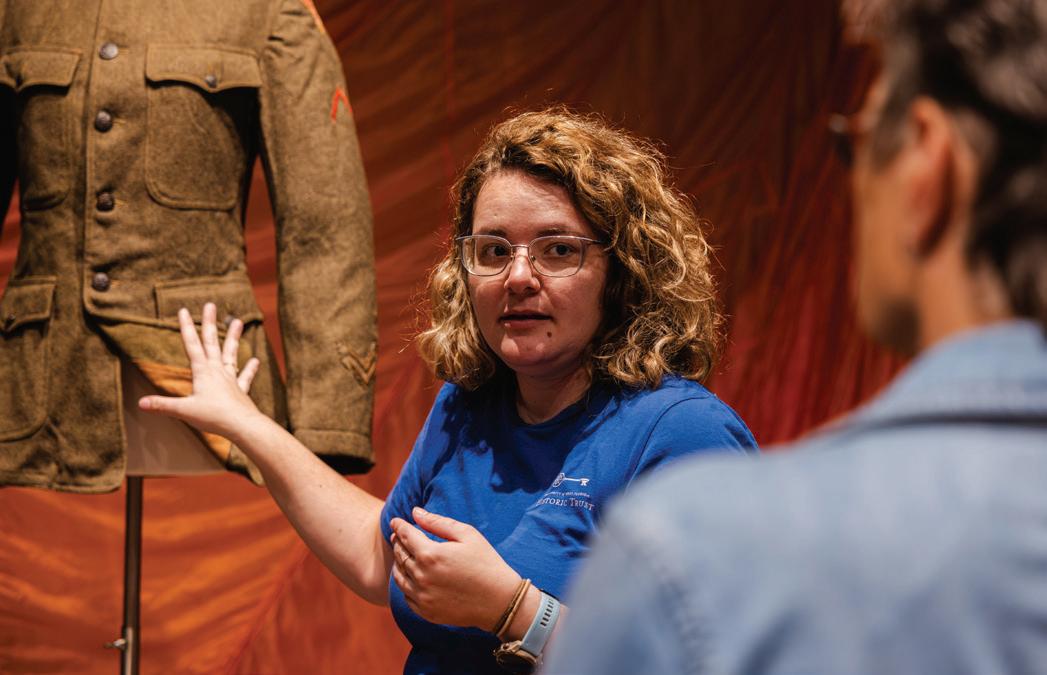
These textiles allow guests a sneak peek into the lives of what soldiers faced and conquered in their lifetimes, a testimony to their stories. Jessie Cragg, curator of exhibits at the Pensacola Museum of History, notes how rare it is to see such military textiles on display and the unique opportunity it gives locals at exploring a shared past.
“This exhibition highlights military textiles from the UWF Historic Trust Collection, many of which are rarely displayed. As a military town, Pensacola has a deep connection to this history, and the exhibit invites visitors to take a closer look at the uniforms and materials that shaped military life.”
—Jessie
Cragg ’19, curator of exhibits at the Pensacola Museum of History
“This exhibition highlights military textiles from the UWF Historic Trust Collection, many of which are rarely displayed,” Cragg said. “As a military town, Pensacola has a deep connection to this history, and the exhibit invites visitors to take a closer look at the uniforms and materials that shaped military life.”
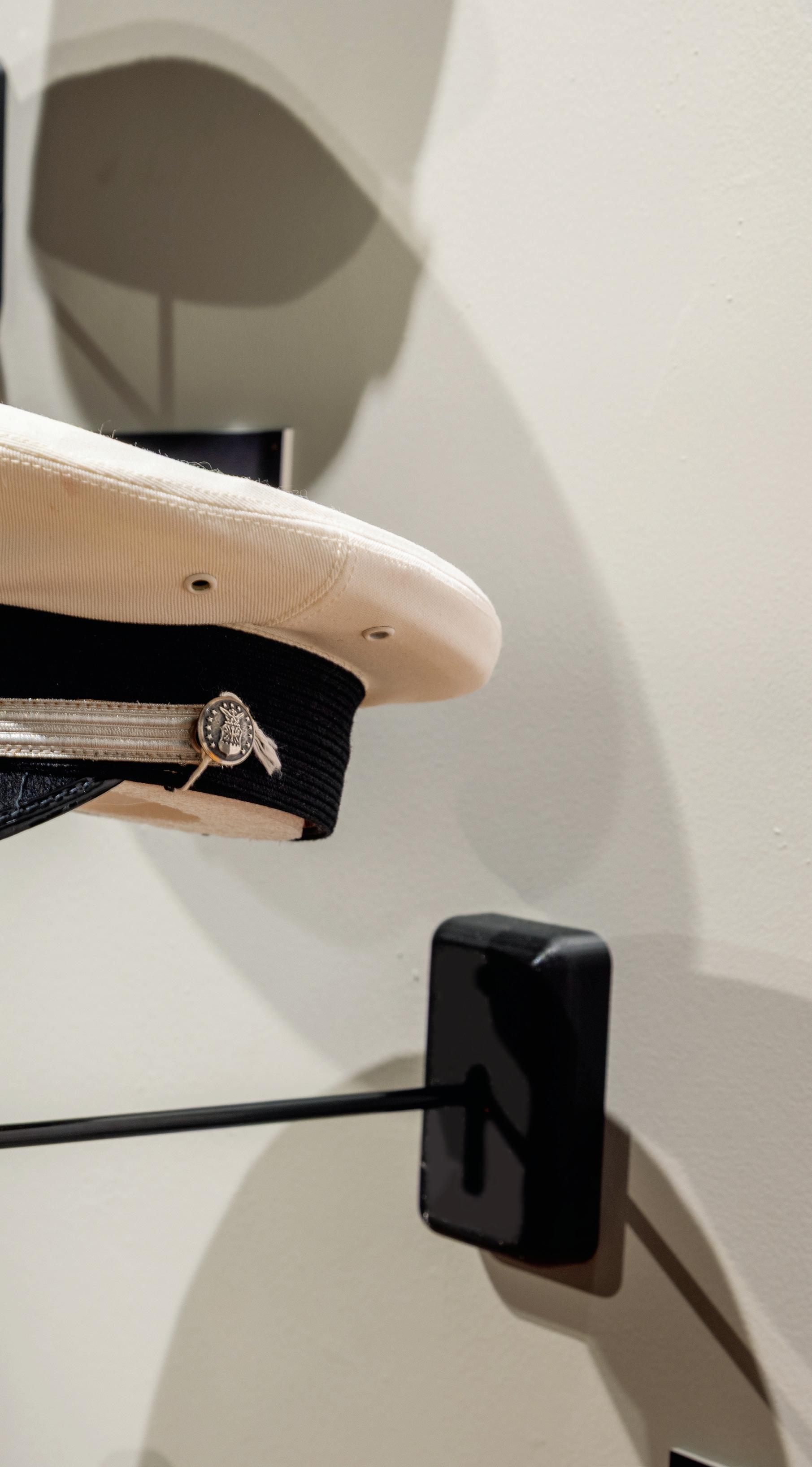
Guests move through time, starting as early as the mid-1800s, to learn how fabrics directly evolved alongside changes in technology, the environment and global conflicts. Rapid innovation takes visitors from the 1940s, 50s and 80s into the modern era of uniforms. Through each period of time, military textiles displayed at the exhibit explore how fabrics have shaped the American military experience, from clothing soldiers wore, to materials that protected, concealed and supported them
during war efforts. Up-close looks at uniforms, functional textiles and accompanying accoutrements allow guests to discover the ingenuity behind designs of iconic military pieces.
“The military balanced style with function, making sure their uniform pieces were practical and proud,” Cragg said. “That remains true throughout history; it just depends on what conditions they were preparing for as to how the fabric was used or treated.”
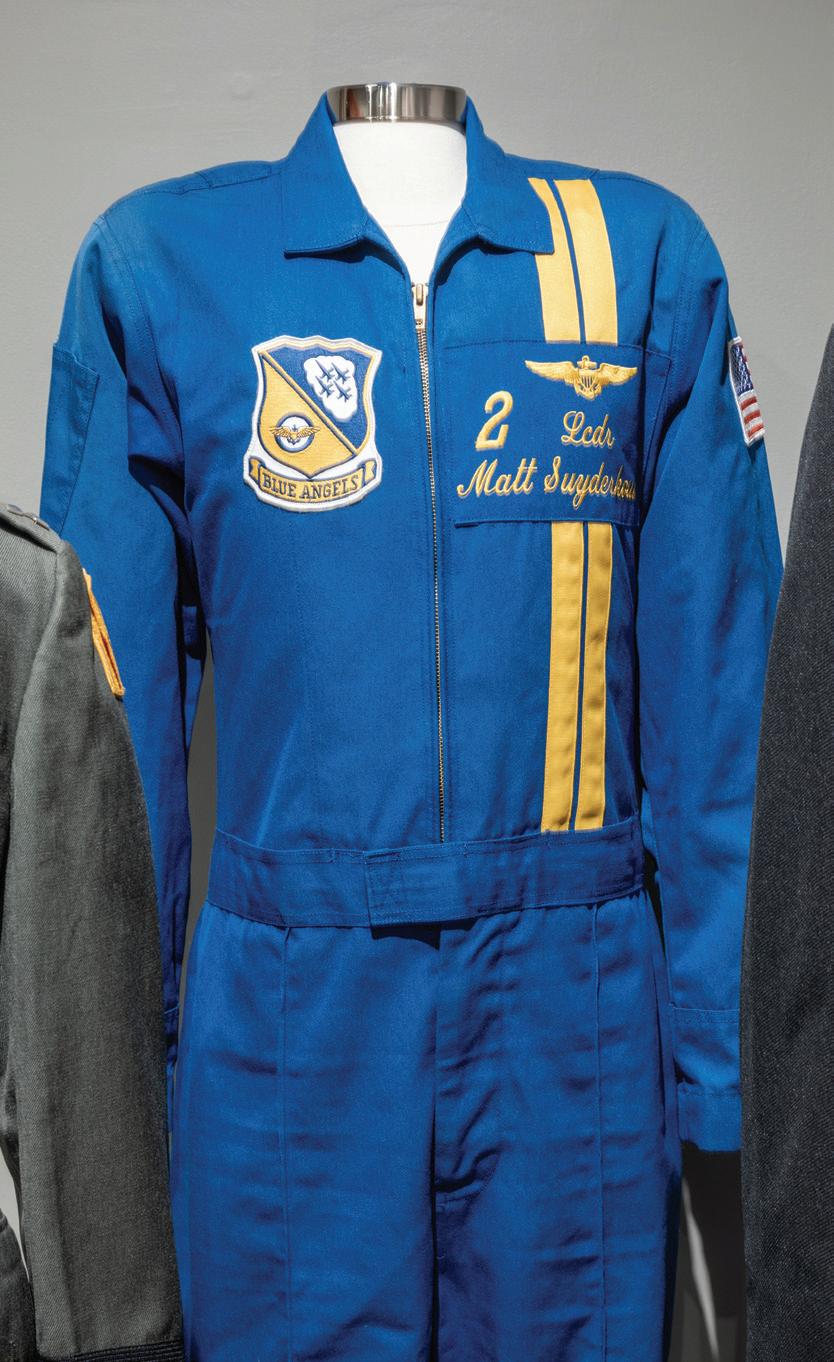
For example, Cragg mentioned the Union Army Shell jacket on display utilized wool’s natural properties of flame resistance to protect troops from cannon sparks blasting around soldiers. Similarly, the U.S. Navy Blue Angels flight suit from 2015 used a treatment called Nomex, which prevents the fabric from melting in contact with extreme heat – a more sophisticated approach to dealing with heat resistance.
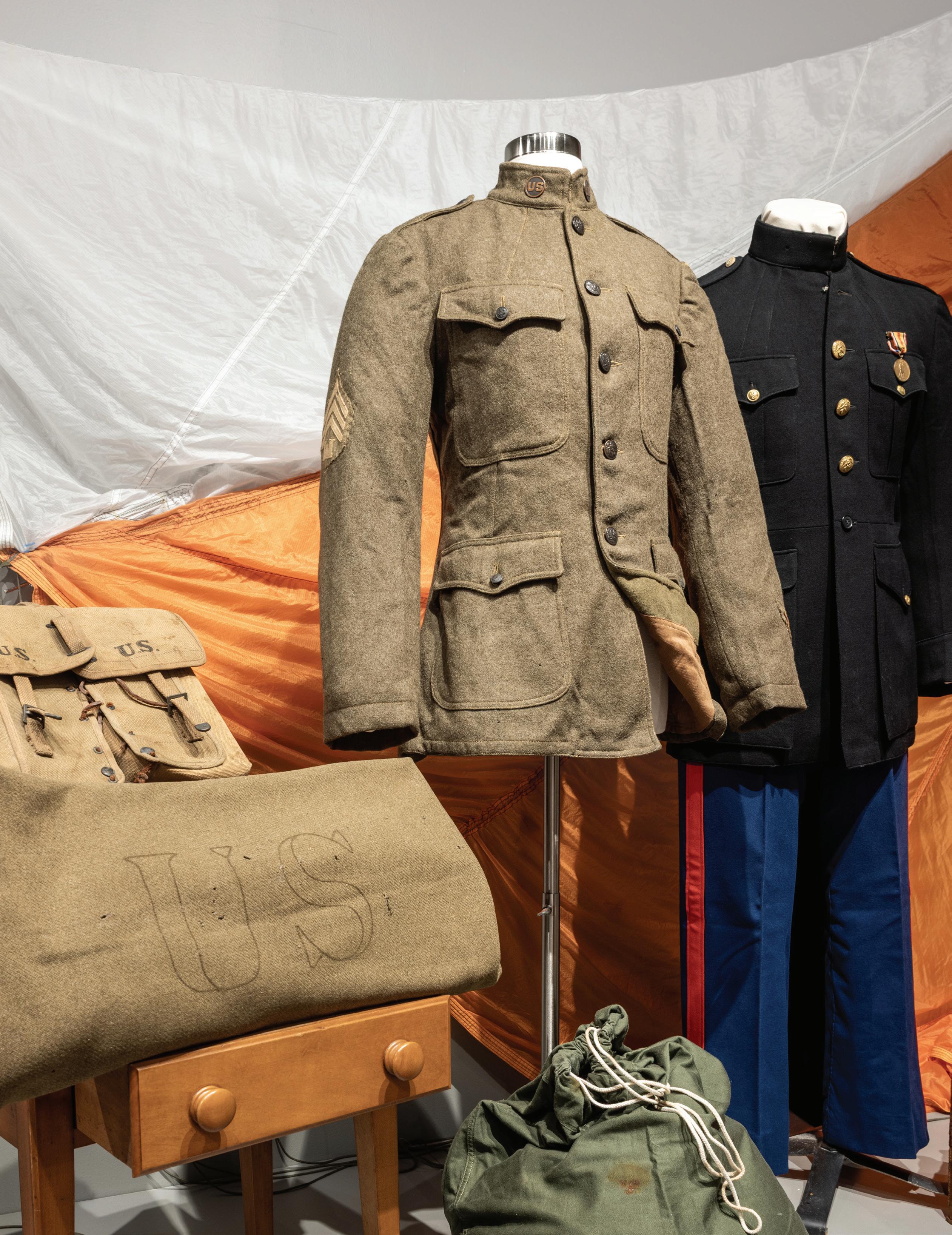
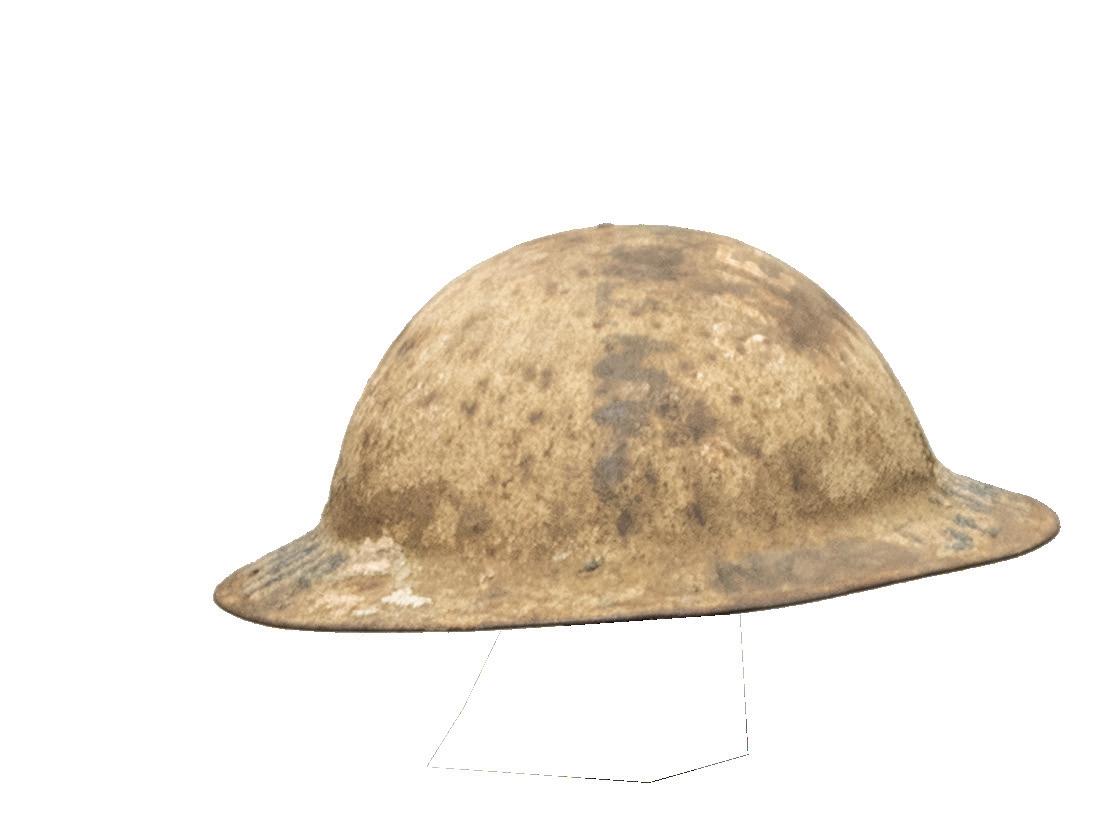
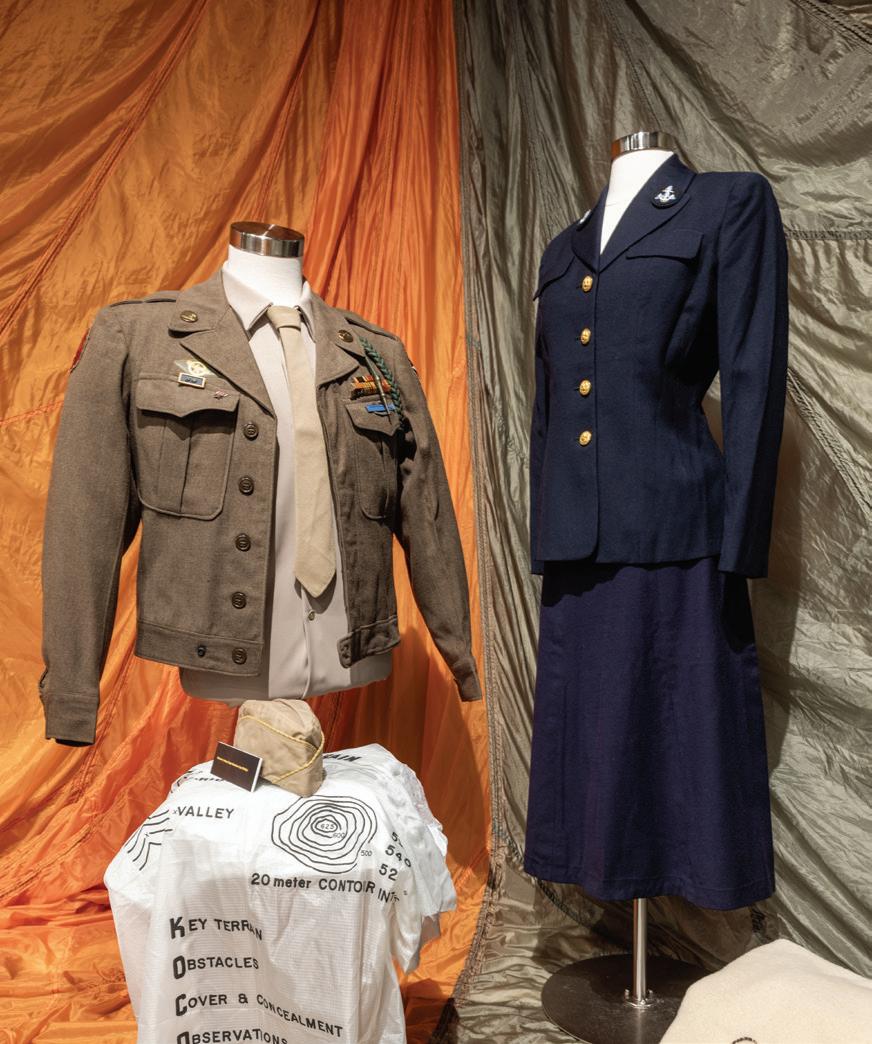
Alongside the two suits already mentioned, highlighted pieces displayed at the exhibit include a WWI uniform jacket, WWII U.S. Army “Eisenhower” jacket, WWII U.S Marine Corps Dress Blues uniform, 1940s Women Accepted for Voluntary Emergency Service jacket, U.S. Navy cadet uniform dated 1950 and U.S. Navy uniform from the 1980s.
A 2015 U.S. NAVY BLUE ANGELS flight suit (left), a WWII “Eisenhower” jacket worn during the Battle of the Bulge (top left) and Women Accepted for Volunteer Emergency Service Navy uniform from 1943-1949 (top right) sit on display at the Pensacola Museum of History.
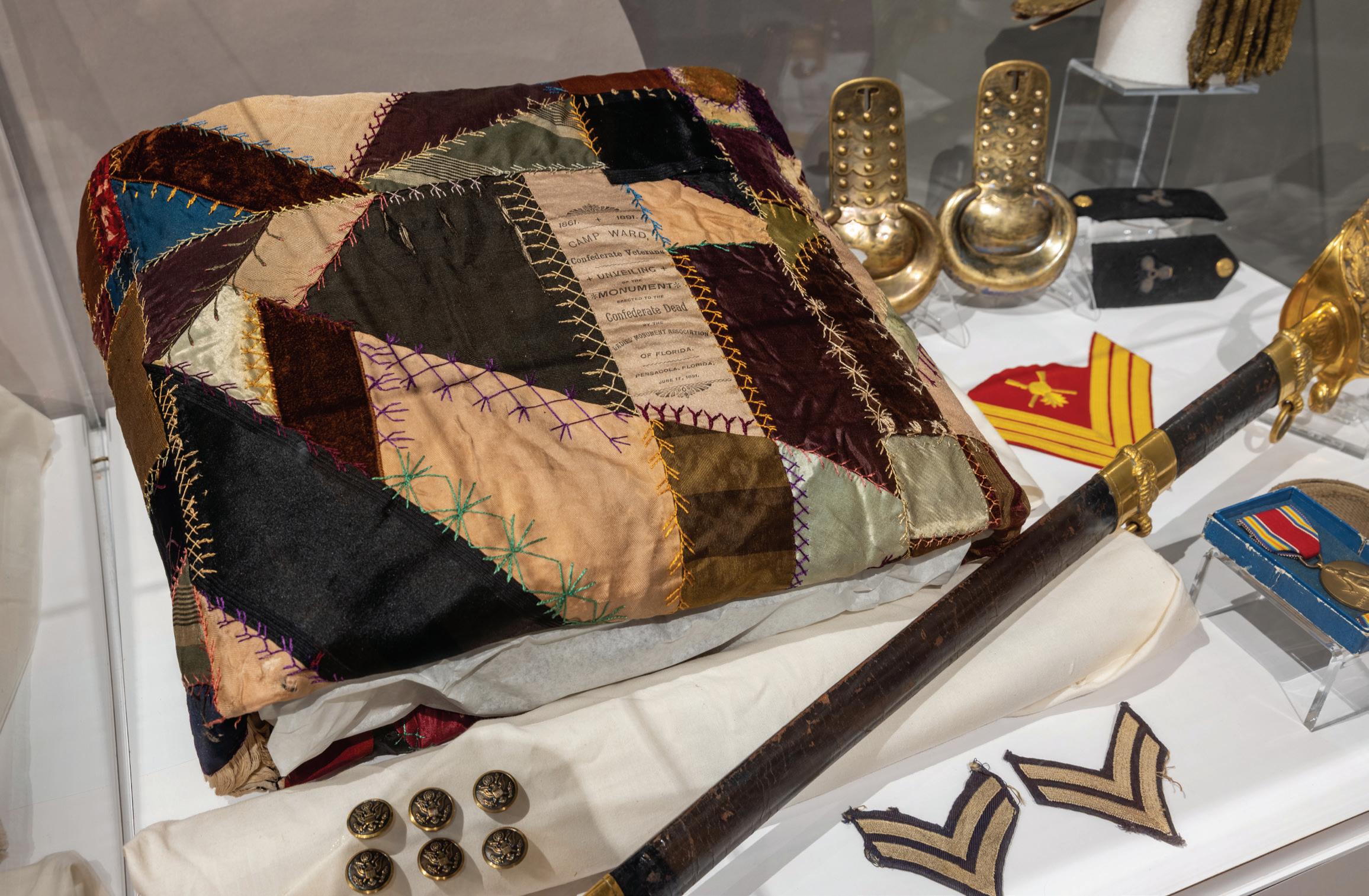
2. Pair of brass epaulets, Civil War Era
3. Set of six gold buttons featuring the U.S. Navy eagle worn by Jane Wentworth (U.S. Navy WAVES) from 1948-1952 during the Korean Conflict
4. Cloth insignia of rank, U.S. Army enlisted, ca. WWII - Korean War, signifying wearer was a Corporal
5. U. S. Navy dress sword, Model 1852 standard issue, awarded to Captain. B. Renshaw
6. World War II U.S. Army Victory Medal and Ribbon Bar, in their original box
For the staff at the Pensacola Museum of History, this exhibit has been a labor of love, resourcefulness and time. By planning exhibits years in advance, the mighty team gives their all to bringing these displays to life.
“We plan our exhibition schedule five years in advance, because it does take a lot of time to research, write and develop them, depending on the size and complexity of the theme,” Cragg said. “So while this had been planned for a few years, it wasn’t until late last year that we were able to solely focus on this gallery. Overall, it took about three months for the development phase and then a few weeks for installation.”
During that time, staff aimed to convey the dedication of the men and women within these uniforms and to showcase a piece of shared history within the community.
Rob Overton, executive director for the UWF Historic Trust, highlights the tremendous sacrifice and bravery of those who served, not only in the uniforms displayed within the museum, but throughout the entire country.
“It is amazing to see how our military uniforms have evolved over the years,” Overton said. “However, we should never forget that they all were once worn by men and women who served our country.”
1. Victorian Era quilt with Camp Ward Confederate Veterans ribbon
JESSIE CRAGG talks about the uniforms on display to visitors of the Fabric of War exhibit.
Our Town
PENSACOLA CHILDREN’S MUSEUM CREATES A SPACE FOR ALL
BY SAVANNAH GUILFORD
after closing for renovations in August, the Pensacola Children’s Museum reopened to the public in December with a new exhibit entitled “Our Town: A Space for All,” featuring various historic businesses and sites inspired by Pensacola landmarks.
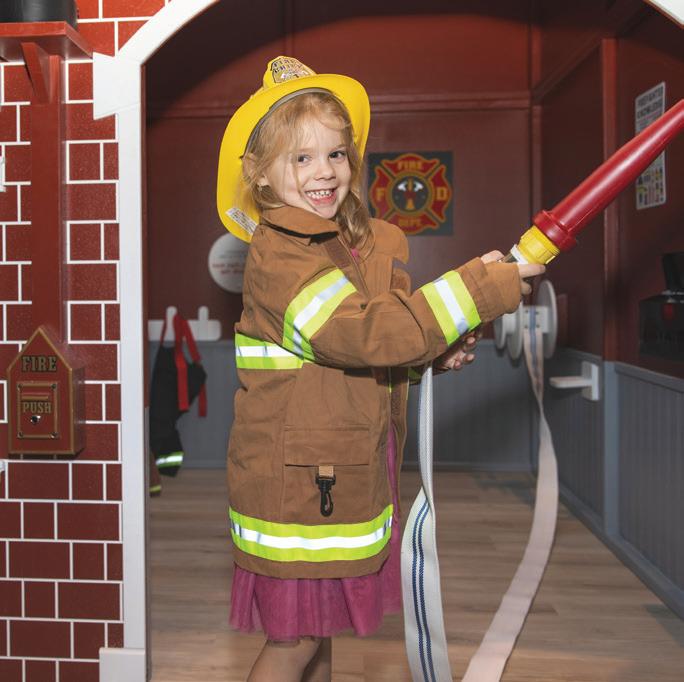
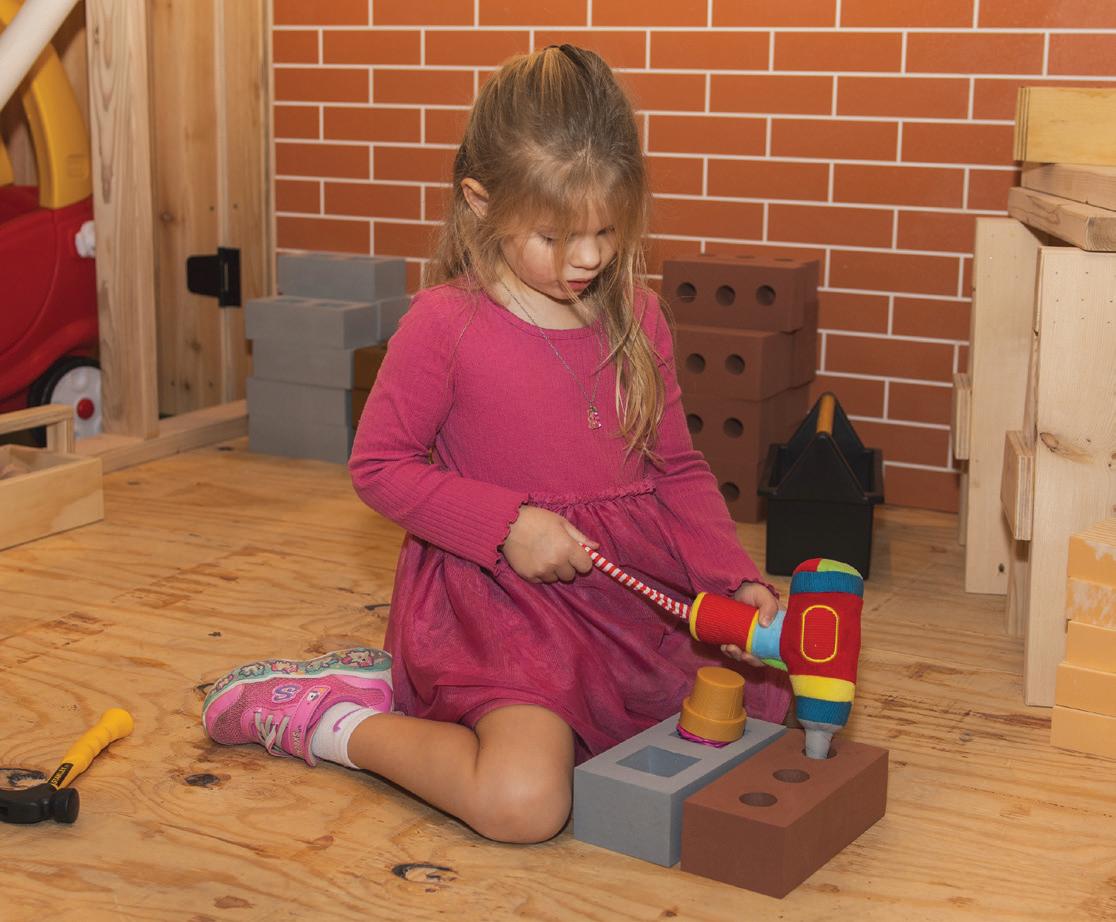
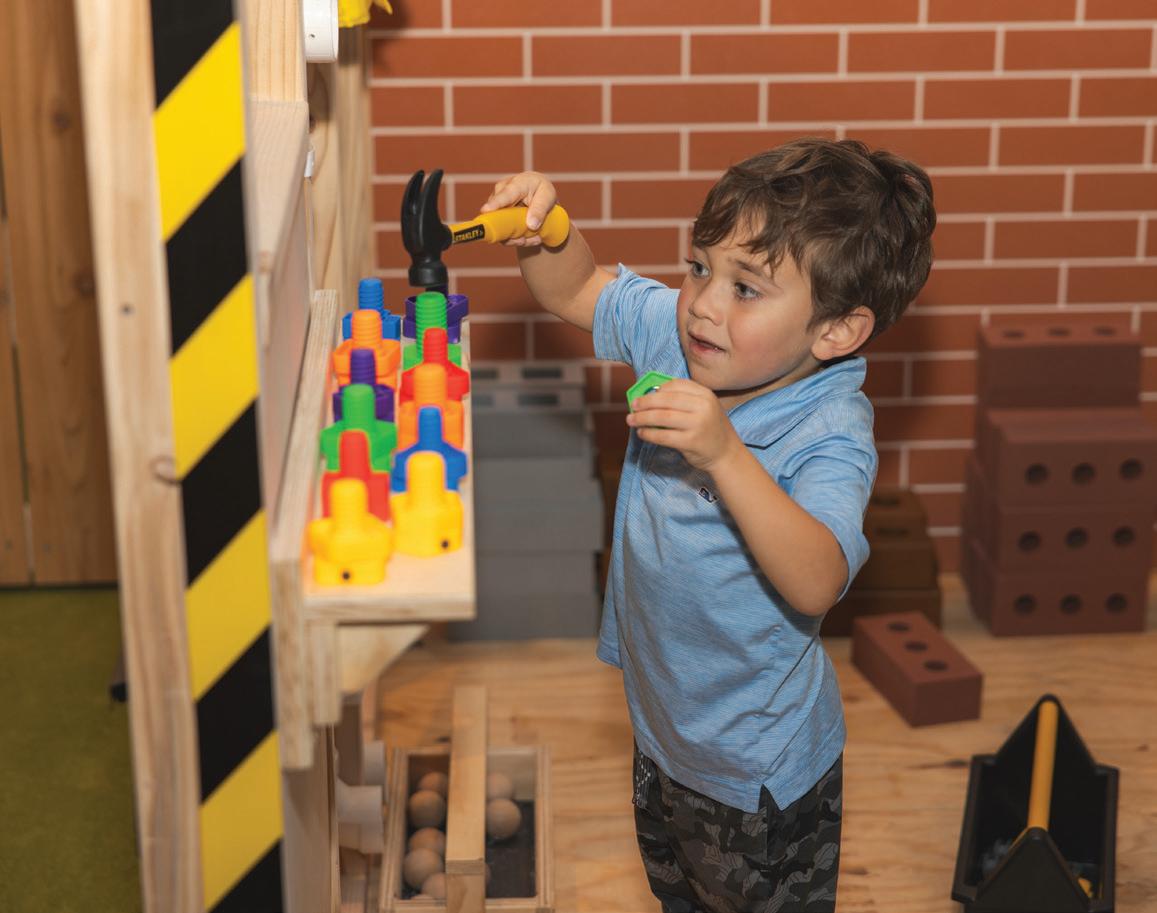
In the Our Town exhibit, which is housed on the museum’s first floor, young guests can explore a reimagined town center that includes the Silas Stearns Fishing Smack, Pensacola Dairy Bar Milk Bottle Diner, My Town Mural and Garden Street Toddler Spot. Children may also wander through the Frisco Train Station, Pride of Pensacola Tiny Tot Train, Germania Hose Company Fire Station and Theo’s Construction House. With everything perfectly sized to them, young adventurers can learn about the city of Pensacola as they play.
Wendi Davis, the guest experience manager for the University of West Florida Historic Trust, was a vital part in turning the dreams of these new exhibits into a reality. It was important to her that when creating these spaces, the museum also incorporated Pensacola’s unique and beautiful history.
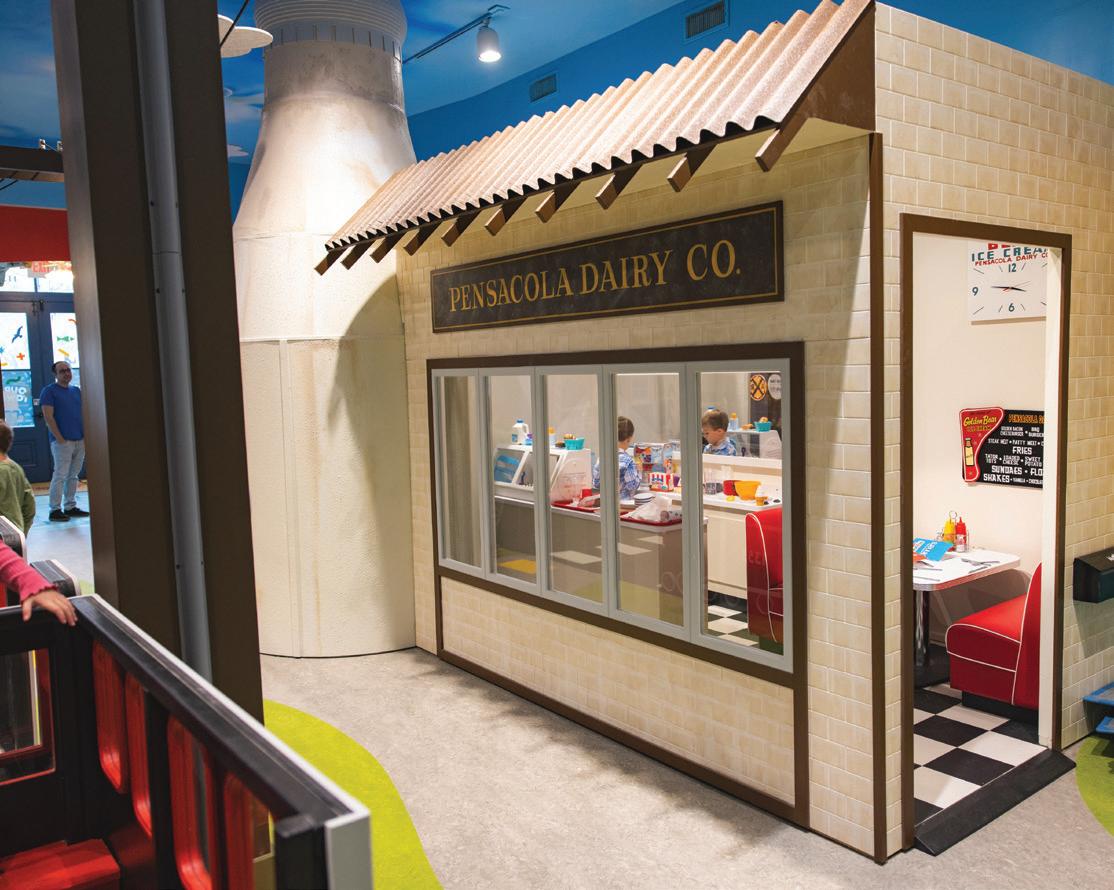
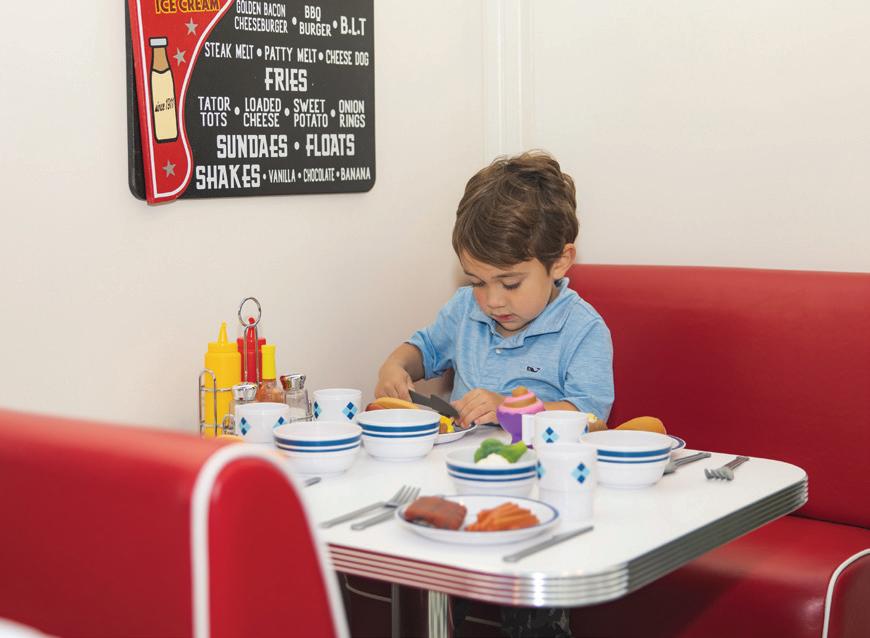
YOUNG VISITORS play inside the Pensacola Dairy Bar Milk Bottle Diner (top, bottom left), Frisco Train Station and Germania Hose Company Fire Station (right).

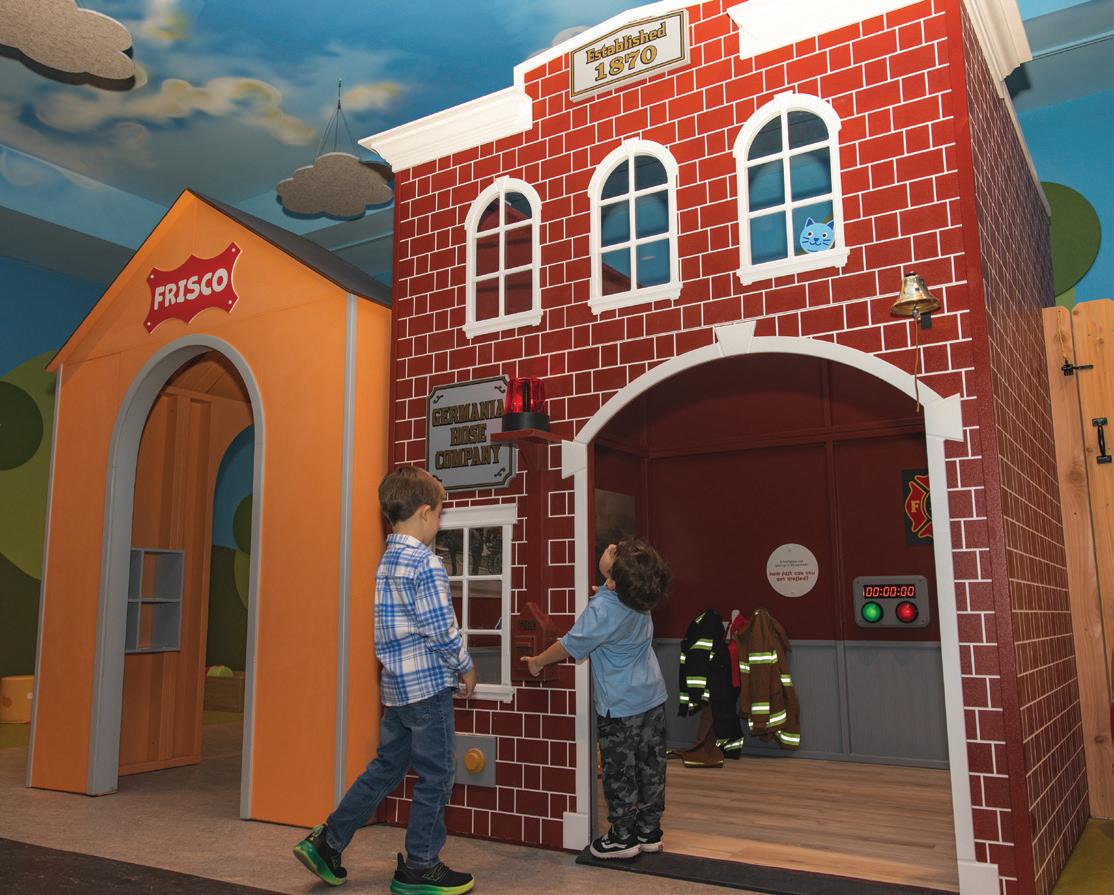
“I’ve loved watching these ideas jump off the page and turn into real spaces kids can climb into, touch and explore,” Davis said. “Each little stop in Our Town is full of exciting adventures, but it’s also rooted in the stories that shaped Pensacola. Children learn best through play, so creating a place where curiosity, imagination and our community’s history can grow side by side has been such a joy.”
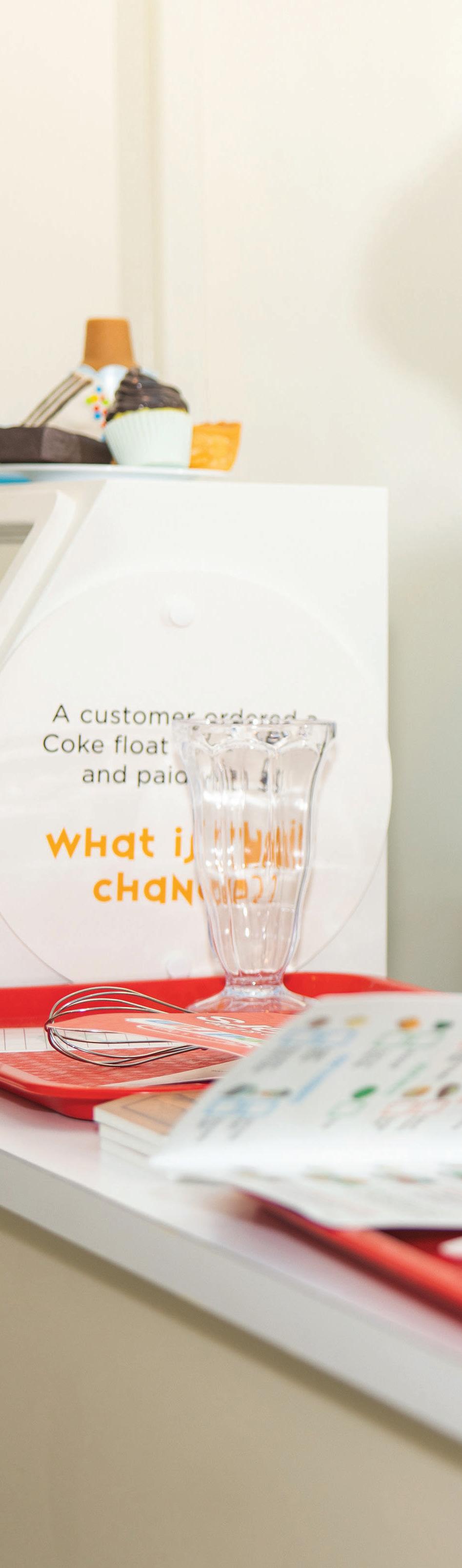
At the Pensacola Dairy Diner, little ones can try their hand at serving classic burgers, milkshakes, fries and floats. With red booths, white walls and nostalgic checkered floors, kids can experience a classic American diner. Once they’re all full, children can hop in their little cars and travel down the road to work on their construction skills. With plenty of wood blocks and toy drills, children have everything they need to create their own buildings, making sure they don’t forget to put on their safety helmets.
Before finishing up for the day, children may swing by the iconic red bricked fire station. Here, children can get dressed in their firefighter gear and practice extinguishing imaginary fires with water hoses. With a timer located inside the building, kids can practice getting ready for those quick responses. With ceilings painted sky-blue and puffy clouds dotted throughout, this space creates an immersive experience and allows children to be transported to a town that is completely designed for them.
The new exhibit was funded through IMPACT 100 Pensacola Bay Area with a $100,670 grant.
“Each little stop in Our Town is full of exciting adventures, but it’s also rooted in the stories that shaped Pensacola.”
—Wendi Davis, Guest Experience Manager for the University of West Florida Historic Trust
A CHILD PLAYS with a toy hammer and building blocks inside Theo’s Construction House.
Rob Overton, executive director for the University of West Florida Historic Trust, reflects on how momentous the gift has been for both UWF and the Pensacola community.
“ We are grateful for the support of IMPACT 100,” Overton said. “Their gift allows us to preserve Pensacola’s rich history by placing it directly in the hands of our children.”
As parents, leaders and mentors, Overton understands the responsibility of teaching children about the wonderful community they live in.
While creating these new spaces, the closure also gave the museum the opportunity to refresh both the Land and Sea and Kid’s Clinic exhibits. These updates included adding Legos to the Land and Sea exhibit for young guests to play with. At the Pensacola Children’s Museum, it is the duty of every staff member, toy and space to be topline for guests to enjoy.
Guests wishing to visit these new exhibits can find the Pensacola Children’s Museum located at 115 East Zaragoza Street in downtown Pensacola on Tuesday through Saturday any time from 10 a.m. to 4 p.m. and on Sundays from noon to 4 p.m.
Old Christ Church
Voices of Pensacola
of
Barkley House
SCULPTING A LEGACY:
The Bear Family’s Contribution to Pensacola’s Arts
BY CATRINA BURKS
Walk down Palafox Street toward the waterfront, and you’ll eventually reach the corner of Palafox and Main streets, an area longtime locals still refer to as “Bear Block.” Today, the ornate ironwork façade frames a pedestrian walkway lined with cafés and storefronts, a quiet reminder of the bustling commercial hub that once stood here. But the name reflects something deeper: a family legacy intertwined with Pensacola’s history for 150 years.
That legacy began in 1876 when Bavarian immigrant Lewis Bear arrived in Pensacola and opened a small grocery and chandlery business. Over time, the enterprise evolved into Lewis Bear Co., now the oldest continuous distributor of Anheuser-Busch products. Across generations, the Bear family helped shape Pensacola’s business community while also becoming deeply involved in its civic and cultural life.
Few embodied that spirit more fully than Lewis Bear Jr.
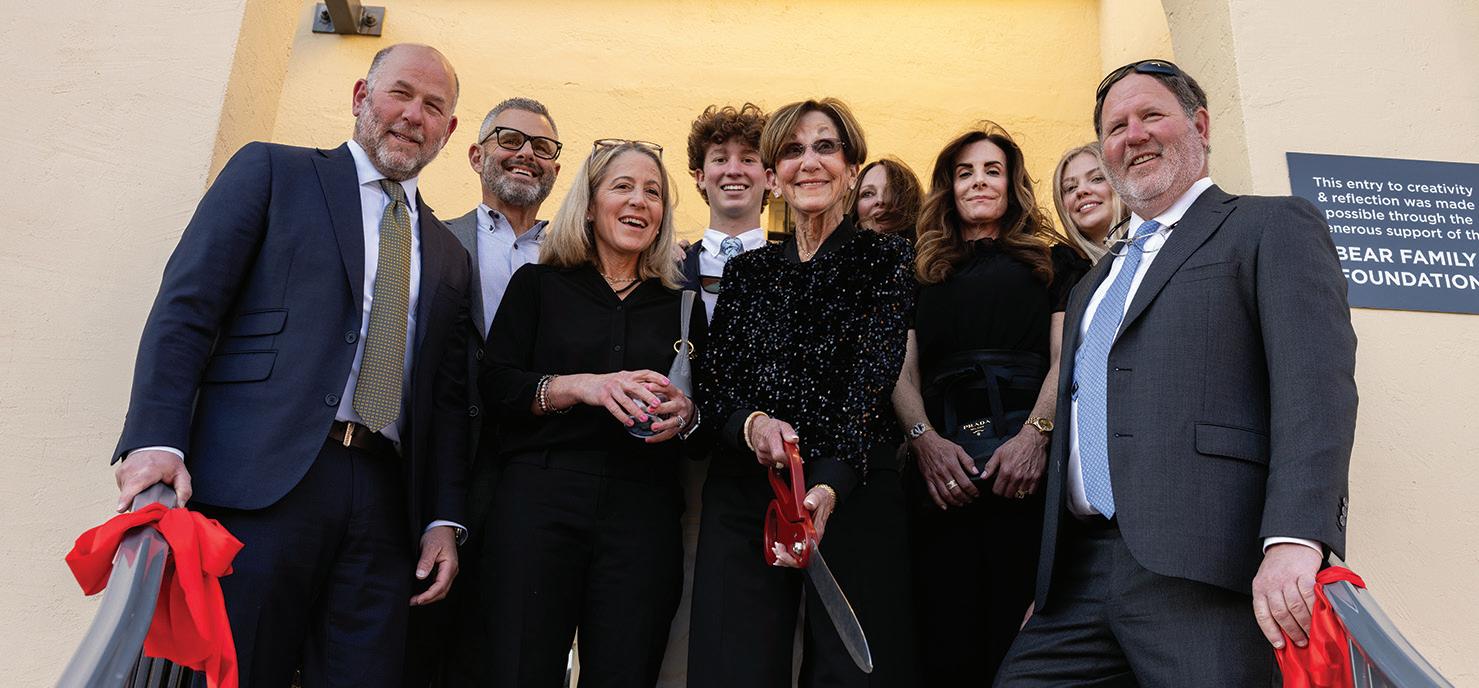
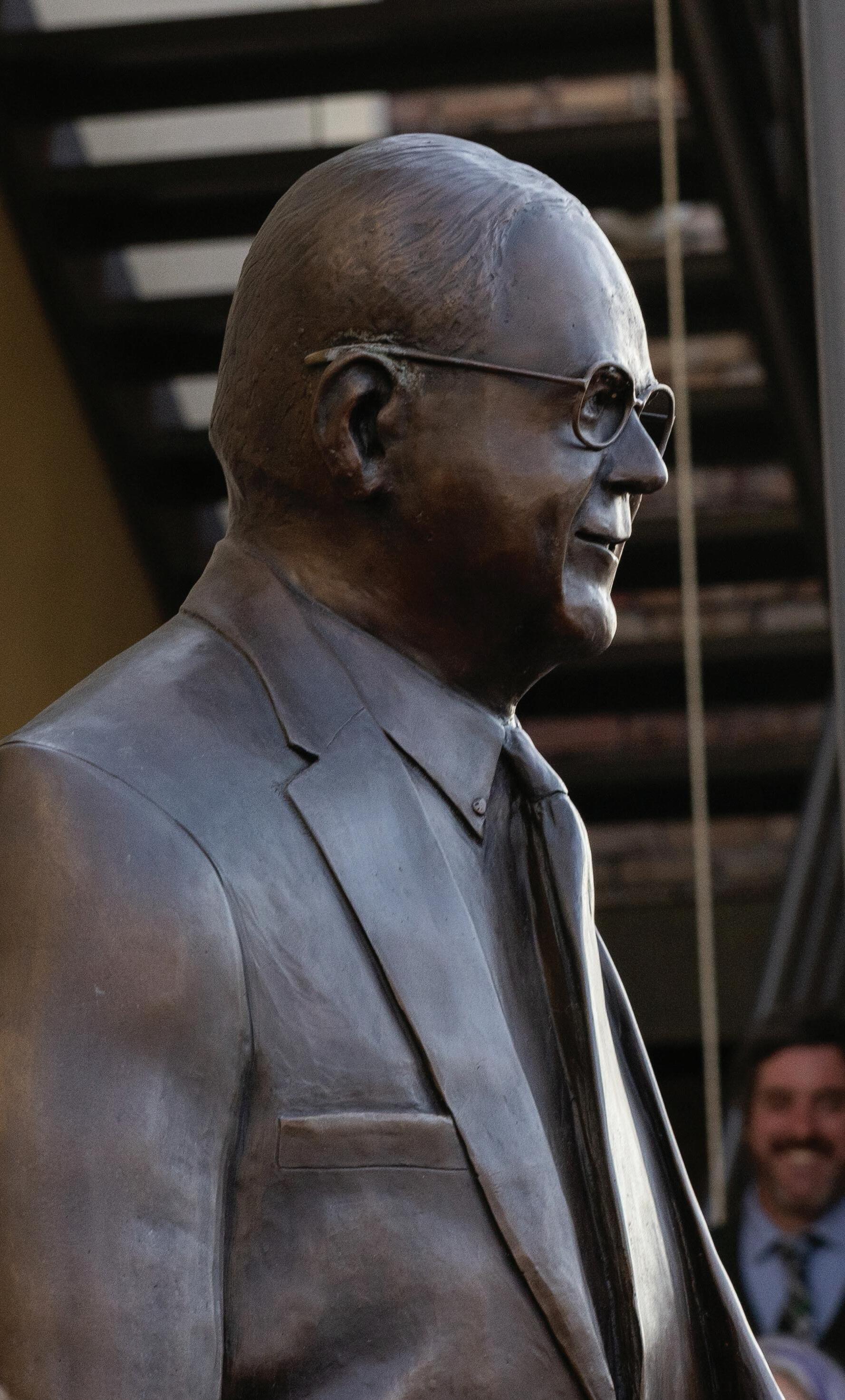
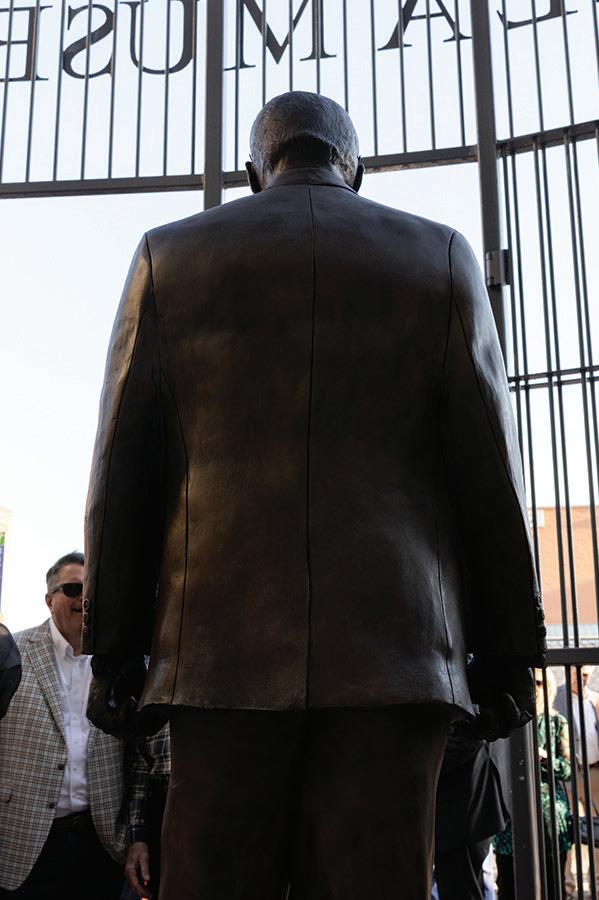
Today, visitors to the Pensacola Museum of Art’s newly enhanced Sculpture Garden will find a bronze statue honoring his life and legacy. The installation was made possible through the generosity of philanthropist and wife of the late Lewis Bear Jr., Belle Bear, and the Bear Family
THE BEAR FAMILY attends the ribbon cutting for the Pensacola Museum of Art’s new Sculpture Garden and unveiling of the Lewis Bear Jr. sculpture.
Foundation. But the project began with a different idea.
“The concept for the Sculpture Garden entrance originally started as an application for an IMPACT 100 grant,” Bear said. When the project was not selected, she and her late husband felt strongly that the improvement was still important for the community. Through the Bear Family Foundation, they chose to fund the entrance themselves so the project could move forward.
The statue that now anchors the garden emerged from the admiration of Lewis Bear Jr.’s friends.
“Jim Reeves, Collier Merrill and Maria Goldberg approached us about creating a sculpture in his honor,” Bear said. “They suggested placing it at the museum within the new Sculpture Garden, and we immediately felt it was the perfect location.”
For the Bear family, the Pensacola Museum of Art has long held personal significance. Lewis Bear Jr.’s mother was among the museum’s founding supporters, and from an early age he was immersed in its world.
“She would take him into the galleries and quite literally help get the museum
off the ground,” Bear said. Those early experiences helped shape his lifelong love of art and culture.
He studied art in school and continued creating throughout his life, but his greatest impact came through advocacy and leadership. He helped bring major exhibitions to Pensacola and later played a role in guiding the museum under the auspices of the University of West Florida, strengthening its longterm stability.
That love of the arts continues into the next generation. One of the Bears’ granddaughters, Lauren, now studies art at the Savannah College of Art and Design.
For Bear, the Sculpture Garden represents more than a tribute to one individual.
“A strong and vibrant community is made up of many elements, and one of the most important is its cultural life,” she said. “Public art and museum spaces create opportunities for creativity, learning and connection that enrich daily life.”
Located along Main Street, the garden now provides both a welcoming entrance and a quiet place for reflection. Visitors
can pause, enjoy the surroundings and engage with the art in a meaningful way.
When they encounter the statue of Lewis Bear Jr., Bear hopes they will see more than a likeness in bronze.
“I hope people take a moment to learn about his life and the many ways he worked to support the arts and strengthen our community,” she said. “More than anything, I hope it reminds them that one person’s dedication, given generously and consistently over time, can make a lasting difference.”
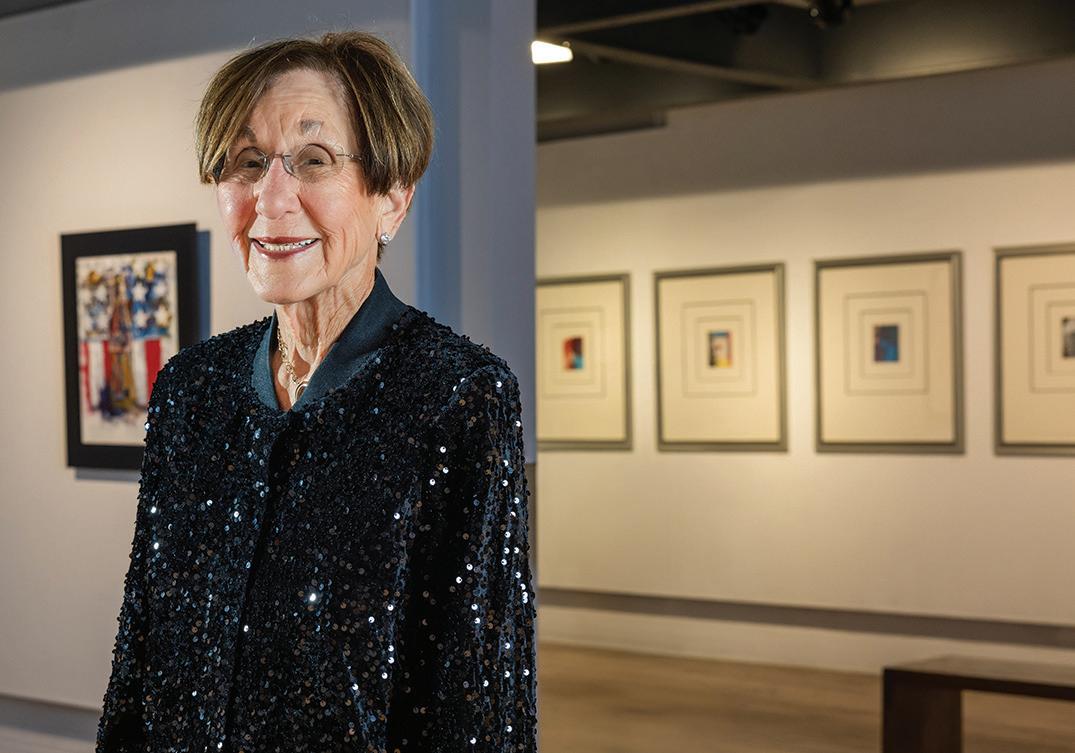
“I hope people take a moment to learn about his life and the many ways he worked to support the arts and strengthen our community,”
—Belle Bear, philanthropist and wife of the late Lewis Bear Jr.
Luna the Cat
In 1559, FROM SHIPWRECK TO STORYBOOK
BY MICAYLA YATES
when Spanish ships arrived in Pensacola Bay under the command of Tristán de Luna y Arellano, they carried soldiers, settlers, supplies and, as archaeologists would discover centuries later, cats.
For generations, the remains of these little creatures rested quietly beneath the waters off Emanuel Point. Today, thanks to University of West Florida researchers, their story is emerging not only in the pages of a leading academic journal, but also in a children’s book that is captivating young readers and connecting them to Pensacola’s earliest colonial chapter.
In an article published last year, Dr. John Bratten, UWF professor of anthropology and co-director of excavations at the Emanuel Point shipwrecks, examined feline remains recovered from the Emanuel Point II wreck.
“This is the earliest cat to be archaeologically discovered in the present day United States,” Bratten said.
The research, co-authored with Martin H. Welker of the University of Arizona and Eric Guiry of the University of Leicester, traced the arrival and spread of domestic cats in the Americas through 1760. Their work suggests that cats traveled alongside European settlers as pets, their movement closely paralleling patterns of European settlement and their diet mirroring that of the humans on board.
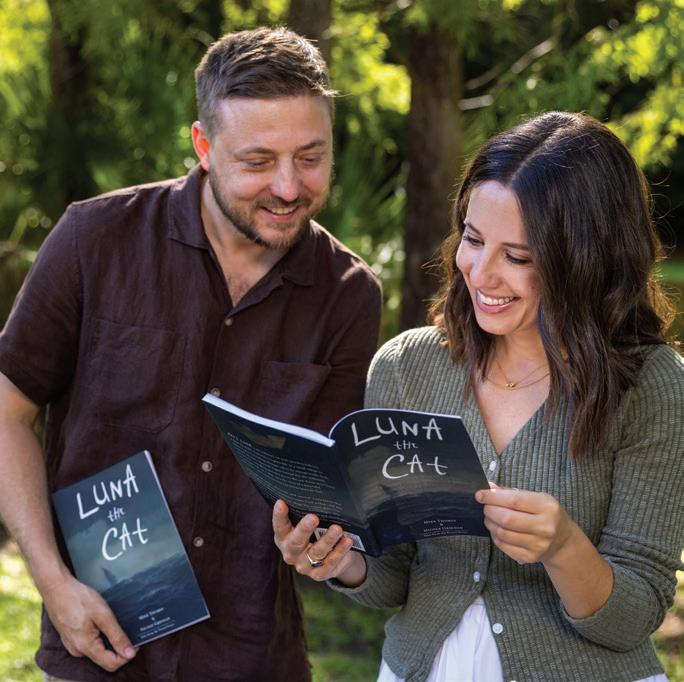
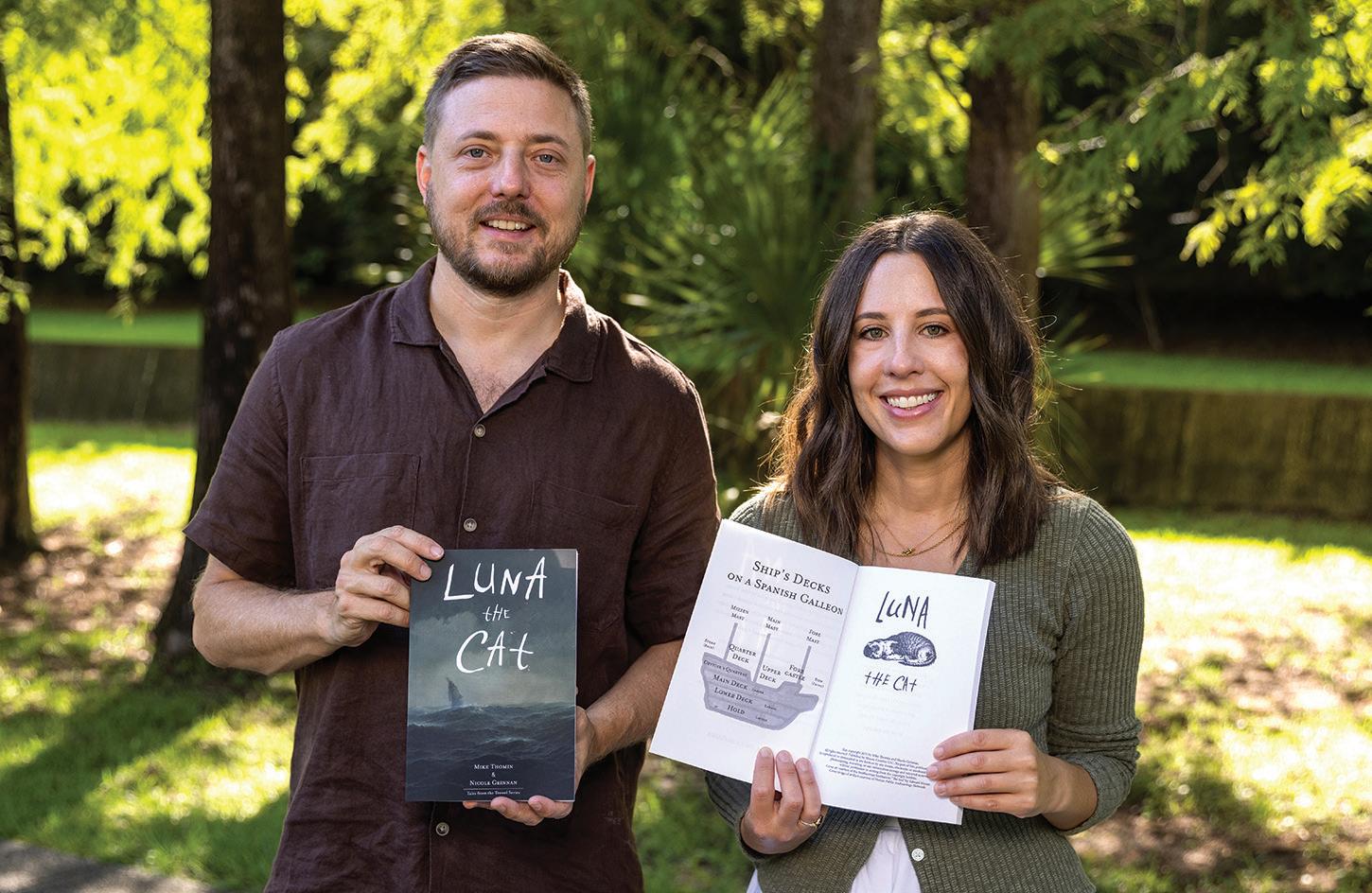
Such evidence brings a new dimension to the story of the expedition – one that inspired “Luna the Cat,” a children’s book written by Michael Thomin,
assistant director of education and interpretation for the Florida Public Archaeology Network, and Nicole Grinnan, assistant director of UWF’s Archaeology Institute. Released in July 2025, the book imagines the world of the 1559 expedition through the eyes of a feline protagonist based on the cats uncovered at Emanuel Point.
For Thomin and Grinnan, the decision to co-author the book was made after realizing that most archaeology books didn’t speak to the K-12 students in their children’s archaeology programs in the way they desired.
“Most titles were too focused on the archaeological process and lacked the heart of what makes a story engaging and relatable for kids,” Thomin said.
When Thomin and Grinnan learned of the discovery of cat bones found during excavations of the Emanuel Point I and Emanuel Point II shipwrecks, they knew they had a perfect new lens through which to write their own children’s book.
“By telling history through the eyes of an animal, we could connect with children in a way that felt emotionally compelling and accessible,” Grinnan said.
Although “Luna the Cat” is a fictional tale, its historical framework is grounded in real research from UWF’s
Archaeology Institute and Department of Anthropology, including that of Dr. John Bratten. Grinnan herself even participated in excavations at the site during her graduate studies.
At its core, “Luna the Cat” introduces young readers to one of North America’s earliest multi-year European settlement attempts, decades before Jamestown in Virginia and years before St. Augustine on Florida’s Atlantic coast.
“This is more than just a story about a cat,” Grinnan and Thomin said. “At its heart, the book is about overcoming fear, building resilience and discovering inner strength in the face of adversity. We hope it sparks curiosity about the past and shows kids that archaeology is not just about digging — it’s about discovering human and animal stories that still matter today.”
Since its release, the book has received accolades from educators, parents and children, and its authors have been busy hosting programs at libraries, local schools, bookstores and museums.
“We may have written the book, but it stands on the shoulders of years of dedicated research and discovery right here at UWF,” Thomin and Grinnan said. “Our hope is that books like ‘Luna the Cat’ will not only spark a passion for history
and archaeology in young readers but also help inspire the next generation of heritage stewards.”
Luna the Cat is the first in the “Tales from the Trowel” series, each volume inspired by real archaeological discoveries across Florida. The next installment, coauthored by Thomin and UWF alumna Katherine Sims, will follow a donkey that helps build the Castillo de San Marcos in St. Augustine. It is expected to be released in the fall.
From the timbers of a 16th-century shipwreck resting in Pensacola Bay to the pages of a children’s story, the cats of the 1559 expedition have found an unexpected voice that reminds us that history is not only shaped by explorers and settlers, but also by the furry companions that journeyed alongside them.
“Our hope is that books like ‘Luna the Cat’ will not only spark a passion for history and archaeology in young readers but also help inspire the next generation of heritage stewards.”
—Authors, Michael Thomin and Nicole Grinnan
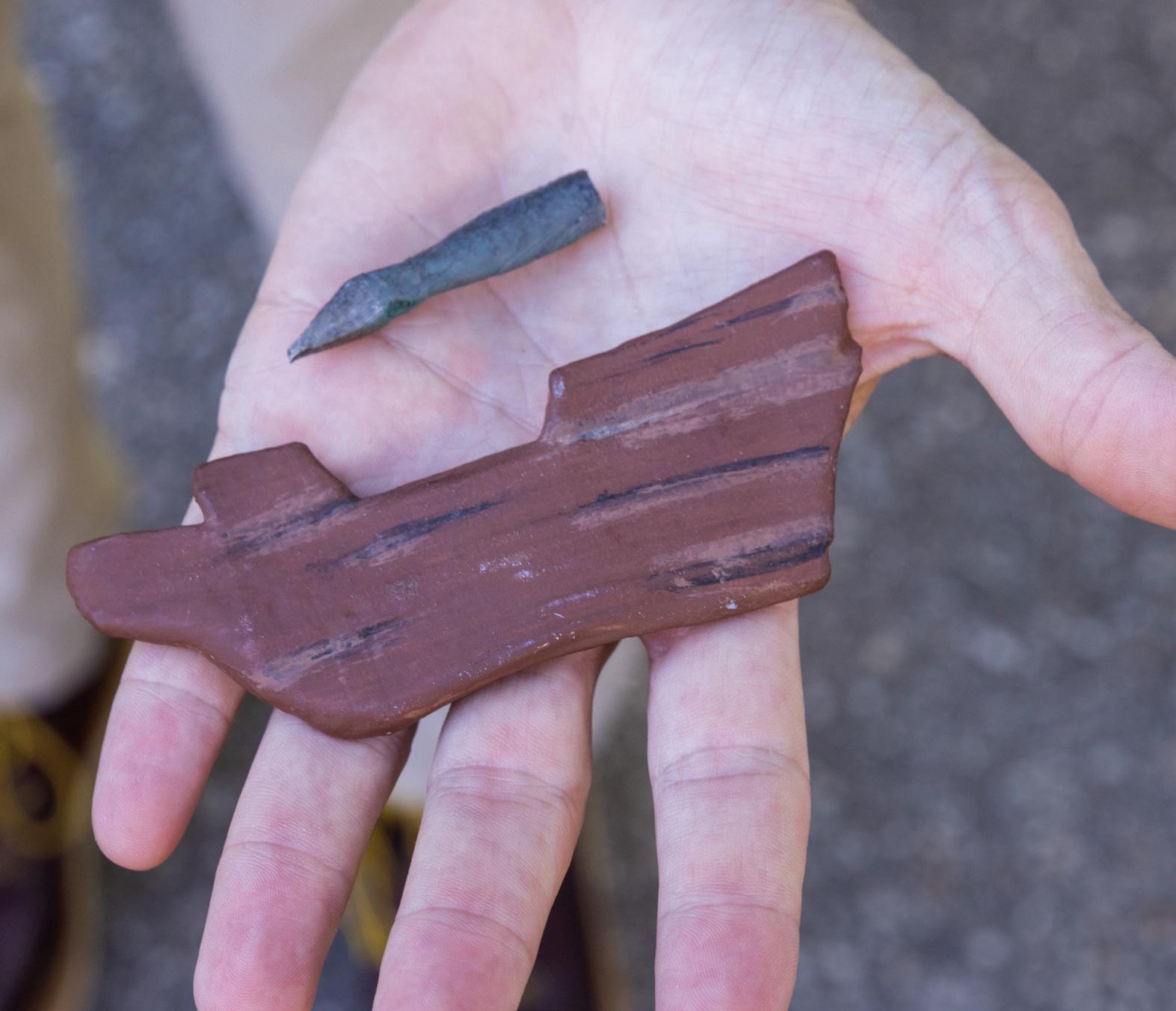
ONE AUTHOR HOLDS 3D PRINTS of two artifacts found on the Emanuel Point I shipwreck and the terrestrial Luna settlement site: a crossbow bolt tip point (top) and wooden carving of a ship silhouette (bottom).
CELEBRATING AMERICA 250
Florida’s Version
with the Pensacola Museum of History
BY MICAYLA YATES
Pensacola’s history is getting a new voice. Rob Overton, executive director of the University of West Florida Historic Trust, will introduce an upcoming documentary highlighting the city’s unique story as part of America250 Florida, Florida’s statewide celebration of the 250th anniversary of the United States, produced in partnership with Visit Florida. Framed as “America’s Original Settlement,” the film explores Pensacola from its earliest European colony to its modern role as the cradle of naval aviation.
Long before the United States was founded, before St. Augustine or Jamestown entered the scene, ships arrived in Pensacola Bay carrying more than 1,000 settlers
under the command of Spanish explorer Tristán de Luna y Arellano. In 1559, they established what is now recognized as the first multi-year European settlement in the United States.
However, that settlement did not last long. A devastating hurricane destroyed many of the ships and supplies needed for survival, forcing the expedition to abandon the colony. Over time, the story faded from public memory, overshadowed by later settlements that endured.
Yet the history did not disappear entirely.
Pensacola’s layered past to life, with Jessie Cragg, curator of exhibits, guiding viewers through centuries of history. Visitors walk through exhibits and artifacts that reveal how this Gulf Coast city became one of the most culturally layered places in the nation. Alongside the museum, the documentary will feature the nearby Fort Barrancas and Naval Air Station Pensacola.
A City at the Crossroads of Empires
For centuries, Pensacola stood at the crossroads of empires. Control of the region shifted among Spain, France, Great Britain, the United States and the
The building itself is part of that story. Constructed in 1907 as Pensacola’s city hall, the structure served the community for more than eight decades before becoming home to the museum. With Overton narrating the documentary, the building grounds viewers as they explore the city’s layered past. From its central location in historic downtown Pensacola, it now anchors a district of preserved homes, museums and archaeological sites that interpret daily life across generations.
Visitors can glimpse physical traces of these earlier eras at nearby archaeological sites that reveal foundations of colonial structures, remnants of forts and evidence of the people who once lived and worked
A Legacy Rediscovered
Though the 1559 settlement was brief, its legacy shows that history is not always defined by permanence. Sometimes it is defined by storytelling and rediscovery — by the work of historians, archaeologists and educators who bring forgotten stories back into view.
At the Pensacola Museum of History, that rediscovery happens every day.
Through its exhibits and surrounding historic sites, visitors explore a place where empires met, cultures blended and America’s earliest chapters were written. Now, more than four centuries later, Overton’s narration invites audiences to experience these layers firsthand. Pensacola continues to remind us that even places nearly lost to time can still shape the nation’s future.
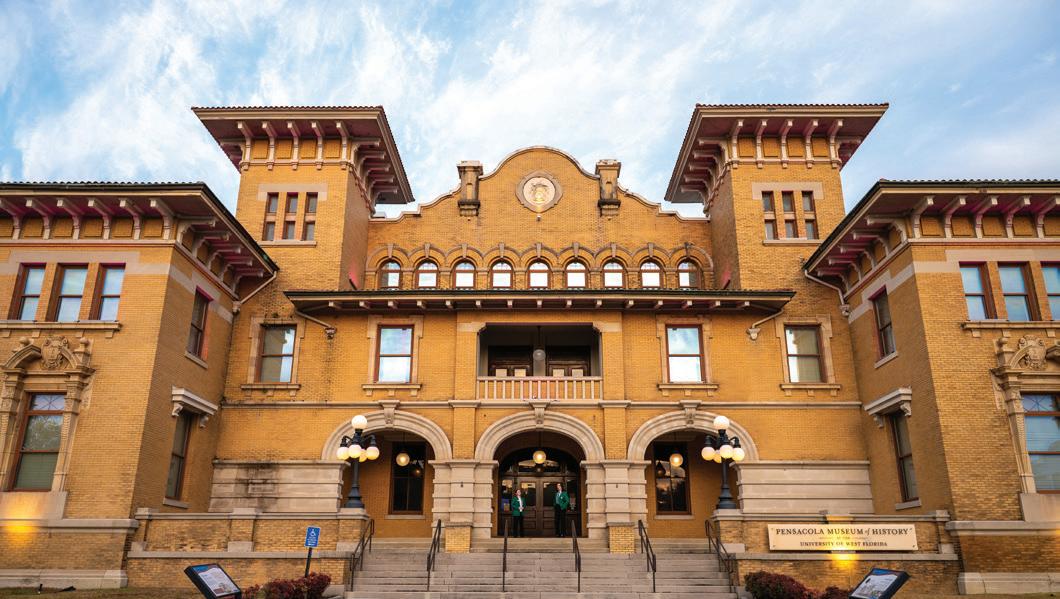
THE PENSACOLA MUSEUM OF HISTORY sits in Pensacola’s original city hall building located downtown at 330 Jefferson Street.
Big Brothers Big Sisters Tour of Historic Trust Properties
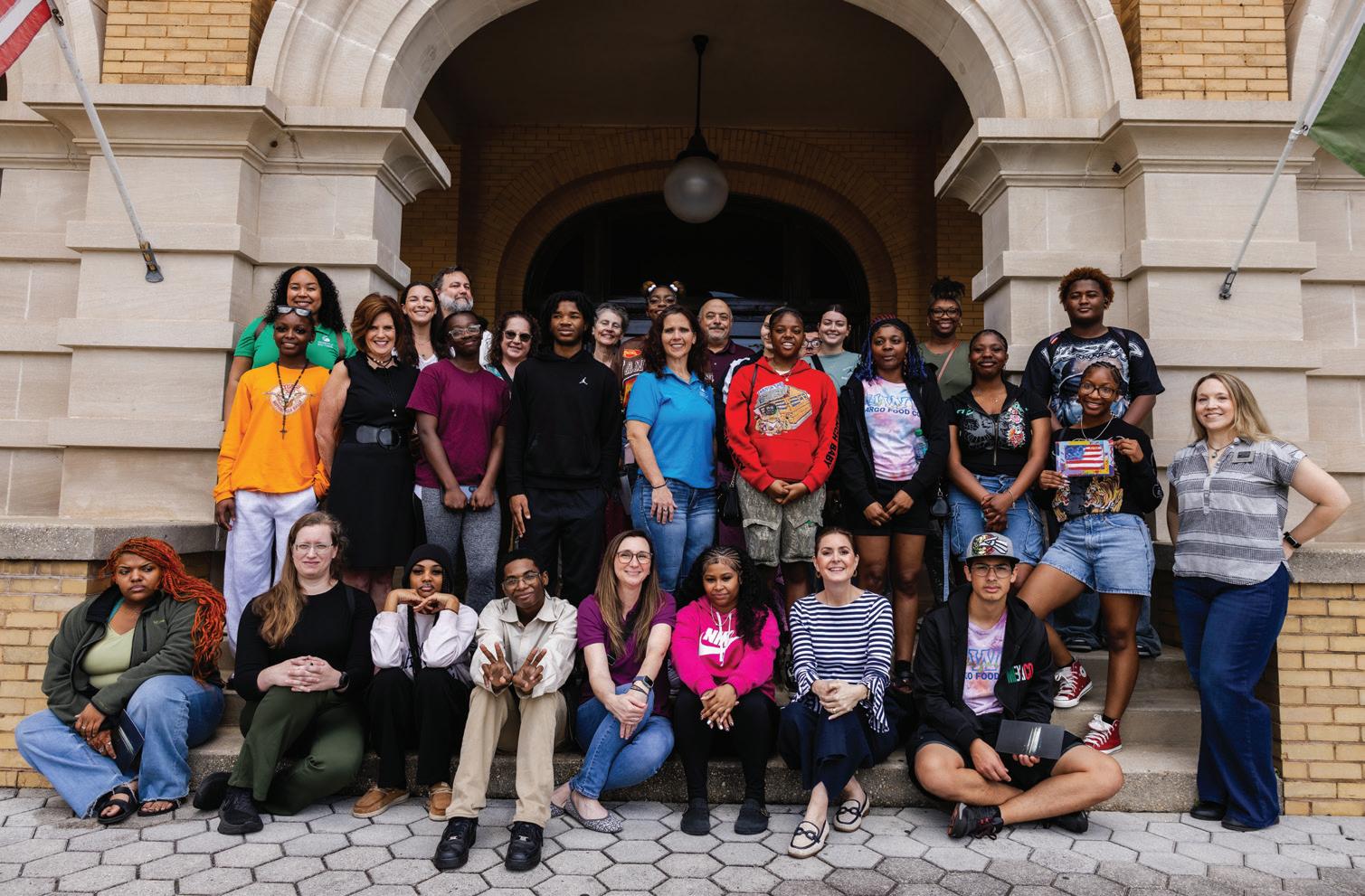
On March 11, the “Beyond School Walls,” a Big Brothers Big Sisters of Northwest Florida workplace mentoring program, toured the Historic Trust properties. The “littles” in this group are local high school students, accompanied by UWF faculty and staff “bigs.” | March 11, 2026, UWF Historic Trust downtown campus
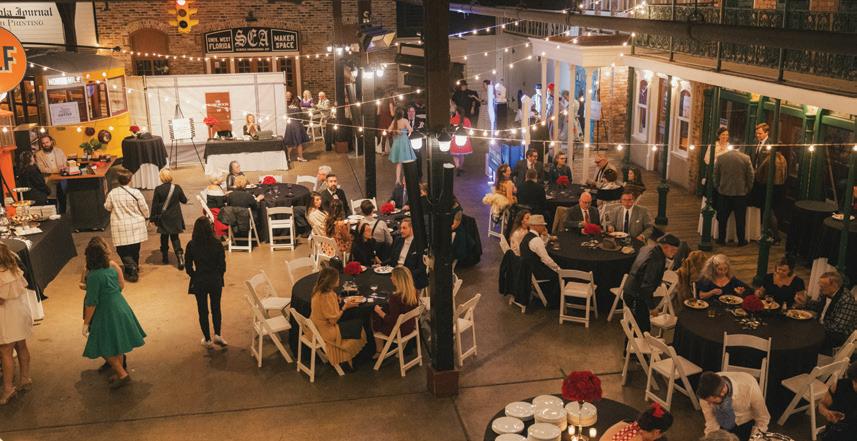
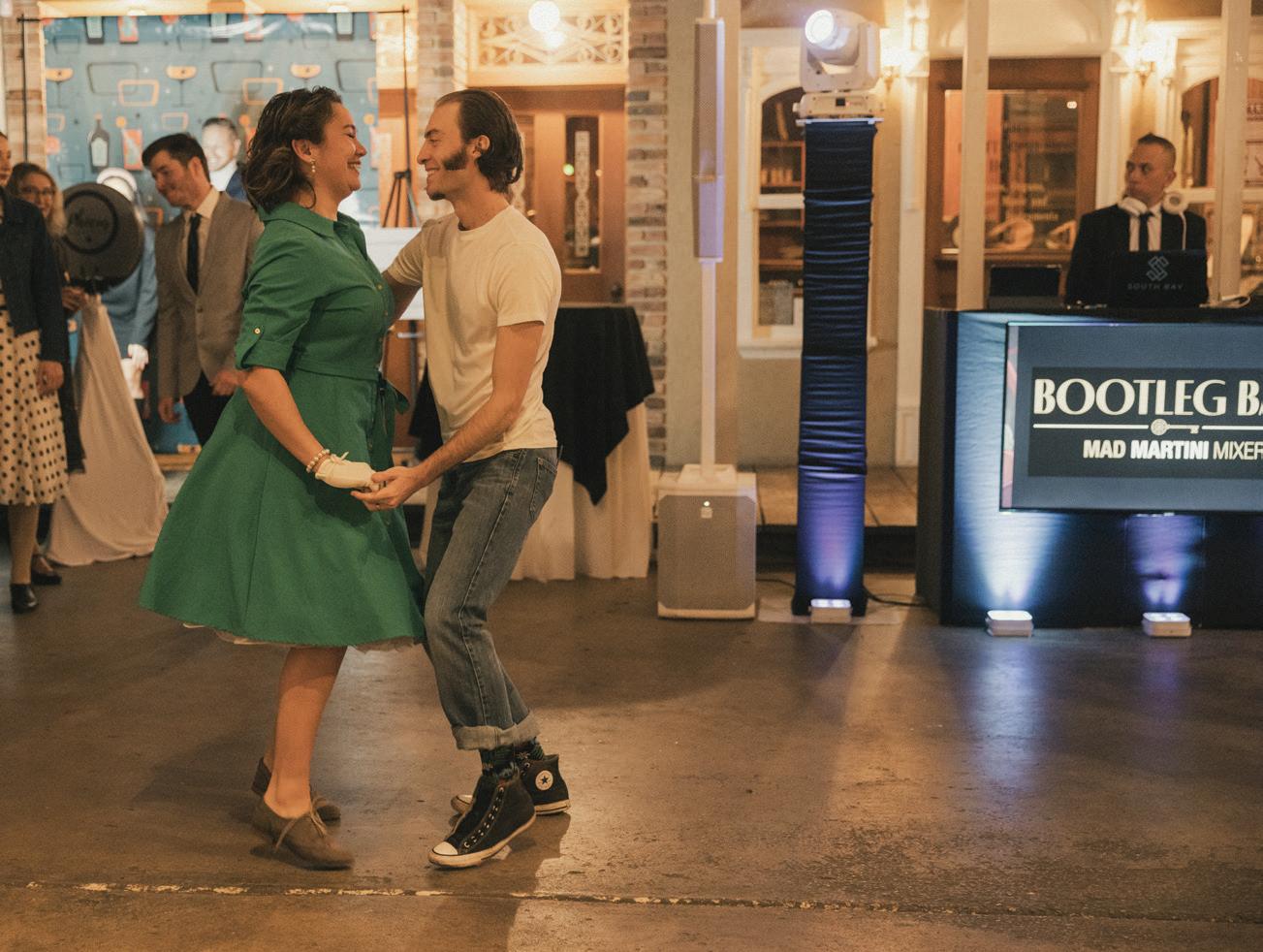
Bootleg Ball 2025
At the Bootleg Ball 2025 Mad Martini Mixer, guests stepped into a 1950s-inspired evening at the Museum of Commerce, sipping martinis, mingling and celebrating the golden age of advertising and cocktail culture. The lively event featured heavy hors d’oeuvres and spirited libations, with proceeds benefiting the UWF Historic Trust and the Pensacola Museum of Art. | Jan. 25, 2025
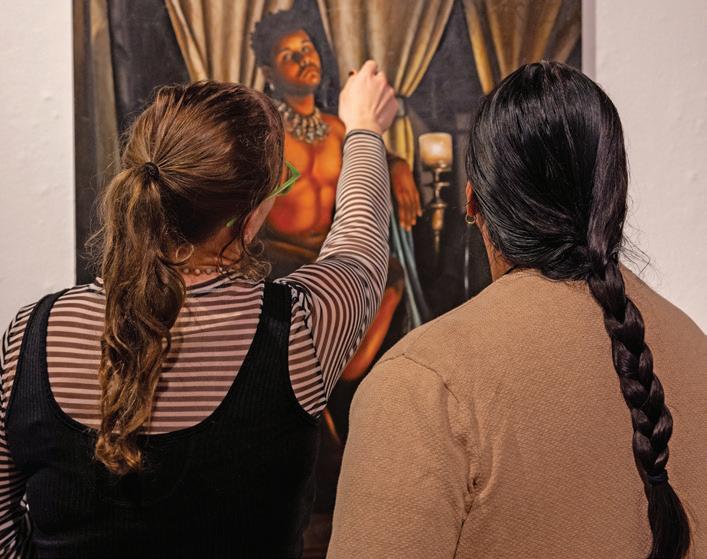
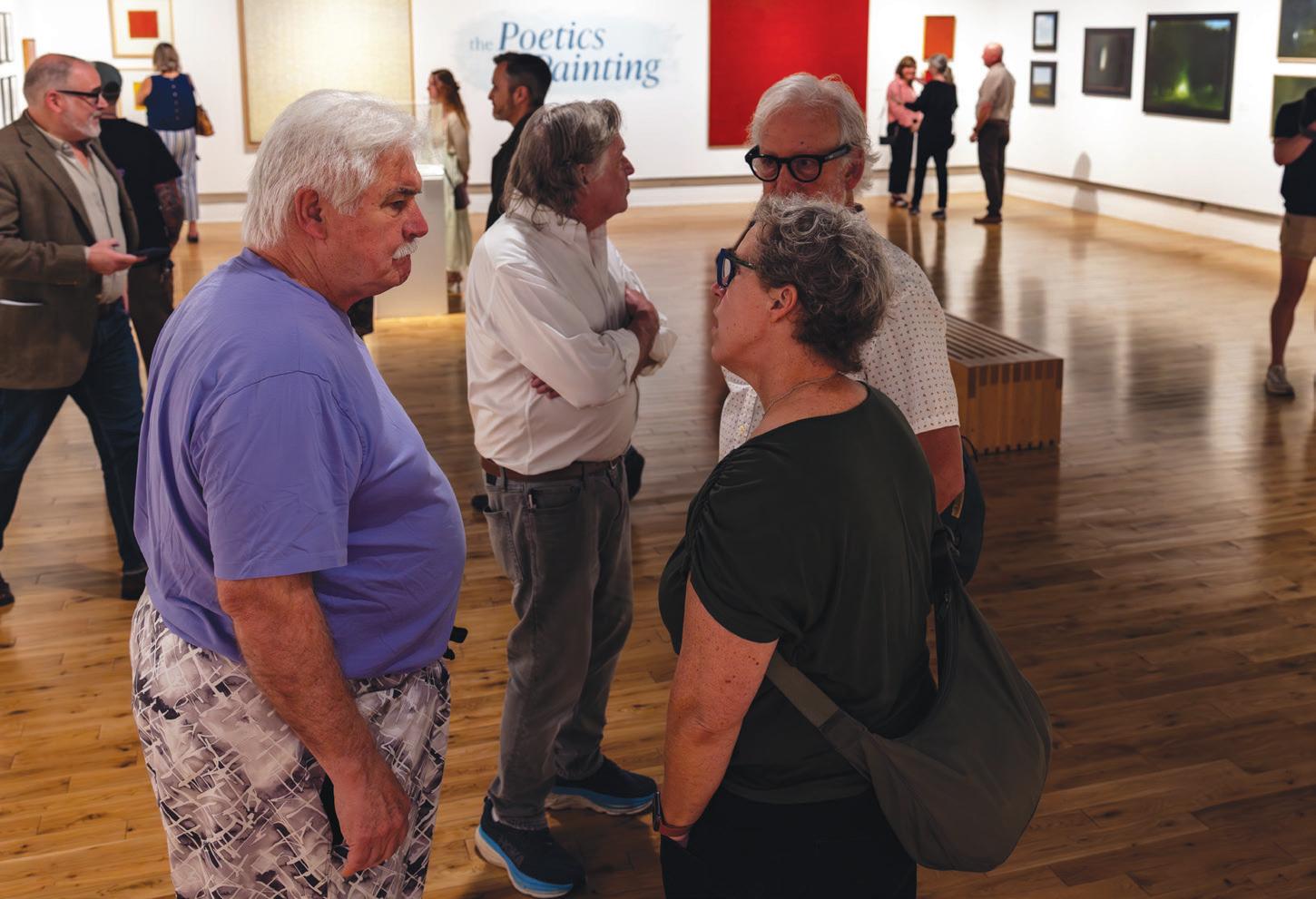
Poetics of Painting: A Celebration of the Lineage and Legacy of John Markowitz
The Pensacola Museum of Art opened a new exhibit honoring the life and work of the longtime UWF faculty member and chair of the PMA’s Collection Committee. The exhibit features both the work of John himself and more than fifty works of art created by Markowitz’s mentors and students. | March 6, 2026
Holidayfest 2025
At Holidayfest 2025, faculty, staff and their families gathered at the Museum of Commerce and the Museum of Industry to enjoy festive refreshments, children’s crafts and seasonal cheer. | Dec. 10, 2025
PMA Youth Art Focus
The 72nd Annual Youth Art Focus exhibition at the Pensacola Museum of Art, presented in partnership with the PMA Guild and Escambia County Public Schools, showcased the creativity and achievement of K-12 students and their teachers from across the district. Continuing a tradition dating back to 1954, the exhibition welcomed more than 2,000 visitors and provided students the opportunity to experience their work in a professional museum setting while celebrating the impact of local art education. | Jan. 23, 2026
Historic Pensacola Open House
During the Historic Pensacola Open House on May 10, 2025, guests enjoyed free admission to museums and sites across downtown, including the Historic Pensacola Village and the Pensacola Museum of Art, with reenactors, live demonstrations and guided tours bringing history to life. | May 10, 2025
Dualities: National Sculpture Exhibition Panel Discussion
The Pensacola Museum of Art hosted a thought-provoking panel discussion featuring acclaimed sculptors and educators exploring themes of form, texture and artistic duality. Attendees gained insight into the artists’ creative processes, teaching practices and visions for the future of sculpture, with panelists’ works on display as part of the exhibition. | Nov. 7, 2025

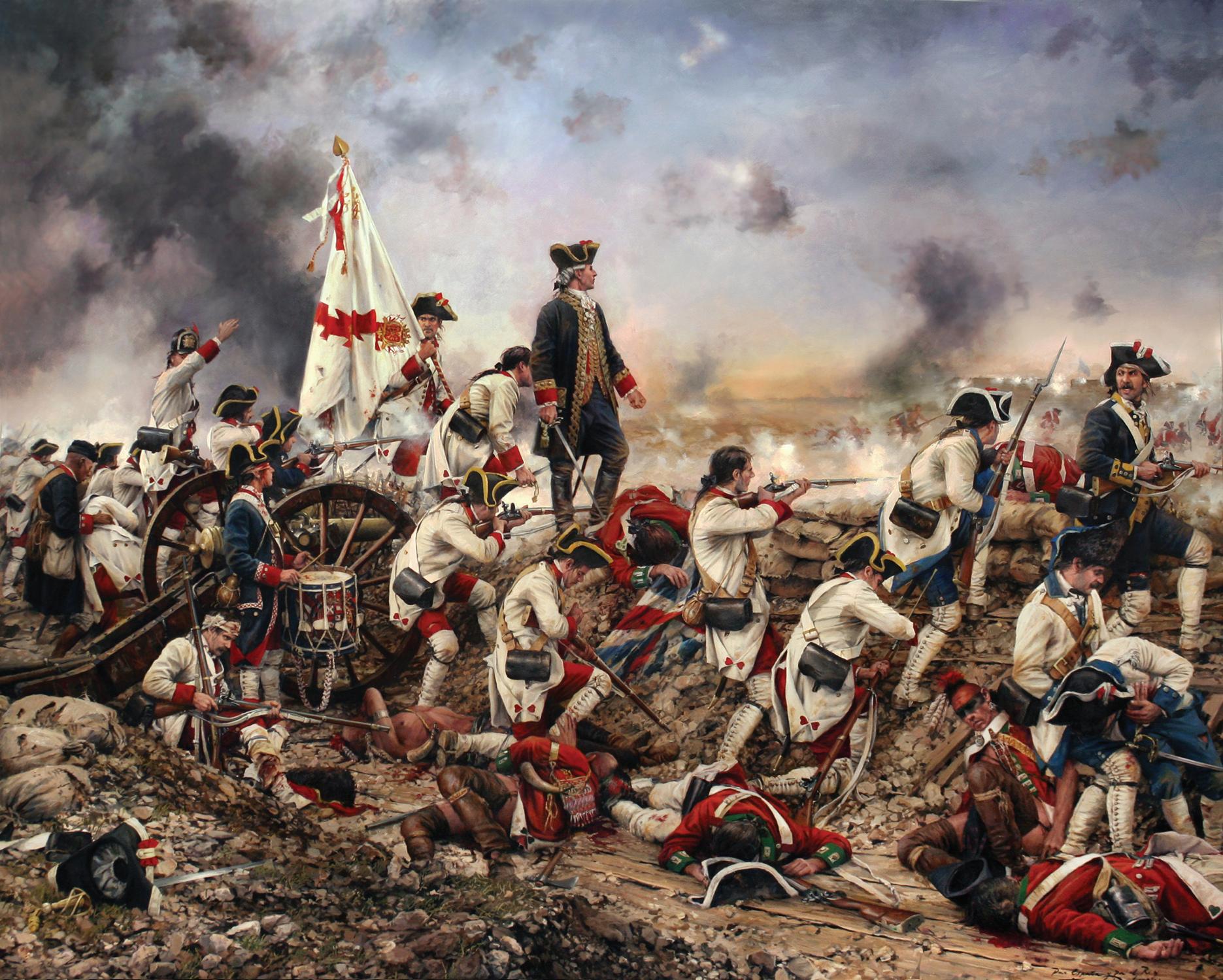
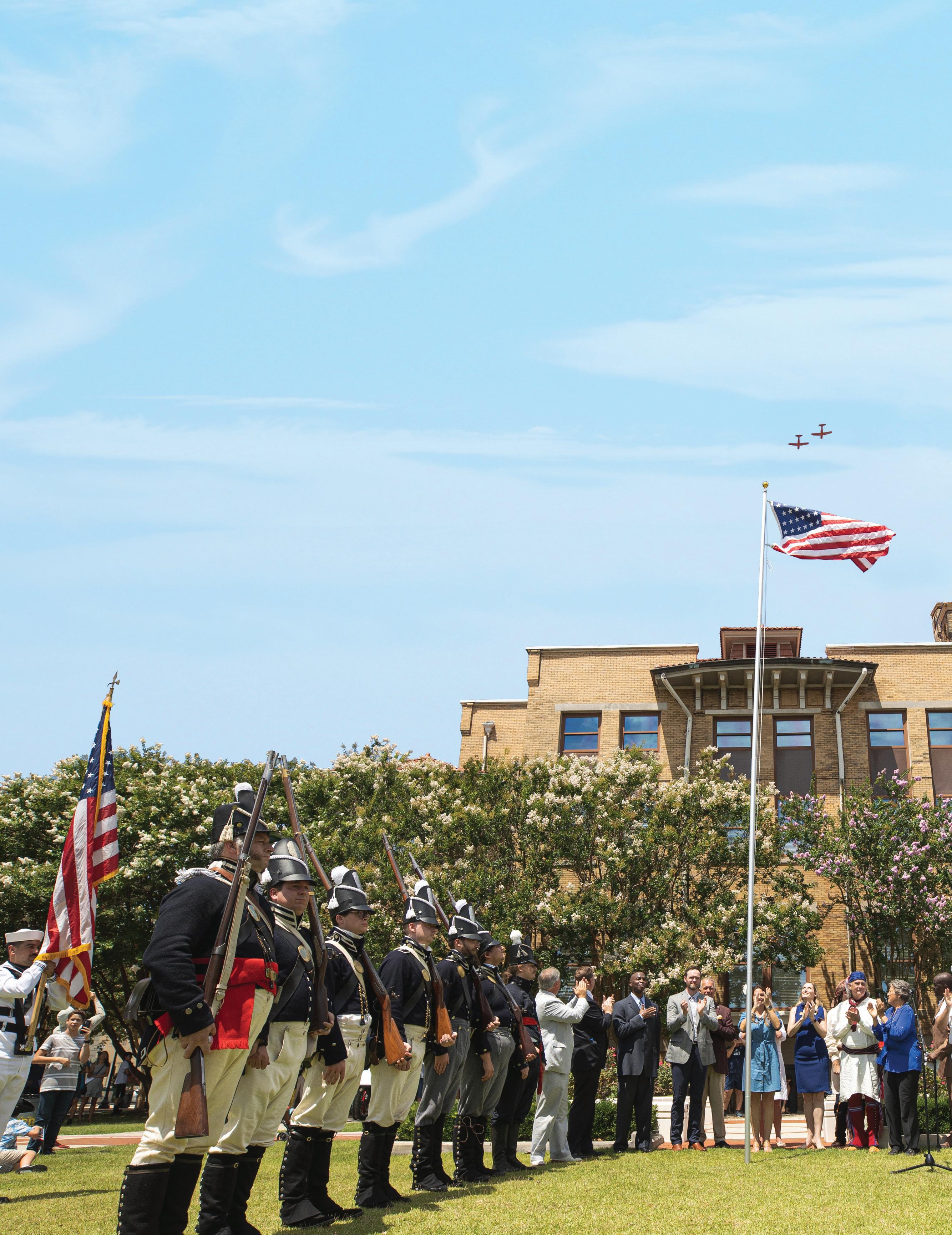
2026 marks 250 years since the signing of the Declaration of Independence. Communities across America are asking, “What is Our Place in this Story?”
For most, the answer is straightforward. For Pensacola, it is more complicated and far more interesting. Under British rule, the residents of this small Gulf port town stood 2,000 miles from the front lines of America's revolution, and yet their choices helped determine its outcome.
Opening May 9, 2026, at the Pensacola Museum of History, this exhibit tells that story through original letters, artifacts and paintings.

Por España y por el Rey, Gálvez en América, Augusto Ferrer-Dalmau, 2015
This exhibit is supported by the University Systems of Florida America250 sub-grant.
VISITPENSACOLA .COM
In Partnership with Visit Pensacola
Generously Sponsored by Fiesta Pensacola
Sponsored in part by the State of Florida through the Division of Arts and Culture
“I count myself lucky to have such clearly traceable roots to Northwest Florida.”
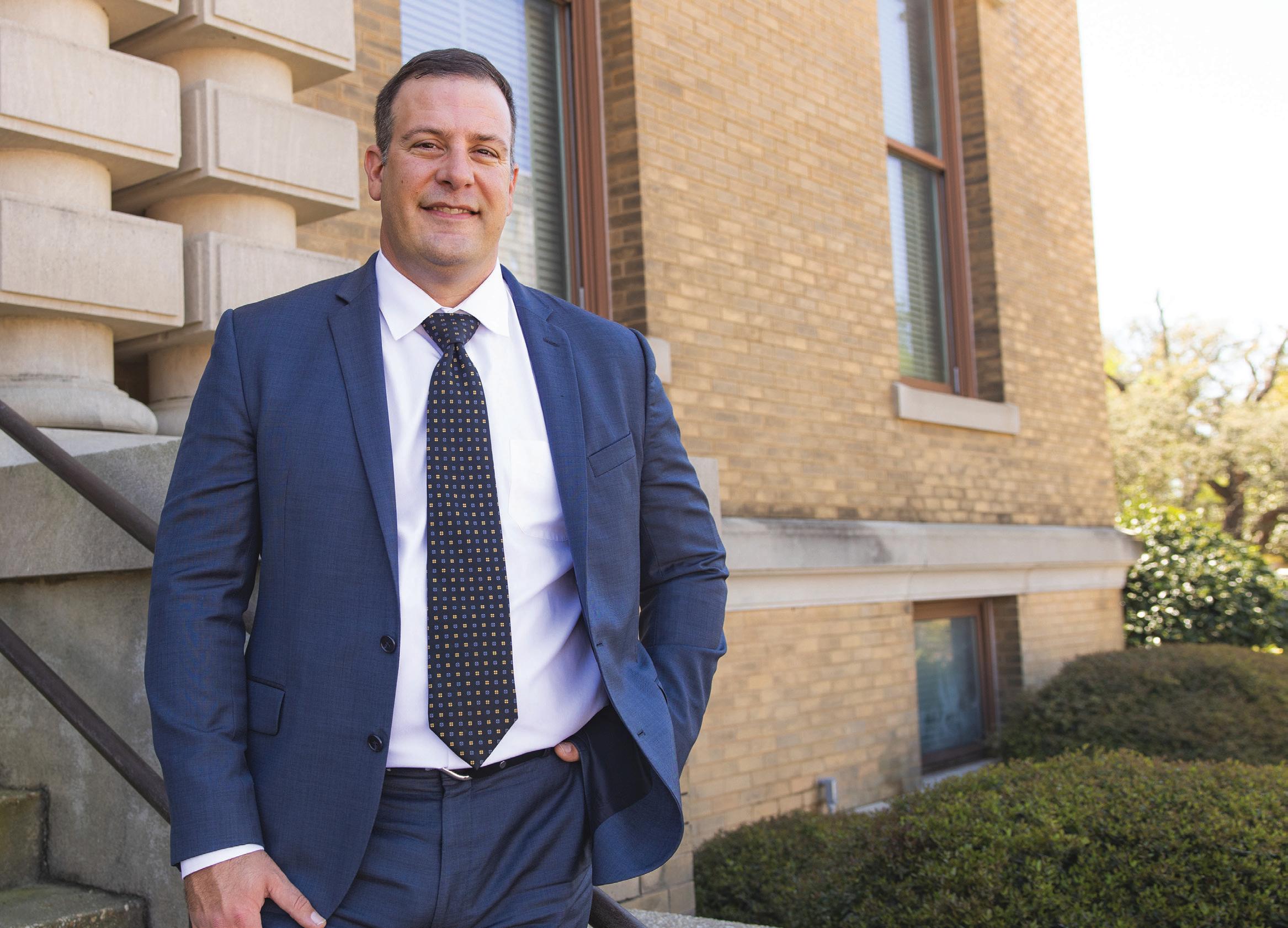
With deep Northwest Florida roots, collector and history advocate Parker Destin works to preserve the region’s past.
SUPPORTER PROFILE:
PARKER DES TIN
Board Member, Historic Pensacola and the Florida Historical Commission
BY CATRINA BURKS
Dewey “Parker” Destin traces his Northwest Florida roots back more than 175 years to fisherman Capt. Leonard Destin, the namesake of Destin, Florida. But for Parker, heritage is less about the name he inherited and more about the history he works to preserve.
“Good or bad, family lineage for all of us is just an accident of birth, so I count myself lucky to have such clearly traceable roots to Northwest Florida,” Destin said. “Those roots sparked a curiosity about our area’s role in American history and fostered a responsibility to help connect the public to that story, because every American has an equitable connection to it, regardless of how far back they can trace their lineage.”
Today, Destin advances the preservation of Northwest Florida history through public leadership and private collecting. He has long served on the board of directors for the Historic Trust and the Florida Historical Commission, supporting the region’s culture and heritage through hands-on leadership and advocacy.
Behind the scenes, he and his wife have spent more than 20 years assembling the largest known collection of Revolutionary-era primary source documents related to Northwest Florida.
Several items from the collection are now on loan for the Pensacola Museum of History’s 250th anniversary exhibition, including an original letter from Benedict Arnold petitioning Spanish forces for support in liberating the region from British control.
“There’s something uncanny about seeing the original, to imagine the ink flowed from a quill wielded more than 250 years ago,” Destin said. “Primary sources uniquely inspire the public’s imagination because they are the tangible objects that connect us directly to the people and events that shaped the world we live in today.”
As visitors encounter these centuriesold documents, Destin hopes they recognize something powerful: The story of America’s founding didn’t happen somewhere far away. It happened here. And through the work of dedicated stewards and community partners, that history is once again within reach.
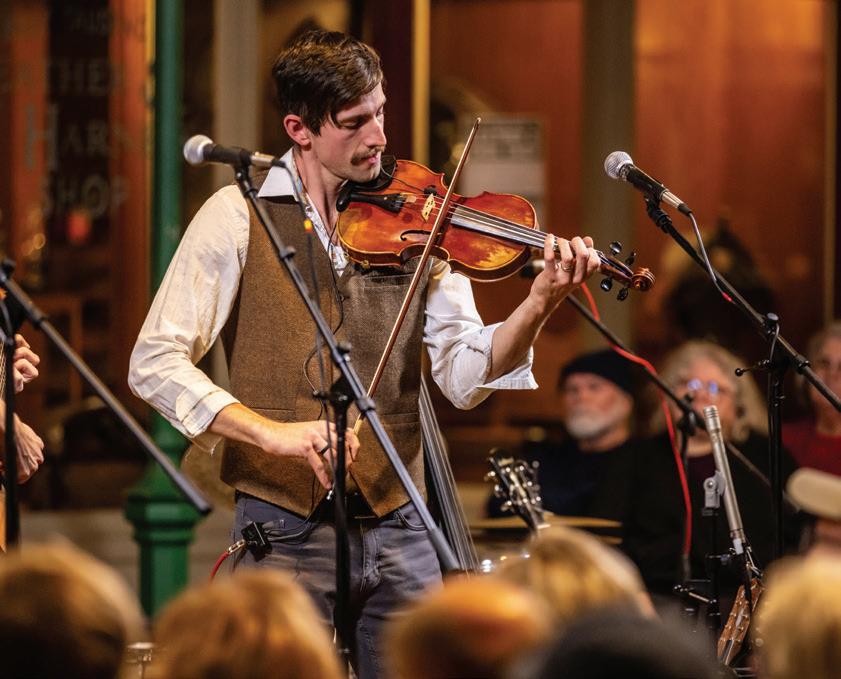
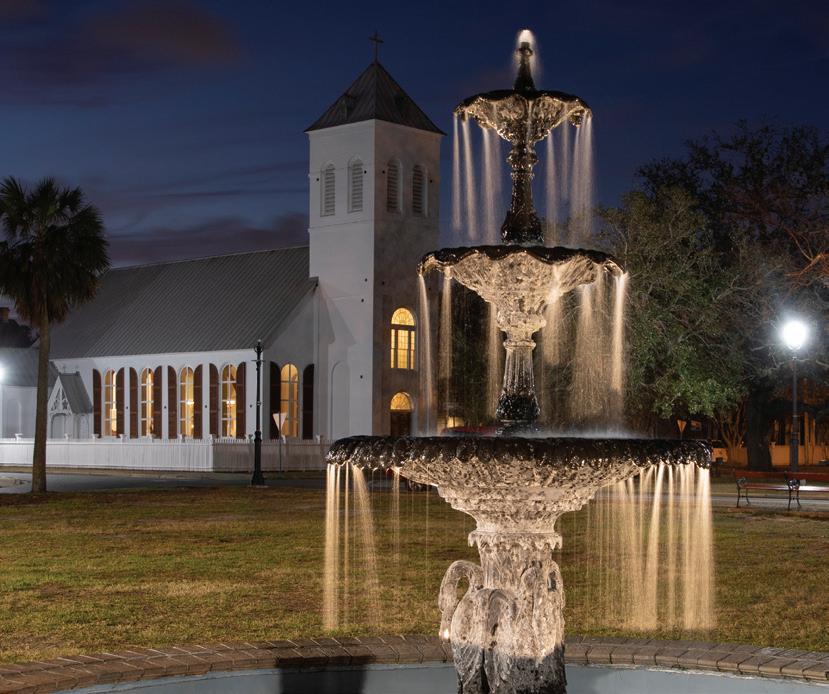
The UWF Historic Trust welcomes members to enjoy our museum complex in downtown Pensacola with our new unified membership program. Members receive free admission to Arcadia Mill Archaeological Site and Homestead, Historic Pensacola Village, the Pensacola Museum of Art, the Pensacola Children’s Museum and the Pensacola
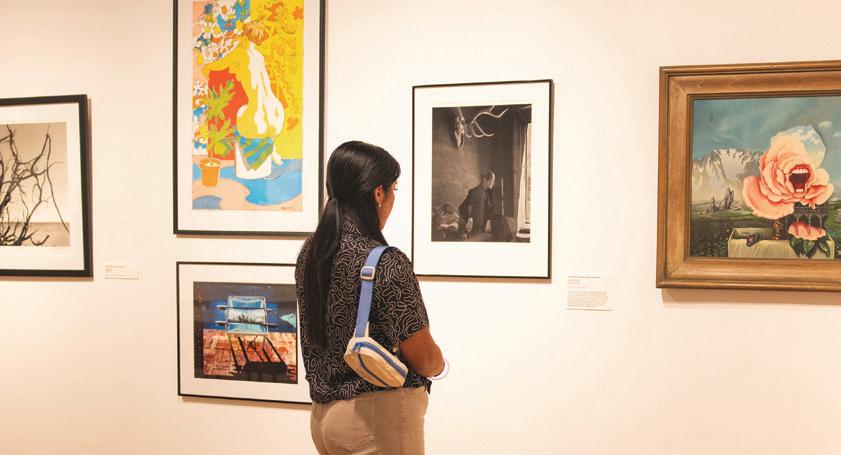
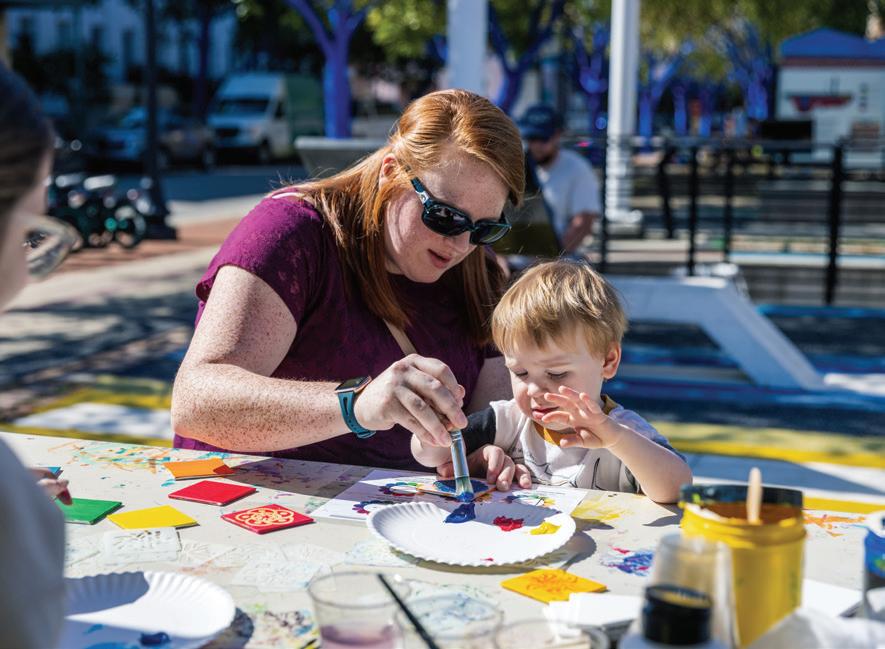
Museum of History; discounts on museum store purchases in all of our stores; and invitations and communications tailored to their area of focus inside the Trust.
With 29 historic sites and museums across two counties, the UWF Historic Trust provides endless experiences and programming for our members.