In February, the UVM Board of Trustees unanimously approved the university’s new strategic plan. Built with input from over 1,000 UVM community members, it articulates both the institution’s identity and its goals and strategies for a bold future.
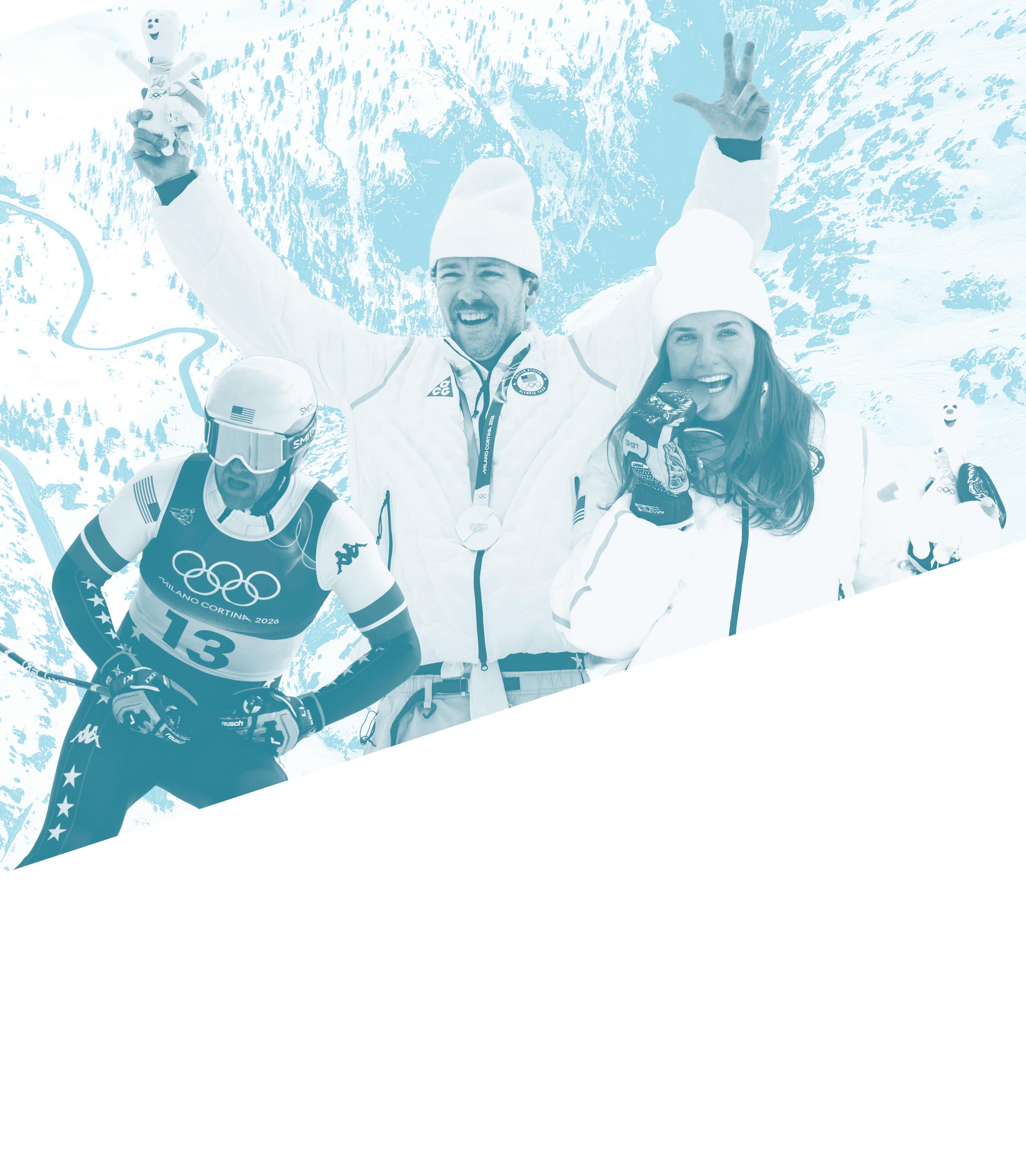
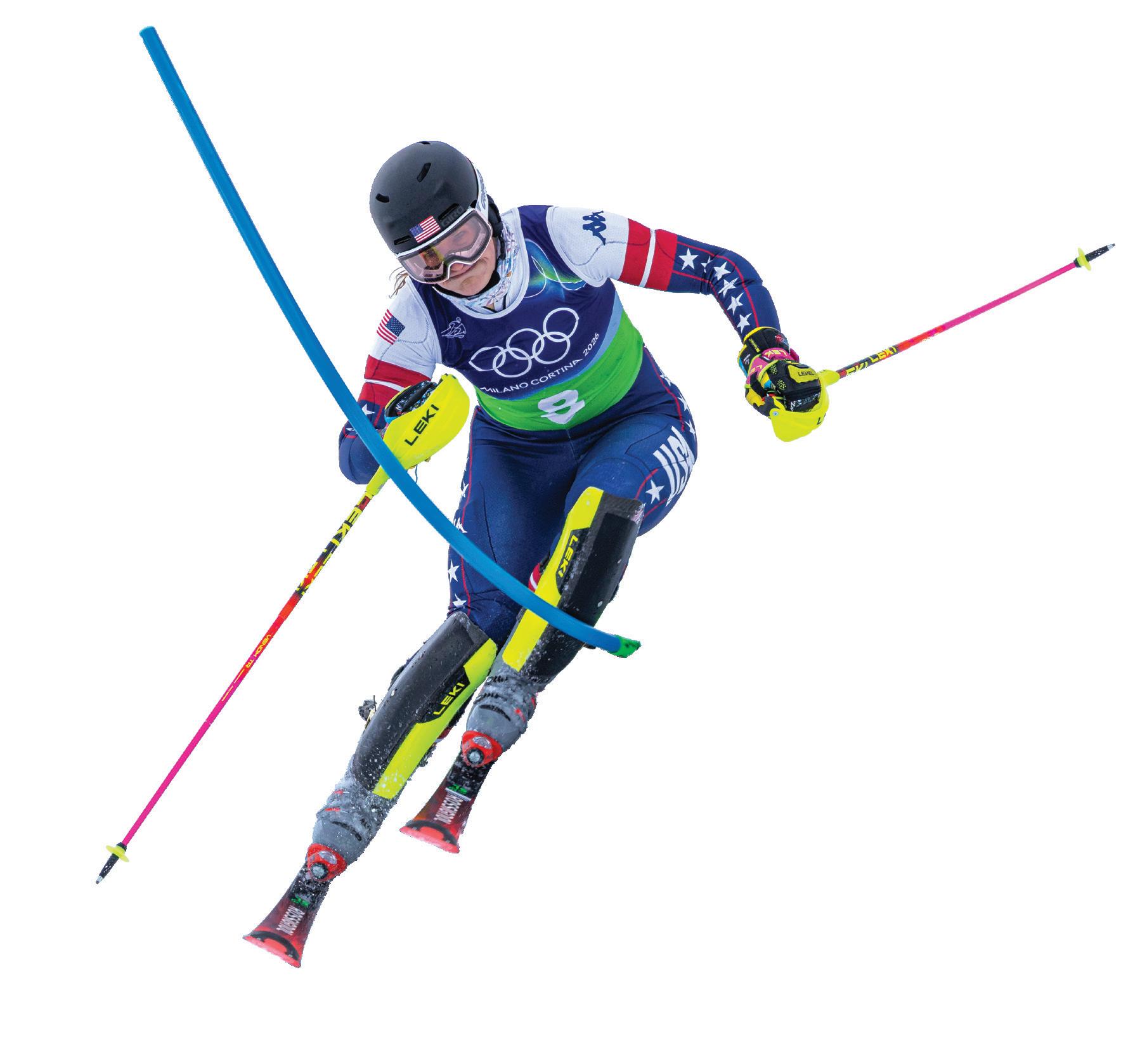
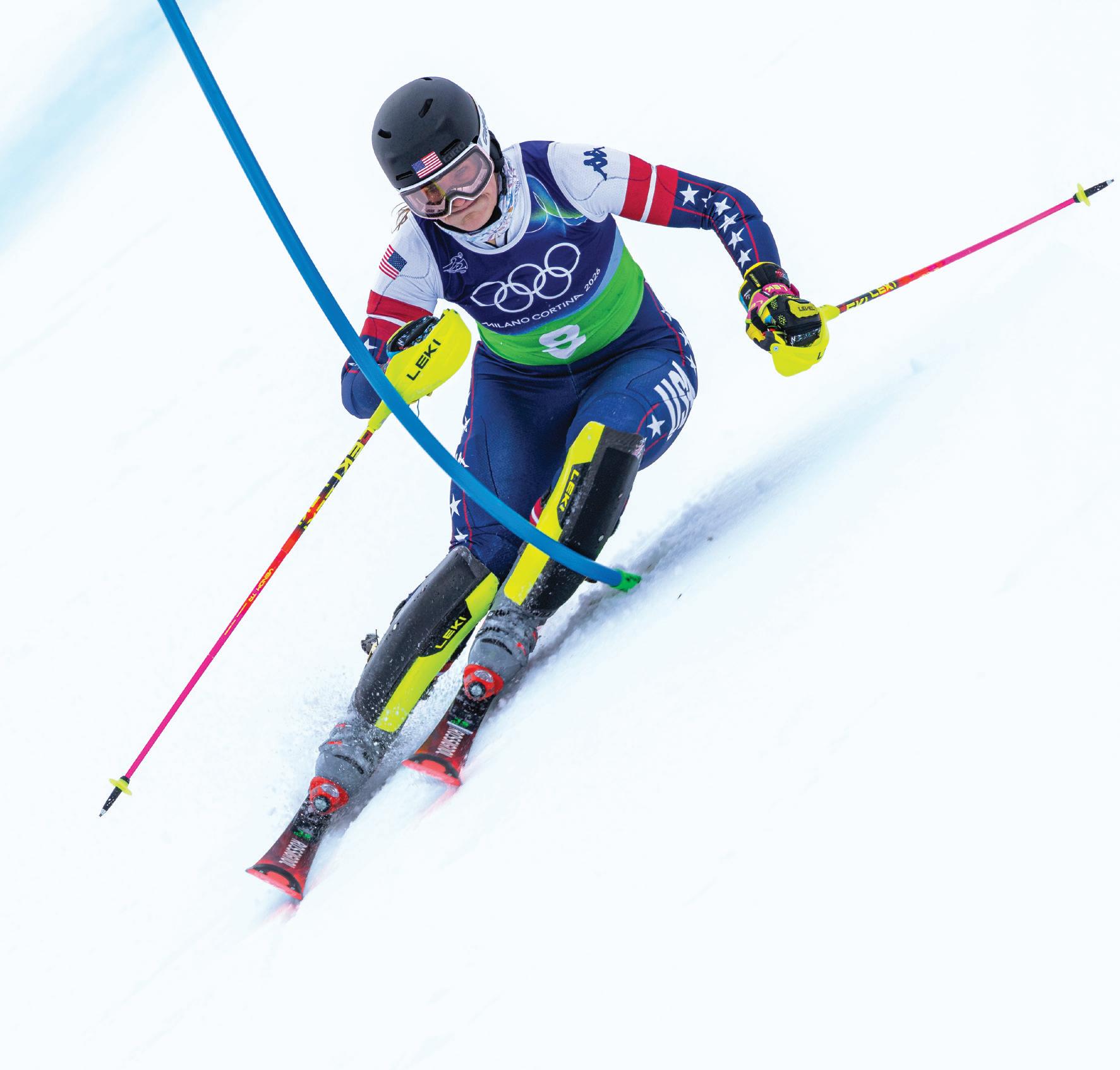
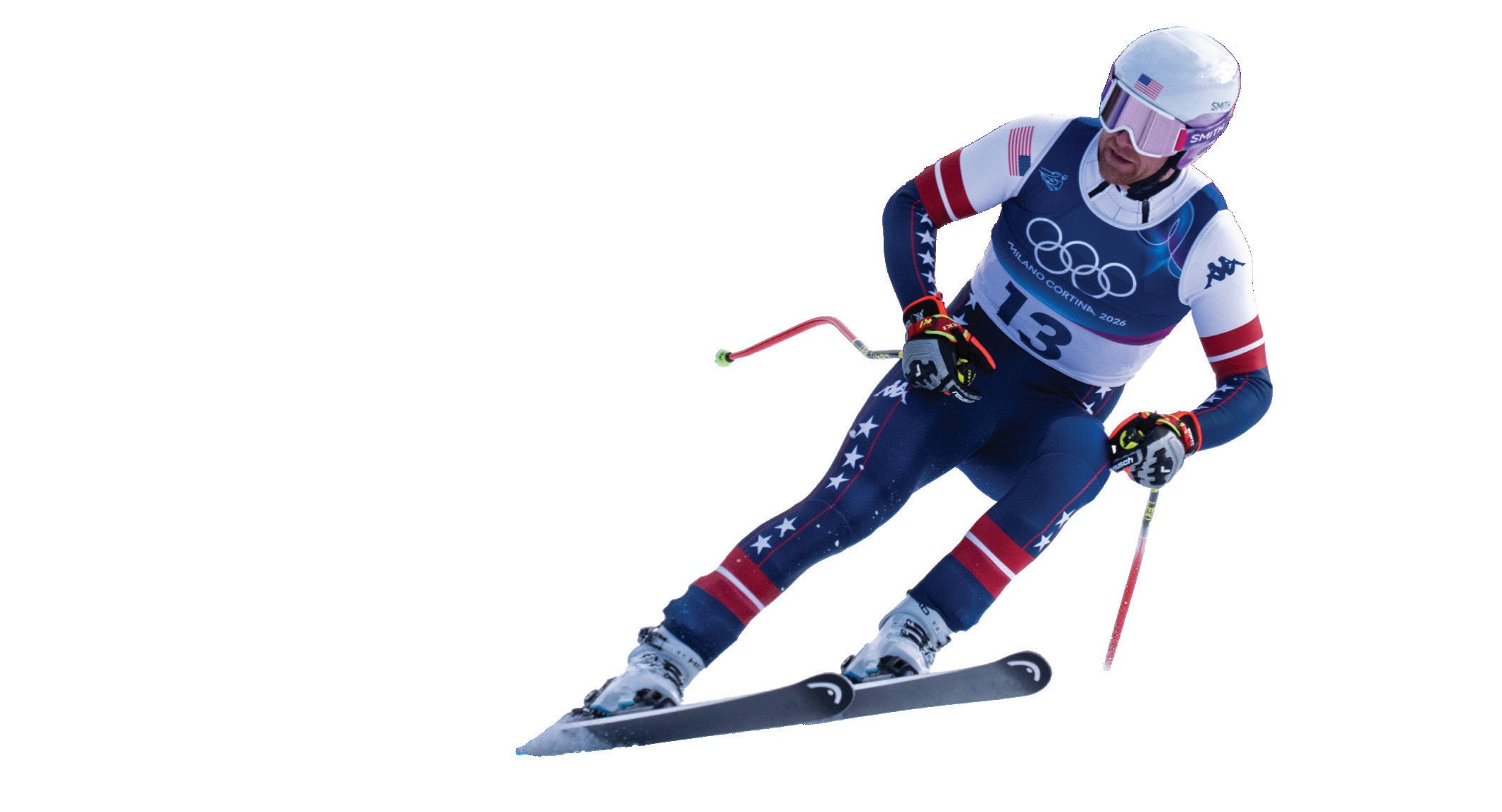
Three athletes with UVM ties made history at the 2026 Winter Olympics, earning four medals—and showing how college competition can lead to world‑class success.
| BY PEGGY SHINN
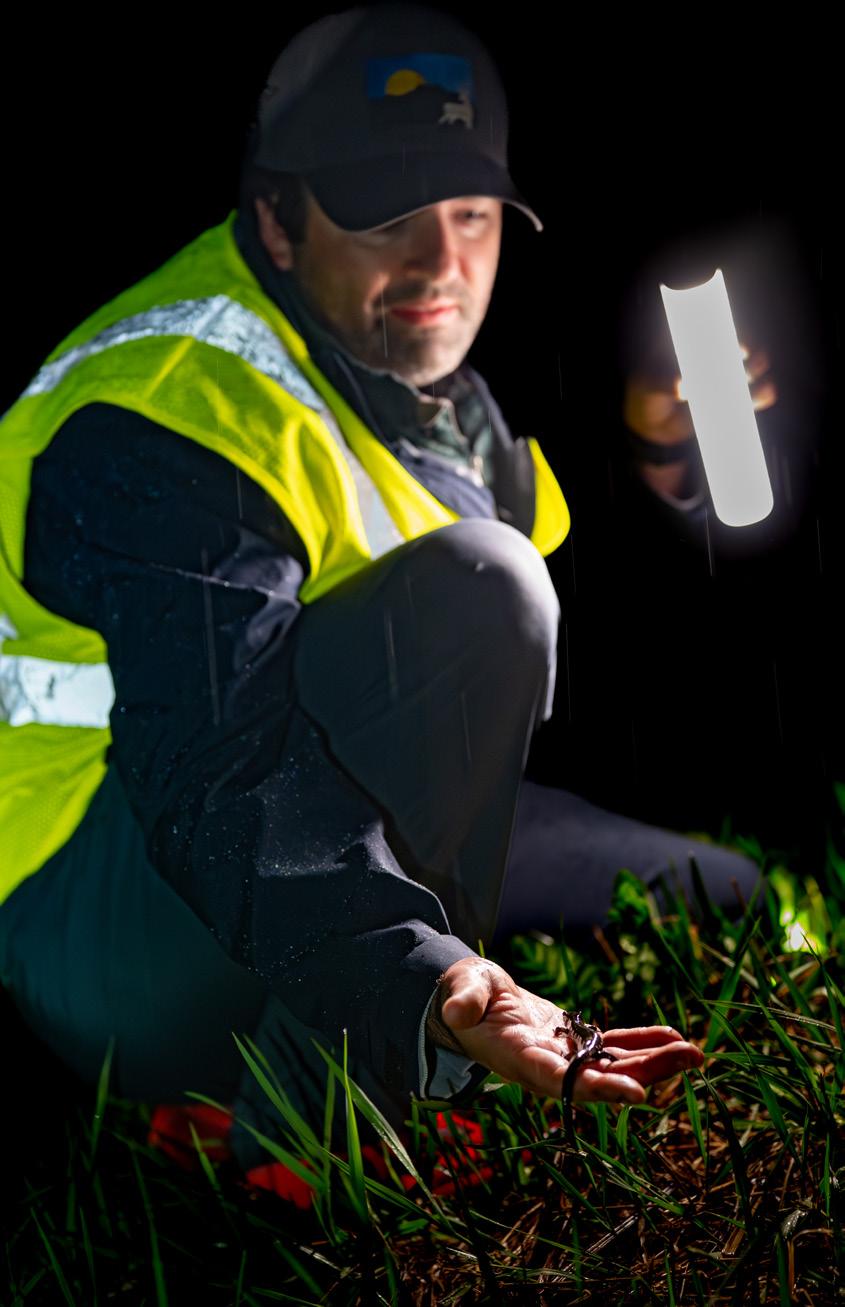
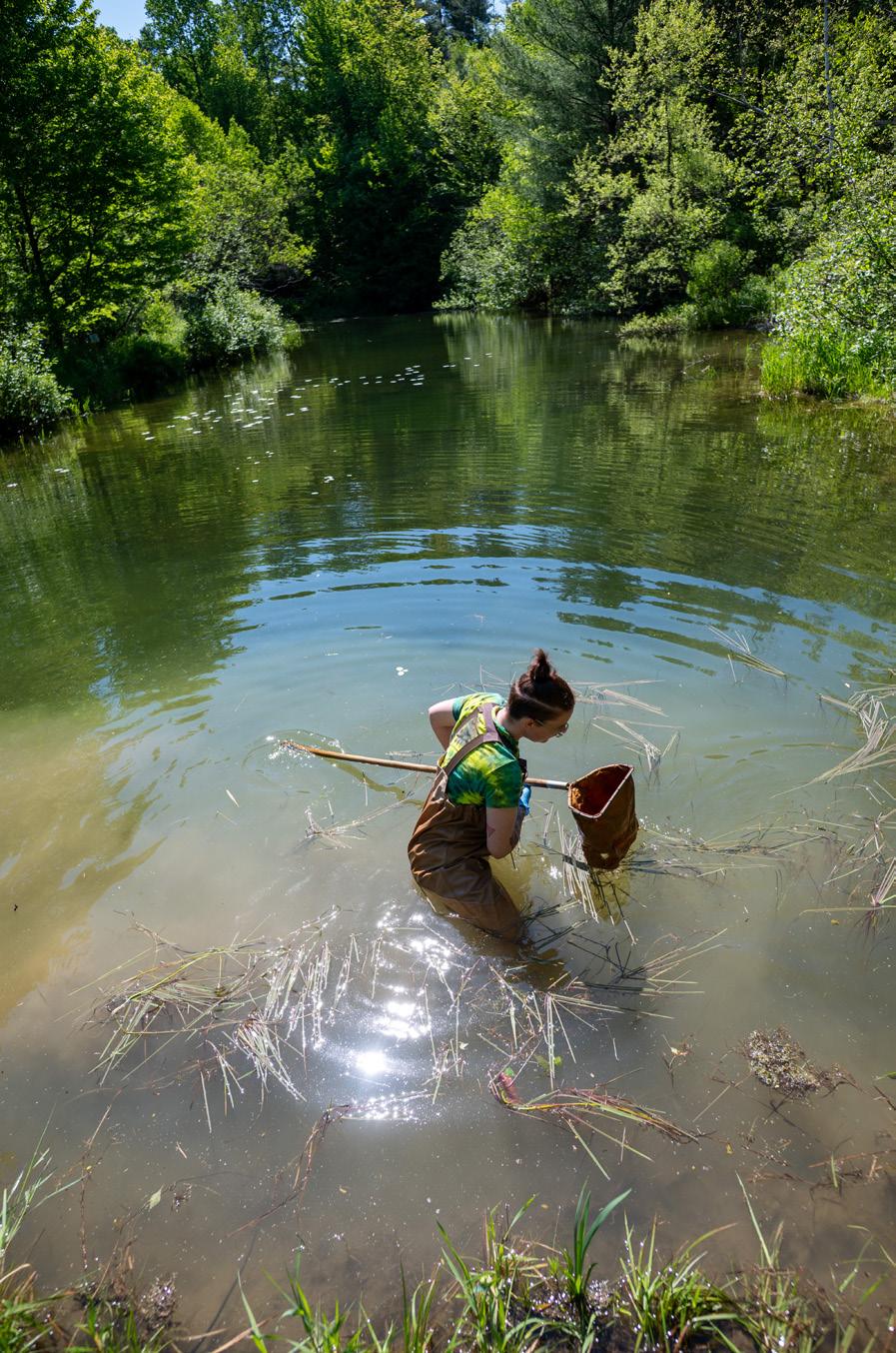
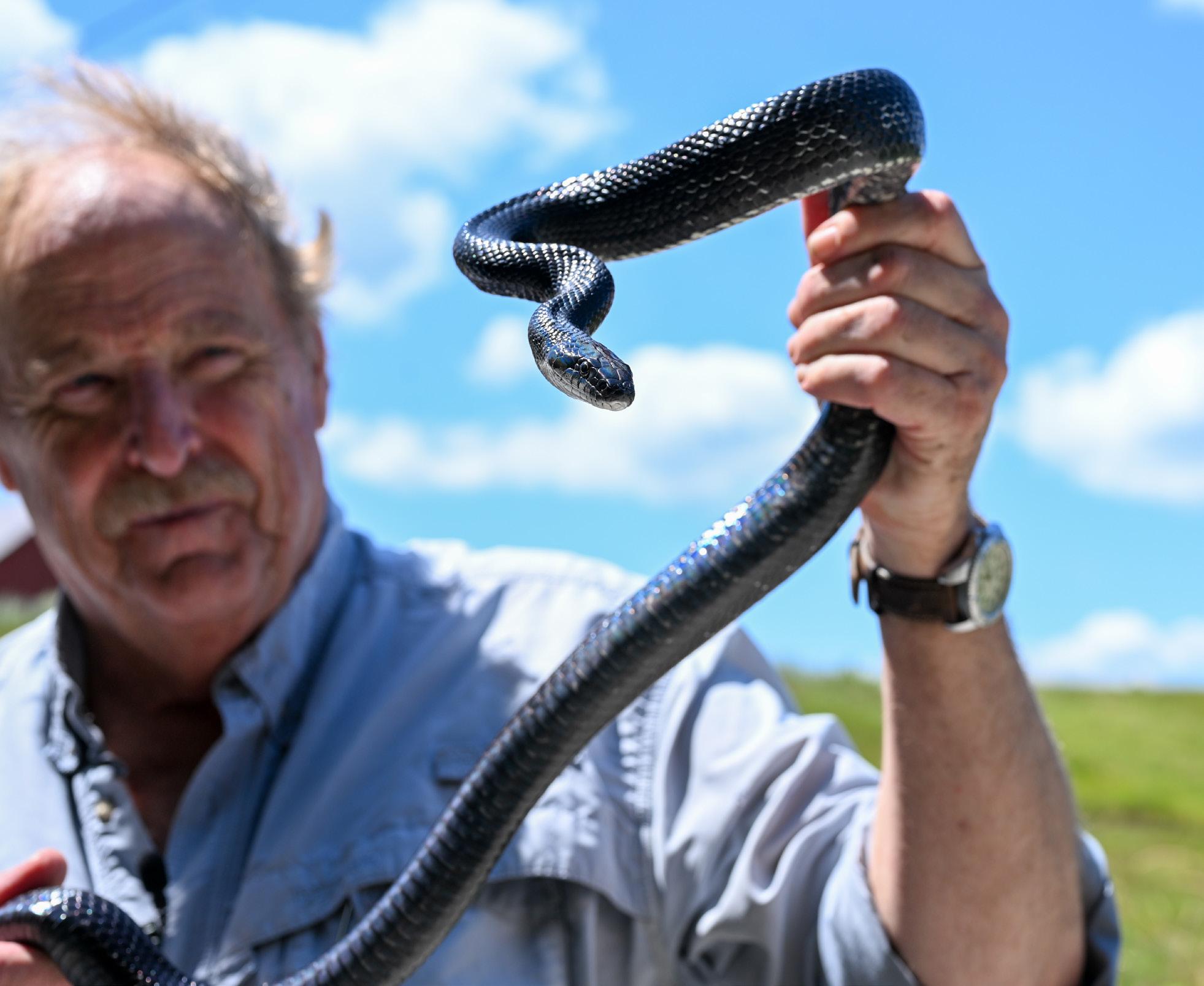
UVM researchers, students, and alumni are working in the field to understand—and protect—Vermont’s most vulnerable amphibians and reptiles as environmental threats mount.
| BY JOSHUA BROWN
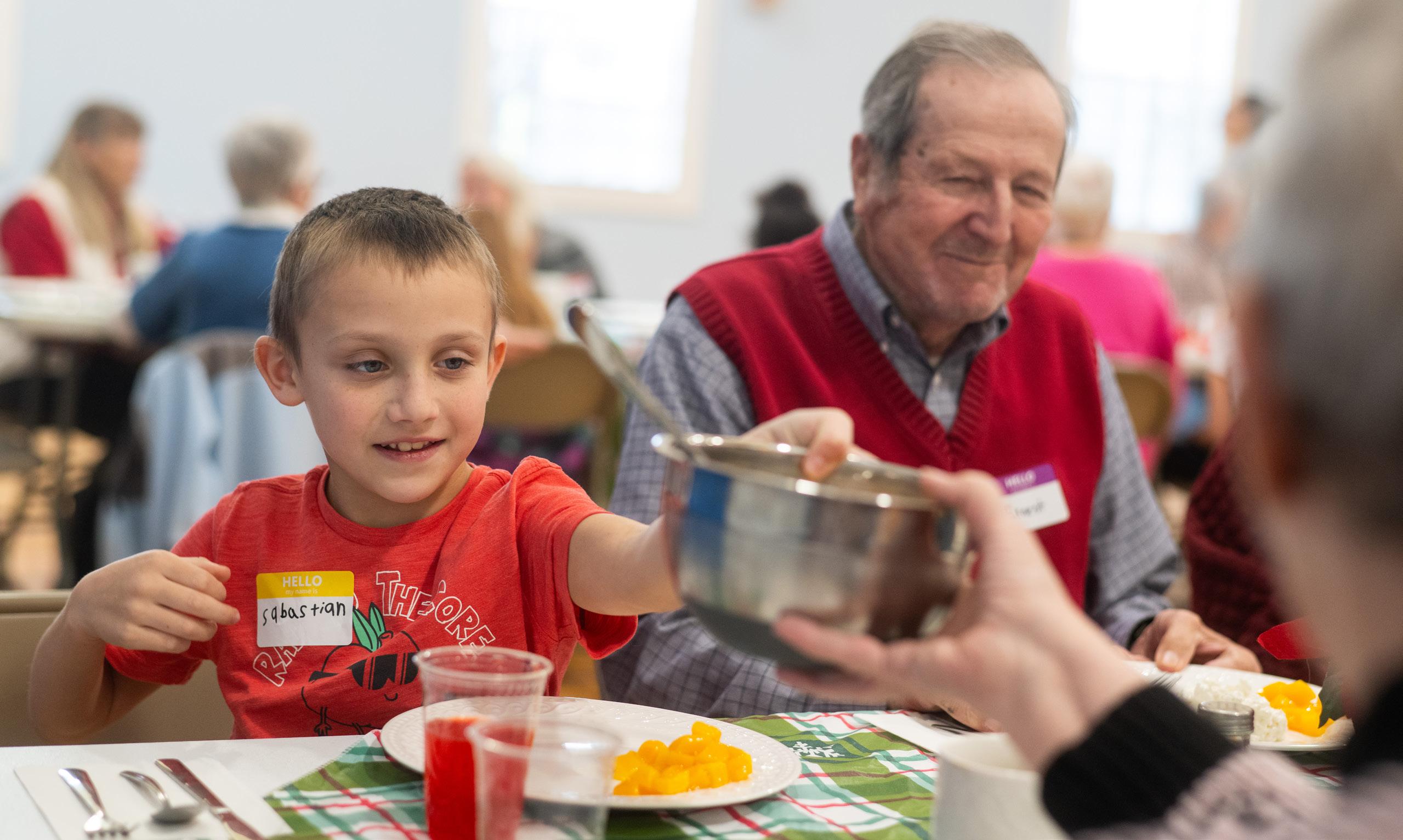
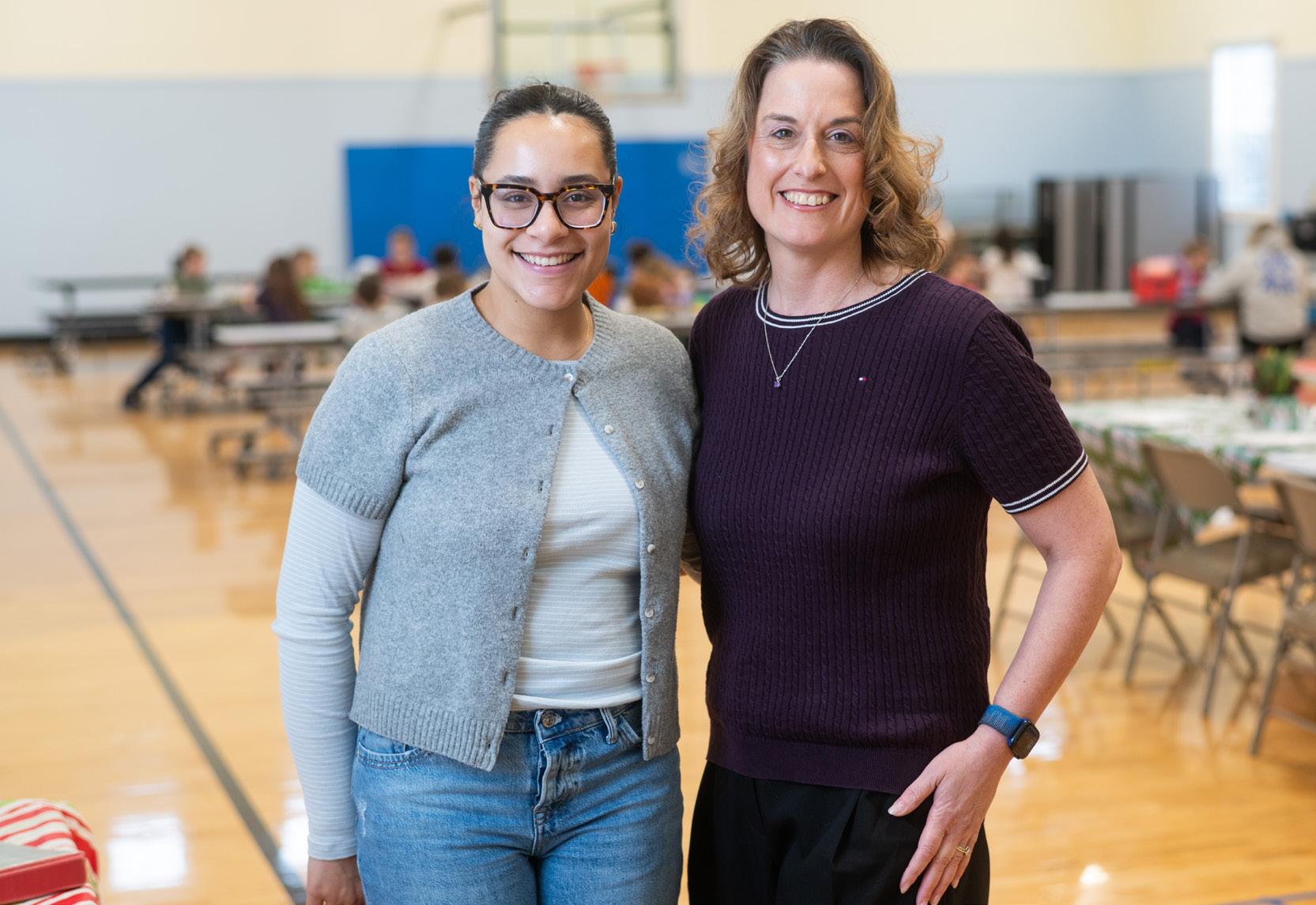
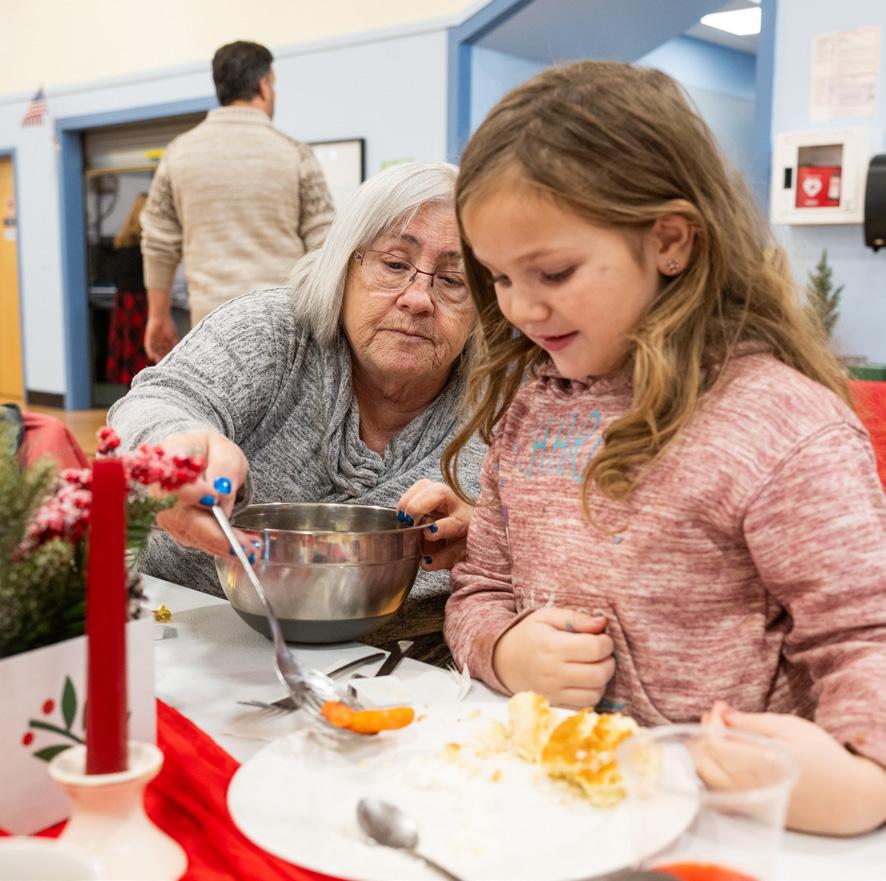
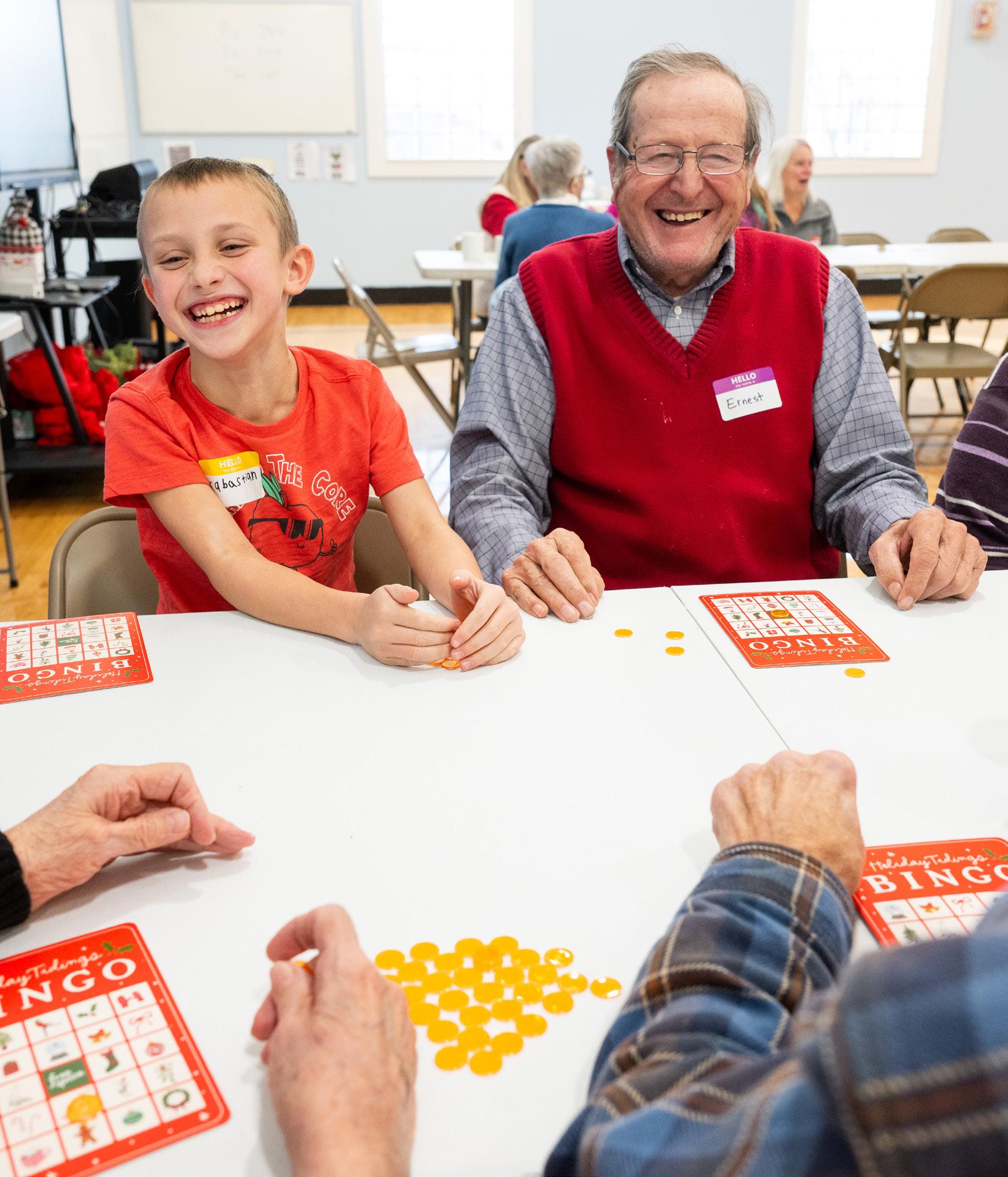
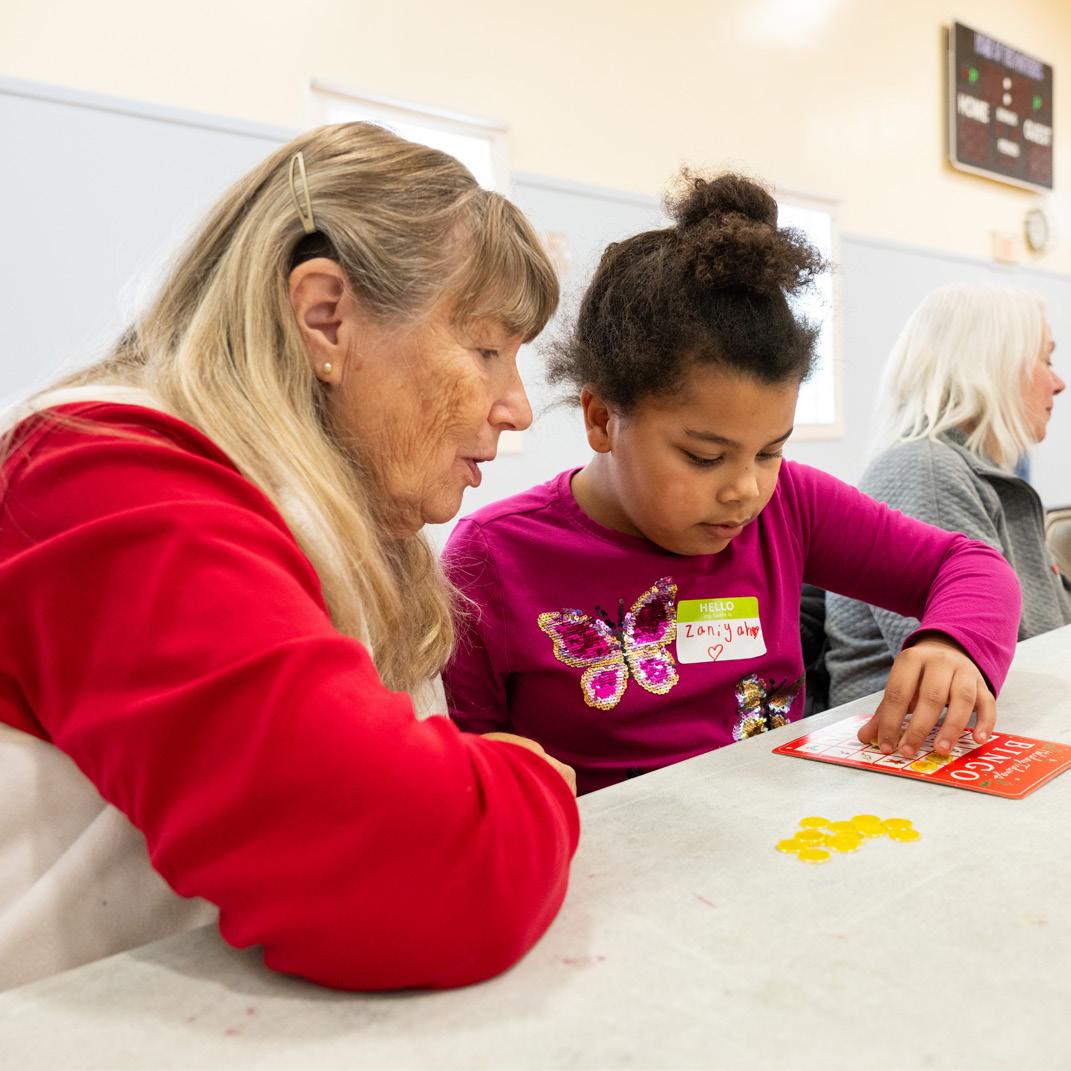
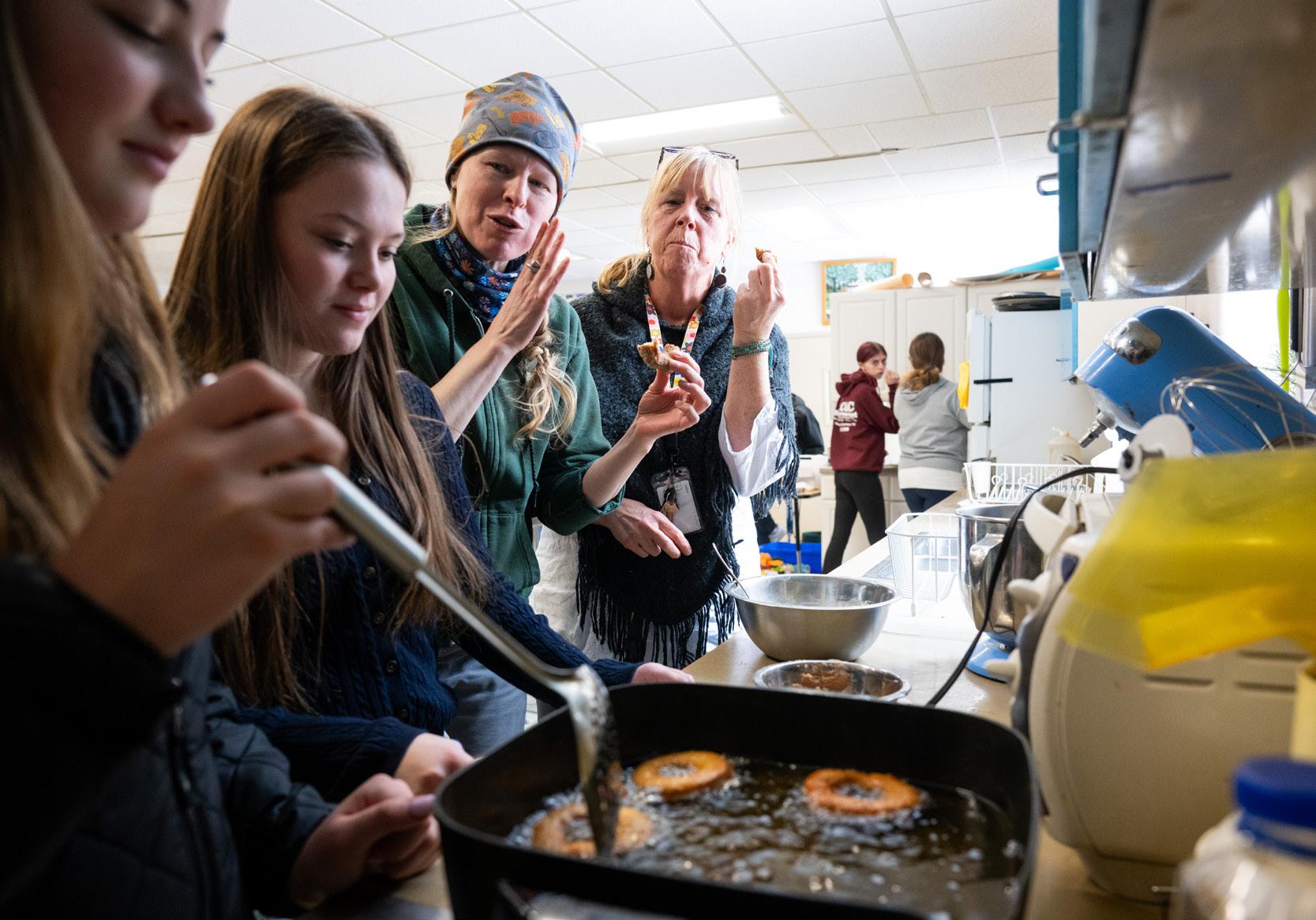
Across rural Vermont, UVM is partnering with schools to reimagine education as a hub for connection—bringing students, families, and communities together in powerful new ways.
| BY KRISTEN MUNSON
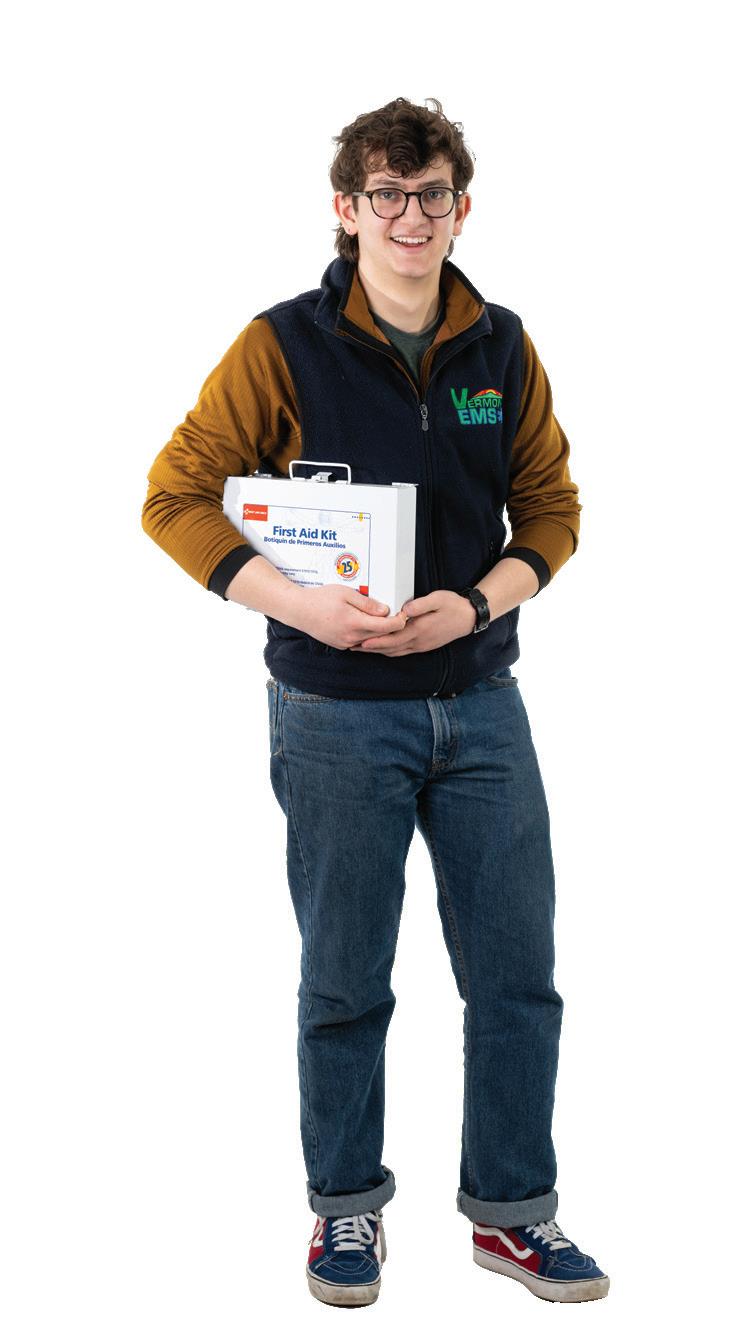
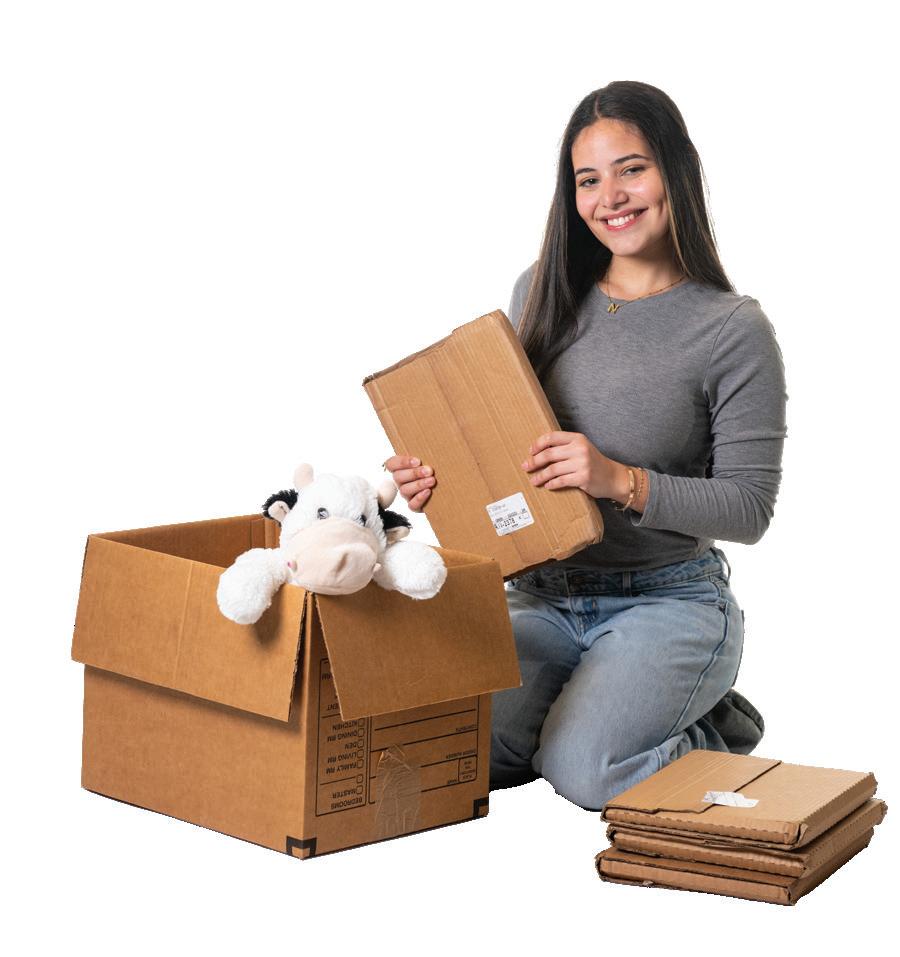
Meet the UVM students turning ideas into action—strengthening communities, advancing equity, and making a real‑world impact through research, service, and leadership.
| BY MEGAN JAMES
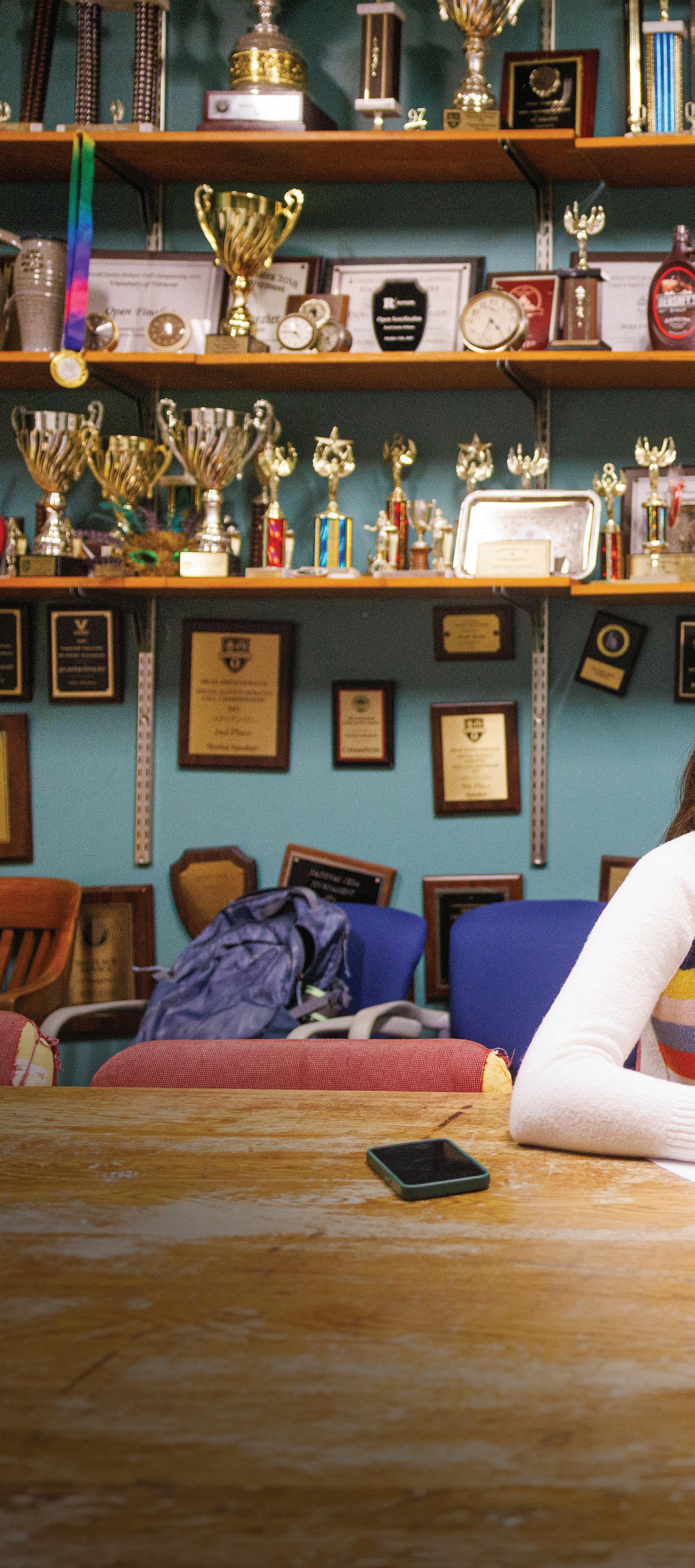
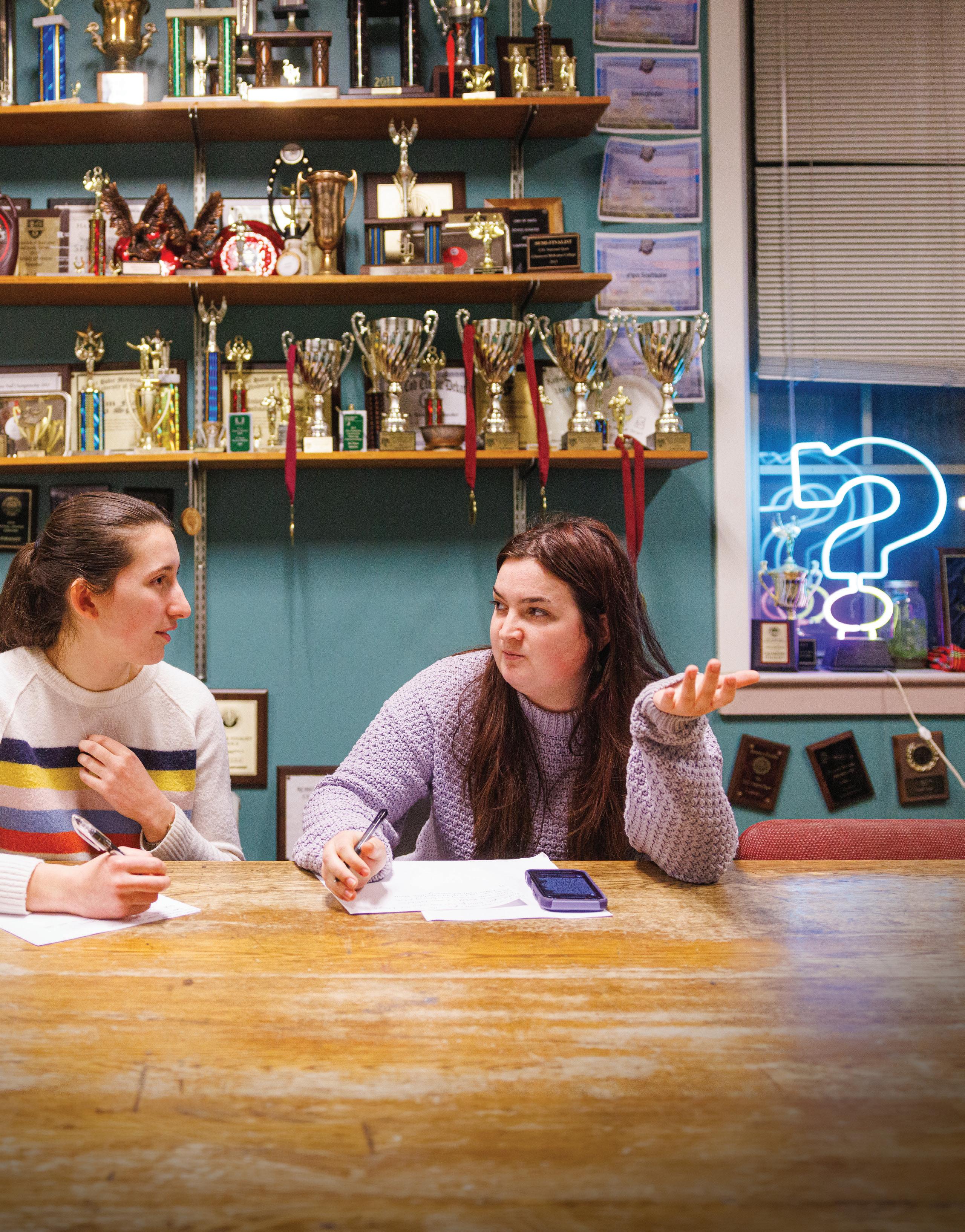
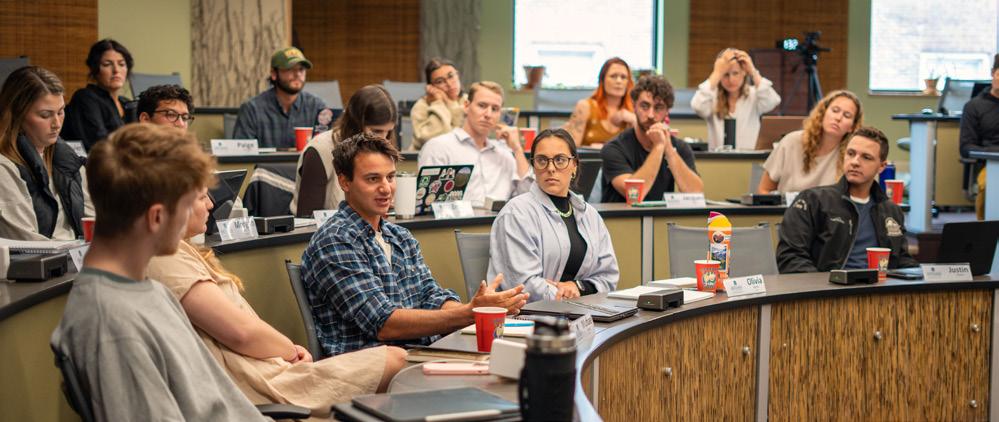
Eleanor Gentile Greco ’28 and Kaitlyn O’Connor ’28 , two members of UVM’s Lawrence Debate Union (LDU), meet in the trophy filled home base of the LDU in Old Mill. Since 1899, the LDU has promoted respectful discourse and critical thinking, and has built an impressive record of national and international success in competitions. This spring, the LDU trophy collection expanded when two members, Gavin Alberts ’27 and Neil Roham ’26, were named National Champions at one of the major national competitive debate circuits, the Yaatly Online Debate League.
POINT TAKEN
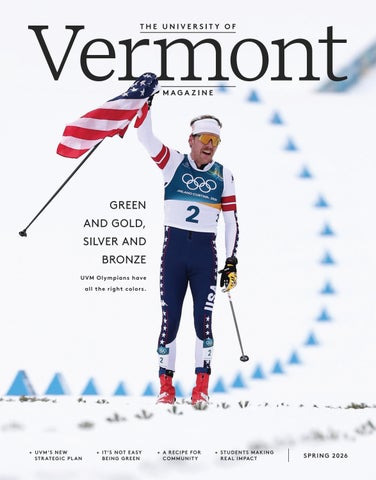
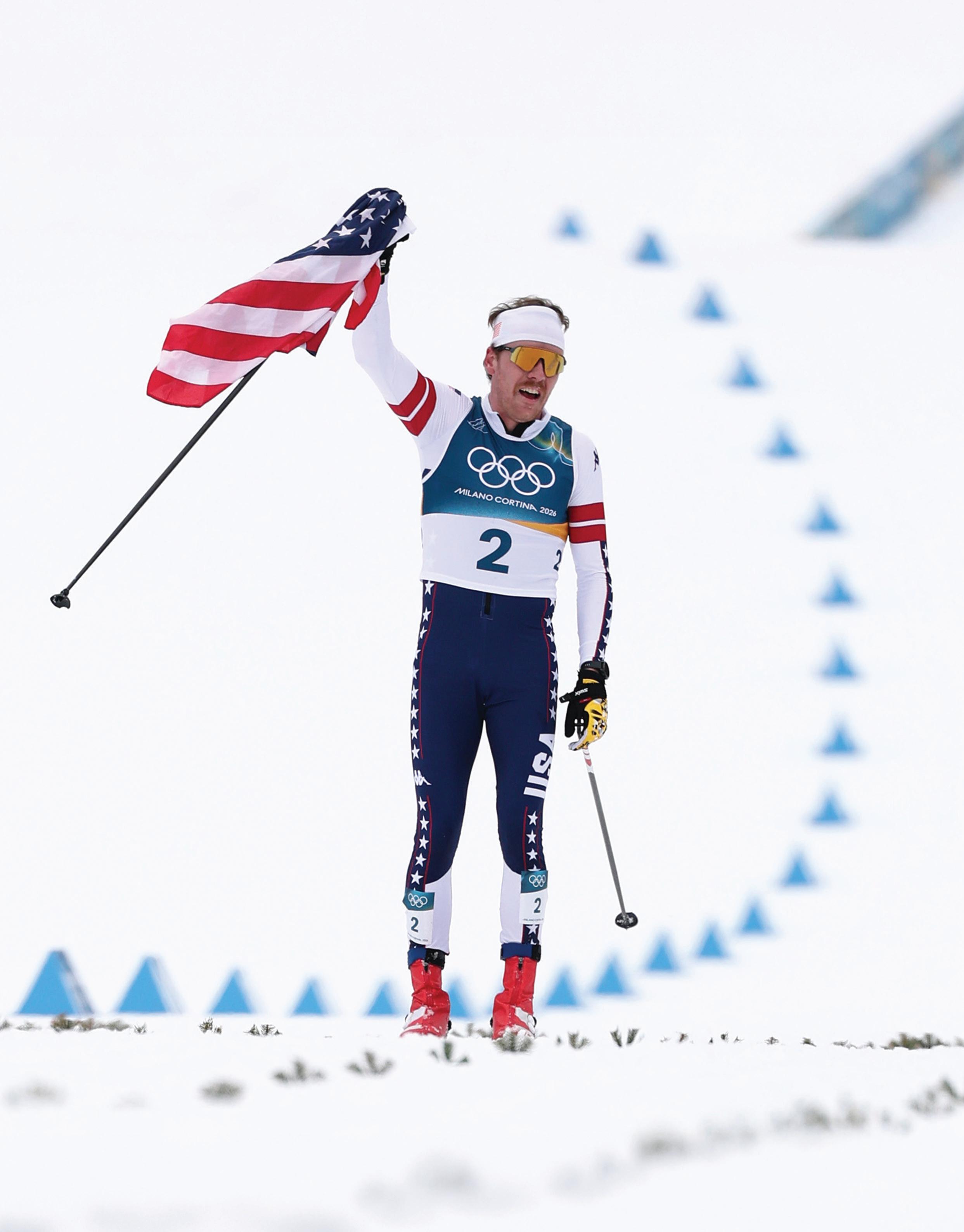
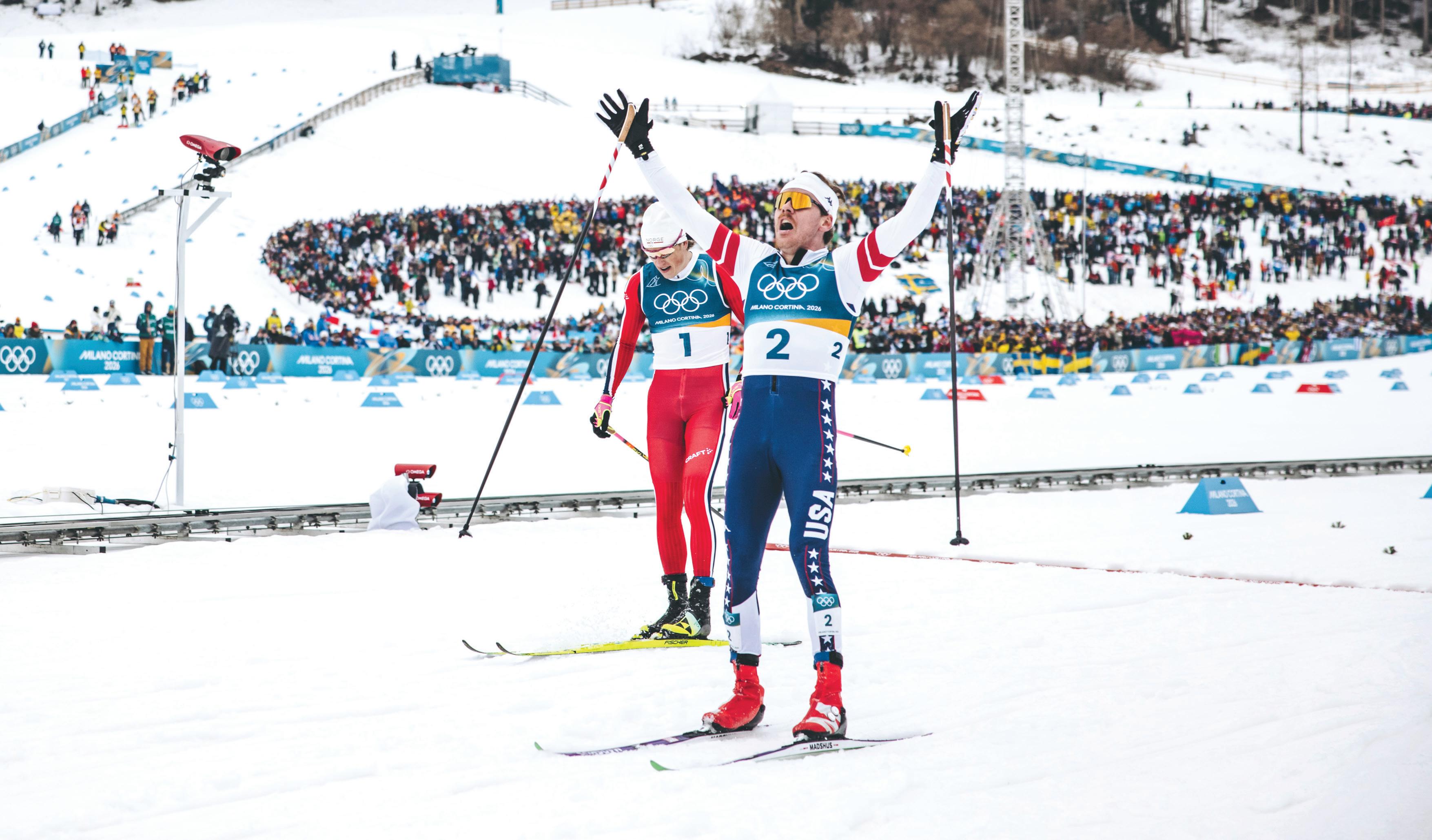
FRONT COVER: Olympian Ben Ogden ‘22 at the 2026 Winter Games, just after breaking a 50 year Olympic medal drought for the U.S. men’s cross country skiing team. Photo by Alex Pantling for Getty Images.
BACK COVER: Joshua Brown
JOE GAYLOR
Bold by Nature
At the University of Vermont, we change the world. Named No. 1 in the nation by Princeton Review’s “Best Schools for Making an Impact,” we have, for generations, invited people to use their education and experiences to do the transformative work that inspires them. We have created research breakthroughs that have altered fields of study. We have imagined solutions that have addressed thorny global problems. We have so much of which to be proud.
Fueled by this long history of pathbreaking innovation and courageous thinking, we embarked this year on a strategic planning process. Our new plan, Green, Gold, and Bold: Green Mountains, Gold Standard, Bold Future, along with our revised mission and vision statements, was formally approved by the Board of Trustees in February. This plan will guide us to serve our students, advance our research, fulfill our land-grant mission, and improve our infrastructure. It challenges us to focus on bold, innovative thinking, driven by our desire for discovery and shaped by Our Common Ground values.
The plan is a product of the UVM community itself; more than 1,000 community members were involved in drafting and revising it throughout the past year. I encourage you to read through the explanation of the four guiding pillars of Green, Gold, and Bold featured in this issue, and to follow the link to review the full online plan and the detailed strategies, tactics, and metrics that will guide its implementation in the coming years.
A beacon of our excellence and tenacity shone brightly in the 2026 Winter Olympics. Nine Catamounts— current UVM students and alumni—competed in hockey, Alpine skiing, cross-country skiing, and biathlon, and three–Ben Ogden ’22, Paula Moltzan, and Ryan Cochran-Siegle–earned a combined UVM record total of four medals, with Ogden breaking a 50-year medal drought for the U.S. men’s crosscountry team, and Cochran-Siegle winning his silver
medal on the 54th anniversary of his mother, Barbara Ann Cochran ’78, earning gold in the slalom at the 1972 games. Vermont won more medals than many countries! Here at home, the Catamounts scored a national championship with our men’s rugby team, and our men’s soccer and women’s basketball teams clinched their respective conference titles.
UVM students, faculty, and staff are turning in outstanding performances across our campus and in every field: protecting the Artemis II rocket as it launches into space, fostering the wellbeing of bees to support food production and natural beauty, engineering new devices to produce sustainable energy, studying the practices that make people healthier in body and mind, innovating ways to build a better and more ethical business. In this issue, we’ll showcase a few of the amazing things Catamounts are doing to strengthen community schools and protect threatened wildlife. As ever, they demonstrate the bold thinking and bold action that have characterized UVM since its founding. Together, we’ll remind the world to keep watching for what we do next.
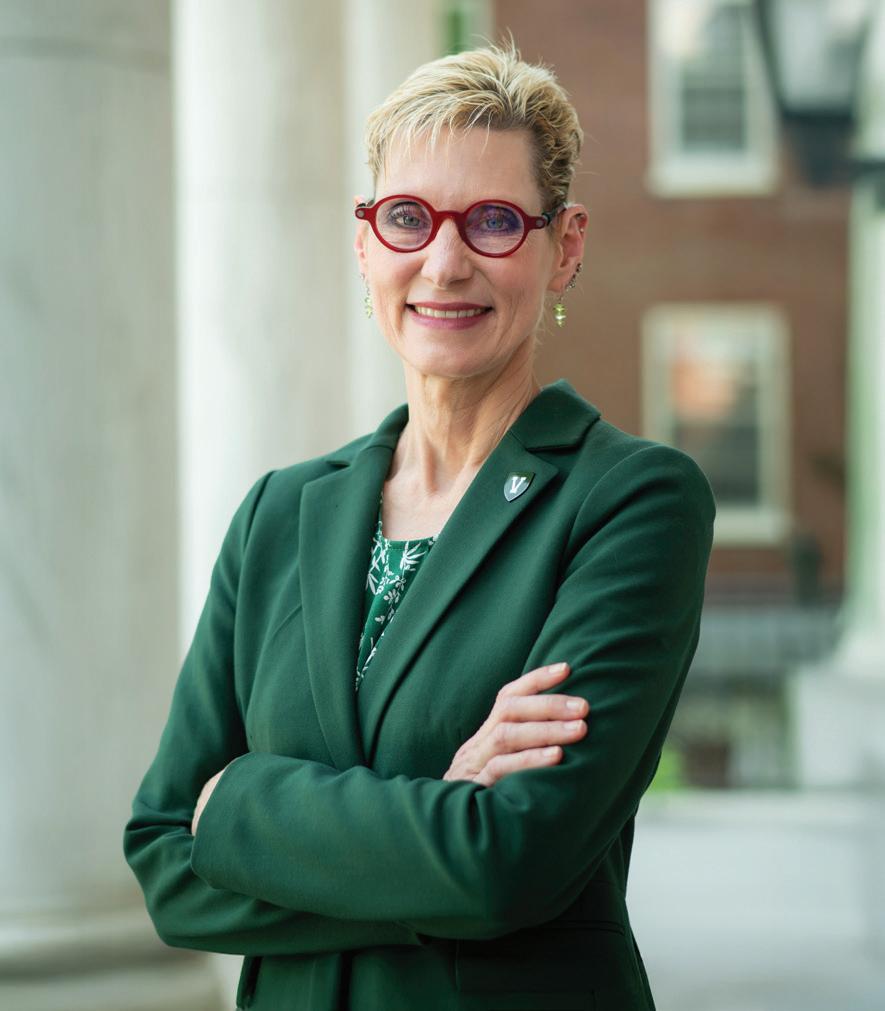
Dr. Marlene Tromp President , University of Vermont
Graduate fellowships allow UVM’s most talented students to pursue fields of study and lines of inquiry that boggle the mind.
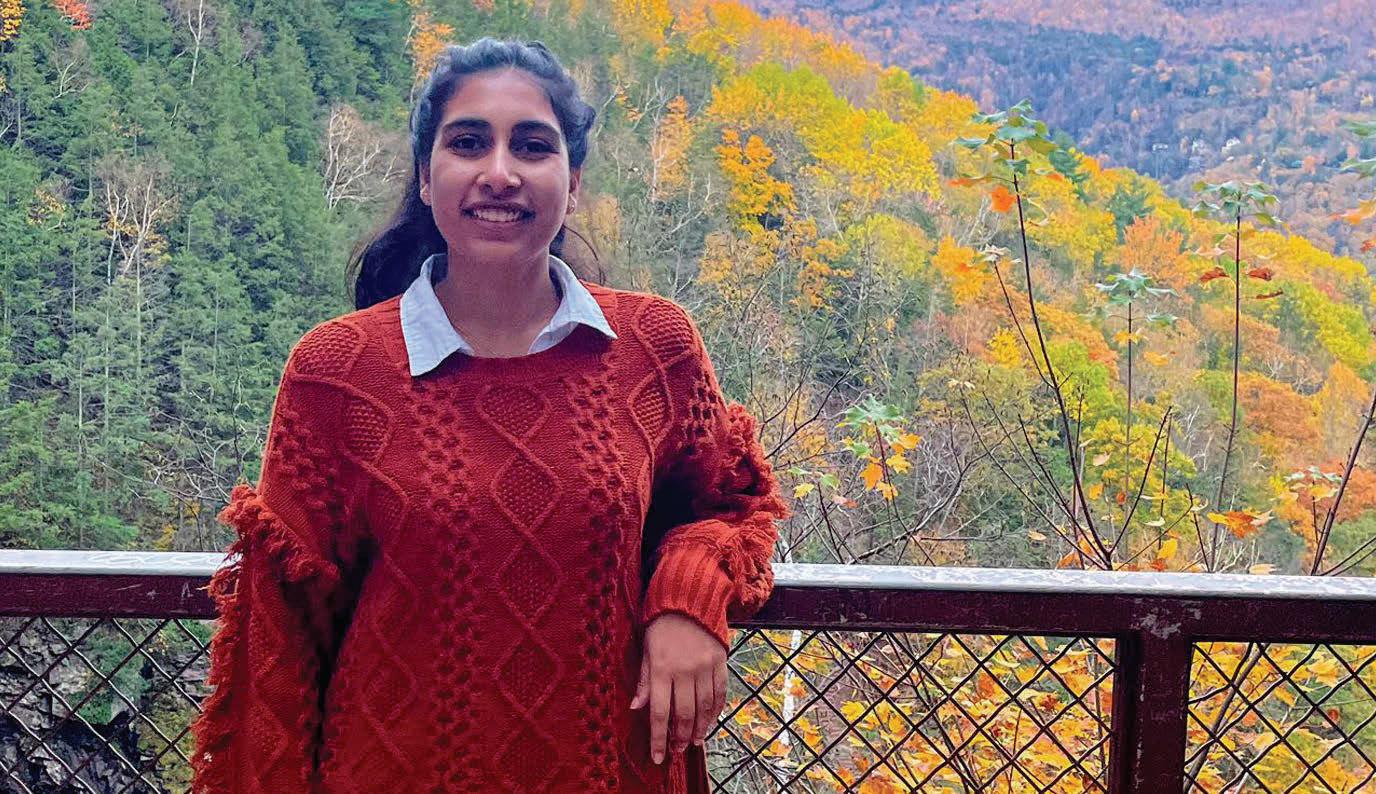
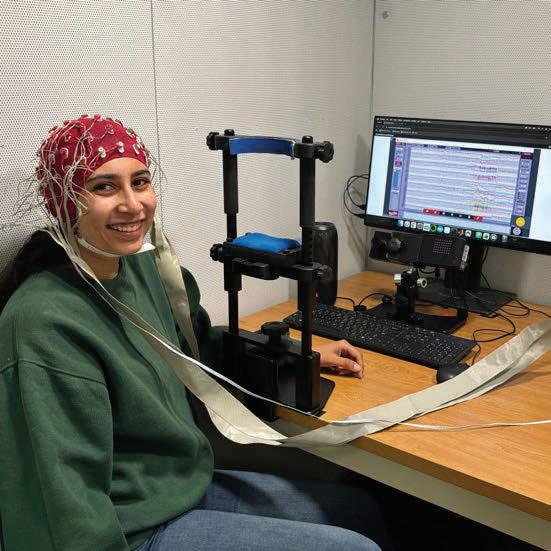
Picture this: you’re driving and suddenly realize you don’t remember the last mile. Or you open the fridge and forget why you’re there. Niharika Singh wants to know what happens in those moments. As the Branimir Von Turkovich graduate fellow in UVM’s Glass Brain Laboratory, she combines biomedical engineering and data science to study mind wandering.
By analyzing eye movements and EEG signals as people read, she aims to pinpoint when attention drifts—and how to restore it. Supported by her fellowship, Niharika is exploring subtle, everyday mysteries of the brain that most of us experience but rarely stop to question.
The Von Turkovich fellowship allows her to spend more time reading papers, sorting data, asking questions, and better understanding the brain, she says. “I get this playing field to let my mind run.”
UVM’s graduate fellowships help attract world-class talent to the state. Read more about Niharika and how you can support other future leaders in academia, industry, government, and the nonprofit sector.
PUBLISHER
University of Vermont
Dr. Marlene Tromp, President
CHIEF COMMUNICATIONS AND MARKETING OFFICER
Lauren Griswold
DEPUTY CHIEF COMMUNICATIONS AND MARKETING OFFICER
Alessandro Bertoni
EDITOR
Ed Neuert
CREATIVE DIRECTOR
Cody Silfies
CLASS NOTES EDITOR
Cheryl Carmi
CONTRIBUTING WRITERS
Joshua Brown, Lisa C. Bailey, Cheryl Carmi, Liz Crawford, Maddie Cross, Ren Dillon, Janet Franz, Kevin Morgenstein Fuerst, Megan James, Stephanie Knific, Lauren Milideo, Ed Neuert, Kristen Munson, Su Reid-St. John, Peggy Shinn, Lisa Wartenberg Velez, Adam White
PHOTOGRAPHY
Matthew Binginot, Bence Balla-Schottner, Joshua Brown, Daniel Cardon, Jared Carnesdale, Ren Dillon, Andy Duback, C.J. Feehan, Joe Gaylor, Macauley Lerman, Ed Neuert, Andreas Oropeza, Alex Pantling, Gretchen Powers, Chris Randour/U.S. Ski Team, National Collegiate Rugby, Su Reid-St. John, Emily Tidwell/U.S. Ski & Snowboard, Alex Weiss, Dylan Wintersteen
CONTRIBUTING DESIGNERS
Jared Carnesale ’27, Ann Hottinger, Emily Murray
ADDRESS CHANGES
UVM Foundation 411 Main Street Burlington, VT 05401 (802) 656-9662, alumni@uvm.edu
Publishes Spring / Fall Printed in Vermont by Lane Press
UVM MAGAZINE ONLINE uvm.edu/uvmmag
instagram.com/universityofvermont
x.com/uvmvermont
facebook.com/universityofvermont
youtube.com/universityofvermont
Niharika Singh, Ph.D. Student
MEDICAL MATCHMAKING
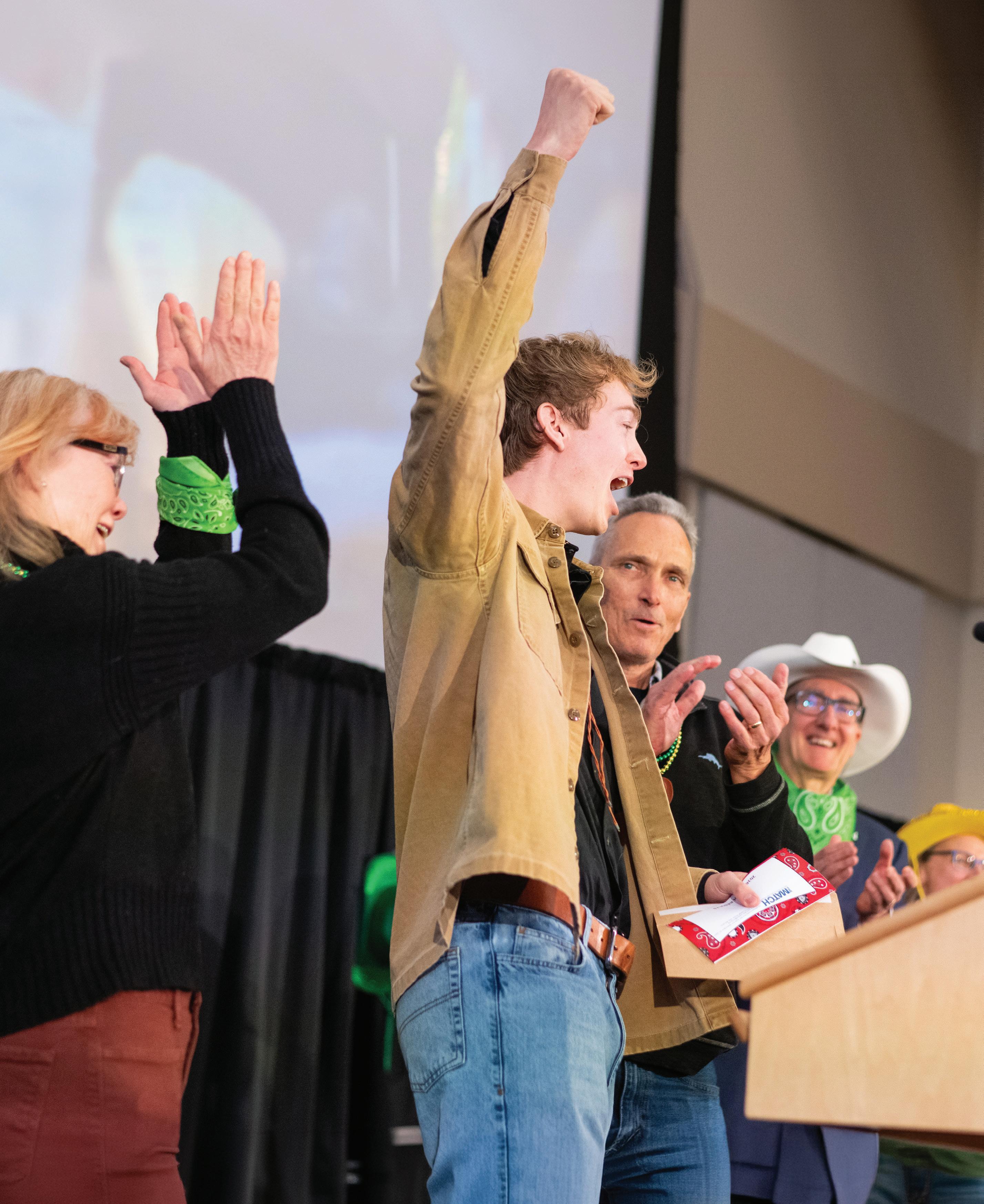
The Grand Maple ballroom of the Dudley H. Davis Center was the setting as the Larner College of Medicine celebrated Match Day 2026 on March 20, when graduating medical students across the country learned where they would serve the next step in their careers, their residencies. The medical Class of 2026, decked out in their finest Western wear— from cowboy boots and hats to suede and fringe, in keeping with the “Ridin’ into Residency!” Match Day theme—gathered with hundreds of family members and friends to open envelopes from the National Resident Matching Program that revealed the news. One hundred percent of the 118 Larner fourth year students matched to 74 institutions, with eight staying to practice in Vermont in family medicine, surgery, anesthesiology, ob/gyn, and radiology. Vermonter Trevor Watkins (pictured here) matched to University of Utah Health, where he will begin his emergency medicine residency this summer.
Read more: go.uvm.edu/matchday2026
Scan this QR, or visit go.uvm.edu/matchvid26 to watch a video of this tradition.
YOU SHOULD KNOW
A CENTURY OF NOTE(S)
The 2025 2026 academic year marks the 100th anniversary of the UVM Music Program. As part of the celebration, the program showcased 100 music events this year, including ensembles and student recitals, plus the creative endeavors that music faculty and students do outside of UVM.
Read more: go.uvm.edu/music100
BIG HITTER
Five finalists vied this spring for the grand prize in UVM’s third annual Vermont Pitch Challenge, an entrepreneurial focused competition that provides high school students worldwide with an opportunity to win cash prizes and a full tuition scholarship to UVM by pitching innovative business plans designed to create a positive impact. Aarav Upadhyay and Ayden Pinto, high school entrepreneurs from Asbury Park and Englishtown, N.J., won for Yevla, an affordable, modular search‑and‑rescue drone system.
Read more: go.uvm.edu/pitch2026
HANGING OUT
UVM students are running the show—and showing their art—at a new gallery and lounge in Williams Hall. They’re also talking about art, attending receptions, and just hanging out with each other in this space, created by students for students. “As far as I know, it’s the first student art gallery at UVM,” says Pamela Fraser, program head of Art and Art History and faculty advisor for the new gallery.
Read more: go.uvm.edu/casgallery
COMPETITIVE EDGE
With the introduction of five new graduate programs this year, UVM is positioning itself to provide students with a competitive edge in several growing fields, spanning the work of several colleges. The new degree or certificate programs focus on agroecology, exercise science, autonomy and robotics, health and wellness coaching, and public health.
Read more: go.uvm.edu/gradprogs
NEW NAME, NEW LEADER
In October, a new name for the UVM Children’s Hospital was unveiled— Golisano Children’s Hospital at University of Vermont Health—recognizing a $25 million gift from entrepreneur, philanthropist, and civic leader Tom Golisano of Rochester, N.Y. This spring, a new leader for the hospital and UVM’s Department of Pediatrics was named: Judy Schaechter, M.D., M.B.A., division director at the Centers for Disease Control and Prevention’s National Center for Injury Prevention and Control, Division of Violence Prevention, and professor emerita of pediatrics at the University of Miami. Schaechter succeeds Lewis First, M.D., who joined UVM as chair in 1994, making him the longest serving pediatric department chair in the nation.
Read more: go.uvm.edu/golisanoname
CONTINUING LEADERSHIP
At their February meeting, UVM’s Board of Trustees reelected Cynthia Barnhart to serve as chair and welcomed two new members. Barnhart, now serving her second year as chair, was first elected to the Board on August 1, 2014, then reelected in December 2019 and October 2024. Her current term expires in March 2030. She is the Abraham J. Siegel Professor of Management Science and Professor of Operations Research at MIT. Joining the board for six year terms are new members Theresa Alberghini DiPalma and Shannon Deegan.
Read more: go.uvm.edu/bot26
As an internal medicine physician with expertise in public health and preventive medicine, I look forward to my role and contributing to ACP’s efforts to help patients and improve health in our society.”
– Professor of Medicine and Associate Dean for Public Health and Health Policy Jan Carney, M.D. , who in April became president of the American College of Physicians, the largest medical specialty organization and second largest physician group in the United States.
Read more: go.uvm.edu/acp
NUMBER ONE
Corporate Knights, the Toronto based independent media and research organization focused on advancing sustainable economies and “clean capitalism,” has ranked UVM’s Grossman School of Business Sustainable Innovation MBA (SIMBA) as number one in the U.S. Now in its 12th year, the SIMBA program integrates sustainable business practices across disciplines.
Read more: go.uvm.edu/simba1
Three New Deans at UVM
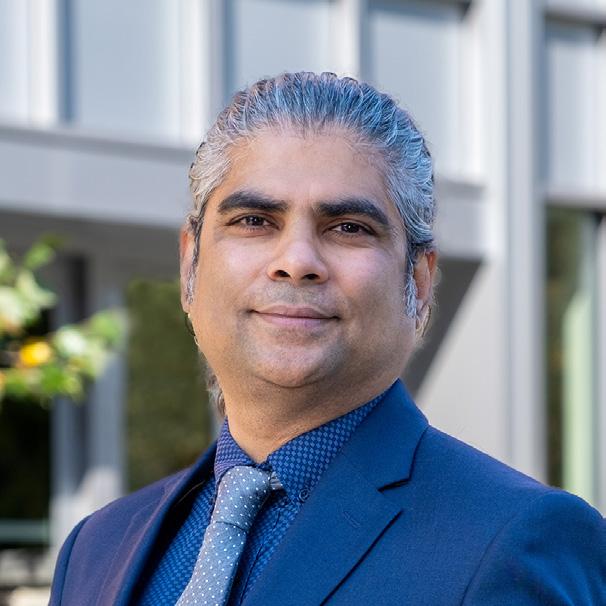
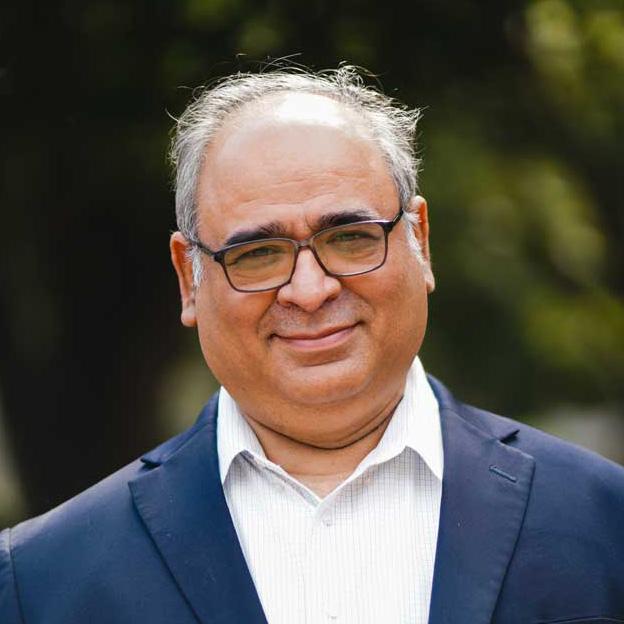
LEADERSHIP | Following a national search, Mandar Dewoolkar (left) has been appointed to lead the UVM’s College of Engineering and Mathematical Sciences (CEMS) as dean, effective April 1. An accomplished teacher and scholar, Dewoolkar most recently served as the interim dean for CEMS. He is a professor of civil and environmental engineering and a faculty fellow of the Gund Institute for Environment. He has also served as UVM’s Sustainability fellow and ServiceLearning Fellow. Dewoolkar has received many awards, including the university’s Kroepsch-Maurice Excellence in Teaching Award and Vermont Campus Compact’s Engaged Scholar Award, and he is a fellow of the American Society of Civil Engineers.
The
New York Times Celebrates an Anniversary, and its Founder— a UVM Graduate
Vikas Anand (middle) has been appointed dean of the Grossman School of Business, bringing extensive experience in business school administration, strategic program development, accreditation, and global engagement to UVM’s nationally ranked business school. Anand currently serves as associate dean for academic programs at the Poole College of Management at North Carolina State University, where he oversees a broad portfolio including undergraduate and graduate programs, executive education, global initiatives, career services, and marketing. Under his leadership, Poole has seen significant enrollment growth, curricular innovation, and enhanced student outcomes.
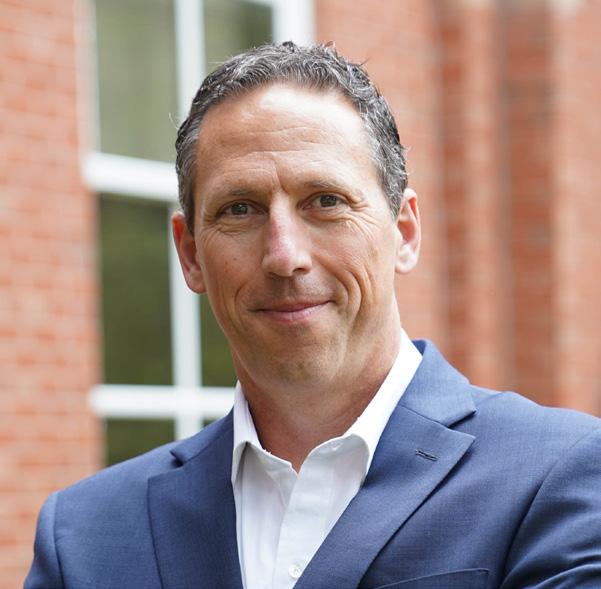
Dain LaRoche (right) has been appointed to lead UVM’s College of Nursing and Health Sciences. Currently the associate dean for research in the University of New Hampshire, Durham, College of Health and Human Services, LaRoche oversees the college’s $30 million annual research portfolio and has co-developed the college’s first interdisciplinary Ph.D. program. LaRoche earned his Ph.D. in exercise and sport science at the University of Utah. The focus of his research is the interplay of neuromuscular, metabolic, and biomechanical function in the limitation of mobility of older adults.
Both Anand and LaRoche begin their deanships on July 1.
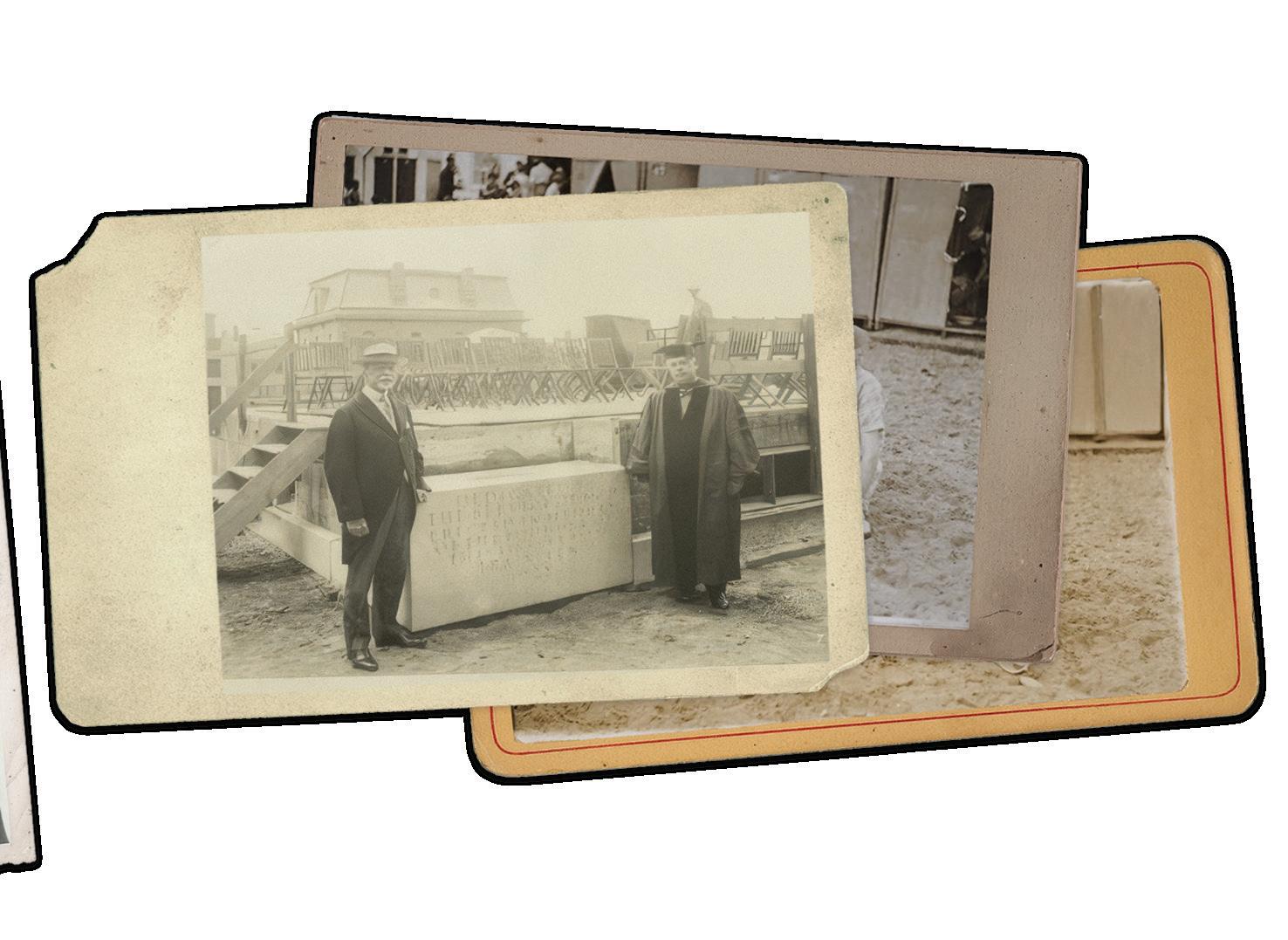
LEGACY | One of the premier newspapers in the U.S. is celebrating its 175th anniversary this year, and the credit for its founding is largely due to a University of Vermont graduate.
The New York Times, which styles itself the nation’s “paper of record,” published its first issue in September of 1851. The newspaper was the brainchild of Henry Jarvis Raymond, who graduated with high honors from UVM in the Class of 1840. The Times kicked off its dodransbicentennial (the official term for a 175th) in January with a “Birth of the Times” column that featured the original prospectus published by Raymond and his business partner, George Jones, who functioned as the Times’ publisher.
During his four years as an undergraduate at UVM, Raymond was known as a talented orator who even as a student regularly contributed pieces to New York City papers. Raymond’s ties to the Burlington area extended beyond his years at the university. Three years after his graduation, he returned to Winooski to marry Juliet Weaver. Raymond worked for several newspapers after leaving UVM, including Horace Greeley’s New York Tribune. He met Jones while working for the Tribune, and later convinced him to join in starting a new daily newspaper. The New-York Daily Times debuted on September 18, 1851, with copies costing one cent. (The word “Daily” was dropped from its banner in 1857.) Today the Times leads the nation’s newspapers with over 12 million total print and digital subscribers.
The Buzz
on Bees: Nine New-to-Vermont Species Discovered
Scan this QR or visit go.uvm.edu/beecount to read more about this research.
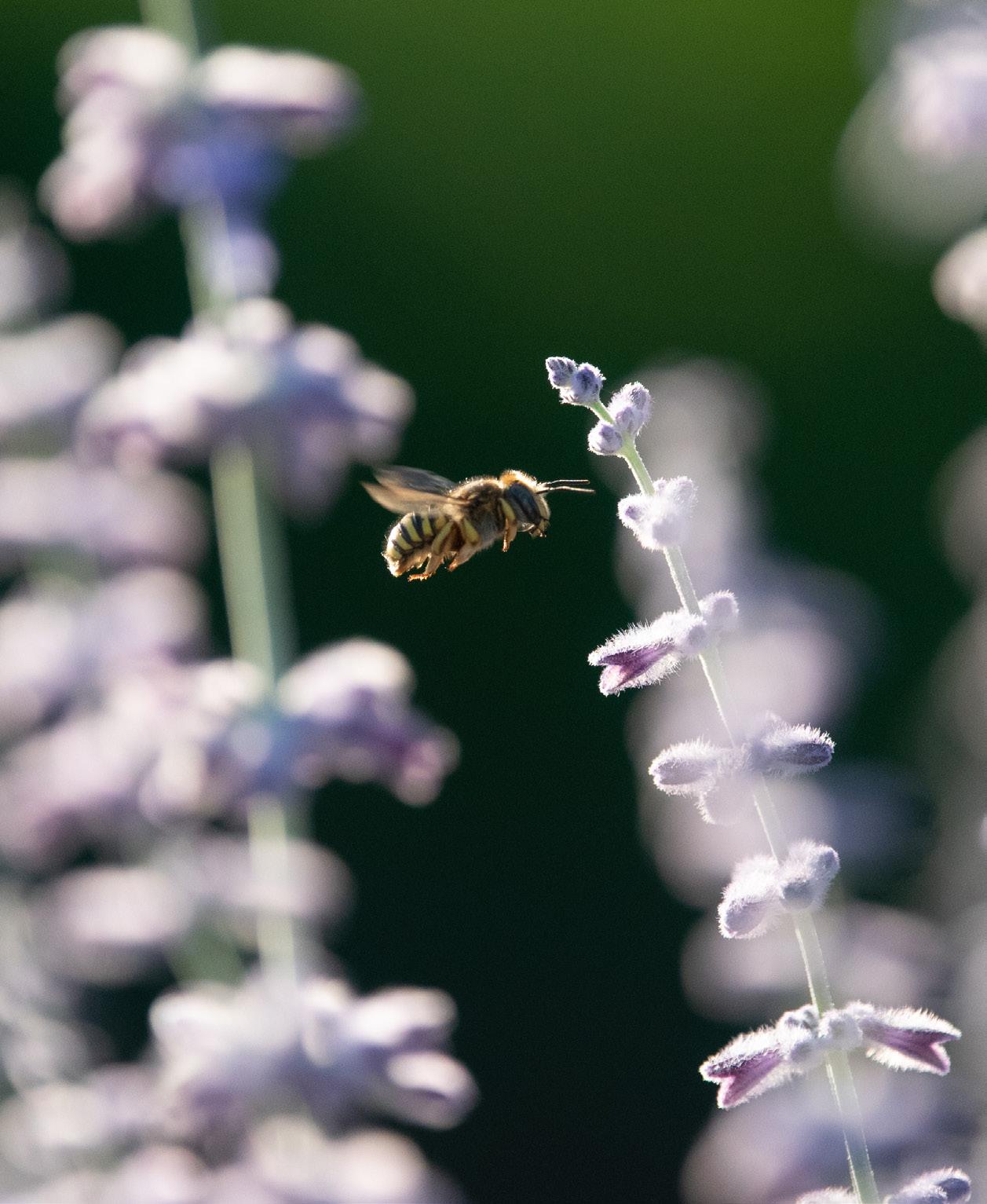
RESEARCH | A new count of Vermont’s bee species has identified nine species not previously reported in the Green Mountain State, bringing the total number of species in Vermont to 352, more than any northern New England state.
“It surprises absolutely everyone to hear what the total number of bees is,” says UVM pollination expert Taylor Ricketts, director of the Gund Institute for Environment and coauthor of a paper on the count published in November in the journal Northeastern Naturalist
Recent counts of bee species across New England identified 325 species in New Hampshire and 278 in Maine. Greater diversity was found further south in Connecticut (386 species) and Massachusetts (397). The appearance of new species likely stems from several factors.
“Insects are so diverse and poorly studied that if you look hard for them, you’ll find ones that no one’s found before,” Ricketts says. “I think that’s part of what’s happening.”
Additionally, some historically southern species are likely moving north due to climate change. Another factor is the data collection itself: nonscientists can now contribute their bee sightings to ecological databases using phone apps. And over the past few decades, some locations in the state have been more extensively studied by researchers.
The decade-long project analyzed nearly 80,000 bee reports—a combination of citizensubmitted data from public databases, scientific papers, and museum collections.
Of the 352 species identified in Vermont (more than 150 in Burlington’s Intervale alone), the authors say 60 percent likely need conservation support. The authors also found Vermont is playing host to boreal bee species more often found in the higher mountains of the American West.
“We recruited and trained community science volunteers to find, photograph, and share wild bee encounters to our iNaturalist Vermont project, which now makes up the majority of scientific records of wild bees in Vermont,” says Spencer Hardy, lead author of the paper and bee expert at the Vermont Center for Ecostudies. “And it keeps growing.”
It surprises absolutely everyone to hear what the total number of bees is.
Community scientists made some amazing finds including the first state record of Mock-orange Scissor Bee (Chelostoma philadelphi). The project is the first statewide count of pollinator species since 1962. Researchers then reported just 98 bee species in the state.
The updated data comes as Vermont implements Act 182, which bans the use of neonicotinoid pesticide-treated seeds in Vermont’s crops. Vermont is the second state in the nation to pass such a ban. Quebec banned neonicotinoids in 2019.
Widely used in agriculture, neonicotinoids are a class of insecticides that can be deployed as a seed treatment. Plants growing from these seeds incorporate the pesticide in their tissues. According to the Xerces Society, a nonprofit conservation organization, studies have linked neonicotinoids to negative impacts on various species of bees, affecting everything from their feeding to reproduction.
Stopping the Scroll
by Kristen Munson
On a bitter January afternoon, the heater in 208 Cohen Hall is chugging away with modest results. “Does somebody want to build a fire?” asks Associate Professor of Education Simon Jorgenson upon entering the classroom. He’s leading the experimental new class, titled Unplugged: Questioning Technology in Education and Culture, that’s about to begin.
Students Maya Jhawar and Vivian Summerlin pull stuffed flames, logs, and rocks from a bag in the center and arrange them like a campfire.
“I think it’s catching,” says Jhawar as she stacks the flames.
Tending a hearth used to be a critical job to provide light and heat in a home. Tending to it was both time-consuming and purpose-giving. Central heating has largely replaced that task. Now, we often forget about the heat until we suddenly realize there isn’t enough.
CONTEMPLATING TECHNOLOGY
Simon Jorgenson first pondered technology in the classroom while teaching at a middle school that was an early adopter of laptops for all students. Decades later, and the parent of two teenagers, Jorgenson felt pulled to develop a course that wrestles with the role technology plays in our
lives. Because he has questions— and he doesn’t think he’s alone.
“I just feel like students are aching to put the phones down,” Jorgenson says, “… that people are wanting to connect and to commit to being unplugged. And I do too.”
Special topics courses like Unplugged are test classes, Jorgenson explains. Unplugged is an introductory philosophy of technology course, but it’s also an educational experiment: What happens when students put down their devices and pick up focal practices?
There are no PowerPoint presentations, no laptops in the classroom. The students rarely see a notification from Brightspace—UVM’s course management system. Between classes, Jorgenson occasionally writes them snail mail. Class discussions cover the impact of the screens of childhood to the joys of making analog maps and music.
“It’s wildly different from my other classes,” explains Sam Schoendorf, a firstyear biochemistry major. “When we have breaks, we are making tea and talking.”
She enrolled to reduce her dependence on her phone. Schoendorf already has her phone set to grayscale to dampen the constant allure of notifications. But her phone increasingly functions as her key to unlock everything from homework assignments to buildings. For her, Unplugged is a three-hour respite from screens.
She isn’t the only one who feels this way.
BREAKING US DOWN OR BUILDING US UP?
“I don’t want to spend 17 years on a phone,” says Maya Jhawar.
During the second week of class, the sophomore biology major reflects on the time suck that social media can be. The number is not arbitrary. Jhawar once calculated how much time she would spend looking at her phone if she didn’t modify her behavior over the course of her life. While Jhawar views the merging of tech commodification with the social connection that humans are wired to desire as “a dangerous combination,” she also uses social media.
“Social media is social,” she says. “There is a network out there.”
Vivian Summerlin understands the struggle. Stints in nature away from her phone made her realize she was more attentive to her life when logged
off it. Summerlin quit social media a year ago and hopes to encourage others to reexamine their relationships with their phones, maybe even tuck them away one day a week and meet up in-person with people instead.
“I feel way more present,” Summerlin says. “We are not supposed to know or see this many people every day. … I think it breaks us down.”
Bee Wainner isn’t sure. He believes meaningful connections can be made and maintained over social media. In fact, that is how he and Schoendorf met and became roommates. It’s how he stays in touch with friends in Canada.
“I think there is a lot of good that can come from it,” Wainner says.
Conversation pivots between the idea of social media as a technology that connects people, to it being a place of constant comparison. An arena for self-expression and a prison where the students add and delete the same apps over and over again. This complexity is what Jorgenson wants students to examine.
“This course is questioning technology and culture,” he explains. “It’s not anti-tech. It’s about questioning and creating space to reflect on our device-driven culture.”
THE FOCAL PRACTICE
In February, the class piles into a van destined for the Vermont Commons School’s Outdoor Education Center in Charlotte. The plan? Hike to a yurt and build a fire to talk about things. “Things” being a technical term, according to the philosopher Albert Borgmann, whose ideas are woven throughout the class.
“This is designed to be an experience to visit a thing to model the difference between a thing and a device,” Jorgenson explains in the parking lot.
Fresh snow sparkles under a bluebird sky. The class wends through the woods, occasionally snapping photos with their phones. Inside the yurt, they break into teams to open the window shades and build a fire.
“Start with little pieces,” Summerlin instructs as she tears strips of newspaper. “You want them to be textured and a little crumply.”
After a few minutes the kindling begins to burn.
“This is an ancient practice we are doing,” Jhawar smiles.
Around the fire, the students discuss their ideas of a focal practice, a central component of Unplugged. The idea is to commit to learning a new skill or practice they refine and journal about for the remainder of the course.
thinks playing card games could help.
“It’s a way to connect with people that isn’t awkward,” Jhawar notes.
She recently started a card game club and committed to learning card tricks. One night, while struggling with mastering card springing, she pushed herself to practice for an hour and had a minor breakthrough.
“It was nice to be focused on that,” she says.
Bee Wainner is taking a different tack: silence. He committed to spending 20 minutes in solitude outside every day.
My hope is that by doing this every day and being more mindful and taking the time to be bored, to explore, that I will become a little bit more connected to the things in my life.
THE JOY OF CONNECTION—AND SILENCE
Maya Jhawar grew up in Silicon Valley and vividly recalls when her family got its first iPad—she was five years old. She loved it, and her phone, until she noticed her attachment to this phone that is so much more than a phone. It’s a compass, a Rolodex, the world’s encyclopedia, she muses. “At the end of the day it’s the greatest tool you will ever hold in your hand.”
And she hates that. Jhawar believes communicating over screens has made many of her peers more introverted and afraid to interact with others. She
“My hope is that by doing this every day and being more mindful and taking the time to be bored, to explore, that I will become a little bit more connected to the things in my life,” he says.
Wainner loved the class trip to the Cohen boiler room and attic to learn how the building is heated and cooled—an excursion led by James Lang, physical plant manager, and devised so students can meet the often unseen skilled workers on campus and better understand the local energy system and what they are unplugging from. Wainner wants to use meditation to notice the world and be more present in it.
“I love my phone but I kind of hate it,” he says. “I hate being attached to it. I hate that it’s necessary for everyday life.”
Whenever he notices picking up his phone is a tic rather than a plan, Wainner deletes the apps until he feels control over himself. He hopes Unplugged will help him gain a healthy habit.
“I think it would be good for me to know of
Visit go.uvm.edu/unplugged or scan this QR to watch a video with Simon Jorgenson about this class.
Bright Light
How One UVM Student Perfects the Data Behind Solar Energy
by Joshua Brown
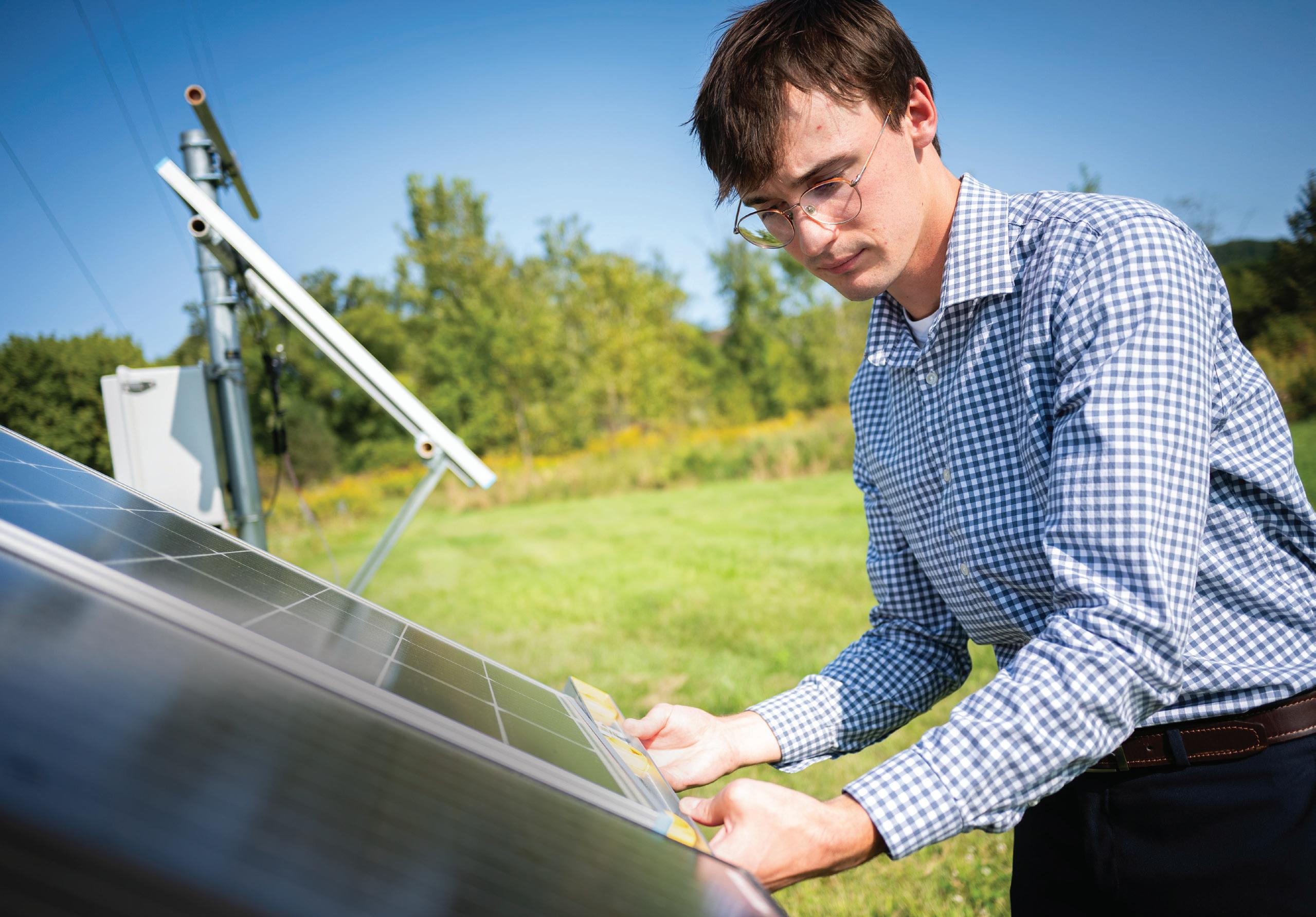
INNOVATION | On a fall afternoon, at NRG Systems’ headquarters in Hinesburg, Vt., UVM engineering student Ethan Perry ’26 is giving a half-hour talk to a group of the company’s engineers and scientists. On a screen glows an image of a device that looks like a Mars lander in the middle of a farm field. It’s one of the company’s Flare SRA systems—basically, a superaccurate tool for measuring how much sunlight is falling onto a location, and a bunch of other variables, including wind speed, temperature, and rainfall.
Since the early 1980s, NRG has been a global leader in creating and deploying measurement tools for wind and solar energy companies. The Flare tower is trusted by major electricity utilities and developers for making multi-million-dollar decisions about where to build solar arrays and how profitable those projects could be.
As a research intern, Perry spent the summer exploring the system’s maintenance photos and other data, looking for ways to improve the quality of the information each tower, and its maintenance team, collects. Now he’s explaining how his research could help NRG push their advanced system closer to perfection.
“As a reminder,” he begins, pointing to two gleaming devices that look like tiny UFOs bolted to the top of the tower, “Each Flare SRA system comes with a pair of pyranometers.” These are the sensors that measure the amount of sunlight energy that is coming down—what the engineers call solar irradiance. Having two of these sensors is redundant—and that’s the point. If they both have the same reading, it gives users confidence that the data are accurate.
Perry flips to another slide showing two side-by-side solar panels attached to the tower—one labeled “clean,” the other “dirty.” These allow a customer to compare power outputs, “as the clean panel is kept clean and the dirty panel accumulates dirt, pollen and whatever else,” Perry says. This data reveals how often a company would have to clean their panels at that site. And, each week, technicians measure the levelness of the panels—to make sure the two panels are facing the sun in exactly the same way.
The tower technology is sophisticated, elegant, and industry-leading—but the sensors, and the technicians who maintain them, collect a lot of data that comes in different forms. “It’s kind of scrambled,”
Perry says. To help improve the data and its ease of use, Perry worked under the supervision of NRG data scientist Alexandra Arntsen to build a digital processing model that can unify each site visit’s photos, technician forms, and metadata into a single machine-readable structure. This opens doors to automated checks: assessing whether technicians took all 19 required images, verifying sensor orientation, and diagnosing anomalies in irradiance readings.
Waking up and doing something that I’m really proud of is important to me.
“Using the digital data processing model that I developed, we can combine all this data into one cohesive package,” Perry tells the team of scientists. In other words, his work can make the field data easier for computers to interpret, easier to analyze at scale, and easier for NRG’s clients to review.
TOWARD THE SUN
Moments like this—an undergraduate given an opportunity to conduct independent research, improving a world-class measurement system— don’t just happen. Perry’s path reflects the blend of curiosity, rigor, and opportunity that UVM cultivates.
He started his UVM career as a computer science major, the kind of student who began coding when he was a kid and taught himself the coding language Python in early high school. “It’s something I love,” he says. “For many years, I’ve been doing automation tasks for fun with my buddies.” But as he talked with his professors and thought about his future, something clicked. “Waking up and doing something that I’m really proud of is important to me,” he says. “Solar, wind—renewables in general—felt like the direction I wanted to go.”
That calling led him to switch to electrical engineering, and eventually to apply for and receive support through the Richard Barrett Scholars Program, which places UVM students in sustainabilityfocused internships and funds their research. The Barrett program usually connects UVM students with professors, working in on-campus labs. But the program connected Perry with NRG, the first time that a Barrett Scholar has worked with an industry partner. And NRG, with its mix of advanced data science and mission-driven engineering, turned out to be a great fit.
“It’s unique compared to just working with professors,” Perry says. His work with datamodel and image-processing improvements for NRG is not just a training exercise. What he and Arntsen have developed can be put to use in the company’s current operations. “We’re doing something that’s going to be useful now,” he says.
ENERGY INVESTMENTS
Professor Luis Espinosa, one of Perry’s key mentors, describes him as a standout student in some of UVM’s most demanding courses—including a foundational class on signals and systems as well as advanced “hardcore theoretical courses,” he says. “He was happy to learn that abstraction pays off,” Espinosa says. “He saw beyond formulas. Once students realize abstraction can take you farther, that deeper understanding lets you provide guarantees”—like guaranteeing the accuracy and ease-of-use of a complex data stream coming from an NRG tower. And guarantees are what utility clients expect when they invest millions in renewable infrastructure.
Espinosa also remembers helping Perry navigate a project that required experimental design, careful reasoning, and coding discipline. “You can search as much as you want on the internet,” Espinosa told him, “but if you don’t put pen and paper together and test something, you won’t get to a solution.”
That practical problem-solving rigor has become one of Perry’s strengths in his work at NRG, says his research supervisor, Alexandra Arntsen, a UVM alum from the Class of 2012 and data scientist with a Ph.D. from Dartmouth. She supported Perry in exploring questions “where we don’t know the pathway or the process or the answer,” she says. In contrast to a typical engineering intern, who might test existing systems or products, Perry developed machine-learning and computer-vision approaches through experimentation and self-directed research. “It’s been like working with a first-year Ph.D. student,” she says. Arntsen says Perry’s analysis strengthened the company’s confidence in a new app it’s developing for its technicians to use in the field. “Ethan’s work validates our concept,” she says. “And he’s informing us of what picture concepts are important if we’re going to execute this model.”
Perry hopes to stay in renewable energy—maybe even at NRG. “I’d love to get a full-time job here,” he says. And for NRG, investing in Perry and other interns represents something meaningful too: not just improving their products, but also supporting the next generation of engineers who could make the path to clean energy easier and more profitable.
TOUGH TOGETHER:
HOW UVM MEN’S RUGBY BECAME NATIONAL CHAMPIONS
by Joshua Brown
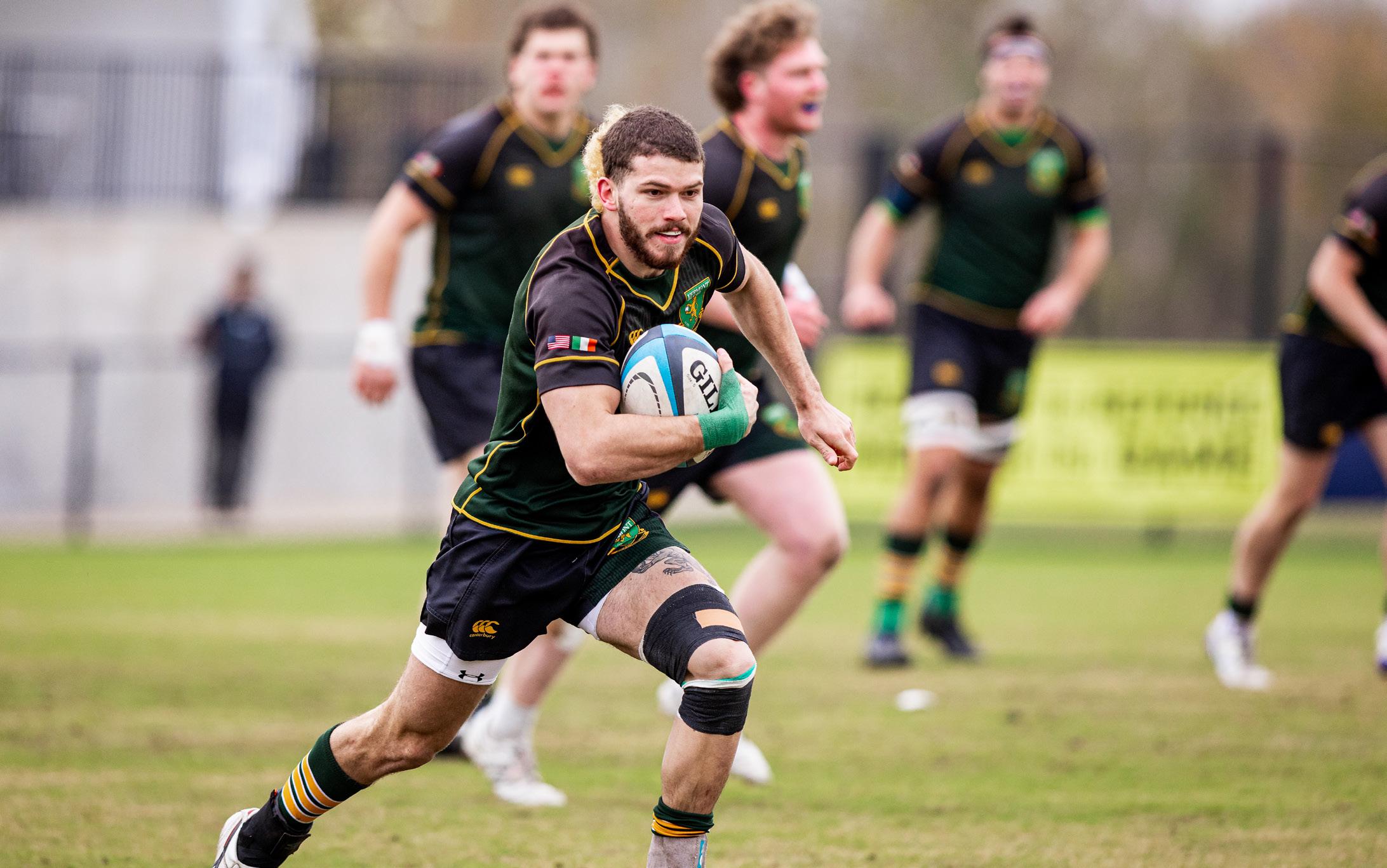
UVM Men’s Rugby wing Luca Race ‘26 was named the Most Valuable Player of the December 14 national championship match.
At the opening whistle of the 2025 National Collegiate Rugby championship game on Sunday, December 14, the wind blows strongly in favor of the University of Chicago Maroons. They kick long, press their field position, and force the UVM men onto defense. It’s a classic territorial strategy, and soon Chicago scores in the corner, grounding the ball over the goal line for the first points of the game.
Those turned out to be Chicago’s only points.
From there, Vermont took control of the pitch at SaberCats Stadium in Houston, Texas, and never gave it back, as the Catamounts dismantled the Maroons 71–5 to win the Division II men’s rugby national championship. It was UVM’s first national title in rugby and the emphatic conclusion to an unbeaten season in which Vermont proved itself the most complete team in the country.
“I’ve never played a game where we were that excited and happy to play,” says senior player Jack Worobel. “In the tunnel, before the game, we were smiling, laughing, having a great time. Chicago looked all superserious and they seemed a little nervous.”
Rugby can look chaotic to the uninitiated, but its structure is precise. Fifteen players per side compete for continuous possession,
advancing the ball by running or kicking—never passing forward. Points come primarily through “tries,” five points scored by bringing the ball into the opponent’s in-goal area and then grounding it. Vermont scored thirteen of them, which is similar to scoring thirteen touchdowns in football: not easy.
The Catamounts game plan was to use their aggressive forwards to run through Chicago’s defense, which they had identified as a weakness from watching film. They did—and recycled the ball quickly after each tackle. Locks and flankers—key forward positions responsible for strength and endurance—won physical battles, allowing the backs to attack space.
After a try, the scoring team earns a chance at a “conversion,” a kicked bonus worth two points. Flyhalf Matthew Tevnan converted three kicks, calmly directing traffic from behind the forward pack. By halftime, Vermont led 31–5, including two tries from wing Luca Race.
THEY JUST KNEW
In the second half, Vermont pulled away completely. “About two minutes into the half,” Worobel recalls, “we kicked it down to them and the ball rolled into their try zone. They touched it down, which means
they’re going to drop-kick it from their own goal line.” Usually this is a strong defensive move that shifts the action downfield. However, Chicago kicked it directly to Luca Race. “He just sliced right through the defense, ran it straight back to the try zone, and touched it down,” says Worobel. “It was a sweet, awesome play.” And, Worobel thinks, the moment when Chicago tasted defeat. “They just knew.”
“I’VE NEVER PLAYED A GAME WHERE WE WERE THAT EXCITED AND HAPPY TO PLAY. IN THE TUNNEL, BEFORE THE GAME, WE WERE SMILING, LAUGHING, HAVING A GREAT TIME.”
Race added one more try in the second half to complete a four-try performance. Vermont also capitalized on effective use of what are called grubber kicks, or just “grubbers.” These are low, rolling kicks along the ground, used to send the ball behind the defensive line, making it hard for defenders to handle and allowing attackers to chase and regain possession. “A rather wonky grubber from Tevnan in the first half bounced really weirdly,” reported rugby journalist Alex Goff, “but Luca Race still grabbed it because he trusted what his flyhalf was doing.”
Race’s ability to read the game— anticipating kicks, trusting patterns, and accelerating into open space—earned him the match’s Most Valuable Player honor.
OLD BULL MENTALITY
The championship was the culmination of years of development. Many seniors began playing together as freshmen, learning the sport from scratch. An “old bull mentality” is central to head coach Joey Besl’s philosophy. “Slow is smooth and smooth is fast,” explains senior Worobel, a mechanical engineering major. “As long as we do things slowly
and methodically—that’s how we start and we’re able to come back and slow the pace of play—then these quick plays, like kicks, will come much easier.”
A former UVM player himself, Besl emphasizes conditioning and cohesion. Practices often involve the entire roster, rather than splitting players into isolated units. The goal is fluency—every player understanding where to be, and when. That fluency showed repeatedly in Houston. Vermont reset quickly after tackles, forming organized “pods” of support runners.
Vermont’s playoff run underscored the team’s long commitment to a balance of joy and discipline. After defeating Villanova in the round of 16, the Catamounts faced Cornell in the quarterfinals and trailed at halftime before mounting a composed comeback. A 22–11 semifinal win over UNC-Wilmington was their toughest game of the tournament and set the championship match-up with Chicago. Across four playoff games, Vermont outscored opponents by a staggering margin, never losing control of its style or strategy.
CLUB≠CASUAL
That achievement is particularly notable given rugby’s status on campus. While recognized by the NCAA as an Emerging Sport, men’s rugby operates outside the varsity athletics model. Club teams compete nationally under National Collegiate Rugby, relying on institutional support, alumni engagement, and player commitment rather than scholarships. “Club” does not mean casual. More than 100 Division II teams compete nationwide, and Vermont emerged at the top. In a message to the team, UVM Director of Student Life Lina Balcom praised the players’ dedication: “Every tackle, every sprint, every early morning practice led to this moment, and you earned it.”
Founded in 1970, UVM Rugby tests itself each year against the best Division II programs in the country. This year, on a windy Sunday in Texas, the Catamounts did more than test themselves—they set the standard. “We have practice every day at 6:30 a.m. in the snow outside,” says Worobel. “And, like, the only thing that keeps us doing that is how much we love each other, and love the game, and just want to win.”
TWO CONFERENCE TITLES FOR CATAMOUNTS
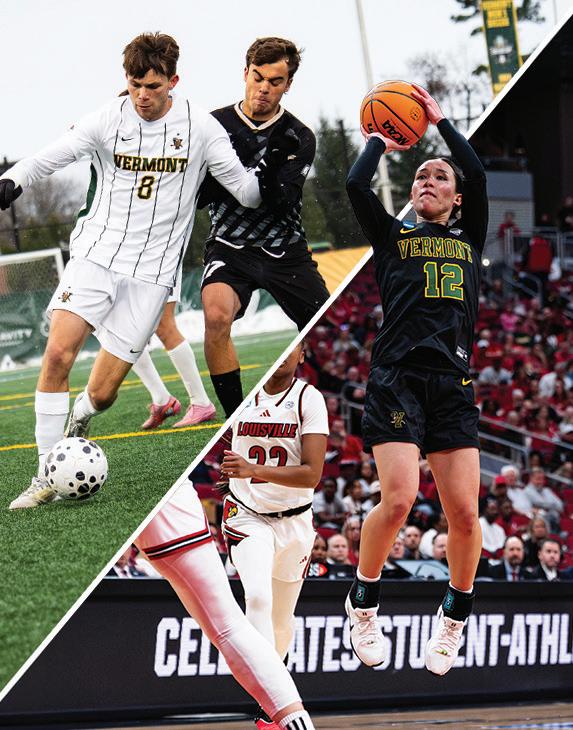
With a 61-43 victory over the University of Maine Black Bears on Friday, March 13, the University of Vermont Women’s Basketball team earned the America East conference title for the second consecutive season and earned their place in the 2026 NCAA March Madness Tournament. Vermont claimed its ninth America East Championship in program history. The Catamounts fell to the Cardinals of Louisville in the opening NCAA Tournament.
On November 16 UVM’s defending NCAA champion men’s soccer team defeated Bryant University 2-0 to claim the America East conference title. With the win, UVM won the conference title for the second year in a row, and the third time in the last five years. The 2024 national champion Catamounts moved on to their fifth NCAA Tournament appearance on November 23 at Virtue Filed in Burlington. An overtime 3-2 upset in the second round of that tournament ended the Catamounts’ season and their 29-game unbeaten streak.
Moving Masterpieces: A Conversation
with Author Kelley Di Dio
If you think shipping a fragile package in today’s world is stressful, imagine having to move a 15,000-pound marble sculpture from Italy to Spain in the 16th century. In her recent book, Shipping Sculptures from Early Modern Italy: The Mechanics, Costs, Risks, and Rewards, Rush C. Hawkins Professor of Art History and Executive Director of the School of the Arts Kelley Di Dio told the fascinating inside story on what it took to transport sculptures during a time when they were not just art—but also diplomatic tools, technological puzzles and, often, very expensive headaches. Su Reid-St. John from the College of Arts and Sciences discussed these difficult tasks with Di Dio.
WHAT INSPIRED YOU TO FOCUS ON THE TRANSPORTATION OF SCULPTURES DURING THIS TIME, AND FROM ITALY TO SPAIN IN PARTICULAR?
Kelley Di Dio: Sculpture from this period is my area of research expertise, and in particular I am a scholar of Italian and Spanish sculpture of the Renaissance and Baroque periods. Naturally, that has led me to dig deeper into thinking about practical issues involved in how they were able to move things around as they did. Some of the sculptures were 15,000 pounds, which is not an easy thing to move around even today. It required a lot of coordination and money, and there were concerns about fragility and other kinds of loss that could happen, such as sinking ships, pirates, etc.
DID CONCERNS ABOUT SHIPPING SOMETIMES IMPACT WHAT THE SCULPTURES WERE MADE OF?
Yes, absolutely. Usually in art history, we talk about bronze sculptures as being the most expensive kind of sculptures you could have. Marble is usually described as being less expensive, but what I discovered is that because of its fragility, when things were going to be shipped abroad, bronze ended up being cheaper because it required less insurance and meant less possibility of breakage along the way. So, bronze became the preferred medium. But people still loved marble sculptures. And so, when new marble sculptures were being made, sculptors had to consider the form and how it would best resist potential damage during travel. So, arms and legs tended to not be so extended, for example.
WHAT WAS THE PRIMARY PURPOSE OF SHIPPING SCULPTURES?
These sculptures were often diplomatic gifts. So, when the Medici and other major rulers of Italy were trying to win favor from the Spanish crown, they sent works of art. There was usually a lot of negotiation about form, content, size, who the sculptor would be, and all of that. Gift giving for state relationships was really one of the primary functions of art in the Renaissance and Baroque periods.
WHAT WERE THE MAJOR CHALLENGES OF SHIPPING SCULPTURES?
The rulers had to think carefully about whether to ship by land or by sea. Shipping by land was generally deemed safer—there was less risk of thievery or breakage. But traveling by land required the roads to be in good enough shape that they could easily be traversed, so a lot of new passageways had to be created, especially over the Alps. But if something was really large or heavy, or there was a particular concern about sabotage en route, it might be sent by sea.
WHAT’S ONE THING YOU DISCOVERED THAT REALLY SURPRISED YOU?
One of the most surprising things was that thousands and thousands of sculptures were sent from Italy to Spain in this period. We previously had no idea that so many were sent. But there were also very funny moments that I uncovered in my research, like attempts at smuggling works of art using false trap doors, and a time when someone decided to ship an entire case of glassware. Not shockingly, it arrived all broken.
Visit go.uvm.edu/movingmasterpieces or scan this QR
extended version of this interview— and a link to a podcast discussion with Di Dio.
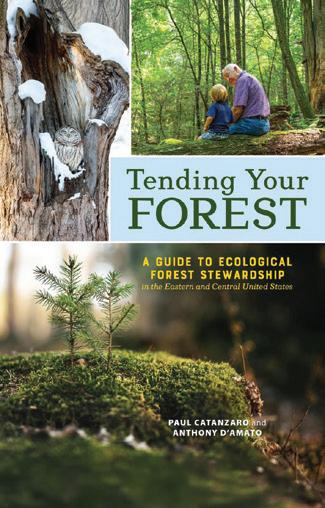
Tending Your Forest: A Guide to Ecological Forest Stewardship in the Eastern and Central United States
Storey Publishers, 2026
By Anthony D’Amato and Paul Catanzaro
go.uvm.edu/book-tendingforest
Anthony D’Amato’s third book on ecological forestry is geared towards family forest owners, who are the primary forest landowners in the United States. D’Amato, a professor of silviculture and applied forest ecology and director of the UVM Forestry Program, co authored the book with Paul Catanzaro, professor and state extension forester and co director of the University of Massachusetts Amherst’s Family Forest Research Center.
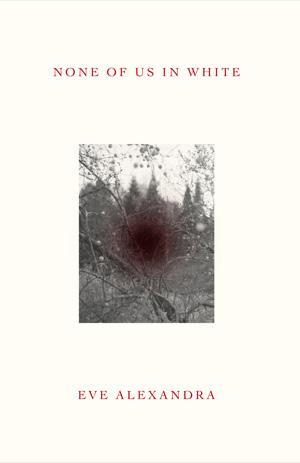
None of Us in White
Two Sylvias Press, 2025
By Eve Alexandra
go.uvm.edu/book-noneofus
Poet Kerrin McCadden has written that this book of poems by UVM Senior Lecturer of English Eve Alexandra is “unflinching… a liturgy of love, wreckage, grief, and arrival that is as visceral as it is transcendent. Rooted in intimacy, in thrall with the natural world, and run through with a sequence of charms that offer as much warning as antidote, the range in these poems is stunning—in form and subject.” Alexandra is the winner of the 2023 Two Sylvias Press Wilder Series Poetry Book Prize.
Will Work for Food: Labor Across the Food Chain
University of California Press, 2025
By Teresa M. Mares and LauraAnne Minkoff-Zern
go.uvm.edu/book-willworkfood
Teresa Mares, a researcher and associate professor of anthropology at UVM and Gund Institute Faculty Fellow, explores how improving labor standards, especially among frontline workers, is key to creating just food chains and food systems. Publisher University of California Press notes that Mares and co author Laura Anne Minkoff Zern, an associate professor of geography and the environment at Syracuse University, “chronicle labor across the food chain, connecting the entire food system—from fields to stores, restaurants, home kitchens, and even garbage dumps.”
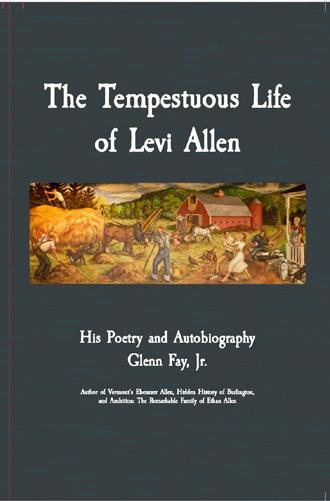
The Tempestuous Life of Levi Allen: His Poetry and Autobiography
Vantage Press, 2026
By Glenn Fay, Jr.
go.uvm.edu/book-leviallen
Class of 1976 member Glenn Fay, Jr., describes himself as “a seventh generation Vermonter and a descendant of Daniel Champion, a Green Mountain Boy who served in Warner’s Regiment during the Revolutionary War.” In addition to Hidden History of Burlington, Fay has published previously on Vermont pioneers Ebenezer Allen, the cousin of Ethan Allen, and this new book examines the life of Ethan’s estranged brother, Levi.
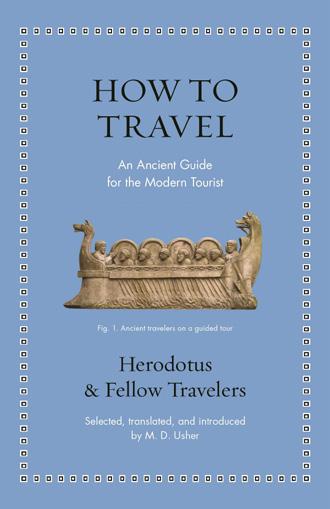
How to Travel: An Ancient Guide for the Modern Tourist
Princeton University Press, 2026
Edited and translated by M. D. Usher
go.uvm.edu/book-howtotravel
This is the fourth “how to” book by Mark Usher, UVM Lyman Roberts Professor of Classical Languages and Literature and Gund Institute affiliate, that uses the wisdom of the Classical Era to inform modern life. Princeton University Press describes this as a “transporting anthology of ancient Greek and Roman travel writings that capture the thrill of exploration and discovery…At long last, a travel guide to the ancient world for the modern tourist— written by the ancients themselves.”
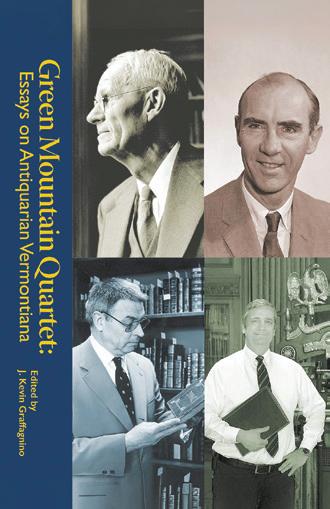
Green Mountain Quartet: Essays on
Antiquarian Vermontiana
Vermont Historical Society, 2026
Edited by J. Kevin Graffagnino go.uvm.edu/book-gmquartet
The Vermont Historical Society notes that the history of collecting and writing about Vermont’s history and historic documents, often called “Vermontiana,” goes back almost two centuries. One of the latest treatments of the subject is this volume, edited by J. Kevin Graffagnino, senior consultant and chair of publications for the UVM College of Arts and Sciences, that explores the writings of four prominent Vermontiana specialists from the 19th through 21st centuries.
Published a book?
Launched a podcast?
Working on a film, show, or digital project?
Let us know at magazine@uvm.edu
HILDA WHITE
A LEGACY IN LEAVES
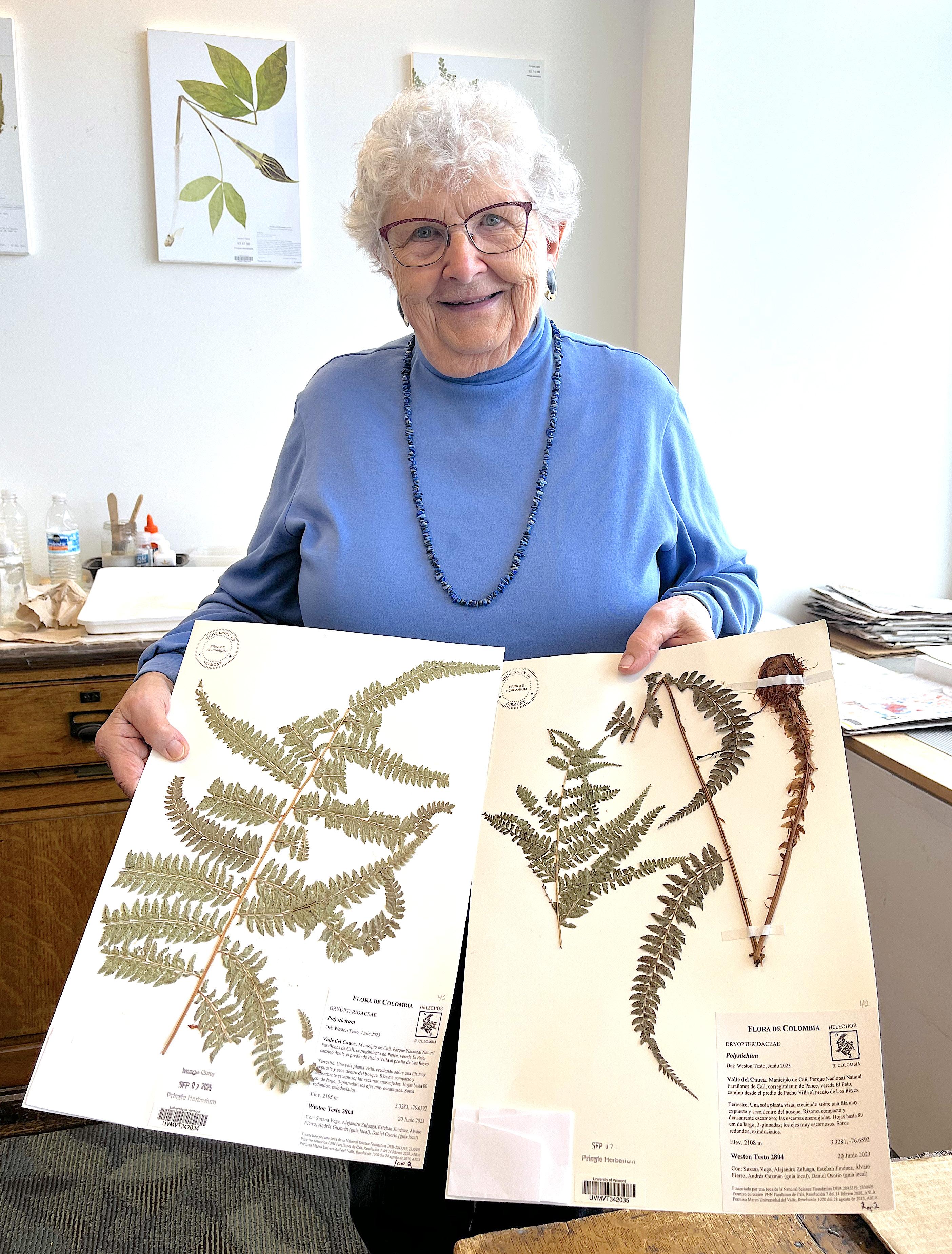
On her birthday last October, Hilda White went to the UVM Pringle Herbarium, where she has been volunteering twice a week since 1997. She was touched that Herbarium Director Weston Testo, retired Director Dave Barrington, and her fellow volunteers threw her a little party with a cake and then sang “Happy Birthday” to her.
By Ren Dillon
But the big surprise was when Testo told her he had a birthday present for her and showed her a specimen of a fern he had collected during a research expedition in Colombia in 2023. White had seen this large, showy plant before—she herself had prepared the specimen when it arrived at the Pringle Herbarium last year. Testo explained that he and Barrington had studied the plant over the last year and found that it was a new species of holly fern in the genus Polystichum, a large group of plants that includes the Christmas fern, a familiar member of Vermont’s flora. The surprise: they had decided to honor White’s decades of volunteer work at the Pringle Herbarium by naming the fern after her.
“It’s Polystichum hildae, so it’s after my first name,” White explains. “Polystichum is the genus of the Christmas fern, and then hildae is this specific species. It was tremendously exciting. I was on a high for a whole week. I mean, you can’t imagine what an honor that is… Nobody will ever be able to beat that birthday present.”
Pringle Herbarium Director Weston Testo says he can’t thank Hilda enough for her 28 years of service to the herbarium. “She was already working here when I began as a graduate student at UVM. Hilda’s a part of the history of this collection.”
White explains how she became involved in the work. A chemist by training, she and her husband, William, came to Vermont from Ohio in 1963 so that he could chair UVM’s Department of Chemistry.
She soon settled into her career as a chemistry lab technician and, after her retirement, took a class in plant systematics at UVM with Senior Lecturer Cathy Paris, who brought the class to the Pringle Herbarium to show them what an invaluable resource it was for botanical specimens.
“I didn’t even know what an herbarium was before then. At that time, the wall was lined with wooden cabinets, and on top of the cabinets were cardboard boxes four deep, and Cathy Paris waved her hand at those boxes and said, ‘If any of you would like to volunteer to mount those specimens…’ and I thought, I could do that.”
She started volunteering and realized how much she enjoyed it. “This work is appealing because you take the plant, which comes wrapped in a piece of newspaper that somebody has collected somewhere in the world, and then you have to do something with it. I find it’s my only artistic outlet. I can’t draw. I can’t do music. But I can do this, arrange plants on the page from places all over the world. Through this work, I’ve met lots of interesting students, graduate students, and botanists, and I’ve been involved with the herbarium ever since. It’s sort of a home away from home, and it’s an outlet that I really enjoy.”
Herbaria are essentially libraries that house physical plant specimens, so that researchers can compare plants from different regions or different time periods. The importance of physical examples has become even more valuable since the onset of DNA sequencing.
The Pringle Herbarium was started by Cyrus Pringle, an important plant collector working in the late 1800s and early 1900s. His specimens are the foundation of the UVM collection, a collection that now boasts over 350,000 mounted plant sheets, making it the second-largest herbarium in New England. It is a globally significant collection of ferns, an area of focus of the Pringle collectors for decades. There is a backlog of plant species to mount, and the Pringle collects—and receives from other collectors—thousands of new specimens each year.
White’s commitment to the Herbarium expanded in another way this year, as she decided to create an endowment that would help to ensure someone could be hired to do the work that she does once she is no longer able to contribute. She is quick to add, however, that she aims to reach at least 100 and plans to continue at the Pringle Herbarium for all the years she has left.
GREEN GOLD AND BOLD
GREEN MOUNTAINS,
GOLD STANDARD, BOLD FUTURE
The University of Vermont and State Agricultural College holds a vital role in our state and in the broader world.
We must fully embrace and advance our grand mission. Education is an act of hope; research, an act of both intellect and belief; and our commitment to people and planet, an act of stewardship. Together, these define our future. We will strive as a community in this great work.
As Vermont’s flagship, land-grant university, we have a foundational responsibility to educate Vermonters, strengthen the health and economic well-being of our state, and serve all its people. Through programs in Extension, healthcare, education, social services, and more, we have served Vermont for generations. The critical work of our land-grant mission extends across all our units. We must ensure the full power of the university touches people and communities throughout Vermont. We support our mission by educating students from beyond Vermont’s borders—students who bring their gifts and talents, enrich our communities, and help all of us thrive.
this land has always been home, the people across our state and around the globe. These communities challenge us to innovate and improve, to serve better, and to live into our values, as we teach, research, and serve.
Scan this QR or visit go.uvm.edu/stratplanvid to watch a video introducing the university’s new strategic plan.
As a powerhouse research university, we generate scholarship and creative work that produces pathbreaking discoveries, inspires, illuminates, challenges, and transforms. We must continue this work, despite disruptions in the funding landscape and infrastructure, actively seeking new resources and collaborating creatively and ethically with new partners. We aim to discover, analyze, and understand new terrain—and to leave a meaningful mark on the world. Collectively, we pursue the study of what is significant and impactful, while always creating space for pioneering ideas that may shape future paradigms. Our teaching embodies our commitment to the intellectual, personal, and ethical development of our students. We challenge them—and one another—to grow, to think in novel ways, and to become trailblazers who move boldly beyond the university. Our pedagogy and community grow, in part, from our own deep and ongoing learning. While we honor our extraordinary history, we are not bound by past practices or paradigms. We reflect on and learn from those with whom we interact—our students, the indigenous communities for whom
Throughout our history, we have been characterized by a unique commitment to values-driven work—an ethic of valuing people, ideas, the planet, meaning, beauty, and joy. We will foster that commitment, even in tumultuous times. We take immense pride in the bold and values-driven achievements of our powerhouse Catamount alumni who make our world better through service in their communities across Vermont and around the globe. UVM aims to make a positive impact and leave the world better than we found it. Now, when our nation and our world are marked by division and strife, we will provide a platform for authentic intellectual engagement, meaningful dialogue, and steadfast commitment to the democratic ideals that our university has supported since our founding. We will not falter, regardless of the forces that buffet or challenge us. Indeed, we will courageously seek even better ways of doing our work and supporting one another. We will be a beacon of academic freedom, freedom of speech, and democracy in Vermont and for the world.
We recognize that, as a university, we are a complex community representing many perspectives and varying interpretations of ideas and events. We may disagree— sometimes strongly—but we will consistently strive to honor Our Common Ground values. In doing so, we can come together to achieve our mission, strengthened by the richness of our diverse voices and perspectives.
Our strategic plan provides a structure for the work we undertake together in the years to come. We will build a powerful future for the University of Vermont—one that will stretch across many hundreds of thousands of students and Vermonters and that exemplifies our unique identity, our abiding commitment to excellence, and our creative and innovative spirit: Green, Gold, and Bold.
Dr. Marlene Tromp University President
1
FORGE BOLD FUTURES: STUDENT CONNECTION, PURPOSE, AND IMPACT
We create an educational environment where students learn deeply, belong, contribute, and develop the tools to navigate life beyond UVM— grounded in reflection, mentorship, a sense of history and place, and substantive experiences.
HOW WE’LL DO IT:
• Provide an Intellectually Challenging Environment
• Prepare Students to Navigate Life Beyond UVM
• Prioritize Well-being
• Connect Alumni and Students
• Expand Opportunities for Experiential Learning
• Foster UVM Community, Pride, Belonging, and Connection
• Ensure Accessible Student Success
BUILT TOGETHER
1,000+
UVM community members participated in the planning process
STUDY WHAT MATTERS: VALUES-DRIVEN LEARNING, RESEARCH, AND PRACTICE
UVM inspires learners driven by curiosity and integrity to be innovative in addressing impactful problems and serious questions in Vermont and broader global contexts. UVM community members are empowered to explore areas of personal significance and meaning and embrace a lifelong pursuit of knowledge. We reward the bold and impactful ideas of our faculty and students and encourage their efforts toward a healthier, more sustainable world.
3
2 4
HOW WE’LL DO IT:
• Make a Lasting Commitment to Research Excellence
• Prioritize an Enduring Pursuit of Liberal Arts
• Create Collaborative Solutions to Contemporary and Complex Challenges
CREATE OPPORTUNITY: ACCESS, ENGAGEMENT, AND PARTNERSHIPS
As Vermont’s flagship and land-grant research university, UVM broadens access, strengthens engagement, and partners with communities and organizations in Vermont and beyond. We embrace and support learners from everywhere to become lifelong members of the UVM community and contributors to Vermont’s well-being and common good.
HOW WE’LL DO IT:
• Broaden Access
• Expand Our Partnership Network (Local and Global)
• Celebrate Athletic, Creative, and Intellectual Excellence at UVM
ENABLE EXCELLENCE: CAMPUS COMMUNITY, SYSTEMS, AND INFRASTRUCTURE
To achieve our shared goals, we will invest in and renew UVM’s infrastructure: our physical spaces, technological systems, and organizational processes. With the same goals, we will fully support the university’s most crucial asset: its people. We will approach our work with a mindset of stewardship, collaboration, transparency, and sustainability. We will modernize the practices and processes that support and govern our work, renew our spaces, and cultivate a collaborative and innovative culture where every member of our community is supported to thrive and optimize their UVM experience.
HOW WE’LL DO IT:
• Champion Our Campus Community
• Invest in Modern Systems and Processes
• Enhance UVM’s Digital Experience and Data Stewardship
• Accelerate the Innovative Impact of Emergent Technology
• Transform Practice and Policy through Discovery and Innovation
• Share UVM’s Story
• Improve Affordability and Access to Resources
• Amplify Belonging, Dialogue, and Civic Life
53 remote and in-person community listening sessions were held
30 students, staff, faculty, and alumni from 24 academic and administrative units formed UVM’s Strategic Planning Committee
1 community—united by Our Common Ground values, committed to each other, and building UVM’s future together
• Prioritize Sustainable and Accessible Spaces
• Engage in Responsive Resource Planning and Allocation
stay engaged
Read UVM’s mission and vision, dig deeper into the details of the strategic plan, and see how the university is achieving its goals by scanning this QR or visiting uvm.edu/strategicplan
GREEN AND GOLD , SILVER AND BRONZE
THREE CATAMOUNTS NOTCH
RECORD PERFORMANCES IN THE 2026 WINTER OLYMPICS.
by Peggy Shinn
niversity of Vermont athletes are no strangers to the Olympic podium. Since Albert Gutterson won a gold medal in the long jump at the 1912 Olympic Games, more than a dozen Catamounts have followed in his footsteps. But until the 2026 Olympic Winter Games, the most medals earned in a single Games by athletes who have attended UVM was two.
Paula Moltzan, who won the 2017 NCAA slalom title for the Catamounts, captured bronze in the alpine team combined.
The next day, Ryan Cochran-Siegle, who studied mechanical engineering at UVM, won his second Olympic silver medal in men’s super-G. Six days later, Ogden added another silver, this one in the team sprint.
“I wanted to bring it home for my family and bring it home for Vermont,” said Ogden, a lifelong Vermonter, after winning his first silver medal.
Why UVM?
Moltzan, 32, grew up in Minnesota and was a top junior racer who first made the U.S. Ski Team in 2012 when she was still in high school. By 2015, she was excelling—competing in her first senior world championships and becoming the first American woman to win slalom gold at the junior world championships.
But the 2016 season was less kind to Moltzan. Although she scored her first World Cup points (by finishing in the top 30), she did not do well enough to meet U.S. Ski Team criteria. Moltzan was devastated. Her ski racing dream was over. Or so she thought.
Then, at the Milano Cortina Games, three skiers with UVM ties claimed four medals in four separate events. First, Ben Ogden ’22 earned silver in the men’s cross-country sprint—the first Olympic medal for the U.S. men in 50 years. About an hour later,
While Cochran-Siegle—known as RCS—never competed for the Catamounts, both Ogden and Moltzan did, and their college experiences played a role in their Olympic success.
College was the obvious next step. But “when it’s April and school starts in August, to find a school to go to is kind of tough,” she said.
for Vermont”
Paula Moltzan, skiing the Olympic Alpine combined event in which she and teammate Jackie Wiles won bronze.
Photo credit: Emily Tidwell / U.S. Ski & Snowboard
At the time, Jimmy Cochran, a two-time Olympian and former UVM All-American, was an assistant coach for the Catamount ski team. After speaking with him, Moltzan received an offer from UVM and quickly proved her worth. A biochemistry major, she reached the podium in six regular-season races as a freshman and won the 2017 NCAA slalom title.
Her favorite memories from college? The team lifts and workouts.
“There’s so much camaraderie and support that it almost makes the pain cave fun,” she says.
Ogden, 26, had a more traditional path to UVM. A fourth-generation Vermonter, he grew up in Landgrove and before graduating from the Stratton Mountain School in 2018, sought out a top NCAA Division 1 ski program. Several schools fit that bill; his older sister attended Dartmouth, and his dad graduated from Middlebury. But Ogden was drawn to UVM. He liked that UVM Nordic coach Patrick Weaver prioritized recruiting top Vermont skiers.
“From his talents, I knew he was going to help us make the team competitive. But after meeting him, I knew that he could bring a lot more to the team, just as the person,” says Weaver.
Weaver noticed that Ogden was a good listener. He also liked how committed Ogden was to Vermont.
“He wanted to represent Vermont, that was very important to him,” says Weaver. “That’s refreshing to hear from an 18-year-old.”
Ogden also liked UVM’s engineering program. He could take mechanical engineering classes from day one “rather than having to take French,” he jokes.
“I wish I could speak French,” he continues, “but for my goals, it made more sense to take engineering classes from day one. It was a little bit less of a load for the rest of my time there.”
His favorite memory skiing for the Catamounts came at the 2019 Dartmouth Carnival, when UVM swept the podium in the 3 x 5-kilometer relay, with Ogden’s team finishing first.
“All nine of us on the team got to stand on the podium,” remembers Odgen. “Success in relays is more fun than success in individual events because you’ve got your friends there. This was the ultimate version of that.”
“If you get two skiers on a podium, that’s a pretty good day,” comments Weaver. “When we got three, it was almost surreal.”
Although Cochran-Siegle never skied for the Catamounts, attending the university was a natural choice. His grandparents, Mickey and Ginny Cochran, met at UVM, with Mickey graduating in 1948 and Ginny two years later. Mickey and Ginny’s four children—known as the famed “Skiing Cochrans”— also attended UVM. Cochran-Siegle’s mom, Barbara Ann Cochran, had won Olympic gold in 1972, then graduated from UVM in 1978. His aunts Marilyn and Lindy—also Olympians—graduated in 1979 and 1982, respectively, and his Uncle Bobby was a 1972 Olympian, 1976 UVM graduate, and 1973 NCAA downhill champion. Many of the Cochran offspring who competed for UVM in the 1970s were trained by Mickey himself, who was an alpine coach for the team for most of the decade.
Several cousins also attended and raced for UVM, including Jimmy and Amy Cochran (Bobby’s
kids) and Tim and Robby Kelley (Lindy’s kids). All four earned All-American honors, and Tim won NCAA slalom titles in 2011 and 2012.
“When I began applying to colleges in the fall of 2009, the only schools I seriously considered were UVM and the University of New Hampshire, largely because my sister was enrolled [at UNH] at the time,” says Cochran-Siegle. “UVM stood out to me for a number of reasons. My family’s deep connection to the university was certainly a major factor, along with its historically strong alpine ski program, the quality of its academics, the familiarity of the student body and setting, and the affordability of in-state tuition.”
From UVM to the U.S. Ski Team
Moltzan’s return to the U.S. Ski Team came unexpectedly—and quickly. In the fall of her junior year, while training in Colorado with her UVM teammates, she won a time trial that earned her a start in the Killington World Cup slalom.
At Killington, in front of thousands of cheering fans, including her UVM teammates, Moltzan stunned everyone—including herself—by finishing 17th (with the fourth-fastest second run). She soon received more World Cup starts.
“I still recognize so many of the qualities that draw me back to UVM...One of the most meaningful is the chance to contribute to my family’s legacy at the university. It’s safe to say my connection to UVM runs deep—my blood truly runs green and gold.”
Cochran-Siegle’s blossoming ski career pulled him away from college. While his cousins were claiming NCAA honors, he was winning world junior medals: gold in downhill and combined in the 2012 junior world championships. But his heart has remained close to the school. His fiancée, Jessie Lucas, recently graduated from UVM’s Larner College of Medicine and is currently a resident in emergency medicine there.
“I still recognize so many of the qualities that draw me back to UVM,” he says. “One of the most meaningful is the chance to contribute to my family’s legacy at the university. It’s safe to say my connection to UVM runs deep—my blood truly runs green and gold.”
Ryan Cochran-Siegle won his second Olympic silver medal in men’s super-G at the 2026 Winter Olympics, 54 years to the day after his mother, Barbara Ann Cochran ’‘78 won gold in the women’s slalom at the 1972 Winter Olympics.
“Never in a million years would I have expected that result,” she said at the time.
Her success continued in Europe, where she finished as high as 12th in a World Cup slalom. She was offered more World Cup starts and a world championship berth. She adjusted her spring semester—taking
Photo credit: Chris Randour / U.S. Ski Team
Then in early March that year, back home at Stowe for the 2019 NCAA Ski Championships, she traded her USA speed suit for Catamount colors and placed third in slalom and fifth in giant slalom—helping UVM finish as runner-up, the team’s best finish in five years.
At season’s end, Moltzan was named back to the U.S. Ski Team. Her final year of classes would have to wait.
Ogden was also named to the U.S. Ski Team while at UVM, balancing academics with international competition. He maintained a full course load while traveling to Europe for world juniors and World Cups every winter—trips that lasted for several weeks. Three times, he helped the U.S. men earn relay medals at world juniors (the first-time he U.S. men had ever done so).
Back home, competing for the Catamounts, Ogden was consistently on the podium. In 2020, shortly before the Covid-19 shutdown, he won his first NCAA individual title in the men’s 10-kilometer freestyle. In 2022, he swept both the classic and freestyle NCAA titles.
“When it comes to race day, it’s not just for you anymore,” she explains. “It’s for an entire team, and I’ve kept almost the same mindset.”
After those victories—held at Utah’s Soldier Hollow Nordic Center, site of the 2002 Olympics— his Olympic dreams felt closer than ever.
“I’ve spent many a training session and race envisioning success at the Olympics,” he says. “I don’t know if I ever expected it or not.”
A two-time Olympian, Weaver knows how hard it is to win an Olympic medal—or even get near the podium. But he sensed something in Ogden.
“He’s a very determined athlete with a lot of talent, and he just wanted to get better and wanted to learn,” says Weaver. “If anyone, I felt he could make it happen.”
College Racing Leads to World-Class Success
Moltzan credits her three years at UVM for elevating her ski racing. She grew up too, she says, and learned to take responsibility for her
Ben Ogden ’22 is seen here rejoicing after winning silver in the men’s cross-country sprint in Cortina—the first Olympic cross-country medal for the U.S. men in 50 years. Six days later, Ogden added another silver in the team sprint.
Photo credit: Gretchen Powers ’13
life. She also thrived in a team environment.
“When it comes to race day, it’s not just for you anymore,” she explains. “It’s for an entire team, and I’ve kept almost the same mindset.”
She also learned to manage pressure. At NCAA races, team scores depend on both alpine and Nordic results, placing weight on every performance. Moltzan recalls standing in the start gate at her first NCAA slalom, knowing her team was counting on her.
“I can’t even compare the feeling to a World Cup because your team is riding on your back, and it’s not just the alpine team, it’s the Nordic team as well,” she said after that race. “You have six alpine athletes and six Nordic athletes all on your shoulders.”
One of the few moments that rivaled that pressure came at the 2025 world championships, where she and teammate Lauren Macuga (who had raced the downhill portion of the team combined) narrowly missed the podium.
At the 2026 Olympics, she made sure history did not repeat itself. After teammate Jackie Wiles put them in fourth after the downhill, Moltzan delivered a strong slalom run to secure bronze.
As her husband, Ryan Mooney ’20, reminded her, “pressure is a privilege.”
Moltzan has two semesters remaining to finish her degree—both “fully loaded with major classes and labs”—which she plans to complete after retiring from ski racing.
“I’m a biochem major,” she says, “and I’m not interested in teaching those classes to myself online.”
Ogden’s time at UVM also deepened his love for the sport. In college, he matured as both an athlete and person— and learned that success does not always require perfect conditions. Not every race has to go as planned. He also learned resilience. In the van with his UVM teammates after tough races, “we’d maybe laugh about the rage.”
At the 2026 Olympics, however, everything did go as planned. In the men’s classic sprint, Ogden moved himself into silver-medal position early in the race and crossed the finish line just behind Norway’s Johannes Høsflot Klæbo. It marked the first Olympic medal for U.S. men’s cross-country skiing since Vermonter Bill Koch won silver in 1976.
Weaver still works with Ogden and every year since his UVM graduation, has watched him improve.
“This year, when we got into this season, in the back of my mind, I really did think he had a shot of doing something very special at the Olympics,” says Weaver, who watched the Olympic races from home with his family.
Winning that first silver medal carried personal meaning for Ogden. Koch had helped inspire Ogden—and often let him and his sisters mess around in the cross-country skiing terrain park that Koch had built in his backyard in Peru, Vt., a few miles from Landgrove.
Later in the 2026 Olympics, Ogden and teammate Gus Schumacher won another silver, this one in the team sprint. That medal was special too, shared between best friends who believed in each other.
“It’s something I’ll never forget,” says Ogden.
Since the Olympics, Ogden has reflected on the many people who supported him over the years—from family, coaches, and mentors, to professors and classmates at UVM. He took exams on the road and befriended classmates who shared notes from the classes he missed.
“I never received pushback, people were always happy to help,” he says. “It’s a testament to the culture at UVM. It felt like collaborative learning … like professors wanted to help me become the best version of myself.”
“I feel really proud to have had some real success in the sport,” he adds, “and hopefully my professors and classmates know they had a hand in it.”
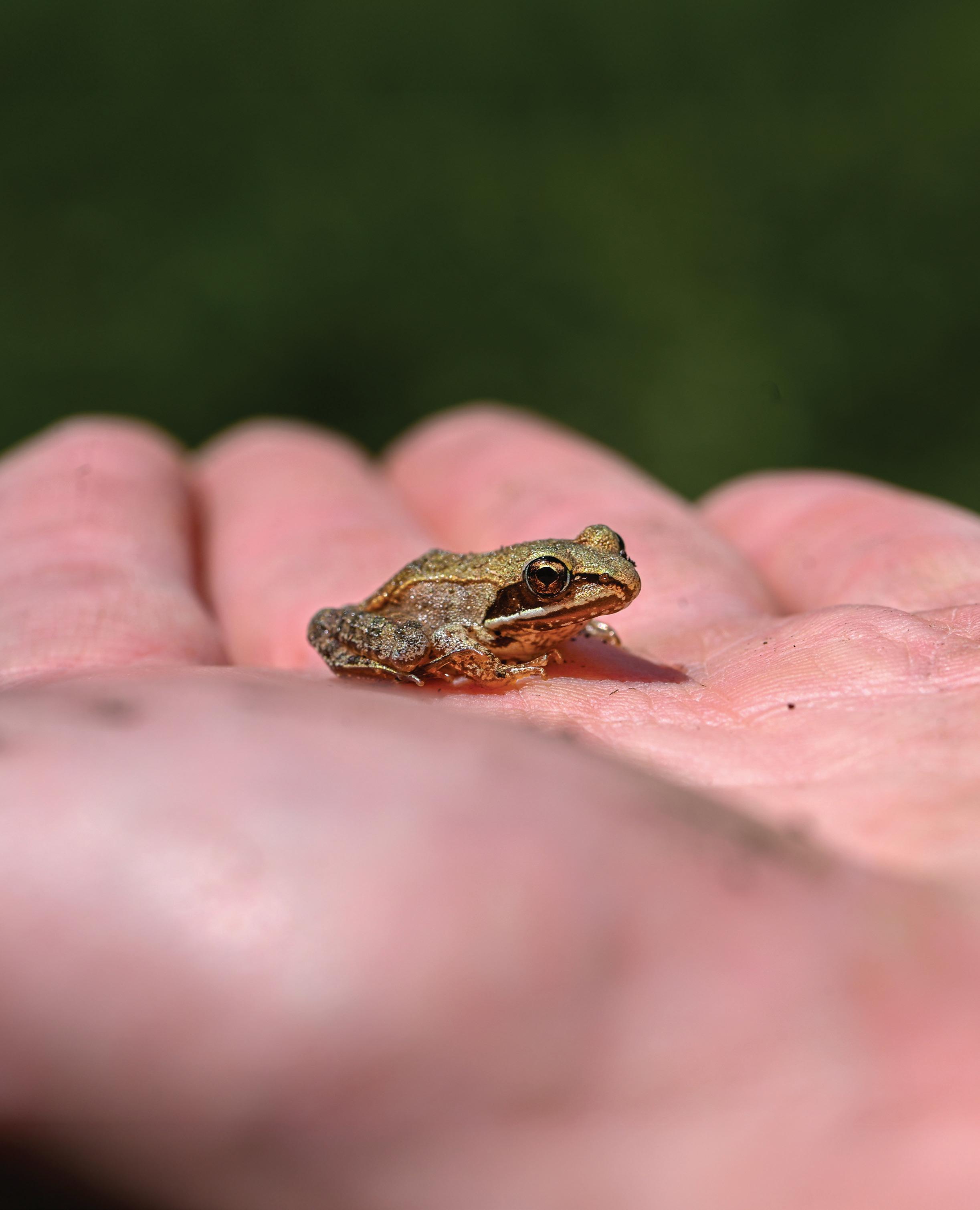
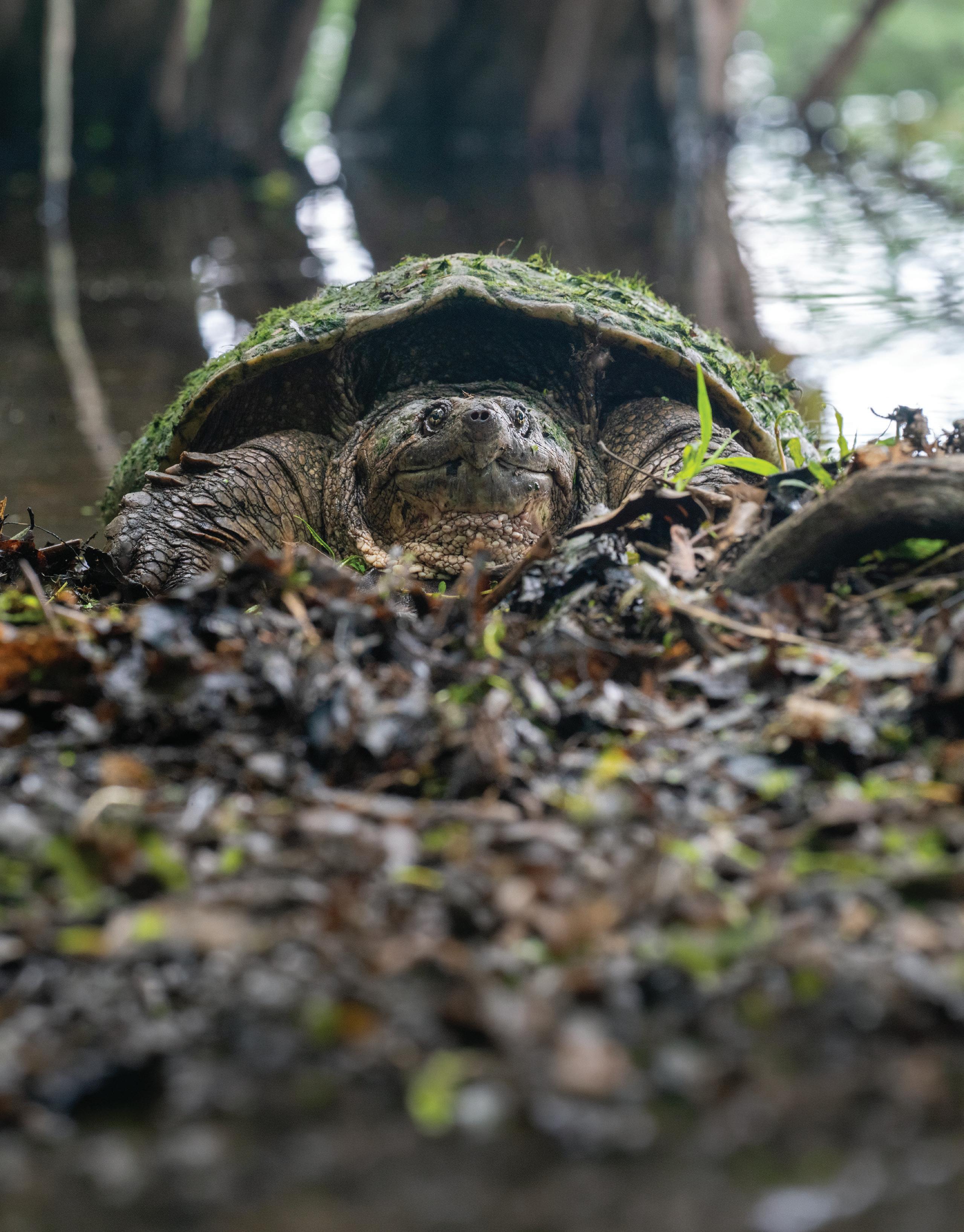
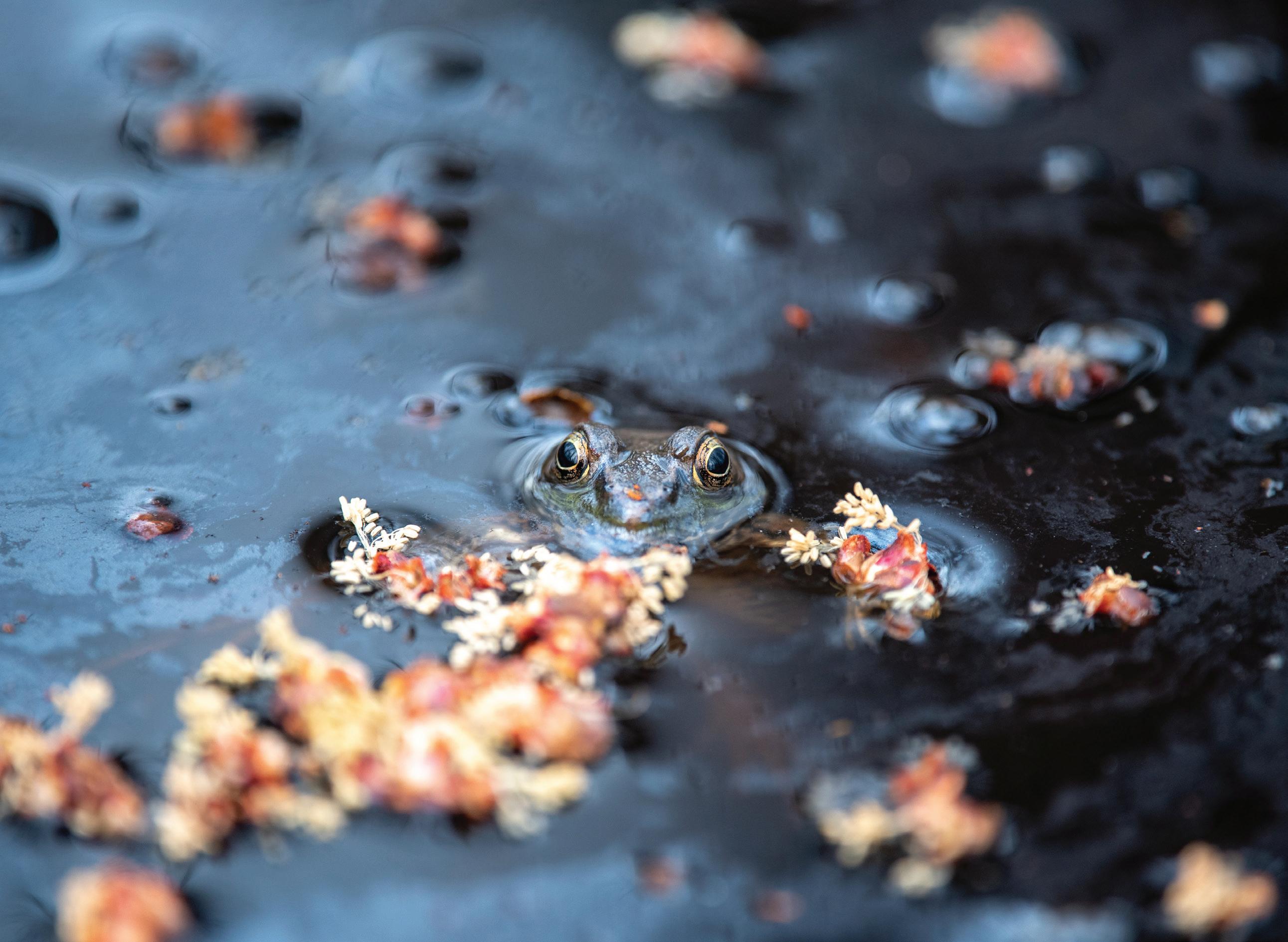
From tiny (like this wee wood frog) to tremendous (like the snapping turtle on page 30), amphibians and reptiles are ancient wonders.
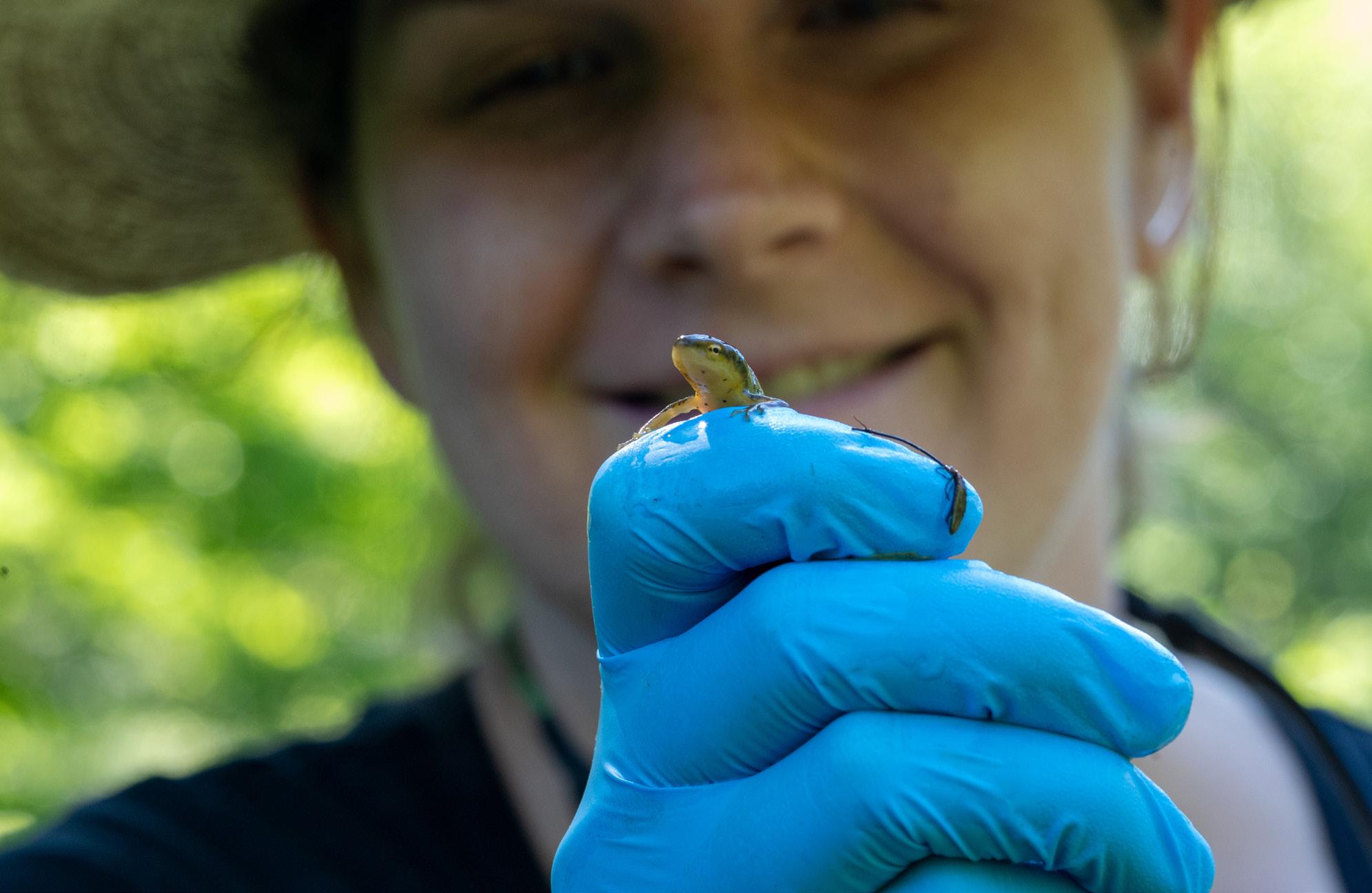
They’re also under threat in Vermont and around the world. UVM researchers, students, and alumni are working to understand and protect these vulnerable creatures.
IT’S NOT EASY BEING
Skin is certainly nature’s most subtle and beguiling invention. Before bending over to kiss a frog, consider that its sparkling surface may be more astonishing than any imagined prince within. Eww? You don’t want to kiss a slimy frog? Well, that’s good because a frog doesn’t want you to kiss it either. Or, at least, many frogs, including the wood frog in this photo, have poison glands all over their skin to fend off predators that might like to kiss—or eat—them.
But falling in love, from a distance, with the skin of frogs, toads, salamanders, snakes, turtles, and other amphibians and reptiles—that wildly inventive, strange, overlooked, and endangered group of creatures, the herpetofauna, that fans call “herps”—can transport you far beneath the surface of everyday life.
When you’re having a bad day, consider that this tiny wood frog will freeze solid all winter—and recover next spring just fine. But it couldn’t do this trick without its nearly magical skin. As the days get cold, ice will start to form outside the frog’s supercooled body where it lies under leaves near a pond in Benson, Vt. Some of these crystals will penetrate the frog’s skin, a required signal that triggers the liver to produce glucose—a potent antifreeze— which the heart pumps into the frog’s organs. While an ice layer forms under the skin and in spaces between cells, the syrupy glucose inside the cells prevents them from splitting open, and the whole frog freezes, hard as a rock. “No breathing, no heartbeat,” says UVM professor Brittany Mosher. It’s a frogsicle until the spring thaw when its heart returns to beating, and its skin begins breathing again.
Story and photographs by Joshua Brown • Video by Bruce Gibbs
Yes, breathing. Wood frogs, like most amphibians, have thin, moist, blood-vessel-rich skin that absorbs oxygen from both air and water. This trick is part of the reason that ancient amphibians were the first vertebrates to move onto land, perhaps 365 million years ago: their skin formed an evolutionary bridge out of the sea and up onto the shore. Not only can the skin of amphibians (and some turtles and sea snakes) breathe, but it’s also a two-way membrane, sending water and chemicals in and out. Glands produce hormones for attracting mates and relaying messages— skin to skin. And their skin houses a jungle of beneficial microorganisms while producing specialized proteins to fight disease-causing ones.
Their wondrous skin is also their downfall. Amphibians are highly sensitive to pollution since oils, pesticides, road salts, and other toxins can pass directly into their bodies. The result in a grievous number of species: malformed limbs, reduced reproduction, and death.
Add in roadkill, climate change, deforestation, development in wetlands, illegal collection—the list of threats to herps is daunting. Forty-one percent of the more than 8,000 amphibian species around the globe face extinction—the greatest decline of any class of animals in human history. And some twenty percent of reptiles are on the brink too—including more than half of all types of turtles. “They’re in trouble worldwide— including Vermont,” says Mosher, a herpetologist
in UVM’s Rubenstein School of Environment and Natural Resources. “It’s easy to think that in Vermont—a place where we have relatively little development, where we’re recovering forest—that these things aren’t happening.”
Wood frogs are plentiful, but of the state’s forty species of herps—nine species of frogs, two toads, ten salamanders, eleven snakes, seven turtles, and one lizard—five are in immediate peril of disappearing from Vermont, and at least eleven others are at risk. Near the top of the list are spotted turtles, Fowler’s toads, and the (very uncommon) common five-lined skink.
For many frogs and salamanders these threats have been turbocharged by a microscopic enemy, two types of chytrid fungi that attach to and invade— you guessed it—their skin. These fungi, spreading around the globe, cause ulcers and skin thickening. This damage leads to depletion of critical minerals, which disrupts the animal’s balance of water and, ultimately, can cause the heart to stop.
UVM people are working to understand amphibians and reptiles and how to protect them. To get a glimpse of these sometimes-warty, sometimeswatery creatures, videographer Bruce Gibbs and I went out into the field with a few of the university’s researchers, students, and alumni who love these ancient animals, who want to help herps. Here are some snapshots of what they do.
“ FORTY‑ONE PERCENT OF THE WORLD’S AMPHIBIANS FACE EXTINCTION— THE GREATEST DECLINE OF ANY CLASS OF ANIMALS IN HUMAN HISTORY.
What’s happening?
This inquisitive-looking eastern newt is safe in the hand of UVM herpetologist Brittany Mosher. The animal will be assessed—and then go back to its pond. But long-term prospects for newts and many other salamanders are bleak. Deadly new fungal diseases threaten hundreds of species in North America. Professor Mosher and her students are looking for ways to protect these quiet creatures. (Read more on page 31.)
W HY D ID THE SALAMANDER C ROSS THE ROAD?
It’s late April, dark and drizzling, and that pleasant earthy smell—which rises from pavement and soil when rain hits after a dry spell—wafts over Monkton Road. “It’s a perfect night,” says wildlife biologist Matt Marcelino ’19 G ’25 (seen above), shining his flashlight along the road edge. Perfect, that is, if you’re a yellowspotted salamander looking to get back home after mating. On the east side of the road, a hardwood forest rises toward Hogback Mountain—this is where these salamanders live in shrew or mouse tunnels most of the year. On the west side, a soggy meadow stretches toward Huizenga Swamp. In the swamp, on warm nights earlier in the spring, male salamanders began a waggling dance, called a liebsspiel, where aroused mates circle each other and place their heads on each other’s tails. Soon thereafter the females laid a jellied mass of eggs in quiet water. Now that it’s raining, they’re trying to get back to the forest. Problem is the road.
In the distance, a hissing pair of lights winds down a hill toward us and Vergennes. “Looks like we have a car coming,” says Marcelino, who is standing in the middle of the pavement, his red Pumas astride a salamander that plods east at 0.06 miles per hour.
“I’ll grab it and we should get out of the road real quick,” he says, as we all scurry to the shoulder.
This salamander has gotten a free ride instead of squished. But, around the world, roads cut through migration corridors for amphibians and reptiles— like this one—allowing vehicles to crush billions of these slow-moving animals. With help from the Vermont Reptile & Amphibian Atlas (see sidebar on page 31), local people had long known that this crossing was one of Vermont’s hottest hotspots for herps. So, in 2006, members of the Monkton Conservation Commission and the Lewis Creek Association went out to watch. What they saw shocked them. “Over just two nights, more than a thousand amphibians were killed on this stretch of road,” says Marcelino.
Oh, SNAPS!
Recently, an even-more-deadly relative of the fungus Batrachochytrium dendrobatidis, Batrachochytrium salamandrivorans—known as Bsal —has been spreading in Europe, killing many salamanders. This new fungus is a major threat to North America, the global hotspot for salamanders. An accidental introduction of Bsal is likely, but early detection could stop or slow its spread. The Student Network for Amphibian Pathogen Surveillance (SNAPS) is on the job. As part of science courses at UVM—and 61 other universities in Canada, the U.S., and Mexico—SNAPS students are testing amphibians in the wild for Bsal. It’s ongoing, costeffective, applied learning for conservation.
Visit go.uvm.edu/snaps or scan this QR code to learn more.
“That’s what inspired this project,” he says, shining his light over the meadow to where a pair of long, three-foot-high concrete walls angle in toward a tunnel under the road. It’s one of two wildlife underpasses built here for salamanders and frogs. It blocks the animals from climbing onto the road and funnels them under instead. The project cost $342,397 and it’s amazingly successful.
For his Ph.D. thesis, working with Professor Brittany Mosher, Marcelino led a first-of-its-kind study showing that these tunnels can reduce amphibian deaths by 80 percent. “It was surprising. I knew
TURTLES A LL THE Way DOWN
This huge snapping turtle lies in the mud of Pelots Bay—an inlet of Lake Champlain on North Hero Island—pondering her role in the universe and what she might enjoy for lunch. The animal must be north of 50 pounds, based on the grunt-work it took from Matt Marcelino to get her out of a research trap. The turtle looks like an island herself, her geological shell—made of modified bones, living skin, and a fingernail-like top layer—rising above the lake, covered with algae, leaves, and tree bark. “She’ll probably watch us for a bit and then turn around and go back into the lake,” Marcelino says. “Look at her eyes, they look so wise and friendly.” Limpid jewels, her eyes do reveal gold-and-black depths, but, okay, neither Marcelino nor I have any idea what she’s thinking—we’re just in a long line of people who burden animals they love with stories, especially turtles. Marcelino wants to make sure that one story people have been telling about turtles is true: sixty years of using large mechanical harvesters—to remove Eurasian milfoil and other non-native plants in the lake—is not hurting turtles. These invasive plants form thick mats, degrading habitat for native species, and wrecking a nice day in a boat. But the machines do scoop up the occasional turtle. While Marcelino explored how the harvesters affected musk and painted turtles—he scooped up some other turtles too, including this snapper. “What we found is that, at least in this study, we don’t really see any negative impact,” he says. “Which is good.” But freshwater turtles are little studied—this was the first research done on the impact of mechanical harvesting on turtle populations in Lake Champlain. Many of their stories remain beneath the surface.
Scan this QR code or visit go.uvm.edu/turtlevid to see turtle research in action.
THIS IS NOT THAT HARD AND IT’S NOT VERY EXPENSIVE.
I HOPE ROAD PLANNERS ACROSS THE COUNTRY SEE THESE RESULTS... THIS IS A COMMUNITY COMING TOGETHER TO SOLVE A CONSERVATION CHALLENGE.
that underpasses would work, but I didn’t think they would be that effective,” he said. And when the scientists took climbing amphibians out of the data—primarily spring peeper frogs that can easily scale the walls— the number jumped to 94 percent.
Building and studying the underpasses was a nearly-two-decade effort by citizens, conservation groups, UVM scientists, and state agencies—led by Monkton resident and retired State of Vermont biologist Steve Parren. With foresight, he and others monitored amphibian mortality here for five years before the construction of the underpasses in 2015 and then for seven years after. This let the scientists prove that tunnels work. One spring, using wildlife cameras, the Lewis Creek Association counted 2,208 amphibians using one of the underpasses. Plus, it turns out that bears, bobcats, porcupines, raccoons, snakes, and birds are happy to use them too.
“This is not that hard and it’s not very expensive. I hope road planners across the country see these results,” Marcelino says. “This is a community coming together to solve a conservation challenge.” Then he bends down in the rain. “If you come over here, you can see another species. It just ran into the wall and is turning. This is a blue-spotted/ Jefferson salamander hybrid,” he says, following it with his light as the animal lumbers over wet stalks of grass. “There are these beautiful creatures that most people don’t even know exist.”
Visit go.uvm.edu/underpassvid or scan this QR to see a video of wildlife crossing work in action.
I N H OT WATER
It’s an exceptionally warm morning in early June, nearing 80 degrees, and UVM professor Brittany Mosher shades her eyes while graduate student Sam Troast (at right) wanders around, hip-deep in hip-waders, in a pond above Sherman Hollow Road in Huntington, Vt. They’re not trying to cool themselves down. They’re trying to catch newts—basking near the surface of the pond— who may be trying to warm themselves up.
“Got one,” says Troast, swiping a net out of the bright and flocculent water and passing it to Mosher on the bank. In a gloved hand, Mosher holds up a gorgeous animal with deep-orange spots along its dark back and cute black polka dots on its yellow
Vermont Reptile and Amphibian Atlas
Seen a snake? Found a frog? Take note of exactly where you are in Vermont, take a photo, and send it in. This compendium contains some 128,000 records of herps, painting an evershifting portrait of what animals live where in Vermont—and it relies on volunteer observers.
Visit go.uvm.edu/amphibatlas or scan this QR code to contribute to the compendium.
belly. If this were a bird, birders would have it as a favorite on their life list. If it were a dog, it would be a Dalmatian puppy (albeit a green and wet puppy) and animal rescue groups would have raised millions to make sure it has a happy home.
Instead, it’s an eastern newt, a type of salamander, found across eastern North America in ponds and lakes in this adult form. As a juvenile, it lives in the forest as a bright orange critter known as a red eft. Common though they are, eastern newts—like many amphibians—may be at risk from new infectious diseases.
When Mosher releases the animal back into the water, it powers away like a tiny alligator, its tail an undulating S. It looks in great health. But this water contains a chytrid fungus called Batrachochytrium dendrobatidis or Bd. In the 1970s, numerous species of amphibians began dying—and nobody knew why. Terrible wipe-outs of frogs in Australia were followed by ones in forests in Central America— and the pandemic kept spreading. It wasn’t until 1998 that Bd was identified, attacking keratin proteins in amphibians’ skin. The fungus probably travelled from eastern Asia, where it is native, but most amphibians have not
Herpetology Club
Nate McPeak ‘28 is from West Virginia, “and there’s not a lot to do there,” he says with a wry smile. “So we would go out, spend hours just, like, in the dark, in the rain, looking for small-mouth salamanders. It’s deeply satisfying.” When he arrived at UVM for his first-year TREK trip, one of his leaders asked, if you could do one activity for the rest of your life, what would it be? “I would go herping,” he said. Now he’s the co-president of the new UVM Herpetology Club—which he cofounded in the fall of 2024—and he has a lot to do.
evolved natural defenses against Bd. It has triggered the extinction of more than 90 species around the world and decimated hundreds more.
“It’s in this pond right now. It’s not necessarily on every newt,” Mosher says. And even if it’s on the newt she just released, Mosher wants to know if the animal may be able to fight off infection by changing its temperature. Since amphibians are cold-blooded, the newt depends on the warmth of the water to control its own body temperature. By lounging in the hot spring sun, it may be creating what Mosher calls a “behavioral fever,” to fight the fungus. Or newts may be clever enough to go down into the sediment at the bottom of the pond where winter chill lingers, since the fungus appears to be sensitive to cold too.
But it’s not clear how changing temperatures—of water, amphibians, fungus, season, climate—all interact to promote, or prevent, disease. Mosher is leading a five-year, $2.6 million research effort, supported by the U.S. National Science Foundation, to find answers. That’s why Sam Troast has been wading into ponds in the region, catching newts and setting up temperature probes.
“ WE’RE TRYING TO UNDERSTAND— AS WE CAPTURE AND SWAB AND ASSESS THE HEALTH STATUS OF THESE NEWTS— IF THEY’RE MAk ING GOOD CHOICES ABOUT WHERE TO GO.
There are 500 students on the club’s email chain, they have an iNaturalist group, “and our Instagram has a thousand followers,” he says. Members go out herping, “whenever it’s not winter,” McPeak says, and anyone is welcome to join. “I never even knew that there was a word for this until I got here,” says co-president Legare Butler ’27, a wildlife biology major and native of South Carolina. Sometimes the trips go with local experts, at night, to “secret places,” Butler says, where they’ve seen some cool critters, like the northern dusky salamander, but mostly the club invites students to “come to Centennial Woods, lift up a rock, see what’s underneath,” she says.
They’ve seen many redbacked salamanders—which live in Vermont forests by the millions. “People say, ‘I want to go to Costa Rica someday so I can see all the animals,’” says McPeak. “They just don’t know that diversity exists everywhere.”
“We’re trying to understand—as we capture and swab and assess the health status of these newts—if they’re making good choices about where to go. Are sick newts moving to ponds or places that allow them to reduce their infection?” Mosher says. “If newts have good instincts when it comes to these pathogens, and behaviors like basking can really make a difference, well, then you might think about habitat management.” For example, clearing branches so that the forest doesn’t shade the entire pond to provide areas for basking, or making sure that connections remain between ponds that have different temperatures.
Visit go.uvm.edu/salamandervid or scan this QR to watch researchers scoop salamanders from a pond.
C HARMING S NA k ES
It’s the first day of August, and Jim Andrews has driven 25 miles from his home in Salisbury down to Benson, Vt., to check in to a hotel. A snake hotel. It’s a crisscrossed pile of sawmill slabs, covered with a black rubber tarp, in a meadow at the edge of a wetland, on the 140acre property of Nancy Elkington and Tracy Howard. It even has a sign: “Snake Hotel.”
Gorgeous and generally misunderstood, ratsnakes like this one are gentle and rare. One of Vermont’s 11 species of snakes, it evolved during the Miocene Epoch, more than 10 million years ago. Jim Andrews ’76 is one of the state’s leading herpetologists and has been counting and caring for snakes and other herps across Vermont for decades. He spotted this snake crossing a road in Benson.
Andrews, an independent herpetologist—UVM Class of 1976—and his assistant, Ira Powsner, roll back the tarp and begin to search under the slabs, layer by layer. Sure enough, on the third floor of the hotel, a large black snake is snoozing. Andrews deftly pulls it out and holds it up in the sunshine. It’s a female ratsnake, known to scientists as Pantherophis alleghaniensis, almost five feet long. She seems to be lethargically interested in climbing Andrews’ forearm, and shoulder, and then arm again, as Andrews gently rolls her forward, hand over hand, like a living bight of rope.
Her thick body has a noticeable bulge in the midsection—“a food item,” Andrews says, perhaps a mouse from Elkington and Howard’s nearby barn, where generations of ratsnakes have found refuge and dinner, leaving their molted skins behind like translucent inside-out socks. This snake may have molted recently, Andrews thinks, her scales iridescent, an almostindustrial bright ebony, with a white-and-black checkerboard on the throat and abdomen.
Andrews and Powsner measure the snake, taking note of its location and health. Later, they’ll enter data about all the snakes they find here (including a hard-to-catch ribbon snake they chased through mud for 20 minutes) in the Vermont Reptile and
Amphibian Atlas (see sidebar on page 31). The atlas was Andrews’ vision long before iNaturalist or iPhones came along. “Back in the nineties,” he says, “we didn’t have the data we needed to make informed recommendations for conservation— for what should be listed as endangered.” Three decades later, more than 7,000 observers have wandered in wetlands, looked under rocks, and peered into vernal pools, contributing their sightings, photos, and care into the atlas.
There aren’t many records of ratsnakes, Vermont’s largest snake species. Not only are these shy creatures, but they’re also rare and threatened— only seen in a few towns in Rutland and Addison counties. Several years ago, Andrews conducted a study to better understand ratsnakes—and Nancy Elkington and Tracy Howard agreed to participate. “The snake that you put the transmitter in? We fell in love with that snake. His name was Anthony,” says Elkington. “Thanks to Jim, we’ve come to terms with the fact that we’re sharing this space with other critters,” she says. “It’s their space, so we’ve learned to love them.”
Visit go.uvm.edu/snakevid or scan this QR to join Jim Andrews looking for snakes.
COMMUNITY RECIPES FOR
COULD COMMUNITY SCHOOLS BE A BLUEPRINT FOR VERMONT?
STORY BY KRISTEN MUNSON
PHOTOS BY ANDY DUBACK
On a frigid December morning in Burlington, Cynthia Herbert steers her SUV onto I-89 and settles in for the nearly 80-mile drive to Newport Center, Vt. It’s a long way to travel for lunch.
But each week, Herbert, a doctoral student in social, emotional, and inclusive education at the University of Vermont, and Nadiya Becoats, a UVM senior community health and wellbeing major, drive to the Newport Town School for its intergenerational meals program. The two UVM students co-facilitate the program alongside school staff and fill in where needed. They ferry salt and pepper shakers from the kitchen, set tables, empty trash bins, and collect data.
“One of the hallmarks of community schools is collaborative leadership where everybody takes ownership and accountability,” explains Herbert. “We come in and do what we need to do and fill in. … Because the last thing I want to do is walk into this community and look like a data miner.”
The intergenerational meals program brings together area elders and elementary students to swap stories about secret fishing holes and video games, for example, over a family-style lunch and group activity. But the program does much more than put food in bellies. Interviews with participants have revealed the meals serve as a critical source of interaction.
“We know that the hugs that we give the elders who are living alone are probably the only hugs they get that week,” Herbert says. “Elders are saying how, ‘back in the Covid times a lot of us died and I think it’s because we didn’t have social contact—that it wasn’t just Covid, it was lack of social connection.’”
Becoats and Herbert decorate tables with tablecloths and candlesticks while Michelle Robert—the school’s kitchen manager—puts final touches on the chicken curry casserole.
“Today is going to be tricky because the kids have never had this before,” she says. “I only put it out today because they are more apt to eat it because the elders are here.”
“We know that the hugs that we give the elders who are living alone are probably the only hugs they get that week”
“The world is going to change, and these kids are going to be the ones that will change it for the better”
Robert strives to introduce healthy foods students may never have encountered before such as kiwi and purple cauliflower. The elders are a key ingredient in her success. They gently nudge children to try new dishes in the communal bowls.
“It’s a lot of fun to watch,” Robert says. “It’s a lot of hard work, but it’s worth it.”
She is part of a team of school staff committed to pulling off the meal each week. Because for them the lunch is so much more than calories in.
“It has brought back memories for me of my grandmother,” Robert says while elders start filtering in the gymnasium. “... This is also a great way for [the kids] to have conversations with people. I wonder what makes them come back. Is it the conversation? Is it the kids? I would love to know.”
For Peter Benson, a senior in the community, the meals are a highlight of his week. He started attending the lunches six months ago. “My quality of life seems to be better,” Benson says during a holidaythemed Bingo game. “I don’t seem to be as depressed. I have more fun with these kids than any friends. They are so smart.”
He scans the room with a smile. “The world is going to change, and these kids are going to be the ones that will change it for the better,” he says.
As if on cue, a second grader to his right notices that Benson missed one of the calls and quietly slides a chip onto his Bingo card. Across the room, a little girl rests her head on the shoulder of Linda Waterman, a retired substitute teacher credited with enlisting most of the seniors in the room.
The benefits of the meal program go both ways. Parents have reported it has improved their children’s speech and language development and helped their kids become leaders in the classroom, Herbert says.
She has witnessed elders provide the active listening kids need, but fastmoving parents can’t always provide.
“They are able to attend to kids,” Herbert explains. “It’s like those little drops in a bucket. You just never know what they’re going to grow.”
A BLUEPRINT FOR THE FUTURE
As meal service winds down data collection begins. Shelly Lanou, the school principal, scrapes uneaten baby carrots, green beans, and chicken curry from plates into a plastic bucket for Becoats to measure.
Preliminary findings suggest food waste is significantly less in the intergenerational meal program than when children eat with their peers, Becoats says. In the control group, social dynamics influence food consumption as students watch as their friends eat— or don’t—a particular item. The slight shake of a head can make a difference.
“They aren’t going to be the one kid that indulges even if they might like it,” Becoats says.
At each luncheon, the researchers collect surveys from the elders to measure satisfaction of the event as well as risk factors for social isolation. Some of the
Nadiya Becoats ‘26 and doctoral student Cynthia Herbert, at the intergenerational meals program at Newport Town School.
best evidence that the program is working may be simpler—the elders keep coming back. The luncheons are expanding to new locations, too. This spring, more schools in the supervisory union will launch intergenerational meal programs using a blueprint UVM researchers and Newport Town School staff compiled.
“So, they don’t have to learn everything the hard way,” explains Lanou. “It’s not scripted because at the end there is fluidity to this. It’s what works in your community and meets your community’s needs, but there are definitely some tenets we have learned that have to be included: The family-style meal is the linchpin.”
Newport Center’s meal program was born, in part, from necessity. Before the pandemic, volunteers ran a weekly meal service for area elders, but it folded during Covid. Shelly Lanou noticed area seniors were becoming more isolated, and students needed more opportunities to develop their social emotional learning skills.
Her solution was lunch. There is a reason the former U.S. Surgeon General called for Americans to break bread together: it’s good for us. Eating in community is good for our health and the fabric of society. Moreover, deepening ties between residents and the school is central to being a community school.
After lunch, the UVM research team folds tablecloths and collects participant surveys. They hug elders before they leave and the space is transformed back into a gymnasium. The meal has become an important ritual in their lives. Becoats and Herbert travel to the Newport Town School year-round to assess the program’s impact. They come after snowstorms. They come during the summer. And people notice when they aren’t there.
“It’s going to be sad to leave this place,” Becoats says. “College is such a bubble with age. I missed that familial feeling of many generations in a room.”
Herbert nods in agreement. “I think everyone needed each other in different ways—even the researchers.”
“A MINDSET SHIFT”
In 2021, Vermont legislators passed Act 67 to pilot and assess the community school model in rural communities. Newport Town School is one of five original sites awarded funding to join UVM’s Catamount Community Schools Collaborative, a partnership of UVM, the state’s Agency of Education, and Vermont public schools. Community schools reimagine the role of school. They are vital connective tissue in a region, bringing together resources and services to improve outcomes for students and the broader community.
But there is no one way to be a community school—just a framework of five pillars outlined in Act 67, including integrated student support, expanded enrichment activities, active family and community engagement, collaborative leadership practices, and safe, equitable, and inclusive learning environments. This allows schools to develop individualized plans according to their needs.
For instance, Newport Center’s meals program was devised to tackle a community challenge, and the Catamount Community Schools Collaborative was awarded a grant from UVM’s Leahy Institute for Rural Partnerships to help overcome it. The funds help cover the cost of meals for the seniors and to implement and refine the program using data.
“Without the partnership could we do meals here?” Lanou asks. “Probably. Could we come up with activities? Probably. But could we have the data that shows the difference this is making in people’s lives? Would I be doing surveys every week? Would we have these amazing quotes from these elders about how they felt invisible in society and they feel belonging here? None of that part would happen without the collaboration, the connection, that commitment from UVM.”
The partnership also prevented them from giving up on the program.
Catamount Community Schools Collaborative in Action
Use a mobile camera to scan the QR codes below or visit the web addresses to see short videos of each of the five community schools projects across northern and central Vermont.
Cabot School
go.uvm.edu/cabotschool
Hazen Union School go.uvm.edu/hazenschool
White River Valley Middle School
go.uvm.edu/wrvschool
Vergennes Union Elementary School
go.uvm.edu/vergennesunion
North Country Supervisory Union
go.uvm.edu/northcountryunion
“There were moments where it was overwhelming,” Lanou admits. “You learn as you go. And things get more efficient. They get more effective. But in the middle, there’s a lot of disruption.”
But it was worth the initial stress when staff saw what everyone gained at the lunches.
“It’s just about the mindset shift,” Lanou says. “… On a day-to-day basis we are responsible for each other and not just to survive but to thrive.”
AN OLD/NEW WAY OF DOING SCHOOL
Some scholars trace the idea of community schools back to the philosopher and educator John Dewey, who believed that schools were a cornerstone of society and a hub for community. But modern community schools typically exist in urban areas where there are more services to lean on. That’s why Vermont’s experiment with rural schools is unique. And it requires thinking differently about what partnership looks like.
“Children who aren’t fed, supported, engaged, or feel safe can’t learn,” says Bernice Garnett, UVM’s Adam and Abigail Burack Green and Gold Associate Professor of Education and the principal investigator studying Act 67’s implementation. “But often that requires partnerships, expertise, and resources that might be beyond the folks in the school walls or in the school’s budget.”
Community schools expand the circle of help.
Garnett points to Newport Center’s intergenerational meals program as an example of the university-assisted community school model in action, where universities serve as long-term partners, offering financial support, human capital, and expertise, she explains.
It’s a model she knows well. Garnett experienced it as an undergraduate at the University of Pennsylvania’s Netter Center for Community Partnerships, where it was pioneered. The Catamount Community Schools Collaborative aligns with the university-assisted model, and UVM scholars are heavily involved in the national network of community schools, Garnett explains.
In Vermont, each community school has a different approach for addressing local needs. For instance, some offer space on their campuses for schoolbased health centers that provide medical care for students, staff, and their families. Other schools broaden their definition of a community partner.
In Cabot, Vt., middle school students were trained to provide afterschool care for younger kids alongside an adult volunteer, Garnett says. “The term community partner may be your neighbor who knows how to track prints in the snow, who doesn’t have an LLC, or a building, or a fancy website, but is a partner because he’s coming to school to provide services and content.”
The community school in Vergennes is open almost every day of the year to the community because the building also serves as its recreation center. This type of expanded use may give residents a greater stake in the future of community schools.
ARE COMMUNITY SCHOOLS WORKING?
For the past four years, Garnett and Peter Knox, an assistant research professor at UVM, have assessed the state’s community school model, interviewing administrators and compiling evidence. But measuring the impact involves data—and time.
Garnett explains that this type of change typically requires at least five years to produce socially significant outcomes, such as increased attendance and graduation rates, higher academic achievements, and decreased mental health referrals.
But state funding for the pilot only lasted three years, before receiving a one-year extension. In 2024, Garnett was awarded a $300,000 grant from the Leahy Institute for Rural Partnerships to continue data collection and to fund internships for UVM students in community schools. That funding, along with another infusion from the state, and a three-year Congressionally Directed Spending grant secured by Senator Bernie Sanders, enabled the project to expand into more communities in 2025.
“People want pretty quick results,” says Knox. “They want to know are math scores going up or what do the [English language arts] scores look like?”
But shifting school climates and building
a culture of engagement requires patience. Still, the early evidence is encouraging: chronic absence in community schools is falling, the networks of organizations partnering with schools are growing, teacher turnover rates are declining, and several districts have invested in permanent community school coordinator positions.
“We have a lot of preliminary evidence that lends itself to us thinking this model is working,” Knox says. “But really we’re going to understand the true impact of this five, six, ten years down the road when we can start talking to students who have gone through a community school or went through a community school district.”
Knox believes most Vermont schools are already operating like a community school—they just lack the formal framework for streamlining resources and engaging partners. Because relationships are the heart of community schools.
“In almost every way you can think of Vermont is uniquely positioned to have this be the way our state does school,” he says. “And we I think have the ability to be. We’re small enough and nimble enough that we can make it happen here.”
Vermont’s small size is its strength.
BUILDING COMMUNITY RESILIENCE
Jason Di Giulio, the principal of Hazen Union School in Hardwick, walks the halls greeting students by name before ducking inside shop class where students are busy working in teams. But things at Hazen weren’t always this calm.
“On a day-today basis we are responsible for each other and not just to survive but to thrive.”
Di Giulio recalls the chaotic years of Covid. There was a lot of yelling, he says. Parents yelled about people wearing or
not wearing masks, and students got into physical altercations with each other. Bullying increased. At Hazen, there was a lot that was broken and needed fixing.
“There was a lot of fear, and I think it manifested as behavior and attendance and anxiety,” Di Giulio explains. “That first year or two, it was … just nonstop action. Interceding. Providing intervention. Providing space. Dealing with behavior. Dealing with tears.”
Several teachers left and replacing them proved difficult. Rebuilding after Covid required thinking differently. Teachers and administrators had to reckon with the fact that some students come to school not ready to learn because of factors like homelessness, food insecurity, fear of bullying, or challenges at home.
“And very few of those [factors] the school has any control over at all,” Di Giulio says. “… I am under no illusion that we can fix homelessness, but we are burdened by it. Our families experience it.”
But what we can do is leverage our connections and space to bring people to the table who can help in that situation, he continues. “That is what community schooling is all about.”
A big part of shifting to a community school model began with changing his own mind. As a teacher, Di Giulio didn’t think it was his job to deal with external factors affecting students. Covid forced him to change.
“We saw what happens when school shuts down,” he says. “People don’t eat. They don’t have access to mental health. And their social-emotional and academic needs aren’t being met. We saw that. That is the reality. So, the stoic in me says I have to embrace reality. And the stoic in me also says that I have to understand that I don’t have the skills nor the resources to deal with that level of problem.”
That’s where community partners can alleviate some of the burden. Hazen joined the community school pilot project in 2021 and began mapping the community’s assets to identify gaps
and create programming to close them. Hazen administrators also devised a set of behavioral expectations for students, staff, and community members so that everybody feels welcome inside.
“There is a cost to entry,” Di Giulio says. “… It means is we don’t scream at each other. We don’t swear at each other. We don’t push each other.’”
In recent years, the school created a bike tech maintenance program, launched its most popular course—Recipe for Human Connection—with Vermont’s Center for an Agricultural Economy and began collaborating with local trail networks. After flooding destroyed Hardwick’s community gardens, they were replanted on school grounds. The school now hosts the town’s farmers market over the winter and opened a school-based healthcare clinic so that students could receive care on site. This is a community school in action.
“I believe Hardwick is more flood resilient because of community schools,” Di Giulio says. “But that is a belief I can’t prove. I think our relationships are tighter.”
STRENGTHENING RELATIONSHIPS
There are benefits he can prove. Like the significant decrease in chronic absenteeism, particularly among ninth graders, where absences have been reduced by half.
“What we tried to do was look at individual relationships with kids,” says Di Giulio, adding that a student is more likely to return if someone they trust reaches out.
The school also hired a part-time driver to pick up kids who need a ride. The goal was to remove barriers—psychological and physical—that prevent students from coming to school. Di Giulio credits the cumulative power of these efforts for making a difference.
There are also positive changes for Hazen faculty and staff. Teacher turnover at Hazen is virtually nonexistent.
Vaiva Velzis Hazen Community Schools Coordinator
Jason Di Giulio Hazen Union School Principal
“I haven’t lost anyone because they don’t feel supported,” Di Giulio says.
WORTH THE INVESTMENT
That support filters down to students, too. One morning in February, Vaiva Velzis, Hazen’s community schools coordinator, opens the door to the new wellness space. The room is bright and filled with art supplies, a miniature sand garden, and a desk where an adult is present in case a student needs to talk.
“We have a lot of tools for regulation here,” says Velzis, who uses they/them pronouns. “This isn’t a place to elope to skip class.”
The students needed a space to develop the skills to self-regulate—skills you need to thrive in life, not just school. “Grit culture” is often celebrated in rural communities, Velzis notes, which is a beautiful thing when it comes to self-reliance and resilience, “but we have to recognize that resilience is often asking for help.”
Velzis tracks their work for a UVM research project using an app designed to calculate the return on investment for the position. It may justify spending for these positions and may spur other schools to consider taking on a person whose job is to connect resources for students and the community.
“It has been helpful to have that receipt,” Velzis explains, “… even though there is a lot that can’t be measured.”
Velzis came to Hazen after working with homeless youth in New Mexico. It was a road to burnout, watching systems not be able to respond to people in crisis. Velzis wondered about the levers you can pull that can make a difference. They realized an important one was school.
“It is where kids are learning how to be humans,” Velzis explains. “I think we need to be thinking about schools as investment in the next 50 to 60 years of our society.”
Students spot Velzis in the hallway and offer them freshly baked doughnuts
from the school’s Recipe for Human Connection course, a partnership between Hazen staff and the Center for an Agricultural Economy created to connect people through food.
“It wasn’t clear whether it was just a pandemic-era class,” says Reeve Basom, the center’s place-based educator and one of the co-creators of the course.
But student excitement for the course is why it remains a staple in the school. “They do love sharing what they make with people in the school,” Basom says.
And beyond. The course regularly creates meals for the community lunch and bakes pies for local fundraisers. Recently, after learning of a local family going through a hard time, they pivoted to preparing them a pasta dinner with fresh baked bread, salad, and a tiered cake. The class changes to become what the students and the community need it to be.
One thing the students say they love most about the course is how it helps them talk with people in the community, Basom explains. “The food is just the conduit for connection.”
“This is where kids are learning how to be humans. I think we need to be thinking about schools as investment in the next 50 to 60 years of our society.”
REAL
IMPACT
THESE UVM STUDENTS ARE TAKING ACTION AND LEAVING A MARK ON THEIR COMMUNITY
For two years in a row, the Princeton Review has named UVM the No. 1 “Best School for Making an Impact.” We’re incredibly proud of this ranking, which is based on student responses to a survey about community service opportunities, student government, sustainability efforts, and on-campus student engagement.
There are lots of reasons
UVM is a great place to make an impact. For one, “Students are afforded trust and agency in their projects,” said Kalman Slater ’26. “When a student has an idea and they want to take something on, I’ve found that educators and staff are ready to support them. Rather than trying to control a project, they want to just give students as many resources as possible.”
Our campus is bustling with students working hard to make their mark. Here is a look at just a few of them.
AVERY REDFERN
Avery Redfern has used her unique artistic perspective to engage others in sustainability work since arriving at UVM from southern Arkansas in 2022.
Last summer she worked as a Lake Keeper intern for the Conservation Law Foundation on Lake Champlain. Every week Redfern ’26 kayaked out to Law Island to monitor cyanobacteria conditions—and followed up with creative public outreach projects.
She used writing, art, and photography to educate folks at farmers markets, festivals, and other events about the state of the lake, which she pointed out often affects the state of the community. “When the lake is in a poorer state, the community can feel it,” she said.
Redfern, who is majoring in environmental science and French, spent a previous summer growing organic produce at the Vermont Youth Conservation Corps’ farm, which feeds food-insecure Vermonters whose doctors prescribe them a “healthcare share.”
“I really love Vermont,” said Redfern. “I wanted to get out there and help the people who we know are struggling here.”
Through it all she has worked for the student-run Headwaters Magazine publishes art and writing on environmental issues. She’s currently the managing designer. “Headwaters gave me a really great outlet to voice my frustrations with what’s happening in the environment and in the world, which has been really rewarding.” Last spring she received the Rubenstein School Inclusive Excellence Award for her work highlighting marginalized voices in the magazine.
“UVM fosters really great relationships with the community around it,” she said. “UVM kind of tees up these opportunities so we don’t have to do a lot of work to find them.”
THE COUNSELOR
JOSEPH FIORENTINO
Before coming to UVM for grad school, Joseph Fiorentino spent a decade battling wildfires out west as part of an elite federal Hotshot Crew. He jumped out of helicopters, worked 16-hour days, and insisted that everything was fine.
But he wasn’t fine. After a debilitating health crisis, Fiorentino sought mental health support for the first time, and the effects were profound. When his health improved, he quit firefighting and resolved to become a therapist himself. He wanted to help young men who resisted talking about their feelings.
That’s exactly what he’s doing at UVM. Fiorentino is part of the Catamount Counseling Collective for Rural Schools (CCCRS), a mental health internship program focused on Vermont’s rural schoolchildren. When the program’s funding was abruptly cut last spring, Fiorentino was one of 10 students in the inaugural cohort who made the remarkable decision to continue the work in their placement schools anyway.
Since then, the grant’s principal investigator, Anna Elliott, has worked tirelessly to secure funding from private donors so the CCCRS can guarantee the interns’ stipend through the end of this academic year. This has allowed Fiorentino to work at Hazen Union High School in the Northeast Kingdom.
“The stigma our society has toward mental health is a big thing,” said Fiorentino. “I think that’s exacerbated in rural areas where there’s a strong emphasis on self-reliance.”
Fiorentino experienced that culture of stoicism firsthand as a young man working on a sheep farm in rural Connecticut. Real men don’t ask for help, he was taught. “I was a man who did not believe in any kind of mental health treatment,” he recalled. “When I finally did see someone, it was because my physical health started tanking.”
“If you ever told me a man like me could lose a battle with stress...” Fiorentino laughed in disbelief. “Probably for the first time in my adult life, I cried.”
At Hazen Union High School he’s seizing the opportunity to acclimate boys and young men to the notion that it’s OK, normal even, to need help. Some of the students resist, Fiorentino said, as he once did. “They express resistance in our sessions, but at the same time, they’re being vulnerable,” he said. “I point it out.”
Fiorentino believes his presence in the school makes a difference. “Day by day I’m a stable man in their life and I’m showing up three days a week for them to talk to. I’m not judging them, not telling them how to behave. I’m trying to reach them where they’re at.”
THE MENTOR
ANDREA FALAR
Starting college isn’t easy. Especially if you’re the first person in your family to go. Andrea Falar ’26 wants to make the transition a little easier for others. As a peer mentor in the Rubenstein School of Environment and Natural Resources (RSENR), Falar offers support and advice to first-year students.
His doctor had made a surprisingly simple diagnosis: stress.
“Freshman year is so difficult,” she said. “It’s a scary transition.” It helps to know you’re not alone, so Falar shares what it was like for her when she arrived in Vermont from Union, N.J., as a first-generation Filipino American. “I level with them, and their eyes light up a little bit,” she said.
Falar, a sustainability, ecology, and policy major, is also an eco-rep program lead, facilitating weekly workshops on everything from environmental justice to social and marketing skills. “I’m not only helping my peers table on important sustainability issues, I’m helping shape new leaders in society,” she said.
Falar has achieved a lot in her time at UVM, but her proudest accomplishment is in the RSENR Student Advisory Board, where she helped pilot the first coalition tasked with ensuring all students are heard, supported, and included. The Common Ground Committee was enshrined last fall.
“Everyone here is driven and passionate and wants to see each other succeed. That’s what sets us apart. We see a cooperative aspect to success,” said Falar. “I have so many peers here who want to make their mark. UVM gives you the tools for that.”
THE EARLY EDUCATOR
MOLLY CLARK
Molly Clark always wanted to be a teacher—even though school wasn’t always easy for her. Clark is dyslexic, and in her early years there were many teachers she didn’t “mesh well with,” she said. But in high school Clark met Casey Painter, a special educator at her school in St. Albans, Vt., who “kind of changed everything for me.”
Painter encouraged Clark, now a firstyear special education major at UVM, to pursue her wildest dreams. “I had so many other teachers who, you know, told you to just kind of play it safe,” she said. Painter made Clark feel like she could do anything she set her mind to. “I would love to do that for other kids,” Clark said.
Apparently, she’s already doing it. Clark has been teaching at an after-school program in Milton since she was just 16. Last fall she was named the Vermont Afterschool Rising Star of the Year, “for her exceptional maturity, unparalleled dedication to inclusion, and profound ability to connect with and support children and families.”
She loves the families, and she loves the work. “It gets stressful sometimes,” she said about juggling her coursework with her job at the family center. “But then you’ll have a kid come up to you and be like, ‘Oh, Miss Molly, this is a picture I drew for you!’ And you’re like, you know what? That just made my day. That put everything into perspective.”
THE AMBASSADOR
SABELLA IBINYOPAKAKA
Sabella Ibinyopakaka ’26 is making life a little easier for international students—and building an appreciation of Japanese culture at UVM. As an International Ambassador Intern, she guides prospective students from around the world through their journey to UVM.
Her passion for cultural exchange comes from personal experience. Ibinyopakaka isn’t an international student herself, but she grew up in a multicultural home in San Diego. Her mother is Japanese and her dad has African heritage. “I grew up with a lot of different types of perspectives and cultures,” she said, noting that her family was always moving because her dad was in the Navy. Ibinyopakaka spoke Japanese before she spoke English.
Before UVM, she often struggled to fit in, she said. Now she sees this experience as a strength. She can use her experience feeling like an outsider to help others.
That’s what she’s done in the admissions office, where she talks to prospective students about what life is like on campus and helps them with application logistics. Ibinyopakaka is also the president of the Japanese Language and Culture Club, which has tripled in size since she first joined. And she’s the director of operations for the UVM Program Board, where she helps to organize major campus events.
Ibinyopakaka wants to continue working in higher ed student administration after she graduates. She said that for her, it’s all about “creating spaces for people who really just need a welcoming and supportive environment.”
ANDY DUBACK
“ THE EMERGENCY RESPONDER
KALMAN SLATER
Starting next fall, every RA at UVM will be trained and equipped to respond to emergencies in their residence halls—thanks in part to the work of Kalman Slater ’26.
Slater, a public health major from outside Chicago, is also an EMT with Waterbury Rescue in Vermont. Last semester, he took on a new kind of challenge.
Through an internship with UVM’s Department of Emergency Management, he conducted an in-depth review of emergency response procedures for Housing and Dining staff. His analysis was informed by his dual perspective as both an RA and an EMT—and by a question he and other RAs had struggled with: In an emergency, what exactly are RAs supposed to do?
“Sometimes RAs heard that if they were comfortable, they could help,” he said. “Sometimes they heard they shouldn’t because it would be a liability.”
Slater’s report examined UVM policies, the legal landscape, and best practices at other universities. He found that Vermont law requires people to provide reasonable life-saving aid to those “exposed to grave physical harm,” and federal law protects people who use AEDs or provide CPR in good faith. Yet at UVM, RAs weren’t required to receive emergency response training, and most residence halls didn’t have CAT ECare stations—campus sites stocked with AEDs, bleed-control kits, and Narcan.
Slater teamed up with fellow students Cassie Rubin and Lauren Bush, who were working on a related Public Health Capstone project. Together with the Department of Emergency Management and CAT ECare, they presented their findings to UVM Housing and Dining Services.
The result? All residential staff will now be required to complete emergency response training, and new CAT ECare stations will be installed in every residence hall.
It’s a huge step forward for safety in res halls,” Slater says. “And if you think about it, there are about 160 RAs on campus. That’s 160 students who now have emergency training—who are in classes, going on trips, hanging out with friends—and prepared to act.”
Slater believes student voices made the difference. “There had been administrative back and forth on this for years,” he says. “This semester, there was a perfect storm of students working on the issue from different angles, and it really convinced people that it mattered.”
THE TRAFFIC CALMER
ALIA LIEBOWITZ
Before Alia Liebowitz ’27 got her hands on it, the Vermont city of Essex Junction’s traffic-calming policy was only one page long and sorely outdated.
As part of a Communities of Practice internship, Liebowitz spent two semesters reworking it. She attended city meetings at night and interviewed area residents, engineers, and municipal planners around Vermont for additional insight. “The whole community got involved,” she recalled. Together they created a deeply researched 30-page document detailing the city’s road safety goals— and the tools it could use to achieve them.
At the end of the school year, Liebowitz and her
another internship, with the Afghan Alliance, where she addressed issues of transportation and belonging among refugee communities.
With a triple major in geography, global studies, and Japanese, plus a minor in geo-spatial technologies, Liebowitz is hoping to pursue a career as an urban planner. And she’s hungry for insight into other cultures and urban settings, which is why she already spent a semester in Tokyo and spent this spring semester in Copenhagen.
For Liebowitz, it’s all about building community. That’s what drew her to UVM in the first place. “UVM is so community oriented. I’ve been able to branch out and interact with the local Vermont community. And it’s 100 percent why I came to UVM. I was looking at similar schools, similar programs, but when I got to the UVM campus, I felt at home. People felt connected. There was a real sense of community and togetherness.”
THE COMMUNICATOR
NAYR GARCIA
Nayr Garcia was a sophomore when she said to her advisor, “I need to do something! I got to get out there in the world.”
Her advisor encouraged her to apply for UVM’s Semester for Impact program.
A political science major, Garcia ’27 knew she wanted to pursue something related to immigration. It was 2024 and the issue felt urgent—and personal. Garcia’s family immigrated from the Dominican Republic when she was a child.
She also asked them what they worried about; how they got to work and medical appointments; whether they felt safe at work and in the community; how they communicated with their children’s school; whether they needed a translator; and how the farm owners were treating them.
At its South Burlington office, the program had 700 children’s books, which Garcia organized and catalogued—by language and age range—so they could be sent off to the farms for migrant workers’ children. Her system made it possible to quickly identify which books should be delivered to which children.
But the most meaningful part for Garcia was talking to older children about her own immigration experience, and about navigating the college admissions process with parents who don’t speak English. “I’ve been there,” she told them. “I know what that’s like.”
After her internship ended, Garcia decided to continue to keep in touch as an ambassador to the program.
“If you want to make an impact, there are so many opportunities here, and I think that’s so valuable,” she said.
“Every professor is doing some hands-on work, or has some interesting connection, and they are always just so happy to hear that someone wants to make an impact that they’re going to do everything in their power to help you do it.”
She was thrilled to be placed in an internship with the Vermont Migrant Education Program, where she used her fluency in Spanish to work 30 hours a week, primarily interviewing farm workers about whether the program was meeting their needs.
ANDY DUBACK; ALIA LIEBOWITZ (BOTTOM LEFT)
46
Peggy Miller Logan “has returned home to Burlington, having passed in September 2025,” writes daughter Heather Logan ‘75. She adds, “After 100 years of an amazing life, Peggy left us in grace and style. Please remember her with a gift to The Cynic.”
51
Elizabeth Simms McMahon is still living in her house in Mt. Pleasant, S.C. and celebrated her 97th birthday with a trip to Iceland with her daughters.
54
Charles Norman Perkins II sent greetings while on the road in California, saying that he and Jann PP’89 continue to travel extensively, so much so that they have been called Road Warriors. Their winter message arrived while they traveled to the National Finals Rodeo in Las Vegas and then up the California coast to Seattle. From there they were planning to fly to Juneau, Alaska, to celebrate Christmas with son Chuck III (Charles Perkins III, ’86). They were looking forward to many stops to see and visit with family and friends. Their family includes many UVM alumni: in addition to Chuck III is daughter Peggy Perkins Rieley ’89; granddaughter Bella Rieley ’24; Chuck’s father, Dr. Charles N. Perkins, and his sister, Estaleen Perkins Fenn ’39. Charles and Jann are looking forward to celebrating their 70th wedding anniversary this coming Aug. 18. Chuck adds, “I am now 93 years old and my bride is only 88. We have had great lives together, and we continue to attend many of the athletic and social activities at the University of Vermont. I continue to be involved with Theta Chi Fraternity, of which I was a member during my college years. Jann and I will keep traveling and having fun as long as we are able to do so. The university is still a great part of our present and a great part of my past.”
Class Secretary Jane Battles sends greetings from her winter residence in the Florida Keys, where she reports meeting a lovely family whose twin daughters were both interested in UVM! She hears regularly from the TriDelt sorority group that she helped start some 20 years ago, with alumnae from across the U.S.—and
LIFE BEYOND GRADUATION
she loves that their Kappa and Theta counterparts are hosting reunions, too. She says it’s like being back on fraternity row or a freshman in college! Babette Cameron is still in Stonington in Deer Isle, Maine, enjoying tennis, bridge and her volunteer job. She’s hoping classmates will come visit to catch up. She’s missing her dear roommate, Joanie Wislocki McKenzie, who passed away last summer and was an amazing oil painter, well-known in the art world. Frank Maccini and family gathered in Stowe for the July 2025 wedding of granddaughter Shelly Just ’14 See the wonderful group picture with Frank, along with Carol Maccini Saul ‘80, Elisabeth Maccini Millard ‘79, Merry Johnson Maccini ‘78, David Maccini ‘78, M.D. ‘82 , Shelly Just Steinle ‘14, and parents of the bride, Lisa Maccini Just ’84 and Robert Just ‘82
Send your news to –Ms. Jane Morrison Battles janebattles@yahoo.com or Mr. Hal Lee Greenfader halisco7@gmail.com
56
57
Send your news to –Ms. Jane K. Stickney stickneyjane@gmail.com
Doug and Janice Burke celebrated 90th birthdays in 2025. They report that they are in relatively good health, and enjoying their 11th year at Cypress of Hilton Head, S.C., a 100-acre CCRC, where they enjoy dinner in the dining room nearly every night. They are happy to be able to join their children and grandchildren at Birch Island, Maine, on Little Sebago Lake for two weeks each July, a place they’ve enjoyed for 35 years, and even the sometime-location of Grammy’s Tennis Camp for five of their grandchildren. All three sons (Jon ’80, Stu ’85 and Greg), are avid skiers who are now retired. Margaret Rotanelli Daronco says she’s doing very well: living in wonderful assisted living in Scarsdale, N.Y., playing bridge, knitting for local families and welcoming new residents. She is blessed with seven grandchildren and seven great-grandchildren that she sees often in person or on Facebook: “Life is good!”
58
Alan Young graduated in mechanical engineering and shares memories and details from a good life. He and his wife go on a four-mile bike ride every day, and the couple just attended a family reunion. Looking back, he shares that he married at 21, and then was a single father to Karin (now 41). The father-daughter pair found themselves touring Europe and studying German, which is when he met his current wife, Ursula, and “had four more kids, plus three, which equals seven. And we have 19 grandchildren.” He says his wife won’t let him get old!
60
Larry Brown passed away in December 2025. Raised in Springfield, Vt. , at UVM he was a Delta Psi brother and also met the love of his life, Gail Kaufmann, with whom he shared a loving 65-year marriage. Howard J. Busloff passed away in New York City in October 2025, and those so inclined are invited to make contributions to the Howard J. Busloff Scholarship Fund at UVM. Michael Freedman wrote as he and Iris Steinert Freedman ‘62 were preparing for a February 2026 move to the Orchard Cove independent living facility in Canton, Mass. They will be near one of their daughters and five of their six grandsons, and say they are both well and hope to continue to travel around the world, albeit at a slower pace. Jane Hunter Perry has moved to a retirement community in Macon, Georgia. She doesn’t miss the cold weather though observes that you can take the Yankee out of Vermont but can’t take Vermont out of the Yankee! She is active in her library, championing Banned Books displays. She shares the sad news that her husband, Bob Perry ‘61, builder of a sailboat, 5 kayaks, a wherry, and a Chris Craft runabout, died after a prolonged illness. Joyce Zipf Harrington has moved to Portland, Ore., to be near her two daughters. She likes the place, is enjoying swimming, and would enjoy hearing from classmates.
61
Class Secretary Steve Berry writes that he and wife Louise PP’95 traveled to Deer Valley, Utah, for a niece’s wedding in September. “Having strayed that far from home in Lexington, Mass., we rented a car and visited Zion National Park, the South Rim of the Grand Canyon,
and Sedona, Ariz., for some exploring and hiking. By early January, record snows in Stowe, Vt., have enabled me to ski 14 days toward my annual goal of at least 50 days. It looks like it will be a great season.” Penny Fienemann Cox offered, “Not much news…other than I’m able to personally respond that I’m still around and in good health. My daughter bought a house in Ayer, Mass., which has an apartment upstairs, where I’m living. Still driving and keeping my studio at The Brush Art Gallery in Lowell, Mass.” Edward Freedman wrote with news of a solo photography show at Temple Beth Shalom in Green Valley, Ariz., titled “It’s Wild Out There.” See a link to examples of his work with online Class Notes. The year 2025 was interesting and varied for Jamie Jacobs and Jean (Pillsbury ‘62). Jamie writes,“We went fly-fishing in Montana and Argentina during their respective summers. In early June, we retraced our honeymoon of 60 years ago, to Montreal and the Maine coast. August found us on safari in Zimbabwe, while in October we were visiting Hungary, Croatia, Serbia, Bulgaria and Romania via the eastern Danube. We feel truly blessed and hope all our classmates, each in their own way, are as well.” Jan Mashman reports, “All is well. We loved the birth of our first great granddaughter yesterday. We will be moving from the Charleston area to the St. Louis area in the spring to be closer to family.” Jim McCarthy emailed: “The McCarthys are still in Durango, Colo., but have moved into the valley (7,600 feet down to 6,500 feet), and a single-story home on a golf course. Paula and I are still raising our son, Ian, who is attending Colorado University Boulder. I talk with UVMers, Jim Viele ‘62 and Dick Aldinger ’62 often. We received the sad news that George Reservitz , former Chief of Urology at Mount Auburn Hospital, Director of Barron Center for Men’s Health in Cambridge, and former urology consultant at MIT, died in January 2025. Betsey Sessions emailed to let us know that Bessie (Jackson) Sessions passed away on December 13, 2025. She was an alumna of UVM’s Home Economics Education program. Kay (Mingolla) Frances Wardrope writes, “I have been living in Hollywood, Fla., since retirement. Old age has begun robbing me of what little common sense I once had and thus now I’ve moved to Washington, D.C., to be near my son and his family. I’d love to hear from anyone.”
Send your news to –
Mr. Stephen L. Berry steveberrydhs@gmail.com
62
Concerned about AI and the future of work, Jules Older wrote about it in Vermont Business Magazine. (See a link to the article with online Class Notes.)
Send your news to –
Mrs. Patricia Hoskiewicz Allen traileka@aol.com
63
Class Secretary Toni Mullins wrote in with gorgeous pictures of herself with family, dancing, and in the Pilates studio.
“Here are my daughters Kelly and Karen with me as we hiked one spring-like day while at Brecken -
Deep Connections: Frances
Kidder Stiles ’55
By Kevin Morgenstein Fuerst and Lisa Wartenberg Velez
Frances Kidder Stiles ’55 grew up just a block from UVM’s Redstone campus.
Before the University of Vermont became Fran’s college, it was her home. Fran spent her summers playing hide and seek with childhood friends in the backyards that bordered university buildings.
“We were sometimes hiding by fraternity houses and other places,” she recalls. “We grew up part of the campus.”
The connection ran deeper than geography. Her father, George V. Kidder, of the Class of 1922—a UVM alumnus, professor, and longtime dean—dedicated nearly his entire adult life to the university. Her mother, Betsy Kimball Kidder ’23, was also a UVM graduate who remained closely tied to the community. Together, they shaped not only their daughter’s college choice, but also her sense of place and belonging.
“We lived it,” Fran says simply.
Fran’s ties to UVM span in every direction. Her grandfather, Ben Kidder, was a charter member of the Kappa Sigma fraternity. Her sisters and several members of her extended family also attended UVM. But it was her father’s enduring role that defined the family’s decades long relationship with the university.
George Kidder’s UVM story began as a student and extended through years as a faculty member and dean. Even into his 90s, he maintained a desk in Waterman, informally supporting university leadership
and serving on accreditation committees.
“All the rest of his life, from student to the end, was at UVM,” Fran says.
George and Betsy met on campus and, as Fran tells it, her father helped her mother get through Greek class. “She gives him credit,” Fran says with a smile. A later plaque in the university’s all night study room would honor them both—a quiet symbol of their lasting presence.
The Kidders’ Summit Street home was close enough to Redstone to hear marching drills during World War II. “I think the troops kind of occupied Redstone campus,” Fran says. “We didn’t really understand it, but we were aware.”
She remembers Saturday morning programs at the Fleming Museum, milk sold from the dairy building, and UVM ice cream served in sundae dishes.
The Waterman building housed both a cafeteria and a bowling alley—then an option for physical education.
After her father became dean, the family moved to a larger home on South Willard Street to accommodate Fran’s grandmother and three great aunts. “That house was also used to entertain faculty,” she remembers, through “coffee and sandwich parties.”
Back then, rules for women students were still strict. “We weren’t allowed to wear pants—only if the temperature was below 10 degrees,” she recalls. “And freshmen had a curfew. My sister had to be in her room by nine o’clock.”
Decades after graduating, Fran remains deeply connected to the university. She attends Kidder Scholarship luncheons and meets scholarship students, who receive support from a fund created in her family’s honor. “We loved meeting the scholars,” she says. She also gets to know faculty honored with the George V. Kidder Outstanding Faculty Award. “I feel that my dad has been honored,” she says.
Even as societal shifts transformed the university and the world around it, Fran has stayed engaged and reflective.
“When you’re 90 years old, there’s been a lot of adjustments,” she says. “If you’re open to them, you grow.”
ridge this December. Skiing was limited yet loads of fun. And another of my dance partner, Emmanuel, his other student, Rose, with me as “queen” at the Kings Ballroom Dance Competition in December 2025.”
Renate Reimerdes Tilson ‘60 shared the sad news that her brother Max Reimerdes passed away in December 2024. A true New Yorker with a creative spirit and a kind heart, Max became a chef after a career as a creative director in advertising. While at UVM he was an active member of Sigma Nu fraternity.
Send your news to –Dr. Toni Citarella Mullins tonicmullins@verizon.net
64
Class Secretary Susan Griesenback Barber wrote in January: “It’s a new year and, if you are reading my greetings, we are lucky to start another one! We had a family trip to Corvara, Italy, over Christmas. Great weather. We do not ski anymore, but the town is lovely and it is very festive to walk around and enjoy the beauty of the village nestled in the Dolomites. We were lucky to get together with Susan Weatherby Engbrecht and her husband, Ron, who live just north of Corvara and joined us for two days. Lots of catching up and reminiscing of former days when we all skied with our kids over the Christmas break at this same resort—the Marmalade Hotel with the ski lifts one can walk to. Hoping your year has been going well so far. Do send me news if you wish.” Harold Frost III, M.S.’69, Ph.D.’74 sent greetings to the UVM community, expressed appreciation for UVM Magazine, and news of an exciting interchange with Nobel Prize winner Victor R. Ambrus, who congratulated Dr. Frost on a widely-disseminated 2022 white paper describing a plausible scenario for connecting research to diagnosis.
Send your news to –Mrs. Susan Griesenbeck Barber suebarbersue@gmail.com
65
Lynn Coscina wrote to share the sad news that her ever-wonderful dad Donald V. Coscina, Ph.D., passed away on Oct. 10, 2025 just one day shy of his 82nd birthday. He had been battling dementia, COPD, and Non-Hodgkin’s Lymphoma. “Dad never lost his sense of humor, nor his ability to remember science, despite what he was battling. He passed away peacefully surrounded by loved ones. After graduating UVM in 1965 with his Bachelor of Science degree, he graduated Bucknell in 1967 with his Master of Science degree, and Ph.D. in Neuropsychology from the University of Chicago in 1970.” Regina Robicheau Ralson and husband Walter are enjoying life on Cape Cod after a 40-year recess in Arizona. They have come full circle and purchased a home owned by her grandparents in the 1930s.
66
Dennis “Den” Linnehan took the time to talk with us as he was preparing for the June 2026 publication of his ninth photography book. See the article about his time at UVM, his photography, and his family on the UVM Foundation’s website. Bill Newman ‘65 wrote in with the sad news of wife Janice Newman’s passing in December 2025.
Send your news to –Mrs. Kathleen Nunan McGuckin kathynmcguckin@gmail.com
67
Rose Levy Beranbaum let us know that her memoir “Ma Vie en Rose” (The Sweet Life) is due to be published in fall of 2026, and that UVM is, of course, mentioned! David Alan Zarling (who received his UVM B.A. with honors, a M.A. in Molecular Biology from Dartmouth College, and a Ph.D. in Biochemical Virology from Baylor Medical School) wrote, as he was planning to be in attendance at JP Morgan Healthcare Conference in San Francisco in January 2026. Ray Weinstein and Gail Stein Weinstein ‘70, journeyed to Felsberg, Germany, accompanied by their children Alan’96 and Philip, and their grandchildren Davis and Hazel to receive the Willy Brandt Medal, a posthumous recognition of Ray’s grandfather, Robert Weinstein. The medal was presented by Dr. Philipp Rottwilm, a member of the German Bundestag. It is awarded to those who embody the fundamental values of freedom, justice and solidarity. Dr. Rottwilm addressed persecution faced by the Weinstein family. Their textile business was boycotted, their home was searched, and by 1935 the family was forced to sell their property. On November 8,1938, the day before Kristallnacht, Robert Weinstein and his family were violently driven from their home, He was mercilessly beaten, collapsed, and died. He was 55 years old. Ray reports that the ceremony was well attended by the Felsberg community and surrounding towns. The Weinstein family was warmly welcomed. The citizenry commented that it was wonderful to have three generations of Robert Weinstein’s family at the ceremony. Ray and Gail hope that their grandchildren will always remember their great-great-Grandfather and keep remembrance alive - especially today in a time when hateful voices are once again louder and divisions deeper.
Send your news to –Ms. Jane Kleinberg Carroll jane.carroll@cox.net
68
Class Secretary Diane Duley Glew sent in a message over the winter wishing everyone a year filled with happiness, laughter, and love from the Class of 1968. She adds, “It’s been said that no news is good news! May all be good for one and all.” Mardi Ann Crane-Godreau is “Still enjoying life, writing on Substack and have a new YouTube channel sharing current and earlier adventures. Substack focuses on healthy aging and recovery from long COVID. YouTube focus on adventure travel... Still having fun and hoping that others are too.” Pat (Hall) Hunt passed away from Lewy Body Dementia in December 2025. She was loved and cared for until the end by her husband of 20 years Russ VerNooy. She is also survived by children Zack Blake and Jesse Blake Foley and four grandchildren.
Send your news to –Ms. Diane Duley Glew ddglew@gmail.com
OR SUBMIT YOUR OWN AT go.uvm.edu/submitnote
69
Dr. Ed Barnard and wife Elna Rawson ’71 enjoyed an Alaskan cruise in August 2025, hosted by Bill and Gloria Gaither and the award-winning Christian Gaither Vocal Band. They declare that the music was superb and scenery was spectacular. In December, the couple travelled to England to share the Christmas holidays with their daughter, Irish son-in-law, and two British grandsons, and added to their previous London experiences with a visit to the British Museum. Ed recently connected with Paul Woodard and Don Pouliot and would enjoy hearing from other 1969 UVM Forestry graduates, and says he might just look up classmates in Florida or the Southeast. Jim Betts M.D.’73 writes: “Classmates, as I write this the winter holidays have just passed with historic rainfall in the Bay Area. Hopefully when you read this, spring will be here on the West Coast with mild temperatures, blooming flowers, and clear skies. In September, I had the opportunity to meet with President Marlene Tromp, our dynamic leader now at the helm of UVM. She brings an energy and enthusiasm which has brought everyone together at a time when higher education faces many challenges. There is so much happening on campus, as I felt the excitement of the students, faculty and staff. If you have not recently returned home to our alma mater, I hope that in 2026 it will be in your travel plans. I remain in full-time pediatric surgical practice at UCSF Children’s Hospital Oakland, and continue as a firefighter with the Big Sur Fire Department on the weekends as well as serving as a tactical physician with a law enforcement agency. (Keeps me occupied.) There are needs in all UVM colleges and departments for gifting, as only a modest amount of financial support comes from our State, perhaps the lowest received by any land grant University in the country. I urge everyone to embrace a program, department or professor. Or, perhaps even fund a scholarship in the name of a family member. Liz, my wife, who is a pediatric anesthesiologist and not a UVM graduate, has adopted our University as her own. I hope that our undergraduate Class of ‘69, or M.D. Class of ‘73 paths will cross again in 2026. Stay well.” Helen Smith published “Divorcing Again?” in August 2025. It’s a self-help divorce recovery book based on the breakup of over 500 remarriages, among the first on the topic. She says, “Prior to this study, almost nothing was known about multiple splits or the experience of the first-timer leaving a second-timer.”
Send your news to –Ms. Mary Joan Moninger-Elia maryeliawh@gmail.com
70
Karen Nystrom Meyer is tagging alligators for conservancy research while spending winters in the South Carolina Low Country. She says it’s important to keep busy and keep learning! See online Class Notes. Ken O’Connor ’s wife Joan wrote with the sad news of his passing in October 2025. For Jean O’Donnell, her biggest achievement as a teacher was teaching the Holocaust, which she had learned about from studying with Professor Harry Kahn. She offers yearly presentations at the Greater Lowell German Club, using YouTube to encourage members to listen to stories, radio plays and poems. Richard Ph.D. ‘75 and Lorraine Parent Racusen ’70, M.D. ’75 are enjoying retirement and their fond memories of UVM. They divide their time between homes in Maryland and Vermont, and visiting their sons on the West Coast. Darren ‘11 has a thriving business and family in Petaluma, Calif. Eldest son Chris and his wife are rocket engineers in Seattle, with Richard and Elaine’s two lovely granddaughters.
Send your news to –Mr. Douglas McDonald Arnold darnold@arnold-co.com
71
Class Secretary Sarah Sprayregen writes, “In October, I had the good fortune of bumping into Jim Lampman ’72 at Lake Champlain Chocolates (where else?). He was hosting Jim Wellington ’72 , whom I remember because we’re both from Long Island, and I called him on occasion with my UVM alumni work. I was shopping for ingredients for my partner’s and sonin-law’s birthdays coming up—which we try to celebrate together each year. I had the recipe, but Jim helped me get the ingredients, which included a taste test. It was fun to meet up with two former hockey players and reminisce about our UVM days. Besides, I came away with great ingredients and a new recipe for chocolate cake! I also heard from Milo Shelly with a holiday message. His kids and grandchildren are thriving, and Kaylin, who graduated from UVM’s College of Nursing and Health Sciences, is heading back to California to pursue a doctorate in nurse anesthesiology. Milo plans on skiing in Vermont in the new year—hopefully we can catch up then. Bill Allard has been in touch with his new comedy show, “King of the World.” He sent me the link and it’s all Bill Allard/Duck Spots routine. So he’s clearly writing and enjoying the world of comedy, albeit with a current-affairs lens. (Searching for his name and ‘Duck Spots’ should let you find him online.) Liz Mead Foster and I had lunch after the holidays—she was about to head to Florida after enjoying being home in Vermont. It was great to catch up. With 2025 behind us, thankfully, Richard and I will be heading to Spain and France in March. We’ll do another self-guided walking tour (Sierra de Aracena), stay in Seville for a week (a recommendation from Wendy Reilly Jenkins ’74!), and then to France to see Richard’s son and granddaughter.” Sharp-eyed 1976 Class Secretary Pete Beekman ’76 spotted that St. Lawrence University named Wally Johnson to their 2026 Athletics Hall of Fame roster. A 2013 CoSIDA Hall of Fame inductee,
he is the only professional to win the organization’s three major honors and was a longtime member of the ECAC-SIDA board. Jonathan Gryckiewicz wrote to share more details of the life of his dad, Jules F. Gryckiewicz G’71, Ph.D., who passed away in February 2025. After his years of studies and teaching, he went on to receive a doctorate from the University of Connecticut. He worked for many years in public schools in Putnam, Conn., as an administrator and guidance counselor. He was also an accomplished pianist who especially enjoyed performing the works of Chopin, a photographer, a hiker, and lifelong student of philosophy, theology, history, and chess. Hank Smith writes: “Sadly, my lifelong buddy Vic Derks passed away in November 2025. RIP. Miss you, my friend!”
Send your news to –Ms. Sarah Wilbur Sprayregen sarahsprayvt@gmail.com
72
At the request of the last colleagues with whom he worked at the federal government, Richard Carl Nelson has written a set of true stories about his highly improbable but true life that took him from a farm in Vermont to UVM, to a career in counterintelligence, on to the White House, and finally to another career peak before retiring early because his wife needed him around more. The book, called “On A Different Path,” is free on Apple Books.
Send your news to –Mrs. Debra Koslow Stern debbie2907@gmail.com
73
Michael Shane Elmore fondly remembers his undergraduate years at UVM, studying philosophy, a major that he
really enjoyed, including his wonderful professors. He later went on for degrees in education and engineering, and spent many years working in industry before retiring in 2022 from a professorship at Binghamton University. Barry Skidelsky was in Burlington in early December to help long-time friends Jeremy Bond ‘72 , Nancy Kirby Bond and family and friends, help celebrate the 50th anniversary of their downtown Burlington business, Champlain Leather. Among the celebrants was Nancy and Jeremy’s granddaughter, Nora—a seventh-generation Vermonter. During his brief visit, Barry (who graduated from Vermont Law School in 1980 and currently is in private practice in New York City focused on entertainment and media) had a serendipitous meeting over-the-air with a fellow ham radio operator and VLS alum Zach Manganello in Shelburne, suggesting that there may be less than six degrees of separation between any of us. Barry welcomes contact from anyone in the UVM and/or VLS communities.
Send your news to –Ms. Deborah Layne Mesce dmesce@icloud.com 74
Christopher Aldrich Brown writes that he’s still at Worcester Polytechnic Institute, where he is still using what he learned working with UVM the ski injury research group to develop a horizontally-split shoe sole that could reduce ACL injuries in field and court sports without diminishing performance. Three Catamount Couples got together in September: Charles Guyette and Nancy Valerio, Bill and Sherry (Handy) Moore, and Ed and Shelley (Handy) Cymerys. All three couples are celebrating both their year of graduation and 50th wedding anniversary! They discovered
THE POWER OF UVM CONNECT
Connect
– Adam Levy ’98 Chair, UVM Alumni Association Career Committee
Students journey from curiosity to capability through job shadows, internships, and wisdom from our dynamic alumni network.
UVM Connect serves as a bridge to the professional world –explore profiles, understand career trajectories, and connect with Catamounts who can provide career perspective and guidance.
20,000 members strong!
Helping Others Chart Their Course: Rick
1964 as a first generation university student, he experienced a massive cultural change from small town Vermont. He says honestly, “I was overwhelmed at first. The jump from high school to college knocks many people off the rails and almost got me. It took me two to three years to sort myself out.”
Howard ’68
By Kevin Morgenstein Fuerst and Cheryl Carmi
Shock notwithstanding, Rick possessed an innate competitive drive that pushed him forward, despite the challenges. And UVM track coach Archie Post instilled discipline and gave Rick structure.
But even before coming to campus, it was the Wilbur Fund that made it possible for him to enroll at the University of Vermont. That scholarship helped him cover tuition. Even more, it changed the course of his life.
“Without the Wilbur Fund I would have been unable to attend UVM, and probably no college at all,” Rick said recently by email.
“As it was, my UVM education started me on the road that led to a Ph.D. in chemistry, and that massively changed my life.”
Rick grew up in Vermont and was the first in his family to go to college. Finances were tight. He had offers from other schools, but UVM was the only path that made sense financially, with the Wilbur Fund scholarship bridging the gaps.
While navigating a new and somewhat bewildering environment on campus, he ran track and cross country, picked up work study jobs, and found mentors in classrooms where chemistry and math came alive.
straight from the confidence and momentum that UVM made possible. After UVM, Rick earned a doctorate in chemistry and built a career shaped by the habits he formed on the track and in the lab.
He also built a family culture that expects learning to continue. “I was the first in my family to attend college, and it broke a cycle,” he says. “The children of college graduates generally seek higher education, and their children, too. That first step is the hardest, and rewards generations to come.”
Rick appreciates the history that shaped his own opportunity to come to UVM.
The Wilbur Fund began with a $1.5 million bequest from James B. Wilbur (at left in photo above) in 1929. A massive sum of money at the time, it has grown to a $27 million endowment today and provides more than a million dollars in scholarship support to students each year. That means thousands of graduates have been given the opportunity to succeed because of a small act of kindness nearly 100 years ago.
This knowledge informs Rick’s philanthropy today. He created the W.F. (Rick) Howard Scholarship to support students from Vermont who participate in the Track & Field and Cross Country programs.
He remembers the lift he felt as a student athlete who needed help to stay enrolled and stay focused. “I wanted to give athletes the nudge that keeps them moving forward,” he says. It’s one generous and consistent signal to students that the Catamount community believes in them.
Scan this QR code with a mobile device or visit go.uvm.edu/rickhoward to read Rick’s full story.
that, upon graduation, Charles, Nancy, and Sherry filled the three open jobs for French teachers in Vermont. They also stopped by the card room in the state capitol building to see the painting of Charlie’s that hangs there. Paul Kenny writes from winter early in the year, “It’s 2026 and it’s dumping snow on Sun Valley Ski Resort in Idaho. We’re already pushing 100 inches of snow as we open the new year. The skiing is as good as it gets. I’m aiming at another 100 ski days on the mountain to earn another 100-day pin.”
Send your news to –Mrs. Emily Schnaper Manders esmanders@gmail.com
Class Secretary Dina Child wrote as she was looking forward to seeing “a lot of you at our 50th ‘Cluster Reunion’ with the Class of ’76, the first weekend in June. It looks to be fun-filled with activities that should appeal to most. It’s a great time to reconnect with old friends.” Susan Frazier Blum has got her train ticket for the 1975 reunion and is hoping to see fellow PT classmates. She says she’s still practicing, 50 years out. See westphillywellness.com to learn more about her practice. Paula Cope wrote as she was looking forward to seeing everyone at the upcoming 50th reunion, and shares that she has “been unsuccessfully retired from consulting, but still very active volunteering and keeping up with our growing family. I’ve been working with Stacey Lazarus to do an oral history project of UVM Rescue which may launch this spring. Stay tuned!” Carolyn Gorham Guest obtained her Vermont teaching license in June after graduation in 1975. After teaching all those years, she chose not to renew it this year and instead is doing more with her family, her paper cutting art (see beautiful examples of it with online Class Notes), and volunteering at the Lyndon Historical Society’s Shores Museum. Joe Luffred and wife, Heidi, relocated in 2024 from Avon, Ohio, to Dallas, Ga., a suburb of Atlanta. Joe retired after forty years with Energizer Battery in 2015, and from his “secondary employment” as operations director with Nippon Paint Automotive in 2021.. Now he has a fun part-time job where he is a club fitter at Golf Galaxy and plays golf up to four times per week at Bentwater Golf Club in Acworth, Ga.
Send your news to –Mrs. Christine Dwyer Child dinachild@aol.com
Class Secretary Peter Beekman wrote while looking forward to seeing classmates in Burlington for the joint ‘75’76 50th reunion in June. He especially notes the volunteers who made hundreds of phone calls to classmates encouraging them to return for a great weekend. Jerry Daly, Bob Cleverdon, and Don Smith worked to get former soccer players and coaches from the ‘75-’76 era together at the class dinner during reunion weekend. K. Rogers Simmons reached out to get fellow ROTC classmates to the celebration and, at the time of writing, had reached Glenn Monrad, Tom Shanahan, and Alan Moloff and heard of their life adventures in
the last 50 years. All served their nation with distinction and are enjoying their retirement. Annalee Ash, retired from careers in design and hospitality, is continuing to pursue her passion for painting serene landscapes—mountains, meadows, sea, and skies of the places she visits and her adopted home state of North Carolina. This is the sixth year she is the community liaison with the Plein Air Art Festival in New Bern, N.C., featuring 37 internationally renowned artists. Excited for her 50th reunion, she is donating her award-winning photo, “CowWash,” to the UVM Dairy Barn and CALS. She is following the careers of alumni who have gone on to become Vermont veterinarians, as well as alums who are Ayrshire cow breeders. She noted that her world got even smaller when she learned that the father and the grandfather of classmate D. Scott Gibson were the breeders who brought the first Ayrshire cows to the USA from Ayer, Scotland. Annalee was especially looking forward to seeing former friends from Patterson Hall, Redstone Campus, Harris-Millis and Morrill Hall at the reunion. Mark Auriemma writes with excitement about the coming 50th reunion: “A bunch of 1976 & 1975 alumni will be getting together in Burlington this June to celebrate our 50th. A group including Jon Parker, Tim Fenton, Gary Faigen, Steve Bradley, Jan Carlee, Bruce Peel ‘75, Chuck Tauck , Stewart Yaguda ‘77, Chris Aumock ‘75, Ted Pickering ‘77, Dan Wilcox , Dave Demers ‘77, and Tim Donahue ‘77 will be renting a hotel on Willard St., so if you see 14 old guys rambling around the North End looking for Tut’s, say hello!” Averill Hamilton Cook says all is good with him and invites alumni to stop by and see him. In mid-December Jan D’Angelo and fiancée, Gypsy, celebrated the holiday season at the 16th
annual Coogan Christmas Party at their beautiful home in Manakin-Sabot, Va. Glenn Fay has published a fourth book on Vermont history, “The Tempestuous Life of Levi Allen: His Poetry and Autobiography.” Levi was a brother of Ethan and Ira, a Green Mountain Boy, and a British loyalist. David Iannone wrote while looking forward to seeing fellow former UVM football players at the June 2026 50th reunion. Andrea Mastrocinque-Martone writes: “Every year for the past 25 years, eight spirited women from UVM class of ’76 have descended upon Stowe Mountain Lodge like it’s their private reunion headquarters. Long before the plush robes and mountain views, these lifelong Catamounts rented cozy homes around town—armed with crockpots, college photos, and stories that (thankfully) never made it to social media. This annual getaway has become an art form. There’s laughter that echoes louder than ski boots clomping through the lobby, debates over who’s aged “least,” and frequent toasts to UVM glory days (and to the fact that everyone still remembers them). Days are spent exploring Stowe’s shops and trails; nights are reserved for reminiscing over Proctor Hall pranks and disco-era fashion missteps.Though the hairstyles and ski techniques may have evolved since ’76, the friendship hasn’t budged an inch. These women have raised families, built careers, and conquered life’s moguls— but every year, Stowe brings them right back to where it all began: together, unstoppable, and laughing a little too loudly at breakfast. And as for UVM’s 50th in June, the plan is simple: a different mountain view (Burlington), different hotel (Marriott Downtown Burlington), same eight women, even louder laughter—and maybe, finally, figuring out how to take a group selfie where everyone’s eyes are
The Penn Club of New York, located in the heart of midtown Manhattan, is an exclusive private club for alumni, students, parents, family members and business associates of the University of Pennsylvania and our select affiliate schools and organizations. The clubhouse offers members a wide range of facilities and services to enhance their visits to New York City. The Penn Club is a true “home away from home” for all of our members. MEMBERSHIP IS RICH WITH BENEFITS, SOME OF WHICH INCLUDE:
• Two complimentary all-you-can-eat and drink parties each year!
• Socialize and network at our monthly programs and events
• 39 well-appointed guest rooms at discounted rates for members
• Business Center with complimentary wi-fi
• 150+ reciprocal clubs in the United States and around the world
• Full access to fitness center
open.” Claudia Velletri retired in the summer of 2024 after 32 years of teaching and private tutoring. Her husband, Steve, retired in 2020 after 32 years at Mattel, Inc. as a display specialist and coordinator for the Hot Wheels brand. The couple still resides in Southern California.
Send your news to –Mr. Peter Andrew Beekman pbeekman19@gmail.com
Pat Boera sends greetings to UVM alumni, especially members of the class of ‘77! She continues to support Champlain College students and alumni in all-things-career in her role as co-director of the Career Collaborative. You’ll also find her enthusiastically volunteering with Lyric Theatre Company (presenting Disney’s “Frozen” in April at The Flynn) and the Middlebury Summer Festival on-the-Green. Rhonda Bowers ’80 shared the sad news that her sister Debbie Williams Pringle passed away unexpectedly in September 2025. Debbie is survived by husband, Paul, and children Ryan Pringle and Amanda Pringle. Abby Mandel wrote to make sure the Catamount community is aware that physical therapy grad Nicholas San Martino died in Apr. 2025. He was a physical therapist for most of his life, ran 26 Boston Marathons, and is survived and missed by a large and loving family and group of friends. Colleen Morey writes, “Twenty years after graduating from UVM’s School of Education at UVM in 1977, I had the opportunity to visit an orphanage in the foothills of the Andes Mountains in Bogotá, Colombia. What began as a quest for an outreach project became a visit that would not only change my own life, but the lives of my students and countless others—from Colombia to the U.S., and throughout the global community. Hogares Luz y Vida—the Home of Light and Life—is a haven for children with disabilities who have been orphaned or abandoned by parents who simply could not provide...or understand. The residents in this orphanage, challenged with birth and developmental anomalies, are part of a steadily growing family of over 215 children and adults who do not consider their challenges as limitations. All of this is a credit to Sister Valeriana Garcia Martin—the founder, originally from Spain—who in 1991 converted a dirt floor garage into a safe, welcoming, and medicinal home, using discarded car and truck tires for cribs. Now, at nearly 85 years of age, she has devoted 35 years to growing and nurturing this home, based on Biblical principles, where both children and staff give and receive empathy, affection, dignity, respect, honor, kindness, love...family. When I stepped foot over the threshold of this humble home in 1997, my life was forever changed. Meeting children who saw themselves through the lens of capability as opposed to disability was beyond inspiring—for me and for my students. The initial intention of establishing and cultivating a relationship between these children and my 60 students went viral, as each of the 15 schools in our community became involved in various capacities through service based learning projects. At the time, I traveled to Bogotá two to three times each year, accom -
panied by friends and family, students and teachers, and interested others. A few years later, a dear dormitory friend from my freshman year, Linda (Holleran) Johnson, asked to join me on one of my visits. And that’s when things really began to take off! Linda involved her own family and friends, and with them came an abundance of devoted involvement, immeasurable enthusiasm, and gracious generosity. In 2009, we founded the Light and Life Foundation. We focused on educational and medical supplies, as well as personal items—clothing, shoes, bedding, etc. But, as the orphanage grew, so did the need for additional facilities and programs such as a sewing center, independent living program and daycare centers for families of need in the neighboring barrio. Since its inception, the Light and Life Foundation has helped to: construct and equip a school; assist in providing staffing salaries for both the school and residence; purchase a farm, refurbish an on-site respiratory center; furnish a physical therapy center; construct both a Champions Club autism center and a solar-lit Fitness and Sports Therapy center; and assist in funding the day-to-day needs of the children living in Hogares Luz y Vida.” Sally Miller Wales ’78 writes, “The family and friends of Jamie (Litner) Rubin are grieving the Sept. 17 loss of her bright light, when Jamie died very suddenly from a brain aneurysm. Just the week before, Jamie and UVM roommates Sally, Deb (Norris) Eddington, Molly McClaskey and spent four wonderful days hosted by Jamie and her husband at their home on Cape Cod. She leaves a loving extended family, including her six grandsons. Robert Martin Waxman’s big news is he is now in three bands. The latest one is Nott The Hoople (a Mott The Hoople tribute band, of course). “We are doing a 12-day tour of England, including London and Liverpool, in October,” he writes. He will be getting a new socket for his prosthetic, made mostly of fabric which will afford him complete freedom of movement. He is still playing tennis and teaching adults part-time.
79
Dr Thomas Ferlito is proud to announce that his son has purchased his orthodontic practice in his hometown of Haverhill, Mass. He will work alongside his son three days per week, as he loves his profession and is excited about the opportunity to work together in the practice. William Carl Miller is enjoying our beautiful Green Mountain state, and appreciating how lucky he is for UVM friends and associates. He’s still a contractor for barn restoration and lake homes.
Send your news to –Mrs. Beth Nutter Gamache bethgamache@burlingtontelecom.net
80
Robert Monniere read with great interest the Class Note highlighting his former Martin’s Food coworkers and UVM classmates (Butch Antell, Bob Reese, etc.) getting together for a recent event onboard a tugboat. He notes, “Everyone enjoys an outing on a tugboat, especially here in Maine.” Rob Nussbaum writes, “It’s been 45 years since graduating from UVM. I’m recently retired from the motion picture industry in New York, where I worked as a director
alumni.uvm.edu/notes
of photography and a gaffer. Currently, I run a premier antique Harley-Davidson restoration business in New Jersey called Retrocycle. I got a lot of my training from my time in Vermont working at a local shop while attending UVM. I just might be the only one to sort of graduate with a degree in Harley-Davidson due to my time at UVM! My wife and I recently sold our home and are looking to downsize somewhere here in N.J.”
Send your news to –Mrs. Kristen Yonker Hazen Hazenkristin@gmail.com
81
Kathleen “Kitty” Jesseman Davis shared the sad news that her sister Merrillee Jesseman Blair died in November 2025, from complications of liver disease. After graduating with an associate degree in medical technology, Merrillee began working at what was then the St. Johnsbury Hospital. She was passionate about the role laboratory science played in medicine and saving lives. She also took pride in her ability to put people at ease when it came time to draw their labs, especially those with “difficult” veins. Due to her declining health, only months before her passing, Merrillee reluctantly took short term leave, with hopes of returning, from her position at UVM Health’s Central Vermont Medical Center.
82
Alicia Good, Peggy Bolton Crisman, Julie Jones, and Bonnie Oulette Niles traveled to visit Nancy Battey in Colorado for a wonderful mountain visit! “Since losing our dear friend Joyce Bates, we are gathering every year to celebrate our friendship started at UVM.” Debra Fay and Jean Cherouny ’91 ran into each other in Aruba and got to see Jean’s art on display in Gallery ArtisA in San Nicholas. Debra was visiting the island with her husband and figured that such a special surprise meeting with another UVMer on the trip was just meant to be. Jean is a vibrant abstract painter who uses rollerblades to add movement and color to her creations. Ralph Hackett sends best wishes and warmest regards from Colombia. Elizabeth Gavornik Karns got her master’s in education from UVM many years ago. She reminisces: “I was a hospital nurse but decided to diversify my learning. I took a course from Betty Boller and, though I don’t remember its specific name, I do know it was one of the best things I ever did. We learned to trace problems to their beginnings and to think outside the box. I went on to become a director of nursing, among other positions in my career, and it was invaluable. Well done, UVM!”
MAIL YOUR CLASS NOTES: UVM Alumni Association
61 Summit Street, Burlington, VT 05401
SUBMIT YOUR CLASS NOTES: alumni.uvm.edu/notes or class.notes@uvm.edu
Send your news to –John Peter Scambos pteron@verizon.net
83
After 31 years in Philadelphia, Elise Swicegood Brown relocated in 2021 to Tucson, Ariz., where she’s winding down a long career in radio and public relations, and is currently working as a self-employed publicist. She was thrilled to visit the UVM campus in August 2025 (for the first time since the last century!) and enjoyed seeing the UVM gardens in full bloom, and the new Davis student center. She’s looking forward to being able to attend the next WRUV reunion! Daniel A. Kelin II continues to focus on underrepresented stories through theater and film. In 2025, his latest play, “Whorled Away,” debuted in a New York City development program. His puppet film, “After the Endling,” recently screened at its 10th and 11th international festivals, and he completed a new film, “In the Stillness of the Night,” partially funded by the Puffin Foundation. Additionally, his experimental animation, “When I waked, I cried to dream again,” was named Best Experimental Animation at the Festival Internacional de Animación.
Send your news to –Mrs. Lisa Greenwood Crozier lcrozier@triad.rr.com
84
Jeffrey Dean Alpert is living in the Bay Area. He has sold his equipment leasing business and is now doing advisory work with private equity firms that invest in infrastructure. He’s hoping to spend a lot more time in Tahoe and chasing daughters Kaia and Dylan (who are finishing up school at USC and Loyola) around L.A. Jacques Pierre Lefrancois retired in February 2025 and is spending time doing the things he did not have the time to do while working.
Send your news to –Mrs. Abby Goldberg Kelley kelleyabbyvt@gmail.com or Mrs. Shelley Carpenter Spillane scspillane@aol.com
85
Sara Gilbert Clark is excited to share that her son Ace is going to UVM next year. Dan Fitzmorris, MSME , retired from GE Vernova on May 1, 2024 after 44 years of employment. Dan began his career at Burlington’s former GE armament systems department. Lynne Halpin is living in New Haven, Conn., where she’s currently a quality manager at Spectrum Associates, which makes aerospace crashworthy valves, sensors and switches. Serene Meshel-Dillman writes: “My husband and I are back to work on the second
season of our documentary series, ‘Take Me Out Feet First.’ Season 1 is streaming on Amazon Prime. Our home burned down in the Palisades fire, but we managed to save all of our footage. We are re-building. We had a wonderful time catching up with Adie (Morosini) Heilman in Nantucket over the summer.” Nancy (Hoffman) Stafford P’20 writes that the class of ‘85 was well represented at UVM Weekend in Sept. 2025, celebrating their 40th reunion. She says that most of the group first met as freshmen living on the first and second floors of Buckham, including several roommates. Along with Nancy, the gathering included Pam Benson, Caroline Kurrus, Amma Napier, Heidi Vietze, Debbie Wien, Jeannette (Darling) McGinn, Pete McGinn, Chris Stafford P’20, Mark Manning, Tom Gilchrist , Walker Kimball P’21, Bill Tappan, Lorri (Sanborn) Tappan ‘83, Mike Van Buren and Steve Znamierowski. Bart Verry G’85 wrote with news of the 40th class reunion of the HESA class in Aug. 2025 in Burlington. The weekend included a Friday night mixer, Saturday morning hike and lunch at Shelburne Farms, dinner cruise on the Spirit of Ethan Allen Saturday night, and campus tour on Sunday. Along with Bart, Darcy (O’Keefe) Brouilette G’85, Carol Roberts-Corb G’85, Pamela Gardner G’85, Trish Scott McWilliams G’85, Renee (Bardell) Camerlengo G’85, Rae Trachman Perry G’85, John Zacker G’85, Stephen Nelson G’85, Janine Pratt G’85, Sherry Ochsner G’85, Susan Wilson G’85, Carl Cohen G’84, Terry Zacker G’84, Annie Stevens G’86, Russ Sabia G’84, and Marcy Craig-Jacobs G’86 were in attendance. The group was honored to have Pat Brown give a thorough tour, and excited for Residential Life’s Jane Root to join them.
Send your news to –Ms. Barbara A. Roth roth_barb@yahoo.com 86
In his first post in years, Langdon Clough shares that he has become credentialed as an ACUE Fellow and has been creating and teaching earth science courses for College Unbound. His program at Northeastern was discontinued after 35 years, but he continues to teach social sciences at the Community College of Rhode Island, thus using, he says, both sides of his brain. George Anderson Payne’s son Lennart was recruited to play basketball at Kimball Union Academy in N.H., which he’s enjoying. He sent in a picture that includes Lennart along with George (who’s at Oxford University Press), daughter Nova (in high school), and wife Matilda (with IKEA). The family is still enjoying life in Sweden and has been abroad for over 20 years. After 38 years in the advertising business, Josh Prince hung up his marketing cleats and became a certified EMT and NSP alpine patroller. He patrols at Ski Sundown in Conn. and, with his wife Emily Grossman (who attended UVM for two years), divides his time between Connecticut and New York City.
Send your news to –Mr. Lawrence Gorkun vtlfg@msn.com
87
Cathy Colton Dunlap shares that she’s retired from The Walt Disney Company after 38 years and moved back home to the Adirondack Mountains in New York to work at the Water Safari Resort as the park president. She is managing the waterpark, campground, hotel, and entertainment center. Julia (Larson) Hamilton writes, “I was recently awarded a Ph.D. from the University of London. I have lived in London now for 25 years and have been inspired by England’s history, particularly while working recently at Windsor Castle for the Royal Collection Trust. My thesis examines the Stuarts’ use of space and decoration to determine their contribution to the development of interior decoration in England. It is entitled ‘Stuart Style: The spatial and decorative impact of Anna of Denmark’s English Privy Lodgings on the development of a dynastic style of interior decoration (1603-1688).’”
Send your news to –Mrs. Sarah Vaden Reynolds sarahreynolds10708@gmail.com
88
Class Secretary Carol Levinson heard from Todd Sean Tyrrell, and let us know that Todd and wife Kim Hargrave live and work in Denver. Free time finds Todd coaching basketball, keeping in touch with his original three UVM roommates, and composing and playing piano. Their son, Ethan, attends Butler University in Indianapolis. In her own family’s news, Cathy Selinka Levison and husband Jon Levison celebrated their son Jake’s marriage to Rachel Glick. “Such a great time!” they report. Liz Horman, Lori (Tull) Bass, Michael Bass ‘87 and Arthur Levison ‘60 were among the UVMers who joined the festivities. Sharer Dale is living in South Carolina with seven horses, three dogs, and three cats. She’s a broker at Keller Williams Aiken, where she sells luxury, sport, and recreational properties and is competing in show jumping with her horses–and traveling! Daniel James Kurtz and wife Wendy have moved to southern Maine. Carl Martin IV ‘95 shared the good news that on Labor Day weekend, Melissa Springer celebrated the wedding of her oldest son, Ethan, at the Lareau Farm Inn in Waitsfield, Vt. Alumni joining Carl in the festivities included Joe Nugent , Denise Owens ‘87, Luke Krieg, Lisa Perry ‘87, G’90, Wayne Chadbourne ‘92 , Pixita del Prado Hill ‘87, Olivia Springer ‘23, Curtt Perry ‘85, G’89, Carol Martin ‘64 and Lois Chadbourne ‘64. After 25 years with the NYC Dept. of Health, Eric Rude has retired and is living happily in Puerto Vallarta, Mexico. He says, “I don’t spend all my time at the beach. I also volunteer at the LGBT+ Community Center, a local dog shelter, and I’m on the board of my neighborhood association. It’s heaven!”
Send your news to –Mrs. Cathy Selinka Levison crlevison@comcast.net
Nathalie Ames sends greetings to the Class of 1989 and says all is well in Western Colorado. She has enjoyed her 30-year career in residential real estate sales and
development. She keeps in touch with classmate Meg McGovern often, and offers, “I work hard and play hard! I have been expressing my photography passion the last few years and have fallen in love with the polar regions of Antarctica and the Arctic. This past year I traversed the Northwest Passage by boat from Greenland across the Canadian Arctic to Nome, Alaska. I have sailed with 12 people around Svalbard and Scoresby sound in eastern Greenland and I’m currently about to travel on a small ship from New Zealand, across Antarctica via the Ross Shelf over to Argentina for 35 days. The wildlife and landscapes are spectacular! Keep exploring!!” Donald Anthony Fox and family were excited to watch daughter Caroline Fox ‘25 graduate in May 2025 from the Grossman School of Business with her B.S. in business administration. Ray and Wendy Tayler Quesnel (who were married in Ira Allen Chapel in August 1989) moved back to New England in August 2024, after 35 years in North Carolina. Wendy is now working at Wheaton College in Norton, Mass., and Ray works for iE-USA, an international student exchange company based in Germany. They are enjoying the opportunity to reconnect with many long-time friends and family members, including several fellow UVMers. See their photo from a mini-reunion of ATO brothers at the Bruins vs. Canadiens game on December 23 that includes Ray with Daryl Belock , Jerry Michelson, and Dan Mahr ‘88). Ray and Wendy are also looking forward to their first visit in many years back to Burlington together this summer. After many years of hosting the annual Burlington Wine & Food festival, Tracy (Fay) Stolese and husband Mike have expanded the brand’s yearround presence with a weekly food and wine newsletter called The Tasting Room. Alumni who enjoy keep -
ing up with Vermont’s food and drink scene can find the newsletter sign-up on the Burlington Wine & Food website, and Tracy adds that she’d love to see fellow UVMers at the next grand tasting event on Saturday, June 27, at Hula in Burlington!
Send your news to –Mrs. Maureen Kelly Gonsalves moe.dave@verizon.net
90
Suzanne Kane has three adopted daughters, one graduating from the University of Pittsburgh and two still in high school.
Send your news to –Mrs. Tessa Donohoe Fontaine tessafontaine@gmail.com
91
Willow Older lives in Mill Valley, Calif., just across the Golden Gate Bridge from San Francisco. She and her husband are the proud parents of two fine young men, and their whole family loves their regular visits with Liz Bohn Scharf and Jonathan Lauri ‘90, Ethan, and Eric Scharf ‘23, as well as dear other UVM friends. Willow runs her own editorial services business and is the co-founder of a creative mindfulness practice called Today I Noticed—a three-word prompt that helps us slow down and tune in to life’s little moments. She’s also the co-author/co-illustrator of “Today I Noticed: A Little Book of Mindfulness that Will Change the Way You See the World.” Although the pandemic interrupted her annual visits to Vermont, Willow hopes to visit friends and family in the Green Mountain State in 2026! Hilary Albertson Wharton and husband John Wharton ‘92 are living in Bethesda, Md., and are enjoying becoming empty nesters. Hilary is a private Orton-Gill -
ingham instructor and runs her own tutoring and consulting business and John works in commerical real estate in the DMV. They connect often with Michelle Carey Clark , Christine McGuinness Carnicelli, Michael Carnicelli, Terri Haggerty Janki, Emily Gradess Hartman, Hank Beresin, and Jason Solomon
Send your news to –
Mrs. Karen Heller Lightman khlightman@gmail.com
93
Lisa Bernardini ‘91 shared travel news from her sister Amy Bernardini, who spent a week in Oaxaca in Mexico celebrating Dia de Los Muertos in October 2025. As an anthropology major, Ronald Hirschberg M.D. ’02 had a strong interest in culture. The medical field gave him the opportunity to further that interest. He has worked at Home Base Veteran and Family Care in Boston (through Mass General Hospital), where he focuses on invisible wounds within military culture. During a March 2025 trip to Ukraine, he met a soldier named Sasha, who had been a ballet dancer prior to signing up for the army. “I am in final stages of a documentary short on his story, and invisible wounds that come from modern warfare, specifically drones.” Learn more at deermountainpictures.com.
Send your news to –Ms. Gretchen Haffermehl Brainard gretchenbrainard@gmail.com
94
95
Send your news to –Mrs. Cynthia Bohlin Abbott cyndiabbott@hotmail.com
Wade M. Johnson completed teaching a fall semester course titled “Issues in Contemporary Policing” at Saint Michael’s College in December 2025.
Send your news to –Ms. Valeri Susan Pappas vpappas@davisandceriani.com
96
Raphael “G’Raph” Groten shared the lovely news of the release of “Shine–Leo and the Goat,” an album he and his son, Oliver Reckford-Groten ‘21, have released digitally. It’s available on Bandcamp and other streaming platforms. Sarah Terry Johnson was elected vice president of the Vermont Genealogy Library.
Send your news to –
Ms. Jill Cohen Gent jgent@steris.com or
Send your news to –Mrs. Michelle Richards Peters mpeters@eagleeyes.biz
MAIL YOUR CLASS NOTES: UVM Alumni Association
61 Summit Street, Burlington, VT 05401
SUBMIT YOUR CLASS NOTES: alumni.uvm.edu/notes or class.notes@uvm.edu
97
Hank Galbreath writes that he “was privileged to be assigned to UVM AROTC and enroll in the MPA program while on faculty. My wife Ann and I are retired and spend our time in Ft. Collins and Breckenridge. We hold many great memories of meeting many wonderful Vermonters during our years spent in the Green Mountains.”
Send your news to –
Mrs. Elizabeth Carstensen Genung leegenung@me.com
98
99
Send your news to –
Mr. Benjamin Eldridge Stockman bestockman@gmail.com
With the support of family and friends and eight months of training Jeremy Burton completed the Leadville trail 100-mile ultramarathon in 28 hours. He and his family proudly call Leadville, Colo. home. Eric Olson M.D. ‹99, a pulmonary critical care doctor at Wake Med Hospitals in Raleigh, N.C., went on an October 2025 medical mission to Ukraine through the Global Care Force Program. He says he had an incredible experience and helped in Ukrainian villages that have suffered. He plans on going again in September of 2026. Audra LeBlanc let us know that Keisha Kohler Beasley passed away peacefully in her home in Norman, Okla. in January 2025, from ovarian cancer at the age of 47. Keisha is survived by her husband, 18-year-old-daughter, and 15-yearold son. She earned her B.A. in Environmental Chemistry from UVM, where she cherished her adventurous friends and field hockey team. Audra writes, “Keisha and I met at UVM and were roommates all four years. Words really can’t describe how much she meant me or how much I will miss her. She was my best friend and meeting her at UVM changed my life.”
Send your news to –
Mrs. Sarah Pitlak Tiber spitlak@hotmail.com
00
Nathan Deyesso’s company DSO Creative Fabrication, based in Saco, Maine, will be celebrating its 20th year in business. They’re looking for a part-time sales rep if any alumni readers are interested. On September 27, 2025, a beautiful fall day in Portland Ore., Kane Tobin ‘15 defeated Peter Mauro to take the 2025 Rose Jug at the Portland Lawn Bowling Club. Peter offers Kane congratulations!
01
25th Reunion Celebration October 2-4 go.uvm.edu/uvmweekend
Liam Fallon wrote in December 2025 to share the good news that Michael Flynn was named New York City Department of Transportation Commissioner.
02
03
Send your news to –Ms. Jennifer Khouri Godin jenniferkhouri@yahoo.com
Kerstin Lange’s 2024 book “The Phantom Border,” has been endorsed by yet another beloved UVM faculty member, Bernd Heinrich, who wrote, “This book combines adventure, history, and a narrative of how people lived confronted with the post WWII environment in Germany. Lange explores consequences and lessons that continue to the present day. [The book] tackles the larger issues, the importance of home, and its offshoot into conservation biology and ethics. With verve and clarity, it serves a rich fare for a wide readership. It is a great read.” After 17 years at Burton Snowboards, Ian Michael MacFarland has taken on a new role at Elevate Outdoor Collective as chief commercial officer. In his new role, he’s responsible for the global commercial operations of many notable winter brands, like K2 and Volkl. He wrote when he was eight months into the new role and learning a lot every day.
Send your news to –Mrs. Korinne Moore Berenson korinne.d.moore@gmail.com
04
On June 12, 2024, on the western fringes of Iceland, Maryann Carlson married Jason Fehlen. They write that, “as the elated couple spoke their vows, the grandiose waterfalls of Þórufoss cascaded trippingly like a bridal veil behind them. The auspicious event was witnessed by 29 guests, including fellow UVM alumni, Augusta MacPherson ’03 and Shauna Mulligan, plus a fervent frenzy of felicitations forwarded from countless loved ones around the world. The Nordic nuptials were officiated by Icelandic pop sensation, Bjarni Snæbjörnsson, who perfectly punctuated Maryann and Jason’s affinity for the theatrical. Other celebrity sightings included the persistent Midnight Sun, fields adorned with the restless purple sway of springtime lupines, and the howling Polar Easterlies, causing the tulle of Maryann’s millefeuille gown to billow dramatically with the wind like the Viking sails of yesteryear. When they are not travelling the world, the newlyweds reside in Chicago.” After six years based in Geneva working at the World Health Organization, Tova Reichel Tampe, Ph.D., launched Thrive Health Advisory, a consulting practice focused on helping companies and foundations integrate health equity and community impact into their sustainability and ESG strategies. She’s also honored to serve on the board of The Samburu Project, which focuses on women’s empowerment through community-led access to clean water and health in northern Kenya. This work builds on more than two decades in global health systems and primary health care across Africa, Asia, the Pacific, and Europe. She writes, “UVM provided a foundation rooted in social justice that helped define my pathway toward a career dedicated to global health, women’s empow-
erment, and social impact, shaped in part by my studies in the environmental studies and psychology programs. On the home front, life is full and lively with my three children–Leo, Naomi, and Ezra–who keep us grounded and laughing, with travel still very much part of our family rhythm.” Zach Zimmer and Billy Allen write to say they’ve set out to change the world with the best all-natural bar soap on the planet. They are offering Broken Wave Goods and invite all to learn more at BrokenWaveGoods.com and @brokenwavegoods.”
Send your news to –Ms. Kelly Marie Kisiday kelly.kisiday@gmail.com
05
Catie Shuman-Damanti completed her MBA from The Ohio State University in August 2025. She also accepted the role of president-elect with the Ohio Executive Board of CUPA-HR, a organization that supports HR professionals who work in higher education. It is the first of a three-year term, which will be followed by a year as president (2026-2027) and a year as past president (2027-2028).
Send your news to –Mrs. Kristen Dobbs Schulman kristin.schulman@gmail.com
06
Carson Keene (formerly Catie Kelly Griesdorn) and their partner Caryn welcomed their baby Mica Louise Keene Jones (MLKJ!) in May 2025 after five years of trying and three devastating losses. She’s perfect, and maybe someday will be a Catamount!? Dr. Nicholas Negrete G’06, Ed.D. ’16, has celebrated his 10th year at Otis College of Art and Design in Los Angeles. He has recently been named vice president of student affairs, overseeing all co-curricular programs and departments that support student success. Dr. Negrete also got married to his partner, Emilio Vela, last year in Santa Barbara, Calif., home of both of their alma maters. The couple resides on Long Beach, Calif. Brian Singh writes, “Time does move fast. Kids are now 8 and 10 years old. December 25 is never the same!”
Send your news to –Mrs. Katherine Kasarjian Murphy kateandbri@gmail.com
07
Tyler Alexander G’07 has written, “If I Can Get Home This Fall: A Story of Love, Loss, and a Cause in the Civil War.” It was published in September 2025 and centers around a remarkable collection of letters written by Dan Mason, a soldier from Glover, Vt. As an author, he spent a considerable amount of time in the book exploring how understandings of race, democracy, national identity, and patriotism shaped the narrative about the meaning of the war, then and since. He offers, “I think this story about an ordinary man and woman from the hills of northeastern Vermont—will resonate with readers, especially Vermonters, as we are in the midst of a struggle to ensure, as Lincoln said at Gettysburg, that government of the people, by the people, and for the peo -
ple shall not perish from the earth.” Mary Bove and Ethan Lee ‘14 were married on the shores of Lake Champlain in October of 2025. The bride’s cousin, Jan Brassard- Smith ‘86, and the couple’s good friends, Kelly and Zach Benoit ‘14, Ian Adams ‘13, Erin Wysolmerski ‘15, and other UVM graduates attended the reception the day following the private ceremony. The bride’s mother (Joyce) stood for her late father, Stephen Bove ‘77. In February, JB Lanza was returning to Vermont and the Vermont Winter Swimming Festival, competing in a 25-meter pool cut from the ice on Lake Memphremagog as part of training for an upcoming ice mile on her fourth continent in Argentina as part of participation in the Ice7 Challenge, which requires completing an ice mile on all seven continents—defined as a continuous 1,609-meter swim in water 41°F or colder, wearing only a standard swimsuit, cap, and goggles. Joshua Adam Marczyk shares that he has begun a new role as global director for marketing for iconic American ski brands K2 and LINE.
Send your news to –Mrs. Elizabeth DiPietrantonio dipietrantonioe@jgua.com
08
Steven Fenton was promoted to chief operating officer of the New England Foundation for the Arts, leading human resources, finance, operations, and technology for the organization. Jon Kovacs stepped into a new role as an administrative parks and recreation manager in the concrete jungle of Manhattan with the NYC Parks Department. He looks forward to working with the team on park improvement projects and other initiatives that help get him outside of the office. Cherise Tolbert is pleased to now be working as the director of development at the Finger Lakes Land Trust in Ithaca, N.Y.
Send your news to –Ms. Elizabeth S. Bearese ebearese@gmail.com or Ms. Emma Maria Grady gradyemma@gmail.com
09
Class Secretary David Volain shared wedding news from the Class of 2008, “On July 3, 2025, on a perfectly sunny day in the Upper East Side of New York City, Ashley Michelle (Fowler) Morales G’12 married her best friend Angel Morales, surrounded by loved ones. Guests included UVM alums Ian Prieto, Hannah (Richman) Rizzo, David Volain ‘09, Tyler Buswell ‘10, Jay Taylor ‘10, Laura Megivern ‘05, G’10, Tomás Sanchez G’15, Nadia DuBose G’21, and John Mejia G’24. The newlyweds live and work in New York City. Nydia Esther Guity is offering immigration psychological evaluations for Violence Against Women Act and U (non-immigrant) visas for victims of certain crimes, as well as comprehensive psychological evaluations. She is licensed in N.Y., Washington, D.C., Ga., Texas, Ill., and Calif., and provides services in both English and Spanish. Reach her at hello@msguity.com for inquiries or referrals.
Send your news to –
Mr. David Arthur Volain david.volain@gmail.com
READ AND SUBMIT CLASS NOTES ONLINE
alumni.uvm.edu/notes
10
Send your news to –Ms. Daron Lynn Raleigh raleighdaron@gmail.com
11
Peter Donaghy happily married Valerie Lee in fall 2025. He lives in Los Angeles and is still a professional photographer and director with a primary focus on music artists for major labels. He recently collaborated with movie companies A24 and Neon, and has ventured into artist management. When he wrote over the winter, he was looking forward to seeing alumni friends at Mammoth. Jeffrey Wallace Whitmore and wife Norah welcomed daughter and second child, Ellis Ives Whitmore, into the world on Oct. 29, 2025. They’re also excited to be moving to the Portland, Maine area in July 2026 where they’ll be closer to many UVM friends!
Send your news to –Ms. Troy Elizabeth McNamara troy.mcnamara4@gmail.com
12
Alexandra Whitt Baker checks in having had an exciting 2025 by going international with her fine art career by showing in Amsterdam and Madrid. She also was featured in several publications, interviews, Times Square, and a short film that can be found on YouTube by searching “Art For Life Alexandra Baker.” She also participated in Art Basel Week for the first time and says she had a blast. She adds, “I miss Vermont terribly and I hope you all are doing well. Blessings!”
Send your news to –
Mr. Patrick Wayne Dowd patrickdowd2012@gmail.com
13
Rebekah April Foley now lives in London after many years in Paris, and previously in Russia. She continues to work on Russian analysis in geopolitics/energy markets. JB Henderson and wife Sarah welcomed their first child on Jul. 24. Welcome to the world, Robert Julian Drake Henderson!
14
Julia Dalenberg ’19 and Benjamin Plotzker said “I do” at the historic Intervale Center in Burlington, Vt., on August 30, 2025—a wonderful, rainy day full of love in one of the couple’s favorite places. The newlyweds honeymooned on the Amalfi Coast. See a picture of attending UVM alumni, including Dan Kopin ‘18, Gracie Harvey ’19, Catherine Miller ’19, Eden Hubert ’19, Olivia Marelic ’19, Elliot Lukaitis ‘19, Felipe Hoyos ‘15, Thea Wurzburg ‘15, Megan Sullivan ‘15, Zac Schectman ‘15, Rachel Birmingham ‘15, Jack Birmingham ‘15,
Finding Beauty
Lydia Kern ’15
By Lisa Wartenberg Velez
Lydia Kern ‘15 has always been a gatherer. As a child, she collected objects and found materials, not to house but to transform.
When she arrived at UVM, she was intent on social work. The joy of gathering resources and relationships into strong community felt natural.
The semester before her graduation, her sister passed away. This untimely loss reoriented Kern’s life towards art, a passion she had by then developed for years. Braced by her Burlington community as she navigated grief and artmaking, Kern stayed for a decade after graduation.
Now she is a full time artist with a freshly unfurling life in New York City, with a studio in Queens.
She finds meaningful overlap between her background and training in social work. They “utilize similar skill sets— creative problem solving, meaning making, acquiring material resources to meet specific needs, supporting processes of transformation, and navigating the unknown,” she reflects.
Kern found a way to transform grief into beauty, loss into connection, and refuse into art. It is befitting that the last piece before her departure from the city that showed her such tenderness during an impossible time should be her largest to date, Anthology. It embodies “what is fleeting yet enduring—the persistence of beauty and the certainty of change.”
Anthology, translated as ‘collection of flowers’ from the Greek anthologia, is aptly titled: “composed of hundreds of preserved flowers gathered by neighbors across Burlington.” The sculpture forms a passable archway at the edge of City Hall Park and was commissioned by Burlington City Arts.
“I’m inspired,” she says, “by the poetic meaning flowers often hold for us— used to celebrate joy and commemorate loss. This feels appropriate for its proximity to City Hall, a space where so many ‘threshold’ life moments occur— birth and death certificates, marriages, gender affirming name changes, and protests. These moments (personally, or as a species) are not meant to be passed through alone; they require collective participation and support.”
All of the resin ‘stones’ were made to support and hold one another in place. The work itself was made “possible by a web of Vermont fabricators” as well as the community members who gathered the flowers used in the piece. In this way, Kern notes, Anthology “echoes collectivity, both in structure and in the creation process” and “belongs to everyone.”
Experience Anthology by visiting City Hall Park in downtown Burlington.
DANIEL
Mark Camilleri, Anthony Carbonar, who are in the photo that’s with online Notes. Dwight Aseltine ‘79 and Jane Horowitz ’75, though not pictured, were part of the celebration. Colleen Whitcomb and Dustin Eagar were married on June 21, 2025 in Hampton, N.H. Though they did not meet while at UVM, they are grateful to Burlington and the UVM community for helping form their love story! Send your news to –Mrs. Grace Louise Buckles Eaton glbuckles@gmail.com
15
Class Secretary Grace Louise Buckles Eaton let us know that Jessica Shubrook married Alex Jurado on a beautiful day in November in Napa Valley, Calif. Shannon (Esrich) Kolmeister successfully solo thru-hiked the Long Trail in 25 days, for a second time last summer. She shouts out Catamounts Meg Gesell ’17 and Chris Damiani for helping with food drops and trail logistics and affirms there’s no place like the Green Mountains! Maddie Ritter shared sweet news of a class of 2015 UVM Weekend reunion. See a picture with online Class Notes that includes Maddie, Jon Ritter ’14, Jenna Duggan, Abby Hughes, Taylor Kwasnik , Ash Hoyt , Arlo Matz , Jesse Kiel, Dayna McRoberts, Sarah Hackett , Rebecca Blain, Ali Boochever, Olivia Kane, Juliana Prophet , Clara Richmond, Lille Bracchitta, Alan Therrien, and Carly Therrien
17
Acadia Moeyersoms and Roger DaGama ’16, G’17 were married on September 27, 2025 at the Basin Harbor Club in Vergennes, Vt., surrounded by 26 fellow UVM alumni. Christopher Walker says he “may be a mechanical engineer with a decade’s experience . . .but I’ve also just published my first novel! It’s an adventure/ fantasy novel called The Ascent and it’s filled with action, humor, love, friendship, struggles, betrayals, compelling storylines and magical creatures. Who ever said engineers can’t be creative?” Learn more at christopherwalkerbooks.com.
18
Joe Taft ‹17 and Natalie May were married in Harpswell, Maine, on July 19, 2025, with lots of Catamounts in attendance and on the dance floor. Jessica Lynne Moon has moved back to the East Coast, and started a new role as vice president at The Implementation Group in D.C.
19
Congratulations to Carla Godsman, who has been working with one of the largest Marriott hotel franchises across Europe for the past four years and received the 2025 Marriott Hotels Elite Award for Marketing Rising Star in the EMEA region. “I’m still loving life in hospitality and would love to connect with any Catamounts working in the industry!” she says. Zachary Stein recently launched Ready for Action Therapy, an outdoor-based pediatric therapy practice using movement and nature to support children with physical, emotional, and developmental challenges, based in the Denver area, and says alumni can connect by emailing info@rfatherapy.com.
20Brody Marshall Childs has published his debut novel “Illegal Astronauts” under pen name Marshall B. McCloude. He shares, “It’s a grounded, semi-hard science fiction adventure focused on the human experience, its words inspired by cyberpunk classics and the literary sci-fi they were published alongside. Readers will find deep lore, and an exploration of loyalty, power, and what it means to be free.” Lyndsey Gates, DNP ‘20, a graduate of the College of Nursing and Health Sciences, and her husband William Gates, welcomed their son, William Gates, in September. He joins his older sister, Lillian. The family resides in Johnstown, N.Y. Dr. Gates is currently practicing as a Psychiatric Mental Health Nurse Practitioner and serves as associate director of graduate nursing programs at Norwich University. Grace King and Brian Zohn are engaged! They are thankful that so many experiences together at UVM gave them a foundation to reconnect after both moving to Denver in 2021. Daisy Louise Navin has been working in animal shelter foster programs in Atlanta for five years and wrote as she was celebrating her one-year anniversary managing its programs. She says that in that time she’s “grown the animal fostering program exponentially, largely considered the largest foster program in the country, and am always implementing progressive ideas that I get to present at national webinars, talks, and more. We are a high-volume open-intake shelter system that has made me fall in love with welfare and remind me of my roots in UVM’s Animal Rescue club! I’m always reminded of UVM when a cow comes into the shelter and I get to reminisce on my CREAM days!” Andrew Lerch and Allie Olson got married on Oct. 18, 2025, at The Ponds at Bolton Valley. They are grateful for a beautiful day surrounded family, friends, and fellow UVM alumni. Taryn Sedon is working in the front office of Nantucket’s White Elephant Hotel in Nantucket, Mass, where she is the manager.
21Colin Acton and friends have been reminiscing and shared a photo of Jeremy Nadler and Ben Caruso, who are marking eight years of UVM friendship this spring! In July 2025, Lizzy Grace Barish attended the Foodways artist residency at Watershed Center for Ceramic Arts in Maine, bringing together her passions for food and ceramics. In October, she moved to Brooklyn, N.Y., to further pursue her growing studio practice and started as a studio technician at Bushwick Ceramics. She continues to work as a marketing associate for Skida and says she’s enjoying all of it! Benjamin and Maeve (Clinton) Black shared terrific photos of Catamounts gathering to celebrate their marriage, supported by officiant Arthur Richard Godbout III. Jess Dudley G’21 writes: “It was a beautiful wedding weekend in Waitsfield, Vt., on a glorious September Saturday. Jess and John Loud Jr. (a St. Mike’s alum) finally got hitched after six years of dating. They were celebrated by their closest family and friends, with many coming from Vermont and graduates of Vermont schools, including UVM and Saint Michael’s. They wouldn’t have changed a thing. Oh, well actually... taking a photo with the UVM banner Sarah Lenes
MAIL YOUR CLASS NOTES: UVM Alumni Association 61 Summit Street, Burlington, VT 05401
SUBMIT YOUR CLASS NOTES: alumni.uvm.edu/notes or class.notes@uvm.edu
G’10 brought us would have been it!” Emma Staff excitedly shares that her good friends Helena Juntunen and Matthew (Matt) Voss got engaged this October in Denver.
23
Holly Foster, Rowan Hayes, Calleigh Herren, Julia Lanz-Duret Hernandez , Claire Lennon, Hannah Kubinski and Sarah Kubinski reunited for the Philadelphia half-marathon in November 2025! Zach and Lucy (Wing) Wellins met at UVM orientation in 2019. Now they’ve shared the lovely news of their wedding, which was celebrated by a large cast of Catamounts who graduated from UVM and the Larner College of Medicine.
24
Michael ’95 and Kami Pepe ‘95 announce the passing of their son, Ryan Thomas Pepe ‘24. He was a bright light who touched many people’s lives and his absence leaves a profound void. The family asks that friends consider making a donation in Ryan’s memory to “ Connors’ Climb” or another mental health organization of your choice. Bjorn Westervelt , member of the United States Biathlon Association National Team and Craftsbury Green Team Member, competed in his first World Cup race in January in Nove Mesto, Czech Republic, at the largest biathlon stadium in the world. Bjorn is a lifelong Vermonter, a UVM Nordic ski team alumnus, and earned his degree in Mechanical Engineering.
25
Kelsey Croft and Shawn Bear got married on July 11, 2025 in East Burke, Vt. Holden Christian Larsen writes he is planning a trip to Japan to revisit the people he met while studying abroad there, and suspects that “other study-abroad students will get what I mean when I say that it’s hard to leave after you make so many new connections in a completely different world.” -
COMMUNITY PASSAGES
Janet Tudhope Austin ’54 passed away in October 2025. A proud alumna of UVM’s College of Nursing and Health Sciences, she went on to become an energetic volunteer and generous donor in support of future nurses and the families they served. She was the 2006 recipient of the UVM Alumni Association’s Distinguished Service Award, but even that could not adequately express UVM’s admiration and gratitude for her indefatigable commitment. In 2015, the College of Nursing and Health Sciences instituted the Janet T. Austin Nursing Alumnus Award for distinguished alumni. Janet is survived by many friends and a large and loving family that includes sons Tod Austin ’79 and Craig Austin ’85, granddaughter Lauren Jeanne Austin ’11, and grandson Edward Austin IV ’17
Ralph DesLauriers ’57 passed away in October 2025. He was especially known and revered in Vermont as the person who, in 1966, envisioned and developed what would become Bolton Valley Ski Area, a project he sold and then came back to decades later in partnership with family. As an undergraduate at UVM, he was part of ROTC and a brother in Sigma Alpha Epsilon. He would become a leader as an alumni volunteer, a supporter of scholarships and of today’s ROTC program, and a person who wanted to be remembered most for his kindness. He is survived by a large and loving family that includes siblings Susan DesLauriers Eaton’66 and Charles DesLauriers ’74 and son Adam DesLauriers’96.
Longtime Class Secretary Louise Hovey Jordan Harper ’47, M.Ed.’78 passed away in October 2025. Born in Burlington to Hovey Jordan, Class of 1913 and Ursula Kimball Jordan, Class of 1920, she and siblings Frederick, Ruth, and Ursula all came to attend UVM. Thirty one years after earning her bachelor’s degree, she returned for a master’s in education, and would translate her passion for teaching and learning into a long career as an art teacher. This career enabled her to put her five children through their own college educations. She will be loved and missed by her children, her 11 grandchildren, eight great grandchildren, and many grateful friends.
Gerald H. Jacobs ’56, a widely published and respected leader in neuroscience, passed away in October 2025. He was the first in his family to attend college, and at UVM earned his B.A. in psychology and zoology. Following army service, he went on to graduate school at Indiana University, where he earned a Ph.D. in 1963. From there it was on to a life of vigorous research and teaching, most of which took place as a faculty member at the University of California Santa Barbara. Appreciative colleagues described the scope and nature of his longtime research into mammalian color vision as “characterized by a focus on important specific problems, elegant and meticulous experimentation, precise measurement, and lucid writing.” His work changed the way people understand how the world looks to the species with whom humans share the planet. He loved Vermont, and his
(Continued on page 62)
IN MEMORIAM
1964
COMMUNITY PASSAGES
commitment to scientific discovery was thorough. He combined both passions by establishing the Gerald Jacobs Scholarship to support UVM neuroscience students who reside in Vermont.
Don Lacross, a beloved, well known, longtime staffer in UVM’s athletic facilities, passed away in September 2025. A native of Burlington, he was dad to daughter Amy Blinson ’94, who told us that he truly loved his time at UVM.
Professor Emeritus Edwin Merton Owre passed away in January 2026. He taught, inspired, and delighted multitudes of UVM students for over 30 years, until his retirement as chair of the UVM Art Department in 2003. Remembered as “a veritable Renaissance he man with a tender heart,” he came to teaching through the G.I. Bill and a career path that led through roles as a Tillamook lumberjack, firefighter, cement mason, shipbuilder, shoe salesman, bookkeeper, and even a door to door baby photographer. Ed never ceased to surprise and delight his family with the occasional vignette from these long ago pursuits. He is survived by a large and loving circle of family that includes wife Brenda Matteson Owre G’68, daughter Ursula Owre Masterson ’89, and nephews James Owre ’89 and Max Owre ’01.
Dean A. Pallozzi ’86, passed away in December 2025. He earned his B.A. in math and an M.S. in biostatistics while
attending UVM and went on to a distinguished career in data governance and analytics including, most recently, overseeing the security of electronic medical records for UVM Health. A passionate outdoorsman, Dean was known as a competitive tennis player and fast skier who loved Vermont’s back roads, its sugar season, and the unparalleled fall foliage embracing his home. Dean is survived by his wife of 32 years, Beverly, and will be greatly missed for his loyalty, generosity, kindness, and rapier wit.
Harriet Pratt Peterson ’52 passed away in September 2025. A proud native of Bradford, Vt., who learned to ski while young, she set up a substantial scholarship program for Bradford women at UVM to honor her mother, Margaret Jenkins Pratt, Class of 1925. Still, she had further generosity to express and talents to nurture in UVM students, and so also was deeply committed to UVM’s ski team and horticultural programs. Family and friends remember her as a wonderful cook and entertainer who welcomed everyone to her table.
Jada Samitt ’25 passed away in January 2026 when the fishing vessel Lily Jean, on which she was serving as a National Oceanic and Atmospheric Administration fishery observer and crew member, sank off the coast of Gloucester, Mass. A beloved young alumna of the Rubenstein School for Environment and Natural Resources, Jada majored in natural resources: resource ecology and minored in
biology. She will long be remembered and missed for her compassion, her infectious smile, her care for people, and her deep commitment to the stewardship of the oceans.
Malcolm Floyd Severance ’49, who passed away at 101 in November 2025, was the author of a legacy that shaped the very foundation of business education at UVM. He was instrumental in creating the Department of Business Administration that later became the Grossman School of Business. His service to UVM and Vermont extended beyond the classroom: he twice served as a UVM trustee, chaired departments, contributed to the banking industry, and served four terms in the Vermont General Assembly. His outsized presence also lives on through the Malcolm Severance Graduate Excellence Award, presented annually to a standout student in the Sustainable Innovation M.B.A. program. In recognition of his extraordinary service, Malcolm received UVM’s Distinguished Service Award in 1994. He is survived and missed by a large circle of friends and relatives that includes children Dawn Severance ’85, Mark Severance ’77, and Lyn Severance.
Robert Wolfe ’57 passed away in September 2025. In his time on campus, he was part of The Cynic newspaper and a brother in Phi Sigma Delta fraternity. After graduation, in a rich life busy with a thriving legal career and vibrant family, he still found time to volunteer with and support his alma mater.
He was a devoted UVM volunteer over the span of 25 years that included service on the UVM Alumni Association Board of Directors, the Alumni Association Admissions Committee, the Class of 1957 reunion and class gift committees, and as president of the Class of 1957. He is also the father of UVM graduates Deborah Wolfe ’89 and Carolyn Wolfe ’91
Jeffrey Zinn ’67, Ph.D., passed away in November 2025. The former Phi Delta Theta fraternity brother spent his career in conservation, writing environmental impact statements and then helping members of the U.S. Congress and their staff understand and address complex conservation issues across many landscapes and dimensions. He will be remembered for his kind and generous spirit, a spirit on abundant display as a longtime volunteer and donor through UVM’s Alumni Association and support for many UVM programs, with special dedication to UVM Libraries.
Help Yourself
UVM’s Silver Special Collections holds an extensive body of works on myriad subjects; one aspect of the collection is the many books and other materials that teach the reader or viewer how to learn to do something. “DIY: How-to Books from Machiavelli to Zines,” an exhibit that ran at the collection this spring semester, featured objects from across many centuries, all of which offered their users the chance to, in the words of the exhibit’s display, “master a trade, take up a hobby, secure food, clothing, and shelter, or learn to be a better person.” Learning to be a better spear warrior was the focus of these pages from the Hokusai Manga, part of an early 19th century multivolume visual encyclopedia of Japanese life drawn by the artist Katsushika Hokusai.
Save the date for UVM Weekend 2026! Campus will be buzzing as alumni, parents, families, and friends come together for three days of celebration. UVM Weekend features athletic events, the 25th-year undergraduate reunion, the Larner College of Medicine milestone celebrations, and the fan-favorite Rally’s Rally — all in one spirited weekend. For more details visit go.uvm.edu/uvmweekend