INNOVATIONS
RESEARCH / EDUCATION / COMMUNITY OUTREACH / CLINICAL CARE
AT OUR CENTER

RESEARCH / EDUCATION / COMMUNITY OUTREACH / CLINICAL CARE
AT OUR CENTER
Hello from UVM Cancer Center,
Before diagnosis, treatment, care, and recovery, there is discovery. It is the spark that lights the way forward—the moment when a new insight changes what’s possible for patients and families.
In this issue, you’ll meet some of the people behind those moments and learn how their discoveries are reshaping cancer care. You’ll read about our collaboration with the Vermont Breast Cancer Surveillance System (VBCSS), whose long-standing commitment to data helped drive a national change in breast cancer screening recommendations and inform new tools that support personalized screening decisions. You’ll learn how researchers pushed past what once seemed like a hopeless prognosis for patients with pleural mesothelioma by asking fundamental questions about cancer metabolism—and finding answers that opened the door to a promising new drug.
Another story explores an exciting biological breakthrough: identifying the thyroid hormone receptor beta (TRβ) as a key to slowing thyroid and breast cancers. That discovery reflects not only scientific insight, but the strength of our Cancer Center community, where an achievement by one investigator moves all of us closer to reducing the burden of cancer.
Discovery also thrives because of the incredible trainees who bring fresh ideas, curiosity, and energy to our work. This issue celebrates those early-career scientists whose contributions led to major publications that featured their names as lead authors, some for the first time (how thrilling!). We are immensely proud to work alongside the next generation of cancer researchers.
Together, these stories show that discovery is rarely the work of a single moment or individual. It happens when we share knowledge and expertise across disciplines and invest in the future. That vision inspired a group of medical oncologists and scientists to establish the University of Vermont Cancer Center decades ago—and it continues to guide us today. We are grateful to the J. Walter Juckett Foundation for honoring that legacy through its recent Jerome W. Yates, M.D., M.P.H., Rural Cancer Outreach Fund, named for one of our founders and devoted to planting seeds for the next wave of breakthroughs.
Every scientist knows that once a discovery is made, there’s no turning back, only a forward march toward progress. Onward we go.

Randall F. Holcombe, M.D., M.B.A.
J. Walter Juckett Chair in Cancer Research Director, University of Vermont Cancer Center Associate Dean for Cancer Programs, Larner College of Medicine Director, Integrated Cancer Programs, UVM Health
Andy Duback Bruce Gibbs Photographers
Ann Howard
Ceilidh Kehoe Designers
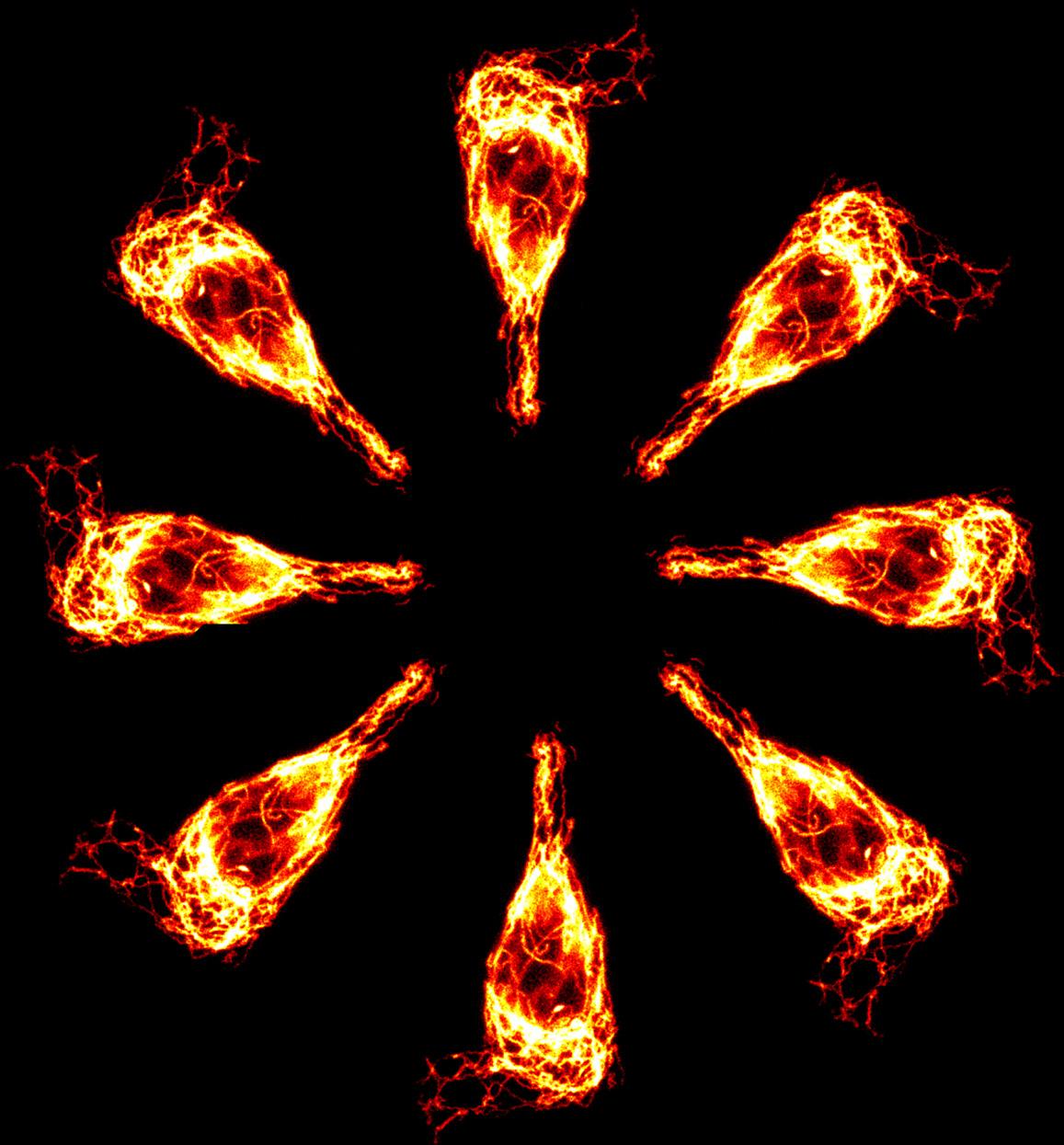
Individual cells arranged as a ring with mitochondria labeled and visualized via a fluorescence microscope.
Lab
Did you know that research at UVMCC led to one of the most significant changes to national breast cancer screening policy in a generation? Here’s how.
Co-Leader Brian Sprague, Ph.D., leads the Vermont Breast Cancer Surveillance System (VBCSS), a UVM research and quality assurance program and one of six core sites of the national Breast Cancer Surveillance Consortium (BCSC). VBCSS provides a long‑term view of real‑world screening outcomes and quality improvement feedback for breast imaging centers in the state.
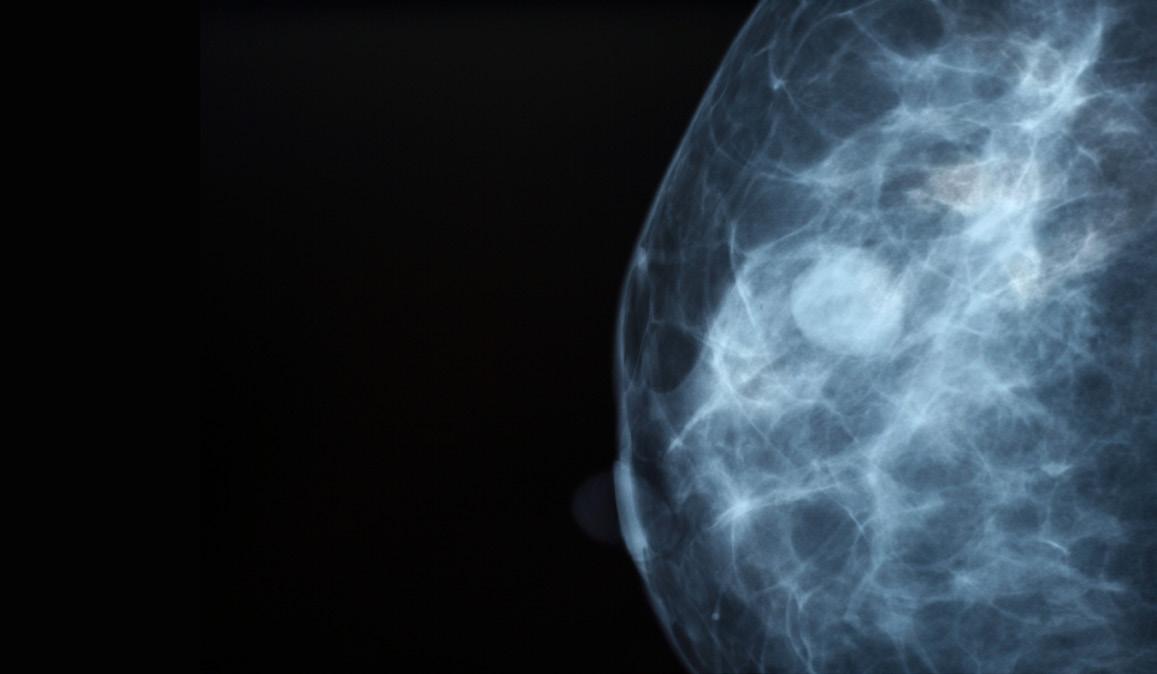
VBCSS collects decades’ worth of comprehensive, integrated data on breast imaging, pathology, diagnosis, and outcomes for women across Vermont. This is done in partnership with healthcare clinics and the Vermont Department of Health.
Findings led by Sprague and fellow BCSC investigators are among the evidence cited by the U.S. Preventive Services Task Force in shifting its recommendation for routine mammography from age 50 to age 40 in 2024. This change has the potential to save thousands of lives by identifying cancers earlier, particularly among younger women and women with dense breast tissue.
In a study published in Radiology, Sprague, along with Sally Herschorn, M.D.; Hannah Perry, M.D.; and Donald Weaver, M.D., finds that supplemental ultrasound significantly increased cancer detection while maintaining low rates of false positives for women with dense breasts and an elevated breast cancer risk, according to BCSC prediction models.
VBCSS leverages its data to develop new tools to help women and their clinicians make personalized screening decisions. Publicly available, these calculators use data from one million women nationwide, including 200,000+ from Vermont. They highlight which women would benefit most from annual screenings or supplemental imaging such as ultrasound or MRI.
Learn more: go.uvm.edu/breastcancerrisk
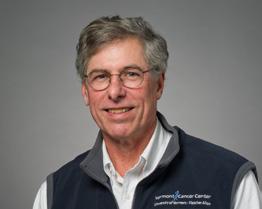
UVM investigators lay groundwork for environmental disease research at the university, including UVMCC member Yvonne Janssen-Heininger, Ph.D.; Professor Emeritus’ Nick Heintz, Ph.D. (below), Brooke Mossman, Ph.D., and Arti Shukla, Ph.D., who were studying molecular signaling in PM.
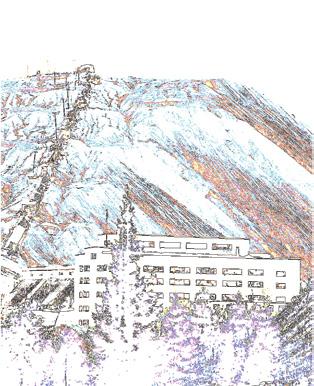
Vermont’s last asbestos mine, on Belvidere Mountain in Eden, closes. Asbestos is the primary and only proven cause of malignant mesothelioma.
When cancer researcher Brian Cunniff, Ph.D., began studying pleural mesothelioma (PM), he wasn’t initially searching for a cure—he was trying to understand what drives the aggressive growth of tumor cells in this rare and deadly cancer. Here’s how a decade of questions and discoveries led to a novel treatment for PM.
Question: What dysfunctional signaling pathways support tumor growth in PM, and what existing drugs might target this process?
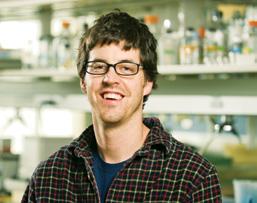
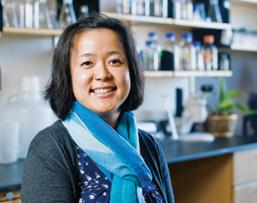
Brian Cunniff and Kheng Newick (below, l-r) join Heintz’s lab as Ph.D. candidates in the Cellular, Molecular, and Biomedical Sciences Graduate Program. They discover that as PM tumor cells grow, they produce high levels of reactive oxygen species—a toxic byproduct that can kill the cell if it builds up. To survive, the cells activate proteins that help dispose of the toxins. Cunniff, Newick, and Heintz test Thiostrepton—an antimalarial drug and antibiotic— and find that it kills PM tumor cells in the lab, but they aren’t sure how the process works.
Question: How does Thiostrepton kill PM tumor cells?
Cunniff and his team think it’s mitochondria-related. He spends four months in the lab of mitochondrial biology expert Mike Murphy, Ph.D., at the University of Cambridge. There, he discovers that Thiostrepton deactivates the mitochondrial protein peroxiredoxin 3 or PRX3, which disposes of toxic byproducts in PM tumor cells. Without PRX3, toxins accumulate and kill the tumor cells.
Newick, Cunniff, and Heintz publish a paper in PLOS One showing that Thiostrepton kills PM tumor cells.
Cunniff, Newick, and Heintz publish a second paper in PLOS One describing how Thiostrepton inactivates PRX3, with more preclinical data on its treatment potential.
Heintz retires, and Cunniff leaves UVM to complete a postdoc at the University of Utah and Harvard Medical School.
Heintz connects with an investor who wants to develop a PM treatment. They form RS Oncology, a small biopharmaceutical company based in Boston.
“Nick [Heintz] was a great mentor. He always told me, ‘Don’t worry about what everybody else is doing. Just ask the question.’”
— Brian Cunniff, Ph.D.
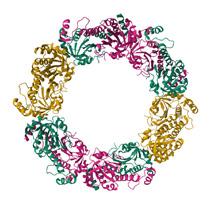
Molecular structure of Peroxiredoxin 3 (PRX3)
Question: How do you take a discovery from bench to bedside?
Cunniff returns to UVM to launch the Cunniff Lab, funded by RS Oncology.
RS Oncology secures intellectual property for the treatment and develops a clinical pipeline.
Question: Is Thiostrepton safe for humans, and how effective is it as a PM treatment?
RS Oncology launches the Phase 1 MITOPE trial (NCT05278975) in the U.K. The trial finds that Thiostrepton is safe for humans, and confirms its impact on PM tumor cells.
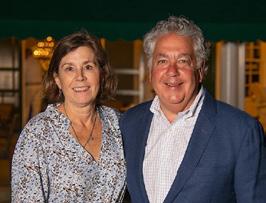
Boston-based Michael Butler (below, with wife Patricia) learns about Cunniff’s research and donates to his lab in honor of Butler’s two brothers who died of PM. The Bulter Foundation becomes a critical philanthropic partner of the Cunniff Lab.
Cunniff and team submit data from the Phase 1 clinical trial to Nature Communications (pending publication).
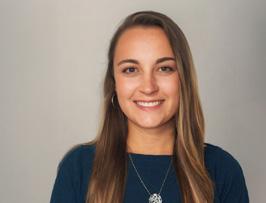
Cunniff and team present data from the Phase 1 clinical trial at the American Association for Cancer Research (AACR) conference. Ph.D. candidate in the Cunniff Lab Victoria Gibson (below) receives an AACR award for her work on the project.
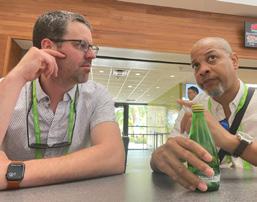
Cunniff presents his research in a closed-door meeting in London, where he meets University of Leicester Professor Dean Fennell, Ph.D. (below, right), a renowned expert in PM. Fennell enthusiastically supports clinical trials for Thiostrepton in the U.K.
RS Oncology launches a Phase 2 clinical trial in the U.K. and expands its cohort of treatable patients. Results expected in the fall of 2026.
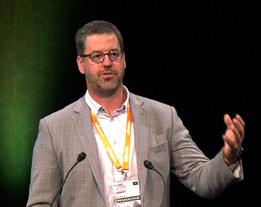
Cunniff and his team present findings from the Phase 1 clinical trial at the American Society of Clinical Oncology (ASCO) conference and International Mesothelioma Interest Group meetings (below)
Question: Can Thiostrepton work on other cancers?
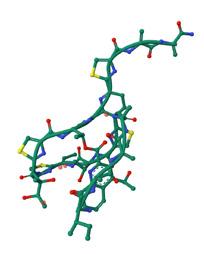
According to new research from UVM and the Broad Institute of MIT and Harvard, PRX3 is key to tumor cell growth across many cancer types. Additionally, Thiostrepton has broad spectrum antitumor activity across cancer types, validated through genetic and pharmacological approaches.
Molecular structure of Thiostrepton
In just three years, the UVM Cancer Center’s trainee community has grown from 33 to 112, with trainees driving discovery across the center. Below, we spotlight three trainees and the groundbreaking publications that shaped their careers.
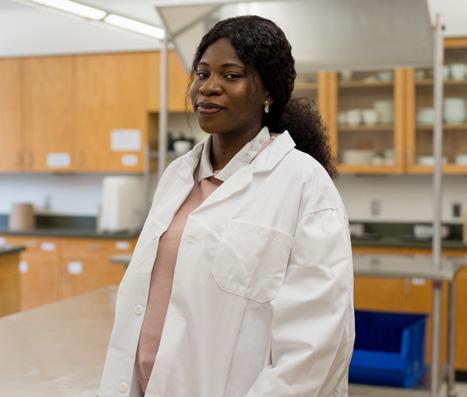
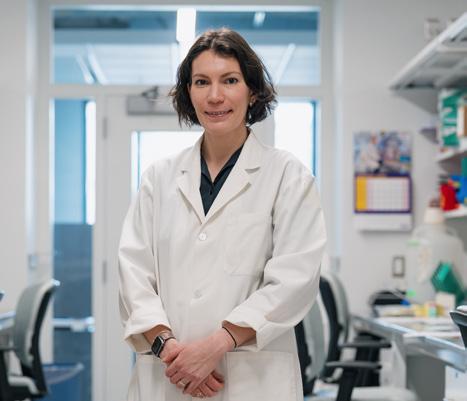
Beyond survival: food insecurity challenges for survivors of cancer post-COVID
Publication: Cancer Causes & Control
Trainee: Florence Abraham, graduate student
Principal Investigator: Trishnee Bhurosy, Ph.D.
“I was in Nigeria prior to the start of my master’s program when my advisor, Trishnee Bhurosy, Ph.D., asked if I would collaborate on a manuscript with her. This would be my first academic publication and an opportunity to contribute to research I’d long been interested in: diet promotion and cancer prevention among underserved populations.”
– Florence Abraham
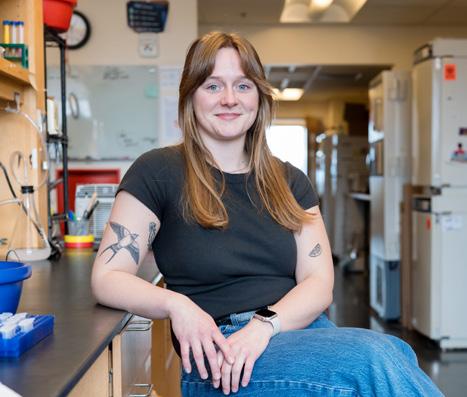
Protein kinase A is a functional component of focal adhesions
Publication: Journal of Biological Chemistry
Trainee: Madeline McTigue, graduate student
Principal Investigator: Alan Howe, Ph.D.
“I remember clearly the day that Dr. Howe’s Ph.D. student, Mingu Kang, and I got the first positive results implicating tensin-3 as a novel physiological substrate for protein kinase A (PKA). That was a very cool day. That data represented the beginning of my career as a true academic scientist, something that makes me quite emotional to this day!”
– Madeline McTigue
Early adipose tissue wasting in a preclinical model of human lung cancer cachexia
Publication: Cell Reports
Trainee: Deena Snoke, Ph.D., post-doctoral fellow
Principal Investigator: Michael Toth, Ph.D.
“From conception to publication and beyond, this work profoundly shaped my technical skill set, professional development, and career trajectory. Realizing that these results could meaningfully advance therapeutic development for cancer associated weight loss (cachexia) was a particularly powerful moment.”
– Deena Snoke, Ph.D.
A community of researchers and innovators is driving TRβ agonists from discovery toward clinical reality—bringing new hope to patients who need them most.
Frances Carr, Ph.D., spent years studying how thyroid hormones and their receptors regulate normal development and impact cancer growth. Her work and others established that one of the receptors, thyroid hormone receptor beta (TRβ), acts as a tumor suppressor in several cancers. Carr’s team went a step further, showing that selectively activating TRβ with a synthetic hormone accelerates the effect and reduces tumor growth. The implications were striking: a nontoxic hormone therapy that could help overcome treatment resistance while boosting the effectiveness of standard-of-care drugs.
“This was the door opening,” Carr says. “Success with anaplastic thyroid cancer—one of the most aggressive cancers—was just the first step. We discovered we could repurpose it for other cancer types, including aggressive breast cancers.”
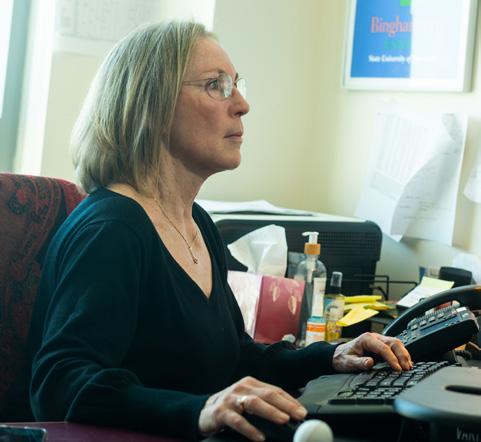
Then came the harder question: how do we make it happen? There’s no straight path from bench science to the clinic. Developing new therapies takes a community of support, and Carr credits UVM Cancer Center (UVMCC) and the broader UVM community for building momentum behind the discovery. Key elements include:
• A $50,000 UVMCC Pilot Grant that enabled Carr and her collaborator Seth Frietze, Ph.D., to generate the critical preclinical data needed to move forward. That led to a $1.5 million Department of Defense Impact Award in 2024 to advance their work toward commercialization.
• An entrepreneurial partnership with UVM alum and entrepreneur Steve Arms. After learning about the research, Arms urged Carr to form a company and
committed as an investor. In 2025, Carr founded TRBeta Oncology, LLC, (TRBO) with Arms serving as interim CEO.
• The educational-professional arc of Noelle Gillis, Ph.D., who joined Carr’s lab as an undergraduate trainee in 2014 and received her Ph.D. from UVM’s Cellular, Molecular, and Biomedical Sciences Graduate Program, eventually earning UVM’s first prestigious F99 award from the National Cancer Institute (NCI). After Gillis completed a postdoc in Minnesota, Carr recruited her back to UVM, where she is now on the faculty track in the Department of Pharmacology and VP for Scientific Development at TRBO.
• UVMCC members who have served as sounding boards, advisors, and collaborators, especially Brian Cunniff, Ph.D. (TRBO’s scientific advisor), clinical collaborators Mirabelle Sajisevi, M.D. (DOD grant collaborator), and Michelle Sowden, D.O. (American Cancer Society Discovery Boost Award-breast cancer).
• UVMCC’s Cancer Research, Training and Education Program (CRTEC), which supports early-career scientists in member labs. One is Jaime Boisoneau, a graduate student in Carr’s lab who received a 2024 CRTEC Fellowship to continue her work through the summer.
The TRβ project also drew on broader campus and regional resources to help Carr navigate next steps:
• UVM’s Office of Innovations supported patent protection for the discovery and related inventions. Corine Farewell, D.V.M., M.B.A., and Brent Osborne, Ph.D., also facilitated start-up support by connecting the team to programs such as the NSF I-Corps program.
• The Office of the Vice President for Research and Economic Development, led by Kirk Dombrowski, Ph.D., facilitated a research agreement between UVM and TRBO, enabling Carr to advance TRβ agonists towards clinical development.
• The BioLabs Innovation Center at UVM connected Carr with mentors through its Innovator Mentor Connect program, leading to a collaboration with a pharmaceutical expert who is designing TRβ agonist molecules. Director James Stafford, Ph.D., played a key role in identifying opportunites for TRBO to connect with organizations and companies that can advance the work toward FDA approval and clinical trials.
• The Northern New England Clinical & Translational Research Network awarded Carr and Frietze a grant to expand research into aggressive breast cancers that later led to an American Cancer Society Discovery Boost Award.
University of Vermont Cancer Center
89 Beaumont Ave.
Burlington, VT 05405
www.vermontcancer.org
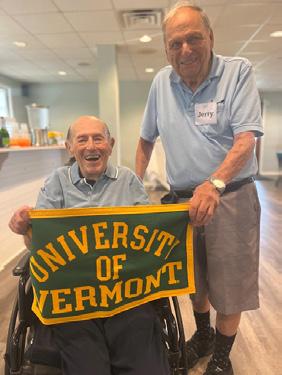
Discovery has always been at the heart of the University of Vermont Cancer Center. That spirit was inspired early by Jerome W. Yates, M.D., M.P.H.—Vermont’s first medical oncologist. Together with Richard Albertini, M.D., Ph.D., and Irwin Krakoff, M.D., the center’s founding director, he helped shape the center around a groundbreaking idea: that people in rural communities deserve access to the same high-quality cancer care and research as those living near major medical centers. His vision set UVM Cancer Center on a course defined by innovation, collaboration, and a deep commitment to the region it serves.
The new Jerome W. Yates, M.D., M.P.H., Rural Cancer Outreach Fund, created by the J. Walter Juckett Cancer Research Foundation, extends that legacy into the future. It honors the decades-long partnership between Dr. Yates and philanthropist J. Walter Juckett—a collaboration that built a critical cancer research infrastructure and has invested more than $23.7 million in advancing UVM Cancer Center’s mission. With $7.5 million pledged over the next five years—plus $1.25 million dedicated to launching this fund in Dr. Yates’ name—this initiative will catalyze the next generation of breakthroughs.
Focused on the unique needs of rural communities, the Yates Fund will strengthen innovative work in cancer education, prevention, diagnosis, treatment, and rehabilitation. It will also expand research that deepens understanding of rural cancer care, ensuring that new discoveries emerging from UVM Cancer Center reflect the lived experiences of the region’s patients and providers.
By building on the pioneering foundation Dr. Yates helped create, this fund doesn’t just honor the past. It also seeds discoveries that will shape the future of cancer care for Vermont, northern New York, and beyond.