supply chain
AT THE KNAUSS SCHOOL OF BUSINESS


The Knauss School of Business is dedicated to developing ethical and compassionate leaders prepared to confront humanity’s urgent challenges through innovation. We embrace values-driven free enterprise that creates wealth on a fair and equitable playing field to li the standard of living for all citizens and preserve the planet for future generations.

Our approach to education is holistic. We invest in hiring and retaining a diverse faculty, both researchers
and practitioners, who are passionate about teaching and mentoring. The school cra s a personalized purpose of studies that builds on each student’s existing skill set, enhances core business skills and empowers students to become ethical and compassionate leaders. Through faculty support and mentorship, extra-curricular and study abroad programs and internships, students build extensive relationship “highways” to guide them on their career journey toward a life well-lived.
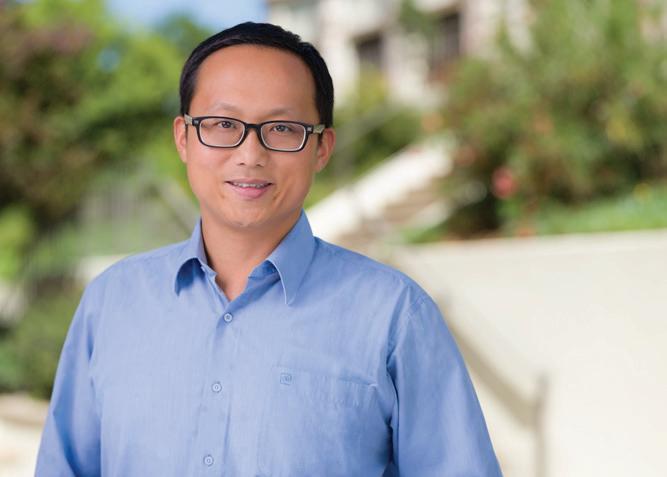
Knauss School of Business Supply Chain Management Chair and Professor Daniel Lin, PhD, believes supply chains are the single most important force driving the global economy.
challenges through hands-on, experiential projects so that they enter the workforce prepared to deliver innovative ideas that solve the many challenges that can disrupt supply chains. Projects that link sustainability to supply chains demonstrate our commitment to business stewardship of the world. Students also benefit from Supply Chain faculty in the Knauss School of Business who are among the most influential in the United States, each delivering cutting-edge research and industry knowledge to share in the classroom.
Supply Chain education is a source of pride for the Knauss School of Business. The Knauss School offers a suite of supply chain programs, including an undergrad supply chain major and minor, a master’s in supply chain management and an MBA concentration. Additionally, industry-specific, customized certificate programs are designed to fulfill the needs of companies of every size in the region.
Supply Chain Management in the Knauss School is about more than training students on how to move a product from Point A to B in a timely, cost-effective, efficient, sustainable manner. Our students solve real-world
In addition to extraordinary programs delivered by top-ranked faculty, the Knauss School of Business’ Supply Chain Management Institute (SCMI), created more than 20 years ago, brings the supply chain industry and campus together to learn from each other. Exciting events like the Fall Forum and Spring Symposium bring together leading industry experts to showcase new research and practice that will shape the future of supply chain management for years to come.
“SUPPLY CHAINS ARE THE COMMON LINK THAT UNITES COUNTRIES REGARDLESS OF THEIR POLITICS.”
The Knauss School of Business believes students learn best by solving real-world challenges that help businesses innovate for good, address the problem, devise a plan and act on it. That’s why experiential learning takes center stage in classes for the supply chain management major, minor, master’s degree and the MBA concentration. It serves as an effective problem-solving tool and a force for positive change beyond the classroom.
Student projects in collaboration with local clients provide opportunities for students to analyze and identify areas where supply chain innovation can improve profitability and help ensure sustainable practices. In turn, businesses and non-profits that serve as clients get free consulting services and real impact.
One recent project helped grow the region’s supplier diversity base. Students worked with the University of San Diego’s procurement department to organize a supplier fair for small businesses and diverse suppliers that attracted 300 participants. This project enabled the Economic Development Council of San Diego to improve access of small businesses to large ones.
“We built a database for small businesses. It benefits USD and many large, local businesses such as Sempra Energy, the County of San Diego and Sharp HealthCare,” said Simon Croom, PhD, a supply chain professor. “It’s a massive project that can have a big impact in the region.”
Students have also created efficiencies and saved money for the university through category management, a best practice in supply chain management. They served as category managers for two different departments on campus. One project involved buying computers.
The university previously issued each employee one of five, standardized computers. Supply chain management students discovered that not every employee needed a university-supplied computer, nor a new one every three years. Computing power needs also varied, with some requiring more than others. These findings helped USD reduce computer purchase costs and freed up funds to use elsewhere.
“Employers tell us when they recruit our students, they know they’re getting well-rounded, competent individuals who can work extremely well with others.”
“HERE, STUDENTS SIGN REAL-WORLD NON-DISCLOSURE
GET THEIR HANDS DIRTY and MAKE REAL IMPACTS.”
The Knauss School of Business supply chain management programs provide students immediate access to a wealth of resources that support and stimulate a holistic learning experience. Small class sizes guarantee greater access to world-class faculty members who share research and key insights about the global supply chain industry.
Real-world projects allow students to practice on current, sustainable and inclusive topics relevant to industry. Guest speakers share insights about their company’s supply chain methods, offer guidance and further enhance learning.
Outside the classroom, networking opportunities, career fairs, conferences hosted through the Supply Chain Management Institute, study abroad opportunities and company tours further enhance each student’s rich, holistic learning experience. It’s a guided journey toward an enriching career and a life well-lived.


Scott Zipse’s introduction to supply chain management came when he ran into a USD friend in 2008 who told him it was a lucrative field to pursue.
Zipse took the advice and graduated as a business administration major and supply chain minor. “USD has been the perfect preparation for where I am today. It has opened so many doors.”
Zipse’s first door opened at the Annual Supply Chain Management Institute Career Fair where a Goodrich Aerostructures representative invited him to interview for an entry-level buyer position. He got the job.
In 2014, he moved to Senior Aerospace, a UK company with two San Diego locations, as a senior buyer, and the company helped finance his master’s degree.
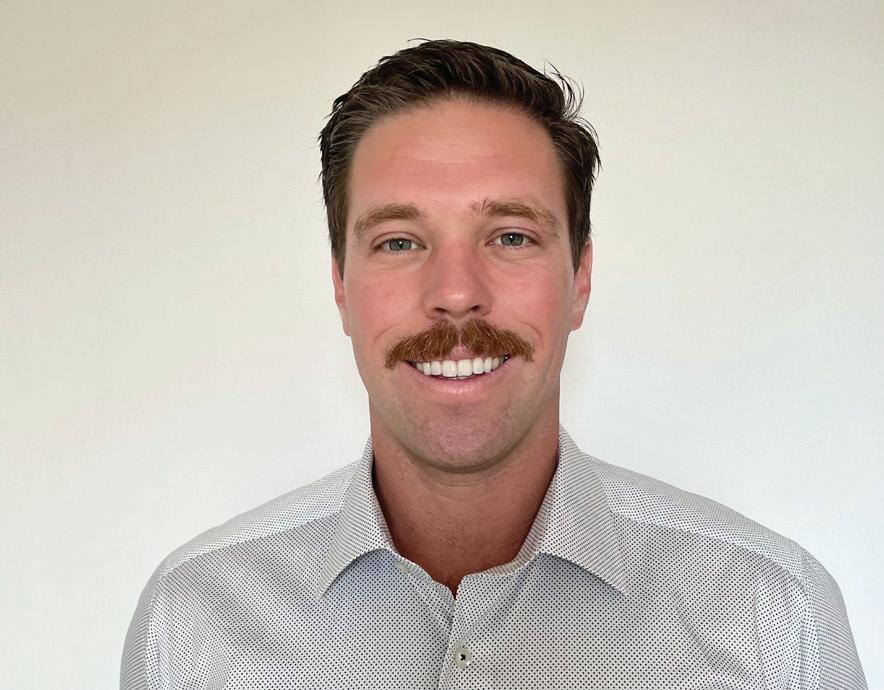
“Professors in the master’s in supply chain program did a great job inviting professionals to share how they apply supply chain practices in their companies. It was a great introduction to the outside world. You realized you could do supply chain anywhere with every company, and students were highly desired by companies to fill the roles.”
Zipse’s courses o en featured speakers from local companies, including Solar Turbines, General Atomics and Bumble Bee Seafoods.
The capstone project was particularly invaluable because it enabled him to find $1 million in process savings for Senior Aerospace.
“The first goal was to reduce the manufacturing cost of a new part our company had adopted. The second was to reduce the manufacturing lead time and streamline the process to support our customers’ urgent, high-volume needs. Through concepts learned, I solved both issues by focusing on one specific machining process in the life of the part.”
Zipse’s resourcefulness will be an asset as he returns to the Knauss School of Business as an adjunct faculty for a procurement class this fall.
“I want to give students as much information as I can about the real world,” said Zipse, who currently fills the role of director of business development with Senior Aerospace. “I am ready to inspire them so they can begin to innovate in supply chain immediately upon graduation.”
“USD HAS BEEN THE PERFECT PREPARATION FOR WHERE I AM TODAY. IT HAS OPENED SO MANY DOORS.”
The 36th Annual Supply Chain Management Institute (SCMI) 2021 Fall Forum delved into “The Next Normal: Building Adaptive Supply Chains for Competitive Advantage.” The 11th Annual Spring Symposium focused on “Sustainable Supply Chains and the Triple Bottom Line.”
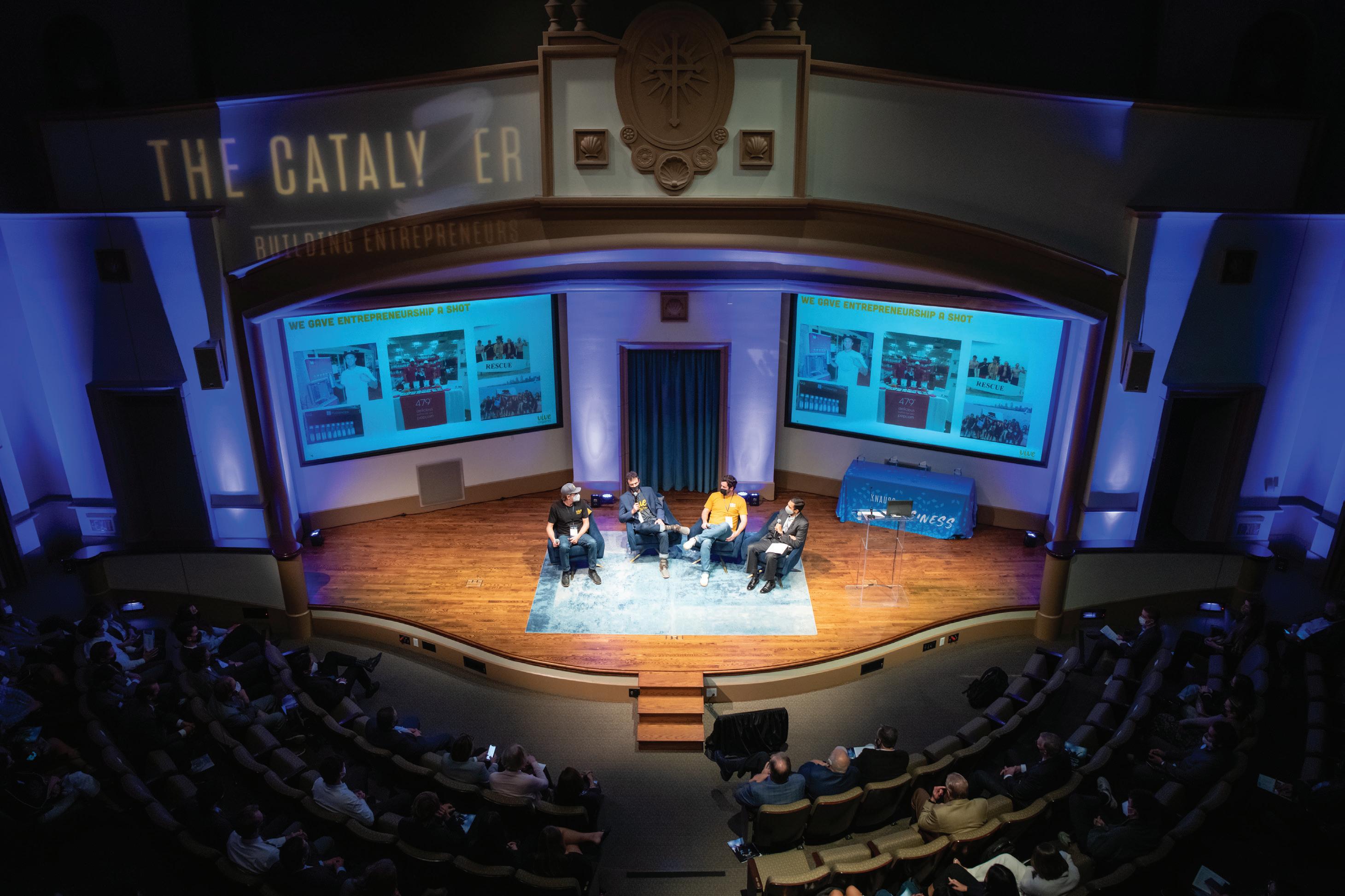
Both programs showcase the strength and relevance of Knauss School of Business’ SCMI as a vital asset for supply chain industry members, students and companies in the region. Created in 1999, the SCMI is one of the first-ever supply chain centers of excellence in the nation. By leveraging its deep industry ties, it offers the best-connected resource for supply chain professionals in San Diego.
The organization’s 25-member advisory board advises on conference topics, informs innovation in curriculum and secures student projects. It hosts these conferences to give the supply chain community a chance to gather, listen, learn and share best practices from the latest research to improve in business operations.
Students and alumni benefit by participating in a supply chain-centered career fair that showcases more than 50 companies on campus each year. Networking events and the student-led Supply Chain Management Association organize company and facility visits and invite industry speakers to keep students apprised on the latest innovations in supply chain practice.
Director of Global Supply Chain, Solar Turbines
Leslie Oliver is passionate about supply chain management and understands its critical role in an effectively run global business. She has made significant contributions in her 25-year supply chain career with Solar Turbines, a world-leading manufacturer of industrial gas turbines.
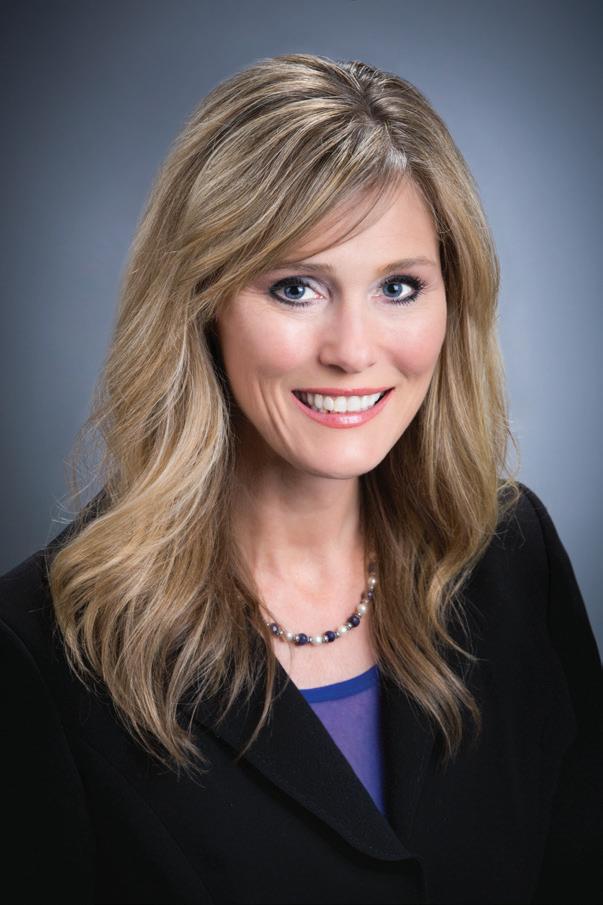
Oliver graduated from the Knauss School of Business’ inaugural Supply Chain Management master’s program in 2004 and currently serves on the Supply Chain Management Institute (SCMI) advisory board. Her professional experience and industry insight contributed to the development of a new certificate program for Solar Turbines supply chain employees through the Knauss School of Business. Participants in the program engage in topics like operations management, demand management, negotiations and business law.
A er earning her master’s degree, Oliver was given the opportunity to design and deploy Solar Turbines’ global supply chain organization. That successful implementation led the company to promote Oliver to senior manager for Solar Turbines’ Supply Chain in Switzerland where she mirrored the plan across Europe, Africa and the Middle East, overseeing employees in multiple locations and countries. Her innovative ideas helped streamline enterprise procedures and process flows that improved efficiencies, created new success metrics, implemented new inventory strategies and reinforced import/export compliance.

Oliver then moved to experimental manufacturing and tooling management back in the U.S., where she led the design, implementation and management of a lean value stream transformation. She then shi ed to managing turbine assembly overseeing assembly, turbine test and gear manufacturing.
Oliver’s passion, leadership and life-long commitment to learning has provided deep value to Solar Turbines and to the teams she has built and led. Over her 25-year career, Oliver has consistently exemplified that passion, leadership and continued education create an environment where innovation can flourish.
“DON’T STOP LEARNING,” IS HER ADVICE AND PERSONAL PHILOSOPHY. “KNOWLEDGE AND CONTINUED COMMITMENT TO LEARNING IS CRITICAL, ESPECIALLY FOR SUPPLY CHAIN EMPLOYEES.”
YEN-TING (DANIEL) LIN, PHD
Professor of Operations and Business Analytics
Yen-Ting (Daniel) Lin is chair of the department of supply chain. He teaches courses in operations management, prescriptive analytics, supply chain analytics, blockchain in business and international consultancy. Lin’s research seeks to provide actionable findings on corporate social responsibility, ethical sourcing and sustainable product design.
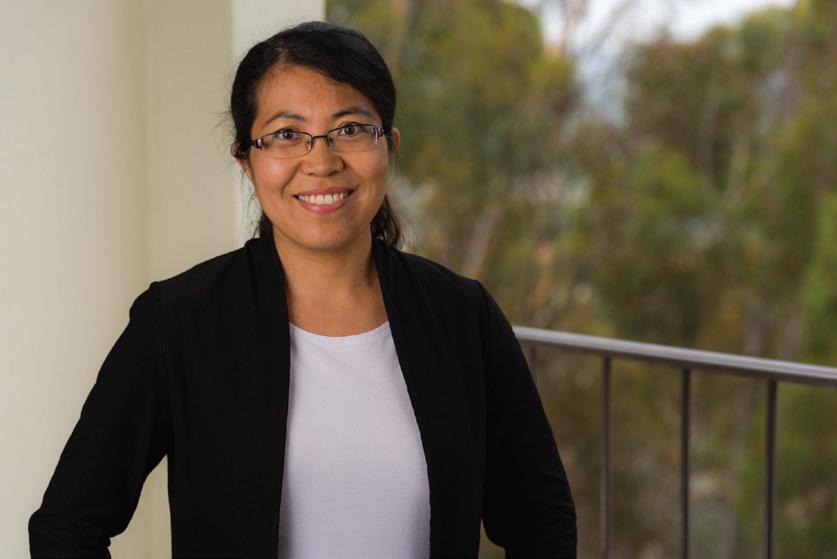
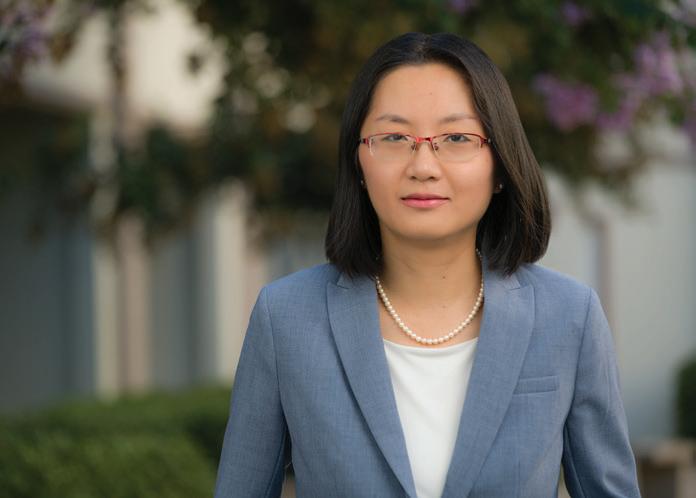
Wenli Xiao is the chair of the department of innovation and entrepreneurship, international business and interdisciplinary programs. Xiao teaches graduate and undergraduate courses in operations and supply chain management, supply chain analytics and business analytics. Her research explores product development processes as well as market and regulatory impacts that affect product recycling.
SIMON CROOM, PHD
Professor of Supply Chain Management
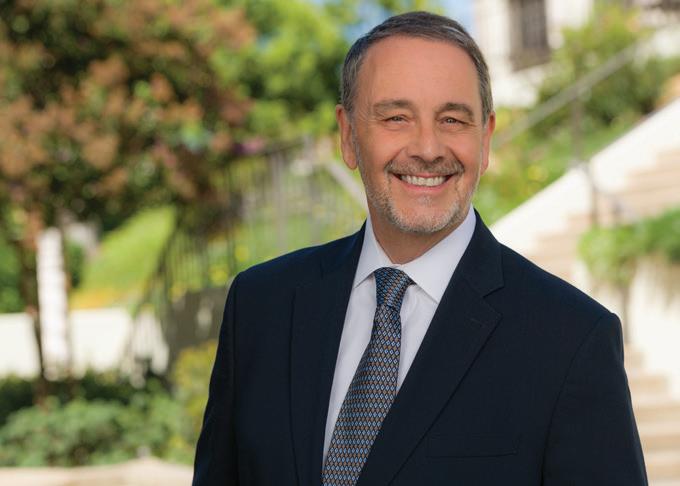
Simon Croom has published over 100 papers on a variety of topics aimed at furthering innovation in the supply chain management industry. Croom worked in management and ran his own business prior to becoming a professor. He has been researching, teaching and advising on purchasing and supply chain management for the past 30 years.
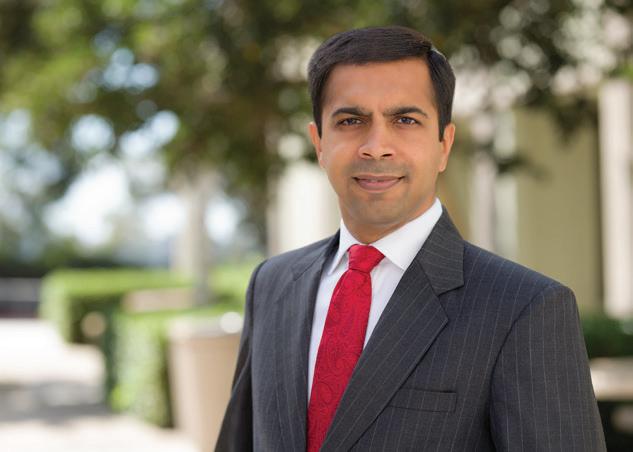
Amit Kakkad brings extensive industry experience in established as well as startup companies across industries & continents to his role as a Clinical Professor. Kakkad advises businesses on business strategy, design of operations and supply chain and adoption of stakeholder-focused capitalism. He teaches graduate and undergraduate courses in operations and supply chain management, data analytics, statistics, project management and innovation.
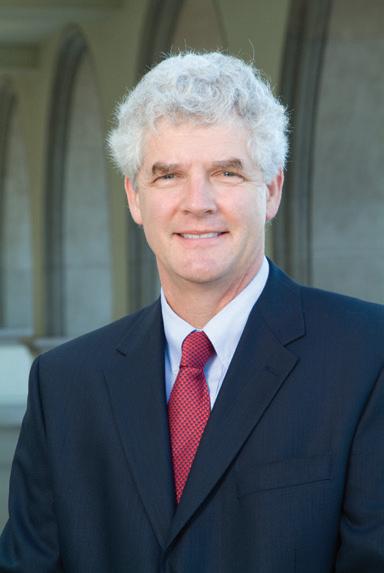
DAVID PYKE, PHD
Professor of Operations and Supply Chain Management
David Pyke is a prolific researcher on many aspects of the supply chain industry. Pyke co-authored a text book with E.A. Silver and D.Thomas (Inventory and Production Management in Supply Chains; fourth edition, CRC Press, 2017) that is used in numerous master’s and Ph.D. programs worldwide.
Ruixia (Sandy) Shi’s extensive business experience enables her to share real-world-tested and innovative concepts in business analytics, supply chain management and data visualization classes. Shi utilizes the power of data and mathematic tools to help businesses improve operations. Over the past years she has assisted local and global businesses forecast business demand, bid projects and grow their bottom line.

The 14 faculty members within the Knauss’s School supply chain department place great importance on research that can influence and change the industry for good and also benefit the students. Simon Croom, PhD, has focused on sustainable social corporate responsibility and supply chains. David Pyke, PhD, has analyzed operational supply chain issues such as jet fuel cost impacts on airline capacity. Wenli Xiao, PhD, has closely examined e-waste through multiple lenses. These are just a few examples.
Supply Chain Department Chair and Professor Daniel Lin, PhD, has studied sustainability in supply chains for years. He says his research provides cutting-edge examples and insights that help increase students’ understanding of how businesses can innovate for good in every aspect of their operations.
One of Lin’s recent research projects looked at how one company adjusted product design to increase sustainability, and how another company created a new revenue stream by adopting a new sustainable tactic. “Raw materials can be hard to source, and production processes can generate too much waste,” Lin said.
“This was a very scarce resource, and the practice of discarding 90 percent simply because the wood looked different, was a tragedy,” Lin said.
The sustainable solution? Find a way to use the other 90 percent.
“The company began producing lighter black guitars and educating buyers that this new line of guitars still delivered a quality sound and offered an environmentally sound choice. By embracing a variety of woods, they reduced consumption, preserved a scarce resource and changed industry practices. This is the kind of innovative thinking we try to infuse in our students.”
In another study, Lin’s analysis uncovered an ice cream maker that repurposed post-batch residue. The company now sells the residue as an alternative to corn feed, a sustainable practice that creates a new product and a new revenue stream for the business.
“Feed is a major expenditure for the beef industry, and having an alternative feed helps the industry control costs better,” Lin said. “This is an example of one industry’s trash becoming treasure for another in a totally unexpected way.”
A guitar manufacturer produced instruments using Ebony black wood, a rare commodity grown in Cameroon. The company purchased a sawmill to improve access, but only one in 10 trees cut in the forest is qualified as true black wood. Some were dark, but not black. The lighter woods were commonly discarded.
PROFESSOR DANIEL LIN, PHD Supply Chain Management Chair and Professor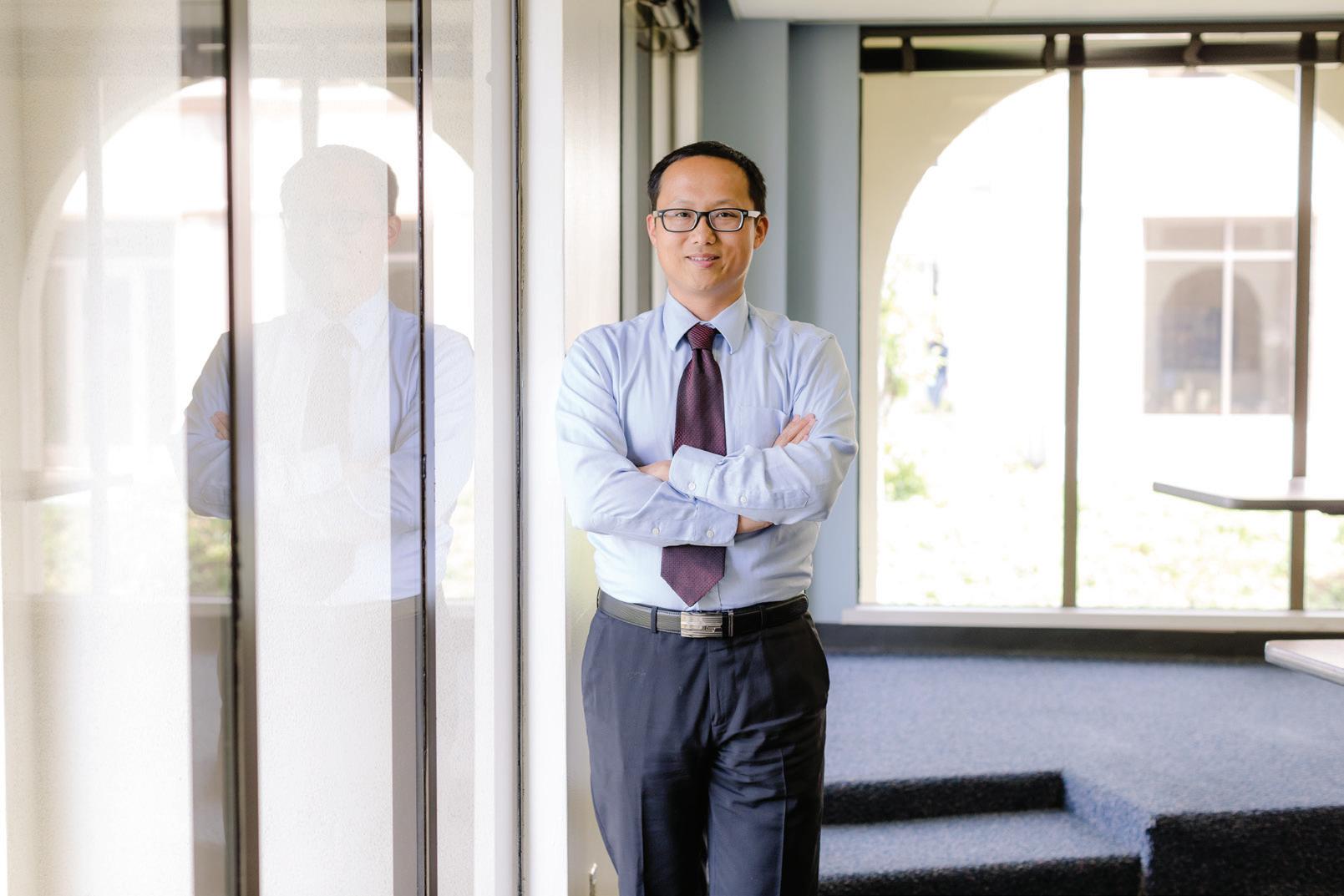
“IF YOU CAN IMPROVE YOUR PROCESS AND RAW MATERIAL SOURCING, YOU CAN GENERATE MORE PROFIT AND INCREASE SUSTAINABILITY.”