Message from the Dean
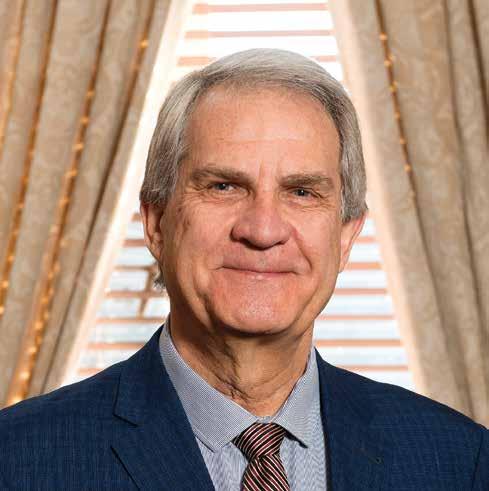
Prof Johan Buitendag Dean: Faculty of Theology
The Faculty of Theology emphasises excellence, especially with regard to academia and living up to its values.
The Faculty has a particular nature in that it works primarily with partner churches. The Nether Dutch Reformed Church of Africa (NRCA) became its first partner in 1917 and the Dutch Reformed Church (DRC) is its largest partner. The Uniting Presbyterian Church in Southern Africa (UPCSA), and the newest partner, the Uniting Reformed Church in Southern Africa (URCSA), contribute to this unique character. Each of the denominational partners adds value to the quality and relevance of our programmes.
The Faculty is nationally and internationally renowned for its high academic standards and scholarly integrity. Its branding as a Faculty of intellectual excellence can be unpacked in terms of the following three claims:
We connect worlds.
We teach life-giving theology.
Proven excellence is our guarantee.
The
Faculty of Theology is well on its way to execute the University of Pretoria’s institutional strategic vision and mission for the period 2012 to 2025. We are heartened by the co-operative spirit of Faculty staff and students in embracing the challenges associated with this process.
We wish to remain relevant by providing training to the church of the future, not of the past, and by supporting churches in their current and future ministry. We therefore address focus areas like urban ministry, African Christianity, public theology and community development.
The Faculty celebrates its centenary this year. It came from humble beginnings, with only two students and two lecturers in the first year. However, at this juncture we are more concerned with the next century than with the past. Today matters! The significance of the centenary is therefore that it is a gateway to the future, driven by values like inclusivity and diversity.
The overall research theme of the Faculty is ‘Ecodomy: life in its fullness’. In short, this refers to the building of the kingdom. Research in ethics, the environment and gender, as well as theological and religious themes with social implications, are of special importance. These include xenophobia, discrimination and violence
in communities. The Faculty conducts research into unique themes of both national relevance and international interest. Much of the research is interdisciplinary and includes international participation.
The Faculty of Theology is keen to welcome prospective students who wish to become ministers or other religious workers.
The question we put to you is: ‘You deserve the best! Why not the University of Pretoria?’
Tel +27 (0)12 420 2322
Email johan.buitendag@up.ac.za
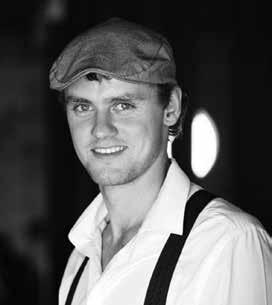
‘Theology is a very challenging, thought-provoking study field although it may at first seem to be simple. I know full well that theology equips one for many different spheres of life.
I love the interaction in our classes. Our classes are small, which allows for close relationships and deep conversations. My passion is leadership development and facilitation in the student environment. Studying theology helps me to focus my passion and prepares me for the future.
It is a great privilege to enjoy what is currently on offer in the Faculty of Theology, which is the result of many years’ hard work by many individuals. I am happy that we will be celebrating the Faculty’s centenary in 2017.’
Marco Koch
Undergraduate programmes
Important information on undergraduate programmes for 2018
The following persons will be considered for admission: a candidate who is in possession of a certificate that is deemed by the University to be equivalent to the required Grade 12 certificate with university endorsement; a candidate who is a graduate from another tertiary institution or has been granted the status of a graduate of such an institution; and a candidate who is a graduate of another faculty at the University of Pretoria.
Life Orientation is excluded in the calculation of the APS.
University of Pretoria website www.up.ac.za/theology
National Benchmark Test website www.nbt.ac.za
Programmes
BDiv – Bachelor of Divinity (for admission to MDiv studies) [4 years]
Closing dates:
SA – 30 September
Non-SA – 31 August
Careers: Ministers, pastors, priests, preachers in certain denominations, missionaries and youth counsellors. Other possibilities include ethics consultants to businesses. Theological studies can be enriching for people in various other vocations. If prospective students are interested in ordained ministry, this should also be discussed with their church leadership. This programme is presented in separate groups in only one language (English or Afrikaans). This is the first step to MDiv studies.
BTh – Bachelor of Theology [3 years]
Closing dates: SA – 30 September
– 31 August 4 3 D D 25 (23–24 admission based on the NBT)
Careers: Ministers, pastors, priests, preachers in certain denominations, missionaries and youth counsellors. Other possibilities include ethics consultants to businesses. Theological studies can be enriching for people in various other vocations. If prospective students are interested in ordained ministry, this should also be discussed with their church leadership. This programme is presented in separate groups in only one language (English or Afrikaans).
DipTh – Diploma in Theology [3 years]
Closing dates:
SA – 30 September Non-SA – 31 August 3 (English only) 4 E E
22 (20–21 admission based on the NBT)
Careers: Ministers, pastors, priests, lay preachers in certain denominations, missionaries and youth counsellors. Candidates should consult their church leadership on which would suit their aims best. The Diploma in Theology is intended for candidates who have completed Grade 12 (or its equivalent), but without the required university admission. This programme is only presented in English.
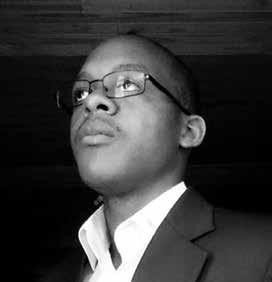
‘I love theology because it forces one to question one’s faith and eventually strengthens it by imparting information and a broader understanding. Our Faculty of Theology is about the study of God and yet it does not exclude those from different faiths. I also love the size of our classes; it makes it easier to build close relationships with fellow students and lecturers.
With this qualification I hope one day to be a profound preacher of the Gospel, both locally and internationally. Besides my desire to preach the Gospel, I also aspire to becoming a New Testament scholar. In contributing to society, I see myself as motivating our youth through empowerment programmes – I live by the quote, ‘Do not give your brother a fish; teach him how to catch fish instead’.
I am excited to be a part of our Faculty’s centenary celebrations. With its unique history the future looks even brighter. All we have to say is ‘Ebenezer’: thus far the Lord has helped us.’
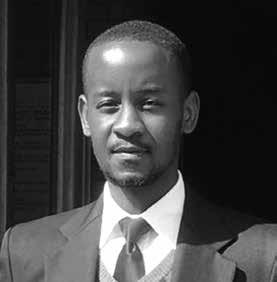
‘Theology has given me an opportunity to look at life’s questions from a different perspective and without bias, and has opened my eyes to accept those who hold opinions different to mine. The small size of our classes has made it possible for us to interact intimately and compassionately, to embrace diversity.
I am very passionate about ministering the Gospel and counselling, and studying theology prepares me to live out these passions. I envision myself as being actively involved in transformative work, especially with the disadvantaged and less fortunate who are in need of love, support and acceptance.
The Faculty of Theology has reached a milestone and it is such an honour to be part of the centenary celebrations. Its rich history has provided us with vast opportunities for growth and development in all facets of management, student life and values. Furthermore, it has contributed to the reconstruction of the present and hence the future, as stated in the mission and vision of the Faculty. Our centenary signifies accepting the past, embracing the present and shaping the future in a way that is inclusive and expresses the love of Christ.’
Allan Paskwababiri
Joshua Mwani
Undergraduate programmes
Why study at the Faculty of Theology?
The Faculty of Theology is renowned for its commitment to the following:
The Bible. This remains the central point of reference for theology.
Spirituality. Faith formation is of great importance.
Academic excellence. The Faculty’s standards of education compare with the best in the world.
Lecturers. Lecturers are noted academics and also respected church leaders.
Student life. Theology students participate fully in campus life: tours, Rag, camps, sports, serenades and many more.
International contacts. Students can benefit from the many international contacts of the Faculty.
People study theology for a variety of reasons, and not only to make it their profession. Some find it a fascinating field about which they would like to know more, whereas others search for spiritual enrichment through study or may want to equip themselves to function more effectively in their workplace. The Faculty also offers courses that will benefit students who do not necessarily want to become ministers, but who would like to enrich their lives.
Enriching one’s study in another field with insights and applications from theology has many advantages. By including modules from Religion Studies in another field of study, such as computer science, engineering, languages, psychology, social work or teaching, graduates will enter their chosen careers as better equipped, more fully developed people.
What does the programme entail?
Theology deals with the basic questions of life:
How do faith and religion influence people’s lives?
How does one approach ethical and moral questions in the workplace?
How do theological insights promote good human resource practices?
How does one cultivate ecological sensitivity and awareness?
The Christian and laws.
How do religious values contribute to peace and good human relations?
Can crime be stopped by appealing to people’s beliefs and values?
What is the meaning and purpose of life?
Where does one find answers to the deepest life questions?
How does one gain a better understanding of humanity in order to make a difference in the world?
Some students feel called to work in the church as ministers, pastors, priests, lay preachers, missionaries or youth workers. If this is the case, then studying theology is the way to go. Others find their calling in serving the community as social workers, development workers, psychologists, teachers, journalists or writers. Yet others will become engineers, lawyers or entrepreneurs. For all, studying theology will contribute to a greater understanding of humanity and society.
Undergraduate programmes in Theology
The seven main sections in the study of theology focus on questions about the Bible and life.
Old Testament Studies
The Old Testament is concerned with God’s relationship with Israel and God’s involvement with humanity and creation. Old Testament Studies engages with the books of the Old Testament as well as the life setting of ancient Israel. From the Old Testament we learn that ancient Israelites were interested in issues like suffering, love and how to live in the presence of God.
New Testament Studies
In the New Testament, the story of Jesus is told and elaborated on from several perspectives. New Testament Studies focuses on the books of the New Testament and the first-century Mediterranean context in which they originated.
Church History and Polity
The history of the Christian church and the lives and theology of great figures in history, such as St Augustine, Thomas Aquinas, John Calvin and Martin Luther, are studied. Church Polity is about the specific ways in which different denominations organise themselves.
Science of Religion and Missiology
Science of Religion focuses on the world religions – Judaism, Islam, Buddhism and Hinduism – and their relationship to Christianity. Missiology investigates the manner in which Christian faith communities participate in God’s mission. A holistic approach is followed.
Dogmatics and Christian Ethics
Dogmatics studies faith in God. Who is God? What is faith and how does it contribute to our ability to make sense of the world? Ethics connects what we believe with how we live –always in conversation with others and amid the complexity of our world.
Practical Theology
Practical Theology focuses on what Christians do (faith actions) – how they experience and express their faith. Worship and preaching, the meaning of the symbols and symbolic acts, helping people in a crisis, teaching faith and faith formation, as well as understanding the world in which we live, comprise the concerns of this field.
Religion Studies
Religion Studies (formerly known as Biblical Studies) is a lifeenriching course open to anyone who may be interested in religion. Students from diverse fields, such as engineering, architecture, music, political science, law, fine arts and many more choose to broaden their vision by taking this course. It addresses questions such as the following: Why are people religious? What did ancient people believe? How do we understand and respect our neighbours from other religious denominations?
Contact information
Trone Stander
Tel +27 (0)12 420 4053
Email trone.stander@up.ac.za

‘My passion for studying theology was strengthened by the modules I have done so far, as well as the ones I am doing at present. Each module gave new insights in some of the diverse fields that constitute theology.
The Faculty of Theology is definitely a unique faculty in that everyone (students, staff and lecturers) can get to know one another on a personal level. This is what I love about the Faculty – a special bond can be formed with everyone.
With this qualification, I see myself serving where God will lead me like He led me to this Faculty. Growing up with spiritual leaders from Doxa Deo [Church] helped me build a relationship with God and shaped me into the person I am. Therefore I wish to do the same for others.
As vice-chairperson of House Theology 2015/2016 and being responsible for the Caring and Outreach portfolio, I deem it important to contribute to society in any way I can. For me, this means serving through outreaches, especially those organised by House Theology and the Faculty. I hope that in this way I exemplify the servant leader.
With the Faculty celebrating its centenary in 2017, it is a great honour to be a student in the right now. I hope to see the Faculty grow to produce even more Godly leaders who will make an impact in the world.’
Chanyoung Yoo
Postgraduate programmes/General information
Postgraduate programmes in Theology
Bachelor of Theology Honours – BThHons
The purpose of this programme is to provide graduate students with specialised knowledge, skills and competence in a particular field or fields of theology at postgraduate level
Postgraduate Diploma in Theology and Ministry
The Postgraduate Diploma aims to offer advanced theological knowledge and practical skills that meet the needs of the ministry. Church-specific training and formation are offered in co-operation with the church partners involved.
Postgraduate Diploma in Theology (PGDip [Theology])
Theological studies can be pursued by candidates who already have tertiary qualifications equivalent to any bachelor’s degree, but not in theology. Theology is applied to specific ministries, occupations or aspects of community life. A PGDip programme that specialises in the Psalms is also offered.
Master of Divinity – MDiv
The MDiv builds on the BDiv programme or previously the four-year BTh programme. It is a coursework Master’s degree programme in general theology covering all six theological disciplines. It focuses on advanced theological knowledge and practical skills.
Master of Theology – MTh
This programme offers the student with a four-year BDiv, a BThHons or equivalent qualification, the opportunity for theological specialisation and research at master’s level. There are two possibilities, namely a programme with coursework and a mini-dissertation or a research master’s consisting of a dissertation. The coursework modules offer the opportunity to acquire specialist skills in a particular discipline.
Doctor of Philosophy – PhD
The programme line that starts with the three-year BTh and continues via the BThHons to MTh, or the programme line that starts with the four-year BDiv and continues with the MTh, is concluded with the PhD. The outcome of a PhD is highly specialised knowledge and expertise based on research.
Contact information
Doris Mokgokolo
Tel +27 (0)12 420 2700
Email doris.mokgokolo@up.ac.za
General information
Visit www.up.ac.za/admissioninfo for information on the following:
Study information
Calculate your Admission Point Score (APS)
Closing dates
Fees and Funding
Special offer for top academic achievers
Apply at UP
Change or add a programme
National Benchmark Test (NBT)
Application status
Prepare to study at UP
Registration and start of the academic year