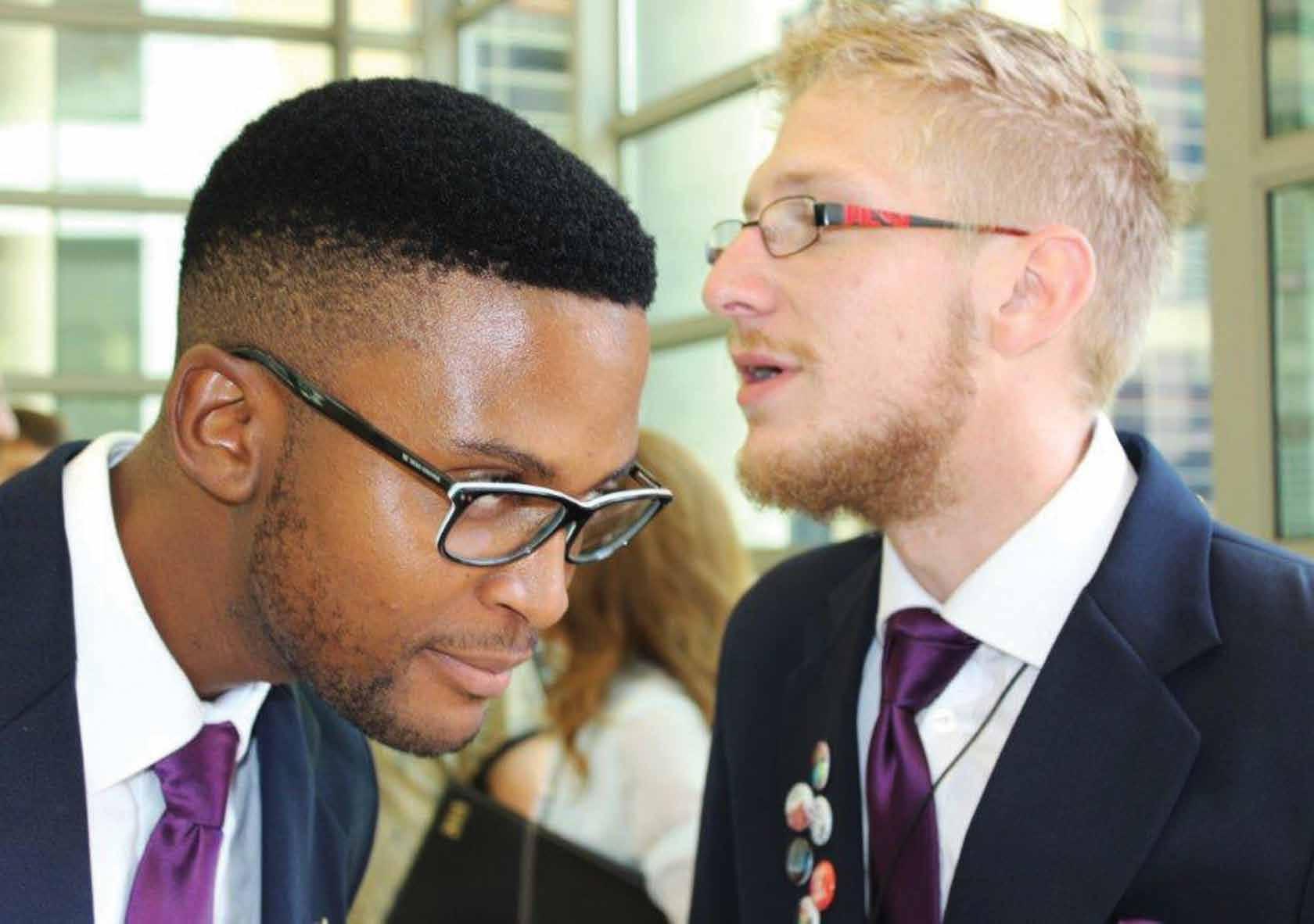
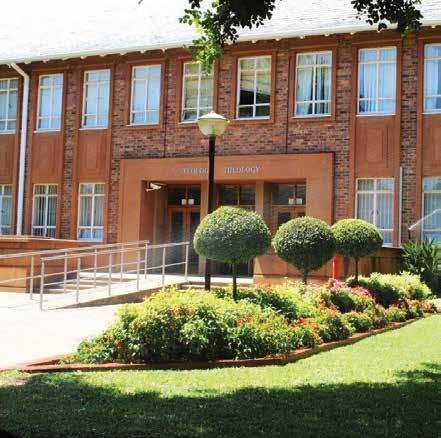

At this juncture, the Faculty of Theology embraces the challenges and, together with the University, has entered into a process to execute the institutional strategic vision and mission for the period 2012 to 2025. The special co-operative spirit among the Faculty’s staff and students also renders this challenge exciting.
The Faculty of Theology emphasises excellence, especially with regard to academia and, simultaneously, in the way it lives up to its values.
The Faculty has a particular nature in that it works primarily with partner churches. The Nether Dutch Reformed Church of Africa (NRCA) became the first partner in 1917, and the Dutch Reformed Church (DRC) is the largest partner. The Uniting Presbyterian Church in Southern Africa (UPCSA), as well as the youngest partner, the Uniting Reformed Church in Southern Africa (URCSA), contributes to the unique character of the Faculty. The Faculty believes that each one of the denominational partners adds value to the quality and relevance of its programmes.
The Faculty of Theology is nationally and internationally acknowledged for its high academic standards and scholarly integrity. The branding of the Faculty as one of intellectual excellence can be unpacked in terms of the following three claims:
We connect worlds.
We teach life-giving theology.
Proven excellence is our guarantee.
The Faculty wishes to remain relevant and supply training to the church of the future, not of the past. We wish to support churches in their ministry of today and tomorrow. We therefore address focus areas like urban ministry, African Christianity, public theology, and community development.
The overall research theme of the Faculty is Ecodomy: life in its fullness. Research in the fields of ethics, the environment and gender, as well as theological and
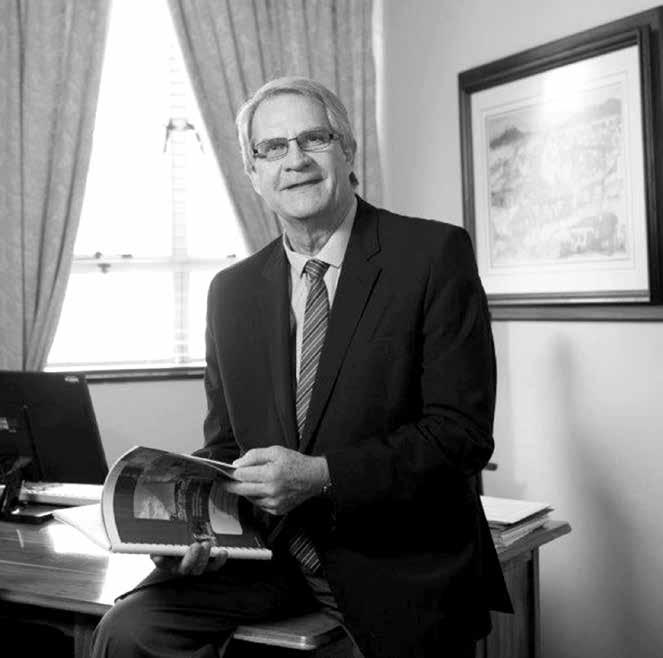
Prof Johan Buitendag Dean: Faculty of Theology
religious themes with social implications, are of special importance. These include xenophobia, discrimination and violence in communities. Unique themes that are of national relevance, yet are also of international interest, are researched in the Faculty. Much of the research is of an interdisciplinary nature and includes international participation.
The Faculty of Theology is keen to welcome prospective students who wish to become ministers or other religious workers.
The question to you is: You deserve the best! Why not the University of Pretoria?
Tel +27 (0)12 420 2322 Email johan.buitendag@up.ac.za
‘Why I chose Theology: What you believe, determines everything else in your life. It is the only foundation to build on. I have always been drawn to Theology, but I made a few detours via other faculties.
My faith has always been fundamental to who I am, and one of the main reasons for eventually deciding to study Theology was to learn how to share my belief in Christ in a manner that is responsible as well as academically sound. I am thoroughly enjoying the intellectual side of my studies and cannot imagine any other field of study could be more interesting, important or relevant. In order to preach Christ’s message effectively in the world of today, one has to be able to articulate one’s thoughts in a manner that supersedes mere ‘I feel ...’ speeches. Relationships with people and with God are about depth and therefore one has to know Him, and his Word, in depth. God gave us every tool we need to serve his purpose, and studying Theology is one of the main ways in which we, as future pastors, reverends and preachers, learn to share his Word and show his love to the world.
I really loving the Faculty! I am astounded by how warm and welcoming everyone is. Every person is treated as an individual – not just a number – and I feel blessed to be able to study in this exceptional environment.’
Handré Meyer
Important information on undergraduate programmes for 2017
The following persons will be considered for admission: a candidate who is in possession of a certificate that is deemed by the University to be equivalent to the required Grade 12 certificate with university endorsement; a candidate who is a graduate from another tertiary institution or has been granted the status of a graduate of such an institution; and a candidate who is a graduate of another faculty at the University of Pretoria.
Life Orientation is excluded in the calculation of the APS.
University of Pretoria website www.up.ac.za/theology
National Benchmark Test website www.nbt.ac.za
Programme
BDiv – Bachelor of Divinity (for admission to MDiv studies) [4 years]
Closing dates:
SA – 30 September
Non-SA – 31 August
Careers: Ministers, pastors, priests, preachers in certain denominations, missionaries and youth counsellors. Other possibilities include ethics consultants to businesses. Theological studies can be enriching for people in various other vocations. If prospective students are interested in ordained ministry, this should also be discussed with their church leadership. This programme is presented in separate groups in only one language (English or Afrikaans). This is the first step to MDiv studies.
BTh – Bachelor of Theology [3 years]
Closing dates:
SA – 30 September
– 31 August
3 D D 25 (23–24 admission based on the NBT)
Careers: Ministers, pastors, priests, preachers in certain denominations, missionaries and youth counsellors. Other possibilities include ethics consultants to businesses. Theological studies can be enriching for people in various other vocations. If prospective students are interested in ordained ministry, this should also be discussed with their church leadership. This programme is presented in separate groups in only one language (English or Afrikaans).
DipTh – Diploma in Theology [3 years]
Closing dates:
SA – 30 September Non-SA – 31 August 3 4 E E
Ministers, pastors,
lay
on
22 (20–21 admission based on the NBT)

in certain denominations, missionaries and youth
for
English.
‘Initially I chose to study Theology rather than any other discipline because of a deep longing to know God better and test what I believe. I have found that Theology is not isolated, but engages critically with other disciplines in ways that keep one on one’s toes and never satisfied with a simple yes or no. I am greatly humbled by the fact that our minds are constantly bumping up against a mystery we cannot unravel. During my time as a research assistant in the Department of New Testament Studies, I have learnt, and am still learning, about the academic world, and have discovered that our faculty is graced with worldclass theologians who engage openly with their students, at all times promoting critical thinking. Finally, this experience has evoked a great sense of humbleness and honour in me for which I will always be grateful. I made the right choice.’
Jackie Ntombikayise Ncala
The Faculty of Theology is the largest of its kind in South Africa and achieves the most degrees, especially PhDs.
The Faculty has a high number of NRF-rated researchers.
Two open-access accredited academic journals are linked to the Faculty, namely, HTS Theological Studies/Teologiese Studies and VE (Verbum et Ecclesia). HTS is an Institute for Scientific Information (ISI)-accredited journal and is both the oldest and largest theological journal in South Africa.
The Faculty has the highest research output among other national faculties of theology.
The Faculty has established research collaborations with universities in Africa, South Korea, Austria, Europe, UK and USA.
It is internationally renowned for its programmes in Pastoral Theology, Septuagint Studies, Pentateuch Research and Public Theology.
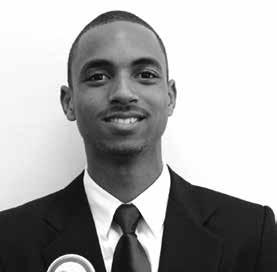
‘It’s been an eventful year for me in the Faculty of Theology and I’ve slowly been taking steps towards being a part of the world of academia. I’ve learnt a lot and, by the grace of God, I have been exposed to many opportunities both in academic and extra-curricular activities. Most notably, I had the opportunity to visit the University of Wisconsin-Milwaukee in the United States of America to present a research paper at their undergraduate Religious Studies conference. It was an amazing experience and gives me more impetus to put in quality work and reap the fruits of that labour, all the while glorifying Jesus Christ.’
Siyaphiwa Maphanga
The Faculty of Theology is renowned for its commitment to the following:
The Bible. This remains the central point of reference for theology.
Spirituality. Faith formation is of great importance.
Academic excellence. The Faculty’s standards of education compare with the best in the world.
Lecturers. Lecturers are noted academics and also respected church leaders.
Student life. Theology students (tokkelokke) participate fully in campus life: tours, Rag, camps, sports, serenades and many more.
International contacts. Students can benefit from the many international contacts of the Faculty.
People study theology for a variety of reasons, and not only to make it their profession. Some find it a fascinating field about which they would like to know more, whereas others search for spiritual enrichment through study or may want to equip themselves to function more effectively in their workplace. The Faculty also offers courses that will benefit students who do not necessarily want to become ministers, but who would like to enrich their lives.
Enriching one’s study in another field with insights and applications from theology has many advantages. By including modules from Religion Studies in another field of study, such as computer science, engineering, languages, psychology, social work or teaching, graduates will enter their chosen careers as better equipped, more fully developed people.
Theology deals with the basic questions of life:
How do faith and religion influence people’s lives?
How does one approach ethical and moral questions in the workplace?
How do theological insights promote good human resource practices?
How does one cultivate ecological sensitivity and awareness?
The Christian and laws.
How do religious values contribute to peace and good human relations?
Can crime be stopped by appealing to people’s beliefs and values?
What is the meaning and purpose of life?
Where does one find answers to the deepest life questions?
How does one gain a better understanding of humanity in order to make a difference in the world?
Some students feel called to work in the church as ministers, pastors, priests, lay preachers, missionaries or youth workers. If this is the case, then studying theology is the way to go.
Others find their calling in serving the community as social workers, development workers, psychologists, teachers, journalists or writers. Yet others will become engineers, lawyers or entrepreneurs. For all, studying theology will contribute to a greater understanding of humanity and society.
The seven main sections in the study of theology focus on questions about the Bible and life.
Old Testament Studies
The Old Testament is concerned with God’s care for creation and for humanity, and God’s relationship with Israel. In Old Testament Studies questions on suffering, love, and how to live a life in God’s presence are addressed.
New Testament Studies
In the New Testament, the story of Jesus is told and elaborated on from several perspectives. New Testament Studies focuses on the books of the New Testament and the first-century Mediterranean context in which they originated.
Church History and Polity
The history of the Christian church and the lives and theology of great figures in history, such as St Augustine, Thomas Aquinas, John Calvin and Martin Luther, are studied. Church Polity is about the specific ways in which different denominations organise themselves.
Science of Religion and Missiology
Science of Religion focuses on the world religions – Judaism, Islam, Buddhism and Hinduism – and their relationship to Christianity. Missiology investigates the manner in which Christian faith communities participate in God’s mission. A holistic approach is followed.
Dogmatics and Christian Ethics
Dogmatics studies faith in God. Who is God? What is faith and how does it contribute to our ability to make sense of the world? Ethics connects what we believe with how we live –always in conversation with others and amid the complexity of our world.
Practical Theology
Practical Theology focuses on what Christians do (faith actions) – how they experience and express their faith. Worship and preaching, the meaning of the symbols and symbolic acts, helping people in a crisis, teaching faith and faith formation, as well as understanding the world in which we live, comprise the concerns of this field.
Religion Studies
Religion Studies (formerly known as Biblical Studies) is a lifeenriching course open to anyone who may be interested in religion. Students from diverse fields, such as engineering, architecture, music, political science, law, fine arts and many more choose to broaden their vision by taking this course. It addresses questions such as the following: Why are people religious? What did ancient people believe? How do we understand and respect our neighbours from other religious denominations?
Contact information
Trone Stander
Tel +27 (0)12 420 4053 Email trone.stander@up.ac.za
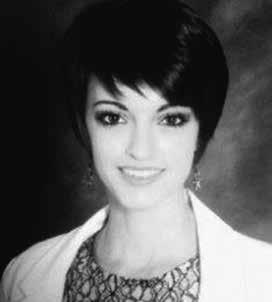
‘Theology: it is more than just a concept or a study field. It is a term we use to unite the spiritual and the logical. I didn’t choose Theology, it chose me. There comes a time in every person’s life, when they must decide where their path will lead. I wanted to be able to help people but, like all highschool students, I felt lost. I didn’t know where to search for a study course that would help me reach my goal. I felt like I had a lot of potential, but no way of showing it. Then it dawned on me: I don’t know if it was a rational decision, but suddenly I knew that I had to study Theology.
House Theology has been like home to me for the last two years. These people (students and staff) are not just people you pass on campus – they are family. House Theology does not ignore [the need for] diversity. Theology in itself is a subject based on personal research, findings and meaning. Diversity is the key to the House of God. Instead of these diversities dividing our House …, our study field (Theology, meaning ‘study of God’) unites us.
Without my House, I don’t know where I would be.
My plans for the future will be to continue studying at the University of Pretoria. I would like to continue (to be involved) in many leadership roles, community projects and societies. I look forward to my time here at House Theology. The road may be long, and there are many obstacles, but in my heart I know I’ve made the right choice and that this is the road God wanted me to follow. If it is His will, I will have a bright future at this University. And so will you.’
Bachelor of Theology Honours – BThHons
The purpose of this programme is to provide graduate students with specialised knowledge, skills and competence in a particular field or fields of theology at postgraduate level
Master of Philosophy in Applied Theology – MPhil (Applied Theology)
Theological studies can be pursued by candidates who already have tertiary qualifications equivalent to any bachelor’s degree, but not in theology. Theology is applied to specific ministries, occupations or aspects of community life. An MPhil programme that specialises in the Psalms is also offered.
Master of Divinity – MDiv
The MDiv builds on the BDiv programme or previously the four-year BTh programme. It is a structured master’s degree programme based on coursework and focuses on advanced theological knowledge and practical skills that will meet the needs of church ministry. Church-specific training and formation are offered in cooperation with particular church partners.
Master of Theology – MTh
This programme offers the student with a four-year BDiv, a BThHons or equivalent qualification, the opportunity for theological specialisation and research at master’s level. There are two possibilities, namely a programme with coursework and a mini-dissertation or a research master’s consisting of a dissertation. The coursework modules offer the opportunity to acquire specialist skills in a particular discipline.
Doctor of Philosophy – PhD
The programme line that starts with the three-year BTh and continues via the BThHons to MTh, or the programme line
that starts with the four-year BDiv and continues with the MTh, is concluded with the PhD. The outcome of a PhD is highly specialised knowledge and expertise based on research.
Contact information
Doris Mokgokolo
Tel +27 (0)12 420 2700
Email doris.mokgokolo@up.ac.za
Visit www.up.ac.za > ‘Study at UP’ > ‘Undergraduate students’ for information on the following:
Study information
Calculate your Admission Point Score (APS)
Closing dates
Fees and Funding
Special offer for top academic achievers
Apply at Tuks
Change or add a programme
National Benchmark Test (NBT)
Application status
Prepare to study at Tuks
Registration and start of the academic year
Date 21 May 2016
Time 08:00–14:00
The following persons should attend the UP Open Day:
Learners in Grade 12 who already received confirmation that they are provisionally admitted to UP
Learners in Grade 12 who meet the admission requirements and wish to hand in their application forms
Learners in Grade 11 who are fairly certain they will apply at UP
Parents of the above learners
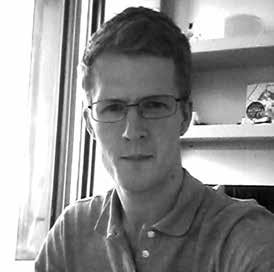
‘Why I chose to study Theology is a question I still ask myself. It may not be enough to say that it just felt like the right thing to do, but honestly that’s as much of a reason as I can give without going into too much detail. I am glad I made the decision. Being able to look at, and engage critically with the Word and the history of the Christian faith on a daily basis is such a privilege. What I love about this Faculty is that you can always find a lecturer who cares about more than just the lecture. There is always someone who cares about you and your thoughts. It is true when they say this is the smallest faculty with the biggest heart.’
Jonathan Womack